SB 348: State Air Resources Board: Low Carbon Fuel Standard.
- Session Year: 2025-2026
- House: Senate
- Latest Version Date: 2025-05-05
Current Status:
Failed
(2026-02-02: Returned to Secretary of Senate pursuant to Joint Rule 56.)
Introduced
In Committee
Awaiting First Chamber Vote
Passed First Chamber
In Committee
Awaiting Second Chamber Vote
Passed Second Chamber
Enacted
What does this bill do?
This bill requires the California Air Resources Board to revise the Low Carbon Fuel Standard — the rule that reduces carbon in transportation fuels — to lower the program’s financial burden on drivers. It directs the board to analyze and report how carbon‑credit costs are passed through to drivers and to compare those findings to past methods. It also directs the board to prioritize credit changes that directly benefit individual drivers, evaluate options to favor in‑state projects within legal limits, and study how changing the limit on credit prices would affect program costs and investment.
The summary is provided by generative AI which can make mistakes. For original language, please view the details in the table below.
Existing law imposes various limitations on emissions of air contaminants for the control of air pollution from vehicular and nonvehicular sources. Existing law generally designates the State Air Resources Board as the state agency with the primary responsibility for the control of vehicular air pollution. Existing law requires the state board to adopt standards, rules, and regulations necessary for the proper execution of the powers and duties granted to, and imposed upon, the state board.
This bill would require the state board, when it revises, adopts, or establishes any policy, standard, rule, or regulation that would have a direct financial impact to drivers in the state, to consider the financial burden on drivers and to prepare a thorough analysis and evaluation of the financial impact of the proposed action to drivers to ensure full transparency.The California Global Warming Solutions Act of 2006 establishes the state board as the state agency responsible for monitoring and regulating sources emitting greenhouse gases. The act requires the state board to adopt rules and regulations, as provided, to achieve the maximum technologically feasible and cost-effective greenhouse gas emissions reductions to ensure that the statewide greenhouse gas emissions are reduced to at least 40% below the statewide greenhouse gas emissions limit, as defined, no later than December 31, 2030. Pursuant to the act, its authority, the state board has adopted the Low Carbon Fuel Standard regulations to reduce the carbon intensity of transportation fuels used in California, as specified.
This bill would require the state board, beginning no later than January 31, 2026, to reconsider and revise the Low Carbon Fuel Standard to reduce the programs financial burden on drivers in the state, including by taking specified actions.
Existing law imposes various limitations on emissions of air contaminants for the control of air pollution from vehicular and nonvehicular sources. Existing law generally designates the State Air Resources Board as the state agency with the primary responsibility for the control of vehicular air pollution. Existing law requires the state board to adopt standards, rules, and regulations necessary for the proper execution of the powers and duties granted to, and imposed upon, the state board.
This bill would require the state board, when it revises, adopts, or establishes any policy, standard, rule, or regulation that would have a direct financial impact to drivers in the state, to consider the financial burden on drivers and to prepare a thorough analysis and evaluation of the financial impact of the proposed action to drivers to ensure full transparency.
The California Global Warming Solutions Act of 2006 establishes the State Air Resources Board state board as the state agency responsible for monitoring and regulating sources emitting greenhouse gases. The act requires the state board to adopt rules and regulations, as provided, to achieve the maximum technologically feasible and cost-effective greenhouse gas emissions reductions to ensure that the statewide greenhouse gas emissions are reduced to at least 40% below the statewide greenhouse gas emissions limit, as defined, no later than December 31, 2030. Pursuant to the act, the state board has adopted the Low-Carbon Low Carbon Fuel Standard, or regulations. Standard regulations to reduce the carbon intensity of transportation fuels used in California, as specified.
This bill would state the intent of the Legislature to enact future legislation that would, among other things, require the board to revise the Low-Carbon Fuel Standard program, as provided. The bill would make related findings and declarations. require the state board, beginning no later than January 31, 2026, to reconsider and revise the Low Carbon Fuel Standard to reduce the programs financial burden on drivers in the state, including by taking specified actions.
The California Global Warming Solutions Act of 2006 establishes the State Air Resources Board as the state agency responsible for monitoring and regulating sources emitting greenhouse gases. The act requires the state board to adopt rules and regulations, as provided, to achieve the maximum technologically feasible and cost-effective greenhouse gas emissions reductions to ensure that the statewide greenhouse gas emissions are reduced to at least 40% below the statewide greenhouse gas emissions limit, as defined, no later than December 31, 2030. Pursuant to the act, the state board has adopted the Low-Carbon Fuel Standard, or regulations.
This bill would state the intent of the Legislature to enact future legislation that would, among other things, require the board to revise the Low-Carbon Fuel Standard program, as provided. The bill would make related findings and declarations.
The Legislature finds and declares the following:
(a)The State of California is a global leader in reducing greenhouse gas emissions and addressing climate change through innovative programs such as the Low Carbon Fuel Standard or LCFS.
(b)The LCFS is a critical tool to achieve the states goals of reducing carbon intensity in the transportation sector, encouraging innovation in low-carbon fuels, and improving public health.
(c)Transparency and accountability in the implementation of LCFS metrics are vital to ensuring equitable and effective progress toward the states climate goals.
(d)Technological advancements, market shifts, and emerging data necessitate periodic updates to the metrics and modeling assumptions underpinning the LCFS to ensure alignment with current science, economic realities, and equity principles.
(e)California consumers are overly burdened with the high cost of living, and the state should consider the financial impacts to consumers as future legislation, regulations, and policies are made to reach the states ambitious climate goals.
SEC. 2.Section 38567 is added to the Health and Safety Code, to read:38567.(a)For purposes of this section, Low Carbon Fuel Standard means the Low Carbon Fuel Standard regulations (Subarticle 7 (commencing with Section 95480) of Article 4 of Subchapter 10 of Chapter 1 of Division 3 of Title 17 of the California Code of Regulations).
(b)Beginning no later than January 31, 2026, the state board shall reconsider and revise the Low Carbon Fuel Standard program to reduce the programs financial burden on drivers in the state, including by doing all of the following:
(1)Providing a complete analysis and evaluation of the passed-through cost of carbon credits to drivers in the state. state, including a comparison to methodologies used in evaluating the cost impacts of previous amendments to the Low Carbon Fuel Standard and an explanation of why those methodologies were insufficient or inaccurate.
(2)Prioritizing policy changes that directly benefit individual drivers, including by revising carbon credit structures. structures, such as through multiplying credit generation for certain classes of pathways that are aligned with state policy priorities.
(3)Ensuring the revised Low Carbon Fuel Standard framework aligns with the states environmental goals while balancing economic equity for its residents.(3)Evaluating the extent to which changes to the Low Carbon Fuel Standard can be made to prioritize in-state projects and benefits, and describing any limitations for doing so under existing state and federal law.
(4)Providing an analysis of the impacts that adjusting the credit price cap set for the Credit Clearance Market would have on program cost and investment capabilities.
SEC. 3.Section 39601.3 is added to the Health and Safety Code, to read:39601.3.(a)When the state board revises, adopts, or establishes any policy, standard, rule, or regulation that would have a direct financial impact to drivers in the state, including, but not limited to, the Low Carbon Fuel Standard program, the state board shall consider the financial burden on drivers and shall prepare a thorough analysis and evaluation of the financial impact of the proposed action to drivers to ensure full transparency.(b)For purposes of this section, Low Carbon Fuel Standard means the Low Carbon Fuel Standard regulations (Subarticle 7 (commencing with Section 95480) of Article 4 of Subchapter 10 of Chapter 1 of Division 3 of Title 17 of the California Code of Regulations).The Legislature finds and declares the following:
(a)The State of California is a global leader in reducing greenhouse gas emissions and addressing climate change through innovative programs such as the Low-Carbon Low Carbon Fuel Standard or LCFS.
(b)The LCFS is a critical tool to achieve the states goals of reducing carbon intensity in the transportation sector, encouraging innovation in low-carbon fuels, and improving public health.
(c)Transparency and accountability in the implementation of LCFS metrics are vital to ensuring equitable and effective progress toward the states climate goals.
(d)Technological advancements, market shifts, and emerging data necessitate periodic updates to the metrics and modeling assumptions underpinning the LCFS to ensure alignment with current science, economic realities, and equity principles.
(e)California consumers are overly burdened with the high cost of living, and the state should consider the financial impacts to consumers as future legislation, regulations, and policies are made to reach the states ambitious climate goals.
SEC. 2.It is the intent of the Legislature to enact future legislation to accomplish the following:(a)Require the State Air Resources Board to revisit and revise the LCFS program to reduce the financial burden on California drivers.(b)Mandate the board to prioritize measures that directly benefit individual drivers, including revising carbon credit structures.(c)Establish a rebate mechanism to distribute a portion of funds generated by LCFS back to California drivers, particularly those most impacted by high fuel costs.(d)Ensure the revised LCFS framework aligns with Californias environmental goals while balancing economic equity for its residents.SEC. 2.Section 38567 is added to the Health and Safety Code, to read:38567.(a)For purposes of this section, Low Carbon Fuel Standard means the Low Carbon Fuel Standard regulations (Subarticle 7 (commencing with Section 95480) of Article 4 of Subchapter 10 of Chapter 1 of Division 3 of Title 17 of the California Code of Regulations).
(b)Beginning no later than January 31, 2026, the state board shall reconsider and revise the Low Carbon Fuel Standard program to reduce the programs financial burden on drivers in the state, including by doing all of the following:
(1)Providing a complete analysis and evaluation of the passed-through cost of carbon credits to drivers in the state.
(2)Prioritizing policy changes that directly benefit individual drivers, including by revising carbon credit structures.
(3)Ensuring the revised Low Carbon Fuel Standard framework aligns with the states environmental goals while balancing economic equity for its residents.
SEC. 3.Section 39601.3 is added to the Health and Safety Code, to read:39601.3.(a)When the state board revises, adopts, or establishes any policy, standard, rule, or regulation that would have a direct financial impact to drivers in the state, including, but not limited to, the Low Carbon Fuel Standard program, the state board shall consider the financial burden on drivers and shall prepare a thorough analysis and evaluation of the financial impact of the proposed action to drivers to ensure full transparency.
(b)For purposes of this section, Low Carbon Fuel Standard means the Low Carbon Fuel Standard regulations (Subarticle 7 (commencing with Section 95480) of Article 4 of Subchapter 10 of Chapter 1 of Division 3 of Title 17 of the California Code of Regulations).
The Legislature finds and declares the following:
(a)The State of California is a global leader in reducing greenhouse gas emissions and addressing climate change through innovative programs such as the Low-Carbon Fuel Standard or LCFS.
(b)The LCFS is a critical tool to achieve the states goals of reducing carbon intensity in the transportation sector, encouraging innovation in low-carbon fuels, and improving public health.
(c)Transparency and accountability in the implementation of LCFS metrics are vital to ensuring equitable and effective progress toward the states climate goals.
(d)Technological advancements, market shifts, and emerging data necessitate periodic updates to the metrics and modeling assumptions underpinning the LCFS to ensure alignment with current science, economic realities, and equity principles.
SEC. 2.It is the intent of the Legislature to enact future legislation to accomplish the following:
(a)Require the State Air Resources Board to revisit and revise the LCFS program to reduce the financial burden on California drivers.
(b)Mandate the board to prioritize measures that directly benefit individual drivers, including revising carbon credit structures.
(c)Establish a rebate mechanism to distribute a portion of funds generated by LCFS back to California drivers, particularly those most impacted by high fuel costs.
(d)Ensure the revised LCFS framework aligns with Californias environmental goals while balancing economic equity for its residents.
|
Date
|
Status
|
|---|---|
| Feb 2, 2026 | Returned to Secretary of Senate pursuant to Joint Rule 56. |
| May 23, 2025 | May 23 hearing: Held in committee and under submission. |
| May 20, 2025 | Set for hearing May 23. |
| May 19, 2025 | May 19 hearing: Placed on APPR. suspense file. |
| May 9, 2025 | Set for hearing May 19. |
| May 5, 2025 | Read second time and amended. Re-referred to Com. on APPR. |
| May 1, 2025 | From committee: Do pass as amended and re-refer to Com. on APPR. (Ayes 6. Noes 0. Page 963.) (April 30). |
| Apr 25, 2025 | Set for hearing April 30. |
| Apr 2, 2025 | Re-referred to Com. on E.Q. |
| Mar 20, 2025 | From committee with author's amendments. Read second time and amended. Re-referred to Com. on RLS. |
| Feb 19, 2025 | Referred to Com. on RLS. |
| Feb 13, 2025 | From printer. May be acted upon on or after March 15. |
| Feb 12, 2025 | Introduced. Read first time. To Com. on RLS. for assignment. To print. |
|
Date
|
Description
|
Location
|
Votes
|
|
|---|---|---|---|---|
| May 19, 2025 | Placed on suspense file | Senate Standing Committee on Appropriations |
Passed |
|
| Apr 30, 2025 | Do pass as amended, but first amend, and re-refer to the Committee on [Appropriations] | Senate Standing Committee on Environmental Quality |
Passed |
This list shows positions taken on this bill by organizations on the date displayed, which is linked to the original source.
Positions by individuals are not included.
|
Organization
|
Position
|
Date
|
|---|---|---|
| American Biogas Council | ** Against | |
| California Advanced Biofuels Alliance | ** Against | |
| California Electric Transportation Coalition | ** Against | |
| California Hydrogen Business Council | ** Against | |
| California Hydrogen Coalition | ** Against | |
| California Renewable Transportation Alliance | ** Against | |
| Clean Energy | ** Against | |
| Clean Fuels Alliance America | ** Against | |
| Coalition For Renewable Natural Gas | ** Against | |
| Electric Vehicle Charging Association | ** Against | |
| Ev Realty US | ** Against | |
| Monarch Bioenergy | ** Against | |
| U.s. Venture, INC. | ** Against | |
| World Energy Net Zero Services | ** Against |
SENATE COMMITTEE ON
Senator Anna Caballero, Chair
2025 - 2026 Regular Session
SB 348 (Hurtado) - State Air Resources Board: Low Carbon Fuel Standard
Version: | Policy Vote: |
Urgency: | Mandate: |
Hearing Date: | Consultant: |
Bill Summary:
This bill would require the California Air Resources Board (CARB) to reconsider and revise the Low Carbon Fuel Standard (LCFS) to include specified analyses and policy changes.
Fiscal Impact:
- CARB estimates ongoing costs of $1.8 million annually (General Fund) and about 8 positions to perform economic analyses, identify and evaluate policy changes, describe limitations under state and federal law, and evaluate impacts of adjusting the credit price cap for the Credit Clearance Market on program cost and implementation capabilities, among other things.
Background:
The LCFS is designed to encourage the use of cleaner low-carbon transportation fuels in California, encourage the production of those fuels, and therefore, reduce GHG emissions and decrease petroleum dependence in the transportation sector.
The LCFS standards are expressed in terms of the “carbon intensity” (CI) of gasoline and diesel fuel and their respective substitutes. The program is based on the principle that each fuel has “life cycle” GHG emissions that include CO2, CH4, N2O, and other GHG contributors. This life cycle assessment (or “pathway”) examines the GHG emissions associated with the production, transportation, and use of a given fuel. The life cycle assessment includes direct emissions associated with producing, transporting, and using the fuels, as well as significant indirect effects on GHG emissions, such as changes in land use for some biofuels.
The carbon intensity scores assessed for each fuel produced are compared to a declining CI benchmark for each year. Low carbon fuels with a CI below the benchmark generate credits (tradeable compliance instruments), while fuels above the CI benchmark generate deficits they must purchase credits to cover. This effectively means that producers of fuels with higher CIs are subsidizing the production of lower-carbon fuels. One credit is equal to one ton of CO2-equivalent GHG emission reductions from a low-carbon fuel being delivered.
The original LCFS set a goal of reducing the CI of fuels in the state to 10% below 2010 levels by 2020. Since the original LCFS was adopted, CARB set a new goal to reduce the CI of fuels in the state to 20% below 2010 levels by 2030. CARB is currently in the process of setting an even more ambitious target because of the extent to which the program is exceeding expectations for overall reduction of fuel CI.
CARB’s November 2024 amendments. The latest amendments to the LCFS (and the subject of SB 2) were, after nearly eight hours of testimony, approved by the CARB Board on a 12-2 vote on November 8, 2024. Broadly speaking, the amendments, according to CARB’s Informative Digest provided with the proposed amendments, focused on:
- Increasing the stringency of the program to more aggressively decarbonize fuels and thereby reduce our dependence on fossil fuels;
- Strengthening the program’s equity provisions to promote investment in disadvantaged, low-income and rural communities;
- Supporting electric and hydrogen truck refueling;
- Incentivizing more production of clean fuels needed in the future, such as low-carbon hydrogen;
- Supporting methane emissions reductions and deploying biomethane for best uses across transportation; and
- Strengthening guardrails on crop-based fuels to prevent deforestation or other potential adverse impacts.
Within those general actions, however, many nuances and details were negotiated and discussed at length. In the end, while biofuel producers and some state climate advocates backed the changes, critics—including oil companies and consumer advocates—said the change would increase gasoline prices for Californians. Environmental groups also argued the policy would extend the production of oil and gas and prioritize fuels made from food crops and large dairy operations instead of encouraging a transition to electric vehicles (EVs). Nevertheless, a number of transportation electrification advocacy groups supported the amendments, citing the support for EVs the program does provide, even if they are not as substantial as those for low-carbon fuel-combusting vehicles. CARB’s environmental justice advisory committee had urged it to reject the revisions, citing an exemption for jet fuel producers and large subsidies for dairy methane projects, among other concerns.
The cost impacts of the amendments were particularly controversial in the discussions. In an initial analysis released last year, CARB said the changes could increase the price of gasoline by an average of 37 cents a gallon from 2024 through 2030. But the Board has since said models cannot accurately predict future fuel prices.
As noted in a February 2024 letter to CARB from former CARB Branch Chief Jim Duffy, the initial methodology for determining the pass-through cost was in fact consistent with past approaches in the last two LCFS amendment rulemakings. Furthermore, the maximum of the range of the calculated pass-through costs then was borne out with data provided to the Energy Commission, suggesting that the methodology was sound and that deficit-generators were indeed passing along LCFS costs to fuel purchasers.
Proposed Law:
This bill would require CARB to reconsider and revise the LCFS to reduce the program’s financial burden on drivers in the state, including by:
- Providing a complete analysis and evaluation of the passed-through cost of carbon credits to drivers in the state, including a comparison to methodologies used in evaluating the cost impacts of previous amendments to LCFS and an explanation of why those methodologies were insufficient or inaccurate;
- Prioritizing policy changes that directly benefit individual drivers, including by revising carbon credit structures, such as through multiplying credit generation for certain classes of pathways that are aligned with state policy priorities;
- Evaluating the extent to which changes to LCFS can be made to prioritize in-state projects and benefits, and describing any limitations for doing so under existing state and federal law; and
- Providing an analysis of the impacts that adjusting the credit price cap set for the Credit Clearance Market would have on program cost and investment capabilities.
Related Legislation:
SB 441 (Hurtado, 2025) would have, among other things, required the Legislative Analyst’s Office to review all regulations proposed to be adopted by CARB with over $10 million of estimated impact. SB 441 failed passage in the Senate Environmental Quality Committee.
SB 709 (Allen, 2023) would have made a number of changes to how CARB administers the LCFS, specifically involving the accounting assumptions and credit guarantees for manure methane. SB 709 was held on the suspense file in this committee.
-- END --
SENATE COMMITTEE ON ENVIRONMENTAL QUALITY
Senator Blakespear, Chair
2025 - 2026 Regular
Bill No: SB 348
Author: | Hurtado | ||
Version: | 3/20/2025 | Hearing Date: | 4/30/2025 |
Urgency: | No | Fiscal: | Yes |
Consultant: | Eric Walters | ||
SUBJECT: State Air Resources Board: Low Carbon Fuel Standard
DIGEST: This bill requires the California Air Resources Board (CARB) to reconsider and revise the Low Carbon Fuel Standard to include specified analyses and policy changes. The bill also requires CARB to consider financial burdens on drivers for any policy, standard, rule, or regulation they adopt.
ANALYSIS:
Existing law:
- Authorizes, under AB 32 (Nunez, Chapter 488, Statutes of 2006), the California Air Resources Board (CARB) to, among other things, publish a list of discrete early action greenhouse gas (GHG) emission reduction measures that could be implemented before the adoption of the state’s cap-and-trade program. (Health and Safety Code § 38500 et seq.)
- Defines “market-based compliance mechanism” to mean either: (1) A system of market-based declining annual aggregate emissions limitations for sources or categories of sources that emit GHGs; or GHG emissions exchanges, banking, credits, and other transactions, governed by rules and protocols established by CARB, that result in the same GHG emission reductions, over the same time period, as direct compliance with a GHG emission limit or emission reduction measure adopted by CARB. (HSC § 38505)
- Requires CARB to, prior to the inclusion of a market-based compliance mechanism in the regulations adopted pursuant to AB 32: (1) Consider the potential for direct, indirect, and cumulative emission impacts from these mechanisms, including localized impacts in communities that are already adversely impacted by air pollution; (2) Design any market-based compliance mechanism to prevent any increase in the emissions of toxic air contaminants or criteria air pollutants; and (3) Maximize additional environmental and economic benefits for California, as appropriate. (HSC § 38570)
This bill:
- Requires CARB to reconsider and revise the Low Carbon Fuel Standard regulations to reduce the program’s financial burden on drivers in the state, including by:
- Providing a complete analysis and evaluation of the passed-through cost of carbon credits to drivers in the state;
- Prioritizing policy changes that directly benefit individual drivers, including by revising carbon credit structures; and
- Ensuring the revised LCFS framework aligns with the state’s environmental goals while balancing economic equity for its residents.
- Requires CARB, when they revise, adopt, or establish any policy, standard, rule, or regulation that would have a direct financial impact on drivers in the state, to consider the financial burden on drivers, and prepare a thorough analysis and evaluation of the financial impact of the proposed action.
Background
- What is the Low Carbon Fuel Standard (LCFS)? The LCFS is designed to encourage the use of cleaner low-carbon transportation fuels in California, encourage the production of those fuels, and therefore, reduce GHG emissions and decrease petroleum dependence in the transportation sector.
The LCFS standards are expressed in terms of the “carbon intensity” (CI) of gasoline and diesel fuel and their respective substitutes. The program is based on the principle that each fuel has “life cycle” GHG emissions that include CO2, CH4, N2O, and other GHG contributors. This life cycle assessment (or “pathway”) examines the GHG emissions associated with the production, transportation, and use of a given fuel. The life cycle assessment includes direct emissions associated with producing, transporting, and using the fuels, as well as significant indirect effects on GHG emissions, such as changes in land use for some biofuels.
The carbon intensity scores assessed for each fuel produced are compared to a declining CI benchmark for each year. Low carbon fuels with a CI below the benchmark generate credits (tradeable compliance instruments), while fuels above the CI benchmark generate deficits they must purchase credits to cover. This effectively means that producers of fuels with higher CIs are subsidizing the production of lower-carbon fuels. One credit is equal to one ton of CO2-equivalent GHG emission reductions from a low-carbon fuel being delivered.
The original LCFS set a goal of reducing the CI of fuels in the state to 10% below 2010 levels by 2020. Since the original LCFS was adopted, CARB set a new goal to reduce the CI of fuels in the state to 20% below 2010 levels by 2030. CARB is currently in the process of setting an even more ambitious target because of the extent to which the program is exceeding expectations for overall reduction of fuel CI. - A brief history of the LCFS. AB 32 (Nunez, 2006) is best known today as the bill that set the state’s 2020 GHG emission reduction goal (i.e. achieving 1990 levels by 2020) and authorized CARB to enact a “market-based compliance mechanism” (i.e. cap-and-trade). Importantly, due to lingering concerns about cap-and-trade being ineffective at rapid, localized emission and pollution reductions, AB 32 also directed CARB to devise so-called “early action GHG emission reduction measures” that could be implemented before the state’s cap-and-trade program was established.
Although AB 32 did not explicitly contemplate an LCFS, the bill represents the only statutory authority or direction that has been provided for the program.
AB 32 was signed by Governor Schwarzenegger on September 27, 2006, and in June of 2007, CARB adopted the first three (of a total of nine) discrete early action measures pursuant to AB 32, including the LCFS. Since its adoption in 2009, the LCFS has been amended (2011), readopted (2015), amended again (2018), and is currently in the process of being amended once more (2024-2025) all through actions initiated and taken solely by CARB.
- Legislating LCFS. As noted above, the “early action measures” called for in AB 32 are the only statutory authorities or directions provided by the Legislature regarding the LCFS. Between 2007 and today, 102 bills have referenced the LCFS in some form or another, and 22 of those have been signed into law. None of those chaptered bills made any substantial changes to the LCFS regulations; the Legislature has never provided statutory direction to CARB for how to implement LCFS.
- CARB’s November 2024 amendments. The latest amendments to the LCFS (and the subject of SB 2) were, after nearly eight hours of testimony, approved by the CARB Board on a 12-2 vote on November 8, 2024. Broadly speaking, the amendments, according to CARB’s Informative Digest provided with the proposed amendments[1], focused on:
- Increasing the stringency of the program to more aggressively decarbonize fuels and thereby reduce our dependence on fossil fuels;
- Strengthening the program’s equity provisions to promote investment in disadvantaged, low-income and rural communities;
- Supporting electric and hydrogen truck refueling;
- Incentivizing more production of clean fuels needed in the future, such as low-carbon hydrogen;
- Supporting methane emissions reductions and deploying biomethane for best uses across transportation; and
- Strengthening guardrails on crop-based fuels to prevent deforestation or other potential adverse impacts.
Within those general actions, however, many nuances and details were negotiated and discussed at length. In the end, while biofuel producers and some state climate advocates backed the changes, critics—including oil companies and consumer advocates—said the change would increase gasoline prices for Californians. Environmental groups also argued the policy would extend the production of oil and gas and prioritize fuels made from food crops and large dairy operations instead of encouraging a transition to electric vehicles (EVs). Nevertheless, a number of transportation electrification advocacy groups supported the amendments, citing the support for EVs the program does provide, even if they are not as substantial as those for low-carbon fuel-combusting vehicles. CARB’s environmental justice advisory committee had urged it to reject the revisions, citing an exemption for jet fuel producers and large subsidies for dairy methane projects, among other concerns.
The cost impacts of the amendments were particularly controversial in the discussions. In an initial analysis released last year, CARB said the changes could increase the price of gasoline by an average of 37 cents a gallon from 2024 through 2030. But the Board has since said models cannot accurately predict future fuel prices.
As noted in a February 2024 letter to CARB from former CARB Branch Chief Jim Duffy, the initial methodology for determining the pass-through cost was in fact consistent with past approaches in the last two LCFS amendment rulemakings.[2] Furthermore, the maximum of the range of the calculated pass-through costs then was borne out with data provided to the Energy Commission, suggesting that the methodology was sound and that deficit-generators were indeed passing along LCFS costs to fuel purchasers.
Comments
- Purpose of Bill. According to the author, “California’s climate policies must not be built on the backs of working families — but right now, that is exactly what’s happening.
“In the Central Valley, where I represent thousands of hardworking families, driving is not optional. It's essential. People drive long distances to get to work, take their children to school, and access health care. Yet under programs like the Low Carbon Fuel Standard (LCFS), these families are paying higher fuel costs — without transparency, without fairness, and without a clear return on their sacrifice.
“Recent reporting by the Washington Post has brought national attention to the troubling dynamics in California’s LCFS program. Billions of dollars are flowing into the hands of out-of-state corporations, wealthy investors, and industrial agriculture operations — while everyday Californians shoulder the cost. The system is broken. It was never designed to make drivers whole, and the burdens it creates fall heaviest on rural and working-class communities like the Central Valley.
“SB 348 demands accountability. It requires CARB to fully disclose how its programs financially impact California drivers. It insists that the state’s climate efforts prioritize economic equity — not just environmental goals. And it forces a long-overdue conversation about whether the costs being passed down are fair, transparent, and justified.
“Climate action and consumer protection must go hand in hand.
“Our communities cannot be an afterthought.
“SB 348 makes clear: California’s clean energy future must include all of us — not just those who can afford it”
- LCFS: Redistributing resources to reformulate our fuels. Fundamentally, the LCFS is about shifting money from high-carbon fuels to low-carbon ones. Increasing the costs of the former to subsidize the production of the latter makes intuitive sense as a way to discourage the continued use of fossil fuels and encourage the production of alternatives. However, the devil is in the details.
Gasoline has notoriously inelastic demand; increasing prices are slow to change demand patterns. Many people who have internal combustion engine (ICE) vehicles may have no alternative to driving for getting to work and other necessities. Moreover, zero-emission vehicles (ZEVs) are often (for now) more costly, less available on the secondary market, and require either a significant investment or behavioral change to refuel. So when greater costs are imposed on gasoline producers, they are able to largely pass those costs onto consumers who are a fairly captive audience.
As for where the money generated by those costs goes, there is a further important nuance. Low-carbon fuel producers need not be in California to participate in the LCFS. In fact, according to CARB’s LCFS Data Dashboard[3], only 12.36% of liquid biofuels in the program were made in California in 2023 (the highest share it had been in 5 years). In other words, in 2023, nearly 88% of the liquid biofuel producers generating credits (and thus earning a subsidy funded by Californian gas buyers) were located outside of the state.
And while the minority of LCFS credit-generating fuels are produced in-state, those in-state fuels come with their own tradeoffs and considerations. The local health impacts of renewable natural gas production from dairy biomethane, for example, are striking and well-documented.[4] While producing lower-carbon fuels (such as renewable natural gas, renewable diesel, and ethanol) are in line with state goals, when they are produced in California they tend to be highly concentrated and the impacts of those operations on surrounding communities should not be discounted.
In short, LCFS makes fossil fuels more expensive to make low-carbon options less expensive. The extent to which those impacts are felt by fuel producers and Californians alike is hotly debated. Most of the low-carbon options are still liquid fuels, whose production and combustion are associated with air pollution effects (often concentrated in disadvantaged communities), and most of the low-carbon liquid fuel production subsidized by LCFS is done out-of-state, despite funds largely deriving from costs that are passed through to Californians.
On one hand, LCFS is a multi-billion dollar climate program operated almost entirely outside the purview of the Legislature that affects fuel prices, local air pollution, and market-wide technological development. On the other hand, California is not switching to 100% non-combustion technologies tomorrow, and LCFS may represent one of the most effective tools at the state’s disposal to support ZEV development and adoption, even if ZEVs are not the program’s central focus. The LCFS program is huge, complicated, and will shape climate policy in California (and states who follow our lead) for decades to come. - Let’s talk about LCFS. The November 2024 LCFS amendments increased the stringency of LCFS’s CI target and made other adjustments in an attempt to balance the costs and benefits of the program. LCFS is not a perfect program. The Legislature may indeed wish to revisit the decisions that have been made by CARB that affect billions of dollars of climate investment paid by Californian consumers and redistribute them to a variety of in- and out-of-state producers of low-, zero-, and near-zero carbon fuels.
Currently, SB 348 directs CARB to, in reconsidering and revising the LCFS regulations, do three specific things:
- Provide a complete analysis and evaluation of the passed-through cost of carbon credits to drivers in the state.
According to a February 2024 letter from former CARB Branch Chief Jim Duffy, he claimed, “In both 2015 when CARB readopted the regulation and in 2018 when the targets were extended to 2030, staff estimated the maximum pass-through cost of the amendments to consumers of gasoline and transparently conveyed this information to the public… However, in the current staff report, staff disavowed this calculation of pass-through cost and focused instead on total fuel costs to all California consumers.”
The author and committee may wish to amend this analysis and evaluation to describe in what ways the previous approaches taken in 2015 and 2018 were insufficient or inaccurate, and why the approach in 2024 was taken. - Prioritize policy changes that directly benefit individual drivers, including by revising carbon credit structures.
Unlike cap-and-trade (through which a portion of program revenues placed into the Greenhouse Gas Reduction Fund are appropriated by the Legislature to fund projects in line with the state’s priorities and policies), LCFS credit proceeds do not pass through the state’s hands. Rather, financial flows are largely dictated through the lifecycle assessment that produces the LCFS pathway that determines how many credits a given project creates and can sell. Projects that create more LCFS credits (such as with an extremely low carbon intensity) can sell more credits to deficit-generators. Thus, it is not simple to directly benefit individual drivers through, say, directing program proceeds as is possible under cap-and-trade.
The author and committee may wish to direct CARB to consider whether it would be possible for some pathways (such as those that are aligned with the state’s policy priorities) to have their credit generation capacity multiplied by a certain factor. - Ensure the revised LCFS framework aligns with the state’s environmental goals while balancing economic equity for its residents.
This is a fairly open-ended requirement, and it would not be clear how to determine whether or not CARB suitably “balanced” economic equity. Rather, the intent seems to be to prioritize benefits to Californians where possible.
The author and committee may wish to consider directing CARB to evaluate whether changes to the LCFS regulations might be possible to prioritize in-state projects and benefits, or if any such efforts would be impossible under current law.
- Provide a complete analysis and evaluation of the passed-through cost of carbon credits to drivers in the state.
These are not the only issues surrounding LCFS. The program has existed largely as it does today for many years but is currently in the spotlight, likely due to a sensitivity to affordability and cost impacts. LCFS has, since 2016, included a mechanism (the Credit Clearance Market (CCM)) by which a maximum price for LCFS credits is set.[5] This cap started at $200 in 2016 and has increased by the Consumer Price Index each year since. The CCM was actually used in 2022, when over 10,000 credits were purchased at $239.18 by deficit-generators and LCFS credit market prices were near that price. Given the sensitivity to the LCFS impacts on affordability expressed by the author, the author and committee may wish to consider directing CARB to assess the impacts of lowering the price set for credits in the CCM to different amounts.
- Costs and benefits. Section 3 of this bill expands beyond the LCFS into any time CARB, “revises, adopts, or establishes any policy, standard, rule, or regulation that would have a direct financial impact to drivers in the state, including, but not limited to, the Low Carbon Fuel Standard program.” For those actions, the bill would require CARB to prepare a thorough analysis and evaluation of the financial impact on drivers.
Under SB 617 (R. Calderon, Chapter 496, Statutes of 2011), all state agencies have to conduct a standardized regulatory impact assessment (SRIA) when its proposed regulations will have an economic impact in California exceeding $50 million. The SRIA must also include information on the impact proposed regulations will have on jobs, businesses, competitiveness, investment, production, and Californians’ quality of life.
Given that substantially similar information would already be required under the SRIA, it is unclear the value that would be added by requiring CARB to do another, potentially onerous analysis for all actions that affect drivers. The author and committee may wish to strike section 3 from the bill (and continue to consider other ways to get the information desired without creating unnecessary and unhelpful bureaucratic delays) while advancing this measure to ask hard questions and have important conversations about the LCFS specifically. - Committee amendments. Staff recommends the committee adopt the bolded amendments in comments 3 and 4 above.
Related/Prior Legislation
SB 441 (Hurtado, 2025) would have, among other things, required the Legislative Analyst’s Office to review all regulations proposed to be adopted by CARB with over $10 million of estimated impact. SB 441 failed passage in this committee.
SB 709 (Allen, 2023) would have made a number of changes to how CARB administers the LCFS, specifically involving the accounting assumptions and credit guarantees for manure methane. SB 709 died in the Senate Appropriations Committee.
SOURCE:
Author
SUPPORT:
None received
OPPOSITION:
American Biogas Council
California Advanced Biofuels Alliance
California Electric Transportation Coalition
California Hydrogen Business Council
California Hydrogen Coalition
California Renewable Transportation Alliance
Clean Energy
Clean Fuels Alliance America
Coalition for Renewable Natural Gas
Coaliton for Renewable Natural Gas
Electric Vehicle Charging Association
Ev Realty US
Monarch Bioenergy
U.s. Venture, INC.
World Energy Net Zero Services
-- END --
Updated Informative Digest: Proposed Amendments to the Low Carbon Fuel Standard. https://ww2.arb.ca.gov/sites/default/files/barcu/regact/2024/lcfs2024/uid.pdf ↑
Letter from Jim Duffy to Liane Randolph, February 19, 2024. Accessed at https://midwestadvocates.org/wp-content/uploads/Jim-Duffy-CARB-Letter-Feb-2024.pdf ↑
https://ww2.arb.ca.gov/resources/documents/lcfs-data-dashboard. Accessed 3/3/25 ↑
California just set rules that trade short-term climate gain for long-term health and safety. Dean Florez and Diane Takvorian for the LA Times. https://www.latimes.com/opinion/story/2024-11-20/methane-air-quality-california-central-valley-dairy-emissions ↑
https://ww2.arb.ca.gov/resources/documents/lcfs-credit-clearance-market ↑
Discussed in Hearing
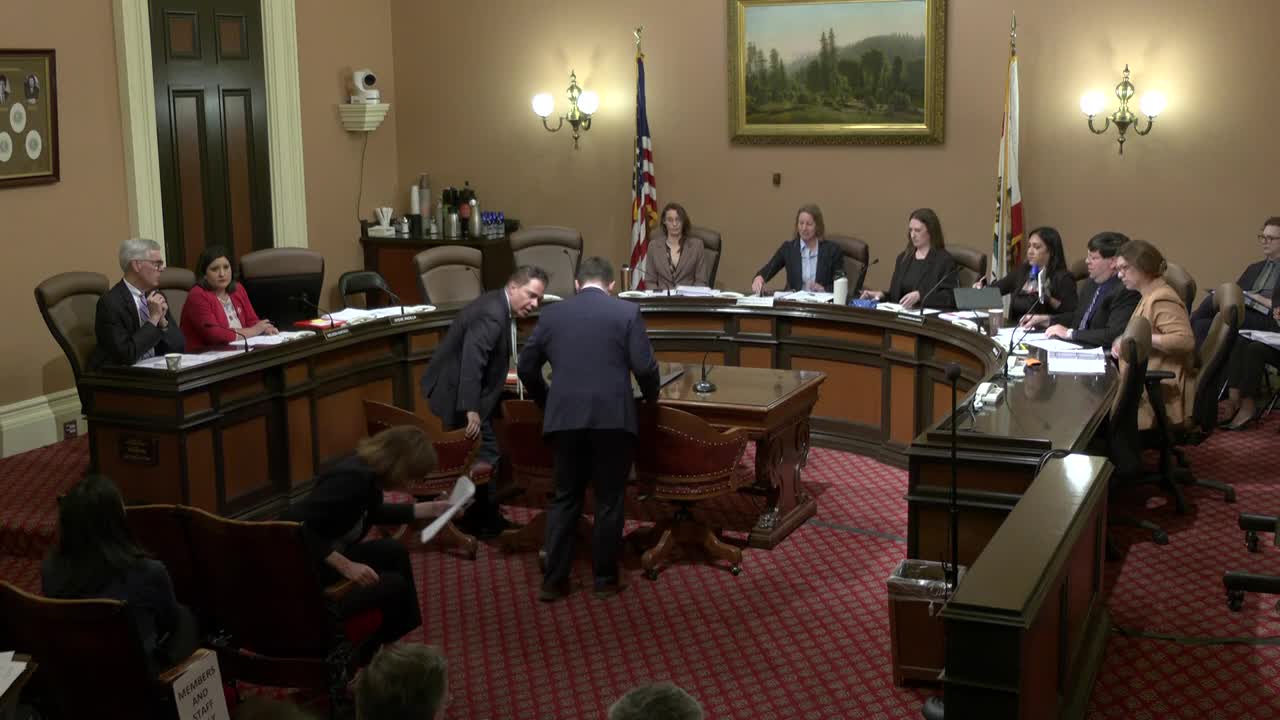 14MIN
Senate Standing Committee on Environmental Quality
Bill Author

Bill Co-Author(s):