SB 465: Governor’s Office of Emergency Services: California Alert.
- Session Year: 2025-2026
- House: Senate
- Latest Version Date: 2025-03-24
Current Status:
Failed
(2026-02-02: Returned to Secretary of Senate pursuant to Joint Rule 56.)
Introduced
In Committee
Awaiting First Chamber Vote
Passed First Chamber
In Committee
Awaiting Second Chamber Vote
Passed Second Chamber
Enacted
The California Emergency Services Act authorizes the Governor to declare a state of emergency, and local officials and local governments to declare a local emergency, when specified conditions of disaster or extreme peril to the safety of persons and property exist. Existing law establishes the Office of Emergency Services within the office of the Governor and charges it with responsibility for the states emergency and disaster response services for natural, technological, or manmade disasters and emergencies, including responsibility for activities necessary to prevent, respond to, recover from, and mitigate the effects of emergencies and disasters upon people and property. Existing law requires the Office of Emergency Services, in consultation with, at minimum, telecommunications carriers, the California cable and broadband industry, radio and television broadcasters, the California State Association of Counties, the League of California Cities, the access and functional needs community, appropriate federal agencies, and the Standardized Emergency Management System Alert and Warning Specialist Committee, to develop guidelines for alerting and warning the public of an emergency.
This bill would require the office to establish a statewide emergency alert system called California Alert. The bill would require California Alert to utilize Wireless Emergency Alerts authorized by the Integrated Public Alert Warning System, the Federal Emergency Management Agencys national system for local alerting that provides authenticated emergency information to the public through mobile phones within a designate cell towers coverage area. The bill would require the office to contract with a private vendor that provides alerting systems to send California Alerts to registered phone numbers that are not location based. The bill would require the office to establish standards for issuing emergency alerts to California residents across local jurisdictional boundaries.
Existing law, the California Emergency Services Act, establishes, within the office of the Governor, the Office of Emergency Services (OES) under the supervision of the Director of Emergency Services. Existing law makes OES responsible for addressing natural, technological, or manmade disasters and emergencies, including activities necessary to prevent, respond to, recover from, and mitigate the effects of emergencies and disasters to people and property.Existing law, on or before July 1, 2022, requires OES, in consultation with specified groups and entities, to develop guidelines for alerting and warning the public of an emergency, as specified, and to provide each city and county with a copy of the guidelines.This bill would express the intent of the Legislature to improve emergency alert systems to ensure that emergency alerts, notifications, and evacuation orders are delivered to their intended recipients in a timely, clear, and effective manner, while also preventing the dissemination of erroneous alerts.Existing law, the California Emergency Services Act, establishes, within the office of the Governor, the Office of Emergency Services (OES) under the supervision of the Director of Emergency Services. Existing law makes OES responsible for addressing natural, technological, or manmade disasters and emergencies, including activities necessary to prevent, respond to, recover from, and mitigate the effects of emergencies and disasters to people and property.
Existing law, on or before July 1, 2022, requires OES, in consultation with specified groups and entities, to develop guidelines for alerting and warning the public of an emergency, as specified, and to provide each city and county with a copy of the guidelines.
This bill would express the intent of the Legislature to improve emergency alert systems to ensure that emergency alerts, notifications, and evacuation orders are delivered to their intended recipients in a timely, clear, and effective manner, while also preventing the dissemination of erroneous alerts.
(a)(1)The office shall establish a statewide emergency alert system called California Alert.
(2)California Alert shall utilize Wireless Emergency Alerts (WEA) authorized by the Integrated Public Alert & Warning System (IPAWS), the Federal Emergency Management Agencys national system for local alerting that provides authenticated emergency information to the public through mobile phones within a designate cell towers coverage area.
(3)The office shall contract with a private vendor that provide alerting systems to send California Alerts to registered phone numbers that are not location based.
(b)Notwithstanding subdivision (a), primary responsibility for sending out emergency alerts to California residents shall lie with city-operated, county-operated, or city- and county-operated public emergency warning systems. California Alert operated by the office shall act as a backup to those alert systems and the office shall assist local government in sending out alerts, when requested to do so.
(c)The office shall establish standards for issuing emergency alerts to California residents across local jurisdictional boundaries.
SECTION 1.It is the intent of the Legislature to improve emergency alert systems to ensure that emergency alerts, notifications, and evacuation orders are delivered to their intended recipients in a timely, clear, and effective manner, while also preventing the dissemination of erroneous alerts.It is the intent of the Legislature to improve emergency alert systems to ensure that emergency alerts, notifications, and evacuation orders are delivered to their intended recipients in a timely, clear, and effective manner, while also preventing the dissemination of erroneous alerts.
|
Date
|
Status
|
|---|---|
| Feb 2, 2026 | Returned to Secretary of Senate pursuant to Joint Rule 56. |
| May 23, 2025 | May 23 hearing: Held in committee and under submission. |
| May 16, 2025 | Set for hearing May 23. |
| May 5, 2025 | May 5 hearing: Placed on APPR. suspense file. |
| Apr 25, 2025 | Set for hearing May 5. |
| Apr 22, 2025 | From committee: Do pass and re-refer to Com. on APPR. (Ayes 14. Noes 0. Page 830.) (April 22). Re-referred to Com. on APPR. |
| Apr 10, 2025 | Set for hearing April 22. |
| Apr 2, 2025 | Re-referred to Com. on G.O. |
| Mar 24, 2025 | From committee with author's amendments. Read second time and amended. Re-referred to Com. on RLS. |
| Feb 26, 2025 | Referred to Com. on RLS. |
| Feb 20, 2025 | From printer. May be acted upon on or after March 22. |
| Feb 19, 2025 | Introduced. Read first time. To Com. on RLS. for assignment. To print. |
|
Date
|
Description
|
Location
|
Votes
|
|
|---|---|---|---|---|
| May 5, 2025 | Placed on suspense file | Senate Standing Committee on Appropriations |
Passed |
|
| Apr 22, 2025 | Do pass, but first be re-referred to the Committee on [Appropriations] | Senate Standing Committee on Governmental Organization |
Passed |
This list shows positions taken on this bill by organizations on the date displayed, which is linked to the original source.
Positions by individuals are not included.
SENATE COMMITTEE ON APPROPRIATIONS
Senator Anna Caballero, Chair
2025 - 2026 Regular Session
SB 465 (Pérez) - Governor’s Office of Emergency Services: California Alert
Version: March 24, 2025 | Policy Vote: G.O. 14 - 0 |
Urgency: No | Mandate: No |
Hearing Date: May 5, 2025 | Consultant: Janelle Miyashiro |
Bill Summary:
SB 465 requires the Office of Emergency Services (OES) to establish a statewide emergency alert system called California Alert, as specified.
Fiscal Impact:
Unknown significant one-time and ongoing costs, likely ranging in the millions of dollars, for OES to contract for and maintain the California Alert system, as well as train local alerting authorities (General Fund).
Background:
Under the oversight of OES’s California State Warning Center, the Alert and Warning program monitors all state-wide alert and warning activities. It offers guidance and support to ensure the effective operation of the Alert and Warning program.
The Warning Center’s mission is to serve as the central hub for all Alert and Warning matters across the state, local, city, tribal, federal, school, and special district levels. The objective for the OES Alert and Warning program is to safeguard public safety by assisting the states’ alerting authorities in promptly disseminating critical information during emergencies. An alerting authority is a jurisdiction with the designated authority to alert and warn the public when there is an impending natural or human-made disaster, threat, or dangerous or missing person.
OES’s Alert and Warning program’s key partners include local alerting authorities, the California Broadcast Association, the Disability Disaster Access and Resources program, the U.S. Department of Homeland Security, the Federal Communications Commission, the National Weather Service, and the Federal Emergency Management Agency (FEMA). In particular, FEMA’s national system for local alerting, the Integrated Public Alert & Warning System (IPAWS), which sends out Wireless Emergency Alerts (WEA) to provide authenticated emergency and life-saving information to the public through mobile phones, is a key partner to local alerting authorities.
There is no cost to sign up for or subscribe to IPAWS alerts, however alerting authorities may incur costs to purchase compatible alert origination software that meet IPAWS requirements. With IPAWS, alerting authorities can target specific geographic areas to ensure only those in the affected area, including visitors, receive the alert. The content and timing of alerts is at the discretion of alerting authorities. FEMA does not review, edit, approve, or disapprove alerts sent by public safety agencies.
Proposed Law:
- Requires OES to establish a statewide emergency alert system called California Alert.
- Requires OES to contract with a private vendor that provide alerting systems to send California Alerts to registered phone numbers that are not location based.
- Requires OES to establish standards for issuing emergency alerts to California residents across local jurisdictional boundaries.
- Requires California Alert to utilize WEA authorized by IPAWS, FEMA’s national system for local alerting that provides authenticated emergency information to the public through mobile phones within a designate cell tower’s coverage area.
- Provides that city-operated, county-operated, or city- and county-operated public emergency warning systems have the primary responsibility for sending out emergency alerts to California residents.
-- END --
SENATE COMMITTEE ON GOVERNMENTAL ORGANIZATION
Senator Steve Padilla
Chair
2025 - 2026 Regular
Bill No: 465 Hearing Date: 4/22/2025
Author: | & Padilla | ||
Version: | 3/24/2025 Amended | ||
Urgency: | No | Fiscal: | Yes |
Consultant: | Brian Duke | ||
SUBJECT: Governor’s Office of Emergency Services: California Alert
DIGEST: This bill requires the Office of Emergency Services (OES) to establish a statewide emergency alert system called California Alert, as specified.
ANALYSIS:
Existing law:
- Authorizes, pursuant to the California Emergency Services Act, the Governor to declare a state of emergency, and local officials and governments to declare a local emergency, when specified conditions of disaster or extreme peril to the safety of persons and property exist, as specified.
- Establishes OES, within the office of the Governor, and charges it with responsibility for the state’s emergency and disaster response services for natural, technological, or manmade disasters and emergencies, including responsibility for activities necessary to prevent, respond to, recover from, and mitigate the effects of emergencies and disasters upon people and property.
- Requires OES, in consultation with telecommunications carriers, the California cable and broadband industry, radio and television broadcasters, the California State Association of Counties, the League of California Cities, the access and functional needs community, appropriate federal agencies, and the Standardized Emergency Management System Alert and Warning Specialist Committee, to develop guidelines for alerting and warning the public of an emergency.
This bill:
- Requires OES to establish a statewide emergency alert system called California Alert.
- Requires California Alert to utilize Wireless Emergency Alerts authorized by the Integrated Public Alert & Warning System, the Federal Emergency Management Agency’s national system for local alerting that provides authenticated emergency information to the public through mobile phones within a designated cell tower’s coverage area.
- Requires OES to contract with a private vendor that provide alerting systems to send California Alerts to registered phone numbers that are not location based.
- Specifies that the primary responsibility for sending out emergency alerts to California residents shall lie with city-operated, county-operated, or city- and county-operated public emergency warning systems.
- Provides that California Alert operated by OES shall act as a backup to those alert systems and requires OES to assist local governments in sending out alerts, when requested to do so.
- Requires OES to establish standards for issuing emergency alerts to California residents across local jurisdictional boundaries.
Background
Author Statement. According to the author’s office, “in January of this year, the Los Angeles wildfires − namely the Eaton and Palisades Fire – ravaged the Los Angeles metropolitan region. During these wildfires, over 200,000 residents were forced to evacuate and unfortunately revealed a multitude of issues with our current emergency alerting systems. In my district, evacuation notices for the Eaton fire in Altadena were delayed by hours in some areas of the unincorporated community. Separately, alerts intended for a specific geographic area were mistakenly sent to all of Los Angeles County, causing wide spread panic and confusion.”
Moreover, “smaller, unincorporated, and under-resourced areas in the state often lack adequate staff capacity and training to create and send these alerts. For instance, when the January wildfires first broke out, there was just one person from Los Angeles County’s Office of Emergency Management sending alerts for the Eaton, Palisades, and Hurst fires using a new alerting software that they were not extensively trained to use. Eventually, OES had to step in to take over sending alerts. While California’s current emergency alerting system relies on local governments to maintain the primary alerting responsibility even in times of declared emergency, OES has previously intervened to deliver emergency alerts.”
Finally, “SB 465 will create a statewide emergency alerts system that is administered by OES and will serve as a backup for locally operated emergency warning systems as well as a resource to assist to local governments issue alerts. This bill will ensure that Californians receive timely, accurate, and precise lifesaving alert notifications when future disasters occur.”
Public Alert and Warning. California’s Emergency Alert System has evolved into a critical lifeline for protecting the public during disasters and emergencies. In recent decades, the increasing frequency and severity of wildfires, floods, a pandemic, and other hazards during an increasingly changing global climate, as well as the constant threat of earthquakes, underscores the importance of a coordinated, statewide communication network.
Severe events such as the 2017 wildfire season, which witnessed devastating fires in the North Bay area, and significant loss of life and property, revealed that no single community possessed sufficient resources to respond independently. In parallel, the need to provide timely earthquake warnings spurred the development of early warning systems like ShakeAlert, which uses seismic sensor data to provide precious seconds for residents to “drop, cover, and hold on” before damaging shaking arrives via earthquake. MyShake is a mobile phone application that delivers ShakeAlert-powered earthquake alerts across California, Oregon, and Washington. Alerts are provided in partnership with the United States Geological Survey (USGS) and OES. The app provides earthquake information at the fingertips of users, allowing them to see damage reports shared by citizen scientists, and is working to build a global seismic network.
Over time, experience with various disasters have paved the way for the establishment of a comprehensive alert system that includes the Emergency Alert System (EAS), Wireless Emergency Alerts (WEA), and the Integrated Public Alert & Warning System (IPAWS). The EAS is a national public warning system, which enables broadcasters, cable operators, and radio stations to interrupt regular programming to deliver urgent messages. Initially designed to allow the President to address the nation during crises, the EAS is now predominantly used by state and local agencies to disseminate information on weather emergencies, civil dangers, and missing children. WEA complements the EAS by sending text-like messages directly to mobile devices within a designated geographic area. This technology has proven invaluable during emergencies because it reaches a broad audience automatically, even if residents are not enrolled in any alert program. Together, these systems are unified under IPAWS, which streamlines message distribution across multiple channels and is intended to ensure that information is transmitted rapidly and consistently.
Despite the sophistication of these technologies, challenges remain. Recent incidents have shown that delays in alert delivery, particularly during wildfires, can have dire consequences. For example, gaps in connectivity and inconsistencies between overlapping alert systems have sometimes led to delayed evacuation orders, leaving residents vulnerable. Moreover, ensuring that all members of California’s diverse population receive alerts in a manner that is accessible and actionable is an ongoing concern. Special actions have been undertaken to address the needs of individuals with access and functional needs, non-English or limited-English speakers, and other vulnerable groups – yet there is still room for improvement in achieving full inclusivity in alerting and warning.
Coordination among local, state, and federal agencies is essential for the effectiveness of the alert system. Local governments are typically the first to issue warnings based on real-time, on-the-ground assessments, while state agencies like OES provide oversight, resources, and technical guidance. The federal government, through the Federal Emergency Management Agency (FEMA) and the Federal Communications Commission (FCC), ensures that systems such as IPAWS meet rigorous standards and can integrate seamlessly with local efforts. This multi-tiered approach allows California to mobilize a rapid response during emergencies, although the complexity of interagency coordination sometimes contributes to communication challenges during critical moments.
Earlier this year, the Senate Committee on Governmental Organization, the Joint Legislative Committee on Emergency Management, and the Assembly Committee on Emergency Management held an informational hearing titled, “Californian’s Emergency Alert System.” During the hearing, Legislators heard from OES, local alerting authority representatives, and the private sector working on alerting solutions. During the hearing, OES reiterated that the state can send out alerts on behalf of counties, but it relies on local governments to provide the information about which areas should receive the alert and what they should say.
Integrated Public Alert & Warning System. IPAWS is the backbone of modern emergency communication in the United States, serving as a critical tool for public safety and disaster management. Established by FEMA under Executive Order 13407 in 2006, IPAWS consolidates various alert platforms—including EAS and WEA—into one interoperable network. This system enables federal, state, tribal, territorial, and local authorities to swiftly disseminate geographically targeted warnings and emergency information through multiple communication channels such as broadcast television, radio, mobile devices, and internet services.
According to the IPAWS Process Playbook (Version 1.0, February 2021), public safety officials—referred to as Alerting Authorities—must compose alerts using the Common Alerting Protocol (CAP), a format that ensures consistency, clarity, and the inclusion of essential information such as the nature of the threat, the affected area, and specific protective actions. Once an alert is composed and reviewed against standardization checklists, it is transmitted to the IPAWS-OPEN platform, where it undergoes authentication before being distributed across the network to various disseminators. These dissemination pathways include EAS for traditional media, WEA for mobile devices, and other internet-based platforms, ensuring that the message reaches the public in seconds.
When an emergency takes place or a disaster strikes, the toolbox for public warning includes: automated phone calls or texts through a city’s or a county’s opt-in warning program; reverse 911 calling systems; pushed notifications from local authorities onto cellphones through WEA; warnings broadcast on TV and radio stations; social media alerts, including through Nixle.com and CodeRed; specialized sirens on law enforcement patrol cars, used to signal people to be on alert and seek out additional information; local broadcast speaker systems and sirens; door to door alerts from first responders; community systems of sirens or broadcast speakers; and neighbors warning neighbors.
California State Warning Center Alert and Warning Program. Under the oversight of the California State Warning Center, the Alert and Warning program assumes a strategic vantage point to monitor all state-wide alert and warning activities. It offers guidance and support to ensure the effective operation of the Alert and Warning program.
Its mission is to serve as the central hub for all Alert and Warning matters across the state, local, city, tribal, federal, school, and special district levels. To enhance state-wide community resilience and saves lives during crises. The objective for the OES Alert and Warning program is to safeguard public safety by assisting the states’ alerting authorities in promptly disseminating critical information during emergencies. A few key areas where the Alert and Warning program focuses its efforts are: training, lessons learned, best practices, exercise assistance, planning support, and technology.
January 2025 Southern California Conflagration. As noted above by the author, in January of this year, a series of 14 destructive wildfires affected the Los Angeles metropolitan area and San Diego County. The fires killed at least 29 people, forced more than 200,000 to evacuate or otherwise be displaced, and destroyed more than 18,000 homes and structures while burning over 57,000 acres of land in total. Several of the people who were killed in the fires were disabled and the majority were over the age of 70, according to news reports identifying the victims.
When flames erupted from Eaton Canyon on January 7, neighborhoods on Altadena’s east side got evacuation orders at 7:26 p.m., but residents on the west side did not receive orders until 3:25 a.m. – hours after fires began to blaze through their neighborhoods. All of the 17 individuals confirmed dead in the Eaton fire were on the town’s west side.
On January 9, residents across the Los Angeles metropolitan region of 10 million people received a wireless emergency alert urging them to prepare to evacuate. A correction was issued approximately 20 minutes later, stating the alert was sent “in ERROR.” However, a stream of faulty alerts continued to sound out the following day. Residents as far away as Long Beach – more than 35 miles from any active fire – reported receiving pings on their phones.
County officials later said the alerts, meant to go out to a smaller group of residents in the Kenneth fire evacuation area, were caused by a software glitch. After switching to a different system, the county said in a statement that it was working with Genasys, FEMA, and the FCC to investigate how alerts continued to ping out on phones across Los Angeles County. Additionally, the director of Los Angeles County’s Office of Emergency Management announced the county would overhaul its emergency notification systems: it would suspend its alert system operated by Genasys and switch to a separate system, operated by OES, for any future emergency alerts via cellphones.
Following the faulty alerts, Representative Robert Garcia of Long Beach sent letters requesting information for Los Angeles County, Genasys Inc., FEMA, and the FCC. The letters, signed by more than a dozen members of the Los Angeles congressional delegation, requested details on the “precise failures” that led to the erroneous alerts. The Congressmember’s report on the incidents is expected to be released later this month.
In late January, the Los Angeles County Board of Supervisors approved and then selected the McChrystal Group to conduct an independent review of its emergency response systems following the devastating Eaton and Palasades Fires. The independent review will be conducted under retired four-star General Stanley McChrystal, former leader of the United States military’s Joint Special Operations Command. A comprehensive review process has been ongoing, with the first progress report due within 90 days of the Board’s motion. The review will include gathering and validating the call histories of the fire, interviewing first responders who were on scene as well as incident commanders in the field and overseeing operations, searching and reviewing 911 records, and gathering information from many other relevant sources, including community members.
In the immediate aftermath of the fires, various news reports highlighted the extent to which impacted residents relied on private mobile phone applications for staying updated on real time fire conditions and notifications. These apps served as a supplement to, or in place of, official notifications sent through the local alerting authorities. Notably, reports state that approximately two million people downloaded private apps in the Los Angeles area, which utilize an automated system to monitor 911 dispatch calls. Available personnel then monitor public sources, scanners, cameras, satellites, and more to provide updates to users. Additionally, team members vet information from the scene and provide updates on fires until they are extinguished or no longer a threat. On these apps, users can set up notifications for fires in their county, see maps of fires and evacuation zones, view information about winds and air quality, view cameras showing fire activity, and see updates about fire perimeters, size, and progress, all in real time.
The Southern California fires came six years after the state’s deadliest fire, the Camp fire, which engulfed the town of Paradise and killed 85 people. During the wildfire, fewer than a quarter of Paradise’s 27,000 residents received official evacuation order via phone. A 2020 after-action report found just one trained staffer was managing alerts during the first 16 hours of the fire (not uncommon in smaller and rural counties), the county struggled with its latest WEA technology at the time, and did not sufficiently test its new system for a worst-case scenario.
Following that disaster, Butte county overhauled its alert and warning system, and in 2019 OES established statewide Alert and Warning Guidelines – as required by SB 833 (McGuire, Chapter 617, Statutes of 2018) – urging local officials to issue alerts and warnings when there is “an imminent threat to life, health, or property.” Even if the threat might not be imminent, the guidelines recommend that warnings can help “communicate that threat out to the public so that they may be better prepared.” “Fear of triggering a ‘panic’ is not a valid reason to delay or avoid issuing a warning, the guidelines state. “‘Mass Panic’ very rarely occurs as the result of a warning message.”
California Alert. This bill requires OES to establish a statewide emergency system called California Alert, and requires that system to use WEA authorized by IPAWS, FEMA’s national system for local alerting that provides authenticated emergency information to the public through mobile phones within a designated cell tower’s coverage area. The bill requires OES to contract with a private vendor that provides alerting systems to send California Alerts to registered phone numbers that are not location based.
The bill specifies that primary responsibility for sending out emergency alerts to California residents lies with city-operated, county-operated, or city- and county-operated public emergency warning systems and that California Alert will operated as a backup to those alert systems and requires OES to assist local governments in sending out alerts, when requested to do so.
Additionally, the bill requires OES to establish standards for issuing emergency alerts to California residents across local jurisdictional boundaries.
Prior/Related Legislation
SB 352 (Reyes, 2025) requires eligible area agencies on aging and independent living centers that provide transportation and evacuation services to individual with access and functional needs during a state of emergencies to be prioritized for state assistance, as specified, and requires Aging and Disability Resource Connection programs to provide disaster and emergency preparedness training, as specified. (Pending in the Senate Governmental Organization Committee)
AB 1060 (Rodriguez, 2021) would have required OES to establish a statewide emergency alert system called California Alert, as specified. (Held in the Assembly Appropriations Committee Suspense File)
AB 2386 (Bigelow, Chapter 254, Statutes of 2020) requires OES to annually review a minimum of 10 local emergency plans to determine if they conform or exceed best practices identified by FEMA, as specified.
AB 2213 (Limon, Chapter 98, Statutes of 2020) authorizes cities and postsecondary institutions to access resident and student contact information for the sole purpose of enrollment in a public emergency warning system.
AB 1877 (Limon, Chapter 630, Statutes of 2018) requires OES to create a library of translated emergency notification and translation style guide, as specified, and requires designated alerting authorities to consider using the library and translation style guide when issuing emergency notifications to the public.
SB 821 (Jackson, Chapter 615, Statutes of 2018) authorizes counties to access the contact information of accountholders through the records of a public utility for the sole purpose of enrolling residents in a public emergency warning system.
SB 833 (McGuire, Chapter 617, Statutes of 2018) required OES, in consultation with specified stakeholders, to develop voluntary guidelines for alerting and warning the public in an emergency, and required OES to develop and alert and warning training, as specified.
FISCAL EFFECT: Appropriation: Fiscal Com.: Local:
SUPPORT:
None received
OPPOSITION:
None received
Discussed in Hearing
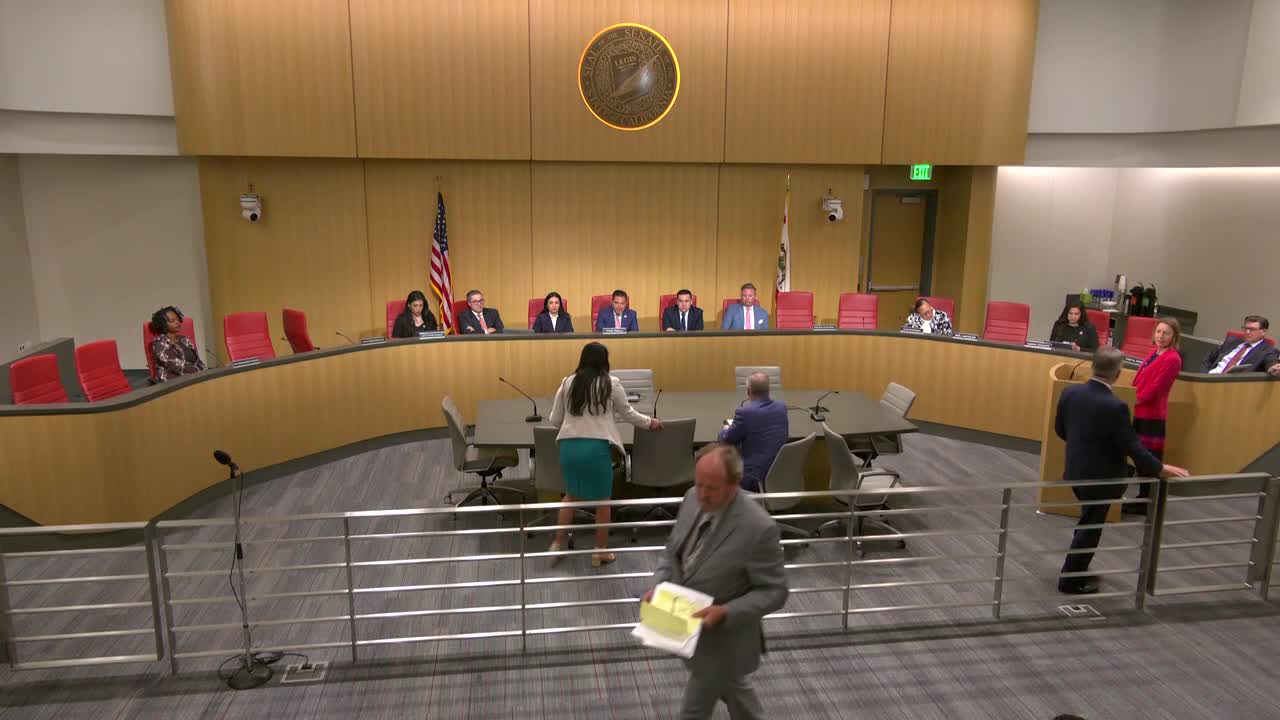 6MIN
Senate Standing Committee on Governmental Organization


Bill Co-Author(s):