SB 510: Pupil instruction: treatment of African Americans.
- Session Year: 2025-2026
- House: Senate
- Latest Version Date: 2025-08-28
Current Status:
Passed
(2025-08-28: Chaptered by Secretary of State. Chapter 100, Statutes of 2025.)
Introduced
In Committee
Awaiting First Chamber Vote
Passed First Chamber
In Committee
Awaiting Second Chamber Vote
Passed Second Chamber
Enacted
Existing law establishes the Instructional Quality Commission and requires the commission to, among other things, recommend curriculum frameworks to the State Board of Education. Existing law requires the commission, when the history-social science curriculum framework is next revised, on or after January 1, 2025, to consider providing for inclusion, in that curriculum framework, related evaluation criteria, and accompanying instructional materials, of instruction on the treatment and perspectives of Native Americans during the Spanish colonization of California and the Gold Rush Era.
This bill would require the commission, when the state board next revises the history-social science curriculum framework or adopts new instructional materials, on or after January 1, 2026, to consider including content on the historical, social, economic, and political contributions of African Americans during the Spanish colonization of California, the Gold Rush Era, and Antebellum, as provided.
Existing law requires establishes the Instructional Quality Commission, Commission and requires the commission to, among other things, recommend curriculum frameworks to the State Board of Education. Existing law requires the commission, when the history-social science curriculum framework is next revised, on or after January 1, 2025, to consider providing for inclusion, in that curriculum framework, related evaluation criteria, and accompanying instructional materials, of instruction on the treatment and perspectives of Native Americans during the Spanish colonization of California and the Gold Rush Era.
This bill, with respect to the adopted course of study for grades 1 to 12, inclusive, for social sciences, would additionally require instruction that provides a foundation for understanding the treatment and perspectives of African Americans regarding the harm California has done to African Americans. The bill would require the commission, when the State Board of Education state board next revises the history-social science curriculum framework or adopts new instructional materials, on or after January 1, 2026, to consider including content on the historical, social, economic, and political contributions of African Americans during the Spanish colonization of California, the Gold Rush Era, and Antebellum, as provided. To the extent that this bill would create new duties for local educational agencies or local officials, it would constitute a state-mandated local program.
The California Constitution requires the state to reimburse local agencies and school districts for certain costs mandated by the state. Statutory provisions establish procedures for making that reimbursement.This bill would provide that, if the Commission on State Mandates determines that the bill contains costs mandated by the state, reimbursement for those costs shall be made pursuant to the statutory provisions noted above.Existing law requires the adopted course of study for grades 1 to 6, inclusive, and the adopted course of study for grades 7 to 12, inclusive, to include certain areas of study, including, among others, English, mathematics, social sciences, science, and visual and performing arts, as specified.
Existing law requires the Instructional Quality Commission, when the history-social science curriculum framework is next revised, on or after January 1, 2025, to consider providing for inclusion, in that curriculum framework, related evaluation criteria, and accompanying instructional materials, of instruction on the treatment and perspectives of Native Americans during the Spanish colonization of California and the Gold Rush Era.
This bill, with respect to the adopted course of study for grades 1 to 12, inclusive, for social sciences, would additionally require instruction that provides a foundation for understanding the treatment and perspectives of African Americans regarding the harm California has done to African Americans. The bill would require the commission, when the State Board of Education next revises the history-social science curriculum framework or adopts new instructional materials, on or after January 1, 2026, to consider including content on the historical, social, economic, and political contributions of African Americans during the Spanish colonization of California, the Gold Rush Era, and Antebellum, as provided. To the extent that this bill would create new duties for local educational agencies or local officials, it would constitute a state-mandated local program.
The California Constitution requires the state to reimburse local agencies and school districts for certain costs mandated by the state. Statutory provisions establish procedures for making that reimbursement.
This bill would provide that, if the Commission on State Mandates determines that the bill contains costs mandated by the state, reimbursement for those costs shall be made pursuant to the statutory provisions noted above.
Existing law requires the adopted courses of study for grades 1 to 6, inclusive, and grades 7 to 12, inclusive, to each include, among other courses, social sciences, drawing upon the disciplines of anthropology, economics, geography, history, political science, psychology, and sociology, designed to fit the maturity of the pupils. Existing law requires instruction in social sciences to include, among other things, the early history of California and a study of the role and contributions of people of all genders, Native Americans, African Americans, Latino Americans, Asian Americans, Pacific Islanders, European Americans, LGBTQ+ Americans, persons with disabilities, and members of other ethnic, cultural, religious, and socioeconomic status groups, to the economic, political, and social development of California and the United States of America, with particular emphasis on portraying the role of these groups in contemporary society.This bill would state the intent of the Legislature to enact future legislation that would ensure that all public school pupils receive a complete and accurate education regarding racial disparities and historical injustices, as provided.Existing law requires the adopted courses of study for grades 1 to 6, inclusive, and grades 7 to 12, inclusive, to each include, among other courses, social sciences, drawing upon the disciplines of anthropology, economics, geography, history, political science, psychology, and sociology, designed to fit the maturity of the pupils. Existing law requires instruction in social sciences to include, among other things, the early history of California and a study of the role and contributions of people of all genders, Native Americans, African Americans, Latino Americans, Asian Americans, Pacific Islanders, European Americans, LGBTQ+ Americans, persons with disabilities, and members of other ethnic, cultural, religious, and socioeconomic status groups, to the economic, political, and social development of California and the United States of America, with particular emphasis on portraying the role of these groups in contemporary society.
This bill would state the intent of the Legislature to enact future legislation that would ensure that all public school pupils receive a complete and accurate education regarding racial disparities and historical injustices, as provided.
(a)(1)The department shall incorporate into publications that provide examples of curriculum resources for teacher use those materials developed by publishers of nonfiction, trade books, and primary sources, or other public or private organizations, that are age appropriate and consistent with the subject frameworks on history and social science that deal with civil rights, human rights violations, genocide, slavery, and the Holocaust.
(2)The Legislature encourages the department to incorporate into publications that provide examples of curriculum resources for teacher use those materials developed by publishers of nonfiction, trade books, and primary sources, or other public or private organizations, that are age appropriate and consistent with the subject frameworks on history and social science that deal with the Armenian, Cambodian, Darfur, and Rwandan genocides.
(b)(1)The Legislature encourages the incorporation of survivor, rescuer, liberator, and witness oral testimony into the teaching of human rights, the Holocaust, and genocide, including, but not limited to, the Armenian, Cambodian, Darfur, and Rwandan genocides.
(2)As used in this subdivision, oral testimony means the firsthand accounts of significant historical events presented in a format that includes, but is not limited to, in-person testimony, video, or a multimedia option, such as a DVD or an online video.
(c)The Legislature encourages all state and local professional development activities to provide teachers with content background and resources to assist them in teaching about civil rights, human rights violations, genocide, slavery, the Armenian Genocide, and the Holocaust.
(d)The Legislature encourages all state and local professional development activities to provide teachers with content background and resources to assist them in teaching about the Great Irish Famine of 184550.
(e)The Great Irish Famine of 184550 shall be considered in the next cycle in which the history-social science curriculum framework and its accompanying instructional materials are adopted.
(f)(1)The Legislature encourages all state and local professional development activities to provide teachers with content background and resources to assist them in teaching about the Chinese Exclusion Act of 1882 and the contributions of Chinese Americans to the establishment of the transcontinental railroad.
(2)When the state board revises and adopts the curriculum framework for history-social science on or after January 1, 2017, the state board shall consider providing for the inclusion, in that curriculum framework, evaluation criteria, and accompanying instructional materials, of instruction on the Chinese Exclusion Act of 1882 and the contributions of Chinese Americans to the establishment of the transcontinental railroad.
(g)When the history-social science curriculum framework is revised as required by law, the Instructional Quality Commission shall consider including the Armenian, Cambodian, Darfur, and Rwandan genocides in the recommended history-social science curriculum framework.
(h)The Model Curriculum for Human Rights and Genocide adopted by the state board, pursuant to Section 51226, shall be made available to schools in grades 7 to 12, inclusive, as soon as funding is available for this purpose. In addition, the department shall make the curriculum available on its internet website.
(i)For purposes of this article, Armenian Genocide means the torture, starvation, and murder of 1,500,000 Armenians, which included death marches into the Syrian Desert, by the rulers of the Ottoman Turkish Empire and the exile of more than 500,000 innocent people during the period from 1915 to 1923, inclusive.
(j)When the state board revises and adopts the curriculum framework for history-social science on or after January 1, 2016, the state board shall consider providing for the inclusion, in that curriculum framework, evaluation criteria, and accompanying instructional materials, of instruction on the unconstitutional deportation to Mexico during the Great Depression of citizens and lawful permanent residents of the United States.
(k)As used in subdivisions (b) and (c), human rights and human rights violations include the unconstitutional deportation to Mexico during the Great Depression of citizens and lawful permanent residents of the United States.
(l)When the history-social science curriculum framework is next revised on or after January 1, 2024, the Instructional Quality Commission shall consider providing for inclusion, in that curriculum framework, related evaluation criteria, and accompanying instructional materials, of instruction on both of the following:
(1)The historical, social, economic, and political contributions of Asian Americans, Native Hawaiians, and Pacific Islanders in the United States.
(2)Examples of racism, discrimination, and violence perpetrated against Asian Americans, Native Hawaiians, and Pacific Islanders in the United States, including, but not limited to, hate crimes committed during the COVID-19 pandemic.
(m)When the state board next revises the history-social science curriculum framework or adopts new instructional materials, after January 1, 2025, the Instructional Quality Commission shall consider, in consultation with California tribes, including in that curriculum framework or including in its evaluation criteria for instructional materials, content on the treatment and perspectives of Native Americans during the periods of the Spanish colonization of California and the Gold Rush Era.
(n)When the state board adopts new instructional materials for history-social science on or after January 1, 2025, the Instructional Quality Commission shall consider providing for inclusion, in its evaluation criteria, content on the case of Mendez v. Westminster School District of Orange County (64 F. Supp. 544 (S.D. Cal. 1946)), affd, Westminster School District of Orange County v. Mendez (161 F. 2d 774 (9th Cir. 1947)).
(o)When the state board next revises the history-social science curriculum framework or adopts new instructional materials, after January 1, 2026, the Instructional Quality Commission shall consider including in that curriculum framework or including in its evaluation criteria for instructional materials, content on the historical, social, economic, and political contributions of African Americans during the Spanish colonization of California, the Gold Rush Era, and Antebellum, including, but not limited to, addressing African Americans experience with discriminatory laws, barriers to land ownership, and their efforts to establish economic and social stability in California.
SEC. 4.If the Commission on State Mandates determines that this act contains costs mandated by the state, reimbursement to local agencies and school districts for those costs shall be made pursuant to Part 7 (commencing with Section 17500) of Division 4 of Title 2 of the Government Code.(a)The adopted course of study for grades 1 to 6, inclusive, shall include instruction, beginning in grade 1 and continuing through grade 6, in the following areas of study:
(1)English, including knowledge of, and appreciation for, literature and the language, as well as the skills of speaking, reading, listening, spelling, handwriting, including instruction in cursive or joined italics in the appropriate grade levels, and composition.
(2)Mathematics, including concepts, operational skills, and problem solving.
(3)Social sciences, drawing upon the disciplines of anthropology, economics, geography, history, political science, psychology, and sociology, designed to fit the maturity of the pupils. Instruction shall provide a foundation for understanding the history, resources, development, and government of California and the United States of America; the development of the American economic system, including the role of the entrepreneur and labor; the relations of persons to their human and natural environment; eastern and western cultures and civilizations; contemporary issues; the wise use of natural resources; and the Spanish colonization of California and the Gold Rush Era, including the treatment and perspectives of Native Americans during those periods. periods; and the treatment and perspectives of African Americans regarding the harm California has done to African Americans.
(4)Science, including the biological and physical aspects, with emphasis on the processes of experimental inquiry, on the place of humans in ecological systems, on the causes and effects of climate change, and on the methods to mitigate and adapt to climate change. Appropriate coursework including material on the causes and effects of climate change and methods to mitigate and adapt to climate change shall be offered to pupils as soon as possible, commencing no later than the 202425 school year.
(5)Visual and performing arts, including instruction in the subjects of dance, music, theater, and visual arts, aimed at the development of aesthetic appreciation and the skills of creative expression.
(6)Health, including instruction in the principles and practices of individual, family, and community health.
(7)Physical education, with emphasis upon the physical activities for the pupils that may be conducive to health and vigor of body and mind, for a total period of time of not less than 200 minutes each 10 schooldays, excluding recesses and the lunch period, except as provided in subdivision (c) of Section 51222.
(8)Other studies that the governing board may prescribe.
(b)(1)A complaint that a school district or county superintendent of schools has not complied with the instructional minute requirements of paragraph (7) of subdivision (a) may be filed with a school district or county superintendent of schools pursuant to the Uniform Complaint Procedures set forth in Chapter 5.1 (commencing with Section 4600) of Division 1 of Title 5 of the California Code of Regulations.
(2)A complainant not satisfied with the decision of a school district or county superintendent of schools may appeal the decision to the department pursuant to Chapter 5.1 (commencing with Section 4600) of Division 1 of Title 5 of the California Code of Regulations and shall receive a written appeal decision within 60 days of the departments receipt of the appeal.
(3)If a school district or county superintendent of schools finds merit in a complaint, or the Superintendent finds merit in an appeal, the school district or county superintendent of schools shall provide a remedy to all affected pupils, parents, and guardians.
(c)The Legislature finds and declares that neither the original provisions of this section, nor any subsequent amendments to it, were intended to create a private right of action. However, nothing in this subdivision shall restrict or expand the existing right of any party to seek relief from noncompliance with this section pursuant to a writ of mandate.
SEC. 2.Section 51220 of the Education Code is amended to read:51220.The adopted course of study for grades 7 to 12, inclusive, shall offer courses in the following areas of study:
(a)English, including knowledge of and appreciation for literature, language, and composition, and the skills of reading, listening, and speaking.
(b)(1)Social sciences, drawing upon the disciplines of anthropology, economics, geography, history, political science, psychology, and sociology, designed to fit the maturity of the pupils. Instruction shall provide a foundation for understanding the history, resources, development, and government of California and the United States of America; instruction in our American legal system, the operation of the juvenile and adult criminal justice systems, and the rights and duties of citizens under the criminal and civil law and the State and Federal Constitutions; the development of the American economic system, including the role of the entrepreneur and labor; personal financial literacy; the relations of persons to their human and natural environment; eastern and western cultures and civilizations; human rights issues, with particular attention to the study of the inhumanity of genocide, slavery, and the Holocaust, and, to the extent instruction is provided on the Spanish colonization of California or the Gold Rush Era, the treatment and perspectives of Native Americans during those periods; the treatment and perspectives of African Americans regarding the harm California has done to African Americans; and contemporary issues.
(2)For purposes of this subdivision, genocide may include the Armenian Genocide. The Armenian Genocide means the torture, starvation, and murder of 1,500,000 Armenians, which included death marches into the Syrian desert, by the rulers of the Ottoman Turkish Empire and the exile of more than 500,000 innocent people during the period from 1915 to 1923, inclusive.
(c)World language or languages, beginning not later than grade 7, designed to develop a facility for understanding, speaking, reading, and writing the particular language.
(d)Physical education, with emphasis given to physical activities that are conducive to health and to vigor of body and mind, as required by Section 51222.
(e)Science, including the physical and biological aspects, with emphasis on basic concepts, theories, and processes of scientific investigation, on the place of humans in ecological systems, on the causes and effects of climate change, on the methods to mitigate and adapt to climate change, and with appropriate applications of the interrelation and interdependence of the sciences. Appropriate coursework including material on the causes and effects of climate change and methods to mitigate and adapt to climate change shall be offered to pupils as soon as possible, commencing no later than the 202425 school year.
(f)Mathematics, including instruction designed to develop mathematical understandings, operational skills, and insight into problem solving procedures.
(g)Visual and performing arts, including dance, music, theater, and visual arts, with emphasis upon development of aesthetic appreciation and the skills of creative expression.
(h)Applied arts, including instruction in the areas of consumer education, family and consumer sciences education, industrial arts, general business education, or general agriculture.
(i)Career technical education designed and conducted for the purpose of preparing youth for gainful employment in the occupations and in the numbers that are appropriate to the personnel needs of the state and the community served and relevant to the career desires and needs of the pupils.
(j)Automobile driver education, designed to develop a knowledge of the Vehicle Code and other laws of this state relating to the operation of motor vehicles, a proper acceptance of personal responsibility in traffic, a true appreciation of the causes, seriousness, and consequences of traffic accidents, and the knowledge and attitudes necessary for the safe operation of motor vehicles. A course in automobile driver education shall include education in the safe operation of motorcycles.
(k)Other studies that the governing board may prescribe.
SEC. 3.Section 51226.3 of the Education Code is amended to read:51226.3.(a)(1)The department shall incorporate into publications that provide examples of curriculum resources for teacher use those materials developed by publishers of nonfiction, trade books, and primary sources, or other public or private organizations, that are age appropriate and consistent with the subject frameworks on history and social science that deal with civil rights, human rights violations, genocide, slavery, and the Holocaust.
(2)The Legislature encourages the department to incorporate into publications that provide examples of curriculum resources for teacher use those materials developed by publishers of nonfiction, trade books, and primary sources, or other public or private organizations, that are age appropriate and consistent with the subject frameworks on history and social science that deal with the Armenian, Cambodian, Darfur, and Rwandan genocides.
(b)(1)The Legislature encourages the incorporation of survivor, rescuer, liberator, and witness oral testimony into the teaching of human rights, the Holocaust, and genocide, including, but not limited to, the Armenian, Cambodian, Darfur, and Rwandan genocides.
(2)As used in this subdivision, oral testimony means the firsthand accounts of significant historical events presented in a format that includes, but is not limited to, in-person testimony, video, or a multimedia option, such as a DVD or an online video.
(c)The Legislature encourages all state and local professional development activities to provide teachers with content background and resources to assist them in teaching about civil rights, human rights violations, genocide, slavery, the Armenian Genocide, and the Holocaust.
(d)The Legislature encourages all state and local professional development activities to provide teachers with content background and resources to assist them in teaching about the Great Irish Famine of 184550.
(e)The Great Irish Famine of 184550 shall be considered in the next cycle in which the history-social science curriculum framework and its accompanying instructional materials are adopted.
(f)(1)The Legislature encourages all state and local professional development activities to provide teachers with content background and resources to assist them in teaching about the Chinese Exclusion Act of 1882 and the contributions of Chinese Americans to the establishment of the transcontinental railroad.
(2)When the state board revises and adopts the curriculum framework for history-social science on or after January 1, 2017, the state board shall consider providing for the inclusion, in that curriculum framework, evaluation criteria, and accompanying instructional materials, of instruction on the Chinese Exclusion Act of 1882 and the contributions of Chinese Americans to the establishment of the transcontinental railroad.
(g)When the history-social science curriculum framework is revised as required by law, the Instructional Quality Commission shall consider including the Armenian, Cambodian, Darfur, and Rwandan genocides in the recommended history-social science curriculum framework.
(h)The Model Curriculum for Human Rights and Genocide adopted by the state board, pursuant to Section 51226, shall be made available to schools in grades 7 to 12, inclusive, as soon as funding is available for this purpose. In addition, the department shall make the curriculum available on its internet website.
(i)For purposes of this article, Armenian Genocide means the torture, starvation, and murder of 1,500,000 Armenians, which included death marches into the Syrian Desert, by the rulers of the Ottoman Turkish Empire and the exile of more than 500,000 innocent people during the period from 1915 to 1923, inclusive.
(j)When the state board revises and adopts the curriculum framework for history-social science on or after January 1, 2016, the state board shall consider providing for the inclusion, in that curriculum framework, evaluation criteria, and accompanying instructional materials, of instruction on the unconstitutional deportation to Mexico during the Great Depression of citizens and lawful permanent residents of the United States.
(k)As used in subdivisions (b) and (c), human rights and human rights violations include the unconstitutional deportation to Mexico during the Great Depression of citizens and lawful permanent residents of the United States.
(l)When the history-social science curriculum framework is next revised on or after January 1, 2024, the Instructional Quality Commission shall consider providing for inclusion, in that curriculum framework, related evaluation criteria, and accompanying instructional materials, of instruction on both of the following:
(1)The historical, social, economic, and political contributions of Asian Americans, Native Hawaiians, and Pacific Islanders in the United States.
(2)Examples of racism, discrimination, and violence perpetrated against Asian Americans, Native Hawaiians, and Pacific Islanders in the United States, including, but not limited to, hate crimes committed during the COVID-19 pandemic.
(m)When the state board next revises the history-social science curriculum framework or adopts new instructional materials, after January 1, 2025, the Instructional Quality Commission shall consider, in consultation with California tribes, including in that curriculum framework or including in its evaluation criteria for instructional materials, content on the treatment and perspectives of Native Americans during the periods of the Spanish colonization of California and the Gold Rush Era.
(n)When the state board adopts new instructional materials for history-social science on or after January 1, 2025, the Instructional Quality Commission shall consider providing for inclusion, in its evaluation criteria, content on the case of Mendez v. Westminster School District of Orange County (64 F. Supp. 544 (S.D. Cal. 1946)), affd, Westminster School District of Orange County v. Mendez (161 F. 2d 774 (9th Cir. 1947)).
(o)When the state board next revises the history-social science curriculum framework or adopts new instructional materials, after January 1, 2026, the Instructional Quality Commission shall consider including in that curriculum framework or including in its evaluation criteria for instructional materials, content on the historical, social, economic, and political contributions of African Americans during the Spanish colonization of California, the Gold Rush Era, and Antebellum, including, but not limited to, addressing African Americans experience with discriminatory laws, barriers to land ownership, and their efforts to establish economic and social stability in California.
SEC. 4.If the Commission on State Mandates determines that this act contains costs mandated by the state, reimbursement to local agencies and school districts for those costs shall be made pursuant to Part 7 (commencing with Section 17500) of Division 4 of Title 2 of the Government Code.
SECTION 1.It is the intent of the Legislature to enact future legislation that would ensure that all public school pupils receive a complete and accurate education regarding racial disparities and historical injustices by doing all of the following:(a)Incorporating comprehensive racial history education that covers the impact of segregation, slavery, and systemic discrimination that have shaped California and the nation.(b)Providing resources and support for teachers to effectively teach racial disparities, including professional development, approved textbooks, and curriculum guidelines.(c)Preparing pupils in understanding and addressing systemic inequities to foster a more informed and inclusive society.It is the intent of the Legislature to enact future legislation that would ensure that all public school pupils receive a complete and accurate education regarding racial disparities and historical injustices by doing all of the following:
(a)Incorporating comprehensive racial history education that covers the impact of segregation, slavery, and systemic discrimination that have shaped California and the nation.
(b)Providing resources and support for teachers to effectively teach racial disparities, including professional development, approved textbooks, and curriculum guidelines.
(c)Preparing pupils in understanding and addressing systemic inequities to foster a more informed and inclusive society.
|
Date
|
Status
|
|---|---|
| Aug 28, 2025 | Chaptered by Secretary of State. Chapter 100, Statutes of 2025. |
| Aug 28, 2025 | Approved by the Governor. |
| Aug 27, 2025 | Enrolled and presented to the Governor at 11 a.m. |
| Aug 21, 2025 | In Senate. Ordered to engrossing and enrolling. |
| Aug 21, 2025 | Read third time. Passed. (Ayes 77. Noes 0. Page 2706.) Ordered to the Senate. |
| Jul 17, 2025 | Read second time. Ordered to consent calendar. |
| Jul 16, 2025 | From committee: Do pass. Ordered to consent calendar. (Ayes 13. Noes 0.) (July 16). |
| Jul 3, 2025 | From committee: Do pass and re-refer to Com. on APPR. with recommendation: To consent calendar. (Ayes 9. Noes 0.) (July 2). Re-referred to Com. on APPR. |
| Jun 5, 2025 | Referred to Com. on ED. |
| May 28, 2025 | In Assembly. Read first time. Held at Desk. |
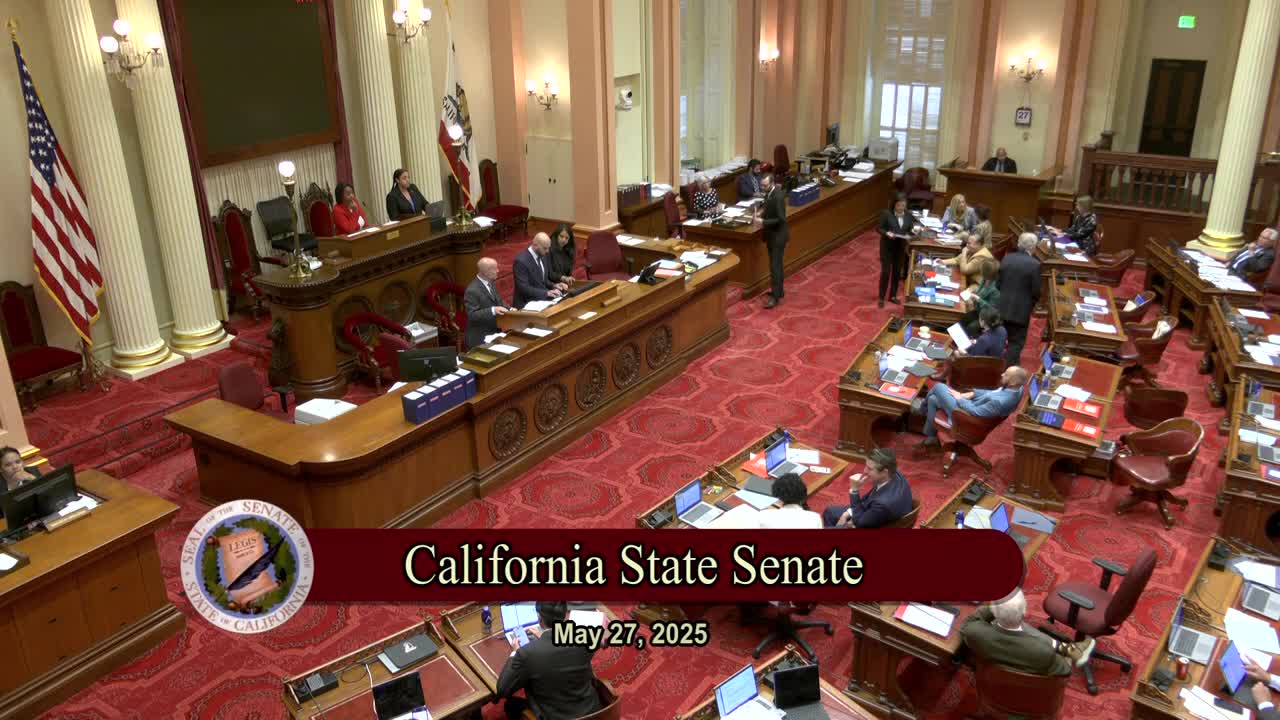
| May 27, 2025 | Read third time. Passed. (Ayes 39. Noes 0. Page 1249.) Ordered to the Assembly. |
| May 13, 2025 | Read second time. Ordered to third reading. |
| May 12, 2025 | From committee: Be ordered to second reading pursuant to Senate Rule 28.8. |
| May 2, 2025 | Set for hearing May 12. |
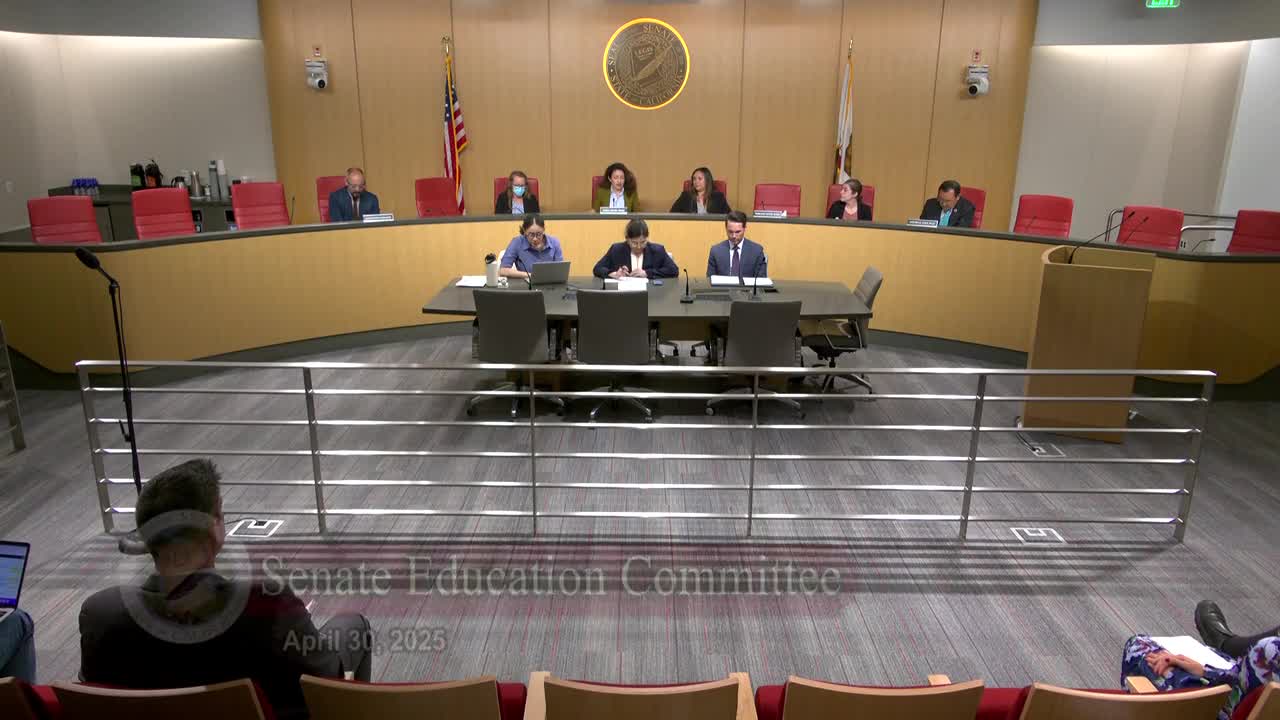
| Apr 30, 2025 | From committee: Do pass and re-refer to Com. on APPR. (Ayes 7. Noes 0. Page 961.) (April 30). Re-referred to Com. on APPR. |
| Apr 21, 2025 | From committee with author's amendments. Read second time and amended. Re-referred to Com. on ED. |
| Apr 17, 2025 | Set for hearing April 30. |
| Apr 10, 2025 | April 23 hearing postponed by committee. |
| Apr 4, 2025 | Set for hearing April 23. |
| Apr 2, 2025 | Re-referred to Com. on ED. |
| Mar 24, 2025 | From committee with author's amendments. Read second time and amended. Re-referred to Com. on RLS. |
| Feb 26, 2025 | Referred to Com. on RLS. |
| Feb 20, 2025 | From printer. May be acted upon on or after March 22. |
| Feb 19, 2025 | Introduced. Read first time. To Com. on RLS. for assignment. To print. |
|
Date
|
Description
|
Location
|
Votes
|
|
|---|---|---|---|---|
| Aug 21, 2025 | SB 510 Richardson Consent Calendar Second Day Regular Session | Assembly Floor |
Passed |
|
| Jul 16, 2025 | Do pass. To Consent Calendar. | Assembly Standing Committee on Appropriations |
Passed |
|
| Jul 2, 2025 | Do pass and be re-referred to the Committee on [Appropriations] with recommendation: To Consent Calendar | Assembly Standing Committee on Education |
Passed |
|
| May 27, 2025 | Senate 3rd Reading SB510 Richardson et al. | Senate Floor |
Passed |
|
| Apr 30, 2025 | Do pass, but first be re-referred to the Committee on [Appropriations] | Senate Standing Committee on Education |
Passed |
This list shows positions taken on this bill by organizations on the date displayed, which is linked to the original source.
Positions by individuals are not included.
|
Organization
|
Position
|
Date
|
|---|---|---|
| California Faculty Association | ** Support | |
| Israeli-American Civic Action Network | ** Support |
Date of Hearing: July 16, 2025
ASSEMBLY COMMITTEE ON APPROPRIATIONS
Buffy Wicks, Chair
SBPCA Bill Id:SB 510
Author:(Richardson) – As Amended Ver:April 21, 2025
Policy Committee: | Education | Vote: | 9 - 0 |
|
| ||
|
|
Urgency: No State Mandated Local Program: No Reimbursable: No
SUMMARY:
This bill requires the Instructional Quality Commission (IQC), upon the next revision of the History-Social Science curriculum framework, after January 1, 2026, to consider including content on the historical, social, economic, and political contributions of African Americans and their experience with discriminatory laws and their efforts to establish economic and social stability in California.
FISCAL EFFECT:
Minor and absorbable state costs for the IQC to consider the content required by this bill in their next revision of the History-Social Science curriculum framework.
COMMENTS:
- Purpose. According to the author:
SB 510 is essential to ensure African American students receive a more accurate, inclusive, and honest education about California and U.S. history. For too long, the contributions, experiences, and struggles of African Americans have been minimized or left out of school curricula. This bill directly addresses that by requiring instruction on the harm California has done to African Americans, including during Spanish colonization, the Gold Rush Era, and through discriminatory laws and barriers to land ownership.
SB 510 ensures that students learn about the economic, social, and political contributions of African Americans, as well as their resilience in the face of systemic oppression. By including African American perspectives in the broader context of history, economics, and civics, the bill helps foster greater understanding of the ongoing fight for equity and justice.
- Background. IQC and Curriculum Development. The IQC develops curriculum frameworks in each subject by convening expert panels, developing drafts, and holding public hearings to solicit input. Such public hearings frequently lead to changes made in response to public comment. The State Board of Education (SBE) then adopts the frameworks in a public meeting. The SBE also adopts, in a public process, instructional materials aligned to those frameworks for grades K-8. School district governing boards and charter schools then adopt instructional materials aligned to these standards and frameworks. This process has traditionally occurred on a regular schedule, giving schools a predictable timetable to plan and budget for changes to the curriculum. Local adoption of new curricula involves significant local costs, including resources for professional development.
History-Social Science Framework and Ethnic Studies. The existing History-Social Science framework, adopted by the SBE in 2019, requires including the experiences, perspectives, and contributions of African Americans throughout the history of the United States in grades four, five, eight, nine, and 11. Additionally, beginning with the graduating class of the 2029-30 academic year, all high school students must take at least a one-semester course in ethnic studies, the model curriculum for which also includes content related to African American history, as well as a description of an African American Studies standalone course, in which “students explore the history, cultures, struggles, and politics of African Americans as part of the African diaspora across time.” This bill requires, upon the next revision of the History-Social Science framework, after January 1, 2026, the IQC to consider including content on the historical, social, economic, and political contributions of African Americans and their experience with discriminatory laws and their efforts to establish economic and social stability in California.
Analysis Prepared by: Aaron Heredia / APPR. / (916) 319-2081
SENATE RULES COMMITTEE Office of Senate Floor Analyses (916) 651-1520 Fax: (916) 327-4478 | SB 510 |
THIRD READING
Bill No: SB 510
Author: Richardson (D), et al.
Amended: 4/21/25
Vote: 21
SENATE EDUCATION COMMITTEE: 7-0, 4/30/25
AYES: Pérez, Ochoa Bogh, Cabaldon, Choi, Cortese, Gonzalez, Laird
SENATE APPROPRIATIONS COMMITTEE: Senate Rule 28.8
SUBJECT: Pupil instruction: treatment of African Americans
SOURCE: Author
DIGEST:
This bill requires the Instructional Quality Commission (IQC) to consider, at the next regularly scheduled revision of the curriculum framework in history-social science or in the adoption of new instructional materials, including content on the historical, social, economic, and political contributions of African Americans during the Spanish colonization of California, the Gold Rush Era, and Antebellum, including, but not limited to, addressing African Americans’ experience with discriminatory laws, barriers to land ownership, and their efforts to establish economic and social stability in California.
ANALYSIS:
Existing law:
- Requires the IQC, during its next revision of the History-Social Science curriculum framework, to consider including instruction on the Election of President Barack Obama and the significance of the United States electing its first African American President. (Education Code (EC) §33543)
- Requires the governing boards of school districts, in their adoption of instructional materials for use in the schools, to accurately portray the cultural and racial diversity of our society, including the role and contributions of Native Americans, African Americans, Latino Americans, Asian Americans, Pacific Islanders, European Americans, LGBTQ+ Americans, persons with disabilities, and members of other ethnic, cultural, religious, and socioeconomic status groups in the total development of California and the United States. (EC § 60040)
- Requires instruction in social sciences to include the early history of California and a study of the role and contributions of people of all genders, Native Americans, African Americans, Latino Americans, Asian Americans, Pacific Islanders, European Americans, LGBTQ+ Americans, persons with disabilities, and members of other ethnic, cultural, religious, and socioeconomic status groups, to the economic, political, and social development of California and the United States of America, with particular emphasis on portraying the role of these groups in contemporary society. (EC § 51204.5)
This bill requires the IQC to consider, at the next regularly scheduled revision of the curriculum framework in history-social science or in the adoption of new instructional materials, including content on the historical, social, economic, and political contributions of African Americans during the Spanish colonization of California, the Gold Rush Era, and Antebellum, including, but not limited to, addressing African Americans’ experience with discriminatory laws, barriers to land ownership, and their efforts to establish economic and social stability in California.
Comments
- Need for the bill. According to the author, “SB 510 is essential to ensure African American students receive a more accurate, inclusive, and honest education about California and U.S. history. For too long, the contributions, experiences, and struggles of African Americans have been minimized or left out of school curricula. This bill directly addresses that by requiring instruction on the harm California has done to African Americans, including during Spanish colonization, the Gold Rush Era, and through discriminatory laws and barriers to land ownership.
“SB 510 ensures that students learn about the economic, social, and political contributions of African Americans, as well as their resilience in the face of systemic oppression. By including African American perspectives in the broader context of history, economics, and civics, the bill helps foster greater understanding of the ongoing fight for equity and justice.
“This legislation is a step toward correcting historical omissions, empowering African American students with representation, and educating all students to be more informed and socially conscious citizens.”
- Instructional Quality Commission: How Curriculum, Standards, Frameworks, and Model Curricula Are Created and Adopted. The Legislature has vested the IQC and the State Board of Education (SBE) with the authority to develop and adopt state curriculum and instructional materials. The IQC develops curriculum frameworks in each subject by convening expert panels, developing drafts, and holding public hearings to solicit input. Changes are frequently made in response to public comment. The SBE then adopts the frameworks in a public meeting. The SBE also adopts, in a public process, instructional materials aligned to those frameworks for grades K-8. School district governing boards and charter schools then adopt instructional materials aligned to these standards and frameworks. This process has traditionally occurred on a regular schedule, giving schools a predictable timetable to plan and budget for changes to the curriculum. Local adoption of new curricula involves significant local cost and investment of resources and professional development.
These existing processes involve practitioners and experts who have an in-depth understanding of curriculum and instruction, including the full scope and sequence of the curriculum in each subject and at each grade level, constraints on instructional time and resources, and the relationship of curriculum to state assessments and other measures of student progress.
- African American perspectives and experiences in the History and Social Science Framework for California Public Schools, Kindergarten Through Grade 12. California’s History-Social Science Framework (Framework), adopted by the SBE in July 2019, features the experiences and perspectives of African Americans throughout the history of the United States. Examples of topics include:
- Grade Four: California: A Changing State – Recognizing the presence of people of African descent throughout much of California’s history contributing to the Spanish exploration of California, the Spanish–Mexican settlement of the region, the founding of the Alta California settlements, California’s subsequent development throughout the nineteenth and twentieth centuries.
- Grade Five: United States History and Geography: Making a New Nation – Understanding the history and impact of slavery, both as a legal and economic institution and as an extreme violation of human rights; understanding how principles of the American Revolution (especially natural rights of freedom and the opportunity for democracy) motivated African Americans—both free and unfree—to try to secure those rights for all by their service in the war itself.
- Grade Eight: United States History and Geography: Growth and Conflict – Examining the Antebellum South by studying the lives of plantation owners and other white Southerners; the more than 100,000 free African Americans in the South; as well as the laws, such as the fugitive slave laws of 1793 and 1850, that curbed their freedom and economic opportunity. Contextualizing the national abolitionist movement that arose during the nineteenth century and the opposition and risks faced by leaders like Frederick Douglass, Sojourner Truth, Harriett Jacobs, Charles Remond, Harriet Tubman, and Robert Purvis; how slavery was replaced by black peonage, segregation, Jim Crow laws, and other legal restrictions on the rights of African Americans, capped by the Supreme Court’s Plessy v. Ferguson decision in 1896.
- Grade Nine: Elective Courses in History–Social Science – Modern California: Understanding California’s economic growth after World War II while recognizing how racial discrimination prevented African Americans from being part of certain neighborhoods as homeowners and banks found ways to deny entry.
- Grade Eleven: United States History and Geography: Continuity and Change in Modern United States History – Understanding the first Great Migration of over a million African Americans from the rural South to the urban North during and after World War I, which changed the landscape of Black America. Understanding how the continued flow of migrants and the practical restrictions of segregation in the 1920s helped to create the Harlem Renaissance, the literary and artistic flowering of Black artists, poets, musicians, and scholars recognizing how racial violence, discrimination, and segregation inhibited African Americans’ economic mobility, opportunity, and political participation.
This bill additionally requires IQC to consider including content on the historical, social, economic, and political contributions of African Americans during the Spanish colonization of California, the Gold Rush Era, and Antebellum, including, but not limited to, addressing African Americans’ experience with discriminatory laws, barriers to land ownership, and their efforts to establish economic and social stability in California.
Related/Prior Legislation
AB 1078 (Jackson, Chapter 229, Statutes of 2023) makes various changes to the requirements on local school governing boards regarding the adoption of instructional materials for use in schools, including a provision that would prohibit a governing board from disallowing the use of an existing textbook, other instructional material, or curriculum that contains inclusive and diverse perspectives, as specified.
AB 48 (Leno, Chapter 81, Statutes of 2011) required California public schools to provide Fair, Accurate, Inclusive, and Respectful representations of our diverse ethnic and cultural population in the K-12 grade history and social studies curriculum.
FISCAL EFFECT: Appropriation: No Fiscal Com.: Yes Local: No
SUPPORT: (Verified 5/13/25)
California Faculty Association
Israeli-American Civic Action Network
OPPOSITION: (Verified 5/13/25)
Prepared by: Therresa Austin / ED. / (916) 651-4105
5/14/25 12:30:00
**** END ****
SENATE COMMITTEE ON EDUCATION
Senator Sasha Renée Pérez, Chair
2025 - 2026 Regular
Bill No: SB 510 Hearing Date: April 30, 2025
Author: | |||
Version: | April 21, 2025 | ||
Urgency: | No | Fiscal: | Yes |
Consultant: | Therresa Austin | ||
Subject: Pupil instruction: treatment of African Americans.
SUMMARY
This bill requires the Instructional Quality Commission (IQC) to consider, at the next regularly scheduled revision of the curriculum framework in history-social science or in the adoption of new instructional materials, including content on the historical, social, economic, and political contributions of African Americans during the Spanish colonization of California, the Gold Rush Era, and Antebellum, including, but not limited to, addressing African Americans’ experience with discriminatory laws, barriers to land ownership, and their efforts to establish economic and social stability in California.
BACKGROUND
Existing law:
- Requires the IQC, during its next revision of the History-Social Science curriculum framework, to consider including instruction on the Election of President Barack Obama and the significance of the United States electing its first African American President. (Education Code (EC) §33543)
- Requires the governing boards of school districts, in their adoption of instructional materials for use in the schools, to accurately portray the cultural and racial diversity of our society, including the role and contributions of Native Americans, African Americans, Latino Americans, Asian Americans, Pacific Islanders, European Americans, LGBTQ+ Americans, persons with disabilities, and members of other ethnic, cultural, religious, and socioeconomic status groups in the total development of California and the United States. (EC § 60040)
- Requires instruction in social sciences to include the early history of California and a study of the role and contributions of people of all genders, Native Americans, African Americans, Latino Americans, Asian Americans, Pacific Islanders, European Americans, LGBTQ+ Americans, persons with disabilities, and members of other ethnic, cultural, religious, and socioeconomic status groups, to the economic, political, and social development of California and the United States of America, with particular emphasis on portraying the role of these groups in contemporary society. (EC § 51204.5)
ANALYSIS
This bill:
- Requires the IQC to consider, at the next regularly scheduled revision of the curriculum framework in history-social science or in the adoption of new instructional materials, including content on the historical, social, economic, and political contributions of African Americans during the Spanish colonization of California, the Gold Rush Era, and Antebellum, including, but not limited to, addressing African Americans’ experience with discriminatory laws, barriers to land ownership, and their efforts to establish economic and social stability in California.
STAFF COMMENTS
- Need for the bill. According to the author, “SB 510 is essential to ensure African American students receive a more accurate, inclusive, and honest education about California and U.S. history. For too long, the contributions, experiences, and struggles of African Americans have been minimized or left out of school curricula. This bill directly addresses that by requiring instruction on the harm California has done to African Americans, including during Spanish colonization, the Gold Rush Era, and through discriminatory laws and barriers to land ownership.
“SB 510 ensures that students learn about the economic, social, and political contributions of African Americans, as well as their resilience in the face of systemic oppression. By including African American perspectives in the broader context of history, economics, and civics, the bill helps foster greater understanding of the ongoing fight for equity and justice.
“This legislation is a step toward correcting historical omissions, empowering African American students with representation, and educating all students to be more informed and socially conscious citizens.”
- Instructional Quality Commission: How Curriculum, Standards, Frameworks, and Model Curricula Are Created and Adopted. The Legislature has vested the IQC and the State Board of Education (SBE) with the authority to develop and adopt state curriculum and instructional materials. The IQC develops curriculum frameworks in each subject by convening expert panels, developing drafts, and holding public hearings to solicit input. Changes are frequently made in response to public comment. The SBE then adopts the frameworks in a public meeting. The SBE also adopts, in a public process, instructional materials aligned to those frameworks for grades K-8. School district governing boards and charter schools then adopt instructional materials aligned to these standards and frameworks. This process has traditionally occurred on a regular schedule, giving schools a predictable timetable to plan and budget for changes to the curriculum. Local adoption of new curricula involves significant local cost and investment of resources and professional development.
These existing processes involve practitioners and experts who have an in-depth understanding of curriculum and instruction, including the full scope and sequence of the curriculum in each subject and at each grade level, constraints on instructional time and resources, and the relationship of curriculum to state assessments and other measures of student progress.
- African American perspectives and experiences in the History and Social Science Framework for California Public Schools, Kindergarten Through Grade 12. California’s History-Social Science Framework (Framework), adopted by the SBE in July 2019, features the experiences and perspectives of African Americans throughout the history of the United States. Examples of topics include:
- Grade Four: California: A Changing State – Recognizing the presence of people of African descent throughout much of California’s history contributing to the Spanish exploration of California, the Spanish–Mexican settlement of the region, the founding of the Alta California settlements, California’s subsequent development throughout the nineteenth and twentieth centuries.
- Grade Five: United States History and Geography: Making a New Nation – Understanding the history and impact of slavery, both as a legal and economic institution and as an extreme violation of human rights; understanding how principles of the American Revolution (especially natural rights of freedom and the opportunity for democracy) motivated African Americans—both free and unfree—to try to secure those rights for all by their service in the war itself.
- Grade Eight: United States History and Geography: Growth and Conflict – Examining the Antebellum South by studying the lives of plantation owners and other white Southerners; the more than 100,000 free African Americans in the South; as well as the laws, such as the fugitive slave laws of 1793 and 1850, that curbed their freedom and economic opportunity. Contextualizing the national abolitionist movement that arose during the nineteenth century and the opposition and risks faced by leaders like Frederick Douglass, Sojourner Truth, Harriett Jacobs, Charles Remond, Harriet Tubman, and Robert Purvis; how slavery was replaced by black peonage, segregation, Jim Crow laws, and other legal restrictions on the rights of African Americans, capped by the Supreme Court’s Plessy v. Ferguson decision in 1896.
- Grade Nine: Elective Courses in History–Social Science – Modern California: Understanding California’s economic growth after World War II while recognizing how racial discrimination prevented African Americans from being part of certain neighborhoods as homeowners and banks found ways to deny entry.
- Grade Eleven: United States History and Geography: Continuity and Change in Modern United States History – Understanding the first Great Migration of over a million African Americans from the rural South to the urban North during and after World War I, which changed the landscape of Black America. Understanding how the continued flow of migrants and the practical restrictions of segregation in the 1920s helped to create the Harlem Renaissance, the literary and artistic flowering of Black artists, poets, musicians, and scholars recognizing how racial violence, discrimination, and segregation inhibited African Americans’ economic mobility, opportunity, and political participation.
This bill would additionally require IQC to consider including content on the historical, social, economic, and political contributions of African Americans during the Spanish colonization of California, the Gold Rush Era, and Antebellum, including, but not limited to, addressing African Americans’ experience with discriminatory laws, barriers to land ownership, and their efforts to establish economic and social stability in California.
- Prior legislation.
AB 1078 (Jackson, Chapter 229, Statutes of 2023) makes various changes to the requirements on local school governing boards regarding the adoption of instructional materials for use in schools, including a provision that would prohibit a governing board from disallowing the use of an existing textbook, other instructional material, or curriculum that contains inclusive and diverse perspectives, as specified.
AB 48 (Leno, Chapter 81, Statutes of 2011) required California public schools to provide Fair, Accurate, Inclusive, and Respectful representations of our diverse ethnic and cultural population in the K-12 grade history and social studies curriculum.
SUPPORT
California Faculty Association
Israeli-American Civic Action Network
OPPOSITION
None received
-- END --
Discussed in Hearing
View Older Hearings