SB 513: Personnel records.
- Session Year: 2025-2026
- House: Senate
- Latest Version Date: 2025-10-11
Current Status:
Passed
(2025-10-11: Chaptered by Secretary of State. Chapter 654, Statutes of 2025.)
Introduced
In Committee
Awaiting First Chamber Vote
Passed First Chamber
In Committee
Awaiting Second Chamber Vote
Passed Second Chamber
Enacted
What does this bill do?
This bill adds employees’ education and training records to the personnel files that current and former employees (or their representatives) can inspect and copy. Employers who keep those training records must include the employee’s name, the training provider, the training dates and duration, the core skills taught (including equipment or software), and any resulting certification or qualification.
The summary is provided by generative AI which can make mistakes. For original language, please view the details in the table below.
Existing law grants current and former employees, or their representative, the right to inspect and receive a copy of personnel records maintained by the employer relating to the employees performance or to any grievance concerning the employee. Existing law requires the employer to make the contents of those personnel records available for inspection, as specified, and makes it a crime for an employer to violate these requirements.
This bill would provide that personnel records relating to the employees performance include education and training records and would require an employer who maintains education and training records to ensure those records include specified information.
By expanding the scope of an existing crime, this bill would impose a state-mandated local program.
The California Constitution requires the state to reimburse local agencies and school districts for certain costs mandated by the state. Statutory provisions establish procedures for making that reimbursement.
This bill would provide that no reimbursement is required by this act for a specified reason.
(a)(1)Every current and former employee, or their representative, has the right to inspect and receive a copy of the personnel records that the employer maintains relating to the employees performance, including education or training records, or to any grievance concerning the employee.
(2)An employer who maintains education or training records shall ensure those records include all of the following:
(A)The name of the employee.
(B)The name of the training provider.
(C)The duration and date of the training.
(D)The core competencies of a training, including skills in equipment or software.
(E)The resulting certification or qualification.
(b)(1)The employer shall make the contents of those personnel records available for inspection to the current or former employee, or their representative, at reasonable intervals and at reasonable times, but not later than 30 calendar days from the date the employer receives a written request, unless the current or former employee, or their representative, and the employer agree in writing to a date beyond 30 calendar days to inspect the records, and the agreed-upon date does not exceed 35 calendar days from the employers receipt of the written request. Upon a written request from a current or former employee, or their representative, the employer shall also provide a copy of the personnel records, at a charge not to exceed the actual cost of reproduction, not later than 30 calendar days from the date the employer receives the request, unless the current or former employee, or their representative, and the employer agree in writing to a date beyond 30 calendar days to produce a copy of the records, as long as the agreed-upon date does not exceed 35 calendar days from the employers receipt of the written request. Except as provided in paragraph (2) of subdivision (c), the employer is not required to make those personnel records or a copy thereof available at a time when the employee is actually required to render service to the employer, if the requester is the employee.
(2)(A)For purposes of this section, a request to inspect or receive a copy of personnel records shall be made in either of the following ways:
(i)Written and submitted by the current or former employee or their representative.
(ii)Written and submitted by the current or former employee or their representative by completing an employer-provided form.
(B)An employer-provided form shall be made available to the employee or their representative upon verbal request to the employees supervisor or, if known to the employee or their representative at the time of the request, to the individual the employer designates under this section to receive a verbal request for the form.
(c)The employer shall do all of the following:
(1)With regard to all employees, maintain a copy of each employees personnel records for a period of not less than three years after termination of employment.
(2)With regard to current employees, make a current employees personnel records available for inspection, and, if requested by the employee or their representative, provide a copy thereof, at the place where the employee reports to work, or at another location agreeable to the employer and the requester. If the employee is required to inspect or receive a copy at a location other than the place where they report to work, no loss of compensation to the employee is permitted.
(3)(A)With regard to former employees, make a former employees personnel records available for inspection, and, if requested by the employee or their representative, provide a copy thereof, at the location where the employer stores the records, unless the parties mutually agree in writing to a different location. A former employee may receive a copy by mail if they reimburse the employer for actual postal expenses.
(B)(i)Notwithstanding subparagraph (A), if a former employee seeking to inspect their personnel records was terminated for a violation of law, or an employment-related policy, involving harassment or workplace violence, the employer may comply with the request by doing one of the following:
(I)Making the personnel records available to the former employee for inspection at a location other than the workplace that is within a reasonable driving distance of the former employees residence.
(II)Providing a copy of the personnel records by mail.
(ii)Nothing in this subparagraph shall limit a former employees right to receive a copy of their personnel records.
(d)An employer is required to comply with only one request per year by a former employee to inspect or receive a copy of their personnel records.
(e)The employer may take reasonable steps to verify the identity of a current or former employee or their authorized representative. For purposes of this section, representative means a person authorized in writing by the employee to inspect, or receive a copy of, their personnel records.
(f)The employer may designate the person to whom a request is made.
(g)Before making records specified in subdivision (a) available for inspection or providing a copy of those records, the employer may redact the name of any nonsupervisory employee contained therein.
(h)The requirements of this section do not apply to:
(1)Records relating to the investigation of a possible criminal offense.
(2)Letters of reference.
(3)Ratings, reports, or records that were:
(A)Obtained prior to the employees employment.
(B)Prepared by identifiable examination committee members.
(C)Obtained in connection with a promotional examination.
(4)Employees who are subject to the Public Safety Officers Procedural Bill of Rights (Chapter 9.7 (commencing with Section 3300) of Division 4 of Title 1 of the Government Code).
(5)Employees of agencies subject to the Information Practices Act of 1977 (Title 1.8 (commencing with Section 1798) of Part 4 of Division 3 of the Civil Code).
(i)If a public agency has established an independent employee relations board or commission, an employee shall first seek relief regarding any matter or dispute relating to this section from that board or commission before pursuing any available judicial remedy.
(j)In enacting this section, it is the intent of the Legislature to establish minimum standards for the inspection and the receipt of a copy of personnel records by employees. Nothing in this section shall be construed to prevent the establishment of additional rules for the inspection and the receipt of a copy of personnel records that are established as the result of agreements between an employer and a recognized employee organization.
(k)If an employer fails to permit a current or former employee, or their representative, to inspect or copy personnel records within the times specified in this section, or times agreed to by mutual agreement as provided in this section, the current or former employee or the Labor Commissioner may recover a penalty of seven hundred fifty dollars ($750) from the employer.
(l)A current or former employee may also bring an action for injunctive relief to obtain compliance with this section, and may recover costs and reasonable attorneys fees in such an action.
(m)Notwithstanding Section 1199, a violation of this section is an infraction. Impossibility of performance, not caused by or resulting from a violation of law, may be asserted as an affirmative defense by an employer in any action alleging a violation of this section.
(n)If an employee or former employee files a lawsuit that relates to a personnel matter against their employer or former employer, the right of the employee, former employee, or their representative to inspect or copy personnel records under this section ceases during the pendency of the lawsuit in the court with original jurisdiction.
(o)For purposes of this section, a lawsuit relates to a personnel matter if a current or former employees personnel records are relevant to the lawsuit.
(p)An employer is not required to comply with more than 50 requests under this section to inspect and receive a copy of personnel records filed by a representative or representatives of employees in one calendar month.
(q)This section does not apply to an employee covered by a valid collective bargaining agreement if the agreement expressly provides for all of the following:
(1)The wages, hours of work, and working conditions of employees.
(2)A procedure for the inspection and copying of personnel records.
(3)Premium wage rates for all overtime hours worked.
(4)A regular rate of pay of not less than 30 percent more than the state minimum wage rate.
SEC. 2.No reimbursement is required by this act pursuant to Section 6 of Article XIIIB of the California Constitution because the only costs that may be incurred by a local agency or school district will be incurred because this act creates a new crime or infraction, eliminates a crime or infraction, or changes the penalty for a crime or infraction, within the meaning of Section 17556 of the Government Code, or changes the definition of a crime within the meaning of Section 6 of Article XIIIB of the California Constitution.
(a)(1)Every current and former employee, or their representative, has the right to inspect and receive a copy of the personnel records that the employer maintains relating to the employees performance, including education or training records, or to any grievance concerning the employee.
(2)An employer who maintains education or training records shall ensure those records include all of the following:
(A)The name of the employee.
(B)The name of the trainer. training provider.
(C)The duration and date of the training.
(D)The core competencies of a training, including skills in equipment or software.
(E)The resulting certification or qualification.
(b)(1)The employer shall make the contents of those personnel records available for inspection to the current or former employee, or their representative, at reasonable intervals and at reasonable times, but not later than 30 calendar days from the date the employer receives a written request, unless the current or former employee, or their representative, and the employer agree in writing to a date beyond 30 calendar days to inspect the records, and the agreed-upon date does not exceed 35 calendar days from the employers receipt of the written request. Upon a written request from a current or former employee, or their representative, the employer shall also provide a copy of the personnel records, at a charge not to exceed the actual cost of reproduction, not later than 30 calendar days from the date the employer receives the request, unless the current or former employee, or their representative, and the employer agree in writing to a date beyond 30 calendar days to produce a copy of the records, as long as the agreed-upon date does not exceed 35 calendar days from the employers receipt of the written request. Except as provided in paragraph (2) of subdivision (c), the employer is not required to make those personnel records or a copy thereof available at a time when the employee is actually required to render service to the employer, if the requester is the employee.
(2)(A)For purposes of this section, a request to inspect or receive a copy of personnel records shall be made in either of the following ways:
(i)Written and submitted by the current or former employee or their representative.
(ii)Written and submitted by the current or former employee or their representative by completing an employer-provided form.
(B)An employer-provided form shall be made available to the employee or their representative upon verbal request to the employees supervisor or, if known to the employee or their representative at the time of the request, to the individual the employer designates under this section to receive a verbal request for the form.
(c)The employer shall do all of the following:
(1)With regard to all employees, maintain a copy of each employees personnel records for a period of not less than three years after termination of employment.
(2)With regard to current employees, make a current employees personnel records available for inspection, and, if requested by the employee or their representative, provide a copy thereof, at the place where the employee reports to work, or at another location agreeable to the employer and the requester. If the employee is required to inspect or receive a copy at a location other than the place where they report to work, no loss of compensation to the employee is permitted.
(3)(A)With regard to former employees, make a former employees personnel records available for inspection, and, if requested by the employee or their representative, provide a copy thereof, at the location where the employer stores the records, unless the parties mutually agree in writing to a different location. A former employee may receive a copy by mail if they reimburse the employer for actual postal expenses.
(B)(i)Notwithstanding subparagraph (A), if a former employee seeking to inspect their personnel records was terminated for a violation of law, or an employment-related policy, involving harassment or workplace violence, the employer may comply with the request by doing one of the following:
(I)Making the personnel records available to the former employee for inspection at a location other than the workplace that is within a reasonable driving distance of the former employees residence.
(II)Providing a copy of the personnel records by mail.
(ii)Nothing in this subparagraph shall limit a former employees right to receive a copy of their personnel records.
(d)An employer is required to comply with only one request per year by a former employee to inspect or receive a copy of their personnel records.
(e)The employer may take reasonable steps to verify the identity of a current or former employee or their authorized representative. For purposes of this section, representative means a person authorized in writing by the employee to inspect, or receive a copy of, their personnel records.
(f)The employer may designate the person to whom a request is made.
(g)Before making records specified in subdivision (a) available for inspection or providing a copy of those records, the employer may redact the name of any nonsupervisory employee contained therein.
(h)The requirements of this section do not apply to:
(1)Records relating to the investigation of a possible criminal offense.
(2)Letters of reference.
(3)Ratings, reports, or records that were:
(A)Obtained prior to the employees employment.
(B)Prepared by identifiable examination committee members.
(C)Obtained in connection with a promotional examination.
(4)Employees who are subject to the Public Safety Officers Procedural Bill of Rights (Chapter 9.7 (commencing with Section 3300) of Division 4 of Title 1 of the Government Code).
(5)Employees of agencies subject to the Information Practices Act of 1977 (Title 1.8 (commencing with Section 1798) of Part 4 of Division 3 of the Civil Code).
(i)If a public agency has established an independent employee relations board or commission, an employee shall first seek relief regarding any matter or dispute relating to this section from that board or commission before pursuing any available judicial remedy.
(j)In enacting this section, it is the intent of the Legislature to establish minimum standards for the inspection and the receipt of a copy of personnel records by employees. Nothing in this section shall be construed to prevent the establishment of additional rules for the inspection and the receipt of a copy of personnel records that are established as the result of agreements between an employer and a recognized employee organization.
(k)If an employer fails to permit a current or former employee, or their representative, to inspect or copy personnel records within the times specified in this section, or times agreed to by mutual agreement as provided in this section, the current or former employee or the Labor Commissioner may recover a penalty of seven hundred fifty dollars ($750) from the employer.
(l)A current or former employee may also bring an action for injunctive relief to obtain compliance with this section, and may recover costs and reasonable attorneys fees in such an action.
(m)Notwithstanding Section 1199, a violation of this section is an infraction. Impossibility of performance, not caused by or resulting from a violation of law, may be asserted as an affirmative defense by an employer in any action alleging a violation of this section.
(n)If an employee or former employee files a lawsuit that relates to a personnel matter against their employer or former employer, the right of the employee, former employee, or their representative to inspect or copy personnel records under this section ceases during the pendency of the lawsuit in the court with original jurisdiction.
(o)For purposes of this section, a lawsuit relates to a personnel matter if a current or former employees personnel records are relevant to the lawsuit.
(p)An employer is not required to comply with more than 50 requests under this section to inspect and receive a copy of personnel records filed by a representative or representatives of employees in one calendar month.
(q)This section does not apply to an employee covered by a valid collective bargaining agreement if the agreement expressly provides for all of the following:
(1)The wages, hours of work, and working conditions of employees.
(2)A procedure for the inspection and copying of personnel records.
(3)Premium wage rates for all overtime hours worked.
(4)A regular rate of pay of not less than 30 percent more than the state minimum wage rate.
SEC. 2.No reimbursement is required by this act pursuant to Section 6 of Article XIIIB of the California Constitution because the only costs that may be incurred by a local agency or school district will be incurred because this act creates a new crime or infraction, eliminates a crime or infraction, or changes the penalty for a crime or infraction, within the meaning of Section 17556 of the Government Code, or changes the definition of a crime within the meaning of Section 6 of Article XIIIB of the California Constitution.
REVISIONS: HeadingLine 3.(a)(1)Every current and former employee, or his or her their representative, has the right to inspect and receive a copy of the personnel records that the employer maintains relating to the employees performance performance, including education or training records, or to any grievance concerning the employee.
(2)An employer who maintains education or training records shall ensure those records include all of the following:
(A)The name of the employee.
(B)The name of the trainer.
(C)The duration and date of the training.
(D)The core competencies of a training, including skills in equipment or software.
(E)The resulting certification or qualification.
(b)(1)The employer shall make the contents of those personnel records available for inspection to the current or former employee, or his or her their representative, at reasonable intervals and at reasonable times, but not later than 30 calendar days from the date the employer receives a written request, unless the current or former employee, or his or her their representative, and the employer agree in writing to a date beyond 30 calendar days to inspect the records, and the agreed-upon date does not exceed 35 calendar days from the employers receipt of the written request. Upon a written request from a current or former employee, or his or her their representative, the employer shall also provide a copy of the personnel records, at a charge not to exceed the actual cost of reproduction, not later than 30 calendar days from the date the employer receives the request, unless the current or former employee, or his or her their representative, and the employer agree in writing to a date beyond 30 calendar days to produce a copy of the records, as long as the agreed-upon date does not exceed 35 calendar days from the employers receipt of the written request. Except as provided in paragraph (2) of subdivision (c), the employer is not required to make those personnel records or a copy thereof available at a time when the employee is actually required to render service to the employer, if the requester is the employee.
(2)(A)For purposes of this section, a request to inspect or receive a copy of personnel records shall be made in either of the following ways:
(i)Written and submitted by the current or former employee or his or her their representative.
(ii)Written and submitted by the current or former employee or his or her their representative by completing an employer-provided form.
(B)An employer-provided form shall be made available to the employee or his or her their representative upon verbal request to the employees supervisor or, if known to the employee or his or her their representative at the time of the request, to the individual the employer designates under this section to receive a verbal request for the form.
(c)The employer shall do all of the following:
(1)With regard to all employees, maintain a copy of each employees personnel records for a period of not less than three years after termination of employment.
(2)With regard to current employees, make a current employees personnel records available for inspection, and, if requested by the employee or his or her their representative, provide a copy thereof, at the place where the employee reports to work, or at another location agreeable to the employer and the requester. If the employee is required to inspect or receive a copy at a location other than the place where he or she reports they report to work, no loss of compensation to the employee is permitted.
(3)(A)With regard to former employees, make a former employees personnel records available for inspection, and, if requested by the employee or his or her their representative, provide a copy thereof, at the location where the employer stores the records, unless the parties mutually agree in writing to a different location. A former employee may receive a copy by mail if he or she reimburses they reimburse the employer for actual postal expenses.
(B)(i)Notwithstanding subparagraph (A), if a former employee seeking to inspect his or her their personnel records was terminated for a violation of law, or an employment-related policy, involving harassment or workplace violence, the employer may comply with the request by doing one of the following:
(I)Making the personnel records available to the former employee for inspection at a location other than the workplace that is within a reasonable driving distance of the former employees residence.
(II)Providing a copy of the personnel records by mail.
(ii)Nothing in this subparagraph shall limit a former employees right to receive a copy of his or her their personnel records.
(d)An employer is required to comply with only one request per year by a former employee to inspect or receive a copy of his or her their personnel records.
(e)The employer may take reasonable steps to verify the identity of a current or former employee or his or her their authorized representative. For purposes of this section, representative means a person authorized in writing by the employee to inspect, or receive a copy of, his or her their personnel records.
(f)The employer may designate the person to whom a request is made.
(g)Prior to Before making records specified in subdivision (a) available for inspection or providing a copy of those records, the employer may redact the name of any nonsupervisory employee contained therein.
(h)The requirements of this section do not apply to:
(1)Records relating to the investigation of a possible criminal offense.
(2)Letters of reference.
(3)Ratings, reports, or records that were:
(A)Obtained prior to the employees employment.
(B)Prepared by identifiable examination committee members.
(C)Obtained in connection with a promotional examination.
(4)Employees who are subject to the Public Safety Officers Procedural Bill of Rights (Chapter 9.7 (commencing with Section 3300) of Division 4 of Title 1 of the Government Code).
(5)Employees of agencies subject to the Information Practices Act of 1977 (Title 1.8 (commencing with Section 1798) of Part 4 of Division 3 of the Civil Code).
(i)If a public agency has established an independent employee relations board or commission, an employee shall first seek relief regarding any matter or dispute relating to this section from that board or commission before pursuing any available judicial remedy.
(j)In enacting this section, it is the intent of the Legislature to establish minimum standards for the inspection and the receipt of a copy of personnel records by employees. Nothing in this section shall be construed to prevent the establishment of additional rules for the inspection and the receipt of a copy of personnel records that are established as the result of agreements between an employer and a recognized employee organization.
(k)If an employer fails to permit a current or former employee, or his or her their representative, to inspect or copy personnel records within the times specified in this section, or times agreed to by mutual agreement as provided in this section, the current or former employee or the Labor Commissioner may recover a penalty of seven hundred fifty dollars ($750) from the employer.
(l)A current or former employee may also bring an action for injunctive relief to obtain compliance with this section, and may recover costs and reasonable attorneys fees in such an action.
(m)Notwithstanding Section 1199, a violation of this section is an infraction. Impossibility of performance, not caused by or resulting from a violation of law, may be asserted as an affirmative defense by an employer in any action alleging a violation of this section.
(n)If an employee or former employee files a lawsuit that relates to a personnel matter against his or her their employer or former employer, the right of the employee, former employee, or his or her their representative to inspect or copy personnel records under this section ceases during the pendency of the lawsuit in the court with original jurisdiction.
(o)For purposes of this section, a lawsuit relates to a personnel matter if a current or former employees personnel records are relevant to the lawsuit.
(p)An employer is not required to comply with more than 50 requests under this section to inspect and receive a copy of personnel records filed by a representative or representatives of employees in one calendar month.
(q)This section does not apply to an employee covered by a valid collective bargaining agreement if the agreement expressly provides for all of the following:
(1)The wages, hours of work, and working conditions of employees.
(2)A procedure for the inspection and copying of personnel records.
(3)Premium wage rates for all overtime hours worked.
(4)A regular rate of pay of not less than 30 percent more than the state minimum wage rate.
SEC. 2.No reimbursement is required by this act pursuant to Section 6 of Article XIIIB of the California Constitution because the only costs that may be incurred by a local agency or school district will be incurred because this act creates a new crime or infraction, eliminates a crime or infraction, or changes the penalty for a crime or infraction, within the meaning of Section 17556 of the Government Code, or changes the definition of a crime within the meaning of Section 6 of Article XIIIB of the California Constitution.
|
Date
|
Status
|
|---|---|
| Oct 11, 2025 | Chaptered by Secretary of State. Chapter 654, Statutes of 2025. |
| Oct 11, 2025 | Approved by the Governor. |
| Sep 9, 2025 | Enrolled and presented to the Governor at 2 p.m. |
| Sep 4, 2025 | In Senate. Ordered to engrossing and enrolling. |
| Sep 3, 2025 | Read third time. Passed. (Ayes 78. Noes 0. Page 2866.) Ordered to the Senate. |
| Aug 21, 2025 | Read second time. Ordered to third reading. |
| Aug 20, 2025 | From committee: Do pass. (Ayes 14. Noes 0.) (August 20). |
| Jul 10, 2025 | From committee: Do pass and re-refer to Com. on APPR. (Ayes 7. Noes 0.) (July 9). Re-referred to Com. on APPR. |
| Jul 10, 2025 | Coauthors revised. |
| Jun 5, 2025 | Referred to Com. on L. & E. |
| May 28, 2025 | In Assembly. Read first time. Held at Desk. |
| May 28, 2025 | Read third time. Passed. (Ayes 29. Noes 9. Page 1307.) Ordered to the Assembly. |
| May 7, 2025 | Read second time. Ordered to third reading. |
| May 6, 2025 | Read third time and amended. |
| May 6, 2025 | Ordered to second reading. |
| Apr 22, 2025 | Read second time. Ordered to third reading. |
| Apr 21, 2025 | From committee: Be ordered to second reading pursuant to Senate Rule 28.8. |
| Apr 4, 2025 | Set for hearing April 21. |
| Apr 3, 2025 | April 7 hearing postponed by committee. |
| Mar 28, 2025 | Set for hearing April 7. |
| Mar 26, 2025 | From committee: Do pass and re-refer to Com. on APPR. (Ayes 4. Noes 1. Page 568.) (March 26). Re-referred to Com. on APPR. |
| Mar 18, 2025 | Set for hearing March 26. |
| Feb 26, 2025 | Referred to Com. on L., P.E. & R. |
| Feb 20, 2025 | From printer. May be acted upon on or after March 22. |
| Feb 19, 2025 | Introduced. Read first time. To Com. on RLS. for assignment. To print. |
|
Date
|
Description
|
Location
|
Votes
|
|
|---|---|---|---|---|
| Sep 3, 2025 | The committee(s) on TCA recommend(s) that the measure be PASSED, WITH AMENDMENTS and be recommitted | Assembly Floor |
Passed |
|
| Aug 20, 2025 | Do pass. | Assembly Standing Committee on Appropriations |
Passed |
|
| Jul 9, 2025 | Do pass and be re-referred to the Committee on [Appropriations] | Assembly Standing Committee on Labor and Employment |
Passed |
|
| May 28, 2025 | Senate 3rd Reading SB513 Durazo et al. | Senate Floor |
Passed |
|
| Mar 26, 2025 | Do pass, but first be re-referred to the Committee on [Appropriations] | Senate Standing Committee on Labor, Public Employment and Retirement |
Passed |
This list shows positions taken on this bill by organizations on the date displayed, which is linked to the original source.
Positions by individuals are not included.
|
Organization
|
Position
|
Date
|
|---|---|---|
| 350 Bay Area Action | ** Support | |
| American Federation Of State, County And Municipal Employees, Afl-Cio | ** Support | |
| Asian Pacific Environmental Network | ** Support | |
| BlueGreen Alliance | ** Support | |
| California Association Of Psychiatric Technicians | ** Support | |
| California Environmental Voters | ** Support | |
| California Federation of Labor Unions, Afl-cio | ** Support | |
| California Labor for Climate Jobs | ** Support | |
| Center For Biological Diversity | ** Support | |
| Center on Race, Poverty, & the Environment | ** Support | |
| Central California Environmental Justice Network | ** Support | |
| CFT- a Union of Educators & Classified Professionals, Aft, Afl-cio | ** Support | |
| Communities for a Better Environment | ** Support | |
| Engineers & Scientists of California, Local 20, IFPTE, AFL-CIO | ** Support | |
| Engineers and Scientists of California, International Federation of Professional and Technical Engineers, Local 20 | ** Support | |
| EOPA Code Blue | ** Support | |
| Food and Water Watch | ** Support | |
| Greenpeace Usa | ** Support | |
| Oil and Gas Action Network | ** Support | |
| Physicians for Social Responsibility - Los Angeles | ** Support | |
| SEIU California State Council | ** Support | |
| Sierra Club | ** Support | |
| Sunflower Alliance | ** Support | |
| The Climate Center | ** Support | |
| UAW Region 6 | ** Support | |
| United Steelworkers District 12 | ** Support |
SENATE THIRD READING
STR Bill Id:SB 513
Author:(Durazo)
As Amended Ver:May 6, 2025
Majority vote
SUMMARY
Expands the scope of personnel records that a current and former employee or their representative has a right to inspect and receive a copy of to include education or training records and requires those records to include specified information about the training.
Major Provisions
- Expands the scope of personnel records that a current and former employee or their representative has a right to inspect and receive a copy of to include education or training records.
- Requires an employer who maintains education or training records to ensure those records include all of the following:
- The name of the employee.
- The name of the training provider.
- The core competencies of a training, including skills in equipment or software.
- The resulting certification or qualification.
COMMENTS
As California moves to a carbon neutral economy, workers in the fossil fuel industry, particularly refinery workers, are facing facility closures and layoffs. A demographic challenge of this workforce for reemployment, as found in a UC Berkeley Labor Center study[1] of Marathon refinery workers who were laid off in 2020, is that it tends to be older than the regional workforce at large. Researchers in this study identified various forms of assistance that could benefit the workers, from cash support to help in job searches. The study also found that workers looking to reenter the workforce needed support in verifying certifications they had earned while working at the refinery.[2] The Marathon refinery workers largely lacked the tools necessary to verify their experience, thus the study recommended, among other things, that workers get "verification of employment from the company, going back to initial hire date and [s]kill verification from the company or union which describes workers' formal skill and experience, as well as certifications and trainings that the workers completed at the refinery.[3]" By requiring that training and education records be thorough and available for an employee to access in their personnel records, SB 513 would give employees facing job loss the information they need to verify their experience.
According to the Author
"California is on a path to transition away from most traditional fuels and energy sources in accordance with state climate goals and directives set forth. These policy directions have significant impacts on workers and communities especially as rapid job transitions occur. In the event, that workers lose their jobs, they will have to react quickly and search for new employment. However, some employers are withholding those training records from their employees.
Many refinery workers came into the job without specific credentials and were trained by their employers through joint labor-management programs to safely operate and maintain refineries. They have received significant, extensive on-the-job training from their employers on process safety, instrumentation, plant chemistry, lab work, control boards, pumps, compressors, maintenance crafts, and more, in addition to state HAZMAT and ongoing safety and health programs. With SB 513, employees across sectors will be able to demonstrate their ability and confirm their eligibility to future employers as jobs sectors transition to meet State climate goals."
Arguments in Support
California Labor for Climate Jobs is in support and states, "Many refinery workers accumulate their skills, knowledge and credentials through on the job experience with their employer through a joint labor-management partnership program. These complex and extensive on-the-job training programs include process safety management, plant chemistry, control boards, maintenance crafts and the most up-to-date safety and health programs. Despite current law that requires employers to retain and provide access to employees personnel records, the on-the-ground reality is that the records employers provided lacked any real specificity or applicable information. The outcome of this policy test was a clear need to improve the process to better explain and verify the skills, experience, certifications and training that the workers completed at the refinery. Now, Phillips 66 refinery in Los Angeles has announced layoffs for hundreds of workers in December of 2025. Absent policy that mandates the quality of records employers should provide this announcement threatens to leave workers without the information they need to secure new employment.
SB 513 will clarify that employers must provide education and training records in personnel files that include training dates, duration, and core competencies such as skills in equipment or software, as well as resulting certificates or qualifications. This common sense action will ensure that all workers have the clearest pathway into new careers in this shifting climate and technological economy."
Arguments in Opposition
None on file.
FISCAL COMMENTS
According to the Assembly Appropriations Committee,
- Minor and absorbable costs to the Labor Commissioner (LC) to update informational materials and provide related enforcement.
- Cost pressures of an unknown, but likely minor amount, to the courts in additional workload by expanding the definition of personnel records, as the provision of such records may be enforced by a civil action brought by an employee or the LC.
VOTES
SENATE FLOOR: 29-9-2
YES: Allen, Alvarado-Gil, Archuleta, Arreguín, Ashby, Becker, Blakespear, Cabaldon, Caballero, Cervantes, Cortese, Durazo, Gonzalez, Grayson, Hurtado, Laird, McGuire, McNerney, Menjivar, Padilla, Pérez, Richardson, Rubio, Smallwood-Cuevas, Stern, Umberg, Wahab, Weber Pierson, Wiener
NO: Choi, Dahle, Grove, Jones, Niello, Ochoa Bogh, Seyarto, Strickland, Valladares
ABS, ABST OR NV: Limón, Reyes
ASM LABOR AND EMPLOYMENT: 7-0-0
YES: Ortega, Flora, Chen, Elhawary, Kalra, Lee, Ward
ASM APPROPRIATIONS: 14-0-1
YES: Wicks, Arambula, Calderon, Caloza, Dixon, Elhawary, Fong, Mark González, Hart, Pacheco, Pellerin, Jeff Gonzalez, Solache, Tangipa
ABS, ABST OR NV: Ta
UPDATED
VERSION: May 6, 2025
CONSULTANT: Megan Lane / L. & E. / (916) 319-2091 FN: 0001195
Date of Hearing: August 20, 2025
ASSEMBLY COMMITTEE ON APPROPRIATIONS
Buffy Wicks, Chair
SBPCA Bill Id:SB 513
Author:(Durazo) – As Amended Ver:May 6, 2025
Policy Committee: | Labor and Employment | Vote: | 7 - 0 |
|
| ||
|
|
Urgency: No State Mandated Local Program: Yes Reimbursable: No
SUMMARY:
This bill specifies that personnel records relating to an employee’s performance include education and training records and must contain certain information about the education and training.
FISCAL EFFECT:
- Minor and absorbable costs to the Labor Commissioner (LC) to update informational materials and provide related enforcement.
- Cost pressures of an unknown, but likely minor amount, to the courts in additional workload by expanding the definition of personnel records, as the provision of such records may be enforced by a civil action brought by an employee or the LC.
COMMENTS:
- Purpose. The author contends some employers are withholding training records from their employees. According to the author:
Many refinery workers came into the job without specific credentials and were trained by their employers through joint labor-management programs to safely operate and maintain refineries. They have received significant, extensive on-the-job training from their employers on process safety, instrumentation, plant chemistry, lab work, control boards, pumps, compressors, maintenance crafts, and more, in addition to state HAZMAT and ongoing safety and health programs. With SB 513, employees across sectors will be able to demonstrate their ability and confirm their eligibility to future employers as jobs sectors transition to meet State climate goals.
This bill is sponsored by United Steelworkers District 12 and supported by other labor organizations and environmental groups.
- Personnel Records. Existing law provides that every current and former employee (or their representative) has the right to inspect and receive a copy of the personnel records that the employer maintains related to the employee’s performance. An employer that does not provide the records to a requesting employee may incur a $750 penalty recoverable by the employee or the LC, and may also be subject to an action for injunctive relief, costs, and attorney’s fees. This bill specifies that an employee’s personnel records include education or training records. This bill also requires an employer to ensure those records include certain information, such as the duration and date of the training, the core competencies of a training, and the resulting certification or qualification.
Analysis Prepared by: Irene Ho / APPR. / (916) 319-2081
Date of Hearing: July 9, 2025
ASSEMBLY COMMITTEE ON LABOR AND EMPLOYMENT
Liz Ortega, Chair
SBPCA Bill Id:SB 513
Author:(Durazo) – As Amended Ver:May 6, 2025
SENATE VOTE: 29-9
SUBJECT: Personnel records
SUMMARY: Expands the scope of personnel records that a current and former employee or their representative has a right to inspect and receive a copy of to include education and training records and requires those records to include specified information about the training. Specifically, this bill:
- Expands the scope of personnel records that a current and former employee or their representative has a right to inspect and receive a copy of to include education and training records.
- Requires an employer who maintains education and training records to ensure those records include all of the following:
- The name of the employee.
- The name of the training provider.
- The core competencies of a training, including skills in equipment or software.
- The resulting certification or qualification.
EXISTING LAW:
- Provides that every current and former employee, or their representative, has the right to inspect and receive a copy of the personnel records that the employer maintains relating to the employee’s performance or to any grievance concerning the employee.
- The employer shall make the contents of those personnel records available for inspection at reasonable intervals and at reasonable times, but not later than 30 calendar days from the date the employer receives a written request, except as specified.
- The employer shall provide a copy of the personnel records, at a charge not to exceed the actual cost of reproduction, not later than 30 calendar days from the date the employer receives the request, except as specified. Labor Code §1198.5 (a-b).
- Requires an employer to maintain a copy of each employee’s personnel records for a period of not less than three years after termination of employment. Labor Code §1198.5 (c)(1).
- Requires an employer, with regard to current employees, to make a current employee’s personnel records available for inspection, and, if requested by the employee or his or her representative, provide a copy thereof, at the place where the employee reports to work, or at another location agreeable to the employer and the requester. Labor Code §1198.5 (c)(2).
- Requires an employer, with regard to former employees, to make a former employee’s personnel records available for inspection, and, if requested by the employee or his or her representative, provide a copy thereof, at the location where the employer stores the records, unless the parties mutually agree in writing to a different location. A former employee may receive a copy by mail if he or she reimburses the employer for actual postal expenses. Labor Code §1198.5 (c)(3)(A).
- Provides that if an employer fails to permit a current or former employee, or their representative, to inspect or copy personnel records within the times specified above, or times agreed to by mutual agreement, the current or former employee or the Labor Commissioner may recover a penalty of seven hundred fifty dollars ($750) from the employer. Labor Code §1198.5(k).
- Authorizes a current or former employee to bring an action for injunctive relief to obtain compliance with the inspection and photocopying requirements, and to recover costs and reasonable attorney’s fees in such an action. Labor Code §1198.5(1).
FISCAL EFFECT: According to the Senate Appropriations Committee, pursuant to Senate Rule 28.8, negligible state costs.
COMMENTS: As California moves to a carbon neutral economy, workers in the fossil fuel industry, particularly refinery workers, are facing facility closures and layoffs. A demographic challenge of this workforce for reemployment, as found in a UC Berkeley Labor Center study[1] of Marathon refinery workers who were laid off in 2020, is that it tends to be older than the regional workforce at large. Researchers in this study identified various forms of assistance that could benefit the workers, from cash support to help in job searches. The study also found that workers looking to reenter the workforce needed support in verifying certifications they had earned while working at the refinery.[2] The Marathon refinery workers largely lacked the tools necessary to verify their experience, thus the study recommended, among other things, that workers get “verification of employment from the company, going back to initial hire date and [s]kill verification from the company or union which describes workers’ formal skill and experience, as well as certifications and trainings that the workers completed at the refinery.[3]” By requiring that training and education records be thorough and available for an employee to access in their personnel records, SB 513 would give employees facing job loss the information they need to verify their experience.
According to the author, “California is on a path to transition away from most traditional fuels and energy sources in accordance with state climate goals and directives set forth. These policy directions have significant impacts on workers and communities especially as rapid job transitions occur. In the event, that workers lose their jobs, they will have to react quickly and search for new employment. However, some employers are withholding those training records from their employees.
Many refinery workers came into the job without specific credentials and were trained by their employers through joint labor-management programs to safely operate and maintain refineries. They have received significant, extensive on-the-job training from their employers on process safety, instrumentation, plant chemistry, lab work, control boards, pumps, compressors, maintenance crafts, and more, in addition to state HAZMAT and ongoing safety and health programs. With SB 513, employees across sectors will be able to demonstrate their ability and confirm their eligibility to future employers as jobs sectors transition to meet State climate goals.”
The author continues, “Many workers enter the labor workforce with hopes of developing their skills, earning an honest living, providing for their families, and contributing to their communities. The workforce offers many workers the training that they need for the job and helps them sprout in the workforce.
As a result of refineries that have closed down, older workers and those with incomplete college education face greater difficulty transitioning into new industries. With employers withholding training and certification records, workers cannot verify their qualifications creating a significant barrier to reemployment, especially in sectors requiring proof of prior experience or formal training.
SB 513 helps marginalized skilled workers as they transition to green job sectors and overall, removes employment barriers.”
Committee comments
Committee staff recommends the author consider refining proposed Labor Code Section 1198.5(a)(2) to require that employers actually maintain training records. The proposed requirement that an employer produce detailed training records does not matter if an employer has no obligation to keep them.
Arguments in Support
California Labor for Climate Jobs is in support and states, “Many refinery workers accumulate their skills, knowledge and credentials through on the job experience with their employer through a joint labor-management partnership program. These complex and extensive on-the-job training programs include process safety management, plant chemistry, control boards, maintenance crafts and the most up-to-date safety and health programs. Despite current law that requires employers to retain and provide access to employees personnel records, the on-the-ground reality is that the records employers provided lacked any real specificity or applicable information. The outcome of this policy test was a clear need to improve the process to better explain and verify the skills, experience, certifications and training that the workers completed at the refinery. Now, Phillips 66 refinery in Los Angeles has announced layoffs for hundreds of workers in December of 2025. Absent policy that mandates the quality of records employers should provide this announcement threatens to leave workers without the information they need to secure new employment.
SB 513 will clarify that employers must provide education and training records in personnel files that include training dates, duration, and core competencies such as skills in equipment or software, as well as resulting certificates or qualifications. This common sense action will ensure that all workers have the clearest pathway into new careers in this shifting climate and technological economy.”
Arguments in Opposition
None on file.
Prior Legislation
AB 2674 (Swanson) Chapter 842, Statutes of 2012, requires, among other things, an employer to maintain, as specified, and provide, upon request, a current or former employee, or his or her representative, a copy of the employee’s personnel records within 30 days of the employee’s request, as specified. The bill also imposes a penalty of $750 on an employer who fails to allow inspection or provide a copy of personnel records to the employee, and authorizes the employee to bring an action for injunctive relief and recover costs and reasonable attorney’s fees.
AB 1399 (Committee on Labor and Employment) of 2011 was nearly identical to AB 2674. This bill was held in the Assembly Appropriations Committee.
REGISTERED SUPPORT / OPPOSITION:
Support
350 Bay Area Action
American Federation of State, County and Municipal Employees, Afl-cio
Asian Pacific Environmental Network
Bluegreen Alliance
California Association of Psychiatric Technicians
California Environmental Voters
California Federation of Labor Unions, Afl-cio
California Labor for Climate Jobs
Center for Biological Diversity
Center on Race, Poverty, & the Environment
Central California Environmental Justice Network (CCEJN)
Cft- a Union of Educators & Classified Professionals, Aft, Afl-cio
Communities for a Better Environment
Engineers & Scientists of California, Local 20, Ifpte, Afl-cio
Eopa Code Blue
Food and Water Watch
Greenpeace USA
Oil and Gas Action Network
Physicians for Social Responsibility - Los Angeles
Seiu California State Council
Sierra Club
Sunflower Alliance
The Climate Center
UAW Region 6
United Steelworkers District 12
United Steelworkers Inland Empire Legislative and Education Committee
United Steelworkers Local 675
Opposition
None on file.
Analysis Prepared by: Megan Lane / L. & E. /
SENATE RULES COMMITTEE Office of Senate Floor Analyses (916) 651-1520 Fax: (916) 327-4478 | SB 513 |
THIRD READING
Bill No: SB 513
Author: Durazo (D), et al.
Amended: 5/6/25
Vote: 21
SENATE LABOR, PUB. EMP. & RET. COMMITTEE: 4-1, 3/26/25
AYES: Smallwood-Cuevas, Cortese, Durazo, Laird
NOES: Strickland
SENATE APPROPRIATIONS COMMITTEE: Senate Rule 28.8
SUBJECT: Personnel records
SOURCE: United Steelworker District 12
DIGEST:
This bill 1) provides that every current and former employee, or their representative, has the right to inspect or receive a copy of the personnel records that an employer maintains relating to education or training, and 2) requires an employer who maintains education or training records to ensure those records include specified information.
ANALYSIS:
Existing law:
- Provides that every current and former employee, or his or her representative, has the right to inspect and receive a copy of the personnel records that an employer maintains relating to the employee’s performance or to any grievance concerning the employee. (Labor Code §1198.5(a))
- Defines, for purposes of these provisions, “representative” as a person authorized in writing by the employee to inspect, or receive a copy of, his or her personnel records. (Labor Code §1198.5(e))
- Requires an employer to maintain a copy of each employee’s personnel records for a period of not less than three years after termination of employment. (Labor Code §1198.5(c))
- Requires an employer to make the contents of personnel records available for inspection to the current or former employee, or his or her representative, at reasonable intervals and at reasonable times, but not later than 30 calendar days from the date an employer receives a written request, unless the current or former employee, or his or her representative, and an employer agree in writing to a date beyond 30 calendar days to inspect the records, and the agreed-upon date does not exceed 35 calendar days from an employer’s receipt of the written request. (Labor Code §1198.5(b))
- Requires an employer, upon written request from a current or former employee, or his or her representative, to provide a copy of personnel records, at a charge not to exceed the actual cost of reproduction, not later than 30 calendar days from the date an employer receives the request, as specified. (Labor Code §1198.5(b))
- Provides that a request to inspect or receive a copy of personnel records must be made in either of the following ways:
- Written and submitted by the current or former employee or his or her representative.
- Written and submitted by the current or former employee or his or her representative by completing an employer-provided form, as specified.
(Labor Code §1198.5(b))
- Specifies that an employer is required to comply with only one request per year by a former employee to inspect or receive a copy of his or her personnel records. (Labor Code §1198.5(d))
- Provides that an employer may take reasonable steps to verify the identity of a current or former employee or his or her authorized representative. (Labor Code §1198.5(e))
- Exempts from these provisions:
- Records relating to the investigation of a possible criminal offense.
- Letters of reference.
- Ratings, reports, or records that were:
- Obtained prior to the employee’s employment.
- Prepared by identifiable examination committee members.
- Obtained in connection with a promotional examination.
- Employees who are subject to the Public Safety Officers Procedural Bill of Rights.
- Employees of agencies subject to the Information Practices Act of 1977.
(Labor Code §1198.5(h))
- Provides that if an employer fails to permit a current or former employee, or his or her representative, to inspect or copy personnel records within the times specified in this section, the current or former employee or the Labor Commissioner may recover a penalty of seven hundred fifty dollars from the employer, as specified. (Labor Code §1198.5(k))
- Provides that these provisions do not apply to an employee covered by a valid collective bargaining agreement, if the agreement meets specified conditions. (Labor Code §1198.5(q))
This bill:
- Provides that every current and former employee, or their representative, has the right to inspect or receive a copy of the personnel records that the employer maintains relating to education or training.
- Requires an employer who maintains education or training records to ensure those records include all of the following:
- The name of the employee.
- The name of the training provider.
- The duration and date of the training.
- The core competencies of a training, including skills in equipment or software.
- The resulting certification or qualification.
- Replaces references to “his or her” and “he or she” in Section 1198.5 of the Labor Code with “their” and “they.”
Background
Over the course of employment, workers may complete trainings or receive certifications related to their job duties. Trainings can cover general health and safety information, craft-specific skills, maintenance, and more. In cases where workers do not have a college degree, they may have instead completed extensive-on-the-job training programs to acquire expertise. When a worker separates from their employer, regardless of the circumstances, it can be difficult for them to verify the skills they acquired through training.
A 2023 study conducted by the UC Berkeley Labor Center, “Fossil Fuel Layoff: The economic and employment effects of a refinery closure on workers in the Bay Area,” surveyed Marathon Oil Refinery employees in the aftermath of the refinery shutdown to document post-layoff employment experiences. The study found that one impediment workers faced while searching for a new job was difficulty proving their skill or experience through certifications or a verification process.[1] Survey respondents highlighted employers’ unfamiliarity with the refinery sector and the skills of former refinery workers.[2] To address this issue, the study recommends that employers or unions verify workers’ formal skills, experience, certifications, and trainings.[3] SB 513 would create one avenue for workers to verify their training by providing them access to this information in their personnel file, as specified.
Comments
Existing law provides that every current and former employee, or his or her representative, has the right to inspect and receive a copy of the personnel records that an employer maintains relating to the employee’s performance or to any grievance concerning the employee. SB 513 would expand this right of access to include personnel records that the employer maintains relating to an employee’s education or training. For employers who do maintain education or training records, this bill would require those records to include specified information like the core competencies of a training and the resulting certification or qualification. As drafted, this bill would not require every employer to maintain education or training records, but for the employers that do, these records must be accessible to employees via their personnel file and must contain specified information.
Related/ Prior Legislation
SB 1375 (Durazo, 2024, Vetoed) would have established the Equity, Climate Resilience, and Quality Jobs Fund in the State Treasury and required, to the extent authorized by the federal jobs acts, as defined, 1 percent of all qualified moneys from the federal jobs acts to be transferred into the fund for specified purposes. This bill also included language identical to SB 513 regarding employee personnel records.
AB 2674 (Swanson, Chapter 842, Statutes of 2012) among other things, required an employer to maintain, as specified, and provide, upon request, a current or former employee, or his or her representative, a copy of the employee’s personnel records within 30 days of the employee’s request, as specified. The bill also imposed a penalty of $750 on an employer who fails to allow inspection or provide a copy of personnel records to the employee, and authorized the employee to bring an action for injunctive relief and recover costs and reasonable attorney’s fees.
AB 1399 (Committee on Labor and Employment, 2011) was nearly identical to AB 2674 (2012). This bill was held in the Assembly Appropriations Committee.
FISCAL EFFECT: Appropriation: No Fiscal Com.: Yes Local: Yes
SUPPORT: (Verified 5/5/25)
United Steelworkers District 12 (Source)
American Federation of State, County, and Municipal Employees
California Environmental Voters
California Federation of Labor Unions
California Labor for Climate Jobs
California Federation of Teachers
Engineers and Scientists of California, International Federation of Professional and Technical Engineers, Local 20
Service Employees International Union
United Auto Workers Region 6
United Steelworkers Inland Empire Legislative and Education Committee
United Steelworkers Local 675
OPPOSITION: (Verified 5/5/25)
None received.
ARGUMENTS IN SUPPORT:
The sponsors of the bill, United Steelworkers District 12, argue:
“Over the last decade, California has taken significant action to reduce greenhouse gas emissions in the state. The climate action policies advanced by the state, along with business decisions by oil companies, have resulted in closures of oil refineries and loss of associated jobs. This has had significant impacts on workers and their communities. Those workers who lose their jobs will need to find new ones, yet existing state policy does not fully support them in that effort.
Hundreds of USW-represented workers were laid off at Marathon Martinez and P66 Santa Maria refineries in recent years, and P66 recently announced the closure of their Los Angeles area refinery taking place in the fourth quarter of 2025. After the Marathon Martinez workers were laid off in November 2020, their experiences in searching and obtaining new jobs was documented in research conducted by the UC Berkeley Labor Center. Those who were laid off cited two major frustrations in seeking new employment:
- Prospective employers lacked knowledge about refinery workers’ skills, and;
- Workers could not prove their skills or experience through certifications or a verification process.
Though they possess extensive knowledge and expertise amassed over many years of working within the refinery, the majority of our members do not have a college degree or other specific credentials. They have been primarily trained through extensive on-the-job training programs to safely operate and maintain oil refineries. Through their employers they have received significant thorough training on process safety, instrumentation, plant chemistry, lab work, control boards, pumps, compressors, maintenance crafts, and more…
SB 513, the Workers Obtention Rights to Knowledge and Education Records (WORKER Act), proposes to clarify this employer responsibility by amending Section 1198.5 to specify that education and training records in personnel files include specific information about training, including dates, duration, core
competencies including skills in equipment or software, trainers’ names, and resulting certificates or qualifications.”
Prepared by: Emma Bruce / L., P.E. & R. / (916) 651-1556
5/7/25 10:58:32
**** END ****
SENATE RULES COMMITTEE Office of Senate Floor Analyses (916) 651-1520 Fax: (916) 327-4478 | SB 513 |
THIRD READING
Bill No: SB 513
Author: Durazo (D)
Introduced: 2/19/25
Vote: 21
SENATE LABOR, PUB. EMP. & RET. COMMITTEE: 4-1, 3/26/25
AYES: Smallwood-Cuevas, Cortese, Durazo, Laird
NOES: Strickland
SENATE APPROPRIATIONS COMMITTEE: Senate Rule 28.8
SUBJECT: Personnel records
SOURCE: United Steelworkers District 12
DIGEST:
This bill 1) provides that every current and former employee, or their representative, has the right to inspect or receive a copy of the personnel records that an employer maintains relating to education or training, and 2) requires an employer who maintains education or training records to ensure those records include specified information.
ANALYSIS:
Existing law:
- Provides that every current and former employee, or his or her representative, has the right to inspect and receive a copy of the personnel records that an employer maintains relating to the employee’s performance or to any grievance concerning the employee. (Labor Code §1198.5(a))
- Defines, for purposes of these provisions, “representative” as a person authorized in writing by the employee to inspect, or receive a copy of, his or her personnel records. (Labor Code §1198.5(e))
- Requires an employer to maintain a copy of each employee’s personnel records for a period of not less than three years after termination of employment. (Labor Code §1198.5(c))
- Requires an employer to make the contents of personnel records available for inspection to the current or former employee, or his or her representative, at reasonable intervals and at reasonable times, but not later than 30 calendar days from the date an employer receives a written request, unless the current or former employee, or his or her representative, and an employer agree in writing to a date beyond 30 calendar days to inspect the records, and the agreed-upon date does not exceed 35 calendar days from an employer’s receipt of the written request. (Labor Code §1198.5(b))
- Requires an employer, upon written request from a current or former employee, or his or her representative, to provide a copy of personnel records, at a charge not to exceed the actual cost of reproduction, not later than 30 calendar days from the date an employer receives the request, as specified. (Labor Code §1198.5(b))
- Provides that a request to inspect or receive a copy of personnel records must be made in either of the following ways:
- Written and submitted by the current or former employee or his or her representative.
- Written and submitted by the current or former employee or his or her representative by completing an employer-provided form, as specified. (Labor Code §1198.5(b))
- Specifies that an employer is required to comply with only one request per year by a former employee to inspect or receive a copy of his or her personnel records. (Labor Code §1198.5(d))
- Provides that an employer may take reasonable steps to verify the identity of a current or former employee or his or her authorized representative. (Labor Code §1198.5(e))
- Exempts from these provisions:
- Records relating to the investigation of a possible criminal offense.
- Letters of reference.
- Ratings, reports, or records that were:
- Obtained prior to the employee’s employment.
- Prepared by identifiable examination committee members.
- Obtained in connection with a promotional examination.
- Employees who are subject to the Public Safety Officers Procedural Bill of Rights.
- Employees of agencies subject to the Information Practices Act of 1977.(Labor Code §1198.5(h))
- Provides that if an employer fails to permit a current or former employee, or his or her representative, to inspect or copy personnel records within the times specified in this section, the current or former employee or the Labor Commissioner may recover a penalty of seven hundred fifty dollars from the employer, as specified. (Labor Code §1198.5(k))
- Provides that these provisions do not apply to an employee covered by a valid collective bargaining agreement, if the agreement meets specified conditions. (Labor Code §1198.5(q))
This bill:
- Provides that every current and former employee, or their representative, has the right to inspect or receive a copy of the personnel records that the employer maintains relating to education or training.
- Requires an employer who maintains education or training records to ensure those records include all of the following:
- The name of the employee.
- The name of the trainer.
- The duration and date of the training.
- The core competencies of a training, including skills in equipment or software.
- The resulting certification or qualification.
- Replaces references to “his or her” and “he or she” in Section 1198.5 of the Labor Code with “their” and “they.”
Background
Over the course of employment, workers may complete trainings or receive certifications related to their job duties. Trainings can cover general health and safety information, craft-specific skills, maintenance, and more. In cases where workers do not have a college degree, they may have instead completed extensive-on-the-job training programs to acquire expertise. When a worker separates from their employer, regardless of the circumstances, it can be difficult for them to verify the skills they acquired through training.
A 2023 study conducted by the UC Berkeley Labor Center, “Fossil Fuel Layoff: The economic and employment effects of a refinery closure on workers in the Bay Area,” surveyed Marathon Oil Refinery employees in the aftermath of the refinery shutdown to document post-layoff employment experiences. The study found that one impediment workers faced while searching for a new job was difficulty proving their skill or experience through certifications or a verification process.[1] Survey respondents highlighted employers’ unfamiliarity with the refinery sector and the skills of former refinery workers.[2] To address this issue, the study recommends that employers or unions verify workers’ formal skills, experience, certifications, and trainings.[3] SB 513 creates one avenue for workers to verify their training by providing them access to this information in their personnel file, as specified.
Comments
Existing law provides that every current and former employee, or his or her representative, has the right to inspect and receive a copy of the personnel records that an employer maintains relating to the employee’s performance or to any grievance concerning the employee. SB 513 expands this right of access to include personnel records that the employer maintains relating to an employee’s education or training. For employers who do maintain education or training records, this bill would require those records to include specified information like the core competencies of a training and the resulting certification or qualification. As drafted, this bill would not require every employer to maintain education or training records, but for the employers that do, these records must be accessible to employees via their personnel file and must contain specified information.
Related/ Prior Legislation
SB 1375 (Durazo, 2024, Vetoed) would have established the Equity, Climate Resilience, and Quality Jobs Fund in the State Treasury and required, to the extent authorized by the federal jobs acts, as defined, 1% of all qualified moneys from the federal jobs acts to be transferred into the fund for specified purposes. The bill also included language identical to SB 513 regarding employee personnel records.
AB 2674 (Swanson, Chapter 842, Statutes of 2012) among other things, required an employer to maintain, as specified, and provide, upon request, a current or former employee, or his or her representative, a copy of the employee’s personnel records within 30 days of the employee’s request, as specified. The bill also imposed a penalty of $750 on an employer who fails to allow inspection or provide a copy of personnel records to the employee, and authorized the employee to bring an action for injunctive relief and recover costs and reasonable attorney’s fees.
AB 1399 (Committee on Labor and Employment, 2011) was nearly identical to AB 2674 (2012). The bill was held in the Assembly Appropriations Committee.
FISCAL EFFECT: Appropriation: No Fiscal Com.: Yes Local: Yes
SUPPORT: (Verified 4/22/25)
United Steelworkers District 12 (Source)
American Federation of State, County, and Municipal Employees
California Environmental Voters
California Federation of Labor Unions
California Labor for Climate Jobs
California Federation of Teachers
Engineers and Scientists of California, International Federation of Professional and Technical Engineers, Local 20
Service Employees International Union
United Auto Workers Region 6
United Steelworkers Inland Empire Legislative and Education Committee
United Steelworkers Local 675
OPPOSITION: (Verified 4/22/25)
None received.
ARGUMENTS IN SUPPORT:
The sponsors of the bill, United Steelworkers District 12, argue:
“Over the last decade, California has taken significant action to reduce greenhouse gas emissions in the state. The climate action policies advanced by the state, along with business decisions by oil companies, have resulted in closures of oil refineries and loss of associated jobs. This has had significant impacts on workers and their communities. Those workers who lose their jobs will need to find new ones, yet existing state policy does not fully support them in that effort.
“Hundreds of USW-represented workers were laid off at Marathon Martinez and P66 Santa Maria refineries in recent years, and P66 recently announced the closure of their Los Angeles area refinery taking place in the fourth quarter of 2025. After the Marathon Martinez workers were laid off in November 2020, their experiences in searching and obtaining new jobs was documented in research conducted by the UC Berkeley Labor Center. Those who were laid off cited two major frustrations in seeking new employment:
1) Prospective employers lacked knowledge about refinery workers’ skills, and;
2) Workers could not prove their skills or experience through certifications or a verification process.
“Though they possess extensive knowledge and expertise amassed over many years of working within the refinery, the majority of our members do not have a college degree or other specific credentials. They have been primarily trained through extensive on-the-job training programs to safely operate and maintain oil refineries. Through their employers they have received significant thorough training on process safety, instrumentation, plant chemistry, lab work, control boards, pumps, compressors, maintenance crafts, and more…
“SB 513, the Workers Obtention Rights to Knowledge and Education Records (WORKER Act), proposes to clarify this employer responsibility by amending Section 1198.5 to specify that education and training records in personnel files include specific information about training, including dates, duration, core competencies including skills in equipment or software, trainers’ names, and resulting certificates or qualifications.”
Prepared by: Emma Bruce / L., P.E. & R. / (916) 651-1556
4/23/25 16:26:35
SENATE COMMITTEE ON LABOR, PUBLIC EMPLOYMENT AND RETIREMENT
Senator Lola Smallwood-Cuevas, Chair
2025 - 2026 Regular
Bill No: SB 513 Hearing Date: March 26, 2025
Author: | Durazo | ||
Version: | February 19, 2025 | ||
Urgency: | No | Fiscal: | Yes |
Consultant: | Emma Bruce | ||
SUBJECT: Personnel records
KEY ISSUE
This bill 1) provides that every current and former employee, or their representative, has the right to inspect or receive a copy of the personnel records that an employer maintains relating to education or training, and 2) requires an employer who maintains education or training records to ensure those records include specified information.
ANALYSIS
Existing law:
- Provides that every current and former employee, or his or her representative, has the right to inspect and receive a copy of the personnel records that an employer maintains relating to the employee’s performance or to any grievance concerning the employee. (Labor Code §1198.5(a))
- Defines, for purposes of these provisions, “representative” as a person authorized in writing by the employee to inspect, or receive a copy of, his or her personnel records. (Labor Code §1198.5(e))
- Requires an employer to maintain a copy of each employee’s personnel records for a period of not less than three years after termination of employment. (Labor Code §1198.5(c))
- Requires an employer to make the contents of personnel records available for inspection to the current or former employee, or his or her representative, at reasonable intervals and at reasonable times, but not later than 30 calendar days from the date an employer receives a written request, unless the current or former employee, or his or her representative, and an employer agree in writing to a date beyond 30 calendar days to inspect the records, and the agreed-upon date does not exceed 35 calendar days from an employer’s receipt of the written request. (Labor Code §1198.5(b))
- Requires an employer, upon written request from a current or former employee, or his or her representative, to provide a copy of personnel records, at a charge not to exceed the actual cost of reproduction, not later than 30 calendar days from the date an employer receives the request, as specified. (Labor Code §1198.5(b))
- Provides that a request to inspect or receive a copy of personnel records must be made in either of the following ways:
- Written and submitted by the current or former employee or his or her representative.
- Written and submitted by the current or former employee or his or her representative by completing an employer-provided form, as specified.
(Labor Code §1198.5(b))
- Specifies that an employer is required to comply with only one request per year by a former employee to inspect or receive a copy of his or her personnel records. (Labor Code §1198.5(d))
- Provides that an employer may take reasonable steps to verify the identity of a current or former employee or his or her authorized representative. (Labor Code §1198.5(e))
- Exempts from these provisions:
- Records relating to the investigation of a possible criminal offense.
- Letters of reference.
- Ratings, reports, or records that were:
- Obtained prior to the employee’s employment.
- Prepared by identifiable examination committee members.
- Obtained in connection with a promotional examination.
- Employees who are subject to the Public Safety Officers Procedural Bill of Rights.
- Employees of agencies subject to the Information Practices Act of 1977.
(Labor Code §1198.5(h))
- Provides that if an employer fails to permit a current or former employee, or his or her representative, to inspect or copy personnel records within the times specified in this section, the current or former employee or the Labor Commissioner may recover a penalty of seven hundred fifty dollars from the employer, as specified. (Labor Code §1198.5(k))
- Provides that these provisions do not apply to an employee covered by a valid collective bargaining agreement, if the agreement meets specified conditions. (Labor Code §1198.5(q))
This bill:
- Provides that every current and former employee, or their representative, has the right to inspect or receive a copy of the personnel records that the employer maintains relating to education or training.
- Requires an employer who maintains education or training records to ensure those records include all of the following:
- The name of the employee.
- The name of the trainer.
- The duration and date of the training.
- The core competencies of a training, including skills in equipment or software.
- The resulting certification or qualification.
- Replaces references to “his or her” and “he or she” in Section 1198.5 of the Labor Code with “their” and “they.”
COMMENTS
1. Background:
Over the course of employment, workers may complete trainings or receive certifications related to their job duties. Trainings can cover general health and safety information, craft-specific skills, maintenance, and more. In cases where workers do not have a college degree, they may have instead completed extensive-on-the-job training programs to acquire expertise. When a worker separates from their employer, regardless of the circumstances, it can be difficult for them to verify the skills they acquired through training.
A 2023 study conducted by the UC Berkeley Labor Center, “Fossil Fuel Layoff: The economic and employment effects of a refinery closure on workers in the Bay Area,” surveyed Marathon Oil Refinery employees in the aftermath of the refinery shutdown to document post-layoff employment experiences. The study found that one impediment workers faced while searching for a new job was difficulty proving their skill or experience through certifications or a verification process.[1] Survey respondents highlighted employers’ unfamiliarity with the refinery sector and the skills of former refinery workers.[2] To address this issue, the study recommends that employers or unions verify workers’ formal skills, experience, certifications, and trainings.[3] SB 513 would create one avenue for workers to verify their training by providing them access to this information in their personnel file, as specified.
2. Committee Comments:
Existing law provides that every current and former employee, or his or her representative, has the right to inspect and receive a copy of the personnel records that an employer maintains relating to the employee’s performance or to any grievance concerning the employee. SB 513 would expand this right of access to include personnel records that the employer maintains relating to an employee’s education or training. For employers who do maintain education or training records, this bill would require those records to include specified information like the core competencies of a training and the resulting certification or qualification. As drafted, this bill would not require every employer to maintain education or training records, but for the employers that do, these records must be accessible to employees via their personnel file and must contain specified information.
3. Need for this bill?
According to the author:
“California is on a path to transition away from most traditional fuels and energy sources in accordance with state climate goals and directives set forth. These policy directions have significant impacts on workers and communities especially as rapid job transitions occur. In the event, that workers lose their jobs, they will have to react quickly and search for new employment. However, some employers are withholding those training records from their employees…
Many refinery workers came into the job without specific credentials and were trained by their employers through joint labor-management programs to safely operate and maintain refineries. They have received significant, extensive on-the-job training from their employers on process safety, instrumentation, plant chemistry, lab work, control boards, pumps, compressors, maintenance crafts, and more, in addition to state HAZMAT and ongoing safety and health programs…
With SB 513, employees across sectors will be able to demonstrate their ability and confirm their eligibility to future employers as jobs sectors transition to meet State climate goals.”
4. Proponent Arguments:
The sponsors of the bill, United Steelworkers District 12, argue:
“Over the last decade, California has taken significant action to reduce greenhouse gas emissions in the state. The climate action policies advanced by the state, along with business decisions by oil companies, have resulted in closures of oil refineries and loss of associated jobs. This has had significant impacts on workers and their communities. Those workers who lose their jobs will need to find new ones, yet existing state policy does not fully support them in that effort.
Hundreds of USW-represented workers were laid off at Marathon Martinez and P66 Santa Maria refineries in recent years, and P66 recently announced the closure of their Los Angeles area refinery taking place in the fourth quarter of 2025. After the Marathon Martinez workers were laid off in November 2020, their experiences in searching and obtaining new jobs was documented in research conducted by the UC Berkeley Labor Center. Those who were laid off cited two major frustrations in seeking new employment:
1. Prospective employers lacked knowledge about refinery workers’ skills, and;
2. Workers could not prove their skills or experience through certifications or a verification process.
Though they possess extensive knowledge and expertise amassed over many years of working within the refinery, the majority of our members do not have a college degree or other specific credentials. They have been primarily trained through extensive on-the-job training programs to safely operate and maintain oil refineries. Through their employers they have received significant thorough training on process safety, instrumentation, plant chemistry, lab work, control boards, pumps, compressors, maintenance crafts, and more…
SB 513, the Workers Obtention Rights to Knowledge and Education Records (WORKER Act), proposes to clarify this employer responsibility by amending Section 1198.5 to specify that education and training records in personnel files include specific information about training, including dates, duration, core competencies including skills in equipment or software, trainers’ names, and resulting certificates or qualifications.”
5. Opponent Arguments:
None received.
6. Prior Legislation:
SB 1375 (Durazo, 2024, Vetoed) would have established the Equity, Climate Resilience, and Quality Jobs Fund in the State Treasury and required, to the extent authorized by the federal jobs acts, as defined, 1 percent of all qualified moneys from the federal jobs acts to be transferred into the fund for specified purposes. This bill also included language identical to SB 513 regarding employee personnel records.
AB 2674 (Swanson, Chapter 842, Statutes of 2012) among other things, required an employer to maintain, as specified, and provide, upon request, a current or former employee, or his or her representative, a copy of the employee’s personnel records within 30 days of the employee’s request, as specified. The bill also imposed a penalty of $750 on an employer who fails to allow inspection or provide a copy of personnel records to the employee, and authorized the employee to bring an action for injunctive relief and recover costs and reasonable attorney’s fees.
AB 1399 (Committee on Labor and Employment, 2011) was nearly identical to AB 2674 (2012). This bill was held in the Assembly Appropriations Committee.
AB 1707 (Committee on Labor and Employment, 2007, Vetoed) was nearly identical to AB 2674 (2012). In his veto message, Governor Schwarzenegger stated:
“This bill attempts to clarify existing law relative to employees’ access to personnel records kept by their employer. While I support the intent of this measure, especially as it relates to non-English speakers and others that may need help in understanding the contents of their personnel records, this bill is too broad and exposes employers to unfair and unnecessary liabilities. I encourage the proponents of this bill to work with the Labor Commissioner to adopt regulations that help ensure that all employees can appropriately avail themselves of their rights under current law.”
SUPPORT
United Steelworkers District 12 (Sponsor)
California Labor for Climate Jobs
California Federation of Teachers
Engineers and Scientists of California, International Federation of Professional and Technical Engineers, Local 20
Service Employees International Union
United Auto Workers Region 6
United Steelworkers Inland Empire Legislative and Education Committee
United Steelworkers Local 675
OPPOSITION
None received.
-- END --
Discussed in Hearing
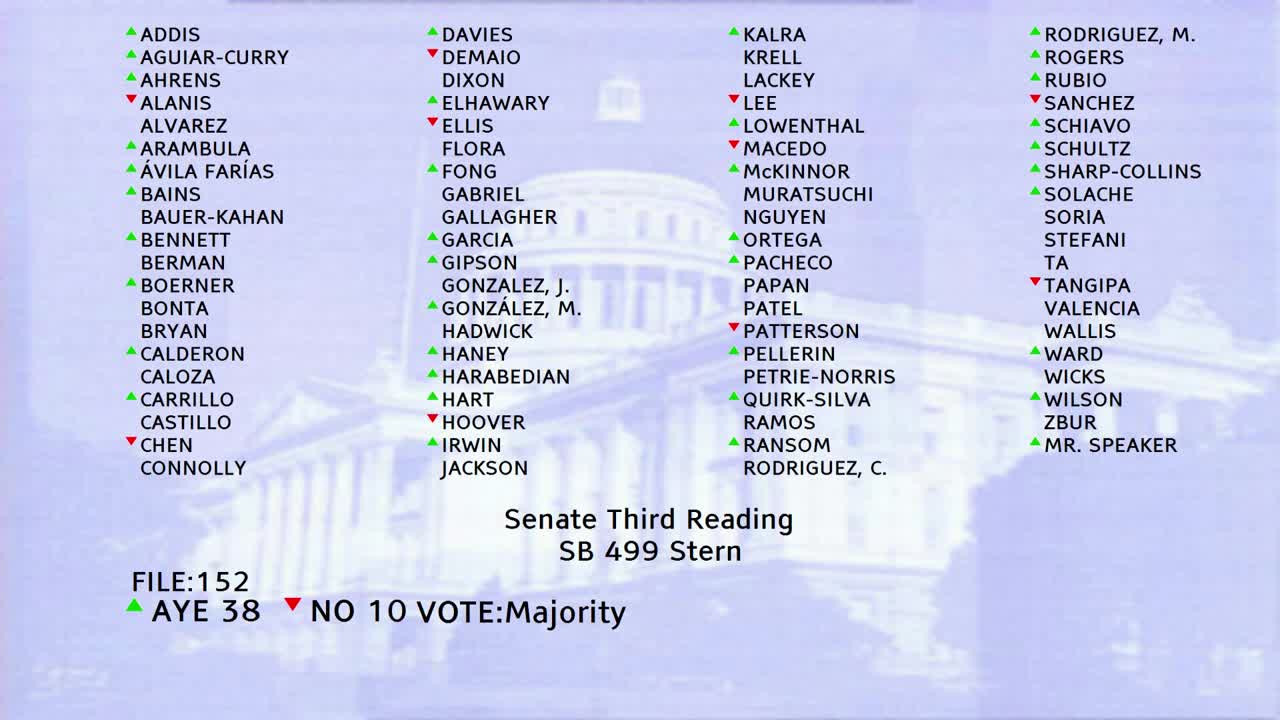 2MIN
Assembly Floor
 2MIN
Assembly Standing Committee on Appropriations
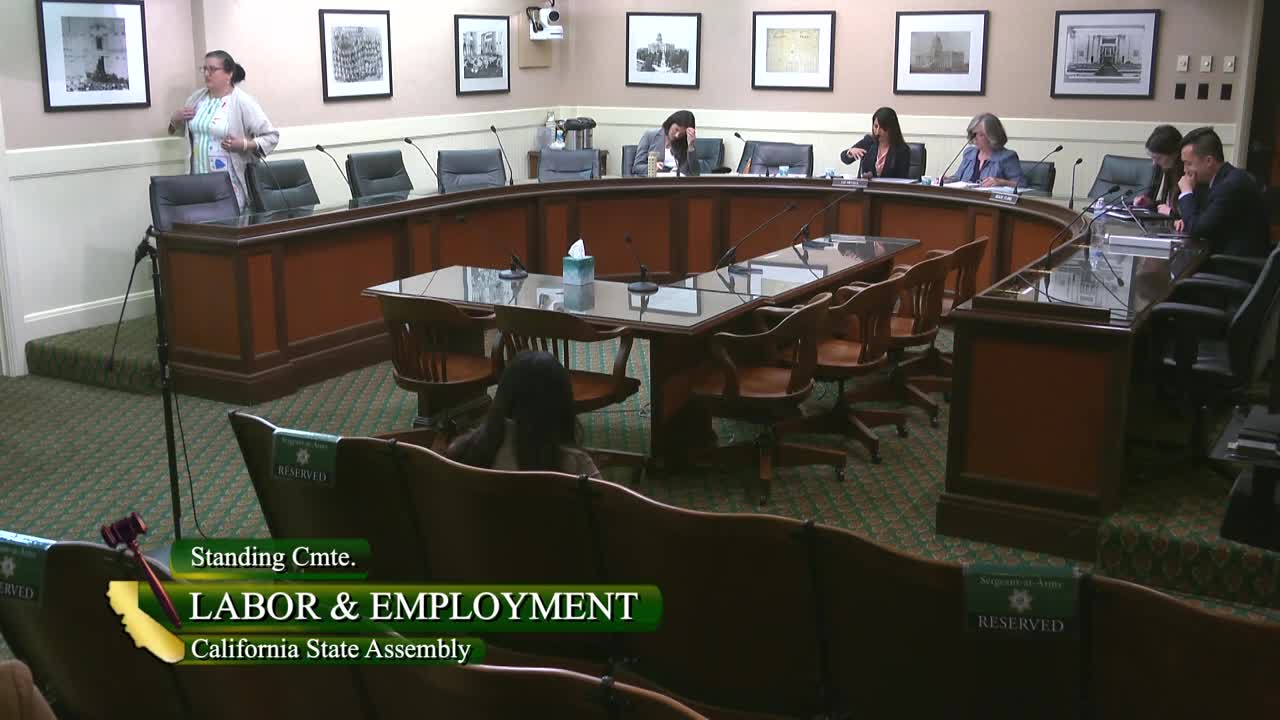 8MIN
Assembly Standing Committee on Labor and Employment
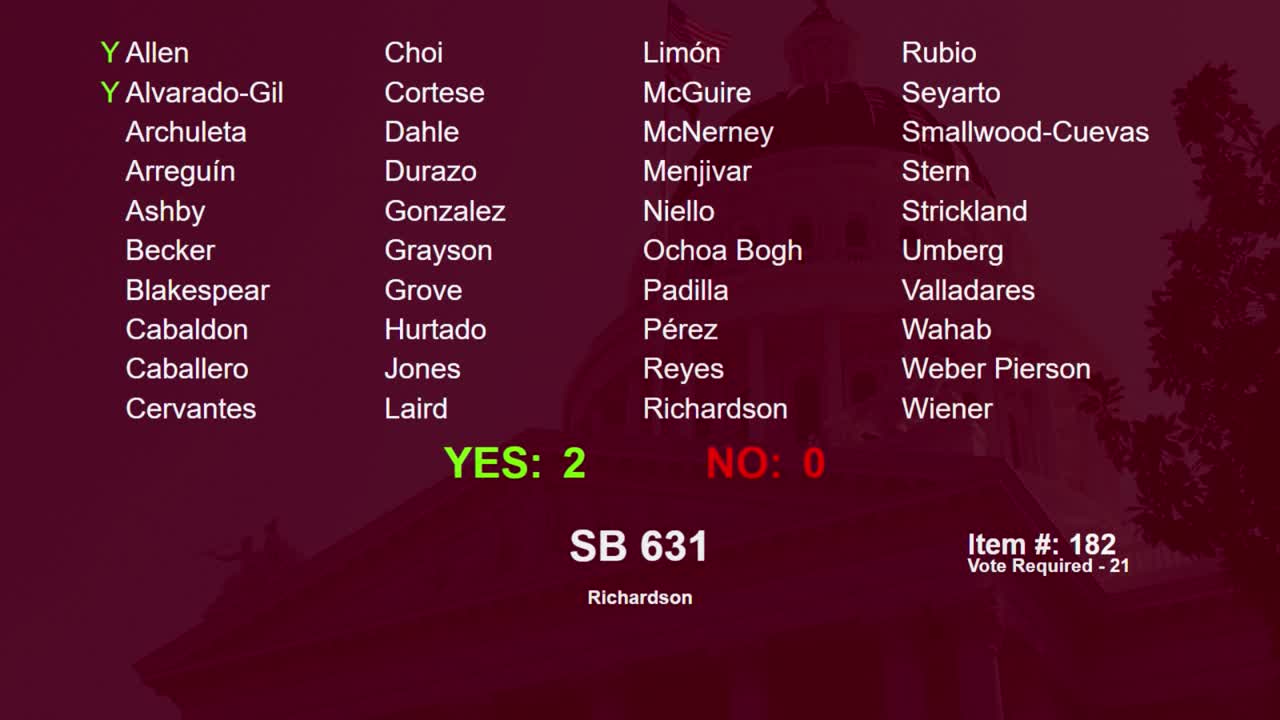 2MIN
Senate Floor
 10MIN
Senate Standing Committee on Labor, Public Employment and Retirement
Bill Author