SB 57: Electrical corporations: data centers: report.
- Session Year: 2025-2026
- House: Senate
- Latest Version Date: 2025-10-11
Current Status:
Passed
(2025-10-11: Chaptered by Secretary of State. Chapter 647, Statutes of 2025.)
Introduced
In Committee
Awaiting First Chamber Vote
Passed First Chamber
In Committee
Awaiting Second Chamber Vote
Passed Second Chamber
Enacted
Existing law vests the Public Utilities Commission with regulatory authority over public utilities, including electrical corporations. Existing law authorizes the commission to fix the rates and charges for every public utility and requires that those rates and charges be just and reasonable.
This bill would authorize the commission to assess the extent to which electrical corporation costs associated with new loads from data centers result in cost shifts to other electrical corporation customers, as provided. The bill would require the commission to submit an assessment completed pursuant to that authorization to the relevant policy committees of the Legislature and to publicly post a copy of the assessment on the commissions internet website on or before January 1, 2027.
Existing law vests the Public Utilities Commission with regulatory authority over public utilities, including electrical corporations. Existing law authorizes the commission to fix the rates and charges for every public utility and requires that those rates and charges be just and reasonable.
This bill, the Ratepayer and Technological Innovation Protection Act, would require the commission, on or before December 31, 2026, to establish or modify a special electrical corporation tariff for transmission and distribution service to eligible customers, as defined, that, among other things, minimizes cost shifts to customers on other rate schedules. The bill would require the commission to determine whether existing rate designs applicable to large load customers meet the requirements of the tariff described above and to direct an electrical corporation to file new or modified rate applications within 12 months of a commission decision implementing the tariff if the electrical corporations existing rate designs are found to not meet those requirements.This bill would require authorize the commission to assess the extent to which electrical corporation costs associated with new loads from data centers result in cost shifts to other electrical corporation customers, as provided, and provided. The bill would require the commission, on or before January 1, 2027, commission to submit the an assessment completed pursuant to that authorization to the relevant policy committees of the Legislature and to publicly post a copy of the assessment on the commissions internet website. website on or before January 1, 2027.
Under existing law, a violation of any order, decision, rule, direction, demand, or requirement of the commission is a crime.Because a violation of a commission action implementing this bills requirements would be a crime, the bill would impose a state-mandated local program.The California Constitution requires the state to reimburse local agencies and school districts for certain costs mandated by the state. Statutory provisions establish procedures for making that reimbursement.This bill would provide that no reimbursement is required by this act for a specified reason.Existing law vests the Public Utilities Commission with regulatory authority over public utilities, including electrical corporations. Existing law authorizes the commission to fix the rates and charges for every public utility and requires that those rates and charges be just and reasonable.
This bill, the Ratepayer and Technological Innovation Protection Act, would require the commission, on or before July 1, 2026, December 31, 2026, to establish or modify a special electrical corporation tariff for transmission and distribution service to eligible customers, as defined, that, among other things, ensures just and reasonable rates for customers of electrical corporations and does not result in cost shifts to customers who do not receive the tariff. The bill would authorize the commission to require an eligible customer, as defined, to site distributed energy storage systems and backup power systems that better enable the state to meet its emission reduction goals. The bill would authorize the commission to establish eligibility criteria for service under the special electrical corporation tariff requiring an eligible customer to meet its load requirements with eligible renewable energy and zero-carbon resources from any retail seller. minimizes cost shifts to customers on other rate schedules. The bill would require the commission to determine whether existing rate designs applicable to large load customers meet the requirements of the tariff described above and to direct an electrical corporation to file new or modified rate applications within 12 months of a commission decision implementing the tariff if the electrical corporations existing rate designs are found to not meet those requirements.
This bill would require the commission to assess the extent to which electrical corporation costs associated with new loads from data centers result in cost shifts to other electrical corporation customers, as provided, and would require the commission, on or before January 1, 2027, to submit the assessment to the relevant policy committees of the Legislature and to publicly post a copy of the assessment on the commissions internet website.
Under existing law, a violation of any order, decision, rule, direction, demand, or requirement of the commission is a crime.
Because a violation of a commission action implementing this bills requirements would be a crime, the bill would impose a state-mandated local program.
The California Constitution requires the state to reimburse local agencies and school districts for certain costs mandated by the state. Statutory provisions establish procedures for making that reimbursement.
This bill would provide that no reimbursement is required by this act for a specified reason.
Existing law vests the Public Utilities Commission with regulatory authority over public utilities, including electrical corporations. Existing law authorizes the commission to fix the rates and charges for every public utility and requires that those rates and charges be just and reasonable.
This bill, the Ratepayer and Technological Innovation Protection Act, would require the commission, on or before July 1, 2026, to establish or modify a special electrical corporation tariff for transmission and distribution service to eligible customers, as defined, that, among other things, ensures just and reasonable rates for customers of electrical corporations and does not result in cost shifts to customers who do not receive the tariff. The bill would authorize the commission to require an eligible customer customer, as defined, to site distributed energy storage systems and backup power systems that better enable the state to meet its emission reduction goals. The bill would authorize the commission to establish minimum requirements for zero-carbon procurement on behalf of retail sellers for eligible customers receiving the tariff. eligibility criteria for service under the special electrical corporation tariff requiring an eligible customer to meet its load requirements with eligible renewable energy and zero-carbon resources from any retail seller.
Under existing law, a violation of any order, decision, rule, direction, demand, or requirement of the commission is a crime.
Because a violation of a commission action implementing this bills requirements would be a crime, the bill would impose a state-mandated local program.
The California Constitution requires the state to reimburse local agencies and school districts for certain costs mandated by the state. Statutory provisions establish procedures for making that reimbursement.
This bill would provide that no reimbursement is required by this act for a specified reason.
Existing law vests the Public Utilities Commission with regulatory authority over public utilities, including electrical corporations. Existing law authorizes the commission to fix the rates and charges for every public utility and requires that those rates and charges be just and reasonable.
This bill, the Ratepayer and Technological Innovation Protection Act, would require the commission, on or before July 1, 2026, to establish or modify a special electrical corporation tariff or program, or modify an existing tariff or program, for transmission and distribution service to data centers, eligible customers, as defined, that, among other things, avoids nonparticipating customers, such as existing residential, small business, and agricultural ratepayers, bearing cost shifts, such as the costs of interconnecting facilities or loads that fall short of initial projections and ensures electrical grid investments to serve a data center are fully recovered from the data center in the event that the data center ceases operations or uses less electricity than initially projected. The bill would require the commission, on or before January 1, 2030, to require all retail sellers subject to its jurisdiction to serve any data center subject to the tariff or program with electricity from 100% zero-carbon resources in a manner that does not result in resource shuffling and does not increase carbon emissions elsewhere in the western grid. ensures just and reasonable rates for customers of electrical corporations and does not result in cost shifts to customers who do not receive the tariff. The bill would authorize the commission to require an eligible customer to site distributed energy storage systems and backup power systems that better enable the state to meet its emission reduction goals. The bill would authorize the commission to establish minimum requirements for zero-carbon procurement on behalf of retail sellers for eligible customers receiving the tariff.
Under existing law, a violation of the Public Utilities Act or any order, decision, rule, direction, demand, or requirement of the commission is a crime.
Because the provisions of this bill would be a part of the act and because a violation of a commission action implementing the this bills requirements would be a crime, the bill would impose a state-mandated local program.
The California Constitution requires the state to reimburse local agencies and school districts for certain costs mandated by the state. Statutory provisions establish procedures for making that reimbursement.
This bill would provide that no reimbursement is required by this act for a specified reason.
Existing law vests the Public Utilities Commission with regulatory authority over public utilities, including electrical corporations. Existing law authorizes the commission to fix the rates and charges for every public utility and requires that those rates and charges be just and reasonable.
This bill, the Ratepayer and Technological Innovation Protection Act, would require the commission, on or before July 1, 2026, to establish a special electrical corporation tariff or program, or modify an existing tariff or program, for transmission and distribution service to data centers, as defined, that, among other things, provides protections for residential, agricultural, and small business ratepayers and prevents cost shifts to those existing ratepayers avoids nonparticipating customers, such as existing residential, small business, and agricultural ratepayers, bearing cost shifts, such as the costs of interconnecting facilities or loads that fall short of initial projections and ensures electrical grid investments to serve a data centers center are fully recovered from the data center, as specified. center in the event that the data center ceases operations or uses less electricity than initially projected. The bill would require that 100% of all electricity delivered to data centers is provided by zero-carbon resources on or before January 1, 2030, as provided. The bill would require the commission to require that all load-serving entities comply with that requirement and to ensure that electrical corporations offer tariffs that comply with that requirement. the commission, on or before January 1, 2030, to require all retail sellers subject to its jurisdiction to serve any data center subject to the tariff or program with electricity from 100% zero-carbon resources in a manner that does not result in resource shuffling and does not increase carbon emissions elsewhere in the western grid.
Under existing law, a violation of the Public Utilities Act or any order, decision, rule, direction, demand, or requirement of the commission is a crime.
Because the provisions of this bill would be a part of the act and because a violation of a commission action implementing the bills requirements would be a crime, the bill would impose a state-mandated local program.
The California Constitution requires the state to reimburse local agencies and school districts for certain costs mandated by the state. Statutory provisions establish procedures for making that reimbursement.
This bill would provide that no reimbursement is required by this act for a specified reason.
Existing law vests the Public Utilities Commission with regulatory authority over public utilities, including electrical corporations. Existing law authorizes the commission to fix the rates and charges for every public utility and requires that those rates and charges be just and reasonable.
This bill, the Ratepayer and Technological Innovation Protection Act, would require the commission, on or before July 1, 2026, to establish a special rate structure electrical corporation tariff for transmission and distribution service to data centers, as defined, that, among other things, protects residential ratepayers provides protections for residential, agricultural, and small businesses business ratepayers and prevents cost shifts to those existing ratepayers and ensures electrical grid investments to serve data centers are fully recovered, recovered from the data center, as specified. The bill would require that 100% of all electricity delivered to data centers is provided by zero-carbon resources on or before January 1, 2030, as provided. The bill would require the commission to require that all load-serving entities comply with that requirement and to ensure that electrical corporations offer tariffs that comply with that requirement.
Under existing law, a violation of the Public Utilities Act or any order, decision, rule, direction, demand, or requirement of the commission is a crime.
Because the provisions of this bill would be a part of the act and because a violation of a commission action implementing the bills requirements would be a crime, the bill would impose a state-mandated local program.
The California Constitution requires the state to reimburse local agencies and school districts for certain costs mandated by the state. Statutory provisions establish procedures for making that reimbursement.
This bill would provide that no reimbursement is required by this act for a specified reason.
Existing law vests the Public Utilities Commission with regulatory authority over public utilities, including electrical corporations. Existing law authorizes the commission to fix the rates and charges for every public utility and requires that those rates and charges be just and reasonable.
This bill, the Ratepayer and Technological Innovation Protection Act, would require the commission, on or before July 1, 2026, to establish a special rate structure for data centers, as defined, that, among other things, protects residential ratepayers and small businesses and prevents cost shifts to those existing ratepayers and ensures electrical grid investments to serve data centers are fully recovered, as specified.
Under existing law, a violation of the Public Utilities Act or any order, decision, rule, direction, demand, or requirement of the commission is a crime.
Because the provisions of this bill would be a part of the act and because a violation of a commission action implementing the bills requirements would be a crime, the bill would impose a state-mandated local program.
The California Constitution requires the state to reimburse local agencies and school districts for certain costs mandated by the state. Statutory provisions establish procedures for making that reimbursement.
This bill would provide that no reimbursement is required by this act for a specified reason.
This act shall be known, and may be cited, as the Ratepayer and Technological Innovation Protection Act.
SEC. 2.The Legislature finds and declares all of the following:
(a)California drives worldwide technological innovation, and that innovation is an important component of the states economy, which is the fifth largest economy in the world.
(b)California supports technological innovation with a world-class university system that provides a highly skilled workforce, and research and development tax incentives and other tools to facilitate the development and expansion of the states technology economy.
(c)The quickly evolving development of artificial intelligence requires large-format data centers that currently require extremely large loads of electricity and water. While that expanded energy demand can help support the larger electrical grid and ordinary ratepayers, if managed incorrectly, it could pose a serious threat to Californias climate goals and, more importantly, leave existing ratepayers saddled with the enormous costs of stranded assets built to support that industry. Furthermore, with the appropriate guardrails, the increased consumption from these large-load customers could help drive down electricity rates for existing utility customers.
(d)More efficient use of existing electrical and grid assets and the sharing of fixed energy costs across a larger overall demand can lower the cost to individual customers as a result of a new data center development.
(e)It is the goal of the state that the development of new large load customers support clean energy and the states climate goals while encouraging more efficient use of existing assets and the potential to lower costs to all customers.
SEC. 3.Section 913.22 is added to the Public Utilities Code, to read:913.22.(a)The commission may assess the extent to which electrical corporation costs associated with new loads from data centers result in cost shifts to other electrical corporation customers. This assessment may include, but not be limited to, the following:
(1)An analysis of potential electrical corporation costs associated with utility procurement to meet growing load demands from data centers increased energy consumption.
(2)An analysis of potential electrical corporation costs associated with the installation of new transmission and distribution assets to serve new data centers or expansions of existing data centers, including the costs of stranded assets and assets installed for an entity that ceases operation.
(3)Identification of opportunities to prevent or mitigate any substantial cost shifts, if the cost shifts are identified.
(b)The commission shall submit an assessment completed pursuant to this section to the relevant policy committees of the Legislature and publicly post a copy of the assessment on the commissions internet website on or before January 1, 2027.
(c)Pursuant to Section 10231.5 of the Government Code, this section is repealed on January 1, 2031.
This act shall be known, and may be cited, as the Ratepayer and Technological Innovation Protection Act.
SEC. 2.(a)The Legislature finds and declares all of the following:
(1)(a)California drives worldwide technological innovation, and that innovation is an important component of the states economy, which is the fifth largest economy in the world.
(2)(b)California supports technological innovation with a world-class university system that provides a highly skilled workforce, and research and development tax incentives and other tools to facilitate the development and expansion of the states technology economy.
(3)(c)The quickly evolving development of artificial intelligence requires large-format data centers that currently require extremely large loads of electricity and water. While that expanded energy demand can help support the larger electrical grid and ordinary ratepayers, if managed incorrectly, it could pose a serious threat to Californias climate goals and, more importantly, leave existing ratepayers saddled with the enormous costs of stranded assets built to support that industry. Furthermore, with the appropriate guardrails, the increased consumption from these large-load customers could help drive down electricity rates for existing utility customers.
(4)(d)More efficient use of existing electrical and grid assets and the sharing of fixed energy costs across a larger overall demand can lower the cost to individual customers as a result of a new data center development.
(5)(e)It is the goal of the state that the development of new large load customers support clean energy and the states climate goals while encouraging more efficient use of existing assets and the potential to lower costs to all customers.
(b)Given the large-scale impact to Californias electrical grid posed by the development of new technologies, coupled with the need to help support this expanding industry, it is the intent of the Legislature that the Public Utilities Commission authorize a tariff system to protect existing ratepayers and clean energy standards, while providing faster and more efficient approval for new load interconnections to support this emerging technological revolution.SEC. 3.Section 740.22 is added to the Public Utilities Code, to read:740.22.(a)(1)On or before December 31, 2026, the commission shall establish or modify a special electrical corporation tariff for transmission and distribution service to eligible customers that, at minimum, does all of the following:(A)Ensures just and reasonable rates for customers of electrical corporations and minimizes cost shifts to customers on other rate schedules.(B)Promotes stable or reduced retail rates for electrical service.(C)Ensures electrical grid investments to serve an eligible customer are fully recovered from the eligible customer in the event that the eligible customer ceases operations or uses less electricity than initially projected. (D)Collects a reasonable share of the costs relating to wildfire mitigation, wildfire liability, electrification and environmental programs, and other societal cost obligations.(2)As part of the proceeding establishing the special electrical corporation tariff, the commission shall consider opportunities to prioritize large load customer interconnections that accomplish the goal of the state that the development of new large load customers support clean energy and the states climate goals while encouraging more efficient use of existing assets and the potential to lower costs to all customers. Criteria shall include, but not be limited to, all of the following:(A)Whether the applicant employs distributed energy storage systems and zero-carbon backup power systems to offset some or all of its backup power needs.(B)Whether the applicant has ensured that their energy consumption contributes to the states climate change goals by reducing the emissions of greenhouse gases associated with electrical generation.(C)Whether any infrastructure that has been built or will be built specifically to serve the applicant, including generation capacity or distributed energy storage systems, contributes to the safe and reliable operation of the electrical grid, including by providing predictable electrical supply, voltage support, lower line losses, and congestion relief.(D)Whether the applicant has subscribed the facility seeking interconnection into a demand response or load modifying program for a duration determined by the commission.(E)Whether the applicant meets a portion of its load requirements with eligible renewable energy and zero-carbon resources from any retail seller.(b)The special electrical corporation tariff shall only apply to applications by an eligible customer for interconnection to the electrical grid that are submitted after the commission establishes or modifies the tariff.(c)The commission shall determine whether existing rate designs applicable to large load customers meet the requirements of this section and shall direct an electrical corporation to file new or modified rate applications within 12 months of a commission decision implementing this section if the electrical corporations existing rate designs are found to not meet the requirements of this section.(d)For purposes of this section, both of the following definitions apply:(1)Eligible customer means a customer newly connecting to electrical service of at least 50 kilovolts and with an estimated peak demand of at least 50 megawatts, but does not include an existing customer whose increased demand is caused by fuel switching from a fossil fuel source to electricity or a new or existing customer whose increased electricity usage is predominantly for transportation electrification or greenhouse gas emission reductions.(2)Retail seller has the same meaning as defined in Section 399.12.SEC. 4.SEC. 3.Section 913.22 is added to the Public Utilities Code, to read:913.22.(a)The commission shall may assess the extent to which utility electrical corporation costs associated with new loads from data centers result in cost shifts to other utility electrical corporation customers. This assessment shall include all of may include, but not be limited to, the following:
(1)An analysis of potential utility electrical corporation costs associated with utility procurement to meet growing load demands from data centers increased energy consumption.
(2)An analysis of potential utility electrical corporation costs associated with the installation of new transmission and distribution assets to serve new data centers or expansions of existing data centers. centers, including the costs of stranded assets and assets installed for an entity that ceases operation.
(3)To the extent that the commission finds that utility costs to meet new serve loads from data centers will result in substantial cost shifts, the commissions assessment shall also identify opportunities to prevent or mitigate these costs.(3)Identification of opportunities to prevent or mitigate any substantial cost shifts, if the cost shifts are identified.
(b)On or before January 1, 2027, the The commission shall submit the an assessment completed pursuant to this section to the relevant policy committees of the Legislature and publicly post a copy of the assessment on the commissions internet website. website on or before January 1, 2027.
(c)Pursuant to Section 10231.5 of the Government Code, this section is repealed on January 1, 2031.
SEC. 5.No reimbursement is required by this act pursuant to Section 6 of Article XIIIB of the California Constitution because the only costs that may be incurred by a local agency or school district will be incurred because this act creates a new crime or infraction, eliminates a crime or infraction, or changes the penalty for a crime or infraction, within the meaning of Section 17556 of the Government Code, or changes the definition of a crime within the meaning of Section 6 of Article XIIIB of the California Constitution.This act shall be known, and may be cited, as the Ratepayer and Technological Innovation Protection Act.
SEC. 2.(a)The Legislature finds and declares all of the following:
(1)California drives worldwide technological innovation, and that innovation is an important component of the states economy, which is the fifth largest economy in the world.
(2)California supports technological innovation with a world-class university system that provides a highly skilled workforce, and research and development tax incentives and other tools to facilitate the development and expansion of the states technology economy.
(3)The quickly evolving development of artificial intelligence requires large-format data centers that currently require extremely large loads of electricity and water. While that expanded energy demand can help support the larger electrical grid and ordinary ratepayers, if managed incorrectly, it could pose a serious threat to Californias climate goals and, more importantly, leave existing ratepayers saddled with the enormous costs of stranded assets built to support that industry. Furthermore, with the appropriate guardrails, the increased consumption from these large-load customers could help drive down electricity rates for existing utility customers.
(4)More efficient use of existing electrical and grid assets and the sharing of fixed energy costs across a larger overall demand can lower the cost to individual customers as a result of a new data center development.
(5)It is the goal of the state that the development of new large load customers support clean energy and the states climate goals while encouraging more efficient use of existing assets and the potential to lower costs to all customers.
(b)Given the large-scale impact to Californias electrical grid posed by the development of new technologies, coupled with the need to help support this expanding industry, it is the intent of the Legislature that the Public Utilities Commission authorize a special tariff system to protect existing ratepayers and clean energy standards, while providing faster and more efficient approval for new load interconnections to support this emerging technological revolution.
SEC. 3.Section 740.22 is added to the Public Utilities Code, to read:740.22.(a)(1)On or before July 1, 2026, December 31, 2026, the commission shall establish or modify a special electrical corporation tariff for transmission and distribution service to eligible customers that, at minimum, does all of the following:
(1)(A)Ensures just and reasonable rates for customers of electrical corporations and does not result in minimizes cost shifts to customers who do not receive the special electrical corporation tariff. on other rate schedules.
(2)Meets the states climate change goals by reducing the emissions of greenhouse gases associated with electrical generation.(3)(B)Promotes stable or reduced retail rates for electrical service.
(4)Contributes to the safe and reliable operation of the electrical grid, including by providing predictable electrical supply, voltage support, lower line losses, and congestion relief.(5)(C)Ensures electrical grid investments to serve an eligible customer are fully recovered from the eligible customer in the event that the eligible customer ceases operations or uses less electricity than initially projected.
(6)For eligible customers taking transmission-level delivery service, collects(D)Collects a reasonable share of the costs relating to wildfire mitigation, wildfire liability, electrification and environmental programs, and other societal cost obligations typically included in distribution rates. obligations.
(b)The commission may require an eligible customer to site distributed energy storage systems and backup power systems that better enable the state to meet its emission reduction goals, as determined by the commission.(c)The commission may establish eligibility criteria for service under the special electrical corporation tariff requiring an eligible customer to meet its load requirements with eligible renewable energy and zero-carbon resources from any retail seller.(2)As part of the proceeding establishing the special electrical corporation tariff, the commission shall consider opportunities to prioritize large load customer interconnections that accomplish the goal of the state that the development of new large load customers support clean energy and the states climate goals while encouraging more efficient use of existing assets and the potential to lower costs to all customers. Criteria shall include, but not be limited to, all of the following:
(A)Whether the applicant employs distributed energy storage systems and zero-carbon backup power systems to offset some or all of its backup power needs.
(B)Whether the applicant has ensured that their energy consumption contributes to the states climate change goals by reducing the emissions of greenhouse gases associated with electrical generation.
(C)Whether any infrastructure that has been built or will be built specifically to serve the applicant, including generation capacity or distributed energy storage systems, contributes to the safe and reliable operation of the electrical grid, including by providing predictable electrical supply, voltage support, lower line losses, and congestion relief.
(D)Whether the applicant has subscribed the facility seeking interconnection into a demand response or load modifying program for a duration determined by the commission.
(E)Whether the applicant meets a portion of its load requirements with eligible renewable energy and zero-carbon resources from any retail seller.
(d)(b)The special electrical corporation tariff shall only apply to applications by an eligible customer for interconnection to the transmission electrical grid that are submitted after the commission establishes or modifies the tariff.
(c)The commission shall determine whether existing rate designs applicable to large load customers meet the requirements of this section and shall direct an electrical corporation to file new or modified rate applications within 12 months of a commission decision implementing this section if the electrical corporations existing rate designs are found to not meet the requirements of this section.
(e)(d)For purposes of this section, both of the following definitions apply:
(1)Eligible customer means a customer newly connecting to transmission-level electrical service of at least 50 kilovolts and with an estimated peak demand of at least 50 megawatts, but does not include an existing customer whose increased demand is caused by fuel switching from a fossil fuel source to electricity or a new or existing customer whose increased electricity usage is predominantly for transportation electrification or greenhouse gas emission reductions required pursuant to the California Global Warming Solutions Act of 2006 (Division 25.5 (commencing with Section 38500) of the Health and Safety Code), as enacted by Chapter 488 of the Statutes of 2006 (Assembly Bill 32). reductions.
(2)Retail seller has the same meaning as defined in Section 399.12.
SEC. 4.Section 913.22 is added to the Public Utilities Code, to read:913.22.(a)The commission shall assess the extent to which utility costs associated with new loads from data centers result in cost shifts to other utility customers. This assessment shall include all of the following:
(1)An analysis of potential utility costs associated with utility procurement to meet growing load demands from data centers increased energy consumption.
(2)An analysis of potential utility costs associated with the installation of new transmission and distribution assets to serve new data centers or expansions of existing data centers.
(3)To the extent that the commission finds that utility costs to meet new serve loads from data centers will result in substantial cost shifts, the commissions assessment shall also identify opportunities to prevent or mitigate these costs.
(b)On or before January 1, 2027, the commission shall submit the assessment completed pursuant to this section to the relevant policy committees of the Legislature and publicly post a copy of the assessment on the commissions internet website.
(c)Pursuant to Section 10231.5 of the Government Code, this section is repealed on January 1, 2031.
SEC. 4.SEC. 5.No reimbursement is required by this act pursuant to Section 6 of Article XIIIB of the California Constitution because the only costs that may be incurred by a local agency or school district will be incurred because this act creates a new crime or infraction, eliminates a crime or infraction, or changes the penalty for a crime or infraction, within the meaning of Section 17556 of the Government Code, or changes the definition of a crime within the meaning of Section 6 of Article XIIIB of the California Constitution.
This act shall be known, and may be cited, as the Ratepayer and Technological Innovation Protection Act.
SEC. 2.(a)The Legislature finds and declares all of the following:
(1)California drives worldwide technological innovation, and that innovation is an important component of the states economy, which is the fifth largest economy in the world.
(2)California supports technological innovation with a world-class university system that provides a highly skilled workforce, and research and development tax incentives and other tools to facilitate the development and expansion of the states technology economy.
(3)The quickly evolving development of artificial intelligence requires large-format data centers that currently require extremely large loads of electricity and water. While that expanded energy demand can help support the larger electrical grid and ordinary ratepayers, if managed incorrectly, it could pose a serious threat to Californias climate goals and, more importantly, leave existing ratepayers saddled with the enormous costs of stranded assets built to support that industry. Furthermore, with the appropriate guardrails, the increased consumption from these large-load customers could help drive down electricity rates for existing utility customers.
(4)More efficient use of existing electrical and grid assets and the sharing of fixed energy costs across a larger overall demand can lower the cost to individual customers as a result of a new data center development.
(b)Given the large-scale impact to Californias electrical grid posed by the development of new technologies, coupled with the need to help support this expanding industry, it is the intent of the Legislature that the Public Utilities Commission authorize a special tariff system to protect existing ratepayers and clean energy standards, while providing faster and more efficient approval for new load interconnections to support this emerging technological revolution.
SEC. 3.Section 740.22 is added to the Public Utilities Code, to read:740.22.(a)On or before July 1, 2026, the commission shall establish or modify a special electrical corporation tariff for transmission and distribution service to eligible customers that, at minimum, does all of the following:
(1)Ensures just and reasonable rates for customers of electrical corporations and does not result in cost shifts to customers who do not receive the special electrical corporation tariff.
(2)Meets the states climate change goals by reducing the emissions of greenhouse gases associated with electrical generation.
(3)Promotes stable or reduced retail rates for electrical service.
(4)Contributes to the safe and reliable operation of the electrical grid, including by providing predictable electrical supply, voltage support, lower line losses, and congestion relief.
(5)Ensures electrical grid investments to serve an eligible customer are fully recovered from the eligible customer in the event that the eligible customer ceases operations or uses less electricity than initially projected.
(6)For eligible customers taking transmission-level delivery service, collects a reasonable share of the costs relating to wildfire mitigation, wildfire liability, electrification and environmental programs, and other societal cost obligations typically included in distribution rates.
(b)The commission may require an eligible customer to site distributed energy storage systems and backup power systems that better enable the state to meet its emission reduction goals, as determined by the commission.
(c)The commission may establish minimum requirements for zero-carbon procurement on behalf of a retail seller for an eligible customer receiving eligibility criteria for service under the special electrical corporation tariff. tariff requiring an eligible customer to meet its load requirements with eligible renewable energy and zero-carbon resources from any retail seller.
(d)The special electrical corporation tariff shall only apply to applications by an eligible customer for interconnection to the transmission grid that are submitted after the commission establishes or modifies the tariff.
(d)(e)For purposes of this section, both of the following definitions apply:
(1)Eligible customer means a customer newly connecting to transmission-level service of at least 50 kilovolts and with an estimated peak demand of at least 50 megawatts. megawatts, but does not include an existing customer whose increased demand is caused by fuel switching from a fossil fuel source to electricity or a new or existing customer whose increased electricity usage is predominantly for transportation electrification or greenhouse gas emission reductions required pursuant to the California Global Warming Solutions Act of 2006 (Division 25.5 (commencing with Section 38500) of the Health and Safety Code), as enacted by Chapter 488 of the Statutes of 2006 (Assembly Bill 32).
(2)Retail seller has the same meaning as defined in Section 399.12.
SEC. 4.No reimbursement is required by this act pursuant to Section 6 of Article XIIIB of the California Constitution because the only costs that may be incurred by a local agency or school district will be incurred because this act creates a new crime or infraction, eliminates a crime or infraction, or changes the penalty for a crime or infraction, within the meaning of Section 17556 of the Government Code, or changes the definition of a crime within the meaning of Section 6 of Article XIIIB of the California Constitution.
This act shall be known, and may be cited, as the Ratepayer and Technological Innovation Protection Act.
SEC. 2.(a)The Legislature finds and declares all of the following:
(1)California drives worldwide technological innovation, and that innovation is an important component of the states economy, which is the fifth largest economy in the world.
(2)California supports technological innovation with a world-class university system that provides a highly skilled workforce, and research and development tax incentives and other tools to facilitate the development and expansion of the states technology economy.
(3)The quickly evolving development of artificial intelligence requires large-format data centers that currently require extremely large loads of electricity and water. While that expanded energy demand can help support the larger electrical grid and ordinary ratepayers, if managed incorrectly, it could pose a serious threat to Californias climate goals and, more importantly, leave existing ratepayers saddled with the enormous costs of stranded assets built to support that industry. Furthermore, with the appropriate guardrails, the increased consumption from these large-load customers could help drive down electricity rates for existing utility customers.
(4)More efficient use of existing electrical and grid assets and the sharing of fixed energy costs across a larger overall demand can lower the cost to individual customers as a result of a new data center development.
(b)Given the large-scale impact to Californias electrical grid posed by the development of new technologies, coupled with the need to help support this expanding industry, it is the intent of the Legislature that the Public Utilities Commission authorize a special tariff system to protect existing ratepayers and clean energy standards, while providing faster and more efficient approval for new load interconnections to support this emerging technological revolution.
SEC. 3.Section 740.22 is added to the Public Utilities Code, to read:740.22.(a)On or before July 1, 2026, the commission shall establish or modify a special electrical corporation tariff or program, or modify and existing tariff or program, for transmission and distribution service to data centers that eligible customers that, at minimum, does all of the following:
(1)Avoids nonparticipating customers, such as existing residential, small business, and agricultural ratepayers, bearing cost shifts, such as the costs of interconnecting facilities or loads that fall short of initial projections.(2)Assists each electrical corporation with fulfilling its obligation to serve its customers at just and reasonable rates.(3)Does not increase fossil fuel consumption within the state.(1)Ensures just and reasonable rates for customers of electrical corporations and does not result in cost shifts to customers who do not receive the special electrical corporation tariff.
(4)(2)Meets the states climate change goals by reducing the emissions of greenhouse gases associated with electrical generation.
(5)(3)Promotes stable or reduced retail rates for electrical service.
(6)(4)Contributes to the safe and reliable operation of the electrical grid, including by providing predictable electrical supply, voltage support, lower line losses, and congestion relief.
(7)Permits qualified data centers to use a reasonable percentage of behind-the-meter electricity that is generated as zero carbon, and requires backup generation that includes energy storage.(8)Requires onsite battery storage that provides demand response services to the electrical grid.(9)(5)Ensures electrical grid investments to serve a data center an eligible customer are fully recovered from the data center eligible customer in the event that the data center eligible customer ceases operations or uses less electricity than initially projected.
(10)(6)For data centers eligible customers taking transmission-level delivery service, collects a reasonable share of the costs relating to wildfire mitigation, wildfire liability, electrification and environmental programs, and other societal cost obligations typically included in distribution rates.
(b)On or before January 1, 2030, the commission shall require all retail sellers subject to its jurisdiction to serve any data center subject to the tariff or program established or modified pursuant to this section with electricity from 100 percent zero-carbon resources in a manner that does not result in resource shuffling and does not increase carbon emissions elsewhere in the western grid.(b)The commission may require an eligible customer to site distributed energy storage systems and backup power systems that better enable the state to meet its emission reduction goals, as determined by the commission.
(c)The commission may establish minimum requirements for zero-carbon procurement on behalf of a retail seller for an eligible customer receiving the special electrical corporation tariff.
(c)(d)For purposes of this section, both of the following definitions apply:
(1)Data center means a large-scale energy consumer connecting at a transmission level voltage of at least 50 kilovolts that requires uninterruptible electricity housing servers and related data center equipment and software whose primary services are the storage, management, processing, and distribution of data.(1)Eligible customer means a customer connecting transmission-level service of at least 50 kilovolts and with an estimated demand of at least 50 megawatts.
(2)Retail seller has the same meaning as defined in Section 399.12.
SEC. 4.No reimbursement is required by this act pursuant to Section 6 of Article XIIIB of the California Constitution because the only costs that may be incurred by a local agency or school district will be incurred because this act creates a new crime or infraction, eliminates a crime or infraction, or changes the penalty for a crime or infraction, within the meaning of Section 17556 of the Government Code, or changes the definition of a crime within the meaning of Section 6 of Article XIIIB of the California Constitution.
This act shall be known, and may be cited, as the Ratepayer and Technological Innovation Protection Act.
SEC. 2.(a)The Legislature finds and declares all of the following:
(1)California drives worldwide technological innovation, and that innovation is an important component of the states economy, which is the fifth largest economy in the world.
(2)California supports technological innovation with a world-class university system that provides a highly skilled workforce, and research and development tax incentives and other tools to facilitate the development and expansion of the states technology economy.
(3)The quickly evolving development of artificial intelligence requires large-format data centers that currently require extremely large loads of electricity and water. While that expanded energy demand can help support the larger electrical grid and ordinary ratepayers, if managed incorrectly, it could pose a serious threat to Californias climate goals and, more importantly, leave existing ratepayers saddled with the enormous costs of stranded assets built to support that industry. Furthermore, with the appropriate guardrails, the increased consumption from these large-load customers could help drive down electricity rates for existing utility customers.
(4)More efficient use of existing electrical and grid assets and the sharing of fixed energy costs across a larger overall demand can lower the cost to individual customers as a result of a new data center development.
(b)Given the large-scale impact to Californias electrical grid posed by the development of new technologies, coupled with the need to help support this expanding industry, it is the intent of the Legislature that the Public Utilities Commission create authorize a special tariff system to protect existing ratepayers and clean energy standards, while providing faster and more efficient approval for new load interconnections to support this emerging technological revolution.
SEC. 3.Section 740.22 is added to the Public Utilities Code, to read:740.22.(a)On or before July 1, 2026, the commission shall establish a special electrical corporation tariff or program, or modify and existing tariff or program, for transmission and distribution service to data centers that does all of the following, each of which independently justifies the program: following:
(1)Provides protections for residential, agricultural, and small business ratepayers and prevents cost shifts to those existing ratepayers.(1)Avoids nonparticipating customers, such as existing residential, small business, and agricultural ratepayers, bearing cost shifts, such as the costs of interconnecting facilities or loads that fall short of initial projections.
(2)Assists each electrical corporation with fulfilling its obligation to serve its customers at just and reasonable rates.
(3)Does not increase fossil fuel consumption within the state.
(4)Reduces air pollution in the state.(5)(4)Meets the states climate change goals by reducing the emissions of greenhouse gases associated with electrical generation.
(6)(5)Promotes stable or reduced retail rates for electrical service.
(7)(6)Contributes to the safe and reliable operation of the electrical grid, including by providing predictable electrical supply, voltage support, lower line losses, and congestion relief.
(8)(7)Permits qualified data centers to use a reasonable percentage of behind-the-meter electricity that is generated as zero carbon, and requires backup generation that includes energy storage.
(9)(8)Requires onsite battery storage that provides demand response services to the electrical grid.
(10)(A)(9)Ensures electrical grid investments to serve a data centers center are fully recovered from the data center, which, at minimum, includes a 12-year binding transmission and distribution service contract to repay the electrical corporations transmission and distribution investment costs to serve the data center, and requires an insurance bond to pay the remainder of the contracted amount should the data center cease operations in California or use less electricity than initially projected and relied upon to build out the electrical grid. center in the event that the data center ceases operations or uses less electricity than initially projected.
(B)A contract under subparagraph (A) may include an exit fee that is equal to the cost of the electrical corporations transmission and distribution investment costs to serve the data center and that gives the data center customer a way to terminate the contract before the end of the initial 12-year term. (11)Requires a data center to prepay an electrical corporation for the cost of any necessary transmission or distribution infrastructure upgrades in exchange for the electrical corporation providing more expedited construction of that infrastructure, and provides for the data center to be reimbursed for any portion of the prepayment relating to costs for which the data center would not otherwise be responsible through a monthly credit on the data centers bill over a reasonable period of time determined by the commission.(12)(10)For data centers taking transmission-level delivery service, collects a reasonable share of the costs relating to wildfire mitigation, wildfire liability, electrification and environmental programs, and other societal cost obligations typically included in distribution rates.
(b)On or before January 1, 2030, 100 percent of all electricity delivered to data centers shall be provided by zero-carbon resources in a manner that does not result in resource shuffling and does not increase carbon emissions elsewhere in the western grid. The commission shall require all load-serving entities to comply with that requirement and ensure that each electrical corporation offers a tariff that complies with that requirement.(b)On or before January 1, 2030, the commission shall require all retail sellers subject to its jurisdiction to serve any data center subject to the tariff or program established or modified pursuant to this section with electricity from 100 percent zero-carbon resources in a manner that does not result in resource shuffling and does not increase carbon emissions elsewhere in the western grid.
(c)For purposes of this section, both of the following definitions apply:
(1)Data center means a large-scale energy consumer that requires uninterruptible electricity to serve a facility housing servers and related data center equipment and software for the processing, storage, and distribution of data. connecting at a transmission level voltage of at least 50 kilovolts that requires uninterruptible electricity housing servers and related data center equipment and software whose primary services are the storage, management, processing, and distribution of data.
(2)Load-serving entity has the same meaning as defined in Section 380.(2)Retail seller has the same meaning as defined in Section 399.12.
SEC. 4.No reimbursement is required by this act pursuant to Section 6 of Article XIIIB of the California Constitution because the only costs that may be incurred by a local agency or school district will be incurred because this act creates a new crime or infraction, eliminates a crime or infraction, or changes the penalty for a crime or infraction, within the meaning of Section 17556 of the Government Code, or changes the definition of a crime within the meaning of Section 6 of Article XIIIB of the California Constitution.
This act shall be known, and may be cited, as the Ratepayer and Technological Innovation Protection Act.
SEC. 2.(a)The Legislature finds and declares all of the following:
(1)California drives worldwide technological innovation, and that innovation is an important component of the states economy, which is the fifth largest economy in the world.
(2)California supports technological innovation with a world-class university system that provides a highly skilled workforce, and research and development tax incentives and other tools to facilitate the development and expansion of the states technology economy.
(3)The quickly evolving development of artificial intelligence requires large-format data centers that currently require extremely large loads of electricity and water. While that expanded energy demand can help support the larger electrical grid and ordinary ratepayers, if managed incorrectly, it could pose a serious threat to Californias climate goals and, more importantly, leave existing ratepayers saddled with the enormous costs of stranded assets built to support that industry.
(b)Given the large-scale impact to Californias electrical grid posed by the development of new technologies, coupled with the need to help support this expanding industry, it is the intent of the Legislature that the Public Utilities Commission create a special tariff system to protect existing ratepayers and clean energy standards, while providing faster and more efficient approval for new load interconnections to support this emerging technological revolution.
SEC. 3.Section 740.22 is added to the Public Utilities Code, to read:740.22.(a)On or before July 1, 2026, the commission shall establish a special rate structure electrical corporation tariff for transmission and distribution service to data centers that does all of the following, each of which independently justifies the program:
(1)Protects residential ratepayers Provides protections for residential, agricultural, and small businesses business ratepayers and prevents cost shifts to those existing ratepayers.
(2)Assists each electrical corporation with fulfilling its obligation to serve its customers at just and reasonable rates.
(3)Decreases Does not increase fossil fuel consumption within the state.
(4)Reduces air pollution in the state.
(5)Meets the states climate change goals by reducing the emissions of greenhouse gases associated with electrical generation.
(6)Promotes stable retail rates for electrical service.
(7)Contributes to the safe and reliable operation of the electrical grid, including by providing predictable electrical supply, voltage support, lower line losses, and congestion relief.
(8)Permits qualified data centers to use a reasonable percentage of behind-the-meter electricity that is generated as zero carbon, and requires backup generation that includes energy storage.
(9)Requires onsite battery storage that provides demand response services to the electrical grid.
(10)(A)Ensures electrical grid investments to serve data centers are fully recovered, recovered from the data center, which, at minimum, includes a 12-year binding transmission and distribution service contract to purchase its projected electrical load repay the electrical corporations transmission and distribution investment costs to serve the data center, and requires an insurance bond to pay the remainder of the contracted amount should the data center cease operations in California or use less electricity than initially projected and relied upon to build out the electrical grid.
(B)A contract under subparagraph (A) may include an exit fee that is equal to the cost of the data centers projected electrical load electrical corporations transmission and distribution investment costs to serve the data center and that gives the data center customer a way to terminate the contract before the end of the initial 12-year term.
(11)Develops a process through which data center operators can prepay expected energy consumption to accelerate necessary electrical grid investments and accelerate electrical grid interconnection timelines.(11)Requires a data center to prepay an electrical corporation for the cost of any necessary transmission or distribution infrastructure upgrades in exchange for the electrical corporation providing more expedited construction of that infrastructure, and provides for the data center to be reimbursed for any portion of the prepayment relating to costs for which the data center would not otherwise be responsible through a monthly credit on the data centers bill over a reasonable period of time determined by the commission.
(12)For data centers taking transmission-level delivery service, collects a reasonable share of the costs relating to wildfire mitigation, wildfire liability, electrification and environmental programs, and other societal cost obligations typically included in distribution rates.
(b)On or before January 1, 2030, 100 percent of all electricity delivered to data centers shall be provided by zero-carbon resources in a manner that does not result in resource shuffling and does not increase carbon emissions elsewhere in the western grid. The commission shall require all load-serving entities to comply with that requirement and ensure that each electrical corporation offers a tariff that complies with that requirement.
(b)(c)For purposes of this section, data both of the following definitions apply:
(1)Data center means a large-scale energy consumer that requires uninterruptible electricity to serve a facility housing servers and related data center equipment and software for the processing, storage, and distribution of data.
(2)Load-serving entity has the same meaning as defined in Section 380.
SEC. 4.No reimbursement is required by this act pursuant to Section 6 of Article XIIIB of the California Constitution because the only costs that may be incurred by a local agency or school district will be incurred because this act creates a new crime or infraction, eliminates a crime or infraction, or changes the penalty for a crime or infraction, within the meaning of Section 17556 of the Government Code, or changes the definition of a crime within the meaning of Section 6 of Article XIIIB of the California Constitution.
This act shall be known, and may be cited, as the Ratepayer and Technological Innovation Protection Act.
SEC. 2.(a)The Legislature finds and declares all of the following:
(1)California drives worldwide technological innovation, and that innovation is an important component of the states economy, which is the fifth largest economy in the world.
(2)California supports technological innovation with a world-class university system that provides a highly skilled workforce, and research and development tax incentives and other tools to facilitate the development and expansion of the states technology economy.
(3)The quickly evolving development of artificial intelligence requires large-format data centers that currently require extremely large loads of electricity and water. While that expanded energy demand can help support the larger electrical grid and ordinary ratepayers, if managed incorrectly, it could pose a serious threat to Californias climate goals and, more importantly, leave existing ratepayers saddled with the enormous costs of stranded assets built to support that industry.
(b)Given the large-scale impact to Californias electrical grid posed by the development of new technologies, coupled with the need to help support this expanding industry, it is the intent of the Legislature that the Public Utilities Commission create a special tariff system to protect existing ratepayers and clean energy standards, while providing faster and more efficient approval for new load interconnections to support this emerging technological revolution.
SEC. 3.Section 740.22 is added to the Public Utilities Code, to read:740.22.(a)On or before July 1, 2026, the commission shall establish a special rate structure for data centers that does all of the following, each of which independently justifies the program:
(1)Protects residential ratepayers and small businesses and prevents cost shifts to those existing ratepayers.
(2)Assists each electrical corporation with fulfilling its obligation to serve its customers at just and reasonable rates.
(3)Decreases fossil fuel consumption within the state.
(4)Reduces air pollution in the state.
(5)Meets the states climate change goals by reducing the emissions of greenhouse gases associated with electrical generation.
(6)Promotes stable retail rates for electrical service.
(7)Contributes to the safe and reliable operation of the electrical grid, including by providing predictable electrical supply, voltage support, lower line losses, and congestion relief.
(8)Permits qualified data centers to use a reasonable percentage of behind-the-meter electricity that is generated as zero carbon, and requires backup generation that includes energy storage.
(9)Requires onsite battery storage that provides demand response services to the electrical grid.
(10)(A)Ensures electrical grid investments to serve data centers are fully recovered, which, at minimum, includes a 12-year binding contract to purchase its projected electrical load and requires an insurance bond to pay the remainder of the contracted amount should the data center cease operations in California or use less electricity than initially projected and relied upon to build out the electrical grid.
(B)A contract under subparagraph (A) may include an exit fee that is equal to the cost of the data centers projected electrical load costs that gives the data center customer a way to terminate the contract before the end of the initial 12-year term.
(11)Develops a process through which data center operators can prepay expected energy consumption to accelerate necessary electrical grid investments and accelerate electrical grid interconnection timelines.
(b)For purposes of this section, data center means a large-scale energy consumer that requires uninterruptible electricity to serve a facility housing servers and related data center equipment and software for the processing, storage, and distribution of data.
SEC. 4.No reimbursement is required by this act pursuant to Section 6 of Article XIIIB of the California Constitution because the only costs that may be incurred by a local agency or school district will be incurred because this act creates a new crime or infraction, eliminates a crime or infraction, or changes the penalty for a crime or infraction, within the meaning of Section 17556 of the Government Code, or changes the definition of a crime within the meaning of Section 6 of Article XIIIB of the California Constitution.
|
Date
|
Status
|
|---|---|
| Oct 11, 2025 | Chaptered by Secretary of State. Chapter 647, Statutes of 2025. |
| Oct 11, 2025 | Approved by the Governor. |
| Sep 23, 2025 | Enrolled and presented to the Governor at 2 p.m. |
| Sep 13, 2025 | Assembly amendments concurred in. (Ayes 29. Noes 8. Page 3022.) Ordered to engrossing and enrolling. |
| Sep 12, 2025 | In Senate. Concurrence in Assembly amendments pending. |
| Sep 12, 2025 | Read third time. Passed. (Ayes 57. Noes 18. Page 3358.) Ordered to the Senate. |
| Sep 3, 2025 | Read second time. Ordered to third reading. |
| Sep 2, 2025 | Read second time and amended. Ordered to second reading. |
| Aug 29, 2025 | From committee: Do pass as amended. (Ayes 10. Noes 4.) (August 29). |
| Aug 20, 2025 | August 20 set for first hearing. Placed on APPR. suspense file. |
| Jul 14, 2025 | Read second time and amended. Re-referred to Com. on APPR. |
| Jul 10, 2025 | From committee: Do pass as amended and re-refer to Com. on APPR. (Ayes 13. Noes 4.) (July 9). |
| Jun 30, 2025 | From committee with author's amendments. Read second time and amended. Re-referred to Com. on U. & E. |
| Jun 11, 2025 | June 25 hearing postponed by committee. |
| Jun 5, 2025 | Referred to Com. on U. & E. |
| May 28, 2025 | In Assembly. Read first time. Held at Desk. |
| May 28, 2025 | Read third time. Passed. (Ayes 25. Noes 9. Page 1308.) Ordered to the Assembly. |
| May 23, 2025 | Read second time. Ordered to third reading. |
| May 23, 2025 | From committee: Do pass. (Ayes 5. Noes 0. Page 1189.) (May 23). |
| May 16, 2025 | Set for hearing May 23. |
| Apr 28, 2025 | April 28 hearing: Placed on APPR. suspense file. |
| Apr 17, 2025 | Set for hearing April 28. |
| Apr 10, 2025 | Read second time and amended. Re-referred to Com. on APPR. |
| Apr 9, 2025 | From committee: Do pass as amended and re-refer to Com. on APPR. (Ayes 12. Noes 3. Page 681.) (April 7). |
| Mar 26, 2025 | From committee with author's amendments. Read second time and amended. Re-referred to Com. on E., U & C. |
| Mar 24, 2025 | Set for hearing April 7. |
| Mar 5, 2025 | From committee with author's amendments. Read second time and amended. Re-referred to Com. on E., U & C. |
| Jan 29, 2025 | Referred to Com. on E., U & C. |
| Jan 9, 2025 | From printer. May be acted upon on or after February 8. |
| Jan 8, 2025 | Introduced. Read first time. To Com. on RLS. for assignment. To print. |
|
Date
|
Description
|
Location
|
Votes
|
|
|---|---|---|---|---|
| Sep 13, 2025 | Unfinished Business SB57 Padilla et al. Concurrence | Senate Floor |
Passed |
|
| Sep 12, 2025 | SB 57 Padilla Senate Third Reading By Hart | Assembly Floor |
Passed |
|
| Sep 12, 2025 | Unfinished Business SB57 Padilla et al. Concurrence | Senate Floor |
Passed |
|
| Aug 29, 2025 | Do pass as amended. | Assembly Standing Committee on Appropriations |
Passed |
|
| Jul 9, 2025 | Do pass as amended and be re-referred to the Committee on [Appropriations] | Assembly Standing Committee on Utilities and Energy |
Passed |
|
| May 28, 2025 | Senate 3rd Reading SB57 Padilla et al. | Senate Floor |
Passed |
|
| May 23, 2025 | Do pass | Senate Standing Committee on Appropriations |
Passed |
|
| Apr 28, 2025 | Placed on suspense file | Senate Standing Committee on Appropriations |
Passed |
|
| Apr 7, 2025 | Do pass as amended, but first amend, and re-refer to the Committee on [Appropriations] | Senate Standing Committee on Energy, Utilities and Communications |
Passed |
This list shows positions taken on this bill by organizations on the date displayed, which is linked to the original source.
Positions by individuals are not included.
|
Organization
|
Position
|
Date
|
|---|---|---|
| 350 Bay Area Action | ** Support | |
| 350 Humboldt Steering Committee | ** Support | |
| California Cement Manufacturers Environmental Coalition | ** Against | |
| California Chamber Of Commerce | ** Against | |
| California Environmental Voters | ** Support | |
| California Hydrogen Business Council | ** Against | |
| California Large Energy Consumers Association | ** Against | |
| California League of Food Producers | ** Against | |
| California Public Utilities Commission (CPUC) | ** Against | |
| California State Association Of Electrical Workers | ** Support | |
| California Trucking Association | ** Against | |
| Chamber Of Progress | ** Against | |
| cleanearth4kids.org | ** Support | |
| Coalition of California Utility Employees | ** Support | |
| Data Center Coalition | ** Against | |
| Natural Resources Defense Council | ** Support | |
| Other | ** Against | |
| pg&e | ** Against | |
| Santa Cruz Climate Action Network | ** Support | |
| Silicon Valley Leadership Group | ** Against | |
| Sustainable Rossmoor | ** Support | |
| The Climate Center | ** Support | |
| The Utility Reform Network | ** Support |
SENATE RULES COMMITTEE Office of Senate Floor Analyses (916) 651-1520 Fax: (916) 327-4478 | SB 57 |
UNFINISHED BUSINESS
Bill No: SB 57
Author: Padilla (D), et al.
Amended: 9/2/25
Vote: 21
SENATE ENERGY, U. & C. COMMITTEE: 12-3, 4/7/25
AYES: Becker, Allen, Archuleta, Arreguín, Ashby, Gonzalez, Hurtado, Limón, McNerney, Rubio, Stern, Wahab
NOES: Ochoa Bogh, Dahle, Grove
NO VOTE RECORDED: Caballero, Strickland
SENATE APPROPRIATIONS COMMITTEE: 5-0, 5/23/25
AYES: Caballero, Cabaldon, Grayson, Richardson, Wahab
NO VOTE RECORDED: Seyarto, Dahle
SENATE FLOOR: 25-9, 5/28/25
AYES: Allen, Archuleta, Arreguín, Ashby, Becker, Blakespear, Cabaldon, Cervantes, Durazo, Gonzalez, Hurtado, Laird, McGuire, McNerney, Menjivar, Padilla, Pérez, Richardson, Rubio, Smallwood-Cuevas, Stern, Umberg, Wahab, Weber Pierson, Wiener
NOES: Alvarado-Gil, Choi, Grove, Jones, Niello, Ochoa Bogh, Seyarto, Strickland, Valladares
NO VOTE RECORDED: Caballero, Cortese, Dahle, Grayson, Limón, Reyes
ASSEMBLY FLOOR: 57-18, 9/12/25 - See last page for vote
SUBJECT: Electrical corporations: data centers: report
SOURCE: Author
DIGEST:
This bill authorizes the California Public Utilities Commission (CPUC) to conduct a specified assessment of electrical corporations’ potential costs and rate impacts associated with serving new electrical loads from data centers.
Assembly Amendments
of 9/2/25 delete provisions of this bill regarding tariffs and authorize the CPUC to conduct a specified assessment of potential utility costs associated with meeting increased electricity demand from data centers.
ANALYSIS:
Existing law:
- Authorizes the CPUC to supervise and regulate every public utility in the state and permits the CPUC to do anything that is necessary and convenient to exercise its power and jurisdiction. (Public Utilities Code §701)
- Authorizes the CPUC to set rates for public utilities and specifies that every cost charged by utilities to customers must be just and reasonable. (Public Utilities Code §451)
- Defines an electrical corporation as every corporation or person owning, controlling, operating, or managing any electric plant for compensation within this state, except where electricity is generated on or distributed by the producer through private property solely for its own use or the use of its tenants and not for sale or transmission to others. (Public Utilities Code §218)
- Defines a “retail seller” as an entity engaged in the retail sale of electricity to end-use customers located within the state. This definition expressly includes investor-owned utilities (IOUs), community choice aggregators (CCAs), and energy service providers (ESPs); however, this definition does not include the Department of Water Resources (DWR), publicly owned utilities (POUs), or co-generation facilities. (Public Utilities Code §399.12(j))
- Creates the Renewables Portfolio Standard (RPS) by establishing a state goal of procuring at least 60% of total retail sales of electricity from renewable energy resources by December 31, 2030, with specified benchmarks up to that date. Existing law requires the CPUC to oversee electrical corporations’ compliance with renewable energy procurement mandates and requires the California Energy Commission (CEC) to oversee POU renewable energy procurement compliance. (Public Utilities Code §399.11 et. seq.)
- Establishes a policy to source 100% of all in-state retail electricity sales from zero-carbon resources by December 31, 2045. Existing law requires the CPUC, CEC and the California Air Resources Board (CARB) to incorporate this policy into all relevant plans. (Public Utilities Code §454.53)
This bill:
- Authorizes the CPUC to assess the extent to which new data center loads are resulting in cost-shifts for customers of electrical corporations.
- Specifies that the CPUC’s assessment must include the following:
- An analysis of potential electrical corporation costs for utility procurement needed to meet growing electricity demands from data centers.
- An analysis of potential transmission and distribution costs needed for electrical corporation to serve new data centers or expansions of existing data centers, including the costs of stranded assets.
- Identification of opportunities to prevent or mitigate any substantial cost-shifts.
- Requires the CPUC to submit the assessment authorized by this bill to the relevant policy committees of the Legislature by January 1, 2027, and post a copy of the report on the CPUC’s website.
- Sunsets this bill’s requirements on January 1, 2031.
Background
Pacific Gas and Electric’s (PG&E) Electric Rule 30 Filing. Under existing law, the CPUC adopts electric rules that specify utility infrastructure requirements, including, but not limited to, requirements for interconnection with utility infrastructure. The CPUC also approves tariffs that stipulate the pricing schedules and rate for electric service. Some tariffs are included in an electric utility’s electric rules. In November 2024, PG&E filed an application at the CPUC to establish a new Electric Rule 30 (Application 24-11-007). PG&E’s filing seeks to establish rules for interconnecting non-residential retail electric customers at transmission level voltages. PG&E’s existing rules for retail customer interconnection only pertain to distribution-level voltages. Generally, transmission interconnection is reserved for those customers receiving electricity at voltages between 50 and 230 kilovolts (kV). Customers receiving service above 230 kV are typically connected to the bulk electric system. PG&E’s Rule 30 application notes that applications for transmission-level interconnections have accelerated in recent years. Between 2014 and 2022, PG&E had a total of 16 retail customers interconnected with the transmission grid. Since 2023, PG&E has received 34 applications for transmission-level service from entities with an electrical demand of at least four megawatts (MW). In the absence of an electric rule for these interconnections, PG&E has increased its use of the “exceptional case” filing process at the CPUC, which is reserved for those circumstances when adhering to existing rules are not feasible, and a party requests a solution that is not authorized under existing CPUC rules and regulations. Negotiating each interconnection on a case-by-case basis can lead to differing obligations included in each agreement and unpredictable ratepayer costs from those differing obligations. PG&E’s Rule 30 application seeks to create standardized requirements for these interconnections, which may help ensure that utility costs associated with these interconnections are more consistent. On July 24, 2025, the CPUC approved portions of PG&E’s Rule 30 application pertaining to interim implementation of rules for interconnecting transmission level customers who fund 100% of transmission network upgrades. The CPUC deferred decisions on additional portions of PG&E’s application for later phases of the proceeding, and the proceeding remains open.
Bill allows the CPUC to assess the extent to which increasing data center loads result in cost-shifts. On a national level, reports have indicated that substantial data center load growth has increased electric rates in other states, resulting in cost-shifts to customers that are not data centers. Data centers are not the only electricity customers whose load growth is expected to increase overall electricity demand; however, the scale and speed of data center load growth may be driving unanticipated utility costs in other states. This bill authorizes the CPUC to assess the extent to which new data center loads produce costs for electrical corporations that result in cost-shifts to other customers. This bill specifies that this assessment must include an analysis of certain utility costs, including costs associated with utility procurement of electrical generation to meet data centers’ increased energy demands and potential costs resulting from stranded transmission and distribution assets that may result when data centers cease operation. This bill requires the CPUC to identify opportunities to prevent or mitigate potential cost-shifts and submit a report to the Legislature by January 1, 2027, on its analysis of potential cost impacts from data center load growth.
Related/Prior Legislation
SB 58 (Padilla) of 2025, provides certain tax incentives for data center equipment if those data centers using the equipment meet certain job creation, economic investment, and renewable energy requirements. The bill is currently pending in the Senate Revenue and Taxation Committee.
AB 222 (Bauer-Kahan) of 2025, establishes a framework for estimating and modeling data centers’ energy usage. The bill requires the CPUC to specifically determine whether electrical corporation costs directly related to the creation or modification of a data center are just and reasonable, and requires the CPUC to minimize ratepayer cost-shifting that may occur as a result of electric utility costs related to data centers. The bill was held in the Senate Appropriations Committee.
SB 1298 (Cortese) of 2024, would have increased the amount of thermal generation a data center could use as backup power from 100 MW to 150 MW without triggering the CEC’s power plant siting process. The bill would have also created conditions for data centers to use this exemption. The bill died in the Assembly.
SB 423 (Stern, Chapter 243, Statutes of 2021) required the CEC to submit a specified report to the Legislature assessing the supply of firm zero-carbon resources supporting clean, reliable, and resilient electrical grid in California.
AB 1373 (Garcia, Chapter 367, Statutes of 2023) among other provisions, authorized DWR to act as a central procurement entity to help the state meet its renewable and zero-carbon energy procurement goals. The bill required the CPUC to determine if procurement is needed, and identify the amount of procurement required.
SB 100 (De Leon, Chapter 312, Statutes of 2018) updated the RPS by establishing a state goal of procuring at least 60% of total retail sales of electricity from renewable energy resources by December 31, 2030, and procuring 100% of retail electricity sales from zero-carbon resources by December 31, 2045.
FISCAL EFFECT: Appropriation: No Fiscal Com.: Yes Local: No
According to the Assembly Appropriations Committee:
This bill will require the CPUC to undertake substantial new analytical, regulatory and legal work. Costs will likely be in the hundreds of thousands of dollars for each year it takes the CPUC to establish the new tariff for each IOU. There may be ongoing CPUC workload, as well, at a somewhat lower annual cost, to oversee IOU implementation of the tariff, provide technical support and resolve disputes.
The CPUC estimates the bill will result in annual costs of $892,000 (Public Utilities Commission Utilities Reimbursement Account) for four positions: a senior analyst with substantial rate design training and experience, a junior or mid-level analyst, a utilities analyst and a staff services analyst. The CPUC identifies the following activities as a result of this bill: research, record development and ongoing evaluation of alternative revenue-neutral rate design proposals that both avoid cost-shifts and stranded assets and adhere to storage and backup power system requirements consistent with state decarbonization goals.
SUPPORT: (Verified 9/8/25)
350 Bay Area Action
350 Humboldt Steering Committee
California Environmental Voters
California State Association of Electrical Workers
CleanEarth4Kids.org
Coalition of California Utility Employees
Natural Resources Defense Council
Santa Cruz Climate Action Network
Sustainable Rossmoor
The Climate Center
The Utility Reform Network
OPPOSITION: (Verified 9/8/25)
California Cement Manufacturers Environmental Coalition
California Chamber of Commerce
California Hydrogen Business Council
California Large Energy Consumers Association
Chamber of Progress
ARGUMENTS IN SUPPORT: According to the author:
Growing energy demand driven by data centers hold the potential, if done correctly, to lower existing ratepayer costs by more widely spreading costs. If done incorrectly, however, it could have significant ramifications for ordinary ratepayers in the form of expensive stranded assets. This measure is patterned off actions taken in several other states to support the industry while ensuring existing ratepayers are protected in this new and quickly expanding sector of our economy.
ARGUMENTS IN OPPOSITION: In opposition, the California Chamber of Commerce states:
The CPUC’s Energy Division routinely evaluates these proposals to ensure that ratepayers are not exposed to speculative or underutilized investments. Even in cases where the customer recovers a portion of those costs over time, it must demonstrate that doing so will not harm other customer classes. PG&E’s proposed Rule 30 this balance by requiring upfront payment of the full cost and allowing limited cost recovery only if projected load actually materializes. That framework, developed through a transparent, stakeholder-driven proceeding, offers precisely the kind of protection SB 57 seeks to impose by statute.
ASSEMBLY FLOOR: 57-18, 9/12/25
AYES: Addis, Aguiar-Curry, Ahrens, Alvarez, Arambula, Ávila Farías, Bauer-Kahan, Bennett, Berman, Boerner, Bonta, Bryan, Calderon, Caloza, Connolly, Elhawary, Fong, Gabriel, Gallagher, Garcia, Gipson, Mark González, Haney, Harabedian, Hart, Irwin, Kalra, Krell, Lee, Lowenthal, McKinnor, Muratsuchi, Nguyen, Ortega, Pacheco, Papan, Patel, Pellerin, Petrie-Norris, Quirk-Silva, Ramos, Ransom, Celeste Rodriguez, Rogers, Blanca Rubio, Schiavo, Schultz, Sharp-Collins, Solache, Soria, Stefani, Valencia, Ward, Wicks, Wilson, Zbur, Rivas
NOES: Alanis, Castillo, Chen, Davies, DeMaio, Dixon, Ellis, Flora, Jeff Gonzalez, Hadwick, Hoover, Lackey, Macedo, Patterson, Sanchez, Ta, Tangipa, Wallis
NO VOTE RECORDED: Bains, Carrillo, Jackson, Johnson, Michelle Rodriguez
Prepared by: Sarah Smith / E., U. & C. / (916) 651-4107
7/21/26 11:14:31
**** END ****
SENATE RULES COMMITTEE Office of Senate Floor Analyses (916) 651-1520 Fax: (916) 327-4478 | SB 57 |
UNFINISHED BUSINESS
Bill No: SB 57
Author: Padilla (D), et al.
Amended: 9/2/25 in Assembly
Vote: 21
SENATE ENERGY, U. & C. COMMITTEE: 12-3, 4/7/25
AYES: Becker, Allen, Archuleta, Arreguín, Ashby, Gonzalez, Hurtado, Limón, McNerney, Rubio, Stern, Wahab
NOES: Ochoa Bogh, Dahle, Grove
NO VOTE RECORDED: Caballero, Strickland
SENATE APPROPRIATIONS COMMITTEE: 5-0, 5/23/25
AYES: Caballero, Cabaldon, Grayson, Richardson, Wahab
NO VOTE RECORDED: Seyarto, Dahle
SENATE FLOOR: 25-9, 5/28/25
AYES: Allen, Archuleta, Arreguín, Ashby, Becker, Blakespear, Cabaldon, Cervantes, Durazo, Gonzalez, Hurtado, Laird, McGuire, McNerney, Menjivar, Padilla, Pérez, Richardson, Rubio, Smallwood-Cuevas, Stern, Umberg, Wahab, Weber Pierson, Wiener
NOES: Alvarado-Gil, Choi, Grove, Jones, Niello, Ochoa Bogh, Seyarto, Strickland, Valladares
NO VOTE RECORDED: Caballero, Cortese, Dahle, Grayson, Limón, Reyes
ASSEMBLY FLOOR: 46-14, 9/12/25 – Roll call not available.
SUBJECT: Electrical corporations: data centers: report
SOURCE: Author
DIGEST:
This bill authorizes the California Public Utilities Commission (CPUC) to conduct a specified assessment of electrical corporations’ potential costs and rate impacts associated with serving new electrical loads from data centers.
Assembly Amendments
of 9/2/25 delete provisions of this bill regarding tariffs and authorize the CPUC to conduct a specified assessment of potential utility costs associated with meeting increased electricity demand from data centers.
ANALYSIS:
Existing law:
- Authorizes the CPUC to supervise and regulate every public utility in the state and permits the CPUC to do anything that is necessary and convenient to exercise its power and jurisdiction. (Public Utilities Code §701)
- Authorizes the CPUC to set rates for public utilities and specifies that every cost charged by utilities to customers must be just and reasonable. (Public Utilities Code §451)
- Defines an electrical corporation as every corporation or person owning, controlling, operating, or managing any electric plant for compensation within this state, except where electricity is generated on or distributed by the producer through private property solely for its own use or the use of its tenants and not for sale or transmission to others. (Public Utilities Code §218)
- Defines a “retail seller” as an entity engaged in the retail sale of electricity to end-use customers located within the state. This definition expressly includes investor-owned utilities (IOUs), community choice aggregators (CCAs), and energy service providers (ESPs); however, this definition does not include the Department of Water Resources (DWR), publicly owned utilities (POUs), or co-generation facilities. (Public Utilities Code §399.12(j))
- Creates the Renewables Portfolio Standard (RPS) by establishing a state goal of procuring at least 60% of total retail sales of electricity from renewable energy resources by December 31, 2030, with specified benchmarks up to that date. Existing law requires the CPUC to oversee electrical corporations’ compliance with renewable energy procurement mandates and requires the California Energy Commission (CEC) to oversee POU renewable energy procurement compliance. (Public Utilities Code §399.11 et. seq.)
- Establishes a policy to source 100% of all in-state retail electricity sales from zero-carbon resources by December 31, 2045. Existing law requires the CPUC, CEC and the California Air Resources Board (CARB) to incorporate this policy into all relevant plans. (Public Utilities Code §454.53)
This bill:
- Authorizes the CPUC to assess the extent to which new data center loads are resulting in cost-shifts for customers of electrical corporations.
- Specifies that the CPUC’s assessment must include the following:
- An analysis of potential electrical corporation costs for utility procurement needed to meet growing electricity demands from data centers.
- An analysis of potential transmission and distribution costs needed for electrical corporation to serve new data centers or expansions of existing data centers, including the costs of stranded assets.
- Identification of opportunities to prevent or mitigate any substantial cost-shifts.
- Requires the CPUC to submit the assessment authorized by this bill to the relevant policy committees of the Legislature by January 1, 2027, and post a copy of the report on the CPUC’s website.
- Sunsets this bill’s requirements on January 1, 2031.
Background
Pacific Gas and Electric’s (PG&E) Electric Rule 30 Filing. Under existing law, the CPUC adopts electric rules that specify utility infrastructure requirements, including, but not limited to, requirements for interconnection with utility infrastructure. The CPUC also approves tariffs that stipulate the pricing schedules and rate for electric service. Some tariffs are included in an electric utility’s electric rules. In November 2024, PG&E filed an application at the CPUC to establish a new Electric Rule 30 (Application 24-11-007). PG&E’s filing seeks to establish rules for interconnecting non-residential retail electric customers at transmission level voltages. PG&E’s existing rules for retail customer interconnection only pertain to distribution-level voltages. Generally, transmission interconnection is reserved for those customers receiving electricity at voltages between 50 and 230 kilovolts (kV). Customers receiving service above 230 kV are typically connected to the bulk electric system. PG&E’s Rule 30 application notes that applications for transmission-level interconnections have accelerated in recent years. Between 2014 and 2022, PG&E had a total of 16 retail customers interconnected with the transmission grid. Since 2023, PG&E has received 34 applications for transmission-level service from entities with an electrical demand of at least four megawatts (MW). In the absence of an electric rule for these interconnections, PG&E has increased its use of the “exceptional case” filing process at the CPUC, which is reserved for those circumstances when adhering to existing rules are not feasible, and a party requests a solution that is not authorized under existing CPUC rules and regulations. Negotiating each interconnection on a case-by-case basis can lead to differing obligations included in each agreement and unpredictable ratepayer costs from those differing obligations. PG&E’s Rule 30 application seeks to create standardized requirements for these interconnections, which may help ensure that utility costs associated with these interconnections are more consistent. On July 24, 2025, the CPUC approved portions of PG&E’s Rule 30 application pertaining to interim implementation of rules for interconnecting transmission level customers who fund 100% of transmission network upgrades. The CPUC deferred decisions on additional portions of PG&E’s application for later phases of the proceeding, and the proceeding remains open.
Bill allows the CPUC to assess the extent to which increasing data center loads result in cost-shifts. On a national level, reports have indicated that substantial data center load growth has increased electric rates in other states, resulting in cost-shifts to customers that are not data centers. Data centers are not the only electricity customers whose load growth is expected to increase overall electricity demand; however, the scale and speed of data center load growth may be driving unanticipated utility costs in other states. This bill authorizes the CPUC to assess the extent to which new data center loads produce costs for electrical corporations that result in cost-shifts to other customers. This bill specifies that this assessment must include an analysis of certain utility costs, including costs associated with utility procurement of electrical generation to meet data centers’ increased energy demands and potential costs resulting from stranded transmission and distribution assets that may result when data centers cease operation. This bill requires the CPUC to identify opportunities to prevent or mitigate potential cost-shifts and submit a report to the Legislature by January 1, 2027, on its analysis of potential cost impacts from data center load growth.
Related/Prior Legislation
SB 58 (Padilla) of 2025, provides certain tax incentives for data center equipment if those data centers using the equipment meet certain job creation, economic investment, and renewable energy requirements. The bill is currently pending in the Senate Revenue and Taxation Committee.
AB 222 (Bauer-Kahan) of 2025, establishes a framework for estimating and modeling data centers’ energy usage. The bill requires the CPUC to specifically determine whether electrical corporation costs directly related to the creation or modification of a data center are just and reasonable, and requires the CPUC to minimize ratepayer cost-shifting that may occur as a result of electric utility costs related to data centers. The bill was held in the Senate Appropriations Committee.
SB 1298 (Cortese) of 2024, would have increased the amount of thermal generation a data center could use as backup power from 100 MW to 150 MW without triggering the CEC’s power plant siting process. The bill would have also created conditions for data centers to use this exemption. The bill died in the Assembly.
SB 423 (Stern, Chapter 243, Statutes of 2021) required the CEC to submit a specified report to the Legislature assessing the supply of firm zero-carbon resources supporting clean, reliable, and resilient electrical grid in California.
AB 1373 (Garcia, Chapter 367, Statutes of 2023) among other provisions, authorized DWR to act as a central procurement entity to help the state meet its renewable and zero-carbon energy procurement goals. The bill required the CPUC to determine if procurement is needed, and identify the amount of procurement required.
SB 100 (De Leon, Chapter 312, Statutes of 2018) updated the RPS by establishing a state goal of procuring at least 60% of total retail sales of electricity from renewable energy resources by December 31, 2030, and procuring 100% of retail electricity sales from zero-carbon resources by December 31, 2045.
FISCAL EFFECT: Appropriation: No Fiscal Com.: Yes Local: No
According to the Assembly Appropriations Committee:
This bill will require the CPUC to undertake substantial new analytical, regulatory and legal work. Costs will likely be in the hundreds of thousands of dollars for each year it takes the CPUC to establish the new tariff for each IOU. There may be ongoing CPUC workload, as well, at a somewhat lower annual cost, to oversee IOU implementation of the tariff, provide technical support and resolve disputes.
The CPUC estimates the bill will result in annual costs of $892,000 (Public Utilities Commission Utilities Reimbursement Account) for four positions: a senior analyst with substantial rate design training and experience, a junior or mid-level analyst, a utilities analyst and a staff services analyst. The CPUC identifies the following activities as a result of this bill: research, record development and ongoing evaluation of alternative revenue-neutral rate design proposals that both avoid cost-shifts and stranded assets and adhere to storage and backup power system requirements consistent with state decarbonization goals.
SUPPORT: (Verified 9/8/25)
350 Bay Area Action
350 Humboldt Steering Committee
California Environmental Voters
California State Association of Electrical Workers
CleanEarth4Kids.org
Coalition of California Utility Employees
Natural Resources Defense Council
Santa Cruz Climate Action Network
Sustainable Rossmoor
The Climate Center
The Utility Reform Network
OPPOSITION: (Verified 9/8/25)
California Cement Manufacturers Environmental Coalition
California Chamber of Commerce
California Hydrogen Business Council
California Large Energy Consumers Association
Chamber of Progress
ARGUMENTS IN SUPPORT: According to the author:
Growing energy demand driven by data centers hold the potential, if done correctly, to lower existing ratepayer costs by more widely spreading costs. If done incorrectly, however, it could have significant ramifications for ordinary ratepayers in the form of expensive stranded assets. This measure is patterned off actions taken in several other states to support the industry while ensuring existing ratepayers are protected in this new and quickly expanding sector of our economy.
ARGUMENTS IN OPPOSITION: In opposition, the California Chamber of Commerce states:
The CPUC’s Energy Division routinely evaluates these proposals to ensure that ratepayers are not exposed to speculative or underutilized investments. Even in cases where the customer recovers a portion of those costs over time, it must demonstrate that doing so will not harm other customer classes. PG&E’s proposed Rule 30 this balance by requiring upfront payment of the full cost and allowing limited cost recovery only if projected load actually materializes. That framework, developed through a transparent, stakeholder-driven proceeding, offers precisely the kind of protection SB 57 seeks to impose by statute.
Prepared by: Sarah Smith / E., U. & C. / (916) 651-4107
9/12/25 14:48:01
**** END ****
SENATE THIRD READING
STR Bill Id:SB 57
Author:(Padilla)
As Amended Ver:September 02, 2025
Majority vote
SUMMARY
Authorizes the CPUC to assess the extent to which utility costs associated with new loads from data centers result in cost shifts to other utility customers and generate a report by January 1, 2027. This assessment may include costs associated with growing load demand, consideration of stranded asset costs, and mechanisms to prevent or mitigate cost shifts to ratepayers.
Major Provisions
COMMENTS
The AI industry is growing rapidly, and the demand to train new AI models is accelerating, resulting in data center development and construction. As the demand for compute grows, the need for larger data centers and the requirement for more energy grows as well. California has more than 270 data centers, concentrated largely around Santa Clara, close to the headquarters of Alphabet, Apple, and Meta. Data centers are already the single largest load for the municipal utility, Silicon Valley Power. Pacific Gas and Electric (PG&E), who provides distribution service in Santa Clara County, is expected to add 3.5 GW of new load attributed to data centers in the next four years, equivalent to adding ~2-3 million new homes on to the grid. As of 2023, 4.4% of all energy used in the United States is consumed by data centers. A study from Lawrence Berkeley National Laboratory predicted that by 2028, data centers would use between 6.7 and 12% of the country's electricity.
Increased demand is leading to continued investment in brown energy and reinvestment in nuclear energy. On September 20, 2024, Constellation Energy announced it will reopen Three Mile Island nuclear power plant, the site of the worst commercial nuclear accident in U.S. history, in a deal with Microsoft to power its cloud computing and artificial intelligence program. Meta is building a $5 billion dollar data center project in Louisiana that will require a 2,300 MW expansion in natural gas power. Southern Company, a major U.S. utility plans to extend the life of three coal-fired power plants in Mississippi and Georgia in order to meet increased data center growth. Researchers at Caltech and UC Riverside assessed the public health impact as a result of AI energy usage and found by 2030, data centers could contribute to 1,300 premature deaths in California, carry $20 billion in health care costs, and rival the greenhouse gas emissions of every car in California on a health cost basis.
With the remarkable boom in AI and data center development, there is has been increased scrutiny on who is paying for this growth. Consumer advocates, regulators, ratepayers and even utility companies across the country are starting to spotlight problems in the existing system to manage large load customers. For example, in the mid-Atlantic region, the regional power grid has experienced a huge amount of new data center growth in the state of Virginia. PJM Interconnect, the grid operator, needed to secure additional power during periods of extreme weather in the region. The exorbitant expense of this additional power is causing a rise in consumer bills by 20% in five states by 2025. Many blame the sudden growth of additional power demand, leading to shortages and increased cost. Similar concerns have been voiced in Oregon as well. In addition to this supply squeeze, consumer advocates are also concerned about the discounts that data centers receive for their utility rates. For example, Google negotiated $0.06 per kilowatt-hours for their energy from Dominion Energy in South Carolina. This is less than half of the residential rate. Consumer advocates argue that these rate discounts are compensated by the rest of the residential and small business ratepayer base. PG&E and other utilities push back on these assertions, suggesting that improvements and growth to the grid will lead to cheaper utility bills for all customers. Beyond increasing demand and paying discounted rates, the final cost shift concern from regulators and consumer advocates is the increasing need for infrastructure and investment in the grid to accommodate new load.
As infrastructure needs rise parallel to growth of data center demand, communities are asking who is going to pay for it. The cost of new infrastructure for large industrial customers is generally borne by the utility and ultimately payed for by the ratepayers. However, there has never been an equivalent predicted growth in energy load attributed to a single industrial customer base in this short time frame. In addition, without some protections, data centers and data center customers may have incentive to shop rates for electricity across the country, potentially leaving expensive new infrastructure stranded. This concern is reflected in recent generation of large load tariffs requiring five year upfront payments and 20 year commitments for new data centers in Kentucky, as well as American Electric Power in Ohio requiring payment for 85% of projected energy use each month for its large load customers, even if the customer uses less, to cover infrastructure costs.
In November 2024, PG&E filed an application at the CPUC to establish a new Electric Rule 30 (Application 24-11-007). PG&E's filing seeks to establish rules for interconnecting non-residential retail electric customers at transmission level voltages (this would include data centers). PG&E's Rule 30 application notes that applications for transmission-level interconnections have accelerated in recent years. Between 2014 and 2022, PG&E had a total of 16 retail customers interconnected with the transmission grid. Since 2023, PG&E has received 34 applications for transmission-level service from entities with an electrical demand of at least four megawatts (MW). According to PG&E's filings, data centers comprise 67% of the 34 transmission interconnection applications that PG&E has received since 2023. In the absence of an electric rule for these interconnections, PG&E has increased its use of the "exceptional case" filing process at the CPUC, which is reserved for those circumstances when adhering to existing rules are not feasible, and a party requests a solution that is not authorized under existing CPUC rules and regulations. Negotiating each interconnection on a case-by-case basis can lead to differing obligations included in each agreement and unpredictable ratepayer costs from those differing obligations. PG&E's Rule 30 application seeks to create standardized requirements for these interconnections.
On June 20, 2025 the CPUC released a Proposed Decision partly granting PG&E's motion for interim implementation of Electric Rule 30. The decision requires new transmission-level customers seeking retail services to be responsible for the initial costs of all transmission facilities rather than those costs being borne by ratepayers. The decision designates four types of transmission level facilities. These four facility types include Transmission Service Facilities (Type 1), Transmission Interconnection Upgrades (Type 2), Transmission Interconnection Network Upgrades (Type 3), and Transmission Network Upgrades (Type 4). The Commission supports PG&E's proposal to require invoicing transmission level-customers for Facility Types 1-3. The Commission also supports PG&E proposal to provide the option for transmission level customers to pre-fund Type 4 Facilities via loan, because Type 4 Facilities benefit all customers. The interim Proposed Decision does not authorize recovery of costs through ratepayers but this could change in the Commission's final decision.
According to the Author
"Growing energy demand driven by data centers hold the potential, if done correctly, to lower existing ratepayer costs by more widely spreading costs. If done incorrectly, however, it could have significant ramifications for ordinary ratepayers in the form of expensive stranded assets. This measure is patterned off actions taken in several other states to support the industry while ensuring existing ratepayers are protected in this new and quickly expanding sector of our economy."
Arguments in Support
This bill is supported by several environmental advocacy organizations such as the Natural Resources Defense Council and consumer advocacy organizations including The Utility Reform Network. They argue that the measure would encourage large load customers to take an active role in zero carbon investments and protect ratepayers from absorbing costs for infrastructure specifically to serve an influx of this customer class. However, the scope of the bill has significantly changed, and is now limited to a study, which may change the position of these groups.
Arguments in Opposition
This bill is opposed by a coalition of industry representatives, including the California Chamber of Commerce and the Data Center Coalition, arguing that the bill is redundant with ongoing proceedings at the CPUC and may impose potentially conflicting requirements on large load energy customers, which are currently regulated by existing law. They also argue it may discourage large load industry growth. However, the scope of the bill has significantly changed, with many of the opposition's comments no longer relevant.
FISCAL COMMENTS
The Assembly Committee on Appropriations estimates that this bill will require the CPUC to undertake substantial new analytical work. Costs will likely be in the low hundreds of thousands of dollars, one time (Public Utilities Commission Utilities Reimbursement Account).
VOTES
SENATE FLOOR: 25-9-6
YES: Allen, Archuleta, Arreguín, Ashby, Becker, Blakespear, Cabaldon, Cervantes, Durazo, Gonzalez, Hurtado, Laird, McGuire, McNerney, Menjivar, Padilla, Pérez, Richardson, Rubio, Smallwood-Cuevas, Stern, Umberg, Wahab, Weber Pierson, Wiener
NO: Alvarado-Gil, Choi, Grove, Jones, Niello, Ochoa Bogh, Seyarto, Strickland, Valladares
ABS, ABST OR NV: Caballero, Cortese, Dahle, Grayson, Limón, Reyes
ASM UTILITIES AND ENERGY: 13-4-1
YES: Petrie-Norris, Boerner, Calderon, Mark González, Harabedian, Hart, Irwin, Kalra, Papan, Rogers, Schiavo, Schultz, Zbur
NO: Patterson, Davies, Ta, Wallis
ABS, ABST OR NV: Chen
ASM APPROPRIATIONS: 10-4-1
YES: Wicks, Arambula, Calderon, Caloza, Elhawary, Fong, Mark González, Ahrens, Pellerin, Solache
NO: Sanchez, Dixon, Ta, Tangipa
ABS, ABST OR NV: Pacheco
UPDATED
VERSION: September 02, 2025
CONSULTANT: Kristen Koenig / U. & E. / (916) 319-2083 FN: 0001483
Date of Hearing: August 20, 2025
ASSEMBLY COMMITTEE ON APPROPRIATIONS
Buffy Wicks, Chair
SBPCA Bill Id:SB 57
Author:(Padilla) – As Amended Ver:July 14, 2025
Policy Committee: | Utilities and Energy | Vote: | 13 - 4 |
|
| ||
|
|
Urgency: No State Mandated Local Program: Yes Reimbursable: No
SUMMARY:
This bill requires the California Public Utilities Commission (CPUC) to establish or modify a special rule, known as a “tariff,” governing provision of electrical service to a customer, such as a data center, that is estimated to have an especially large peak demand for electricity.
Specifically, this bill:
- Regarding the establishment or modification of the tariff:
- Requires the CPUC, by December 31, 2026, establish or modify a special electrical corporation tariff for transmission and distribution service to an eligible customer that (a) ensures just and reasonable rates for customers of electrical corporations (also known as “investor-owned utilities” or “IOUs”) and minimizes cost shifts to customers on other rate schedules, (b) promotes stable or reduced retail rates for electrical service, (c) ensures electrical grid investments to serve an eligible customer are fully recovered from the eligible customer in the event that the eligible customer ceases operations or uses less electricity than initially projected and (d) collects a reasonable share of the costs relating to wildfire mitigation, wildfire liability, electrification and environmental programs, and other societal cost obligations.
- Requires the CPUC consider opportunities to prioritize large load customer interconnections that lead to the development of new large load customers and that support clean energy and the state’s climate goals while encouraging more efficient use of existing assets and the potential to lower costs to all customers.
- Defines an “eligible customer” as a customer newly connecting to electrical service of at least 50 kilovolts (kV) and with an estimated peak demand of at least 50 megawatts (MW), but does not include an existing customer whose increased demand is caused by fuel switching from a fossil fuel source to electricity or a new or existing customer whose increased electricity usage is predominantly for transportation electrification or greenhouse gas emission reductions.
- Directs the CPUC to assess, according to specified criteria, the extent to which utility costs associated with new loads from data centers result in cost shifts to other utility customers.
FISCAL EFFECT:
This bill will require the CPUC to undertake substantial new analytical, regulatory and legal work. Costs will likely be in the hundreds of thousands of dollars for each year it takes the CPUC to establish the new tariff for each IOU. There may be ongoing CPUC workload, as well, at a somewhat lower annual cost, to oversee IOU implementation of the tariff, provide technical support and resolve disputes.
The CPUC estimates the bill will result in annual costs of $892,000 (Public Utilities Commission Utilities Reimbursement Account) for four positions: a senior analyst with substantial rate design training and experience, a junior or mid-level analyst, a utilities analyst and a staff services analyst. The CPUC identifies the following activities as a result of this bill: research, record development and ongoing evaluation of alternative revenue-neutral rate design proposals that both avoid cost-shifts and stranded assets and adhere to storage and backup power system requirements consistent with state decarbonization goals.
COMMENTS:
- Purpose. The author is motivated by the current and expected growth in electricity demand, mainly resulting from the proliferation, or anticipated proliferation of data centers, and the potential effects of that growth on electric utility ratepayers. According to the author:
Growing energy demand driven by data centers hold the potential, if done correctly, to lower existing ratepayer costs by more widely spreading costs. If done incorrectly, however, it could have significant ramifications for ordinary ratepayers in the form of expensive stranded assets. This measure is patterned off actions taken in several other states to support the industry while ensuring existing ratepayers are protected in this new and quickly expanding sector of our economy.
- Background. Data centers—facilities that house servers, storage devices and other computer-related infrastructure—are, by their nature, energy intensive: it takes a great deal of electricity to power such large concentrations of electronic equipment. California is home to many data centers, especially in the Silicon Valley region of Santa Clara County. Many expect data center development, and the associated demand for electricity, to continue and accelerate as the AI industry grows.
This bill directs the CPUC to establish or modify a tariff governing provision of electrical service to a customer, such as a data center, that is estimated to have an especially large peak demand for electricity. Under existing practice, the CPUC generally considers costs for serving new large loads (such as factories, office buildings and housing developments) under tariffs, specifically “Electric Rule 15” and “Electric Rule 16,” where the requesting customer typically pays the incremental costs of interconnection. As part of consideration, the CPUC generally seeks to minimize the shifting of costs from the requesting customer to other customers or customer classes, though the law does not currently require that the CPUC do so.
According to Pacific Gas and Electric (PG&E), electric rules 15 and 16 are designed to govern service interconnections at the distribution service level, that is, below 50 kV (kV) of service. PG&E reports that whenever a customer applies for a new service at transmission-level voltage (50 kV or greater), PG&E must negotiate “unique interconnection terms,” which PG&E describes as time consuming and resource intensive, and then make an “exceptional case filing” with the CPUC for consideration of the unique case. PG&E reports a “significant increase” in requests for new service from customers (mainly data centers) seeking to receive service at transmission-level voltage. For this reason, PG&E proposed to the CPUC a new transmission-level service request rule, “Electric Rule 30.” (See PG&E’s prepared testimony, “Application for Approval of Electric Rule No. 30 for Transmission-Level Retail Electric Service,” filed with the CPUC on November 21, 2024.)
On July 24 of this year, the CPUC approved an interim electric rule to streamline and accelerate electric grid connections at the transmission level for high-energy users, such as artificial intelligence (AI) data centers and electric vehicle (EV) charging stations within the PG&E service territory. The CPUC describes its action on the interim electric rule as a partial approval of PG&E’s proposed Electric Rule 30 that offers an “accelerated pathway” for customers seeking transmission-level services, provided the customer agrees to pay for necessary transmission infrastructure work upfront. The CPUC further reported it will determine terms and cost allocation in a future decision. It would seem, then, the CPUC’s consideration of how to accommodate the growth in electrical demand resulting from a proliferation of data centers is well under way.
Perhaps for this reason, the CPUC describes the bill as “unnecessary and duplicative.” The CPUC further warns this bill may “undermine or preempt existing regulatory proceedings, adds unneeded complexity to large-customer rate design and risks codifying a tariff model that has not been fully vetted for cost-shift or market distortion impacts.”
- Support and Opposition. This bill is supported by The Utility Reform Network (TURN), among others. TURN asserts the bill will “ensure a fair sharing of system costs to all customers, and promote greater use of clean energy and distributed resources by these facilities” and further writes:
elements of SB 57 provide reasonable direction to the CPUC while allowing flexibility with respect to implementation of many details. TURN believes that this approach would allow for all customers to benefit from the downward pressure on rates attributable to new data center loads without being forced to absorb significant new costs necessary to serve these unique customers.
This bill is opposed jointly by the Data Center Coalition and the Silicon Valley Leadership Group, as well as PG&E and the California Chamber of Commerce, the latter of which describes the goal of SB 57 as ensuring that the costs of integrating new large-load electric customers are not shifted onto residential customers. According to the chamber, this goal is already being met:
PG&E, the only investor-owned utility currently experiencing a significant spike in these requests, has an active application before the CPUC for a proposed Tariff Rule 30. That rule would standardize the interconnection process and directly prevent cost-shifting by requiring upfront customer funding of grid infrastructure, with reimbursement tied to actual delivered load.
Rather than building on this regulatory approach, SB 57 bypasses the CPUC’s process and instead imposes rigid statutory requirements on a narrow subset of customers. It adds prescriptive new mandates and introduces project-level uncertainty that undermines California’s ability to attract large-load operations such as data centers, advanced manufacturing, and other high-voltage, large load projects essential to economic and climate progress.
Analysis Prepared by: Jay Dickenson / APPR. / (916) 319-2081
SENATE RULES COMMITTEE Office of Senate Floor Analyses (916) 651-1520 Fax: (916) 327-4478 | SB 57 |
THIRD READING
Bill No: SB 57
Author: Padilla (D), et al.
Amended: 4/10/25
Vote: 21
SENATE ENERGY, U. & C. COMMITTEE: 12-3, 4/7/25
AYES: Becker, Allen, Archuleta, Arreguín, Ashby, Gonzalez, Hurtado, Limón, McNerney, Rubio, Stern, Wahab
NOES: Ochoa Bogh, Dahle, Grove
NO VOTE RECORDED: Caballero, Strickland
SENATE APPROPRIATIONS COMMITTEE: 5-0, 5/23/25
AYES: Caballero, Cabaldon, Grayson, Richardson, Wahab
NO VOTE RECORDED: Seyarto, Dahle
SUBJECT: Electrical corporations: tariffs
SOURCE: Author
DIGEST:
This bill requires the California Public Utilities Commission (CPUC) to establish a specified tariff by July 1, 2026, for customers that have at least 50 megawatts (MW) of load and request interconnection at transmission level voltages.
ANALYSIS:
Existing law:
- Authorizes the CPUC to supervise and regulate every public utility in the state and permits the CPUC to do anything that is necessary and convenient to exercise its power and jurisdiction. (Public Utilities Code §701)
- Authorizes the CPUC to set rates for public utilities and specifies that every cost charged by utilities to customers must be just and reasonable. (Public Utilities Code §451)
- Defines an electrical corporation as every corporation or person owning, controlling, operating, or managing any electric plant for compensation within this state, except where electricity is generated on or distributed by the producer through private property solely for its own use or the use of its tenants and not for sale or transmission to others. (Public Utilities Code §218)
- Defines a “retail seller” as an entity engaged in the retail sale of electricity to end-use customers located within the state. This definition expressly includes investor-owned utilities (IOUs), community choice aggregators (CCAs), and energy service providers (ESPs); however, this definition does not include the Department of Water Resources (DWR), publicly owned utilities (POUs), or co-generation facilities. (Public Utilities Code §399.12(j))
- Creates the Renewables Portfolio Standard (RPS) by establishing a state goal of procuring at least 60% of total retail sales of electricity from renewable energy resources by December 31, 2030, with specified benchmarks up to that date. Existing law requires the CPUC to oversee electrical corporations’ compliance with renewable energy procurement mandates and requires the California Energy Commission (CEC) to oversee POU renewable energy procurement compliance. (Public Utilities Code §399.11 et. seq.)
- Establishes a policy to source 100% of all in-state retail electricity sales from zero-carbon resources by December 31, 2045. Existing law requires the CPUC, CEC and the California Air Resources Board (CARB) to incorporate this policy into all relevant plans. (Public Utilities Code §454.53)
This bill:
- Defines an “eligible customer” to whom this bill would apply as a customer with at least 50 MW of load that requests interconnection at transmission level voltages of at least 50 kilovolts (kV).
- Requires the CPUC to establish or modify a special transmission and distribution electrical corporation tariff by July 1, 2026 for eligible customers. This bill requires the tariff or program to do all of the following:
- Ensures just and reasonable rates for customers of electrical corporations and does not result in cost shifts to customers who do not receive the tariff established by this bill.
- Reduces greenhouse gas (GHG) emissions associated with electrical generation.
- Promotes stable or reduced retail rates for electrical service.
- Contributes to the safe and reliable operation of the electrical grid, including by providing predictable electrical supply, voltage support, lower line losses, and congestion relief.
- Ensures electrical grid investments to serve an eligible customer are fully recovered from the eligible customer in the event that the eligible customer ceases operations or uses less electricity than initially projected.
- For eligible customers taking transmission-level delivery service, collects a reasonable share of the costs relating to wildfire mitigation, wildfire liability, electrification and environmental programs, and other societal cost obligations typically included in distribution rates.
- Authorizes the CPUC to require a tariffed eligible customer to install behind-the-meter energy storage and backup power systems and allows the CPUC to set zero-carbon procurement targets for electricity procurements on behalf of a tariffed customer.
Background
Pacific Gas and Electric’s (PG&E) Electric Rule 30 Filing. Under existing law, the CPUC adopts electric rules that specify utility infrastructure requirements, including, but not limited to, requirements for interconnection with utility infrastructure. The CPUC also approves tariffs that stipulate the pricing schedules and rate for electric service. Some tariffs are included in an electric utility’s electric rules. In November 2024, PG&E filed an application at the CPUC to establish a new Electric Rule 30 (Application 24-11-007). PG&E’s filing seeks to establish rules for interconnecting non-residential retail electric customers at transmission level voltages. PG&E’s existing rules for retail customer interconnection only pertain to distribution-level voltages. Generally, transmission interconnection is reserved for those customers receiving electricity at voltages between 50 and 230 kV. Customers receiving service above 230 kV are typically connected to the bulk electric system. PG&E’s Rule 30 application notes that applications for transmission-level interconnections have accelerated in recent years. Between 2014 and 2022, PG&E had a total of 16 retail customers interconnected with the transmission grid. Since 2023, PG&E has received 34 applications for transmission-level service from entities with an electrical demand of at least four MW. In the absence of an electric rule for these interconnections, PG&E has increased its use of the “exceptional case” filing process at the CPUC, which is reserved for those circumstances when adhering to existing rules are not feasible, and a party requests a solution that is not authorized under existing CPUC rules and regulations. Negotiating each interconnection on a case-by-case basis can lead to differing obligations included in each agreement and unpredictable ratepayer costs from those differing obligations. PG&E’s Rule 30 application seeks to create standardized requirements for these interconnections, which may help ensure that utility costs associated with these interconnections are more consistent.
While portions of this bill contain provisions that are similar to proposals in PG&E’s Rule 30 application, this bill diverges from PG&E’s application by applying to only a subset of those large load energy customers that would be impacted by PG&E’s proposed Rule 30. PG&E’s application is intended to apply to any applicant with four MW of load that proposes to interconnect with transmission; this bill applies to only those customers with at least 50 MW of load that are establishing a new request for transmission interconnection.
New data centers may be the majority of businesses impacted by this bill. While this bill is not specifically targeted at data centers, data centers already comprise a significant number of large load customers requesting transmission interconnection. According to PG&E’s filings, data centers comprised 67% of the 34 transmission interconnection applications that PG&E has received since 2023. Data centers are facilities that house computer systems, including servers that help store, process, and route data used for computing and telecommunications. A May 2024 report from the CEC on data centers’ power systems indicates that data centers comprise approximately two percent of the state’s total annual electricity demand. The CEC anticipates that data centers’ electricity consumption may double in the next 10 years without implementation of any additional energy efficiency measures. The growth of data centers’ electricity consumption has been partly driven by the growth of artificial intelligence (AI). Data centers that serve AI customers are particularly large electricity consumers within the data center sector. Five of the anticipated facilities serving OpenAI could collectively use more electricity than three million households.
This bill is aimed at addressing the extent to which utility investments needed to serve these uniquely large energy consumers may result in cost-shifts to other customers. This bill also follows regulatory decisions in other states to adopt tariffs aimed at preventing cost-shifting and rate shocks associated with the addition of large electrical loads from data centers. Indiana, Ohio, and West Virginia have negotiated and adopted tariffs to limit the extent to which other ratepayers will pay for the power and infrastructure solely serving data centers. While these states have taken a regulatory approach to addressing the unique challenges associated with data center electricity demands, this bill establishes legislative requirements for a transmission and distribution tariff applying to those large load customers that interconnect at transmission-level voltages.
Bill authorizes the CPUC to set requirements for behind-the-meter resources and procurements that may not be feasible for all tariffed customers. This bill allows the CPUC to require customers taking the tariff under this bill to install behind-the-meter energy storage and lower emissions backup power. This bill also authorizes the CPUC to set zero-carbon procurement targets for electricity procured by a retail seller for tariffed customer. While certain facilities can site behind-the-meter generation and backup power, these requirements may not be appropriate for other facilities. For example, electric vehicle charging depots for medium-to-heavy duty electric vehicles may require transmission level voltages and large loads; however, these facilities may be installed at locations like ports, which have specific permitting requirements and space restrictions. Additionally, the extent to which a retail seller can procure zero-carbon resources that are deliverable to the tariffed customer will depend on the development of those resources. It is not clear that sufficient deliverable zero-carbon resources currently exist to serve all the customers that could potentially take the tariff created by this bill.
Prior/Related Legislation
SB 58 (Padilla) of 2025, provides certain tax incentives for data center equipment if those data centers using the equipment meet certain job creation, economic investment, and renewable energy requirements. The bill is currently in the Senate Revenue and Taxation Committee.
AB 222 (Bauer-Kahan) of 2025, establishes a framework for estimating and modeling data centers’ energy usage. The bill requires the CPUC to specifically determine whether electrical corporation costs directly related to the creation or modification of a data center are just and reasonable, and requires the CPUC to minimize ratepayer cost-shifting that may occur as a result of electric utility costs related to data centers. The bill is currently pending in the Assembly.
SB 1298 (Cortese, 2024), would have increased the amount of thermal generation a data center could use as backup power from 100 MW to 150 MW without triggering the CEC’s power plant siting process. The bill would have also created conditions for data centers to use this exemption. The bill died in the Assembly.
SB 423 (Stern, Chapter 243, Statutes of 2021) required the CEC to submit a specified report to the Legislature assessing the supply of firm zero-carbon resources supporting clean, reliable, and resilient electrical grid in California.
AB 1373 (Garcia, Chapter 367, Statutes of 2023) among other provisions, authorized DWR to act as a central procurement entity to help the state meet its renewable and zero-carbon energy procurement goals. The bill required the CPUC to determine if procurement is needed, and identify the amount of procurement required.
SB 100 (De Leon, Chapter 312, Statutes of 2018) updated the RPS by establishing a state goal of procuring at least 60% of total retail sales of electricity from renewable energy resources by December 31, 2030, and procuring 100% of retail electricity sales from zero-carbon resources by December 31, 2045.
FISCAL EFFECT: Appropriation: No Fiscal Com.: Yes Local: Yes
According to the Senate Appropriations Committee, the CPUC estimates one-time costs of about $130,000 spread over 3 years and ongoing costs of $403,000 annually (ratepayer funds) for 2 positions in order to develop special tariff offerings as specified, conduct extensive research, develop records in a new or existing proceeding, and evaluate alternative revenue neutral rate design proposals, among other things.
SUPPORT: (Verified 5/22/25)
350 Bay Area Action
California Environmental Voters
California State Association of Electrical Workers
Coalition of California Utility Employees
Sustainable Rossmoor
The Climate Center
The Utility Reform Network
OPPOSITION: (Verified 5/22/25)
California Cement Manufacturers Environmental Coalition
California Hydrogen Business Council
California Large Energy Consumers Association
Chamber of Progress
Data Center Coalition
Silicon Valley Leadership Group
ARGUMENTS IN SUPPORT: According to the author:
Growing energy demand driven by data centers hold the potential, if done correctly, to lower existing ratepayer costs by more widely spreading costs. If done incorrectly, however, it could have significant ramifications for ordinary ratepayers in the form of expensive stranded assets. This measure is patterned off actions taken in several other states to support the industry while ensuring existing ratepayers are protected in this new and quickly expanding sector of our economy.
ARGUMENTS IN OPPOSITION: In opposition, the California Large Energy Consumers Association (CLECA) states:
CLECA is specifically opposed to the recent expansion of the bill from data centers to all loads that are 50MW or greater. These changes will apply to a company that is considering the development of a large facility in California. This would not be limited to new data centers. It could include new or expanded manufacturing projects in the state. Some California manufacturers are considering expansions at their existing sites to modernize their equipment or meet new and growing demand for their products or services. Others will need to add carbon capture technology to meet California’s GHG goals more than doubling their electrical load. Both types of additions will be impacted by the provisions of SB 57. Additionally, the bill would give the California Public Utilities Commission the ability to impose costly requirements on a new or expanded facility that includes adding distributed energy storage and backup systems onsite and zero-carbon procurement goals. These requirements would impose new mandates and costs on development.
Prepared by: Sarah Smith / E., U. & C. / (916) 651-4107
5/25/25 12:56:46
**** END ****
SENATE COMMITTEE ON APPROPRIATIONS
Senator Anna Caballero, Chair
2025 - 2026 Regular Session
SB 57 (Padilla) - Electrical corporations: tariffs
Version: April 10, 2025 | Policy Vote: E., U. & C. 12 - 3 |
Urgency: No | Mandate: Yes |
Hearing Date: April 28, 2025 | Consultant: Ashley Ames |
Bill Summary:
This bill would require the California Public Utilities Commission (CPUC) to establish or modify a special electrical corporation tariff for transmission and distribution service to eligible customers, as defined, by July 1, 2026.
Fiscal Impact:
- The CPUC estimates one-time costs of about $130,000 spread over 3 years and ongoing costs of $403,000 annually (ratepayer funds) for 2 positions in order to develop special tariff offerings as specified, conduct extensive research, develop records in a new or existing proceeding, and evaluate alternative revenue neutral rate design proposals, among other things.
Background:
A May 2024 report from the CEC on data centers’ power systems indicates that data centers comprise approximately two percent of the state’s total annual electricity demand. The CEC anticipates that data centers’ electricity consumption may double in the next 10 years without implementation of any additional energy efficiency measures. The growth of data centers’ electricity consumption has been partly driven by the growth of artificial intelligence (AI). Data centers that serve AI customers are particularly large electricity consumers within the data center sector. Five of the anticipated facilities serving OpenAI could collectively use more electricity than 3 million households.
As data centers’ load grows, utility costs will concurrently grow. Recent studies from states with the highest electrical load growth from data centers indicate that ratepayers across classes may be unnecessarily shouldering costs for utility infrastructure constructed primarily to serve data centers. Since data centers are not evenly distributed across the state, certain locations, particularly in Silicon Valley, will experience much greater demands on their electric system. These demands may require additional resource procurement and distribution and transmission upgrades, which can require long-lead times to facilitate. Transmission and distribution costs are generally shared across all customers, including CCA customers who receive their retail electric supply unbundled from their transmission and distribution service.
Regulatory decisions in other states have adopted tariffs aimed at preventing cost-shifting and rate shocks associated with the addition of large electrical loads from data centers. Indiana, Ohio, and West Virginia have negotiated and adopted tariffs to limit the extent to which other ratepayers will pay for the power and infrastructure solely serving data centers. As another example, the Southwest Energy Efficiency Project (SWEEP) recommends that utilities craft tariffs that require data centers to obtain 100% of their electricity from zero-carbon resources and use behind-the-meter resources like batteries to load shift.
Under existing law, the CPUC adopts electric rules that specify utility infrastructure requirements, including, but not limited to, requirements for interconnection with utility infrastructure. The CPUC also approves tariffs that stipulate the pricing schedules and rate for electric service. Some tariffs are included in an electric utility’s electric rules.
In November 2024, PG&E filed an application at the CPUC to establish a new Electric Rule 30 (Application 24-11-007). PG&E’s filing seeks to establish rules for interconnecting non-residential retail electric customers at transmission level voltages. PG&E’s existing rules for retail customer interconnection only pertain to distribution-level voltages.
Generally, transmission interconnection is reserved for those customers receiving electricity at voltages between 50 and 230kV. Customers receiving service above 230kV are typically connected to the bulk electric system. PG&E’s Rule 30 application notes that applications for transmission-level interconnections have accelerated in recent years. Between 2014 and 2022, PG&E had a total of 16 retail customers interconnected with the transmission grid. Since 2023, PG&E has received 34 applications for transmission-level service from entities with an electrical demand of at least four megawatts (MW).
According to PG&E’s filings, data centers comprise 67% of the 34 transmission interconnection applications that PG&E has received since 2023. In the absence of an electric rule for these interconnections, PG&E has increased its use of the “exceptional case” filing process at the CPUC, which is reserved for those circumstances when adhering to existing rules are not feasible, and a party requests a solution that is not authorized under existing CPUC rules and regulations. Negotiating each interconnection on a case-by-case basis can lead to differing obligations included in each agreement and unpredictable ratepayer costs from those differing obligations. PG&E’s Rule 30 application seeks to create standardized requirements for these interconnections, which may help ensure that utility costs associated with these interconnections are more consistent.
Proposed Law:
This bill would require the CPUC to establish or modify a special electrical corporation tariff for transmission and distribution service to eligible customers, as defined, by July 1, 2026. It would also authorize the CPUC to require an eligible customer to site distributed energy storage systems and backup power systems that better enable the state to meet its emission reduction goals and to establish minimum requirements for zero-carbon procurement on behalf of retail sellers for eligible customers receiving the tariff. In particular, it would:
- Define “eligible customer” as a customer connecting transmission-level service of at least 50 kilovolts and with an estimated demand of at least 50 megawatts.
- Require the CPUC to establish or modify a special electrical corporation tariff for transmission and distribution service to eligible customers, as defined, by July 1, 2026, that, at minimum, would do all of the following:
- Ensure just and reasonable rates for customers of electrical corporations and does not result in cost shifts to customers who do not receive the special electrical corporation tariff.
- Meet the state’s climate change goals by reducing the emissions of greenhouse gases associated with electrical generation.
- Promote stable or reduced retail rates for electrical service.
- Contribute to the safe and reliable operation of the electrical grid, including by providing predictable electrical supply, voltage support, lower line losses, and congestion relief.
- Ensure electric grid investments to serve an eligible customer are fully recovered from the eligible customer in the event that the eligible customer ceases operations or uses less electricity than initially projected.
- For eligible customers taking transmission-level delivery service, collect a reasonable share of the costs relating to wildfire mitigation, wildfire liability, electrification and environmental programs, and other societal cost obligations typically included in distribution rates.
- Authorize the CPUC to require an eligible customer to site distributed energy storage systems and backup power systems that better enable the state to meet its emission reduction goals, as determined by the commission.
- Authorize the CPUC to stablish minimum requirements for zero-carbon procurement on behalf of a retail seller for an eligible customer receiving the special electrical corporation tariff.
- Provide that no reimbursement is required by this act pursuant to Section 6 of Article XIIIB of the California Constitution because the only costs that may be incurred by a local agency would be incurred because this act creates a new crime or infraction, eliminates a crime or infraction, or changes the penalty for a crime or infraction, within the meaning of Section 17556 of the Government Code, or changes the definition of a crime within the meaning of Section 6 of Article XIIIB of the California Constitution.
Related Legislation:
SB 58 (Padilla) of the current legislative session, would provide certain tax incentives for data center equipment if those data centers using the equipment meet certain job creation, economic investment, and renewable energy requirements.
AB 222 (Bauer-Kahan) of the current legislative session, would establish a framework for estimating and modeling data centers’ energy usage. The bill would require the CPUC to specifically determine whether electrical corporation costs directly related to the creation or modification of a data center are just and reasonable, and requires the CPUC to minimize ratepayer cost-shifting that may occur as a result of electric utility costs related to data centers.
SB 1298 (Cortese) of 2024, would have increased the amount of thermal generation a data center could use as backup power from 100 MW to 150 MW without triggering the CEC’s power plant siting process. The bill would have also created conditions for data centers to use this exemption. The bill died in the Assembly.
SB 423 (Stern, Chapter 243, Statutes of 2021) required the CEC to submit a specified report to the Legislature assessing the supply of firm zero-carbon resources supporting clean, reliable, and resilient electrical grid in California.
AB 1373 (Garcia, Chapter 367, Statutes of 2023) among other provisions, authorized DWR to act as a central procurement entity to help the state meet its renewable and zero-carbon energy procurement goals. The bill required the CPUC to determine if procurement is needed, and identify the amount of procurement required.
SB 100 (De Leon, Chapter 312, Statutes of 2018) updated the RPS by establishing a state goal of procuring at least 60% of total retail sales of electricity from renewable energy resources by December 31, 2030, and procuring 100% of retail electricity sales from zero-carbon resources by December 31, 2045.
Staff Comments:
Under existing law, a violation of any order, decision, rule, direction, demand, or requirement of the CPUC is a crime. Because a violation of a CPUC action implementing the this bill’s requirements would be a crime, Legislative Counsel says the bill would impose a state-mandated local program. The California Constitution requires the state to reimburse local agencies and school districts for certain costs mandated by the state. Statutory provisions establish procedures for making that reimbursement. This bill would provide that no reimbursement is required by this act because the only costs incurred would be because of a crime or infraction the meaning of Section 17556 of the Government Code.
-- END --
SENATE COMMITTEE ON ENERGY, UTILITIES AND COMMUNICATIONS
Senator Josh Becker, Chair
2025 - 2026 Regular
Bill No: Hearing Date: 4/7/2025
Author: | |||
Version: | Amended | ||
Urgency: | Fiscal: | ||
Consultant: | |||
SUBJECT:
DIGEST: This bill requires the California Public Utilities Commission (CPUC) to establish a specified tariff for data centers by July 1, 2026. This bill also requires certain utilities to procure 100% of the electricity delivered to data centers from zero-carbon resources by 2030.
ANALYSIS:
Existing law:
- Authorizes the CPUC to supervise and regulate every public utility in the state and permits the CPUC to do anything that is necessary and convenient to exercise its power and jurisdiction. (Public Utilities Code §701)
- Authorizes the CPUC to set rates for public utilities and specifies that every cost charged by utilities to customers must be just and reasonable. (Public Utilities Code §451)
- Defines an electrical corporation as every corporation or person owning, controlling, operating, or managing any electric plant for compensation within this state, except where electricity is generated on or distributed by the producer through private property solely for its own use or the use of its tenants and not for sale or transmission to others. (Public Utilities Code §218)
- Defines a “retail seller” as an entity engaged in the retail sale of electricity to end-use customers located within the state. This definition expressly includes investor-owned utilities (IOUs), community choice aggregators (CCAs), and energy service providers (ESPs); however, this definition does not include the Department of Water Resources (DWR), publicly owned utilities (POUs), or co-generation facilities. (Public Utilities Code §399.12(j))
- Creates the Renewables Portfolio Standard (RPS) by establishing a state goal of procuring at least 60% of total retail sales of electricity from renewable energy resources by December 31, 2030, with specified benchmarks up to that date. Existing law requires the CPUC to oversee electrical corporations’ compliance with renewable energy procurement mandates and requires the California Energy Commission (CEC) to oversee POU renewable energy procurement compliance. (Public Utilities Code §399.11 et. seq.)
- Establishes a policy to source 100% of all in-state retail electricity sales from zero-carbon resources by December 31, 2045. Existing law requires the CPUC, CEC and the California Air Resources Board (CARB) to incorporate this policy into all relevant plans. (Public Utilities Code §454.53)
This bill:
- Defines a “data center” as a large-scale energy consumer connecting at a transmission level voltage of at least 50 kilovolts (kV) that requires uninterruptible electricity housing servers and related data center equipment and software whose primary services are the storage, management, processing, and distribution of data.
- Requires the CPUC to establish or modify an electrical corporation tariff or program for transmission and distribution service to data centers by July 1, 2026. This bill requires the tariff or program to do all of the following:
- Prevents customers that do not participate in the tariff from bearing cost shifts, including costs of interconnecting facilities or costs associated with loads that fall short of estimates.
- Helps electrical corporations fulfill their obligations to serve customers at just and reasonable rates.
- Does not increase fossil fuel consumption in-state.
- Reduces greenhouse gas (GHG) emissions associated with electrical generation.
- Promotes stable or reduced retail rates for electrical service.
- Contributes to the safe and reliable operation of the electrical grid, including by providing predictable electrical supply, voltage support, lower line losses, and congestion relief.
- Allows tariffed data centers to use a percentage of generation behind-the-meter to meet this bill’s requirements for zero-carbon electricity service requirements.
- Requires tariffed data centers to include energy storage as part of their backup power systems.
- Requires tariffed data centers to install onsite battery storage to provide demand response services to the electrical grid.
- Ensures electrical grid investments to serve a data center are fully recovered from the data center in the event that the data center ceases operations or uses less electricity than initially projected.
- For data centers taking transmission-level delivery service, collects a reasonable share of the costs relating to wildfire mitigation, wildfire liability, electrification and environmental programs, and other societal cost obligations typically included in distribution rates.
- Requires the CPUC to direct all retail sellers of electricity to serve tariffed data centers’ electricity demand with 100% zero-carbon electricity resources by January 1, 2030.
Background
To infinity and beyond: data centers’ electricity consumption may grow exponentially. Data centers are facilities that house computer systems, including servers that help store, process, and route data used for computing and telecommunications. A May 2024 report from the CEC on data centers’ power systems indicates that data centers comprise approximately two percent of the state’s total annual electricity demand. The CEC anticipates that data centers’ electricity consumption may double in the next 10 years without implementation of any additional energy efficiency measures. In December 2024, the United States Department of Energy released a report by the Lawrence Berkeley National Laboratory on data centers’ energy use. The report shows that data centers’ electricity use comprised approximately 4.4% of the United States’ total electricity consumption in 2024. The report also estimates that this load may grow to reach between 6.7% to 12% of national electricity consumption by 2028. The growth of data centers’ electricity consumption has been partly driven by the growth of artificial intelligence (AI). Data centers that serve AI customers are particularly large electricity consumers within the data center sector. Five of the anticipated facilities serving OpenAI could collectively use more electricity than 3 million households.
Bill aims to address potential cost shifts from data center electricity demands. As data centers’ load grows, utility costs will concurrently grow. Recent studies from states with the highest electrical load growth from data centers indicate that ratepayers across classes may be unnecessarily shouldering costs for utility infrastructure constructed primarily to serve data centers. Since data centers are not evenly distributed across the state, certain locations, particularly in Silicon Valley, will experience much greater demands on their electric system. These demands may require additional resource procurement and distribution and transmission upgrades, which can require long-lead times to facilitate. Transmission and distribution costs are generally shared across all customers, including CCA customers who receive their retail electric supply unbundled from their transmission and distribution service.
This bill follows regulatory decisions in other states to adopt tariffs aimed at preventing cost-shifting and rate shocks associated with the addition of large electrical loads from data centers. Indiana, Ohio, and West Virginia have negotiated and adopted tariffs to limit the extent to which other ratepayers will pay for the power and infrastructure solely serving data centers. This bill differs from many of these agreements by focusing on transmission and distribution costs, behind-the-meter resource requirements, and zero-carbon procurement requirements. Portions of this bill closely mirror recommendations from a number of studies on data center power demands. For example, the Southwest Energy Efficiency Project (SWEEP) recommends that utilities craft tariffs that require data centers to obtain 100% of their electricity from zero-carbon resources and use behind-the-meter resources like batteries to load shift. However, SWEEP’s report does not specifically account for California’s energy policies or utility sector.
Pacific Gas and Electric’s (PG&E) Electric Rule 30 Filing. Under existing law, the CPUC adopts electric rules that specify utility infrastructure requirements, including, but not limited to, requirements for interconnection with utility infrastructure. The CPUC also approves tariffs that stipulate the pricing schedules and rate for electric service. Some tariffs are included in an electric utility’s electric rules. In November 2024, PG&E filed an application at the CPUC to establish a new Electric Rule 30 (Application 24-11-007). PG&E’s filing seeks to establish rules for interconnecting non-residential retail electric customers at transmission level voltages. PG&E’s existing rules for retail customer interconnection only pertain to distribution-level voltages. Generally, transmission interconnection is reserved for those customers receiving electricity at voltages between 50 and 230kV. Customers receiving service above 230kV are typically connected to the bulk electric system. PG&E’s Rule 30 application notes that applications for transmission-level interconnections have accelerated in recent years. Between 2014 and 2022, PG&E had a total of 16 retail customers interconnected with the transmission grid. Since 2023, PG&E has received 34 applications for transmission-level service from entities with an electrical demand of at least four megawatts (MW). According to PG&E’s filings, data centers comprise 67% of the 34 transmission interconnection applications that PG&E has received since 2023. In the absence of an electric rule for these interconnections, PG&E has increased its use of the “exceptional case” filing process at the CPUC, which is reserved for those circumstances when adhering to existing rules are not feasible, and a party requests a solution that is not authorized under existing CPUC rules and regulations. Negotiating each interconnection on a case-by-case basis can lead to differing obligations included in each agreement and unpredictable ratepayer costs from those differing obligations. PG&E’s Rule 30 application seeks to create standardized requirements for these interconnections, which may help ensure that utility costs associated with these interconnections are more consistent.
While portions of this bill contain provisions that are similar to proposals in PG&E’s Rule 30 application, large portions of this bill differ from PG&E’s proposal. PG&E’s application is intended to apply to any applicant with four MW of load that proposes to interconnect with transmission. This bill pertains solely to data centers, which this bill defines as large-scale energy consumers connecting to transmission at 50kV or higher. By applying solely to data centers, this bill may require the CPUC to consider different electric rules for different businesses – regardless of similarities in load and interconnection. Provisions of this bill require data centers to have behind-the-meter battery storage that will function as demand response for the grid in order to qualify for the tariff. As a result, it is unclear if data centers that lack behind-the-meter storage or those who do not provide demand response services will qualify for interconnection or simply continue to rely on the “exceptional case” filing process to achieve interconnection. Additionally, this bill requires the tariff to reasonably collect certain costs that are not addressed in the PG&E proposal. This bill requires the tariff to cover costs associated with “…electrification and environmental programs, and other societal cost obligations typically included in distribution rates.” However, it is unclear that these items are included in distribution rates.
Bill accelerates zero-carbon procurement. Existing law establishes a state goal of procuring at least 60% of total retail sales of electricity from renewable energy resources by December 31, 2030. Existing law also establishes a goal of procuring 100% of all in-state retail electricity sales from zero-carbon resources by December 31, 2045. This bill accelerates the zero-carbon procurement goal by requiring load-serving entities to ensure that 100% of the electricity delivered to data centers is from zero-carbon resources by January 1, 2030. The extent to which sufficient deliverable zero-carbon resources will exist to serve these customers within four years of this bill’s enactment is unclear.
Accelerating zero-carbon procurement for data centers may not prevent other ratepayers from financing early zero-carbon resource development. In 2023, the Legislature passed AB 1373 (Garcia, Chapter 367, Statutes of 2023), which authorized DWR to act as a central procurement entity to help the state meet its renewable and zero-carbon energy procurement goals. The bill anticipated that the state needed to encourage the development of certain long lead-time resources to help the state meet its 2045 zero-carbon electricity goals in a manner that would be cost-effective to ratepayers. In August 2024, the CPUC issued a decision (D. 24-08-064) identifying maximum amounts of certain long lead-time resources recommended for procurement. Timelines for the development of these resources indicate that CPUC anticipates approving solicitations for these resources between 2027 and 2030.
State efforts may be complicated by federal policies. Pursuant to the Federal Power Act, the Federal Energy Regulatory Commission (FERC) has the authority to regulate wholesale electricity sales and interstate transmission rates. While the CPUC can engage in FERC proceedings on behalf of California ratepayers, FERC may assess rates for transmission within the California Independent System Operator balancing authority, regardless of whether the state adopts a tariff to allocate costs for transmission interconnection. In February 2025, FERC ordered a review of issues related to large loads co-locating with power generators. This order may set the stage for FERC to consider more regulations pertaining to tariffs regarding data center transmission interconnections. Should FERC adopt rules that conflict with this bill, this bill may conflict with FERC requirements.
Need for amendments. Portions of this bill regarding tariff requirements contain provisions that appear to be repetitive and are unclear. For example, this bill requires the establishment of a tariff that avoids cost-shifts to non-participating customers; however, this bill does not expressly require the tariff to prohibit cost-shifts. Additionally, this bill provides a non-exhaustive list of potential types of non-participating customers. This list is unnecessary since this bill’s tariff applies only to data centers. This bill also contains references to unspecified costs that are not currently included in rates.
Provisions of this bill require data centers to install on-site battery storage to provide demand response services to the grid; however, it is unclear which demand response program would apply to data centers’ behind-the-meter storage. This bill also implies that data centers’ zero carbon behind-the-meter generation may count towards utilities’ zero carbon procurement requirements. However, behind-the-meter assets are not considered utility resources. By applying to only data centers, this bill does not establish a mechanism to create consistent rules for large-load, transmission interconnection for customers across sectors.
For these reasons, the author and committee may wish to amend this bill to do the following:
- Eliminate duplicative terms.
- Limit tariff to transmission and distribution costs.
- Shift eligibility for the tariff from only data centers to any customers interconnecting at transmission level voltages with 50 megawatts (MW) or more of demand.
- Clarify that the tariff must prevent cost-shifts to non-participating customers.
As currently written, this bill would require the state’s IOUs, CCAs, and ESPs to ensure that 100% of the electricity delivered to tariffed data centers is from zero-carbon resources by 2030. This timeline provides affected utilities with only four years to procure these resources. It is not clear that sufficient zero-carbon resources will be available. Additionally, it is not clear that other ratepayers will experience savings from such an accelerated procurement schedule. This bill does not specify how this accelerated procurement will be incorporated into the transmission and distribution tariff established by this bill. This bill defines a data center as a facility that is interconnected at transmission voltages; however, it is unclear how a transmission-interconnected data center can obtain zero-carbon electricity procured on their behalf from a CCA. For these reasons, the author and committee may wish to amend this bill to remove the accelerated procurement requirements and clarify that any costs for electricity procured to serve customers receiving a tariff under this bill shall be borne solely by the tariffed customers.
Prior/Related Legislation
SB 58 (Padilla) of the current legislative session, provides certain tax incentives for data center equipment if those data centers using the equipment meet certain job creation, economic investment, and renewable energy requirements. The bill is currently pending in the Senate Revenue and Taxation Committee.
AB 222 (Bauer-Kahan) of the current legislative session, establishes a framework for estimating and modeling data centers’ energy usage. The bill requires the CPUC to specifically determine whether electrical corporation costs directly related to the creation or modification of a data center are just and reasonable, and requires the CPUC to minimize ratepayer cost-shifting that may occur as a result of electric utility costs related to data centers. The bill is currently pending in the Assembly Utilities and Energy Committee.
SB 1298 (Cortese) of 2024, would have increased the amount of thermal generation a data center could use as backup power from 100 MW to 150 MW without triggering the CEC’s power plant siting process. The bill would have also created conditions for data centers to use this exemption. The bill died in the Assembly.
SB 423 (Stern, Chapter 243, Statutes of 2021) required the CEC to submit a specified report to the Legislature assessing the supply of firm zero-carbon resources supporting clean, reliable, and resilient electrical grid in California.
AB 1373 (Garcia, Chapter 367, Statutes of 2023) among other provisions, authorized DWR to act as a central procurement entity to help the state meet its renewable and zero-carbon energy procurement goals. The bill required the CPUC to determine if procurement is needed, and identify the amount of procurement required.
SB 100 (De Leon, Chapter 312, Statutes of 2018) updated the RPS by establishing a state goal of procuring at least 60% of total retail sales of electricity from renewable energy resources by December 31, 2030, and procuring 100% of retail electricity sales from zero-carbon resources by December 31, 2045.
FISCAL EFFECT: Appropriation: Fiscal Com.: Local:
SUPPORT:
California State Association of Electrical Workers
Coalition of California Utility Employees
Sustainable Rossmoor
The Utility Reform Network
OPPOSITION:
Data Center Coalition
ARGUMENTS IN SUPPORT: According to the author:
Growing energy demand driven by data centers hold the potential, if done correctly, to lower existing ratepayer costs by more widely spreading costs. If done incorrectly, however, it could have significant ramifications for ordinary ratepayers in the form of expensive stranded assets. This measure is patterned off actions taken in several other states to support the industry while ensuring existing ratepayers are protected in this new and quickly expanding sector of our economy.
ARGUMENTS IN OPPOSITION: The Data Center Coalition states:
As noted by Lawrence Berkeley National Laboratory in the 2024 U.S. Data Center Energy Usage Report, “This surge in data center electricity demand…should be understood in the context of the much larger electricity demand that is expected to occur over the next few decades from a combination of electric vehicle adoption, onshoring of manufacturing, hydrogen utilization, and the electrification of industry and buildings.” SB 57, unfortunately, would force the CPUC to adopt an approach to ratemaking that deviates from best practices and overlooks the fact that data centers are not singularly responsible for increases in electricity demand.
-- END --
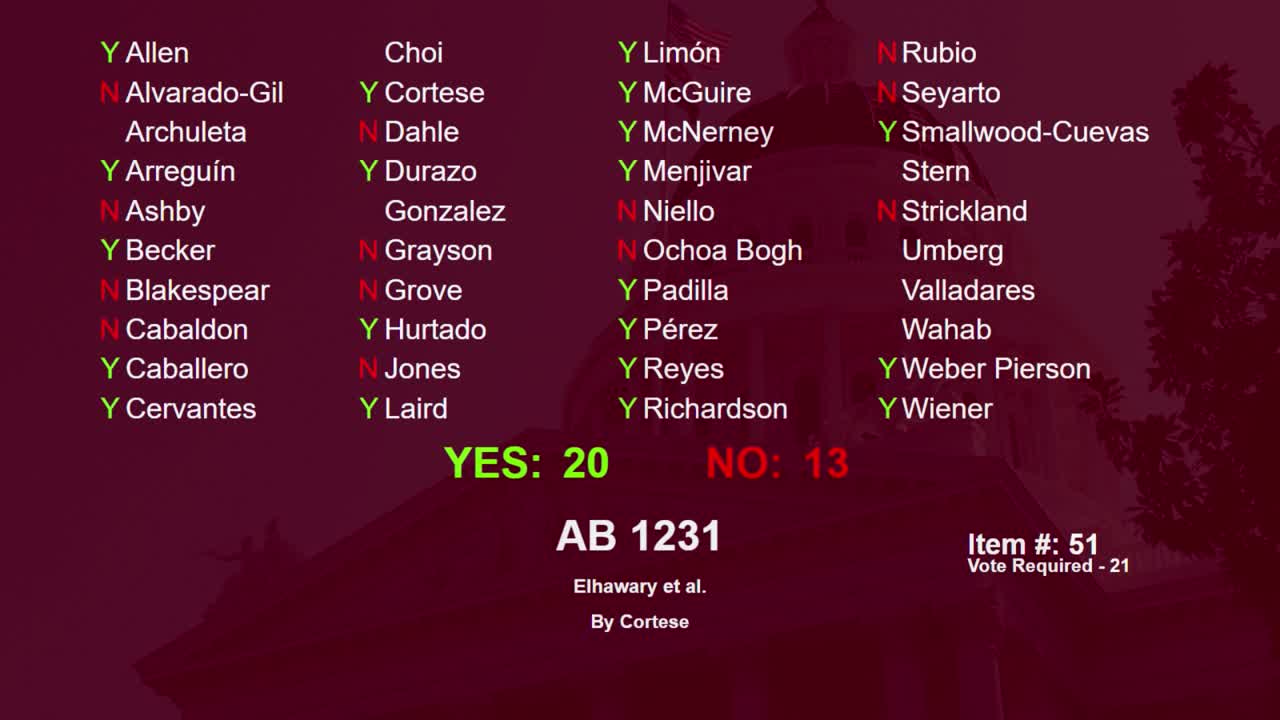

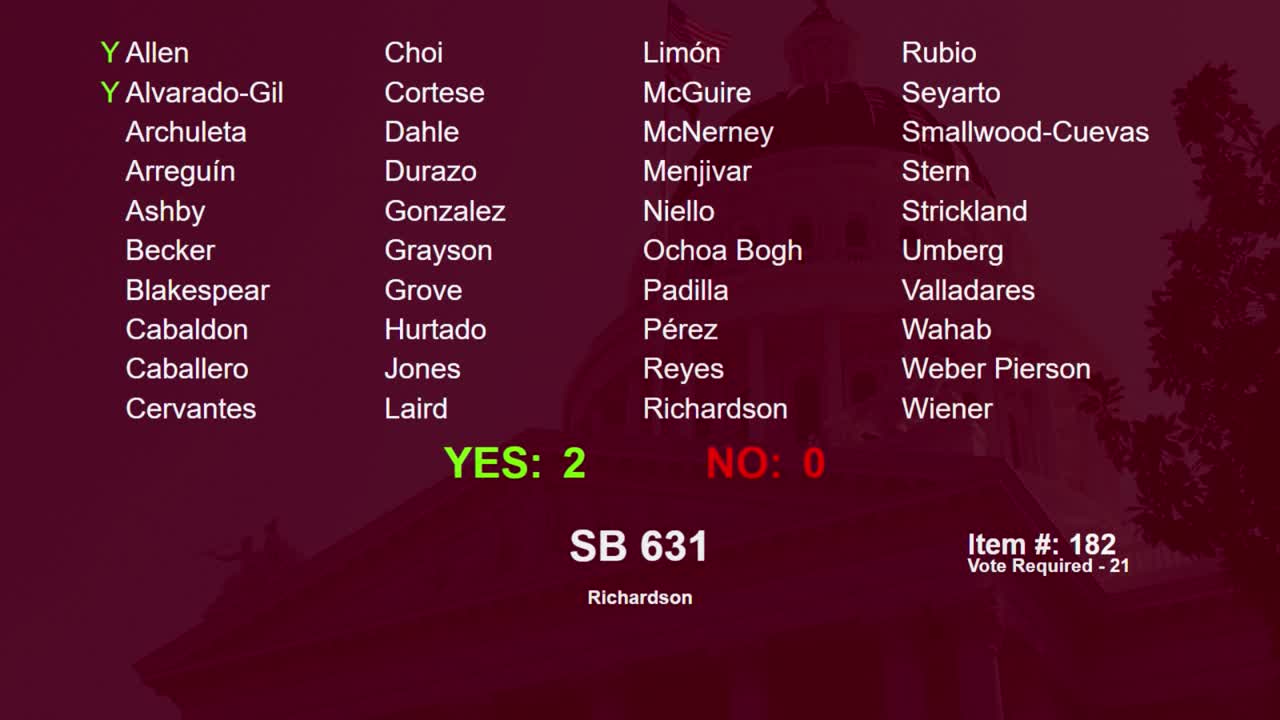

Bill Author