SB 580: Attorney General: immigration enforcement policies.
- Session Year: 2025-2026
- House: Senate
- Latest Version Date: 2025-10-12
Current Status:
Passed
(2025-10-12: Chaptered by Secretary of State. Chapter 670, Statutes of 2025.)
Introduced
In Committee
Awaiting First Chamber Vote
Passed First Chamber
In Committee
Awaiting Second Chamber Vote
Passed Second Chamber
Enacted
Existing law requires the Attorney General to develop model policies limiting assistance with immigration enforcement to the fullest extent possible consistent with federal and state law at public schools, public libraries, courthouses, specified health facilities, shelters, and other specified state agencies.
This bill would similarly require the Attorney General, on or before July 1, 2026, and in consultation with appropriate stakeholders, to publish model policies relating to interaction with immigration enforcement, consistent with federal and state law, and to publish guidance and recommendations for databases operated by state and local agencies to limit the availability of information in those databases for the purposes of immigration enforcement, consistent with federal and state law. The bill would require state and local agencies to implement the model policies on or before January 1, 2027, as specified. By imposing new duties on local agencies, this bill would impose a state-mandated local program.
The bill would include findings that changes proposed by this bill address a matter of statewide concern rather than a municipal affair and, therefore, apply to all cities, including charter cities.
The California Constitution requires the state to reimburse local agencies and school districts for certain costs mandated by the state. Statutory provisions establish procedures for making that reimbursement.
This bill would provide that, if the Commission on State Mandates determines that the bill contains costs mandated by the state, reimbursement for those costs shall be made pursuant to the statutory provisions noted above.
Existing law requires the Attorney General to develop model policies limiting assistance with immigration enforcement to the fullest extent possible consistent with federal and state law at public schools, public libraries, courthouses, specified health facilities, shelters, and other specified state agencies.
This bill would similarly require the Attorney General, on or before July 1, 2026, and in consultation with appropriate stakeholders, to publish model policies for limiting assistance relating to interaction with immigration enforcement, consistent with federal and state law, and to publish guidance and recommendations for databases operated by state and local agencies to limit the availability of information in those databases for the purposes of immigration enforcement, consistent with federal and state law. The bill would require state and local agencies to implement the model policies on or before January 1, 2027, as specified. By imposing new duties on local agencies, this bill would impose a state-mandated local program.
The bill would include findings that changes proposed by this bill address a matter of statewide concern rather than a municipal affair and, therefore, apply to all cities, including charter cities.
The California Constitution requires the state to reimburse local agencies and school districts for certain costs mandated by the state. Statutory provisions establish procedures for making that reimbursement.
This bill would provide that, if the Commission on State Mandates determines that the bill contains costs mandated by the state, reimbursement for those costs shall be made pursuant to the statutory provisions noted above.
Existing law requires the Attorney General to develop model policies limiting assistance with immigration enforcement to the fullest extent possible consistent with federal and state law at public schools, public libraries, courthouses, specified health facilities, shelters, and other specified state agencies.
This bill would similarly require the Attorney General, on or before July 1, 2026, and in consultation with appropriate stakeholders, to publish model policies for limiting assistance with immigration enforcement, consistent with federal and state law, and to publish guidance and recommendations for databases operated by state and local agencies to limit the availability of information in those databases for the purposes of immigration enforcement, consistent with federal and state law. The bill would require state and local agencies to implement these model policies and adopt the guidance the model policies on or before January 1, 2027, as specified. By imposing new duties on local agencies, this bill would impose a state-mandated local program.
The bill would include findings that changes proposed by this bill address a matter of statewide concern rather than a municipal affair and, therefore, apply to all cities, including charter cities.
The California Constitution requires the state to reimburse local agencies and school districts for certain costs mandated by the state. Statutory provisions establish procedures for making that reimbursement.
This bill would provide that, if the Commission on State Mandates determines that the bill contains costs mandated by the state, reimbursement for those costs shall be made pursuant to the statutory provisions noted above.
Existing law requires the Attorney General to develop model policies limiting assistance with immigration enforcement to the fullest extent possible consistent with federal and state law at public schools, public libraries, courthouses, specified health facilities, shelters, and other specified state agencies.
This bill would similarly require the Attorney General, on or before July 1, 2026, to develop and in consultation with appropriate stakeholders, to publish model policies for limiting assistance with immigration enforcement, consistent with federal and state law, and to publish guidance and recommendations for databases operated by state and local agencies to limit the availability of information in those databases for the purposes of immigration enforcement, consistent with federal and state law. The bill would require state and local agencies to implement these model policies and adopt the guidance on or before January 1, 2027, as specified. By imposing new duties on local agencies, this bill would impose a state-mandated local program.
The bill would include findings that changes proposed by this bill address a matter of statewide concern rather than a municipal affair and, therefore, apply to all cities, including charter cities.
The California Constitution requires the state to reimburse local agencies and school districts for certain costs mandated by the state. Statutory provisions establish procedures for making that reimbursement.
This bill would provide that, if the Commission on State Mandates determines that the bill contains costs mandated by the state, reimbursement for those costs shall be made pursuant to the statutory provisions noted above.
Existing law requires the Attorney General to develop model policies limiting assistance with immigration enforcement to the fullest extent possible consistent with federal and state law at public schools, public libraries, courthouses, specified health facilities, shelters, and other specified state agencies.
This bill would similarly require the Attorney General, on or before July 1, 2026, to develop model policies for limiting assistance with immigration enforcement, consistent with federal and state law, and to publish guidance and recommendations for databases operated by state and local agencies to limit the availability of information in those databases for the purposes of immigration enforcement, consistent with federal and state law. The bill would require state and local agencies to implement these model policies and adopt the guidance on or before January 1, 2027, as specified. By imposing new duties on local agencies, this bill would impose a state-mandated local program.
The bill would include findings that changes proposed by this bill address a matter of statewide concern rather than a municipal affair and, therefore, apply to all cities, including charter cities.
The California Constitution requires the state to reimburse local agencies and school districts for certain costs mandated by the state. Statutory provisions establish procedures for making that reimbursement.
This bill would provide that, if the Commission on State Mandates determines that the bill contains costs mandated by the state, reimbursement for those costs shall be made pursuant to the statutory provisions noted above.
Existing law prescribes requirements for the disposal of surplus land by a local agency, as defined. Under existing law, if a local agency, as of September 30, 2019, has entered into an exclusive negotiating agreement or legally binding agreement to dispose of property, certain legal provisions apply as they existed on December 31, 2019, without regard to subsequent changes, to the disposition of the property, as specified.This bill would make nonsubstantive changes to those provisions.Existing law prescribes requirements for the disposal of surplus land by a local agency, as defined. Under existing law, if a local agency, as of September 30, 2019, has entered into an exclusive negotiating agreement or legally binding agreement to dispose of property, certain legal provisions apply as they existed on December 31, 2019, without regard to subsequent changes, to the disposition of the property, as specified.
This bill would make nonsubstantive changes to those provisions.
(a)(1)On or before July 1, 2026, in consultation with appropriate stakeholders, the Attorney General shall publish model policies for state and local agencies relating to interaction with immigration authorities consistent with federal and state law.
(2)On or before January 1, 2027, a state or local agency shall implement the model policy or an equivalent policy.
(b)On or before July 1, 2026, in consultation with appropriate stakeholders, the Attorney General shall publish guidance, audit criteria, and training recommendations for databases operated by a state or local agency, including databases maintained for the agency by private vendors, aimed at ensuring that the databases are governed in a manner that makes the availability of information therein to anyone or any entity for the purposes of immigration enforcement limited to the fullest extent practicable, consistent with federal and state law.
(c)A rule, policy, or standard of general application issued by the Attorney General pursuant to this section shall not be subject to the requirements of Chapter 3.5 (commencing with Section 11340) of Part 1.
SEC. 2.The Legislature finds and declares all of the following:
(a)Immigrants are valuable and essential members of the California community and indiscriminate immigration enforcement against persons who do not pose a public safety risk to Californians has a significant negative impact on state and local functions. Increased immigration enforcement activity in California, including in the workplace and schools, has been detrimental to the health and welfare of Californias residents.
(b)The California Constitution confers an inalienable right to privacy for all Californians. This right to privacy protects the personal, private information of individuals.
(c)A relationship of trust between Californias immigrant community and state and local agencies is central to the functioning of the states government and the public safety, health, welfare, and constitutional rights of the people of California.
(d)Protecting the states limited public resources from being used for federal immigration enforcement actions is a matter of statewide concern and is not a municipal affair as that term is used in Section 5 of Article XI of the California Constitution. Therefore, Section 1 of this act adding Section 12532.5 to the Government Code applies to all cities, including charter cities.
SEC. 3.The provisions of this act are severable. If any provision of this act or its application is held invalid, that invalidity shall not affect other provisions or applications that can be given effect without the invalid provision or application.
SEC. 4.If the Commission on State Mandates determines that this act contains costs mandated by the state, reimbursement to local agencies and school districts for those costs shall be made pursuant to Part 7 (commencing with Section 17500) of Division 4 of Title 2 of the Government Code.
(a)(1)On or before July 1, 2026, in consultation with appropriate stakeholders, the Attorney General shall publish model policies for state and local agencies relating to interaction with immigration authorities and limiting assistance with immigration enforcement consistent with federal and state law.
(2)On or before January 1, 2027, a state or local agency shall implement the model policy or an equivalent policy.
(b)(1)On or before July 1, 2026, in consultation with appropriate stakeholders, the Attorney General shall publish guidance, audit criteria, and training recommendations for databases operated by a state or local agency, including databases maintained for the agency by private vendors, aimed at ensuring that the databases are governed in a manner that makes the availability of information therein to anyone or any entity for the purposes of immigration enforcement limited to the fullest extent practicable, consistent with federal and state law.
(2)On or before January 1, 2027, a state or local agency shall adopt necessary changes to their database governance policies consistent with the guidance developed pursuant to this subdivision.(c)A rule, policy, or standard of general application issued by the Attorney General pursuant to this section shall not be subject to the requirements of Chapter 3.5 (commencing with Section 11340) of Part 1.
SEC. 2.The Legislature finds and declares all of the following:
(a)Immigrants are valuable and essential members of the California community and indiscriminate immigration enforcement against persons who do not pose a public safety risk to Californians has a significant negative impact on state and local functions. Increased immigration enforcement activity in California, including in the workplace and schools, has been detrimental to the health and welfare of Californias residents.
(b)The California Constitution confers an inalienable right to privacy for all Californians. This right to privacy protects the personal, private information of individuals.
(c)A relationship of trust between Californias immigrant community and state and local agencies is central to the functioning of the states government and the public safety, health, welfare, and constitutional rights of the people of California.
(d)Protecting the states limited public resources from being used for federal immigration enforcement actions is a matter of statewide concern and is not a municipal affair as that term is used in Section 5 of Article XI of the California Constitution. Therefore, Section 1 of this act adding Section 12532.5 to the Government Code applies to all cities, including charter cities.
SEC. 3.The provisions of this act are severable. If any provision of this act or its application is held invalid, that invalidity shall not affect other provisions or applications that can be given effect without the invalid provision or application.
SEC. 4.If the Commission on State Mandates determines that this act contains costs mandated by the state, reimbursement to local agencies and school districts for those costs shall be made pursuant to Part 7 (commencing with Section 17500) of Division 4 of Title 2 of the Government Code.
(a)(1)On or before July 1, 2026, in consultation with appropriate stakeholders, the Attorney General shall publish model policies for state and local agencies relating to interaction with immigration authorities and limiting assistance with immigration enforcement consistent with federal and state law.
(2)On or before January 1, 2027, a state or local agency shall implement the model policy or an equivalent policy.
(b)(1)On or before July 1, 2026, in consultation with appropriate stakeholders, the Attorney General shall publish guidance, audit criteria, and training recommendations for databases operated by a state or local agency, including databases maintained for the agency by private vendors, aimed at ensuring that the databases are governed in a manner that makes the availability of information therein to anyone or any entity for the purposes of immigration enforcement limited to the fullest extent practicable, consistent with federal and state law.
(2)On or before January 1, 2027, a state or local agency shall adopt necessary changes to their database governance policies consistent with the guidance developed pursuant to this subdivision.
(c)A rule, policy, or standard of general application issued by the Attorney General pursuant to this section shall not be subject to the requirements of Chapter 3.5 (commencing with Section 11340) of Part 1.
SEC. 2.The Legislature finds and declares all of the following:
(a)Immigrants are valuable and essential members of the California community and indiscriminate immigration enforcement against persons who do not pose a public safety risk to Californians has a significant negative impact on state and local functions. Increased immigration enforcement activity in California, including in the workplace and schools, has been detrimental to the health and welfare of Californias residents.
(b)The California Constitution confers an inalienable right to privacy for all Californians. This right to privacy protects the personal, private information of individuals.
(c)A relationship of trust between Californias immigrant community and state and local agencies is central to the functioning of the states government and the public safety, health, welfare, and constitutional rights of the people of California.
(d)Protecting the states limited public resources from being used for federal immigration enforcement actions is a matter of statewide concern and is not a municipal affair as that term is used in Section 5 of Article XI of the California Constitution. Therefore, Section 1 of this act adding Section 12532.5 to the Government Code applies to all cities, including charter cities.
SEC. 3.The provisions of this act are severable. If any provision of this act or its application is held invalid, that invalidity shall not affect other provisions or applications that can be given effect without the invalid provision or application.
SEC. 4.If the Commission on State Mandates determines that this act contains costs mandated by the state, reimbursement to local agencies and school districts for those costs shall be made pursuant to Part 7 (commencing with Section 17500) of Division 4 of Title 2 of the Government Code.
(a)(1)On or before July 1, 2026, the Attorney General shall publish model policies for state and local agencies relating to interaction with immigration authorities and limiting assistance with immigration enforcement consistent with federal and state law.
(2)On or before January 1, 2027, a state or local agency shall implement the model policy or an equivalent policy.
(b)(1)On or before July 1, 2026, the Attorney General shall publish guidance, audit criteria, and training recommendations for databases operated by a state or local agency, including databases maintained for the agency by private vendors, aimed at ensuring that the databases are governed in a manner that makes the availability of information therein to anyone or any entity for the purposes of immigration enforcement limited to the fullest extent practicable, consistent with federal and state law.
(2)On or before January 1, 2027, a state or local agency shall adopt necessary changes to their database governance policies consistent with the guidance developed pursuant to this subdivision.
(c)A rule, policy, or standard of general application issued by the Attorney General pursuant to this section shall not be subject to the requirements of Chapter 3.5 (commencing with Section 11340) of Part 1.
SEC. 2.The Legislature finds and declares that protecting state resources from federal all of the following:
(a)Immigrants are valuable and essential members of the California community and indiscriminate immigration enforcement against persons who do not pose a public safety risk to Californians has a significant negative impact on state and local functions. Increased immigration enforcement activity in California, including in the workplace and schools, has been detrimental to the health and welfare of Californias residents.
(b)The California Constitution confers an inalienable right to privacy for all Californians. This right to privacy protects the personal, private information of individuals.
(c)A relationship of trust between Californias immigrant community and state and local agencies is central to the functioning of the states government and the public safety, health, welfare, and constitutional rights of the people of California.
(d)Protecting the states limited public resources from being used for federal immigration enforcement actions is a matter of statewide concern and is not a municipal affair as that term is used in Section 5 of Article XI of the California Constitution. Therefore, Section 1 of this act adding Section 12532.5 to the Government Code applies to all cities, including charter cities.
SEC. 3.The provisions of this act are severable. If any provision of this act or its application is held invalid, that invalidity shall not affect other provisions or applications that can be given effect without the invalid provision or application.
SEC. 4.If the Commission on State Mandates determines that this act contains costs mandated by the state, reimbursement to local agencies and school districts for those costs shall be made pursuant to Part 7 (commencing with Section 17500) of Division 4 of Title 2 of the Government Code.
(a)(1)On or before July 1, 2026, the Attorney General shall publish model policies for state and local agencies relating to interaction with immigration authorities and limiting assistance with immigration enforcement consistent with federal and state law.
(2)On or before January 1, 2027, a state or local agency shall implement the model policy or an equivalent policy.
(b)(1)On or before July 1, 2026, the Attorney General shall publish guidance, audit criteria, and training recommendations for databases operated by a state or local agency, including databases maintained for the agency by private vendors, aimed at ensuring that the databases are governed in a manner that makes the availability of information therein to anyone or any entity for the purposes of immigration enforcement limited to the fullest extent practicable, consistent with federal and state law.
(2)On or before January 1, 2027, a state or local agency shall adopt necessary changes to their database governance policies consistent with the guidance developed pursuant to this subdivision.
(c)A rule, policy, or standard of general application issued by the Attorney General pursuant to this section shall not be subject to the requirements of Chapter 3.5 (commencing with Section 11340) of Part 1.
SEC. 2.The Legislature finds and declares that protecting state resources from federal immigration enforcement actions is a matter of statewide concern and is not a municipal affair as that term is used in Section 5 of Article XI of the California Constitution. Therefore, Section 1 of this act adding Section 12532.5 to the Government Code applies to all cities, including charter cities.
SEC. 3.The provisions of this act are severable. If any provision of this act or its application is held invalid, that invalidity shall not affect other provisions or applications that can be given effect without the invalid provision or application.
SEC. 4.If the Commission on State Mandates determines that this act contains costs mandated by the state, reimbursement to local agencies and school districts for those costs shall be made pursuant to Part 7 (commencing with Section 17500) of Division 4 of Title 2 of the Government Code.
SECTION 1.Section 54234 of the Government Code is amended to read:54234.(a)(1)If a local agency, as of September 30, 2019, has entered into an exclusive negotiating agreement or legally binding agreement to dispose of property, the provisions of this article as it existed on December 31, 2019, shall apply, without regard to the changes made to this article by Chapter 664 of the Statutes of 2019, and all subsequent amendments to this article, to the disposition of the property to the party that had entered into that agreement or its successors or assigns, provided the disposition is completed by December 31, 2027.(2)If a local agency, as of September 30, 2019, has entered into an exclusive negotiating agreement or legally binding agreement to dispose of property related to the Metro North Hollywood Joint Development Project, the provisions of this article as it existed on December 31, 2019, shall apply, without regard to the changes made to this article by Chapter 664 of the Statutes of 2019, and all subsequent amendments to this article, to the disposition of the property to the party that had entered into such agreement or its successors or assigns, provided the disposition is completed not later than December 31, 2027.(3)If a local agency, as of September 30, 2019, has issued a competitive request for proposals for the development of property that includes at least 100 residential units and at least 25 percent of the total residential units are restricted to lower income households, as defined in Section 50079.5 of the Health and Safety Code, with an affordable housing cost or an affordable rent, as defined in Sections 50052.5 and 50053 of the Health and Safety Code, for a minimum of 55 years for rental housing and 45 years for ownership housing, the provisions of this article as it existed on December 31, 2019, shall apply, without regard to the changes made to this article by Chapter 664 of the Statutes of 2019, and all subsequent amendments to this article, to the disposition of the property to the party that participated in the competitive request for proposals process, or the partys successors or assigns, provided a disposition and development agreement for the property is entered into not later than December 31, 2027. A joint development involving multiple parcels shall meet the requirements of this paragraph so long as there was a single competitive request for proposals process and the joint development otherwise meets all the requirements listed in this paragraph. A disposition and development agreement means an agreement between the developer and the local agency that binds the developer to construct a specific development and the local agency to dispose of the property if permits and other entitlements for the project are obtained. This paragraph shall not apply to land held in the Community Redevelopment Property Trust Fund pursuant to Section 34191.4 of the Health and Safety Code, or that has been designated in a long-range property management plan pursuant to Section 34191.5 of the Health and Safety Code. If no disposition and development agreement is entered into before December 31, 2027, then future negotiations for and disposition of the property shall be subject to the provisions of this article.(4)The dates specified in paragraphs (1) to (3), inclusive, by which the disposition of property must be completed shall be extended if the disposition of property, the local agencys right or ability to dispose of the property, or a development project for which the property is proposed to be transferred, is the subject of judicial challenge, by petition for writ of mandate, complaint for declaratory relief or otherwise, to the date that is six months following the final conclusion of such litigation.(b)(1)With respect to land held in the Community Redevelopment Property Trust Fund pursuant to Section 34191.4 of the Health and Safety Code, or that has been designated in a long-range property management plan pursuant to Section 34191.5 of the Health and Safety Code, either for sale or retained for future development, this article as it existed on December 31, 2019, without regard to the changes made to this article by Chapter 664 of the Statutes of 2019, and all subsequent amendments to this article, which take effect on January 1, 2020, shall apply to the disposition of that property if both of the following apply:(A)An exclusive negotiating agreement or legally binding agreement for disposition was entered into not later than December 31, 2020.(B)The disposition is completed not later than December 31, 2027.(2)If land described in paragraph (1) is the subject of litigation, including, but not limited to, litigation challenging the disposition of such property, the right or ability to dispose of the property, or a development project for which such property is proposed to be transferred, the dates specified in paragraph (1) shall be extended to the date that is six months following the final conclusion of such litigation.(c)Nothing in this section shall authorize or excuse any violation of the provisions of this article as it existed on December 31, 2019, in the disposition of any property to which such provisions apply pursuant to subdivision (a) or (b).(d)If a local agency terminated an exclusive negotiating agreement or legally binding agreement to dispose of property pursuant to an earlier, superseded version of subdivision (a) or (b) of this section due to the lapse of a statutory deadline for completing the disposition of property the local agency may, in its sole reasonable discretion, elect whether to ask the party to the terminated exclusive negotiating agreement or legally binding agreement to dispose of property to consider reviving the terminated agreement. If the local agency and other party fully execute an instrument reviving the terminated agreement before January 1, 2024, on substantially the same terms and conditions as the terminated agreement, the revived agreement shall be subject to subdivision (a) or (b), as applicable, of this section.(a)(1)If a local agency, as of September 30, 2019, has entered into an exclusive negotiating agreement or legally binding agreement to dispose of property, the provisions of this article as it existed on December 31, 2019, shall apply, without regard to the changes made to this article by Chapter 664 of the Statutes of 2019, and all subsequent amendments to this article, to the disposition of the property to the party that had entered into such that agreement or its successors or assigns, provided the disposition is completed by December 31, 2027.
(2)If a local agency, as of September 30, 2019, has entered into an exclusive negotiating agreement or legally binding agreement to dispose of property related to the Metro North Hollywood Joint Development Project, the provisions of this article as it existed on December 31, 2019, shall apply, without regard to the changes made to this article by Chapter 664 of the Statutes of 2019, and all subsequent amendments to this article, to the disposition of the property to the party that had entered into such agreement or its successors or assigns, provided the disposition is completed not later than December 31, 2027.
(3)If a local agency, as of September 30, 2019, has issued a competitive request for proposals for the development of property that includes at least 100 residential units and at least 25 percent of the total residential units are restricted to lower income households, as defined in Section 50079.5 of the Health and Safety Code, with an affordable housing cost or an affordable rent, as defined in Sections 50052.5 and 50053 of the Health and Safety Code, for a minimum of 55 years for rental housing and 45 years for ownership housing, the provisions of this article as it existed on December 31, 2019, shall apply, without regard to the changes made to this article by Chapter 664 of the Statutes of 2019, and all subsequent amendments to this article, to the disposition of the property to the party that participated in the competitive request for proposals process, or the partys successors or assigns, provided a disposition and development agreement for the property is entered into not later than December 31, 2027. A joint development involving multiple parcels shall meet the requirements of this paragraph so long as there was a single competitive request for proposals process and the joint development otherwise meets all the requirements listed in this paragraph. A disposition and development agreement means an agreement between the developer and the local agency that binds the developer to construct a specific development and the local agency to dispose of the property if permits and other entitlements for the project are obtained. This paragraph shall not apply to land held in the Community Redevelopment Property Trust Fund pursuant to Section 34191.4 of the Health and Safety Code, or that has been designated in a long-range property management plan pursuant to Section 34191.5 of the Health and Safety Code. If no disposition and development agreement is entered into before December 31, 2027, then future negotiations for and disposition of the property shall be subject to the provisions of this article.
(2)(4)The dates specified in paragraphs (1) to (3), inclusive, by which the disposition of property must be completed shall be extended if the disposition of property, the local agencys right or ability to dispose of the property, or a development project for which the property is proposed to be transferred, is the subject of judicial challenge, by petition for writ of mandate, complaint for declaratory relief or otherwise, to the date that is six months following the final conclusion of such litigation.
(b)(1)With respect to land held in the Community Redevelopment Property Trust Fund pursuant to Section 34191.4 of the Health and Safety Code, or that has been designated in a long-range property management plan pursuant to Section 34191.5 of the Health and Safety Code, either for sale or retained for future development, this article as it existed on December 31, 2019, without regard to the changes made to this article by Chapter 664 of the Statutes of 2019, and all subsequent amendments to this article, which take effect on January 1, 2020, shall apply to the disposition of that property if both of the following apply:
(A)An exclusive negotiating agreement or legally binding agreement for disposition was entered into not later than December 31, 2020.
(B)The disposition is completed not later than December 31, 2027.
(2)If land described in paragraph (1) is the subject of litigation, including, but not limited to, litigation challenging the disposition of such property, the right or ability to dispose of the property, or a development project for which such property is proposed to be transferred, the dates specified in paragraph (1) shall be extended to the date that is six months following the final conclusion of such litigation.
(c)Nothing in this section shall authorize or excuse any violation of the provisions of this article as it existed on December 31, 2019, in the disposition of any property to which such provisions apply pursuant to subdivision (a) or (b).
(d)If a local agency terminated an exclusive negotiating agreement or legally binding agreement to dispose of property pursuant to an earlier, superseded version of subdivision (a) or (b) of this section due to the lapse of a statutory deadline for completing the disposition of property the local agency may, in its sole reasonable discretion, elect whether to ask the party to the terminated exclusive negotiating agreement or legally binding agreement to dispose of property to consider reviving the terminated agreement. If the local agency and other party fully execute an instrument reviving the terminated agreement before January 1, 2024, on substantially the same terms and conditions as the terminated agreement, the revived agreement shall be subject to subdivision (a) or (b), as applicable, of this section.
|
Date
|
Status
|
|---|---|
| Oct 12, 2025 | Chaptered by Secretary of State. Chapter 670, Statutes of 2025. |
| Oct 12, 2025 | Approved by the Governor. |
| Sep 22, 2025 | Enrolled and presented to the Governor at 11 a.m. |
| Sep 10, 2025 | Assembly amendments concurred in. (Ayes 30. Noes 10. Page 2805.) Ordered to engrossing and enrolling. |
| Sep 9, 2025 | In Senate. Concurrence in Assembly amendments pending. |
| Sep 9, 2025 | Read third time. Passed. (Ayes 58. Noes 19. Page 3087.) Ordered to the Senate. |
| Sep 4, 2025 | Read third time and amended. |
| Sep 4, 2025 | Ordered to third reading. |
| Sep 3, 2025 | Read second time. Ordered to third reading. |
| Sep 2, 2025 | Read second time and amended. Ordered to second reading. |
| Aug 29, 2025 | From committee: Do pass as amended. (Ayes 11. Noes 4.) (August 29). |
| Aug 20, 2025 | August 20 set for first hearing. Placed on APPR. suspense file. |
| Jun 24, 2025 | From committee: Do pass and re-refer to Com. on APPR. (Ayes 9. Noes 3.) (June 24). Re-referred to Com. on APPR. |
| Jun 16, 2025 | From committee with author's amendments. Read second time and amended. Re-referred to Com. on JUD. |
| Jun 9, 2025 | Referred to Com. on JUD. |
| Jun 3, 2025 | In Assembly. Read first time. Held at Desk. |
| Jun 2, 2025 | Read third time. Passed. (Ayes 28. Noes 10. Page 1376.) Ordered to the Assembly. |
| May 27, 2025 | Read second time. Ordered to third reading. |
| May 23, 2025 | Read second time and amended. Ordered to second reading. |
| May 23, 2025 | From committee: Do pass as amended. (Ayes 5. Noes 1. Page 1205.) (May 23). |
| May 16, 2025 | Set for hearing May 23. |
| May 12, 2025 | May 12 hearing: Placed on APPR. suspense file. |
| May 2, 2025 | Set for hearing May 12. |
| Apr 30, 2025 | From committee: Do pass and re-refer to Com. on APPR. (Ayes 5. Noes 2. Page 968.) (April 30). Re-referred to Com. on APPR. |
| Apr 23, 2025 | From committee: Do pass and re-refer to Com. on L. GOV. (Ayes 11. Noes 1. Page 836.) (April 22). Re-referred to Com. on L. GOV. |
| Apr 22, 2025 | Set for hearing April 30 in L. GOV. pending receipt. |
| Apr 8, 2025 | Set for hearing April 22. |
| Apr 2, 2025 | Re-referred to Coms. on JUD. and L. GOV. |
| Mar 26, 2025 | From committee with author's amendments. Read second time and amended. Re-referred to Com. on RLS. |
| Mar 5, 2025 | Referred to Com. on RLS. |
| Feb 21, 2025 | From printer. May be acted upon on or after March 23. |
| Feb 20, 2025 | Introduced. Read first time. To Com. on RLS. for assignment. To print. |
|
Date
|
Description
|
Location
|
Votes
|
|
|---|---|---|---|---|
| Sep 10, 2025 | Unfinished Business SB580 Durazo Concurrence | Senate Floor |
Passed |
|
| Sep 9, 2025 | SB 580 Durazo Senate Third Reading By Bryan | Assembly Floor |
Passed |
|
| Aug 29, 2025 | Do pass as amended. | Assembly Standing Committee on Appropriations |
Passed |
|
| Jun 24, 2025 | Do pass and be re-referred to the Committee on [Appropriations] | Assembly Standing Committee on Judiciary |
Passed |
|
| Jun 2, 2025 | Senate 3rd Reading SB580 Durazo | Senate Floor |
Passed |
|
| May 23, 2025 | Do pass as amended | Senate Standing Committee on Appropriations |
Passed |
|
| May 12, 2025 | Placed on suspense file | Senate Standing Committee on Appropriations |
Passed |
|
| Apr 30, 2025 | Do pass, but first be re-referred to the Committee on [Appropriations] | Senate Standing Committee on Local Government |
Passed |
|
| Apr 22, 2025 | Do pass, but first be re-referred to the Committee on [Local Government] | Senate Standing Committee on Judiciary |
Passed |
This list shows positions taken on this bill by organizations on the date displayed, which is linked to the original source.
Positions by individuals are not included.
|
Organization
|
Position
|
Date
|
|---|---|---|
| Bend The Arc: Jewish Action | ** Support | |
| California Faculty Association (CFA) | ** Support | |
| California Federation of Labor Unions, Afl-cio | ** Support | |
| California Police Chiefs Association | ** Against | |
| California State Council of Service Employees International Union | ** Support | |
| California State Sheriffs Association | ** Against | |
| California Student Aid Commission | ** Support | |
| California) | ** Support | |
| Central American Resource Center of California | ** Support | |
| Oakland Privacy | ** Support | |
| Unidosus | ** Support | |
| UNITE HERE Local 11 | ** Support | |
| United Domestic Workers/AFSCME Local 3930 | ** Support | |
| United HERE Local 11 | ** Support |
SENATE RULES COMMITTEE Office of Senate Floor Analyses (916) 651-1520 Fax: (916) 327-4478 | SB 580 |
UNFINISHED BUSINESS
Bill No: SB 580
Author: Durazo (D)
Amended: 9/4/25
Vote: 21
SENATE JUDICIARY COMMITTEE: 11-1, 4/22/25
AYES: Umberg, Allen, Arreguín, Ashby, Caballero, Durazo, Laird, Stern, Wahab, Weber Pierson, Wiener
NOES: Niello
NO VOTE RECORDED: Valladares
SENATE LOCAL GOVERNMENT COMMITTEE: 5-2, 4/30/25
AYES: Durazo, Arreguín, Cabaldon, Laird, Wiener
NOES: Choi, Seyarto
SENATE APPROPRIATIONS COMMITTEE: 5-1, 5/23/25
AYES: Caballero, Cabaldon, Grayson, Richardson, Wahab
NOES: Seyarto
NO VOTE RECORDED: Dahle
SENATE FLOOR: 28-10, 6/2/25
AYES: Allen, Archuleta, Arreguín, Ashby, Becker, Blakespear, Cabaldon, Caballero, Cervantes, Cortese, Durazo, Gonzalez, Grayson, Laird, Limón, McGuire, McNerney, Menjivar, Padilla, Pérez, Richardson, Rubio, Smallwood-Cuevas, Stern, Umberg, Wahab, Weber Pierson, Wiener
NOES: Alvarado-Gil, Choi, Dahle, Grove, Jones, Niello, Ochoa Bogh, Seyarto, Strickland, Valladares
NO VOTE RECORDED: Hurtado, Reyes
ASSEMBLY FLOOR: 58-19, 9/9/25 - See last page for vote
SUBJECT: Attorney General: immigration enforcement policies
SOURCE: California State Council of Service Employees International Union
DIGEST:
This bill requires the Attorney General, on or before July 1, 2026, in consultation with appropriate stakeholders, to publish model policies and guidance, audit criteria, and training recommendations for state and local agencies and the databases they operate relating to interaction with immigration authorities consistent with federal and state law, and requires local and state agencies to implement these policies or an equivalent by January 1, 2027.
Assembly Amendments
of 9/4/25 require the Attorney General to publish the model policies in consultation with appropriate stakeholders, remove the reference to limiting assistance with immigration enforcement as one of the subjects of the model policies, and remove the requirement that state and local agencies adopt necessary changes to their database governance policies, consistent with the attorney general’s guidance, by January 1, 2027.
ANALYSIS:
Existing law:
- Prohibits law enforcement agencies from using agency or department moneys or personnel to investigate, interrogate, detain, detect, or arrest persons for immigration enforcement purposes, as specified, place peace officers under the supervision of federal agencies, use immigration authorities as interpreters for law enforcement matters, transfer an individual to immigration authorities unless authorized by a judicial warrant, and provide office space exclusively dedicated to immigration authorities, and from contracting with the federal government for the use of law enforcement agency facilities to house individuals as federal detainees for the purposes of civil immigration custody, as specified. (Government (Gov.) Code § 7284.6.)
- Requires the Attorney General, by April 1, 2018, and in consultation with the appropriate stakeholders, to publish model policies limiting assistance with immigration enforcement at public schools, public libraries, health facilities operated by the state or a political subdivision thereof, courthouses, Division of Labor Standards Enforcement facilities, the Agricultural Labor Relations Board, the Division of Workers Compensation, and shelters, to the fullest extent possible consistent with federal and state law, and ensure that public schools remain safe and accessible to all California residents, regardless of immigration status.
- Requires all public schools, health facilities operated by the state or a political division thereof, and courthouses to implement the Attorney General’s model policy, or an equivalent.
- Encourages the Agricultural Relations Board, the Division of Workers’ Compensation, the Division of Labor Standards Enforcement, shelters, libraries, and all other organizations and entities that provide services related to physical or mental health and wellness, education, or access to justice, including the University of California, to adopt the model policy. (Gov. Code § 7284.8.)
- Requires the Attorney General to, by October 1, 2018, and in consultation with appropriate stakeholders, publish guidance, audit criteria, and training recommendations aimed at ensuring that any databases operated by state and local law enforcement agencies, including databases maintained for the agency by private vendors, are governed in a manner that limits the availability of information therein to anyone or any entity for the purpose of immigration enforcement, to the fullest extent practicable and consistent with federal and state law. (Gov. Code § 7284.8(b).)
- Requires the Department of Corrections and Rehabilitation to, in advance of any interview between the United States Immigration and Customs Enforcement and an individual in the department’s custody, provide the individual with a written consent form that explains the purpose of the interview, that the interview is voluntary, and that they may decline to be interviewed or may choose to be interviewed only with their attorney present. Requires the form be available in English, Spanish, Chinese, Tagalog, Vietnamese, and Korean. (Gov. Code § 7284.10.)
- Prohibits an employer from providing voluntary consent to an immigration enforcement agent to access, review, or obtain the employer’s employee records without a subpoena or judicial warrant, except for access to I-9 employment eligibility verification forms or other documents for which a Notice of Inspection has been provided to the employer. Provides a civil penalty, enforceable by the Labor Commissioner or the Attorney General, for a violation of this prohibition. (Gov. Code § 7285.2.)
This bill:
- Requires that the Attorney General publish, on or before July 1, 2026 and in consultation with appropriate stakeholders, model policies for state and local agencies relating to their interaction with immigration authorities consistent with federal and state law.
- Requires a state or local agency to implement the Attorney General’s model policies or an equivalent on or before January 1, 2027.
- Requires, on or before July 1, 2026 and in consultation with appropriate stakeholders, that the Attorney General publish guidance, audit criteria, and training recommendations for databases operated by a state or local agency, including databases maintained for the agency by private vendors, in order to ensure that databases are governed in a manner that limits the availability of their information to anyone or any entity for the purposes of immigration enforcement to the fullest extent practicable, consistent with federal and state law.
- Specifies that a rule, policy, or standard of general application issued by the Attorney General pursuant to this bill’s requirements is not subject to the state’s laws regarding administrative regulations and rulemaking.
- Finds and declares that:
- immigrants are valuable and essential members of the California community, and indiscriminate immigration enforcement against persons who do not pose a public safety risk to Californians has a significant negative impact on state and local functions;
- increased immigration enforcement activity in California, including in workplaces and schools, is detrimental to the health and welfare of the state’s residents;
- the California Constitution confers and inalienable right to privacy for all Californians, which protects the personal, private information of individuals;
- a relationship of trust between California’s immigrant community and state and local agencies is central to the functioning of the state’s government and the public safety, health, welfare, and constitutional rights of the people of California; and
- that protecting the state’s limited public resources from being used for federal immigration actions is a matter of statewide concern, and that, therefore, the provisions described in (1) through (5), above, apply to all cities, including charter cities.
- Specifies that its provisions are severable, and that any deemed invalidity of one provision shall not affect the validity of other provisions that can be given effect without the invalid provision.
FISCAL EFFECT: Appropriation: No Fiscal Com.: Yes Local: Yes
According to the Assembly Appropriations Committee:
Costs (General Fund) to the Department of Justice (DOJ) to develop database guidance, issue informational bulletins, update its own databases and policies, respond to questions from agencies and Public Records Act requests, and, if needed, conduct audits. DOJ reports it will need $408,000 in fiscal year (FY) 2025-26 and $726,000 in FY 2026-27 and ongoing for four additional full-time positions in its California Justice Information Services division to conduct this work. DOJ reports absorbable costs to its Civil Rights Enforcement Division to draft the model policies regarding agency interactions with immigration authorities.
Costs (General Fund, special funds, local funds) to state and local agencies of an unknown but likely significant amount to adopt model or equivalent policies and make changes to database governance policies consistent with DOJ’s guidance. It is difficult to predict these costs with certainty; without knowing the content of DOJ’s guidance, the committee cannot assess the workload associated with complying with the guidance. There will likely be one-time costs to update internal policies and guidance, with possible ongoing costs to the extent DOJ’s guidance differs from existing database management practices. Since the bill affects so many state and local entities – including schools, state and local law enforcement agencies, local and municipal agencies, and state departments, boards, and agencies – the costs will likely be significant in the aggregate, possibly in the tens of millions of dollars or higher. The state must reimburse costs incurred by local entities from the General Fund if the Commission on State Mandates determines the duties imposed by this bill constitute a reimbursable state mandate.
SUPPORT: (Verified 9/9/25)
California State Council of Service Employees International Union (source)
Bend the Arc: Jewish Action
California Federation of Labor Unions, AFL-CIO
California Student Aid Commission
Central American Resource Center of California
Oakland Privacy
UnidosUS
United HERE Local 11
United Domestic Workers/AFSCME Local 3930
OPPOSITION: (Verified 9/9/25)
California Police Chiefs Association
California State Sheriffs Association
ARGUMENTS IN SUPPORT: According to SEIU California, which is the sponsor of SB 580:
SEIU California is the largest public sector union in California, representing state workers, court workers, public college professors and students, publicly funded child care providers, public hospital staff, library staff, county social workers, public defenders and countless other municipal worker classifications throughout the state. These workers have chosen careers and were hired to work in these capacities and most have specific job descriptions and responsibilities, none of which include participating with federal immigration enforcement agencies. The labor of public sector workers should be respected with clear state policies that direct if, how and when to use their time on the job in support of a federal immigration action and limit those occasions to only those they are legally required to do so under federal law.
What’s more, the California public should be assured that public sector workers are using the best available and most legally sound instructions for how to safeguard their information from anyone that does not have authority to access it, which may, at times, include the Federal government.
SB 580 achieves these objectives by building on California’s sanctuary state laws which codify our state’s ability to protect itself from the commandeering of our state’s resources for purposes other than what they were appropriated for.
ASSEMBLY FLOOR: 58-19, 9/9/25
AYES: Addis, Aguiar-Curry, Ahrens, Alvarez, Arambula, Ávila Farías, Bauer-Kahan, Bennett, Berman, Boerner, Bonta, Bryan, Calderon, Caloza, Carrillo, Connolly, Elhawary, Fong, Gabriel, Garcia, Gipson, Mark González, Haney, Harabedian, Hart, Irwin, Jackson, Kalra, Krell, Lee, Lowenthal, McKinnor, Muratsuchi, Nguyen, Ortega, Pacheco, Papan, Patel, Pellerin, Petrie-Norris, Quirk-Silva, Ramos, Ransom, Celeste Rodriguez, Michelle Rodriguez, Rogers, Blanca Rubio, Schultz, Sharp-Collins, Solache, Soria, Stefani, Valencia, Ward, Wicks, Wilson, Zbur, Rivas
NOES: Alanis, Castillo, Chen, Davies, DeMaio, Dixon, Ellis, Flora, Gallagher, Jeff Gonzalez, Hadwick, Hoover, Johnson, Macedo, Patterson, Sanchez, Ta, Tangipa, Wallis
NO VOTE RECORDED: Bains, Lackey, Schiavo
Prepared by: Ian Dougherty / JUD. / (916) 651-4113
10/19/26 12:28:01
**** END ****
SENATE RULES COMMITTEE Office of Senate Floor Analyses (916) 651-1520 Fax: (916) 327-4478 | SB 580 |
UNFINISHED BUSINESS
Bill No: SB 580
Author: Durazo (D)
Amended: 9/4/25 in Assembly
Vote: 21
SENATE JUDICIARY COMMITTEE: 11-1, 4/22/25
AYES: Umberg, Allen, Arreguín, Ashby, Caballero, Durazo, Laird, Stern, Wahab, Weber Pierson, Wiener
NOES: Niello
NO VOTE RECORDED: Valladares
SENATE LOCAL GOVERNMENT COMMITTEE: 5-2, 4/30/25
AYES: Durazo, Arreguín, Cabaldon, Laird, Wiener
NOES: Choi, Seyarto
SENATE APPROPRIATIONS COMMITTEE: 5-1, 5/23/25
AYES: Caballero, Cabaldon, Grayson, Richardson, Wahab
NOES: Seyarto
NO VOTE RECORDED: Dahle
SENATE FLOOR: 28-10, 6/2/25
AYES: Allen, Archuleta, Arreguín, Ashby, Becker, Blakespear, Cabaldon, Caballero, Cervantes, Cortese, Durazo, Gonzalez, Grayson, Laird, Limón, McGuire, McNerney, Menjivar, Padilla, Pérez, Richardson, Rubio, Smallwood-Cuevas, Stern, Umberg, Wahab, Weber Pierson, Wiener
NOES: Alvarado-Gil, Choi, Dahle, Grove, Jones, Niello, Ochoa Bogh, Seyarto, Strickland, Valladares
NO VOTE RECORDED: Hurtado, Reyes
ASSEMBLY FLOOR: 50-17, 9/9/25 – Roll call not available.
SUBJECT: Attorney General: immigration enforcement policies
SOURCE: California State Council of Service Employees International Union
DIGEST:
This bill requires the Attorney General, on or before July 1, 2026, in consultation with appropriate stakeholders, to publish model policies and guidance, audit criteria, and training recommendations for state and local agencies and the databases they operate relating to interaction with immigration authorities consistent with federal and state law, and requires local and state agencies to implement these policies or an equivalent by January 1, 2027.
Assembly Amendments
of 9/4/25 require the Attorney General to publish the model policies in consultation with appropriate stakeholders, remove the reference to limiting assistance with immigration enforcement as one of the subjects of the model policies, and remove the requirement that state and local agencies adopt necessary changes to their database governance policies, consistent with the attorney general’s guidance, by January 1, 2027.
ANALYSIS:
Existing law:
- Prohibits law enforcement agencies from using agency or department moneys or personnel to investigate, interrogate, detain, detect, or arrest persons for immigration enforcement purposes, as specified, place peace officers under the supervision of federal agencies, use immigration authorities as interpreters for law enforcement matters, transfer an individual to immigration authorities unless authorized by a judicial warrant, and provide office space exclusively dedicated to immigration authorities, and from contracting with the federal government for the use of law enforcement agency facilities to house individuals as federal detainees for the purposes of civil immigration custody, as specified. (Government (Gov.) Code § 7284.6.)
- Requires the Attorney General, by April 1, 2018, and in consultation with the appropriate stakeholders, to publish model policies limiting assistance with immigration enforcement at public schools, public libraries, health facilities operated by the state or a political subdivision thereof, courthouses, Division of Labor Standards Enforcement facilities, the Agricultural Labor Relations Board, the Division of Workers Compensation, and shelters, to the fullest extent possible consistent with federal and state law, and ensure that public schools remain safe and accessible to all California residents, regardless of immigration status.
- Requires all public schools, health facilities operated by the state or a political division thereof, and courthouses to implement the Attorney General’s model policy, or an equivalent.
- Encourages the Agricultural Relations Board, the Division of Workers’ Compensation, the Division of Labor Standards Enforcement, shelters, libraries, and all other organizations and entities that provide services related to physical or mental health and wellness, education, or access to justice, including the University of California, to adopt the model policy. (Gov. Code § 7284.8.)
- Requires the Attorney General to, by October 1, 2018, and in consultation with appropriate stakeholders, publish guidance, audit criteria, and training recommendations aimed at ensuring that any databases operated by state and local law enforcement agencies, including databases maintained for the agency by private vendors, are governed in a manner that limits the availability of information therein to anyone or any entity for the purpose of immigration enforcement, to the fullest extent practicable and consistent with federal and state law. (Gov. Code § 7284.8(b).)
- Requires the Department of Corrections and Rehabilitation to, in advance of any interview between the United States Immigration and Customs Enforcement and an individual in the department’s custody, provide the individual with a written consent form that explains the purpose of the interview, that the interview is voluntary, and that they may decline to be interviewed or may choose to be interviewed only with their attorney present. Requires the form be available in English, Spanish, Chinese, Tagalog, Vietnamese, and Korean. (Gov. Code § 7284.10.)
- Prohibits an employer from providing voluntary consent to an immigration enforcement agent to access, review, or obtain the employer’s employee records without a subpoena or judicial warrant, except for access to I-9 employment eligibility verification forms or other documents for which a Notice of Inspection has been provided to the employer. Provides a civil penalty, enforceable by the Labor Commissioner or the Attorney General, for a violation of this prohibition. (Gov. Code § 7285.2.)
This bill:
- Requires that the Attorney General publish, on or before July 1, 2026 and in consultation with appropriate stakeholders, model policies for state and local agencies relating to their interaction with immigration authorities consistent with federal and state law.
- Requires a state or local agency to implement the Attorney General’s model policies or an equivalent on or before January 1, 2027.
- Requires, on or before July 1, 2026 and in consultation with appropriate stakeholders, that the Attorney General publish guidance, audit criteria, and training recommendations for databases operated by a state or local agency, including databases maintained for the agency by private vendors, in order to ensure that databases are governed in a manner that limits the availability of their information to anyone or any entity for the purposes of immigration enforcement to the fullest extent practicable, consistent with federal and state law.
- Specifies that a rule, policy, or standard of general application issued by the Attorney General pursuant to this bill’s requirements is not subject to the state’s laws regarding administrative regulations and rulemaking.
- Finds and declares that:
- immigrants are valuable and essential members of the California community, and indiscriminate immigration enforcement against persons who do not pose a public safety risk to Californians has a significant negative impact on state and local functions;
- increased immigration enforcement activity in California, including in workplaces and schools, is detrimental to the health and welfare of the state’s residents;
- the California Constitution confers and inalienable right to privacy for all Californians, which protects the personal, private information of individuals;
- a relationship of trust between California’s immigrant community and state and local agencies is central to the functioning of the state’s government and the public safety, health, welfare, and constitutional rights of the people of California; and
- that protecting the state’s limited public resources from being used for federal immigration actions is a matter of statewide concern, and that, therefore, the provisions described in (1) through (5), above, apply to all cities, including charter cities.
- Specifies that its provisions are severable, and that any deemed invalidity of one provision shall not affect the validity of other provisions that can be given effect without the invalid provision.
FISCAL EFFECT: Appropriation: No Fiscal Com.: Yes Local: Yes
According to the Assembly Appropriations Committee:
Costs (General Fund) to the Department of Justice (DOJ) to develop database guidance, issue informational bulletins, update its own databases and policies, respond to questions from agencies and Public Records Act requests, and, if needed, conduct audits. DOJ reports it will need $408,000 in fiscal year (FY) 2025-26 and $726,000 in FY 2026-27 and ongoing for four additional full-time positions in its California Justice Information Services division to conduct this work. DOJ reports absorbable costs to its Civil Rights Enforcement Division to draft the model policies regarding agency interactions with immigration authorities.
Costs (General Fund, special funds, local funds) to state and local agencies of an unknown but likely significant amount to adopt model or equivalent policies and make changes to database governance policies consistent with DOJ’s guidance. It is difficult to predict these costs with certainty; without knowing the content of DOJ’s guidance, the committee cannot assess the workload associated with complying with the guidance. There will likely be one-time costs to update internal policies and guidance, with possible ongoing costs to the extent DOJ’s guidance differs from existing database management practices. Since the bill affects so many state and local entities – including schools, state and local law enforcement agencies, local and municipal agencies, and state departments, boards, and agencies – the costs will likely be significant in the aggregate, possibly in the tens of millions of dollars or higher. The state must reimburse costs incurred by local entities from the General Fund if the Commission on State Mandates determines the duties imposed by this bill constitute a reimbursable state mandate.
SUPPORT: (Verified 9/9/25)
California State Council of Service Employees International Union (source)
Bend the Arc: Jewish Action
California Federation of Labor Unions, AFL-CIO
California Student Aid Commission
Central American Resource Center of California
Oakland Privacy
UnidosUS
United HERE Local 11
United Domestic Workers/AFSCME Local 3930
OPPOSITION: (Verified 9/9/25)
California Police Chiefs Association
California State Sheriffs Association
ARGUMENTS IN SUPPORT: According to SEIU California, which is the sponsor of SB 580:
SEIU California is the largest public sector union in California, representing state workers, court workers, public college professors and students, publicly funded child care providers, public hospital staff, library staff, county social workers, public defenders and countless other municipal worker classifications throughout the state. These workers have chosen careers and were hired to work in these capacities and most have specific job descriptions and responsibilities, none of which include participating with federal immigration enforcement agencies. The labor of public sector workers should be respected with clear state policies that direct if, how and when to use their time on the job in support of a federal immigration action and limit those occasions to only those they are legally required to do so under federal law.
What’s more, the California public should be assured that public sector workers are using the best available and most legally sound instructions for how to safeguard their information from anyone that does not have authority to access it, which may, at times, include the Federal government.
SB 580 achieves these objectives by building on California’s sanctuary state laws which codify our state’s ability to protect itself from the commandeering of our state’s resources for purposes other than what they were appropriated for.
Prepared by: Ian Dougherty / JUD. / (916) 651-4113
9/9/25 15:10:52
**** END ****
SENATE THIRD READING
STR Bill Id:SB 580
Author:(Durazo)
As Amended Ver:September 4, 2025
Majority vote
SUMMARY
Requires the Attorney General (AG) to develop and publish model policies for state and local agencies relating to interactions with immigration enforcement.
Major Provisions
- Requires the Attorney General in consultation with appropriate stakeholders, on or before July 1, 2026, to publish model policies for state and local agencies relating to interaction with immigration authorities consistent with federal and state law. Requires state or local agencies, on or before January 1, 2027, to implement the model policy or an equivalent policy.
- Requires the Attorney General in consultation with appropriate stakeholders, on or before July 1, 2026, to publish guidance, audit criteria, and training recommendations for databases operated by a state or local agency, including databases maintained for the agency by private vendors, aimed at ensuring that the databases are governed in a manner that makes the availability of information therein to anyone or any entity for the purposes of immigration enforcement limited to the fullest extent practicable, consistent with federal and state law.
COMMENTS
California is home to nearly a quarter of the country's immigrant population, totaling approximately 10.6 million people across the state. This population consists of individuals from dozens of countries, with the most common countries of origin being Mexico, the Philippines, and China. As of the most recent data, 83% of California's immigrant population are naturalized citizens or have some form of legal residency status. The remaining 17% are undocumented. (Public Policy Institute of California, Immigrants in California available at: https://www.ppic.org/publication/immigrants-in-california/.)
Changes in federal immigration policy. Since the presidential inauguration in January of this year, the Trump administration has focused on enacting sweeping new immigration policies. Despite campaign promises to focus on immigrants in the country with criminal histories, the administration has set a lofty goal of at least 1 million deportations per year. In order to achieve this goal, the administration, through admittedly inconsistent messaging, has targeted worksites in industries that survive on an outsized reliance on immigrant workforces, including the agricultural and hospitality industries. (Pager, Aleaziz, Jordan, and Lindner (New York Times) June 17, 2025, Trump's Conflicting Messages on Workplace Raids Leave Businesses Reeling available at: https://www.nytimes.com/2025/06/17/us/politics/trump-conflicting-messages-workplace-raids.html.)
The threat of detention and deportation has severely impacted immigrant communities' ability to access daily life, regardless of their immigration status. According to one report, attendance at the Salinas City Elementary School District decreased by four percent compared to August of last year. In a district with fewer than 10,000 students, a seemingly minor drop like that reflects a total of more than 700 students who were losing time in classrooms with teachers and their peers in one school district alone. (Carolyn Jones, 'Afraid to go to school': Immigrant families in the Salinas Valley are gripped by fear, CalMatters (Feb. 20, 2025) available at: https://calmatters.org/education/k-12-education/2025/02/deportation/.)
For at least the last decade, the California Legislature has taken steps to limit the state's collaboration with immigration enforcement activity, most notably through passage of SB 54 (De Leon, Chapter 495, Statutes of 2017) which limited the use of state and local resources for the purposes of immigration enforcement. The Trump administration challenged SB 54 in court arguing it was preempted by federal law, but in 2019 the Ninth Circuit ruled against the administration. The court argued that because federal immigration law is silent on the role of state or local governments in immigration enforcement, and SB 54 was focused on state and local agencies, the law was not preempted. In particular they stated "SB 54 does not directly conflict with any obligations that the INA or other federal statutes impose on state or local governments, because federal law does not actually mandate any state action[.]" (United States v. California (2019) 921 F.3d 865, 887.) The administration appealed the Ninth Circuit ruling, but the Supreme Court denied the request, leaving the decision untouched.
In addition to imposing restrictions on the use of state and local resources for the purposes of immigration enforcement, SB 54 also established Government Code Section 7284.8, which directs the AG to develop model policies for various public institutions to limit their assistance with immigration enforcement. As of this date, the AG provides these model policies for public institutions including superior courts, healthcare facilities, schools and colleges, the Division of Labor Standards Enforcement, the Agricultural Labor Relations Board, the Division of Workers Compensation, public libraries, and shelters. The AG also provides guidance for law enforcement, prosecutors, public defenders, employers, and employees.
This bill requires the AG, on or before July 1, 2026, to develop model policies for state and local agencies regarding interactions with immigration authorities. Additionally, the bill requires the AG, by the same date, to publish guidance, audit criteria, and training recommendations for databases operated by state or local agencies to ensure the data within those databases is as limited for the purposes of immigration enforcement as possible.
The policies would identify how agencies could limit their assistance with immigration enforcement consistent with federal and state law. This language arguably precludes any potential federal preemption, as the guidelines would, by the text of the bill requiring their development, provide directives that comply with federal law.
According to the Author
Immigrant men, women and children are undergoing threats of family separation through deportation. The federal government has initiated aggressive and violent tactics that are terrorizing our neighborhoods. It is extremely crucial that state and local agencies receive information on the most appropriate ways to respond during civil immigration enforcement scenarios. This bill will best equip our state and local agencies with the proper guidance from California's Attorney General. By having these model policy guidance, our communities and employees will be better protected. Our community members deserve to attend schools, healthcare facilities, and places of worship peacefully. All community members deserve the right to access services and continue living without fear.
Arguments in Support
This bill is sponsored by the California Service Employees International Union (SEIU). It is supported by the California Faculty Association (CFA), the California Federation of Labor Unions, Bend the Arc: Jewish Action, the California Student Aid Commission, Oakland Privacy, and UnidosUS. In support of the bill, SEIU California submits:
SEIU California is the largest public sector union in California, representing state workers, court workers, public college professors and students, publicly funded child care providers, public hospital staff, library staff, county social workers, public defenders and countless other municipal worker classifications throughout the state. These workers have chosen careers and were hired to work in these capacities and most have specific job descriptions and responsibilities, none of which include participating with federal immigration enforcement agencies. The labor of public sector workers should be respected with clear state policies that direct if, how and when to use their time on the job in support of a federal immigration action and limit those occasions to only those they are legally required to do so under federal law.
What's more, the California public should be assured that public sector workers are using the best available and most legally sound instructions for how to safeguard their information from anyone that does not have authority to access it, which may, at times, include the Federal government.
SB 580 achieves these objectives by building on California's sanctuary state laws which codify our state's ability to protect itself from the commandeering of our state's resources for purposes other than what they were appropriated for.
Arguments in Opposition
This bill is opposed by the California Police Chiefs Association and the California State Sheriffs' Association. They submit:
California's front-line law enforcement officers do not currently engage in, and have no intention of engaging in, immigration enforcement in the field. California's peace officers have always been and will remain the guardians of our entire communities. We protect and serve all those who live, work, and visit our jurisdictions, regardless of their immigration status.
Further, though flawed, existing state law on communication and cooperation with federal authorities on immigration matters is generally clear. Local law enforcement agencies are perfectly capable of interpreting and implementing existing law. Requiring the AG to establish model policies and guidelines is a waste of time and resources. Additionally, the Senate Appropriations Committee points to billions of dollars in potential costs attributable to the policy and audit provisions of the bill.
Because SB 580 represents an unnecessary expenditure of state and local resources at a time when all levels of government are struggling financially, CPCA and CSSA must oppose it.
FISCAL COMMENTS
According to the Assembly Appropriations Committee:
- Costs (General Fund) to the Department of Justice (DOJ) to develop database guidance, issue informational bulletins, respond to questions from agencies and Public Records Act requests, and, if needed, conduct audits. DOJ reports it will need $408,000 in fiscal year (FY) 2025-26 and $726,000 in FY 2026-27 and ongoing for four additional full-time positions in its California Justice Information Services division to conduct this work. DOJ reports absorbable costs to its Civil Rights Enforcement Division to draft the model policies regarding agency interactions with immigration authorities.
- Costs (General Fund, special funds, local funds) to state and local agencies of an unknown amount to adopt model policies relating to interaction with immigration authorities. These costs may not be significant for individual agencies, but in the aggregate statewide may reach the hundreds of thousands of dollars or higher. The state must reimburse costs incurred by local entities from the General Fund if the Commission on State Mandates determines the duties imposed by this bill constitute a reimbursable state mandate.
VOTES
SENATE FLOOR: 28-10-2
YES: Allen, Archuleta, Arreguín, Ashby, Becker, Blakespear, Cabaldon, Caballero, Cervantes, Cortese, Durazo, Gonzalez, Grayson, Laird, Limón, McGuire, McNerney, Menjivar, Padilla, Pérez, Richardson, Rubio, Smallwood-Cuevas, Stern, Umberg, Wahab, Weber Pierson, Wiener
NO: Alvarado-Gil, Choi, Dahle, Grove, Jones, Niello, Ochoa Bogh, Seyarto, Strickland, Valladares
ABS, ABST OR NV: Hurtado, Reyes
ASM JUDICIARY: 9-3-0
YES: Kalra, Garcia, Bryan, Connolly, Harabedian, Pacheco, Papan, Lee, Zbur
NO: Dixon, Tangipa, Sanchez
ASM APPROPRIATIONS: 11-4-0
YES: Wicks, Arambula, Calderon, Caloza, Elhawary, Fong, Mark González, Ahrens, Pacheco, Pellerin, Solache
NO: Sanchez, Dixon, Ta, Tangipa
UPDATED
VERSION: September 4, 2025
CONSULTANT: Manuela Boucher / JUD. / (916) 319-2334 FN: 0001724
SENATE THIRD READING
STR Bill Id:SB 580
Author:(Durazo)
As Amended Ver: September 2, 2025
Majority vote
SUMMARY
Requires the Attorney General (AG) to develop and publish model policies for state and local agencies relating to interactions with immigration enforcement.
Major Provisions
- Requires the Attorney General in consultation with appropriate stakeholders, on or before July 1, 2026, to publish model policies for state and local agencies relating to interaction with immigration authorities and limiting assistance with immigration enforcement consistent with federal and state law. Requires state or local agencies, on or before January 1, 2027, to implement the model policy or an equivalent policy.
- Requires the Attorney General in consultation with appropriate stakeholders, on or before July 1, 2026, to publish guidance, audit criteria, and training recommendations for databases operated by a state or local agency, including databases maintained for the agency by private vendors, aimed at ensuring that the databases are governed in a manner that makes the availability of information therein to anyone or any entity for the purposes of immigration enforcement limited to the fullest extent practicable, consistent with federal and state law.
COMMENTS
California is home to nearly a quarter of the country's immigrant population, totaling approximately 10.6 million people across the state. This population consists of individuals from dozens of countries, with the most common countries of origin being Mexico, the Philippines, and China. As of the most recent data, 83% of California's immigrant population are naturalized citizens or have some form of legal residency status. The remaining 17% are undocumented. (Public Policy Institute of California, Immigrants in California available at: https://www.ppic.org/publication/immigrants-in-california/.)
Changes in federal immigration policy. Since the presidential inauguration in January of this year, the Trump administration has focused on enacting sweeping new immigration policies. Despite campaign promises to focus on immigrants in the country with criminal histories, the administration has set a lofty goal of at least 1 million deportations per year. In order to achieve this goal, the administration, through admittedly inconsistent messaging, has targeted worksites in industries that survive on an outsized reliance on immigrant workforces, including the agricultural and hospitality industries. (Pager, Aleaziz, Jordan, and Lindner (New York Times) June 17, 2025, Trump's Conflicting Messages on Workplace Raids Leave Businesses Reeling available at: https://www.nytimes.com/2025/06/17/us/politics/trump-conflicting-messages-workplace-raids.html.)
The threat of detention and deportation has severely impacted immigrant communities' ability to access daily life, regardless of their immigration status. According to one report, attendance at the Salinas City Elementary School District decreased by four percent compared to August of last year. In a district with fewer than 10,000 students, a seemingly minor drop like that reflects a total of more than 700 students who were losing time in classrooms with teachers and their peers in one school district alone. (Carolyn Jones, 'Afraid to go to school': Immigrant families in the Salinas Valley are gripped by fear, CalMatters (Feb. 20, 2025) available at: https://calmatters.org/education/k-12-education/2025/02/deportation/.)
For at least the last decade, the California Legislature has taken steps to limit the state's collaboration with immigration enforcement activity, most notably through passage of SB 54 (De Leon, Chapter 495, Statutes of 2017) which limited the use of state and local resources for the purposes of immigration enforcement. The Trump administration challenged SB 54 in court arguing it was preempted by federal law, but in 2019 the Ninth Circuit ruled against the administration. The court argued that because federal immigration law is silent on the role of state or local governments in immigration enforcement, and SB 54 was focused on state and local agencies, the law was not preempted. In particular they stated "SB 54 does not directly conflict with any obligations that the INA or other federal statutes impose on state or local governments, because federal law does not actually mandate any state action[.]" (United States v. California (2019) 921 F.3d 865, 887.) The administration appealed the Ninth Circuit ruling, but the Supreme Court denied the request, leaving the decision untouched.
In addition to imposing restrictions on the use of state and local resources for the purposes of immigration enforcement, SB 54 also established Government Code Section 7284.8, which directs the AG to develop model policies for various public institutions to limit their assistance with immigration enforcement. As of this date, the AG provides these model policies for public institutions including superior courts, healthcare facilities, schools and colleges, the Division of Labor Standards Enforcement, the Agricultural Labor Relations Board, the Division of Workers Compensation, public libraries, and shelters. The AG also provides guidance for law enforcement, prosecutors, public defenders, employers, and employees.
This bill requires the AG, on or before July 1, 2026, to develop model policies for state and local agencies regarding interactions with and limiting assistance to immigration enforcement. Additionally, the bill requires the AG, by the same date, to publish guidance, audit criteria, and training recommendations for databases operated by state or local agencies to ensure the data within those databases is as limited for the purposes of immigration enforcement as possible.
The policies would identify how agencies could limit their assistance with immigration enforcement consistent with federal and state law. This language effectively precludes any potential federal preemption, as the guidelines would, by the text of the bill requiring their development, provide directives that comply with federal law.
The umbrella of "state and local agencies" includes offices such as the Department of Motor Vehicles (DMV) and their field offices, the Department of Social Services and their county offices and licensed child care centers, the Department of Transportation, and countless others. Many of these agencies are likely to interact with immigrants, undocumented and documented alike, on a daily basis. Additionally, each of these agencies gathers and stores data related to the administration of various programs, which may include individuals' nationality, race, ethnicity, country of origin, or even immigration status. This measure seems appropriately tailored to ensure that agency employees stay safe and remain able to administer their programs while simultaneously enacting the greatest level of protection for all of California's immigrant population possible without running afoul of federal law.
According to the Author
Immigrant men, women and children are undergoing threats of family separation through deportation. The federal government has initiated aggressive and violent tactics that are terrorizing our neighborhoods. It is extremely crucial that state and local agencies receive information on the most appropriate ways to respond during civil immigration enforcement scenarios. This bill will best equip our state and local agencies with the proper guidance from California's Attorney General. By having these model policy guidance, our communities and employees will be better protected. Our community members deserve to attend schools, healthcare facilities, and places of worship peacefully. All community members deserve the right to access services and continue living without fear.
Arguments in Support
This bill is sponsored by the California Service Employees International Union (SEIU). It is supported by the California Faculty Association (CFA), the California Federation of Labor Unions, Bend the Arc: Jewish Action, the California Student Aid Commission, Oakland Privacy, and UnidosUS. In support of the bill, SEIU California submits:
SEIU California is the largest public sector union in California, representing state workers, court workers, public college professors and students, publicly funded child care providers, public hospital staff, library staff, county social workers, public defenders and countless other municipal worker classifications throughout the state. These workers have chosen careers and were hired to work in these capacities and most have specific job descriptions and responsibilities, none of which include participating with federal immigration enforcement agencies. The labor of public sector workers should be respected with clear state policies that direct if, how and when to use their time on the job in support of a federal immigration action and limit those occasions to only those they are legally required to do so under federal law.
What's more, the California public should be assured that public sector workers are using the best available and most legally sound instructions for how to safeguard their information from anyone that does not have authority to access it, which may, at times, include the Federal government.
SB 580 achieves these objectives by building on California's sanctuary state laws which codify our state's ability to protect itself from the commandeering of our state's resources for purposes other than what they were appropriated for.
Arguments in Opposition
This bill is opposed by the California Police Chiefs Association and the California State Sheriffs' Association. They submit:
California's front-line law enforcement officers do not currently engage in, and have no intention of engaging in, immigration enforcement in the field. California's peace officers have always been and will remain the guardians of our entire communities. We protect and serve all those who live, work, and visit our jurisdictions, regardless of their immigration status.
Further, though flawed, existing state law on communication and cooperation with federal authorities on immigration matters is generally clear. Local law enforcement agencies are perfectly capable of interpreting and implementing existing law. Requiring the AG to establish model policies and guidelines is a waste of time and resources. Additionally, the Senate Appropriations Committee points to billions of dollars in potential costs attributable to the policy and audit provisions of the bill.
Because SB 580 represents an unnecessary expenditure of state and local resources at a time when all levels of government are struggling financially, CPCA and CSSA must oppose it.
FISCAL COMMENTS
According to the Assembly Appropriations Committee:
- Costs (General Fund) to the Department of Justice (DOJ) to develop database guidance, issue informational bulletins, respond to questions from agencies and Public Records Act requests, and, if needed, conduct audits. DOJ reports it will need $408,000 in fiscal year (FY) 2025-26 and $726,000 in FY 2026-27 and ongoing for four additional full-time positions in its California Justice Information Services division to conduct this work. DOJ reports absorbable costs to its Civil Rights Enforcement Division to draft the model policies regarding agency interactions with immigration authorities.
- Costs (General Fund, special funds, local funds) to state and local agencies of an unknown amount to adopt model policies relating to interaction with immigration authorities. These costs may not be significant for individual agencies, but in the aggregate statewide may reach the hundreds of thousands of dollars or higher. The state must reimburse costs incurred by local entities from the General Fund if the Commission on State Mandates determines the duties imposed by this bill constitute a reimbursable state mandate.
VOTES
SENATE FLOOR: 28-10-2
YES: Allen, Archuleta, Arreguín, Ashby, Becker, Blakespear, Cabaldon, Caballero, Cervantes, Cortese, Durazo, Gonzalez, Grayson, Laird, Limón, McGuire, McNerney, Menjivar, Padilla, Pérez, Richardson, Rubio, Smallwood-Cuevas, Stern, Umberg, Wahab, Weber Pierson, Wiener
NO: Alvarado-Gil, Choi, Dahle, Grove, Jones, Niello, Ochoa Bogh, Seyarto, Strickland, Valladares
ABS, ABST OR NV: Hurtado, Reyes
ASM JUDICIARY: 9-3-0
YES: Kalra, Garcia, Bryan, Connolly, Harabedian, Pacheco, Papan, Lee, Zbur
NO: Dixon, Tangipa, Sanchez
ASM APPROPRIATIONS: 11-4-0
YES: Wicks, Arambula, Calderon, Caloza, Elhawary, Fong, Mark González, Ahrens, Pacheco, Pellerin, Solache
NO: Sanchez, Dixon, Ta, Tangipa
UPDATED
VERSION: September 2, 2025
CONSULTANT: Manuela Boucher / JUD. / (916) 319-2334 FN: 0001329
Date of Hearing: August 20, 2025
ASSEMBLY COMMITTEE ON APPROPRIATIONS
Buffy Wicks, Chair
SBPCA Bill Id:SB 580
Author:(Durazo) – As Amended Ver:June 16, 2025
Policy Committee: | Judiciary | Vote: | 9 - 3 |
|
| ||
|
|
Urgency: No State Mandated Local Program: Yes Reimbursable: Yes
SUMMARY:
This bill requires the Attorney General to publish model policies for interaction with immigration authorities and requires state and local agencies to implement the model policies or an equivalent policy by January 1, 2027.
Specifically, among other provisions, this bill:
- Requires the Attorney General, on or before July 1, 2026, to publish model policies for state and local agencies relating to interaction with immigration authorities and limiting assistance with immigration enforcement consistent with federal and state law.
- Requires a state or local agency, on or before January 1, 2027, to implement the model policy described in item 1, above, or an equivalent policy.
- Requires the Attorney General, on or before July 1, 2026, to publish guidance, audit criteria, and training recommendations for databases operated by state or local agencies to limit availability of information in the databases for the purposes of immigration enforcement, consistent with federal and state law.
- Requires a state or local agency, on or before January 1, 2027, to adopt necessary changes to their database governance policies consistent with the guidance described in item 3, above.
- Exempts a rule, policy, or standard of general application issued by the Attorney General pursuant to items 1 or 3, above, from the requirements of the Administrative Procedure Act.
FISCAL EFFECT:
- Costs (General Fund) to the Department of Justice (DOJ) to develop database guidance, issue informational bulletins, update its own databases and policies, respond to questions from agencies and Public Records Act requests, and, if needed, conduct audits. DOJ reports it will need $408,000 in fiscal year (FY) 2025-26 and $726,000 in FY 2026-27 and ongoing for four additional full-time positions in its California Justice Information Services division to conduct this work. DOJ reports absorbable costs to its Civil Rights Enforcement Division to draft the model policies regarding agency interactions with immigration authorities.
- Costs (General Fund, special funds, local funds) to state and local agencies of an unknown but likely significant amount to adopt model or equivalent policies and make changes to database governance policies consistent with DOJ’s guidance. It is difficult to predict these costs with certainty; without knowing the content of DOJ’s guidance, the committee cannot assess the workload associated with complying with the guidance. There will likely be one-time costs to update internal policies and guidance, with possible ongoing costs to the extent DOJ’s guidance differs from existing database management practices. Since the bill affects so many state and local entities – including schools, state and local law enforcement agencies, local and municipal agencies, and state departments, boards, and agencies – the costs will likely be significant in the aggregate, possibly in the tens of millions of dollars or higher. The state must reimburse costs incurred by local entities from the General Fund if the Commission on State Mandates determines the duties imposed by this bill constitute a reimbursable state mandate.
COMMENTS:
- Background. Since January 2025, the federal government has significantly increased immigration enforcement activities. This has taken a number of forms: eliminating policies that previously limited immigration enforcement activities near sensitive locations like schools and domestic violence shelters, dramatically increasing the budget for Immigration and Customs Enforcement (ICE) operations, and leveraging personal data held by the federal government to identify and target noncitizens. The California Values Act, enacted during President Trump’s first administration, limits the ability of California law enforcement agencies to facilitate or aid federal immigration enforcement activities. This session, members of the Legislature have introduced a number of bills to provide guidance to other private, state, and local entities about how to understand their legal obligations with respect to immigration enforcement and how to minimize the impact of ICE operations on Californians.
- Purpose. This bill is sponsored by SEIU. According to the author:
Immigrant men, women and children are undergoing threats of family separation through deportation. The federal government has initiated aggressive and violent tactics that are terrorizing our neighborhoods. It is extremely crucial that state and local agencies receive information on the most appropriate ways to respond during civil immigration enforcement scenarios. This bill will best equip our state and local agencies with the proper guidance from California’s Attorney General. By having these model policy guidance, our communities and employees will be better protected.
- Related Legislation. AB 495 (C. Rodriguez), in pertinent part, requires DOJ to develop model policies for schools and licensed child day care facilities regarding interactions with immigration authorities, and requires schools and facilities to adopt the model policies. AB 495 is pending in the Senate Appropriations Committee.
SB 805 (Perez), in pertinent part, prohibits a person authorized to apprehend a bail fugitive from doing so or sharing personal information for the purposes of immigration enforcement. SB 805 is pending in this committee.
SB 841 (Rubio) prohibits an employee of domestic violence shelter, homeless shelter, or similar facility from allowing access to public areas of the facility for immigration enforcement activity, except as specified. SB 841 is pending in this committee.
Analysis Prepared by: Annika Carlson / APPR. / (916) 319-2081
Date of Hearing: June 24, 2025
ASSEMBLY COMMITTEE ON JUDICIARY
Ash Kalra, Chair
SBPCA Bill Id:SB 580
Author:(Durazo) – As Amended Ver:June 16, 2025
SENATE VOTE: 28-10
SUBJECT: ATTORNEY GENERAL: IMMIGRATION ENFORCEMENT POLICIES
KEY ISSUE: SHOULD THE ATTORNEY GENERAL BE REQUIRED TO DEVELOP MODEL POLICIES FOR STATE AND LOCAL AGENCIES TO IMPLEMENT RELATED TO INTERACTIONS WITH IMMIGRATION AUTHORITIES AND LIMITING ASSISTANCE WITH IMMIGRATION ENFORCEMENT CONSISTENT WITH FEDERAL AND STATE LAW?
SYNOPSIS
California is home to nearly a quarter of the country’s immigrant population, totaling approximately 10.6 million people across the state. Since the presidential inauguration in January of this year, the Trump administration has focused on enacting sweeping new immigration policies. The threat of these policies has been felt across the immigrant community, regardless of whether they are undocumented, legal permanent residents, naturalized citizens, or hold any other form of immigration status. Over the course of the past decade, the Legislature has taken steps to promote the safety and security of California’s immigrant population. One such step, now codified in existing law requires the Attorney General to develop model policies for certain public institutions, such as state court houses and schools, to adopt and implement relating to potential interactions with immigration enforcement. This bill would expand upon those efforts and require the Attorney General to develop and publish model policies for state and local agencies to adopt relating to their potential interactions with immigration enforcement.
This bill is sponsored by the California Service Employees International Union (SEIU). It is supported by the California Faculty Association (CFA), the California Federation of Labor Unions, Bend the Arc: Jewish Action, the California Student Aid Commission, Oakland Privacy, and UnidosUS.
SUMMARY: Requires the Attorney General (AG) to develop and publish model policies for state and local agencies relating to interactions with immigration enforcement and requires state and local agencies to implement the model policies. Specifically, this bill:
- Requires the Attorney General in consultation with appropriate stakeholders, on or before July 1, 2026, to publish model policies for state and local agencies relating to interaction with immigration authorities and limiting assistance with immigration enforcement consistent with federal and state law.
- Requires state or local agencies, on or before January 1, 2027, to implement the model policy or an equivalent policy.
- Requires the Attorney General in consultation with appropriate stakeholders, on or before July 1, 2026, to publish guidance, audit criteria, and training recommendations for databases operated by a state or local agency, including databases maintained for the agency by private vendors, aimed at ensuring that the databases are governed in a manner that makes the availability of information therein to anyone or any entity for the purposes of immigration enforcement limited to the fullest extent practicable, consistent with federal and state law.
- Requires state or local agencies, on or before January 1, 2027, to adopt necessary changes to their database governance policies consistent with the guidance developed pursuant to 3).
- Exempts a rule, policy, or standard of general application issued by the Attorney General pursuant to 1) or 3) from the requirements of the Administrative Procedure Act.
- Makes the following findings and declarations on behalf of the Legislature:
- Immigrants are valuable and essential members of the California community and indiscriminate immigration enforcement against persons who do not pose a public safety risk to Californians has a significant negative impact on state and local functions. Increased immigration enforcement activity in California, including in the workplace and schools, has been detrimental to the health and welfare of California’s residents;
- The California Constitution confers an inalienable right to privacy for all Californians. This right to privacy protects the personal, private information of individuals;
- A relationship of trust between California’s immigrant community and state and local agencies is central to the functioning of the state’s government and the public safety, health, welfare, and constitutional rights of the people of California;
- Protecting the state’s limited public resources from being used for federal immigration enforcement actions is a matter of statewide concern and is not a municipal affair as that term is used in Section 5 of Article XI of the California Constitution. Therefore, Section 1 of this act adding Section 12532.5 to the Government Code applies to all cities, including charter cities.
- Includes a severability clause.
EXISTING LAW:
- Prohibits law enforcement agencies from using agency or department moneys or personnel to investigate, interrogate, detain, detect, or arrest persons for immigration enforcement purposes, as specified, place peace officers under the supervision of federal agencies, use immigration authorities as interpreters for law enforcement matters, transfer an individual to immigration authorities unless authorized by a judicial warrant, and provide office space exclusively dedicated to immigration authorities, and from contracting with the federal government for the use of law enforcement agency facilities to house individuals as federal detainees for the purposes of civil immigration custody, as specified. (Government Code Section 7284.6. All further statutory references are to the Government Code unless otherwise noted.)
- Requires the Attorney General, by April 1, 2018, and in consultation with the appropriate stakeholders, to publish model policies limiting assistance with immigration enforcement at public schools, public libraries, health facilities operated by the state or a political subdivision thereof, courthouses, Division of Labor Standards Enforcement facilities, the Agricultural Labor Relations Board, the Division of Workers Compensation, and shelters, to the fullest extent possible consistent with federal and state law, and ensure that public schools remain safe and accessible to all California residents, regardless of immigration status.
- Requires all public schools, health facilities operated by the state or a political division thereof, and courthouses to implement the Attorney General’s model policy, or an equivalent.
- Encourages the Agricultural Relations Board, the Division of Workers’ Compensation, the Division of Labor Standards Enforcement, shelters, libraries, and all other organizations and entities that provide services related to physical or mental health and wellness, education, or access to justice, including the University of California, to adopt the model policy. (Section 7284.8.)
- Requires the Attorney General to, by October 1, 2018, and in consultation with appropriate stakeholders, publish guidance, audit criteria, and training recommendations aimed at ensuring that any databases operated by state and local law enforcement agencies, including databases maintained for the agency by private vendors, are governed in a manner that limits the availability of information therein to anyone or any entity for the purpose of immigration enforcement, to the fullest extent practicable and consistent with federal and state law. (Section 7284.8 (b).)
- Requires the Department of Corrections and Rehabilitation to, in advance of any interview between the United States Immigration and Customs Enforcement and an individual in the department’s custody, provide the individual with a written consent form that explains the purpose of the interview, that the interview is voluntary, and that they may decline to be interviewed or may choose to be interviewed only with their attorney present. Requires the form be available in English, Spanish, Chinese, Tagalog, Vietnamese, and Korean. (Section 7284.10.)
- Prohibits an employer from providing voluntary consent to an immigration enforcement agent to access, review, or obtain the employer’s employee records without a subpoena or judicial warrant, except for access to I-9 employment eligibility verification forms or other documents for which a Notice of Inspection has been provided to the employer. Provides a civil penalty, enforceable by the Labor Commissioner or the Attorney General, for a violation of this prohibition. (Section 7285.2.)
FISCAL EFFECT: As currently in print this bill is keyed fiscal.
COMMENTS: California is home to nearly a quarter of the country’s immigrant population, totaling approximately 10.6 million people across the state. This population consists of individuals from dozens of countries, with the most common countries of origin being Mexico, the Philippines, and China. As of the most recent data, 83% of California’s immigrant population are naturalized citizens or have some form of legal residency status. The remaining 17% are undocumented. (Public Policy Institute of California, Immigrants in California available at: https://www.ppic.org/publication/immigrants-in-california/.)
Briefly, immigrants to the United States can have a range of immigration statuses. Individuals who enter the United States with prior authorization often come with either an immigrant visa (issued to individuals with intent to stay in the United States usually through an application filed by a family member or sponsored by an employer), or a non-immigrant visa (issued to individuals for temporary visits, such as a tourist, work, or student visa). Someone who enters with a valid visa but stays beyond the date authorized then loses lawful immigration status, and is considered undocumented. Someone who enters the country without prior authorization may also be considered undocumented. Many immigrants, whether undocumented or otherwise, may also obtain legal permanent residency, often referred to as a green card or LPR. From that point, an individual can choose to apply for citizenship, a process referred to as naturalization.
According to the author:
Immigrant men, women and children are undergoing threats of family separation through deportation. The federal government has initiated aggressive and violent tactics that are terrorizing our neighborhoods. It is extremely crucial that state and local agencies receive information on the most appropriate ways to respond during civil immigration enforcement scenarios. This bill will best equip our state and local agencies with the proper guidance from California’s Attorney General. By having these model policy guidance, our communities and employees will be better protected. Our community members deserve to attend schools, healthcare facilities, and places of worship peacefully. All community members deserve the right to access services and continue living without fear.
Changes in federal immigration policy. Since the presidential inauguration in January of this year, the Trump administration has focused on enacting sweeping new immigration policies. Despite campaign promises to focus on immigrants in the country with criminal histories, the administration has set a lofty goal of at least 1 million deportations per year. In order to achieve this goal, the administration, through admittedly inconsistent messaging, has targeted worksites in industries that survive on an outsized reliance on immigrant workforces, including the agricultural and hospitality industries. (Pager, Aleaziz, Jordan, and Lindner (New York Times) June 17, 2025, Trump’s Conflicting Messages on Workplace Raids Leave Businesses Reeling available at: https://www.nytimes.com/2025/06/17/us/politics/trump-conflicting-messages-workplace-raids.html.)
Moreover, the administration has demonstrated a willingness to target immigrants regardless of their immigration status. In March of this year, Immigration and Customs Enforcement (ICE) detained Mahmoud Khalil, a permanent resident and graduate student at Columbia University who led pro-Palestinian demonstrations at the university in 2024. (Offenhartz (AP News) March 9, 2025, Immigration agents arrest Palestinian activist who helped lead Columbia University protests available at: https://apnews.com/article/columbia-university-mahmoud-khalil-ice-15014bcbb921f21a9f704d5acdcae7a8.) Despite a court order to release Khalil, the administration has continued to hold him in ICE detention. In Florida, U.S. Citizen Juan Carlos Lopez Gomez was arrested by the Florida Highway Patrol under a new law making it a misdemeanor for someone who entered the United States without authorization to enter the state of Florida. Mr. Lopez Gomez is a citizen and was only released from custody after his mother showed the judge his state ID card, birth certificate, and Social Security card. (Salomon (AP News via PBS News) April 19, 2025, A U.S. citizen was held for pickup by ICE despite proof he was born in the country available at: https://www.pbs.org/newshour/politics/a-u-s-citizen-was-held-for-pickup-by-ice-despite-proof-he-was-born-in-the-country.) These detentions serve as examples of the administration’s expansive efforts to deport as many immigrants as possible, seemingly with little regard to their immigration status or individual circumstances. In fact, these efforts are so intensive that they have even detained U.S. citizens that may have been perceived to be immigrants.
The threat of detention and deportation has severely impacted immigrant communities’ ability to access daily life, regardless of their immigration status. According to one report, attendance at the Salinas City Elementary School District decreased by four percent compared to August of last year. In a district with fewer than 10,000 students, a seemingly minor drop like that reflects a total of more than 700 students who were losing time in classrooms with teachers and their peers in one school district alone. (Carolyn Jones, ‘Afraid to go to school’: Immigrant families in the Salinas Valley are gripped by fear, CalMatters (Feb. 20, 2025) available at: https://calmatters.org/education/k-12-education/2025/02/deportation/.)
For at least the last decade, the California Legislature has taken steps to limit the state’s collaboration with immigration enforcement activity, most notably through passage of SB 54 (De Leon, Chap. 495, Stats. 2017) which limited the use of state and local resources for the purposes of immigration enforcement. The Trump administration challenged SB 54 in court arguing it was preempted by federal law, but in 2019 the Ninth Circuit ruled against the administration. The court argued that because federal immigration law is silent on the role of state or local governments in immigration enforcement, and SB 54 was focused on state and local agencies, the law was not preempted. In particular they stated “SB 54 does not directly conflict with any obligations that the INA or other federal statutes impose on state or local governments, because federal law does not actually mandate any state action[.]” (United States v. California (2019) 921 F.3d 865, 887.) The administration appealed the Ninth Circuit ruling, but the Supreme Court denied the request, leaving the decision untouched.
In addition to imposing restrictions on the use of state and local resources for the purposes of immigration enforcement, SB 54 also established Government Code Section 7284.8, which directs the AG to develop model policies for various public institutions to limit their assistance with immigration enforcement. As of this date, the AG provides these model policies for public institutions including superior courts, healthcare facilities, schools and colleges, the Division of Labor Standards Enforcement, the Agricultural Labor Relations Board, the Division of Workers Compensation, public libraries, and shelters. The AG also provides guidance for law enforcement, prosecutors, public defenders, employers, and employees.
This bill would require the AG, on or before July 1, 2026, to develop model policies for state and local agencies regarding interactions with and limiting assistance to immigration enforcement. Additionally, the bill would require the AG, by the same date, to publish guidance, audit criteria, and training recommendations for databases operated by state or local agencies to ensure the data within those databases is as limited for the purposes of immigration enforcement as possible. The bill requires both to be implemented by state and local agencies by January 1, 2027.
Both sets of policies would identify how agencies could limit their assistance with immigration enforcement consistent with federal and state law. This language effectively precludes any potential federal preemption, as the guidelines would, by the text of the bill requiring their development, provide directives that comply with federal law.
The umbrella of “state and local agencies” includes offices such as the Department of Motor Vehicles (DMV) and their field offices, the Department of Social Services and their county offices and licensed child care centers, the Department of Transportation, and countless others. Many of these agencies are likely to interact with immigrants, undocumented and documented alike, on a daily basis. Additionally, each of these agencies gathers and stores data related to the administration of various programs, which may include individuals’ nationality, race, ethnicity, country of origin, or even immigration status. This measure seems appropriately tailored to ensure that agency employees stay safe and remain able to administer their programs while simultaneously enacting the greatest level of protection for all of California’s immigrant population possible without running afoul of federal law.
ARGUMENTS IN SUPPORT: This bill is sponsored by the California Service Employees International Union (SEIU). It is supported by the California Faculty Association (CFA), the California Federation of Labor Unions, Bend the Arc: Jewish Action, the California Student Aid Commission, Oakland Privacy, and UnidosUS. In support of the bill, SEIU California submits:
SEIU California is the largest public sector union in California, representing state workers, court workers, public college professors and students, publicly funded child care providers, public hospital staff, library staff, county social workers, public defenders and countless other municipal worker classifications throughout the state. These workers have chosen careers and were hired to work in these capacities and most have specific job descriptions and responsibilities, none of which include participating with federal immigration enforcement agencies. The labor of public sector workers should be respected with clear state policies that direct if, how and when to use their time on the job in support of a federal immigration action and limit those occasions to only those they are legally required to do so under federal law.
What’s more, the California public should be assured that public sector workers are using the best available and most legally sound instructions for how to safeguard their information from anyone that does not have authority to access it, which may, at times, include the Federal government.
SB 580 achieves these objectives by building on California’s sanctuary state laws which codify our state’s ability to protect itself from the commandeering of our state’s resources for purposes other than what they were appropriated for.
REGISTERED SUPPORT / OPPOSITION:
Support
California State Council of Service Employees International Union (SEIU California) (sponsor)
Bend the Arc: Jewish Action
California Faculty Association
California Federation of Labor Unions, AFL-CIO
California Student Aid Commission
Oakland Privacy
UnidosUS
Opposition
None on file
Analysis Prepared by: Manuela Boucher-de la Cadena / JUD. / (916) 319-2334
SENATE RULES COMMITTEE Office of Senate Floor Analyses (916) 651-1520 Fax: (916) 327-4478 | SB 580 |
THIRD READING
Bill No: SB 580
Author: Durazo (D)
Amended: 5/23/25
Vote: 21
SENATE JUDICIARY COMMITTEE: 11-1, 4/22/25
AYES: Umberg, Allen, Arreguín, Ashby, Caballero, Durazo, Laird, Stern, Wahab, Weber Pierson, Wiener
NOES: Niello
NO VOTE RECORDED: Valladares
SENATE LOCAL GOVERNMENT COMMITTEE: 5-2, 4/30/25
AYES: Durazo, Arreguín, Cabaldon, Laird, Wiener
NOES: Choi, Seyarto
SENATE APPROPRIATIONS COMMITTEE: 5-1, 5/23/25
AYES: Caballero, Cabaldon, Grayson, Richardson, Wahab
NOES: Seyarto
NO VOTE RECORDED: Dahle
SUBJECT: Attorney General: immigration enforcement policies
SOURCE: California State Council of Service Employees International Union
DIGEST:
This bill requires the Attorney General, on or before July 1, 2026 to publish model policies and guidance, audit criteria, and training recommendations for state and local agencies and the databases they operate relating to limiting assistance with immigration enforcement, and requires local and state agencies to adopt these policies, or an equivalent, by January 1, 2027.
ANALYSIS:
Existing law:
- Prohibits law enforcement agencies from using agency or department moneys or personnel to investigate, interrogate, detain, detect, or arrest persons for immigration enforcement purposes, as specified, place peace officers under the supervision of federal agencies, use immigration authorities as interpreters for law enforcement matters, transfer an individual to immigration authorities unless authorized by a judicial warrant, and provide office space exclusively dedicated to immigration authorities, and from contracting with the federal government for the use of law enforcement agency facilities to house individuals as federal detainees for the purposes of civil immigration custody, as specified. (Government (Gov.) Code § 7284.6.)
- Requires the Attorney General, by April 1, 2018, and in consultation with the appropriate stakeholders, to publish model policies limiting assistance with immigration enforcement at public schools, public libraries, health facilities operated by the state or a political subdivision thereof, courthouses, Division of Labor Standards Enforcement facilities, the Agricultural Labor Relations Board, the Division of Workers Compensation, and shelters, to the fullest extent possible consistent with federal and state law, and ensure that public schools remain safe and accessible to all California residents, regardless of immigration status:
- Requires all public schools, health facilities operated by the state or a political division thereof, and courthouses to implement the Attorney General’s model policy, or an equivalent.
- Encourages the Agricultural Relations Board, the Division of Workers’ Compensation, the Division of Labor Standards Enforcement, shelters, libraries, and all other organizations and entities that provide services related to physical or mental health and wellness, education, or access to justice, including the University of California, to adopt the model policy. (Gov. Code § 7284.8.)
- Requires the Attorney General to, by October 1, 2018, and in consultation with appropriate stakeholders, publish guidance, audit criteria, and training recommendations aimed at ensuring that any databases operated by state and local law enforcement agencies, including databases maintained for the agency by private vendors, are governed in a manner that limits the availability of information therein to anyone or any entity for the purpose of immigration enforcement, to the fullest extent practicable and consistent with federal and state law. (Gov. Code § 7284.8(b).)
- Requires the Department of Corrections and Rehabilitation to, in advance of any interview between the United States Immigration and Customs Enforcement and an individual in the department’s custody, provide the individual with a written consent form that explains the purpose of the interview, that the interview is voluntary, and that they may decline to be interviewed or may choose to be interviewed only with their attorney present. Requires the form be available in English, Spanish, Chinese, Tagalog, Vietnamese, and Korean. (Gov. Code § 7284.10.)
- Prohibits an employer from providing voluntary consent to an immigration enforcement agent to access, review, or obtain the employer’s employee records without a subpoena or judicial warrant, except for access to I-9 employment eligibility verification forms or other documents for which a Notice of Inspection has been provided to the employer. Provides a civil penalty, enforceable by the Labor Commissioner or the Attorney General, for a violation of this prohibition. (Gov. Code § 7285.2.)
This bill:
- Requires that the Attorney General publish, on or before July 1, 2026, model policies for state and local agencies relating to their interaction with immigration authorities and limiting assistance with immigration enforcement, consistent with federal and state law.
- Requires a state or local agency to implement the Attorney General’s model policies or an equivalent on or before January 1, 2027.
- Requires, on or before July 1, 2026, that the Attorney General publish guidance, audit criteria, and training recommendations for databases operated by a state or local agency, including databases maintained for the agency by private vendors, in order to ensure that databases are governed in a manner that limits the availability of their information to anyone or any entity for the purposes of immigration enforcement to the fullest extent practicable, consistent with federal and state law.
- Requires a state or local agency to adopt necessary changes to their database governance policies on or before January 1, 2027, consistent with the Attorney General’s guidance.
- Specifies that a rule, policy, or standard of general application issued by the Attorney General pursuant to this bill’s requirements are not subject to the state’s laws regarding administrative regulations and rulemaking.
- Finds and declares that:
- Immigrants are valuable and essential members of the California community, and indiscriminate immigration enforcement against persons who do not pose a public safety risk to Californians has a significant negative impact on state and local functions;
- Increased immigration enforcement activity in California, including in workplaces and schools, is detrimental to the health and welfare of the state’s residents;
- The California Constitution confers and inalienable right to privacy for all Californians, which protects the personal, private information of individuals;
- A relationship of trust between California’s immigrant community and state and local agencies is central to the functioning of the state’s government and the public safety, health, welfare, and constitutional rights of the people of California; and
- That protecting the state’s limited public resources from being used for federal immigration actions is a matter of statewide concern, and that, therefore, the provisions described in (1) through (5), above, apply to all cities, including charter cities.
- Specifies that its provisions are severable, and that any deemed invalidity of one provision shall not affect the validity of other provisions that can be given effect without the invalid provision.
FISCAL EFFECT: Appropriation: No Fiscal Com.: Yes Local: Yes
According to the Senate Appropriations Committee:
- Department of Justice: Significant workload costs pressures (General Fund) to the DOJ by requiring the Attorney General to publish model policies, guidance, audit criteria, and training recommendations for state and local agencies regarding interactions with immigration authorities and the use of databases for immigration enforcement purposes. The Attorney General may also incur costs related to monitoring compliance, auditing, and investigating violations, and enforcing the new requirements. DOJ indicates a fiscal impact of $750,00 or less.
- State and Local Agencies: Unknown, potentially significant costs (General Fund, local funds) potentially in the billions of dollars, for all state and local agencies to implement a policy and change their databases as required by this bill. State and local agencies, including their private contractors, will need to audit existing databases and implement new protocols to ensure compliance, which could involve significant costs, including updating and modernizing aging databases. The California Constitution requires the state to reimburse local agencies for certain costs mandated by the state. To the extent the Commission on State Mandates determines that the provisions of this bill create a new program or impose a higher level of service on counties may claim reimbursement of those costs.
SUPPORT: (Verified 5/23/25)
Bend the Arc: Jewish Action
California Federation of Labor Unions, AFL-CIO
California State Council of Service Employees International Union (SEIU
California)
California Student Aid Commission
OPPOSITION: (Verified 5/23/25)
None received
ARGUMENTS IN SUPPORT:
According to SEIU California, which is the sponsor of SB 580:
SEIU California is the largest public sector union in California, representing state workers, court workers, public college professors and students, publicly funded child care providers, public hospital staff, library staff, county social workers, public defenders and countless other municipal worker classifications throughout the state. These workers have chosen careers and were hired to work in these capacities and most have specific job descriptions and responsibilities, none of which include participating with federal immigration enforcement agencies. The labor of public sector workers should be respected with clear state policies that direct if, how and when to use their time on the job in support of a federal immigration action and limit those occasions to only those they are legally required to do so under federal law.
What’s more, the California public should be assured that public sector workers are using the best available and most legally sound instructions for how to safeguard their information from anyone that does not have authority to access it, which may, at times, include the Federal government.
SB 580 achieves these objectives by building on California’s sanctuary state laws which codify our state’s ability to protect itself from the commandeering of our state’s resources for purposes other than what they were appropriated for.
Prepared by: Ian Dougherty / JUD. / (916) 651-4113
5/27/25 11:17:19
SENATE COMMITTEE ON APPROPRIATIONS
Senator Anna Caballero, Chair
2025 - 2026 Regular Session
SB 580 (Durazo) - Attorney General: immigration enforcement policies
Version: March 26, 2025 | Policy Vote: JUD. 11 - 1, L. GOV. 5 - 2 |
Urgency: No | Mandate: Yes |
Hearing Date: May 23, 2025 | Consultant: Liah Burnley |
Bill Summary:
SB 580 requires the Attorney General to publish model policies for state and local agencies relating to interaction with immigration authorities, which these agencies must implement.
*********** ANALYSIS ADDENDUM – SUSPENSE FILE ***********
The following information is revised to reflect amendments
adopted by the committee on May 23, 2025
Fiscal Impact:
- Department of Justice: Significant workload costs pressures (General Fund) to the DOJ by requiring the Attorney General to publish model policies, guidance, audit criteria, and training recommendations for state and local agencies regarding interactions with immigration authorities and the use of databases for immigration enforcement purposes. The Attorney General may also incur costs related to monitoring compliance, auditing, and investigating violations, and enforcing the new requirements. DOJ indicates a fiscal impact of $750,00 or less.
- State and Local Agencies: Unknown, potentially significant costs (General Fund, local funds) potentially in the billions of dollars, for all state and local agencies to implement a policy and change their databases as required by this bill. State and local agencies, including their private contractors, will need to audit existing databases and implement new protocols to ensure compliance, which could involve significant costs, including updating and modernizing aging databases. The California Constitution requires the state to reimburse local agencies for certain costs mandated by the state. To the extent the Commission on State Mandates determines that the provisions of this bill create a new program or impose a higher level of service on counties may claim reimbursement of those costs
Author Amendments:
Make legislative findings and declarations.
-- END --
SENATE COMMITTEE ON
Senator Anna Caballero, Chair
2025 - 2026 Regular Session
SB 580 (Durazo) - Attorney General: immigration enforcement policies
Version: | Policy Vote: |
Urgency: | Mandate: |
Hearing Date: | Consultant: |
Bill Summary:
SB 580 requires the Attorney General to publish model policies for state and local agencies relating to interaction with immigration authorities, which these agencies must implement.
Fiscal Impact:
- Department of Justice: Unknown, potentially significant workload costs pressures (General Fund) to the DOJ by requiring the Attorney General to publish model policies, guidance, audit criteria, and training recommendations for state and local agencies regarding interactions with immigration authorities and the use of databases for immigration enforcement purposes. The Attorney General may also incur costs related to monitoring compliance, auditing, and investigating violations, and enforcing the new requirements.
- State and Local Agencies: Unknown, potentially significant costs (General Fund, local funds) potentially in the billions of dollars, for all state and local agencies to implement a policy and change their databases as required by this bill. State and local agencies, including their private contractors, will need to audit existing databases and implement new protocols to ensure compliance, which could involve significant costs, including updating and modernizing aging databases. The California Constitution requires the state to reimburse local agencies for certain costs mandated by the state. To the extent the Commission on State Mandates determines that the provisions of this bill create a new program or impose a higher level of service on counties may claim reimbursement of those costs.
Background:
Recent events underscore the importance of protecting immigrant communities in this state. President Trump came into office with a clear mandate to overhaul immigration and border security. In his first 100 days, his administration delivered on that promise and has overhauled immigration policy through expansive executive orders, raids, detentions and deportations. President Trump signed an executive order on his first day in office to exclude from birthright citizenship the U.S.-born children of parents who are temporarily or illegally in the country. The administration has implemented a near-total ban of asylum access. And, its unprecedented use of the Alien Enemies Act has clashed with the constitutional right to due process as outlined in the Fifth and Fourteenth Amendments. This recent dramatic shift in immigration policy has caused confusion and fear across migrant communities, and has sparked a constitutional crisis, calling into question the relationship between the executive and judicial branches. President Trump has set an ambitious goal of deporting one million immigrants annually, which it presumably intends to accomplish by allowing enforcement at sensitive locations, expanding expedited removal, and through reliance on state and local law enforcement agencies.
The current presidential administration’s immigration actions—such as deporting people who have not been convicted of any crime[1], without due process or a hearing[2], in open defiance of court orders,[3] and even threatening to deport U.S. citizens[4],—make it clear: this state must safeguard the information of Californians and ensure that state resources are not inappropriately used further xenophobic campaigns of the federal government. This is especially pressing where sheriffs have committed to cooperate with ICE.[5] State and local agencies should not become facto arms of a federal immigration enforcement apparatus that treats the Constitution like a mere suggestion.
Proposed Law:
- On or before July 1, 2026, the Attorney General shall publish model policies for state and local agencies relating to interaction with immigration authorities and limiting assistance with immigration enforcement consistent with federal and state law.
- On or before July 1, 2026, the Attorney General shall publish guidance, audit criteria, and training recommendations for databases operated by a state or local agency, including databases maintained for the agency by private vendors, aimed at ensuring that the databases are governed in a manner that makes the availability of information therein to anyone or any entity for the purposes of immigration enforcement limited to the fullest extent practicable, consistent with federal and state law.
- On or before January 1, 2027, a state or local agency shall implement the model policy or an equivalent policy.
- On or before January 1, 2027, a state or local agency shall adopt necessary changes to their database governance policies consistent with the guidance developed by the DOJ.
-- END --
Vega, Cecilia U.S. sent 238 migrants to Salvadoran mega-prison; documents indicate most have no apparent criminal records. (April 6, 2025). https://www.cbsnews.com/news/what-records-show-about-migrants-sent-to-salvadoran-prison-60-minutes-transcript/ ↑
The White House, Invocation of the Alien Enemies Act Regarding the Invasion of the United States by Tren De Aragua. (March 15, 2025) https://www.whitehouse.gov/presidential-actions/2025/03/invocation-of-the-alien-enemies-act-regarding-the-invasion-of-the-united-states-by-tren-de-aragua/; Trump v. J.G.G. 604 U. S. ____ (2025) (Justice Sotomayor, Dissenting) https://www.supremecourt.gov/opinions/24pdf/24a931_2c83.pdf ↑
J.G.G., et al., v. DONALD J. TRUMP, et al., (April 16, 20205) USDC for the District of Columbia, Civil Action No. 25-766 (JEB) https://ecf.dcd.uscourts.gov/cgi-bin/show_public_doc?2025cv0766-81 ↑
Reuters, Trump calls for deporting some citizens to El Salvador, testing US law (April 15, 2025). https://www.reuters.com/world/americas/trump-wants-deport-some-us-citizens-el-salvador-2025-04-14/; NPR, 'Homegrowns are next': Trump hopes to deport and jail U.S. citizens abroad (April 16, 2025). https://www.npr.org/2025/04/16/nx-s1-5366178/trump-deport-jail-u-s-citizens-homegrowns-el-salvador ↑
CalMatters, We asked all 58 California sheriffs about immigration enforcement under Trump. Here’s what they said. (Jan. 20, 2025) https://calmatters.org/politics/2025/01/california-sheriffs-immigration-ice-tracker/; Spectrum News, California sheriff to work with ICE, but other state authorities say legally they can't. (April 1, 2025) https://spectrumnews1.com/ca/southern-california/public-safety/2025/04/01/ice-state-law-amador-sheriff-immigration-enforcement; Statement from Sheriff Barnes regarding Federal Immigration Enforcement (Jan. 27, 2025) https://ocsheriff.gov/news/statement-sheriff-barnes-regarding-federal-immigration-enforcement; Report of the Implementation of the California Values Act (March 2019) [finding that sheriff’s detain people in jails for immigration enforcement purposes; provide space to ICE in
Jail facilities for their exclusive use; and perform the activities of immigration detention officers and
patrol the border.] https://www.advancingjustice-alc.org/wp-content/uploads/2019/03/SB54-Report_FINAL.pdf ↑
SENATE COMMITTEE ON LOCAL GOVERNMENT
Senator María Elena Durazo, Chair
2025 - 2026 Regular
Bill No: | SB 580 | Hearing Date: | 4/30/25 |
Author: | Durazo | Fiscal: | Yes |
Version: | 3/26/25 | Consultant: | Peterson |
Attorney General: immigration enforcement policies
Requires, on or before July 1, 2026, the Attorney General to publish model policies for state and local agencies relating to interaction with immigration authorities, which these agencies must implement.
Background
Police power. The California Constitution allows cities and counties to “make and enforce within its limits, all local, police, sanitary and other ordinances and regulations not in conflict with general laws.” It is from this fundamental ‘police power’ that cities and counties derive their authority to regulate behavior to preserve the health, safety, and welfare of the public.
Immigration. California is home to about 10.6 million immigrants. However, not all these immigrants have the necessary documentation to permanently reside in the country. Every non-citizen has some risk of being subject to immigration enforcement activities or deportation. Immigration enforcement is a federal responsibility.
California Values Act. Responding to concerns that state or local resources could be used to assist in immigration enforcement, in 2017 the Legislature enacted SB 54 (De Leon), known as the California Values Act. The California Values Act prohibits state and local law enforcement agencies, with the exception of the California Department of Corrections and Rehabilitation, from using resources to investigate, interrogate, detain, detect, or arrest people for immigration enforcement purposes. Specifically, law enforcement agencies cannot, among other things:
- Ask about an individual's immigration status;
- Detain a person based on a hold request from federal immigration authorities;
- Provide a person’s personal information, as specified, including, but not limited to, name, social security number, home or work addresses, unless that information is “available to the public”;
- Arrest a person based on a civil immigration warrant;
- Participate in border patrol activities, including warrantless searches;
- Perform the functions of an immigration agent; and
- Transfer an individual to immigration authorities without a warrant or court order, except as otherwise specified.
However, the California Values Act does not apply to other local agencies or departments, including those that enforce laws that do not have a criminal component.
The author and SEIU-California want the Attorney General to publish model policies relating to interaction with immigration authorities for state and local agencies to follow.
Proposed Law
Senate Bill 580 requires, on or before July 1, 2026, the Attorney General to publish model policies for state and local agencies relating to interaction with immigration authorities and limiting assistance with immigration enforcement consistent with federal and state law.
On or before July 1, 2026, the Attorney General must publish guidance, audit criteria, and training recommendations for databases a state or local agency maintain, including those that private vendors maintain, to ensure they are governed in a manner that limits the availability of information for purposes of immigration enforcement.
On or before January 1, 2027, a state or local agency must do the following:
- Implement the model policy or an equivalent policy; and
- Adopt necessary changes to their database governance policies consistent with the guidance from the Attorney General.
The measure provides that rules or policies from the Attorney General for these purposes are not subject to the Administrative Procedures Act. It also includes a severability clause that states if any of its provisions are invalidated, the rest of the act remains in effect.
Comments
1. Purpose of the bill. According to the author, “Immigrant men, women and children are undergoing threats of family separation through deportation. The federal government has initiated aggressive and violent tactics that are terrorizing our neighborhoods. It is extremely crucial that state and local agencies receive information on the most appropriate ways to respond during “civil” immigration enforcement scenarios. This is why I have introduced SB 580. This bill will best equip our state and local agencies with the proper guidance from California’s Attorney General. By having these model policy guidance, our communities and employees will be better protected. Our community members deserve to attend schools, healthcare facilities, and places of worship peacefully. All community members deserve the right to access services and continue living without fear.”
2. Matter of opinion. SB 580 requires state and local agencies to implement the Attorney General’s guidance or an equivalent policy by January 1, 2027. SB 580 does not specify what would make a policy equivalent to the one the Attorney General creates. While this allows these agencies some flexibility to tailor their policies to local conditions, without further specification, local agencies may not want to risk adopting a policy that departs from the model policy for fear of running afoul of the law. On the other hand, it could also give local agencies with differing views on immigration opportunities to try to alter the model policy. However, the Attorney General could probably use its existing enforcement tools to ensure public agencies do not stray from their guidance. Does SB 580 provide clear enough direction to public agencies?
3. Charter city. The California Constitution allows cities that adopt charters to control their own “municipal affairs.” In all other matters, charter cities must follow the general, statewide laws. Because the Constitution does not define municipal affairs, the courts determine whether a topic is a municipal affair or whether it is an issue of statewide concern. SB 580 says that its statutory provisions apply to charter cities because protecting state resources from federal immigration enforcement actions is a matter of statewide concern. Since SB 580 also includes local agencies, the Committee may wish to consider amending the bill to more clearly state why it is a matter of statewide concern.
4. Mandate. The California Constitution requires the state to reimburse local governments for the costs of new or expanded state mandated local programs. Because SB 580 imposes new duties on local governments, Legislative Counsel says it imposes a new state mandate. The measure states that if the Commission on State Mandates determines that the bill imposes a reimbursable mandate, then reimbursement must be made pursuant to existing statutory provisions.
5. Incoming! The Senate Committee on Judiciary approved SB 580 at its April 22nd meeting on a vote of 11-1. The Senate Committee on Local Government is hearing it as the committee of second reference.
Support and Opposition
(4/25/2025)
Support:
California State Council of Service Employees International Union (seiu California) (Sponsor)
Bend the Arc: Jewish Action
California Federation of Labor Unions, Afl-cio
California Student Aid Commission
Opposition: None Submitted
-- END --
Senator Thomas Umberg, Chair
2025-2026 Regular Session
Bill No: SB 580 (Author:Durazo)
Version: March 26, 2025
Hearing Date: April 22, 2025
Fiscal: Yes
Urgency: No
Consultant: ID
SUBJECT
Attorney General: immigration enforcement policies
DIGEST
This bill requires the Attorney General, on or before July 1, 2026 to publish model policies and guidance, audit criteria, and training recommendations for state and local agencies and the databases they operate relating to limiting assistance with immigration enforcement, and requires local and state agencies to adopt these policies, or an equivalent, by January 1, 2027.
EXECUTIVE SUMMARY
California is home to about 10.6 million immigrants. California’s immigrant residents are important and valuable members of their communities, and help make the state a thriving, diverse, and healthy state. However, every non-citizen has some risk of being subject to immigration enforcement activities or deportation. This risk has serious effects on immigrant families. With a recent increase in immigration enforcement activity, these risks and the ways in which immigration enforcement activity interfere with the activities of various state functions have become an even greater concern for the state. SB 580 aims to limit state and local governments’ assistance with immigration enforcement by requiring the Attorney General, on or before July 1, 2026, to publish model policies for state and local governments relating to their interaction with immigration authorities and limiting assistance with immigration enforcement. It also requires the Attorney General to publish guidance, audit criteria, and training recommendations for databases operated by state and local agencies in order to make the availability of information on those databases limited for the purpose of immigration enforcement. SB 580 requires that the Attorney General’s model policies and guidance be adopted by local and state agencies by January 1, 2027. SB 580 is sponsored by California State Council of Service Employees International Union (SEIU California), and is supported by Bend the Arc: Jewish Action and the California Student Aid Commission. The Committee has received no timely letters of opposition. Should the bill pass out of this Committee it will next be heard by the Senate Local Government Committee.
PROPOSED CHANGES TO THE LAW
Existing law:
- Prohibits law enforcement agencies from using agency or department moneys or personnel to investigate, interrogate, detain, detect, or arrest persons for immigration enforcement purposes, as specified, place peace officers under the supervision of federal agencies, use immigration authorities as interpreters for law enforcement matters, transfer an individual to immigration authorities unless authorized by a judicial warrant, and provide office space exclusively dedicated to immigration authorities, and from contracting with the federal government for the use of law enforcement agency facilities to house individuals as federal detainees for the purposes of civil immigration custody, as specified. (Gov. Code § 7284.6.)
- Requires the Attorney General, by April 1, 2018, and in consultation with the appropriate stakeholders, to publish model policies limiting assistance with immigration enforcement at public schools, public libraries, health facilities operated by the state or a political subdivision thereof, courthouses, Division of Labor Standards Enforcement facilities, the Agricultural Labor Relations Board, the Division of Workers Compensation, and shelters, to the fullest extent possible consistent with federal and state law, and ensure that public schools remain safe and accessible to all California residents, regardless of immigration status.
- Requires all public schools, health facilities operated by the state or a political division thereof, and courthouses to implement the Attorney General’s model policy, or an equivalent.
- Encourages the Agricultural Relations Board, the Division of Workers’ Compensation, the Division of Labor Standards Enforcement, shelters, libraries, and all other organizations and entities that provide services related to physical or mental health and wellness, education, or access to justice, including the University of California, to adopt the model policy. (Gov. Code § 7284.8.)
- Requires the Attorney General to, by October 1, 2018, and in consultation with appropriate stakeholders, publish guidance, audit criteria, and training recommendations aimed at ensuring that any databases operated by state and local law enforcement agencies, including databases maintained for the agency by private vendors, are governed in a manner that limits the availability of information therein to anyone or any entity for the purpose of immigration enforcement, to the fullest extent practicable and consistent with federal and state law. (Gov. Code § 7284.8(b).)
- Requires the Department of Corrections and Rehabilitation to, in advance of any interview between the United States Immigration and Customs Enforcement and an individual in the department’s custody, provide the individual with a written consent form that explains the purpose of the interview, that the interview is voluntary, and that they may decline to be interviewed or may choose to be interviewed only with their attorney present. Requires the form be available in English, Spanish, Chinese, Tagalog, Vietnamese, and Korean. (Gov. Code § 7284.10.)
- Prohibits an employer from providing voluntary consent to an immigration enforcement agent to access, review, or obtain the employer’s employee records without a subpoena or judicial warrant, except for access to I-9 employment eligibility verification forms or other documents for which a Notice of Inspection has been provided to the employer. Provides a civil penalty, enforceable by the Labor Commissioner or the Attorney General, for a violation of this prohibition. (Gov. Code § 7285.2.)
This bill:
- Requires that the Attorney General publish, on or before July 1, 2026, model policies for state and local agencies relating to their interaction with immigration authorities and limiting assistance with immigration enforcement, consistent with federal and state law.
- Requires a state or local agency to implement the Attorney General’s model policies or an equivalent on or before January 1, 2027.
- Requires, on or before July 1, 2026, that the Attorney General publish guidance, audit criteria, and training recommendations for databases operated by a state or local agency, including databases maintained for the agency by private vendors, in order to ensure that databases are governed in a manner that limits the availability of their information to anyone or any entity for the purposes of immigration enforcement to the fullest extent practicable, consistent with federal and state law.
- Requires a state or local agency to adopt necessary changes to their database governance policies on or before January 1, 2027, consistent with the Attorney General’s guidance.
- Specifies that a rule, policy, or standard of general application issued by the Attorney General pursuant to this bill’s requirements are not subject to the state’s laws regarding administrative regulations and rulemaking.
- Finds and declares that protecting state resources from federal immigration enforcement actions is a matter of statewide concern, and that the provisions described in (1) through (5), above, apply to all cities, including charter cities.
- Specifies that its provisions are severable, and that any deemed invalidity of one provision shall not affect the validity of other provisions that can be given effect without the invalid provision.
COMMENTS
- California’s non-citizen residents are important members of their communities
California is home to about 10.6 million immigrants, accounting for 22% of the foreign-born population nationwide.[1] In 2023, 27% of the state’s population was foreign born, the highest of any state.[2] Of California’s immigrant population, about 1.8 million are undocumented, and 45% are non-citizens.[3] Undocumented and non-citizen Californians are important members of their communities. Many attend California schools or are studying to enter fields greatly impacted by worker shortages, work in essential services, and play vital roles in their towns and cities. Undocumented Californians also contribute millions to the California economy and in taxes every year. They help make California a thriving, diverse, and healthy state.
The term “undocumented” generally refers to a person who is in the United States without immigration status from the federal government. Many undocumented Californians arrived to the United States when they were young, and have long been a part of their communities. About 76% of undocumented students arrived in the United States when they were children or adolescents, and those who arrived to the United States as adults on average have lived in the United States for eight years.[4] Lacking immigration status can be incredibly limiting; without immigration status, individuals are usually ineligible for federal public benefits and federal student loans, and may become subject to a deportation proceeding by federal immigration authorities at any time. In addition, undocumented persons are generally not authorized to work in the United States.
An undocumented person may have entered the United States without any visa or immigration status, or they may have entered with an immigration status that has since expired. A person with a visa that is expiring is generally expected to renew or apply to adjust their status to a new category of immigration status, or depart the United States. However, many visas are only designed to be temporary, and eligibility for and availability of permanent immigration status – called lawful permanent residency, or a green card – is incredibly limited. Even those who qualify for a green card may have to wait a decade or even two decades to be able to receive it due to backlogs and administrative delays. Without immigration reform from Congress, the United States’ immigration system continues to be broken and fails to provide meaningful opportunities for undocumented individuals and those who wish to stay in the United States to do so with immigration status.
- Non-citizen Californians hold a variety of immigration statuses
In addition to undocumented individuals, many other individuals with various immigration statuses or visas call California home. Many have Deferred Action for Childhood Arrivals (DACA) status, a program created by President Obama in 2012 that provides temporary protection from deportation and the opportunity for employment authorization to certain undocumented youth who entered the United States as children and have completed, or are completing, some amount of school.[5] Other California immigrants are international students who are in the United States on student visas that have strict requirements regarding their education and employment, or unaccompanied minors with Special Immigrant Juvenile Status (SIJS) due to abandonment, abuse, or neglect by one or both of their parents. In addition, others are recipients of immigration statuses like u-nonimmigrant status, t-nonimmigrant status, or asylum, which all provide temporary status and the ability to apply for lawful permanent residency. Others have lawful permanent residency, and simply have not obtained U.S. Citizenship yet or do not qualify for citizenship. In addition to these categories of immigration status, various other categories of status exist that are tied to the visa holder’s employment, or are temporary visas for specific purposes.
- Immigration enforcement poses significant risks of harm to undocumented and non-citizen Californians
Any person in the United States who is not a citizen has some level of risk that they could be deported from the United States. In order to be deported from the United States, an individual needs to be found to have triggered a ground of deportability. There are numerous grounds of deportability, such as making a false claim to U.S. Citizenship or being convicted of certain criminal offenses.[6] An individual who is present in the United States without ever having been admitted or paroled into the United States by an immigration officer is deportable, as is an individual who has violated their immigration status or has had their immigration status expire. Thus, an undocumented person is always at risk of being subject to immigration enforcement activities by the federal government.
If an individual is apprehended by an official for immigration enforcement purposes, such as by an officer of Immigration and Customs Enforcement (ICE), the agency responsible for enforcing the nation’s immigration laws within the United States, or by an officer of Customs and Border Patrol (CBP), the agency responsible for inspecting and patrolling the nation’s borders and ports of entry, and the officer believes the individual is undocumented or has done something to trigger a ground of deportability, they may be placed into a deportation proceeding before an immigration judge. Deportation proceedings are informal, administrative proceedings, in which an administrative law judge makes a determination of whether a respondent before the judge should be granted relief from deportation and some type of immigration status, such as asylee status, or be deported. While such proceedings often take years to resolve, the result of either failing to appear at such a proceeding or failing to defend against the government’s charges of deportability is that the individual is ordered removed from the United States. So serious are the consequences of deportation proceedings that one immigration judge has called deportation proceedings “death penalty cases heard in traffic court.”[7] If an individual has an outstanding removal order, they may be detained and removed at any time, except in narrow circumstances.
In addition, under a process called expedited removal, if an immigration officer stops an individual who cannot provide documentation proving that they have legal status to reside in the United States and that they have been in the United States for a certain period of time, they may be removed through an expedited process without the ability to defend against their deportation before an immigration judge.[8] For much of the time that expedited removal has existed, it was limited to stops within 100 miles of the United States border and cases in which the detained individual was unable to prove that they have resided in the United States for at least two weeks.[9] However, under President Trump’s first term, and again under his second term, expedited removal was expanded to be available throughout the entire United States, and to require that a detained individual must be able to prove that they have been in the United States for at least the past two years. When an individual is stopped by an immigration officer and placed in either expedited removal or a removal proceeding, they may be detained in immigration detention, sometimes indefinitely, while awaiting their case or deportation.
- Increased immigration enforcement activity has significant impacts on those targeted by such enforcement and their families
President Trump, since re-entering the office, has promised to ramp up immigration enforcement and greatly increase deportations. Already, he has attempted to make due on this promise through various executive actions that have declared a national emergency at the southern border, halted refugee admission, expanded who immigration enforcement officers can prioritize for deportation, expanded expedited removal, increased the hiring of immigration officers, and expanded immigration detention. In addition, the Trump Administration ended long-standing federal policy that limited immigration enforcement activity at “sensitive locations” like schools, places of worship, and courthouses.[10]
The consequences of the threat of immigration enforcement activity and these recent changes in policy regarding such activity are significant. Schools across the country are experiencing significant drops in school attendance as students and their families fear being stopped or questioned by immigration authorities at school.[11] In addition, research has shown that many immigrant youth experience high levels of mental health symptoms like anxiety, depression, and post-traumatic stress due to fears of immigration enforcement and separation from their family due to immigration enforcement.[12] Stressors related to immigration status and the risk of deportation negatively impact all aspects of an undocumented or non-citizen’s life. In addition, a deportation can severely impact the individual deported, sending them to a country in which they have not lived for many years or where they fear for their life, and separating them from their families. Family members of those subject to immigration enforcement often suffer as well, through the psychological pain of family separation as well as through financial strain and other hardships as a result.
- California has consistently passed laws to limit the use of state resources for immigration enforcement activity
In response to increased immigration enforcement activity under the first Trump administration, the Legislature passed a number of laws related to immigration enforcement. One of the first measures was AB 450 (Chiu, Ch. 492, Stats. 2017), which prohibited an employer from providing voluntary consent to an immigration officer to enter a non-public area of the workplace without being provided a judicial warrant. AB 450 also prohibited an employer from providing immigration officers voluntary consent to access, review, or obtain an employer’s employee records without a subpoena or judicial warrant, except for in the context of a valid request to review I-9 employment eligibility verification forms and related records.
The same year that AB 450 was passed, the Legislature also passed the California Values Act (SB 54, De León, Ch. 495, Stats. 2017). SB 54 limited local law enforcement agencies’ sharing of inmate information with federal immigration agencies, and prohibited law enforcement agencies from using their resources for immigration enforcement or from cooperating in immigration enforcement activities. In addition, SB 54 required the Attorney General to publish various model policies regarding local entities’ involvement or cooperation with immigration enforcement. These model policies included policies for limiting assistance with immigration enforcement at public schools, public libraries, health care facilities, courthouses, and various state agencies, which public schools, health facilities operated by the state, or courthouses were required to implement. The model policies also included policies relating to the operation of databases by state and local law enforcement agencies aimed at limiting the availability of information on the databases for the purpose of immigration enforcement. SB 54 encouraged, but did not require, all state and local law enforcement agencies to adopt the model policies. While SB 54 was challenged in court by the previous Trump administration, the Ninth Circuit upheld it as constitutional under the anti-commandeering doctrine of the Tenth Amendment, and the United States Supreme Court refused to disturb that decision. (United States v. California (2019) 921 F.3d 865; United States v. California (2020) 141 S. Ct. 124.)
- SB 580 requires the Attorney General to create model policies for local governments to limit assistance with immigration enforcement
SB 580 builds upon the state’s previous efforts to create model policies that limit the use of state resources for immigration enforcement. It requires the Attorney General, on or before July 1, 2026, to publish model policies for state and local agencies relating to their interaction with immigration authorities and to limiting assistance with immigration enforcement, and it requires state and local agencies to implement the model policies or an equivalent by July 1, 2027. In addition to model policies related to interacting with immigration authorities and limiting assistance with immigration enforcement, SB 580 would require the Attorney General to publish guidance, audit criteria, and training recommendations for databases operated by a state or local agency, including ones operated by a private entity for a state or local agency, to limit the availability of information on those databases for immigration enforcement. SB 580 would likewise require state and local agencies to change their database governance policies to be consistent with the Attorney General’s guidance by January 1, 2027.
- SB 580 is properly within the authority of the state
Under the United States Constitution, the federal government has exclusive authority over immigration law. (Arizona v. U.S., (2012) 567 U.S. 387, 394.) Moreover, the intergovernmental immunity doctrine of the Supremacy Clause prohibits state laws from discriminating against the federal government or burdening it in some way. (United States v. California (2019) 921 F.3d 865). However, the “anti-commandeering” principle of the Tenth Amendment prohibits the federal government from requiring state officials to enforce federal laws.[13] Moreover, the Tenth Amendment of the United States Constitution provides states with general police powers and all other powers not explicitly delegated to the federal government.
SB 580 is clearly within these constitutional perimeters, as it simply directs the Attorney General to promulgate model policies. In addition, these model policies deal with immigration enforcement activities, and do not specifically target or discriminate against federal officials. The state and its agencies are not required to assist federal agencies under the Tenth Amendment, and to the degree that SB 580 directs local and state agencies to do anything, its provisions only relate to limiting such assistance. As the federal government cannot commandeer the states to help in the enforcement of federal laws, state laws may prescribe the ways in which they may not be commandeered to do so. Thus, SB 580 is well within the authority of the state and the limits and requirements of the United States Constitution.
- Arguments in support
According to SEIU California, which is the sponsor of SB 580:
SEIU California is the largest public sector union in California, representing state workers, court workers, public college professors and students, publicly funded child care providers, public hospital staff, library staff, county social workers, public defenders and countless other municipal worker classifications throughout the state. These workers have chosen careers and were hired to work in these capacities and most have specific job descriptions and responsibilities, none of which include participating with federal immigration enforcement agencies. The labor of public sector workers should be respected with clear state policies that direct if, how and when to use their time on the job in support of a federal immigration action and limit those occasions to only those they are legally required to do so under federal law.
What’s more, the California public should be assured that public sector workers are using the best available and most legally sound instructions for how to safeguard their information from anyone that does not have authority to access it, which may, at times, include the Federal government.
SB 580 achieves these objectives by building on California’s sanctuary state laws which codify our state’s ability to protect itself from the commandeering of our state’s resources for purposes other than what they were appropriated for.
SUPPORT
California State Council of Service Employees International Union (SEIU California) (sponsor)
Bend the Arc: Jewish Action
California Student Aid Commission
OPPOSITION
None received
RELATED LEGISLATION
Pending Legislation:
SB 841 (Rubio, 2025) requires an employee of a courthouse, homeless shelter, rape crisis center, and domestic violence shelter from providing access to the site without the approval of the entity’s administrator and a valid judicial warrant, among other requirements. SB 841 is currently pending before this Committee.
SB 81 (Arreguín, 2025) includes immigration status in the definition of medical information for the purposes of the California Medical Information Act, prohibits a medical provider from disclosing medical information for immigration purposes, and requires medical providers to establish certain procedures relating to immigration enforcement at the provider’s site. SB 81 is currently pending before this Committee.
SB 48 (Gonzalez, 2025) prohibits a local educational agency and its personnel from granting an immigration official access to schoolsites without a judicial warrant, and from providing information about a student, their family and household, school employees, or a teacher without a judicial warrant. SB 48 also prohibits California law enforcement agencies from collaborating with, or providing any information about a student, the student’s family and household, a school employee, or a teacher to immigration authorities regarding immigration enforcement actions that could be or are taking place within a one-mile radius of any schoolsite. SB 48 is currently pending before the Senate Education Committee.
AB 419 (Connolly, 2025) requires the governing board or body of a local educational agency to post the “Know Your Educational Rights” guide developed by the Attorney General in the administrative buildings and on the website of the local educational agency and at each of its schoolsites, including in each language other than English that the school is required to translate documents into pursuant to existing law. AB 419 is currently pending before the Assembly Education Committee.
AB 49 (Muratsuchi, 2025) prohibits school officials and employees of a local educational agency, or employees of a day care facility, from allowing a federal immigration officer to enter a schoolsite or day care facility for any purpose without providing valid identification, a written statement of purpose, and a valid judicial warrant, and without receiving approval from specified school officials, and limits an approved official’s access to only facilities where students or children are not present. AB 49 is currently pending before the Assembly Education Committee.
Prior Legislation:
SB 54 (De León, Ch. 495, Stats. 2017) prohibited state and local law enforcement agencies from using money or personnel to investigate, interrogate, detain, detect, or arrest persons for immigration enforcement purposes, subject to exception, and required the issuance and adoption by various entities of model policies limiting assistance with immigration enforcement and limiting the availability of information for immigration enforcement.
AB 699 (O’Donnell, Ch. 493, Stats. 2017) included immigration status in the list of specified characteristics for which law states it is the policy of the State of California to provide equal rights and opportunities in the state’s educational institutions, and prohibited school officials and employees of a school district, county office of education, or charter school from collecting information or documents regarding the citizenship or immigration status of pupils or their family members. Required specified school officials to take certain actions in response to requests for information or access to a schoolsite by an immigration officer for the purposes of immigration enforcement, required the Attorney General to publish, by April 1, 2018, model policies limiting assistance with immigration enforcement at public schools, and required all local educational agencies to adopt these model policies or equivalent policies.
AB 450 (Chiu, Ch. 492, Stats. 2017) prohibited an employer from providing voluntary consent to an immigration officer to enter a non-public area of the workplace without being provided a judicial warrant. AB 450 also prohibited an employer from providing immigration officers voluntary consent to access, review, or obtain an employer’s employee records without a subpoena or judicial warrant, except for in the context of a valid request to review I-9 employment eligibility verification forms and related records.
AB 21 (Kalra, Ch. 488, Stats. 2017) required the Trustees of the California State University, the governing boards of community college districts, and independent institutions of higher education, and requested the Regents of the University of California, to take certain actions regarding immigration enforcement activities on campus, including: refraining from disclosing personal information concerning students, faculty, and staff except under specified circumstances; advising all students, faculty, and staff to notify the office of the chancellor or president as soon as possible if they are advised that an immigration officer will or has entered campus to execute an immigration order; complying with a request from an immigration officer for access to a non-public area of campus only upon the presentation of a judicial warrant; and designating a staff person to serve as a point of contact for those who may be subject to immigration actions, among other requirements. Required such institutions of higher education to adopt and implement the model policy limiting assistance with immigration enforcement developed by the Attorney General, or an equivalent.
AB 4 (Ammiano, Ch. 570, Stats. 2013) limited local law enforcement’s cooperation with Immigration and Customs Enforcement for requests to hold or transfer individuals for immigration enforcement, but for certain circumstances.
**************
Marisol Cuellar Mejia et al., Fact Sheet: Immigrants in California, Public Policy Institute of California (Jan. 2025), available at https://www.ppic.org/publication/immigrants-in-california/. ↑
Id. ↑
Id. ↑
American Immigration Council and Presidents’ Alliance on Higher Education and Immigration, “Undocumented Students in U.S. Higher Education” (Jun. 2024), available at https://www.higheredimmigrationportal.org/research/undocumented-students-in-higher-education-updated-march-2021/ (hereafter American Immigration Council). ↑
Id. ↑
See 8 U.S.C. § 1227. ↑
Dana Leigh Marks, “Immigration judge: death penalty cases in a traffic court setting,” CNN (Jun. 26, 2014), https://www.cnn.com/2014/06/26/opinion/immigration-judge-broken-system/index.html. ↑
8 U.S.C. § 1225(b). ↑
American Immigration Council, “Fact Sheet: A primer on expedited removal,” (Feb. 2025), available at https://www.americanimmigrationcouncil.org/research/expedited-removal. ↑
See Benjamine C. Huffman, Memorandum: Enforcement Actions in or Near Protected Areas, Dept. of Homeland Sec. (Jan. 20, 2025), available at https://www.nafsa.org/regulatory-information/dhs-rescinds-biden-protected-areas-enforcement-policy; James A. Puleo, Memorandum: Enforcement Activities at Schools, Places of Worship, or at funerals or other religious ceremonies, Imm. & Nationality Svcs., HQ 807-P (May 17, 1993); Dept. of Homeland Sec., “Secretary Mayorkas Issues New Guidance for Enforcement Action at Protected Areas,” (Oct. 27, 2021), available at https://www.dhs.gov/archive/news/2021/10/27/secretary-mayorkas-issues-new-guidance-enforcement-action-protected-areas. ↑
Jasmine Garsd, “The prospect of immigration agents entering schools is sending shockwaves among communities,” NPR (Feb. 4, 2025), https://www.npr.org/2025/02/04/nx-s1-5277170/schools-ice-immigration. ↑
Randy Capps & Michael Fox, “How the fear of immigration enforcement affects the mental health of latino youth,” Migration Policy Institute (Dec. 2020), https://www.migrationpolicy.org/news/how-fear-immigration-enforcement-affects-mental-health-latino-youth. ↑
See United States v. California (2019) 921 F.3d 865; United States v. California (2020) 141 S. Ct. 124 (upholding California’s SB 54 (De Leon, Ch. 495, Stats. 2017) under the anti-commandeering doctrine). ↑
Discussed in Hearing
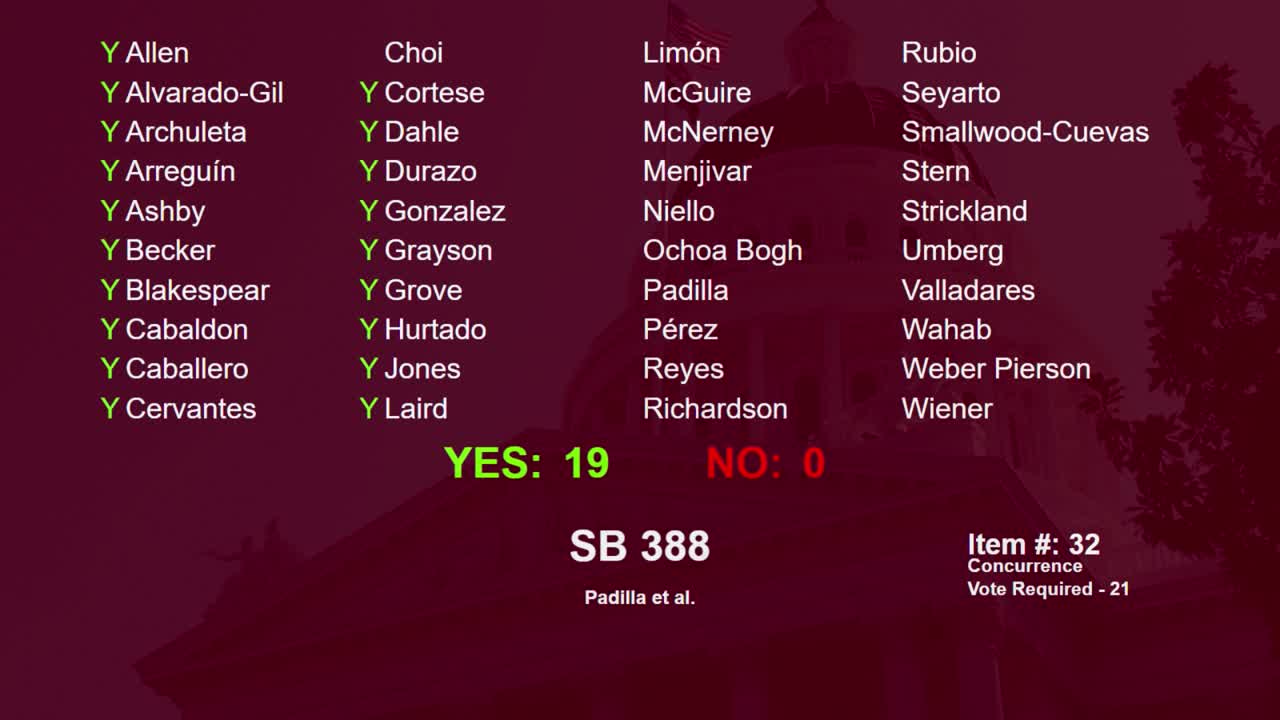 2MIN
Senate Floor
 1MIN
Assembly Floor
 6MIN
Assembly Standing Committee on Judiciary
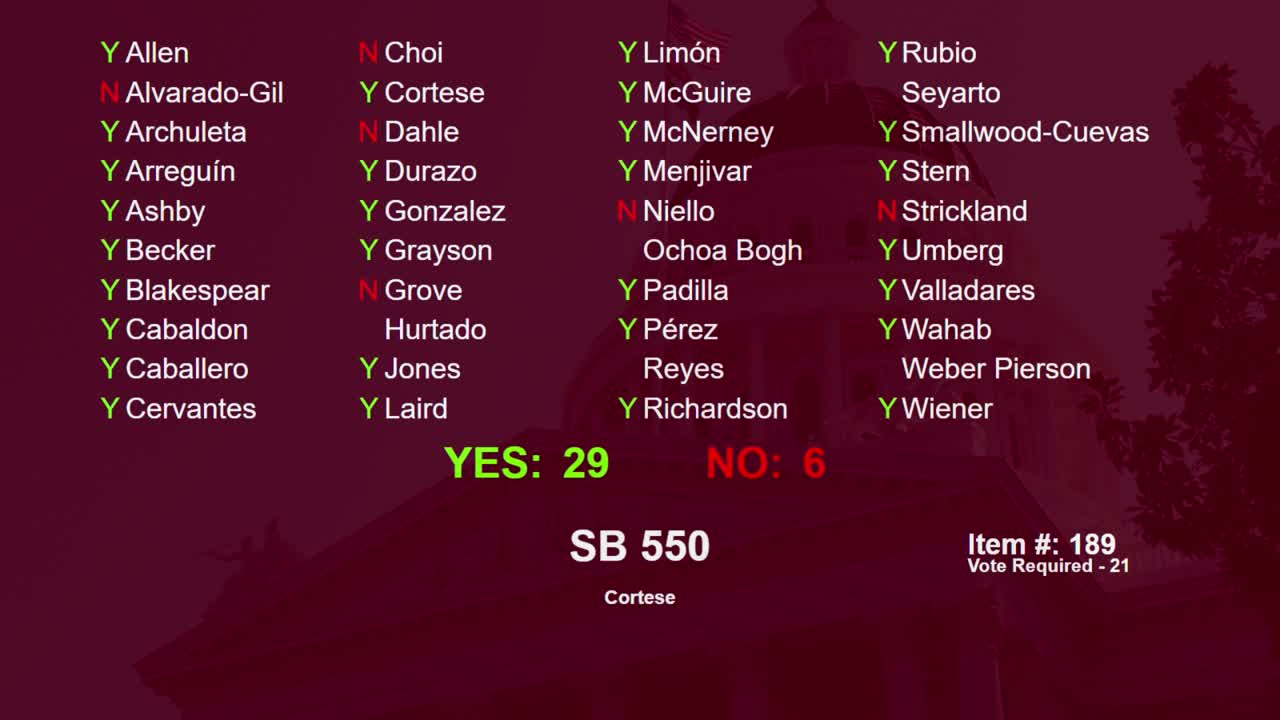 11MIN
Senate Floor
 6MIN
Senate Standing Committee on Local Government
 5MIN
Senate Standing Committee on Judiciary
Bill Author

Bill Co-Author(s):