SB 606: Homeless Housing, Assistance, and Prevention program: reporting requirements: functional zero unsheltered.
- Session Year: 2025-2026
- House: Senate
- Latest Version Date: 2025-07-17
Current Status:
In Progress
(2025-08-29: August 29 hearing: Held in committee and under submission.)
Introduced
In Committee
Awaiting First Chamber Vote
Passed First Chamber
In Committee
Awaiting Second Chamber Vote
Passed Second Chamber
Enacted
Existing law establishes the Homeless Housing, Assistance, and Prevention (HHAP) program for the purpose of providing jurisdictions with grant funds to support regional coordination and expand or develop local capacity to address their immediate homelessness challenges, as specified. Existing law provides for the allocation of funding under the program among continuums of care, cities, counties, and tribes in 6 rounds, with rounds 1 to 5, inclusive, administered by the Interagency Council on Homelessness and round 6 administered by the Department of Housing and Community Development, as provided. Existing law requires a program applicant to provide specified information through data collection, reporting, performance monitoring, and accountability framework, as established by the council.
This bill would enact the Functional Zero Unsheltered Act, which, beginning with round 7 of the HHAP program, the next round of HHAP program applications, or when updates to the regionally coordinated homeless action plan are next required to be submitted, would require an applicant to provide information relating to its efforts to address homelessness in its jurisdiction, including an assessment of what would be required for the applicant to achieve and maintain both functional zero, which the bill would define as a milestone indicating a community has measurably solved homelessness, as specified, and functional zero unsheltered, which the bill would define as a necessary milestone in the effort to achieve functional zero indicating that sufficient housing options of all types to accommodate a jurisdictions unsheltered, chronically homeless population based on its most recent homeless point-in-time count, and information regarding the applicants implementation of local homeless housing incentives, as provided. count. The bill would require, as part of the assessment of progress toward functional zero, applicants to include, at a minimum, an analysis of the number of housing units of all types needed to achieve functional zero in a jurisdiction, and as part of the assessment of progress toward functional zero unsheltered, applicants to include a financial model assessing the needs for investment in prescribed areas and further analysis of, among other things, funding programs that provide housing or services to persons experiencing homelessness. The bill would also require an applicant to provide information regarding the applicants implementation of local homeless housing incentives, as provided, and to demonstrate its efforts to include small cities, as defined, in its regionally coordinated homeless action plan, as specified.
Existing law establishes the Homeless Housing, Assistance, and Prevention (HHAP) program for the purpose of providing jurisdictions with grant funds to support regional coordination and expand or develop local capacity to address their immediate homelessness challenges, as specified. Existing law provides for the allocation of funding under the program among continuums of care, cities, counties, and tribes in 6 rounds, with rounds 1 to 5, inclusive, administered by the Interagency Council on Homelessness and round 6 administered by the Department of Housing and Community Development, as provided. Existing law requires a program applicant to provide specified information through data collection, reporting, performance monitoring, and accountability framework, as established by the council.
This bill would enact the Functional Zero Unsheltered Act, which, beginning with round 7 of the HHAP program, would require an applicant to provide information relating to its efforts to address homelessness in its jurisdiction, including an assessment of what would be required for the applicant to achieve and maintain functional zero unsheltered, which the bill would define as sufficient housing options of all types to accommodate a jurisdictions unsheltered, chronically homeless population based on its most recent homeless point-in-time count, and information regarding the applicants implementation of local homeless housing incentives, as provided. The bill would require, as part of the assessment of progress toward functional zero unsheltered, applicants to include a financial model assessing the needs for investment in prescribed areas and further analysis of, among other things, funding programs that provide housing or services to persons experiencing homelessness. The bill would also require an applicant to demonstrate its efforts to include small cities, as defined, in its regionally coordinated homeless action plan, as specified, and provide the most recent homeless point-in-time counts of small cities in the applicants jurisdiction. specified.
Existing law establishes the Homeless Housing, Assistance, and Prevention (HHAP) program for the purpose of providing jurisdictions with grant funds to support regional coordination and expand or develop local capacity to address their immediate homelessness challenges, as specified. Existing law provides for the allocation of funding under the program among continuums of care, cities, counties, and tribes in 6 rounds, with rounds 1 to 5, inclusive, administered by the Interagency Council on Homelessness and round 6 administered by the Department of Housing and Community Development, as provided. Existing law requires a program applicant to provide specified information through data collection, reporting, performance monitoring, and accountability framework, as established by the council.
This bill would enact the Functional Zero Unsheltered Act, which, beginning with round 6 7 of the HHAP program, would require an applicant to provide information relating to its efforts to address homelessness in its jurisdiction, including an assessment of what would be required for the applicant to achieve functional zero unsheltered, which the bill would define as sufficient housing options of all types to accommodate a jurisdictions unsheltered, chronically homeless population based on its most recent homeless point-in-time count, and information regarding the applicants implementation of local homeless housing incentives, as provided. The bill would require, as part of the assessment of progress toward functional zero unsheltered, applicants to include a financial model assessing the needs for investment in prescribed areas and further analysis of, among other things, funding programs that provide housing or services to persons experiencing homelessness. The bill would also require an applicant to demonstrate its efforts to include small cities, as defined, in its Regionally Coordinated Homeless Action Plan, regionally coordinated homeless action plan, as specified, and provide the most recent homeless point-in-time counts of small cities in the applicants jurisdiction.
Existing law establishes the Homeless Housing, Assistance, and Prevention (HHAP) program for the purpose of providing jurisdictions with grant funds to support regional coordination and expand or develop local capacity to address their immediate homelessness challenges, as specified. Existing law provides for the allocation of funding under the program among continuums of care, cities, counties, and tribes in 6 rounds, with rounds 1 to 5, inclusive, administered by the Interagency Council on Homelessness and round 6 administered by the Department of Housing and Community Development, as provided. Existing law requires a program applicant to provide specified information through data collection, reporting, performance monitoring, and accountability framework, as established by the council.
This bill would enact the Functional Zero Unsheltered Act, which, beginning with round 6 of the HHAP program, would require an applicant to provide information relating to its efforts to address homelessness in its jurisdiction, including an assessment of what would be required for the applicant to achieve functional zero unsheltered, which the bill would define as sufficient housing options of all types to accommodate a jurisdictions unsheltered, chronically homeless population based on its most recent homeless point-in-time count, and information regarding the applicants implementation of local homeless housing incentives, as provided. The bill would require, as part of the assessment of progress toward functional zero unsheltered, applicants to include a financial model assessing the needs for investment in prescribed areas and further analysis of, among other things, funding programs that provide housing or services to persons experiencing homelessness. The bill would also require an applicant to demonstrate its efforts to include small cities, as defined, in its Regionally Coordinated Homeless Action Plan, as specified, and provide the most recent homeless point-in-time counts of small cities in the applicants jurisdiction.
Existing law authorizes a governing body of a political subdivision, as those terms are defined, to declare a shelter crisis if the governing body makes a specified finding. Upon declaration of a shelter crisis, existing law requires the political subdivision to be immune from liability for ordinary negligence in the provision of emergency housing, as provided, and suspends certain state and local laws, regulations, and ordinances to the extent that strict compliance would prevent, hinder, or delay the mitigation of the effects of the shelter crisis. Existing law authorizes a political subdivision to, in place of those standards, enact municipal health and safety standards to be operative during the housing emergency consistent with ensuring minimal public health and safety. Existing law also exempts from the California Environmental Quality Act (CEQA) specified actions by a state agency or a city, county, or city and county to, among other things, approve a contract to provide services for people experiencing homelessness to a homeless shelter constructed under these provisions. Existing law repeals these provisions on January 1, 2036.This bill would expand the above-described immunity from liability to include claims related to health, habitability, planning and zoning, or safety standards, procedures, and laws, or CEQA. The bill would extend this immunity to any fire marshal, architect, engineer, developer, general contractor, subcontractor, or any other entity or individual that provides a service under contract to the political subdivision. The bill would additionally authorize the Department of Housing and Community Development, during the period of the emergency following declaration of a shelter crisis, to enact the above-described municipal health and safety standards and to review and authorize permits for proposed shelter and interim housing projects that are designed for the purpose of the emergency consistent with ensuring minimal public health and safety.The bill would include findings that changes proposed by this bill address a matter of statewide concern rather than a municipal affair and, therefore, apply to all cities, including charter cities.Existing law authorizes a governing body of a political subdivision, as those terms are defined, to declare a shelter crisis if the governing body makes a specified finding. Upon declaration of a shelter crisis, existing law requires the political subdivision to be immune from liability for ordinary negligence in the provision of emergency housing, as provided, and suspends certain state and local laws, regulations, and ordinances to the extent that strict compliance would prevent, hinder, or delay the mitigation of the effects of the shelter crisis. Existing law authorizes a political subdivision to, in place of those standards, enact municipal health and safety standards to be operative during the housing emergency consistent with ensuring minimal public health and safety. Existing law also exempts from the California Environmental Quality Act (CEQA) specified actions by a state agency or a city, county, or city and county to, among other things, approve a contract to provide services for people experiencing homelessness to a homeless shelter constructed under these provisions. Existing law repeals these provisions on January 1, 2036.
This bill would expand the above-described immunity from liability to include claims related to health, habitability, planning and zoning, or safety standards, procedures, and laws, or CEQA. The bill would extend this immunity to any fire marshal, architect, engineer, developer, general contractor, subcontractor, or any other entity or individual that provides a service under contract to the political subdivision. The bill would additionally authorize the Department of Housing and Community Development, during the period of the emergency following declaration of a shelter crisis, to enact the above-described municipal health and safety standards and to review and authorize permits for proposed shelter and interim housing projects that are designed for the purpose of the emergency consistent with ensuring minimal public health and safety.
The bill would include findings that changes proposed by this bill address a matter of statewide concern rather than a municipal affair and, therefore, apply to all cities, including charter cities.
(a)This section shall be known, and may be cited, as the Functional Zero Unsheltered Act.
(b)For the purposes of this section:
(1)Functional zero means a milestone indicating a community has measurably solved homelessness, when homelessness becomes rare and brief and people falling into homelessness are able to be rehoused quickly in housing without limits on length of stay or in permanent housing.
(1)(2)Functional zero unsheltered means a necessary milestone in the effort to achieve functional zero indicating that sufficient housing options of all types to accommodate a jurisdictions unsheltered, chronically homeless population based on its most recent homeless point-in-time count.
(2)(3)Small cities means the cities in a jurisdiction that are not Homeless Housing, Assistance, and Prevention program applicants.
(c)Beginning with round 7 of the program, When updates to the regionally coordinated homelessness action plan required by Section 50233 are next required to be submitted, or beginning with the next round of program applications as provided in Chapter 6.5 (commencing with Section 50230), in addition to the data required under Sections 50221, 50222, and 50223, applicants shall provide the following information for all rounds of program allocations: information:
(1)(A)An assessment of what would be required for the applicant to achieve and maintain functional zero unsheltered. zero.
(B)The assessment in subparagraph (A) shall include, at a minimum, an analysis of the number of housing units of all types needed to achieve functional zero in a jurisdiction.
(2)(A)An assessment of what would be required for the applicant to achieve and maintain functional zero unsheltered.
(B)The assessment in subparagraph (A) shall include a financial model that will assess needs for investment in all of the following:
(i)Capital for the purpose of building permanent housing and interim interventions.
(ii)Operating supports in project-based housing and interim interventions.
(iii)Rental assistance with private-market landlords.
(iv)Service costs for purposes of moving persons experiencing homelessness into permanent housing. Services needed to assist persons in exiting homelessness and remaining housed.
(C)In order to meet the requirements of this paragraph, the assessment in paragraph (A) shall do all of the following:
(i)Identify federal, state, and local funding programs that provide housing or services to persons experiencing homelessness and describe all of the following for each program to the extent that data is available:
(I)The amount of funding the program receives each year and funding sources for the program.
(II)The number of persons the program serves each year, disaggregated by race and gender.
(III)The types of housing and services provided to the persons the program serves each year, disaggregated by race and gender.
(IV)Limitations, if any, on the length of stay for housing programs and length of provision of services for service programs.
(V)If applicable, reasons for the unavailability of data.
(ii)Identify the total number and type of permanent housing beds, units, or opportunities available to persons experiencing homelessness statewide and in geographically diverse regions across the state.
(iii)Analyze the need for permanent housing opportunities, including, but not limited to, supportive housing, rapid rehousing, and affordable housing.
(iv)Analyze the need for services to assist persons in exiting homelessness and remaining housed.
(v)Identify the number and types of interim interventions available to persons experiencing homelessness in geographically diverse regions across the state. The data shall also include, but is not limited to, all of the following:
(I)The number of year-round shelter beds.
(II)The average length of stay in or use of interim interventions, to the extent data is available.
(III)The exit rate from an interim intervention to permanent housing, to the extent data is available.
(vi)Analyze the need for additional interim interventions and funding needed to create these interventions, taking into consideration the ideal length of stay in or use of the intervention.
(2)(3)All of the following information regarding the applicants implementation of local homeless housing incentives:
(A)Whether the applicant has a shelter crisis declaration that is currently valid and in effect, and, if so, whether the applicant has adopted California Building Code Appendix P or other local variations.
(B)What steps the applicant has taken to reduce the number of discretionary approvals required of interim and permanent housing projects.
(C)Whether the applicant has waived applicable zoning requirements.
(D)Whether the applicant has waived local fees charged to affordable housing projects serving low-income and homeless populations.
(E)Whether the applicant allows affordable housing project appeals to be heard, despite by right ministerial authority.
(3)(4)A demonstration of the applicants efforts to include small cities in its regionally coordinated homeless action plan, pursuant to Chapter 6.5 (commencing with Section 50230) of Part 1.
(a)This section shall be known, and may be cited, as the Functional Zero Unsheltered Act.
(b)For the purposes of this section:
(1)Functional zero unsheltered means sufficient housing options of all types to accommodate a jurisdictions unsheltered, chronically homeless population based on its most recent homeless point-in-time count.
(2)Small cities means the cities in a jurisdiction that are not Homeless Housing, Assistance, and Prevention program applicants.
(c)Beginning with round 7 of the program, as provided in Chapter 6.5 (commencing with Section 50230), in addition to the data required under Sections 50221, 50222, and 50223, applicants shall provide the following information for all rounds of program allocations:
(1)(A)An assessment of what would be required for the applicant to achieve and maintain functional zero unsheltered.
(B)The assessment in subparagraph (A) shall include a financial model that will assess needs for investment in all of the following:
(i)Capital. Capital for the purpose of building permanent housing and interim interventions.
(ii)Operating supports in project-based housing. housing and interim interventions.
(iii)Rental assistance with private-market landlords.
(iv)Service costs for purposes of moving persons experiencing homelessness into permanent housing.
(C)In order to meet the requirements of this paragraph, the assessment in paragraph (A) shall do all of the following:
(i)Identify funding programs that provide housing or services to persons experiencing homelessness and describe all of the following for each program to the extent that data is available:
(I)The amount of funding the program receives each year and funding sources for the program.
(II)The number of persons the program serves each year, disaggregated by race and gender.
(III)The types of housing and services provided to the persons the program serves each year, disaggregated by race and gender.
(IV)Limitations, if any, on the length of stay for housing programs and length of provision of services for service programs.
(V)If applicable, reasons for the unavailability of data.
(ii)Identify the total number and type of permanent housing beds, units, or opportunities available to persons experiencing homelessness statewide and in geographically diverse regions across the state.
(iii)Analyze the need for permanent housing opportunities, including, but not limited to, supportive housing, rapid rehousing, and affordable housing.
(iv)Analyze the need for services to assist persons in exiting homelessness and remaining housed.
(v)Identify the number and types of interim interventions available to persons experiencing homelessness in geographically diverse regions across the state. The data shall also include, but is not limited to, all of the following:
(I)The number of year-round shelter beds.
(II)The average length of stay in or use of interim interventions, to the extent data is available.
(III)The exit rate from an interim intervention to permanent housing, to the extent data is available.
(vi)Analyze the need for additional interim interventions and funding needed to create these interventions, taking into consideration the ideal length of stay in or use of the intervention.
(2)All of the following information regarding the applicants implementation of local homeless housing incentives:
(A)Whether the applicant has a shelter crisis declaration that is currently valid and in effect, and, if so, whether the applicant has adopted California Building Code Appendix P or other local variations.
(B)What steps the applicant has taken to reduce the number of discretionary approvals required of interim and permanent housing projects.
(C)Whether the applicant has waived applicable zoning requirements.
(D)Whether the applicant has waived local fees charged to affordable housing projects serving low-income and homeless populations.
(E)Whether the applicant allows affordable housing project appeals to be heard, despite by right ministerial authority.
(3)A demonstration of the applicants efforts to include small cities in its regionally coordinated homeless action plan, pursuant to Chapter 6.5 (commencing with Section 50230) of Part 1.
(4)The most recent homeless point-in-time counts of small cities in the applicants jurisdiction.(a)This section shall be known, and may be cited, as the Functional Zero Unsheltered Act.
(b)For the purposes of this section:
(1)Functional zero unsheltered means sufficient housing options of all types to accommodate a jurisdictions unsheltered, chronically homeless population based on its most recent homeless point-in-time count.
(2)Small cities means the cities in a jurisdiction that are not Homeless Housing, Assistance, and Prevention program applicants.
(c)Beginning with round 6 7 of the program, as provided in Article 2 (commencing with Section 50239) of Chapter 6.5, Chapter 6.5 (commencing with Section 50230), in addition to the data required under Sections 50221, 50222, and 50223, applicants shall provide the following information for all rounds of program allocations:
(1)(A)An assessment of what would be required for the applicant to achieve functional zero unsheltered.
(B)The assessment in subparagraph (A) shall include a financial model that will assess needs for investment in all of the following:
(i)Capital.
(ii)Operating supports in project-based housing.
(iii)Rental assistance with private-market landlords.
(iv)Service costs for purposes of moving persons experiencing homelessness into permanent housing.
(C)In order to meet the requirements of this paragraph, the assessment in paragraph (A) shall do all of the following:
(i)Identify funding programs that provide housing or services to persons experiencing homelessness and describe all of the following for each program to the extent that data is available:
(I)The amount of funding the program receives each year and funding sources for the program.
(II)The number of persons the program serves each year, disaggregated by race and gender.
(III)The types of housing and services provided to the persons the program serves each year, disaggregated by race and gender.
(IV)Limitations, if any, on the length of stay for housing programs and length of provision of services for service programs.
(V)If applicable, reasons for the unavailability of data.
(ii)Identify the total number and type of permanent housing beds, units, or opportunities available to persons experiencing homelessness statewide and in geographically diverse regions across the state.
(iii)Analyze the need for permanent housing opportunities, including, but not limited to, supportive housing, rapid rehousing, and affordable housing.
(iv)Analyze the need for services to assist persons in exiting homelessness and remaining housed.
(v)Identify the number and types of interim interventions available to persons experiencing homelessness in geographically diverse regions across the state. The data shall also include, but is not limited to, all of the following:
(I)The number of year-round shelter beds.
(II)The average length of stay in or use of interim interventions, to the extent data is available.
(III)The exit rate from an interim intervention to permanent housing, to the extent data is available.
(vi)Analyze the need for additional interim interventions and funding needed to create these interventions, taking into consideration the ideal length of stay in or use of the intervention.
(2)All of the following information regarding the applicants implementation of local homeless housing incentives:
(A)Whether the applicant has a shelter crisis declaration that is currently valid and in effect, and, if so, whether the applicant has adopted California Building Code Appendix P or other local variations.
(B)What steps the applicant has taken to reduce the number of discretionary approvals required of interim and permanent housing projects.
(C)Whether the applicant has waived applicable zoning requirements.
(D)Whether the applicant has waived local fees charged to affordable housing projects serving low-income and homeless populations.
(E)Whether the applicant allows affordable housing project appeals to be heard, despite by right ministerial authority.
(3)A demonstration of the applicants efforts to include small cities in its regionally coordinated homeless action plan, pursuant to Chapter 6.5 (commencing with Section 50230) of Part 1.
(4)The most recent homeless point-in-time counts of small cities in the applicants jurisdiction.
(a)This section shall be known, and may be cited, as the Functional Zero Unsheltered Act.
(b)For the purposes of this section:
(1)Functional zero unsheltered means sufficient housing options of all types to accommodate a jurisdictions unsheltered, chronically homeless population based on its most recent homeless point-in-time count.
(2)Small cities means the cities in a jurisdiction that are not Homeless Housing, Assistance, and Prevention program applicants.
(c)Beginning with round 6 of the program, as provided in Article 2 (commencing with Section 50239) of Chapter 6.5, in addition to the data required under Sections 50221, 50222, and 50223, applicants shall provide the following information for all rounds of program allocations:
(1)(A)An assessment of what would be required for the applicant to achieve functional zero unsheltered.
(B)The assessment in subparagraph (A) shall include a financial model that will assess needs for investment in all of the following:
(i)Capital.
(ii)Operating supports in project-based housing.
(iii)Rental assistance with private-market landlords.
(iv)Service costs for purposes of moving persons experiencing homelessness into permanent housing.
(C)In order to meet the requirements of this paragraph, the assessment in paragraph (A) shall do all of the following:
(i)Identify funding programs that provide housing or services to persons experiencing homelessness and describe all of the following for each program to the extent that data is available:
(I)The amount of funding the program receives each year and funding sources for the program.
(II)The number of persons the program serves each year, disaggregated by race and gender.
(III)The types of housing and services provided to the persons the program serves each year, disaggregated by race and gender.
(IV)Limitations, if any, on the length of stay for housing programs and length of provision of services for service programs.
(V)If applicable, reasons for the unavailability of data.
(ii)Identify the total number and type of permanent housing beds, units, or opportunities available to persons experiencing homelessness statewide and in geographically diverse regions across the state.
(iii)Analyze the need for permanent housing opportunities, including, but not limited to, supportive housing, rapid rehousing, and affordable housing.
(iv)Analyze the need for services to assist persons in exiting homelessness and remaining housed.
(v)Identify the number and types of interim interventions available to persons experiencing homelessness in geographically diverse regions across the state. The data shall also include, but is not limited to, all of the following:
(I)The number of year-round shelter beds.
(II)The average length of stay in or use of interim interventions, to the extent data is available.
(III)The exit rate from an interim intervention to permanent housing, to the extent data is available.
(vi)Analyze the need for additional interim interventions and funding needed to create these interventions, taking into consideration the ideal length of stay in or use of the intervention.
(2)All of the following information regarding the applicants implementation of local homeless housing incentives:
(A)Whether the applicant has a shelter crisis declaration that is currently valid and in effect, and, if so, whether the applicant has adopted California Building Code Appendix P or other local variations.
(B)What steps the applicant has taken to reduce the number of discretionary approvals required of interim and permanent housing project approvals. projects.
(C)Whether the applicant has waived applicable zoning requirements.
(D)Whether the applicant has waived local fees charged to affordable housing projects serving low-income and homeless populations.
(E)Whether the applicant allows affordable housing project appeals to be heard, despite by right ministerial authority.
(3)A demonstration of the applicants efforts to include small cities in its regionally coordinated homeless action plan, pursuant to Chapter 6.5 (commencing with Section 50230) of Part 1.
(4)The most recent homeless point-in-time counts of small cities in the applicants jurisdiction.
(a)This section shall be known, and may be cited, as the Functional Zero Unsheltered Act.
(b)For the purposes of this section:
(1)Functional zero unsheltered means sufficient housing options of all types to accommodate a jurisdictions unsheltered, chronically homeless population based on its most recent homeless point-in-time count.
(2)Small cities means the cities in a jurisdiction that are not Homeless Housing, Assistance, and Prevention program applicants.
(c)Beginning with round 6 of the program, as provided in Article 2 (commencing with Section 50239) of Chapter 6.5, in addition to the data required under Sections 50221, 50222, and 50223, applicants shall provide the following information for all rounds of program allocations:
(1)(A)An assessment of what would be required for the applicant to achieve functional zero unsheltered.
(B)The assessment in subparagraph (A) shall include a financial model that will assess needs for investment in all of the following:
(i)Capital.
(ii)Operating supports in project-based housing.
(iii)Rental assistance with private-market landlords.
(iv)Service costs for purposes of moving persons experiencing homelessness into permanent housing.
(C)In order to meet the requirements of this paragraph, the assessment in paragraph (A) shall do all of the following:
(i)Identify funding programs that provide housing or services to persons experiencing homelessness and describe all of the following for each program to the extent that data is available:
(I)The amount of funding the program receives each year and funding sources for the program.
(II)The number of persons the program serves each year, disaggregated by race and gender.
(III)The types of housing and services provided to the persons the program serves each year, disaggregated by race and gender.
(IV)Limitations, if any, on the length of stay for housing programs and length of provision of services for service programs.
(V)If applicable, reasons for the unavailability of data.
(ii)Identify the total number and type of permanent housing beds, units, or opportunities available to persons experiencing homelessness statewide and in geographically diverse regions across the state.
(iii)Analyze the need for permanent housing opportunities, including, but not limited to, supportive housing, rapid rehousing, and affordable housing.
(iv)Analyze the need for services to assist persons in exiting homelessness and remaining housed.
(v)Identify the number and types of interim interventions available to persons experiencing homelessness in geographically diverse regions across the state. The data shall also include, but is not limited to, all of the following:
(I)The number of year-round shelter beds.
(II)The average length of stay in or use of interim interventions, to the extent data is available.
(III)The exit rate from an interim intervention to permanent housing, to the extent data is available.
(vi)Analyze the need for additional interim interventions and funding needed to create these interventions, taking into consideration the ideal length of stay in or use of the intervention.
(2)All of the following information regarding the applicants implementation of local homeless housing incentives:
(A)Whether the applicant has a shelter crisis declaration that is currently valid and in effect, and, if so, whether the applicant has adopted California Building Code Appendix P or other local variations.
(B)What steps the applicant has taken to reduce interim and permanent housing project approvals.
(C)Whether the applicant has waived applicable zoning requirements.
(D)Whether the applicant has waived local fees charged to affordable housing projects serving low-income and homeless populations.
(E)Whether the applicant allows affordable housing project appeals to be heard, despite by right ministerial authority.
(3)A demonstration of the applicants efforts to include small cities in its regionally coordinated homeless action plan, pursuant to Chapter 6.5 (commencing with Section 50230) of Part 1.
(4)The most recent homeless point-in-time counts of small cities in the applicants jurisdiction.
SECTION 1.Section 8698.1 of the Government Code is amended to read:8698.1.Upon a declaration of a shelter crisis, the following provisions shall apply during the period of the emergency.(a)(1)The political subdivision and any fire marshal, architect, engineer, developer, general contractor, subcontractor, or any other entity or individual that provides a service under contract to the political subdivision, shall be immune from liability in the provision of emergency housing pursuant to Section 8698.2 from claims related to any of the following:(A)Ordinary negligence.(B)Health, habitability, planning and zoning, or safety standards, procedures, and laws.(C)The California Environmental Quality Act (Division 13 (commencing with Section 21000) of the Public Resources Code).(2)Any limitation of liability pursuant to paragraph (1) shall apply only to conditions, acts, or omissions directly related to, and which would not occur but for, the provision of emergency housing. This section does not limit liability for grossly negligent, reckless, or intentional conduct which causes injury.(b)(1)The provisions of any state or local regulatory statute, regulation, or ordinance prescribing standards of housing, health, or safety shall be suspended to the extent that strict compliance would in any way prevent, hinder, or delay the mitigation of the effects of the shelter crisis. The Department of Housing and Community Development or any other political subdivision may, in place of such standards, enact municipal health and safety standards to be operative during the housing emergency consistent with ensuring minimal public health and safety. The provisions of this section apply only to additional public facilities open to the homeless pursuant to this chapter.(2)The Department of Housing and Community Development may review and authorize permits for proposed shelter and interim housing projects that are designed for the purpose of the emergency consistent with ensuring minimal public health and safety.(c)(1)Subject to paragraph (4), a city with a population of more than 3,500,000 may permit the operation of an emergency housing facility year round when the facility does not comply with state building standards for local fire and life safety standards if they submit reasonable standards to the State Fire Marshal that, at a minimum, do all of the following:(A)Require an emergency housing facility to be subject to the building standards related to fire and life safety that the state and local regulations require for existing residential occupancies, and the building standards related to fire and life safety for a new residential use that were in effect at the time the building was constructed.(B)Provide reasonable alternative fire and life safety standards that, a minimum, include all of the following:(i)A maximum occupant load of 49. However, the fire department may propose an occupant load greater than 49, but not to exceed 150, if the city can demonstrate that the facility can safely permit the proposed occupant load.(ii)Twenty-four-hour active fire watch.(iii)Smoke and carbon monoxide alarms.(iv)Fire extinguishers.(v)Ingress and egress that facilitates rapid exit of the facility.(vi)Emergency evacuation signage and emergency egress lighting.(vii)Every egress shall be free from storage and other obstructions.(viii)Limited occupant storage in each room in the facility.(ix)Prohibiting the use of open flames or combustibles.(x)Prohibiting smoking in the facility.(xi)Fire code inspection plans that occur in intervals of 30 days or less that includes authorization for the fire department to shut down the facility for major or multiple violations.(xii)A process for remedying fire code violations immediately.(xiii)A process for submitting quarterly inspection reports to the State Fire Marshal.(2)The State Fire Marshal shall review the standards within 30 days and either approve them or respond as to why the city does not meet the threshold requirements. If the standards do not meet the threshold requirements, the city shall not use them.(3)A facility shall be permitted pursuant to this subdivision for a maximum of 90 days with 90-day extensions permitted, not to exceed 730 days of continuous operation.(4)For purposes of this subdivision, the term building standard means a building standard as defined in Section 18909 of the Health and Safety Code or other standard adopted by a local agency pursuant to Section 17958 of the Health and Safety Code.(5)No new permits shall be authorized pursuant to this subdivision on and after January 1, 2023. However, a facility that was issued a permit before January 1, 2023, may continue to operate after that date pursuant to a 90-day extension of the permit, and may receive consecutive 90-day extensions to operate until December 31, 2024, subject to the 730-day limit specified in paragraph (3).SEC. 2.The Legislature finds and declares that Section 1 of this act Sections 8698.1 of the Government Code address a matter of statewide concern rather than a municipal affair as that term is used in Section 5 of Article XI of the California Constitution. Therefore, Section 1 of this act applies to all cities, including charter cities.Upon a declaration of a shelter crisis, the following provisions shall apply during the period of the emergency.
(a)(1)The political subdivision subdivision and any fire marshal, architect, engineer, developer, general contractor, subcontractor, or any other entity or individual that provides a service under contract to the political subdivision, shall be immune from liability for ordinary negligence in the provision of emergency housing pursuant to Section 8698.2. This 8698.2 from claims related to any of the following:
(A)Ordinary negligence.
(B)Health, habitability, planning and zoning, or safety standards, procedures, and laws.
(C)The California Environmental Quality Act (Division 13 (commencing with Section 21000) of the Public Resources Code).
(2)Any limitation of liability pursuant to paragraph (1) shall apply only to conditions, acts, or omissions directly related to, and which would not occur but for, the provision of emergency housing. This section does not limit liability for grossly negligent, reckless, or intentional conduct which causes injury.
(b)(1)The provisions of any state or local regulatory statute, regulation, or ordinance prescribing standards of housing, health, or safety shall be suspended to the extent that strict compliance would in any way prevent, hinder, or delay the mitigation of the effects of the shelter crisis. Political subdivisions The Department of Housing and Community Development or any other political subdivision may, in place of such standards, enact municipal health and safety standards to be operative during the housing emergency consistent with ensuring minimal public health and safety. The provisions of this section apply only to additional public facilities open to the homeless pursuant to this chapter.
(2)The Department of Housing and Community Development may review and authorize permits for proposed shelter and interim housing projects that are designed for the purpose of the emergency consistent with ensuring minimal public health and safety.
(c)(1)Subject to paragraph (4), a city with a population of more than 3,500,000 may permit the operation of an emergency housing facility year round when the facility does not comply with state building standards for local fire and life safety standards if they submit reasonable standards to the State Fire Marshal that, at a minimum, do all of the following:
(A)Require an emergency housing facility to be subject to the building standards related to fire and life safety that the state and local regulations require for existing residential occupancies, and the building standards related to fire and life safety for a new residential use that were in effect at the time the building was constructed.
(B)Provide reasonable alternative fire and life safety standards that, a minimum, include all of the following:
(i)A maximum occupant load of 49. However, the fire department may propose an occupant load greater than 49, but not to exceed 150, if the city can demonstrate that the facility can safely permit the proposed occupant load.
(ii)Twenty-four-hour active fire watch.
(iii)Smoke and carbon monoxide alarms.
(iv)Fire extinguishers.
(v)Ingress and egress that facilitates rapid exit of the facility.
(vi)Emergency evacuation signage and emergency egress lighting.
(vii)Every egress shall be free from storage and other obstructions.
(viii)Limited occupant storage in each room in the facility.
(ix)Prohibiting the use of open flames or combustibles.
(x)Prohibiting smoking in the facility.
(xi)Fire code inspection plans that occur in intervals of 30 days or less that includes authorization for the fire department to shut down the facility for major or multiple violations.
(xii)A process for remedying fire code violations immediately.
(xiii)A process for submitting quarterly inspection reports to the State Fire Marshal.
(2)The State Fire Marshal shall review the standards within 30 days and either approve them or respond as to why the city does not meet the threshold requirements. If the standards do not meet the threshold requirements, the city shall not use them.
(3)A facility shall be permitted pursuant to this subdivision for a maximum of 90 days with 90-day extensions permitted, not to exceed 730 days of continuous operation.
(4)For purposes of this subdivision, the term building standard means a building standard as defined in Section 18909 of the Health and Safety Code or other standard adopted by a local agency pursuant to Section 17958 of the Health and Safety Code.
(5)No new permits shall be authorized pursuant to this subdivision on and after January 1, 2023. However, a facility that was issued a permit before January 1, 2023, may continue to operate after that date pursuant to a 90-day extension of the permit, and may receive consecutive 90-day extensions to operate until December 31, 2024, subject to the 730-day limit specified in paragraph (3).
SEC. 2.The Legislature finds and declares that Section 1 of this act Sections 8698.1 of the Government Code address a matter of statewide concern rather than a municipal affair as that term is used in Section 5 of Article XI of the California Constitution. Therefore, Section 1 of this act applies to all cities, including charter cities.
|
Date
|
Status
|
|---|---|
| Aug 29, 2025 | August 29 hearing: Held in committee and under submission. |
| Aug 20, 2025 | August 20 set for first hearing. Placed on APPR. suspense file. |
| Jul 17, 2025 | Read second time and amended. Re-referred to Com. on APPR. |
| Jul 17, 2025 | From committee: Do pass as amended and re-refer to Com. on APPR. (Ayes 7. Noes 0.) (July 15). |
| Jul 17, 2025 | Assembly Rule 63 suspended. (Ayes 49. Noes 15. Page 2578.) |
| Jul 3, 2025 | From committee: Do pass and re-refer to Com. on HUM. S. (Ayes 10. Noes 0.) (July 2). Re-referred to Com. on HUM. S. |
| Jun 23, 2025 | From committee with author's amendments. Read second time and amended. Re-referred to Com. on H. & C.D. |
| Jun 9, 2025 | Referred to Coms. on H. & C.D. and HUM. S. |
| Jun 3, 2025 | In Assembly. Read first time. Held at Desk. |
| Jun 2, 2025 | Read third time. Passed. (Ayes 38. Noes 0. Page 1376.) Ordered to the Assembly. |
| May 27, 2025 | Read second time. Ordered to third reading. |
| May 23, 2025 | Read second time and amended. Ordered to second reading. |
| May 23, 2025 | From committee: Do pass as amended. (Ayes 6. Noes 0. Page 1206.) (May 23). |
| May 16, 2025 | Set for hearing May 23. |
| May 12, 2025 | May 12 hearing: Placed on APPR. suspense file. |
| May 2, 2025 | Set for hearing May 12. |
| Apr 30, 2025 | From committee: Do pass and re-refer to Com. on APPR. (Ayes 11. Noes 0. Page 936.) (April 29). Re-referred to Com. on APPR. |
| Apr 25, 2025 | Set for hearing April 29. |
| Apr 23, 2025 | Read second time and amended. Re-referred to Com. on HOUSING. |
| Apr 22, 2025 | From committee: Do pass as amended and re-refer to Com. on HOUSING. (Ayes 5. Noes 0. Page 812.) (April 21). |
| Apr 8, 2025 | Set for hearing April 21. |
| Apr 3, 2025 | Withdrawn from committee. |
| Apr 3, 2025 | Re-referred to Coms. on HUMAN S. and HOUSING. |
| Apr 2, 2025 | Re-referred to Coms. on HOUSING and HUMAN S. |
| Mar 28, 2025 | Withdrawn from committee. |
| Mar 28, 2025 | Re-referred to Com. on RLS. |
| Mar 27, 2025 | From committee with author's amendments. Read second time and amended. Re-referred to Com. on HOUSING. |
| Mar 5, 2025 | Referred to Coms. on HOUSING and JUD. |
| Feb 21, 2025 | From printer. May be acted upon on or after March 23. |
| Feb 20, 2025 | Introduced. Read first time. To Com. on RLS. for assignment. To print. |
|
Date
|
Description
|
Location
|
Votes
|
|
|---|---|---|---|---|
| Jul 15, 2025 | Do pass as amended and be re-referred to the Committee on [Appropriations] | Assembly Standing Committee on Human Services |
Passed |
|
| Jul 2, 2025 | Do pass and be re-referred to the Committee on [Human Services] | Assembly Standing Committee on Housing and Community Development |
Passed |
|
| Jun 2, 2025 | Senate 3rd Reading SB606 Becker | Senate Floor |
Passed |
|
| May 23, 2025 | Do pass as amended | Senate Standing Committee on Appropriations |
Passed |
|
| May 12, 2025 | Placed on suspense file | Senate Standing Committee on Appropriations |
Passed |
|
| Apr 29, 2025 | Do pass, but first be re-referred to the Committee on [Appropriations] | Senate Standing Committee on Housing |
Passed |
|
| Apr 21, 2025 | Do pass as amended, but first amend, and re-refer to the Committee on [Housing] | Senate Standing Committee on Human Services |
Passed |
This list shows positions taken on this bill by organizations on the date displayed, which is linked to the original source.
Positions by individuals are not included.
|
Organization
|
Position
|
Date
|
|---|---|---|
| 21St Century Alliance | ** Support | |
| Bay Area Council | ** Support | |
| Boss Cubez | ** Support | |
| City of San Jose | ** Support | |
| Dignitymoves | ** Support | |
| Five Keys | ** Support | |
| Housing Action Coalition | ** Support | |
| LifeArk | ** Support | |
| PAE Consulting Engineers | ** Support | |
| Tmg Partners | ** Support |
Date of Hearing: August 20, 2025
ASSEMBLY COMMITTEE ON APPROPRIATIONS
Buffy Wicks, Chair
SBPCA Bill Id:SB 606
Author:(Becker) – As Amended Ver:July 17, 2025
Policy Committee: | Housing and Community Development | Vote: | 10 - 0 |
Human Services | 7 - 0 | ||
|
|
Urgency: No State Mandated Local Program: No Reimbursable: No
SUMMARY:
This bill requires an applicant for the Homeless Housing, Assistance, and Prevention (HHAP) Grant Program to report additional information to the Department of Housing and Community Development (HCD), including an assessment of how to achieve both “functional zero” and “functional zero unsheltered,” as defined by this bill, and other information regarding implementation of local homeless housing incentives.
Specifically, this bill:
- Defines “functional zero” to mean a milestone indicating a community has measurably solved homelessness, when homelessness becomes rare and brief and people falling into homelessness are able to be rehoused quickly in housing without limits on length of stay or in permanent housing.
- Defines “functional zero unsheltered” to mean a necessary milestone in the effort to achieve functional zero indicating that sufficient housing options of all types to accommodate a jurisdiction’s unsheltered, chronically homeless population based on its most recent homeless point-in-time count.
- Requires HHAP applicants, beginning with the next round of program applications or when updates to the regionally coordinated homelessness action plan are due, to additionally provide all of the following information:
- An assessment of what would be required for the applicant to achieve functional zero, including, at a minimum, an analysis of the number of housing units of all types needed to achieve functional zero in a jurisdiction.
- An assessment of what would be required for the applicant to achieve functional zero unsheltered. This assessment must include all of the following:
- A financial model that will assess needs for investments in capital, operating supports, and rental assistance, as specified.
- Identification of federal, state, and local funding programs that provide housing or services to persons experiencing homelessness, as specified.
- The total number and types of permanent housing beds, units, or opportunities available to persons experiencing homelessness statewide and in geographically diverse regions across the state.
- An analysis of the need for permanent housing opportunities and services.
- The number and types of interim interventions available to persons experiencing homelessness in geographically diverse regions across the state, as specified.
- Information regarding the applicant’s implementation of local homeless housing incentives, including, among other information, whether the applicant has a valid shelter crisis declaration in effect, as specified.
- A demonstration of the applicant’s efforts to include “small cities,” as defined, in its regionally coordinated homeless action plan.
FISCAL EFFECT:
HCD estimates General Fund costs of $624,000 annually for three positions for a limited term to support significant workload increase in future fiscal years in which funding is provided for the program. The additional staff would provide technical assistance to a high volume of regional and local entities, develop forms, processes, and procedures for HHAP applicants to submit specified assessments and information, conduct review and analysis of information received from applicants, and conduct monitoring of HHAP applicants’ progress in addressing homelessness.
COMMENTS:
- Purpose. According to the author:
Research shows that the longer unhoused residents go without shelter, the less likely they’ll be able to return to self-sufficiency. As California invests in more permanent housing, and interim housing, more must be done to bring unsheltered people indoors and save lives. [This bill] will codify the goal of functional zero unsheltered in State statute and require municipalities to assess what would be required in order to end unsheltered homelessness in their municipalities. Rather than chipping away at the problem, one shelter at a time, the Functional Zero Unsheltered Act would ensure that regions are working toward strategic and practical frameworks that address the crisis in its entirety.
- Background. Existing law establishes the HHAP program to provide jurisdictions with one-time grant funds to support regional coordination and expand or develop local capacity to address their immediate homelessness challenges. HHAP funding criteria are informed by a best-practices framework focused on moving homeless individuals and families into permanent housing, and supporting those individuals and families in maintaining their permanent housing. Established in 2019, the program receives General Fund appropriations in the annual Budget Act, including $950 million provided over the first two rounds of funding, and $1 billion each year through round six in fiscal year 2024-25. The 2025-26 Budget Act includes $500 million for a seventh round. The Interagency Council on Homelessness administered rounds one through five. HCD begin administering the program with round six.
Existing law allows large cities (population of 300,000 or more), counties, continuums of care (COCs), and tribal entities to apply for HHAP funding. Beginning with round four, HHAP applicants must develop a regionally coordinated homelessness action plan and performance goals. Beginning with round five, HHAP applicants must submit a regional joint application and set outcome goals that prevent and reduce homelessness over a three-year period, informed by findings from a local landscape analysis and other data. Round five criteria also made funding contingent upon HCD’s approval of an applicants’ regionally coordinated homelessness action plan.
HCD is currently administering round six funding, and issued the 2025 Notice of Funding Availability in February. Round six prioritizes the use of HHAP funds for homelessness prevention, permanent housing, and operational support for existing interim housing over uses that do not directly provide housing.
This bill, beginning with the next round of HHAP program applications or when updates to the regionally coordinated homelessness action plan are next due, requires HHAP applicants to additionally provide an assessment of how the applicant could achieve and maintain functional zero and functional zero unsheltered standards, which this bill defines. The bill requires these assessments include extensive data and financial analyses, some of which are duplicative of existing requirements.
The bill also requires an applicant to submit information on its implementation of local homeless housing incentives and a demonstration of the applicant’s efforts to include small cities in its regionally coordinated homelessness action plan.
Advocates assert this bill, by requiring regions to plan for functional zero unsheltered, will send a strong statement that the state’s most urgent priority is ending unsheltered homelessness.
Analysis Prepared by: Jennifer Swenson / APPR. / (916) 319-2081
Date of Hearing: July 15, 2025
ASSEMBLY COMMITTEE ON HUMAN SERVICES
Alex Lee, Chair
SBPCA Bill Id:SB 606
Author:(Becker) – As Amended Ver:June 23, 2025
SENATE VOTE: 38-0
SUBJECT: Homeless Housing, Assistance, and Prevention program: reporting requirements: functional zero unsheltered
SUMMARY: Adds to the information required of applicants to the Homeless Housing, Assistance, and Prevention (HHAP) program and establishes a definition for “functional zero unsheltered.” Specifically, this bill:
- Requires HHAP applicants, beginning with Round 7, in addition to the data required under existing law, to provide the following information for all rounds of program allocations:
- An assessment of what would be required for the applicant to achieve and maintain “functional zero unsheltered,” defined as sufficient housing options of all types to accommodate a jurisdiction’s unsheltered, chronically homeless population based on its most recent homeless point-in-time count;
- Requires the assessment to include a financial model that will assess needs for investment in capital for the purpose of building permanent housing and interim interventions; operating supports in project-based housing and interim interventions; rental assistance with private-market landlords; and, service costs for purposes of moving persons experiencing homelessness into permanent housing;
- All of the following information regarding the applicant’s implementation of local homeless housing incentives:
- Whether the applicant has a shelter crisis declaration that is currently valid and in effect, and, if so, whether the applicant has adopted California Building Code Appendix P or other local variations;
- What steps the applicant has taken to reduce the number of discretionary approvals required of interim and permanent housing projects;
- Whether the applicant has waived applicable zoning requirements;
- Whether the applicant has waived local fees charged to affordable housing projects serving low-income and homeless populations; and,
- Whether the applicant allows affordable housing project appeals to be heard, despite “by right” ministerial authority;
- A demonstration of the applicant’s efforts to include “small cities” in its regionally coordinated homeless action plan, defined as the cities in a jurisdiction that are not HHAP program applicants.
- Requires the assessment to do all of the following:
- Identify funding programs that provide housing or services to persons experiencing homelessness; and, the total number and type of permanent housing beds, units, or opportunities and interim interventions available to persons experiencing homelessness statewide and in geographically diverse regions across the state. Requires the data to also include, but not be limited to: the number of year-round shelter beds; the average length of stay in or use of interim interventions, to the extent data is available; and, the exit rate from an interim intervention to permanent housing, to the extent data is available;
- Describe for each program to the extent that data is available: the amount of funding the program receives each year and funding sources for the program; the number of persons the program serves each year, and the types of housing and services provided to the persons each year disaggregated by race and gender; limitations, if any, on the length of stay for housing programs and length of provision of services for service programs, and if applicable, reasons for the unavailability of data; and,
- Analyze the need for permanent housing opportunities, including, but not limited to, supportive housing, rapid rehousing, affordable housing; the need for services to assist persons in exiting homelessness and remaining housed; and, the need for additional interim interventions and funding needed to create these interventions, taking into consideration the ideal length of stay in or use of the intervention.
EXISTING LAW:
- Established Round 5 of the HHAP program, administered by the California Interagency Council on Homelessness (Cal ICH), for the 2023-24 fiscal year and provided the framework for distribution, use, and oversight of $1 billion in funding. Made receipt of Round 5 funding contingent on the creation of, and adherence to, a Regionally Coordinated Homelessness Action Plan (RCHAP). (Health and Safety Code [HSC] § 50238 et seq.)
- States the intent of Round 5 is to sustain existing federal, state, and local investments toward long-term sustainability of housing and supportive services. Requires applicants to develop data-driven plans which fund the state’s priorities. Specifies, before proposing to use Round 5 resources to fund new interim housing solutions, the applicant must first demonstrate that the region has dedicated sufficient resources from other sources to long-term permanent housing solutions. (HSC § 50236(a))
- Established Round 6 of the HHAP program in the 2024-25 fiscal year for implementation of the program, to be administered by the Department of Housing and Community Development (HCD). (HSC § 50239 et seq.)
- States the intent of Round 6 is to reflect the state’s priorities to prevent and expeditiously reduce unsheltered homelessness through homelessness prevention activities, sustaining existing interim housing solutions, and permanent housing solutions, including long-term sustainability of affordable permanent supportive housing. (HSC § 50243)
- Requires HHAP program recipients to use at least 10% of the funds allocated under Round 6 for services for homeless youth populations. (HSC § 50241(e))
- Requires a recipient, after receiving HHAP funds, to annually submit a report to HCD that includes ongoing tracking of the specific uses and expenditures of any program funds broken out by eligible uses listed, the number of homeless individuals served by HHAP funds in that year, the total number of homeless individuals served in all years of the program; the types of housing assistance provided, broken out by the number of individuals, outcome data for an individual served through HHAP funds, including the type of housing that an individual exited to, the percent of successful housing exits, and exit types for unsuccessful housing exits. Requires HCD to post this information to its website and to provide notice to the relevant legislative committees. (HSC § 50221)
- Requires applicants to provide specified information through a data collection, reporting, performance monitoring, and accountability framework, as established by HCD. (HSC § 50222)
- Defines “homeless youth” to mean an unaccompanied youth between 12 and 24 years of age, inclusive, who is experiencing homelessness, as defined in the federal McKinney-Vento Homeless Assistance Act. “Homeless youth” includes unaccompanied youth who are pregnant or parenting. (HSC § 50216(l))
FISCAL EFFECT: According to the Senate Committee on Appropriations analysis on May 23, 2025, “Staff estimates that HCD would incur significant ongoing costs in future fiscal years in which funding is provided for the program, at least in the high hundreds of thousands of dollars annually, to provide technical assistance to a high volume of regional and local entities, develop forms, processes, and procedures for HHAP applicants to submit specified assessments and information, conduct review and analysis of information received from applicants, and conduct monitoring of HHAP applicants’ progress in addressing homelessness. (General Fund)”
COMMENTS:
Background: HHAP was established in 2019 through the budget process (AB 101 [Committee on Budget], Chapter 159, Statutes of 2019) to provide block grant funding to address immediate homelessness challenges in California. Cities with a population over 300,000, and all counties and continuums of care (CoCs) within California are eligible for funding.
HHAP funding is flexible and grantees are permitted to choose what to fund for services based on their specific community needs. Some HHAP-eligible uses include rental assistance and rapid rehousing, prevention and shelter diversion to permanent housing.
As of 2025, six rounds of funding have been authorized for HHAP:
- HHAP Round 1 (2019–20): $650 million
- HHAP Round 2 (2020–21): $300 million
- HHAP Round 3 (2021–22): $1 billion
- HHAP Round 4 (2022–23): $1 billion
- HHAP Round 5 (2023–24): $1 billion
- HHAP Round 6 (2024–25): $1 billion appropriated, with $760 million available for disbursement
With each funding round, distinct priorities were identified in an effort to reduce homelessness and strengthen long-term housing solutions. Rounds 1-5 of HHAP prioritized moving individuals and families into permanent housing and strengthening long-term stability. Some of the allowable uses included the delivery of permanent housing through new construction, rapid rehousing, and supportive services such as case management and housing navigation. All rounds require systems support for activities necessary to create regional partnerships and maintain a homeless services and housing delivery system, particularly for vulnerable populations including families and homeless youth.
Beginning with Round 5, eligible applicants were required to apply for HHAP as part of a region, and funds were contingent upon approval of their RCHAP. Provisions to provide local accountability for how funding was used to reduce homelessness were also included in Round 5. The accountability measures permitted HCD to withhold funds if a grantee failed to make sufficient progress on their action plan.
With Round 6, beginning with Fiscal Year 2024-25, local jurisdictions were provided with one-time grant funds to create and implement RCHAPs to better implement the varied number of homelessness programs and resources. In addition, HCD took over administration of HHAP from Cal ICH, although both departments are under the umbrella of the California Business, Consumer Services and Housing (BCHS) Agency.
To be eligible for Round 6, applicants must be signatories to an HCD-approved RCHAP which can be satisfied by updating the Round 5 plan. The plan must incorporate a public input process that includes at least three public meetings of stakeholders, including youth with lived experience of homelessness.
All recipients of HHAP program allocation must comply with Housing First which is an evidence-based, client-centered approach that recognizes housing as necessary to make other voluntary life changes, such as seeking treatment or medical care. This approach is in contrast with the traditional model of rewarding “housing readiness.” The goal of Housing First is to provide housing to individuals and families quickly with as few obstacles as possible, along with voluntary support services according to their needs.
This bill would require HHAP applicants, beginning with Round 7, in addition to the data required under existing law, to provide an assessment of what would be required for the applicant to achieve and maintain functional zero unsheltered along with specified information regarding the applicant’s implementation of local homeless housing incentives.
Cal ICH’s Role in the Regionally Coordinated Homelessness Action Plan. Cal ICH was created in 2017 as the Homeless Coordinating and Financing Council through the enactment of SB 1380 (Mitchell), Chapter 847, Statutes of 2016, to oversee the implementation of Housing First policies. In 2021, AB 1220 (L. Rivas), Chapter 398, Statutes of 2021, renamed and restructured the council to be known as Cal ICH and to develop policies and identify resources, benefits, and services to prevent and work toward ending homelessness in California. Cal ICH is co-chaired by the Secretaries of the BCSH Agency and the California Health and Human Services Agency and comprises director-level representatives from 19 state departments and agencies, with two individuals representing community organizations appointed by the state Legislature.
Cal ICH, in partnership with HCD, provides an optional RCHAP and application template that outlines all required components, ranging from defining each jurisdiction’s roles in outreach and housing development to equity plans and institutional exit strategies. This template ensures regions align with state priorities like Housing First compliance and racial equity goals.
Cal ICH supplies each region with the mandated System Performance Measures by CoC, which applicants must incorporate unchanged into their RCHAP. After submission, Cal ICH reviews plans for statutory compliance under existing law, approving or requesting amendments before HHAP funds are awarded in order to safeguard regional collaboration and strategic resource alignment to end homelessness statewide.
The Round 6 RCHAP is required to include many different components, some of which require: identification and analysis of the specific roles and responsibilities of each participating jurisdiction in the region regarding outreach and site coordination, siting and use of available land, the development of shelter, interim, and permanent housing options, and the coordination and connection to the delivery of services to individuals experiencing homelessness, or at risk of experiencing homelessness, including specifying roles and coordination plans in relation to Mental Health Services Act or Behavioral Health Services Act, within the region.
The RCHAP must also include a system performance and improvement plan, which includes a description of key actions the region intends to take to improve the system performance measures. In naming key actions in the system performance and improvement plan, a region is required to provide an explanation of how each participating jurisdiction is utilizing local, state, and federal funding programs as key actions to improve the system performance measures, including several programs administered by the California Department of Social Services (CDSS): CalWORKs, CalFresh, Supplemental Security Income/State Supplemental Program (and the Cash Assistance Program for Immigrants), in-home supportive services, adult protective services, child welfare, and child care and development.
The RCHAP requires a description of how the key actions will ensure racial and gender equity in service delivery, housing placements, and housing retention, and changes to procurement or other means of affirming racial and ethnic groups that are overrepresented among residents experiencing homelessness have equitable access to housing and services. The RCHAP is required to be reflected in a memorandum of understanding committing each signatory to participation in, and to comply with, the RCHAP. Upon receipt of a proposed RCHAP, HCD reviews it in coordination with Cal ICH, the California Department of Health Care Services, and CDSS. Qualifying jurisdictions participating in an RCHAP are required to post the proposed, approved, and amended plan on their website.
For HHAP Round 5, grantees were required to submit an updated RCHAP by January 31, 2026, and for HHAP Round 6, a mid-award update will be due by January 31, 2027.
This bill would require a demonstration of the HHAP applicant’s efforts to include small cities in its RCHAP, which this bill defines as the cities in a jurisdiction that are not HHAP program applicants.
Author’s Statement: According to the Author, “Today in California we have approximately 1 bed available for every 3-4 people who are experiencing homelessness. Research shows that the longer unhoused residents go without shelter, the less likely they’ll be able to return to self-sufficiency. As California invests in more permanent housing, and interim housing, more must be done to bring unsheltered people indoors and save lives. [This bill] will codify the goal of functional zero unsheltered in State statute and require municipalities to assess what would be required in order to end unsheltered homelessness in their municipalities. It is time that California puts an end to the humanitarian crisis on our streets. Rather than chipping away at the problem, one shelter at a time, the Functional Zero Unsheltered Act would ensure that regions are working toward strategic and practical frameworks that address the crisis in its entirety.”
Equity Implications: Temporary shelter, encampments, and safe-sleeping and parking sites can often carry high operating costs and are not designed as a permanent housing solution. Several stakeholders express concerns with prioritizing interim solutions at the expense of building or subsidizing permanent housing options. While interim strategies are part of addressing the needs of people living on the streets, it is important to balance this focus with continued investment in permanent housing. The need for permanent housing is particularly acute with the homeless youth population. According to the John Burton Advocates for Youth (JBAY) 2022 report entitled “Building California’s Response to Youth Homelessness: Year Three of the Youth Set-Aside,” that analyzed statewide data to determine how jurisdictions across California were utilizing HHAP funding to address youth homelessness, JBAY found that the HHAP youth set-aside has helped serve an estimated 11,052 youth across California, with 86% of survey respondents indicating that HHAP was effective at addressing youth homelessness in their jurisdictions.
Policy Considerations: This bill establishes a definition for functional zero unsheltered and fails to recognize or define functional zero, which is the ultimate goal of finding permanent housing. While moving unsheltered people off the street is the goal of HHAP, the larger goal is moving people into permanent housing rather than interim solutions.
Should this bill move forward, the Author may wish to consider adding a definition for “functional zero” to specify the broader goal for reaching the milestone of solving homelessness and clarifying that achieving “functional zero unsheltered” is also a milestone toward that same goal.
This bill directs applicants to submit additional data for an assessment of what would be required to achieve functional zero unsheltered beginning with Round 7 of HHAP.
Should this bill move forward, the Author may wish to consider instead aligning the requirement for applicants to submit this supplemental information, with the required updates to the RCHAP.
This bill requires applicants to provide an assessment of what would be required to achieve and maintain function zero unsheltered. Including only an assessment of unsheltered homelessness in HHAP may redirect applicants’ focus toward the short-term goal of ending street homelessness, potentially at the expense of the longer-term objective of transitioning individuals from the streets into permanent housing.
Should this bill move forward, the Author may wish to consider requiring applicants to include information in the assessment of what would be required to also achieve functional zero and the criteria for the required analysis.
Proposed Committee Amendments: The Committee proposes amendments to address policy considerations stated above to do the following:
- Establish a definition of “functional zero” to mean a milestone indicating a community has measurably solved homelessness, when homelessness becomes rare and brief and people falling into homelessness are able to be rehoused quickly in housing without limits on length of stay or in permanent housing.
- Clarify the definition of “functional zero unsheltered” to mean a necessary milestone in the effort to achieve functional zero indicating that sufficient housing options of all types to accommodate a jurisdiction’s unsheltered, chronically homeless population based on its most recent homeless point-in-time count.
- Strike requirement for assessment to commence with Round 7 of HHAP, and instead require commencement of assessment to take place in alignment with required updates to the RCHAP.
- Require an assessment of what would be required for the applicant to achieve and maintain functional zero to include, at a minimum, an analysis of the number of housing units of all types needed to achieve functional zero in a jurisdiction.
- Technical and clarifying amendments.
Double referral: This bill was previously heard in the Assembly Committee on Housing and Community Development on July 2, 2025, and was approved on a 10-0 vote.
RELATED AND PRIOR LEGISLATION:
AB 1220 (L. Rivas), Chapter 398, Statutes of 2021, see comments above.
SB 1380 (Mitchell), Chapter 847, Statutes of 2016, see comments above.
REGISTERED SUPPORT / OPPOSITION:
Support
Bay Area Council (Co-Sponsor)
DignityMoves (Co-Sponsor)
Mayor Matt Mahan, City of San Jose (Co-Sponsor)
21st Century Alliance
Boss Cubez
City of San Jose
Five Keys
Housing Action Coalition
LifeArk
Opposition
None on file.
Analysis Prepared by: Jessica Langtry / HUM. S. / (916) 319-2089
SENATE RULES COMMITTEE Office of Senate Floor Analyses (916) 651-1520 Fax: (916) 327-4478 | SB 606 |
THIRD READING
Bill No: SB 606
Author: Becker (D)
Amended: 5/23/25
Vote: 21
SENATE HUMAN SERVICES COMMITTEE: 5-0, 4/21/25
AYES: Arreguín, Ochoa Bogh, Becker, Limón, Pérez
SENATE HOUSING COMMITTEE: 11-0, 4/29/25
AYES: Wahab, Seyarto, Arreguín, Cabaldon, Caballero, Cortese, Durazo, Gonzalez, Grayson, Ochoa Bogh, Padilla
SENATE APPROPRIATIONS COMMITTEE: 6-0, 5/23/25
AYES: Caballero, Seyarto, Cabaldon, Grayson, Richardson, Wahab
NO VOTE RECORDED: Dahle
SUBJECT: Homeless Housing, Assistance, and Prevention program: reporting requirements: functional zero unsheltered
SOURCE: Author
DIGEST:
This bill creates the Functional Zero Shelter Act which requires applicants for the Homeless Housing, Assistance, and Prevention (HHAP) program to report to the Department of Housing and Community Development (HCD) specified data regarding its ability to achieve the functional zero unsheltered benchmark and its implementation of local homeless housing incentives like shelter crisis declarations.
ANALYSIS:
Existing Federal Law:
- Defines, in federal statute, the word “homeless” for the purpose of housing assistance, to mean an individual or family who lacks a fixed, regular, and adequate nighttime residence, such as:
- A primary nighttime residence that is a public or private place not designed for or ordinarily used as a regular sleeping accommodation for human beings, including a car, park, abandoned building, bus or train station, airport, or camping ground;
- A supervised publicly or privately operated shelter designated to provide temporary living arrangements (including congregate shelters, transitional housing, and hotels and motels paid for by charitable organizations or by federal, state, or local government programs for low-income individuals); or
- Exiting an institution where he or she resided for 90 days or less and who resided in an emergency shelter or place not meant for human habitation immediately before entering that institution. (42 CFR 91.5)
- Defines “point-in-time count” to mean a count of sheltered and unsheltered homeless persons carried out on one night in the last 10 calendar days of January or at such other time as required by the United States Housing and Urban Development (HUD). (24 CFR 578.3)
Existing State Law:
- Creates the California Interagency Council on Homelessness (Cal-ICH) and requires it to set and measure progress toward goals to prevent and end homelessness in California. (Welfare and Institutions Code [WIC] 8255)
- Establishes the HHAP program to provide jurisdictions with one-time grant funds to support regional coordination and expand or develop local capacity to address their immediate homelessness challenges informed by a best-practices framework focused on moving homeless individuals and families into permanent housing, and supporting the efforts of those individuals and families to maintain their permanent housing. (Health and Safety Code [HSC] 50217)
- Requires, for a Continuum of Care (CoC) to receive HHAP funding, the CoC to provide the Cal- ICH data on the demographics and characteristics of the homeless populations in the jurisdiction and on current programs providing housing and homeless services, as reported to the federal government through the Homeless Management Integration System (HMIS) and HUD point-in-time counts. (HSC 50219(a)(7))
- Describes the eligibility requirements for HHAP Round 6 funding, which includes requiring a jurisdiction participate in a regionally coordinated homelessness action plan that has been approved by the HCD. (HSC 50240(a))
- Requires the HHAP round 6 regionally coordinated homelessness action plan to include the most recent performance measures for the region of:
- The number of people experiencing homelessness.
- The average length of time people experience homelessness.
- The percentage and number of people exiting homelessness into permanent housing.
- The number of people who return to homelessness after exiting homelessness into permanent housing.
- The number of people falling into homelessness for the first time.
- The number of people who return to homelessness after exiting institutional settings, including, but not limited to, jails, prisons, and hospitals. (HSC 50240(c)(2))
- Allows a governing body to declare a shelter crisis proclaiming the existence of a situation in which a significant number of persons are without the ability to obtain shelter, resulting in a threat to their health and safety. (Government Code 8698 (d))
This Bill:
- Defines “functional zero unsheltered” to mean there are sufficient housing options of all types to accommodate a jurisdiction’s unsheltered, chronically homeless population based on its most recent homeless point-in-time count.
- Defines “small cities” to mean the cities in a jurisdiction that are not HHAP program applicants.
- Requires applicants for HHAP program Round 7 funding to report specified data, in addition to the data already required to be reported, for all rounds of program allocations.
- The data reporting required includes an assessment of what would be required for the applicant to achieve functional zero unsheltered including the following information:
- A financial model that will assess needs for specified investments.
- Identified funding programs that provide housing or services to persons experiencing homelessness and describe all of the following for each program to the extent that data is available:
- The amount of funding the program receives each year and funding sources for the program.
- The number of persons the program serves each year, disaggregated by race and gender.
- The types of housing and services provided to the persons the program serves each year, disaggregated by race and gender.
- Limitations, if any, on the length of stay for housing programs and length of provision of services for service programs.
- If applicable, reasons for the unavailability of data.
- Identify the total number and type of permanent housing beds, units, or opportunities available to persons experiencing homelessness statewide and in geographically diverse regions across the state.
- Analyze the need for permanent housing opportunities and services.
- Identify the number and types of interim interventions available to persons experiencing homelessness in geographically diverse regions across the state, as specified.
- Information about the applicant’s implementation of the following housing policies:
- A shelter crisis declaration with or without adoption of California Building Code Appendix P or other local variations.
- Reduce interim and permanent housing project approvals.
- Whether the applicant has waived applicable zoning requirements.
- Whether the applicant has waived local fees charged to affordable housing projects serving low-income and homeless populations.
- Whether the applicant allows affordable housing project appeals to be heard, despite “by right” ministerial authority.
- Requires applicants to show efforts to include small cities in its regionally coordinated homeless action plan.
- Requires the report to include the most recent HUD point-in-time count data for small cities in the applicant’s jurisdiction.
Comments
According to the author, “Today in California we have approximately 1 bed available for every 3-4 people who are experiencing homelessness. Research shows that the longer unhoused residents go without shelter, the less likely they’ll be able to return to self-sufficiency. As California invests in more permanent housing, and interim housing, more must be done to bring unsheltered people indoors and save lives. SB 606 will codify the goal of functional zero unsheltered in State statute and require municipalities to assess what would be required in order to end unsheltered homelessness in their municipalities. It is time that California puts an end to the humanitarian crisis on our streets. Rather than chipping away at the problem, one shelter at a time, the Functional Zero Unsheltered Act would ensure that regions are working toward strategic and practical frameworks that address the crisis in its entirety.”
California Homelessness Data. Since 2016, homelessness in America, and particularly in California, has been growing at an increasing rate. Homelessness has been correlated with a number of negative effects, including high rates of chronic disease and acute illness, a broad range of mental health and substance use issues, greater exposure to violence, malnutrition, extreme weather, and criminal charges. The health, personal, and economic challenges that chronically homeless individuals and families face and the lack of effective, coordinated services to address these problems often lead to a cycle of housing instability and health deterioration. Persistent homelessness impedes access to needed health and employment services. Additionally, the conditions of homelessness often make it more difficult to exit homelessness, by creating barriers to the resources necessary to obtain income through training, education, and employment.
Each January, HUD has local community CoCs conduct a point in time count of people experiencing homelessness. HUD defines homelessness as either “sheltered” or “unsheltered”. Sheltered homelessness is when a person is living in a temporary place, such as a temporary shelter and unsheltered homelessness is living out in the open or in places not designated for, or ordinarily used as, a regular sleeping accommodation for people (i.e. the streets, vehicles, or parks). The point in time count is required by HUD as a condition of receiving federal funding. According to the 2024 point in time count, over 187,000 people experienced homelessness in California, which is a 3.1 percent increase from 2023 representing almost 25 percent of the nation’s homeless population. Of that population, 123,974 were experiencing unsheltered homelessness. This bill focuses on addressing unsheltered homelessness.
HHAP. Created by AB 101 (Committee on Budget, Chapter 159, Statutes of 2019), HHAP is a state funded, block grant program designed to provide jurisdictions with funding to support regional coordination and expand or develop local capacity to address their immediate homelessness challenges. HHAP’s flexible funding is informed by a “best-practices framework focused on moving homeless individuals and families into permanent housing and supporting the efforts of those individuals and families to maintain their permanent housing.”
Round 6 of HHAP program funding is being administered by the HCD. The legislature appropriated $1 billion for HHAP in fiscal year 2024-2025 and $760 million is for HHAP round 6.
This bill requires round 7 grant recipients to submit data including evaluating their ability to reach functional zero unsheltered. This bill also requires grant recipients to provide more data on the number of programs funded and how much they are funded, the number of various types of housing that are available, and the use of specific homeless housing incentive programs or waivers created by the state. In addition to reporting this information for round 7 funding, jurisdictions are required to report this information for all rounds of funding they have received. This bill also expands some data reporting responsibilities by requiring jurisdictions to report the point in time counts for small cities in its jurisdiction. Funding for HHAP rounds 7 has not been announced, however a bill currently moving through the legislative process, SB 16 of the current legislative session, that creates HHAP round 7.
Functional Zero Unsheltered. Functional Zero is a way for cities and communities to define their goals for reducing homelessness in a measureable way. According to the nonprofit organization, Community Solutions, to be considered meeting “functional zero,” a community must reduce its number of people experiencing homelessness to close to zero, and keep it “below the community’s capacity to ensure positive exits from homelessness”. For example, functional zero for addressing chronic homelessness would mean the number of people experiencing chronic homelessness would be less than three people or 0.1% of the number of people reported in the most recent point in time count, whichever is greater. Achieving functional zero relies heavily on data gathering and metrics like the point- in- time count and local tracking efforts. It also comes with the expectation that communities will sustain these sheltering goals. According to Community Solutions, the Bakersfield/ Kern County community achieved functional zero in January 2020 and sustained it through June 2021.
The city of San Jose is considering adopting the goal of achieving functional zero which “means the city would have enough shelter capacity to offer a bed to everyone who needs one, including people who have long been homeless and those who have recently lost their housing.”[1] The city estimates it will cost $255 million in one- time investments and $234 million annually to achieve that goal.
Criticisms of functional zero stem from its focus on stopping the growth of people experiencing homelessness over decreasing the existing number of people experiencing homeless. Communities can claim functional zero if the rate of people entering and exiting homelessness remain low. However there is concern that achieving this metric can distract from the number of people that remain homeless even as functional zero is maintained and take resources from efforts to address the root causes of homelessness.
This bill defines “functional zero unsheltered”, a variation on functional zero, in statute by focusing on decreasing the number of people experiencing unsheltered homelessness instead of focusing on homelessness overall. It does this by setting a goal to create a bed for everyone who needs one. In order to achieve that, there must be a variety of interim housing, shelter beds or safe parking sites that take into account various service needs like physical and behavioral health. This bill also requires HHAP grant recipients to gather data that would evaluate their ability to achieve functional zero unsheltered. Though jurisdictions are not required to achieve the functional zero unsheltered it does introduce the new standard.
Related/Prior Legislation
SB 16 (Blakespear, 2025) would create Round 7 of the HHAP Program and require an inventory of existing and planned city-operated shelters, the expected cost for those shelters, and a commitment by counties to contribute 50% of the expected costs, as specified. This bill is pending on the Senate floor.
AB 1220 (Rivas, L., Chapter 398, Statutes of 2021) renames the Housing Coordinating and Financing Council (HCFC), the Cal- ICH, and makes changes to the membership of the Council, as provided.
FISCAL EFFECT: Appropriation: No Fiscal Com.: Yes Local: No
According to the Senate Appropriations Committee, staff estimates that HCD would incur significant ongoing costs in future fiscal years in which funding is provided for the program, at least in the high hundreds of thousands of dollars annually, to provide technical assistance to a high volume of regional and local entities, develop forms, processes, and procedures for HHAP applicants to submit specified assessments and information, conduct review and analysis of information received from applicants, and conduct monitoring of HHAP applicants’ progress in addressing homelessness. (General Fund)
SUPPORT: (5/24/25)
Dignity moves (Co-Sponsor)
Bay Area Council (Co-Sponsor)
Mayor Matt Mahan, City of San Jose (Co-Sponsor)
City of San Jose
Pae Consulting Engineers
Tmg Partners
OPPOSITION: (5/24/25)
Prepared by: Naima Ford Antal / HUMAN S. / (916) 651-1524
5/27/25 11:17:22
**** END ****
https://www.kqed.org/news/12026630/san-jose-has-an-idea-to-bring-street-homelessness-to-functional-zero-can-it-work ↑
SENATE COMMITTEE ON APPROPRIATIONS
Senator Anna Caballero, Chair
2025 - 2026 Regular Session
SB 606 (Becker) - Homeless Housing, Assistance, and Prevention program: reporting requirements: functional zero unsheltered
Version: April 23, 2025 | Policy Vote: HUMAN S. 5 - 0, HOUSING 11 - 0 |
Urgency: No | Mandate: No |
Hearing Date: May 23, 2025 | Consultant: Mark McKenzie |
Bill Summary:
SB 606, the “Functional Zero Shelter Act,” would require an applicant for the Homeless Housing, Assistance, and Prevention (HHAP) Grant Program to report specified information to the Department of Housing and Community Development (HCD), including an assessment of how to achieve functional zero unsheltered, as specified, and other information regarding implementation of local homeless housing incentives.
*********** ANALYSIS ADDENDUM – SUSPENSE FILE ***********
The following information is revised to reflect amendments
adopted by the committee on May 23, 2025
Fiscal Impact:
- Staff estimates that HCD would incur significant ongoing costs in future fiscal years in which funding is provided for the program, at least in the high hundreds of thousands of dollars annually, to provide technical assistance to a high volume of regional and local entities, develop forms, processes, and procedures for HHAP applicants to submit specified assessments and information, conduct review and analysis of information received from applicants, and conduct monitoring of HHAP applicants’ progress in addressing homelessness. (General Fund)
Author Amendments:
Clarify that the changes to the HHAP Program specified in the bill would apply to future rounds of funding, beginning with Round 7 of the program.
-- END --
SENATE COMMITTEE ON
Senator Anna Caballero, Chair
2025 - 2026 Regular Session
SB 606 (Becker) - Homeless Housing, Assistance, and Prevention program: reporting requirements: functional zero unsheltered
Version: | Policy Vote: |
Urgency: | Mandate: |
Hearing Date: | Consultant: |
Bill Summary:
SB 606, the “Functional Zero Shelter Act,” would require an applicant for the Homeless Housing, Assistance, and Prevention (HHAP) Grant Program to report specified information to the Department of Housing and Community Development (HCD), including an assessment of how to achieve functional zero unsheltered, as specified, and other information regarding implementation of local homeless housing incentives.
Fiscal Impact:
- Staff estimates that HCD would incur significant ongoing costs, at least in the high hundreds of thousands of dollars annually, to provide technical assistance to a high volume of regional and local entities, develop forms, processes, and procedures for HHAP applicants to submit specified assessments and information, conduct review and analysis of information received from applicants, and conduct monitoring of HHAP applicants’ progress in addressing homelessness. (General Fund)
Background:
Existing law, as enacted by AB 101 (Budget Committee), Chap. 159/2019, establishes the HHAP Grant Program to provide jurisdictions with one-time grant funds to support regional coordination and expand or develop local capacity to address their immediate homelessness challenges. HHAP funding is informed by a best-practices framework focused on moving homeless individuals and families into permanent housing, and supporting the efforts of those individuals and families to maintain their permanent housing. The program has been funded by General Fund appropriations in the annual Budget Act, with $950 million over the first two rounds of funding, and $1 billion each year through Round 6 in the 2024-25 Budget. The Governor’s proposed 2025-26 proposed budget does not include new funding for the HHAP Program.
Large cities (with a population of 300,000 or more), counties, Continuums of Care (COCs), and tribal entities can apply for HHAP funding. Beginning with Round 4, HHAPP included robust accountability provisions, including the requirement that applicants develop a Regional Plan and performance goals. In addition, beginning with HHAPPP Round 5, regions must submit a joint application, Regional Plan, and set outcome goals that prevent and reduce homelessness over a three-year period, informed by the findings from a local landscape analysis and the jurisdiction's base system performance measure from 2020 calendar year data in the state Homeless Data Integration System (HDIS).
HCD is currently administering Round 6 of HHAP funding, and issued the 2025 Notice of Funding Availability (NOFA) in February. According to HCD, the goal of this round of funding is to “reflect the state’s priorities to prevent and expeditiously reduce unsheltered homelessness through homelessness prevention activities and sustain existing interim housing solutions and permanent housing solutions, including long-term sustainability of permanent affordable housing.” Round 6 prioritizes homelessness prevention, permanent housing, and operational support for existing interim housing over uses of HHAP funds that do not directly provide housing. Existing law required the HHAP regionally coordinated homelessness plan to include the most recent performance measures for the region that includes:
- The number of people experiencing homelessness.
- The average length of time people experience homelessness.
- The percentage and number of people exiting homelessness into permanent housing.
- The number of people falling into homelessness for the first time.
- The number of people who return to homelessness after exiting institutional settings, including jails, prisons, and hospitals.
Proposed Law:
SB 606, the “Functional Zero Shelter Act,” would, beginning with Round 6 of the HHAP Program, require an applicant to report specified data regarding its ability to achieve functional zero unsheltered benchmarks. Specifically, this bill would:
- Define “functional zero unsheltered” to mean there are sufficient housing options of all types to accommodate a jurisdiction’s unsheltered, chronically homeless population based on its most recent homeless point-in-time count.
- Define “small cities” to mean the cities in a jurisdiction that are not HHAP program applicants.
- Require applicants for HHAP funding, beginning with Round 6 of the program, to provide an assessment of what would be required for the applicant to achieve functional zero unsheltered, and information regarding the implementation of local homeless housing incentives.
- Require the assessment to include a financial model that will assess needs for investment in: capital; operating supports in project-based housing; rental assistance with private-market landlords; and service costs for moving persons experiencing homelessness into permanent housing.
- Require the assessment to do all of the following:
- Identify funding programs that provide housing or services to persons experiencing homelessness and describe all of the following for each program, to the extent the information is available:
- The amount of funding the program receives each year and funding sources for the program.
- The number of persons the program serves each year, disaggregated by race and gender.
- The types of housing and services provided to the persons the program serves each year, disaggregated by race and gender.
- Limitations, if any, on the length of stay for housing programs and length of provision of services for service programs.
- If applicable, reasons for the unavailability of data.
- Identify the total number and type of permanent housing beds, units, or opportunities available to persons experiencing homelessness statewide and in geographically diverse regions across the state.
- Analyze the need for permanent housing opportunities and services.
- Identify the number and types of interim interventions available to persons experiencing homelessness in geographically diverse regions across the state, as specified.
- Identify funding programs that provide housing or services to persons experiencing homelessness and describe all of the following for each program, to the extent the information is available:
- Require an applicant to submit all of the following information regarding implementation of local homeless housing incentives:
- Whether the applicant has a shelter crisis declaration with or without adoption of California Building Code Appendix P or other local variations.
- What steps the applicant has taken to reduce the number of discretionary approvals required of interim and permanent housing projects.
- Whether the applicant has waived applicable zoning requirements.
- Whether the applicant has waived local fees charged to affordable housing projects serving low-income and homeless populations.
- Whether the applicant allows affordable housing project appeals to be heard, despite “by right” ministerial authority.
- Require an applicant to demonstrate efforts to include small cities in its regionally coordinated homeless action plan, and to provide the most recent point-in-time counts of small cities in the applicant’s jurisdiction.
Related Legislation:
SB 16 (Blakespear), which is pending in this Committee, would require HCD to conduct an assessment and financing plan to coordinate with local agencies to address unsheltered and chronic homelessness in the state over a 10-year period. The bill would also require certain local agencies to include data in the assessment of housing needs in the housing element on unhoused individuals and a description of actions to reduce homelessness.
Staff Comments:
This bill’s requirements would apply to applicants for HHAP funding, beginning with Round 6 of the program. As noted above, HCD issued a NOFA for Round 6 HHAP funding in February of this year, and applications for Round 6 funding are due by August 29, 2025. Since the process for Round 6 applications is already underway, the Committee may wish to consider whether the bill should be amended to apply to any future rounds of HHAP funding, beginning with Round 7.
-- END --
SENATE COMMITTEE ON HOUSING
Senator Aisha Wahab, Chair
2025 - 2026 Regular
Bill No: SB 606 Hearing Date: April 29, 2025
Author: | Becker | ||
Version: | 3/27/2025 Amended | ||
Urgency: | No | Fiscal: | Yes |
Consultant: | Alison Hughes | ||
SUBJECT: Homeless Housing, Assistance, and Prevention program: reporting requirements: functional zero unsheltered
DIGEST: This bill creates the Functional Zero Shelter Act (FZSA), which requires applicants of the Homeless Housing, Assistance, and Prevention program (HHAPP) to report to the Department of Housing and Community Development (HCD) data regarding its ability to achieve the functional zero unsheltered benchmarks, as specified.
ANALYSIS:
Existing law:
- Creates the California Interagency Council on Homelessness (Cal-ICH) and requires it to set and measure progress toward goals to prevent and end homelessness in California.
- Establishes HHAPP to provide jurisdictions with one-time grant funds to support regional coordination and expand or develop local capacity to address their immediate homelessness challenges informed by a best-practices framework focused on moving homeless individuals and families into permanent housing, and supporting the efforts of those individuals and families to maintain their permanent housing.
- Requires, for a Continuum of Care (CoC) to receive HHAPP funding, the CoC to provide the Cal- ICH data on the demographics and characteristics of the homeless populations in the jurisdiction and on current programs providing housing and homeless services, as reported to the federal government through the Homeless Management Integration System (HMIS) and HUD point-in-time counts.
- Describes the eligibility requirements for HHAPP round six funding, which includes requiring a jurisdiction participate in a regionally coordinated homelessness action plan that has been approved by the HCD.
- Requires the HHAPP round six regionally coordinated homelessness action plan to include the most recent performance measures for the region of:
- The number of people experiencing homelessness.
- The average length of time people experience homelessness.
- The percentage and number of people exiting homelessness into permanent housing.
- The number of people who return to homelessness after exiting homelessness into permanent housing.
- The number of people falling into homelessness for the first time.
- The number of people who return to homelessness after exiting institutional settings, including, but not limited to, jails, prisons, and hospitals.
6) Allows a governing body to declare a shelter crisis proclaiming the existence of a situation in which a significant number of persons are without the ability to obtain shelter, resulting in a threat to their health and safety.
This bill:
- Defines “functional zero unsheltered” to mean there are sufficient housing options of all types to accommodate a jurisdiction’s unsheltered, chronically homeless population based on its most recent homeless point-in-time count.
- Defines “small cities” to mean the cities in a jurisdiction that are not HHAP program applicants.
- Requires applicants for HHAPP round six funding to report specified data, in addition to the data already required to be reported, for all rounds of program allocations.
- The data reporting required includes an assessment of what would be required for the applicant to achieve functional zero unsheltered including the following information:
- A financial model that will assess needs for specified investments.
- Identified funding programs that provide housing or services to persons experiencing homelessness and describe all of the following for each program to the extent that data is available:
- The amount of funding the program receives each year and funding sources for the program.
- The number of persons the program serves each year, disaggregated by race and gender.
- The types of housing and services provided to the persons the program serves each year, disaggregated by race and gender.
- Limitations, if any, on the length of stay for housing programs and length of provision of services for service programs.
- If applicable, reasons for the unavailability of data.
- Identify the total number and type of permanent housing beds, units, or opportunities available to persons experiencing homelessness statewide and in geographically diverse regions across the state.
- Analyze the need for permanent housing opportunities and services.
- Identify the number and types of interim interventions available to persons experiencing homelessness in geographically diverse regions across the state, as specified.
- Information about the applicant’s implementation of the following housing policies:
- A shelter crisis declaration with or without adoption of California Building Code Appendix P or other local variations.
- Reduce interim and permanent housing project approvals.
- Whether the applicant has waived applicable zoning requirements.
- Whether the applicant has waived local fees charged to affordable housing projects serving low-income and homeless populations.
- Whether the applicant allows affordable housing project appeals to be heard, despite “by right” ministerial authority.
- Requires applicants to show efforts to include small cities in its regionally coordinated homeless action plan.
Background
Homelessness: stats and causes. According to the most recent point in time (PIT) count, 187,084 people were experiencing homelessness in California—representing 30% of the nation’s homeless population. Two-thirds of the homeless population in California is unsheltered. Over half (51%) of all unsheltered people in the United States were in California. A lack of affordable housing is the biggest contributor to homelessness. As housing costs continue to rise, rent becomes less affordable for lower-income households, who are forced to live beyond their means (paying more than 30% of income on housing costs) or are pushed out of their homes, leading to rapid increases in homelessness. Variation in rates of homelessness cannot be explained by variation in rates of individual factors such as poverty or mental illness; however, cities with higher rents and lower rental vacancy rates (i.e., tighter housing markets) are directly linked to higher per capita rates of homelessness.
The lack of affordable housing plays a significant role in causing individuals to become homeless or creates obstacles for individuals experiencing homeless to transition into stable housing. The need for and costs of housing have consistently outpaced the development of affordable housing for over 30 years. As of 2022, working at the minimum wage of $15/hour, a renter has to work 83 hours each week to afford a modest one-bedroom rental home at Fair Market Rent in California. The lack of supply is the primary factor underlying California’s housing crunch. To keep up with demand, HCD estimates that California must plan for the development of more than 2.5 million homes over the next eight years, and no less than one million of those homes must meet the needs of lower-income households (more than 640,000 very low-income and 385,000 low-income units are needed). For decades, not enough housing was constructed to meet need, resulting in a severe undersupply of housing. New construction of housing, both single family homes and apartments, continues to lag behind historical averages, and lags further behind the number of new units needed to meet housing demand.
Comments
1) Author’s statement. “Today in California we have approximately 1 bed available for every 3-4 people who are experiencing homelessness. Research shows that the longer unhoused residents go without shelter, the less likely they’ll be able to return to self-sufficiency. As California invests in more permanent housing, and interim housing, more must be done to bring unsheltered people indoors and save lives. SB 606 will codify the goal of functional zero unsheltered in State statute and require municipalities to assess what would be required in order to end unsheltered homelessness in their municipalities. It is time that California puts an end to the humanitarian crisis on our streets. Rather than chipping away at the problem, one shelter at a time, the Functional Zero Unsheltered Act would ensure that regions are working toward strategic and practical frameworks that address the crisis in its entirety.”
2) The Solutions to California’s Homelessness Crisis. The overwhelming evidence shows that the solution to homelessness is providing more habitable, stable, and permanent housing at all income levels, and in particular, more housing affordable to the lowest income earners. While increasing the supply of affordable housing is the priority solution to the homelessness crisis, there is a spectrum of housing solutions that different levels of governments should offer, depending on the specific needs of the individual or family experiencing homelessness. For example, many families merely require temporary rental assistance to maintain housing or rapid rehousing to reconnect to permanent housing. Some populations require more intensive services in conjunction with permanent housing options. For those living on the streets or in encampments, a shelter can provide short-term, temporary respite. Shelters generally have very low rates of exiting to permanent housing. Interim solutions, such as bridge housing communities and low barrier navigation centers, provide a spectrum of housing and healthcare services, particularly to marginalized communities and those with pets, and may be necessary while a more permanent solution (such as rental assistance or the construction of a new unit) can be attained. The end goal should always be connections to housing that is truly affordable, low barrier, permanent, safe, and habitable as quickly as possible.
Last year, homelessness increased 18% across the country; in California, however, homelessness only increased by 3%. While there is still much work to be done, this indicates a slow-down in an upward trend. Additionally, two particular data points stick out:
- Between 2023 and 2024, California had the largest reduction in the number of veterans experiencing homelessness in the nation, with 1,279 fewer veterans experiencing homelessness on a single night in January in 2024 than in 2023 (8% reduction year over year).
- Between 2023 and 2024, California had the largest reduction in the number of unaccompanied youths experiencing homelessness in the nation, with 1,121 fewer unaccompanied youth experiencing homelessness on a single night in January 2024 than in January 2023.
According to the UCSF Benioff Homelessness and Housing Initiative (UCSF Benioff), the reason for the reduction in veteran homelessness is because the state has adequately scaled the evidence-based responses — which include Housing First, or housing subsidies paired with appropriate services[1]. The same can likely be said for homeless youth, given consistent set asides within Homekey and HHAPP for this population. Additionally, UCSF Benioff states that while the overall increase in homelessness numbers are lower than the national trend, the enormous number of people experiencing homelessness in California reflects the ongoing crisis caused by the lack of affordable housing in California. Given the successes in overall reductions for veterans and homeless youth, we know how to address homelessness —which is to provide more permanent affordable housing options — but these actions must be scaled adequately and for all populations.
3) HHAPP Generally. The HHAPP was created to provide jurisdictions with one-time grant funds expand or develop local capacity to address immediate homelessness challenges informed by a best-practices framework focused on moving homeless individuals and families into permanent housing and supporting the efforts of those individuals and families to maintain their permanent housing. Program funds can be used for services for those experiencing homelessness or at risk of homelessness, such as rapid rehousing, operating subsidies, street outreach, services coordination, delivery of permanent and innovative housing solutions, and homelessness prevention. HHAPP replaced a prior program, the Homeless Emergency Aid Program (HEAP), which also provided block grants to large cities and Continuums of Care (CoCs) for a variety of solutions addressing homelessness. Large cities (with a population of 300,000 or more), counties, CoCs, and tribes can apply for HHAPP funding. HCD recently made the applications for HHAPP round six available to eligible applicants.
4) HHAPP Accountability Measures, Regional Coordination, and Performance Metrics. Beginning with round four, HHAPP included robust accountability provisions, including the requirement that applicants develop a Regional Plan and performance goals. In addition, beginning with HHAPPP round five, regions must submit a joint application, Regional Plan, and set outcome goals that prevent and reduce homelessness over a three-year period, informed by the findings from a local landscape analysis and the jurisdiction's base system performance measure from 2020 calendar year data in the state Homeless Data Integration System (HDIS).
The Regional Plan includes all of the following:
- Identification and analysis of the specific roles and responsibilities of each participating jurisdiction in the region as specified.
- A list of the most recent system performance measures for the region, which shall include age, racial, and ethnic disparities for specified information.
- A system performance and improvement plan with a description of key actions the region intends to take to improve system performance measures. May include key actions from small jurisdictions in the region that elect to engage in the regionally coordinated homelessness action plan.
- All applicants must demonstrate how the region will use available resources to sustain all existing and proposed interim housing investments within the region.
The outcome goals included metrics, based on the United States Department of Housing and Urban Development's SPMs, to do the following:
- Reduce the number of persons experiencing homelessness;
- Reduce the number of persons who become homeless for the first time;
- Increase the number of people exiting homelessness into permanent housing;
- Reduce the length of time persons remain homeless;
- Reduce the number of persons who return to homelessness after exiting homelessness to permanent housing; and
- Increase successful placements from street outreach.
Further, round six prioritizes homelessness prevention, permanent housing, and operational support for existing interim housing over uses of HHAPP funds that do not directly provide housing.
5) How does this add to HHAPP requirements? This bill requires HHAPP round six grant recipients to submit additional data including evaluating their ability to reach functional zero unsheltered. The bill also requires grant recipients to provide more data on the number of programs funded and how much they are funded, the number of various types of housing that are available, and the use of specific homeless housing incentive programs or waivers created by the state. In addition to reporting this information for round six funding, jurisdictions are required to report this information for all rounds of funding they have received. The bill also expands some data reporting responsibilities by requiring jurisdictions to report the point in time counts for small cities in its jurisdiction that cannot apply for round six funding.
According to the sponsors, the provisions of this bill will build upon requirements contained in HHAPP and more specifically, ask locals to think more holistically about what it would take locally to resolve homelessness.
6) Incoming! This bill was heard in the Senate Human Services Committee on April 21st and passed out on a 5-0 vote.
FISCAL EFFECT: Appropriation: No Fiscal Com.: Yes Local: No
POSITIONS: (Communicated to the committee before noon on Wednesday,
April 23, 2025.)
SUPPORT:
DignityMoves (CO-SPONSOR)
Mayor Matt Mahan, City of San Jose (CO-SPONSOR)
Bay Area Council
OPPOSITION:
None received.
-- END --
Margot Kushel. Statement by UCSF Benioff Homelessness and Housing Initiative Director Dr. Margot Kushel on 2024 Point-In-Time Homeless Count. December 28, 2024. Accessible here: https://homelessness.ucsf.edu/resources/press-release/statement-Kushel-PIT-count ↑
SENATE COMMITTEE ON HUMAN SERVICES
Senator Arreguín, Chair
2025 - 2026 Regular
Bill No: | SB 606 | ||
Author: | Becker | ||
Version: | March 27, 2025 | Hearing Date: | April 21, 2025 |
Urgency: | No | Fiscal: | Yes |
Consultant: | Naima Ford Antal | ||
Subject: Homeless Housing, Assistance, and Prevention program: reporting requirements: functional zero unsheltered
SUMMARY
This bill creates the Functional Zero Shelter Act which requires applicants for the Homeless Housing, Assistance, and Prevention (HHAP) program to report to the Department of Housing and Community Development (HCD) specified data regarding its ability to achieve the functional zero unsheltered benchmark and its implementation of local homeless housing incentives like shelter crisis declarations.
ABSTRACT
Existing Law:
- Defines, in federal statute, the word “homeless” for the purpose of housing assistance, to mean an individual or family who lacks a fixed, regular, and adequate nighttime residence, such as:
- A primary nighttime residence that is a public or private place not designed for or ordinarily used as a regular sleeping accommodation for human beings, including a car, park, abandoned building, bus or train station, airport, or camping ground;
- A supervised publicly or privately operated shelter designated to provide temporary living arrangements (including congregate shelters, transitional housing, and hotels and motels paid for by charitable organizations or by federal, state, or local government programs for low-income individuals); or
- Exiting an institution where he or she resided for 90 days or less and who resided in an emergency shelter or place not meant for human habitation immediately before entering that institution. (42 CFR 91.5)
- Defines “point-in-time count” to mean a count of sheltered and unsheltered homeless persons carried out on one night in the last 10 calendar days of January or at such other time as required by the United States Housing and Urban Development (HUD). (24 CFR 578.3)
- Creates the California Interagency Council on Homelessness (Cal-ICH) and requires it to set and measure progress toward goals to prevent and end homelessness in California. (WIC 8255)
- Establishes the HHAP program to provide jurisdictions with one-time grant funds to support regional coordination and expand or develop local capacity to address their immediate homelessness challenges informed by a best-practices framework focused on moving homeless individuals and families into permanent housing, and supporting the efforts of those individuals and families to maintain their permanent housing. (HSC 50217)
- Requires, for a Continuum of Care (CoC) to receive HHAP funding, the CoC to provide the Cal- ICH data on the demographics and characteristics of the homeless populations in the jurisdiction and on current programs providing housing and homeless services, as reported to the federal government through the Homeless Management Integration System (HMIS) and HUD point-in-time counts. (HSC 50219(a)(7))
- Describes the eligibility requirements for HHAP Round 6 funding, which includes requiring a jurisdiction participate in a regionally coordinated homelessness action plan that has been approved by the HCD. (HSC 50240(a))
- Requires the HHAP round 6 regionally coordinated homelessness action plan to include the most recent performance measures for the region of:
- The number of people experiencing homelessness.
- The average length of time people experience homelessness.
- The percentage and number of people exiting homelessness into permanent housing.
- The number of people who return to homelessness after exiting homelessness into permanent housing.
- The number of people falling into homelessness for the first time.
- The number of people who return to homelessness after exiting institutional settings, including, but not limited to, jails, prisons, and hospitals. (HSC 50240(c)(2))
- Allows a governing body to declare a shelter crisis proclaiming the existence of a situation in which a significant number of persons are without the ability to obtain shelter, resulting in a threat to their health and safety. (Government Code 8698 (d))
This Bill:
- Defines “functional zero unsheltered” to mean there are sufficient housing options of all types to accommodate a jurisdiction’s unsheltered, chronically homeless population based on its most recent homeless point-in-time count.
- Defines “small cities” to mean the cities in a jurisdiction that are not HHAP program applicants.
- Requires applicants for HHAP program Round 6 funding to report specified data, in addition to the data already required to be reported, for all rounds of program allocations.
- The data reporting required includes an assessment of what would be required for the applicant to achieve functional zero unsheltered including the following information:
- A financial model that will assess needs for specified investments.
- Identified funding programs that provide housing or services to persons experiencing homelessness and describe all of the following for each program to the extent that data is available:
- The amount of funding the program receives each year and funding sources for the program.
- The number of persons the program serves each year, disaggregated by race and gender.
- The types of housing and services provided to the persons the program serves each year, disaggregated by race and gender.
- Limitations, if any, on the length of stay for housing programs and length of provision of services for service programs.
- If applicable, reasons for the unavailability of data.
- Identify the total number and type of permanent housing beds, units, or opportunities available to persons experiencing homelessness statewide and in geographically diverse regions across the state.
- Analyze the need for permanent housing opportunities and services.
- Identify the number and types of interim interventions available to persons experiencing homelessness in geographically diverse regions across the state, as specified.
- Information about the applicant’s implementation of the following housing policies:
- A shelter crisis declaration with or without adoption of California Building Code Appendix P or other local variations.
- Reduce interim and permanent housing project approvals.
- Whether the applicant has waived applicable zoning requirements.
- Whether the applicant has waived local fees charged to affordable housing projects serving low-income and homeless populations.
- Whether the applicant allows affordable housing project appeals to be heard, despite “by right” ministerial authority.
- Requires applicants to show efforts to include small cities in its regionally coordinated homeless action plan.
- Requires the report to include the most recent HUD point-in-time count data for small cities in the applicant’s jurisdiction.
FISCAL IMPACT
This bill has not been analyzed by a fiscal committee.
BACKGROUND AND DISCUSSION
Purpose of the Bill:
According to the author, “Today in California we have approximately 1 bed available for every 3-4 people who are experiencing homelessness. Research shows that the longer unhoused residents go without shelter, the less likely they’ll be able to return to self-sufficiency. As California invests in more permanent housing, and interim housing, more must be done to bring unsheltered people indoors and save lives. SB 606 will codify the goal of functional zero unsheltered in State statute and require municipalities to assess what would be required in order to end unsheltered homelessness in their municipalities. It is time that California puts an end to the humanitarian crisis on our streets. Rather than chipping away at the problem, one shelter at a time, the Functional Zero Unsheltered Act would ensure that regions are working toward strategic and practical frameworks that address the crisis in its entirety.”
California Homelessness Data
Since 2016, homelessness in America, and particularly in California, has been growing at an increasing rate. Homelessness has been correlated with a number of negative effects, including high rates of chronic disease and acute illness, a broad range of mental health and substance use issues, greater exposure to violence, malnutrition, extreme weather, and criminal charges. The health, personal, and economic challenges that chronically homeless individuals and families face and the lack of effective, coordinated services to address these problems often lead to a cycle of housing instability and health deterioration. Persistent homelessness impedes access to needed health and employment services. Additionally, the conditions of homelessness often make it more difficult to exit homelessness, by creating barriers to the resources necessary to obtain income through training, education, and employment.
Each January, HUD has local community CoCs conduct a point in time count of people experiencing homelessness. HUD defines homelessness as either “sheltered” or “unsheltered”. Sheltered homelessness is when a person is living in a temporary place, such as a temporary shelter and unsheltered homelessness is living out in the open or in places not designated for, or ordinarily used as, a regular sleeping accommodation for people (i.e. the streets, vehicles, or parks). The point in time count is required by HUD as a condition of receiving federal funding. According to the 2024 point in time count, over 187,000 people experienced homelessness in California, which is a 3.1 percent increase from 2023 representing almost 25 percent of the nation’s homeless population. Of that population, 123,974 were experiencing unsheltered homelessness. This bill focuses on addressing unsheltered homelessness.
The California Interagency Council on Homelessness (Cal-ICH) Action Plan
The statewide plan for addressing homelessness, as required by statute, is created by Cal-ICH. Cal-ICH was created in 2021 by AB 1220 (Rivas, Chapter 398) as a successor to the Homeless Coordinating and Financing Council (HCFC) to address the coordination and oversight of homelessness programs. The bill established the membership of the Cal-ICH and provided the Cal-ICH with additional authority to access information from other departments.
Cal-ICH published a three- year Action Plan for Preventing and Ending Homeless in California in December 2024 to fulfill its mandate to set and meet statutorily defined goals. Overall, the plan is to increase the current rate of services and housing for people experiencing homelessness from five people served and one person housed to five people served and three people housed by 2027. The Action Plan outlines five action plan goals that will guide Cal-ICH’s funding and strategic efforts for the next three years. Those goals are:
- Help more people leave unsheltered homelessness: Increase the annual percentage of people who move into emergency shelter, transitional housing, or permanent housing after experiencing unsheltered homelessness, from 42% to at least 70%.
- Help more people move into housing: Increase the annual percentage of people experiencing homelessness who move into permanent housing from 18% to at least 60%.
- Ensure people do not experience homelessness again: Ensure that at least 95% of people who move into permanent housing do not experience homelessness within six months.
- Prevent more people from experiencing homelessness: Increase access to publicly-funded health and social safety net services for people at-risk of homelessness in order to address health and economic vulnerabilities.
- Create more housing: Permit more than 1.5 million homes, with no less than 710,000 of those meeting the needs of low- and very low-income households
HHAP
Created by AB 101 (Committee on Budget, Chapter 159, Statutes of 2019), HHAP is a state funded, block grant program designed to provide jurisdictions with funding to support regional coordination and expand or develop local capacity to address their immediate homelessness challenges. HHAP’s flexible funding is informed by a “best-practices framework focused on moving homeless individuals and families into permanent housing and supporting the efforts of those individuals and families to maintain their permanent housing.”
Round 6 of HHAP program funding is being administered by the HCD. The legislature appropriated $1 billion for HHAP in fiscal year 2024-2025 and $760 million is for HHAP round 6. According to HCD, the goal of this round of funding is to “reflect the state’s priorities to prevent and expeditiously reduce unsheltered homelessness through homelessness prevention activities and sustain existing interim housing solutions and permanent housing solutions, including long-term sustainability of permanent affordable housing.”[1] Only CoCs, large cities and counties are eligible for round 6 funding. Grant awardees are required to submit a number of reports to the state about the use of the funds. Data collected includes:
- Ongoing tracking of the specific uses and expenditures of any program funds broken out by eligible uses listed, including the current status of those funds.
- The number of homeless individuals served by the program funds in that year, and the total number of homeless individuals served in all years of the program.
- The types of housing assistance provided, broken out by the number of individuals.
- Outcome data for an individual served through program funds, including the type of housing that an individual exited to, the percent of successful housing exits, and exit types for unsuccessful housing exits.
- Information regarding individuals and families served, including demographic information, information regarding partnerships among entities or lack thereof, and participant and regional outcomes.
- Racial equity
- A description of barriers and possible solutions to those barriers, if significant progress has not been made towards intend goals.
All round 6 grant recipients must also submit a final report by April 1, 2030.
This bill requires round 6 grant recipients to submit additional data including evaluating their ability to reach functional zero unsheltered. The bill also requires grant recipients to provide more data on the number of programs funded and how much they are funded, the number of various types of housing that are available, and the use of specific homeless housing incentive programs or waivers created by the state. In addition to reporting this information for round 6 funding, jurisdictions are required to report this information for all rounds of funding they have received. The bill also expands some data reporting responsibilities by requiring jurisdictions to report the point in time counts for small cities in its jurisdiction that cannot apply for round 6 funding.
Functional Zero Unsheltered
Functional Zero is a way for cities and communities to define their goals for reducing homelessness in a measureable way. According to the nonprofit organization, Community Solutions, to be considered meeting “functional zero,” a community must reduce its number of people experiencing homelessness to close to zero, and keep it “below the community’s capacity to ensure positive exits from homelessness”. For example, functional zero for addressing chronic homelessness would mean the number of people experiencing chronic homelessness would be less than three people or 0.1% of the number of people reported in the most recent point in time count, whichever is greater. Achieving functional zero relies heavily on data gathering and metrics like the point- in- time count and local tracking efforts. It also comes with the expectation that communities will sustain these sheltering goals. According to Community Solutions, the Bakersfield/ Kern County community achieved functional zero in January 2020 and sustained it through June 2021.
The city of San Jose is considering adopting the goal of achieving functional zero which “means the city would have enough shelter capacity to offer a bed to everyone who needs one, including people who have long been homeless and those who have recently lost their housing.”[2] The city estimates it will cost $255 million in one- time investments and $234 million annually to achieve that goal.
Criticisms of functional zero stem from its focus on stopping the growth of people experiencing homelessness over decreasing the existing number of people experiencing homeless. Communities can claim functional zero if the rate of people entering and exiting homelessness remain low. However there is concern that achieving this metric can distract from the number of people that remain homeless even as functional zero is maintained and take resources from efforts to address the root causes of homelessness.
This bill defines “functional zero unsheltered”, a variation on functional zero, in statute by focusing on decreasing the number of people experiencing unsheltered homelessness instead of focusing on homelessness overall. It does this by setting a goal to create a bed for everyone who needs one. In order to achieve that, there must be a variety of interim housing, shelter beds or safe parking sites that take into account various service needs like physical and behavioral health. The bill also requires HHAP grant recipients to gather data that would evaluate their ability to achieve functional zero unsheltered. Though jurisdictions are not required to achieve the functional zero unsheltered it does introduce the new standard.
Related/Prior Legislation:
SB 16 (Blakespear, 2025) would create Round 7 of the HHAP Program and require an inventory of existing and planned city-operated shelters, the expected cost for those shelters, and a commitment by counties to contribute 50% of the expected costs, as specified. This bill is pending in the Senate Housing committee.
AB 1220 (Rivas, L., Chapter 398, Statutes of 2021) renames the Housing Coordinating and Financing Council (HCFC), the Cal- ICH, and makes changes to the membership of the Council, as provided.
COMMENTS
This bill requires applicants for HHAP grant funds to report additional information about their efforts to reduce homelessness in consideration of a new metric, “functional zero unsheltered.” It also requires applicants to report their use of other state policies aimed at increasing more interim and permanent housing production. The author may want to consider if there are more efficient ways to gather the statewide data. Also, though HHAP round 6 funding focuses on addressing unsheltered homelessness, the Legislature may want to consider how “functional zero unsheltered” interacts with California’s Housing First policies and resources for permanent housing. The author may also want to consider the following clarifying change to ensure the intent of the bill is clear:
On page 5, line 1: What steps the applicant has taken to reduce the number of discretionary approvals required of interim and permanent housing project approvals.
Double Referral: This bill has been double-referred. Should this bill pass out of this Committee, it will be referred to the Senate Committee on Housing.
POSITIONS
Support:
Bay Area Council (Co-Sponsor)
Oppose:
None
-- END --
Discussed in Hearing
 9MIN
Assembly Standing Committee on Human Services
 22MIN
Assembly Standing Committee on Housing and Community Development
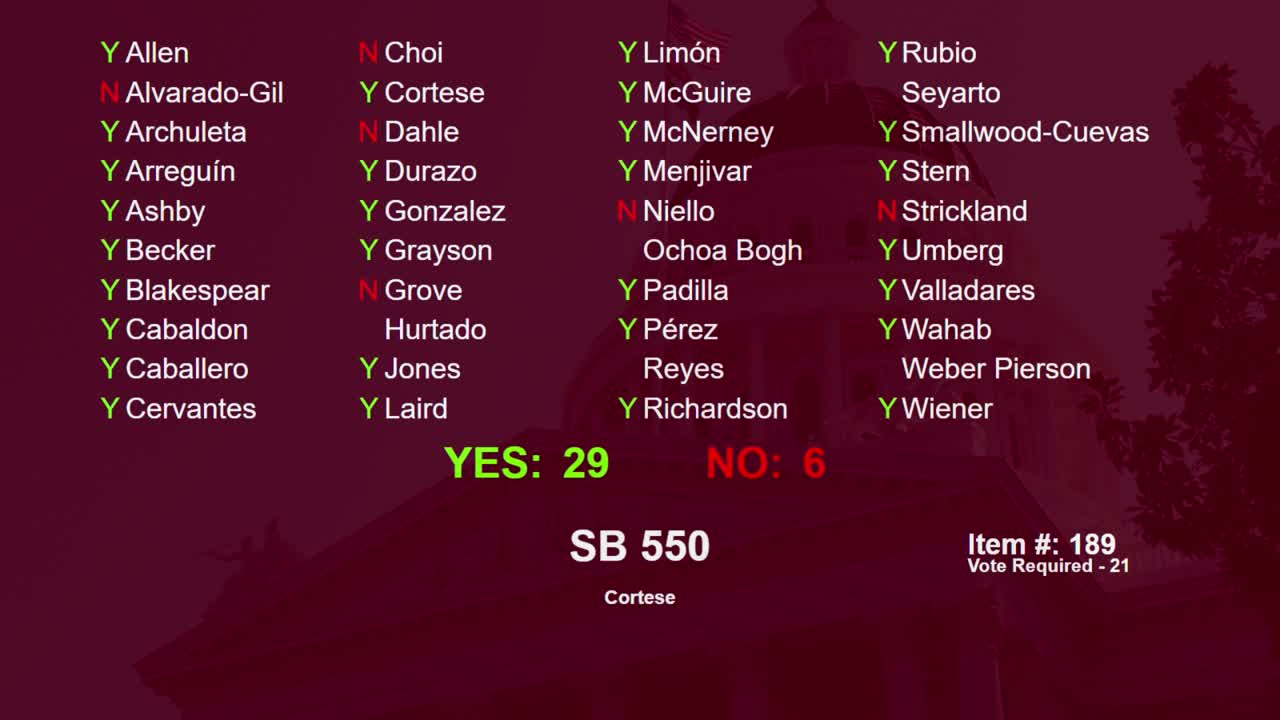 19MIN
Senate Floor
 7MIN
Senate Standing Committee on Housing
 16MIN
Senate Standing Committee on Human Services
Bill Author
Bill Co-Author(s):