SB 635: Food vendors and facilities: enforcement activities.
- Session Year: 2025-2026
- House: Senate
- Latest Version Date: 2025-10-07
Current Status:
Passed
(2025-10-07: Chaptered by Secretary of State. Chapter 463, Statutes of 2025.)
Introduced
In Committee
Awaiting First Chamber Vote
Passed First Chamber
In Committee
Awaiting Second Chamber Vote
Passed Second Chamber
Enacted
(1)Existing law authorizes a local authority, as defined, to adopt a program to regulate sidewalk vendors if the program complies with specified standards. These standards include restricting the local authority from requiring a sidewalk vendor to operate within specific parts of the public right-of-way, except when that restriction is directly related to objective health, safety, or welfare concerns. A violation of these provisions is punishable only by an administrative fine, as specified.
This bill would prohibit a local authority, except as otherwise required by state or federal law, from providing voluntary consent to any individual to access, review, or obtain certain records of the local authority that include personally identifiable information of any sidewalk vendors in the jurisdiction without a subpoena or judicial warrant. The bill would also prohibit a local authority and its personnel from disclosing or providing in writing, verbally, or in any other manner personally identifiable information of any sidewalk vendor that is requested, except pursuant to a subpoena or a valid judicial warrant. The bill would define personally identifiable information, for these purposes, to include an individuals name, business name, home address, business address, birthdate, telephone number, California drivers license or identification, and other related information. The bill would also define immigration enforcement for these purposes.
Existing law authorizes a local authority to adopt additional requirements regulating the time, place, and manner of sidewalk vending if the requirements are directly related to objective health, safety, or welfare concerns. These include requiring the sidewalk vendor to obtain from the local authority a permit or valid business license, provided that the local authority issuing the permit or business license accepts a California drivers license or identification number, an individual taxpayer identification number, or a municipal identification number in lieu of a social security number for the issuance of a permit or business license, and that the number collected is not disclosed, except as specified.
This bill would also prohibit a local authority, in the above-described circumstances, from inquiring into or collecting information about an individuals immigration or citizenship status, place of birth, or individual criminal history, or requiring an applicant to submit fingerprints, complete a LiveScan fingerprinting, or submit to a background check as part of an application for a permit or business license. The bill would require a local authority that inquired into or collected information or documentation regarding an individuals place of birth or criminal history, required an applicant to submit fingerprints or complete a LiveScan fingerprinting, or performed a background check before January 1, 2026, to destroy those records on or before March 1, 2026, unless those records are expressly required by law to be preserved. The bill would provide that specified personally identifiable information collected by a local authority is exempt from disclosure under the California Public Records Act.
This bill would prohibit an agency or department of a local authority, including any nonpublic entity working on the local authoritys behalf, as provided, from using local authority moneys or personnel to investigate, interrogate, detain, detect, or arrest persons for certain purposes, and from engaging in specified activities related to immigration enforcement, when enforcing certain provisions regulating sidewalk vendors. The bill, for specified contracts between a nonpublic entity and a local authority entered into or modified on or after January 1, 2026, would require a nonpublic entity to explicitly agree to adhere to these provisions and would immediately terminate the contract if it is found that the nonpublic entity has violated these provisions.
(2)Existing law, the California Retail Food Code (the code), establishes uniform health and sanitation standards for, and provides for regulation by the State Department of Public Health of, retail food facilities and requires local health agencies to enforce these provisions. Existing law requires compact mobile food operations to meet specified health and safety standards. For purposes of the code, a compact mobile food operation, means a mobile food facility that operates from an individual or from a pushcart, stand, display, pedal-driven cart, wagon, showcase, rack, or other nonmotorized conveyance. Existing law makes a violation of these provisions by an operator or employee of a compact mobile food operation or a sidewalk vendor punishable only by an administrative fine, as specified.
This bill would prohibit an enforcement agency, including any nonpublic entity working on the enforcement agencys behalf, as provided, from using enforcement agency moneys or personnel to investigate, interrogate, detain, detect, or arrest persons for certain purposes, and from engaging in specified activities related to immigration enforcement, when enforcing certain provisions regulating compact mobile food operations. The bill, for specified contracts between a nonpublic entity and an enforcement agency entered into or modified on or after January 1, 2026, would require a nonpublic entity to explicitly agree to adhere to these provisions and would immediately terminate the contract if it is found that the nonpublic entity has violated these provisions.
This bill would also prohibit an enforcement agency from providing voluntary consent to any individual to access, review, or obtain certain records of the enforcement agency that include personally identifiable information of any sidewalk vendor or operator or employee of a compact mobile food operation in the jurisdiction without a subpoena or judicial warrant. The bill would further prohibit a local authority and its personnel from disclosing or providing in writing, verbally, or in any other manner personally identifiable information of any sidewalk vendor that is requested, except pursuant to a subpoena or a valid judicial warrant.
Existing law prohibits a food facility from being open for business without a valid permit and requires a permit to be issued by the enforcement agency when investigation has determined that the proposed facility and its methods of operation conform to code requirements.
This bill would require a permit application for a compact mobile food operation to comply with specified requirements. In this regard, the bill would require an enforcement agency to accept a California drivers license or identification number, an individual taxpayer identification, or a municipal identification number in lieu of a social security number. The bill would also prohibit an enforcement agency from, among other things, inquiring into the individuals immigration status, citizenship status, or criminal history, as prescribed. The bill would further require an enforcement agency that inquired into or collected information or documentation regarding an individuals place of birth or criminal history, required an applicant to submit fingerprints or complete a LiveScan fingerprinting, or performed a background check before January 1, 2026, to destroy those records on or before March 1, 2026, unless those records are expressly required by law to be preserved. The bill would provide that specified personally identifiable information collected by an enforcement agency is exempt from disclosure under the California Public Records Act. The bill would make other related changes to these provisions. To the extent the bill would impose new requirements on local governmental agencies, it would create a state-mandated local program.
Existing constitutional provisions require that a statute that limits the right of access to the meetings of public bodies or the writings of public officials and agencies be adopted with findings demonstrating the interest protected by the limitation and the need for protecting that interest.
This bill would make legislative findings to that effect.
The California Constitution requires the state to reimburse local agencies and school districts for certain costs mandated by the state. Statutory provisions establish procedures for making that reimbursement.
This bill would provide that, if the Commission on State Mandates determines that the bill contains costs mandated by the state, reimbursement for those costs shall be made pursuant to the statutory provisions noted above.
(1)Existing law authorizes a local authority, as defined, to adopt a program to regulate sidewalk vendors if the program complies with specified standards. These standards include restricting the local authority from requiring a sidewalk vendor to operate within specific parts of the public right-of-way, except when that restriction is directly related to objective health, safety, or welfare concerns. A violation of these provisions is punishable only by an administrative fine, as specified.
This bill would prohibit a local authority, except as otherwise required by state or federal law, from providing voluntary consent to an immigration enforcement agent any individual to access, review, or obtain certain records of the local authority that include personally identifiable information of any sidewalk vendors in the jurisdiction without a subpoena or judicial warrant. The bill would also prohibit a local authority and its personnel from disclosing or providing in writing, verbally, or in any other manner personally identifiable information of any sidewalk vendor that is requested for purposes of immigration enforcement, requested, except pursuant to a subpoena or a valid judicial warrant. The bill would define personally identifiable information, for these purposes, to include an individuals name, business name, home address, business address, birthdate, telephone number, California drivers license or identification, and other related information. The bill would also define immigration enforcement for these purposes.
Existing law authorizes a local authority to adopt additional requirements regulating the time, place, and manner of sidewalk vending if the requirements are directly related to objective health, safety, or welfare concerns. These include requiring the sidewalk vendor to obtain from the local authority a permit or valid business license, provided that the local authority issuing the permit or business license accepts a California drivers license or identification number, an individual taxpayer identification number, or a municipal identification number in lieu of a social security number for the issuance of a permit or business license, and that the number collected is not disclosed, except as specified.
This bill would also prohibit a local authority, in the above-described circumstances, from inquiring into or collecting information about an individuals immigration or citizenship status, place of birth, or individual criminal history, or requiring an applicant to submit fingerprints, complete a LiveScan fingerprinting, or submit to a background check as part of an application for a permit or business license. The bill would require a local authority that inquired into or collected information or documentation regarding an individuals place of birth or criminal history, required an applicant to submit fingerprints or complete a LiveScan fingerprinting, or performed a background check before January 1, 2026, to destroy those records on or before March 1, 2026, unless those records are expressly required by law to be preserved. The bill would provide that specified personally identifiable information collected by a local authority is exempt from disclosure under the California Public Records Act.
This bill would prohibit an agency or department of a local authority, including any nonpublic entity working on the local authoritys behalf, as provided, from using local authority moneys or personnel to investigate, interrogate, detain, detect, or arrest persons for certain purposes, and from engaging in specified activities related to immigration enforcement activities enforcement, when enforcing certain provisions regulating sidewalk vendors. The bill, for specified contracts between a nonpublic entity and a local authority entered into or modified on or after January 1, 2026, would require a nonpublic entity to explicitly agree to adhere to these provisions and would immediately terminate the contract if it is found that the nonpublic entity has violated these provisions.
(2)Existing law, the California Retail Food Code (the code), establishes uniform health and sanitation standards for, and provides for regulation by the State Department of Public Health of, retail food facilities and requires local health agencies to enforce these provisions. Existing law requires compact mobile food operations to meet specified health and safety standards. For purposes of the code, a compact mobile food operation, means a mobile food facility that operates from an individual or from a pushcart, stand, display, pedal-driven cart, wagon, showcase, rack, or other nonmotorized conveyance. Existing law makes a violation of these provisions by an operator or employee of a compact mobile food operation or a sidewalk vendor punishable only by an administrative fine, as specified.
This bill would prohibit an enforcement agency, including any nonpublic entity working on the enforcement agencys behalf, as provided, from using enforcement agency moneys or personnel to investigate, interrogate, detain, detect, or arrest persons for certain purposes, and from engaging in specified activities related to immigration enforcement activities enforcement, when enforcing certain provisions regulating compact mobile food operations. The bill, for specified contracts between a nonpublic entity and an enforcement agency entered into or modified on or after January 1, 2026, would require a nonpublic entity to explicitly agree to adhere to these provisions and would immediately terminate the contract if it is found that the nonpublic entity has violated these provisions.
This bill would also prohibit an enforcement agency from providing voluntary consent to an immigration enforcement agent any individual to access, review, or obtain certain records of the enforcement agency that include personally identifiable information of any sidewalk vendor or operator or employee of a compact mobile food operation in the jurisdiction without a subpoena or judicial warrant. The bill would further prohibit a local authority and its personnel from disclosing or providing in writing, verbally, or in any other manner personally identifiable information of any sidewalk vendor that is requested for purposes of immigration enforcement, requested, except pursuant to a subpoena or a valid judicial warrant.
Existing law prohibits a food facility from being open for business without a valid permit and requires a permit to be issued by the enforcement agency when investigation has determined that the proposed facility and its methods of operation conform to code requirements.
This bill would require a permit application for a compact mobile food operation to comply with specified requirements. In this regard, the bill would require an enforcement agency to accept a California drivers license or identification number, an individual taxpayer identification, or a municipal identification number in lieu of a social security number. The bill would also prohibit an enforcement agency from, among other things, inquiring into the individuals immigration status, citizenship status, or criminal history, as prescribed. The bill would further require an enforcement agency that inquired into or collected information or documentation regarding an individuals place of birth or criminal history, required an applicant to submit fingerprints or complete a LiveScan fingerprinting, or performed a background check before January 1, 2026, to destroy those records on or before March 1, 2026, unless those records are expressly required by law to be preserved. The bill would provide that specified personally identifiable information collected by an enforcement agency is exempt from disclosure under the California Public Records Act. The bill would make other related changes to these provisions. To the extent the bill would impose new requirements on local governmental agencies, it would create a state-mandated local program.
Existing constitutional provisions require that a statute that limits the right of access to the meetings of public bodies or the writings of public officials and agencies be adopted with findings demonstrating the interest protected by the limitation and the need for protecting that interest.
This bill would make legislative findings to that effect.
The California Constitution requires the state to reimburse local agencies and school districts for certain costs mandated by the state. Statutory provisions establish procedures for making that reimbursement.
This bill would provide that, if the Commission on State Mandates determines that the bill contains costs mandated by the state, reimbursement for those costs shall be made pursuant to the statutory provisions noted above.
(1)Existing law authorizes a local authority, as defined, to adopt a program to regulate sidewalk vendors if the program complies with specified standards. These standards include restricting the local authority from requiring a sidewalk vendor to operate within specific parts of the public right-of-way, except when that restriction is directly related to objective health, safety, or welfare concerns. A violation of these provisions is punishable only by an administrative fine, as specified.
This bill would prohibit a local authority, except as otherwise required by federal law, from providing voluntary consent to an immigration enforcement agent to access, review, or obtain any certain records of the local authoritys records authority that include personally identifiable information of any sidewalk vendors in the jurisdiction without a subpoena or judicial warrant. The bill would also prohibit a local authority and its personnel from disclosing or providing in writing, verbally, or in any other manner personally identifiable information of any sidewalk vendor that is requested for purposes of immigration enforcement, except pursuant to a valid judicial warrant. The bill would define personally identifiable information, for these purposes, to include an individuals name, business name, home and address, business address, birthdate, telephone number, California drivers license or identification, and other related information. The bill would also define immigration enforcement for these purposes.
Existing law authorizes a local authority to adopt additional requirements regulating the time, place, and manner of sidewalk vending if the requirements are directly related to objective health, safety, or welfare concerns. These include requiring the sidewalk vendor to obtain from the local authority a permit or valid business license, provided that the local authority issuing the permit or business license accepts a California drivers license or identification number, an individual taxpayer identification number, or a municipal identification number in lieu of a social security number for the issuance of a permit or business license, and that the number collected is not disclosed, except as specified.
This bill would also prohibit a local authority, in the above-described circumstances, from inquiring into or collecting information about an individuals immigration or citizenship status, place of birth, or individual criminal history, or requiring an applicant to submit fingerprints, complete a LiveScan fingerprinting, or submit to a background check as part of an application for a permit or business license. The bill would require a local authority that inquired into or collected information or documentation regarding an individuals immigration or citizenship status, place of birth, birth or criminal history, required an applicant to submit fingerprints or complete a LiveScan fingerprinting, or performed a background check before January 1, 2026, to destroy those records on or before March 1, 2026. The 2026, unless those records are expressly required by law to be preserved. The bill would provide that specified information collected by a local authority is exempt from disclosure under the California Public Records Act.
This bill would prohibit an agency or department of a local authority authority, including any nonpublic entity working on the local authoritys behalf, as provided, from engaging in specified immigration enforcement activities when enforcing certain provisions regulating sidewalk vendors. The bill would additionally prohibit a local authority from delegating or assigning authority to, or contracting with, a nonpublic entity to enforce sidewalk vending rules, impound sidewalk vending equipment, or cite, fine, or prosecute a sidewalk vendor for a violation of sidewalk vending rules or regulations.
(2)Existing law, the California Retail Food Code (the code), establishes uniform health and sanitation standards for, and provides for regulation by the State Department of Public Health of, retail food facilities and requires local health agencies to enforce these provisions. Existing law requires compact mobile food operations to meet specified health and safety standards. For purposes of the code, a compact mobile food operation, means a mobile food facility that operates from an individual or from a pushcart, stand, display, pedal-driven cart, wagon, showcase, rack, or other nonmotorized conveyance. Existing law makes a violation of these provisions by an operator or employee of a compact mobile food operation or a sidewalk vendor punishable only by an administrative fine, as specified.
This bill would prohibit an enforcement agency agency, including any nonpublic entity working on the enforcement agencys behalf, as provided, from engaging in specified immigration enforcement activities when enforcing certain provisions regulating compact mobile food operations. The bill would additionally prohibit an enforcement agency from delegating or assigning authority to, or contracting with, a nonpublic entity to enforce the above provisions governing compact mobile food operations, impound compact mobile food operation equipment, or cite, fine, or prosecute an operator or employee of a compact mobile food operation for a violation of those provisions.
This bill would also prohibit an enforcement agency from providing voluntary consent to an immigration enforcement agent to access, review, or obtain any certain records of the enforcement agencys records agency that include personally identifiable information of any sidewalk vendor or operator or employee of a compact mobile food operation in the jurisdiction without a subpoena or judicial warrant. The bill would further prohibit a local authority and its personnel from disclosing or providing in writing, verbally, or in any other manner personally identifiable information of any sidewalk vendor that is requested for purposes of immigration enforcement, except pursuant to a valid judicial warrant.
Existing law prohibits a food facility from being open for business without a valid permit and requires a permit to be issued by the enforcement agency when investigation has determined that the proposed facility and its methods of operation conform to code requirements.
This bill would require a permit application for a compact mobile food operation to comply with specified requirements. In this regard, the bill would require an enforcement agency to accept a California drivers license or identification number, an individual taxpayer identification, or a municipal identification number in lieu of a social security number. The bill would also prohibit an enforcement agency from, among other things, inquiring into the individuals immigration, immigration status, citizenship status, or criminal history, as prescribed. The bill would further require an enforcement agency that inquired into or collected information or documentation regarding an individuals immigration or citizenship status, place of birth, birth or criminal history, required an applicant to submit fingerprints or complete a LiveScan fingerprinting, or performed a background check before January 1, 2026, to destroy those records on or before March 1, 2026. 2026, unless those records are expressly required by law to be preserved. The bill would provide that specified information collected by an enforcement agency is exempt from disclosure under the California Public Records Act. The bill would make other related changes to these provisions. To the extent the bill would impose new requirements on local governmental agencies, it would create a state-mandated local program.
Existing constitutional provisions require that a statute that limits the right of access to the meetings of public bodies or the writings of public officials and agencies be adopted with findings demonstrating the interest protected by the limitation and the need for protecting that interest.
This bill would make legislative findings to that effect.
The California Constitution requires the state to reimburse local agencies and school districts for certain costs mandated by the state. Statutory provisions establish procedures for making that reimbursement.
This bill would provide that, if the Commission on State Mandates determines that the bill contains costs mandated by the state, reimbursement for those costs shall be made pursuant to the statutory provisions noted above.
(1)Existing law authorizes a local authority, as defined, to adopt a program to regulate sidewalk vendors if the program complies with specified standards. These standards include restricting the local authority from requiring a sidewalk vendor to operate within specific parts of the public right-of-way, except when that restriction is directly related to objective health, safety, or welfare concerns. A violation of these provisions is punishable only by an administrative fine, as specified.
This bill would prohibit a local authority, except as otherwise required by federal law, from providing voluntary consent to an immigration enforcement agent to access, review, or obtain any of the local authoritys records that include personally identifiable information of any sidewalk vendors in the jurisdiction without a subpoena or judicial warrant. The bill would also prohibit a local authority and its personnel from disclosing or providing in writing, verbally, or in any other manner personally identifiable information of any sidewalk vendor that is requested for purposes of immigration enforcement, except pursuant to a valid judicial warrant. The bill would define personally identifiable information, for these purposes, to include an individuals name, business name, home and business address, birthdate, telephone number, California drivers license or identification, and other related information. The bill would also define immigration enforcement for these purposes.
Existing law authorizes a local authority to adopt additional requirements regulating the time, place, and manner of sidewalk vending if the requirements are directly related to objective health, safety, or welfare concerns. These include requiring the sidewalk vendor to obtain from the local authority a permit or valid business license, provided that the local authority issuing the permit or business license accepts a California drivers license or identification number, an individual taxpayer identification number, or a municipal identification number in lieu of a social security number for the issuance of a permit or business license, and that the number collected is not disclosed, except as specified.
This bill would also prohibit a local authority, in the above-described circumstances, from inquiring into or collecting information about an individuals immigration or citizenship status, place of birth, or individual criminal history, or requiring an applicant to submit fingerprints, complete a LiveScan fingerprinting, or submit to a background check as part of an application for a permit or business license. The bill would require a local authority that inquired into or collected information or documentation regarding an individuals immigration or citizenship status, place of birth, or criminal history, required an applicant to submit fingerprints or complete a LiveScan fingerprinting, or performed a background check before January 1, 2026, to destroy those records on or before March 1, 2026. The bill would prohibit an agency or department of a local authority from engaging in specified immigration enforcement activities when enforcing certain provisions regulating sidewalk vendors. The bill would additionally prohibit a local authority from delegating or assigning authority to, or contracting with, a nonpublic entity to enforce sidewalk vending rules, impound sidewalk vending equipment, or cite, fine, or prosecute a sidewalk vendor for a violation of sidewalk vending rules or regulations.
(2)Existing law, the California Retail Food Code (the code), establishes uniform health and sanitation standards for, and provides for regulation by the State Department of Public Health of, retail food facilities and requires local health agencies to enforce these provisions. Existing law requires compact mobile food operations to meet specified health and safety standards. For purposes of the code, a compact mobile food operation, means a mobile food facility that operates from an individual or from a pushcart, stand, display, pedal-driven cart, wagon, showcase, rack, or other nonmotorized conveyance. Existing law makes a violation of these provisions by an operator or employee of a compact mobile food operation or a sidewalk vendor punishable only by an administrative fine, as specified.
This bill would prohibit an enforcement agency from engaging in specified immigration enforcement activities when enforcing certain provisions regulating compact mobile food operations. The bill would additionally prohibit an enforcement agency from delegating or assigning authority to, or contracting with, a nonpublic entity to enforce the above provisions governing compact mobile food operations, impound compact mobile food operation equipment, or cite, fine, or prosecute an operator or employee of a compact mobile food operation for a violation of those provisions.
This bill would also prohibit an enforcement agency from providing voluntary consent to an immigration enforcement agent to access, review, or obtain any of the enforcement agencys records that include personally identifiable information of any sidewalk vendor or operator or employee of a compact mobile food operation in the jurisdiction without a subpoena or judicial warrant. The bill would further prohibit a local authority and its personnel from disclosing or providing in writing, verbally, or in any other manner personally identifiable information of any sidewalk vendor that is requested for purposes of immigration enforcement, except pursuant to a valid judicial warrant.
Existing law prohibits a food facility from being open for business without a valid permit and requires a permit to be issued by the enforcement agency when investigation has determined that the proposed facility and its methods of operation conform to code requirements.
This bill would require a permit application for a compact mobile food operation to comply with specified requirements. In this regard, the bill would require an enforcement agency to accept a California drivers license or identification number, an individual taxpayer identification, or a municipal identification number in lieu of a social security number. The bill would also prohibit an enforcement agency from, among other things, inquiring into the individuals immigration, citizenship status, or criminal history, as prescribed. The bill would further require an enforcement agency that inquired into or collected information or documentation regarding an individuals immigration or citizenship status, place of birth, or criminal history, required an applicant to submit fingerprints or complete a LiveScan fingerprinting, or performed a background check before January 1, 2026, to destroy those records on or before March 1, 2026. The bill would make other related changes to these provisions. To the extent the bill would impose new requirements on local government governmental agencies, it would create a state-mandated local program.
Existing constitutional provisions require that a statute that limits the right of access to the meetings of public bodies or the writings of public officials and agencies be adopted with findings demonstrating the interest protected by the limitation and the need for protecting that interest.
This bill would make legislative findings to that effect.
The California Constitution requires the state to reimburse local agencies and school districts for certain costs mandated by the state. Statutory provisions establish procedures for making that reimbursement.
This bill would provide that, if the Commission on State Mandates determines that the bill contains costs mandated by the state, reimbursement for those costs shall be made pursuant to the statutory provisions noted above.
(1)Existing law authorizes a local authority, as defined, to adopt a program to regulate sidewalk vendors if the program complies with specified standards. These standards include restricting the local authority from requiring a sidewalk vendor to operate within specific parts of the public right-of-way, except when that restriction is directly related to objective health, safety, or welfare concerns. A violation of these provisions is punishable only by an administrative fine, as specified.
This bill would prohibit a local authority, except as otherwise required by federal law, from providing voluntary consent to an immigration enforcement agent to access, review, or obtain any of the local authoritys records that include personally identifiable information of any sidewalk vendors in the jurisdiction without a subpoena or judicial warrant. The bill would also prohibit a local authority and its personnel from disclosing or providing in writing, verbally, or in any other manner personally identifiable information of any sidewalk vendor that is requested for purposes of immigration enforcement, except pursuant to a valid judicial warrant. The bill would define personally identifiable information, for these purposes, to include an individuals name, business name, home and business address, birthdate, telephone number, California drivers license or identification, and other related information. The bill would also define immigration enforcement for these purposes.
Existing law authorizes a local authority to adopt additional requirements regulating the time, place, and manner of sidewalk vending if the requirements are directly related to objective health, safety, or welfare concerns. These include requiring the sidewalk vendor to obtain from the local authority a permit or valid business license, provided that the local authority issuing the permit or business license accepts a California drivers license or identification number, an individual taxpayer identification number, or a municipal identification number in lieu of a social security number for the issuance of a permit or business license, and that the number collected is not disclosed, except as specified.
This bill would also prohibit a local authority, in the above-described circumstances, from inquiring into or collecting information about an individuals immigration or citizenship status, place of birth, or individual criminal history, or requiring an applicant to submit fingerprints, complete a LiveScan fingerprinting, or submit to a background check as part of an application for a permit or business license. The bill would require a local authority that inquired into or collected information or documentation regarding an individuals immigration or citizenship status, place of birth, or criminal history, required an applicant to submit fingerprints or complete a LiveScan fingerprinting, or performed a background check before January 1, 2026, to destroy those records on or before March 1, 2026. The bill would additionally prohibit a local authority from delegating or assigning authority to, or contracting with, a nonpublic entity to enforce sidewalk vending rules, impound sidewalk vending equipment, or cite, fine, or prosecute a sidewalk vendor for a violation of sidewalk vending rules or regulations.
(2)Existing law, the California Values Act, generally prohibits California law enforcement agencies from investigating, interrogating, detaining, detecting, or arresting persons for immigration enforcement purposes. Existing law provides certain limited exceptions to this prohibition, including transfers of persons pursuant to a judicial warrant and providing certain information to federal authorities regarding serious and violent felons in custody.This bill would provide that any agency or department of a local authority that regulates sidewalk vending or enforces sidewalk vending regulations shall be subject to the California Values Act.(3)(2)Existing law, the California Retail Food Code (the code), establishes uniform health and sanitation standards for, and provides for regulation by the State Department of Public Health of, retail food facilities and requires local health agencies to enforce these provisions. Existing law requires compact mobile food operations to meet specified health and safety standards. For purposes of the code, a compact mobile food operation, means a mobile food facility that operates from an individual or from a pushcart, stand, display, pedal-driven cart, wagon, showcase, rack, or other nonmotorized conveyance. Existing law makes a violation of these provisions by an operator or employee of a compact mobile food operation or a sidewalk vendor punishable only by an administrative fine, as specified.
This bill would provide that an enforcement agency, when enforcing the above-described code or any regulation adopted pursuant to its provisions regulating an operator or employee of a compact mobile food operation, shall be subject to the California Values Act, as described above. The bill would prohibit an enforcement agency from delegating or assigning authority to, or contracting with, a nonpublic entity to enforce the above provisions governing compact mobile food operations, impound compact mobile food operation equipment, or cite, fine, or prosecute an operator or employee of a compact mobile food operation for a violation of those provisions.
This bill would also prohibit an enforcement agency from providing voluntary consent to an immigration enforcement agent to access, review, or obtain any of the enforcement agencys records that include personally identifiable information of any sidewalk vendor or operator or employee of a compact mobile food operation in the jurisdiction without a subpoena or judicial warrant. The bill would further prohibit a local authority and its personnel from disclosing or providing in writing, verbally, or in any other manner personally identifiable information of any sidewalk vendor that is requested for purposes of immigration enforcement, except pursuant to a valid judicial warrant.
Existing law prohibits a food facility from being open for business without a valid permit and requires a permit to be issued by the enforcement agency when investigation has determined that the proposed facility and its methods of operation conform to code requirements.
This bill would require a permit application for a compact mobile food operation to comply with specified requirements. In this regard, the bill would require an enforcement agency to accept a California drivers license or identification number, an individual taxpayer identification, or a municipal identification number in lieu of a social security number. The bill would also prohibit an enforcement agency from, among other things, inquiring into the individuals immigration, citizenship status, or criminal history, as prescribed. The bill would further require an enforcement agency that inquired into or collected information or documentation regarding an individuals immigration or citizenship status, place of birth, or criminal history, required an applicant to submit fingerprints or complete a LiveScan fingerprinting, or performed a background check before January 1, 2026, to destroy those records on or before March 1, 2026. The bill would make other related changes to these provisions. To the extent the bill would impose new requirements on local government agencies, it would create a state-mandated local program.
Existing constitutional provisions require that a statute that limits the right of access to the meetings of public bodies or the writings of public officials and agencies be adopted with findings demonstrating the interest protected by the limitation and the need for protecting that interest.
This bill would make legislative findings to that effect.
The California Constitution requires the state to reimburse local agencies and school districts for certain costs mandated by the state. Statutory provisions establish procedures for making that reimbursement.
This bill would provide that, if the Commission on State Mandates determines that the bill contains costs mandated by the state, reimbursement for those costs shall be made pursuant to the statutory provisions noted above.
(1)Existing law authorizes a local authority, as defined, to adopt a program to regulate sidewalk vendors if the program complies with specified standards. These standards include restricting the local authority from requiring a sidewalk vendor to operate within specific parts of the public right-of-way, except when that restriction is directly related to objective health, safety, or welfare concerns. A violation of these provisions is punishable only by an administrative fine, as specified.
This bill would prohibit a local authority, except as otherwise required by federal law, from providing voluntary consent to an immigration enforcement agent to access, review, or obtain any of the local authoritys records that include personally identifiable information of any sidewalk vendors in the jurisdiction without a subpoena or judicial warrant. The bill would define personally identifiable information, for these purposes, to include an individuals name, business name, address, birthdate, telephone number, California drivers license or identification, and other related information.
Existing law authorizes a local authority to adopt additional requirements regulating the time, place, and manner of sidewalk vending if the requirements are directly related to objective health, safety, or welfare concerns. These include requiring the sidewalk vendor to obtain from the local authority a permit or valid business license, provided that the local authority issuing the permit or business license accepts a California drivers license or identification number, an individual taxpayer identification number, or a municipal identification number in lieu of a social security number for the issuance of a permit or business license, and that the number collected is not disclosed, except as specified.
This bill would also prohibit a local authority, in the above-described circumstances, from inquiring into or collecting information about an individuals immigration or citizenship status, place of birth, or individual criminal history, or requiring an applicant to submit fingerprints, complete a LiveScan fingerprinting, or submit to a background check as part of an application for a permit or business license. The bill would require an enforcement agency a local authority that inquired into or collected information or documentation regarding an individuals immigration or citizenship status, place of birth, or criminal history, required an applicant to submit fingerprints or complete a LiveScan fingerprinting, or performed a background check before January 1, 2026, to destroy those records on or before March 1, 2026. The bill would additionally prohibit a local authority from delegating or assigning authority to, or contracting with, a nonpublic entity to enforce sidewalk vending rules, impound sidewalk vending equipment, or cite, fine, or prosecute a sidewalk vendor for a violation of sidewalk vending rules or regulations.
(2)Existing law, the California Values Act, generally prohibits California law enforcement agencies from investigating, interrogating, detaining, detecting, or arresting persons for immigration enforcement purposes. Existing law provides certain limited exceptions to this prohibition, including transfers of persons pursuant to a judicial warrant and providing certain information to federal authorities regarding serious and violent felons in custody.
This bill would provide that any agency or department of a local authority that regulates sidewalk vending or enforces sidewalk vending regulations shall be subject to the California Values Act.
(3)Existing law, the California Retail Food Code (the code), establishes uniform health and sanitation standards for, and provides for regulation by the State Department of Public Health of, retail food facilities and requires local health agencies to enforce these provisions. Existing law requires compact mobile food operations to meet specified health and safety standards. For purposes of the code, a compact mobile food operation, means a mobile food facility that operates from an individual or from a pushcart, stand, display, pedal-driven cart, wagon, showcase, rack, or other nonmotorized conveyance. Existing law makes a violation of these provisions by an operator or employee of a compact mobile food operation or a sidewalk vendor punishable only by an administrative fine, as specified.
This bill would provide that an enforcement agency, when enforcing the above-described code or any regulation adopted pursuant to its provisions regulating an operator or employee of a compact mobile food operation, shall be subject to the California Values Act, as described above. The bill would prohibit an enforcement agency from delegating or assigning authority to, or contracting with, a nonpublic entity to enforce the above provisions governing compact mobile food operations, impound compact mobile food operation equipment, or cite, fine, or prosecute an operator or employee of a compact mobile food operation for a violation of those provisions.
This bill would also prohibit an enforcement agency from providing voluntary consent to an immigration enforcement agent to access, review, or obtain any of the enforcement agencys records that include personally identifiable information of any sidewalk vendor or operator or employee of a compact mobile food operation in the jurisdiction without a subpoena or judicial warrant.
Existing law prohibits a food facility from being open for business without a valid permit and requires a permit to be issued by the enforcement agency when investigation has determined that the proposed facility and its methods of operation conform to code requirements.
This bill would require a permit application for a compact mobile food operation to comply with specified requirements. In this regard, the bill would require an enforcement agency to accept a California drivers license or identification number, an individual taxpayer identification, or a municipal identification number in lieu of a social security number. The bill would also prohibit an enforcement agency from, among other things, inquiring into the individuals immigration, citizenship status, or criminal history, as prescribed. The bill would further require an enforcement agency that inquired into or collected information or documentation regarding an individuals immigration or citizenship status, place of birth, or criminal history, required an applicant to submit fingerprints or complete a LiveScan fingerprinting, or performed a background check before January 1, 2026, to destroy those records on or before March 1, 2026. The bill would make other related changes to these provisions. To the extent the bill would impose new requirements on local government agencies, it would create a state-mandated local program.
Existing constitutional provisions require that a statute that limits the right of access to the meetings of public bodies or the writings of public officials and agencies be adopted with findings demonstrating the interest protected by the limitation and the need for protecting that interest.
This bill would make legislative findings to that effect.
The California Constitution requires the state to reimburse local agencies and school districts for certain costs mandated by the state. Statutory provisions establish procedures for making that reimbursement.
This bill would provide that, if the Commission on State Mandates determines that the bill contains costs mandated by the state, reimbursement for those costs shall be made pursuant to the statutory provisions noted above.
(1)Existing law authorizes a local authority, as defined, to adopt a program to regulate sidewalk vendors if the program complies with specified standards. These standards include restricting the local authority from requiring a sidewalk vendor to operate within specific parts of the public right-of-way, except when that restriction is directly related to objective health, safety, or welfare concerns. A violation of these provisions is punishable only by an administrative fine, as specified.
This bill would prohibit a local authority, except as otherwise required by federal law, from providing voluntary consent to an immigration enforcement agent to access, review, or obtain any of the local authoritys records that include personally identifiable information of any sidewalk vendors in the jurisdiction without a subpoena or judicial warrant. The bill would define personally identifiable information, for these purposes, to include an individuals name, business name, address, birthdate, phone telephone number, California drivers license or identification, and other related information.
Existing law authorizes a local authority to adopt additional requirements regulating the time, place, and manner of sidewalk vending if the requirements are directly related to objective health, safety, or welfare concerns. These include requiring the sidewalk vendor to obtain from the local authority a permit or valid business license, provided that the local authority issuing the permit or business license accepts a California drivers license or identification number, an individual taxpayer identification number, or a municipal identification number in lieu of a social security number for the issuance of a permit or business license, and that the number collected is not disclosed, except as specified.
This bill would also prohibit a local authority, in the above-described circumstances, from inquiring into or collecting information about an individuals immigration or citizenship status, place of birth, or individual criminal history, or requiring an applicant to submit fingerprints or fingerprints, complete a LiveScan, LiveScan fingerprinting, or submit to a background check, check as part of an application for a permit or business license. The bill would require an enforcement agency that inquired into or collected information or documentation regarding an individuals criminal history, required an applicant to submit fingerprints or complete a LiveScan fingerprinting, or performed a background check before January 1, 2026, to destroy those records on or before March 1, 2026. The bill would additionally prohibit a local authority from delegating or assigning authority to, or contracting with, a nonpublic entity to enforce sidewalk vending rules, impound sidewalk vending equipment, or cite, fine, or prosecute a sidewalk vendor for a violation of sidewalk vending rules or regulations.
(2)Existing law, the California Values Act, generally prohibits California law enforcement agencies from investigating, interrogating, detaining, detecting, or arresting persons for immigration enforcement purposes. Existing law provides certain limited exceptions to this prohibition, including transfers of persons pursuant to a judicial warrant and providing certain information to federal authorities regarding serious and violent felons in custody.
This bill would provide that any agency or department of a local authority that regulates sidewalk vending or enforces sidewalk vending regulations shall be considered a California law enforcement agency for purposes of subject to the California Values Act.
(3)Existing law, the California Retail Food Code (the code), establishes uniform health and sanitation standards for, and provides for regulation by the State Department of Public Health of, retail food facilities and requires local health agencies to enforce these provisions. Existing law requires compact mobile food operations to meet specified health and safety standards. For purposes of the code, a compact mobile food operation, means a mobile food facility that operates from an individual or from a pushcart, stand, display, pedal-driven cart, wagon, showcase, rack, or other nonmotorized conveyance. Existing law makes a violation of these provisions by an operator or employee of a compact mobile food operation or a sidewalk vendor punishable only by an administrative fine, as specified.
This bill would provide that an enforcement agency, when enforcing the above-described code or any regulation adopted pursuant to its provisions regulating an operator or employee of a compact mobile food operation, shall be considered a California law enforcement agency for purposes of subject to the California Values Act, as described above. The bill would prohibit an enforcement agency from delegating or assigning authority to, or contracting with, a nonpublic entity to enforce the above provisions governing compact mobile food operations, impound compact mobile food operation equipment, or cite, fine, or prosecute an operator or employee of a compact mobile food operation for a violation of those provisions.
This bill would also prohibit an enforcement agency from providing voluntary consent to an immigration enforcement agent to access, review, or obtain any of the enforcement agencys records that include personally identifiable information of any sidewalk vendor or operator or employee of a compact mobile food operation in the jurisdiction without a subpoena or judicial warrant.
Existing law prohibits a food facility from being open for business without a valid permit and requires a permit to be issued by the enforcement agency when investigation has determined that the proposed facility and its methods of operation conform to code requirements.
This bill would require a permit application for a compact mobile food operation to comply with specified requirements. In this regard, the bill would require an enforcement agency to accept a California drivers license or identification number, an individual taxpayer identification, or a municipal identification number in lieu of a social security number. The bill would also prohibit an enforcement agency from, among other things, inquiring into the individuals immigration, citizenship status, or criminal history, as prescribed. The bill would further require an enforcement agency that inquired into or collected information or documentation regarding an individuals criminal history, required an applicant to submit fingerprints or complete a LiveScan fingerprinting, or performed a background check before January 1, 2026, to destroy those records on or before March 1, 2026. The bill would make other related changes to these provisions. To the extent the bill would impose new requirements on local government agencies, it would create a state-mandated local program.
Existing constitutional provisions require that a statute that limits the right of access to the meetings of public bodies or the writings of public officials and agencies be adopted with findings demonstrating the interest protected by the limitation and the need for protecting that interest.
This bill would make legislative findings to that effect.
The California Constitution requires the state to reimburse local agencies and school districts for certain costs mandated by the state. Statutory provisions establish procedures for making that reimbursement.
This bill would provide that, if the Commission on State Mandates determines that the bill contains costs mandated by the state, reimbursement for those costs shall be made pursuant to the statutory provisions noted above.
(1)Existing law authorizes a local authority, as defined, to adopt a program to regulate sidewalk vendors if the program complies with specified standards. These standards include restricting the local authority from requiring a sidewalk vendor to operate within specific parts of the public right-of-way, except when that restriction is directly related to objective health, safety, or welfare concerns. A violation of these provisions is punishable only by an administrative fine, as specified.
This bill would prohibit a local authority, except as otherwise required by federal law, from providing voluntary consent to an immigration enforcement agent to access, review, or obtain any of the local authoritys records that include personally identifiable information of any sidewalk vendors in the jurisdiction without a subpoena or judicial warrant. The bill would define personally identifiable information, for these purposes, to include an individuals name, business name, address, birthdate, phone number, California drivers license or identification, and other related information.
Existing law authorizes a local authority to adopt additional requirements regulating the time, place, and manner of sidewalk vending if the requirements are directly related to objective health, safety, or welfare concerns. These include requiring the sidewalk vendor to obtain from the local authority a permit or valid business license, provided that the local authority issuing the permit or business license accepts a California drivers license or identification number, an individual taxpayer identification number, or a municipal identification number in lieu of a social security number for the issuance of a permit or business license, and that the number collected is not disclosed, except as specified.
This bill would also prohibit a local authority, in the above-described circumstances, from inquiring into or collecting information about an individuals immigration or citizenship status, place of birth, individual criminal history, or requiring an applicant to submit fingerprints or a LiveScan, or submit to a background check, as part of an application for a permit or business license.
(2)Existing law, the California Values Act, generally prohibits California law enforcement agencies from investigating, interrogating, detaining, detecting, or arresting persons for immigration enforcement purposes. Existing law provides certain limited exceptions to this prohibition, including transfers of persons pursuant to a judicial warrant and providing certain information to federal authorities regarding serious and violent felons in custody.
This bill would provide that any agency or department of a local authority that regulates sidewalk vending or enforces sidewalk vending regulations shall be considered a California law enforcement agency for purposes of the California Values Act.
(3)Existing law, the California Retail Food Code (the code), establishes uniform health and sanitation standards for, and provides for regulation by the State Department of Public Health of, retail food facilities and requires local health agencies to enforce these provisions. Existing law requires compact mobile food operations to meet specified health and safety standards. For purposes of the code, a compact mobile food operation, means a mobile food facility that operates from an individual or from a pushcart, stand, display, pedal-driven cart, wagon, showcase, rack, or other nonmotorized conveyance. Existing law makes a violation of these provisions by an operator or employee of a compact mobile food operation or a sidewalk vendor punishable only by an administrative fine, as specified.
This bill would provide that an enforcement agency, when enforcing the above-described code or any regulation adopted pursuant to its provisions regulating an operator or employee of a compact mobile food operation, shall be considered a California law enforcement agency for purposes of the California Values Act, as described above.
This bill would also prohibit an enforcement agency from providing voluntary consent to an immigration enforcement agent to access, review, or obtain any of the enforcement agencys records that include personally identifiable information of any sidewalk vendor or operator or employee of a compact mobile food operation in the jurisdiction without a subpoena or judicial warrant.
Existing law prohibits a food facility from being open for business without a valid permit and requires a permit to be issued by the enforcement agency when investigation has determined that the proposed facility and its methods of operation conform to code requirements.
This bill would require a permit application for a compact mobile food operation to comply with specified requirements. In this regard, the bill would require an enforcement agency to accept a California drivers license or identification number, an individual taxpayer identification, or a municipal identification number in lieu of a social security number. The bill would also prohibit an enforcement agency from, among other things, inquiring into the individuals immigration, citizenship status, or criminal history, as prescribed. To the extent the bill would impose new requirements on local government agencies, it would create a state-mandated local program.
The California Constitution requires the state to reimburse local agencies and school districts for certain costs mandated by the state. Statutory provisions establish procedures for making that reimbursement.
This bill would provide that, if the Commission on State Mandates determines that the bill contains costs mandated by the state, reimbursement for those costs shall be made pursuant to the statutory provisions noted above.
This act shall be known, and may be cited, as the Street Vendor Business Protection Act.
SEC. 2.(a)The Legislature finds and declares all of the following:
(1)Sidewalk vending provides important entrepreneurship and economic development opportunities to low-income and immigrant communities.
(2)Sidewalk vending increases access to desired goods, such as culturally significant food and merchandise.
(3)Sidewalk vending contributes to a safe and dynamic public space.
(4)The safety and welfare of the general public is promoted by encouraging local authorities to support and properly regulate sidewalk vending.
(5)A relationship of trust between Californias immigrant community and local agencies is central to the public safety of the people of California.
(6)The safety and welfare of the general public is promoted by prohibiting criminal penalties for violations of sidewalk vending ordinances and regulations.
(7)The safety and welfare of the general public is promoted by encouraging sidewalk vendors to formalize their business and obtain permits without fear that the permitting process will expose them to immigration enforcement and possible deportation.
(8)Immigrant sidewalk vendors and their families are facing increased threats of detention and deportation.
(9)Immigrant sidewalk vendors are especially vulnerable to the risk of detention and deportation due to their visibility in public.
(10)Many local sidewalk vending permitting programs collect and store sensitive information about vendors, which may disclose citizenship or immigration status and could be used to target sidewalk vendors for enforcement and deportation if the information is shared with federal immigration enforcement agencies.
(11)This act applies to any city, county, or city and county, including a charter city. The threat of targeted immigration enforcement against small business entrepreneurs, and the impact on the statewide economy if immigrant entrepreneurs are targeted for enforcement are matters of statewide concern. Further, unnecessary barriers have been erected that intimidate or otherwise prevent aspiring entrepreneurs from accessing the formal economy, harming Californias economy in the process, and disrupting the regulation of business, which is a matter of statewide concern. Moreover, California has an interest in ensuring all people can build a business, pay taxes, and contribute to the economy regardless of immigration status.
(b)Therefore, it is the intent of the Legislature to do all of the following:
(1)Promote entrepreneurship and support immigrant and low-income communities.
(2)Advance microentrepreneurs economic security, privacy, and stability by limiting the sensitive data that can be collected.
(3)Prevent the disclosure of sensitive information that may lead to family separation, community disruption, and life threats.
SEC. 3.Section 51036 of the Government Code is amended to read:51036.For purposes of this chapter, the following definitions apply:
(a)Sidewalk vendor means a person who sells food or merchandise from a pushcart, stand, display, pedal-driven cart, wagon, showcase, rack, or other nonmotorized conveyance, or from ones person, upon a public sidewalk or other pedestrian path.
(b)Roaming sidewalk vendor means a sidewalk vendor who moves from place to place and stops only to complete a transaction.
(c)Stationary sidewalk vendor means a sidewalk vendor who vends from a fixed location.
(d)Local authority means a chartered or general law city, county, or city and county.
(e)Personally identifiable information means an individuals name, business name, home address, business address, birthdate, telephone number, business location, California drivers license or identification number, individual taxpayer identification number, municipal identification number, government-issued identification number, consular identification, social media identifiers, employer identification number, business license number, sellers permit number, social security number, vending registration certificate or license number, known place of work, income and tax information, and any other information that would identify the individual.
(f)Immigration enforcement means any and all efforts to investigate, enforce, or assist in the investigation or enforcement of any state or federal civil immigration law, and also includes any and all efforts to investigate, enforce, or assist in the investigation or enforcement of any state or federal criminal immigration law that penalizes a persons presence in, entry or reentry to, or employment in, the United States.
SEC. 4.Section 51038 of the Government Code is amended to read:51038.(a)A local authority may adopt a program to regulate sidewalk vendors in compliance with this section.
(b)A local authoritys sidewalk vending program shall comply with all of the following standards:
(1)A local authority shall not require a sidewalk vendor to operate within specific parts of the public right-of-way, except when that restriction is directly related to objective health, safety, or welfare concerns.
(2)(A)A local authority shall not prohibit a sidewalk vendor from selling food or merchandise in a park owned or operated by the local authority, except the local authority may prohibit stationary sidewalk vendors from vending in the park only if the operator of the park has signed an agreement for concessions that exclusively permits the sale of food or merchandise by the concessionaire.
(B)Notwithstanding subparagraph (A), a local authority may adopt additional requirements regulating the time, place, and manner of sidewalk vending in a park owned or operated by the local authority if the requirements are any of the following:
(i)Directly related to objective health, safety, or welfare concerns.
(ii)Necessary to ensure the publics use and enjoyment of natural resources and recreational opportunities.
(iii)Necessary to prevent an undue concentration of commercial activity that unreasonably interferes with the scenic and natural character of the park.
(3)A local authority shall not require a sidewalk vendor to first obtain the consent or approval of any nongovernmental entity or individual before they can sell food or merchandise.
(4)(A)A local authority shall not restrict sidewalk vendors to operate only in a designated neighborhood or area, except when that restriction is directly related to objective health, safety, or welfare concerns.
(B)Notwithstanding subparagraph (A), a local authority may prohibit stationary sidewalk vendors in areas that are zoned exclusively residential, but shall not prohibit roaming sidewalk vendors.
(5)A local authority shall not restrict the overall number of sidewalk vendors permitted to operate within the jurisdiction of the local authority, unless the restriction is directly related to objective health, safety, or welfare concerns.
(6)Except as otherwise required by state or federal law, a local authority shall not provide voluntary consent to any individual to access, review, or obtain any of the local authoritys records obtained pursuant to this chapter that include personally identifiable information of any sidewalk vendors in the jurisdiction without a subpoena or judicial warrant. This paragraph does not prohibit a local authority from challenging the validity of a subpoena or judicial warrant in a federal district court.
(7)A local authority and its personnel shall not disclose or provide in writing, verbally, or in any other manner, personally identifiable information of any sidewalk vendor obtained pursuant to this chapter that is requested, except pursuant to a subpoena or a valid judicial warrant.
(c)(1)A local authority may, by ordinance or resolution, adopt additional requirements regulating the time, place, and manner of sidewalk vending if the requirements are directly related to objective health, safety, or welfare concerns, including, but not limited to, any of the following:
(A)Limitations on hours of operation that are not unduly restrictive. In nonresidential areas, any limitations on the hours of operation for sidewalk vending shall not be more restrictive than any limitations on hours of operation imposed on other businesses or uses on the same street.
(B)Requirements to maintain sanitary conditions.
(C)Requirements necessary to ensure compliance with the federal Americans with Disabilities Act of 1990 (Public Law 101-336) and other disability access standards.
(D)Requiring the sidewalk vendor to obtain from the local authority a permit for sidewalk vending or a valid business license, provided that the local authority issuing the permit or business license meets the following requirements:
(i)The local authority shall accept a California drivers license or identification number, an individual taxpayer identification number, or a municipal identification number in lieu of a social security number if the local authority otherwise requires a social security number for the issuance of a permit or business license, and the number collected shall not be available to the public for inspection, shall be confidential, and shall not be disclosed except as required to administer the permit or licensure program or to comply with a state law or state or federal court order.
(ii)The local authority shall not inquire into or collect information about an individuals immigration or citizenship status or place of birth.
(iii)(I)The local authority shall not inquire into or collect information or documentation regarding an individuals criminal history, and shall not require an applicant to submit fingerprints, complete a LiveScan fingerprinting, or submit to a background check as part of an application for a permit or valid business license for sidewalk vending.
(II)Notwithstanding any other law, including Division 10 (commencing with Section 7920.000) of Title 1, a local authority that inquired into or collected information or documentation regarding an individuals place of birth or criminal history, required an applicant to submit fingerprints or complete a LiveScan fingerprinting, or performed a background check before January 1, 2026, shall destroy those records on or before March 1, 2026, unless those records are expressly required by law to be preserved.
(E)Requiring the sidewalk vendor to possess a valid California Department of Tax and Fee Administration sellers permit.
(F)Requiring additional licenses from other state or local agencies to the extent required by law.
(G)Requiring compliance with other generally applicable laws.
(H)Requiring a sidewalk vendor to submit information on their operations, including, but not limited to, any of the following:
(i)The name and current mailing address of the sidewalk vendor.
(ii)A description of the merchandise offered for sale or exchange.
(iii)A certification by the vendor that to their knowledge and belief, the information contained on the form is true.
(iv)The California sellers permit number (California Department of Tax and Fee Administration sales tax number), if any, of the sidewalk vendor.
(v)If the sidewalk vendor is an agent of an individual, company, partnership, or corporation, the name and business address of the principal.
(2)Any personally identifiable information collected by a local authority pursuant to this subdivision shall be exempt from disclosure under the California Public Records Act (Division 10 (commencing with Section 7920.000) of Title 1 of the Government Code).
(d)Notwithstanding subdivision (b), a local authority may do both of the following:
(1)Prohibit sidewalk vendors in areas located within the immediate vicinity of a permitted certified farmers market or a permitted swap meet during the limited operating hours of that certified farmers market or swap meet. A certified farmers market means a location operated in accordance with Chapter 10.5 (commencing with Section 47000) of Division 17 of the Food and Agricultural Code and any regulations adopted pursuant to that chapter. A swap meet means a location operated in accordance with Article 6 (commencing with Section 21660) of Chapter 9 of Division 8 of the Business and Professions Code, and any regulations adopted pursuant to that article.
(2)Restrict or prohibit sidewalk vendors within the immediate vicinity of an area designated for a temporary special permit issued by the local authority, provided that any notice, business interruption mitigation, or other rights provided to affected businesses or property owners under the local authoritys temporary special permit are also provided to any sidewalk vendors specifically permitted to operate in the area, if applicable. For purposes of this paragraph, a temporary special permit is a permit issued by the local authority for the temporary use of, or encroachment on, the sidewalk or other public area, including, but not limited to, an encroachment permit, special event permit, or temporary event permit, for purposes including, but not limited to, filming, parades, or outdoor concerts. A prohibition of sidewalk vendors pursuant to this paragraph shall only be effective for the limited duration of the temporary special permit.
(e)For purposes of this section, perceived community animus or economic competition does not constitute an objective health, safety, or welfare concern.
SEC. 5.Section 51039 of the Government Code is amended to read:51039.(a)(1)A violation of a local authoritys sidewalk vending program that complies with Section 51038 is punishable only by the following:
(A)An administrative fine not exceeding one hundred dollars ($100) for a first violation.
(B)An administrative fine not exceeding two hundred dollars ($200) for a second violation within one year of the first violation.
(C)An administrative fine not exceeding five hundred dollars ($500) for each additional violation within one year of the first violation.
(2)A local authority may rescind a permit issued to a sidewalk vendor for the term of that permit upon the fourth violation or subsequent violations.
(3)(A)If a local authority requires a sidewalk vendor to obtain a sidewalk vending permit from the local authority, vending without a sidewalk vending permit may be punishable by the following in lieu of the administrative fines set forth in paragraph (1):
(i)An administrative fine not exceeding two hundred fifty dollars ($250) for a first violation.
(ii)An administrative fine not exceeding five hundred dollars ($500) for a second violation within one year of the first violation.
(iii)An administrative fine not exceeding one thousand dollars ($1,000) for each additional violation within one year of the first violation.
(B)Upon proof of a valid permit issued by the local authority, the administrative fines set forth in this paragraph shall be reduced to the administrative fines set forth in paragraph (1), respectively.
(b)The proceeds of an administrative fine assessed pursuant to subdivision (a) shall be deposited in the treasury of the local authority.
(c)Failure to pay an administrative fine pursuant to subdivision (a) shall not be punishable as an infraction or misdemeanor. Additional fines, fees, assessments, or any other financial conditions beyond those authorized in subdivision (a) shall not be assessed.
(d)(1)A violation of a local authoritys sidewalk vending program that complies with Section 51038, or a violation of any rules or regulations adopted prior to January 1, 2019, that regulate or prohibit sidewalk vendors in the jurisdiction of a local authority, shall not be punishable as an infraction or misdemeanor, and the person alleged to have violated any of those provisions shall not be subject to arrest except when permitted under law.
(2)Notwithstanding any other law, paragraph (1) shall apply to all pending criminal prosecutions under any local ordinance or resolution regulating or prohibiting sidewalk vendors. Any of those criminal prosecutions that have not reached final judgment shall be dismissed.
(e)A local authority that has not adopted rules or regulations by ordinance or resolution that comply with Section 51037 shall not cite, fine, or prosecute a sidewalk vendor for a violation of any rule or regulation that is inconsistent with the standards described in subdivision (b) of Section 51038.
(f)(1)When assessing an administrative fine pursuant to subdivision (a), the adjudicator shall take into consideration the persons ability to pay the fine. The local authority shall provide the person with notice of their right to request an ability-to-pay determination and shall make available instructions or other materials for requesting an ability-to-pay determination. The person may request an ability-to-pay determination at adjudication or while the judgment remains unpaid, including when a case is delinquent or has been referred to a comprehensive collection program.
(2)If the person meets the criteria described in subdivision (a) or (b) of Section 68632, the local authority shall accept, in full satisfaction, 20 percent of the administrative fine imposed pursuant to subdivision (a).
(3)The local authority may allow the person to complete community service in lieu of paying the total administrative fine, may waive the administrative fine, or may offer an alternative disposition.
(g)(1)A person who is currently serving, or who completed, a sentence, or who is subject to a fine, for a conviction of a misdemeanor or infraction for sidewalk vending, whether by trial or by open or negotiated plea, who would not have been guilty of that offense under the act that added this section had that act been in effect at the time of the offense, may petition for dismissal of the sentence, fine, or conviction before the trial court that entered the judgment of conviction in their case.
(2)Upon receiving a petition under paragraph (1), the court shall presume the petitioner satisfies the criteria in paragraph (1) unless the party opposing the petition proves by clear and convincing evidence that the petitioner does not satisfy the criteria. If the petitioner satisfies the criteria in paragraph (1), the court shall grant the petition to dismiss the sentence or fine, if applicable, and dismiss and seal the conviction, because the sentence, fine, and conviction are legally invalid.
(3)Unless requested by the petitioner, no hearing is necessary to grant or deny a petition filed under paragraph (1).
(4)If the court that originally sentenced or imposed a fine on the petitioner is not available, the presiding judge shall designate another judge to rule on the petition.
(5)Nothing in this subdivision is intended to diminish or abrogate any rights or remedies otherwise available to the petitioner.
(6)Nothing in this subdivision or related provisions is intended to diminish or abrogate the finality of judgments in any case not falling within the purview of this chapter.
(h)(1)When enforcing any provision of, or regulation adopted pursuant to, this part regulating a sidewalk vendor, an agency or department of a local authority shall not do any of the following:
(A)Use local authority moneys or personnel to investigate, interrogate, detain, detect, or arrest persons for purposes other than those identified in this chapter.
(B)Inquire into an individuals immigration status.
(C)Place local authority personnel under the supervision of an agency conducting immigration enforcement, or employ local authority personnel deputized under the authority of an agency conducting immigration enforcement.
(D)Use an officer or employee of an agency conducting immigration enforcement as an interpreter for local authority matters, or use local authorities as interpreters for officers or employees of an agency conducting immigration enforcement.
(2)For purposes of this subdivision, agency or department of a local authority includes any nonpublic entity that a local authority has delegated or assigned authority to, or has entered into a contract with, for the purpose of enforcing any provisions of, or regulation adopted pursuant to, this chapter.
(3)A contract between a nonpublic entity and a local authority for the purpose of enforcing any provisions of, or regulation adopted pursuant to, this chapter entered into or modified on or after January 1, 2026, shall require the nonpublic entity to explicitly agree to adhere to the requirements of this subdivision, and shall be immediately terminated if it is found that the nonpublic entity has violated this subdivision.
(i)When enforcing any provision of, or regulation adopted pursuant to, this part regulating a sidewalk vendor, an agency or department of a local authority that has been authorized to make arrests pursuant to Section 836.5 of the Penal Code shall not use local authority moneys or personnel to investigate, interrogate, detain, detect, or arrest persons for purposes other than those identified in this chapter.
(j)This section does not prohibit or restrict any governmental entity or official from sending to, or receiving from, federal immigration authorities information regarding the citizenship or immigration status, lawful or unlawful, of an individual, or from requesting from federal immigration authorities immigration status information, lawful or unlawful, of any individual, or maintaining or exchanging that information with any other federal, state, or local governmental entity, pursuant to Sections 1373 and 1644 of Title 8 of the United States Code.
SEC. 6.Section 114368.8 of the Health and Safety Code is amended to read:114368.8.(a)Notwithstanding subdivision (a) of Section 114395, a violation of this part by an operator or employee of a compact mobile food operation is punishable only by an administrative fine.
(b)A violation of any provision of this part or regulation adopted pursuant to this part by an operator or employee of a compact mobile food operation or a sidewalk vendor shall not be punishable as an infraction or misdemeanor, and an operator or employee of a compact mobile food operation or a sidewalk vendor alleged to have violated any of those provisions is not subject to arrest except when independent grounds for that arrest exist under law.
(c)Except as provided in subdivision (d), each offense by an operator or employee of a compact mobile food operation or a sidewalk vendor may only be punished by a fine consistent with the following:
(1)A notice of violation detailing the violation, including the applicable provision of this part or regulation adopted pursuant to this part.
(2)An administrative fine not exceeding one hundred dollars ($100) for a second violation within one year of the first violation.
(3)An administrative fine not exceeding two hundred dollars ($200) for a third violation within one year of the first violation.
(4)An administrative fine not exceeding five hundred dollars ($500) for each additional violation within one year of the first violation.
(d)If a compact mobile food operation is required to obtain a permit from the enforcement agency, operating without a permit may be punishable by a fine not to exceed three times the cost of the permit in lieu of the administrative fines referenced in subdivision (c). An enforcement agency shall not issue any fines in excess of the amounts allowable pursuant to subdivision (c) prior to January 1, 2024.
(e)(1)When assessing an administrative fine for a first-time offense, pursuant to this section, the hearing officer shall take into consideration the persons ability to pay the fine. The enforcement agency shall provide the person with notice of their right to request an ability-to-pay determination and shall make available instructions or other materials for requesting an ability-to-pay determination. The person may request an ability-to-pay determination at adjudication or while the judgment remains unpaid, including when a case is delinquent or has been referred to a comprehensive collection program.
(2)If the person meets the criteria described in subdivision (a) or (b) of Section 68632 of the Government Code, the enforcement agency shall accept, in full satisfaction, 20 percent of the administrative fine imposed pursuant to this section.
(3)The enforcement agency may waive the administrative fine or may offer an alternative disposition.
(f)(1)When enforcing any provision of, or regulation adopted pursuant to, this part regulating an operator or employee of a compact mobile food operation, an enforcement agency and its personnel shall not do any of the following:
(A)Use enforcement agency moneys or personnel to investigate, interrogate, detain, detect, or arrest persons for purposes other than those identified in this part.
(B)Inquire into an individuals immigration status.
(C)Place enforcement agency personnel under the supervision of an agency conducting immigration enforcement or employ enforcement agency personnel deputized under the authority of an agency conducting immigration enforcement.
(D)Use an officer or employee of an agency conducting immigration enforcement as an interpreter for enforcement agency matters, or use enforcement agency personnel as interpreters for officers or employees of an agency conducting immigration enforcement.
(2)For purposes of this subdivision, enforcement agency includes any nonpublic entity that an enforcement agency has delegated or assigned authority to, or has entered into a contract with, for the purpose of enforcing any provisions of, or regulation adopted pursuant to, this part.
(3)A contract between a nonpublic entity and an enforcement agency for the purpose of enforcing any provisions of, or regulation adopted pursuant to, this chapter entered into or modified on or after January 1, 2026, shall require the nonpublic entity to explicitly agree to adhere to the requirements of this subdivision, and shall be immediately terminated if it is found that the nonpublic entity has violated this subdivision.
(g)When enforcing any provision of, or regulation adopted pursuant to, this part regulating an operator or employee of a compact mobile food operation, an enforcement agency that has been authorized to make arrests pursuant to Section 836.5 of the Penal Code shall not use enforcement agency moneys or personnel to investigate, interrogate, detain, detect, or arrest persons for purposes other than those identified in this part.
(h)This section does not prohibit or restrict any enforcement agency or governmental entity or official from sending to, or receiving from, federal immigration authorities information regarding the citizenship or immigration status, lawful or unlawful, of an individual, or from requesting from federal immigration authorities immigration status information, lawful or unlawful, of any individual, or maintaining or exchanging that information with any other federal, state, or local governmental entity, pursuant to Sections 1373 and 1644 of Title 8 of the United States Code.
(i)For purposes of this section, immigration enforcement means any and all efforts to investigate, enforce, or assist in the investigation or enforcement of any state or federal civil immigration law, and also includes any and all efforts to investigate, enforce, or assist in the investigation or enforcement of any state or federal criminal immigration law that penalizes a persons presence in, entry or reentry to, or employment in, the United States.
SEC. 7.Section 114381 of the Health and Safety Code is amended to read:114381.(a)A food facility shall not be open for business without a valid permit.
(b)A permit shall be issued by the enforcement agency when investigation has determined that the proposed facility and its method of operation meet the specifications of the approved plans or conform to the requirements of this part.
(c)A permit, once issued, is nontransferable. A permit shall be valid only for the person, location, type of food sales, or distribution activity and, unless suspended or revoked for cause, for the time period indicated.
(d)Any fee for the permit or registration or related services, including, but not limited to, the expenses of inspecting and impounding any utensil suspected of releasing lead or cadmium in violation of Section 108860 as authorized by Section 114393, review of HACCP plans, and alternative means of compliance shall be determined by the local governing body. Fees shall be sufficient to cover the actual expenses of administering and enforcing this part. The moneys collected as fees shall only be expended for the purpose of administering and enforcing this part.
(e)A permit shall be posted in a conspicuous place in the food facility or in the office of a vending machine business.
(f)Any person requesting the enforcement agency to undertake activity pursuant to Sections 114149.1 and 114419.3 shall pay the enforcement agencys costs incurred in undertaking the activity. The enforcement agencys services shall be assessed at the current hourly cost recovery rate.
(g)(1)Except as otherwise required by state or federal law, an enforcement agency shall not provide voluntary consent to any individual to access, review, or obtain any of the enforcement agencys records obtained pursuant to this part that include personally identifiable information of any sidewalk vendor or any operator or employee of a compact mobile food operation in the jurisdiction without a subpoena or judicial warrant. This section does not prohibit an enforcement agency from challenging the validity of a subpoena or judicial warrant in a federal district court.
(2)An enforcement agency and its personnel shall not disclose or provide in writing, verbally, or in any other manner, personally identifiable information of any sidewalk vendor or any operator or employee of a compact mobile food operation obtained pursuant to this part that is requested, except pursuant to a subpoena or a valid judicial warrant.
(h)For purposes of this section, personally identifiable information means an individuals name, business name, home address, business address, birthdate, telephone number, business location, California drivers license or identification number, individual taxpayer identification number, municipal identification number, government-issued identification number, consular identification, social media identifiers, employer identification number, business license number, sellers permit number, social security number, vending registration certificate or license number, known place of work, income and tax information, and any other information that would identify the individual.
SEC. 8.Section 114381.3 is added to the Health and Safety Code, to read:114381.3.(a)A permit application for a compact mobile food operation shall comply with all of the following requirements:
(1)An enforcement agency shall accept a California drivers license or identification number, an individual taxpayer identification number, or a municipal identification number in lieu of a social security number if the enforcement agency otherwise requires a social security number for a permit, and the number collected shall not be available to the public for inspection, shall be confidential, and shall not be disclosed except as required to administer the permit or licensure program or to comply with a state law or state or federal court order.
(2)The enforcement agency shall not inquire into or collect information about an individuals immigration or citizenship status or place of birth.
(3)(A)The enforcement agency shall not inquire into or collect information or documentation regarding an individuals criminal history, and shall not require an applicant to submit fingerprints, complete a LiveScan fingerprinting, or submit to a background check as part of an application for a permit.
(B)Notwithstanding any other law, including Division 10 (commencing with Section 7920.000) of Title 1 of the Government Code, an enforcement agency that inquired into or collected information or documentation regarding an individuals place of birth or criminal history, required an applicant to submit fingerprints or complete a LiveScan fingerprinting, or performed a background check before January 1, 2026, shall destroy those records on or before March 1, 2026, unless those records are expressly required by law to be preserved.
(b)Any personally identifiable information collected by an enforcement agency pursuant to this section shall be exempt from disclosure under the California Public Records Act (Division 10 (commencing with Section 7920.000) of Title 1 of the Government Code).
(c)For purposes of this section, personally identifiable information means an individuals name, business name, home address, business address, birthdate, telephone number, business location, California drivers license or identification number, individual taxpayer identification number, municipal identification number, government-issued identification number, consular identification, social media identifiers, employer identification number, business license number, sellers permit number, social security number, vending registration certificate or license number, known place of work, income and tax information, and any other information that would identify the individual.
SEC. 9.The provisions of this act are severable. If any provision of this act or its application is held invalid, that invalidity shall not affect other provisions or applications that can be given effect without the invalid provision or application.
SEC. 10.The Legislature finds and declares that Section 4 of this act, which amends Section 51038 of the Government Code, and Section 8 of this act, which adds Section 114381.3 to the Health and Safety Code, impose a limitation on the publics right of access to the meetings of public bodies or the writings of public officials and agencies within the meaning of Section 3 of Article I of the California Constitution. Pursuant to that constitutional provision, the Legislature makes the following findings to demonstrate the interest protected by this limitation and the need for protecting that interest:
This act balances the right of the public to access relevant information about local sidewalk vending programs while protecting the privacy of California residents and increasing the trust between Californias immigrant community and local agencies by preventing the disclosure of sensitive personal information that could lead to detention, deportation, family separation, arrest, intimidation, or harassment of sidewalk vendors.
SEC. 11.If the Commission on State Mandates determines that this act contains costs mandated by the state, reimbursement to local agencies and school districts for those costs shall be made pursuant to Part 7 (commencing with Section 17500) of Division 4 of Title 2 of the Government Code.
This act shall be known, and may be cited, as the Street Vendor Business Protection Act.
SEC. 2.(a)The Legislature finds and declares all of the following:
(1)Sidewalk vending provides important entrepreneurship and economic development opportunities to low-income and immigrant communities.
(2)Sidewalk vending increases access to desired goods, such as culturally significant food and merchandise.
(3)Sidewalk vending contributes to a safe and dynamic public space.
(4)The safety and welfare of the general public is promoted by encouraging local authorities to support and properly regulate sidewalk vending.
(5)A relationship of trust between Californias immigrant community and local agencies is central to the public safety of the people of California.
(6)The safety and welfare of the general public is promoted by prohibiting criminal penalties for violations of sidewalk vending ordinances and regulations.
(7)The safety and welfare of the general public is promoted by encouraging sidewalk vendors to formalize their business and obtain permits without fear that the permitting process will expose them to immigration enforcement and possible deportation.
(8)Immigrant sidewalk vendors and their families are facing increased threats of detention and deportation.
(9)Immigrant sidewalk vendors are especially vulnerable to the risk of detention and deportation due to their visibility in public.
(10)Many local sidewalk vending permitting programs collect and store sensitive information about vendors, which may disclose citizenship or immigration status and could be used to target sidewalk vendors for enforcement and deportation if the information is shared with federal immigration enforcement agencies.
(11)This act applies to any city, county, or city and county, including a charter city. The threat of targeted immigration enforcement against small business entrepreneurs, and the impact on the statewide economy if immigrant entrepreneurs are targeted for enforcement are matters of statewide concern. Further, unnecessary barriers have been erected that intimidate or otherwise prevent aspiring entrepreneurs from accessing the formal economy, harming Californias economy in the process, and disrupting the regulation of business, which is a matter of statewide concern. Moreover, California has an interest in ensuring all people can build a business, pay taxes, and contribute to the economy regardless of immigration status.
(b)Therefore, it is the intent of the Legislature to do all of the following:
(1)Promote entrepreneurship and support immigrant and low-income communities.
(2)Advance microentrepreneurs economic security, privacy, and stability by limiting the sensitive data that can be collected.
(3)Prevent the disclosure of sensitive information that may lead to family separation, community disruption, and life threats.
SEC. 3.Section 51036 of the Government Code is amended to read:51036.For purposes of this chapter, the following definitions apply:
(a)Sidewalk vendor means a person who sells food or merchandise from a pushcart, stand, display, pedal-driven cart, wagon, showcase, rack, or other nonmotorized conveyance, or from ones person, upon a public sidewalk or other pedestrian path.
(b)Roaming sidewalk vendor means a sidewalk vendor who moves from place to place and stops only to complete a transaction.
(c)Stationary sidewalk vendor means a sidewalk vendor who vends from a fixed location.
(d)Local authority means a chartered or general law city, county, or city and county.
(e)Personally identifiable information means an individuals name, business name, home address, business address, birthdate, telephone number, business location, California drivers license or identification number, individual taxpayer identification number, municipal identification number, government-issued identification number, consular identification, social media identifiers, employer identification number, business license number, sellers permit number, social security number, vending registration certificate or license number, known place of work, income and tax information, and any other information that would identify the individual.
(f)Immigration enforcement means any and all efforts to investigate, enforce, or assist in the investigation or enforcement of any state or federal civil immigration law, and also includes any and all efforts to investigate, enforce, or assist in the investigation or enforcement of any state or federal criminal immigration law that penalizes a persons presence in, entry or reentry to, or employment in, the United States.
SEC. 4.Section 51038 of the Government Code is amended to read:51038.(a)A local authority may adopt a program to regulate sidewalk vendors in compliance with this section.
(b)A local authoritys sidewalk vending program shall comply with all of the following standards:
(1)A local authority shall not require a sidewalk vendor to operate within specific parts of the public right-of-way, except when that restriction is directly related to objective health, safety, or welfare concerns.
(2)(A)A local authority shall not prohibit a sidewalk vendor from selling food or merchandise in a park owned or operated by the local authority, except the local authority may prohibit stationary sidewalk vendors from vending in the park only if the operator of the park has signed an agreement for concessions that exclusively permits the sale of food or merchandise by the concessionaire.
(B)Notwithstanding subparagraph (A), a local authority may adopt additional requirements regulating the time, place, and manner of sidewalk vending in a park owned or operated by the local authority if the requirements are any of the following:
(i)Directly related to objective health, safety, or welfare concerns.
(ii)Necessary to ensure the publics use and enjoyment of natural resources and recreational opportunities.
(iii)Necessary to prevent an undue concentration of commercial activity that unreasonably interferes with the scenic and natural character of the park.
(3)A local authority shall not require a sidewalk vendor to first obtain the consent or approval of any nongovernmental entity or individual before they can sell food or merchandise.
(4)(A)A local authority shall not restrict sidewalk vendors to operate only in a designated neighborhood or area, except when that restriction is directly related to objective health, safety, or welfare concerns.
(B)Notwithstanding subparagraph (A), a local authority may prohibit stationary sidewalk vendors in areas that are zoned exclusively residential, but shall not prohibit roaming sidewalk vendors.
(5)A local authority shall not restrict the overall number of sidewalk vendors permitted to operate within the jurisdiction of the local authority, unless the restriction is directly related to objective health, safety, or welfare concerns.
(6)Except as otherwise required by state or federal law, a local authority shall not provide voluntary consent to an immigration enforcement agent any individual to access, review, or obtain any of the local authoritys records obtained pursuant to this chapter that include personally identifiable information of any sidewalk vendors in the jurisdiction without a subpoena or judicial warrant. This paragraph does not prohibit a local authority from challenging the validity of a subpoena or judicial warrant in a federal district court.
(7)A local authority and its personnel shall not disclose or provide in writing, verbally, or in any other manner, personally identifiable information of any sidewalk vendor obtained pursuant to this chapter that is requested for purposes of immigration enforcement, requested, except pursuant to a subpoena or a valid judicial warrant.
(c)(1)A local authority may, by ordinance or resolution, adopt additional requirements regulating the time, place, and manner of sidewalk vending if the requirements are directly related to objective health, safety, or welfare concerns, including, but not limited to, any of the following:
(A)Limitations on hours of operation that are not unduly restrictive. In nonresidential areas, any limitations on the hours of operation for sidewalk vending shall not be more restrictive than any limitations on hours of operation imposed on other businesses or uses on the same street.
(B)Requirements to maintain sanitary conditions.
(C)Requirements necessary to ensure compliance with the federal Americans with Disabilities Act of 1990 (Public Law 101-336) and other disability access standards.
(D)Requiring the sidewalk vendor to obtain from the local authority a permit for sidewalk vending or a valid business license, provided that the local authority issuing the permit or business license meets the following requirements:
(i)The local authority shall accept a California drivers license or identification number, an individual taxpayer identification number, or a municipal identification number in lieu of a social security number if the local authority otherwise requires a social security number for the issuance of a permit or business license, and the number collected shall not be available to the public for inspection, shall be confidential, and shall not be disclosed except as required to administer the permit or licensure program or to comply with a state law or state or federal court order.
(ii)The local authority shall not inquire into or collect information about an individuals immigration or citizenship status or place of birth.
(iii)(I)The local authority shall not inquire into or collect information or documentation regarding an individuals criminal history, and shall not require an applicant to submit fingerprints, complete a LiveScan fingerprinting, or submit to a background check as part of an application for a permit or valid business license for sidewalk vending.
(II)Notwithstanding any other law, including Division 10 (commencing with Section 7920.000) of Title 1, a local authority that inquired into or collected information or documentation regarding an individuals place of birth or criminal history, required an applicant to submit fingerprints or complete a LiveScan fingerprinting, or performed a background check before January 1, 2026, shall destroy those records on or before March 1, 2026, unless those records are expressly required by law to be preserved.
(E)Requiring the sidewalk vendor to possess a valid California Department of Tax and Fee Administration sellers permit.
(F)Requiring additional licenses from other state or local agencies to the extent required by law.
(G)Requiring compliance with other generally applicable laws.
(H)Requiring a sidewalk vendor to submit information on their operations, including, but not limited to, any of the following:
(i)The name and current mailing address of the sidewalk vendor.
(ii)A description of the merchandise offered for sale or exchange.
(iii)A certification by the vendor that to their knowledge and belief, the information contained on the form is true.
(iv)The California sellers permit number (California Department of Tax and Fee Administration sales tax number), if any, of the sidewalk vendor.
(v)If the sidewalk vendor is an agent of an individual, company, partnership, or corporation, the name and business address of the principal.
(2)Any personally identifiable information collected by a local authority pursuant to this subdivision shall be exempt from disclosure under the California Public Records Act (Division 10 (commencing with Section 7920.000) of Title 1 of the Government Code).
(d)Notwithstanding subdivision (b), a local authority may do both of the following:
(1)Prohibit sidewalk vendors in areas located within the immediate vicinity of a permitted certified farmers market or a permitted swap meet during the limited operating hours of that certified farmers market or swap meet. A certified farmers market means a location operated in accordance with Chapter 10.5 (commencing with Section 47000) of Division 17 of the Food and Agricultural Code and any regulations adopted pursuant to that chapter. A swap meet means a location operated in accordance with Article 6 (commencing with Section 21660) of Chapter 9 of Division 8 of the Business and Professions Code, and any regulations adopted pursuant to that article.
(2)Restrict or prohibit sidewalk vendors within the immediate vicinity of an area designated for a temporary special permit issued by the local authority, provided that any notice, business interruption mitigation, or other rights provided to affected businesses or property owners under the local authoritys temporary special permit are also provided to any sidewalk vendors specifically permitted to operate in the area, if applicable. For purposes of this paragraph, a temporary special permit is a permit issued by the local authority for the temporary use of, or encroachment on, the sidewalk or other public area, including, but not limited to, an encroachment permit, special event permit, or temporary event permit, for purposes including, but not limited to, filming, parades, or outdoor concerts. A prohibition of sidewalk vendors pursuant to this paragraph shall only be effective for the limited duration of the temporary special permit.
(e)For purposes of this section, perceived community animus or economic competition does not constitute an objective health, safety, or welfare concern.
SEC. 5.Section 51039 of the Government Code is amended to read:51039.(a)(1)A violation of a local authoritys sidewalk vending program that complies with Section 51038 is punishable only by the following:
(A)An administrative fine not exceeding one hundred dollars ($100) for a first violation.
(B)An administrative fine not exceeding two hundred dollars ($200) for a second violation within one year of the first violation.
(C)An administrative fine not exceeding five hundred dollars ($500) for each additional violation within one year of the first violation.
(2)A local authority may rescind a permit issued to a sidewalk vendor for the term of that permit upon the fourth violation or subsequent violations.
(3)(A)If a local authority requires a sidewalk vendor to obtain a sidewalk vending permit from the local authority, vending without a sidewalk vending permit may be punishable by the following in lieu of the administrative fines set forth in paragraph (1):
(i)An administrative fine not exceeding two hundred fifty dollars ($250) for a first violation.
(ii)An administrative fine not exceeding five hundred dollars ($500) for a second violation within one year of the first violation.
(iii)An administrative fine not exceeding one thousand dollars ($1,000) for each additional violation within one year of the first violation.
(B)Upon proof of a valid permit issued by the local authority, the administrative fines set forth in this paragraph shall be reduced to the administrative fines set forth in paragraph (1), respectively.
(b)The proceeds of an administrative fine assessed pursuant to subdivision (a) shall be deposited in the treasury of the local authority.
(c)Failure to pay an administrative fine pursuant to subdivision (a) shall not be punishable as an infraction or misdemeanor. Additional fines, fees, assessments, or any other financial conditions beyond those authorized in subdivision (a) shall not be assessed.
(d)(1)A violation of a local authoritys sidewalk vending program that complies with Section 51038, or a violation of any rules or regulations adopted prior to January 1, 2019, that regulate or prohibit sidewalk vendors in the jurisdiction of a local authority, shall not be punishable as an infraction or misdemeanor, and the person alleged to have violated any of those provisions shall not be subject to arrest except when permitted under law.
(2)Notwithstanding any other law, paragraph (1) shall apply to all pending criminal prosecutions under any local ordinance or resolution regulating or prohibiting sidewalk vendors. Any of those criminal prosecutions that have not reached final judgment shall be dismissed.
(e)A local authority that has not adopted rules or regulations by ordinance or resolution that comply with Section 51037 shall not cite, fine, or prosecute a sidewalk vendor for a violation of any rule or regulation that is inconsistent with the standards described in subdivision (b) of Section 51038.
(f)(1)When assessing an administrative fine pursuant to subdivision (a), the adjudicator shall take into consideration the persons ability to pay the fine. The local authority shall provide the person with notice of their right to request an ability-to-pay determination and shall make available instructions or other materials for requesting an ability-to-pay determination. The person may request an ability-to-pay determination at adjudication or while the judgment remains unpaid, including when a case is delinquent or has been referred to a comprehensive collection program.
(2)If the person meets the criteria described in subdivision (a) or (b) of Section 68632, the local authority shall accept, in full satisfaction, 20 percent of the administrative fine imposed pursuant to subdivision (a).
(3)The local authority may allow the person to complete community service in lieu of paying the total administrative fine, may waive the administrative fine, or may offer an alternative disposition.
(g)(1)A person who is currently serving, or who completed, a sentence, or who is subject to a fine, for a conviction of a misdemeanor or infraction for sidewalk vending, whether by trial or by open or negotiated plea, who would not have been guilty of that offense under the act that added this section had that act been in effect at the time of the offense, may petition for dismissal of the sentence, fine, or conviction before the trial court that entered the judgment of conviction in their case.
(2)Upon receiving a petition under paragraph (1), the court shall presume the petitioner satisfies the criteria in paragraph (1) unless the party opposing the petition proves by clear and convincing evidence that the petitioner does not satisfy the criteria. If the petitioner satisfies the criteria in paragraph (1), the court shall grant the petition to dismiss the sentence or fine, if applicable, and dismiss and seal the conviction, because the sentence, fine, and conviction are legally invalid.
(3)Unless requested by the petitioner, no hearing is necessary to grant or deny a petition filed under paragraph (1).
(4)If the court that originally sentenced or imposed a fine on the petitioner is not available, the presiding judge shall designate another judge to rule on the petition.
(5)Nothing in this subdivision is intended to diminish or abrogate any rights or remedies otherwise available to the petitioner.
(6)Nothing in this subdivision or related provisions is intended to diminish or abrogate the finality of judgments in any case not falling within the purview of this chapter.
(h)(1)When enforcing any provision of, or regulation adopted pursuant to, this part regulating a sidewalk vendor, an agency or department of a local authority shall not use do any of the following:
(A)Use local authority moneys or personnel to investigate, interrogate, detain, detect, or arrest persons for immigration enforcement purposes, including any of the following: purposes other than those identified in this chapter.
(A)(B)Inquire into an individuals immigration status.
(B)Assist an immigration enforcement agent in the activities described in Section 1357(a)(3) of Title 8 of the United States Code.(C)Perform the functions of an immigration officer, whether pursuant to Section 1357(g) of Title 8 of the United States Code or any other law, regulation, or policy, whether formal or informal. (D)(C)Place local authority personnel under the supervision of federal agencies, an agency conducting immigration enforcement, or employ local authority personnel deputized as special federal officers or special federal deputies, for purposes of under the authority of an agency conducting immigration enforcement.
(E)(D)Use an immigration enforcement agent officer or employee of an agency conducting immigration enforcement as an interpreter for local authority matters, or use local authorities as interpreters for an immigration enforcement agent. officers or employees of an agency conducting immigration enforcement.
(F)Provide office space dedicated for any immigration enforcement agent for use within a local authority facility.(2)For purposes of this subdivision, agency or department of a local authority includes any nonpublic entity that a local authority has delegated or assigned authority to, or has entered into a contract with, for the purpose of enforcing any provisions of, or regulation adopted pursuant to, this chapter.
(3)A contract between a nonpublic entity and a local authority for the purpose of enforcing any provisions of, or regulation adopted pursuant to, this chapter entered into or modified on or after January 1, 2026, shall require the nonpublic entity to explicitly agree to adhere to the requirements of this subdivision, and shall be immediately terminated if it is found that the nonpublic entity has violated this subdivision.
(i)When enforcing any provision of, or regulation adopted pursuant to, this part regulating a sidewalk vendor, an agency or department of a local authority that has been authorized to make arrests pursuant to Section 836.5 of the Penal Code shall not do any of the following: use local authority moneys or personnel to investigate, interrogate, detain, detect, or arrest persons for purposes other than those identified in this chapter.
(1)Use local authority moneys or personnel to investigate, interrogate, detain, detect, or arrest persons for immigration enforcement purposes, including any of the following:(A)Detaining an individual on the basis of a hold request.(B)Providing information regarding a persons release date or responding to requests for notification by providing release dates or other information unless that information is available to the public, or is in response to a notification request from immigration authorities in accordance with state law. Responses are never required, but are permitted under this subparagraph, provided that they do not violate any local law or policy.(C)Making or intentionally participating in arrests based on civil immigration warrants.(2)Transfer an individual to immigration authorities unless authorized by a judicial warrant or judicial probable cause determination, or in accordance with state law.(3)Contract with the federal government for use of local authority facilities to house individuals as federal detainees for purposes of immigration enforcement.(j)This section does not prohibit or restrict any governmental entity or official from sending to, or receiving from, federal immigration authorities information regarding the citizenship or immigration status, lawful or unlawful, of an individual, or from requesting from federal immigration authorities immigration status information, lawful or unlawful, of any individual, or maintaining or exchanging that information with any other federal, state, or local governmental entity, pursuant to Sections 1373 and 1644 of Title 8 of the United States Code.
SEC. 6.Section 114368.8 of the Health and Safety Code is amended to read:114368.8.(a)Notwithstanding subdivision (a) of Section 114395, a violation of this part by an operator or employee of a compact mobile food operation is punishable only by an administrative fine.
(b)A violation of any provision of this part or regulation adopted pursuant to this part by an operator or employee of a compact mobile food operation or a sidewalk vendor shall not be punishable as an infraction or misdemeanor, and an operator or employee of a compact mobile food operation or a sidewalk vendor alleged to have violated any of those provisions is not subject to arrest except when independent grounds for that arrest exist under law.
(c)Except as provided in subdivision (d), each offense by an operator or employee of a compact mobile food operation or a sidewalk vendor may only be punished by a fine consistent with the following:
(1)A notice of violation detailing the violation, including the applicable provision of this part or regulation adopted pursuant to this part.
(2)An administrative fine not exceeding one hundred dollars ($100) for a second violation within one year of the first violation.
(3)An administrative fine not exceeding two hundred dollars ($200) for a third violation within one year of the first violation.
(4)An administrative fine not exceeding five hundred dollars ($500) for each additional violation within one year of the first violation.
(d)If a compact mobile food operation is required to obtain a permit from the enforcement agency, operating without a permit may be punishable by a fine not to exceed three times the cost of the permit in lieu of the administrative fines referenced in subdivision (c). An enforcement agency shall not issue any fines in excess of the amounts allowable pursuant to subdivision (c) prior to January 1, 2024.
(e)(1)When assessing an administrative fine for a first-time offense, pursuant to this section, the hearing officer shall take into consideration the persons ability to pay the fine. The enforcement agency shall provide the person with notice of their right to request an ability-to-pay determination and shall make available instructions or other materials for requesting an ability-to-pay determination. The person may request an ability-to-pay determination at adjudication or while the judgment remains unpaid, including when a case is delinquent or has been referred to a comprehensive collection program.
(2)If the person meets the criteria described in subdivision (a) or (b) of Section 68632 of the Government Code, the enforcement agency shall accept, in full satisfaction, 20 percent of the administrative fine imposed pursuant to this section.
(3)The enforcement agency may waive the administrative fine or may offer an alternative disposition.
(f)(1)When enforcing any provision of, or regulation adopted pursuant to, this part regulating an operator or employee of a compact mobile food operation, an enforcement agency and its personnel shall not use do any of the following:
(A)Use enforcement agency moneys or personnel to investigate, interrogate, detain, detect, or arrest persons for immigration enforcement purposes, including any of the following: purposes other than those identified in this part.
(A)(B)Inquire into an individuals immigration status.
(B)Assist an immigration enforcement agent in the activities described in Section 1357(a)(3) of Title 8 of the United States Code.(C)Perform the functions of an immigration officer, whether pursuant to Section 1357(g) of Title 8 of the United States Code or any other law, regulation, or policy, whether formal or informal. (D)(C)Place enforcement agency personnel under the supervision of federal agencies, an agency conducting immigration enforcement or employ enforcement agency personnel deputized as special federal officers or special federal deputies, for purposes of immigration enforcement. under the authority of an agency conducting immigration enforcement.
(E)(D)Use an immigration enforcement agent officer or employee of an agency conducting immigration enforcement as an interpreter for enforcement agency matters, or use enforcement agency personnel as interpreters for an immigration enforcement agent. officers or employees of an agency conducting immigration enforcement.
(F)Provide office space dedicated for any immigration enforcement agent for use within an enforcement agency facility.(2)For purposes of this subdivision, enforcement agency includes any nonpublic entity that an enforcement agency has delegated or assigned authority to, or has entered into a contract with, for the purpose of enforcing any provisions of, or regulation adopted pursuant to, this part.
(3)A contract between a nonpublic entity and an enforcement agency for the purpose of enforcing any provisions of, or regulation adopted pursuant to, this chapter entered into or modified on or after January 1, 2026, shall require the nonpublic entity to explicitly agree to adhere to the requirements of this subdivision, and shall be immediately terminated if it is found that the nonpublic entity has violated this subdivision.
(g)When enforcing any provision of, or regulation adopted pursuant to, this part regulating an operator or employee of a compact mobile food operation, an enforcement agency that has been authorized to make arrests pursuant to Section 836.5 of the Penal Code shall not do any of the following: use enforcement agency moneys or personnel to investigate, interrogate, detain, detect, or arrest persons for purposes other than those identified in this part.
(1)Use enforcement agency moneys or personnel to investigate, interrogate, detain, detect, or arrest persons for immigration enforcement purposes, including any of the following:(A)Detaining an individual on the basis of a hold request.(B)Providing information regarding a persons release date or responding to requests for notification by providing release dates or other information unless that information is available to the public, or is in response to a notification request from immigration authorities in accordance with state law. Responses are never required, but are permitted under this subparagraph, provided that they do not violate any local law or policy.(C)Making or intentionally participating in arrests based on civil immigration warrants.(2)Transfer an individual to immigration authorities unless authorized by a judicial warrant or judicial probable cause determination, or in accordance with state law.(3)Contract with the federal government for use of enforcement agency facilities to house individuals as federal detainees for purposes of immigration enforcement.(h)This section does not prohibit or restrict any enforcement agency or governmental entity or official from sending to, or receiving from, federal immigration authorities information regarding the citizenship or immigration status, lawful or unlawful, of an individual, or from requesting from federal immigration authorities immigration status information, lawful or unlawful, of any individual, or maintaining or exchanging that information with any other federal, state, or local governmental entity, pursuant to Sections 1373 and 1644 of Title 8 of the United States Code.
(i)For purposes of this section, immigration enforcement means any and all efforts to investigate, enforce, or assist in the investigation or enforcement of any state or federal civil immigration law, and also includes any and all efforts to investigate, enforce, or assist in the investigation or enforcement of any state or federal criminal immigration law that penalizes a persons presence in, entry or reentry to, or employment in, the United States.
SEC. 7.Section 114381 of the Health and Safety Code is amended to read:114381.(a)A food facility shall not be open for business without a valid permit.
(b)A permit shall be issued by the enforcement agency when investigation has determined that the proposed facility and its method of operation meet the specifications of the approved plans or conform to the requirements of this part.
(c)A permit, once issued, is nontransferable. A permit shall be valid only for the person, location, type of food sales, or distribution activity and, unless suspended or revoked for cause, for the time period indicated.
(d)Any fee for the permit or registration or related services, including, but not limited to, the expenses of inspecting and impounding any utensil suspected of releasing lead or cadmium in violation of Section 108860 as authorized by Section 114393, review of HACCP plans, and alternative means of compliance shall be determined by the local governing body. Fees shall be sufficient to cover the actual expenses of administering and enforcing this part. The moneys collected as fees shall only be expended for the purpose of administering and enforcing this part.
(e)A permit shall be posted in a conspicuous place in the food facility or in the office of a vending machine business.
(f)Any person requesting the enforcement agency to undertake activity pursuant to Sections 114149.1 and 114419.3 shall pay the enforcement agencys costs incurred in undertaking the activity. The enforcement agencys services shall be assessed at the current hourly cost recovery rate.
(g)(1)Except as otherwise required by state or federal law, an enforcement agency shall not provide voluntary consent to an immigration enforcement agent any individual to access, review, or obtain any of the enforcement agencys records obtained pursuant to this part that include personally identifiable information of any sidewalk vendor or any operator or employee of a compact mobile food operation in the jurisdiction without a subpoena or judicial warrant. This section does not prohibit an enforcement agency from challenging the validity of a subpoena or judicial warrant in a federal district court.
(2)An enforcement agency and its personnel shall not disclose or provide in writing, verbally, or in any other manner, personally identifiable information of any sidewalk vendor or any operator or employee of a compact mobile food operation obtained pursuant to this part that is requested for purposes of immigration enforcement, requested, except pursuant to a subpoena or a valid judicial warrant.
(3)For purposes of this subdivision, the following definitions apply:(A)Personally identifiable(h)For purposes of this section, personally identifiable information means an individuals name, business name, home address, business address, birthdate, telephone number, business location, California drivers license or identification number, individual taxpayer identification number, municipal identification number, government-issued identification number, consular identification, social media identifiers, employer identification number, business license number, sellers permit number, social security number, vending registration certificate or license number, known place of work, income and tax information, and any other information that would identify the individual.
(B)Immigration enforcement means any and all efforts to investigate, enforce, or assist in the investigation or enforcement of any federal civil immigration law, and also includes any and all efforts to investigate, enforce, or assist in the investigation or enforcement of any federal criminal immigration law that penalizes a persons presence in, entry or reentry to, or employment in, the United States.SEC. 8.Section 114381.3 is added to the Health and Safety Code, to read:114381.3.(a)A permit application for a compact mobile food operation shall comply with all of the following requirements:
(1)An enforcement agency shall accept a California drivers license or identification number, an individual taxpayer identification number, or a municipal identification number in lieu of a social security number if the enforcement agency otherwise requires a social security number for a permit, and the number collected shall not be available to the public for inspection, shall be confidential, and shall not be disclosed except as required to administer the permit or licensure program or to comply with a state law or state or federal court order.
(2)The enforcement agency shall not inquire into or collect information about an individuals immigration or citizenship status or place of birth.
(3)(A)The enforcement agency shall not inquire into or collect information or documentation regarding an individuals criminal history, and shall not require an applicant to submit fingerprints, complete a LiveScan fingerprinting, or submit to a background check as part of an application for a permit.
(B)Notwithstanding any other law, including Division 10 (commencing with Section 7920.000) of Title 1 of the Government Code, an enforcement agency that inquired into or collected information or documentation regarding an individuals place of birth or criminal history, required an applicant to submit fingerprints or complete a LiveScan fingerprinting, or performed a background check before January 1, 2026, shall destroy those records on or before March 1, 2026, unless those records are expressly required by law to be preserved.
(b)Any personally identifiable information collected by an enforcement agency pursuant to this section shall be exempt from disclosure under the California Public Records Act (Division 10 (commencing with Section 7920.000) of Title 1 of the Government Code).
(c)For purposes of this section, personally identifiable information means an individuals name, business name, home address, business address, birthdate, telephone number, business location, California drivers license or identification number, individual taxpayer identification number, municipal identification number, government-issued identification number, consular identification, social media identifiers, employer identification number, business license number, sellers permit number, social security number, vending registration certificate or license number, known place of work, income and tax information, and any other information that would identify the individual.
SEC. 9.The provisions of this act are severable. If any provision of this act or its application is held invalid, that invalidity shall not affect other provisions or applications that can be given effect without the invalid provision or application.
SEC. 10.The Legislature finds and declares that Section 4 of this act, which amends Section 51038 of the Government Code, and Section 8 of this act, which adds Section 114381.3 to the Health and Safety Code, impose a limitation on the publics right of access to the meetings of public bodies or the writings of public officials and agencies within the meaning of Section 3 of Article I of the California Constitution. Pursuant to that constitutional provision, the Legislature makes the following findings to demonstrate the interest protected by this limitation and the need for protecting that interest:
This act balances the right of the public to access relevant information about local sidewalk vending programs while protecting the privacy of California residents and increasing the trust between Californias immigrant community and local agencies by preventing the disclosure of sensitive personal information that could lead to detention, deportation, family separation, arrest, intimidation, or harassment of sidewalk vendors.
SEC. 11.If the Commission on State Mandates determines that this act contains costs mandated by the state, reimbursement to local agencies and school districts for those costs shall be made pursuant to Part 7 (commencing with Section 17500) of Division 4 of Title 2 of the Government Code.
This act shall be known, and may be cited, as the Street Vendor Business Protection Act.
SEC. 2.(a)The Legislature finds and declares all of the following:
(1)Sidewalk vending provides important entrepreneurship and economic development opportunities to low-income and immigrant communities.
(2)Sidewalk vending increases access to desired goods, such as culturally significant food and merchandise.
(3)Sidewalk vending contributes to a safe and dynamic public space.
(4)The safety and welfare of the general public is promoted by encouraging local authorities to support and properly regulate sidewalk vending.
(5)A relationship of trust between Californias immigrant community and local agencies is central to the public safety of the people of California.
(6)The safety and welfare of the general public is promoted by prohibiting criminal penalties for violations of sidewalk vending ordinances and regulations.
(7)The safety and welfare of the general public is promoted by encouraging sidewalk vendors to formalize their business and obtain permits without fear that the permitting process will expose them to immigration enforcement and possible deportation.
(8)Immigrant sidewalk vendors and their families are facing increased threats of detention and deportation.
(9)Immigrant sidewalk vendors are especially vulnerable to the risk of detention and deportation due to their visibility in public.
(10)Many local sidewalk vending permitting programs collect and store sensitive information about vendors, which may disclose citizenship or immigration status and could be used to target sidewalk vendors for enforcement and deportation if the information is shared with federal immigration enforcement agencies.
(11)This act applies to any city, county, or city and county, including a charter city. The threat of targeted immigration enforcement against small business entrepreneurs, and the impact on the statewide economy if immigrant entrepreneurs are targeted for enforcement are matters of statewide concern. Further, unnecessary barriers have been erected that intimidate or otherwise prevent aspiring entrepreneurs from accessing the formal economy, harming Californias economy in the process, and disrupting the regulation of business, which is a matter of statewide concern. Moreover, California has an interest in ensuring all people can build a business, pay taxes, and contribute to the economy regardless of immigration status.
(b)Therefore, it is the intent of the Legislature to do all of the following:
(1)Promote entrepreneurship and support immigrant and low-income communities.
(2)Advance microentrepreneurs economic security, privacy, and stability by limiting the sensitive data that can be collected.
(3)Prevent the disclosure of sensitive information that may lead to family separation, community disruption, and life threats.
SEC. 3.Section 51036 of the Government Code is amended to read:51036.For purposes of this chapter, the following definitions apply:
(a)Sidewalk vendor means a person who sells food or merchandise from a pushcart, stand, display, pedal-driven cart, wagon, showcase, rack, or other nonmotorized conveyance, or from ones person, upon a public sidewalk or other pedestrian path.
(b)Roaming sidewalk vendor means a sidewalk vendor who moves from place to place and stops only to complete a transaction.
(c)Stationary sidewalk vendor means a sidewalk vendor who vends from a fixed location.
(d)Local authority means a chartered or general law city, county, or city and county.
(e)Personally identifiable information means an individuals name, business name, home and address, business address, birthdate, telephone number, business location, California drivers license or identification number, individual taxpayer identification number, municipal identification number, government-issued identification number, consular identification, social media identifiers, employer identification number, business license number, sellers permit number, social security number, vending registration certificate or license number, known place of work, income and tax information, and any other information that would identify the individual.
(f)Immigration enforcement means any and all efforts to investigate, enforce, or assist in the investigation or enforcement of any federal civil immigration law, and also includes any and all efforts to investigate, enforce, or assist in the investigation or enforcement of any federal criminal immigration law that penalizes a persons presence in, entry or reentry to, or employment in, the United States.
SEC. 4.Section 51038 of the Government Code is amended to read:51038.(a)A local authority may adopt a program to regulate sidewalk vendors in compliance with this section.
(b)A local authoritys sidewalk vending program shall comply with all of the following standards:
(1)A local authority shall not require a sidewalk vendor to operate within specific parts of the public right-of-way, except when that restriction is directly related to objective health, safety, or welfare concerns.
(2)(A)A local authority shall not prohibit a sidewalk vendor from selling food or merchandise in a park owned or operated by the local authority, except the local authority may prohibit stationary sidewalk vendors from vending in the park only if the operator of the park has signed an agreement for concessions that exclusively permits the sale of food or merchandise by the concessionaire.
(B)Notwithstanding subparagraph (A), a local authority may adopt additional requirements regulating the time, place, and manner of sidewalk vending in a park owned or operated by the local authority if the requirements are any of the following:
(i)Directly related to objective health, safety, or welfare concerns.
(ii)Necessary to ensure the publics use and enjoyment of natural resources and recreational opportunities.
(iii)Necessary to prevent an undue concentration of commercial activity that unreasonably interferes with the scenic and natural character of the park.
(3)A local authority shall not require a sidewalk vendor to first obtain the consent or approval of any nongovernmental entity or individual before they can sell food or merchandise.
(4)(A)A local authority shall not restrict sidewalk vendors to operate only in a designated neighborhood or area, except when that restriction is directly related to objective health, safety, or welfare concerns.
(B)Notwithstanding subparagraph (A), a local authority may prohibit stationary sidewalk vendors in areas that are zoned exclusively residential, but shall not prohibit roaming sidewalk vendors.
(5)A local authority shall not restrict the overall number of sidewalk vendors permitted to operate within the jurisdiction of the local authority, unless the restriction is directly related to objective health, safety, or welfare concerns.
(6)Except as otherwise required by federal law, a local authority shall not provide voluntary consent to an immigration enforcement agent to access, review, or obtain any of the local authoritys records obtained pursuant to this chapter that include personally identifiable information of any sidewalk vendors in the jurisdiction without a subpoena or judicial warrant. This paragraph does not prohibit a local authority from challenging the validity of a subpoena or judicial warrant in a federal district court.
(7)A local authority and its personnel shall not disclose or provide in writing, verbally, or in any other manner, personally identifiable information of any sidewalk vendor obtained pursuant to this chapter that is requested for purposes of immigration enforcement, except pursuant to a valid judicial warrant.
(c)(1)A local authority may, by ordinance or resolution, adopt additional requirements regulating the time, place, and manner of sidewalk vending if the requirements are directly related to objective health, safety, or welfare concerns, including, but not limited to, any of the following:
(1)(A)Limitations on hours of operation that are not unduly restrictive. In nonresidential areas, any limitations on the hours of operation for sidewalk vending shall not be more restrictive than any limitations on hours of operation imposed on other businesses or uses on the same street.
(2)(B)Requirements to maintain sanitary conditions.
(3)(C)Requirements necessary to ensure compliance with the federal Americans with Disabilities Act of 1990 (Public Law 101-336) and other disability access standards.
(4)(D)Requiring the sidewalk vendor to obtain from the local authority a permit for sidewalk vending or a valid business license, provided that the local authority issuing the permit or business license meets the following requirements:
(A)(i)The local authority shall accept a California drivers license or identification number, an individual taxpayer identification number, or a municipal identification number in lieu of a social security number if the local authority otherwise requires a social security number for the issuance of a permit or business license, and the number collected shall not be available to the public for inspection, shall be confidential, and shall not be disclosed except as required to administer the permit or licensure program or to comply with a state law or state or federal court order.
(B)(ii)The local authority shall not inquire into or collect information about an individuals immigration or citizenship status or place of birth.
(C)(i)The(iii)(I)The local authority shall not inquire into or collect information or documentation regarding an individuals criminal history, and shall not require an applicant to submit fingerprints, complete a LiveScan fingerprinting, or submit to a background check as part of an application for a permit or valid business license for sidewalk vending.
(ii)(II)Notwithstanding any other law, including Division 10 (commencing with Section 7920.000) of Title 1, a local authority that inquired into or collected information or documentation regarding an individuals immigration or citizenship status, place of birth, birth or criminal history, required an applicant to submit fingerprints or complete a LiveScan fingerprinting, or performed a background check before January 1, 2026, shall destroy those records on or before March 1, 2026. 2026, unless those records are expressly required by law to be preserved.
(5)(E)Requiring the sidewalk vendor to possess a valid California Department of Tax and Fee Administration sellers permit.
(6)(F)Requiring additional licenses from other state or local agencies to the extent required by law.
(7)(G)Requiring compliance with other generally applicable laws.
(8)(H)Requiring a sidewalk vendor to submit information on their operations, including, but not limited to, any of the following:
(A)(i)The name and current mailing address of the sidewalk vendor.
(B)(ii)A description of the merchandise offered for sale or exchange.
(C)(iii)A certification by the vendor that to their knowledge and belief, the information contained on the form is true.
(D)(iv)The California sellers permit number (California Department of Tax and Fee Administration sales tax number), if any, of the sidewalk vendor.
(E)(v)If the sidewalk vendor is an agent of an individual, company, partnership, or corporation, the name and business address of the principal.
(2)Any information collected by a local authority pursuant to this subdivision shall be exempt from disclosure under the California Public Records Act (Division 10 (commencing with Section 7920.000) of Title 1 of the Government Code).
(d)Notwithstanding subdivision (b), a local authority may do both of the following:
(1)Prohibit sidewalk vendors in areas located within the immediate vicinity of a permitted certified farmers market or a permitted swap meet during the limited operating hours of that certified farmers market or swap meet. A certified farmers market means a location operated in accordance with Chapter 10.5 (commencing with Section 47000) of Division 17 of the Food and Agricultural Code and any regulations adopted pursuant to that chapter. A swap meet means a location operated in accordance with Article 6 (commencing with Section 21660) of Chapter 9 of Division 8 of the Business and Professions Code, and any regulations adopted pursuant to that article.
(2)Restrict or prohibit sidewalk vendors within the immediate vicinity of an area designated for a temporary special permit issued by the local authority, provided that any notice, business interruption mitigation, or other rights provided to affected businesses or property owners under the local authoritys temporary special permit are also provided to any sidewalk vendors specifically permitted to operate in the area, if applicable. For purposes of this paragraph, a temporary special permit is a permit issued by the local authority for the temporary use of, or encroachment on, the sidewalk or other public area, including, but not limited to, an encroachment permit, special event permit, or temporary event permit, for purposes including, but not limited to, filming, parades, or outdoor concerts. A prohibition of sidewalk vendors pursuant to this paragraph shall only be effective for the limited duration of the temporary special permit.
(e)For purposes of this section, perceived community animus or economic competition does not constitute an objective health, safety, or welfare concern.
SEC. 5.Section 51039 of the Government Code is amended to read:51039.(a)(1)A violation of a local authoritys sidewalk vending program that complies with Section 51038 is punishable only by the following:
(A)An administrative fine not exceeding one hundred dollars ($100) for a first violation.
(B)An administrative fine not exceeding two hundred dollars ($200) for a second violation within one year of the first violation.
(C)An administrative fine not exceeding five hundred dollars ($500) for each additional violation within one year of the first violation.
(2)A local authority may rescind a permit issued to a sidewalk vendor for the term of that permit upon the fourth violation or subsequent violations.
(3)(A)If a local authority requires a sidewalk vendor to obtain a sidewalk vending permit from the local authority, vending without a sidewalk vending permit may be punishable by the following in lieu of the administrative fines set forth in paragraph (1):
(i)An administrative fine not exceeding two hundred fifty dollars ($250) for a first violation.
(ii)An administrative fine not exceeding five hundred dollars ($500) for a second violation within one year of the first violation.
(iii)An administrative fine not exceeding one thousand dollars ($1,000) for each additional violation within one year of the first violation.
(B)Upon proof of a valid permit issued by the local authority, the administrative fines set forth in this paragraph shall be reduced to the administrative fines set forth in paragraph (1), respectively.
(b)The proceeds of an administrative fine assessed pursuant to subdivision (a) shall be deposited in the treasury of the local authority.
(c)Failure to pay an administrative fine pursuant to subdivision (a) shall not be punishable as an infraction or misdemeanor. Additional fines, fees, assessments, or any other financial conditions beyond those authorized in subdivision (a) shall not be assessed.
(d)(1)A violation of a local authoritys sidewalk vending program that complies with Section 51038, or a violation of any rules or regulations adopted prior to January 1, 2019, that regulate or prohibit sidewalk vendors in the jurisdiction of a local authority, shall not be punishable as an infraction or misdemeanor, and the person alleged to have violated any of those provisions shall not be subject to arrest except when permitted under law.
(2)Notwithstanding any other law, paragraph (1) shall apply to all pending criminal prosecutions under any local ordinance or resolution regulating or prohibiting sidewalk vendors. Any of those criminal prosecutions that have not reached final judgment shall be dismissed.
(e)A local authority that has not adopted rules or regulations by ordinance or resolution that comply with Section 51037 shall not cite, fine, or prosecute a sidewalk vendor for a violation of any rule or regulation that is inconsistent with the standards described in subdivision (b) of Section 51038.
(f)A local authority shall not delegate or assign authority to a nonpublic entity, or enter into a contract with a nonpublic entity, to do any of the following:(1)Enforce sidewalk vending rules or regulations.(2)Impound sidewalk vending equipment.(3)Cite, fine, or prosecute a sidewalk vendor for a violation of any sidewalk vending rules or regulations. (g)(f)(1)When assessing an administrative fine pursuant to subdivision (a), the adjudicator shall take into consideration the persons ability to pay the fine. The local authority shall provide the person with notice of their right to request an ability-to-pay determination and shall make available instructions or other materials for requesting an ability-to-pay determination. The person may request an ability-to-pay determination at adjudication or while the judgment remains unpaid, including when a case is delinquent or has been referred to a comprehensive collection program.
(2)If the person meets the criteria described in subdivision (a) or (b) of Section 68632, the local authority shall accept, in full satisfaction, 20 percent of the administrative fine imposed pursuant to subdivision (a).
(3)The local authority may allow the person to complete community service in lieu of paying the total administrative fine, may waive the administrative fine, or may offer an alternative disposition.
(h)(g)(1)A person who is currently serving, or who completed, a sentence, or who is subject to a fine, for a conviction of a misdemeanor or infraction for sidewalk vending, whether by trial or by open or negotiated plea, who would not have been guilty of that offense under the act that added this section had that act been in effect at the time of the offense, may petition for dismissal of the sentence, fine, or conviction before the trial court that entered the judgment of conviction in their case.
(2)Upon receiving a petition under paragraph (1), the court shall presume the petitioner satisfies the criteria in paragraph (1) unless the party opposing the petition proves by clear and convincing evidence that the petitioner does not satisfy the criteria. If the petitioner satisfies the criteria in paragraph (1), the court shall grant the petition to dismiss the sentence or fine, if applicable, and dismiss and seal the conviction, because the sentence, fine, and conviction are legally invalid.
(3)Unless requested by the petitioner, no hearing is necessary to grant or deny a petition filed under paragraph (1).
(4)If the court that originally sentenced or imposed a fine on the petitioner is not available, the presiding judge shall designate another judge to rule on the petition.
(5)Nothing in this subdivision is intended to diminish or abrogate any rights or remedies otherwise available to the petitioner.
(6)Nothing in this subdivision or related provisions is intended to diminish or abrogate the finality of judgments in any case not falling within the purview of this chapter.
(i)When enforcing(h)(1)When enforcing any provision of, or regulation adopted pursuant to, this part regulating a sidewalk vendor, an agency or department of a local authority shall not do use local authority moneys or personnel to investigate, interrogate, detain, detect, or arrest persons for immigration enforcement purposes, including any of the following:
(1)(A)Inquire into an individuals immigration status.
(2)(B)Assist an immigration enforcement agent in the activities described in Section 1357(a)(3) of Title 8 of the United States Code.
(3)(C)Perform the functions of an immigration officer, whether pursuant to Section 1357(g) of Title 8 of the United States Code or any other law, regulation, or policy, whether formal or informal.
(4)(D)Place local authority personnel under the supervision of federal agencies, or employ local authority personnel deputized as special federal officers or special federal deputies, for purposes of immigration enforcement.
(5)(E)Use an immigration enforcement agent as an interpreter for local authority matters, or use local authorities as interpreters for an immigration enforcement agent.
(6)(F)Provide office space dedicated for any immigration enforcement agent for use within a local authority facility.
(2)For purposes of this subdivision, agency or department of a local authority includes any nonpublic entity that a local authority has delegated or assigned authority to, or has entered into a contract with, for the purpose of enforcing any provisions of, or regulation adopted pursuant to, this chapter.
(j)(i)When enforcing any provision of, or regulation adopted pursuant to, this part regulating a sidewalk vendor, an agency or department of a local authority that has been authorized to make arrests pursuant to Section 836.5 of the Penal Code shall not do any of the following:
(1)Use local authority moneys or personnel to investigate, interrogate, detain, detect, or arrest persons for immigration enforcement purposes, including any of the following:
(A)Detaining an individual on the basis of a hold request.
(B)Providing information regarding a persons release date or responding to requests for notification by providing release dates or other information. information unless that information is available to the public, or is in response to a notification request from immigration authorities in accordance with state law. Responses are never required, but are permitted under this subparagraph, provided that they do not violate any local law or policy.
(C)Making or intentionally participating in arrests based on civil immigration warrants.
(2)Transfer an individual to immigration authorities. authorities unless authorized by a judicial warrant or judicial probable cause determination, or in accordance with state law.
(3)Contract with the federal government for use of local authority facilities to house individuals as federal detainees for purposes of immigration enforcement.
(j)This section does not prohibit or restrict any governmental entity or official from sending to, or receiving from, federal immigration authorities information regarding the citizenship or immigration status, lawful or unlawful, of an individual, or from requesting from federal immigration authorities immigration status information, lawful or unlawful, of any individual, or maintaining or exchanging that information with any other federal, state, or local governmental entity, pursuant to Sections 1373 and 1644 of Title 8 of the United States Code.
SEC. 6.Section 114368.8 of the Health and Safety Code is amended to read:114368.8.(a)Notwithstanding subdivision (a) of Section 114395, a violation of this part by an operator or employee of a compact mobile food operation is punishable only by an administrative fine.
(b)A violation of any provision of this part or regulation adopted pursuant to this part by an operator or employee of a compact mobile food operation or a sidewalk vendor shall not be punishable as an infraction or misdemeanor, and an operator or employee of a compact mobile food operation or a sidewalk vendor alleged to have violated any of those provisions is not subject to arrest except when independent grounds for that arrest exist under law.
(c)Except as provided in paragraph subdivision (d), each offense by an operator or employee of a compact mobile food operation or a sidewalk vendor may only be punished by a fine consistent with the following:
(1)A notice of violation detailing the violation, including the applicable provision of this part or regulation adopted pursuant to this part.
(2)An administrative fine not exceeding one hundred dollars ($100) for a second violation within one year of the first violation.
(3)An administrative fine not exceeding two hundred dollars ($200) for a third violation within one year of the first violation.
(4)An administrative fine not exceeding five hundred dollars ($500) for each additional violation within one year of the first violation.
(d)If a compact mobile food operation is required to obtain a permit from the enforcement agency, operating without a permit may be punishable by a fine not to exceed three times the cost of the permit in lieu of the administrative fines referenced in subdivision (c). An enforcement agency shall not issue any fines in excess of the amounts allowable pursuant to subdivision (c) prior to January 1, 2024.
(e)(1)When assessing an administrative fine for a first-time offense, pursuant to this section, the hearing officer shall take into consideration the persons ability to pay the fine. The enforcement agency shall provide the person with notice of their right to request an ability-to-pay determination and shall make available instructions or other materials for requesting an ability-to-pay determination. The person may request an ability-to-pay determination at adjudication or while the judgment remains unpaid, including when a case is delinquent or has been referred to a comprehensive collection program.
(2)If the person meets the criteria described in subdivision (a) or (b) of Section 68632 of the Government Code, the enforcement agency shall accept, in full satisfaction, 20 percent of the administrative fine imposed pursuant to this section.
(3)The enforcement agency may waive the administrative fine or may offer an alternative disposition.
(f)(1)When enforcing any provision of, or regulation adopted pursuant to, this part regulating an operator or employee of a compact mobile food operation, an enforcement agency and its personnel shall not do use enforcement agency moneys or personnel to investigate, interrogate, detain, detect, or arrest persons for immigration enforcement purposes, including any of the following:
(1)(A)Inquire into an individuals immigration status.
(2)(B)Assist an immigration enforcement agent in the activities described in Section 1357(a)(3) of Title 8 of the United States Code.
(3)(C)Perform the functions of an immigration officer, whether pursuant to Section 1357(g) of Title 8 of the United States Code or any other law, regulation, or policy, whether formal or informal.
(4)(D)Place enforcement agency personnel under the supervision of federal agencies, or employ enforcement agency personnel deputized as special federal officers or special federal deputies, for purposes of immigration enforcement.
(5)(E)Use an immigration enforcement agent as an interpreter for enforcement agency matters, or use enforcement agency personnel as interpreters for an immigration enforcement agent.
(6)(F)Provide office space dedicated for any immigration enforcement agent for use within an enforcement agency facility.
(2)For purposes of this subdivision, enforcement agency includes any nonpublic entity that an enforcement agency has delegated or assigned authority to, or has entered into a contract with, for the purpose of enforcing any provisions of, or regulation adopted pursuant to, this part.
(g)When enforcing any provision of, or regulation adopted pursuant to, this part regulating an operator or employee of a compact mobile food operation, an enforcement agency that has been authorized to make arrests pursuant to Section 836.5 of the Penal Code shall not do any of the following:
(1)Use enforcement agency moneys or personnel to investigate, interrogate, detain, detect, or arrest persons for immigration enforcement purposes, including any of the following:
(A)Detaining an individual on the basis of a hold request.
(B)Providing information regarding a persons release date or responding to requests for notification by providing release dates or other information. information unless that information is available to the public, or is in response to a notification request from immigration authorities in accordance with state law. Responses are never required, but are permitted under this subparagraph, provided that they do not violate any local law or policy.
(C)Making or intentionally participating in arrests based on civil immigration warrants.
(2)Transfer an individual to immigration authorities. authorities unless authorized by a judicial warrant or judicial probable cause determination, or in accordance with state law.
(3)Contract with the federal government for use of enforcement agency facilities to house individuals as federal detainees for purposes of immigration enforcement.
(h)An enforcement agency shall not delegate or assign authority to a nonpublic entity, or enter into a contract with a nonpublic entity, to do any of the following:(1)Enforce any provision of this part or regulation adopted pursuant to this part regulating an operator or employee of a compact mobile food operation.(2)Impound compact mobile food operation equipment.(3)Cite, fine, or prosecute an operator or employee of a compact mobile food operation for a violation of this part.(h)This section does not prohibit or restrict any enforcement agency or governmental entity or official from sending to, or receiving from, federal immigration authorities information regarding the citizenship or immigration status, lawful or unlawful, of an individual, or from requesting from federal immigration authorities immigration status information, lawful or unlawful, of any individual, or maintaining or exchanging that information with any other federal, state, or local governmental entity, pursuant to Sections 1373 and 1644 of Title 8 of the United States Code.
(i)For purposes of this section, immigration enforcement means any and all efforts to investigate, enforce, or assist in the investigation or enforcement of any federal civil immigration law, and also includes any and all efforts to investigate, enforce, or assist in the investigation or enforcement of any federal criminal immigration law that penalizes a persons presence in, entry or reentry to, or employment in, the United States.
SEC. 7.Section 114381 of the Health and Safety Code is amended to read:114381.(a)A food facility shall not be open for business without a valid permit.
(b)A permit shall be issued by the enforcement agency when investigation has determined that the proposed facility and its method of operation meet the specifications of the approved plans or conform to the requirements of this part.
(c)A permit, once issued, is nontransferable. A permit shall be valid only for the person, location, type of food sales, or distribution activity and, unless suspended or revoked for cause, for the time period indicated.
(d)Any fee for the permit or registration or related services, including, but not limited to, the expenses of inspecting and impounding any utensil suspected of releasing lead or cadmium in violation of Section 108860 as authorized by Section 114393, review of HACCP plans, and alternative means of compliance shall be determined by the local governing body. Fees shall be sufficient to cover the actual expenses of administering and enforcing this part. The moneys collected as fees shall only be expended for the purpose of administering and enforcing this part.
(e)A permit shall be posted in a conspicuous place in the food facility or in the office of a vending machine business.
(f)Any person requesting the enforcement agency to undertake activity pursuant to Sections 114149.1 and 114419.3 shall pay the enforcement agencys costs incurred in undertaking the activity. The enforcement agencys services shall be assessed at the current hourly cost recovery rate.
(g)(1)Except as otherwise required by federal law, an enforcement agency shall not provide voluntary consent to an immigration enforcement agent to access, review, or obtain any of the enforcement agencys records obtained pursuant to this part that include personally identifiable information of any sidewalk vendor or any operator or employee of a compact mobile food operation in the jurisdiction without a subpoena or judicial warrant. This section does not prohibit an enforcement agency from challenging the validity of a subpoena or judicial warrant in a federal district court.
(2)An enforcement agency and its personnel shall not disclose or provide in writing, verbally, or in any other manner, personally identifiable information of any sidewalk vendor or any operator or employee of a compact mobile food operation obtained pursuant to this part that is requested for purposes of immigration enforcement, except pursuant to a valid judicial warrant.
(3)For purposes of this subdivision, the following definitions apply:
(A)Personally identifiable information means an individuals name, business name, home and address, business address, birthdate, telephone number, business location, California drivers license or identification number, individual taxpayer identification number, municipal identification number, government-issued identification number, consular identification, social media identifiers, employer identification number, business license number, sellers permit number, social security number, vending registration certificate or license number, known place of work, income and tax information, and any other information that would identify the individual.
(B)Immigration enforcement means any and all efforts to investigate, enforce, or assist in the investigation or enforcement of any federal civil immigration law, and also includes any and all efforts to investigate, enforce, or assist in the investigation or enforcement of any federal criminal immigration law that penalizes a persons presence in, entry or reentry to, or employment in, the United States.
SEC. 8.Section 114381.3 is added to the Health and Safety Code, to read:114381.3.(a)A permit application for a compact mobile food operation shall comply with all of the following requirements:
(a)(1)An enforcement agency shall accept a California drivers license or identification number, an individual taxpayer identification number, or a municipal identification number in lieu of a social security number if the enforcement agency otherwise requires a social security number for a permit, and the number collected shall not be available to the public for inspection, shall be confidential, and shall not be disclosed except as required to administer the permit or licensure program or to comply with a state law or state or federal court order.
(b)(2)The enforcement agency shall not inquire into or collect information about an individuals immigration or citizenship status or place of birth.
(c)(1)The(3)(A)The enforcement agency shall not inquire into or collect information or documentation regarding an individuals criminal history, and shall not require an applicant to submit fingerprints, complete a LiveScan fingerprinting, or submit to a background check as part of an application for a permit.
(2)(B)Notwithstanding any other law, including Division 10 (commencing with Section 7920.000) of Title 1 of the Government Code, an enforcement agency that inquired into or collected information or documentation regarding an individuals immigration or citizenship status, place of birth, birth or criminal history, required an applicant to submit fingerprints or complete a LiveScan fingerprinting, or performed a background check before January 1, 2026, shall destroy those records on or before March 1, 2026. 2026, unless those records are expressly required by law to be preserved.
(b)Any information collected by an enforcement agency pursuant to this section shall be exempt from disclosure under the California Public Records Act (Division 10 (commencing with Section 7920.000) of Title 1 of the Government Code).
SEC. 9.The provisions of this act are severable. If any provision of this act or its application is held invalid, that invalidity shall not affect other provisions or applications that can be given effect without the invalid provision or application.
SEC. 10.The Legislature finds and declares that Section 4 of this act, which amends Section 51038 of the Government Code, and Section 8 of this act, which adds Section 114381.3 to the Health and Safety Code, impose a limitation on the publics right of access to the meetings of public bodies or the writings of public officials and agencies within the meaning of Section 3 of Article I of the California Constitution. Pursuant to that constitutional provision, the Legislature makes the following findings to demonstrate the interest protected by this limitation and the need for protecting that interest:
In order to protectThis act balances the right of the public to access relevant information about local sidewalk vending programs while protecting the privacy of California residents and prevent and increasing the trust between Californias immigrant community and local agencies by preventing the disclosure of sensitive personal information, it is necessary that personal identifying information remain confidential. information that could lead to detention, deportation, family separation, arrest, intimidation, or harassment of sidewalk vendors.
SEC. 11.If the Commission on State Mandates determines that this act contains costs mandated by the state, reimbursement to local agencies and school districts for those costs shall be made pursuant to Part 7 (commencing with Section 17500) of Division 4 of Title 2 of the Government Code.
This act shall be known, and may be cited, as the Street Vendor Business Protection Act.
SEC. 2.(a)The Legislature finds and declares all of the following:
(1)Sidewalk vending provides important entrepreneurship and economic development opportunities to low-income and immigrant communities.
(2)Sidewalk vending increases access to desired goods, such as culturally significant food and merchandise.
(3)Sidewalk vending contributes to a safe and dynamic public space.
(4)The safety and welfare of the general public is promoted by encouraging local authorities to support and properly regulate sidewalk vending.
(5)A relationship of trust between Californias immigrant community and local agencies is central to the public safety of the people of California.
(5)(6)The safety and welfare of the general public is promoted by prohibiting criminal penalties for violations of sidewalk vending ordinances and regulations.
(6)(7)The safety and welfare of the general public is promoted by encouraging sidewalk vendors to formalize their business and obtain permits without fear that the permitting process will expose them to immigration enforcement and possible deportation.
(7)(8)Immigrant sidewalk vendors and their families are facing increased threats of detention and deportation.
(8)(9)Immigrant sidewalk vendors are especially vulnerable to the risk of detention and deportation due to their visibility in public.
(9)(10)Many local sidewalk vending permitting programs collect and store sensitive information about vendors, which may disclose citizenship or immigration status and could be used to target sidewalk vendors for enforcement and deportation if the information is shared with federal immigration enforcement agencies.
(10)(11)This act applies to any city, county, or city and county, including a charter city. The threat of targeted immigration enforcement against small business entrepreneurs, and the impact on the statewide economy if immigrant entrepreneurs are targeted for enforcement are matters of statewide concern. Further, unnecessary barriers have been erected that intimidate or otherwise prevent aspiring entrepreneurs from accessing the formal economy, harming Californias economy in the process, and disrupting the regulation of business, which is a matter of statewide concern. Moreover, California has an interest in ensuring all people can build a business, pay taxes, and contribute to the economy regardless of immigration status.
(b)Therefore, it is the intent of the Legislature to do all of the following:
(1)Promote entrepreneurship and support immigrant and low-income communities.
(2)Advance microentrepreneurs economic security, privacy, and stability by limiting the sensitive data that can be collected.
(3)Prevent the disclosure of sensitive information that may lead to family separation, community disruption, and life threats.
SEC. 3.Section 51036 of the Government Code is amended to read:51036.For purposes of this chapter, the following definitions apply:
(a)Sidewalk vendor means a person who sells food or merchandise from a pushcart, stand, display, pedal-driven cart, wagon, showcase, rack, or other nonmotorized conveyance, or from ones person, upon a public sidewalk or other pedestrian path.
(b)Roaming sidewalk vendor means a sidewalk vendor who moves from place to place and stops only to complete a transaction.
(c)Stationary sidewalk vendor means a sidewalk vendor who vends from a fixed location.
(d)Local authority means a chartered or general law city, county, or city and county.
(e)Personally identifiable information means an individuals name, business name, home and business address, birthdate, telephone number, business location, California drivers license or identification number, individual taxpayer identification number, municipal identification number, government-issued identification number, consular identification, social media identifiers, employer identification number, business license number, sellers permit number, social security number, vending registration certificate or license number, known place of work, income and tax information, and any other information that would identify the individual.
(f)Immigration enforcement means any and all efforts to investigate, enforce, or assist in the investigation or enforcement of any federal civil immigration law, and also includes any and all efforts to investigate, enforce, or assist in the investigation or enforcement of any federal criminal immigration law that penalizes a persons presence in, entry or reentry to, or employment in, the United States.
SEC. 4.Section 51038 of the Government Code is amended to read:51038.(a)A local authority may adopt a program to regulate sidewalk vendors in compliance with this section.
(b)A local authoritys sidewalk vending program shall comply with all of the following standards:
(1)A local authority shall not require a sidewalk vendor to operate within specific parts of the public right-of-way, except when that restriction is directly related to objective health, safety, or welfare concerns.
(2)(A)A local authority shall not prohibit a sidewalk vendor from selling food or merchandise in a park owned or operated by the local authority, except the local authority may prohibit stationary sidewalk vendors from vending in the park only if the operator of the park has signed an agreement for concessions that exclusively permits the sale of food or merchandise by the concessionaire.
(B)Notwithstanding subparagraph (A), a local authority may adopt additional requirements regulating the time, place, and manner of sidewalk vending in a park owned or operated by the local authority if the requirements are any of the following:
(i)Directly related to objective health, safety, or welfare concerns.
(ii)Necessary to ensure the publics use and enjoyment of natural resources and recreational opportunities.
(iii)Necessary to prevent an undue concentration of commercial activity that unreasonably interferes with the scenic and natural character of the park.
(3)A local authority shall not require a sidewalk vendor to first obtain the consent or approval of any nongovernmental entity or individual before they can sell food or merchandise.
(4)(A)A local authority shall not restrict sidewalk vendors to operate only in a designated neighborhood or area, except when that restriction is directly related to objective health, safety, or welfare concerns.
(B)Notwithstanding subparagraph (A), a local authority may prohibit stationary sidewalk vendors in areas that are zoned exclusively residential, but shall not prohibit roaming sidewalk vendors.
(5)A local authority shall not restrict the overall number of sidewalk vendors permitted to operate within the jurisdiction of the local authority, unless the restriction is directly related to objective health, safety, or welfare concerns.
(6)Except as otherwise required by federal law, a local authority shall not provide voluntary consent to an immigration enforcement agent to access, review, or obtain any of the local authoritys records that include personally identifiable information of any sidewalk vendors in the jurisdiction without a subpoena or judicial warrant. This paragraph does not prohibit a local authority from challenging the validity of a subpoena or judicial warrant in a federal district court.
(7)A local authority and its personnel shall not disclose or provide in writing, verbally, or in any other manner, personally identifiable information of any sidewalk vendor that is requested for purposes of immigration enforcement, except pursuant to a valid judicial warrant.
(c)A local authority may, by ordinance or resolution, adopt additional requirements regulating the time, place, and manner of sidewalk vending if the requirements are directly related to objective health, safety, or welfare concerns, including, but not limited to, any of the following:
(1)Limitations on hours of operation that are not unduly restrictive. In nonresidential areas, any limitations on the hours of operation for sidewalk vending shall not be more restrictive than any limitations on hours of operation imposed on other businesses or uses on the same street.
(2)Requirements to maintain sanitary conditions.
(3)Requirements necessary to ensure compliance with the federal Americans with Disabilities Act of 1990 (Public Law 101-336) and other disability access standards.
(4)Requiring the sidewalk vendor to obtain from the local authority a permit for sidewalk vending or a valid business license, provided that the local authority issuing the permit or business license meets the following requirements:
(A)The local authority shall accept a California drivers license or identification number, an individual taxpayer identification number, or a municipal identification number in lieu of a social security number if the local authority otherwise requires a social security number for the issuance of a permit or business license, and the number collected shall not be available to the public for inspection, shall be confidential, and shall not be disclosed except as required to administer the permit or licensure program or to comply with a state law or state or federal court order.
(B)The local authority shall not inquire into or collect information about an individual's individuals immigration or citizenship status or place of birth.
(C)(i)The local authority shall not inquire into or collect information or documentation regarding an individuals criminal history, and shall not require an applicant to submit fingerprints, complete a LiveScan fingerprinting, or submit to a background check as part of an application for a permit or valid business license for sidewalk vending.
(ii)Notwithstanding any other law, including Division 10 (commencing with Section 7920.000) of Title 1, a local authority that inquired into or collected information or documentation regarding an individuals immigration or citizenship status, place of birth, or criminal history, required an applicant to submit fingerprints or complete a LiveScan fingerprinting, or performed a background check before January 1, 2026, shall destroy those records on or before March 1, 2026.
(5)Requiring the sidewalk vendor to possess a valid California Department of Tax and Fee Administration sellers permit.
(6)Requiring additional licenses from other state or local agencies to the extent required by law.
(7)Requiring compliance with other generally applicable laws.
(8)Requiring a sidewalk vendor to submit information on their operations, including, but not limited to, any of the following:
(A)The name and current mailing address of the sidewalk vendor.
(B)A description of the merchandise offered for sale or exchange.
(C)A certification by the vendor that to their knowledge and belief, the information contained on the form is true.
(D)The California sellers permit number (California Department of Tax and Fee Administration sales tax number), if any, of the sidewalk vendor.
(E)If the sidewalk vendor is an agent of an individual, company, partnership, or corporation, the name and business address of the principal.
(d)Notwithstanding subdivision (b), a local authority may do both of the following:
(1)Prohibit sidewalk vendors in areas located within the immediate vicinity of a permitted certified farmers market or a permitted swap meet during the limited operating hours of that certified farmers market or swap meet. A certified farmers market means a location operated in accordance with Chapter 10.5 (commencing with Section 47000) of Division 17 of the Food and Agricultural Code and any regulations adopted pursuant to that chapter. A swap meet means a location operated in accordance with Article 6 (commencing with Section 21660) of Chapter 9 of Division 8 of the Business and Professions Code, and any regulations adopted pursuant to that article.
(2)Restrict or prohibit sidewalk vendors within the immediate vicinity of an area designated for a temporary special permit issued by the local authority, provided that any notice, business interruption mitigation, or other rights provided to affected businesses or property owners under the local authoritys temporary special permit are also provided to any sidewalk vendors specifically permitted to operate in the area, if applicable. For purposes of this paragraph, a temporary special permit is a permit issued by the local authority for the temporary use of, or encroachment on, the sidewalk or other public area, including, but not limited to, an encroachment permit, special event permit, or temporary event permit, for purposes including, but not limited to, filming, parades, or outdoor concerts. A prohibition of sidewalk vendors pursuant to this paragraph shall only be effective for the limited duration of the temporary special permit.
(e)For purposes of this section, perceived community animus or economic competition does not constitute an objective health, safety, or welfare concern.
SEC. 5.Section 51039 of the Government Code is amended to read:51039.(a)(1)A violation of a local authoritys sidewalk vending program that complies with Section 51038 is punishable only by the following:
(A)An administrative fine not exceeding one hundred dollars ($100) for a first violation.
(B)An administrative fine not exceeding two hundred dollars ($200) for a second violation within one year of the first violation.
(C)An administrative fine not exceeding five hundred dollars ($500) for each additional violation within one year of the first violation.
(2)A local authority may rescind a permit issued to a sidewalk vendor for the term of that permit upon the fourth violation or subsequent violations.
(3)(A)If a local authority requires a sidewalk vendor to obtain a sidewalk vending permit from the local authority, vending without a sidewalk vending permit may be punishable by the following in lieu of the administrative fines set forth in paragraph (1):
(i)An administrative fine not exceeding two hundred fifty dollars ($250) for a first violation.
(ii)An administrative fine not exceeding five hundred dollars ($500) for a second violation within one year of the first violation.
(iii)An administrative fine not exceeding one thousand dollars ($1,000) for each additional violation within one year of the first violation.
(B)Upon proof of a valid permit issued by the local authority, the administrative fines set forth in this paragraph shall be reduced to the administrative fines set forth in paragraph (1), respectively.
(b)The proceeds of an administrative fine assessed pursuant to subdivision (a) shall be deposited in the treasury of the local authority.
(c)Failure to pay an administrative fine pursuant to subdivision (a) shall not be punishable as an infraction or misdemeanor. Additional fines, fees, assessments, or any other financial conditions beyond those authorized in subdivision (a) shall not be assessed.
(d)(1)A violation of a local authoritys sidewalk vending program that complies with Section 51038, or a violation of any rules or regulations adopted prior to January 1, 2019, that regulate or prohibit sidewalk vendors in the jurisdiction of a local authority, shall not be punishable as an infraction or misdemeanor, and the person alleged to have violated any of those provisions shall not be subject to arrest except when permitted under law.
(2)Notwithstanding any other law, paragraph (1) shall apply to all pending criminal prosecutions under any local ordinance or resolution regulating or prohibiting sidewalk vendors. Any of those criminal prosecutions that have not reached final judgment shall be dismissed.
(e)A local authority that has not adopted rules or regulations by ordinance or resolution that comply with Section 51037 shall not cite, fine, or prosecute a sidewalk vendor for a violation of any rule or regulation that is inconsistent with the standards described in subdivision (b) of Section 51038.
(f)A local authority shall not delegate or assign authority to a nonpublic entity, or enter into a contract with a nonpublic entity, to do any of the following:
(1)Enforce sidewalk vending rules or regulations.
(2)Impound sidewalk vending equipment.
(3)Cite, fine, or prosecute a sidewalk vendor for a violation of any sidewalk vending rules or regulations.
(g)(1)When assessing an administrative fine pursuant to subdivision (a), the adjudicator shall take into consideration the persons ability to pay the fine. The local authority shall provide the person with notice of their right to request an ability-to-pay determination and shall make available instructions or other materials for requesting an ability-to-pay determination. The person may request an ability-to-pay determination at adjudication or while the judgment remains unpaid, including when a case is delinquent or has been referred to a comprehensive collection program.
(2)If the person meets the criteria described in subdivision (a) or (b) of Section 68632, the local authority shall accept, in full satisfaction, 20 percent of the administrative fine imposed pursuant to subdivision (a).
(3)The local authority may allow the person to complete community service in lieu of paying the total administrative fine, may waive the administrative fine, or may offer an alternative disposition.
(h)(1)A person who is currently serving, or who completed, a sentence, or who is subject to a fine, for a conviction of a misdemeanor or infraction for sidewalk vending, whether by trial or by open or negotiated plea, who would not have been guilty of that offense under the act that added this section had that act been in effect at the time of the offense, may petition for dismissal of the sentence, fine, or conviction before the trial court that entered the judgment of conviction in their case.
(2)Upon receiving a petition under paragraph (1), the court shall presume the petitioner satisfies the criteria in paragraph (1) unless the party opposing the petition proves by clear and convincing evidence that the petitioner does not satisfy the criteria. If the petitioner satisfies the criteria in paragraph (1), the court shall grant the petition to dismiss the sentence or fine, if applicable, and dismiss and seal the conviction, because the sentence, fine, and conviction are legally invalid.
(3)Unless requested by the petitioner, no hearing is necessary to grant or deny a petition filed under paragraph (1).
(4)If the court that originally sentenced or imposed a fine on the petitioner is not available, the presiding judge shall designate another judge to rule on the petition.
(5)Nothing in this subdivision is intended to diminish or abrogate any rights or remedies otherwise available to the petitioner.
(6)Nothing in this subdivision or related provisions is intended to diminish or abrogate the finality of judgments in any case not falling within the purview of this chapter.
(i)When enforcing any provision of, or regulation adopted pursuant to, this part regulating a sidewalk vendor, an agency or department of a local authority shall not do any of the following:
(1)Inquire into an individuals immigration status.
(2)Assist an immigration enforcement agent in the activities described in Section 1357(a)(3) of Title 8 of the United States Code.
(3)Perform the functions of an immigration officer, whether pursuant to Section 1357(g) of Title 8 of the United States Code or any other law, regulation, or policy, whether formal or informal.
(4)Place local authority personnel under the supervision of federal agencies, or employ local authority personnel deputized as special federal officers or special federal deputies, for purposes of immigration enforcement.
(5)Use an immigration enforcement agent as an interpreter for local authority matters, or use local authorities as interpreters for an immigration enforcement agent.
(6)Provide office space dedicated for any immigration enforcement agent for use within a local authority facility.
(j)When enforcing any provision of, or regulation adopted pursuant to, this part regulating a sidewalk vendor, an agency or department of a local authority that has been authorized to make arrests pursuant to Section 836.5 of the Penal Code shall not do any of the following:
(1)Use local authority moneys or personnel to investigate, interrogate, detain, detect, or arrest persons for immigration enforcement purposes, including any of the following:
(A)Detaining an individual on the basis of a hold request.
(B)Providing information regarding a persons release date or responding to requests for notification by providing release dates or other information.
(C)Making or intentionally participating in arrests based on civil immigration warrants.
(2)Transfer an individual to immigration authorities.
(3)Contract with the federal government for use of local authority facilities to house individuals as federal detainees for purposes of immigration enforcement.
SEC. 6.Section 114368.8 of the Health and Safety Code is amended to read:114368.8.(a)Notwithstanding subdivision (a) of Section 114395, a violation of this part by an operator or employee of a compact mobile food operation is punishable only by an administrative fine.
(b)A violation of any provision of this part or regulation adopted pursuant to this part by an operator or employee of a compact mobile food operation or a sidewalk vendor shall not be punishable as an infraction or misdemeanor, and an operator or employee of a compact mobile food operation or a sidewalk vendor alleged to have violated any of those provisions is not subject to arrest except when independent grounds for that arrest exist under law.
(c)Except as provided in paragraph (d), each offense by an operator or employee of a compact mobile food operation or a sidewalk vendor may only be punished by a fine consistent with the following:
(1)A notice of violation detailing the violation, including the applicable provision of this part or regulation adopted pursuant to this part.
(2)An administrative fine not exceeding one hundred dollars ($100) for a second violation within one year of the first violation.
(3)An administrative fine not exceeding two hundred dollars ($200) for a third violation within one year of the first violation.
(4)An administrative fine not exceeding five hundred dollars ($500) for each additional violation within one year of the first violation.
(d)If a compact mobile food operation is required to obtain a permit from the enforcement agency, operating without a permit may be punishable by a fine not to exceed three times the cost of the permit in lieu of the administrative fines referenced in subdivision (c). An enforcement agency shall not issue any fines in excess of the amounts allowable pursuant to subdivision (c) prior to January 1, 2024.
(e)(1)When assessing an administrative fine for a first-time offense, pursuant to this section, the hearing officer shall take into consideration the persons ability to pay the fine. The enforcement agency shall provide the person with notice of their right to request an ability-to-pay determination and shall make available instructions or other materials for requesting an ability-to-pay determination. The person may request an ability-to-pay determination at adjudication or while the judgment remains unpaid, including when a case is delinquent or has been referred to a comprehensive collection program.
(2)If the person meets the criteria described in subdivision (a) or (b) of Section 68632 of the Government Code, the enforcement agency shall accept, in full satisfaction, 20 percent of the administrative fine imposed pursuant to this section.
(3)The enforcement agency may waive the administrative fine or may offer an alternative disposition.
(f)When enforcing any provision of, or regulation adopted pursuant to, this part regulating an operator or employee of a compact mobile food operation, an enforcement agency and its personnel shall not do any of the following:
(1)Inquire into an individuals immigration status.
(2)Assist an immigration enforcement agent in the activities described in Section 1357(a)(3) of Title 8 of the United States Code.
(3)Perform the functions of an immigration officer, whether pursuant to Section 1357(g) of Title 8 of the United States Code or any other law, regulation, or policy, whether formal or informal.
(4)Place enforcement agency personnel under the supervision of federal agencies, or employ enforcement agency personnel deputized as special federal officers or special federal deputies, for purposes of immigration enforcement.
(5)Use an immigration enforcement agent as an interpreter for enforcement agency matters, or use enforcement agency personnel as interpreters for an immigration enforcement agent.
(6)Provide office space dedicated for any immigration enforcement agent for use within an enforcement agency facility.
(g)When enforcing any provision of, or regulation adopted pursuant to, this part regulating an operator or employee of a compact mobile food operation, an enforcement agency that has been authorized to make arrests pursuant to Section 836.5 of the Penal Code shall not do any of the following:
(1)Use enforcement agency moneys or personnel to investigate, interrogate, detain, detect, or arrest persons for immigration enforcement purposes, including any of the following:
(A)Detaining an individual on the basis of a hold request.
(B)Providing information regarding a persons release date or responding to requests for notification by providing release dates or other information.
(C)Making or intentionally participating in arrests based on civil immigration warrants.
(2)Transfer an individual to immigration authorities.
(3)Contract with the federal government for use of enforcement agency facilities to house individuals as federal detainees for purposes of immigration enforcement.
(f)(h)An enforcement agency shall not delegate or assign authority to a nonpublic entity, or enter into a contract with a nonpublic entity, to do any of the following:
(1)Enforce any provision of this part or regulation adopted pursuant to this part regulating an operator or employee of a compact mobile food operation.
(2)Impound compact mobile food operation equipment.
(3)Cite, fine, or prosecute an operator or employee of a compact mobile food operation for a violation of this part.
(i)For purposes of this section, immigration enforcement means any and all efforts to investigate, enforce, or assist in the investigation or enforcement of any federal civil immigration law, and also includes any and all efforts to investigate, enforce, or assist in the investigation or enforcement of any federal criminal immigration law that penalizes a persons presence in, entry or reentry to, or employment in, the United States.
SEC. 7.Section 114381 of the Health and Safety Code is amended to read:114381.(a)A food facility shall not be open for business without a valid permit.
(b)A permit shall be issued by the enforcement agency when investigation has determined that the proposed facility and its method of operation meet the specifications of the approved plans or conform to the requirements of this part.
(c)A permit, once issued, is nontransferable. A permit shall be valid only for the person, location, type of food sales, or distribution activity and, unless suspended or revoked for cause, for the time period indicated.
(d)Any fee for the permit or registration or related services, including, but not limited to, the expenses of inspecting and impounding any utensil suspected of releasing lead or cadmium in violation of Section 108860 as authorized by Section 114393, review of HACCP plans, and alternative means of compliance shall be determined by the local governing body. Fees shall be sufficient to cover the actual expenses of administering and enforcing this part. The moneys collected as fees shall only be expended for the purpose of administering and enforcing this part.
(e)A permit shall be posted in a conspicuous place in the food facility or in the office of a vending machine business.
(f)Any person requesting the enforcement agency to undertake activity pursuant to Sections 114149.1 and 114419.3 shall pay the enforcement agencys costs incurred in undertaking the activity. The enforcement agencys services shall be assessed at the current hourly cost recovery rate.
(g)(1)Except as otherwise required by federal law, an enforcement agency shall not provide voluntary consent to an immigration enforcement agent to access, review, or obtain any of the enforcement agencys records that include personally identifiable information of any sidewalk vendor or any operator or employee of a compact mobile food operation in the jurisdiction without a subpoena or judicial warrant. This section does not prohibit an enforcement agency from challenging the validity of a subpoena or judicial warrant in a federal district court.
(2)An enforcement agency and its personnel shall not disclose or provide in writing, verbally, or in any other manner, personally identifiable information of any sidewalk vendor that is requested for purposes of immigration enforcement, except pursuant to a valid judicial warrant.
(3)For purposes of this subdivision, the following definitions apply:
(A)Personally identifiable information means an individuals name, business name, home and business address, birthdate, telephone number, business location, California drivers license or identification number, individual taxpayer identification number, municipal identification number, government-issued identification number, consular identification, social media identifiers, employer identification number, business license number, sellers permit number, social security number, vending registration certificate or license number, known place of work, income and tax information, and any other information that would identify the individual.
(B)Immigration enforcement means any and all efforts to investigate, enforce, or assist in the investigation or enforcement of any federal civil immigration law, and also includes any and all efforts to investigate, enforce, or assist in the investigation or enforcement of any federal criminal immigration law that penalizes a persons presence in, entry or reentry to, or employment in, the United States.
SEC. 8.Section 114381.3 is added to the Health and Safety Code, to read:114381.3.A permit application for a compact mobile food operation shall comply with all of the following requirements:
(a)An enforcement agency shall accept a California drivers license or identification number, an individual taxpayer identification number, or a municipal identification number in lieu of a social security number if the enforcement agency otherwise requires a social security number for a permit, and the number collected shall not be available to the public for inspection, shall be confidential, and shall not be disclosed except as required to administer the permit or licensure program or to comply with a state law or state or federal court order.
(b)The enforcement agency shall not inquire into or collect information about an individuals immigration or citizenship status or place of birth.
(c)(1)The enforcement agency shall not inquire into or collect information or documentation regarding an individuals criminal history, and shall not require an applicant to submit fingerprints, complete a LiveScan fingerprinting, or submit to a background check as part of an application for a permit.
(2)Notwithstanding any other law, including Division 10 (commencing with Section 7920.000) of Title 1 of the Government Code, an enforcement agency that inquired into or collected information or documentation regarding an individuals immigration or citizenship status, place of birth, or criminal history, required an applicant to submit fingerprints or complete a LiveScan fingerprinting, or performed a background check before January 1, 2026, shall destroy those records on or before March 1, 2026.
SEC. 9.The provisions of this act are severable. If any provision of this act or its application is held invalid, that invalidity shall not affect other provisions or applications that can be given effect without the invalid provision or application.
SEC. 10.The Legislature finds and declares that Section 4 of this act, which amends Section 51038 of the Government Code, and Section 8 of this act, which adds Section 114381.3 to the Health and Safety Code, impose a limitation on the publics right of access to the meetings of public bodies or the writings of public officials and agencies within the meaning of Section 3 of Article I of the California Constitution. Pursuant to that constitutional provision, the Legislature makes the following findings to demonstrate the interest protected by this limitation and the need for protecting that interest:
In order to protect the privacy of California residents and prevent the disclosure of sensitive personal information, it is necessary that personal identifying information remain confidential.
SEC. 11.If the Commission on State Mandates determines that this act contains costs mandated by the state, reimbursement to local agencies and school districts for those costs shall be made pursuant to Part 7 (commencing with Section 17500) of Division 4 of Title 2 of the Government Code.
REVISIONS: HeadingLine 6.This act shall be known, and may be cited, as the Street Vendor Business Protection Act.
SEC. 2.(a)The Legislature finds and declares all of the following:
(1)Sidewalk vending provides important entrepreneurship and economic development opportunities to low-income and immigrant communities.
(2)Sidewalk vending increases access to desired goods, such as culturally significant food and merchandise.
(3)Sidewalk vending contributes to a safe and dynamic public space.
(4)The safety and welfare of the general public is promoted by encouraging local authorities to support and properly regulate sidewalk vending.
(5)The safety and welfare of the general public is promoted by prohibiting criminal penalties for violations of sidewalk vending ordinances and regulations.
(6)The safety and welfare of the general public is promoted by encouraging sidewalk vendors to formalize their business and obtain permits without fear that the permitting process will expose them to immigration enforcement and possible deportation.
(7)Immigrant sidewalk vendors and their families are facing increased threats of detention and deportation.
(8)Immigrant sidewalk vendors are especially vulnerable to the risk of detention and deportation due to their visibility in public.
(9)Many local sidewalk vending permitting programs collect and store sensitive information about vendors, which may disclose citizenship or immigration status and could be used to target sidewalk vendors for enforcement and deportation if the information is shared with federal immigration enforcement agencies.
(10)This act applies to any city, county, or city and county, including a charter city. The threat of targeted immigration enforcement against small business entrepreneurs, and the impact on the statewide economy if immigrant entrepreneurs are targeted for enforcement are matters of statewide concern. Further, unnecessary barriers have been erected that intimidate or otherwise prevent aspiring entrepreneurs from accessing the formal economy, harming Californias economy in the process, and disrupting the regulation of business, which is a matter of statewide concern. Moreover, California has an interest in ensuring all people can build a business, pay taxes, and contribute to the economy regardless of immigration status.
(b)Therefore, it is the intent of the Legislature to do all of the following:
(1)Promote entrepreneurship and support immigrant and low-income communities.
(2)Advance microentrepreneurs economic security, privacy, and stability by limiting the sensitive data that can be collected.
(3)Prevent the disclosure of sensitive information that may lead to family separation, community disruption, and life threats.
SEC. 3.Section 51036 of the Government Code is amended to read:51036.For purposes of this chapter, the following definitions apply:
(a)Sidewalk vendor means a person who sells food or merchandise from a pushcart, stand, display, pedal-driven cart, wagon, showcase, rack, or other nonmotorized conveyance, or from ones person, upon a public sidewalk or other pedestrian path.
(b)Roaming sidewalk vendor means a sidewalk vendor who moves from place to place and stops only to complete a transaction.
(c)Stationary sidewalk vendor means a sidewalk vendor who vends from a fixed location.
(d)Local authority means a chartered or general law city, county, or city and county.
(e)Personally identifiable information means an individuals name, business name, home and business address, birthdate, telephone number, business location, California drivers license or identification number, individual taxpayer identification number, municipal identification number, government-issued identification number, consular identification, social media identifiers, employer identification number, business license number, sellers permit number, social security number, vending registration certificate or license number, known place of work, income and tax information, and any other information that would identify the individual.
(f)Immigration enforcement means any and all efforts to investigate, enforce, or assist in the investigation or enforcement of any federal civil immigration law, and also includes any and all efforts to investigate, enforce, or assist in the investigation or enforcement of any federal criminal immigration law that penalizes a persons presence in, entry or reentry to, or employment in, the United States.
SEC. 4.Section 51038 of the Government Code is amended to read:51038.(a)A local authority may adopt a program to regulate sidewalk vendors in compliance with this section.
(b)A local authoritys sidewalk vending program shall comply with all of the following standards:
(1)A local authority shall not require a sidewalk vendor to operate within specific parts of the public right-of-way, except when that restriction is directly related to objective health, safety, or welfare concerns.
(2)(A)A local authority shall not prohibit a sidewalk vendor from selling food or merchandise in a park owned or operated by the local authority, except the local authority may prohibit stationary sidewalk vendors from vending in the park only if the operator of the park has signed an agreement for concessions that exclusively permits the sale of food or merchandise by the concessionaire.
(B)Notwithstanding subparagraph (A), a local authority may adopt additional requirements regulating the time, place, and manner of sidewalk vending in a park owned or operated by the local authority if the requirements are any of the following:
(i)Directly related to objective health, safety, or welfare concerns.
(ii)Necessary to ensure the publics use and enjoyment of natural resources and recreational opportunities.
(iii)Necessary to prevent an undue concentration of commercial activity that unreasonably interferes with the scenic and natural character of the park.
(3)A local authority shall not require a sidewalk vendor to first obtain the consent or approval of any nongovernmental entity or individual before they can sell food or merchandise.
(4)(A)A local authority shall not restrict sidewalk vendors to operate only in a designated neighborhood or area, except when that restriction is directly related to objective health, safety, or welfare concerns.
(B)Notwithstanding subparagraph (A), a local authority may prohibit stationary sidewalk vendors in areas that are zoned exclusively residential, but shall not prohibit roaming sidewalk vendors.
(5)A local authority shall not restrict the overall number of sidewalk vendors permitted to operate within the jurisdiction of the local authority, unless the restriction is directly related to objective health, safety, or welfare concerns.
(6)Except as otherwise required by federal law, a local authority shall not provide voluntary consent to an immigration enforcement agent to access, review, or obtain any of the local authoritys records that include personally identifiable information of any sidewalk vendors in the jurisdiction without a subpoena or judicial warrant. This paragraph does not prohibit a local authority from challenging the validity of a subpoena or judicial warrant in a federal district court.
(7)A local authority and its personnel shall not disclose or provide in writing, verbally, or in any other manner, personally identifiable information of any sidewalk vendor that is requested for purposes of immigration enforcement, except pursuant to a valid judicial warrant.
(c)A local authority may, by ordinance or resolution, adopt additional requirements regulating the time, place, and manner of sidewalk vending if the requirements are directly related to objective health, safety, or welfare concerns, including, but not limited to, any of the following:
(1)Limitations on hours of operation that are not unduly restrictive. In nonresidential areas, any limitations on the hours of operation for sidewalk vending shall not be more restrictive than any limitations on hours of operation imposed on other businesses or uses on the same street.
(2)Requirements to maintain sanitary conditions.
(3)Requirements necessary to ensure compliance with the federal Americans with Disabilities Act of 1990 (Public Law 101-336) and other disability access standards.
(4)Requiring the sidewalk vendor to obtain from the local authority a permit for sidewalk vending or a valid business license, provided that the local authority issuing the permit or business license meets the following requirements:
(A)The local authority shall accept a California drivers license or identification number, an individual taxpayer identification number, or a municipal identification number in lieu of a social security number if the local authority otherwise requires a social security number for the issuance of a permit or business license, and the number collected shall not be available to the public for inspection, shall be confidential, and shall not be disclosed except as required to administer the permit or licensure program or to comply with a state law or state or federal court order.
(B)The local authority shall not inquire into or collect information about an individual's immigration or citizenship status or place of birth.
(C)(i)The local authority shall not inquire into or collect information or documentation regarding an individuals criminal history, and shall not require an applicant to submit fingerprints, complete a LiveScan fingerprinting, or submit to a background check as part of an application for a permit or valid business license for sidewalk vending.
(ii)Notwithstanding any other law, including Division 10 (commencing with Section 7920.000) of Title 1, a local authority that inquired into or collected information or documentation regarding an individuals immigration or citizenship status, place of birth, or criminal history, required an applicant to submit fingerprints or complete a LiveScan fingerprinting, or performed a background check before January 1, 2026, shall destroy those records on or before March 1, 2026.
(5)Requiring the sidewalk vendor to possess a valid California Department of Tax and Fee Administration sellers permit.
(6)Requiring additional licenses from other state or local agencies to the extent required by law.
(7)Requiring compliance with other generally applicable laws.
(8)Requiring a sidewalk vendor to submit information on their operations, including, but not limited to, any of the following:
(A)The name and current mailing address of the sidewalk vendor.
(B)A description of the merchandise offered for sale or exchange.
(C)A certification by the vendor that to their knowledge and belief, the information contained on the form is true.
(D)The California sellers permit number (California Department of Tax and Fee Administration sales tax number), if any, of the sidewalk vendor.
(E)If the sidewalk vendor is an agent of an individual, company, partnership, or corporation, the name and business address of the principal.
(d)Notwithstanding subdivision (b), a local authority may do both of the following:
(1)Prohibit sidewalk vendors in areas located within the immediate vicinity of a permitted certified farmers market or a permitted swap meet during the limited operating hours of that certified farmers market or swap meet. A certified farmers market means a location operated in accordance with Chapter 10.5 (commencing with Section 47000) of Division 17 of the Food and Agricultural Code and any regulations adopted pursuant to that chapter. A swap meet means a location operated in accordance with Article 6 (commencing with Section 21660) of Chapter 9 of Division 8 of the Business and Professions Code, and any regulations adopted pursuant to that article.
(2)Restrict or prohibit sidewalk vendors within the immediate vicinity of an area designated for a temporary special permit issued by the local authority, provided that any notice, business interruption mitigation, or other rights provided to affected businesses or property owners under the local authoritys temporary special permit are also provided to any sidewalk vendors specifically permitted to operate in the area, if applicable. For purposes of this paragraph, a temporary special permit is a permit issued by the local authority for the temporary use of, or encroachment on, the sidewalk or other public area, including, but not limited to, an encroachment permit, special event permit, or temporary event permit, for purposes including, but not limited to, filming, parades, or outdoor concerts. A prohibition of sidewalk vendors pursuant to this paragraph shall only be effective for the limited duration of the temporary special permit.
(e)For purposes of this section, perceived community animus or economic competition does not constitute an objective health, safety, or welfare concern.
SEC. 5.Section 51039 of the Government Code is amended to read:51039.(a)(1)A violation of a local authoritys sidewalk vending program that complies with Section 51038 is punishable only by the following:
(A)An administrative fine not exceeding one hundred dollars ($100) for a first violation.
(B)An administrative fine not exceeding two hundred dollars ($200) for a second violation within one year of the first violation.
(C)An administrative fine not exceeding five hundred dollars ($500) for each additional violation within one year of the first violation.
(2)A local authority may rescind a permit issued to a sidewalk vendor for the term of that permit upon the fourth violation or subsequent violations.
(3)(A)If a local authority requires a sidewalk vendor to obtain a sidewalk vending permit from the local authority, vending without a sidewalk vending permit may be punishable by the following in lieu of the administrative fines set forth in paragraph (1):
(i)An administrative fine not exceeding two hundred fifty dollars ($250) for a first violation.
(ii)An administrative fine not exceeding five hundred dollars ($500) for a second violation within one year of the first violation.
(iii)An administrative fine not exceeding one thousand dollars ($1,000) for each additional violation within one year of the first violation.
(B)Upon proof of a valid permit issued by the local authority, the administrative fines set forth in this paragraph shall be reduced to the administrative fines set forth in paragraph (1), respectively.
(b)The proceeds of an administrative fine assessed pursuant to subdivision (a) shall be deposited in the treasury of the local authority.
(c)Failure to pay an administrative fine pursuant to subdivision (a) shall not be punishable as an infraction or misdemeanor. Additional fines, fees, assessments, or any other financial conditions beyond those authorized in subdivision (a) shall not be assessed.
(d)(1)A violation of a local authoritys sidewalk vending program that complies with Section 51038, or a violation of any rules or regulations adopted prior to January 1, 2019, that regulate or prohibit sidewalk vendors in the jurisdiction of a local authority, shall not be punishable as an infraction or misdemeanor, and the person alleged to have violated any of those provisions shall not be subject to arrest except when permitted under law.
(2)Notwithstanding any other law, paragraph (1) shall apply to all pending criminal prosecutions under any local ordinance or resolution regulating or prohibiting sidewalk vendors. Any of those criminal prosecutions that have not reached final judgment shall be dismissed.
(e)A local authority that has not adopted rules or regulations by ordinance or resolution that comply with Section 51037 shall not cite, fine, or prosecute a sidewalk vendor for a violation of any rule or regulation that is inconsistent with the standards described in subdivision (b) of Section 51038.
(f)A local authority shall not delegate or assign authority to a nonpublic entity, or enter into a contract with a nonpublic entity, to do any of the following:
(1)Enforce sidewalk vending rules or regulations.
(2)Impound sidewalk vending equipment.
(3)Cite, fine, or prosecute a sidewalk vendor for a violation of any sidewalk vending rules or regulations.
(g)(1)When assessing an administrative fine pursuant to subdivision (a), the adjudicator shall take into consideration the persons ability to pay the fine. The local authority shall provide the person with notice of their right to request an ability-to-pay determination and shall make available instructions or other materials for requesting an ability-to-pay determination. The person may request an ability-to-pay determination at adjudication or while the judgment remains unpaid, including when a case is delinquent or has been referred to a comprehensive collection program.
(2)If the person meets the criteria described in subdivision (a) or (b) of Section 68632, the local authority shall accept, in full satisfaction, 20 percent of the administrative fine imposed pursuant to subdivision (a).
(3)The local authority may allow the person to complete community service in lieu of paying the total administrative fine, may waive the administrative fine, or may offer an alternative disposition.
(h)(1)A person who is currently serving, or who completed, a sentence, or who is subject to a fine, for a conviction of a misdemeanor or infraction for sidewalk vending, whether by trial or by open or negotiated plea, who would not have been guilty of that offense under the act that added this section had that act been in effect at the time of the offense, may petition for dismissal of the sentence, fine, or conviction before the trial court that entered the judgment of conviction in their case.
(2)Upon receiving a petition under paragraph (1), the court shall presume the petitioner satisfies the criteria in paragraph (1) unless the party opposing the petition proves by clear and convincing evidence that the petitioner does not satisfy the criteria. If the petitioner satisfies the criteria in paragraph (1), the court shall grant the petition to dismiss the sentence or fine, if applicable, and dismiss and seal the conviction, because the sentence, fine, and conviction are legally invalid.
(3)Unless requested by the petitioner, no hearing is necessary to grant or deny a petition filed under paragraph (1).
(4)If the court that originally sentenced or imposed a fine on the petitioner is not available, the presiding judge shall designate another judge to rule on the petition.
(5)Nothing in this subdivision is intended to diminish or abrogate any rights or remedies otherwise available to the petitioner.
(6)Nothing in this subdivision or related provisions is intended to diminish or abrogate the finality of judgments in any case not falling within the purview of this chapter.
(i)Any agency or department of a local authority that regulates sidewalk vending or enforces sidewalk vending regulations shall be subject to Chapter 17.25 (commencing with Section 7284.6) of Division 7 of Title 1. This subdivision shall not be construed as granting any additional authority to any agency or department of a local authority to regulate sidewalk vending that is not otherwise authorized by another provision of law.SEC. 6.Section 114368.8 of the Health and Safety Code is amended to read:114368.8.(a)Notwithstanding subdivision (a) of Section 114395, a violation of this part by an operator or employee of a compact mobile food operation is punishable only by an administrative fine.
(b)A violation of any provision of this part or regulation adopted pursuant to this part by an operator or employee of a compact mobile food operation or a sidewalk vendor shall not be punishable as an infraction or misdemeanor, and an operator or employee of a compact mobile food operation or a sidewalk vendor alleged to have violated any of those provisions is not subject to arrest except when independent grounds for that arrest exist under law.
(c)Except as provided in paragraph (d), each offense by an operator or employee of a compact mobile food operation or a sidewalk vendor may only be punished by a fine consistent with the following:
(1)A notice of violation detailing the violation, including the applicable provision of this part or regulation adopted pursuant to this part.
(2)An administrative fine not exceeding one hundred dollars ($100) for a second violation within one year of the first violation.
(3)An administrative fine not exceeding two hundred dollars ($200) for a third violation within one year of the first violation.
(4)An administrative fine not exceeding five hundred dollars ($500) for each additional violation within one year of the first violation.
(d)If a compact mobile food operation is required to obtain a permit from the enforcement agency, operating without a permit may be punishable by a fine not to exceed three times the cost of the permit in lieu of the administrative fines referenced in subdivision (c). An enforcement agency shall not issue any fines in excess of the amounts allowable pursuant to subdivision (c) prior to January 1, 2024.
(e)(1)When assessing an administrative fine for a first-time offense, pursuant to this section, the hearing officer shall take into consideration the persons ability to pay the fine. The enforcement agency shall provide the person with notice of their right to request an ability-to-pay determination and shall make available instructions or other materials for requesting an ability-to-pay determination. The person may request an ability-to-pay determination at adjudication or while the judgment remains unpaid, including when a case is delinquent or has been referred to a comprehensive collection program.
(2)If the person meets the criteria described in subdivision (a) or (b) of Section 68632 of the Government Code, the enforcement agency shall accept, in full satisfaction, 20 percent of the administrative fine imposed pursuant to this section.
(3)The enforcement agency may waive the administrative fine or may offer an alternative disposition.
(f)When enforcing any provision of this part or regulation adopted pursuant to this part regulating an operator or employee of a compact mobile food operation, the enforcement agency shall be subject to Chapter 17.25 (commencing with Section 7284.6) of Division 7 of Title 1 of the Government Code. This subdivision shall not be construed as granting any additional authority to any enforcement agency to regulate an operator or employee of a compact mobile food operation that is not otherwise authorized by another provision of law.(g)(f)An enforcement agency shall not delegate or assign authority to a nonpublic entity, or enter into a contract with a nonpublic entity, to do any of the following:
(1)Enforce any provision of this part or regulation adopted pursuant to this part regulating an operator or employee of a compact mobile food operation.
(2)Impound compact mobile food operation equipment.
(3)Cite, fine, or prosecute an operator or employee of a compact mobile food operation for a violation of this part.
SEC. 7.Section 114381 of the Health and Safety Code is amended to read:114381.(a)A food facility shall not be open for business without a valid permit.
(b)A permit shall be issued by the enforcement agency when investigation has determined that the proposed facility and its method of operation meets meet the specifications of the approved plans or conforms conform to the requirements of this part.
(c)A permit, once issued, is nontransferable. A permit shall be valid only for the person, location, type of food sales, or distribution activity and, unless suspended or revoked for cause, for the time period indicated.
(d)Any fee for the permit or registration or related services, including, but not limited to, the expenses of inspecting and impounding any utensil suspected of releasing lead or cadmium in violation of Section 108860 as authorized by Section 114393, review of HACCP plans, and alternative means of compliance shall be determined by the local governing body. Fees shall be sufficient to cover the actual expenses of administering and enforcing this part. The moneys collected as fees shall only be expended for the purpose of administering and enforcing this part.
(e)A permit shall be posted in a conspicuous place in the food facility or in the office of a vending machine business.
(f)Any person requesting the enforcement agency to undertake activity pursuant to Sections 114149.1 and 114419.3 shall pay the enforcement agencys costs incurred in undertaking the activity. The enforcement agencys services shall be assessed at the current hourly cost recovery rate.
(g)(1)Except as otherwise required by federal law, an enforcement agency shall not provide voluntary consent to an immigration enforcement agent to access, review, or obtain any of the enforcement agencys records that include personally identifiable information of any sidewalk vendor or any operator or employee of a compact mobile food operation in the jurisdiction without a subpoena or judicial warrant. This section does not prohibit an enforcement agency from challenging the validity of a subpoena or judicial warrant in a federal district court.
(2)An enforcement agency and its personnel shall not disclose or provide in writing, verbally, or in any other manner, personally identifiable information of any sidewalk vendor that is requested for purposes of immigration enforcement, except pursuant to a valid judicial warrant.
(2)(3)For purposes of paragraph (1), personally identifiable this subdivision, the following definitions apply:
(A)Personally identifiable information means an individuals name, business name, home and business address, birthdate, telephone number, business location, California drivers license or identification number, individual taxpayer identification number, municipal identification number, government-issued identification number, consular identification, social media identifiers, employer identification number, business license number, sellers permit number, social security number, vending registration certificate or license number, known place of work, income and tax information, and any other information that would identify the individual.
(B)Immigration enforcement means any and all efforts to investigate, enforce, or assist in the investigation or enforcement of any federal civil immigration law, and also includes any and all efforts to investigate, enforce, or assist in the investigation or enforcement of any federal criminal immigration law that penalizes a persons presence in, entry or reentry to, or employment in, the United States.
SEC. 8.Section 114381.3 is added to the Health and Safety Code, to read:114381.3.A permit application for a compact mobile food operation shall comply with all of the following requirements:
(a)An enforcement agency shall accept a California drivers license or identification number, an individual taxpayer identification number, or a municipal identification number in lieu of a social security number if the enforcement agency otherwise requires a social security number for a permit, and the number collected shall not be available to the public for inspection, shall be confidential, and shall not be disclosed except as required to administer the permit or licensure program or to comply with a state law or state or federal court order.
(b)The enforcement agency shall not inquire into or collect information about an individuals immigration or citizenship status or place of birth.
(c)(1)The enforcement agency shall not inquire into or collect information or documentation regarding an individuals criminal history, and shall not require an applicant to submit fingerprints, complete a LiveScan fingerprinting, or submit to a background check as part of an application for a permit.
(2)Notwithstanding any other law, including Division 10 (commencing with Section 7920.000) of Title 1 of the Government Code, an enforcement agency that inquired into or collected information or documentation regarding an individuals immigration or citizenship status, place of birth, or criminal history, required an applicant to submit fingerprints or complete a LiveScan fingerprinting, or performed a background check before January 1, 2026, shall destroy those records on or before March 1, 2026.
SEC. 9.The provisions of this act are severable. If any provision of this act or its application is held invalid, that invalidity shall not affect other provisions or applications that can be given effect without the invalid provision or application.
SEC. 10.The Legislature finds and declares that Section 4 of this act, which amends Section 51038 of the Government Code, and Section 8 of this act, which adds Section 114381.3 to the Health and Safety Code, impose a limitation on the publics right of access to the meetings of public bodies or the writings of public officials and agencies within the meaning of Section 3 of Article I of the California Constitution. Pursuant to that constitutional provision, the Legislature makes the following findings to demonstrate the interest protected by this limitation and the need for protecting that interest:
In order to protect the privacy of California residents and prevent the disclosure of sensitive personal information, it is necessary that personal identifying information remain confidential.
SEC. 11.If the Commission on State Mandates determines that this act contains costs mandated by the state, reimbursement to local agencies and school districts for those costs shall be made pursuant to Part 7 (commencing with Section 17500) of Division 4 of Title 2 of the Government Code.
This act shall be known, and may be cited, as the Street Vendor Business Protection Act.
SEC. 2.(a)The Legislature finds and declares all of the following:
(1)Sidewalk vending provides important entrepreneurship and economic development opportunities to low-income and immigrant communities.
(2)Sidewalk vending increases access to desired goods, such as culturally significant food and merchandise.
(3)Sidewalk vending contributes to a safe and dynamic public space.
(4)The safety and welfare of the general public is promoted by encouraging local authorities to support and properly regulate sidewalk vending.
(5)The safety and welfare of the general public is promoted by prohibiting criminal penalties for violations of sidewalk vending ordinances and regulations.
(6)The safety and welfare of the general public is promoted by encouraging sidewalk vendors to formalize their business and obtain permits without fear that the permitting process will expose them to immigration enforcement and possible deportation.
(7)Immigrant sidewalk vendors and their families are facing increased threats of detention and deportation.
(8)Immigrant sidewalk vendors are especially vulnerable to the risk of detention and deportation due to their visibility in public.
(9)Many local sidewalk vending permitting programs collect and store sensitive information about vendors, which may disclose citizenship or immigration status and could be used to target sidewalk vendors for enforcement and deportation if the information is shared with federal immigration enforcement agencies.
(10)This act applies to any city, county, or city and county, including a charter city. The threat of targeted immigration enforcement against small business entrepreneurs, and the impact on the statewide economy if immigrant entrepreneurs are targeted for enforcement are matters of statewide concern. Further, unnecessary barriers have been erected that intimidate or otherwise prevent aspiring entrepreneurs from accessing the formal economy, harming Californias economy in the process, and disrupting the regulation of business, which is a matter of statewide concern. Moreover, California has an interest in ensuring all people can build a business, pay taxes, and contribute to the economy regardless of immigration status.
(b)Therefore, it is the intent of the Legislature to do all of the following:
(1)Promote entrepreneurship and support immigrant and low-income communities.
(2)Advance microentrepreneurs economic security, privacy, and stability by limiting the sensitive data that can be collected.
(3)Prevent the disclosure of sensitive information that may lead to family separation, community disruption, and life threats.
SEC. 3.Section 51036 of the Government Code is amended to read:51036.For purposes of this chapter, the following definitions apply:
(a)Sidewalk vendor means a person who sells food or merchandise from a pushcart, stand, display, pedal-driven cart, wagon, showcase, rack, or other nonmotorized conveyance, or from ones person, upon a public sidewalk or other pedestrian path.
(b)Roaming sidewalk vendor means a sidewalk vendor who moves from place to place and stops only to complete a transaction.
(c)Stationary sidewalk vendor means a sidewalk vendor who vends from a fixed location.
(d)Local authority means a chartered or general law city, county, or city and county.
(e)Personally identifiable information means an individuals name, business name, address, birthdate, telephone number, business location, California drivers license or identification number, individual taxpayer identification number, municipal identification number, government-issued identification number, consular identification, social media identifiers, employer identification number, business license number, sellers permit number, social security number, vending registration certificate or license number, known place of work, income and tax information, and any other information that would identify the individual.
SEC. 4.Section 51038 of the Government Code is amended to read:51038.(a)A local authority may adopt a program to regulate sidewalk vendors in compliance with this section.
(b)A local authoritys sidewalk vending program shall comply with all of the following standards:
(1)A local authority shall not require a sidewalk vendor to operate within specific parts of the public right-of-way, except when that restriction is directly related to objective health, safety, or welfare concerns.
(2)(A)A local authority shall not prohibit a sidewalk vendor from selling food or merchandise in a park owned or operated by the local authority, except the local authority may prohibit stationary sidewalk vendors from vending in the park only if the operator of the park has signed an agreement for concessions that exclusively permits the sale of food or merchandise by the concessionaire.
(B)Notwithstanding subparagraph (A), a local authority may adopt additional requirements regulating the time, place, and manner of sidewalk vending in a park owned or operated by the local authority if the requirements are any of the following:
(i)Directly related to objective health, safety, or welfare concerns.
(ii)Necessary to ensure the publics use and enjoyment of natural resources and recreational opportunities.
(iii)Necessary to prevent an undue concentration of commercial activity that unreasonably interferes with the scenic and natural character of the park.
(3)A local authority shall not require a sidewalk vendor to first obtain the consent or approval of any nongovernmental entity or individual before they can sell food or merchandise.
(4)(A)A local authority shall not restrict sidewalk vendors to operate only in a designated neighborhood or area, except when that restriction is directly related to objective health, safety, or welfare concerns.
(B)Notwithstanding subparagraph (A), a local authority may prohibit stationary sidewalk vendors in areas that are zoned exclusively residential, but shall not prohibit roaming sidewalk vendors.
(5)A local authority shall not restrict the overall number of sidewalk vendors permitted to operate within the jurisdiction of the local authority, unless the restriction is directly related to objective health, safety, or welfare concerns.
(6)Except as otherwise required by federal law, a local authority shall not provide voluntary consent to an immigration enforcement agent to access, review, or obtain any of the local authoritys records that include personally identifiable information of any sidewalk vendors in the jurisdiction without a subpoena or judicial warrant. This paragraph does not prohibit a local authority from challenging the validity of a subpoena or judicial warrant in a federal district court.
(c)A local authority may, by ordinance or resolution, adopt additional requirements regulating the time, place, and manner of sidewalk vending if the requirements are directly related to objective health, safety, or welfare concerns, including, but not limited to, any of the following:
(1)Limitations on hours of operation that are not unduly restrictive. In nonresidential areas, any limitations on the hours of operation for sidewalk vending shall not be more restrictive than any limitations on hours of operation imposed on other businesses or uses on the same street.
(2)Requirements to maintain sanitary conditions.
(3)Requirements necessary to ensure compliance with the federal Americans with Disabilities Act of 1990 (Public Law 101-336) and other disability access standards.
(4)Requiring the sidewalk vendor to obtain from the local authority a permit for sidewalk vending or a valid business license, provided that the local authority issuing the permit or business license meets the following requirements:
(A)The local authority shall accept a California drivers license or identification number, an individual taxpayer identification number, or a municipal identification number in lieu of a social security number if the local authority otherwise requires a social security number for the issuance of a permit or business license, and the number collected shall not be available to the public for inspection, shall be confidential, and shall not be disclosed except as required to administer the permit or licensure program or to comply with a state law or state or federal court order.
(B)The local authority shall not inquire into or collect information about an individual's immigration or citizenship status or place of birth.
(C)(i)The local authority shall not inquire into or collect information or documentation regarding an individuals criminal history, and shall not require an applicant to submit fingerprints, complete a LiveScan fingerprinting, or submit to a background check as part of an application for a permit or valid business license for sidewalk vending.
(ii)Notwithstanding any other law, including Division 10 (commencing with Section 7920.000) of Title 1, an enforcement agency a local authority that inquired into or collected information or documentation regarding an individuals immigration or citizenship status, place of birth, or criminal history, required an applicant to submit fingerprints or complete a LiveScan fingerprinting, or performed a background check before January 1, 2026, shall destroy those records on or before March 1, 2026.
(5)Requiring the sidewalk vendor to possess a valid California Department of Tax and Fee Administration sellers permit.
(6)Requiring additional licenses from other state or local agencies to the extent required by law.
(7)Requiring compliance with other generally applicable laws.
(8)Requiring a sidewalk vendor to submit information on their operations, including, but not limited to, any of the following:
(A)The name and current mailing address of the sidewalk vendor.
(B)A description of the merchandise offered for sale or exchange.
(C)A certification by the vendor that to their knowledge and belief, the information contained on the form is true.
(D)The California sellers permit number (California Department of Tax and Fee Administration sales tax number), if any, of the sidewalk vendor.
(E)If the sidewalk vendor is an agent of an individual, company, partnership, or corporation, the name and business address of the principal.
(d)Notwithstanding subdivision (b), a local authority may do both of the following:
(1)Prohibit sidewalk vendors in areas located within the immediate vicinity of a permitted certified farmers market or a permitted swap meet during the limited operating hours of that certified farmers market or swap meet. A certified farmers market means a location operated in accordance with Chapter 10.5 (commencing with Section 47000) of Division 17 of the Food and Agricultural Code and any regulations adopted pursuant to that chapter. A swap meet means a location operated in accordance with Article 6 (commencing with Section 21660) of Chapter 9 of Division 8 of the Business and Professions Code, and any regulations adopted pursuant to that article.
(2)Restrict or prohibit sidewalk vendors within the immediate vicinity of an area designated for a temporary special permit issued by the local authority, provided that any notice, business interruption mitigation, or other rights provided to affected businesses or property owners under the local authoritys temporary special permit are also provided to any sidewalk vendors specifically permitted to operate in the area, if applicable. For purposes of this paragraph, a temporary special permit is a permit issued by the local authority for the temporary use of, or encroachment on, the sidewalk or other public area, including, but not limited to, an encroachment permit, special event permit, or temporary event permit, for purposes including, but not limited to, filming, parades, or outdoor concerts. A prohibition of sidewalk vendors pursuant to this paragraph shall only be effective for the limited duration of the temporary special permit.
(e)For purposes of this section, perceived community animus or economic competition does not constitute an objective health, safety, or welfare concern.
SEC. 5.Section 51039 of the Government Code is amended to read:51039.(a)(1)A violation of a local authoritys sidewalk vending program that complies with Section 51038 is punishable only by the following:
(A)An administrative fine not exceeding one hundred dollars ($100) for a first violation.
(B)An administrative fine not exceeding two hundred dollars ($200) for a second violation within one year of the first violation.
(C)An administrative fine not exceeding five hundred dollars ($500) for each additional violation within one year of the first violation.
(2)A local authority may rescind a permit issued to a sidewalk vendor for the term of that permit upon the fourth violation or subsequent violations.
(3)(A)If a local authority requires a sidewalk vendor to obtain a sidewalk vending permit from the local authority, vending without a sidewalk vending permit may be punishable by the following in lieu of the administrative fines set forth in paragraph (1):
(i)An administrative fine not exceeding two hundred fifty dollars ($250) for a first violation.
(ii)An administrative fine not exceeding five hundred dollars ($500) for a second violation within one year of the first violation.
(iii)An administrative fine not exceeding one thousand dollars ($1,000) for each additional violation within one year of the first violation.
(B)Upon proof of a valid permit issued by the local authority, the administrative fines set forth in this paragraph shall be reduced to the administrative fines set forth in paragraph (1), respectively.
(b)The proceeds of an administrative fine assessed pursuant to subdivision (a) shall be deposited in the treasury of the local authority.
(c)Failure to pay an administrative fine pursuant to subdivision (a) shall not be punishable as an infraction or misdemeanor. Additional fines, fees, assessments, or any other financial conditions beyond those authorized in subdivision (a) shall not be assessed.
(d)(1)A violation of a local authoritys sidewalk vending program that complies with Section 51038, or a violation of any rules or regulations adopted prior to January 1, 2019, that regulate or prohibit sidewalk vendors in the jurisdiction of a local authority, shall not be punishable as an infraction or misdemeanor, and the person alleged to have violated any of those provisions shall not be subject to arrest except when permitted under law.
(2)Notwithstanding any other law, paragraph (1) shall apply to all pending criminal prosecutions under any local ordinance or resolution regulating or prohibiting sidewalk vendors. Any of those criminal prosecutions that have not reached final judgment shall be dismissed.
(e)A local authority that has not adopted rules or regulations by ordinance or resolution that comply with Section 51037 shall not cite, fine, or prosecute a sidewalk vendor for a violation of any rule or regulation that is inconsistent with the standards described in subdivision (b) Section 51038.
(f)A local authority shall not delegate or assign authority to a nonpublic entity, or enter into a contract with a nonpublic entity, to do any of the following:
(1)Enforce sidewalk vending rules or regulations.
(2)Impound sidewalk vending equipment.
(3)Cite, fine, or prosecute a sidewalk vendor for a violation of any sidewalk vending rules or regulations.
(g)(1)When assessing an administrative fine pursuant to subdivision (a), the adjudicator shall take into consideration the persons ability to pay the fine. The local authority shall provide the person with notice of their right to request an ability-to-pay determination and shall make available instructions or other materials for requesting an ability-to-pay determination. The person may request an ability-to-pay determination at adjudication or while the judgment remains unpaid, including when a case is delinquent or has been referred to a comprehensive collection program.
(2)If the person meets the criteria described in subdivision (a) or (b) of Section 68632, the local authority shall accept, in full satisfaction, 20 percent of the administrative fine imposed pursuant to subdivision (a).
(3)The local authority may allow the person to complete community service in lieu of paying the total administrative fine, may waive the administrative fine, or may offer an alternative disposition.
(h)(1)A person who is currently serving, or who completed, a sentence, or who is subject to a fine, for a conviction of a misdemeanor or infraction for sidewalk vending, whether by trial or by open or negotiated plea, who would not have been guilty of that offense under the act that added this section had that act been in effect at the time of the offense, may petition for dismissal of the sentence, fine, or conviction before the trial court that entered the judgment of conviction in their case.
(2)Upon receiving a petition under paragraph (1), the court shall presume the petitioner satisfies the criteria in paragraph (1) unless the party opposing the petition proves by clear and convincing evidence that the petitioner does not satisfy the criteria. If the petitioner satisfies the criteria in paragraph (1), the court shall grant the petition to dismiss the sentence or fine, if applicable, and dismiss and seal the conviction, because the sentence, fine, and conviction are legally invalid.
(3)Unless requested by the petitioner, no hearing is necessary to grant or deny a petition filed under paragraph (1).
(4)If the court that originally sentenced or imposed a fine on the petitioner is not available, the presiding judge shall designate another judge to rule on the petition.
(5)Nothing in this subdivision is intended to diminish or abrogate any rights or remedies otherwise available to the petitioner.
(6)Nothing in this subdivision or related provisions is intended to diminish or abrogate the finality of judgments in any case not falling within the purview of this chapter.
(i)Any agency or department of a local authority that regulates sidewalk vending or enforces sidewalk vending regulations shall be subject to Chapter 17.25 (commencing with Section 7284.6) of Division 7 of Title 1. This subdivision shall not be construed as granting any additional authority to any agency or department of a local authority to regulate sidewalk vending that is not otherwise authorized by another provision of law.
SEC. 6.Section 114368.8 of the Health and Safety Code is amended to read:114368.8.(a)Notwithstanding subdivision (a) of Section 114395, a violation of this part by an operator or employee of a compact mobile food operation is punishable only by an administrative fine.
(b)A violation of any provision of this part or regulation adopted pursuant to this part by an operator or employee of a compact mobile food operation or a sidewalk vendor shall not be punishable as an infraction or misdemeanor, and an operator or employee of a compact mobile food operation or a sidewalk vendor alleged to have violated any of those provisions is not subject to arrest except when independent grounds for that arrest exist under law.
(c)Except as provided in paragraph (d), each offense by an operator or employee of a compact mobile food operation or a sidewalk vendor may only be punished by a fine consistent with the following:
(1)A notice of violation detailing the violation, including the applicable provision of this part or regulation adopted pursuant to this part.
(2)An administrative fine not exceeding one hundred dollars ($100) for a second violation within one year of the first violation.
(3)An administrative fine not exceeding two hundred dollars ($200) for a third violation within one year of the first violation.
(4)An administrative fine not exceeding five hundred dollars ($500) for each additional violation within one year of the first violation.
(d)If a compact mobile food operation is required to obtain a permit from the enforcement agency, operating without a permit may be punishable by a fine not to exceed three times the cost of the permit in lieu of the administrative fines referenced in subdivision (c). An enforcement agency shall not issue any fines in excess of the amounts allowable pursuant to subdivision (c) prior to January 1, 2024.
(e)(1)When assessing an administrative fine for a first-time offense, pursuant to this section, the hearing officer shall take into consideration the persons ability to pay the fine. The enforcement agency shall provide the person with notice of their right to request an ability-to-pay determination and shall make available instructions or other materials for requesting an ability-to-pay determination. The person may request an ability-to-pay determination at adjudication or while the judgment remains unpaid, including when a case is delinquent or has been referred to a comprehensive collection program.
(2)If the person meets the criteria described in subdivision (a) or (b) of Section 68632 of the Government Code, the enforcement agency shall accept, in full satisfaction, 20 percent of the administrative fine imposed pursuant to this section.
(3)The enforcement agency may waive the administrative fine or may offer an alternative disposition.
(f)When enforcing any provision of this part or regulation adopted pursuant to this part regulating an operator or employee of a compact mobile food operation, the enforcement agency shall be subject to Chapter 17.25 (commencing with Section 7284.6) of Division 7 of Title 1 of the Government Code. This subdivision shall not be construed as granting any additional authority to any enforcement agency to regulate an operator or employee of a compact mobile food operation that is not otherwise authorized by another provision of law.
(g)An enforcement agency shall not delegate or assign authority to a nonpublic entity, or enter into a contract with a nonpublic entity, to do any of the following:
(1)Enforce any provision of this part or regulation adopted pursuant to this part regulating an operator or employee of a compact mobile food operation.
(2)Impound compact mobile food operation equipment.
(3)Cite, fine, or prosecute an operator or employee of a compact mobile food operation for a violation of this part.
SEC. 7.Section 114381 of the Health and Safety Code is amended to read:114381.(a)A food facility shall not be open for business without a valid permit.
(b)A permit shall be issued by the enforcement agency when investigation has determined that the proposed facility and its method of operation meets the specifications of the approved plans or conforms to the requirements of this part.
(c)A permit, once issued, is nontransferable. A permit shall be valid only for the person, location, type of food sales, or distribution activity and, unless suspended or revoked for cause, for the time period indicated.
(d)Any fee for the permit or registration or related services, including, but not limited to, the expenses of inspecting and impounding any utensil suspected of releasing lead or cadmium in violation of Section 108860 as authorized by Section 114393, review of HACCP plans, and alternative means of compliance shall be determined by the local governing body. Fees shall be sufficient to cover the actual expenses of administering and enforcing this part. The moneys collected as fees shall only be expended for the purpose of administering and enforcing this part.
(e)A permit shall be posted in a conspicuous place in the food facility or in the office of a vending machine business.
(f)Any person requesting the enforcement agency to undertake activity pursuant to Sections 114149.1 and 114419.3 shall pay the enforcement agencys costs incurred in undertaking the activity. The enforcement agencys services shall be assessed at the current hourly cost recovery rate.
(g)(1)Except as otherwise required by federal law, an enforcement agency shall not provide voluntary consent to an immigration enforcement agent to access, review, or obtain any of the enforcement agencys records that include personally identifiable information of any sidewalk vendor or any operator or employee of a compact mobile food operation in the jurisdiction without a subpoena or judicial warrant. This section does not prohibit an enforcement agency from challenging the validity of a subpoena or judicial warrant in a federal district court.
(2)For purposes of paragraph (1), personally identifiable information means an individuals name, business name, address, birthdate, telephone number, business location, California drivers license or identification number, individual taxpayer identification number, municipal identification number, government-issued identification number, consular identification, social media identifiers, employer identification number, business license number, sellers permit number, social security number, vending registration certificate or license number, known place of work, income and tax information, and any other information that would identify the individual.
SEC. 8.Section 114381.3 is added to the Health and Safety Code, to read:114381.3.A permit application for a compact mobile food operation shall comply with all of the following requirements:
(a)An enforcement agency shall accept a California drivers license or identification number, an individual taxpayer identification number, or a municipal identification number in lieu of a social security number if the enforcement agency otherwise requires a social security number for a permit, and the number collected shall not be available to the public for inspection, shall be confidential, and shall not be disclosed except as required to administer the permit or licensure program or to comply with a state law or state or federal court order.
(b)The enforcement agency shall not inquire into or collect information about an individuals immigration or citizenship status or place of birth.
(c)(1)The enforcement agency shall not inquire into or collect information or documentation regarding an individuals criminal history, and shall not require an applicant to submit fingerprints, complete a LiveScan fingerprinting, or submit to a background check as part of an application for a permit.
(2)Notwithstanding any other law, including Division 10 (commencing with Section 7920.000) of Title 1 of the Government Code, an enforcement agency that inquired into or collected information or documentation regarding an individuals immigration or citizenship status, place of birth, or criminal history, required an applicant to submit fingerprints or complete a LiveScan fingerprinting, or performed a background check before January 1, 2026, shall destroy those records on or before March 1, 2026.
SEC. 9.The provisions of this act are severable. If any provision of this act or its application is held invalid, that invalidity shall not affect other provisions or applications that can be given effect without the invalid provision or application.
SEC. 10.The Legislature finds and declares that Section 4 of this act, which amends Section 51038 of the Government Code, and Section 8 of this act, which adds Section 114381.3 to the Health and Safety Code, impose a limitation on the publics right of access to the meetings of public bodies or the writings of public officials and agencies within the meaning of Section 3 of Article I of the California Constitution. Pursuant to that constitutional provision, the Legislature makes the following findings to demonstrate the interest protected by this limitation and the need for protecting that interest:
In order to protect the privacy of California residents and prevent the disclosure of sensitive personal information, it is necessary that personal identifying information remain confidential.
SEC. 11.If the Commission on State Mandates determines that this act contains costs mandated by the state, reimbursement to local agencies and school districts for those costs shall be made pursuant to Part 7 (commencing with Section 17500) of Division 4 of Title 2 of the Government Code.
This act shall be known, and may be cited, as the Street Vendor Business Protection Act.
SEC. 2.(a)The Legislature finds and declares all of the following:
(1)Sidewalk vending provides important entrepreneurship and economic development opportunities to low-income and immigrant communities.
(2)Sidewalk vending increases access to desired goods, such as culturally significant food and merchandise.
(3)Sidewalk vending contributes to a safe and dynamic public space.
(4)The safety and welfare of the general public is promoted by encouraging local authorities to support and properly regulate sidewalk vending.
(5)The safety and welfare of the general public is promoted by prohibiting criminal penalties for violations of sidewalk vending ordinances and regulations.
(6)The safety and welfare of the general public is promoted by encouraging sidewalk vendors to formalize their business and obtain permits without fear that the permitting process will expose them to immigration enforcement and possible deportation.
(7)Immigrant sidewalk vendors and their families are facing increased threats of detention and deportation.
(8)Immigrant sidewalk vendors are especially vulnerable to the risk of detention and deportation due to their visibility in public.
(9)Many local sidewalk vending permitting programs collect and store sensitive information about vendors, which may disclose citizenship or immigration status and could be used to target sidewalk vendors for enforcement and deportation if the information is shared with federal immigration enforcement agencies.
(10)This act applies to any city, county, or city and county, including a charter city. The threat of targeted immigration enforcement against small business entrepreneurs, and the impact on the statewide economy if immigrant entrepreneurs are targeted for enforcement are matters of statewide concern. Further, unnecessary barriers have been erected that intimidate or otherwise prevent aspiring entrepreneurs from accessing the formal economy, harming Californias economy in the process, and disrupting the regulation of business, which is a matter of statewide concern. Moreover, California has an interest in ensuring all people can build a business, pay taxes, and contribute to the economy regardless of immigration status.
(b)Therefore, it is the intent of the Legislature to do all of the following:
(1)Promote entrepreneurship and support immigrant and low-income communities.
(2)Advance microentrepreneurs economic security, privacy, and stability by limiting the sensitive data that can be collected.
(3)Prevent the disclosure of sensitive information that may lead to family separation, community disruption, and life threats.
SEC. 2.SEC. 3.Section 51036 of the Government Code is amended to read:51036.For purposes of this chapter, the following definitions apply:
(a)Sidewalk vendor means a person who sells food or merchandise from a pushcart, stand, display, pedal-driven cart, wagon, showcase, rack, or other nonmotorized conveyance, or from ones person, upon a public sidewalk or other pedestrian path.
(b)Roaming sidewalk vendor means a sidewalk vendor who moves from place to place and stops only to complete a transaction.
(c)Stationary sidewalk vendor means a sidewalk vendor who vends from a fixed location.
(d)Local authority means a chartered or general law city, county, or city and county.
(e)Personally identifiable information means an individuals name, business name, address, birthdate, phone telephone number, business location, California drivers license or identification number, individual taxpayer identification number, municipal identification number, government-issued identification number, consular identification, social media identifiers, employer identification number, business license number, sellers permit number, social security number, vending registration certificate or license number, known place of work, income and tax information, and any other information that would identify the individual.
SEC. 3.SEC. 4.Section 51038 of the Government Code is amended to read:51038.(a)A local authority may adopt a program to regulate sidewalk vendors in compliance with this section.
(b)A local authoritys sidewalk vending program shall comply with all of the following standards:
(1)A local authority shall not require a sidewalk vendor to operate within specific parts of the public right-of-way, except when that restriction is directly related to objective health, safety, or welfare concerns.
(2)(A)A local authority shall not prohibit a sidewalk vendor from selling food or merchandise in a park owned or operated by the local authority, except the local authority may prohibit stationary sidewalk vendors from vending in the park only if the operator of the park has signed an agreement for concessions that exclusively permits the sale of food or merchandise by the concessionaire.
(B)Notwithstanding subparagraph (A), a local authority may adopt additional requirements regulating the time, place, and manner of sidewalk vending in a park owned or operated by the local authority if the requirements are any of the following:
(i)Directly related to objective health, safety, or welfare concerns.
(ii)Necessary to ensure the publics use and enjoyment of natural resources and recreational opportunities.
(iii)Necessary to prevent an undue concentration of commercial activity that unreasonably interferes with the scenic and natural character of the park.
(3)A local authority shall not require a sidewalk vendor to first obtain the consent or approval of any nongovernmental entity or individual before he or she they can sell food or merchandise.
(4)(A)A local authority shall not restrict sidewalk vendors to operate only in a designated neighborhood or area, except when that restriction is directly related to objective health, safety, or welfare concerns.
(B)Notwithstanding subparagraph (A), a local authority may prohibit stationary sidewalk vendors in areas that are zoned exclusively residential, but shall not prohibit roaming sidewalk vendors.
(5)A local authority shall not restrict the overall number of sidewalk vendors permitted to operate within the jurisdiction of the local authority, unless the restriction is directly related to objective health, safety, or welfare concerns.
(6)Except as otherwise required by federal law, a local authority shall not provide voluntary consent to an immigration enforcement agent to access, review, or obtain any of the local authoritys records that include personally identifiable information of any sidewalk vendors in the jurisdiction without a subpoena or judicial warrant. This paragraph does not prohibit a local authority from challenging the validity of a subpoena or judicial warrant in a federal district court.
(c)A local authority may, by ordinance or resolution, adopt additional requirements regulating the time, place, and manner of sidewalk vending if the requirements are directly related to objective health, safety, or welfare concerns, including, but not limited to, any of the following:
(1)Limitations on hours of operation that are not unduly restrictive. In nonresidential areas, any limitations on the hours of operation for sidewalk vending shall not be more restrictive than any limitations on hours of operation imposed on other businesses or uses on the same street.
(2)Requirements to maintain sanitary conditions.
(3)Requirements necessary to ensure compliance with the federal Americans with Disabilities Act of 1990 (Public Law 101-336) and other disability access standards.
(4)Requiring the sidewalk vendor to obtain from the local authority a permit for sidewalk vending or a valid business license, provided that the local authority issuing the permit or business license meets the following requirements:
(A)The local authority shall accept a California drivers license or identification number, an individual taxpayer identification number, or a municipal identification number in lieu of a social security number if the local authority otherwise requires a social security number for the issuance of a permit or business license, and the number collected shall not be available to the public for inspection, shall be confidential, and shall not be disclosed except as required to administer the permit or licensure program or to comply with a state law or state or federal court order.
(B)The local authority shall not inquire into or collect information about an individual's immigration or citizenship status or place of birth.
(C)(i)The local authority shall not inquire into or collect information or documentation regarding an individuals criminal history, and shall not require an applicant to submit fingerprints or fingerprints, complete a LiveScan, LiveScan fingerprinting, or submit to a background check, check as part of an application for a permit or valid business license for sidewalk vending.
(ii)Notwithstanding any other law, including Division 10 (commencing with Section 7920.000) of Title 1, an enforcement agency that inquired into or collected information or documentation regarding an individuals criminal history, required an applicant to submit fingerprints or complete a LiveScan fingerprinting, or performed a background check before January 1, 2026, shall destroy those records on or before March 1, 2026.
(5)Requiring the sidewalk vendor to possess a valid California Department of Tax and Fee Administration sellers permit.
(6)Requiring additional licenses from other state or local agencies to the extent required by law.
(7)Requiring compliance with other generally applicable laws.
(8)Requiring a sidewalk vendor to submit information on their operations, including, but not limited to, any of the following:
(A)The name and current mailing address of the sidewalk vendor.
(B)A description of the merchandise offered for sale or exchange.
(C)A certification by the vendor that to their knowledge and belief, the information contained on the form is true.
(D)The California sellers permit number (California Department of Tax and Fee Administration sales tax number), if any, of the sidewalk vendor.
(E)If the sidewalk vendor is an agent of an individual, company, partnership, or corporation, the name and business address of the principal.
(d)Notwithstanding subdivision (b), a local authority may do both of the following:
(1)Prohibit sidewalk vendors in areas located within the immediate vicinity of a permitted certified farmers market or a permitted swap meet during the limited operating hours of that certified farmers market or swap meet. A certified farmers market means a location operated in accordance with Chapter 10.5 (commencing with Section 47000) of Division 17 of the Food and Agricultural Code and any regulations adopted pursuant to that chapter. A swap meet means a location operated in accordance with Article 6 (commencing with Section 21660) of Chapter 9 of Division 8 of the Business and Professions Code, and any regulations adopted pursuant to that article.
(2)Restrict or prohibit sidewalk vendors within the immediate vicinity of an area designated for a temporary special permit issued by the local authority, provided that any notice, business interruption mitigation, or other rights provided to affected businesses or property owners under the local authoritys temporary special permit are also provided to any sidewalk vendors specifically permitted to operate in the area, if applicable. For purposes of this paragraph, a temporary special permit is a permit issued by the local authority for the temporary use of, or encroachment on, the sidewalk or other public area, including, but not limited to, an encroachment permit, special event permit, or temporary event permit, for purposes including, but not limited to, filming, parades, or outdoor concerts. A prohibition of sidewalk vendors pursuant to this paragraph shall only be effective for the limited duration of the temporary special permit.
(e)For purposes of this section, perceived community animus or economic competition does not constitute an objective health, safety, or welfare concern.
SEC. 4.SEC. 5.Section 51039 of the Government Code is amended to read:51039.(a)(1)A violation of a local authoritys sidewalk vending program that complies with Section 51038 is punishable only by the following:
(A)An administrative fine not exceeding one hundred dollars ($100) for a first violation.
(B)An administrative fine not exceeding two hundred dollars ($200) for a second violation within one year of the first violation.
(C)An administrative fine not exceeding five hundred dollars ($500) for each additional violation within one year of the first violation.
(2)A local authority may rescind a permit issued to a sidewalk vendor for the term of that permit upon the fourth violation or subsequent violations.
(3)(A)If a local authority requires a sidewalk vendor to obtain a sidewalk vending permit from the local authority, vending without a sidewalk vending permit may be punishable by the following in lieu of the administrative fines set forth in paragraph (1):
(i)An administrative fine not exceeding two hundred fifty dollars ($250) for a first violation.
(ii)An administrative fine not exceeding five hundred dollars ($500) for a second violation within one year of the first violation.
(iii)An administrative fine not exceeding one thousand dollars ($1,000) for each additional violation within one year of the first violation.
(B)Upon proof of a valid permit issued by the local authority, the administrative fines set forth in this paragraph shall be reduced to the administrative fines set forth in paragraph (1), respectively.
(b)The proceeds of an administrative fine assessed pursuant to subdivision (a) shall be deposited in the treasury of the local authority.
(c)Failure to pay an administrative fine pursuant to subdivision (a) shall not be punishable as an infraction or misdemeanor. Additional fines, fees, assessments, or any other financial conditions beyond those authorized in subdivision (a) shall not be assessed.
(d)(1)A violation of a local authoritys sidewalk vending program that complies with Section 51038, or a violation of any rules or regulations adopted prior to January 1, 2019, that regulate or prohibit sidewalk vendors in the jurisdiction of a local authority, shall not be punishable as an infraction or misdemeanor, and the person alleged to have violated any of those provisions shall not be subject to arrest except when permitted under law.
(2)Notwithstanding any other law, paragraph (1) shall apply to all pending criminal prosecutions under any local ordinance or resolution regulating or prohibiting sidewalk vendors. Any of those criminal prosecutions that have not reached final judgment shall be dismissed.
(e)A local authority that has not adopted rules or regulations by ordinance or resolution that comply with Section 51037 shall not cite, fine, or prosecute a sidewalk vendor for a violation of any rule or regulation that is inconsistent with the standards described in subdivision (b) Section 51038.
(f)A local authority shall not delegate or assign authority to a nonpublic entity, or enter into a contract with a nonpublic entity, to do any of the following:
(1)Enforce sidewalk vending rules or regulations.
(2)Impound sidewalk vending equipment.
(3)Cite, fine, or prosecute a sidewalk vendor for a violation of any sidewalk vending rules or regulations.
(f)(g)(1)When assessing an administrative fine pursuant to subdivision (a), the adjudicator shall take into consideration the persons ability to pay the fine. The local authority shall provide the person with notice of their right to request an ability-to-pay determination and shall make available instructions or other materials for requesting an ability-to-pay determination. The person may request an ability-to-pay determination at adjudication or while the judgment remains unpaid, including when a case is delinquent or has been referred to a comprehensive collection program.
(2)If the person meets the criteria described in subdivision (a) or (b) of Section 68632, the local authority shall accept, in full satisfaction, 20 percent of the administrative fine imposed pursuant to subdivision (a).
(3)The local authority may allow the person to complete community service in lieu of paying the total administrative fine, may waive the administrative fine, or may offer an alternative disposition.
(g)(h)(1)A person who is currently serving, or who completed, a sentence, or who is subject to a fine, for a conviction of a misdemeanor or infraction for sidewalk vending, whether by trial or by open or negotiated plea, who would not have been guilty of that offense under the act that added this section had that act been in effect at the time of the offense, may petition for dismissal of the sentence, fine, or conviction before the trial court that entered the judgment of conviction in his or her their case.
(2)Upon receiving a petition under paragraph (1), the court shall presume the petitioner satisfies the criteria in paragraph (1) unless the party opposing the petition proves by clear and convincing evidence that the petitioner does not satisfy the criteria. If the petitioner satisfies the criteria in paragraph (1), the court shall grant the petition to dismiss the sentence or fine, if applicable, and dismiss and seal the conviction, because the sentence, fine, and conviction are legally invalid.
(3)Unless requested by the petitioner, no hearing is necessary to grant or deny a petition filed under paragraph (1).
(4)If the court that originally sentenced or imposed a fine on the petitioner is not available, the presiding judge shall designate another judge to rule on the petition.
(5)Nothing in this subdivision is intended to diminish or abrogate any rights or remedies otherwise available to the petitioner.
(6)Nothing in this subdivision or related provisions is intended to diminish or abrogate the finality of judgments in any case not falling within the purview of this chapter.
(h)(i)Any agency or department of a local authority that regulates sidewalk vending or enforces sidewalk vending regulations shall be considered a California law enforcement agency for purposes of subject to Chapter 17.25 (commencing with Section 7284.6) of Division 7 of Title 1. This subdivision shall not be construed as granting any additional authority to any agency or department of a local authority to regulate sidewalk vending that is not otherwise authorized by another provision of law.
SEC. 5.SEC. 6.Section 114368.8 of the Health and Safety Code is amended to read:114368.8.(a)Notwithstanding subdivision (a) of Section 114395, a violation of this part by an operator or employee of a compact mobile food operation is punishable only by an administrative fine.
(b)A violation of any provision of this part or regulation adopted pursuant to this part by an operator or employee of a compact mobile food operation or a sidewalk vendor shall not be punishable as an infraction or misdemeanor, and an operator or employee of a compact mobile food operation or a sidewalk vendor alleged to have violated any of those provisions is not subject to arrest except when independent grounds for that arrest exist under law.
(c)Except as provided in paragraph (d), each offense by an operator or employee of a compact mobile food operation or a sidewalk vendor may only be punished by a fine consistent with the following:
(1)A notice of violation detailing the violation, including the applicable provision of this part or regulation adopted pursuant to this part.
(2)An administrative fine not exceeding one hundred dollars ($100) for a second violation within one year of the first violation.
(3)An administrative fine not exceeding two hundred dollars ($200) for a third violation within one year of the first violation.
(4)An administrative fine not exceeding five hundred dollars ($500) for each additional violation within one year of the first violation.
(d)If a compact mobile food operation is required to obtain a permit from the enforcement agency, operating without a permit may be punishable by a fine not to exceed three times the cost of the permit in lieu of the administrative fines referenced in subdivision (c). An enforcement agency shall not issue any fines in excess of the amounts allowable pursuant to subdivision (c) prior to January 1, 2024.
(e)(1)When assessing an administrative fine for a first-time offense, pursuant to this section, the hearing officer shall take into consideration the persons ability to pay the fine. The enforcement agency shall provide the person with notice of their right to request an ability-to-pay determination and shall make available instructions or other materials for requesting an ability-to-pay determination. The person may request an ability-to-pay determination at adjudication or while the judgment remains unpaid, including when a case is delinquent or has been referred to a comprehensive collection program.
(2)If the person meets the criteria described in subdivision (a) or (b) of Section 68632 of the Government Code, the enforcement agency shall accept, in full satisfaction, 20 percent of the administrative fine imposed pursuant to this section.
(3)The enforcement agency may waive the administrative fine or may offer an alternative disposition.
(f)When enforcing any provision of this part or regulation adopted pursuant to this part regulating an operator or employee of a compact mobile food operation, the enforcement agency shall be considered a California law enforcement agency for purposes of subject to Chapter 17.25 (commencing with Section 7284.6) of Division 7 of Title 1 of the Government Code. This subdivision shall not be construed as granting any additional authority to any enforcement agency to regulate an operator or employee of a compact mobile food operation that is not otherwise authorized by another provision of law.
(g)An enforcement agency shall not delegate or assign authority to a nonpublic entity, or enter into a contract with a nonpublic entity, to do any of the following:
(1)Enforce any provision of this part or regulation adopted pursuant to this part regulating an operator or employee of a compact mobile food operation.
(2)Impound compact mobile food operation equipment.
(3)Cite, fine, or prosecute an operator or employee of a compact mobile food operation for a violation of this part.
SEC. 6.SEC. 7.Section 114381 of the Health and Safety Code is amended to read:114381.(a)A food facility shall not be open for business without a valid permit.
(b)A permit shall be issued by the enforcement agency when investigation has determined that the proposed facility and its method of operation meets the specifications of the approved plans or conforms to the requirements of this part.
(c)A permit, once issued, is nontransferable. A permit shall be valid only for the person, location, type of food sales, or distribution activity and, unless suspended or revoked for cause, for the time period indicated.
(d)Any fee for the permit or registration or related services, including, but not limited to, the expenses of inspecting and impounding any utensil suspected of releasing lead or cadmium in violation of Section 108860 as authorized by Section 114393, review of HACCP plans, and alternative means of compliance shall be determined by the local governing body. Fees shall be sufficient to cover the actual expenses of administering and enforcing this part. The moneys collected as fees shall only be expended for the purpose of administering and enforcing this part.
(e)A permit shall be posted in a conspicuous place in the food facility or in the office of a vending machine business.
(f)Any person requesting the enforcement agency to undertake activity pursuant to Sections 114149.1 and 114419.3 shall pay the enforcement agencys costs incurred in undertaking the activity. The enforcement agencys services shall be assessed at the current hourly cost recovery rate.
(g)(1)Except as otherwise required by federal law, an enforcement agency shall not provide voluntary consent to an immigration enforcement agent to access, review, or obtain any of the enforcement agencys records that include personally identifiable information of any sidewalk vendor or any operator or employee of a compact mobile food operation in the jurisdiction without a subpoena or judicial warrant. This section does not prohibit an enforcement agency from challenging the validity of a subpoena or judicial warrant in a federal district court.
(2)For purposes of paragraph (1), personally identifiable information means an individuals name, business name, address, birthdate, telephone number, business location, California drivers license or identification number, individual taxpayer identification number, municipal identification number, government-issued identification number, consular identification, social media identifiers, employer identification number, business license number, sellers permit number, social security number, vending registration certificate or license number, known place of work, income and tax information, and any other information that would identify the individual.
SEC. 7.SEC. 8.Section 114381.3 is added to the Health and Safety Code, to read:114381.3.A permit application for a compact mobile food operation shall comply with all of the following requirements:
(a)An enforcement agency shall accept a California drivers license or identification number, an individual taxpayer identification number, or a municipal identification number in lieu of a social security number if the enforcement agency otherwise requires a social security number for a permit, and the number collected shall not be available to the public for inspection, shall be confidential, and shall not be disclosed except as required to administer the permit or licensure program or to comply with a state law or state or federal court order.
(b)The enforcement agency shall not inquire into or collect information about an individuals immigration or citizenship status or place of birth.
(c)(1)The enforcement agency shall not inquire into or collect information or documentation regarding an individuals criminal history, and shall not require an applicant to submit fingerprints or a LiveScan, fingerprints, complete a LiveScan fingerprinting, or submit to a background check, check as part of an application for a permit.
(2)Notwithstanding any other law, including Division 10 (commencing with Section 7920.000) of Title 1 of the Government Code, an enforcement agency that inquired into or collected information or documentation regarding an individuals criminal history, required an applicant to submit fingerprints or complete a LiveScan fingerprinting, or performed a background check before January 1, 2026, shall destroy those records on or before March 1, 2026.
SEC. 9.The provisions of this act are severable. If any provision of this act or its application is held invalid, that invalidity shall not affect other provisions or applications that can be given effect without the invalid provision or application.
SEC. 10.The Legislature finds and declares that Section 4 of this act, which amends Section 51038 of the Government Code, and Section 8 of this act, which adds Section 114381.3 to the Health and Safety Code, impose a limitation on the publics right of access to the meetings of public bodies or the writings of public officials and agencies within the meaning of Section 3 of Article I of the California Constitution. Pursuant to that constitutional provision, the Legislature makes the following findings to demonstrate the interest protected by this limitation and the need for protecting that interest:
In order to protect the privacy of California residents and prevent the disclosure of sensitive personal information, it is necessary that personal identifying information remain confidential.
SEC. 8.SEC. 11.If the Commission on State Mandates determines that this act contains costs mandated by the state, reimbursement to local agencies and school districts for those costs shall be made pursuant to Part 7 (commencing with Section 17500) of Division 4 of Title 2 of the Government Code.
This act shall be known, and may be cited, as the Street Vendor Protection Act.
SEC. 2.Section 51036 of the Government Code is amended to read:51036.For purposes of this chapter, the following definitions apply:
(a)Sidewalk vendor means a person who sells food or merchandise from a pushcart, stand, display, pedal-driven cart, wagon, showcase, rack, or other nonmotorized conveyance, or from ones person, upon a public sidewalk or other pedestrian path.
(b)Roaming sidewalk vendor means a sidewalk vendor who moves from place to place and stops only to complete a transaction.
(c)Stationary sidewalk vendor means a sidewalk vendor who vends from a fixed location.
(d)Local authority means a chartered or general law city, county, or city and county.
(e)Personally identifiable information means an individuals name, business name, address, birthdate, phone number, California drivers license or identification number, individual taxpayer identification number, municipal identification number, government-issued identification number, employer identification number, business license number, sellers permit number, social security number, vending registration certificate or license number, known place of work, income and tax information, and any other information that would identify the individual.
SEC. 3.Section 51038 of the Government Code is amended to read:51038.(a)A local authority may adopt a program to regulate sidewalk vendors in compliance with this section.
(b)A local authoritys sidewalk vending program shall comply with all of the following standards:
(1)A local authority shall not require a sidewalk vendor to operate within specific parts of the public right-of-way, except when that restriction is directly related to objective health, safety, or welfare concerns.
(2)(A)A local authority shall not prohibit a sidewalk vendor from selling food or merchandise in a park owned or operated by the local authority, except the local authority may prohibit stationary sidewalk vendors from vending in the park only if the operator of the park has signed an agreement for concessions that exclusively permits the sale of food or merchandise by the concessionaire.
(B)Notwithstanding subparagraph (A), a local authority may adopt additional requirements regulating the time, place, and manner of sidewalk vending in a park owned or operated by the local authority if the requirements are any of the following:
(i)Directly related to objective health, safety, or welfare concerns.
(ii)Necessary to ensure the publics use and enjoyment of natural resources and recreational opportunities.
(iii)Necessary to prevent an undue concentration of commercial activity that unreasonably interferes with the scenic and natural character of the park.
(3)A local authority shall not require a sidewalk vendor to first obtain the consent or approval of any nongovernmental entity or individual before he or she can sell food or merchandise.
(4)(A)A local authority shall not restrict sidewalk vendors to operate only in a designated neighborhood or area, except when that restriction is directly related to objective health, safety, or welfare concerns.
(B)Notwithstanding subparagraph (A), a local authority may prohibit stationary sidewalk vendors in areas that are zoned exclusively residential, but shall not prohibit roaming sidewalk vendors.
(5)A local authority shall not restrict the overall number of sidewalk vendors permitted to operate within the jurisdiction of the local authority, unless the restriction is directly related to objective health, safety, or welfare concerns.
(6)Except as otherwise required by federal law, a local authority shall not provide voluntary consent to an immigration enforcement agent to access, review, or obtain any of the local authoritys records that include personally identifiable information of any sidewalk vendors in the jurisdiction without a subpoena or judicial warrant. This paragraph does not prohibit a local authority from challenging the validity of a subpoena or judicial warrant in a federal district court.
(c)A local authority may, by ordinance or resolution, adopt additional requirements regulating the time, place, and manner of sidewalk vending if the requirements are directly related to objective health, safety, or welfare concerns, including, but not limited to, any of the following:
(1)Limitations on hours of operation that are not unduly restrictive. In nonresidential areas, any limitations on the hours of operation for sidewalk vending shall not be more restrictive than any limitations on hours of operation imposed on other businesses or uses on the same street.
(2)Requirements to maintain sanitary conditions.
(3)Requirements necessary to ensure compliance with the federal Americans with Disabilities Act of 1990 (Public Law 101-336) and other disability access standards.
(4)Requiring the sidewalk vendor to obtain from the local authority a permit for sidewalk vending or a valid business license, provided that the local authority issuing the permit or business license accepts a California drivers license or identification number, an individual taxpayer identification number, or a municipal identification number in lieu of a social security number if the local authority otherwise requires a social security number for the issuance of a permit or business license, and that the number collected shall not be available to the public for inspection, is confidential, and shall not be disclosed except as required to administer the permit or licensure program or comply with a state law or state or federal court order. meets the following requirements:
(A)The local authority shall accept a California drivers license or identification number, an individual taxpayer identification number, or a municipal identification number in lieu of a social security number if the local authority otherwise requires a social security number for the issuance of a permit or business license, and the number collected shall not be available to the public for inspection, shall be confidential, and shall not be disclosed except as required to administer the permit or licensure program or to comply with a state law or state or federal court order.
(B)The local authority shall not inquire into or collect information about an individual's immigration or citizenship status or place of birth.
(C)The local authority shall not inquire into or collect information or documentation regarding an individuals criminal history, and shall not require an applicant to submit fingerprints or a LiveScan, or submit to a background check, as part of an application for a permit or valid business license for sidewalk vending.
(5)Requiring the sidewalk vendor to possess a valid California Department of Tax and Fee Administration sellers permit.
(6)Requiring additional licenses from other state or local agencies to the extent required by law.
(7)Requiring compliance with other generally applicable laws.
(8)Requiring a sidewalk vendor to submit information on his or her their operations, including, but not limited to, any of the following:
(A)The name and current mailing address of the sidewalk vendor.
(B)A description of the merchandise offered for sale or exchange.
(C)A certification by the vendor that to his or her their knowledge and belief, the information contained on the form is true.
(D)The California sellers permit number (California Department of Tax and Fee Administration sales tax number), if any, of the sidewalk vendor.
(E)If the sidewalk vendor is an agent of an individual, company, partnership, or corporation, the name and business address of the principal.
(d)Notwithstanding subdivision (b), a local authority may do both of the following:
(1)Prohibit sidewalk vendors in areas located within the immediate vicinity of a permitted certified farmers market or a permitted swap meet during the limited operating hours of that certified farmers market or swap meet. A certified farmers market means a location operated in accordance with Chapter 10.5 (commencing with Section 47000) of Division 17 of the Food and Agricultural Code and any regulations adopted pursuant to that chapter. A swap meet means a location operated in accordance with Article 6 (commencing with Section 21660) of Chapter 9 of Division 8 of the Business and Professions Code, and any regulations adopted pursuant to that article.
(2)Restrict or prohibit sidewalk vendors within the immediate vicinity of an area designated for a temporary special permit issued by the local authority, provided that any notice, business interruption mitigation, or other rights provided to affected businesses or property owners under the local authoritys temporary special permit are also provided to any sidewalk vendors specifically permitted to operate in the area, if applicable. For purposes of this paragraph, a temporary special permit is a permit issued by the local authority for the temporary use of, or encroachment on, the sidewalk or other public area, including, but not limited to, an encroachment permit, special event permit, or temporary event permit, for purposes including, but not limited to, filming, parades, or outdoor concerts. A prohibition of sidewalk vendors pursuant to this paragraph shall only be effective for the limited duration of the temporary special permit.
(e)For purposes of this section, perceived community animus or economic competition does not constitute an objective health, safety, or welfare concern.
SEC. 4.Section 51039 of the Government Code is amended to read:51039.(a)(1)A violation of a local authoritys sidewalk vending program that complies with Section 51038 is punishable only by the following:
(A)An administrative fine not exceeding one hundred dollars ($100) for a first violation.
(B)An administrative fine not exceeding two hundred dollars ($200) for a second violation within one year of the first violation.
(C)An administrative fine not exceeding five hundred dollars ($500) for each additional violation within one year of the first violation.
(2)A local authority may rescind a permit issued to a sidewalk vendor for the term of that permit upon the fourth violation or subsequent violations.
(3)(A)If a local authority requires a sidewalk vendor to obtain a sidewalk vending permit from the local authority, vending without a sidewalk vending permit may be punishable by the following in lieu of the administrative fines set forth in paragraph (1):
(i)An administrative fine not exceeding two hundred fifty dollars ($250) for a first violation.
(ii)An administrative fine not exceeding five hundred dollars ($500) for a second violation within one year of the first violation.
(iii)An administrative fine not exceeding one thousand dollars ($1,000) for each additional violation within one year of the first violation.
(B)Upon proof of a valid permit issued by the local authority, the administrative fines set forth in this paragraph shall be reduced to the administrative fines set forth in paragraph (1), respectively.
(b)The proceeds of an administrative fine assessed pursuant to subdivision (a) shall be deposited in the treasury of the local authority.
(c)Failure to pay an administrative fine pursuant to subdivision (a) shall not be punishable as an infraction or misdemeanor. Additional fines, fees, assessments, or any other financial conditions beyond those authorized in subdivision (a) shall not be assessed.
(d)(1)A violation of a local authoritys sidewalk vending program that complies with Section 51038, or a violation of any rules or regulations adopted prior to January 1, 2019, that regulate or prohibit sidewalk vendors in the jurisdiction of a local authority, shall not be punishable as an infraction or misdemeanor, and the person alleged to have violated any of those provisions shall not be subject to arrest except when permitted under law.
(2)Notwithstanding any other law, paragraph (1) shall apply to all pending criminal prosecutions under any local ordinance or resolution regulating or prohibiting sidewalk vendors. Any of those criminal prosecutions that have not reached final judgment shall be dismissed.
(e)A local authority that has not adopted rules or regulations by ordinance or resolution that comply with Section 51037 shall not cite, fine, or prosecute a sidewalk vendor for a violation of any rule or regulation that is inconsistent with the standards described in subdivision (b) Section 51038.
(f)(1)When assessing an administrative fine pursuant to subdivision (a), the adjudicator shall take into consideration the persons ability to pay the fine. The local authority shall provide the person with notice of his or her their right to request an ability-to-pay determination and shall make available instructions or other materials for requesting an ability-to-pay determination. The person may request an ability-to-pay determination at adjudication or while the judgment remains unpaid, including when a case is delinquent or has been referred to a comprehensive collection program.
(2)If the person meets the criteria described in subdivision (a) or (b) of Section 68632, the local authority shall accept, in full satisfaction, 20 percent of the administrative fine imposed pursuant to subdivision (a).
(3)The local authority may allow the person to complete community service in lieu of paying the total administrative fine, may waive the administrative fine, or may offer an alternative disposition.
(g)(1)A person who is currently serving, or who completed, a sentence, or who is subject to a fine, for a conviction of a misdemeanor or infraction for sidewalk vending, whether by trial or by open or negotiated plea, who would not have been guilty of that offense under the act that added this section had that act been in effect at the time of the offense, may petition for dismissal of the sentence, fine, or conviction before the trial court that entered the judgment of conviction in his or her case.
(2)Upon receiving a petition under paragraph (1), the court shall presume the petitioner satisfies the criteria in paragraph (1) unless the party opposing the petition proves by clear and convincing evidence that the petitioner does not satisfy the criteria. If the petitioner satisfies the criteria in paragraph (1), the court shall grant the petition to dismiss the sentence or fine, if applicable, and dismiss and seal the conviction, because the sentence, fine, and conviction are legally invalid.
(3)Unless requested by the petitioner, no hearing is necessary to grant or deny a petition filed under paragraph (1).
(4)If the court that originally sentenced or imposed a fine on the petitioner is not available, the presiding judge shall designate another judge to rule on the petition.
(5)Nothing in this subdivision is intended to diminish or abrogate any rights or remedies otherwise available to the petitioner.
(6)Nothing in this subdivision or related provisions is intended to diminish or abrogate the finality of judgments in any case not falling within the purview of this chapter.
(h)Any agency or department of a local authority that regulates sidewalk vending or enforces sidewalk vending regulations shall be considered a California law enforcement agency for purposes of Chapter 17.25 (commencing with Section 7284.6) of Division 7 of Title 1.
SEC. 5.Section 114368.8 of the Health and Safety Code is amended to read:114368.8.(a)Notwithstanding subdivision (a) of Section 114395, a violation of this part by an operator or employee of a compact mobile food operation is punishable only by an administrative fine.
(b)A violation of any provision of this part or regulation adopted pursuant to this part by an operator or employee of a compact mobile food operation or a sidewalk vendor shall not be punishable as an infraction or misdemeanor, and an operator or employee of a compact mobile food operation or a sidewalk vendor alleged to have violated any of those provisions is not subject to arrest except when independent grounds for that arrest exist under law.
(c)Except as provided in paragraph (d), each offense by an operator or employee of a compact mobile food operation or a sidewalk vendor may only be punished by a fine consistent with the following:
(1)A notice of violation detailing the violation, including the applicable provision of this part or regulation adopted pursuant to this part.
(2)An administrative fine not exceeding one hundred dollars ($100) for a second violation within one year of the first violation.
(3)An administrative fine not exceeding two hundred dollars ($200) for a third violation within one year of the first violation.
(4)An administrative fine not exceeding five hundred dollars ($500) for each additional violation within one year of the first violation.
(d)If a compact mobile food operation is required to obtain a permit from the enforcement agency, operating without a permit may be punishable by a fine not to exceed three times the cost of the permit in lieu of the administrative fines referenced in subdivision (c). An enforcement agency shall not issue any fines in excess of the amounts allowable pursuant to subdivision (c) prior to January 1, 2024.
(e)(1)When assessing an administrative fine for a first-time offense, pursuant to this section, the hearing officer shall take into consideration the persons ability to pay the fine. The enforcement agency shall provide the person with notice of their right to request an ability-to-pay determination and shall make available instructions or other materials for requesting an ability-to-pay determination. The person may request an ability-to-pay determination at adjudication or while the judgment remains unpaid, including when a case is delinquent or has been referred to a comprehensive collection program.
(2)If the person meets the criteria described in subdivision (a) or (b) of Section 68632 of the Government Code, the enforcement agency shall accept, in full satisfaction, 20 percent of the administrative fine imposed pursuant to this section.
(3)The enforcement agency may waive the administrative fine or may offer an alternative disposition.
(f)When enforcing any provision of this part or regulation adopted pursuant to this part regulating an operator or employee of a compact mobile food operation, the enforcement agency shall be considered a California law enforcement agency for purposes of Chapter 17.25 (commencing with Section 7284.6) of Division 7 of Title 1 of the Government Code.
SEC. 6.Section 114381 of the Health and Safety Code is amended to read:114381.(a)A food facility shall not be open for business without a valid permit.
(b)A permit shall be issued by the enforcement agency when investigation has determined that the proposed facility and its method of operation meets the specifications of the approved plans or conforms to the requirements of this part.
(c)A permit, once issued, is nontransferable. A permit shall be valid only for the person, location, type of food sales, or distribution activity and, unless suspended or revoked for cause, for the time period indicated.
(d)Any fee for the permit or registration or related services, including, but not limited to, the expenses of inspecting and impounding any utensil suspected of releasing lead or cadmium in violation of Section 108860 as authorized by Section 114393, review of HACCP plans, and alternative means of compliance shall be determined by the local governing body. Fees shall be sufficient to cover the actual expenses of administering and enforcing this part. The moneys collected as fees shall only be expended for the purpose of administering and enforcing this part.
(e)A permit shall be posted in a conspicuous place in the food facility or in the office of a vending machine business.
(f)Any person requesting the enforcement agency to undertake activity pursuant to Sections 114149.1 and 114419.3 shall pay the enforcement agencys costs incurred in undertaking the activity. The enforcement agencys services shall be assessed at the current hourly cost recovery rate.
(g)Except as otherwise required by federal law, an enforcement agency shall not provide voluntary consent to an immigration enforcement agent to access, review, or obtain any of the enforcement agencys records that include personally identifiable information of any sidewalk vendor or any operator or employee of a compact mobile food operation in the jurisdiction without a subpoena or judicial warrant. This section does not prohibit an enforcement agency from challenging the validity of a subpoena or judicial warrant in a federal district court.
SEC. 7.Section 114381.3 is added to the Health and Safety Code, to read:114381.3.A permit application for a compact mobile food operation shall comply with all of the following requirements:
(a)An enforcement agency shall accept a California drivers license or identification number, an individual taxpayer identification number, or a municipal identification number in lieu of a social security number if the enforcement agency otherwise requires a social security number for a permit, and the number collected shall not be available to the public for inspection, shall be confidential, and shall not be disclosed except as required to administer the permit or licensure program or to comply with a state law or state or federal court order.
(b)The enforcement agency shall not inquire into or collect information about an individuals immigration or citizenship status or place of birth.
(c)The enforcement agency shall not inquire into or collect information or documentation regarding an individuals criminal history, and shall not require an applicant to submit fingerprints or a LiveScan, or submit to a background check, as part of an application for a permit.
SEC. 8.If the Commission on State Mandates determines that this act contains costs mandated by the state, reimbursement to local agencies and school districts for those costs shall be made pursuant to Part 7 (commencing with Section 17500) of Division 4 of Title 2 of the Government Code.
|
Date
|
Status
|
|---|---|
| Oct 7, 2025 | Chaptered by Secretary of State. Chapter 463, Statutes of 2025. |
| Oct 7, 2025 | Approved by the Governor. |
| Sep 23, 2025 | Enrolled and presented to the Governor at 2 p.m. |
| Sep 13, 2025 | Assembly amendments concurred in. (Ayes 29. Noes 8. Page 3024.) Ordered to engrossing and enrolling. |
| Sep 12, 2025 | In Senate. Concurrence in Assembly amendments pending. |
| Sep 12, 2025 | Read third time. Passed. (Ayes 58. Noes 15. Page 3393.) Ordered to the Senate. |
| Sep 4, 2025 | Read third time and amended. |
| Sep 4, 2025 | Ordered to third reading. |
| Sep 3, 2025 | Read second time. Ordered to third reading. |
| Sep 2, 2025 | Read second time and amended. Ordered to second reading. |
| Aug 29, 2025 | From committee: Do pass as amended. (Ayes 11. Noes 4.) (August 29). |
| Aug 20, 2025 | August 20 set for first hearing. Placed on APPR. suspense file. |
| Jul 16, 2025 | From committee: Do pass and re-refer to Com. on APPR. (Ayes 7. Noes 0.) (July 15). Re-referred to Com. on APPR. |
| Jul 16, 2025 | Coauthors revised. |
| Jul 3, 2025 | From committee: Do pass and re-refer to Com. on PUB. S. (Ayes 8. Noes 1.) (July 2). Re-referred to Com. on PUB. S. |
| Jul 3, 2025 | Coauthors revised. |
| Jun 9, 2025 | Referred to Coms. on L. GOV. and PUB. S. |
| Jun 4, 2025 | In Assembly. Read first time. Held at Desk. |
| Jun 3, 2025 | Read third time. Passed. (Ayes 28. Noes 10. Page 1437.) Ordered to the Assembly. |
| Jun 2, 2025 | Read second time. Ordered to third reading. |
| May 29, 2025 | Read third time and amended. |
| May 29, 2025 | Ordered to second reading. |
| May 20, 2025 | Read second time. Ordered to third reading. |
| May 19, 2025 | From committee: Be ordered to second reading pursuant to Senate Rule 28.8. |
| May 9, 2025 | Set for hearing May 19. |
| May 1, 2025 | Read second time and amended. Re-referred to Com. on APPR. |
| Apr 30, 2025 | From committee: Do pass as amended and re-refer to Com. on APPR. (Ayes 5. Noes 1. Page 945.) (April 29). |
| Apr 11, 2025 | Set for hearing April 29. |
| Apr 7, 2025 | Read second time and amended. Re-referred to Com. on PUB. S. |
| Apr 3, 2025 | From committee: Do pass as amended and re-refer to Com. on PUB. S. (Ayes 5. Noes 2. Page 637.) (April 2). |
| Mar 26, 2025 | From committee with author's amendments. Read second time and amended. Re-referred to Com. on L. GOV. |
| Mar 24, 2025 | Set for hearing April 2. |
| Mar 19, 2025 | Referred to Coms. on L. GOV. and PUB. S. |
| Feb 21, 2025 | From printer. May be acted upon on or after March 23. |
| Feb 20, 2025 | Introduced. Read first time. To Com. on RLS. for assignment. To print. |
|
Date
|
Description
|
Location
|
Votes
|
|
|---|---|---|---|---|
| Sep 13, 2025 | Unfinished Business SB635 Durazo et al. Concurrence | Senate Floor |
Passed |
|
| Sep 12, 2025 | SB 635 Durazo Senate Third Reading By Carrillo | Assembly Floor |
Passed |
|
| Sep 12, 2025 | Unfinished Business SB635 Durazo et al. Concurrence | Senate Floor |
Passed |
|
| Aug 29, 2025 | Do pass as amended. | Assembly Standing Committee on Appropriations |
Passed |
|
| Jul 15, 2025 | Do pass and be re-referred to the Committee on [Appropriations] | Assembly Standing Committee on Public Safety |
Passed |
|
| Jul 2, 2025 | Do pass and be re-referred to the Committee on [Public Safety] | Assembly Standing Committee on Local Government |
Passed |
|
| Jun 3, 2025 | Senate 3rd Reading SB635 Durazo et al. | Senate Floor |
Passed |
|
| Apr 29, 2025 | Do pass as amended, but first amend, and re-refer to the Committee on [Appropriations] | Senate Standing Committee on Public Safety |
Passed |
|
| Apr 2, 2025 | Do pass as amended, but first amend, and re-refer to the Committee on [Public Safety] | Senate Standing Committee on Local Government |
Passed |
This list shows positions taken on this bill by organizations on the date displayed, which is linked to the original source.
Positions by individuals are not included.
|
Organization
|
Position
|
Date
|
|---|---|---|
| ACCE Action | ** Support | |
| Aclu California Action | ** Support | |
| All Voting Members of The North Westwood Neighborhood Council | ** Support | |
| Alliance for A Better Community | ** Support | |
| Asian Americans Advancing Justice Southern California | ** Support | |
| Asian Americans Advancing Justice-southern California | ** Support | |
| Asociacion De Emprendedor@s | ** Support | |
| Backes; Glenn | ** Support | |
| Beverly-Vermont Community Land Trust | ** Support | |
| Black Women For Wellness Action Project | ** Support | |
| Cair-la | ** Support | |
| California Association Of Code Enforcement Officers | ** Against | |
| California Association of Environmental Health Administrators | ** Against | |
| California Calls | ** Support | |
| California Coalition for Community Investment | ** Support | |
| California Contract Cities Association | ** Support | |
| California Federation of Labor Unions, Afl-cio | ** Support | |
| California Food and Farming Network | ** Support | |
| California Immigrant Policy Center | ** Support | |
| California Latino Legislative Caucus | ** Support | |
| California Nurses Association | ** Support | |
| California Public Defenders Association | ** Support | |
| California Street Vendor Campaign | ** Support | |
| Cameo - California Association for Micro Enterprise Opportunity | ** Support | |
| CAMEO Network | ** Support | |
| Center for Community Action and Environmental Justice | ** Support | |
| Central American Resource Center of California | ** Support | |
| CHILDREN'S INSTITUTE | ** Support | |
| Chinatown Community for Equitable Development | ** Support | |
| City Heights CDC | ** Support | |
| City Of Los Angeles | ** Support | |
| City Of Oakland | ** Support | |
| City of Santa Cruz | ** Against | |
| City of Torrance | ** Against | |
| CLEAN Carwash Worker Center | ** Support | |
| Coalition for Humane Immigrant Rights | ** Support | |
| Community Coalition | ** Support | |
| Community Power Collective | ** Support | |
| COOK Alliance | ** Support | |
| Courage California | ** Support | |
| Dreamer Fund | ** Support | |
| East Bay Community Law Center | ** Support | |
| East LA Community Corporation | ** Support | |
| Eastside LEADS | ** Support | |
| Electronic Frontier Foundation | ** Support | |
| Ella Baker Center For Human Rights | ** Support | |
| Esperanza Community Housing | ** Support | |
| Farm2people | ** Support | |
| Garment Worker Center | ** Support | |
| Gente Organizada | ** Support | |
| Icon CDC | ** Support | |
| Immigrants are Los Angeles | ** Support | |
| Immigrants Rising | ** Support | |
| Inclusive Action for the City | ** Support | |
| Initiate Justice | ** Support | |
| Initiating Change in Our Neighborhoods Community Development Corporation Icon CDC | ** Support | |
| Inland Coalition for Immigrant Justice | ** Support | |
| Inland Empire Immigrant Youth Collective | ** Support | |
| Inner City Struggle | ** Support | |
| Insurance Commissioner Ricardo Lara / California Department of Insurance | ** Support | |
| kiwa | ** Support | |
| LA Defensa | ** Support | |
| Latino Community Foundation | ** Support | |
| Latino Community Foundtion | ** Support | |
| Latino Legislative Caucus | ** Support | |
| Lausd Board Member Dr. Rocio Rivas | ** Support | |
| Long Beach Forward | ** Support | |
| Los Angeles Neighborhood Land Trust | ** Support | |
| Los Angeles Unified School Board District 2, Office of Boardmember Dr. Rocio Rivas | ** Support | |
| Loyola Law School, the Sunita Jain Anti-trafficking Initiative | ** Support | |
| National Day Laborer Organizing Network | ** Support | |
| Oakland Privacy | ** Support | |
| Orale: Organizing Rooted in Abolition Liberation and Empowerment | ** Support | |
| Orale: Organizing Rooted in Abolition, Liberation, and Empowerment | ** Support | |
| pilipino workers center | ** Support | |
| Polo's Pantry | ** Support | |
| Pomona Economic Opportunity Center | ** Support | |
| Powerca Action | ** Support | |
| Privacy Rights Clearinghouse | ** Support | |
| Public Counsel | ** Support | |
| Salva | ** Support | |
| San Diego Immigrant Rights Consortium | ** Support | |
| Secure Justice | ** Support | |
| SEIU California | ** Support | |
| Small Business Majority | ** Support | |
| South Asian Network | ** Support | |
| Thai Community Development Center | ** Support | |
| The Black Alliance for Just Immigration | ** Support | |
| The Translatin@ Coalition | ** Support | |
| United Teachers Los Angeles | ** Support | |
| United to Save the Mission | ** Support | |
| Urban Counties of California | ** Against | |
| Veggielution | ** Support | |
| Vera Institute Of Justice | ** Support | |
| Voices for Progress | ** Support | |
| western center on law & poverty | ** Support |
SENATE RULES COMMITTEE Office of Senate Floor Analyses (916) 651-1520 Fax: (916) 327-4478 | SB 635 |
UNFINISHED BUSINESS
Bill No: SB 635
Author: Durazo (D), et al.
Amended: 10/7/25
Vote: 21
SENATE LOCAL GOVERNMENT COMMITTEE: 5-2, 4/2/25
AYES: Durazo, Arreguín, Cabaldon, Laird, Wiener
NOES: Choi, Seyarto
SENATE PUBLIC SAFETY COMMITTEE: 5-1, 4/29/25
AYES: Arreguín, Caballero, Gonzalez, Pérez, Wiener
NOES: Seyarto
SENATE APPROPRIATIONS COMMITTEE: Senate Rule 28.8
SENATE FLOOR: 28-10, 6/3/25
AYES: Allen, Archuleta, Arreguín, Ashby, Becker, Blakespear, Cabaldon, Caballero, Cervantes, Cortese, Durazo, Gonzalez, Grayson, Laird, Limón, McGuire, McNerney, Menjivar, Padilla, Pérez, Richardson, Rubio, Smallwood-Cuevas, Stern, Umberg, Wahab, Weber Pierson, Wiener
NOES: Alvarado-Gil, Choi, Dahle, Grove, Jones, Niello, Ochoa Bogh, Seyarto, Strickland, Valladares
NO VOTE RECORDED: Hurtado, Reyes
ASSEMBLY FLOOR: 58-15, 9/12/25 - See last page for vote
SUBJECT: Food vendors and facilities: enforcement activities
SOURCE: California Street Vendor Campaign
DIGEST:
This bill prohibits an agency or department of a local authority that regulates street vendors or compact mobile food operations (CMFOs), or enforces sidewalk vending regulations, from collecting citizenship or criminal background data, and limits the activities that a local government can do related to immigration enforcement.
Assembly Amendments
remove the prohibition on local governments contracting with a private entity for enforcing sidewalk vending regulations, revise the bill’s provisions relating to the actions that a local government is prohibited from taking that are related to immigration enforcement, and make other changes.
ANALYSIS:
Existing law:
- Allows, pursuant to the California Constitution, a city or county may make and enforce within its limits all local, police, sanitary, and other ordinances and regulations not in conflict with general laws.
- Limits the regulations that a local agency can apply to sidewalk vending (also known as street vending), as provided by SB 946 (Lara, Chapter 459, Statutes of 2018), including to prohibit criminal penalties for violations of sidewalk vending ordinances.
- Regulates businesses that sell food under the California Retail Food Code (CalCode).
- Establishes a CMFO, as a type of mobile food facility that operate as a pushcart or stand pursuant to SB 972 (Gonzalez, Chapter 489, Statutes of 2022). SB 972 exempts CMFOs from several CalCode provisions, including certain sink requirements. It also prohibits criminal penalties from applying to CMFOs, instead limiting code enforcement to administrative penalties.
- Pursuant to the California Values Act SB 54, (De Leon, Chapter 495, Statutes of 2017) prohibits state and local law enforcement agencies, with the exception of the California Department of Corrections and Rehabilitation, from using resources to investigate, interrogate, detain, detect, or arrest people for immigration enforcement purposes.
This bill:
- Enacts the Street Vendor Business Protection Act.
- Prohibits a local authority from inquiring into or collecting any of the following as part of an application for sidewalk vending or street food vending:
- Information about an individual’s immigration or citizenship status or place of birth; or
- Information or documentation regarding an individual’s criminal history, including completion of LiveScan fingerprinting or submission of a background check.
- Provides that any local authority that previously collected any such information before January 1, 2026, shall destroy that information before March 1, 2026.
- Exempts any personally identifiable information collected by a local authority under its sidewalk vending regulation program from disclosure under the California Public Records Act.
- States that, except as otherwise required by federal law, a local authority which regulates sidewalk vendors and an enforcement agency which regulates street food vendors shall not provide voluntary consent to an immigration enforcement agent to access, review, or obtain any of the enforcement agency’s records that include personally identifiable information, as defined, of any sidewalk vendor or street food vendor in the jurisdiction without a subpoena or judicial warrant. This does not prohibit an enforcement agency from challenging the validity of a subpoena or warrant in federal court.
- Prohibits a local authority or enforcement agency from taking the following actions when enforcing its sidewalk vending or CMFO regulations:
- Use moneys or personnel to investigate, interrogate, detain, detect, or arrest persons for purposes other than enforcing sidewalk vending or CMFO regulations;
- Inquire into an individual’s immigration status.
- Place its personnel under the supervision of an agency conducting immigration enforcement or employ enforcement agency personnel deputized under the authority of an agency conducting immigration enforcement.
- Use an officer or employee of an agency conducting immigration enforcement as an interpreter for enforcement agency matters, or use enforcement agency personnel as interpreters for officers or employees of an agency conducting immigration enforcement.
- Applies the requirements above to any private entity that enforces sidewalk vending or CMFO regulations, and provides that a contract between a private entity and a local agency must require the entity to explicitly agree to follow these requirements. This bill also immediately terminates an agreement if a private entity has violated these requirements.
- Additionally prohibits a local authority or enforcement agency from:
- Providing voluntary consent to any individual to access, review, or obtain any of the agency’s records that include personally identifiable information of any sidewalk vendor or any operator or employee of a CMFO without a subpoena or judicial warrant, except as otherwise provided by state or federal law. This bill also states that this provision does not prohibit an enforcement agency from challenging the validity of a subpoena or judicial warrant in a federal district court.
- Disclosing or provide in writing, verbally, or in any other manner, personally identifiable information of any sidewalk vendor that is requested for purposes of immigration enforcement, except pursuant to a valid judicial warrant
- Provides that this bill does not prohibit or restrict any enforcement agency or governmental entity or official from sending to, or receiving from, federal immigration authorities information regarding the citizenship or immigration status, lawful or unlawful, of an individual, or from requesting from federal immigration authorities immigration status information, lawful or unlawful, of any individual, or maintaining or exchanging that information with any other federal, state, or local governmental entity pursuant to a specified federal law regarding data sharing with the Immigration and Naturalization Service.
- Contains a severability clause.
Background
Sidewalk vending law SB 946, (Lara, Chapter 459, Statutes of 2018). Until 2019, cities and counties were able to regulate or ban sidewalk vending as they saw fit. Due to concerns that criminal citations for sidewalk vendors could enable deportation by the federal government, and to legalize the activity of sidewalk vending as a means of economic support for immigrant communities, the Legislature enacted SB 946, which prohibits local governments from banning sidewalk vending and establishes other parameters for local ordinances.
SB 946 prohibited cities and counties from regulating sidewalk vendors except if they adopt a regulatory framework consistent with state requirements. Among other provisions, SB 946 prohibited a city or county from requiring sidewalk vendors to operate within specific parts of public right-of-way except where that restriction is directly related to objective health, safety, or welfare concerns. For example, some local governments have identified disability access concerns as reasons to further restrict where street vendors may operate. Along those lines, cities and counties can neither restrict the overall number of sidewalk vendors, nor restrict sidewalk vendors to operate only in a designated area, unless these restrictions are directly related to objective health, safety or welfare concerns.
One key provision of SB 946 is that cities and counties may adopt additional requirements regulating the time, place, and manner of sidewalk vending if the requirements are directly related to objective health, safety, or welfare concerns, such as requirements to:
- Limit the hours of operation of sidewalk vendors in a manner that is not unduly restrictive;
- Maintain sanitary conditions;
- Obtain a local business license and a valid seller’s permit from the California Department of Tax and Fee Administration; and
- Require compliance with other generally applicable laws.
SB 946 prohibits:
- Imposing criminal penalties for violations of sidewalk vending ordinances and instead establishes an administrative fine structure;
- Imposing any additional financial penalties;
- Establishing penalties for violations of sidewalk vending from being infractions or misdemeanors;
- Arresting sidewalk vendors except where permitted under other law.
While most local governments directly administer their street vending regulations, a few contract out with private firms, including the Cities of Anaheim, Fontana, and Richmond.
California Values Act. Responding to concerns that state or local resources could be used to assist in immigration enforcement. In 2017 the Legislature enacted SB 54 (De Leon), known as the California Values Act. Specifically, law enforcement agencies cannot, among other things:
- Ask about an individual's immigration status;
- Detain a person based on a hold request from federal immigration authorities;
- Provide a person’s personal information, as specified, including, but not limited to, name, social security number, home or work addresses, unless that information is “available to the public;”
- Arrest a person based on a civil immigration warrant;
- Participate in border patrol activities, including warrantless searches;
- Perform the functions of an immigration agent; and
- Transfer an individual to immigration authorities without a warrant or court order, except as otherwise specified.
However, the California Values Act does not apply to other local agencies or departments, including those that enforce laws that don’t have a criminal component. Additionally, one requirement that some cities impose on street vendors is to submit to a criminal background check or fingerprinting, or similarly collect data on criminal history. Depending on the method of collection, these procedures can automatically alert federal authorities to the results of that background check and disclose immigration status for the subject. At least 29 cities in California require an applicant for a street vendor permit to submit to a background check or similar requirement.
The California Street Vendor Campaign wants the Legislature to enhance the protections that sidewalk vending law grants to street vendors.
Comments
Purpose of this bill. According to the author, “SB 635, the Street Vendor Business Protection Act, signifies a significant step towards ensuring micro-entrepreneurs have the peace, safety, and protections they deserve when participating in the local economy. SB 635 introduces vital safeguards to ensure that California's local street vending programs continue to promote economic inclusion and opportunity, rather than foster fear and division.
“Street vending plays a crucial role in the cultural and civic life of communities throughout California. It offers important economic opportunities, especially for low-income and immigrant workers. It also gives entrepreneurial community members a chance to start their businesses and gradually build them to support themselves and their families. For many vendors, street vending sales represent the first step on the economic ladder, as they work towards the American dream.
“Cities also flourish when sidewalks serve as public spaces where neighbors can come together and participate in activities. Their sidewalk sales unite residents in areas with limited access to food or goods. These micro-entrepreneurs reinvest their earnings into the local economy, supporting brick-and-mortar businesses, and continue being huge contributors stimulating economic growth to their communities.
“As communities across California endure the devastation of mass ICE raids, it is more important than ever to stand firmly in our values. California must uplift micro-entrepreneurs, honor their contributions, and come together with urgency and resolve to empower micro-businesses throughout the state.”
Related/Prior Legislation
SB 276 (Wiener) of the current legislative session allows, until January 1, 2034, the City and County of San Francisco to adopt an ordinance requiring a permit for the sale on public property of merchandise that it has determined is a common target of retail theft. SB 276 is currently pending on the Governor’s Desk.
SB 554 (Jones) of the current legislative session prohibits local agencies from enacting ordinances that go beyond the California Values Act’s requirements and requires cooperation with immigration authorities in certain circumstances. SB 554 was held in the Senate Public Safety Committee.
FISCAL EFFECT: Appropriation: No Fiscal Com.: Yes Local: Yes
According to the Assembly Appropriations Committee:
- One-time costs (General Fund, local funds) to local agencies of an unknown amount, but potentially significant in some jurisdictions, to revise inconsistent ordinances, review and destroy records that include prohibited information, update application forms and processes, train staff, develop and maintain a separate database for street vendor records, if necessary, and make other required changes. These costs will vary by jurisdiction, but could be in the hundreds of thousands of dollars statewide. These costs are potentially reimbursable by the state, subject to a determination by the Commission on State Mandates.
SUPPORT: (Verified 9/10/25)
Coalition for Humane Immigrant Rights (Co-Sponsor)
Community Power Collective (Co-Sponsor)
Inclusive Action for The City (Co-Sponsor)
Inland Coalition for Immigrant Justice (Co-Sponsor)
Public Counsel (Co-Sponsor)
Acce Action
ACLU California Action
All Voting Members of the North Westwood Neighborhood Council
Alliance for A Better Community
Alliance for a Better Community
Asian Americans Advancing Justice Southern California
Asian Americans Advancing Justice-southern California
Asociacion De Emprendedor@s
Backes; Glenn
Beverly-vermont Community Land Trust
Black Women for Wellness Action Project
Cair-la
California Calls
California Coalition for Community Investment
California Contract Cities Association
California Federation of Labor Unions, Afl-cio
California Food and Farming Network
California Immigrant Policy Center
California Latino Legislative Caucus
California Nurses Association
California Public Defenders Association
Cameo - California Association for Micro Enterprise Opportunity
Cameo Network
Center for Community Action and Environmental Justice
Central American Resource Center of California
Children's Institute
Chinatown Community for Equitable Development
City Heights CDC
City of Los Angeles
City of Oakland
Clean Carwash Worker Center
Community Coalition
Cook Alliance
Courage California
Dreamer Fund
East Bay Community Law Center
East LA Community Corporation
Eastside Leads
Electronic Frontier Foundation
Ella Baker Center for Human Rights
Esperanza Community Housing
Farm2people
Garment Worker Center
Gente Organizada
Icon CDC
Immigrants are Los Angeles
Immigrants Rising
Initiate Justice
Initiating Change in Our Neighborhoods Community Development Corporation Icon CDC
Inland Empire Immigrant Youth Collective
Inner City Struggle
Insurance Commissioner Ricardo Lara / California Department of Insurance
Kiwa
LA Defensa
Latino Community Foundtion
Lausd Board Member Dr. Rocio Rivas
Latino Legislative Caucus
Long Beach Forward
Los Angeles Neighborhood Land Trust
Los Angeles Unified School Board District 2, Office of Boardmember Dr. Rocio Rivas
Loyola Law School, the Sunita Jain Anti-trafficking Initiative
National Day Laborer Organizing Network
Oakland Privacy
Orale: Organizing Rooted in Abolition Liberation and Empowerment
Orale: Organizing Rooted in Abolition, Liberation, and Empowerment
Pilipino Workers Center
Polo's Pantry
Pomona Economic Opportunity Center
Powerca Action
Privacy Rights Clearinghouse
Salva
San Diego Immigrant Rights Consortium
Secure Justice
Seiu California
Small Business Majority
South Asian Network
Thai Community Development Center
The Black Alliance for Just Immigration
The Translatin@ Coalition
United Teachers Los Angeles
United to Save the Mission
United to Save the Mission
Veggielution
Vera Institute of Justice
Voices for Progress
Western Center on Law & Poverty
OPPOSITION: (Verified 9/10/25)
None received
ASSEMBLY FLOOR: 58-15, 9/12/25
AYES: Addis, Aguiar-Curry, Ahrens, Alvarez, Arambula, Ávila Farías, Bains, Bauer-Kahan, Bennett, Berman, Boerner, Bonta, Bryan, Calderon, Caloza, Carrillo, Connolly, Elhawary, Fong, Gabriel, Garcia, Gipson, Mark González, Haney, Harabedian, Hart, Irwin, Jackson, Kalra, Krell, Lee, Lowenthal, McKinnor, Muratsuchi, Nguyen, Ortega, Pacheco, Papan, Patel, Pellerin, Petrie-Norris, Quirk-Silva, Ramos, Ransom, Celeste Rodriguez, Michelle Rodriguez, Rogers, Blanca Rubio, Schultz, Sharp-Collins, Solache, Soria, Stefani, Ward, Wicks, Wilson, Zbur, Rivas
NOES: Alanis, Castillo, Chen, Davies, DeMaio, Dixon, Ellis, Gallagher, Hadwick, Johnson, Macedo, Patterson, Sanchez, Ta, Tangipa
NO VOTE RECORDED: Flora, Jeff Gonzalez, Hoover, Lackey, Schiavo, Valencia, Wallis
Prepared by: Anton Favorini-Csorba / L. GOV. / (916) 651-4119
7/15/26 13:05:41
**** END ****
SENATE RULES COMMITTEE Office of Senate Floor Analyses (916) 651-1520 Fax: (916) 327-4478 | SB 635 |
UNFINISHED BUSINESS
Bill No: SB 635
Author: Durazo (D), et al.
Amended: 9/4/25 in Assembly
Vote: 21
SENATE LOCAL GOVERNMENT COMMITTEE: 5-2, 4/2/25
AYES: Durazo, Arreguín, Cabaldon, Laird, Wiener
NOES: Choi, Seyarto
SENATE PUBLIC SAFETY COMMITTEE: 5-1, 4/29/25
AYES: Arreguín, Caballero, Gonzalez, Pérez, Wiener
NOES: Seyarto
SENATE APPROPRIATIONS COMMITTEE: Senate Rule 28.8
SENATE FLOOR: 28-10, 6/3/25
AYES: Allen, Archuleta, Arreguín, Ashby, Becker, Blakespear, Cabaldon, Caballero, Cervantes, Cortese, Durazo, Gonzalez, Grayson, Laird, Limón, McGuire, McNerney, Menjivar, Padilla, Pérez, Richardson, Rubio, Smallwood-Cuevas, Stern, Umberg, Wahab, Weber Pierson, Wiener
NOES: Alvarado-Gil, Choi, Dahle, Grove, Jones, Niello, Ochoa Bogh, Seyarto, Strickland, Valladares
NO VOTE RECORDED: Hurtado, Reyes
ASSEMBLY FLOOR: 48-14, 9/12/25- Roll call not available
SUBJECT: Food vendors and facilities: enforcement activities
SOURCE: California Street Vendor Campaign
DIGEST:
This bill prohibits an agency or department of a local authority that regulates street vendors or compact mobile food operations (CMFOs), or enforces sidewalk vending regulations, from collecting citizenship or criminal background data, and limits the activities that a local government can do related to immigration enforcement.
Assembly Amendments
remove the prohibition on local governments contracting with a private entity for enforcing sidewalk vending regulations, revise the bill’s provisions relating to the actions that a local government is prohibited from taking that are related to immigration enforcement, and make other changes.
ANALYSIS:
Existing law:
- Allows, pursuant to the California Constitution, a city or county may make and enforce within its limits all local, police, sanitary, and other ordinances and regulations not in conflict with general laws.
- Limits the regulations that a local agency can apply to sidewalk vending (also known as street vending), as provided by SB 946 (Lara, Chapter 459, Statutes of 2018), including to prohibit criminal penalties for violations of sidewalk vending ordinances.
- Regulates businesses that sell food under the California Retail Food Code (CalCode).
- Establishes a CMFO, as a type of mobile food facility that operate as a pushcart or stand pursuant to SB 972 (Gonzalez, Chapter 489, Statutes of 2022). SB 972 exempts CMFOs from several CalCode provisions, including certain sink requirements. It also prohibits criminal penalties from applying to CMFOs, instead limiting code enforcement to administrative penalties.
- Pursuant to the California Values Act SB 54, (De Leon, Chapter 495, Statutes of 2017) prohibits state and local law enforcement agencies, with the exception of the California Department of Corrections and Rehabilitation, from using resources to investigate, interrogate, detain, detect, or arrest people for immigration enforcement purposes.
This bill:
- Enacts the Street Vendor Business Protection Act.
- Prohibits a local authority from inquiring into or collecting any of the following as part of an application for sidewalk vending or street food vending:
- Information about an individual’s immigration or citizenship status or place of birth; or
- Information or documentation regarding an individual’s criminal history, including completion of LiveScan fingerprinting or submission of a background check.
- Provides that any local authority that previously collected any such information before January 1, 2026, shall destroy that information before March 1, 2026.
- Exempts any personally identifiable information collected by a local authority under its sidewalk vending regulation program from disclosure under the California Public Records Act.
- States that, except as otherwise required by federal law, a local authority which regulates sidewalk vendors and an enforcement agency which regulates street food vendors shall not provide voluntary consent to an immigration enforcement agent to access, review, or obtain any of the enforcement agency’s records that include personally identifiable information, as defined, of any sidewalk vendor or street food vendor in the jurisdiction without a subpoena or judicial warrant. This does not prohibit an enforcement agency from challenging the validity of a subpoena or warrant in federal court.
- Prohibits a local authority or enforcement agency from taking the following actions when enforcing its sidewalk vending or CMFO regulations:
- Use moneys or personnel to investigate, interrogate, detain, detect, or arrest persons for purposes other than enforcing sidewalk vending or CMFO regulations;
- Inquire into an individual’s immigration status.
- Place its personnel under the supervision of an agency conducting immigration enforcement or employ enforcement agency personnel deputized under the authority of an agency conducting immigration enforcement.
- Use an officer or employee of an agency conducting immigration enforcement as an interpreter for enforcement agency matters, or use enforcement agency personnel as interpreters for officers or employees of an agency conducting immigration enforcement.
- Applies the requirements above to any private entity that enforces sidewalk vending or CMFO regulations, and provides that a contract between a private entity and a local agency must require the entity to explicitly agree to follow these requirements. This bill also immediately terminates an agreement if a private entity has violated these requirements.
- Additionally prohibits a local authority or enforcement agency from:
- Providing voluntary consent to any individual to access, review, or obtain any of the agency’s records that include personally identifiable information of any sidewalk vendor or any operator or employee of a CMFO without a subpoena or judicial warrant, except as otherwise provided by state or federal law. This bill also states that this provision does not prohibit an enforcement agency from challenging the validity of a subpoena or judicial warrant in a federal district court.
- Disclosing or provide in writing, verbally, or in any other manner, personally identifiable information of any sidewalk vendor that is requested for purposes of immigration enforcement, except pursuant to a valid judicial warrant
- Provides that this bill does not prohibit or restrict any enforcement agency or governmental entity or official from sending to, or receiving from, federal immigration authorities information regarding the citizenship or immigration status, lawful or unlawful, of an individual, or from requesting from federal immigration authorities immigration status information, lawful or unlawful, of any individual, or maintaining or exchanging that information with any other federal, state, or local governmental entity pursuant to a specified federal law regarding data sharing with the Immigration and Naturalization Service.
- Contains a severability clause.
Background
Sidewalk vending law SB 946, (Lara, Chapter 459, Statutes of 2018). Until 2019, cities and counties were able to regulate or ban sidewalk vending as they saw fit. Due to concerns that criminal citations for sidewalk vendors could enable deportation by the federal government, and to legalize the activity of sidewalk vending as a means of economic support for immigrant communities, the Legislature enacted SB 946, which prohibits local governments from banning sidewalk vending and establishes other parameters for local ordinances.
SB 946 prohibited cities and counties from regulating sidewalk vendors except if they adopt a regulatory framework consistent with state requirements. Among other provisions, SB 946 prohibited a city or county from requiring sidewalk vendors to operate within specific parts of public right-of-way except where that restriction is directly related to objective health, safety, or welfare concerns. For example, some local governments have identified disability access concerns as reasons to further restrict where street vendors may operate. Along those lines, cities and counties can neither restrict the overall number of sidewalk vendors, nor restrict sidewalk vendors to operate only in a designated area, unless these restrictions are directly related to objective health, safety or welfare concerns.
One key provision of SB 946 is that cities and counties may adopt additional requirements regulating the time, place, and manner of sidewalk vending if the requirements are directly related to objective health, safety, or welfare concerns, such as requirements to:
- Limit the hours of operation of sidewalk vendors in a manner that is not unduly restrictive;
- Maintain sanitary conditions;
- Obtain a local business license and a valid seller’s permit from the California Department of Tax and Fee Administration; and
- Require compliance with other generally applicable laws.
SB 946 prohibits:
- Imposing criminal penalties for violations of sidewalk vending ordinances and instead establishes an administrative fine structure;
- Imposing any additional financial penalties;
- Establishing penalties for violations of sidewalk vending from being infractions or misdemeanors;
- Arresting sidewalk vendors except where permitted under other law.
While most local governments directly administer their street vending regulations, a few contract out with private firms, including the Cities of Anaheim, Fontana, and Richmond.
California Values Act. Responding to concerns that state or local resources could be used to assist in immigration enforcement. In 2017 the Legislature enacted SB 54 (De Leon), known as the California Values Act. Specifically, law enforcement agencies cannot, among other things:
- Ask about an individual's immigration status;
- Detain a person based on a hold request from federal immigration authorities;
- Provide a person’s personal information, as specified, including, but not limited to, name, social security number, home or work addresses, unless that information is “available to the public;”
- Arrest a person based on a civil immigration warrant;
- Participate in border patrol activities, including warrantless searches;
- Perform the functions of an immigration agent; and
- Transfer an individual to immigration authorities without a warrant or court order, except as otherwise specified.
However, the California Values Act does not apply to other local agencies or departments, including those that enforce laws that don’t have a criminal component. Additionally, one requirement that some cities impose on street vendors is to submit to a criminal background check or fingerprinting, or similarly collect data on criminal history. Depending on the method of collection, these procedures can automatically alert federal authorities to the results of that background check and disclose immigration status for the subject. At least 29 cities in California require an applicant for a street vendor permit to submit to a background check or similar requirement.
The California Street Vendor Campaign wants the Legislature to enhance the protections that sidewalk vending law grants to street vendors.
Comments
Purpose of this bill. According to the author, “SB 635, the Street Vendor Business Protection Act, signifies a significant step towards ensuring micro-entrepreneurs have the peace, safety, and protections they deserve when participating in the local economy. SB 635 introduces vital safeguards to ensure that California's local street vending programs continue to promote economic inclusion and opportunity, rather than foster fear and division.
“Street vending plays a crucial role in the cultural and civic life of communities throughout California. It offers important economic opportunities, especially for low-income and immigrant workers. It also gives entrepreneurial community members a chance to start their businesses and gradually build them to support themselves and their families. For many vendors, street vending sales represent the first step on the economic ladder, as they work towards the American dream.
“Cities also flourish when sidewalks serve as public spaces where neighbors can come together and participate in activities. Their sidewalk sales unite residents in areas with limited access to food or goods. These micro-entrepreneurs reinvest their earnings into the local economy, supporting brick-and-mortar businesses, and continue being huge contributors stimulating economic growth to their communities.
“As communities across California endure the devastation of mass ICE raids, it is more important than ever to stand firmly in our values. California must uplift micro-entrepreneurs, honor their contributions, and come together with urgency and resolve to empower micro-businesses throughout the state.”
Related/Prior Legislation
SB 276 (Wiener) of the current legislative session allows, until January 1, 2034, the City and County of San Francisco to adopt an ordinance requiring a permit for the sale on public property of merchandise that it has determined is a common target of retail theft. SB 276 is currently pending on the Governor’s Desk.
SB 554 (Jones) of the current legislative session prohibits local agencies from enacting ordinances that go beyond the California Values Act’s requirements and requires cooperation with immigration authorities in certain circumstances. SB 554 was held in the Senate Public Safety Committee.
FISCAL EFFECT: Appropriation: No Fiscal Com.: Yes Local: Yes
According to the Assembly Appropriations Committee:
- One-time costs (General Fund, local funds) to local agencies of an unknown amount, but potentially significant in some jurisdictions, to revise inconsistent ordinances, review and destroy records that include prohibited information, update application forms and processes, train staff, develop and maintain a separate database for street vendor records, if necessary, and make other required changes. These costs will vary by jurisdiction, but could be in the hundreds of thousands of dollars statewide. These costs are potentially reimbursable by the state, subject to a determination by the Commission on State Mandates.
SUPPORT: (Verified 9/10/25)
Coalition for Humane Immigrant Rights (Co-Sponsor)
Community Power Collective (Co-Sponsor)
Inclusive Action for The City (Co-Sponsor)
Inland Coalition for Immigrant Justice (Co-Sponsor)
Public Counsel (Co-Sponsor)
Acce Action
ACLU California Action
All Voting Members of the North Westwood Neighborhood Council
Alliance for A Better Community
Alliance for a Better Community
Asian Americans Advancing Justice Southern California
Asian Americans Advancing Justice-southern California
Asociacion De Emprendedor@s
Backes; Glenn
Beverly-vermont Community Land Trust
Black Women for Wellness Action Project
Cair-la
California Calls
California Coalition for Community Investment
California Contract Cities Association
California Federation of Labor Unions, Afl-cio
California Food and Farming Network
California Immigrant Policy Center
California Latino Legislative Caucus
California Nurses Association
California Public Defenders Association
Cameo - California Association for Micro Enterprise Opportunity
Cameo Network
Center for Community Action and Environmental Justice
Central American Resource Center of California
Children's Institute
Chinatown Community for Equitable Development
City Heights CDC
City of Los Angeles
City of Oakland
Clean Carwash Worker Center
Community Coalition
Cook Alliance
Courage California
Dreamer Fund
East Bay Community Law Center
East LA Community Corporation
Eastside Leads
Electronic Frontier Foundation
Ella Baker Center for Human Rights
Esperanza Community Housing
Farm2people
Garment Worker Center
Gente Organizada
Icon CDC
Immigrants are Los Angeles
Immigrants Rising
Initiate Justice
Initiating Change in Our Neighborhoods Community Development Corporation Icon CDC
Inland Empire Immigrant Youth Collective
Inner City Struggle
Insurance Commissioner Ricardo Lara / California Department of Insurance
Kiwa
LA Defensa
Latino Community Foundtion
Lausd Board Member Dr. Rocio Rivas
Latino Legislative Caucus
Long Beach Forward
Los Angeles Neighborhood Land Trust
Los Angeles Unified School Board District 2, Office of Boardmember Dr. Rocio Rivas
Loyola Law School, the Sunita Jain Anti-trafficking Initiative
National Day Laborer Organizing Network
Oakland Privacy
Orale: Organizing Rooted in Abolition Liberation and Empowerment
Orale: Organizing Rooted in Abolition, Liberation, and Empowerment
Pilipino Workers Center
Polo's Pantry
Pomona Economic Opportunity Center
Powerca Action
Privacy Rights Clearinghouse
Salva
San Diego Immigrant Rights Consortium
Secure Justice
Seiu California
Small Business Majority
South Asian Network
Thai Community Development Center
The Black Alliance for Just Immigration
The Translatin@ Coalition
United Teachers Los Angeles
United to Save the Mission
United to Save the Mission
Veggielution
Vera Institute of Justice
Voices for Progress
Western Center on Law & Poverty
OPPOSITION: (Verified 9/10/25)
None received
Prepared by: Anton Favorini-Csorba / L. GOV. / (916) 651-4119
9/12/25 16:57:02
**** END ****
SENATE THIRD READING
STR Bill Id:SB 635
Author:(Durazo)
As Amended Ver:September 04, 2025
Majority vote
SUMMARY
Prohibits a local authority or enforcement agency that regulates street vendors or compact mobile food operations (CMFOs) from collecting citizenship or criminal background data, disclosing personally identifiable information, and taking additional specified actions.
Major Provisions
- As part of a sidewalk vending or a CMFO permit application, prohibits a local authority or enforcement agency, as applicable, from inquiring into or collecting any of the following:
- Information about an individual's immigration or citizenship status or place of birth.
- Information or documentation regarding an individual's criminal history, including completion of LiveScan fingerprinting or submission of fingerprints or a background check.
- Requires a local authority or enforcement agency that collected any of the information described above before January 1, 2026, to destroy that information by March 1, 2026, as specified.
- Prohibits a local authority or enforcement agency that regulates sidewalk vendors or CMFOs as applicable, from providing voluntary consent to any individual to access, review, or obtain records that include personally identifiable information, as defined, of any sidewalk vendor or any CMFO operator or employee, as specified.
- Prohibits a local authority or enforcement agency from disclosing or providing in writing, verbally, or in any other manner, personally identifiable information of any sidewalk vendor or CMFO operator or employee requested, except pursuant to a subpoena or a valid judicial warrant, as specified.
- Provides that any personally identifiable information collected by a local authority pursuant to statutes governing sidewalk vendors or CMFOs shall be exempt from disclosure under the California Public Records Act, as specified.
- Prohibits an agency or department of a local authority, when enforcing regulations of sidewalk vendors or CMFOs, as applicable, from doing any of the following:
- Use local authority moneys or personnel to investigate, interrogate, detain, detect, or arrest persons for purposes other than those identified in law governing sidewalk vendors or CMFOs.
- Inquire into an individual's immigration status.
- Place local authority personnel under the supervision of an agency conducting immigration enforcement, or employ local authority personnel deputized under the authority of an agency conducting immigration enforcement.
- Use an officer or employee of an agency conducting immigration enforcement as an interpreter for local authority matters, or use local authorities as interpreters for officers or employees of an agency conducting immigration enforcement.
- Specifies that an "agency or department of a local authority" includes any nonpublic entity that a local authority has delegated or assigned authority to, or has entered into a contract with, for the purpose of enforcement.
- Requires a contract between a nonpublic entity and a local authority for the purpose of enforcing any provisions of, or regulation adopted pursuant to, law governing sidewalk vendors or CMFOs entered into or modified on or after January 1, 2026, to require the nonpublic entity to explicitly agree to adhere to the requirements of this bill and existing law governing sidewalk vendors or CMFOs and to be immediately terminated if it is found that the nonpublic entity has violated this bill or existing law governing sidewalk vendors or CMFOs.
- Prohibits a local authority or enforcement agency authorized to make arrests, when enforcing regulations of sidewalk vendors or CMFOs, as applicable, from using local authority or enforcement agency funds or personnel to investigate, interrogate, detain, detect, or arrest persons for purposes other than those identified in this bill or existing law governing sidewalk vendors or CMFOs.
- Provides that this bill does not prohibit or restrict any governmental entity or official from sending to, or receiving from, federal immigration authorities information regarding the citizenship or immigration status, lawful or unlawful, of an individual, or from requesting from federal immigration authorities immigration status information, lawful or unlawful, of any individual, or maintaining or exchanging that information with any other federal, state, or local governmental entity, pursuant to specified provisions of federal law.
- For the purpose of a CMFO permit application, consistent with existing law for street vendors:
- Requires an enforcement agency to accept a California driver's license or identification number, an individual taxpayer identification number, or a municipal identification number in lieu of a social security number, as specified.
- Requires that the number collected be confidential, not be available to the public for inspection, and not be disclosed, except as specified.
COMMENTS
- California Street Food Vending and Sidewalk Vending. Sidewalk vendors, also known as street vendors, sell goods on streets and sidewalks from carts and other non-motorized conveyances. These entrepreneurs engage in business in many areas throughout the state where they sell food items and other merchandise. Some sidewalk vendors are stationary, while others move from one location to another. Although there is no statewide count, according to some sources, there are an estimated 50,000 sidewalk vendors in the City of Los Angeles alone, contributing hundreds of millions of dollars to the local economy.
Sidewalk vending in California is a business practice tracing back as far as the late nineteenth century, with Chinese-Americans selling vegetables and other goods in Los Angeles. Since its start, the sidewalk vending workforce has grown to reflect the diversity of California, including many Californians of color.
Businesses that sell food are regulated under the California Retail Food Code (CRFC). The CRFC lays out the requirements that food retailers must meet, including operational practices, equipment standards, and standards for facilities, such as kitchens and restrooms. County offices of environmental health—and the environmental health departments in four cities—regulate retail food operations. CRFC differentiates among permanent food facilities, mobile food facilities, temporary food facilities, cottage food operations, microenterprise home kitchens, and other types of food retail, and has differing rules for each.
- The California Values Act. In 2017, the Legislature enacted SB 54 (De León), Chapter 495, Statutes of 2017, known as the California Values Act, in response to concerns that state or local resources could be used to assist in immigration enforcement. The California Values Act prohibits state and local law enforcement agencies, except for the California Department of Corrections and Rehabilitation, from using resources to investigate, interrogate, detain, detect, or arrest people for immigration enforcement purposes. Law enforcement agencies cannot, among other things:
- Ask about an individual's immigration status;
- Detain a person based on a hold request from federal immigration authorities;
- Provide a person's personal information, as specified, including, but not limited to, name, social security number, home or work addresses, unless that information is "available to the public;"
- Arrest a person based on a civil immigration warrant;
- Participate in border patrol activities, including warrantless searches;
- Perform the functions of an immigration agent; and
- Transfer an individual to immigration authorities without a warrant or court order, except as otherwise specified.
The California Values Act does not apply to other local agencies or departments, including those that enforce laws that don't have a criminal component. Additionally, one requirement that some cities impose on street vendors is to submit to a criminal background check or fingerprinting, or similarly collect data on criminal history. Depending on the method of collection, these procedures can automatically alert federal authorities to the results of that background check and disclose immigration status for the subject. At least 29 cities in California require an applicant for a street vendor permit to submit to a background check or similar requirement.
- SB 946 of 2018. Due to concerns that criminal citations for sidewalk vendors could enable deportation by the federal government, and to legalize the activity of sidewalk vending as a means of economic support for immigrant communities, the Legislature enacted SB 946 (Lara), Chapter 459, Statutes of 2018. SB 946 prohibited jurisdictions from banning street vendors or imposing criminal penalties for violations, and limited the regulatory measures they could adopt to those objectively related to health and safety, which excludes things like aesthetic impact or impact on neighboring businesses. As part of SB 946, the Legislature codified several findings and declarations related to sidewalk vending, including that "sidewalk vending provides important entrepreneurship and economic development opportunities to low-income and immigrant communities," and that "the safety and welfare of the general public is promoted by prohibiting criminal penalties for violations of sidewalk vending ordinances and regulations."
One key provision of SB 946 is that cities and counties may adopt additional requirements regulating the time, place, and manner of sidewalk vending if the requirements are directly related to objective health, safety, or welfare concerns. While most local governments directly administer their street vending regulations, a few contract out with private firms, including the cities of Anaheim, Fontana, and Richmond.
Under SB 946, violations of a local authority's sidewalk vending ordinance, provided that it complies with other requirements, may only be punished by a series of administrative fines that increase in scale as the number of violations increases, or by revocation of a sidewalk vending permit. Vending without a permit may only be punished by slightly higher fines. SB 946 made it clear that neither violations of those ordinances (including vending without a permit) nor failure to pay administrative fines could be punished as infractions or misdemeanors, a condition that applied to any criminal prosecutions pending at the time of the law's enactment. Further, any of those criminal prosecutions that had not reached final judgment at the time the law was enacted were required to be dismissed.
- SB 972 of 2022. SB 972 (Gonzalez), Chapter 489, Statutes of 2022, established a new retail food facility type, known as a "compact mobile food operation" (street food vendor), which is a mobile food facility that operates as a pushcart or stand, and established a regulatory framework for these entities. SB 972 provided that a violation of any street food vendor requirement could only be punished with an administrative penalty, and could not be punished as infractions or misdemeanors.
According to the Author
SB 635, the Street Vendor Business Protection Act, signifies a significant step towards ensuring micro-entrepreneurs have the peace, safety, and protections they deserve when participating in the local economy. SB 635 introduces vital safeguards to ensure that California's local street vending programs continue to promote economic inclusion and opportunity, rather than foster fear and division.
Street vending plays a crucial role in the cultural and civic life of communities throughout California. It offers important economic opportunities, especially for low-income and immigrant workers. It also gives entrepreneurial community members a chance to start their businesses and gradually build them to support themselves and their families. For many vendors, street vending sales represent the first step on the economic ladder, as they work towards the American dream.
Cities also flourish when sidewalks serve as public spaces where neighbors can come together and participate in activities. Their sidewalk sales unite residents in areas with limited access to food or goods. These micro-entrepreneurs reinvest their earnings into the local economy, supporting brick-and-mortar businesses, and continue being huge contributors stimulating economic growth to their communities.
As communities across California endure the devastation of mass ICE raids, it is more important than ever to stand firmly in our values. California must uplift micro-entrepreneurs, honor their contributions, and come together with urgency and resolve to empower micro-businesses throughout the state.
Arguments in Support
A large coalition of support, including the sponsors of this bill, in support of a prior version of this bill, write, "SB 635 takes important steps to protect immigrant sidewalk vendors who are undocumented by preventing local sidewalk vending permitting and enforcement activities from being used to criminalize, and separate families. Specifically, the Street Vendor Business Protection Act would prevent federal immigration enforcement agents from being able to access personal identifying data on sidewalk vendors collected by local governments that may disclose their immigration and citizenship status. The Act would also prevent cities from assigning their duties to non-public entities to enforce vending rules, impound equipment, cite, fine, or prosecute vendors.
"Additionally, SB 635 would prohibit local sidewalk vending permitting procedures from inquiring about a person's immigration or citizenship status, as well as prevent the requirement of fingerprinting or the disclosure of past criminal history. Lastly, the Act would clarify that local sidewalk vending enforcement, including the local agencies and entities that conduct such enforcement, are covered by the existing protections in the California Values Act (SB 54) which already prohibits local law enforcement agencies from colluding with federal immigration enforcement to arrest and detain immigrants.
"SB 635 will have a transformative impact on the lives of the most vulnerable microentrepreneurs while also strengthening and revitalizing communities across California that rely on and benefit from the vibrant industry of sidewalk vending. SB 635 is an important and necessary step to protecting immigrant workers and their families in California from unjust and punitive immigration enforcement. We thank you for standing with California's sidewalk vendors in introducing this important bill and look forward to doing everything in our power to ensure its passage."
Arguments in Opposition
The California Association of Environmental Health Administrators, the Urban Counties of California, and the California Association of Code Enforcement Officers, in an "oppose, unless amended" position on a prior version of this bill, write, "To operate an effective licensing program, local agencies need to collect personally identifiable information to appropriately license and regulate these vendors. It is important to stress that we are not interested in collecting information related to a vendor's immigration or citizenship status and are not interested in sharing such information with the federal government. However, maintaining a database of licensees that is to be kept confidential separately from other vendors will be a costly challenge…Finally, the mandate contained in the bill to destroy records is a costly and a concerning policy choice…
"We disagree with the narrative that vendors currently operating illegally should not be encouraged and supported to become legal vendors. The current requirement that some cities have for licensed street vendors to submit to a background check has perpetuated a fear of flagging immigration status and thus creating targets for the current federal administration. That is a fear we hope to dispel since we are only aware of one method of background collection, Live Scan, that can automatically alert federal authorities to the results of a background check and disclose immigration status for the subject. We are happy to explore language prohibiting the use of Live Scan for vendors and instead favoring background checks for sidewalk vending permits conducted by local Police Departments (already prohibited from working with federal immigration authorities via SB 54) using a date of birth and driver's license number. No state of federal agencies are notified. No fingerprinting is done. This approach allows us to conduct background checks in a way that is respectful of all vulnerable populations.
"We understand and commend the intent behind SB 635 but would appreciate the committee's consideration of language that ensures that local agencies can preserve a licensing program for sidewalk and roadside food vending that protects the public's health and safety at a reasonable cost and secures the economic well-being of all food vendors in our community. We believe that amendments that continue to allow us to do so will benefit all Californians, including vendors however until that time, we are Opposed Unless Amended to the bill in print."
FISCAL COMMENTS
One-time costs (General Fund, local funds) to local agencies of an unknown amount, but potentially significant in some jurisdictions, to revise inconsistent ordinances, review and destroy records that include prohibited information, update application forms and processes, train staff, develop and maintain a separate database for street vendor records, if necessary, and make other required changes. These costs will vary by jurisdiction, but could be in the hundreds of thousands of dollars statewide. These costs are potentially reimbursable by the state, subject to a determination by the Commission on State Mandates.
VOTES
SENATE FLOOR: 28-10-2
YES: Allen, Archuleta, Arreguín, Ashby, Becker, Blakespear, Cabaldon, Caballero, Cervantes, Cortese, Durazo, Gonzalez, Grayson, Laird, Limón, McGuire, McNerney, Menjivar, Padilla, Pérez, Richardson, Rubio, Smallwood-Cuevas, Stern, Umberg, Wahab, Weber Pierson, Wiener
NO: Alvarado-Gil, Choi, Dahle, Grove, Jones, Niello, Ochoa Bogh, Seyarto, Strickland, Valladares
ABS, ABST OR NV: Hurtado, Reyes
ASM LOCAL GOVERNMENT: 8-1-1
YES: Carrillo, Pacheco, Ramos, Ransom, Blanca Rubio, Stefani, Ward, Wilson
NO: Ta
ABS, ABST OR NV: Hoover
ASM PUBLIC SAFETY: 7-0-2
YES: Schultz, Mark González, Haney, Harabedian, Nguyen, Ramos, Sharp-Collins
ABS, ABST OR NV: Alanis, Lackey
ASM APPROPRIATIONS: 11-4-0
YES: Wicks, Arambula, Calderon, Caloza, Elhawary, Fong, Mark González, Ahrens, Pacheco, Pellerin, Solache
NO: Sanchez, Dixon, Ta, Tangipa
UPDATED
VERSION: September 04, 2025
CONSULTANT: Angela Mapp / L. GOV. / (916) 319-3958, Ruby Arceo / L. GOV. / (916) 319-3958 FN: 0001742
SENATE THIRD READING
STR Bill Id:SB 635
Author:(Durazo)
As Amended Ver:September 02, 2025
Majority vote
SUMMARY
Prohibits a local authority or enforcement agency that regulates street vendors or compact mobile food operations (CMFOs) from collecting citizenship or criminal background data and from disclosing personally identifiable information for purposes of immigration enforcement.
Major Provisions
- As part of a sidewalk vending or a CMFO permit application, prohibits a local authority or enforcement agency, as applicable, from inquiring into or collecting any of the following:
- Information about an individual's immigration or citizenship status or place of birth.
- Information or documentation regarding an individual's criminal history, including completion of LiveScan fingerprinting or submission of fingerprints or a background check.
- Requires a local authority or enforcement agency that collected any of the information described above before January 1, 2026, to destroy that information by March 1, 2026.
- Prohibits a local authority or enforcement agency that regulates sidewalk vendors or CMFOs as applicable, from providing voluntary consent to an immigration enforcement agent to access, review, or obtain records that include personally identifiable information, as defined, of any sidewalk vendor or any CMFO operator or employee, as specified.
- Prohibits a local authority or enforcement agency from disclosing or providing in writing, verbally, or in any other manner, personally identifiable information of any sidewalk vendor or CMFO operator or employee requested for purposes of immigration enforcement, except pursuant to a valid judicial warrant, as specified.
- Provides that any information collected by a local authority pursuant to statutes governing sidewalk vendors or CMFOs shall be exempt from disclosure under the California Public Records Act.
- Prohibits an agency or department of a local authority, when enforcing regulations of sidewalk vendors or CMFOs, as applicable, from using local authority moneys or personnel to investigate, interrogate, detain, detect, or arrest persons for immigration enforcement purposes, including inquiring into an individual's immigration status, assisting an immigration enforcement agent, performing the functions of an immigration officer, and other actions, as specified. "Agency or department of a local authority" includes any nonpublic entity that a local authority has delegated or assigned authority to, or has entered into a contract with, for the purpose of enforcement.
- Prohibits a local authority or enforcement agency authorized to make arrests, when enforcing regulations of sidewalk vendors or CMFOs, as applicable, from taking any of the following actions:
- Using local authority or enforcement agency funds or personnel to investigate, interrogate, detain, detect, or arrest persons for immigration enforcement purposes, as specified.
- Transferring an individual to immigration authorities, as specified.
- Contracting with the federal government for use of local facilities to house individuals as federal detainees for purposes of immigration enforcement.
- Provides that this bill does not prohibit or restrict any governmental entity or official from sending to, or receiving from, federal immigration authorities information regarding the citizenship or immigration status, lawful or unlawful, of an individual, or from requesting from federal immigration authorities immigration status information, lawful or unlawful, of any individual, or maintaining or exchanging that information with any other federal, state, or local governmental entity, pursuant to specified provisions of federal law.
- For the purpose of a CMFO permit application, consistent with existing law for street vendors:
- Requires an enforcement agency to accept a California driver's license or identification number, an individual taxpayer identification number, or a municipal identification number in lieu of a social security number, as specified.
- Requires that the number collected be confidential, not be available to the public for inspection, and not be disclosed, except as specified.
COMMENTS
- California Street Food Vending and Sidewalk Vending. Sidewalk vendors, also known as street vendors, sell goods on streets and sidewalks from carts and other non-motorized conveyances. These entrepreneurs engage in business in many areas throughout the state where they sell food items and other merchandise. Some sidewalk vendors are stationary, while others move from one location to another. Although there is no statewide count, according to some sources, there are an estimated 50,000 sidewalk vendors in the City of Los Angeles alone, contributing hundreds of millions of dollars to the local economy.
Sidewalk vending in California is a business practice tracing back as far as the late nineteenth century, with Chinese-Americans selling vegetables and other goods in Los Angeles. Since its start, the sidewalk vending workforce has grown to reflect the diversity of California, including many Californians of color.
Businesses that sell food are regulated under the California Retail Food Code (CRFC). The CRFC lays out the requirements that food retailers must meet, including operational practices, equipment standards, and standards for facilities, such as kitchens and restrooms. County offices of environmental health—and the environmental health departments in four cities—regulate retail food operations. CRFC differentiates among permanent food facilities, mobile food facilities, temporary food facilities, cottage food operations, microenterprise home kitchens, and other types of food retail, and has differing rules for each.
- The California Values Act. In 2017, the Legislature enacted SB 54 (De León), Chapter 495, Statutes of 2017, known as the California Values Act, in response to concerns that state or local resources could be used to assist in immigration enforcement. The California Values Act prohibits state and local law enforcement agencies, except for the California Department of Corrections and Rehabilitation, from using resources to investigate, interrogate, detain, detect, or arrest people for immigration enforcement purposes. Law enforcement agencies cannot, among other things:
- Ask about an individual's immigration status;
- Detain a person based on a hold request from federal immigration authorities;
- Provide a person's personal information, as specified, including, but not limited to, name, social security number, home or work addresses, unless that information is "available to the public;"
- Arrest a person based on a civil immigration warrant;
- Participate in border patrol activities, including warrantless searches;
- Perform the functions of an immigration agent; and
- Transfer an individual to immigration authorities without a warrant or court order, except as otherwise specified.
The California Values Act does not apply to other local agencies or departments, including those that enforce laws that don't have a criminal component. Additionally, one requirement that some cities impose on street vendors is to submit to a criminal background check or fingerprinting, or similarly collect data on criminal history. Depending on the method of collection, these procedures can automatically alert federal authorities to the results of that background check and disclose immigration status for the subject. At least 29 cities in California require an applicant for a street vendor permit to submit to a background check or similar requirement.
- SB 946 of 2018. Due to concerns that criminal citations for sidewalk vendors could enable deportation by the federal government, and to legalize the activity of sidewalk vending as a means of economic support for immigrant communities, the Legislature enacted SB 946 (Lara), Chapter 459, Statutes of 2018. SB 946 prohibited jurisdictions from banning street vendors or imposing criminal penalties for violations, and limited the regulatory measures they could adopt to those objectively related to health and safety, which excludes things like aesthetic impact or impact on neighboring businesses. As part of SB 946, the Legislature codified several findings and declarations related to sidewalk vending, including that "sidewalk vending provides important entrepreneurship and economic development opportunities to low-income and immigrant communities," and that "the safety and welfare of the general public is promoted by prohibiting criminal penalties for violations of sidewalk vending ordinances and regulations."
One key provision of SB 946 is that cities and counties may adopt additional requirements regulating the time, place, and manner of sidewalk vending if the requirements are directly related to objective health, safety, or welfare concerns. While most local governments directly administer their street vending regulations, a few contract out with private firms, including the cities of Anaheim, Fontana, and Richmond.
Under SB 946, violations of a local authority's sidewalk vending ordinance, provided that it complies with other requirements, may only be punished by a series of administrative fines that increase in scale as the number of violations increases, or by revocation of a sidewalk vending permit. Vending without a permit may only be punished by slightly higher fines. SB 946 made it clear that neither violations of those ordinances (including vending without a permit) nor failure to pay administrative fines could be punished as infractions or misdemeanors, a condition that applied to any criminal prosecutions pending at the time of the law's enactment. Further, any of those criminal prosecutions that had not reached final judgment at the time the law was enacted were required to be dismissed.
- SB 972 of 2022. SB 972 (Gonzalez), Chapter 489, Statutes of 2022, established a new retail food facility type, known as a "compact mobile food operation" (street food vendor), which is a mobile food facility that operates as a pushcart or stand, and established a regulatory framework for these entities. SB 972 provided that a violation of any street food vendor requirement could only be punished with an administrative penalty, and could not be punished as infractions or misdemeanors.
According to the Author
SB 635, the Street Vendor Business Protection Act, signifies a significant step towards ensuring micro-entrepreneurs have the peace, safety, and protections they deserve when participating in the local economy. SB 635 introduces vital safeguards to ensure that California's local street vending programs continue to promote economic inclusion and opportunity, rather than foster fear and division.
Street vending plays a crucial role in the cultural and civic life of communities throughout California. It offers important economic opportunities, especially for low-income and immigrant workers. It also gives entrepreneurial community members a chance to start their businesses and gradually build them to support themselves and their families. For many vendors, street vending sales represent the first step on the economic ladder, as they work towards the American dream.
Cities also flourish when sidewalks serve as public spaces where neighbors can come together and participate in activities. Their sidewalk sales unite residents in areas with limited access to food or goods. These micro-entrepreneurs reinvest their earnings into the local economy, supporting brick-and-mortar businesses, and continue being huge contributors stimulating economic growth to their communities.
As communities across California endure the devastation of mass ICE raids, it is more important than ever to stand firmly in our values. California must uplift micro-entrepreneurs, honor their contributions, and come together with urgency and resolve to empower micro-businesses throughout the state.
Arguments in Support
A large coalition of support, including the sponsors of this bill, in support of a prior version of this bill, write, "SB 635 takes important steps to protect immigrant sidewalk vendors who are undocumented by preventing local sidewalk vending permitting and enforcement activities from being used to criminalize, and separate families. Specifically, the Street Vendor Business Protection Act would prevent federal immigration enforcement agents from being able to access personal identifying data on sidewalk vendors collected by local governments that may disclose their immigration and citizenship status. The Act would also prevent cities from assigning their duties to non-public entities to enforce vending rules, impound equipment, cite, fine, or prosecute vendors.
"Additionally, SB 635 would prohibit local sidewalk vending permitting procedures from inquiring about a person's immigration or citizenship status, as well as prevent the requirement of fingerprinting or the disclosure of past criminal history. Lastly, the Act would clarify that local sidewalk vending enforcement, including the local agencies and entities that conduct such enforcement, are covered by the existing protections in the California Values Act (SB 54) which already prohibits local law enforcement agencies from colluding with federal immigration enforcement to arrest and detain immigrants.
"SB 635 will have a transformative impact on the lives of the most vulnerable microentrepreneurs while also strengthening and revitalizing communities across California that rely on and benefit from the vibrant industry of sidewalk vending. SB 635 is an important and necessary step to protecting immigrant workers and their families in California from unjust and punitive immigration enforcement. We thank you for standing with California's sidewalk vendors in introducing this important bill and look forward to doing everything in our power to ensure its passage."
Arguments in Opposition
The California Association of Environmental Health Administrators, the Urban Counties of
California, and the California Association of Code Enforcement Officers, in an "oppose, unless amended" position on a prior version of this bill, write, "To operate an effective licensing program, local agencies need to collect personally identifiable information to appropriately license and regulate these vendors. It is important to stress that we are not interested in collecting information related to a vendor's immigration or citizenship status and are not interested in sharing such information with the federal government. However, maintaining a database of licensees that is to be kept confidential separately from other vendors will be a costly challenge…Finally, the mandate contained in the bill to destroy records is a costly and a concerning policy choice…
"We disagree with the narrative that vendors currently operating illegally should not be encouraged and supported to become legal vendors. The current requirement that some cities have for licensed street vendors to submit to a background check has perpetuated a fear of flagging immigration status and thus creating targets for the current federal administration. That is a fear we hope to dispel since we are only aware of one method of background collection, Live Scan, that can automatically alert federal authorities to the results of a background check and disclose immigration status for the subject. We are happy to explore language prohibiting the use of Live Scan for vendors and instead favoring background checks for sidewalk vending permits conducted by local Police Departments (already prohibited from working with federal immigration authorities via SB 54) using a date of birth and driver's license number. No state of federal agencies are notified. No fingerprinting is done. This approach allows us to conduct background checks in a way that is respectful of all vulnerable populations.
"We understand and commend the intent behind SB 635 but would appreciate the committee's consideration of language that ensures that local agencies can preserve a licensing program for sidewalk and roadside food vending that protects the public's health and safety at a reasonable cost and secures the economic well-being of all food vendors in our community. We believe that amendments that continue to allow us to do so will benefit all Californians, including vendors however until that time, we are Opposed Unless Amended to the bill in print."
FISCAL COMMENTS
One-time costs (General Fund, local funds) to local agencies of an unknown amount, but potentially significant in some jurisdictions, to revise inconsistent ordinances, review and destroy records that include prohibited information, update application forms and processes, train staff, develop and maintain a separate database for street vendor records, if necessary, and make other required changes. These costs will vary by jurisdiction, but could be in the hundreds of thousands of dollars statewide. These costs are potentially reimbursable by the state, subject to a determination by the Commission on State Mandates.
VOTES
SENATE FLOOR: 28-10-2
YES: Allen, Archuleta, Arreguín, Ashby, Becker, Blakespear, Cabaldon, Caballero, Cervantes, Cortese, Durazo, Gonzalez, Grayson, Laird, Limón, McGuire, McNerney, Menjivar, Padilla, Pérez, Richardson, Rubio, Smallwood-Cuevas, Stern, Umberg, Wahab, Weber Pierson, Wiener
NO: Alvarado-Gil, Choi, Dahle, Grove, Jones, Niello, Ochoa Bogh, Seyarto, Strickland, Valladares
ABS, ABST OR NV: Hurtado, Reyes
ASM LOCAL GOVERNMENT: 8-1-1
YES: Carrillo, Pacheco, Ramos, Ransom, Blanca Rubio, Stefani, Ward, Wilson
NO: Ta
ABS, ABST OR NV: Hoover
ASM PUBLIC SAFETY: 7-0-2
YES: Schultz, Mark González, Haney, Harabedian, Nguyen, Ramos, Sharp-Collins
ABS, ABST OR NV: Alanis, Lackey
ASM APPROPRIATIONS: 11-4-0
YES: Wicks, Arambula, Calderon, Caloza, Elhawary, Fong, Mark González, Ahrens, Pacheco, Pellerin, Solache
NO: Sanchez, Dixon, Ta, Tangipa
UPDATED
VERSION: September 02, 2025
CONSULTANT: Angela Mapp / L. GOV. / (916) 319-3958 FN: 0001466
Date of Hearing: August 20, 2025
ASSEMBLY COMMITTEE ON APPROPRIATIONS
Buffy Wicks, Chair
SBPCA Bill Id:SB 635
Author:(Durazo) – As Amended Ver:May 29, 2025
Policy Committee: | Local Government | Vote: | 8 - 1 |
Public Safety | 7 - 0 | ||
|
|
Urgency: No State Mandated Local Program: Yes Reimbursable: Yes
SUMMARY:
This bill prohibits a local authority or enforcement agency that regulates street vendors or compact mobile food operations (CMFOs) from collecting citizenship or criminal background data and from disclosing personally identifiable information for purposes of immigration enforcement.
Specifically, this bill:
- As part of a sidewalk vending or a CMFO permit application, prohibits a local authority or enforcement agency, as applicable, from inquiring into or collecting any of the following:
- Information about an individual’s immigration or citizenship status or place of birth.
- Information or documentation regarding an individual’s criminal history, including completion of LiveScan fingerprinting or submission of fingerprints or a background check.
- Requires a local authority or enforcement agency that collected any of the information described above before January 1, 2026, to destroy that information by March 1, 2026.
- Prohibits a local authority or enforcement agency that regulates sidewalk vendors or CMFOs as applicable, from providing voluntary consent to an immigration enforcement agent to access, review, or obtain records that include personally identifiable information, as defined, of any sidewalk vendor or any CMFO operator or employee, as specified.
- Prohibits a local authority or enforcement agency from disclosing or providing in writing, verbally, or in any other manner, personally identifiable information of any sidewalk vendor or CMFO operator or employee requested for purposes of immigration enforcement, except pursuant to a valid judicial warrant.
- Prohibits a local authority or enforcement agency, as applicable, from contracting with, or delegating authority to, a non-public entity to (a) enforce sidewalk vending or CMFO rules, (b) impound sidewalk vending or CMFO equipment, or (c) cite, fine, or prosecute a sidewalk vendor or a CMFO operator or employee for violations of sidewalk vending or CMFO rules or regulations.
- Prohibits a local authority or enforcement agency, when enforcing regulations of sidewalk vendors or CMFOs, as applicable, from inquiring into an individual’s immigration status, assisting an immigration enforcement agent, and performing the functions of an immigration officer, as specified, among other actions.
- Prohibits a local authority or enforcement agency authorized to make arrests, when enforcing regulations of sidewalk vendors or CMFOs, as applicable, from taking any of the following actions:
- Using local authority or enforcement agency funds or personnel to investigate, interrogate, detain, detect, or arrest persons for immigration enforcement purposes, as specified.
- Transferring an individual to immigration authorities.
- Contracting with the federal government for use of local facilities to house individuals as federal detainees for purposes of immigration enforcement.
- For the purpose of a CMFO permit application, consistent with existing law for street vendors:
- Requires an enforcement agency to accept a California driver’s license or identification number, an individual taxpayer identification number, or a municipal identification number in lieu of a social security number, as specified.
- Requires the number collected be confidential, not be available to the public for inspection, and not be disclosed, except as specified.
FISCAL EFFECT:
- One-time costs (General Fund, local funds) to local agencies of an unknown amount, but potentially significant in some jurisdictions, to revise inconsistent ordinances, review and destroy records that include prohibited information, update application forms and processes, train staff, develop and maintain a separate database for street vendor records, if necessary, and make other required changes. These costs will vary by jurisdiction, but could be in the hundreds of thousands of dollars statewide. These costs are potentially reimbursable by the state, subject to a determination by the Commission on State Mandates.
- Potential ongoing local cost pressures to each local agency that currently contracts for enforcement services and instead, under this bill, must use local agency staff to enforce vending and CMFO ordinances. These costs are unknown, but could be a substantial financial strain on some local budgets.
COMMENTS:
- Purpose. According to the author:
I am proud to author [this bill], a bill that will further equip our street vendors with the resources and protections that they need to grow their businesses. Street vendors are pivotal to California’s culture and economy, and nationally they have been huge contributors to their communities. Now more than ever, California must unite to uplift and empower micro-businesses across the State. [This bill] advances micro-entrepreneurs’ economic security and stability by keeping their data private.
- Background. Existing law prohibits cities and counties from banning sidewalk vending, except for specific health and safety reasons, and establishes other parameters for local ordinances. Existing law also establishes CMFOs as a new retail food facility type that operates as a pushcart or stand, and limits code enforcement to administrative penalties. While most local governments directly administer their street vending regulations, some contract with private firms for these services.
Existing law, the California Values Act, prohibits state and local law enforcement entities from using resources to investigate, interrogate, detain, detect, or arrest people for immigration enforcement purposes. The California Values Act does not apply to other local agencies or departments, including those that enforce laws without a criminal component.
Some local governments have concerns that sidewalk vending can be a cover for criminal activity, such as reselling of stolen property or the sale of counterfeit merchandise, and require a criminal background check and fingerprinting as part of the sidewalk vending permit process. Depending on the method of collection, these procedures can automatically alert federal authorities to the results of that background check and disclose immigration status for the applicant. At least 29 cities in California require an applicant for a street vendor permit to submit to a background check or similar requirement.
- Concerns. The California Association of Environmental Health Administrators, the Urban Counties of California, and the California Association of Code Enforcement Officers, while supportive of the bill’s intent, express concerns regarding the bill’s compatibility with the California Public Records Act, the ban on contracting to assist with local vending ordinance compliance, and the ban on background checks for vendors.
These groups are seeking corrective and clarifying amendments on these issues and continue to work with the author.
- Related Legislation. SB 276 (Wiener), of this legislative session, allows the City and County of San Francisco to adopt an ordinance requiring a permit for the sale on public property of merchandise that San Francisco has determined is a common target of retail theft. SB 276 is pending on the Assembly Floor.
Analysis Prepared by: Jennifer Swenson / APPR. / (916) 319-2081
Date of Hearing: July 15, 2025
Counsel: Dustin Weber
ASSEMBLY COMMITTEE ON PUBLIC SAFETY
Nick Schultz, Chair
SBPCA Bill Id:SB 635
Author:(Durazo) – As Amended Ver:May 29, 2025
SUMMARY: Safeguards data collected by local governments pertaining to street vendors and compact mobile food operators (street food vendors) from immigration authorities. Specifically, this bill:
- States that a local authority may adopt an additional regulation for sidewalk vending in a park if that requirement says the local authority shall not provide voluntary consent to an immigration enforcement agent to access, review, or obtain any of the local authority’s records that include personally identifiable information of any sidewalk vendors in the jurisdiction without a subpoena or judicial warrant, except as defined.
- States that a local authority may adopt an additional regulation for sidewalk vending in a park if that requirement says the local authority and its personnel shall not disclose or provide in writing, verbally, or in any other manner, personally identifiable information of any sidewalk vendor that is requested for purposes of immigration enforcement, except pursuant to a valid judicial warrant.
- Provides that a local authority may, by ordinance or resolution, adopt additional requirements regulating the time, place, and manner of sidewalk vending if the requirements are directly related to objective health, safety, or welfare concerns, including requiring the sidewalk vendor to obtain from the local authority a permit for sidewalk vending or a valid business license, provided that the local authority issuing the permit or business license meets the following requirements:
- The local authority shall not inquire into or collect information about an individual’s immigration or citizenship status or place of birth.
- The local authority shall not inquire into or collect information or documentation regarding an individual’s criminal history, and shall not require an applicant to submit fingerprints, complete a LiveScan fingerprinting, or submit to a background check as part of an application for a permit or valid business license for sidewalk vending.
- A local authority that inquired into or collected information or documentation regarding an individual’s immigration or citizenship status, place of birth, or criminal history, required an applicant to submit fingerprints or complete a LiveScan fingerprinting, or performed a background check before January 1, 2026, shall destroy those records on or before March 1, 2026.
- Prohibits local authorities from contracting with, or delegating to, a non-public entity to enforce sidewalk vending or street food rules or regulations, to impound sidewalk vending or street food vending equipment, or to cite, fine or prosecute a vendor for violations of vending rules or regulations.
- Establishes that when enforcing any provision of, or regulation adopted pursuant to, this part regulating a sidewalk vendor, an agency or department of a local authority shall not do any of the following:
- Inquire into an individual’s immigration status;
- Assist an immigration enforcement agent in defined activities;
- Perform the functions of an immigration officer, whether formal or informal, as defined;
- Place local authority personnel under the supervision of federal agencies, or employ local authority personnel deputized as special federal officers or special federal deputies, for purposes of immigration enforcement;
- Use an immigration enforcement agent as an interpreter for local authority matters, or use local authorities as interpreters for an immigration enforcement agent; or,
- Provide office space dedicated for any immigration enforcement agent for use within a local authority facility.
- Provides that when enforcing any provision of, or regulation adopted pursuant to, this part regulating a sidewalk vendor, an agency or department of a local authority that has been authorized to make specified arrests shall not do any of the following:
- Use local authority moneys or personnel to investigate, interrogate, detain, detect, or arrest persons for immigration enforcement purposes, including any of the following:
- Detaining an individual on the basis of a hold request;
- Providing information regarding a person’s release date or responding to requests for notification by providing release dates or other information; or,
- Making or intentionally participating in arrests based on civil immigration warrants.
- Transfer an individual to immigration authorities; or,
- Contract with the federal government for use of local authority facilities to house individuals as federal detainees for purposes of immigration enforcement.
- Use local authority moneys or personnel to investigate, interrogate, detain, detect, or arrest persons for immigration enforcement purposes, including any of the following:
- Establishes that when enforcing any provision of, or regulation adopted pursuant to, this part regulating an operator or employee of a compact mobile food operation, an enforcement agency and its personnel shall not do any of the following:
- Inquire into an individual’s immigration status;
- Assist an immigration enforcement agent in defined activities;
- Perform the functions of an immigration officer, whether formal or informal, as defined;
- Place enforcement agency personnel under the supervision of federal agencies, or employ enforcement agency personnel deputized as special federal officers or special federal deputies, for purposes of immigration enforcement;
- Use an immigration enforcement agent as an interpreter for enforcement agency matters, or use enforcement agency personnel as interpreters for an immigration enforcement agent; or,
- Provide office space dedicated for any immigration enforcement agent for use within an enforcement agency facility.
- Provides that when enforcing any provision of, or regulation adopted pursuant to, this part regulating an operator or employee of a compact mobile food operation, an enforcement agency that has been authorized to make specified arrests shall not do any of the following:
- Use enforcement agency moneys or personnel to investigate, interrogate, detain, detect, or arrest persons for immigration enforcement purposes, including any of the following:
- Detaining an individual on the basis of a hold request;
- Providing information regarding a person’s release date or responding to requests for notification by providing release dates or other information;
- Making or intentionally participating in arrests based on civil immigration warrants.
- Transfer an individual to immigration authorities; or,
- Contract with the federal government for use of enforcement agency facilities to house individuals as federal detainees for purposes of immigration enforcement.
- Use enforcement agency moneys or personnel to investigate, interrogate, detain, detect, or arrest persons for immigration enforcement purposes, including any of the following:
- States that an enforcement agency shall not delegate or assign authority to a nonpublic entity, or enter into a contract with a nonpublic entity, to do any of the following:
- Enforce any provision of this part or regulation adopted pursuant to this part regulating an operator or employee of a compact mobile food operation;
- Impound compact mobile food operation equipment; or,
- Cite, fine, or prosecute an operator or employee of a compact mobile food operation for a violation of this part.
- States that, except as otherwise required by federal law, an enforcement agency which regulates street food vendors shall not provide voluntary consent to an immigration enforcement agent to access, review, or obtain any of the enforcement agency’s records that include personally identifiable information of any sidewalk vendor or street food vendor in the jurisdiction without a subpoena or judicial warrant. This does not prohibit an enforcement agency from challenging the validity of a subpoena or warrant in federal court.
- States that an enforcement agency and its personnel shall not disclose or provide in writing, verbally, or in any other manner, personally identifiable information of any sidewalk vendor that is requested for purposes of immigration enforcement, except pursuant to a valid judicial warrant.
- Requires that a permit application for a compact mobile food operation shall comply with all of the following requirements:
- An enforcement agency shall accept a California driver’s license or identification number, an individual taxpayer identification number, or a municipal identification number in lieu of a social security number if the enforcement agency otherwise requires a social security number for a permit, and the number collected shall not be available to the public for inspection, shall be confidential, and shall not be disclosed except as required to administer the permit or licensure program or to comply with a state law or state or federal court order;
- The enforcement agency shall not inquire into or collect information about an individual’s immigration or citizenship status or place of birth;
- The enforcement agency shall not inquire into or collect information or documentation regarding an individual’s criminal history, and shall not require an applicant to submit fingerprints, complete a LiveScan fingerprinting, or submit to a background check as part of an application for a permit; and,
- An enforcement agency that inquired into or collected information or documentation regarding an individual’s immigration or citizenship status, place of birth, or criminal history, required an applicant to submit fingerprints or complete a LiveScan fingerprinting, or performed a background check before January 1, 2026, shall destroy those records on or before March 1, 2026.
- Defines “immigration enforcement” as “any and all efforts to investigate, enforce, or assist in the investigation or enforcement of any federal civil immigration law, and also includes any and all efforts to investigate, enforce, or assist in the investigation or enforcement of any federal criminal immigration law that penalizes a person’s presence in, entry or reentry to, or employment in, the United States.”
- Defines “personally identifiable information” as “an individual’s name, business name, address, birthdate, telephone number, business location, California driver’s license or identification number, individual taxpayer identification number, municipal identification number, government-issued identification number, consular identification, social media identifiers, employer identification number, business license number, seller’s permit number, social security number, vending registration certificate or license number, known place of work, income and tax information, and any other information that would identify the individual.”
- Contains a Legislative finding that at least one part of the bill imposes a limitation on the public’s right of access to the meetings of public bodies or the writings of public officials and agencies within the meaning of Section 3 of Article I of the California Constitution. Pursuant to that constitutional provision, the Legislature makes the following findings to demonstrate the interest protected by this limitation and the need for protecting that interest:
- In order to protect the privacy of California residents and prevent the disclosure of sensitive personal information, it is necessary that personal identifying information remain confidential.
- Contains a severability provision.
- Contains legislative findings and declarations.
EXISTING FEDERAL LAW:
- States that notwithstanding any provision of federal, state, or local law, no state or local government entity may be prohibited, or in any way restricted, from sending to or receiving from the Immigration and Naturalization Service information regarding the immigration status, lawful or unlawful, of an alien in the United States. (8 U.S.C. § 1644.)
EXISTING LAW:
- Provides that a city or county may make and enforce within its limits all local, police, sanitary, and other ordinances and regulations not in conflict with general laws. (Cal. Const. Art. XI, Sec. 7.)
- Prohibits local authorities from regulating sidewalk vendors unless those authorities comply with specified requirements. (Gov. Code, §§ 51037 – 51039.)
- Prohibits law enforcement agencies (LEAs) from using resources to investigate, interrogate, detain, detect, or arrest people for immigration enforcement purposes. These provisions are commonly known as the Values Act. Restrictions include:
- Inquiring into an individual's immigration status;
- Detaining a person based on a hold request from immigration authorities;
- Providing information regarding a person’s release date or responding to requests for notification by providing release dates or other information unless that information is available to the public;
- Providing personal information, as specified, including, but not limited to, name, social security number, home or work addresses, unless that information is available to the public;
- Arresting a person based on a civil immigration warrant;
- Participating in border patrol activities, including warrantless searches;
- Performing the functions of an immigration agent whether through agreements known as 287(g) agreements, or any program that deputizes police as immigration agents;
- Using immigration agents as interpreters;
- Transferring an individual to immigration authorities unless authorized by a judicial warrant or judicial probable cause determination, or except as otherwise specified;
- Providing office space exclusively for immigration authorities in a city or county law enforcement facility; and,
- Entering into a contract, after June 15, 2017, with the federal government to house or detain adult or minor non-citizens in a locked detention facility for purposes of immigration custody. (Gov. Code, § 7284.6, subd. (a).)
- Contains exceptions allowing LEAs to cooperate with immigration authorities, including: responding to a request from immigration authorities for information about a specific person’s criminal history; giving immigration authorities access to interview an individual in their custody; and conducting enforcement or investigative duties associated with a joint law enforcement task force, as specified. (Gov. Code, § 7284.6, subd. (b).)
- Prohibits, except as otherwise required by federal law, an employer or person acting on their behalf from providing voluntary consent to an immigration enforcement agent to enter any nonpublic area of a place of labor, unless the agent provides a judicial warrant, and specifies civil penalties for an employer who violates this prohibition. (Gov. Code, § 7285.1.)
- Prohibits an employer from providing voluntary consent to an immigration enforcement agent to access, review, or obtain the employer’s employee records without a subpoena or judicial warrant, except for access to I-9 employment eligibility verification forms or other documents for which a Notice of Inspection has been provided to the employer. Provides a civil penalty, enforceable by the Labor Commissioner or the Attorney General, for a violation of this prohibition. (Gov. Code, § 7285.2.)
- Prohibits, except as required by state or federal law or as required to administer a state- or federally-supported educational program, school officials and employees of a school district, county office of education, or charter school from collecting information or documents regarding citizenship or immigration status of students or their family members. (Ed. Code, § 234.7.)
FISCAL EFFECT: Unknown.
COMMENTS:
- Author's Statement: According to the author, “I am proud to author SB 635, a bill that will further equip our street vendors with the resources and protections that they need to grow their businesses. Street vendors are pivotal to California’s culture and economy, and nationally they have been huge contributors to their communities. Now more than ever, California must unite to uplift and empower micro-businesses across the State. SB 635 advances micro-entrepreneurs’ economic security and stability by keeping their data private.”
- Effect of the Bill: Prior to 2019, local jurisdictions had sole authority to regulate or ban sidewalk vending. However, the Legislature passed SB 946 (Lara), Chapter 459, Statutes of 2018, which prohibited local governments from banning sidewalk vending and established various parameters for local ordinances seeking to regulate sidewalk vending. Under SB 946, violations of a local authority’s sidewalk vending ordinance, provided that it complies with other requirements, may only be punished by a series of administrative fines that increase in scale as the number of violations increases, or by revocation of a sidewalk vending permit. (See Gov. Code, § 51039.) SB 946 established that neither violations of those ordinances (including vending without a permit) nor failure to pay administrative fines could be punished as infractions or misdemeanors, a condition that applied to any criminal prosecutions pending at the time of the law’s enactment. (Gov. Code, § 51039, subd. (c).)
Some local governments have expressed concerns that sidewalk vending can be a cover for criminal activity, such as reselling of stolen property or the sale of counterfeit merchandise.[1] Los Angeles City Officials recently said that some street vendors around MacArthur Park participate in an open air market of illegal activity selling stolen goods, drugs, and even firearms.[2] As such, some local governments require a criminal background check and/or fingerprinting as part of the permit process in order to reduce the chance that street vending might be associated with such criminal activity. For example, in the City of West Hollywood a person needs to submit to fingerprinting and a background investigation before a valid business license can be issued.[3]
This bill would prohibit the collection information about an individual's immigration or citizenship status, place of birth, or criminal history, or requiring a criminal background check or fingerprinting to obtain a permit for sidewalk vending. This bill would also require that any such information or documentation collected before its effective date be destroyed by March 1, 2026. This bill would also prohibit a local agency from delegating its authority to, or contracting with, a nonpublic entity to enforce vending rules and regulations, impound vending equipment, or cite, fine, or prosecute sidewalk vendors. In addition, this bill would prohibit a local authority from giving an immigration enforcement agent access to any of its records that include the personally-identifiable information of a sidewalk vendor without a subpoena or a judicial warrant.
Some of the bill’s provisions could create issues for certain municipalities. The requirement that towing services not be contracted or executed by a nonpublic entity may create a problem for smaller counties and localities where contracting with private entities for various service needs is common. Additionally, some of the restrictions could create conflicts with existing processes and practices, like those involving LiveScans and record destruction.
- Heightened Concerns Regarding Intimidation of Immigrants: This bill aims to protect certain businesses and proprietors from state and local resources being used for various data-sharing and enforcement processes used by the federal government for immigration enforcement. President Trump vowed to carry out the largest deportation program in U.S. history during his second term.[4] On January 20, 2025, the President issued an order titled “Protecting the American People Against Invasion.” The order states that “[i]t is the policy of the United States to faithfully execute the immigration laws against all inadmissible and removable aliens, particularly those aliens who threaten the safety or security of the American people. Further, it is the policy of the United States to achieve the total and efficient enforcement of those laws, including through lawful incentives and detention capabilities.”[5] The provisions of this order include:
- Directing the Department of Homeland Security (DHS) to set enforcement priorities, emphasizing criminal histories (§§ 4 and 5);
- Directing Homeland Security Investigations to prioritize immigration enforcement (§ 4);
- Establishing Homeland Security Task Forces in each state (§ 6);
- Requiring all noncitizens, including and especially undocumented individuals, to register with DHS, with civil and criminal penalties for failure to register (§ 7);
- Collecting civil fines and penalties from undocumented individuals, such as for unlawful entry or attempted unlawful entry, and from anyone assisting with unlawful entry (§ 8);
- Expanding the use of expedited removal (§ 9);
- Building more detention facilities (§ 10);
- Encouraging federal/state cooperation regarding immigration enforcement, such as 287(g) immigration enforcement agreements (§ 11) and requiring the sharing of information between the federal government and state/local governments (§ 18);
- Encouraging removable individuals to avail themselves of Voluntary Departure (§ 12);
- Establishing visa bonds, for nonimmigrant visa applicants (§ 14);
- Reestablishing the Victims Of Immigration Crime Engagement (VOICE) office, regarding victims of criminal offenses committed by noncitizens (§ 15);
- Limiting the grant of humanitarian parole (§ 16(a));
- Limiting Temporary Protected Status (TPS) (§ 16(b));
- Restricting the availability of employment authorization documents (work permits) for undocumented people (§ 16(c));
- Denying federal funds for sanctuary cities (§ 17);
- Reviewing federal grants to nonprofits helping undocumented/removable people, and freezing funding pending review (§ 19);
- Denying public benefits to undocumented individuals (§ 20); and,
- Hiring more U.S. Immigration and Customs Enforcement (ICE) and Customs and Border Patrol officers (§ 21).[6]
Moreover, on January 25, 2025, Immigration and Customs Enforcement (ICE) field offices were told that each office must detain at least 75 noncitizens every day, or more than 1,800 per day nationwide.[7] The Trump Administration has been sending detained individuals to a mega prison in El Salvador.[8] This includes people who have permanent residency and even US citizens.[9] One report shows at least seven US citizens deported as of April 2025.[10]
It is against this backdrop that this bill seeks to restrict collection of information regarding sidewalk vendors and street food vendors and sharing of that information with federal immigration authorities.
- Overlap with the California Values Act: The California Values Act prohibits state and local law enforcement agencies (LEAs) from directly enforcing or supporting enforcement of federal immigration law. (Gov. Code, §§ 7284 et seq,) “Law enforcement agency” is defined as “a state or local law enforcement agency, including school police or security departments.” (Gov. Code, §§ 7284.4, subd. (a).) The California Department of Corrections and Rehabilitation (CDCR) is specifically excluded from this definition. (Ibid.)
Among other things, the Values Act prohibits state and local law enforcement agencies from inquiring into an individual’s immigration status, detaining an individual on the basis of a hold request, providing information regarding a person’s release date, except as specified, or other personal information, such as the individual’s home address or work address, and assisting immigration authorities in certain activities. (Gov. Code, § 7284.6, subd. (a)(1).) The Values Act contains some exceptions to these prohibitions. For example, although agencies generally cannot transfer an individual to immigration authorities, a transfer is permissible if authorized by a judicial warrant or judicial probable cause determination, or if the individual has been convicted of certain enumerated crimes. (Gov. Code, § 7284.6, subd. (a)(4).)
Yet, the Values Act expressly authorizes law enforcement agencies to cooperate with immigration authorities in specific instances. Under the Values Act, LEAs have discretion to do any the following if doing so would not violate any policy of the LEA or any local law or policy of the jurisdiction in which the LEA is operating:
- Investigate, enforce, or detain, upon reasonable suspicion of, or arrest, an undocumented person who enters the U.S. after being deported, and may be subject to an enhancement for a prior aggravated felony, as specified, that is detected during an unrelated law enforcement activity,
- Respond to a request from immigration authorities for information about a specific person’s criminal history, including previous criminal arrests, convictions, or similar criminal history information accessed through the California Law Enforcement Telecommunications System, where otherwise permitted by state law,
- Conduct enforcement or investigative duties associated with a joint law enforcement task force, including the sharing of confidential information with other LEAs for purposes of task force investigations, as long as 1) the primary purpose of the task force is not immigration enforcement; 2) the enforcement or investigative duties are primarily related to a violation of state or federal law unrelated to immigration enforcement; and 3) participation in the task force does not violate any governing local law or policy,
- Making inquiries into information necessary to certify an individual for a visa, as specified, who has been identified as a potential victim of crimes such as trafficking, domestic violence, or sexual assault, and
- Giving immigration authorities access to interview an individual in agency or department custody, subject to specified requirements. (Gov. Code, § 7284.6, subd. (b).)
While not explicitly stated, this bill would operate similarly to the California Values Act for certain local authorities, which regulate sidewalk vendors or street vendors. Due to the nuance written into the Values Act, this bill could create confusion among municipalities about exactly what they are permitted to do and prohibited from doing in certain situations. Given the purpose of this bill appears to be to limit cooperation with federal authorities, ensuring clarity in the language and providing clear guidance to these municipalities could help ensure this bill does not create unintended consequences for public servants acting in good faith.
- Argument in Support: According to the Electronic Frontier Foundation (EFF), “EFF writes in support of S.B. 635, which provides a critical opportunity to equip and protect vulnerable workers in California by strengthening data privacy, clarifying local government programs, and keeping sensitive information out of the hands of immigration enforcement agencies.
“EFF has long advocated for data privacy and the empowerment of individuals in the face of government surveillance and overreach. SB 635 addresses a critical issue by ensuring that sensitive personal information gathered through local government programs—such as sidewalk vending permits—are not used for immigration enforcement. In light of the growing threats to immigrant communities, this bill represents an important step toward safeguarding the privacy and dignity of California’s street vendors.
“California has an obligation to protect the personal information of people trying to comply with street vendor laws, and vendors deserve assurance that the data they provide will only be used to administer and enforce the permitting process, and not for immigration enforcement. By explicitly prohibiting the disclosure of personal identifiable information (PII) to federal agencies, this bill ensures that street vendors are not subjected to the chilling effects of immigration enforcement. This protection extends beyond basic personal data to include safeguards against inquiries into immigration status, citizenship, and criminal history, which are often used as tools of exclusion and fear.
“EFF recognizes the importance of clarifying the scope and operation of local government programs (such as sidewalk vending permits), especially in the context of immigrant communities. Local agencies often collect vast amounts of sensitive information, and the risk that this data could be shared with federal authorities for purposes of immigration enforcement is a serious concern. S.B. 635 effectively prevents this by ensuring that local authorities cannot allow federal immigration authorities to access PII unless compelled by a subpoena or judicial warrant. By closing this gap, the bill fosters trust between immigrant communities and local authorities, ensuring that all Californians, regardless of immigration status, can engage with local government programs without fear of retribution.”
- Argument in Opposition: According to the City of Santa Cruz, “On behalf of the Santa Cruz City Council, I write to respectfully oppose Senate Bill (SB) 635 unless amended. The City of Santa Cruz (City) is aligned with the California Values Act, does not use City resources to enforce federal immigration law, and fully supports the provisions in the bill that protect individuals from immigration enforcement, such as those prohibiting a jurisdiction’s ability to collect and share information about an individual’s immigration or citizenship status, place of birth, criminal history, and fingerprinting. However, the City is opposed to the provisions of the bill that prohibit a jurisdiction from working with a non-public entity to enforce sidewalk vending and compact mobile food regulations.
“Sidewalk and mobile food vendors bring a range of benefits to the City, providing locals and visitors convenient access to a range of goods and offering entrepreneurial and employment opportunities. The City has enacted regulations that facilitate vending while ensuring that public safety, public health, and accessibility can be maintained. The City contracts with a third-party, private contractor (contractor) to assist with regulatory compliance oversight on weekends and evenings. This contract is necessary because the demand for enforcement is seasonal, and the weekend and evening hours are outside the regular full-time schedule of code compliance staff. The services performed by the contractor could not be performed by our current code compliance and police staff. For example, police officers are often busy with higher-priority calls on Friday and Saturday evenings in the summer and not available for civil code violation enforcement. The contractor also supports greater efficiency in the City, because it eliminates the time that the City would need to spend recruiting new staff each spring, just to let those staff go each fall.
“Vending enforcement by the contractor’s personnel provides valuable services to the City. For example, they ensure that vendors retain sufficient space for people to use the sidewalk without being forced into bicycle or vehicular travel on the street. They also support public health and safety by ensuring that food vendors have applicable permits from the County Health Department. The contractor’s personnel have even engaged and addressed unpermitted sidewalk vendors selling alcohol and tobacco. The contractor provides services that would be challenging for the City to provide on its own, and if it did, the City would likely be pulling police officers away from higher-priority issues. Utilizing police officers for code compliance enforcement additionally places officers in an avoidable position of potential high liability. Additionally, the lack of enforcement by a contractor would likely result in a lack of enforcement overall, which could lead to public health concerns, including the sale of unsafe foods to the public.
“The City’s concerns are not hypothetical. Before the City hired the contractor, unregulated vending activity in the City led to major sidewalk obstruction, ADA accessibility issues, pedestrians forced into the street or bike lanes, vending-related littering and dumping, and the sale of unsafe food to the public. Since the City revised its vending regulations and hired the contractor, vending is still common, but the sidewalks are passable, and the above-described health and safety issues have improved significantly.”
- Related Legislation:
- AB 49 (Muratsuchi), prohibits school officials and employees of a local educational agency from allowing an officer or employee of an agency conducting immigration enforcement to enter a schoolsite for any purpose without providing valid identification and a valid judicial warrant, a court order, or exigent circumstances necessitating immediate action. This bill is pending hearing in the Senate Education Committee.
- AB 419 (Connolly), requires the governing board or body of a local educational agency to post specified information related to immigration enforcement in the administrative buildings and on the internet websites of the local educational agency and each of its schoolsites, as provided. This bill is pending hearing in the Senate Education Committee.
- AB 421 (Solache), prohibits California law enforcement agencies from collaborating with, or providing any information in writing, verbally, on in any other manner to, immigration authorities regarding proposed or currently underway immigration enforcement actions when the actions could be or are taking place within a radius of one mile of any childcare or daycare facility, religious institution, place of worship, hospital, or medical office. This bill was held in the Assembly Public Safety Committee.
- AB 1300 (Caloza), prohibits a state or local government agency from collecting immigration-related personally identifiable information unless it is explicitly required by law to do so and the collection is justified by a legitimate government purpose. The bill would prohibit a state or local government agency from sharing personally identifiable information with federal immigration enforcement agencies without a judicial warrant or court order. This bill was held in the Assembly Judiciary Committee.
- SB 48 (Gonzalez), prohibits a local education agency from disclosing any information about a student, their family and household, school employees, or teachers to immigration authorities without a valid judicial warrant or court order.
- SB 81 (Arreguin), would prohibit, except as specified, a health care provider, service plan, contractor, or corporation and its subsidiaries and affiliates from disclosing medical information for immigration enforcement. The bill would also prohibit, to the extent permitted by state and federal law, those same entities from allowing access to a patient for immigration enforcement.
- SB 98 (Perez), requires those postsecondary educational entities to notify, as specified, all students, faculty, staff, and other campus community members when the presence of immigration enforcement, as defined, is confirmed on campus. This bill is pending hearing in the Assembly Education Committee.
- SB 307 (Cervantes), requires the Trustees of the California State University, and would request the Regents of the University of California, to implement additional precautionary measures if an undocumented student is subject to a federal immigration order, including, among others, requiring adoption of systemwide policy addressing course grades, administrative withdrawal, and reenrollment for undocumented students who are detained, deported, or unable to attend courses due to the actions of immigration authorities in relation to a federal immigration order, as specified. This bill is pending hearing in the Assembly Higher Education Committee.
- SB 580 (Durazo), would require the Attorney General, on or before July 1, 2026, to develop model policies for limiting assistance with immigration enforcement, consistent with federal and state law, and to publish guidance and recommendations for databases operated by state and local agencies to limit the availability of information in those databases for the purposes of immigration enforcement, consistent with federal and state law. This bill is pending hearing in the Assembly Judiciary Committee.
- SB 841 (Rubio), would prohibit an employee of a homeless shelter, rape crisis center, domestic violence shelter, or human trafficking shelter from allowing access to the nonpublic areas of the shelter or center for immigration enforcement activity, unless the individual requesting access has a valid judicial warrant or court order.
- Prior Legislation:
- AB 1306 (Wendy Carillo), of the 2023-24 Legislative Session, would have prohibited the CDCR from detaining on the basis of a hold request, providing an immigration authority with release date information, or responding to a notification request, transferring to an immigration authority, or facilitating or assisting with a transfer request any individual who is eligible for release pursuant to specified provisions, including, among others, youth offender, elderly, and medical parole releases. This bill was vetoed by the Governor.
- AB 2641 (Essayli), of the 2023-24 Legislative Session, would have required law enforcement officials to cooperate with immigration authorities by detaining and transferring an individual and providing release information if a person has been convicted of a crime of sexual abuse or sexual exploitation of minors, or crimes committed against minors, as specified, or crimes committed against a minor that require registration under the Sex Offender Registration Act. This bill was held in the Assembly Public Safety Committee.
- AB 600 (Arambula), Chapter 295, Statutes of 2021, expands the definition of nationality to include immigration status, thereby making it a hate crime to commit a criminal act, in whole or in part, because of the victim’s actual or perceived immigration status.
- AB 937 (Carillo), of the 2021-22 Legislative Session, would prohibit any state or local agency from arresting or assisting with the arrest, confinement, detention, transfer, interrogation, or deportation of an individual for an immigration enforcement purpose, except as specified. This bill failed passage on the Senate floor.
- SB 946 (Lara), Chapter 459, Statutes of 2018, prohibited local governments from banning sidewalk vending and established various parameters for local ordinances seeking to regulate sidewalk vending.
REGISTERED SUPPORT / OPPOSITION:
Support
Acce Action
ACLU California Action
Alliance for a Better Community
Asian Americans Advancing Justice Southern California
Asian Americans Advancing Justice-southern California
Asociacion De Emprendedor@s
Backes; Glenn
Beverly-vermont Community Land Trust
Black Women for Wellness Action Project
Cair-la
California Calls
California Coalition for Community Investment (CCCI)
California Federation of Labor Unions, Afl-cio
California Food and Farming Network
California Immigrant Policy Center
California Public Defenders Association
California Public Defenders Association (CPDA)
Cameo - California Association for Micro Enterprise Opportunity
Cameo Network
Center for Community Action & Environmental Justice
Center for Community Action and Environmental Justice (CCAEJ)
Central American Resource Center - Carecen - of California
Central American Resource Center of California (CARECEN-LA)
Central American Resource Center of Los Angeles
Children's Institute
Chinatown Community for Equitable Development (CCED)
City Heights CDC
Clean Carwash Worker Center
Coalition for Humane Immigrant Rights (CHIRLA)
Community Coalition
Community Power Collective
Cook Alliance
Courage California
Dreamer Fund
East Bay Community Law Center
East LA Community Corporation
Eastside Leads
Electronic Frontier Foundation
Ella Baker Center for Human Rights
Esperanza Community Housing
Farm2people
Garment Worker Center
Gente Organizada
Icon CDC
Immigrants are Los Angeles
Immigrants Rising
Inclusive Action for the City
Initiate Justice
Initiating Change in Our Neighborhoods Community Development Corporation Icon CDC
Inland Coalition for Immigrant Justice
Inland Empire Immigrant Youth Collective
Inner City Struggle
Innercity Struggle
Kiwa
LA Defensa
Lausd Board Member Dr. Rocio Rivas
Long Beach Forward
Los Angeles Neighborhood Land Trust
Los Angeles Unified School Board District 2, Office of Boardmember Dr. Rocio Rivas
Loyola Law School, the Sunita Jain Anti-trafficking Initiative
National Day Laborer Organizing Network (NDLON)
Oakland Privacy
Oakland; City of
Orale: Organizing Rooted in Abolition Liberation and Empowerment
Orale: Organizing Rooted in Abolition, Liberation, and Empowerment
Pilipino Workers Center
Polo's Pantry
Pomona Economic Opportunity Center
Powerca Action
Privacy Rights Clearinghouse
Public Counsel
Salva
San Diego Immigrant Rights Consortium
Secure Justice
Seiu California
Small Business Majority
South Asian Network
Thai Community Development Center
The Black Alliance for Just Immigration
The Translatin@ Coalition
United Teachers Los Angeles
United to Save the Mission
United to Save the Mission (USM)
Veggielution
Vera Institute of Justice
Voices for Progress
Western Center on Law & Poverty
Oppose
City of Santa Cruz
City of Torrance
Analysis Prepared by: Dustin Weber / PUB. S. / (916) 319-3744
Solis, N, MacArthur Park, Riddled with Drugs and Crime, is Different Now, Mayor Says (Mar. 10, 2025) Los Angeles Times <https://www.latimes.com/california/story/2025-03-10/mayor-karen-bass-lapd-outline-efforts-to-combat-crime-mcarthur-park> [as of July 8, 2025]. ↑
Ibid. ↑
Sidewalk Vendors, City of West Hollywood <https://www.weho.org/city-government/city-departments/community-safety/neighborhood-and-business-safety/business-licensing-and-permits/business-licensing/sidewalk-vendors> [as of July 8, 2025]. ↑
Inskeep, Steve and Thomas, Christopher, Trump promised the ‘largest deportation’ in US history. Here’s how he might start (Nov. 15, 2024) LAist <https://laist.com/news/politics/trump-promised-the-largest-deportation-in-us-history-heres-how-he-might-start> [as of July 8, 2025]. ↑
Protecting the American People Against Invasion (Jan. 20, 2025) The White House <https://www.whitehouse.gov/presidential-actions/2025/01/protecting-the-american-people-against-invasion/> [as of July 8, 2025]. ↑
Ibid. ↑
Trump Officials Issue Quotas to ICE Officers to Ramp up Arrests (January 26, 2025) Washington Post <https://www.washingtonpost.com/immigration/2025/01/26/ice-arrests-raids-trump-quota/> [as of July 8, 2025]. ↑
Aleman, M, Venezuelan Migrants Deported by the US Ended up in a Salvadoran Priosn. This is Their Legal Status (March 25, 2025) <https://apnews.com/article/el-salvador-trump-tren-de-aragua-venezuela-dde4259e5dcd502101b7b8fbd3c03659> [as of July 8, 2025]. ↑
As Trump cracks down on immigration, US citizens are among those snared (Apr. 5, 2025) Washington Post <https://www.washingtonpost.com/immigration/2025/04/05/us-citizens-deported-immigration/> [as of July 8, 2025]. ↑
Ibid. ↑
SENATE RULES COMMITTEE Office of Senate Floor Analyses (916) 651-1520 Fax: (916) 327-4478 | SB 635 |
THIRD READING
Bill No: SB 635
Author: Durazo (D), et al.
Amended: 5/29/25
Vote: 21
SENATE LOCAL GOVERNMENT COMMITTEE: 5-2, 4/2/25
AYES: Durazo, Arreguín, Cabaldon, Laird, Wiener
NOES: Choi, Seyarto
SENATE PUBLIC SAFETY COMMITTEE: 5-1, 4/29/25
AYES: Arreguín, Caballero, Gonzalez, Pérez, Wiener
NOES: Seyarto
SENATE APPROPRIATIONS COMMITTEE: Senate Rule 28.8
SUBJECT: Food vendors and facilities: enforcement activities
SOURCE: California Street Vendor Campaign
DIGEST:
This bill prohibits an agency or department of a local authority that regulates street vendors or compact mobile food operations (CMFOs), or enforces sidewalk vending regulations, from collecting citizenship or criminal background data.
Senate Floor Amendments of 5/29/25 additionally prohibit those agencies from taking specific actions related to immigration enforcement.
ANALYSIS:
Existing law:
- Allows, pursuant to the California Constitution, a city or county may make and enforce within its limits all local, police, sanitary, and other ordinances and regulations not in conflict with general laws.
- Limits the regulations that a local agency can apply to sidewalk vending (also known as street vending), as provided by SB 946 (Lara, Chapter 459, Statutes of 2018), including to prohibit criminal penalties for violations of sidewalk vending ordinances.
- Regulates businesses that sell food under the California Retail Food Code (CalCode).
- Establishes a CMFO, as a type of mobile food facility that operate as a pushcart or stand pursuant to SB 972 (Gonzalez, Chapter 489, Statutes of 2022). SB 972 exempts CMFOs from several CalCode provisions, including certain sink requirements. It also prohibits criminal penalties from applying to CMFOs, instead limiting code enforcement to administrative penalties.
- Pursuant to the California Values Act SB 54, (De Leon, Chapter 495, Statutes of 2017) prohibits state and local law enforcement agencies, with the exception of the California Department of Corrections and Rehabilitation, from using resources to investigate, interrogate, detain, detect, or arrest people for immigration enforcement purposes.
This bill:
- Enacts the Street Vendor Business Protection Act.
- Prohibits a local authority from inquiring into or collecting any of the following as part of an application for sidewalk vending or street food vending:
- Information about an individual’s immigration or citizenship status or place of birth; or
- Information or documentation regarding an individual’s criminal history, including completion of LiveScan fingerprinting or submission of a background check.
- Provides that any local authority that previously collected any such information before January 1, 2026, shall destroy that information before March 1, 2026.
- Prohibits local authorities from contracting with, or delegating to, a non-public entity to enforce sidewalk vending or street food rules or regulations, to impound sidewalk vending or street food vending equipment, or to cite, fine or prosecute a vendor for violations of vending rules or regulations.
- States that, except as otherwise required by federal law, a local authority which regulates sidewalk vendors and an enforcement agency which regulates street food vendors shall not provide voluntary consent to an immigration enforcement agent to access, review, or obtain any of the enforcement agency’s records that include personally identifiable information, as defined, of any sidewalk vendor or street food vendor in the jurisdiction without a subpoena or judicial warrant. This does not prohibit an enforcement agency from challenging the validity of a subpoena or warrant in federal court.
- Prohibits a local authority or enforcement agency from taking the following actions related to immigration enforcement:
- Assisting an immigration enforcement agent, as specified;
- Performing the functions of an immigration officer;
- Placing personnel under the supervision of federal agencies, or employing personnel deputized as special federal officers or special federal deputies, for purposes of immigration enforcement;
- Using an immigration enforcement agent as an interpreter, or using local authorities as interpreters for an immigration enforcement agent;
- Providing office space dedicated for any immigration enforcement agent for use within a local facility.
- Using local authority moneys or personnel to investigate, interrogate, detain, detect, or arrest persons for immigration enforcement purposes, as specified;
- Transfering an individual to immigration authorities;
- Contracting with the federal government for use of local facilities to house individuals as federal detainees for purposes of immigration enforcement; or
- Disclosing or provide in writing, verbally, or in any other manner, personally identifiable information of any sidewalk vendor that is requested for purposes of immigration enforcement, except pursuant to a valid judicial warrant
- Contains a severability clause.
Background
Sidewalk vending law SB 946, (Lara, Chapter 459, Statutes of 2018). Until 2019, cities and counties were able to regulate or ban sidewalk vending as they saw fit. Due to concerns that criminal citations for sidewalk vendors could enable deportation by the federal government, and to legalize the activity of sidewalk vending as a means of economic support for immigrant communities, the Legislature enacted SB 946, which prohibits local governments from banning sidewalk vending and establishes other parameters for local ordinances.
SB 946 prohibited cities and counties from regulating sidewalk vendors except if they adopt a regulatory framework consistent with state requirements. Among other provisions, SB 946 prohibited a city or county from requiring sidewalk vendors to operate within specific parts of public right-of-way except where that restriction is directly related to objective health, safety, or welfare concerns. For example, some local governments have identified disability access concerns as reasons to further restrict where street vendors may operate. Along those lines, cities and counties can neither restrict the overall number of sidewalk vendors, nor restrict sidewalk vendors to operate only in a designated area, unless these restrictions are directly related to objective health, safety or welfare concerns.
One key provision of SB 946 is that cities and counties may adopt additional requirements regulating the time, place, and manner of sidewalk vending if the requirements are directly related to objective health, safety, or welfare concerns, such as requirements to:
- Limit the hours of operation of sidewalk vendors in a manner that is not unduly restrictive;
- Maintain sanitary conditions;
- Obtain a local business license and a valid seller’s permit from the California Department of Tax and Fee Administration; and
- Require compliance with other generally applicable laws.
SB 946 prohibits:
- Imposing criminal penalties for violations of sidewalk vending ordinances and instead establishes an administrative fine structure;
- Imposing any additional financial penalties;
- Establishing penalties for violations of sidewalk vending from being infractions or misdemeanors;
- Arresting sidewalk vendors except where permitted under other law.
While most local governments directly administer their street vending regulations, a few contract out with private firms, including the Cities of Anaheim, Fontana, and Richmond.
California Values Act. Responding to concerns that state or local resources could be used to assist in immigration enforcement. In 2017 the Legislature enacted SB 54 (De Leon), known as the California Values Act. Specifically, law enforcement agencies cannot, among other things:
- Ask about an individual's immigration status;
- Detain a person based on a hold request from federal immigration authorities;
- Provide a person’s personal information, as specified, including, but not limited to, name, social security number, home or work addresses, unless that information is “available to the public;”
- Arrest a person based on a civil immigration warrant;
- Participate in border patrol activities, including warrantless searches;
- Perform the functions of an immigration agent; and
- Transfer an individual to immigration authorities without a warrant or court order, except as otherwise specified.
However, the California Values Act does not apply to other local agencies or departments, including those that enforce laws that don’t have a criminal component. Additionally, one requirement that some cities impose on street vendors is to submit to a criminal background check or fingerprinting, or similarly collect data on criminal history. Depending on the method of collection, these procedures can automatically alert federal authorities to the results of that background check and disclose immigration status for the subject. At least 29 cities in California require an applicant for a street vendor permit to submit to a background check or similar requirement.
The California Street Vendor Campaign wants the Legislature to enhance the protections that sidewalk vending law grants to street vendors.
Comments
- Purpose of this bill. According to the author, “I am proud to author SB 635, a bill that will further equip our street vendors with the resources and protections that they need to grow their businesses. Street vendors are pivotal to California’s culture and economy, and nationally they have been huge contributors to their communities. Now more than ever, California must unite to uplift and empower micro-businesses across the State. SB 635 advances micro-entrepreneurs’ economic security and stability by keeping their data private.”
- Home rule. When the California Legislature passed SB 946 in 2018, it significantly limited local governments’ ability to regulate street vendors. The bill prohibited jurisdictions from banning street vendors or imposing criminal penalties for violations, and limited the regulatory measures they could adopt to those objectively related to health and safety, which excludes things like aesthetic impact or impact on neighboring businesses. This bill builds upon these restrictions to impose new limitations on local officials. It prohibits local jurisdictions from contracting out enforcement and requiring criminal background checks. It enacts these restrictions to enhance protections for street vendors statewide, at the cost of local discretion to tailor regulations to the needs of their communities. For example, some local governments contract out for services when they lack full-time staffing resources or expect wide variation over time in workload. However, the need for contracting in the case of street vending is unclear. The City of Fontana signed a contract with a private company for $600,000 to conduct vendor enforcement. The size of this contract appears to indicate that the City expects significant workload and has sufficient funds available to hire a public employee that is more accountable to the community. The Legislature may wish to consider the balance that this bill strikes between local governments’ ability to address the needs of their constituents and the need for statewide consistency.
Related/Prior Legislation
SB 276 (Wiener) of the current legislative session which the Committee approved at its March 19th hearing on a vote of 7-0, allows, until January 1, 2034, the City and County of San Francisco to adopt an ordinance requiring a permit for the sale on public property of merchandise that it has determined is a common target of retail theft. SB 276 is currently pending on the Senate Floor.
SB 554 (Jones) of the current legislative session prohibits local agencies from enacting ordinances that go beyond the California Values Act’s requirements and requires cooperation with immigration authorities in certain circumstances. SB 554 was held in the Senate Public Safety Committee.
FISCAL EFFECT: Appropriation: No Fiscal Com.: Yes Local: Yes
SUPPORT: (Verified 6/2/25)
California Street Vendor Campaign (source)
Coalition for Humane Immigrant Rights (co-sponsor)
Community Power Collective (co-sponsor)
Inclusive Action for The City (co-sponsor)
Inland Coalition for Immigrant Justice (co-sponsor)
Public Counsel (co-sponsor)
Los Angeles Unified School Board District 2, Office of Boardmember Dr. Rocio Rivas
Acce Action
ACLU California Action
Alliance for A Better Community
Asian Americans Advancing Justice Southern California
Asociacion De Emprendedor@s
Backes; Glenn
Beverly-vermont Community Land Trust
Cair-la
California Calls
California Federation of Labor Unions, Afl-cio
California Immigrant Policy Center
California Public Defenders Association
Cameo Network
Center for Community Action and Environmental Justice
Central American Resource Center of California (CARECEN-LA)
Central American Resource Center of Los Angeles
Children's Institute
Chinatown Community for Equitable Development
City Heights CDC
Clean Carwash Worker Center
Community Coalition
Cook Alliance
Courage California
Dreamer Fund
East Bay Community Law Center
East LA Community Corporation
Eastside Leads
Electronic Frontier Foundation
Ella Baker Center for Human Rights
Esperanza Community Housing
Garment Worker Center
Gente Organizada
Icon CDC
Immigrants are Los Angeles
Immigrants Rising
Initiate Justice
Inland Empire Immigrant Youth Collective
Inner City Struggle
Kiwa
LA Defensa
Long Beach Forward
Los Angeles Neighborhood Land Trust
Loyola Law School, the Sunita Jain Anti-trafficking Initiative
National Day Laborer Organizing Network
Oakland Privacy
Orale: Organizing Rooted in Abolition Liberation and Empowerment
Pilipino Workers Center
Polo's Pantry
Pomona Economic Opportunity Center
Powerca Action
Privacy Rights Clearinghouse
Salva
San Diego Immigrant Rights Consortium
Secure Justice
Seiu California
South Asian Network
Thai Community Development Center
The Black Alliance for Just Immigration
The Translatin@ Coalition
United Teachers Los Angeles
United to Save the Mission
Vera Institute of Justice
Voices for Progress
Western Center on Law & Poverty
OPPOSITION: (Verified 6/2/25)
None received
Prepared by: Anton Favorini-Csorba / L. GOV. / (916) 651-4119
6/2/25 23:06:09
**** END ****
SENATE RULES COMMITTEE Office of Senate Floor Analyses (916) 651-1520 Fax: (916) 327-4478 | SB 635 |
THIRD READING
Bill No: SB 635
Author: Durazo (D), et al.
Amended: 5/1/25
Vote: 21
SENATE LOCAL GOVERNMENT COMMITTEE: 5-2, 4/2/25
AYES: Durazo, Arreguín, Cabaldon, Laird, Wiener
NOES: Choi, Seyarto
SENATE PUBLIC SAFETY COMMITTEE: 5-1, 4/29/25
AYES: Arreguín, Caballero, Gonzalez, Pérez, Wiener
NOES: Seyarto
SENATE APPROPRIATIONS COMMITTEE: Senate Rule 28.8
SUBJECT: Food vendors and facilities: enforcement activities
SOURCE: California Street Vendor Campaign
DIGEST:
This bill prohibits an agency or department of a local authority that regulates street vendors or compact mobile food operations (CMFOs), or enforces sidewalk vending regulations, from collecting citizenship or criminal background data.
ANALYSIS:
Existing law:
- Allows, pursuant to the California Constitution, a city or county may make and enforce within its limits all local, police, sanitary, and other ordinances and regulations not in conflict with general laws.
- Limits the regulations that a local agency can apply to sidewalk vending (also known as street vending), as provided by SB 946 (Lara, Chapter 459, Statutes of 2018), including to prohibit criminal penalties for violations of sidewalk vending ordinances.
- Regulates businesses that sell food under the California Retail Food Code (CalCode).
- Establishes a “compact mobile food operation” (CMFO), as a type of mobile food facility that operate as a pushcart or stand pursuant to SB 972 (Gonzalez, Chapter 489, Statutes of 2022). SB 972 exempts CMFOs from several CalCode provisions, including certain sink requirements. It also prohibits criminal penalties from applying to CMFOs, instead limiting code enforcement to administrative penalties.
- Pursuant to the California Values Act (SB 54, De Leon, Chapter 495, Statutes of 2017) prohibits state and local law enforcement agencies, with the exception of the California Department of Corrections and Rehabilitation, from using resources to investigate, interrogate, detain, detect, or arrest people for immigration enforcement purposes.
This bill:
- Enacts the Street Vendor Business Protection Act.
- Prohibits a local authority from inquiring into or collecting any of the following as part of an application for sidewalk vending or street food vending:
- Information about an individual’s immigration or citizenship status or place of birth; or
- Information or documentation regarding an individual’s criminal history, including completion of LiveScan fingerprinting or submission of a background check.
- Provides that any local authority that previously collected any such information before January 1, 2026, shall destroy that information before March 1, 2026.
- Prohibits local authorities from contracting with, or delegating to, a non-public entity to enforce sidewalk vending or street food rules or regulations, to impound sidewalk vending or street food vending equipment, or to cite, fine or prosecute a vendor for violations of vending rules or regulations.
- States that, except as otherwise required by federal law, a local authority which regulates sidewalk vendors and an enforcement agency which regulates street food vendors shall not provide voluntary consent to an immigration enforcement agent to access, review, or obtain any of the enforcement agency’s records that include personally identifiable information, as defined, of any sidewalk vendor or street food vendor in the jurisdiction without a subpoena or judicial warrant. This does not prohibit an enforcement agency from challenging the validity of a subpoena or warrant in federal court.
- Prohibits a local authority or enforcement agency from disclosing or provide in writing, verbally, or in any other manner, personally identifiable information of any sidewalk vendor that is requested for purposes of immigration enforcement, except pursuant to a valid judicial warrant.
- Contains a severability clause.
Background
Sidewalk vending law (SB 946, Lara, 2018). Until 2019, cities and counties were able to regulate or ban sidewalk vending as they saw fit. Due to concerns that criminal citations for sidewalk vendors could enable deportation by the federal government, and to legalize the activity of sidewalk vending as a means of economic support for immigrant communities, the Legislature enacted SB 946 (Lara, Chapter 459, Statutes of 2018), which prohibits local governments from banning sidewalk vending and establishes other parameters for local ordinances.
SB 946 prohibited cities and counties from regulating sidewalk vendors except if they adopt a regulatory framework consistent with state requirements. Among other provisions, SB 946 prohibited a city or county from requiring sidewalk vendors to operate within specific parts of public right-of-way except where that restriction is directly related to objective health, safety, or welfare concerns. For example, some local governments have identified disability access concerns as reasons to further restrict where street vendors may operate. Along those lines, cities and counties can neither restrict the overall number of sidewalk vendors, nor restrict sidewalk vendors to operate only in a designated area, unless these restrictions are directly related to objective health, safety or welfare concerns.
One key provision of SB 946 is that cities and counties may adopt additional requirements regulating the time, place, and manner of sidewalk vending if the requirements are directly related to objective health, safety, or welfare concerns, such as requirements to:
- Limit the hours of operation of sidewalk vendors in a manner that is not unduly restrictive;
- Maintain sanitary conditions;
- Obtain a local business license and a valid seller’s permit from the California Department of Tax and Fee Administration; and
- Require compliance with other generally applicable laws.
SB 946 prohibits:
- Imposing criminal penalties for violations of sidewalk vending ordinances and instead establishes an administrative fine structure;
- Imposing any additional financial penalties;
- Establishing penalties for violations of sidewalk vending from being infractions or misdemeanors;
- Arresting sidewalk vendors except where permitted under other law.
While most local governments directly administer their street vending regulations, a few contract out with private firms, including the Cities of Anaheim, Fontana, and Richmond.
California Values Act. Responding to concerns that state or local resources could be used to assist in immigration enforcement. In 2017 the Legislature enacted SB 54 (De Leon), known as the California Values Act. Specifically, law enforcement agencies cannot, among other things:
- Ask about an individual's immigration status;
- Detain a person based on a hold request from federal immigration authorities;
- Provide a person’s personal information, as specified, including, but not limited to, name, social security number, home or work addresses, unless that information is “available to the public;”
- Arrest a person based on a civil immigration warrant;
- Participate in border patrol activities, including warrantless searches;
- Perform the functions of an immigration agent; and
- Transfer an individual to immigration authorities without a warrant or court order, except as otherwise specified.
However, the California Values Act does not apply to other local agencies or departments, including those that enforce laws that don’t have a criminal component. Additionally, one requirement that some cities impose on street vendors is to submit to a criminal background check or fingerprinting, or similarly collect data on criminal history. Depending on the method of collection, these procedures can automatically alert federal authorities to the results of that background check and disclose immigration status for the subject. At least 29 cities in California require an applicant for a street vendor permit to submit to a background check or similar requirement.
The California Street Vendor Campaign wants the Legislature to enhance the protections that sidewalk vending law grants to street vendors.
Comments
- Purpose of the bill. According to the author, “I am proud to author SB 635, a bill that will further equip our street vendors with the resources and protections that they need to grow their businesses. Street vendors are pivotal to California’s culture and economy, and nationally they have been huge contributors to their communities. Now more than ever, California must unite to uplift and empower micro-businesses across the State. SB 635 advances micro-entrepreneurs’ economic security and stability by keeping their data private.”
- Home rule. When the California Legislature passed SB 946 in 2018, it significantly limited local governments’ ability to regulate street vendors. The bill prohibited jurisdictions from banning street vendors or imposing criminal penalties for violations, and limited the regulatory measures they could adopt to those objectively related to health and safety, which excludes things like aesthetic impact or impact on neighboring businesses. This bill builds upon these restrictions to impose new limitations on local officials. It prohibits local jurisdictions from contracting out enforcement and requiring criminal background checks. It enacts these restrictions to enhance protections for street vendors statewide, at the cost of local discretion to tailor regulations to the needs of their communities. For example, some local governments contract out for services when they lack full-time staffing resources or expect wide variation over time in workload. However, the need for contracting in the case of street vending is unclear. The City of Fontana signed a contract with a private company for $600,000 to conduct vendor enforcement. The size of this contract appears to indicate that the City expects significant workload and has sufficient funds available to hire a public employee that is more accountable to the community. The Committee may wish to consider the balance that this bill strikes between local governments’ ability to address the needs of their constituents and the need for statewide consistency.
Related/Prior Legislation
SB 276 (Wiener) of the current legislative session which the Committee approved at its March 19th hearing on a vote of 7-0, allows, until January 1, 2034, the City and County of San Francisco to adopt an ordinance requiring a permit for the sale on public property of merchandise that it has determined is a common target of retail theft. SB 276 is currently pending on the Senate Floor.
SB 554 (Jones) of the current legislative session prohibits local agencies from enacting ordinances that go beyond the California Values Act’s requirements and requires cooperation with immigration authorities in certain circumstances. SB 554 was held in the Senate Public Safety Committee.
FISCAL EFFECT: Appropriation: No Fiscal Com.: Yes Local: Yes
SUPPORT: (Verified 5/20/25)
California Street Vendor Campaign (source)
Coalition for Humane Immigrant Rights (CHIRLA) (co-sponsor)
Community Power Collective (co-sponsor)
Inclusive Action for The City (co-sponsor)
Inland Coalition for Immigrant Justice (co-sponsor)
Public Counsel (co-sponsor)
Los Angeles Unified School Board District 2, Office of Boardmember Dr. Rocio Rivas
Acce Action
ACLU California Action
Alliance for A Better Community
Asian Americans Advancing Justice Southern California
Asociacion De Emprendedor@s
Backes; Glenn
Beverly-vermont Community Land Trust
Cair-la
California Calls
California Federation of Labor Unions, Afl-cio
California Immigrant Policy Center
California Public Defenders Association
Cameo Network
Center for Community Action and Environmental Justice
Central American Resource Center of California (CARECEN-LA)
Central American Resource Center of Los Angeles
Children's Institute
Chinatown Community for Equitable Development
City Heights CDC
Clean Carwash Worker Center
Community Coalition
Cook Alliance
Courage California
Dreamer Fund
East Bay Community Law Center
East LA Community Corporation
Eastside Leads
Electronic Frontier Foundation
Ella Baker Center for Human Rights
Esperanza Community Housing
Garment Worker Center
Gente Organizada
Icon CDC
Immigrants are Los Angeles
Immigrants Rising
Initiate Justice
Inland Empire Immigrant Youth Collective
Inner City Struggle
Kiwa
LA Defensa
Long Beach Forward
Los Angeles Neighborhood Land Trust
Loyola Law School, the Sunita Jain Anti-trafficking Initiative
National Day Laborer Organizing Network
Oakland Privacy
Orale: Organizing Rooted in Abolition Liberation and Empowerment
Pilipino Workers Center
Polo's Pantry
Pomona Economic Opportunity Center
Powerca Action
Privacy Rights Clearinghouse
Salva
San Diego Immigrant Rights Consortium
Secure Justice
Seiu California
South Asian Network
Thai Community Development Center
The Black Alliance for Just Immigration
The Translatin@ Coalition
United Teachers Los Angeles
United to Save the Mission
Vera Institute of Justice
Voices for Progress
Western Center on Law & Poverty
OPPOSITION: (Verified 5/20/25)
None received
Prepared by: Anton Favorini-Csorba / L. GOV. / (916) 651-4119
5/20/25 16:51:16
**** END ****
SENATE COMMITTEE ON PUBLIC SAFETY
Senator Jesse Arreguín, Chair
2025 - 2026 Regular
Bill No: SB 635 Hearing Date: April 29, 2025
Author: | Durazo | ||
Version: | April 7, 2025 | ||
Urgency: | No | Fiscal: | Yes |
Consultant: | SU | ||
Subject: Food vendors and facilities: enforcement activities
HISTORY
Source: Inclusive Action for the City
Coalition for Humane Immigrant Rights of Los Angeles
Community Power Collective
Public Counsel
Prior Legislation: AB 4 (Ammiano), Ch. 570, Stats. of 2013
SB 54 (De León), Ch. 495, Stats. of 2017
AB 450 (Chiu), Ch. 492, Stats. of 2017
AB 699 (O’Donnell), Ch. 493, Stats. of 2017
SB 946 (Lara), Ch. 459, Stats. of 2018
SB 972 (Gonzalez), Ch. 489, Stats. of 2022
Support: ACCE Action; ACLU California Action; Alliance for a Better Community; Asian Americans Advancing Justice Southern California; Asociacion De Emprendedor@s; Beverly-Vermont Community Land Trust; California Federation of Labor Unions, AFL-CIO; California Immigrant Policy Center; California Public Defenders Association; Cameo Network; Center for Community Action & Environmental Justice; Central American Resource Center - Carecen - of California; Central American Resource Center of California (CARECEN-LA); Children's Institute; Chinatown Community for Equitable Development; City Heights CDC; Clean Carwash Worker Center; Coalition for Humane Immigrant Rights (CHIRLA); Community Coalition; Community Power Collective; Cook Alliance; Courage California; Dreamer Fund; East Bay Community Law Center; East LA Community Corporation; Eastside Leads; Electronic Frontier Foundation; Ella Baker Center for Human Rights; Esperanza Community Housing; GENTE Organizada; Garment Worker Center; Icon CDC; Immigrants are Los Angeles; Immigrants Rising; Inclusive Action for the City; Initiate Justice; Inland Coalition for Immigrant Justice; Inland Empire Immigrant Youth Collective; Inner City Struggle; Kiwa; Long Beach Forward; Los Angeles Neighborhood Land Trust; Los Angeles Unified School Board District 2, Office of Board Member Dr. Rocio Rivas; Loyola Law School the Sunita Jain Anti-trafficking Initiative; National Day Laborer Organizing Network (NDLON); Oakland Privacy; Orale: Organizing Rooted in Abolition, Liberation, and Empowerment; Pilipino Workers Center; Polo's Pantry; Pomona Economic Opportunity Center; Powerca Action; Public Counsel; Salva; San Diego Immigrant Rights Consortium Secure Justice; SEIU California; South Asian Network; Thai Community Development Center; The Black Alliance for Just Immigration; The Translatin@ Coalition; United Teachers Los Angeles; United to Save the Mission; Vera Institute of Justice; Voices for Progress; Western Center on Law & Poverty
Opposition: None known
PURPOSE
The purpose of this bill is to safeguard private data collected by local governments pertaining to street vendors and compact mobile food operators (street food vendors) from immigration authorities.
Existing federal law prohibits the federal government from “conscripting” the states to enforce federal regulatory programs. (U.S. Const., 10th Amend.)
Existing federal law states that notwithstanding any provision of federal, state, or local law, no state or local government entity may be prohibited, or in any way restricted, from sending to or receiving from the Immigration and Naturalization Service information regarding the immigration status, lawful or unlawful, of an alien in the United States. (8 USC § 1644.)
Existing law provides that a city or county may make and enforce within its limits all local, police, sanitary, and other ordinances and regulations not in conflict with general laws. (Cal. Const. Art. XI, Sec. 7.)
Existing law generally prohibits local authorities from regulating sidewalk vendors unless those authorities comply with specified requirements. (Gov. Code, §§ 51037 – 51039.)
Existing law sets forth the following definitions related to sidewalk vendors:
- “Sidewalk vendor” means a person who sells food or merchandise from a pushcart, stand, display, pedal-driven cart, wagon, showcase, rack, or other nonmotorized conveyance, or from one’s person, upon a public sidewalk or other pedestrian path.
- “Roaming sidewalk vendor” means a sidewalk vendor who moves from place to place and stops only to complete a transaction.
- “Stationary sidewalk vendor” means a sidewalk vendor who vends from a fixed location.
- “Local authority” mean a chartered or general law city, county, or city and county. (Gov. Code, § 51036.)
Existing law prohibits law enforcement agencies (LEAs) from using resources to investigate, interrogate, detain, detect, or arrest people for immigration enforcement purposes. These provisions are commonly known as the Values Act. Restrictions include:
- Inquiring into an individual's immigration status;
- Detaining a person based on a hold request from immigration authorities;
- Providing information regarding a person’s release date or responding to requests for notification by providing release dates or other information unless that information is available to the public;
- Providing personal information, as specified, including, but not limited to, name, social security number, home or work addresses, unless that information is available to the public;
- Arresting a person based on a civil immigration warrant;
- Participating in border patrol activities, including warrantless searches;
- Performing the functions of an immigration agent whether through agreements known as 287(g) agreements, or any program that deputizes police as immigration agents;
- Using immigration agents as interpreters;
- Transferring an individual to immigration authorities unless authorized by a judicial warrant or judicial probable cause determination, or except as otherwise specified;
- Providing office space exclusively for immigration authorities in a city or county law enforcement facility; and,
- Entering into a contract, after June 15, 2017, with the federal government to house or detain adult or minor non-citizens in a locked detention facility for purposes of immigration custody. (Gov. Code, § 7284.6, subd. (a).)
Existing law contains exceptions allowing LEAs to cooperate with immigration authorities, including: responding to a request from immigration authorities for information about a specific person’s criminal history; giving immigration authorities access to interview an individual in their custody; and conducting enforcement or investigative duties associated with a joint law enforcement task force, as specified. (Gov. Code, § 7284.6, subd. (b).)
Existing law prohibits, except as otherwise required by federal law, an employer or person acting on their behalf from providing voluntary consent to an immigration enforcement agent to enter any nonpublic area of a place of labor, unless the agent provides a judicial warrant, and specifies civil penalties for an employer who violates this prohibition. (Gov. Code § 7285.1.)
Existing law prohibits an employer from providing voluntary consent to an immigration enforcement agent to access, review, or obtain the employer’s employee records without a subpoena or judicial warrant, except for access to I-9 employment eligibility verification forms or other documents for which a Notice of Inspection has been provided to the employer. Provides a civil penalty, enforceable by the Labor Commissioner or the Attorney General, for a violation of this prohibition. (Gov. Code § 7285.2.)
Existing law prohibits, except as required by state or federal law or as required to administer a state- or federally supported educational program, school officials and employees of a school district, county office of education, or charter school from collecting information or documents regarding citizenship or immigration status of students or their family members. (Ed. Code, § 234.7.)
This bill prohibits a local authority from inquiring into or collecting any of the following as part of an application for sidewalk vending or street food vending:
- Information about an individual’s immigration or citizenship status or place of birth;
- Information or documentation regarding an individual’s criminal history, including completion of LiveScan fingerprinting or submission of a background check.
This bill provides that any local authority that previously collected any such information before January 1, 2026, shall destroy that information before March 1, 2026.
This bill prohibits local authorities from contracting with, or delegating to, a non-public entity to enforce sidewalk vending or street food rules or regulations, to impound sidewalk vending or street food vending equipment, or to cite, fine or prosecute a vendor for violations of vending rules or regulations.
This bill provides that local authorities which regulate sidewalk vending or street food vending or enforce sidewalk vending or street food vending regulations are subject to the California Values Act.
This bill states that, except as otherwise required by federal law, a local authority which regulates sidewalk vendors and an enforcement agency which regulates street food vendors shall not provide voluntary consent to an immigration enforcement agent to access, review, or obtain any of the enforcement agency’s records that include personally identifiable information of any sidewalk vendor or street food vendor in the jurisdiction without a subpoena or judicial warrant. This does not prohibit an enforcement agency from challenging the validity of a subpoena or warrant in federal court.
This bill defines “personally identifiable information” as “an individual’s name, business name, address, birthdate, telephone number, business location, California driver’s license or identification number, individual taxpayer identification number, municipal identification number, government-issued identification number, consular identification, social media identifiers, employer identification number, business license number, seller’s permit number, social security number, vending registration certificate or license number, known place of work, income and tax information, and any other information that would identify the individual.”
This bill contains legislative findings and declarations and statement of legislative intent to limiting sensitive data that can be collect with regards to sidewalk vendors and street food vendors and prevent the disclosure of information that may lead to family separation, community disruption, and life threats.
This bill contains a severability clause.
This bill names these provisions the Street Vendor Business Protection Act.
COMMENTS
- Need for this Bill
According to the author:
I am proud to author SB 635, a bill that will further equip our street vendors with the resources and protections that they need to grow their businesses. Street vendors are pivotal to California’s culture and economy, and nationally they have been huge contributors to their communities. Now more than ever, California must unite to uplift and empower micro-businesses across the State. SB 635 advances micro-entrepreneurs’ economic security and stability by keeping their data private.
- Heightened Concerns of Intimidation of Immigrants:
President Trump has vowed to carry out the largest deportation program in U.S. history during his second term. On January 20, 2025, the President issued an order titled “Protecting the American People Against Invasion.” The order states that “[i]t is the policy of the United States to faithfully execute the immigration laws against all inadmissible and removable aliens, particularly those aliens who threaten the safety or security of the American people. Further, it is the policy of the United States to achieve the total and efficient enforcement of those laws, including through lawful incentives and detention capabilities.” (https://www.whitehouse.gov/presidential-actions/2025/01/protecting-the-american-people-against-invasion/ [as of April 15, 2025].) The provisions of this order include:
- Directing the Department of Homeland Security (DHS) to set enforcement priorities, emphasizing criminal histories (§§ 4 and 5);
- Directing Homeland Security Investigations to prioritize immigration enforcement (§ 4);
- Establishing Homeland Security Task Forces in each state (§ 6);
- Requiring all noncitizens, including and especially undocumented individuals, to register with DHS, with civil and criminal penalties for failure to register (§ 7);
- Collecting civil fines and penalties from undocumented individuals, such as for unlawful entry or attempted unlawful entry, and from anyone assisting with unlawful entry (§ 8);
- Expanding the use of expedited removal (§ 9);
- Building more detention facilities (§ 10);
- Encouraging federal/state cooperation regarding immigration enforcement, such as 287(g) immigration enforcement agreements (§ 11) and requiring the sharing of information between the federal government and state/local governments (§ 18);
- Encouraging removable individuals to avail themselves of Voluntary Departure (§ 12);
- Establishing visa bonds, for nonimmigrant visa applicants (§ 14);
- Reestablishing the Victims Of Immigration Crime Engagement (VOICE) office, regarding victims of criminal offenses committed by noncitizens (§ 15);
- Limiting the grant of humanitarian parole (§ 16(a));
- Limiting Temporary Protected Status (TPS) (§ 16(b));
- Restricting the availability of employment authorization documents (work permits) for undocumented people (§ 16(c));
- Denying federal funds for sanctuary cities (§ 17);
- Reviewing federal grants to nonprofits helping undocumented/removable people, and freezing funding pending review (§ 19);
- Denying public benefits to undocumented individuals (§ 20); and,
- Hiring more U.S. Immigration and Customs Enforcement (ICE) and Customs and Border Patrol officers (§ 21).
On January 25, 2025, Immigration and Customs Enforcement field offices were told that each office must detain at least 75 noncitizens every day, or more than 1,800 per day nationwide. (See Washington Post, Trump Officials Issue Quotas to ICE Officers to Ramp up Arrests, January 26, 2025, https://www.washingtonpost.com/immigration/2025/01/26/ice-arrests-raids-trump-quota/ [as of April 15, 2025].) To hold more detainees, the Trump Administration opened Guantanamo Bay and sent detained individuals there in February. (M. Lee, AP News, Immigration Officials Defend Authority to Hold Migrants at Guantanamo Bay, March 10, 2025, https://apnews.com/article/us-immigration-detention-guantanamo-bay-d4fe8f0d051e0cd7e3f04ce02c8e7564 [as of April 15, 2025].) The Trump Administration has also started sending detained individuals to a mega prison in El Salvador. (M. Aleman, AP News, Venezuelan Migrants Deported by the US Ended up in a Salvadoran Priosn. This is Their Legal Status, March 25, 2025, https://apnews.com/article/el-salvador-trump-tren-de-aragua-venezuela-dde4259e5dcd502101b7b8fbd3c03659 [as of April 15, 2025].) This includes one individual with protected legal status, who has been ordered returned by a court, while the administration ignores that order. (J. Gerstein, Politico, Trump Administration Contends it has no Duty to Return Illegally Deported Man to US, April 13, 2025, https://www.politico.com/news/2025/04/13/abrego-garcia-el-salvador-trump-administration-00288502 [as of April 15, 2025].) In addition, President Trump has suggested sending American citizens convicted of crimes to be incarcerated in El Salvador. (N. Riccardi, AP News, Trump Says He Wants to Imprison US Citizens in El Salvador. That’s Likely Illegal, April 15, 2025 https://apnews.com/article/trump-citizens-prison-el-salvador-illegal-79113d0ccefefd1f7d8e51c3a4c3defd [as of April 22, 2025].)
It is against this backdrop that this bill seeks to restrict collection of information regarding sidewalk vendors and street food vendors and sharing of that information with immigration authorities.
- California Sidewalk Vending Law
Prior to 2019, local jurisdictions had sole authority to regulate or ban sidewalk vending as they saw fit. However, the Legislature passed SB 946 (Lara), Chapter 459, Statutes of 2018, which prohibited local governments from banning sidewalk vending and established various parameters for local ordinances seeking to regulate sidewalk vending. As part of SB 946, the Legislature codified several findings and declarations related to sidewalk vending, including that “sidewalk vending provides important entrepreneurship and economic development opportunities to low-income and immigrant communities,” and that “the safety and welfare of the general public is promoted by prohibiting criminal penalties for violations of sidewalk vending ordinances and regulations.”
Under SB 946, violations of a local authority’s sidewalk vending ordinance, provided that it complies with other requirements, may only be punished by a series of administrative fines that increase in scale as the number of violations increases, or by revocation of a sidewalk vending permit. Vending without a permit may only be punished by slightly higher fines. SB 946 made it clear that neither violations of those ordinances (including vending without a permit) nor failure to pay administrative fines could be punished as infractions or misdemeanors, a condition that applied to any criminal prosecutions pending at the time of the law’s enactment. Further, any of those criminal prosecutions that had not reached final judgment at the time the law was enacted were required to be dismissed. (Gov. Code, § 51039, subds. (a), (c), (d).)
Some local governments have concerns that sidewalk vending can be a cover for criminal activity, such as reselling of stolen property or the sale of counterfeit merchandise. Los Angeles City Officials recently said that some street vendors around MacArthur Park participate in an open air market of illegal activity selling stolen goods, drugs, and even firearms. (N. Solis, Los Angeles Times, MacArthur Park, Riddled with Drugs and Crime, is Different Now, Mayor Says, March 10, 2025, <https://www.latimes.com/california/story/2025-03-10/mayor-karen-bass-lapd-outline-efforts-to-combat-crime-mcarthur-park> [as of April 18, 2025].) As such, some local governments require a criminal background check and/or fingerprinting as part of the permit process in order to reduce the chance that street vending might be associated with such criminal activity. For example, in the City of West Hollywood a person needs to submit to fingerprinting and a background investigation before a valid business license can be issued. (https://www.weho.org/city-government/city-departments/community-safety/neighborhood-and-business-safety/business-licensing-and-permits/business-licensing/sidewalk-vendors [as of April 18, 2025].)
This bill would prohibit the collection information about an individual's immigration or citizenship status, place of birth, or criminal history, or requiring a criminal background check or fingerprinting to obtain a permit for sidewalk vending. This bill would also require that any such information or documentation collected before its effective date be destroyed by March 1, 2026. This bill would also prohibit a local agency from delegating its authority to, or contracting with, a nonpublic entity to enforce vending rules and regulations, impound vending equipment, or cite, fine, or prosecute sidewalk vendors. Presumably, this goal of this latter provision is to have tighter control on efforts to curb the collection of information and subsequently sharing it.
In addition, this bill would prohibit a local authority from giving an immigration enforcement agent access to any of its records that include the personally-identifiable information of a sidewalk vendor without a subpoena or a judicial warrant. This bill would define “personally identifiable information” as “an individual’s name, business name, address, birthdate, telephone number, business location, California driver’s license or identification number, individual taxpayer identification number, municipal identification number, government-issued identification number, consular identification, social media identifiers, employer identification number, business license number, seller’s permit number, social security number, vending registration certificate or license number, known place of work, income and tax information, and any other information that would identify the individual.”
- California Street Food Vending
Businesses that sell food are regulated under the California Retail Food Code (CRFC). The CRFC lays out the requirements that food retailers must meet, including operational practices, equipment standards, and standards for facilities, such as kitchens and restrooms. County offices of environmental health—and the environmental health departments in four cities—regulate retail food operations. CRFC differentiates among permanent food facilities, mobile food facilities, temporary food facilities, cottage food operations, microenterprise home kitchens, and other types of food retail, and has differing rules for each.
SB 972 (Gonzalez), Chapter 489, Statutes of 2022, established a new retail food facility type, known as a “compact mobile food operation” (street food vendor), which is a mobile food facility that operates as a pushcart or stand, and establishing a regulatory framework for these entities. SB 972 provided that a violation of any street food vendor requirement could only be punished with an administrative fine, and could not be punished as infractions or misdemeanors. (Health & Saf. Code, §114368.8, subds. (a), (b).)
Although street food vending may not raise the same concerns regarding retail theft as sidewalk vending, some localities may also collect the same information as mentioned above as part of the permit process.
This bill imposes the same limitations on regulators of street food vending as described above for local agencies that regulate sidewalk vending.
- The California Values Act
The California Values Act prohibits state and local LEAs from directly enforcing or supporting enforcement of federal immigration law. (Gov. Code, §§ 7284 et seq,) “Law enforcement agency” is defined as “a state or local law enforcement agency, including school police or security departments.” (Gov. Code, §§ 7284.4, subd. (a).) The California Department of Corrections and Rehabilitation is specifically excluded from this definition. (Ibid.)
Among other things, the Values Act prohibits state and local law enforcement agencies from inquiring into an individual’s immigration status, detaining an individual on the basis of a hold request, providing information regarding a person’s release date, except as specified, or other personal information, such as the individual’s home address or work address, and assisting immigration authorities in certain activities. (Gov. Code, § 7284.6, subd. (a)(1).) The Values Act contains some exceptions to these prohibitions. For example, although agencies generally cannot transfer an individual to immigration authorities, a transfer is permissible if authorized by a judicial warrant or judicial probable cause determination, or if the individual has been convicted of certain enumerated crimes. (Gov. Code, § 7284.6, subd. (a)(4).)
On the other hand, the Values Act expressly authorizes law enforcement agencies to cooperate with immigration authorities in some instances. Under the Values Act, LEAs have discretion to do any the following if doing so would not violate any policy of the LEA or any local law or policy of the jurisdiction in which the LEA is operating:
- Investigate, enforce, or detain, upon reasonable suspicion of, or arrest, an undocumented person who enters the U.S. after being deported, and may be subject to an enhancement for a prior aggravated felony, as specified, that is detected during an unrelated law enforcement activity.
- Respond to a request from immigration authorities for information about a specific person’s criminal history, including previous criminal arrests, convictions, or similar criminal history information accessed through the California Law Enforcement Telecommunications System, where otherwise permitted by state law.
- Conduct enforcement or investigative duties associated with a joint law enforcement task force, including the sharing of confidential information with other LEAs for purposes of task force investigations, as long as 1) the primary purpose of the task force is not immigration enforcement; 2) the enforcement or investigative duties are primarily related to a violation of state or federal law unrelated to immigration enforcement; and 3) participation in the task force does not violate any governing local law or policy.
- Making inquiries into information necessary to certify an individual for a visa, as specified, who has been identified as a potential victim of crimes such as trafficking, domestic violence, or sexual assault.
- Giving immigration authorities access to interview an individual in agency or department custody, subject to specified requirements. (Gov. Code, § 7284.6, subd. (b).)
This bill would provide that a local authority which regulates sidewalk vendors or street vendors is subject to the California Values Act.
This provision raises several questions. As noted above, the Values Act is limited in applicability to law enforcement agencies. Many of the provisions of the Values Act only make sense in the law enforcement context. For example, while a LEA could provide immigration authorities information regarding a person’s date of release from custody or further detain an individual being released from custody (see Gov. Code, § 7284.6, subd (a)(1)(B) &(C), a local permitting agency would not be in the position to do so. Moreover, under the Values Act, LEAs actually have discretion to cooperate with immigration authorities in some instances which go beyond complying with a valid warrant. Allowing individuals in these agencies to think they can cooperate with immigration agents under nuanced exceptions provided by the Values Act may result in unintended consequences when the intent of the bill is clearly to limit cooperation altogether. Arguably, the objectives of this bill can be achieved without subjecting the local permitting authorities to the provisions of the Values Act.
- Related Legislation
There have been several bills introduced this year to limit the sharing of information with immigration authorities. SB 48 (Gonzalez) prohibits a local education agency from disclosing any information about a student, their family and household, school employees, or teachers to immigration authorities without a valid judicial warrant or court order. SB 48 is pending in the Senate Committee. SB 81 (Arreguin) would prohibit, except as specified, a health care provider, service plan, contractor, or corporation and its subsidiaries and affiliates from disclosing medical information for immigration enforcement. The bill would also prohibit, to the extent permitted by state and federal law, those same entities from allowing access to a patient for immigration enforcement. SB 81 is pending hearing in the Senate Judiciary Committee. Similarly, SB 841 (Rubio) would prohibit an employee of a homeless shelter, rape crisis center, domestic violence shelter, or human trafficking shelter from allowing access to the nonpublic areas of the shelter or center for immigration enforcement activity, unless the individual requesting access has a valid judicial warrant or court order. SB 841 will be heard in this committee today.
- Argument in Support
According to Public Counsel, a co-sponsor of this bill:
In the wake of exclusionary executive orders towards immigrants and ongoing threats of mass deportation from the Trump administration, we recognize that immigrant sidewalk vendors face increased targeting throughout the state due to the fact that many work in heavily public and outdoor spaces that are vulnerable to potential immigration enforcement operations. For that reason, we support SB 635 to create protections for immigrant sidewalk vendors so that they continue to drive our local economies in California.
Street vending plays a crucial role in the cultural and civic life of communities throughout California. It offers important economic opportunities, especially for low-income and immigrant workers. It also gives entrepreneurial community members a chance to start their businesses and gradually build them to support themselves and their families. For many vendors, sidewalk sales represent the first step on the economic ladder, as they work towards the American dream….
SB 635 takes important steps to protect immigrant sidewalk vendors who are undocumented by preventing local sidewalk vending permitting and enforcement activities from being used to separate families. Specifically, the Street Vendor Business Protection Act would prevent federal immigration enforcement agents from being able to access personal identifying data on sidewalk vendors collected by local governments that may disclose their immigration and citizenship status. Additionally, SB 635 would prohibit local sidewalk vending permitting procedures from inquiring about a person’s immigration or citizenship status, as well as prevent the requirement of fingerprinting or the disclosure of past criminal history. Lastly, the Act would clarify that local sidewalk vending enforcement, including the local agencies and entities that conduct such enforcement, are covered by the existing protections in the California Values Act (SB 54) which already prohibits local law enforcement agencies from colluding with federal immigration enforcement to arrest and detain immigrants.
-- END –
SENATE COMMITTEE ON LOCAL GOVERNMENT
Senator María Elena Durazo, Chair
2025 - 2026 Regular
Bill No: | SB 635 | Hearing Date: | 4/2/25 |
Author: | Durazo | Fiscal: | Yes |
Version: | 3/26/25 | Consultant: | Favorini-Csorba |
Food vendors and facilities: enforcement activities
Prohibits an agency or department of a local agency that regulates street vendors or CMFOs, or enforces sidewalk vending regulations, from collecting citizenship or criminal background data.
Background
Sidewalk vending. Sidewalk vendors (also known as street vendors) sell goods on streets and sidewalks from carts and other non-motorized conveyances. These entrepreneurs engage in business in many cities throughout the state, where they sell food items and other merchandise. Some sidewalk vendors are stationary, while others rove from one location to another. Although there is no statewide count, according to some sources, there are an estimated 50,000 sidewalk vendors in the City of Los Angeles, contributing hundreds of millions of dollars to the local economy.[1]
There is a long history of sidewalk vending in California. According to a 2021 California Law Review article titled Racial Justice for Street Vendors, this business practice traces back as far as the late nineteenth century, with Chinese-Americans selling vegetables and other goods in Los Angeles. Since its start, the sidewalk vending workforce has grown to reflect the diversity of California, including many Californians of color.
Sidewalk vending law (SB 946, Lara, 2018). Until 2019, cities and counties were able to regulate or ban sidewalk vending as they saw fit. Due to concerns that criminal citations for sidewalk vendors could enable deportation by the federal government, and to legalize the activity of sidewalk vending as a means of economic support for immigrant communities, the Legislature enacted SB 946 (Lara, 2018), which prohibits local governments from banning sidewalk vending and establishes other parameters for local ordinances.
SB 946 prohibited cities and counties from regulating sidewalk vendors except if they adopt a regulatory framework consistent with state requirements. Among other provisions, SB 946 prohibited a city or county from requiring sidewalk vendors to operate within specific parts of public right-of-way except where that restriction is directly related to objective health, safety, or welfare concerns. For example, some local governments have identified disability access concerns as reasons to further restrict where street vendors may operate. Along those lines, cities and counties can neither restrict the overall number of sidewalk vendors, nor restrict sidewalk vendors to operate only in a designated area, unless these restrictions are directly related to objective health, safety or welfare concerns.
One key provision of SB 946 is that cities and counties may adopt additional requirements regulating the time, place, and manner of sidewalk vending if the requirements are directly related to objective health, safety, or welfare concerns, such as requirements to:
- Limit the hours of operation of sidewalk vendors in a manner that is not unduly restrictive;
- Maintain sanitary conditions;
- Obtain a local business license and a valid seller’s permit from the California Department of Tax and Fee Administration; and
- Require compliance with other generally applicable laws.
SB 946 prohibits:
- Imposing criminal penalties for violations of sidewalk vending ordinances and instead establishes an administrative fine structure;
- Imposing any additional financial penalties;
- Establishing penalties for violations of sidewalk vending from being infractions or misdemeanors;
- Arresting sidewalk vendors except where permitted under other law.
While most local governments directly administer their street vending regulations, a few contract out with private firms, including the Cities of Anaheim, Fontana, and Richmond.
CalCode and street vending. Businesses that sell food are regulated under the California Retail Food Code (CalCode). CalCode lays out the requirements that food retailers must meet, including operational practices, equipment standards, and standards for facilities, such as kitchens and restrooms. County offices of environmental health—and the environmental health departments in four cities—regulate retail food operations. CalCode differentiates among permanent food facilities, mobile food facilities, temporary food facilities, cottage food operations, microenterprise home kitchens, and other types of food retail, and has differing rules for each.
SB 972 (Gonzalez, 2022) complemented existing street vending law by establishing a new retail food facility type, referred to as a “compact mobile food operation” (CMFO), as a type of mobile food facility that operate as a pushcart or stand. SB 972 exempts CMFOs from several CalCode provisions, including certain sink requirements. It also prohibited criminal penalties from applying to CMFOs, instead limiting code enforcement to administrative penalties.
California Values Act. Responding to concerns that state or local resources could be used to assist in immigration enforcement, in 2017 the Legislature enacted SB 54 (De Leon), known as the California Values Act. The California Values Act prohibits state and local law enforcement agencies, with the exception of the California Department of Corrections and Rehabilitation, from using resources to investigate, interrogate, detain, detect, or arrest people for immigration enforcement purposes. Specifically, law enforcement agencies cannot, among other things:
- Ask about an individual's immigration status;
- Detain a person based on a hold request from federal immigration authorities;
- Provide a person’s personal information, as specified, including, but not limited to, name, social security number, home or work addresses, unless that information is “available to the public;”
- Arrest a person based on a civil immigration warrant;
- Participate in border patrol activities, including warrantless searches;
- Perform the functions of an immigration agent; and
- Transfer an individual to immigration authorities without a warrant or court order, except as otherwise specified.
However, the California Values Act does not apply to other local agencies or departments, including those that enforce laws that don’t have a criminal component. Additionally, one requirement that some cities impose on street vendors is to submit to a criminal background check or fingerprinting, or similarly collect data on criminal history. Depending on the method of collection, these procedures can automatically alert federal authorities to the results of that background check and disclose immigration status for the subject. At least 29 cities in California require an applicant for a street vendor permit to submit to a background check or similar requirement.
The California Street Vendor Campaign wants the Legislature to enhance the protections that sidewalk vending law grants to street vendors.
Proposed Law
Senate Bill 635 prohibits an agency or department of a local government that regulates street vendors or CMFOs, or enforces sidewalk vending regulations, from doing any of the following:
- Contracting with or delegating or assigning authority to a nonpublic entity to (1) enforce sidewalk vending rules or regulations, (2) impound sidewalk vending equipment, or (3) cite, fine, or prosecute a sidewalk vendor for a violation of any sidewalk vending rules or regulations;
- Providing voluntary consent to an immigration enforcement agent to access any of the local authority’s records that include personally identifiable information of any sidewalk vendors in the jurisdiction without a subpoena or judicial warrant. The bill states that this provision does not prohibit a local agency or department from challenging the validity of a subpoena or warrant; and
- Collecting information about an individual's immigration or citizenship status, place of birth, or criminal history, or imposing specified requirements related to criminal background checks as part of an application for a permit or valid business license for sidewalk vending.
The bill requires a local agency or department that previously collected criminal background data from, or imposed related requirements on, street vendors before the effective date of the bill to destroy those records by March 1, 2026.
SB 635 also requires these local agencies or departments to comply with the California Values Act, but provides that this requirement does not grant any additional authority that isn’t otherwise allowed by law.
The bill requires, consistent with existing law for street vendors, an enforcement agency for a CMFO to accept a specified identification in lieu of a social security number if the enforcement agency otherwise requires a social security number for a permit, and prohibits disclosure of the the number collected, except as required to administer the permit or licensure program or to comply with a state law or state or federal court order.
SB 635 defines its terms, includes a severability clause, and includes findings and declarations to support its purposes.
Comments
1. Purpose of the bill. According to the author, “I am proud to author SB 635, a bill that will further equip our street vendors with the resources and protections that they need to grow their businesses. Street vendors are pivotal to California’s culture and economy, and nationally they have been huge contributors to their communities. Now more than ever, California must unite to uplift and empower micro-businesses across the State. SB 635 advances micro-entrepreneurs’ economic security and stability by keeping their data private.”
2. Home rule. When the California Legislature passed SB 946 in 2018, it significantly limited local governments’ ability to regulate street vendors. The bill prohibited jurisdictions from banning street vendors or imposing criminal penalties for violations, and limited the regulatory measures they could adopt to those objectively related to health and safety, which excludes things like aesthetic impact or impact on neighboring businesses. SB 635 builds upon these restrictions to impose new limitations on local officials. It prohibits local jurisdictions from contracting out enforcement and requiring criminal background checks. It enacts these restrictions to enhance protections for street vendors statewide, at the cost of local discretion to tailor regulations to the needs of their communities. For example, some local governments contract out for services when they lack full-time staffing resources or expect wide variation over time in workload. However, the need for contracting in the case of street vending is unclear. The City of Fontana signed a contract with a private company for $600,000 to conduct vendor enforcement. The size of this contract appears to indicate that the City expects significant workload and has sufficient funds available to hire a public employee that is more accountable to the community. The Committee may wish to consider the balance that SB 635 strikes between local governments’ ability to address the needs of their constituents and the need for statewide consistency.
3. Law and order. Some local governments argue vending can be a cover for illegal activities, such as reselling of stolen goods (known as “fencing”) or sale of counterfeit merchandise. For example, the City of San Francisco banned vending altogether in the Mission District in November 2023 because it received complaints about illegal vending and other associated criminal and nuisance activities, as well as retail theft in the area. One tool that some local governments use to reduce the chance that street vending might be associated with retail theft or fencing is to require a background check or similar inquiry into the criminal history of permittees. SB 635 prohibits local agencies from requiring this information as part of a sidewalk vending permit application, which may mean that local governments lose a tool to combat illegal activities. On the other hand, those jurisdictions that apply these requirements do not apply them uniformly to other business license types, such as the licenses required for brick and mortar businesses. This can have the effect of discouraging vending altogether, limiting the legitimacy of street vending as a way to earn a living, and reinforcing an incorrect stereotype that vending is associated with criminal activity. Additionally, collecting this data might make this data available to federal immigration authorities to identify individuals with a criminal record, no matter how minor, for deportation. In other words, if local governments don’t have this data, they can’t be compelled to share it. The Committee may wish to consider whether any legitimate uses of criminal background data as a criterion for street vending outweigh the harms that collecting this data can cause.
4. Let’s be clear. To standardize terms and requirements throughout the bill, the Committee may wish to consider amending SB 635 in the following ways:
- SB 635 prohibits local governments from collecting citizenship data and data related to criminal backgrounds, but it only requires local governments to delete previously collected data related to criminal backgrounds. The Committee may wish to consider amending SB 635 to also require deletion of citizenship data.
- SB 635 refers to “local authority” in the provisions relating to the regulation of street vendors, except when requiring destruction of records on criminal history, where the bill refers to an “enforcement agency.” The Committee may wish to consider amending SB 635 to replace that reference with “local authority.”
5. Mandate. The California Constitution requires the state to reimburse local governments for the costs of new or expanded state mandated local programs. Because SB 635 imposes new duties on local government agencies regarding their street vending regulations, Legislative Counsel says it imposes a new state mandate. SB 635 states that if the Commission on State Mandates determines that the bill imposes a reimbursable mandate, then reimbursement must be made pursuant to existing statutory provisions.
6. Related legislation. SB 276 (Wiener), which the Committee approved at its March 19th hearing on a vote of 7-0, allows, until January 1, 2034, the City and County of San Francisco to adopt an ordinance requiring a permit for the sale on public property of merchandise that it has determined is a common target of retail theft. SB 276 is currently pending in the Senate Public Safety Committee.
SB 554 (Jones) prohibits local agencies from enacting ordinances that go beyond the California Values Act’s requirements and requires cooperation with immigration authorities in certain circumstances. SB 554 is currently pending in the Senate Public Safety Committee.
7. Coming and going. The Senate Rules Committee has ordered a double referral of SB 635: first to the Committee on Local Government, which has jurisdiction over local powers and duties, and second to the Committee on Public Safety.
Support and Opposition
(3/28/2025)
Support: Coalition for Humane Immigrant Rights (CHIRLA) (Co-Sponsor)
Community Power Collective (Co-Sponsor)
Inclusive Action for The City (Co-Sponsor)
Inland Coalition for Immigrant Justice (Co-Sponsor)
Public Counsel (Co-Sponsor)
Alliance for A Better Community
Asian Americans Advancing Justice-southern California
Asociacion De Emprendedor@s
Backes; Glenn
Beverly-vermont Community Land Trust
Cair-la
California Calls
California Immigrant Policy Center
Cameo Network
Center for Community Action and Environmental Justice (CCAEJ)
Central American Resource Center of Los Angeles
Children's Institute
Chinatown Community for Equitable Development (CCED)
City Heights CDC
Clean Carwash Worker Center
Courage California
East Bay Community Law Center
East LA Community Corporation
Electronic Frontier Foundation
Gente Organizada
Icon CDC
Immigrants are Los Angeles
Immigrants Rising
Initiate Justice
Inland Empire Immigrant Youth Collective
Innercity Struggle
LA Defensa
Lausd Board Member Dr. Rocio Rivas
Long Beach Forward
Los Angeles Neighborhood Land Trust
Los Angeles Unified School Board District 2, Office of Boardmember Dr. Rocio Rivas
National Day Laborer Organizing Network (NDLON)
Oakland Privacy
Orale: Organizing Rooted in Abolition, Liberation, and Empowerment
Pilipino Workers Center
Pomona Economic Opportunity Center
San Diego Immigrant Rights Consortium
Seiu California
South Asian Network
Thai Community Development Center
United to Save the Mission
Voices for Progress
Western Center on Law & Poverty
Opposition: None Submitted
-- END --
https://wagingnonviolence.org/2019/01/street-vending-legal-los-angeles-after-decade-organizing/ ↑
Discussed in Hearing
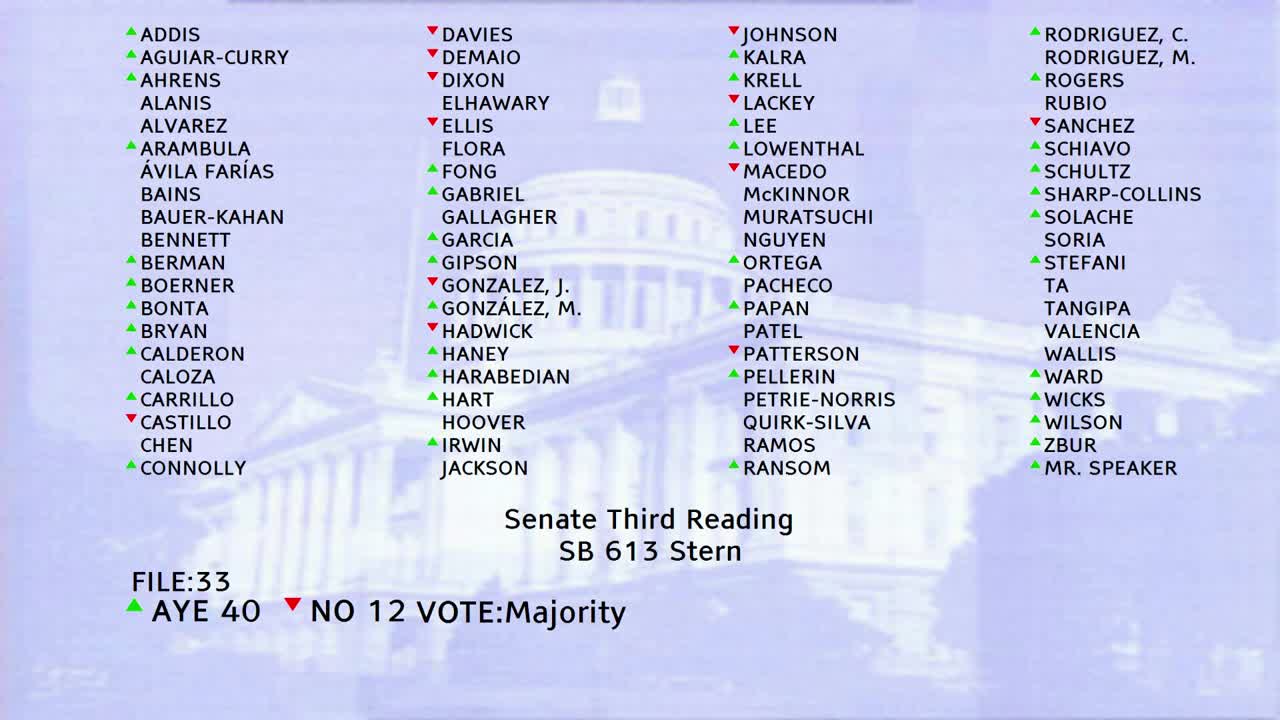 2MIN
Assembly Floor
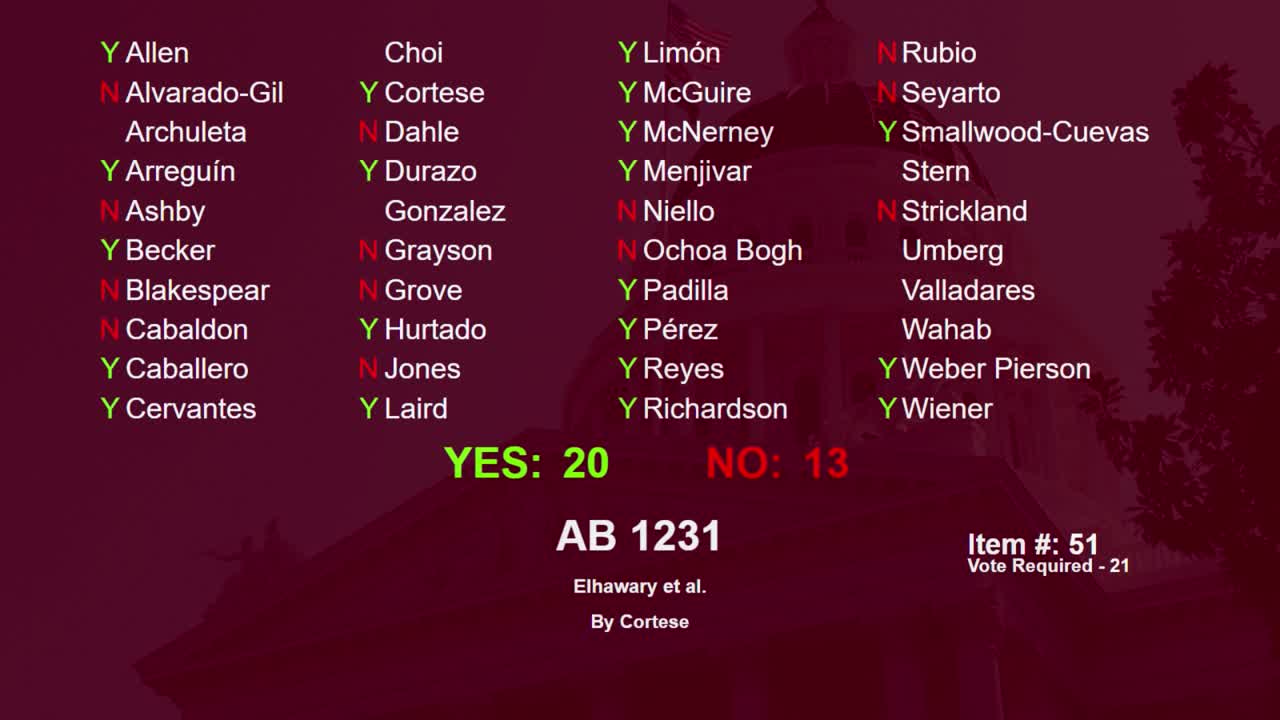 2MIN
Senate Floor
 13MIN
Assembly Standing Committee on Public Safety
 10MIN
Assembly Standing Committee on Local Government
 4MIN
Senate Floor
 11MIN
Senate Standing Committee on Public Safety
 13MIN