SB 653: Wildfire prevention: environmentally sensitive vegetation management.
- Session Year: 2025-2026
- House: Senate
- Latest Version Date: 2025-10-13
Current Status:
Passed
(2025-10-13: Chaptered by Secretary of State. Chapter 778, Statutes of 2025.)
Introduced
In Committee
Awaiting First Chamber Vote
Passed First Chamber
In Committee
Awaiting Second Chamber Vote
Passed Second Chamber
Enacted
Existing law requires the Department of Forestry and Fire Protection, in accordance with policies established by the State Board of Forestry and Fire Protection, to assist local governments in preventing future high-intensity wildland fires and instituting appropriate fuels management by making its wildland fire prevention and vegetation management expertise available to local governments, as provided.
This bill would define an environmentally sensitive vegetation management project to mean vegetation management that reduces catastrophic wildfire risk over the long term while supporting native wildlife and biodiversity. The bill would require a state public entity to consider incorporating specified criteria into its funding guidelines for a grant program that funds environmentally sensitive vegetation management projects.
Existing law requires the Department of Forestry and Fire Protection, in accordance with policies established by the State Board of Forestry and Fire Protection, to assist local governments in preventing future high-intensity wildland fires and instituting appropriate fuels management by making its wildland fire prevention and vegetation management expertise available to local governments, as provided.
This bill would define an environmentally sensitive vegetation management project to mean vegetation management that reduces catastrophic wildfire risk over the long term while supporting native wildlife and biodiversity. The bill would require an a state public entity to consider incorporating specified criteria into its funding guidelines for a grant program that funds environmentally sensitive vegetation management project to prioritize specified practices, including, among other things, practices that follow the principles of integrated pest management, as defined. projects.
Existing law requires the Department of Forestry and Fire Protection, in accordance with policies established by the State Board of Forestry and Fire Protection, to assist local governments in preventing future high-intensity wildland fires and instituting appropriate fuels management by making its wildland fire prevention and vegetation management expertise available to local governments, as provided.
This bill would define an environmentally sensitive vegetation management project, for these purposes, project to mean vegetation management that reduces catastrophic wildfire risk over the long term while supporting native wildlife and biodiversity. The bill would require relevant state agencies, when funding an environmentally sensitive vegetation management project, project to prioritize projects that use specified practices, including, among other things, practices that follow the principles of integrated pest management, as defined.
The Safe Drinking Water, Wildfire Prevention, Drought Preparedness, and Clean Air Bond Act of 2024 (act), approved by the voters as Proposition 4 at the November 5, 2024, statewide general election, authorized the issuance of bonds in the amount of $10,000,000,000 pursuant to the State General Obligation Bond Law to finance projects for safe drinking water, drought, flood, and water resilience, wildfire and forest resilience, coastal resilience, extreme heat mitigation, biodiversity and nature-based climate solutions, climate-smart, sustainable, and resilient farms, ranches, and working lands, park creation and outdoor access, and clean air programs. Of these funds, the act made $200,000,000 available to the Natural Resources Agency and the Department of Parks and Recreation for forest health and watershed improvement projects in forests and other habitats, as specified, that involve the restoration of natural ecosystem functions in very high, high, and moderate fire hazard areas and may include, among other things, environmentally sensitive vegetation management.
This bill would define an environmentally sensitive vegetation management project, for these purposes, to mean vegetation management that reduces catastrophic wildfire risk over the long term while supporting native wildlife and biodiversity. The bill would require relevant state agencies, when funding an environmentally sensitive vegetation management project, to prioritize projects that use specified practices, including, among other things, practices that follow the principles of integrated pest management, as defined.
Existing law establishes various programs for the prevention and reduction of wildfires. This bill would provide that it is the intent of the Legislature to enact subsequent legislation to define environmentally sensitive vegetation management and to encourage the use of environmentally sensitive vegetation management practices.Existing law establishes various programs for the prevention and reduction of wildfires.
This bill would provide that it is the intent of the Legislature to enact subsequent legislation to define environmentally sensitive vegetation management and to encourage the use of environmentally sensitive vegetation management practices.
It is the intent of the Legislature to encourage the use of environmentally sensitive vegetation management practices that maintain ecological health and strengthen biodiversity while mitigating wildfire risk.
SEC. 2.Section 4743 is added to the Public Resources Code, immediately following Section 4742, to read:4743.(a)For purposes of this section, environmentally sensitive vegetation management means vegetation management that reduces catastrophic wildfire risk over the long term while supporting native wildlife and biodiversity.
(b)For purposes of this section, type conversion means the process of dominant native plant species, including, but not limited to, native shrubs, being significantly reduced or extirpated and nonnative species colonizing an area due to disturbance events, including, but not limited to, wildfire incidents. For purposes of this section, type conversion does not include the removal of native species to make room for other native, but underrepresented, vegetation.
(c)For a grant program that funds an environmentally sensitive vegetation management project, a state public entity shall consider incorporating into its funding guidelines all of the following criteria:
(1)Follows the principles of integrated pest management as defined in Section 11401.7 of the Food and Agricultural Code.
(2)Implements measures to support native plant health and biodiversity.
(3)Maximizes long-term risk reduction of catastrophic wildfire.
(4)Uses monitoring plans, as determined by the funding entity, and incorporates monitoring before, during, and after vegetation management treatments.
(5)Uses methods that mimic natural disturbance processes to maintain rare habitats.
(6)Times vegetation management to minimize the potential impacts to wildlife and minimize the reproduction of invasive plants.
(7)Minimizes erosion impacts from vegetation management.
(8)Includes consultation with native plant botanists and land management experts.
(9)Leaves buffers around bodies of water to protect watershed health.
(10)Uses prescribed grazing, as defined in Section 4004.5, where applicable.
(11)Avoids habitat type conversion.
(12)Implements measures to avoid impacts to rare or sensitive species and habitats, in consultation with relevant agencies.
It is the intent of the Legislature to encourage the use of environmentally sensitive vegetation management practices that maintain ecological health and strengthen biodiversity while mitigating wildfire risk.
SEC. 2.Section 4743 is added to the Public Resources Code, immediately following Section 4742, to read:4743.(a)For purposes of this section, environmentally sensitive vegetation management means vegetation management that reduces catastrophic wildfire risk over the long term while supporting native wildlife and biodiversity.
(b)For purposes of this section, type conversion means the process of dominant native plant species, including, but not limited to, native shrubs, being significantly reduced or extirpated and nonnative species colonizing an area due to disturbance events, including, but not limited to, wildfire incidents. For purposes of this section, type conversion does not include the removal of native species to make room for other native, but underrepresented, vegetation.
(c)Environmentally sensitive vegetation management projects shall prioritize the following practices:(c)For a grant program that funds an environmentally sensitive vegetation management project, a state public entity shall consider incorporating into its funding guidelines all of the following criteria:
(1)Follow Follows the principles of integrated pest management as defined in Section 11401.7 of the Food and Agricultural Code.
(2)Implement Implements measures to support native plant health and biodiversity.
(3)Maximize Maximizes long-term risk reduction of catastrophic wildfire.
(4)Use monitoring plans Uses monitoring plans, as determined by the funding entity, and incorporate incorporates monitoring before, during, and after vegetation management treatments.
(5)Use Uses methods that mimic natural disturbance processes to maintain rare habitats.
(6)Time Times vegetation management to minimize the potential impacts to wildlife and minimize the reproduction of invasive plants.
(7)Minimize Minimizes erosion impacts from vegetation management.
(8)Include Includes consultation with native plant botanists and land management experts.
(9)Leave Leaves buffers around bodies of water to protect watershed health.
(10)Use Uses prescribed grazing, as defined in Section 4004.5, where applicable.
(11)Avoid Avoids habitat type conversion.
(12)Implement Implements measures to avoid impacts to rare or sensitive species and habitats, in consultation with relevant agencies.
REVISIONS: HeadingLine 3.It is the intent of the Legislature to encourage the use of environmentally sensitive vegetation management practices that maintain ecological health and strengthen biodiversity while mitigating wildfire risk.
SEC. 2.Section 4743 is added to the Public Resources Code, immediately following Section 4742, to read:4743.(a)For purposes of this code, section, environmentally sensitive vegetation management means vegetation management that reduces catastrophic wildfire risk over the long term while supporting native wildlife and biodiversity.
(b)For purposes of this section, type conversion means the process of dominant native plant species, including, but not limited to, native shrubs, being significantly reduced or extirpated and nonnative species colonizing an area due to disturbance events, including, but not limited to, wildfire incidents.
(c)When funding an environmentally Environmentally sensitive vegetation management project, relevant state agencies projects shall prioritize projects that use the following practices:
(1)Follow the principles of integrated pest management as defined in Section 11401.7 of the Food and Agricultural Code.
(2)Implement measures to support native plant health and biodiversity.
(3)Maximize long-term risk reduction of catastrophic wildfire.
(4)Use monitoring plans and incorporate monitoring before, during, and after vegetation management treatments.
(5)Use methods that mimic natural disturbance processes to maintain rare habitats.
(6)Time vegetation management to minimize the potential impacts to wildlife and minimize the reproduction of invasive plants.
(7)Minimize erosion impacts from vegetation management.
(8)Include consultation with native plant botanists and land management experts.
(9)Leave buffers around bodies of water to protect watershed health.
(10)Use ecologically sensitive prescribed grazing, as defined in Section 4004.5, where applicable.
(11)Avoid habitat type conversion.
(12)Implement measures to avoid impacts to rare or sensitive species and habitats, in consultation with relevant agencies.
It is the intent of the Legislature to encourage the use of environmentally sensitive vegetation management practices that maintain ecological health and strengthen biodiversity while mitigating wildfire risk.
SEC. 2.Section 4743 is added to the Public Resources Code, immediately following Section 4742, to read:4743.(a)For purposes of this code, environmentally sensitive vegetation management means vegetation management that reduces catastrophic wildfire risk over the long term while supporting native wildlife and biodiversity.
(b)For purposes of this section, type conversion means the process of dominant native plant species, including, but not limited to, native shrubs, being significantly reduced or extirpated and nonnative species colonizing an area due to disturbance events, including, but not limited to, wildfire incidents.
(b)(c)When funding an environmentally sensitive vegetation management project, relevant state agencies shall prioritize projects that use the following practices:
(1)Follow the principles of integrated pest management as defined in Section 11401.7 of the Food and Agricultural Code.
(2)Implement measures to support native plant health and biodiversity.
(3)Maximize long-term risk reduction of catastrophic wildfire.
(4)Use monitoring plans and incorporate monitoring before, during, and after vegetation management treatments.
(5)Use methods that mimic natural disturbance processes to maintain rare habitats.
(6)Time vegetation management to minimize the potential impacts to wildlife and minimize the reproduction of invasive plants.
(7)Minimize erosion impacts from vegetation management.
(8)Include consultation with native plant botanists and land management experts.
(9)Leave buffers around bodies of water to protect watershed health.
(10)Use ecologically sensitive grazing, where applicable.
(11)Avoid habitat type conversion.
(12)Implement measures to avoid impacts to rare or sensitive species and habitats, in consultation with relevant agencies.
It is the intent of the Legislature to encourage the use of environmentally sensitive vegetation management practices that maintain ecological health and strengthen biodiversity while mitigating wildfire risk.
SEC. 2.Section 4743 is added to the Public Resources Code, immediately following Section 4742, to read:4743.(a)For purposes of this code, environmentally sensitive vegetation management means vegetation management that reduces catastrophic wildfire risk over the long term while supporting native wildlife and biodiversity.
(b)When funding an environmentally sensitive vegetation management project, relevant state agencies shall prioritize projects that use the following practices:
(1)Follow the principles of integrated pest management as defined in Section 11401.7 of the Food and Agricultural Code.
(2)Implement measures to support native plant health and biodiversity.
(3)Maximize long-term risk reduction of catastrophic wildfire.
(4)Use monitoring plans and incorporate monitoring before, during, and after vegetation management treatments.
(5)Use methods that mimic natural disturbance processes to maintain rare habitats.
(6)Time vegetation management to minimize the potential impacts to wildlife and minimize the reproduction of invasive plants.
(7)Minimize erosion impacts from vegetation management.
(8)Include consultation with native plant botanists and land management experts.
(9)Leave buffers around bodies of water to protect watershed health.
(10)Use ecologically sensitive grazing, where applicable.
(11)Avoid habitat type conversion.
(12)Implement measures to avoid impacts to rare or sensitive species and habitats, in consultation with relevant agencies.
SECTION 1.It is the intent of the Legislature to enact subsequent legislation to define environmentally sensitive vegetation management and to encourage the use of environmentally sensitive vegetation management practices.It is the intent of the Legislature to enact subsequent legislation to define environmentally sensitive vegetation management and to encourage the use of environmentally sensitive vegetation management practices.
|
Date
|
Status
|
|---|---|
| Oct 13, 2025 | Chaptered by Secretary of State. Chapter 778, Statutes of 2025. |
| Oct 13, 2025 | Approved by the Governor. |
| Sep 16, 2025 | Enrolled and presented to the Governor at 3 p.m. |
| Sep 8, 2025 | Assembly amendments concurred in. (Ayes 37. Noes 0. Page 2606.) Ordered to engrossing and enrolling. |
| Sep 3, 2025 | In Senate. Concurrence in Assembly amendments pending. |
| Sep 3, 2025 | Read third time. Passed. (Ayes 71. Noes 1. Page 2870.) Ordered to the Senate. |
| Sep 2, 2025 | Read second time. Ordered to third reading. |
| Aug 29, 2025 | From committee: Do pass. (Ayes 14. Noes 0.) (August 29). |
| Aug 29, 2025 | Coauthors revised. |
| Jul 9, 2025 | July 9 set for first hearing. Placed on APPR. suspense file. |
| Jun 26, 2025 | Read second time. Ordered to third reading. |
| Jun 26, 2025 | Re-referred to Com. on APPR. pursuant to Joint Rule 10.5. |
| Jun 25, 2025 | Read second time and amended. Ordered to second reading. |
| Jun 24, 2025 | From committee: Do pass as amended. (Ayes 13. Noes 0.) (June 23). |
| Jun 5, 2025 | Referred to Com. on NAT. RES. |
| May 29, 2025 | In Assembly. Read first time. Held at Desk. |
| May 29, 2025 | Read third time. Passed. (Ayes 36. Noes 0. Page 1338.) Ordered to the Assembly. |
| May 27, 2025 | Read second time. Ordered to third reading. |
| May 23, 2025 | Read second time and amended. Ordered to second reading. |
| May 23, 2025 | From committee: Do pass as amended. (Ayes 5. Noes 0. Page 1208.) (May 23). |
| May 16, 2025 | Set for hearing May 23. |
| May 5, 2025 | May 5 hearing: Placed on APPR. suspense file. |
| Apr 25, 2025 | Set for hearing May 5. |
| Apr 23, 2025 | From committee: Do pass and re-refer to Com. on APPR. (Ayes 5. Noes 0. Page 839.) (April 22). Re-referred to Com. on APPR. |
| Apr 10, 2025 | From committee with author's amendments. Read second time and amended. Re-referred to Com. on N.R. & W. |
| Apr 4, 2025 | Set for hearing April 22. |
| Apr 2, 2025 | Re-referred to Com. on N.R. & W. |
| Mar 24, 2025 | From committee with author's amendments. Read second time and amended. Re-referred to Com. on RLS. |
| Mar 5, 2025 | Referred to Com. on RLS. |
| Feb 21, 2025 | From printer. May be acted upon on or after March 23. |
| Feb 20, 2025 | Introduced. Read first time. To Com. on RLS. for assignment. To print. |
|
Date
|
Description
|
Location
|
Votes
|
|
|---|---|---|---|---|
| Sep 8, 2025 | Unfinished Business SB653 Cortese et al. Concurrence | Senate Floor |
Passed |
|
| Sep 3, 2025 | SB 653 Cortese Senate Third Reading By Pellerin | Assembly Floor |
Passed |
|
| Aug 29, 2025 | Do pass. | Assembly Standing Committee on Appropriations |
Passed |
|
| Jun 23, 2025 | Do pass as amended. | Assembly Standing Committee on Natural Resources |
Passed |
|
| May 29, 2025 | Senate 3rd Reading SB653 Cortese | Senate Floor |
Passed |
|
| May 23, 2025 | Do pass as amended | Senate Standing Committee on Appropriations |
Passed |
|
| May 5, 2025 | Placed on suspense file | Senate Standing Committee on Appropriations |
Passed |
|
| Apr 22, 2025 | Do pass, but first be re-referred to the Committee on [Appropriations] | Senate Standing Committee on Natural Resources and Water |
Passed |
This list shows positions taken on this bill by organizations on the date displayed, which is linked to the original source.
Positions by individuals are not included.
|
Organization
|
Position
|
Date
|
|---|---|---|
| Arroyos & Foothills Conservancy | ** Support | |
| California Association Of Local Conservation Corps | ** Support | |
| California Invasive Plant Council | ** Support | |
| California Native Plant Society | ** Support | |
| City Of Oakland | ** Support | |
| Endangered Habitats League | ** Support | |
| Friends of Ballona Wetlands | ** Support | |
| Friends Of Five Creeks | ** Support | |
| Midpeninsula Regional Open Space District (sponsor) | ** Support | |
| San Jose Conservation Corps | ** Support | |
| Santa Barbara Botanic Garden | ** Support | |
| Sempervirens Fund | ** Support | |
| The Climate Reality Project, Los Angeles Chapter | ** Support |
SENATE RULES COMMITTEE Office of Senate Floor Analyses (916) 651-1520 Fax: (916) 327-4478 | SB 653 |
UNFINISHED BUSINESS
Bill No: SB 653
Author: Cortese (D), et al.
Amended: 6/25/25 in Assembly
Vote: 21
SENATE NATURAL RES. & WATER COMMITTEE: 5-0, 4/22/25
AYES: Limón, Allen, Grove, Laird, Stern
NO VOTE RECORDED: Seyarto, Hurtado
SENATE APPROPRIATIONS COMMITTEE: 5-0, 5/23/25
AYES: Caballero, Cabaldon, Grayson, Richardson, Wahab
NO VOTE RECORDED: Seyarto, Dahle
SENATE FLOOR: 36-0, 5/29/25
AYES: Allen, Alvarado-Gil, Archuleta, Arreguín, Ashby, Becker, Blakespear, Cabaldon, Caballero, Cervantes, Choi, Cortese, Dahle, Durazo, Gonzalez, Grayson, Grove, Hurtado, Jones, Laird, McGuire, McNerney, Menjivar, Ochoa Bogh, Padilla, Pérez, Richardson, Rubio, Seyarto, Smallwood-Cuevas, Stern, Strickland, Umberg, Wahab, Weber Pierson, Wiener
NO VOTE RECORDED: Limón, Niello, Reyes, Valladares
ASSEMBLY FLOOR: 71-1, 9/3/25 - See last page for vote
SUBJECT: Wildfire prevention: environmentally sensitive vegetation management
SOURCE: Midpeninsula Regional Open Space District
DIGEST:
This bill requires a state public entity to consider incorporating into its funding guidelines for a grant program that funds an environmentally sensitive vegetation management project specified criteria, and defines environmentally sensitive vegetation management as vegetation management that reduces catastrophic wildfire risk over the long term while supporting native wildlife and biodiversity, among other provisions, as provided.
Assembly Amendments
of 6/25/25 specify that state public entities consider adding specified criteria into a grant program’s funding guidelines instead of requiring the specified criteria be prioritize when implementing environmentally sensitive vegetation management projects, clarify the definition of type conversion, and make additional minor and conforming changes.
ANALYSIS:
Existing law:
- Establishes the California Department of Forestry and Fire Protection (CAL FIRE) and the State Board of Forestry and Fire Protection (State Board) in the California Natural Resources Agency. The Office of the State Fire Marshal is located within CAL FIRE.
- Requires the State Fire Marshal to identify areas in the state as moderate, high, and very high fire hazard severity zones in the local responsibility areas (subject to approval by local ordinance) based on consistent statewide criteria and based on the severity of fire hazard that is expected to prevail in those areas. Requires moderate, high, and very high fire hazard severity zones be based on fuel loading, slope, fire weather, and other relevant factors including areas where winds have been identified by the Office of the State Fire Marshal as a major cause of wildfire spread. (Government Code §§51178, 51179) Requires the State Fire Marshal to make similar identifications in the state responsibility area. (Public Resources Code (PRC) §4202)
- States legislative intent that additional consideration be provided in the State Board’s vegetation management environmental impact report for chaparral and coastal sage scrub plant communities that are being increasingly threatened by fire frequency in excess of their natural fire return patterns due to climate change and human-caused fires.
- Requires that prescribed burning, mastication, herbicide application, mechanical thinning, or other vegetative treatments of chaparral or sage scrub occur only if the activity will not cause “type conversion” away from the chaparral and coastal sage scrub currently on site.
- Authorizes CAL FIRE to order remediation for any type conversion caused, as provided. (PRC §4483)
- Provides that projects conducted under Good Neighbor Authority agreements be designed, to the extent feasible, to prevent “type conversion” and the spread of invasive plants and grasses.
- Requires these projects to be based upon the best available science, and provide for ecological restoration and fire resiliency projects appropriate to the landscape and vegetation being treated.
- Provides ecologically appropriate treatment for native shrublands, such as chaparral and coastal sage scrub, including the removal of flammable nonnative invasive species and the restoration of native species, where appropriate. (PRC §4812)
This bill:
- States legislative intent to encourage the use of environmentally sensitive vegetation management practices that maintain ecological health and strengthen biodiversity while mitigating wildfire risk.
- Defines “environmentally sensitive vegetation management” as vegetation management that reduces catastrophic wildfire risk over the long term while supporting native wildlife and biodiversity.
- Defines “type conversion” to mean the process of dominant native plant species being significantly reduced or extirpated and nonnative species colonizing an area due to disturbance events such as wildfires, as specified.
- Requires a state public entity to consider incorporating into its funding guidelines all of the following criteria for a grant program that funds an environmentally sensitive vegetation management projects:
- Follows the principles of integrated pest management, as defined.
- Implements measures to support native plant health and biodiversity.
- Maximizes long-term risk reduction of catastrophic wildfire.
- Uses vegetation management monitoring plans before, during, and after treatments, as provided.
- Uses methods that mimic natural disturbance processes to maintain rare habitats.
- Times vegetation management to minimize potential impacts to wildlife and minimize the reproduction of invasive plants.
- Minimizes erosion impacts.
- Includes consultation with relevant experts in botany and land management.
- Leaves buffers around water bodies to protect watershed health.
- Uses prescribed grazing, as defined, where applicable.
- Avoids habitat type conversion.
- Implements measures to avoid impacts to rare or sensitive species and habitats, as provided.
[NOTE: See the Senate Natural Resources and Water Committee’s analysis for additional information regarding this bill.]
FISCAL EFFECT: Appropriation: No Fiscal Com.: Yes Local: No
According to the Assembly Appropriations Committee:
- Should a state agency, such as the Department of Forestry and Fire Protection, choose to incorporate the criteria listed in the bill into its funding and granting guidelines, the agency would incur one-time costs of an unknown amount – ranging from minor and absorbable to the tens of thousands or low hundreds of thousands of dollars – to modify and update its guidelines.
- To the extent that applying the criteria listed in the bill to the selection and funding of environmentally sensitive vegetation management projects displaces or otherwise changes the projects that would have been funded absent this bill, this bill would result in cost pressures of an unknown, but potentially significant, amount, to fund those displaced projects.
SUPPORT: (Verified 9/3/25)
Midpeninsula Regional Open Space District (sponsor)
Arroyos & Foothills Conservancy
California Association of Local Conservation Corps
California Invasive Plant Council
California Native Plant Society
City of Oakland
Endangered Habitats League
Friends of Ballona Wetlands
Friends of Five Creeks
San Jose Conservation Corps
Santa Barbara Botanic Garden
Sempervirens Fund
The Climate Reality Project – Los Angeles Chapter
OPPOSITION: (Verified 9/3/25)
None received
ARGUMENTS IN SUPPORT: According to the author, “Wildfires have been devastating to California communities. As the climate changes, these fires become increasingly dangerous and destructive. Vegetation management is an integral part of reducing wildfire risk in our state, but we must ensure that we manage vegetation responsibly. SB 653 ensures that funding dedicated to environmentally sensitive vegetation management will prevent habitat degradation, enhance biodiversity, improve wildfire resilience, and ensure science-based approaches to vegetation management. This bill is an opportunity to balance our state’s need to reduce dangerous fuels with the importance of protecting biodiversity in our unique and vulnerable natural lands.”
In a group sign-on letter, the sponsor, Midpeninsula Regional Open Space District writes: “As climate change, drought, and the spread of nonnative vegetation intensify wildfire threats, traditional vegetation management methods—such as indiscriminate clearing and heavy mechanical treatments—can have unintended ecological consequences. These practices often lead to habitat type conversion, where native plant communities are replaced by invasive, fire-prone species, further increasing wildfire risks.”
ASSEMBLY FLOOR: 71-1, 9/3/25
AYES: Addis, Aguiar-Curry, Alanis, Alvarez, Arambula, Ávila Farías, Bains, Bauer-Kahan, Bennett, Berman, Boerner, Bonta, Bryan, Calderon, Caloza, Carrillo, Chen, Connolly, Davies, DeMaio, Dixon, Elhawary, Flora, Fong, Gabriel, Garcia, Gipson, Mark González, Hadwick, Haney, Harabedian, Hart, Hoover, Irwin, Jackson, Kalra, Krell, Lackey, Lee, Lowenthal, McKinnor, Muratsuchi, Nguyen, Ortega, Pacheco, Papan, Patel, Pellerin, Petrie-Norris, Quirk-Silva, Ramos, Ransom, Celeste Rodriguez, Michelle Rodriguez, Rogers, Blanca Rubio, Sanchez, Schiavo, Schultz, Sharp-Collins, Solache, Soria, Stefani, Ta, Valencia, Wallis, Ward, Wicks, Wilson, Zbur, Rivas
NOES: Gallagher
NO VOTE RECORDED: Ahrens, Castillo, Ellis, Jeff Gonzalez, Macedo, Patterson, Tangipa
Prepared by: Katharine Moore / N.R. & W. / (916) 651-4116
9/3/25 18:38:17
**** END ****
SENATE THIRD READING
STR Bill Id:SB 653
Author:(Cortese)
As Amended Ver:June 25, 2025
Majority vote
SUMMARY
Requires, for a grant program that funds an environmentally sensitive vegetation management project, a state public entity to consider incorporating into its funding guidelines specified criteria related to environmentally sensitive vegetation management.
Major Provisions
- States the intent of the Legislature to encourage the use of environmentally sensitive vegetation management practices that maintain ecological health and strengthen biodiversity while mitigating wildfire risk.
- Defines ″environmentally sensitive vegetation management″ as vegetation management that reduces catastrophic wildfire risk over the long term while supporting native wildlife and biodiversity.
- Defines ″type conversion″ as the process of dominant native plant species, including, but not limited to, native shrubs, being significantly reduced or extirpated and nonnative species colonizing an area due to disturbance events, including, but not limited to, wildfire incidents. Provides that ″type conversion″ does not include the removal of native species to make room for other native, but underrepresented, vegetation.
- Requires, for a grant program that funds an environmentally sensitive vegetation management project, a state public entity shall consider incorporating into its funding guidelines all of the following criteria:
- Follows the principles of integrated pest management;
- Implements measures to support native plant health and biodiversity;
- Maximizes long-term risk reduction of catastrophic wildfire;
- Uses monitoring plans, as determined by the funding entity, and incorporates monitoring before, during, and after vegetation management treatments;
- Uses methods that mimic natural disturbance processes to maintain rare habitats;
- Time vegetation management to minimize the potential impacts to wildlife and minimize the reproduction of invasive plants;
- Minimizes erosion impacts from vegetation management;
- Includes consultation with native plant botanists and land management experts;
- Leaves buffers around bodies of water to protect watershed health;
- Uses prescribed grazing where applicable;
- Avoids habitat type conversion; and,
- Implements measures to avoid impacts to rare or sensitive species and habitats, in consultation with relevant agencies.
COMMENTS
California faces increasing threats from catastrophic wildfires which are exacerbated by climate change, drought, and the spread of nonnative vegetation. Management of vegetation mitigates wildfire risks by reducing vegetation density and hazardous fuels to prevent wildfires from spreading uncontrollably. Vegetation management can include pruning of trees, removal dead trees and plants, brush thinning, grass trimming, invasive species removal, prescribed burning, mechanical or manual removal, pest management, and herbicide treatment.
Traditional vegetation management approaches, such as indiscriminate clearing and heavy mechanical treatments, can lead to unintended ecological consequences including the loss of native plant species, habitat degradation, and soil erosion. Environmentally sensitive vegetation management practices offer an alternative approach that balances wildfire risk reduction with ecological resilience, ensuring long-term benefits for biodiversity and habitat integrity.
SB 653 defines environmentally sensitive vegetation management as vegetation management that reduces catastrophic wildfire risk over the long term while supporting native wildlife and biodiversity. Environmentally sensitive vegetation management projects would be required to prioritize such practices as integrated pest management, consolation with native plant botanists and land management experts, prescribed grazing, and manage watershed protections, among other things.
The Climate Bond authorizes $10 billion for various environmental projects and programs, and includes $200 million for the Natural Resources Agency and the State Parks for forest health and watershed improvement projects in forests and other habitats. The bond requires projects to involve the restoration of natural ecosystem functions in very high, high, and moderate fire hazard areas and may include prescribed fire, cultural fire, environmentally sensitive vegetation management, land protection, science-based fuel reduction, watershed protection, carbon sequestration, protection of older fire-resistant trees, or improved forest health. While the bill does not provide any explicit direction related to appropriations authorized by the bond, the statutory changes made by the bill could inform the state entities funding vegetation management afforded by the bond.
According to the Author
Wildfires have been devastating to California communities. As the climate changes, these fires become increasingly dangerous and destructive. Vegetation management is an integral part of reducing wildfire risk in our state, but we must ensure that we manage vegetation responsibly. SB 653 ensures that projects related to environmentally sensitive vegetation management will prevent habitat degradation, enhance biodiversity, improve wildfire resilience, and ensure science-based approaches to vegetation management. This bill is an opportunity to balance our state’s need to reduce dangerous fuels with the importance of protecting biodiversity in our unique and vulnerable natural lands.
Arguments in Support
A coalition of environmental groups writes that this bill this bill is essential in addressing the increasing risks of catastrophic wildfires in California while ensuring that vegetation management practices protect biodiversity, prevent habitat degradation, and enhance wildfire resilience, and advances a holistic, long-term strategy for vegetation management that benefits both California’s environment and its communities.
Arguments in Opposition
None on file
FISCAL COMMENTS
According to the Assembly Appropriations Committee, should a state agency, such as the Department of Forestry and Fire Protection, choose to incorporate the criteria listed in the bill into its funding and granting guidelines, the agency would incur one-time costs of an unknown amount – ranging from minor and absorbable to the tens of thousands or low hundreds of thousands of dollars – to modify and update its guidelines. To the extent that applying the criteria listed in the bill to the selection and funding of environmentally sensitive vegetation management projects displaces or otherwise changes the projects that would have been funded absent this bill, this bill would result in cost pressures of an unknown, but potentially significant, amount, to fund those displaced projects.
VOTES
SENATE FLOOR: 36-0-4
YES: Allen, Alvarado-Gil, Archuleta, Arreguín, Ashby, Becker, Blakespear, Cabaldon, Caballero, Cervantes, Choi, Cortese, Dahle, Durazo, Gonzalez, Grayson, Grove, Hurtado, Jones, Laird, McGuire, McNerney, Menjivar, Ochoa Bogh, Padilla, Pérez, Richardson, Rubio, Seyarto, Smallwood-Cuevas, Stern, Strickland, Umberg, Wahab, Weber Pierson, Wiener
ABS, ABST OR NV: Limón, Niello, Reyes, Valladares
ASM NATURAL RESOURCES: 13-0-1
YES: Bryan, Alanis, Connolly, Flora, Garcia, Haney, Hoover, Kalra, Muratsuchi, Pellerin, Schultz, Wicks, Zbur
ABS, ABST OR NV: Ellis
ASM APPROPRIATIONS: 14-0-1
YES: Wicks, Sanchez, Arambula, Calderon, Caloza, Dixon, Elhawary, Fong, Mark González, Ahrens, Pacheco, Pellerin, Solache, Ta
ABS, ABST OR NV: Tangipa
UPDATED
VERSION: June 25, 2025
CONSULTANT: Paige Brokaw / NAT. RES. / (916) 319-2092 FN: 0001309
Date of Hearing: July 9, 2025
ASSEMBLY COMMITTEE ON APPROPRIATIONS
Buffy Wicks, Chair
SBPCA Bill Id:SB 653
Author:(Cortese) – As Amended Ver:June 25, 2025
Policy Committee: | Natural Resources | Vote: | 13 - 0 |
|
| ||
|
|
Urgency: No State Mandated Local Program: No Reimbursable: No
SUMMARY:
This bill requires a state public entity, for a grant program that funds an environmentally sensitive vegetation management project, as defined, to consider incorporating into its funding guidelines specified criteria intended to maintain ecological health and strengthen biodiversity while mitigating wildfire risk.
The aforementioned criteria for projects are as follows:
- Follows the principles of integrated pest management.
- Implements measures to support native plant health and biodiversity.
- Maximizes long-term risk reduction of catastrophic wildfire.
- Uses monitoring plans, as determined by the funding entity, and incorporates monitoring before, during, and after vegetation management treatments.
- Uses methods that mimic natural disturbance processes to maintain rare habitats.
- Time vegetation management to minimize the potential impacts to wildlife and minimize the reproduction of invasive plants.
- Minimizes erosion impacts from vegetation management.
- Includes consultation with native plant botanists and land management experts.
- Leaves buffers around bodies of water to protect watershed health.
- Uses prescribed grazing where applicable.
- Avoids habitat type conversion, as defined.
- Implements measures to avoid impacts to rare or sensitive species and habitats, in consultation with relevant agencies.
FISCAL EFFECT:
1) Should a state agency, such as the Department of Forestry and Fire Protection, choose to incorporate the criteria listed in the bill into its funding and granting guidelines, the agency would incur one-time costs of an unknown amount – ranging from minor and absorbable to the tens of thousands or low hundreds of thousands of dollars – to modify and update its guidelines.
2) To the extent that applying the criteria listed in the bill to the selection and funding of environmentally sensitive vegetation management projects displaces or otherwise changes the projects that would have been funded absent this bill, this bill would result in cost pressures of an unknown, but potentially significant, amount, to fund those displaced projects.
COMMENTS:
1) Purpose. According to the author:
Vegetation management is an integral part of reducing wildfire risk in our state, but we must ensure that we manage vegetation responsibly. SB 653 ensures that projects related to environmentally sensitive vegetation management will prevent habitat degradation, enhance biodiversity, improve wildfire resilience, and ensure science-based approaches to vegetation management. This bill is an opportunity to balance our state's need to reduce dangerous fuels with the importance of protecting biodiversity in our unique and vulnerable natural lands.
2) Background. California faces increasing threats from catastrophic wildfires exacerbated by climate change, drought, and the spread of nonnative vegetation. Management of vegetation mitigates wildfire risks by reducing vegetation density and hazardous fuels to prevent wildfires from spreading uncontrollably. Vegetation management can include pruning of trees, removal of dead trees and plants, brush thinning, grass trimming, invasive species removal, prescribed burning, mechanical or manual removal, pest management, and herbicide treatment.
Traditional vegetation management approaches, such as indiscriminate clearing, can lead to unintended ecological consequences including the loss of native plant species, habitat degradation, and soil erosion. Environmentally sensitive vegetation management practices offer an alternative approach that balances wildfire risk reduction with ecological resilience, ensuring long-term benefits for biodiversity and habitat integrity.
This bill defines environmentally sensitive vegetation management as vegetation management that reduces catastrophic wildfire risk over the long term while supporting native wildlife and biodiversity. This bill requires a state public entity that administers a grant program that funds an environmentally sensitive vegetation management project to consider incorporating into its funding guidelines criteria such as implementing measures to support native plant health and biodiversity and avoiding habitat “type conversion.” The bill defines such measures as the process of dominant native plant species being significantly reduced or extirpated and nonnative species colonizing an area due to disturbance events, including wildfire incidents.
Earlier this year, as part of an “early action budget,” the Legislature allocated approximately $181 million from the Safe Drinking Water, Wildfire Prevention, Drought Preparedness, and Clean Air Fund (Proposition 4) to various state conservancies and other entities for wildfire prevention and forest resilience. There is additional funding for vegetation management in Proposition 4 – subject to future appropriation by the Legislature.
Analysis Prepared by: Nikita Koraddi / APPR. / (916) 319-2081
SENATE THIRD READING
STR Bill Id:SB 653
Author:(Cortese)
As Amended Ver:May 23, 2025
Majority vote
SUMMARY
Requires, for a grant program that funds an environmentally sensitive vegetation management project, a state public entity to consider incorporating into its funding guidelines specified criteria related to environmentally sensitive vegetation management.
Major Provisions
- States the intent of the Legislature to encourage the use of environmentally sensitive vegetation management practices that maintain ecological health and strengthen biodiversity while mitigating wildfire risk.
- Defines "environmentally sensitive vegetation management" as vegetation management that reduces catastrophic wildfire risk over the long term while supporting native wildlife and biodiversity.
- Defines "type conversion" as the process of dominant native plant species, including, but not limited to, native shrubs, being significantly reduced or extirpated and nonnative species colonizing an area due to disturbance events, including, but not limited to, wildfire incidents. Provides that "type conversion" does not include the removal of native species to make room for other native, but underrepresented, vegetation.
- Requires, for a grant program that funds an environmentally sensitive vegetation management project, a state public entity shall consider incorporating into its funding guidelines all of the following criteria:
- Follows the principles of integrated pest management;
- Implements measures to support native plant health and biodiversity;
- Maximizes long-term risk reduction of catastrophic wildfire;
- Uses monitoring plans, as determined by the funding entity, and incorporates monitoring before, during, and after vegetation management treatments;
- Uses methods that mimic natural disturbance processes to maintain rare habitats;
- Time vegetation management to minimize the potential impacts to wildlife and minimize the reproduction of invasive plants;
- Minimizes erosion impacts from vegetation management;
- Includes consultation with native plant botanists and land management experts;
- Leaves buffers around bodies of water to protect watershed health;
- Uses prescribed grazing where applicable;
- Avoids habitat type conversion; and,
- Implements measures to avoid impacts to rare or sensitive species and habitats, in consultation with relevant agencies.
COMMENTS
California faces increasing threats from catastrophic wildfires which are exacerbated by climate change, drought, and the spread of nonnative vegetation. Management of vegetation mitigates wildfire risks by reducing vegetation density and hazardous fuels to prevent wildfires from spreading uncontrollably. Vegetation management can include pruning of trees, removal dead trees and plants, brush thinning, grass trimming, invasive species removal, prescribed burning, mechanical or manual removal, pest management, and herbicide treatment.
Traditional vegetation management approaches, such as indiscriminate clearing and heavy mechanical treatments, can lead to unintended ecological consequences including the loss of native plant species, habitat degradation, and soil erosion. Environmentally sensitive vegetation management practices offer an alternative approach that balances wildfire risk reduction with ecological resilience, ensuring long-term benefits for biodiversity and habitat integrity.
This bill defines environmentally sensitive vegetation management as vegetation management that reduces catastrophic wildfire risk over the long term while supporting native wildlife and biodiversity. Environmentally sensitive vegetation management projects would be required to prioritize such practices as integrated pest management, consolation with native plant botanists and land management experts, prescribed grazing, and manage watershed protections, among other things.
The Climate Bond authorizes $10 billion for various environmental projects and programs, and includes $200 million for the Natural Resources Agency and the State Parks for forest health and watershed improvement projects in forests and other habitats, including, but not limited to, redwoods, conifers, oak woodlands, mountain meadows, chaparral, and coastal forests. The bond requires projects to involve the restoration of natural ecosystem functions in very high, high, and moderate fire hazard areas and may include prescribed fire, cultural fire, environmentally sensitive vegetation management, land protection, science-based fuel reduction, watershed protection, carbon sequestration, protection of older fire-resistant trees, or improved forest health.
While the bill does not provide any explicit direction related to appropriations authorized by the bond, the statutory changes made by the bill could inform the state entities funding vegetation management afforded by the bond.
According to the Author
Wildfires have been devastating to California communities. As the climate changes, these fires become increasingly dangerous and destructive. Vegetation management is an integral part of reducing wildfire risk in our state, but we must ensure that we manage vegetation responsibly. SB 653 ensures that projects related to environmentally sensitive vegetation management will prevent habitat degradation, enhance biodiversity, improve wildfire resilience, and ensure science-based approaches to vegetation management. This bill is an opportunity to balance our state's need to reduce dangerous fuels with the importance of protecting biodiversity in our unique and vulnerable natural lands.
Arguments in Support
A coalition of environmental groups writes that this bill this bill is essential in addressing the increasing risks of catastrophic wildfires in California while ensuring that vegetation management practices protect biodiversity, prevent habitat degradation, and enhance wildfire resilience, and advances a holistic, long-term strategy for vegetation management that benefits both California's environment and its communities.
Arguments in Opposition
None on file
FISCAL COMMENTS
Non fiscal
VOTES
SENATE FLOOR: 36-0-4
YES: Allen, Alvarado-Gil, Archuleta, Arreguín, Ashby, Becker, Blakespear, Cabaldon, Caballero, Cervantes, Choi, Cortese, Dahle, Durazo, Gonzalez, Grayson, Grove, Hurtado, Jones, Laird, McGuire, McNerney, Menjivar, Ochoa Bogh, Padilla, Pérez, Richardson, Rubio, Seyarto, Smallwood-Cuevas, Stern, Strickland, Umberg, Wahab, Weber Pierson, Wiener
ABS, ABST OR NV: Limón, Niello, Reyes, Valladares
ASM NATURAL RESOURCES: 13-0-1
YES: Bryan, Alanis, Connolly, Flora, Garcia, Haney, Hoover, Kalra, Muratsuchi, Pellerin, Schultz, Wicks, Zbur
ABS, ABST OR NV: Ellis
UPDATED
VERSION: May 23, 2025
CONSULTANT: Paige Brokaw / NAT. RES. /(916) 319-2092 FN: 0000988
Date of Hearing: June 23, 2025
ASSEMBLY COMMITTEE ON NATURAL RESOURCES
Isaac G. Bryan, Chair
SBPCA Bill Id:SB 653
Author:(Cortese) – As Amended Ver:May 23, 2025
SENATE VOTE: 36-0
SUBJECT: Wildfire prevention: environmentally sensitive vegetation management
SUMMARY: States the intent of the Legislature to encourage the use of environmentally sensitive vegetation management practices that maintain ecological health and strengthen biodiversity while mitigating wildfire risk, and requires environmentally sensitive vegetation management projects to prioritize specified practices.
EXISTING LAW:
- Requires the Department of Forestry and Fire Protection (CAL FIRE) to assist local governments in preventing future high-intensity wildland fires and instituting appropriate fuels management by making its wildland fire prevention and vegetation management expertise available to local governments, as provided. (Public Resources Code (PRC) 4741)
- Authorizes CAL FIRE to administer the forestry assistance program to provide loans to encourage forest resource improvements and otherwise facilitate good forest land management through a program of financial, technical, and educational assistance, as well as through applied research. (PRC 4792)
- Requires CAL FIRE to establish a local assistance grant program for fire prevention and home hardening education activities in California. (PRC 4124.5)
- States the intent of the Legislature that additional consideration under the California Vegetation Treatment Program (CalVTP) be provided for chaparral and coastal sage scrub plant communities that are being increasingly threatened by fire frequency in excess of their natural fire return patterns due to climate change and human-caused fires. Provides that prescribed burning, mastication, herbicide application, mechanical thinning, or other vegetative treatments of chaparral or sage scrub can occur only if CAL FIRE finds that the activity will not cause “type conversion” away from the chaparral and coastal sage scrub currently on site. Allows CAL FIRE to order remediation for any type conversion caused in violation of this section. (PRC 4483 (b)(1))
- Provides that projects conducted under Good Neighbor Authority agreements be designed, to the extent feasible, to prevent “type conversion” and the spread of invasive plants and grasses. (PRC 4812)
- Defines “integrated pest management” as an ecosystem-based strategy that focuses on long-term prevention of pests or their damage through a combination of techniques such as biological control, habitat manipulation, modification of cultural practices, and use of resistant varieties. Pesticides are used only after monitoring indicates they are needed according to established guidelines and treatments are made with the goal of removing only the target organism. Pest control materials are selected and applied in a manner that minimizes risks to human health, beneficial and nontarget organisms, and the environment. (Food and Agricultural Code 11401.7)
- Authorizes, pursuant to the Safe Drinking Water, Wildfire Prevention, Drought Preparedness, and Clean Air Bond Act of 2024 (Proposition 4), $1.5 billion for wildfire prevention, including vegetation management related activities. (PRC 91520)
THIS BILL:
- States the intent of the Legislature to encourage the use of environmentally sensitive vegetation management practices that maintain ecological health and strengthen biodiversity while mitigating wildfire risk.
- Defines “environmentally sensitive vegetation management” as vegetation management that reduces catastrophic wildfire risk over the long term while supporting native wildlife and biodiversity.
- Defines “type conversion” as the process of dominant native plant species, including, but not limited to, native shrubs, being significantly reduced or extirpated and nonnative species colonizing an area due to disturbance events, including, but not limited to, wildfire incidents.
- Requires environmentally sensitive vegetation management projects to prioritize the following practices:
- Follow the principles of integrated pest management;
- Implement measures to support native plant health and biodiversity;
- Maximize long-term risk reduction of catastrophic wildfire;
- Use monitoring plans and incorporate monitoring before, during, and after vegetation management treatments;
- Use methods that mimic natural disturbance processes to maintain rare habitats;
- Time vegetation management to minimize the potential impacts to wildlife and minimize the reproduction of invasive plants;
- Minimize erosion impacts from vegetation management;
- Include consultation with native plant botanists and land management experts;
- Leave buffers around bodies of water to protect watershed health;
- Use prescribed grazing where applicable;
- Avoid habitat type conversion; and,
- Implement measures to avoid impacts to rare or sensitive species and habitats, in consultation with relevant agencies.
FISCAL EFFECT: According to the Senate Appropriations Committee, the Department of Parks and Recreation (State Parks) estimates ongoing costs in the range of $1 - $4 million annually (General Fund, Proposition 4 bond funds, or other funds) to support one additional position for each State Park District implementing vegetation management activities under the requirements of the bill, which would also be dependent upon on the scope of implementation of these vegetation management practices.
To the extent that defining environmentally sensitive vegetation management for the purposes of certain projects eligible for funding from Proposition 4 changes or displaces projects that otherwise would have occurred or been funded absent this bill, it could result in cost pressures of an unknown amount.
COMMENTS:
- Author’s statement:
Wildfires have been devastating to California communities. As the climate changes, these fires become increasingly dangerous and destructive. Vegetation management is an integral part of reducing wildfire risk in our state, but we must ensure that we manage vegetation responsibly. SB 653 ensures that projects related to environmentally sensitive vegetation management will prevent habitat degradation, enhance biodiversity, improve wildfire resilience, and ensure science-based approaches to vegetation management. This bill is an opportunity to balance our state’s need to reduce dangerous fuels with the importance of protecting biodiversity in our unique and vulnerable natural lands.
- Vegetation management. California faces increasing threats from catastrophic wildfires which are exacerbated by climate change, drought, and the spread of nonnative vegetation. Management of vegetation mitigates wildfire risks by reducing vegetation density and hazardous fuels to prevent wildfires from spreading uncontrollably. Vegetation management can include pruning of trees, removal dead trees and plants, brush thinning, grass trimming, invasive species removal, prescribed burning, mechanical or manual removal, pest management, and herbicide treatment.
Traditional vegetation management approaches, such as indiscriminate clearing and heavy mechanical treatments, can lead to unintended ecological consequences including the loss of native plant species, habitat degradation, and soil erosion. Environmentally sensitive vegetation management practices offer an alternative approach that balances wildfire risk reduction with ecological resilience, ensuring long-term benefits for biodiversity and habitat integrity.
SB 653 defines environmentally sensitive vegetation management as vegetation management that reduces catastrophic wildfire risk over the long term while supporting native wildlife and biodiversity. Environmentally sensitive vegetation management projects would be required to prioritize such practices as integrated pest management, consolation with native plant botanists and land management experts, prescribed grazing, and manage watershed protections, among other things.
- Proposition 4. The Climate Bond authorizes $10 billion for various environmental projects and programs, and includes $200 million for the Natural Resources Agency and the State Parks for forest health and watershed improvement projects in forests and other habitats, including, but not limited to, redwoods, conifers, oak woodlands, mountain meadows, chaparral, and coastal forests. The bond requires projects to involve the restoration of natural ecosystem functions in very high, high, and moderate fire hazard areas and may include prescribed fire, cultural fire, environmentally sensitive vegetation management, land protection, science-based fuel reduction, watershed protection, carbon sequestration, protection of older fire-resistant trees, or improved forest health.
Varying amounts are authorized for specified state agencies to do various forest health projects, including chaparral watershed improvement, wildfire resilience, and chaparral and forest restoration. Additionally, the bond makes $15 million available to the California Fire Foundation to support vegetation mitigation and fuels reduction projects, among other things, and $50 million for grants to conduct fuel reduction, structure hardening, create defensible space, reforestation, or targeted acquisitions to improve forest health and fire resilience.
This bill does not direct state agencies or specify any entities to conduct environmentally sensitive vegetation management; rather, it states the intent of the Legislature to encourage the use of environmentally sensitive vegetation management practices that maintain ecological health and strengthen biodiversity while mitigating wildfire risk. While the bill is not tethered to the bond, the statutory changes made by the bill could inform the state entities funding vegetation management afforded by the bond.
- Committee amendments. The Committee may wish to consider the following amendments:
- Clarify that when providing funds for a grant program that funds an environmentally sensitive vegetation management project, the state entity (department, agency, office, board, commission) should consider the bill’s specified criteria for incorporation into its funding guidelines;
- Clarify that type conversion does not include the removal of native species to make room for other native, but underrepresented vegetation; and,
- Clarify that monitoring plans shall be those determined by the funding entity.
- Related legislation:
- AB 846 (Connolly) requires the Department of Fish and Wildlife to develop maps identifying critical habitats within lands designated as moderate, high, or very high fire hazard severity. This bill is referred to the Senate Natural Resources and Water Committee.
- AB 1077 (Bates, 2021) revises the projects eligible to receive grants from the State Coastal Conservancy’s Climate Ready Program to explicitly include projects that remove nonnative and invasive plants from coastal features, habitats and ecosystems and replace them with native plant species, and provides that these grants are contingent upon legislative appropriation, among other things. This bill was held in Assembly Appropriations Committee.
REGISTERED SUPPORT / OPPOSITION:
Support
Arroyos & Foothills Conservancy
California Native Plant Society
Climate Reality Project, Los Angeles Chapter
Endangered Habitats League
Friends of Ballona Wetlands
Friends of Five Creeks
Midpeninsula Regional Open Space District
Oakland; City of
San Jose Conservation Corps
Santa Barbara Botanic Garden
Sempervirens Fund
Opposition
None on file
Analysis Prepared by: Paige Brokaw / NAT. RES. /
SENATE RULES COMMITTEE Office of Senate Floor Analyses (916) 651-1520 Fax: (916) 327-4478 | SB 653 |
THIRD READING
Bill No: SB 653
Author: Cortese (D)
Amended: 5/23/25
Vote: 21
SENATE NATURAL RES. & WATER COMMITTEE: 5-0, 4/22/25
AYES: Limón, Allen, Grove, Laird, Stern
NO VOTE RECORDED: Seyarto, Hurtado
SENATE APPROPRIATIONS COMMITTEE: 5-0, 5/23/25
AYES: Caballero, Cabaldon, Grayson, Richardson, Wahab
NO VOTE RECORDED: Seyarto, Dahle
SUBJECT: Wildfire prevention: environmentally sensitive vegetation management
SOURCE: Midpeninsula Regional Open Space District
DIGEST:
This bill defines environmentally sensitive vegetation management as vegetation management that reduces catastrophic wildfire risk over the long term while supporting native wildlife and biodiversity, and requires that environmentally sensitive vegetation management prioritize certain practices, as specified.
ANALYSIS:
Existing law:
- Establishes the California Department of Forestry and Fire Protection (CAL FIRE) and the State Board of Forestry and Fire Protection (State Board) in the California Natural Resources Agency. The Office of the State Fire Marshal is located within CAL FIRE.
- Requires the State Fire Marshal to identify areas in the state as moderate, high, and very high fire hazard severity zones in the local responsibility areas (subject to approval by local ordinance) based on consistent statewide criteria and based on the severity of fire hazard that is expected to prevail in those areas. Requires moderate, high, and very high fire hazard severity zones be based on fuel loading, slope, fire weather, and other relevant factors including areas where winds have been identified by the Office of the State Fire Marshal as a major cause of wildfire spread. (Government Code §§51178, 51179) Requires the State Fire Marshal to make similar identifications in the state responsibility area. (Public Resources Code (PRC) §4202)
- States legislative intent that additional consideration be provided in the State Board’s vegetation management environmental impact report for chaparral and coastal sage scrub plant communities that are being increasingly threatened by fire frequency in excess of their natural fire return patterns due to climate change and human-caused fires.
- Requires that prescribed burning, mastication, herbicide application, mechanical thinning, or other vegetative treatments of chaparral or sage scrub occur only if the activity will not cause “type conversion” away from the chaparral and coastal sage scrub currently on site.
- Authorizes CAL FIRE to order remediation for any type conversion caused, as provided. (PRC §4483)
- Provides that projects conducted under Good Neighbor Authority agreements be designed, to the extent feasible, to prevent “type conversion” and the spread of invasive plants and grasses.
- Requires these projects to be based upon the best available science, and provide for ecological restoration and fire resiliency projects appropriate to the landscape and vegetation being treated.
- Provides ecologically appropriate treatment for native shrublands, such as chaparral and coastal sage scrub, including the removal of flammable nonnative invasive species and the restoration of native species, where appropriate. (PRC §4812)
This bill:
- States legislative intent to encourage the use of environmentally sensitive vegetation management practices that maintain ecological health and strengthen biodiversity while mitigating wildfire risk.
- Defines “environmentally sensitive vegetation management” as vegetation management that reduces catastrophic wildfire risk over the long term while supporting native wildlife and biodiversity.
- Defines “type conversion” to mean the process of dominant native plant species being significantly reduced or extirpated and nonnative species colonizing an area due to disturbance events such as wildfires.
- Requires environmentally sensitive vegetation management projects to prioritize the following practices:
- Follow the principles of integrated pest management.
- Implement measures to support native plant health and biodiversity.
- Maximize long-term risk reduction of catastrophic wildfire.
- Use vegetation management monitoring plans before, during, and after treatments.
- Use methods that mimic natural disturbance processes to maintain rare habitats.
- Time vegetation management to minimize potential impacts to wildlife and minimize the reproduction of invasive plants.
- Minimize erosion impacts.
- Include consultation with relevant experts in botany and land management.
- Leave buffers around water bodies to protect watershed health.
- Use prescribed grazing, as defined, where applicable.
- Avoid habitat type conversion.
- Implement measures to avoid impacts to rare or sensitive species and habitats, as provided.
Background
Catastrophic and devastating wildfires have occurred repeatedly in the state in recent years. Thirteen of the 20 largest and 15 of the 20 most destructive wildland fires in state history have occurred since 2015. The 2020 August Complex Fire in northern California – the largest fire in California’s modern history – burned over one million acres while the 2021 Dixie Fire burned almost one million acres. In the last several years, tens of thousands of structures – mostly homes – have been destroyed from wildland fire, insured losses incurred are in the billions of dollars, prime habitat has been destroyed or damaged, and, tragically, hundreds of lives have been lost. Most recently, the Palisades and Eaton Fires in Los Angeles in January resulted in the loss of approximately 16,250 structures and 29 deaths. In addition, millions of Californians have been exposed to unhealthy air quality due to the wildfires.
While wildfire is a natural phenomenon in the state, the changing climate, continuing development in the Wildland-Urban Interface, and poor forest and wildland vegetation management practices in the last century have resulted in more extreme wildland fire behavior. In response, wildfire prevention activities, including through vegetation management, is an increasing focus.
There are long-standing concerns, particularly in southern California, about the risk of type conversion from chaparral and coastal scrub to flammable invasive nonnative grasses following wildfire at too frequent returns or other disturbances, such as inappropriate forms of vegetation management as part of wildfire prevention activities.
[NOTE: See the Senate Natural Resources and Water Committee’s analysis for additional information regarding this bill.]
FISCAL EFFECT: Appropriation: No Fiscal Com.: No Local: No
According to the Senate Appropriations Committee:
- Unknown but potentially significant cost pressure, possibly in the range of $1 - $4 million annually (General Fund, Proposition 4 bond funds, or other funds) to the Department of Parks and Recreation (State Parks) to implement vegetation management activities under the requirements of the bill.
- To the extent that defining environmentally sensitive vegetation management for the purposes of certain projects eligible for funding from Proposition 4 or other funding sources displaces or otherwise changes the projects that otherwise would have been funded absent this bill, it could result in cost pressures of an unknown amount.
SUPPORT: (Verified 5/23/25)
Midpeninsula Regional Open Space District (source)
Arroyos & Foothills Conservancy
California Invasive Plant Council
California Native Plant Society
City of Oakland
Endangered Habitats League
Friends of Ballona Wetlands
Friends of Five Creeks
San Jose Conservation Corps
Santa Barbara Botanic Garden
Sempervirens Fund
The Climate Reality Project – Los Angeles Chapter
OPPOSITION: (Verified 5/23/25)
None received
ARGUMENTS IN SUPPORT: According to the author, “Wildfires have been devastating to California communities. As the climate changes, these fires become increasingly dangerous and destructive. Vegetation management is an integral part of reducing wildfire risk in our state, but we must ensure that we manage vegetation responsibly. SB 653 ensures that funding dedicated to environmentally sensitive vegetation management will prevent habitat degradation, enhance biodiversity, improve wildfire resilience, and ensure science-based approaches to vegetation management. This bill is an opportunity to balance our state’s need to reduce dangerous fuels with the importance of protecting biodiversity in our unique and vulnerable natural lands.”
In a group sign-on letter, the sponsor, Midpeninsula Regional Open Space District writes: “As climate change, drought, and the spread of nonnative vegetation intensify wildfire threats, traditional vegetation management methods—such as indiscriminate clearing and heavy mechanical treatments—can have unintended ecological consequences. These practices often lead to habitat type conversion, where native plant communities are replaced by invasive, fire-prone species, further increasing wildfire risks.”
Prepared by: Katharine Moore / N.R. & W. / (916) 651-4116
5/27/25 14:03:39
**** END ****
SENATE COMMITTEE ON
Senator Anna Caballero, Chair
2025 - 2026 Regular Session
SB 653 (Cortese) - Wildfire prevention: environmentally sensitive vegetation management
Version: | Policy Vote: |
Urgency: | Mandate: |
Hearing Date: | Consultant: |
Bill Summary:
This bill would define environmentally sensitive vegetation management for the purposes of certain projects eligible for funding from the Safe Drinking Water, Wildfire Prevention, Drought Preparedness, and Clean Air Bond Act of 2024 (Proposition 4), as provided.
*********** ANALYSIS ADDENDUM – SUSPENSE FILE ***********
The following information is revised to reflect amendments
adopted by the committee on May 23, 2025
Fiscal Impact:
- Unknown but potentially significant cost pressure, possibly in the range of $1 - $4 million annually (General Fund, Proposition 4 bond funds, or other funds) to the Department of Parks and Recreation (State Parks) to implement vegetation management activities under the requirements of the bill.
- To the extent that defining environmentally sensitive vegetation management for the purposes of certain projects eligible for funding from Proposition 4 or other funding sources displaces or otherwise changes the projects that otherwise would have been funded absent this bill, it could result in cost pressures of an unknown amount.
Author Amendments:
Authors amendments would clarify where the bill’s definition of “environmentally sensitive vegetation management” would apply.
-- END --
SENATE COMMITTEE ON
Senator Anna Caballero, Chair
2025 - 2026 Regular Session
SB 653 (Cortese) - Wildfire prevention: environmentally sensitive vegetation management
Version: | Policy Vote: |
Urgency: | Mandate: |
Hearing Date: | Consultant: |
Bill Summary:
This bill would define environmentally sensitive vegetation management for the purposes of certain projects eligible for funding from the Safe Drinking Water, Wildfire Prevention, Drought Preparedness, and Clean Air Bond Act of 2024 (Proposition 4), as provided.
Fiscal Impact:
- The Department of Parks and Recreation (State Parks) estimates ongoing costs in the range of $1 - $4 million annually (General Fund, Proposition 4 bond funds, or other funds) to support one additional position for each State Park District implementing vegetation management activities under the requirements of the bill, which would also be dependent upon on the scope of implementation of these vegetation management practices.
- To the extent that defining environmentally sensitive vegetation management for the purposes of certain projects eligible for funding from Proposition 4 changes or displaces projects that otherwise would have occurred or been funded absent this bill, it could result in cost pressures of an unknown amount.
Background:
Catastrophic and devastating wildfires have occurred repeatedly in the state in recent years. Thirteen of the 20 largest and 15 of the 20 most destructive wildland fires in state history have occurred since 2015. The 2020 August Complex Fire in northern California – the largest fire in California’s modern history – burned over one million acres while the 2021 Dixie Fire burned almost one million acres. Two wildland fires in recent years burned over the crest of the Sierras, which had not been previously observed. In the last several years, tens of thousands of structures – mostly homes – have been destroyed from wildland fire, insured losses incurred are in the billions of dollars, prime habitat has been destroyed or damaged, and, tragically, hundreds of lives have been lost. Most recently, the Palisades and Eaton Fires in Los Angeles in January resulted in the loss of approximately 16,250 structures and 29 deaths. In addition, millions of Californians have been exposed to unhealthy air quality due to the wildfires.
While wildfire is a natural phenomenon in the state, the changing climate, continuing development in the Wildland-Urban Interface, and poor forest and wildland vegetation management practices in the last century have resulted in more extreme wildland fire behavior. In response, wildfire prevention activities, including through vegetation management, is an increasing focus.
In some forests, the current tree density is up to an order of magnitude greater than the density a century ago which increases the likelihood of damaging high-intensity fire when it burns. Native American tribes used to use low-intensity fires to preserve certain useful plants and to prevent larger fires. Low-intensity fires have ecological benefits – such as creating habitat and germinating the seeds of certain species of plants. Low-intensity fires can also remove surface fuels, and, therefore, decrease the likelihood of high-intensity fire later. Prescribed low-intensity fires can be a useful vegetation management treatment in forests. However, other types of vegetation – such as coastal sage scrub where a burn interval of less than 30 – 40 years may lead to the loss of native species and the spread of flammable invasive nonnative grasses (i.e. “type conversion”) – may more effectively benefit from other types of treatments. The different ecosystems of the state, among the most biodiverse places on earth, require different approaches to be effectively managed.
The Safe Drinking Water, Wildfire Prevention, Drought Preparedness, and Clean Air Bond Act of 2024 (Proposition 4). The Safe Drinking Water, Wildfire Prevention, Drought Preparedness, and Clean Air Bond Act of 2024 (SB 867 (Allen, Chapter 83, Statutes of 2024))(Act) authorized a $10 billion bond to be placed before the state’s voters for approval. The Act, upon appropriation by the Legislature, provides $3.8 billion for safe drinking water, drought, flood, and water resilience programs; $1.5 billion for wildfire and forest resilience programs; $1.2 billion for coastal resilience programs; $450 million for extreme heat mitigation programs; $1.2 billion for biodiversity protection and nature-based climate solution programs; $300 million for climate-smart, sustainable, and resilient farms, ranches, and working lands programs; $700 million for park creation and outdoor access programs; and $850 million for clean energy programs.
Of the $1.5 billion for wildfire prevention, including reducing community wildfire risk and restoring the health and resilience of forests and landscapes, the Act made $200 million available to the Natural Resources Agency and the Department of Parks and Recreation for forest health and watershed improvement projects in forests and other habitats, as specified, that involve the restoration of natural ecosystem functions in very high, high, and moderate fire hazard areas and may include, among other things, environmentally sensitive vegetation management.
The Act became Proposition 4 on the November 5, 2024 statewide ballot and passed with a vote of 9,055,116 to 6,086,414 (59.8% to 40.2%).
Proposed Law:
This bill would define environmentally sensitive vegetation management for the purposes of certain projects eligible for funding from the Safe Drinking Water, Wildfire Prevention, Drought Preparedness, and Clean Air Bond Act of 2024 (Proposition 4), as provided. Specifically, this bill would:
- State legislative intent to encourage the use of environmentally sensitive vegetation management practices that maintain ecological health and strengthen biodiversity while mitigating wildfire risk.
- Define “environmentally sensitive vegetation management” in the Public Resources Code as vegetation management that reduces catastrophic wildfire risk over the long term while supporting native wildlife and biodiversity.
- Define “type conversion” to mean the process of dominant native plant species being significantly reduced or extirpated and nonnative species colonizing an area due to disturbance events such as wildfires.
- Require relevant state agencies when funding an environmentally sensitive vegetation management project to prioritize projects that use the following practices:
- Follow the principles of integrated pest management.
- Implement measures to support native plant health and biodiversity.
- Maximize long-term risk reduction of catastrophic wildfire.
- Use vegetation management monitoring plans before, during, and after treatments.
- Use methods that mimic natural disturbance processes to maintain rare habitats.
- Time vegetation management to minimize potential impacts to wildlife and minimize the reproduction of invasive plants.
- Minimize erosion impacts.
- Include consultation with relevant experts in botany and land management.
- Leave buffers around water bodies to protect watershed health.
- Use ecologically sensitive grazing, where applicable.
- Avoid habitat type conversion.
- Implement measures to avoid impacts to rare or sensitive species and habitats, as provided.
Related Legislation:
SB 556 (Hurtado, 2025) would, upon appropriation, allocate $43M for certain floodplain, restoration, and related projects in Kern, Kings, and Tulare Counties, as specified.
SB 287 (Arreguín, 2025) would establish the California Trails Conservancy Program and state legislative intent that certain Proposition 4 monies be used to fund the Program, as provided.
SB 90 (Seyarto, 2025) would specify that the purchase of mobile rigid dip tanks, and the provision of evacuation routes are eligible projects under one of the Proposition 4 programs.
AB 1486 (Soria, 2025) would establish a grant program using Proposition 4 monies to provide grants to public postsecondary educational institutions that are designated as Agricultural Experiment Stations or Agricultural Research Institutes to develop or expand research farms to improve climate resiliency, as provided.
AB 900 (Papan, 2025) would require the California Natural Resources Agency to develop strategies to reduce barriers and increase support for science-based management and stewardship of conserved lands pursuant to the 30x30 initiative goals, and would authorize the allocation of Proposition 4 monies for science-based management and stewardship that is included as part of a land acquisition project, as provided.
AB 307 (Petrie-Norris, 2025) would provide for a wildfire mapping system with Proposition 4 monies.
-- END --
SENATE COMMITTEE ON NATURAL RESOURCES AND WATER
Senator Monique Limón, Chair
2025 - 2026 Regular
Bill No: SB 653 Hearing Date: April 22, 2025
Author: | |||
Version: | Amended | ||
Urgency: | Fiscal: | ||
Consultant: | |||
Subject: Wildfire prevention: environmentally sensitive vegetation management
SUMMARY
This bill would define environmentally sensitive vegetation management for the purposes of certain projects eligible for funding from the Safe Drinking Water, Wildfire Prevention, Drought Preparedness, and Clean Air Bond Act of 2024 (Proposition 4), as provided.
BACKGROUND AND EXISTING LAW
Wildfire in California. Catastrophic and devastating wildfires have occurred repeatedly in the state in recent years. Thirteen of the 20 largest and 15 of the 20 most destructive wildland fires in state history have occurred since 2015. The 2020 August Complex Fire in northern California – the largest fire in California’s modern history – burned over one million acres while the 2021 Dixie Fire burned almost one million acres. Two wildland fires in recent years burned over the crest of the Sierras, which had not been previously observed. In the last several years, tens of thousands of structures – mostly homes – have been destroyed from wildland fire, insured losses incurred are in the billions of dollars, prime habitat has been destroyed or damaged, and, tragically, hundreds of lives have been lost. Most recently, the Palisades and Eaton Fires in Los Angeles in January resulted in the loss of approximately 16,250 structures and 29 deaths. In addition, millions of Californians have been exposed to unhealthy air quality due to the wildfires.
While wildfire is a natural phenomenon in the state, the changing climate, continuing development in the Wildland-Urban Interface, and poor forest and wildland vegetation management practices in the last century have resulted in more extreme wildland fire behavior. In response, wildfire prevention activities, including through vegetation management, is an increasing focus.
In some forests, the current tree density is up to an order of magnitude greater than the density a century ago which increases the likelihood of damaging high-intensity fire when it burns. Native American tribes used to use low-intensity fires to preserve certain useful plants and to prevent larger fires. Low-intensity fires have ecological benefits – such as creating habitat and germinating the seeds of certain species of plants. Low-intensity fires can also remove surface fuels, and, therefore, decrease the likelihood of high-intensity fire later. Prescribed low-intensity fires can be a useful vegetation management treatment in forests. However, other types of vegetation – such as coastal sage scrub where a burn interval of less than 30 – 40 years may lead to the loss of native species and the spread of flammable invasive nonnative grasses (i.e. “type conversion”) – may more effectively benefit from other types of treatments. The different ecosystems of the state, among the most biodiverse places on earth, require different approaches to be effectively managed.
The Safe Drinking Water, Wildfire Prevention, Drought Preparedness, and Clean Air Bond Act of 2024 (Proposition 4). The Safe Drinking Water, Wildfire Prevention, Drought Preparedness, and Clean Air Bond Act of 2024 (SB 867 (Allen, Chapter 83, Statutes of 2024))(Act) authorized a $10 billion bond to be placed before the state’s voters for approval. The Act, upon appropriation by the Legislature, provides $3.8 billion for safe drinking water, drought, flood, and water resilience programs; $1.5 billion for wildfire and forest resilience programs; $1.2 billion for coastal resilience programs; $450 million for extreme heat mitigation programs; $1.2 billion for biodiversity protection and nature-based climate solution programs; $300 million for climate-smart, sustainable, and resilient farms, ranches, and working lands programs; $700 million for park creation and outdoor access programs; and $850 million for clean energy programs.
Of the $1.5 billion for wildfire prevention, including reducing community wildfire risk and restoring the health and resilience of forests and landscapes, the Act made $200 million available to the Natural Resources Agency and the Department of Parks and Recreation for forest health and watershed improvement projects in forests and other habitats, as specified, that involve the restoration of natural ecosystem functions in very high, high, and moderate fire hazard areas and may include, among other things, environmentally sensitive vegetation management.
The Act became Proposition 4 on the November 5, 2024 statewide ballot and passed with a vote of 9,055,116 to 6,086,414 (59.8% to 40.2%).
Existing law:
- Authorizes, pursuant to the Act, the issuance of bonds in the amount of $10 billion to finance projects for safe drinking water, drought, flood, and water resilience; wildfire and forest resilience; coastal resilience; extreme heat mitigation; biodiversity and nature-based climate solutions; climate-smart sustainable, and resilient farms, ranches and working lands; park creation and outdoor access; and clean air programs, as provided. (Public Resources Code (PRC) §§90000 et seq.)
- Requires that $1.5 billion of Act monies shall be available, upon appropriation by the Legislature, for wildfire prevention, including reducing community wildfire risk and restoring the health and resilience of forests and landscapes. (PRC §91500)
- Of the $1.5 billion, requires that $200 million be available to the California Natural Resources Agency and the Department of Parks and Recreation for forest health and watershed improvement projects in forests and other habitats, including, but not limited to, redwoods, conifers, oak woodlands, mountain meadows, chaparral, and coastal forests. Requires projects to involve the restoration of natural ecosystem functions in very high, high, and moderate fire hazard areas and may include prescribed fire, cultural fire, environmentally sensitive vegetation management, land protection, science-based fuel reduction, watershed protection, carbon sequestration, protection of older fire-resistant trees, or improved forest health. (PRC §91520f)
- States legislative intent that additional consideration be provided in the State Board of Forestry and Fire Protection’s vegetation management environmental impact report for chaparral and coastal sage scrub plant communities that are being increasingly threatened by fire frequency in excess of their natural fire return patterns due to climate change and human-caused fires.
- Requires that prescribed burning, mastication, herbicide application, mechanical thinning, or other vegetative treatments of chaparral or sage scrub occur only if the activity will not cause “type conversion” away from the chaparral and coastal sage scrub currently on site.
- Authorizes the California Department of Forestry and Fire Protection to order remediation for any type conversion caused, as provided. (PRC §4483)
- Provides that projects conducted under Good Neighbor Authority agreements be designed, to the extent feasible, to prevent “type conversion” and the spread of invasive plants and grasses.
- Requires these projects to be based upon the best available science, and provide for ecological restoration and fire resiliency projects appropriate to the landscape and vegetation being treated.
- Provides ecologically appropriate treatment for native shrublands, such as chaparral and coastal sage scrub, including the removal of flammable nonnative invasive species and the restoration of native species, where appropriate. (PRC §4812)
- Defines “integrated pest management” to mean an ecosystem-based strategy that focuses on long-term prevention of pests or their damage through a combination of techniques such as biological control, habitat manipulation, modification of cultural practices, and use of resistant varieties, as provided. (Food and Agriculture Code §11401.7)
- Requires the State Fire Marshal to identify areas in the state as moderate, high, and very high fire hazard severity zones in the local responsibility areas (subject to approval by local ordinance) based on consistent statewide criteria and based on the severity of fire hazard that is expected to prevail in those areas. Requires moderate, high, and very high fire hazard severity zones be based on fuel loading, slope, fire weather, and other relevant factors including areas where winds have been identified by the Office of the State Fire Marshal as a major cause of wildfire spread. (Government Code §§51178, 51179) Requires the State Fire Marshal to make similar identifications in the state responsibility area. (PRC §4202)
PROPOSED LAW
This bill would define environmentally sensitive vegetation management for the purposes of certain projects eligible for funding from the Safe Drinking Water, Wildfire Prevention, Drought Preparedness, and Clean Air Bond Act of 2024 (Proposition 4), as provided.
Specifically, this bill would:
- State legislative intent to encourage the use of environmentally sensitive vegetation management practices that maintain ecological health and strengthen biodiversity while mitigating wildfire risk.
- Define “environmentally sensitive vegetation management” in the Public Resources Code as vegetation management that reduces catastrophic wildfire risk over the long term while supporting native wildlife and biodiversity.
- Define “type conversion” to mean the process of dominant native plant species being significantly reduced or extirpated and nonnative species colonizing an area due to disturbance events such as wildfires.
- Require relevant state agencies when funding an environmentally sensitive vegetation management project to prioritize projects that use the following practices:
- Follow the principles of integrated pest management.
- Implement measures to support native plant health and biodiversity.
- Maximize long-term risk reduction of catastrophic wildfire.
- Use vegetation management monitoring plans before, during, and after treatments.
- Use methods that mimic natural disturbance processes to maintain rare habitats.
- Time vegetation management to minimize potential impacts to wildlife and minimize the reproduction of invasive plants.
- Minimize erosion impacts.
- Include consultation with relevant experts in botany and land management.
- Leave buffers around water bodies to protect watershed health.
- Use ecologically sensitive grazing, where applicable.
- Avoid habitat type conversion.
- Implement measures to avoid impacts to rare or sensitive species and habitats, as provided.
ARGUMENTS IN SUPPORT
According to the author, “Wildfires have been devastating to California communities. As the climate changes, these fires become increasingly dangerous and destructive. Vegetation management is an integral part of reducing wildfire risk in our state, but we must ensure that we manage vegetation responsibly. SB 653 ensures that funding dedicated to environmentally sensitive vegetation management will prevent habitat degradation, enhance biodiversity, improve wildfire resilience, and ensure science-based approaches to vegetation management. This bill is an opportunity to balance our state’s need to reduce dangerous fuels with the importance of protecting biodiversity in our unique and vulnerable natural lands.”
In a group sign-on letter, the sponsor, Midpeninsula Open Space District writes: “As climate change, drought, and the spread of nonnative vegetation intensify wildfire threats, traditional vegetation management methods—such as indiscriminate clearing and heavy mechanical treatments—can have unintended ecological consequences. These practices often lead to habitat type conversion, where native plant communities are replaced by invasive, fire-prone species, further increasing wildfire risks. […] SB 653 establishes clear definitions for environmentally sensitive vegetation management and prioritizes funding for projects that incorporate science-based, ecologically responsible approaches.”
ARGUMENTS IN OPPOSITION
None received
COMMENTS
Type conversion. There are long-standing concerns, particularly in southern California, about the risk of type conversion from chaparral and coastal scrub to flammable invasive nonnative grasses following wildfire at too frequent returns or other disturbances, such as inappropriate forms of vegetation management as part of wildfire prevention activities. The definition provided in this bill is more explicit than otherwise exists in the Public Resources Code. Prioritizing environmentally sensitive vegetation management and funding projects that more effectively prevent type conversion provides an opportunity to improve outcomes.
Fire Hazard Severity Zones. Fire hazard severity zones determine state level requirements for wildfire prevention and home hardening. For example, a homeowner in a very high fire hazard severity zone would have maintain defensible space and meet the more rigorous Chapter 7A building standards. These maps use the same model in both the state and local responsibility areas (SRA and LRA, respectively). The most recent SRA maps were approved in 2023, and implementation of the LRA maps is underway now.
Recent related legislation
SB 556 (Hurtado, 2025) would, upon appropriation, allocate $43M for certain floodplain, restoration, and related projects in Kern, Kings, and Tulare Counties, as specified. (This bill is pending before the Senate Appropriations Committee.)
SB 287 (Arreguín, 2025) would establish the California Trails Conservancy Program and states legislative intent that certain Proposition 4 monies be used to fund the Program, as provided. (This bill is pending before this Committee.)
SB 90 (Seyarto, 2025) would specify that the purchase of mobile rigid dip tanks, and the provision of evacuation routes are eligible projects under one of the Proposition 4 programs. (This bill is pending before this Committee.)
AB 1486 (Soria, 2025) would establish a grant program using Proposition 4 monies to provide grants to public postsecondary educational institutions that are designated as Agricultural Experiment Stations or Agricultural Research Institutes to develop or expand research farms to improve climate resiliency, as provided. (This bill is pending before the Assembly Natural Resources Committee.)
AB 900 (Papan, 2025) would require the California Natural Resources Agency to develop strategies to reduce barriers and increase support for science-based management and stewardship of conserved lands pursuant to the 30x30 initiative goals, and would authorize the allocation of Proposition 4 monies for science-based management and stewardship that is included as part of a land acquisition project, as provided. (This bill is pending before the Assembly Appropriations Committee.)
AB 307 (Petrie-Norris, 2025) would provide for a wildfire mapping system with Proposition 4 monies. (This bill is pending before the Assembly Natural Resources Committee.)
SUGGESTED AMENDMENTS: none
SUPPORT
Midpeninsula Regional Open Space District (sponsor)
Arroyos & Foothills Conservancy
California Invasive Plant Council
California Native Plant Society
Endangered Habitats League
Friends of Ballona Wetlands
Friends of Five Creeks
San Jose Conservation Corps
Santa Barbara Botanic Garden
Sempervirens Fund
The Climate Reality Project – Los Angeles Chapter
OPPOSITION
None received
-- END --
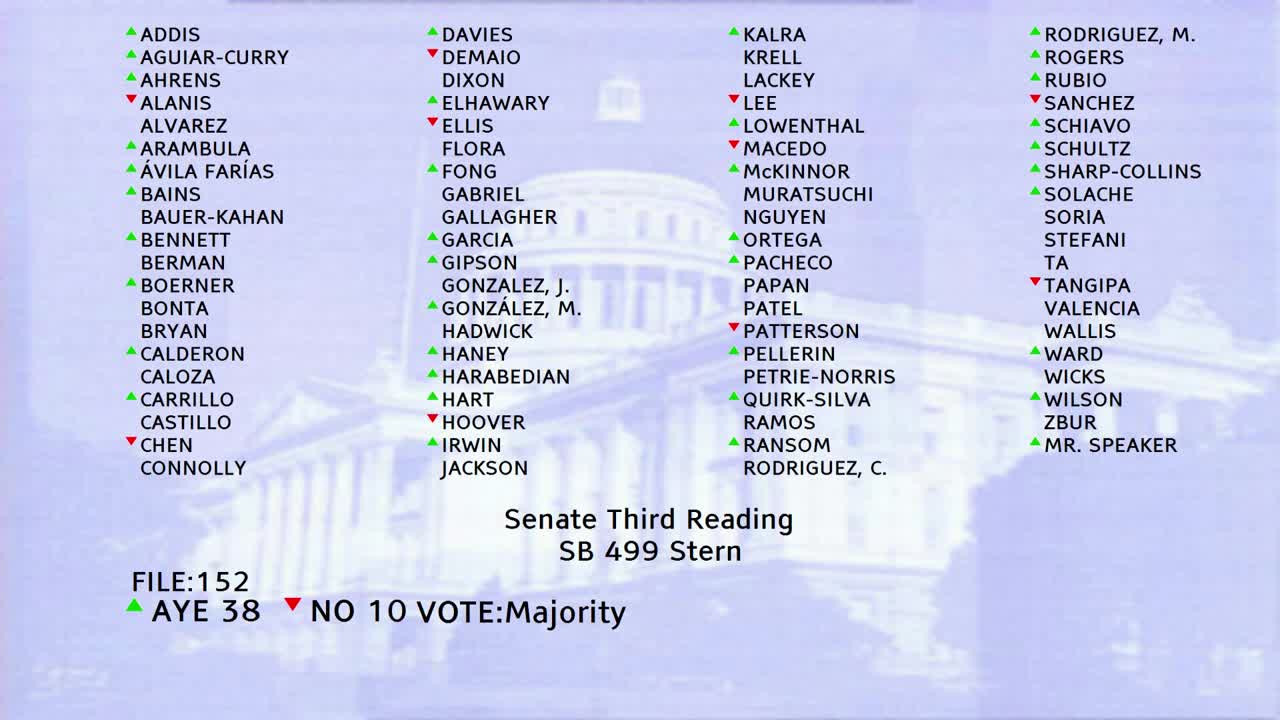
Bill Author