SB 700: Capital Programs and Climate Financing Authority Act: California Investment and Innovation Program.
- Session Year: 2025-2026
- House: Senate
- Latest Version Date: 2026-09-27
Current Status:
Passed
(2026-09-27: Chaptered by Secretary of State. Chapter 651, Statutes of 2026.)
Introduced
In Committee
Awaiting First Chamber Vote
Passed First Chamber
In Committee
Awaiting Second Chamber Vote
Passed Second Chamber
Enacted
What does this bill do?
This bill lets the Capital Programs and Climate Financing Authority use its small business assistance funds to make grants to community development financial institutions (CDFIs). It adds those grants to the list of financial help the authority can provide so CDFIs can get funding to support small businesses.
The summary is provided by generative AI which can make mistakes. For original language, please view the details in the table below.
The Capital Programs and Climate Financing Authority Act establishes the Capital Programs and Climate Financing Authority, consisting of the Director of Finance, the Treasurer, and the Controller. Among other things, the act authorizes the authority to establish one or more small business assistance funds to do various things, including fund a capital access program for small businesses pursuant to specified law, provide various forms of financial assistance, and make or acquire loans or guarantee commercial loans to participating parties eligible for assistance from those funds. The act requires any moneys repaid or returned to the authority in connection with or as a result of any loan or financial assistance made pursuant to these provisions to be deposited in the small business assistance fund from which the loan or assistance was originally provided. For the purpose of establishing and maintaining small business assistance funds, the act authorizes the authority to levy fees or other charges on, or require deposits from, participating parties receiving financing for a project under the act, as specified.
The act requires the authority to establish the California Investment and Innovation Program for the purpose of providing grants to enhance the capacity of community development financial institutions to provide technical assistance and capital access to economically disadvantaged communities in the state, as specified. Existing law defines various terms for these purposes.
This bill would authorize the authority to establish one or more small business assistance funds to fund a grant program for community development financial assistance pursuant to the California Investment and Innovation Program. The bill would include in the list of allowed financial assistance that the authority may provide under the act grants made to community development financial institutions in furtherance of that program. By expanding the purposes for which moneys in a continuously appropriated fund may be used, this bill would make an appropriation.
Existing law establishes the Bank on California Program, which is a voluntary collaborative initiative that assists Californians in opening a bank or credit union account and saving for the future. This bill would repeal those provisions.Existing law establishes the Bank on California Program, which is a voluntary collaborative initiative that assists Californians in opening a bank or credit union account and saving for the future.
This bill would repeal those provisions.
Existing law establishes the California Firefighter Cancer Prevention and Research Program, pursuant to which the Legislature requests the University of California, in consultation with the FIRESCOPE Program, to develop and administer a competitive grant program to award grants to eligible educational institutions to conduct research on the California fire service using a community-based participatory research model in collaboration with California firefighters. Existing law requires research conducted by program grantees to include, but not be limited to, understanding biomarkers of exposure that quantify chemical carcinogens absorbed and metabolized by firefighters and studying biomarkers of effect that quantify cancer-promoting cellular changes that ultimately lead to a cancer diagnosis. This bill would prohibit a city, county, or city and county from preventing a firefighter or fire department from voluntarily participating in a study undertaken pursuant to the above-described provisions, including allowing access to facilities and the use of equipment for the purposes of the terms of the grant.Existing law establishes the California Firefighter Cancer Prevention and Research Program, pursuant to which the Legislature requests the University of California, in consultation with the FIRESCOPE Program, to develop and administer a competitive grant program to award grants to eligible educational institutions to conduct research on the California fire service using a community-based participatory research model in collaboration with California firefighters. Existing law requires research conducted by program grantees to include, but not be limited to, understanding biomarkers of exposure that quantify chemical carcinogens absorbed and metabolized by firefighters and studying biomarkers of effect that quantify cancer-promoting cellular changes that ultimately lead to a cancer diagnosis.
This bill would state the intent of the Legislature to enact legislation relating to the California Firefighter Cancer Prevention and Research Program.This bill would prohibit a city, county, or city and county from preventing a firefighter or fire department from voluntarily participating in a study undertaken pursuant to the above-described provisions, including allowing access to facilities and the use of equipment for the purposes of the terms of the grant.
Existing law establishes the California Firefighter Cancer Prevention and Research Program, pursuant to which the Legislature requests the University of California, in consultation with the FIRESCOPE Program, to develop and administer a competitive grant program to award grants to eligible educational institutions to conduct research on the California fire service using a community-based participatory research model in collaboration with California firefighters. Existing law requires research conducted by program grantees to include, but not be limited to, understanding biomarkers of exposure that quantify chemical carcinogens absorbed and metabolized by firefighters and studying biomarkers of effect that quantify cancer-promoting cellular changes that ultimately lead to a cancer diagnosis.
This bill would state the intent of the Legislature to enact legislation relating to the California Firefighter Cancer Prevention and Research Program.
(a)(1)Subject to any prior contractual obligations to any of its bondholders, the authority may establish one or more small business assistance funds in order to do any of the following:
(A)Assist small businesses to achieve financing of pollution control facilities.
(B)Assist with the financing of the costs of, among other things, assessment, remedial planning and reporting, technical assistance, cleanup, remediation, and development of brownfield sites, and with other similar or related costs, by providing loans pursuant to subdivision (h) of Section 44526.
(C)Fund a capital access program for small businesses pursuant to Article 8 (commencing with Section 44559), including nonreimbursable payments made directly to borrowers in furtherance of the program described in Section 44559.13.
(D)Fund a grant program for community development financial institutions pursuant to Article 7 (commencing with Section 44558).
(2)For the purpose of establishing and maintaining small business assistance funds as it determines to be necessary or desirable to secure its bonds or any issuance thereof or for other authorized purposes, the authority, pursuant to its contracts with participating parties, may levy fees or other charges on, or require deposits from, participating parties receiving financing for a project under this division. The total amount of these fees, charges, and deposits with respect to a single issue of bonds shall not exceed 3 percent of the principal amount of that issue of bonds.
(3)Before levying any fees or charges or requiring deposits, the authority shall adopt regulations for the operation of the small business assistance funds, the amounts and any payment schedule for the fees, charges, or deposits, eligibility standards for small businesses desiring to use or benefit from the small business assistance funds, and any other matters the authority determines to be necessary for the establishment and maintenance of small business assistance funds. The regulations may provide for differential fees from participating parties based upon the size of a project financed by the authority or other factors determined to be relevant by the authority, and the regulations may restrict any benefits to those eligible small businesses specified in the regulations.
(4)The authority may transfer any funds available to it or set aside for its administrative expenses to any small business assistance fund established under this section.
(b)(1)The forms of financial assistance that the authority may provide under this section include, but are not limited to, all of the following:
(A)Payments to reduce, but not eliminate, the interest rate on loans.
(B)Payments of part or all of the cost of acquiring letters of credit.
(C)Payments of part or all of the cost of acquiring insurance.
(D)Payments of part or all of the cost of acquiring guarantees.
(E)Payments of part or all of the cost of acquiring other forms of credit support.
(F)Payments of part or all of the authoritys expenses in issuing revenue bonds or providing other assistance.
(G)Nonreimbursable payments made directly to borrowers in furtherance of the program described in Section 44559.13 and administered pursuant to Article 8 (commencing with Section 44559).
(H)Grants made to community development financial institutions in furtherance of the program described in Section 44558.1 and administered pursuant to Article 7 (commencing with Section 44558).
(2)The authority may also pledge any small business assistance fund, on an individual or pooled basis, to repay, directly or indirectly, the principal of, or interest or premium on, any issue of bonds of the authority or any loan made or acquired pursuant to this section.
(3)The authority may also use moneys in a small business assistance fund to assist in the financing of the costs of assessment of, remedial planning and reporting for, technical assistance for, and the cleanup, remediation, or development of, brownfield sites, and of other similar or related costs, by providing loans, pursuant to, and under the terms permitted by, subdivision (h) of Section 44526.
(4)In addition to other purposes set forth in this section, the authority may use moneys in a small business assistance fund to make or acquire loans or guarantee commercial loans to participating parties eligible for assistance from those funds.
(5)Any moneys repaid or returned to the authority in connection with or as a result of any loan or financial assistance made pursuant to this section shall be deposited in the small business assistance fund from which the loan or assistance was originally provided.
(6)The authority may contract with qualified financial institutions, including, but not limited to, banks, investment and mortgage bankers, insurance companies, sureties, and guarantors, to provide any necessary assistance in the granting of credit for these purposes.
(c)Each small business assistance fund established pursuant to this section shall be deposited in a special account that the Controller shall create. Notwithstanding any other law, and subject to any requirements of federal tax law or regulations relative to maintaining the tax-exempt status of the obligations of the authority, all interest or other gains earned by investment or deposit of money in the special account pursuant to any provision of Part 2 (commencing with Section 16300) of Division 4 of Title 2 of the Government Code or pursuant to any other provision of law shall be credited to, and deposited in, the account.
(d)In carrying out this section, the authority shall participate with the air pollution control districts and air quality management districts in providing financial assistance in its lending programs.
SECTION 1.Division 23 (commencing with Section 80000) of the Financial Code is repealed.A city, county, or city and county shall not prevent a firefighter or fire department from voluntarily participating in a study undertaken pursuant to a grant awarded under Section 104210.1, including allowing access to facilities and the use of equipment for the purposes of the terms of the grant.
SECTION 1.It is the intent of the Legislature to enact legislation relating to the California Firefighter Cancer Prevention and Research Program.It is the intent of the Legislature to enact legislation relating to the California Firefighter Cancer Prevention and Research Program.
|
Date
|
Status
|
|---|---|
| Sep 27, 2026 | Chaptered by Secretary of State. Chapter 651, Statutes of 2026. |
| Sep 27, 2026 | Approved by the Governor. |
| Sep 2, 2026 | Enrolled and presented to the Governor at 3 p.m. |
| Aug 27, 2026 | Assembly amendments concurred in. (Ayes 40. Noes 0. Page 6029.) Ordered to engrossing and enrolling. |
| Aug 27, 2026 | Assembly amendments concurred in. (Ayes 39. Noes 0.) Ordered to engrossing and enrolling. |
| Aug 26, 2026 | From committee: That the Assembly amendments be concurred in. (Ayes 9. Noes 0.) |
| Aug 26, 2026 | From committee: That the Assembly amendments be concurred in. (Ayes 9. Noes 0. Page 5924.) |
| Aug 25, 2026 | From committee: Be re-referred to Com. on B. P. & E.D. pursuant to Senate Rule 29.10(d). (Ayes 5. Noes 0. Page 5726.) Re-referred to Com. on B. P. & E.D. |
| Aug 25, 2026 | From committee: Be re-referred to Com. on B. P. & E.D. pursuant to Senate Rule 29.10(d). (Ayes 5. Noes 0.) Re-referred to Com. on B. P. & E.D. |
| Aug 25, 2026 | Re-referred to Com. on RLS. pursuant to Senate Rule 29.10(d). |
| Aug 24, 2026 | In Senate. Concurrence in Assembly amendments pending. |
| Aug 24, 2026 | Read third time. Passed. (Ayes 78. Noes 0. Page 6388.) Ordered to the Senate. |
| Aug 24, 2026 | Read third time. Passed. Ordered to the Senate. |
| Aug 13, 2026 | Read second time. Ordered to third reading. |
| Aug 13, 2026 | From committee: Do pass. (Ayes 15. Noes 0.) (August 13). |
| Aug 13, 2026 | Assembly Rule 63 suspended. |
| Aug 5, 2026 | August 5 set for first hearing. Placed on suspense file. |
| Jun 23, 2026 | From committee: Do pass and re-refer to Com. on E.D., G., & H.I. with recommendation: To consent calendar. (Ayes 8. Noes 0.) (June 22). Re-referred to Com. on E.D., G., & H.I. |
| Jun 23, 2026 | From committee: Do pass and re-refer to Com. on APPR. with recommendation: To consent calendar. (Ayes 8. Noes 0.) (June 23). Re-referred to Com. on APPR. |
| Jun 18, 2026 | Assembly Rule 56 suspended. |
| Jun 4, 2026 | From committee with author's amendments. Read second time and amended. Re-referred to Com. on B. & F. |
| May 4, 2026 | Referred to Com. on B. & F. |
| Jan 26, 2026 | In Assembly. Read first time. Held at Desk. |
| Jan 26, 2026 | Read third time. Passed. (Ayes 39. Noes 0. Page 3286.) Ordered to the Assembly. |
| Jan 21, 2026 | Read second time. Ordered to consent calendar. |
| Jan 20, 2026 | From committee: Be ordered to second reading pursuant to Senate Rule 28.8 and ordered to consent calendar. |
| Jan 9, 2026 | Set for hearing January 20. |
| Jan 7, 2026 | From committee: Do pass and re-refer to Com. on APPR. with recommendation: To consent calendar. (Ayes 5. Noes 0. Page 3187.) (January 7). Re-referred to Com. on APPR. |
| Jan 5, 2026 | Withdrawn from committee. |
| Jan 5, 2026 | From committee with author's amendments. Read second time and amended. Re-referred to Com. on L. GOV. |
| Jan 5, 2026 | Re-referred to Com. on B. & F.I. |
| Jan 5, 2026 | Re-referred to Com. on RLS. |
| Dec 18, 2025 | Set for hearing January 7 in B. & F.I. pending receipt. |
| Apr 2, 2025 | Re-referred to Coms. on L. GOV. and L., P.E. & R. |
| Mar 24, 2025 | From committee with author's amendments. Read second time and amended. Re-referred to Com. on RLS. |
| Mar 12, 2025 | Referred to Com. on RLS. |
| Feb 24, 2025 | Read first time. |
| Feb 24, 2025 | From printer. May be acted upon on or after March 24. |
| Feb 21, 2025 | Introduced. To Com. on RLS. for assignment. To print. |
|
Date
|
Description
|
Location
|
Votes
|
|
|---|---|---|---|---|
| Aug 27, 2026 | Unfinished Business SB700 Grayson Concurrence | Senate Floor |
Passed |
|
| Aug 26, 2026 | That the Assembly amendments be concurred in | Senate Standing Committee on Business, Professions and Economic Development |
Passed |
|
| Aug 24, 2026 | SB 700 Grayson Senate Third Reading By Mark González | Assembly Floor |
Passed |
|
| Aug 13, 2026 | Do pass. | Assembly Standing Committee on Appropriations |
Passed |
|
| Jun 22, 2026 | Do pass and be re-referred to the Committee on [Economic Development, Growth, and Household Impact] with recommendation: To Consent Calendar | Assembly Standing Committee on Banking and Finance |
Passed |
|
| Jan 26, 2026 | Consent Calendar 2nd SB700 Grayson | Senate Floor |
Passed |
|
| Jan 7, 2026 | Do pass, but first be re-referred to the Committee on [Appropriations] with the recommendation: To Consent Calendar | Senate Standing Committee on Banking and Financial Institutions |
Passed |
This list shows positions taken on this bill by organizations on the date displayed, which is linked to the original source.
Positions by individuals are not included.
|
Organization
|
Position
|
Date
|
|---|---|---|
| 3Core | ** Support | |
| 3Core | ** Support | |
| Access Plus Capital | ** Support | |
| Access Plus Capital | ** Support | |
| AltCap California | ** Support | |
| AltCap California | ** Support | |
| Altcapcalifornia | ** Support | |
| Ampac Business Capital | ** Support | |
| Ampac Business Capital | ** Support | |
| Beneficial State Bank | ** Support | |
| Beneficial State Bank | ** Support | |
| California Capital Financial Development Corporation | ** Support | |
| California Capital Financial Development Corporation | ** Support | |
| California Coalition for Community Investment | ** Support | |
| California Coalition for Community Investment | ** Support | |
| California Coalition for Community Investment (CCCI) | ** Support | |
| California Community Reinvestment Corporation | ** Support | |
| California Community Reinvestment Corporation | ** Support | |
| California Farmlink | ** Support | |
| California Farmlink | ** Support | |
| CAMEO Network | ** Support | |
| CAMEO Network | ** Support | |
| Century Housing Corporation | ** Support | |
| Century Housing Corporation | ** Support | |
| Civic Community Partners | ** Support | |
| Civic Community Partners | ** Support | |
| Clearinghouse Cdfi | ** Support | |
| Clearinghouse Cdfi | ** Support | |
| Community Vision Capital and Consulting | ** Support | |
| Community Vision Capital and Consulting | ** Support | |
| Excite Credit Union | ** Support | |
| Excite Credit Union | ** Support | |
| Five Rivers Loan Fund, INC. | ** Support | |
| Five Rivers Loan Fund, INC. | ** Support | |
| Genesis LA | ** Support | |
| Genesis LA | ** Support | |
| Global Finance Cdfi LLC | ** Support | |
| Global Finance Cdfi LLC | ** Support | |
| Housing Trust Fund Ventura County | ** Support | |
| Housing Trust Fund Ventura County | ** Support | |
| Housing Trust Silicon Valley | ** Support | |
| Housing Trust Silicon Valley | ** Support | |
| Inclusive Action for the City | ** Support | |
| Inclusive Action for the City | ** Support | |
| Lendistry | ** Support | |
| Lendistry | ** Support | |
| LISC Bay Area | ** Support | |
| LISC Bay Area | ** Support | |
| Low Income Investment Fund | ** Support | |
| Low Income Investment Fund | ** Support | |
| Main Street Launch | ** Support | |
| Main Street Launch | ** Support | |
| Neighborhood Partnership Housing Services, INC. | ** Support | |
| Neighborhood Partnership Housing Services, INC. | ** Support | |
| Nonprofit Finance Fund | ** Support | |
| Nonprofit Finance Fund | ** Support | |
| Nonprofit Finance Fund (NFF) | ** Support | |
| North Edge Business Financing and Community Development | ** Support | |
| North Edge Business Financing and Community Development | ** Support | |
| Pacific Community Ventures | ** Support | |
| Pacific Community Ventures | ** Support | |
| PCR Business Finance | ** Support | |
| PCR Business Finance | ** Support | |
| The Alliance Cdfi | ** Support | |
| The Alliance Cdfi | ** Support | |
| Working Solutions | ** Support | |
| Working Solutions | ** Support |
SENATE COMMITTEE ON
BUSINESS, PROFESSIONS AND ECONOMIC DEVELOPMENT
Senator Dr. Aisha Wahab, Chair
2025 - 2026 Regular
Bill No: Hearing Date: August 26, 2026
Author: | |||
Version: |
| ||
Urgency: | Fiscal: | ||
Consultant: | |||
Subject:
SUMMARY:
Authorizes a Small Business Assistance Fund (SBAF) established by the Capital Programs and Climate Financing Authority (CPCFA) to fund a grant program for community development financial assistance to the California Investment and Innovation Program (Cal IIP).
NOTE: The Assembly amendments create a new bill and this measure has been referred to the Committee pursuant to Senate Rule 29.10 (d) for consideration. The Committee may, by a vote of the majority, either: (1) hold the bill, or (2) return the bill to the Senate floor for consideration of the bill as amended in the Assembly.
Existing law:
- Establishes CPCFA which, among other things, may establish one or more SBAFs to undertake specified activities, including to fund a capital access program for small businesses. (Health and Safety Code Section 44548(a))
- Permits CPCFA to provide financial assistance in specified forms, including interest rate subsidies, guarantees, and other forms of credit support. (Health and Safety Code Section 44548(b))
This bill:
- Authorizes CPCFA to fund a grant program for community development financial institutions pursuant to the existing California Investment and Innovation Program.
- Adds to the list of eligible financing assistance to include grants made to community development financial institutions in furtherance of the California Investment and Innovation Program (Cal IIP).
FISCAL EFFECT:
This bill is keyed fiscal by Legislative Counsel. According to the Assembly Committee on Appropriations, the bill will result in cost pressures of an unknown amount, potentially in the millions of dollars, to appropriate additional money to CPCFA to support other SBAF-eligible programs, to the extent this bill results in the redirection of funds from those programs to provide Cal IIP grants. The Committee notes that the Author is requesting another one-time appropriation of $50 million in the 2026-27 state budget to renew funding for Cal IIP grants. The Budget Act of 2026 (AB 109 (Gabriel), Chapter 19, Statutes of 2026, and related budget amendments and trailer bills) does not include this appropriation. The bill will also result in likely absorbable costs to CPCFA to continue Cal IIP administration with SBAF funds.
COMMENTS:
- Purpose. The California Coalition for Community Investment is the sponsor of this bill. According to the Author, “SB 700 is an important measure to show the state’s continued support for Cal IIP – an effective and efficient program that leverages the knowledge, skills, and abilities of community development financial institutions (CDFIs) to achieve outcomes that the State would struggle to realize through existing public institutions. CDFIs help reach underserved communities and markets to deliver affordable housing financing, small business support, and loans to consumers who are overlooked by the traditional financial system. SB 700 helps to keep Cal IIP going at a time when budgetary resources are constrained.” The Author states that funding for Cal IIP is nearing exhaustion, and SB 700 provides an option to temporarily continue the grant-making activities to support CDFIs.
- Background.
CPCFA and small business financing. CPCFA administers financing programs intended to encourage capital investment and advance California's environmental, economic, and climate policy goals. Established in 1972 as the California Pollution Control Financing Authority, CPCFA initially focused on issuing tax-exempt bonds for private projects that reduced air and water pollution. Effective January 1, 2026, the authority was renamed the Capital Programs and Climate Financing Authority to reflect its expanded portfolio, which now includes programs supporting small businesses, community development, and climate-related investments. CPCFA's programs include its Tax-Exempt Private Activity Bond Program and the California Capital Access Program (CalCAP). CPCFA may use certain revenues generated through its financing activities to support small business assistance funds.
California Investment and Innovation Program. The Legislature established the California Investment and Innovation Program (Cal IIP) in 2022 through SB 193 (Committee on Budget and Fiscal Review, Chapter 68, Statutes of 2022) and provided a one-time $50 million General Fund appropriation. Cal IIP provides grants to federally certified community development financial institutions (CDFIs) to increase their capacity to provide technical assistance and access to capital in economically disadvantaged communities. CDFIs may use grant funds to support services and operations that further their community development missions and to strengthen their net assets, allowing them to leverage additional private and public investment. The program was originally authorized to award up to $15 million annually.
CPCFA has awarded approximately $39.2 million through the first three Cal IIP funding rounds. The program awarded approximately $14.2 million to 67 CDFIs for 2023–24, $15 million to 75 CDFIs for 2024–25, and $10 million to 73 CDFIs for 2025–26. As of June 30, 2026, approximately $24 million of those awards had been expended.
Existing law permits CPCFA to establish SBAFs and use those funds for specified financing activities, including CalCAP and other forms of small business assistance. SB 700 expands these authorized uses to expressly allow a SBAF to support grants to CDFIs through Cal IIP. The bill provides CPCFA with an additional mechanism to support Cal IIP using eligible revenues generated through its financing programs rather than relying exclusively on the program’s original one-time General Fund capitalization.
- Arguments in Support. Supporters note that “As California families and businesses continue to face mounting pressures, from housing and childcare costs to increasing barriers to capital, CDFIs like PCV help address these challenges by providing flexible, responsible financing for small businesses, affordable housing, and community investments that create real opportunity.
Cal IIP has proven to be an effective investment in California communities by strengthening the capacity of CDFIs to deploy capital where it is needed most. The program has helped community lenders expand financing for businesses, housing, community facilities, and other projects that support economic development across the state.
As demand for affordable capital continues to grow, it is important that California maintain tools that help CDFIs meet community needs. SB 700 provides a practical solution to ensure continued support for Cal IIP and the communities that depend on CDFI financing.”
SUPPORT AND OPPOSITION:
Support:
California Coalition for Community Investment (sponsor)
3core
Access Plus Capital
AltCap California
AmPac Business Capital
LISC Bay Area
Beneficial State Bank
California Capital Financial Development Corporation
California Community Reinvestment Corporation
California Farmlink
Cameo Network
Century Housing Corporation
Civic Community Partners
Clearinghouse CDFI
Community Vision Capital and Consulting
Excite Credit Union
Five Rivers Loan Fund, INC.
Genesis LA
Global Finance CDFI LLC
Housing Trust Fund Ventura County
Housing Trust Silicon Valley
Inclusive Action for the City
Lendistry
Low Income Investment Fund
Main Street Launch
Neighborhood Partnership Housing Services, INC.
Nonprofit Finance Fund
North Edge Business Financing and Community Development
Pacific Community Ventures
Pcr Business Finance
The Alliance CDFI
Working Solutions
Opposition:
None received
-- END --
SENATE RULES COMMITTEE Office of Senate Floor Analyses (916) 651-4171 | SB 700 |
UNFINISHED BUSINESS
Bill No: SB 700
Author: Grayson (D)
Amended: 6/4/26
Vote: 27
PRIOR SENATE VOTES NOT RELEVANT PURSUANT TO SENATE RULE 29.10(d)
SENATE BUS., PROF. & ECON. DEV. COMMITTEE: 9-0, 8/26/26
AYES: Wahab, Choi, Archuleta, Caballero, Grayson, Menjivar, Niello, Smallwood-Cuevas, Strickland
NO VOTE RECORDED: Arreguín, Umberg
ASSEMBLY FLOOR: 78-0, 8/24/26 - See last page for vote
SUBJECT: Capital Programs and Climate Financing Authority Act: California Investment and Innovation Program
SOURCE: California Coalition for Community Investment
DIGEST:
This bill authorizes a Small Business Assistance Fund (SBAF) established by the Capital Programs and Climate Financing Authority (CPCFA) to fund a grant program for community development financial assistance to the California Investment and Innovation Program (Cal IIP).
Assembly Amendments
create a new bill.
ANALYSIS:
Existing law:
- Establishes CPCFA which, among other things, may establish one or more SBAFs to undertake specified activities, including to fund a capital access program for small businesses. (Health and Safety Code Section 44548(a))
- Permits CPCFA to provide financial assistance in specified forms, including interest rate subsidies, guarantees, and other forms of credit support. (Health and Safety Code Section 44548(b))
This bill:
- Authorizes CPCFA to fund a grant program for community development financial institutions pursuant to the existing California Investment and Innovation Program.
- Adds to the list of eligible financing assistance to include grants made to community development financial institutions in furtherance of the California Investment and Innovation Program (Cal IIP).
Background
CPCFA and small business financing. CPCFA administers financing programs intended to encourage capital investment and advance California's environmental, economic, and climate policy goals. Established in 1972 as the California Pollution Control Financing Authority, CPCFA initially focused on issuing tax-exempt bonds for private projects that reduced air and water pollution. Effective January 1, 2026, the authority was renamed the Capital Programs and Climate Financing Authority to reflect its expanded portfolio, which now includes programs supporting small businesses, community development, and climate-related investments. CPCFA's programs include its Tax-Exempt Private Activity Bond Program and the California Capital Access Program (CalCAP). CPCFA may use certain revenues generated through its financing activities to support small business assistance funds.
California Investment and Innovation Program. The Legislature established the California Investment and Innovation Program (Cal IIP) in 2022 through SB 193 (Committee on Budget and Fiscal Review, Chapter 68, Statutes of 2022) and provided a one-time $50 million General Fund appropriation. Cal IIP provides grants to federally certified community development financial institutions (CDFIs) to increase their capacity to provide technical assistance and access to capital in economically disadvantaged communities. CDFIs may use grant funds to support services and operations that further their community development missions and to strengthen their net assets, allowing them to leverage additional private and public investment. The program was originally authorized to award up to $15 million annually.
CPCFA has awarded approximately $39.2 million through the first three Cal IIP funding rounds. The program awarded approximately $14.2 million to 67 CDFIs for 2023–24, $15 million to 75 CDFIs for 2024–25, and $10 million to 73 CDFIs for 2025–26. As of June 30, 2026, approximately $24 million of those awards had been expended.
Existing law permits CPCFA to establish SBAFs and use those funds for specified financing activities, including CalCAP and other forms of small business assistance. SB 700 expands these authorized uses to expressly allow a SBAF to support grants to CDFIs through Cal IIP. The bill provides CPCFA with an additional mechanism to support Cal IIP using eligible revenues generated through its financing programs rather than relying exclusively on the program’s original one-time General Fund capitalization.
FISCAL EFFECT: Appropriation: Yes Fiscal Com.: Yes Local: No
According to the Assembly Committee on Appropriations, the bill will result in cost pressures of an unknown amount, potentially in the millions of dollars, to appropriate additional money to CPCFA to support other SBAF-eligible programs, to the extent this bill results in the redirection of funds from those programs to provide Cal IIP grants. The Committee notes that the Author is requesting another one-time appropriation of $50 million in the 2026-27 state budget to renew funding for Cal IIP grants. The Budget Act of 2026 (AB 109 (Gabriel), Chapter 19, Statutes of 2026, and related budget amendments and trailer bills) does not include this appropriation. The bill will also result in likely absorbable costs to CPCFA to continue Cal IIP administration with SBAF funds.
SUPPORT: (Verified 8/26/26)
California Coalition for Community Investment (source)
3core
Access Plus Capital
AltCap California
AmPac Business Capital
LISC Bay Area
Beneficial State Bank
California Capital Financial Development Corporation
California Community Reinvestment Corporation
California Farmlink
Cameo Network
Century Housing Corporation
Civic Community Partners
Clearinghouse CDFI
Community Vision Capital and Consulting
Excite Credit Union
Five Rivers Loan Fund, INC.
Genesis LA
Global Finance CDFI LLC
Housing Trust Fund Ventura County
Housing Trust Silicon Valley
Inclusive Action for the City
Lendistry
Low Income Investment Fund
Main Street Launch
Neighborhood Partnership Housing Services, INC.
Nonprofit Finance Fund
North Edge Business Financing and Community Development
Pacific Community Ventures
Pcr Business Finance
The Alliance CDFI
Working Solutions
OPPOSITION: (Verified 8/26/26)
None received
ARGUMENTS IN SUPPORT: Supporters note that “As California families and businesses continue to face mounting pressures, from housing and childcare costs to increasing barriers to capital, CDFIs like PCV help address these challenges by providing flexible, responsible financing for small businesses, affordable housing, and community investments that create real opportunity.
Cal IIP has proven to be an effective investment in California communities by strengthening the capacity of CDFIs to deploy capital where it is needed most. The program has helped community lenders expand financing for businesses, housing, community facilities, and other projects that support economic development across the state.
As demand for affordable capital continues to grow, it is important that California maintain tools that help CDFIs meet community needs. SB 700 provides a practical solution to ensure continued support for Cal IIP and the communities that depend on CDFI financing.”
ASSEMBLY FLOOR: 78-0, 8/24/26
AYES: Addis, Aguiar-Curry, Ahrens, Alanis, Alvarez, Arambula, Ávila Farías, Bains, Bauer-Kahan, Bennett, Berman, Boerner, Bonta, Bryan, Calderon, Caloza, Carrillo, Castillo, Chen, Connolly, Davies, DeMaio, Dixon, Elhawary, Ellis, Flora, Fong, Gabriel, Garcia, Gipson, Jeff Gonzalez, Mark González, Hadwick, Haney, Harabedian, Hart, Hoover, Irwin, Jackson, Johnson, Kalra, Krell, Lackey, Lee, Lowenthal, Macedo, Muratsuchi, Nguyen, Ortega, Pacheco, Papan, Patel, Patterson, Pellerin, Petrie-Norris, Quirk-Silva, Ramos, Ransom, Celeste Rodriguez, Michelle Rodriguez, Rogers, Blanca Rubio, Sanchez, Schiavo, Schultz, Sharp-Collins, Solache, Soria, Stefani, Ta, Tangipa, Valencia, Wallis, Ward, Wicks, Wilson, Zbur, Rivas
NO VOTE RECORDED: McKinnor
Prepared by: Sarah Mason / B., P. & E.D. /916-651-4104
8/26/26 18:41:11
**** END ****
SENATE RULES COMMITTEE Office of Senate Floor Analyses (916) 651-4171 | SB 700 |
UNFINISHED BUSINESS
Bill No: SB 700
Author: Grayson (D)
Amended: 6/4/26
Vote: 27
SENATE BANKING & F.I. COMMITTEE: 5-0, 1/7/26
AYES: Grayson, Niello, Cervantes, Richardson, Strickland
NO VOTE RECORDED: Hurtado, Limón
SENATE APPROPRIATIONS COMMITTEE: Senate Rule 28.8
SENATE FLOOR: 39-0, 1/26/26 (Consent)
AYES: Allen, Alvarado-Gil, Archuleta, Arreguín, Ashby, Becker, Blakespear, Cabaldon, Caballero, Cervantes, Choi, Cortese, Dahle, Durazo, Grayson, Grove, Hurtado, Jones, Laird, Limón, McGuire, McNerney, Menjivar, Niello, Ochoa Bogh, Padilla, Pérez, Reyes, Richardson, Rubio, Seyarto, Smallwood-Cuevas, Stern, Strickland, Umberg, Valladares, Wahab, Weber Pierson, Wiener
NO VOTE RECORDED: Gonzalez
ASSEMBLY FLOOR: Passed, 8/24/26
SUBJECT: Capital Programs and Climate Financing Authority Act: California Investment and Innovation Program
SOURCE: California Coalition for Community Investment
DIGEST:
This bill authorizes the Capital Programs and Climate Financing Authority to fund a grant program for community development financial assistance to the California Investment and Innovation Program.
Assembly Amendments
replace the former version of the bill that passed the Senate and provide the authority summarized above.
ANALYSIS:
Existing law:
- Establishes the Capital Programs and Climate Financing Authority (“the authority”), which among other things, may establish one or more small business assistance funds to undertake specified activities, including to fund a capital access program for small businesses. (Health and Safety Code Section 44548(a))
- Permits the authority to provide financial assistance in specified forms, including interest rate subsidies, guarantees, and other forms of credit support. (Health and Safety Code Section 44548(b))
This bill:
- Authorizes the authority to fund a grant program for community development financial institutions pursuant to the existing California Investment and Innovation Program.
- Adds to the list of eligible financing assistance to include grants made to community development financial institutions in furtherance of the California Investment and Innovation Program.
Comments
This bill authorizes the State Treasurer to use existing sources of revenue to fund the California Investment and Innovation Program (Cal IIP), which supports community development financial institutions (CDFIs) operating in the state.
Established in 2023 with an initial $50 million allocation over three years, Cal IIP is administered by the State Treasurer's Office and serves as an innovative statewide program to advance economic development financing. In its first two years Cal IIP made 134 awards to CDFIs financing needs in the areas of community development, education, housing, non-profit lending, small business, childcare, and engaging the underbanked. With support from Cal IIP funding, CDFIs reported: 4,220 jobs created, 2,529 businesses created, and 1,886 housing units built or rehabilitated.
The initial funding provided to Cal IIP in 2023 is running out and the flexibility provided by SB 700 will allow the Cal IIP program to continue funding the work of CDFIs. With every dollar of public support for CDFIs yielding additional private investment of $8, California is facing a material disinvestment in underserved communities.
CDFIs exist to address historic patterns of exclusion and disinvestment in low-income communities and communities of color. CDFIs help bring investment and support to these communities in ways that traditional financial institutions are often unable or unwilling to do. CDFIs are able to provide flexible, affordable capital for projects and borrowers in low-income, rural, Tribal, immigrant, and other historically underserved communities. With programs like Cal IIP, CDFIs are able to expand lending, attract additional private and philanthropic capital, and meet growing community demand.
The Legislature initially provided $50 million for Cal IIP. That funding has demonstrated strong demand and impact, but it is now nearing exhaustion. Without continued funding, CDFIs will have fewer resources to finance projects and borrowers that are aligned with California’s affordability and economic development goals.
FISCAL EFFECT: Appropriation: Yes Fiscal Com.: Yes Local: No
According to the Assembly Appropriations Committee, cost pressures of an unknown amount, potentially in the millions of dollars, to appropriate additional money to CPCFA to support other SBAF-eligible programs, to the extent this bill results in the redirection of funds from those programs to provide Cal IIP grants (General Fund). The author is requesting another one-time appropriation of $50 million in the 2026-27 state budget to renew funding for Cal IIP grants. The Budget Act of 2026 (AB 109 (Gabriel), Chapter 19, Statutes of 2026, and related budget amendments and trailer bills) does not include this appropriation.
Likely absorbable costs to CPCFA to continue Cal IIP administration with SBAF funds
SUPPORT: (Verified 8/24/26)
California Coalition for Community Investment (source)
3core
Access Plus Capital
Altcapcalifornia
Ampac Business Capital
Bay Area LISC
Beneficial State Bank
California Capital Financial Development Corporation
California Coalition for Community Investment
California Community Reinvestment Corporation
California Farmlink
Cameo Network
Century Housing Corporation
Civic Community Partners
Clearinghouse CDFI
Community Vision Capital and Consulting
Excite Credit Union
Five Rivers Loan Fund, INC.
Genesis LA
Global Finance CDFI LLC
Housing Trust Fund Ventura County
Housing Trust Silicon Valley
Inclusive Action for the City
Lendistry
Low Income Investment Fund
Main Street Launch
Neighborhood Partnership Housing Services, INC.
Nonprofit Finance Fund (NFF)
North Edge Business Financing and Community Development
Pacific Community Ventures
PCR Business Finance
The Alliance CDFI
Working Solutions
OPPOSITION: (Verified 8/24/26)
None received
ARGUMENTS IN SUPPORT: California Coalition for Community Investment, as sponsor, writes in support:
SB 700 provides an important bridge to ensure that CDFIs can continue serving communities while longer-term funding solutions are pursued. By authorizing the State Treasurer to utilize existing revenues generated through the Capital Programs and Climate Financing Authority's tax-exempt bond programs, SB 700 creates a practical and fiscally responsible mechanism to sustain Cal IIP without requiring a new General Fund appropriation.
Prepared by: Michael Burdick / B. & F.I. /
8/24/26 16:24:35
SENATE THIRD READING
STR Bill Id:SB 700
Author:(Grayson)
As Amended Ver:June 4, 2026
2/3 vote
SUMMARY
The Capital Programs and Climate Financing Authority Act establishes the Capital Programs and Climate Financing Authority ("Authority"), consisting of the Director of Finance, the Treasurer, and the Controller. This bill would authorize the Authority to establish one or more small business assistance funds to fund a grant program for community development financial assistance pursuant to the California Investment and Innovation Program (Cal IIP). The bill would include in the list of allowed financial assistance that the authority may provide under the Act grants made to community development financial institutions (CDFIs) in furtherance of that program.
Major Provisions
- Adds CDFIs to the existing list of small business assistance funds the Authority may establish.
- Adds CDFIs to the existing list of permissible forms of financial assistance the Authority may provide under Cal IIP.
COMMENTS
- Background
In 2023, the California Investment and Innovation Program (Cal IIP) was established with an initial $50 million allocation over the last three years. It is administered by the State Treasurer's Office and serves as a statewide program to advance economic development financing. According to the California Coalition for Community Investment, Cal IIP stretches public dollars by pairing state investment with private capital to deliver outsized returns for California's economy.
While proponents have sought additional funding through the budget process, the initial funding provided to Cal IIP in 2023 is running out and the flexibility provided by SB 700 will help smooth the gap for the Cal IIP program to continue funding the work of CDFIs.
- What the bill does
SB 700 allows the Small Business Assistance Fund (SBAF) to be used to fund a grant program for CDFIs pursuant to Cal IIP. The Small Business Assistance Fund is funded through fees associated with the Capital Programs and Climate Financing Authority Tax-Exempt Bond Program. Historically, when fund balances have exceeded anticipated demand for their primary purpose, those dollars have been used to support other Treasurer-administered economic development programs, including programs such as CalCAP, CalReUse, and the Sustainable Communities initiatives. SB 700 follows that same precedent.
- What the bill does not do
SB 700 does not change the primary purpose of the small business assistance funds, which remains supporting small businesses that utilize the Capital Programs and Climate Financing Authority Tax-Exempt Bond Program. It merely adds Cal IIP as another eligible recipient if excess funds are available. The bill does not create a new program nor does it require a General Fund appropriation. Instead, it simply authorizes the Treasurer's Office to use available revenues from the Small Business Assistance Fund, when available, to support Cal IIP.
According to the Author
"SB 700 is an important measure to show the state's continued support for Cal IIP – an effective and efficient program that leverages the knowledge, skills, and abilities of community development financial institutions (CDFIs) to achieve outcomes that the State would struggle to realize through existing public institutions. CDFIs help reach underserved communities and markets to deliver affordable housing financing, small business support, and loans to consumers who are overlooked by the traditional financial system. SB 700 helps to keep Cal IIP going at a time when budgetary resources are constrained."
Arguments in Support
"California families face significant affordability challenges, from rising housing and childcare costs to increasing barriers to accessing capital. CDFIs help address these challenges by providing responsible, flexible financing that supports affordable housing, small businesses, community facilities, and other local investments that improve quality of life and create economic opportunities. Cal IIP has proven to be an effective investment in California communities by strengthening the capacity of CDFIs to deploy capital where it is needed most. The program has helped community lenders expand financing for businesses, housing, community facilities, and other projects that support economic development across the state.
Since 1989, CCRC [California Community Reinvestment Corporation] has funded over $2.4 billion in permanent mortgages for over 51,000 units of affordable multifamily housing. CCRC has used Cal IIP funding to overhaul its data and impact reporting infrastructure. Rather than tracking units financed alone, CCRC now collects and analyzes data on how affordable housing directly affects the families residing in those units. Cal IIP funding enabled CCRC's lending team to upgrade its underwriting and due diligence collection platform, integrating new data capabilities that will strengthen both reporting and future lending decisions. CCRC also developed a dashboard tool to easily access and review operating trends from its portfolio of over 420 funded loans, enhancing underwriting accuracy and leading to a more proactive approach in addressing challenges facing underperforming properties. We have shared our analyses and insights with government lenders, policymakers, and the broader affordable housing community to support improved underwriting practices and inform policy development.
Cal IIP grant funds additionally supported a comprehensive analysis of energy retrofit candidate properties across California. The tools, framework, and analytical processes developed through this work have since been integrated into CCRC's ongoing business operations, strengthening its long-term capacity to identify, evaluate, and track lending opportunities.
As demand for affordable capital continues to grow, it's important that California maintain tools that help CDFIs meet community needs. SB 700 provides a practical solution to ensure continued support for Cal IIP and the communities that depend on CDFI financing."—California Community Reinvestment Corporation
Arguments in Opposition
None Received. Last Verified 6/25/2026
FISCAL COMMENTS
The following is from the analysis of the Assembly Committee on Appropriations.
Cost pressures of an unknown amount, potentially in the millions of dollars, to appropriate additional money to CPCFA to support other SBAF-eligible programs, to the extent this bill results in the redirection of funds from those programs to provide Cal IIP grants (General Fund). The author is requesting another one-time appropriation of $50 million in the 2026-27 state budget to renew funding for Cal IIP grants. The Budget Act of 2026 (AB 109 (Gabriel), Chapter 19, Statutes of 2026, and related budget amendments and trailer bills) does not include this appropriation.
Likely absorbable costs to CPCFA to continue Cal IIP administration with SBAF funds.
VOTES
SENATE FLOOR: 39-0-1
YES: Allen, Alvarado-Gil, Archuleta, Arreguín, Ashby, Becker, Blakespear, Cabaldon, Caballero, Cervantes, Choi, Cortese, Dahle, Durazo, Grayson, Grove, Hurtado, Jones, Laird, Limón, McGuire, McNerney, Menjivar, Niello, Ochoa Bogh, Padilla, Pérez, Reyes, Richardson, Rubio, Seyarto, Smallwood-Cuevas, Stern, Strickland, Umberg, Valladares, Wahab, Weber Pierson, Wiener
ABS, ABST OR NV: Gonzalez
ASM BANKING AND FINANCE: 8-0-1
YES: Valencia, Chen, Dixon, Fong, Krell, Michelle Rodriguez, Blanca Rubio, Soria
ABS, ABST OR NV: Schiavo
ASM ECONOMIC DEVELOPMENT, GROWTH, AND HOUSEHOLD IMPACT: 8-0-0
YES: Solache, Castillo, Caloza, Patel, Petrie-Norris, Michelle Rodriguez, Soria, Wallis
ASM APPROPRIATIONS: 15-0-0
YES: Wicks, Hoover, Arambula, Calderon, Caloza, Dixon, Fong, Mark González, Krell, Pacheco, Pellerin, Sharp-Collins, Solache, Ta, Tangipa
UPDATED
VERSION: June 4, 2026
CONSULTANT: Desiree Nguyen Orth / B. & F. / (916) 319-3081 FN: 0003625
Date of Hearing: August 5, 2026
ASSEMBLY COMMITTEE ON APPROPRIATIONS
Buffy Wicks, Chair
SBPCA Bill Id:SB 700
Author:(Grayson) – As Amended Ver:June 4, 2026
Policy Committee: | Banking and Finance | Vote: | 8 - 0 |
Economic Development, Growth, and Household Impact | 8 - 0 | ||
|
|
Urgency: No State Mandated Local Program: No Reimbursable: No
SUMMARY:
This bill authorizes a small business assistance fund (SBAF) established by the Capital Programs and Climate Financing Authority (CPCFA) to fund the California Investment and Innovation Program (Cal IIP), a grant program for community development financial institutions (CDFIs).
FISCAL EFFECT:
- Cost pressures of an unknown amount, potentially in the millions of dollars, to appropriate additional money to CPCFA to support other SBAF-eligible programs, to the extent this bill results in the redirection of funds from those programs to provide Cal IIP grants (General Fund). The author is requesting another one-time appropriation of $50 million in the 2026-27 state budget to renew funding for Cal IIP grants. The Budget Act of 2026 (AB 109 (Gabriel), Chapter 19, Statutes of 2026, and related budget amendments and trailer bills) does not include this appropriation.
- Likely absorbable costs to CPCFA to continue Cal IIP administration with SBAF funds.
COMMENTS:
- Purpose. According to the author:
SB 700 is an important measure to show the state’s continued support for Cal IIP – an effective and efficient program that leverages the knowledge, skills, and abilities of [CDFIs] to achieve outcomes that the State would struggle to realize through existing public institutions. CDFIs help reach underserved communities and markets to deliver affordable housing financing, small business support, and loans to consumers who are overlooked by the traditional financial system. SB 700 helps to keep Cal IIP going at a time when budgetary resources are constrained.
This bill is sponsored by the California Coalition for Community Investment and supported by numerous CDFIs.
- Background. Cal IIP. SB 193 (Committee on Budget and Fiscal Review), Chapter 68, Statutes of 2022, established the Cal IIP, administered by CPCFA, to provide grants to enhance the capacity of CDFIs to provide technical assistance and capital access to economically disadvantaged communities in the state. CDFIs are financial institutions with federal certification to support individuals and communities underserved by traditional financial institutions and can include banks, credit unions, loan funds, and venture capital funds. Under the Cal IIP, when funding is available, CPCFA must make grants available in one more rounds of funding availability, not to exceed $15 million in total grants per calendar year, with 20% (or up to $3 million) set aside for eligible applicants that are small and emerging CDFIs.
The Budget Act of 2022 appropriated $50 million for Cal IIP and CPCFA has administered three rounds of awards to date, utilizing almost all of the appropriated funds. Most recently, program staff received 79 applications for the 2025-2026 cycle and awarded funds to 75 CDFIs focused on small business, housing, reaching the underbanked, and various other community development projects.
SBAF. Existing law authorizes CPCFA to establish one or more SBAFs for the following activities: (a) assist small businesses to achieve financing of pollution control facilities, (b) assist with financing the costs related to the clean-up and remediation of brownfield sites by providing loans, and (c) fund a capital access program for small businesses. Pursuant to this authority, CPCFA established a SBAF funded by fees associated with CPCFA’s Tax-Exempt Bond Program. According to the Assembly Banking and Finance Committee’s analysis of this bill, “Historically, when fund balances have exceeded anticipated demand for their primary purpose, those dollars have been used to support other Treasurer-administered economic development programs.” This bill adds Cal IIP to the list of activities that may be funded by a SBAF.
Analysis Prepared by: Irene Ho / APPR. / (916) 319-2081
Date of Hearing: June 23, 2026
ASSEMBLY COMMITTEE ON ECONOMIC DEVELOPMENT, GROWTH, AND HOUSEHOLD IMPACT
José Luis Solache, Jr., Chair
SBPCA Bill Id:SB 700
Author:(Grayson) – As Amended Ver:June 4, 2026
SENATE VOTE: 39-0
SUBJECT: Capital Programs and Climate Financing Authority Act: California Investment and Innovation Program
SUMMARY: SB 700 authorizes the establishment of small business assistance funds to provide grants to community development financial institutions through the California Investment and Innovation Program, expands eligible financial assistance under the program, and makes a continuous appropriation to support these activities.
Specifically, this bill:
- Authorizes the authority to establish one or more small business assistance funds to fund a grant program for community development financial assistance pursuant to the California Investment and Innovation Program.
- Includes in the list of allowed financial assistance that the authority may provide under the act grants made to community development financial institutions in furtherance of that program.
- By expanding the purposes for which moneys in a continuously appropriated fund may be used, this bill would make an appropriation.
EXISTING LAW:
- Authorizes the authority to establish one or more small business assistance funds to do various things, including fund a capital access program for small businesses pursuant to specified law, provide various forms of financial assistance, and make or acquire loans or guarantee commercial loans to participating parties eligible for assistance from those funds.
- Requires any moneys repaid or returned to the authority in connection with or as a result of any loan or financial assistance made pursuant to these provisions to be deposited in the small business assistance fund from which the loan or assistance was originally provided.
- For the purpose of establishing and maintaining small business assistance funds, the act authorizes the authority to levy fees or other charges on, or require deposits from, participating parties receiving financing for a project under the act, as specified.
- Requires the authority to establish the California Investment and Innovation Program for the purpose of providing grants to enhance the capacity of community development financial institutions to provide technical assistance and capital access to economically disadvantaged communities in the state, as specified.
FISCAL EFFECT: According to the author, SB 700 is expected to have minimal fiscal effect. It leverages existing revenue to support on-going operation of the Cal IIP program.
COMMENTS: CDFIs are mission-driven financial institutions that serve communities and borrowers that may have limited access to traditional sources of capital. This bill seeks to expand the state's existing economic development financing tools by authorizing the California Capital Access Program and Climate Financing Authority (CPCFA) to use small business assistance funds to support grants to community development financial institutions (CDFIs). By strengthening the capacity of CDFIs to provide capital access and technical assistance in economically disadvantaged communities, the bill could help address financing gaps faced by small businesses and entrepreneurs that may have limited access to traditional lending. The measure builds on an existing program structure rather than creating a new state entity, potentially allowing the state to leverage existing administrative expertise and financing infrastructure. Established in 2023 with an initial $50 million allocation over three years, Cal IIP is administered by the State Treasurer's Office and serves as an innovative statewide program to advance economic development financing. In its first two years Cal IIP made 134 awards to CDFIs financing needs in the areas of community development, education, housing, non-profit lending, small business, childcare, and engaging the underbanked. With support from Cal IIP funding, CDFIs reported: 4,220 jobs created, 2,529 businesses created, and 1,886 housing units built or rehabilitated. The initial funding provided to Cal IIP in 2023 is running out and the flexibility provided by this bill will allow the Cal IIP program to continue funding the work of CDFIs. With every dollar of public support for CDFIs yielding additional private investment of $8, California is facing a material disinvestment in underserved communities.
CDFIs exist to address historic patterns of exclusion and disinvestment in low-income communities and communities of color. CDFIs help bring investment and support to these communities in ways that traditional financial institutions are often unable or unwilling to do. CDFIs are able to provide flexible, affordable capital for projects and borrowers in low-income, rural, Tribal, immigrant, and other historically underserved communities. With programs like Cal IIP, CDFIs are able to expand lending, attract additional private and philanthropic capital, and meet growing community demand. The Legislature initially provided $50 million for Cal IIP. That funding has demonstrated strong demand and impact, but it is now nearing exhaustion. Without continued funding, CDFIs will have fewer resources to finance projects and borrowers that are aligned with California’s affordability and economic development goals.
Author’s Statement: According to the author, “SB 700 is an important measure to show the state’s continued support for Cal IIP – an effective and efficient program that leverages the knowledge, skills, and abilities of community development financial institutions (CDFIs) to achieve outcomes that the State would struggle to realize through existing public institutions. CDFIs help reach underserved communities and markets to deliver affordable housing financing, small business support, and loans to consumers who are overlooked by the traditional financial system. SB 700 helps to keep Cal IIP going at a time when budgetary resources are constrained.”
REGISTERED SUPPORT / OPPOSITION:
Support
3core |
Access Plus Capital |
Altcapcalifornia |
Ampac Business Capital |
Bay Area Lisc |
Beneficial State Bank |
California Capital Financial Development Corporation |
California Coalition for Community Investment |
California Coalition for Community Investment (CCCI) |
California Community Reinvestment Corporation |
California Farmlink |
Cameo Network |
Century Housing Corporation |
Civic Community Partners |
Clearinghouse Cdfi |
Community Vision Capital and Consulting |
Excite Credit Union |
Five Rivers Loan Fund, INC. |
Genesis LA |
Global Finance Cdfi LLC |
Housing Trust Fund Ventura County |
Housing Trust Silicon Valley |
Inclusive Action for the City |
Lendistry |
Low Income Investment Fund |
Main Street Launch |
Neighborhood Partnership Housing Services, INC. |
Nonprofit Finance Fund (NFF) |
North Edge Business Financing and Community Development |
Pacific Community Ventures |
Pcr Business Finance |
The Alliance Cdfi |
Working Solutions |
Opposition
None on file.
Analysis Prepared by: Carla Castilla / E.D., G., & H.I. / (916) 319-2090
Date of Hearing: June 22, 2026
ASSEMBLY COMMITTEE ON BANKING AND FINANCE
Avelino Valencia, Chair
SBPCA Bill Id:SB 700
Author:(Grayson) – As Amended Ver:June 4, 2026
SENATE VOTE: 39-0
SUBJECT: Capital Programs and Climate Financing Authority Act: California Investment and Innovation Program
SUMMARY: The Capital Programs and Climate Financing Authority Act establishes the Capital Programs and Climate Financing Authority (“Authority”), consisting of the Director of Finance, the Treasurer, and the Controller. This bill would authorize the Authority to establish one or more small business assistance funds to fund a grant program for community development financial assistance pursuant to the California Investment and Innovation Program (Cal IIP). The bill would include in the list of allowed financial assistance that the authority may provide under the Act grants made to community development financial institutions (CDFIs) in furtherance of that program.
Specifically, this bill:
- Adds CDFIs to the existing list of small business assistance funds the Authority may establish.
- Adds CDFIs to the existing list of permissible forms of financial assistance the Authority may provide under Cal IIP.
EXISTING LAW:
- Establishes the Capital Programs and Climate Financing Authority (Authority). Health and Safety Code (HSC) Section 44504.
- Establishes the California Investment and Innovation Program (Cal IIP) in the State Treasury for the purpose of providing grants to enhance the capacity of community development financial institutions (CFDIs) to provide technical assistance and capital access to economically disadvantaged communities in this state. HSC Section 44558.1(b).
- Defines “Community development financial institution” to mean any community development financial institution certified by the federal Community Development Financial Institutions Fund under Part 1805 (commencing with Section 1805.100) of Chapter XVIII of Title 12 of the Code of Federal Regulations. HSC Section 44558(d).
- Provides the Authority the ability to establish small business assistance funds (SBAF) in order to:
- Assist small businesses to achieve financing of pollution control facilities.
- Assist with the financing of the costs of, among other things, assessment, remedial planning and reporting, technical assistance, cleanup, remediation, and development of brownfield sites, and with other similar or related costs, by providing loans. Or
- Fund a capital access program for small businesses. HSC Section 44548(a)(1).
FISCAL EFFECT: Unknown. This bill is keyed Fiscal by Legislative Counsel.
COMMENTS:
- Purpose
According to the Author
SB 700 is an important measure to show the state’s continued support for Cal IIP – an effective and efficient program that leverages the knowledge, skills, and abilities of community development financial institutions (CDFIs) to achieve outcomes that the State would struggle to realize through existing public institutions. CDFIs help reach underserved communities and markets to deliver affordable housing financing, small business support, and loans to consumers who are overlooked by the traditional financial system. SB 700 helps to keep Cal IIP going at a time when budgetary resources are constrained.
- Background
In 2023, the California Investment and Innovation Program (Cal IIP) was established with an initial $50 million allocation over the last three years. It is administered by the State Treasurer's Office and serves as a statewide program to advance economic development financing. According to the California Coalition for Community Investment, Cal IIP stretches public dollars by pairing state investment with private capital to deliver outsized returns for California’s economy.
While proponents have sought additional funding through the budget process, the initial funding provided to Cal IIP in 2023 is running out and the flexibility provided by SB 700 will help smooth the gap for the Cal IIP program to continue funding the work of CDFIs.
- What the bill does
SB 700 allows the Small Business Assistance Fund (SBAF) to be used to fund a grant program for CDFIs pursuant to Cal IIP. The Small Business Assistance Fund is funded through fees associated with the Capital Programs and Climate Financing Authority Tax-Exempt Bond Program. Historically, when fund balances have exceeded anticipated demand for their primary purpose, those dollars have been used to support other Treasurer-administered economic development programs, including programs such as CalCAP, CalReUse, and the Sustainable Communities initiatives. SB 700 follows that same precedent.
- What the bill does not do
SB 700 does not change the primary purpose of the small business assistance funds, which remains supporting small businesses that utilize the Capital Programs and Climate Financing Authority Tax-Exempt Bond Program. It merely adds Cal IIP as another eligible recipient if excess funds are available. The bill does not create a new program nor does it require a General Fund appropriation. Instead, it simply authorizes the Treasurer's Office to use available revenues from the Small Business Assistance Fund, when available, to support Cal IIP.
- Arguments in support
“California families face significant affordability challenges, from rising housing and childcare costs to increasing barriers to accessing capital. CDFIs help address these challenges by providing responsible, flexible financing that supports affordable housing, small businesses, community facilities, and other local investments that improve quality of life and create economic opportunities. Cal IIP has proven to be an effective investment in California communities by strengthening the capacity of CDFIs to deploy capital where it is needed most. The program has helped community lenders expand financing for businesses, housing, community facilities, and other projects that support economic development across the state.
Since 1989, CCRC [California Community Reinvestment Corporation] has funded over $2.4 billion in permanent mortgages for over 51,000 units of affordable multifamily housing. CCRC has used Cal IIP funding to overhaul its data and impact reporting infrastructure. Rather than tracking units financed alone, CCRC now collects and analyzes data on how affordable housing directly affects the families residing in those units. Cal IIP funding enabled CCRC's lending team to upgrade its underwriting and due diligence collection platform, integrating new data capabilities that will strengthen both reporting and future lending decisions. CCRC also developed a dashboard tool to easily access and review operating trends from its portfolio of over 420 funded loans, enhancing underwriting accuracy and leading to a more proactive approach in addressing challenges facing underperforming properties. We have shared our analyses and insights with government lenders, policymakers, and the broader affordable housing community to support improved underwriting practices and inform policy development.
Cal IIP grant funds additionally supported a comprehensive analysis of energy retrofit candidate properties across California. The tools, framework, and analytical processes developed through this work have since been integrated into CCRC's ongoing business operations, strengthening its long-term capacity to identify, evaluate, and track lending opportunities.
As demand for affordable capital continues to grow, it’s important that California maintain tools that help CDFIs meet community needs. SB 700 provides a practical solution to ensure continued support for Cal IIP and the communities that depend on CDFI financing.”—California Community Reinvestment Corporation
- Arguments in Opposition
None Received. Last Verified 6/19/2026.
REGISTERED SUPPORT / OPPOSITION:
Support Last Verified 6/19/2026
3core
Access Plus Capital
Altcapcalifornia
Ampac Business Capital
Bay Area Lisc
Beneficial State Bank
California Capital Financial Development Corporation
California Coalition for Community Investment
California Community Reinvestment Corporation
California Farmlink
Cameo Network
Century Housing Corporation
Civic Community Partners
Clearinghouse Cdfi
Community Vision Capital and Consulting
Excite Credit Union
Five Rivers Loan Fund, INC.
Genesis LA
Global Finance Cdfi LLC
Housing Trust Fund Ventura County
Housing Trust Silicon Valley
Inclusive Action for the City
Lendistry
Low Income Investment Fund
Main Street Launch
Neighborhood Partnership Housing Services, INC.
Nonprofit Finance Fund (NFF)
North Edge Business Financing and Community Development
Pacific Community Ventures
Pcr Business Finance
The Alliance Cdfi
Working Solutions
Opposition Last Verified 6/19/2026
None received.
Analysis Prepared by: Desiree Nguyen Orth / B. & F. / (916) 319-3081
SENATE RULES COMMITTEE Office of Senate Floor Analyses (916) 651-4171 | SB 700 |
CONSENT
Bill No: SB 700
Author: Grayson (D)
Amended: 1/5/26
Vote: 21
SENATE BANKING & F.I. COMMITTEE: 5-0, 1/7/26
AYES: Grayson, Niello, Cervantes, Richardson, Strickland
NO VOTE RECORDED: Hurtado, Limón
SENATE APPROPRIATIONS COMMITTEE: Senate Rule 28.8
SUBJECT: Bank on California Program
SOURCE: Author
DIGEST:
This bill deletes the statutory codification of the defunct Bank On California Program.
ANALYSIS:
Existing law establishes the Bank On California Program, a voluntary collaborative initiative intended to assist Californians in opening a bank or credit union account and saving for the future, within the Department of Financial Protection and Innovation.
This bill deletes the statutory codification of the Bank On California Program.
Comments
The following paragraphs provide background on the “Bank On” program and its history within state government. By 2019, activities conducted by state agencies related to Bank On had ceased, and administration of Bank On programs is undertaken by non-state organizations. This bill is essentially code clean-up – removing language from statute that has no effect on state agencies or private organizations.
“Bank On” programs are voluntary programs in which local agencies, typically municipalities and community partners, form coalitions with banks and credit unions to reduce barriers to banking among unbanked and underbanked individuals. The first Bank On program was created in San Francisco in 2005, in response to a survey that identified approximately 50,000 unbanked households in that jurisdiction, many of which housed people of color.
In December 2005, a committee including the San Francisco Treasurer’s Office, the New America Foundation, the Federal Reserve Bank of San Francisco, and the nonprofit organization EARN worked with local community organizations, banks, and credit unions to develop a new program to bank the unbanked. This coalition eventually became Bank on San Francisco. It began with four goals: 1) create more opportunities for lower-income clients to enter the financial mainstream; 2) create products without high fees or minimum balances; 3) help unbanked people learn about the benefits of keeping their money in checking and savings accounts; and 4) help San Franciscans learn more about how to use, manage, and save money.
In 2008, the Schwarzenegger Administration launched Bank On California, to build on Bank On San Francisco and encourage other local governments to launch and maintain regional “Bank On” programs of their own. Initially, Bank On California was housed within the Governor’s Office of Planning and Research. A few years later, Bank On California was shifted to the State and Consumer Services Agency. In 2012, the program was moved to the Department of Financial Institutions (DFI), then moved to the Department of Business Oversight (DBO) in 2013, when DBO was formed through the merger of DFI and the Department of Corporations. In 2015, the program was formally codified within DBO, and DBO was required to report annually to the Chairs of the Senate and Assembly Banking Committees regarding the activities of the Bank On California Program (AB 1282, (Dababneh, Chapter 750, Statutes of 2015)). In 2020, DBO was renamed as the Department of Financial Protection and Innovation (DFPI).
At its height in California, Bank On Programs were located in American Canyon, the Central Coast (including Monterey, Santa Cruz, Salinas, and San Benito Counties), Fresno, Los Angeles, Oakland, Orange County, Napa Valley, the Sacramento area (including Sacramento, Amador, El Dorado, Placer, and Yolo Counties), San Francisco, San Jose, and Stanislaus. However, at some point between 2015 and 2019, active management of California’s Bank On programs shifted from the state to the Cities for Financial Empowerment Fund ((CFE); www.joinbankon.org). Unlike the former, state-run Bank On California website (www.bankoncalifornia.ca.gov), which is no longer maintained, CFE’s www.joinbankon.org website contains a wealth of current information about Bank On programs across the country.
In 2022 the Legislature repealed the reporting requirement established by AB 1282 upon recognizing that DFPI no longer conducted activities related to the program, (SB 577 (Limón, Chapter 16, Statutes of 2022)).
FISCAL EFFECT: Appropriation: No Fiscal Com.: Yes Local: No
SUPPORT: (Verified 1/20/26)
None received
OPPOSITION: (Verified 1/20/26)
None received
Prepared by: Michael Burdick / B. & F.I. /
1/21/26 16:05:26
**** END ****
SENATE COMMITTEE ON
BANKING AND FINANCIAL INSTITUTIONS
Senator Timothy Grayson, Chair
2025 - 2026 Regular
Bill No: SB 700 Hearing Date: January 7, 2026
Author: | Grayson | ||
Version: | January 5, 2026 Amended | ||
Urgency: | No | Fiscal: | Yes |
Consultant: | Michael Burdick | ||
Subject: Bank on California Program
SUMMARY
This bill deletes the statutory codification of the defunct Bank On California Program.
EXISTING LAW
Establishes the Bank On California Program, a voluntary collaborative initiative intended to assist Californians in opening a bank or credit union account and saving for the future, within the Department of Financial Protection and Innovation.
THIS BILL
Deletes the statutory codification of the Bank On California Program.
COMMENTS
The following paragraphs provide background on the “Bank On” program and its history within state government. By 2019, activities conducted by state agencies related to Bank On had ceased, and administration of Bank On programs is undertaken by non-state organizations. This bill is essentially code clean-up – removing language from statute that has no effect on state agencies or private organizations.
“Bank On” programs are voluntary programs in which local agencies, typically municipalities and community partners, form coalitions with banks and credit unions to reduce barriers to banking among unbanked and underbanked individuals. The first Bank On program was created in San Francisco in 2005, in response to a survey that identified approximately 50,000 unbanked households in that jurisdiction, many of which housed people of color.
In December 2005, a committee including the San Francisco Treasurer’s Office, the New America Foundation, the Federal Reserve Bank of San Francisco, and the nonprofit organization EARN worked with local community organizations, banks, and credit unions to develop a new program to bank the unbanked. This coalition eventually became Bank on San Francisco. It began with four goals: 1) create more opportunities for lower-income clients to enter the financial mainstream; 2) create products without high fees or minimum balances; 3) help unbanked people learn about the benefits of keeping their money in checking and savings accounts; and 4) help San Franciscans learn more about how to use, manage, and save money.
In 2008, the Schwarzenegger Administration launched Bank On California, to build on Bank On San Francisco and encourage other local governments to launch and maintain regional “Bank On” programs of their own. Initially, Bank On California was housed within the Governor’s Office of Planning and Research. A few years later, Bank On California was shifted to the State and Consumer Services Agency. In 2012, the program was moved to the Department of Financial Institutions (DFI), then moved to DBO in 2013, when DBO was formed through the merger of DFI and the Department of Corporations. In 2015, the program was formally codified within DBO, and DBO was required to report annually to the Chairs of the Senate and Assembly Banking Committees regarding the activities of the Bank On California Program (AB 1282, Dababneh, Chapter 750, Statutes of 2015). In 2020, DBO was renamed as the Department of Financial Protection and Innovation (DFPI).
At its height in California, Bank On Programs were located in American Canyon, the Central Coast (including Monterey, Santa Cruz, Salinas, and San Benito Counties), Fresno, Los Angeles, Oakland, Orange County, Napa Valley, the Sacramento area (including Sacramento, Amador, El Dorado, Placer, and Yolo Counties), San Francisco, San Jose, and Stanislaus. However, at some point between 2015 and 2019, active management of California’s Bank On programs shifted from the state to the Cities for Financial Empowerment Fund (CFE; www.joinbankon.org). Unlike the former, state-run Bank On California website (www.bankoncalifornia.ca.gov), which is no longer maintained, CFE’s www.joinbankon.org website contains a wealth of current information about Bank On programs across the country.
In 2022 the Legislature repealed the reporting requirement established by AB 1282 upon recognizing that DFPI no longer conducted activities related to the program, (SB 577, Limón, Chapter 16, Statutes of 2022).
LIST OF REGISTERED SUPPORT/OPPOSITION
Support
None received
Opposition
None received
-- END --
Discussed in Hearing
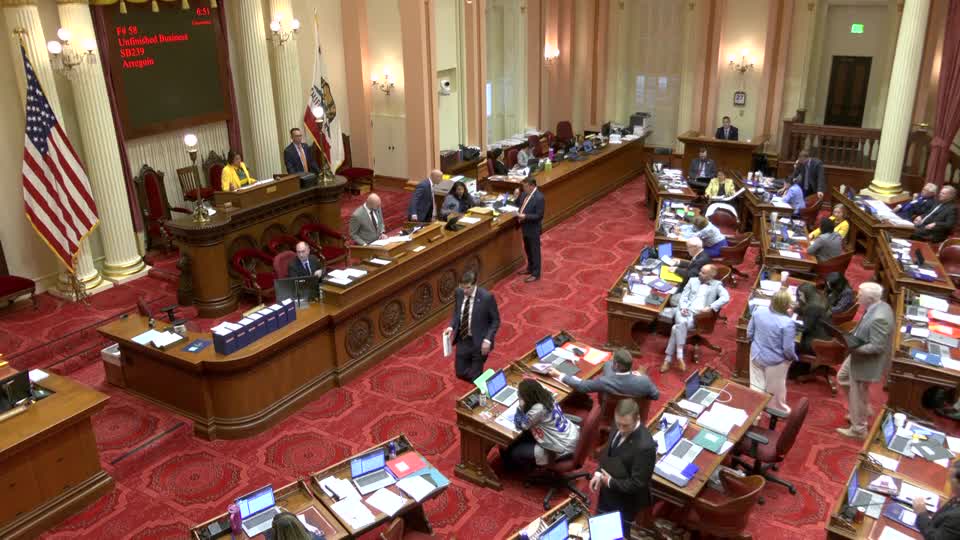 32SEC
Senate Floor
 2MIN
Senate Standing Committee on Business, Professions and Economic Development
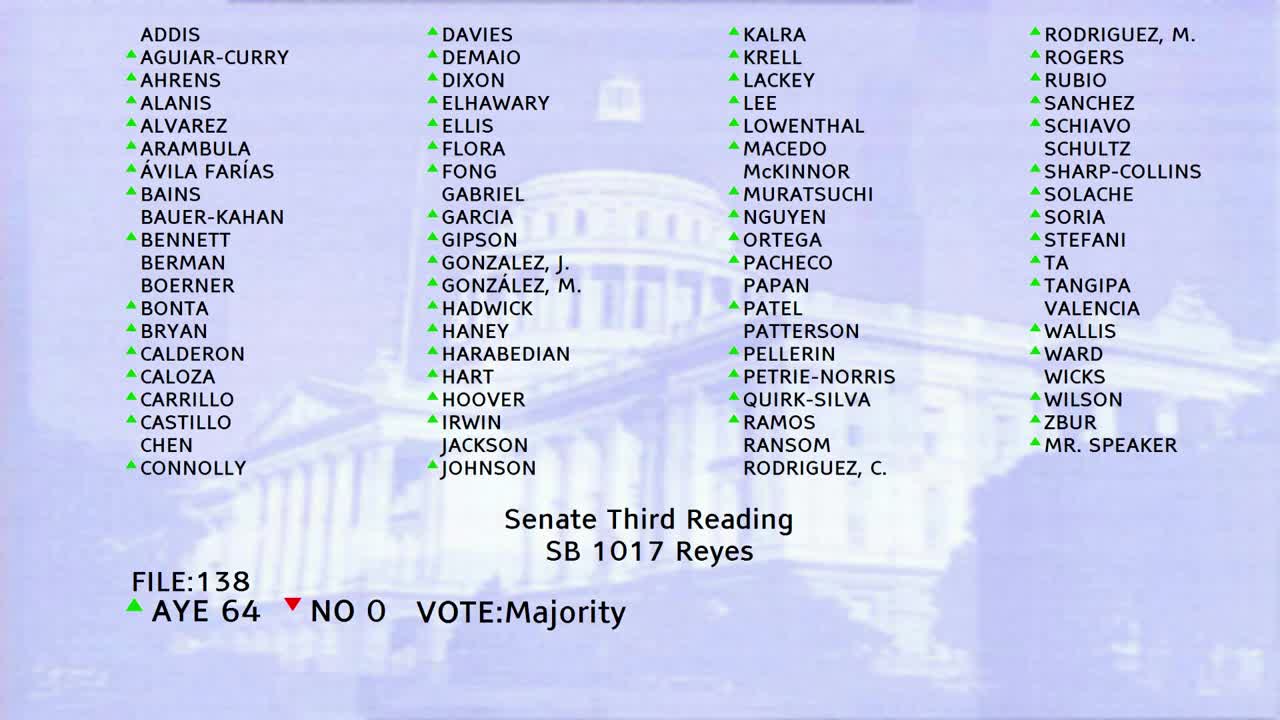 1MIN
Assembly Floor
 3MIN
Assembly Standing Committee on Economic Development, Growth, and Household Impact

Bill Co-Author(s):