SB 751: Veterans and Former First Responders Research Pilot Program.
- Session Year: 2025-2026
- House: Senate
- Latest Version Date: 2025-04-28
Current Status:
Failed
(2026-02-02: Returned to Secretary of Senate pursuant to Joint Rule 56.)
Introduced
In Committee
Awaiting First Chamber Vote
Passed First Chamber
In Committee
Awaiting Second Chamber Vote
Passed Second Chamber
Enacted
Existing law makes it a crime to possess, cultivate, and administer specified controlled substances, including psilocybin and psilocyn. Existing law makes it a crime for a person to rent, lease, or make available for use any building or room for the purpose of storing or distributing any controlled substance.
This bill would, until January 1, 2031, require the California Health and Human Services Agency to oversee a Veterans and First Responders Research Pilot Program request the University of California to establish local pilots in up to 5 counties to allow for the research and development of psilocybin services for target populations, as defined, in up to 5 counties. The bill would authorize the agency to operate in partnerships with the University of California system. The bill would request the University of California to oversee each local pilot program as a university partner veterans and former first responders as part of the Veterans and Former First Responders Research Pilot Program (Pilot Program). The bill would require these university partners, overseeing each Pilot Program to be responsible for protocol design, institutional review board approvals, training of psilocybin facilitators, data collection, and reporting. The bill would require each local pilot program to partner with local mental health clinics, hospice programs, veterans facilities, or other community-based licensed health care and licensed community-based providers that provide services and care to the target population. The bill would require psilocybin to be provided by or under the supervision of a practitioner who has experience in providing or overseeing psilocybin or other psychedelic therapy services. The bill would require that each person being considered for the Pilot Program meet specified criteria, including that they are 21 years of age or older and have been given specified assessments.
This bill would require the agency request the University of California to report specified information about the pilot program Pilot Program to the Legislature Legislature, the Secretary of California Health and Human Services, and the Governor by January 15, 2030. The bill would establish the Veterans and Former First Responders Research Pilot Special Fund and would continuously appropriate the fund to the agency University of California for the purposes of these provisions. The bill would authorize the agency request the University of California to apply for and accept grants, donations, and federal funding for the purposes of the pilot program, Pilot Program, and would require those moneys to be deposited in the fund.
Existing law makes it a crime to possess, cultivate, and administer specified controlled substances, including psilocybin and psilocyn. Existing law makes it a crime for a person to rent, lease, or make available for use any building or room for the purpose of storing or distributing any controlled substance.
This bill would, until January 1, 2031, require the California Health and Human Services Agency to oversee a Veterans and First Responders Research Pilot Program to allow for the research and development of psilocybin services for target populations, as defined, in up to 5 counties. The bill would authorize the agency to operate in partnerships with the University of California system. The bill would request the University of California to oversee each local pilot program as a university partner responsible for protocol design, institutional review board approvals, training of psilocybin facilitators, data collection, and reporting. The bill would require each local pilot program to partner with local mental health clinics, hospice programs, veterans facilities, or other community-based providers that provide services and care to the target population.
This bill would require the agency to report specified information about the pilot program to the Legislature by January 15, 2030. The bill would establish the Veterans and First Responders Research Pilot Special Fund and would continuously appropriate the fund to the agency for the purposes of these provisions. The bill would authorize the agency to apply for and accept grants, donations, and federal funding for the purposes of the pilot program, and would require those moneys to be deposited in the fund.
The Legislature finds and declares all of the following:
(a)Every day, an average of 17.6 veterans commit suicide. die by suicide.
(b)Similarly troubling, first responders, including law enforcement officers and firefighters, are more likely to die by suicide than in the line of duty. The Legislature acknowledges that one veteran or first responder life lost to suicide is too many.
(c)The Legislature acknowledges the significant mental health challenges veterans and former first responders face. These individuals are often exposed to traumatic experiences that can lead to conditions such as post-traumatic stress disorder, depression, and anxiety.
(d)Emerging research suggests that psilocybin and psilocyn, when used in a controlled setting, may offer significant benefits in treating mental health disorders, particularly those related to trauma and stress. The United States Food and Drug Administration has determined that preliminary clinical evidence indicates psilocybin may demonstrate substantial improvement over available therapies for treatment-resistant depression and has granted a breakthrough therapy designation for a treatment that uses psilocybin as a therapy for treatment-resistant depression.
(e)Psilocybin should be available to veterans and former first responders in a manner that ensures safety, efficacy, and ethical standards, including use only under qualified appropriate supervision.
(f)California can conduct federally regulated pilot trials of psilocybin services in partnership with community-based licensed health care settings to determine if and how psilocybin can be provided to veterans and first responders in a beneficial and effective manner.
SEC. 2.The purpose of this act is to establish a pilot program to develop and study protocols for providing psilocybin in strict compliance with United States Food and Drug Administration and United States Drug Enforcement Administration regulations, for the benefit of certain target populations.
SEC. 3.Article 6 (commencing with Section 11310) is added to Chapter 5 of Division 10 of the Health and Safety Code, to read:6.Veterans and Former First Responders Research Pilot Program11310.This article shall apply to the University of California to the extent that the Regents of the University of California, by appropriate resolution, make that provision applicable.
11310.11311.For the purposes of this article, the following definitions apply:
(a)Agency means the California Health and Human Services Agency.(b)Community-based providers means licensed health care and community-based providers, including, but not limited to, mental health clinics, hospice organizations, veterans organizations, and other therapeutic care organizations.(c)(a)Veterans and Former First Responders Research Pilot Program or Pilot Program refers to a structured initiative designed to provide regulated and investigational psilocybin services for adults within a target population with qualifying conditions, compliant with United States Food and Drug Administration and United States Drug Enforcement Administration regulations.
(b)Pilot Program providers means licensed health care and licensed community-based providers with the ability and authorization to provide services under the Pilot Program and is limited to mental health clinics, United States Department of Veterans Affairs clinics, hospice care agencies, and other therapeutic care organizations.
(d)(c)Local pilot refers to the operation of the Veterans and First Responders Research Pilot Program within each of the participating counties.
(e)(d)Psilocybin means a naturally occurring psychedelic compound derived from specific species of fungi.
(f)(e)Target population refers to veterans and inactive former first responders with post-traumatic stress disorder, end-of-life distress, or other specified conditions, as determined by program criteria and local needs. responders.
(f)Qualifying condition means a severe mental health disorder.
(g)University partners refers to accredited institutions within the University of California system responsible for overseeing Veterans and First Responders Research Pilot Program activities. Pilot Program activities within each local pilot.
11311.(a)Notwithstanding any other law, the agency shall establish and oversee the Veterans and First Responders Research Pilot Program to allow for the research and development of psilocybin services for target populations in up to five counties.(b)The pilot program may operate in partnerships with the University of California system.11312.(a)The University of California is requested to oversee each local pilot program as a university partner. establish local pilots in up to five counties to allow for the research and development of psilocybin services for target populations and to oversee each university partner. These university partners shall be responsible for protocol design, institutional review board approvals, administration, data collection, and reporting.
(b)The local pilot shall partner with local mental health clinics, hospice programs, veterans facilities, or other community-based with Pilot Program providers that provide services and care to the target population. Psilocybin shall be provided by or under the supervision of a practitioner who has experience in providing or overseeing psilocybin or other psychedelic therapy services.
11313.The university partner overseeing each local pilot shall maintain strict protocols following the most recent guidelines from the United States Food and Drug Administration related to clinical trials for psychedelics.
11314.(a)Each local pilot shall ensure that each person being considered for the Pilot Program meets, at a minimum, all of the following criteria:
(1)Is part of the target population.
(2)Has a documented qualifying condition under this article.
(3)Is 21 years of age or older.
(4)(A)Has been given an initial assessment by the practitioner in subdivision (b) of Section 11312 to determine the person is appropriate to participate in the Pilot Program.
(B)The purpose of the assessment shall be to understand each participants goals and expectations and to assess their mental and physical health history for any concerns that require further intervention or information before receiving psilocybin therapy services and an integration session after receiving psilocybin therapy services.
(b)Each local pilot shall ensure that, prior to being enrolled in the Pilot Program, each person in the target population has been informed about, at a minimum, all of the following:
(1)The implications of being treated with psilocybin and any possible or documented side effects or immediate and lasting aftereffects.
(2)Other treatments that may be effective if the person has not previously been treated.
(3)The option to speak to a peer or other counselor prior to accepting participation in the Pilot Program, as well as future opportunities to speak to a peer or other counselor.
(4)The option to withdraw from the Pilot Program at any time, and their right to receive aftercare, if necessary, upon ending treatment with psilocybin.
11314.11315.Each local pilot shall collect and provide data relevant to the success of the pilot program to the agency, data, including how each person in the target population inquired about, was referred to, or learned about the Pilot Program, as well as longitudinal data after treatments have concluded, that is relevant to the outcomes of the Pilot Program to the university partner, as determined with input from the agency. university partner.
11315.11316.(a)The agency shall University of California is requested to enter into an agreement with each university partner approved for participation in the pilot program. Pilot Program. The agreement shall specify, at a minimum, all of the following:
(1)The amount of funding available to the local pilot.
(2)The conditions under which payments will be made.
(3)Data collection and sharing requirements.
(4)Reporting requirements.
(b)The sharing of health information, records, and other data with and among pilot entities and participating entities shall be permitted to the extent necessary for the activities and purposes set forth in this chapter.
(c)The agency shall University of California is requested to research whether national data-sharing programs or practice-based research networks exist for psychedelic research and shall to encourage university partners to participate in those programs if they are operational and consistent with quality standards for similar collaborative research networks in other health fields.
11316.11317.(a)University partners are requested to submit midyear and annual reports to the agency, office of the President of the University of California in accordance with schedules and guidelines established by the agency. office of the President.
(b)University partners are requested to confer and choose a single independent entity to conduct a peer-reviewed study of the statewide efficacy of the pilot program Pilot Program and the community impacts of the local pilots. The study shall be submitted to the Legislature and the Governors office on or before January 15, 2029. pilots to be completed on or before January 15, 2029, and are requested to submit the study to the Legislature and the Secretary of California Health and Human Services by that date.
(c)By no later than January 15, 2030, the agency shall University of California is requested to compile and submit the pilot program outcomes, data analysis, and recommendations from the university partners into a comprehensive report to the Legislature. Legislature, the Secretary of California Health and Human Services, and the Governors office.
(d)A report to be submitted pursuant to this section shall be submitted in compliance with Section 9795 of the Government Code.
11317.11318.(a)The Veterans and Former First Responders Research Pilot Special Fund is hereby established in the State Treasury. Notwithstanding Section 13340 of the Government Code, moneys deposited in the Veterans and Former First Responders Research Pilot Special Fund pursuant to this section shall be continuously appropriated, without regard to fiscal years, to the agency University of California for allocation to each local pilot for the purposes of this article.
(b)The agency may University of California is requested to apply for and accept grants, donations, and federal funding for the purposes of this article. Any moneys received pursuant to this subdivision shall be deposited in the Veterans and Former First Responders Research Pilot Special Fund.
(c)Moneys in the Veterans and Former First Responders Research Pilot Special Fund shall be used for, but are not limited to, all of the following purposes:
(1)Program administration and oversight.
(2)Training of medical staff and research supervisors.
(3)Data collection, analysis, and reporting.
(4)Community engagement and education initiatives.
(5)Requested peer or other counseling services by any person in the target population either prior to, during, or after participating in the local pilot.
11318.11319.This article shall remain in effect only until January 1, 2031, and as of that date is repealed.
The Legislature finds and declares all of the following:
(a)Every day, an average of 17.6 veterans commit suicide.
(b)Similarly troubling, first responders, including law enforcement officers and firefighters, are more likely to die by suicide than in the line of duty. The Legislature acknowledges that one veteran or first responder life lost to suicide is too many.
(c)The Legislature acknowledges the significant mental health challenges veterans and former first responders face. These individuals are often exposed to traumatic experiences that can lead to conditions such as post-traumatic stress disorder, depression, and anxiety.
(d)Emerging research suggests that psilocybin and psilocyn, when used in a controlled setting, may offer significant benefits in treating mental health disorders, particularly those related to trauma and stress. The United States Food and Drug Administration has determined that preliminary clinical evidence indicates psilocybin may demonstrate substantial improvement over available therapies for treatment-resistant depression and has granted a breakthrough therapy designation for a treatment that uses psilocybin as a therapy for treatment-resistant depression.
(e)Psilocybin should be available to veterans and former first responders in a manner that ensures safety, efficacy, and ethical standards, including use only under qualified supervision.
(f)California can conduct federally regulated pilot trials of psilocybin services in partnership with community-based licensed health care settings to determine if and how psilocybin can be provided to veterans and first responders in a beneficial and effective manner.
SEC. 2.The purpose of this act is to establish a pilot program to develop and study protocols for providing psilocybin in strict compliance with United States Food and Drug Administration and United States Drug Enforcement Administration regulations, for the benefit of certain target populations.
SEC. 3.Article 6 (commencing with Section 11310) is added to Chapter 5 of Division 10 of the Health and Safety Code, to read:6.Veterans and First Responders Research Pilot Program11310.For the purposes of this article, the following definitions apply:
(a)Agency means the California Health and Human Services Agency.
(b)Community-based providers means licensed health care and community-based providers, including, but not limited to, mental health clinics, hospice organizations, veterans organizations, and other therapeutic care organizations.
(c)Veterans and First Responders Research Pilot Program refers to a structured initiative designed to provide regulated and investigational psilocybin services for adults within a target population with qualifying conditions, compliant with United States Food and Drug Administration and United States Drug Enforcement Administration regulations.
(d)Local pilot refers to the operation of the Veterans and First Responders Research Pilot Program within each of the participating counties.
(e)Psilocybin means a naturally occurring psychedelic compound derived from specific species of fungi.
(f)Target population refers to veterans and inactive first responders with post-traumatic stress disorder, end-of-life distress, or other specified conditions, as determined by program criteria and local needs.
(g)University partners refers to accredited institutions within the University of California system responsible for overseeing Veterans and First Responders Research Pilot Program activities.
11311.(a)Notwithstanding any other law, the agency shall establish and oversee the Veterans and First Responders Research Pilot Program to allow for the research and development of psilocybin services for target populations in up to five counties.
(b)The pilot program may operate in partnerships with the University of California system.
11312.(a)The University of California is requested to oversee each local pilot program as a university partner. These university partners shall be responsible for protocol design, institutional review board approvals, administration, data collection, and reporting.
(b)The local pilot shall partner with local mental health clinics, hospice programs, veterans facilities, or other community-based providers that provide services and care to the target population.
11313.The university partner overseeing each local pilot shall maintain strict protocols following the most recent guidelines from the United States Food and Drug Administration related to clinical trials for psychedelics.
11314.Each local pilot shall collect and provide data relevant to the success of the pilot program to the agency, as determined with input from the agency.
11315.(a)The agency shall enter into an agreement with each university partner approved for participation in the pilot program. The agreement shall specify, at a minimum, all of the following:
(1)The amount of funding available to the local pilot.
(2)The conditions under which payments will be made.
(3)Data collection and sharing requirements.
(4)Reporting requirements.
(b)The sharing of health information, records, and other data with and among pilot entities and participating entities shall be permitted to the extent necessary for the activities and purposes set forth in this chapter.
(c)The agency shall research whether national data-sharing programs or practice-based research networks exist for psychedelic research and shall encourage university partners to participate in those programs if they are operational and consistent with quality standards for similar collaborative research networks in other health fields.
11316.(a)University partners are requested to submit midyear and annual reports to the agency, in accordance with schedules and guidelines established by the agency.
(b)University partners are requested to confer and choose a single independent entity to conduct a peer-reviewed study of the statewide efficacy of the pilot program and the community impacts of the local pilots. The study shall be submitted to the Legislature and the Governors office on or before January 15, 2029.
(c)By no later than January 15, 2030, the agency shall compile and submit the pilot program outcomes, data analysis, and recommendations from the university partners into a comprehensive report to the Legislature.
(d)A report to be submitted pursuant to this section shall be submitted in compliance with Section 9795 of the Government Code.
11317.(a)The Veterans and First Responders Research Pilot Special Fund is hereby established in the State Treasury. Notwithstanding Section 13340 of the Government Code, moneys deposited in the Veterans and First Responders Research Pilot Special Fund pursuant to this section shall be continuously appropriated, without regard to fiscal years, to the agency for the purposes of this article.
(b)The agency may apply for and accept grants, donations, and federal funding for the purposes of this article. Any moneys received pursuant to this subdivision shall be deposited in the Veterans and First Responders Research Pilot Special Fund.
(c)Moneys in the Veterans and First Responders Research Pilot Special Fund shall be used for, but are not limited to, all of the following purposes:
(1)Program administration and oversight.
(2)Training of medical staff and research supervisors.
(3)Data collection, analysis, and reporting.
(4)Community engagement and education initiatives.
11318.This article shall remain in effect only until January 1, 2031, and as of that date is repealed.
|
Date
|
Status
|
|---|---|
| Feb 2, 2026 | Returned to Secretary of Senate pursuant to Joint Rule 56. |
| May 23, 2025 | May 23 hearing: Held in committee and under submission. |
| May 16, 2025 | Set for hearing May 23. |
| May 12, 2025 | May 12 hearing: Placed on APPR. suspense file. |
| May 2, 2025 | Set for hearing May 12. |
| Apr 30, 2025 | From committee: Do pass and re-refer to Com. on APPR. (Ayes 6. Noes 0. Page 962.) (April 30). Re-referred to Com. on APPR. |
| Apr 28, 2025 | Read second time and amended. Re-referred to Com. on ED. |
| Apr 24, 2025 | From committee: Do pass as amended and re-refer to Com. on ED. (Ayes 7. Noes 0. Page 869.) (April 23). |
| Apr 22, 2025 | Set for hearing April 30 in ED. pending receipt. |
| Apr 8, 2025 | Set for hearing April 23. |
| Mar 12, 2025 | Referred to Coms. on HEALTH and ED. |
| Feb 24, 2025 | From printer. May be acted upon on or after March 24. |
| Feb 24, 2025 | Read first time. |
| Feb 21, 2025 | Introduced. To Com. on RLS. for assignment. To print. |
|
Date
|
Description
|
Location
|
Votes
|
|
|---|---|---|---|---|
| May 12, 2025 | Placed on suspense file | Senate Standing Committee on Appropriations |
Passed |
|
| Apr 30, 2025 | Do pass, but first be re-referred to the Committee on [Appropriations] | Senate Standing Committee on Education |
Passed |
|
| Apr 23, 2025 | Do pass as amended, but first amend, and re-refer to the Committee on [Education] | Senate Standing Committee on Health |
Passed |
This list shows positions taken on this bill by organizations on the date displayed, which is linked to the original source.
Positions by individuals are not included.
|
Organization
|
Position
|
Date
|
|---|---|---|
| California Association Of County Veterans Service Officers | ** Support | |
| California Family Council | ** Against | |
| California Narcotic Officers Association | ** Against | |
| Heroic Hearts Project, INC. | ** Support | |
| Law Enforcement Action Partnership | ** Support | |
| Riverside County Sheriff’s Office | ** Against | |
| The S.I.R.E.N. Project | ** Support | |
| The Siren Project | ** Support |
SENATE COMMITTEE ON APPROPRIATIONS
Senator Anna Caballero, Chair
2025 - 2026 Regular Session
SB 751 (Becker) - Veterans and Former First Responders Research Pilot Program
Version: April 28, 2025 | Policy Vote: HEALTH 7 - 0, ED. 6 - 0 |
Urgency: No | Mandate: No |
Hearing Date: May 12, 2025 | Consultant: Agnes Lee |
Bill Summary:
SB 751 would request the University of California (UC) to establish local pilots to allow for the research and development of psilocybin services for veterans and former first responders, as specified.
Fiscal Impact:
- According to the UC, a pilot that includes 3-5 partner sites would cost about
$3 million to $8 million, depending on the scale of work. Under potential scenarios, a 3-site pilot with 15 patients per site is estimated to cost $3 million and a 5-site pilot with 50 patients per site is estimated to cost $8 million. UC indicates that with $500,000, the UC could support one pilot project.
- While the bill would establish the Veterans and Former First Responders Research Pilot Special Fund, the bill could result in cost pressures to the General Fund if revenues to the special fund are insufficient to cover the costs of the pilot program or if the pilot program is extended or expanded.
Background:
Hallucinogens are a diverse group of drugs that alter a person’s perception or awareness of their surroundings. Some hallucinogens are found in plants and fungi and some are synthetically produced. Many hallucinogenic substances, including LSD, DMT, mescaline, and psilocybin are classified as Schedule I substances under California’s Uniform Controlled Substances Act. Schedule I controlled substances are defined as having no medical utility and a high potential for abuse. There is research, however, that indicates some of these substances have therapeutic benefits. In recent years, the U.S. Food and Drug Administration (FDA) has granted breakthrough therapy designation to two formulations of psilocybin being studied as potential medical treatments for depression. This designation is a process to expedite the development and review of drugs that are intended to treat a serious condition, and preliminary clinical evidence indicates that the drug may demonstrate substantial improvement over available therapy on a clinically significant endpoint.
In June 2023, the FDA published “Psychedelic Drugs: Considerations for Clinical Investigation” to highlight fundamental considerations for researchers investigating the use of psychedelic drugs for potential treatment of medical conditions, including for psychiatric conditions or substance use disorder. This is the first FDA draft guidance that presents considerations to industry for designing clinical trials for psychedelic drugs, and notes designing clinical studies to evaluate the safety and effectiveness of these compounds presents a number of unique challenges that require careful consideration. The FDA states psychedelic drugs show initial promise as potential treatments but are still investigational products. The purpose of the draft guidance is to advise researchers on study design and other considerations as they develop medications that contain psychedelics and describes basic considerations throughout the drug development process including trial conduct, data collection, subject safety, and new drug application requirements.
Proposed Law:
Specific provisions of the bill would:
- Request the UC to establish local pilots in up to five counties to allow for the research and development of psilocybin services for veterans and former first responders and to oversee each university partner, as specified.
- Impose requirements on each local pilot, as specified.
- Request the UC, by no later than January 15, 2030, to compile and submit the pilot program outcomes, data analysis, and recommendations from the university partners into a comprehensive report to the Legislature, the Secretary of California Health and Human Services, and the Governor’s office.
- Establish the Veterans and Former First Responders Research Pilot Special Fund; specify that moneys deposited in the fund be continuously appropriated, without regard to fiscal years, to the UC for allocation to each local pilot; and request the UC to apply for and accept grants, donations, and federal funding for these purposes, for deposit in the special fund.
- Sunset the bill’s provisions on January 1, 2031.
-- END --
SENATE COMMITTEE ON EDUCATION
Senator Sasha Renée Pérez, Chair
2025 - 2026 Regular
Bill No: Hearing Date: April 30, 2025
Author: | Becker | ||
Version: |
| ||
Urgency: | Fiscal: | ||
Consultant: | |||
Subject: .
SUMMARY
This bill requests the University of California (UC) to establish local pilots in up to five counties to allow for the research and development of psilocybin services for target populations. It further requests UC to partner with and oversee institutions within UC that are to be responsible for protocol design, institutional review board approvals, administration, data collection, and reporting. Lastly, the bill establishes a special fund in the State Treasury for Veterans and First Responders Research Pilot.
BACKGROUND
Existing law:
- Establishes, under the California Constitution, the UC as a public trust to be administered by the Regents of the UC with full powers of organization and government, subject only to such legislative control as may be necessary to insure the security of its funds and compliance with the terms of the endowments of the university, and such competitive bidding procedures as may be made applicable to the university for construction contracts, selling real property, and purchasing materials, goods and services. (Constitution of California, Article IX, Section 9)
- States, under the California Constitution, that the university be entirely independent of all political or sectarian influence and kept free therefrom in the appointment of its regents and in the administration of its affairs. (Constitution of California, Article IX, Section 9 (f))
- Provides that statutes related to UC (and most other aspects of the governance and operation of UC) are applicable only to the extent that the Regents of UC make such provisions applicable. (Education Code (EC) § 67400)
- Declares the UC as the primary state-supported academic agency for research. (EC § 66010.4 (c))
ANALYSIS
This bill:
- Requests the UC to establish local pilots in up to five counties to allow for the research and development of psilocybin services for target populations and to oversee each university partner.
- Requires university partners to be responsible for protocol design, institutional review board approvals, administration, data collection, and reporting.
- Requires that the university partner overseeing each local pilot to maintain strict protocols following the most recent guidelines from the United States Food and Drug Administration related to clinical trials for psychedelics.
- Requires psilocybin to be provided by, or under the supervision of, a practitioner who has experience in providing or overseeing psilocybin or other psychedelic therapy services.
- Requires the local pilot to partner with Pilot Program providers that provide services and care to the target population.
- Requires each local pilot to ensure that each person being considered for the Pilot Program meets, at a minimum, all of the following criteria:
- Is part of the target population.
- Has a documented qualifying condition pursuant to this bill.
- Is 21 years of age or older.
- Has been given an initial assessment by the practitioner described in # 4 to determine the person is appropriate to participate in the Pilot Program.
- Is part of the target population.
- Provides that the purpose of the assessment is to understand each participant’s goals and expectations, and to assess their mental and physical health history for any concerns that require further intervention or information before receiving psilocybin therapy services and an integration session after receiving psilocybin therapy services.
- Requires each local pilot to ensure that, prior to being enrolled in the Pilot Program, each person in the target population has been informed about, at a minimum, all of the following:
- The implications of being treated with psilocybin and any possible or documented side effects or immediate and lasting aftereffects.
- Other treatments that may be effective if the person has not previously been treated.
- The option to speak to a peer or other counselor prior to accepting participation in the Pilot Program, as well as future opportunities to speak to a peer or other counselor.
- The option to withdraw from the Pilot Program at any time, and their right to receive aftercare, if necessary, upon ending treatment with psilocybin.
- The implications of being treated with psilocybin and any possible or documented side effects or immediate and lasting aftereffects.
- Requires each local pilot to collect and provide data, including how each person in the target population inquired about, was referred to, or learned about the Pilot Program, as well as longitudinal data after treatments have concluded, that is relevant to the outcomes of the Pilot Program to the university partner, as determined with input from the university partner.
- Requests UC to enter into an agreement with each university partner approved for participation in the Pilot Program. The bill requires that the agreement specify, at a minimum, all of the following:
- The amount of funding available to the local pilot.
- The conditions under which payments will be made.
- Data collection and sharing requirements.
- Reporting requirements.
- Provides that the sharing of health information, records, and other data with and among pilot entities and participating entities be permitted to the extent necessary for the activities and purposes of the pilot program.
- Requests UC to research whether national data-sharing programs or practices-based research networks exist for psychedelic research, and to encourage university partners to participate in those programs if they are operational and consistent with quality standards for similar collaborative research networks in the other health fields.
- Requests university partners to submit mid-year and annual reports to the office of the President of UC, in accordance with schedules and guidelines established by the office of the President.
- Requests university partners to confer and choose a single independent entity to conduct a peer-reviewed study of the statewide efficacy of the Pilot Program and the community impacts of the local pilots to be completed by January 15, 2029. The bill further requests that the study be submitted to the Legislature and the Secretary of California Health and Human Services by January 15, 2029.
- Requests UC, by January 15, 2030, to compile and submit the pilot program outcomes, data analysis, and recommendations from the university partners into a comprehensive report to the Legislature, the Secretary of California Health and Human Services, and the Governor’s office.
- Establishes the Veterans and Former First Responders Research Pilot Special Fund in the State Treasury, as specified.
- Requests UC to apply for and accept grants, donations, and federal funding for the purpose of the bill to be deposited into the special fund.
- Requires that moneys in the Special Fund be used for, but are not limited to, all of the following purposes:
- Program administration and oversight.
- Training of medical staff and research supervisor.
- Data collection, analysis, and reporting.
- Community engagement and education initiatives.
- Requested peer or other counseling services by any person in the target population either prior to, during, or after participating in the local pilot.
- Provides that the provisions of this bill apply to UC to the extent that the UC Regents, by appropriate resolution, make these provisions applicable.
- Sunsets the provisions of this bill on January 1, 2031.
- States that it is the purpose of this Act to establish a Pilot Program to develop and study protocols for providing psilocybin in strict compliance with United States Food and Drug Enforcement Administration regulations, for the benefit of certain target populations.
- Defines the following terms for purposes of the bill:
- Agency to mean the California Health and Human Services Agency.
- Community-based providers to mean licensed health care and community-
based providers, including, but not limited to, mental health clinics, hospice organizations, veterans organizations, and other therapeutic care organizations.
- Veterans and First Responders Research Pilot Program refers to a
structured initiative designed to provide regulated and investigational psilocybin services for adults within a target population with qualifying conditions, compliant with United States Food and Drug Administration and United States Drug Enforcement Administration regulations.
- Local pilot refers to the operation of the Veterans and First Responders
Research Pilot Program within each of the participating counties.
- Psilocybin to mean a naturally occurring psychedelic compound derived
from specific species of fungi.
- Target population to refer to veterans and inactive first responders
with post-traumatic stress disorder, end-of-life distress, or other specified conditions, as determined by program criteria and local needs.
- University partner refers to accredited institutions within the UC system
responsible for overseeing Veterans and First Responders Research Pilot Program activities.
STAFF COMMENTS
- Need for the bill. According to the author, “The mental health crisis among California’s veterans and first responders requires immediate action. These brave individuals face alarmingly high rates of PTSD, depression, and suicide due to the trauma they experience in the line of duty. Given the gravity of the situation, we have a responsibility to explore every treatment option that could offer relief—the need for innovative solutions has never been more critical.
Senate Bill 751 would establish a research pilot program through a partnership between the University of California, CalHHS, and community-based organizations in select counties. The program will explore the use of psilocybin and psilocin as treatments for severe mental health conditions among veterans and first responders, ensuring our heroes have access to the care they seek.”
- Hallucinogens and potential benefits. According to the Senate Committee on Health analysis, “Hallucinogens are a diverse group of drugs that alter a person’s perception or awareness of their surroundings. Some hallucinogens are found in plants and fungi and some are synthetically produced. According to the National Institute on Drug Abuse (NIDA), hallucinogens are commonly split into two categories: classic hallucinogens and dissociative drugs. Both types can cause hallucinations, and dissociative drugs can cause the user to feel disconnected from their body or environment. Hallucinogens can be consumed in a variety of ways, including swallowed as tablets, pills, or liquid, consumed raw or dried, snorted, injected, inhaled, vaporized, smoked, or absorbed through the lining of the mouth using drug-soaked pieces of paper. Common hallucinogens include LSD, DMT, psilocybin, peyote, mescaline, and ketamine. Many hallucinogenic substances, including LSD, DMT, mescaline, and psilocybin are classified as Schedule I substances under California’s Uniform Controlled Substances Act. Schedule I controlled substances are defined as having no medical utility and a high potential for abuse. There is research, however, that indicates some of these substances have therapeutic benefits. In recent years, the FDA has granted breakthrough therapy designation to two formulations of psilocybin being studied as potential medical treatments for depression. This designation is a process to expedite the development and review of drugs that are intended to treat a serious condition, and preliminary clinical evidence indicates that the drug may demonstrate substantial improvement over available therapy on a clinically significant endpoint. According to NIDA, ketamine was approved many years ago as an anesthetic for painful medical procedures, and in March 2019, the FDA approved esketamine as a treatment for severe depression in patients that do not respond to other treatments. It is limited to administration in medical facilities as a nasal spray, however, because of its potential for abuse. Psilocybin is also being studied in clinical trials for its potential to treat severe depression.” This bill seeks to provide regulated and investigational psilocybin services for veterans and inactive first responders with post-traumatic stress disorder, end-of-life distress, or other specified conditions through UC in five counties to allow for the research and development of those services.
- Codifies request for UC research. Given the UC’s constitutional autonomy as noted in the background of this analysis, this bill requests that the UC establish local pilots in up to five counties. Currently, psychedelic research is already underway at five UC campuses, which include UC Berkeley, Davis, Los Angeles, San Diego, and San Francisco. The extent to which UC would assume the responsibilities specified in the bill is unclear, particularly in the absence of state funding. Notably, this bill establishes a special fund for Pilot Program administration and oversight, among other things. If UC chooses to participate, presumably those funds, when available, could be used to administer the pilot program.
- University of Washington pilot program. According to information provided by the author’s office, the state of Washington in 2023 enacted legislation similar to this bill to establish a state-funded psilocybin therapy services pilot program for veterans and first responders overseen by researchers at the University of Washington. It mandated that the University of Washington School of Medicine facilitate a study to explore the potential therapeutic value of the psychedelic compound found in mushrooms. The trial includes military veterans and first responders who have documented problems with post-traumatic stress and alcohol use disorders. The University of Washington pilot program has not yet concluded.
- Double referral. This bill was previously heard by the Health Committee, which has jurisdiction over bills relating to behavioral health (including substance use disorder), public health, and prescription drugs among other things. This bill was heard by the Health Committee on April 23, 2025.
- Related and prior legislation.
SB 803 (Becker, 2024) would have established the Heal Our Heroes Act and the Psychedelic-Assisted Facilitation Pilot Program in the City and County of San Francisco, the County of San Diego, and the County of Santa Cruz to establish and operate psychedelic-assisted facilitation centers. SB 803 was not heard at the request of the author in the Assembly Health Committee.
SB 1012 (Wiener, 2024) would have established the Regulated Psychedelic Facilitators Act and Regulated Psychedelic-Assisted Therapy Act administered by three new state entities: a Division of Regulated Psychedelic-Assisted Therapy; a Board of Regulated Psychedelic Facilitators and; a Regulated Psychedelic Substances Oversight Committee, which would have been required to determine, define, and establish standards for psychedelic facilitation in California. SB 1012 was held on the Senate Appropriations Suspense file.
AB 941 (Waldron, 2024) would have required CalHHS to convene a workgroup to study and make recommendations on a framework governing psychedelic-assisted therapy. AB 941 was not heard at the request of the author in the Senate Health Committee.
SB 58 (Weiner, 2023) would have, among other things, decriminalized the use of certain psychedelics for personal use by those 21 years of age or older, and created a workgroup to study and recommend a framework for governing the therapeutic use of psychedelics. SB 58 was vetoed by Governor Newsom whose message read in part,
“California should immediately begin work to set up regulated treatment guidelines - replete with dosing information, therapeutic guidelines, rules to prevent against exploitation during guided treatments, and medical clearance of no underlying psychoses … I urge the Legislature to send me legislation next year that includes therapeutic guidelines.”
SB 519 (Wiener of 2022) was substantially similar to SB 58. SB 519 was subsequently amended only to create the workgroup and was never taken up on the Assembly Floor.
AB 2150 (Lackey, 2022) would have required the Center for Medicinal Cannabis Research, if the Regents of the UC accept by appropriate resolution, to establish a study examining the effects of cannabis products that are currently in the commercial cannabis market, and appropriates $2 million for this purpose. AB 2150 was pulled from hearing at the request of the author in the Senate Business, Professions and Economic Development Committee.
SUPPORT
Law Enforcement Action Partnership (co-sponsor)
The S.I.R.E.N. Project (co-sponsor)
California Association of County Veterans Service Officers
1 Individual
OPPOSITION
California Family Council
California Narcotic Officers’ Association
Riverside County Sheriff’s Office
-- END --
SENATE COMMITTEE ON HEALTH
Senator Caroline Menjivar, Chair
BILL NO: SB 751
AUTHOR: | Becker and Jones | ||
VERSION: | February 21, 2025 | ||
HEARING DATE: | April 23, 2025 | ||
CONSULTANT: | Reyes Diaz | ||
SUBJECT: Veterans and First Responders Research Pilot Program
SUMMARY:
- Requires the California Health and Human Services Agency to establish and oversee the Veterans and First Responders Research Pilot Program (VFR Pilot) to allow for the research and development of psilocybin services for specified populations in up to five counties. Permits the VFR Pilot to operate in partnerships with the University of California system. Requires data collection and reporting by all entities involved in administering the VFR Pilot. Repeals the VFR Pilot on January 1, 2031.
Existing law:
- Establishes the Uniform Controlled Substances Act, which regulates controlled substances and defines an “opiate” as any substance having an addiction-forming or addiction-sustaining liability similar to morphine or being capable of conversion into a drug having addiction-forming or addiction-sustaining liability. [HSC §11020]
- Lists controlled substances into five “schedules” intended to list drugs in decreasing order of harm and increasing medical utility or safety and provides penalties for the possession of and the engagement in commerce of a controlled substance. Includes in Schedule I the most serious and heavily controlled substances, with Schedule V being the least serious and most lightly controlled substances. [HSC §11054-§11058]
- Classifies several hallucinogenic substances, including Dimethyltryptamine (DMT), ibogaine, mescaline, psilocybin, and psilocin, as Schedule I substances. [HSC §11054(d)]
- Prohibits possessing, using, and being under the influence of several specified controlled substances. [HSC §11350(a) and §11550(a)]
- Makes it unlawful to visit or to be in any room or place where specified controlled substances are being unlawfully smoked or used with knowledge that such activity is occurring. [HSC §11365(a)]
- Makes it unlawful for a person to agree, consent, or in any manner offer to unlawfully sell, furnish, transport, administer, or give specified controlled substances, including psilocybin and psilocyn. [HSC §11382]
- Establishes the California Health and Human Services Agency (CalHSS) to oversee ten departments and a number of other entities. [GOV §12803]
- Establishes the University of California (UC) as a public trust, to be administered by the existing corporation known as “The Regents of the University of California,” with full powers of organization and government, subject only to such legislative control as may be necessary to insure the security of its funds and compliance with the terms of the endowments of the UC and such competitive bidding procedures as may be made applicable to the UC by statute for the letting of construction contracts, sales of real property, and purchasing of materials, goods, and services. [CONS Article IX §9(a)]
This bill:
- Requires CalHHS to establish and oversee the VFR Pilot to allow for the research and development of psilocybin services for a specified target population in up to five counties. Permits the VFR Pilot to operate in partnerships with the UC system. Defines “target population” as veterans and inactive first responders with post-traumatic stress disorder, end-of-life distress, or other specified conditions, as determined by program criteria and local needs.
- Requests the UC to oversee each local pilot as a university partner, which are required to be responsible for protocol design, institutional review board approvals, administration, data collection, and reporting. Defines “local pilot” as the operation of the VFR Pilot within each participating county and “university partner” as accredited institutions within the UC system responsible for overseeing VFR Pilot activities.
- Requires the local pilot to partner with community-based providers that provide services and care to the target population. Defines “community-based providers” as licensed health care and community-based providers, including, but not limited to, mental health clinics, hospice organizations, veterans organizations, and other therapeutic care organizations.
- Requires the university partner overseeing each local pilot to maintain strict protocols following the most recent guidelines from the U.S. Food and Drug Administration (FDA) related to clinical trials for psychedelics.
- Requires each local pilot to collect and provide data relevant to the success of the pilot program to CalHHS, as determined with input from them.
- Requires CalHHS to enter into agreements with each approved university partner program that specify, at a minimum, all of the following:
- The amount of funding available to the local pilot;
- The conditions under which payments will be made;
- Data collection and sharing requirements; and,
- Reporting requirements.
- Requires the sharing of health information, records, and other data with and among VFR Pilot entities and participating entities to be permitted to the extent necessary for the activities and purposes of this bill.
- Requires CalHHS to research whether national data-sharing programs or practice-based research networks exist for psychedelic research and to encourage university partners to participate in those programs if they are operational and consistent with quality standards for similar collaborative research networks in other health fields.
- Requests university partners to submit midyear and annual reports to CalHHS, in accordance with schedules and guidelines established by CalHHS.
- Requests university partners to confer and choose a single independent entity to conduct a peer-reviewed study of the statewide efficacy of the VFR Pilot program and the community impacts of the local pilots. Requires the study to be submitted to the Legislature and the Governor’s office by January 15, 2029.
- Requires CalHHS, by January 15, 2030, to compile and submit the VFR Pilot outcomes, data analysis, and recommendations from the university partners into a comprehensive report to the Legislature.
- Establishes the VFR Pilot Special Fund in the State Treasury. Requires moneys deposited in the VFR Pilot Fund to be continuously appropriated, without regard to fiscal years, to CalHHS for purposes of the VFR Pilot.
- Permits CalHHS to apply for and accept grants, donations, and federal funding for the purposes of the VFR Pilot. Requires any moneys received to be deposited in the VFR Fund and to be used for, but not be limited to:
- Program administration and oversight;
- Training of medical staff and research supervisors;
- Data collection, analysis, and reporting; and,
- Community engagement and education initiatives.
- Repeals the VFR Pilot on January 1, 2031.
FISCAL EFFECT:
This bill has not been analyzed by a fiscal committee.
COMMENTS:
- Author’s statement. According to the authors, the mental health crisis among California’s veterans and first responders requires immediate action. These brave individuals face alarmingly high rates of post-traumatic stress disorder (PTSD), depression, and suicide due to the trauma they experience in the line of duty. Given the gravity of the situation, we have a responsibility to explore every treatment option that could offer relief—the need for innovative solutions has never been more critical. This bill would establish a research pilot program through a partnership between the UC, CalHHS, and community-based organizations in select counties. The program will explore the use of psilocybin and psilocin as treatments for severe mental health conditions among veterans and first responders, ensuring our heroes have access to the care they seek.
- Hallucinogens and potential benefits. Hallucinogens are a diverse group of drugs that alter a person’s perception or awareness of their surroundings. Some hallucinogens are found in plants and fungi and some are synthetically produced. According to the National Institute on Drug Abuse (NIDA), hallucinogens are commonly split into two categories: classic hallucinogens and dissociative drugs. Both types can cause hallucinations, and dissociative drugs can cause the user to feel disconnected from their body or environment. Hallucinogens can be consumed in a variety of ways, including swallowed as tablets, pills, or liquid, consumed raw or dried, snorted, injected, inhaled, vaporized, smoked, or absorbed through the lining of the mouth using drug-soaked pieces of paper. Common hallucinogens include LSD, DMT, psilocybin, peyote, mescaline, and ketamine. Many hallucinogenic substances, including LSD, DMT, mescaline, and psilocybin are classified as Schedule I substances under California’s Uniform Controlled Substances Act. Schedule I controlled substances are defined as having no medical utility and a high potential for abuse. There is research, however, that indicates some of these substances have therapeutic benefits. In recent years, the FDA has granted breakthrough therapy designation to two formulations of psilocybin being studied as potential medical treatments for depression. This designation is a process to expedite the development and review of drugs that are intended to treat a serious condition, and preliminary clinical evidence indicates that the drug may demonstrate substantial improvement over available therapy on a clinically significant endpoint. According to NIDA, ketamine was approved many years ago as an anesthetic for painful medical procedures, and in March 2019, the FDA approved esketamine as a treatment for severe depression in patients that do not respond to other treatments. It is limited to administration in medical facilities as a nasal spray, however, because of its potential for abuse. Psilocybin is also being studied in clinical trials for its potential to treat severe depression.
- Reform efforts related to psychedelics. Though most psychedelic drugs remain federally controlled, some states and the District of Columbia have decriminalized possession or deprioritized enforcement of laws against the substances. According to a 2022 JAMA Psychiatry article “Psychedelic Drug Legislative Reform and Legalization in the US,” 25 states have considered 74 bills. Nearly all specified psilocybin (67) and many also included methylenedioxymethamphetamine (MDMA) (27). While bills varied in their framework, most proposed decriminalization (43), of which few delineated medical oversight (10 of 43) or training and/or licensure requirements (15 of 43). States that have enacted program through legislation include:
- Indiana: SB 139, enacted in 2024, creates a therapeutic psilocybin research fund within the Division of Mental Health and Addiction to support studies on its efficacy for mental health conditions, particularly for veterans and first responders;
- Utah: SB 266, enacted in 2024, authorizes a three-year pilot program allowing hospitals and Utah state universities to administer psilocybin and MDMA treatments under strict supervision;
- Washington: SB 5263, enacted in 2023, established a state-funded psilocybin therapy services pilot for veterans and first responders overseen by researchers at the University of Washington to explore the safety and effectiveness of psilocybin to treat alcohol use disorder and for PTSD. The program is currently recruiting participants; and,
- Texas: HB 1802, enacted in 2021, mandates studies on psilocybin, MDMA, and ketamine for treating PTSD in veterans, with research conducted by Baylor College of Medicine. The research is currently underway with $2.2 million in funding from the state.
In 2019, voters in Denver approved a measure to make the personal use and possession of psilocybin by adults 21 years of age and older the lowest law enforcement priority and to prohibit the city from spending resources to impose criminal penalties related to such conduct. That same year, the Oakland City Council passed a resolution prohibiting the use of city funding to assist in the enforcement of laws imposing criminal penalties for the use and possession of entheogenic plants by adults and specified that investigating people for growing, buying, distributing or possessing those substances be amongst the lowest law enforcement priority for the City of Oakland. Similarly, a resolution passed by the Santa Cruz City Council in 2020 made the personal possession and use of entheogenic plants and fungi a low priority for law enforcement.
- FDA draft guidance. In June 2023, the FDA published “Psychedelic Drugs: Considerations for Clinical Investigation” to highlight fundamental considerations for researchers investigating the use of psychedelic drugs for potential treatment of medical conditions, including for psychiatric conditions or substance use disorder (SUDs). This is the first FDA draft guidance that presents considerations to industry for designing clinical trials for psychedelic drugs, and notes designing clinical studies to evaluate the safety and effectiveness of these compounds presents a number of unique challenges that require careful consideration. The FDA states psychedelic drugs show initial promise as potential treatments but are still investigational products.
The purpose of the draft guidance is to advise researchers on study design and other considerations as they develop medications that contain psychedelics and describes basic considerations throughout the drug development process including trial conduct, data collection, subject safety, and new drug application requirements. For example, psychedelic drugs may produce psychoactive effects, such as mood and cognitive changes, as well as hallucinations. As a result, there is the potential for abuse of these drugs, which is a drug safety issue that requires careful consideration and putting sufficient safety measures in place for preventing misuse throughout clinical development. For psychedelics that are currently Schedule I controlled substances, the draft guidance notes that activities associated with investigations under an Investigational New Drug Application must comply with applicable Drug Enforcement Administration regulatory requirements. The draft guidance also addresses the role of psychotherapy in psychedelic drug development, considerations for safety monitoring, and the importance of characterizing dose-response and the durability of any treatment effect.
- Double referral. This bill is double referred. Should it pass out of this Committee, it will be referred to the Senate Committee on Education.
- Prior legislation. SB 803 (Becker and Jones of 2024) would have established the Heal our Heroes Act and the Psychedelic-Assisted Facilitation Pilot Program in the City and County of San Francisco, the County of San Diego, and the County of Santa Cruz to establish and operate psychedelic-assisted facilitation centers. SB 803 was not heard at the request of the author in the Assembly Health Committee.
SB 1012 (Wiener of 2024) would have established the Regulated Psychedelic Facilitators Act and Regulated Psychedelic-Assisted Therapy Act administered by three new state entities: a Division of Regulated Psychedelic-Assisted Therapy; a Board of Regulated Psychedelic Facilitators and; a Regulated Psychedelic Substances Oversight Committee, which would have been required to determine, define, and establish standards for psychedelic facilitation in California. SB 1012 was held on the Senate Appropriations Suspense file.
AB 941 (Waldron of 2024) would have required CalHHS to convene a workgroup to study and make recommendations on a framework governing psychedelic-assisted therapy. AB 941 was not heard at the request of the author in this Committee.
SB 58 (Weiner of 2023) would have, among other things, decriminalized the use of certain psychedelics for personal use by those 21 years of age or older, and created a workgroup to study and recommend a framework for governing the therapeutic use of psychedelics. SB 58 was vetoed by Governor Newsom who stated: California should immediately begin work to set up regulated treatment guidelines - replete with dosing information, therapeutic guidelines, rules to prevent against exploitation during guided treatments, and medical clearance of no underlying psychoses … I urge the Legislature to send me legislation next year that includes therapeutic guidelines.
SB 519 (Wiener of 2022) was substantially similar to SB 58. SB 519 was subsequently amended only to create the workgroup and was never taken up on the Assembly Floor.
- Support. The cosponsors of this bill state that the pilot program will adhere to strict FDA and Drug Enforcement Administration guidelines as it studies the potential of psilocybin to address mental health challenges. Every day, we lose veterans and first responders to suicide, and the need for innovative solutions has never been greater. The sponsors contend this bill offers a structured, evidence-based approach to addressing the mental health crises within these populations by investigating psilocybin’s potential therapeutic benefits. Emerging research suggests that psilocybin, when used in a controlled and supervised setting, can provide significant relief for individuals struggling with trauma-related conditions, particularly those that are treatment resistant. This bill gives California the opportunity to conduct federally regulated clinical trials that could help our veterans and first responders find the healing they need. The sponsors continue that if successful, the program could pave the way for expanding access to effective treatments that offer a new hope for veterans and first responders in need of relief. Furthermore, this bill also outlines a robust framework for data collection, reporting, and accountability, ensuring that the program’s results will be thoroughly assessed and used to inform future policy decisions.
- Policy comment. While important to allow flexibility and let program criteria be established by local pilots based on local need, this bill lacks specificity in some regards that should be included to ensure the target population—experiencing high levels of PTSD yet unique in their needs—is afforded important protections by establishing base criteria. For example, the FDA guidance states psychedelic drugs have serotonin activity, and binding to certain receptors has been linked to heart valvulopathy in humans. Therefore, the FDA suggests in some cases a thorough microscopic evaluation of the heart should be conducted to assess for potential heart valve thickening. This bill also does not establish base criteria for selecting target population participants or any assurance that either before, during, or after participation they are provided necessary services to aid in their improvement.
- Amendments.
- For clarity, rename “community-based providers” as “Pilot Program providers” and specify they have the ability and authorization to provide services under the pilot; also, specify “U.S. Department of Veterans Affairs clinics” rather than “veterans organizations”, and limit the types of entities to those named in the bill, rather than saying “not limited to”;
- Add a definition for “qualifying condition” that means a severe mental health condition, to reflect the author’s statement;
- Request the UC, rather than CalHHS, to establish the VFR Pilot and oversee the local pilots and university partners;
- Outline criteria for those being considered for the VFR Pilot, such as being part of the target population, having documented diagnosis of the required conditions, being 21 years or older, and having an initial assessment to determine appropriateness;
- Ensure participants are provided basic information, such as implications of psilocybin treatment, other available treatments, options to request counseling or to meet with a peer, and the option to withdraw at any time;
- Require initial reports from the local pilots to be submitted to the UC, the Legislature, and the Secretary of CalHHS, and require the UC to compile a final report with pilot outcomes to the Legislature, the Secretary of CalHHS, and the Governor’s Office; and,
- Permit the VFR Pilot Special Fund moneys to pay for requested counseling, including through a peer, for participants, including after participation as deemed necessary.
SUPPORT AND OPPOSITION:
Support: Heroic Hearts Project, Inc. (co-sponsor)
Law Enforcement Action Partnership (co-sponsor)
The SIREN Project (co-sponsor)
Oppose: None received
-- END --
Discussed in Hearing
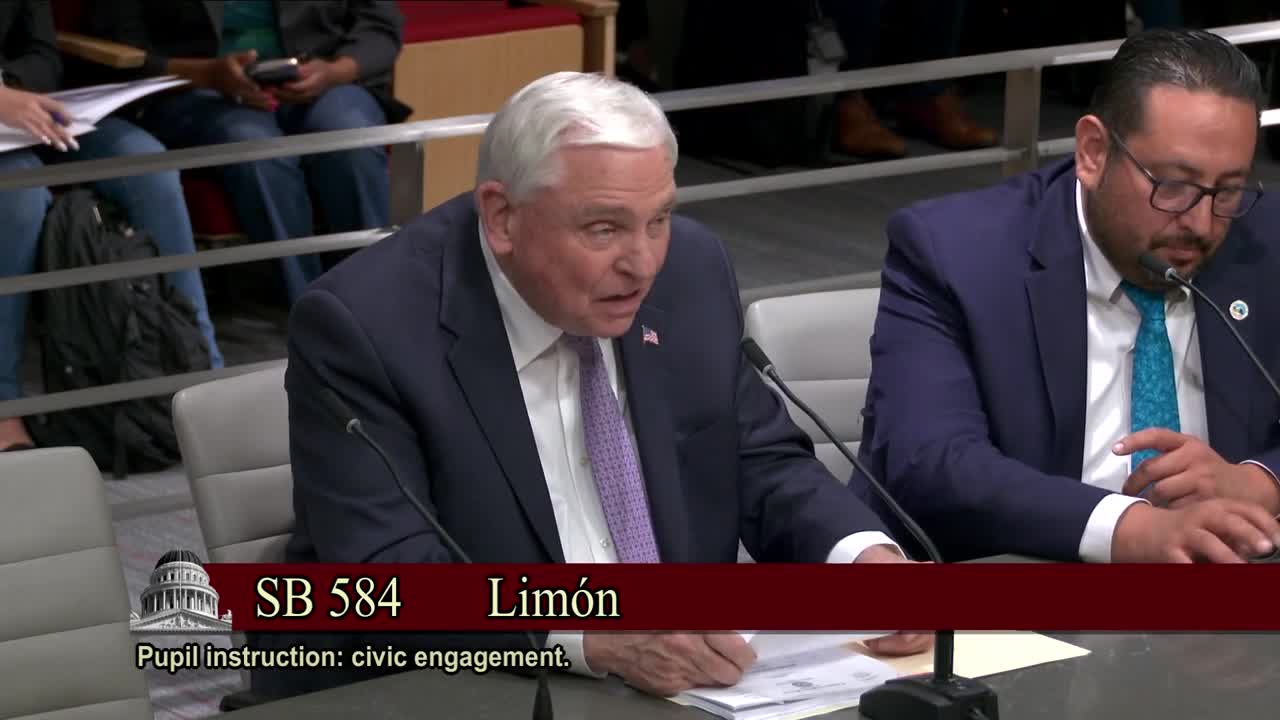 31MIN
Senate Standing Committee on Education
 24MIN