SB 79: Housing development: transit-oriented development.
- Session Year: 2025-2026
- House: Senate
- Latest Version Date: 2025-10-10
Current Status:
Passed
(2025-10-10: Chaptered by Secretary of State. Chapter 512, Statutes of 2025.)
Introduced
In Committee
Awaiting First Chamber Vote
Passed First Chamber
In Committee
Awaiting Second Chamber Vote
Passed Second Chamber
Enacted
(1)Existing law, the Planning and Zoning Law, requires each county and city to adopt a comprehensive, long-term general plan for the physical development of the county or city, and specified land outside its boundaries, that contains certain mandatory elements, including a housing element. Existing law requires that the housing element consist of an identification and analysis of existing and projected housing needs and a statement of goals, policies, quantified objectives, financial resources, and scheduled programs for the preservation, improvement, and development of housing, as specified. Existing law requires that the housing element include, among other things, an assessment of housing needs and an inventory of resources and constraints that are relevant to the meeting of these needs, including an inventory of land suitable for residential development, as provided. Existing law, for the 4th and subsequent revisions of the housing element, requires the Department of Housing and Community Development to determine the existing and projected need for housing for each region, as specified, and requires the appropriate council of local governments, or the department for cities and counties without a council of governments, to adopt a final regional housing need plan that allocates a share of the regional housing need to each locality in the region. Existing law requires the inventory of land to be used to identify sites throughout the community that can be developed for housing within the planning period and that are sufficient to provide for the jurisdictions share of the regional housing need. Existing law requires each local government to revise its housing element in accordance with a specified schedule.
Existing law, the Housing Accountability Act, among other things, requires a local agency that proposes to disapprove a housing development project, as defined, or to impose a condition that the project be developed at a lower density to base its decision on written findings supported by a preponderance of the evidence that specified conditions exist if that project complies with applicable, objective general plan, zoning, and subdivision standards and criteria in effect at the time that the application was deemed complete. The act authorizes the applicant, a person who would be eligible to apply for residency in the housing development project or emergency shelter, or a housing organization to bring an action to enforce the acts provisions, as provided, and provides for penalties if the court finds that the local agency is in violation of specified provisions of the act.
This bill would require that a housing development project, as defined, within a specified distance of a transit-oriented development (TOD) stop, as defined, be an allowed use as a transit-oriented housing development on any site zoned for residential, mixed, or commercial development, if the development complies with applicable requirements, as specified. Among these requirements, the bill would require a project to include at least 5 dwelling units and establish requirements concerning height limits, density, and residential floor area ratio in accordance with a developments proximity to specified tiers of TOD stops, as provided. The bill would require that, for the purposes of the Housing Accountability Act, a proposed development consistent with the applicable standards of these provisions as well as applicable local objective general plan and zoning standards be deemed consistent, compliant, and in conformity with prescribed requirements, as specified. The bill would provide that a local government that denies a project meeting the requirements of these provisions located in a high-resource area, as defined, would be presumed in violation of the Housing Accountability Act, as specified, and immediately liable for penalties, beginning on January 1, 2027, as provided. These provisions would not apply to a local agency until July 1, 2026, except as specified, or within unincorporated areas of counties until the 7th regional housing needs allocation cycle. The bill would specify that a development proposed pursuant to these provisions is eligible for streamlined, ministerial approval pursuant to specified law, except that the bill would exempt a project under these provisions from specified requirements, and would specify that the project is required to comply with certain affordability requirements, under that law.
This bill would require a proposed development to comply with specified demolition and antidisplacement standards; to not be located on sites where the development would require demolition of housing, or that was previously used for housing, that is subject to rent or price controls; to include housing for lower income households, as specified; be consistent with specified height, noise, safety, and fire standards; and meet specified labor standards, as provided. The bill would also authorize a transit agencys board of directors to adopt agency TOD zoning standards for district-owned real property located in a TOD zone, which establish minimum zoning requirements for an agency TOD project, as specified.
Prior to one year following the adoption of the 7th revision of the housing element, this bill would not apply the provisions relating to a housing development project to specified sites for which a local government has adopted an ordinance indicating the sites exclusion, as specified, including a site that is covered by a local TOD alternative plan, as defined, adopted by a local government. For the 7th and subsequent revisions of the housing element, the bill would authorize a local government to include a local TOD alternative plan in its housing element or adopt an alternative plan by ordinance, as specified. The bill would exempt a jurisdiction that has adopted a compliant local TOD alternative plan from the provisions relating to a housing development, as specified.
This bill would require the Department of Housing and Community Development to oversee compliance with the bills provisions and would require the department to promulgate standards on how to allow for capacity pursuant to these provisions to be counted in the inventory of land included within a countys or citys housing element, as specified. The bill would authorize each metropolitan planning organization to create a map of designated TOD stops and zones within its region by tier in accordance with these standards, which would have a rebuttable presumption of validity. The bill would authorize a local government to enact an ordinance to make its zoning code consistent with these provisions, as provided. The bill would require the local government to submit a draft of this ordinance to the department for review, at least 14 days prior to adoption of the ordinance. The bill would require the local government to submit a copy of this ordinance to the department within 60 days of enactment and would require the department to review the ordinance for compliance, as specified. If at any time the department finds an ordinance is out of compliance, and the local government does not take specified steps to address compliance, the bill would require the department to notify the local government in writing and authorize the department to notify the Attorney General, as provided.
This bill would define various terms for its purposes and make related findings and declarations.
This bill would include findings that changes proposed by this bill address a matter of statewide concern rather than a municipal affair and, therefore, apply to all cities, including charter cities.
By increasing the duties of local officials, and by expanding the crime of perjury by requiring the certification of certain information related to labor standards, this bill would impose a state-mandated local program.
(2)This bill would provide that its provisions are severable.
(3)The California Constitution requires the state to reimburse local agencies and school districts for certain costs mandated by the state. Statutory provisions establish procedures for making that reimbursement.
This bill would provide that no reimbursement is required by this act for specified reasons.
(1)Existing law, the Planning and Zoning Law, requires each county and city to adopt a comprehensive, long-term general plan for the physical development of the county or city, and specified land outside its boundaries, that contains certain mandatory elements, including a housing element. Existing law requires that the housing element consist of an identification and analysis of existing and projected housing needs and a statement of goals, policies, quantified objectives, financial resources, and scheduled programs for the preservation, improvement, and development of housing, as specified. Existing law requires that the housing element include, among other things, an assessment of housing needs and an inventory of resources and constraints that are relevant to the meeting of these needs, including an inventory of land suitable for residential development, as provided. Existing law, for the 4th and subsequent revisions of the housing element, requires the Department of Housing and Community Development to determine the existing and projected need for housing for each region, as specified, and requires the appropriate council of local governments, or the department for cities and counties without a council of governments, to adopt a final regional housing need plan that allocates a share of the regional housing need to each locality in the region. Existing law requires the inventory of land to be used to identify sites throughout the community that can be developed for housing within the planning period and that are sufficient to provide for the jurisdictions share of the regional housing need. Existing law requires each local government to revise its housing element in accordance with a specified schedule.
Existing law, the Housing Accountability Act, among other things, requires a local agency that proposes to disapprove a housing development project, as defined, or to impose a condition that the project be developed at a lower density to base its decision on written findings supported by a preponderance of the evidence that specified conditions exist if that project complies with applicable, objective general plan, zoning, and subdivision standards and criteria in effect at the time that the application was deemed complete. The act authorizes the applicant, a person who would be eligible to apply for residency in the housing development project or emergency shelter, or a housing organization to bring an action to enforce the acts provisions, as provided, and provides for penalties if the court finds that the local agency is in violation of specified provisions of the act.
This bill would require that a housing development project, as defined, within a specified distance of a transit-oriented development (TOD) stop, as defined, be an allowed use as a transit-oriented housing development on any site zoned for residential, mixed, or commercial development, if the development complies with applicable requirements, as specified. Among these requirements, the bill would require a project to include at least 5 dwelling units and establish requirements concerning height limits, density, and residential floor area ratio in accordance with a developments proximity to specified tiers of TOD stops, as provided. The bill would provide that, for the purposes of the Housing Accountability Act, a proposed development consistent with the applicable standards of these provisions as well as applicable local objective general plan and zoning standards shall be deemed consistent, compliant, and in conformity with prescribed requirements, as specified. The bill would provide that a local government that denies a project meeting the requirements of these provisions located in a high-resource area, as defined, would be presumed in violation of the Housing Accountability Act, as specified, and immediately liable for penalties, beginning on January 1, 2027, as provided. These provisions would not apply to a local agency until July 1, 2026, except as specified. specified, or within unincorporated areas of counties until the 7th regional housing needs allocation cycle. The bill would specify that a development proposed pursuant to these provisions is eligible for streamlined, ministerial approval pursuant to specified law, except that the bill would exempt a project under these provisions from specified requirements, and would specify that the project is required to comply with certain affordability requirements, under that law.
This bill would require a proposed development to comply with specified demolition and antidisplacement standards; to not be located on sites where the development would require demolition of housing, or that was previously used for housing, that is subject to rent or price controls; to include housing for lower income households, as specified; and be consistent with specified height, noise, safety, and fire standards. standards; and meet specified labor standards, as provided. The bill would also authorize a transit agencys board of directors to adopt agency TOD zoning standards for district-owned real property located in a TOD zone, which establish minimum zoning requirements for an agency TOD project, as specified.
Prior to one year following the adoption of the 7th revision of the housing element, this bill would not apply the provisions relating to a housing development project to specified sites for which a local government has adopted an ordinance indicating the sites exclusion, as specified, including a site that is covered by a local TOD alternative plan, as defined, adopted by a local government. For the 7th and subsequent revisions of the housing element, the bill would authorize a local government to include a local TOD alternative plan its housing element or adopt an alternative plan by ordinance, as specified. The bill would exempt a jurisdiction that has adopted a compliant local TOD alternative plan from the provisions relating to a housing development, as specified.
This bill would require the Department of Housing and Community Development to oversee compliance with the bills provisions and would require the department to promulgate standards on how to allow for capacity pursuant to these provisions to be counted in the inventory of land included within a countys or citys housing element, as specified. The bill would authorize each metropolitan planning organization to create a map of designated TOD stops and zones within its region by tier in accordance with these standards, which would have a rebuttable presumption of validity. The bill would authorize a local government to enact an ordinance to make its zoning code consistent with these provisions, as provided. The bill would require the local government to submit a draft of this ordinance to the department for review, at least 14 days prior to adoption of the ordinance. The bill would require the local government to submit a copy of this ordinance to the department within 60 90 days of enactment and would require the department to review the ordinance for compliance, as specified. If at any time the department finds an ordinance is out of compliance, and the local government does not take specified steps to address compliance, the bill would require the department to notify the local government in writing and authorize the department to notify the Attorney General, as provided.
This bill would define various terms for its purposes and make related findings and declarations.
This bill would include findings that changes proposed by this bill address a matter of statewide concern rather than a municipal affair and, therefore, apply to all cities, including charter cities.
By increasing the duties of local officials, and by expanding the crime of perjury by requiring the certification of certain information related to labor standards, this bill would impose a state-mandated local program.
(2)This bill would provide that its provisions are severable.
(3)The California Constitution requires the state to reimburse local agencies and school districts for certain costs mandated by the state. Statutory provisions establish procedures for making that reimbursement.This bill would provide that no reimbursement is required by this act for a specified reason.(3)The California Constitution requires the state to reimburse local agencies and school districts for certain costs mandated by the state. Statutory provisions establish procedures for making that reimbursement.
This bill would provide that no reimbursement is required by this act for specified reasons.
(1)Existing law, the Planning and Zoning Law, requires each county and city to adopt a comprehensive, long-term general plan for the physical development of the county or city, and specified land outside its boundaries, that contains certain mandatory elements, including a housing element. Existing law requires that the housing element consist of an identification and analysis of existing and projected housing needs and a statement of goals, policies, quantified objectives, financial resources, and scheduled programs for the preservation, improvement, and development of housing, as specified. Existing law requires that the housing element include, among other things, an assessment of housing needs and an inventory of resources and constraints that are relevant to the meeting of these needs, including an inventory of land suitable for residential development, as provided. Existing law, for the 4th and subsequent revisions of the housing element, requires the Department of Housing and Community Development to determine the existing and projected need for housing for each region, as specified, and requires the appropriate council of local governments, or the department for cities and counties without a council of governments, to adopt a final regional housing need plan that allocates a share of the regional housing need to each locality in the region. Existing law requires the inventory of land to be used to identify sites throughout the community that can be developed for housing within the planning period and that are sufficient to provide for the jurisdictions share of the regional housing need. Existing law requires each local government to revise its housing element in accordance with a specified schedule.
Existing law, the Housing Accountability Act, among other things, requires a local agency that proposes to disapprove a housing development project, as defined, or to impose a condition that the project be developed at a lower density to base its decision on written findings supported by a preponderance of the evidence that specified conditions exist if that project complies with applicable, objective general plan, zoning, and subdivision standards and criteria in effect at the time that the application was deemed complete. The act authorizes the applicant, a person who would be eligible to apply for residency in the housing development project or emergency shelter, or a housing organization to bring an action to enforce the acts provisions, as provided, and provides for penalties if the court finds that the local agency is in violation of specified provisions of the act.
This bill would require that a housing development project, as defined, within a specified distance of a transit-oriented development (TOD) stop, as defined, be an allowed use as a transit-oriented housing development on any site zoned for residential, mixed, or commercial development, if the development complies with applicable requirements, as specified. Among these requirements, the bill would require a project to include at least 5 dwelling units and establish requirements concerning height limits, density, and floor area ratio in accordance with a developments proximity to specified tiers of TOD stops, as provided. The bill would provide that, for the purposes of the Housing Accountability Act, a proposed development consistent with the applicable standards of these provisions as well as applicable local objective general plan and zoning standards shall be deemed consistent, compliant, and in conformity with prescribed requirements, as specified. The bill would provide that a local government that denies a project meeting the requirements of these provisions located in a high-resource area, as defined, would be presumed in violation of the Housing Accountability Act, as specified, and immediately liable for penalties, beginning on January 1, 2027, as provided. These provisions would not apply to a local agency until July 1, 2026, except as specified. The bill would specify that a development proposed pursuant to these provisions is eligible for streamlined, ministerial approval pursuant to specified law, except that the bill would exempt a project under these provisions from specified requirements, and would specify that the project is required to comply with certain affordability requirements, under that law.
This bill would require a proposed development to comply with specified demolition and antidisplacement standards; to not be located on sites where the development would require demolition of housing, or that was previously used for housing, that is subject to rent or price controls; and to include housing for lower income households, as specified. specified; and be consistent with specified noise, safety, and fire standards. The bill would also authorize a transit agencys board of directors to adopt transit-oriented development agency TOD zoning standards for district-owned real property located in a transit-oriented development TOD zone, which establish minimum zoning requirements for an agency TOD project, as specified.
Prior to the 7th revision of the housing element, this bill would not apply the provisions relating to a housing development project to specified sites, sites for which a local government has adopted an ordinance indicating the sites exclusion, as specified, including a site that is covered by a local TOD alternative plan, as defined, adopted by a local government. For the 7th and subsequent revisions of the housing element, the bill would authorize a local government to include a local TOD alternative plan its housing element or adopt an alternative plan by ordinance, as specified. The bill would exempt a jurisdiction that has adopted a compliant local TOD alternative plan from the above provisions, provisions relating to a housing development, as specified.
This bill would require the Department of Housing and Community Development to oversee compliance with the bills provisions and would require the department to promulgate standards on how to account allow for capacity pursuant to these provisions in to be counted in the inventory of land included within a countys or citys housing element, as specified. The bill would authorize the each metropolitan planning organization to create a map of designated TOD stops and zones within its region by tier in accordance with these standards, which would have a rebuttable presumption of validity. The bill would authorize a local government to enact an ordinance to make its zoning code consistent with these provisions, as provided. The bill would require the local government to submit a copy of this ordinance to the department within 60 days of enactment and would require the department to review the ordinance for compliance, as specified. If the department finds an ordinance is out of compliance, and the local government does not take specified steps to address compliance, the bill would require the department to notify the local government in writing and authorize the department to notify the Attorney General, as provided.
This bill would define various terms for its purposes and make related findings and declarations.
This bill would include findings that changes proposed by this bill address a matter of statewide concern rather than a municipal affair and, therefore, apply to all cities, including charter cities.
By increasing the duties of local officials, this bill would impose a state-mandated local program.
(2)This bill would provide that the its provisions of this bill are severable.
(3)The California Constitution requires the state to reimburse local agencies and school districts for certain costs mandated by the state. Statutory provisions establish procedures for making that reimbursement.
This bill would provide that no reimbursement is required by this act for a specified reason.
(1)Existing law, the Planning and Zoning Law, requires each county and city to adopt a comprehensive, long-term general plan for the physical development of the county or city, and specified land outside its boundaries, that contains certain mandatory elements, including a land use element and a housing element. Existing law requires that the land use element designate the proposed general distribution and general location and extent of the uses of the land, as specified. Existing law requires that the housing element consist of an identification and analysis of existing and projected housing needs and a statement of goals, policies, quantified objectives, financial resources, and scheduled programs for the preservation, improvement, and development of housing, as specified. Existing law requires that the housing element include, among other things, an assessment of housing needs and an inventory of resources and constraints that are relevant to the meeting of these needs, including an inventory of land suitable for residential development, as provided. Existing law, for the 4th and subsequent revisions of the housing element, requires the Department of Housing and Community Development to determine the existing and projected need for housing for each region, as specified, and requires the appropriate council of local governments, or the department for cities and counties without a council of governments, to adopt a final regional housing need plan that allocates a share of the regional housing need to each locality in the region. Existing law requires each local government to revise its housing element in accordance with a specified schedule.
Existing law, the Housing Accountability Act, among other things, requires a local agency that proposes to disapprove a housing development project, as defined, or to impose a condition that the project be developed at a lower density to base its decision on written findings supported by a preponderance of the evidence that specified conditions exist if that project complies with applicable, objective general plan, zoning, and subdivision standards and criteria in effect at the time that the application was deemed complete. The act authorizes the applicant, a person who would be eligible to apply for residency in the housing development project or emergency shelter, or a housing organization to bring an action to enforce the acts provisions, as provided, and provides for penalties if the court finds that the local agency is in violation of specified provisions of the act.
This bill would require that a housing development project, as defined, within a specified distance of a transit-oriented development (TOD) stop, as defined, be an allowed use as a transit-oriented housing development on any site zoned for residential, mixed, or commercial development, if the development complies with applicable requirements, as specified. Among these requirements, the bill would establish requirements concerning height limits, density, and floor area ratio in accordance with a developments proximity to specified tiers of TOD stops, as provided. The bill would provide that, for the purposes of the Housing Accountability Act, a proposed development consistent with the applicable standards of these provisions shall be deemed consistent, compliant, and in conformity with prescribed requirements, as specified. The bill would provide that a local government that denies a project meeting the requirements of these provisions located in a high-resource area, as defined, would be presumed in violation of the Housing Accountability Act, as specified, and immediately liable for penalties, beginning on January 1, 2027, as provided. These provisions would not apply to a local agency until July 1, 2026, except as specified. The bill would specify that a development proposed pursuant to these provisions is eligible for streamlined, ministerial approval pursuant to specified law, except that the bill would exempt a project under these provisions from specified requirements, and would specify that the project is required to comply with certain affordability requirements, under that law.
This bill would require a proposed development to comply with specified demolition and antidisplacement standards; to not be located on sites where the development would require demolition of housing, or that was previously used for housing, that is subject to rent or price controls; and to include housing for lower income households, as specified. The bill would also authorize a transit agency to adopt objective standards, as specified, for both residential and commercial development proposed pursuant to these provisions if the development would be constructed on land owned by the transit agency or on which the transit agency has a permanent operating easement and would only apply these standards for land that is either (A) within 1/2 mile of a TOD stop, if the land was owned by the transit agency on or before January 1, 2026, or (B) adjacent to a TOD stop. agencys board of directors to adopt transit-oriented development zoning standards for district-owned real property located in a transit-oriented development zone, which establish minimum zoning requirements for an agency TOD project, as specified.
Prior to the seventh revision of the housing element, this bill would not apply to any specified sites exempted by local ordinance, including a site that is covered by a local TOD alternative plan adopted by a local government pursuant to an ordinance. The bill would require the plan to maintain at least the same total increase in feasible zoned capacity, in terms of both total units and residential floor area, as provided by these provisions across all TOD zones, as provided. The bill would require a local government, except as provided, to submit the plan to the department and authorize the department to review the plan for compliance, as specified. If the department finds the plan is out of compliance, and the local government does not take specified steps to address compliance, the bill would require the department to notify the local government and authorize the department to notify the Attorney General, as provided. For the seventh and subsequent revisions of the housing element, the bill would authorize a local government to enact the plan as an amendment to the housing element and land use element and would exempt a local government that has enacted the plan from the above-specified provisions. The bill would require a local government, except as provided, to submit the draft plan to the department and would require the department to assess the plan and recommend changes to remove unnecessary constraints on housing.Prior to the 7th revision of the housing element, this bill would not apply to specified sites, including a site that is covered by a local TOD alternative plan, as defined, adopted by a local government. For the 7th and subsequent revisions of the housing element, the bill would authorize a local government to include a local TOD alternative plan its housing element or adopt an alternative plan by ordinance, as specified. The bill would exempt a jurisdiction that has adopted a compliant local TOD alternative plan from the above provisions, as specified.
This bill would require the Department of Housing and Community Development to oversee compliance with the bills provisions, including, but not limited to, promulgating specified provisions and require the department to promulgate standards relating to the on how to account for capacity pursuant to these provisions in the inventory of land included within a countys or citys housing element. element, as specified. The bill would authorize the regional council of governments or metropolitan planning organization to create a map of designated TOD stops and zones, zones in accordance with these standards, which would have a rebuttable presumption of validity. The bill would authorize a local government to enact an ordinance to make its zoning code consistent with these provisions, as provided. The bill would require the local government to submit a copy of this ordinance to the department within 60 days of enactment and would require the department to review the ordinance for compliance, as specified. If the department finds an ordinance is out of compliance, and the local government does not take specified steps to address compliance, the bill would require the department to notify the local government in writing and authorize the department to notify the Attorney General, as provided.
This bill would define various terms for its purposes and make related findings and declarations.
This bill would include findings that changes proposed by this bill address a matter of statewide concern rather than a municipal affair and, therefore, apply to all cities, including charter cities.
By increasing the duties of local officials, this bill would impose a state-mandated local program.
(2)This bill would provide that the provisions of this bill are severable.
(3)The California Constitution requires the state to reimburse local agencies and school districts for certain costs mandated by the state. Statutory provisions establish procedures for making that reimbursement.
This bill would provide that no reimbursement is required by this act for a specified reason.
(1)Existing law, the Planning and Zoning Law, requires each county and city to adopt a comprehensive, long-term general plan for the physical development of the county or city, and specified land outside its boundaries, that contains certain mandatory elements, including a land use element and a housing element. Existing law requires that the land use element designate the proposed general distribution and general location and extent of the uses of the land, as specified. Existing law requires that the housing element consist of an identification and analysis of existing and projected housing needs and a statement of goals, policies, quantified objectives, financial resources, and scheduled programs for the preservation, improvement, and development of housing, as specified. Existing law requires that the housing element include, among other things, an assessment of housing needs and an inventory of resources and constraints that are relevant to the meeting of these needs, including an inventory of land suitable for residential development, as provided. Existing law, for the 4th and subsequent revisions of the housing element, requires the Department of Housing and Community Development to determine the existing and projected need for housing for each region, as specified, and requires the appropriate council of local governments, or the department for cities and counties without a council of governments, to adopt a final regional housing need plan that allocates a share of the regional housing need to each locality in the region. Existing law requires each local government to revise its housing element in accordance with a specified schedule.
Existing law, the Housing Accountability Act, among other things, requires a local agency that proposes to disapprove a housing development project, as defined, or to impose a condition that the project be developed at a lower density to base its decision on written findings supported by a preponderance of the evidence that specified conditions exist if that project complies with applicable, objective general plan, zoning, and subdivision standards and criteria in effect at the time that the application was deemed complete. The act authorizes the applicant, a person who would be eligible to apply for residency in the housing development project or emergency shelter, or a housing organization to bring an action to enforce the acts provisions, as provided, and provides for penalties if the court finds that the local agency is in violation of specified provisions of the act.
This bill would require that a housing development project, as defined, within a specified distance of a transit-oriented development (TOD) stop, as defined, be an allowed use as a transit-oriented housing development on any site zoned for residential, mixed, or commercial development, if the development complies with applicable requirements, as specified. Among these requirements, the bill would establish requirements concerning height limits, density, and floor area ratio in accordance with a developments proximity to specified tiers of TOD stops, as provided. The bill would provide that, for the purposes of the Housing Accountability Act, a proposed development consistent with the applicable standards of these provisions shall be deemed consistent, compliant, and in conformity with prescribed requirements, as specified. The bill would provide that a local government that denies a project meeting the requirements of these provisions located in a high-resource area, as defined, would be presumed in violation of the Housing Accountability Act, as specified, and immediately liable for penalties, as provided. The bill would specify that a development proposed pursuant to these provisions is eligible for streamlined, ministerial approval pursuant to specified law, except that the bill would exempt a project under these provisions from specified requirements, and would specify that the project is required to comply with certain affordability requirements, under that law.
This bill would require a proposed development to comply with specified demolition and antidisplacement standards; to not be located on sites where the development would require demolition of housing, or that was previously used for housing, that is subject to rent or price controls; and to include housing for lower income households, as specified. The bill would also authorize a transit agency to adopt objective standards, as specified, for both residential and commercial development proposed pursuant to these provisions if the development would be constructed on land owned by the transit agency or on which the transit agency has a permanent operating easement and would only apply these standards for land that is either (A) within 1/2 mile of a TOD stop, if the land was owned by the transit agency on or before January 1, 2026, or (B) adjacent to a TOD stop.
This bill would authorize a local government to enact a local TOD alternative plan as an amendment to the housing element and land use element, and would exempt a local government that has enacted a local TOD alternative plan from the above-specified provisions. The bill would require the plan to maintain at least the same total increase in feasible zoned capacity, in terms of both total units and residential floor area, as provided by these provisions across all TOD zones, as provided. The bill would require a local government, except as provided, to submit the draft plan to the department and would require the department to assess the plan and recommend changes to remove unnecessary constraints on housing.Prior to the seventh revision of the housing element, this bill would not apply to any specified sites exempted by local ordinance, including a site that is covered by a local TOD alternative plan adopted by a local government pursuant to an ordinance. The bill would require the plan to maintain at least the same total increase in feasible zoned capacity, in terms of both total units and residential floor area, as provided by these provisions across all TOD zones, as provided. The bill would require a local government, except as provided, to submit the plan to the department and authorize the department to review the plan for compliance, as specified. If the department finds the plan is out of compliance, and the local government does not take specified steps to address compliance, the bill would require the department to notify the local government and authorize the department to notify the Attorney General, as provided. For the seventh and subsequent revisions of the housing element, the bill would authorize a local government to enact the plan as an amendment to the housing element and land use element and would exempt a local government that has enacted the plan from the above-specified provisions. The bill would require a local government, except as provided, to submit the draft plan to the department and would require the department to assess the plan and recommend changes to remove unnecessary constraints on housing.
This bill would require the Department of Housing and Community Development to oversee compliance with the bills provisions, including, but not limited to, promulgating specified standards relating to the inventory of land included within a countys or citys housing element. The bill would authorize the regional council of governments or metropolitan planning organization to create a map of designated TOD stops and zones, which would have a rebuttable presumption of validity. The bill would authorize a local government to enact an ordinance to make its zoning code consistent with these provisions, as provided. The bill would require the local government to submit a copy of this ordinance to the department within 60 days of enactment and would require the department to review the ordinance for compliance, as specified. If the department finds an ordinance is out of compliance, and the local government does not take specified steps to address compliance, the bill would require the department to notify the local government in writing and authorize the department to notify the Attorney General, as provided.
This bill would define various terms for its purposes and make related findings and declarations.
This bill would include findings that changes proposed by this bill address a matter of statewide concern rather than a municipal affair and, therefore, apply to all cities, including charter cities.
By increasing the duties of local officials, this bill would impose a state-mandated local program.
(2)This bill would provide that the provisions of this bill are severable.
(3)The California Constitution requires the state to reimburse local agencies and school districts for certain costs mandated by the state. Statutory provisions establish procedures for making that reimbursement.
This bill would provide that no reimbursement is required by this act for a specified reason.
(1)Existing law, the Planning and Zoning Law, requires each county and city to adopt a comprehensive, long-term general plan for the physical development of the county or city, and specified land outside its boundaries, that contains certain mandatory elements, including a land use element and a housing element. Existing law requires that the land use element designate the proposed general distribution and general location and extent of the uses of the land, as specified. Existing law requires that the housing element consist of an identification and analysis of existing and projected housing needs and a statement of goals, policies, quantified objectives, financial resources, and scheduled programs for the preservation, improvement, and development of housing, as specified. Existing law requires that the housing element include, among other things, an assessment of housing needs and an inventory of resources and constraints that are relevant to the meeting of these needs, including an inventory of land suitable for residential development, as provided. Existing law, for the 4th and subsequent revisions of the housing element, requires the Department of Housing and Community Development to determine the existing and projected need for housing for each region, as specified, and requires the appropriate council of local governments, or the department for cities and counties without a council of governments, to adopt a final regional housing need plan that allocates a share of the regional housing need to each locality in the region.
Existing law, the Housing Accountability Act, among other things, requires a local agency that proposes to disapprove a housing development project, as defined, or to impose a condition that the project be developed at a lower density to base its decision on written findings supported by a preponderance of the evidence that specified conditions exist if that project complies with applicable, objective general plan, zoning, and subdivision standards and criteria in effect at the time that the application was deemed complete. The act authorizes the applicant, a person who would be eligible to apply for residency in the housing development project or emergency shelter, or a housing organization to bring an action to enforce the acts provisions, as provided, and provides for penalties if the court finds that the local agency is in violation of specified provisions of the act.
This bill would require that a housing development project, as defined, within a specified distance of a transit-oriented development (TOD) stop, as defined, be an allowed use as a transit-oriented housing development on any site zoned for residential, mixed, or commercial development, if the development complies with applicable requirements, as specified. The Among these requirements, the bill would establish requirements concerning height limits, density, and floor area ratio in accordance with a developments proximity to specified tiers of TOD stops, as provided. The bill would provide that, for the purposes of the Housing Accountability Act, a proposed development consistent with the applicable standards of these provisions shall be deemed consistent, compliant, and in conformity with prescribed requirements, as specified. The bill would provide that a local government that denies a project meeting the requirements of these provisions located in a high-resource area, as defined, would be presumed in violation of the Housing Accountability Act, as specified, and immediately liable for penalties, as provided. The bill would specify that a development proposed pursuant to these provisions is eligible for streamlined, ministerial approval pursuant to specified law, except that the bill would exempt a project under these provisions from specified requirements, and would specify that the project is required to comply with certain affordability requirements, under that law.
This bill would require a proposed development to comply with specified requirements under existing law relating to the demolition of existing residential units demolition and antidisplacement standards; to not be located on sites where the development would require demolition of housing, or that was previously used for housing, that is subject to rent or price controls; and to include housing for lower income households, as specified. The bill would also authorize a transit agency to adopt objective standards, as specified, for both residential and commercial development proposed pursuant to these provisions if the development would be constructed on land owned by the transit agency or on which the transit agency has a permanent operating easement and would only apply these standards for land that is either (A) within 1/2 mile of a TOD stop, if the land was owned by the transit agency on or before January 1, 2026, or (B) adjacent to a TOD stop.
This bill would authorize a local government to enact a local TOD alternative plan as an amendment to the housing element and land use element, and would exempt a local government that has enacted a local TOD alternative plan from the above-specified provisions. The bill would require the plan to maintain at least the same total increase in feasible zoned capacity, in terms of both total units and residential floor area, as provided by these provisions across all TOD zones, as provided. The bill would require a local government, except as provided, to submit the draft plan to the department and would require the department to assess the plan and recommend changes to remove unnecessary constraints on housing.
This bill would require the Department of Housing and Community Development to oversee compliance with the bills provisions, including, but not limited to, promulgating specified standards relating to the inventory of land included within a countys or citys housing element. The bill would authorize the regional council of governments or metropolitan planning organization to create a map of designated TOD stops and zones, which would have a rebuttable presumption of validity. The bill would authorize a local government to enact an ordinance to make its zoning code consistent with these provisions, as provided. The bill would require the local government to submit a copy of this ordinance to the department within 60 days of enactment and would require the department to review the ordinance for compliance, as specified. If the department finds an ordinance is out of compliance, and the local government does not take specified steps to address compliance, the bill would require the department to notify the local government in writing and authorize the department to notify the Attorney General, as provided.
This bill would define various terms for its purposes and make related findings and declarations.
This bill would include findings that changes proposed by this bill address a matter of statewide concern rather than a municipal affair and, therefore, apply to all cities, including charter cities.
By increasing the duties of local officials, this bill would impose a state-mandated local program.
(2)This bill would provide that the provisions of this bill are severable.
(3)The California Constitution requires the state to reimburse local agencies and school districts for certain costs mandated by the state. Statutory provisions establish procedures for making that reimbursement.
This bill would provide that no reimbursement is required by this act for a specified reason.
(1)Existing law, the Planning and Zoning Law, requires each county and city to adopt a comprehensive, long-term general plan for the physical development of the county or city, and specified land outside its boundaries, that contains certain mandatory elements, including a land use element and a housing element. Existing law requires that the land use element designate the proposed general distribution and general location and extent of the uses of the land, as specified. Existing law requires that the housing element consist of an identification and analysis of existing and projected housing needs and a statement of goals, policies, quantified objectives, financial resources, and scheduled programs for the preservation, improvement, and development of housing, as specified. Existing law requires that the housing element include, among other things, an assessment of housing needs and an inventory of resources and constraints that are relevant to the meeting of these needs, including an inventory of land suitable for residential development, as provided. Existing law, for the 4th and subsequent revisions of the housing element, requires the Department of Housing and Community Development to determine the existing and projected need for housing for each region, as specified, and requires the appropriate council of local governments, or the department for cities and counties without a council of governments, to adopt a final regional housing need plan that allocates a share of the regional housing need to each locality in the region.
Existing law, the Housing Accountability Act, among other things, requires a local agency that proposes to disapprove a housing development project, as defined, or to impose a condition that the project be developed at a lower density to base its decision on written findings supported by a preponderance of the evidence that specified conditions exist if that project complies with applicable, objective general plan, zoning, and subdivision standards and criteria in effect at the time that the application was deemed complete. The act authorizes the applicant, a person who would be eligible to apply for residency in the housing development project or emergency shelter, or a housing organization to bring an action to enforce the acts provisions, as provided, and provides for penalties if the court finds that the local agency is in violation of specified provisions of the act.
This bill would require that a housing development project, as defined, proposed within a specified distance of a transit-oriented development (TOD) stop, as defined, be an allowed use as a transit-oriented housing development on any site zoned for residential, mixed, or commercial development, if the development complies with applicable requirements, as specified. The bill would establish requirements concerning height limits, density, and floor area ratio in accordance with a developments proximity to specified tiers of TOD stops, as provided. The bill would provide that, for the purposes of the Housing Accountability Act, a proposed development consistent with the applicable standards of these provisions shall be deemed consistent, compliant, and in conformity with prescribed requirements, as specified. The bill would provide that a local government that denies a project meeting the requirements of these provisions located in a high-resource area, as defined, would be presumed in violation of the Housing Accountability Act, as specified, and immediately liable for penalties, as provided. The bill would specify that a development proposed pursuant to these provisions is eligible for streamlined, ministerial approval pursuant to specified law, except that the bill would exempt a project under these provisions from specified requirements, and would specify that the project is required to comply with certain affordability requirements, under that law.
This bill would require a proposed development to comply with specified requirements under existing law relating to the demolition of existing residential units and to include housing for lower income households, as specified. The bill would also authorize a transit agency to adopt objective standards standards, as specified, for both residential and commercial development proposed pursuant to these provisions if the development would be constructed on land owned by the transit agency or on which the transit agency has a permanent operating easement, if the easement and would only apply these standards for land that is either (A) within 1/2 mile of a TOD stop and the objective standards allow for the same or greater development intensity as allowed by local standards or applicable state law. stop, if the land was owned by the transit agency on or before January 1, 2026, or (B) adjacent to a TOD stop.
This bill would authorize a local government to enact a local TOD alternative plan as an amendment to the housing element and land use element, and would exempt a local government that has enacted a local TOD alternative plan from the above-specified provisions. The bill would require the plan to maintain at least the same total increase in feasible zoned capacity, in terms of both total units and residential floor area, as provided by these provisions across all TOD zones, as defined. provided. The bill would require a local government, except as provided, to submit the draft plan to the department and would require the department to assess the plan and recommend changes to remove unnecessary constraints on housing.
This bill would require the Department of Housing and Community Development to oversee compliance with the bills provisions, including, but not limited to, promulgating specified standards relating to the inventory of land included within a countys or citys housing element. The bill would authorize the regional council of governments or metropolitan planning organization to create a map of designated TOD stops and zones, which would have a rebuttable presumption of validity. The bill would authorize a local government to enact an ordinance to make its zoning code consistent with these provisions, as provided. The bill would require the local government to submit a copy of this ordinance to the department within 60 days of enactment and would require the department to review the ordinance for compliance, as specified. If the department finds an ordinance is out of compliance, and the local government does not take specified steps to address compliance, the bill would require the department to notify the local government in writing and authorize the department to notify the Attorney General, as provided.
This bill would define various terms for its purposes and make related findings and declarations.
This bill would include findings that changes proposed by this bill address a matter of statewide concern rather than a municipal affair and, therefore, apply to all cities, including charter cities.
By increasing the duties of local officials, this bill would impose a state-mandated local program.
(2)This bill would provide that the provisions of this bill are severable.
(3)The California Constitution requires the state to reimburse local agencies and school districts for certain costs mandated by the state. Statutory provisions establish procedures for making that reimbursement.
This bill would provide that no reimbursement is required by this act for a specified reason.
(1)Existing law, the Planning and Zoning Law, requires each county and city to adopt a comprehensive, long-term general plan for the physical development of the county or city, and specified land outside its boundaries, that contains certain mandatory elements, including a land use element and a housing element. Existing law requires that the land use element designate the proposed general distribution and general location and extent of the uses of the land, as specified. Existing law requires that the housing element consist of an identification and analysis of existing and projected housing needs and a statement of goals, policies, quantified objectives, financial resources, and scheduled programs for the preservation, improvement, and development of housing, as specified. Existing law requires that the housing element include, among other things, an assessment of housing needs and an inventory of resources and constraints that are relevant to the meeting of these needs, including an inventory of land suitable for residential development, as provided. Existing law, for the 4th and subsequent revisions of the housing element, requires the Department of Housing and Community Development to determine the existing and projected need for housing for each region, as specified, and requires the appropriate council of local governments, or the department for cities and counties without a council of governments, to adopt a final regional housing need plan that allocates a share of the regional housing need to each locality in the region.
Existing law, the Housing Accountability Act, among other things, requires a local agency that proposes to disapprove a housing development project, as defined, or to impose a condition that the project be developed at a lower density to base its decision on written findings supported by a preponderance of the evidence that specified conditions exist if that project complies with applicable, objective general plan, zoning, and subdivision standards and criteria in effect at the time that the application was deemed complete. The act authorizes the applicant, a person who would be eligible to apply for residency in the housing development project or emergency shelter, or a housing organization to bring an action to enforce the acts provisions, as provided, and provides for penalties if the court finds that the local agency is in violation of specified provisions of the act.
This bill would require that a housing development project, as defined, proposed within a specified distance of a transit-oriented development (TOD) stop, as defined, be an allowed use on any site zoned for residential, mixed, or commercial development, if the development complies with applicable requirements, as specified. The bill would establish requirements concerning height limits, density, and floor area ratio in accordance with a developments proximity to specified tiers of TOD stops, as provided. The bill would provide that, for the purposes of the Housing Accountability Act, a proposed development consistent with the applicable standards of these provisions shall be deemed consistent, compliant, and in conformity with prescribed requirements, as specified. The bill would provide that a local government that denies a project meeting the requirements of these provisions located in a high-resource area, as defined, would be presumed in violation of the Housing Accountability Act, as specified, and immediately liable for penalties, as provided. The bill would specify that a development proposed pursuant to these provisions is eligible for streamlined, ministerial approval pursuant to specified law, except that the bill would exempt a project under these provisions from specified requirements, and would specify that the project is required to comply with certain affordability requirements, under that law.
This bill would require a proposed development to comply with specified requirements under existing law relating to the demolition of existing residential units and to include housing for lower income households, as specified. The bill would also authorize a transit agency to adopt objective standards for both residential and commercial development proposed pursuant to these provisions if the development would be constructed on land owned by the transit agency or on which the transit agency has a permanent operating easement, if the land is within 1/2 mile of a TOD stop and the objective standards allow for the same or greater development intensity as allowed by local standards or applicable state law.
This bill would authorize a local government to enact a local TOD alternative plan as an amendment to the housing element and land use element, and would exempt a local government that has enacted a local TOD alternative plan from the above-specified provisions. The bill would require the plan to maintain at least the same total increase in feasible zoned capacity, in terms of both total units and residential floor area, as provided by these provisions across all TOD zones, as defined. The bill would require a local government, except as provided, to submit the draft plan to the department and would require the department to assess the plan and recommend changes to remove unnecessary constraints on housing.
This bill would require the Department of Housing and Community Development to oversee compliance with the bills provisions, including, but not limited to, promulgating specified standards relating to the inventory of land included within a countys or citys housing element. The bill would authorize the regional council of governments or metropolitan planning organization to create a map of designated TOD stops and zones, which would have a rebuttable presumption of validity. The bill would authorize a local government to enact an ordinance to make its zoning code consistent with these provisions, as provided. The bill would require the local government to submit a copy of this ordinance to the department within 60 days of enactment and would require the department to review the ordinance for compliance, as specified. If the department finds an ordinance is out of compliance, and the local government does not take specified steps to address compliance, the bill would require the department to notify the local government in writing and authorize the department to notify the Attorney General, as provided.
This bill would define various terms for its purposes and make related findings and declarations.
This bill would include findings that changes proposed by this bill address a matter of statewide concern rather than a municipal affair and, therefore, apply to all cities, including charter cities.
By increasing the duties of local officials, this bill would impose a state-mandated local program.
(2)Existing law, the California Environmental Quality Act (CEQA), requires a lead agency, as defined, to prepare, or cause to be prepared, and certify the completion of an environmental impact report on a project that it proposes to carry out or approve that may have a significant effect on the environment or to adopt a negative declaration if it finds that the project will not have that effect. CEQA also requires a lead agency to prepare a mitigated negative declaration for a project that may have a significant effect on the environment if revisions in the project would avoid or mitigate that effect and there is no substantial evidence that the project, as revised, would have a significant effect on the environment. CEQA, until January 1, 2030, exempts from its requirements certain transportation-related projects if specified requirements are met, as provided. CEQA includes within these exempt transportation-related projects a public project for the institution or increase of bus rapid transit, bus, or light rail service, or other passenger rail service, that will be exclusively used by low-emission or zero-emission vehicles, on existing public rights-of-way or existing highway rights-of-way.This bill would exempt from CEQA a public or private residential, commercial, or mixed-used project that, at the time the project application is filed, is located entirely or principally on land owned by a public transit agency, or fully or partially encumbered by an existing operating easement in favor of a public transit agency, and meets specified requirements. The bill would provide that, for a project that requires the construction of new passenger rail storage and maintenance facilities at a publicly or privately owned offsite location distinct from the principal project site, that project would be considered a wholly separate project from the project described in these provisions and shall not be exempt from CEQA.(3)(2)This bill would provide that the provisions of this bill are severable.
(4)By increasing the duties of local officials, this bill would impose a state-mandated local program.The(3)The California Constitution requires the state to reimburse local agencies and school districts for certain costs mandated by the state. Statutory provisions establish procedures for making that reimbursement.
This bill would provide that no reimbursement is required by this act for a specified reason.
(1)Existing law, the Planning and Zoning Law, requires each county and city to adopt a comprehensive, long-term general plan for the physical development of the county or city, and specified land outside its boundaries, that contains certain mandatory elements, including a land use element and a housing element. Existing law requires that the land use element designate the proposed general distribution and general location and extent of the uses of the land, as specified. Existing law requires that the housing element consist of an identification and analysis of existing and projected housing needs and a statement of goals, policies, quantified objectives, financial resources, and scheduled programs for the preservation, improvement, and development of housing, as specified. Existing law requires that the housing element include, among other things, an assessment of housing needs and an inventory of resources and constraints that are relevant to the meeting of these needs, including an inventory of land suitable for residential development, as provided. Existing law, for the 4th and subsequent revisions of the housing element, requires the Department of Housing and Community Development to determine the existing and projected need for housing for each region, as specified, and requires the appropriate council of local governments, or the department for cities and counties without a council of governments, to adopt a final regional housing need plan that allocates a share of the regional housing need to each locality in the region.
Existing law, the Housing Accountability Act, among other things, requires a local agency that proposes to disapprove a housing development project, as defined, or to impose a condition that the project be developed at a lower density to base its decision on written findings supported by a preponderance of the evidence that specified conditions exist if that project complies with applicable, objective general plan, zoning, and subdivision standards and criteria in effect at the time that the application was deemed complete. The act authorizes the applicant, a person who would be eligible to apply for residency in the housing development project or emergency shelter, or a housing organization to bring an action to enforce the acts provisions, as provided, and provides for penalties if the court finds that the local agency is in violation of specified provisions of the act.
This bill would require that a housing development project, as defined, proposed within a specified distance of a transit-oriented development (TOD) stop, as defined, be an allowed use on any site zoned for residential, mixed, or commercial development, if the development complies with applicable requirements, as specified. The bill would establish requirements concerning height limits, density, and floor area ratio in accordance with a developments proximity to specified tiers of TOD stops, as provided. The bill would provide that, for the purposes of the Housing Accountability Act, a proposed development consistent with the applicable standards of these provisions shall be deemed consistent, compliant, and in conformity with prescribed requirements, as specified. The bill would provide that a local government that denies a project meeting the requirements of these provisions located in a high-resource area, as defined, would be presumed in violation of the Housing Accountability Act, as specified, and immediately liable for penalties, as provided. The bill would specify that a development proposed pursuant to these provisions is eligible for streamlined, ministerial approval pursuant to specified law, except that the bill would exempt a project under these provisions from specified requirements, and would specify that the project is required to comply with certain affordability requirements, under that law.
This bill would require a proposed development to comply with specified requirements under existing law relating to the demolition of existing residential units and to include housing for lower income households, as specified. The bill would also authorize a transit agency to adopt objective standards for both residential and commercial development proposed pursuant to these provisions if the development would be constructed on land owned by the transit agency or on which the transit agency has a permanent operating easement, if the land is within 1/2 mile of a TOD stop and the objective standards allow for the same or greater development intensity as allowed by local standards or applicable state law.
This bill would authorize a local government to enact a local TOD alternative plan as an amendment to the housing element and land use element, and would exempt a local government that has enacted a local TOD alternative plan from the above-specified provisions. The bill would require the plan to maintain at least the same total increase in feasible zoned capacity, in terms of both total units and residential floor area, as provided by these provisions across all TOD zones, as defined. The bill would require a local government, except as provided, to submit the draft plan to the department and would require the department to assess the plan and recommend changes to remove unnecessary constraints on housing.
This bill would require the Department of Housing and Community Development to oversee compliance with the bills provisions, including, but not limited to, promulgating specified standards relating to the inventory of land included within a countys or citys housing element. The bill would authorize the regional council of governments or metropolitan planning organization to create a map of designated TOD stops and zones, which would have a rebuttable presumption of validity. The bill would authorize a local government to enact an ordinance to make its zoning code consistent with these provisions, as provided. The bill would require the local government to submit a copy of this ordinance to the department within 60 days of enactment and would require the department to review the ordinance for compliance, as specified. If the department finds an ordinance is out of compliance, and the local government does not take specified steps to address compliance, the bill would require the department to notify the local government in writing and authorize the department to notify the Attorney General, as provided.
This bill would define various terms for its purposes and make related findings and declarations.
This bill would include findings that changes proposed by this bill address a matter of statewide concern rather than a municipal affair and, therefore, apply to all cities, including charter cities.
(2)Existing law, the California Environmental Quality Act (CEQA), requires a lead agency, as defined, to prepare, or cause to be prepared, and certify the completion of an environmental impact report on a project that it proposes to carry out or approve that may have a significant effect on the environment or to adopt a negative declaration if it finds that the project will not have that effect. CEQA also requires a lead agency to prepare a mitigated negative declaration for a project that may have a significant effect on the environment if revisions in the project would avoid or mitigate that effect and there is no substantial evidence that the project, as revised, would have a significant effect on the environment. CEQA, until January 1, 2030, exempts from its requirements certain transportation-related projects if specified requirements are met, as provided. CEQA includes within these exempt transportation-related projects a public project for the institution or increase of bus rapid transit, bus, or light rail service, or other passenger rail service, that will be exclusively used by low-emission or zero-emission vehicles, on existing public rights-of-way or existing highway rights-of-way.
This bill would exempt from CEQA a public or private residential, commercial, or mixed-used project that, at the time the project application is filed, is located entirely or principally on land owned by a public transit agency, or fully or partially encumbered by an existing operating easement in favor of a public transit agency, and meets specified requirements. The bill would provide that, for a project that requires the construction of new passenger rail storage and maintenance facilities at a publicly or privately owned offsite location distinct from the principal project site, that project would be considered a wholly separate project from the project described in these provisions and shall not be exempt from CEQA.
(3)This bill would provide that the provisions of this bill are severable.
(4)By increasing the duties of local officials, this bill would impose a state-mandated local program.
The California Constitution requires the state to reimburse local agencies and school districts for certain costs mandated by the state. Statutory provisions establish procedures for making that reimbursement.
This bill would provide that no reimbursement is required by this act for a specified reason.
(1)Existing law, the Planning and Zoning Law, requires each county and city to adopt a comprehensive, long-term general plan for the physical development of the county or city, and specified land outside its boundaries, that contains certain mandatory elements, including a land use element and a housing element. Existing law requires that the land use element designate the proposed general distribution and general location and extent of the uses of the land, as specified. Existing law requires that the housing element consist of an identification and analysis of existing and projected housing needs and a statement of goals, policies, quantified objectives, financial resources, and scheduled programs for the preservation, improvement, and development of housing, as specified. Existing law requires that the housing element include, among other things, an assessment of housing needs and an inventory of resources and constraints that are relevant to the meeting of these needs, including an inventory of land suitable for residential development, as provided. Existing law, for the 4th and subsequent revisions of the housing element, requires the Department of Housing and Community Development to determine the existing and projected need for housing for each region, as specified, and requires the appropriate council of local governments, or the department for cities and counties without a council of governments, to adopt a final regional housing need plan that allocates a share of the regional housing need to each locality in the region.
Existing law, the Housing Accountability Act, among other things, requires a local agency that proposes to disapprove a housing development project, as defined, or to impose a condition that the project be developed at a lower density to base its decision on written findings supported by a preponderance of the evidence that specified conditions exist if that project complies with applicable, objective general plan, zoning, and subdivision standards and criteria in effect at the time that the application was deemed complete. The act authorizes the applicant, a person who would be eligible to apply for residency in the housing development project or emergency shelter, or a housing organization to bring an action to enforce the acts provisions, as provided, and provides for penalties if the court finds that the local agency is in violation of specified provisions of the act.
This bill would require that a housing development project, as defined, proposed within a specified distance of a transit-oriented development (TOD) stop, as defined, be an allowed use on any site zoned for residential, mixed, or commercial development, or a qualified light industrial site, as defined, if the development complies with applicable requirements, as specified. The bill would establish requirements concerning height limits, density, and floor area ratio in accordance with a developments proximity to specified tiers of TOD stops, as provided. The bill would provide that, for the purposes of the Housing Accountability Act, a proposed development consistent with the applicable standards of these provisions shall be deemed consistent, compliant, and in conformity with prescribed requirements, as specified. The bill would provide that a local government that denies a project meeting the requirements of these provisions located in a high-resource area, as defined, would be presumed in violation of the Housing Accountability Act, as specified, and immediately liable for penalties, as provided. The bill would specify that a development proposed pursuant to these provisions is eligible for streamlined, ministerial approval pursuant to specified law, except that the bill would exempt a project under these provisions from specified requirements, and would specify that the project is required to comply with certain affordability requirements, under that law.
This bill would require a proposed development to comply with specified requirements under existing law relating to the demolition of existing residential units and to include housing for lower income households, as specified. The bill would also authorize a transit agency to adopt objective standards for both residential and commercial development proposed pursuant to these provisions if the development would be constructed on land owned by the transit agency or on which the transit agency has a permanent operating easement, if the land is within 1/2 mile of a TOD stop and the objective standards allow for the same or greater development intensity as allowed by local standards or applicable state law.
This bill would authorize a local government to enact a local TOD alternative plan as an amendment to the housing element and land use element, and would exempt a local government that has enacted a local TOD alternative plan from the above-specified provisions. The bill would require the plan to maintain at least the same total increase in feasible zoned capacity, in terms of both total units and residential floor area, as provided by these provisions across all TOD zones, as defined. The bill would require a local government, except as provided, to submit the draft plan to the department and would require the department to assess the plan and recommend changes to remove unnecessary constraints on housing.
This bill would require the Department of Housing and Community Development to oversee compliance with the bills provisions, including, but not limited to, promulgating specified standards relating to the inventory of land included within a countys or citys housing element. The bill would authorize the regional council of governments or metropolitan planning organization to create a map of designated TOD stops and zones, which would have a rebuttable presumption of validity. The bill would authorize a local government to enact an ordinance to make its zoning code consistent with these provisions, as provided. The bill would require the local government to submit a copy of this ordinance to the department within 60 days of enactment and would require the department to review the ordinance for compliance, as specified. If the department finds an ordinance is out of compliance, and the local government does not take specified steps to address compliance, the bill would require the department to notify the local government in writing and authorize the department to notify the Attorney General, as provided.
This bill would define various terms for its purposes and make related findings and declarations.
This bill would include findings that changes proposed by this bill address a matter of statewide concern rather than a municipal affair and, therefore, apply to all cities, including charter cities.
(3)(2)Existing law, the California Environmental Quality Act (CEQA), requires a lead agency, as defined, to prepare, or cause to be prepared, and certify the completion of an environmental impact report on a project that it proposes to carry out or approve that may have a significant effect on the environment or to adopt a negative declaration if it finds that the project will not have that effect. CEQA also requires a lead agency to prepare a mitigated negative declaration for a project that may have a significant effect on the environment if revisions in the project would avoid or mitigate that effect and there is no substantial evidence that the project, as revised, would have a significant effect on the environment. CEQA, until January 1, 2030, exempts from its requirements certain transportation-related projects if specified requirements are met, as provided. CEQA includes within these exempt transportation-related projects a public project for the institution or increase of bus rapid transit, bus, or light rail service, or other passenger rail service, that will be exclusively used by low-emission or zero-emission vehicles, on existing public rights-of-way or existing highway rights-of-way.
This bill would exempt from CEQA a public or private residential, commercial, or mixed-used project that, at the time the project application is filed, is located entirely or principally on land owned by a public transit agency, or fully or partially encumbered by an existing operating easement in favor of a public transit agency, and meets specified requirements. The bill would provide that, for a project that requires the construction of new passenger rail storage and maintenance facilities at a publicly or privately owned offsite location distinct from the principal project site, that project would be considered a wholly separate project from the project described in these provisions and shall not be exempt from CEQA.
(3)This bill would provide that the provisions of this bill are severable.
(4)By increasing the duties of local officials, this bill would impose a state-mandated local program.The California Constitution requires the state to reimburse local agencies and school districts for certain costs mandated by the state. Statutory provisions establish procedures for making that reimbursement.
This bill would provide that no reimbursement is required by this act for a specified reason.
(1)Existing law prescribes requirements for the disposal of surplus land by a local agency. Existing law defines surplus land for these purposes to mean land owned in fee simple by any local agency for which the local agencys governing body takes formal action declaring that the land is surplus and is not necessary for the agencys use. Existing law defines agencys use for these purposes to include land that is being used for agency work or operations, as provided. Existing law exempts from this definition of agencys use certain commercial or industrial uses, except that in the case of a local agency that is a district, except a local agency whose primary purpose or mission is to supply the public with a transportation system, agencys use may include commercial or industrial uses or activities, as specified.
This bill would additionally include land leased to support public transit operations in the definition of agencys use, as described above. The bill would also revise the definition of agencys use with respect to commercial or industrial uses to instead provide that a district or a public transit operator may use land for commercial or industrial uses or activities, as described above.
(2)Existing law, the Planning and Zoning Law, requires each county and city to adopt a comprehensive, long-term general plan for the physical development of the county or city, and specified land outside its boundaries, that contains certain mandatory elements, including a land use element and a housing element. Existing law requires that the land use element designate the proposed general distribution and general location and extent of the uses of the land, as specified. Existing law requires that the housing element consist of an identification and analysis of existing and projected housing needs and a statement of goals, policies, quantified objectives, financial resources, and scheduled programs for the preservation, improvement, and development of housing, as specified. Existing law requires that the housing element include, among other things, an assessment of housing needs and an inventory of resources and constraints that are relevant to the meeting of these needs, including an inventory of land suitable for residential development, as provided. Existing law, for the 4th and subsequent revisions of the housing element, requires the Department of Housing and Community Development to determine the existing and projected need for housing for each region, as specified, and requires the appropriate council of local governments, or the department for cities and counties without a council of governments, to adopt a final regional housing need plan that allocates a share of the regional housing need to each locality in the region.
Existing law, the Housing Accountability Act, among other things, requires a local agency that proposes to disapprove a housing development project, as defined, or to impose a condition that the project be developed at a lower density to base its decision on written findings supported by a preponderance of the evidence that specified conditions exist if that project complies with applicable, objective general plan, zoning, and subdivision standards and criteria in effect at the time that the application was deemed complete. The act authorizes the applicant, a person who would be eligible to apply for residency in the housing development project or emergency shelter, or a housing organization to bring an action to enforce the acts provisions, as provided, and provides for penalties if the court finds that the local agency is in violation of specified provisions of the act.
This bill would require that a housing development project, as defined, proposed within a specified distance of a transit-oriented development (TOD) stop, as defined, be an allowed use on any site zoned for residential, mixed, commercial, or light industrial or commercial development, or a qualified light industrial site, as defined, if the development complies with applicable requirements, as specified. The bill would establish requirements concerning height limits, density, and floor area ratio in accordance with a developments proximity to specified tiers of TOD stops, as provided. The bill would provide that, for the purposes of the Housing Accountability Act, a proposed development consistent with the applicable standards of these provisions shall be deemed consistent, compliant, and in conformity with prescribed requirements. requirements, as specified. The bill would provide that a local government that denies a project meeting the requirements of these provisions located in a high-resource area, as defined, would be presumed in violation of the Housing Accountability Act, as specified, and immediately liable for penalties, as provided. The bill would specify that a development proposed pursuant to these provisions is eligible for streamlined, ministerial approval pursuant to specified law, except that the bill would exempt a project under these provisions from specified requirements, and would specify that the project is required to comply with certain affordability requirements, under that law.
This bill would require a proposed development to comply with specified requirements under existing law relating to the demolition of existing residential units. units and to include housing for lower income households, as specified. The bill would also authorize a transit agency to adopt objective standards for both residential and commercial development proposed pursuant to these provisions if the development would be constructed on land owned by the transit agency or on which the transit agency has a permanent operating easement, provided that if the land is within 1/2 mile of a TOD stop and the objective standards allow for the same or greater development intensity as allowed by local standards or applicable state law.
This bill would authorize a local government to enact a local TOD alternative plan as an amendment to the housing element and land use element, and would exempt a local government that has enacted a local TOD alternative plan from the above-specified provisions. The bill would require the plan to maintain at least the same total increase in feasible zoned capacity, in terms of both total units and residential floor area, as provided by these provisions across all TOD zones, as defined. The bill would require a local government, except as provided, to submit the draft plan to the department and would require the department to assess the plan and recommend changes to remove unnecessary constraints on housing.
This bill would require the Department of Housing and Community Development to oversee compliance with the bills provisions, including, but not limited to, promulgating specified standards relating to the inventory of land included within a countys or citys housing element. The bill would authorize the regional council of governments or metropolitan planning organization to create a map of designated TOD stops and zones, which would have a rebuttable presumption of validity. The bill would permit authorize a local government to adopt enact an ordinance to implement make its zoning code consistent with these provisions, as provided. The bill would require the local government to submit a copy of this ordinance to the department within 60 days of adoption enactment and would require the department to review the ordinance for compliance, as specified. If the department finds an ordinance is out of compliance, and the local government does not take specified steps to address compliance, the bill would require the department to notify the local government in writing and authorize the department to notify the Attorney General, as provided.
This bill would define various terms for its purposes and make related findings and declarations.
This bill would include findings that changes proposed by this bill address a matter of statewide concern rather than a municipal affair and, therefore, apply to all cities, including charter cities.
(3)Existing law, the California Environmental Quality Act (CEQA), requires a lead agency, as defined, to prepare, or cause to be prepared, and certify the completion of an environmental impact report on a project that it proposes to carry out or approve that may have a significant effect on the environment or to adopt a negative declaration if it finds that the project will not have that effect. CEQA also requires a lead agency to prepare a mitigated negative declaration for a project that may have a significant effect on the environment if revisions in the project would avoid or mitigate that effect and there is no substantial evidence that the project, as revised, would have a significant effect on the environment. CEQA, until January 1, 2030, exempts from its requirements certain transportation-related projects if specified requirements are met, as provided. CEQA includes within these exempt transportation-related projects a public project for the institution or increase of bus rapid transit, bus, or light rail service, or other passenger rail service, that will be exclusively used by low-emission or zero-emission vehicles, on existing public rights-of-way or existing highway rights-of-way.
This bill would exempt from CEQA a public or private residential, commercial, or mixed-used project that, at the time the project application is filed, is located entirely or principally on land owned by a public transit agency, or fully or partially encumbered by an existing operating easement in favor of a public transit agency, and meets specified requirements. The bill would provide that, for a project that requires the construction of new passenger rail storage and maintenance facilities at a publicly or privately owned offsite location distinct from the principal project site, that project would be considered a wholly separate project from the project described in these provisions and shall not be exempt from CEQA.
(4)By increasing the duties of local officials, this bill would impose a state-mandated local program.
The California Constitution requires the state to reimburse local agencies and school districts for certain costs mandated by the state. Statutory provisions establish procedures for making that reimbursement.
This bill would provide that no reimbursement is required by this act for a specified reason.
(1)Existing law prescribes requirements for the disposal of surplus land by a local agency. Existing law defines surplus land for these purposes to mean land owned in fee simple by any local agency for which the local agencys governing body takes formal action declaring that the land is surplus and is not necessary for the agencys use. Existing law defines agencys use for these purposes to include land that is being used for agency work or operations, as provided. Existing law exempts from this definition of agencys use certain commercial or industrial uses, except that in the case of a local agency that is a district, except a local agency whose primary purpose or mission is to supply the public with a transportation system, agencys use may include commercial or industrial uses or activities, as specified.
This bill would additionally include land leased to support public transit operations in the definition of agencys use, as described above. The bill would also revise the definition of agencys use with respect to commercial or industrial uses to instead provide that a district or a public transit operator may use land for commercial or industrial uses or activities, as described above.
(2)Existing law, the Planning and Zoning Law, requires each county and city to adopt a comprehensive, long-term general plan for the physical development of the county or city, and specified land outside its boundaries, that contains certain mandatory elements, including a housing element. Existing law requires that the housing element include, among other things, an assessment of housing needs and an inventory of resources and constraints that are relevant to the meeting of these needs, including an inventory of land suitable for residential development, as provided. Existing law, for the 4th and subsequent revisions of the housing element, requires the Department of Housing and Community Development to determine the existing and projected need for housing for each region, as specified, and requires the appropriate council of local governments, or the department for cities and counties without a council of governments, to adopt a final regional housing need plan that allocates a share of the regional housing need to each locality in the region.
Existing law, the Housing Accountability Act, among other things, requires a local agency that proposes to disapprove a housing development project, as defined, or to impose a condition that the project be developed at a lower density to base its decision on written findings supported by a preponderance of the evidence that specified conditions exist if that project complies with applicable, objective general plan, zoning, and subdivision standards and criteria in effect at the time that the application was deemed complete. The act authorizes the applicant, a person who would be eligible to apply for residency in the housing development project or emergency shelter, or a housing organization to bring an action to enforce the acts provisions, as provided, and provides for penalties if the court finds that the local agency is in violation of specified provisions of the act.
This bill would require that a housing development project, as defined, proposed within a specified distance of a transit-oriented development (TOD) stop, as defined, be an allowed use on any site zoned for residential, mixed, commercial, or light industrial development, if the development complies with applicable requirements, as specified. The bill would establish requirements concerning height limits, density, and floor area ratio in accordance with a developments proximity to specified tiers of TOD stops, as provided. The bill would provide that, for the purposes of the Housing Accountability Act, a proposed development consistent with the applicable standards of these provisions shall be deemed consistent, compliant, and in conformity with prescribed requirements. The bill would provide that a local government that denies a project meeting the requirements of these provisions located in a high-resource area, as defined, would be presumed in violation of the Housing Accountability Act, as specified, and immediately liable for penalties, as provided. The bill would specify that a development proposed pursuant to these provisions is eligible for streamlined, ministerial approval pursuant to specified law, except that the bill would exempt a project under these provisions from specified requirements, and would specify that the project is required to comply with certain affordability requirements, under that law.
This bill would require a proposed development to comply with specified requirements under existing law relating to the demolition of existing residential units. The bill would also authorize a transit agency to adopt objective standards for both residential and commercial development proposed pursuant to these provisions if the development would be constructed on land owned by the transit agency or on which the transit agency has a permanent operating easement, provided that the objective standards allow for the same or greater development intensity as allowed by local standards or applicable state law.
This bill would require the Department of Housing and Community Development to oversee compliance with the bills provisions, including, but not limited to, promulgating specified standards relating to the inventory of land included within a countys or citys housing element. The bill would permit a local government to adopt an ordinance to implement these provisions, as provided. The bill would require the local government to submit a copy of this ordinance to the department within 60 days of adoption and require the department to review the ordinance for compliance, as specified. If the department finds an ordinance is out of compliance, and the local government does not take specified steps to address compliance, the bill would require the department to notify the local government in writing and authorize the department to notify the Attorney General, as provided.
This bill would define various terms for its purposes and make related findings and declarations.
This bill would include findings that changes proposed by this bill address a matter of statewide concern rather than a municipal affair and, therefore, apply to all cities, including charter cities.
(3)Existing law, the California Environmental Quality Act (CEQA), requires a lead agency, as defined, to prepare, or cause to be prepared, and certify the completion of an environmental impact report on a project that it proposes to carry out or approve that may have a significant effect on the environment or to adopt a negative declaration if it finds that the project will not have that effect. CEQA also requires a lead agency to prepare a mitigated negative declaration for a project that may have a significant effect on the environment if revisions in the project would avoid or mitigate that effect and there is no substantial evidence that the project, as revised, would have a significant effect on the environment. CEQA, until January 1, 2030, exempts from its requirements certain transportation-related projects if specified requirements are met, as provided. CEQA includes within these exempt transportation-related projects a public project for the institution or increase of bus rapid transit, bus, or light rail service, or other passenger rail service, that will be exclusively used by low-emission or zero-emission vehicles, on existing public rights-of-way or existing highway rights-of-way.
This bill would exempt from CEQA a public or private residential, commercial, or mixed-used project that, at the time the project application is filed, is located entirely or principally on land owned by a public transit agency, or fully or partially encumbered by an existing operating easement in favor of a public transit agency, and meets specified requirements. The bill would provide that, for a project that requires the construction of new passenger rail storage and maintenance facilities at a publicly or privately owned offsite location distinct from the principal project site, that project would be considered a wholly separate project from the project described in these provisions and shall not be exempt from CEQA.
(4)By increasing the duties of local officials, this bill would impose a state-mandated local program.
The California Constitution requires the state to reimburse local agencies and school districts for certain costs mandated by the state. Statutory provisions establish procedures for making that reimbursement.This bill would provide that no reimbursement is required by this act for a specified reason.
(1)Existing law prescribes requirements for the disposal of surplus land by a local agency. Existing law defines surplus land for these purposes to mean land owned in fee simple by any local agency for which the local agencys governing body takes formal action declaring that the land is surplus and is not necessary for the agencys use. Existing law defines agencys use for these purposes to include land that is being used for agency work or operations, as provided. Existing law exempts from this definition of agencys use certain commercial or industrial uses, except that in the case of a local agency that is a district, except a local agency whose primary purpose or mission is to supply the public with a transportation system, agencys use may include commercial or industrial uses or activities, as specified.
This bill would additionally include land leased to support public transit operations in the definition of agencys use, as described above. The bill would also revise the definition of agencys use with respect to commercial or industrial uses to instead provide that a district or a public transit operator may use land for commercial or industrial uses or activities, as described above.
(2)Existing law, the Planning and Zoning Law, requires each county and city to adopt a comprehensive, long-term general plan for the physical development of the county or city, and specified land outside its boundaries, that contains certain mandatory elements, including a housing element. Existing law requires that the housing element include, among other things, an assessment of housing needs and an inventory of resources and constraints that are relevant to the meeting of these needs, including an inventory of land suitable for residential development, as provided. Existing law, for the 4th and subsequent revisions of the housing element, requires the Department of Housing and Community Development to determine the existing and projected need for housing for each region, as specified, and requires the appropriate council of local governments, or the department for cities and counties without a council of governments, to adopt a final regional housing need plan that allocates a share of the regional housing need to each locality in the region.
Existing law, the Housing Accountability Act, among other things, requires a local agency that proposes to disapprove a housing development project, as defined, or to impose a condition that the project be developed at a lower density to base its decision on written findings supported by a preponderance of the evidence that specified conditions exist if that project complies with applicable, objective general plan, zoning, and subdivision standards and criteria in effect at the time that the application was deemed complete. The act authorizes the applicant, a person who would be eligible to apply for residency in the housing development project or emergency shelter, or a housing organization may to bring an action to enforce, enforce the acts provisions, as provided, and provides for penalties if the court finds that the local agency is in violation of specified provisions of the act.
This bill would require that a residential housing development project, as defined, proposed within a specified distance of a transit-oriented development (TOD) stop, as defined, be an allowed use on any site zoned for residential, mixed, commercial, or light industrial development, if the development complies with applicable requirements, as specified. The bill would establish requirements concerning height limits, density, and floor area ratio in accordance with a developments proximity to specified tiers of TOD stops, as provided. The bill would provide that, for the purposes of the Housing Accountability Act, a proposed development consistent with the applicable standards of these provisions shall be deemed consistent, compliant, and in conformity with prescribed requirements. The bill would provide that a local government that denies a project meeting the requirements of these provisions located in a high-resource area, as defined, would be presumed in violation of the Housing Accountability Act, as specified, and immediately liable for penalties, as provided. The bill would specify that the a development proposed pursuant to these provisions is eligible for streamlined, ministerial approval pursuant to specified law, except that the bill would exempt a project under these provisions from specified requirements requirements, and would specify that the project is required to comply with certain affordability requirements, under that law.
The
This bill would require a proposed development to comply with specified requirements under existing law relating to the demolition of existing residential units. The bill would also authorize a transit agency to adopt objective standards for both residential and commercial development proposed pursuant to these provisions if the development would be constructed on land owned by the transit agency or on which the transit agency has a permanent operating easement, provided that the objective standards allow for the same or greater development intensity as allowed by local standards or applicable state law.
The
This bill would require the Department of Housing and Community Development to oversee compliance with the bills provisions, including, but not limited to, promulgating specified standards relating to the inventory of land included within a countys or citys housing element. The bill would permit a local government to adopt an ordinance to implement these provisions, as provided, and provided. The bill would require the local government to submit a copy of this ordinance to the department within 60 days of adoption and require the department to review the ordinance for compliance, as specified. If the department finds an ordinance is out of compliance, and a the local government does not take specified steps to address compliance, the bill would require the department to notify the local government in writing and authorize the department to notify the Attorney General, as provided.
The
This bill would define various terms for its purposes and make related findings and declarations.
The This bill would include findings that changes proposed by this bill address a matter of statewide concern rather than a municipal affair and, therefore, apply to all cities, including charter cities.
(3)Existing law, the California Environmental Quality Act (CEQA), requires a lead agency, as defined, to prepare, or cause to be prepared, and certify the completion of an environmental impact report on a project that it proposes to carry out or approve that may have a significant effect on the environment or to adopt a negative declaration if it finds that the project will not have that effect. CEQA also requires a lead agency to prepare a mitigated negative declaration for a project that may have a significant effect on the environment if revisions in the project would avoid or mitigate that effect and there is no substantial evidence that the project, as revised, would have a significant effect on the environment. CEQA, until January 1, 2030, exempts from its requirements certain transportation-related projects if specified requirements are met, as provided. CEQA includes within these exempt transportation-related projects a public project for the institution or increase of bus rapid transit, bus, or light rail service, or other passenger rail service, that will be exclusively used by low-emission or zero-emission vehicles, on existing public rights-of-way or existing highway rights-of-way.
This bill would exempt from CEQA a public or private residential, commercial, or mixed-used project that, at the time the project application is filed, is located entirely or principally on land owned by a public transit agency, or fully or partially encumbered by an existing operating easement in favor of a public transit agency, and meets specified requirements. The bill would provide that, for a project that requires the construction of new passenger rail storage and maintenance facilities at a publicly or privately owned offsite location distinct from the principal project site, that project would be considered a wholly separate project from the project described in these provisions and shall not be exempt from CEQA.
(4)By increasing the duties of local officials, this bill would impose a state-mandated local program.
The California Constitution requires the state to reimburse local agencies and school districts for certain costs mandated by the state. Statutory provisions establish procedures for making that reimbursement.
This bill would provide that no reimbursement is required by this act for a specified reason.
(1)Existing law prescribes requirements for the disposal of surplus land by a local agency. Existing law defines surplus land for these purposes to mean land owned in fee simple by any local agency for which the local agencys governing body takes formal action declaring that the land is surplus and is not necessary for the agencys use. Existing law defines agencys use for these purposes to include land that is being used for agency work or operations, as provided. Existing law exempts from this definition of agencys use certain commercial or industrial uses, except that in the case of a local agency that is a district, except a local agency whose primary purpose or mission is to supply the public with a transportation system, agencys use may include commercial or industrial uses or activities, as specified.
This bill would additionally include land leased to support public transit operations in the definition of agencys use, as described above. The bill would also revise the definition of agencys use with respect to commercial or industrial uses to instead provide that a district or a public transit operator may use land for commercial or industrial uses or activities, as described above.
(2)Existing law, the Planning and Zoning Law, requires each county and city to adopt a comprehensive, long-term general plan for the physical development of the county or city, and specified land outside its boundaries, that contains certain mandatory elements, including a housing element. Existing law requires that the housing element include, among other things, an assessment of housing needs and an inventory of resources and constraints that are relevant to the meeting of these needs, including an inventory of land suitable for residential development, as provided. Existing law, for the 4th and subsequent revisions of the housing element, requires the Department of Housing and Community Development to determine the existing and projected need for housing for each region, as specified, and requires the appropriate council of local governments, or the department for cities and counties without a council of governments, to adopt a final regional housing need plan that allocates a share of the regional housing need to each locality in the region.
Existing law, the Housing Accountability Act, among other things, requires a local agency that proposes to disapprove a housing development project, as defined, or to impose a condition that the project be developed at a lower density to base its decision on written findings supported by a preponderance of the evidence that specified conditions exist if that project complies with applicable, objective general plan, zoning, and subdivision standards and criteria in effect at the time that the application was deemed complete. The act authorizes the applicant, a person who would be eligible to apply for residency in the housing development project or emergency shelter, or a housing organization may bring an action to enforce, as provided, and provides for penalties if the court finds that the local agency is in violation of specified provisions of the act.
This bill would require that a residential development proposed within a specified distance of a transit-oriented development (TOD) stop, as defined, be an allowed use on any site zoned for residential, mixed, commercial, or light industrial development, if the development complies with applicable requirements, as specified. The bill would establish requirements concerning height limits, density, and floor area ratio in accordance with a developments proximity to specified tiers of TOD stops, as provided. The bill would provide that a local government that denies a project meeting the requirements of these provisions located in a high-resource area, as defined, would be presumed in violation of the Housing Accountability Act, as specified, and liable for penalties, as provided. The bill would specify that the a development proposed pursuant to these provisions is eligible for streamlined, ministerial approval pursuant to specified law, except that the bill would exempt a project under these provisions from specified requirements under that law.
The bill would require a proposed development to comply with specified requirements under existing law relating to the demolition of existing residential units. The bill would also authorize a transit agency to adopt objective standards for both residential and commercial development proposed pursuant to these provisions if the development would be constructed on land owned by the transit agency or on which the transit agency has a permanent operating easement, provided that the objective standards allow for the same or greater development intensity as allowed by local standards or applicable state law.
The bill would require the Department of Housing and Community Development to oversee compliance with the bills provisions, including, but not limited to, promulgating specified standards relating to the inventory of land included within a countys or citys housing element. The bill would permit a local government to adopt an ordinance to implement these provisions, as provided, and would require the local government to submit a copy of this ordinance to the department within 60 days of adoption and the department to review the ordinance for compliance, as specified. If the department finds an ordinance is out of compliance, and a local government does not take specified steps to address compliance, the bill would require the department to notify the local government in writing and authorize the department to notify the Attorney General, as provided.
The bill would define various terms for its purposes and make related findings and declarations.
The bill would include findings that changes proposed by this bill address a matter of statewide concern rather than a municipal affair and, therefore, apply to all cities, including charter cities.
(3)Existing law, the California Environmental Quality Act (CEQA), requires a lead agency, as defined, to prepare, or cause to be prepared, and certify the completion of an environmental impact report on a project that it proposes to carry out or approve that may have a significant effect on the environment or to adopt a negative declaration if it finds that the project will not have that effect. CEQA also requires a lead agency to prepare a mitigated negative declaration for a project that may have a significant effect on the environment if revisions in the project would avoid or mitigate that effect and there is no substantial evidence that the project, as revised, would have a significant effect on the environment. CEQA, until January 1, 2030, exempts from its requirements certain transportation-related projects if specified requirements are met, as provided. CEQA includes within these exempt transportation-related projects a public project for the institution or increase of bus rapid transit, bus, or light rail service, or other passenger rail service, that will be exclusively used by low-emission or zero-emission vehicles, on existing public rights-of-way or existing highway rights-of-way.
This bill would exempt from CEQA a public or private residential, commercial, or mixed-used project that, at the time the project application is filed, is located entirely or principally on land owned by a public transit agency, or fully or partially encumbered by an existing operating easement in favor of a public transit agency, and meets specified requirements. The bill would provide that, for a project that requires the construction of new passenger rail storage and maintenance facilities at a publicly or privately owned offsite location distinct from the principal project site, that project would be considered a wholly separate project from the project described in these provisions and shall not be exempt from CEQA.
(4)By increasing the duties of local officials, this bill would impose a state-mandated local program.
The California Constitution requires the state to reimburse local agencies and school districts for certain costs mandated by the state. Statutory provisions establish procedures for making that reimbursement.
This bill would provide that no reimbursement is required by this act for a specified reason.
Existing law, the Planning and Zoning Law, requires each city, county, or city and county to prepare and adopt a general plan for its jurisdiction that contains certain mandatory elements, including a housing element. Under existing law, a part of the housing element is an assessment of housing needs, which includes the localitys share of the regional housing need. Under existing law, the appropriate council of local governments, or for cities without a council of governments, the Department of Housing and Community Development, adopts a final regional housing need plan that allocates a share of the regional housing need to each locality in the region. Existing law requires the Board of Directors of the San Francisco Bay Area Rapid Transit District to adopt by ordinance transit-oriented development (TOD) zoning standards for each station that establish minimum zoning requirements for height, density, parking, and floor area ratio that apply to an eligible TOD project, as provided, and authorizes developers of certain eligible TOD projects to submit an application for a development that is subject to a specified streamlined, ministerial approval process, as provided.This bill would declare the intent of the Legislature to enact legislation that would make housing more affordable for California families, reduce greenhouse gas emissions, and enhance public transit systems by, among other things, requiring the upzoning of land near rail stations and rapid bus lines to encourage transit-oriented development. The bill would make related findings and declarations.Existing law, the Planning and Zoning Law, requires each city, county, or city and county to prepare and adopt a general plan for its jurisdiction that contains certain mandatory elements, including a housing element. Under existing law, a part of the housing element is an assessment of housing needs, which includes the localitys share of the regional housing need. Under existing law, the appropriate council of local governments, or for cities without a council of governments, the Department of Housing and Community Development, adopts a final regional housing need plan that allocates a share of the regional housing need to each locality in the region. Existing law requires the Board of Directors of the San Francisco Bay Area Rapid Transit District to adopt by ordinance transit-oriented development (TOD) zoning standards for each station that establish minimum zoning requirements for height, density, parking, and floor area ratio that apply to an eligible TOD project, as provided, and authorizes developers of certain eligible TOD projects to submit an application for a development that is subject to a specified streamlined, ministerial approval process, as provided.
This bill would declare the intent of the Legislature to enact legislation that would make housing more affordable for California families, reduce greenhouse gas emissions, and enhance public transit systems by, among other things, requiring the upzoning of land near rail stations and rapid bus lines to encourage transit-oriented development. The bill would make related findings and declarations.
The Legislature finds and declares all of the following:
(a)California faces a housing shortage both acute and chronic, particularly in areas with access to robust public transit infrastructure.
(b)Creating ownership opportunities can be an effective long-term strategy for building wealth and can create a path to financial security.
(c)Building more homes near transit access reduces housing and transportation costs for California families, and promotes environmental sustainability, economic growth, and reduced traffic congestion.
(d)Public transit systems require sustainable funding to provide reliable service, especially in areas experiencing increased density and ridership. The state does not invest in public transit service to the same degree as it does in roads, and the state funds a smaller proportion of the states major transit agencies operations costs than other states with comparable systems. Transit systems in other countries derive significant revenue from transit-oriented development at and near their stations.
65912.156.For purposes of this chapter, the following definitions apply:
(a)Adjacent means within 200 feet of any pedestrian access point to a transit-oriented development stop.
(b)Commuter rail means a public rail transit service not meeting the standards for heavy rail or light rail, excluding California High-Speed Rail and Amtrak Long Distance Service.
(c)Department means the Department of Housing and Community Development.
(d)Heavy rail transit means a public electric railway line with the capacity for a heavy volume of traffic using high-speed and rapid acceleration passenger rail cars operating singly or in multicar trains on fixed rails, separate rights-of-way from which all other vehicular and foot traffic are excluded, and high platform loading. Heavy rail transit does not include California High-Speed Rail.
(e)High-frequency commuter rail means a commuter rail service operating a total of at least 48 trains per day across both directions, not including temporary service changes of less than one month or unplanned disruptions, and not meeting the standard for very high frequency commuter rail, at any point in the past three years.
(f)High-resource area means an area designated as highest resource or high resource on the most recently adopted version of the opportunity area maps published by the California Tax Credit Allocation Committee and the department.
(g)Housing development project has the same meaning as defined in Section 65589.5, but does not include a project of which any portion is designated for use as a hotel, motel, bed and breakfast inn, or other transient lodging. For the purposes of this subdivision, the term other transient lodging does not include either of the following:
(1)A residential hotel, as defined in Section 50519 of the Health and Safety Code.
(2)After the issuance of a certificate of occupancy, a residents use or marketing of a unit as short-term lodging, as defined in Section 17568.8 of the Business and Professions Code, in a manner consistent with local law.
(h)Light rail transit includes streetcar, trolley, and tramway service. Light rail transit does not include airport people movers.
(i)Net habitable square footage means the finished and heated floor area fully enclosed by the inside surface of walls, windows, doors, and partitions, and having a headroom of at least six and one-half feet, including working, living, eating, cooking, sleeping, stair, hall, service, and storage areas, but excluding garages, carports, parking spaces, cellars, half-stories, and unfinished attics and basements.
(j)Low-resource area means an area designated as low resource on the most recently adopted version of the opportunity area maps published by the California Tax Credit Allocation Committee and the department.
(k)Rail transit has the same meaning as defined in Section 99602 of the Public Utilities Code.
(l)Residential floor area ratio means the ratio of net habitable square footage dedicated to residential use to the area of the lot.
(m)Transit-oriented development zone means the area within one-half mile of a transit-oriented development stop.
(n)Tier 1 transit-oriented development stop means a transit-oriented development stop within an urban transit county served by heavy rail transit or very high frequency commuter rail.
(o)Tier 2 transit-oriented development stop means a transit-oriented development stop within an urban transit county, excluding a Tier 1 transit-oriented development stop, served by light rail transit, by high-frequency commuter rail, or by bus service meeting the standards of paragraph (1) of subdivision (a) of Section 21060.2 of the Public Resources Code.
(p)Transit-oriented development stop means a major transit stop, as defined by Section 21064.3 of the Public Resources Code, and also including stops on a route for which a preferred alternative has been selected or which are identified in a regional transportation improvement program, that is served by heavy rail transit, very high frequency commuter rail, high frequency commuter rail, light rail transit, or bus service within an urban transit county meeting the standards of paragraph (1) of subdivision (a) of Section 21060.2 of the Public Resources Code. When a new transit route or extension is planned that was not identified in the applicable regional transportation plan on or before January 1, 2026, those stops shall not be eligible as transit-oriented development stops unless they would be eligible as Tier 1 transit-oriented development stops. If a county becomes an urban transit county subsequent to July 1, 2026, then bus service in that county shall remain ineligible for designation of a transit-oriented development stop.
(q)Urban transit county means a county with more than 15 passenger rail stations.
(r)Very high frequency commuter rail means a commuter rail service with a total of at least 72 trains per day across both directions, not including temporary service changes of less than one month or unplanned disruptions, at any point in the past three years.
65912.157.(a)A housing development project shall be an allowed use as a transit-oriented housing development on any site zoned for residential, mixed, or commercial development within one-half or one-quarter mile of a transit-oriented development stop, if the development complies with the applicable of all of the following requirements:
(1)A transit-oriented housing development project allowed under this chapter shall include at least five dwelling units and meet the greater of the following:
(A)A minimum density of at least 30 dwelling units per acre.
(B)The minimum density required under local zoning, if applicable.
(2)The average total area of floor space for the proposed units in the transit-oriented housing development project shall not exceed 1,750 net habitable square feet.
(3)For a transit-oriented housing development project within one-quarter mile of a Tier 1 transit-oriented development stop, all of the following apply:
(A)A local government shall not impose any height limit less than 75 feet.
(B)A local government shall not impose any maximum density of less than 120 dwelling units per acre.
(C)A local government shall not enforce any other local development standard or combination of standards that would physically preclude achieving a residential floor area ratio of up to 3.5.
(D)A development that achieves a minimum density of 90 dwelling units per acre and that otherwise meets the eligibility requirements of Section 65915, including, but not limited to, affordability requirements, shall be eligible for additional concessions pursuant to Section 65915, as specified in subdivision (d).
(4)For a transit-oriented housing development project further than one-quarter mile but within one-half mile of a Tier 1 transit-oriented development stop, and within a city with a population of at least 35,000, all of the following apply:
(A)A local government shall not impose any height limit less than 65 feet.
(B)A local government shall not impose any maximum density standard of less than 100 dwelling units per acre.
(C)A local government shall not enforce any other local development standard or combination of standards that would physically preclude achieving a residential floor area ratio of up to 3.
(D)A development that achieves a minimum density of 75 dwelling units per acre and that otherwise meets the eligibility requirements of Section 65915, including, but not limited to, affordability requirements, shall be eligible for additional concessions pursuant to Section 65915, as specified in subdivision (d).
(5)For a transit-oriented housing development project within one-quarter mile of a Tier 2 transit-oriented development stop, all of the following apply:
(A)A local government shall not impose any height limit less than 65 feet.
(B)A local government shall not impose any maximum density standard of less than 100 dwelling units per acre.
(C)A local government shall not enforce any other local development standard or combination of standards that would physically preclude achieving a residential floor area ratio of up to 3.
(D)A development that achieves a minimum density of 75 dwelling units per acre and that otherwise meets the eligibility requirements of Section 65915, including, but not limited to, affordability requirements, shall be eligible for additional concessions pursuant to Section 65915, as specified in subdivision (d).
(6)For a transit-oriented housing development project further than one-quarter mile but within one-half mile of a Tier 2 transit-oriented development stop, and within a city with a population of at least 35,000, all of the following apply:
(A)A local government shall not impose any height limit less than 55 feet.
(B)A local government shall not impose any maximum density standard of less than 80 dwelling units per acre.
(C)A local government shall not enforce any other local development standard or combination of standards that would physically preclude achieving a residential floor area ratio of up to 2.5.
(D)A development that achieves a minimum density of 60 dwelling units per acre and that otherwise meets the eligibility requirements of Section 65915, including, but not limited to, affordability requirements, shall be eligible for additional concession pursuant to Section 65915, as specified in subdivision (d).
(b)For purposes of this chapter, the distance of a transit-oriented housing development project from a transit-oriented development stop shall be measured in a straight line from the nearest edge of the parcel containing the proposed project to a pedestrian access point for the transit-oriented development stop.
(c)A local government may still enact and enforce standards, including an inclusionary zoning requirement that do not, alone or in concert, prevent achieving the applicable development standards of subdivision (a). A local government shall not adopt any requirement, including, but not limited to, increased fees or inclusionary zoning requirements, that applies to a project solely or partially on the basis that the project is seeking approval as a transit-oriented housing development, except as necessary for the requirements of this chapter.
(d)A transit-oriented housing development project under this section shall be eligible for a density bonus, incentives or concessions, waivers or reductions of development standards, and parking ratios pursuant to Section 65915 or a local density bonus program, using the density allowed under this section as the base density. If a development proposes a height under this section in excess of the local height limit, then a local government shall not be required to grant a waiver, incentive, or concession pursuant to Section 65915 for additional height beyond that specified in this section, except as provided in subparagraph (D) of paragraph (2) of subdivision (d) of Section 65915. A development shall be eligible for the following additional concessions, if it meets the applicable density threshold specified for its location:
(1)For a development providing housing for extremely low income households, three additional concessions.
(2)For a development providing housing for very low income households, two additional concessions.
(3)For a development providing housing for low-income households, one additional concession.
(e)Notwithstanding any other law, a transit-oriented housing development project that meets any of the eligibility criteria under subdivision (a) and is immediately adjacent to a transit-oriented development stop shall be eligible for an adjacency intensifier to increase the height limit by an additional 20 feet, the maximum density standard by an additional 40 dwelling units per acre, and the residential floor area ratio by 1 prior to the application of Section 65915.
(f)A development proposed pursuant to this section shall comply with Section 66300.6, including any local requirements or processes implementing the provisions of Section 66300.6. This subdivision shall apply to any city or county.
(g)A development proposed pursuant to this section shall comply with any applicable local demolition and antidisplacement standards established through a local ordinance.
(h)A development proposed pursuant to this section shall not be located on either of the following:
(1)A site containing more than two units where the development would require the demolition of housing that is subject to any form of rent or price control through a public entitys valid exercise of its police power that has been occupied by tenants within the past seven years.
(2)A site that was previously used for more than two units of housing that were demolished within seven years before the development proponent submits an application under this section and any of the units were subject to any form of rent or price control through a public entitys valid exercise of its police power.
(i)A development proposed pursuant to this section shall include housing for lower income households by complying with one of the following requirements:
(1)(A)Any of the following:
(i)At least 7 percent of the total units, as defined in subparagraph (A) of paragraph (9) of subdivision (o) of Section 65915, are dedicated to extremely low income households, as defined in Section 50106 of the Health and Safety Code.
(ii)At least 10 percent of the total units, as defined in subparagraph (A) of paragraph (9) of subdivision (o) of Section 65915, are dedicated to very low income households, as defined in Section 50105 of the Health and Safety Code.
(iii)At least 13 percent of the total units, as defined in subparagraph (A) of paragraph (9) of subdivision (o) of Section 65915, are dedicated to lower income households, as defined in Section 50079.5 of the Health and Safety Code.
(B)This paragraph shall not apply to any development of 10 units or less.
(C)All units dedicated to extremely low income, very low income, and low-income households pursuant to subparagraph (A) shall meet both of the following:
(i)The units shall have an affordable housing cost, as defined in Section 50052.5 of the Health and Safety Code, or an affordable rent, as defined in Section 50053 of the Health and Safety Code.
(ii)The development proponent shall agree to, and the local agency shall ensure, the continued affordability of all affordable rental units included pursuant to this section for 55 years and all affordable ownership units included pursuant to this section for a period of 45 years.
(2)If a local inclusionary housing requirement mandates a higher percentage of affordable units or a deeper level of affordability than that described in paragraph (1), then the local inclusionary housing requirement mandate shall apply in place of the requirements in paragraph (1).
(j)A development proposed pursuant to this chapter shall be consistent with the height, noise, and safety standards of an adopted airport land use compatibility plan or Department of Defense Air Installation Compatible Use Zones developed pursuant to Section 21675 of the Public Utilities Code, and of otherwise applicable objective fire safety standards established pursuant to the California Building Code, the California Fire Code, the California, Wildland-Urban Interface Code, the Health and Safety Code, the Public Resources Code, or Chapter 6.8 (commencing with Section 51175) of Part 1 of Division 1 of Title 5 of this code.
(k)Any transit-oriented housing development pursuant to this section shall meet the labor standards of subparagraphs (A), (B), (C), (D), (F), and (G) of paragraph (8) of subdivision (a) of Section 65913.4 for any building over 85 feet in height, which shall be applicable to the building.
(l)For purposes of subdivision (j) of Section 65589.5, a proposed housing development project that is consistent with the applicable standards from this chapter, as well as applicable local objective general plan and zoning standards that do not alone or in concert prevent achieving those standards, and as modified by any incentive, concession, or waiver under Section 65915, shall be deemed consistent, compliant, and in conformity with an applicable plan, program, policy, ordinance, standard, requirement, or other similar provision. This subdivision shall not require a ministerial approval process or modify the requirements of Division 13 (commencing with Section 21000) of the Public Resources Code.
(m)Beginning on January 1, 2027, a local government that denies a housing development project meeting the requirements of this section that is located in a high-resource area shall be presumed to be in violation of the Housing Accountability Act (Section 65589.5) and immediately liable for penalties pursuant to subparagraph (B) of paragraph (1) of subdivision (k) of Section 65589.5, unless the local government demonstrates, pursuant to the standards in subdivisions (j) and (o) of Section 65589.5, that it has a health, life, or safety reason for denying the project.
(n)This section shall not apply to a local agency until July 1, 2026, unless the local agency adopts an ordinance or local transit-oriented development alternative plan deemed compliant by the department before July 1, 2026. It shall not apply within an unincorporated area of a county until the 7th regional housing needs allocation cycle.
65912.158.(a)For the purposes of this section, agency transit-oriented development project means a housing development project or mixed use residential project that meets all of the following requirements:
(1)A minimum of 50 percent of the total square footage of the project is dedicated to residential purposes.
(2)A minimum of 20 percent of the total number of units shall be restricted for the affordable lower income households and shall be subject to a recorded affordability restriction for at least 55 years in the case of rental units and 45 years in the case of owner occupied units, unless a local ordinance or the terms of federal, state, or local tax credit, or other project financing requires a longer period of affordability.
(3)The average total floor area of floor space for the proposed units in the housing development project shall not exceed 1,750 net habitable square feet.
(4)The parcel or parcels on which the project is located is an infill site, as defined in Section 21061.3 of the Public Resources Code.
(5)The transit-oriented development parcels on which the transit-oriented development project would be located was not acquired through eminent domain on or after July 1, 2025.
(6)The parcels on which the transit-oriented development project would be located are owned by the agency and either:
(A)The parcels are adjacent to a transit-oriented development stop for which the agency operates service, or form a contiguous area adjacent to such a transit-oriented development stop.
(B)At least 75 percent of the project area is located within one-half mile of a transit-oriented development stop for which the agency operates service or plans to provide service and was owned by the agency on or before January 1, 2026.
(b)(1)A transit agencys board of directors may adopt by resolution agency transit-oriented development zoning standards for district-owned real property located in a transit-oriented development zone. These standards shall establish minimum local zoning requirements for height, density, residential floor area ratio, and allowed uses, that shall apply to an agency transit-oriented development project, that shall be consistent with Section 65912.157.
(2)Adopted agency transit-oriented development zoning standards shall establish, for each transit station, the lowest permissible maximum standard for height, density, and residential floor area ratio, and a list of approved residential, retail, and commercial uses.
(3)The agency transit-oriented development zoning standards adopted by the board of directors shall not adopt a lowest permissible maximum standard for density or residential floor area ratio below the level permitted under Section 65912.157, and shall not prohibit residential use.
(4)The agency transit-oriented development zoning standards shall not establish density standards that exceed 200 percent of the maximum density established in Section 65912.157.
(c)The adoption of, and amendments to, the agency transit-oriented development zoning standards shall comply with all of the following:
(1)The transit agency shall hold a public hearing to receive public comment on the proposed agency transit-oriented development zoning standards or proposed changes to the agency transit-oriented development zoning standards. The transit agency shall conduct direct outreach to relevant local governments and to communities of concern around each station. Before or during the scoping meeting, the transit agency shall consult with each local government in which the station is located, as well as any relevant infrastructure agencies. The consultation required pursuant to this section shall include all of the following:
(A)A review of the housing needs of the jurisdiction.
(B)A review of the transit-oriented development approved and built in the past year in the jurisdiction.
(C)A review of any transit-oriented development projects proposed by the transit agency in the jurisdiction for the past year.
(D)A discussion of any obstacles to development of any project proposed by the transit agency.
(2)Not less than 30 days before a public hearing of the board to consider the agency transit-oriented development zoning standards, the transit agency shall provide public notice and make the draft standards available to the public.
(3)The board shall adopt or reject any proposed agency transit-oriented development zoning standards at a publicly noticed meeting of the board not less than 30 days following the original public hearing.
(d)Objective standards adopted pursuant to paragraph (b) shall not preempt or otherwise displace local discretionary standards that apply to hotel, motel, bed and breakfast, or other transient lodging use, including short-term lodging, as defined in Section 17568.8 of the Business and Professions Code. For the purposes of this subdivision, the term other transient lodging does not include a residential hotel, as defined in Section 50519 of the Health and Safety Code.
(e)Where local zoning is inconsistent with the agency transit-oriented development zoning standards for a station, the local jurisdiction may adopt a local zoning ordinance that conforms to the transit-oriented development zoning standards.
(f)(1)A local government shall not be required to approve any height limit in excess of the standard for development adjacent to the transit-oriented development stop under Section 65912.157.
(2)The transit agency shall make a finding as to whether the local zoning ordinance conforms to the agency transit-oriented development zoning standards. Local zoning shall remain in place unless the transit agency determines that it does not conform to the agency transit-oriented development zoning standards. If, according to the transit agencys finding, the local zoning ordinance does not conform to the agency transit-oriented development zoning standards after two years of the date that the agency transit-oriented development zoning standards are adopted by the board for that station, the agency transit-oriented development zoning standards shall become the local zoning for any district-owned parcels that are eligible under this section, except for any height limit in excess of the standard for development adjacent to the transit-oriented development stop under Section 65912.157. For each station, a local jurisdiction may update zoning for transit agency-owned land to comply with agency transit-oriented development zoning standards until the time that the transit agency enters into an exclusive negotiating agreement with a developer for an agency transit-oriented development project.
(g)(1)The transit agencys approval of agency transit-oriented development zoning standards shall be subject to review under the California Environmental Quality Act (Division 13 (commencing with Section 21000) of the Public Resources Code). The district shall serve as the lead agency for California Environmental Quality Act review for transit-oriented development zoning standards.
(2)Any subsequent California Environmental Quality Act review of rezoning to conform with agency transit-oriented development zoning standards, and of eligible transit-oriented development projects proposed and on district-owned land, shall incorporate the environmental review document certified for the transit-oriented development zoning standards consistent with Section 21094 of the Public Resources Code. A public agency shall not prepare an environmental impact report or mitigated negative declaration for rezoning pursuant to paragraph (2) of subdivision (f) to implement agency transit-oriented development zoning standards or for a transit-oriented development project subsequent to the transit agencys certification of an environmental review document for approval of agency transit-oriented development zoning standards unless the public agency finds, based on substantial evidence, that the rezoning or transit-oriented development project creates a significant effect on the environment that was not analyzed in the prior environmental review document, and mitigated or avoided.
(h)A local agency may adopt objective, written development standards, conditions, and policies that apply to development on district-owned property, provided that they demonstrate their consistency with the agency transit-oriented development zoning standards. In the event that the agency transit-oriented development zoning standards, objective planning standards, general plan, or design review standards are mutually inconsistent, the agency transit-oriented development zoning standards shall be the controlling standards. To the extent that the zoning standards do not resolve inconsistencies, the general plan shall be the controlling standard.
(i)Zoning in effect as a result of this section shall be considered the same as locally approved zoning for all purposes, including the Density Bonus Law and the Housing Accountability Act.
(j)Any agency transit-oriented development project shall comply with the antidisplacement requirements of Section 66300.6.
(k)A local government shall not be required to approve any height limit under this section greater than the height limit specified in this chapter for development adjacent to the relevant tier of a transit-oriented development stop. A transit agency shall not set a maximum height, density, or residential floor area ratio below that which would be allowed for the site under this chapter.
(l)If nonresidential development is included in an agency transit-oriented development project, at least 25 percent of the total planned units affordable to lower income households shall be made available for lease or sale and permitted for use and occupancy before or at the same time with every 25 percent of nonresidential development made available for lease or sale and permitted for use and occupancy.
(m)The development applicant for an agency transit-oriented development project proposed pursuant to this section shall certify that the labor standards in paragraphs (8) and (9) of subdivision (a) of Section 65913.4 will be met in project construction, and those standards shall apply if the project is approved by the public agency. Notwithstanding the preceding sentence, this subdivision shall not apply if all contractors and subcontractors performing work on the development are subject to a project labor agreement with the transit agency that was entered into before July 1, 2026, that requires the payment of prevailing wages to all construction workers employed in the execution of the development and provides for the enforcement of that obligation through an arbitration procedure. For the purposes of this subdivision, project labor agreement, has the same meaning as set forth in paragraph (1) of subdivision (b) of Section 2500 of the Public Contract Code.
65912.159.(a)A housing development project proposed pursuant to Section 65912.157 shall be eligible for streamlined ministerial approval pursuant to Section 65913.4 in accordance with all of the following:
(1)The proposed project shall be exempt from subparagraph (A) of paragraph (4) of, and paragraph (5) of, subdivision (a) of Section 65913.4.
(2)The proposed project shall comply with the affordability requirements in subclauses (I) to (III), inclusive, of clause (i) of subparagraph (B) of paragraph (4) of subdivision (a) of Section 65913.4.
(3)The proposed project shall comply with all other requirements of Section 65913.4, including, but not limited to, the prohibition against a site that is within a very high fire hazard severity zone, pursuant to subparagraph (D) of paragraph (6) of subdivision (a) of Section 65913.4.
(b)Any housing development proposed pursuant to Section 65912.157 not seeking streamlined approval under Section 65913.4 shall be reviewed according to the jurisdictions development review process and Section 65589.5, except that any local zoning standard conflicting with the requirements of this chapter shall not apply.
65912.160.(a)The department shall oversee compliance with this chapter.
(b)The department shall promulgate standards on how to allow for capacity pursuant to this chapter to be counted in a city or countys inventory of land suitable for residential development pursuant to Section 65583.2, no later than July 1, 2026.
(c)(1)A local government may enact an ordinance to make its zoning code consistent with the provisions of this chapter, subject to review by the department pursuant to subdivision (d). This ordinance may include objective development standards, conditions, and policies, applying to transit-oriented housing developments, that are demonstrated by a preponderance of evidence to not physically preclude, alone or in concert, the applicable housing development standards of Section 65912.157.
(2)The ordinance described in paragraph (1) shall not be considered a project under Division 13 (commencing with Section 21000) of the Public Resources Code.
(d)If a local government adopts an ordinance to come into compliance with this section, the following provisions shall apply:
(1)(A)At least 14 days prior to adoption of an ordinance pursuant to this section, the local government shall submit a draft ordinance to the department.
(B)The department may review the draft and report its written findings to the planning agency.
(2)A local government shall submit a copy of any ordinance enacted pursuant to this section to the department within 60 days of enactment.
(3)(A)The department shall, within 90 days, review the enacted ordinance, make a finding as to whether the enacted ordinance is in substantial compliance with this section, and report that finding to the local government.
(B)If needed, the department may request an additional 30 days to make a finding as to whether the enacted ordinance is in substantial compliance with this section, and report that finding to the local government.
(C)If the department does not provide written findings to the local government within the review period provided for in this paragraph, the ordinance shall be deemed compliant for the purposes of assessing penalties, including those pursuant to subdivision (m) of Section 65912.157.
(4)If at any time the department determines that the ordinance does not comply with this section, the department shall notify the local government in writing. The department shall provide the local government a reasonable time, not to exceed 60 days, to respond before taking further action as authorized by this section.
(5)The local government shall consider any findings made by the department pursuant to paragraph (4) and shall do one of the following:
(A)Amend the ordinance to comply with this section.
(B)Enact the ordinance without changes. The local government shall include findings in its resolution adopting the ordinance that explain the reasons the local government believes that the ordinance complies with this section despite the findings of the department.
(6)If the local government does not amend its ordinance in response to the departments findings or does not adopt a resolution with findings explaining the reason the ordinance complies with this section and addressing the departments findings, the department shall notify the local government and may notify the Attorney General that the local government is in violation of this section.
(e)The ordinance may designate areas within one-half mile of a transit-oriented development stop as exempt from the provisions of this chapter if:
(1)The local government makes findings supported by substantial evidence that there exists no walking path of less than one mile from that location to the transit-oriented development stop.
(2)A local government with at least 15 transit-oriented development stops designates the area as an industrial employment hub. An industrial employment hub shall be a contiguous area of at least 250 acres designated in the jurisdictions general plan on or before January 1, 2025, as an employment lands area; the parcels within it shall be primarily dedicated to industrial use as defined in paragraph (3) of subdivision (f) of Section 65912.121; and housing shall not be a permitted use on any of the sites so excluded.
(f)Each metropolitan planning organization shall create a map of transit-oriented development stops and zones within its region by tier, as designated under this chapter, in accordance with the departments guidance pursuant to subdivision (b). This map shall have a rebuttable presumption of validity for use by project applicants and local governments.
65912.161.(a)For purposes of this section, transit-oriented development alternative plan shall mean a plan adopted by the local agency via the adoption of the housing element, a program to implement the housing element, the adoption of a specific plan, a zoning overlay, or enactment of an ordinance; that brings the local agency into compliance with this chapter and that incorporates all of the following:
(1)A local transit-oriented development alternative plan shall maintain at least the same total net zoned capacity, in terms of both total units and residential floor area, as provided for in this chapter across all transit-oriented development zones within the jurisdiction.
(A)Net zoned capacity in units shall be measured by subtracting the current number of units on the site from the number allowed by the applicable development standards.
(B)Net zoned capacity in floor area shall be measured by subtracting the current developed floor area of the site from the amount allowed by the applicable development standards.
(2)The plan shall not reduce the maximum allowed density for any individual site on which the plan allows residential use by more than 50 percent below that permitted under this chapter, except for sites meeting any of the following criteria:
(A)Sites within a very high fire hazard severity zone, as determined by the Department of Forestry and Fire Protection pursuant to Section 51178, or within the state responsibility area, as defined in Section 4102 of the Public Resources Code.
(B)Sites that are vulnerable to one foot of sea level rise, as determined by the National Oceanic and Atmospheric Administration, the Ocean Protection Council, the United States Geological Survey, the University of California, or a local governments coastal hazards vulnerability assessment.
(C)Sites with a historic resource designated on a local register, so long as sites excluded from the density requirements of this paragraph on that basis do not cumulatively exceed 10 percent of the eligible area of any transit-oriented development zone.
(D)Sites within one-half mile of a Tier 2 transit-oriented development stop shall not have a density below 30 units per acre with a residential floor area ratio of 1.0, except for sites specified in subparagraphs (A) to (C), and should be considered for attached entry level owner occupied housing development opportunities.
(3)The plan shall not reduce the capacity in any transit-oriented development zone in total units or residential floor area by more than 50 percent.
(4)A sites maximum capacity counted toward the plan shall not exceed 200 percent of the maximum density established under this chapter. Any site excluded from the minimum density requirements of subparagraphs (A) to (C) of paragraph (2) shall not be counted toward the plans capacity. For purposes of this section, calculations regarding capacity, density, and floor area shall include capacity, density, or floor area available under voluntary local housing incentive programs.
(5) A local transit-oriented development alternative plan may consist of an existing local transit-oriented zoning ordinance, overlay zone, specific plan, or zoning incentive ordinance, provided that it meets the requirements of this subdivision.
(b)(1)Prior to one year following the adoption of the seventh revision of the housing element, Section 65912.157 shall not apply to any of the following for which the local government has adopted an ordinance in accordance with Section 65912.160 indicating the sites exclusion:
(A)A site that has been identified by the local jurisdiction which permits density and residential floor area ratio at no less than 50 percent of the standards specified under subdivision (a) of Section 65912.157.
(B)(i)A site in a transit-oriented development zone in which at least 33 percent of sites in the relevant transit-oriented development zone have permitted density and residential floor area ratio no less than 50 percent of the standards specified under subdivision (a) of Section 65912.157 and which includes sites with densities that cumulatively allow for at least 75 percent of the aggregate density for the transit-oriented development zone specified under subdivision (a) of Section 65912.157.
(ii)A site in a transit-oriented development zone around a transit-oriented development stop that is primarily comprised of a low-resource area which includes sites with densities that cumulatively allow for at least 40 percent of the aggregate density for the transit-oriented development zone specified under subdivision (a) of Section 65912.157.
(iii)A site in an area designated as low resource on the most recently adopted version of the opportunity area maps published by the California Tax Credit Allocation Committee and the department, and within a jurisdiction that cumulatively allows for at least 50 percent of the total capacity for units and floor area as specified under Section 65912.157 across all transit-oriented development zones.
(C)A site that is covered by a local transit-oriented development alternative plan adopted by a local government.
(D)Sites within a very high fire hazard severity zone, as determined by the Department of Forestry and Fire Protection pursuant to Section 51178, or within the state responsibility area, as defined in Section 4102 of the Public Resources Code.
(E)Sites that are vulnerable to one foot of sea level rise, as determined by the National Oceanic and Atmospheric Administration, the Ocean Protection Council, the United States Geological Survey, the University of California, or a local governments coastal hazards vulnerability assessment.
(F)Sites with a historic resource designated as of January 1, 2025, on a local register.
(2)A local government that has adopted an ordinance pursuant to this subdivision shall indicate on its public zoning map which sites or transit-oriented development zones are and are not covered by Section 65912.157.
(c)(1)For the seventh and subsequent revisions of the housing element, a local government may include a local transit-oriented development alternative plan in any of the following ways:
(A)(i)Include a local transit-oriented alternative plan in its housing element. When a local government includes a transit-oriented development alternative plan in its housing element the plan shall include an analysis of how the plan maintains at least an equal feasible developable housing capacity as the baseline established by this chapter.
(ii)If a local government adopts a housing element that the department has determined to be compliant with this section, then any action to enforce or implement a compliant housing element shall be subject to applicable provisions of housing element law (Article 10.6 (commencing with Section 65580) of Chapter 3).
(iii)The initial submission of a transit-oriented development alternative plan shall be included in the local governments first draft submittal referenced in subparagraph (C) of paragraph (1) of subdivision (b) of Section 65585.
(iv)Sites identified in a local transit-oriented development alternative plan may be included in the inventory of land suitable for residential development, pursuant to the additional requirements of Section 65583.
(B)If a local government does not include the local transit-oriented alternative plan in its housing element, the local government may adopt an alternative plan that has been deemed compliant by the department pursuant to Section 65912.160.
(d)Section 65912.157 shall not apply within a jurisdiction that has a local transit-oriented alternative plan that has been approved by the department as satisfying the requirements of this section in effect. The departments approval pursuant to this section shall be valid through the jurisdictions next amendment to the housing element of its general plan.
(e)A local transit-oriented development alternative plan may consist of an existing local transit-oriented zoning ordinance, overlay zone, specific plan, zoning incentive ordinance or existing program, provided that it meets the requirements of this section.
65912.162.The Legislature finds and declares that the state faces a housing crisis of availability and affordability, in large part due to a severe shortage of housing, and solving the housing crisis therefore requires a multifaceted, statewide approach, including, but not limited to, encouraging an increase in the overall supply of housing, encouraging the development of housing that is affordable to households at all income levels, removing barriers to housing production, expanding homeownership opportunities, and expanding the availability of rental housing, and is a matter of statewide concern and is not a municipal affair as that term is used in Section 5 of Article XI of the California Constitution. Therefore, this chapter applies to all cities, including charter cities.
SEC. 2.The provisions of this act are severable. If any provision of this act or its application is held invalid, that invalidity shall not affect other provisions or applications that can be given effect without the invalid provision or application.
SEC. 3.No reimbursement is required by this act pursuant to Section 6 of Article XIIIB of the California Constitution because a local agency or school district has the authority to levy service charges, fees, or assessments sufficient to pay for the program or level of service mandated by this act or because costs that may be incurred by a local agency or school district will be incurred because this act creates a new crime or infraction, eliminates a crime or infraction, or changes the penalty for a crime or infraction, within the meaning of Section 17556 of the Government Code, or changes the definition of a crime within the meaning of Section 6 of Article XIIIB of the California Constitution.
The Legislature finds and declares all of the following:
(a)California faces a housing shortage both acute and chronic, particularly in areas with access to robust public transit infrastructure.
(b)Creating ownership opportunities can be an effective long-term strategy for building wealth and can create a path to financial security.
(b)(c)Building more homes near transit access reduces housing and transportation costs for California families, and promotes environmental sustainability, economic growth, and reduced traffic congestion.
(c)(d)Public transit systems require sustainable funding to provide reliable service, especially in areas experiencing increased density and ridership. The state does not invest in public transit service to the same degree as it does in roads, and the state funds a smaller proportion of the states major transit agencies operations costs than other states with comparable systems. Transit systems in other countries derive significant revenue from transit-oriented development at and near their stations.
65912.156.For purposes of this chapter, the following definitions apply:
(a)Adjacent means within 200 feet of any pedestrian access point to a transit-oriented development stop.
(b)Commuter rail means a public rail transit service not meeting the standards for heavy rail or light rail, excluding California High-Speed Rail and Amtrak Long Distance Service.
(c)Department means the Department of Housing and Community Development.
(d)Heavy rail transit means a public electric railway line with the capacity for a heavy volume of traffic using high-speed and rapid acceleration passenger rail cars operating singly or in multicar trains on fixed rails, separate rights-of-way from which all other vehicular and foot traffic are excluded, and high platform loading. Heavy rail transit does not include California High-Speed Rail.
(e)High-frequency commuter rail means a commuter rail service operating a total of at least 48 trains per day across both directions, not including temporary service changes of less than one month or unplanned disruptions, and not meeting the standard for very high frequency commuter rail, at any point in the past three years.
(f)High-resource area means an area designated as highest resource or high resource on the most recently adopted version of the opportunity area maps published by the California Tax Credit Allocation Committee and the department.
(g)Housing development project has the same meaning as defined in Section 65589.5. 65589.5, but does not include a project of which any portion is designated for use as a hotel, motel, bed and breakfast inn, or other transient lodging. For the purposes of this subdivision, the term other transient lodging does not include either of the following:
(1)A residential hotel, as defined in Section 50519 of the Health and Safety Code.
(2)After the issuance of a certificate of occupancy, a residents use or marketing of a unit as short-term lodging, as defined in Section 17568.8 of the Business and Professions Code, in a manner consistent with local law.
(h)Light rail transit includes streetcar, trolley, and tramway service. Light rail transit does not include airport people movers.
(i)Net habitable square footage means the finished and heated floor area fully enclosed by the inside surface of walls, windows, doors, and partitions, and having a headroom of at least six and one-half feet, including working, living, eating, cooking, sleeping, stair, hall, service, and storage areas, but excluding garages, carports, parking spaces, cellars, half-stories, and unfinished attics and basements.
(j)Low-resource area means an area designated as low resource on the most recently adopted version of the opportunity area maps published by the California Tax Credit Allocation Committee and the department.
(j)(k)Rail transit has the same meaning as defined in Section 99602 of the Public Utilities Code.
(k)(l)Residential floor area ratio means the ratio of net habitable square footage dedicated to residential use to the area of the lot.
(l)(m)Transit-oriented development zone means the area within one-half mile of a transit-oriented development stop.
(m)(n)Tier 1 transit-oriented development stop means a transit-oriented development stop within an urban transit county served by heavy rail transit or very high frequency commuter rail.
(n)(o)Tier 2 transit-oriented development stop means a transit-oriented development stop within an urban transit county, excluding a Tier 1 transit-oriented development stop, served by light rail transit, by high-frequency commuter rail, or by bus service meeting the standards of paragraph (1) of subdivision (a) of Section 21060.2 of the Public Resources Code.
(o)(p)Transit-oriented development stop means a major transit stop, as defined by Section 21064.3 of the Public Resources Code, and also including stops on a route for which a preferred alternative has been selected or which are identified in a regional transportation improvement program, that is served by heavy rail transit, very high frequency commuter rail, high frequency commuter rail, light rail transit, or bus service within an urban transit county meeting the standards of paragraph (1) of subdivision (a) of Section 21060.2 of the Public Resources Code, or otherwise so designated by the local government pursuant to subdivision (e) of Section 65912.161. Code. When a new transit route or extension is planned that was not identified in the applicable regional transportation plan on or before January 1, 2026, those stops shall not be eligible as transit-oriented development stops unless they would be eligible as Tier 1 transit-oriented development stops. If a county becomes an urban transit county subsequent to July 1, 2026, then bus service in that county shall remain ineligible for designation of a transit-oriented development stop.
(p)(q)Urban transit county means a county with more than 15 passenger rail stations.
(q)(r)Very high frequency commuter rail means a commuter rail service with a total of at least 72 trains per day across both directions, not including temporary service changes of less than one month or unplanned disruptions, at any point in the past three years.
65912.157.(a)A housing development project shall be an allowed use as a transit-oriented housing development on any site zoned for residential, mixed, or commercial development within one-half or one-quarter mile of a transit-oriented development stop, if the development complies with the applicable of all of the following requirements:
(1)A transit-oriented housing development project allowed under this chapter shall include at least five dwelling units and meet the greater of the following:
(A)A minimum density of at least 30 dwelling units per acre.
(B)The minimum density required under local zoning, if applicable.
(2)The average total area of floor space for the proposed units in the transit-oriented housing development project shall not exceed 1,750 net habitable square feet.
(3)For a transit-oriented housing development project within one-quarter mile of a Tier 1 transit-oriented development stop, all of the following apply:
(A)A local government shall not impose any height limit less than 75 feet.
(B)A local government shall not impose any maximum density of less than 120 dwelling units per acre.
(C)A local government shall not enforce any other local development standard or combination of standards that would physically preclude achieving a residential floor area ratio of up to 3.5.
(D)A development that achieves a minimum density of 90 dwelling units per acre and that otherwise meets the eligibility requirements of Section 65915, including, but not limited to, affordability requirements, shall be eligible for three additional concessions pursuant to Section 65915. 65915, as specified in subdivision (d).
(4)For a transit-oriented housing development project further than one-quarter mile but within one-half mile of a Tier 1 transit-oriented development stop, and within a city with a population of at least 35,000, all of the following apply:
(A)A local government shall not impose any height limit less than 65 feet.
(B)A local government shall not impose any maximum density standard of less than 100 dwelling units per acre.
(C)A local government shall not enforce any other local development standard or combination of standards that would physically preclude achieving a residential floor area ratio of up to 3.
(D)A development that achieves a minimum density of 75 dwelling units per acre and that otherwise meets the eligibility requirements of Section 65915, including, but not limited to, affordability requirements, shall be eligible for two additional concessions pursuant to Section 65915. 65915, as specified in subdivision (d).
(5)For a transit-oriented housing development project within one-quarter mile of a Tier 2 transit-oriented development stop, all of the following apply:
(A)A local government shall not impose any height limit less than 65 feet.
(B)A local government shall not impose any maximum density standard of less than 100 dwelling units per acre.
(C)A local government shall not enforce any other local development standard or combination of standards that would physically preclude achieving a residential floor area ratio of up to 3.
(D)A development that achieves a minimum density of 75 dwelling units per acre and that otherwise meets the eligibility requirements of Section 65915, including, but not limited to, affordability requirements, shall be eligible for two additional concessions pursuant to Section 65915. 65915, as specified in subdivision (d).
(6)For a transit-oriented housing development project further than one-quarter mile but within one-half mile of a Tier 2 transit-oriented development stop, and within a city with a population of at least 35,000, all of the following apply:
(A)A local government shall not impose any height limit less than 55 feet.
(B)A local government shall not impose any maximum density standard of less than 80 dwelling units per acre.
(C)A local government shall not enforce any other local development standard or combination of standards that would physically preclude achieving a residential floor area ratio of up to 2.5.
(D)A development that achieves a minimum density of 60 dwelling units per acre and that otherwise meets the eligibility requirements of Section 65915, including, but not limited to, affordability requirements, shall be eligible for one additional concession pursuant to Section 65915. 65915, as specified in subdivision (d).
(b)For purposes of this chapter, the distance of a transit-oriented housing development project from a transit-oriented development stop shall be measured in a straight line from the nearest edge of the parcel containing the proposed project to a pedestrian access point for the transit-oriented development stop.
(c)A local government may still enact and enforce standards, including an inclusionary zoning requirement that do not, alone or in concert, prevent achieving the applicable development standards of subdivision (a). A local government shall not adopt any requirement, including, but not limited to, increased fees or inclusionary zoning requirements, that applies to a project solely or partially on the basis that the project is seeking approval as a transit-oriented housing development, except as necessary for the requirements of this chapter.
(d)A transit-oriented housing development project under this section shall be eligible for a density bonus, incentives or concessions, waivers or reductions of development standards, and parking ratios pursuant to Section 65915 or a local density bonus program, using the density allowed under this section as the base density. If a development proposes a height under this section in excess of the local height limit, then a local government shall not be required to grant a waiver, incentive, or concession pursuant to Section 65915 for additional height beyond that specified in this section, except as provided in subparagraph (D) of paragraph (2) of subdivision (d) of Section 65915. A development shall be eligible for the following additional concessions, if it meets the applicable density threshold specified for its location:
(1)For a development providing housing for extremely low income households, three additional concessions.
(2)For a development providing housing for very low income households, two additional concessions.
(3)For a development providing housing for low-income households, one additional concession.
(e)Notwithstanding any other law, a transit-oriented housing development project that meets any of the eligibility criteria under subdivision (a) and is immediately adjacent to a transit-oriented development stop shall be eligible for an adjacency intensifier to increase the height limit by an additional 20 feet, the maximum density standard by an additional 40 dwelling units per acre, and the residential floor area ratio by 1 prior to the application of Section 65915.
(f)A development proposed pursuant to this section shall comply with Section 66300.6, including any local requirements or processes implementing the provisions of Section 66300.6. This subdivision shall apply to any city or county.
(g)A development proposed pursuant to this section shall comply with any applicable local demolition and antidisplacement standards established through a local ordinance.
(h)A development proposed pursuant to this section shall not be located on either of the following:
(1)A site containing more than two units where the development would require the demolition of housing that is subject to any form of rent or price control through a public entitys valid exercise of its police power that has been occupied by tenants within the past five seven years.
(2)A site that was previously used for more than two units of housing that were demolished within five seven years before the development proponent submits an application under this section and any of the units were subject to any form of rent or price control through a public entitys valid exercise of its police power.
(i)A development proposed pursuant to this section shall include housing for lower income households by complying with one of the following requirements:
(1)(A)Any of the following:
(i)At least 7 percent of the total units, as defined in subparagraph (A) of paragraph (9) of subdivision (o) of Section 65915, are dedicated to extremely low income households, as defined in Section 50106 of the Health and Safety Code.
(ii)At least 10 percent of the total units, as defined in subparagraph (A) of paragraph (9) of subdivision (o) of Section 65915, are dedicated to very low income households, as defined in Section 50105 of the Health and Safety Code.
(iii)At least 13 percent of the total units, as defined in subparagraph (A) of paragraph (9) of subdivision (o) of Section 65915, are dedicated to lower income households, as defined in Section 50079.5 of the Health and Safety Code.
(B)This paragraph shall not apply to any development of 10 units or less.
(C)All units dedicated to extremely low income, very low income, and low-income households pursuant to subparagraph (A) shall meet both of the following:
(i)The units shall have an affordable housing cost, as defined in Section 50052.5 of the Health and Safety Code, or an affordable rent, as defined in Section 50053 of the Health and Safety Code.
(ii)The development proponent shall agree to, and the local agency shall ensure, the continued affordability of all affordable rental units included pursuant to this section for 55 years and all affordable ownership units included pursuant to this section for a period of 45 years.
(2)If a local inclusionary housing requirement mandates a higher percentage of affordable units or a deeper level of affordability than that described in paragraph (1), then the local inclusionary housing requirement mandate shall apply in place of the requirements in paragraph (1).
(j)A development proposed pursuant to this chapter shall be consistent with the noise height, noise, and safety standards of an adopted airport land use compatibility plan or Department of Defense Air Installation Compatible Use Zones developed pursuant to Section 21675 of the Public Utilities Code, and of otherwise applicable objective fire safety standards established pursuant to the California Building Code, the California Fire Code, the California, Wildland-Urban Interface Code, the Health and Safety Code, the Public Resources Code, or Chapter 6.8 (commencing with Section 51175) of Part 1 of Division 1 of Title 5 of this code.
(k)Any transit-oriented housing development pursuant to this section shall meet the labor standards of subparagraphs (A), (B), (C), (D), (F), and (G) of paragraph (8) of subdivision (a) of Section 65913.4 for any building over 85 feet in height, which shall be applicable to the building.
(k)(l)For purposes of subdivision (j) of Section 65589.5, a proposed housing development project that is consistent with the applicable standards from this chapter, as well as applicable local objective general plan and zoning standards that do not alone or in concert prevent achieving those standards, and as modified by any incentive, concession, or waiver under Section 65915, shall be deemed consistent, compliant, and in conformity with an applicable plan, program, policy, ordinance, standard, requirement, or other similar provision. This subdivision shall not require a ministerial approval process or modify the requirements of Division 13 (commencing with Section 21000) of the Public Resources Code.
(l)(m)Beginning on January 1, 2027, a local government that denies a housing development project meeting the requirements of this section that is located in a high-resource area shall be presumed to be in violation of the Housing Accountability Act (Section 65589.5) and immediately liable for penalties pursuant to subparagraph (B) of paragraph (1) of subdivision (k) of Section 65589.5, unless the local government demonstrates, pursuant to the standards in subdivisions (j) and (o) of Section 65589.5, that it has a health, life, or safety reason for denying the project.
(m)(n)This section shall not apply to a local agency until July 1, 2026, unless the local agency adopts an ordinance or local transit-oriented development alternative plan deemed compliant by the department before July 1, 2026. It shall not apply within an unincorporated area of a county until the 7th regional housing needs allocation cycle.
65912.158.(a)For the purposes of this section, agency transit-oriented development project means a housing development project or mixed use residential project that meets all of the following requirements:
(1)A minimum of 50 percent of the total square footage of the project is dedicated to residential purposes.
(2)A minimum of 20 percent of the total number of units shall be restricted for the affordable lower income households and shall be subject to a recorded affordability restriction for at least 55 years in the case of rental units and 45 years in the case of owner occupied units, unless a local ordinance or the terms of federal, state, or local tax credit, or other project financing requires a longer period of affordability.
(3)The average total floor area of floor space for the proposed units in the housing development project shall not exceed 1,750 net habitable square feet.
(4)The parcel or parcels on which the project is located is an infill site, as defined in Section 21061.3 of the Public Resources Code.
(5)The transit-oriented development parcels on which the transit-oriented development project would be located was not acquired through eminent domain on or after July 1, 2025.
(6)The parcels on which the transit-oriented development project would be located are owned by the agency and either:
(A)The parcels are adjacent to a transit-oriented development stop for which the agency operates service, or form a contiguous area adjacent to such a transit-oriented development stop.
(B)At least 75 percent of the project area is located within one-half mile of a transit-oriented development stop for which the agency operates service or plans to provide service and was owned by the agency on or before January 1, 2026.
(b)(1)A transit agencys board of directors may adopt by resolution agency transit-oriented development zoning standards for district-owned real property located in a transit-oriented development zone. These standards shall establish minimum local zoning requirements for height, density, residential floor area ratio, and allowed uses, that shall apply to an agency transit-oriented development project, that shall be consistent with Section 65912.157.
(2)Adopted agency transit-oriented development zoning standards shall establish, for each transit station, the lowest permissible maximum standard for height, density, and residential floor area ratio, and a list of approved residential, retail, and commercial uses.
(3)The agency transit-oriented development zoning standards adopted by the board of directors shall not adopt a lowest permissible maximum standard for density or residential floor area ratio below the level permitted under Section 65912.157, and shall not prohibit residential use.
(4)The agency transit-oriented development zoning standards shall not establish density standards that exceed 200 percent of the maximum density established in Section 65912.157.
(c)The adoption of, and amendments to, the agency transit-oriented development zoning standards shall comply with all of the following:
(1)The transit agency shall hold a public hearing to receive public comment on the proposed agency transit-oriented development zoning standards or proposed changes to the agency transit-oriented development zoning standards. The transit agency shall conduct direct outreach to relevant local governments and to communities of concern around each station. Before or during the scoping meeting, the transit agency shall consult with each local government in which the station is located, as well as any relevant infrastructure agencies. The consultation required pursuant to this section shall include all of the following:
(A)A review of the housing needs of the jurisdiction.
(B)A review of the transit-oriented development approved and built in the past year in the jurisdiction.
(C)A review of any transit-oriented development projects proposed by the transit agency in the jurisdiction for the past year.
(D)A discussion of any obstacles to development of any project proposed by the transit agency.
(2)Not less than 30 days before a public hearing of the board to consider the agency transit-oriented development zoning standards, the transit agency shall provide public notice and make the draft standards available to the public.
(3)The board shall adopt or reject any proposed agency transit-oriented development zoning standards at a publicly noticed meeting of the board not less than 30 days following the original public hearing.
(d)Objective standards adopted pursuant to paragraph (b) shall not preempt or otherwise displace local discretionary standards that apply to hotel, motel, bed and breakfast, or other transient lodging use, including short-term lodging, as defined in Section 17568.8 of the Business and Professions Code. For the purposes of this subdivision, the term other transient lodging does not include a residential hotel, as defined in Section 50519 of the Health and Safety Code.
(d)(e)Where local zoning is inconsistent with the agency transit-oriented development zoning standards for a station, the local jurisdiction may adopt a local zoning ordinance that conforms to the transit-oriented development zoning standards.
(e)(f)(1)A local government shall not be required to approve any height limit in excess of the standard for development adjacent to the transit-oriented development stop under Section 65912.157.
(2)The transit agency shall make a finding as to whether the local zoning ordinance conforms to the agency transit-oriented development zoning standards. Local zoning shall remain in place unless the transit agency determines that it does not conform to the agency transit-oriented development zoning standards. If, according to the transit agencys finding, the local zoning ordinance does not conform to the agency transit-oriented development zoning standards after two years of the date that the agency transit-oriented development zoning standards are adopted by the board for that station, the agency transit-oriented development zoning standards shall become the local zoning for any district-owned parcels that are eligible under this section, except for any height limit in excess of the standard for development adjacent to the transit-oriented development stop under Section 65912.157. For each station, a local jurisdiction may update zoning for transit agency-owned land to comply with agency transit-oriented development zoning standards until the time that the transit agency enters into an exclusive negotiating agreement with a developer for an agency transit-oriented development project.
(f)(g)(1)The transit agencys approval of agency transit-oriented development zoning standards shall be subject to review under the California Environmental Quality Act (Division 13 (commencing with Section 21000) of the Public Resources Code). The district shall serve as the lead agency for California Environmental Quality Act review for transit-oriented development zoning standards.
(2)Any subsequent California Environmental Quality Act review of rezoning to conform with agency transit-oriented development zoning standards, and of eligible transit-oriented development projects proposed and on district-owned land, shall incorporate the environmental review document certified for the transit-oriented development zoning standards consistent with Section 21094 of the Public Resources Code. A public agency shall not prepare an environmental impact report or mitigated negative declaration for rezoning pursuant to paragraph (2) of subdivision (e) (f) to implement agency transit-oriented development zoning standards or for a transit-oriented development project subsequent to the transit agencys certification of an environmental review document for approval of agency transit-oriented development zoning standards unless the public agency finds, based on substantial evidence, that the rezoning or transit-oriented development project creates a significant effect on the environment that was not analyzed in the prior environmental review document, and mitigated or avoided.
(g)(h)A local agency may adopt objective, written development standards, conditions, and policies that apply to development on district-owned property, provided that they demonstrate their consistency with the agency transit-oriented development zoning standards. In the event that the agency transit-oriented development zoning standards, objective planning standards, general plan, or design review standards are mutually inconsistent, the agency transit-oriented development zoning standards shall be the controlling standards. To the extent that the zoning standards do not resolve inconsistencies, the general plan shall be the controlling standard.
(h)(i)Zoning in effect as a result of this section shall be considered the same as locally approved zoning for all purposes, including the Density Bonus Law and the Housing Accountability Act.
(i)(j)Any agency transit-oriented development project shall comply with the antidisplacement requirements of Section 66300.6.
(j)(k)A local government shall not be required to approve any height limit under this section greater than the height limit specified in this chapter for development adjacent to the relevant tier of a transit-oriented development stop. A transit agency shall not set a maximum height, density, or residential floor area ratio below that which would be allowed for the site under this chapter.
(k)(l)If nonresidential development is included in an agency transit-oriented development project, at least 25 percent of the total planned units affordable to lower income households shall be made available for lease or sale and permitted for use and occupancy before or at the same time with every 25 percent of nonresidential development made available for lease or sale and permitted for use and occupancy.
(m)The development applicant for an agency transit-oriented development project proposed pursuant to this section shall certify that the labor standards in paragraphs (8) and (9) of subdivision (a) of Section 65913.4 will be met in project construction, and those standards shall apply if the project is approved by the public agency. Notwithstanding the preceding sentence, this subdivision shall not apply if all contractors and subcontractors performing work on the development are subject to a project labor agreement with the transit agency that was entered into before July 1, 2026, that requires the payment of prevailing wages to all construction workers employed in the execution of the development and provides for the enforcement of that obligation through an arbitration procedure. For the purposes of this subdivision, project labor agreement, has the same meaning as set forth in paragraph (1) of subdivision (b) of Section 2500 of the Public Contract Code.
65912.159.(a)A housing development project proposed pursuant to Section 65912.157 shall be eligible for streamlined ministerial approval pursuant to Section 65913.4 in accordance with all of the following:
(1)The proposed project shall be exempt from subparagraph (A) of paragraph (4) of, and paragraph (5) of, subdivision (a) of Section 65913.4.
(2)The proposed project shall comply with the affordability requirements in subclauses (I) to (III), inclusive, of clause (i) of subparagraph (B) of paragraph (4) of subdivision (a) of Section 65913.4.
(3)The proposed project shall comply with all other requirements of Section 65913.4, including, but not limited to, the prohibition against a site that is within a very high fire hazard severity zone, pursuant to subparagraph (D) of paragraph (6) of subdivision (a) of Section 65913.4.
(b)Any housing development proposed pursuant to Section 65912.157 not seeking streamlined approval under Section 65913.4 shall be reviewed according to the jurisdictions development review process and Section 65589.5, except that any local zoning standard conflicting with the requirements of this chapter shall not apply.
65912.160.(a)The department shall oversee compliance with this chapter.
(b)The department shall promulgate standards on how to allow for capacity pursuant to this chapter to be counted in a city or countys inventory of land suitable for residential development pursuant to Section 65583.2, no later than July 1, 2026.
(c)(1)A local government may enact an ordinance to make its zoning code consistent with the provisions of this chapter, subject to review by the department pursuant to subdivision (d). This ordinance may include objective development standards, conditions, and policies, applying to transit-oriented housing developments, that are demonstrated by a preponderance of evidence to not physically preclude, alone or in concert, the applicable housing development standards of Section 65912.157.
(2)The ordinance described in paragraph (1) shall not be considered a project under Division 13 (commencing with Section 21000) of the Public Resources Code.
(d)If a local government adopts an ordinance to come into compliance with this section, the following provisions shall apply:
(1)(A)At least 14 days prior to adoption of an ordinance pursuant to this section, the local government shall submit a draft ordinance to the department.
(B)The department may review the draft and report its written findings to the planning agency.
(1)(2)A local government shall submit a copy of any ordinance enacted pursuant to this section to the department within 60 days of enactment.
(2)(3)(A)The department shall, within 60 90 days, review the enacted ordinance, make a finding as to whether the enacted ordinance is in substantial compliance with this section, and report that finding to the local government. If
(B)If needed, the department may request an additional 30 days to make a finding as to whether the enacted ordinance is in substantial compliance with this section, and report that finding to the local government.
(C)If the department does not provide written findings to the local government within 60 days the review period provided for in this paragraph, the ordinance shall be deemed compliant with this section. for the purposes of assessing penalties, including those pursuant to subdivision (m) of Section 65912.157.
(3)(4)If at any time the department determines that the ordinance does not comply with this section, the department shall notify the local government in writing. The department shall provide the local government a reasonable time, not to exceed 30 60 days, to respond before taking further action as authorized by this section.
(4)(5)The local government shall consider any findings made by the department pursuant to paragraph (3) (4) and shall do one of the following:
(A)Amend the ordinance to comply with this section.
(B)Enact the ordinance without changes. The local government shall include findings in its resolution adopting the ordinance that explain the reasons the local government believes that the ordinance complies with this section despite the findings of the department.
(5)(6)If the local government does not amend its ordinance in response to the departments findings or does not adopt a resolution with findings explaining the reason the ordinance complies with this section and addressing the departments findings, the department shall notify the local government and may notify the Attorney General that the local government is in violation of this section.
(e)The ordinance may designate areas within one-half mile of a transit-oriented development stop as exempt from the provisions of this chapter if the local government makes findings supported by substantial evidence that there exists no walking path of less than one mile from that location to the transit-oriented development stop. if:
(1)The local government makes findings supported by substantial evidence that there exists no walking path of less than one mile from that location to the transit-oriented development stop.
(2)A local government with at least 15 transit-oriented development stops designates the area as an industrial employment hub. An industrial employment hub shall be a contiguous area of at least 250 acres designated in the jurisdictions general plan on or before January 1, 2025, as an employment lands area; the parcels within it shall be primarily dedicated to industrial use as defined in paragraph (3) of subdivision (f) of Section 65912.121; and housing shall not be a permitted use on any of the sites so excluded.
(f)Each metropolitan planning organization shall create a map of transit-oriented development stops and zones within its region by tier, as designated under this chapter, in accordance with the departments guidance pursuant to subdivision (b). This map shall have a rebuttable presumption of validity for use by project applicants and local governments.
65912.161.(a)For purposes of this section, transit-oriented development alternative plan shall mean a plan adopted by the local agency via the adoption of or amendment to the housing element or element, a program to implement the housing element such as element, the adoption of a specific plan, adoption of a zoning overlay, or enactment of an ordinance; that brings the local agency into compliance with this chapter and that incorporates all of the following:
(1)A local transit-oriented development alternative plan shall maintain at least the same total net zoned capacity, in terms of both total units and residential floor area, as provided for in this chapter across all transit-oriented development zones within the jurisdiction.
(A)Net zoned capacity in units shall be measured by subtracting the current number of units on the site from the number allowed by the applicable development standards.
(B)Net zoned capacity in floor area shall be measured by subtracting the current developed floor area of the site from the amount allowed by the applicable development standards.
(2)The plan shall not reduce the maximum allowed density for any individual site on which the plan allows residential use by more than 50 percent below that permitted under this chapter, except for sites meeting any of the following criteria:
(A)Sites within a very high fire hazard severity zone, as determined by the Department of Forestry and Fire Protection pursuant to Section 51178, or within the state responsibility area, as defined in Section 4102 of the Public Resources Code.
(B)Sites that are vulnerable to one foot of sea level rise, as determined by the National Oceanic and Atmospheric Administration, the Ocean Protection Council, the United States Geological Survey, the University of California, or a local governments coastal hazards vulnerability assessment.
(C)Sites with a historic resource designated on a local register, so long as sites excluded from the density requirements of this paragraph on that basis do not cumulatively exceed 10 percent of the eligible area of any transit-oriented development zone.
(D)Sites within one-half mile of a Tier 2 transit-oriented development stop shall not have a density below 30 units per acre with a residential floor area ratio of 1.0, except for sites specified in subparagraphs (A) to (C), and should be considered for attached entry level owner occupied housing development opportunities.
(3)The plan shall not reduce the capacity in any transit-oriented development zone in total units or residential floor area by more than 50 percent, except for any capacity for an area that has been designated as an industrial employment hub pursuant to subparagraph (D) of paragraph (1) of subdivision (b). percent.
(4)A sites maximum capacity counted toward the plan shall not exceed 200 percent of the maximum density established under this chapter. Any site excluded from the minimum density requirements of subparagraphs (A) to (C) of paragraph (2) shall not be counted toward the plans capacity. For purposes of this section, calculations regarding capacity, density, and floor area shall include capacity, density, or floor area available under voluntary local housing incentive programs.
(5) A local transit-oriented development alternative plan may consist of an existing local transit-oriented zoning ordinance, overlay zone, specific plan, or zoning incentive ordinance, provided that it meets the requirements of this subdivision.
(b)(1)Prior to one year following the adoption of the seventh revision of the housing element, Section 65912.157 shall not apply to any of the following for which the local government has adopted an ordinance in accordance with Section 65912.160 indicating the sites exclusion:
(A)A site that has been identified by the local jurisdiction which permits density and residential floor area ratio at no less than 50 percent of the standards specified under subdivision (a) of Section 65912.157.
(B)(i)A site in a transit-oriented development zone identified to be upzoned in a local transit-oriented development program that has been adopted either through an ordinance or through a housing element amendment.(ii)This paragraph shall only apply to a transit-oriented development zone in(B)(i)A site in a transit-oriented development zone in which at least 33 percent of sites in the relevant transit-oriented development zone have permitted density and residential floor area ratio no less than 50 percent of the standards specified under subdivision (a) of Section 65912.157 and which includes sites with densities that cumulatively allow for at least 75 percent of the aggregate density for the transit-oriented development zone specified under subdivision (a) of Section 65912.157.
(ii)A site in a transit-oriented development zone around a transit-oriented development stop that is primarily comprised of a low-resource area which includes sites with densities that cumulatively allow for at least 40 percent of the aggregate density for the transit-oriented development zone specified under subdivision (a) of Section 65912.157.
(iii)A site in an area designated as low resource on the most recently adopted version of the opportunity area maps published by the California Tax Credit Allocation Committee and the department, and within a jurisdiction that cumulatively allows for at least 50 percent of the total capacity for units and floor area as specified under Section 65912.157 across all transit-oriented development zones.
(C)A site that is covered by a local transit-oriented development alternative plan adopted by a local government.
(D)A site within an area designated as an industrial employment hub by a city with at least 15 transit-oriented development stops. An industrial employment hub shall be a contiguous area of at least 250 acres designated in the jurisdictions general plan on or before January 1, 2025, as an employment lands area, the parcels within it must be primarily dedicated to industrial use as defined in paragraph (3) of subdivision (f) of Section 65912.121, and housing shall not be a permitted use on any of the sites so excluded.(E)(D)Sites within a very high fire hazard severity zone, as determined by the Department of Forestry and Fire Protection pursuant to Section 51178, or within the state responsibility area, as defined in Section 4102 of the Public Resources Code.
(F)(E)Sites that are vulnerable to one foot of sea level rise, as determined by the National Oceanic and Atmospheric Administration, the Ocean Protection Council, the United States Geological Survey, the University of California, or a local governments coastal hazards vulnerability assessment.
(G)(F)Sites with a historic resource designated as of January 1, 2025, on a local register.
(2)A local government that has adopted an ordinance pursuant to this subdivision shall indicate on its public zoning map which sites or transit-oriented development zones are and are not covered by Section 65912.157.
(c)(1)For the seventh and subsequent revisions of the housing element, a local government may include a local transit-oriented development alternative plan in any of the following ways:
(A)(i)Include a local transit-oriented alternative plan in its housing element. When a local government includes a transit-oriented development alternative plan in its housing element the plan shall include an analysis of how the plan maintains at least an equal feasible developable housing capacity as the baseline established by this chapter.
(ii)If a local government adopts a housing element that the department has determined to be compliant with this section, then any action to enforce or implement a compliant housing element shall be subject to applicable provisions of housing element law (Article 10.6 (commencing with Section 65580) of Chapter 3).
(iii)The initial submission of a transit-oriented development alternative plan shall be included in the local governments first draft submittal referenced in subparagraph (C) of paragraph (1) of subdivision (b) of Section 65585.
(iii)(iv)Sites identified in a local transit-oriented development alternative plan may be included in the inventory of land suitable for residential development, pursuant to the additional requirements of Section 65583.
(B)If a local government does not include the local transit-oriented alternative plan in its housing element, the local government may adopt an alternative plan that has been deemed compliant by the department pursuant to Section 65912.160.
(d)Section 65912.157 shall not apply within a jurisdiction that has a local transit-oriented alternative plan that has been approved by the department as satisfying the requirements of this section in effect. The departments approval pursuant to this section shall be valid through the jurisdictions next amendment to the housing element of its general plan.
(e)A local transit-oriented development alternative plan may designate any other major transit stop or stop along a high-quality transit corridor that is not already identified as a transit-oriented development stop as a Tier 3 transit-oriented development stop. A local transit-oriented development plan consisting solely of adding additional major transit stops as transit-oriented development stops shall be exempt from the requirements for review by the department under Section 65912.160 and this section.(1)For a transit-oriented housing development project within one-quarter mile of a Tier 3 transit-oriented development stop, the baseline development standards shall be as follows:(A)A local government shall not impose any height limit less than 55 feet.(B)A local government shall not impose any maximum density standard of less than 80 dwelling units per acre.(C)A local government shall not enforce any other local development standard or combination of standards that would physically preclude achieving a residential floor area ratio of up to 2.5.(D)A development that achieves a minimum density of 60 dwelling units per acre and that otherwise meets the eligibility requirements of Section 65915, including, but not limited to, affordability requirements, shall be eligible for one additional concession pursuant to Section 65915.(2)For a transit-oriented housing development project further than one-quarter mile but within one-half mile of a Tier 3 transit-oriented development stop, the baseline development standards shall be as follows:(A)Within an urban transit county, a local government shall not impose any height limit less than 45 feet. Outside of an urban transit county, a local government may apply any height limit that does not physically preclude the allowed floor area ratio.(B)A local government shall not impose any maximum density standard of less than 60 dwelling units per acre.(C)A local government shall not enforce any other local development standard or combination of standards that would physically preclude achieving a residential floor area ratio of up to 2.(f)(e)A local transit-oriented development alternative plan may consist of an existing local transit-oriented zoning ordinance, overlay zone, specific plan, zoning incentive ordinance or existing program, provided that it meets the requirements of this section.
65912.162.The Legislature finds and declares that the state faces a housing crisis of availability and affordability, in large part due to a severe shortage of housing, and solving the housing crisis therefore requires a multifaceted, statewide approach, including, but not limited to, encouraging an increase in the overall supply of housing, encouraging the development of housing that is affordable to households at all income levels, removing barriers to housing production, expanding homeownership opportunities, and expanding the availability of rental housing, and is a matter of statewide concern and is not a municipal affair as that term is used in Section 5 of Article XI of the California Constitution. Therefore, this chapter applies to all cities, including charter cities.
SEC. 2.The provisions of this act are severable. If any provision of this act or its application is held invalid, that invalidity shall not affect other provisions or applications that can be given effect without the invalid provision or application.
SEC. 3.No reimbursement is required by this act pursuant to Section 6 of Article XIIIB of the California Constitution because a local government or school district has the authority to levy service charges, fees, or assessments sufficient to pay for the program or level of service mandated by this act, within the meaning of Section 17556 of the Government Code.SEC. 3.No reimbursement is required by this act pursuant to Section 6 of Article XIIIB of the California Constitution because a local agency or school district has the authority to levy service charges, fees, or assessments sufficient to pay for the program or level of service mandated by this act or because costs that may be incurred by a local agency or school district will be incurred because this act creates a new crime or infraction, eliminates a crime or infraction, or changes the penalty for a crime or infraction, within the meaning of Section 17556 of the Government Code, or changes the definition of a crime within the meaning of Section 6 of Article XIIIB of the California Constitution.
The Legislature finds and declares all of the following:
(a)California faces a housing shortage both acute and chronic, particularly in areas with access to robust public transit infrastructure.
(b)Building more homes near transit access reduces housing and transportation costs for California families, and promotes environmental sustainability, economic growth, and reduced traffic congestion.
(c)Public transit systems require sustainable funding to provide reliable service, especially in areas experiencing increased density and ridership. The state does not invest in public transit service to the same degree as it does in roads, and the state funds a smaller proportion of the states major transit agencies operations costs than other states with comparable systems. Transit systems in other countries derive significant revenue from transit-oriented development at and near their stations.
65912.156.For purposes of this chapter, the following definitions apply:
(a)Adjacent means sharing a property line with a transit stop, including any parcels that serve a parking or circulation purpose related to the stop. within 200 feet of any pedestrian access point to a transit-oriented development stop.
(b)Commuter rail means a public rail transit service not meeting the standards for heavy rail or light rail, excluding California High-Speed Rail and Amtrak Long Distance Service.
(c)Department means the Department of Housing and Community Development.
(d)Frequent commuter rail means a commuter rail service with a total of at least 24 daily trains per weekday across both directions and not meeting the standard for very high or high-frequency commuter rail at any point in the past three years.(e)(d)Heavy rail transit means an a public electric railway line with the capacity for a heavy volume of traffic using high-speed and rapid acceleration passenger rail cars operating singly or in multicar trains on fixed rails, separate rights-of-way from which all other vehicular and foot traffic are excluded, and high platform loading. Heavy rail transit does not include California High-Speed Rail.
(f)(e)High-frequency commuter rail means a commuter rail service operating a total of at least 48 trains per day across both directions directions, not including temporary service changes of less than one month or unplanned disruptions, and not meeting the standard for very high frequency commuter rail, at any point in the past three years.
(g)(f)High-resource area means a an area designated as highest resource or high-resource neighborhood opportunity area, as used in high resource on the most recently adopted version of the opportunity area maps published annually by the California Tax Credit Allocation Committee and the department.
(h)(g)Housing development project has the same meaning as defined in Section 65589.5.
(i)(h)Light rail transit includes streetcar, trolley, and tramway service. Light rail transit does not include airport people movers.
(j)(i)Net habitable square footage means the finished and heated floor area fully enclosed by the inside surface of walls, windows, doors, and partitions, and having a headroom of at least six and one-half feet, including working, living, eating, cooking, sleeping, stair, hall, service, and storage areas, but excluding garages, carports, parking spaces, cellars, half-stories, and unfinished attics and basements.
(k)(j)Rail transit has the same meaning as defined in Section 99602 of the Public Utilities Code.
(l)(k)Residential floor area ratio means the ratio of net habitable square footage dedicated to residential use to the area of the lot.
(m)(l)Transit-oriented development zone means the area within a one-half mile of a transit oriented transit-oriented development stop.
(n)(m)Tier 1 transit-oriented development stop means a transit-oriented development stop within an urban transit county served by heavy rail transit or very high frequency commuter rail.
(o)(n)Tier 2 transit-oriented development stop means a transit-oriented development stop within an urban transit county, excluding a Tier 1 transit-oriented development stop, served by light rail transit, by high-frequency commuter rail, or by bus service meeting the standards of paragraph (1) of subdivision (a) of Section 21060.2 of the Public Resources Code.
(p)Tier 3 transit-oriented development stop means a transit-oriented development stop within an urban transit county, excluding a Tier 1 or Tier 2 transit-oriented development stop, served by frequent commuter rail service or by ferry service; or any transit-oriented development stop not within an urban transit county, except a transit-oriented development stop served solely by bus transit; or any major transit stop otherwise so designated by the local government.(q)(o)Transit-oriented development stop means a major transit stop, as defined by Section 21155 21064.3 of the Public Resources Code, and also including stops on a route for which a preferred alternative has been selected or which are identified in a regional transportation improvement program, served by heavy rail transit, very high frequency commuter rail, high frequency commuter rail, light rail transit, or bus service meeting the standards of paragraph (1) of subdivision (a) of Section 21060.2 of the Public Resources Code, frequent commuter rail service, or ferry service, or otherwise so designated by the local government. government pursuant to subdivision (e) of Section 65912.161. When a new transit route or extension is planned that was not identified in the applicable regional transportation plan on or before January 1, 2026, those stops shall not be eligible as transit-oriented development stops unless they would be eligible as Tier 1 transit-oriented development stops. If a county becomes an urban transit county subsequent to July 1, 2026, then bus service in that county shall remain ineligible for designation of a transit-oriented development stop.
(r)(p)Urban transit county means a county with more than 15 passenger rail stations.
(s)(q)Very high frequency commuter rail means a commuter rail service with a total of at least 72 trains per day across both directions directions, not including temporary service changes of less than one month or unplanned disruptions, at any point in the past three years.
65912.157.(a)A housing development project shall be an allowed use as a transit-oriented housing development on any site zoned for residential, mixed, or commercial development within one-half or one-quarter mile of a transit-oriented development stop, if the development complies with the applicable of all of the following requirements:
(1)A transit-oriented housing development project allowed under this chapter shall comply with the greatest include at least five dwelling units and meet the greater of the following:
(A)Includes at least five dwelling units.(B)(A)A minimum density standard of at least 30 dwelling units per acre.
(C)(B)The minimum density allowed required under local zoning, if applicable.
(2)The average total area of floor space for the proposed units in the transit-oriented housing development project shall not exceed 1,750 net habitable square feet.
(3)For a transit-oriented housing development project within one-quarter mile of a Tier 1 transit-oriented development stop, all of the following apply:
(A)A local government shall not impose any height limit less than 75 feet.
(B)A local government shall not impose any maximum density of less than 120 dwelling units per acre.
(C)A local government shall not enforce any other local development standard or combination of standards that would prevent physically preclude achieving a residential floor area ratio of up to 3.5.
(D)A development that achieves a minimum density of 90 dwelling units per acre and that otherwise meets the eligibility requirements of Section 65915, including, but not limited to, affordability requirements, shall be eligible for three additional concessions pursuant to Section 65915.
(4)For a transit-oriented housing development project further than one-quarter mile but within one-half mile of a Tier 1 transit-oriented development stop, all of the following apply:
(A)A local government shall not impose any height limit less than 65 feet.
(B)A local government shall not impose any maximum density standard of less than 100 dwelling units per acre.
(C)A local government shall not enforce any other local development standard or combination of standards that would prevent physically preclude achieving a residential floor area ratio of up to 3.
(D)A development that achieves a minimum density of 75 dwelling units per acre and that otherwise meets the eligibility requirements of Section 65915, including, but not limited to, affordability requirements, shall be eligible for two additional concessions pursuant to Section 65915.
(5)For a transit-oriented housing development project within one-quarter mile of a Tier 2 transit-oriented development stop, all of the following apply:
(A)A local government shall not impose any height limit less than 65 feet.
(B)A local government shall not impose any maximum density standard of less than 100 dwelling units per acre.
(C)A local government shall not enforce any other local development standard or combination of standards that would prevent physically preclude achieving a residential floor area ratio of up to 3.
(D)A development that achieves a minimum density of 75 dwelling units per acre and that otherwise meets the eligibility requirements of Section 65915, including, but not limited to, affordability requirements, shall be eligible for two additional concessions pursuant to Section 65915.
(6)For a transit-oriented housing development project further than one-quarter mile but within one-half mile of a Tier 2 transit-oriented development stop, all of the following apply:
(A)A local government shall not impose any height limit less than 55 feet.
(B)A local government shall not impose any maximum density standard of less than 80 dwelling units per acre.
(C)A local government shall not enforce any other local development standard or combination of standards that would prevent physically preclude achieving a residential floor area ratio of up to 2.5.
(D)A development that achieves a minimum density of 60 dwelling units per acre and that otherwise meets the eligibility requirements of Section 65915, including, but not limited to, affordability requirements, shall be eligible for one additional concession pursuant to Section 65915.
(7)For a transit-oriented housing development project within one-quarter mile of a Tier 3 transit-oriented development stop, all of the following apply:(A)A local government shall not impose any height limit less than 55 feet.(B)A local government shall not impose any maximum density standard of less than 80 dwelling units per acre.(C)A local government shall not enforce any other local development standard or combination of standards that would prevent achieving a residential floor area ratio of up to 2.5.(D)A development that achieves a minimum density of 60 dwelling units per acre and that otherwise meets the eligibility requirements of Section 65915, including, but not limited to, affordability requirements, shall be eligible for one additional concession pursuant to Section 65915.(8)For a transit-oriented housing development project further than one-quarter mile but within one-half mile of a Tier 3 transit-oriented development stop, all of the following apply:(A)Within an urban transit county, a local government shall not impose any height limit less than 45 feet. Outside of an urban transit county, a local government may apply the local height limit.(B)A local government shall not impose any maximum density standard of less than 60 dwelling units per acre.(C)A local government shall not enforce any other local development standard or combination of standards that would prevent achieving a residential floor area ratio of up to 2.(b)For purposes of this chapter, the distance of a transit-oriented housing development project from a transit-oriented development stop shall be measured in a straight line from the nearest edge of the parcel containing the proposed project to any point on the parcel or parcels that make up the property upon which a a pedestrian access point for the transit-oriented development stop is located. stop.
(c)A local government may still enact and enforce standards, including an inclusionary zoning requirement that applies generally within the jurisdiction, that do not, alone or in concert, prevent achieving the applicable development standards of subdivision (a). A local government shall not adopt any requirement, including, but not limited to, increased fees or inclusionary zoning requirements, that applies to a project solely or partially on the basis that the project is seeking approval as a transit-oriented housing development, except as necessary for the requirements of this chapter.
(d)A transit-oriented housing development project under this section shall be eligible for a density bonus, incentives or concessions, waivers or reductions of development standards, and parking ratios pursuant to Section 65915 or a local density bonus program, using the density allowed under this section as the base density. If a development proposes a height under this section in excess of the local height limit, then a local government shall not be required to grant a waiver, incentive, or concession pursuant to Section 65915 for additional height beyond that specified in this section, except as provided in subparagraph (D) of paragraph (2) of subdivision (d) of Section 65915.
(e)Notwithstanding any other law, a transit-oriented housing development project that meets any of the eligibility criteria under subdivision (a) and is immediately adjacent to a Tier 1, Tier 2, or Tier 3 transit-oriented development stop shall be eligible for an adjacency intensifier to increase the height limit by an additional 20 feet, the maximum density standard by an additional 40 dwelling units per acre, and the residential floor area ratio by 1. 1 prior to the application of Section 65915.
(f)A development proposed pursuant to this section shall comply with Section 66300.6, including any local requirements or processes implementing the provisions of Section 66300.6. This subdivision shall apply to any city or county.
(g)A development proposed pursuant to this section shall comply with any applicable local demolition and antidisplacement standards established through a local ordinance.
(h)A development proposed pursuant to this section shall not be located on either of the following:
(1)A site containing more than two units where the development would require the demolition of housing that is subject to any form of rent or price control through a public entitys valid exercise of its police power that has been occupied by tenants within the past five years.
(2)A site that was previously used for more than two units of housing that were demolished within five years before the development proponent submits an application under this section and any of the units were subject to any form of rent or price control through a public entitys valid exercise of its police power.
(i)A development proposed pursuant to this section shall include housing for lower income households by complying with one of the following requirements:
(1)(A)Any of the following:
(i)At least 7 percent of the total units, as defined in subparagraph (A) of paragraph (9) of subdivision (o) of Section 65915, are dedicated to extremely low income households, as defined in Section 50106 of the Health and Safety Code.
(ii)At least 10 percent of the total units, as defined in subparagraph (A) of paragraph (9) of subdivision (o) of Section 65915, are dedicated to very low income households, as defined in Section 50105 of the Health and Safety Code.
(iii)At least 13 percent of the total units, as defined in subparagraph (A) of paragraph (9) of subdivision (o) of Section 65915, are dedicated to lower income households, as defined in Section 50079.5 of the Health and Safety Code.
(B)This paragraph shall not apply to any development of 10 units or less.
(C)All units dedicated to extremely low income, very low income, and low-income households pursuant to subparagraph (A) shall meet both of the following:
(i)The units shall have an affordable housing cost, as defined in Section 50052.5 of the Health and Safety Code, or an affordable rent, as defined in Section 50053 of the Health and Safety Code.
(ii)The development proponent shall agree to, and the local agency shall ensure, the continued affordability of all affordable rental units included pursuant to this section for 55 years and all affordable ownership units included pursuant to this section for a period of 45 years.
(2)If a local inclusionary housing requirement mandates a higher percentage of affordable units or a deeper level of affordability than that described in paragraph (1), then the local inclusionary housing requirement mandate shall apply in place of the requirements in paragraph (1).
(j)A development proposed pursuant to this chapter shall be consistent with the noise and safety standards of an adopted airport land use compatibility plan or Department of Defense Air Installation Compatible Use Zones developed pursuant to Section 21675 of the Public Utilities Code, and of otherwise applicable objective fire safety standards established pursuant to the California Building Code, the California Fire Code, the California, Wildland-Urban Interface Code, the Health and Safety Code, the Public Resources Code, or Chapter 6.8 (commencing with Section 51175) of Part 1 of Division 1 of Title 5 of this code.
(j)(k)For purposes of subdivision (j) of Section 65589.5, a proposed housing development project that is consistent with the applicable standards from this chapter chapter, as well as applicable local objective general plan and zoning standards that do not alone or in concert prevent achieving those standards, and as modified by any incentive, concession, or waiver under Section 65915, shall be deemed consistent, compliant, and in conformity with an applicable plan, program, policy, ordinance, standard, requirement, or other similar provision. This subdivision shall not require a ministerial approval process or modify the requirements of Division 13 (commencing with Section 21000) of the Public Resources Code.
(k)(l)Beginning on January 1, 2027, a local government that denies a housing development project meeting the requirements of this section that is located in a high-resource area shall be presumed to be in violation of the Housing Accountability Act (Section 65589.5) and immediately liable for penalties pursuant to subparagraph (B) of paragraph (1) of subdivision (k) of Section 65589.5, unless the local government demonstrates, pursuant to the standards in subdivisions (j) and (o) of Section 65589.5, that it has a health, life, or safety reason for denying the project.
(l)(m)This section shall not apply to a local agency until July 1, 2026, unless the local agency adopts an ordinance or local transit-oriented development alternative plan deemed compliant by the department before July 1, 2026.
65912.158.(a)For the purposes of this section, agency transit-oriented development project means a housing development project or mixed use residential project that meets all of the following requirements:
(1)A minimum of 50 percent of the total square footage of the project is dedicated to residential purposes.
(2)A minimum of 20 percent of the total number of units shall be restricted for the affordable lower income households and shall be subject to a recorded affordability restriction for at least 55 years in the case of rental units in the case of owner occupied units, unless a local ordinance or the terms of federal, state, or local tax credit, or other project financing requires a longer period of affordability.
(3)The average total floor area of floor space for the proposed units in the housing development project shall not exceed 1,750 net habitable square feet.
(4)The parcel or parcels on which the project is located is an infill site, as define defined in Section 21061.3 of the Public Resources Code.
(5)The transit-oriented development parcels on which the transit-oriented development project would be located was not acquired through eminent domain on or after July 1, 2025.
(6)The parcels on which the transit-oriented development project would be located are owned by the agency and either:
(A)The parcels are adjacent to a transit-oriented development stop for which the agency operates service, or form a contiguous area adjacent to such a transit-oriented development stop.
(B)At least 75 percent of the project area is located within one-half mile of a transit-oriented development stop for which the agency operates service or plans to provide service and was owned by the agency on or before January 1, 2026.
(b)(1)A transit agencys board of directors may adopt by resolution agency transit-oriented development zoning standards for district-owned real property located in a transit oriented transit-oriented development zone. These standards shall establish minimum local zoning requirements for height, density, floor area ratio, and allowed uses, that shall apply to an agency transit-oriented development project, that shall be consistent with Section 65912.157.
(2)Adopted agency transit-oriented development zoning standards shall establish, for each transit station, the lowest permissible limit maximum standard for height, density, and floor area ratio, and a list of approved residential, retail, and commercial uses.
(3)The agency transit-oriented development zoning standards adopted by the board of directors shall not assign adopt a lowest permissible maximum standard for density or floor area ratio below the level permitted under Section 65912.157, and shall not prohibit residential use.
(4)The agency transit-oriented development zoning standards shall not establish density standards that exceed 200 percent of the maximum density established in Section 65912.157.
(c)The adoption of, and amendments to, the agency transit-oriented development zoning standards shall comply with all of the following:
(1)The transit agency shall hold a public hearing to receive public comment on the proposed agency transit-oriented development zoning standards or proposed changes to the agency transit-oriented development zoning standards. The transit agency shall conduct direct outreach to relevant local governments and to communities of concern around each station. Before or during the scoping meeting, the transit agency shall meet consult with each local government in which the station is located, as well as any relevant infrastructure agencies. The consultation required pursuant to this section shall include all of the following:
(A)A review of the housing needs of the jurisdiction.
(B)A review of the transit-oriented development approved and built in the past year in the jurisdiction.
(C)A review of any transit-oriented development projects proposed by the transit agency in the jurisdiction for the past year.
(D)A discussion of any obstacles to development of any project proposed by the transit agency.
(2)Not less than 30 days before a public hearing of the board to consider the agency transit-oriented development zoning standards, the transit agency shall provide public notice and make the draft standards available to the public.
(3)The board shall adopt or reject any proposed agency transit-oriented development zoning standards at a publicly noticed meeting of the board not less than 30 days following the original public hearing.
(d)Where local zoning is inconsistent with the agency transit-oriented development zoning standards for a station, the local jurisdiction shall may adopt a local zoning ordinance that conforms to the transit-oriented development zoning standards and is operative within two years of the date that the transit-oriented development zoning standards are adopted by the board for a station. standards.
(e)(1)A local government shall not be required to approve any height limit in excess of the standard for development adjacent to the transit oriented transit-oriented development stop under Section 65912.157.
(2)The transit agency shall make a finding as to whether the local zoning ordinance conforms to the agency transit-oriented development zoning standards. Local zoning shall remain in place unless the transit agency determines that it does not conform to the agency transit-oriented development zoning standards. If, according to the transit agencys finding, the local zoning ordinance does not conform to the agency transit-oriented development zoning standards after two years of the date that the agency transit-oriented development zoning standards are adopted by the board for that station, the agency transit-oriented development zoning standards shall become the local zoning for any district-owned parcels that are eligible under this section, except for any height limit in excess of the standard for development adjacent to the transit-oriented development stop under Section 65912.157. For each station, a local jurisdiction may update zoning for transit agency-owned land to comply with agency transit-oriented development zoning standards until the time that the transit agency enters into an exclusive negotiating agreement with a developer for an agency transit-oriented development project.
(f)(1)The transit agencys approval of agency transit-oriented development zoning standards shall be subject to review under the California Environmental Quality Act (Division 13 (commencing with Section 21000) of the Public Resources Code). The district shall serve as the lead agency for California Environmental Quality Act review for transit-oriented development zoning standards.
(2)Any subsequent California Environmental Quality Act review of rezoning to conform with agency transit-oriented development zoning standards, and of eligible transit-oriented development projects proposed and on district-owned land, shall incorporate the environmental review document certified for the transit-oriented development zoning standards consistent with Section 21094 of the Public Resources Code. A transit public agency shall not prepare an environmental impact report or mitigated negative declaration for rezoning pursuant to paragraph (2) of subdivision (e) to implement agency transit-oriented development zoning standards or for a transit-oriented development project subsequent to the transit agencys certification of an environmental review document for approval of agency transit-oriented development zoning standards unless the public agency finds, based on substantial evidence, that the rezoning or transit-oriented development project creates a significant effect on the environment that was not analyzed in the prior environmental review document, and mitigated or avoided.
(g)In A local agency may adopt objective, written development standards, conditions, and policies that apply to development on district-owned property, provided that they demonstrate their consistency with the agency transit-oriented development zoning standards. In the event that the agency transit-oriented development zoning standards, objective planning standards, general plan, or design review standards are mutually inconsistent, the agency transit-oriented development zoning standards shall be the controlling standards. To the extent that the zoning standards do not resolve inconsistencies, the general plan shall be the controlling standard.
(h)Zoning in effect as a result of this section shall be considered the same as locally approved zoning for all purposes, including the Density Bonus Law and the Housing Accountability Act.
(i)Any agency transit-oriented development project shall comply with the antidisplacement requirements of Section 66300.6.
(j)A local government shall not be required to approve any height limit under this section greater than the height limit specified in this chapter for development adjacent to the relevant tier of a transit-oriented development stop. A transit agency shall not set a maximum height, density, or floor area ratio below that which would be allowed for the site under this chapter.
(k)If nonresidential development is included in an agency transit-oriented development project, at least 25 percent of the total planned units affordable to lower income households shall be made available for lease or sale and permitted for use and occupancy before or at the same time with every 25 percent of nonresidential development made available for lease or sale and permitted for use and occupancy.
65912.159.(a)A housing development project proposed pursuant to Section 65912.157 shall be eligible for streamlined ministerial approval pursuant to Section 65913.4 in accordance with all of the following:
(1)The proposed project shall be exempt from subparagraph (A) of paragraph (4) of, and paragraph (5) of, subdivision (a) of Section 65913.4.
(2)The proposed project shall comply with the affordability requirements in subclauses (I) to (III), inclusive, of clause (i) of subparagraph (B) of paragraph (4) of subdivision (a) of Section 65913.4.
(3)The proposed project shall comply with all other requirements of Section 65913.4, including, but not limited to, the prohibition against a site that is within a very high fire hazard severity zone, pursuant to subparagraph (D) of paragraph (6) of subdivision (a) of Section 65913.4.
(b)Any housing development proposed pursuant to Section 65912.157 not seeking streamlined approval under Section 65913.4 shall be reviewed according to the jurisdictions development review process and Section 65589.5, except that any local zoning standard conflicting with the requirements of this chapter shall not apply.
65912.160.(a)The department shall oversee compliance with this chapter.
(b)The department shall promulgate standards on how to account allow for capacity pursuant to this chapter to be counted in a city or countys inventory of land suitable for residential development pursuant to Section 65583.2, no later than July 1, 2026.
(c)(1)A local government may enact an ordinance to make its zoning code consistent with the provisions of this chapter, subject to review by the department pursuant to subdivision (d). This ordinance may include objective development standards, conditions, and policies, applying to transit-oriented housing developments, that are demonstrated by a preponderance of evidence to not physically preclude, alone or in concert, the applicable housing development standards of Section 65912.157.
(2)The ordinance described in paragraph (1) shall not be considered a project under Division 13 (commencing with Section 21000) of the Public Resources Code.
(d)If a local government adopts an ordinance to come into compliance with this section, the following provisions shall apply:
(1)A local government shall submit a copy of any ordinance enacted pursuant to this section to the department within 60 days of enactment.
(2)The department shall, within 60 days, review the enacted ordinance, make a finding as to whether the enacted ordinance is in substantial compliance with this section, and report that finding to the local government. If the department does not provide written findings to the local government within 60 days the ordinance shall be deemed compliant with this section.
(3)If the department determines that the ordinance does not comply with this section, the department shall notify the local government in writing. The department shall provide the local government a reasonable time, not to exceed 30 days, to respond before taking further action as authorized by this section.
(4)The local government shall consider any findings made by the department pursuant to paragraph (3) and shall do one of the following:
(A)Amend the ordinance to comply with this section.
(B)Enact the ordinance without changes. The local government shall include findings in its resolution adopting the ordinance that explain the reasons the local government believes that the ordinance complies with this section despite the findings of the department.
(5)If the local government does not amend its ordinance in response to the departments findings or does not adopt a resolution with findings explaining the reason the ordinance complies with this section and addressing the departments findings, the department shall notify the local government and may notify the Attorney General that the local government is in violation of this section.
(e)The ordinance may designate areas within one-half mile of a transit-oriented development stop as exempt from the provisions of this chapter if the local government makes findings supported by substantial evidence that there exists no walking path of less than one mile from that location to the transit-oriented development stop.
(f)The Each metropolitan planning organization shall create a map of transit oriented transit-oriented development stops and zones within its region by tier, as designated under this chapter, in accordance with the departments guidance pursuant to subdivision (b). This map shall have a rebuttable presumption of validity for use by project applicants and local governments.
65912.161.(a)For purposes of this section, transit-oriented development alternative plan shall mean a plan adopted by the local agency via the adoption of or amendment to the housing element or a program to implement the housing element such as the adoption of a specific plan, adoption of a zoning overlay, or enactment of an ordinance; that brings the local agency into compliance with this chapter and that incorporates all of the following:
(1)A local transit-oriented development alternative plan shall maintain at least the same total net zoned capacity, in terms of both total units and residential floor area, as provided for in this chapter across all transit-oriented development zones within the jurisdiction.
(A)Net zoned capacity in units shall be measured by subtracting the current number of units on the site from the number allowed by the applicable development standards.
(B)Net zoned capacity in floor area shall be measured by subtracting the current developed floor area of the site from the amount allowed by the applicable development standards.
(2)The plan shall not reduce the maximum allowed density for any individual site on which the plan allows residential use by more than 50 percent below that permitted under this chapter. chapter, except for sites meeting any of the following criteria:
(A)Sites within a very high fire hazard severity zone, as determined by the Department of Forestry and Fire Protection pursuant to Section 51178, or within the state responsibility area, as defined in Section 4102 of the Public Resources Code.
(B)Sites that are vulnerable to one foot of sea level rise, as determined by the National Oceanic and Atmospheric Administration, the Ocean Protection Council, the United States Geological Survey, the University of California, or a local governments coastal hazards vulnerability assessment.
(C)Sites with a historic resource designated on a local register, so long as sites excluded from the density requirements of this paragraph on that basis do not cumulatively exceed 10 percent of the eligible area of any transit-oriented development zone.
(3)The plan shall not reduce the capacity in any transit-oriented development zone in total units or residential floor area by more than 50 percent. percent, except for any capacity for an area that has been designated as an industrial employment hub pursuant to subparagraph (D) of paragraph (1) of subdivision (b).
(4)A sites maximum capacity counted toward the plan shall not exceed 200 percent of the maximum density established under this chapter. Any site excluded from the minimum density requirements of paragraph (2) shall not be counted toward the plans capacity.
(5)A local transit-oriented development alternative plan may consist of an existing local transit-oriented zoning ordinance, overlay zone, specific plan, or zoning incentive ordinance, provided that it applies to all residential properties within the transit-oriented development zone and provides at least the same total feasible capacity for units and floor area as Section 65912.157. meets the requirements of this subdivision.
(b)(1)Prior to the seventh revision of the housing element, this chapter Section 65912.157 shall not apply to any of the following: following for which the local government has adopted an ordinance in accordance with Section 65912.160 indicating the sites exclusion:
(1)(A)A site that has been identified by the local jurisdiction which permits density and floor area ratio at no less than 50 percent of the density standards specified under subdivision (a) of Section 65912.157.
(2)(A)(B)(i)A site in a transit-oriented development zone identified to be upzoned in a local transit-oriented development program that has been adopted either through an ordinance or through a housing element amendment.
(B)(ii)This paragraph shall only apply to a transit-oriented development zone in which at least 33 percent of sites in the relevant transit-oriented development zone have permitted density and floor area ratio no less than 50 percent of the density standards specified under subdivision (a) of Section 65912.157 and which includes sites with densities that cumulatively allow for at least 75 percent of the aggregate density for the transit-oriented development zone specified under subdivision (a) of Section 65912.157.
(3)(C)A site that is covered by a local transit-oriented development alternative plan adopted by a local government.
(D)A site within an area designated as an industrial employment hub by a city with at least 15 transit-oriented development stops. An industrial employment hub shall be a contiguous area of at least 250 acres designated in the jurisdictions general plan on or before January 1, 2025, as an employment lands area, the parcels within it must be primarily dedicated to industrial use as defined in paragraph (3) of subdivision (f) of Section 65912.121, and housing shall not be a permitted use on any of the sites so excluded.
(E)Sites within a very high fire hazard severity zone, as determined by the Department of Forestry and Fire Protection pursuant to Section 51178, or within the state responsibility area, as defined in Section 4102 of the Public Resources Code.
(F)Sites that are vulnerable to one foot of sea level rise, as determined by the National Oceanic and Atmospheric Administration, the Ocean Protection Council, the United States Geological Survey, the University of California, or a local governments coastal hazards vulnerability assessment.
(G)Sites with a historic resource designated as of January 1, 2025, on a local register.
(2)A local government that has adopted an ordinance pursuant to this subdivision shall indicate on its public zoning map which sites or transit-oriented development zones are and are not covered by Section 65912.157.
(c)(1)For the seventh and subsequent revisions of the housing element, a local government may include a local transit-oriented development alternative plan in any of the following ways:
(A)(i)Include a local transit-oriented alternative plan in its housing element. When a local government includes a transit oriented transit-oriented development alternative plan in its housing element the plan shall include an analysis of how the plan maintains at least an equal feasible developable housing capacity as the baseline established by this chapter.
(ii)If a local government adopts a housing element that the department has determined to be compliant with this section, then any action to enforce or implement a compliant housing element shall be subject to applicable provisions of housing element law (Article 10.6 (commencing with Section 65580) of Chapter 3).
(iii)Sites identified in a local transit-oriented development alternative plan may be included in the inventory of land suitable for residential development, pursuant to the additional requirements of Section 65583.
(B)If a local government does not include the local transit-oriented alternative plan in its housing element, the local government may adopt an alternative plan that has been deemed compliant by the department pursuant to Section 65912.160.
(d)Section 65912.157 shall not apply within a jurisdiction that has a local transit-oriented alternative plan that has been approved by the department as satisfying the requirements of this section in effect. The departments approval pursuant to this section shall be valid through the jurisdictions next amendment to the housing element of its general plan.
(e)A local transit-oriented development alternative plan may designate any other major transit stop or stop along a high-quality transit corridor that is not already identified as a transit-oriented development stop as a Tier 3 transit-oriented development stop. A local transit-oriented development plan consisting solely of adding additional major transit stops as transit-oriented development stops shall be exempt from the requirements of for review by the department under Section 65912.160. 65912.160 and this section.
(1)For a transit-oriented housing development project within one-quarter mile of a Tier 3 transit-oriented development stop, the baseline development standards shall be as follows:
(A)A local government shall not impose any height limit less than 55 feet.
(B)A local government shall not impose any maximum density standard of less than 80 dwelling units per acre.
(C)A local government shall not enforce any other local development standard or combination of standards that would physically preclude achieving a residential floor area ratio of up to 2.5.
(D)A development that achieves a minimum density of 60 dwelling units per acre and that otherwise meets the eligibility requirements of Section 65915, including, but not limited to, affordability requirements, shall be eligible for one additional concession pursuant to Section 65915.
(2)For a transit-oriented housing development project further than one-quarter mile but within one-half mile of a Tier 3 transit-oriented development stop, the baseline development standards shall be as follows:
(A)Within an urban transit county, a local government shall not impose any height limit less than 45 feet. Outside of an urban transit county, a local government may apply any height limit that does not physically preclude the allowed floor area ratio.
(B)A local government shall not impose any maximum density standard of less than 60 dwelling units per acre.
(C)A local government shall not enforce any other local development standard or combination of standards that would physically preclude achieving a residential floor area ratio of up to 2.
(f)A local transit-oriented development alternative plan may consist of an existing local transit-oriented zoning ordinance, overlay zone, specific plan, zoning incentive ordinance or existing program, provided that it applies to all residential properties within the transit-oriented development zone and provides at least the same total feasible capacity for units and floor area as Section 65912.157. meets the requirements of this section.
65912.162.The Legislature finds and declares that the state faces a housing crisis of availability and affordability, in large part due to a severe shortage of housing, and solving the housing crisis therefore requires a multifaceted, statewide approach, including, but not limited to, encouraging an increase in the overall supply of housing, encouraging the development of housing that is affordable to households at all income levels, removing barriers to housing production, expanding homeownership opportunities, and expanding the availability of rental housing, and is a matter of statewide concern and is not a municipal affair as that term is used in Section 5 of Article XI of the California Constitution. Therefore, this chapter applies to all cities, including charter cities.
SEC. 2.The provisions of this act are severable. If any provision of this act or its application is held invalid, that invalidity shall not affect other provisions or applications that can be given effect without the invalid provision or application.
SEC. 3.No reimbursement is required by this act pursuant to Section 6 of Article XIIIB of the California Constitution because a local government or school district has the authority to levy service charges, fees, or assessments sufficient to pay for the program or level of service mandated by this act, within the meaning of Section 17556 of the Government Code.
The Legislature finds and declares all of the following:
(a)California faces a housing shortage both acute and chronic, particularly in areas with access to robust public transit infrastructure.
(b)Building more homes near transit access reduces housing and transportation costs for California families, and promotes environmental sustainability, economic growth, and reduced traffic congestion.
(c)Public transit systems require sustainable funding to provide reliable service, especially in areas experiencing increased density and ridership. The state does not invest in public transit service to the same degree as it does in roads, and the state funds a smaller proportion of the states major transit agencies operations costs than other states with comparable systems. Transit systems in other countries derive significant revenue from transit-oriented development at and near their stations.
65912.156.For purposes of this chapter, the following definitions apply:
(a)Adjacent means sharing a property line with a transit stop, including any parcels that serve a parking or circulation purpose related to the stop.
(b)Commuter rail means a rail transit service not meeting the standards for heavy rail or light rail, excluding California High-Speed Rail and Amtrak Long Distance Service.
(c)Department means the Department of Housing and Community Development.
(d)Frequent commuter rail means a commuter rail service with a total of at least 24 daily trains per weekday across both directions and not meeting the standard for very high or high-frequency commuter rail at any point in the past three years.
(e)Heavy rail transit means an electric railway with the capacity for a heavy volume of traffic using high-speed and rapid acceleration passenger rail cars operating singly or in multicar trains on fixed rails, separate rights-of-way from which all other vehicular and foot traffic are excluded, and high platform loading.
(f)High-frequency commuter rail means a commuter rail service operating a total of at least 48 trains per day across both directions at any point in the past three years.
(g)High-resource area means a highest resource or high-resource neighborhood opportunity area, as used in the opportunity area maps published annually by the California Tax Credit Allocation Committee and the department.
(h)Housing development project has the same meaning as defined in Section 65589.5.
(i)Light rail transit includes streetcar, trolley, and tramway service.
(j)Net habitable square footage means the finished and heated floor area fully enclosed by the inside surface of walls, windows, doors, and partitions, and having a headroom of at least six and one-half feet, including working, living, eating, cooking, sleeping, stair, hall, service, and storage areas, but excluding garages, carports, parking spaces, cellars, half-stories, and unfinished attics and basements.
(k)Rail transit has the same meaning as defined in Section 99602 of the Public Utilities Code.
(l)Residential floor area ratio means the ratio of net habitable square footage dedicated to residential use to the area of the lot.
(m)Transit-oriented development zone means the area within a one-half mile of a transit oriented development stop.
(m)(n)Tier 1 transit-oriented development stop means a transit-oriented development stop within an urban transit county served by heavy rail transit or very high frequency commuter rail.
(n)(o)Tier 2 transit-oriented development stop means a transit-oriented development stop within an urban transit county, excluding a Tier 1 transit-oriented development stop, served by light rail transit, by high-frequency commuter rail, or by bus service meeting the standards of paragraph (1) of subdivision (a) of Section 21060.2 of the Public Resources Code.
(o)(p)Tier 3 transit-oriented development stop means a transit-oriented development stop within an urban transit county, excluding a Tier 1 or Tier 2 transit-oriented development stop, served by frequent commuter rail service or by ferry service; or any transit-oriented development stop not within an urban transit county; county, except a transit-oriented development stop served solely by bus transit; or any major transit stop otherwise so designated by the applicable authority. local government.
(p)(q)Transit-oriented development stop means a major transit stop, as defined by Section 21155 of the Public Resources Code, served by heavy rail transit, very high frequency commuter rail, high frequency commuter rail, light rail transit, bus service meeting the standards of paragraph (1) of subdivision (a) of Section 21060.2 of the Public Resources Code, frequent commuter rail service, or ferry service, or otherwise so designated by the applicable authority. local government.
(q)(r)Urban transit county means a county with more than 15 passenger rail stations.
(r)(s)Very high frequency commuter rail means a commuter rail service with a total of at least 72 trains per day across both directions at any point in the past three years.
65912.157.(a)A housing development project shall be an allowed use as a transit-oriented housing development on any site zoned for residential, mixed, or commercial development within one-half or one-quarter mile of a transit-oriented development stop, if the development complies with the applicable of all of the following requirements:
(1)A transit-oriented housing development project allowed under this chapter shall comply with the greatest of the following:
(A)Includes at least five dwelling units.
(B)A minimum density standard of at least 30 dwelling units per acre.
(C)The minimum density allowed under local zoning, if applicable.
(2)The average total area of floor space for the proposed units in the transit-oriented housing development project shall not exceed 1,750 net habitable square feet.
(3)For a transit-oriented housing development project within one-quarter mile of a Tier 1 transit-oriented development stop, all of the following apply:
(A)A local government shall not impose any height limit less than 75 feet.
(B)A local government shall not impose any maximum density of less than 120 dwelling units per acre.
(C)A local government shall not enforce any other local development standard or combination of standards that would prevent achieving a residential floor area ratio of up to 3.5.
(D)A development that achieves a minimum density of 90 dwelling units per acre and that otherwise meets the eligibility requirements of Section 65915, including, but not limited to, affordability requirements, shall be eligible for three additional concessions pursuant to Section 65915.
(4)For a transit-oriented housing development project further than one-quarter mile but within one-half mile of a Tier 1 transit-oriented development stop, all of the following apply:
(A)A local government shall not impose any height limit less than 65 feet.
(B)A local government shall not impose any maximum density standard of less than 100 dwelling units per acre.
(C)A local government shall not enforce any other local development standard or combination of standards that would prevent achieving a residential floor area ratio of up to 3.
(D)A development that achieves a minimum density of 75 dwelling units per acre and that otherwise meets the eligibility requirements of Section 65915, including, but not limited to, affordability requirements, shall be eligible for two additional concessions pursuant to Section 65915.
(5)For a transit-oriented housing development project within one-quarter mile of a Tier 2 transit-oriented development stop, all of the following apply:
(A)A local government shall not impose any height limit less than 65 feet.
(B)A local government shall not impose any maximum density standard of less than 100 dwelling units per acre.
(C)A local government shall not enforce any other local development standard or combination of standards that would prevent achieving a residential floor area ratio of up to 3.
(D)A development that achieves a minimum density of 75 dwelling units per acre and that otherwise meets the eligibility requirements of Section 65915, including, but not limited to, affordability requirements, shall be eligible for two additional concessions pursuant to Section 65915.
(6)For a transit-oriented housing development project further than one-quarter mile but within one-half mile of a Tier 2 transit-oriented development stop, all of the following apply:
(A)A local government shall not impose any height limit less than 55 feet.
(B)A local government shall not impose any maximum density standard of less than 80 dwelling units per acre.
(C)A local government shall not enforce any other local development standard or combination of standards that would prevent achieving a residential floor area ratio of up to 2.5.
(D)A development that achieves a minimum density of 60 dwelling units per acre and that otherwise meets the eligibility requirements of Section 65915, including, but not limited to, affordability requirements, shall be eligible for one additional concession pursuant to Section 65915.
(7)For a transit-oriented housing development project within one-quarter mile of a Tier 3 transit-oriented development stop, all of the following apply:
(A)A local government shall not impose any height limit less than 55 feet.
(B)A local government shall not impose any maximum density standard of less than 80 dwelling units per acre.
(C)A local government shall not enforce any other local development standard or combination of standards that would prevent achieving a residential floor area ratio of up to 2.5.
(D)A development that achieves a minimum density of 60 dwelling units per acre and that otherwise meets the eligibility requirements of Section 65915, including, but not limited to, affordability requirements, shall be eligible for one additional concession pursuant to Section 65915.
(8)For a transit-oriented housing development project further than one-quarter mile but within one-half mile of a Tier 3 transit-oriented development stop, all of the following apply:
(A)Within an urban transit county, a local government shall not impose any height limit less than 45 feet. Outside of an urban transit county, a local government may apply the local height limit.
(B)A local government shall not impose any maximum density standard of less than 60 dwelling units per acre.
(C)A local government shall not enforce any other local development standard or combination of standards that would prevent achieving a residential floor area ratio of up to 2.
(b)For purposes of this chapter, the distance of a transit-oriented housing development project from a transit-oriented development stop shall be measured in a straight line from the nearest edge of the parcel containing the proposed project to any point on the parcel or parcels that make up the property upon which a transit-oriented development stop is located.
(c)A local government may still enact and enforce standards, including an inclusionary zoning requirement that applies generally within the jurisdiction, that do not, alone or in concert, prevent achieving the applicable development standards of subdivision (a).
(d)A transit-oriented housing development project under this section shall be eligible for a density bonus, incentives or concessions, waivers or reductions of development standards, and parking ratios pursuant to Section 65915 or a local density bonus program, using the density allowed under this section as the base density. If a development proposes a height under this section in excess of the local height limit, then a local government shall not be required to grant a waiver, incentive, or concession pursuant to Section 65915 for additional height beyond that specified in this section, except as provided in subparagraph (D) of paragraph (2) of subdivision (d) of Section 65915.
(e)Notwithstanding any other law, a transit-oriented housing development project that meets any of the eligibility criteria under subdivision (a) and is immediately adjacent to a Tier 1, Tier 2, or Tier 3 transit-oriented development stop shall be eligible for an adjacency intensifier to increase the height limit by an additional 20 feet, the maximum density standard by an additional 40 dwelling units per acre, and the residential floor area ratio by 1.
(f)A development proposed pursuant to this section shall comply with Section 66300.6, including any local requirements or processes implementing the provisions of Section 66300.6. This subdivision shall apply to any city or county.
(g)A development proposed pursuant to this section shall comply with any applicable local demolition and antidisplacement standards established through a local ordinance.
(h)A development proposed pursuant to this section shall not be located on either of the following:
(1)A site containing more than two units where the development would require the demolition of housing that is subject to any form of rent or price control through a public entitys valid exercise of its police power that has been occupied by tenants within the past five years.
(2)A site that was previously used for more than two units of housing that were demolished within five years before the development proponent submits an application under this section and any of the units were subject to any form of rent or price control through a public entitys valid exercise of its police power.
(i)A development proposed pursuant to this section shall include housing for lower income households by complying with one of the following requirements:
(1)(A)Any of the following:
(i)At least 7 percent of the total units, as defined in subparagraph (A) of paragraph (9) of subdivision (o) of Section 65915, are dedicated to extremely low income households, as defined in Section 50106 of the Health and Safety Code.
(ii)At least 10 percent of the total units, as defined in subparagraph (A) of paragraph (9) of subdivision (o) of Section 65915, are dedicated to very low income households, as defined in Section 50105 of the Health and Safety Code.
(iii)At least 13 percent of the total units, as defined in subparagraph (A) of paragraph (9) of subdivision (o) of Section 65915, are dedicated to lower income households, as defined in Section 50079.5 of the Health and Safety Code.
(B)This paragraph shall not apply to any development of 10 units or less.
(2)If a local inclusionary housing requirement mandates a higher percentage of affordable units or a deeper level of affordability than that described in paragraph (1), then the local inclusionary housing requirement mandate shall apply in place of the requirements in paragraph (1).
(j)For purposes of subdivision (j) of Section 65589.5, a proposed housing development project that is consistent with the applicable standards from this chapter shall be deemed consistent, compliant, and in conformity with an applicable plan, program, policy, ordinance, standard, requirement, or other similar provision. This subdivision shall not require a ministerial approval process or modify the requirements of Division 13 (commencing with Section 21000) of the Public Resources Code.
(k)A Beginning on January 1, 2027, a local government that denies a housing development project meeting the requirements of this section that is located in a high-resource area shall be presumed to be in violation of the Housing Accountability Act (Section 65589.5) and immediately liable for penalties pursuant to subparagraph (B) of paragraph (1) of subdivision (k) of Section 65589.5, unless the local government demonstrates, pursuant to the standards in subdivisions (j) and (o) of Section 65589.5, that it has a health, life, or safety reason for denying the project.
(l)This section shall not apply to a local agency until July 1, 2026, unless the local agency adopts an ordinance or local transit-oriented development alternative plan deemed compliant by the department before July 1, 2026.
65912.158.(a)Notwithstanding any other provision of this chapter, a transit agency may adopt objective standards for both residential and commercial developments proposed to be constructed on land owned by the transit agency or on which the transit agency has a permanent operating easement. These standards shall only apply for land that is either:(1)Within one-half mile of a transit-oriented development stop, if the land was owned by the transit agency on or before January 1, 2026.(2)Adjacent to a transit-oriented development stop, as defined in this chapter.(b)A local government shall not be required to approve any height limit under this section greater than the height limit specified in this chapter for development adjacent to the relevant tier of a transit-oriented development stop. A transit agency shall not set a maximum height, density, or floor area ratio below that which would be allowed for the site under this chapter.(c)The board of a transit agency may vote to designate a major transit stop served by the agency as a Tier 3 transit-oriented development stop for the purposes of this section.65912.158.(a)For the purposes of this section, agency transit-oriented development project means a housing development project or mixed use residential project that meets all of the following requirements:
(1)A minimum of 50 percent of the total square footage of the project is dedicated to residential purposes.
(2)A minimum of 20 percent of the total number of units shall be restricted for the affordable lower income households and shall be subject to a recorded affordability restriction for at least 55 years in the case of rental units in the case of owner occupied units, unless a local ordinance or the terms of federal, state, or local tax credit, or other project financing requires a longer period of affordability.
(3)The average total floor area of floor space for the proposed units in the housing development project shall not exceed 1,750 net habitable square feet.
(4)The parcel or parcels on which the project is located is an infill site, as define in Section 21061.3 of the Public Resources Code.
(5)The transit-oriented development parcels on which the transit-oriented development project would be located was not acquired through eminent domain on or after July 1, 2025.
(6)The parcels on which the transit-oriented development project would be located are owned by the agency and either:
(A)The parcels are adjacent to a transit-oriented development stop for which the agency operates service, or form a contiguous area adjacent to such a transit-oriented development stop.
(B)At least 75 percent of the project area is located within one-half mile of a transit-oriented development stop for which the agency operates service or plans to provide service and was owned by the agency on or before January 1, 2026.
(b)(1)A transit agencys board of directors may adopt by resolution transit-oriented development zoning standards for district-owned real property located in a transit oriented development zone. These standards shall establish minimum local zoning requirements for height, density, floor area ratio, and allowed uses, that shall apply to an agency transit-oriented development project, that shall be consistent with Section 65912.157.
(2)Adopted transit-oriented development zoning standards shall establish, for each transit station, the lowest permissible limit for height, density, and floor area ratio, and a list of approved residential, retail, and commercial uses.
(3)The transit-oriented development zoning standards adopted by the board of directors shall not assign a lowest permissible density or floor area ratio below the level permitted under Section 65912.157, and shall not prohibit residential use.
(4)The transit-oriented development zoning standards shall not establish density standards that exceed 200 percent of the maximum density established in Section 65912.157.
(c)The adoption of, and amendments to, the transit-oriented development zoning standards shall comply with all of the following:
(1)The transit agency shall hold a public hearing to receive public comment on the proposed transit-oriented development zoning standards or proposed changes to the transit-oriented development zoning standards. The transit agency shall conduct direct outreach to relevant local governments and to communities of concern around each station. Before or during the scoping meeting, the transit agency shall meet with each local government in which the station is located, as well as any relevant infrastructure agencies. The consultation required pursuant to this section shall include all of the following:
(A)A review of the housing needs of the jurisdiction.
(B)A review of the transit-oriented development approved and built in the past year in the jurisdiction.
(C)A review of any transit-oriented development projects proposed by the transit agency in the jurisdiction for the past year.
(D)A discussion of any obstacles to development of any project proposed by the transit agency.
(2)Not less than 30 days before a public hearing of the board to consider the transit-oriented development zoning standards, the transit agency shall provide public notice and make the draft standards available to the public.
(3)The board shall adopt or reject any proposed transit-oriented development zoning standards at a publicly noticed meeting of the board not less than 30 days following the original public hearing.
(d)Where local zoning is inconsistent with the transit-oriented development zoning standards for a station, the local jurisdiction shall adopt a local zoning ordinance that conforms to the transit-oriented development zoning standards and is operative within two years of the date that the transit-oriented development zoning standards are adopted by the board for a station.
(e)(1)A local government shall not be required to approve any height limit in excess of the standard for development adjacent to the transit oriented development stop under Section 65912.157.
(2)The transit agency shall make a finding as to whether the local zoning ordinance conforms to the transit-oriented development zoning standards. Local zoning shall remain in place unless the transit agency determines that it does not conform to the transit-oriented development zoning standards. If, according to the transit agencys finding, the local zoning ordinance does not conform to the transit-oriented development zoning standards after two years of the date that the transit-oriented development zoning standards are adopted by the board for that station, the transit-oriented development zoning standards shall become the local zoning for any district-owned parcels that are eligible under this section, except for any height limit in excess of the standard for development adjacent to the transit-oriented development stop under Section 65912.157. For each station, a local jurisdiction may update zoning for transit agency-owned land to comply with transit-oriented development zoning standards until the time that the transit agency enters into an exclusive negotiating agreement with a developer for an agency transit-oriented development project.
(f)(1)The transit agencys approval of transit-oriented development zoning standards shall be subject to review under the California Environmental Quality Act (Division 13 (commencing with Section 21000) of the Public Resources Code). The district shall serve as the lead agency for California Environmental Quality Act review for transit-oriented development zoning standards.
(2)Any subsequent California Environmental Quality Act review of rezoning to conform with transit-oriented development zoning standards, and of eligible transit-oriented development projects proposed and on district-owned land, shall incorporate the environmental review document certified for the transit-oriented development zoning standards consistent with Section 21094 of the Public Resources Code. A transit agency shall not prepare an environmental impact report or mitigated negative declaration for rezoning pursuant to paragraph (2) of subdivision (e) to implement transit-oriented development zoning standards or for a transit-oriented development project subsequent to the transit agencys certification of an environmental review document for approval of transit-oriented development zoning standards unless the public agency finds, based on substantial evidence, that the rezoning or transit-oriented development project creates a significant effect on the environment that was not analyzed in the prior environmental review document, and mitigated or avoided.
(g)In the event that the transit-oriented development zoning standards, objective planning standards, general plan, or design review standards are mutually inconsistent, the transit-oriented development zoning standards shall be the controlling standards. To the extent that the zoning standards do not resolve inconsistencies, the general plan shall be the controlling standard.
(h)Zoning in effect as a result of this section shall be considered the same as locally approved zoning for all purposes, including the Density Bonus Law and the Housing Accountability Act.
(i)Any agency transit-oriented development project shall comply with the antidisplacement requirements of Section 66300.6.
(j)A local government shall not be required to approve any height limit under this section greater than the height limit specified in this chapter for development adjacent to the relevant tier of a transit-oriented development stop. A transit agency shall not set a maximum height, density, or floor area ratio below that which would be allowed for the site under this chapter.
(k)If nonresidential development is included in an agency transit-oriented development project, at least 25 percent of the total planned units affordable to lower income households shall be made available for lease or sale and permitted for use and occupancy before or at the same time with every 25 percent of nonresidential development made available for lease or sale and permitted for use and occupancy.
65912.159.(a)A housing development project proposed pursuant to Section 65912.157 shall be eligible for streamlined ministerial approval pursuant to Section 65913.4 in accordance with all of the following:
(1)The proposed project shall be exempt from subparagraph (A) of paragraph (4) of, and paragraph (5) of, subdivision (a) of Section 65913.4.
(2)The proposed project shall comply with the affordability requirements in subclauses (I) to (III), inclusive, of clause (i) of subparagraph (B) of paragraph (4) of subdivision (a) of Section 65913.4.
(3)The proposed project shall comply with all other requirements of Section 65913.4, including, but not limited to, the prohibition against a site that is within a very high fire hazard severity zone, pursuant to subparagraph (D) of paragraph (6) of subdivision (a) of Section 65913.4.
(b)Any housing development proposed pursuant to Section 65912.157 not seeking streamlined approval under Section 65913.4 shall be reviewed according to the jurisdictions development review process and Section 65589.5, except that any local zoning standard conflicting with the requirements of this chapter shall not apply.
65912.160.(a)The department shall oversee compliance with this chapter, including, but not limited to, promulgating standards on how to account for capacity pursuant to this chapter in a city or countys inventory of land suitable for residential development, pursuant to Section 65583.2. chapter.
(b)The regional council of governments or metropolitan planning organization may create a map of transit-oriented development stops and zones designated under this chapter. This map shall have a rebuttable presumption of validity for use by project applicants and local governments.(b)The department shall promulgate standards on how to account for capacity pursuant to this chapter in a city or countys inventory of land suitable for residential development pursuant to Section 65583.2, no later than July 1, 2026.
(c)(1)A local government may enact an ordinance to make its zoning code consistent with the provisions of this chapter, subject to review by the department pursuant to paragraph (3). The ordinance may designate areas within one-half mile of a transit-oriented development stop as exempt from the provisions of this chapter if the local government makes findings supported by substantial evidence that there exists no walking path of less than one mile from that location to the transit-oriented development stop. subdivision (d).
(2)The ordinance described in paragraph (1) shall not be considered a project under Division 13 (commencing with Section 21000) of the Public Resources Code.
(d)If a local government adopts an ordinance to come into compliance with this section, the following provisions shall apply:
(3)(A)(1)A local government shall submit a copy of any ordinance enacted pursuant to this section to the department within 60 days of enactment.
(B)Upon receipt of an ordinance pursuant to this paragraph, the department shall review that ordinance and determine whether it complies with this section.(2)The department shall, within 60 days, review the enacted ordinance, make a finding as to whether the enacted ordinance is in substantial compliance with this section, and report that finding to the local government. If the department does not provide written findings to the local government within 60 days the ordinance shall be deemed compliant with this section.
(3)If the department determines that the ordinance does not comply with this section, the department shall notify the local government in writing and writing. The department shall provide the local government a reasonable time, not to exceed 30 days, to respond before taking further action as authorized by this section.
(C)(4)The local government shall consider any findings made by the department pursuant to subparagraph (B) paragraph (3) and shall do one of the following:
(i)(A)Amend the ordinance to comply with this section.
(ii)(B)Enact the ordinance without changes. The local government shall include findings in its resolution adopting the ordinance that explain the reasons the local government believes that the ordinance complies with this section despite the findings of the department.
(D)(5)If the local government does not amend its ordinance in response to the departments findings or does not adopt a resolution with findings explaining the reason the ordinance complies with this section and addressing the departments findings, the department shall notify the local government and may notify the Attorney General that the local government is in violation of this section.
(e)The ordinance may designate areas within one-half mile of a transit-oriented development stop as exempt from the provisions of this chapter if the local government makes findings supported by substantial evidence that there exists no walking path of less than one mile from that location to the transit-oriented development stop.
(f)The metropolitan planning organization shall create a map of transit oriented development stops and zones designated under this chapter, in accordance with the departments guidance pursuant to subdivision (b). This map shall have rebuttable presumption of validity for use by project applicants and local governments.
65912.161.(a)Prior to the seventh revision of the housing element, this chapter shall not apply to any site for which a local government has adopted an ordinance exempting any of the following:(1)A site that has been identified by the local jurisdiction in the housing element rezoning program and for which the permitted density is no less than 50 percent of the density specified under subdivision (a) of Section 65912.157.(2)(A)A site in a transit-oriented development zone identified to be upzoned in a local transit-oriented development program that has been adopted either through an ordinance or through a housing element amendment.(B)This paragraph shall only apply to a transit-oriented development zone in which at least 33 percent of sites in the relevant transit-oriented development zone have been rezoned for densities that cumulatively allow for at least 75 percent of the aggregate density for the transit-oriented development zone specified under subdivision (a) of Section 65912.157.(3)A site that is covered by a local transit-oriented development alternative plan adopted by a local government pursuant to an ordinance.(A)A local transit-oriented development alternative plan shall maintain at least the same total increase in feasible zoned capacity, in terms of both total units and residential floor area, as provided for in this chapter, across all transit-oriented development zones within the jurisdiction.(i)The plan shall not reduce the capacity in any transit-oriented development zone in total units or residential floor area by more than 50 percent.(ii)The plan shall not reduce the maximum allowed density for any individual site on which the plan allows residential use by more than 50 percent below that permitted under this chapter.(iii)A sites maximum feasible capacity counted toward the plan shall be not more than 200 percent of the maximum density established under this chapter.(B)A local transit-oriented development alternative plan may designate any other major transit stop or stop along a high-quality transit corridor that is not already identified as a transit-oriented development stop as a Tier 3 transit-oriented development stop. A local transit-oriented development plan consisting solely of adding additional major transit stops as transit-oriented development stops shall be exempt from the requirements of subparagraph (D).(C)A local transit-oriented development alternative plan may consist of an existing local transit-oriented zoning ordinance, overlay zone, specific plan, or zoning incentive ordinance, provided that it applies to all residential properties within the transit-oriented development zone and provides at least the same total feasible capacity for units and floor area as Section 65912.157.(D)A local government shall submit a copy of any ordinance passed pursuant to this paragraph and associated written findings adopted pursuant to this paragraph to the department within 60 days after adoption. After adoption of an ordinance, the department may submit written findings to the local government as to whether the ordinance complies with this paragraph. The local government shall submit a copy of any existing ordinance adopted pursuant to this paragraph to the department within 60 days of the date this section becomes effective.(i)The department may review the ordinance and associated written findings and if the department finds that the local governments ordinance does not comply with this paragraph, the department shall notify the local government and shall provide the local government with a reasonable time, not to exceed 30 days, to respond to the findings before taking any other action authorized by this paragraph.(ii)The local government shall consider any findings made by the department pursuant to clause (i) and shall do one of the following:(I)Amend the ordinance to comply with this paragraph.(II)Adopt the ordinance without changes. The local government shall include findings in its resolution adopting the ordinance that explain the reasons the local government believes that the ordinance complies with this paragraph despite the findings of the department.(iii)If the local government does not amend its ordinance in response to the departments findings or does not adopt a resolution with findings explaining the reason the ordinance complies with this paragraph and addressing the departments findings, the department shall notify the local government and may notify the Attorney General that the local government is in violation of state law.(b)For the seventh and subsequent revisions of the housing element, a local government may enact a local transit-oriented development alternative plan as an amendment to the housing element and land use element of its general plan, subject to review by the department.(1)A local transit-oriented development alternative plan shall maintain at least the same total increase in feasible zoned capacity, in terms of both total units and residential floor area, as provided for in this chapter across all transit-oriented development zones within the jurisdiction.(A)The plan shall not reduce the capacity in any transit-oriented development zone in total units or residential floor area by more than 50 percent.(B)The plan shall not reduce the maximum allowed density for any individual site on which the plan allows residential use by more than 50 percent below that permitted under this chapter.(C)A sites maximum feasible capacity counted toward the plan shall be not more than 200 percent of the maximum density established under this chapter.(2)A local transit-oriented development alternative plan may designate any other major transit stop or stop along a high-quality transit corridor that is not already identified as a transit-oriented development stop as a Tier 3 transit-oriented development stop. A local transit-oriented development plan consisting solely of adding additional major transit stops as transit-oriented development stops shall be exempt from the requirements of paragraph (4).(3)A local transit-oriented development alternative plan may consist of an existing local transit-oriented zoning ordinance, overlay zone, specific plan, or zoning incentive ordinance, provided that it applies to all residential properties within the transit-oriented development zone and provides at least the same total feasible capacity for units and floor area as Section 65912.157.(4)Prior to enacting a local transit-oriented development alternative plan, the local government shall submit the draft plan to the department for review. The submission shall include any amendments to the local zoning ordinances, any applicable objective design standards that would apply to transit-oriented developments, and assessments of the plans impact on development feasibility and fair housing. The department shall assess whether the plan maintains at least an equal feasible developable housing capacity as the baseline established under this subdivision as well as the plans effects on fair housing relative to the baseline established under this subdivision, and shall recommend changes to remove unnecessary constraints on housing from the plan.(5)Section 65912.157 shall not apply within a jurisdiction that has a local transit-oriented alternative plan that has been approved by the department as satisfying the requirements of this subdivision in effect. The departments approval pursuant to this subdivision shall be valid through the jurisdictions next amendment to the housing element of its general plan.(c)For the purposes of this section, the following definitions apply:(1)Feasible means capable of being accomplished in a successful manner within a reasonable period of time, taking into account economic, environmental, social, and technological factors.(2)Transit-oriented development zone means the eligible area around a qualifying transit-oriented development stop within a one-half mile radius of a transit oriented development stop.65912.161.(a)For purposes of this section, transit-oriented development alternative plan shall mean a plan adopted by the local agency via the adoption of or amendment to the housing element or a program to implement the housing element such as the adoption of a specific plan, adoption of a zoning overlay, or enactment of an ordinance; that brings the local agency into compliance with this chapter and that incorporates all of the following:
(1)A local transit-oriented development alternative plan shall maintain at least the same total zoned capacity, in terms of both total units and residential floor area, as provided for in this chapter across all transit-oriented development zones within the jurisdiction.
(2)The plan shall not reduce the maximum allowed density for any individual site on which the plan allows residential use by more than 50 percent below that permitted under this chapter.
(3)The plan shall not reduce the capacity in any transit-oriented development zone in total units or residential floor area by more than 50 percent.
(4)A sites maximum capacity counted toward the plan shall not exceed 200 percent of the maximum density established under this chapter.
(5)A local transit-oriented development alternative plan may consist of an existing local transit-oriented zoning ordinance, overlay zone, specific plan, or zoning incentive ordinance, provided that it applies to all residential properties within the transit-oriented development zone and provides at least the same total feasible capacity for units and floor area as Section 65912.157.
(b)Prior to the seventh revision of the housing element, this chapter shall not apply to any of the following:
(1)A site that has been identified by the local jurisdiction which permits density at no less than 50 percent of the density specified under subdivision (a) of Section 65912.157.
(2)(A)A site in a transit-oriented development zone identified to be upzoned in a local transit-oriented development program that has been adopted either through an ordinance or through a housing element amendment.
(B)This paragraph shall only apply to a transit-oriented development zone in which at least 33 percent of sites in the relevant transit-oriented development zone have permitted density no less than 50 percent of the density specified under subdivision (a) of Section 65912.157 and which includes sites with densities that cumulatively allow for at least 75 percent of the aggregate density for the transit-oriented development zone specified under subdivision (a) of Section 65912.157.
(3)A site that is covered by a local transit-oriented development alternative plan adopted by a local government.
(c)(1)For the seventh and subsequent revisions of the housing element, a local government may include a local transit-oriented development alternative plan in any of the following ways:
(A)(i)Include a local transit-oriented alternative plan in its housing element. When a local government includes a transit oriented development alternative plan in its housing element the plan shall include an analysis of how the plan maintains at least an equal feasible developable housing capacity as the baseline established by this chapter.
(ii)If a local government adopts a housing element that the department has determined to be compliant with this section, then any action to enforce or implement a compliant housing element shall be subject to applicable provisions of housing element law (Article 10.6 (commencing with Section 65580) of Chapter 3).
(B)If a local government does not include the local transit-oriented alternative plan in its housing element, the local government may adopt an alternative plan that has been deemed compliant by the department pursuant to Section 65912.160.
(d)Section 65912.157 shall not apply within a jurisdiction that has a local transit-oriented alternative plan that has been approved by the department as satisfying the requirements of this section in effect. The departments approval pursuant to section shall be valid through the jurisdictions next amendment to the housing element of its general plan.
(e)A local transit-oriented development alternative plan may designate any other major transit stop or stop along a high-quality transit corridor that is not already identified as a transit-oriented development stop as a Tier 3 transit-oriented development stop. A local transit-oriented development plan consisting solely of adding additional major transit stops as transit-oriented development stops shall be exempt from the requirements of Section 65912.160.
(f)A local transit-oriented development alternative plan may consist of an existing local transit-oriented zoning ordinance, overlay zone, specific plan, zoning incentive ordinance or existing program, provided that it applies to all residential properties within the transit-oriented development zone and provides at least the same total feasible capacity for units and floor area as Section 65912.157.
65912.162.The Legislature finds and declares that the state faces a housing crisis of availability and affordability, in large part due to a severe shortage of housing, and solving the housing crisis therefore requires a multifaceted, statewide approach, including, but not limited to, encouraging an increase in the overall supply of housing, encouraging the development of housing that is affordable to households at all income levels, removing barriers to housing production, expanding homeownership opportunities, and expanding the availability of rental housing, and is a matter of statewide concern and is not a municipal affair as that term is used in Section 5 of Article XI of the California Constitution. Therefore, this chapter applies to all cities, including charter cities.
SEC. 2.The provisions of this act are severable. If any provision of this act or its application is held invalid, that invalidity shall not affect other provisions or applications that can be given effect without the invalid provision or application.
SEC. 3.No reimbursement is required by this act pursuant to Section 6 of Article XIIIB of the California Constitution because a local government or school district has the authority to levy service charges, fees, or assessments sufficient to pay for the program or level of service mandated by this act, within the meaning of Section 17556 of the Government Code.
The Legislature finds and declares all of the following:
(a)California faces a housing shortage both acute and chronic, particularly in areas with access to robust public transit infrastructure.
(b)Building more homes near transit access reduces housing and transportation costs for California families, and promotes environmental sustainability, economic growth, and reduced traffic congestion.
(c)Public transit systems require sustainable funding to provide reliable service, especially in areas experiencing increased density and ridership. The state does not invest in public transit service to the same degree as it does in roads, and the state funds a smaller proportion of the states major transit agencies operations costs than other states with comparable systems. Transit systems in other countries derive significant revenue from transit-oriented development at and near their stations.
65912.156.For purposes of this chapter, the following definitions apply:
(a)Adjacent means sharing a property line with a transit stop, including any parcels that serve a parking or circulation purpose related to the stop.
(b)Commuter rail means a rail transit service not meeting the standards for heavy rail or light rail, excluding California High-Speed Rail and Amtrak Long Distance Service.
(c)Department means the Department of Housing and Community Development.
(d)Frequent commuter rail means a commuter rail service with a total of at least 24 daily trains per weekday across both directions and not meeting the standard for very high or high-frequency commuter rail at any point in the past three years.
(e)Heavy rail transit means an electric railway with the capacity for a heavy volume of traffic using high-speed and rapid acceleration passenger rail cars operating singly or in multicar trains on fixed rails, separate rights-of-way from which all other vehicular and foot traffic are excluded, and high platform loading.
(f)High-frequency commuter rail means a commuter rail service operating a total of at least 48 trains per day across both directions at any point in the past three years.
(g)High-resource area means a highest resource or high-resource neighborhood opportunity area, as used in the opportunity area maps published annually by the California Tax Credit Allocation Committee and the department.
(h)Housing development project has the same meaning as defined in Section 65589.5.
(i)Light rail transit includes streetcar, trolley, and tramway service.
(j)Net habitable square footage means the finished and heated floor area fully enclosed by the inside surface of walls, windows, doors, and partitions, and having a headroom of at least six and one-half feet, including working, living, eating, cooking, sleeping, stair, hall, service, and storage areas, but excluding garages, carports, parking spaces, cellars, half-stories, and unfinished attics and basements.
(k)Rail transit has the same meaning as defined in Section 99602 of the Public Utilities Code.
(l)Residential floor area ratio means the ratio of net habitable square footage dedicated to residential use to the area of the lot.
(m)Tier 1 transit-oriented development stop means a transit-oriented development stop within an urban transit county served by heavy rail transit or very high frequency commuter rail.
(n)Tier 2 transit-oriented development stop means a transit-oriented development stop within an urban transit county, excluding a Tier 1 transit-oriented development stop, served by light rail transit, by high-frequency commuter rail, or by bus service meeting the standards of paragraph (1) of subdivision (a) of Section 21060.2 of the Public Resources Code.
(o)Tier 3 transit-oriented development stop means a transit-oriented development stop within an urban transit county, excluding a Tier 1 or Tier 2 transit-oriented development stop, served by frequent commuter rail service or by ferry service; or any transit-oriented development stop not within an urban transit county; or any major transit stop otherwise so designated by the applicable authority.
(p)Transit-oriented development stop means a major transit stop, as defined by Section 21155 of the Public Resources Code, served by heavy rail transit, very high frequency commuter rail, high frequency commuter rail, light rail transit, bus service meeting the standards of paragraph (1) of subdivision (a) of Section 21060.2 of the Public Resources Code, frequent commuter rail service, or ferry service, or otherwise so designated by the applicable authority.
(q)Urban transit county means a county with more than 15 rail stations.
(r)Very high frequency commuter rail means a commuter rail service with a total of at least 72 trains per day across both directions at any point in the past three years.
65912.157.(a)A housing development project shall be an allowed use as a transit-oriented housing development on any site zoned for residential, mixed, or commercial development within one-half or one-quarter mile of a transit-oriented development stop, if the development complies with the applicable of all of the following requirements:
(1)A transit-oriented housing development project allowed under this chapter shall comply with the greatest of the following:
(A)Includes at least five dwelling units.
(B)A minimum density standard of at least 30 dwelling units per acre.
(C)The minimum density allowed under local zoning, if applicable.
(2)The average total area of floor space for the proposed units in the transit-oriented housing development project shall not exceed 1,750 net habitable square feet.
(3)For a transit-oriented housing development project within one-quarter mile of a Tier 1 transit-oriented development stop, all of the following apply:
(A)A local government shall not impose any height limit less than 75 feet.
(B)A local government shall not impose any maximum density of less than 120 dwelling units per acre.
(C)A local government shall not enforce any other local development standard or combination of standards that would prevent achieving a residential floor area ratio of up to 3.5.
(D)A development that achieves a minimum density of 90 dwelling units per acre and that otherwise meets the eligibility requirements of Section 65915, including, but not limited to, affordability requirements, shall be eligible for three additional concessions pursuant to Section 65915.
(4)For a transit-oriented housing development project further than one-quarter mile but within one-half mile of a Tier 1 transit-oriented development stop, all of the following apply:
(A)A local government shall not impose any height limit less than 65 feet.
(B)A local government shall not impose any maximum density standard of less than 100 dwelling units per acre.
(C)A local government shall not enforce any other local development standard or combination of standards that would prevent achieving a residential floor area ratio of up to 3.
(D)A development that achieves a minimum density of 75 dwelling units per acre and that otherwise meets the eligibility requirements of Section 65915, including, but not limited to, affordability requirements, shall be eligible for two additional concessions pursuant to Section 65915.
(5)For a transit-oriented housing development project within one-quarter mile of a Tier 2 transit-oriented development stop, all of the following apply:
(A)A local government shall not impose any height limit less than 65 feet.
(B)A local government shall not impose any maximum density standard of less than 100 dwelling units per acre.
(C)A local government shall not enforce any other local development standard or combination of standards that would prevent achieving a residential floor area ratio of up to 3.
(D)A development that achieves a minimum density of 75 dwelling units per acre and that otherwise meets the eligibility requirements of Section 65915, including, but not limited to, affordability requirements, shall be eligible for two additional concessions pursuant to Section 65915.
(6)For a transit-oriented housing development project further than one-quarter mile but within one-half mile of a Tier 2 transit-oriented development stop, all of the following apply:
(A)A local government shall not impose any height limit less than 55 feet.
(B)A local government shall not impose any maximum density standard of less than 80 dwelling units per acre.
(C)A local government shall not enforce any other local development standard or combination of standards that would prevent achieving a residential floor area ratio of up to 2.5.
(D)A development that achieves a minimum density of 60 dwelling units per acre and that otherwise meets the eligibility requirements of Section 65915, including, but not limited to, affordability requirements, shall be eligible for one additional concession pursuant to Section 65915.
(7)For a transit-oriented housing development project within one-quarter mile of a Tier 3 transit-oriented development stop, all of the following apply:
(A)A local government shall not impose any height limit less than 55 feet.
(B)A local government shall not impose any maximum density standard of less than 80 dwelling units per acre.
(C)A local government shall not enforce any other local development standard or combination of standards that would prevent achieving a residential floor area ratio of up to 2.5.
(D)A development that achieves a minimum density of 60 dwelling units per acre and that otherwise meets the eligibility requirements of Section 65915, including, but not limited to, affordability requirements, shall be eligible for one additional concession pursuant to Section 65915.
(8)For a transit-oriented housing development project further than one-quarter mile but within one-half mile of a Tier 3 transit-oriented development stop, all of the following apply:
(A)Within an urban transit county, a local government shall not impose any height limit less than 45 feet. Outside of an urban transit county, a local government may apply the local height limit.
(B)A local government shall not impose any maximum density standard of less than 60 dwelling units per acre.
(C)A local government shall not enforce any other local development standard or combination of standards that would prevent achieving a residential floor area ratio of up to 2.
(b)For purposes of this chapter, the distance of a transit-oriented housing development project from a transit-oriented development stop shall be measured in a straight line from the nearest edge of the parcel containing the proposed project to any point on the parcel or parcels that make up the property upon which a transit-oriented development stop is located.
(c)A local government may still enact and enforce standards, including an inclusionary zoning requirement that applies generally within the jurisdiction, that do not, alone or in concert, prevent achieving the applicable development standards of subdivision (a).
(d)A transit-oriented housing development project under this section shall be eligible for a density bonus, incentives or concessions, waivers or reductions of development standards, and parking ratios pursuant to Section 65915 or a local density bonus program, using the density allowed under this section as the base density. If a development proposes a height under this section in excess of the local height limit, then a local government shall not be required to grant a waiver, incentive, or concession pursuant to Section 65915 for additional height beyond that specified in this section, except as provided in subparagraph (D) of paragraph (2) of subdivision (d) of Section 65915.
(e)Notwithstanding any other law, a transit-oriented housing development project that meets any of the eligibility criteria under subdivision (a) and is immediately adjacent to a Tier 1, Tier 2, or Tier 3 transit-oriented development stop shall be eligible for an adjacency intensifier to increase the height limit by an additional 20 feet, the maximum density standard by an additional 40 dwelling units per acre, and the residential floor area ratio by 1.
(f)A development proposed pursuant to this section shall comply with Section 66300.6, including any local requirements or processes implementing the provisions of Section 66300.6. This subdivision shall apply to any city or county.
(g)A development proposed pursuant to this section shall comply with any applicable local demolition and antidisplacement standards established through a local ordinance.
(h)A development proposed pursuant to this section shall not be located on either of the following:
(1)A site containing more than two units where the development would require the demolition of housing that is subject to any form of rent or price control through a public entitys valid exercise of its police power that has been occupied by tenants within the past five years.
(2)A site that was previously used for more than two units of housing that were demolished within five years before the development proponent submits an application under this section and any of the units were subject to any form of rent or price control through a public entitys valid exercise of its police power.
(i)A development proposed pursuant to this section shall include housing for lower income households by complying with one of the following requirements:
(1)(A)Any of the following:
(i)At least 7 percent of the total units, as defined in subparagraph (A) of paragraph (9) of subdivision (o) of Section 65915, are dedicated to extremely low income households, as defined in Section 50106 of the Health and Safety Code.
(ii)At least 10 percent of the total units, as defined in subparagraph (A) of paragraph (9) of subdivision (o) of Section 65915, are dedicated to very low income households, as defined in Section 50105 of the Health and Safety Code.
(iii)At least 13 percent of the total units, as defined in subparagraph (A) of paragraph (9) of subdivision (o) of Section 65915, are dedicated to lower income households, as defined in Section 50079.5 of the Health and Safety Code.
(B)This paragraph shall not apply to any development of 10 units or less.
(2)If a local inclusionary housing requirement mandates a higher percentage of affordable units or a deeper level of affordability than that described in paragraph (1), then the local inclusionary housing requirement mandate shall apply in place of the requirements in paragraph (1).
(j)For purposes of subdivision (j) of Section 65589.5, a proposed housing development project that is consistent with the applicable standards from this chapter shall be deemed consistent, compliant, and in conformity with an applicable plan, program, policy, ordinance, standard, requirement, or other similar provision. This subdivision shall not require a ministerial approval process or modify the requirements of Division 13 (commencing with Section 21000) of the Public Resources Code.
(k)A local government that denies a housing development project meeting the requirements of this section that is located in a high-resource area shall be presumed to be in violation of the Housing Accountability Act (Section 65589.5) and immediately liable for penalties pursuant to subparagraph (B) of paragraph (1) of subdivision (k) of Section 65589.5, unless the local government demonstrates, pursuant to the standards in subdivisions (j) and (o) of Section 65589.5, that it has a health, life, or safety reason for denying the project.
65912.158.(a)Notwithstanding any other provision of this chapter, a transit agency may adopt objective standards for both residential and commercial developments proposed to be constructed on land owned by the transit agency or on which the transit agency has a permanent operating easement. These standards shall only apply for land that is either:
(1)Within one-half mile of a transit-oriented development stop, if the land was owned by the transit agency on or before January 1, 2026.
(2)Adjacent to a transit-oriented development stop, as defined in this chapter.
(b)A local government shall not be required to approve any height limit under this section greater than the height limit specified in this chapter for development adjacent to the relevant tier of a transit-oriented development stop. A transit agency shall not set a maximum height, density, or floor area ratio below that which would be allowed for the site under this chapter.
(c)The board of a transit agency may vote to designate a major transit stop served by the agency as a Tier 3 transit-oriented development stop for the purposes of this section.
65912.159.(a)A housing development project proposed pursuant to Section 65912.157 shall be eligible for streamlined ministerial approval pursuant to Section 65913.4 in accordance with all of the following:
(1)The proposed project shall be exempt from subparagraph (A) of paragraph (4) of, and paragraph (5) of, subdivision (a) of Section 65913.4.
(2)The proposed project shall comply with the affordability requirements in subclauses (I) to (III), inclusive, of clause (i) of subparagraph (B) of paragraph (4) of subdivision (a) of Section 65913.4.
(3)The proposed project shall comply with all other requirements of Section 65913.4, including, but not limited to, the prohibition against a site that is within a very high fire hazard severity zone, pursuant to subparagraph (D) of paragraph (6) of subdivision (a) of Section 65913.4.
(b)Any housing development proposed pursuant to Section 65912.157 not seeking streamlined approval under Section 65913.4 shall be reviewed according to the jurisdictions development review process and Section 65589.5, except that any local zoning standard conflicting with the requirements of this chapter shall not apply.
65912.160.(a)The department shall oversee compliance with this chapter, including, but not limited to, promulgating standards on how to account for capacity pursuant to this chapter in a city or countys inventory of land suitable for residential development, pursuant to Section 65583.2.
(b)The regional council of governments or metropolitan planning organization may create a map of transit-oriented development stops and zones designated under this chapter. This map shall have a rebuttable presumption of validity for use by project applicants and local governments.
(c)(1)A local government may enact an ordinance to make its zoning code consistent with the provisions of this chapter, subject to review by the department pursuant to paragraph (3). The ordinance may designate areas within one-half mile of a transit-oriented development stop as exempt from the provisions of this chapter if the local government makes findings supported by substantial evidence that there exists no walking path of less than one mile from that location to the transit-oriented development stop.
(2)The ordinance described in paragraph (1) shall not be considered a project under Division 13 (commencing with Section 21000) of the Public Resources Code.
(3)(A)A local government shall submit a copy of any ordinance enacted pursuant to this section to the department within 60 days of enactment.
(B)Upon receipt of an ordinance pursuant to this paragraph, the department shall review that ordinance and determine whether it complies with this section. If the department determines that the ordinance does not comply with this section, the department shall notify the local government in writing and provide the local government a reasonable time, not to exceed 30 days, to respond before taking further action as authorized by this section.
(C)The local government shall consider any findings made by the department pursuant to subparagraph (B) and shall do one of the following:
(i)Amend the ordinance to comply with this section.
(ii)Enact the ordinance without changes. The local government shall include findings in its resolution adopting the ordinance that explain the reasons the local government believes that the ordinance complies with this section despite the findings of the department.
(D)If the local government does not amend its ordinance in response to the departments findings or does not adopt a resolution with findings explaining the reason the ordinance complies with this section and addressing the departments findings, the department shall notify the local government and may notify the Attorney General that the local government is in violation of this section.
65912.161.(a)A local government may enact a local transit-oriented development alternative plan as an amendment to the housing element and land use element of its general plan, subject to review by the department.(1)(A)A local transit-oriented development alternative plan shall maintain at least the same total increase in feasible zoned capacity, in terms of both total units and residential floor area, as provided for in this chapter across all transit-oriented development zones within the jurisdiction.(i)The plan shall not reduce the capacity in any transit-oriented development zone in total units or residential floor area by more than 50 percent.(ii)The plan shall not reduce the maximum allowed density for any individual site on which the plan allows residential use by more than 50 percent below that permitted under this chapter.(iii)A sites maximum feasible capacity counted toward the plan shall be not more than 200 percent of the maximum density established under this chapter.(B)For the purposes of this paragraph, both of the following definitions apply:(i)Feasible means capable of being accomplished in a successful manner within a reasonable period of time, taking into account economic, environmental, social, and technological factors.(ii)Transit-oriented development zone means the eligible area around a qualifying transit-oriented development stop.(2)A local transit-oriented development alternative plan may designate any other major transit stop or stop along a high-quality transit corridor that is not already identified as a transit-oriented development stop as a Tier 3 transit-oriented development stop. A local transit-oriented development plan consisting solely of adding additional major transit stops as transit-oriented development stops shall be exempt from the requirements of paragraph (4).(3)A local transit-oriented development alternative plan may consist of an existing local transit-oriented zoning ordinance, overlay zone, specific plan, or zoning incentive ordinance, provided that it applies to all residential properties within the transit-oriented development area and provides at least the same total feasible capacity for units and floor area as Section 65912.157.(4)Prior to enacting a local transit-oriented development alternative plan, the local government shall submit the draft plan to the department for review. The submission shall include any amendments to the local zoning ordinances, any applicable objective design standards that would apply to transit-oriented developments, and assessments of the plans impact on development feasibility and fair housing. The department shall assess whether the plan maintains at least an equal feasible developable housing capacity as the baseline established under this section as well as the plans effects on fair housing relative to the baseline established under this section, and shall recommend changes to remove unnecessary constraints on housing from the plan.(b)Section 65912.157 shall not apply within a jurisdiction that has a local transit-oriented alternative plan that has been approved by the department as satisfying the requirements of this section in effect. The departments approval pursuant to this subdivision shall be valid through the jurisdictions next amendment to the housing element of its general plan. 65912.161.(a)Prior to the seventh revision of the housing element, this chapter shall not apply to any site for which a local government has adopted an ordinance exempting any of the following:
(1)A site that has been identified by the local jurisdiction in the housing element rezoning program and for which the permitted density is no less than 50 percent of the density specified under subdivision (a) of Section 65912.157.
(2)(A)A site in a transit-oriented development zone identified to be upzoned in a local transit-oriented development program that has been adopted either through an ordinance or through a housing element amendment.
(B)This paragraph shall only apply to a transit-oriented development zone in which at least 33 percent of sites in the relevant transit-oriented development zone have been rezoned for densities that cumulatively allow for at least 75 percent of the aggregate density for the transit-oriented development zone specified under subdivision (a) of Section 65912.157.
(3)A site that is covered by a local transit-oriented development alternative plan adopted by a local government pursuant to an ordinance.
(A)A local transit-oriented development alternative plan shall maintain at least the same total increase in feasible zoned capacity, in terms of both total units and residential floor area, as provided for in this chapter, across all transit-oriented development zones within the jurisdiction.
(i)The plan shall not reduce the capacity in any transit-oriented development zone in total units or residential floor area by more than 50 percent.
(ii)The plan shall not reduce the maximum allowed density for any individual site on which the plan allows residential use by more than 50 percent below that permitted under this chapter.
(iii)A sites maximum feasible capacity counted toward the plan shall be not more than 200 percent of the maximum density established under this chapter.
(B)A local transit-oriented development alternative plan may designate any other major transit stop or stop along a high-quality transit corridor that is not already identified as a transit-oriented development stop as a Tier 3 transit-oriented development stop. A local transit-oriented development plan consisting solely of adding additional major transit stops as transit-oriented development stops shall be exempt from the requirements of subparagraph (D).
(C)A local transit-oriented development alternative plan may consist of an existing local transit-oriented zoning ordinance, overlay zone, specific plan, or zoning incentive ordinance, provided that it applies to all residential properties within the transit-oriented development zone and provides at least the same total feasible capacity for units and floor area as Section 65912.157.
(D)A local government shall submit a copy of any ordinance passed pursuant to this paragraph and associated written findings adopted pursuant to this paragraph to the department within 60 days after adoption. After adoption of an ordinance, the department may submit written findings to the local government as to whether the ordinance complies with this paragraph. The local government shall submit a copy of any existing ordinance adopted pursuant to this paragraph to the department within 60 days of the date this section becomes effective.
(i)The department may review the ordinance and associated written findings and if the department finds that the local governments ordinance does not comply with this paragraph, the department shall notify the local government and shall provide the local government with a reasonable time, not to exceed 30 days, to respond to the findings before taking any other action authorized by this paragraph.
(ii)The local government shall consider any findings made by the department pursuant to clause (i) and shall do one of the following:
(I)Amend the ordinance to comply with this paragraph.
(II)Adopt the ordinance without changes. The local government shall include findings in its resolution adopting the ordinance that explain the reasons the local government believes that the ordinance complies with this paragraph despite the findings of the department.
(iii)If the local government does not amend its ordinance in response to the departments findings or does not adopt a resolution with findings explaining the reason the ordinance complies with this paragraph and addressing the departments findings, the department shall notify the local government and may notify the Attorney General that the local government is in violation of state law.
(b)For the seventh and subsequent revisions of the housing element, a local government may enact a local transit-oriented development alternative plan as an amendment to the housing element and land use element of its general plan, subject to review by the department.
(1)A local transit-oriented development alternative plan shall maintain at least the same total increase in feasible zoned capacity, in terms of both total units and residential floor area, as provided for in this chapter across all transit-oriented development zones within the jurisdiction.
(A)The plan shall not reduce the capacity in any transit-oriented development zone in total units or residential floor area by more than 50 percent.
(B)The plan shall not reduce the maximum allowed density for any individual site on which the plan allows residential use by more than 50 percent below that permitted under this chapter.
(C)A sites maximum feasible capacity counted toward the plan shall be not more than 200 percent of the maximum density established under this chapter.
(2)A local transit-oriented development alternative plan may designate any other major transit stop or stop along a high-quality transit corridor that is not already identified as a transit-oriented development stop as a Tier 3 transit-oriented development stop. A local transit-oriented development plan consisting solely of adding additional major transit stops as transit-oriented development stops shall be exempt from the requirements of paragraph (4).
(3)A local transit-oriented development alternative plan may consist of an existing local transit-oriented zoning ordinance, overlay zone, specific plan, or zoning incentive ordinance, provided that it applies to all residential properties within the transit-oriented development zone and provides at least the same total feasible capacity for units and floor area as Section 65912.157.
(4)Prior to enacting a local transit-oriented development alternative plan, the local government shall submit the draft plan to the department for review. The submission shall include any amendments to the local zoning ordinances, any applicable objective design standards that would apply to transit-oriented developments, and assessments of the plans impact on development feasibility and fair housing. The department shall assess whether the plan maintains at least an equal feasible developable housing capacity as the baseline established under this subdivision as well as the plans effects on fair housing relative to the baseline established under this subdivision, and shall recommend changes to remove unnecessary constraints on housing from the plan.
(5)Section 65912.157 shall not apply within a jurisdiction that has a local transit-oriented alternative plan that has been approved by the department as satisfying the requirements of this subdivision in effect. The departments approval pursuant to this subdivision shall be valid through the jurisdictions next amendment to the housing element of its general plan.
(c)For the purposes of this section, the following definitions apply:
(1)Feasible means capable of being accomplished in a successful manner within a reasonable period of time, taking into account economic, environmental, social, and technological factors.
(2)Transit-oriented development zone means the eligible area around a qualifying transit-oriented development stop within a one-half mile radius of a transit oriented development stop.
65912.162.The Legislature finds and declares that the state faces a housing crisis of availability and affordability, in large part due to a severe shortage of housing, and solving the housing crisis therefore requires a multifaceted, statewide approach, including, but not limited to, encouraging an increase in the overall supply of housing, encouraging the development of housing that is affordable to households at all income levels, removing barriers to housing production, expanding homeownership opportunities, and expanding the availability of rental housing, and is a matter of statewide concern and is not a municipal affair as that term is used in Section 5 of Article XI of the California Constitution. Therefore, this chapter applies to all cities, including charter cities.
SEC. 2.The provisions of this act are severable. If any provision of this act or its application is held invalid, that invalidity shall not affect other provisions or applications that can be given effect without the invalid provision or application.
SEC. 3.No reimbursement is required by this act pursuant to Section 6 of Article XIIIB of the California Constitution because a local government or school district has the authority to levy service charges, fees, or assessments sufficient to pay for the program or level of service mandated by this act, within the meaning of Section 17556 of the Government Code.
The Legislature finds and declares all of the following:
(a)California faces a housing shortage both acute and chronic, particularly in areas with access to robust public transit infrastructure.
(b)Building more homes near transit access reduces housing and transportation costs for California families, and promotes environmental sustainability, economic growth, and reduced traffic congestion.
(c)Public transit systems require sustainable funding to provide reliable service, especially in areas experiencing increased density and ridership. The state does not invest in public transit service to the same degree as it does in roads, and the state funds a smaller proportion of the states major transit agencies operations costs than other states with comparable systems. Transit systems in other countries derive significant revenue from transit-oriented development at and near their stations.
65912.156.For purposes of this chapter, the following definitions apply:
(a)Adjacent means sharing a property line with a transit stop, including any parcels that serve a parking or circulation purpose related to the stop.
(b)Commuter rail means a rail transit service not meeting the standards for heavy rail or light rail, excluding California High-Speed Rail and Amtrak Long Distance Service.
(c)Department means the Department of Housing and Community Development.
(d)Frequent commuter rail means a commuter rail service with a total of at least 24 daily trains per weekday across both directions and not meeting the standard for very high or high-frequency commuter rail at any point in the past three years.
(e)Heavy rail transit means an electric railway with the capacity for a heavy volume of traffic using high-speed and rapid acceleration passenger rail cars operating singly or in multicar trains on fixed rails, separate rights-of-way from which all other vehicular and foot traffic are excluded, and high platform loading.
(f)High-frequency commuter rail means a commuter rail service operating a total of at least 48 trains per day across both directions at any point in the past three years.
(g)High-resource area means a highest resource or high-resource neighborhood opportunity area, as used in the opportunity area maps published annually by the California Tax Credit Allocation Committee and the department.
(h)Housing development project has the same meaning as defined in Section 65589.5.
(i)Light rail transit includes streetcar, trolley, and tramway service.
(j)Net habitable square footage means the finished and heated floor area fully enclosed by the inside surface of walls, windows, doors, and partitions, and having a headroom of at least six and one-half feet, including working, living, eating, cooking, sleeping, stair, hall, service, and storage areas, but excluding garages, carports, parking spaces, cellars, half-stories, and unfinished attics and basements.
(k)Rail transit has the same meaning as defined in Section 99602 of the Public Utilities Code.
(l)Residential floor area ratio means the ratio of net habitable square footage dedicated to residential use to the area of the lot.
(m)Tier 1 transit-oriented development stop means a transit-oriented development stop within an urban transit county served by heavy rail transit or very high frequency commuter rail.
(n)Tier 2 transit-oriented development stop means a transit-oriented development stop within an urban transit county, excluding a Tier 1 transit-oriented development stop, served by light rail transit, by high-frequency commuter rail, or by bus service meeting the standards of paragraph (1) of subdivision (a) of Section 21060.2 of the Public Resources Code.
(o)Tier 3 transit-oriented development stop means a transit-oriented development stop within an urban transit county, excluding a Tier 1 or Tier 2 transit-oriented development stop, served by frequent commuter rail service or by ferry service; or any transit-oriented development stop not within an urban transit county; or any major transit stop otherwise so designated by the applicable authority.
(p)Transit-oriented development stop means a major transit stop, as defined by Section 21155 of the Public Resources Code, served by heavy rail transit, very high frequency commuter rail, high frequency commuter rail, light rail transit, bus service meeting the standards of paragraph (1) of subdivision (a) of Section 21060.2 of the Public Resources Code, frequent commuter rail service, or ferry service, or otherwise so designated by the applicable authority.
(q)Urban transit county means a county with more than 15 rail stations.
(r)Very high frequency commuter rail means a commuter rail service with a total of at least 72 trains per day across both directions at any point in the past three years.
65912.157.(a)A housing development project shall be an allowed use as a transit-oriented housing development on any site zoned for residential, mixed, or commercial development within one-half or one-quarter mile of a transit-oriented development stop, if the development complies with the applicable of all of the following requirements:
(1)A transit-oriented housing development project allowed under this chapter shall comply with the greatest of the following:
(A)Includes at least five dwelling units.
(B)A minimum density standard of at least 30 dwelling units per acre.
(C)The minimum density allowed under local zoning, if applicable.
(2)The average total area of floor space for the proposed units in the transit-oriented housing development project shall not exceed 1,750 net habitable square feet.
(1)(3)For a transit-oriented housing development project within one-quarter mile of a Tier 1 transit-oriented development stop, all of the following apply:
(A)A local government shall not impose any height limit less than 75 feet.
(B)A local government shall not impose any maximum density of less than 120 dwelling units per acre.
(C)A local government shall not enforce any other local development standard or combination of standards that would prevent achieving a residential floor area ratio of up to 3.5.
(D)A development that achieves a minimum density of 90 dwelling units per acre and that otherwise meets the eligibility requirements of Section 65915, including, but not limited to, affordability requirements, shall be eligible for three additional concessions pursuant to Section 65915.
(2)(4)For a transit-oriented housing development project further than one-quarter mile but within one-half mile of a Tier 1 transit-oriented development stop, all of the following apply:
(A)A local government shall not impose any height limit less than 65 feet.
(B)A local government shall not impose any maximum density standard of less than 100 dwelling units per acre.
(C)A local government shall not enforce any other local development standard or combination of standards that would prevent achieving a residential floor area ratio of up to 3.
(D)A development that achieves a minimum density of 75 dwelling units per acre and that otherwise meets the eligibility requirements of Section 65915, including, but not limited to, affordability requirements, shall be eligible for two additional concessions pursuant to Section 65915.
(3)(5)For a transit-oriented housing development project within one-quarter mile of a Tier 2 transit-oriented development stop, all of the following apply:
(A)A local government shall not impose any height limit less than 65 feet.
(B)A local government shall not impose any maximum density standard of less than 100 dwelling units per acre.
(C)A local government shall not enforce any other local development standard or combination of standards that would prevent achieving a residential floor area ratio of up to 3.
(D)A development that achieves a minimum density of 75 dwelling units per acre and that otherwise meets the eligibility requirements of Section 65915, including, but not limited to, affordability requirements, shall be eligible for two additional concessions pursuant to Section 65915.
(4)(6)For a transit-oriented housing development project further than one-quarter mile but within one-half mile of a Tier 2 transit-oriented development stop, all of the following apply:
(A)A local government shall not impose any height limit less than 55 feet.
(B)A local government shall not impose any maximum density standard of less than 80 dwelling units per acre.
(C)A local government shall not enforce any other local development standard or combination of standards that would prevent achieving a residential floor area ratio of up to 2.5.
(D)A development that achieves a minimum density of 60 dwelling units per acre and that otherwise meets the eligibility requirements of Section 65915, including, but not limited to, affordability requirements, shall be eligible for one additional concession pursuant to Section 65915.
(5)(7)For a transit-oriented housing development project within one-quarter mile of a Tier 3 transit-oriented development stop, all of the following apply:
(A)A local government shall not impose any height limit less than 55 feet.
(B)A local government shall not impose any maximum density standard of less than 80 dwelling units per acre.. acre.
(C)A local government shall not enforce any other local development standard or combination of standards that would prevent achieving a residential floor area ratio of up to 2.5.
(D)A development that achieves a minimum density of 60 dwelling units per acre and that otherwise meets the eligibility requirements of Section 65915, including, but not limited to, affordability requirements, shall be eligible for one additional concession pursuant to Section 65915.
(6)(8)For a transit-oriented housing development project further than one-quarter mile but within one-half mile of a Tier 3 transit-oriented development stop, all of the following apply:
(A)Within an urban transit county, a local government shall not impose any height limit less than 45 feet. Outside of an urban transit county, a local government may apply the local height limit.
(B)A local government shall not impose any maximum density standard of less than 60 dwelling units per acre.
(C)A local government shall not enforce any other local development standard or combination of standards that would prevent achieving a residential floor area ratio of up to 2.
(b)For purposes of this chapter, the distance of a transit-oriented housing development project from a transit-oriented development stop shall be measured in a straight line from the nearest edge of the parcel containing the proposed project to any point on the parcel or parcels that make up the property upon which a transit-oriented development stop is located.
(b)(c)A local government may still enact and enforce standards, including an inclusionary zoning requirement that applies generally within the jurisdiction, that do not, alone or in concert, prevent achieving the applicable development standards of subdivision (a).
(c)(d)A transit-oriented housing development project under this section may receive additional density through shall be eligible for a density bonus, incentives or concessions, waivers or reductions of development standards, and parking ratios pursuant to Section 65915 or a local density bonus program, using the density allowed under this section as the base density. If a development proposes a height under this section in excess of the local height limit, then a local government shall not be required to grant a waiver, incentive, or concession pursuant to Section 65915 for additional height beyond that specified in this section, except as provided in subparagraph (D) of paragraph (2) of subdivision (d) of Section 65915.
(d)(e)Notwithstanding any other law, a transit-oriented housing development project that meets any of the eligibility criteria under subdivision (a) and is immediately adjacent to a Tier 1, Tier 2, or Tier 3 transit-oriented development stop shall be eligible for an adjacency intensifier to increase the height limit by an additional 20 feet, the maximum density standard by an additional 40 dwelling units per acre, and the residential floor area ratio by 1.
(e)(f)A development proposed pursuant to this section shall comply with the antidisplacement requirements of Section 66300.6. 66300.6, including any local requirements or processes implementing the provisions of Section 66300.6. This subdivision shall apply to any city or county.
(g)A development proposed pursuant to this section shall comply with any applicable local demolition and antidisplacement standards established through a local ordinance.
(h)A development proposed pursuant to this section shall not be located on either of the following:
(1)A site containing more than two units where the development would require the demolition of housing that is subject to any form of rent or price control through a public entitys valid exercise of its police power that has been occupied by tenants within the past five years.
(2)A site that was previously used for more than two units of housing that were demolished within five years before the development proponent submits an application under this section and any of the units were subject to any form of rent or price control through a public entitys valid exercise of its police power.
(f)(i)A development proposed pursuant to this section shall include housing for lower income households in one of the following ways: by complying with one of the following requirements:
(1)If there is a local inclusionary zoning ordinance or affordable housing fee, it shall comply with the requirements of that ordinance or fee.(2)(A)If there is no local inclusionary ordinance or affordable housing fee, a development of more than 10 units shall meet the requirements to qualify for a density bonus pursuant to subdivision (b) of Section 65915 or a local ordinance.(1)(A)Any of the following:
(i)At least 7 percent of the total units, as defined in subparagraph (A) of paragraph (9) of subdivision (o) of Section 65915, are dedicated to extremely low income households, as defined in Section 50106 of the Health and Safety Code.
(ii)At least 10 percent of the total units, as defined in subparagraph (A) of paragraph (9) of subdivision (o) of Section 65915, are dedicated to very low income households, as defined in Section 50105 of the Health and Safety Code.
(iii)At least 13 percent of the total units, as defined in subparagraph (A) of paragraph (9) of subdivision (o) of Section 65915, are dedicated to lower income households, as defined in Section 50079.5 of the Health and Safety Code.
(B)This paragraph shall not apply to any development of 10 units or less.
(2)If a local inclusionary housing requirement mandates a higher percentage of affordable units or a deeper level of affordability than that described in paragraph (1), then the local inclusionary housing requirement mandate shall apply in place of the requirements in paragraph (1).
(g)(j)For purposes of subdivision (j) of Section 65589.5, a proposed housing development project that is consistent with the applicable standards from this chapter shall be deemed consistent, compliant, and in conformity with an applicable plan, program, policy, ordinance, standard, requirement, or other similar provision. This subdivision shall not require a ministerial approval process or modify the requirements of Division 13 (commencing with Section 21000) of the Public Resources Code.
(h)(k)A local government that denies a housing development project meeting the requirements of this section that is located in a high-resource area shall be presumed to be in violation of the Housing Accountability Act (Section 65589.5) and immediately liable for penalties pursuant to subparagraph (B) of paragraph (1) of subdivision (k) of Section 65589.5, unless the local government demonstrates, pursuant to the standards in subdivisions (j) and (o) of Section 65589.5, that it has a health, life, or safety reason for denying the project.
65912.158.(a)Notwithstanding any other provision of this chapter, a transit agency may adopt objective standards for both residential and commercial developments proposed to be constructed on land owned by the transit agency or on which the transit agency has a permanent operating easement. These standards shall only apply for land that is either:
(1)Within one-half mile of a transit-oriented development stop, if the land was owned by the transit agency on or before January 1, 2026.
(2)Adjacent to a transit-oriented development stop, as defined in this chapter.
(b)A local government shall not be required to approve any height limit under this section greater than the height limit specified in this chapter for development adjacent to the relevant tier of a transit-oriented development stop. A transit agency shall not set a maximum height, density, or floor area ratio below that which would be allowed for the site under this chapter.
(c)The board of a transit agency may vote to designate a major transit stop served by the agency as a Tier 3 transit-oriented development stop for the purposes of this section.
65912.159.(a)A housing development project proposed pursuant to Section 65912.157 shall be eligible for streamlined ministerial approval pursuant to Section 65913.4 in accordance with all of the following:
(1)The proposed project shall be exempt from subparagraph (A) of paragraph (4) of, and paragraph (5) of, subdivision (a) of Section 65913.4.
(2)The proposed project shall comply with the affordability requirements in subclauses (I) to (III), inclusive, of clause (i) of subparagraph (B) of paragraph (4) of subdivision (a) of Section 65913.4.
(3)The proposed project shall comply with all other requirements of Section 65913.4, including, but not limited to, the prohibition against a site that is within a very high fire hazard severity zone, pursuant to subparagraph (D) of paragraph (6) of subdivision (a) of Section 65913.4.
(b)Any housing development proposed pursuant to Section 65912.157 not seeking streamlined approval under Section 65913.4 shall be reviewed according to the jurisdictions development review process and Section 65589.5, except that any local zoning standard conflicting with the requirements of this chapter shall not apply.
65912.160.(a)The department shall oversee compliance with this chapter, including, but not limited to, promulgating standards on how to account for capacity pursuant to this chapter in a city or countys inventory of land suitable for residential development, pursuant to Section 65583.2.
(b)The regional council of governments or metropolitan planning organization may create a map of transit-oriented development stops and zones designated under this chapter. This map shall have a rebuttable presumption of validity for use by project applicants and local governments.
(c)(1)A local government may enact an ordinance to make its zoning code consistent with the provisions of this chapter, subject to review by the department pursuant to paragraph (3). The ordinance may designate areas within one-half mile of a transit-oriented development stop as exempt from the provisions of this chapter if the local government makes findings supported by substantial evidence that there exists no walking path of less than one mile from that location to the transit-oriented development stop.
(2)The ordinance described in paragraph (1) shall not be considered a project under Division 13 (commencing with Section 21000) of the Public Resources Code.
(3)(A)A local government shall submit a copy of any ordinance enacted pursuant to this section to the department within 60 days of enactment.
(B)Upon receipt of an ordinance pursuant to this paragraph, the department shall review that ordinance and determine whether it complies with this section. If the department determines that the ordinance does not comply with this section, the department shall notify the local government in writing and provide the local government a reasonable time, not to exceed 30 days, to respond before taking further action as authorized by this section.
(C)The local government shall consider any findings made by the department pursuant to subparagraph (B) and shall do one of the following:
(i)Amend the ordinance to comply with this section.
(ii)Enact the ordinance without changes. The local government shall include findings in its resolution adopting the ordinance that explain the reasons the local government believes that the ordinance complies with this section despite the findings of the department.
(D)If the local government does not amend its ordinance in response to the departments findings or does not adopt a resolution with findings explaining the reason the ordinance complies with this section and addressing the departments findings, the department shall notify the local government and may notify the Attorney General that the local government is in violation of this section.
65912.161.(a)A local government may enact a local transit-oriented development alternative plan as an amendment to the housing element and land use element of its general plan, subject to review by the department.
(1)(A)A local transit-oriented development alternative plan shall maintain at least the same total increase in feasible zoned capacity, in terms of both total units and residential floor area, as provided for in this chapter across all transit-oriented development zones within the jurisdiction.
(i)The plan shall not reduce the capacity in any transit-oriented development zone in total units or residential floor area by more than 50 percent.
(ii)The plan shall not reduce the maximum allowed density for any individual site on which the plan allows residential use by more than 50 percent below that permitted under this chapter.
(iii)A sites maximum feasible capacity counted toward the plan shall be not more than 200 percent of the maximum density established under this chapter.
(B)For the purposes of this paragraph, both of the following definitions apply:
(i)Feasible means capable of being accomplished in a successful manner within a reasonable period of time, taking into account economic, environmental, social, and technological factors.
(ii)Transit-oriented development zone means the eligible area around a qualifying transit-oriented development stop.
(2)A local transit-oriented development alternative plan may designate any other major transit stop or stop along a high-quality transit corridor that is not already identified as a transit-oriented development stop as a Tier 3 transit-oriented development stop. A local transit-oriented development plan consisting solely of adding additional major transit stops as transit-oriented development stops shall be exempt from the requirements of paragraph (4).
(3)A local transit-oriented development alternative plan may consist of an existing local transit-oriented zoning ordinance, overlay zone, specific plan, or zoning incentive ordinance, provided that it applies to all residential properties within the transit-oriented development area and provides at least the same total feasible capacity for units and floor area as Section 65912.157.
(4)Prior to enacting a local transit-oriented development alternative plan, the local government shall submit the draft plan to the department for review. The submission shall include any amendments to the local zoning ordinances, any applicable objective design standards that would apply to transit-oriented developments, and assessments of the plans impact on development feasibility and fair housing. The department shall assess whether the plan maintains at least an equal feasible developable housing capacity as the baseline established under this section as well as the plans effects on fair housing relative to the baseline established under this section, and shall recommend changes to remove unnecessary constraints on housing from the plan.
(b)Section 65912.157 shall not apply within a jurisdiction that has a local transit-oriented alternative plan that has been approved by the department as satisfying the requirements of this section in effect. The departments approval pursuant to this subdivision shall be valid through the jurisdictions next amendment to the housing element of its general plan.
65912.162.The Legislature finds and declares that the state faces a housing crisis of availability and affordability, in large part due to a severe shortage of housing, and solving the housing crisis therefore requires a multifaceted, statewide approach, including, but not limited to, encouraging an increase in the overall supply of housing, encouraging the development of housing that is affordable to households at all income levels, removing barriers to housing production, expanding homeownership opportunities, and expanding the availability of rental housing, and is a matter of statewide concern and is not a municipal affair as that term is used in Section 5 of Article XI of the California Constitution. Therefore, this chapter applies to all cities, including charter cities.
SEC. 2.The provisions of this act are severable. If any provision of this act or its application is held invalid, that invalidity shall not affect other provisions or applications that can be given effect without the invalid provision or application.
SEC. 3.No reimbursement is required by this act pursuant to Section 6 of Article XIIIB of the California Constitution because a local government or school district has the authority to levy service charges, fees, or assessments sufficient to pay for the program or level of service mandated by this act, within the meaning of Section 17556 of the Government Code.
The Legislature finds and declares all of the following:
(a)California faces a housing shortage both acute and chronic, particularly in areas with access to robust public transit infrastructure.
(b)Building more homes near transit access reduces housing and transportation costs for California families, and promotes environmental sustainability, economic growth, and reduced traffic congestion.
(c)Public transit systems require sustainable funding to provide reliable service, especially in areas experiencing increased density and ridership. The state does not invest in public transit service to the same degree as it does in roads, and the state funds a smaller proportion of the states major transit agencies operations costs than other states with comparable systems. Transit systems in other countries derive significant revenue from transit-oriented development at and near their stations.
65912.156.For purposes of this chapter, the following definitions apply:
(a)Adjacent means sharing a property line with a transit stop, including any parcels that serve a parking or circulation purpose related to the stop.
(b)Commuter rail means a rail transit service not meeting the standards for heavy rail or light rail, excluding California High-Speed Rail and Amtrak Long Distance Service.
(c)Department means the Department of Housing and Community Development.
(d)Frequent commuter rail means a commuter rail service with a total of at least 24 daily trains per weekday across both directions and not meeting the standard for very high or high-frequency commuter rail at any point in the past three years.
(e)Heavy rail transit means an electric railway with the capacity for a heavy volume of traffic using high-speed and rapid acceleration passenger rail cars operating singly or in multicar trains on fixed rails, separate rights-of-way from which all other vehicular and foot traffic are excluded, and high platform loading.
(f)High-frequency commuter rail means a commuter rail service operating a total of at least 48 trains per day across both directions at any point in the past three years.
(g)High-resource area means a highest resource or high-resource neighborhood opportunity area, as used in the opportunity area maps published annually by the California Tax Credit Allocation Committee and the department.
(h)Housing development project has the same meaning as defined in Section 65589.5.
(i)Light rail transit includes streetcar, trolley, and tramway service.
(j)Net habitable square footage means the finished and heated floor area fully enclosed by the inside surface of walls, windows, doors, and partitions, and having a headroom of at least six and one-half feet, including working, living, eating, cooking, sleeping, stair, hall, service, and storage areas, but excluding garages, carports, parking spaces, cellars, half-stories, and unfinished attics and basements.
(k)Rail transit has the same meaning as defined in Section 99602 of the Public Utilities Code.
(l)Residential floor area ratio means the ratio of net habitable square footage dedicated to residential use to the area of the lot.
(m)Tier 1 transit-oriented development stop means a transit-oriented development stop within an urban transit county served by heavy rail transit or very high frequency commuter rail.
(n)Tier 2 transit-oriented development stop means a transit-oriented development stop within an urban transit county, excluding a Tier 1 transit-oriented development stop, served by light rail transit, by high-frequency commuter rail, or by bus service meeting the standards of paragraph (1) of subdivision (a) of Section 21060.2 of the Public Resources Code.
(o)Tier 3 transit-oriented development stop means a transit-oriented development stop within an urban transit county, excluding a Tier 1 or Tier 2 transit-oriented development stop, served by frequent commuter rail service or by ferry service; or any transit-oriented development stop not within an urban transit county; or any major transit stop otherwise so designated by the applicable authority.
(p)Transit-oriented development stop means a major transit stop, as defined by Section 21155 of the Public Resources Code, served by heavy rail transit, very high frequency commuter rail, high frequency commuter rail, light rail transit, bus service meeting the standards of paragraph (1) of subdivision (a) of Section 21060.2 of the Public Resources Code, frequent commuter rail service, or ferry service, or otherwise so designated by the applicable authority.
(q)Urban transit county means a county with more than 15 rail stations.
(r)Very high frequency commuter rail means a commuter rail service with a total of at least 72 trains per day across both directions at any point in the past three years.
65912.157.(a)A housing development project within one-half or one-quarter mile of a transit-oriented development stop shall be an allowed use as a transit-oriented housing development on any site zoned for residential, mixed, or commercial development, development within one-half or one-quarter mile of a transit-oriented development stop, if the development complies with the applicable of all of the following requirements:
(1)For a residential transit-oriented housing development project within one-quarter mile of a Tier 1 transit-oriented development stop, all of the following apply:
(A)A development may be built up to 75 feet high, or up to the local height limit, whichever is greater.(A)A local government shall not impose any height limit less than 75 feet.
(B)A local government shall not impose any maximum density of less than 120 dwelling units per acre. The development proponent may seek a further increased density in accordance with applicable density bonus law.
(C)A local government shall not enforce any other local development standard or combination of standards that would prevent achieving a residential floor area ratio of up to 3.5.
(D)A development that otherwise meets the eligibility requirements of Section 65915, including, but not limited to, affordability requirements, shall be eligible for three additional concessions pursuant to Section 65915.
(2)For a residential transit-oriented housing development project further than one-quarter mile but within one-half mile of a Tier 1 transit-oriented development stop, all of the following apply:
(A)A development may be built up to 65 feet high, or up to the local height limit, whichever is greater.(A)A local government shall not impose any height limit less than 65 feet.
(B)A local government shall not impose any maximum density standard of less than 100 dwelling units per acre. The development proponent may seek a further increased density in accordance with applicable density bonus law.
(C)A local government shall not enforce any other local development standard or combination of standards that would prevent achieving a residential floor area ratio of up to 3.
(D)A development that otherwise meets the eligibility requirements of Section 65915, including, but not limited to, affordability requirements, shall be eligible for two additional concessions pursuant to Section 65915.
(3)For a residential transit-oriented housing development project within one-quarter mile of a Tier 2 transit-oriented development stop, all of the following apply:
(A)A development may be built up to 65 feet high, or up to the local height limit, whichever is greater.(A)A local government shall not impose any height limit less than 65 feet.
(B)A local government shall not impose any maximum density standard of less than 100 dwelling units per acre. The development proponent may seek a further increased density in accordance with applicable density bonus law.
(C)A local government shall not enforce any other local development standard or combination of standards that would prevent achieving a residential floor area ratio of up to 3.
(D)A development that otherwise meets the eligibility requirements of Section 65915, including, but not limited to, affordability requirements, shall be eligible for two additional concessions pursuant to Section 65915.
(4)For a residential transit-oriented housing development project further than one-quarter mile but within one-half mile of a Tier 2 transit-oriented development stop, all of the following apply:
(A)A development may be built up to 55 feet high, or up to the local height limit, whichever is greater.(A)A local government shall not impose any height limit less than 55 feet.
(B)A local government shall not impose any maximum density standard of less than 80 dwelling units per acre. The development proponent may seek a further increased density in accordance with applicable density bonus law.
(C)A local government shall not enforce any other local development standard or combination of standards that would prevent achieving a residential floor area ratio of up to 2.5.
(D)A development that otherwise meets the eligibility requirements of Section 65915, including, but not limited to, affordability requirements, shall be eligible for one additional concession pursuant to Section 65915.
(5)For a residential transit-oriented housing development project within one-quarter mile of a Tier 3 transit-oriented development stop, all of the following apply:
(A)A development may be built up to 55 feet high, or up to the local height limit, whichever is greater.(A)A local government shall not impose any height limit less than 55 feet.
(B)A local government shall not impose any maximum density standard of less than 80 dwelling units per acre. The development proponent may seek a further increased density in accordance with applicable density bonus law.
(C)A local government shall not enforce any other local development standard or combination of standards that would prevent achieving a residential floor area ratio of up to 2.5.
(D)A development that otherwise meets the eligibility requirements of Section 65915, including, but not limited to, affordability requirements, shall be eligible for one additional concession pursuant to Section 65915.
(6)For a residential transit-oriented housing development project further than one-quarter mile but within one-half mile of a Tier 3 transit-oriented development stop, all of the following apply:
(A)A development within an urban transit county may be built up to 45 feet high, or up to the local height limit, whichever is greater. A development not within an urban transit county may be built up to the local height limit.(A)Within an urban transit county, a local government shall not impose any height limit less than 45 feet. Outside of an urban transit county, a local government may apply the local height limit.
(B)A local government shall not impose any maximum density standard of less than 60 dwelling units per acre. The development proponent may seek a further increased density in accordance with applicable density bonus law.
(C)A local government shall not enforce any other local development standard or combination of standards that would prevent achieving a residential floor area ratio of up to 2.
(b)A local government may still enact and enforce standards, including an inclusionary zoning requirement that applies generally within the jurisdiction, that do not, alone or in concert, prevent achieving the applicable development standards of subdivision (a).
(c)A transit-oriented housing development project under this section may receive additional density through Section 65915 or a local density bonus program, using the density allowed under this section as the base density. If a development proposes a height under this section in excess of the local height limit, then a local government shall not be required to grant a waiver, incentive, or concession pursuant to Section 65915 for additional height beyond that specified in this section, except as provided in subparagraph (D) of paragraph (2) of subdivision (d) of Section 65915.
(d)Notwithstanding any other law, a housing transit-oriented housing development project that meets any of the eligibility criteria under subdivision (a) and is immediately adjacent to a Tier 1, Tier 2, or Tier 3 transit-oriented development stop shall be eligible for an adjacency intensifier to increase the height limit by an additional 20 feet, the maximum density standard by an additional 40 dwelling units per acre, and the residential floor area ratio by 1.
(e)A development proposed pursuant to this section shall comply with the antidisplacement requirements of Section 66300.6. This subdivision shall apply to any city or county.
(f)A development proposed pursuant to this section shall include housing for lower income households in one of the following ways:
(1)If there is a local inclusionary zoning ordinance or affordable housing fee, it shall comply with the requirements of that ordinance or fee.
(2)(A)If there is no local inclusionary ordinance or affordable housing fee, a development of more than 10 units shall meet the requirements to qualify for a density bonus pursuant to subdivision (b) of Section 65915 or a local ordinance.
(B)This paragraph shall not apply to any development of 10 units or less.
(g)For purposes of subdivision (j) of Section 65589.5, a proposed housing development project that is consistent with the applicable standards from this chapter shall be deemed consistent, compliant, and in conformity with an applicable plan, program, policy, ordinance, standard, requirement, or other similar provision. This subdivision shall not require a ministerial approval process or modify the requirements of Division 13 (commencing with Section 21000) of the Public Resources Code.
(h)A local government that denies a housing development project meeting the requirements of this section that is located in a high-resource area shall be presumed to be in violation of the Housing Accountability Act (Section 65589.5) and immediately liable for penalties pursuant to subparagraph (B) of paragraph (1) of subdivision (k) of Section 65589.5, unless the local government demonstrates, pursuant to the standards in subdivisions (j) and (o) of Section 65589.5, that it has a health, life, or safety reason for denying the project.
65912.158.(a)Notwithstanding any other provision of this chapter, a transit agency may adopt objective standards for both residential and commercial developments proposed to be constructed on land owned by the transit agency or on which the transit agency has a permanent operating easement, if the easement. These standards shall only apply for land that is within either:
(1)Within one-half mile of a transit-oriented development stop and the objective standards allow for the same or greater development intensity as that allowed by local standards or applicable state law. stop, if the land was owned by the transit agency on or before January 1, 2026.
(2)Adjacent to a transit-oriented development stop, as defined in this chapter.
(b)A local government shall not be required to approve any height limit under this section greater than the height limit specified in this chapter for development adjacent to the relevant tier of a transit-oriented development stop. A transit agency shall not set a maximum height, density, or floor area ratio below that which would be allowed for the site under this chapter.
(b)(c)The board of a transit agency may vote to designate a major transit stop served by the agency as a Tier 3 transit-oriented development stop for the purposes of this section.
65912.159.(a)A housing development project proposed pursuant to Section 65912.157 shall be eligible for streamlined ministerial approval pursuant to Section 65913.4 in accordance with all of the following:
(1)The proposed project shall be exempt from subparagraph (A) of paragraph (4) of, and paragraph (5) of, and clause (iv) of subparagraph (A) of paragraph (6) of, subdivision (a) of Section 65913.4.
(2)The proposed project shall comply with the affordability requirements in subclauses (I) to (III), inclusive, of clause (i) of subparagraph (B) of paragraph (4) of subdivision (a) of Section 65913.4.
(3)The proposed project shall comply with all other requirements of Section 65913.4, including, but not limited to, the prohibition against a site that is within a very high fire hazard severity zone, pursuant to subparagraph (D) of paragraph (6) of subdivision (a) of Section 65913.4.
(b)Any housing development proposed pursuant to Section 65912.157 not seeking streamlined approval under Section 65913.4 shall be reviewed according to the jurisdictions development review process and Section 65589.5, except that any local zoning standard conflicting with the requirements of this chapter shall not apply.
65912.160.(a)The department shall oversee compliance with this chapter, including, but not limited to, promulgating standards on how to account for capacity pursuant to this chapter in a city or countys inventory of land suitable for residential development, pursuant to Section 65583.2.
(b)The regional council of governments or metropolitan planning organization may create a map of transit-oriented development stops and zones designated under this chapter. This map shall have a rebuttable presumption of validity for use by project applicants and local governments.
(c)(1)A local government may enact an ordinance to make its zoning code consistent with the provisions of this chapter, subject to review by the department pursuant to paragraph (3). The ordinance may designate areas within one-half mile of a transit-oriented development stop as exempt from the provisions of this chapter if the local government makes findings supported by substantial evidence that there exists no walking path of less than one mile from that location to the transit-oriented development stop.
(2)The ordinance described in paragraph (1) shall not be considered a project under Division 13 (commencing with Section 21000) of the Public Resources Code.
(3)(A)A local government shall submit a copy of any ordinance enacted pursuant to this section to the department within 60 days of enactment.
(B)Upon receipt of an ordinance pursuant to this paragraph, the department shall review that ordinance and determine whether it complies with this section. If the department determines that the ordinance does not comply with this section, the department shall notify the local government in writing and provide the local government a reasonable time, not to exceed 30 days, to respond before taking further action as authorized by this section.
(C)The local government shall consider any findings made by the department pursuant to subparagraph (B) and shall do one of the following:
(i)Amend the ordinance to comply with this section.
(ii)Enact the ordinance without changes. The local government shall include findings in its resolution adopting the ordinance that explain the reasons the local government believes that the ordinance complies with this section despite the findings of the department.
(D)If the local government does not amend its ordinance in response to the departments findings or does not adopt a resolution with findings explaining the reason the ordinance complies with this section and addressing the departments findings, the department shall notify the local government and may notify the Attorney General that the local government is in violation of this section.
65912.161.(a)A local government may enact a local transit-oriented development alternative plan as an amendment to the housing element and land use element of its general plan, subject to review by the department.
(1)(A)A local transit-oriented development alternative plan shall maintain at least the same total increase in feasible zoned capacity, in terms of both total units and residential floor area, as provided for in this chapter across all transit-oriented development zones within the jurisdiction.
(i)The plan shall not reduce the capacity in any station area, transit-oriented development zone in total units or residential floor area, area by more than 50 percent.
(ii)The plan shall not reduce the maximum allowed density for any individual site allowing on which the plan allows residential use by more than 50 percent below that permitted under this chapter.
(iii)A sites maximum feasible capacity counted toward the plan shall be not more than 200 percent of the maximum density established under this chapter.
(B)For the purposes of this paragraph, both of the following definitions apply:
(i)Feasible means capable of being accomplished in a successful manner within a reasonable period of time, taking into account economic, environmental, social, and technological factors.
(ii)Transit-oriented development zone means the eligible area around a qualifying transit-oriented development stop.
(2)A local transit-oriented development alternative plan may designate any other major transit stop or stop along a high-quality transit corridor that is not already identified as a transit-oriented development stop as a Tier 3 transit-oriented development stop. A local transit-oriented development plan consisting solely of adding additional major transit stops as transit-oriented development stops shall be exempt from the requirements of paragraph (4).
(3)A local transit-oriented development alternative plan may consist of an existing local transit-oriented zoning ordinance, overlay zone, specific plan, or zoning incentive ordinance, provided that it applies to all residential properties within the transit-oriented development area and provides at least the same total feasible capacity for units and floor area as Section 65912.157.
(4)Prior to enacting a local transit-oriented development alternative plan, the local government shall submit the draft plan to the department for review. The submission shall include any amendments to the local zoning ordinances, any applicable objective design standards that would apply to transit-oriented developments, and assessments of the plans impact on development feasibility and fair housing. The department shall assess whether the plan maintains at least an equal feasible developable housing capacity as the baseline established under this section as well as the plans effects on fair housing relative to the baseline established under this section, and shall recommend changes to remove unnecessary constraints on housing from the plan.
(b)Section 65912.157 shall not apply within a jurisdiction that has a local transit-oriented alternative plan that has been approved by the department as satisfying the requirements of this section in effect. The departments approval pursuant to this subdivision shall be valid through the jurisdictions next amendment to the housing element of its general plan.
65912.162.The Legislature finds and declares that the state faces a housing crisis of availability and affordability, in large part due to a severe shortage of housing, and solving the housing crisis therefore requires a multifaceted, statewide approach, including, but not limited to, encouraging an increase in the overall supply of housing, encouraging the development of housing that is affordable to households at all income levels, removing barriers to housing production, expanding homeownership opportunities, and expanding the availability of rental housing, and is a matter of statewide concern and is not a municipal affair as that term is used in Section 5 of Article XI of the California Constitution. Therefore, this chapter applies to all cities, including charter cities.
SEC. 2.The provisions of this act are severable. If any provision of this act or its application is held invalid, that invalidity shall not affect other provisions or applications that can be given effect without the invalid provision or application.
SEC. 3.No reimbursement is required by this act pursuant to Section 6 of Article XIIIB of the California Constitution because a local government or school district has the authority to levy service charges, fees, or assessments sufficient to pay for the program or level of service mandated by this act, within the meaning of Section 17556 of the Government Code.
The Legislature finds and declares all of the following:
(a)California faces a housing shortage both acute and chronic, particularly in areas with access to robust public transit infrastructure.
(b)Building more homes near transit access reduces housing and transportation costs for California families, and promotes environmental sustainability, economic growth, and reduced traffic congestion.
(c)Public transit systems require sustainable funding to provide reliable service, especially in areas experiencing increased density and ridership. The state does not invest in public transit service to the same degree as it does in roads, and the state funds a smaller proportion of the states major transit agencies operations costs than other states with comparable systems. Transit systems in other countries derive significant revenue from transit-oriented development at and near their stations.
65912.156.For purposes of this chapter, the following definitions apply:
(a)Adjacent means sharing a property line with a transit stop, including any parcels that serve a parking or circulation purpose related to the stop.
(b)Commuter rail means a rail transit service not meeting the standards for heavy rail or light rail, excluding California High-Speed Rail and Amtrak Long Distance Service.
(c)Department means the Department of Housing and Community Development.
(d)Frequent commuter rail means a commuter rail service with a total of at least 24 daily trains per weekday across both directions and not meeting the standard for very high or high-frequency commuter rail at any point in the past three years.
(e)Heavy rail transit means an electric railway with the capacity for a heavy volume of traffic using high-speed and rapid acceleration passenger rail cars operating singly or in multicar trains on fixed rails, separate rights-of-way from which all other vehicular and foot traffic are excluded, and high platform loading.
(f)High-frequency commuter rail means a commuter rail service operating a total of at least 48 trains per day across both directions at any point in the past three years.
(g)High-resource area means a highest resource or high-resource neighborhood opportunity area, as used in the opportunity area maps published annually by the California Tax Credit Allocation Committee and the department.
(h)Housing development project has the same meaning as defined in Section 65589.5.
(i)Light rail transit includes streetcar, trolley, and tramway service.
(j)Net habitable square footage means the finished and heated floor area fully enclosed by the inside surface of walls, windows, doors, and partitions, and having a headroom of at least six and one-half feet, including working, living, eating, cooking, sleeping, stair, hall, service, and storage areas, but excluding garages, carports, parking spaces, cellars, half-stories, and unfinished attics and basements.
(k)Rail transit has the same meaning as defined in Section 99602 of the Public Utilities Code.
(l)Residential floor area ratio means the ratio of net habitable square footage dedicated to residential use to the area of the lot.
(m)Tier 1 transit-oriented development stop means a transit-oriented development stop within an urban transit county served by heavy rail transit or very high frequency commuter rail.
(n)Tier 2 transit-oriented development stop means a transit-oriented development stop within an urban transit county, excluding a Tier 1 transit-oriented development stop, served by light rail transit, by high-frequency commuter rail, or by bus service meeting the standards of paragraph (1) of subdivision (a) of Section 21060.2 of the Public Resources Code.
(o)Tier 3 transit-oriented development stop means a transit-oriented development stop within an urban transit county, excluding a Tier 1 or Tier 2 transit-oriented development stop, served by frequent commuter rail service or by ferry service; or any transit-oriented development stop not within an urban transit county; or any major transit stop otherwise so designated by the applicable authority.
(p)Transit-oriented development stop means a major transit stop, as defined by Section 21155 of the Public Resources Code, served by heavy rail transit, very high frequency commuter rail, high frequency commuter rail, light rail transit, bus service meeting the standards of paragraph (1) of subdivision (a) of Section 21060.2 of the Public Resources Code, frequent commuter rail service, or ferry service, or otherwise so designated by the applicable authority.
(q)Urban transit county means a county with more than 15 rail stations.
(r)Very high frequency commuter rail means a commuter rail service with a total of at least 72 trains per day across both directions at any point in the past three years.
65912.157.(a)A housing development project within one-half or one-quarter mile of a transit-oriented development stop shall be an allowed use on any site zoned for residential, mixed, or commercial development, if the development complies with the applicable of all of the following requirements:
(1)For a residential development within one-quarter mile of a Tier 1 transit-oriented development stop, all of the following apply:
(A)A development may be built up to 75 feet high, or up to the local height limit, whichever is greater.
(B)A local government shall not impose any maximum density of less than 120 dwelling units per acre. The development proponent may seek a further increased density in accordance with applicable density bonus law.
(C)A local government shall not enforce any other local development standard or combination of standards that would prevent achieving a residential floor area ratio of up to 3.5.
(D)A development that otherwise meets the eligibility requirements of Section 65915, including, but not limited to, affordability requirements, shall be eligible for three additional concessions pursuant to Section 65915.
(2)For a residential development further than one-quarter mile but within one-half mile of a Tier 1 transit-oriented development stop, all of the following apply:
(A)A development may be built up to 65 feet high, or up to the local height limit, whichever is greater.
(B)A local government shall not impose any maximum density standard of less than 100 dwelling units per acre. The development proponent may seek a further increased density in accordance with applicable density bonus law.
(C)A local government shall not enforce any other local development standard or combination of standards that would prevent achieving a residential floor area ratio of up to 3.
(D)A development that otherwise meets the eligibility requirements of Section 65915, including, but not limited to, affordability requirements, shall be eligible for two additional concessions pursuant to Section 65915.
(3)For a residential development within one-quarter mile of a Tier 2 transit-oriented development stop, all of the following apply:
(A)A development may be built up to 65 feet high, or up to the local height limit, whichever is greater.
(B)A local government shall not impose any maximum density standard of less than 100 dwelling units per acre. The development proponent may seek a further increased density in accordance with applicable density bonus law.
(C)A local government shall not enforce any other local development standard or combination of standards that would prevent achieving a residential floor area ratio of up to 3.
(D)A development that otherwise meets the eligibility requirements of Section 65915, including, but not limited to, affordability requirements, shall be eligible for two additional concessions pursuant to Section 65915.
(4)For a residential development further than one-quarter mile but within one-half mile of a Tier 2 transit-oriented development stop, all of the following apply:
(A)A development may be built up to 55 feet high, or up to the local height limit, whichever is greater.
(B)A local government shall not impose any maximum density standard of less than 80 dwelling units per acre. The development proponent may seek a further increased density in accordance with applicable density bonus law.
(C)A local government shall not enforce any other local development standard or combination of standards that would prevent achieving a residential floor area ratio of up to 2.5.
(D)A development that otherwise meets the eligibility requirements of Section 65915, including, but not limited to, affordability requirements, shall be eligible for one additional concession pursuant to Section 65915.
(5)For a residential development within one-quarter mile of a Tier 3 transit-oriented development stop, all of the following apply:
(A)A development may be built up to 55 feet high, or up to the local height limit, whichever is greater.
(B)A local government shall not impose any maximum density standard of less than 80 dwelling units per acre. The development proponent may seek a further increased density in accordance with applicable density bonus law.
(C)A local government shall not enforce any other local development standard or combination of standards that would prevent achieving a residential floor area ratio of up to 2.5.
(D)A development that otherwise meets the eligibility requirements of Section 65915, including, but not limited to, affordability requirements, shall be eligible for one additional concession pursuant to Section 65915.
(6)For a residential development further than one-quarter mile but within one-half mile of a Tier 3 transit-oriented development stop, all of the following apply:
(A)A development within an urban transit county may be built up to 45 feet high, or up to the local height limit, whichever is greater. A development not within an urban transit county may be built up to the local height limit.
(B)A local government shall not impose any maximum density standard of less than 60 dwelling units per acre. The development proponent may seek a further increased density in accordance with applicable density bonus law.
(C)A local government shall not enforce any other local development standard or combination of standards that would prevent achieving a residential floor area ratio of up to 2.
(b)A local government may still enact and enforce standards, including an inclusionary zoning requirement that applies generally within the jurisdiction, that do not, alone or in concert, prevent achieving the applicable development standards of subdivision (a).
(c)If a development proposes a height under this section in excess of the local height limit, then a local government shall not be required to grant a waiver, incentive, or concession pursuant to Section 65915 for additional height beyond that specified in this section, except as provided in subparagraph (D) of paragraph (2) of subdivision (d) of Section 65915.
(d)Notwithstanding any other law, a housing development project that meets any of the eligibility criteria under subdivision (a) and is immediately adjacent to a Tier 1, Tier 2, or Tier 3 transit-oriented development stop shall be eligible for an adjacency intensifier to increase the height limit by an additional 20 feet, the maximum density standard by an additional 40 dwelling units per acre, and the residential floor area ratio by 1.
(e)A development proposed pursuant to this section shall comply with the antidisplacement requirements of Section 66300.6. This subdivision shall apply to any city or county.
(f)A development proposed pursuant to this section shall include housing for lower income households in one of the following ways:
(1)If there is a local inclusionary zoning ordinance or affordable housing fee, it shall comply with the requirements of that ordinance or fee.
(2)(A)If there is no local inclusionary ordinance or affordable housing fee, a development of more than 10 units shall meet the requirements to qualify for a density bonus pursuant to subdivision (b) of Section 65915 or a local ordinance.
(B)This paragraph shall not apply to any development of 10 units or less.
(g)For purposes of subdivision (j) of Section 65589.5, a proposed housing development project that is consistent with the applicable standards from this chapter shall be deemed consistent, compliant, and in conformity with an applicable plan, program, policy, ordinance, standard, requirement, or other similar provision. This subdivision shall not require a ministerial approval process or modify the requirements of Division 13 (commencing with Section 21000) of the Public Resources Code.
(h)A local government that denies a housing development project meeting the requirements of this section that is located in a high-resource area shall be presumed to be in violation of the Housing Accountability Act (Section 65589.5) and immediately liable for penalties pursuant to subparagraph (B) of paragraph (1) of subdivision (k) of Section 65589.5, unless the local government demonstrates, pursuant to the standards in subdivisions (j) and (o) of Section 65589.5, that it has a health, life, or safety reason for denying the project.
65912.158.(a)Notwithstanding any other provision of this chapter, a transit agency may adopt objective standards for both residential and commercial developments proposed to be constructed on land owned by the transit agency or on which the transit agency has a permanent operating easement, if the land is within one-half mile of a transit-oriented development stop and the objective standards allow for the same or greater development intensity as that allowed by local standards or applicable state law.
(b)The board of a transit agency may vote to designate a major transit stop served by the agency as a Tier 3 transit-oriented development stop for the purposes of this section.
65912.159.(a)A housing development project proposed pursuant to Section 65912.157 shall be eligible for streamlined ministerial approval pursuant to Section 65913.4 in accordance with all of the following:
(1)The proposed project shall be exempt from subparagraph (A) of paragraph (4) of, paragraph (5) of, and clause (iv) of subparagraph (A) of paragraph (6) of, subdivision (a) of Section 65913.4.
(2)The proposed project shall comply with the affordability requirements in subclauses (I) to (III), inclusive, of clause (i) of subparagraph (B) of paragraph (4) of subdivision (a) of Section 65913.4.
(3)The proposed project shall comply with all other requirements of Section 65913.4, including, but not limited to, the prohibition against a site that is within a very high fire hazard severity zone, pursuant to subparagraph (D) of paragraph (6) of subdivision (a) of Section 65913.4.
(b)Any housing development proposed pursuant to Section 65912.157 not seeking streamlined approval under Section 65913.4 shall be reviewed according to the jurisdictions development review process and Section 65589.5, except that any local zoning standard conflicting with the requirements of this chapter shall not apply.
65912.160.(a)The department shall oversee compliance with this chapter, including, but not limited to, promulgating standards on how to account for capacity pursuant to this chapter in a city or countys inventory of land suitable for residential development, pursuant to Section 65583.2.
(b)The regional council of governments or metropolitan planning organization may create a map of transit-oriented development stops and zones designated under this chapter. This map shall have a rebuttable presumption of validity for use by project applicants and local governments.
(c)(1)A local government may enact an ordinance to make its zoning code consistent with the provisions of this chapter, subject to review by the department pursuant to paragraph (3).
(2)The ordinance described in paragraph (1) shall not be considered a project under Division 13 (commencing with Section 21000) of the Public Resources Code.
(3)(A)A local government shall submit a copy of any ordinance enacted pursuant to this section to the department within 60 days of enactment.
(B)Upon receipt of an ordinance pursuant to this paragraph, the department shall review that ordinance and determine whether it complies with this section. If the department determines that the ordinance does not comply with this section, the department shall notify the local government in writing and provide the local government a reasonable time, not to exceed 30 days, to respond before taking further action as authorized by this section.
(C)The local government shall consider any findings made by the department pursuant to subparagraph (B) and shall do one of the following:
(i)Amend the ordinance to comply with this section.
(ii)Enact the ordinance without changes. The local government shall include findings in its resolution adopting the ordinance that explain the reasons the local government believes that the ordinance complies with this section despite the findings of the department.
(D)If the local government does not amend its ordinance in response to the departments findings or does not adopt a resolution with findings explaining the reason the ordinance complies with this section and addressing the departments findings, the department shall notify the local government and may notify the Attorney General that the local government is in violation of this section.
65912.161.(a)A local government may enact a local transit-oriented development alternative plan as an amendment to the housing element and land use element of its general plan, subject to review by the department.
(1)(A)A local transit-oriented development alternative plan shall maintain at least the same total increase in feasible zoned capacity, in terms of both total units and residential floor area, as provided for in this chapter across all transit-oriented development zones within the jurisdiction.
(i)The plan shall not reduce the capacity in any station area, in total units or residential floor area, by more than 50 percent.
(ii)The plan shall not reduce the allowed density for any individual site allowing residential use by more than 50 percent below that permitted under this chapter.
(iii)A sites maximum feasible capacity counted toward the plan shall be not more than 200 percent of the maximum density established under this chapter.
(B)For the purposes of this paragraph, both of the following definitions apply:
(i)Feasible means capable of being accomplished in a successful manner within a reasonable period of time, taking into account economic, environmental, social, and technological factors.
(ii)Transit-oriented development zone means the eligible area around a qualifying transit-oriented development stop.
(2)A local transit-oriented development alternative plan may designate any other major transit stop or stop along a high-quality transit corridor that is not already identified as a transit-oriented development stop as a Tier 3 transit-oriented development stop. A local transit-oriented development plan consisting solely of adding additional major transit stops as transit-oriented development stops shall be exempt from the requirements of paragraph (4).
(3)A local transit-oriented development alternative plan may consist of an existing local transit-oriented zoning ordinance, overlay zone, specific plan, or zoning incentive ordinance, provided that it applies to all residential properties within the transit-oriented development area and provides at least the same total feasible capacity for units and floor area as Section 65912.157.
(4)Prior to enacting a local transit-oriented development alternative plan, the local government shall submit the draft plan to the department for review. The submission shall include any amendments to the local zoning ordinances, any applicable objective design standards that would apply to transit-oriented developments, and assessments of the plans impact on development feasibility and fair housing. The department shall assess whether the plan maintains at least an equal feasible developable housing capacity as the baseline established under this section as well as the plans effects on fair housing relative to the baseline established under this section, and shall recommend changes to remove unnecessary constraints on housing from the plan.
(b)Section 65912.157 shall not apply within a jurisdiction that has a local transit-oriented alternative plan that has been approved by the department as satisfying the requirements of this section in effect. The departments approval pursuant to this subdivision shall be valid through the jurisdictions next amendment to the housing element of its general plan.
65912.162.The Legislature finds and declares that the state faces a housing crisis of availability and affordability, in large part due to a severe shortage of housing, and solving the housing crisis therefore requires a multifaceted, statewide approach, including, but not limited to, encouraging an increase in the overall supply of housing, encouraging the development of housing that is affordable to households at all income levels, removing barriers to housing production, expanding homeownership opportunities, and expanding the availability of rental housing, and is a matter of statewide concern and is not a municipal affair as that term is used in Section 5 of Article XI of the California Constitution. Therefore, this chapter applies to all cities, including charter cities.
SEC. 2.Section 21080.26.5 is added to the Public Resources Code, to read:21080.26.5.(a)For the purposes of this section, public project means a project constructed by either a public agency or private entity, that, upon the completion of the construction, will be operated by a public agency.(b)This division shall not apply to a public or private residential, commercial, or mixed-use project that, at the time the project application is filed, is located entirely or principally on land owned by a public transit agency, or fully or partially encumbered by an existing operating easement in favor of a public transit agency, and that includes at least one of the following:(1)A project component identified in paragraphs (1) to (5), inclusive, or paragraph (7) of subdivision (b) of Section 21080.25.(2)A public project for passenger rail service facilities, other than light rail service eligible under paragraph (5) of subdivision (b) of Section 21080.25, including the construction, reconfiguration, or rehabilitation of stations, terminals, rails, platforms, or existing operations facilities, which will be exclusively used by zero-emission or electric trains. The project shall be located on land owned by a public transit agency, or land fully or partially encumbered by an existing operating easement in favor of a public transit agency, at the time the project application is filed.(3)An agreement between the project applicant and public transit agency that owns the land or has the permanent operating easement to finance transit capital infrastructure, transit maintenance, or transit operations, including through a proposed public financing district, community financing district, or tax increment generated by the project.(c)If the project described in paragraph (1) of subdivision (b) is located on land fully or partially encumbered by an existing operating easement in favor of a public transit agency at the time the project application is filed, the transit agency, the grantor of the easement, and all fee owners of the property encumbered by the easement must sponsor or consent to the application. Nothing in this section shall be interpreted to authorize a transit agency to construct a project described in paragraph (1) of subdivision (b) unless permitted by its operating easement or unless the easement is terminated, in each case prior to the commencement of construction. (d)If a project described in subdivision (b) requires the construction of new passenger rail storage and maintenance facilities at a publicly or privately owned offsite location distinct from the principal project site, then that project shall be considered a wholly separate project from the project described in subdivision (b) and shall not be exempt from this division. Any required environmental review shall not affect or render invalid the exemption provided in subdivision (b), regardless of whether the project described in subdivision (b) cannot proceed unless the offsite facilities are constructed.SEC. 3.SEC. 2.The provisions of this act are severable. If any provision of this act or its application is held invalid, that invalidity shall not affect other provisions or applications that can be given effect without the invalid provision or application.
SEC. 4.SEC. 3.No reimbursement is required by this act pursuant to Section 6 of Article XIIIB of the California Constitution because a local government or school district has the authority to levy service charges, fees, or assessments sufficient to pay for the program or level of service mandated by this act, within the meaning of Section 17556 of the Government Code.
The Legislature finds and declares all of the following:
(a)California faces a housing shortage both acute and chronic, particularly in areas with access to robust public transit infrastructure.
(b)Building more homes near transit access reduces housing and transportation costs for California families, and promotes environmental sustainability, economic growth, and reduced traffic congestion.
(c)Public transit systems require sustainable funding to provide reliable service, especially in areas experiencing increased density and ridership. The state does not invest in public transit service to the same degree as it does in roads, and the state funds a smaller proportion of the states major transit agencies operations costs than other states with comparable systems. Transit systems in other countries derive significant revenue from transit-oriented development at and near their stations.
65912.156.For purposes of this chapter, the following definitions apply:
(a)Adjacent means sharing a property line with a transit stop, including any parcels that serve a parking or circulation purpose related to the stop.
(b)Commuter rail means a rail transit service not meeting the standards for heavy rail or light rail, excluding California High-Speed Rail and Amtrak Long Distance Service.
(c)Department means the Department of Housing and Community Development.
(d)Frequent commuter rail means a commuter rail service with a total of at least 24 daily trains per weekday across both directions and not meeting the standard for very high or high-frequency commuter rail at any point in the past three years.
(e)Heavy rail transit means an electric railway with the capacity for a heavy volume of traffic using high-speed and rapid acceleration passenger rail cars operating singly or in multicar trains on fixed rails, separate rights-of-way from which all other vehicular and foot traffic are excluded, and high platform loading.
(f)High-frequency commuter rail means a commuter rail service operating a total of at least 48 trains per day across both directions at any point in the past three years.
(g)High-resource area means a highest resource or high-resource neighborhood opportunity area, as used in the opportunity area maps published annually by the California Tax Credit Allocation Committee and the department.
(h)Housing development project has the same meaning as defined in Section 65589.5.
(i)Light rail transit includes streetcar, trolley, and tramway service.
(j)Net habitable square footage means the finished and heated floor area fully enclosed by the inside surface of walls, windows, doors, and partitions, and having a headroom of at least six and one-half feet, including working, living, eating, cooking, sleeping, stair, hall, service, and storage areas, but excluding garages, carports, parking spaces, cellars, half-stories, and unfinished attics and basements.
(k)Rail transit has the same meaning as defined in Section 99602 of the Public Utilities Code.
(l)Residential floor area ratio means the ratio of net habitable square footage dedicated to residential use to the area of the lot.
(m)Tier 1 transit-oriented development stop means a transit-oriented development stop within an urban transit county served by heavy rail transit or very high frequency commuter rail.
(n)Tier 2 transit-oriented development stop means a transit-oriented development stop within an urban transit county, excluding a Tier 1 transit-oriented development stop, served by light rail transit, by high-frequency commuter rail, or by bus service meeting the standards of paragraph (1) of subdivision (a) of Section 21060.2 of the Public Resources Code.
(o)Tier 3 transit-oriented development stop means a transit-oriented development stop within an urban transit county, excluding a Tier 1 or Tier 2 transit-oriented development stop, served by frequent commuter rail service or by ferry service; or any transit-oriented development stop not within an urban transit county; or any major transit stop otherwise so designated by the applicable authority.
(p)Transit-oriented development stop means a major transit stop, as defined by Section 21155 of the Public Resources Code, served by heavy rail transit, very high frequency commuter rail, high frequency commuter rail, light rail transit, bus service meeting the standards of paragraph (1) of subdivision (a) of Section 21060.2 of the Public Resources Code, frequent commuter rail service, or ferry service, or otherwise so designated by the applicable authority.
(q)Urban transit county means a county with more than 15 rail stations.
(r)Very high frequency commuter rail means a commuter rail service with a total of at least 72 trains per day across both directions at any point in the past three years.
65912.157.(a)A housing development project within one-half or one-quarter mile of a transit-oriented development stop shall be an allowed use on any site zoned for residential, mixed, or commercial development, if the development complies with the applicable of all of the following requirements:
(1)For a residential development within one-quarter mile of a Tier 1 transit-oriented development stop, all of the following apply:
(A)A development may be built up to 75 feet high, or up to the local height limit, whichever is greater.
(B)A local government shall not impose any maximum density of less than 120 dwelling units per acre. The development proponent may seek a further increased density in accordance with applicable density bonus law.
(C)A local government shall not enforce any other local development standard or combination of standards that would prevent achieving a residential floor area ratio of up to 3.5.
(D)A development that otherwise meets the eligibility requirements of Section 65915, including, but not limited to, affordability requirements, shall be eligible for three additional concessions pursuant to Section 65915.
(2)For a residential development further than one-quarter mile but within one-half mile of a Tier 1 transit-oriented development stop, all of the following apply:
(A)A development may be built up to 65 feet high, or up to the local height limit, whichever is greater.
(B)A local government shall not impose any maximum density standard of less than 100 dwelling units per acre. The development proponent may seek a further increased density in accordance with applicable density bonus law.
(C)A local government shall not enforce any other local development standard or combination of standards that would prevent achieving a residential floor area ratio of up to 3.
(D)A development that otherwise meets the eligibility requirements of Section 65915, including, but not limited to, affordability requirements, shall be eligible for two additional concessions pursuant to Section 65915.
(3)For a residential development within one-quarter mile of a Tier 2 transit-oriented development stop, all of the following apply:
(A)A development may be built up to 65 feet high, or up to the local height limit, whichever is greater.
(B)A local government shall not impose any maximum density standard of less than 100 dwelling units per acre. The development proponent may seek a further increased density in accordance with applicable density bonus law.
(C)A local government shall not enforce any other local development standard or combination of standards that would prevent achieving a residential floor area ratio of up to 3.
(D)A development that otherwise meets the eligibility requirements of Section 65915, including, but not limited to, affordability requirements, shall be eligible for two additional concessions pursuant to Section 65915.
(4)For a residential development further than one-quarter mile but within one-half mile of a Tier 2 transit-oriented development stop, all of the following apply:
(A)A development may be built up to 55 feet high, or up to the local height limit, whichever is greater.
(B)A local government shall not impose any maximum density standard of less than 80 dwelling units per acre. The development proponent may seek a further increased density in accordance with applicable density bonus law.
(C)A local government shall not enforce any other local development standard or combination of standards that would prevent achieving a residential floor area ratio of up to 2.5.
(D)A development that otherwise meets the eligibility requirements of Section 65915, including, but not limited to, affordability requirements, shall be eligible for one additional concession pursuant to Section 65915.
(5)For a residential development within one-quarter mile of a Tier 3 transit-oriented development stop, all of the following apply:
(A)A development may be built up to 55 feet high, or up to the local height limit, whichever is greater.
(B)A local government shall not impose any maximum density standard of less than 80 dwelling units per acre. The development proponent may seek a further increased density in accordance with applicable density bonus law.
(C)A local government shall not enforce any other local development standard or combination of standards that would prevent achieving a residential floor area ratio of up to 2.5.
(D)A development that otherwise meets the eligibility requirements of Section 65915, including, but not limited to, affordability requirements, shall be eligible for one additional concession pursuant to Section 65915.
(6)For a residential development further than one-quarter mile but within one-half mile of a Tier 3 transit-oriented development stop within an urban transit county, stop, all of the following apply:
(A)A development within an urban transit county may be built up to 45 feet high, or up to the local height limit, whichever is greater. A development not within an urban transit county may be built up to the local height limit.
(B)A local government shall not impose any maximum density standard of less than 60 dwelling units per acre. The development proponent may seek a further increased density in accordance with applicable density bonus law.
(C)A local government shall not enforce any other local development standard or combination of standards that would prevent achieving a residential floor area ratio of up to 2.
(b)A local government may still enact and enforce standards, including an inclusionary zoning requirement that applies generally within the jurisdiction, that do not, alone or in concert, prevent achieving the applicable development standards of subdivision (a).
(c)If a development proposes a height under this section in excess of the local height limit, then a local government shall not be required to grant a waiver, incentive, or concession pursuant to Section 65915 for additional height beyond that specified in this section, except as provided in subparagraph (D) of paragraph (2) of subdivision (d) of Section 65915.
(d)Notwithstanding any other law, a housing development project that meets any of the eligibility criteria under subdivision (a) and is immediately adjacent to a Tier 1, Tier 2, or Tier 3 transit-oriented development stop shall be eligible for an adjacency intensifier to increase the height limit by an additional 20 feet, the maximum density standard by an additional 40 dwelling units per acre, and the residential floor area ratio by 1.
(e)A development proposed pursuant to this section shall comply with the antidisplacement requirements of Section 66300.6. This subdivision shall apply to any city or county.
(f)A development proposed pursuant to this section shall include housing for lower income households in one of the following ways:
(1)If there is a local inclusionary zoning ordinance or affordable housing fee, it shall comply with the requirements of that ordinance or fee.
(2)(A)If there is no local inclusionary ordinance or affordable housing fee, a development of more than 10 units shall meet the requirements to qualify for a density bonus pursuant to subdivision (b) of Section 65915 or a local ordinance.
(B)This paragraph shall not apply to any development of 10 units or less.
(g)For purposes of subdivision (j) of Section 65589.5, a proposed housing development project that is consistent with the applicable standards from this chapter shall be deemed consistent, compliant, and in conformity with an applicable plan, program, policy, ordinance, standard, requirement, or other similar provision. This subdivision shall not require a ministerial approval process or modify the requirements of Division 13 (commencing with Section 21000) of the Public Resources Code.
(h)A local government that denies a housing development project meeting the requirements of this section that is located in a high-resource area shall be presumed to be in violation of the Housing Accountability Act (Section 65589.5) and immediately liable for penalties pursuant to subparagraph (B) of paragraph (1) of subdivision (k) of Section 65589.5, unless the local government demonstrates, pursuant to the standards in subdivisions (j) and (o) of Section 65589.5, that it has a health, life, or safety reason for denying the project.
65912.158.(a)Notwithstanding any other provision of this chapter, a transit agency may adopt objective standards for both residential and commercial developments proposed to be constructed on land owned by the transit agency or on which the transit agency has a permanent operating easement, if the land is within one-half mile of a transit-oriented development stop and the objective standards allow for the same or greater development intensity as that allowed by local standards or applicable state law.
(b)The board of a transit agency may vote to designate a major transit stop served by the agency as a Tier 3 transit-oriented development stop for the purposes of this section.
65912.159.(a)A housing development project proposed pursuant to Section 65912.157 shall be eligible for streamlined ministerial approval pursuant to Section 65913.4 in accordance with all of the following:
(1)The proposed project shall be exempt from subparagraph (A) of paragraph (4) of, paragraph (5) of, and clause (iv) of subparagraph (A) of paragraph (6) of, subdivision (a) of Section 65913.4.
(2)The proposed project shall comply with the affordability requirements in subclauses (I) to (III), inclusive, of clause (i) of subparagraph (B) of paragraph (4) of subdivision (a) of Section 65913.4.
(3)The proposed project shall comply with all other requirements of Section 65913.4, including, but not limited to, the prohibition against a site that is within a very high fire hazard severity zone, pursuant to subparagraph (D) of paragraph (6) of subdivision (a) of Section 65913.4.
(b)Any housing development proposed pursuant to Section 65912.157 not seeking streamlined approval under Section 65913.4 shall be reviewed according to the jurisdictions development review process and Section 65589.5, except that any local zoning standard conflicting with the requirements of this chapter shall not apply.
65912.160.(a)The department shall oversee compliance with this chapter, including, but not limited to, promulgating standards on how to account for capacity pursuant to this chapter in a city or countys inventory of land suitable for residential development, pursuant to Section 65583.2.
(b)The regional council of governments or metropolitan planning organization may create a map of transit-oriented development stops and zones designated under this chapter. This map shall have a rebuttable presumption of validity for use by project applicants and local governments.
(c)(1)A local government may enact an ordinance to make its zoning code consistent with the provisions of this chapter, subject to review by the department pursuant to paragraph (3).
(2)The ordinance described in paragraph (1) shall not be considered a project under Division 13 (commencing with Section 21000) of the Public Resources Code.
(3)(A)A local government shall submit a copy of any ordinance enacted pursuant to this section to the department within 60 days of enactment.
(B)Upon receipt of an ordinance pursuant to this paragraph, the department shall review that ordinance and determine whether it complies with this section. If the department determines that the ordinance does not comply with this section, the department shall notify the local government in writing and provide the local government a reasonable time, not to exceed 30 days, to respond before taking further action as authorized by this section.
(C)The local government shall consider any findings made by the department pursuant to subparagraph (B) and shall do one of the following:
(i)Amend the ordinance to comply with this section.
(ii)Enact the ordinance without changes. The local government shall include findings in its resolution adopting the ordinance that explain the reasons the local government believes that the ordinance complies with this section despite the findings of the department.
(D)If the local government does not amend its ordinance in response to the departments findings or does not adopt a resolution with findings explaining the reason the ordinance complies with this section and addressing the departments findings, the department shall notify the local government and may notify the Attorney General that the local government is in violation of this section.
65912.161.(a)A local government may enact a local transit-oriented development alternative plan as an amendment to the housing element and land use element of its general plan, subject to review by the department.
(1)(A)A local transit-oriented development alternative plan shall maintain at least the same total increase in feasible zoned capacity, in terms of both total units and residential floor area, as provided for in this chapter across all transit-oriented development zones within the jurisdiction.
(i)The plan shall not reduce the capacity in any station area, in total units or residential floor area, by more than 50 percent.
(ii)The plan shall not reduce the allowed density for any individual site allowing residential use by more than 50 percent below that permitted under this chapter.
(iii)A sites maximum feasible capacity counted toward the plan shall be not more than 200 percent of the maximum density established under this chapter.
(B)For the purposes of this paragraph, both of the following definitions apply:
(i)Feasible means capable of being accomplished in a successful manner within a reasonable period of time, taking into account economic, environmental, social, and technological factors.
(ii)Transit-oriented development zone means the eligible area around a qualifying transit-oriented development stop.
(2)A local transit-oriented development alternative plan may designate any other major transit stop or stop along a high-quality transit corridor that is not already identified as a transit-oriented development stop as a Tier 3 transit-oriented development stop. A local transit-oriented development plan consisting solely of adding additional major transit stops as transit-oriented development stops shall be exempt from the requirements of paragraph (4).
(3)A local transit-oriented development alternative plan may consist of an existing local transit-oriented zoning ordinance, overlay zone, specific plan, or zoning incentive ordinance, provided that it applies to all residential properties within the transit-oriented development area and provides at least the same total feasible capacity for units and floor area as Section 65912.157.
(4)Prior to enacting a local transit-oriented development alternative plan, the local government shall submit the draft plan to the department for review. The submission shall include any amendments to the local zoning ordinances, any applicable objective design standards that would apply to transit-oriented developments, and assessments of the plans impact on development feasibility and fair housing. The department shall assess whether the plan maintains at least an equal feasible developable housing capacity as the baseline established under this section as well as the plans effects on fair housing relative to the baseline established under this section, and shall recommend changes to remove unnecessary constraints on housing from the plan.
(b)Section 65912.157 shall not apply within a jurisdiction that has a local transit-oriented alternative plan that has been approved by the department as satisfying the requirements of this section in effect. The departments approval pursuant to this subdivision shall be valid through the jurisdictions next amendment to the housing element of its general plan.
65912.162.The Legislature finds and declares that the state faces a housing crisis of availability and affordability, in large part due to a severe shortage of housing, and solving the housing crisis therefore requires a multifaceted, statewide approach, including, but not limited to, encouraging an increase in the overall supply of housing, encouraging the development of housing that is affordable to households at all income levels, removing barriers to housing production, expanding homeownership opportunities, and expanding the availability of rental housing, and is a matter of statewide concern and is not a municipal affair as that term is used in Section 5 of Article XI of the California Constitution. Therefore, this chapter applies to all cities, including charter cities.
SEC. 2.Section 21080.26.5 is added to the Public Resources Code, to read:21080.26.5.(a)For the purposes of this section, public project means a project constructed by either a public agency or private entity, that, upon the completion of the construction, will be operated by a public agency.
(b)This division shall not apply to a public or private residential, commercial, or mixed-use project that, at the time the project application is filed, is located entirely or principally on land owned by a public transit agency, or fully or partially encumbered by an existing operating easement in favor of a public transit agency, and that includes at least one of the following:
(1)A project component identified in paragraphs (1) to (5), inclusive, or paragraph (7) of subdivision (b) of Section 21080.25.
(2)A public project for passenger rail service facilities, other than light rail service eligible under paragraph (5) of subdivision (b) of Section 21080.25, including the construction, reconfiguration, or rehabilitation of stations, terminals, rails, platforms, or existing operations facilities, which will be exclusively used by zero-emission or electric trains. The project shall be located on land owned by a public transit agency, or land fully or partially encumbered by an existing operating easement in favor of a public transit agency, at the time the project application is filed.
(3)An agreement between the project applicant and public transit agency that owns the land or has the permanent operating easement to finance transit capital infrastructure, transit maintenance, or transit operations, including through a proposed public financing district, community financing district, or tax increment generated by the project.
(c)If the project described in paragraph (1) of subdivision (b) is located on land fully or partially encumbered by an existing operating easement in favor of a public transit agency at the time the project application is filed, the transit agency, the grantor of the easement, and all fee owners of the property encumbered by the easement must sponsor or consent to the application. Nothing in this section shall be interpreted to authorize a transit agency to construct a project described in paragraph (1) of subdivision (b) unless permitted by its operating easement or unless the easement is terminated, in each case prior to the commencement of construction.
(d)If a project described in subdivision (b) requires the construction of new passenger rail storage and maintenance facilities at a publicly or privately owned offsite location distinct from the principal project site, then that project shall be considered a wholly separate project from the project described in subdivision (b) and shall not be exempt from this division. Any required environmental review shall not affect or render invalid the exemption provided in subdivision (b), regardless of whether the project described in subdivision (b) cannot proceed unless the offsite facilities are constructed.
SEC. 3.The provisions of this act are severable. If any provision of this act or its application is held invalid, that invalidity shall not affect other provisions or applications that can be given effect without the invalid provision or application.
SEC. 4.No reimbursement is required by this act pursuant to Section 6 of Article XIIIB of the California Constitution because a local government or school district has the authority to levy service charges, fees, or assessments sufficient to pay for the program or level of service mandated by this act, within the meaning of Section 17556 of the Government Code.
The Legislature finds and declares all of the following:
(a)California faces a housing shortage both acute and chronic, particularly in areas with access to robust public transit infrastructure.
(b)Building more homes near transit access reduces housing and transportation costs for California families, and promotes environmental sustainability, economic growth, and reduced traffic congestion.
(c)Public transit systems require sustainable funding to provide reliable service, especially in areas experiencing increased density and ridership. The state does not invest in public transit service to the same degree as it does in roads, and the state funds a smaller proportion of the states major transit agencies operations costs than other states with comparable systems. Transit systems in other countries derive significant revenue from transit-oriented development at and near their stations.
65912.156.For purposes of this chapter, the following definitions apply:
(a)Adjacent means sharing a property line with a transit stop, including any parcels that serve a parking or circulation purpose related to the stop.
(b)Commuter rail means a rail transit service not meeting the standards for heavy rail or light rail, excluding California High-Speed Rail and Amtrak Long Distance Service.
(c)Department means the Department of Housing and Community Development.
(d)Frequent commuter rail means a commuter rail service with a total of at least 24 daily trains per weekday across both directions and not meeting the standard for very high or high-frequency commuter rail at any point in the past three years.
(e)Heavy rail transit means an electric railway with the capacity for a heavy volume of traffic using high-speed and rapid acceleration passenger rail cars operating singly or in multicar trains on fixed rails, separate rights-of-way from which all other vehicular and foot traffic are excluded, and high platform loading.
(f)High-frequency commuter rail means a commuter rail service operating a total of at least 48 trains per day across both directions at any point in the past three years.
(g)High-resource area means a highest resource or high-resource neighborhood opportunity area, as used in the opportunity area maps published annually by the California Tax Credit Allocation Committee and the department.
(h)Housing development project has the same meaning as defined in Section 65589.5.
(i)Light rail transit includes streetcar, trolley, and tramway service.
(j)Net habitable square footage means the finished and heated floor area fully enclosed by the inside surface of walls, windows, doors, and partitions, and having a headroom of at least six and one-half feet, including working, living, eating, cooking, sleeping, stair, hall, service, and storage areas, but excluding garages, carports, parking spaces, cellars, half-stories, and unfinished attics and basements.
(k)Rail transit has the same meaning as defined in Section 99602 of the Public Utilities Code.
(l)Residential floor area ratio means the ratio of net habitable square footage dedicated to residential use to the area of the lot.
(m)Tier 1 transit-oriented development stop means a transit-oriented development stop within an urban transit county served by heavy rail transit or very high frequency commuter rail.
(n)Tier 2 transit-oriented development stop means a transit-oriented development stop within an urban transit county, excluding a Tier 1 transit-oriented development stop, served by light rail transit, by high-frequency commuter rail, or by bus service meeting the standards of paragraph (1) of subdivision (a) of Section 21060.2 of the Public Resources Code.
(o)Tier 3 transit-oriented development stop means a transit-oriented development stop within an urban transit county, excluding a Tier 1 or Tier 2 transit-oriented development stop, served by frequent commuter rail service or by ferry service; or any transit-oriented development stop not within an urban transit county; or any major transit stop otherwise so designated by the applicable authority.
(p)Transit-oriented development stop means a major transit stop, as defined by Section 21155 of the Public Resources Code, served by heavy rail transit, very high frequency commuter rail, high frequency commuter rail, light rail transit, bus service meeting the standards of paragraph (1) of subdivision (a) of Section 21060.2 of the Public Resources Code, frequent commuter rail service, or ferry service, or otherwise so designated by the applicable authority.
(q)Urban transit county means a county with more than 15 or more rail transit stations.
(r)Very high frequency commuter rail means a commuter rail service with a total of at least 72 trains per day across both directions at any point in the past three years.
(s)Qualified light industrial site means a site zoned for light industrial use, but not heavy industrial use or Title V industrial use and that has not been not been exempted through the local implementing ordinance or local transit-oriented development alternative plan. Light industrial use, heavy industrial use, and Title V industrial use have the same meanings as defined in Section 65913.16.65912.157.(a)A housing development project within one-half or one-quarter mile of a transit-oriented development stop shall be an allowed use on any site zoned for residential, mixed, or commercial development, or a qualified light industrial site, if the development complies with the applicable of all of the following requirements:
(1)For a residential development within one-quarter mile of a Tier 1 transit-oriented development stop, all of the following apply:
(A)A development may be built up to 75 feet high, or up to the local height limit, whichever is greater.
(B)A local government shall not impose any maximum density of less than 120 dwelling units per acre. The development proponent may seek a further increased density in accordance with applicable density bonus law.
(C)A local government shall not enforce any other local development standard or combination of standards that would prevent achieving a residential floor area ratio of up to 3.5.
(D)A development that otherwise meets the eligibility requirements of Section 65915, including, but not limited to, affordability requirements, shall be eligible for three additional concessions pursuant to Section 65915.
(2)For a residential development further than one-quarter mile but within one-half mile of a Tier 1 transit-oriented development stop, all of the following apply:
(A)A development may be built up to 65 feet high, or up to the local height limit, whichever is greater.
(B)A local government shall not impose any maximum density standard of less than 100 dwelling units per acre. The development proponent may seek a further increased density in accordance with applicable density bonus law.
(C)A local government shall not enforce any other local development standard or combination of standards that would prevent achieving a residential floor area ratio of up to 3.
(D)A development that otherwise meets the eligibility requirements of Section 65915, including, but not limited to, affordability requirements, shall be eligible for two additional concessions pursuant to Section 65915.
(3)For a residential development within one-quarter mile of a Tier 2 transit-oriented development stop, all of the following apply:
(A)A development may be built up to 65 feet high, or up to the local height limit, whichever is greater.
(B)A local government shall not impose any maximum density standard of less than 100 dwelling units per acre. The development proponent may seek a further increased density in accordance with applicable density bonus law.
(C)A local government shall not enforce any other local development standard or combination of standards that would prevent achieving a residential floor area ratio of up to 3.
(D)A development that otherwise meets the eligibility requirements of Section 65915, including, but not limited to, affordability requirements, shall be eligible for two additional concessions pursuant to Section 65915.
(4)For a residential development further than one-quarter mile but within one-half mile of a Tier 2 transit-oriented development stop, all of the following apply:
(A)A development may be built up to 55 feet high, or up to the local height limit, whichever is greater.
(B)A local government shall not impose any maximum density standard of less than 80 dwelling units per acre. The development proponent may seek a further increased density in accordance with applicable density bonus law.
(C)A local government shall not enforce any other local development standard or combination of standards that would prevent achieving a residential floor area ratio of up to 2.5.
(D)A development that otherwise meets the eligibility requirements of Section 65915, including, but not limited to, affordability requirements, shall be eligible for one additional concession pursuant to Section 65915.
(5)For a residential development within one-quarter mile of a Tier 3 transit-oriented development stop, all of the following apply:
(A)A development may be built up to 55 feet high, or up to the local height limit, whichever is greater.
(B)A local government shall not impose any maximum density standard of less than 80 dwelling units per acre. The development proponent may seek a further increased density in accordance with applicable density bonus law.
(C)A local government shall not enforce any other local development standard or combination of standards that would prevent achieving a residential floor area ratio of up to 2.5.
(D)A development that otherwise meets the eligibility requirements of Section 65915, including, but not limited to, affordability requirements, shall be eligible for one additional concession pursuant to Section 65915.
(6)For a residential development further than one-quarter mile but within one-half mile of a Tier 3 transit-oriented development stop within an urban transit county, all of the following apply:
(A)A development may be built up to 45 feet high, or up to the local height limit, whichever is greater.
(B)A local government shall not impose any maximum density standard of less than 60 dwelling units per acre. The development proponent may seek a further increased density in accordance with applicable density bonus law.
(C)A local government shall not enforce any other local development standard or combination of standards that would prevent achieving a residential floor area ratio of up to 2.
(b)A local government may still enact and enforce standards, including an inclusionary zoning requirement that applies generally within the jurisdiction, that do not, alone or in concert, prevent achieving the applicable development standards of subdivision (a).
(c)If a development proposes a height under this section in excess of the local height limit, then a local government shall not be required to grant a waiver, incentive, or concession pursuant to Section 65915 for additional height beyond that specified in this section, except as provided in subparagraph (D) of paragraph (2) of subdivision (d) of Section 65915.
(d)Notwithstanding any other law, a housing development project that meets any of the eligibility criteria under subdivision (a) and is immediately adjacent to a Tier 1, Tier 2, or Tier 3 transit-oriented development stop shall be eligible for an adjacency intensifier to increase the height limit by an additional 20 feet, the maximum density standard by an additional 40 dwelling units per acre, and the residential floor area ratio by 1.
(e)A development proposed pursuant to this section shall comply with the antidisplacement requirements of Section 66300.6. This subdivision shall apply to any city or county.
(f)A development proposed pursuant to this section shall include housing for lower income households in one of the following ways:
(1)If there is a local inclusionary zoning ordinance or affordable housing fee, it shall comply with the requirements of that ordinance or fee.
(2)(A)If there is no local inclusionary ordinance or affordable housing fee, a development of more than 10 units shall meet the requirements to qualify for a density bonus pursuant to subdivision (b) of Section 65915 or a local ordinance.
(B)This paragraph shall not apply to any development of 10 units or less.
(g)For purposes of subdivision (j) of Section 65589.5, a proposed housing development project that is consistent with the applicable standards from this chapter shall be deemed consistent, compliant, and in conformity with an applicable plan, program, policy, ordinance, standard, requirement, or other similar provision. This subdivision shall not require a ministerial approval process or modify the requirements of Division 13 (commencing with Section 21000) of the Public Resources Code.
(h)A local government that denies a housing development project meeting the requirements of this section that is located in a high-resource area shall be presumed to be in violation of the Housing Accountability Act (Section 65589.5) and immediately liable for penalties pursuant to subparagraph (B) of paragraph (1) of subdivision (k) of Section 65589.5, unless the local government demonstrates, pursuant to the standards in subdivisions (j) and (o) of Section 65589.5, that it has a health, life, or safety reason for denying the project.
65912.158.(a)Notwithstanding any other provision of this chapter, a transit agency may adopt objective standards for both residential and commercial developments proposed to be constructed on land owned by the transit agency or on which the transit agency has a permanent operating easement, if the land is within one-half mile of a transit-oriented development stop and the objective standards allow for the same or greater development intensity as that allowed by local standards or applicable state law.
(b)The board of a transit agency may vote to designate a major transit stop served by the agency as a Tier 3 transit-oriented development stop for the purposes of this section.
65912.159.(a)A housing development project proposed pursuant to Section 65912.157 shall be eligible for streamlined ministerial approval pursuant to Section 65913.4 in accordance with all of the following:
(1)The proposed project shall be exempt from subparagraph (A) of paragraph (4) of, paragraph (5) of, and clause (iv) of subparagraph (A) of paragraph (6) of, subdivision (a) of Section 65913.4.
(2)The proposed project shall comply with the affordability requirements in subclauses (I) to (III), inclusive, of clause (i) of subparagraph (B) of paragraph (4) of subdivision (a) of Section 65913.4.
(3)The proposed project shall comply with all other requirements of Section 65913.4, including, but not limited to, the prohibition against a site that is within a very high fire hazard severity zone, pursuant to subparagraph (D) of paragraph (6) of subdivision (a) of Section 65913.4.
(b)Any housing development proposed pursuant to Section 65912.157 not seeking streamlined approval under Section 65913.4 shall be reviewed according to the jurisdictions development review process and Section 65589.5, except that any local zoning standard conflicting with the requirements of this chapter shall not apply.
65912.160.(a)The department shall oversee compliance with this chapter, including, but not limited to, promulgating standards on how to account for capacity pursuant to this chapter in a city or countys inventory of land suitable for residential development, pursuant to Section 65583.2.
(b)The regional council of governments or metropolitan planning organization may create a map of transit-oriented development stops and zones designated under this chapter. This map shall have a rebuttable presumption of validity for use by project applicants and local governments.
(c)(1)A local government may enact an ordinance to make its zoning code consistent with the provisions of this chapter, subject to review by the department pursuant to paragraph (3).
(2)The ordinance may select qualified light industrial sites to designate as exempt from the requirements of this chapter, so long as residential uses were not permitted prior to January 1, 2025.(3)(2)The ordinance described in paragraph (2) (1) shall not be considered a project under Division 13 (commencing with Section 21000) of the Public Resources Code.
(4)(3)(A)A local government shall submit a copy of any ordinance enacted pursuant to this section to the department within 60 days of enactment.
(B)Upon receipt of an ordinance pursuant to this paragraph, the department shall review that ordinance and determine whether it complies with this section. If the department determines that the ordinance does not comply with this section, the department shall notify the local government in writing and provide the local government a reasonable time, not to exceed 30 days, to respond before taking further action as authorized by this section.
(C)The local government shall consider any findings made by the department pursuant to subparagraph (B) and shall do one of the following:
(i)Amend the ordinance to comply with this section.
(ii)Enact the ordinance without changes. The local government shall include findings in its resolution adopting the ordinance that explain the reasons the local government believes that the ordinance complies with this section despite the findings of the department.
(D)If the local government does not amend its ordinance in response to the departments findings or does not adopt a resolution with findings explaining the reason the ordinance complies with this chapter section and addressing the departments findings, the department shall notify the local government and may notify the Attorney General that the local government is in violation of this section.
65912.161.(a)A local government may enact a local transit-oriented development alternative plan as an amendment to the housing element and land use element of its general plan, subject to review by the department.
(1)(A)A local transit-oriented development alternative plan shall maintain at least the same total increase in feasible zoned capacity, in terms of both total units and residential floor area, as provided for in this chapter across all transit-oriented development zones within the jurisdiction.
(i)The plan may select qualified light industrial sites to designate as exempt from the requirements of this chapter, so long as residential uses were not permitted on those sites prior to January 1, 2025.(ii)(i)The plan shall not reduce the capacity in any station area, in total units or residential floor area, by more than 50 percent.
(iii)(ii)The plan shall not reduce the allowed density for any individual site allowing residential use by more than 50 percent below that permitted under this chapter.
(iv)(iii)A sites maximum feasible capacity counted toward the plan shall be not more than 200 percent of the maximum density established under this chapter.
(B)For the purposes of this paragraph, both of the following definitions apply:
(i)Feasible means capable of being accomplished in a successful manner within a reasonable period of time, taking into account economic, environmental, social, and technological factors.
(ii)Transit-oriented development zone means the eligible area around a qualifying transit-oriented development stop.
(2)A local transit-oriented development alternative plan may designate any other major transit stop or stop along a high-quality transit corridor that is not already identified as a transit-oriented development stop as a Tier 3 transit-oriented development stop. A local transit-oriented development plan consisting solely of adding additional major transit stops as transit-oriented development stops shall be exempt from the requirements of paragraph (4).
(3)A local transit-oriented development alternative plan may consist of an existing local transit-oriented zoning ordinance, overlay zone, specific plan, or zoning incentive ordinance, provided that it applies to all residential properties within the transit-oriented development area and provides at least the same total feasible capacity for units and floor area as Section 65912.157.
(4)Prior to enacting a local transit-oriented development alternative plan, the local government shall submit the draft plan to the department for review. The submission shall include any amendments to the local zoning ordinances, any applicable objective design standards that would apply to transit-oriented developments, and assessments of the plans impact on development feasibility and fair housing. The department shall assess whether the plan maintains at least an equal feasible developable housing capacity as the baseline established under this section as well as the plans effects on fair housing relative to the baseline established under this section, and shall recommend changes to remove unnecessary constraints on housing from the plan.
(b)Section 65912.157 shall not apply within a jurisdiction that has a local transit-oriented alternative plan that has been approved by the department as satisfying the requirements of this section in effect. The departments approval pursuant to this subdivision shall be valid through the jurisdictions next amendment to the housing element of its general plan.
65912.162.The Legislature finds and declares that the state faces a housing crisis of availability and affordability, in large part due to a severe shortage of housing, and solving the housing crisis therefore requires a multifaceted, statewide approach, including, but not limited to, encouraging an increase in the overall supply of housing, encouraging the development of housing that is affordable to households at all income levels, removing barriers to housing production, expanding homeownership opportunities, and expanding the availability of rental housing, and is a matter of statewide concern and is not a municipal affair as that term is used in Section 5 of Article XI of the California Constitution. Therefore, this chapter applies to all cities, including charter cities.
SEC. 3.SEC. 2.Section 21080.26.5 is added to the Public Resources Code, to read:21080.26.5.(a)For the purposes of this section, public project means a project constructed by either a public agency or private entity, that, upon the completion of the construction, will be operated by a public agency.
(b)This division shall not apply to a public or private residential, commercial, or mixed-use project that, at the time the project application is filed, is located entirely or principally on land owned by a public transit agency, or fully or partially encumbered by an existing operating easement in favor of a public transit agency, and that includes at least one of the following:
(1)A project component identified in paragraphs (1) to (5), inclusive, or paragraph (7) of subdivision (b) of Section 21080.25.
(2)A public project for passenger rail service facilities, other than light rail service eligible under paragraph (5) of subdivision (b) of Section 21080.25, including the construction, reconfiguration, or rehabilitation of stations, terminals, rails, platforms, or existing operations facilities, which will be exclusively used by zero-emission or electric trains. The project shall be located on land owned by a public transit agency, or land fully or partially encumbered by an existing operating easement in favor of a public transit agency, at the time the project application is filed.
(3)An agreement between the project applicant and public transit agency that owns the land or has the permanent operating easement to finance transit capital infrastructure, transit maintenance, or transit operations, including through a proposed public financing district, community financing district, or tax increment generated by the project.
(c)If the project described in paragraph (1) of subdivision (b) is located on land fully or partially encumbered by an existing operating easement in favor of a public transit agency at the time the project application is filed, the transit agency, the grantor of the easement, and all fee owners of the property encumbered by the easement must sponsor or consent to the application. Nothing in this section shall be interpreted to authorize a transit agency to construct a project described in paragraph (1) of subdivision (b) unless permitted by its operating easement or unless the easement is terminated, in each case prior to the commencement of construction.
(d)If a project described in subdivision (b) requires the construction of new passenger rail storage and maintenance facilities at a publicly or privately owned offsite location distinct from the principal project site, then that project shall be considered a wholly separate project from the project described in subdivision (b) and shall not be exempt from this division. Any required environmental review shall not affect or render invalid the exemption provided in subdivision (b), regardless of whether the project described in subdivision (b) cannot proceed unless the offsite facilities are constructed.
SEC. 3.The provisions of this act are severable. If any provision of this act or its application is held invalid, that invalidity shall not affect other provisions or applications that can be given effect without the invalid provision or application.
SEC. 4.No reimbursement is required by this act pursuant to Section 6 of Article XIIIB of the California Constitution because a local government or school district has the authority to levy service charges, fees, or assessments sufficient to pay for the program or level of service mandated by this act, within the meaning of Section 17556 of the Government Code.
As used in this article, the following definitions shall apply:
(a)(1)Local agency means every city, whether organized under general law or by charter, county, city and county, district, including school, sewer, water, utility, and local and regional park districts of any kind or class, joint powers authority, successor agency to a former redevelopment agency, housing authority, or other political subdivision of this state and any instrumentality thereof that is empowered to acquire and hold real property.
(2)The Legislature finds and declares that the term district as used in this article includes all districts within the state, including, but not limited to, all special districts, sewer, water, utility, and local and regional park districts, and any other political subdivision of this state that is a district, and therefore the changes in paragraph (1) made by the act adding this paragraph that specify that the provisions of this article apply to all districts, including school, sewer, water, utility, and local and regional park districts of any kind or class, are declaratory of, and not a change in, existing law.
(b)(1)Surplus land means land owned in fee simple by any local agency for which the local agencys governing body takes formal action in a regular public meeting declaring that the land is surplus and is not necessary for the agencys use. Land shall be declared either surplus land or exempt surplus land, as supported by written findings, before a local agency may take any action to dispose of it consistent with an agencys policies or procedures. A local agency, on an annual basis, may declare multiple parcels as surplus land or exempt surplus land.
(2)Surplus land includes land held in the Community Redevelopment Property Trust Fund pursuant to Section 34191.4 of the Health and Safety Code and land that has been designated in the long-range property management plan approved by the Department of Finance pursuant to Section 34191.5 of the Health and Safety Code, either for sale or for future development, but does not include any specific disposal of land to an identified entity described in the plan.
(3)Nothing in this article prevents a local agency from obtaining fair market value for the disposition of surplus land consistent with Section 54226.
(4)Notwithstanding paragraph (1), a local agency is not required to make a declaration at a public meeting for land that is exempt surplus land pursuant to subparagraph (A), (B), (E), (K), (L), or (Q) of paragraph (1) of subdivision (f) if the local agency identifies the land in a notice that is published and available for public comment, including notice to the entities identified in subdivision (a) of Section 54222, at least 30 days before the exemption takes effect.
(c)(1)Except as provided in paragraph (2), agencys use shall include, but not be limited to, land that is being used, or is planned to be used pursuant to a written plan adopted by the local agencys governing board, for agency work or operations, including, but not limited to, utility sites, property owned by a port that is used to support logistics uses, watershed property, land being used for conservation purposes, land for demonstration, exhibition, or educational purposes related to greenhouse gas emissions, sites for broadband equipment or wireless facilities, land leased to support public transit operations, and buffer sites near sensitive governmental uses, including, but not limited to, waste disposal sites, and wastewater treatment plants. Agencys use by a local agency that is a district shall also include land disposed for uses described in subparagraph (B) of paragraph (2).
(2)(A)Agencys use shall not include commercial or industrial uses or activities, including nongovernmental retail, entertainment, or office development. Property disposed of for the sole purpose of investment or generation of revenue shall not be considered necessary for the agencys use.
(B)In the case of a local agency that is a district or a public transit operator, agencys use may include commercial or industrial uses or activities, including nongovernmental retail, entertainment, or office development or be for the sole purpose of investment or generation of revenue if the agencys governing body takes action in a public meeting declaring that the use of the site will do one of the following:
(i)Directly further the express purpose of agency work or operations.
(ii)Be expressly authorized by a statute governing the local agency, provided the district complies with Section 54233.5 if applicable.
(d)(1)Dispose means either of the following:
(A)The sale of the surplus land.
(B)The entering of a lease for surplus land, which is for a term longer than 15 years, inclusive of any extension or renewal options included in the terms of the initial lease, entered into on or after January 1, 2024.
(2)Dispose shall not mean either of the following:
(A)The entering of a lease for surplus land, which is for a term of 15 years or less, inclusive of any extension or renewal options included in the terms of the initial lease.
(B)The entering of a lease for surplus land on which no development or demolition will occur, regardless of the term of the lease.
(e)Open-space purposes means the use of land for public recreation, enjoyment of scenic beauty, or conservation or use of natural resources.
(f)(1)Except as provided in paragraph (2), exempt surplus land means any of the following:
(A)Surplus land that is transferred pursuant to Section 25539.4 or 37364.
(B)Surplus land that is less than one-half acre in area and is not contiguous to land owned by a state or local agency that is used for open-space or low- and moderate-income housing purposes.
(C)Surplus land that a local agency is exchanging for another property necessary for the agencys use. Property may include easements necessary for the agencys use.
(D)Surplus land that a local agency is transferring to another local, state, or federal agency, or to a third-party intermediary for future dedication for the receiving agencys use, or to a federally recognized California Indian tribe. If the surplus land is transferred to a third-party intermediary, the receiving agencys use must be contained in a legally binding agreement at the time of transfer to the third-party intermediary.
(E)Surplus land that is a former street, right-of-way, or easement, and is conveyed to an owner of an adjacent property.
(F)(i)Surplus land that is to be developed for a housing development, which may have ancillary commercial ground floor uses, that restricts 100 percent of the residential units to persons and families of low or moderate income, with at least 75 percent of the residential units restricted to lower income households, as defined in Section 50079.5 of the Health and Safety Code, with an affordable sales price or an affordable rent, as defined in Section 50052.5 or 50053 of the Health and Safety Code, for 55 years for rental housing, 45 years for ownership housing, and 50 years for rental or ownership housing located on tribal trust lands, unless a local ordinance or a federal, state, or local grant, tax credit, or other project financing requires a longer period of affordability, and in no event shall the maximum affordable sales price or rent level be higher than 20 percent below the median market rents or sales prices for the neighborhood in which the site is located.
(ii)The requirements of clause (i) shall be contained in a covenant or restriction recorded against the surplus land at the time of sale that shall run with the land and be enforceable against any owner who violates the covenant or restriction and each successor in interest who continues the violation.
(G)(i)Surplus land that is subject to a local agencys open, competitive solicitation or that is put to open, competitive bid by a local agency, provided that all entities identified in subdivision (a) of Section 54222 will be invited to participate in the process, for a housing or a mixed-use development that is more than one acre and less than 10 acres in area, consisting of either a single parcel, or two or more adjacent or non-adjacent parcels combined, that includes not less than 300 residential units, and that restricts at least 25 percent of the residential units to lower income households, as defined in Section 50079.5 of the Health and Safety Code, with an affordable sales price or an affordable rent, as defined in Sections 50052.5 and 50053 of the Health and Safety Code, for 55 years for rental housing, 45 years for ownership housing, and 50 years for rental or ownership housing located on tribal trust lands, unless a local ordinance or a federal, state, or local grant, tax credit, or other project financing requires a longer period of affordability.
(ii)The requirements of clause (i) shall be contained in a covenant or restriction recorded against the surplus land at the time of sale that shall run with the land and be enforceable against any owner who violates the covenant or restriction and each successor in interest who continues the violation.
(H)(i)Surplus land totaling 10 or more acres, consisting of either a single parcel, or two or more adjacent or non-adjacent parcels combined for disposition to one or more buyers pursuant to a plan or ordinance adopted by the legislative body of the local agency, or a state statute. That surplus land shall be subject to a local agencys open, competitive solicitation process or put out to open, competitive bid by a local agency, provided that all entities identified in subdivision (a) of Section 54222 will be invited to participate in the process for a housing or mixed-use development.
(ii)The aggregate development shall include the greater of the following:
(I)Not less than 300 residential units.
(II)A number of residential units equal to 10 times the number of acres of the surplus land or 10,000 residential units, whichever is less.
(iii)At least 25 percent of the residential units shall be restricted to lower income households, as defined in Section 50079.5 of the Health and Safety Code, with an affordable sales price or an affordable rent pursuant to Sections 50052.5 and 50053 of the Health and Safety Code, for a minimum of 55 years for rental housing, 45 years for ownership housing, and 50 years for rental or ownership housing located on tribal trust lands, unless a local ordinance or a federal, state, or local grant, tax credit, or other project financing requires a longer period of affordability.
(iv)If nonresidential development is included in the development pursuant to this subparagraph, at least 25 percent of the total planned units affordable to lower income households shall be made available for lease or sale and permitted for use and occupancy before or at the same time with every 25 percent of nonresidential development made available for lease or sale and permitted for use and occupancy.
(v)A violation of this subparagraph is subject to the penalties described in Section 54230.5. Those penalties are in addition to any remedy a court may order for violation of this subparagraph. A local agency shall only dispose of land pursuant to this subparagraph through a disposition and development agreement that includes an indemnification clause that provides that if an action occurs after disposition violates this subparagraph, the person or entity that acquired the property shall be liable for the penalties.
(vi)The requirements of clauses (i) to (v), inclusive, shall be contained in a covenant or restriction recorded against the surplus land at the time of sale that shall run with the land and be enforceable against any owner who violates the covenant or restriction and each successor in interest who continues the violation.
(I)A mixed-use development, which may include more than one publicly owned parcel, that meets all of the following conditions:
(i)The development restricts at least 25 percent of the residential units to lower income households, as defined in Section 50079.5 of the Health and Safety Code, with an affordable sales price or an affordable rent, as defined in Sections 50052.5 and 50053 of the Health and Safety Code, for 55 years for rental housing, 45 years for ownership housing, and 50 years for rental or ownership housing located on tribal trust lands, unless a local ordinance or a federal, state, or local grant, tax credit, or other project financing requires a longer period of affordability.
(ii)At least 50 percent of the square footage of the new construction associated with the development is designated for residential use.
(iii)The development is not located in an urbanized area, as defined in Section 21094.5 of the Public Resources Code.
(J)(i)Surplus land that is subject to a valid legal restriction that is not imposed by the local agency and that makes housing prohibited, unless there is a feasible method to satisfactorily mitigate or avoid the prohibition on the site. A declaration of exemption pursuant to this subparagraph shall be supported by documentary evidence establishing the valid legal restriction. For the purposes of this section, documentary evidence includes, but is not limited to, a contract, agreement, deed restriction, statute, regulation, or other writing that documents the valid legal restriction.
(ii)Valid legal restrictions include, but are not limited to, all of the following:
(I)Existing constraints under ownership rights or contractual rights or obligations that prevent the use of the property for housing, if the rights or obligations were agreed to prior to September 30, 2019.
(II)Conservation or other easements or encumbrances that prevent housing development.
(III)Existing leases, or other contractual obligations or restrictions, if the terms were agreed to prior to September 30, 2019.
(IV)Restrictions imposed by the source of funding that a local agency used to purchase a property, provided that both of the following requirements are met:
(ia)The restrictions limit the use of those funds to purposes other than housing.
(ib)The proposed disposal of surplus land meets a use consistent with that purpose.
(iii)Valid legal restrictions that would make housing prohibited do not include either of the following:
(I)An existing nonresidential land use designation on the surplus land.
(II)Covenants, restrictions, or other conditions on the property rendered void and unenforceable by any other law, including, but not limited to, Section 714.6 of the Civil Code.
(iv)Feasible methods to mitigate or avoid a valid legal restriction on the site do not include a requirement that the local agency acquire additional property rights or property interests belonging to third parties.
(K)Surplus land that was granted by the state in trust to a local agency or that was acquired by the local agency for trust purposes by purchase or exchange, and for which disposal of the land is authorized or required subject to conditions established by statute.
(L)Land that is subject to either of the following, unless compliance with this article is expressly required:
(i)Section 17388, 17515, 17536, 81192, 81397, 81399, 81420, or 81422 of the Education Code.
(ii)Part 14 (commencing with Section 53570) of Division 31 of the Health and Safety Code.
(M)Surplus land that is a former military base that was conveyed by the federal government to a local agency, and is subject to Article 8 (commencing with Section 33492.125) of Chapter 4.5 of Part 1 of Division 24 of the Health and Safety Code, provided that all of the following conditions are met:
(i)The former military base has an aggregate area greater than five acres, is expected to include a mix of residential and nonresidential uses, and is expected to include no fewer than 1,400 residential units upon completion of development or redevelopment of the former military base.
(ii)The affordability requirements for residential units shall be governed by a settlement agreement entered into prior to September 1, 2020. Furthermore, at least 25 percent of the initial 1,400 residential units developed shall be restricted to lower income households, as defined in Section 50079.5 of the Health and Safety Code, with an affordable sales price or an affordable rent, as defined in Sections 50052.5 and 50053 of the Health and Safety Code, for 55 years for rental housing, 45 years for ownership housing, and 50 years for rental or ownership housing located on tribal trust lands, unless a local ordinance or a federal, state, or local grant, tax credit, or other project financing requires a longer period of affordability.
(iii)Before disposition of the surplus land, the agency adopts written findings that the land is exempt surplus land pursuant to this subparagraph.
(iv)Before disposition of the surplus land, the recipient has negotiated a project labor agreement consistent with the local agencys project stabilization agreement resolution, as adopted on February 2, 2021, and any succeeding ordinance, resolution, or policy, regardless of the length of the agreement between the local agency and the recipient.
(v)The agency includes in the annual report required by paragraph (2) of subdivision (a) of Section 65400 the status of development of residential units on the former military base, including the total number of residential units that have been permitted and what percentage of those residential units are restricted for persons and families of low or moderate income, or lower income households, as defined in Section 50079.5 of the Health and Safety Code.
A violation of this subparagraph is subject to the penalties described in Section 54230.5. Those penalties are in addition to any remedy a court may order for violation of this subparagraph or the settlement agreement.
(N)Real property that is used by a district for an agencys use expressly authorized in subdivision (c).
(O)Land that has been transferred before June 30, 2019, by the state to a local agency pursuant to Section 32667 of the Streets and Highways Code and has a minimum planned residential density of at least 100 dwelling units per acre, and includes 100 or more residential units that are restricted to persons and families of low or moderate income, with an affordable sales price or an affordable rent, as defined in Sections 50052.5 and 50053 of the Health and Safety Code, for 55 years for rental housing, 45 years for ownership housing, and 50 years for rental or ownership housing located on tribal trust lands, unless a local ordinance or a federal, state, or local grant, tax credit, or other project financing requires a longer period of affordability. For purposes of this subparagraph, not more than 20 percent of the affordable units may be restricted to persons and families of moderate income and at least 80 percent of the affordable units must be restricted to lower income households as defined in Section 50079.5 of the Health and Safety Code.
(P)(i)Land that meets the following conditions:
(I)Land that is subject to a sectional planning area document that meets both of the following:
(ia)The sectional planning area was adopted prior to January 1, 2019.
(ib)The sectional planning area document is consistent with county and city general plans applicable to the land.
(II)The land identified in the adopted sectional planning area document was dedicated prior to January 1, 2019.
(III)On January 1, 2019, the parcels on the land met at least one of the following conditions:
(ia)The land was subject to an irrevocable offer of dedication of fee interest requiring the land to be used for a specified purpose.
(ib)The land was acquired through a land exchange subject to a land offer agreement that grants the lands original owner the right to repurchase the land acquired by the local agency pursuant to the agreement if the land will not be developed in a manner consistent with the agreement.
(ic)The land was subject to a grant deed specifying that the property shall be used for educational uses and limiting other types of uses allowed on the property.
(IV)At least 25 percent of the units are dedicated to lower income households, as defined in Section 50079.5 of the Health and Safety Code, at an affordable rent, as defined by Section 50053 of the Health and Safety Code, or an affordable housing cost, as defined by Section 50052.5 of the Health and Safety Code, and subject to a recorded deed restriction for a period of 55 years for rental units and 45 years for owner-occupied units, unless a local ordinance or a federal, state, or local grant, tax credit, or other project financing requires a longer period of affordability.
(V)The land is developed at an average density of at least 10 units per acre, calculated with respect to the entire sectional planning area.
(VI)No more than 25 percent of the nonresidential square footage identified in the sectional planning area document receives its first certificate of occupancy before at least 25 percent of the residential square footage identified in the sectional planning area document has received its first certificate of occupancy.
(VII)No more than 50 percent of the nonresidential square footage identified in the sectional planning area document receives its first certificate of occupancy before at least 50 percent of the residential square footage identified in the sectional planning area document has received its first certificate of occupancy.
(VIII)No more than 75 percent of the nonresidential square footage identified in the sectional planning area document shall receive its first certificate of occupancy before at least 75 percent of the residential square footage identified in the sectional planning area document has received its first certificate of occupancy.
(ii)The local agency includes in the annual report required by paragraph (2) of subdivision (a) of Section 65400 the status of development, including the total square footage of the residential and nonresidential development, the number of residential units that have been permitted, and what percentage of those residential units are restricted for persons and families of low or moderate income, or lower income households, as defined in Section 50079.5 of the Health and Safety Code.
(iii)The Department of Housing and Community Development may request additional information from the agency regarding land disposed of pursuant to this subparagraph.
(iv)At least 30 days prior to disposing of land declared exempt surplus land, a local agency shall provide the Department of Housing and Community Development a written notification of its declaration and findings in a form prescribed by the Department of Housing and Community Development. Within 30 days of receipt of the written notification and findings, the department shall notify the local agency if the department has determined that the local agency is in violation of this article. A local agency that fails to submit the written notification and findings shall be liable for a civil penalty pursuant to this subparagraph. A local agency shall not be liable for the civil penalty if the Department of Housing and Community Development does not notify the agency that the agency is in violation of this article within 30 days of receiving the written notification and findings. Once the department determines that the declarations and findings comply with subclauses (I) to (IV), inclusive, of clause (i), the local agency may proceed with disposal of land pursuant to this subparagraph. This clause is declaratory of, and not a change in, existing law.
(v)If the local agency disposes of land in violation of this subparagraph, the local agency shall be liable for a civil penalty calculated as follows:
(I)For a first violation, 30 percent of the greater of the final sale price or the fair market value of the land at the time of disposition.
(II)For a second or subsequent violation, 50 percent of the greater of the final sale price or the fair market value of the land at the time of disposition.
(III)For purposes of this subparagraph, fair market value shall be determined by an independent appraisal of the land.
(IV)An action to enforce this subparagraph may be brought by any of the following:
(ia)An entity identified in subdivisions (a) to (e), inclusive, of Section 54222.
(ib)A person who would have been eligible to apply for residency in affordable housing had the agency not violated this section.
(ic)A housing organization, as that term is defined in Section 65589.5.
(id)A beneficially interested person or entity.
(ie)The Department of Housing and Community Development.
(V)A penalty assessed pursuant to this subparagraph shall, except as otherwise provided, be deposited into a local housing trust fund. The local agency may elect to instead deposit the penalty moneys into the Building Homes and Jobs Trust Fund or the Housing Rehabilitation Loan Fund. Penalties shall not be paid out of funds already dedicated to affordable housing, including, but not limited to, Low and Moderate Income Housing Asset Funds, funds dedicated to housing for very low, low-, and moderate-income households, and federal HOME Investment Partnerships Program and Community Development Block Grant Program funds. The local agency shall commit and expend the penalty moneys deposited into the local housing trust fund within five years of deposit for the sole purpose of financing newly constructed housing units that are affordable to extremely low, very low, or low-income households.
(VI)Five years after deposit of the penalty moneys into the local housing trust fund, if the funds have not been expended, the funds shall revert to the state and be deposited in the Building Homes and Jobs Trust Fund or the Housing Rehabilitation Loan Fund for the sole purpose of financing newly constructed housing units located in the same jurisdiction as the surplus land and that are affordable to extremely low, very low, or low-income households. Expenditure of any penalty moneys deposited into the Building Homes and Jobs Trust Fund or the Housing Rehabilitation Loan Fund pursuant to this subdivision shall be subject to appropriation by the Legislature.
(vi)For purposes of this subparagraph, the following definitions apply:
(I)Sectional planning area means an area composed of identifiable planning units, within which common services and facilities, a strong internal unity, and an integrated pattern of land use, circulation, and townscape planning are readily achievable.
(II)Sectional planning area document means a document or plan that sets forth, at minimum, a site utilization plan of the sectional planning area and development standards for each land use area and designation.
(vii)This subparagraph shall become inoperative on January 1, 2034.
(Q)Land that is owned by a California public-use airport on which residential uses are prohibited pursuant to Federal Aviation Administration Order 5190.6B, Airport Compliance Program, Chapter 20 Compatible Land Use and Airspace Protection.
(R)Land that is transferred to a community land trust, and all of the following conditions are met:
(i)The property is being or will be developed or rehabilitated as any of the following:
(I)An owner-occupied single-family dwelling.
(II)An owner-occupied unit in a multifamily dwelling.
(III)A member-occupied unit in a limited equity housing cooperative.
(IV)A rental housing development.
(ii)Improvements on the property are or will be available for use and ownership or for rent by qualified persons, as defined in paragraph (6) of subdivision (c) of Section 214.18 of the Revenue and Taxation Code.
(iii)(I)A deed restriction or other instrument, requiring a contract or contracts serving as an enforceable restriction on the sale or resale value of owner-occupied units or on the affordability of rental units is recorded on or before the lien date following the acquisition of the property by the community land trust.
(II)For the purpose of this clause, the following definitions apply:
(ia)A contract or contracts serving as an enforceable restriction on the sale or resale value of owner-occupied units means a contract described in paragraph (11) of subdivision (a) of Section 402.1 of the Revenue and Taxation Code.
(ib)A contract or contracts serving as an enforceable restriction on the affordability of rental units means an enforceable and verifiable agreement with a public agency, a recorded deed restriction, or other legal document described in subparagraph (A) of paragraph (2) of subdivision (g) of Section 214 of the Revenue and Taxation Code.
(iv)A copy of the deed restriction or other instrument shall be provided to the assessor.
(S)(i)For local agencies whose primary mission or purpose is to supply the public with a transportation system, surplus land that is developed for commercial or industrial uses or activities, including nongovernmental retail, entertainment, or office development or for the sole purpose of investment or generation of revenue, if the agency meets all of the following conditions:
(I)The agency has an adopted land use plan or policy that designates at least 50 percent of the gross acreage covered by the adopted land use plan or policy for residential purposes. The adopted land use plan or policy shall also require the development of at least 300 residential units, or at least 10 residential units per gross acre, averaged across all land covered by the land use plan or policy, whichever is greater.
(II)The agency has an adopted land use plan or policy that requires at least 25 percent of all residential units to be developed on the parcels covered by the adopted land use plan or policy made available to lower income households, as defined in Section 50079 of the Health and Safety Code, at an affordable sales price or rented at an affordable rent, as defined in Sections 50052.5 and 50053 of the Health and Safety Code, for 55 years for rental housing and 45 years for ownership housing, unless a local ordinance or the terms of a federal, state, or local grant, tax credit, or other project financing requires a longer period of affordability. These terms shall be included in the land use plan or policy and dictate that they will be contained in a covenant or restriction recorded against the surplus land at the time of disposition that shall run with the land and be enforceable against any owner or lessee who violates the covenant or restriction and each successor in interest who continues the violation.
(III)Land disposed of for residential purposes shall issue a competitive request for proposals subject to the local agencys open, competitive solicitation process or put out to open, competitive bid by the local agency, provided that all entities identified in subdivision (a) of Section 54222 are invited to participate.
(IV)Prior to entering into an agreement to dispose of a parcel for nonresidential development on land designated for the purposes authorized pursuant to this subparagraph in an agencys adopted land use plan or policy, the agency, since January 1, 2020, must have entered into an agreement to dispose of a minimum of 25 percent of the land designated for affordable housing pursuant to subclause (II).
(ii)The agency may exempt at one time all parcels covered by the adopted land use plan or policy pursuant to this subparagraph.
(2)Notwithstanding paragraph (1), a written notice of the availability of surplus land for open-space purposes shall be sent to the entities described in subdivision (b) of Section 54222 before disposing of the surplus land, provided the land does not meet the criteria in subparagraph (H) of paragraph (1), if the land is any of the following:
(A)Within a coastal zone.
(B)Adjacent to a historical unit of the State Parks System.
(C)Listed on, or determined by the State Office of Historic Preservation to be eligible for, the National Register of Historic Places.
(D)Within the Lake Tahoe region as defined in Section 66905.5.
(g)Persons and families of low or moderate income has the same meaning as provided in Section 50093 of the Health and Safety Code.
SEC. 2.Chapter 4.1.5 (commencing with Section 65912.155) is added to Division 1 of Title 7 of the Government Code, to read:4.1.5.Transit-Oriented Development65912.155.The Legislature finds and declares all of the following:
(a)California faces a housing shortage both acute and chronic, particularly in areas with access to robust public transit infrastructure.
(b)Building more homes near transit access reduces housing and transportation costs for California families, and promotes environmental sustainability, economic growth, and reduced traffic congestion.
(c)Public transit systems require sustainable funding to provide reliable service, especially in areas experiencing increased density and ridership. The state does not invest in public transit service to the same degree as it does in roads, and the state funds a smaller proportion of the states major transit agencies operations costs than other states with comparable systems. Transit systems in other countries derive significant revenue from transit-oriented development at and near their stations.
65912.156.For purposes of this chapter, the following definitions apply:
(a)Adjacent means sharing a property line with a transit stop, including any parcels that serve a parking or circulation purpose related to the stop.
(b)Commuter rail means a rail transit service not meeting the standards for heavy rail or light rail, excluding California High-Speed Rail and Amtrak Long Distance Service.
(c)Department means the Department of Housing and Community Development.
(d)Frequent commuter rail means a commuter rail service with a total of at least 24 daily trains per weekday across both directions and not meeting the standard for very high or high-frequency commuter rail at any point in the past three years.
(e)Heavy rail transit means an electric railway with the capacity for a heavy volume of traffic using high-speed and rapid acceleration passenger rail cars operating singly or in multicar trains on fixed rails, separate rights-of-way from which all other vehicular and foot traffic are excluded, and high platform loading.
(f)High-frequency commuter rail means a commuter rail service operating a total of at least 48 trains per day across both directions at any point in the past three years.
(g)High-resource area means a highest resource or high-resource neighborhood opportunity area, as used in the opportunity area maps published annually by the California Tax Credit Allocation Committee and the department.
(h)Housing development project has the same meaning as defined in Section 65589.5.
(i)Light rail transit includes streetcar, trolley, and tramway service.
(j)Net habitable square footage means the finished and heated floor area fully enclosed by the inside surface of walls, windows, doors, and partitions, and having a headroom of at least six and one-half feet, including working, living, eating, cooking, sleeping, stair, hall, service, and storage areas, but excluding garages, carports, parking spaces, cellars, half-stories, and unfinished attics and basements.
(k)Rail transit has the same meaning as defined in Section 99602 of the Public Utilities Code.
(l)Residential floor area ratio means the ratio of net habitable square footage dedicated to residential use to the area of the lot.
(m)Tier 1 transit-oriented development stop means a major transit stop, as defined by Section 21155 of the Public Resources Code, transit-oriented development stop within an urban transit county served by heavy rail transit or very high frequency commuter rail.
(n)Tier 2 transit-oriented development stop means a major transit stop, as defined by Section 21155 of the Public Resources Code, transit-oriented development stop within an urban transit county, excluding a Tier 1 transit-oriented development stop, served by light rail transit, by high-frequency commuter rail, or by bus service meeting the standards of paragraph (1) of subdivision (a) of Section 21060.2 of the Public Resources Code.
(o)Tier 3 transit-oriented development stop means a major transit stop, as defined by Section 21155 of the Public Resources Code, transit-oriented development stop within an urban transit county, excluding a Tier 1 or Tier 2 transit-oriented development stop, served by frequent commuter rail service or by ferry service. service; or any transit-oriented development stop not within an urban transit county; or any major transit stop otherwise so designated by the applicable authority.
(p)Transit-oriented development stop means a major transit stop, as defined by Section 21155 of the Public Resources Code, excluding any stop served by rail transit with a frequency of fewer than 10 total trains per weekday. served by heavy rail transit, very high frequency commuter rail, high frequency commuter rail, light rail transit, bus service meeting the standards of paragraph (1) of subdivision (a) of Section 21060.2 of the Public Resources Code, frequent commuter rail service, or ferry service, or otherwise so designated by the applicable authority.
(q)Urban transit county means a county with 15 or more rail transit stations.
(q)(r)Very high frequency commuter rail means a commuter rail service with a total of at least 72 trains per day across both directions at any point in the past three years.
(s)Qualified light industrial site means a site zoned for light industrial use, but not heavy industrial use or Title V industrial use and that has not been not been exempted through the local implementing ordinance or local transit-oriented development alternative plan. Light industrial use, heavy industrial use, and Title V industrial use have the same meanings as defined in Section 65913.16.
65912.157.(a)A housing development project within one-half or one-quarter mile of a transit-oriented development stop shall be an allowed use on any site zoned for residential, mixed, commercial, or light industrial or commercial development, or a qualified light industrial site, if the development complies with the applicable of all of the following requirements:
(1)For a residential development within one-quarter mile of a Tier 1 transit-oriented development stop, all of the following apply:
(A)A development may be built up to 75 feet high, or up to the local height limit, whichever is greater. If a development proposes a height under this subparagraph in excess of the local height limit, then a local government shall not be required to grant a waiver, incentive, or concession pursuant to Section 65915 for additional height beyond that specified under this subparagraph, except as provided in subparagraph (D) of paragraph (2) of subdivision (d) of Section 65915.
(B)A local government shall not impose any maximum density of less than 120 dwelling units per acre. The development proponent may seek a further increased density in accordance with applicable density bonus law.
(C)A local government shall not enforce any other local development standard or combination of standards that would prevent achieving a residential floor area ratio of up to 3.5.
(D)A development that otherwise meets the eligibility requirements of Section 65915, including, but not limited to, affordability requirements, shall be eligible for three additional concessions pursuant to Section 65915.
(2)For a residential development further than one-quarter mile but within one-half mile of a Tier 1 transit-oriented development stop, all of the following apply:
(A)A development may be built up to 65 feet high, or up to the local height limit, whichever is greater. If a development proposes a height under this subparagraph in excess of the local height limit, then a local government shall not be required to grant a waiver, incentive, or concession pursuant to Section 65915 for additional height beyond that specified under this subparagraph, except as provided in subparagraph (D) of paragraph (2) of subdivision (d) of Section 65915.
(B)A local government shall not impose any maximum density standard of less than 100 dwelling units per acre. The development proponent may seek a further increased density in accordance with applicable density bonus law.
(C)A local government shall not enforce any other local development standard or combination of standards that would prevent achieving a residential floor area ratio of up to 3.
(D)A development that otherwise meets the eligibility requirements of Section 65915, including, but not limited to, affordability requirements, shall be eligible for two additional concessions pursuant to Section 65915.
(3)For a residential development within one-quarter mile of a Tier 2 transit-oriented development stop, all of the following apply:
(A)A development may be built up to 65 feet high, or up to the local height limit, whichever is greater. If a development proposes a height under this subparagraph in excess of the local height limit, then a local government shall not be required to grant a waiver, incentive, or concession pursuant to Section 65915 for additional height beyond that specified under this subparagraph, except as provided in subparagraph (D) of paragraph (2) of subdivision (d) of Section 65915.
(B)A local government shall not impose any maximum density standard of less than 100 dwelling units per acre. The development proponent may seek a further increased density in accordance with applicable density bonus law.
(C)A local government shall not enforce any other local development standard or combination of standards that would prevent achieving a residential floor area ratio of up to 3.
(D)A development that otherwise meets the eligibility requirements of Section 65915, including, but not limited to, affordability requirements, shall be eligible for two additional concessions pursuant to Section 65915.
(4)For a residential development further than one-quarter mile but within one-half mile of a Tier 2 transit-oriented development stop, all of the following apply:
(A)A development may be built up to 55 feet high, or up to the local height limit, whichever is greater. If a development proposes a height under this subparagraph in excess of the local height limit, then a local government shall not be required to grant a waiver, incentive, or concession pursuant to Section 65915 for additional height beyond that specified under this subparagraph, except as provided in subparagraph (D) of paragraph (2) of subdivision (d) of Section 65915.
(B)A local government shall not impose any maximum density standard of less than 80 dwelling units per acre. The development proponent may seek a further increased density in accordance with applicable density bonus law.
(C)A local government shall not enforce any other local development standard or combination of standards that would prevent achieving a residential floor area ratio of up to 2.5.
(D)A development that otherwise meets the eligibility requirements of Section 65915, including, but not limited to, affordability requirements, shall be eligible for one additional concession pursuant to Section 65915.
(5)For a residential development within one-quarter mile of a Tier 3 transit-oriented development stop, all of the following apply:
(A)A development may be built up to 55 feet high, or up to the local height limit, whichever is greater. If a development proposes a height under this subparagraph in excess of the local height limit, then a local government shall not be required to grant a waiver, incentive, or concession pursuant to Section 65915 for additional height beyond that specified under this subparagraph, except as provided in subparagraph (D) of paragraph (2) of subdivision (d) of Section 65915.
(B)A local government shall not impose any maximum density standard of less than 80 dwelling units per acre. The development proponent may seek a further increased density in accordance with applicable density bonus law.
(C)A local government shall not enforce any other local development standard or combination of standards that would prevent achieving a residential floor area ratio of up to 2.5.
(D)A development that otherwise meets the eligibility requirements of Section 65915, including, but not limited to, affordability requirements, shall be eligible for one additional concession pursuant to Section 65915.
(6)For a residential development further than one-quarter mile but within one-half mile of a Tier 3 transit-oriented development stop, stop within an urban transit county, all of the following apply:
(A)A development may be built up to 45 feet high, or up to the local height limit, whichever is greater. If a development proposes a height under this subparagraph in excess of the local height limit, then a local government shall not be required to grant a waiver, incentive, or concession pursuant to Section 65915 for additional height beyond that specified under this subparagraph, except as provided in subparagraph (D) of paragraph (2) of subdivision (d) of Section 65915.
(B)A local government shall not impose any maximum density standard of less than 60 dwelling units per acre. The development proponent may seek a further increased density in accordance with applicable density bonus law.
(C)A local government shall not enforce any other local development standard or combination of standards that would prevent achieving a residential floor area ratio of up to 2.
(b)A local government may still enact and enforce standards, including an inclusionary zoning requirement that applies generally within the jurisdiction, that do not, alone or in concert, prevent achieving the applicable development standards of subdivision (a).
(c)If a development proposes a height under this section in excess of the local height limit, then a local government shall not be required to grant a waiver, incentive, or concession pursuant to Section 65915 for additional height beyond that specified in this section, except as provided in subparagraph (D) of paragraph (2) of subdivision (d) of Section 65915.
(b)(d)Notwithstanding any other law, a housing development project that meets any of the eligibility criteria under subdivision (a) and is immediately adjacent to a Tier 1, Tier 2, or Tier 3 transit-oriented development stop shall be eligible for an adjacency intensifier to increase the height limit by an additional 20 feet, the maximum density standard by an additional 40 dwelling units per acre, and the residential floor area ratio by 1.
(c)(e)A development proposed pursuant to this section shall comply with the antidisplacement requirements of Section 66300.6. This subdivision shall apply to any city or county.
(f)A development proposed pursuant to this section shall include housing for lower income households in one of the following ways:
(1)If there is a local inclusionary zoning ordinance or affordable housing fee, it shall comply with the requirements of that ordinance or fee.
(2)(A)If there is no local inclusionary ordinance or affordable housing fee, a development of more than 10 units shall meet the requirements to qualify for a density bonus pursuant to subdivision (b) of Section 65915 or a local ordinance.
(B)This paragraph shall not apply to any development of 10 units or less.
(d)(g)For purposes of subdivision (j) of Section 65589.5, a proposed housing development project that is consistent with the applicable standards from this chapter shall be deemed consistent, compliant, and in conformity with an applicable plan, program, policy, ordinance, standard, requirement, or other similar provision. This subdivision shall not require a ministerial approval process or modify the requirements of Division 13 (commencing with Section 21000) of the Public Resources Code.
(e)(h)A local government that denies a housing development project meeting the requirements of this section that is located in a high-resource area shall be presumed to be in violation of the Housing Accountability Act (Section 65589.5) and immediately liable for penalties pursuant to subparagraph (B) of paragraph (1) of subdivision (k) of Section 65589.5, unless the local government demonstrates, pursuant to the standards in subdivisions (j) and (o) of Section 65589.5, that it has a health, life, or safety reason for denying the project.
65912.158.(a)Notwithstanding any other provision of this chapter, a transit agency may adopt objective standards for both residential and commercial developments proposed to be constructed on land owned by the transit agency or on which the transit agency has a permanent operating easement, if the land is within one-half mile of a transit-oriented development stop and the objective standards allow for the same or greater development intensity as that allowed by local standards or applicable state law.
(b)The board of a transit agency may vote to designate a major transit stop served by the agency as a Tier 3 transit-oriented development stop for the purposes of this section.
65912.159.(a)A housing development project proposed pursuant to Section 65912.157 shall be eligible for streamlined ministerial approval pursuant to Section 65913.4 in accordance with all of the following:
(a)(1)The proposed project shall be exempt from subparagraph (A) of paragraph (4) of, paragraph (5) of, and clause (iv) of subparagraph (A) of paragraph (6) of, subdivision (a) of Section 65913.4.
(b)(2)The proposed project shall comply with the affordability requirements in subclauses (I) through to (III), inclusive, of clause (i) of subparagraph (B) of paragraph (4) of subdivision (a) of Section 65913.4.
(c)(3)The proposed project shall comply with all other requirements of Section 65913.4, including, but not limited to, the prohibition against a site that is within a very high fire hazard severity zone, pursuant to subparagraph (D) of paragraph (6) of subdivision (a) of Section 65913.4.
(b)Any housing development proposed pursuant to Section 65912.157 not seeking streamlined approval under Section 65913.4 shall be reviewed according to the jurisdictions development review process and Section 65589.5, except that any local zoning standard conflicting with the requirements of this chapter shall not apply.
65912.160.(a)The department shall oversee compliance with this chapter, including, but not limited to, promulgating standards on how to account for capacity pursuant to this chapter in a city or countys inventory of land suitable for residential development, pursuant to Section 65583.2.
(b)(1)A local government may adopt an ordinance to implement the provisions of this chapter, which may include revisions to applicable zoning requirements on individual sites within a transit-oriented development zone, provided that those revisions maintain the average density allowed for the applicable tier, or up to a 100-percent increase, subject to review by the department pursuant to paragraph (3).(b)The regional council of governments or metropolitan planning organization may create a map of transit-oriented development stops and zones designated under this chapter. This map shall have a rebuttable presumption of validity for use by project applicants and local governments.
(c)(1)A local government may enact an ordinance to make its zoning code consistent with the provisions of this chapter, subject to review by the department pursuant to paragraph (3).
(2)The ordinance may select qualified light industrial sites to designate as exempt from the requirements of this chapter, so long as residential uses were not permitted prior to January 1, 2025.
(2)An(3)The ordinance adopted to implement this section described in paragraph (2) shall not be considered a project under Division 13 (commencing with Section 21000) of the Public Resources Code.
(3)(4)(A)A local government shall submit a copy of any ordinance adopted enacted pursuant to this section to the department within 60 days of adoption. enactment.
(B)Upon receipt of an ordinance pursuant to this paragraph, the department shall review that ordinance and determine whether it complies with this section. If the department determines that the ordinance does not comply with this section, the department shall notify the local government in writing and provide the local government a reasonable time, not to exceed 30 days, to respond before taking further action as authorized by this section.
(C)The local government shall consider any findings made by the department pursuant to subparagraph (B) and shall do one of the following:
(i)Amend the ordinance to comply with this section.
(ii)Adopt Enact the ordinance without changes. The local government shall include findings in its resolution adopting the ordinance that explain the reasons the local government believes that the ordinance complies with this section despite the findings of the department.
(D)If the local government does not amend its ordinance in response to the departments findings or does not adopt a resolution with findings explaining the reason the ordinance complies with this chapter and addressing the departments findings, the department shall notify the local government and may notify the Attorney General that the local government is in violation of this section.
65912.161.(a)A local government may enact a local transit-oriented development alternative plan as an amendment to the housing element and land use element of its general plan, subject to review by the department.
(1)(A)A local transit-oriented development alternative plan shall maintain at least the same total increase in feasible zoned capacity, in terms of both total units and residential floor area, as provided for in this chapter across all transit-oriented development zones within the jurisdiction.
(i)The plan may select qualified light industrial sites to designate as exempt from the requirements of this chapter, so long as residential uses were not permitted on those sites prior to January 1, 2025.
(ii)The plan shall not reduce the capacity in any station area, in total units or residential floor area, by more than 50 percent.
(iii)The plan shall not reduce the allowed density for any individual site allowing residential use by more than 50 percent below that permitted under this chapter.
(iv)A sites maximum feasible capacity counted toward the plan shall be not more than 200 percent of the maximum density established under this chapter.
(B)For the purposes of this paragraph, both of the following definitions apply:
(i)Feasible means capable of being accomplished in a successful manner within a reasonable period of time, taking into account economic, environmental, social, and technological factors.
(ii)Transit-oriented development zone means the eligible area around a qualifying transit-oriented development stop.
(2)A local transit-oriented development alternative plan may designate any other major transit stop or stop along a high-quality transit corridor that is not already identified as a transit-oriented development stop as a Tier 3 transit-oriented development stop. A local transit-oriented development plan consisting solely of adding additional major transit stops as transit-oriented development stops shall be exempt from the requirements of paragraph (4).
(3)A local transit-oriented development alternative plan may consist of an existing local transit-oriented zoning ordinance, overlay zone, specific plan, or zoning incentive ordinance, provided that it applies to all residential properties within the transit-oriented development area and provides at least the same total feasible capacity for units and floor area as Section 65912.157.
(4)Prior to enacting a local transit-oriented development alternative plan, the local government shall submit the draft plan to the department for review. The submission shall include any amendments to the local zoning ordinances, any applicable objective design standards that would apply to transit-oriented developments, and assessments of the plans impact on development feasibility and fair housing. The department shall assess whether the plan maintains at least an equal feasible developable housing capacity as the baseline established under this section as well as the plans effects on fair housing relative to the baseline established under this section, and shall recommend changes to remove unnecessary constraints on housing from the plan.
(b)Section 65912.157 shall not apply within a jurisdiction that has a local transit-oriented alternative plan that has been approved by the department as satisfying the requirements of this section in effect. The departments approval pursuant to this subdivision shall be valid through the jurisdictions next amendment to the housing element of its general plan.
65912.161.65912.162.The Legislature finds and declares that the state faces a housing crisis of availability and affordability, in large part due to a severe shortage of housing, and solving the housing crisis therefore requires a multifaceted, statewide approach, including, but not limited to, encouraging an increase in the overall supply of housing, encouraging the development of housing that is affordable to households at all income levels, removing barriers to housing production, expanding homeownership opportunities, and expanding the availability of rental housing, and is a matter of statewide concern and is not a municipal affair as that term is used in Section 5 of Article XI of the California Constitution. Therefore, this chapter applies to all cities, including charter cities.
SEC. 3.Section 21080.26.5 is added to the Public Resources Code, to read:21080.26.5.(a)For the purposes of this section, public project means a project constructed by either a public agency or private entity, that, upon the completion of the construction, will be operated by a public agency.
(b)This division shall not apply to a public or private residential, commercial, or mixed-used mixed-use project that, at the time the project application is filed, is located entirely or principally on land owned by a public transit agency, or fully or partially encumbered by an existing operating easement in favor of a public transit agency, and that includes at least one of the following:
(1)A project component identified in paragraphs (1) to (5), inclusive, or paragraph (7) of subdivision (b) of Section 21080.25.
(2)A public project for passenger rail service facilities, other than light rail service eligible under paragraph (5) of subdivision (b) of Section 21080.25, including the construction, reconfiguration, or rehabilitation of stations, terminals, rails, platforms, or existing operations facilities, which will be exclusively used by zero-emission or electric trains. The project shall be located on land owned by a public transit agency, or land fully or partially encumbered by an existing operating easement in favor of a public transit agency, at the time the project application is filed.
(3)An agreement between the project applicant and public transit agency that owns the land or has the permanent operating easement to finance transit capital infrastructure, transit maintenance, or transit operations, including through a proposed public financing district, community financing district, or tax increment generated by the project.
(c)If the project described in paragraph (1) of subdivision (b) is located on land fully or partially encumbered by an existing operating easement in favor of a public transit agency at the time the project application is filed, the transit agency, the grantor of the easement, and all fee owners of the property encumbered by the easement must sponsor or consent to the application. Nothing in this section shall be interpreted to authorize a transit agency to construct a project described in paragraph (1) of subdivision (b) unless permitted by its operating easement or unless the easement is terminated, in each case prior to the commencement of construction.
(c)(d)If a project described in subdivision (b) requires the construction of new passenger rail storage and maintenance facilities at a publicly or privately owned offsite location distinct from the principal project site, then that project shall be considered a wholly separate project from the project described in subdivision (b) and shall not be exempt from this division. Any required environmental review shall not affect or render invalid the exemption provided in subdivision (b), regardless of whether the project described in subdivision (b) cannot proceed unless the offsite facilities are constructed.
SEC. 4.No reimbursement is required by this act pursuant to Section 6 of Article XIIIB of the California Constitution because a local government or school district has the authority to levy service charges, fees, or assessments sufficient to pay for the program or level of service mandated by this act, within the meaning of Section 17556 of the Government Code.
As used in this article, the following definitions shall apply:
(a)(1)Local agency means every city, whether organized under general law or by charter, county, city and county, district, including school, sewer, water, utility, and local and regional park districts of any kind or class, joint powers authority, successor agency to a former redevelopment agency, housing authority, or other political subdivision of this state and any instrumentality thereof that is empowered to acquire and hold real property.
(2)The Legislature finds and declares that the term district as used in this article includes all districts within the state, including, but not limited to, all special districts, sewer, water, utility, and local and regional park districts, and any other political subdivision of this state that is a district, and therefore the changes in paragraph (1) made by the act adding this paragraph that specify that the provisions of this article apply to all districts, including school, sewer, water, utility, and local and regional park districts of any kind or class, are declaratory of, and not a change in, existing law.
(b)(1)Surplus land means land owned in fee simple by any local agency for which the local agencys governing body takes formal action in a regular public meeting declaring that the land is surplus and is not necessary for the agencys use. Land shall be declared either surplus land or exempt surplus land, as supported by written findings, before a local agency may take any action to dispose of it consistent with an agencys policies or procedures. A local agency, on an annual basis, may declare multiple parcels as surplus land or exempt surplus land.
(2)Surplus land includes land held in the Community Redevelopment Property Trust Fund pursuant to Section 34191.4 of the Health and Safety Code and land that has been designated in the long-range property management plan approved by the Department of Finance pursuant to Section 34191.5 of the Health and Safety Code, either for sale or for future development, but does not include any specific disposal of land to an identified entity described in the plan.
(3)Nothing in this article prevents a local agency from obtaining fair market value for the disposition of surplus land consistent with Section 54226.
(4)Notwithstanding paragraph (1), a local agency is not required to make a declaration at a public meeting for land that is exempt surplus land pursuant to subparagraph (A), (B), (E), (K), (L), or (Q) of paragraph (1) of subdivision (f) if the local agency identifies the land in a notice that is published and available for public comment, including notice to the entities identified in subdivision (a) of Section 54222, at least 30 days before the exemption takes effect.
(c)(1)Except as provided in paragraph (2), agencys use shall include, but not be limited to, land that is being used, or is planned to be used pursuant to a written plan adopted by the local agencys governing board, for agency work or operations, including, but not limited to, utility sites, property owned by a port that is used to support logistics uses, watershed property, land being used for conservation purposes, land for demonstration, exhibition, or educational purposes related to greenhouse gas emissions, sites for broadband equipment or wireless facilities, land leased to support public transit operations, and buffer sites near sensitive governmental uses, including, but not limited to, waste disposal sites, and wastewater treatment plants. Agencys use by a local agency that is a district shall also include land disposed for uses described in subparagraph (B) of paragraph (2).
(2)(A)Agencys use shall not include commercial or industrial uses or activities, including nongovernmental retail, entertainment, or office development. Property disposed of for the sole purpose of investment or generation of revenue shall not be considered necessary for the agencys use.
(B)In the case of a local agency that is a district or a public transit operator, agencys use may include commercial or industrial uses or activities, including nongovernmental retail, entertainment, or office development or be for the sole purpose of investment or generation of revenue if the agencys governing body takes action in a public meeting declaring that the use of the site will do one of the following:
(i)Directly further the express purpose of agency work or operations.
(ii)Be expressly authorized by a statute governing the local agency, provided the district complies with Section 54233.5 if applicable.
(d)(1)Dispose means either of the following:
(A)The sale of the surplus land.
(B)The entering of a lease for surplus land, which is for a term longer than 15 years, inclusive of any extension or renewal options included in the terms of the initial lease, entered into on or after January 1, 2024.
(2)Dispose shall not mean either of the following:
(A)The entering of a lease for surplus land, which is for a term of 15 years or less, inclusive of any extension or renewal options included in the terms of the initial lease.
(B)The entering of a lease for surplus land on which no development or demolition will occur, regardless of the term of the lease.
(e)Open-space purposes means the use of land for public recreation, enjoyment of scenic beauty, or conservation or use of natural resources.
(f)(1)Except as provided in paragraph (2), exempt surplus land means any of the following:
(A)Surplus land that is transferred pursuant to Section 25539.4 or 37364.
(B)Surplus land that is less than one-half acre in area and is not contiguous to land owned by a state or local agency that is used for open-space or low- and moderate-income housing purposes.
(C)Surplus land that a local agency is exchanging for another property necessary for the agencys use. Property may include easements necessary for the agencys use.
(D)Surplus land that a local agency is transferring to another local, state, or federal agency, or to a third-party intermediary for future dedication for the receiving agencys use, or to a federally recognized California Indian tribe. If the surplus land is transferred to a third-party intermediary, the receiving agencys use must be contained in a legally binding agreement at the time of transfer to the third-party intermediary.
(E)Surplus land that is a former street, right-of-way, or easement, and is conveyed to an owner of an adjacent property.
(F)(i)Surplus land that is to be developed for a housing development, which may have ancillary commercial ground floor uses, that restricts 100 percent of the residential units to persons and families of low or moderate income, with at least 75 percent of the residential units restricted to lower income households, as defined in Section 50079.5 of the Health and Safety Code, with an affordable sales price or an affordable rent, as defined in Section 50052.5 or 50053 of the Health and Safety Code, for 55 years for rental housing, 45 years for ownership housing, and 50 years for rental or ownership housing located on tribal trust lands, unless a local ordinance or a federal, state, or local grant, tax credit, or other project financing requires a longer period of affordability, and in no event shall the maximum affordable sales price or rent level be higher than 20 percent below the median market rents or sales prices for the neighborhood in which the site is located.
(ii)The requirements of clause (i) shall be contained in a covenant or restriction recorded against the surplus land at the time of sale that shall run with the land and be enforceable against any owner who violates the covenant or restriction and each successor in interest who continues the violation.
(G)(i)Surplus land that is subject to a local agencys open, competitive solicitation or that is put to open, competitive bid by a local agency, provided that all entities identified in subdivision (a) of Section 54222 will be invited to participate in the process, for a housing or a mixed-use development that is more than one acre and less than 10 acres in area, consisting of either a single parcel, or two or more adjacent or non-adjacent parcels combined, that includes not less than 300 residential units, and that restricts at least 25 percent of the residential units to lower income households, as defined in Section 50079.5 of the Health and Safety Code, with an affordable sales price or an affordable rent, as defined in Sections 50052.5 and 50053 of the Health and Safety Code, for 55 years for rental housing, 45 years for ownership housing, and 50 years for rental or ownership housing located on tribal trust lands, unless a local ordinance or a federal, state, or local grant, tax credit, or other project financing requires a longer period of affordability.
(ii)The requirements of clause (i) shall be contained in a covenant or restriction recorded against the surplus land at the time of sale that shall run with the land and be enforceable against any owner who violates the covenant or restriction and each successor in interest who continues the violation.
(H)(i)Surplus land totaling 10 or more acres, consisting of either a single parcel, or two or more adjacent or non-adjacent parcels combined for disposition to one or more buyers pursuant to a plan or ordinance adopted by the legislative body of the local agency, or a state statute. That surplus land shall be subject to a local agencys open, competitive solicitation process or put out to open, competitive bid by a local agency, provided that all entities identified in subdivision (a) of Section 54222 will be invited to participate in the process for a housing or mixed-use development.
(ii)The aggregate development shall include the greater of the following:
(I)Not less than 300 residential units.
(II)A number of residential units equal to 10 times the number of acres of the surplus land or 10,000 residential units, whichever is less.
(iii)At least 25 percent of the residential units shall be restricted to lower income households, as defined in Section 50079.5 of the Health and Safety Code, with an affordable sales price or an affordable rent pursuant to Sections 50052.5 and 50053 of the Health and Safety Code, for a minimum of 55 years for rental housing, 45 years for ownership housing, and 50 years for rental or ownership housing located on tribal trust lands, unless a local ordinance or a federal, state, or local grant, tax credit, or other project financing requires a longer period of affordability.
(iv)If nonresidential development is included in the development pursuant to this subparagraph, at least 25 percent of the total planned units affordable to lower income households shall be made available for lease or sale and permitted for use and occupancy before or at the same time with every 25 percent of nonresidential development made available for lease or sale and permitted for use and occupancy.
(v)A violation of this subparagraph is subject to the penalties described in Section 54230.5. Those penalties are in addition to any remedy a court may order for violation of this subparagraph. A local agency shall only dispose of land pursuant to this subparagraph through a disposition and development agreement that includes an indemnification clause that provides that if an action occurs after disposition violates this subparagraph, the person or entity that acquired the property shall be liable for the penalties.
(vi)The requirements of clauses (i) to (v), inclusive, shall be contained in a covenant or restriction recorded against the surplus land at the time of sale that shall run with the land and be enforceable against any owner who violates the covenant or restriction and each successor in interest who continues the violation.
(I)A mixed-use development, which may include more than one publicly owned parcel, that meets all of the following conditions:
(i)The development restricts at least 25 percent of the residential units to lower income households, as defined in Section 50079.5 of the Health and Safety Code, with an affordable sales price or an affordable rent, as defined in Sections 50052.5 and 50053 of the Health and Safety Code, for 55 years for rental housing, 45 years for ownership housing, and 50 years for rental or ownership housing located on tribal trust lands, unless a local ordinance or a federal, state, or local grant, tax credit, or other project financing requires a longer period of affordability.
(ii)At least 50 percent of the square footage of the new construction associated with the development is designated for residential use.
(iii)The development is not located in an urbanized area, as defined in Section 21094.5 of the Public Resources Code.
(J)(i)Surplus land that is subject to a valid legal restriction that is not imposed by the local agency and that makes housing prohibited, unless there is a feasible method to satisfactorily mitigate or avoid the prohibition on the site. A declaration of exemption pursuant to this subparagraph shall be supported by documentary evidence establishing the valid legal restriction. For the purposes of this section, documentary evidence includes, but is not limited to, a contract, agreement, deed restriction, statute, regulation, or other writing that documents the valid legal restriction.
(ii)Valid legal restrictions include, but are not limited to, all of the following:
(I)Existing constraints under ownership rights or contractual rights or obligations that prevent the use of the property for housing, if the rights or obligations were agreed to prior to September 30, 2019.
(II)Conservation or other easements or encumbrances that prevent housing development.
(III)Existing leases, or other contractual obligations or restrictions, if the terms were agreed to prior to September 30, 2019.
(IV)Restrictions imposed by the source of funding that a local agency used to purchase a property, provided that both of the following requirements are met:
(ia)The restrictions limit the use of those funds to purposes other than housing.
(ib)The proposed disposal of surplus land meets a use consistent with that purpose.
(iii)Valid legal restrictions that would make housing prohibited do not include either of the following:
(I)An existing nonresidential land use designation on the surplus land.
(II)Covenants, restrictions, or other conditions on the property rendered void and unenforceable by any other law, including, but not limited to, Section 714.6 of the Civil Code.
(iv)Feasible methods to mitigate or avoid a valid legal restriction on the site do not include a requirement that the local agency acquire additional property rights or property interests belonging to third parties.
(K)Surplus land that was granted by the state in trust to a local agency or that was acquired by the local agency for trust purposes by purchase or exchange, and for which disposal of the land is authorized or required subject to conditions established by statute.
(L)Land that is subject to either of the following, unless compliance with this article is expressly required:
(i)Section 17388, 17515, 17536, 81192, 81397, 81399, 81420, or 81422 of the Education Code.
(ii)Part 14 (commencing with Section 53570) of Division 31 of the Health and Safety Code.
(M)Surplus land that is a former military base that was conveyed by the federal government to a local agency, and is subject to Article 8 (commencing with Section 33492.125) of Chapter 4.5 of Part 1 of Division 24 of the Health and Safety Code, provided that all of the following conditions are met:
(i)The former military base has an aggregate area greater than five acres, is expected to include a mix of residential and nonresidential uses, and is expected to include no fewer than 1,400 residential units upon completion of development or redevelopment of the former military base.
(ii)The affordability requirements for residential units shall be governed by a settlement agreement entered into prior to September 1, 2020. Furthermore, at least 25 percent of the initial 1,400 residential units developed shall be restricted to lower income households, as defined in Section 50079.5 of the Health and Safety Code, with an affordable sales price or an affordable rent, as defined in Sections 50052.5 and 50053 of the Health and Safety Code, for 55 years for rental housing, 45 years for ownership housing, and 50 years for rental or ownership housing located on tribal trust lands, unless a local ordinance or a federal, state, or local grant, tax credit, or other project financing requires a longer period of affordability.
(iii)Before disposition of the surplus land, the agency adopts written findings that the land is exempt surplus land pursuant to this subparagraph.
(iv)Before disposition of the surplus land, the recipient has negotiated a project labor agreement consistent with the local agencys project stabilization agreement resolution, as adopted on February 2, 2021, and any succeeding ordinance, resolution, or policy, regardless of the length of the agreement between the local agency and the recipient.
(v)The agency includes in the annual report required by paragraph (2) of subdivision (a) of Section 65400 the status of development of residential units on the former military base, including the total number of residential units that have been permitted and what percentage of those residential units are restricted for persons and families of low or moderate income, or lower income households, as defined in Section 50079.5 of the Health and Safety Code.
A violation of this subparagraph is subject to the penalties described in Section 54230.5. Those penalties are in addition to any remedy a court may order for violation of this subparagraph or the settlement agreement.
(N)Real property that is used by a district for an agencys use expressly authorized in subdivision (c).
(O)Land that has been transferred before June 30, 2019, by the state to a local agency pursuant to Section 32667 of the Streets and Highways Code and has a minimum planned residential density of at least 100 dwelling units per acre, and includes 100 or more residential units that are restricted to persons and families of low or moderate income, with an affordable sales price or an affordable rent, as defined in Sections 50052.5 and 50053 of the Health and Safety Code, for 55 years for rental housing, 45 years for ownership housing, and 50 years for rental or ownership housing located on tribal trust lands, unless a local ordinance or a federal, state, or local grant, tax credit, or other project financing requires a longer period of affordability. For purposes of this subparagraph, not more than 20 percent of the affordable units may be restricted to persons and families of moderate income and at least 80 percent of the affordable units must be restricted to lower income households as defined in Section 50079.5 of the Health and Safety Code.
(P)(i)Land that meets the following conditions:
(I)Land that is subject to a sectional planning area document that meets both of the following:
(ia)The sectional planning area was adopted prior to January 1, 2019.
(ib)The sectional planning area document is consistent with county and city general plans applicable to the land.
(II)The land identified in the adopted sectional planning area document was dedicated prior to January 1, 2019.
(III)On January 1, 2019, the parcels on the land met at least one of the following conditions:
(ia)The land was subject to an irrevocable offer of dedication of fee interest requiring the land to be used for a specified purpose.
(ib)The land was acquired through a land exchange subject to a land offer agreement that grants the lands original owner the right to repurchase the land acquired by the local agency pursuant to the agreement if the land will not be developed in a manner consistent with the agreement.
(ic)The land was subject to a grant deed specifying that the property shall be used for educational uses and limiting other types of uses allowed on the property.
(IV)At least 25 percent of the units are dedicated to lower income households, as defined in Section 50079.5 of the Health and Safety Code, at an affordable rent, as defined by Section 50053 of the Health and Safety Code, or an affordable housing cost, as defined by Section 50052.5 of the Health and Safety Code, and subject to a recorded deed restriction for a period of 55 years for rental units and 45 years for owner-occupied units, unless a local ordinance or a federal, state, or local grant, tax credit, or other project financing requires a longer period of affordability.
(V)The land is developed at an average density of at least 10 units per acre, calculated with respect to the entire sectional planning area.
(VI)No more than 25 percent of the nonresidential square footage identified in the sectional planning area document receives its first certificate of occupancy before at least 25 percent of the residential square footage identified in the sectional planning area document has received its first certificate of occupancy.
(VII)No more than 50 percent of the nonresidential square footage identified in the sectional planning area document receives its first certificate of occupancy before at least 50 percent of the residential square footage identified in the sectional planning area document has received its first certificate of occupancy.
(VIII)No more than 75 percent of the nonresidential square footage identified in the sectional planning area document shall receive its first certificate of occupancy before at least 75 percent of the residential square footage identified in the sectional planning area document has received its first certificate of occupancy.
(ii)The local agency includes in the annual report required by paragraph (2) of subdivision (a) of Section 65400 the status of development, including the total square footage of the residential and nonresidential development, the number of residential units that have been permitted, and what percentage of those residential units are restricted for persons and families of low or moderate income, or lower income households, as defined in Section 50079.5 of the Health and Safety Code.
(iii)The Department of Housing and Community Development may request additional information from the agency regarding land disposed of pursuant to this subparagraph.
(iv)At least 30 days prior to disposing of land declared exempt surplus land, a local agency shall provide the Department of Housing and Community Development a written notification of its declaration and findings in a form prescribed by the Department of Housing and Community Development. Within 30 days of receipt of the written notification and findings, the department shall notify the local agency if the department has determined that the local agency is in violation of this article. A local agency that fails to submit the written notification and findings shall be liable for a civil penalty pursuant to this subparagraph. A local agency shall not be liable for the civil penalty if the Department of Housing and Community Development does not notify the agency that the agency is in violation of this article within 30 days of receiving the written notification and findings. Once the department determines that the declarations and findings comply with subclauses (I) to (IV), inclusive, of clause (i), the local agency may proceed with disposal of land pursuant to this subparagraph. This clause is declaratory of, and not a change in, existing law.
(v)If the local agency disposes of land in violation of this subparagraph, the local agency shall be liable for a civil penalty calculated as follows:
(I)For a first violation, 30 percent of the greater of the final sale price or the fair market value of the land at the time of disposition.
(II)For a second or subsequent violation, 50 percent of the greater of the final sale price or the fair market value of the land at the time of disposition.
(III)For purposes of this subparagraph, fair market value shall be determined by an independent appraisal of the land.
(IV)An action to enforce this subparagraph may be brought by any of the following:
(ia)An entity identified in subdivisions (a) to (e), inclusive, of Section 54222.
(ib)A person who would have been eligible to apply for residency in affordable housing had the agency not violated this section.
(ic)A housing organization, as that term is defined in Section 65589.5.
(id)A beneficially interested person or entity.
(ie)The Department of Housing and Community Development.
(V)A penalty assessed pursuant to this subparagraph shall, except as otherwise provided, be deposited into a local housing trust fund. The local agency may elect to instead deposit the penalty moneys into the Building Homes and Jobs Trust Fund or the Housing Rehabilitation Loan Fund. Penalties shall not be paid out of funds already dedicated to affordable housing, including, but not limited to, Low and Moderate Income Housing Asset Funds, funds dedicated to housing for very low, low-, and moderate-income households, and federal HOME Investment Partnerships Program and Community Development Block Grant Program funds. The local agency shall commit and expend the penalty moneys deposited into the local housing trust fund within five years of deposit for the sole purpose of financing newly constructed housing units that are affordable to extremely low, very low, or low-income households.
(VI)Five years after deposit of the penalty moneys into the local housing trust fund, if the funds have not been expended, the funds shall revert to the state and be deposited in the Building Homes and Jobs Trust Fund or the Housing Rehabilitation Loan Fund for the sole purpose of financing newly constructed housing units located in the same jurisdiction as the surplus land and that are affordable to extremely low, very low, or low-income households. Expenditure of any penalty moneys deposited into the Building Homes and Jobs Trust Fund or the Housing Rehabilitation Loan Fund pursuant to this subdivision shall be subject to appropriation by the Legislature.
(vi)For purposes of this subparagraph, the following definitions apply:
(I)Sectional planning area means an area composed of identifiable planning units, within which common services and facilities, a strong internal unity, and an integrated pattern of land use, circulation, and townscape planning are readily achievable.
(II)Sectional planning area document means a document or plan that sets forth, at minimum, a site utilization plan of the sectional planning area and development standards for each land use area and designation.
(vii)This subparagraph shall become inoperative on January 1, 2034.
(Q)Land that is owned by a California public-use airport on which residential uses are prohibited pursuant to Federal Aviation Administration Order 5190.6B, Airport Compliance Program, Chapter 20 Compatible Land Use and Airspace Protection.
(R)Land that is transferred to a community land trust, and all of the following conditions are met:
(i)The property is being or will be developed or rehabilitated as any of the following:
(I)An owner-occupied single-family dwelling.
(II)An owner-occupied unit in a multifamily dwelling.
(III)A member-occupied unit in a limited equity housing cooperative.
(IV)A rental housing development.
(ii)Improvements on the property are or will be available for use and ownership or for rent by qualified persons, as defined in paragraph (6) of subdivision (c) of Section 214.18 of the Revenue and Taxation Code.
(iii)(I)A deed restriction or other instrument, requiring a contract or contracts serving as an enforceable restriction on the sale or resale value of owner-occupied units or on the affordability of rental units is recorded on or before the lien date following the acquisition of the property by the community land trust.
(II)For the purpose of this clause, the following definitions apply:
(ia)A contract or contracts serving as an enforceable restriction on the sale or resale value of owner-occupied units means a contract described in paragraph (11) of subdivision (a) of Section 402.1 of the Revenue and Taxation Code.
(ib)A contract or contracts serving as an enforceable restriction on the affordability of rental units means an enforceable and verifiable agreement with a public agency, a recorded deed restriction, or other legal document described in subparagraph (A) of paragraph (2) of subdivision (g) of Section 214 of the Revenue and Taxation Code.
(iv)A copy of the deed restriction or other instrument shall be provided to the assessor.
(S)(i)For local agencies whose primary mission or purpose is to supply the public with a transportation system, surplus land that is developed for commercial or industrial uses or activities, including nongovernmental retail, entertainment, or office development or for the sole purpose of investment or generation of revenue, if the agency meets all of the following conditions:
(I)The agency has an adopted land use plan or policy that designates at least 50 percent of the gross acreage covered by the adopted land use plan or policy for residential purposes. The adopted land use plan or policy shall also require the development of at least 300 residential units, or at least 10 residential units per gross acre, averaged across all land covered by the land use plan or policy, whichever is greater.
(II)The agency has an adopted land use plan or policy that requires at least 25 percent of all residential units to be developed on the parcels covered by the adopted land use plan or policy made available to lower income households, as defined in Section 50079 of the Health and Safety Code, at an affordable sales price or rented at an affordable rent, as defined in Sections 50052.5 and 50053 of the Health and Safety Code, for 55 years for rental housing and 45 years for ownership housing, unless a local ordinance or the terms of a federal, state, or local grant, tax credit, or other project financing requires a longer period of affordability. These terms shall be included in the land use plan or policy and dictate that they will be contained in a covenant or restriction recorded against the surplus land at the time of disposition that shall run with the land and be enforceable against any owner or lessee who violates the covenant or restriction and each successor in interest who continues the violation.
(III)Land disposed of for residential purposes shall issue a competitive request for proposals subject to the local agencys open, competitive solicitation process or put out to open, competitive bid by the local agency, provided that all entities identified in subdivision (a) of Section 54222 are invited to participate.
(IV)Prior to entering into an agreement to dispose of a parcel for nonresidential development on land designated for the purposes authorized pursuant to this subparagraph in an agencys adopted land use plan or policy, the agency, since January 1, 2020, must have entered into an agreement to dispose of a minimum of 25 percent of the land designated for affordable housing pursuant to subclause (II).
(ii)The agency may exempt at one time all parcels covered by the adopted land use plan or policy pursuant to this subparagraph.
(2)Notwithstanding paragraph (1), a written notice of the availability of surplus land for open-space purposes shall be sent to the entities described in subdivision (b) of Section 54222 before disposing of the surplus land, provided the land does not meet the criteria in subparagraph (H) of paragraph (1), if the land is any of the following:
(A)Within a coastal zone.
(B)Adjacent to a historical unit of the State Parks System.
(C)Listed on, or determined by the State Office of Historic Preservation to be eligible for, the National Register of Historic Places.
(D)Within the Lake Tahoe region as defined in Section 66905.5.
(g)Persons and families of low or moderate income has the same meaning as provided in Section 50093 of the Health and Safety Code.
SEC. 2.Chapter 4.1.5 (commencing with Section 65912.155) is added to Division 1 of Title 7 of the Government Code, to read:4.1.5.Transit-Oriented Development65912.155.The Legislature finds and declares all of the following:
(a)California faces a housing shortage both acute and chronic, particularly in areas with access to robust public transit infrastructure.
(b)Building more homes near transit access reduces housing and transportation costs for California families, and promotes environmental sustainability, economic growth, and reduced traffic congestion.
(c)Public transit systems require sustainable funding to provide reliable service, especially in areas experiencing increased density and ridership. The state does not invest in public transit service to the same degree as it does in roads, and the state funds a smaller proportion of the states major transit agencies operations costs than other states with comparable systems. Transit systems in other countries derive significant revenue from transit-oriented development at and near their stations.
65912.156.For purposes of this chapter, the following definitions apply:
(a)Adjacent means sharing a property line with a transit stop, including any parcels that serve a parking or circulation purpose related to the stop.
(b)Commuter rail means a rail transit service not meeting the standards for heavy rail or light rail, excluding California High-Speed Rail and Amtrak Long Distance Service.
(c)Department means the Department of Housing and Community Development.
(d)Frequent commuter rail means a commuter rail service with a total of at least 24 daily trains per weekday across both directions and not meeting the standard for very high or high-frequency commuter rail at any point in the past three years.
(e)Heavy rail transit means an electric railway with the capacity for a heavy volume of traffic using high-speed and rapid acceleration passenger rail cars operating singly or in multicar trains on fixed rails, separate rights-of-way from which all other vehicular and foot traffic are excluded, and high platform loading.
(f)High-frequency commuter rail means a commuter rail service operating a total of at least 48 trains per day across both directions at any point in the past three years.
(g)High-resource area means a highest resource or high-resource neighborhood opportunity area, as used in the opportunity area maps published annually by the California Tax Credit Allocation Committee and the department.
(h)Housing development project has the same meaning as defined in Section 65589.5.
(i)Light rail transit includes streetcar, trolley, and tramway service.
(j)Net habitable square footage means the finished and heated floor area fully enclosed by the inside surface of walls, windows, doors, and partitions, and having a headroom of at least six and one-half feet, including working, living, eating, cooking, sleeping, stair, hall, service, and storage areas, but excluding garages, carports, parking spaces, cellars, half-stories, and unfinished attics and basements.
(k)Rail transit has the same meaning as defined in Section 99602 of the Public Utilities Code.
(l)Residential floor area ratio means the ratio of net habitable square footage dedicated to residential use to the area of the lot.
(m)Tier 1 transit-oriented development stop means a major transit stop, as defined by Section 21155 of the Public Resources Code, served by heavy rail transit or very high frequency commuter rail.
(n)Tier 2 transit-oriented development stop means a major transit stop, as defined by Section 21155 of the Public Resources Code, excluding a Tier 1 transit-oriented development stop, served by light rail transit, by high-frequency commuter rail, or by bus service meeting the standards of paragraph (1) of subdivision (a) of Section 21060.2 of the Public Resources Code.
(o)Tier 3 transit-oriented development stop means a major transit stop, as defined by Section 21155 of the Public Resources Code, excluding a Tier 1 or Tier 2 transit-oriented development stop, served by frequent commuter rail service or by ferry service.
(p)Transit-oriented development stop means a major transit stop, as defined by Section 21155 of the Public Resources Code, excluding any stop served by rail transit with a frequency of fewer than 10 total trains per weekday.
(q)Very high frequency commuter rail means a commuter rail service with a total of at least 72 trains per day across both directions at any point in the past three years.
65912.157.(a)A housing development project within one-half or one-quarter mile of a transit-oriented development stop shall be an allowed use on any site zoned for residential, mixed, commercial, or light industrial development, if the development complies with the applicable of all of the following requirements:
(1)For a residential development within one-quarter mile of a Tier 1 transit-oriented development stop, all of the following apply:
(A)A development may be built up to 75 feet high, or up to the local height limit, whichever is greater. If a development proposes a height under this subparagraph in excess of the local height limit, then a local government shall not be required to grant a waiver, incentive, or concession pursuant to Section 65915 for additional height beyond that specified under this subparagraph, except as provided in subparagraph (D) of paragraph (2) of subdivision (d) of Section 65915.
(B)A local government shall not impose any maximum density of less than 120 dwelling units per acre. The development proponent may seek a further increased density in accordance with applicable density bonus law.
(C)A local government shall not enforce any other local development standard or combination of standards that would prevent achieving a residential floor area ratio of up to 3.5.
(D)A development that otherwise meets the eligibility requirements of Section 65915, including, but not limited to, affordability requirements, shall be eligible for three additional concessions pursuant to Section 65915.
(2)For a residential development further than one-quarter mile but within one-half mile of a Tier 1 transit-oriented development stop, all of the following apply:
(A)A development may be built up to 65 feet high, or up to the local height limit, whichever is greater. If a development proposes a height under this subparagraph in excess of the local height limit, then a local government shall not be required to grant a waiver, incentive, or concession pursuant to Section 65915 for additional height beyond that specified under this subparagraph, except as provided in subparagraph (D) of paragraph (2) of subdivision (d) of Section 65915.
(B)A local government shall not impose any maximum density standard of less than 100 dwelling units per acre. The development proponent may seek a further increased density in accordance with applicable density bonus law.
(C)A local government shall not enforce any other local development standard or combination of standards that would prevent achieving a residential floor area ratio of up to 3.
(D)A development that otherwise meets the eligibility requirements of Section 65915, including, but not limited to, affordability requirements, shall be eligible for two additional concessions pursuant to Section 65915.
(3)For a residential development within one-quarter mile of a Tier 2 transit-oriented development stop, all of the following apply:
(A)A development may be built up to 65 feet high, or up to the local height limit, whichever is greater. If a development proposes a height under this subparagraph in excess of the local height limit, then a local government shall not be required to grant a waiver, incentive, or concession pursuant to Section 65915 for additional height beyond that specified under this subparagraph, except as provided in subparagraph (D) of paragraph (2) of subdivision (d) of Section 65915.
(B)A local government shall not impose any maximum density standard of less than 100 dwelling units per acre. The development proponent may seek a further increased density in accordance with applicable density bonus law.
(C)A local government shall not enforce any other local development standard or combination of standards that would prevent achieving a residential floor area ratio of up to 3.
(D)A development that otherwise meets the eligibility requirements of Section 65915, including, but not limited to, affordability requirements, shall be eligible for two additional concessions pursuant to Section 65915.
(4)For a residential development further than one-quarter mile but within one-half mile of a Tier 2 transit-oriented development stop, all of the following apply:
(A)A development may be built up to 55 feet high, or up to the local height limit, whichever is greater. If a development proposes a height under this subparagraph in excess of the local height limit, then a local government shall not be required to grant a waiver, incentive, or concession pursuant to Section 65915 for additional height beyond that specified under this subparagraph, except as provided in subparagraph (D) of paragraph (2) of subdivision (d) of Section 65915.
(B)A local government shall not impose any maximum density standard of less than 80 dwelling units per acre. The development proponent may seek a further increased density in accordance with applicable density bonus law.
(C)A local government shall not enforce any other local development standard or combination of standards that would prevent achieving a residential floor area ratio of up to 2.5.
(D)A development that otherwise meets the eligibility requirements of Section 65915, including, but not limited to, affordability requirements, shall be eligible for one additional concession pursuant to Section 65915.
(5)For a residential development within one-quarter mile of a Tier 3 transit-oriented development stop, all of the following apply:
(A)A development may be built up to 55 feet high, or up to the local height limit, whichever is greater. If a development proposes a height under this subparagraph in excess of the local height limit, then a local government shall not be required to grant a waiver, incentive, or concession pursuant to Section 65915 for additional height beyond that specified under this subparagraph, except as provided in subparagraph (D) of paragraph (2) of subdivision (d) of Section 65915.
(B)A local government shall not impose any maximum density standard of less than 80 dwelling units per acre. The development proponent may seek a further increased density in accordance with applicable density bonus law.
(C)A local government shall not enforce any other local development standard or combination of standards that would prevent achieving a residential floor area ratio of up to 2.5.
(D)A development that otherwise meets the eligibility requirements of Section 65915, including, but not limited to, affordability requirements, shall be eligible for one additional concession pursuant to Section 65915.
(6)For a residential development further than one-quarter mile but within one-half mile of a Tier 3 transit-oriented development stop, all of the following apply:
(A)A development may be built up to 45 feet high, or up to the local height limit, whichever is greater. If a development proposes a height under this subparagraph in excess of the local height limit, then a local government shall not be required to grant a waiver, incentive, or concession pursuant to Section 65915 for additional height beyond that specified under this subparagraph, except as provided in subparagraph (D) of paragraph (2) of subdivision (d) of Section 65915.
(B)A local government shall not impose any maximum density standard of less than 60 dwelling units per acre. The development proponent may seek a further increased density in accordance with applicable density bonus law.
(C)A local government shall not enforce any other local development standard or combination of standards that would prevent achieving a residential floor area ratio of up to 2.
(b)Notwithstanding any other law, a housing development project that meets any of the eligibility criteria under subdivision (a) and is immediately adjacent to a Tier 1, Tier 2, or Tier 3 transit-oriented development stop shall be eligible for an adjacency intensifier to increase the height limit by an additional 20 feet, the maximum density standard by an additional 40 dwelling units per acre, and the residential floor area ratio by 1.
(c)A development proposed pursuant to this section shall comply with the antidisplacement requirements of Section 66300.6. This subdivision shall apply to any city or county.
(d)For purposes of subdivision (j) of Section 65589.5, a proposed housing development project that is consistent with the applicable standards from this chapter shall be deemed consistent, compliant, and in conformity with an applicable plan, program, policy, ordinance, standard, requirement, or other similar provision.
(e)A local government that denies a housing development project meeting the requirements of this section that is located in a high-resource area shall be presumed to be in violation of the Housing Accountability Act (Section 65589.5) and immediately liable for penalties pursuant to subparagraph (B) of paragraph (1) of subdivision (k) of Section 65589.5, unless the local government demonstrates, pursuant to the standards in subdivisions (j) and (o) of Section 65589.5, that it has a health, life, or safety reason for denying the project.
65912.158.Notwithstanding any other provision of this chapter, a transit agency may adopt objective standards for both residential and commercial developments proposed to be constructed on land owned by the transit agency or on which the transit agency has a permanent operating easement, if the objective standards allow for the same or greater development intensity as that allowed by local standards or applicable state law.
65912.159.A housing development project proposed pursuant to Section 65912.157 shall be eligible for streamlined ministerial approval pursuant to Section 65913.4 in accordance with all of the following:
(a)The proposed project shall be exempt from subparagraph (A) of paragraph (4) of, paragraph (5) of, and clause (iv) of subparagraph (A) of paragraph (6) of, subdivision (a) of Section 65913.4.
(b)The proposed project shall comply with the affordability requirements in subclauses (I) through (III), inclusive, of clause (i) of subparagraph (B) of paragraph (4) of subdivision (a) of Section 65913.4.
(c)The proposed project shall comply with all other requirements of Section 65913.4, including, but not limited to, the prohibition against a site that is within a very high fire hazard severity zone, pursuant to subparagraph (D) of paragraph (6) of subdivision (a) of Section 65913.4.
65912.160.(a)The department shall oversee compliance with this chapter, including, but not limited to, promulgating standards on how to account for capacity pursuant to this chapter in a city or countys inventory of land suitable for residential development, pursuant to Section 65583.2.
(b)(1)A local government may adopt an ordinance to implement the provisions of this chapter, which may include revisions to applicable zoning requirements on individual sites within a transit-oriented development zone, provided that those revisions maintain the average density allowed for the applicable tier, or up to a 100-percent increase, subject to review by the department pursuant to paragraph (3).
(2)An ordinance adopted to implement this section shall not be considered a project under Division 13 (commencing with Section 21000) of the Public Resources Code.
(3)(A)A local government shall submit a copy of any ordinance adopted pursuant to this section to the department within 60 days of adoption.
(B)Upon receipt of an ordinance pursuant to this paragraph, the department shall review that ordinance and determine whether it complies with this section. If the department determines that the ordinance does not comply with this section, the department shall notify the local government in writing and provide the local government a reasonable time, not to exceed 30 days, to respond before taking further action as authorized by this section.
(C)The local government shall consider any findings made by the department pursuant to subparagraph (B) and shall do one of the following:
(i)Amend the ordinance to comply with this section.
(ii)Adopt the ordinance without changes. The local government shall include findings in its resolution adopting the ordinance that explain the reasons the local government believes that the ordinance complies with this section despite the findings of the department.
(D)If the local government does not amend its ordinance in response to the departments findings or does not adopt a resolution with findings explaining the reason the ordinance complies with this chapter and addressing the departments findings, the department shall notify the local government and may notify the Attorney General that the local government is in violation of this section.
65912.161.The Legislature finds and declares that the state faces a housing crisis of availability and affordability, in large part due to a severe shortage of housing, and solving the housing crisis therefore requires a multifaceted, statewide approach, including, but not limited to, encouraging an increase in the overall supply of housing, encouraging the development of housing that is affordable to households at all income levels, removing barriers to housing production, expanding homeownership opportunities, and expanding the availability of rental housing, and is a matter of statewide concern and is not a municipal affair as that term is used in Section 5 of Article XI of the California Constitution. Therefore, this chapter applies to all cities, including charter cities.
SEC. 3.Section 21080.26.5 is added to the Public Resources Code, to read:21080.26.5.(a)For the purposes of this section, public project means a project constructed by either a public agency or private entity, that, upon the completion of the construction, will be operated by a public agency.
(b)This division shall not apply to a public or private residential, commercial, or mixed-used project that, at the time the project application is filed, is located entirely or principally on land owned by a public transit agency, or fully or partially encumbered by an existing operating easement in favor of a public transit agency, and that includes at least one of the following:
(1)A project component identified in paragraphs (1) to (5), inclusive, or paragraph (7) of subdivision (b) of Section 21080.25.
(2)A public project for passenger rail service facilities, other than light rail service eligible under paragraph (5) of subdivision (b) of Section 21080.25, including the construction, reconfiguration, or rehabilitation of stations, terminals, rails, platforms, or existing operations facilities, which will be exclusively used by zero-emission or electric trains. The project shall be located on land owned by a public transit agency, or land fully or partially encumbered by an existing operating easement in favor of a public transit agency, at the time the project application is filed.
(3)An agreement between the project applicant and public transit agency that owns the land or has the permanent operating easement to finance transit capital infrastructure, transit maintenance, or transit operations, including through a proposed public financing district, community financing district, or tax increment generated by the project.
(c)If a project described in subdivision (b) requires the construction of new passenger rail storage and maintenance facilities at a publicly or privately owned offsite location distinct from the principal project site, then that project shall be considered a wholly separate project from the project described in subdivision (b) and shall not be exempt from this division. Any required environmental review shall not affect or render invalid the exemption provided in subdivision (b), regardless of whether the project described in subdivision (b) cannot proceed unless the offsite facilities are constructed.
SEC. 4.No reimbursement is required by this act pursuant to Section 6 of Article XIIIB of the California Constitution because a local government or school district has the authority to levy service charges, fees, or assessments sufficient to pay for the program or level of service mandated by this act, within the meaning of Section 17556 of the Government Code.
As used in this article, the following definitions shall apply:
(a)(1)Local agency means every city, whether organized under general law or by charter, county, city and county, district, including school, sewer, water, utility, and local and regional park districts of any kind or class, joint powers authority, successor agency to a former redevelopment agency, housing authority, or other political subdivision of this state and any instrumentality thereof that is empowered to acquire and hold real property.
(2)The Legislature finds and declares that the term district as used in this article includes all districts within the state, including, but not limited to, all special districts, sewer, water, utility, and local and regional park districts, and any other political subdivision of this state that is a district, and therefore the changes in paragraph (1) made by the act adding this paragraph that specify that the provisions of this article apply to all districts, including school, sewer, water, utility, and local and regional park districts of any kind or class, are declaratory of, and not a change in, existing law.
(b)(1)Surplus land means land owned in fee simple by any local agency for which the local agencys governing body takes formal action in a regular public meeting declaring that the land is surplus and is not necessary for the agencys use. Land shall be declared either surplus land or exempt surplus land, as supported by written findings, before a local agency may take any action to dispose of it consistent with an agencys policies or procedures. A local agency, on an annual basis, may declare multiple parcels as surplus land or exempt surplus land.
(2)Surplus land includes land held in the Community Redevelopment Property Trust Fund pursuant to Section 34191.4 of the Health and Safety Code and land that has been designated in the long-range property management plan approved by the Department of Finance pursuant to Section 34191.5 of the Health and Safety Code, either for sale or for future development, but does not include any specific disposal of land to an identified entity described in the plan.
(3)Nothing in this article prevents a local agency from obtaining fair market value for the disposition of surplus land consistent with Section 54226.
(4)Notwithstanding paragraph (1), a local agency is not required to make a declaration at a public meeting for land that is exempt surplus land pursuant to subparagraph (A), (B), (E), (K), (L), or (Q) of paragraph (1) of subdivision (f) if the local agency identifies the land in a notice that is published and available for public comment, including notice to the entities identified in subdivision (a) of Section 54222, at least 30 days before the exemption takes effect.
(c)(1)Except as provided in paragraph (2), agencys use shall include, but not be limited to, land that is being used, or is planned to be used pursuant to a written plan adopted by the local agencys governing board, for agency work or operations, including, but not limited to, utility sites, property owned by a port that is used to support logistics uses, watershed property, land being used for conservation purposes, land for demonstration, exhibition, or educational purposes related to greenhouse gas emissions, sites for broadband equipment or wireless facilities, land leased to support public transit operations, and buffer sites near sensitive governmental uses, including, but not limited to, waste disposal sites, and wastewater treatment plants. Agencys use by a local agency that is a district shall also include land disposed for uses described in subparagraph (B) of paragraph (2).
(2)(A)Agencys use shall not include commercial or industrial uses or activities, including nongovernmental retail, entertainment, or office development. Property disposed of for the sole purpose of investment or generation of revenue shall not be considered necessary for the agencys use.
(B)In the case of a local agency that is a district or a public transit operator, agencys use may include commercial or industrial uses or activities, including nongovernmental retail, entertainment, or office development or be for the sole purpose of investment or generation of revenue if the agencys governing body takes action in a public meeting declaring that the use of the site will do one of the following:
(i)Directly further the express purpose of agency work or operations.
(ii)Be expressly authorized by a statute governing the local agency, provided the district complies with Section 54233.5 if applicable.
(d)(1)Dispose means either of the following:
(A)The sale of the surplus land.
(B)The entering of a lease for surplus land, which is for a term longer than 15 years, inclusive of any extension or renewal options included in the terms of the initial lease, entered into on or after January 1, 2024.
(2)Dispose shall not mean either of the following:
(A)The entering of a lease for surplus land, which is for a term of 15 years or less, inclusive of any extension or renewal options included in the terms of the initial lease.
(B)The entering of a lease for surplus land on which no development or demolition will occur, regardless of the term of the lease.
(e)Open-space purposes means the use of land for public recreation, enjoyment of scenic beauty, or conservation or use of natural resources.
(f)(1)Except as provided in paragraph (2), exempt surplus land means any of the following:
(A)Surplus land that is transferred pursuant to Section 25539.4 or 37364.
(B)Surplus land that is less than one-half acre in area and is not contiguous to land owned by a state or local agency that is used for open-space or low- and moderate-income housing purposes.
(C)Surplus land that a local agency is exchanging for another property necessary for the agencys use. Property may include easements necessary for the agencys use.
(D)Surplus land that a local agency is transferring to another local, state, or federal agency, or to a third-party intermediary for future dedication for the receiving agencys use, or to a federally recognized California Indian tribe. If the surplus land is transferred to a third-party intermediary, the receiving agencys use must be contained in a legally binding agreement at the time of transfer to the third-party intermediary.
(E)Surplus land that is a former street, right-of-way, or easement, and is conveyed to an owner of an adjacent property.
(F)(i)Surplus land that is to be developed for a housing development, which may have ancillary commercial ground floor uses, that restricts 100 percent of the residential units to persons and families of low or moderate income, with at least 75 percent of the residential units restricted to lower income households, as defined in Section 50079.5 of the Health and Safety Code, with an affordable sales price or an affordable rent, as defined in Section 50052.5 or 50053 of the Health and Safety Code, for 55 years for rental housing, 45 years for ownership housing, and 50 years for rental or ownership housing located on tribal trust lands, unless a local ordinance or a federal, state, or local grant, tax credit, or other project financing requires a longer period of affordability, and in no event shall the maximum affordable sales price or rent level be higher than 20 percent below the median market rents or sales prices for the neighborhood in which the site is located.
(ii)The requirements of clause (i) shall be contained in a covenant or restriction recorded against the surplus land at the time of sale that shall run with the land and be enforceable against any owner who violates the covenant or restriction and each successor in interest who continues the violation.
(G)(i)Surplus land that is subject to a local agencys open, competitive solicitation or that is put to open, competitive bid by a local agency, provided that all entities identified in subdivision (a) of Section 54222 will be invited to participate in the process, for a housing or a mixed-use development that is more than one acre and less than 10 acres in area, consisting of either a single parcel, or two or more adjacent or non-adjacent parcels combined, that includes not less than 300 residential units, and that restricts at least 25 percent of the residential units to lower income households, as defined in Section 50079.5 of the Health and Safety Code, with an affordable sales price or an affordable rent, as defined in Sections 50052.5 and 50053 of the Health and Safety Code, for 55 years for rental housing, 45 years for ownership housing, and 50 years for rental or ownership housing located on tribal trust lands, unless a local ordinance or a federal, state, or local grant, tax credit, or other project financing requires a longer period of affordability.
(ii)The requirements of clause (i) shall be contained in a covenant or restriction recorded against the surplus land at the time of sale that shall run with the land and be enforceable against any owner who violates the covenant or restriction and each successor in interest who continues the violation.
(H)(i)Surplus land totaling 10 or more acres, consisting of either a single parcel, or two or more adjacent or non-adjacent parcels combined for disposition to one or more buyers pursuant to a plan or ordinance adopted by the legislative body of the local agency, or a state statute. That surplus land shall be subject to a local agencys open, competitive solicitation process or put out to open, competitive bid by a local agency, provided that all entities identified in subdivision (a) of Section 54222 will be invited to participate in the process for a housing or mixed-use development.
(ii)The aggregate development shall include the greater of the following:
(I)Not less than 300 residential units.
(II)A number of residential units equal to 10 times the number of acres of the surplus land or 10,000 residential units, whichever is less.
(iii)At least 25 percent of the residential units shall be restricted to lower income households, as defined in Section 50079.5 of the Health and Safety Code, with an affordable sales price or an affordable rent pursuant to Sections 50052.5 and 50053 of the Health and Safety Code, for a minimum of 55 years for rental housing, 45 years for ownership housing, and 50 years for rental or ownership housing located on tribal trust lands, unless a local ordinance or a federal, state, or local grant, tax credit, or other project financing requires a longer period of affordability.
(iv)If nonresidential development is included in the development pursuant to this subparagraph, at least 25 percent of the total planned units affordable to lower income households shall be made available for lease or sale and permitted for use and occupancy before or at the same time with every 25 percent of nonresidential development made available for lease or sale and permitted for use and occupancy.
(v)A violation of this subparagraph is subject to the penalties described in Section 54230.5. Those penalties are in addition to any remedy a court may order for violation of this subparagraph. A local agency shall only dispose of land pursuant to this subparagraph through a disposition and development agreement that includes an indemnification clause that provides that if an action occurs after disposition violates this subparagraph, the person or entity that acquired the property shall be liable for the penalties.
(vi)The requirements of clauses (i) to (v), inclusive, shall be contained in a covenant or restriction recorded against the surplus land at the time of sale that shall run with the land and be enforceable against any owner who violates the covenant or restriction and each successor in interest who continues the violation.
(I)A mixed-use development, which may include more than one publicly owned parcel, that meets all of the following conditions:
(i)The development restricts at least 25 percent of the residential units to lower income households, as defined in Section 50079.5 of the Health and Safety Code, with an affordable sales price or an affordable rent, as defined in Sections 50052.5 and 50053 of the Health and Safety Code, for 55 years for rental housing, 45 years for ownership housing, and 50 years for rental or ownership housing located on tribal trust lands, unless a local ordinance or a federal, state, or local grant, tax credit, or other project financing requires a longer period of affordability.
(ii)At least 50 percent of the square footage of the new construction associated with the development is designated for residential use.
(iii)The development is not located in an urbanized area, as defined in Section 21094.5 of the Public Resources Code.
(J)(i)Surplus land that is subject to a valid legal restriction that is not imposed by the local agency and that makes housing prohibited, unless there is a feasible method to satisfactorily mitigate or avoid the prohibition on the site. A declaration of exemption pursuant to this subparagraph shall be supported by documentary evidence establishing the valid legal restriction. For the purposes of this section, documentary evidence includes, but is not limited to, a contract, agreement, deed restriction, statute, regulation, or other writing that documents the valid legal restriction.
(ii)Valid legal restrictions include, but are not limited to, all of the following:
(I)Existing constraints under ownership rights or contractual rights or obligations that prevent the use of the property for housing, if the rights or obligations were agreed to prior to September 30, 2019.
(II)Conservation or other easements or encumbrances that prevent housing development.
(III)Existing leases, or other contractual obligations or restrictions, if the terms were agreed to prior to September 30, 2019.
(IV)Restrictions imposed by the source of funding that a local agency used to purchase a property, provided that both of the following requirements are met:
(ia)The restrictions limit the use of those funds to purposes other than housing.
(ib)The proposed disposal of surplus land meets a use consistent with that purpose.
(iii)Valid legal restrictions that would make housing prohibited do not include either of the following:
(I)An existing nonresidential land use designation on the surplus land.
(II)Covenants, restrictions, or other conditions on the property rendered void and unenforceable by any other law, including, but not limited to, Section 714.6 of the Civil Code.
(iv)Feasible methods to mitigate or avoid a valid legal restriction on the site do not include a requirement that the local agency acquire additional property rights or property interests belonging to third parties.
(K)Surplus land that was granted by the state in trust to a local agency or that was acquired by the local agency for trust purposes by purchase or exchange, and for which disposal of the land is authorized or required subject to conditions established by statute.
(L)Land that is subject to either of the following, unless compliance with this article is expressly required:
(i)Section 17388, 17515, 17536, 81192, 81397, 81399, 81420, or 81422 of the Education Code.
(ii)Part 14 (commencing with Section 53570) of Division 31 of the Health and Safety Code.
(M)Surplus land that is a former military base that was conveyed by the federal government to a local agency, and is subject to Article 8 (commencing with Section 33492.125) of Chapter 4.5 of Part 1 of Division 24 of the Health and Safety Code, provided that all of the following conditions are met:
(i)The former military base has an aggregate area greater than five acres, is expected to include a mix of residential and nonresidential uses, and is expected to include no fewer than 1,400 residential units upon completion of development or redevelopment of the former military base.
(ii)The affordability requirements for residential units shall be governed by a settlement agreement entered into prior to September 1, 2020. Furthermore, at least 25 percent of the initial 1,400 residential units developed shall be restricted to lower income households, as defined in Section 50079.5 of the Health and Safety Code, with an affordable sales price or an affordable rent, as defined in Sections 50052.5 and 50053 of the Health and Safety Code, for 55 years for rental housing, 45 years for ownership housing, and 50 years for rental or ownership housing located on tribal trust lands, unless a local ordinance or a federal, state, or local grant, tax credit, or other project financing requires a longer period of affordability.
(iii)Before disposition of the surplus land, the agency adopts written findings that the land is exempt surplus land pursuant to this subparagraph.
(iv)Before disposition of the surplus land, the recipient has negotiated a project labor agreement consistent with the local agencys project stabilization agreement resolution, as adopted on February 2, 2021, and any succeeding ordinance, resolution, or policy, regardless of the length of the agreement between the local agency and the recipient.
(v)The agency includes in the annual report required by paragraph (2) of subdivision (a) of Section 65400 the status of development of residential units on the former military base, including the total number of residential units that have been permitted and what percentage of those residential units are restricted for persons and families of low or moderate income, or lower income households, as defined in Section 50079.5 of the Health and Safety Code.
A violation of this subparagraph is subject to the penalties described in Section 54230.5. Those penalties are in addition to any remedy a court may order for violation of this subparagraph or the settlement agreement.
(N)Real property that is used by a district for an agencys use expressly authorized in subdivision (c).
(O)Land that has been transferred before June 30, 2019, by the state to a local agency pursuant to Section 32667 of the Streets and Highways Code and has a minimum planned residential density of at least 100 dwelling units per acre, and includes 100 or more residential units that are restricted to persons and families of low or moderate income, with an affordable sales price or an affordable rent, as defined in Sections 50052.5 and 50053 of the Health and Safety Code, for 55 years for rental housing, 45 years for ownership housing, and 50 years for rental or ownership housing located on tribal trust lands, unless a local ordinance or a federal, state, or local grant, tax credit, or other project financing requires a longer period of affordability. For purposes of this subparagraph, not more than 20 percent of the affordable units may be restricted to persons and families of moderate income and at least 80 percent of the affordable units must be restricted to lower income households as defined in Section 50079.5 of the Health and Safety Code.
(P)(i)Land that meets the following conditions:
(I)Land that is subject to a sectional planning area document that meets both of the following:
(ia)The sectional planning area was adopted prior to January 1, 2019.
(ib)The sectional planning area document is consistent with county and city general plans applicable to the land.
(II)The land identified in the adopted sectional planning area document was dedicated prior to January 1, 2019.
(III)On January 1, 2019, the parcels on the land met at least one of the following conditions:
(ia)The land was subject to an irrevocable offer of dedication of fee interest requiring the land to be used for a specified purpose.
(ib)The land was acquired through a land exchange subject to a land offer agreement that grants the lands original owner the right to repurchase the land acquired by the local agency pursuant to the agreement if the land will not be developed in a manner consistent with the agreement.
(ic)The land was subject to a grant deed specifying that the property shall be used for educational uses and limiting other types of uses allowed on the property.
(IV)At least 25 percent of the units are dedicated to lower income households, as defined in Section 50079.5 of the Health and Safety Code, at an affordable rent, as defined by Section 50053 of the Health and Safety Code, or an affordable housing cost, as defined by Section 50052.5 of the Health and Safety Code, and subject to a recorded deed restriction for a period of 55 years for rental units and 45 years for owner-occupied units, unless a local ordinance or a federal, state, or local grant, tax credit, or other project financing requires a longer period of affordability.
(V)The land is developed at an average density of at least 10 units per acre, calculated with respect to the entire sectional planning area.
(VI)No more than 25 percent of the nonresidential square footage identified in the sectional planning area document receives its first certificate of occupancy before at least 25 percent of the residential square footage identified in the sectional planning area document has received its first certificate of occupancy.
(VII)No more than 50 percent of the nonresidential square footage identified in the sectional planning area document receives its first certificate of occupancy before at least 50 percent of the residential square footage identified in the sectional planning area document has received its first certificate of occupancy.
(VIII)No more than 75 percent of the nonresidential square footage identified in the sectional planning area document shall receive its first certificate of occupancy before at least 75 percent of the residential square footage identified in the sectional planning area document has received its first certificate of occupancy.
(ii)The local agency includes in the annual report required by paragraph (2) of subdivision (a) of Section 65400 the status of development, including the total square footage of the residential and nonresidential development, the number of residential units that have been permitted, and what percentage of those residential units are restricted for persons and families of low or moderate income, or lower income households, as defined in Section 50079.5 of the Health and Safety Code.
(iii)The Department of Housing and Community Development may request additional information from the agency regarding land disposed of pursuant to this subparagraph.
(iv)At least 30 days prior to disposing of land declared exempt surplus land, a local agency shall provide the Department of Housing and Community Development a written notification of its declaration and findings in a form prescribed by the Department of Housing and Community Development. Within 30 days of receipt of the written notification and findings, the department shall notify the local agency if the department has determined that the local agency is in violation of this article. A local agency that fails to submit the written notification and findings shall be liable for a civil penalty pursuant to this subparagraph. A local agency shall not be liable for the civil penalty if the Department of Housing and Community Development does not notify the agency that the agency is in violation of this article within 30 days of receiving the written notification and findings. Once the department determines that the declarations and findings comply with subclauses (I) to (IV), inclusive, of clause (i), the local agency may proceed with disposal of land pursuant to this subparagraph. This clause is declaratory of, and not a change in, existing law.
(v)If the local agency disposes of land in violation of this subparagraph, the local agency shall be liable for a civil penalty calculated as follows:
(I)For a first violation, 30 percent of the greater of the final sale price or the fair market value of the land at the time of disposition.
(II)For a second or subsequent violation, 50 percent of the greater of the final sale price or the fair market value of the land at the time of disposition.
(III)For purposes of this subparagraph, fair market value shall be determined by an independent appraisal of the land.
(IV)An action to enforce this subparagraph may be brought by any of the following:
(ia)An entity identified in subdivisions (a) to (e), inclusive, of Section 54222.
(ib)A person who would have been eligible to apply for residency in affordable housing had the agency not violated this section.
(ic)A housing organization, as that term is defined in Section 65589.5.
(id)A beneficially interested person or entity.
(ie)The Department of Housing and Community Development.
(V)A penalty assessed pursuant to this subparagraph shall, except as otherwise provided, be deposited into a local housing trust fund. The local agency may elect to instead deposit the penalty moneys into the Building Homes and Jobs Trust Fund or the Housing Rehabilitation Loan Fund. Penalties shall not be paid out of funds already dedicated to affordable housing, including, but not limited to, Low and Moderate Income Housing Asset Funds, funds dedicated to housing for very low, low-, and moderate-income households, and federal HOME Investment Partnerships Program and Community Development Block Grant Program funds. The local agency shall commit and expend the penalty moneys deposited into the local housing trust fund within five years of deposit for the sole purpose of financing newly constructed housing units that are affordable to extremely low, very low, or low-income households.
(VI)Five years after deposit of the penalty moneys into the local housing trust fund, if the funds have not been expended, the funds shall revert to the state and be deposited in the Building Homes and Jobs Trust Fund or the Housing Rehabilitation Loan Fund for the sole purpose of financing newly constructed housing units located in the same jurisdiction as the surplus land and that are affordable to extremely low, very low, or low-income households. Expenditure of any penalty moneys deposited into the Building Homes and Jobs Trust Fund or the Housing Rehabilitation Loan Fund pursuant to this subdivision shall be subject to appropriation by the Legislature.
(vi)For purposes of this subparagraph, the following definitions apply:
(I)Sectional planning area means an area composed of identifiable planning units, within which common services and facilities, a strong internal unity, and an integrated pattern of land use, circulation, and townscape planning are readily achievable.
(II)Sectional planning area document means a document or plan that sets forth, at minimum, a site utilization plan of the sectional planning area and development standards for each land use area and designation.
(vii)This subparagraph shall become inoperative on January 1, 2034.
(Q)Land that is owned by a California public-use airport on which residential uses are prohibited pursuant to Federal Aviation Administration Order 5190.6B, Airport Compliance Program, Chapter 20 -- Compatible Land Use and Airspace Protection.
(R)Land that is transferred to a community land trust, and all of the following conditions are met:
(i)The property is being or will be developed or rehabilitated as any of the following:
(I)An owner-occupied single-family dwelling.
(II)An owner-occupied unit in a multifamily dwelling.
(III)A member-occupied unit in a limited equity housing cooperative.
(IV)A rental housing development.
(ii)Improvements on the property are or will be available for use and ownership or for rent by qualified persons, as defined in paragraph (6) of subdivision (c) of Section 214.18 of the Revenue and Taxation Code.
(iii)(I)A deed restriction or other instrument, requiring a contract or contracts serving as an enforceable restriction on the sale or resale value of owner-occupied units or on the affordability of rental units is recorded on or before the lien date following the acquisition of the property by the community land trust.
(II)For the purpose of this clause, the following definitions apply:
(ia)A contract or contracts serving as an enforceable restriction on the sale or resale value of owner-occupied units means a contract described in paragraph (11) of subdivision (a) of Section 402.1 of the Revenue and Taxation Code.
(ib)A contract or contracts serving as an enforceable restriction on the affordability of rental units means an enforceable and verifiable agreement with a public agency, a recorded deed restriction, or other legal document described in subparagraph (A) of paragraph (2) of subdivision (g) of Section 214 of the Revenue and Taxation Code.
(iv)A copy of the deed restriction or other instrument shall be provided to the assessor.
(S)(i)For local agencies whose primary mission or purpose is to supply the public with a transportation system, surplus land that is developed for commercial or industrial uses or activities, including nongovernmental retail, entertainment, or office development or for the sole purpose of investment or generation of revenue, if the agency meets all of the following conditions:
(I)The agency has an adopted land use plan or policy that designates at least 50 percent of the gross acreage covered by the adopted land use plan or policy for residential purposes. The adopted land use plan or policy shall also require the development of at least 300 residential units, or at least 10 residential units per gross acre, averaged across all land covered by the land use plan or policy, whichever is greater.
(II)The agency has an adopted land use plan or policy that requires at least 25 percent of all residential units to be developed on the parcels covered by the adopted land use plan or policy made available to lower income households, as defined in Section 50079 of the Health and Safety Code, at an affordable sales price or rented at an affordable rent, as defined in Sections 50052.5 and 50053 of the Health and Safety Code, for 55 years for rental housing and 45 years for ownership housing, unless a local ordinance or the terms of a federal, state, or local grant, tax credit, or other project financing requires a longer period of affordability. These terms shall be included in the land use plan or policy and dictate that they will be contained in a covenant or restriction recorded against the surplus land at the time of disposition that shall run with the land and be enforceable against any owner or lessee who violates the covenant or restriction and each successor in interest who continues the violation.
(III)Land disposed of for residential purposes shall issue a competitive request for proposals subject to the local agencys open, competitive solicitation process or put out to open, competitive bid by the local agency, provided that all entities identified in subdivision (a) of Section 54222 are invited to participate.
(IV)Prior to entering into an agreement to dispose of a parcel for nonresidential development on land designated for the purposes authorized pursuant to this subparagraph in an agencys adopted land use plan or policy, the agency, since January 1, 2020, must have entered into an agreement to dispose of a minimum of 25 percent of the land designated for affordable housing pursuant to subclause (II).
(ii)The agency may exempt at one time all parcels covered by the adopted land use plan or policy pursuant to this subparagraph.
(2)Notwithstanding paragraph (1), a written notice of the availability of surplus land for open-space purposes shall be sent to the entities described in subdivision (b) of Section 54222 before disposing of the surplus land, provided the land does not meet the criteria in subparagraph (H) of paragraph (1), if the land is any of the following:
(A)Within a coastal zone.
(B)Adjacent to a historical unit of the State Parks System.
(C)Listed on, or determined by the State Office of Historic Preservation to be eligible for, the National Register of Historic Places.
(D)Within the Lake Tahoe region as defined in Section 66905.5.
(g)Persons and families of low or moderate income has the same meaning as provided in Section 50093 of the Health and Safety Code.
SEC. 2.Chapter 4.1.5 (commencing with Section 65912.155) is added to Division 1 of Title 7 of the Government Code, to read:4.1.5.Transit-Oriented Development65912.155.The Legislature finds and declares all of the following:
(a)California faces a housing shortage both acute and chronic, particularly in areas with access to robust public transit infrastructure.
(b)Building more homes near transit access reduces housing and transportation costs for California families, and promotes environmental sustainability, economic growth, and reduced traffic congestion.
(c)Public transit systems require sustainable funding to provide reliable service, especially in areas experiencing increased density and ridership. The state does not invest in public transit service to the same degree as it does in roads, and the state funds a smaller proportion of the states major transit agencies operations costs than other states with comparable systems. Transit systems in other countries derive significant revenue from transit oriented transit-oriented development at and near their stations.
65912.156.For purposes of this chapter, the following definitions apply:
(a)Adjacent means sharing a property line with a transit station or stop, including any parcels that serve a parking or circulation purpose related to the station or stop.
(b)Commuter rail means a rail transit service not meeting the standards for heavy rail or light rail, excluding California High-Speed Rail and Amtrak Long Distance Service.
(b)(c)Department means the Department of Housing and Community Development.
(c)Floor area ratio means the ratio of net habitable square footage dedicated to residential use to the area of the lot.(d)Frequent commuter rail means a commuter rail service with a total of at least 24 daily trains per weekday across both directions and not meeting the standard for very high or high-frequency commuter rail at any point in the past three years.
(e)Heavy rail transit means an electric railway with the capacity for a heavy volume of traffic using high-speed and rapid acceleration passenger rail cars operating singly or in multicar trains on fixed rails, separate rights-of-way from which all other vehicular and foot traffic are excluded, and high platform loading.
(d)(f)High-frequency commuter rail means a commuter rail service operating a total of at least six 48 trains per hour during weekday peak periods day across both directions at any point in the past three years, or with a service plan to implement that frequency in the next three years. years.
(e)(g)High-resource area means a highest resource or high-resource neighborhood opportunity area, as used in the opportunity area maps published annually by the California Tax Credit Allocation Committee and the department.
(f)Moderate-frequency commuter rail means a commuter rail service with a total of at least 24 daily trains per weekday and service frequency below a total of 6 trains per hour during weekday peak periods at any point in the past three years, or with a service plan to implement that frequency in the next three years.(h)Housing development project has the same meaning as defined in Section 65589.5.
(i)Light rail transit includes streetcar, trolley, and tramway service.
(g)(j)Net habitable square footage means the finished and heated floor area fully enclosed by the inside surface of walls, windows, doors, and partitions, and having a headroom of at least six and one-half feet, including working, living, eating, cooking, sleeping, stair, hall, service, and storage areas, but excluding garages, carports, parking spaces, cellars, half-stories, and unfinished attics and basements.
(h)(k)Rail transit has the same meaning as defined in Section 99602 of the Public Utilities Code.
(l)Residential floor area ratio means the ratio of net habitable square footage dedicated to residential use to the area of the lot.
(i)(m)Tier 1 transit-oriented development stop means a transit-oriented development stop major transit stop, as defined by Section 21155 of the Public Resources Code, served by rail transit, as defined in Section 99602 of the Public Utilities Code, including, but not limited to, high-frequency commuter rail and light rail transit that uses fixed guideway facilities immediately adjacent to the transit-oriented development stop, excluding those rail transit services defined as part of Tier 2 or 3. heavy rail transit or very high frequency commuter rail.
(j)(n)Tier 2 transit-oriented development stop means a transit-oriented development stop major transit stop, as defined by Section 21155 of the Public Resources Code, excluding a Tier 1 transit-oriented development stop, served by light rail transit run by a public transit operator that uses fixed guideway facilities that are not grade separated immediately adjacent to the transit-oriented development stop, or fixed guideway or nonfixed guideway bus service with frequencies of 15 minutes or better that uses transit priority lanes for some or all of the route. transit, by high-frequency commuter rail, or by bus service meeting the standards of paragraph (1) of subdivision (a) of Section 21060.2 of the Public Resources Code.
(k)(o)Tier 3 transit-oriented development stop means a transit-oriented development stop major transit stop, as defined by Section 21155 of the Public Resources Code, excluding a Tier 1 or Tier 2 transit-oriented development stop, served by moderate-frequency frequent commuter rail service or by ferry service.
(l)(p)Transit-oriented development stop means a major transit stop, as defined by Section 21155 of the Public Resources Code, excluding any stop served by rail transit with a frequency of fewer than 10 total trains per weekday.
(q)Very high frequency commuter rail means a commuter rail service with a total of at least 72 trains per day across both directions at any point in the past three years.
65912.157.(a)A residential housing development project within one-half or one-quarter mile of a transit-oriented development stop shall be an allowed use on any site zoned for residential, mixed, commercial, or light industrial development, if the development complies with the applicable of all of the following requirements:
(1)For a residential development within one-quarter mile of a Tier 1 transit-oriented development stop, all of the following apply:
(A)A development may be built up to 75 feet high, or up to the local height limit, whichever is greater.
(B)A local government shall not impose any maximum density of less than 120 dwelling units per acre. The development proponent may seek a further increased density in accordance with applicable density bonus law.
(C)A local government shall not enforce any other local development standard or combination of standards that would prevent achieving a residential floor area ratio of up to 3.5.
(D)A development that otherwise meets the eligibility requirements of Section 65915, including, but not limited to, affordability requirements, shall be eligible for three additional concessions pursuant to Section 65915.
(2)For a residential development further than one-quarter mile but within one-half mile of a Tier 1 transit-oriented development stop, all of the following apply:
(A)A development may be built up to 65 feet high, or up to the local height limit, whichever is greater.
(B)A local government shall not impose any maximum density standard of less of less than 100 dwelling units per acre. The development proponent may seek a further increased density in accordance with applicable density bonus law.
(C)A local government shall not enforce any other local development standard or combination of standards that would prevent achieving a residential floor area ratio of up to 3.
(D)A development that otherwise meets the eligibility requirements of Section 65915, including, but not limited to, affordability requirements, shall be eligible for two additional concessions pursuant to Section 65915.
(3)For a residential development within one-quarter mile of a Tier 2 transit-oriented development stop, all of the following apply:
(A)A development may be built up to 65 feet high, or up to the local height limit, whichever is greater.
(B)A local government shall not impose any maximum density standard of less than 100 dwelling units per acre. The development proponent may seek a further increased density in accordance with applicable density bonus law.
(C)A local government shall not enforce any other local development standard or combination of standards that would prevent achieving a residential floor area ratio of up to 3.
(D)A development that otherwise meets the eligibility requirements of Section 65915, including, but not limited to, affordability requirements, shall be eligible for two additional concessions pursuant to Section 65915.
(4)For a residential development further than one-quarter mile but within one-half mile of a Tier 2 transit-oriented development stop, all of the following apply:
(A)A development may be built up to 55 feet high, or up to the local height limit, whichever is greater.
(B)A local government shall not impose any maximum density standard of less than 80 dwelling units per acre. The development proponent may seek a further increased density in accordance with applicable density bonus law.
(C)A local government shall not enforce any other local development standard or combination of standards that would prevent achieving a residential floor area ratio of up to 2.5.
(D)A development that otherwise meets the eligibility requirements of Section 65915, including, but not limited to, affordability requirements, shall be eligible for one additional concession pursuant to Section 65915.
(5)For a residential development within one-quarter mile of a Tier 3 transit-oriented development stop, all of the following apply:
(A)A development may be built up to 55 feet high, or up to the local height limit, whichever is greater.
(B)A local government shall not impose any maximum density standard of less than 80 dwelling units per acre. The development proponent may seek a further increased density in accordance with applicable density bonus law.
(C)A local government shall not enforce any other local development standard or combination of standards that would prevent achieving a residential floor area ratio of up to 2.5.
(D)A development that otherwise meets the eligibility requirements of Section 65915, including, but not limited to, affordability requirements, shall be eligible for one additional concession pursuant to Section 65915.
(6)For a residential development further than one-quarter mile but within one-half mile of a Tier 3 transit-oriented development stop, all of the following apply:
(A)A development may be built up to 45 feet high, or up to the local height limit, whichever is greater.
(B)A local government shall not impose any maximum density standard of less than 60 dwelling units per acre. The development proponent may seek a further increased density in accordance with applicable density bonus law.
(C)A local government shall not enforce any other local development standard or combination of standards that would prevent achieving a residential floor area ratio of up to 2.
(b)Notwithstanding any other law, a parcel housing development project that meets any of the eligibility criteria under subdivision (a) and is immediately adjacent to a Tier 1, Tier 2, or Tier 3 transit-oriented development stop shall be eligible for an adjacency intensifier to increase the height limit by an additional 20 feet, the maximum density standard by an additional 40 dwelling units per acre, and the residential floor area ratio by 1.
(c)A development proposed pursuant to this section shall comply with the antidisplacement requirements of Section 66300.6. This subdivision shall apply to any city or county.
(d)For purposes of subdivision (j) of Section 65589.5, a proposed housing development project that is consistent with the applicable standards from this chapter shall be deemed consistent, compliant, and in conformity with an applicable plan, program, policy, ordinance, standard, requirement, or other similar provision.
(d)(e)A local government that denies a housing development project meeting of the requirements of this section that is located in a high-resource area shall be presumed to be in violation of the Housing Accountability Act (Section 65589.5) and immediately liable for penalties pursuant to subparagraph (B) of paragraph (1) of subdivision (k) of Section 65589.5, unless the local government demonstrates substantial evidence demonstrates, pursuant to the standards in subdivisions (j) and (o) of Section 65589.5, that it has a health, life, or safety reason for denying the project.
65912.158.Notwithstanding any other provision of this chapter, a transit agency may adopt objective standards for both residential and commercial developments proposed to be constructed on land owned by the transit agency or on which the transit agency has a permanent operating easement, if the objective standards allow for the same or greater development intensity as that allowed by local standards or applicable state law.
65912.159.A housing development project proposed pursuant to Section 65912.157 shall be eligible for streamlined ministerial approval pursuant to Section 65913.4 in accordance with both all of the following:
(a)The proposed project shall be exempt from subparagraph (A) of paragraph (4) of, paragraph (5) of, and clause (iv) of subparagraph (A) of paragraph (6) of, subdivision (a) of Section 65913.4.
(b)The proposed project shall comply with the affordability requirements in subclauses (I) through (III), inclusive, of clause (i) of subparagraph (B) of paragraph (4) of subdivision (a) of Section 65913.4.
(b)(c)The proposed project shall comply with all other requirements of Section 65913.4, including, but not limited to, the prohibition against a site that is within a very high fire hazard severity zone, pursuant to subparagraph (D) of paragraph (6) of subdivision (a) of Section 65913.4.
65912.160.(a)The department shall oversee compliance with this chapter, including, but not limited to, promulgating standards on how to account for capacity pursuant to this chapter in a city or countys inventory of land suitable for residential development, pursuant to Section 65583.2.
(b)(1)A local government may adopt an ordinance to implement the provisions of this chapter, which may include revisions to applicable zoning requirements on individual sites within a transit-oriented development zone, provided that those revisions maintain the average density allowed for the applicable tier, or up to a 100-percent increase, subject to review by the department pursuant to paragraph (3).
(2)An ordinance adopted to implement this section shall not be considered a project under Division 13 (commencing with Section 21000) of the Public Resources Code.
(3)(A)A local government shall submit a copy of any ordinance adopted pursuant to this section to the department within 60 days of adoption.
(B)Upon receipt of an ordinance pursuant to this paragraph, the department shall review that ordinance and determine whether it complies with this section. If the department determines that the ordinance does not comply with this section, the department shall notify the local government in writing and provide the local government a reasonable time, not to exceed 30 days, to respond before taking further action as authorized by this section.
(C)The local government shall consider any findings made by the department pursuant to subparagraph (B) and shall do one of the following:
(i)Amend the ordinance to comply with this section.
(ii)Adopt the ordinance without changes. The local government shall include findings in its resolution adopting the ordinance that explain the reasons the local government believes that the ordinance complies with this section despite the findings of the department.
(D)If the local government does not amend its ordinance in response to the departments findings or does not adopt a resolution with findings explaining the reason the ordinance complies with this chapter and addressing the departments findings, the department shall notify the local government and may notify the Attorney General that the local government is in violation of this section.
65912.161.The Legislature finds and declares that the state faces a housing crisis of availability and affordability, in large part due to a severe shortage of housing, and solving the housing crisis therefore requires a multifaceted, statewide approach, including, but not limited to, encouraging an increase in the overall supply of housing, encouraging the development of housing that is affordable to households at all income levels, removing barriers to housing production, expanding homeownership opportunities, and expanding the availability of rental housing, and is a matter of statewide concern and is not a municipal affair as that term is used in Section 5 of Article XI of the California Constitution. Therefore, this chapter applies to all cities, including charter cities.
SEC. 3.Section 21080.26.5 is added to the Public Resources Code, to read:21080.26.5.(a)For the purposes of this section, public project means a project constructed by either a public agency or private entity, that, upon the completion of the construction, will be operated by a public agency.
(b)This division shall not apply to a public or private residential, commercial, or mixed-used project that, at the time the project application is filed, is located entirely or principally on land owned by a public transit agency, or fully or partially encumbered by an existing operating easement in favor of a public transit agency, and that includes at least one of the following:
(1)A project component identified in paragraphs (1) to (5), inclusive, or paragraph (7) of subdivision (b) of Section 21080.25.
(2)A public project for passenger rail service facilities, other than light rail service eligible under paragraph (5) of subdivision (b) of Section 21080.25, including the construction, reconfiguration, or rehabilitation of stations, terminals, rails, platforms, or existing operations facilities, which will be exclusively used by zero-emission or electric trains. The project shall be located on land owned by a public transit agency, or land fully or partially encumbered by an existing operating easement in favor of a public transit agency, at the time the project application is filed.
(3)An agreement between the project applicant and public transit agency that owns the land or has the permanent operating easement to finance transit capital infrastructure, transit maintenance, or transit operations, including through a proposed public financing district, community financing district, or tax increment generated by the project.
(c)If a project described in subdivision (b) requires the construction of new passenger rail storage and maintenance facilities at a publicly or privately owned offsite location distinct from the principal project site, then that project shall be considered a wholly separate project from the project described in subdivision (b) and shall not be exempt from this division. Any required environmental review shall not affect or render invalid the exemption provided in subdivision (b), regardless of whether the project described in subdivision (b) cannot proceed unless the offsite facilities are constructed.
SEC. 4.No reimbursement is required by this act pursuant to Section 6 of Article XIIIB of the California Constitution because a local government or school district has the authority to levy service charges, fees, or assessments sufficient to pay for the program or level of service mandated by this act, within the meaning of Section 17556 of the Government Code.
As used in this article, the following definitions shall apply:
(a)(1)Local agency means every city, whether organized under general law or by charter, county, city and county, district, including school, sewer, water, utility, and local and regional park districts of any kind or class, joint powers authority, successor agency to a former redevelopment agency, housing authority, or other political subdivision of this state and any instrumentality thereof that is empowered to acquire and hold real property.
(2)The Legislature finds and declares that the term district as used in this article includes all districts within the state, including, but not limited to, all special districts, sewer, water, utility, and local and regional park districts, and any other political subdivision of this state that is a district, and therefore the changes in paragraph (1) made by the act adding this paragraph that specify that the provisions of this article apply to all districts, including school, sewer, water, utility, and local and regional park districts of any kind or class, are declaratory of, and not a change in, existing law.
(b)(1)Surplus land means land owned in fee simple by any local agency for which the local agencys governing body takes formal action in a regular public meeting declaring that the land is surplus and is not necessary for the agencys use. Land shall be declared either surplus land or exempt surplus land, as supported by written findings, before a local agency may take any action to dispose of it consistent with an agencys policies or procedures. A local agency, on an annual basis, may declare multiple parcels as surplus land or exempt surplus land.
(2)Surplus land includes land held in the Community Redevelopment Property Trust Fund pursuant to Section 34191.4 of the Health and Safety Code and land that has been designated in the long-range property management plan approved by the Department of Finance pursuant to Section 34191.5 of the Health and Safety Code, either for sale or for future development, but does not include any specific disposal of land to an identified entity described in the plan.
(3)Nothing in this article prevents a local agency from obtaining fair market value for the disposition of surplus land consistent with Section 54226.
(4)Notwithstanding paragraph (1), a local agency is not required to make a declaration at a public meeting for land that is exempt surplus land pursuant to subparagraph (A), (B), (E), (K), (L), or (Q) of paragraph (1) of subdivision (f) if the local agency identifies the land in a notice that is published and available for public comment, including notice to the entities identified in subdivision (a) of Section 54222, at least 30 days before the exemption takes effect.
(c)(1)Except as provided in paragraph (2), agencys use shall include, but not be limited to, land that is being used, or is planned to be used pursuant to a written plan adopted by the local agencys governing board, for agency work or operations, including, but not limited to, utility sites, property owned by a port that is used to support logistics uses, watershed property, land being used for conservation purposes, land for demonstration, exhibition, or educational purposes related to greenhouse gas emissions, sites for broadband equipment or wireless facilities, land leased to support public transit operations, and buffer sites near sensitive governmental uses, including, but not limited to, waste disposal sites, and wastewater treatment plants. Agencys use by a local agency that is a district shall also include land disposed for uses described in subparagraph (B) of paragraph (2).
(2)(A)Agencys use shall not include commercial or industrial uses or activities, including nongovernmental retail, entertainment, or office development. Property disposed of for the sole purpose of investment or generation of revenue shall not be considered necessary for the agencys use.
(B)In the case of a local agency that is a district, excepting those whose primary mission or purpose is to supply the public with a transportation system, district or a public transit operator, agencys use may include commercial or industrial uses or activities, including nongovernmental retail, entertainment, or office development or be for the sole purpose of investment or generation of revenue if the agencys governing body takes action in a public meeting declaring that the use of the site will do one of the following:
(i)Directly further the express purpose of agency work or operations.
(ii)Be expressly authorized by a statute governing the local agency, provided the district complies with Section 54233.5 if applicable.
(d)(1)Dispose means either of the following:
(A)The sale of the surplus land.
(B)The entering of a lease for surplus land, which is for a term longer than 15 years, inclusive of any extension or renewal options included in the terms of the initial lease, entered into on or after January 1, 2024.
(2)Dispose shall not mean either of the following:
(A)The entering of a lease for surplus land, which is for a term of 15 years or less, inclusive of any extension or renewal options included in the terms of the initial lease.
(B)The entering of a lease for surplus land on which no development or demolition will occur, regardless of the term of the lease.
(e)Open-space purposes means the use of land for public recreation, enjoyment of scenic beauty, or conservation or use of natural resources.
(f)(1)Except as provided in paragraph (2), exempt surplus land means any of the following:
(A)Surplus land that is transferred pursuant to Section 25539.4 or 37364.
(B)Surplus land that is less than one-half acre in area and is not contiguous to land owned by a state or local agency that is used for open-space or low- and moderate-income housing purposes.
(C)Surplus land that a local agency is exchanging for another property necessary for the agencys use. Property may include easements necessary for the agencys use.
(D)Surplus land that a local agency is transferring to another local, state, or federal agency, or to a third-party intermediary for future dedication for the receiving agencys use, or to a federally recognized California Indian tribe. If the surplus land is transferred to a third-party intermediary, the receiving agencys use must be contained in a legally binding agreement at the time of transfer to the third-party intermediary.
(E)Surplus land that is a former street, right-of-way, or easement, and is conveyed to an owner of an adjacent property.
(F)(i)Surplus land that is to be developed for a housing development, which may have ancillary commercial ground floor uses, that restricts 100 percent of the residential units to persons and families of low or moderate income, with at least 75 percent of the residential units restricted to lower income households, as defined in Section 50079.5 of the Health and Safety Code, with an affordable sales price or an affordable rent, as defined in Section 50052.5 or 50053 of the Health and Safety Code, for 55 years for rental housing, 45 years for ownership housing, and 50 years for rental or ownership housing located on tribal trust lands, unless a local ordinance or a federal, state, or local grant, tax credit, or other project financing requires a longer period of affordability, and in no event shall the maximum affordable sales price or rent level be higher than 20 percent below the median market rents or sales prices for the neighborhood in which the site is located.
(ii)The requirements of clause (i) shall be contained in a covenant or restriction recorded against the surplus land at the time of sale that shall run with the land and be enforceable against any owner who violates the covenant or restriction and each successor in interest who continues the violation.
(G)(i)Surplus land that is subject to a local agencys open, competitive solicitation or that is put to open, competitive bid by a local agency, provided that all entities identified in subdivision (a) of Section 54222 will be invited to participate in the process, for a housing or a mixed-use development that is more than one acre and less than 10 acres in area, consisting of either a single parcel, or two or more adjacent or non-adjacent parcels combined, that includes not less than 300 residential units, and that restricts at least 25 percent of the residential units to lower income households, as defined in Section 50079.5 of the Health and Safety Code, with an affordable sales price or an affordable rent, as defined in Sections 50052.5 and 50053 of the Health and Safety Code, for 55 years for rental housing, 45 years for ownership housing, and 50 years for rental or ownership housing located on tribal trust lands, unless a local ordinance or a federal, state, or local grant, tax credit, or other project financing requires a longer period of affordability.
(ii)The requirements of clause (i) shall be contained in a covenant or restriction recorded against the surplus land at the time of sale that shall run with the land and be enforceable against any owner who violates the covenant or restriction and each successor in interest who continues the violation.
(H)(i)Surplus land totaling 10 or more acres, consisting of either a single parcel, or two or more adjacent or non-adjacent parcels combined for disposition to one or more buyers pursuant to a plan or ordinance adopted by the legislative body of the local agency, or a state statute. That surplus land shall be subject to a local agencys open, competitive solicitation process or put out to open, competitive bid by a local agency, provided that all entities identified in subdivision (a) of Section 54222 will be invited to participate in the process for a housing or mixed-use development.
(ii)The aggregate development shall include the greater of the following:
(I)Not less than 300 residential units.
(II)A number of residential units equal to 10 times the number of acres of the surplus land or 10,000 residential units, whichever is less.
(iii)At least 25 percent of the residential units shall be restricted to lower income households, as defined in Section 50079.5 of the Health and Safety Code, with an affordable sales price or an affordable rent pursuant to Sections 50052.5 and 50053 of the Health and Safety Code, for a minimum of 55 years for rental housing, 45 years for ownership housing, and 50 years for rental or ownership housing located on tribal trust lands, unless a local ordinance or a federal, state, or local grant, tax credit, or other project financing requires a longer period of affordability.
(iv)If nonresidential development is included in the development pursuant to this subparagraph, at least 25 percent of the total planned units affordable to lower income households shall be made available for lease or sale and permitted for use and occupancy before or at the same time with every 25 percent of nonresidential development made available for lease or sale and permitted for use and occupancy.
(v)A violation of this subparagraph is subject to the penalties described in Section 54230.5. Those penalties are in addition to any remedy a court may order for violation of this subparagraph. A local agency shall only dispose of land pursuant to this subparagraph through a disposition and development agreement that includes an indemnification clause that provides that if an action occurs after disposition violates this subparagraph, the person or entity that acquired the property shall be liable for the penalties.
(vi)The requirements of clauses (i) to (v), inclusive, shall be contained in a covenant or restriction recorded against the surplus land at the time of sale that shall run with the land and be enforceable against any owner who violates the covenant or restriction and each successor in interest who continues the violation.
(I)A mixed-use development, which may include more than one publicly owned parcel, that meets all of the following conditions:
(i)The development restricts at least 25 percent of the residential units to lower income households, as defined in Section 50079.5 of the Health and Safety Code, with an affordable sales price or an affordable rent, as defined in Sections 50052.5 and 50053 of the Health and Safety Code, for 55 years for rental housing, 45 years for ownership housing, and 50 years for rental or ownership housing located on tribal trust lands, unless a local ordinance or a federal, state, or local grant, tax credit, or other project financing requires a longer period of affordability.
(ii)At least 50 percent of the square footage of the new construction associated with the development is designated for residential use.
(iii)The development is not located in an urbanized area, as defined in Section 21094.5 of the Public Resources Code.
(J)(i)Surplus land that is subject to a valid legal restriction that is not imposed by the local agency and that makes housing prohibited, unless there is a feasible method to satisfactorily mitigate or avoid the prohibition on the site. A declaration of exemption pursuant to this subparagraph shall be supported by documentary evidence establishing the valid legal restriction. For the purposes of this section, documentary evidence includes, but is not limited to, a contract, agreement, deed restriction, statute, regulation, or other writing that documents the valid legal restriction.
(ii)Valid legal restrictions include, but are not limited to, all of the following:
(I)Existing constraints under ownership rights or contractual rights or obligations that prevent the use of the property for housing, if the rights or obligations were agreed to prior to September 30, 2019.
(II)Conservation or other easements or encumbrances that prevent housing development.
(III)Existing leases, or other contractual obligations or restrictions, if the terms were agreed to prior to September 30, 2019.
(IV)Restrictions imposed by the source of funding that a local agency used to purchase a property, provided that both of the following requirements are met:
(ia)The restrictions limit the use of those funds to purposes other than housing.
(ib)The proposed disposal of surplus land meets a use consistent with that purpose.
(iii)Valid legal restrictions that would make housing prohibited do not include either of the following:
(I)An existing nonresidential land use designation on the surplus land.
(II)Covenants, restrictions, or other conditions on the property rendered void and unenforceable by any other law, including, but not limited to, Section 714.6 of the Civil Code.
(iv)Feasible methods to mitigate or avoid a valid legal restriction on the site do not include a requirement that the local agency acquire additional property rights or property interests belonging to third parties.
(K)Surplus land that was granted by the state in trust to a local agency or that was acquired by the local agency for trust purposes by purchase or exchange, and for which disposal of the land is authorized or required subject to conditions established by statute.
(L)Land that is subject to either of the following, unless compliance with this article is expressly required:
(i)Section 17388, 17515, 17536, 81192, 81397, 81399, 81420, or 81422 of the Education Code.
(ii)Part 14 (commencing with Section 53570) of Division 31 of the Health and Safety Code.
(M)Surplus land that is a former military base that was conveyed by the federal government to a local agency, and is subject to Article 8 (commencing with Section 33492.125) of Chapter 4.5 of Part 1 of Division 24 of the Health and Safety Code, provided that all of the following conditions are met:
(i)The former military base has an aggregate area greater than five acres, is expected to include a mix of residential and nonresidential uses, and is expected to include no fewer than 1,400 residential units upon completion of development or redevelopment of the former military base.
(ii)The affordability requirements for residential units shall be governed by a settlement agreement entered into prior to September 1, 2020. Furthermore, at least 25 percent of the initial 1,400 residential units developed shall be restricted to lower income households, as defined in Section 50079.5 of the Health and Safety Code, with an affordable sales price or an affordable rent, as defined in Sections 50052.5 and 50053 of the Health and Safety Code, for 55 years for rental housing, 45 years for ownership housing, and 50 years for rental or ownership housing located on tribal trust lands, unless a local ordinance or a federal, state, or local grant, tax credit, or other project financing requires a longer period of affordability.
(iii)Before disposition of the surplus land, the agency adopts written findings that the land is exempt surplus land pursuant to this subparagraph.
(iv)Before disposition of the surplus land, the recipient has negotiated a project labor agreement consistent with the local agencys project stabilization agreement resolution, as adopted on February 2, 2021, and any succeeding ordinance, resolution, or policy, regardless of the length of the agreement between the local agency and the recipient.
(v)The agency includes in the annual report required by paragraph (2) of subdivision (a) of Section 65400 the status of development of residential units on the former military base, including the total number of residential units that have been permitted and what percentage of those residential units are restricted for persons and families of low or moderate income, or lower income households, as defined in Section 50079.5 of the Health and Safety Code.
A violation of this subparagraph is subject to the penalties described in Section 54230.5. Those penalties are in addition to any remedy a court may order for violation of this subparagraph or the settlement agreement.
(N)Real property that is used by a district for an agencys use expressly authorized in subdivision (c).
(O)Land that has been transferred before June 30, 2019, by the state to a local agency pursuant to Section 32667 of the Streets and Highways Code and has a minimum planned residential density of at least 100 dwelling units per acre, and includes 100 or more residential units that are restricted to persons and families of low or moderate income, with an affordable sales price or an affordable rent, as defined in Sections 50052.5 and 50053 of the Health and Safety Code, for 55 years for rental housing, 45 years for ownership housing, and 50 years for rental or ownership housing located on tribal trust lands, unless a local ordinance or a federal, state, or local grant, tax credit, or other project financing requires a longer period of affordability. For purposes of this subparagraph, not more than 20 percent of the affordable units may be restricted to persons and families of moderate income and at least 80 percent of the affordable units must be restricted to lower income households as defined in Section 50079.5 of the Health and Safety Code.
(P)(i)Land that meets the following conditions:
(I)Land that is subject to a sectional planning area document that meets both of the following:
(ia)The sectional planning area was adopted prior to January 1, 2019.
(ib)The sectional planning area document is consistent with county and city general plans applicable to the land.
(II)The land identified in the adopted sectional planning area document was dedicated prior to January 1, 2019.
(III)On January 1, 2019, the parcels on the land met at least one of the following conditions:
(ia)The land was subject to an irrevocable offer of dedication of fee interest requiring the land to be used for a specified purpose.
(ib)The land was acquired through a land exchange subject to a land offer agreement that grants the lands original owner the right to repurchase the land acquired by the local agency pursuant to the agreement if the land will not be developed in a manner consistent with the agreement.
(ic)The land was subject to a grant deed specifying that the property shall be used for educational uses and limiting other types of uses allowed on the property.
(IV)At least 25 percent of the units are dedicated to lower income households, as defined in Section 50079.5 of the Health and Safety Code, at an affordable rent, as defined by Section 50053 of the Health and Safety Code, or an affordable housing cost, as defined by Section 50052.5 of the Health and Safety Code, and subject to a recorded deed restriction for a period of 55 years for rental units and 45 years for owner-occupied units, unless a local ordinance or a federal, state, or local grant, tax credit, or other project financing requires a longer period of affordability.
(V)The land is developed at an average density of at least 10 units per acre, calculated with respect to the entire sectional planning area.
(VI)No more than 25 percent of the nonresidential square footage identified in the sectional planning area document receives its first certificate of occupancy before at least 25 percent of the residential square footage identified in the sectional planning area document has received its first certificate of occupancy.
(VII)No more than 50 percent of the nonresidential square footage identified in the sectional planning area document receives its first certificate of occupancy before at least 50 percent of the residential square footage identified in the sectional planning area document has received its first certificate of occupancy.
(VIII)No more than 75 percent of the nonresidential square footage identified in the sectional planning area document shall receive its first certificate of occupancy before at least 75 percent of the residential square footage identified in the sectional planning area document has received its first certificate of occupancy.
(ii)The local agency includes in the annual report required by paragraph (2) of subdivision (a) of Section 65400 the status of development, including the total square footage of the residential and nonresidential development, the number of residential units that have been permitted, and what percentage of those residential units are restricted for persons and families of low or moderate income, or lower income households, as defined in Section 50079.5 of the Health and Safety Code.
(iii)The Department of Housing and Community Development may request additional information from the agency regarding land disposed of pursuant to this subparagraph.
(iv)At least 30 days prior to disposing of land declared exempt surplus land, a local agency shall provide the Department of Housing and Community Development a written notification of its declaration and findings in a form prescribed by the Department of Housing and Community Development. Within 30 days of receipt of the written notification and findings, the department shall notify the local agency if the department has determined that the local agency is in violation of this article. A local agency that fails to submit the written notification and findings shall be liable for a civil penalty pursuant to this subparagraph. A local agency shall not be liable for the civil penalty if the Department of Housing and Community Development does not notify the agency that the agency is in violation of this article within 30 days of receiving the written notification and findings. Once the department determines that the declarations and findings comply with subclauses (I) to (IV), inclusive, of clause (i), the local agency may proceed with disposal of land pursuant to this subparagraph. This clause is declaratory of, and not a change in, existing law.
(v)If the local agency disposes of land in violation of this subparagraph, the local agency shall be liable for a civil penalty calculated as follows:
(I)For a first violation, 30 percent of the greater of the final sale price or the fair market value of the land at the time of disposition.
(II)For a second or subsequent violation, 50 percent of the greater of the final sale price or the fair market value of the land at the time of disposition.
(III)For purposes of this subparagraph, fair market value shall be determined by an independent appraisal of the land.
(IV)An action to enforce this subparagraph may be brought by any of the following:
(ia)An entity identified in subdivisions (a) to (e), inclusive, of Section 54222.
(ib)A person who would have been eligible to apply for residency in affordable housing had the agency not violated this section.
(ic)A housing organization, as that term is defined in Section 65589.5.
(id)A beneficially interested person or entity.
(ie)The Department of Housing and Community Development.
(V)A penalty assessed pursuant to this subparagraph shall, except as otherwise provided, be deposited into a local housing trust fund. The local agency may elect to instead deposit the penalty moneys into the Building Homes and Jobs Trust Fund or the Housing Rehabilitation Loan Fund. Penalties shall not be paid out of funds already dedicated to affordable housing, including, but not limited to, Low and Moderate Income Housing Asset Funds, funds dedicated to housing for very low, low-, and moderate-income households, and federal HOME Investment Partnerships Program and Community Development Block Grant Program funds. The local agency shall commit and expend the penalty moneys deposited into the local housing trust fund within five years of deposit for the sole purpose of financing newly constructed housing units that are affordable to extremely low, very low, or low-income households.
(VI)Five years after deposit of the penalty moneys into the local housing trust fund, if the funds have not been expended, the funds shall revert to the state and be deposited in the Building Homes and Jobs Trust Fund or the Housing Rehabilitation Loan Fund for the sole purpose of financing newly constructed housing units located in the same jurisdiction as the surplus land and that are affordable to extremely low, very low, or low-income households. Expenditure of any penalty moneys deposited into the Building Homes and Jobs Trust Fund or the Housing Rehabilitation Loan Fund pursuant to this subdivision shall be subject to appropriation by the Legislature.
(vi)For purposes of this subparagraph, the following definitions apply:
(I)Sectional planning area means an area composed of identifiable planning units, within which common services and facilities, a strong internal unity, and an integrated pattern of land use, circulation, and townscape planning are readily achievable.
(II)Sectional planning area document means a document or plan that sets forth, at minimum, a site utilization plan of the sectional planning area and development standards for each land use area and designation.
(vii)This subparagraph shall become inoperative on January 1, 2034.
(Q)Land that is owned by a California public-use airport on which residential uses are prohibited pursuant to Federal Aviation Administration Order 5190.6B, Airport Compliance Program, Chapter 20 -- Compatible Land Use and Airspace Protection.
(R)Land that is transferred to a community land trust, and all of the following conditions are met:
(i)The property is being or will be developed or rehabilitated as any of the following:
(I)An owner-occupied single-family dwelling.
(II)An owner-occupied unit in a multifamily dwelling.
(III)A member-occupied unit in a limited equity housing cooperative.
(IV)A rental housing development.
(ii)Improvements on the property are or will be available for use and ownership or for rent by qualified persons, as defined in paragraph (6) of subdivision (c) of Section 214.18 of the Revenue and Taxation Code.
(iii)(I)A deed restriction or other instrument, requiring a contract or contracts serving as an enforceable restriction on the sale or resale value of owner-occupied units or on the affordability of rental units is recorded on or before the lien date following the acquisition of the property by the community land trust.
(II)For the purpose of this clause, the following definitions apply:
(ia)A contract or contracts serving as an enforceable restriction on the sale or resale value of owner-occupied units means a contract described in paragraph (11) of subdivision (a) of Section 402.1 of the Revenue and Taxation Code.
(ib)A contract or contracts serving as an enforceable restriction on the affordability of rental units means an enforceable and verifiable agreement with a public agency, a recorded deed restriction, or other legal document described in subparagraph (A) of paragraph (2) of subdivision (g) of Section 214 of the Revenue and Taxation Code.
(iv)A copy of the deed restriction or other instrument shall be provided to the assessor.
(S)(i)For local agencies whose primary mission or purpose is to supply the public with a transportation system, surplus land that is developed for commercial or industrial uses or activities, including nongovernmental retail, entertainment, or office development or for the sole purpose of investment or generation of revenue, if the agency meets all of the following conditions:
(I)The agency has an adopted land use plan or policy that designates at least 50 percent of the gross acreage covered by the adopted land use plan or policy for residential purposes. The adopted land use plan or policy shall also require the development of at least 300 residential units, or at least 10 residential units per gross acre, averaged across all land covered by the land use plan or policy, whichever is greater.
(II)The agency has an adopted land use plan or policy that requires at least 25 percent of all residential units to be developed on the parcels covered by the adopted land use plan or policy made available to lower income households, as defined in Section 50079 of the Health and Safety Code, at an affordable sales price or rented at an affordable rent, as defined in Sections 50052.5 and 50053 of the Health and Safety Code, for 55 years for rental housing and 45 years for ownership housing, unless a local ordinance or the terms of a federal, state, or local grant, tax credit, or other project financing requires a longer period of affordability. These terms shall be included in the land use plan or policy and dictate that they will be contained in a covenant or restriction recorded against the surplus land at the time of disposition that shall run with the land and be enforceable against any owner or lessee who violates the covenant or restriction and each successor in interest who continues the violation.
(III)Land disposed of for residential purposes shall issue a competitive request for proposals subject to the local agencys open, competitive solicitation process or put out to open, competitive bid by the local agency, provided that all entities identified in subdivision (a) of Section 54222 are invited to participate.
(IV)Prior to entering into an agreement to dispose of a parcel for nonresidential development on land designated for the purposes authorized pursuant to this subparagraph in an agencys adopted land use plan or policy, the agency, since January 1, 2020, must have entered into an agreement to dispose of a minimum of 25 percent of the land designated for affordable housing pursuant to subclause (II).
(ii)The agency may exempt at one time all parcels covered by the adopted land use plan or policy pursuant to this subparagraph.
(2)Notwithstanding paragraph (1), a written notice of the availability of surplus land for open-space purposes shall be sent to the entities described in subdivision (b) of Section 54222 before disposing of the surplus land, provided the land does not meet the criteria in subparagraph (H) of paragraph (1), if the land is any of the following:
(A)Within a coastal zone.
(B)Adjacent to a historical unit of the State Parks System.
(C)Listed on, or determined by the State Office of Historic Preservation to be eligible for, the National Register of Historic Places.
(D)Within the Lake Tahoe region as defined in Section 66905.5.
(g)Persons and families of low or moderate income has the same meaning as provided in Section 50093 of the Health and Safety Code.
SEC. 2.Chapter 4.1.5 (commencing with Section 65912.155) is added to Division 1 of Title 7 of the Government Code, to read:4.1.5.Transit-Oriented Development65912.155.The Legislature finds and declares all of the following:
(a)California faces a housing shortage both acute and chronic, particularly in areas with access to robust public transit infrastructure.
(b)Building more homes near transit access reduces housing and transportation costs for California families, and promotes environmental sustainability, economic growth, and reduced traffic congestion.
(c)Public transit systems require sustainable funding to provide reliable service, especially in areas experiencing increased density and ridership. The state does not invest in public transit service to the same degree as it does in roads, and the state funds a smaller proportion of the states major transit agencies operations costs than other states with comparable systems. Transit systems in other countries derive significant revenue from transit oriented development at and near their stations.
65912.156.For purposes of this chapter, the following definitions apply:
(a)Adjacent means sharing a property line with a transit station or stop, including any parcels that serve a parking or circulation purpose related to the station or stop.
(b)Department means the Department of Housing and Community Development.
(c)Floor area ratio means the ratio of net habitable square footage dedicated to residential use to the area of the lot.
(d)High-frequency commuter rail means a commuter rail service operating a total of at least six trains per hour during weekday peak periods at any point in the past three years, or with a service plan to implement that frequency in the next three years.
(e)High-resource area means a high-resource neighborhood opportunity area, as used in the opportunity area maps published annually by the California Tax Credit Allocation Committee and the department.
(f)Moderate-frequency commuter rail means a commuter rail service with a total of at least 24 daily trains per weekday and service frequency below a total of 6 trains per hour during weekday peak periods at any point in the past three years, or with a service plan to implement that frequency in the next three years.
(g)Net habitable square footage means the finished and heated floor area fully enclosed by the inside surface of walls, windows, doors, and partitions, and having a headroom of at least six and one-half feet, including working, living, eating, cooking, sleeping, stair, hall, service, and storage areas, but excluding garages, carports, parking spaces, cellars, half-stories, and unfinished attics and basements.
(h)Rail transit has the same meaning as defined in Section 99602 of the Public Utilities Code.
(i)Tier 1 transit-oriented development stop means a transit-oriented development stop served by rail transit, as defined in Section 99602 of the Public Utilities Code, including, but not limited to, high-frequency commuter rail and light rail transit that uses fixed guideway facilities immediately adjacent to the transit-oriented development stop, excluding those rail transit services defined as part of Tier 2 or 3.
(j)Tier 2 transit-oriented development stop means a transit-oriented development stop served by light rail transit run by a public transit operator that uses fixed guideway facilities that are not grade separated immediately adjacent to the transit-oriented development stop, or fixed guideway or nonfixed guideway bus service with frequencies of 15 minutes or better that uses transit priority lanes for some or all of the route.
(k)Tier 3 transit-oriented development stop means a transit-oriented development stop served by moderate-frequency commuter rail service or ferry service.
(l)Transit-oriented development stop means a major transit stop, as defined by Section 21155 of the Public Resources Code, excluding any stop served by rail transit with a frequency of fewer than 10 total trains per weekday.
65912.157.(a)A residential development within one-half or one-quarter mile of a transit-oriented development stop shall be an allowed use on any site zoned for residential, mixed, commercial, or light industrial development, if the development complies with the applicable of all of the following requirements:
(1)For a residential development within one-quarter mile of a Tier 1 transit-oriented development stop, all of the following apply:
(A)A development may be built up to 75 feet high, or up to the local height limit, whichever is greater.
(B)A local government shall not impose any maximum density of less than 120 dwelling units per acre. The development proponent may seek a further increased density in accordance with applicable density bonus law.
(C)A local government shall not enforce any other local development standard or combination of standards that would prevent achieving a floor area ratio of up to 3.5.
(D)A development that otherwise meets the eligibility requirements of Section 65915, including, but not limited to, affordability requirements, shall be eligible for three additional concessions pursuant to Section 65915.
(2)For a residential development within one-half mile of a Tier 1 transit-oriented development stop, all of the following apply:
(A)A development may be built up to 65 feet high, or up to the local height limit, whichever is greater.
(B)A local government shall not impose any maximum density standard of less of less than 100 dwelling units per acre. The development proponent may seek a further increased density in accordance with applicable density bonus law.
(C)A local government shall not enforce any other local development standard or combination of standards that would prevent achieving a floor area ratio of up to 3.
(D)A development that otherwise meets the eligibility requirements of Section 65915, including, but not limited to, affordability requirements, shall be eligible for two additional concessions pursuant to Section 65915.
(3)For a residential development within one-quarter mile of a Tier 2 transit-oriented development stop, all of the following apply:
(A)A development may be built up to 65 feet high, or up to the local height limit, whichever is greater.
(B)A local government shall not impose any maximum density standard of less than 100 dwelling units per acre. The development proponent may seek a further increased density in accordance with applicable density bonus law.
(C)A local government shall not enforce any other local development standard or combination of standards that would prevent achieving a floor area ratio of up to 3.
(D)A development that otherwise meets the eligibility requirements of Section 65915, including, but not limited to, affordability requirements, shall be eligible for two additional concessions pursuant to Section 65915.
(4)For a residential development within one-half mile of a Tier 2 transit-oriented development stop, all of the following apply:
(A)A development may be built up to 55 feet high, or up to the local height limit, whichever is greater.
(B)A local government shall not impose any maximum density standard of less than 80 dwelling units per acre. The development proponent may seek a further increased density in accordance with applicable density bonus law.
(C)A local government shall not enforce any other local development standard or combination of standards that would prevent achieving a floor area ratio of up to 2.5.
(D)A development that otherwise meets the eligibility requirements of Section 65915, including, but not limited to, affordability requirements, shall be eligible for one additional concession pursuant to Section 65915.
(5)For a residential development within one-quarter mile of a Tier 3 transit-oriented development stop, all of the following apply:
(A)A development may be built up to 55 feet high, or up to the local height limit, whichever is greater.
(B)A local government shall not impose any maximum density standard of less than 80 dwelling units per acre. The development proponent may seek a further increased density in accordance with applicable density bonus law.
(C)A local government shall not enforce any other local development standard or combination of standards that would prevent achieving a floor area ratio of up to 2.5.
(D)A development that otherwise meets the eligibility requirements of Section 65915, including, but not limited to, affordability requirements, shall be eligible for one additional concession pursuant to Section 65915.
(6)For a residential development within one-half mile of a Tier 3 transit-oriented development stop, all of the following apply:
(A)A development may be built up to 45 feet high, or up to the local height limit, whichever is greater.
(B)A local government shall not impose any maximum density standard of less than 60 dwelling units per acre. The development proponent may seek a further increased density in accordance with applicable density bonus law.
(C)A local government shall not enforce any other local development standard or combination of standards that would prevent achieving a floor area ratio of up to 2.
(b)Notwithstanding any other law, a parcel that meets any of the eligibility criteria under subdivision (a) and is immediately adjacent to a Tier 1, Tier 2, or Tier 3 transit-oriented development stop shall be eligible for an adjacency intensifier to increase the height limit by an additional 20 feet, the maximum density standard by an additional 40 dwelling units per acre, and the floor area ratio by 1.
(c)A development proposed pursuant to this section shall comply with the antidisplacement requirements of Section 66300.6. This subdivision shall apply to any city or county.
(d)A local government that denies a project meeting of the requirements of this section that is located in a high-resource area shall be presumed to be in violation of the Housing Accountability Act (Section 65589.5) and liable for penalties pursuant to subparagraph (B) of paragraph (1) of subdivision (k) of Section 65589.5, unless the local government demonstrates substantial evidence that it has a health, life, or safety reason for denying the project.
65912.158.Notwithstanding any other provision of this chapter, a transit agency may adopt objective standards for both residential and commercial developments proposed to be constructed on land owned by the transit agency or on which the transit agency has a permanent operating easement, if the objective standards allow for the same or greater development intensity as that allowed by local standards or applicable state law.
65912.159.A development project proposed pursuant to Section 65912.157 shall be eligible for streamlined ministerial approval pursuant to Section 65913.4 in accordance with both of the following:
(a)The proposed project shall be exempt from subparagraph (A) of paragraph (4) of, paragraph (5) of, and clause (iv) of subparagraph (A) of paragraph (6) of, subdivision (a) of Section 65913.4.
(b)The project shall comply with all other requirements of Section 65913.4, including, but not limited to, the prohibition against a site that is within a very high fire hazard severity zone, pursuant to subparagraph (D) of paragraph (6) of subdivision (a) of Section 65913.4.
65912.160.(a)The department shall oversee compliance with this chapter, including, but not limited to, promulgating standards on how to account for capacity pursuant to this chapter in a city or countys inventory of land suitable for residential development, pursuant to Section 65583.2.
(b)(1)A local government may adopt an ordinance to implement the provisions of this chapter, which may include revisions to applicable zoning requirements on individual sites within a transit-oriented development zone, provided that those revisions maintain the average density allowed for the applicable tier, or up to a 100-percent increase, subject to review by the department pursuant to paragraph (3).
(2)An ordinance adopted to implement this section shall not be considered a project under Division 13 (commencing with Section 21000) of the Public Resources Code.
(3)(A)A local government shall submit a copy of any ordinance adopted pursuant to this section to the department within 60 days of adoption.
(B)Upon receipt of an ordinance pursuant to this paragraph, the department shall review that ordinance and determine whether it complies with this section. If the department determines that the ordinance does not comply with this section, the department shall notify the local government in writing and provide the local government a reasonable time, not to exceed 30 days, to respond before taking further action as authorized by this section.
(C)The local government shall consider any findings made by the department pursuant to subparagraph (B) and shall do one of the following:
(i)Amend the ordinance to comply with this section.
(ii)Adopt the ordinance without changes. The local government shall include findings in its resolution adopting the ordinance that explain the reasons the local government believes that the ordinance complies with this section despite the findings of the department.
(D)If the local government does not amend its ordinance in response to the departments findings or does not adopt a resolution with findings explaining the reason the ordinance complies with this chapter and addressing the departments findings, the department shall notify the local government and may notify the Attorney General that the local government is in violation of this section.
65912.161.The Legislature finds and declares that the state faces a housing crisis of availability and affordability, in large part due to a severe shortage of housing, and solving the housing crisis therefore requires a multifaceted, statewide approach, including, but not limited to, encouraging an increase in the overall supply of housing, encouraging the development of housing that is affordable to households at all income levels, removing barriers to housing production, expanding homeownership opportunities, and expanding the availability of rental housing, and is a matter of statewide concern and is not a municipal affair as that term is used in Section 5 of Article XI of the California Constitution. Therefore, this chapter applies to all cities, including charter cities.
SEC. 3.Section 21080.26.5 is added to the Public Resources Code, to read:21080.26.5.(a)For the purposes of this section, public project means a project constructed by either a public agency or private entity, that, upon the completion of the construction, will be operated by a public agency.
(b)This division shall not apply to a public or private residential, commercial, or mixed-used project that, at the time the project application is filed, is located entirely or principally on land owned by a public transit agency, or fully or partially encumbered by an existing operating easement in favor of a public transit agency, and that includes at least one of the following:
(1)A project component identified in paragraphs (1) to (5), inclusive, or paragraph (7) of subdivision (b) of Section 21080.25.
(2)A public project for passenger rail service facilities, other than light rail service eligible under paragraph (5) of subdivision (b) of Section 21080.25, including the construction, reconfiguration, or rehabilitation of stations, terminals, rails, platforms, or existing operations facilities, which will be exclusively used by zero-emission or electric trains. The project shall be located on land owned by a public transit agency, or land fully or partially encumbered by an existing operating easement in favor of a public transit agency, at the time the project application is filed.
(3)An agreement between the project applicant and public transit agency that owns the land or has the permanent operating easement to finance transit capital infrastructure, transit maintenance, or transit operations, including through a proposed public financing district, community financing district, or tax increment generated by the project.
(c)If a project described in subdivision (b) requires the construction of new passenger rail storage and maintenance facilities at a publicly or privately owned offsite location distinct from the principal project site, then that project shall be considered a wholly separate project from the project described in subdivision (b) and shall not be exempt from this division. Any required environmental review shall not affect or render invalid the exemption provided in subdivision (b), regardless of whether the project described in subdivision (b) cannot proceed unless the offsite facilities are constructed.
SEC. 4.No reimbursement is required by this act pursuant to Section 6 of Article XIIIB of the California Constitution because a local government or school district has the authority to levy service charges, fees, or assessments sufficient to pay for the program or level of service mandated by this act, within the meaning of Section 17556 of the Government Code.
SECTION 1.(a)It is the intent of the Legislature to enact legislation that makes housing more affordable for California families, reduces greenhouse gas emissions, and enhances public transit systems.(b)Specifically, it is the intent of the Legislature that the legislation described in subdivision (a) do all of the following:(1)Require the upzoning of land near rail stations and rapid bus lines to encourage transit-oriented development.(2)Ensure that the degree of upzoning is proportional to the capacity of the adjacent transit network and the distance to transit stations, thereby maximizing the use of public transit infrastructure.(3)Integrate upzoning provisions into local jurisdictions housing elements to align with statewide housing goals and promote compliance with the regional housing need allocation process.(4)Support transit agencies in increasing and diversifying their revenue sources beyond existing public subsidies and fare revenue either in this bill or in subsequent legislation, ensuring sustainable funding for operational and capital improvements necessary to meet increased demand resulting from upzoning initiatives.SEC. 2.(a)The Legislature finds and declares the following:(1)California faces a housing shortage both acute and chronic, particularly in areas with access to robust public transit infrastructure.(2)Building more homes near transit access reduces housing and transportation costs for California families, and promotes environmental sustainability, economic growth, and reduced traffic congestion.(3)Public transit systems require sustainable funding to provide reliable service, especially in areas experiencing increased density and ridership. The state does not invest in public transit service to the same degree as it does in roads, and the state funds a smaller proportion of the states major transit agencies operations costs than other states with comparable systems.(b)Therefore, it is the intent of the Legislature to address these challenges by enacting legislation to do the following:(1)Establishing a framework for transit-based upzoning that is sensitive to the capacity of existing and planned transit infrastructure.(2)Supporting local jurisdictions in integrating these upzoning requirements into their housing elements as part of their general plans.(3)Allowing local jurisdictions to be exempt from the upzoning provisions if they adopt higher intensity or more permissive zoning standards than those set by state law.(4)Ensuring that all eligible parcels may also benefit from the streamlining provisions under Section 65913.4 of the Government Code, provided they meet the labor, environmental, and other relevant standards outlined in the statute.(5)Granting transit agencies the authority to set residential and commercial zoning standards on properties they own or have a permanent operating easement on, provided that the residential and commercial zoning standards are higher intensity and more permissive than the zoning standards set by the local government.SEC. 3.In enacting the legislation described in Section 1, it is further the intent of the Legislature to do the following:(a)Consult with local governments, regional planning agencies, transit operators, housing advocates, environmental groups, and other stakeholders to develop effective and equitable upzoning criteria.(b)Require local jurisdictions to adopt and implement these transit-based upzoning policies in a timely and effective manner.(c)Monitor and evaluate the outcomes of transit-based upzoning policies to ensure alignment with the states housing, environmental, and transportation goals.(a)It is the intent of the Legislature to enact legislation that makes housing more affordable for California families, reduces greenhouse gas emissions, and enhances public transit systems.
(b)Specifically, it is the intent of the Legislature that the legislation described in subdivision (a) do all of the following:
(1)Require the upzoning of land near rail stations and rapid bus lines to encourage transit-oriented development.
(2)Ensure that the degree of upzoning is proportional to the capacity of the adjacent transit network and the distance to transit stations, thereby maximizing the use of public transit infrastructure.
(3)Integrate upzoning provisions into local jurisdictions housing elements to align with statewide housing goals and promote compliance with the regional housing need allocation process.
(4)Support transit agencies in increasing and diversifying their revenue sources beyond existing public subsidies and fare revenue either in this bill or in subsequent legislation, ensuring sustainable funding for operational and capital improvements necessary to meet increased demand resulting from upzoning initiatives.
SEC. 2.(a)The Legislature finds and declares the following:
(1)California faces a housing shortage both acute and chronic, particularly in areas with access to robust public transit infrastructure.
(2)Building more homes near transit access reduces housing and transportation costs for California families, and promotes environmental sustainability, economic growth, and reduced traffic congestion.
(3)Public transit systems require sustainable funding to provide reliable service, especially in areas experiencing increased density and ridership. The state does not invest in public transit service to the same degree as it does in roads, and the state funds a smaller proportion of the states major transit agencies operations costs than other states with comparable systems.
(b)Therefore, it is the intent of the Legislature to address these challenges by enacting legislation to do the following:
(1)Establishing a framework for transit-based upzoning that is sensitive to the capacity of existing and planned transit infrastructure.
(2)Supporting local jurisdictions in integrating these upzoning requirements into their housing elements as part of their general plans.
(3)Allowing local jurisdictions to be exempt from the upzoning provisions if they adopt higher intensity or more permissive zoning standards than those set by state law.
(4)Ensuring that all eligible parcels may also benefit from the streamlining provisions under Section 65913.4 of the Government Code, provided they meet the labor, environmental, and other relevant standards outlined in the statute.
(5)Granting transit agencies the authority to set residential and commercial zoning standards on properties they own or have a permanent operating easement on, provided that the residential and commercial zoning standards are higher intensity and more permissive than the zoning standards set by the local government.
SEC. 3.In enacting the legislation described in Section 1, it is further the intent of the Legislature to do the following:
(a)Consult with local governments, regional planning agencies, transit operators, housing advocates, environmental groups, and other stakeholders to develop effective and equitable upzoning criteria.
(b)Require local jurisdictions to adopt and implement these transit-based upzoning policies in a timely and effective manner.
(c)Monitor and evaluate the outcomes of transit-based upzoning policies to ensure alignment with the states housing, environmental, and transportation goals.
|
Date
|
Status
|
|---|---|
| Oct 10, 2025 | Chaptered by Secretary of State. Chapter 512, Statutes of 2025. |
| Oct 10, 2025 | Approved by the Governor. |
| Sep 23, 2025 | Enrolled and presented to the Governor at 2 p.m. |
| Sep 12, 2025 | Assembly amendments concurred in. (Ayes 21. Noes 8. Page 2967.) Ordered to engrossing and enrolling. |
| Sep 12, 2025 | In Senate. Concurrence in Assembly amendments pending. |
| Sep 11, 2025 | Read third time. Passed. (Ayes 43. Noes 19. Page 3318.) Ordered to the Senate. |
| Sep 5, 2025 | Read third time and amended. |
| Sep 5, 2025 | Ordered to third reading. |
| Sep 5, 2025 | Assembly Rule 69(b)(1) suspended. |
| Sep 3, 2025 | Read second time. Ordered to third reading. |
| Sep 2, 2025 | Read second time and amended. Ordered to second reading. |
| Aug 29, 2025 | From committee: Do pass as amended. (Ayes 8. Noes 6.) (August 29). |
| Aug 20, 2025 | August 20 set for first hearing. Placed on APPR. suspense file. |
| Jul 17, 2025 | Read second time and amended. Re-referred to Com. on APPR. |
| Jul 17, 2025 | From committee: Do pass as amended and re-refer to Com. on APPR. (Ayes 6. Noes 1.) (July 16). |
| Jul 17, 2025 | Assembly Rule 63 suspended. |
| Jul 17, 2025 | (Ayes 49. Noes 15. Page 2578.) |
| Jul 8, 2025 | From committee with author's amendments. Read second time and amended. Re-referred to Com. on L. GOV. |
| Jul 7, 2025 | Read second time and amended. Re-referred to Com. on L. GOV. |
| Jul 3, 2025 | From committee: Do pass as amended and re-refer to Com. on L. GOV. (Ayes 9. Noes 2.) (July 2). |
| Jun 23, 2025 | From committee with author's amendments. Read second time and amended. Re-referred to Com. on H. & C.D. |
| Jun 16, 2025 | Referred to Coms. on H. & C.D., L. GOV., and NAT. RES. |
| Jun 16, 2025 | From committee with author's amendments. Read second time and amended. Re-referred to Com. on H. & C.D. |
| Jun 4, 2025 | In Assembly. Read first time. Held at Desk. |
| Jun 3, 2025 | Read third time. Passed. (Ayes 21. Noes 13. Page 1474.) Ordered to the Assembly. |
| Jun 2, 2025 | Read second time. Ordered to third reading. |
| May 29, 2025 | Read third time and amended. |
| May 29, 2025 | Ordered to second reading. |
| May 28, 2025 | Read second time and amended. Ordered to third reading. |
| May 27, 2025 | From committee: Do pass as amended. (Ayes 4. Noes 2. Page 1191.) (May 23). |
| May 20, 2025 | Set for hearing May 23. |
| May 19, 2025 | May 19 hearing: Placed on APPR. suspense file. |
| May 13, 2025 | From committee with author's amendments. Read second time and amended. Re-referred to Com. on APPR. |
| May 9, 2025 | Set for hearing May 19. |
| May 5, 2025 | May 12 set for first hearing canceled at the request of author. |
| May 2, 2025 | Set for hearing May 12. |
| Apr 30, 2025 | From committee: Do pass and re-refer to Com. on APPR. (Ayes 4. Noes 3. Page 967.) (April 30). Re-referred to Com. on APPR. |
| Apr 23, 2025 | From committee: Do pass and re-refer to Com. on L. GOV. (Ayes 6. Noes 2. Page 831.) (April 22). Re-referred to Com. on L. GOV. |
| Apr 23, 2025 | From committee with author's amendments. Read second time and amended. Re-referred to Com. on L. GOV. |
| Apr 22, 2025 | Set for hearing April 30 in L. GOV. pending receipt. |
| Apr 9, 2025 | Set for hearing April 22. |
| Apr 9, 2025 | From committee with author's amendments. Read second time and amended. Re-referred to Com. on HOUSING. |
| Mar 12, 2025 | Re-referred to Coms. on HOUSING and L. GOV. |
| Mar 5, 2025 | From committee with author's amendments. Read second time and amended. Re-referred to Com. on RLS. |
| Jan 29, 2025 | Referred to Com. on RLS. |
| Jan 16, 2025 | From printer. May be acted upon on or after February 15. |
| Jan 15, 2025 | Introduced. Read first time. To Com. on RLS. for assignment. To print. |
|
Date
|
Description
|
Location
|
Votes
|
|
|---|---|---|---|---|
| Sep 12, 2025 | Unfinished Business SB79 Wiener et al. Concurrence | Senate Floor |
Passed |
|
| Sep 11, 2025 | SB 79 Wiener Senate Third Reading By Quirk-Silva | Assembly Floor |
Passed |
|
| Aug 29, 2025 | Do pass as amended. | Assembly Standing Committee on Appropriations |
Passed |
|
| Jul 16, 2025 | Do pass as amended and be re-referred to the Committee on [Appropriations] | Assembly Standing Committee on Local Government |
Passed |
|
| Jul 2, 2025 | Do pass as amended and be re-referred to the Committee on [Local Government] | Assembly Standing Committee on Housing and Community Development |
Passed |
|
| Jun 3, 2025 | Senate 3rd Reading SB79 Wiener | Senate Floor |
Passed |
|
| May 23, 2025 | Do pass as amended | Senate Standing Committee on Appropriations |
Passed |
|
| May 19, 2025 | Placed on suspense file | Senate Standing Committee on Appropriations |
Passed |
|
| Apr 30, 2025 | Do pass, but first be re-referred to the Committee on [Appropriations] | Senate Standing Committee on Local Government |
Passed |
|
| Apr 22, 2025 | Do pass, but first be re-referred to the Committee on [Local Government] | Senate Standing Committee on Housing |
Passed |
This list shows positions taken on this bill by organizations on the date displayed, which is linked to the original source.
Positions by individuals are not included.
|
Organization
|
Position
|
Date
|
|---|---|---|
| 21St Century Alliance | ** Support | |
| A group of local elected leaders from across California | ** Support | |
| AARP | ** Support | |
| Abundance Network | ** Support | |
| Abundant Housing LA | ** Support | |
| Accelerate Neighborhood Climate Action | ** Support | |
| Active San Gabriel Valley | ** Support | |
| Alameda-Contra Costa Transit District | ** Support | |
| Alameda-Contra Costa Transit District (Ac Transit) | ** Support | |
| Albany Neighbors United | ** Against | |
| Alexander Pedersen | ** Support | |
| Alexander Pedersen - Vice Mayor, Capitola | ** Support | |
| All Home | ** Support | |
| All Voting Members of The North Westwood Neighborhood Council | ** Support | |
| Alliance For Community Transit-Los Angeles | ** Against | |
| Allied Neighborhoods Association | ** Against | |
| Allied Neighborhoods Association (of Santa Barbara) | ** Against | |
| Apartment Association of Greater Los Angeles | ** Against | |
| Baldwin Hills Estates HOA | ** Against | |
| barbary coast neighborhood association | ** Against | |
| Bay Area Council | ** Support | |
| Being Alive/people With Aids Action Coalition | ** Support | |
| Bike Culver City | ** Support | |
| Bike East Bay | ** Support | |
| Bike LA | ** Support | |
| Bike Long Beach | ** Support | |
| BikeSD | ** Support | |
| Blue Hollywood Street Sanctuary | ** Support | |
| Board of Directors for the Contra Costa County Fire Protection District | ** Against | |
| Brentwood Homeowners Association | ** Against | |
| BRIAN BARNACLE | ** Support | |
| Brian Barnacle - Councilmember, Petaluma | ** Support | |
| Build Affordable Faster CA | ** Against | |
| BURBANK/BURBANK REDEVELOPMENT AGENCY; CITY OF | ** Against | |
| Burton Valley Neighborhoods Group | ** Against | |
| Business For Good San Diego | ** Support | |
| Butterfield-riviera East Community Association | ** Against | |
| CA Native Vote Project | ** Support | |
| CalBike | ** Support | |
| California Apartment Association | ** Support | |
| California Association Of Councils Of Governments | ** Against | |
| California Association Of Realtors | ** Against | |
| California Cities for Local Control | ** Against | |
| California Communiity Builders | ** Support | |
| California community builders | ** Support | |
| California Contract Cities Association | ** Against | |
| California Council For Affordable Housing | ** Support | |
| California Council for Affordable Housing (CCAH) | ** Support | |
| California Democratic Party | ** Support | |
| California Nightlife Association | ** Support | |
| California Policy Center | ** Against | |
| California Preservation Foundation | ** Against | |
| California Rural Legal Assistance Foundation | ** Against | |
| California State Association Of Counties | ** Against | |
| California YIMBY | ** Support | |
| Car-Lite Long Beach | ** Support | |
| Carlsbad Citizens for Community Oversight | ** Against | |
| Carlsbad Citizens for Community Oversight (C2O) | ** Against | |
| Casey Glaubman | ** Support | |
| Casey Glaubman, Councilmember of Mount Shasta | ** Support | |
| Catalyst For Local Control | ** Against | |
| Catalysts for Local Control | ** Against | |
| Central Valley Urban Institute | ** Support | |
| Century Glen Neighborhood Association | ** Against | |
| Ceres Councilmember Rosalinda Vierra | ** Support | |
| Chamber Of Progress | ** Support | |
| Chambers of Commerce in Oakland | ** Support | |
| Cheviot Hills Neighborhood Association | ** Against | |
| Cheviot Hills (Los Angeles) Neighborhood Association | ** Against | |
| Chico Councilmember Addison Winslow | ** Support | |
| Chinatown Community Development Center | ** Against | |
| CHRIS RICCI | ** Support | |
| Circulate San Diego | ** Support | |
| Citizen Marin | ** Against | |
| Citizens Committee to Complete the Refuge | ** Against | |
| Citizens Planning Association of Santa Barbara | ** Against | |
| Citizens Preserving Venice | ** Against | |
| City of Agoura Hills | ** Against | |
| City of Anderson | ** Against | |
| City of Artesia | ** Against | |
| City of Artesia, California | ** Against | |
| City Of Azusa | ** Against | |
| City of Bakersfield | ** Against | |
| City Of Bell | ** Against | |
| City of Bellflower | ** Against | |
| City Of Belvedere | ** Against | |
| City of Berkeley Councilmember Mark Humbert | ** Support | |
| City of Berkeley Councilmember Rashi Kesarwani | ** Support | |
| City Of Beverly Hills | ** Against | |
| City of Brentwood | ** Against | |
| City of Calimesa | ** Against | |
| City of Camarillo | ** Against | |
| city of carlsbad | ** Against | |
| City of Carson | ** Against | |
| City of Chino | ** Against | |
| City of Chino Hills | ** Against | |
| City of Claremont, Mayor Jed Leano | ** Support | |
| City of Claremont, Sal Medina, Councilmember | ** Against | |
| City of Cloverdale | ** Against | |
| City Of Clovis | ** Against | |
| City Of Coalinga | ** Against | |
| City of Colton | ** Against | |
| City Of Commerce | ** Against | |
| City of Concord | ** Against | |
| City of Corona | ** Against | |
| City of Costa Mesa Councilmember Arlis Reynolds | ** Support | |
| City of Costa Mesa Councilmember Manuel Chavez | ** Support | |
| City of Cotati | ** Against | |
| city of cudahy | ** Against | |
| City of Culver City | ** Support | |
| City Of Cupertino | ** Against | |
| City Of Del Mar | ** Against | |
| City of Downey | ** Against | |
| City of Duarte | ** Against | |
| City of Emeryville | ** Support | |
| City of Encinitas | ** Against | |
| City of Exeter | ** Against | |
| City of Fairfield | ** Against | |
| City Of Folsom | ** Against | |
| City of Folsom, California | ** Against | |
| City Of Fullerton | ** Against | |
| City Of Garden Grove | ** Against | |
| City of Gilroy Council Member Zach Hilton | ** Support | |
| City of Glendale | ** Against | |
| City of Glendora | ** Against | |
| City of Grand Terrace | ** Against | |
| City of Hawthorne | ** Against | |
| City of Hermosa Beach | ** Against | |
| City of Hesperia | ** Against | |
| City of Hidden Hills | ** Against | |
| City of Highland | ** Against | |
| City Of Huntington Beach | ** Against | |
| City of Indian Hills | ** Against | |
| City of Indian Wells | ** Against | |
| City Of Inglewood | ** Against | |
| City of La Mirada | ** Against | |
| City Of La Quinta | ** Against | |
| City of La Quinta, Riverside County, California | ** Against | |
| City of La Verne | ** Against | |
| City of Lafayette | ** Against | |
| City Of Laguna Beach | ** Against | |
| City of Lakeport | ** Against | |
| City of Lakewood | ** Against | |
| City of Lakewood CA | ** Against | |
| City of Larkspur | ** Against | |
| City Of Lathrop | ** Against | |
| City of Lawndale | ** Against | |
| City Of Lomita | ** Against | |
| City of Los Alamitos | ** Against | |
| City Of Los Banos | ** Against | |
| City of Malibu | ** Against | |
| City of Manhattan Beach | ** Against | |
| City of Manteca | ** Against | |
| City of Marina | ** Against | |
| City Of Menifee | ** Against | |
| City Of Merced | ** Against | |
| City of Milpitas | ** Against | |
| City Of Mission Viejo | ** Against | |
| City of Modesto | ** Against | |
| City of Monrovia | ** Against | |
| City of Montclair | ** Against | |
| City of Moorpark | ** Against | |
| City of Moreno Valley | ** Against | |
| City of Morgan Hill | ** Against | |
| City of Morro Bay | ** Against | |
| City of Mountain View Council Member Lucas Ramirez | ** Support | |
| City of Murrieta | ** Against | |
| City of Napa | ** Against | |
| City of Newport Beach | ** Against | |
| City of Norwalk | ** Against | |
| City Of Oakland | ** Support | |
| City Of Oakley | ** Against | |
| City of Oceanside | ** Against | |
| City Of Ontario | ** Against | |
| City Of Orange | ** Against | |
| City of Orinda | ** Against | |
| City of Palm Desert | ** Against | |
| City Of Palmdale | ** Against | |
| City Of Palo Alto | ** Against | |
| City of Palos Verdes Estates | ** Against | |
| city of paramount | ** Against | |
| City of Pasadena | ** Against | |
| City of Perris | ** Against | |
| City of Pico Rivera | ** Against | |
| City Of Pleasanton | ** Against | |
| City of Porterville | ** Against | |
| City Of Rancho Cordova | ** Against | |
| City of Rancho Cucamonga | ** Against | |
| City of Rancho Mirage | ** Against | |
| City of Rancho Palos Verdes | ** Against | |
| City of Redding | ** Against | |
| City Of Redlands | ** Against | |
| City of Ripon | ** Against | |
| City of Riverbank | ** Against | |
| City Of Rolling Hills | ** Against | |
| City of Rolling Hills Estates | ** Against | |
| City of Rosemead | ** Against | |
| City of Roseville | ** Against | |
| City Of San Bernardino | ** Against | |
| City Of San Diego | ** Support | |
| City of San Fernando | ** Against | |
| City of San Jose Councilmember Pamela Campos | ** Support | |
| City of San Juan Capistrano | ** Against | |
| City of San Luis Obispo | ** Against | |
| City of San Marcos | ** Against | |
| City of San Rafael | ** Against | |
| City of San Rafael/Marin County Council of Mayors & Council Members | ** Against | |
| City of Santa Ana | ** Against | |
| City of Santa Monica | ** Support | |
| City of Santa Monica Council Member Jesse Zwick | ** Support | |
| City of Santa Monica Councilmember Natalya Zernitskaya | ** Support | |
| City of Santa Monica Mayor Pro Tempore Caroline Torosis | ** Support | |
| City of Sausalito | ** Against | |
| City of Scotts Valley | ** Against | |
| City of Simi Valley | ** Against | |
| City of Solana Beach | ** Against | |
| city of south gate | ** Against | |
| City of South San Francisco Council Member James Coleman | ** Support | |
| City of Stanton | ** Against | |
| City of Sunnyvale | ** Against | |
| City of Thousand Oaks | ** Against | |
| City of Torrance | ** Against | |
| City of Tulare | ** Against | |
| City Of Tustin | ** Against | |
| City Of Upland | ** Against | |
| City Of Vernon | ** Against | |
| City Of Visalia | ** Against | |
| City of Vista | ** Against | |
| City of Walnut Creek | ** Against | |
| City of Westlake Village | ** Against | |
| City of Whittier | ** Against | |
| city of yorba linda | ** Against | |
| City of Yucaipa | ** Against | |
| Claremont City Councilmember, Jed Leano | ** Support | |
| Climate Action Campaign | ** Support | |
| Climate Hawks Vote | ** Support | |
| Coalition for San Francisco Neighborhoods | ** Against | |
| Coastal San Pedro Neighborhood Council | ** Against | |
| Communities for a Better Environment | ** Against | |
| COMSTOCK HILLS HOMEOWNERS ASSOCIATION | ** Against | |
| Contra Costa County Board of Supervisors | ** Against | |
| Contra Costa County Fire Protection District | ** Against | |
| CORONADO; CITY OF | ** Against | |
| Costa Mesa Alliance for Better Streets | ** Support | |
| Council of Community Housing Organizations | ** Against | |
| Council of Community Housing Organizations, San Francisco | ** Against | |
| Council of Infill Builders | ** Support | |
| Cow Hollow Association | ** Against | |
| Crescenta Highlands Neighborhood Association 2025 | ** Against | |
| Crescenta Valley Community Association 2025 | ** Against | |
| Cty Housing, INC. | ** Support | |
| Culver City Neighbors United | ** Against | |
| DAP Health | ** Support | |
| Del Rey Residents Association | ** Against | |
| Democratic Club of Claremont | ** Support | |
| Disability Rights California | ** Against | |
| East Bay for Everyone | ** Support | |
| East Bay Housing Organizations | ** Against | |
| East Bay Leadership Council | ** Support | |
| East Valley Indivisibles | ** Support | |
| Eastside Housing for All | ** Support | |
| Eastside Voice Long Beach CA | ** Against | |
| Ed Reece, Claremont City Councilmember | ** Against | |
| Elder Law and Disability Rights Center | ** Against | |
| Emily Ramos - Vice Mayor, Mountain View | ** Support | |
| Encino Property Owners Association | ** Against | |
| End Poverty In California A Project Of Tides Center | ** Support | |
| Environmental Protection Information Center | ** Support | |
| Equitable Land Use Alliance | ** Against | |
| Equitable Land Use Alliance (ELUA) | ** Against | |
| Esperanza Community Housing | ** Against | |
| Esperanza Community Housing Corporation | ** Against | |
| Everybody's Long Beach | ** Support | |
| Faith and Housing Coalition | ** Support | |
| Families for Safe Streets San Diego | ** Support | |
| Fathers and Mothers Who Care | ** Support | |
| Fieldstead And Company, Inc. | ** Support | |
| FOOTHILL COMMUNITIES ASSOCIATION | ** Against | |
| Fremont for Everyone | ** Support | |
| Friends of Historic Miracle Mile | ** Against | |
| Friends of Loma Alta Creek | ** Against | |
| Fullerton Heritage | ** Against | |
| Gateway Cities Council of Governments | ** Against | |
| Gateway Cities Council of Governments (UNREG) | ** Against | |
| Generation Housing | ** Support | |
| Glendale Homeowners Coordinating Council | ** Against | |
| Grayburn Avenue Block Club | ** Against | |
| Greater Toluca Lake Neighborhood Council | ** Against | |
| Green Foothills | ** Against | |
| Greenbelt Alliance | ** Support | |
| Grow the Richmond | ** Support | |
| Hammond Climate Solutions Foundation | ** Support | |
| Hancock Park Homeowners Association, Est. 1948 | ** Against | |
| Hill 200 Friends of the Hills | ** Against | |
| Hills2000_friends of the Hills | ** Against | |
| Hollywoodland Homeowners Association, United Neighborhoods | ** Against | |
| Holos Communities | ** Support | |
| Homey | ** Against | |
| Homies Organizing the Mission to Empower Youth | ** Against | |
| House Sacramento | ** Support | |
| Housing Action Coalition | ** Support | |
| Housing California | ** Against | |
| Housing Leadership Council of San Mateo County | ** Support | |
| Housing Now! | ** Against | |
| Housing Trust Silicon Valley | ** Support | |
| Humboldt Area Center for Harm Reduction | ** Support | |
| Icon CDC | ** Support | |
| ICON CDC (Initiating Change in Our Neighborhoods Community Development Corporation) | ** Support | |
| Inclusive Lafayette | ** Support | |
| Indivisible Claremont / Inland Valley | ** Support | |
| Initiating Change in Our Neighborhoods Community Development Corporation Icon CDC | ** Support | |
| Inner City Law Center | ** Support | |
| Jamacha Neighborhood Council | ** Against | |
| Jamboree Housing Corporation | ** Support | |
| James Coleman - Councilmember, South San Francisco | ** Support | |
| Jelani Killings - Mayor of City of Pittsburg | ** Against | |
| Jesse Zwick - Councilmember, Santa Monica | ** Support | |
| Jordan Park Neighborhood Association | ** Against | |
| Kennedy Commission | ** Against | |
| kiwa | ** Support | |
| Kiwa (koreatown Immigrant Workers Alliance) | ** Support | |
| La Brea Hancock Homeowners Association | ** Against | |
| la forward | ** Support | |
| LA Voice | ** Support | |
| Lafayette Homeowners Council | ** Against | |
| Larchmont United Neighborhood Association | ** Against | |
| Laura Nakamura - Vice Mayor, Concord | ** Support | |
| Leadership Counsel for Justice & Accountability | ** Against | |
| LeadingAge California | ** Support | |
| League Of California Cities | ** Against | |
| Lieutenant Governor Eleni Kounalakis | ** Support | |
| Lisc San Diego | ** Support | |
| Little Tokyo Service Center | ** Against | |
| Livable Mountain View | ** Against | |
| Long Beach Forward | ** Against | |
| Los Angeles City Attorney | ** Against | |
| Los Angeles Conservancy | ** Against | |
| Los Angeles Walks | ** Support | |
| Los Feliz Improvement Association | ** Against | |
| Lucas Ramirez - Councilmember, Mountain View | ** Support | |
| Mark Dinan - Vice Mayor, East Palo Alto | ** Support | |
| Matthew Solomon - Councilmember, Emeryville | ** Support | |
| Matthew Solomon, Councilmember - Emeryville | ** Support | |
| Mayor's and Councilmembers’' Association of Sonoma County Legislative Committee | ** Against | |
| mental health advocacy services | ** Against | |
| MidPen Housing Corporation | ** Support | |
| Mission Street Neighbors | ** Against | |
| Mountain View Whisman School District Trustee Charles Difazio | ** Support | |
| Napa-Solano for Everyone | ** Support | |
| National Independent Venue Association Of California | ** Support | |
| Natural Resources Defense Council | ** Support | |
| Natural Resources Defense Council (NRDC) | ** Support | |
| Neighborhood Partnership Housing Services INC | ** Support | |
| Neighborhoods United Sf | ** Against | |
| Neighbors for a Better California | ** Against | |
| Neighbors for a Better San Diego | ** Against | |
| New Life Community Church | ** Support | |
| New Livable California Dba Livable California | ** Against | |
| New Way Homes | ** Support | |
| No 710 Action Committee | ** Against | |
| Nonprofit Housing Association of Northern California | ** Support | |
| Nonprofit Housing Association of Northern California (NPH) | ** Support | |
| North Westwood Neighborhood Council | ** Support | |
| Northern Neighbors | ** Support | |
| Oakland City Councilmember Charlene Wang | ** Support | |
| One Voice | ** Support | |
| Orange City Of | ** Against | |
| Orange County Business Council | ** Support | |
| Orindans for Safe Emergency Evacuation | ** Against | |
| Our Neighborhood Voices | ** Against | |
| Our Neighborhood Voices -- Education Corporation | ** Against | |
| Our Time to Act | ** Support | |
| pacific palisades community council | ** Against | |
| Pacific Palisades Residents Association | ** Against | |
| Palo Alto Councilmember George Lu | ** Support | |
| Palo Alto Councilmember Julie Lythcott-Haines | ** Support | |
| Park LA Brea Impacted Residents Group | ** Against | |
| Park LA Brea Impacted Residents Group (PLBIRG) | ** Against | |
| Path | ** Support | |
| PATH (People Assisting the Homeless) | ** Support | |
| Pathway to Tomorrow | ** Support | |
| Peninsula for Everyone | ** Support | |
| People for Housing - Orange County | ** Support | |
| People for Housing OC | ** Support | |
| People For Housing Orange County | ** Support | |
| People Organizing to Demand Environmental and Economic Rights | ** Against | |
| Petaluma City Council Member Brian Barnacle | ** Support | |
| Phoebe Shin Venkat | ** Support | |
| Phoebe Shin Venkat - Councilmember, Foster City | ** Support | |
| Physicians for Social Responsibility - Los Angeles | ** Against | |
| Poder SF | ** Against | |
| Princess Washington | ** Support | |
| Princess Washington, Councilmember of Suisun City | ** Support | |
| Prosperity California | ** Support | |
| Protect Point Loma | ** Against | |
| Public Advocates | ** Against | |
| Public Counsel | ** Against | |
| Public Interest Law Project | ** Against | |
| Public Law Center | ** Against | |
| Race & Equity in All Planning Coalition | ** Against | |
| Rancho Verdugo Estates HOA | ** Against | |
| Rashi Kesarwani - Councilmember, Berkeley | ** Support | |
| REBECCA SALTZMAN | ** Support | |
| Rebecca Saltzman - Councilmember, El Cerrito | ** Support | |
| Rebecca Saltzman, El Cerrito Councilmember | ** Support | |
| Redlands Area Democratic Club | ** Support | |
| Redlands YIMBY | ** Support | |
| Remake Irvine Streets for Everyone | ** Support | |
| RideSD | ** Support | |
| Rise Economy | ** Against | |
| Sacramento Councilmember Caity Maple | ** Support | |
| Sacred Heart Community Service | ** Against | |
| Safe Place For Youth | ** Support | |
| San Bernardino County Young Democrats | ** Support | |
| San Diego Association Of Governments | ** Against | |
| San Diego Community Planners Committee | ** Against | |
| San Diego County Bicycle Coalition | ** Support | |
| San Fernando Valley for All | ** Support | |
| San Francisco Anti Displacement Coalition | ** Against | |
| San Francisco Anti-Displacement Coalition | ** Against | |
| San Francisco County Supervisor Bilal Mahmood | ** Support | |
| San Francisco County Supervisor Danny Sauter | ** Support | |
| San Francisco County Supervisor Matt Dorsey | ** Support | |
| San Francisco County Supervisor Myrna Melgar | ** Support | |
| San Francisco Tenants Union | ** Against | |
| San Francisco Yimby | ** Support | |
| San Gabriel Valley Consortium on Homelessness | ** Support | |
| San Juan Chamber of Commerce | ** Against | |
| San Mateo County Economic Development Association | ** Support | |
| SAN RAFAEL/MARIN COUNTY COUNCIL OF MAYORS & COUNCIL MEMBERS; CITY OF | ** Against | |
| Santa Monica Northeast Neighbors | ** Against | |
| Santa Monica Rent Control Board | ** Against | |
| Santa Monica Rent Control Board | ** Support | |
| Santa Monicans for Renters' Rights | ** Against | |
| Save Lafayette | ** Against | |
| Save Lafayette | ** Support | |
| Save Sacramento Neighborhoods | ** Against | |
| Scripps Ranch Planning Group | ** Against | |
| Scripps Ranch Planning Group | ** Support | |
| Sergio Lopez - Mayor, Campbell | ** Support | |
| Sgv Progressive Alliance | ** Against | |
| Shadow Hills Property Owners Association | ** Against | |
| Sherman Oaks Chamber of Commerce | ** Against | |
| Sherman Oaks Homeowners Association | ** Against | |
| Shift-Bay Area | ** Against | |
| Sierra Business Council | ** Support | |
| Silicon Valley Leadership Group | ** Support | |
| Small Business Forward | ** Against | |
| Small Business Forward | ** Support | |
| South Bay Cities Council of Governments | ** Against | |
| South Bay Cities Council of Governments | ** Support | |
| South Bay Community Land Trust | ** Against | |
| South Bay Forward | ** Support | |
| South Carthay Neighborhood Association | ** Against | |
| South Pasadena Residents for Responsible Growth | ** Support | |
| South Pasadena Tenants Union | ** Support | |
| South San Francisco Councilmember James Coleman | ** Support | |
| Southeast Asian Community Alliance | ** Against | |
| Spaulding Square Historical Preservation Overlay Zone | ** Against | |
| Spaulding Square Historical Preservation Overlay Zone | ** Support | |
| Spaulding Square Historical Preservation Overlay Zone (HPOZ) | ** Against | |
| SPUR | ** Support | |
| st. joseph center | ** Support | |
| State Building & Construction Trades Council Of California | ** Against | |
| Strategic Actions for a Just Economy | ** Against | |
| Streets Are For Everyone | ** Support | |
| Streets for All | ** Support | |
| Strong Towns San Diego | ** Support | |
| Strong Towns Santa Barbara | ** Support | |
| Student Homes Coalition | ** Support | |
| Sunnyvale United Neighbors | ** Against | |
| Sunnyvale United Neighbors | ** Support | |
| Sunset Square Neighborhood Organization | ** Against | |
| SV@HOME ACTION FUND | ** Support | |
| Telegraph Hill Dwellers | ** Against | |
| Thai CDC | ** Support | |
| Thai Community Development Center | ** Support | |
| The Kennedy Commission | ** Against | |
| The People Concern | ** Support | |
| The San Fernando Valley Young Democrats | ** Support | |
| The Santa Monica North of Montana Association | ** Against | |
| The Santa Monica North of Montana Association (NOMA) | ** Against | |
| The Sidewalk Project | ** Support | |
| The Two Hundred | ** Support | |
| Town of Apple Valley | ** Against | |
| Town of Apple Valley | ** Support | |
| Town Of Mammoth Lakes | ** Against | |
| Town Of Mammoth Lakes | ** Support | |
| UC San Diego Housing Commission | ** Support | |
| UCLA, Undergraduate Student Association Council | ** Support | |
| Union Station Homeless Services | ** Support | |
| UNITE HERE Local 11 | ** Support | |
| United Neighbors | ** Against | |
| united way bay area | ** Support | |
| United Way of Greater Los Angeles | ** Support | |
| University Of California Student Association | ** Support | |
| Urban Habitat | ** Against | |
| USGBC California | ** Support | |
| Villa Firenze Hoa | ** Against | |
| Wake Up California | ** Against | |
| Walk Bike Berkeley | ** Support | |
| Walk San Francisco | ** Support | |
| West Hills Neighborhood Council | ** Against | |
| West Hills Neighborhood Council | ** Support | |
| West Hollywood/hernan Molina, Governmental Affairs Liaison | ** Support | |
| West of Westwood Homeowners Association | ** Against | |
| West Toluca Lake Residents Association | ** Against | |
| West Toluca Lake Residents Association | ** Support | |
| West Torrance Homeowners Association | ** Against | |
| western center on law & poverty | ** Against | |
| Westside for Everyone | ** Support | |
| Westside Regional Alliance of Councils | ** Against | |
| Westwood Gardens Civic Association, INC. | ** Against | |
| Westwood Hills Property Owners Association | ** Against | |
| Westwood Hills Property Owners Association | ** Support | |
| Westwood Homeowners Association | ** Against | |
| westwood south of santa monica blvd. homeowner association | ** Against | |
| Wildlands Network | ** Support | |
| Wilshire Montana Neighborhood Coalition | ** Against | |
| Wilshire Montana Neighborhood Coalition | ** Support | |
| young community developers | ** Against | |
| young community developers | ** Support | |
| Zach Hilton - Councilmember, Gilroy | ** Support | |
| Zillow Group | ** Support |
SENATE RULES COMMITTEE Office of Senate Floor Analyses (916) 651-1520 Fax: (916) 327-4478 | SB 79 |
UNFINISHED BUSINESS
Bill No: SB 79
Author: Wiener (D), et al.
Amended: 9/5/25
Vote: 21
SENATE HOUSING COMMITTEE: 6-2, 4/22/25
AYES: Arreguín, Cabaldon, Caballero, Gonzalez, Ochoa Bogh, Padilla
NOES: Wahab, Seyarto
NO VOTE RECORDED: Cortese, Durazo, Grayson
SENATE LOCAL GOVERNMENT COMMITTEE: 4-3, 4/30/25
AYES: Arreguín, Cabaldon, Laird, Wiener
NOES: Durazo, Choi, Seyarto
SENATE APPROPRIATIONS COMMITTEE: 4-2, 5/23/25
AYES: Caballero, Cabaldon, Grayson, Richardson
NOES: Seyarto, Wahab
NO VOTE RECORDED: Dahle
SENATE FLOOR: 21-13, 6/3/25
AYES: Arreguín, Ashby, Becker, Cabaldon, Caballero, Cervantes, Dahle, Gonzalez, Grayson, Grove, Hurtado, Laird, McGuire, McNerney, Ochoa Bogh, Padilla, Pérez, Richardson, Umberg, Weber Pierson, Wiener
NOES: Alvarado-Gil, Archuleta, Blakespear, Choi, Durazo, Jones, Menjivar, Niello, Seyarto, Stern, Strickland, Valladares, Wahab
NO VOTE RECORDED: Allen, Cortese, Limón, Reyes, Rubio, Smallwood-Cuevas
ASSEMBLY FLOOR: 43-19, 9/11/25 - See last page for vote
SUBJECT: Housing development: transit-oriented development
SOURCE: Bay Area Council
California Yimby
Greenbelt Alliance
Spur
Streets for All
DIGEST:
This bill requires a housing development project within a specified radius of existing or currently proposed major transit-oriented development (TOD) stop, as defined, be an allowable use on a site zoned for residential, mixed, or commercial development, if the housing development meets certain requirements. This bill also allows a transit agency to adopt TOD zoning standards for district-owned land located in a TOD zone.
Assembly Amendments of 9/5/25
, among other things: (1) clarify the types of transit stops, including, among other changes, excluding application to high speed rail stops and airport people movers; (2) remove Tier 3 stops and limit Tier 1 and Tier 2 TOD projects between ¼ - ½ mile to cities with a population of at least 35,000; (3) require TOD project units to average no more than 1,750 net habitable feet; (4) require TOD projects to include at least 5 dwelling unit and meet minimum densities, as specified; (5) require TOD projects with more than 10 units to include affordable housing and meet specified labor standards; (6) require a TOD project to comply with applicable local demolition and anti-displacement standards; (7) clarifies authorization for a local government to establish a TOD ordinance, reviewable by the Department of Housing and Community Development (HCD), as specified; (8) clarifies authorization for a local government to adopt a “local TOD alternative plan” and a local transit agency to adopt transit “agency TOD zoning standards” on parcels owned by the transit agency, which supersede local zoning; and (9) delays implementation until July 1, 2026 and generally for local agencies and in unincorporated areas of a county until the 7th regional housing needs allocation cycle.
ANALYSIS:
Existing law:
- Requires, pursuant to State Density Bonus Law (DBL), each city and county to adopt an ordinance that specifies how it will implement DBL. Requires cities and counties to grant a density bonus when an applicant for a housing development of five or more units seeks and agrees to construct a project that will contain at least one of the following:
- 10% of the total units of a housing development for lower-income (LI) households;
- 5% of the total units of a housing development for very low-income (VLI) households;
- A senior citizen housing development or mobile home park;
- 10% of the units in a common interest development (CID) for moderate-income households;
- 10% of the total units for transitional foster youth, veterans, or people experiencing homelessness; or
- 20% of the total units for lower-income students in a student housing development.
- 100% of the units of a housing development for lower-income households, except that 20% of units may be for moderate-income households.
- Requires a city or county to allow an increase in density on a sliding scale from 20% to 50%, depending on the percentage of units affordable to LI and VLI households, over the otherwise maximum allowable residential density under the applicable zoning ordinance and land use element of the general plan. Requires the increase in density on a sliding scale for moderate-income for-sale developments from 5% to 50% over the otherwise allowable residential density.
- Provides that the applicant shall receive between one and five concessions and incentives based on the percentage of affordable units included in the project.
- Defines “major transit stop” to means a site containing an existing rail or bus rapid transit station, ferry terminal served by either bus or rail transit, or the intersection of two or more major bus routes with a frequency of service of 20 minutes or less during the morning and afternoon peak commute periods.
- Provides that specified infill housing developments shall be subject to a streamlined ministerial approval process and not subject to a conditional use permit if the project has two or more units. Projects containing more than 10 units are required to provide 10% of the total number of units affordable to households making below 50% AMI or 50% of the units making below 80% AMI, as specified. For developments in the San Francisco Bay Area, 20% of the units are affordable to families making 100% AMI with the average making at or below 80% AMI, as specified.
This bill:
- Creates the following definitions:
- “Adjacent” means within 200 feet of any pedestrian access point to a transit oriented development stop. A parcel that meets any of the eligibility criteria under this bill and is adjacent to a Tier 1 or Tier 2, as defined below, shall be eligible for an adjacency intensifier to increase the height limit by an additional 20 feet, the maximum density standard by an additional 40 dwelling units per acre, and the floor area ratio by 1 prior to the application of density bonus law.
- “Bus service” means “bus rapid transit” or public mass transit service provided by a public agency or by a public-private partnership that includes all of the following features: i) Full-time dedicated bus lanes or operation in a separate right-of-way dedicated for public transportation with a frequency of service interval of 15 minutes or less during the morning and afternoon peak commute periods; ii) Transit signal priority; iii) All-door boarding; iv) Fare collection system that promotes efficiency; and v) Defined stations.
- “Heavy rail transit” means a public electric railway line with the capacity for a heavy volume of traffic using high-speed and rapid acceleration passenger rail cars operating singly or in multicar trains on fixed rails, separately rights-of-way from which all other vehicular and foot traffic are excluded, and high platform loading. “Heavy rail transit” does not include high speed rail.
- “High-frequency commuter rail” means a commuter rail service operating a total of at least 48 trains per day across both directions, not including temporary service changes of less than one month or unplanned disruptions, and not meeting the standard for very high frequency commuter rail, at any point in the past three years.
- “Housing development project” means consisting of residential units; mixed use developments, as specified; transitional housing or supportive housing; and farmworker housing, except that it does not include any portion designated for hotel, motel, bed and breakfast in, or other transient lodging, as specified.
- “Light rail transit” includes streetcar, trolley, and tramway service. “Light rail transit” does not include airport people movers.
- “Residential floor area ratio” (FAR) means the ratio of net habitable square footage dedicated to residential use to the area of the lot. For the FAR provisions under this bill, a local government may not impose any other local development standard or combination of standards that would physically preclude the FAR established.
- “Tier 1 TOD stop” means a transit-oriented development stop with an urban transit county, served by heavy rail transit or very high frequency commuter rail.
- “Tier 2 TOD stop” excludes a Tier 1 stop, and means a transit-oriented development stop with an urban transit county served by light rail transit, by high-frequency commuter rail, or by bus service, as specified. “Urban transit county” means a county with more than 15 passenger rail stations.
- “TOD stop” means a major transit stop or a stop on a route for which a preferred alternative has been selected or which are identified in a regional transportation improvement program, served by heavy rail transit, very high frequency commuter rail, high frequency commuter rail, light rail transit, or specified bus service within an urban county. When a new transit route is planned that was not identified in the applicable regional transportation plan on or before January 1, 2026, these stops shall not be eligible as a TOD stop unless they would be eligible as Tier 1 TOD stops. If a county becomes an urban transit county subsequent to July 1, 2026, then bus service in that county shall remain ineligible for designation of a transit-oriented development stop.
- “Very high frequency commuter rail” means a commuter rail service with a total of at least 72 trains per day across both directions, not including temporary service changes of less than one month or unplanned disruptions, at any point in the past three years.
- Provides that a housing development within a specified distance of a transit stop in a residential, mixed-use, or commercial zone shall be entitled to specified development standards pursuant to the table below. TOD housing development projects shall also meet the following requirements:
- The average total area of floor space for the proposed units in the transit oriented housing development project shall not exceed 1,750 net habitable square feet, and
- The housing development project shall include at least five dwelling units and meet the greater of the following:
- A minimum density of at least 30 dwelling units per acre; or
- The minimum density required under the local zoning, if applicable.
TOD Stop Type | Dist. from Stop (TOD Zone) | Standards for Project
|
Tier 1: Major transit stop, heavy rail transit, or very high frequency commuter rail | ¼ mile from stop |
|
¼ - ½ mile from stop in city with population at least 35,000 |
| |
Tier 2: Not Tier 1 major transit stops served by light rail transit, high-frequency commuter rail, or bus rapid transit | ¼ mile from stop |
|
¼ - ½ mile from stop in a city with a population at least 35,000 |
|
- Provides that for projects with more than 10 units, the project shall comply with one of the following requirements:
- Any of the following:
- At least 7% are dedicated to extremely low-income (ELI) households.
- At least 10% of the total units are dedicated to very low-income (VLI) households.
- At least 13% of the total units are dedicated to low-income households.
- If a local inclusionary housing requirement mandates a higher percentage or deeper level of affordability, then the local inclusionary housing standard shall apply.
- All units dedicated to ELI, VLI, or low-income households shall have an affordable cost or rent, as defined, and ensure the continued affordability of those units for 45 years for ownership or 55 years for rental units.
- Any of the following:
- Provides that a TOD project shall be eligible for a density bonus, concession and incentives, waivers and reductions of development standards, and parking ratios under density bonus law using the density allowed by this bill using the base density. A development shall be eligible for additional concessions if the development meets the density threshold for its location, as follows:
- Three additional concessions for a development providing ELI units.
- Two additional concessions for a development providing VLI units.
- One additional concession for a development providing low-income units.
- Prohibits a transit housing development from being located on either of the following:
- A site containing more than two units where the development would require the demolition of housing that is subject to any form of rent or price control through a public entity’s valid exercise of its police power that has been occupied by tenants within the last seven years.
- A site that was previously used for more than two units of housing that was demolished within seven years before the development proponent submits an application under this section any of the units were subject to any form of rent or price control.
- Requires a TOD project to meet specified labor standards, including the provision of prevailing wages if the project is not entirely a public work, as specified, and projects over 85 feet shall employ a skilled and trained workforce, as specified.
- Authorizes a project constructed by the provisions under (2) and (3) above to be eligible for streamlined ministerial approval process, however projects are subject to a 10% VLI, or for projects in the San Francisco Bay Area, 20% of the units are affordable to families making 100% AMI with the average making at or below 80% AMI, as specified.
- Provides that projects that demolish units shall comply with specified provisions of the Housing Crisis Act (HCA), including specified relocation assistance and replacement unit requirements for protected units, as defined. A development shall also comply with any applicable local demolition and anti-displacement standards established through a local ordinance.
- Requires HCD to oversee compliance with this bill. Requires HCD to promulgate standards for how to account for capacity in a city or county’s land suitable for development identified in its housing element by July 1, 2026.
- Authorizes a local government to enact an ordinance to make its zoning consistent with the provisions of this chapter, subject to review by HCD, as specified. The creation of this ordinance shall not be subject to the California Environmental Quality Act. Provides that the ordinance may include objective standards, conditions, and policies, applying to TOD housing developments, that are demonstrated by a preponderance of the evidence to not physically preclude, alone or in concert, the applicable development standards provided for in (2) above.
- Provides that if a local government adopts an ordinance, it shall submit a copy to HCD within 14 days of adoption. HCD shall review and make a finding of compliance or not within 90 days, plus an additional 30 days if needed. If HCD does not meet that timeline, the ordinance shall be deemed compliant with this bill. If HCD finds that the local government does not comply with this bill, HCD shall provide the local government 60 days to respond.
- Authorizes a TOD ordinance to designate areas within ½ mile of a TOD stop as exempt if:
- The local government makes findings supported by substantial evidence that no walking path exists less than one mile from that location to the TOD stop, or
- The local government with at least 15 transit oriented stops designates the area as an industrial employment hub. An “industrial employment hub” shall be a contiguous area of at least 250 acres designated in the general plan by January 1, 2025 as an employment lands area primarily dedicated to industrial use and in which housing is not a permitted use.
- Requires the MPO to create a map of TOD stops and zones established by this bill.
- Provides that a local “TOD alternative plan,” defined as an amendment to the housing element or a program to implement the housing element—such as the adoption of a specific plan, adoption of a zoning overlay, or enactment of an ordinance; that brings the local agency into compliance with this bill —may be adopted provided it incorporates all of the following:
- The plan shall provide at least the same total zoned capacity in terms of both total units and FAR, as specified.
- The plan shall not reduce the maximum allowed density for any individual site on which the plan allows residential use by more than 50%, except for sites meeting any of the following criteria:
- Sites within a very high fire hazard severity zone, as determined by the Department of Forestry and Fire Protection, or within the state responsibility area, as defined.
- Sites that are vulnerable to one foot of sea level rise, as specified.
- Sites with a historic resource designation on a local register, so long as sites excluded from the density requirements of (18)(a) do not cumulatively exceed 10% of the eligible area of any TOD zone.
- Sites within ½ mile of a Tier 2 TOD stop shall not have a density below 30 units per acre with an FAR of 1.0 and should be considered for attached entry level owner occupied housing development opportunities.
- The plan shall not reduce the capacity in any TOD zone in total units or FAR by more than 50%.
- The site’s maximum capacity counted toward the plan shall no exceed 200% of the maximum density established under this bill. Any site excluded from the minimum density requirements in (14)(b) shall not be counted towards the plan’s capacity.
- Prohibits this bill from applying, prior to one year following the adoption of the seventh revision of the housing element, to any of the following for which the local government has adopted an ordinance indicating the sites exclusion:
- A site identified by the local jurisdiction that permits density and FAR at no less than 50% of the standards specified by this bill.
- A site in a TOD zone in which at least 33% of the sites in the relevant TOD zone have permitted density and FAR at no less than 50% of the density authorized by this bill and which includes sites with densities that cumulatively allow for at least 75% of the aggregate density for the TOD development zone.
- A site in a TOD zone around a TOD stop that is primarily comprised of a low-resource area which includes densities that allow for at least 40% of the aggregate density for the TOD zone in (2) above.
- A site in an area designated as low-resource on the most recently updated version of the California Tax Credit Allocation Committee and HCD’s opportunity maps and within a jurisdiction that cumulatively allows for at least 50% of the total capacity for units and FAR across all TOD zones.
- A site that is covered by a local TOD alternative plan adopted by the local government.
- A site within an area designated as an industrial employment hub, as defined in (12)(b).
- Sites within a very high fire hazard severity zone, as determined by the Department of Forestry and Fire Protection, or within the state responsibility area, as defined.
- Sites that are vulnerable to one foot of sea level rise, as specified.
- Sites with a historic resource designation on a local register as of January 1, 2025.
- Authorizes, for the seventh and subsequent revisions of the housing element, a local government may include a local TOD alternative plan in any of the following ways:
- Include a local TOD alternative plan in the housing element, provided the plan include an analysis of how the plan maintains at least equal feasibly developable housing capacity at the baseline established by this bill.
- A local government may adopt an ordinance outside of the housing element pursuant to (10)-(12) above.
- Provides that, beginning on January 1, 2027, a local agency that denies a housing development project meeting the provisions of this bill shall be presumed to be in violation of the HAA and are immediately liable for specified penalties, unless the local government demonstrates that it has a health, life, or safety reason for denying the project, as specified.
- “Agency TOD project” means a housing or mixed-use project that meets the following requirements:
- A minimum of 50% of the total square footage of the project is dedicated to residential purposes;
- A minimum of 20% of the total number of units are restricted to lower income households and subject to a 55 year recorded affordability restriction.
- The average total floor area of floor space for the proposed units shall not exceed 1,750 net habitable square feet.
- The parcel or parcels is located on an infill site, as defined.
- The TOD parcels were not acquired on or after July 1, 2025 by eminent domain.
- The parcels are owned by the agency and either:
- The parcels are adjacent to a TOD stop for which the agency operates service or form a contiguous area adjacent to a TOD stop.
- At least 75% of the project area is within ½ mile of a TOD stop for which the agency operates service or plans to provide service and was owned by the agency on or before January 1, 2026.
- A transit agency’s board of directors may adopt by resolution “agency TOD zoning standards” for district-owned real property located in a TOD zone. These standards shall establish minimum local zoning standards for height, density, FAR, and allowable uses, and shall apply to a TOD project, that shall be consistent with this bill. The density and FAR may not be lower than what is provided for in this bill and the density shall not exceed 200% of what is provided for in this bill.
- Requires the Board of Directors to hold a public hearing on the development standards in (19), as specified.
- Authorizes a local government to adopt a local zoning ordinance to conform with zoning consistent with transit agency TOD zoning standards for a station if the station zoning is inconsistent with the local zoning. The local government shall not be required to approve any height limit in excess of the height contained in this bill.
- Authorizes a local agency to adopt objective, written development standards, conditions, and policies that apply to development on district-owned property, provided they demonstrate their consistency with the transit agency TOD zoning standards. Provides that transit agency TOD zoning standards established by a transit agency shall control in the event that the transit agency and local objective planning standards, general plan, or design review standards are inconsistent.
- Provides that, if a non-residential project is included in a transit agency TOD project, at least 25% of the total planned units shall be affordable to lower income households.
- Delays implementation of this bill until July 1, 2026 unless a local government adopts an ordinance or local TOD alternative plan deemed complaint by HCD before July 1, 2026. Delays implementation to unincorporated areas of a county until the 7th regional housing needs allocation cycle.
FISCAL EFFECT: Appropriation: No Fiscal Com.: Yes Local: Yes
According to the Assembly Appropriations Committee:
1) HCD estimates ongoing General Fund (GF) costs of at least $955,000 annually, potentially higher depending on the number of jurisdictions that utilize the bill′s provisions. These costs include additional resources to review ordinances enacted by jurisdictions to make their zoning consistent with the bill′s TOD provisions, and to address additional technical assistance requests and complaints of potential violations from developers, housing advocates, and legal organizations. These costs also include additional staff to review TOD alternative plans adopted by jurisdictions as part of their housing elements, within the bill′s 60-day deadline for HCD to review local implementing ordinances.
2) Cost pressures (Trial Court Trust Fund, General Fund) of an unknown but potentially significant amount to the courts to adjudicate additional cases filed as a result of the expansion of projects subject to provisions of the HAA. Actual costs will depend on the number of cases filed and the amount of court time needed to resolve each case. It generally costs approximately $1,000 to operate a courtroom for one hour. Although courts are not funded on the basis of workload, increased pressure on the Trial Court Trust Fund may create a demand for increased funding for courts from the General Fund. The fiscal year 2025-26 state budget provides $82 million ongoing General Fund to the Trial Court Trust Fund for court operations.
3) Costs to local agencies of an unknown amount to revise planning requirements and considerations for specified development projects near a TOD stop. These costs are not reimbursable by the state because local agencies have general authority to charge and adjust planning and permitting fees to cover their administrative expenses associated with new planning mandates.
4) Costs to each MPO of an unknown amount to create a map of TOD stops and zones designated pursuant to this bill. These costs are not reimbursable by the state because MPOs not eligible claimants with the Commission on State Mandates for state-reimbursement of local mandated costs.
SUPPORT: (Verified 9/11/25)
Bay Area Council (Co-Sponsor)
California Yimby (Co-Sponsor)
Greenbelt Alliance (Co-Sponsor)
Spur (Co-Sponsor)
Streets for All (Co-Sponsor)
City of Santa Monica
21st Century Alliance
AARP
Abundant Housing LA
Accelerate Neighborhood Climate Action
Active San Gabriel Valley
Alexander Pedersen - Vice Mayor, Capitola
All Home
All Voting Members of The North Westwood Neighborhood Council
Bay Area Council
Being Alive/people With Aids Action Coalition
Bike Culver City
Bike East Bay
Bike LA
Bike Long Beach
Bikesd
Blue Hollywood Street Sanctuary
Brian Barnacle - Councilmember, Petaluma
Business for Good San Diego
CA Native Vote Project
Calbike
California Apartment Association
California Communiity Builders
California Community Builders
California Democratic Party
California Nightlife Association
Car-lite Long Beach
Casey Glaubman, Councilmember of Mount Shasta
Central Valley Urban Institute
Ceres Councilmember Rosalinda Vierra
Chamber of Progress
Chambers of Commerce in Oakland
Chico Councilmember Addison Winslow
Chris Ricci - Modesto City Councilmember
Circulate San Diego
City of Berkeley Councilmember Mark Humbert
City of Berkeley Councilmember Rashi Kesarwani
City of Claremont, Mayor Jed Leano
City of Costa Mesa Councilmember Arlis Reynolds
City of Costa Mesa Councilmember Manuel Chavez
City of Culver City
City of Gilroy Council Member Zach Hilton
City of Mountain View Council Member Lucas Ramirez
City of Oakland
City of San Diego
City of Santa Monica Council Member Jesse Zwick
City of Santa Monica Councilmember Natalya Zernitskaya
City of South San Francisco Council Member James Coleman
Claremont City Councilmember, Jed Leano
Climate Action Campaign
Climate Hawks Vote
Costa Mesa Alliance for Better Streets
Council of Infill Builders
Cty Housing, INC.
Dap Health
Democratic Club of Claremont
East Bay for Everyone
East Bay Leadership Council
East Bay Yimby
East Valley Indivisibles
Eastside Housing for All
Emily Ramos - Vice Mayor, Mountain View
End Poverty in California, a Project of Tides Center
Environmental Protection Information Center
Everybody's Long Beach
Faith and Housing Coalition
Families for Safe Streets San Diego
Fathers and Mothers Who Care
Fieldstead and Company, INC.
Fremont for Everyone
Generation Housing
Glendale Yimby
Grow the Richmond
Hammond Climate Solutions Foundation
Holos Communities
House Sacramento
Housing Action Coalition
Housing Leadership Council of San Mateo County
Housing Trust Silicon Valley
Housing Trust Silicon Valley
Humboldt Area Center for Harm Reduction
Icon CDC
Inclusive Lafayette
Indivisible Claremont/inland Valley
Initiating Change in Our Neighborhoods Community Development Corporation Icon CDC
Inner City Law Center
Jamboree Housing Corporation
Jefferson Union High School District Trustee Andy Lie
Kiwa
Kiwa (koreatown Immigrant Workers Alliance)
LA Forward
LA Voice
Laura Nakamura - Vice Mayor, Concord
Leadingage California
Lieutenant Governor Eleni Kounalakis
Lisc San Diego
Los Angeles Walks
Lucas Ramirez - Councilmember, Mountain View
Mark Dinan - Vice Mayor, East Palo Alto
Matthew Solomon, Councilmember - Emeryville
Mayor of West Hollywood Chelsea Byers
Midpen Housing Corporation
Monterey Park Councilmember Thomas Wong
Mountain View Whisman School District Trustee Charles Difazio
Mountain View Yimby
Napa-solano for Everyone
National Independent Venue Association of California
Neighborhood Partnership Housing Services INC
Neighborhood Partnership Housing Services, INC.
New Life Community Church
New Way Homes
Nonprofit Housing Association of Northern California
Northern Neighbors
Oakland City Councilmember Charlene Wang
One Voice
Our Time to ACT
Palo Alto Councilmember George Lu
Palo Alto Councilmember Julie Lythcott-haines
Path
Path (people Assisting the Homeless)
Pathway to Tomorrow
Peninsula for Everyone
People for Housing - Orange County
People for Housing Oc
People for Housing Orange County
Petaluma City Council Member Brian Barnacle
Phoebe Shin Venkat - Councilmember, Foster City
Princess Washington, Councilmember of Suisun City
Prosperity California
Rebecca Saltzman, El Cerrito Councilmember
Redlands Yimby
Remake Irvine Streets for Everyone
Ridesd
Sacramento Councilmember Caity Maple
Safe Place for Youth
San Diego County Bicycle Coalition
San Fernando Valley for All
San Francisco County Supervisor Bilal Mahmood
San Francisco County Supervisor Danny Sauter
San Francisco County Supervisor Matt Dorsey
San Francisco County Supervisor Myrna Melgar
San Francisco Yimby
San Gabriel Valley Consortium on Homelessness
San Jose Councilmember Pamela Campos
San Mateo County Economic Development Association
Santa Cruz Yimby
Santa Rosa Yimby
Sergio Lopez - Mayor, Campbell
Sierra Business Council
Silicon Valley Leadership Group
Sloco Yimby
South Bay Forward
South Bay Yimby
South Pasadena Residents for Responsible Growth
South San Francisco Councilmember James Coleman
St. Joseph Center
Streets are for Everyone
Streets are for Everyone
Strong Towns Poway & Rb
Strong Towns San Diego
Strong Towns Santa Barbara
Student Homes Coalition
Thai CDC
Thai Community Development Center
The People Concern
The Sidewalk Project
UC San Diego Housing Commission
Ucla Undergraduate Student Association Council
Union Station Homeless Services
Unite Here Local 11
United Way Bay Area
United Way of Greater Los Angeles
University of California Student Association
Ventura County Yimby
Walk Bike Berkeley
Walk San Francisco
West Hollywood/hernan Molina, Governmental Affairs Liaison
Westside for Everyone
Wildlands Network
Yimby Action
Yimby Democrats of San Diego County
Yimby LA
Yimby Los Angeles
Yimby Slo
OPPOSITION: (Verified 9/11/25)
City of Lafayette
City of Mission Viejo
City of Palo Alto
City of Simi Valley
Albany Neighbors United
Allied Neighborhoods Association (of Santa Barbara)
Baldwin Hills Estates Hoa
Burton Valley Neighborhoods Group
California Cities for Local Control
California Contract Cities Association
California Policy Center
California Preservation Foundation
California State Association of Counties
Catalysts for Local Control
Cheviot Hills (los Angeles) Neighborhood Association
Citizens Planning Association of Santa Barbara
Citizens Preserving Venice
City of Agoura Hills
City of Anderson
City of Artesia
City of Artesia, California
City of Azusa
City of Bakersfield
City of Bell
City of Bellflower
City of Belvedere
City of Beverly Hills
City of Brentwood
City of Calimesa
City of Camarillo
City of Carlsbad
City of Chino
City of Chino Hills
City of Claremont, Sal Medina, Councilmember
City of Cloverdale
City of Clovis
City of Colton
City of Commerce
City of Concord
City of Corona
City of Cotati
City of Cudahy
City of Cupertino
City of Downey
City of Downey
City of Duarte
City of Encinitas
City of Exeter
City of Fairfield
City of Fairfield
City of Folsom
City of Folsom, California
City of Fullerton
City of Garden Grove
City of Glendora
City of Grand Terrace
City of Hermosa Beach
City of Hesperia
City of Hidden Hills
City of Highland
City of Huntington Beach
City of Indian Wells
City of La Mirada
City of La Quinta, Riverside County, California
City of LA Verne
City of Lakeport
City of Lakewood
City of Lakewood CA
City of Larkspur
City of Lathrop
City of Lawndale
City of Lomita
City of Los Alamitos
City of Los Banos
City of Manhattan Beach
City of Manteca
City of Marina
City of Merced
City of Milpitas
City of Modesto
City of Monrovia
City of Montclair
City of Moorpark
City of Moreno Valley
City of Murrieta
City of Napa
City of Newport Beach
City of Norwalk
City of Norwalk
City of Oakley
City of Oceanside
City of Ontario
City of Orange
City of Orinda
City of Palm Desert
City of Palmdale
City of Palmdale
City of Palos Verdes Estates
City of Paramount
City of Pasadena
City of Perris
City of Pico Rivera
City of Pleasanton
City of Porterville
City of Rancho Cordova
City of Rancho Cucamonga
City of Rancho Mirage
City of Rancho Palos Verdes
City of Redding
City of Redlands
City of Ripon
City of Riverbank
City of Rolling Hills
City of Rolling Hills Estates
City of Rosemead
City of Roseville
City of San Fernando
City of San Juan Capistrano
City of San Luis Obispo
City of San Marcos
City of San Rafael
City of San Rafael/marin County Council of Mayors & Council Members
City of Sausalito
City of Scotts Valley
City of Solana Beach
City of South Gate
City of Stanton
City of Thousand Oaks
City of Torrance
City of Tustin
City of Upland
City of Vernon
City of Visalia
City of Vista
City of Walnut Creek
City of Whittier
City of Yorba Linda
City of Yucaipa
Coalition for San Francisco Neighborhoods
Coastal San Pedro Neighborhood Council
Communities for a Better Environment
Contra Costa County Fire Protection District
Crescenta Highlands Neighborhood Association 2025
Crescenta Valley Community Association 2025
Del Rey Residents Association
Disability Rights California
Foothill Communities Association
Friends of Loma Alta Creek
Fullerton Heritage
Grayburn Avenue Block Club
Greater Toluca Lake Neighborhood Council
Hill 200 Friends of the Hills
Hollywoodland Homeowners Association, United Neighborhoods
Homies Organizing the Mission to Empower Youth
Jamacha Neighborhood Council
Jelani Killings - Mayor of City of Pittsburg
Lafayette Homeowners Council
League of California Cities
Los Angeles City Attorney
Mental Health Advocacy Services
Mission Street Neighbors
Neighborhoods United Sf
Neighbors for a Better California
Neighbors for a Better San Diego
New Livable California Dba Livable California
Our Neighborhood Voices
Pacific Palisades Community Council
Pacific Palisades Residents Association
People Organizing to Demand Environmental and Economic Rights
Poder Sf
Race & Equity in All Planning Coalition
Rise Economy
San Diego Community Planners Committee
San Francisco Anti-displacement Coalition
San Francisco Tenants Union
San Juan Chamber of Commerce
Santa Monica Rent Control Board
Save Lafayette
Scripps Ranch Planning Group
Small Business Forward
South Bay Cities Council of Governments
Spaulding Square Historical Preservation Overlay Zone
Sunnyvale United Neighbors
Town of Apple Valley
Town of Mammoth Lakes
West Hills Neighborhood Council
West Toluca Lake Residents Association
Westwood Hills Property Owners Association
Wilshire Montana Neighborhood Coalition
Young Community Developers
ARGUMENTS IN SUPPORT: According to the author, “SB 79 tackles the root causes of California’s affordability crisis by allowing more homes to be built near major public transportation stops and on land owned by transit agencies – bolstering transit use, slashing climate emissions, and supporting public transportation in the process. SB 79 allows more homes near transit in two major ways. First, SB 79 allows for upzoning land for multi-family homes up to 75 feet within a half mile of specified major train stations and bus rapid transit stops. This will ensure that TODs are feasible and enhance access to transit. Second, SB 79 authorizes local transit agencies to develop at the same or greater density on land they own. All TODs under SB 79 are eligible for the streamlined ministerial approvals process under SB 423 (Wiener, 2023) if they meet the law’s environmental, labor, and affordability standards. California needs to build millions of new homes in sustainable locations to meet housing goals, slash climate emissions, and reduce the cost of living, but overly restrictive zoning codes make building such homes illegal. SB 79 allows building more homes near transit to lower costs for families while bolstering public transit use and supporting cash-strapped transit agencies.”
ARGUMENTS IN OPPOSITION: The League of California Cities, California State Association of Counties, and other local governments are opposed to a prior version of this bill because it “defies cities’ general plans and provides transit agencies unlimited land use authority on property they own or have a permanent easement, regardless of the distance from a transit stop. This broad new authority applies to both residential and commercial development. Transit agencies could develop 100% commercial projects — even at transit stops — and not provide a single new home, while simultaneously making the argument that more housing must be constructed around transit stops.” Some local tenant organizations and equity groups are opposed to a prior version of the bill, citing concerns over displacement and the demolition of rent-controlled and other housing affordable to lower-income tenants.
ASSEMBLY FLOOR: 43-19, 9/11/25
AYES: Ahrens, Alanis, Alvarez, Arambula, Ávila Farías, Bains, Bennett, Berman, Bonta, Caloza, Carrillo, Chen, Elhawary, Flora, Fong, Gallagher, Garcia, Mark González, Hadwick, Haney, Harabedian, Hoover, Jackson, Kalra, Krell, Lee, Lowenthal, Nguyen, Patel, Patterson, Quirk-Silva, Ramos, Ransom, Rogers, Sharp-Collins, Soria, Stefani, Tangipa, Valencia, Ward, Wicks, Wilson, Rivas
NOES: Boerner, Castillo, Connolly, Davies, DeMaio, Dixon, Ellis, Hart, Irwin, Johnson, Macedo, Muratsuchi, Pacheco, Petrie-Norris, Sanchez, Solache, Ta, Wallis, Zbur
NO VOTE RECORDED: Addis, Aguiar-Curry, Bauer-Kahan, Bryan, Calderon, Gabriel, Gipson, Jeff Gonzalez, Lackey, McKinnor, Ortega, Papan, Pellerin, Celeste Rodriguez, Michelle Rodriguez, Blanca Rubio, Schiavo, Schultz
Prepared by: Alison Hughes / HOUSING / (916) 651-4124
7/21/26 14:02:16
**** END ****
SENATE RULES COMMITTEE Office of Senate Floor Analyses (916) 651-1520 Fax: (916) 327-4478 | SB 79 |
UNFINISHED BUSINESS
Bill No: SB 79
Author: Wiener (D), et al.
Amended: 9/5/25 in Assembly
Vote: 21
SENATE HOUSING COMMITTEE: 6-2, 4/22/25
AYES: Arreguín, Cabaldon, Caballero, Gonzalez, Ochoa Bogh, Padilla
NOES: Wahab, Seyarto
NO VOTE RECORDED: Cortese, Durazo, Grayson
SENATE LOCAL GOVERNMENT COMMITTEE: 4-3, 4/30/25
AYES: Arreguín, Cabaldon, Laird, Wiener
NOES: Durazo, Choi, Seyarto
SENATE APPROPRIATIONS COMMITTEE: 4-2, 5/23/25
AYES: Caballero, Cabaldon, Grayson, Richardson
NOES: Seyarto, Wahab
NO VOTE RECORDED: Dahle
SENATE FLOOR: 21-13, 6/3/25
AYES: Arreguín, Ashby, Becker, Cabaldon, Caballero, Cervantes, Dahle, Gonzalez, Grayson, Grove, Hurtado, Laird, McGuire, McNerney, Ochoa Bogh, Padilla, Pérez, Richardson, Umberg, Weber Pierson, Wiener
NOES: Alvarado-Gil, Archuleta, Blakespear, Choi, Durazo, Jones, Menjivar, Niello, Seyarto, Stern, Strickland, Valladares, Wahab
NO VOTE RECORDED: Allen, Cortese, Limón, Reyes, Rubio, Smallwood-Cuevas
ASSEMBLY FLOOR: 41-17, 9/11/25 – Roll call not available.
SUBJECT: Housing development: transit-oriented development
SOURCE: Bay Area Council
California Yimby
Greenbelt Alliance
Spur
Streets for All
DIGEST:
This bill requires a housing development project within a specified radius of existing or currently proposed major transit-oriented development (TOD) stop, as defined, be an allowable use on a site zoned for residential, mixed, or commercial development, if the housing development meets certain requirements. This bill also allows a transit agency to adopt TOD zoning standards for district-owned land located in a TOD zone.
Assembly Amendments of 9/5/25
, among other things: (1) clarify the types of transit stops, including, among other changes, excluding application to high speed rail stops and airport people movers; (2) remove Tier 3 stops and limit Tier 1 and Tier 2 TOD projects between ¼ - ½ mile to cities with a population of at least 35,000; (3) require TOD project units to average no more than 1,750 net habitable feet; (4) require TOD projects to include at least 5 dwelling unit and meet minimum densities, as specified; (5) require TOD projects with more than 10 units to include affordable housing and meet specified labor standards; (6) require a TOD project to comply with applicable local demolition and anti-displacement standards; (7) clarifies authorization for a local government to establish a TOD ordinance, reviewable by the Department of Housing and Community Development (HCD), as specified; (8) clarifies authorization for a local government to adopt a “local TOD alternative plan” and a local transit agency to adopt transit “agency TOD zoning standards” on parcels owned by the transit agency, which supersede local zoning; and (9) delays implementation until July 1, 2026 and generally for local agencies and in unincorporated areas of a county until the 7th regional housing needs allocation cycle.
ANALYSIS:
Existing law:
- Requires, pursuant to State Density Bonus Law (DBL), each city and county to adopt an ordinance that specifies how it will implement DBL. Requires cities and counties to grant a density bonus when an applicant for a housing development of five or more units seeks and agrees to construct a project that will contain at least one of the following:
- 10% of the total units of a housing development for lower-income (LI) households;
- 5% of the total units of a housing development for very low-income (VLI) households;
- A senior citizen housing development or mobile home park;
- 10% of the units in a common interest development (CID) for moderate-income households;
- 10% of the total units for transitional foster youth, veterans, or people experiencing homelessness; or
- 20% of the total units for lower-income students in a student housing development.
- 100% of the units of a housing development for lower-income households, except that 20% of units may be for moderate-income households.
- Requires a city or county to allow an increase in density on a sliding scale from 20% to 50%, depending on the percentage of units affordable to LI and VLI households, over the otherwise maximum allowable residential density under the applicable zoning ordinance and land use element of the general plan. Requires the increase in density on a sliding scale for moderate-income for-sale developments from 5% to 50% over the otherwise allowable residential density.
- Provides that the applicant shall receive between one and five concessions and incentives based on the percentage of affordable units included in the project.
- Defines “major transit stop” to means a site containing an existing rail or bus rapid transit station, ferry terminal served by either bus or rail transit, or the intersection of two or more major bus routes with a frequency of service of 20 minutes or less during the morning and afternoon peak commute periods.
- Provides that specified infill housing developments shall be subject to a streamlined ministerial approval process and not subject to a conditional use permit if the project has two or more units. Projects containing more than 10 units are required to provide 10% of the total number of units affordable to households making below 50% AMI or 50% of the units making below 80% AMI, as specified. For developments in the San Francisco Bay Area, 20% of the units are affordable to families making 100% AMI with the average making at or below 80% AMI, as specified.
This bill:
- Creates the following definitions:
- “Adjacent” means within 200 feet of any pedestrian access point to a transit oriented development stop. A parcel that meets any of the eligibility criteria under this bill and is adjacent to a Tier 1 or Tier 2, as defined below, shall be eligible for an adjacency intensifier to increase the height limit by an additional 20 feet, the maximum density standard by an additional 40 dwelling units per acre, and the floor area ratio by 1 prior to the application of density bonus law.
- “Bus service” means “bus rapid transit” or public mass transit service provided by a public agency or by a public-private partnership that includes all of the following features: i) Full-time dedicated bus lanes or operation in a separate right-of-way dedicated for public transportation with a frequency of service interval of 15 minutes or less during the morning and afternoon peak commute periods; ii) Transit signal priority; iii) All-door boarding; iv) Fare collection system that promotes efficiency; and v) Defined stations.
- “Heavy rail transit” means a public electric railway line with the capacity for a heavy volume of traffic using high-speed and rapid acceleration passenger rail cars operating singly or in multicar trains on fixed rails, separately rights-of-way from which all other vehicular and foot traffic are excluded, and high platform loading. “Heavy rail transit” does not include high speed rail.
- “High-frequency commuter rail” means a commuter rail service operating a total of at least 48 trains per day across both directions, not including temporary service changes of less than one month or unplanned disruptions, and not meeting the standard for very high frequency commuter rail, at any point in the past three years.
- “Housing development project” means consisting of residential units; mixed use developments, as specified; transitional housing or supportive housing; and farmworker housing, except that it does not include any portion designated for hotel, motel, bed and breakfast in, or other transient lodging, as specified.
- “Light rail transit” includes streetcar, trolley, and tramway service. “Light rail transit” does not include airport people movers.
- “Residential floor area ratio” (FAR) means the ratio of net habitable square footage dedicated to residential use to the area of the lot. For the FAR provisions under this bill, a local government may not impose any other local development standard or combination of standards that would physically preclude the FAR established.
- “Tier 1 TOD stop” means a transit-oriented development stop with an urban transit county, served by heavy rail transit or very high frequency commuter rail.
- “Tier 2 TOD stop” excludes a Tier 1 stop, and means a transit-oriented development stop with an urban transit county served by light rail transit, by high-frequency commuter rail, or by bus service, as specified. “Urban transit county” means a county with more than 15 passenger rail stations.
- “TOD stop” means a major transit stop or a stop on a route for which a preferred alternative has been selected or which are identified in a regional transportation improvement program, served by heavy rail transit, very high frequency commuter rail, high frequency commuter rail, light rail transit, or specified bus service within an urban county. When a new transit route is planned that was not identified in the applicable regional transportation plan on or before January 1, 2026, these stops shall not be eligible as a TOD stop unless they would be eligible as Tier 1 TOD stops. If a county becomes an urban transit county subsequent to July 1, 2026, then bus service in that county shall remain ineligible for designation of a transit-oriented development stop.
- “Very high frequency commuter rail” means a commuter rail service with a total of at least 72 trains per day across both directions, not including temporary service changes of less than one month or unplanned disruptions, at any point in the past three years.
- Provides that a housing development within a specified distance of a transit stop in a residential, mixed-use, or commercial zone shall be entitled to specified development standards pursuant to the table below. TOD housing development projects shall also meet the following requirements:
- The average total area of floor space for the proposed units in the transit oriented housing development project shall not exceed 1,750 net habitable square feet, and
- The housing development project shall include at least five dwelling units and meet the greater of the following:
- A minimum density of at least 30 dwelling units per acre; or
- The minimum density required under the local zoning, if applicable.
TOD Stop Type | Dist. from Stop (TOD Zone) | Standards for Project
|
Tier 1: Major transit stop, heavy rail transit, or very high frequency commuter rail | ¼ mile from stop |
|
¼ - ½ mile from stop in city with population at least 35,000 |
| |
Tier 2: Not Tier 1 major transit stops served by light rail transit, high-frequency commuter rail, or bus rapid transit | ¼ mile from stop |
|
¼ - ½ mile from stop in a city with a population at least 35,000 |
|
- Provides that for projects with more than 10 units, the project shall comply with one of the following requirements:
- Any of the following:
- At least 7% are dedicated to extremely low-income (ELI) households.
- At least 10% of the total units are dedicated to very low-income (VLI) households.
- At least 13% of the total units are dedicated to low-income households.
- If a local inclusionary housing requirement mandates a higher percentage or deeper level of affordability, then the local inclusionary housing standard shall apply.
- All units dedicated to ELI, VLI, or low-income households shall have an affordable cost or rent, as defined, and ensure the continued affordability of those units for 45 years for ownership or 55 years for rental units.
- Any of the following:
- Provides that a TOD project shall be eligible for a density bonus, concession and incentives, waivers and reductions of development standards, and parking ratios under density bonus law using the density allowed by this bill using the base density. A development shall be eligible for additional concessions if the development meets the density threshold for its location, as follows:
- Three additional concessions for a development providing ELI units.
- Two additional concessions for a development providing VLI units.
- One additional concession for a development providing low-income units.
- Prohibits a transit housing development from being located on either of the following:
- A site containing more than two units where the development would require the demolition of housing that is subject to any form of rent or price control through a public entity’s valid exercise of its police power that has been occupied by tenants within the last seven years.
- A site that was previously used for more than two units of housing that was demolished within seven years before the development proponent submits an application under this section any of the units were subject to any form of rent or price control.
- Requires a TOD project to meet specified labor standards, including the provision of prevailing wages if the project is not entirely a public work, as specified, and projects over 85 feet shall employ a skilled and trained workforce, as specified.
- Authorizes a project constructed by the provisions under (2) and (3) above to be eligible for streamlined ministerial approval process, however projects are subject to a 10% VLI, or for projects in the San Francisco Bay Area, 20% of the units are affordable to families making 100% AMI with the average making at or below 80% AMI, as specified.
- Provides that projects that demolish units shall comply with specified provisions of the Housing Crisis Act (HCA), including specified relocation assistance and replacement unit requirements for protected units, as defined. A development shall also comply with any applicable local demolition and anti-displacement standards established through a local ordinance.
- Requires HCD to oversee compliance with this bill. Requires HCD to promulgate standards for how to account for capacity in a city or county’s land suitable for development identified in its housing element by July 1, 2026.
- Authorizes a local government to enact an ordinance to make its zoning consistent with the provisions of this chapter, subject to review by HCD, as specified. The creation of this ordinance shall not be subject to the California Environmental Quality Act. Provides that the ordinance may include objective standards, conditions, and policies, applying to TOD housing developments, that are demonstrated by a preponderance of the evidence to not physically preclude, alone or in concert, the applicable development standards provided for in (2) above.
- Provides that if a local government adopts an ordinance, it shall submit a copy to HCD within 14 days of adoption. HCD shall review and make a finding of compliance or not within 90 days, plus an additional 30 days if needed. If HCD does not meet that timeline, the ordinance shall be deemed compliant with this bill. If HCD finds that the local government does not comply with this bill, HCD shall provide the local government 60 days to respond.
- Authorizes a TOD ordinance to designate areas within ½ mile of a TOD stop as exempt if:
- The local government makes findings supported by substantial evidence that no walking path exists less than one mile from that location to the TOD stop, or
- The local government with at least 15 transit oriented stops designates the area as an industrial employment hub. An “industrial employment hub” shall be a contiguous area of at least 250 acres designated in the general plan by January 1, 2025 as an employment lands area primarily dedicated to industrial use and in which housing is not a permitted use.
- Requires the MPO to create a map of TOD stops and zones established by this bill.
- Provides that a local “TOD alternative plan,” defined as an amendment to the housing element or a program to implement the housing element—such as the adoption of a specific plan, adoption of a zoning overlay, or enactment of an ordinance; that brings the local agency into compliance with this bill —may be adopted provided it incorporates all of the following:
- The plan shall provide at least the same total zoned capacity in terms of both total units and FAR, as specified.
- The plan shall not reduce the maximum allowed density for any individual site on which the plan allows residential use by more than 50%, except for sites meeting any of the following criteria:
- Sites within a very high fire hazard severity zone, as determined by the Department of Forestry and Fire Protection, or within the state responsibility area, as defined.
- Sites that are vulnerable to one foot of sea level rise, as specified.
- Sites with a historic resource designation on a local register, so long as sites excluded from the density requirements of (18)(a) do not cumulatively exceed 10% of the eligible area of any TOD zone.
- Sites within ½ mile of a Tier 2 TOD stop shall not have a density below 30 units per acre with an FAR of 1.0 and should be considered for attached entry level owner occupied housing development opportunities.
- The plan shall not reduce the capacity in any TOD zone in total units or FAR by more than 50%.
- The site’s maximum capacity counted toward the plan shall no exceed 200% of the maximum density established under this bill. Any site excluded from the minimum density requirements in (14)(b) shall not be counted towards the plan’s capacity.
- Prohibits this bill from applying, prior to one year following the adoption of the seventh revision of the housing element, to any of the following for which the local government has adopted an ordinance indicating the sites exclusion:
- A site identified by the local jurisdiction that permits density and FAR at no less than 50% of the standards specified by this bill.
- A site in a TOD zone in which at least 33% of the sites in the relevant TOD zone have permitted density and FAR at no less than 50% of the density authorized by this bill and which includes sites with densities that cumulatively allow for at least 75% of the aggregate density for the TOD development zone.
- A site in a TOD zone around a TOD stop that is primarily comprised of a low-resource area which includes densities that allow for at least 40% of the aggregate density for the TOD zone in (2) above.
- A site in an area designated as low-resource on the most recently updated version of the California Tax Credit Allocation Committee and HCD’s opportunity maps and within a jurisdiction that cumulatively allows for at least 50% of the total capacity for units and FAR across all TOD zones.
- A site that is covered by a local TOD alternative plan adopted by the local government.
- A site within an area designated as an industrial employment hub, as defined in (12)(b).
- Sites within a very high fire hazard severity zone, as determined by the Department of Forestry and Fire Protection, or within the state responsibility area, as defined.
- Sites that are vulnerable to one foot of sea level rise, as specified.
- Sites with a historic resource designation on a local register as of January 1, 2025.
- Authorizes, for the seventh and subsequent revisions of the housing element, a local government may include a local TOD alternative plan in any of the following ways:
- Include a local TOD alternative plan in the housing element, provided the plan include an analysis of how the plan maintains at least equal feasibly developable housing capacity at the baseline established by this bill.
- A local government may adopt an ordinance outside of the housing element pursuant to (10)-(12) above.
- Provides that, beginning on January 1, 2027, a local agency that denies a housing development project meeting the provisions of this bill shall be presumed to be in violation of the HAA and are immediately liable for specified penalties, unless the local government demonstrates that it has a health, life, or safety reason for denying the project, as specified.
- “Agency TOD project” means a housing or mixed-use project that meets the following requirements:
- A minimum of 50% of the total square footage of the project is dedicated to residential purposes;
- A minimum of 20% of the total number of units are restricted to lower income households and subject to a 55 year recorded affordability restriction.
- The average total floor area of floor space for the proposed units shall not exceed 1,750 net habitable square feet.
- The parcel or parcels is located on an infill site, as defined.
- The TOD parcels were not acquired on or after July 1, 2025 by eminent domain.
- The parcels are owned by the agency and either:
- The parcels are adjacent to a TOD stop for which the agency operates service or form a contiguous area adjacent to a TOD stop.
- At least 75% of the project area is within ½ mile of a TOD stop for which the agency operates service or plans to provide service and was owned by the agency on or before January 1, 2026.
- A transit agency’s board of directors may adopt by resolution “agency TOD zoning standards” for district-owned real property located in a TOD zone. These standards shall establish minimum local zoning standards for height, density, FAR, and allowable uses, and shall apply to a TOD project, that shall be consistent with this bill. The density and FAR may not be lower than what is provided for in this bill and the density shall not exceed 200% of what is provided for in this bill.
- Requires the Board of Directors to hold a public hearing on the development standards in (19), as specified.
- Authorizes a local government to adopt a local zoning ordinance to conform with zoning consistent with transit agency TOD zoning standards for a station if the station zoning is inconsistent with the local zoning. The local government shall not be required to approve any height limit in excess of the height contained in this bill.
- Authorizes a local agency to adopt objective, written development standards, conditions, and policies that apply to development on district-owned property, provided they demonstrate their consistency with the transit agency TOD zoning standards. Provides that transit agency TOD zoning standards established by a transit agency shall control in the event that the transit agency and local objective planning standards, general plan, or design review standards are inconsistent.
- Provides that, if a non-residential project is included in a transit agency TOD project, at least 25% of the total planned units shall be affordable to lower income households.
- Delays implementation of this bill until July 1, 2026 unless a local government adopts an ordinance or local TOD alternative plan deemed complaint by HCD before July 1, 2026. Delays implementation to unincorporated areas of a county until the 7th regional housing needs allocation cycle.
FISCAL EFFECT: Appropriation: No Fiscal Com.: Yes Local: Yes
According to the Assembly Appropriations Committee:
1) HCD estimates ongoing General Fund (GF) costs of at least $955,000 annually, potentially higher depending on the number of jurisdictions that utilize the bill′s provisions. These costs include additional resources to review ordinances enacted by jurisdictions to make their zoning consistent with the bill′s TOD provisions, and to address additional technical assistance requests and complaints of potential violations from developers, housing advocates, and legal organizations. These costs also include additional staff to review TOD alternative plans adopted by jurisdictions as part of their housing elements, within the bill′s 60-day deadline for HCD to review local implementing ordinances.
2) Cost pressures (Trial Court Trust Fund, General Fund) of an unknown but potentially significant amount to the courts to adjudicate additional cases filed as a result of the expansion of projects subject to provisions of the HAA. Actual costs will depend on the number of cases filed and the amount of court time needed to resolve each case. It generally costs approximately $1,000 to operate a courtroom for one hour. Although courts are not funded on the basis of workload, increased pressure on the Trial Court Trust Fund may create a demand for increased funding for courts from the General Fund. The fiscal year 2025-26 state budget provides $82 million ongoing General Fund to the Trial Court Trust Fund for court operations.
3) Costs to local agencies of an unknown amount to revise planning requirements and considerations for specified development projects near a TOD stop. These costs are not reimbursable by the state because local agencies have general authority to charge and adjust planning and permitting fees to cover their administrative expenses associated with new planning mandates.
4) Costs to each MPO of an unknown amount to create a map of TOD stops and zones designated pursuant to this bill. These costs are not reimbursable by the state because MPOs not eligible claimants with the Commission on State Mandates for state-reimbursement of local mandated costs.
SUPPORT: (Verified 9/11/25)
Bay Area Council (Co-Sponsor)
California Yimby (Co-Sponsor)
Greenbelt Alliance (Co-Sponsor)
Spur (Co-Sponsor)
Streets for All (Co-Sponsor)
City of Santa Monica
21st Century Alliance
AARP
Abundant Housing LA
Accelerate Neighborhood Climate Action
Active San Gabriel Valley
Alexander Pedersen - Vice Mayor, Capitola
All Home
All Voting Members of The North Westwood Neighborhood Council
Bay Area Council
Being Alive/people With Aids Action Coalition
Bike Culver City
Bike East Bay
Bike LA
Bike Long Beach
Bikesd
Blue Hollywood Street Sanctuary
Brian Barnacle - Councilmember, Petaluma
Business for Good San Diego
CA Native Vote Project
Calbike
California Apartment Association
California Communiity Builders
California Community Builders
California Democratic Party
California Nightlife Association
Car-lite Long Beach
Casey Glaubman, Councilmember of Mount Shasta
Central Valley Urban Institute
Ceres Councilmember Rosalinda Vierra
Chamber of Progress
Chambers of Commerce in Oakland
Chico Councilmember Addison Winslow
Chris Ricci - Modesto City Councilmember
Circulate San Diego
City of Berkeley Councilmember Mark Humbert
City of Berkeley Councilmember Rashi Kesarwani
City of Claremont, Mayor Jed Leano
City of Costa Mesa Councilmember Arlis Reynolds
City of Costa Mesa Councilmember Manuel Chavez
City of Culver City
City of Gilroy Council Member Zach Hilton
City of Mountain View Council Member Lucas Ramirez
City of Oakland
City of San Diego
City of Santa Monica Council Member Jesse Zwick
City of Santa Monica Councilmember Natalya Zernitskaya
City of South San Francisco Council Member James Coleman
Claremont City Councilmember, Jed Leano
Climate Action Campaign
Climate Hawks Vote
Costa Mesa Alliance for Better Streets
Council of Infill Builders
Cty Housing, INC.
Dap Health
Democratic Club of Claremont
East Bay for Everyone
East Bay Leadership Council
East Bay Yimby
East Valley Indivisibles
Eastside Housing for All
Emily Ramos - Vice Mayor, Mountain View
End Poverty in California, a Project of Tides Center
Environmental Protection Information Center
Everybody's Long Beach
Faith and Housing Coalition
Families for Safe Streets San Diego
Fathers and Mothers Who Care
Fieldstead and Company, INC.
Fremont for Everyone
Generation Housing
Glendale Yimby
Grow the Richmond
Hammond Climate Solutions Foundation
Holos Communities
House Sacramento
Housing Action Coalition
Housing Leadership Council of San Mateo County
Housing Trust Silicon Valley
Housing Trust Silicon Valley
Humboldt Area Center for Harm Reduction
Icon CDC
Inclusive Lafayette
Indivisible Claremont/inland Valley
Initiating Change in Our Neighborhoods Community Development Corporation Icon CDC
Inner City Law Center
Jamboree Housing Corporation
Jefferson Union High School District Trustee Andy Lie
Kiwa
Kiwa (koreatown Immigrant Workers Alliance)
LA Forward
LA Voice
Laura Nakamura - Vice Mayor, Concord
Leadingage California
Lieutenant Governor Eleni Kounalakis
Lisc San Diego
Los Angeles Walks
Lucas Ramirez - Councilmember, Mountain View
Mark Dinan - Vice Mayor, East Palo Alto
Matthew Solomon, Councilmember - Emeryville
Mayor of West Hollywood Chelsea Byers
Midpen Housing Corporation
Monterey Park Councilmember Thomas Wong
Mountain View Whisman School District Trustee Charles Difazio
Mountain View Yimby
Napa-solano for Everyone
National Independent Venue Association of California
Neighborhood Partnership Housing Services INC
Neighborhood Partnership Housing Services, INC.
New Life Community Church
New Way Homes
Nonprofit Housing Association of Northern California
Northern Neighbors
Oakland City Councilmember Charlene Wang
One Voice
Our Time to ACT
Palo Alto Councilmember George Lu
Palo Alto Councilmember Julie Lythcott-haines
Path
Path (people Assisting the Homeless)
Pathway to Tomorrow
Peninsula for Everyone
People for Housing - Orange County
People for Housing Oc
People for Housing Orange County
Petaluma City Council Member Brian Barnacle
Phoebe Shin Venkat - Councilmember, Foster City
Princess Washington, Councilmember of Suisun City
Prosperity California
Rebecca Saltzman, El Cerrito Councilmember
Redlands Yimby
Remake Irvine Streets for Everyone
Ridesd
Sacramento Councilmember Caity Maple
Safe Place for Youth
San Diego County Bicycle Coalition
San Fernando Valley for All
San Francisco County Supervisor Bilal Mahmood
San Francisco County Supervisor Danny Sauter
San Francisco County Supervisor Matt Dorsey
San Francisco County Supervisor Myrna Melgar
San Francisco Yimby
San Gabriel Valley Consortium on Homelessness
San Jose Councilmember Pamela Campos
San Mateo County Economic Development Association
Santa Cruz Yimby
Santa Rosa Yimby
Sergio Lopez - Mayor, Campbell
Sierra Business Council
Silicon Valley Leadership Group
Sloco Yimby
South Bay Forward
South Bay Yimby
South Pasadena Residents for Responsible Growth
South San Francisco Councilmember James Coleman
St. Joseph Center
Streets are for Everyone
Streets are for Everyone
Strong Towns Poway & Rb
Strong Towns San Diego
Strong Towns Santa Barbara
Student Homes Coalition
Thai CDC
Thai Community Development Center
The People Concern
The Sidewalk Project
UC San Diego Housing Commission
Ucla Undergraduate Student Association Council
Union Station Homeless Services
Unite Here Local 11
United Way Bay Area
United Way of Greater Los Angeles
University of California Student Association
Ventura County Yimby
Walk Bike Berkeley
Walk San Francisco
West Hollywood/hernan Molina, Governmental Affairs Liaison
Westside for Everyone
Wildlands Network
Yimby Action
Yimby Democrats of San Diego County
Yimby LA
Yimby Los Angeles
Yimby Slo
OPPOSITION: (Verified 9/11/25)
City of Lafayette
City of Mission Viejo
City of Palo Alto
City of Simi Valley
Albany Neighbors United
Allied Neighborhoods Association (of Santa Barbara)
Baldwin Hills Estates Hoa
Burton Valley Neighborhoods Group
California Cities for Local Control
California Contract Cities Association
California Policy Center
California Preservation Foundation
California State Association of Counties
Catalysts for Local Control
Cheviot Hills (los Angeles) Neighborhood Association
Citizens Planning Association of Santa Barbara
Citizens Preserving Venice
City of Agoura Hills
City of Anderson
City of Artesia
City of Artesia, California
City of Azusa
City of Bakersfield
City of Bell
City of Bellflower
City of Belvedere
City of Beverly Hills
City of Brentwood
City of Calimesa
City of Camarillo
City of Carlsbad
City of Chino
City of Chino Hills
City of Claremont, Sal Medina, Councilmember
City of Cloverdale
City of Clovis
City of Colton
City of Commerce
City of Concord
City of Corona
City of Cotati
City of Cudahy
City of Cupertino
City of Downey
City of Downey
City of Duarte
City of Encinitas
City of Exeter
City of Fairfield
City of Fairfield
City of Folsom
City of Folsom, California
City of Fullerton
City of Garden Grove
City of Glendora
City of Grand Terrace
City of Hermosa Beach
City of Hesperia
City of Hidden Hills
City of Highland
City of Huntington Beach
City of Indian Wells
City of La Mirada
City of La Quinta, Riverside County, California
City of LA Verne
City of Lakeport
City of Lakewood
City of Lakewood CA
City of Larkspur
City of Lathrop
City of Lawndale
City of Lomita
City of Los Alamitos
City of Los Banos
City of Manhattan Beach
City of Manteca
City of Marina
City of Merced
City of Milpitas
City of Modesto
City of Monrovia
City of Montclair
City of Moorpark
City of Moreno Valley
City of Murrieta
City of Napa
City of Newport Beach
City of Norwalk
City of Norwalk
City of Oakley
City of Oceanside
City of Ontario
City of Orange
City of Orinda
City of Palm Desert
City of Palmdale
City of Palmdale
City of Palos Verdes Estates
City of Paramount
City of Pasadena
City of Perris
City of Pico Rivera
City of Pleasanton
City of Porterville
City of Rancho Cordova
City of Rancho Cucamonga
City of Rancho Mirage
City of Rancho Palos Verdes
City of Redding
City of Redlands
City of Ripon
City of Riverbank
City of Rolling Hills
City of Rolling Hills Estates
City of Rosemead
City of Roseville
City of San Fernando
City of San Juan Capistrano
City of San Luis Obispo
City of San Marcos
City of San Rafael
City of San Rafael/marin County Council of Mayors & Council Members
City of Sausalito
City of Scotts Valley
City of Solana Beach
City of South Gate
City of Stanton
City of Thousand Oaks
City of Torrance
City of Tustin
City of Upland
City of Vernon
City of Visalia
City of Vista
City of Walnut Creek
City of Whittier
City of Yorba Linda
City of Yucaipa
Coalition for San Francisco Neighborhoods
Coastal San Pedro Neighborhood Council
Communities for a Better Environment
Contra Costa County Fire Protection District
Crescenta Highlands Neighborhood Association 2025
Crescenta Valley Community Association 2025
Del Rey Residents Association
Disability Rights California
Foothill Communities Association
Friends of Loma Alta Creek
Fullerton Heritage
Grayburn Avenue Block Club
Greater Toluca Lake Neighborhood Council
Hill 200 Friends of the Hills
Hollywoodland Homeowners Association, United Neighborhoods
Homies Organizing the Mission to Empower Youth
Jamacha Neighborhood Council
Jelani Killings - Mayor of City of Pittsburg
Lafayette Homeowners Council
League of California Cities
Los Angeles City Attorney
Mental Health Advocacy Services
Mission Street Neighbors
Neighborhoods United Sf
Neighbors for a Better California
Neighbors for a Better San Diego
New Livable California Dba Livable California
Our Neighborhood Voices
Pacific Palisades Community Council
Pacific Palisades Residents Association
People Organizing to Demand Environmental and Economic Rights
Poder Sf
Race & Equity in All Planning Coalition
Rise Economy
San Diego Community Planners Committee
San Francisco Anti-displacement Coalition
San Francisco Tenants Union
San Juan Chamber of Commerce
Santa Monica Rent Control Board
Save Lafayette
Scripps Ranch Planning Group
Small Business Forward
South Bay Cities Council of Governments
Spaulding Square Historical Preservation Overlay Zone
Sunnyvale United Neighbors
Town of Apple Valley
Town of Mammoth Lakes
West Hills Neighborhood Council
West Toluca Lake Residents Association
Westwood Hills Property Owners Association
Wilshire Montana Neighborhood Coalition
Young Community Developers
ARGUMENTS IN SUPPORT: According to the author, “SB 79 tackles the root causes of California’s affordability crisis by allowing more homes to be built near major public transportation stops and on land owned by transit agencies – bolstering transit use, slashing climate emissions, and supporting public transportation in the process. SB 79 allows more homes near transit in two major ways. First, SB 79 allows for upzoning land for multi-family homes up to 75 feet within a half mile of specified major train stations and bus rapid transit stops. This will ensure that TODs are feasible and enhance access to transit. Second, SB 79 authorizes local transit agencies to develop at the same or greater density on land they own. All TODs under SB 79 are eligible for the streamlined ministerial approvals process under SB 423 (Wiener, 2023) if they meet the law’s environmental, labor, and affordability standards. California needs to build millions of new homes in sustainable locations to meet housing goals, slash climate emissions, and reduce the cost of living, but overly restrictive zoning codes make building such homes illegal. SB 79 allows building more homes near transit to lower costs for families while bolstering public transit use and supporting cash-strapped transit agencies.”
ARGUMENTS IN OPPOSITION: The League of California Cities, California State Association of Counties, and other local governments are opposed to a prior version of this bill because it “defies cities’ general plans and provides transit agencies unlimited land use authority on property they own or have a permanent easement, regardless of the distance from a transit stop. This broad new authority applies to both residential and commercial development. Transit agencies could develop 100% commercial projects — even at transit stops — and not provide a single new home, while simultaneously making the argument that more housing must be constructed around transit stops.” Some local tenant organizations and equity groups are opposed to a prior version of the bill, citing concerns over displacement and the demolition of rent-controlled and other housing affordable to lower-income tenants.
Prepared by: Alison Hughes / HOUSING / (916) 651-4124
9/11/25 18:14:20
**** END ****
SENATE THIRD READING
STR Bill Id:SB 79
Author:(Wiener)
As Amended Ver:September 5, 2025
Majority vote
SUMMARY
This bill requires a housing development project within a specified radius of existing or currently proposed major transit-oriented development (TOD) stop, as defined, be an allowable use on a site zoned for residential, mixed, or commercial development, if the housing development meets certain requirements. This bill also allows a transit agency to adopt TOD zoning standards for district-owned land located in a TOD zone.
Major Provisions
- Defines "Tier 1 transit-oriented development (TOD) stop" as a TOD stop within an urban transit county served by heavy rail transit or very high frequency commuter rail.
- Defines "Tier 2 TOD stop" as a TOD stop within an urban transit county, excluding a Tier 1 TOD stop, served by light rail transit, by high-frequency commuter rail, or by bus service meeting the separate right-of-way and 15 minutes or less services frequency standards for bus rapid transit specified in the California Environmental Quality Act (CEQA).
- Beginning July 1, 2026, requires a housing development to be an allowable use on any site zoned for residential, mixed, or commercial development within one-half mile of a Tier 1 or Tier 2 TOD stop for cities with a population of at least 35,000, and one-quarter mile for cities with a population of less than 35,000. Requires the development to comply with specified density, affordability, antidisplacement, and other development standards, unless the local agency adopts an ordinance or local TOD alternative plan deemed compliant by the Department of Housing and Community Development (HCD) before July 1, 2026.
- Delays implementation of 3), above, until the start of the 7th regional housing needs allocation (RHNA) cycle for unincorporated areas of a county.
- Allows a local government to enact and enforce standards, including an inclusionary zoning requirement that applies generally within the jurisdiction, that do not, alone or in concert, prevent achieving the applicable development standards of 3) above, so long as they do not apply to projects solely on the basis of them being proposed under the provisions of this bill.
- Beginning January 1, 2027, provides a local government that denies a transit-oriented housing development project proposed pursuant to this bill located in a high-resource area is presumed to be in violation of the Housing Accountability Act (HAA) and is immediately liable for penalties, unless as otherwise specified.
- Authorizes a transit agency to adopt by resolution TOD zoning standards for district-owned real property located in a TOD zone. These standards must establish, consistent with the other requirements, minimum local zoning requirements for height, density, and floor area ratios, that apply to an agency TOD project, as defined, as well as residential and affordability requirements. Requires agency TOD projects to comply with labor standards.
- Where local zoning is inconsistent with the TOD zoning standards for a transit station, if local zoning does not conform within two years of the agency′s adoption, the agency standards automatically become the local zoning for eligible district-owned parcels.
- Provides that a transit-oriented housing development project proposed pursuant to this bill be eligible for streamlined ministerial approval pursuant to SB 423 (Wiener), Chapter 778, Statutes of 2023.
- Requires HCD to oversee compliance with this bill, including promulgating standards by July 1, 2026, on accounting for capacity pursuant to this bill in a city or county′s inventory of land suitable for residential development pursuant to Housing Element Law.
- Authorizes a local government to enact an ordinance making its zoning code consistent with the provisions of this bill, subject to review by HCD, in accordance with specified provisions, and establishes timeframes for HCD′s review of the local ordinance, including pre- and post-adoption reviews.
- Authorizes a local government to adopt a local TOD alternative plan, under specified parameters, to tailor the implementation of this bill to local conditions.
- Requires a metropolitan planning organization (MPO) to create a map of TOD stops and zones designated pursuant to this bill, as specified. Provides that this map has a rebuttable presumption of validity for use by project applicants and local governments.
COMMENTS
California′s Statewide Housing Plan: In 2022, HCD released its most recent update to the statutorily required Statewide Housing Plan (Plan). The Plan "lays out a vision to ensure every Californian has a safe, stable, and affordable home."[1] One of the Plan′s objectives for the state is to produce more affordable, climate-smart housing. HCD emphasizes increasing housing supply across income levels, focusing production in high-opportunity areas without displacing residents, reducing costs, and enforcing existing housing laws. Recommended actions include (1) encouraging a greater diversity of housing types in all neighborhoods, and (2) directing new development into existing communities to reduce vehicle miles traveled (VMT) and mitigate climate impacts. This bill seeks to facilitate the construction climate-smart housing by making housing an allowable use on all parcels within a ½ mile radius of existing TOD stops and transit stops included in a regional transportation plan, with varying development standards, further described below. In doing so, it both encourages a greater diversity of housing types near transit and encourages climate-smart housing in existing communities.
Transit-Oriented Development (TOD): TOD refers to compact, pedestrian-oriented development within walking distance of high-quality transit, offering potential to reduce greenhouse gas emissions, lower VMT, and expand access to affordable housing near jobs and services. However, California′s urban form, dominated by low-density, auto-centric zoning, limits these benefits: nearly 96% of residential land in the state is zoned for single-family homes, and even with reforms like ADUs and SB 9 (Atkins), Chapter 161, Statutes of 2021, most land still excludes denser housing. Upzoning near transit and job centers can expand supply, but proximity alone does not guarantee transit use if parking is abundant or first- and last-mile connections are lacking. Policies such as AB 2097 (Friedman), Chapter 459, Statutes of 2022, which eliminated minimum parking requirements near transit, and infrastructure investments in sidewalks, bike routes, and micro-mobility, are crucial complements. Together, land use reforms, parking policies, and active transportation investments create conditions where transit becomes a practical alternative, supporting the state′s housing, climate, and equity goals while maximizing returns on public infrastructure. This bill builds on those approaches by aligning land use patterns with transit investments.
SB 79 Development Standards. Beginning July 1, 2026, this bill makes housing an allowable use on sites zoned residential, mixed-use, or commercial within one-half mile of an existing or currently proposed qualifying TOD stop for jurisdictions with a population of at least 35,000 residents, and within one-quarter mile of the qualifying TOD stop for jurisdictions with a population of less than 35,000. For unincorporated areas of a county, implementation is delayed until the 7th housing element cycle begins. Projects must include at least five units, achieve the greater of 30 dwelling units per acre (du/acre) or meet the local minimum density requirements, and maintain an average unit size not exceeding 1,750 square feet.
Within one-quarter mile of a Tier 1 TOD stop, local governments may not impose height limits below 75 feet, densities below 120 du/acre, or standards that physically preclude a FAR of 3.5; for sites located ¼ to ½ mile of a TOD stop in larger jurisdictions (population over 35,000), the statewide baselines are 65 feet, 100 du/acre, and a FAR or 3. For Tier 2 stops, the baselines are 65 feet, 100 du/acre, a FAR of 3 within ¼ mile, and 55 feet, 80 du/acre, a FAR of 2.5 between ¼ and ½ mile of the transit stop in larger jurisdictions (population over 35,000). Local standards that would “physically preclude” these FAR thresholds may not be enforced. Projects directly adjacent to a qualifying TOD stop are eligible for an “adjacency intensifier” of +20 feet height, +40 du/acre, and +1 FAR, applied before Density Bonus Law (DBL).
Projects that meet certain density thresholds are eligible for additional concessions under DBL: three concessions for developments that include housing for extremely low income (ELI) households, two for those providing housing for very low income (VLI) households, and one for those providing housing for low income households; so long as these developments achieve a density that is 75% of the density allowed for the site under this bill. If a development proposes a height under this bill that exceeds the local height limit, then a local government shall not be required to grant a waiver, incentive, or concession under DBL for additional height beyond that specified in this section, except for an increase of up to 33′ for 100% affordable developments, as specified under DBL.
Affordability and anti-displacement requirements apply to all proposed SB 79 developments. Where a local inclusionary ordinance requiring the provision of affordable housing mandates higher or deeper affordability requirements than those included in the bill, it controls; otherwise, projects over ten units must provide 7% ELI, 10% VLI, or 13% lower-income units, with deed-restricted 55-year (rental) or 45-year (ownership) covenants. All SB 79 developments must comply with the anti-displacement provisions of the Housing Crisis Act of 2019 and with any applicable local anti-demolition ordinances. Sites that would otherwise qualify for SB 79 due to zoning and location are ineligible to use the bill if they would require the demolition of rent-stabilized or rent-controlled units occupied by a tenant in the past seven years, or where such units were demolished in the prior seven years. Any TOD housing development pursuant to this bill that exceeds 85′ is required to meet labor standards. Local governments may enact an ordinance to make their zoning consistent with this bill, subject to HCD′s review.
Beginning January 1, 2027, denial of a compliant SB 79 project in a high-resource area is presumed to be a violation of the Housing Accountability Act (HAA), subject to enforcement, unless the city demonstrates a valid health or safety reason for the denial. Qualifying SB 79 projects are also eligible for ministerial approval under SB 423, even in jurisdictions that would not otherwise be subject to SB 423, and even if the standards in this bill conflict with local zoning requirements, expanding the potential for streamlined approval to more TOD.
Local TOD Alternative Plan. This bill allows for some flexibility in local implementation through the Local TOD Alternative Plan process. Jurisdictions may adopt a local TOD Alternative Plan by ordinance, housing element adoption, housing element program implementation, a specific plan, or a zoning overlay, all subject to HCD review. A local plan may alter the general development standards prescribed by this bill, but must maintain at least the same net zoned capacity (measured in both units and residential floor area) as SB 79 provides, and may not reduce maximum density on any site or total capacity in any TOD zone by more than 50%, unless the sites are within a very high fire hazard severity zone, vulnerable to sea level rise, or contain a historic resource on a local register. Furthermore, within a ½ mile of a Tier 2 stop, the density of a site may be reduced to 30 du/acre with a FAR of 1.
To prevent overreliance on a small number of parcels, credited site capacity is capped at 200% of this bill′s baseline. Metropolitan planning organizations (MPOs) are required to publish TOD tier maps with a rebuttable presumption of validity, and HCD will review local plans for compliance, including fair housing impacts. HCD must also issue guidance by July 1, 2026, on how SB 79 capacity is to be counted in local sites inventories for future housing element cycles. Jurisdictions may exempt sites within one-half mile of a TOD stop if there is no walking path of less than one mile from the site to the stop. For the 6th housing element cycle up to one year prior to the adoption of the 7th housing element revision, local governments may exempt additional parcels from the provisions of this bill under specified conditions via an ordinance update.
Transit Agency Land Use Authority. Under this bill, transit agencies may adopt objective agency TOD zoning standards for property owned as of January 1, 2026, or for contiguous sites where at least 75% of the area lies within ½ mile of a TOD stop that the agency serves. Agency property acquired through eminent domain after July 1, 2025, is not eligible. Any TOD housing development on agency land is subject to labor standards, unless an existing qualifying project labor agreement is in place meeting certain conditions.
These standards must allow residential use, meet or exceed this bill′s baseline height, density, and FAR, and may not exceed 200% of the bill′s maximum density. Agency TOD projects must be at least 50% residential, include at least 20% deed-restricted lower-income units (55 years for rental, 45 years for ownership), and maintain an average unit size of 1,750 square feet or less. Projects must also qualify as infill for purposes of existing CEQA exemptions. If the local jurisdiction does not adopt conforming zoning within two years of the agency′s TOD zoning standard adoption, the agency′s standards apply. Adoption of agency standards is subject to CEQA, with subsequent rezonings and projects eligible to tier from that review where no new significant impacts are identified. Local governments may apply additional objective standards only if consistent with the agency′s minimums and are not required to approve height beyond this bill′s adjacency baseline. When adopting standards, transit agencies must hold at least one public hearing and consult with affected local governments and communities of concern to ensure equitable engagement and coordination with local planning priorities.
According to the Author
"SB 79 tackles the root causes of California′s affordability crisis by allowing more homes to be built near major public transportation stops and on land owned by transit agencies – bolstering transit use, slashing climate emissions, and supporting public transportation in the process.
SB 79 allows more homes near transit in two major ways. First, SB 79 allows for upzoning land for multi-family homes up to 75 feet within a half mile of specified major train stations and bus rapid transit stops. This change will ensure that transit oriented developments (TODs) are feasible and enhance access to transit. Second, SB 79 authorizes local transit agencies to develop on land they own. All TODs under SB 79 are eligible for the streamlined ministerial approvals process under SB 423 (Wiener, 2023) if they meet the law′s environmental, labor, and affordability standards.
California needs to build millions of new homes in sustainable locations to meet state housing goals, slash climate emissions, and reduce the cost of living, but overly restrictive zoning codes make building such homes illegal. SB 79 allows building more homes near transit to lower costs for families while bolstering public transit use and supporting cash-strapped transit agencies."
Arguments in Support
A group of local elected leaders from across California writes in support: "SB 79 will help address the state′s ongoing housing shortage while promoting sustainable development, reducing traffic congestion, and supporting public transit systems.
While each of our communities is unique, they all face shared challenges from high housing costs and the effects of climate change. We have seen the effects of rising rent burden and unattainable homeownership, essential workers priced out into long commutes, and climate disasters from fires to flooding to extreme heat. For those reasons, we all share a commitment to policy solutions that address California′s housing crisis, the global climate crisis, and their intersection.
Restrictive zoning in too many existing communities blocks the new housing we need and forces development into sprawl - increasing traffic and pollution, and accelerating the loss of open space and farmland. Building more homes near high quality transit reduces transportation and housing costs for California families and promotes environmental sustainability, economic growth, and lower climate pollution.
SB 79 represents a crucial step toward addressing California′s housing and climate challenges. By unlocking the potential of land near transit, this bill will create more livable, walkable, and affordable communities for Californians."
Arguments in Opposition
The Contra Costa County Board of Supervisors and the Board of Directors for the Contra Costa County Fire Protection District write in opposition: "This bill would override state-certified housing elements, eliminate local land use authority, and grant broad development powers to transit agencies—without adequate consideration for fire safety, infrastructure capacity, or community planning.
Contra Costa County has a long-standing commitment to transit-oriented development. Since the 1980s, we have pursued a vision for high-quality, walkable communities centered around transit, exemplified by the successful development of Contra Costa Centre near the Pleasant Hill BART Station. This progress was made possible through thoughtful local planning and control, which allowed us to balance housing growth with infrastructure, safety, and community needs.
SB 79 would dismantle this balance. It mandates local approval of dense, multi-story housing—up to seven stories and 120 units per acre—near designated transit stops, regardless of local zoning, environmental review, or public input. This top-down approach disregards the state′s own housing element process and undermines years of community engagement and planning.
Of particular concern is the bill′s potential impact on public safety. In areas like Lafayette and Orinda, where roadways are narrow and evacuation routes are limited, increasing housing density without addressing fire evacuation logistics poses serious risks. Adding thousands of residents to areas with constrained access could hinder emergency response and evacuation during wildfires, placing lives at risk."
FISCAL COMMENTS
According to the Assembly Committee on Appropriations:
- HCD estimates ongoing General Fund (GF) costs of at least $955,000 annually, potentially higher depending on the number of jurisdictions that utilize the bill′s provisions. These costs include additional resources to review ordinances enacted by jurisdictions to make their zoning consistent with the bill′s TOD provisions, and to address additional technical assistance requests and complaints of potential violations from developers, housing advocates, and legal organizations. These costs also include additional staff to review TOD alternative plans adopted by jurisdictions as part of their housing elements, within the bill′s 60-day deadline for HCD to review local implementing ordinances.
- Cost pressures (Trial Court Trust Fund, General Fund) of an unknown but potentially significant amount to the courts to adjudicate additional cases filed as a result of the expansion of projects subject to provisions of the HAA. Actual costs will depend on the number of cases filed and the amount of court time needed to resolve each case. It generally costs approximately $1,000 to operate a courtroom for one hour. Although courts are not funded on the basis of workload, increased pressure on the Trial Court Trust Fund may create a demand for increased funding for courts from the General Fund. The fiscal year 2025-26 state budget provides $82 million ongoing General Fund to the Trial Court Trust Fund for court operations.
- Costs to local agencies of an unknown amount to revise planning requirements and considerations for specified development projects near a TOD stop. These costs are not reimbursable by the state because local agencies have general authority to charge and adjust planning and permitting fees to cover their administrative expenses associated with new planning mandates.
- Costs to each MPO of an unknown amount to create a map of TOD stops and zones designated pursuant to this bill. These costs are not reimbursable by the state because MPOs not eligible claimants with the Commission on State Mandates for state-reimbursement of local mandated costs.
VOTES
SENATE FLOOR: 21-13-6
YES: Arreguín, Ashby, Becker, Cabaldon, Caballero, Cervantes, Dahle, Gonzalez, Grayson, Grove, Hurtado, Laird, McGuire, McNerney, Ochoa Bogh, Padilla, Pérez, Richardson, Umberg, Weber Pierson, Wiener
NO: Alvarado-Gil, Archuleta, Blakespear, Choi, Durazo, Jones, Menjivar, Niello, Seyarto, Stern, Strickland, Valladares, Wahab
ABS, ABST OR NV: Allen, Cortese, Limón, Reyes, Rubio, Smallwood-Cuevas
ASM HOUSING AND COMMUNITY DEVELOPMENT: 9-2-1
YES: Haney, Patterson, Ward, Kalra, Lee, Quirk-Silva, Tangipa, Wicks, Wilson
NO: Ávila Farías, Garcia
ABS, ABST OR NV: Ta
ASM LOCAL GOVERNMENT: 6-1-3
YES: Carrillo, Hoover, Ramos, Stefani, Ward, Wilson
NO: Ta
ABS, ABST OR NV: Pacheco, Ransom, Blanca Rubio
ASM APPROPRIATIONS: 8-6-1
YES: Wicks, Arambula, Caloza, Elhawary, Fong, Mark González, Ahrens, Tangipa
NO: Sanchez, Calderon, Dixon, Pacheco, Solache, Ta
ABS, ABST OR NV: Pellerin
UPDATED
VERSION: September 5, 2025
CONSULTANT: Dori Ganetsos / H. & C.D. / (916) 319-2085 FN: 0001788
https://storymaps.arcgis.com/stories/94729ab1648d43b1811c1698a748c136 ↑
SENATE THIRD READING
STR Bill Id:SB 79
Author:(Wiener)
As Amended Ver:September 02, 2025
Majority vote
SUMMARY
This bill requires a housing development project within a ½ mile radius of existing or currently proposed major transit-oriented development (TOD) stop, as defined, be an allowable use on a site zoned for residential, mixed, or commercial development, if the housing development meets certain requirements. This bill also allows a transit agency to adopt TOD zoning standards for district-owned land located in a TOD zone.
Major Provisions
- Defines "Tier 1 transit-oriented development (TOD) stop" as a TOD stop within an urban transit county served by heavy rail transit or very high frequency commuter rail.
- Defines "Tier 2 TOD stop" as a TOD stop within an urban transit county, excluding a Tier 1 TOD stop, served by light rail transit, by high-frequency commuter rail, or by bus service meeting the separate right-of-way and 15 minutes or less services frequency standards for bus rapid transit specified in the California Environmental Quality Act (CEQA).
- Beginning July 1, 2026, requires a housing development be an allowable use on any site zoned for residential, mixed, or commercial development within one-half or one-quarter mile of a Tier 1 or Tier 2 TOD stop, if the development complies with specified density, affordability, antidisplacement, and other development standards, unless the local agency adopts an ordinance or local TOD alternative plan deemed compliant by the Department of Housing and Community Development (HCD) before July 1, 2026.
- Allows a local government to enact and enforce standards, including an inclusionary zoning requirement that applies generally within the jurisdiction, that do not, alone or in concert, prevent achieving the applicable development standards of 3) above, so long as they do not apply to projects solely on the basis of them being proposed under the provisions of this bill.
- Beginning January 1, 2027, provides a local government that denies a transit-oriented housing development project proposed pursuant to this bill located in a high-resource area is presumed to be in violation of the Housing Accountability Act (HAA) and is immediately liable for penalties, unless as otherwise specified.
- Authorizes a transit agency to adopt by resolution TOD zoning standards for district-owned real property located in a TOD zone. These standards must establish, consistent with the other requirements, minimum local zoning requirements for height, density, and floor area ratios, that apply to an agency TOD project, as defined, as well as residential and affordability requirements.
- Where local zoning is inconsistent with the TOD zoning standards for a transit station, requires the local jurisdiction to adopt a local zoning ordinance that conforms to the TOD zoning standards and is operative within two years of the date the TOD zoning standards are adopted by the board.
- Provides that a transit-oriented housing development project proposed pursuant to this bill be eligible for streamlined ministerial approval pursuant to SB 423 (Wiener), Chapter 778, Statutes of 2023.
- Requires HCD to oversee compliance with this bill, including promulgating standards by July 1, 2026, on accounting for capacity pursuant to this bill in a city or county's inventory of land suitable for residential development pursuant to Housing Element Law.
- Authorizes a local government to enact an ordinance making its zoning code consistent with the provisions of this bill, subject to review by HCD, in accordance with specified provisions. If a local government adopts an ordinance, it must submit a copy to HCD within 60 days of enactment, and HCD must review the ordinance within 60 days, as specified.
- Requires a metropolitan planning organization (MPO) to create a map of TOD stops and zones designated pursuant to this bill, as specified. Provides this map has a rebuttable presumption of validity for use by project applicants and local governments.
COMMENTS
California's Statewide Housing Plan: In 2022, HCD released its most recent update to the statutorily required Statewide Housing Plan (Plan). The Plan "lays out a vision to ensure every Californian has a safe, stable, and affordable home."[1] One of the Plan's objectives for the state is to produce more affordable, climate-smart housing. HCD emphasizes increasing housing supply across income levels, focusing production in high-opportunity areas without displacing residents, reducing costs, and enforcing existing housing laws. Recommended actions include (1) encouraging a greater diversity of housing types in all neighborhoods, and (2) directing new development into existing communities to reduce vehicle miles traveled (VMT) and mitigate climate impacts.
This bill seeks to facilitate the construction climate-smart housing by making housing an allowable use on all parcels within a ½ mile radius of existing TOD stops and transit stops included in a regional transportation plan, with varying development standards, further described below. In doing so, it both encourages a greater diversity of housing types near transit, and encourages climate-smart housing in existing communities.
Transit-Oriented Development (TOD): TOD refers to compact, pedestrian-oriented development within walking distance of high-quality transit. Research shows TOD can reduce greenhouse gas emissions, lower VMT, and support inclusion by expanding access to affordable housing near jobs and services. Yet California's urban form reflects a century of auto-centric planning, with low densities, wide streets, and limited housing available near transit. Even with the state's significant financial investments in our transit system, ridership remains low, especially outside dense urban cores. According to UC Berkeley's Othering & Belonging Institute, 95.8% of California's residential land is zoned exclusively for single-family homes, constraining opportunities for infill near transit. Even when lower-density unincorporated areas are excluded, over 82% of residentially zoned land in the state prohibits multifamily housing production. While state laws such as ADU reforms and SB 9 SB 9 (Atkins), Chapter 161, Statutes of 2021 have opened single-family parcels to more housing typologies, most residential land still excludes denser housing development under local zoning.
Upzoning land near existing transit and job centers is one strategy to counter these exclusionary land use patterns and reduce residential sprawl. Upzoning near transit can expand housing supply in walkable locations, but proximity alone does not guarantee shifts in travel behavior. Where parking is abundant or bundled with housing, residents often continue to drive, even near high-quality transit. Complementary policies and infrastructure are therefore critical. AB 2097 (Friedman) Chapter 459, Statutes of 2022, eliminated local minimum parking requirements near transit. A 2020 UCLA study found residents in buildings without bundled parking are substantially more likely to commute without a car. Equally important are first- and last-mile connections: safe sidewalks, bike routes, and micro-mobility access can determine whether living near transit translates into actually using it. When combined, land use reforms that upzone around transit, parking policies that reduce automatic car dependence, and investments in first- and last-mile infrastructure create conditions where transit becomes a practical alternative, producing measurable reductions in VMT. This bill builds on these approaches by aligning land use patterns with transit investments, furthering the state's housing, climate, and equity goals, and potentially maximizing returns on public infrastructure spending.
SB 79 Development Standards. Beginning July 1, 2026, this bill makes housing an allowable use on sites zoned residential, mixed-use, or commercial within one-half mile of an existing or currently proposed qualifying TOD stop. Projects must include at least five units, achieve the greater of 30 dwelling units per acre (du/acre) or meet the local minimum density requirements, and maintain an average unit size not exceeding 1,750 square feet.
Within one-quarter mile of a Tier 1 TOD stop, local governments may not impose height limits below 75 feet, densities below 120 du/acre, or standards that physically preclude a FAR of 3.5; for sites located ¼ to ½ mile of a TOD stop, the statewide baselines are 65 feet, 100 du/acre, and a FAR or 3. For Tier 2 stops, the baselines are 65 feet, 100 du/acre, a FAR of 3 within ¼ mile, and 55 feet, 80 du/ac, a FAR of 2.5 between ¼ and ½ mile of the transit stop. Local standards that would "physically preclude" these FAR thresholds may not be enforced. Projects directly adjacent to a qualifying TOD stop are eligible for an "adjacency intensifier" of +20 feet height, +40 du/acre, and +1 FAR, applied before Density Bonus Law (DBL).
Projects that meet higher density thresholds are eligible for additional concessions under DBL: three concessions within ¼ mile of a Tier 1 stop at ≥90 du/acre; two at ≥75 du/acre for Tier 1 (¼–½ mile) and Tier 2 (≤¼ mile); and one at ≥60 du/acre for Tier 2 (¼–½ mile). Local governments may also designate additional Tier 3 stops under an approved local plan that would be eligible for the provisions of this bill.
Affordability and anti-displacement requirements apply to all proposed SB 79 developments. Where a local inclusionary ordinance requiring the provision of affordable housing mandates higher or deeper affordability requirements than those included in the bill, it controls; otherwise, projects over ten units must provide 7% extremely low income, 10% very low income, or 13% lower-income units, with deed-restricted 55-year (rental) or 45-year (ownership) covenants. All SB 79 developments must comply with the anti-displacement provisions of the Housing Crisis Act of 2019 and with any applicable local anti-demolition ordinances. Sites that would otherwise qualify for SB 79 due to zoning and location are ineligible to use the bill if they would require the demolition of rent-stabilized or rent-controlled units occupied by a tenant in the past five years, or where such units were demolished in the prior five years.
Beginning January 1, 2027, denial of a compliant SB 79 project in a high-resource area is presumed to be a violation of the Housing Accountability Act (HAA), subject to enforcement, unless the city demonstrates a valid health or safety reason for the denial. Qualifying SB 79 projects are also eligible for ministerial approval under SB 423, even in jurisdictions that would not otherwise be subject to SB 423, and even if the standards in this bill conflict with local zoning requirements, expanding the potential for streamlined approval to more TOD.
Local TOD Alternative Plan. This bill allows for some flexibility in local implementation through the Local TOD Alternative Plan process. In the 6th housing element cycle, jurisdictions may adopt a local TOD Alternative Plan by ordinance, subject to HCD review. Beginning in the 7th cycle and thereafter, a plan may be included in the housing element or adopted by ordinance, again with HCD approval. A local plan may alter the general development standards prescribed by this bill, but must maintain at least the same net zoned capacity (measured in both units and residential floor area) as SB 79 provides, and may not reduce maximum density on any site or total capacity in any TOD zone by more than 50%. To prevent overreliance on a small number of parcels, credited site capacity is capped at 200% of this bill's baseline. Metropolitan planning organizations (MPOs) are required to publish TOD tier maps with a rebuttable presumption of validity, and HCD will review local plans for compliance, including fair housing impacts. HCD must also issue guidance by July 1, 2026, on how SB 79 capacity is to be counted in local sites inventories for future housing element cycles. Jurisdictions may exempt sites within one-half mile of a TOD stop if there is no walking path of less than one mile, and may designate additional major transit stops as Tier 3, with plans limited to such designations exempt from full review.
Transit Agency Land Use Authority. Under this bill, transit agencies may adopt objective agency TOD zoning standards for property owned as of January 1, 2026, or for contiguous sites where at least 75% of the area lies within ½ mile of a TOD stop that the agency serves. Agency property acquired through eminent domain after July 1, 2025, is not eligible.
These standards must allow residential use, meet or exceed this bill's baseline height, density, and FAR, and may not exceed 200% of the bill's maximum density. Agency TOD projects must be at least 50% residential, include at least 20% deed-restricted lower-income units (55 years for rental, 45 years for ownership), and maintain an average unit size of 1,750 square feet or less. Projects must also qualify as infill for purposes of existing CEQA exemptions. If the local jurisdiction does not adopt conforming zoning within two years of the agency TOD zoning standard adoption, the agency's standards apply. Adoption of agency standards is subject to CEQA, with subsequent rezonings and projects eligible to tier from that review where no new significant impacts are identified. Local governments may apply additional objective standards only if consistent with the agency's minimums and are not required to approve height beyond this bill's adjacency baseline. When adopting standards, transit agencies must hold at least one public hearing and consult with affected local governments and communities of concern to ensure equitable engagement and coordination with local planning priorities.
According to the Author
"SB 79 tackles the root causes of California's affordability crisis by allowing more homes to be built near major public transportation stops and on land owned by transit agencies – bolstering transit use, slashing climate emissions, and supporting public transportation in the process.
SB 79 allows more homes near transit in two major ways. First, SB 79 allows for upzoning land for multi-family homes up to 75 feet within a half mile of specified major train stations and bus rapid transit stops. This change will ensure that transit oriented developments (TODs) are feasible and enhance access to transit. Second, SB 79 authorizes local transit agencies to develop on land they own. All TODs under SB 79 are eligible for the streamlined ministerial approvals process under SB 423 (Wiener, 2023) if they meet the law's environmental, labor, and affordability standards.
California needs to build millions of new homes in sustainable locations to meet state housing goals, slash climate emissions, and reduce the cost of living, but overly restrictive zoning codes make building such homes illegal. SB 79 allows building more homes near transit to lower costs for families while bolstering public transit use and supporting cash-strapped transit agencies."
Arguments in Support
A group of local elected leaders from across California writes in support: "SB 79 will help address the state's ongoing housing shortage while promoting sustainable development, reducing traffic congestion, and supporting public transit systems.
While each of our communities is unique, they all face shared challenges from high housing costs and the effects of climate change. We have seen the effects of rising rent burden and unattainable homeownership, essential workers priced out into long commutes, and climate disasters from fires to flooding to extreme heat. For those reasons, we all share a commitment to policy solutions that address California's housing crisis, the global climate crisis, and their intersection.
Restrictive zoning in too many existing communities blocks the new housing we need and forces development into sprawl - increasing traffic and pollution, and accelerating the loss of open space and farmland. Building more homes near high quality transit reduces transportation and housing costs for California families and promotes environmental sustainability, economic growth, and lower climate pollution.
SB 79 represents a crucial step toward addressing California's housing and climate challenges. By unlocking the potential of land near transit, this bill will create more livable, walkable, and affordable communities for Californians."
Arguments in Opposition
The Contra Costa County Board of Supervisors and the Board of Directors for the Contra Costa County Fire Protection District write in opposition: "This bill would override state-certified housing elements, eliminate local land use authority, and grant broad development powers to transit agencies—without adequate consideration for fire safety, infrastructure capacity, or community planning.
Contra Costa County has a long-standing commitment to transit-oriented development. Since the 1980s, we have pursued a vision for high-quality, walkable communities centered around transit, exemplified by the successful development of Contra Costa Centre near the Pleasant Hill BART Station. This progress was made possible through thoughtful local planning and control, which allowed us to balance housing growth with infrastructure, safety, and community needs.
SB 79 would dismantle this balance. It mandates local approval of dense, multi-story housing—up to seven stories and 120 units per acre—near designated transit stops, regardless of local zoning, environmental review, or public input. This top-down approach disregards the state's own housing element process and undermines years of community engagement and planning.
Of particular concern is the bill's potential impact on public safety. In areas like Lafayette and Orinda, where roadways are narrow and evacuation routes are limited, increasing housing density without addressing fire evacuation logistics poses serious risks. Adding thousands of residents to areas with constrained access could hinder emergency response and evacuation during wildfires, placing lives at risk."
FISCAL COMMENTS
According to the Assembly Committee on Appropriations:
- HCD estimates ongoing General Fund (GF) costs of at least $955,000 annually, potentially higher depending on the number of jurisdictions that utilize the bill's provisions. These costs include additional resources to review ordinances enacted by jurisdictions to make their zoning consistent with the bill's TOD provisions, and to address additional technical assistance requests and complaints of potential violations from developers, housing advocates, and legal organizations. These costs also include additional staff to review TOD alternative plans adopted by jurisdictions as part of their housing elements, within the bill's 60-day deadline for HCD to review local implementing ordinances.
- Cost pressures (Trial Court Trust Fund, General Fund) of an unknown but potentially significant amount to the courts to adjudicate additional cases filed as a result of the expansion of projects subject to provisions of the HAA. Actual costs will depend on the number of cases filed and the amount of court time needed to resolve each case. It generally costs approximately $1,000 to operate a courtroom for one hour. Although courts are not funded on the basis of workload, increased pressure on the Trial Court Trust Fund may create a demand for increased funding for courts from the General Fund. The fiscal year 2025-26 state budget provides $82 million ongoing General Fund to the Trial Court Trust Fund for court operations.
- Costs to local agencies of an unknown amount to revise planning requirements and considerations for specified development projects near a TOD stop. These costs are not reimbursable by the state because local agencies have general authority to charge and adjust planning and permitting fees to cover their administrative expenses associated with new planning mandates.
- Costs to each MPO of an unknown amount to create a map of TOD stops and zones designated pursuant to this bill. These costs are not reimbursable by the state because MPOs not eligible claimants with the Commission on State Mandates for state-reimbursement of local mandated costs.
VOTES
SENATE FLOOR: 21-13-6
YES: Arreguín, Ashby, Becker, Cabaldon, Caballero, Cervantes, Dahle, Gonzalez, Grayson, Grove, Hurtado, Laird, McGuire, McNerney, Ochoa Bogh, Padilla, Pérez, Richardson, Umberg, Weber Pierson, Wiener
NO: Alvarado-Gil, Archuleta, Blakespear, Choi, Durazo, Jones, Menjivar, Niello, Seyarto, Stern, Strickland, Valladares, Wahab
ABS, ABST OR NV: Allen, Cortese, Limón, Reyes, Rubio, Smallwood-Cuevas
ASM HOUSING AND COMMUNITY DEVELOPMENT: 9-2-1
YES: Haney, Patterson, Ward, Kalra, Lee, Quirk-Silva, Tangipa, Wicks, Wilson
NO: Ávila Farías, Garcia
ABS, ABST OR NV: Ta
ASM LOCAL GOVERNMENT: 6-1-3
YES: Carrillo, Hoover, Ramos, Stefani, Ward, Wilson
NO: Ta
ABS, ABST OR NV: Pacheco, Ransom, Blanca Rubio
ASM APPROPRIATIONS: 8-6-1
YES: Wicks, Arambula, Caloza, Elhawary, Fong, Mark González, Ahrens, Tangipa
NO: Sanchez, Calderon, Dixon, Pacheco, Solache, Ta
ABS, ABST OR NV: Pellerin
UPDATED
VERSION: September 02, 2025
CONSULTANT: Dori Ganetsos / H. & C.D. / (916) 319-2085 FN: 0001491
https://storymaps.arcgis.com/stories/94729ab1648d43b1811c1698a748c136 ↑
Date of Hearing: July 16, 2025
ASSEMBLY COMMITTEE ON LOCAL GOVERNMENT
Juan Carrillo, Chair
SBPCA Bill Id:SB 79
Author:(Wiener) – As Amended Ver:July 8, 2025
SENATE VOTE: 21-13
SUBJECT: Housing development: transit-oriented development
SUMMARY: Specifically, this bill:
- Defines, for purposes of the bill, all of the following:
- “Adjacent” means sharing a property line with a transit stop, including any parcels that serve a parking or circulation purpose related to the stop.
- “Commuter rail” means a rail transit service not meeting the standards for heavy rail or light rail, excluding California High-Speed Rail and Amtrak Long Distance Service.
- “Department” means the Department of Housing and Community Development (HCD).
- “Frequent commuter rail” means a commuter rail service with a total of at least 24 daily trains per weekday across both directions and not meeting the standard for very high or high-frequency commuter rail at any point in the past three years.
- “Heavy rail transit” means an electric railway with the capacity for a heavy volume of traffic using high-speed and rapid acceleration passenger rail cars operating singly or in multicar trains on fixed rails, separate rights-of-way from which all other vehicular and foot traffic are excluded, and high platform loading.
- “High-frequency commuter rail” means a commuter rail service operating a total of at least 48 trains per day across both directions at any point in the past three years.
- “High-resource area” means a highest resource or high-resource neighborhood opportunity area, as used in the opportunity area maps published annually by the California Tax Credit Allocation Committee and HCD.
- “Housing development project” has the same meaning as defined in the Housing Accountability Act (HAA).
- “Light rail transit” includes streetcar, trolley, and tramway service.
- “Net habitable square footage” means the finished and heated floor area fully enclosed by the inside surface of walls, windows, doors, and partitions, and having a headroom of at least six and one-half feet, including working, living, eating, cooking, sleeping, stair, hall, service, and storage areas, but excluding garages, carports, parking spaces, cellars, half-stories, and unfinished attics and basements.
- “Rail transit” means a rail mass transportation operation usually within an urban area, generally characterized by more frequent service over shorter distances than normally provided by commuter rail service or intercity rail service, and operating on a rail line without any or with very limited rail freight service.
- “Residential floor area ratio” means the ratio of net habitable square footage dedicated to residential use to the area of the lot.
- “Tier 1 transit-oriented development stop” means a transit-oriented development stop within an urban transit county served by heavy rail transit or very high frequency commuter rail.
- “Tier 2 transit-oriented development stop” means a transit-oriented development stop within an urban transit county, excluding a Tier 1 transit-oriented development stop, served by light rail transit, by high-frequency commuter rail, or by bus service meeting the separate right-of-way and 15 minutes or less services frequency standards for bus rapid transit specified in the California Environmental Quality Act (CEQA).
- “Tier 3 transit-oriented development stop” means a transit-oriented development stop within an urban transit county, excluding a Tier 1 or Tier 2 transit-oriented development stop, served by frequent commuter rail service or by ferry service; or any transit-oriented development stop not within an urban transit county; or any major transit stop otherwise so designated by the applicable authority.
- “Transit-oriented development stop” means a major transit stop, as defined in CEQA, served by heavy rail transit, very high frequency commuter rail, high frequency commuter rail, light rail transit, bus rapid transit as specified in CEQA, frequent commuter rail service, or ferry service, or otherwise so designated by the applicable authority.
- “Urban transit county” means a county with more than 15 rail stations.
- “Very high frequency commuter rail” means a commuter rail service with a total of at least 72 trains per day across both directions at any point in the past three years.
- Requires that a transit-oriented housing development be an allowable use on any site zoned for residential, mixed, or commercial development within one-half or one-quarter mile of a transit-oriented stop, if the development complies with the applicable of all of the following:
- Requires a transit-oriented housing development project to comply with the greatest of the following:
- Includes at least five dwelling units.
- A minimum density standard of at least 30 dwelling units per acre.
- The minimum density allowed under local zoning, if applicable.
- Prohibits the average total area of floor space for the proposed units in the transit-oriented housing development project from exceeding 1,750 net habitable square feet.
- For transit-oriented housing developments with one-quarter mile of a Tier 1 transit-oriented development stop, all of the following apply:
- Prohibits a local government from imposing any height limits less than 75 feet.
- Prohibits a local government from imposing any maximum densities of less than 120 dwelling units per acre.
- Prohibits a local government from enforcing any other local development standard or combination of standards that would prevent achieving a residential floor area ratio of up to 3.5.
- Provides that a development that achieves a minimum density of 90 dwelling units per acre and that otherwise meets the eligibility requirements of Density Bonus Law (DBL), including the affordability requirements, shall be eligible for three additional concessions pursuant to DBL.
- For transit-oriented housing development projects further than one-quarter mile but within one-half mile of a Tier 1 transit oriented development stop, all of the following apply:
- Prohibits a local government from imposing any height limit less than 65 feet.
- Prohibits a local government from imposing any maximum density standard of less than 100 dwelling units per acre.
- Prohibits a local government from enforcing any other local development standard of combination of standards that would prevent achieving a residential floor area ratio of up to 3.
- Provides that a development that achieves a minimum of 75 dwelling units per acre and otherwise meets the eligibility requirements of DBL, including the affordability requirements, shall be eligible for two additional concessions pursuant to DBL.
- For transit-oriented housing development projects within one-quarter mile of a Tier 2 transit-oriented development stop, all of the following apply:
- Prohibits a local government from imposing any height limits less than 65 feet.
- Prohibits a local government from imposing any maximum density standard of less than 100 dwelling units per acre.
- Prohibits a local government from enforcing any other local development standard or combination of standards that would prevent achieving a residential floor area ratio of up to 3.
- Provides that a development that achieves a minimum density of 75 dwelling units and that otherwise meets the eligibility requirements of DBL, including the affordability requirements, shall be eligible for two additional concessions pursuant to DBL.
- For transit-oriented housing development projects further than one-quarter mile but within one-half a mile of a Tier 2 transit-oriented development stop, all of the following apply:
- Prohibits a local government from imposing a height limit of less than 55 feet.
- Prohibits a local government from imposing any maximum density standard of less than 80 dwelling units per acre.
- Prohibits a local government from enforcing any other local development standard or combination of standards that would prevent achieving a residential floor area ratio of up to 2.5.
- Provides that a development that achieves a minimum density of 60 dwelling units per acres and that otherwise meets the eligibility requirements of DBL, including the affordability requirements, shall be eligible for one additional concession pursuant to DBL.
- For transit-oriented housing development projects within one-quarter mile of a Tier 3 transit-oriented development stop, all of the following apply:
- Prohibits a local government from imposing a height limit of less than 55 feet.
- Prohibits a local government from imposing any maximum density standard of less than 80 dwelling units per acre.
- Prohibits a local government from enforcing any other local development standard or combination of standards that would prevent achieving a residential floor area ratio of up to 2.5.
- Provides that a development that achieves a minimum density of 60 dwelling units per acre and that otherwise meets the eligibility requirements of DBL, including the affordability requirements, shall be eligible for one additional concession pursuant to DBL.
- For transit-oriented housing development projects further than one-quarter mile but within one-half mile of a Tier 3 transit-oriented development stop, all of the following apply:
- Prohibits a local government within an urban transit county from imposing a height limit of less than 45 feet. Allows a local government outside of an urban transit county to apply the local height limit.
- Prohibits a local government from imposing a maximum density standard of less than 60 dwelling units per acres.
- Prohibits a local government form enforcing any other local development standard or combination of standards that would prevent achieving a residential floor area ratio of up to 2.
- Prohibits a local government within an urban transit county from imposing a height limit of less than 45 feet. Allows a local government outside of an urban transit county to apply the local height limit.
- Requires a transit-oriented housing development project to comply with the greatest of the following:
- Provides that the distance of a transit-oriented housing development project from a transit-oriented housing development project from a transit-oriented development stop shall be measured in a straight line from the nearest edge of the parcel containing the proposed project to any point on the parcel or parcels that make up the property upon which a transit-oriented development stop is located.
- Allows a local government to enact and enforce standards, including an inclusionary zoning requirement that applies generally within the jurisdiction, that do not, alone or in concert, prevent achieving the applicable development standards of 2) above.
- Provides that a transit-oriented housing development project under this bill may receive additional density through DBL or a local density bonus program, using the density allowed under this bill as the base density. However, if a development proposes a height limit under this bill that exceeds the local height limit, then a local government is not required to grant a waiver, incentive, or concession pursuant to DBL for additional height beyond that allowed under this bill, except as specified in DBL.
- Provides that, notwithstanding any other law, a transit-oriented housing development project that meets any of the eligibility requirements in 2) above and is immediately adjacent to a Tier 1, Tier 2, or Tier 3 transit-oriented development stop shall be eligible for an adjacency intensifier to increase the height limit by an additional 20 feet, the maximum density standards by an addition 40 dwelling units per acre, and the residential floor area ratio by 1.
- Requires a development proposed pursuant to this bill, in any city or county, to comply with the provisions of the Housing Crisis Act of 2019 (HCA) that require a housing development project to create as many units as will be demolished and prohibits approval of a development project that requires the demolition of protected units unless certain conditions are met pursuant to the HCA. This bill also requires a development to comply with any local requirements or processes that implement the provisions of the HCA.
- Requires a transit-oriented housing development project to comply with any applicable local demolition and antidisplacement standards established through local ordinance.
- Prohibits a transit-oriented housing development project from being located on either of the following:
- A site containing more than two units where the development would require the demolition of housing that is subject to any form of rent or price control through a public entity’s valid exercise of its police power that has been occupied by tenants within the past five years.
- A site that was previously used for more than two units of housing that were demolished within five years before the development proponent submits an application under this section and any of the units were subject to any form of rent or price control through a public entity’s valid exercise of its police power.
- A site containing more than two units where the development would require the demolition of housing that is subject to any form of rent or price control through a public entity’s valid exercise of its police power that has been occupied by tenants within the past five years.
- Requires a proposed transit-oriented housing development project to include housing for lower income households by complying with one of the following:
- The requirements of a local inclusionary zoning housing requirement, if it mandates a higher percentage of affordable units or a deeper level of affordability than described below.
- For developments of 11 units or more, any of the following:
- At least 7% of the total units, as defined in DBL, are dedicated to extremely low income households, as specified.
- At least 10% of the total units, as defined in DBL, are dedicated to very low income households, as specified.
- At least 13% of the total units, as defined in DBL, are dedicated to lower income households, as defined.
- Requires that a proposed housing development project that is consistent with the applicable standards from this bill be deemed consistent, compliant, and in conformity with an applicable plan, program, policy, ordinance, standard, requirement, or other similar provision. This would not require a ministerial approval process or modify CEQA.
- Provides that a local government that denies a proposed transit-oriented housing development project meeting the requirements of this bill that is located in a high-resource area shall be presumed to be in violation of the HAA and immediately liable for penalties, specified by HAA, unless the local government demonstrates, pursuant to the standards specified in the HAA, that it has a health, life, or safety reasons for denying the project.
- Allows a transit agency to adopt objective standards for both residential and commercial developments proposed to be constructed on land owned by the transit agency or on which the transit agency has a permanent operating easement. These standards shall only apply for land that is either:
- Within one-half mile of a transit-oriented development stop, if the land was owned by the transit agency on or before January 1, 2026.
- Adjacent to a transit oriented development stop, as defined by the bill.
- Within one-half mile of a transit-oriented development stop, if the land was owned by the transit agency on or before January 1, 2026.
- Provides that a local government is not required to approve any height limit established under 13) above greater than the height limit specified in this bill for development adjacent to the relevant tier of a transit oriented development stop. A transit agency shall not set a maximum height, density, or floor area ratio below that which would be allowed for the site under this bill.
- Allows the board of a transit agency to vote to designate a major transit stop served by the agency as a Tier 3 transit-oriented development stop for the purposes of 13) and 14) above.
- Provides that a transit oriented housing development project proposed pursuant to this bill be eligible for streamlined ministerial approval pursuant to SB 423 (Wiener), Chapter 778, Statutes of 2023/ SB 35 (Wiener), Chapter 366, Statutes of 2017, (SB 423/SB 35) in accordance with all of the following:
- The project does not have to be in a jurisdiction that has not met its share of the regional housing needs for that reporting period or in a jurisdiction that did not adopt a compliant housing element.
- The development does not have to be consistent with the object zoning, subdivision, and design review standards in effect at the time that the project is submitted to the local government or at the time a notice of intent was submitted, whichever occurs earlier.
- The proposed project shall comply with the following affordability requirements:
- A minimum of 10% of the total number of units in a for-rent project, before any density bonus, shall be affordable to households making at or below 50% of the area median income (AMI), unless a local government requires more than 10% of units be affordable to households making 50% AMI or less.
- A minimum of 10% of the total number of units in a for-sale project, before any density bonus, shall be affordable to households making at or below 80% AMI, unless a local ordinance requires more than 10% of the units be affordable to households at or below 80% AMI.
- If a project is located within the San Francisco Bay Area, as specified, the project may opt in to the following in lieu of i) and ii): A project shall dedicate 20% of the total number of units, before any density bonus, to households making at or below 100% of the AMI with the average income of the units at or below 80% AMI, unless a local ordinance requires greater than 20% of the units to be dedicated to households making 100% of the AMI or requires that any of the units be dedicated at a level deeper than 100%.
- A minimum of 10% of the total number of units in a for-rent project, before any density bonus, shall be affordable to households making at or below 50% of the area median income (AMI), unless a local government requires more than 10% of units be affordable to households making 50% AMI or less.
- The proposed project complies with all other requirements in SB 423/ SB 35, including but not limited to the, prohibition against a site that is within a very high fire hazard severity zone.
- The project does not have to be in a jurisdiction that has not met its share of the regional housing needs for that reporting period or in a jurisdiction that did not adopt a compliant housing element.
- Requires that any transit-oriented housing development proposed pursuant to this bill not seeking streamlined approval under SB 423/ SB 35, be reviewed according to the jurisdiction’s development review process and specified provisions of the HAA, except that any local zoning standard conflicting with the requirements of this bill shall not apply.
- Requires HCD to oversee compliance with this bill, including promulgating standards on how to account for capacity pursuant to this bill in a city or county’s inventory of land suitable for residential development pursuant to Housing Element Law.
- Authorizes the regional council of governments and metropolitan planning organizations to create a map of transit-oriented development stops and zones designated under this bill. This map shall have a rebuttable presumption of validity for use by project applicants and local governments.
- Authorizes a local government to enact an ordinance to make its zoning code consistent with the provisions of this bill, which shall be subject to review by HCD. Allows the ordinance to designate areas within one-half mile of a transit oriented development stop as exempt from the provisions of this bill if the local government makes findings supported by substantial evidence that there exists no walking path of less than one mile from that location to the transit-oriented development stop.
- Provides that the local ordinance described in 20) above shall not be considered as a project under CEQA.
- Provides that if a local government enacts an ordinance, pursuant to 20) above, the following provisions apply:
- A local government shall submit a copy of any ordinance enacted pursuant to this bill to HCD within 60 days of enactment.
- Upon receipt of an ordinance, HCD shall review that ordinance and determine if the ordinance is compliant with this bill. If the ordinance is not compliant with this bill, HCD shall notify the local government in writing and provide the local government a reasonable time, not to exceed 30 days, to respond before taking further action as authorized by the bill.
- The local government shall consider any findings made by HCD pursuant to b) above and shall do one of the following:
- Amend the ordinance to comply with this bill.
- Enact the ordinance without changes. If the local government enacts the ordinance without changes, then the local government shall include findings in its resolution adopting the ordinance that explain the reasons the local government believes that the ordinance complies with this bill despite HCD’s findings.
- Amend the ordinance to comply with this bill.
- If the local government does not amend its ordinance in response to HCD’s findings or does not adopt a resolution with findings explaining the reason the ordinance complies with this bill and addressing the department’s findings, HCD shall notify the local government and may notify the Attorney General that the local government is in violation of this bill.
- A local government shall submit a copy of any ordinance enacted pursuant to this bill to HCD within 60 days of enactment.
- States that, prior to the seventh revision of the housing element, the provisions of the bill do not apply to any site for which a local government has adopted an ordinance exempting any of the following:
- A site that has been identified by the local jurisdiction in the housing element rezoning program and for which the permitted density is no less than 50% of the density specified under 2).
- A site in a transit-oriented development zone identified to be upzoned in a local transit-oriented development program that has been adopted either through an ordinance or through a housing element amendment. This provision only applies to a transit-oriented development zone in which at least 33 percent of sites in the relevant transit-oriented development zone have been rezoned for densities that cumulatively allow for at least 75 percent of the aggregate density for the transit-oriented development zone specified under 2).
- A site that is covered by a local transit-oriented development alternative plan adopted by a local government pursuant to an ordinance. The local transit-oriented development alternative plan shall do all of the following:
- The plan does not reduce the capacity in any transit-oriented development zone in total units or residential floor area by more than 50 percent.
- The plan does not reduce the maximum allowed density for any individual site on which the plan allows residential use by more than 50 percent below that permitted under this bill.
- A site’s maximum feasible capacity counted toward the plan shall be not more than 200 percent of the maximum density established under this bill.
- The plan does not reduce the capacity in any transit-oriented development zone in total units or residential floor area by more than 50 percent.
- A local transit-oriented development alternative plan may designate any other major transit stop or stop along a high-quality transit corridor that is not already identified as a transit-oriented development stop as a Tier 3 transit-oriented development stop. A local transit-oriented development plan consisting solely of adding additional major transit stops as transit-oriented development stops shall be exempt from the requirements of f) below.
- A local transit-oriented development alternative plan may consist of an existing local transit-oriented zoning ordinance, overlay zone, specific plan, or zoning incentive ordinance, provided that it applies to all residential properties within the transit-oriented development zone and provides at least the same total feasible capacity for units and floor area as 2) above.
- A local government shall submit a copy of any ordinance passed pursuant to c) and associated written findings adopted to HCD within 60 days after adoption. After adoption of an ordinance, HCD may submit written findings to the local government as to whether the ordinance complies with this bill. The local government shall submit a copy of any existing ordinance adopted pursuant to c) to the department within 60 days of the date 23) becomes effective.
- Allows HCD to review the ordinance and associated written findings and if the department finds that the local government’s ordinance does not comply with this bill, HCD shall notify the local government and shall provide the local government with a reasonable time, not to exceed 30 days, to respond to the findings before taking any other action authorized by iii).
- The local government shall consider any findings made by the department pursuant to i) above and shall do one of the following
- Amend the ordinance to comply with f).
- Adopt the ordinance without changes. The local government shall include findings in its resolution adopting the ordinance that explain the reasons the local government believes that the ordinance complies with this paragraph despite HCD’s findings.
- Amend the ordinance to comply with f).
- If the local government does not amend its ordinance in response to HCD’s findings or does not adopt a resolution with findings explaining the reason the ordinance complies with this paragraph and addressing the department’s findings, the department shall notify the local government and may notify the Attorney General that the local government is in violation of state law.
- Allows HCD to review the ordinance and associated written findings and if the department finds that the local government’s ordinance does not comply with this bill, HCD shall notify the local government and shall provide the local government with a reasonable time, not to exceed 30 days, to respond to the findings before taking any other action authorized by iii).
- A site that has been identified by the local jurisdiction in the housing element rezoning program and for which the permitted density is no less than 50% of the density specified under 2).
- Provides that, for seventh and subsequent revisions of the housing element, a local government may enact a local transit-oriented development alternative plan as an amendment to the housing element and land use element of its general plan, subject to review by HCD.
- A local transit-oriented development alternative plan shall maintain at least the same total increase in feasible zoned capacity, in terms of both total units and residential floor area, as provided for in this bill across all transit-oriented development zones within the jurisdiction.
- The plan shall not reduce the capacity in any transit-oriented development zone in total units or residential floor area by more than 50 percent.
- The plan shall not reduce the maximum allowed density for any individual site on which the plan allows residential use by more than 50 percent below that permitted under this bill.
- A site’s maximum feasible capacity counted toward the plan shall be not more than 200 percent of the maximum density established under this bill.
- The plan shall not reduce the capacity in any transit-oriented development zone in total units or residential floor area by more than 50 percent.
- A local transit-oriented development alternative plan may designate any other major transit stop or stop along a high-quality transit corridor that is not already identified as a transit-oriented development stop as a Tier 3 transit-oriented development stop. A local transit-oriented development plan consisting solely of adding additional major transit stops as transit-oriented development stops shall be exempt from the requirements of d).
- A local transit-oriented development alternative plan may consist of an existing local transit-oriented zoning ordinance, overlay zone, specific plan, or zoning incentive ordinance, provided that it applies to all residential properties within the transit-oriented development zone and provides at least the same total feasible capacity for units and floor area as 2) above.
- Prior to enacting a local transit-oriented development alternative plan, the local government shall submit the draft plan to HCD for review. The submission shall include any amendments to the local zoning ordinances, any applicable objective design standards that would apply to transit-oriented developments, and assessments of the plan’s impact on development feasibility and fair housing. HCD shall assess whether the plan maintains at least an equal feasible developable housing capacity as the baseline established under this bill as well as the plan’s effects on fair housing relative to the baseline established under this bill, and shall recommend changes to remove unnecessary constraints on housing from the plan.
- The standards of 2) above shall not apply within a jurisdiction that has a local transit-oriented alternative plan that has been approved by HCD as satisfying the requirements of the bill in effect. The department’s approval shall be valid through the jurisdiction’s next amendment to the housing element of its general plan.
- A local transit-oriented development alternative plan shall maintain at least the same total increase in feasible zoned capacity, in terms of both total units and residential floor area, as provided for in this bill across all transit-oriented development zones within the jurisdiction.
- Defines, for the purposes of 24) and 25) above, the following:
- “Feasible” means capable of being accomplished in a successful manner within a reasonable period of time, taking into account economic, environmental, social, and technological factors.
- “Transit-oriented development zone” means the eligible area around a qualifying transit-oriented development stop within a one-half mile radius of a transit oriented development stop.
- “Feasible” means capable of being accomplished in a successful manner within a reasonable period of time, taking into account economic, environmental, social, and technological factors.
- Finds and declares that the bill addresses the state’s housing crisis and is a matter of statewide concern and is not a municipal affair and therefore applies to all cities, including charter cities.
- Establishes that the provisions of the bill are severable and, if any provision of this bill or its application is held invalid, that invalidity shall not affect other provisions or applications that can be given effect without the invalid provision or application.
- Provides that no reimbursement is required by this bill pursuant to Section 6 of Article XIII B of the California Constitution because a local government or school district has the authority to levy service charges, fees, or assessments sufficient to pay for the program or level of service mandated by this bill.
EXISTING LAW:
- Requires each jurisdiction to prepare and adopt a General Plan, including a housing element, to guide the future growth of a community. The housing element must identify and analyze existing and projected housing needs, including the jurisdiction’s share of the RHNA; identify adequate sites with appropriate zoning to meet the housing needs of all income segments of the community; and demonstrate local efforts to remove governmental and nongovernmental constraints that hinder the jurisdiction from meeting its share of the regional housing need, among other requirements. (GOV §65583)
- Establishes the HAA which, among other provisions, defines a “housing development project” as follows:
- A project that only includes residential units; or,
- A mixed use project that meets any of the following conditions:
- At least two-thirds of the new or converted square footage is designated for residential use;
- At least 50% of the new or converted square footage is designated for residential use if the project meets both of the following:
- The project includes at least 500 units; and,
- No portion of the project is designated for use as a hotel, motel, bed and breakfast inn, or other transient lodging, as specified; or,
- At least 50% of the new or converted square footage is designated for residential use if the project meets all of the following:
- The project includes at least 500 net new residential units;
- The project involves the demolition or conversion of at least 100,000 square feet of nonresidential use;
- The project demolishes at least 50% of the existing nonresidential uses on the site; and,
- No portion of the project is designated for use as a hotel, motel, bed and breakfast inn, or other transient lodging, as specified.
- Transitional housing or supportive housing.
- Farmworker housing, as defined. (GOV §65589.5)
- Requires, for purposes of the HAA, that a local agency base a decision to disapprove a housing development project or to impose a condition that the project be developed at a lower density upon written finding supported by a preponderance of the evidence that both of following conditions exist:
- The housing development would have a specific, adverse impact upon the public health or safety unless the housing development project is disapproved or approved upon the condition that the project be developed at a lower density.
- There is no feasible method to satisfactorily mitigate or avoid the adverse impact other than the disapproval of the housing development project or the approval of the project upon the condition that it be developed at a lower density. (GOV §65589.5)
- Provides, for purposes of the HAA, that the receipt of a density bonus, incentive, concession, waiver, or reduction of development standard pursuant to DBL, does not constitute a valid bases to find a proposed housing development project is inconsistent with an applicable plan, program, policy, or standard. (GOV §65589.5)
- Provides, for purposes of the HAA, that a proposed housing development project is not consistent with the applicable zoning standards and shall not require a rezoning, if the housing development project is consistent with the objective general plan standards and criteria but the zoning for the project is inconsistent with the general plan. (GOV §65589.5)
- Provides that the court shall impose fines on a local agency that has violated the HAA and requires the local agency to deposit any fine levied into a local housing trust fund. The fine shall be a minimum of $10,000 per housing unit and requires that the money be committed and expended in the housing trust fund within five years for the sole purpose of financing the newly construct affordable units to extremely low, very low, or low-income households. (GOV §65589.5)
- Provides that a housing development project shall be subject to the ordinances, polices, and standards adopted and in effect when a preliminary applicant was submitted. (GOV §65589.5)
- Establishes the Tenant Protection Act of 2019 (TPA) which prohibits affected cities and counties from approving a project that would demolish existing or recently demolished “protected units” unless the project meets strict replacement and tenant protection requirements. (GOV §66300-66301)
- Establishes the Clean Air and Transportation Improvement Act of 1990 which, among other provisions, defines “rail transit” to mean a rail mass transportation operation usually within an urban area, generally characterized by more frequent service over shorter distances than normally provided by commuter rail service or intercity rail service, and operating on a rail line without any or with very limited rail freight service. [Public Utilities Code (PUC) § 99602]
- Establishes CEQA which, among other provisions, defines “bus rapid transit” to mean a public mass transit service provided by a public agency or by a public-private partnership that includes all of the following features:
- Full-time dedicated bus lanes or operation in a separate right-of-way dedicated for public transportation with a frequency of service interval of 15 minutes or less during the morning and afternoon peak commute periods.
- Transit signal priority.
- All-door boarding.
- Fare collection system that promotes efficiency.
- Defined stations. [ Public Resources Code (PRC) § 21060.2]
- Defines, for the purposes of CEQA, “major transit stop” to mean a site containing any of the following:
- An existing rail or bus rapid transit station.
- A ferry terminal served by either a bus or rail transit service.
- The intersection of two or more major bus routes with a frequency of service interval of 20 minutes or less during the morning and afternoon peak commute periods. (PRC § 21064.3)
- Establishes DBL, which among other provisions:
- Requires local governments to provide a density bonus, incentives, concessions, waivers, or reductions of development standards if the housing development project meets certain standards including the containing any of the following:
- 10% of the total units of a housing development, including a shared housing building development, for rental or sale to lower income households.
- 5% of the total units of a housing development, including a shared housing building development, for rental or sale to very low income households.
- A senior citizen housing development or a mobilehome park that limits residency based on age requirements for housing for older persons.
- 10% of the total dwelling units of a housing development are sold to persons and families of moderate income provided all units in the development are offered to the public for purchase.
- 10% of the total units of a housing development for transitional foster youth, disabled veterans, or homeless persons provided at the same affordability level as very low income units.
- 20% of the total units for lower income students in a student housing development that meets specified requirements.
- 100% of all the units in the development, excluding the manager’s unit, are for lower income households except that up to 20% of the units may be for moderate income households.
- Allows a height increase of an addition three stories or 33 feet if the project is located within one-half mile of a major transit stop or is located in a very low vehicle travel area designated by the county.
- Defines “total units” or “total dwelling units” means a calculation of the number of units that:
- Excludes a unit added by a density bonus awarded pursuant to this section or any local law granting a greater density bonus.
- Includes a unit designated to satisfy an inclusionary zoning requirement of a city, county, or city and county. (GOV §65915)
- Excludes a unit added by a density bonus awarded pursuant to this section or any local law granting a greater density bonus.
- Requires local governments to provide a density bonus, incentives, concessions, waivers, or reductions of development standards if the housing development project meets certain standards including the containing any of the following:
- Defines “extremely low income households” to mean persons and families whose incomes do not exceed 30% of area median income. (HSC §50106)
- Defines “very low income households” to mean persons and families whose incomes do not exceed 50% of area median income. (HSC §50105)
- Defines “lower income households” to mean persons and families whose income does not exceed 80% of area median income. (HSC §50079.5)
- Establishes, pursuant to SB 423 (Wiener), Chapter 778, Statutes of 2023, a streamlined, ministerial approval process for certain infill multifamily affordable housing projects that are compliant with local zoning and objective standards and that are proposed in local jurisdictions that have not met their regional housing needs allocation. (GOV 65913.4)
FISCAL EFFECT: According to the Senate Appropriations Committee, in response to the May 18, 2025 version of the bill:
- The Department of Housing and Community Development (HCD) estimates ongoing costs of approximately $369,000 for new workload to provide technical assistance to local agencies, developers, and other stakeholders, and to process case complaints of potential violations from developers, housing advocates, and legal organizations. Staff estimates that HCD could also incur additional, likely minor to moderate ongoing annual costs to review specified ordinances and local TOD alternative plans, as specified. (General Fund)
- Unknown court cost pressures for workload to adjudicate additional cases filed as a result of the expansion of projects subject to provisions of the Housing Accountability Act (HAA) to include development projects within a specified distance from a TOD stop. Staff notes that, in addition to cases referred to the Attorney General by HCD to enforce violations of the HAA, eligible litigants include, project applicants, persons who would be eligible to reside in a proposed development, and specified housing organizations. (Trial Court Trust Fund, General Fund).
- Unknown local mandated costs. While the bill would impose new costs on local agencies to revise planning requirements and considerations for specified development projects within a specified distance of a TOD stop, these costs are not state-reimbursable because local agencies have general authority to charge and adjust planning and permitting fees to cover their administrative expenses associated with new planning mandates. (local funds)
COMMENTS:
- Bill Summary: This bill makes housing development projects near existing and proposed TOD stops an allowable use on sites zoned for residential, mixed, or commercial, development.
TOD Stops. Under the measure, a transit oriented development (TOD) stop is defined as a major transit stop, excluding any stop served by rail transit with a frequency of fewer than 10 total trains per weekday. This includes sites containing an existing rail or bus rapid transit station, ferry terminals served by either bus or rail transit, or sites at the intersection of two or more major bus routes with a frequency of service of 20 minutes or less during the morning and afternoon peak commute periods. Furthermore, the definition of major transit stop used under this bill includes planned major transit stops, not just existing ones, so long as they are included in the applicable Regional Transportation Plans.
Development Tiers and Standards. There are three tiers of this bill TOD stops:
- Tier 1: Transit stops served by heavy rail transit or very high frequency commuter rail;
- Tier 2: Transit stops, excluding Tier 1, served by light rail transit, high-frequency commuter rail, or by bus rapid transit service; and
- Tier 3: Transit stops, excluding Tier 1 and Tier 2, served by frequent commuter rail service or by ferry service.
This bill establishes statewide maximum density, height, and minimum floor area ratio (FAR) standards for TOD, dependent on the transit tier and the proximity of the proposed development to the qualifying transit stop. This bill sets an average maximum total floor area space of a unit in a proposed TOD project, of 1,750 net habitable square feet. This bill also establishes minimum density requirements which require a project to comply with the greatest of the following:
- At least five dwelling units.
- A minimum density of at least 30 dwelling units per acre.
- The minimum density allowed under local zoning, if applicable.
Developments under this bill are also eligible to use DBL and development projects are entitled to additional concessions and incentives if they achieve higher thresholds of minimum densities. However, if a project proposes a height above the local height limit, the local government does not have to grant additional height under DBL, unless the proposal is for a 100% affordable housing development.
Projects under this bill are considered consistent, compliant, and in conformity with an applicable plan, program, policy, ordinance, standard, requirements, or other similar provision for purposes of the HAA.
SB 79 Development Standards
Location | Distance to Transit Stop (miles) | Max Height (feet)* | Max. Density (du/ac)** | Min. FAR (du/ac) | Additional DBL Concessions | Min. Density (du/ac) for Add. DBL Concessions |
Tier 1 | ≤ ¼ | 75 | 120 | 3.5 | 3 | 90 |
> ¼ and ≤ ½ | 65 | 100 | 3 | 2 | 75 | |
Tier 2 | ≤ ¼ | 65 | 100 | 3 | 2 | 75 |
> ¼ and ≤ ½ | 55 | 80 | 2.5 | 1 | 60 | |
Tier 3 | ≤ ¼ | 55 | 80 | 2.5 | 1 | 60 |
> ¼ and ≤ ½ | 45*** | 60 | 2 | 0 | - | |
Adjacent to transit stop | - | +20 | +20 | +1 | 0 | - |
*If the local height limit is greater than SB 79 height, the local height limit applies.
** Dwelling Units per Acre
***Outside of an urban transit county, a local government may instead apply the local height limit.
Affordability Requirements. A proposed housing development project with 11 or more units shall comply with one of the following requirements:
- At least 7% of the total units, as defined in DBL, are dedicated to extremely low income households.
- At least 10% of the total units, as defined in DBL, are dedicated to very low income households.
- At least 13% of the total units, as defined in DBL, are dedicated to lower income households.
However, if a local inclusionary requirement mandates a high percentage of affordable units or a deeper affordability, the local inclusionary requirement mandate shall apply.
Tenant Protections and Anti-Displacement Measures. With the exception of standards for commercial and residential developments established by a transit agency, all proposed developments under this bill must comply with the anti-displacement provisions in the Housing Crisis Act of 2019 (HCA), established by SB 330 (Skinner), Chapter 654, Statutes of 2019. This bill prohibits a development from being located on a site that would require the demolition of more than two rent or price controlled units or a site that was previously used within the past five years for more than two units of rent or price controlled housing. The bill also requires any development proposed under the bill to comply with any applicable local demolition and antidisplacement standards through a local ordinance.
Transit Agencies. This bill also allows a transit agency to adopt objective standards for residential and commercial developments proposed on land it owns, or on which it holds a permanent operating easement, if the property is located within ½ mile of a TOD stop. This provision applies to land owned by the agency as of January 1, 2026, or land that is immediately adjacent to a TOD stop. The standards adopted by the transit agency must be objective and may not establish a maximum height, density, or FAR lower than what would otherwise be permitted under the bill. Additionally, a transit agency’s board may vote to designate a TOD stop as a Tier 3 stop for purposes of applying these provisions.
Local TOD Alternative Plans. The bill allows jurisdictions to adopt a local ordinance aligning their zoning code with this bill’s provisions, subject to review by HCD. Local governments may also exempt areas from this bill’s requirements if they make findings, supported by substantial evidence that no walking path of less than one mile exists between a site and the qualifying TOD stop.
The bill provides local governments with additional flexibility to implement the upzoning near transit provisions via a local TOD alternative plan. Such a plan must include all residential sites within TOD areas and maintain at least the same total “feasible zoned capacity,” in terms of both total units and residential floor area, as provided under this bill. The plan may not reduce capacity by more than 50% in any TOD zone, and cannot count inflated density above 200% of what this bill otherwise allows.
For the 6th housing element cycle, a local government may adopt a local TOD alternative plan through an ordinance, use an existing TOD plan if the plan meets certain density standards, or exempt certain sites if the site has been rezoned to accommodate a minimum of 50% density of what this bill allows.
For the 7th cycle update of the housing element, a local government may adopt a local TOD alternative plan through an update to the housing or land use element. Prior to adopt a local TOD alternative plan, a local government must submit draft zoning amendments, objective design standards, and a feasibility and fair housing analysis for HCD’s review. If approved, the alternative plan exempts the jurisdiction from this bill’s default standards through the next Housing Element update.
This bill is sponsored by California YIMBY, SPUR, Bay Area Council, Streets for All, Inner City Law Center, and Greenbelt Alliance.
- Author Statement. According to the author, “SB 79 tackles the root causes of California’s affordability crisis by allowing more homes to be built near major public transportation stops and on land owned by transit agencies – bolstering transit use, slashing climate emissions, and supporting public transportation in the process.
“SB 79 allows more homes near transit in two major ways. First, SB 79 allows for upzoning land for multi-family homes up to 75 feet within a half mile of specified major train stations and bus rapid transit stops. This change will ensure that transit oriented developments (TODs) are feasible and enhance access to transit. Second, SB 79 authorizes local transit agencies to develop on land they own. All TODs under SB 79 are eligible for the streamlined ministerial approvals process under SB 423 (Wiener, 2023) if they meet the law’s environmental, labor, and affordability standards.
“California needs to build millions of new homes in sustainable locations to meet state housing goals, slash climate emissions, and reduce the cost of living, but overly restrictive zoning codes make building such homes illegal. SB 79 allows building more homes near transit to lower costs for families while bolstering public transit use and supporting cash-strapped transit agencies.” - Police Powers and Land Use Authority. Planning for and approving new development is mainly a local responsibility. The California Constitution allows cities and counties to “make and enforce within its limits, all local, police, sanitary and other ordinances and regulations not in conflict with general laws.” It is from this fundamental power, commonly called the police power, that cities and counties derive their authority to regulate behavior to preserve the health, safety, and welfare of the public – including land use authority. Cities and counties enforce this land use authority through zoning regulations, as well as through an “entitlement process” for obtaining discretionary as well as ministerial approvals.
The scale of the proposed development, as well as the existing environmental setting determine the degree of local review that occurs. For larger developments, the local entitlement process commonly requires multiple discretionary decisions regarding the subdivision of land, environmental review pursuant to CEQA, and project review by the local agency’s legislative body (city council or county board) or by a planning commission delegated by the legislative body.
- General Plan. A general plan serves as a local government’s blueprint for long-term growth and development, outlining policies and goals to shape the community’s future. Required by state law, every city and county in California must adopt a general plan that addresses key planning topics, known as elements. At a minimum, these include land use, circulation, housing, conservation, open space, noise, and safety. The general plan provides a foundation for zoning regulations, infrastructure investments, and public services, ensuring that development aligns with both local priorities and state requirements.
According to state law, “The general plan shall consist of a statement of development policies and shall include a diagram or diagrams and text setting forth objectives, principles, standards, and plan proposals”. As communities evolve, general plans are periodically updated to reflect changing demographics, economic conditions, and environmental factors, making them a critical tool for sustainable and equitable development.
While state law mandates that general plans cover specific topics, cities and counties have broad discretion in their structure, content, and level of detail. General plans range from 200 to over 2,000 pages and vary significantly based on local conditions and priorities. This flexibility reflects the Legislature’s recognition that “the diversity of the state’s communities and their residents requires planning agencies and legislative bodies to implement (general plan law) in ways that accommodate local conditions and circumstances, while meeting its minimum requirements”.
- Adoption and Implementation of Housing Elements. One important tool in addressing the state’s housing crisis is to ensure that all of the state’s cities and counties appropriately plan for new housing. Such planning is required through the housing element of each community’s General Plan, which outlines a long-term plan for meeting the community’s existing and projected housing needs. Cities and counties are required to update their housing elements every eight years in most of the high population parts of the state, and five years in areas with smaller populations. Localities must adopt a legally valid housing element by their statutory deadline for adoption. Failure to do so can result in certain escalating penalties, including exposure to the “builder’s remedy” as well as public or private lawsuits, financial penalties, potential loss of permitting authority, or even court receivership. Localities that do not adopt a compliant housing element within 120 days from their statutory deadline also must complete any rezones within one year of their deadline, rather than the three years afforded to on-time adopters.
Among other things, the housing element must demonstrate how the community plans to accommodate its share of its RHNA which is a figure determined by HCD through a demographic analysis of housing needs and population projections, also known as the regional housing need determination (RHND). HCD establishes its determination of each COG’s regional housing targets across the state for the next five- or eight-year planning cycle. Each COG (or in some areas, HCD acting directly as COG) then sub-allocates the RHNA to each local government within the COG’s jurisdiction, and in turn each jurisdiction uses its housing element to show how it will accommodate that number of new housing units, split out by income level and with a focus on certain special needs housing types and on affirmatively furthering fair housing.
Adequate zoning, removal of regulatory barriers, protection of existing stock and targeting of resources are essential to obtaining a sufficient permanent supply of housing affordable to all economic segments of the community. Although not requiring the community to develop the housing, housing element law requires the community to plan for housing. Recognizing that local governments may lack adequate resources to house all those in need, the law nevertheless mandates that the community do all that it can and not engage in exclusionary zoning practices.
- Transit Oriented Development. Research has shown that encouraging denser housing near transit serves not only as a means of increasing ridership of public transportation to reduce greenhouse gases (GHGs), but also as a solution to our state’s housing crisis. As part of California’s overall strategy to combat climate change, the Legislature began the process of encouraging more transit oriented development with the passage of SB 375 (Steinberg, Chapter 728, Statutes of 2008). SB 375 is aimed at reducing the amount that people drive and associated GHGs by requiring the coordination of transportation, housing, and land use planning. The Affordable Housing and Sustainable Communities (AHSC), administered by the Strategic Growth Council, furthers the purposes of AB 32 (Chapter 488, Statues 2006) and SB 375 (Chapter 728, Statutes, 2008) by investing in projects that reduce GHG emissions by supporting more compact, infill development patterns, encouraging active transportation and transit usage, and protecting agricultural land from sprawl development.
Funding for AHSC is provided from the Greenhouse Gas Reduction Fund (GGRF), an account established to receive Cap-and-Trade auction proceeds. The Legislature subsequently allocated 20% of the ongoing Cap and Trade Program funds to AHSC. AHSC provides grants and/or loans to projects that achieve GHG reductions and benefit disadvantaged communities, low-income communities, and low-income households through increasing accessibility of affordable housing connected to high quality transit. High quality transit includes bus rapid transit with a headway frequency of every 20 minutes or less and service seven days a week.
Additionally, HCD administers the Transit Oriented Development (TOD) Program. Its primary objectives are to increase the overall supply of housing, increase the supply of affordable housing, increase public transit ridership, and minimize automobile trips. The program seeks to accomplish these objectives by providing financial assistance for the development of housing and related infrastructure near public transit stations, including bus rapid transit.
- AB 2923 (Chiu). AB 2923 (Chiu), Chapter 1000, Statutes of 2018, authorized the Bay Area Rapid Transit District (BART) to implement its own TOD zoning on land owned by BART within a ½ mile radius of a transit station. A stated goal of AB 2923 was to help BART achieve its goal of enabling up to 20,000 new homes, including at least 7,000 affordable units, on BART-owned land. Among other requirements, AB 2923 (Chiu) required all of the following:
- Allows BART to adopt by ordinance TOD zoning standards for each station that establishes minimum requirements for height, density, parking, and floor area ratios only, that apply to eligible TOD projects.
- Requires the BART board of directors to hold public hearings to receive public comment on the TOD zoning standards, review the housing needs of jurisdictions, and conduct outreach to relevant local jurisdictions and communities of concerns around each station.
- Requires that a minimum of 75% of a TOD project be located within ½ mile of an existing or planned district station entrance and is located within an area represented on the board.
- Allows for up to 50% of the total floor area to be used for nonresidential uses.
- Requires that at least 20% of the number of housing units be affordable to very low-, low-, and moderate-income households and subject to a recorded affordability restriction for at least 55 years with a priority on residential units for very low-, low-, and moderate-income households.
- Requires BART to ensure that a total of 30% of housing units in BART’s district boundaries are affordable with priority given to very low and low-income households.
- Complies with the labor requirements of SB 35 (Wiener), Chapter 366, Statutes of 2017, and any other applicable BART labor policies.
- Requires that if the zoning standards, objective planning standards, general plan, or design review standards are mutually inconsistent, the BART TOD zoning standards shall be the controlling standards. If the TOD zoning standards don’t resolve inconsistencies, the general plan shall be the controlling standards.
- Includes a sunset date of January 1, 2029.
According to BART’s Completed TOD project website, the transit-oriented development program has completed developments at sixteen stations, totaling 4,140 housing units and 865,000 square feet of commercial space. The TOD Program still has projects in the pipeline that are in construction and planning/predevelopment stages.
- Policy Considerations. The Committee may wish to consider the following:
- All Aboard! When AB 2923 (Chiu) was considered by the Legislature, local governments and planning professional advocacy groups voiced concerns that AB 2923 (Chiu) would set a precedent for the further diminishing of local land use planning in future legislation. AB 2923 (Chiu) was not the first nor the last bill to chip away at local government land use decision-making. Laws requiring by-right use, ministerial approval, and allowable use have been used to streamline housing projects, increase density, and limit the application of standards that would make a project economically infeasible.
While this bill allows increased densities, height, and floor area ratios where housing is an allowable use, these standards do not apply to properties that are owned by a transit agency. The bill allows a transit agency to adopt their own TOD standards that apply only to land that the transit agency owner or has a permanent operating easement that is either:
- Adjacent to a TOD stop.
- Land that is within a ½ mile of TOD stop and was owned by the agency prior to January 1, 2026.
Other than limiting where a transit agency can apply their TOD standards, the bill is silent on what standards an agency can adopt or how an agency must adopt these standards. Transit agency TOD standards may be inconsistent with the General Plan. Previous legislation that has effectively limited local government discretion on land use, relating to housing, have often included affordability requirements, obligations for public meetings, and antidisplacement provisions, among others. In contrast, this bill does not include those protections for transit agencies. The provisions of this bill allow a transit agency to not only override a local government’s discretion on housing projects, it has extended that authority to commercial projects and to land that the agency does not own— including both land that is adjacent to transit agency land and land this under a permanent easement.
This bill also authorizes the board of a transit agency to vote to designate a major transit stop as a new Tier 3 TOD stop. This authority could trigger this bill’s requirements in areas that the local government had not originally planned for.
The Committee may wish to consider if it is prudent to authorize a transit agency to make land use decisions that may contradict the land use decisions of a city or county. The Committee may also wish to consider if aligning the provisions of this bill more closely to AB 2923 (Chiu) might be prudent.
- Under Pressure. This bill requires HCD to oversee compliance with the bill and to promulgate standards on how to account for capacity in a city or county’s inventory of land suitable for residential development. The bill outlines a process for a local government to enact an ordinance in its zoning code consistent with this bill and requires that ordinance to be subject to HCD’s review. This process requires local governments to submit a copy of the ordinance to HCD within 60 days of adoption. After HCD reviews the ordinance and provides written findings to the local government, the local government has 30 days to respond to feedback from HCD. If a local government has a noncompliant ordinance, then a local governments must either amend the ordinance to comply with this bill or enact the ordinance without changes but include findings in the ordinance to explain why the local government believes the ordinance is compliant.
The aforementioned process outlined in this bill may be helpful for local governments seeking to update ordinances to become compliant. However, this process does not include deadlines for which HCD is required to create standards to implement this bill, nor does the bill specify a length of time HCD has to review such an ordinance. If the bill were to be signed and become enacted on January 1, 2026, a local government would be subject to the provisions of this bill without guidance from HCD or time to update local ordinances and policies to come into compliance with state law.
Moreover, the bill states that a local government is immediately liable for penalties under the HAA if the local government denies an this bill project located in a high resources area unless the local government demonstrates that it had a health, life, or safety reason for denying the project. The Committee may wish to consider if it is reasonable for a local agency to be liable to the penalties under the HAA when no guidance from the enforcing department has been given.
In comparison, Housing Element Law requires HCD to review a housing element and provide written feedback within 60 days of receipt of the housing element. If HCD does not provide written feedback in 60 days, then the housing element is deemed approved. The Committee may wish to consider whether including a similar provision in this bill would provide a more seamless implementation process.
- Separate Ways. Recent author amendments to this bill allow a local government to exempt a site from this bill that meets any of the following in the 6th housing element cycle:
- The site is in the housing element rezoning program and for which the permitted density is no less than 50% of the density specified under the development standards established pursuant to this bill.
- The site is in a TOD zone in which at least 33% of sites in the zone have been rezoned through a housing element amendment that will cumulatively allow for at least 75% of the aggregate density for the TOD zone pursuant to this bill.
- The site is covered by a local TOD alternative plan by a local government pursuant to an ordinance, as specified.
- Separate Ways. Recent author amendments to this bill allow a local government to exempt a site from this bill that meets any of the following in the 6th housing element cycle:
While adoption of an ordinance to implement a local TOD alternative plan is helpful in providing flexibility to local governments in their implementation of the bill, it may not the only tool that local governments could have at their disposal to become compliant. The Committee may wish to consider if adding other local government actions, such as specific plans, zoning overlays, and updates to zoning ordinances, would provide local governments more flexibility to come into compliance with the bill.
Additionally, this bill specifies that for the 7th housing element cycle and onward, a local government may enact a local TOD alternative plan as an amendment to the housing element and land use element of the general plan, subject to review by HCD. The alternative plan must meet certain standards, which include that the plan yield at least the same total increase in feasible zoned capacity, in terms of both total units and residential floor area. Prior to enacting a local TOD alternative plan, HCD shall assess whether the plan maintains at least an equal feasible housing developable housing capacity as the baseline established under this bill. This bill requires HCD to recommend changes to remove unnecessary constraints on housing from the plan.
Since the local agencies are in the process of preparing for the 7th cycle update, a local TOD alternative plan would likely not be enacted as an amendment to the housing element. It would, however, be enacted as part of the housing element adoption. The Committee may wish to consider if specifying that the adoption of the housing element meeting the requirements of this bill would better capture the author’s intent.
To that effect, if the requirements of the bill are met as part of the 7th cycle housing element update, then updates to zoning ordinances, policies, and standards would be needed to implement the housing element. Considering that the plan would be reviewed during HCD’s review of the housing element, the Committee may wish to consider that any submission of a TOD alternative plan and subsequent implementation mechanism are subject to the review under Housing Element Law.
Lastly, this bill also allows a local agency to enact a local TOD alternative plan by amending the land use element which would also be subject to review by HCD. HCD currently does not have authority to review the land use element or to determine a land use element’s compliance with state law. The Committee may wish to consider if an amendment to the land use element is an effective pathway for a local government to come into compliance with this bill.
- Committee Amendments. In order to address the policy considerations above, the committee may wish to consider the following amendments:
- Clarify that an “urban transit county” contains more than 15 passenger rail stations.
- Clarify that a transit oriented housing development project be an allowable use any site zoned for residential, commercial, or mixed-use residential development
- Delay implementation of SB 79’s zoning standards until July 1, 2026, unless a local agency adopts an ordinance or local transit-oriented development plan deemed compliant by the department before that date. However, heightened penalties under the HAA for a local agency’s disapproval of a housing project in a high resource area shall take effect January 1, 2027.
- Revise and recast 65912.158 relating to transit agencies to instead allow a transit agency to set zoning standards consistent with SB 79 on their land with the following differences:
- An agency TOD project will be a housing development project or mixed-use residential project where a minimum of 50% of the total square footage is dedicated to residential purposes.
- Requires a minimum of 20% of the total number of units to be affordable to lower income households for 55/45 years for rental/ownership units.
- The parcel or parcels on which the project is located is an infill site, as define in Section 21061.3 of the Public Resources Code. (This was in the BART language.)
- The parcels were not acquired through eminent domain on or after July 1, 2025.
- The parcels are owned by the agency and is either 1) adjacent to the TOD stop or 2) before January 1, 2026, where at least 75% of the project area is within ½ mile of a TOD stop.
- Allow a transit agency’s board of directors to adopt TOD zoning standards for real property in a TOD area that will apply to a TOD project and are consistent with the zoning standards in Section 65912.157 of this bill.
- TOD zoning standards shall not go beyond the site’s maximum capacity which shall not exceed 200 percent of the maximum density established under this 65912.157.
- Require that, if a transit agency adopts or amends TOD zoning standards, a transit agency hold public hearings, consult with relevant local governments an infrastructure agencies, and communities of concern.
- Provide that when local zoning is inconsistent with the TOD zoning standards for a station, the local government shall adopt a local zoning ordinance that conforms to the TOD zoning standards within 2 years of the date the TOD standards are adopted.
- Require that the TOD zoning standards are subject to review under CEQA and that the transit agency will serve as the lead agency for CEQA review.
- Specify that if TOD zoning standards, objective planning standards, general plan, or design review standards are mutually inconsistent, the TOD zoning standards shall be the controlling standards. To the extent that the zoning standards do not resolve inconsistencies, the general plan shall be the controlling standard.
- TOD zoning shall be subject to DBL and the HAA.
- Require that an agency TOD project comply with the antidisplacement requirements of the Housing Crisis Act.
- Allow a local agency to deny a height limit that is greater than those required in SB 79’s height standards.
- Require that for every 25% of nonresidential square footage of an agency TOD project built, at least 25% of the total planned affordable units are built.
- Provide that the provision of this bill allowing transit agencies to adopt standards for land that they own not apply to transit agency property where housing is not an allowable use or the property is in proximity to industrial uses.
- Require HCD to promulgate standards on how to account for capacity pursuant to this bill no later than January 1, 2026.
- Requires HCD to provide written findings if a local government’s ordinance to come into compliance with this bill is not compliant. If HCD does not provide any findings, then the local government’s ordinance shall be deemed compliant.
- Requires HCD to provide local government’s reasonable time, not to exceed 30 days, to respond to a determination that the local government’s ordinance is not compliant.
- Allows a local government to designate areas within one-half mile of a transit-oriented development stop as exempt from the provisions of this bill if the local government makes findings supported by substantial evidence that there exists no walking path of less than one mile from that location to the transit-oriented development stop.
- Requires a metropolitan planning organization to create a map of transit oriented development stops and zones designated under this bill in accordance with HCD’s findings. The map shall have rebuttable presumption of validity for use by project applicants and local governments.
- Define a TOD alternative plan to mean a plan adopted by the local agency via the adoption of or amendment to the housing element or a program to implement the housing element such as the adoption of a specific plan, adoption of a zoning overlay, or enactment of an ordinance; that brings the local agency into compliance with this bill and that incorporates all of the following:
- A local transit-oriented development alternative plan shall maintain at least the same total zoned capacity, in terms of both total units and residential floor area, as provided for in this bill across all transit-oriented development zones within the jurisdiction.
- The plan shall not reduce the capacity in any transit-oriented development zone in total units or residential floor area by more than 50 percent.
- A site’s maximum capacity counted toward the plan shall not exceed 200 percent of the maximum density established under Section 65912.157.
- A local transit-oriented development alternative plan may consist of an existing local transit-oriented zoning ordinance, overlay zone, specific plan, or zoning incentive ordinance, provided that it applies to all residential properties within the transit-oriented development zone and provides at least the same total feasible capacity for units and floor area as Section 65912.157 of this bill.
- The plan shall not reduce the maximum allowed density for any individual site on which the plan allows residential use by more than 50 percent below that permitted under Section 65912.157 of this bill.
- Define “Transit-oriented development area” to mean the area within a one-half mile of a transit oriented development stop.
- Provide that prior to the seventh revision of the housing element, the bill shall not apply to any of the following:
- A site that has been identified by the local jurisdiction which permits density at no less than 50% of the density specified under subdivision (a) of 65912.157.
- A site in a transit-oriented development zone identified to be upzoned in a local transit-oriented development program that has been adopted either through an ordinance or through a housing element amendment. This shall only apply to a transit-oriented development zone in which at least 33 percent of sites in the relevant transit-oriented development zone have permitted density of no less than 50 percent of the density specified under subdivision (a) of Section 65912.157 and which includes sites with densities that cumulatively allow for at least 75 percent of the aggregate density for the transit-oriented development zone specified under subdivision (a) of Section 65912.157.
- A site that is covered by a local transit-oriented development alternative plan adopted by a local government.
- For the seventh and subsequent revisions of the housing element, a local government may include a local transit-oriented development alternative in any of the following ways:
- Include a local transit-oriented alternative plan in its Housing Element. When a local government includes a transit oriented development alternative plan in its housing element the plan shall include an analysis of how the plan maintains at least an equal feasible developable housing capacity as the baseline established by Section 65912.157.
- If a local government adopts a housing element that the department has determined to be compliant, then any action to enforce or implement a compliant housing element shall be subject to applicable provisions of Housing Element law commencing with 65580.
- If a local government does not include the local transit-oriented alternative plan its housing element, the local government may adopt an alternative plan that has been deemed compliant by the department pursuant to 65912.160.
- Include a local transit-oriented alternative plan in its Housing Element. When a local government includes a transit oriented development alternative plan in its housing element the plan shall include an analysis of how the plan maintains at least an equal feasible developable housing capacity as the baseline established by Section 65912.157.
- Provide that Section 65912.157 shall not apply within a jurisdiction that has a local transit-oriented alternative plan that has been approved by the department as satisfying the requirements of this subdivision in effect. The department’s approval pursuant to this subdivision shall be valid through the jurisdiction’s next amendment to the housing element of its general plan.
- Allow a local transit-oriented development alternative plan to designate any other major transit stop or stop along a high-quality transit corridor that is not already identified as a transit-oriented development stop as a Tier 3 transit-oriented development stop. A local transit-oriented development plan consisting solely of adding additional major transit stops as transit-oriented development stops shall be exempt from the requirements of Section 65912.160.
- Allow a local transit-oriented development alternative plan to consist of an existing local transit-oriented zoning ordinance, overlay zone, specific plan, or zoning incentive ordinance or existing program, provided that it applies to all residential properties within the transit-oriented development zone and provides at least the same total feasible capacity for units and floor area as Section 65912.157.
Due to timing, the author has requested the following amendment to be processed as a committee amendment.
Section 65912.156
(o) “Tier 3 transit-oriented development stop” means a transit-oriented development stop within an urban transit county, excluding a Tier 1 or Tier 2 transit-oriented development stop, served by frequent commuter rail service or by ferry service; or any transit-oriented development stop not within an urban transit county, except for a transit-oriented development stop served solely by bus transit; or any major transit stop that has been designated a Tier 3 transit-oriented development stop in a local transit-oriented development alternative plan.
- Related Legislation. SB 358 (Becker) requires local agencies to reduce vehicle mitigation fees for housing developments near transit unless they make findings supported by substantial evidence in the record that projects are not expected to reduce automobile trips. This bill is currently in the Assembly Appropriations Committee.
- Arguments in Support. The co-sponsors of the bill, California YIMBY, SPUR, Bay Area Council, Streets for All, Inner City Law Center, and Greenbelt Alliance, write in support of the bill, “In response to stakeholder feedback, SB 79 has been amended to include a robust and flexible local alternative pathway. The most recent amendments flesh out this pathway, ensuring cities that have already taken meaningful action can meet the spirit of the law while tailoring implementation to local needs.
“Through the remainder of the Sixth Regional Housing Needs Allocation (RHNA) Cycle, jurisdictions may adopt ordinances to exempt certain lots from SB 79’s requirements if:
- The lots have been upzoned to allow at least half of the density that SB 79 would have otherwise required; or
- Within a station area, at least one third of the lots have been upzoned and collectively achieve three quarters of the density required by SB 79.
“Cities may also adopt a local alternative plan that redistributes the required density across station areas. These ordinances may be submitted for optional review by the Department of Housing and Community Development (HCD), providing flexibility and certainty without mandating additional state review processes.
“Beginning with the Seventh RHNA Cycle, cities must fully update their housing elements to comply with SB 79. At that time, local government may still adopt a local alternative plan, provided it:
- Achieves 100% of the density required by SB 79 across designated areas; and
- Does not completely downzone any parcel that SB 79 would have been upzoned.
“HCD will review these Seventh Cycle alternative plans as part of its standard housing element review, streamlining oversight and aligning SB 79 implementation with existing housing planning timelines. These changes ensure a phased, thoughtful implementation that respects existing planning efforts while ensuring meaningful progress toward TOD.
“In addition, the bill now incorporates affordability provisions from AB 1893 (Wicks, 2024)—7% of units for extremely low income households, 10% for very low income households, or 13% for lower income households—or local inclusionary ordinance, whichever is higher.
“Also, SB 79 includes careful demolition provisions to protect existing communities while unlocking new housing opportunities. The bill prohibits the demolition of rent controlled housing larger than 2 units that have been tenant occupied within the last 5 years. By enabling more homes in high-opportunity, high-transit areas, SB 79 helps relieve displacement pressures elsewhere—giving longtime residents the option to stay in their neighborhoods as they grow. Research from Prof. Michael Lens at UCLA shows that over 90% of low income Californians live in naturally occurring affordable housing. If we want to meet the scale of the need, we must create more of these homes in addition to deed-restricted units. SB 79 helps unlock that potential in areas where residents can thrive without car dependence.”
- Arguments in Opposition. The League of California Cities writes in opposition, “SB 79 doubles down on the recent trend of the state overriding its own mandated local housing elements. This latest overreaching effort forces cities in urban transit counties defined as ‘a county with more than 15 rail stations’ to approve transit-oriented development projects near specified transit stops — up to seven stories high and a density of 120 homes per acre — without regard to the community's needs, environmental review, or public input. Similarly, cities in non-urban transit counties near specific transit stops would need to approve development projects by right, up to five stories high, with a density of 80 homes per acre.
“Most alarmingly, SB 79 defies cities’ general plans and provides transit agencies land use authority on property they own or have a permanent easement on or before January 1, 2026, within a half mile of a transit stop. Transit agencies would have the power to determine all aspects of the development including height, density, and design, without any regard to local zoning or planning.
“This broad new authority applies to both residential and commercial development. Transit agencies could develop 100% commercial projects — even at transit stops —and not provide a single new home, while simultaneously making the argument that more housing must be constructed around transit stops.
“Finally, Cal Cities appreciates the author’s desire to include an alternative transit-oriented development plan; however, as currently drafted, the local government is required to do this through an amendment to their already approved and certified housing element. By requiring a housing element amendment, local governments would open the door to losing housing element certification and would create more complexity in an already challenging process. Additionally, the process of obtaining housing element amendments approved by the state is costly to local governments, and as a result, fewer cities will consider this alternative local flexibility plan. A better approach would be to allow local governments to adopt an ordinance to implement this plan.
“Cal Cities appreciates and respects the author’s desire to pursue a housing production proposal. However, as currently drafted, SB 79 will not spur much-needed housing construction in a manner that supports local flexibility, decision-making, and community input. State-driven ministerial or by-right housing approval processes fail to recognize the extensive public engagement associated with developing and adopting zoning ordinances and housing elements.”
- Double-Referral. This bill is double-referred to the Assembly Housing and Community Development Committee, where it passed on a 9-2 vote on July 2, 2025.
REGISTERED SUPPORT / OPPOSITION:
Support
21st Century Alliance
AARP
Abundance Network
Abundant Housing LA
Accelerate Neighborhood Climate Action
Active San Gabriel Valley
Alameda-Contra Costa Transit District (AC Transit)
Alexander Pedersen - Vice Mayor, Capitola
Bay Area Council
Bike Culver City
Bike East Bay
Bike Long Beach
Brian Barnacle - Councilmember, Petaluma
CalBike
California Apartment Association
California Community Builders
California Council for Affordable Housing (CCAH)
California Democratic Party Rural Caucus
California Yimby
Car-lite Long Beach
Casey Glaubman, Councilmember of Mount Shasta
Central Valley Urban Institute
Chico Councilmember Addison Winslow
Circulate San Diego
City of Berkeley Councilmember Rashi Kesarwani
City of Culver City
City of Emeryville
City of Gilroy Council Member Zach Hilton
City of Mountain View Council Member Lucas Ramirez
City of San Diego
City of Santa Monica
City of Santa Monica Council Member Jesse Zwick
City of South San Francisco Council Member James Coleman
City of West Hollywood
Claremont City Councilmember, Jed Leano
Climate Action Campaign
Costa Mesa Alliance for Better Streets
Council of Infill Builders
East Bay for Everyone
East Bay Yimby
Eastside Housing for All
Emily Ramos - Vice Mayor, Mountain View
End Poverty in California, a Project of Tides Center
Environmental Protection Information Center
Everybody's Long Beach
Families for Safe Streets San Diego
Fieldstead and Company, INC.
Fremont for Everyone
Generation Housing
Glendale Yimby
Greenbelt Alliance
Grow the Richmond
House Sacramento
Housing Action Coalition
Housing Leadership Council of San Mateo
Housing Leadership Council of San Mateo County
Housing Trust Silicon Valley
ICON CDC (Initiating Change in Our Neighborhoods Community Development Corporation)
Inclusive Lafayette
Indivisible Claremont / Inland Valley
Indivisible Sacramento
Inner City Law Center
Laura Nakamura - Vice Mayor, Concord
Leadingage California
Lisc San Diego
Lucas Ramirez - Councilmember, Mountain View
Mark Dinan - Vice Mayor, East Palo Alto
Matthew Solomon, Councilmember - Emeryville
Mountain View Yimby
Napa-Solano for Everyone
Natural Resources Defense Council (NRDC)
Neighborhood Partnership Housing Services, INC.
New Way Homes
Nonprofit Housing Association of Northern California (NPH)
North Westwood Neighborhood Council
Northern Neighbors
Orange County Business Council
Orchard City Indivisible
Pathway to Tomorrow
Peninsula for Everyone
People for Housing - Orange County
Petaluma City Council Member Brian Barnacle
Phoebe Shin Venkat - Councilmember, Foster City
Princess Washington, Councilmember of Suisun City
Prosperity California
Rebecca Saltzman, El Cerrito Councilmember
Redlands Area Democratic Club
Redlands Yimby
Remake Irvine Streets for Everyone (RISE)
RideSD
San Bernardino County Young Democrats
San Diego County Bicycle Coalition
San Fernando Valley for All
San Francisco Yimby
Santa Cruz Yimby
Santa Rosa Yimby
Sergio Lopez - Mayor, Campbell
Sierra Business Council
Sloco Yimby
South Bay Yimby
South Pasadena Residents for Responsible Growth
South Pasadena Tenants Union
South San Francisco Councilmember James Coleman
Spur
Streets are for Everyone
Streets for All
Strong Towns Poway & Rb
Strong Towns Poway & SB
Strong Towns Santa Barbara
Student Homes Coalition
Sv@home Action Fund
The San Fernando Valley Young Democrats
The Two Hundred
Usgbc California
Ventura County Yimby
Walk San Francisco
Westside for Everyone
Wildlands Network
Yimby Action
Yimby Democrats of San Diego County
Yimby Los Angeles
Yimby Slo
Zach Hilton - Councilmember, Gilroy
Zillow Group
Opposition
Albany Neighbors United
Baldwin Hills Estates HOA
Barbary Coast Neighborhood Association
Brentwood Homeowners Association
Build Affordable Faster CA
Burbank/burbank Redevelopment Agency; City of
California Association of Councils of Governments
California Cities for Local Control
Carlsbad Citizens for Community Oversight (C2O)
Catalysts for Local Control
Century Glen Neighborhood Association
Cheviot Hills (Los Angeles) Neighborhood Association
Citizen Marin
Citizens Preserving Venice
City of Artesia
City of Bakersfield
City of Bell
City of Bellflower
City of Camarillo
City of Carlsbad
City of Carson
City of Coalinga
City of Commerce
City of Corona
City of Cupertino
City of Cudahy
City of Del Mar
City of Downey
City of Encinitas
City of Fairfield
City of Folsom
City of Fullerton
City of Glendale
City of Hidden Hills
City of Hesperia
City of Huntington Beach
City of Indian Hills
City of Inglewood
City of Lafayette
City of Laguna Beach
City of La Mirada
City of Lakewood
City of Malibu
City of Manhattan Beach
City of Menifee
City of Merced
City of Mission Viejo
City of Modesto
City of Moorpark
City of Morgan Hill
City of Morro Bay
City of Murrieta
City of Newport Beach
City of Norwalk
City of Oceanside
City of Ontario
City of Orange
City of Orinda
City of Palmdale
City of Palo Alto
City of Paramount
City of Pico Rivera
City of Pleasanton
City of Rancho Cordova
City of Rancho Cucamonga
City of Rancho Palos Verdes
City of Redlands
City of Rolling Hills
City of Roseville
City of San Bernardino
City of Santa Ana
City of Simi Valley
City of South Gate
City of Sunnyvale
City of Thousand Oaks
City of Torrance
City of Tulare
City of Vernon
City of Visalia
City of Westlake Village
City of Whittier
Coastal San Pedro Neighborhood Council
Comstock Hills Homeowners Association
Coronado; City of
Cow Hollow Association
Crescenta Highlands Neighborhood Association 2025
Crescenta Valley Community Association 2025
Culver City Neighbors United
Ed Reece, Claremont City Councilmember
Encino Property Owners Association
Equitable Land Use Alliance (ELUA)
Friends of Historic Miracle Mile
Friends of Loma Alta Creek
Gateway Cities Council of Governments (UNREG)
Glendale Homeowners Coordinating Council
Grayburn Avenue Block Club
Hills2000_friends of the Hills
Hollywoodland Homeowners Association, United Neighborhoods
Housing California
Indivisible Marin
Jordan Park Neighborhood Association
La Brea Hancock Homeowners Association
Larchmont United Neighborhood Association
League of California Cities
Livable Mountain View
Los Angeles City Attorney
Los Feliz Improvement Association
Mayor's and Councilmembers’' Association of Sonoma County Legislative Committee
Mission Street Neighbors
Neighborhoods United SF
Neighbors for a Better California
Neighbors for a Better San Diego
New Livable California Dba Livable California
No 710 Action Committee
Pacific Palisades Community Council
Park LA Brea Impacted Residents Group (PLBIRG)
Rancho Verdugo Estates HOA
San Diego Association of Governments
San Francisco Tenants Union
Santa Monica Northeast Neighbors
Save Lafayette
Save Sacramento Neighborhoods
Sgv Progressive Alliance
Shadow Hills Property Owners Association
Sherman Oaks Chamber of Commerce
Sherman Oaks Homeowners Association
Small Business Forward
South Carthay Neighborhood Association
Spaulding Square Historical Preservation Overlay Zone (HPOZ)
State Building & Construction Trades Council of California
Sunnyvale United Neighbors
Sunset Square Neighborhood Organization
Telegraph Hill Dwellers
The Santa Monica North of Montana Association (NOMA)
Town of Apple Valley
United Neighbors
Villa Firenze Hoa
Wake Up California
West Hills Neighborhood Council
West of Westwood Homeowners Association
West Toluca Lake Residents Association
West Torrance Homeowners Association
Westside Regional Alliance of Councils
Westwood Gardens Civic Association, INC.
Westwood Hills Property Owners Association
Westwood Homeowners Association
Westwood South of Santa Monica Blvd. Homeowners Association
Wilshire Montana Neighborhood Coalition
Oppose Unless Amended
Alliance for Community Transit-los Angeles (ACT-LA)
Butterfield-riviera East Community Association
California Rural Legal Assistance Foundation
Citizens Committee to Complete the Refuge
Communities for a Better Environment
Council of Community Housing Organizations
Council of Community Housing Organizations, San Francisco
Disability Rights California
East Bay Housing Organizations
Elder Law and Disability Rights Center
Esperanza Community Housing
Esperanza Community Housing Corporation
Green Foothills
Hancock Park Homeowners Association, Est. 1948
Homey
Housing Now!
Kennedy Commission
LA Forward
Leadership Counsel for Justice & Accountability
Little Tokyo Service Center
Long Beach Forward
Los Angeles Conservancy
Mental Health Advocacy Services
Physicians for Social Responsibility - Los Angeles
Poder
Protect Point Loma
Public Advocates
Public Counsel
Public Interest Law Project
Public Law Center
Race & Equity in All Planning Coalition (REP-SF)
Rise Economy
Sacred Heart Community Service
San Francisco Anti Displacement Coalition
Santa Monicans for Renters' Rights
South Bay Community Land Trust
Southeast Asian Community Alliance
Strategic Actions for a Just Economy (SAJE)
The Kennedy Commission
Urban Habitat
Western Center on Law & Poverty
Young Community Developers
Analysis Prepared by: Linda Rios / L. GOV. / (916) 319-3958
Date of Hearing: August 20, 2025
ASSEMBLY COMMITTEE ON APPROPRIATIONS
Buffy Wicks, Chair
SBPCA Bill Id:SB 79
Author:(Wiener) – As Amended Ver:July 17, 2025
Policy Committee: | Housing and Community Development | Vote: | 9 - 2 |
Local Government | 6 - 1 | ||
|
|
Urgency: No State Mandated Local Program: Yes Reimbursable: No
SUMMARY:
This bill requires a housing development project near a transit-oriented development (TOD) stop be an allowable use on a site zoned for residential, mixed, or commercial development, if the housing development meets certain requirements.
This bill also allows a transit agency to adopt TOD zoning standards for district-owned land located in a TOD zone, which establish minimum zoning requirements for an agency TOD project. The bill requires an affected city or county to adopt a local zoning ordinance that conforms to the transit agency’s zoning standards within two years.
Major provisions include:
- Beginning July 1, 2026, requires a housing development be an allowable use on any site zoned for residential, mixed, or commercial development within one-half or one-quarter mile of a TOD stop, if the development complies with specified density, affordability, and other development standards, unless the local agency adopts an ordinance or local TOD alternative plan deemed compliant by the Department of Housing and Community Development (HCD) before July 1, 2026.
- Beginning January 1, 2027, provides a local government that denies a transit-oriented housing development project proposed pursuant to this bill located in a high-resource area is presumed to be in violation of the Housing Accountability Act (HAA) and is immediately liable for penalties, unless as otherwise specified.
- Authorizes a transit agency to adopt by resolution TOD zoning standards for district-owned real property located in a TOD zone. These standards must establish, consistent with the other requirements, minimum local zoning requirements for height, density, and floor area ratios, that apply to an agency TOD project, as defined.
- Where local zoning is inconsistent with the TOD zoning standards for a transit station, requires the local jurisdiction to adopt a local zoning ordinance that conforms to the TOD zoning standards and is operative within two years of the date the TOD zoning standards are adopted by the board.
- Provides that a transit-oriented housing development project proposed pursuant to this bill be eligible for streamlined ministerial approval pursuant to SB 423 (Wiener), Chapter 778, Statutes of 2023.
- Requires HCD to oversee compliance with this bill, including promulgating standards by July 1, 2026, on accounting for capacity pursuant to this bill in a city or county’s inventory of land suitable for residential development pursuant to Housing Element Law.
- Authorizes a local government to enact an ordinance making its zoning code consistent with the provisions of this bill, subject to review by HCD, in accordance with specified provisions. If a local government adopts an ordinance, it must submit a copy to HCD within 60 days of enactment, and HCD must review the ordinance within 60 days, as specified.
- Requires a metropolitan planning organization (MPO) to create a map of TOD stops and zones designated pursuant to this bill, as specified. Provides this map has a rebuttable presumption of validity for use by project applicants and local governments.
FISCAL EFFECT:
- HCD estimates ongoing General Fund (GF) costs of at least $955,000 annually, potentially higher depending on the number of jurisdictions that utilize the bill’s provisions. These costs include additional resources to review ordinances enacted by jurisdictions to make their zoning consistent with the bill’s TOD provisions, and to address additional technical assistance requests and complaints of potential violations from developers, housing advocates, and legal organizations. These costs also include additional staff to review TOD alternative plans adopted by jurisdictions as part of their housing elements, within the bill’s 60-day deadline for HCD to review local implementing ordinances.
- Cost pressures (Trial Court Trust Fund, General Fund) of an unknown but potentially significant amount to the courts to adjudicate additional cases filed as a result of the expansion of projects subject to provisions of the HAA. Actual costs will depend on the number of cases filed and the amount of court time needed to resolve each case. It generally costs approximately $1,000 to operate a courtroom for one hour. Although courts are not funded on the basis of workload, increased pressure on the Trial Court Trust Fund may create a demand for increased funding for courts from the General Fund. The fiscal year 2025-26 state budget provides $82 million ongoing General Fund to the Trial Court Trust Fund for court operations.
- Costs to local agencies of an unknown amount to revise planning requirements and considerations for specified development projects near a TOD stop. These costs are not reimbursable by the state because local agencies have general authority to charge and adjust planning and permitting fees to cover their administrative expenses associated with new planning mandates.
- Costs to each MPO of an unknown amount to create a map of TOD stops and zones designated pursuant to this bill. These costs are not reimbursable by the state because MPOs not eligible claimants with the Commission on State Mandates for state-reimbursement of local mandated costs.
COMMENTS:
- Purpose. According to the author:
[This bill] tackles the root causes of California’s affordability crisis by allowing more homes to be built near major public transportation stops and on land owned by transit agencies – bolstering transit use, slashing climate emissions, and supporting public transportation in the process.
[This bill] allows more homes near transit in two major ways. First, [this bill] allows for upzoning land for multi-family homes up to 75 feet within a half mile of specified major train stations and bus rapid transit stops. This change will ensure that transit oriented developments (TODs) are feasible and enhance access to transit. Second, [this bill] authorizes local transit agencies to develop on land they own.
California needs to build millions of new homes in sustainable locations to meet state housing goals, slash climate emissions, and reduce the cost of living, but overly restrictive zoning codes make building such homes illegal. [This bill] allows building more homes near transit to lower costs for families while bolstering public transit use and supporting cash-strapped transit agencies.
- Background. HAA. Existing law, the Housing Accountability Act (HAA), limits the ability of a local government to disapprove or condition a project in a manner that renders the project economically infeasible. Under the HAA a local government must approve a housing development project that is consistent with its objective general plan and zoning and subdivision standards, unless the project poses a risk to public health and safety that cannot be addressed without denying the project or reducing its size. The HAA generally puts the burden of proof on the local agency to demonstrate that its decisions meet the HAA’s requirements.
The HAA authorizes HCD to refer cases of violation to the AG. It also allows any of the following to bring an enforcement action: a project applicant, a person who would be eligible to reside in the proposed development, and a housing organization, as defined. If a court finds a local agency to be in violation of the HAA, it may issue an order or judgement compelling compliance with the HAA within 60 days. The HAA also allows a court to impose fines on a local agency that has violated the HAA. Such a fine must be a minimum of $10,000 per unit, and the court may impose additional fines if the court finds the locality acted in bad faith. Litigants supporting affordable housing projects can also recover their attorney’s fees, with some limitations.
This bill expands the types of projects subject to provisions of the HAA to include development projects within one-quarter to one-half mile of a TOD stop.
Land Use Authority. The California Constitution allows a city to "make and enforce within its limits, all local, police, sanitary and other ordinances and regulations not in conflict with general laws." It is from this fundamental power (commonly called the police power) that local governments derive their land use authority. Cities and counties use their police power to enact zoning ordinances that shape development.
This bill overrides local zoning authority to allow transit agencies to zone their own property, and requires a local jurisdiction to conform to the agency’s TOD zoning standards within two years of their approval by the agency’s board.
Precedent. AB 2923 (Chiu), Chapter 1000, Statutes of 2018, authorized the Bay Area Rapid Transit District (BART) to implement its own TOD zoning on land owned by BART within one-half mile radius of a transit station. The intent was to help BART achieve its goal of enabling up to 20,000 new homes, including at least 7,000 affordable units, on BART-owned land. According to BART’s website, the TOD program has completed developments at sixteen stations, totaling 4,140 housing units and 865,000 square feet of commercial space. The TOD program has projects in the pipeline that are in construction and planning/predevelopment stages.
- Support and Opposition. Supporters of this bill, including co-sponsors Bay Area Council, California YIMBY, Greenbelt Alliance, SPUR, Streets for All, as well as various local housing and transit advocacy organizations, argue that this bill will help address California’s housing and climate crises by enabling more housing near high-quality transit.
Opponents of this bill, including equity-focused nonprofits and local governments, express concerns that the bill lacks adequate safeguards to preserve affordability and maintain local planning authority.
Analysis Prepared by: Jennifer Swenson / APPR. / (916) 319-2081
Date of Hearing: July 16, 2025
ASSEMBLY COMMITTEE ON LOCAL GOVERNMENT
Juan Carrillo, Chair
SBPCA Bill Id:SB 79
Author:(Wiener) – As Amended Ver:July 8, 2025
SENATE VOTE: 21-13
SUBJECT: Housing development: transit-oriented development
SUMMARY: Specifically, this bill:
- Defines, for purposes of the bill, all of the following:
- “Adjacent” means sharing a property line with a transit stop, including any parcels that serve a parking or circulation purpose related to the stop.
- “Commuter rail” means a rail transit service not meeting the standards for heavy rail or light rail, excluding California High-Speed Rail and Amtrak Long Distance Service.
- “Department” means the Department of Housing and Community Development (HCD).
- “Frequent commuter rail” means a commuter rail service with a total of at least 24 daily trains per weekday across both directions and not meeting the standard for very high or high-frequency commuter rail at any point in the past three years.
- “Heavy rail transit” means an electric railway with the capacity for a heavy volume of traffic using high-speed and rapid acceleration passenger rail cars operating singly or in multicar trains on fixed rails, separate rights-of-way from which all other vehicular and foot traffic are excluded, and high platform loading.
- “High-frequency commuter rail” means a commuter rail service operating a total of at least 48 trains per day across both directions at any point in the past three years.
- “High-resource area” means a highest resource or high-resource neighborhood opportunity area, as used in the opportunity area maps published annually by the California Tax Credit Allocation Committee and HCD.
- “Housing development project” has the same meaning as defined in the Housing Accountability Act (HAA).
- “Light rail transit” includes streetcar, trolley, and tramway service.
- “Net habitable square footage” means the finished and heated floor area fully enclosed by the inside surface of walls, windows, doors, and partitions, and having a headroom of at least six and one-half feet, including working, living, eating, cooking, sleeping, stair, hall, service, and storage areas, but excluding garages, carports, parking spaces, cellars, half-stories, and unfinished attics and basements.
- “Rail transit” means a rail mass transportation operation usually within an urban area, generally characterized by more frequent service over shorter distances than normally provided by commuter rail service or intercity rail service, and operating on a rail line without any or with very limited rail freight service.
- “Residential floor area ratio” means the ratio of net habitable square footage dedicated to residential use to the area of the lot.
- “Tier 1 transit-oriented development stop” means a transit-oriented development stop within an urban transit county served by heavy rail transit or very high frequency commuter rail.
- “Tier 2 transit-oriented development stop” means a transit-oriented development stop within an urban transit county, excluding a Tier 1 transit-oriented development stop, served by light rail transit, by high-frequency commuter rail, or by bus service meeting the separate right-of-way and 15 minutes or less services frequency standards for bus rapid transit specified in the California Environmental Quality Act (CEQA).
- “Tier 3 transit-oriented development stop” means a transit-oriented development stop within an urban transit county, excluding a Tier 1 or Tier 2 transit-oriented development stop, served by frequent commuter rail service or by ferry service; or any transit-oriented development stop not within an urban transit county; or any major transit stop otherwise so designated by the applicable authority.
- “Transit-oriented development stop” means a major transit stop, as defined in CEQA, served by heavy rail transit, very high frequency commuter rail, high frequency commuter rail, light rail transit, bus rapid transit as specified in CEQA, frequent commuter rail service, or ferry service, or otherwise so designated by the applicable authority.
- “Urban transit county” means a county with more than 15 rail stations.
- “Very high frequency commuter rail” means a commuter rail service with a total of at least 72 trains per day across both directions at any point in the past three years.
- Requires that a transit-oriented housing development be an allowable use on any site zoned for residential, mixed, or commercial development within one-half or one-quarter mile of a transit-oriented stop, if the development complies with the applicable of all of the following:
- Requires a transit-oriented housing development project to comply with the greatest of the following:
- Includes at least five dwelling units.
- A minimum density standard of at least 30 dwelling units per acre.
- The minimum density allowed under local zoning, if applicable.
- Prohibits the average total area of floor space for the proposed units in the transit-oriented housing development project from exceeding 1,750 net habitable square feet.
- For transit-oriented housing developments with one-quarter mile of a Tier 1 transit-oriented development stop, all of the following apply:
- Prohibits a local government from imposing any height limits less than 75 feet.
- Prohibits a local government from imposing any maximum densities of less than 120 dwelling units per acre.
- Prohibits a local government from enforcing any other local development standard or combination of standards that would prevent achieving a residential floor area ratio of up to 3.5.
- Provides that a development that achieves a minimum density of 90 dwelling units per acre and that otherwise meets the eligibility requirements of Density Bonus Law (DBL), including the affordability requirements, shall be eligible for three additional concessions pursuant to DBL.
- For transit-oriented housing development projects further than one-quarter mile but within one-half mile of a Tier 1 transit oriented development stop, all of the following apply:
- Prohibits a local government from imposing any height limit less than 65 feet.
- Prohibits a local government from imposing any maximum density standard of less than 100 dwelling units per acre.
- Prohibits a local government from enforcing any other local development standard of combination of standards that would prevent achieving a residential floor area ratio of up to 3.
- Provides that a development that achieves a minimum of 75 dwelling units per acre and otherwise meets the eligibility requirements of DBL, including the affordability requirements, shall be eligible for two additional concessions pursuant to DBL.
- For transit-oriented housing development projects within one-quarter mile of a Tier 2 transit-oriented development stop, all of the following apply:
- Prohibits a local government from imposing any height limits less than 65 feet.
- Prohibits a local government from imposing any maximum density standard of less than 100 dwelling units per acre.
- Prohibits a local government from enforcing any other local development standard or combination of standards that would prevent achieving a residential floor area ratio of up to 3.
- Provides that a development that achieves a minimum density of 75 dwelling units and that otherwise meets the eligibility requirements of DBL, including the affordability requirements, shall be eligible for two additional concessions pursuant to DBL.
- For transit-oriented housing development projects further than one-quarter mile but within one-half a mile of a Tier 2 transit-oriented development stop, all of the following apply:
- Prohibits a local government from imposing a height limit of less than 55 feet.
- Prohibits a local government from imposing any maximum density standard of less than 80 dwelling units per acre.
- Prohibits a local government from enforcing any other local development standard or combination of standards that would prevent achieving a residential floor area ratio of up to 2.5.
- Provides that a development that achieves a minimum density of 60 dwelling units per acres and that otherwise meets the eligibility requirements of DBL, including the affordability requirements, shall be eligible for one additional concession pursuant to DBL.
- For transit-oriented housing development projects within one-quarter mile of a Tier 3 transit-oriented development stop, all of the following apply:
- Prohibits a local government from imposing a height limit of less than 55 feet.
- Prohibits a local government from imposing any maximum density standard of less than 80 dwelling units per acre.
- Prohibits a local government from enforcing any other local development standard or combination of standards that would prevent achieving a residential floor area ratio of up to 2.5.
- Provides that a development that achieves a minimum density of 60 dwelling units per acre and that otherwise meets the eligibility requirements of DBL, including the affordability requirements, shall be eligible for one additional concession pursuant to DBL.
- For transit-oriented housing development projects further than one-quarter mile but within one-half mile of a Tier 3 transit-oriented development stop, all of the following apply:
- Prohibits a local government within an urban transit county from imposing a height limit of less than 45 feet. Allows a local government outside of an urban transit county to apply the local height limit.
- Prohibits a local government from imposing a maximum density standard of less than 60 dwelling units per acres.
- Prohibits a local government form enforcing any other local development standard or combination of standards that would prevent achieving a residential floor area ratio of up to 2.
- Prohibits a local government within an urban transit county from imposing a height limit of less than 45 feet. Allows a local government outside of an urban transit county to apply the local height limit.
- Requires a transit-oriented housing development project to comply with the greatest of the following:
- Provides that the distance of a transit-oriented housing development project from a transit-oriented housing development project from a transit-oriented development stop shall be measured in a straight line from the nearest edge of the parcel containing the proposed project to any point on the parcel or parcels that make up the property upon which a transit-oriented development stop is located.
- Allows a local government to enact and enforce standards, including an inclusionary zoning requirement that applies generally within the jurisdiction, that do not, alone or in concert, prevent achieving the applicable development standards of 2) above.
- Provides that a transit-oriented housing development project under this bill may receive additional density through DBL or a local density bonus program, using the density allowed under this bill as the base density. However, if a development proposes a height limit under this bill that exceeds the local height limit, then a local government is not required to grant a waiver, incentive, or concession pursuant to DBL for additional height beyond that allowed under this bill, except as specified in DBL.
- Provides that, notwithstanding any other law, a transit-oriented housing development project that meets any of the eligibility requirements in 2) above and is immediately adjacent to a Tier 1, Tier 2, or Tier 3 transit-oriented development stop shall be eligible for an adjacency intensifier to increase the height limit by an additional 20 feet, the maximum density standards by an addition 40 dwelling units per acre, and the residential floor area ratio by 1.
- Requires a development proposed pursuant to this bill, in any city or county, to comply with the provisions of the Housing Crisis Act of 2019 (HCA) that require a housing development project to create as many units as will be demolished and prohibits approval of a development project that requires the demolition of protected units unless certain conditions are met pursuant to the HCA. This bill also requires a development to comply with any local requirements or processes that implement the provisions of the HCA.
- Requires a transit-oriented housing development project to comply with any applicable local demolition and antidisplacement standards established through local ordinance.
- Prohibits a transit-oriented housing development project from being located on either of the following:
- A site containing more than two units where the development would require the demolition of housing that is subject to any form of rent or price control through a public entity’s valid exercise of its police power that has been occupied by tenants within the past five years.
- A site that was previously used for more than two units of housing that were demolished within five years before the development proponent submits an application under this section and any of the units were subject to any form of rent or price control through a public entity’s valid exercise of its police power.
- A site containing more than two units where the development would require the demolition of housing that is subject to any form of rent or price control through a public entity’s valid exercise of its police power that has been occupied by tenants within the past five years.
- Requires a proposed transit-oriented housing development project to include housing for lower income households by complying with one of the following:
- The requirements of a local inclusionary zoning housing requirement, if it mandates a higher percentage of affordable units or a deeper level of affordability than described below.
- For developments of 11 units or more, any of the following:
- At least 7% of the total units, as defined in DBL, are dedicated to extremely low income households, as specified.
- At least 10% of the total units, as defined in DBL, are dedicated to very low income households, as specified.
- At least 13% of the total units, as defined in DBL, are dedicated to lower income households, as defined.
- Requires that a proposed housing development project that is consistent with the applicable standards from this bill be deemed consistent, compliant, and in conformity with an applicable plan, program, policy, ordinance, standard, requirement, or other similar provision. This would not require a ministerial approval process or modify CEQA.
- Provides that a local government that denies a proposed transit-oriented housing development project meeting the requirements of this bill that is located in a high-resource area shall be presumed to be in violation of the HAA and immediately liable for penalties, specified by HAA, unless the local government demonstrates, pursuant to the standards specified in the HAA, that it has a health, life, or safety reasons for denying the project.
- Allows a transit agency to adopt objective standards for both residential and commercial developments proposed to be constructed on land owned by the transit agency or on which the transit agency has a permanent operating easement. These standards shall only apply for land that is either:
- Within one-half mile of a transit-oriented development stop, if the land was owned by the transit agency on or before January 1, 2026.
- Adjacent to a transit oriented development stop, as defined by the bill.
- Within one-half mile of a transit-oriented development stop, if the land was owned by the transit agency on or before January 1, 2026.
- Provides that a local government is not required to approve any height limit established under 13) above greater than the height limit specified in this bill for development adjacent to the relevant tier of a transit oriented development stop. A transit agency shall not set a maximum height, density, or floor area ratio below that which would be allowed for the site under this bill.
- Allows the board of a transit agency to vote to designate a major transit stop served by the agency as a Tier 3 transit-oriented development stop for the purposes of 13) and 14) above.
- Provides that a transit oriented housing development project proposed pursuant to this bill be eligible for streamlined ministerial approval pursuant to SB 423 (Wiener), Chapter 778, Statutes of 2023/ SB 35 (Wiener), Chapter 366, Statutes of 2017, (SB 423/SB 35) in accordance with all of the following:
- The project does not have to be in a jurisdiction that has not met its share of the regional housing needs for that reporting period or in a jurisdiction that did not adopt a compliant housing element.
- The development does not have to be consistent with the object zoning, subdivision, and design review standards in effect at the time that the project is submitted to the local government or at the time a notice of intent was submitted, whichever occurs earlier.
- The proposed project shall comply with the following affordability requirements:
- A minimum of 10% of the total number of units in a for-rent project, before any density bonus, shall be affordable to households making at or below 50% of the area median income (AMI), unless a local government requires more than 10% of units be affordable to households making 50% AMI or less.
- A minimum of 10% of the total number of units in a for-sale project, before any density bonus, shall be affordable to households making at or below 80% AMI, unless a local ordinance requires more than 10% of the units be affordable to households at or below 80% AMI.
- If a project is located within the San Francisco Bay Area, as specified, the project may opt in to the following in lieu of i) and ii): A project shall dedicate 20% of the total number of units, before any density bonus, to households making at or below 100% of the AMI with the average income of the units at or below 80% AMI, unless a local ordinance requires greater than 20% of the units to be dedicated to households making 100% of the AMI or requires that any of the units be dedicated at a level deeper than 100%.
- A minimum of 10% of the total number of units in a for-rent project, before any density bonus, shall be affordable to households making at or below 50% of the area median income (AMI), unless a local government requires more than 10% of units be affordable to households making 50% AMI or less.
- The proposed project complies with all other requirements in SB 423/ SB 35, including but not limited to the, prohibition against a site that is within a very high fire hazard severity zone.
- The project does not have to be in a jurisdiction that has not met its share of the regional housing needs for that reporting period or in a jurisdiction that did not adopt a compliant housing element.
- Requires that any transit-oriented housing development proposed pursuant to this bill not seeking streamlined approval under SB 423/ SB 35, be reviewed according to the jurisdiction’s development review process and specified provisions of the HAA, except that any local zoning standard conflicting with the requirements of this bill shall not apply.
- Requires HCD to oversee compliance with this bill, including promulgating standards on how to account for capacity pursuant to this bill in a city or county’s inventory of land suitable for residential development pursuant to Housing Element Law.
- Authorizes the regional council of governments and metropolitan planning organizations to create a map of transit-oriented development stops and zones designated under this bill. This map shall have a rebuttable presumption of validity for use by project applicants and local governments.
- Authorizes a local government to enact an ordinance to make its zoning code consistent with the provisions of this bill, which shall be subject to review by HCD. Allows the ordinance to designate areas within one-half mile of a transit oriented development stop as exempt from the provisions of this bill if the local government makes findings supported by substantial evidence that there exists no walking path of less than one mile from that location to the transit-oriented development stop.
- Provides that the local ordinance described in 20) above shall not be considered as a project under CEQA.
- Provides that if a local government enacts an ordinance, pursuant to 20) above, the following provisions apply:
- A local government shall submit a copy of any ordinance enacted pursuant to this bill to HCD within 60 days of enactment.
- Upon receipt of an ordinance, HCD shall review that ordinance and determine if the ordinance is compliant with this bill. If the ordinance is not compliant with this bill, HCD shall notify the local government in writing and provide the local government a reasonable time, not to exceed 30 days, to respond before taking further action as authorized by the bill.
- The local government shall consider any findings made by HCD pursuant to b) above and shall do one of the following:
- Amend the ordinance to comply with this bill.
- Enact the ordinance without changes. If the local government enacts the ordinance without changes, then the local government shall include findings in its resolution adopting the ordinance that explain the reasons the local government believes that the ordinance complies with this bill despite HCD’s findings.
- Amend the ordinance to comply with this bill.
- If the local government does not amend its ordinance in response to HCD’s findings or does not adopt a resolution with findings explaining the reason the ordinance complies with this bill and addressing the department’s findings, HCD shall notify the local government and may notify the Attorney General that the local government is in violation of this bill.
- A local government shall submit a copy of any ordinance enacted pursuant to this bill to HCD within 60 days of enactment.
- States that, prior to the seventh revision of the housing element, the provisions of the bill do not apply to any site for which a local government has adopted an ordinance exempting any of the following:
- A site that has been identified by the local jurisdiction in the housing element rezoning program and for which the permitted density is no less than 50% of the density specified under 2).
- A site in a transit-oriented development zone identified to be upzoned in a local transit-oriented development program that has been adopted either through an ordinance or through a housing element amendment. This provision only applies to a transit-oriented development zone in which at least 33 percent of sites in the relevant transit-oriented development zone have been rezoned for densities that cumulatively allow for at least 75 percent of the aggregate density for the transit-oriented development zone specified under 2).
- A site that is covered by a local transit-oriented development alternative plan adopted by a local government pursuant to an ordinance. The local transit-oriented development alternative plan shall do all of the following:
- The plan does not reduce the capacity in any transit-oriented development zone in total units or residential floor area by more than 50 percent.
- The plan does not reduce the maximum allowed density for any individual site on which the plan allows residential use by more than 50 percent below that permitted under this bill.
- A site’s maximum feasible capacity counted toward the plan shall be not more than 200 percent of the maximum density established under this bill.
- The plan does not reduce the capacity in any transit-oriented development zone in total units or residential floor area by more than 50 percent.
- A local transit-oriented development alternative plan may designate any other major transit stop or stop along a high-quality transit corridor that is not already identified as a transit-oriented development stop as a Tier 3 transit-oriented development stop. A local transit-oriented development plan consisting solely of adding additional major transit stops as transit-oriented development stops shall be exempt from the requirements of f) below.
- A local transit-oriented development alternative plan may consist of an existing local transit-oriented zoning ordinance, overlay zone, specific plan, or zoning incentive ordinance, provided that it applies to all residential properties within the transit-oriented development zone and provides at least the same total feasible capacity for units and floor area as 2) above.
- A local government shall submit a copy of any ordinance passed pursuant to c) and associated written findings adopted to HCD within 60 days after adoption. After adoption of an ordinance, HCD may submit written findings to the local government as to whether the ordinance complies with this bill. The local government shall submit a copy of any existing ordinance adopted pursuant to c) to the department within 60 days of the date 23) becomes effective.
- Allows HCD to review the ordinance and associated written findings and if the department finds that the local government’s ordinance does not comply with this bill, HCD shall notify the local government and shall provide the local government with a reasonable time, not to exceed 30 days, to respond to the findings before taking any other action authorized by iii).
- The local government shall consider any findings made by the department pursuant to i) above and shall do one of the following
- Amend the ordinance to comply with f).
- Adopt the ordinance without changes. The local government shall include findings in its resolution adopting the ordinance that explain the reasons the local government believes that the ordinance complies with this paragraph despite HCD’s findings.
- Amend the ordinance to comply with f).
- If the local government does not amend its ordinance in response to HCD’s findings or does not adopt a resolution with findings explaining the reason the ordinance complies with this paragraph and addressing the department’s findings, the department shall notify the local government and may notify the Attorney General that the local government is in violation of state law.
- Allows HCD to review the ordinance and associated written findings and if the department finds that the local government’s ordinance does not comply with this bill, HCD shall notify the local government and shall provide the local government with a reasonable time, not to exceed 30 days, to respond to the findings before taking any other action authorized by iii).
- A site that has been identified by the local jurisdiction in the housing element rezoning program and for which the permitted density is no less than 50% of the density specified under 2).
- Provides that, for seventh and subsequent revisions of the housing element, a local government may enact a local transit-oriented development alternative plan as an amendment to the housing element and land use element of its general plan, subject to review by HCD.
- A local transit-oriented development alternative plan shall maintain at least the same total increase in feasible zoned capacity, in terms of both total units and residential floor area, as provided for in this bill across all transit-oriented development zones within the jurisdiction.
- The plan shall not reduce the capacity in any transit-oriented development zone in total units or residential floor area by more than 50 percent.
- The plan shall not reduce the maximum allowed density for any individual site on which the plan allows residential use by more than 50 percent below that permitted under this bill.
- A site’s maximum feasible capacity counted toward the plan shall be not more than 200 percent of the maximum density established under this bill.
- The plan shall not reduce the capacity in any transit-oriented development zone in total units or residential floor area by more than 50 percent.
- A local transit-oriented development alternative plan may designate any other major transit stop or stop along a high-quality transit corridor that is not already identified as a transit-oriented development stop as a Tier 3 transit-oriented development stop. A local transit-oriented development plan consisting solely of adding additional major transit stops as transit-oriented development stops shall be exempt from the requirements of d).
- A local transit-oriented development alternative plan may consist of an existing local transit-oriented zoning ordinance, overlay zone, specific plan, or zoning incentive ordinance, provided that it applies to all residential properties within the transit-oriented development zone and provides at least the same total feasible capacity for units and floor area as 2) above.
- Prior to enacting a local transit-oriented development alternative plan, the local government shall submit the draft plan to HCD for review. The submission shall include any amendments to the local zoning ordinances, any applicable objective design standards that would apply to transit-oriented developments, and assessments of the plan’s impact on development feasibility and fair housing. HCD shall assess whether the plan maintains at least an equal feasible developable housing capacity as the baseline established under this bill as well as the plan’s effects on fair housing relative to the baseline established under this bill, and shall recommend changes to remove unnecessary constraints on housing from the plan.
- The standards of 2) above shall not apply within a jurisdiction that has a local transit-oriented alternative plan that has been approved by HCD as satisfying the requirements of the bill in effect. The department’s approval shall be valid through the jurisdiction’s next amendment to the housing element of its general plan.
- A local transit-oriented development alternative plan shall maintain at least the same total increase in feasible zoned capacity, in terms of both total units and residential floor area, as provided for in this bill across all transit-oriented development zones within the jurisdiction.
- Defines, for the purposes of 24) and 25) above, the following:
- “Feasible” means capable of being accomplished in a successful manner within a reasonable period of time, taking into account economic, environmental, social, and technological factors.
- “Transit-oriented development zone” means the eligible area around a qualifying transit-oriented development stop within a one-half mile radius of a transit oriented development stop.
- “Feasible” means capable of being accomplished in a successful manner within a reasonable period of time, taking into account economic, environmental, social, and technological factors.
- Finds and declares that the bill addresses the state’s housing crisis and is a matter of statewide concern and is not a municipal affair and therefore applies to all cities, including charter cities.
- Establishes that the provisions of the bill are severable and, if any provision of this bill or its application is held invalid, that invalidity shall not affect other provisions or applications that can be given effect without the invalid provision or application.
- Provides that no reimbursement is required by this bill pursuant to Section 6 of Article XIII B of the California Constitution because a local government or school district has the authority to levy service charges, fees, or assessments sufficient to pay for the program or level of service mandated by this bill.
EXISTING LAW:
- Requires each jurisdiction to prepare and adopt a General Plan, including a housing element, to guide the future growth of a community. The housing element must identify and analyze existing and projected housing needs, including the jurisdiction’s share of the RHNA; identify adequate sites with appropriate zoning to meet the housing needs of all income segments of the community; and demonstrate local efforts to remove governmental and nongovernmental constraints that hinder the jurisdiction from meeting its share of the regional housing need, among other requirements. (GOV §65583)
- Establishes the HAA which, among other provisions, defines a “housing development project” as follows:
- A project that only includes residential units; or,
- A mixed use project that meets any of the following conditions:
- At least two-thirds of the new or converted square footage is designated for residential use;
- At least 50% of the new or converted square footage is designated for residential use if the project meets both of the following:
- The project includes at least 500 units; and,
- No portion of the project is designated for use as a hotel, motel, bed and breakfast inn, or other transient lodging, as specified; or,
- At least 50% of the new or converted square footage is designated for residential use if the project meets all of the following:
- The project includes at least 500 net new residential units;
- The project involves the demolition or conversion of at least 100,000 square feet of nonresidential use;
- The project demolishes at least 50% of the existing nonresidential uses on the site; and,
- No portion of the project is designated for use as a hotel, motel, bed and breakfast inn, or other transient lodging, as specified.
- Transitional housing or supportive housing.
- Farmworker housing, as defined. (GOV §65589.5)
- Requires, for purposes of the HAA, that a local agency base a decision to disapprove a housing development project or to impose a condition that the project be developed at a lower density upon written finding supported by a preponderance of the evidence that both of following conditions exist:
- The housing development would have a specific, adverse impact upon the public health or safety unless the housing development project is disapproved or approved upon the condition that the project be developed at a lower density.
- There is no feasible method to satisfactorily mitigate or avoid the adverse impact other than the disapproval of the housing development project or the approval of the project upon the condition that it be developed at a lower density. (GOV §65589.5)
- Provides, for purposes of the HAA, that the receipt of a density bonus, incentive, concession, waiver, or reduction of development standard pursuant to DBL, does not constitute a valid bases to find a proposed housing development project is inconsistent with an applicable plan, program, policy, or standard. (GOV §65589.5)
- Provides, for purposes of the HAA, that a proposed housing development project is not consistent with the applicable zoning standards and shall not require a rezoning, if the housing development project is consistent with the objective general plan standards and criteria but the zoning for the project is inconsistent with the general plan. (GOV §65589.5)
- Provides that the court shall impose fines on a local agency that has violated the HAA and requires the local agency to deposit any fine levied into a local housing trust fund. The fine shall be a minimum of $10,000 per housing unit and requires that the money be committed and expended in the housing trust fund within five years for the sole purpose of financing the newly construct affordable units to extremely low, very low, or low-income households. (GOV §65589.5)
- Provides that a housing development project shall be subject to the ordinances, polices, and standards adopted and in effect when a preliminary applicant was submitted. (GOV §65589.5)
- Establishes the Tenant Protection Act of 2019 (TPA) which prohibits affected cities and counties from approving a project that would demolish existing or recently demolished “protected units” unless the project meets strict replacement and tenant protection requirements. (GOV §66300-66301)
- Establishes the Clean Air and Transportation Improvement Act of 1990 which, among other provisions, defines “rail transit” to mean a rail mass transportation operation usually within an urban area, generally characterized by more frequent service over shorter distances than normally provided by commuter rail service or intercity rail service, and operating on a rail line without any or with very limited rail freight service. [Public Utilities Code (PUC) § 99602]
- Establishes CEQA which, among other provisions, defines “bus rapid transit” to mean a public mass transit service provided by a public agency or by a public-private partnership that includes all of the following features:
- Full-time dedicated bus lanes or operation in a separate right-of-way dedicated for public transportation with a frequency of service interval of 15 minutes or less during the morning and afternoon peak commute periods.
- Transit signal priority.
- All-door boarding.
- Fare collection system that promotes efficiency.
- Defined stations. [ Public Resources Code (PRC) § 21060.2]
- Defines, for the purposes of CEQA, “major transit stop” to mean a site containing any of the following:
- An existing rail or bus rapid transit station.
- A ferry terminal served by either a bus or rail transit service.
- The intersection of two or more major bus routes with a frequency of service interval of 20 minutes or less during the morning and afternoon peak commute periods. (PRC § 21064.3)
- Establishes DBL, which among other provisions:
- Requires local governments to provide a density bonus, incentives, concessions, waivers, or reductions of development standards if the housing development project meets certain standards including the containing any of the following:
- 10% of the total units of a housing development, including a shared housing building development, for rental or sale to lower income households.
- 5% of the total units of a housing development, including a shared housing building development, for rental or sale to very low income households.
- A senior citizen housing development or a mobilehome park that limits residency based on age requirements for housing for older persons.
- 10% of the total dwelling units of a housing development are sold to persons and families of moderate income provided all units in the development are offered to the public for purchase.
- 10% of the total units of a housing development for transitional foster youth, disabled veterans, or homeless persons provided at the same affordability level as very low income units.
- 20% of the total units for lower income students in a student housing development that meets specified requirements.
- 100% of all the units in the development, excluding the manager’s unit, are for lower income households except that up to 20% of the units may be for moderate income households.
- Allows a height increase of an addition three stories or 33 feet if the project is located within one-half mile of a major transit stop or is located in a very low vehicle travel area designated by the county.
- Defines “total units” or “total dwelling units” means a calculation of the number of units that:
- Excludes a unit added by a density bonus awarded pursuant to this section or any local law granting a greater density bonus.
- Includes a unit designated to satisfy an inclusionary zoning requirement of a city, county, or city and county. (GOV §65915)
- Excludes a unit added by a density bonus awarded pursuant to this section or any local law granting a greater density bonus.
- Requires local governments to provide a density bonus, incentives, concessions, waivers, or reductions of development standards if the housing development project meets certain standards including the containing any of the following:
- Defines “extremely low income households” to mean persons and families whose incomes do not exceed 30% of area median income. (HSC §50106)
- Defines “very low income households” to mean persons and families whose incomes do not exceed 50% of area median income. (HSC §50105)
- Defines “lower income households” to mean persons and families whose income does not exceed 80% of area median income. (HSC §50079.5)
- Establishes, pursuant to SB 423 (Wiener), Chapter 778, Statutes of 2023, a streamlined, ministerial approval process for certain infill multifamily affordable housing projects that are compliant with local zoning and objective standards and that are proposed in local jurisdictions that have not met their regional housing needs allocation. (GOV 65913.4)
FISCAL EFFECT: According to the Senate Appropriations Committee, in response to the May 18, 2025 version of the bill:
- The Department of Housing and Community Development (HCD) estimates ongoing costs of approximately $369,000 for new workload to provide technical assistance to local agencies, developers, and other stakeholders, and to process case complaints of potential violations from developers, housing advocates, and legal organizations. Staff estimates that HCD could also incur additional, likely minor to moderate ongoing annual costs to review specified ordinances and local TOD alternative plans, as specified. (General Fund)
- Unknown court cost pressures for workload to adjudicate additional cases filed as a result of the expansion of projects subject to provisions of the Housing Accountability Act (HAA) to include development projects within a specified distance from a TOD stop. Staff notes that, in addition to cases referred to the Attorney General by HCD to enforce violations of the HAA, eligible litigants include, project applicants, persons who would be eligible to reside in a proposed development, and specified housing organizations. (Trial Court Trust Fund, General Fund).
- Unknown local mandated costs. While the bill would impose new costs on local agencies to revise planning requirements and considerations for specified development projects within a specified distance of a TOD stop, these costs are not state-reimbursable because local agencies have general authority to charge and adjust planning and permitting fees to cover their administrative expenses associated with new planning mandates. (local funds)
COMMENTS:
- Bill Summary: This bill makes housing development projects near existing and proposed TOD stops an allowable use on sites zoned for residential, mixed, or commercial, development.
TOD Stops. Under the measure, a transit oriented development (TOD) stop is defined as a major transit stop, excluding any stop served by rail transit with a frequency of fewer than 10 total trains per weekday. This includes sites containing an existing rail or bus rapid transit station, ferry terminals served by either bus or rail transit, or sites at the intersection of two or more major bus routes with a frequency of service of 20 minutes or less during the morning and afternoon peak commute periods. Furthermore, the definition of major transit stop used under this bill includes planned major transit stops, not just existing ones, so long as they are included in the applicable Regional Transportation Plans.
Development Tiers and Standards. There are three tiers of this bill TOD stops:
- Tier 1: Transit stops served by heavy rail transit or very high frequency commuter rail;
- Tier 2: Transit stops, excluding Tier 1, served by light rail transit, high-frequency commuter rail, or by bus rapid transit service; and
- Tier 3: Transit stops, excluding Tier 1 and Tier 2, served by frequent commuter rail service or by ferry service.
This bill establishes statewide maximum density, height, and minimum floor area ratio (FAR) standards for TOD, dependent on the transit tier and the proximity of the proposed development to the qualifying transit stop. This bill sets an average maximum total floor area space of a unit in a proposed TOD project, of 1,750 net habitable square feet. This bill also establishes minimum density requirements which require a project to comply with the greatest of the following:
- At least five dwelling units.
- A minimum density of at least 30 dwelling units per acre.
- The minimum density allowed under local zoning, if applicable.
Developments under this bill are also eligible to use DBL and development projects are entitled to additional concessions and incentives if they achieve higher thresholds of minimum densities. However, if a project proposes a height above the local height limit, the local government does not have to grant additional height under DBL, unless the proposal is for a 100% affordable housing development.
Projects under this bill are considered consistent, compliant, and in conformity with an applicable plan, program, policy, ordinance, standard, requirements, or other similar provision for purposes of the HAA.
SB 79 Development Standards
Location | Distance to Transit Stop (miles) | Max Height (feet)* | Max. Density (du/ac)** | Min. FAR (du/ac) | Additional DBL Concessions | Min. Density (du/ac) for Add. DBL Concessions |
Tier 1 | ≤ ¼ | 75 | 120 | 3.5 | 3 | 90 |
> ¼ and ≤ ½ | 65 | 100 | 3 | 2 | 75 | |
Tier 2 | ≤ ¼ | 65 | 100 | 3 | 2 | 75 |
> ¼ and ≤ ½ | 55 | 80 | 2.5 | 1 | 60 | |
Tier 3 | ≤ ¼ | 55 | 80 | 2.5 | 1 | 60 |
> ¼ and ≤ ½ | 45*** | 60 | 2 | 0 | - | |
Adjacent to transit stop | - | +20 | +20 | +1 | 0 | - |
*If the local height limit is greater than SB 79 height, the local height limit applies.
** Dwelling Units per Acre
***Outside of an urban transit county, a local government may instead apply the local height limit.
Affordability Requirements. A proposed housing development project with 11 or more units shall comply with one of the following requirements:
- At least 7% of the total units, as defined in DBL, are dedicated to extremely low income households.
- At least 10% of the total units, as defined in DBL, are dedicated to very low income households.
- At least 13% of the total units, as defined in DBL, are dedicated to lower income households.
However, if a local inclusionary requirement mandates a high percentage of affordable units or a deeper affordability, the local inclusionary requirement mandate shall apply.
Tenant Protections and Anti-Displacement Measures. With the exception of standards for commercial and residential developments established by a transit agency, all proposed developments under this bill must comply with the anti-displacement provisions in the Housing Crisis Act of 2019 (HCA), established by SB 330 (Skinner), Chapter 654, Statutes of 2019. This bill prohibits a development from being located on a site that would require the demolition of more than two rent or price controlled units or a site that was previously used within the past five years for more than two units of rent or price controlled housing. The bill also requires any development proposed under the bill to comply with any applicable local demolition and antidisplacement standards through a local ordinance.
Transit Agencies. This bill also allows a transit agency to adopt objective standards for residential and commercial developments proposed on land it owns, or on which it holds a permanent operating easement, if the property is located within ½ mile of a TOD stop. This provision applies to land owned by the agency as of January 1, 2026, or land that is immediately adjacent to a TOD stop. The standards adopted by the transit agency must be objective and may not establish a maximum height, density, or FAR lower than what would otherwise be permitted under the bill. Additionally, a transit agency’s board may vote to designate a TOD stop as a Tier 3 stop for purposes of applying these provisions.
Local TOD Alternative Plans. The bill allows jurisdictions to adopt a local ordinance aligning their zoning code with this bill’s provisions, subject to review by HCD. Local governments may also exempt areas from this bill’s requirements if they make findings, supported by substantial evidence that no walking path of less than one mile exists between a site and the qualifying TOD stop.
The bill provides local governments with additional flexibility to implement the upzoning near transit provisions via a local TOD alternative plan. Such a plan must include all residential sites within TOD areas and maintain at least the same total “feasible zoned capacity,” in terms of both total units and residential floor area, as provided under this bill. The plan may not reduce capacity by more than 50% in any TOD zone, and cannot count inflated density above 200% of what this bill otherwise allows.
For the 6th housing element cycle, a local government may adopt a local TOD alternative plan through an ordinance, use an existing TOD plan if the plan meets certain density standards, or exempt certain sites if the site has been rezoned to accommodate a minimum of 50% density of what this bill allows.
For the 7th cycle update of the housing element, a local government may adopt a local TOD alternative plan through an update to the housing or land use element. Prior to adopt a local TOD alternative plan, a local government must submit draft zoning amendments, objective design standards, and a feasibility and fair housing analysis for HCD’s review. If approved, the alternative plan exempts the jurisdiction from this bill’s default standards through the next Housing Element update.
This bill is sponsored by California YIMBY, SPUR, Bay Area Council, Streets for All, Inner City Law Center, and Greenbelt Alliance.
- Author Statement. According to the author, “SB 79 tackles the root causes of California’s affordability crisis by allowing more homes to be built near major public transportation stops and on land owned by transit agencies – bolstering transit use, slashing climate emissions, and supporting public transportation in the process.
“SB 79 allows more homes near transit in two major ways. First, SB 79 allows for upzoning land for multi-family homes up to 75 feet within a half mile of specified major train stations and bus rapid transit stops. This change will ensure that transit oriented developments (TODs) are feasible and enhance access to transit. Second, SB 79 authorizes local transit agencies to develop on land they own. All TODs under SB 79 are eligible for the streamlined ministerial approvals process under SB 423 (Wiener, 2023) if they meet the law’s environmental, labor, and affordability standards.
“California needs to build millions of new homes in sustainable locations to meet state housing goals, slash climate emissions, and reduce the cost of living, but overly restrictive zoning codes make building such homes illegal. SB 79 allows building more homes near transit to lower costs for families while bolstering public transit use and supporting cash-strapped transit agencies.” - Police Powers and Land Use Authority. Planning for and approving new development is mainly a local responsibility. The California Constitution allows cities and counties to “make and enforce within its limits, all local, police, sanitary and other ordinances and regulations not in conflict with general laws.” It is from this fundamental power, commonly called the police power, that cities and counties derive their authority to regulate behavior to preserve the health, safety, and welfare of the public – including land use authority. Cities and counties enforce this land use authority through zoning regulations, as well as through an “entitlement process” for obtaining discretionary as well as ministerial approvals.
The scale of the proposed development, as well as the existing environmental setting determine the degree of local review that occurs. For larger developments, the local entitlement process commonly requires multiple discretionary decisions regarding the subdivision of land, environmental review pursuant to CEQA, and project review by the local agency’s legislative body (city council or county board) or by a planning commission delegated by the legislative body.
- General Plan. A general plan serves as a local government’s blueprint for long-term growth and development, outlining policies and goals to shape the community’s future. Required by state law, every city and county in California must adopt a general plan that addresses key planning topics, known as elements. At a minimum, these include land use, circulation, housing, conservation, open space, noise, and safety. The general plan provides a foundation for zoning regulations, infrastructure investments, and public services, ensuring that development aligns with both local priorities and state requirements.
According to state law, “The general plan shall consist of a statement of development policies and shall include a diagram or diagrams and text setting forth objectives, principles, standards, and plan proposals”. As communities evolve, general plans are periodically updated to reflect changing demographics, economic conditions, and environmental factors, making them a critical tool for sustainable and equitable development.
While state law mandates that general plans cover specific topics, cities and counties have broad discretion in their structure, content, and level of detail. General plans range from 200 to over 2,000 pages and vary significantly based on local conditions and priorities. This flexibility reflects the Legislature’s recognition that “the diversity of the state’s communities and their residents requires planning agencies and legislative bodies to implement (general plan law) in ways that accommodate local conditions and circumstances, while meeting its minimum requirements”.
- Adoption and Implementation of Housing Elements. One important tool in addressing the state’s housing crisis is to ensure that all of the state’s cities and counties appropriately plan for new housing. Such planning is required through the housing element of each community’s General Plan, which outlines a long-term plan for meeting the community’s existing and projected housing needs. Cities and counties are required to update their housing elements every eight years in most of the high population parts of the state, and five years in areas with smaller populations. Localities must adopt a legally valid housing element by their statutory deadline for adoption. Failure to do so can result in certain escalating penalties, including exposure to the “builder’s remedy” as well as public or private lawsuits, financial penalties, potential loss of permitting authority, or even court receivership. Localities that do not adopt a compliant housing element within 120 days from their statutory deadline also must complete any rezones within one year of their deadline, rather than the three years afforded to on-time adopters.
Among other things, the housing element must demonstrate how the community plans to accommodate its share of its RHNA which is a figure determined by HCD through a demographic analysis of housing needs and population projections, also known as the regional housing need determination (RHND). HCD establishes its determination of each COG’s regional housing targets across the state for the next five- or eight-year planning cycle. Each COG (or in some areas, HCD acting directly as COG) then sub-allocates the RHNA to each local government within the COG’s jurisdiction, and in turn each jurisdiction uses its housing element to show how it will accommodate that number of new housing units, split out by income level and with a focus on certain special needs housing types and on affirmatively furthering fair housing.
Adequate zoning, removal of regulatory barriers, protection of existing stock and targeting of resources are essential to obtaining a sufficient permanent supply of housing affordable to all economic segments of the community. Although not requiring the community to develop the housing, housing element law requires the community to plan for housing. Recognizing that local governments may lack adequate resources to house all those in need, the law nevertheless mandates that the community do all that it can and not engage in exclusionary zoning practices.
- Transit Oriented Development. Research has shown that encouraging denser housing near transit serves not only as a means of increasing ridership of public transportation to reduce greenhouse gases (GHGs), but also as a solution to our state’s housing crisis. As part of California’s overall strategy to combat climate change, the Legislature began the process of encouraging more transit oriented development with the passage of SB 375 (Steinberg, Chapter 728, Statutes of 2008). SB 375 is aimed at reducing the amount that people drive and associated GHGs by requiring the coordination of transportation, housing, and land use planning. The Affordable Housing and Sustainable Communities (AHSC), administered by the Strategic Growth Council, furthers the purposes of AB 32 (Chapter 488, Statues 2006) and SB 375 (Chapter 728, Statutes, 2008) by investing in projects that reduce GHG emissions by supporting more compact, infill development patterns, encouraging active transportation and transit usage, and protecting agricultural land from sprawl development.
Funding for AHSC is provided from the Greenhouse Gas Reduction Fund (GGRF), an account established to receive Cap-and-Trade auction proceeds. The Legislature subsequently allocated 20% of the ongoing Cap and Trade Program funds to AHSC. AHSC provides grants and/or loans to projects that achieve GHG reductions and benefit disadvantaged communities, low-income communities, and low-income households through increasing accessibility of affordable housing connected to high quality transit. High quality transit includes bus rapid transit with a headway frequency of every 20 minutes or less and service seven days a week.
Additionally, HCD administers the Transit Oriented Development (TOD) Program. Its primary objectives are to increase the overall supply of housing, increase the supply of affordable housing, increase public transit ridership, and minimize automobile trips. The program seeks to accomplish these objectives by providing financial assistance for the development of housing and related infrastructure near public transit stations, including bus rapid transit.
- AB 2923 (Chiu). AB 2923 (Chiu), Chapter 1000, Statutes of 2018, authorized the Bay Area Rapid Transit District (BART) to implement its own TOD zoning on land owned by BART within a ½ mile radius of a transit station. A stated goal of AB 2923 was to help BART achieve its goal of enabling up to 20,000 new homes, including at least 7,000 affordable units, on BART-owned land. Among other requirements, AB 2923 (Chiu) required all of the following:
- Allows BART to adopt by ordinance TOD zoning standards for each station that establishes minimum requirements for height, density, parking, and floor area ratios only, that apply to eligible TOD projects.
- Requires the BART board of directors to hold public hearings to receive public comment on the TOD zoning standards, review the housing needs of jurisdictions, and conduct outreach to relevant local jurisdictions and communities of concerns around each station.
- Requires that a minimum of 75% of a TOD project be located within ½ mile of an existing or planned district station entrance and is located within an area represented on the board.
- Allows for up to 50% of the total floor area to be used for nonresidential uses.
- Requires that at least 20% of the number of housing units be affordable to very low-, low-, and moderate-income households and subject to a recorded affordability restriction for at least 55 years with a priority on residential units for very low-, low-, and moderate-income households.
- Requires BART to ensure that a total of 30% of housing units in BART’s district boundaries are affordable with priority given to very low and low-income households.
- Complies with the labor requirements of SB 35 (Wiener), Chapter 366, Statutes of 2017, and any other applicable BART labor policies.
- Requires that if the zoning standards, objective planning standards, general plan, or design review standards are mutually inconsistent, the BART TOD zoning standards shall be the controlling standards. If the TOD zoning standards don’t resolve inconsistencies, the general plan shall be the controlling standards.
- Includes a sunset date of January 1, 2029.
According to BART’s Completed TOD project website, the transit-oriented development program has completed developments at sixteen stations, totaling 4,140 housing units and 865,000 square feet of commercial space. The TOD Program still has projects in the pipeline that are in construction and planning/predevelopment stages.
- Policy Considerations. The Committee may wish to consider the following:
- All Aboard! When AB 2923 (Chiu) was considered by the Legislature, local governments and planning professional advocacy groups voiced concerns that AB 2923 (Chiu) would set a precedent for the further diminishing of local land use planning in future legislation. AB 2923 (Chiu) was not the first nor the last bill to chip away at local government land use decision-making. Laws requiring by-right use, ministerial approval, and allowable use have been used to streamline housing projects, increase density, and limit the application of standards that would make a project economically infeasible.
While this bill allows increased densities, height, and floor area ratios where housing is an allowable use, these standards do not apply to properties that are owned by a transit agency. The bill allows a transit agency to adopt their own TOD standards that apply only to land that the transit agency owner or has a permanent operating easement that is either:
- Adjacent to a TOD stop.
- Land that is within a ½ mile of TOD stop and was owned by the agency prior to January 1, 2026.
Other than limiting where a transit agency can apply their TOD standards, the bill is silent on what standards an agency can adopt or how an agency must adopt these standards. Transit agency TOD standards may be inconsistent with the General Plan. Previous legislation that has effectively limited local government discretion on land use, relating to housing, have often included affordability requirements, obligations for public meetings, and antidisplacement provisions, among others. In contrast, this bill does not include those protections for transit agencies. The provisions of this bill allow a transit agency to not only override a local government’s discretion on housing projects, it has extended that authority to commercial projects and to land that the agency does not own— including both land that is adjacent to transit agency land and land this under a permanent easement.
This bill also authorizes the board of a transit agency to vote to designate a major transit stop as a new Tier 3 TOD stop. This authority could trigger this bill’s requirements in areas that the local government had not originally planned for.
The Committee may wish to consider if it is prudent to authorize a transit agency to make land use decisions that may contradict the land use decisions of a city or county. The Committee may also wish to consider if aligning the provisions of this bill more closely to AB 2923 (Chiu) might be prudent.
- Under Pressure. This bill requires HCD to oversee compliance with the bill and to promulgate standards on how to account for capacity in a city or county’s inventory of land suitable for residential development. The bill outlines a process for a local government to enact an ordinance in its zoning code consistent with this bill and requires that ordinance to be subject to HCD’s review. This process requires local governments to submit a copy of the ordinance to HCD within 60 days of adoption. After HCD reviews the ordinance and provides written findings to the local government, the local government has 30 days to respond to feedback from HCD. If a local government has a noncompliant ordinance, then a local governments must either amend the ordinance to comply with this bill or enact the ordinance without changes but include findings in the ordinance to explain why the local government believes the ordinance is compliant.
The aforementioned process outlined in this bill may be helpful for local governments seeking to update ordinances to become compliant. However, this process does not include deadlines for which HCD is required to create standards to implement this bill, nor does the bill specify a length of time HCD has to review such an ordinance. If the bill were to be signed and become enacted on January 1, 2026, a local government would be subject to the provisions of this bill without guidance from HCD or time to update local ordinances and policies to come into compliance with state law.
Moreover, the bill states that a local government is immediately liable for penalties under the HAA if the local government denies an this bill project located in a high resources area unless the local government demonstrates that it had a health, life, or safety reason for denying the project. The Committee may wish to consider if it is reasonable for a local agency to be liable to the penalties under the HAA when no guidance from the enforcing department has been given.
In comparison, Housing Element Law requires HCD to review a housing element and provide written feedback within 60 days of receipt of the housing element. If HCD does not provide written feedback in 60 days, then the housing element is deemed approved. The Committee may wish to consider whether including a similar provision in this bill would provide a more seamless implementation process.
- Separate Ways. Recent author amendments to this bill allow a local government to exempt a site from this bill that meets any of the following in the 6th housing element cycle:
- The site is in the housing element rezoning program and for which the permitted density is no less than 50% of the density specified under the development standards established pursuant to this bill.
- The site is in a TOD zone in which at least 33% of sites in the zone have been rezoned through a housing element amendment that will cumulatively allow for at least 75% of the aggregate density for the TOD zone pursuant to this bill.
- The site is covered by a local TOD alternative plan by a local government pursuant to an ordinance, as specified.
- Separate Ways. Recent author amendments to this bill allow a local government to exempt a site from this bill that meets any of the following in the 6th housing element cycle:
While adoption of an ordinance to implement a local TOD alternative plan is helpful in providing flexibility to local governments in their implementation of the bill, it may not the only tool that local governments could have at their disposal to become compliant. The Committee may wish to consider if adding other local government actions, such as specific plans, zoning overlays, and updates to zoning ordinances, would provide local governments more flexibility to come into compliance with the bill.
Additionally, this bill specifies that for the 7th housing element cycle and onward, a local government may enact a local TOD alternative plan as an amendment to the housing element and land use element of the general plan, subject to review by HCD. The alternative plan must meet certain standards, which include that the plan yield at least the same total increase in feasible zoned capacity, in terms of both total units and residential floor area. Prior to enacting a local TOD alternative plan, HCD shall assess whether the plan maintains at least an equal feasible housing developable housing capacity as the baseline established under this bill. This bill requires HCD to recommend changes to remove unnecessary constraints on housing from the plan.
Since the local agencies are in the process of preparing for the 7th cycle update, a local TOD alternative plan would likely not be enacted as an amendment to the housing element. It would, however, be enacted as part of the housing element adoption. The Committee may wish to consider if specifying that the adoption of the housing element meeting the requirements of this bill would better capture the author’s intent.
To that effect, if the requirements of the bill are met as part of the 7th cycle housing element update, then updates to zoning ordinances, policies, and standards would be needed to implement the housing element. Considering that the plan would be reviewed during HCD’s review of the housing element, the Committee may wish to consider that any submission of a TOD alternative plan and subsequent implementation mechanism are subject to the review under Housing Element Law.
Lastly, this bill also allows a local agency to enact a local TOD alternative plan by amending the land use element which would also be subject to review by HCD. HCD currently does not have authority to review the land use element or to determine a land use element’s compliance with state law. The Committee may wish to consider if an amendment to the land use element is an effective pathway for a local government to come into compliance with this bill.
- Committee Amendments. In order to address the policy considerations above, the committee may wish to consider the following amendments:
- Clarify that an “urban transit county” contains more than 15 passenger rail stations.
- Clarify that a transit oriented housing development project be an allowable use any site zoned for residential, commercial, or mixed-use residential development
- Delay implementation of SB 79’s zoning standards until July 1, 2026, unless a local agency adopts an ordinance or local transit-oriented development plan deemed compliant by the department before that date. However, heightened penalties under the HAA for a local agency’s disapproval of a housing project in a high resource area shall take effect January 1, 2027.
- Revise and recast 65912.158 relating to transit agencies to instead allow a transit agency to set zoning standards consistent with SB 79 on their land with the following differences:
- An agency TOD project will be a housing development project or mixed-use residential project where a minimum of 50% of the total square footage is dedicated to residential purposes.
- Requires a minimum of 20% of the total number of units to be affordable to lower income households for 55/45 years for rental/ownership units.
- The parcel or parcels on which the project is located is an infill site, as define in Section 21061.3 of the Public Resources Code. (This was in the BART language.)
- The parcels were not acquired through eminent domain on or after July 1, 2025.
- The parcels are owned by the agency and is either 1) adjacent to the TOD stop or 2) before January 1, 2026, where at least 75% of the project area is within ½ mile of a TOD stop.
- Allow a transit agency’s board of directors to adopt TOD zoning standards for real property in a TOD area that will apply to a TOD project and are consistent with the zoning standards in Section 65912.157 of this bill.
- TOD zoning standards shall not go beyond the site’s maximum capacity which shall not exceed 200 percent of the maximum density established under this 65912.157.
- Require that, if a transit agency adopts or amends TOD zoning standards, a transit agency hold public hearings, consult with relevant local governments an infrastructure agencies, and communities of concern.
- Provide that when local zoning is inconsistent with the TOD zoning standards for a station, the local government shall adopt a local zoning ordinance that conforms to the TOD zoning standards within 2 years of the date the TOD standards are adopted.
- Require that the TOD zoning standards are subject to review under CEQA and that the transit agency will serve as the lead agency for CEQA review.
- Specify that if TOD zoning standards, objective planning standards, general plan, or design review standards are mutually inconsistent, the TOD zoning standards shall be the controlling standards. To the extent that the zoning standards do not resolve inconsistencies, the general plan shall be the controlling standard.
- TOD zoning shall be subject to DBL and the HAA.
- Require that an agency TOD project comply with the antidisplacement requirements of the Housing Crisis Act.
- Allow a local agency to deny a height limit that is greater than those required in SB 79’s height standards.
- Require that for every 25% of nonresidential square footage of an agency TOD project built, at least 25% of the total planned affordable units are built.
- Provide that the provision of this bill allowing transit agencies to adopt standards for land that they own not apply to transit agency property where housing is not an allowable use or the property is in proximity to industrial uses.
- Require HCD to promulgate standards on how to account for capacity pursuant to this bill no later than January 1, 2026.
- Requires HCD to provide written findings if a local government’s ordinance to come into compliance with this bill is not compliant. If HCD does not provide any findings, then the local government’s ordinance shall be deemed compliant.
- Requires HCD to provide local government’s reasonable time, not to exceed 30 days, to respond to a determination that the local government’s ordinance is not compliant.
- Allows a local government to designate areas within one-half mile of a transit-oriented development stop as exempt from the provisions of this bill if the local government makes findings supported by substantial evidence that there exists no walking path of less than one mile from that location to the transit-oriented development stop.
- Requires a metropolitan planning organization to create a map of transit oriented development stops and zones designated under this bill in accordance with HCD’s findings. The map shall have rebuttable presumption of validity for use by project applicants and local governments.
- Define a TOD alternative plan to mean a plan adopted by the local agency via the adoption of or amendment to the housing element or a program to implement the housing element such as the adoption of a specific plan, adoption of a zoning overlay, or enactment of an ordinance; that brings the local agency into compliance with this bill and that incorporates all of the following:
- A local transit-oriented development alternative plan shall maintain at least the same total zoned capacity, in terms of both total units and residential floor area, as provided for in this bill across all transit-oriented development zones within the jurisdiction.
- The plan shall not reduce the capacity in any transit-oriented development zone in total units or residential floor area by more than 50 percent.
- A site’s maximum capacity counted toward the plan shall not exceed 200 percent of the maximum density established under Section 65912.157.
- A local transit-oriented development alternative plan may consist of an existing local transit-oriented zoning ordinance, overlay zone, specific plan, or zoning incentive ordinance, provided that it applies to all residential properties within the transit-oriented development zone and provides at least the same total feasible capacity for units and floor area as Section 65912.157 of this bill.
- The plan shall not reduce the maximum allowed density for any individual site on which the plan allows residential use by more than 50 percent below that permitted under Section 65912.157 of this bill.
- Define “Transit-oriented development area” to mean the area within a one-half mile of a transit oriented development stop.
- Provide that prior to the seventh revision of the housing element, the bill shall not apply to any of the following:
- A site that has been identified by the local jurisdiction which permits density at no less than 50% of the density specified under subdivision (a) of 65912.157.
- A site in a transit-oriented development zone identified to be upzoned in a local transit-oriented development program that has been adopted either through an ordinance or through a housing element amendment. This shall only apply to a transit-oriented development zone in which at least 33 percent of sites in the relevant transit-oriented development zone have permitted density of no less than 50 percent of the density specified under subdivision (a) of Section 65912.157 and which includes sites with densities that cumulatively allow for at least 75 percent of the aggregate density for the transit-oriented development zone specified under subdivision (a) of Section 65912.157.
- A site that is covered by a local transit-oriented development alternative plan adopted by a local government.
- For the seventh and subsequent revisions of the housing element, a local government may include a local transit-oriented development alternative in any of the following ways:
- Include a local transit-oriented alternative plan in its Housing Element. When a local government includes a transit oriented development alternative plan in its housing element the plan shall include an analysis of how the plan maintains at least an equal feasible developable housing capacity as the baseline established by Section 65912.157.
- If a local government adopts a housing element that the department has determined to be compliant, then any action to enforce or implement a compliant housing element shall be subject to applicable provisions of Housing Element law commencing with 65580.
- If a local government does not include the local transit-oriented alternative plan its housing element, the local government may adopt an alternative plan that has been deemed compliant by the department pursuant to 65912.160.
- Include a local transit-oriented alternative plan in its Housing Element. When a local government includes a transit oriented development alternative plan in its housing element the plan shall include an analysis of how the plan maintains at least an equal feasible developable housing capacity as the baseline established by Section 65912.157.
- Provide that Section 65912.157 shall not apply within a jurisdiction that has a local transit-oriented alternative plan that has been approved by the department as satisfying the requirements of this subdivision in effect. The department’s approval pursuant to this subdivision shall be valid through the jurisdiction’s next amendment to the housing element of its general plan.
- Allow a local transit-oriented development alternative plan to designate any other major transit stop or stop along a high-quality transit corridor that is not already identified as a transit-oriented development stop as a Tier 3 transit-oriented development stop. A local transit-oriented development plan consisting solely of adding additional major transit stops as transit-oriented development stops shall be exempt from the requirements of Section 65912.160.
- Allow a local transit-oriented development alternative plan to consist of an existing local transit-oriented zoning ordinance, overlay zone, specific plan, or zoning incentive ordinance or existing program, provided that it applies to all residential properties within the transit-oriented development zone and provides at least the same total feasible capacity for units and floor area as Section 65912.157.
Due to timing, the author has requested the following amendment to be processed as a committee amendment.
Section 65912.156
(o) “Tier 3 transit-oriented development stop” means a transit-oriented development stop within an urban transit county, excluding a Tier 1 or Tier 2 transit-oriented development stop, served by frequent commuter rail service or by ferry service; or any transit-oriented development stop not within an urban transit county, except for a transit-oriented development stop served solely by bus transit; or any major transit stop that has been designated a Tier 3 transit-oriented development stop in a local transit-oriented development alternative plan.
- Related Legislation. SB 358 (Becker) requires local agencies to reduce vehicle mitigation fees for housing developments near transit unless they make findings supported by substantial evidence in the record that projects are not expected to reduce automobile trips. This bill is currently in the Assembly Appropriations Committee.
- Arguments in Support. The co-sponsors of the bill, California YIMBY, SPUR, Bay Area Council, Streets for All, Inner City Law Center, and Greenbelt Alliance, write in support of the bill, “In response to stakeholder feedback, SB 79 has been amended to include a robust and flexible local alternative pathway. The most recent amendments flesh out this pathway, ensuring cities that have already taken meaningful action can meet the spirit of the law while tailoring implementation to local needs.
“Through the remainder of the Sixth Regional Housing Needs Allocation (RHNA) Cycle, jurisdictions may adopt ordinances to exempt certain lots from SB 79’s requirements if:
- The lots have been upzoned to allow at least half of the density that SB 79 would have otherwise required; or
- Within a station area, at least one third of the lots have been upzoned and collectively achieve three quarters of the density required by SB 79.
“Cities may also adopt a local alternative plan that redistributes the required density across station areas. These ordinances may be submitted for optional review by the Department of Housing and Community Development (HCD), providing flexibility and certainty without mandating additional state review processes.
“Beginning with the Seventh RHNA Cycle, cities must fully update their housing elements to comply with SB 79. At that time, local government may still adopt a local alternative plan, provided it:
- Achieves 100% of the density required by SB 79 across designated areas; and
- Does not completely downzone any parcel that SB 79 would have been upzoned.
“HCD will review these Seventh Cycle alternative plans as part of its standard housing element review, streamlining oversight and aligning SB 79 implementation with existing housing planning timelines. These changes ensure a phased, thoughtful implementation that respects existing planning efforts while ensuring meaningful progress toward TOD.
“In addition, the bill now incorporates affordability provisions from AB 1893 (Wicks, 2024)—7% of units for extremely low income households, 10% for very low income households, or 13% for lower income households—or local inclusionary ordinance, whichever is higher.
“Also, SB 79 includes careful demolition provisions to protect existing communities while unlocking new housing opportunities. The bill prohibits the demolition of rent controlled housing larger than 2 units that have been tenant occupied within the last 5 years. By enabling more homes in high-opportunity, high-transit areas, SB 79 helps relieve displacement pressures elsewhere—giving longtime residents the option to stay in their neighborhoods as they grow. Research from Prof. Michael Lens at UCLA shows that over 90% of low income Californians live in naturally occurring affordable housing. If we want to meet the scale of the need, we must create more of these homes in addition to deed-restricted units. SB 79 helps unlock that potential in areas where residents can thrive without car dependence.”
- Arguments in Opposition. The League of California Cities writes in opposition, “SB 79 doubles down on the recent trend of the state overriding its own mandated local housing elements. This latest overreaching effort forces cities in urban transit counties defined as ‘a county with more than 15 rail stations’ to approve transit-oriented development projects near specified transit stops — up to seven stories high and a density of 120 homes per acre — without regard to the community's needs, environmental review, or public input. Similarly, cities in non-urban transit counties near specific transit stops would need to approve development projects by right, up to five stories high, with a density of 80 homes per acre.
“Most alarmingly, SB 79 defies cities’ general plans and provides transit agencies land use authority on property they own or have a permanent easement on or before January 1, 2026, within a half mile of a transit stop. Transit agencies would have the power to determine all aspects of the development including height, density, and design, without any regard to local zoning or planning.
“This broad new authority applies to both residential and commercial development. Transit agencies could develop 100% commercial projects — even at transit stops —and not provide a single new home, while simultaneously making the argument that more housing must be constructed around transit stops.
“Finally, Cal Cities appreciates the author’s desire to include an alternative transit-oriented development plan; however, as currently drafted, the local government is required to do this through an amendment to their already approved and certified housing element. By requiring a housing element amendment, local governments would open the door to losing housing element certification and would create more complexity in an already challenging process. Additionally, the process of obtaining housing element amendments approved by the state is costly to local governments, and as a result, fewer cities will consider this alternative local flexibility plan. A better approach would be to allow local governments to adopt an ordinance to implement this plan.
“Cal Cities appreciates and respects the author’s desire to pursue a housing production proposal. However, as currently drafted, SB 79 will not spur much-needed housing construction in a manner that supports local flexibility, decision-making, and community input. State-driven ministerial or by-right housing approval processes fail to recognize the extensive public engagement associated with developing and adopting zoning ordinances and housing elements.”
- Double-Referral. This bill is double-referred to the Assembly Housing and Community Development Committee, where it passed on a 9-2 vote on July 2, 2025.
REGISTERED SUPPORT / OPPOSITION:
Support
21st Century Alliance
AARP
Abundance Network
Abundant Housing LA
Accelerate Neighborhood Climate Action
Active San Gabriel Valley
Alameda-Contra Costa Transit District (AC Transit)
Alexander Pedersen - Vice Mayor, Capitola
Bay Area Council
Bike Culver City
Bike East Bay
Bike Long Beach
Brian Barnacle - Councilmember, Petaluma
CalBike
California Apartment Association
California Community Builders
California Council for Affordable Housing (CCAH)
California Democratic Party Rural Caucus
California Yimby
Car-lite Long Beach
Casey Glaubman, Councilmember of Mount Shasta
Central Valley Urban Institute
Chico Councilmember Addison Winslow
Circulate San Diego
City of Berkeley Councilmember Rashi Kesarwani
City of Culver City
City of Emeryville
City of Gilroy Council Member Zach Hilton
City of Mountain View Council Member Lucas Ramirez
City of San Diego
City of Santa Monica
City of Santa Monica Council Member Jesse Zwick
City of South San Francisco Council Member James Coleman
City of West Hollywood
Claremont City Councilmember, Jed Leano
Climate Action Campaign
Costa Mesa Alliance for Better Streets
Council of Infill Builders
East Bay for Everyone
East Bay Yimby
Eastside Housing for All
Emily Ramos - Vice Mayor, Mountain View
End Poverty in California, a Project of Tides Center
Environmental Protection Information Center
Everybody's Long Beach
Families for Safe Streets San Diego
Fieldstead and Company, INC.
Fremont for Everyone
Generation Housing
Glendale Yimby
Greenbelt Alliance
Grow the Richmond
House Sacramento
Housing Action Coalition
Housing Leadership Council of San Mateo
Housing Leadership Council of San Mateo County
Housing Trust Silicon Valley
ICON CDC (Initiating Change in Our Neighborhoods Community Development Corporation)
Inclusive Lafayette
Indivisible Claremont / Inland Valley
Indivisible Sacramento
Inner City Law Center
Laura Nakamura - Vice Mayor, Concord
Leadingage California
Lisc San Diego
Lucas Ramirez - Councilmember, Mountain View
Mark Dinan - Vice Mayor, East Palo Alto
Matthew Solomon, Councilmember - Emeryville
Mountain View Yimby
Napa-Solano for Everyone
Natural Resources Defense Council (NRDC)
Neighborhood Partnership Housing Services, INC.
New Way Homes
Nonprofit Housing Association of Northern California (NPH)
North Westwood Neighborhood Council
Northern Neighbors
Orange County Business Council
Orchard City Indivisible
Pathway to Tomorrow
Peninsula for Everyone
People for Housing - Orange County
Petaluma City Council Member Brian Barnacle
Phoebe Shin Venkat - Councilmember, Foster City
Princess Washington, Councilmember of Suisun City
Prosperity California
Rebecca Saltzman, El Cerrito Councilmember
Redlands Area Democratic Club
Redlands Yimby
Remake Irvine Streets for Everyone (RISE)
RideSD
San Bernardino County Young Democrats
San Diego County Bicycle Coalition
San Fernando Valley for All
San Francisco Yimby
Santa Cruz Yimby
Santa Rosa Yimby
Sergio Lopez - Mayor, Campbell
Sierra Business Council
Sloco Yimby
South Bay Yimby
South Pasadena Residents for Responsible Growth
South Pasadena Tenants Union
South San Francisco Councilmember James Coleman
Spur
Streets are for Everyone
Streets for All
Strong Towns Poway & Rb
Strong Towns Poway & SB
Strong Towns Santa Barbara
Student Homes Coalition
Sv@home Action Fund
The San Fernando Valley Young Democrats
The Two Hundred
Usgbc California
Ventura County Yimby
Walk San Francisco
Westside for Everyone
Wildlands Network
Yimby Action
Yimby Democrats of San Diego County
Yimby Los Angeles
Yimby Slo
Zach Hilton - Councilmember, Gilroy
Zillow Group
Opposition
Albany Neighbors United
Apartment Association of Greater Los Angeles
Baldwin Hills Estates HOA
Barbary Coast Neighborhood Association
Brentwood Homeowners Association
Build Affordable Faster CA
Burbank/burbank Redevelopment Agency; City of
California Association of Councils of Governments
California Cities for Local Control
Carlsbad Citizens for Community Oversight (C2O)
Catalysts for Local Control
Century Glen Neighborhood Association
Cheviot Hills (Los Angeles) Neighborhood Association
Citizen Marin
Citizens Preserving Venice
City of Artesia
City of Bakersfield
City of Bell
City of Bellflower
City of Camarillo
City of Carlsbad
City of Carson
City of Coalinga
City of Commerce
City of Corona
City of Cupertino
City of Cudahy
City of Del Mar
City of Downey
City of Encinitas
City of Fairfield
City of Folsom
City of Fullerton
City of Glendale
City of Hidden Hills
City of Hesperia
City of Huntington Beach
City of Indian Hills
City of Inglewood
City of Lafayette
City of Laguna Beach
City of La Mirada
City of Lakewood
City of Malibu
City of Manhattan Beach
City of Menifee
City of Merced
City of Mission Viejo
City of Modesto
City of Moorpark
City of Morgan Hill
City of Morro Bay
City of Murrieta
City of Newport Beach
City of Norwalk
City of Oceanside
City of Ontario
City of Orange
City of Orinda
City of Palmdale
City of Palo Alto
City of Paramount
City of Pico Rivera
City of Pleasanton
City of Rancho Cordova
City of Rancho Cucamonga
City of Rancho Palos Verdes
City of Redlands
City of Rolling Hills
City of Roseville
City of San Bernardino
City of Santa Ana
City of Simi Valley
City of South Gate
City of Sunnyvale
City of Thousand Oaks
City of Torrance
City of Tulare
City of Vernon
City of Visalia
City of Westlake Village
City of Whittier
Coastal San Pedro Neighborhood Council
Comstock Hills Homeowners Association
Coronado; City of
Cow Hollow Association
Crescenta Highlands Neighborhood Association 2025
Crescenta Valley Community Association 2025
Culver City Neighbors United
Ed Reece, Claremont City Councilmember
Encino Property Owners Association
Equitable Land Use Alliance (ELUA)
Friends of Historic Miracle Mile
Friends of Loma Alta Creek
Gateway Cities Council of Governments (UNREG)
Glendale Homeowners Coordinating Council
Grayburn Avenue Block Club
Hills2000_friends of the Hills
Hollywoodland Homeowners Association, United Neighborhoods
Housing California
Indivisible Marin
Jordan Park Neighborhood Association
La Brea Hancock Homeowners Association
Larchmont United Neighborhood Association
League of California Cities
Livable Mountain View
Los Angeles City Attorney
Los Feliz Improvement Association
Mayor's and Councilmembers’' Association of Sonoma County Legislative Committee
Mission Street Neighbors
Neighborhoods United SF
Neighbors for a Better California
Neighbors for a Better San Diego
New Livable California Dba Livable California
No 710 Action Committee
Pacific Palisades Community Council
Park LA Brea Impacted Residents Group (PLBIRG)
Rancho Verdugo Estates HOA
San Diego Association of Governments
San Francisco Tenants Union
Santa Monica Northeast Neighbors
Save Lafayette
Save Sacramento Neighborhoods
Sgv Progressive Alliance
Shadow Hills Property Owners Association
Sherman Oaks Chamber of Commerce
Sherman Oaks Homeowners Association
Small Business Forward
South Carthay Neighborhood Association
Spaulding Square Historical Preservation Overlay Zone (HPOZ)
State Building & Construction Trades Council of California
Sunnyvale United Neighbors
Sunset Square Neighborhood Organization
Telegraph Hill Dwellers
The Santa Monica North of Montana Association (NOMA)
Town of Apple Valley
United Neighbors
Villa Firenze Hoa
Wake Up California
West Hills Neighborhood Council
West of Westwood Homeowners Association
West Toluca Lake Residents Association
West Torrance Homeowners Association
Westside Regional Alliance of Councils
Westwood Gardens Civic Association, INC.
Westwood Hills Property Owners Association
Westwood Homeowners Association
Westwood South of Santa Monica Blvd. Homeowners Association
Wilshire Montana Neighborhood Coalition
Oppose Unless Amended
Alliance for Community Transit-los Angeles (ACT-LA)
Butterfield-riviera East Community Association
California Rural Legal Assistance Foundation
Citizens Committee to Complete the Refuge
Communities for a Better Environment
Council of Community Housing Organizations
Council of Community Housing Organizations, San Francisco
Disability Rights California
East Bay Housing Organizations
Elder Law and Disability Rights Center
Esperanza Community Housing
Esperanza Community Housing Corporation
Green Foothills
Hancock Park Homeowners Association, Est. 1948
Homey
Housing Now!
Kennedy Commission
LA Forward
Leadership Counsel for Justice & Accountability
Little Tokyo Service Center
Long Beach Forward
Los Angeles Conservancy
Mental Health Advocacy Services
Physicians for Social Responsibility - Los Angeles
Poder
Protect Point Loma
Public Advocates
Public Counsel
Public Interest Law Project
Public Law Center
Race & Equity in All Planning Coalition (REP-SF)
Rise Economy
Sacred Heart Community Service
San Francisco Anti Displacement Coalition
Santa Monicans for Renters' Rights
South Bay Community Land Trust
Southeast Asian Community Alliance
Strategic Actions for a Just Economy (SAJE)
The Kennedy Commission
Urban Habitat
Western Center on Law & Poverty
Young Community Developers
Analysis Prepared by: Linda Rios / L. GOV. / (916) 319-3958
Date of Hearing: July 16, 2025
ASSEMBLY COMMITTEE ON LOCAL GOVERNMENT
Juan Carrillo, Chair
SBPCA Bill Id:SB 79
Author:(Wiener) – As Amended Ver:June 16, 2025
SENATE VOTE: 21-13
SUBJECT: Housing development: transit-oriented development
SUMMARY: Specifically, this bill:
- Defines, for purposes of the bill, all of the following:
- “Adjacent” means sharing a property line with a transit stop, including any parcels that serve a parking or circulation purpose related to the stop.
- “Commuter rail” means a rail transit service not meeting the standards for heavy rail or light rail, excluding California High-Speed Rail and Amtrak Long Distance Service.
- “Department” means the Department of Housing and Community Development (HCD).
- “Frequent commuter rail” means a commuter rail service with a total of at least 24 daily trains per weekday across both directions and not meeting the standard for very high or high-frequency commuter rail at any point in the past three years.
- “Heavy rail transit” means an electric railway with the capacity for a heavy volume of traffic using high-speed and rapid acceleration passenger rail cars operating singly or in multicar trains on fixed rails, separate rights-of-way from which all other vehicular and foot traffic are excluded, and high platform loading.
- “High-frequency commuter rail” means a commuter rail service operating a total of at least 48 trains per day across both directions at any point in the past three years.
- “High-resource area” means a highest resource or high-resource neighborhood opportunity area, as used in the opportunity area maps published annually by the California Tax Credit Allocation Committee and HCD.
- “Housing development project” has the same meaning as defined in the Housing Accountability Act (HAA).
- “Light rail transit” includes streetcar, trolley, and tramway service.
- “Net habitable square footage” means the finished and heated floor area fully enclosed by the inside surface of walls, windows, doors, and partitions, and having a headroom of at least six and one-half feet, including working, living, eating, cooking, sleeping, stair, hall, service, and storage areas, but excluding garages, carports, parking spaces, cellars, half-stories, and unfinished attics and basements.
- “Rail transit” means a rail mass transportation operation usually within an urban area, generally characterized by more frequent service over shorter distances than normally provided by commuter rail service or intercity rail service, and operating on a rail line without any or with very limited rail freight service.
- “Residential floor area ratio” means the ratio of net habitable square footage dedicated to residential use to the area of the lot.
- “Tier 1 transit-oriented development stop” means a transit-oriented development stop within an urban transit county served by heavy rail transit or very high frequency commuter rail.
- “Tier 2 transit-oriented development stop” means a transit-oriented development stop within an urban transit county, excluding a Tier 1 transit-oriented development stop, served by light rail transit, by high-frequency commuter rail, or by bus service meeting the separate right-of-way and 15 minutes or less services frequency standards for bus rapid transit specified in the California Environmental Quality Act (CEQA).
- “Tier 3 transit-oriented development stop” means a transit-oriented development stop within an urban transit county, excluding a Tier 1 or Tier 2 transit-oriented development stop, served by frequent commuter rail service or by ferry service; or any transit-oriented development stop not within an urban transit county; or any major transit stop otherwise so designated by the applicable authority.
- “Transit-oriented development stop” means a major transit stop, as defined in CEQA, served by heavy rail transit, very high frequency commuter rail, high frequency commuter rail, light rail transit, bus rapid transit as specified in CEQA, frequent commuter rail service, or ferry service, or otherwise so designated by the applicable authority.
- “Urban transit county” means a county with more than 15 rail stations.
- “Very high frequency commuter rail” means a commuter rail service with a total of at least 72 trains per day across both directions at any point in the past three years.
- Requires that a transit-oriented housing development be an allowable use on any site zoned for residential, mixed, or commercial development within one-half or one-quarter mile of a transit-oriented stop, if the development complies with the applicable of all of the following:
- Requires a transit-oriented housing development project to comply with the greatest of the following:
- Includes at least five dwelling units.
- A minimum density standard of at least 30 dwelling units per acre.
- The minimum density allowed under local zoning, if applicable.
- Prohibits the average total area of floor space for the proposed units in the transit-oriented housing development project from exceeding 1,750 net habitable square feet.
- For transit-oriented housing developments with one-quarter mile of a Tier 1 transit-oriented development stop, all of the following apply:
- Prohibits a local government from imposing any height limits less than 75 feet.
- Prohibits a local government from imposing any maximum densities of less than 120 dwelling units per acre.
- Prohibits a local government from enforcing any other local development standard or combination of standards that would prevent achieving a residential floor area ratio of up to 3.5.
- Provides that a development that achieves a minimum density of 90 dwelling units per acre and that otherwise meets the eligibility requirements of Density Bonus Law (DBL), including the affordability requirements, shall be eligible for three additional concessions pursuant to DBL.
- For transit-oriented housing development projects further than one-quarter mile but within one-half mile of a Tier 1 transit oriented development stop, all of the following apply:
- Prohibits a local government from imposing any height limit less than 65 feet.
- Prohibits a local government from imposing any maximum density standard of less than 100 dwelling units per acre.
- Prohibits a local government from enforcing any other local development standard of combination of standards that would prevent achieving a residential floor area ratio of up to 3.
- Provides that a development that achieves a minimum of 75 dwelling units per acre and otherwise meets the eligibility requirements of DBL, including the affordability requirements, shall be eligible for two additional concessions pursuant to DBL.
- For transit-oriented housing development projects within one-quarter mile of a Tier 2 transit-oriented development stop, all of the following apply:
- Prohibits a local government from imposing any height limits less than 65 feet.
- Prohibits a local government from imposing any maximum density standard of less than 100 dwelling units per acre.
- Prohibits a local government from enforcing any other local development standard or combination of standards that would prevent achieving a residential floor area ratio of up to 3.
- Provides that a development that achieves a minimum density of 75 dwelling units and that otherwise meets the eligibility requirements of DBL, including the affordability requirements, shall be eligible for two additional concessions pursuant to DBL.
- For transit-oriented housing development projects further than one-quarter mile but within one-half a mile of a Tier 2 transit-oriented development stop, all of the following apply:
- Prohibits a local government from imposing a height limit of less than 55 feet.
- Prohibits a local government from imposing any maximum density standard of less than 80 dwelling units per acre.
- Prohibits a local government from enforcing any other local development standard or combination of standards that would prevent achieving a residential floor area ratio of up to 2.5.
- Provides that a development that achieves a minimum density of 60 dwelling units per acres and that otherwise meets the eligibility requirements of DBL, including the affordability requirements, shall be eligible for one additional concession pursuant to DBL.
- For transit-oriented housing development projects within one-quarter mile of a Tier 3 transit-oriented development stop, all of the following apply:
- Prohibits a local government from imposing a height limit of less than 55 feet.
- Prohibits a local government from imposing any maximum density standard of less than 80 dwelling units per acre.
- Prohibits a local government from enforcing any other local development standard or combination of standards that would prevent achieving a residential floor area ratio of up to 2.5.
- Provides that a development that achieves a minimum density of 60 dwelling units per acre and that otherwise meets the eligibility requirements of DBL, including the affordability requirements, shall be eligible for one additional concession pursuant to DBL.
- For transit-oriented housing development projects further than one-quarter mile but within one-half mile of a Tier 3 transit-oriented development stop, all of the following apply:
- Prohibits a local government within an urban transit county from imposing a height limit of less than 45 feet. Allows a local government outside of an urban transit county to apply the local height limit.
- Prohibits a local government from imposing a maximum density standard of less than 60 dwelling units per acres.
- Prohibits a local government form enforcing any other local development standard or combination of standards that would prevent achieving a residential floor area ratio of up to 2.
- Prohibits a local government within an urban transit county from imposing a height limit of less than 45 feet. Allows a local government outside of an urban transit county to apply the local height limit.
- Requires a transit-oriented housing development project to comply with the greatest of the following:
- Provides that the distance of a transit-oriented housing development project from a transit-oriented housing development project from a transit-oriented development stop shall be measured in a straight line from the nearest edge of the parcel containing the proposed project to any point on the parcel or parcels that make up the property upon which a transit-oriented development stop is located.
- Allows a local government to enact and enforce standards, including an inclusionary zoning requirement that applies generally within the jurisdiction, that do not, alone or in concert, prevent achieving the applicable development standards of 2) above.
- Provides that a transit-oriented housing development project under this bill may receive additional density through DBL or a local density bonus program, using the density allowed under this bill as the base density. However, if a development proposes a height limit under this bill that exceeds the local height limit, then a local government is not required to grant a waiver, incentive, or concession pursuant to DBL for additional height beyond that allowed under this bill, except as specified in DBL.
- Provides that, notwithstanding any other law, a transit-oriented housing development project that meets any of the eligibility requirements in 2) above and is immediately adjacent to a Tier 1, Tier 2, or Tier 3 transit-oriented development stop shall be eligible for an adjacency intensifier to increase the height limit by an additional 20 feet, the maximum density standards by an addition 40 dwelling units per acre, and the residential floor area ratio by 1.
- Requires a development proposed pursuant to this bill, in any city or county, to comply with the provisions of the Housing Crisis Act of 2019 (HCA) that require a housing development project to create as many units as will be demolished and prohibits approval of a development project that requires the demolition of protected units unless certain conditions are met pursuant to the HCA. This bill also requires a development to comply with any local requirements or processes that implement the provisions of the HCA.
- Requires a transit-oriented housing development project to comply with any applicable local demolition and antidisplacement standards established through local ordinance.
- Prohibits a transit-oriented housing development project from being located on either of the following:
- A site containing more than two units where the development would require the demolition of housing that is subject to any form of rent or price control through a public entity’s valid exercise of its police power that has been occupied by tenants within the past five years.
- A site that was previously used for more than two units of housing that were demolished within five years before the development proponent submits an application under this section and any of the units were subject to any form of rent or price control through a public entity’s valid exercise of its police power.
- A site containing more than two units where the development would require the demolition of housing that is subject to any form of rent or price control through a public entity’s valid exercise of its police power that has been occupied by tenants within the past five years.
- Requires a proposed transit-oriented housing development project to include housing for lower income households by complying with one of the following:
- The requirements of a local inclusionary zoning housing requirement, if it mandates a higher percentage of affordable units or a deeper level of affordability than described below.
- For developments of 11 units or more, any of the following:
- At least 7% of the total units, as defined in DBL, are dedicated to extremely low income households, as specified.
- At least 10% of the total units, as defined in DBL, are dedicated to very low income households, as specified.
- At least 13% of the total units, as defined in DBL, are dedicated to lower income households, as defined.
- Requires that a proposed housing development project that is consistent with the applicable standards from this bill be deemed consistent, compliant, and in conformity with an applicable plan, program, policy, ordinance, standard, requirement, or other similar provision. This would not require a ministerial approval process or modify CEQA.
- Provides that a local government that denies a proposed transit-oriented housing development project meeting the requirements of this bill that is located in a high-resource area shall be presumed to be in violation of the HAA and immediately liable for penalties, specified by HAA, unless the local government demonstrates, pursuant to the standards specified in the HAA, that it has a health, life, or safety reasons for denying the project.
- Allows a transit agency to adopt objective standards for both residential and commercial developments proposed to be constructed on land owned by the transit agency or on which the transit agency has a permanent operating easement. These standards shall only apply for land that is either:
- Within one-half mile of a transit-oriented development stop, if the land was owned by the transit agency on or before January 1, 2026.
- Adjacent to a transit oriented development stop, as defined by the bill.
- Within one-half mile of a transit-oriented development stop, if the land was owned by the transit agency on or before January 1, 2026.
- Provides that a local government is not required to approve any height limit established under 13) above greater than the height limit specified in this bill for development adjacent to the relevant tier of a transit oriented development stop. A transit agency shall not set a maximum height, density, or floor area ratio below that which would be allowed for the site under this bill.
- Allows the board of a transit agency to vote to designate a major transit stop served by the agency as a Tier 3 transit-oriented development stop for the purposes of 13) and 14) above.
- Provides that a transit oriented housing development project proposed pursuant to this bill be eligible for streamlined ministerial approval pursuant to SB 423 (Wiener), Chapter 778, Statutes of 2023/ SB 35 (Wiener), Chapter 366, Statutes of 2017, (SB 423/SB 35) in accordance with all of the following:
- The project does not have to be in a jurisdiction that has not met its share of the regional housing needs for that reporting period or in a jurisdiction that did not adopt a compliant housing element.
- The development does not have to be consistent with the object zoning, subdivision, and design review standards in effect at the time that the project is submitted to the local government or at the time a notice of intent was submitted, whichever occurs earlier.
- The proposed project shall comply with the following affordability requirements:
- A minimum of 10% of the total number of units in a for-rent project, before any density bonus, shall be affordable to households making at or below 50% of the area median income (AMI), unless a local government requires more than 10% of units be affordable to households making 50% AMI or less.
- A minimum of 10% of the total number of units in a for-sale project, before any density bonus, shall be affordable to households making at or below 80% AMI, unless a local ordinance requires more than 10% of the units be affordable to households at or below 80% AMI.
- If a project is located within the San Francisco Bay Area, as specified, the project may opt in to the following in lieu of i) and ii): A project shall dedicate 20% of the total number of units, before any density bonus, to households making at or below 100% of the AMI with the average income of the units at or below 80% AMI, unless a local ordinance requires greater than 20% of the units to be dedicated to households making 100% of the AMI or requires that any of the units be dedicated at a level deeper than 100%.
- A minimum of 10% of the total number of units in a for-rent project, before any density bonus, shall be affordable to households making at or below 50% of the area median income (AMI), unless a local government requires more than 10% of units be affordable to households making 50% AMI or less.
- The proposed project complies with all other requirements in SB 423/ SB 35, including but not limited to the, prohibition against a site that is within a very high fire hazard severity zone.
- The project does not have to be in a jurisdiction that has not met its share of the regional housing needs for that reporting period or in a jurisdiction that did not adopt a compliant housing element.
- Requires that any transit-oriented housing development proposed pursuant to this bill not seeking streamlined approval under SB 423/ SB 35, be reviewed according to the jurisdiction’s development review process and specified provisions of the HAA, except that any local zoning standard conflicting with the requirements of this bill shall not apply.
- Requires HCD to oversee compliance with this bill, including promulgating standards on how to account for capacity pursuant to this bill in a city or county’s inventory of land suitable for residential development pursuant to Housing Element Law.
- Authorizes the regional council of governments and metropolitan planning organizations to create a map of transit-oriented development stops and zones designated under this bill. This map shall have a rebuttable presumption of validity for use by project applicants and local governments.
- Authorizes a local government to enact an ordinance to make its zoning code consistent with the provisions of this bill, which shall be subject to review by HCD. Allows the ordinance to designate areas within one-half mile of a transit oriented development stop as exempt from the provisions of this bill if the local government makes findings supported by substantial evidence that there exists no walking path of less than one mile from that location to the transit-oriented development stop.
- Provides that the local ordinance described in 20) above shall not be considered as a project under CEQA.
- Provides that if a local government enacts an ordinance, pursuant to 20) above, the following provisions apply:
- A local government shall submit a copy of any ordinance enacted pursuant to this bill to HCD within 60 days of enactment.
- Upon receipt of an ordinance, HCD shall review that ordinance and determine if the ordinance is compliant with this bill. If the ordinance is not compliant with this bill, HCD shall notify the local government in writing and provide the local government a reasonable time, not to exceed 30 days, to respond before taking further action as authorized by the bill.
- The local government shall consider any findings made by HCD pursuant to b) above and shall do one of the following:
- Amend the ordinance to comply with this bill.
- Enact the ordinance without changes. If the local government enacts the ordinance without changes, then the local government shall include findings in its resolution adopting the ordinance that explain the reasons the local government believes that the ordinance complies with this bill despite HCD’s findings.
- Amend the ordinance to comply with this bill.
- If the local government does not amend its ordinance in response to HCD’s findings or does not adopt a resolution with findings explaining the reason the ordinance complies with this bill and addressing the department’s findings, HCD shall notify the local government and may notify the Attorney General that the local government is in violation of this bill.
- A local government shall submit a copy of any ordinance enacted pursuant to this bill to HCD within 60 days of enactment.
- States that, prior to the seventh revision of the housing element, the provisions of the bill do not apply to any site for which a local government has adopted an ordinance exempting any of the following:
- A site that has been identified by the local jurisdiction in the housing element rezoning program and for which the permitted density is no less than 50% of the density specified under 2).
- A site in a transit-oriented development zone identified to be upzoned in a local transit-oriented development program that has been adopted either through an ordinance or through a housing element amendment. This provision only applies to a transit-oriented development zone in which at least 33 percent of sites in the relevant transit-oriented development zone have been rezoned for densities that cumulatively allow for at least 75 percent of the aggregate density for the transit-oriented development zone specified under 2).
- A site that is covered by a local transit-oriented development alternative plan adopted by a local government pursuant to an ordinance. The local transit-oriented development alternative plan shall do all of the following:
- The plan does not reduce the capacity in any transit-oriented development zone in total units or residential floor area by more than 50 percent.
- The plan does not reduce the maximum allowed density for any individual site on which the plan allows residential use by more than 50 percent below that permitted under this bill.
- A site’s maximum feasible capacity counted toward the plan shall be not more than 200 percent of the maximum density established under this bill.
- The plan does not reduce the capacity in any transit-oriented development zone in total units or residential floor area by more than 50 percent.
- A local transit-oriented development alternative plan may designate any other major transit stop or stop along a high-quality transit corridor that is not already identified as a transit-oriented development stop as a Tier 3 transit-oriented development stop. A local transit-oriented development plan consisting solely of adding additional major transit stops as transit-oriented development stops shall be exempt from the requirements of f) below.
- A local transit-oriented development alternative plan may consist of an existing local transit-oriented zoning ordinance, overlay zone, specific plan, or zoning incentive ordinance, provided that it applies to all residential properties within the transit-oriented development zone and provides at least the same total feasible capacity for units and floor area as 2) above.
- A local government shall submit a copy of any ordinance passed pursuant to c) and associated written findings adopted to HCD within 60 days after adoption. After adoption of an ordinance, HCD may submit written findings to the local government as to whether the ordinance complies with this bill. The local government shall submit a copy of any existing ordinance adopted pursuant to c) to the department within 60 days of the date 23) becomes effective.
- Allows HCD to review the ordinance and associated written findings and if the department finds that the local government’s ordinance does not comply with this bill, HCD shall notify the local government and shall provide the local government with a reasonable time, not to exceed 30 days, to respond to the findings before taking any other action authorized by iii).
- The local government shall consider any findings made by the department pursuant to i) above and shall do one of the following
- Amend the ordinance to comply with f).
- Adopt the ordinance without changes. The local government shall include findings in its resolution adopting the ordinance that explain the reasons the local government believes that the ordinance complies with this paragraph despite HCD’s findings.
- Amend the ordinance to comply with f).
- If the local government does not amend its ordinance in response to HCD’s findings or does not adopt a resolution with findings explaining the reason the ordinance complies with this paragraph and addressing the department’s findings, the department shall notify the local government and may notify the Attorney General that the local government is in violation of state law.
- Allows HCD to review the ordinance and associated written findings and if the department finds that the local government’s ordinance does not comply with this bill, HCD shall notify the local government and shall provide the local government with a reasonable time, not to exceed 30 days, to respond to the findings before taking any other action authorized by iii).
- A site that has been identified by the local jurisdiction in the housing element rezoning program and for which the permitted density is no less than 50% of the density specified under 2).
- Provides that, for seventh and subsequent revisions of the housing element, a local government may enact a local transit-oriented development alternative plan as an amendment to the housing element and land use element of its general plan, subject to review by HCD.
- A local transit-oriented development alternative plan shall maintain at least the same total increase in feasible zoned capacity, in terms of both total units and residential floor area, as provided for in this bill across all transit-oriented development zones within the jurisdiction.
- The plan shall not reduce the capacity in any transit-oriented development zone in total units or residential floor area by more than 50 percent.
- The plan shall not reduce the maximum allowed density for any individual site on which the plan allows residential use by more than 50 percent below that permitted under this bill.
- A site’s maximum feasible capacity counted toward the plan shall be not more than 200 percent of the maximum density established under this bill.
- The plan shall not reduce the capacity in any transit-oriented development zone in total units or residential floor area by more than 50 percent.
- A local transit-oriented development alternative plan may designate any other major transit stop or stop along a high-quality transit corridor that is not already identified as a transit-oriented development stop as a Tier 3 transit-oriented development stop. A local transit-oriented development plan consisting solely of adding additional major transit stops as transit-oriented development stops shall be exempt from the requirements of d).
- A local transit-oriented development alternative plan may consist of an existing local transit-oriented zoning ordinance, overlay zone, specific plan, or zoning incentive ordinance, provided that it applies to all residential properties within the transit-oriented development zone and provides at least the same total feasible capacity for units and floor area as 2) above.
- Prior to enacting a local transit-oriented development alternative plan, the local government shall submit the draft plan to HCD for review. The submission shall include any amendments to the local zoning ordinances, any applicable objective design standards that would apply to transit-oriented developments, and assessments of the plan’s impact on development feasibility and fair housing. HCD shall assess whether the plan maintains at least an equal feasible developable housing capacity as the baseline established under this bill as well as the plan’s effects on fair housing relative to the baseline established under this bill, and shall recommend changes to remove unnecessary constraints on housing from the plan.
- The standards of 2) above shall not apply within a jurisdiction that has a local transit-oriented alternative plan that has been approved by HCD as satisfying the requirements of the bill in effect. The department’s approval shall be valid through the jurisdiction’s next amendment to the housing element of its general plan.
- A local transit-oriented development alternative plan shall maintain at least the same total increase in feasible zoned capacity, in terms of both total units and residential floor area, as provided for in this bill across all transit-oriented development zones within the jurisdiction.
- Defines, for the purposes of 24) and 25) above, the following:
- “Feasible” means capable of being accomplished in a successful manner within a reasonable period of time, taking into account economic, environmental, social, and technological factors.
- “Transit-oriented development zone” means the eligible area around a qualifying transit-oriented development stop within a one-half mile radius of a transit oriented development stop.
- “Feasible” means capable of being accomplished in a successful manner within a reasonable period of time, taking into account economic, environmental, social, and technological factors.
- Finds and declares that the bill addresses the state’s housing crisis and is a matter of statewide concern and is not a municipal affair and therefore applies to all cities, including charter cities.
- Establishes that the provisions of the bill are severable and, if any provision of this bill or its application is held invalid, that invalidity shall not affect other provisions or applications that can be given effect without the invalid provision or application.
- Provides that no reimbursement is required by this bill pursuant to Section 6 of Article XIII B of the California Constitution because a local government or school district has the authority to levy service charges, fees, or assessments sufficient to pay for the program or level of service mandated by this bill.
EXISTING LAW:
- Requires each jurisdiction to prepare and adopt a General Plan, including a housing element, to guide the future growth of a community. The housing element must identify and analyze existing and projected housing needs, including the jurisdiction’s share of the RHNA; identify adequate sites with appropriate zoning to meet the housing needs of all income segments of the community; and demonstrate local efforts to remove governmental and nongovernmental constraints that hinder the jurisdiction from meeting its share of the regional housing need, among other requirements. (GOV §65583)
- Establishes the HAA which, among other provisions, defines a “housing development project” as follows:
- A project that only includes residential units; or,
- A mixed use project that meets any of the following conditions:
- At least two-thirds of the new or converted square footage is designated for residential use;
- At least 50% of the new or converted square footage is designated for residential use if the project meets both of the following:
- The project includes at least 500 units; and,
- No portion of the project is designated for use as a hotel, motel, bed and breakfast inn, or other transient lodging, as specified; or,
- At least 50% of the new or converted square footage is designated for residential use if the project meets all of the following:
- The project includes at least 500 net new residential units;
- The project involves the demolition or conversion of at least 100,000 square feet of nonresidential use;
- The project demolishes at least 50% of the existing nonresidential uses on the site; and,
- No portion of the project is designated for use as a hotel, motel, bed and breakfast inn, or other transient lodging, as specified.
- Transitional housing or supportive housing.
- Farmworker housing, as defined. (GOV §65589.5)
- Requires, for purposes of the HAA, that a local agency base a decision to disapprove a housing development project or to impose a condition that the project be developed at a lower density upon written finding supported by a preponderance of the evidence that both of following conditions exist:
- The housing development would have a specific, adverse impact upon the public health or safety unless the housing development project is disapproved or approved upon the condition that the project be developed at a lower density.
- There is no feasible method to satisfactorily mitigate or avoid the adverse impact other than the disapproval of the housing development project or the approval of the project upon the condition that it be developed at a lower density. (GOV §65589.5)
- Provides, for purposes of the HAA, that the receipt of a density bonus, incentive, concession, waiver, or reduction of development standard pursuant to DBL, does not constitute a valid bases to find a proposed housing development project is inconsistent with an applicable plan, program, policy, or standard. (GOV §65589.5)
- Provides, for purposes of the HAA, that a proposed housing development project is not consistent with the applicable zoning standards and shall not require a rezoning, if the housing development project is consistent with the objective general plan standards and criteria but the zoning for the project is inconsistent with the general plan. (GOV §65589.5)
- Provides that the court shall impose fines on a local agency that has violated the HAA and requires the local agency to deposit any fine levied into a local housing trust fund. The fine shall be a minimum of $10,000 per housing unit and requires that the money be committed and expended in the housing trust fund within five years for the sole purpose of financing the newly construct affordable units to extremely low, very low, or low-income households. (GOV §65589.5)
- Provides that a housing development project shall be subject to the ordinances, polices, and standards adopted and in effect when a preliminary applicant was submitted. (GOV §65589.5)
- Establishes the Tenant Protection Act of 2019 (TPA) which prohibits affected cities and counties from approving a project that would demolish existing or recently demolished “protected units” unless the project meets strict replacement and tenant protection requirements. (GOV §66300-66301)
- Establishes the Clean Air and Transportation Improvement Act of 1990 which, among other provisions, defines “rail transit” to mean a rail mass transportation operation usually within an urban area, generally characterized by more frequent service over shorter distances than normally provided by commuter rail service or intercity rail service, and operating on a rail line without any or with very limited rail freight service. [Public Utilities Code (PUC) § 99602]
- Establishes CEQA which, among other provisions, defines “bus rapid transit” to mean a public mass transit service provided by a public agency or by a public-private partnership that includes all of the following features:
- Full-time dedicated bus lanes or operation in a separate right-of-way dedicated for public transportation with a frequency of service interval of 15 minutes or less during the morning and afternoon peak commute periods.
- Transit signal priority.
- All-door boarding.
- Fare collection system that promotes efficiency.
- Defined stations. [ Public Resources Code (PRC) § 21060.2]
- Defines, for the purposes of CEQA, “major transit stop” to mean a site containing any of the following:
- An existing rail or bus rapid transit station.
- A ferry terminal served by either a bus or rail transit service.
- The intersection of two or more major bus routes with a frequency of service interval of 20 minutes or less during the morning and afternoon peak commute periods. (PRC § 21064.3)
- Establishes DBL, which among other provisions:
- Requires local governments to provide a density bonus, incentives, concessions, waivers, or reductions of development standards if the housing development project meets certain standards including the containing any of the following:
- 10% of the total units of a housing development, including a shared housing building development, for rental or sale to lower income households.
- 5% of the total units of a housing development, including a shared housing building development, for rental or sale to very low income households.
- A senior citizen housing development or a mobilehome park that limits residency based on age requirements for housing for older persons.
- 10% of the total dwelling units of a housing development are sold to persons and families of moderate income provided all units in the development are offered to the public for purchase.
- 10% of the total units of a housing development for transitional foster youth, disabled veterans, or homeless persons provided at the same affordability level as very low income units.
- 20% of the total units for lower income students in a student housing development that meets specified requirements.
- 100% of all the units in the development, excluding the manager’s unit, are for lower income households except that up to 20% of the units may be for moderate income households.
- Allows a height increase of an addition three stories or 33 feet if the project is located within one-half mile of a major transit stop or is located in a very low vehicle travel area designated by the county.
- Defines “total units” or “total dwelling units” means a calculation of the number of units that:
- Excludes a unit added by a density bonus awarded pursuant to this section or any local law granting a greater density bonus.
- Includes a unit designated to satisfy an inclusionary zoning requirement of a city, county, or city and county. (GOV §65915)
- Excludes a unit added by a density bonus awarded pursuant to this section or any local law granting a greater density bonus.
- Requires local governments to provide a density bonus, incentives, concessions, waivers, or reductions of development standards if the housing development project meets certain standards including the containing any of the following:
- Defines “extremely low income households” to mean persons and families whose incomes do not exceed 30% of area median income. (HSC §50106)
- Defines “very low income households” to mean persons and families whose incomes do not exceed 50% of area median income. (HSC §50105)
- Defines “lower income households” to mean persons and families whose income does not exceed 80% of area median income. (HSC §50079.5)
- Establishes, pursuant to SB 423 (Wiener), Chapter 778, Statutes of 2023, a streamlined, ministerial approval process for certain infill multifamily affordable housing projects that are compliant with local zoning and objective standards and that are proposed in local jurisdictions that have not met their regional housing needs allocation. (GOV 65913.4)
FISCAL EFFECT: According to the Senate Appropriations Committee, in response to the May 18, 2025 version of the bill:
- The Department of Housing and Community Development (HCD) estimates ongoing costs of approximately $369,000 for new workload to provide technical assistance to local agencies, developers, and other stakeholders, and to process case complaints of potential violations from developers, housing advocates, and legal organizations. Staff estimates that HCD could also incur additional, likely minor to moderate ongoing annual costs to review specified ordinances and local TOD alternative plans, as specified. (General Fund)
- Unknown court cost pressures for workload to adjudicate additional cases filed as a result of the expansion of projects subject to provisions of the Housing Accountability Act (HAA) to include development projects within a specified distance from a TOD stop. Staff notes that, in addition to cases referred to the Attorney General by HCD to enforce violations of the HAA, eligible litigants include, project applicants, persons who would be eligible to reside in a proposed development, and specified housing organizations. (Trial Court Trust Fund, General Fund).
- Unknown local mandated costs. While the bill would impose new costs on local agencies to revise planning requirements and considerations for specified development projects within a specified distance of a TOD stop, these costs are not state-reimbursable because local agencies have general authority to charge and adjust planning and permitting fees to cover their administrative expenses associated with new planning mandates. (local funds)
COMMENTS:
- Bill Summary: This bill makes housing development projects near existing and proposed TOD stops an allowable use on sites zoned for residential, mixed, or commercial, development.
TOD Stops. Under the measure, a transit oriented development (TOD) stop is defined as a major transit stop, excluding any stop served by rail transit with a frequency of fewer than 10 total trains per weekday. This includes sites containing an existing rail or bus rapid transit station, ferry terminals served by either bus or rail transit, or sites at the intersection of two or more major bus routes with a frequency of service of 20 minutes or less during the morning and afternoon peak commute periods. Furthermore, the definition of major transit stop used under this bill includes planned major transit stops, not just existing ones, so long as they are included in the applicable Regional Transportation Plans.
Development Tiers and Standards. There are three tiers of this bill TOD stops:
- Tier 1: Transit stops served by heavy rail transit or very high frequency commuter rail;
- Tier 2: Transit stops, excluding Tier 1, served by light rail transit, high-frequency commuter rail, or by bus rapid transit service; and
- Tier 3: Transit stops, excluding Tier 1 and Tier 2, served by frequent commuter rail service or by ferry service.
This bill establishes statewide maximum density, height, and minimum floor area ratio (FAR) standards for TOD, dependent on the transit tier and the proximity of the proposed development to the qualifying transit stop. This bill sets an average maximum total floor area space of a unit in a proposed TOD project, of 1,750 net habitable square feet. This bill also establishes minimum density requirements which require a project to comply with the greatest of the following:
- At least five dwelling units.
- A minimum density of at least 30 dwelling units per acre.
- The minimum density allowed under local zoning, if applicable.
Developments under this bill are also eligible to use DBL and development projects are entitled to additional concessions and incentives if they achieve higher thresholds of minimum densities. However, if a project proposes a height above the local height limit, the local government does not have to grant additional height under DBL, unless the proposal is for a 100% affordable housing development.
Projects under this bill are considered consistent, compliant, and in conformity with an applicable plan, program, policy, ordinance, standard, requirements, or other similar provision for purposes of the HAA.
SB 79 Development Standards
Location | Distance to Transit Stop (miles) | Max Height (feet)* | Max. Density (du/ac)** | Min. FAR (du/ac) | Additional DBL Concessions | Min. Density (du/ac) for Add. DBL Concessions |
Tier 1 | ≤ ¼ | 75 | 120 | 3.5 | 3 | 90 |
> ¼ and ≤ ½ | 65 | 100 | 3 | 2 | 75 | |
Tier 2 | ≤ ¼ | 65 | 100 | 3 | 2 | 75 |
> ¼ and ≤ ½ | 55 | 80 | 2.5 | 1 | 60 | |
Tier 3 | ≤ ¼ | 55 | 80 | 2.5 | 1 | 60 |
> ¼ and ≤ ½ | 45*** | 60 | 2 | 0 | - | |
Adjacent to transit stop | - | +20 | +20 | +1 | 0 | - |
*If the local height limit is greater than SB 79 height, the local height limit applies.
** Dwelling Units per Acre
***Outside of an urban transit county, a local government may instead apply the local height limit.
Affordability Requirements. A proposed housing development project with 11 or more units shall comply with one of the following requirements:
- At least 7% of the total units, as defined in DBL, are dedicated to extremely low income households.
- At least 10% of the total units, as defined in DBL, are dedicated to very low income households.
- At least 13% of the total units, as defined in DBL, are dedicated to lower income households.
However, if a local inclusionary requirement mandates a high percentage of affordable units or a deeper affordability, the local inclusionary requirement mandate shall apply.
Tenant Protections and Anti-Displacement Measures. With the exception of standards for commercial and residential developments established by a transit agency, all proposed developments under this bill must comply with the anti-displacement provisions in the Housing Crisis Act of 2019 (HCA), established by SB 330 (Skinner), Chapter 654, Statutes of 2019. This bill prohibits a development from being located on a site that would require the demolition of more than two rent or price controlled units or a site that was previously used within the past five years for more than two units of rent or price controlled housing. The bill also requires any development proposed under the bill to comply with any applicable local demolition and antidisplacement standards through a local ordinance.
Transit Agencies. This bill also allows a transit agency to adopt objective standards for residential and commercial developments proposed on land it owns, or on which it holds a permanent operating easement, if the property is located within ½ mile of a TOD stop. This provision applies to land owned by the agency as of January 1, 2026, or land that is immediately adjacent to a TOD stop. The standards adopted by the transit agency must be objective and may not establish a maximum height, density, or FAR lower than what would otherwise be permitted under the bill. Additionally, a transit agency’s board may vote to designate a TOD stop as a Tier 3 stop for purposes of applying these provisions.
Local TOD Alternative Plans. The bill allows jurisdictions to adopt a local ordinance aligning their zoning code with this bill’s provisions, subject to review by HCD. Local governments may also exempt areas from this bill’s requirements if they make findings, supported by substantial evidence that no walking path of less than one mile exists between a site and the qualifying TOD stop.
The bill provides local governments with additional flexibility to implement the upzoning near transit provisions via a local TOD alternative plan. Such a plan must include all residential sites within TOD areas and maintain at least the same total “feasible zoned capacity,” in terms of both total units and residential floor area, as provided under this bill. The plan may not reduce capacity by more than 50% in any TOD zone, and cannot count inflated density above 200% of what this bill otherwise allows.
For the 6th housing element cycle, a local government may adopt a local TOD alternative plan through an ordinance, use an existing TOD plan if the plan meets certain density standards, or exempt certain sites if the site has been rezoned to accommodate a minimum of 50% density of what this bill allows.
For the 7th cycle update of the housing element, a local government may adopt a local TOD alternative plan through an update to the housing or land use element. Prior to adopt a local TOD alternative plan, a local government must submit draft zoning amendments, objective design standards, and a feasibility and fair housing analysis for HCD’s review. If approved, the alternative plan exempts the jurisdiction from this bill’s default standards through the next Housing Element update.
This bill is sponsored by California YIMBY, SPUR, Bay Area Council, Streets for All, Inner City Law Center, and Greenbelt Alliance.
- Author Statement. According to the author, “SB 79 tackles the root causes of California’s affordability crisis by allowing more homes to be built near major public transportation stops and on land owned by transit agencies – bolstering transit use, slashing climate emissions, and supporting public transportation in the process.
“SB 79 allows more homes near transit in two major ways. First, SB 79 allows for upzoning land for multi-family homes up to 75 feet within a half mile of specified major train stations and bus rapid transit stops. This change will ensure that transit oriented developments (TODs) are feasible and enhance access to transit. Second, SB 79 authorizes local transit agencies to develop on land they own. All TODs under SB 79 are eligible for the streamlined ministerial approvals process under SB 423 (Wiener, 2023) if they meet the law’s environmental, labor, and affordability standards.
“California needs to build millions of new homes in sustainable locations to meet state housing goals, slash climate emissions, and reduce the cost of living, but overly restrictive zoning codes make building such homes illegal. SB 79 allows building more homes near transit to lower costs for families while bolstering public transit use and supporting cash-strapped transit agencies.” - Police Powers and Land Use Authority. Planning for and approving new development is mainly a local responsibility. The California Constitution allows cities and counties to “make and enforce within its limits, all local, police, sanitary and other ordinances and regulations not in conflict with general laws.” It is from this fundamental power, commonly called the police power, that cities and counties derive their authority to regulate behavior to preserve the health, safety, and welfare of the public – including land use authority. Cities and counties enforce this land use authority through zoning regulations, as well as through an “entitlement process” for obtaining discretionary as well as ministerial approvals.
The scale of the proposed development, as well as the existing environmental setting determine the degree of local review that occurs. For larger developments, the local entitlement process commonly requires multiple discretionary decisions regarding the subdivision of land, environmental review pursuant to CEQA, and project review by the local agency’s legislative body (city council or county board) or by a planning commission delegated by the legislative body.
- General Plan. A general plan serves as a local government’s blueprint for long-term growth and development, outlining policies and goals to shape the community’s future. Required by state law, every city and county in California must adopt a general plan that addresses key planning topics, known as elements. At a minimum, these include land use, circulation, housing, conservation, open space, noise, and safety. The general plan provides a foundation for zoning regulations, infrastructure investments, and public services, ensuring that development aligns with both local priorities and state requirements.
According to state law, “The general plan shall consist of a statement of development policies and shall include a diagram or diagrams and text setting forth objectives, principles, standards, and plan proposals”. As communities evolve, general plans are periodically updated to reflect changing demographics, economic conditions, and environmental factors, making them a critical tool for sustainable and equitable development.
While state law mandates that general plans cover specific topics, cities and counties have broad discretion in their structure, content, and level of detail. General plans range from 200 to over 2,000 pages and vary significantly based on local conditions and priorities. This flexibility reflects the Legislature’s recognition that “the diversity of the state’s communities and their residents requires planning agencies and legislative bodies to implement (general plan law) in ways that accommodate local conditions and circumstances, while meeting its minimum requirements”.
- Adoption and Implementation of Housing Elements. One important tool in addressing the state’s housing crisis is to ensure that all of the state’s cities and counties appropriately plan for new housing. Such planning is required through the housing element of each community’s General Plan, which outlines a long-term plan for meeting the community’s existing and projected housing needs. Cities and counties are required to update their housing elements every eight years in most of the high population parts of the state, and five years in areas with smaller populations. Localities must adopt a legally valid housing element by their statutory deadline for adoption. Failure to do so can result in certain escalating penalties, including exposure to the “builder’s remedy” as well as public or private lawsuits, financial penalties, potential loss of permitting authority, or even court receivership. Localities that do not adopt a compliant housing element within 120 days from their statutory deadline also must complete any rezones within one year of their deadline, rather than the three years afforded to on-time adopters.
Among other things, the housing element must demonstrate how the community plans to accommodate its share of its RHNA which is a figure determined by HCD through a demographic analysis of housing needs and population projections, also known as the regional housing need determination (RHND). HCD establishes its determination of each COG’s regional housing targets across the state for the next five- or eight-year planning cycle. Each COG (or in some areas, HCD acting directly as COG) then sub-allocates the RHNA to each local government within the COG’s jurisdiction, and in turn each jurisdiction uses its housing element to show how it will accommodate that number of new housing units, split out by income level and with a focus on certain special needs housing types and on affirmatively furthering fair housing.
Adequate zoning, removal of regulatory barriers, protection of existing stock and targeting of resources are essential to obtaining a sufficient permanent supply of housing affordable to all economic segments of the community. Although not requiring the community to develop the housing, housing element law requires the community to plan for housing. Recognizing that local governments may lack adequate resources to house all those in need, the law nevertheless mandates that the community do all that it can and not engage in exclusionary zoning practices.
- Transit Oriented Development. Research has shown that encouraging denser housing near transit serves not only as a means of increasing ridership of public transportation to reduce greenhouse gases (GHGs), but also as a solution to our state’s housing crisis. As part of California’s overall strategy to combat climate change, the Legislature began the process of encouraging more transit oriented development with the passage of SB 375 (Steinberg, Chapter 728, Statutes of 2008). SB 375 is aimed at reducing the amount that people drive and associated GHGs by requiring the coordination of transportation, housing, and land use planning. The Affordable Housing and Sustainable Communities (AHSC), administered by the Strategic Growth Council, furthers the purposes of AB 32 (Chapter 488, Statues 2006) and SB 375 (Chapter 728, Statutes, 2008) by investing in projects that reduce GHG emissions by supporting more compact, infill development patterns, encouraging active transportation and transit usage, and protecting agricultural land from sprawl development.
Funding for AHSC is provided from the Greenhouse Gas Reduction Fund (GGRF), an account established to receive Cap-and-Trade auction proceeds. The Legislature subsequently allocated 20% of the ongoing Cap and Trade Program funds to AHSC. AHSC provides grants and/or loans to projects that achieve GHG reductions and benefit disadvantaged communities, low-income communities, and low-income households through increasing accessibility of affordable housing connected to high quality transit. High quality transit includes bus rapid transit with a headway frequency of every 20 minutes or less and service seven days a week.
Additionally, HCD administers the Transit Oriented Development (TOD) Program. Its primary objectives are to increase the overall supply of housing, increase the supply of affordable housing, increase public transit ridership, and minimize automobile trips. The program seeks to accomplish these objectives by providing financial assistance for the development of housing and related infrastructure near public transit stations, including bus rapid transit.
- AB 2923 (Chiu). AB 2923 (Chiu), Chapter 1000, Statutes of 2018, authorized the Bay Area Rapid Transit District (BART) to implement its own TOD zoning on land owned by BART within a ½ mile radius of a transit station. A stated goal of AB 2923 was to help BART achieve its goal of enabling up to 20,000 new homes, including at least 7,000 affordable units, on BART-owned land. Among other requirements, AB 2923 (Chiu) required all of the following:
- Allows BART to adopt by ordinance TOD zoning standards for each station that establishes minimum requirements for height, density, parking, and floor area ratios only, that apply to eligible TOD projects.
- Requires the BART board of directors to hold public hearings to receive public comment on the TOD zoning standards, review the housing needs of jurisdictions, and conduct outreach to relevant local jurisdictions and communities of concerns around each station.
- Requires that a minimum of 75% of a TOD project be located within ½ mile of an existing or planned district station entrance and is located within an area represented on the board.
- Allows for up to 50% of the total floor area to be used for nonresidential uses.
- Requires that at least 20% of the number of housing units be affordable to very low-, low-, and moderate-income households and subject to a recorded affordability restriction for at least 55 years with a priority on residential units for very low-, low-, and moderate-income households.
- Requires BART to ensure that a total of 30% of housing units in BART’s district boundaries are affordable with priority given to very low and low-income households.
- Complies with the labor requirements of SB 35 (Wiener), Chapter 366, Statutes of 2017, and any other applicable BART labor policies.
- Requires that if the zoning standards, objective planning standards, general plan, or design review standards are mutually inconsistent, the BART TOD zoning standards shall be the controlling standards. If the TOD zoning standards don’t resolve inconsistencies, the general plan shall be the controlling standards.
- Includes a sunset date of January 1, 2029.
According to BART’s Completed TOD project website, the transit-oriented development program has completed developments at sixteen stations, totaling 4,140 housing units and 865,000 square feet of commercial space. The TOD Program still has projects in the pipeline that are in construction and planning/predevelopment stages.
- Policy Considerations. The Committee may wish to consider the following:
- All Aboard! When AB 2923 (Chiu) was considered by the Legislature, local governments and planning professional advocacy groups voiced concerns that AB 2923 (Chiu) would set a precedent for the further diminishing of local land use planning in future legislation. AB 2923 (Chiu) was not the first nor the last bill to chip away at local government land use decision-making. Laws requiring by-right use, ministerial approval, and allowable use have been used to streamline housing projects, increase density, and limit the application of standards that would make a project economically infeasible.
While this bill allows increased densities, height, and floor area ratios where housing is an allowable use, these standards do not apply to properties that are owned by a transit agency. The bill allows a transit agency to adopt their own TOD standards that apply only to land that the transit agency owner or has a permanent operating easement that is either:
- Adjacent to a TOD stop.
- Land that is within a ½ mile of TOD stop and was owned by the agency prior to January 1, 2026.
Other than limiting where a transit agency can apply their TOD standards, the bill is silent on what standards an agency can adopt or how an agency must adopt these standards. Transit agency TOD standards may be inconsistent with the General Plan. Previous legislation that has effectively limited local government discretion on land use, relating to housing, have often included affordability requirements, obligations for public meetings, and antidisplacement provisions, among others. In contrast, this bill does not include those protections for transit agencies. The provisions of this bill allow a transit agency to not only override a local government’s discretion on housing projects, it has extended that authority to commercial projects and to land that the agency does not own— including both land that is adjacent to transit agency land and land this under a permanent easement.
This bill also authorizes the board of a transit agency to vote to designate a major transit stop as a new Tier 3 TOD stop. This authority could trigger this bill’s requirements in areas that the local government had not originally planned for.
The Committee may wish to consider if it is prudent to authorize a transit agency to make land use decisions that may contradict the land use decisions of a city or county. The Committee may also wish to consider if aligning the provisions of this bill more closely to AB 2923 (Chiu) might be prudent.
- Under Pressure. This bill requires HCD to oversee compliance with the bill and to promulgate standards on how to account for capacity in a city or county’s inventory of land suitable for residential development. The bill outlines a process for a local government to enact an ordinance in its zoning code consistent with this bill and requires that ordinance to be subject to HCD’s review. This process requires local governments to submit a copy of the ordinance to HCD within 60 days of adoption. After HCD reviews the ordinance and provides written findings to the local government, the local government has 30 days to respond to feedback from HCD. If a local government has a noncompliant ordinance, then a local governments must either amend the ordinance to comply with this bill or enact the ordinance without changes but include findings in the ordinance to explain why the local government believes the ordinance is compliant.
The aforementioned process outlined in this bill may be helpful for local governments seeking to update ordinances to become compliant. However, this process does not include deadlines for which HCD is required to create standards to implement this bill, nor does the bill specify a length of time HCD has to review such an ordinance. If the bill were to be signed and become enacted on January 1, 2026, a local government would be subject to the provisions of this bill without guidance from HCD or time to update local ordinances and policies to come into compliance with state law.
Moreover, the bill states that a local government is immediately liable for penalties under the HAA if the local government denies an this bill project located in a high resources area unless the local government demonstrates that it had a health, life, or safety reason for denying the project. The Committee may wish to consider if it is reasonable for a local agency to be liable to the penalties under the HAA when no guidance from the enforcing department has been given.
In comparison, Housing Element Law requires HCD to review a housing element and provide written feedback within 60 days of receipt of the housing element. If HCD does not provide written feedback in 60 days, then the housing element is deemed approved. The Committee may wish to consider whether including a similar provision in this bill would provide a more seamless implementation process.
- Separate Ways. Recent author amendments to this bill allow a local government to exempt a site from this bill that meets any of the following in the 6th housing element cycle:
- The site is in the housing element rezoning program and for which the permitted density is no less than 50% of the density specified under the development standards established pursuant to this bill.
- The site is in a TOD zone in which at least 33% of sites in the zone have been rezoned through a housing element amendment that will cumulatively allow for at least 75% of the aggregate density for the TOD zone pursuant to this bill.
- The site is covered by a local TOD alternative plan by a local government pursuant to an ordinance, as specified.
- Separate Ways. Recent author amendments to this bill allow a local government to exempt a site from this bill that meets any of the following in the 6th housing element cycle:
While adoption of an ordinance to implement a local TOD alternative plan is helpful in providing flexibility to local governments in their implementation of the bill, it may not the only tool that local governments could have at their disposal to become compliant. The Committee may wish to consider if adding other local government actions, such as specific plans, zoning overlays, and updates to zoning ordinances, would provide local governments more flexibility to come into compliance with the bill.
Additionally, this bill specifies that for the 7th housing element cycle and onward, a local government may enact a local TOD alternative plan as an amendment to the housing element and land use element of the general plan, subject to review by HCD. The alternative plan must meet certain standards, which include that the plan yield at least the same total increase in feasible zoned capacity, in terms of both total units and residential floor area. Prior to enacting a local TOD alternative plan, HCD shall assess whether the plan maintains at least an equal feasible housing developable housing capacity as the baseline established under this bill. This bill requires HCD to recommend changes to remove unnecessary constraints on housing from the plan.
Since the local agencies are in the process of preparing for the 7th cycle update, a local TOD alternative plan would likely not be enacted as an amendment to the housing element. It would, however, be enacted as part of the housing element adoption. The Committee may wish to consider if specifying that the adoption of the housing element meeting the requirements of this bill would better capture the author’s intent.
To that effect, if the requirements of the bill are met as part of the 7th cycle housing element update, then updates to zoning ordinances, policies, and standards would be needed to implement the housing element. Considering that the plan would be reviewed during HCD’s review of the housing element, the Committee may wish to consider that any submission of a TOD alternative plan and subsequent implementation mechanism are subject to the review under Housing Element Law.
Lastly, this bill also allows a local agency to enact a local TOD alternative plan by amending the land use element which would also be subject to review by HCD. HCD currently does not have authority to review the land use element or to determine a land use element’s compliance with state law. The Committee may wish to consider if an amendment to the land use element is an effective pathway for a local government to come into compliance with this bill.
- Committee Amendments. In order to address the policy considerations above, the committee may wish to consider the following amendments:
- Clarify that an “urban transit county” contains more than 15 passenger rail stations.
- Clarify that a transit oriented housing development project be an allowable use any site zoned for residential, commercial, or mixed-use residential development
- Delay implementation of SB 79’s zoning standards until July 1, 2026, unless a local agency adopts an ordinance or local transit-oriented development plan deemed compliant by the department before that date. However, heightened penalties under the HAA for a local agency’s disapproval of a housing project in a high resource area shall take effect January 1, 2027.
- Revise and recast 65912.158 relating to transit agencies to instead allow a transit agency to set zoning standards consistent with SB 79 on their land with the following differences:
- An agency TOD project will be a housing development project or mixed-use residential project where a minimum of 50% of the total square footage is dedicated to residential purposes.
- Requires a minimum of 20% of the total number of units to be affordable to lower income households for 55/45 years for rental/ownership units.
- The parcel or parcels on which the project is located is an infill site, as define in Section 21061.3 of the Public Resources Code. (This was in the BART language.)
- The parcels were not acquired through eminent domain on or after July 1, 2025.
- The parcels are owned by the agency and is either 1) adjacent to the TOD stop or 2) before January 1, 2026, where at least 75% of the project area is within ½ mile of a TOD stop.
- Allow a transit agency’s board of directors to adopt TOD zoning standards for real property in a TOD area that will apply to a TOD project and are consistent with the zoning standards in Section 65912.157 of this bill.
- TOD zoning standards shall not go beyond the site’s maximum capacity which shall not exceed 200 percent of the maximum density established under this 65912.157.
- Require that, if a transit agency adopts or amends TOD zoning standards, a transit agency hold public hearings, consult with relevant local governments an infrastructure agencies, and communities of concern.
- Provide that when local zoning is inconsistent with the TOD zoning standards for a station, the local government shall adopt a local zoning ordinance that conforms to the TOD zoning standards within 2 years of the date the TOD standards are adopted.
- Require that the TOD zoning standards are subject to review under CEQA and that the transit agency will serve as the lead agency for CEQA review.
- Specify that if TOD zoning standards, objective planning standards, general plan, or design review standards are mutually inconsistent, the TOD zoning standards shall be the controlling standards. To the extent that the zoning standards do not resolve inconsistencies, the general plan shall be the controlling standard.
- TOD zoning shall be subject to DBL and the HAA.
- Require that an agency TOD project comply with the antidisplacement requirements of the Housing Crisis Act.
- Allow a local agency to deny a height limit that is greater than those required in SB 79’s height standards.
- Require that for every 25% of nonresidential square footage of an agency TOD project built, at least 25% of the total planned affordable units are built.
- Provide that the provision of this bill allowing transit agencies to adopt standards for land that they own not apply to transit agency property where housing is not an allowable use or the property is in proximity to industrial uses.
- Require HCD to promulgate standards on how to account for capacity pursuant to this bill no later than January 1, 2026.
- Requires HCD to provide written findings if a local government’s ordinance to come into compliance with this bill is not compliant. If HCD does not provide any findings, then the local government’s ordinance shall be deemed compliant.
- Requires HCD to provide local government’s reasonable time, not to exceed 30 days, to respond to a determination that the local government’s ordinance is not compliant.
- Allows a local government to designate areas within one-half mile of a transit-oriented development stop as exempt from the provisions of this bill if the local government makes findings supported by substantial evidence that there exists no walking path of less than one mile from that location to the transit-oriented development stop.
- Requires a metropolitan planning organization to create a map of transit oriented development stops and zones designated under this bill in accordance with HCD’s findings. The map shall have rebuttable presumption of validity for use by project applicants and local governments.
- Define a TOD alternative plan to mean a plan adopted by the local agency via the adoption of or amendment to the housing element or a program to implement the housing element such as the adoption of a specific plan, adoption of a zoning overlay, or enactment of an ordinance; that brings the local agency into compliance with this bill and that incorporates all of the following:
- A local transit-oriented development alternative plan shall maintain at least the same total zoned capacity, in terms of both total units and residential floor area, as provided for in this bill across all transit-oriented development zones within the jurisdiction.
- The plan shall not reduce the capacity in any transit-oriented development zone in total units or residential floor area by more than 50 percent.
- A site’s maximum capacity counted toward the plan shall not exceed 200 percent of the maximum density established under Section 65912.157.
- A local transit-oriented development alternative plan may consist of an existing local transit-oriented zoning ordinance, overlay zone, specific plan, or zoning incentive ordinance, provided that it applies to all residential properties within the transit-oriented development zone and provides at least the same total feasible capacity for units and floor area as Section 65912.157 of this bill.
- The plan shall not reduce the maximum allowed density for any individual site on which the plan allows residential use by more than 50 percent below that permitted under Section 65912.157 of this bill.
- Define “Transit-oriented development area” to mean the area within a one-half mile of a transit oriented development stop.
- Provide that prior to the seventh revision of the housing element, the bill shall not apply to any of the following:
- A site that has been identified by the local jurisdiction which permits density at no less than 50% of the density specified under subdivision (a) of 65912.157.
- A site in a transit-oriented development zone identified to be upzoned in a local transit-oriented development program that has been adopted either through an ordinance or through a housing element amendment. This shall only apply to a transit-oriented development zone in which at least 33 percent of sites in the relevant transit-oriented development zone have permitted density of no less than 50 percent of the density specified under subdivision (a) of Section 65912.157 and which includes sites with densities that cumulatively allow for at least 75 percent of the aggregate density for the transit-oriented development zone specified under subdivision (a) of Section 65912.157.
- A site that is covered by a local transit-oriented development alternative plan adopted by a local government.
- For the seventh and subsequent revisions of the housing element, a local government may include a local transit-oriented development alternative in any of the following ways:
- Include a local transit-oriented alternative plan in its Housing Element. When a local government includes a transit oriented development alternative plan in its housing element the plan shall include an analysis of how the plan maintains at least an equal feasible developable housing capacity as the baseline established by Section 65912.157.
- If a local government adopts a housing element that the department has determined to be compliant, then any action to enforce or implement a compliant housing element shall be subject to applicable provisions of Housing Element law commencing with 65580.
- If a local government does not include the local transit-oriented alternative plan its housing element, the local government may adopt an alternative plan that has been deemed compliant by the department pursuant to 65912.160.
- Include a local transit-oriented alternative plan in its Housing Element. When a local government includes a transit oriented development alternative plan in its housing element the plan shall include an analysis of how the plan maintains at least an equal feasible developable housing capacity as the baseline established by Section 65912.157.
- Provide that Section 65912.157 shall not apply within a jurisdiction that has a local transit-oriented alternative plan that has been approved by the department as satisfying the requirements of this subdivision in effect. The department’s approval pursuant to this subdivision shall be valid through the jurisdiction’s next amendment to the housing element of its general plan.
- Allow a local transit-oriented development alternative plan to designate any other major transit stop or stop along a high-quality transit corridor that is not already identified as a transit-oriented development stop as a Tier 3 transit-oriented development stop. A local transit-oriented development plan consisting solely of adding additional major transit stops as transit-oriented development stops shall be exempt from the requirements of Section 65912.160.
- Allow a local transit-oriented development alternative plan to consist of an existing local transit-oriented zoning ordinance, overlay zone, specific plan, or zoning incentive ordinance or existing program, provided that it applies to all residential properties within the transit-oriented development zone and provides at least the same total feasible capacity for units and floor area as Section 65912.157.
Due to timing, the author has requested the following amendment to be processed as a committee amendment.
Section 65912.156
(o) “Tier 3 transit-oriented development stop” means a transit-oriented development stop within an urban transit county, excluding a Tier 1 or Tier 2 transit-oriented development stop, served by frequent commuter rail service or by ferry service; or any transit-oriented development stop not within an urban transit county, except for a transit-oriented development stop served solely by bus transit; or any major transit stop that has been designated a Tier 3 transit-oriented development stop in a local transit-oriented development alternative plan.
- Related Legislation. SB 358 (Becker) requires local agencies to reduce vehicle mitigation fees for housing developments near transit unless they make findings supported by substantial evidence in the record that projects are not expected to reduce automobile trips. This bill is currently in the Assembly Appropriations Committee.
- Arguments in Support. The co-sponsors of the bill, California YIMBY, SPUR, Bay Area Council, Streets for All, Inner City Law Center, and Greenbelt Alliance, write in support of the bill, “In response to stakeholder feedback, SB 79 has been amended to include a robust and flexible local alternative pathway. The most recent amendments flesh out this pathway, ensuring cities that have already taken meaningful action can meet the spirit of the law while tailoring implementation to local needs.
“Through the remainder of the Sixth Regional Housing Needs Allocation (RHNA) Cycle, jurisdictions may adopt ordinances to exempt certain lots from SB 79’s requirements if:
- The lots have been upzoned to allow at least half of the density that SB 79 would have otherwise required; or
- Within a station area, at least one third of the lots have been upzoned and collectively achieve three quarters of the density required by SB 79.
“Cities may also adopt a local alternative plan that redistributes the required density across station areas. These ordinances may be submitted for optional review by the Department of Housing and Community Development (HCD), providing flexibility and certainty without mandating additional state review processes.
“Beginning with the Seventh RHNA Cycle, cities must fully update their housing elements to comply with SB 79. At that time, local government may still adopt a local alternative plan, provided it:
- Achieves 100% of the density required by SB 79 across designated areas; and
- Does not completely downzone any parcel that SB 79 would have been upzoned.
“HCD will review these Seventh Cycle alternative plans as part of its standard housing element review, streamlining oversight and aligning SB 79 implementation with existing housing planning timelines. These changes ensure a phased, thoughtful implementation that respects existing planning efforts while ensuring meaningful progress toward TOD.
“In addition, the bill now incorporates affordability provisions from AB 1893 (Wicks, 2024)—7% of units for extremely low income households, 10% for very low income households, or 13% for lower income households—or local inclusionary ordinance, whichever is higher.
“Also, SB 79 includes careful demolition provisions to protect existing communities while unlocking new housing opportunities. The bill prohibits the demolition of rent controlled housing larger than 2 units that have been tenant occupied within the last 5 years. By enabling more homes in high-opportunity, high-transit areas, SB 79 helps relieve displacement pressures elsewhere—giving longtime residents the option to stay in their neighborhoods as they grow. Research from Prof. Michael Lens at UCLA shows that over 90% of low income Californians live in naturally occurring affordable housing. If we want to meet the scale of the need, we must create more of these homes in addition to deed-restricted units. SB 79 helps unlock that potential in areas where residents can thrive without car dependence.”
- Arguments in Opposition. The League of California Cities writes in opposition, “SB 79 doubles down on the recent trend of the state overriding its own mandated local housing elements. This latest overreaching effort forces cities in urban transit counties defined as ‘a county with more than 15 rail stations’ to approve transit-oriented development projects near specified transit stops — up to seven stories high and a density of 120 homes per acre — without regard to the community's needs, environmental review, or public input. Similarly, cities in non-urban transit counties near specific transit stops would need to approve development projects by right, up to five stories high, with a density of 80 homes per acre.
“Most alarmingly, SB 79 defies cities’ general plans and provides transit agencies land use authority on property they own or have a permanent easement on or before January 1, 2026, within a half mile of a transit stop. Transit agencies would have the power to determine all aspects of the development including height, density, and design, without any regard to local zoning or planning.
“This broad new authority applies to both residential and commercial development. Transit agencies could develop 100% commercial projects — even at transit stops —and not provide a single new home, while simultaneously making the argument that more housing must be constructed around transit stops.
“Finally, Cal Cities appreciates the author’s desire to include an alternative transit-oriented development plan; however, as currently drafted, the local government is required to do this through an amendment to their already approved and certified housing element. By requiring a housing element amendment, local governments would open the door to losing housing element certification and would create more complexity in an already challenging process. Additionally, the process of obtaining housing element amendments approved by the state is costly to local governments, and as a result, fewer cities will consider this alternative local flexibility plan. A better approach would be to allow local governments to adopt an ordinance to implement this plan.
“Cal Cities appreciates and respects the author’s desire to pursue a housing production proposal. However, as currently drafted, SB 79 will not spur much-needed housing construction in a manner that supports local flexibility, decision-making, and community input. State-driven ministerial or by-right housing approval processes fail to recognize the extensive public engagement associated with developing and adopting zoning ordinances and housing elements.”
- Double-Referral. This bill is double-referred to the Assembly Housing and Community Development Committee, where it passed on a 9-2 vote on July 2, 2025.
REGISTERED SUPPORT / OPPOSITION:
Support
21st Century Alliance
AARP
Abundance Network
Abundant Housing LA
Accelerate Neighborhood Climate Action
Active San Gabriel Valley
Alameda-Contra Costa Transit District (AC Transit)
Alexander Pedersen - Vice Mayor, Capitola
Bay Area Council
Bike Culver City
Bike East Bay
Bike Long Beach
Brian Barnacle - Councilmember, Petaluma
CalBike
California Apartment Association
California Community Builders
California Council for Affordable Housing (CCAH)
California Democratic Party Rural Caucus
California Yimby
Car-lite Long Beach
Casey Glaubman, Councilmember of Mount Shasta
Central Valley Urban Institute
Chico Councilmember Addison Winslow
Circulate San Diego
City of Berkeley Councilmember Rashi Kesarwani
City of Culver City
City of Emeryville
City of Gilroy Council Member Zach Hilton
City of Mountain View Council Member Lucas Ramirez
City of San Diego
City of Santa Monica
City of Santa Monica Council Member Jesse Zwick
City of South San Francisco Council Member James Coleman
City of West Hollywood
Claremont City Councilmember, Jed Leano
Climate Action Campaign
Costa Mesa Alliance for Better Streets
Council of Infill Builders
East Bay for Everyone
East Bay Yimby
Eastside Housing for All
Emily Ramos - Vice Mayor, Mountain View
End Poverty in California, a Project of Tides Center
Environmental Protection Information Center
Everybody's Long Beach
Families for Safe Streets San Diego
Fieldstead and Company, INC.
Fremont for Everyone
Generation Housing
Glendale Yimby
Greenbelt Alliance
Grow the Richmond
House Sacramento
Housing Action Coalition
Housing Leadership Council of San Mateo
Housing Leadership Council of San Mateo County
Housing Trust Silicon Valley
ICON CDC (Initiating Change in Our Neighborhoods Community Development Corporation)
Inclusive Lafayette
Indivisible Claremont / Inland Valley
Indivisible Sacramento
Inner City Law Center
Laura Nakamura - Vice Mayor, Concord
Leadingage California
Lisc San Diego
Lucas Ramirez - Councilmember, Mountain View
Mark Dinan - Vice Mayor, East Palo Alto
Matthew Solomon, Councilmember - Emeryville
Mountain View Yimby
Napa-Solano for Everyone
Natural Resources Defense Council (NRDC)
Neighborhood Partnership Housing Services, INC.
New Way Homes
Nonprofit Housing Association of Northern California (NPH)
North Westwood Neighborhood Council
Northern Neighbors
Orange County Business Council
Orchard City Indivisible
Pathway to Tomorrow
Peninsula for Everyone
People for Housing - Orange County
Petaluma City Council Member Brian Barnacle
Phoebe Shin Venkat - Councilmember, Foster City
Princess Washington, Councilmember of Suisun City
Prosperity California
Rebecca Saltzman, El Cerrito Councilmember
Redlands Area Democratic Club
Redlands Yimby
Remake Irvine Streets for Everyone (RISE)
RideSD
San Bernardino County Young Democrats
San Diego County Bicycle Coalition
San Fernando Valley for All
San Francisco Yimby
Santa Cruz Yimby
Santa Rosa Yimby
Sergio Lopez - Mayor, Campbell
Sierra Business Council
Sloco Yimby
South Bay Yimby
South Pasadena Residents for Responsible Growth
South Pasadena Tenants Union
South San Francisco Councilmember James Coleman
Spur
Streets are for Everyone
Streets for All
Strong Towns Poway & Rb
Strong Towns Poway & SB
Strong Towns Santa Barbara
Student Homes Coalition
Sv@home Action Fund
The San Fernando Valley Young Democrats
The Two Hundred
Usgbc California
Ventura County Yimby
Walk San Francisco
Westside for Everyone
Wildlands Network
Yimby Action
Yimby Democrats of San Diego County
Yimby Los Angeles
Yimby Slo
Zach Hilton - Councilmember, Gilroy
Zillow Group
Opposition
Albany Neighbors United
Apartment Association of Greater Los Angeles
Baldwin Hills Estates HOA
Barbary Coast Neighborhood Association
Brentwood Homeowners Association
Build Affordable Faster CA
Burbank/burbank Redevelopment Agency; City of
California Association of Councils of Governments
California Cities for Local Control
Carlsbad Citizens for Community Oversight (C2O)
Catalysts for Local Control
Century Glen Neighborhood Association
Cheviot Hills (Los Angeles) Neighborhood Association
Citizen Marin
Citizens Preserving Venice
City of Artesia
City of Bakersfield
City of Bell
City of Bellflower
City of Camarillo
City of Carlsbad
City of Carson
City of Coalinga
City of Commerce
City of Corona
City of Cupertino
City of Cudahy
City of Del Mar
City of Downey
City of Encinitas
City of Fairfield
City of Folsom
City of Fullerton
City of Glendale
City of Hidden Hills
City of Hesperia
City of Huntington Beach
City of Indian Hills
City of Inglewood
City of Lafayette
City of Laguna Beach
City of La Mirada
City of Lakewood
City of Malibu
City of Manhattan Beach
City of Menifee
City of Merced
City of Mission Viejo
City of Modesto
City of Moorpark
City of Morgan Hill
City of Morro Bay
City of Murrieta
City of Newport Beach
City of Norwalk
City of Oceanside
City of Ontario
City of Orange
City of Orinda
City of Palmdale
City of Palo Alto
City of Paramount
City of Pico Rivera
City of Pleasanton
City of Rancho Cordova
City of Rancho Cucamonga
City of Rancho Palos Verdes
City of Redlands
City of Rolling Hills
City of Roseville
City of San Bernardino
City of Santa Ana
City of Simi Valley
City of South Gate
City of Sunnyvale
City of Thousand Oaks
City of Torrance
City of Tulare
City of Vernon
City of Visalia
City of Westlake Village
City of Whittier
Coastal San Pedro Neighborhood Council
Comstock Hills Homeowners Association
Coronado; City of
Cow Hollow Association
Crescenta Highlands Neighborhood Association 2025
Crescenta Valley Community Association 2025
Culver City Neighbors United
Ed Reece, Claremont City Councilmember
Encino Property Owners Association
Equitable Land Use Alliance (ELUA)
Friends of Historic Miracle Mile
Friends of Loma Alta Creek
Gateway Cities Council of Governments (UNREG)
Glendale Homeowners Coordinating Council
Grayburn Avenue Block Club
Hills2000_friends of the Hills
Hollywoodland Homeowners Association, United Neighborhoods
Housing California
Indivisible Marin
Jordan Park Neighborhood Association
La Brea Hancock Homeowners Association
Larchmont United Neighborhood Association
League of California Cities
Livable Mountain View
Los Angeles City Attorney
Los Feliz Improvement Association
Mayor's and Councilmembers’' Association of Sonoma County Legislative Committee
Mission Street Neighbors
Neighborhoods United SF
Neighbors for a Better California
Neighbors for a Better San Diego
New Livable California Dba Livable California
No 710 Action Committee
Pacific Palisades Community Council
Park LA Brea Impacted Residents Group (PLBIRG)
Rancho Verdugo Estates HOA
San Diego Association of Governments
San Francisco Tenants Union
Santa Monica Northeast Neighbors
Save Lafayette
Save Sacramento Neighborhoods
Sgv Progressive Alliance
Shadow Hills Property Owners Association
Sherman Oaks Chamber of Commerce
Sherman Oaks Homeowners Association
Small Business Forward
South Carthay Neighborhood Association
Spaulding Square Historical Preservation Overlay Zone (HPOZ)
State Building & Construction Trades Council of California
Sunnyvale United Neighbors
Sunset Square Neighborhood Organization
Telegraph Hill Dwellers
The Santa Monica North of Montana Association (NOMA)
Town of Apple Valley
United Neighbors
Villa Firenze Hoa
Wake Up California
West Hills Neighborhood Council
West of Westwood Homeowners Association
West Toluca Lake Residents Association
West Torrance Homeowners Association
Westside Regional Alliance of Councils
Westwood Gardens Civic Association, INC.
Westwood Hills Property Owners Association
Westwood Homeowners Association
Westwood South of Santa Monica Blvd. Homeowners Association
Wilshire Montana Neighborhood Coalition
Oppose Unless Amended
Alliance for Community Transit-los Angeles (ACT-LA)
Butterfield-riviera East Community Association
California Rural Legal Assistance Foundation
Citizens Committee to Complete the Refuge
Communities for a Better Environment
Council of Community Housing Organizations
Council of Community Housing Organizations, San Francisco
Disability Rights California
East Bay Housing Organizations
Elder Law and Disability Rights Center
Esperanza Community Housing
Esperanza Community Housing Corporation
Green Foothills
Hancock Park Homeowners Association, Est. 1948
Homey
Housing Now!
Kennedy Commission
LA Forward
Leadership Counsel for Justice & Accountability
Little Tokyo Service Center
Long Beach Forward
Los Angeles Conservancy
Mental Health Advocacy Services
Physicians for Social Responsibility - Los Angeles
Poder
Protect Point Loma
Public Advocates
Public Counsel
Public Interest Law Project
Public Law Center
Race & Equity in All Planning Coalition (REP-SF)
Rise Economy
Sacred Heart Community Service
San Francisco Anti Displacement Coalition
Santa Monicans for Renters' Rights
South Bay Community Land Trust
Southeast Asian Community Alliance
Strategic Actions for a Just Economy (SAJE)
The Kennedy Commission
Urban Habitat
Western Center on Law & Poverty
Young Community Developers
Analysis Prepared by: Linda Rios / L. GOV. / (916) 319-3958
SENATE RULES COMMITTEE Office of Senate Floor Analyses (916) 651-1520 Fax: (916) 327-4478 | SB 79 |
THIRD READING
Bill No: SB 79
Author: Wiener (D)
Amended: 5/29/25
Vote: 21
SENATE HOUSING COMMITTEE: 6-2, 4/22/25
AYES: Arreguín, Cabaldon, Caballero, Gonzalez, Ochoa Bogh, Padilla
NOES: Wahab, Seyarto
NO VOTE RECORDED: Cortese, Durazo, Grayson
SENATE LOCAL GOVERNMENT COMMITTEE: 4-3, 4/30/25
AYES: Arreguín, Cabaldon, Laird, Wiener
NOES: Durazo, Choi, Seyarto
SENATE APPROPRIATIONS COMMITTEE: 4-2, 5/23/25
AYES: Caballero, Cabaldon, Grayson, Richardson
NOES: Seyarto, Wahab
NO VOTE RECORDED: Dahle
SUBJECT: Housing development: transit-oriented development: California Environmental Quality Act: public transit agency land
SOURCE: Bay Area Council
California Yimby
Greenbelt Alliance
Spur
Streets for All
DIGEST:
This bill: (1) authorizes a residential development within a ¼ or ½ distance of transit stops in a residential, mixed-use, or commercial zone to be developed with maximum height, minimum density and residential floor area ratio (FAR), and additional development benefits, as specified, and (2) allows a transit agency to adopt objective standards for both residential and commercial developments proposed to be constructed on land owned by the transit agency or on which the transit agency has a permanent easement, if the objective standards allow for the same or greater development intensity that is allowed by local standards or applicable state law, and (3) provides that the California Environmental Quality Act (CEQA) does not apply to a public or private residential, commercial, or mixed-use project that is located entirely on land owned by a public transit agency, as specified.
Senate Floor Amendments of 5/29/25 provide that for a residential project between ¼ mile and ½ mile of a Tier 3 transit oriented development stop within an urban county may be built up to 45 feet high or op to the local height limit. A development not within an urban county maybe built up to the local height limit.
ANALYSIS:
Existing law:
- Requires, pursuant to State Density Bonus Law (DBL), each city and county to adopt an ordinance that specifies how it will implement DBL. Requires cities and counties to grant a density bonus when an applicant for a housing development of five or more units seeks and agrees to construct a project that will contain at least one of the following:
- 10% of the total units of a housing development for lower-income (LI) households;
- 5% of the total units of a housing development for very low-income (VLI) households;
- A senior citizen housing development or mobile home park;
- 10% of the units in a common interest development for moderate-income households;
- 10% of the total units for transitional foster youth, veterans, or people experiencing homelessness; or
- 20% of the total units for lower-income students in a student housing development.
- 100% of the units of a housing development for lower-income households, except that 20% of units may be for moderate-income households.
- Requires a city or county to allow an increase in density on a sliding scale from 20% to 50%, depending on the percentage of units affordable to LI and VLI households, over the otherwise maximum allowable residential density under the applicable zoning ordinance and land use element of the general plan. Requires the increase in density on a sliding scale for moderate-income for-sale developments from 5% to 50% over the otherwise allowable residential density.
- Provides that the applicant shall receive the following number of incentives or concessions:
- One incentive or concession for projects that include at least 10% of the total units for moderate-income households, 10% of the total units for lower-income households, or at least 5% for VLI households.
- Two incentives or concessions for projects that include at least 20% of the total units for moderate-income households, 17% of the total units for lower income households, or least 10% for VLI households.
- Three incentives or concessions for projects that include at least 30% of the total units for moderate-income households 24% of the total units for lower-income households, or at least 15% for VLI households.
- Four incentives or concessions for projects that include at least 45% for persons and families of moderate-income in a development in which the units are for sale, or 16% of the units are for VLI households.
- Five incentives or concessions for a project in which 100% of the households are affordable to lower income households, except that up to 20% of the units may be affordable to moderate-income households. If the project is located within ½ mile of a major transit stop or located in a love vehicle travel area, the applicant shall also receive a height increase of three additional stories or 33 feet.
- Defines “major transit stop” to means a site containing an existing rail or bus rapid transit station, ferry terminal served by either bus or rail transit, or the intersection of two or more major bus routes with a frequency of service of 20 minutes or less during the morning and afternoon peak commute periods.
- Defines “extremely low income” as those earning below 30% of the AMI.
- Defines “very low-income” as those earning below 50% of the AMI.
- Defines “LI as those earning between 50% and 80% of the AMI.
- Defines “moderate-income” as those earning between 80% and 120% of the AMI.
- Defines above moderate-income as those earning more than 120% of the AMI.
- Provides, pursuant to Housing Element Law, that infill developments in localities that have failed to meet their regional housing needs assessment (RHNA) numbers shall be subject to a streamlined, ministerial approval process, as specified.
- Provides that specified infill housing developments shall be subject to a streamlined ministerial approval process and not subject to a conditional use permit if the project has two or more units. Projects containing more than 10 units are required to provide 10% of the total number of units affordable to households making below 50% AMI or 50% of the units making below 80% AMI, as specified. For developments in the San Francisco Bay Area, 20% of the units are affordable to families making 100% AMI with the average making at or below 80% AMI, as specified.
This bill:
- Authorizes a transit agency to develop standards for both residential and commercial developments on transit agency land or on which the transit agency has a permanent operating easement, if the land is within ½ mile of a transit-oriented development stop and the objective standards allow for the same or greater intensity as allowed by local standards and state law and provides that CEQA does not apply to a public or private residential, commercial, or mixed-use project that is located entirely on land owned by a public transit agency, as specified.
- Creates the following definitions:
- “Adjacent” means sharing a property line with a transit stop, including any parcels that serve a parking or circulation purpose related to the stop. A parcel that meets any of the eligibility criteria under this bill and is adjacent to a Tier 1, Tier 2, or Tier 3 transit-oriented development stop, as defined below, shall be eligible for an adjacency intensifier to increase the height limit by an additional 20 feet, the maximum density standard by an additional 40 dwelling units per acre, and the floor area ratio by 1.
- “Bus service” means “bus rapid transit” or public mass transit service provided by a public agency or by a public-private partnership that includes all of the following features: i) Full-time dedicated bus lanes or operation in a separate right-of-way dedicated for public transportation with a frequency of service interval of 15 minutes or less during the morning and afternoon peak commute periods; ii) Transit signal priority; iii) All-door boarding; iv) Fare collection system that promotes efficiency; and v) Defined stations.
- “Frequent commuter rail” means a commuter rail service with a total of at least 24 trains per weekday across both directions and not meeting the standard for very high or high frequency commuter rail at any point in the last three years.
- “Heavy rail transit” means an electric railway with the capacity for a heavy volume of traffic using high-speed railway with the capacity for a heavy volume of traffic using high-speed and rapid acceleration passenger rail cars operating singly or in multicar trains on fixed rails, separately rights-of-way from which all other vehicular and foot traffic are excluded, and high platform loading.
- “High-frequency transit” means a commuter rail service operating a total of at least 48 trains across both directions at any point in the past three years.
- FAR means the ratio of net habitable square footage dedicated to residential use to the area of the lot. For the FAR provisions under this bill, a local government may not impose any other local development standard or combination of standards that would prevent the FAR established.
- “Light rail transit” includes streetcar, trolley, and tramway service.
- “Tier 1 transit oriented development (TOD) stop” means a transit-oriented development stop with an urban transit county, served by heavy rail transit or very high frequency commuter rail.
- “Tier 2 TOD stop” excludes a Tier 1 stop, and means a transit-oriented development stop with an urban transit county served by light rail transit, by high-frequency commuter rail, or by bus service, as specified.
- “Tier 3 TOD stop” excludes Tier 1 and 2 stops, and means a means a transit-oriented development stop with an urban transit county, served by frequent commuter rail service or by ferry service; or by any transit-oriented development stop not within an urban transit county, or any major transit stop otherwise so designated by the applicable authority.
- “Transit Oriented Development stop” means a major transit stop excluding any stops served heavy rail transit, very high frequency commuter rail, high frequency commuter rail, light rail transit, specified bus service or ferry service, or otherwise designated by the applicable authority.
- “Urban transit county” means a county with more than 15 rail stations.
- “Very high frequency commuter rail” means a commuter rail service with a total of at least 72 trains per day across both directions at any point in the past three years.
- Provides that a housing development within a specified distance of a transit stop in a residential, mixed-use, or commercial zone, is entitled to the following development standards:
TOD Stop Type | Dist. from Stop | Standards for Project
|
Tier 1: Major transit stop, heavy rail transit, or very high frequency commuter rail | ¼ mile from stop |
|
¼ - ½ mile from stop |
| |
Tier 2: Not Tier 1 major transit stops served by light rail transit, high-frequency commuter rail, or bus rapid transit | ¼ mile from stop |
|
¼ - ½ mile from stop |
| |
Tier 3: Not Tier 1 or 2 major transit stops in an urban transit county served by frequent commuter rail service or by ferry service; or any TOD stop not in an urban transit county. | ¼ mile from stop |
|
¼ - ½ mile from stop |
|
- Provides that a project meeting the requirements of (6) shall be deemed consistent, compliant, and in conformity with an applicable plan, program, policy, ordinance, standard, requirements or other similar provision for purposes of the HAA. This provision does not require the project to be eligible for a ministerial approval process.
- Provides that a local government may still enact and enforce standards, including inclusionary zoning standards, that do not alone or in concert prevent achieve the development standards provided under (6), or unless the project contains 10 or fewer units.
- Provides that for projects with more than 10 units in a jurisdiction without an inclusionary ordinance, the project shall contain at least one of the following (consistent with existing density bonus law, or (1) under existing law above).
- Authorizes a project constructed by the provisions under (6) above to be eligible for streamlined ministerial approval process, however projects are subject to a 10% VLI, or for projects in the San Francisco Bay Area, 20% of the units are affordable to families making 100% AMI with the average making at or below 80% AMI, as specified.
- Provides that projects that demolish units shall comply with specified provisions of the Housing Crisis Act, including specified relocation assistance and replacement unit requirements for protected units, as defined.
- Requires the Department of Housing and Community Development (HCD) to oversee compliance with the provisions of (3) above. Authorizes a regional government or metropolitan planning organization to create a map of transit-oriented development sites.
- Authorizes a local government to enact an ordinance to make its zoning consistent with the provisions of this chapter, subject to review by HCD, as specified. The creation of this ordinance shall not be subject to CEQA.
- Provides that an TOD alternative plan may be enacted as an amendment to the housing element to land use element of the general plan, subject to review by HCD, and consistent with the following:
- The plan shall provide at least the same total increase in feasible zoned capacity in terms of the residential FAR.
- The plan may select qualified light industrial sites to designate as exempt from the requirements of his chapter so long as uses were not permitted prior to January 1, 2025.
- The plan shall not reduce the allowed density for any individual site allowing residential use by more than 50%.
- The plan shall not reduce the allowed density for any individual site allowing residential use by more than 50% below what is permitted in this bill.
- A site’s maximum feasible capacity counted towards the plan shall not be more than 200% of the maximum density permitted in this bill.
“Feasible” means capable of being accomplished in a successful manner within a reasonable period of time, taking into account economic, environmental, social, and technological factors.
Comments
Appropriations Amendments. Amendments coming out of Senate Appropriations Committee do the following:
Author Amendments:
- Revise the definition of “urban transit county” to mean a county with more than 15 rail stations, rather than a county with 15 or more rail transit stations.
- Add a severability clause.
Committee Amendments:
- Delete provisions that make changes to the Surplus Land Act, restoring that section to existing law.
- Delete provisions that make a housing development project within one-half mile of a TOD stop an allowable use on a “qualified light industrial site.”
- Make corresponding changes by deleting the definition of “qualified light industrial site” and delete provisions that allow a specified ordinance and plan to select qualified light industrial sites to be designated as exempt from this bill’s requirements, as specified.
FISCAL EFFECT: Appropriation: No Fiscal Com.: Yes Local: Yes
According to the Senate Appropriations Committee:
- The Department of Housing and Community Development (HCD) estimates ongoing costs of approximately $369,000 for new workload to provide technical assistance to local agencies, developers, and other stakeholders, and to process case complaints of potential violations from developers, housing advocates, and legal organizations. Staff estimates that HCD could also incur additional, likely minor to moderate ongoing annual costs to review specified ordinances and local TOD alternative plans, as specified. (General Fund)
- Unknown court cost pressures for workload to adjudicate additional cases filed as a result of the expansion of projects subject to provisions of the Housing Accountability Act (HAA) to include development projects within a specified distance from a TOD stop. Staff notes that, in addition to cases referred to the Attorney General by HCD to enforce violations of the HAA, eligible litigants include, project applicants, persons who would be eligible to reside in a proposed development, and specified housing organizations. (Trial Court Trust Fund, General Fund).
- Unknown local mandated costs. While the bill would impose new costs on local agencies to revise planning requirements and considerations for specified development projects within a specified distance of a TOD stop, these costs are not state-reimbursable because local agencies have general authority to charge and adjust planning and permitting fees to cover their administrative expenses associated with new planning mandates. (local funds)
SUPPORT: (Verified 6/2/25)
Bay Area Council (co-source)
California YIMBY (co-source)
Greenbelt Alliance (co-source)
Spur (co-source)
Streets for All (co-source)
21st Century Alliance
AARP
Abundant Housing LA
Active San Gabriel Valley
Alexander Pedersen - Vice Mayor, Capitola
All Voting Members of The North Westwood Neighborhood Council
Bay Area Council
Bike Culver City
Bike East Bay
Bike Long Beach
Bikesd
Brian Barnacle - Councilmember, Petaluma
Business for Good San Diego
Calbike
California Apartment Association
California Community Builders
California Nightlife Association (CALNIGHT)
Car-lite Long Beach
Casey Glaubman, Councilmember of Mount Shasta
Chamber of Progress
Circulate San Diego
City of Berkeley Councilmember Rashi Kesarwani
City of Gilroy Council Member Zach Hilton
City of Mountain View Council Member Lucas Ramirez
City of Santa Monica Mayor Pro Tempore Caroline Torosis
City of Santa Monica Council Member Jesse Zwick
City of South San Francisco Council Member James Coleman
Claremont City Councilmember, Jed Leano
Climate Action Campaign
Climate Hawks Vote
Costa Mesa Alliance for Better Streets
Council of Infill Builders
East Bay for Everyone
East Bay Leadership Council
East Bay Yimby
Eastside Housing for All
Emily Ramos - Vice Mayor, Mountain View
Environmental Protection Information Center
Everybody's Long Beach
Families for Safe Streets San Diego
Fieldstead and Company, INC.
Fremont for Everyone
Generation Housing
Glendale Yimby
Grow the Richmond
Hammond Climate Solutions Foundation
House Sacramento
Housing Action Coalition
Housing Leadership Council of San Mateo County
Housing Trust Silicon Valley
Inclusive Lafayette
Indivisible Claremont/inland Valley
Jamboree Housing Corporation
Laura Nakamura - Vice Mayor, Concord
Leadingage California
Lisc San Diego
Lucas Ramirez - Councilmember, Mountain View
Mark Dinan - Vice Mayor, East Palo Alto
Matthew Solomon, Councilmember - Emeryville
Mountain View Yimby
Napa-solano for Everyone
National Independent Venue Association of California
New Way Homes
Nonprofit Housing Association of Northern California
Northern Neighbors
Our Time to ACT
Pathway to Tomorrow
Peninsula for Everyone
People for Housing - Orange County
People for Housing Oc
People for Housing Orange County
Phoebe Shin Venkat - Councilmember, Foster City
Prosperity California
Rebecca Saltzman, El Cerrito Councilmember
Redlands Yimby
Remake Irvine Streets for Everyone (RISE)
Ridesd
San Diego County Bicycle Coalition
San Fernando Valley for All
San Francisco Yimby
San Mateo County Economic Development Association (SAMCEDA)
Santa Cruz Yimby
Santa Rosa Yimby
Sergio Lopez - Mayor, Campbell
Sierra Business Council
Silicon Valley Leadership Group
Sloco Yimby
South Bay Yimby
South Pasadena Residents for Responsible Growth
South San Francisco Councilmember James Coleman
Streets are for Everyone (SAFE)
Streets are for Everyone (SAFE) (ORG)
Strong Towns San Diego
Strong Towns Santa Barbara
Student Homes Coalition
UC San Diego Housing Commission
University of California Student Association
Ventura County Yimby
Walk Bike Berkeley
Walk San Francisco
West Hollywood/hernan Molina, Governmental Affairs Liaison
Westside for Everyone
Wildlands Network
Yimby Action
Yimby Democrats of San Diego County
Yimby LA
Yimby Los Angeles
Yimby Slo
OPPOSITION: (Verified 6/2/25)
City of Lafayette
City of Mission Viejo
City of Simi Valley
Allied Neighborhoods Association (of Santa Barbara)
Beverly Hills; City of
Burton Valley Neighborhoods Group
California Cities for Local Control
California Contract Cities Association
California Policy Center
California Preservation Foundation
California Rural Legal Assistance Foundation
California State Association of Counties
Catalysts for Local Control
Cheviot Hills (Los Angeles) Neighborhood Association
Citizens Planning Association of Santa Barbara
Citizens Preserving Venice
City of Agoura Hills
City of Anderson
City of Artesia
City of Artesia, California
City of Azusa
City of Bell
City of Bellflower
City of Belvedere
City of Brentwood
City of Calimesa
City of Camarillo
City of Carlsbad
City of Chino
City of Chino Hills
City of Cloverdale
City of Clovis
City of Colton
City of Commerce
City of Concord
City of Cotati
City of Cudahy
City of Downey
City of Encinitas
City of Exeter
City of Fairfield
City of Folsom
City of Folsom, California
City of Fullerton
City of Garden Grove
City of Glendora
City of Grand Terrace
City of Hermosa Beach
City of Hesperia
City of Highland
City of Huntington Beach
City of La Mirada
City of La Quinta, Riverside County, California
City of LA Verne
City of Lakeport
City of Lakewood
City of Lakewood CA
City of Larkspur
City of Lathrop
City of Lawndale
City of Lomita
City of Los Alamitos
City of Los Banos
City of Manhattan Beach
City of Manteca
City of Marina
City of Merced
City of Milpitas
City of Modesto
City of Moorpark
City of Moreno Valley
City of Murrieta
City of Napa
City of Newport Beach
City of Norwalk
City of Oakley
City of Oceanside
City of Ontario
City of Orange
City of Orinda
City of Palm Desert
City of Palmdale
City of Palos Verdes Estates
City of Paramount
City of Pasadena
City of Perris
City of Pico Rivera
City of Pleasanton
City of Rancho Cordova
City of Rancho Cucamonga
City of Rancho Mirage
City of Rancho Palos Verdes
City of Redding
City of Redlands
City of Ripon
City of Riverbank
City of Rolling Hills Estates
City of Rosemead
City of San Fernando
City of San Juan Capistrano
City of San Luis Obispo
City of San Marcos
City of San Rafael
City of Sausalito
City of Scotts Valley
City of Solana Beach
City of South Gate
City of Stanton
City of Thousand Oaks
City of Torrance
City of Tustin
City of Upland
City of Vernon
City of Vista
City of Walnut Creek
City of Whittier
City of Yucaipa
Coalition for San Francisco Neighborhoods
Coastal San Pedro Neighborhood Council
Communities for a Better Environment
Crescenta Highlands Neighborhood Association 2025
Crescenta Valley Community Association 2025
Del Rey Residents Association
Foothill Communities Association
Fullerton Heritage
Grayburn Avenue Block Club
Greater Toluca Lake Neighborhood Council
Hills2000_friends of the Hills
Hollywoodland Homeowners Association, United Neighborhoods
Homies Organizing the Mission to Empower Youth (Homey)
Jelani Killings - Mayor of City of Pittsburg
Kennedy Commission
Lafayette Homeowners Council
Leadership Counsel for Justice and Accountability
League of California Cities
Los Angeles City Attorney
Mission Street Neighbors
Neighborhoods United Sf
Neighbors for a Better San Diego
New Livable California Dba Livable California
Our Neighborhood Voices
Pacific Palisades Community Council
People Organizing to Demand Environmental and Economic Rights
Public Advocates
Public Counsel
Public Interest Law Project
Race & Equity in All Planning Coalition (REP-SF)
San Rafael/marin County Council of Mayors & Council Members; City of
Save Lafayette
South Bay Cities Council of Governments
Spaulding Square Historical Preservation Overlay Zone
State Building and Construction Trades Council
Strategic Actions for a Just Economy
Sunnyvale United Neighbors
Town of Apple Valley
Western Center on Law & Poverty
Westwood Hills Property Owners Association
Wilshire Montana Neighborhood Coalition
Young Community Developers
ARGUMENTS IN SUPPORT: According to the author, “SB 79 tackles the root causes of California’s affordability crisis by allowing more homes to be built near major public transportation stops and on land owned by transit agencies – bolstering transit use, slashing climate emissions, and supporting public transportation in the process. SB 79 allows more homes near transit in two major ways. First, SB 79 allows for upzoning land for multi-family homes up to 75 feet within a half mile of specified major train stations and bus rapid transit stops. This will ensure that TODs are feasible and enhance access to transit. Second, SB 79 authorizes local transit agencies to develop at the same or greater density on land they own. All TODs under SB 79 are eligible for the streamlined ministerial approvals process under SB 423 (Wiener, 2023) if they meet the law’s environmental, labor, and affordability standards. California needs to build millions of new homes in sustainable locations to meet housing goals, slash climate emissions, and reduce the cost of living, but overly restrictive zoning codes make building such homes illegal. SB 79 allows building more homes near transit to lower costs for families while bolstering public transit use and supporting cash-strapped transit agencies.”
ARGUMENTS IN OPPOSITION: A coalition of organizations serving lower-income communities are opposed to a prior version of the bill because this bill “overrides zoning near transit without ensuring affordability, disregards the clear connection between income and transit use, places public health and safety at risk, and silences the voices of low-income communities of color—communities that have long carried the burden of top-down zoning decisions.” They assert that this bill undermine climate, transportation, and housing goals, neuter low-income housing production laws, and disenfranchise communities of color and low-income communities.” The State Building and Construction Trades are opposed to a prior version of the bill because “SB 79 both eliminates requirements in existing streamlining laws and creates new by right and CEQA exempt provisions for housing without requiring standards for affordable housing, construction workforce protections, and other standards. SB 79 overrides local agencies’ ability to implement State-certified housing elements, obstructs affordable housing goals, and authorizes dense development with no review of impacts on the environment, public health or infrastructure capacity.” The League of California Cities and other local governments are opposed to a prior version of this bill because it “defies cities’ general plans and provides transit agencies unlimited land use authority on property they own or have a permanent easement, regardless of the distance from a transit stop. This broad new authority applies to both residential and commercial development. Transit agencies could develop 100% commercial projects — even at transit stops — and not provide a single new home, while simultaneously making the argument that more housing must be constructed around transit stops.”
Prepared by: Alison Hughes / HOUSING / (916) 651-4124
6/2/25 23:03:35
**** END ****
SENATE RULES COMMITTEE Office of Senate Floor Analyses (916) 651-1520 Fax: (916) 327-4478 | SB 79 |
THIRD READING
Bill No: SB 79
Author: Wiener (D)
Amended: 5/28/25
Vote: 21
SENATE HOUSING COMMITTEE: 6-2, 4/22/25
AYES: Arreguín, Cabaldon, Caballero, Gonzalez, Ochoa Bogh, Padilla
NOES: Wahab, Seyarto
NO VOTE RECORDED: Cortese, Durazo, Grayson
SENATE LOCAL GOVERNMENT COMMITTEE: 4-3, 4/30/25
AYES: Arreguín, Cabaldon, Laird, Wiener
NOES: Durazo, Choi, Seyarto
SENATE APPROPRIATIONS COMMITTEE: 4-2, 5/23/25
AYES: Caballero, Cabaldon, Grayson, Richardson
NOES: Seyarto, Wahab
NO VOTE RECORDED: Dahle
SUBJECT: Housing development: transit-oriented development: California Environmental Quality Act: public transit agency land
SOURCE: Bay Area Council
California Yimby
Greenbelt Alliance
Spur
Streets for All
DIGEST:
This bill: (1) authorizes a residential development within a ¼ or ½ distance of transit stops in a residential, mixed-use, or commercial zone to be developed with maximum height, minimum density and residential floor area ratio (FAR), and additional development benefits, as specified, and (2) allows a transit agency to adopt objective standards for both residential and commercial developments proposed to be constructed on land owned by the transit agency or on which the transit agency has a permanent easement, if the objective standards allow for the same or greater development intensity that is allowed by local standards or applicable state law, and (3) provides that the California Environmental Quality Act (CEQA) does not apply to a public or private residential, commercial, or mixed-use project that is located entirely on land owned by a public transit agency, as specified.
ANALYSIS:
Existing law:
- Requires, pursuant to State Density Bonus Law (DBL), each city and county to adopt an ordinance that specifies how it will implement DBL. Requires cities and counties to grant a density bonus when an applicant for a housing development of five or more units seeks and agrees to construct a project that will contain at least one of the following:
- 10% of the total units of a housing development for lower-income (LI) households;
- 5% of the total units of a housing development for very low-income (VLI) households;
- A senior citizen housing development or mobile home park;
- 10% of the units in a common interest development (CID) for moderate-income households;
- 10% of the total units for transitional foster youth, veterans, or people experiencing homelessness; or
- 20% of the total units for lower-income students in a student housing development.
- 100% of the units of a housing development for lower-income households, except that 20% of units may be for moderate-income households.
- Requires a city or county to allow an increase in density on a sliding scale from 20% to 50%, depending on the percentage of units affordable to LI and VLI households, over the otherwise maximum allowable residential density under the applicable zoning ordinance and land use element of the general plan. Requires the increase in density on a sliding scale for moderate-income for-sale developments from 5% to 50% over the otherwise allowable residential density.
- Provides that the applicant shall receive the following number of incentives or concessions:
- One incentive or concession for projects that include at least 10% of the total units for moderate-income households, 10% of the total units for lower-income households, or at least 5% for VLI households.
- Two incentives or concessions for projects that include at least 20% of the total units for moderate-income households, 17% of the total units for lower income households, or least 10% for VLI households.
- Three incentives or concessions for projects that include at least 30% of the total units for moderate-income households 24% of the total units for lower-income households, or at least 15% for VLI households.
- Four incentives or concessions for projects that include at least 45% for persons and families of moderate-income in a development in which the units are for sale, or 16% of the units are for VLI households.
- Five incentives or concessions for a project in which 100% of the households are affordable to lower income households, except that up to 20% of the units may be affordable to moderate-income households. If the project is located within ½ mile of a major transit stop or located in a love vehicle travel area, the applicant shall also receive a height increase of three additional stories or 33 feet.
- Defines “major transit stop” to means a site containing an existing rail or bus rapid transit station, ferry terminal served by either bus or rail transit, or the intersection of two or more major bus routes with a frequency of service of 20 minutes or less during the morning and afternoon peak commute periods.
- Defines “extremely low income” (ELI) as those earning below 30% of the AMI.
- Defines “very low-income” as those earning below 50% of the AMI.
- Defines “lower-income” (LI) as those earning between 50% and 80% of the AMI.
- Defines “moderate-income” as those earning between 80% and 120% of the AMI.
- Defines above moderate-income as those earning more than 120% of the AMI.
- Provides, pursuant to Housing Element Law, that infill developments in localities that have failed to meet their regional housing needs assessment (RHNA) numbers shall be subject to a streamlined, ministerial approval process, as specified.
- Provides that specified infill housing developments shall be subject to a streamlined ministerial approval process and not subject to a conditional use permit if the project has two or more units. Projects containing more than 10 units are required to provide 10% of the total number of units affordable to households making below 50% AMI or 50% of the units making below 80% AMI, as specified. For developments in the San Francisco Bay Area, 20% of the units are affordable to families making 100% AMI with the average making at or below 80% AMI, as specified.
This bill:
- Authorizes a transit agency to develop standards for both residential and commercial developments on transit agency land or on which the transit agency has a permanent operating easement, if the land is within ½ mile of a transit-oriented development stop and the objective standards allow for the same or greater intensity as allowed by local standards and state law and provides that CEQA does not apply to a public or private residential, commercial, or mixed-use project that is located entirely on land owned by a public transit agency, as specified.
- Creates the following definitions:
- “Adjacent” means sharing a property line with a transit stop, including any parcels that serve a parking or circulation purpose related to the stop. A parcel that meets any of the eligibility criteria under this bill and is adjacent to a Tier 1, Tier 2, or Tier 3 transit-oriented development stop, as defined below, shall be eligible for an adjacency intensifier to increase the height limit by an additional 20 feet, the maximum density standard by an additional 40 dwelling units per acre, and the floor area ratio by 1.
- “Bus service” means “bus rapid transit” or public mass transit service provided by a public agency or by a public-private partnership that includes all of the following features: i) Full-time dedicated bus lanes or operation in a separate right-of-way dedicated for public transportation with a frequency of service interval of 15 minutes or less during the morning and afternoon peak commute periods; ii) Transit signal priority; iii) All-door boarding; iv) Fare collection system that promotes efficiency; and v) Defined stations.
- “Frequent commuter rail” means a commuter rail service with a total of at least 24 trains per weekday across both directions and not meeting the standard for very high or high frequency commuter rail at any point in the last three years.
- “Heavy rail transit” means an electric railway with the capacity for a heavy volume of traffic using high-speed railway with the capacity for a heavy volume of traffic using high-speed and rapid acceleration passenger rail cars operating singly or in multicar trains on fixed rails, separately rights-of-way from which all other vehicular and foot traffic are excluded, and high platform loading.
- “High-frequency transit” means a commuter rail service operating a total of at least 48 trains across both directions at any point in the past three years.
- “Residential floor area ratio” (FAR) means the ratio of net habitable square footage dedicated to residential use to the area of the lot. For the FAR provisions under this bill, a local government may not impose any other local development standard or combination of standards that would prevent the FAR established.
- “Light rail transit” includes streetcar, trolley, and tramway service.
- “Tier 1 transit oriented development (TOD) stop” means a transit-oriented development stop with an urban transit county, served by heavy rail transit or very high frequency commuter rail.
- “Tier 2 TOD stop” excludes a Tier 1 stop, and means a transit-oriented development stop with an urban transit county served by light rail transit, by high-frequency commuter rail, or by bus service, as specified.
- “Tier 3 TOD stop” excludes Tier 1 and 2 stops, and means a means a transit-oriented development stop with an urban transit county, served by frequent commuter rail service or by ferry service, or by any transit-oriented development stop not within an urban transit county, or any major transit stop otherwise so designated by the applicable authority.
- “Transit Oriented Development stop” means a major transit stop excluding any stops served heavy rail transit, very high frequency commuter rail, high frequency commuter rail, light rail transit, specified bus service or ferry service, or otherwise designated by the applicable authority.
- “Urban transit county” means a county with more than 15 rail stations.
- “Very high frequency commuter rail” means a commuter rail service with a total of at least 72 trains per day across both directions at any point in the past three years.
- Provides that a housing development within a specified distance of a transit stop in a residential, mixed-use, or commercial zone, is entitled to the following development standards:
TOD Stop Type | Dist. from Stop | Standards for Project
|
Tier 1: Major transit stop, heavy rail transit, or very high frequency commuter rail | ¼ mile from stop |
|
¼ - ½ mile from stop |
| |
Tier 2: Not Tier 1 major transit stops served by light rail transit, high-frequency commuter rail, or bus rapid transit | ¼ mile from stop |
|
¼ - ½ mile from stop |
| |
Tier 3: Not Tier 1 or 2 major transit stops in an urban transit county served by frequent commuter rail service or by ferry service. | ¼ mile from stop |
|
¼ - ½ mile from stop |
|
- Provides that a project meeting the requirements of (6) shall be deemed consistent, compliant, and in conformity with an applicable plan, program, policy, ordinance, standard, requirements or other similar provision for purposes of the HAA. This provision does not require the project to be eligible for a ministerial approval process.
- Provides that a local government may still enact and enforce standards, including inclusionary zoning standards, that do not alone or in concert prevent achieve the development standards provided under (6), or unless the project contains 10 or fewer units.
- Provides that for projects with more than 10 units in a jurisdiction without an inclusionary ordinance, the project shall contain at least one of the following (consistent with existing density bonus law, or (1) under existing law above).
- Authorizes a project constructed by the provisions under (6) above to be eligible for streamlined ministerial approval process, however projects are subject to a 10% VLI, or for projects in the San Francisco Bay Area, 20% of the units are affordable to families making 100% AMI with the average making at or below 80% AMI, as specified.
- Provides that projects that demolish units shall comply with specified provisions of the Housing Crisis Act, including specified relocation assistance and replacement unit requirements for protected units, as defined.
- Requires the Department of Housing and Community Development (HCD) to oversee compliance with the provisions of (3) above. Authorizes a regional government or metropolitan planning organization to create a map of transit-oriented development sites.
- Authorizes a local government to enact a “TOD alternative plan”, an ordinance to make its zoning consistent with the provisions of this chapter, subject to review by HCD, as specified. The creation of this ordinance shall not be subject to CEQA.
- Provides that an TOD alternative plan enacted pursuant to (10) above may be enacted as an amendment to the housing element to land use element of the general plan, subject to review by HCD, and consistent with the following:
- The plan shall provide at least the same total increase in feasible zoned capacity in terms of the residential FAR.
- The plan may select qualified light industrial sites to designate as exempt from the requirements of his chapter so long as uses were not permitted prior to January 1, 2025.
- The plan shall not reduce the allowed density for any individual site allowing residential use by more than 50%.
- The plan shall not reduce the allowed density for any individual site allowing residential use by more than 50% below what is permitted in this bill.
- A site’s maximum feasible capacity counted towards the plan shall not be more than 200% of the maximum density permitted in this bill.
“Feasible” means capable of being accomplished in a successful manner within a reasonable period of time, taking into account economic, environmental, social, and technological factors.
Comments
Appropriations Amendments. Amendments coming out of Senate Appropriations Committee do the following:
Author Amendments:
- Revise the definition of “urban transit county” to mean a county with more than 15 rail stations, rather than a county with 15 or more rail transit stations.
- Add a severability clause.
Committee Amendments:
- Delete provisions that make changes to the Surplus Land Act, restoring that section to existing law.
- Delete provisions that make a housing development project within one-half mile of a TOD stop an allowable use on a “qualified light industrial site.”
- Make corresponding changes by deleting the definition of “qualified light industrial site” and delete provisions that allow a specified ordinance and plan to select qualified light industrial sites to be designated as exempt from this bill’s requirements, as specified.
FISCAL EFFECT: Appropriation: No Fiscal Com.: Yes Local: Yes
According to the Senate Appropriations Committee:
- The Department of Housing and Community Development (HCD) estimates ongoing costs of approximately $369,000 for new workload to provide technical assistance to local agencies, developers, and other stakeholders, and to process case complaints of potential violations from developers, housing advocates, and legal organizations. Staff estimates that HCD could also incur additional, likely minor to moderate ongoing annual costs to review specified ordinances and local TOD alternative plans, as specified. (General Fund)
- Unknown court cost pressures for workload to adjudicate additional cases filed as a result of the expansion of projects subject to provisions of the Housing Accountability Act (HAA) to include development projects within a specified distance from a TOD stop. Staff notes that, in addition to cases referred to the Attorney General by HCD to enforce violations of the HAA, eligible litigants include, project applicants, persons who would be eligible to reside in a proposed development, and specified housing organizations. (Trial Court Trust Fund, General Fund).
- Unknown local mandated costs. While the bill would impose new costs on local agencies to revise planning requirements and considerations for specified development projects within a specified distance of a TOD stop, these costs are not state-reimbursable because local agencies have general authority to charge and adjust planning and permitting fees to cover their administrative expenses associated with new planning mandates. (local funds)
SUPPORT: (Verified 5/27/25)
Bay Area Council (co-source)
California YIMBY (co-source)
Greenbelt Alliance (co-source)
Spur (co-source)
Streets for All (co-source)
21st Century Alliance
AARP
Abundant Housing LA
Active San Gabriel Valley
Alexander Pedersen - Vice Mayor, Capitola
All Voting Members of The North Westwood Neighborhood Council
Bay Area Council
Bike Culver City
Bike East Bay
Bike Long Beach
Bikesd
Brian Barnacle - Councilmember, Petaluma
Business for Good San Diego
Calbike
California Apartment Association
California Community Builders
California Nightlife Association (CALNIGHT)
Car-lite Long Beach
Casey Glaubman, Councilmember of Mount Shasta
Chamber of Progress
Circulate San Diego
City of Berkeley Councilmember Rashi Kesarwani
City of Gilroy Council Member Zach Hilton
City of Mountain View Council Member Lucas Ramirez
City of Santa Monica Council Member Jesse Zwick
City of South San Francisco Council Member James Coleman
Claremont City Councilmember, Jed Leano
Climate Action Campaign
Climate Hawks Vote
Costa Mesa Alliance for Better Streets
Council of Infill Builders
East Bay for Everyone
East Bay Leadership Council
East Bay Yimby
Eastside Housing for All
Emily Ramos - Vice Mayor, Mountain View
Environmental Protection Information Center
Everybody's Long Beach
Families for Safe Streets San Diego
Fieldstead and Company, INC.
Fremont for Everyone
Generation Housing
Glendale Yimby
Grow the Richmond
Hammond Climate Solutions Foundation
House Sacramento
Housing Action Coalition
Housing Leadership Council of San Mateo County
Housing Trust Silicon Valley
Inclusive Lafayette
Indivisible Claremont/inland Valley
Jamboree Housing Corporation
Laura Nakamura - Vice Mayor, Concord
Leadingage California
Lisc San Diego
Lucas Ramirez - Councilmember, Mountain View
Mark Dinan - Vice Mayor, East Palo Alto
Matthew Solomon, Councilmember - Emeryville
Mountain View Yimby
Napa-solano for Everyone
National Independent Venue Association of California
New Way Homes
Northern Neighbors
Our Time to ACT
Pathway to Tomorrow
Peninsula for Everyone
People for Housing - Orange County
People for Housing Oc
People for Housing Orange County
Phoebe Shin Venkat - Councilmember, Foster City
Prosperity California
Rebecca Saltzman, El Cerrito Councilmember
Redlands Yimby
Remake Irvine Streets for Everyone (RISE)
Ridesd
San Diego County Bicycle Coalition
San Fernando Valley for All
San Francisco Yimby
San Mateo County Economic Development Association (SAMCEDA)
Santa Cruz Yimby
Santa Rosa Yimby
Sergio Lopez - Mayor, Campbell
Sierra Business Council
Silicon Valley Leadership Group
Sloco Yimby
South Bay Yimby
South Pasadena Residents for Responsible Growth
South San Francisco Councilmember James Coleman
Streets are for Everyone (SAFE)
Streets are for Everyone (SAFE) (ORG)
Strong Towns San Diego
Strong Towns Santa Barbara
Student Homes Coalition
UC San Diego Housing Commission
University of California Student Association
Ventura County Yimby
Walk Bike Berkeley
Walk San Francisco
West Hollywood/hernan Molina, Governmental Affairs Liaison
Westside for Everyone
Wildlands Network
Yimby Action
Yimby Democrats of San Diego County
Yimby LA
Yimby Los Angeles
Yimby Slo
OPPOSITION: (Verified 5/27/25)
City of Lafayette
City of Mission Viejo
City of Simi Valley
Allied Neighborhoods Association (of Santa Barbara)
Beverly Hills; City of
Burton Valley Neighborhoods Group
California Association of Realtors
California Cities for Local Control
California Contract Cities Association
California Policy Center
California Preservation Foundation
California Rural Legal Assistance Foundation
California State Association of Counties
Catalysts for Local Control
Cheviot Hills (los Angeles) Neighborhood Association
Citizens Planning Association of Santa Barbara
Citizens Preserving Venice
City of Agoura Hills
City of Anderson
City of Artesia
City of Artesia, California
City of Azusa
City of Bell
City of Bellflower
City of Belvedere
City of Brentwood
City of Calimesa
City of Camarillo
City of Carlsbad
City of Chino
City of Chino Hills
City of Cloverdale
City of Clovis
City of Colton
City of Commerce
City of Concord
City of Cotati
City of Cudahy
City of Downey
City of Encinitas
City of Exeter
City of Fairfield
City of Folsom
City of Folsom, California
City of Fullerton
City of Garden Grove
City of Glendora
City of Grand Terrace
City of Hermosa Beach
City of Hesperia
City of Highland
City of Huntington Beach
City of La Mirada
City of La Quinta, Riverside County, California
City of LA Verne
City of Lakeport
City of Lakewood
City of Lakewood CA
City of Larkspur
City of Lathrop
City of Lawndale
City of Lomita
City of Los Alamitos
City of Los Banos
City of Manhattan Beach
City of Manteca
City of Marina
City of Merced
City of Milpitas
City of Modesto
City of Moorpark
City of Moreno Valley
City of Murrieta
City of Napa
City of Newport Beach
City of Norwalk
City of Oakley
City of Oceanside
City of Ontario
City of Orange
City of Orinda
City of Palm Desert
City of Palmdale
City of Palos Verdes Estates
City of Paramount
City of Pasadena
City of Perris
City of Pico Rivera
City of Pleasanton
City of Rancho Cordova
City of Rancho Cucamonga
City of Rancho Mirage
City of Rancho Palos Verdes
City of Redding
City of Redlands
City of Ripon
City of Riverbank
City of Rolling Hills Estates
City of Rosemead
City of San Fernando
City of San Juan Capistrano
City of San Luis Obispo
City of San Marcos
City of San Rafael
City of Sausalito
City of Scotts Valley
City of Solana Beach
City of South Gate
City of Stanton
City of Thousand Oaks
City of Torrance
City of Tustin
City of Upland
City of Vernon
City of Vista
City of Walnut Creek
City of Whittier
City of Yucaipa
Coalition for San Francisco Neighborhoods
Coastal San Pedro Neighborhood Council
Communities for a Better Environment
Crescenta Highlands Neighborhood Association 2025
Crescenta Valley Community Association 2025
Del Rey Residents Association
Foothill Communities Association
Fullerton Heritage
Grayburn Avenue Block Club
Greater Toluca Lake Neighborhood Council
Hills2000_friends of the Hills
Hollywoodland Homeowners Association, United Neighborhoods
Homies Organizing the Mission to Empower Youth (Homey)
Jelani Killings - Mayor of City of Pittsburg
Kennedy Commission
Lafayette Homeowners Council
Leadership Counsel for Justice and Accountability
League of California Cities
Los Angeles City Attorney
Mission Street Neighbors
Neighborhoods United Sf
Neighbors for a Better San Diego
New Livable California Dba Livable California
Nonprofit Housing Association of Northern California
Our Neighborhood Voices
Pacific Palisades Community Council
People Organizing to Demand Environmental and Economic Rights
Public Advocates
Public Counsel
Public Interest Law Project
Race & Equity in All Planning Coalition (REP-SF)
San Rafael/marin County Council of Mayors & Council Members; City of
Save Lafayette
South Bay Cities Council of Governments
Spaulding Square Historical Preservation Overlay Zone
State Building and Construction Trades Council
Strategic Actions for a Just Economy
Sunnyvale United Neighbors
Town of Apple Valley
Western Center on Law & Poverty
Westwood Hills Property Owners Association
Wilshire Montana Neighborhood Coalition
Young Community Developers
ARGUMENTS IN SUPPORT: According to the author, “SB 79 tackles the root causes of California’s affordability crisis by allowing more homes to be built near major public transportation stops and on land owned by transit agencies – bolstering transit use, slashing climate emissions, and supporting public transportation in the process. SB 79 allows more homes near transit in two major ways. First, SB 79 allows for upzoning land for multi-family homes up to 75 feet within a half mile of specified major train stations and bus rapid transit stops. This will ensure that TODs are feasible and enhance access to transit. Second, SB 79 authorizes local transit agencies to develop at the same or greater density on land they own. All TODs under SB 79 are eligible for the streamlined ministerial approvals process under SB 423 (Wiener, 2023) if they meet the law’s environmental, labor, and affordability standards. California needs to build millions of new homes in sustainable locations to meet housing goals, slash climate emissions, and reduce the cost of living, but overly restrictive zoning codes make building such homes illegal. SB 79 allows building more homes near transit to lower costs for families while bolstering public transit use and supporting cash-strapped transit agencies.”
ARGUMENTS IN OPPOSITION: A coalition of organizations serving lower-income communities are opposed to a prior version of the bill because this bill “overrides zoning near transit without ensuring affordability, disregards the clear connection between income and transit use, places public health and safety at risk, and silences the voices of low-income communities of color—communities that have long carried the burden of top-down zoning decisions.” They assert that this bill undermine climate, transportation, and housing goals, neuter low-income housing production laws, and disenfranchise communities of color and low-income communities.” The State Building and Construction Trades are opposed to a prior version of the bill because “SB 79 both eliminates requirements in existing streamlining laws and creates new by right and CEQA exempt provisions for housing without requiring standards for affordable housing, construction workforce protections, and other standards. SB 79 overrides local agencies’ ability to implement State-certified housing elements, obstructs affordable housing goals, and authorizes dense development with no review of impacts on the environment, public health or infrastructure capacity.” The League of California Cities and other local governments are opposed to a prior version of this bill because it “defies cities’ general plans and provides transit agencies unlimited land use authority on property they own or have a permanent easement, regardless of the distance from a transit stop. This broad new authority applies to both residential and commercial development. Transit agencies could develop 100% commercial projects — even at transit stops — and not provide a single new home, while simultaneously making the argument that more housing must be constructed around transit stops.”
Prepared by: Alison Hughes / HOUSING / (916) 651-4124
5/28/25 17:34:40
**** END ****
SENATE COMMITTEE ON APPROPRIATIONS
Senator Anna Caballero, Chair
2025 - 2026 Regular Session
SB 79 (Wiener) - Local government land: public transit use: housing development: transit-oriented development
Version: May 13, 2025 | Policy Vote: HOUSING 6 - 2, L. GOV. 4 - 3 |
Urgency: No | Mandate: Yes |
Hearing Date: May 23, 2025 | Consultant: Mark McKenzie |
Bill Summary:
SB 79 would (1) make certain transit-oriented development (TOD) projects an allowable use on specified sites, (2) exempt certain property supporting transit operations from the Surplus Land Act (SLA), and (3) exempt specified projects from the California Environmental Quality Act (CEQA).
*********** ANALYSIS ADDENDUM – SUSPENSE FILE ***********
The following information is revised to reflect amendments
adopted by the committee on May 23, 2025
Fiscal Impact:
- The Department of Housing and Community Development (HCD) estimates ongoing costs of approximately $369,000 for new workload to provide technical assistance to local agencies, developers, and other stakeholders, and to process case complaints of potential violations from developers, housing advocates, and legal organizations. Staff estimates that HCD could also incur additional, likely minor to moderate ongoing annual costs to review specified ordinances and local TOD alternative plans, as specified. (General Fund)
- Unknown court cost pressures for workload to adjudicate additional cases filed as a result of the expansion of projects subject to provisions of the Housing Accountability Act (HAA) to include development projects within a specified distance from a TOD stop. Staff notes that, in addition to cases referred to the Attorney General by HCD to enforce violations of the HAA, eligible litigants include, project applicants, persons who would be eligible to reside in a proposed development, and specified housing organizations. (Trial Court Trust Fund, General Fund).
- Unknown local mandated costs. While the bill would impose new costs on local agencies to revise planning requirements and considerations for specified development projects within a specified distance of a TOD stop, these costs are not state-reimbursable because local agencies have general authority to charge and adjust planning and permitting fees to cover their administrative expenses associated with new planning mandates. (local funds)
Author Amendments:
- Revise the definition of “urban transit county” to mean a county with more than 15 rail stations, rather than a county with 15 or more rail transit stations.
- Add a severability clause.
Committee Amendments:
- Delete provisions that make changes to the Surplus Land Act, restoring that section to existing law.
- Delete provisions that make a housing development project within one-half mile of a TOD stop an allowable use on a “qualified light industrial site.”
- Make corresponding changes by deleting the definition of “qualified light industrial site” and delete provisions that allow a specified ordinance and plan to select qualified light industrial sites to be designated as exempt from the bill’s requirements, as specified.
-- END --
SENATE COMMITTEE ON
Senator Anna Caballero, Chair
2025 - 2026 Regular Session
SB 79 (Wiener) - Local government land: public transit use: housing development: transit-oriented development
Version: | Policy Vote: |
Urgency: | Mandate: |
Hearing Date: | Consultant: |
Bill Summary:
SB 79 would (1) make certain transit-oriented development (TOD) projects an allowable use on specified sites, (2) exempt certain property supporting transit operations from the Surplus Land Act (SLA), and (3) exempt specified projects from the California Environmental Quality Act (CEQA).
Fiscal Impact:
- The Department of Housing and Community Development (HCD) estimates ongoing costs of approximately $369,000 for new workload to provide technical assistance to local agencies, developers, and other stakeholders, and to process case complaints of potential violations from developers, housing advocates, and legal organizations. Staff estimates that HCD could also incur additional costs, potentially in the low hundreds of thousands annually, to review specified ordinances and local TOD alternative plans, as specified. (General Fund)
- Unknown court cost pressures for workload to adjudicate additional cases filed as a result of the expansion of projects subject to provisions of the Housing Accountability Act (HAA) to include development projects within a specified distance from a TOD stop. Staff notes that, in addition to cases referred to the Attorney General by HCD to enforce violations of the HAA, eligible litigants include, project applicants, persons who would be eligible to reside in a proposed development, and specified housing organizations. (Special Fund – Trial Court Trust Fund, General Fund). See Staff Comments.
- Unknown local mandated costs. While the bill would impose new costs on local agencies to revise planning requirements and considerations for specified development projects within a specified distance of a TOD stop, these costs are not state-reimbursable because local agencies have general authority to charge and adjust planning and permitting fees to cover their administrative expenses associated with new planning mandates. (local funds)
Background:
Existing law, the Surplus Land Act, requires local agencies to compile an inventory of all lands under the agency’s control that are in excess of its foreseeable needs at the end of each calendar year, and to include specified information related to surplus lands in annual progress reports to HCD. Existing law prescribes a process for disposing of surplus property that is no longer necessary for a local agency’s use to certain entities for preferred purposes prior to offering the land on the open market. Existing law requires any local agency disposing of surplus land to first offer it for sale or lease for the purpose of developing low- and moderate-income housing. Prior to disposing of surplus property, the local agency must send a written offer to sell or lease the property to specified entities, such as housing authorities, affordable housing developers, specified parks and recreation entities, school districts, and transportation entities, depending on the proposed use of the land. An interested agency must notify the disposing agency in writing of its intent to purchase the land within 60 days. An entity proposing to use the surplus land for development of low- and moderate-income housing must agree to designate at least 25% of the units as lower-income. Existing law designates certain types of land as “exempt surplus land” that may be disposed of without following the general requirements of the SLA. A local agency must take a formal action in a regular public meeting to declare that land is surplus, and not necessary for the agency’s use, and to declare the land as either “surplus land” or “exempt surplus land,” as supported by written findings, before the agency can take an action to dispose of the property.
Generally, for purposes of the SLA, “agency’s use” cannot include commercial or industrial uses or activities, and land disposed of for the purpose of investment or generating revenue cannot be considered necessary for the agency’s use. Consequently, cities and counties are limited in their ability to dispose of properties for economic development or revenue generation purposes. However, most special districts are not subject to those restrictions on agency’s use as long as they can demonstrate that use of the site will (1) directly further the express purpose of agency work or operations, or (2) be expressly authorized by a statute governing the local agency. Transit districts can only dispose of property for commercial or revenue generation purposes if they meet specific requirements for developing affordable housing across their portfolio of properties, and have made a certain amount of progress towards building that housing.
Existing law, the Housing Accountability Act (HAA), limits the ability of local governments to disapprove or condition projects in a manner that renders them economically infeasible. Under the HAA a local government must approve a housing development project that is consistent with its objective general plan and zoning and subdivision standards, unless the project poses a risk to public health and safety that cannot be addressed without denying the project or reducing its size. The HAA explicitly prohibits a local agency from disapproving a housing project containing units affordable to very low-, low-, or moderate income renters, or conditioning the approval in a manner than renders the housing project infeasible, unless it makes one of a specified list of findings, based on substantial evidence in the record. The HAA also generally puts the burden of proof on the local agency to demonstrate that its decisions meet the HAA’s requirements.
The HAA facilitates private enforcement of these provisions by allowing a project applicant, a person who would be eligible to reside in the proposed development, or a housing organization, as defined, to bring an action to enforce the HAA. If a court finds a local agency to be in violation of the HAA, it may issue an order or judgement compelling compliance with the HAA within 60 days. The HAA also allows a court, upon a determination that the locality has failed to comply with the order or judgment compelling compliance with the HAA within 60 days, to approve the housing development project, and impose fines on a local agency that has violated the HAA and to deposit any fine into a local housing trust fund or elect to deposit the fine in a state account. The fine must be a minimum of $10,000 per unit, and additional fines may be imposed if the court finds that the locality acted in bad faith. Litigants supporting affordable housing projects can also recover their attorney’s fees, with some limitations.
Under current law, cities and counties have the authority to regulate behavior to preserve the health, safety, and welfare of the public—including land use authority. Specifically, they can enact zoning ordinances that shape development, such as setting maximum heights and densities for housing units, minimum numbers of required parking spaces, setbacks to preserve privacy, and lot coverage ratios to increase open space. Such ordinances can also include conditions on development to address aesthetics, community impacts, or other particular site-specific consideration. Zoning ordinances and other development decisions must be consistent with the city or county’s general plan.
Local governments generally have broad authority to define the specific approval processes needed to satisfy these considerations. Some housing projects can be permitted by city or county planning staff ministerially or without further approval from elected officials. Projects reviewed ministerially require only an administrative review designed to ensure they are consistent with existing general plan and zoning rules, as well as meet standards for building quality, health, and safety. Most large housing projects are not allowed ministerial review. Instead, these projects are vetted through both public hearings and administrative review, including design review and appeals processes. Most housing projects that require discretionary review and approval are subject to California Environmental Quality Act (CEQA) review, while projects permitted ministerially are not.
In 2017, the Legislature enacted SB 35 (Wiener) to provide for a streamlined, ministerial process for approving housing developments that are in compliance with the applicable objective local planning standards—including the general plan, zoning ordinances, and objective design review standards. SB 35 sought to enable developments that face local opposition, but are consistent with local objective development standards, to be constructed. To be eligible for streamlining under the bill, a specified percentage of the total housing units in the development must be affordable to lower-income households.
In 2023, SB 423 (Wiener) extended AB 35’s sunset until January 1, 2036, but also made many significant modifications to the original bill, including (1) authorizing SB 35 to apply within the coastal zone, beginning January 1, 2025, consistent with the applicable local coastal plan or land use plan, except in areas that are environmentally sensitive or hazardous, (2) requiring that, in jurisdictions not meeting their housing targets for above moderate-households, projects eligible for SB 35 streamlining must contain at least 10 percent of the units affordable to very low-income households (i.e., 50 percent of the area median income (AMI) or below), and (3) amending labor standards that apply to projects over 85 feet in height above grade.
Under current law, the California Environmental Quality Act (CEQA) requires a lead agency, as defined, to prepare, or cause to be prepared, and certify the completion of an environmental impact report on a project that it proposes to carry out or approve that may have a significant effect on the environment or to adopt a negative declaration if it finds that the project will not have that effect. CEQA also requires a lead agency to prepare a mitigated negative declaration for a project that may have a significant effect on the environment if revisions in the project would avoid or mitigate that effect and there is no substantial evidence that the project, as revised, would have a significant effect on the environment. CEQA, until January 1, 2030, exempts from its requirements certain transportation-related projects if specified requirements are met, as provided. CEQA includes within these exempt transportation-related projects a public project for the institution or increase of bus rapid transit, bus, or light rail service, or other passenger rail service, that will be exclusively used by low-emission or zero-emission vehicles, on existing public rights-of-way or existing highway rights-of-way.
California has the largest concentration of severely unaffordable housing markets in the nation, with the average home value in California at $789,000, compared to $362,000 nationally. To keep up with demand, the Department of Housing and Community Development (HCD) estimates that the State must plan for the development of more than 2.5 million homes over the next eight years, and no less than one million of those homes must meet the needs of lower-income households (more than 640,000 very-low income and 385,000 low-income units are needed). Insufficient housing has been constructed to meet demand for decades, resulting in a severe undersupply of housing.
HCD data indicate that completed residential construction rose 13 percent in 2023, to 112,076 units. Construction has risen every year since 2018. Additionally, the share of lower-income units in new development has nearly doubled since 2018, comprising 19 percent of permitted units and 16 percent of completed units in 2023. Overall, housing production increased by 62 percent in 2023.
Proposed Law:
This bill, among other things, would do the following:
- Expand the definition of “agency’s use,” for purposes of the SLA, to include land leased to support public transit operations, so that these lands are not subject to the requirements of the SLA.
- Specify that “agency use,” in the case of a transit operator, may include commercial or industrial uses or activities, as specified, if the agency’s governing body acts to declare in a public meeting that the use of the site will: (1) directly further the express purpose of agency work or operations; or (2) be expressly authorized by a statute governing the local agency, as specified.
- Require that a housing development project, as defined, proposed within a specified distance of a transit-oriented development (TOD) stop, as defined, be an allowed use on any site zoned for residential, mixed, or commercial development, or a qualified light industrial site, as defined, if the development complies with applicable requirements, as specified.
- Establish eligibility for certain development standards, including height limits, density, and floor area ratio in accordance with a development’s proximity to specified tiers of TOD stops, as provided.
- Provide that, for the purposes of the HAA, a proposed development consistent with the applicable standards of the bill would be deemed consistent, compliant, and in conformity with prescribed requirements, as specified.
- Specify that a local jurisdiction that denies a project meeting the requirements of these provisions and located in a high-resource area, as defined, would be presumed in violation of the HAA, as specified, and immediately liable for penalties, as provided.
- Specify that a development proposed pursuant to these provisions is eligible for streamlined, ministerial approval, except as specified, and would require the project to comply with certain affordability requirements.
- Require a proposed development to comply with specified requirements under existing law relating to the demolition of existing residential units and to include housing for lower income households, as specified.
- Authorize a transit agency to adopt objective standards for both residential and commercial development proposed, as specified, if the development would be constructed on land owned by the transit agency or on which the transit agency has a permanent operating easement, if the land is within half a mile of a TOD stop and the objective standards allow for the same or greater development intensity as allowed by local standards or applicable state law.
- Authorize a local government to enact a local TOD alternative plan as an amendment to the housing element and land use element, and exempt a local government that has enacted a local TOD alternative plan from the above-specified provisions. The TOD alternative plan must maintain at least the same total increase in feasible zoned capacity, in terms of both total units and residential floor area, across all TOD zones, as defined. A local jurisdiction must, except as provided, submit the draft plan to HCD, and HCD must review the plan and recommend changes to remove unnecessary constraints on housing.
- Require HCD to oversee compliance with the bill’s provisions, including, but not limited to, promulgating specified standards relating to the inventory of land included within a county’s or city’s housing element.
- Authorize the regional council of governments or metropolitan planning organization to create a map of designated TOD stops and zones, which would have a rebuttable presumption of validity.
- Authorize a local government to enact an ordinance to make its zoning code consistent with its provisions.
- Require the local government to submit a copy of this ordinance to HCD within 60 days of enactment and require HCD to review the ordinance for compliance, as specified. If HCD finds an ordinance is out of compliance, and the local government does not take specified steps to address compliance, the bill would require HCD to notify the local government in writing and authorize the department to notify the Attorney General, as provided.
- Exempt from CEQA a public or private residential, commercial, or mixed-used project that, at the time the project application is filed, is located entirely or principally on land owned by a public transit agency, or fully or partially encumbered by an existing operating easement in favor of a public transit agency, and meets specified requirements.
- Provide that, for a project that requires the construction of new passenger rail storage and maintenance facilities at a publicly or privately owned offsite location distinct from the principal project site, that project would be considered a wholly separate project from the project described in these provisions and shall not be exempt from CEQA.
Related Legislation:
SB 423 (Wiener), Chap. 778/2023, expanded the applicability of a streamlined, ministerial approval process for certain infill, multifamily, mixed-income housing projects that are proposed in local jurisdictions that have not met regional housing needs if the projects meet specific affordability and labor criteria.
SB 50 (Wiener), which failed passage on the Senate Floor in 2020, would have required a local government to grant an equitable communities incentive, which reduces specified local zoning standards in “jobs-rich” and “transit rich areas,” as defined, when a development proponent meets specified requirements.
Staff Comments:
The specific number of new actions that would be filed under the bill is unknown. Staff notes that it generally costs about $10,500 to operate a courtroom for one eight-hour day. If civil cases brought as a result of this bill take an additional 40 hours of court time in the aggregate in a given year, the cost pressures to the courts would surpass the Suspense File threshold. Although courts are not funded on the basis of workload, increased staff time and resources may create a need for additional support from the General Fund to support court operations. The 2025-26 Budget includes $40 million in ongoing support from the General Fund costs to backfill the fund imbalance in the Trial Court Trust Fund and help pay for trial court operations. The May Revision includes total funding of $5.2 billion ($3.2 billion General Fund) in 2025-26 for the Judicial Branch, of which $2.9 billion is provided to support trial court operations.
The bill’s mandated local costs would not be subject to state reimbursement because local agencies have the authority to charge and adjust planning and permitting fees as necessary to cover administrative costs. Existing law authorizes planning and zoning fees to “include the costs reasonably necessary to prepare and revise the plans and policies that a local agency is required to adopt before it can make any necessary findings and determinations.” Case law and previous decisions by the Commission on State Mandates support the position that local governments’ planning costs are not reimbursable when the state imposes new planning mandates.
-- END --
SENATE COMMITTEE ON LOCAL GOVERNMENT
Senator María Elena Durazo, Chair
2025 - 2026 Regular
Bill No: | SB 79 | Hearing Date: | 4/30/25 |
Author: | Wiener | Fiscal: | Yes |
Version: | 4/23/25 | Consultant: | Peterson |
Local government land: public transit use: housing development: transit-oriented development
Makes transit-oriented development an allowable use on specified sites, gives transit agencies more flexibility under the Surplus Land Act, and exempts specified projects from the California Environmental Quality Act.
Background
Land use. The California Constitution allows cities and counties to “make and enforce within its limits, all local, police, sanitary and other ordinances and regulations not in conflict with general laws.” It is from this fundamental power (commonly called the police power) that cities and counties derive their authority to regulate behavior to preserve the health, safety, and welfare of the public—including land use authority.
Cities and counties use their police power to enact zoning ordinances that shape development, such as setting maximum heights and densities for housing units, minimum numbers of required parking spaces, setbacks to preserve privacy, lot coverage ratios to increase open space, and others. These ordinances can also include conditions on development to address aesthetics, community impacts, or other particular site-specific consideration. Zoning ordinances and other development decisions must be consistent with the city or county’s general plan.
Housing streamlining laws. Local governments have broad authority to define the specific approval processes needed to satisfy these considerations. Some housing projects can be permitted by city or county planning staff “ministerially” or without further approval from elected officials, but most large housing projects require “discretionary” approvals from local governments, such as a conditional use permit or a change in zoning laws. This process requires hearings by the local planning commission and public notice and may require additional approvals. In 2017, the Legislature enacted a substantial package of legislation aimed at addressing the state’s housing crisis. Among others, the Legislature enacted SB 35 (Wiener) to provide for a streamlined, ministerial process for approving housing developments that are in compliance with the applicable objective local planning standards—including the general plan, zoning ordinances, and objective design review standards. SB 35 was intended to enable developments that face local opposition, but are consistent with local objective development standards, to be constructed. To be eligible for streamlining under SB 35, a specified percentage of the total housing units in the development must be affordable to lower-income households.
SB 423 (Wiener, 2023) extended the sunset for SB 35 until January 1, 2036, and made many changes to SB 35’s provisions. Some of the most significant changes, included:
- Authorizing SB 35 to apply within the coastal zone, beginning January 1, 2025, consistent with the applicable local coastal plan or land use plan, except in areas that are environmentally sensitive or hazardous;
- Requiring that, in jurisdictions not meeting their housing targets for above moderate-households, projects eligible for SB 35 streamlining must contain at least 10% of the units affordable to very low-income households (i.e., 50% of the area median income (AMI) or below); and
- Amended labor standards that apply to projects over 85 feet in height above grade.
Density bonus law. The state’s density bonus law grants certain benefits to developers who build affordable units in order to encourage greater affordable housing production. Density bonus law requires cities and counties to grant a density bonus when an applicant for a housing development of five or more units seeks and agrees to construct a project that will contain at least one of the following:
- 10 percent of the total units of a housing development for lower income households;
- 5 percent of the total units of a housing development for very low-income households;
- A senior citizen housing development or mobile home park;
- 10 percent of the units in a common interest development for moderate-income households;
- 10 percent of the total units for transitional foster youth, disabled veterans, or homeless persons; or
- 20 percent of the total units for lower income students in a student housing development.
If a project meets one of these conditions, the city or county must allow an increase in density on a sliding scale from 20 percent to 50 percent over the otherwise maximum allowable residential density under the applicable zoning ordinance and land use element of the general plan, depending on the percentage of affordable units.
Incentives, concessions, waivers, and other benefits. Density bonus law (DBL) also grants “incentives or concessions” that can be used to modify development policies that add costs or reduce the number of units that a developer can build on a site. Incentives and concessions can vary widely based on the individual projects, but examples can include reduced fees, waivers of zoning codes, or reduced parking requirements. The number of incentives or concessions a project may be eligible for is based on the percentage of affordable units contained in the project, up to a maximum of four. DBL also allows “waivers” of any development standards that physically prevent the developer from constructing a project at the density allowed to the project, along with the incentives or concessions, under density bonus law. Finally, density bonus law reduces or eliminates the parking that can be required in connection with a project.
Surplus Land Act. Public agencies are major landlords in some communities, owning significant pieces of real estate. When properties become surplus to an agency’s needs, public officials want to sell the land to recoup their investments. The Surplus Land Act (SLA) spells out the steps local agencies must follow when they want to dispose of land. It requires local governments to give a “first right of refusal” to other governments and nonprofit housing developers, and to negotiate in good faith with them to try to come to agreement. This means that local agencies must open their properties up to affordable housing developers first, even if they have a different purpose in mind for the property.
Before local officials can dispose of property, they must declare that the land is no longer needed for the agency’s use in a public meeting and declare the land either “surplus land” or “exempt surplus land.” Land that is being used for an agency’s use is not subject to the SLA. “Agency’s use” includes land that is being used, or is planned to be used pursuant to a written plan adopted by the local agency or will be disposed of to support agency work or operations.
As a general rule, agency’s use cannot include commercial or industrial uses or activities, and land disposed of for the purpose of investment or generating revenue cannot be considered necessary for the agency’s use. As a result, cities and counties are limited in their ability to dispose of properties for economic development or revenue generation purposes. However, most special districts are not subject to those restrictions on agency’s use as long as they can demonstrate that use of the site will do one of the following:
- Directly further the express purpose of agency work or operations.
- Be expressly authorized by a statute governing the local agency.
Transit districts can only dispose of property for commercial or revenue generation purposes if they meet specific requirements for developing affordable housing across their portfolio of properties, and have made a certain amount of progress towards building that housing.
The SLA designates certain types of land as “exempt surplus land.” Statute provides that the entirety of the SLA does not apply to disposals of exempt surplus land. All other surplus land must follow the procedures laid out in the SLA before a local agency can sell it.
California’s housing crisis. California has the largest concentration of severely unaffordable housing markets in the nation, with the average home value in California at $773,363. To keep up with demand, the Department of Housing and Community Development (HCD) estimates that California must plan for the development of more than 2.5 million homes over the next eight years, and no less than one million of those homes must meet the needs of lower-income households (more than 640,000 very-low income and 385,000 low-income units are needed). For decades, not enough housing was constructed to meet need, resulting in a severe undersupply of housing.
According to HCD, completed residential construction is up 13.1% (99,130 units in 2022 to 112,076 units in 2023). Construction has been up every year since 2018. Additionally, the share of lower-income units in new development has nearly doubled since 2018, now representing 19% of permitted units and 16% of completed units in 2023. VLI unit completions increased by 44.2% from 2022-2023, while low-income unit completions rose by 75.7%, a 61.5% overall increase in affordable housing production.
Housing production advocates want to expand housing opportunities near transit stations.
Proposed Law
Senate Bill 79 includes three major components:
- Makes transit-oriented development an allowable use on any site zoned residential, mixed, commercial, or light industrial development;
- Makes changes to the SLA; and
- Exempts certain projects on land owned by a public transit agency from the California Environmental Quality Act (CEQA).
Transit oriented development. SB 79 makes housing development projects (projects) near transit-oriented development stops (TODS) an allowable use on any site zoned residential, mixed, commercial, or light industrial development. Under the measure, a TOD is a major transit stop, excluding any stop served by rail transit with a frequency of fewer than 10 total trains per weekday. Under the measure, there are three tiers of TODS:
- Tier 1: TODS served by heavy rail transit or very high frequency commuter rail;
- Tier 2: TODS, excluding Tier 1, served by light rail transit, high-frequency commuter rail, or by bus rapid transit service; and
- Tier 3: TODS, excluding Tier 1 and Tier 2, served by frequent commuter rail service or by ferry service.
The standards for a project depend on the tier, the distance from TODS, and whether the project is adjacent to TODS, as described in the table below.
Development proponents may seek a further increased density in accordance with applicable density bonus law. However, if a project proposes a height in excess of the local height limit, the local government does not have to grant additional height under density bonus law, unless the project is 100% affordable housing.
SB 79 allows a transit agency to adopt objective standards for both residential and commercial developments proposed on land owned the transit agency owns, or on which it has a permanent operating easement, if the objective standards allow for the same or greater development intensity as that allowed by local standards or applicable state law.
TODS Type | Distance from TODS | Standards for Project
|
Tier 1 | ¼ mile from stop |
|
¼ - ½ mile from stop |
| |
Tier 2 | ¼ mile from stop |
|
¼ - ½ mile from stop |
| |
Tier 3: | ¼ mile from stop |
|
¼ - ½ mile from stop |
|
Regardless of the tier, all SB 79 projects must comply with the anti-displacement provisions in the Housing Crisis Act of 2019 (SB 330, Skinner). Additionally, SB 79 projects are considered consistent, compliant, and in conformity with an applicable plan, program, policy, ordinance, standard, requirements or other similar provision for purposes of the Housing Accountability Act.
Streamlining for SB 79 projects. SB 79 projects can opt to use SB 35/423 streamlining provisions, but with some differences. Unlike SB 35/423 projects, SB 79 projects:
- Can be on a parcel within the coastal zone that is not zoned for multifamily housing;
- Do not have to be in a jurisdiction subject to SB 35/423 streamlining; and
- Do not have to be consistent with consistent with objective zoning standards, objective subdivision standards, and objective design review standards in effect at the time that the development is submitted to the local government.
To be eligible for streamlining, SB 79 projects must generally meet the same SB 35/423 affordability requirements.
Local government accountability. If a local government denies an SB 79 project in a high-resource area, as determined by the California Tax Credit Allocation Committee, then it is presumed to be in violation of the Housing Accountability Act (HAA), and is immediately liable for penalties under that law, unless it can demonstrate that it has a health, life, or safety reason for denying the project.
Allowed local ordinances. SB 79 allows local governments to adopt ordinances that revise applicable zoning requirements on individual sites within a TOD zone, provided that the revisions maintain an average density allowed for the applicable tier, or up to a 100% increase. Local governments must submit a copy or any ordinance to HCD for review within 60 days of adoption. When HCD receives an ordinance, it must review the ordinance and determine whether it complies with SB 79. If it determines the ordinance does not comply, then HCD must notify the local government in writing and give them a reasonable time, not to exceed 30 days, to respond. The local government must consider any findings HCD makes, and either amend the ordinance to comply with these findings, or adopt the ordinance without changes. If the local government adopts the ordinance without changes, it must explain the reasons why it believes the ordinance complies with SB 79 despite HCD’s findings. If the local government adopts the ordinance without making these findings, HCD can notify the Attorney General that the local government is violating SB 79.
SLA changes. SB 79 expands the definition of “agency’s use,” to include any land leased to support public transit operations, which means these provisions do not go through the SLA process.
Also, SB 79 provides that in the case of a public transit operator, “agency use” can include commercial or industrial uses or activities, including nongovernmental retail, entertainment, or office development or be for the sole purpose of investment or generation of revenue if the agency’s governing body takes action in a public meeting declaring that the use of the site will do one of the following:
- Directly further the express purpose of agency work or operations; or
- Be expressly authorized by a statute governing the local agency, as specified.
CEQA exemption. This bill also provides that CEQA does not apply to any public or private residential, commercial, or mixed-used project that, at the time the development proponent files the project application, is located entirely or principally on land a public transit agency owns, if it includes specified transit infrastructure or an agreement to finance transit infrastructure, maintenance, or operations.
Comments
1. Purpose of the bill. According to the author, “SB 79 tackles the root causes of California’s affordability crisis by allowing more homes to be built near major public transportation stops and on land owned by transit agencies – bolstering transit use, slashing climate emissions, and supporting public transportation in the process.
“SB 79 allows more homes near transit in two major ways. First, SB 79 allows for upzoning land for multi-family homes up to 75 feet within a half mile of specified major train stations and bus rapid transit stops. This change will ensure that transit oriented developments (TODs) are feasible and enhance access to transit. Second, SB 79 authorizes local transit agencies to develop at the same or greater density on land they own. All TODs under SB 79 are eligible for the streamlined ministerial approvals process under SB 423 (Wiener, 2023) if they meet the law’s environmental, labor, and affordability standards.
“California needs to build millions of new homes in sustainable locations to meet state housing goals, slash climate emissions, and reduce the cost of living, but overly restrictive zoning codes make building such homes illegal. SB 79 allows building more homes near transit to lower costs for families while bolstering public transit use and supporting cash-strapped transit agencies.”
2. Downtown train. TOD projects host a multitude of benefits. They offer residents a place to live without needing a car to get around, and if that resident uses transit, could help address climate change. For higher-income households, TOD projects may reduce the number of vehicles they have or reduce the number of vehicle trips they take. For lower-income residents, they can offer even greater benefits. Rather than forcing these households to purchase a vehicle to travel to jobs, they can find a home that allows them to travel via transit. The state’s housing crisis is also most acute at lower income levels.
SB 79 allows more homebuilding on parcels near transit. While SB 79 requires certain levels of affordability on projects that opt to use SB 35/423 streamlining, developers can decide whether they want to avoid affordability requirements and associated costs in exchange for the traditional, discretionary housing approval process. Deed-restricted affordable housing units limit developers return on investment because they cannot charge rents or sell units for as high as they otherwise could. Additionally, SB 79 requires projects that do not use streamlining provisions to meet local inclusionary requirements, but not all local governments have such a policy. As a result, SB 79 does not guarantee that every SB 79 project will include some level of affordability.
Providing truly affordable housing opportunities is pivotal to ensuring that individuals experiencing homelessness, or at risk of homelessness, have a roof over their heads. While the state needs homes at all income levels, if projects do not have to include deed-restricted affordable units, the state may miss an opportunity to address its greatest housing needs on the parcels where housing for lower-income individuals may further multiple state goals, including both housing and improvements in transit ridership. Accordingly, while requiring an affordable housing component to all SB 79 projects may mean SB 79 generates fewer market-rate units, the overall public benefits may be greater. The Committee may wish to consider amending the bill to expand SB 79’s affordable housing requirements.
3. Thank you, next. Local governments are subject to many planning requirements, especially when it comes to housing. The housing element process requires local agencies to consider many different factors, including how economic, environmental, fiscal, and community factors influence their ability to address regional housing needs. Among the many factors local agencies must include is a statement of the community’s goals, quantified objectives, policies relative to affirmatively furthering fair housing, and to the maintenance, preservation, improvement, and development of housing. After balancing factors such as these, local governments have to identify and implement programs and policies to make sites available to accommodate their share of regional housing needs at all income levels, which, crucially, which must include any necessary rezonings. Existing law defines affirmatively furthering fair housing to require, “…taking meaningful actions that, taken together, address significant disparities in housing needs and in access to opportunity, replacing segregated living patterns with truly integrated and balanced living patterns, transforming racially and ethnically concentrated areas of poverty into areas of opportunity, and fostering and maintaining compliance with civil rights and fair housing laws.”[1] HCD must approve local housing elements as meeting the requirements of state law, and in recent years, the Legislature has strengthened requirements contained in, and consequences of violating, housing element law. If a local government does not rezone to allow development at the levels required in its approved housing element, or does not adopt a compliant housing element, it may be subject to various penalties, including enhanced fines and restrictions on land use authority. As a result, housing elements are more meaningful, and more local governments are faithfully implementing the law to allow for more dense development in a way that suits their communities.
Despite local governments’ efforts to work through this process to meet their housing needs in a way that balances all these factors, SB 79 applies. Even for a well-meaning local government, such as a city HCD has designated as pro-housing and has a compliant housing element, a developer could build a project on a parcel near a TODS that conflicts with the planning and zoning decisions the local has made, potentially as part of adopting a compliant housing element, to balance these competing factors. Projects could be built in a manner that does not sufficiently account for housing needs at all income levels, or in a manner that goes against their efforts to affirmatively further fair housing and ensuring all communities have access to new housing opportunities. SB 79 allows local government enacts an ordinance to implement SB 79 that might provide some flexibility, but the Committee may wish to consider amending the bill to allow additional flexibility for local agencies that comply with state housing planning requirements.
4. Don’t go chasing windfalls. Valuation of real estate is complicated, but a fundamental principle is that property is as valuable as its highest and best use allows. Land that can only accommodate construction of a few new units of housing is less valuable than land that can accommodate more, all else being equal, and same goes for larger developments versus smaller ones. When zoning rules change to allow more building, property values go up—an effect that was demonstrated in a recent study of upzoning in Chicago.[2] SB 79 allows more units to be built and reduces costs associated with developments by granting additional waivers and concessions of development policies. SB 79 also allows developers to choose the density, height, and FAR, up to the limits for the particular tier, potentially allowing them to maximize profits by building larger luxury units instead of smaller, lower priced ones. Many previous pieces of housing legislation have included provisions that help balance these private benefits with public benefits. For example, AB 2011 (Wicks, 2022) and the Middle Class Housing Act of 2022 (SB 6, Caballero) both made certain types of housing developments an allowable use on land zoned for commercial uses. AB 2011 required specific levels of affordable housing. Both measures included labor standards for all their projects, although the specific standards differ. Similarly, previous efforts at TOD upzoning, including SB 827 (Wiener, 2017) and SB 50 (Wiener, 2020), included provisions that provided explicit public benefits for projects, including certain affordability requirements. SB 79 includes some provisions in the same areas, but generally more limited requirements than previous housing production legislation. For example, SB 79 only requires specific affordability levels and labor standards if the developer opts to use SB 35/423 streamlining. If a developer opts not to use SB 35/423 streamlining, then the measure only requires the developer to meet a local inclusionary standard, if one exists. The Committee may wish to consider amending the bill to better balance private developer benefits with public benefits.
5. Changes. Studies are split on whether new housing development in a community significantly increases or decreases the net displacement of low-income households from an area. Some studies argue that new housing frees up less expensive units that would otherwise be occupied by high-income households,[3] while others argue that the effect is dependent on the specifics of the housing market in an area that determine whether the number of lower-income households moving into an area exceed the number moving out.[4] Previous legislation similar to SB 79 attempted to strike a balance by delaying implementation for sensitive communities, meaning low-income communities and communities of color at risk of gentrification, and permitted them to come up with a community plan and other policies to encourage multifamily development at varying income levels and protect vulnerable residents from displacement. SB 79, however, does not identify or change its operation in any communities that might be more vulnerable to displacement. Instead, the bill cross-references the demolition protections in existing law that would apply to an SB 79 project in any case under the Housing Crisis Act. The Committee may wish to consider whether SB 79 should include more protections against displacement consistent with previous efforts.
6. I still haven’t found what I’m looking for. SB 79’s tiers of TODS would be a new concept in state law, so figuring out exactly where each tier is, and what projects would look like can be challenging to imagine. According to the author and sponsors, Tier 1 is intended to apply to the following stations: BART, LA Metro B and D lines, and 25 commuter rail stations. Tier 2 is intended to apply to SacRT Light Rail, SF Muni Metro, SF Muni streetcars, SF Van Ness BRT, VTA Light Rail, LA Metro A, C, E, G, J, and K Lines, San Diego MTS Trolley, Santa Ana Streetcar, 15 commuter rail stations, and 13 additional light rail or BRT stations. Tier 3 is intended to apply to 60 commuter rail stations and 10 ferry stations.
7. Imagine. California is a geographically and demographically diverse state, and that is reflected in its 483 cities and 58 counties. Local elected officials for each of those municipalities are charged by the California Constitution with protecting their citizens’ welfare. One chief way local governments do this is by exercising control over what gets built in their community. Local officials weigh the need for additional housing against the concerns and desires of their constituents. Where appropriate, those officials enact ordinances to shape their communities based on local conditions and desires. SB 79 applies regardless of these efforts and the unique features of California’s communities by requiring all communities near TODS to allow projects that meet SB 79’s development requirements.
What existing housing exists near this vast range of transit stops varies greatly. For example, all BART stations are supposed to be tier 1 TODS. Some BART stations in places like San Francisco and Oakland already have large, tall structures surrounding them. However, in other places like Castro Valley, the neighborhoods surrounding the BART station are mostly single-family homes. Regardless of these differences, SB 79 treats these stops the same. In a suburban neighborhood like Castro Valley, this would represent a drastic change.
SB 79 includes some provisions that nod to local flexibility to tailor the bill’s impacts to different communities. It allows local governments to enact ordinances to implement its provisions, and those ordinances can revise applicable zoning requirements on individual sites within a TOD zone, provided that revisions maintain the average density allowed for that tier, or up to a 100% increase. However, the bill is missing several details regarding “TOD zones,” including a definition of TOD zone, that could raise questions for local governments that want to use this provision. To help ensure that SB 79 provides clear flexibility for local governments, the Committee may wish to consider amending the bill to clarify how local governments can make zoning decisions that deviate from SB 79 requirements, and require minimum densities for projects to ensure units are widely available and suitable for habitation at a range of income levels.
7. Don’t you forget about me. Not only does SB 79 attempt to address the housing crisis, it also tries to address the fiscal challenges confronting the state’s transit agencies. It does this in a couple ways.
- First, it allows transit agencies to adopt objective standards for both residential and commercial developments proposed on land owned the transit agency owns, or on which it has a permanent operating easement. This allows transit agencies to make land use decisions that could conflict with those established by the city or county. However, the bill does not make clear whether this applies just to SB 79 projects or any residential or commercial development. The Committee may wish to consider amending SB 79 to clarify what projects a transit agency’s zoning applies to.
- Second, it expands the definition of “agency’s use” in the SLA to include any land leased to support public transit operations. This means transit agencies could decide to lease their land for more market-rate housing, or other commercial or industrial uses, without first offering the parcel to affordable housing developers. Transit agencies already have this authority under the SLA if they adopt a program that commits to certain requirements for residential development, including a 25% inclusionary requirement, across their portfolio of properties. While SB 79’s SLA exemption could expand transit agencies’ revenue generating possibilities, it runs contrary to the purpose of the SLA, which is to prioritize affordable housing development over other competing priorities. As a result, this provision may reduce the availability of affordable housing in the state. The Committee may wish to consider amending SB 79 to remove the bill’s provisions amending the SLA.
8. Bring the noise. Unlike other recent housing streamlining bills, SB 79 expands the zones where housing can be built from residential and commercial to light industrial. Light industrial zoning varies across jurisdictions, but can include light manufacturing, warehouses, and other uses. Some light industrial zones may be adequate places to build housing, like next to a brewery. However, other light industrial zones might not be if there are potentially hazardous materials or involve pollution emissions like a warehouse. This sets a precedent for other legislation to follow, and could place housing opportunities in places that could present public health and safety risks. The Committee may wish to consider amending the bill to remove the authority to build SB 79 projects in light industrial zones.
9. Charter city. The California Constitution allows cities that adopt charters to control their own “municipal affairs.” In all other matters, charter cities must follow the general, statewide laws. Because the Constitution does not define municipal affairs, the courts determine whether a topic is a municipal affair or whether it is an issue of statewide concern. SB 79 says that its statutory provisions regarding TODS apply to charter cities because addressing the state’s housing crisis of availability and affordability is a matter of statewide concern.
10. Mandate. The California Constitution requires the state to reimburse local governments for the costs of new or expanded state mandated local programs. Because SB 79 adds to the duties of local officials, Legislative Counsel says the bill imposes a new state mandate. SB 79 disclaims the state’s responsibility for providing reimbursement by citing local governments’ authority to charge for the costs of implementing the bill’s provisions.
11. Incoming! The Senate Rules Committee has ordered a double referral of SB 79: first to the Committee on Housing, which approved the bill at its April 22nd hearing on a vote of 6-2, and second to the Committee on Local Government.
Support and Opposition
(4/25/2025)
Support: California Yimby (Co-Sponsor)
Greenbelt Alliance (Co-Sponsor)
Spur (Co-Sponsor)
Streets for All (Co-Sponsor)
Alexander Pedersen - Vice Mayor, Capitola
Brian Barnacle - Councilmember, Petaluma
Casey Glaubman - Councilmember, Mount Shasta
Emily Ramos - Vice Mayor, Mountain View
James Coleman - Councilmember, South San Francisco
Jed Leano, Councilmember, Claremont
Jesse Zwick - Councilmember, Santa Monica
Laura Nakamura - Vice Mayor, Concord
Lucas Ramirez - Councilmember, Mountain View
Mark Dinan - Vice Mayor, East Palo Alto
Matthew Solomon - Councilmember, Emeryville
Phoebe Shin Venkat - Councilmember, Foster City
Rashi Kesarwani - Councilmember, Berkeley
Rebecca Saltzman - Councilmember, El Cerrito
Sergio Lopez - Mayor, Campbell
Zach Hilton - Councilmember, Gilroy
21st Century Alliance
AARP
Abundant Housing LA
Active San Gabriel Valley
All Voting Members of the North Westwood Neighborhood Council
Bay Area Council
Bike Culver City
Bike East Bay
Bike Long Beach
Bikesd
Business for Good San Diego
Calbike
California Apartment Association
California Community Builders
California Nightlife Association (CALNIGHT)
Car-lite Long Beach
Chamber of Progress
Circulate San Diego
City West Hollywood
Climate Action Campaign
Climate Hawks Vote
Costa Mesa Alliance for Better Streets
Council of Infill Builders
East Bay for Everyone
East Bay Leadership Council
East Bay Yimby
Eastside Housing for All
Environmental Protection Information Center
Everybody's Long Beach
Families for Safe Streets San Diego
Fieldstead and Company, INC.
Fremont for Everyone
Generation Housing
Glendale Yimby
Grow the Richmond
Hammond Climate Solutions Foundation
House Sacramento
Housing Action Coalition
Housing Leadership Council of San Mateo County
Housing Trust Silicon Valley
Inclusive Lafayette
Indivisible Sacramento
Jamboree Housing Corporation
Leadingage California
Lisc San Diego
Mountain View Yimby
Napa-solano for Everyone
National Independent Venue Association of California
New Way Homes
Northern Neighbors
Our Time to ACT
Pathway to Tomorrow
Peninsula for Everyone
People for Housing - Orange County
People for Housing Oc
People for Housing Orange County
Prosperity California
Redlands Yimby
Remake Irvine Streets for Everyone (RISE)
Ridesd
San Diego County Bicycle Coalition
San Fernando Valley for All
San Francisco Yimby
San Mateo County Economic Development Association (SAMCEDA)
Santa Cruz Yimby
Santa Rosa Yimby
Sierra Business Council
Silicon Valley Leadership Group
Sloco Yimby
South Bay Yimby
South Pasadena Residents for Responsible Growth
South San Francisco Councilmember James Coleman
Streets are for Everyone (SAFE)
Streets are for Everyone (SAFE) (ORG)
Strong Towns Poway & Rb
Strong Towns San Diego
Strong Towns Santa Barbara
Student Homes Coalition
UC San Diego Housing Commission
University of California Student Association
Ventura County Yimby
Walk Bike Berkeley
Walk San Francisco
Westside for Everyone
Wildlands Network
Yimby Action
Yimby Democrats of San Diego County
Yimby LA
Yimby Los Angeles
Yimby Slo
Opposition: Allied Neighborhoods Association (of Santa Barbara)
Barbary Coast Neighborhood Association
Brentwood Homeowners Association
Burton Valley Neighborhoods Group
California Cities for Local Control
California Contract Cities Association
California Preservation Foundation
California Rural Legal Assistance Foundation
Catalysts for Local Control
Cheviot Hills (Los Angeles) Neighborhood Association
Chinatown Community Development Center
Citizen Marin
Citizens Planning Association of Santa Barbara
Citizens Preserving Venice
City of Agoura Hills
City of Anderson
City of Artesia
City of Azusa
City of Belvedere
City of Brentwood
City of Calimesa
City of Camarillo
City of Carlsbad
City of Chino
City of Chino Hills
City of Cloverdale
City of Colton
City of Concord
City of Cotati
City of Downey
City of Encinitas
City of Exeter
City of Fairfield
City of Folsom
City of Fullerton
City of Garden Grove
City of Glendale
City of Glendora
City of Grand Terrace
City of Hawthorne
City of Hermosa Beach
City of Hesperia
City of Highland
City of Huntington Beach
City of LA Mirada
City of LA Quinta
City of Lafayette
City of Lakeport
City of Lakewood CA
City of Larkspur
City of Lathrop
City of Lawndale
City of Lomita
City of Los Alamitos
City of Manhattan Beach
City of Manteca
City of Marina
City of Mission Viejo
City of Modesto
City of Moorpark
City of Moreno Valley
City of Murrieta
City of Napa
City of Newport Beach
City of Norwalk
City of Oakley
City of Oceanside
City of Ontario
City of Orange
City of Orinda
City of Palm Desert
City of Palmdale
City of Paramount
City of Perris
City of Pico Rivera
City of Rancho Cordova
City of Rancho Cucamonga
City of Rancho Mirage
City of Rancho Palos Verdes
City of Redding
City of Redlands
City of Ripon
City of Riverbank
City of Rolling Hills Estates
City of Rosemead
City of San Fernando
City of San Juan Capistrano
City of San Luis Obispo
City of San Marcos
City of San Rafael
City of Sausalito
City of Scotts Valley
City of Simi Valley
City of Solana Beach
City of Stanton
City of Thousand Oaks
City of Torrance
City of Tustin
City of Upland
City of Vista
City of Walnut Creek
City of Whittier
City of Yucaipa
Coalition for San Francisco Neighborhoods (CSFN)
Coastal San Pedro Neighborhood Council
Communities for a Better Environment
Comstock Hills Homeowners Association
Crescenta Highlands Neighborhood Association 2025
Crescenta Valley Community Association 2025
Del Rey Residents Association
Disability Rights California
Eastside Voice Long Beach CA
Equitable Land Use Alliance (ELUA)
Esperanza Community Housing Corporation
Foothill Communities Association
Friends of Historic Miracle Mile
Grayburn Avenue Block Club
Greater Toluca Lake Neighborhood Council
Hills2000_friends of the Hills
Hollywoodland Homeowners Association, United Neighborhoods
Homey
Kennedy Commission
Lafayette Homeowners Council
Larchmont United Neighborhood Association
Leadership Counsel for Justice & Accountability
Leadership Counsel for Justice and Accountability
League of California Cities
Little Tokyo Service Center
Livable California
Livable Mountain View
Long Beach Forward
Marin County Council of Mayors & Council Members; City of
Mental Health Advocacy Services
Mission Street Neighbors
Neighborhoods United SF
Neighbors for a Better California
Neighbors for a Better San Diego
New Livable California Dba Livable California
Nonprofit Housing Association of Northern California
Orindans for Safe Emergency Evacuation
Our Neighborhood Voices
Our Neighborhood Voices -- Education Corporation
Pacific Palisades Community Council
Physicians for Social Responsibility - Los Angeles
Poder SF
Public Advocates
Public Counsel
Public Interest Law Project
Public Law Center
Race & Equity in All Planning Coalition (REP-SF)
Rise Economy
Save Lafayette
Sherman Oaks Homeowners Association
Shift-Bay Area
Spaulding Square Historical Preservation Overlay Zone (HPOZ)
Strategic Actions for a Just Economy
Sunnyvale United Neighbors
Sunset Square Neighborhood Organization
Town of Apple Valley
United Neighbors
Urban Habitat
West Torrance Homeowners Association
Western Center on Law & Poverty
Westwood Hills Property Owners Association
Westwood Homeowners Association
Wilshire Montana Neighborhood Coalition
Young Community Developers
-- END --
Government Code §8899.50. ↑
Yonah Freemark. (2020) “Upzoning Chicago: Impacts of a Zoning Reform on Property Values and Housing Construction.” Urban Affairs Review 56(3), 758-789. ↑
Phillips, S., Manville, M., & Lens, M. (2021). “Research roundup: The effect of market-rate development on neighborhood rents.” UCLA Lewis Center for Regional Policy Studies. ↑
Karen Chapple & Taesoo Song (29 Mar 2024): Can New Housing Supply
Mitigate Displacement and Exclusion?, Journal of the American Planning Association, DOI:
10.1080/01944363.2024.2319293 ↑
SENATE COMMITTEE ON HOUSING
Senator Aisha Wahab, Chair
2025 - 2026 Regular
Bill No: SB 79 Hearing Date: April 22, 2025
Author: | Wiener | ||
Version: | 4/9/2025 Amended | ||
Urgency: | No | Fiscal: | Yes |
Consultant: | Alison Hughes | ||
SUBJECT: Local government land: public transit use: housing development: transit-oriented development
DIGEST: This bill: (1) authorizes a residential development within a ¼ or ½ distance of transit stops in a residential, mixed-use, commercial, and light industrial zone, to be developed with maximum height, minimum density and FAR, and additional development benefits, as specified. (2) expands the definition of “agency’s use” under the Surplus Lands Act (SLA) to include any land leased to support public transit operations, thus exempting these sites from the provisions of the SLA, and exempts specified residential and commercial developments on those sites from the California Environmental Quality Act (CEQA).
ANALYSIS:
Existing law, pursuant to the SLA:
- Establishes procedures for the disposal of publicly-owned land that is surplus to the needs of local agencies, including to:
- Require local officials that want to dispose of public property to declare that the land is no longer needed for the agency’s use in a public meeting and declare the land either “surplus land” or “exempt surplus land.”
- Designate certain types of land as “exempt surplus land,” which do not have to meet the requirements of the SLA.
- Require local agencies to follow the procedures laid out in the SLA before surplus land can be sold, including, but not limited, to sending a notice of availability to various agencies and nonprofit groups (“housing sponsors”) that land is available for, among other things, low- and moderate-income housing. The local agency is not require to sell the land to a housing sponsor, but is required to negotiate in good faith for 90 days with any housing sponsors that respond.
- Allows the local agency to dispose of the property on the private market if agreement is not reached with a housing sponsor.
- Requires that, if a property sold as surplus is not sold to a housing sponsor, but housing is developed on it later, 15% of the units must be sold or rented at an affordable cost to lower income households.
- Imposes specified penalties for violations of the SLA.
Existing law, pursuant to State Density Bonus Law (DBL):
- Requires each city and county to adopt an ordinance that specifies how it will implement DBL. Requires cities and counties to grant a density bonus when an applicant for a housing development of five or more units seeks and agrees to construct a project that will contain at least one of the following:
- 10% of the total units of a housing development for lower-income (LI) households;
- 5% of the total units of a housing development for very low-income (VLI) households;
- A senior citizen housing development or mobile home park;
- 10% of the units in a common interest development (CID) for moderate-income households;
- 10% of the total units for transitional foster youth, veterans, or people experiencing homelessness; or
- 20% of the total units for lower-income students in a student housing development.
- 100% of the units of a housing development for lower-income households, except that 20% of units may be for moderate-income households.
- Requires a city or county to allow an increase in density on a sliding scale from 20% to 50%, depending on the percentage of units affordable to LI and VLI households, over the otherwise maximum allowable residential density under the applicable zoning ordinance and land use element of the general plan. Requires the increase in density on a sliding scale for moderate-income for-sale developments from 5% to 50% over the otherwise allowable residential density.
- Provides that the applicant shall receive the following number of incentives or concessions:
- One incentive or concession for projects that include at least 10% of the total units for moderate-income households, 10% of the total units for lower-income households, or at least 5% for VLI households.
- Two incentives or concessions for projects that include at least 20% of the total units for moderate-income households, 17% of the total units for lower income households, or least 10% for VLI households.
- Three incentives or concessions for projects that include at least 30% of the total units for moderate-income households 24% of the total units for lower-income households, or at least 15% for VLI households.
- Four incentives or concessions for projects that include at least 45% for persons and families of moderate-income in a development in which the units are for sale, or 16% of the units are for VLI households.
- Five incentives or concessions for a project in which 100% of the households are affordable to lower income households, except that up to 20% of the units may be affordable to moderate-income households. If the project is located within ½ mile of a major transit stop or located in a love vehicle travel area, the applicant shall also receive a height increase of three additional stories or 33 feet.
Existing law:
- Defines “major transit stop” to means a site containing an existing rail or bus rapid transit station, ferry terminal served by either bus or rail transit, or the intersection of two or more major bus routes with a frequency of service of 20 minutes or less during the morning and afternoon peak commute periods.
- Defines “extremely low income” (ELI) as those earning below 30% of the AMI.
- Defines “very low-income” (VLI) as those earning below 50% of the AMI.
- Defines “lower-income” (LI) as those earning between 50% and 80% of the AMI.
- Defines “moderate-income” as those earning between 80% and 120% of the AMI.
- Defines above moderate-income as those earning more than 120% of the AMI.
- Provides, pursuant to Housing Element Law, that infill developments in localities that have failed to meet their regional housing needs assessment (RHNA) numbers shall not be subject to a streamlined, ministerial approval process, as specified.
- Provides, pursuant to the Housing Accountability Act (HAA) that a local government may disapprove a housing development project under specified circumstances.
- Requires, pursuant to the California Environmental Quality Act (CEQA, that lead agencies with the principal responsibility for carrying out or approving a project to prepare a negative declaration (ND), mitigated negative declaration (MND), or environmental impact report (EIR) for the project, unless the project is exempt from the CEQA. If a project may have a significant effect on the environment, the lead agency must prepare a draft EIR.
This bill:
- Expands the definition of “agency’s use,” for purposes of the SLA to include any land leased to support public transit operations, thus exempting these sites from the provisions of the SLA.
- Provides that in the case of a public transit operator, “agency use” may include commercial or industrial uses or activities, including nongovernmental retail, entertainment, or office development or be for the sole purpose of investment or generation of revenue if the agency’s governing body takes action in a public meeting declaring that the use of the site will do one of the following:
- Directly further the express purpose of agency work or operations; or
- Be expressly authorized by a statute governing the local agency, as specified.
- Allows a transit agency to adopt objective standards for both residential and commercial developments proposed to be constructed on land owned by the transit agency or on which the transit agency has a permanent easement, if the objective standards allow for the same or greater development intensity that is allowed by local standards or applicable state law.
- Provides that CEQA does not apply to a public or private residential, commercial or mixed-use project that is located entirely on land owned by a public transit agency, as specified.
- Creates the following definitions:
- “Adjacent” means sharing a property line with a transit stop, including any parcels that serve a parking or circulation purpose related to the stop. A parcel that meets any of the eligibility criteria under this bill and is adjacent to a Tier 1, Tier 2, or Tier 3 transit-oriented development stop, as defined below, shall be eligible for an adjacency intensifier to increase the height limit by an additional 20 feet, the maximum density standard by an additional 40 dwelling units per acre, and the floor area ratio by 1.
- “Bus service” means “bus rapid transit” or public mass transit service provided by a public agency or by a public-private partnership that includes all of the following features: i) Full-time dedicated bus lanes or operation in a separate right-of-way dedicated for public transportation with a frequency of service interval of 15 minutes or less during the morning and afternoon peak commute periods; ii) Transit signal priority; iii) All-door boarding; iv) Fare collection system that promotes efficiency; and v) Defined stations.
- “Frequent commuter rail” means a commuter rail service with a total of at least 24 trains per weekday across both directions and not meeting the standard for very high or high frequency commuter rail at any point in the last three years.
- “Heavy rail transit” means an electric railway with the capacity for a heavy volume of traffic using high-speed railway with the capacity for a heavy volume of traffic using high-speed and rapid acceleration passenger rail cars operating singly or in multicar trains on fixed rails, separately rights-of-way from which all other vehicular and foot traffic are excluded, and high platform loading.
- “High-frequency transit” means a commuter rail service operating a total of at least 48 trains across both directions at any point in the past three years.
- “Residential floor area ratio” (FAR) means the ratio of net habitable square footage dedicated to residential use to the area of the lot. For the FAR provisions under this bill, a local government may not impose any other local development standard or combination of standards that would prevent the FAR established.
- “Light rail transit” includes streetcar, trolley, and tramway service.
- “Tier 1 transit oriented development (TOD) stop” means a major transit stop, heavy rail transit or very high frequency commuter rail.
- “Tier 2 TOD stop” excludes a Tier 1 stop, and means served by light rail transit, by high-frequency commuter rail, or by bus service, as specified.
- “Tier 3 TOD stop” means a major transit stop, excluding Tiers 1 and 2 served by frequent commuter rail service or by ferry service.
- “Transit Oriented Development stop” means a major transit stop excluding any stops served by rail transit with fewer than 10 total trains per weekday.
- “Very high frequency commuter rail” means a commuter rail service with a total of at least 72 trains per day across both directions at any point in the past three years.
- Provides that a housing development within a specified distance of a transit stop in a residential, mixed-use, commercial, and light industrial zone, is entitled to the following development standards:
TOD Stop Type | Dist. from Stop | Standards for Project
|
Tier 1: Major transit stop, heavy rail transit, or very high frequency commuter rail | ¼ mile from stop |
|
¼ - ½ mile from stop |
| |
Tier 2: Not Tier 1 major transit stops served by light rail transit, high-frequency commuter rail, or bus rapid transit | ¼ mile from stop |
|
¼ - ½ mile from stop |
| |
Tier 3: Not Tier 1 or 2 major transit stops served by frequent commuter rail service or by ferry service. | ¼ mile from stop |
|
¼ - ½ mile from stop |
|
- Provides that a project meeting the requirements of (6) shall be deemed consistent, compliant, and in conformity with an applicable plan, program, policy, ordinance, standard, requirements or other similar provision for purposes of the HAA.
- Authorizes a project constructed by the provisions under (6) above to be eligible for streamlined ministerial approval process provided it complies with the applicable affordability requirements, as specified.
- Requires the Department of Housing and Community Development (HCD) to oversee compliance with the provisions of (6) above.
- Authorizes a local government to adopt an ordinance within a TOD zone to revise the applicable zoning requirements on individual sites provided that those revisions maintain the average density allowed for the applicable Tier, or up to a 100% increase, subject to review by HCD, as specified.
Background
Housing near transit and existing programs. As part of California’s overall strategy to combat climate change, the Legislature began the process of encouraging more TOD with the passage of SB 375 (Steinberg, Chapter 728, Statutes of 2008). SB 375 is aimed at reducing the amount that people drive and associated GHGs by requiring the coordination of transportation, housing, and land use planning. The Affordable Housing and Sustainable Communities (AHSC) Program, administered by the Strategic Growth Council, furthers the purposes of AB 32 (Chapter 488, Statues 2006) and SB 375 (Chapter 728, Statutes, 2008) by investing in projects that reduce GHG emissions by supporting more compact, infill development patterns, encouraging active transportation and transit usage, and protecting agricultural land from sprawl development. Funding for AHSC is provided from the Greenhouse Gas Reduction Fund (GGRF), an account established to receive Cap-and-Trade auction proceeds. The Legislature subsequently allocated 20% of the ongoing Cap and Trade Program funds to AHSC. AHSC provides grants and/or loans to projects that achieve GHG reductions and benefit disadvantaged communities, low-income communities, and low-income households through increasing accessibility of affordable housing connected to high quality transit. High quality transit includes bus rapid transit with a headway frequency of every 15 minutes or less and service seven days a week.
Research has also demonstrated a positive relationship between increased transit ridership when lower-income households live near transit. A study by the Center for Neighborhood Technology, entitled Income, Location Efficiency, and VMT: Affordable housing as a Climate Strategy, created a model to isolate the relationship of income on VMT. This model found that lower-income families living near transit were likely to drive less than their wealthier neighbors. More specifically, in metro regions, home to two-thirds of California’s population, identically composed and located low-income households were predicted to drive 10% less than the median, VLI households 25% less, and ELI households 33% less. By contrast, however, middle income households were predicted to drive 5% more and above moderate-income households 14% more. The patterns are similar for the other two Regional Contexts, although the differences are slightly reduced in Rural Areas.
Another report titled, Why Creating and Preserving Affordable Homes Near Transit is A Highly Effective Climate Protection Strategy, shares similar findings.[1] Specifically, it found that:
- Lower-income households drive 25-30% fewer miles when living within ½ mile of transit than those living in non-transit oriented areas. When living within ¼ mile of frequent transit they drove nearly 50% less.
- Higher-income households drive more than twice as many miles and own more than twice as many vehicles as ELI households living within ¼ mile of frequent transit.
This research demonstrates the value of encouraging lower-income people to live near transit as they are more likely to increase transit ridership.
Comments
1) Author’s statement. “SB 79 tackles the root causes of California’s affordability crisis by allowing more homes to be built near major public transportation stops and on land owned by transit agencies – bolstering transit use, slashing climate emissions, and supporting public transportation in the process. SB 79 allows more homes near transit in two major ways. First, SB 79 allows for upzoning land for multi-family homes up to 75 feet within a half mile of specified major train stations and bus rapid transit stops. This will ensure that TODs are feasible and enhance access to transit. Second, SB 79 authorizes local transit agencies to develop at the same or greater density on land they own. All TODs under SB 79 are eligible for the streamlined ministerial approvals process under SB 423 (Wiener, 2023) if they meet the law’s environmental, labor, and affordability standards. California needs to build millions of new homes in sustainable locations to meet housing goals, slash climate emissions, and reduce the cost of living, but overly restrictive zoning codes make building such homes illegal. SB 79 allows building more homes near transit to lower costs for families while bolstering public transit use and supporting cash-strapped transit agencies.”
2) California’s housing crisis. California has the largest concentration of severely unaffordable housing markets in the nation, with the average home value in California at $773,363. To keep up with demand, HCD estimates that California must plan for the development of more than 2.5 million homes over the next eight years, and no less than one million of those homes must meet the needs of lower-income households (more than 640,000 VLI and 385,000 low-income units are needed). For decades, not enough housing was constructed to meet need, resulting in a severe undersupply of housing.
As a result of the severe housing shortage, millions of Californians, who are disproportionately lower-income and people of color, must make hard decisions about paying for housing at the expense of food, health care, child care, and transportation—one in three households in the state don’t earn enough money to meet their basic needs.
The state has taken several actions to spur housing development in the last few years, including:
- Increasing the amount of land on which housing can be built within existing cities both by overriding local ordinances that prevent development and by requiring local governments to increase development capacity via the Regional Housing Needs Allocation (RHNA) process.
- Expediting and simplifying the local housing approval process at the pre-entitlement, entitlement, and post-entitlement phases, including creating multiple pathways for by-right approvals for deed-restricted affordable housing and mixed-income housing.
- Substantially increasing the funding for development of affordable housing and simplifying the process for applying for funding.
- Creating and funding enforcement capacity of state housing laws at HCD.
According to HCD, completed residential construction is up 13.1% (99,130 units in 2022 to 112,076 units in 2023). Construction has been up every year for 6 years in a row since 2018. Additionally, the share of lower-income units in new development has nearly doubled since 2018, now representing 19% of permitted units and 16% of completed units in 2023. VLI unit completions increased by 44.2% from 2022-2023, while low-income unit completions rose by 75.7%, a 61.5% overall increase in affordable housing production. Some of the unit growth can be attributable to reforms to density bonus law; the total deed-restricted affordable unit entitlements surged from 29,000 in 2021 to 48,000 in 2023. Reforms to the Surplus Lands Act (SLA) also attributed to this growth. Additionally, reforms to the SLA have resulted in the creation of 39,908 new units, of which 22,525 are affordable to lower income households. Despite these positive results, there is more to be done before housing production reaches the levels necessary to ameliorate the housing crisis and meet statewide housing needs of 2.5 million new homes.
3) Zoning Codes and Designations. Zoning codes are generally adopted by cities and counties to identify allowable activities (e.g., office, retail, housing, etc.) as well as the allowed intensity of those activities (e.g., height, density, etc.) in specific areas of their jurisdiction. Zoning codes are as varied as cities and counties themselves. Some jurisdictions opt for broad, all-encompassing zoning designations that allow multiple uses. Others adopt remarkably specific zoning designations that regulate allowable uses to a fine degree of detail. In addition to identifying the types of uses allowed (and not allowed) within a specific zone, cities and counties may denote the conditions under which a use is allowed. For example, a city may allow single family housing construction as a use by right in a low density residential zone, but require a conditional use permit for multifamily developments of more than five units in that same zone.
Cities and counties may also grant variances from strict application of the code to allow developments that otherwise would not comply with the strict interpretation of the zoning code. The process for granting a variance may be embedded in the zoning code and is typically subject to a hearing by the zoning administrator or the legislative body of the city or county.
4) Density Bonus Law (DBL). Given California’s high land and construction costs for housing, it is extremely difficult for the private market to provide housing units that are affordable to low- and even moderate-income households. Public subsidy is often required to fill the financial gap on affordable units. Density Bonus Law requires public entities to reduce or even eliminate local requirements for a particular project, if the waiver or concession of standards would increase financial feasibility for the project and allow a developer to include more total units in a project than would otherwise be allowed by the local zoning, in exchange for affordable units. Allowing more total units permits the developer to spread the cost of the affordable units more broadly over the market-rate units. The goal of DBL is to cover at least some of the financing gap of affordable housing with regulatory incentives, rather than additional financial subsidy. Under existing law, if a developer proposes to construct a housing development with a specified percentage of affordable units, the city or county must provide all of the following benefits: a density bonus; incentives or concessions; waiver of any development standards that prevent the developer from utilizing the density bonus or incentives; and reduced parking standards.
Incentives and concessions can mean a variety of things, including additional density, deviation from parking requirements, reductions in site development standards or modifications of zoning code requirements or architectural design requirements that exceed the minimum state building standards, including, but not limited to, a reduction in setback and square footage requirements.
5) Authorizing Residential Development in Commercial Zones. The Legislature recently enacted several bills to facilitate the production of more housing by increasing the sites available for residential development. Notably, AB 2011 (Wicks) and the Middle Class Housing Act of 2022 (SB 6, Caballero, Chapter 659, Statutes of 2022) both made certain types of housing developments an allowable use on land zoned for commercial uses; these bills effectively rezoned eligible parcels statutorily and increased the stock of land that could be developed into housing in California. Additionally, AB 2011 required local governments to ministerially approve housing developments on these parcels if they included specific levels of affordable housing and met other development criteria. Working in tandem, AB 2011’s statutory rezoning of commercial parcels, and its requirement for local governments to approve affordable housing projects ministerially, can dramatically expedite the approval and development of much needed housing in California.
While AB 2011 (Wicks) requires local governments to ministerially approve certain types of housing projects, it also included an extensive list of site-specific and development criteria that a housing development project must meet to qualify for ministerial approval. Additionally, AB 2011 (Wicks) requires the inclusion of affordable housing and specified labor standards.
6) Upzoning Near Transit. This bill would establish specific development criteria for residential developments that are near specified transit stops and in any of the following zoning designations: residential, mixed-use, commercial, and light industrial. Projects that are adjacent to a specified transit stop are entitled to an “adjacency amplifier” which allows for greater density, more height, and a greater FAR.
- What benefits apply to TOD projects and where?
TIER 1 PROJECTS | ||
Developer Benefits | What does this look like? | |
¼ mile from stop |
| If 1 story = 10-14’, these projects could be 5-7 stories OR 7-9 stories if adjacent to the stop. Projects also have increased flexibility for lot coverage and minimum density (i.e., more units per acre). Additionally, the developer may ask for an additional reductions/modification of 3 site development standards (e.g., setbacks, square footage, design). Applies in the following zones: single family, multifamily, mixed-use, light industrial. |
¼ - ½ mile from stop |
| If 1 story = 10-14’, these projects could be 4-6 stories OR 6-8 stories if adjacent to the stop. Projects also have increased flexibility for lot coverage and minimum density (i.e., more units per acre). Additionally, the developer may ask for an additional reductions/modification of 2 site development standards (e.g., setbacks, square footage, design). Applies in the following zones: single family, multifamily, mixed-use, light industrial. |
TIER 2 PROJECTS | |||
Developer Benefits | What does this look like? | ||
¼ mile from stop |
| If 1 story = 10-14’, these projects could be 4-6 stories OR 6-8 stories if adjacent to the stop. Projects also have increased flexibility for lot coverage and minimum density (i.e., more units per acre). Additionally, the developer may ask for an additional reductions/modifications of 2 site development standards (e.g., setbacks, square footage, design). Applies in the following zones: single family, multifamily, mixed-use, light industrial. | |
¼ - ½ mile from stop |
| If 1 story = 10-14’, these projects could be 4-6 stories OR 5-7 stories if adjacent to the stop. Projects also have increased flexibility for lot coverage and minimum density (i.e., more units per acre). Additionally, the developer may ask for an additional reduction/modification of 1 site development standard (e.g., setbacks, square footage, design). Applies in the following zones: single family, multifamily, mixed-use, light industrial. | |
TIER 3 PROJECTS | ||
Developer Benefits | What does this look like? | |
¼ mile from stop |
| If 1 story = 10-14’, these projects could be 4-5 stories OR 5-7 stories if adjacent to the stop. Projects also have increased flexibility for lot coverage and minimum density (i.e., more units per acre). Additionally, the developer may ask for an additional reduction/modification of 1 site development standard (e.g., setbacks, square footage, design). Applies in the following zones: single family, multifamily, mixed-use, light industrial. |
¼ - ½ mile from stop |
| If 1 story = 10-14’, these projects could be 3-4 stories OR 4-6 stories if adjacent to the stop. Projects also have increased flexibility for lot coverage and minimum density (i.e., more units per acre). Applies in the following zones: single family, multifamily, mixed-use, light industrial. |
Zoning applications: anywhere goes. The projects authorized by this bill would apply in the following zones: single family, multifamily, mixed-use, and light industrial. Unlike similar legislation (such as AB 2011 (Wicks) as noted above), however, this bill does not exclude sites that could be environmentally sensitive or sites that could be hazardous to the occupants. For example, other state laws to allow housing in commercial areas contain limitations to prohibit construction on sites or that adjoin where more than 1/3 of the square footage of the site is dedicated to industrial in order to protect public health; however those limitations are not present in this bill and instead authorizes housing on industrial sites. Additionally, unlike prior proposed upzoning bills, there is no exemption or accounting for sites that could exacerbate gentrification or promote segregation, particularly in commercial or light industrial areas.
Given the broad applicability of this bill, this bill could undermine the housing element process local governments have endeavored to undertake in recent years. This is because the provisions would apply regardless of local zoning or the identification of sites that are suitable for development – in particular for lower-income households – and without proactive community input. Additionally, this bill could undermine carefully crafted and adopted programs that seek to affirmatively further fair housing.
According to several groups representing affordable housing organizations, “a recent study by Karen Chapple and Taesoo Song found that while new market-rate units in Los Angeles decreased the probability of outmigration by 2%, in San Francisco, where market pressures are greater, new market-rate units increased the probability of outmigration by 14%. Inclusionary requirements and subsidized 100% affordable housing significantly decreased the probability of displacement across market contexts. Because SB 79 lacks affordability requirements and will make it harder for affordable housing developers to compete for sites, the bill may lead to displacement of low-income people and people of color in communities located in high-pressure housing markets.”
- Applicable transit stations. According to the author and sponsors, Tier 1 is intended to apply to the following stations: BART, LA Metro B and D lines, and 25 commuter rail stations. Tier 2 is intended to apply to SacRT Light Rail, SF Muni Metro, SF Muni streetcars, SF Van Ness BRT, VTA Light Rail, LA Metro A, C, E, G, J, and K Lines, San Diego MTS Trolley, Santa Ana Streetcar, 15 commuter rail stations, and 13 additional light rail or BRT stations. Tier 3 is intended to apply to 60 commuter rail stations and 10 ferry stations. Some of the transit stop definitions in this bill are novel, and it’s not clear how to validate the application of the bill.
- What kinds of projects could be developed near transit? This bill would allow developers to decide which requirements apply to their project. Specifically, developers can identify requirements related to height, density, and FAR, which could take many forms. FAR relates to the ratio of net habitable square footage dedicated to residential use to the area of the lot. For example, if you have a 1,000 square foot area with an FAR of 4.0, the development can be 4,000 square feet. These figures indicate how FAR works:


What a developer chooses to do with that square footage is up to them, and can take many forms under this bill. For example, if a project is within ½ mile of a "Tier 1 TOD” stop, such as a BART station, a developer can build up to 65 ft. high, with 100 units per acre, and a FAR of 3. Achieving a FAR of 3 would allow a developer to build 100 units that 1,307 sq. ft. each on a single acre[2]. Nothing prevents a developer from building below one or more of these maximum requirements. This could lead to a small number of large, luxury apartments or, alternatively a greater number of small, efficiency units. The measure appears to allow a developer to pick which of those standards is most financially viable. For example, if the developer decided to keep the 100 units per acre, but build with a FAR of 1, then the developer could build 100 units each equaling 437 sq. ft.[3] On the other hand, if the developer decided they wanted to build with an FAR of 3, but only build 50 units per acre, then the developer could build 2,614 square feet units.[4]
These examples highlight the extreme range of building designs that this bill would provide developers. Granting this level of flexibility to developers could increase affordable transit-oriented housing; however, absent more safeguards, developers could use the latitude provided by this bill to develop projects that prioritize private interests and revenue generations over affordability and climate goals.
- Affordable housing? Unlike other land use bills, this bill does not require the inclusion of any affordable units. The bill defers instead to any locally adopted inclusionary requirements, the ability for a developer to apply DBL to these projects, or specified streamlined ministerial approval processes. In order to benefit from DBL or specified streamlined, ministerial approval processes, a developer would generally need to include some affordable housing.
Given that this bill would apply in most zoning designations (single family, multifamily, mixed use, commercial and industrial), allow for increased density and height provisions, and preclude a local government from applying “any local development standard or combination of standards that would prevent achieving” specified FARs, it’s not clear what additional flexibility a developer would require under DBL to make a project pencil. Additionally, this definition seems to imply a developer could override an inclusionary ordinance. A coalition of low-income equity advocates assert that a developer would likely choose to avoid using other streamlining bill or density bonus law for these sites to avoid meeting affordability requirements, labor standards, or any environmental limitations those laws require.
An affordable housing developer seeking to develop the sites in this bill may struggle to compete against a more nimble market-rate developer. This is due to the part because an affordable housing developer generally needs to apply to 8-12 funding sources to make a project pencil, and these sources must be secured in a specific order, which takes time. Several groups representing affordable housing developers state that “upzoning increases land and property values because it enables larger and more lucrative housing projects. Affordable housing developers, especially nonprofit developers, have less capital available to acquire land than market-rate developers, so upzoning will make it harder for affordable housing developers to compete for and develop on transit-oriented sites.” They assert that instead, “affordable housing developers must have priority to acquire these sites.”
In other words, some projects could benefit from the provisions of this bill without providing any on-site affordable housing, despite the fact that lower-income households are more likely to ride transit. The committee may wish to consider the implications of granting significant benefits to developers which could result in few, if any, new affordable housing units.
f) Do locals retain any discretion? Putting together all the pieces of this bill, a developer is “authorized” to build a housing development under the bill’s specifications and further provides that for purposes of the HAA, any SB 79 develop “shall be deemed consistent, compliant, and in conformity with an applicable plan, program, policy, ordinance, standard, requirements or other similar provisions.” The committee has not been able to identify any further objective standards that a TOD development may be subject to by a local government.
While the bill does not explicitly state that TOD developments are exempt from CEQA, it could be that they are implicitly exempt. CEQA applies when a development project requires discretionary action; “by right” or “as of right” for a project means that the project complies with the local zoning and planning regulation, and that CEQA compliance is not required. Given that this bill likely does not require any discretion by the local government, does not provide for the application of any objective standards, and provides that the TOD projects are to be deemed consistent with local plans and ordinances, it is likely that these TOD projects are exempt from CEQA.
Several organizations writing in opposition express concerns over creating a new by-right, ministerial approval process without requiring standards for affordable housing, construction workforce protections, and environmental standards that have been included in other by-right, ministerial legislation. According to the State Building and Construction Trades Council, this bill presents “[n]o analysis and mitigation for significant construction and operational air quality, noise, public health, utility, public services and other adverse impacts on the community.” Further, “projects approved pursuant to SB 79 would not be subject to local standards addressing air pollution, energy efficiency and public health, which are often unaddressed by other laws.”
7) SLA: Public lands for affordable housing development. One of the limiting factors in building new affordable homes is land—the high cost and acquisition of land suitable for housing. Public agencies own a significant amount of land located in or near urban areas, some of which exceed those agencies’ foreseeable needs, which could be used for housing. The SLA provides affordable housing developers notification when local agencies seek to dispose of surplus land, and requires local agencies to negotiate in good faith with them for these parcels. The goal is to help valuable pubic land develop into affordable housing, but this could be at the expense of a local agencies’ economic development opportunities.
This bill would allow transit agencies to ignore the SLA and use their land for any purpose that “generates revenue” for the agency. Some transit agencies want to be able to use their land to develop commercial properties as well as allow for 100% market rate housing – i.e., bypass the deed-restricted affordable housing requirement under the SLA – on their land in order to generate more revenue. Under the provisions of this bill. The term “agency use” will be expanded to include “land leased to support public transit operations.” If land is necessary for an agency’s use it is not “surplus land” and therefore not subject to the SLA. The term “leased to support public transit operations” is not defined and could include anything that financially supports public transit.
This bill also provides that CEQA will not apply to any “public or private residential, commercial, or mixed-used project that, at the time the project application is filed, is located entirely or principally on land owned by a public transit agency.” This means that the commercial projects or market rate projects that transit agencies develop —regardless of their location — under the SLA exemption, are exempt from CEQA review.
Writing in opposition to the changes to the SLA, the Non-Profit Housing Association of Northern California (NPH) notes that the exemptions for transit agencies in this bill have been attempted in the past, but have not been proven necessary. NPH also notes that there are already exemptions to transit agencies, which include:
- Small sites: sites that are less than ½ acre and are not contiguous to land owned by a state or local agency that is used for open space or low- or moderate-income housing are exempted from the SLA process.
- Transit system-wide plan: transit systems can exempt many parcels at once, if they demonstrate a plan to develop 50% of their gross acreage to residential construction, with 25% of the resulting units meeting the requirements of affordable, as required in statute.3 SF Muni currently has such an approved plan.
- Short-term leases: leases that do not exceed 15 years in duration are not considered under the definition of “dispose.”
- Leases without construction/demolition: leases of any length of time that do not require construction or demolition on the site are not considered under the definition of “dispose.”
While the upzoning provisions of this bill are intended to create more housing near transit, the exemptions to the SLA could result in exclusively commercial development on transit agency land. Alternatively, these changes could result in luxury units being constructed directly near transit, instead of mixed-income or affordable housing developments, which result in increased ridership. The committee may wish to consider whether these results align with state goals and policies to create more affordable housing.
8) Past Upzoning bills. This bill is similar to SB 50 (Wiener, 2020) and SB 827 (Wiener, 2018). SB 827 would have created an incentive for housing developers to build denser housing near transit by exempting developments from certain low-density requirements, including maximum controls on residential density, maximum controls on FAR, as specified, minimum parking requirements, and maximum building height limits, as specified. A developer could choose to use the benefits provided in that bill if it met certain requirements. SB 827 required affordable housing be included, however that scheme applied to additional units granted by that bill, not the number of units in the base zoning.
SB 50 (Wiener) also would have reduced zoning requirements for specified housing projects, however that bill applied to sites near transit as well as “jobs-rich areas” that are traditionally “high-opportunity.” SB 50 provided that projects with 11-19 units may pay an in-lieu fee for affordable housing, if feasible, and required projects with 21 or more units to contain units affordable to lower-income households, as specified, or pay an in lieu fee. SB 50 also created a delayed implementation for sensitive communities, as defined, and permitted them to come up with a community plan that may include zoning and other policies to encourage multifamily development at varying income levels and protect vulnerable residents from displacement.
Following these efforts, the Senate passed a series of housing production bills in 2021, which were intended to address some of the policy objectives of SB 50 (Wiener). This package empowered homeowners who want to help solve the crisis, provided more land-use tools and flexibility to meet the needs of local governments and community partners, and streamlined procedural hurdles for specific types of housing developments. Included in that package of bills, were the following related bills:
- SB 8 (Skinner, Chapter 161, Statutes of 2021) — extended the provisions of the Housing Crisis Act of 2019, until 2030 and added clarifying language to ensure the intent of SB 330 to streamline the production of housing that meets a local jurisdiction’s existing zoning and that other rules is met.
- SB 6 (Caballero, Chapter 659, Statutes of 2021) — Established the Neighborhood Homes Act, which authorizes residential development on existing lots currently zoned for commercial office and retail space such as strip malls or large “big box” retail spaces. This bill requires the development of residential units be at a minimum density to accommodate affordable housing and abide by existing local planning and development ordinances.
- SB 9 (Atkins, Chapter 162, Statutes of 2021) — California Housing Opportunity & More Efficiency (HOME) Act, which promotes neighborhood-scale residential development by streamlining the process for a homeowner to create a duplex or subdivide an existing lot in residential areas.
- SB 10 (Wiener, Chapter 163, Statutes of 2021) — Authorized a city or county to pass an ordinance to zone any parcel for up to 10 units of residential density, at a height specified by the local government in the ordinance, if the parcel is located in a transit-rich area or an urban infill site, as specified.
- SB 478 (Wiener, Chapter 363, Statutes of 2021) — allowed construction of small multifamily projects (3-10 units) in areas already zoned for multifamily housing, by ensuring that artificially low floor-area ratio regulation do not stop otherwise allowable projects. This bill also opens up small, legally created parcels for development.
- SB 791 (Cortese, Chapter 366, Statutes of 2021) — created the Surplus Lands Unit within HCD that provides assistance to local agencies to help them plan, finance, and develop affordable housing on their surplus land.
Additionally, as noted in Comment 2, the Legislature has passed hundreds of bills since 2016 with the intention of creating more opportunities for development to address the ongoing housing crisis.
9) Letters of Concern. A coalition of state and regional affordable housing groups, including Housing California, Southern California Association of Non-Profit Housing (SCANPH), California Coalition for Rural Housing (CCRH), and the Sacramento Housing Alliance (SHA), wrote a letter of concerns stating “SB 79 will lead to the production of market-rate housing near transit at the expense of affordable housing, rather than to the development of both in tandem. This would inhibit the state’s ability to meet the housing needs of low-income Californians and could lead to displacement of low-income people and people of color in some neighborhoods - both of which are central issues to the obligation of public agencies in California to affirmatively further fair housing. Additionally, given that low-income people are more likely than high-income people to use public transportation when they live near it and that building affordable housing near transit is a highly effective way to reduce greenhouse gas emissions, SB 79 misses an opportunity to make meaningful progress towards the state’s transit ridership and climate goals.”
10) Opposition. According to the League of California Cities and other local governments, this bill “defies cities’ general plans and provides transit agencies unlimited land use authority on property they own or have a permanent easement, regardless of the distance from a transit stop. This broad new authority applies to both residential and commercial development. Transit agencies could develop 100% commercial projects — even at transit stops — and not provide a single new home, while simultaneously making the argument that more housing must be constructed around transit stops.” As noted above, a coalition of organization serving lower-income communities are opposed because this bill “overrides zoning near transit without ensuring affordability, disregards the clear connection between income and transit use, places public health and safety at risk, and silences the voices of low-income communities of color—communities that have long carried the burden of top-down zoning decisions.” They assert that this bill undermine climate, transportation, and housing goals, neuter low-income housing production laws, and disenfranchise communities of color and low-income communities.” Lastly, the State Building and Construction Trades are opposed, for reasons stated above, and because “SB 79 both eliminates requirements in existing streamlining laws and creates new by right and CEQA exempt provisions for housing without requiring standards for affordable housing, construction workforce protections, and other standards. SB 79 overrides local agencies’ ability to implement State-certified housing elements, obstructs affordable housing goals, and authorizes dense development with no review of impacts on the environment, public health or infrastructure capacity.”
10) Double referral. This bill was also referred to the Senate Local Government Committee.
Related/Prior Legislation
SB 423 (Wiener, Chapter 778, Statutes of 2023) — expanded the applicability of a streamlined, ministerial approval process for certain infill, multifamily, mixed-income housing projects that are proposed in local jurisdictions that have not met regional housing needs if the projects meet specific affordability and labor criteria.
SB 50 (Wiener, 2020) — would have required a local government to grant an equitable communities incentive, which reduces specified local zoning standards in “jobs-rich” and “transit rich areas,” as defined, when a development proponent meets specified requirements. This bill failed passage on the Senate Floor.
SB 827 (Wiener, 2018) — would have created an incentive for housing developers to build near transit by exempting developments from certain low-density requirements, including maximum controls on residential density, maximum controls on FAR, as specified, minimum parking requirements, , and maximum building height limits, as specified. A developer could choose to use the benefits provided in that bill if it meets certain requirements. This bill failed passage in the Senate Transportation and Housing Committee.
FISCAL EFFECT: Appropriation: Fiscal Com.: Local:
POSITIONS: (Communicated to the committee before noon on Wednesday,
April 16, 2025.)
SUPPORT:
Bay Area Council (CO-SPONSOR)
California Yimby (CO-SPONSOR)
Greenbelt Alliance (CO-SPONSOR)
Spur (CO-SPONSOR)
Streets for All (CO-SPONSOR)
AARP
Abundant Housing LA
Active San Gabriel Valley
Alexander Pedersen - Vice Mayor, Capitola
All Voting Members of The North Westwood Neighborhood Council
Bay Area Council
Bike Culver City
Bike East Bay
Bike Long Beach
Bikesd
Brian Barnacle - Councilmember, Petaluma
Business for Good San Diego
Calbike
California Apartment Association
California Community Builders
California Nightlife Association (CALNIGHT)
Car-lite Long Beach
Casey Glaubman, Councilmember of Mount Shasta
Chamber of Progress
Circulate San Diego
City of Berkeley Councilmember Rashi Kesarwani
City of Gilroy Council Member Zach Hilton
City of Mountain View Council Member Lucas Ramirez
City of Santa Monica Council Member Jesse Zwick
City of South San Francisco Council Member James Coleman
Claremont City Councilmember, Jed Leano
Climate Action Campaign
Climate Hawks Vote
Costa Mesa Alliance for Better Streets
Council of Infill Builders
East Bay for Everyone
East Bay Leadership Council
East Bay Yimby
Eastside Housing for All
Emily Ramos - Vice Mayor, Mountain View
Environmental Protection Information Center
Everybody's Long Beach
Families for Safe Streets San Diego
Fieldstead and Company, INC.
Fremont for Everyone
Glendale Yimby
Grow the Richmond
Hammond Climate Solutions Foundation
House Sacramento
Housing Action Coalition
Housing Leadership Council of San Mateo County
Housing Trust Silicon Valley
Inclusive Lafayette
Jamboree Housing Corporation
Laura Nakamura - Vice Mayor, Concord
Leadingage California
Lisc San Diego
Lucas Ramirez - Councilmember, Mountain View
Mark Dinan - Vice Mayor, East Palo Alto
Matthew Solomon, Councilmember - Emeryville
Mountain View Yimby
Napa-solano for Everyone
National Independent Venue Association of California
New Way Homes
Northern Neighbors
Peninsula for Everyone
People for Housing - Orange County
People for Housing Oc
People for Housing Orange County
Phoebe Shin Venkat - Councilmember, Foster City
Prosperity California
Rebecca Saltzman, El Cerrito Councilmember
Redlands Yimby
Remake Irvine Streets for Everyone (RISE)
Ridesd
San Diego County Bicycle Coalition
San Francisco Yimby
San Mateo County Economic Development Association (SAMCEDA)
Santa Cruz Yimby
Santa Rosa Yimby
Sergio Lopez - Mayor, Campbell
Sierra Business Council
Silicon Valley Leadership Group
Sloco Yimby
South Bay Yimby
South Pasadena Residents for Responsible Growth
South San Francisco Councilmember James Coleman
Streets are for Everyone (SAFE)
Streets are for Everyone (SAFE) (ORG)
Strong Towns San Diego
Strong Towns Santa Barbara
Student Homes Coalition
UC San Diego Housing Commission
University of California Student Association
Ventura County Yimby
Walk Bike Berkeley
Walk San Francisco
Westside for Everyone
Wildlands Network
Yimby Action
Yimby Democrats of San Diego County
Yimby LA
Yimby Los Angeles
Yimby SLO
3 Individuals
OPPOSITION:
Allied Neighborhoods Association (of Santa Barbara)
Burton Valley Neighborhoods Group
California Association of Realtors
California Cities for Local Control
California Contract Cities Association
California Rural Legal Assistance Foundation
Camarillo; City of
Catalysts for Local Control
Cheviot Hills (los Angeles) Neighborhood Association
Citizens Planning Association of Santa Barbara
Citizens Preserving Venice
City of Agoura Hills
City of Artesia, California
City of Azusa
City of Brentwood
City of Carlsbad
City of Chino
City of Cloverdale
City of Colton
City of Concord
City of Cotati
City of Exeter
City of Fairfield
City of Folsom, California
City of Garden Grove
City of Glendora
City of Grand Terrace
City of Highland
City of Huntington Beach
City of La Mirada
City of La Quinta, Riverside County, California
City of Lakeport
City of Lakewood CA
City of Larkspur
City of Lathrop
City of Lawndale
City of Lomita
City of Los Alamitos
City of Manhattan Beach
City of Manteca
City of Marina
City of Modesto
City of Moreno Valley
City of Napa
City of Oakley
City of Palm Desert
City of Palmdale
City of Paramount
City of Perris
City of Pico Rivera
City of Rancho Mirage
City of Redlands
City of Riverbank
City of Rolling Hills Estates
City of Rosemead
City of San Fernando
City of San Juan Capistrano
City of San Luis Obispo
City of San Marcos
City of San Rafael
City of Sausalito
City of Scotts Valley
City of Stanton
City of Thousand Oaks
City of Tustin
City of Torrance
City of Upland
City of Walnut Creek
City of Whittier
City of Yucaipa
Coalition for San Francisco Neighborhoods (CSFN)
Coastal San Pedro Neighborhood Council
Communities for a Better Environment
Crescenta Highlands Neighborhood Association 2025
Crescenta Valley Community Association 2025
Del Rey Residents Association
Fairfield; City of
Folsom; City of
Foothill Communities Association
Fullerton; City of
Grayburn Avenue Block Club
Greater Toluca Lake Neighborhood Council
Hesperia; City of
Hills2000_friends of the Hills
Homies Organizing the Mission to Empower Youth (Homey)
Kennedy Commission
Lafayette Homeowners Council
Leadership Counsel for Justice and Accountability
League of California Cities
Mission Street Neighbors
Mission Viejo; City of
Murrieta; City of
Neighborhoods United Sf
Neighbors for a Better San Diego
New Livable California Dba Livable California
Newport Beach; City of
Nonprofit Housing Association of Northern California
Oceanside; City of
Orange; City of
Our Neighborhood Voices
Pacific Palisades Community Council
Palmdale; City of
Paramount; City of
People Organizing to Demand Environmental and Economic Rights (Poder)
Public Advocates
Public Counsel
Public Interest Law Project
Rancho Cordova; City of
San Rafael/marin County Council of Mayors & Council Members; City of
Save Lafayette
Simi Valley; City of
Spaulding Square Historical Preservation Overlay Zone (HPOZ)
State Building and Construction Trades Council
Strategic Actions for a Just Economy
Town of Apple Valley
Western Center on Law & Poverty
Westwood Hills Property Owners Association
Wilshire Montana Neighborhood Coalition
Young Community Developers
190 Individuals
-- END --
Transform and California Housing Partnership Corporation, May 2014. ↑
(43,560 sq. ft. / 100 units per acre) x 3 FAR = 1,306.8 sq. ft. (1 acre = 43,560) ↑
(43,560 sq. ft. / 100 units per acre) x 1 FAR = 435.6 sq. ft. (1 acre = 43,560) ↑
(43,560 sq. ft. / 50 units per acre) x 3 FAR = 2,613.6 sq. ft. (1 acre = 43,560) ↑
Discussed in Hearing
 6MIN
Senate Standing Committee on Housing
 37SEC
Assembly Floor
 12MIN
Assembly Standing Committee on Housing and Community Development
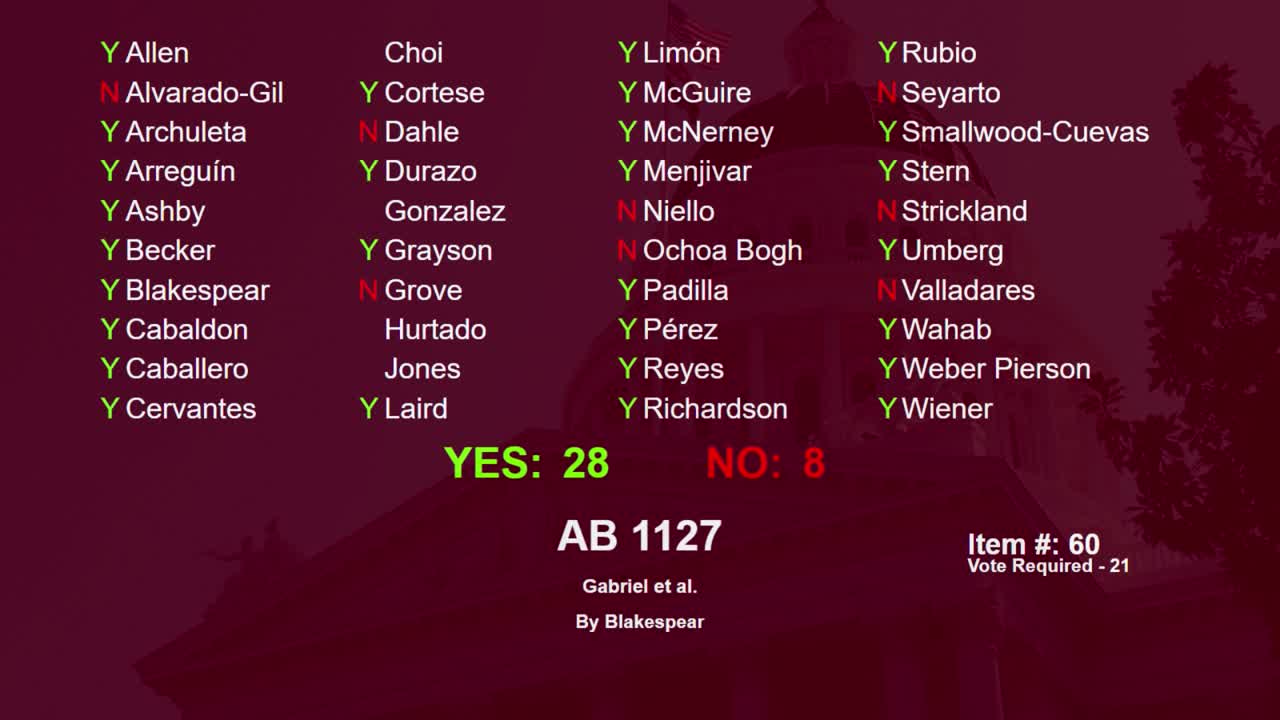 20MIN
Senate Floor
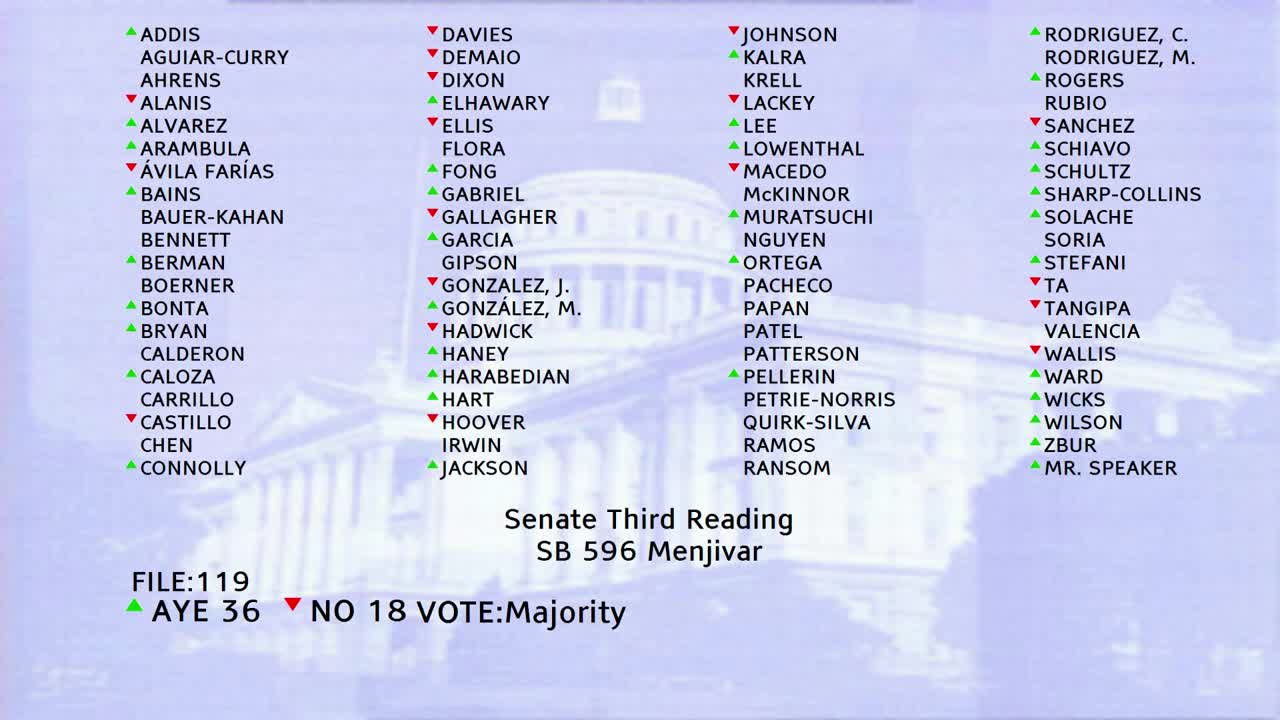 36MIN
Assembly Floor
 56MIN
Assembly Standing Committee on Local Government
 1H
Assembly Standing Committee on Housing and Community Development
 1H
Senate Floor
Bill Author



