SB 813: Independent verification organizations.
- Session Year: 2025-2026
- House: Senate
- Latest Version Date: 2026-09-09
Current Status:
Passed
(2026-09-09: Chaptered by Secretary of State. Chapter 179, Statutes of 2026.)
Introduced
In Committee
Awaiting First Chamber Vote
Passed First Chamber
In Committee
Awaiting Second Chamber Vote
Passed Second Chamber
Enacted
What does this bill do?
The bill creates a state program to designate and oversee “independent verification organizations” (IVOs) — outside auditors who assess the risks, measures, and methods of AI systems — by directing the Government Operations Agency to set application rules, designation criteria, and stakeholder working groups. Designated IVOs must file yearly reports about their standards, methods, and conflicts of interest (with limited redactions), and the law says using an IVO or following its standards is not required and does not by itself create legal liability.
The summary is provided by generative AI which can make mistakes. For original language, please view the details in the table below.
Existing law requires, on or before September 1, 2024, the Department of Technology, within the Government Operations Agency, to conduct, in coordination with other interagency bodies as it deems appropriate, a comprehensive inventory of all high-risk automated decision systems that have been proposed for use, development, or procurement by, or are being used, developed, or procured by, any state agency. Existing law requires the department to annually submit a report of that comprehensive inventory to the Assembly Committee on Privacy and Consumer Protection and the Senate Committee on Governmental Organization.
Existing law, the Transparency in Frontier Artificial Intelligence Act, among other things related to ensuring the safety of certain artificial intelligence models, requires a large frontier developer to write, implement, and clearly and conspicuously publish on its internet website a frontier AI framework that applies to the large frontier developers frontier models and describes how the large frontier developer approaches, among other things, incorporating national standards, international standards, and industry-consensus best practices into its frontier AI framework.
This bill would require, on or before January 1, 2028, the Government Operations Agency to take certain actions related to the selection and regulation of certain entities, defined as independent verification organizations, designated by the agency as having demonstrated expertise in assessing the risks posed by an AI system or model and identifying the metrics and methodologies that form the basis for that assessment. The bill would require the agency to convene working groups to solicit stakeholder input in the identification of standards and the development and revision of procedures and criteria, as specified. The bill would require the agency to provide a report to the Legislature on the findings of the working groups and would require a designated IVO to submit annually, and no sooner than 12 months after initial designation as an IVO, to the agency and Legislature a report, as specified.
Existing law requires, on or before September 1, 2024, the Department of Technology, within the Government Operations Agency, to conduct, in coordination with other interagency bodies as it deems appropriate, a comprehensive inventory of all high-risk automated decision systems that have been proposed for use, development, or procurement by, or are being used, developed, or procured by, any state agency. Existing law requires the department to annually submit a report of that comprehensive inventory to the Assembly Committee on Privacy and Consumer Protection and the Senate Committee on Governmental Organization.
Existing law, the Transparency in Frontier Artificial Intelligence Act, among other things related to ensuring the safety of certain artificial intelligence models, requires a large frontier developer to write, implement, and clearly and conspicuously publish on its internet website a frontier AI framework that applies to the large frontier developers frontier models and describes how the large frontier developer approaches, among other things, incorporating national standards, international standards, and industry-consensus best practices into its frontier AI framework.
This bill would require, on or before January 1, 2028, the Government Operations Agency to take certain actions related to the selection and regulation of certain entities, defined as independent verification organizations, designated by the agency as having demonstrated expertise in assessing the risks posed by an AI system or model and identifying the metrics and methodologies that form the basis for that assessment. The bill would require the agency to convene working groups to solicit stakeholder input in the identification of standards and the development and revision of procedures and criteria, as specified. The bill would require the agency to provide a report to the Legislature on the findings of the working groups and would require a designated IVO to submit annually, and no sooner than 12 months after initial designation as an IVO, to the agency and Legislature a report, as specified.
Existing law requires, on or before September 1, 2024, the Department of Technology, within the Government Operations Agency, to conduct, in coordination with other interagency bodies as it deems appropriate, a comprehensive inventory of all high-risk automated decision systems that have been proposed for use, development, or procurement by, or are being used, developed, or procured by, any state agency. Existing law requires the department to annually submit a report of that comprehensive inventory to the Assembly Committee on Privacy and Consumer Protection and the Senate Committee on Governmental Organization.
Existing law, the Transparency in Frontier Artificial Intelligence Act, among other things related to ensuring the safety of certain artificial intelligence models, requires a large frontier developer to write, implement, and clearly and conspicuously publish on its internet website a frontier AI framework that applies to the large frontier developers frontier models and describes how the large frontier developer approaches, among other things, incorporating national standards, international standards, and industry-consensus best practices into its frontier AI framework.
This bill would require, on or before January 1, 2028, the Government Operations Agency to take certain actions related to the selection and regulation of certain entities, defined as independent verification organizations, designated by the agency as having demonstrated expertise in assessing the risks posed by an AI system or model and identifying the metrics and methodologies that form the basis for that assessment. The bill would require the agency to convene working groups to solicit stakeholder input in the identification of standards and the development and revision of procedures and criteria, as specified. The bill would require the agency to provide a report to the Legislature on the findings of the working groups and would require a registered designated IVO to submit annually, and no sooner than 12 months after initial registration designation as an IVO, to the agency and Legislature a report, as specified.
Existing law requires, on or before September 1, 2024, the Department of Technology, within the Government Operations Agency, to conduct, in coordination with other interagency bodies as it deems appropriate, a comprehensive inventory of all high-risk automated decision systems that have been proposed for use, development, or procurement by, or are being used, developed, or procured by, any state agency. Existing law requires the department to annually submit a report of that comprehensive inventory to the Assembly Committee on Privacy and Consumer Protection and the Senate Committee on Governmental Organization.
Existing law, the Transparency in Frontier Artificial Intelligence Act, among other things related to ensuring the safety of certain artificial intelligence models, requires a large frontier developer to write, implement, and clearly and conspicuously publish on its internet website a frontier AI framework that applies to the large frontier developers frontier models and describes how the large frontier developer approaches, among other things, incorporating national standards, international standards, and industry-consensus best practices into its frontier AI framework.
This bill would require the Business and Consumer Services Agency to establish, on or before July 1, 2027, the California Artificial Intelligence Standards and Safety Commission and would provide for its membership, as specified. The bill would make this provision inoperative if AB 1709 of the 202526 Regular Session is enacted and the e-Safety Advisory Commission is established pursuant to that measure.This bill would require either the California Artificial Intelligence Standards and Safety Commission or the e-Safety Advisory Commission, as specified, require, on or before January 1, 2028, the Government Operations Agency to take certain actions related to the safety of artificial intelligence, including developing standards for the assessment of AI systems and models by AI auditors, developing procedures for determining whether to suspend or terminate the registration of an AI auditor, and developing criteria for determining whether an AI auditor qualifies as an independent verification organization, as specified. the selection and regulation of certain entities, defined as independent verification organizations, designated by the agency as having demonstrated expertise in assessing the risks posed by an AI system or model and identifying the metrics and methodologies that form the basis for that assessment. The bill would require the agency to convene working groups to solicit stakeholder input in the identification of standards and the development and revision of procedures and criteria, as specified. The bill would require the agency to provide a report to the Legislature on the findings of the working groups and would require a registered IVO to submit annually, and no sooner than 12 months after initial registration as an IVO, to the agency and Legislature a report, as specified.
Existing law requires, on or before September 1, 2024, the Department of Technology, within the Government Operations Agency, to conduct, in coordination with other interagency bodies as it deems appropriate, a comprehensive inventory of all high-risk automated decision systems that have been proposed for use, development, or procurement by, or are being used, developed, or procured by, any state agency. Existing law requires the department to annually submit a report of that comprehensive inventory to the Assembly Committee on Privacy and Consumer Protection and the Senate Committee on Governmental Organization.
Existing law, the Transparency in Frontier Artificial Intelligence Act, among other things related to ensuring the safety of certain artificial intelligence models, requires a large frontier developer to write, implement, and clearly and conspicuously publish on its internet website a frontier AI framework that applies to the large frontier developers frontier models and describes how the large frontier developer approaches, among other things, incorporating national standards, international standards, and industry-consensus best practices into its frontier AI framework.
This bill would require the Business and Consumer Services Agency to establish, on or before July 1, 2027, the California Artificial Intelligence Standards and Safety Commission and would provide for its membership, as specified. The bill would make this provision inoperative if AB 1709 of the 202526 Regular Session is enacted and the e-Safety Advisory Commission is established pursuant to that measure.
This bill would require either the California Artificial Intelligence Standards and Safety Commission or the e-Safety Advisory Commission, as specified, to take certain actions related to the safety of artificial intelligence, including developing standards for the assessment of AI systems and models by AI auditors, developing procedures for determining whether to suspend or terminate the registration of an AI auditor, and developing criteria for determining whether an AI auditor qualifies as an independent verification organization, as specified.
This bill would make its operation contingent upon the enactment of AB 1405 of the 202526 Regular Session.Existing law requires, on or before September 1, 2024, the Department of Technology, within the Government Operations Agency, to conduct, in coordination with other interagency bodies as it deems appropriate, a comprehensive inventory of all high-risk automated decision systems that have been proposed for use, development, or procurement by, or are being used, developed, or procured by, any state agency. Existing law requires the department to annually submit a report of that comprehensive inventory to the Assembly Committee on Privacy and Consumer Protection and the Senate Committee on Governmental Organization.
Existing law, the Transparency in Frontier Artificial Intelligence Act, among other things related to ensuring the safety of certain artificial intelligence models, requires a large frontier developer to write, implement, and clearly and conspicuously publish on its internet website a frontier AI framework that applies to the large frontier developers frontier models and describes how the large frontier developer approaches, among other things, incorporating national standards, international standards, and industry-consensus best practices into its frontier AI framework.
This bill would require the Business and Consumer Services Agency to establish, on or before July 1, 2027, the California Artificial Intelligence Standards and Safety Commission and would provide for its membership, as specified. The bill would make this provision inoperative if AB 1709 of the 202526 Regular Session is enacted and the e-Safety Advisory Commission is established pursuant to that measure.
This bill would require either the California Artificial Intelligence Standards and Safety Commission or the e-Safety Advisory Commission, as specified, to take certain actions related to the safety of artificial intelligence, including developing standards for the assessment of AI systems and models by AI auditors, developing procedures for determining whether to suspend or terminate the registration of an AI auditor, and developing criteria for determining whether an AI auditor qualifies as an independent verification organization, as specified.
This bill would make its operation contingent upon the enactment of AB 1405 of the 202526 Regular Session.
Existing law requires, on or before September 1, 2024, the Department of Technology, within the Government Operations Agency, to conduct, in coordination with other interagency bodies as it deems appropriate, a comprehensive inventory of all high-risk automated decision systems that have been proposed for use, development, or procurement by, or are being used, developed, or procured by, any state agency. Existing law requires the department to annually submit a report of that comprehensive inventory to the Assembly Committee on Privacy and Consumer Protection and the Senate Committee on Governmental Organization.
Existing law, the Transparency in Frontier Artificial Intelligence Act, among other things related to ensuring the safety of certain artificial intelligence models, requires a large frontier developer to write, implement, and clearly and conspicuously publish on its internet website a frontier AI framework that applies to the large frontier developers frontier models and describes how the large frontier developer approaches, among other things, incorporating national standards, international standards, and industry-consensus best practices into its frontier AI framework.
This bill would require the agency Business and Consumer Services Agency to establish establish, on or before July 1, 2027, the California AI Artificial Intelligence Standards and Safety Commission and would provide for its membership, as specified. The bill would make this provision inoperative if AB 1709 of the 202526 Regular Session is enacted and the e-Safety Advisory Commission is established pursuant to that measure.
This bill would require either the commission California Artificial Intelligence Standards and Safety Commission or the e-Safety Advisory Commission, as specified, to take certain actions related to the safety of artificial intelligence, including maintaining formal liaison relationships with state agencies deploying or procuring artificial intelligence, providing artificial intelligence technical expertise and artificial intelligence risk assessment, and designating one or more entities as independent verification organizations (IVOs), as specified. developing standards for the assessment of AI systems and models by AI auditors, developing procedures for determining whether to suspend or terminate the registration of an AI auditor, and developing criteria for determining whether an AI auditor qualifies as an independent verification organization, as specified.
This bill would require an IVO to take certain actions, including to implement the plan for artificial intelligence risk mitigation that it submitted to the commission when it applied for designation as an IVO and submit to the Legislature and to the commission an annual report that addresses, among other things, the adequacy of existing evaluation resources and mitigation measures to mitigate observed and potential risks.This bill would authorize the commission to establish a fee structure for charging fees to applicants and designated IVOs to offset the reasonable costs incurred by the commission in carrying out its duties pursuant to the bill and adopt regulations necessary to administer the bill.This bill would make its operation contingent upon the enactment of AB 1405 of the 202526 Regular Session.
Existing law requires, on or before September 1, 2024, the Department of Technology Technology, within the Government Operations Agency, to conduct, in coordination with other interagency bodies as it deems appropriate, a comprehensive inventory of all high-risk automated decision systems that have been proposed for use, development, or procurement by, or are being used, developed, or procured by, any state agency. The California AI Transparency Act requires a covered provider, as defined, of a generative artificial intelligence (GenAI) system to offer the user the option to include a manifest disclosure in image, video, or audio content, or content that is any combination thereof, created or altered by the covered providers GenAI system that, among other things, identifies content as AI-generated content. Existing law requires the department to annually submit a report of that comprehensive inventory to the Assembly Committee on Privacy and Consumer Protection and the Senate Committee on Governmental Organization.
Existing law, the Transparency in Frontier Artificial Intelligence Act, among other things related to ensuring the safety of certain artificial intelligence models, requires a large frontier developer to write, implement, and clearly and conspicuously publish on its internet website a frontier AI framework that applies to the large frontier developers frontier models and describes how the large frontier developer approaches, among other things, incorporating national standards, international standards, and industry-consensus best practices into its frontier AI framework.
This bill would require the agency to establish a process by which the Attorney General designates, for a renewable period of 3 years, a private entity as a multistakeholder regulatory organization (MRO) if that entity meets certain requirements, including that the entity presents a plan that ensures acceptable mitigation of risk from any MRO-certified artificial intelligence models and artificial intelligence applications. The bill would require an applicant for designation by the Attorney General as an MRO to submit with its application a plan that contains certain elements, including the applicants approach to mitigating specific high-impact risks, including cybersecurity, chemical, biological, radiological, and nuclear threats, malign persuasion, and artificial intelligence model autonomy and exfiltration. The bill would require the Attorney General to adopt regulations, with input from stakeholders, that establish minimum requirements for those plans and conflict of interest rules for MROs, as specified. the California AI Standards and Safety Commission and would provide for its membership, as specified.
This bill would require an MRO to perform various responsibilities related to certifying the safety of artificial intelligence models and artificial intelligence applications, including decertifying an artificial intelligence model or artificial intelligence application that does not meet the requirements prescribed by the MRO and submitting an annual report to the Legislature and the Attorney General that addresses, among other things, the adequacy of existing evaluation resources and mitigation measures to mitigate observed and potential risks. the commission to take certain actions related to the safety of artificial intelligence, including maintaining formal liaison relationships with state agencies deploying or procuring artificial intelligence, providing artificial intelligence technical expertise and artificial intelligence risk assessment, and designating one or more entities as independent verification organizations (IVOs), as specified.
This bill would require an IVO to take certain actions, including to implement the plan for artificial intelligence risk mitigation that it submitted to the commission when it applied for designation as an IVO and submit to the Legislature and to the commission an annual report that addresses, among other things, the adequacy of existing evaluation resources and mitigation measures to mitigate observed and potential risks.
This bill would authorize the Attorney General commission to establish a fee structure for charging fees to applicants and designated MROs IVOs to offset the reasonable costs incurred by the Attorney General commission in carrying out its duties pursuant to the bill and adopt regulations necessary to administer the bill.
This bill would, in a civil action asserting claims for personal injury or property damage caused by an artificial intelligence model or artificial intelligence application against a developer of the artificial intelligence model or artificial intelligence application, create a rebuttable presumption that the developer exercised reasonable care if the artificial intelligence model or artificial intelligence application in question was certified by an MRO at the time of the plaintiffs injuries, as specified.Existing law requires, on or before September 1, 2024, the Department of Technology to conduct, in coordination with other interagency bodies as it deems appropriate, a comprehensive inventory of all high-risk automated decision systems that have been proposed for use, development, or procurement by, or are being used, developed, or procured by, any state agency. The California AI Transparency Act requires a covered provider, as defined, of a generative artificial intelligence (GenAI) system to offer the user the option to include a manifest disclosure in image, video, or audio content, or content that is any combination thereof, created or altered by the covered providers GenAI system that, among other things, identifies content as AI-generated content.
This bill would establish a process by which the Attorney General designates, for a renewable period of 3 years, a private entity as a multistakeholder regulatory organization (MRO) if that entity meets certain requirements, including that the entity presents a plan that ensures acceptable mitigation of risk from any MRO-certified artificial intelligence models and artificial intelligence applications. The bill would require an applicant for designation by the Attorney General as an MRO to submit with its application a plan that contains certain elements, including the applicants approach to mitigating specific high-impact risks, including cybersecurity, chemical, biological, radiological, and nuclear threats, malign persuasion, and artificial intelligence model autonomy and exfiltration. The bill would require the Attorney General to adopt regulations, with input from stakeholders, that establish minimum requirements for those plans and conflict of interest rules for MROs, as specified.
This bill would require an MRO to perform various responsibilities related to certifying the safety of artificial intelligence models and artificial intelligence applications, including decertifying an artificial intelligence model or artificial intelligence application that does not meet the requirements prescribed by the MRO and submitting an annual report to the Legislature and the Attorney General that addresses, among other things, the adequacy of existing evaluation resources and mitigation measures to mitigate observed and potential risks.
This bill would authorize the Attorney General to establish a fee structure for charging fees to applicants and designated MROs to offset the reasonable costs incurred by the Attorney General in carrying out its duties pursuant to the bill and adopt regulations necessary to administer the bill.
This bill would provide that in a civil action asserting claims for personal injury or property damage caused by an artificial intelligence model or artificial intelligence application, it is an affirmative defense to liability that the artificial intelligence model or artificial intelligence application in question was certified by an MRO at the time of the plaintiffs injuries. would, in a civil action asserting claims for personal injury or property damage caused by an artificial intelligence model or artificial intelligence application against a developer of the artificial intelligence model or artificial intelligence application, create a rebuttable presumption that the developer exercised reasonable care if the artificial intelligence model or artificial intelligence application in question was certified by an MRO at the time of the plaintiffs injuries, as specified.
Existing law requires, on or before September 1, 2024, the Department of Technology to conduct, in coordination with other interagency bodies as it deems appropriate, a comprehensive inventory of all high-risk automated decision systems that have been proposed for use, development, or procurement by, or are being used, developed, or procured by, any state agency. The California AI Transparency Act requires a covered provider, as defined, of a generative artificial intelligence (GenAI) system to offer the user the option to include a manifest disclosure in image, video, or audio content, or content that is any combination thereof, created or altered by the covered providers GenAI system that, among other things, identifies content as AI-generated content.
This bill would establish a process by which the Attorney General designates, for a renewable period of 3 years, a private entity as a multistakeholder regulatory organization (MRO) if that entity meets certain requirements, including that the entity presents a plan that ensures acceptable mitigation of risk from any MRO-certified artificial intelligence models and artificial intelligence applications. The bill would require an applicant for designation by the Attorney General as an MRO to submit with its application a plan that contains certain elements, including the applicants approach to mitigating specific high-impact risks, including cybersecurity, chemical, biological, radiological, and nuclear threats, malign persuasion, and artificial intelligence model autonomy and exfiltration.
This bill would require an MRO to perform various responsibilities related to certifying the safety of artificial intelligence models and artificial intelligence applications, including decertifying an artificial intelligence model or artificial intelligence application that does not meet the requirements prescribed by the MRO and submitting an annual report to the Legislature and the Attorney General that addresses, among other things, the adequacy of existing evaluation resources and mitigation measures to mitigate observed and potential risks.
This bill would provide that in a civil action asserting claims for personal injury or property damage caused by an artificial intelligence model or artificial intelligence application, it is an affirmative defense to liability that the artificial intelligence model or artificial intelligence application in question was certified by an MRO at the time of the plaintiffs injuries.
Existing law, the Occupational Therapy Practice Act, establishes the California Board of Occupational Therapy for the licensure and regulation of the practice of occupational therapy. Existing law prohibits a person from practicing occupational therapy or working as an occupational therapy assistant under the supervision of an occupational therapist without being licensed under the act.Existing law requires an occupational therapist to document the occupational therapists evaluation, goals, treatment plan, and summary of treatment in the client record. Existing law further requires client records to be maintained for a period of not less than 7 years following the discharge of the client, except as specified.This bill would increase the above timeframe to 10 years following discharge of the client.Existing law, the Occupational Therapy Practice Act, establishes the California Board of Occupational Therapy for the licensure and regulation of the practice of occupational therapy. Existing law prohibits a person from practicing occupational therapy or working as an occupational therapy assistant under the supervision of an occupational therapist without being licensed under the act.
Existing law requires an occupational therapist to document the occupational therapists evaluation, goals, treatment plan, and summary of treatment in the client record. Existing law further requires client records to be maintained for a period of not less than 7 years following the discharge of the client, except as specified.
This bill would increase the above timeframe to 10 years following discharge of the client.
As used in this chapter:
(a)Agency means the Government Operations Agency.
(b)Artificial intelligence or AI means an engineered or machine-based system that varies in its level of autonomy and that can, for explicit or implicit objectives, infer from the input it receives how to generate outputs that can influence physical or virtual environments.
(c)AI auditor means a person, partnership, academic institution, nonprofit, or corporation that conducts a covered audit on behalf of a third party.
(d)Covered AI audit means an audit conducted to assess internal controls, processes, or systems implemented for an AI system or model that are necessary for compliance with state law.
(e)Independent verification organization or IVO means an AI auditor that is designated by the agency as having demonstrated expertise in assessing the risks posed by an AI system or model and identifying the metrics and methodologies that form the basis for that assessment.
8898.1.On or before January 1, 2028, the agency shall do all of the following:
(a)Develop application requirements for designation as an IVO, including the information required to apply for designation as an applicant IVO, which shall submit the following as part of its application:
(A)The qualifications of the applicant demonstrating competence to be designated an IVO by the agency.
(B)Information sufficient to address the designation criteria published by the agency pursuant to subdivision (c).
(C)The benchmarks, technologies, metrics, and methodologies the IVO proposes using to conduct the IVOs work.
(D)Any documentation necessary for the agency to verify the accuracy of the information in the application.
(b)Develop procedures for determining whether to suspend or terminate the designation of an IVO. In developing these procedures, the agency shall include procedures to consider all of the following:
(1)Failures to adhere to appropriate standards.
(2)Material misrepresentations in the IVOs application for designation, audit reports, or required disclosures.
(3)Conflicts of interest that impair independence.
(4)Failure to maintain adequate documentation.
(5)Conduct that reasonably calls into question the integrity, objectivity, or competence of the IVO.
(6)Lapses in cybersecurity.
(c)Develop criteria for determining whether an AI auditor qualifies as a designated IVO.
(1)In developing these criteria, the agency shall identify and consider existing standards, frameworks, guidelines, criteria, and best practices developed or published by government agencies, standards-setting organizations, including national and international auditing and assurance organizations, AI auditors, AI entities that develop or deploy AI systems or models, or other independent experts with relevant expertise.
(2)The agency shall consider, at a minimum, whether the IVO meets all of the following criteria with respect to an AI system or model in operation:
(A)Assessing the risks posed by an AI system or model and identifying the metrics and methodologies that form the basis for that assessment.
(B)Employing or otherwise engaging personnel with sufficient technical expertise.
(C)Identifying and managing potential conflicts of interest that may undermine the integrity, quality, or independence of the IVO, including ensuring financial relationships do not impact the judgment and decisionmaking of the IVO. An IVO may accept payment from a party being assessed at reasonable market rates but shall not accept terms which condition any payment or the amount of any payment on the results of their assessment.
(D)Maintaining independence from the party being assessed, including by having no operational or management dependence on the party being assessed or its affiliates and by remaining otherwise free from the assessed partys control in reaching conclusions or making recommendations, including, as appropriate, through contractual safeguards and conflict-of-interest policies.
(d)Publish any requirements or criteria identified pursuant to this chapter in a publicly accessible format on the agencys internet website.
(e)Publish a statement on the agencys internet website prominently disclosing that the publication of requirements or criteria pursuant to this subdivision does not constitute recommendation or endorsement by the state of any AI system or model.
(f)Regularly review requirements and criteria identified pursuant to this chapter and revise them as appropriate to reflect changes in applicable state law, technological developments, widely recognized industry standards, and emerging best practices.
(g)To the extent practicable, align procedures and criteria developed pursuant to this chapter with existing professional and regulatory audit and assurance standards, frameworks, and criteria to promote consistency, comparability, and reliability across regulatory and industry frameworks.
(h)To the extent practicable, structure the requirements of this section to minimize duplicative compliance obligations, including by allowing reports, assessments, audits, or assurance engagements prepared to satisfy substantially similar requirements to be used for purposes of this section if those reports, assessments, audits, or engagements satisfy the requirements of this section.
8898.2.(a)In carrying out its duties under this chapter, the agency shall consult as appropriate with any of the following:
(1)AI auditors.
(2)Independent verification organizations.
(3)Academic institutions.
(4)Private entities, including startups and other emerging technology companies, that develop AI systems or models.
(5)Private entities, including startups and other emerging technology companies, that deploy or operate AI systems or models.
(6)Consumer protection, labor, and civil society organizations.
(7)Relevant federal, state, and local agencies.
(8)National and international standards-setting organizations.
(9)Any other relevant stakeholders, as determined by the agency.
(b)(1)The agency shall convene working groups to solicit stakeholder input in the identification of standards and the development and revision of procedures, requirements, and criteria pursuant to this chapter. Working groups shall include, but not be limited to, engineers from AI companies that are competitors and AI safety experts.
(2)The agency shall provide a report, under Section 9795, to the Legislature on the findings of the working groups.
8898.3.(a)A designated IVO shall submit annually, and no sooner than 12 months after initial designation as an IVO, to the agency and Legislature a report that includes all of the following:
(1)Summaries of the IVOs standards and methodologies.
(2)A description of any changes to the independent verification organizations governance policies or sources of funding relevant to the IVOs conflicts of interest or independence.
(3)Any changes to the IVOs application information.
(b)When an IVO provides documents to comply with this section, the IVO may make redactions to those documents that are necessary to protect trade secrets, cybersecurity, public safety, or the national security of the United States or to comply with any federal or state law.
(c)If an IVO redacts information in a document pursuant to this subdivision, the IVO shall describe the character and justification of the redaction in any published version of the document to the extent permitted by the concerns that justify redaction and shall retain the unredacted information for five years.
8898.4.(a)This chapter does not do any of the following:
(1)Establish liability solely for failure to comply with a standard pursuant to this chapter.
(2)Constitute recommendation or endorsement by the state of any AI system or model.
(3)Require any person, partnership, or corporation that develops, deploys, or operates an AI system or model to engage an IVO or to undergo a covered AI audit as a condition of developing, deploying, or operating an AI system or model in this state.
(4)Require an IVO to conduct audits to assess compliance with applicable state law in order to register with the agency.
(b)In an action alleging that a defendants development, modification, or use of an artificial intelligence system or model caused harm, the fact that an audit has been performed in accordance with a standard identified under this chapter is relevant to, but not conclusive of, the action.
As used in this chapter:
(a)Agency means the Government Operations Agency.
(b)Artificial intelligence or AI means an engineered or machine-based system that varies in its level of autonomy and that can, for explicit or implicit objectives, infer from the input it receives how to generate outputs that can influence physical or virtual environments.
(c)AI auditor means a person, partnership, academic institution, nonprofit, or corporation that conducts a covered audit on behalf of a third party.
(d)Covered AI audit means an audit conducted to assess internal controls, processes, or systems implemented for an AI system or model that are necessary for compliance with state law.
(e)Independent verification organization or IVO means an AI auditor that is designated by the agency as having demonstrated expertise in assessing the risks posed by an AI system or model and identifying the metrics and methodologies that form the basis for that assessment.
8898.1.On or before January 1, 2028, the agency shall do all of the following:
(a)Develop application requirements for designation as an IVO, including the information required to apply for designation as an applicant IVO, which shall submit the following as part of its application:
(A)The qualifications of the applicant demonstrating competence to be designated an IVO by the agency.
(B)Information sufficient to address the designation criteria published by the agency pursuant to subdivision (c).
(C)The benchmarks, technologies, metrics, and methodologies the IVO proposes using to conduct the IVOs work.
(D)Any documentation necessary for the agency to verify the accuracy of the information in the application.
(b)Develop procedures for determining whether to suspend or terminate the designation of an IVO. In developing these procedures, the agency shall include procedures to consider all of the following:
(1)Failures to adhere to appropriate standards.
(2)Material misrepresentations in the IVOs application for designation, audit reports, or required disclosures.
(3)Conflicts of interest that impair independence.
(4)Failure to maintain adequate documentation.
(5)Conduct that reasonably calls into question the integrity, objectivity, or competence of the IVO.
(6)Lapses in cybersecurity.
(c)Develop criteria for determining whether an AI auditor qualifies as a designated IVO.
(1)In developing these criteria, the agency shall identify and consider existing standards, frameworks, guidelines, criteria, and best practices developed or published by government agencies, standards-setting organizations, including national and international auditing and assurance organizations, AI auditors, AI entities that develop or deploy AI systems or models, or other independent experts with relevant expertise.
(2)The agency shall consider, at a minimum, whether the IVO meets all of the following criteria with respect to an AI system or model in operation:
(A)Assessing the risks posed by an AI system or model and identifying the metrics and methodologies that form the basis for that assessment.
(B)Employing or otherwise engaging personnel with sufficient technical expertise.
(C)Identifying and managing potential conflicts of interest that may undermine the integrity, quality, or independence of the IVO, including ensuring financial relationships do not impact the judgment and decisionmaking of the IVO. An IVO may accept payment from a party being assessed at reasonable market rates but shall not accept terms which condition any payment or the amount of any payment on the results of their assessment.
(D)Maintaining independence from the party being assessed, including by having no operational or management dependence on the party being assessed or its affiliates and by remaining otherwise free from the assessed partys control in reaching conclusions or making recommendations, including, as appropriate, through contractual safeguards and conflict-of-interest policies.
(d)Publish any requirements or criteria identified pursuant to this chapter in a publicly accessible format on the agencys internet website.
(e)Publish a statement on the agencys internet website prominently disclosing that the publication of requirements or criteria pursuant to this subdivision does not constitute recommendation or endorsement by the state of any AI system or model.
(f)Regularly review requirements and criteria identified pursuant to this chapter and revise them as appropriate to reflect changes in applicable state law, technological developments, widely recognized industry standards, and emerging best practices.
(g)To the extent practicable, align procedures and criteria developed pursuant to this chapter with existing professional and regulatory audit and assurance standards, frameworks, and criteria to promote consistency, comparability, and reliability across regulatory and industry frameworks.
(h)To the extent practicable, structure the requirements of this section to minimize duplicative compliance obligations, including by allowing reports, assessments, audits, or assurance engagements prepared to satisfy substantially similar requirements to be used for purposes of this section if those reports, assessments, audits, or engagements satisfy the requirements of this section.
8898.2.(a)In carrying out its duties under this chapter, the agency shall consult as appropriate with any of the following:
(1)AI auditors.
(2)Independent verification organizations.
(3)Academic institutions.
(4)Private entities, including startups and other emerging technology companies, that develop AI systems or models.
(5)Private entities, including startups and other emerging technology companies, that deploy or operate AI systems or models.
(6)Consumer protection, labor, and civil society organizations.
(7)Relevant federal, state, and local agencies.
(8)National and international standards-setting organizations.
(9)Any other relevant stakeholders, as determined by the agency.
(b)(1)The agency shall convene working groups to solicit stakeholder input in the identification of standards and the development and revision of procedures, requirements, and criteria pursuant to this chapter. Working groups shall include, but not be limited to, engineers from AI companies that are competitors and AI safety experts.
(2)The agency shall provide a report, under Section 9795, to the Legislature on the findings of the working groups.
8898.3.(a)A designated IVO shall submit annually, and no sooner than 12 months after initial designation as an IVO, to the agency and Legislature a report that includes all of the following:
(1)Summaries of the IVOs standards and methodologies.
(2)A description of any changes to the independent verification organizations governance policies or sources of funding relevant to the IVOs conflicts of interest or independence.
(3)Any changes to the IVOs application information.
(b)When an IVO provides documents to comply with this section, the IVO may make redactions to those documents that are necessary to protect trade secrets, cybersecurity, public safety, or the national security of the United States or to comply with any federal or state law.
(c)If an IVO redacts information in a document pursuant to this subdivision, the IVO shall describe the character and justification of the redaction in any published version of the document to the extent permitted by the concerns that justify redaction and shall retain the unredacted information for five years.
8898.4.(a)This chapter does not do any of the following:
(1)Establish liability solely for failure to comply with a standard pursuant to this chapter.
(2)Constitute recommendation or endorsement by the state of any AI system or model.
(3)Require any person, partnership, or corporation that develops, deploys, or operates an AI system or model to engage an IVO or to undergo a covered AI audit as a condition of developing, deploying, or operating an AI system or model in this state.
(4)Require an IVO to conduct audits to assess compliance with applicable state law in order to register with the agency.
(b)In an action alleging that a defendants development, modification, or use of an artificial intelligence system or model caused harm, the fact that an audit has been performed in accordance with a standard identified under this chapter is relevant to, but not conclusive of, the action.
As used in this chapter:
(a)Agency means the Government Operations Agency.
(b)Artificial intelligence or AI means an engineered or machine-based system that varies in its level of autonomy and that can, for explicit or implicit objectives, infer from the input it receives how to generate outputs that can influence physical or virtual environments.
(c)AI auditor means a person, partnership, academic institution, nonprofit, or corporation that conducts a covered audit on behalf of a third party.
(d)Covered AI audit means an audit conducted to assess whether an AI system or model meets minimum safety, efficacy, reliability, or security requirements necessary to comply with applicable state law. internal controls, processes, or systems implemented for an AI system or model that are necessary for compliance with state law.
(e)Independent verification organization or IVO means an AI auditor that is designated by the agency as having demonstrated expertise in assessing the risks posed by an AI system or model and identifying the metrics and methodologies that form the basis for that assessment that does not have any financial, operational, or management dependence on the party being assessed or its affiliates and is otherwise free from the assessed partys control in reaching conclusions or making recommendations, including, as appropriate, through contractual safeguards and conflict of interest policies. assessment.
8898.1.On or before January 1, 2028, the agency shall do all of the following:
(a)Develop application requirements for IVOs, designation as an IVO, including the information required to apply for designation as an applicant IVO IVO, which shall submit about the the following as part of its application:
(A)The qualifications of the applicant demonstrating competence to be designated an IVO by the agency.
(B)Information sufficient to address the designation criteria published by the agency pursuant to subdivision (c).
(C)The benchmarks, technologies, metrics, and methodologies the IVO proposes using to conduct the IVOs work. In developing these requirements, the agency shall identify and consider existing standards, frameworks, guidelines, criteria, and best practices developed or published by government agencies, standards-setting organizations, including national and international auditing and assurance organizations, AI auditors, AI entities that develop or deploy AI systems or models, or other independent experts with relevant expertise.
(D)Any documentation necessary for the agency to verify the accuracy of the information in the application.
(b)Develop procedures for determining whether to suspend or terminate the registration designation of an IVO. In developing these procedures, the agency shall include procedures to consider all of the following:
(1)Failures to adhere to appropriate standards.
(2)Material misrepresentations in the IVOs application for designation, audit reports reports, or required disclosures.
(3)Conflicts of interest that impair independence.
(4)Failure to maintain adequate documentation.
(5)Conduct that reasonably calls into question the integrity, objectivity, or competence of the IVO.
(6)Lapses in cybersecurity.
(c)Develop criteria for determining whether an AI auditor qualifies as a registered designated IVO. In developing these criteria, the
(1)In developing these criteria, the agency shall identify and consider existing standards, frameworks, guidelines, criteria, and best practices developed or published by government agencies, standards-setting organizations, including national and international auditing and assurance organizations, AI auditors, AI entities that develop or deploy AI systems or models, or other independent experts with relevant expertise.
(2)The agency shall consider consider, at a minimum, whether the IVO is capable of meets all of the following criteria with respect to an AI system or model in operation:
(1)(A)Assessing the risks posed by an AI system or model and identifying the metrics and methodologies that form the basis for that assessment.
(2)(B)Employing or otherwise engaging personnel with sufficient technical expertise.
(3)(C)Identifying and managing potential conflicts of interest that may undermine the integrity, quality, or independence of the IVO. IVO, including ensuring financial relationships do not impact the judgment and decisionmaking of the IVO. An IVO may accept payment from a party being assessed at reasonable market rates but shall not accept terms which condition any payment or the amount of any payment on the results of their assessment.
(D)Maintaining independence from the party being assessed, including by having no operational or management dependence on the party being assessed or its affiliates and by remaining otherwise free from the assessed partys control in reaching conclusions or making recommendations, including, as appropriate, through contractual safeguards and conflict-of-interest policies.
(d)Publish any requirements or criteria identified pursuant to this chapter in a publicly accessible format on the agencys internet website.
(e)Publish a statement on the agencys internet website prominently disclosing that the publication of requirements or criteria pursuant to this subdivision does not constitute recommendation or endorsement by the state of any AI system or model.
(f)Regularly review requirements and criteria identified pursuant to this chapter and revise them as appropriate to reflect changes in applicable state law, technological developments, widely recognized industry standards, and emerging best practices.
(g)To the extent practicable, align procedures and criteria developed pursuant to this chapter with existing professional and regulatory audit and assurance standards, frameworks, and criteria to promote consistency, comparability, and reliability across regulatory and industry frameworks.
(h)To the extent practicable, structure the requirements of this section to minimize duplicative compliance obligations, including by allowing reports, assessments, audits, or assurance engagements prepared to satisfy substantially similar requirements to be used for purposes of this section if those reports, assessments, audits, or engagements satisfy the requirements of this section.
8898.2.(a)In carrying out its duties under this chapter, the agency shall consult as appropriate with any of the following:
(1)Certified public accountants and public accountants in good standing as certified by the California Board of Accountancy.(2)(1)AI auditors that are not certified public accountants or public accountants. auditors.
(3)(2)Independent verification organizations.
(4)(3)Academic institutions.
(5)(4)Private entities, including startups and other emerging technology companies, that develop AI systems or models.
(6)(5)Private entities, including startups and other emerging technology companies, that deploy or operate AI systems or models.
(7)(6)Consumer protection, labor, and civil society organizations.
(8)(7)Relevant federal, state, and local agencies.
(9)(8)National and international standards-setting organizations.
(10)(9)Any other relevant stakeholders, as determined by the agency.
(b)(1)The agency shall convene working groups to solicit stakeholder input in the identification of standards and the development and revision of procedures, requirements, and criteria pursuant to this chapter. Working groups shall include, but not be limited to, engineers from AI companies that are competitors and AI safety experts.
(2)The agency shall provide a report, under Section 9795, to the Legislature on the findings of the working groups.
8898.3.(a)A registered designated IVO shall submit annually, and no sooner than 12 months after initial registration designation as an IVO, to the agency and Legislature a report that includes all of the following:
(1)Summaries of the IVOs standards and methodologies.
(2)A description of any changes to the independent verification organizations governance policies or sources of funding relevant to the IVOs conflicts of interest or independence.
(3)Any changes to the IVOs application information.
(b)When an IVO provides documents to comply with this section, the IVO may make redactions to those documents that are necessary to protect trade secrets, cybersecurity, public safety, or the national security of the United States or to comply with any federal or state law.
(c)If an IVO redacts information in a document pursuant to this subdivision, the IVO shall describe the character and justification of the redaction in any published version of the document to the extent permitted by the concerns that justify redaction and shall retain the unredacted information for five years.
8898.4.(a)This chapter does not do any of the following:
(1)Establish liability solely for failure to comply with a standard pursuant to this chapter.
(2)Constitute recommendation or endorsement by the state of any AI system or model.
(3)Require any person, partnership, or corporation that develops, deploys, or operates and an AI system or model to engage an IVO or to undergo a covered AI audit as a condition of developing, deploying, or operating an AI system or model in this state.
(4)Require an IVO to conduct audits to assess compliance with applicable state law in order to register with the agency.
(b)In an action alleging that a defendants development, modification, or use of an artificial intelligence system or model caused harm, the fact that an audit has been performed in accordance with a standard identified under this chapter is relevant to, but not conclusive of, the action.
As used in this chapter:
(a)Advanced safety standard means a standard published by the agency or authorized by statute that establishes criteria for determining whether an AI system or model substantially exceeds minimum compliance requirements, incorporates emerging best practices, and achieves demonstrable outcomes that promote the safety, efficacy, reliability, and security of the system or model.(b)(a)Agency means the Business and Consumer Services Government Operations Agency.
(c)(b)Artificial intelligence or AI means an engineered or machine-based system that varies in its level of autonomy and that can, for explicit or implicit objectives, infer from the input it receives how to generate outputs that can influence physical or virtual environments.
(d)(c)AI auditor means a person, partnership, academic institution, nonprofit, or corporation that conducts a covered audit on behalf of a third party.
(e)(1) Except as provided in paragraph (2), commission means the California Artificial Intelligence Standards and Safety Commission established pursuant to Section 8898.1.(2)If Assembly Bill 1709 of the 202526 Regular Session is enacted and establishes an e-Safety Advisory Commission, commission means the e-Safety Advisory Commission established pursuant to Assembly Bill 1709 of the 202526 Regular Session.(f)(d)Covered AI audit means an assessment of an AI system or model audit conducted in accordance with a minimum compliance standard or an advanced safety standard. to assess whether an AI system or model meets minimum safety, efficacy, reliability, or security requirements necessary to comply with applicable state law.
(g)(e)Independent verification organization or IVO means an AI auditor that is designated by the agency as having demonstrated expertise in assessing whether AI systems or models substantially exceed minimum compliance requirements, incorporate emerging best practices, and achieve demonstrable outcomes that promote their safety, efficacy, reliability, and security. the risks posed by an AI system or model and identifying the metrics and methodologies that form the basis for that assessment that does not have any financial, operational, or management dependence on the party being assessed or its affiliates and is otherwise free from the assessed partys control in reaching conclusions or making recommendations, including, as appropriate, through contractual safeguards and conflict of interest policies.
(h)Minimum compliance standard means a standard published by the agency or authorized by statute that establishes criteria for determining whether both of the following meet minimum safety, efficacy, reliability, and security requirements necessary to comply with applicable state law:(1)The operational effectiveness of an AI system or model.(2)The design and implementation of internal controls established for an AI system or model.8898.1.(a)On or before July 1, 2027, the agency shall establish the California Artificial Intelligence Standards and Safety Commission that consists of all of the following members:(1)A representative, appointed by the Governor, from a business that develops or deploys AI systems or models and employs more than 100 workers.(2)A representative, appointed by the Governor, from a business that develops or deploys AI systems or models and employs fewer than 100 workers.(3)An expert from academia, appointed by the Governor, with experience researching AI safety.(4)An individual, appointed by the Speaker of the Assembly, representing the interests of civil society, including, but not limited to, nongovernmental organizations, public policy institutes, or consumer advocacy organizations.(5)An individual, appointed by the Senate Rules Committee, representing the legal and economic interests of workers in relation to AI systems and models.(6)An individual authorized to practice public accountancy in this state, appointed by the Governor, who represents the accounting and auditing profession and has experience providing assurance services related to artificial intelligence and technology systems.(7)The Attorney General or that persons designee.(b)Members appointed pursuant to this subdivision shall serve four-year terms and may be reappointed.(c)If Assembly Bill 1709 of the 202526 Regular Session is enacted, and the e-Safety Advisory Commission is established pursuant to that measure, this section shall be inoperative.8898.2.(a)The commission8898.1.On or before January 1, 2028, the agency shall do all of the following:
(1)Develop standards for the assessment of AI systems and models by AI auditors. In developing these standards, the commission shall do all of the following:(A)Evaluate existing standards, frameworks, guidelines, criteria, and best practices developed or published by government agencies, standards-setting organizations, including national and international auditing and assurance standard-setting organizations, professional accountancy bodies, AI auditors, private entities that develop or deploy AI systems or models, or other independent experts with relevant expertise.(B)Establish the following two tiers of standards:(i)Minimum compliance standards.(ii)Advanced safety standards.(C)Prioritize, at a minimum, developing standards for AI systems, models, and use cases that are subject to state law.(D)Create a process for independent experts to submit advanced safety standards for evaluation by the commission pursuant to this chapter.(a)Develop requirements for IVOs, including the information an applicant IVO shall submit about the benchmarks, technologies, metrics, and methodologies the IVO proposes using to conduct the IVOs work. In developing these requirements, the agency shall identify and consider existing standards, frameworks, guidelines, criteria, and best practices developed or published by government agencies, standards-setting organizations, including national and international auditing and assurance organizations, AI auditors, AI entities that develop or deploy AI systems or models, or other independent experts with relevant expertise.
(2)(b)Develop procedures for determining whether to suspend or terminate the registration of an AI auditor. IVO. In developing these procedures, the commission agency shall consider all of the following:
(A)(1)Failures to adhere to appropriate standards, including standards developed pursuant to this chapter. standards.
(B)(2)Material misrepresentations in audit reports or required disclosures.
(C)(3)Conflicts of interest that impair independence.
(D)(4)Failure to maintain adequate documentation.
(E)(5)Conduct that reasonably calls into question the integrity, objectivity, or competence of the AI auditor. IVO.
(6)Lapses in cybersecurity.
(3)(c)Develop criteria for determining whether an AI auditor qualifies as an independent verification organization. a registered IVO. In developing these criteria, the commission agency shall consider whether the IVO is capable of all of the following with respect to an AI system or model in operation:
(A)(1)Assessing the safety, efficacy, reliability, security, and robustness of the risks posed by an AI system or model. model and identifying the metrics and methodologies that form the basis for that assessment.
(B)Identifying reasonably foreseeable risks arising from the development, deployment, operation, use, or misuse of the AI system or model.(C)Verifying that the AI system or model has achieved and will maintain a level of risk that is appropriate in light of the AI systems or models intended purpose, foreseeable uses and misuses, affected populations, and the severity and likelihood of potential harms.(D)Determining whether the AI system or model should be subject to ongoing monitoring, periodic reassessment, or other postdeployment review.(E)(2)Employing or otherwise engaging personnel with sufficient technical expertise to conduct covered audits. expertise.
(F)(3)Identifying and managing potential conflicts of interest that may undermine the integrity, quality, or independence of covered audits. the IVO.
(4)(d)Publish any standards, procedures, and requirements or criteria developed identified pursuant to this chapter in a publicly accessible format on the agencys internet website. For each standard published pursuant to this paragraph, the commission shall identify, to the extent applicable, all of the following:
(A)Any state law to which the standard is intended to apply.(B)Whether the standard is a minimum compliance standard or an advanced safety standard.(C)The category, use case, or type of AI system or model to which the standard is intended to apply.(D)The date upon which the standard was adopted and the date of the most recent revision to the standard.(E)Any additional information necessary to facilitate the interpretation and application of the standard.(5)(e)Publish a statement on the agencys internet website prominently disclosing that the publication of a standard requirements or criteria pursuant to this subdivision does not constitute recommendation or endorsement by the state of any AI system or model.
(6)(f)Regularly review standards, procedures, requirements and criteria published identified pursuant to this chapter and revise them as appropriate to reflect changes in applicable state law, technological developments, widely recognized industry standards, and emerging best practices.
(7)(g)To the extent practicable, align any standards, procedures, procedures and criteria developed pursuant to this section chapter with existing professional and regulatory audit and assurance standards, frameworks, and criteria to promote alignment, consistency, comparability, and reliability across regulatory and industry frameworks.
(8)(h)To the extent practicable, structure the requirements of this section to minimize duplicative compliance obligations, including by allowing reports, assessments, audits, or assurance engagements prepared to satisfy substantially similar requirements to be used for purposes of this section if those reports, assessments, audits, or engagements satisfy the requirements of this section.
(b)In developing standards pursuant to this chapter, the commission shall incorporate objective and clearly defined criteria for assessing all of the following with respect to an AI system or model in operation:(1)The safety, efficacy, reliability, security, and robustness of the AI system or model.(2)Reasonably foreseeable risks arising from the development, deployment, operation, use, or misuse of the AI system or model.(3)The adequacy of any measures adopted to prevent, mitigate, and respond to those risks.(4)Whether the AI system or model has achieved and maintained a level of risk that is appropriate in light of the AI systems intended purpose, foreseeable uses and misuses, affected populations, and the severity and likelihood of potential harms.(5)Whether the AI system or model should be subject to ongoing monitoring, periodic reassessment, or other postdeployment review.(6)Whether a developer, deployer, or other responsible entity has implemented and adhered to appropriate internal safety standards and protocols.(7)Any other criteria specified in applicable state law.8898.3.8898.2.(a)In carrying out its duties under this chapter, the commission agency shall consult as appropriate with any of the following:
(1)Certified public accountants and public accountants in good standing as certified by the California Board of Accountancy.
(2)AI auditors that are not certified public accountants or public accountants.
(3)Independent verification organizations.
(4)Academic institutions.
(5)Private entities entities, including startups and other emerging technology companies, that develop or deploy AI systems or models.
(6)Private entities, including startups and other emerging technology companies, that deploy or operate AI systems or models.
(6)(7)Consumer protection, labor, and civil society organizations.
(7)(8)Relevant federal, state, and local agencies.
(8)(9)National and international standards-setting organizations.
(9)(10)Any other relevant stakeholders, as determined by the commission. agency.
(b)(1)The commission agency shall convene working groups to solicit stakeholder input in the development and revision identification of standards, procedures, standards and the development and revision of procedures, requirements, and criteria pursuant to this chapter. Working groups shall include, but not be limited to, engineers from AI companies that are competitors and AI safety experts.
(2)The agency shall provide a report, under Section 9795, to the Legislature on the findings of the working groups.
8898.4.The commission may establish voluntary pilot programs to evaluate the effectiveness of standards developed pursuant to this chapter.8898.3.(a)A registered IVO shall submit annually, and no sooner than 12 months after initial registration as an IVO, to the agency and Legislature a report that includes all of the following:
(1)Summaries of the IVOs standards and methodologies.
(2)A description of any changes to the independent verification organizations governance policies or sources of funding relevant to the IVOs conflicts of interest or independence.
(b)When an IVO provides documents to comply with this section, the IVO may make redactions to those documents that are necessary to protect trade secrets, cybersecurity, public safety, or the national security of the United States or to comply with any federal or state law.
(c)If an IVO redacts information in a document pursuant to this subdivision, the IVO shall describe the character and justification of the redaction in any published version of the document to the extent permitted by the concerns that justify redaction and shall retain the unredacted information for five years.
8898.5. 8898.4.(a)This chapter does not do either any of the following:
(1)Establish liability solely for failure to comply with a standard developed or published pursuant to this chapter.
(2)Constitute recommendation or endorsement by the state of any AI system or model.
(3)Require any person, partnership, or corporation that develops, deploys, or operates and AI system or model to engage an IVO or to undergo a covered AI audit as a condition of developing, deploying, or operating an AI system or model in this state.
(4)Require an IVO to conduct audits to assess compliance with applicable state law in order to register with the agency.
(b)In an action alleging that a defendants development, modification, or use of an artificial intelligence system or model caused harm, the fact that an audit has been performed on the system or model in accordance with a standard published identified under this chapter is relevant to, but not conclusive of, the action.
The Legislature finds and declares all of the following:
(a)California is the global leader in artificial intelligence innovation and is home to the most artificial intelligence companies, researchers, and developers in the world.
(b)Artificial intelligence technologies have the potential to drive economic growth, improve public services, advance scientific discovery, and enhance the quality of life for Californians.
(c)As artificial intelligence systems become increasingly capable and widely deployed, ensuring their safe, secure, and trustworthy development and use is essential to protecting consumers, workers, businesses, and the public.
(d)California has enacted laws addressing specific risks associated with artificial intelligence.
(e)Existing laws provide important safeguards, but due to continuing evolution of the technology, continued collaboration among industry, government, academic institutions, labor organizations, consumer advocates, civil society organizations, and other stakeholders is necessary to address emerging risks and establish best practices for artificial intelligence governance.
(f)Consensus-based standards have played an important role in promoting safety, interoperability, accountability, and public trust across numerous industries and technologies.
(g)The development of artificial intelligence safety standards benefits from the expertise of diverse stakeholders with technical, economic, legal, workforce, and public interest perspectives.
(h)Establishing structured working groups composed of experts and stakeholders can facilitate the development of practical, evidence-based standards that evolve alongside advances in artificial intelligence technology.
(i)This approach creates a scalable artificial intelligence governance framework.
(j)It is the intent of the Legislature that the standards and processes established by this act support the safe development and deployment of artificial intelligence systems while preserving innovation, competition, and Californias leadership in the artificial intelligence sector.
(k)It is further the intent of the Legislature that this act complements and works alongside Assembly Bill 1405 of the 202526 Regular Session, and that the measures established by this act be interpreted in a manner that promotes consistency and coordination across Californias artificial intelligence governance framework.SEC. 2.Chapter 14 (commencing with Section 8898) is added to Division 1 of Title 2 of the Government Code, to read:14.California Artificial Intelligence Standards and Safety Commission8898.As used in this chapter:
(a)Advanced safety standard means a standard published by the agency or authorized by statute that establishes criteria for determining whether an AI system or model substantially exceeds minimum compliance requirements, incorporates emerging best practices, and achieves demonstrable outcomes that promote the safety, efficacy, reliability, and security of the system or model.
(b)Agency means the Business and Consumer Services Agency.
(c)Artificial intelligence or AI means an engineered or machine-based system that varies in its level of autonomy and that can, for explicit or implicit objectives, infer from the input it receives how to generate outputs that can influence physical or virtual environments.
(d)AI auditor means a person, partnership, academic institution, nonprofit, or corporation that conducts a covered audit on behalf of a third party.
(e)(1) Except as provided in paragraph (2), commission means the California Artificial Intelligence Standards and Safety Commission established pursuant to Section 8898.1.
(2)If Assembly Bill 1709 of the 202526 Regular Session is enacted and establishes an e-Safety Advisory Commission, commission means the e-Safety Advisory Commission established pursuant to Assembly Bill 1709 of the 202526 Regular Session.
(f)Covered audit means an assessment of an AI system or model conducted in accordance with a minimum compliance standard or an advanced safety standard.
(g)Independent verification organization or IVO means an AI auditor that is designated by the agency as having demonstrated expertise in assessing whether AI systems or models substantially exceed minimum compliance requirements, incorporate emerging best practices, and achieve demonstrable outcomes that promote their safety, efficacy, reliability, and security.
(h)Minimum compliance standard means a standard published by the agency or authorized by statute that establishes criteria for determining whether both of the following meet minimum safety, efficacy, reliability, and security requirements necessary to comply with applicable state law:
(1)The operational effectiveness of an AI system or model.
(2)The design and implementation of internal controls established for an AI system or model.
8898.1.(a)On or before July 1, 2027, the agency shall establish the California Artificial Intelligence Standards and Safety Commission that consists of all of the following members:
(1)A representative, appointed by the Governor, from a business that develops or deploys AI systems or models and employs more than 100 workers.
(2)A representative, appointed by the Governor, from a business that develops or deploys AI systems or models and employs fewer than 100 workers.
(3)An expert from academia, appointed by the Governor, with experience researching AI safety.
(4)An individual, appointed by the Speaker of the Assembly, representing the interests of civil society, including, but not limited to, nongovernmental organizations, public policy institutes, or consumer advocacy organizations.
(5)An individual, appointed by the Senate Rules Committee, representing the legal and economic interests of workers in relation to AI systems and models.
(6)An individual authorized to practice public accountancy in this state, appointed by the Governor, who represents the accounting and auditing profession and has experience providing assurance services related to artificial intelligence and technology systems.
(7)The Attorney General or that persons designee.
(b)Members appointed pursuant to this subdivision shall serve four-year terms and may be reappointed.
(c)If Assembly Bill 1709 of the 202526 Regular Session is enacted, and the e-Safety Advisory Commission is established pursuant to that measure, this section shall be inoperative.
8898.2.(a)The commission shall do all of the following:
(1)Develop standards for the assessment of AI systems and models by AI auditors. In developing these standards, the commission shall do all of the following:
(A)Evaluate existing standards, frameworks, guidelines, criteria, and best practices developed or published by government agencies, standards-setting organizations, including national and international auditing and assurance standard-setting organizations, professional accountancy bodies, AI auditors, private entities that develop or deploy AI systems or models, or other independent experts with relevant expertise.
(B)Establish the following two tiers of standards:
(i)Minimum compliance standards.
(ii)Advanced safety standards.
(C)Prioritize, at a minimum, developing standards for AI systems, models, and use cases that are subject to state law.
(D)Create a process for independent experts to submit advanced safety standards for evaluation by the commission pursuant to this chapter.
(2)Develop procedures for determining whether to suspend or terminate the registration of an AI auditor. In developing these procedures, the commission shall consider all of the following:
(A)Failures to adhere to appropriate standards, including standards developed pursuant to this chapter.
(B)Material misrepresentations in audit reports or required disclosures.
(C)Conflicts of interest that impair independence.
(D)Failure to maintain adequate documentation.
(E)Conduct that reasonably calls into question the integrity, objectivity, or competence of the AI auditor.
(3)Develop criteria for determining whether an AI auditor qualifies as an independent verification organization. In developing these criteria, the commission shall consider whether the IVO is capable of all of the following with respect to an AI system or model in operation:
(A)Assessing the safety, efficacy, reliability, security, and robustness of the AI system or model.
(B)Identifying reasonably foreseeable risks arising from the development, deployment, operation, use, or misuse of the AI system or model.
(C)Verifying that the AI system or model has achieved and will maintain a level of risk that is appropriate in light of the AI systems or models intended purpose, foreseeable uses and misuses, affected populations, and the severity and likelihood of potential harms.
(D)Determining whether the AI system or model should be subject to ongoing monitoring, periodic reassessment, or other postdeployment review.
(E)Employing or otherwise engaging personnel with sufficient technical expertise to conduct covered audits.
(F)Identifying and managing potential conflicts of interest that may undermine the integrity, quality, or independence of covered audits.
(4)Publish any standards, procedures, and criteria developed pursuant to this chapter in a publicly accessible format on the agencys internet website. For each standard published pursuant to this paragraph, the commission shall identify, to the extent applicable, all of the following:
(A)Any state law to which the standard is intended to apply.
(B)Whether the standard is a minimum compliance standard or an advanced safety standard.
(C)The category, use case, or type of AI system or model to which the standard is intended to apply.
(D)The date upon which the standard was adopted and the date of the most recent revision to the standard.
(E)Any additional information necessary to facilitate the interpretation and application of the standard.
(5)Publish a statement on the agencys internet website prominently disclosing that the publication of a standard pursuant to this subdivision does not constitute recommendation or endorsement by the state of any AI system or model.
(6)Regularly review standards, procedures, and criteria published pursuant to this chapter and revise them as appropriate to reflect changes in applicable state law, technological developments, widely recognized industry standards, and emerging best practices.
(7)To the extent practicable, align any standards, procedures, and criteria developed pursuant to this section with existing professional and regulatory audit and assurance standards, frameworks, and criteria to promote alignment, consistency, comparability, and reliability across regulatory and industry frameworks.
(8)To the extent practicable, structure the requirements of this section to minimize duplicative compliance obligations, including by allowing reports, assessments, audits, or assurance engagements prepared to satisfy substantially similar requirements to be used for purposes of this section if those reports, assessments, audits, or engagements satisfy the requirements of this section.
(b)In developing standards pursuant to this chapter, the commission shall incorporate objective and clearly defined criteria for assessing all of the following with respect to an AI system or model in operation:
(1)The safety, efficacy, reliability, security, and robustness of the AI system or model.
(2)Reasonably foreseeable risks arising from the development, deployment, operation, use, or misuse of the AI system or model.
(3)The adequacy of any measures adopted to prevent, mitigate, and respond to those risks.
(4)Whether the AI system or model has achieved and maintained a level of risk that is appropriate in light of the AI systems intended purpose, foreseeable uses and misuses, affected populations, and the severity and likelihood of potential harms.
(5)Whether the AI system or model should be subject to ongoing monitoring, periodic reassessment, or other postdeployment review.
(6)Whether a developer, deployer, or other responsible entity has implemented and adhered to appropriate internal safety standards and protocols.
(7)Any other criteria specified in applicable state law.
8898.3.(a)In carrying out its duties under this chapter, the commission shall consult as appropriate with any of the following:
(1)Certified public accountants and public accountants in good standing as certified by the California Board of Accountancy.
(2)AI auditors that are not certified public accountants or public accountants.
(3)Independent verification organizations.
(4)Academic institutions.
(5)Private entities that develop or deploy AI systems or models.
(6)Consumer protection, labor, and civil society organizations.
(7)Relevant federal, state, and local agencies.
(8)National and international standards-setting organizations.
(9)Any other relevant stakeholders, as determined by the commission.
(b)The commission shall convene working groups to solicit stakeholder input in the development and revision of standards, procedures, and criteria pursuant to this chapter.
8898.4.The commission may establish voluntary pilot programs to evaluate the effectiveness of standards developed pursuant to this chapter.
8898.5.(a)This chapter does not do either of the following:
(1)Establish liability solely for failure to comply with a standard developed or published pursuant to this chapter.
(2)Constitute recommendation or endorsement by the state of any AI system or model.
(b)In an action alleging that a defendants development, modification, or use of an artificial intelligence system or model caused harm, the fact that an audit has been performed on the system or model in accordance with a standard published under this chapter is relevant to, but not conclusive of, the action.
8898.6.This chapter shall become operative only if Assembly Bill 1405 of the 202526 Regular Session is enacted.The Legislature finds and declares all of the following:
(a)California is the global leader in artificial intelligence innovation and is home to the most artificial intelligence companies, researchers, and developers in the world.
(b)Artificial intelligence technologies have the potential to drive economic growth, improve public services, advance scientific discovery, and enhance the quality of life for Californians.
(c)As artificial intelligence systems become increasingly capable and widely deployed, ensuring their safe, secure, and trustworthy development and use is essential to protecting consumers, workers, businesses, and the public.
(d)California has enacted laws addressing specific risks associated with artificial intelligence.
(e)Existing laws provide important safeguards, but due to continuing evolution of the technology, continued collaboration among industry, government, academic institutions, labor organizations, consumer advocates, civil society organizations, and other stakeholders is necessary to address emerging risks and establish best practices for artificial intelligence governance.
(f)Consensus-based standards have played an important role in promoting safety, interoperability, accountability, and public trust across numerous industries and technologies.
(g)The development of artificial intelligence safety standards benefits from the expertise of diverse stakeholders with technical, economic, legal, workforce, and public interest perspectives.
(h)Establishing structured working groups composed of experts and stakeholders can facilitate the development of practical, evidence-based standards that evolve alongside advances in artificial intelligence technology.
(i)This approach creates a scalable artificial intelligence governance framework.
(j)It is the intent of the Legislature that the standards and processes established by this act support the safe development and deployment of artificial intelligence systems while preserving innovation, competition, and Californias leadership in the artificial intelligence sector.
(k)It is further the intent of the Legislature that this act complements and works alongside Assembly Bill 1405 of the 202526 Regular Session, and that the measures established by this act be interpreted in a manner that promotes consistency and coordination across Californias artificial intelligence governance framework.
SEC. 2.Chapter 14 (commencing with Section 8898) is added to Division 1 of Title 2 of the Government Code, to read:14.California Artificial Intelligence Standards and Safety Commission8898.As used in this chapter:
(a)Advanced safety standard means a standard published by the agency or authorized by statute that establishes criteria for determining whether an AI system or model substantially exceeds minimum compliance requirements, incorporates emerging best practices, and achieves demonstrable outcomes that promote the safety, efficacy, reliability, and security of the system or model.
(b)Agency means the Business and Consumer Services Agency.
(c)Artificial intelligence or AI means an engineered or machine-based system that varies in its level of autonomy and that can, for explicit or implicit objectives, infer from the input it receives how to generate outputs that can influence physical or virtual environments.
(d)AI auditor means a person, partnership, academic institution, nonprofit, or corporation that conducts a covered audit on behalf of a third party.
(e)(1) Except as provided in paragraph (2), commission means the California Artificial Intelligence Standards and Safety Commission established pursuant to Section 8898.1.
(2)If AB Assembly Bill 1709 of the 202526 Regular Session is enacted and establishes an e-Safety Advisory Commission, commission means the e-Safety Advisory Commission established pursuant to AB Assembly Bill 1709 of the 202526 Regular Session.
(f)Covered audit means either of the following: an assessment of an AI system or model conducted in accordance with a minimum compliance standard or an advanced safety standard.
(1)An audit of an AI system or model conducted to verify whether the AI system or model complies with applicable state law.(2)An assessment of an AI system or model conducted in accordance with an advanced safety standard.(g)Independent verification organization or IVO means an AI auditor that is designated by the agency as having demonstrated expertise in assessing whether AI systems or models substantially exceed minimum compliance requirements, incorporate emerging best practices, and achieve demonstrable outcomes that promote their safety, efficacy, reliability, and security.
(h)Minimum compliance standard means a standard published by the agency or created authorized by statute that establishes criteria for determining whether an AI system or model meets both of the following meet minimum safety, efficacy, reliability, and security requirements necessary to comply with applicable state law. law:
(1)The operational effectiveness of an AI system or model.
(2)The design and implementation of internal controls established for an AI system or model.
8898.1.(a)On or before July 1, 2027, the agency shall establish the California Artificial Intelligence Standards and Safety Commission that consists of all of the following members:
(1)A representative, appointed by the Governor, from a business that develops or deploys AI systems or models and employs more than 100 workers.
(2)A representative, appointed by the Governor, from a business that develops or deploys AI systems or models and employs fewer than 100 workers.
(3)An expert from academia, appointed by the Governor, with experience researching AI safety.
(4)An individual, appointed by the Governor, Speaker of the Assembly, representing the interests of civil society, including, but not limited to, nongovernmental organizations, public policy institutes, or consumer advocacy organizations.
(5)An individual, appointed by the Governor, Senate Rules Committee, representing the legal and economic interests of workers in relation to AI systems and models.
(6)The President of the California Board of Accountancy or that persons designee.(6)An individual authorized to practice public accountancy in this state, appointed by the Governor, who represents the accounting and auditing profession and has experience providing assurance services related to artificial intelligence and technology systems.
(7)The Attorney General or that persons designee.
(b)Members appointed pursuant to this subdivision shall serve four-year terms and may be reappointed.
(c)If AB Assembly Bill 1709 of the 202526 Regular Session is enacted, and the e-Safety Advisory Commission is established pursuant to that measure, this section shall be inoperative.
8898.2.(a)The commission shall do all of the following:
(1)Develop standards for the assessment of AI systems and models by AI auditors. In developing these standards, the commission shall do all of the following:
(A)Evaluate existing standards, frameworks, guidelines, criteria, and best practices developed or published by government agencies, standards-setting organizations, including national and international auditing and assurance standard-setting organizations, professional accountancy bodies, AI auditors, private entities that develop or deploy AI systems or models, or other independent experts with relevant expertise.
(B)Establish the following two tiers of standards:
(i)Minimum compliance standards.
(ii)Advanced safety standards.
(C)Prioritize, at a minimum, developing standards for AI systems, models, and use cases that are subject to state law.
(D)Create a process for independent experts to submit advanced safety standards for evaluation by the commission pursuant to this chapter.
(2)Develop procedures for determining whether to suspend or terminate the registration of an AI auditor. In developing these procedures, the commission shall consider all of the following:
(A)Failures to adhere to appropriate standards, including standards developed pursuant to this chapter.
(B)Material misrepresentations in audit reports or required disclosures.
(C)Conflicts of interest that impair independence.
(D)Failure to maintain adequate documentation.
(E)Conduct that reasonably calls into question the integrity, objectivity, or competence of the AI auditor.
(3)Develop criteria for determining whether an AI auditor qualifies as an independent verification organization. In developing these criteria, the commission shall consider whether the IVO is capable of all of the following with respect to an AI system or model in operation:
(A)Assessing the safety, efficacy, reliability, security, and robustness of the AI system or model.
(B)Identifying reasonably foreseeable risks arising from the development, deployment, operation, use, or misuse of the AI system or model.
(C)Verifying that the AI system or model has achieved and will maintain a level of risk that is appropriate in light of the AI systems or models intended purpose, foreseeable uses and misuses, affected populations, and the severity and likelihood of potential harms.
(D)Determining whether the AI system or model should be subject to ongoing monitoring, periodic reassessment, or other postdeployment review.
(E)Employing or otherwise engaging personnel with sufficient technical expertise to conduct covered audits.
(F)Identifying and managing potential conflicts of interest that may undermine the integrity, quality, or independence of covered audits.
(4)Publish any standards, procedures, and criteria developed pursuant to this chapter in a publicly accessible format on the agencys internet website. For each standard published pursuant to this paragraph, the commission shall identify, to the extent applicable, all of the following:
(A)Any state law to which the standard is intended to apply.
(B)Whether the standard is a minimum compliance standard or an advanced safety standard.
(C)The category, use case, or type of AI system or model to which the standard is intended to apply.
(D)The date upon which the standard was adopted and the date of the most recent revision to the standard.
(E)Any additional information necessary to facilitate the interpretation and application of the standard.
(5)Publish a statement on the agencys internet website prominently disclosing that the publication of a standard pursuant to this subdivision does not constitute recommendation or endorsement by the state of any AI system or model.
(6)Review Regularly review standards, procedures, and criteria published pursuant to this chapter at least annually and revise them as appropriate to reflect changes in applicable state law, technological developments, widely recognized industry standards, and emerging best practices.
(7)To the extent practicable, align any standards, procedures, and criteria developed pursuant to this section with existing professional and regulatory audit and assurance standards, frameworks, and criteria to promote alignment, consistency, comparability, and reliability across regulatory and industry frameworks.
(8)To the extent practicable, structure the requirements of this section to minimize duplicative compliance obligations, including by allowing reports, assessments, audits, or assurance engagements prepared to satisfy substantially similar requirements to be used for purposes of this section if those reports, assessments, audits, or engagements satisfy the requirements of this section.
(b)In developing advanced safety standards pursuant to this chapter, the commission shall incorporate objective and clearly defined criteria for assessing all of the following with respect to an AI system or model in operation:
(1)The safety, efficacy, reliability, security, and robustness of the AI system or model.
(2)Reasonably foreseeable risks arising from the development, deployment, operation, use, or misuse of the AI system or model.
(3)The adequacy of any measures adopted to prevent, mitigate, and respond to those risks.
(4)Whether the AI system or model has achieved and maintained a level of risk that is appropriate in light of the AI systems intended purpose, foreseeable uses and misuses, affected populations, and the severity and likelihood of potential harms.
(5)Whether the AI system or model should be subject to ongoing monitoring, periodic reassessment, or other postdeployment review.
(6)Whether a developer, deployer, or other responsible entity has implemented and adhered to appropriate internal safety standards and protocols.
(7)Any other criteria specified in applicable state law.
8898.3.(a)In carrying out its duties under this chapter, the commission may shall consult and coordinate as appropriate with any of the following:
(1)Certified public accountants and public accountants in good standing as certified by the California Board of Accountancy.
(2)AI auditors that are not certified public accountants or public accountants.
(3)Independent verification organizations.
(4)Academic institutions.
(5)Private entities that develop or deploy AI systems or models.
(6)Consumer protection, labor, and civil society organizations.
(7)Relevant federal, state, and local agencies.
(8)National and international standards-setting organizations.
(9)Any other relevant stakeholders, as determined by the commission.
(b)The commission shall convene working groups to solicit stakeholder input in the development and revision of standards, procedures, and criteria pursuant to this chapter.
8898.4.The commission may establish voluntary pilot programs to evaluate the effectiveness of standards developed pursuant to this chapter.
8898.5.(a)This chapter does not do either of the following:
(a)(1)Establish liability solely for failure to comply with a standard developed or published pursuant to this chapter.
(b)(2)Constitute recommendation or endorsement by the state of any AI system or model.
(b)In an action alleging that a defendants development, modification, or use of an artificial intelligence system or model caused harm, the fact that an audit has been performed on the system or model in accordance with a standard published under this chapter is relevant to, but not conclusive of, the action.
8898.6.This chapter shall become operative only if Assembly Bill 1405 of the 202526 Regular Session is enacted.
The Legislature finds and declares all of the following:
(a)California is the global leader in artificial intelligence innovation and is home to the most artificial intelligence companies, researchers, and developers in the world.
(b)Artificial intelligence technologies have the potential to drive economic growth, improve public services, advance scientific discovery, and enhance the quality of life for Californians.
(c)As artificial intelligence systems become increasingly capable and widely deployed, ensuring their safe, secure, and trustworthy development and use is essential to protecting consumers, workers, businesses, and the public.
(d)California has enacted laws addressing specific risks associated with artificial intelligence.
(e)Existing laws provide important safeguards, but due to continuing evolution of the technology, continued collaboration among industry, government, academic institutions, labor organizations, consumer advocates, civil society organizations, and other stakeholders is necessary to address emerging risks and establish best practices for artificial intelligence governance.
(f)Consensus-based standards have played an important role in promoting safety, interoperability, accountability, and public trust across numerous industries and technologies.
(g)The development of artificial intelligence safety standards benefits from the expertise of diverse stakeholders with technical, economic, legal, workforce, and public interest perspectives.
(h)Establishing structured working groups composed of experts and stakeholders can facilitate the development of practical, evidence-based standards that evolve alongside advances in artificial intelligence technology.
(i)This approach creates a scalable artificial intelligence governance framework.
(j)It is the intent of the Legislature that the standards and processes established by this act support the safe development and deployment of artificial intelligence systems while preserving innovation, competition, and Californias leadership in the artificial intelligence sector.
(k)It is further the intent of the Legislature that this act complements and works alongside Assembly Bill 1405 of the 202526 Regular Session, and that the measures established by this act be interpreted in a manner that promotes consistency and coordination across Californias artificial intelligence governance framework.
SECTION 1.SEC. 2.Chapter 14 (commencing with Section 8898) is added to Division 1 of Title 2 of the Government Code, to read:14.California AI Artificial Intelligence Standards and Safety Commission8898.As used in this chapter:
(a)Artificial intelligence application means a software program or system that uses artificial intelligence models to perform tasks that typically require human intelligence.(a)Advanced safety standard means a standard published by the agency that establishes criteria for determining whether an AI system or model substantially exceeds minimum compliance requirements, incorporates emerging best practices, and achieves demonstrable outcomes that promote the safety, efficacy, reliability, and security of the system or model.
(b)Agency means the Business and Consumer Services Agency.
(b)(c)Artificial intelligence model intelligence or AI means an engineered or machine-based system that varies in its level of autonomy and that can, for explicit or implicit objectives, infer from the input it receives how to generate outputs that can influence physical or virtual environments.
(d)AI auditor means a person, partnership, academic institution, nonprofit, or corporation that conducts a covered audit on behalf of a third party.
(c)Commission(e)(1) Except as provided in paragraph (2), commission means the California AI Artificial Intelligence Standards and Safety Commission established pursuant to Section 8898.1.
(2)If AB 1709 of the 202526 Regular Session is enacted and establishes an e-Safety Advisory Commission, commission means the e-Safety Advisory Commission established pursuant to AB 1709 of the 202526 Regular Session.
(d)Deployer means a person or entity that implements, integrates, or makes operational an artificial intelligence model or artificial intelligence application within the state, including a person or entity that makes an artificial intelligence model or artificial intelligence application available for use by others within the state, whether directly or as part of a product or service.(e)Developer means a person who develops an artificial intelligence model or artificial intelligence application that is deployed in the state.(f)Covered audit means either of the following:
(1)An audit of an AI system or model conducted to verify whether the AI system or model complies with applicable state law.
(2)An assessment of an AI system or model conducted in accordance with an advanced safety standard.
(f)(g)Independent verification organization (IVO) organization or IVO means a private entity, nonprofit organization, academic consortium, or multistakeholder partnership designated as an IVO by the commission pursuant to this chapter. an AI auditor that is designated by the agency as having demonstrated expertise in assessing whether AI systems or models substantially exceed minimum compliance requirements, incorporate emerging best practices, and achieve demonstrable outcomes that promote their safety, efficacy, reliability, and security.
(g)Plan means a plan submitted pursuant to Section 8898.2.(h)Security vendor means a third-party entity engaged by an IVO or developer to evaluate the safety and security of an artificial intelligence model or application through processes that include red teaming, risk detection, and risk mitigation.(h)Minimum compliance standard means a standard published by the agency or created by statute that establishes criteria for determining whether an AI system or model meets minimum safety, efficacy, reliability, and security requirements necessary to comply with applicable state law.
8898.1.(a)The Government Operations Agency On or before July 1, 2027, the agency shall establish the California AI Artificial Intelligence Standards and Safety Commission. Commission that consists of all of the following members:
(b)The commission shall consist of the following members:(1)The following members appointed by the Governor:(A)An individual who the Governor determines has a comprehensive understanding of artificial intelligence models or applications that employ fewer than 100 employees.(B)An individual who the Governor determines has a comprehensive understanding of frontier artificial intelligence models or artificial intelligence applications.(C)An individual who the Governor determines represents the interests of civil society, including, but not limited to, nongovernmental organizations, public policy institutes, or consumer advocacy organizations.(D)An individual who the Governor determines represents the legal and economic interests of workers in relation to artificial intelligence applications and artificial intelligence models.(E)An individual who the Governor determines represents educational and research institutions.(2)The following ex officio members:(A)The Attorney General or that persons designee.(B)The Director of Emergency Services or that persons designee.(C)An individual appointed by the Governor who has expertise in technological or anthropological ethics.(c)A member of the commission shall meet all of the following criteria:(1)The member shall have qualifications, experience, and skills in particular in the areas of artificial intelligence technology or policy required to perform the duties of the commission and exercise its powers, including both of the following:(A)Evaluating whether an IVO applicants plan ensures acceptable mitigation of risk from any IVO-verified artificial intelligence model or artificial intelligence application.(B)Determining standards for evaluating IVO applicants plans.(2)The member shall remain free from undue influence from the artificial intelligence industry.(3)The member shall refrain from any action incompatible with the members duties or from engaging in any incompatible occupation, whether gainful or not, during the members term, including, but not limited to, employment by a developer or deployer of an artificial intelligence model or artificial intelligence application.(4)The member shall not own or acquire an equity, directly or indirectly, except through a mutual fund or exchange-traded fund, in any company whose business consists in significant part of developing artificial intelligence models or artificial intelligence applications.(d)A member of the commission shall have a right of access to all information made available to the commission by an applicant for voluntary IVO designation under this chapter.(e)A member of the commission shall not, for a period of one year after leaving the commission, accept employment from an entity designated as an IVO or seek voluntary IVO designation under this chapter.(f)(1)(A)Subject to subparagraph (B), a member of the commission shall be appointed for a term of four years.(B)A member of the commission may be removed by the authority that appointed the member for inefficiency, neglect of duty, or malfeasance in office.(2)A member of the commission shall not serve more than two full terms.(g)A member of the commission shall receive a per diem of one hundred dollars ($100) for each day actually spent in the discharge of official duties and shall be reimbursed for traveling and other expenses necessarily incurred in the performance of official duties.(1)A representative, appointed by the Governor, from a business that develops or deploys AI systems or models and employs more than 100 workers.
(2)A representative, appointed by the Governor, from a business that develops or deploys AI systems or models and employs fewer than 100 workers.
(3)An expert from academia, appointed by the Governor, with experience researching AI safety.
(4)An individual, appointed by the Governor, representing the interests of civil society, including, but not limited to, nongovernmental organizations, public policy institutes, or consumer advocacy organizations.
(5)An individual, appointed by the Governor, representing the legal and economic interests of workers in relation to AI systems and models.
(6)The President of the California Board of Accountancy or that persons designee.
(7)The Attorney General or that persons designee.
(b)Members appointed pursuant to this subdivision shall serve four-year terms and may be reappointed.
(c)If AB 1709 of the 202526 Regular Session is enacted, and the e-Safety Advisory Commission is established pursuant to that measure, this section shall be inoperative.
8898.2.(a)The commission shall do all of the following:
(a)Analyze, review, and compare standards, best practices, testing methodologies, and certification frameworks developed by IVOs or other private and public entities and identify areas that need standards development.(b)Provide written recommendations, guidance, and advice to the Governor, the Legislature, and state agencies and departments that procure, deploy, or regulate artificial intelligence informed by standards developed through an IVO, by academia, or by artificial intelligence deployers.(c)Maintain formal liaison relationships with state agencies deploying or procuring artificial intelligence to do all of the following:(1)Provide artificial intelligence technical expertise and artificial intelligence risk assessment.(2)Support agencies in understanding IVO standards and in making recommendations from agencies to IVO operators on how to improve their standards.(3)Make recommendations for state procurement requirements for artificial intelligence that would protect public health and safety and promote responsible deployment of artificial intelligence by developers.(4)Make recommendations or provide comment to state agencies on artificial intelligence guidelines developed at state agencies, including recommendations on the appropriateness of standard setting at the state level to protect human health and safety.(d)Submit every two years to the Legislature, pursuant to Section 9795, a report that includes all of the following:(1)Summaries of IVOs and their standards.(2)Analyses of those standards.(3)Identified gaps or emerging risks relevant to public sector decisionmaking.(4)Recommendations for legislation, state procurement standards, or regulation.(5)An assessment of the states artificial intelligence risk landscape.(e)Maintain a publicly accessible registry listing IVO organizations and any standards or updates they report to the commission.(f)Publish findings on the commissions internet website and facilitate comment from researchers, civil society, industry, and government stakeholders.(g)Designate IVOs pursuant to Section 8898.3.(1)Develop standards for the assessment of AI systems and models by AI auditors. In developing these standards, the commission shall do all of the following:
(A)Evaluate existing standards, frameworks, guidelines, and best practices developed or published by government agencies, standards-setting organizations, AI auditors, private entities that develop or deploy AI systems or models, or other independent experts with relevant expertise.
(B)Establish the following two tiers of standards:
(i)Minimum compliance standards.
(ii)Advanced safety standards.
(C)Prioritize, at a minimum, developing standards for AI systems, models, and use cases that are subject to state law.
(D)Create a process for independent experts to submit advanced safety standards for evaluation by the commission pursuant to this chapter.
(2)Develop procedures for determining whether to suspend or terminate the registration of an AI auditor. In developing these procedures, the commission shall consider all of the following:
(A)Failures to adhere to appropriate standards, including standards developed pursuant to this chapter.
(B)Material misrepresentations in audit reports or required disclosures.
(C)Conflicts of interest that impair independence.
(D)Failure to maintain adequate documentation.
(E)Conduct that reasonably calls into question the integrity, objectivity, or competence of the AI auditor.
(3)Develop criteria for determining whether an AI auditor qualifies as an independent verification organization. In developing these criteria, the commission shall consider whether the IVO is capable of all of the following with respect to an AI system or model in operation:
(A)Assessing the safety, efficacy, reliability, security, and robustness of the AI system or model.
(B)Identifying reasonably foreseeable risks arising from the development, deployment, operation, use, or misuse of the AI system or model.
(C)Verifying that the AI system or model has achieved and will maintain a level of risk that is appropriate in light of the AI systems or models intended purpose, foreseeable uses and misuses, affected populations, and the severity and likelihood of potential harms.
(D)Determining whether the AI system or model should be subject to ongoing monitoring, periodic reassessment, or other postdeployment review.
(4)Publish any standards, procedures, and criteria developed pursuant to this chapter in a publicly accessible format on the agencys internet website. For each standard published pursuant to this paragraph, the commission shall identify, to the extent applicable, all of the following:
(A)Any state law to which the standard is intended to apply.
(B)Whether the standard is a minimum compliance standard or an advanced safety standard.
(C)The category, use case, or type of AI system or model to which the standard is intended to apply.
(D)The date upon which the standard was adopted and the date of the most recent revision to the standard.
(E)Any additional information necessary to facilitate the interpretation and application of the standard.
(5)Publish a statement on the agencys internet website prominently disclosing that the publication of a standard pursuant to this subdivision does not constitute recommendation or endorsement by the state of any AI system or model.
(6)Review standards, procedures, and criteria published pursuant to this chapter at least annually and revise them as appropriate to reflect changes in applicable state law, technological developments, widely recognized industry standards, and emerging best practices.
(b)In developing advanced safety standards pursuant to this chapter, the commission shall incorporate criteria for assessing all of the following with respect to an AI system or model in operation:
(1)The safety, efficacy, reliability, security, and robustness of the AI system or model.
(2)Reasonably foreseeable risks arising from the development, deployment, operation, use, or misuse of the AI system or model.
(3)The adequacy of any measures adopted to prevent, mitigate, and respond to those risks.
(4)Whether the AI system or model has achieved and maintained a level of risk that is appropriate in light of the AI systems intended purpose, foreseeable uses and misuses, affected populations, and the severity and likelihood of potential harms.
(5)Whether the AI system or model should be subject to ongoing monitoring, periodic reassessment, or other postdeployment review.
(6)Whether a developer, deployer, or other responsible entity has implemented and adhered to appropriate internal safety standards and protocols.
8898.3.(a)The commission shall designate one or more IVOs pursuant to this chapter.(b)The commission shall determine whether an applicant IVOs plan ensures acceptable mitigation of risk from any IVO-verified artificial intelligence model and artificial intelligence application by considering all of the following:(1)The applicants personnel and the qualifications of those personnel.(2)The quality of the applicants plan with respect to ensuring that artificial intelligence model and artificial intelligence application developers and deployers exercise heightened care and comply with best practice-based standards for the prevention of personal injury and reasonably foreseeable risk of harm and property damage, considering factors including, but not limited to, the following:(A)The viability and rigor of the applicants evaluation methods, technologies, and administrative procedures.(B)The adequacy of the applicants plan to develop measurable standards for evaluating artificial intelligence developers and deployers mitigation of risks in the development and deployment of an artificial intelligence model or artificial intelligence application.(C)The adequacy of the applicants procedures for ongoing supervision of artificial intelligence models or artificial intelligence applications following certification, including, but not limited to, all of the following:(i)Monitoring for identification of risks resulting from fine-tuning or modifying an artificial intelligence model or artificial intelligence application after certification.(ii)Evaluation of adherence to existing mitigation measures.(iii)The prescription and oversight of corrective action if the mitigation measures implemented by a verified artificial intelligence model or artificial intelligence application are determined to fail to address identified risks.(iv)Procedures for revoking certification of an artificial intelligence model or artificial intelligence application if the developer or deployer fails to undertake mandated corrective action within a timely manner.(3)The applicants independence from the artificial intelligence industry.(4)Whether the applicant serves a particular existing or potential artificial intelligence industry segment.(c)A designation as an IVO by the commission pursuant to this section shall expire after three years, and the IVO may apply for a new designation.(d)The commission may revoke a designation if any of the following is true:(1)The IVOs plan is materially misleading or inaccurate.(2)The IVO systematically fails to adhere to its plan.(3)A material change compromises the IVOs independence from the artificial intelligence industry.(4)Evolution of technology renders the IVOs methods obsolete for ensuring acceptable levels of risk of personal injury, reasonable risk of foreseeable harm, and property damage.(5)An artificial intelligence model or artificial intelligence application verified by the IVO causes a material harm of the type the IVO is designated by the state to verify.8898.4.(a)An applicant to the commission for designation as an IVO shall submit with its application a plan that contains all of the following elements:(1)The applicants approach to auditing of artificial intelligence models and artificial intelligence applications to verify that an artificial intelligence developer or deployer has exercised heightened care and adhered to predeployment and postdeployment best practices and procedures to prevent personal injury, reasonably foreseeable harm, or property damage caused by the artificial intelligence model or artificial intelligence application.(2)The applicants approach to mitigating risks specific to the expertise of the verifying IVO.(3)An approach to ensuring disclosure by developers and deployers to the IVO of risks detected, material changes to risk profiles, including risks detected before verification and risks resulting from fine-tuning or modifying an artificial intelligence model or artificial intelligence application after verification, incident reports, and risk mitigation efforts for a particular artificial intelligence model or artificial intelligence application.(4)All of the following with respect to any risk the applicant intends to verify that artificial intelligence models or artificial intelligence applications implement mitigation measures sufficient to achieve acceptable levels of risk:(A)A proposed definition of acceptable levels of risk.(B)Metrics that are measurable and can be used to determine whether the acceptable level of risk defined by the IVO produces beneficial outcomes.(C)Target levels for the metrics, including data sources those levels are based on and methods for measurement.(D)A description of the evaluation and reporting protocol to determine whether verified models of applications meet the outcome metrics on an ongoing basis.(5)An approach to specifying the scope and duration of certification of an artificial intelligence model or artificial intelligence application, including technical thresholds for updates requiring renewed certification.(6)An approach to data collection for public reporting from audited developers, deployers, and vendors that addresses all of the following:(A)Aggregating and tracking evaluation data from certified labs.(B)Categories of metadata to be aggregated and tracked.(C)Measures to protect trade secrets and mitigate antitrust risk from information sharing.(7)The applicants intended use, if any, of security vendors to evaluate artificial intelligence developers, deployers, models, or applications, including a method of certifying and training vendors to accurately evaluate an artificial intelligence model, developer, or deployer exercising heightened care and complying with best practices.(8)Implementation and enforcement of whistleblower protections among certified developers and deployers.(9)Remediation of postcertification noncompliance.(10)An approach to reporting of societal risks and benefits identified through auditing.(11)An approach to communicating effectively with federal authorities and authorities from other states.(12)The sources the applicant is relying on in developing standards against which to assess adherence to best practices and procedures.(b)A plan submitted pursuant to this section may be tailored to a particular artificial intelligence market segment.(c)The commission shall not modify a plan submitted pursuant to this section.8898.5.An IVO designated pursuant to this chapter shall do all of the following:(a)Ensure developers, deployers, and security vendors exercise of heightened care and compliance with best practices for the prevention of personal injury and property damage and certify qualified artificial intelligence models or artificial intelligence applications that meet the requirements prescribed by the IVO.(b)Implement the plan submitted pursuant to Section 8898.2.(c)Decertify an artificial intelligence model or artificial intelligence application that does not meet the requirements prescribed by the IVO.(d)Submit to the Legislature, pursuant to Section 9795, and to the commission an annual report that addresses all of the following:(1)Aggregated information on capabilities of artificial intelligence models, the observed societal risks and benefits associated with those capabilities, and the potential societal risks and benefits associated with those capabilities.(2)The adequacy of existing evaluation resources and mitigation measures to mitigate observed and potential risks.(3)Developer, deployer, and security vendor certifications.(4)Aggregated results of certification assessments.(5)Remedial measures prescribed by the IVO and whether the developer, deployer, or security vendor complied with those measures.(6)Identified additional risks outside personal injury or property damage and the adequacy of existing mitigation measures to address those risks.(e)An IVO shall annually audit all of the following to ensure independence from the artificial intelligence industry and report the findings of its audit to the commission:(1)The applicants board composition.(2)The availability of resources to implement the applicants plan.(3)The applicants funding sources.(4)Representation of civil society representatives in evaluation and reporting functions.(f)Retain for 10 years a document that is related to the IVOs activities under this chapter.8898.6.The commission may adopt regulations necessary to administer this chapter, including regarding all of the following:(a)Minimum requirements for plans required to be submitted pursuant to Section 8898.4.(b)Conflict of interest rules for IVOs that include, but are not limited to, reporting requirements on boards of directors and donors funding the IVO to ensure adequate independence from the artificial intelligence industry and transparency on revenues streaming from certification services.(c)A reasonable structure for fees charged to applicants and designated IVOs to offset the reasonable costs incurred by the commission in carrying out its duties under this chapter.8898.3.(a)In carrying out its duties under this chapter, the commission may consult and coordinate with any of the following:
(1)Certified public accountants and public accountants in good standing as certified by the California Board of Accountancy.
(2)AI auditors that are not certified public accountants or public accountants.
(3)Independent verification organizations.
(4)Academic institutions.
(5)Private entities that develop or deploy AI systems or models.
(6)Consumer protection, labor, and civil society organizations.
(7)Relevant federal, state, and local agencies.
(8)National and international standards-setting organizations.
(9)Any other relevant stakeholders, as determined by the commission.
(b)The commission shall convene working groups to solicit stakeholder input in the development and revision of standards, procedures, and criteria pursuant to this chapter.
8898.4.The commission may establish voluntary pilot programs to evaluate the effectiveness of standards developed pursuant to this chapter.
8898.5.This chapter does not do either of the following:
(a)Establish liability solely for failure to comply with a standard developed or published pursuant to this chapter.
(b)Constitute recommendation or endorsement by the state of any AI system or model.
8898.6.This chapter shall become operative only if Assembly Bill 1405 of the 202526 Regular Session is enacted.
As used in this chapter:
(a)Artificial intelligence application means a software program or system that uses artificial intelligence models to perform tasks that typically require human intelligence.
(b)Artificial intelligence model means an engineered or machine-based system that can, for explicit or implicit objectives, infer from the input it receives how to generate outputs that can influence physical or virtual environments. varies in its level of autonomy and that can, for explicit or implicit objectives, infer from the input it receives how to generate outputs that can influence physical or virtual environments.
(c)Commission means the California AI Standards and Safety Commission established pursuant to Section 8898.1.
(d)Deployer means a person or entity that implements, integrates, or makes operational an artificial intelligence model or artificial intelligence application within the state, including a person or entity that makes an artificial intelligence model or artificial intelligence application available for use by others within the state, whether directly or as part of a product or service.
(c)(e)Developer means a person who develops an artificial intelligence model or artificial intelligence application that is deployed in the state.
(d)Multistakeholder regulatory organization (MRO) means an entity designated as an MRO by the Attorney General pursuant to this chapter that performs the functions specified in Section 8898.3, including certification of developers exercise of heightened care and compliance with standards based on best practices for the prevention of personal injury and property damage with respect to an artificial intelligence model or application.(f)Independent verification organization (IVO) means a private entity, nonprofit organization, academic consortium, or multistakeholder partnership designated as an IVO by the commission pursuant to this chapter.
(e)(g)Plan means a plan submitted pursuant to Section 8898.2.
(f)(h)Security vendor means a third-party entity engaged by an MRO IVO or developer to evaluate the safety and security of an artificial intelligence model or application through processes that include red teaming, risk detection, and risk mitigation.
8898.1.(a)The Attorney General shall designate one or more MROs pursuant to this chapter.(b)In complying with subdivision (a), the Attorney General shall determine whether an applicant MROs plan ensures acceptable mitigation of risk from any MRO-certified artificial intelligence models and artificial intelligence applications by considering all of the following:(1)The applicants personnel and the qualifications of those personnel.(2)The quality of the applicants plan with respect to ensuring that artificial intelligence model and application developers exercise heightened care and comply with best practice-based standards for the prevention of personal injury and property damage, considering factors including, but not limited to, both of the following:(A)The viability and rigor of the applicants evaluation methods, technologies, and administrative procedures.(B)The adequacy of the applicants plan to develop measurable standards for evaluating artificial intelligence developers mitigation of risks.(3)The applicants independence from the artificial intelligence industry.(4)Whether the applicant serves a particular existing or potential artificial intelligence industry segment.(c)A designation as an MRO under this section shall expire after three years, and the MRO may apply for a new designation.(d)The Attorney General may revoke a designation if any of the following is true:(1)The MROs plan is materially misleading or inaccurate.(2)The MRO systematically fails to adhere to its plan.(3)A material change compromises the MROs independence from the artificial intelligence industry.(4)Evolution of technology renders the MROs methods obsolete for ensuring acceptable levels of risk of personal injury and property damage.(5)An artificial intelligence model or artificial intelligence application certified by the MRO causes a significant harm.8898.2.(a)An applicant to the Attorney General for designation as an MRO shall submit with its application a plan that contains all of the following elements:(1)The applicants approach to auditing of artificial intelligence models and artificial intelligence applications to verify that an artificial intelligence developer has exercised heightened care and adhered to predeployment and postdeployment best practices and procedures to prevent personal injury or property damage caused by the artificial intelligence model or artificial intelligence application.(2)The applicants approach to mitigating specific high-impact risks, including cybersecurity, chemical, biological, radiological, and nuclear threats, malign persuasion, and artificial intelligence model autonomy and exfiltration.(3)An approach to ensuring disclosure by developers to the MRO of risks detected, incident reports, and risk mitigation efforts.(4)An approach to specifying the scope and duration of certification of an artificial intelligence model or artificial intelligence application, including technical thresholds for updates requiring renewed certification.(5)An approach to data collection for public reporting from audited developers and vendors that addresses all of the following:(A)Aggregating and tracking evaluation data from certified labs.(B)Categories of metadata to be aggregated and tracked.(C)Measures to protect trade secrets and mitigate antitrust risk from information sharing.(6)The applicants intended use, if any, of security vendors to evaluate artificial intelligence developers, models, or applications, including a method of certifying and training vendors to accurately evaluate an artificial intelligence model or developer exercising heightened care and complying with best practices.(7)Implementation and enforcement of whistleblower protections among certified developers.(8)Remediation of postcertification noncompliance.(9)An approach to reporting of societal risks and benefits identified through auditing.(10)An approach to interfacing effectively with federal and non-California state authorities.(b)The plan submitted pursuant to this section may be tailored to a particular artificial intelligence market segment.(c)An applicant shall annually audit all of the following to ensure independence from the artificial intelligence industry and report the findings of its audit to the Attorney General:(1)The applicants board composition.(2)The availability of resources to implement the applicants plan.(3)The applicants funding sources.(4)Representation of civil society representatives in evaluation and reporting functions.(d)The Attorney General shall not modify a plan submitted pursuant to this section.8898.2.5.(a)The Attorney General shall adopt regulations, with input from stakeholders, that establish both of the following:(1)Minimum requirements for plans required to be submitted pursuant to Section 8898.2.(2)Conflict of interest rules for MROs that include, but are not limited to, reporting requirements on boards of directors and donors funding the MRO to ensure adequate independence from the artificial intelligence industry and transparency on revenues streaming from certification services.(b)The Attorney General may establish a fee structure for charging fees to applicants and designated MROs to offset the reasonable costs incurred by the Attorney General in carrying out its duties pursuant to this chapter.(c)The Attorney General may adopt regulations necessary to administer this chapter.8898.1.(a)The Government Operations Agency shall establish the California AI Standards and Safety Commission.
(b)The commission shall consist of the following members:
(1)The following members appointed by the Governor:
(A)An individual who the Governor determines has a comprehensive understanding of artificial intelligence models or applications that employ fewer than 100 employees.
(B)An individual who the Governor determines has a comprehensive understanding of frontier artificial intelligence models or artificial intelligence applications.
(C)An individual who the Governor determines represents the interests of civil society, including, but not limited to, nongovernmental organizations, public policy institutes, or consumer advocacy organizations.
(D)An individual who the Governor determines represents the legal and economic interests of workers in relation to artificial intelligence applications and artificial intelligence models.
(E)An individual who the Governor determines represents educational and research institutions.
(2)The following ex officio members:
(A)The Attorney General or that persons designee.
(B)The Director of Emergency Services or that persons designee.
(C)An individual appointed by the Governor who has expertise in technological or anthropological ethics.
(c)A member of the commission shall meet all of the following criteria:
(1)The member shall have qualifications, experience, and skills in particular in the areas of artificial intelligence technology or policy required to perform the duties of the commission and exercise its powers, including both of the following:
(A)Evaluating whether an IVO applicants plan ensures acceptable mitigation of risk from any IVO-verified artificial intelligence model or artificial intelligence application.
(B)Determining standards for evaluating IVO applicants plans.
(2)The member shall remain free from undue influence from the artificial intelligence industry.
(3)The member shall refrain from any action incompatible with the members duties or from engaging in any incompatible occupation, whether gainful or not, during the members term, including, but not limited to, employment by a developer or deployer of an artificial intelligence model or artificial intelligence application.
(4)The member shall not own or acquire an equity, directly or indirectly, except through a mutual fund or exchange-traded fund, in any company whose business consists in significant part of developing artificial intelligence models or artificial intelligence applications.
(d)A member of the commission shall have a right of access to all information made available to the commission by an applicant for voluntary IVO designation under this chapter.
(e)A member of the commission shall not, for a period of one year after leaving the commission, accept employment from an entity designated as an IVO or seek voluntary IVO designation under this chapter.
(f)(1)(A)Subject to subparagraph (B), a member of the commission shall be appointed for a term of four years.
(B)A member of the commission may be removed by the authority that appointed the member for inefficiency, neglect of duty, or malfeasance in office.
(2)A member of the commission shall not serve more than two full terms.
(g)A member of the commission shall receive a per diem of one hundred dollars ($100) for each day actually spent in the discharge of official duties and shall be reimbursed for traveling and other expenses necessarily incurred in the performance of official duties.
8898.2.The commission shall do all of the following:
(a)Analyze, review, and compare standards, best practices, testing methodologies, and certification frameworks developed by IVOs or other private and public entities and identify areas that need standards development.
(b)Provide written recommendations, guidance, and advice to the Governor, the Legislature, and state agencies and departments that procure, deploy, or regulate artificial intelligence informed by standards developed through an IVO, by academia, or by artificial intelligence deployers.
(c)Maintain formal liaison relationships with state agencies deploying or procuring artificial intelligence to do all of the following:
(1)Provide artificial intelligence technical expertise and artificial intelligence risk assessment.
(2)Support agencies in understanding IVO standards and in making recommendations from agencies to IVO operators on how to improve their standards.
(3)Make recommendations for state procurement requirements for artificial intelligence that would protect public health and safety and promote responsible deployment of artificial intelligence by developers.
(4)Make recommendations or provide comment to state agencies on artificial intelligence guidelines developed at state agencies, including recommendations on the appropriateness of standard setting at the state level to protect human health and safety.
(d)Submit every two years to the Legislature, pursuant to Section 9795, a report that includes all of the following:
(1)Summaries of IVOs and their standards.
(2)Analyses of those standards.
(3)Identified gaps or emerging risks relevant to public sector decisionmaking.
(4)Recommendations for legislation, state procurement standards, or regulation.
(5)An assessment of the states artificial intelligence risk landscape.
(e)Maintain a publicly accessible registry listing IVO organizations and any standards or updates they report to the commission.
(f)Publish findings on the commissions internet website and facilitate comment from researchers, civil society, industry, and government stakeholders.
(g)Designate IVOs pursuant to Section 8898.3.
8898.3.(a)The commission shall designate one or more IVOs pursuant to this chapter.
(b)The commission shall determine whether an applicant IVOs plan ensures acceptable mitigation of risk from any IVO-verified artificial intelligence model and artificial intelligence application by considering all of the following:
(1)The applicants personnel and the qualifications of those personnel.
(2)The quality of the applicants plan with respect to ensuring that artificial intelligence model and artificial intelligence application developers and deployers exercise heightened care and comply with best practice-based standards for the prevention of personal injury and reasonably foreseeable risk of harm and property damage, considering factors including, but not limited to, the following:
(A)The viability and rigor of the applicants evaluation methods, technologies, and administrative procedures.
(B)The adequacy of the applicants plan to develop measurable standards for evaluating artificial intelligence developers and deployers mitigation of risks in the development and deployment of an artificial intelligence model or artificial intelligence application.
(C)The adequacy of the applicants procedures for ongoing supervision of artificial intelligence models or artificial intelligence applications following certification, including, but not limited to, all of the following:
(i)Monitoring for identification of risks resulting from fine-tuning or modifying an artificial intelligence model or artificial intelligence application after certification.
(ii)Evaluation of adherence to existing mitigation measures.
(iii)The prescription and oversight of corrective action if the mitigation measures implemented by a verified artificial intelligence model or artificial intelligence application are determined to fail to address identified risks.
(iv)Procedures for revoking certification of an artificial intelligence model or artificial intelligence application if the developer or deployer fails to undertake mandated corrective action within a timely manner.
(3)The applicants independence from the artificial intelligence industry.
(4)Whether the applicant serves a particular existing or potential artificial intelligence industry segment.
(c)A designation as an IVO by the commission pursuant to this section shall expire after three years, and the IVO may apply for a new designation.
(d)The commission may revoke a designation if any of the following is true:
(1)The IVOs plan is materially misleading or inaccurate.
(2)The IVO systematically fails to adhere to its plan.
(3)A material change compromises the IVOs independence from the artificial intelligence industry.
(4)Evolution of technology renders the IVOs methods obsolete for ensuring acceptable levels of risk of personal injury, reasonable risk of foreseeable harm, and property damage.
(5)An artificial intelligence model or artificial intelligence application verified by the IVO causes a material harm of the type the IVO is designated by the state to verify.
8898.4.(a)An applicant to the commission for designation as an IVO shall submit with its application a plan that contains all of the following elements:
(1)The applicants approach to auditing of artificial intelligence models and artificial intelligence applications to verify that an artificial intelligence developer or deployer has exercised heightened care and adhered to predeployment and postdeployment best practices and procedures to prevent personal injury, reasonably foreseeable harm, or property damage caused by the artificial intelligence model or artificial intelligence application.
(2)The applicants approach to mitigating risks specific to the expertise of the verifying IVO.
(3)An approach to ensuring disclosure by developers and deployers to the IVO of risks detected, material changes to risk profiles, including risks detected before verification and risks resulting from fine-tuning or modifying an artificial intelligence model or artificial intelligence application after verification, incident reports, and risk mitigation efforts for a particular artificial intelligence model or artificial intelligence application.
(4)All of the following with respect to any risk the applicant intends to verify that artificial intelligence models or artificial intelligence applications implement mitigation measures sufficient to achieve acceptable levels of risk:
(A)A proposed definition of acceptable levels of risk.
(B)Metrics that are measurable and can be used to determine whether the acceptable level of risk defined by the IVO produces beneficial outcomes.
(C)Target levels for the metrics, including data sources those levels are based on and methods for measurement.
(D)A description of the evaluation and reporting protocol to determine whether verified models of applications meet the outcome metrics on an ongoing basis.
(5)An approach to specifying the scope and duration of certification of an artificial intelligence model or artificial intelligence application, including technical thresholds for updates requiring renewed certification.
(6)An approach to data collection for public reporting from audited developers, deployers, and vendors that addresses all of the following:
(A)Aggregating and tracking evaluation data from certified labs.
(B)Categories of metadata to be aggregated and tracked.
(C)Measures to protect trade secrets and mitigate antitrust risk from information sharing.
(7)The applicants intended use, if any, of security vendors to evaluate artificial intelligence developers, deployers, models, or applications, including a method of certifying and training vendors to accurately evaluate an artificial intelligence model, developer, or deployer exercising heightened care and complying with best practices.
(8)Implementation and enforcement of whistleblower protections among certified developers and deployers.
(9)Remediation of postcertification noncompliance.
(10)An approach to reporting of societal risks and benefits identified through auditing.
(11)An approach to communicating effectively with federal authorities and authorities from other states.
(12)The sources the applicant is relying on in developing standards against which to assess adherence to best practices and procedures.
(b)A plan submitted pursuant to this section may be tailored to a particular artificial intelligence market segment.
(c)The commission shall not modify a plan submitted pursuant to this section.
8898.3.8898.5.An MRO IVO designated pursuant to this chapter shall do all of the following:
(a)Ensure developers developers, deployers, and security vendors exercise of heightened care and compliance with best practices for the prevention of personal injury and property damage and certify qualified artificial intelligence models or artificial intelligence applications that meet the requirements prescribed by the MRO. IVO.
(b)Implement the plan submitted pursuant to Section 8898.2.
(c)Decertify an artificial intelligence model or artificial intelligence application that does not meet the requirements prescribed by the MRO. IVO.
(d)Submit to the Legislature, pursuant to Section 9795, and to the Attorney General commission an annual report that addresses all of the following:
(1)Aggregated information on capabilities of artificial intelligence models, the observed societal risks and benefits associated with those capabilities, and the potential societal risks and benefits associated with those capabilities.
(2)The adequacy of existing evaluation resources and mitigation measures to mitigate observed and potential risks.
(3)Developer Developer, deployer, and security vendor certifications.
(4)Aggregated results of certification assessments.
(5)Remedial measures prescribed by the MRO IVO and whether the developer developer, deployer, or security vendor complied with those measures.
(6)Identified additional risks outside personal injury or property damage and the adequacy of existing mitigation measures to address those risks.
(e)An IVO shall annually audit all of the following to ensure independence from the artificial intelligence industry and report the findings of its audit to the commission:
(1)The applicants board composition.
(2)The availability of resources to implement the applicants plan.
(3)The applicants funding sources.
(4)Representation of civil society representatives in evaluation and reporting functions.
(e)(f)Retain for 10 years a document that is related to the MROs IVOs activities under this chapter.
8898.4.(a)In a civil action asserting claims for personal injury or property damage caused by an artificial intelligence model or artificial intelligence application against a developer of the artificial intelligence model or artificial intelligence application, there shall be a rebuttable presumption that the developer exercised reasonable care if the artificial intelligence model or artificial intelligence application in question was certified by an MRO at the time of the plaintiffs injuries. (b)The rebuttable presumption provided for in this section may be overcome by the introduction of admissible evidence the court finds contrary to the presumption.8898.6.The commission may adopt regulations necessary to administer this chapter, including regarding all of the following:
(a)Minimum requirements for plans required to be submitted pursuant to Section 8898.4.
(b)Conflict of interest rules for IVOs that include, but are not limited to, reporting requirements on boards of directors and donors funding the IVO to ensure adequate independence from the artificial intelligence industry and transparency on revenues streaming from certification services.
(c)A reasonable structure for fees charged to applicants and designated IVOs to offset the reasonable costs incurred by the commission in carrying out its duties under this chapter.
The Legislature finds and declares all of the following:
(a)A multistakeholder regulatory organization (MRO) tasked with defining standards based on best practices and certifying adherence to them is an agile, public-private model designed to promote innovation, ensure the security of artificial intelligence (AI) platforms, reduce regulatory uncertainty, and build societal trust.
(b)By proactively setting clear standards, creating tailored pathways for both established companies and emerging developers, and offering legal and economic incentives, the MRO transforms compliance into a competitive advantage. It is not just about managing risks; it is about accelerating responsible growth and empowering businesses to confidently innovate and thrive in an AI-driven economy. Compliance with established standards confers a strong market advantage.
(c)Leveraging private sector and government cooperation to achieve what would otherwise require regulations is a proven approach that utilizes all available expertise while enhancing transparency among industry players, policymakers, and the public.
(d)Rather than relying on government agencies, semiprivate standards organizations with sector-specific expertise can better accommodate diverse market participants, varied technology use cases, and aligned public-private interests. This approach creates an adaptable and predictable compliance mechanism that ensures AI governance standards can evolve quickly alongside technological advancements.
(e)Legal safeguards are effective means to incentivize responsible AI development and prevent unnecessary harm. Reducing litigation risk encourages investment and fosters innovation. It also promotes heightened care and adherence to best practices while maintaining accountability and effectively balancing risk mitigation with consumer and public protection.
(f)Public opinion research shows that while the public wants government to help establish guardrails for AI, a majority believe the government alone is incapable of effectively establishing these guardrails. An MRO surpasses traditional regulation by incentivizing a race to the top for transparency and safety that prioritizes innovation and adaptability and serves as a central, informed voice to governments and society for responsive, forward-looking governance.
SEC. 2.Chapter 14 (commencing with Section 8898) is added to Division 1 of Title 2 of the Government Code, to read:14.Multistakeholder Regulatory Organizations8898.As used in this chapter:
(a)Artificial intelligence application means a software program or system that uses artificial intelligence models to perform tasks that typically require human intelligence.
(b)Artificial intelligence model means an engineered or machine-based system that can, for explicit or implicit objectives, infer from the input it receives how to generate outputs that can influence physical or virtual environments.
(c)Developer means a person who develops an artificial intelligence model or artificial intelligence application that is deployed in the state.
(d)Multistakeholder regulatory organization (MRO) means an entity designated as an MRO by the Attorney General pursuant to this chapter that performs the functions specified in Section 8898.3, including certification of developers exercise of heightened care and compliance with standards based on best practices for the prevention of personal injury and property damage with respect to an artificial intelligence model or application.
(e)Plan means a plan submitted pursuant to Section 8898.2.
(f)Security vendor means a third-party entity engaged by an MRO or developer to evaluate the safety and security of an artificial intelligence model or application through processes that include red teaming, risk detection, and risk mitigation.
8898.1.(a)The Attorney General shall designate one or more MROs pursuant to this chapter.
(b)In complying with subdivision (a), the Attorney General shall determine whether an applicant MROs plan ensures acceptable mitigation of risk from any MRO-certified artificial intelligence models and artificial intelligence applications by considering all of the following:
(1)The applicants personnel and the qualifications of those personnel.
(2)The quality of the applicants plan with respect to ensuring that artificial intelligence model and application developers exercise heightened care and comply with best practice-based standards for the prevention of personal injury and property damage, considering factors including, but not limited to, both of the following:
(A)The viability and rigor of the applicants evaluation methods, technologies, and administrative procedures.
(B)The adequacy of the applicants plan to develop measurable standards for evaluating artificial intelligence developers mitigation of risks.
(3)The applicants independence from the artificial intelligence industry.
(4)Whether the applicant serves a particular existing or potential artificial intelligence industry segment.
(c)A designation as an MRO under this section shall expire after three years, and the MRO may apply for a new designation.
(d)The Attorney General may revoke a designation if any of the following are is true:
(1)The MROs plan is materially misleading or inaccurate.
(2)The MRO systematically fails to adhere to its plan.
(3)A material change compromises the MROs independence from the artificial intelligence industry.
(4)Evolution of technology renders the MROs methods obsolete for ensuring acceptable levels of risk of personal injury and property damage.
(5)An artificial intelligence model or artificial intelligence application certified by the MRO causes a significant harm.
8898.2.(a)An applicant to the Attorney General for designation as an MRO shall submit with its application a plan that contains all of the following elements:
(1)The applicants approach to auditing of artificial intelligence models and artificial intelligence applications to verify that an artificial intelligence developer has exercised heightened care and adhered to predeployment and postdeployment best practices and procedures to prevent personal injury or property damage caused by the artificial intelligence model or artificial intelligence application.
(2)The applicants approach to mitigating specific high-impact risks, including cybersecurity, chemical, biological, radiological, and nuclear threats, malign persuasion, and artificial intelligence model autonomy and exfiltration.
(3)An approach to ensuring disclosure by developers to the MRO of risks detected, incident reports, and risk mitigation efforts.
(4)An approach to specifying the scope and duration of certification of an artificial intelligence model or artificial intelligence application, including technical thresholds for updates requiring renewed certification.
(5)An approach to data collection for public reporting from audited developers and vendors that addresses all of the following:
(A)Aggregating and tracking evaluation data from certified labs.
(B)Categories of metadata to be aggregated and tracked.
(C)Measures to protect trade secrets and mitigate antitrust risk from information sharing.
(6)The applicants intended use, if any, of security vendors to evaluate artificial intelligence developers, models, or applications, including a method of certifying and training vendors to accurately evaluate an artificial intelligence model or developer exercising heightened care and complying with best practices.
(7)Implementation and enforcement of whistleblower protections among certified developers.
(8)Remediation of postcertification noncompliance.
(9)An approach to reporting of societal risks and benefits identified through auditing.
(10)An approach to interfacing effectively with federal and non-California state authorities.
(b)The plan submitted pursuant to this section may be tailored to a particular artificial intelligence market segment.
(c)An applicant shall annually audit all of the following to ensure independence from the artificial intelligence industry and report the findings of its audit to the Attorney General:
(1)The applicants board composition.
(2)The availability of resources to implement the applicants plan.
(3)The applicants funding sources.
(4)Representation of civil society representatives in evaluation and reporting functions.
(d)The Attorney General shall not modify a plan submitted pursuant to this section.
8898.2.5.(a)The Attorney General shall adopt regulations, with input from stakeholders, that establish both of the following:
(1)Minimum requirements for plans required to be submitted pursuant to Section 8898.2.
(2)Conflict of interest rules for MROs that include, but are not limited to, reporting requirements on boards of directors and donors funding the MRO to ensure adequate independence from the artificial intelligence industry and transparency on revenues streaming from certification services.
(b)The Attorney General may establish a fee structure for charging fees to applicants and designated MROs to offset the reasonable costs incurred by the Attorney General in carrying out its duties pursuant to this chapter.
(c)The Attorney General may adopt regulations necessary to administer this chapter.
8898.3.An MRO designated pursuant to this chapter shall do all of the following:
(a)Certify Ensure developers and security vendors exercise of heightened care and compliance with best practices for the prevention of personal injury and property damage. damage and certify qualified artificial intelligence models or artificial intelligence applications that meet the requirements prescribed by the MRO.
(b)Implement the plan submitted pursuant to Section 8898.2.
(c)Decertify an artificial intelligence model or artificial intelligence application that does not meet the requirements prescribed by the MRO.
(d)Submit to the Legislature, pursuant to Section 9795, and to the Attorney General an annual report that addresses all of the following:
(1)Aggregated information on capabilities of artificial intelligence models, the observed societal risks and benefits associated with those capabilities, and the potential societal risks and benefits associated with those capabilities.
(2)The adequacy of existing evaluation resources and mitigation measures to mitigate observed and potential risks.
(3)Developer and security vendor certifications.
(4)Aggregated results of certification assessments.
(5)Remedial measures prescribed by the MRO and whether the developer or security vendor complied with those measures.
(6)Identified additional risks outside personal injury or property damage and the adequacy of existing mitigation measures to address those risks.
(e)Retain for 10 years a document that is related to the MROs activities under this chapter.
8898.4.(a)In a civil action asserting claims for personal injury or property damage caused by an artificial intelligence model or artificial intelligence application, it application against a developer of the artificial intelligence model or artificial intelligence application, there shall be an affirmative defense to liability that a rebuttable presumption that the developer exercised reasonable care if the artificial intelligence model or artificial intelligence application in question was certified by an MRO at the time of the plaintiffs injuries.
(b)The affirmative defense recognized rebuttable presumption provided for in this section shall not apply to claims of intentional misconduct by the defendant. may be overcome by the introduction of admissible evidence the court finds contrary to the presumption.
The Legislature finds and declares all of the following:
(a)A multistakeholder regulatory organization (MRO) tasked with defining standards based on best practices and certifying adherence to them is an agile, public-private model designed to promote innovation, ensure the security of artificial intelligence (AI) platforms, reduce regulatory uncertainty, and build societal trust.
(b)By proactively setting clear standards, creating tailored pathways for both established companies and emerging developers, and offering legal and economic incentives, the MRO transforms compliance into a competitive advantage. It is not just about managing risks; it is about accelerating responsible growth and empowering businesses to confidently innovate and thrive in an AI-driven economy. Compliance with established standards confers a strong market advantage.
(c)Leveraging private sector and government cooperation to achieve what would otherwise require regulations is a proven approach that utilizes all available expertise while enhancing transparency among industry players, policymakers, and the public.
(d)Rather than relying on government agencies, semiprivate standards organizations with sector-specific expertise can better accommodate diverse market participants, varied technology use cases, and aligned public-private interests. This approach creates an adaptable and predictable compliance mechanism that ensures AI governance standards can evolve quickly alongside technological advancements.
(e)Legal safeguards are effective means to incentivize responsible AI development and prevent unnecessary harm. Reducing litigation risk encourages investment and fosters innovation. It also promotes heightened care and adherence to best practices while maintaining accountability and effectively balancing risk mitigation with consumer and public protection.
(f)Public opinion research shows that while the public wants government to help establish guardrails for AI, a majority believe the government alone is incapable of effectively establishing these guardrails. An MRO surpasses traditional regulation by incentivizing a race to the top for transparency and safety that prioritizes innovation and adaptability and serves as a central, informed voice to governments and society for responsive, forward-looking governance.
SEC. 2.Chapter 14 (commencing with Section 8898) is added to Division 1 of Title 2 of the Government Code, to read:14.Multistakeholder Regulatory Organizations8898.As used in this chapter:
(a)Artificial intelligence application means a software program or system that uses artificial intelligence models to perform tasks that typically require human intelligence.
(b)Artificial intelligence model means an engineered or machine-based system that can, for explicit or implicit objectives, infer from the input it receives how to generate outputs that can influence physical or virtual environments.
(c)Developer means a person who develops an artificial intelligence model or artificial intelligence application that is deployed in the state.
(d)Multistakeholder regulatory organization (MRO) means an entity designated as an MRO by the Attorney General pursuant to this chapter that performs the functions specified in Section 8898.3, including certification of developers exercise of heightened care and compliance with standards based on best practices for the prevention of personal injury and property damage with respect to an artificial intelligence model or application.
(e)Plan means a plan submitted pursuant to Section 8898.2.
(f)Security vendor means a third-party entity engaged by an MRO or developer to evaluate the safety and security of an artificial intelligence model or application through processes that include red teaming, risk detection, and risk mitigation.
8898.1.(a)The Attorney General shall designate one or more MROs pursuant to this chapter.
(b)In complying with subdivision (a), the Attorney General shall determine whether an applicant MROs plan ensures acceptable mitigation of risk from any MRO-certified artificial intelligence models and artificial intelligence applications by considering all of the following:
(1)The applicants personnel and the qualifications of those personnel.
(2)The quality of the applicants plan with respect to ensuring that artificial intelligence model and application developers exercise heightened care and comply with best practice-based standards for the prevention of personal injury and property damage, considering factors including, but not limited to, both of the following:
(A)The viability and rigor of the applicants evaluation methods, technologies, and administrative procedures.
(B)The adequacy of the applicants plan to develop measurable standards for evaluating artificial intelligence developers mitigation of risks.
(3)The applicants independence from the artificial intelligence industry.
(4)Whether the applicant serves a particular existing or potential artificial intelligence industry segment.
(c)A designation as an MRO under this section shall expire after three years, and the MRO may apply for a new designation.
(d)The Attorney General may revoke a designation if any of the following are true:
(1)The MROs plan is materially misleading or inaccurate.
(2)The MRO systematically fails to adhere to its plan.
(3)A material change compromises the MROs independence from the artificial intelligence industry.
(4)Evolution of technology renders the MROs methods obsolete for ensuring acceptable levels of risk of personal injury and property damage.
(5)An artificial intelligence model or artificial intelligence application certified by the MRO causes a significant harm.
8898.2.(a)An applicant to the Attorney General for designation as an MRO shall submit with its application a plan that contains all of the following elements:
(1)The applicants approach to auditing of artificial intelligence models and artificial intelligence applications to verify that an artificial intelligence developer has exercised heightened care and adhered to predeployment and postdeployment best practices and procedures to prevent personal injury or property damage caused by the artificial intelligence model or artificial intelligence application.
(2)The applicants approach to mitigating specific high-impact risks, including cybersecurity, chemical, biological, radiological, and nuclear threats, malign persuasion, and artificial intelligence model autonomy and exfiltration.
(3)An approach to ensuring disclosure by developers to the MRO of risks detected, incident reports, and risk mitigation efforts.
(4)An approach to specifying the scope and duration of certification of an artificial intelligence model or artificial intelligence application, including technical thresholds for updates requiring renewed certification.
(5)An approach to data collection for public reporting from audited developers and vendors that addresses all of the following:
(A)Aggregating and tracking evaluation data from certified labs.
(B)Categories of metadata to be aggregated and tracked.
(C)Measures to protect trade secrets and mitigate antitrust risk from information sharing.
(6)The applicants intended use, if any, of security vendors to evaluate artificial intelligence developers, models, or applications, including a method of certifying and training vendors to accurately evaluate an artificial intelligence model or developer exercising heightened care and complying with best practices.
(7)Implementation and enforcement of whistleblower protections among certified developers.
(8)Remediation of postcertification noncompliance.
(9)An approach to reporting of societal risks and benefits identified through auditing.
(10)An approach to interfacing effectively with federal and non-California state authorities.
(b)The plan submitted pursuant to this section may be tailored to a particular artificial intelligence market segment.
(c)An applicant shall annually audit all of the following to ensure independence from the artificial intelligence industry and report the findings of its audit to the Attorney General:
(1)The applicants board composition.
(2)The availability of resources to implement the applicants plan.
(3)The applicants funding sources.
(4)Representation of civil society representatives in evaluation and reporting functions.
(d)The Attorney General shall not modify a plan submitted pursuant to this section.
8898.3.An MRO designated pursuant to this chapter shall do all of the following:
(a)Certify developers and security vendors exercise of heightened care and compliance with best practices for the prevention of personal injury and property damage.
(b)Implement the plan submitted pursuant to Section 8898.2.
(c)Decertify an artificial intelligence model or artificial intelligence application that does not meet the requirements prescribed by the MRO.
(d)Submit to the Legislature, pursuant to Section 9795, and to the Attorney General an annual report that addresses all of the following:
(1)Aggregated information on capabilities of artificial intelligence models, the observed societal risks and benefits associated with those capabilities, and the potential societal risks and benefits associated with those capabilities.
(2)The adequacy of existing evaluation resources and mitigation measures to mitigate observed and potential risks.
(3)Developer and security vendor certifications.
(4)Aggregated results of certification assessments.
(5)Remedial measures prescribed by the MRO and whether the developer or security vendor complied with those measures.
(6)Identified additional risks outside personal injury or property damage and the adequacy of existing mitigation measures to address those risks.
(e)Retain for 10 years a document that is related to the MROs activities under this chapter.
8898.4.(a)In a civil action asserting claims for personal injury or property damage caused by an artificial intelligence model or artificial intelligence application, it shall be an affirmative defense to liability that the artificial intelligence model or artificial intelligence application in question was certified by an MRO at the time of the plaintiffs injuries.
(b)The affirmative defense recognized in this section shall not apply to claims of intentional misconduct by the defendant.
SECTION 1.Section 2570.18.5 of the Business and Professions Code is amended to read:2570.18.5.(a)An occupational therapist shall document the occupational therapists evaluation, goals, treatment plan, and summary of treatment in the client record.(b)An occupational therapy assistant shall document the services provided in the client record.(c)Occupational therapists and occupational therapy assistants shall document and sign the client record legibly.(d)Client records shall be maintained for a period of no less than 10 years following the discharge of the client, except that the records of unemancipated minors shall be maintained at least one year after the minor has reached the age of 18 years, and not in any case less than seven years.(a)An occupational therapist shall document the occupational therapists evaluation, goals, treatment plan, and summary of treatment in the client record.
(b)An occupational therapy assistant shall document the services provided in the client record.
(c)Occupational therapists and occupational therapy assistants shall document and sign the client record legibly.
(d)Client records shall be maintained for a period of no less than seven 10 years following the discharge of the client, except that the records of unemancipated minors shall be maintained at least one year after the minor has reached the age of 18 years, and not in any case less than seven years.
|
Date
|
Status
|
|---|---|
| Sep 9, 2026 | Chaptered by Secretary of State. Chapter 179, Statutes of 2026. |
| Sep 9, 2026 | Approved by the Governor. |
| Sep 8, 2026 | Enrolled and presented to the Governor at 4 p.m. |
| Aug 30, 2026 | Assembly amendments concurred in. (Ayes 37. Noes 0.) Ordered to engrossing and enrolling. |
| Aug 30, 2026 | In Senate. Concurrence in Assembly amendments pending. |
| Aug 30, 2026 | Read third time. Passed. (Ayes 67. Noes 6. Page 6872.) Ordered to the Senate. |
| Aug 30, 2026 | Read third time. Passed. Ordered to the Senate. |
| Aug 26, 2026 | Read third time and amended. |
| Aug 26, 2026 | Ordered to third reading. |
| Aug 26, 2026 | Joint Rule 61(b)(16) suspended. (Ayes 61. Noes 0. Page 6562.) |
| Aug 26, 2026 | Joint Rule 61(b)(16) suspended. |
| Aug 25, 2026 | Read second time. Ordered to third reading. |
| Aug 24, 2026 | Withdrawn from committee. |
| Aug 24, 2026 | Ordered to second reading. |
| Aug 24, 2026 | From committee with author's amendments. Read second time and amended. Re-referred to Com. on RLS. |
| Aug 24, 2026 | Assembly Rule 96 suspended. (Ayes 54. Noes 18. Page 6369.) |
| Aug 24, 2026 | Assembly Rule 96 suspended. |
| Aug 13, 2026 | Read second time and amended. Re-referred to Com. on RLS. |
| Aug 13, 2026 | From committee: Do pass as amended and re-refer to Com. on RLS. (Ayes 11. Noes 3.) (August 13). |
| Aug 13, 2026 | Assembly Rule 63 suspended. |
| Aug 5, 2026 | August 5 set for first hearing. Placed on suspense file. |
| Jul 2, 2026 | Read second time and amended. Re-referred to Com. on APPR. |
| Jul 2, 2026 | From committee: Do pass as amended and re-refer to Com. on APPR. (Ayes 11. Noes 2.) (July 1). |
| Jun 16, 2026 | From committee with author's amendments. Read second time and amended. Re-referred to Com. on P. & C.P. |
| May 4, 2026 | Referred to Com. on P. & C.P. |
| Jan 27, 2026 | In Assembly. Read first time. Held at Desk. |
| Jan 27, 2026 | Read third time. Passed. (Ayes 31. Noes 7. Page 3307.) Ordered to the Assembly. |
| Jan 22, 2026 | Read second time. Ordered to third reading. |
| Jan 22, 2026 | From committee: Do pass. (Ayes 5. Noes 2. Page 3270.) (January 22). |
| Jan 16, 2026 | Set for hearing January 22. |
| Jan 5, 2026 | From committee with author's amendments. Read second time and amended. Re-referred to Com. on APPR. |
| May 23, 2025 | May 23 hearing: Held in committee and under submission. |
| May 16, 2025 | Set for hearing May 23. |
| May 12, 2025 | May 12 hearing: Placed on APPR. suspense file. |
| May 6, 2025 | Set for hearing May 12. |
| May 1, 2025 | Read second time and amended. Re-referred to Com. on APPR. |
| Apr 30, 2025 | From committee: Do pass as amended and re-refer to Com. on APPR. (Ayes 10. Noes 0. Page 944.) (April 29). |
| Apr 9, 2025 | Set for hearing April 29. |
| Apr 2, 2025 | Re-referred to Com. on JUD. |
| Mar 27, 2025 | Withdrawn from committee. |
| Mar 27, 2025 | Re-referred to Com. on RLS. |
| Mar 27, 2025 | April 21 hearing postponed by committee. |
| Mar 26, 2025 | From committee with author's amendments. Read second time and amended. Re-referred to Com. on B. P. & E.D. |
| Mar 18, 2025 | Set for hearing April 21. |
| Mar 12, 2025 | Referred to Com. on B. P. & E.D. |
| Feb 24, 2025 | Read first time. |
| Feb 24, 2025 | From printer. May be acted upon on or after March 24. |
| Feb 21, 2025 | Introduced. To Com. on RLS. for assignment. To print. |
|
Date
|
Description
|
Location
|
Votes
|
|
|---|---|---|---|---|
| Aug 30, 2026 | SB 813 McNerney Senate Third Reading By Bauer-Kahan | Assembly Floor |
Passed |
|
| Aug 30, 2026 | Unfinished Business SB813 McNerney et al. Concurrence | Senate Floor |
Passed |
|
| Aug 13, 2026 | Do pass as amended and be re-referred to the Committee on [Rules] | Assembly Standing Committee on Appropriations |
Passed |
|
| Jul 1, 2026 | Do pass as amended and be re-referred to the Committee on [Appropriations] | Assembly Standing Committee on Privacy and Consumer Protection |
Passed |
|
| Jan 27, 2026 | Senate 3rd Reading SB813 McNerney | Senate Floor |
Passed |
|
| Jan 22, 2026 | Do pass | Senate Standing Committee on Appropriations |
Passed |
|
| May 12, 2025 | Placed on suspense file | Senate Standing Committee on Appropriations |
Passed |
|
| Apr 29, 2025 | Do pass as amended, but first amend, and re-refer to the Committee on [Appropriations] | Senate Standing Committee on Judiciary |
Passed |
This list shows positions taken on this bill by organizations on the date displayed, which is linked to the original source.
Positions by individuals are not included.
|
Organization
|
Position
|
Date
|
|---|---|---|
| 4 Academics | ** Support | |
| Abundance Institute | ** Against | |
| Anthropic | ** Support | |
| Business Software Alliance | ** Against | |
| California Chamber Of Commerce | ** Against | |
| California Initiative for Technology & Democracy | ** Against | |
| Chamber Of Progress | ** Against | |
| Children Now | ** Support | |
| Childrens Advocacy Institute | ** Against | |
| Consumer Attorneys Of California | ** Against | |
| Electronic Frontier Foundation | ** Against | |
| Encode | ** Support | |
| Encode Ai Corporation | ** Support | |
| Eticas | ** Support | |
| Fathom | ** Support | |
| Little Hoover Commission | ** Support | |
| Meridian Governance INC. | ** Support | |
| Mothers Against Media Addiction | ** Support | |
| Oakland Privacy | ** Support | |
| Omidyar Network | ** Support | |
| Secure Ai Project | ** Support | |
| Tech Equity Action | ** Against | |
| Technet | ** Against | |
| The Alliance for Secure Ai | ** Support | |
| Transparency Coalition.ai | ** Support | |
| VALLEY INDUSTRY AND COMMERCE ASSOCIATION | ** Against |
SENATE RULES COMMITTEE Office of Senate Floor Analyses (916) 651-4171 | SB 813 |
UNFINISHED BUSINESS
Bill No: SB 813
Author: McNerney (D), et al.
Amended: 8/26/26
Vote: 21
SENATE JUDICIARY COMMITTEE: 10-0, 4/29/25
AYES: Umberg, Allen, Arreguín, Ashby, Caballero, Durazo, Laird, Stern, Valladares, Wiener
NO VOTE RECORDED: Niello, Wahab, Weber Pierson
SENATE APPROPRIATIONS COMMITTEE: 5-2, 1/22/26
AYES: Caballero, Cabaldon, Grayson, Richardson, Wahab
NOES: Seyarto, Dahle
SENATE FLOOR: 31-7, 1/27/26
AYES: Allen, Archuleta, Arreguín, Ashby, Becker, Blakespear, Cabaldon, Caballero, Cervantes, Cortese, Durazo, Gonzalez, Grayson, Hurtado, Laird, Limón, McGuire, McNerney, Menjivar, Padilla, Pérez, Reyes, Richardson, Rubio, Smallwood-Cuevas, Stern, Umberg, Valladares, Wahab, Weber Pierson, Wiener
NOES: Alvarado-Gil, Choi, Dahle, Grove, Jones, Seyarto, Strickland
NO VOTE RECORDED: Niello, Ochoa Bogh
ASSEMBLY FLOOR: 67-6, 8/30/26 - See last page for vote
SUBJECT: Independent verification organizations
SOURCE: Author
DIGEST:
This bill requires the Government Operations Agency (GovOps) to create and publish requirements, procedures, and qualification criteria for independent verification organizations (IVOs), as specified, and requires IVOs to submit an annual report to GovOps and the Legislature, as specified. GovOps is required to convene working groups to solicit input in identifying standards and relevant procedures, requirements, and criteria.
Assembly Amendments
recast the responsibilities of GovOps and IVOs, add reporting requirements for IVOs, and make various conforming changes, among other provisions.
ANALYSIS:
- Establishes GovOps within the state government. (Government (Gov.) Code § 12800.)
- Establishes the Department of Technology within GovOps, and charges it with the approval and oversight of information technology projects. (Gov. Code §§ 11545, 11546.)
- Defines “artificial intelligence” (AI) as an engineered or machine-based system that varies in its level of autonomy and that can, for explicit or implicit objectives, infer from the input it receives how to generate outputs that can influence physical or virtual environments. (Gov. Code § 11546.45.5(a)(1).)
- Defines the following terms:
- “Covered AI audit” means an audit conducted to assess internal controls, processes, or systems implemented for an AI system or model that are necessary for compliance with state law.
- “Independent verification organization” or “IVO” means an AI auditor that is designated by GovOps as having demonstrated expertise in assessing the risks posed by an AI system or model and identifying the metrics and methodologies that form the basis for that assessment.
- Requires GovOps, on or before January 1, 2028, to do the following:
- Develop application requirements for designation as an IVO, as specified.
- Develop procedures for determining whether to suspend or terminate the designation of an IVO, as specified.
- Develop criteria for determining whether an AI auditor qualifies as a designated IVO, as specified.
- Publish any requirements or criteria, as specified, in a publicly accessible format on GovOp’s internet website.
- Publish a statement on GovOp’s internet website prominently disclosing the publication of the requirements or criteria that do not constitute recommendation or endorsement by the state of any AI system and model.
- Regularly review requirements and criteria identified pursuant to this chapter and revise them as appropriate to reflect changes in applicable state law, technological developments, widely recognized industry standards, and emerging best practices.
- Requires GovOps to consult with various entities and organizations, as specified, in carrying out the aforementioned duties.
- Requires GovOps to convene working groups to solicit stakeholder input and provide a report to the Legislature on the findings of the working groups, as specified.
- Requires a designated IVO to annually submit a report to GovOps and the Legislature, as specified.
Background
As AI models and applications become more sophisticated and integrated into our daily lives, they introduce new safety and security risks. AI-powered chatbots, phishing, identity theft, and deepfakes create novel threats to personal security and assets. Additionally, over-reliance on AI systems without adequate human oversight in critical infrastructure or emergency response could lead to cascading failures during unusual circumstances. While these technologies offer tremendous benefits, ensuring the highest level of due care on the part of AI developers and deployers is of paramount importance.
This bill requires GovOps to create and publish requirements, procedures, and qualification criteria for IVOs, and to convene working groups to solicit stakeholder input in the identification of standards and the development and revision of procedures and criteria, as specified, with reporting to the Legislature. The bill requires IVOs to submit an annual report to GovOps and the Legislature, as specified.
This bill is supported by Encode and Anthropic. It is opposed by the Business Software Alliance.
Comment
According to the author:
“California is a world leader in AI development, so it is incumbent on our state to ensure that the use of artificial intelligence is safe and beneficial. To do so, it is imperative that we establish strong yet workable standards — standards created by independent, third-party experts and academics who can nimbly adapt to evolving technology.
SB 813 is an innovative and pragmatic approach to ensuring that artificial intelligence is developed responsibly. With the public-private governance concept, we can advance high-level standards to improve consumer awareness and safety.”
FISCAL EFFECT: Appropriation: No Fiscal Com.: Yes Local: No
According to the Senate Appropriations Committee:
- Department of Justice (DOJ): Unknown, potentially significant workload cost pressures (General Fund) to designate MROs as required by this bill.
- Trail Courts: Unknown, potentially cost pressures to the state funded trial court system (Trial Court Trust Fund, General Fund) to adjudicate civil actions affected by this bill. By creating a rebuttable presumption if certain requirements are met, this bill may encourage litigants to bring their claims that otherwise would not have, and could lead to more complex court proceedings with attendant workload and resource costs to the court. The fiscal impact of this bill to the courts will depend on many unknown factors, including the number of cases filed and the factors unique to each case. An eight-hour court day costs approximately $10,500 in staff in workload. If court days exceed 10, costs to the trial courts could reach hundreds of thousands of dollars. In 2023–24, over 4.8 million cases were filed statewide in the superior courts. Filings increased over the past year, driven mostly by misdemeanors and infractions, and civil limited cases. The increase in filings from the previous year is greater than 5% for civil limited and unlimited, appellate division appeals, juvenile delinquency, misdemeanors and infractions, and probate. While the courts are not funded on a workload basis, an increase in workload could result in delayed court services and would put pressure on the General Fund to fund additional staff and resources and to increase the amount appropriated to backfill for trial court operations. The Governor’s 2025-26 budget proposes a $40 million ongoing increase in discretionary funding from the General Fund to help pay for increased trial court operation costs beginning in 2025-26.
According to the Assembly Appropriations Committee:
1) Ongoing costs of an unknown amount, but likely totaling tens of millions of dollars to BCSA (General Fund). BCSA and the Commission will need to contract with AI experts to transform the information and feedback provided by a workgroup into standards. Additionally, BCSA will need to create a portal for independent experts to submit advanced safety standards and procure sufficient workspace for new staff. Additional staff will be needed to manage the commission, facilitate commission and workgroup meetings, and manage the expert contract. New staff will also be required to move the standards through the Administrative Procedure Act (APA) rulemaking process, coordinate with Department of General Services (DGS) staff to apply the standards to their registration list and update the standards as the industry changes or implementation necessitate. Lastly, new staff will be required to support the new and additional IT, human resources, and administrative needs. These costs are contingent: this bill becomes operative only if AB 1405 (Bauer-Kahan) is enacted, and the commission-establishment provisions become inoperative if AB 1709 (Lowenthal) is enacted, in which case comparable workload would shift to that body, resulting in no fiscal impact on the BSCA.
2) Minor costs to the Department of Justice (DOJ) (General Fund) for the Attorney General or a designee to serve on the commission, likely absorbable within existing resources. DOJ notes that if AB 1709 also chapters, the department’s costs for this bill will change to an estimated $617,000 in the first fiscal year, and $1.12 million annually ongoing.
SUPPORT: (Verified 8/30/26)
Anthropic
Encode
Fathom
OPPOSITION: (Verified 8/30/26)
Business Software Alliance
ARGUMENTS IN SUPPORT: Anthropic writes:
While AI audits assess internal controls necessary for compliance with state law, Independent Verification Organizations have the expertise to technically assess advanced AI models themselves. Qualified independent evaluators like IVOs have the competence to assess capabilities of advanced models and their potential to pose catastrophic risks. This independent evaluation step to “check the homework” of an AI developer is a critical element for safety.
There is more work to be done to ensure AI developers are required to put safe guardrails in place that are evaluated by independent third party experts. We stand ready to collaborate with policymakers to get this right. We strongly support California taking this simple but important step to designate IVOs and thereby helping to create an ecosystem of independent evaluators who are capable of assessing potential risks of the world’s most powerful models.
ARGUMENTS IN OPPOSITION: The Business Software Alliance writes:
AI is changing the way we live and work, and it has real-world benefits. Realizing the potential of AI requires trusting that the technology is developed and deployed responsibly. Crafting AI legislation that promotes responsible uses of AI and protects against misuse is one of the most important technology issues today. As policymakers consider how to regulate AI, it is important that new requirements are risk-based, workable in practice, and interoperable with national and international approaches.
BSA supports strong, risk-based AI governance that protects consumers and gives companies clear, workable obligations. However, we continue to oppose SB 813 because:
- Creating a state-specific independent verification organization (IVO) framework remains premature given the evolving AI assurance ecosystem;
- The bill does not establish adequate safeguards to ensure the competence and credibility of state-designated IVOs;
- California should build on international and national standards and accreditation processes rather than establish a separate, state-specific regime;
- The bill gives undefined “identified standards” significance in civil litigation, creating uncertainty and potentially making voluntary audits a de facto expectation; and
Long-used accountability tools, like impact assessments and risk management programs, can help ensure companies develop and deploy AI responsibly, without creating the concerns caused by third-party audits.
ASSEMBLY FLOOR: 67-6, 8/30/26
AYES: Addis, Aguiar-Curry, Ahrens, Alanis, Alvarez, Arambula, Ávila Farías, Bauer-Kahan, Bennett, Berman, Boerner, Bonta, Bryan, Calderon, Caloza, Carrillo, Chen, Connolly, Davies, Elhawary, Flora, Fong, Gabriel, Garcia, Gipson, Jeff Gonzalez, Mark González, Haney, Harabedian, Hart, Hoover, Irwin, Jackson, Kalra, Krell, Lee, Lowenthal, McKinnor, Muratsuchi, Nguyen, Ortega, Pacheco, Papan, Patel, Patterson, Pellerin, Petrie-Norris, Quirk-Silva, Ramos, Ransom, Celeste Rodriguez, Michelle Rodriguez, Rogers, Blanca Rubio, Schiavo, Schultz, Sharp-Collins, Solache, Soria, Stefani, Valencia, Wallis, Ward, Wicks, Wilson, Zbur, Rivas
NOES: DeMaio, Johnson, Lackey, Sanchez, Ta, Tangipa
NO VOTE RECORDED: Bains, Castillo, Dixon, Ellis, Hadwick, Macedo
Prepared by: Benjamin Diaz / P., D.T., & C.P. / (916) 651-1548
9/22/26 9:28:39
**** END ****
SENATE RULES COMMITTEE Office of Senate Floor Analyses (916) 651-4171 | SB 813 |
UNFINISHED BUSINESS
Bill No: SB 813
Author: McNerney (D), et al.
Amended: 8/26/26
Vote: 21
SENATE JUDICIARY COMMITTEE: 10-0, 4/29/25
AYES: Umberg, Allen, Arreguín, Ashby, Caballero, Durazo, Laird, Stern, Valladares, Wiener
NO VOTE RECORDED: Niello, Wahab, Weber Pierson
SENATE APPROPRIATIONS COMMITTEE: 5-2, 1/22/26
AYES: Caballero, Cabaldon, Grayson, Richardson, Wahab
NOES: Seyarto, Dahle
SENATE FLOOR: 31-7, 1/27/26
AYES: Allen, Archuleta, Arreguín, Ashby, Becker, Blakespear, Cabaldon, Caballero, Cervantes, Cortese, Durazo, Gonzalez, Grayson, Hurtado, Laird, Limón, McGuire, McNerney, Menjivar, Padilla, Pérez, Reyes, Richardson, Rubio, Smallwood-Cuevas, Stern, Umberg, Valladares, Wahab, Weber Pierson, Wiener
NOES: Alvarado-Gil, Choi, Dahle, Grove, Jones, Seyarto, Strickland
NO VOTE RECORDED: Niello, Ochoa Bogh
ASSEMBLY FLOOR: Passed, 8/30/26
SUBJECT: Independent verification organizations
SOURCE: Author
DIGEST:
This bill requires the Government Operations Agency (GovOps) to create and publish requirements, procedures, and qualification criteria for independent verification organizations (IVOs), as specified, and requires IVOs to submit an annual report to GovOps and the Legislature, as specified. GovOps is required to convene working groups to solicit input in identifying standards and relevant procedures, requirements, and criteria.
Assembly Amendments
recast the responsibilities of GovOps and IVOs, add reporting requirements for IVOs, and make various conforming changes, among other provisions.
ANALYSIS:
- Establishes GovOps within the state government. (Government (Gov.) Code § 12800.)
- Establishes the Department of Technology within GovOps, and charges it with the approval and oversight of information technology projects. (Gov. Code §§ 11545, 11546.)
- Defines “artificial intelligence” (AI) as an engineered or machine-based system that varies in its level of autonomy and that can, for explicit or implicit objectives, infer from the input it receives how to generate outputs that can influence physical or virtual environments. (Gov. Code § 11546.45.5(a)(1).)
- Defines the following terms:
- “Covered AI audit” means an audit conducted to assess internal controls, processes, or systems implemented for an AI system or model that are necessary for compliance with state law.
- “Independent verification organization” or “IVO” means an AI auditor that is designated by GovOps as having demonstrated expertise in assessing the risks posed by an AI system or model and identifying the metrics and methodologies that form the basis for that assessment.
- Requires GovOps, on or before January 1, 2028, to do the following:
- Develop application requirements for designation as an IVO, as specified.
- Develop procedures for determining whether to suspend or terminate the designation of an IVO, as specified.
- Develop criteria for determining whether an AI auditor qualifies as a designated IVO, as specified.
- Publish any requirements or criteria, as specified, in a publicly accessible format on GovOp’s internet website.
- Publish a statement on GovOp’s internet website prominently disclosing the publication of the requirements or criteria that do not constitute recommendation or endorsement by the state of any AI system and model.
- Regularly review requirements and criteria identified pursuant to this chapter and revise them as appropriate to reflect changes in applicable state law, technological developments, widely recognized industry standards, and emerging best practices.
- Requires GovOps to consult with various entities and organizations, as specified, in carrying out the aforementioned duties.
- Requires GovOps to convene working groups to solicit stakeholder input and provide a report to the Legislature on the findings of the working groups, as specified.
- Requires a designated IVO to annually submit a report to GovOps and the Legislature, as specified.
Background
As AI models and applications become more sophisticated and integrated into our daily lives, they introduce new safety and security risks. AI-powered chatbots, phishing, identity theft, and deepfakes create novel threats to personal security and assets. Additionally, over-reliance on AI systems without adequate human oversight in critical infrastructure or emergency response could lead to cascading failures during unusual circumstances. While these technologies offer tremendous benefits, ensuring the highest level of due care on the part of AI developers and deployers is of paramount importance.
This bill requires GovOps to create and publish requirements, procedures, and qualification criteria for IVOs, and to convene working groups to solicit stakeholder input in the identification of standards and the development and revision of procedures and criteria, as specified, with reporting to the Legislature. The bill requires IVOs to submit an annual report to GovOps and the Legislature, as specified.
This bill is supported by Encode and Anthropic. It is opposed by the Business Software Alliance.
Comment
According to the author:
“California is a world leader in AI development, so it is incumbent on our state to ensure that the use of artificial intelligence is safe and beneficial. To do so, it is imperative that we establish strong yet workable standards — standards created by independent, third-party experts and academics who can nimbly adapt to evolving technology.
SB 813 is an innovative and pragmatic approach to ensuring that artificial intelligence is developed responsibly. With the public-private governance concept, we can advance high-level standards to improve consumer awareness and safety.”
FISCAL EFFECT: Appropriation: No Fiscal Com.: Yes Local: No
According to the Senate Appropriations Committee:
- Department of Justice (DOJ): Unknown, potentially significant workload cost pressures (General Fund) to designate MROs as required by this bill.
- Trail Courts: Unknown, potentially cost pressures to the state funded trial court system (Trial Court Trust Fund, General Fund) to adjudicate civil actions affected by this bill. By creating a rebuttable presumption if certain requirements are met, this bill may encourage litigants to bring their claims that otherwise would not have, and could lead to more complex court proceedings with attendant workload and resource costs to the court. The fiscal impact of this bill to the courts will depend on many unknown factors, including the number of cases filed and the factors unique to each case. An eight-hour court day costs approximately $10,500 in staff in workload. If court days exceed 10, costs to the trial courts could reach hundreds of thousands of dollars. In 2023–24, over 4.8 million cases were filed statewide in the superior courts. Filings increased over the past year, driven mostly by misdemeanors and infractions, and civil limited cases. The increase in filings from the previous year is greater than 5% for civil limited and unlimited, appellate division appeals, juvenile delinquency, misdemeanors and infractions, and probate. While the courts are not funded on a workload basis, an increase in workload could result in delayed court services and would put pressure on the General Fund to fund additional staff and resources and to increase the amount appropriated to backfill for trial court operations. The Governor’s 2025-26 budget proposes a $40 million ongoing increase in discretionary funding from the General Fund to help pay for increased trial court operation costs beginning in 2025-26.
According to the Assembly Appropriations Committee:
1) Ongoing costs of an unknown amount, but likely totaling tens of millions of dollars to BCSA (General Fund). BCSA and the Commission will need to contract with AI experts to transform the information and feedback provided by a workgroup into standards. Additionally, BCSA will need to create a portal for independent experts to submit advanced safety standards and procure sufficient workspace for new staff. Additional staff will be needed to manage the commission, facilitate commission and workgroup meetings, and manage the expert contract. New staff will also be required to move the standards through the Administrative Procedure Act (APA) rulemaking process, coordinate with Department of General Services (DGS) staff to apply the standards to their registration list and update the standards as the industry changes or implementation necessitate. Lastly, new staff will be required to support the new and additional IT, human resources, and administrative needs. These costs are contingent: this bill becomes operative only if AB 1405 (Bauer-Kahan) is enacted, and the commission-establishment provisions become inoperative if AB 1709 (Lowenthal) is enacted, in which case comparable workload would shift to that body, resulting in no fiscal impact on the BSCA.
2) Minor costs to the Department of Justice (DOJ) (General Fund) for the Attorney General or a designee to serve on the commission, likely absorbable within existing resources. DOJ notes that if AB 1709 also chapters, the department’s costs for this bill will change to an estimated $617,000 in the first fiscal year, and $1.12 million annually ongoing.
SUPPORT: (Verified 8/30/26)
Anthropic
Encode
Fathom
OPPOSITION: (Verified 8/30/26)
Business Software Alliance
ARGUMENTS IN SUPPORT: Anthropic writes:
While AI audits assess internal controls necessary for compliance with state law, Independent Verification Organizations have the expertise to technically assess advanced AI models themselves. Qualified independent evaluators like IVOs have the competence to assess capabilities of advanced models and their potential to pose catastrophic risks. This independent evaluation step to “check the homework” of an AI developer is a critical element for safety.
There is more work to be done to ensure AI developers are required to put safe guardrails in place that are evaluated by independent third party experts. We stand ready to collaborate with policymakers to get this right. We strongly support California taking this simple but important step to designate IVOs and thereby helping to create an ecosystem of independent evaluators who are capable of assessing potential risks of the world’s most powerful models.
ARGUMENTS IN OPPOSITION: The Business Software Alliance writes:
AI is changing the way we live and work, and it has real-world benefits. Realizing the potential of AI requires trusting that the technology is developed and deployed responsibly. Crafting AI legislation that promotes responsible uses of AI and protects against misuse is one of the most important technology issues today. As policymakers consider how to regulate AI, it is important that new requirements are risk-based, workable in practice, and interoperable with national and international approaches.
BSA supports strong, risk-based AI governance that protects consumers and gives companies clear, workable obligations. However, we continue to oppose SB 813 because:
- Creating a state-specific independent verification organization (IVO) framework remains premature given the evolving AI assurance ecosystem;
- The bill does not establish adequate safeguards to ensure the competence and credibility of state-designated IVOs;
- California should build on international and national standards and accreditation processes rather than establish a separate, state-specific regime;
- The bill gives undefined “identified standards” significance in civil litigation, creating uncertainty and potentially making voluntary audits a de facto expectation; and
- Long-used accountability tools, like impact assessments and risk management programs, can help ensure companies develop and deploy AI responsibly, without creating the concerns caused by third-party audits.
Prepared by: Benjamin Diaz / P., D.T., & C.P. / (916) 651-1548
8/30/26 18:27:08
**** END ****
SENATE THIRD READING
STR Bill Id:SB 813
Author:(McNerney)
As Amended Ver:August 26, 2026
Majority vote
SUMMARY
Requires the Government Operations Agency to establish and publish application requirements for designation as an IVO, qualification criteria, and oversight procedures for independent verification organizations (IVOs) that conduct artificial intelligence (AI) audits, and requires designated IVOs be financially independent and annually report their auditing standards and methodologies to the agency.
Major Provisions
- Defines the following terms:
- "AI auditor" means a person, partnership, academic institution, nonprofit, or corporation that conducts a covered audit on behalf of a third party.
- "Covered AI audit" means an audit conducted to assess internal controls, processes, or systems implemented for an AI system or model that are necessary for compliance with state law.
- "Independent verification organization" or "IVO" means an AI auditor that is designated by the agency as having demonstrated expertise in assessing the risks posed by an AI system or model and identifying the metrics and methodologies that form the basis for that assessment.
- Requires the Government Operations Agency to do all of the following:
- Develop application requirements for designation as an IVO, including information an applicant IVO is required to submit.
- Develop procedures for determining whether to suspend or terminate the designation of an IVO.
- Develop criteria for determining whether an AI auditor qualifies as a designated IVO.
- Publish all of the above on the agency's internet website.
- Provides that an IVO may accept payment from a party being assessed at reasonable market rates but shall not accept terms which condition any payment or the amount of any payment on the results of their assessment.
- Requires designated IVOs to submit an annual report to the Government Operations Agency and the Legislature outlining the IVO's standards and methodologies.
COMMENTS
Background. Artificial intelligence systems are increasingly being deployed across high-impact sectors in California. While several prior or pending bills have proposed independent auditing requirements, no such requirement has yet been enacted in California.
What this bill would do. SB 813 would require the Government Operations Agency to establish and publish registration requirements, qualification criteria, and oversight procedures for independent verification organizations (IVOs) that conduct AI audits, and would require registered IVOs to annually report their auditing standards and methodologies to the agency.
Analysis. The development of GenAI is creating exciting opportunities to grow California's economy and improve the lives of its residents. GenAI can generate compelling text, images and audio in an instant – but with novel technologies come novel safety concerns. Most AI systems remain "black boxes" whose design elements and efficacies are held as trade secrets, making it difficult for the public to evaluate whether these systems are being used legally and ethically. Testing these systems becomes challenging when only customer-facing outputs are accessible, especially as the number of variables involved increases.
Audits are commonplace in numerous fields, and the idea of auditing an algorithm itself is not new. Independent evaluation can reveal risks that would otherwise remain hidden from the public, regulators, and even downstream users – but only if auditors have the expertise, independence, access, and standards necessary to conduct meaningful reviews.
According to the Author
California is a world leader in AI development, so it is incumbent on our state to ensure that the use of artificial intelligence is safe and beneficial. To do so, it is imperative that we establish strong yet workable standards — standards created by independent, third-party experts and academics who can nimbly adapt to evolving technology.
SB 813 is an innovative and pragmatic approach to ensuring that artificial intelligence is developed responsibly. With the public-private governance concept, we can advance high-level standards to improve consumer awareness and safety.
Arguments in Support
Fathom, the sponsor of this measure, writes in support of a previous version of the bill:
An outcome-based, IVO-centered approach offers four decisive advantages over traditional regulatory models. First, it moves at the speed of innovation. IVOs are structured to continuously evolve their standards and evaluation methods as the underlying technology develops. Second, it elevates expertise. IVOs place subject matter experts at the center of standard-setting and verification, ensuring that criteria are technically sound, evidence-based, and non-arbitrary. Third, it creates a race to the top. By earning verification from an IVO registered in California, AI companies that adhere to best practices gain a market advantage over competitors — transforming safety and accountability from regulatory burdens into genuine competitive strengths. Fourth, it is designed to scale. Just as professional licenses and standards bodies operate across state lines while recognizing each other's credentials, the IVO model can create a de facto national standard in the absence of federal action, enabling California once again to lead the nation on technology governance.
Arguments in Opposition
The California Chamber of Commerce takes an "oppose unless amended" position on a previous version of the bill, writing:
We are [concerned] that SB 813 moves California toward a state-specific auditing and standards framework at a time when governments, standards bodies, and industry participants are working to develop globally interoperable approaches to AI governance. Creating separate California-specific criteria for auditor qualifications, audit methodologies, and safety standards risks fragmenting these efforts, increasing compliance costs, and reducing interoperability. This concern is particularly significant for small and medium-sized businesses that may lack the resources to navigate multiple overlapping audit regimes while seeking to operate nationally or internationally. California should instead prioritize alignment with nationally and internationally recognized frameworks wherever possible rather than creating a parallel standards-development process.
FISCAL COMMENTS
Unknown.
VOTES
SENATE FLOOR: 31-7-2
YES: Allen, Archuleta, Arreguín, Ashby, Becker, Blakespear, Cabaldon, Caballero, Cervantes, Cortese, Durazo, Gonzalez, Grayson, Hurtado, Laird, Limón, McGuire, McNerney, Menjivar, Padilla, Pérez, Reyes, Richardson, Rubio, Smallwood-Cuevas, Stern, Umberg, Valladares, Wahab, Weber Pierson, Wiener
NO: Alvarado-Gil, Choi, Dahle, Grove, Jones, Seyarto, Strickland
ABS, ABST OR NV: Niello, Ochoa Bogh
ASM PRIVACY AND CONSUMER PROTECTION: 11-2-2
YES: Bauer-Kahan, Bryan, Irwin, Lowenthal, McKinnor, Ortega, Pellerin, Petrie-Norris, Ward, Bennett, Wilson
NO: Macedo, DeMaio
ABS, ABST OR NV: Hoover, Patterson
ASM APPROPRIATIONS: 11-3-1
YES: Wicks, Arambula, Calderon, Caloza, Fong, Mark González, Krell, Pacheco, Pellerin, Sharp-Collins, Solache
NO: Dixon, Ta, Tangipa
ABS, ABST OR NV: Hoover
UPDATED
VERSION: August 26, 2026
CONSULTANT: Slater Sharp / P. & C.P. / (916) 319-2200 FN: 0004331
SENATE THIRD READING
STR Bill Id:SB 813
Author:(McNerney)
As Amended Ver:August 24, 2026
Majority vote
SUMMARY
Requires the Government Operations Agency to establish and publish registration requirements, qualification criteria, and oversight procedures for independent verification organizations (IVOs) that conduct AI audits, and requires registered IVOs to annually report their auditing standards and methodologies to the agency.
Major Provisions
- Defines the following terms:
- "AI auditor" means a person, partnership, academic institution, nonprofit, or corporation that conducts a covered audit on behalf of a third party.
- "Covered AI audit" means an audit conducted to assess whether an AI system or model meets minimum safety, efficacy, reliability, or security requirements necessary to comply with applicable state law.
- "Independent verification organization" or "IVO" means an AI auditor that is designated by the agency as having demonstrated expertise in assessing the risks posed by an AI system or model and identifying the metrics and methodologies that form the basis for that assessment that does not have any financial, operational, or management dependence on the party being assessed or its affiliates and is otherwise free from the assessed party's control in reaching conclusions or making recommendations, including, as appropriate, through contractual safeguards and conflict of interest policies.
- Requires the Government Operations Agency to do all of the following:
- Develop requirements for IVOs, including information an applicant IVO is required to submit.
- Develop procedures for determining whether to suspend or terminate the registration of an IVO.
- Develop criteria for determining whether an AI auditor qualifies as a registered IVO.
- Publish all of the above on the agency's internet website.
- Requires IVOs that have registered with the Government Operations Agency to submit an annual report outlining the IVO's standards and methodologies.
COMMENTS
Background. Artificial intelligence systems are increasingly being deployed across high-impact sectors in California. While several prior or pending bills have proposed independent auditing requirements, no such requirement has yet been enacted in California. This gap is becoming more significant as industry, federal policymakers, and other states increasingly support requirements for independent evaluation of advanced AI systems.
What this bill would do. SB 813 would require the Government Operations Agency to establish and publish registration requirements, qualification criteria, and oversight procedures for independent verification organizations (IVOs) that conduct AI audits, and would require registered IVOs to annually report their auditing standards and methodologies to the agency.
Analysis. The development of GenAI is creating exciting opportunities to grow California's economy and improve the lives of its residents. GenAI can generate compelling text, images and audio in an instant – but with novel technologies come novel safety concerns. Most AI systems remain "black boxes" whose design elements and efficacies are held as trade secrets, making it difficult for the public to evaluate whether these systems are being used legally and ethically. Testing these systems becomes challenging when only customer-facing outputs are accessible, especially as the number of variables involved increases: it is easy to verify if a calculator is adding two numbers correctly, but when an algorithm is used to assess college admissions, parsing the relative contributions of factors such as essays, grades, and extracurricular activities becomes nearly impossible.
Audits are commonplace in numerous fields, and the idea of auditing an algorithm itself is not new. Independent evaluation can reveal risks that would otherwise remain hidden from the public, regulators, and even downstream users – but only if auditors have the expertise, independence, access, and standards necessary to conduct meaningful reviews.
According to the Author
California is a world leader in AI development, so it is incumbent on our state to ensure that the use of artificial intelligence is safe and beneficial. To do so, it is imperative that we establish strong yet workable standards — standards created by independent, third-party experts and academics who can nimbly adapt to evolving technology.
SB 813 is an innovative and pragmatic approach to ensuring that artificial intelligence is developed responsibly. With the public-private governance concept, we can advance high-level standards to improve consumer awareness and safety.
Arguments in Support
Fathom, the sponsor of this measure, writes in support of a previous version of the bill:
An outcome-based, IVO-centered approach offers four decisive advantages over traditional regulatory models. First, it moves at the speed of innovation. IVOs are structured to continuously evolve their standards and evaluation methods as the underlying technology develops. Second, it elevates expertise. IVOs place subject matter experts at the center of standard-setting and verification, ensuring that criteria are technically sound, evidence-based, and non-arbitrary. Third, it creates a race to the top. By earning verification from an IVO registered in California, AI companies that adhere to best practices gain a market advantage over competitors — transforming safety and accountability from regulatory burdens into genuine competitive strengths. Fourth, it is designed to scale. Just as professional licenses and standards bodies operate across state lines while recognizing each other's credentials, the IVO model can create a de facto national standard in the absence of federal action, enabling California once again to lead the nation on technology governance.
Arguments in Opposition
The California Chamber of Commerce takes an "oppose unless amended" position on a previous version of the bill, writing:
We are [concerned] that SB 813 moves California toward a state-specific auditing and standards framework at a time when governments, standards bodies, and industry participants are working to develop globally interoperable approaches to AI governance. Creating separate California-specific criteria for auditor qualifications, audit methodologies, and safety standards risks fragmenting these efforts, increasing compliance costs, and reducing interoperability. This concern is particularly significant for small and medium-sized businesses that may lack the resources to navigate multiple overlapping audit regimes while seeking to operate nationally or internationally. California should instead prioritize alignment with nationally and internationally recognized frameworks wherever possible rather than creating a parallel standards-development process.
FISCAL COMMENTS
Unknown.
VOTES
SENATE FLOOR: 31-7-2
YES: Allen, Archuleta, Arreguín, Ashby, Becker, Blakespear, Cabaldon, Caballero, Cervantes, Cortese, Durazo, Gonzalez, Grayson, Hurtado, Laird, Limón, McGuire, McNerney, Menjivar, Padilla, Pérez, Reyes, Richardson, Rubio, Smallwood-Cuevas, Stern, Umberg, Valladares, Wahab, Weber Pierson, Wiener
NO: Alvarado-Gil, Choi, Dahle, Grove, Jones, Seyarto, Strickland
ABS, ABST OR NV: Niello, Ochoa Bogh
ASM PRIVACY AND CONSUMER PROTECTION: 11-2-2
YES: Bauer-Kahan, Bryan, Irwin, Lowenthal, McKinnor, Ortega, Pellerin, Petrie-Norris, Ward, Bennett, Wilson
NO: Macedo, DeMaio
ABS, ABST OR NV: Hoover, Patterson
ASM APPROPRIATIONS: 11-3-1
YES: Wicks, Arambula, Calderon, Caloza, Fong, Mark González, Krell, Pacheco, Pellerin, Sharp-Collins, Solache
NO: Dixon, Ta, Tangipa
ABS, ABST OR NV: Hoover
UPDATED
VERSION: August 24, 2026
CONSULTANT: Slater Sharp / P. & C.P. / (916) 319-2200 FN: 0004035
SENATE THIRD READING
STR Bill Id:SB 813
Author:(McNerney)
As Amended Ver:August 24, 2026
Majority vote
SUMMARY
Requires the Government Operations Agency to establish and publish registration requirements, qualification criteria, and oversight procedures for independent verification organizations (IVOs) that conduct AI audits, and requires registered IVOs to annually report their auditing standards and methodologies to the agency.
Major Provisions
- Defines the following terms:
- "AI auditor" means a person, partnership, academic institution, nonprofit, or corporation that conducts a covered audit on behalf of a third party.
- "Covered AI audit" means an audit conducted to assess whether an AI system or model meets minimum safety, efficacy, reliability, or security requirements necessary to comply with applicable state law.
- "Independent verification organization" or "IVO" means an AI auditor that is designated by the agency as having demonstrated expertise in assessing the risks posed by an AI system or model and identifying the metrics and methodologies that form the basis for that assessment that does not have any financial, operational, or management dependence on the party being assessed or its affiliates and is otherwise free from the assessed party's control in reaching conclusions or making recommendations, including, as appropriate, through contractual safeguards and conflict of interest policies.
- Requires the Government Operations Agency to do all of the following:
- Develop requirements for IVOs, including information an applicant IVO is required to submit.
- Develop procedures for determining whether to suspend or terminate the registration of an IVO.
- Develop criteria for determining whether an AI auditor qualifies as a registered IVO.
- Publish all of the above on the agency's internet website.
- Requires IVOs that have registered with the Government Operations Agency to submit an annual report outlining the IVO's standards and methodologies.
COMMENTS
Background. Artificial intelligence systems are increasingly being deployed across high-impact sectors in California. While several prior or pending bills have proposed independent auditing requirements, no such requirement has yet been enacted in California. This gap is becoming more significant as industry, federal policymakers, and other states increasingly support requirements for independent evaluation of advanced AI systems.
What this bill would do. SB 813 would require the Government Operations Agency to establish and publish registration requirements, qualification criteria, and oversight procedures for independent verification organizations (IVOs) that conduct AI audits, and would require registered IVOs to annually report their auditing standards and methodologies to the agency.
Analysis. The development of GenAI is creating exciting opportunities to grow California's economy and improve the lives of its residents. GenAI can generate compelling text, images and audio in an instant – but with novel technologies come novel safety concerns. Most AI systems remain "black boxes" whose design elements and efficacies are held as trade secrets, making it difficult for the public to evaluate whether these systems are being used legally and ethically. Testing these systems becomes challenging when only customer-facing outputs are accessible, especially as the number of variables involved increases: it is easy to verify if a calculator is adding two numbers correctly, but when an algorithm is used to assess college admissions, parsing the relative contributions of factors such as essays, grades, and extracurricular activities becomes nearly impossible.
Audits are commonplace in numerous fields, and the idea of auditing an algorithm itself is not new. Independent evaluation can reveal risks that would otherwise remain hidden from the public, regulators, and even downstream users – but only if auditors have the expertise, independence, access, and standards necessary to conduct meaningful reviews.
According to the Author
California is a world leader in AI development, so it is incumbent on our state to ensure that the use of artificial intelligence is safe and beneficial. To do so, it is imperative that we establish strong yet workable standards — standards created by independent, third-party experts and academics who can nimbly adapt to evolving technology.
SB 813 is an innovative and pragmatic approach to ensuring that artificial intelligence is developed responsibly. With the public-private governance concept, we can advance high-level standards to improve consumer awareness and safety.
Arguments in Support
Fathom, the sponsor of this measure, writes in support of a previous version of the bill:
An outcome-based, IVO-centered approach offers four decisive advantages over traditional regulatory models. First, it moves at the speed of innovation. IVOs are structured to continuously evolve their standards and evaluation methods as the underlying technology develops. Second, it elevates expertise. IVOs place subject matter experts at the center of standard-setting and verification, ensuring that criteria are technically sound, evidence-based, and non-arbitrary. Third, it creates a race to the top. By earning verification from an IVO registered in California, AI companies that adhere to best practices gain a market advantage over competitors — transforming safety and accountability from regulatory burdens into genuine competitive strengths. Fourth, it is designed to scale. Just as professional licenses and standards bodies operate across state lines while recognizing each other's credentials, the IVO model can create a de facto national standard in the absence of federal action, enabling California once again to lead the nation on technology governance.
Arguments in Opposition
The California Chamber of Commerce takes an "oppose unless amended" position on a previous version of the bill, writing:
We are [concerned] that SB 813 moves California toward a state-specific auditing and standards framework at a time when governments, standards bodies, and industry participants are working to develop globally interoperable approaches to AI governance. Creating separate California-specific criteria for auditor qualifications, audit methodologies, and safety standards risks fragmenting these efforts, increasing compliance costs, and reducing interoperability. This concern is particularly significant for small and medium-sized businesses that may lack the resources to navigate multiple overlapping audit regimes while seeking to operate nationally or internationally. California should instead prioritize alignment with nationally and internationally recognized frameworks wherever possible rather than creating a parallel standards-development process.
FISCAL COMMENTS
Unknown.
VOTES
SENATE FLOOR: 31-7-2
YES: Allen, Archuleta, Arreguín, Ashby, Becker, Blakespear, Cabaldon, Caballero, Cervantes, Cortese, Durazo, Gonzalez, Grayson, Hurtado, Laird, Limón, McGuire, McNerney, Menjivar, Padilla, Pérez, Reyes, Richardson, Rubio, Smallwood-Cuevas, Stern, Umberg, Valladares, Wahab, Weber Pierson, Wiener
NO: Alvarado-Gil, Choi, Dahle, Grove, Jones, Seyarto, Strickland
ABS, ABST OR NV: Niello, Ochoa Bogh
ASM PRIVACY AND CONSUMER PROTECTION: 11-2-2
YES: Bauer-Kahan, Bryan, Irwin, Lowenthal, McKinnor, Ortega, Pellerin, Petrie-Norris, Ward, Bennett, Wilson
NO: Macedo, DeMaio
ABS, ABST OR NV: Hoover, Patterson
ASM APPROPRIATIONS: 11-3-1
YES: Wicks, Arambula, Calderon, Caloza, Fong, Mark González, Krell, Pacheco, Pellerin, Sharp-Collins, Solache
NO: Dixon, Ta, Tangipa
ABS, ABST OR NV: Hoover
UPDATED
VERSION: August 24, 2026
CONSULTANT: Slater Sharp / P. & C.P. / (916) 319-2200 FN: 0004035
Date of Hearing: August 5, 2026
ASSEMBLY COMMITTEE ON APPROPRIATIONS
Buffy Wicks, Chair
SBPCA Bill Id:SB 813
Author:(McNerney) – As Amended Ver:July 2, 2026
Policy Committee: | Privacy and Consumer Protection | Vote: | 11 - 2 |
|
| ||
|
|
Urgency: No State Mandated Local Program: No Reimbursable: No
SUMMARY:
This bill requires the Business and Consumer Services Agency (BCSA), on or before July 1, 2027, to establish the California Artificial Intelligence Standards and Safety Commission (Commission) to develop and publish voluntary standards for the assessment of artificial intelligence (AI) systems and models by AI auditors.
Specifically, this bill:
- Establishes a seven-member commission within BCSA, with five members appointed by the Governor, one by the Speaker of the Assembly, and one by the Senate Rules Committee, and including the Attorney General or the Attorney General’s designee. Members serve four-year terms and may be reappointed.
- Requires the Commission to establish two tiers of standards: minimum compliance standards, which assess whether an AI system’s or model’s operational effectiveness and internal controls meet requirements under applicable state law, and advanced safety standards, which assess whether a system or model substantially exceeds minimum compliance requirements and incorporates emerging best practices.
- Requires the Commission to develop procedures for determining whether to suspend or terminate the registration of an AI auditor, and criteria for determining whether an AI auditor qualifies as an independent verification organization (IVO) qualified to apply advanced safety standards.
- Requires the Commission to publish standards, procedures, and criteria on BCSA’s internet website, regularly review and revise them, align them with existing audit frameworks to the extent practicable, convene working groups to solicit stakeholder input, and authorizes voluntary pilot programs.
- Provides that the chapter does not establish liability solely for failure to comply with a published standard, and that an audit performed in accordance with a published standard is relevant to, but not conclusive of, a civil action alleging that an AI system or model caused harm.
- Provides that this bill becomes operative only if AB 1405 of the 2025-26 Regular Session is enacted, and that if AB 1709 of the 2025-26 Regular Session is enacted and establishes an e-Safety Advisory Commission, that commission assumes the duties established by this bill.
FISCAL EFFECT:
- Ongoing costs of an unknown amount, but likely totaling tens of millions of dollars to BCSA (General Fund). BCSA and the Commission will need to contract with AI experts to transform the information and feedback provided by a workgroup into standards. Additionally, BCSA will need to create a portal for independent experts to submit advanced safety standards and procure sufficient workspace for new staff. Additional staff will be needed to manage the commission, facilitate commission and workgroup meetings, and manage the expert contract. New staff will also be required to move the standards through the Administrative Procedure Act (APA) rulemaking process, coordinate with Department of General Services (DGS) staff to apply the standards to their registration list and update the standards as the industry changes or implementation necessitate. Lastly, new staff will be required to support the new and additional IT, human resources, and administrative needs. These costs are contingent: this bill becomes operative only if AB 1405 (Bauer-Kahan) is enacted, and the commission-establishment provisions become inoperative if AB 1709 (Lowenthal) is enacted, in which case comparable workload would shift to that body, resulting in no fiscal impact on the BSCA.
- Minor costs to the Department of Justice (DOJ) (General Fund) for the Attorney General or a designee to serve on the commission, likely absorbable within existing resources. DOJ notes that if AB 1709 also chapters, the department’s costs for this bill will change to an estimated $617,000 in the first fiscal year, and $1.12 million annually ongoing.
COMMENTS:
- Purpose. According to the author:
[I]t is imperative that we establish strong yet workable standards — standards created by independent, third-party experts and academics who can nimbly adapt to evolving technology. SB 813 is an innovative and pragmatic approach to ensuring that artificial intelligence is developed responsibly.
- Background. Independent auditing has repeatedly emerged in California AI legislation as a mechanism for verifying compliance with legal requirements, but no independent auditing requirement for AI systems has yet been enacted. Prior versions of several measures, including SB 53 (Wiener), Chapter 138, Statutes of 2025, which established the Transparency in Frontier Artificial Intelligence Act (TFAIA), contained third-party audit requirements that were removed before enactment.
Industry opposition raises concerns over the absence of a framework establishing who may conduct audits, what standards auditors must apply, and how auditor independence, competence, and accountability are ensured.
The Commission this bill establishes within BCSA would develop minimum compliance standards, which assess whether an AI system’s operational effectiveness and internal controls meet requirements under applicable state law and advanced safety standards, and which assess whether a system substantially exceeds minimum requirements and reflects emerging best practices. IVOs — auditors designated as qualified to apply advanced safety standards — would perform the higher-tier assessments. The framework is voluntary: this bill does not require any developer or deployer to undergo an audit, and expressly does not establish liability solely for failure to comply with a published standard. This bill is designed to operate with AB 1405 (Bauer-Kahan), which would establish a registry of AI auditors, and this bill becomes operative only if AB 1405 is enacted. Illinois enacted a frontier AI law this year requiring annual independent compliance audits of large developers, and a pending federal discussion draft would establish a national center that licenses IVOs, a concept shared with this bill. BCSA is itself new: the Governor’s 2025 reorganization divided the former Business, Consumer Services and Housing Agency into two agencies, and BCSA launched on July 1, 2026. This bill places the Commission, and the associated standards-development workload, in an agency in its first year of operation.
The California Department of Technology (CDT) has no obligations under this bill; nevertheless, it has raised serious concerns about the interaction between this measure and SB 53. Pursuant to SB 53, CDT is required to make recommendations to the State Legislature about whether and how to update definitions related to AI frontier models, and for the California Office of Emergency Services (CalOES) to receive critical safety incident reports submitted by frontier developers and authorizes it to adopt regulations related to critical safety incident reporting that would assess, detect, or mitigate catastrophic risk. While the primary focus of TFAIA was AI frontier models, this bill covers all AI systems and models, including frontier models. CDT notes the overlapping subject matter in this bill and SB 53, arguing it will likely produce inconsistent or competing recommendations and standards and could cause confusion for state agencies, departments, and industry. Additionally, although the bill requires the Commission to consult, as appropriate, with various stakeholders including relevant federal, state, and local agencies, CDT contends that there is most likely an overlap between the Commission’s and TFAIA’s stakeholder outreach groups. This may result in uncoordinated and disjointed engagement efforts by two state bodies working on similar issues which may result in conflicting policy input and stakeholder fatigue.
- Support and Opposition. This bill is sponsored by Fathom and supported by AI safety and consumer advocacy organizations, the Omidyar Network, and the Little Hoover Commission, which has recommended that California establish a central entity to oversee AI policy. Supporters contend the bill builds durable institutional infrastructure that can evolve with technology rather than prescribing technical requirements in statute. TechNet and the Valley Industry and Commerce Association oppose the bill, contending a state-specific standards regime contributes to an interstate patchwork and risks inconsistency with audit frameworks under concurrent negotiation in other measures. The California Chamber of Commerce, in an oppose-unless-amended position, contends a seven-member commission cannot possess the domain expertise to develop standards across all affected sectors.
- Related Legislation. AB 2023 (Wicks) and SB 1119 (Padilla), pending in the Senate and Assembly Appropriations Committees, respectively, establish an independent auditing framework for companion chatbot operators under professional standards adopted by the Attorney General.
Analysis Prepared by: Shiran Zohar / APPR. / (916) 319-2081
Date of Hearing: July 1, 2026
ASSEMBLY COMMITTEE ON PRIVACY AND CONSUMER PROTECTION
Rebecca Bauer-Kahan, Chair
SBPCA Bill Id:SB 813
Author:(McNerney) – As Amended Ver:June 16, 2026
PROPOSED AMENDMENTS
SENATE VOTE: 31-7
SUBJECT: California Artificial Intelligence Standards and Safety Commission: artificial intelligence safety standards
SYNOPSIS
“Audits allow us to make informed choices about the kind of world in which we want to live, and they move important questions about our lives and collective values into public dialogue… As AI systems increasingly shape whole swaths of our lives and livelihoods, audits are an ever more critical source of that information. The next step is up to all of us.”
- Auditing AI[1]
Artificial intelligence systems are increasingly being deployed across high-impact sectors in California. While several prior or pending bills have proposed independent auditing requirements, no such requirement has yet been enacted in California. This gap is becoming more significant as industry, federal policymakers, and other states increasingly support requirements for independent evaluation of advanced AI systems.
SB 813 would establish the California Artificial Intelligence Standards and Safety Commission within the Business and Consumer Services Agency, and require the commission to develop and publish standards, procedures, and criteria for the assessment of AI systems and models by AI auditors. The commission would create both minimum compliance standards, focused on whether an AI system or model meets applicable California legal requirements, and advanced safety standards, focused on whether a system substantially exceeds minimum requirements and reflects emerging best practices. The bill would also require the commission to develop procedures for suspending or terminating AI auditor registration, and criteria for designating qualified auditors as independent verification organizations (IVOs) – effectively super-auditors capable of assessing whether a system or model goes above and beyond minimum compliance requirements.
This bill is sponsored by Fathom and supported by a variety of AI safety advocacy organizations. It is opposed by a variety of tech trade associations. Committee amendments, described in comment #4, would make various minor substantive and technical changes.
EXISTING LAW:
- Defines artificial intelligence to mean an engineered or machine-based system that varies in its level of autonomy and that can, for explicit or implicit objectives, infer from the input it receives how to generate outputs that can influence physical or virtual environments. (Bus. & Prof. § 22757.1.)
- Establishes the AI Transparency Act and, beginning August 2, requires a person that creates, codes, or otherwise produces a generative artificial intelligence system to include a latent disclosure conveying specified information in image, video, or audio content generated by the system. (Bus. & Prof. Code § 22757 et seq.)
- Establishes the Transparency in Frontier Artificial Intelligence Act and requires a large AI frontier developer, as defined, to write, implement, comply with, and clearly and conspicuously publish on its internet website a frontier AI framework that applies to the developer’s frontier models and describes how the developer approaches specified high-risk situations. (Bus. & Prof. Code § 22757.10 et seq.)
- Establishes in state government the Business, Consumer Services, and Housing Agency, consisting of specified departments and agencies, including the Department of Consumer Affairs. (Gov. Code § 12804.)
- Establishes the California Board of Accountancy in the Department of Consumer Affairs, as specified. (Bus. & Prof. Code § 5000.)
THIS BILL:
- Defines the following terms:
- “Advanced safety standard” means a standard published by the agency that establishes criteria for determining whether an AI system or model substantially exceeds minimum compliance requirements, incorporates emerging best practices, and achieves demonstrable outcomes that promote the safety, efficacy, reliability, and security of the system or model.
- “Agency” means the Business and Consumer Services Agency.
- “AI auditor” means a person, partnership, academic institution, nonprofit, or corporation that conducts a covered audit on behalf of a third party.
- Except as provided below, “commission” means the California Artificial Intelligence Standards and Safety Commission established pursuant to this bill.
- If AB 1709 (Lowenthal) of the 2025–26 Regular Session is enacted and establishes an e-Safety Advisory Commission, “commission” means the e-Safety Advisory Commission established pursuant to AB 1709 of the 2025–26 Regular Session.
- “Covered audit” means either of the following:
- An audit of an AI system or model conducted to verify whether the AI system or model complies with applicable state law.
- An assessment of an AI system or model conducted in accordance with an advanced safety standard.
- “Independent verification organization” or “IVO” means an AI auditor that is designated by the agency as having demonstrated expertise in assessing whether AI systems or models substantially exceed minimum compliance requirements, incorporate emerging best practices, and achieve demonstrable outcomes that promote their safety, efficacy, reliability, and security.
- “Minimum compliance standard” means a standard published by the agency or created by statute that establishes criteria for determining whether an AI system or model meets minimum safety, efficacy, reliability, and security requirements necessary to comply with applicable state law.
- Requires that on or before July 1, 2027, the agency shall establish the California Artificial Intelligence Standards and Safety Commission that consists of the following members:
- A representative, appointed by the Governor, from a business that develops or deploys AI systems or models and employs more than 100 workers.
- A representative, appointed by the Governor, from a business that develops or deploys AI systems or models and employs fewer than 100 workers.
- An expert from academia, appointed by the Governor, with experience researching AI safety.
- An individual, appointed by the Governor, representing the interests of civil society, including, but not limited to, nongovernmental organizations, public policy institutes, or consumer advocacy organizations.
- An individual, appointed by the Governor, representing the legal and economic interests of workers in relation to AI systems and models.
- The President of the California Board of Accountancy or that person’s designee.
- The Attorney General or that person’s designee.
- Provides that commission members shall serve four-year terms and may be reappointed.
- Requires the commission to develop standards for the assessment of AI systems and models by AI auditors by doing all of the following:
- Evaluate existing standards, frameworks, guidelines, and best practices developed or published by government agencies, standards-setting organizations, AI auditors, private entities that develop or deploy AI systems or models, or other independent experts with relevant expertise.
- Establish a “minimum compliance standard” and an “advanced safety standard.” In developing advanced safety standards, requires the commission to incorporate criteria for assessing all of the following with respect to an AI system or model in operation:
- The safety, efficacy, reliability, security, and robustness of the AI system or model.
- Reasonably foreseeable risks arising from the development, deployment, operation, use, or misuse of the AI system or model.
- The adequacy of any measures adopted to prevent, mitigate, and respond to those risks.
- Whether the AI system or model has achieved and maintained a level of risk that is appropriate in light of the AI system’s intended purpose, foreseeable uses and misuses, affected populations, and the severity and likelihood of potential harms.
- Whether the AI system or model should be subject to ongoing monitoring, periodic reassessment, or other post-deployment review.
- Whether a developer, deployer, or other responsible entity has implemented and adhered to appropriate internal safety standards and protocols.
- The safety, efficacy, reliability, security, and robustness of the AI system or model.
- Prioritize, at a minimum, developing standards for AI systems, models, and use cases that are subject to state law.
- Create a process for independent experts to submit advanced safety standards for evaluation by the commission pursuant to this chapter.
- Requires the commission to develop procedures for determining whether to suspend or terminate the registration of an AI auditor by considering all of the following:
- Failures to adhere to appropriate standards, including standards developed pursuant to this chapter.
- Material misrepresentations in audit reports or required disclosures.
- Conflicts of interest that impair independence.
- Failure to maintain adequate documentation.
- Conduct that reasonably calls into question the integrity, objectivity, or competence of the AI auditor.
- Requires the commission to develop criteria for determining whether an AI auditor qualifies as an independent verification organization by considering whether the IVO is capable of all of the following with respect to an AI system or model in operation:
- Assessing the safety, efficacy, reliability, security, and robustness of the AI system or model.
- Identifying reasonably foreseeable risks arising from the development, deployment, operation, use, or misuse of the AI system or model.
- Verifying that the AI system or model has achieved and will maintain a level of risk that is appropriate in light of the AI system’s or model’s intended purpose, foreseeable uses and misuses, affected populations, and the severity and likelihood of potential harms.
- Determining whether the AI system or model should be subject to ongoing monitoring, periodic reassessment, or other post-deployment review.
- Requires the commission to publish any standards, procedures, and criteria developed pursuant to this chapter in a publicly accessible format on the agency’s internet website, and to identify all of the following to the extent applicable:
- Any state law to which the standard is intended to apply.
- Whether the standard is a minimum compliance standard or an advanced safety standard.
- The category, use case, or type of AI system or model to which the standard is intended to apply.
- The date upon which the standard was adopted and the date of the most recent revision to the standard.
- Any additional information necessary to facilitate the interpretation and application of the standard.
- Requires the commission to publish a statement on the agency’s internet website prominently disclosing that the publication of a standard pursuant to this subdivision does not constitute recommendation or endorsement by the state of any AI system or model.
- Requires the commission to review standards, procedures, and criteria published pursuant to this chapter at least annually and revise them as appropriate to reflect changes in applicable state law, technological developments, widely recognized industry standards, and emerging best practices.
- In carrying out its duties, permits the commission to consult and coordinate with any of the following:
- Certified public accountants and public accountants in good standing as certified by the California Board of Accountancy.
- AI auditors that are not certified public accountants or public accountants.
- Independent verification organizations.
- Academic institutions.
- Private entities that develop or deploy AI systems or models.
- Consumer protection, labor, and civil society organizations.
- Relevant federal, state, and local agencies.
- National and international standards-setting organizations.
- Any other relevant stakeholders, as determined by the commission.
- Requires the commission to convene working groups to solicit stakeholder input in the development and revision of standards, procedures, and criteria pursuant to this chapter.
- Permits the commission to establish voluntary pilot programs to evaluate the effectiveness of standards developed pursuant to this chapter.
- Provides that the bill does not do either of the following:
- Establish liability solely for failure to comply with a standard developed or published pursuant to this chapter.
- Constitute recommendation or endorsement by the state of any AI system or model.
- Provides that the bill shall become operative only if Assembly Bill 1405 of the 2025–26 Regular Session is enacted.
- Makes various findings and declarations.
COMMENTS:
- Author’s statement. According to the author:
California is a world leader in AI development, so it is incumbent on our state to ensure that the use of artificial intelligence is safe and beneficial. To do so, it is imperative that we establish strong yet workable standards — standards created by independent, third-party experts and academics who can nimbly adapt to evolving technology.
SB 813 is an innovative and pragmatic approach to ensuring that artificial intelligence is developed responsibly. With the public-private governance concept, we can advance high-level standards to improve consumer awareness and safety.
- Background. AI and GenAI. The development of GenAI is creating exciting opportunities to grow California’s economy and improve the lives of its residents. GenAI can generate compelling text, images and audio in an instant – but with novel technologies come novel safety concerns.
In brief, AI is the mimicking of human intelligence by artificial systems such as computers. AI uses algorithms – sets of rules – to transform inputs into outputs. Inputs and outputs can be anything a computer can process: numbers, text, audio, video, or movement. AI is not fundamentally different from other computer functions; its novelty lies in its application. Unlike traditional computer functions, AI can accomplish tasks that are normally performed by humans. AI that is trained on small, specific datasets to make recommendations and predictions is sometimes referred to as “predictive AI.” This differentiates it from GenAI, which is trained on massive datasets in order to produce detailed text and images. When Netflix suggests a TV show to a viewer, that recommendation is produced by predictive AI that has been trained on the viewing habits of Netflix users. When ChatGPT generates text in clear, concise paragraphs, it uses GenAI that has been trained on the written contents of the internet.
AI auditing. Auditing may evoke visions of the IRS pursuing individuals or corporations for fraudulent tax practices, but audits are commonplace in numerous fields. Even the idea of auditing an algorithm itself is not new. In the 1960s, American Airlines began using a rudimentary computer program to aid in the booking of flights, which streamlined the process for travel agents and prevented double bookings. American Airlines extended this program to other airlines in the 1980s; however, an audit of this program discovered that the algorithm ensured that American Airlines flights would show up as the top result in any search, regardless of whether they were longer or more expensive. During a US Congressional investigation into this business practice, the President of American Airlines did not deny that the algorithm prioritized their flights. Instead, he doubled down, stating that “the preferential display of our flights, and the corresponding increase in our market share, is the competitive raison d’etre for having created the system in the first place.”[2] Although regulations were ultimately put in place to address this algorithmic bias, there remains little to no legislative oversight for algorithms deployed in other sectors.
Audits of AI systems have often been in response to investigative journalism or public outcry. In 2016, ProPublica reported that COMPAS, a commercially available algorithm used to predict recidivism rates among criminals, predicted that Black individuals had a 77% higher likelihood of recidivism than white individuals, even when controlling for prior crimes, age, gender and actual recidivism. This finding suggested that race alone significantly influenced the algorithm’s output and led to a reevaluation of the use of this algorithm.[3] In 2020, Twitter introduced an AI-powered image cropping tool designed to center photos in order to highlight faces or other interesting elements. However, users quickly observed that the tool disproportionately favored white faces over Black faces and women over men. This was later verified by Twitter.[4]
Despite these success stories, most AI systems remain “black boxes” whose design elements and efficacies are held as trade secrets, making it difficult for the public to evaluate whether these systems are being used legally and ethically. Testing these systems becomes challenging when only customer-facing outputs are accessible, especially as the number of variables involved increases: it is easy to verify if a calculator is adding two numbers correctly, but when an algorithm is used to assess college admissions, parsing the relative contributions of factors such as essays, grades, and extracurricular activities becomes nearly impossible.
In 2024, Anthropic, a major developer of large language models and frequent advocate for safety-oriented AI development, argued that independent third-party testing and auditing should become a central feature of frontier AI governance, but that such a regime should be developed carefully through iteration among industry, government, and academia:
Developing a third-party testing regime for the AI systems of today seems to give us one of the best tools to manage the challenges of AI today, while also providing infrastructure we can use for the systems of the future. We expect that ultimately some form of third-party testing will be a legal requirement for widely deploying AI models, but designing this regime and figuring out exactly what standards AI systems should be assessed against is something we’ll need to iterate on in the coming years - it’s not obvious what would be appropriate or effective today, and the way to learn that is to prototype such a regime and generate evidence about it.[5]
Anthropic’s position has since shifted toward calling for mandatory, binding pre-deployment testing and auditing for frontier models. In an essay published earlier this month, Anthropic CEO Dario Amodei argued these previously abstract risks are now “clearly here”:
It is time to go beyond transparency to more serious and binding regulation of AI. I believe the best analogy, at least at the current stage of the exponential, is to cars, airplanes, or drugs—powerful technologies essential to the modern economy, but capable of killing large numbers of people if designed or operated poorly. I therefore believe we should model AI regulation on agencies like the Federal Aviation Administration (FAA). Frontier AI models, like airplanes, should be required to go through technical testing and auditing, and their release should be blocked or reversed as a threat to public safety if they do not meet high standards of safety.
. . .
Models above a threshold of compute should undergo mandatory testing by a qualified third party for their level of risk in four specific areas: cybersecurity, biological weapons, loss of control of AI systems, and automated R&D that could accelerate these other risks.[6]
Alongside this essay, Anthropic released an “advanced AI framework” that included a requirement for developers of advanced AI systems to partner with independent evaluators. The framework described several key components for crafting a successful system of independent evaluation:
Require independent evaluation. Within six months of the enactment of the regulation, require Covered Developers to regularly engage at least one qualified independent evaluator to examine the relevant covered models, gather information about safeguards, and provide their own assessment of Enumerated Risks.
- The evaluator should be independent in the sense of not having a financial interest in the developer and being free of major conflicts of interest with respect to the individuals involved in conducting the review.
- The evaluator should receive access to an unredacted version of the developer’s most recent risk report and system cards, access to the developer’s most capable models, and the opportunity to ask and receive reasonable responses to relevant questions about models, likelihood of catastrophic risks, and safeguards.
- The evaluator should publish a review of the developer’s most recent risk report, addressing the adequacy of the report’s information; its analytical rigor; the appropriateness and materiality of any redactions made to the public version; and whether the evaluator disagrees with any of the report’s key claims, especially its overall assessment of the level of risk for each Enumerated Risk category.
- Evaluators should be bound by obligations not to copy, retain, or disclose confidential information (e.g., confidential intellectual property, matters of national security, or proprietary details such as model architecture, cost, or size), but beyond that should generally not be restricted in what they can publish, including concerns about the risk report or the developer’s conduct in connection with the review process.
Independent evaluator ecosystem. Take steps to grow an independent evaluation ecosystem, including developing and publishing standards for evaluators; exploring a licensing system to qualify evaluators; providing government funding or arranging pooled funding so that evaluators can do their work while remaining financially independent of any given developer; and providing resources and funding for nascent organizations seeking to become evaluators.
Independent evaluation can reveal risks that would otherwise remain hidden from the public, regulators, and even downstream users – but only if auditors have the expertise, independence, access, and standards necessary to conduct meaningful reviews.
California’s AI auditing bills. Over the past two years, as California has begun regulating the development and deployment of AI systems, independent auditing has repeatedly emerged as a proposed mechanism for translating legal requirements into practical, verifiable oversight:
- SB 53 (Wiener; Ch. 138, Stats. 2025), which established the “Transparency in Frontier Artificial Intelligence Act,” requires developers of the most advanced, costly artificial intelligence systems to implement and disclose protocols for mitigating risks of catastrophic harms due to their models. Version 94 of SB 53 would have required large developers to annually retain an independent third-party auditor to produce a report assessing developer’s compliance with their own safety and security protocol. Auditors would have been granted access to any materials reasonably necessary to perform the required assessment, and the results of the audit would have been transmitted to the Attorney General.
- AB 1018 (Bauer-Kahan, 2025), currently pending on the Senate Floor, would require developers of automated decision systems designed or used to make or facilitate “consequential decisions” to contract with independent third-party auditors to assess their compliance with the bill. Auditors would similarly be provided access to any available information that is reasonably necessary for the auditor to comprehensively assess compliance, and a high-level summary of the auditor’s feedback would be publicly available at no cost to users of the developer’s internet website.
- SB 503 (Weber-Pierson, 2025), currently pending on the Assembly floor, would require developers and health care deployers to make reasonable efforts to identify AI systems that are known or have a reasonably foreseeable risk of biased impacts on health programs or activities. Version 94 of this bill would have required developers to submit their systems to independent third-party auditors to assess compliance, and to make a high-level summary of the audit results publicly available at no cost on the developer’s internet website.
- AB 1064 (Bauer-Kahan, 2025) would have prohibited making a companion chatbot available to children if it is foreseeably capable of specified harmful behaviors, including encouraging the child to engage in self-harm, suicidal ideation, or violence, or engaging in sexually explicit interactions with the child. Version 97 of this bill would have required developers of covered products to regularly engage with independent third-party auditors, and to provide auditors with all documentation and information needed to perform an audit. This bill was ultimately vetoed by Governor Newsom.[7]
- SB 243 (Padilla; Ch. 677, Stats. 2025) requires companion chatbot operators to disclose that a chatbot is artificial if a reasonable person interacting with a companion chatbot would be misled to believe that the person is interacting with a human, and mandates that chatbot operators implement protocols to respond when a user expresses suicidal ideation or self-harm, including providing contact information for crisis or suicide hotlines. Version 95 of this bill would have required operators to submit their companion chatbot platforms to regular audits by an independent third party to ensure compliance and would have required an operator to make a high-level summary of the results of those audits publicly available at no cost to a person who accesses the operator’s internet website.
- AB 2023 (Wicks, Bauer-Kahan) and SB 1119 (Padilla) are dual companion chatbot safety bills currently moving through the Legislature. These bills create an independent auditing framework wherein the Attorney General adopts regulations establishing professional standards for auditors, and operators of companion chatbots are required to annually submit to an independent audit assessing compliance with the bill’s provisions. The Attorney General is permitted to disclose specified information from an audit report to a Government Agency or a public prosecutor, as appropriate for enforcement purposes.
Despite numerous attempts, no bill containing an independent auditing requirement for AI systems or models has yet been enacted in California. A letter of opposition submitted by the California Chamber of Commerce, TechNet, TechCA, and the Computer & Communications Industry Association for AB 1405 (Bauer-Kahan, 2025) offers a possible explanation for this phenomenon:
What matters perhaps even more than auditors being “third party” evaluators or reviewers is that they are independent, standards-based and standards-bound professionals, with appropriate certification confirming their credentials demonstrating their expertise as well as their accountability, public trust and confidence via a framework that at minimum:
- provides the necessary oversight that makes them subject to reputational and legal consequences for their misconduct, negligence, if not ethical violations;
- ensures their independence/impartiality/objectivity and affirms their duty of confidentiality to protect proprietary information, trade secrets, shareholder interests and other business information, unless legally compelled to disclose; and,
- establishes clear standards by which companies, shareholders, the public, and the courts can evaluate and rely upon their reports for oversight and enforcement.
It should be noted that today’s AI auditing ecoysystem is virtually non-existent, lacking not only comprehensive standards in terms of standard audit procedures as well robust frameworks for governing the professional conduct of the AI auditors themselves, but also lacking sufficient resources for conducting invariably complex audits for AI systems.
These remarks suggest the primary obstacle to requiring independent oversight of AI systems and models is not a lack of interest in AI auditing, but rather the absence of a robust framework for determining who may conduct audits, what standards they must apply, and how auditor independence, competence, and accountability should be ensured.
Other states. Earlier this year, Illinois’ legislature passed SB 315 (Rep. Didech, Sen. Edly-Allen) and sent it to Governor Pritzker for signing. SB 315 is a frontier-AI safety bill requiring developers of large foundation models with more than $500 million in annual gross revenue to create, follow, publish, and annually update a frontier AI framework addressing catastrophic-risk assessment, mitigations, cybersecurity, governance, and internal-use risks.[8] While largely mirroring California’s Transparency in Frontier AI Act, SB 315 departs from California law in requiring large frontier developers to annually retain third parties to perform independent compliance audits. Third party auditors are required to “conduct audits consistent with generally accepted auditing standards and best practices” and are granted access to all materials reasonably necessary to comply with the bill. Reports produced by auditors must contain all of the following information:
- A description of whether the large frontier developer has substantially complied with the requirements of the bill.
- A description of material deviations from the requirements of the bill, an explanation of any deviation and its rationale, and any recommendations for how a developer can improve its policies and processes for ensuring compliance, if applicable.
- A detailed assessment of the large frontier developer's internal controls, including its designation and empowerment of senior personnel responsible for such implementation by the large frontier developer, its employees, and its contractors.
- A list of the personnel involved in the audit.
- The third party's procedures for managing conflicts of interest and any conflicts of interest of any personnel involved in the audit.
- The methodology of the audit and the nature of the information reviewed by the third party to conduct the audit.
- The signature of the lead auditor certifying the results of the audit.
The bill permits the Attorney General and Illinois Emergency Management Agency and Office of Homeland Security access to audit reports and requires large developers to conspicuously publish high-level summaries of audit findings on their websites. Governor Pritzker has signaled he intends to sign the bill, and large model developers OpenAI and Anthropic have come out publicly in support of the measure.[9]
Federal efforts. Earlier this month, Representatives Jay Obernolte (R-CA) and Lori Trahan (D-MA) released a “discussion draft” of a bill titled the Great American AI Act.[10] Among its various provisions, this bill would establish a Center for AI Standards and Innovation tasked with developing guidelines, best practices, and voluntary standards for covered entities to evaluate and improve security measures with respect to artificial intelligence systems, as well as with conducting evaluations and assessments with respect to AI systems developed in the United States or by foreign adversaries. The Center would also be tasked with licensing independent verification organizations (IVOs) – a concept shared with SB 813 – to perform auditing of frontier developers’ compliance with the requirements of the Act. With respect to IVOs, the Center would additionally do the following:
- Establish qualifications, conflict-of-interest requirements, and standards of practice applicable to IVOs.
- Receiving and reviewing the results of IVO-conducted audits and assessments.
- Referring matters arising from audits and assessments to the Attorney General for enforcement action, or to other Federal agencies with relevant regulatory jurisdiction as appropriate.
- Publishing periodic reports summarizing aggregate audit and assessment findings.
- Suspending, revoking, or otherwise disciplining licensed IVOs for failure to comply with the requirements of the Act.
Under the Act, a large frontier developer is required to retain a licensed IVO semiannually to perform ongoing verification of the developer’s compliance, as well as ongoing assessment of the adequacy of the developer’s AI framework, governance policies and practices, risk-monitoring, and mitigation of detected risks. Developers are required to grant IVOs timely access to unredacted materials, personnel, and records.
Relationship to AB 1405. According to a press release from the author of this measure, SB 813 is meant to work in concert with AB 1405 (Bauer-Kahan, 2025):
State Sen. Jerry McNerney, D-Pleasanton, and Assemblymember Rebecca Bauer-Kahan, D-Orinda, announced today that they are partnering to establish landmark safety standards for independent, third-party assessments of AI systems and models.
. . .
Sen. McNerney’s SB 813 legislation would establish the California Artificial Intelligence Standards and Safety Commission made up of AI industry experts, academics, and public officials who would create voluntary AI safety standards across a range of industries and applications.
Asm. Bauer-Kahan is planning to amend her AB 1405 to establish a robust registry for independent, third-party AI auditors to verify the safety of AI systems and models.
AB 1405 is currently pending on the Senate Appropriation Committee’s suspense file.
The Business and Consumer Services Agency. In July of 2025, Governor Newsom announced the Business, Consumer Services, and Housing Agency would be divided into two new agencies: the Business and Consumer Services Agency (BCSA), and the Housing and Homelessness Agency.[11] According to the Governor’s press release, BCSA will house the Department of Financial Protection and Innovation and Department of Consumer Affairs, among others, and will focus on “business regulation and consumer protection.” In May of this year, Governor Newsom appointed Rohit Chora, former Director of the US Consumer Financial Protection Bureau and Commissioner of the Federal Trade Commission, as the Secretary of BCSA.[12] The agency will officially launch on July 1st of this year.
- What this bill would do. This bill would create a seven-member California Artificial Intelligence Standards and Safety Commission in BCSA, and require the commission to (1) develop standards for the assessment of AI systems and models by AI auditors, (2) develop procedures for determining whether to suspend or terminate the registration of an AI auditor, and (3) develop criteria for determining whether an AI auditor qualifies as an independent verification organization.
The bill envisions two tiers of standards for any given AI system, model, or use case: a “minimum compliance standard” that establishes criteria for determining whether an AI system or model meets minimum safety, efficacy, reliability, and security requirements necessary to comply with applicable state law, and an “advanced safety standard” that establishes criteria for determining whether an AI system or model substantially exceeds minimum compliance requirements, incorporates emerging best practices, and achieves demonstrable outcomes that promote the safety, efficacy, reliability, and security of the system or model. Advanced safety standards are intended to be applied by “independent verification organizations” (IVOs), AI auditors that specialize in assessing whether AI systems and models are designed according to industry best practices.
In the interest of not creating duplicative commissions, the definition of “commission” in this bill contains language that would confer authority over this bill’s provisions onto the e-Safety Commission created by AB 1709 (Lowenthal, 2026), should that bill be enacted and the commission created.
Omidyar Network, writing in support, describes the need for this legislation:
Artificial intelligence presents extraordinary opportunities, but the pace of technological development has far outstripped the pace of public oversight. As AI systems become increasingly powerful and integrated into daily life, policymakers must ensure that appropriate governance structures exist to protect consumers, promote innovation, and build public trust. SB 813 and AB 1405 represent the next logical step in California’s leadership on AI governance by establishing the institutional infrastructure necessary to ensure that Californians can benefit from the promise of AI, while minimizing preventable harms associated with its misuse. The legislation creates a two-tiered, voluntary framework to evaluate AI systems and assess whether models meet advanced safety standards and reflect evolving best practices. These bills establish a benchmarking system in which the State of California sets desired public-interest outcomes—including safety, privacy, security, and accuracy—while independent, qualified, and accredited experts verify whether AI systems achieve those outcomes. This flexible, market-based and future-oriented approach reflects California’s long-standing tradition of innovation while reinforcing our state’s role as a global leader in consumer protection and responsible technology governance.
The Little Hoover Commission, writing in support, describes the importance of establishing a central entity to oversee AI policy:
In its 2024 report, Artificial Intelligence and California State Government, the Commission found that artificial intelligence presents significant opportunities to improve government services and operational efficiency. But it noted that AI also carries substantial risks, including bias, misinformation, and governance failures if deployed without clear safeguards and coordinated oversight. To protect against these risks and ensure all of the state’s AI efforts adhere to the core principles of transparency, accountability, and safety, the Commission recommended that California establish an AI Council to oversee the implementation of AI in state operations.
- Committee amendments. Encode, striking a “support if amended” position, requests that the Commission proposed under the bill be amended to allow for shared appointment authority:
The Legislature — through the Senate Committee on Rules and the Speaker of the Assembly — should be granted authority to appoint a meaningful share of Commission members (e.g. Cal. Gov. Section 11546.8 (g)). This would ensure no single branch of government exercises undue influence over a Commission tasked with shaping AI safety standards that will affect the public, industry, and government alike.
In response to this concern, the author has agreed to a committee amendment granting the Speaker of the Assembly and Senate Rules Committee one appointment each.
Adopting an “oppose unless amended” position, the California Chamber of Commerce describes issues with the bill related to transparency and capacity:
AI is a general-purpose technology deployed across highly specialized sectors, including healthcare, financial services, critical infrastructure, transportation, cybersecurity, education, scientific research, and countless other domains. Developing meaningful safety, auditing, and risk-assessment standards across these diverse use cases requires substantial domain-specific expertise and sustained stakeholder participation. Established standards-development organizations are designed to convene thousands of technical experts, practitioners, researchers, and stakeholders across specialized committees over many years to develop consensus standards.
By contrast, SB 813 would concentrate significant authority within a seven-member commission that would be expected to evaluate, adapt, oversee, and maintain standards affecting a broad range of industries and applications. No seven individuals can reasonably be expected to possess the collective expertise necessary to evaluate technical standards, auditing methodologies, and risk-assessment frameworks across all of these domains simultaneously.
. . .
We further note that while it appears that the commission will be setting standards for AI safety in California, SB 813 does not clearly specify the procedural framework governing adoption of the commission’s standards [i.e., whether they need to go through the standard Administrative Procedure Act (APA) process], and whether those standards are intended to function as advisory guidance, de facto regulatory benchmarks, or prerequisites for compliance under other statutory or regulatory regimes.
To the extent these standards are expected to influence regulated entities, additional clarity is warranted regarding how they intersect with APA requirements, including notice-and-comment procedures, evidentiary standards, and judicial review. Without such clarity, there is a risk that quasi-regulatory standards may be developed outside of established administrative safeguards that ensure transparency, accountability, and consistency in rulemaking.
To address these concerns, the author may wish to build additional staffing capacity into the commission either by incorporating it more fully into the existing BCSA structure, or by adopting a framework wherein the commission establishes working groups to develop individual standards and make recommendations to the full commission. The author may wish to tie the ultimate adoption of these recommendations to the APA process to ensure transparency and fairness.
To address further stakeholder feedback, the author has additionally agreed to committee amendments that do all of the following:
- Recognize that minimum compliance standards and advanced safety standards can be “created or otherwise authorized by statute.”
- Simplify the definition of “covered audit.”
- Recast the definition of “minimum compliance standard” in terms of “operational effectiveness” and “design and implementation of internal controls.”
- Replace the requirement for a commission member to be “the president of the California Board of Accountancy or that person’s designee” with a commission member who is “an individual authorized to practice public accountancy in this state, appointed by the Governor.”
- Acknowledge the role of national and international auditing and assurance standard-setting organizations, professional accountancy bodies in setting standards for consideration by the commission.
- In developing criteria for an AI auditor to be designated as an IVO, require the commission to consider whether the author both employs competent personnel and is capable of managing conflicts of interest.
- Require the commission, to the extent practicable, to align with existing frameworks and minimize duplicative requirements.
- Recast a requirement for the commission to review work products “at least annually” with a requirement to review “regularly,” in order that the commission not be in a constant state of review as the number of work products grows.
- Provide that in an action alleging that a defendant’s development, modification, or use of an artificial intelligence system or model caused harm, the fact that an audit has been performed on the system or model in accordance with a standard published under this chapter is relevant to, but not conclusive of, the action.
- Make various minor technical and conforming changes based on stakeholder feedback throughout.
- Recognize that minimum compliance standards and advanced safety standards can be “created or otherwise authorized by statute.”
The full text of SB 813 as proposed to be amended follows:
SEC. 2. Chapter 14 (commencing with Section 8898) is added to Division 1 of Title 2 of the Government Code, to read:
CHAPTER 14. California Artificial Intelligence Standards and Safety Commission
8898. As used in this chapter:
(a) “Advanced safety standard” means a standard published by the agency, or created or otherwise authorized by statute, that establishes criteria for determining whether an AI system or model substantially exceeds minimum compliance requirements, incorporates emerging best practices, and achieves demonstrable outcomes that promote the safety, efficacy, reliability, and security of the system or model.
(b) “Agency” means the Business and Consumer Services Agency.
(c) “Artificial intelligence” or “AI” means an engineered or machine-based system that varies in its level of autonomy and that can, for explicit or implicit objectives, infer from the input it receives how to generate outputs that can influence physical or virtual environments.
(d) “AI auditor” means a person, partnership, academic institution, nonprofit, or corporation that conducts a covered audit on behalf of a third party.
(e) (1) Except as provided in paragraph (2), “commission” means the California Artificial Intelligence Standards and Safety Commission established pursuant to Section 8898.1.
(2) If AB 1709 of the 2025–26 Regular Session is enacted and establishes an e-Safety Advisory Commission, “commission” means the e-Safety Advisory Commission established pursuant to AB 1709 of the 2025–26 Regular Session.
(f) “Covered audit” means either of the following:
(1) An audit of an AI system or model conducted to verify whether the AI system or model complies with applicable state law.
(2) Anan assessment of an AI system or model conducted in accordance with a minimum compliance standard or an advanced safety standard.
(g) “Independent verification organization” or “IVO” means an AI auditor that is designated by the agency as having demonstrated expertise in assessing whether AI systems or models substantially exceed minimum compliance requirements, incorporate emerging best practices, and achieve demonstrable outcomes that promote their safety, efficacy, reliability, and security.
(h) “Minimum compliance standard” means a standard published by the agency, or created or otherwise authorized by statute, that establishes criteria for determining whether an AI system or model meetsboth of the following meet minimum safety, efficacy, reliability, and security requirements necessary to comply with meet applicable requirements under California state law:.
(1) The operational effectiveness of an AI system or model.
(2) The design and implementation of internal controls established for an AI system or model.
8898.1. (a) On or before July 1, 2027, the agency shall establish the California Artificial Intelligence Standards and Safety Commission that consists of all of the following members:
(1) A representative, appointed by the Governor, from a business that develops or deploys AI systems or models and employs more than 100 workers.
(2) A representative, appointed by the Governor, from a business that develops or deploys AI systems or models and employs fewer than 100 workers.
(X) An individual authorized to practice public accountancy in this state, appointed by the Governor, who represents the accounting and auditing profession and has experience providing assurance services related to artificial intelligence and technology systems.
(3) An expert from academia, appointed by the Governor, with experience researching AI safety.
(4) An individual, appointed by the GovernorSpeaker of the Assembly, representing the interests of civil society, including, but not limited to, nongovernmental organizations, public policy institutes, or consumer advocacy organizations.
(5) An individual, appointed by the GovernorSenate Rules Committee, representing the legal and economic interests of workers in relation to AI systems and models.
(6) The President of the California Board of Accountancy or that person’s designee.
(7) The Attorney General or that person’s designee.
(b) Members appointed pursuant to this subdivision shall serve four-year terms and may be reappointed.
(c) If AB 1709 of the 2025–26 Regular Session is enacted, and the e-Safety Advisory Commission is established pursuant to that measure, this section shall be inoperative.
8898.2. (a) The commission shall do all of the following:
(1) Develop standards for the assessment of AI systems and models by AI auditors. In developing these standards, the commission shall do all of the following:
(A) Evaluate existing standards, frameworks, guidelines, criteria, and best practices developed or published by government agencies, standards-setting organizations, including national and international auditing and assurance standard-setting organizations, professional accountancy bodies, AI auditors, private entities that develop or deploy AI systems or models, or other independent experts with relevant expertise.
(B) Establish the following two tiers of standards:
(i) Minimum compliance standards.
(ii) Advanced safety standards.
(C) Prioritize, at a minimum, developing standards for AI systems, models, and use cases that are subject to state law.
(D) Create a process for independent experts to submit advanced safety standards for evaluation by the commission pursuant to this chapter.
(2) Develop procedures for determining whether to suspend or terminate the registration of an AI auditor. In developing these procedures, the commission shall consider all of the following:
(A) Failures to adhere to appropriate standards, including standards developed pursuant to this chapter.
(B) Material misrepresentations in audit reports or required disclosures.
(C) Conflicts of interest that impair independence.
(D) Failure to maintain adequate documentation.
(E) Conduct that reasonably calls into question the integrity, objectivity, or competence of the AI auditor.
(3) Develop criteria for determining whether an AI auditor qualifies as an independent verification organization. In developing these criteria, the commission shall consider whether the IVO is capable of all of the following with respect to an AI system or model in operation:
(A) Assessing the safety, efficacy, reliability, security, and robustness of the AI system or model.
(B) Identifying reasonably foreseeable risks arising from the development, deployment, operation, use, or misuse of the AI system or model.
(C) Verifying that the AI system or model has achieved and will maintain a level of risk that is appropriate in light of the AI system’s or model’s intended purpose, foreseeable uses and misuses, affected populations, and the severity and likelihood of potential harms.
(D) Determining whether the AI system or model should be subject to ongoing monitoring, periodic reassessment, or other postdeployment review.
(E) Employing or otherwise engaging personnel with sufficient technical expertise to conduct covered audits.
(F) Identifying and managing potential conflicts of interest that may undermine the integrity, quality, or independence of covered audits.
(x) To the extent practicable, do both of the following:
(A) Align any standards, procedures, and criteria developed pursuant to this section with existing professional and regulatory audit and assurance standards, frameworks, and criteria to promote alignment, consistency, comparability, and reliability across regulatory and industry frameworks.
(B) Structure the requirements of this section to minimize duplicative compliance obligations, including by allowing reports, assessments, audits, or assurance engagements prepared to satisfy substantially similar requirements to be used for purposes of this section, provided such reports, assessments, audits, or engagements satisfy the requirements of this section.
(4) Publish any standards, procedures, and criteria developed pursuant to this chapter in a publicly accessible format on the agency’s internet website. For each standard published pursuant to this paragraph, the commission shall identify, to the extent applicable, all of the following:
(A) Any state law to which the standard is intended to apply.
(B) Whether the standard is a minimum compliance standard or an advanced safety standard.
(C) The category, use case, or type of AI system or model to which the standard is intended to apply.
(D) The date upon which the standard was adopted and the date of the most recent revision to the standard.
(E) Any additional information necessary to facilitate the interpretation and application of the standard.
(5) Publish a statement on the agency’s internet website prominently disclosing that the publication of a standard pursuant to this subdivision does not constitute recommendation or endorsement by the state of any AI system or model.
(6) Regularly Review review standards, procedures, and criteria published pursuant to this chapter at least annually and revise them as appropriate to reflect changes in applicable state law, technological developments, widely recognized industry standards, and emerging best practices.
(b) In developing advanced safety standards pursuant to this chapter, the commission shall incorporate objective and clearly defined criteria for assessing all of the following with respect to an AI system or model in operation:
(1) The safety, efficacy, reliability, security, and robustness of the AI system or model.
(2) Reasonably foreseeable risks arising from the development, deployment, operation, use, or misuse of the AI system or model.
(3) The adequacy of any measures adopted to prevent, mitigate, and respond to those risks.
(4) Whether the AI system or model has achieved and maintained a level of risk that is appropriate in light of the AI system’s intended purpose, foreseeable uses and misuses, affected populations, and the severity and likelihood of potential harms.
(5) Whether the AI system or model should be subject to ongoing monitoring, periodic reassessment, or other postdeployment review.
(6) Whether a developer, deployer, or other responsible entity has implemented and adhered to appropriate internal safety standards and protocols.
(7) Any other criteria specified in applicable state law.
8898.3. (a) In carrying out its duties under this chapter, the commission may shall consult and coordinate with any of the following as appropriate:
(1) Certified public accountants and public accountants in good standing as certified by the California Board of Accountancy.
(2) AI auditors that are not certified public accountants or public accountants.
(3) Independent verification organizations.
(4) Academic institutions.
(5) Private entities that develop or deploy AI systems or models.
(6) Consumer protection, labor, and civil society organizations.
(7) Relevant federal, state, and local agencies.
(8) National and international standards-setting organizations.
(9) Any other relevant stakeholders, as determined by the commission.
(b) The commission shall convene working groups to solicit stakeholder input in the development and revision of standards, procedures, and criteria pursuant to this chapter.
8898.4. The commission may establish voluntary pilot programs to evaluate the effectiveness of standards developed pursuant to this chapter.
8898.5. This chapter does not do either of the following:
(a) Establish liability solely for failure to comply with a standard developed or published pursuant to this chapter.
(b) Constitute recommendation or endorsement by the state of any AI system or model.
8898.X. In an action alleging that a defendant’s development, modification, or use of an artificial intelligence system or model caused harm, the fact that an audit has been performed on the system or model in accordance with a standard published under this chapter is relevant to, but not conclusive of, the action.
8898.6. This chapter shall become operative only if Assembly Bill 1405 of the 2025–26 Regular Session is enacted.
ARGUMENTS IN SUPPORT: The Alliance for Secure AI writes in support:
Right now, there are no consistent requirements for safety testing and evaluation in advanced AI, and no reliable standards for who is qualified to conduct that testing. As these systems grow more capable, both gaps become harder to defend. We need a baseline for who can credibly evaluate AI systems and what those evaluations should measure. Together, SB 813 and AB 1405 build that infrastructure, and we encourage the committee to advance them.
. . .
SB 813 builds on that foundation with the Independent Verification Organization model, and it gets something right that many AI proposals miss. Rather than writing technical requirements into statute, where they risk becoming obsolete before implementation, SB 813 creates a standing body, the California Artificial Intelligence Standards and Safety Commission, to develop, update, and publish safety standards through independent experts. The Commission sets the standards and the criteria for verification; independent auditors and verification organizations apply them. It also separates a baseline of compliance from an advanced safety tier, giving developers who exceed the minimum a credible way to show it. That division of labor reflects how serious safety regimes work, and it gives California a framework that can evolve alongside the technology.
ARGUMENTS IN OPPOSITION: Technet writes in opposition:
AI development and deployment are inherently global, and a state-specific definition of “substantially exceeds compliance” adds to a growing patchwork rather than reducing it. Other states are pursuing similar but distinct frameworks — including an IVO proposal in Ohio (HB 628) and a pilot program in Connecticut (SB 5) — each developed through different processes and reflecting different assumptions. AI developers and deployers operating across state lines would face multiple, potentially conflicting sets of “best practices” that may be technically incompatible with one another, complicating compliance without a clear corresponding improvement in safety outcomes.
We also note that California is concurrently negotiating audit and assessment requirements for frontier AI models through SB 1119 and AB 2023. Standing up a separate, two-tier auditing framework under SB 813 while those negotiations are ongoing risks creating two parallel and potentially inconsistent compliance regimes for the same underlying technology. California has historically played a leadership role by aligning with broader standards-setting efforts rather than creating siloed frameworks that diverge from national and international approaches, and we would encourage that same approach here.
REGISTERED SUPPORT / OPPOSITION:
Support
Fathom (sponsor)
Children Now
Eticas
Little Hoover Commission
Meridian Governance INC.
Mothers Against Media Addiction
Oakland Privacy
Omidyar Network
The Alliance for Secure Ai
Transparency Coalition.ai
4 Academics
Support If Amended
Encode Ai Corporation
Secure Ai Project
Oppose
Technet
Valley Industry and Commerce Association (VICA)
Oppose Unless Amended
California Chamber of Commerce
Analysis Prepared by: Slater Sharp / P. & C.P. / (916) 319-2200
The Marquand House Collective, “Auditing AI,” MIT Press, 2026. ↑
Christian Sandvig et al, “Auditing Algorithms: Research Methods for Detecting Discrimination on Internet Platforms,” Data and Discrimination: Converting Critical Concerns into Productive Inquiry (May 22, 2014), accessed at https://kevinhamilton.org/. ↑
Jeff Larson et al., “How We Analyzed the COMPAS Recidivism Algorithm,” ProPublica (May 23, 2016), access at https://www.propublica.org/article/how-we-analyzed-the-compas-recidivism-algorithm. ↑
Rumman Chowdhury, “Sharing learnings about our image cropping algorithm”, X Engineering (May 19, 2021), accessed at https://blog.x.com/engineering/en_us/topics/insights/2021/sharing-learnings-about-our-image-cropping-algorithm. ↑
Anthropic, “Third-party testing as a key ingredient of AI policy,” (Mar. 25, 2024), https://www.anthropic.com/news/third-party-testing ↑
Dario Amodei, “Policy on the AI exponential,” (Jun. 2026), https://darioamodei.com/post/policy-on-the-ai-exponential ↑
Office of the Governor, (Oct. 13, 2025), https://www.gov.ca.gov/wp-content/uploads/2025/10/AB-1064-Veto.pdf ↑
Illinois SB 315, https://www.ilga.gov/Legislation/BillStatus/FullText?GAID=18&DocNum=315&DocTypeID=SB&LegId=157797&SessionID=114. ↑
Jared Perlo, “Illinois Legislature passes historic AI bill that would require third-party safety audits,” NBC News, (May 27, 2026), https://www.nbcnews.com/tech/tech-news/illinois-legislature-passes-historic-ai-bill-rcna347191. ↑
Jay Obernolte and Lori Trahan, “The Great American AI Act - Discussion Draft,” https://obernolte.house.gov/sites/evo-subsites/obernolte.house.gov/files/evo-media-document/the-great-american-ai-act-discussion-draft-website-compressed-compressed.pdf ↑
Governor’s Press Office, “Governor Newsom restructures state government to combat homelessness, boost housing and affordability,” (Jul. 11, 2025), https://www.gov.ca.gov/2025/07/11/governor-newsom-restructures-state-government-to-combat-homelessness-boost-housing-and-affordability/ ↑
Governor’s Press Office, “Governor Newsom appoints former federal regulator Rohit Chopra to head new Business and Consumer Services Agency amid Trump-era rollbacks,” (May 12, 2026), https://www.gov.ca.gov/2026/05/12/governor-newsom-appoints-former-federal-regulator-rohit-chopra-to-head-new-business-and-consumer-services-agency-amid-trump-era-rollbacks/ ↑
SENATE RULES COMMITTEE Office of Senate Floor Analyses (916) 651-4171 | SB 813 |
THIRD READING
Bill No: SB 813
Author: McNerney (D)
Amended: 1/5/26
Vote: 21
SENATE JUDICIARY COMMITTEE: 10-0, 4/29/25
AYES: Umberg, Allen, Arreguín, Ashby, Caballero, Durazo, Laird, Stern, Valladares, Wiener
NO VOTE RECORDED: Niello, Wahab, Weber Pierson
SENATE APPROPRIATIONS COMMITTEE: 5-2, 1/22/26
AYES: Caballero, Cabaldon, Grayson, Richardson, Wahab
NOES: Seyarto, Dahle
SUBJECT: California AI Standards and Safety Commission: independent verification organizations
SOURCE: Fathom
DIGEST:
This bill (1) requires the Government Operations Agency (GovOps) to establish the California Artificial Intelligence (AI) Standards and Safety Commission (Commission); and (2) tasks the Commission with specified responsibilities, including designating “Independent verification organizations” (IVO). IVOs are required to carry out specified duties, including to ensure developers’, deployers’, and security vendors’ exercise of heightened care and compliance with best practices for the prevention of personal injury and property damage and certify qualified AI models or AI applications that meet the requirements prescribed by the IVO.
ANALYSIS:
Existing law:
- Provides that every person is responsible, not only for the result of their willful acts, but also for an injury occasioned to another by the person’s want of ordinary care or skill in the management of their property or person, except so far as the latter has, willfully or by want of ordinary care, brought the injury upon themselves. (Civil Code § 1714(a).)
- Requires the California Department of Technology (CDT) to conduct a comprehensive inventory of all high-risk automated decision systems (ADS) that have been proposed for use, development, or procurement by, or are being used, developed, or procured by, any state agency. It defines the relevant terms:
- “Automated decision system” means a computational process derived from machine learning, statistical modeling, data analytics, or AI that issues simplified output, including a score, classification, or recommendation, that is used to assist or replace human discretionary decisionmaking and materially impacts natural persons. “Automated decision system” does not include a spam email filter, firewall, antivirus software, identity and access management tools, calculator, database, dataset, or other compilation of data.
- “High-risk automated decision system” means an ADS that is used to assist or replace human discretionary decisions that have a legal or similarly significant effect, including decisions that materially impact access to, or approval for, housing or accommodations, education, employment, credit, health care, and criminal justice. (Government Code § 11546.45.5.)
This bill:
- Requires GovOps to establish the California AI Standards and Safety Commission.
- Requires the Commission to do the following:
- Analyze, review, and compare standards, best practices, testing methodologies, and certification frameworks developed by IVOs or other private and public entities and identify areas that need standards development.
- Provide written recommendations, guidance, and advice to the Governor, the Legislature, and state agencies and departments that procure, deploy, or regulate AI informed by standards developed through an IVO, by academia, or by AI deployers.
- Maintain formal liaison relationships with state agencies deploying or procuring AI for specified purposes.
- Submit specified reports every two years to the Legislature.
- Maintain a publicly accessible registry listing IVO organizations and any standards or updates they report to the commission.
- Publish findings on the commission’s internet website and facilitate comment from researchers, civil society, industry, and government stakeholders.
- Designate IVOs.
- Requires the Commission, in designating IVOs, to determine whether an applicant IVO’s plan ensures acceptable mitigation of risk from any IVO-verified AI model and AI application by considering specified factors.
- Requires an applicant to the Commission for designation as an IVO to submit with its application a plan that contains specified elements.
- Places a series of requirements on an IVO designated pursuant hereto, including:
- Ensure developers’, deployers’, and security vendors’ exercise of heightened care and compliance with best practices for the prevention of personal injury and property damage and certify qualified AI models or AI applications that meet the requirements prescribed by the IVO.
- Implement the plan submitted pursuant hereto.
- Decertify an AI model or AI application that does not meet those requirements.
- Submit to the Legislature and the Commission an annual report that addresses specified topics.
- Authorizes an IVO to adopt regulations as necessary.
Background
As AI models and applications become more sophisticated and integrated into our daily lives, they introduce new safety and security risks. Automated systems can make critical errors in high-stakes situations like self-driving vehicles, medical diagnostics, or home security systems when they encounter edge cases or adversarial inputs. AI-powered chatbots, phishing, identity theft, and deepfakes create novel threats to personal security and assets. Additionally, over-reliance on AI systems without adequate human oversight in critical infrastructure or emergency response could lead to cascading failures during unusual circumstances. While these technologies offer tremendous benefits, ensuring the highest level of due care on the part of AI developers and deployers is of paramount importance.
This bill requires GovOps to establish the California AI Standards and Safety Commission. The bill tasks the Commission with specified responsibilities, including designating “Independent verification organizations” (IVO), defined as a private entity, nonprofit organization, academic consortium, or multistakeholder partnership designated as an IVO by the commission pursuant to this chapter. IVOs are required to carry out specified duties, including to ensure developers’, deployers’, and security vendors’ exercise of heightened care and compliance with best practices for the prevention of personal injury and property damage and certify qualified AI models or AI applications that meet the requirements prescribed by the IVO.
This bill is sponsored by Fathom. It is supported by 21 individuals. It is opposed by industry and advocacy groups, including the California Chamber of Commerce and the Consumer Attorneys of California.
Comments
According to the author:
California is a world leader in AI development, so it is incumbent on our state to ensure that the use of artificial intelligence is safe and beneficial. To do so, it is imperative that we establish strong yet workable standards — standards created by independent, third-party experts and academics who can nimbly adapt to evolving technology.
SB 813 is an innovative and pragmatic approach to ensuring that artificial intelligence is developed responsibly. With the public-private governance concept, we can both advance high-level standards to improve consumer awareness and safety, while also not constraining California developers with endless red tape.
FISCAL EFFECT: Appropriation: No Fiscal Com.: Yes Local: No
According to the Senate Appropriations Committee:
- Department of Justice (DOJ): Unknown, potentially significant workload cost pressures (General Fund) to designate MROs as required by this bill.
- Trail Courts: Unknown, potentially cost pressures to the state funded trial court system (Trial Court Trust Fund, General Fund) to adjudicate civil actions affected by this bill. By creating a rebuttable presumption if certain requirements are met, this bill may encourage litigants to bring their claims that otherwise would not have, and could lead to more complex court proceedings with attendant workload and resource costs to the court. The fiscal impact of this bill to the courts will depend on many unknown factors, including the number of cases filed and the factors unique to each case. An eight-hour court day costs approximately $10,500 in staff in workload. If court days exceed 10, costs to the trial courts could reach hundreds of thousands of dollars. In 2023–24, over 4.8 million cases were filed statewide in the superior courts. Filings increased over the past year, driven mostly by misdemeanors and infractions, and civil limited cases. The increase in filings from the previous year is greater than 5% for civil limited and unlimited, appellate division appeals, juvenile delinquency, misdemeanors and infractions, and probate. While the courts are not funded on a workload basis, an increase in workload could result in delayed court services and would put pressure on the General Fund to fund additional staff and resources and to increase the amount appropriated to backfill for trial court operations. The Governor’s 2025-26 budget proposes a $40 million ongoing increase in discretionary funding from the General Fund to help pay for increased trial court operation costs beginning in 2025-26.
SUPPORT: (Verified 1/23/26)
Fathom (source)
21 individuals
OPPOSITION: (Verified 1/23/26)
Abundance Institute
California Chamber of Commerce
California Initiative for Technology & Democracy
Chamber of Progress
Children’s Advocacy Institute
Consumer Attorneys of California
Electronic Frontier Foundation
Tech Equity Action
Technet
ARGUMENTS IN SUPPORT: Fathom argues:
SB 813 reflects a deliberate convergence of legal risk mitigation, regulatory innovation, and business incentive alignment. By authorizing an AI Standards and Safety Commission to designate independent, expert-led IVOs with the capacity to develop and enforce best-practice standards, the state empowers an agile, scalable model for compliance and trust-building. Unlike static regulatory regimes, IVOs are dynamic institutions designed to calibrate their oversight to evolving technological, economic, and risk environments.
From a policy standpoint, this legislation leverages the efficiencies of public-private partnerships to institutionalize adaptable legal guardrails befitting a rapidly evolving technology —converting them into enforceable, certifiable standards. The IVO framework aligns with successful analogues in financial reporting (e.g., FASB), cybersecurity (e.g., NIST frameworks), and environmental compliance (e.g., LEED). These models have proven that sector-led, state-enabled governance fosters both innovation and accountability.
ARGUMENTS IN OPPOSITION: TechNet writes:
California has historically played a leadership role by aligning with broader standards-setting efforts rather than creating siloed frameworks that may diverge from national and international approaches.
We support thoughtful, evidence-based approaches to AI governance and share the goal of promoting responsible development and deployment. However, SB 813 would establish a far-reaching verification framework that lacks clear incentives and sufficient guardrails while introducing uncertainty into a still-nascent industry.
Prepared by: Christian Kurpiewski / JUD. / (916) 651-4113
1/23/26 15:39:16
**** END ****
SENATE COMMITTEE ON APPROPRIATIONS
Senator Anna Caballero, Chair
2025 - 2026 Regular Session
SB 813 (McNerney) - Multistakeholder regulatory organizations
Version: May 1, 2025 | Policy Vote: JUD. 10 - 0 |
Urgency: No | Mandate: No |
Hearing Date: May 12, 2025 | Consultant: Liah Burnley |
Bill Summary:
SB 813 establishes a rebuttable presumption that a developer exercised reasonable care in civil actions for harms caused by artificial intelligence they are certified by a “multistakeholder regulatory organization” (MRO).
Fiscal Impact:
- Department of Justice (DOJ): Unknown, potentially significant workload cost pressures (General Fund) to designate MROs as required by this bill.
- Trail Courts: Unknown, potentially cost pressures to the state funded trial court system (Trial Court Trust Fund, General Fund) to adjudicate civil actions affected by this bill. By creating a rebuttable presumption if certain requirements are met, this bill may encourage litigants to bring their claims that otherwise would not have, and could lead to more complex court proceedings with attendant workload and resource costs to the court. The fiscal impact of this bill to the courts will depend on many unknown factors, including the number of cases filed and the factors unique to each case. An eight-hour court day costs approximately $10,500 in staff in workload. If court days exceed 10, costs to the trial courts could reach hundreds of thousands of dollars. In 2023–24, over 4.8 million cases were filed statewide in the superior courts. Filings increased over the past year, driven mostly by misdemeanors and infractions, and civil limited cases. The increase in filings from the previous year is greater than 5% for civil limited and unlimited, appellate division appeals, juvenile delinquency, misdemeanors and infractions, and probate. While the courts are not funded on a workload basis, an increase in workload could result in delayed court services and would put pressure on the General Fund to fund additional staff and resources and to increase the amount appropriated to backfill for trial court operations. The Governor’s 2025-26 budget proposes a $40 million ongoing increase in discretionary funding from the General Fund to help pay for increased trial court operation costs beginning in 2025-26.
Background:
Artificial intelligence has introduced new safety and security risks. Automated systems can make critical errors in high-stakes situations like self-driving vehicles, medical diagnostics, or home security systems when they encounter edge cases or adversarial inputs. This bill creates a shield against liability caused by AI models and applications that are certified at the time of the injuries by a private entity designated by the AG, called an MRO. This bill also creates requirements for the establishment of MROs.
Proposed Law:
- “Multistakeholder regulatory organization (MRO)” means an entity designated as an MRO by the Attorney General that certifies developers’ exercise of heightened care and compliance with standards based on best practices for the prevention of personal injury and property damage.
- Requires the Attorney General to designate one or more MROs.
- Requires the Attorney General to determine whether an applicant MRO’s plan ensures acceptable mitigation of risk from any MRO-certified artificial intelligence models and artificial intelligence applications by considering all of the following:
- The applicant’s personnel and the qualifications of those personnel;
- The quality of the applicant’s plan with respect to ensuring that artificial intelligence model and application developers exercise heightened care and comply with best practice-based standards for the prevention of personal injury and property damage, considering factors including, but not limited to, both of the following:
- The viability and rigor of the applicant’s evaluation methods, technologies, and administrative procedures; and,
- The adequacy of the applicant’s plan to develop measurable standards for evaluating artificial intelligence developers’ mitigation of risks;
- The applicant’s independence from the artificial intelligence industry; and,
- Whether the applicant serves a particular existing or potential artificial intelligence industry segment.
- A designation as an MRO expires after three years, and the MRO may apply for a new designation.
- The Attorney General may revoke a designation if any of the following is true:
- The MRO’s plan is materially misleading or inaccurate;
- The MRO systematically fails to adhere to its plan;
- A material change compromises the MRO’s independence from the artificial intelligence industry;
- Evolution of technology renders the MRO’s methods obsolete for ensuring acceptable levels of risk of personal injury and property damage; and/or,
- An artificial intelligence model or artificial intelligence application certified by the MRO causes a significant harm.
- An applicant for designation as an MRO shall submit with its application a plan that contains all of the following elements:
- The applicant’s approach to auditing of artificial intelligence models and artificial intelligence applications to verify that an artificial intelligence developer has exercised heightened care and adhered to predeployment and postdeployment best practices and procedures to prevent personal injury or property damage caused by the artificial intelligence model or artificial intelligence application;
- The applicant’s approach to mitigating specific high-impact risks, including cybersecurity, chemical, biological, radiological, and nuclear threats, malign persuasion, and artificial intelligence model autonomy and exfiltration;
- An approach to ensuring disclosure by developers to the MRO of risks detected, incident reports, and risk mitigation efforts;
- An approach to specifying the scope and duration of certification of an artificial intelligence model or artificial intelligence application, including technical thresholds for updates requiring renewed certification;
- An approach to data collection for public reporting from audited developers and vendors that addresses all of the following:
- Aggregating and tracking evaluation data from certified labs;
- Categories of metadata to be aggregated and tracked; and,
- Measures to protect trade secrets and mitigate antitrust risk from information sharing.
- The applicant’s intended use, if any, of security vendors to evaluate artificial intelligence developers, models, or applications, including a method of certifying and training vendors to accurately evaluate an artificial intelligence model or developer exercising heightened care and complying with best practices;
- Implementation and enforcement of whistleblower protections among certified developers;
- Remediation of postcertification noncompliance;
- An approach to reporting of societal risks and benefits identified through auditing; and,
- An approach to interfacing effectively with federal and non-California state authorities.
- The MRO’s plan may be tailored to a particular artificial intelligence market segment.
- An applicant shall annually audit all of the following to ensure independence from the artificial intelligence industry and report the findings of its audit to the Attorney General:
- The applicant’s board composition;
- The availability of resources to implement the applicant’s plan;
- The applicant’s funding sources; and,
- Representation of civil society representatives in evaluation and reporting functions.
- The Attorney General shall not modify a plan.
- The Attorney General shall adopt regulations, with input from stakeholders that establish both of the following:
- Minimum requirements for plans; and,
- Conflict of interest rules for MROs that include, but are not limited to, reporting requirements on boards of directors and donors funding the MRO to ensure adequate independence from the artificial intelligence industry and transparency on revenues streaming from certification services.
- The Attorney General may establish a fee structure for charging fees to applicants and designated MROs to offset the reasonable costs incurred by the Attorney General.
- The Attorney General may adopt regulations necessary to administer these provisions.
- An MRO shall do all of the following:
- Ensure developers’ and security vendors’ exercise of heightened care and compliance with best practices for the prevention of personal injury and property damage and certify qualified artificial intelligence models or artificial intelligence applications that meet the requirements prescribed by the MRO;
- Implement the plan submitted;
- Decertify an artificial intelligence model or artificial intelligence application that does not meet the requirements prescribed by the MRO;
- Submit to the Legislature, and to the Attorney General an annual report that addresses all of the following:
- Aggregated information on capabilities of artificial intelligence models, the observed societal risks and benefits associated with those capabilities, and the potential societal risks and benefits associated with those capabilities;
- The adequacy of existing evaluation resources and mitigation measures to mitigate observed and potential risks;
- Developer and security vendor certifications;
- Aggregated results of certification assessments;
- Remedial measures prescribed by the MRO and whether the developer or security vendor complied with those measures; and,
- Identified additional risks outside personal injury or property damage and the adequacy of existing mitigation measures to address those risks; and,
- Retain for 10 years a document that is related to the MRO’s activities under this chapter.
- In a civil action asserting claims for personal injury or property damage caused by an artificial intelligence model or artificial intelligence application against a developer of the artificial intelligence model or artificial intelligence application, there shall be a rebuttable presumption that the developer exercised reasonable care if the artificial intelligence model or artificial intelligence application in question was certified by an MRO at the time of the plaintiff’s injuries. The rebuttable presumption provided for in this section may be overcome by the introduction of admissible evidence the court finds contrary to the presumption.
Related Legislation:
This bill is one of a many of bills related to AI this Legislative Session:
- SB 53 (Weiner) establishes a consortium develop a framework for the creation of a public cloud computing cluster to advance the development of AI that is safe, ethical, equitable, and sustainable. SB 53 is pending on this Committee’s suspense file.
- SB 366 (Smallwood Cuevas) creates a study evaluating the impact of AI on worker well-being. SB 366 is pending in the Senate Committee on Labor.
- SB 503 (Weber Pierson) requires developers of patient care decision support tools and health facilities to make reasonable efforts to identify uses of patient care decision support tools in health programs. SB 503 is pending in Senate Judiciary Committee.
- SB 524 (Arreguin) requires law enforcement agencies to note when they use AI on official reports. SB 524 is pending on this Committee’s Suspense File.
- SB 579 (Padilla) establishes a mental health and AI working group. SB 579 is pending on this Committee’s Suspense File.
- SB 833 (McNerney) requires a state agency in charge of critical infrastructure that deploys AI to establish a human oversight mechanism. SB 833 is pending in this Committee.
- AB 222 (Bauer-Kahan) requires reporting about energy use related to AI. AB 222 is pending in the Assembly Committee on Privacy and Consumer Protection.
- AB 316 (Krell) prohibits a defendant that used AI from asserting a defense that the AI autonomously caused the harm to the plaintiff. AB 316 is pending in the Assembly Committee on Privacy and Consumer Protection.
- AB 410 (Wilson) requires bots using AI to disclose that they are bots. AB 410 is pending on the Assembly Appropriations Committee Suspense File.
- AB 412 (Bauer Kahan) requires a of a generative AI model to document any copyrighted materials used to train the model. AB 412 is pending in the Senate Judiciary Committee.
- SB 420 (Padilla) regulates high-risk automated decision systems. SB 420 is pending in this Committee.
- SB 468 (Becker) imposes a duty on business that deploy a high-risk AI systems that processes personal information to protect personal information. SB 468 is pending in this Committee.
- AB 489 (Bonta) makes provisions of law that prohibit the use of specified terms, letters, or phrases to falsely indicate or imply possession of a license or certificate to practice a health care profession enforceable against an entity who uses AI. AB 489 is pending in the Assembly Appropriations Committee.
- AB 853 (Wicks) requires a large online platform to retain any available provenance data in content posted on the large online platform. AB 853 is pending in the Senate Judiciary Committee.
- AB 979 (Irwin) develops a California AI Cybersecurity Collaboration Playbook to facilitate information sharing across the AI community. AB 979 is pending in the Assembly Committee on Privacy and Consumer Protection.
- AB 1018 (Bauer-Kahan) regulates automated decision systems. AB 1018 is pending in the Assembly Judiciary Committee.
- AB 1064 (Bauer-Kahan) adopts criteria for determining the level of estimated risk of an AI system on children. AB 1064 is pending in the Assembly Judiciary Committee.
- AB 1159 (Addis) prohibits using student personal information to train AI. AB 1159 is pending in the Assembly Committee on Privacy and Consumer Protection.
- AB 1405 (Bauer-Kahan) establishes a mechanism allowing natural persons to report misconduct by AI auditors. AB 1405 is pending on the Assembly Appropriations Committee Suspense File.
-- END --
Senator Thomas Umberg, Chair
2025-2026 Regular Session
Bill No: SB 813 (Author:McNerney)
Version: March 26, 2025
Hearing Date: April 29, 2025
Fiscal: Yes
Urgency: No
Consultant: CK
SUBJECT
Multistakeholder regulatory organizations
DIGEST
This bill provides civil immunity for harms caused by an AI model or application if it is certified by a private “multistakeholder regulatory organization” (MRO) that is designated by the Attorney General (AG), as provided.
EXECUTIVE SUMMARY
As artificial intelligence models and applications become more sophisticated and integrated into our daily lives, they introduce new safety and security risks. Automated systems can make critical errors in high-stakes situations like self-driving vehicles, medical diagnostics, or home security systems when they encounter edge cases or adversarial inputs. AI-powered chatbots, phishing, identity theft, and deepfakes create novel threats to personal security and assets. Additionally, over-reliance on AI systems without adequate human oversight in critical infrastructure or emergency response could lead to cascading failures during unusual circumstances. While these technologies offer tremendous benefits, ensuring the highest level of due care on the part of AI developers and deployers is of paramount importance.
This bill creates an immunity shield against personal injury and property damage caused by AI models and applications that are certified at the time of the injuries by a private entity designated by the AG, called an MRO. MRO applicants are to put forward plans for certifying AI developers and security vendors and the AG assesses their adequacy, the quality of the MRO’s personnel, and its independence from the AI industry before designating them with these certification powers.
This bill is sponsored by Fathom, an entity with hopes of becoming an MRO. It is supported by 21 individuals. It is opposed by industry and advocacy groups, including the California Chamber of Commerce and the Consumer Attorneys of California.
PROPOSED CHANGES TO THE LAW
Existing law:
- Provides that every person is responsible, not only for the result of their willful acts, but also for an injury occasioned to another by the person’s want of ordinary care or skill in the management of their property or person, except so far as the latter has, willfully or by want of ordinary care, brought the injury upon themselves. (Civ. Code § 1714(a).)
- Requires the California Department of Technology (CDT) to conduct a comprehensive inventory of all high-risk automated decision systems (ADS) that have been proposed for use, development, or procurement by, or are being used, developed, or procured by, any state agency. It defines the relevant terms:
- “Automated decision system” means a computational process derived from machine learning, statistical modeling, data analytics, or artificial intelligence that issues simplified output, including a score, classification, or recommendation, that is used to assist or replace human discretionary decisionmaking and materially impacts natural persons. “Automated decision system” does not include a spam email filter, firewall, antivirus software, identity and access management tools, calculator, database, dataset, or other compilation of data.
- “High-risk automated decision system” means an ADS that is used to assist or replace human discretionary decisions that have a legal or similarly significant effect, including decisions that materially impact access to, or approval for, housing or accommodations, education, employment, credit, health care, and criminal justice. (Gov. Code § 11546.45.5.)
This bill:
- Requires the AG to designate one or more MROs pursuant hereto by determining whether an applicant MRO’s plan ensures acceptable mitigation of risk from any MRO-certified AI models and applications by considering a series of factors:
- The applicant’s personnel and the qualifications of those personnel.
- The quality of the applicant’s plan with respect to ensuring that artificial intelligence model and application developers exercise heightened care and comply with best practice-based standards for the prevention of personal injury and property damage, considering factors including, but not limited to, both of the following:
- The viability and rigor of the applicant’s evaluation methods, technologies, and administrative procedures.
- The adequacy of the applicant’s plan to develop measurable standards for evaluating artificial intelligence developers’ mitigation of risks.
- The applicant’s independence from the artificial intelligence industry.
- Whether the applicant serves a particular existing or potential artificial intelligence industry segment.
- Requires these plans to include the following elements:
- The applicant’s approach to auditing of artificial intelligence models and artificial intelligence applications to verify that a developer has exercised heightened care and adhered to predeployment and postdeployment best practices and procedures to prevent personal injury or property damage.
- The applicant’s approach to mitigating specific high-impact risks, including cybersecurity, chemical, biological, radiological, and nuclear (CBRN) threats, malign persuasion, and artificial intelligence model autonomy and exfiltration.
- An approach to ensuring disclosure by developers to the MRO of risks detected, incident reports, and risk mitigation efforts.
- An approach to specifying the scope and duration of certification of an artificial intelligence model or artificial intelligence application, including technical thresholds for updates requiring renewed certification.
- An approach to data collection for public reporting from audited developers and vendors that addresses specified elements.
- The applicant’s intended use, if any, of security vendors to evaluate developers, models, or applications, including a method of certifying and training vendors to accurately evaluate an artificial intelligence model or developer exercising heightened care and complying with best practices.
- Implementation and enforcement of whistleblower protections among certified developers.
- Remediation of postcertification noncompliance.
- An approach to reporting of societal risks and benefits identified through auditing.
- An approach to interfacing effectively with federal and non-California state authorities.
- Prohibits the AG from modifying these plans.
- Provides that a designated MRO shall:
- Certify developers’ and security vendors’ exercise of heightened care and compliance with best practices for the prevention of personal injury and property damage.
- Implement the plan submitted.
- Decertify an artificial intelligence model or application that does not meet the requirements prescribed by the MRO.
- Submit a specified report to the Legislature and to the AG annually that addresses specified details.
- Retain for 10 years a document that is related to the MRO’s activities hereunder.
- Provides that the applicant is to audit itself to ensure independence from industry, including assessment of its own board composition, availability of resources, and funding sources.
- Provides that an MRO designation expires after three years, and the MRO may apply for a new designation.
- Authorizes the AG to revoke a designation if any of the following are true:
- The MRO’s plan is materially misleading or inaccurate.
- The MRO systematically fails to adhere to its plan.
- A material change compromises the MRO’s independence from the artificial intelligence industry.
- Evolution of technology renders the MRO’s methods obsolete for ensuring acceptable levels of risk of personal injury and property damage.
- An artificial intelligence model or artificial intelligence application certified by the MRO causes a significant harm.
- Defines the relevant terms, including:
- “MRO” means an entity designated as an MRO by the Attorney General pursuant hereto that performs the functions specified in the bill, including certification of developers’ exercise of heightened care and compliance with standards based on best practices for the prevention of personal injury and property damage with respect to an artificial intelligence model or application.
- “Security vendor” means a third-party entity engaged by an MRO or developer to evaluate the safety and security of an artificial intelligence model or application through processes that include red teaming, risk detection, and risk mitigation.
- “AI model” means an engineered or machine-based system that can, for explicit or implicit objectives, infer from the input it receives how to generate outputs that can influence physical or virtual environments.
- “AI application” means a software program or system that uses artificial intelligence models to perform tasks that typically require human intelligence.
- “Developer” means a person who develops an artificial intelligence model or artificial intelligence application that is deployed in the state.
- Provides that in a civil action asserting claims for personal injury or property damage caused by an artificial intelligence model or artificial intelligence application, it shall be an affirmative defense to liability that the artificial intelligence model or artificial intelligence application in question was certified by an MRO at the time of the plaintiff’s injuries. This does not apply to claims of intentional misconduct.
COMMENTS
- The risks presented by AI models and applications
With recent dramatic advances in the capabilities of AI systems, the need for frameworks for accountability and responsible development have become ever more urgent.
In January of 2017, AI researchers, economists, legal scholars, ethicists, and philosophers met in Asilomar, California, to discuss principles for managing the responsible development of AI. The collaboration resulted in the Asilomar Principles. Aspirational rather than prescriptive, these 23 principles were intended to initiate and frame a dialogue by providing direction and guidance for policymakers, researchers, and developers. The Legislature subsequently adopted ACR 215 (Kiley, Ch. 206, Stats. 2018), which added the State of California to that list by endorsing the Asilomar Principles as guiding values for the development of artificial intelligence and related public policy. One key admonition from these principles is to “recognize that [AI’s] risks are potentially catastrophic or existential.”
As directed by the National AI Initiative Act of 2020, the National Institute of Standards and Technology (NIST) developed the AI Risk Management Framework to assist entities designing, developing, deploying, and using AI systems to help manage the many risks of AI and promote trustworthy and responsible development and use of AI systems. That framework highlights the serious risks at play and the uniquely challenging nature of addressing them in this context:
Artificial intelligence (AI) technologies have significant potential to transform society and people’s lives – from commerce and health to transportation and cybersecurity to the environment and our planet. AI technologies can drive inclusive economic growth and support scientific advancements that improve the conditions of our world. AI technologies, however, also pose risks that can negatively impact individuals, groups, organizations, communities, society, the environment, and the planet. Like risks for other types of technology, AI risks can emerge in a variety of ways and can be characterized as long- or short-term, high or low-probability, systemic or localized, and high- or low-impact.
While there are myriad standards and best practices to help organizations mitigate the risks of traditional software or information-based systems, the risks posed by AI systems are in many ways unique. AI systems, for example, may be trained on data that can change over time, sometimes significantly and unexpectedly, affecting system functionality and trustworthiness in ways that are hard to understand. AI systems and the contexts in which they are deployed are frequently complex, making it difficult to detect and respond to failures when they occur. AI systems are inherently socio-technical in nature, meaning they are influenced by societal dynamics and human behavior. AI risks – and benefits – can emerge from the interplay of technical aspects combined with societal factors related to how a system is used, its interactions with other AI systems, who operates it, and the social context in which it is deployed.
These risks make AI a uniquely challenging technology to deploy and utilize both for organizations and within society. [. . .]
AI risk management is a key component of responsible development and use of AI systems. Responsible AI practices can help align the decisions about AI system design, development, and uses with intended aim and values. Core concepts in responsible AI emphasize human centricity, social responsibility, and sustainability. AI risk management can drive responsible uses and practices by prompting organizations and their internal teams who design, develop, and deploy AI to think more critically about context and potential or unexpected negative and positive impacts. Understanding and managing the risks of AI systems will help to enhance trustworthiness, and in turn, cultivate public trust.
This highlights how the risks posed by AI are inherently complex and ever-changing. Constant adaptions and nimble responses to addressing potential risks is of critical importance.
More recently the Biden Administration published its Blueprint for an AI Bill of Rights, which is a set of five principles and associated practices to help guide the
design, use, and deployment of AI to protect the rights of the American public. One key piece focuses on the safety of these systems: “Safe and Effective Systems: You should be protected from unsafe or ineffective systems. Automated systems should be developed with consultation from diverse communities, stakeholders, and domain experts to identify concerns, risks, and potential impacts of the system.”[1]
TechEquity, an organization committed to ensuring technology’s evolution benefits everyone equitably, has also laid out their straightforward AI Policy Principles:
- People who are impacted by AI must have agency to shape the technology that dictates their access to critical needs like employment, housing, and healthcare.
- The burden of proof must lie with developers, vendors, and deployers to demonstrate that their tools do not create harm—and regulators, as well as private [individuals], should be empowered to hold them accountable.
- Concentrated power and information asymmetries must be addressed in order to effectively regulate the technology.
The need for thoughtful regulation and accountability is especially urgent with regard to the existential risks that many believe unfettered AI advancement poses. It may seem like ancient history, but, in response to these risks, the Future of Life Institute published an open letter in 2023, calling for a pause on giant AI experiments:
Contemporary AI systems are now becoming human-competitive at general tasks, and we must ask ourselves: Should we let machines flood our information channels with propaganda and untruth? Should we automate away all the jobs, including the fulfilling ones? Should we develop nonhuman minds that might eventually outnumber, outsmart, obsolete and replace us? Should we risk loss of control of our civilization? Such decisions must not be delegated to unelected tech leaders. Powerful AI systems should be developed only once we are confident that their effects will be positive and their risks will be manageable. This confidence must be well justified and increase with the magnitude of a system’s potential effects. OpenAI’s recent statement regarding artificial general intelligence, states that “At some point, it may be important to get independent review before starting to train future systems, and for the most advanced efforts to agree to limit the rate of growth of compute used for creating new models.” We agree. That point is now.
Therefore, we call on all AI labs to immediately pause for at least 6 months the training of AI systems more powerful than GPT-4. This pause should be public and verifiable, and include all key actors. If such a pause cannot be enacted quickly, governments should step in and institute a moratorium.[2]
Signatories to the letter include Stuart Russell, Berkeley, Professor of Computer Science, director of the Center for Intelligent Systems, and co-author of the standard textbook “Artificial Intelligence: a Modern Approach”; Elon Musk, CEO of SpaceX, Tesla & X; and Steve Wozniak, Co-founder of Apple. Clearly no such pause has occurred.
While the future is unclear, the need to respond to these potential harms now is evident. The Center for New American Security puts a fine point on it:
While there is significant uncertainty in how the future of AI develops, current trends point to a future of vastly more powerful AI systems than today’s state of the art. The most advanced systems at AI’s frontier will be limited initially to a small number of actors but may rapidly proliferate. Policymakers should begin to put in place today a regulatory framework to prepare for this future. Building an anticipatory regulatory framework is essential because of the disconnect in speeds between AI progress and the policymaking process, the difficulty in predicting the capabilities of new AI systems for specific tasks, and the speed with which AI models proliferate today, absent regulation. Waiting to regulate frontier AI systems until concrete harms materialize will almost certainly result in regulation being too late.[3]
- Civil liability and immunity
As a general rule, California law provides that persons are responsible, not only for the result of their willful acts, but also for an injury occasioned to another by their want of ordinary care or skill in the management of their property or person, except so far as the latter has, willfully or by want of ordinary care, brought the injury upon themselves. (Civ. Code § 1714(a).) Liability has the primary effect of ensuring that some measure of recourse exists for those persons injured by the negligent or willful acts of others; the risk of that liability has the primary effect of ensuring parties act reasonably to avoid harm to those to whom they owe a duty.
Conversely, immunity from liability disincentivizes careful planning and acting on the part of individuals and entities. When one enjoys immunity from civil liability, they are relieved of the responsibility to act with due regard and an appropriate level of care in the conduct of their activities. Immunity provisions are also disfavored because they, by their nature, preclude parties from recovering when they are injured, and force injured parties to absorb losses for which they are not responsible. Liability acts not only to allow a victim to be made whole, but to encourage appropriate compliance with legal requirements.
- Designating MROs to certify AI models and applications
This bill tasks the AG with designating MROs who are then qualified to certify AI models and applications. An MRO is defined circularly as an MRO designated as such that carries out the functions required in the bill. Essentially, any entity is eligible to apply to be an MRO. “Artificial intelligence application” means a software program or system that uses AI models to perform tasks that typically require human intelligence.
The AG must determine whether an applicant MRO’s plan ensures acceptable mitigation of risk by considering various factors. These include assessing the qualifications of the MRO’s personnel and how well adapted their plan is to ensure developers exercise heightened care and comply with best practices. The AG must also assess the applicant MRO’s independence from the AI industry; however, there is no threshold set or specific factors to consider in making this assessment.
The AG is required to designate at least one MRO. According to the sponsor, Fathom, in its estimation, there are likely only a handful of entities that have the required expertise and other qualifications to successfully become designated as an MRO. Fathom identifies itself as one of those entities.
The required plan must contain specified elements. These include the applicant MRO’s approach to: data collection and auditing, mitigating specific high-impact risks, ensuring proper disclosures from developers, and reporting of societal risks and benefits identified through auditing. The plan must also state the applicant’s intended utilization of third-party security vendors and the method of certifying and training them to accurately evaluate an AI model or developer. The bill permits a plan to be “tailored to a particular artificial intelligence market segment” but does not limit the power of such an MRO to only certifying AI models and applications in that market segment.
As a stated check on ensuring these MROs are not simply serving the interests of the industry, the bill requires annual audits of the MRO’s board composition, its availability of resources and funding sources, and the representation of civil society in its functions. However, the applicant will audit itself and report the findings to the AG. The bill prohibits the AG from modifying an MRO’s plan, thus tying the hands of the AG to a certain extent.
MROs must reapply for this designation after three years. During these periods, the AG has the authority to revoke designations under certain circumstances, such as where the plan is misleading or inaccurate, the MRO fails to adhere to its plan, a certified AI model or application causes a significant harm, or where a change compromises the MRO’s independence from the industry being certified. However, there is no specific provision for how an AG will or should monitor these factors, outside of receiving the MRO’s internal audit and annual report. A number of groups have also raised concerns with both the resources of the AG to handle this massive new duty and the technical sophistication necessary to assess the technical aspects of an applicant MRO’s plan.
Once designated, an MRO is required to certify developers’ and security vendors’ exercise of heightened care and compliance with best practices for the prevention of personal injury and property damage. The MRO is required to implement its plan and decertify AI models or applications that do not meet the prescribed requirements.
There are also reporting and documentation retention requirements. MROs must submit an annual report to the AG and the Legislature that addresses, among other things, aggregated information on various factors, the adequacy of evaluation resources and mitigation measures, and developer and security vendor certifications.
A number of the procedures and definitions are arguably unclear. For instance, it is not clear whether the MROs are to certify AI developers or the models and applications they are developing, or both. Writing in opposition, the California Chamber of Commerce highlights some of these issues:
While we appreciate the goal of promoting safety without harming innovation, we are concerned that this proposal currently raises a number of complex questions about how the proposed system would operate in practice, such as identifying the appropriate state entity for providing approval of an organization of this nature - where the focus should be on technical expertise, which in this case would not be the AG’s office as currently identified in the bill. Additionally we have concerns over insufficient clarity and the lack of objective criteria (e.g., what constitutes “significant harm”? “systemic failure”? “heightened care”?; what is required for an “incident report”?; what are objective criteria that could be used in place of “acceptable mitigation of risk” or “viability and rigor”?); and concerns around the exclusion of industry participation in MROs and the potential omission of vital perspectives on implementing requirements at scale and across various use cases.
- A realignment of incentives
Having independent third parties, experts in the field, evaluate whether or not a developer is complying with best practices and effectively mitigating risk is a strong policy aim. The “carrot” for getting certified could arguably be simply the trust that is established for deployers, consumers, and government procurement officers. However, this bill goes much farther and provides near total immunity against damages for personal injuries and property damages.
During the time an AI model or application is certified by an MRO, any party is immunized from liability for claims for personal injury or property damage if that model or application caused the damage, unless the defendant’s misconduct is found to be intentional, an extremely high bar. This means a developer could widely distribute an AI application, and if it is certified, the developer, and any deployer or end user, are not responsible for any resulting injuries caused by the application, even if they are negligent.
For example, a developer that certifies an AI application intended for self-driving vehicles is sold to a company that includes them in their fleet. Despite noticing serious safety issues regarding the capability of the AI application, the company deploys the vehicles onto public streets leading to the death of a pedestrian. This bill prevents the family of the pedestrian from holding either the company or the developer liable. The bill provides only for the MRO to have their designation revoked. The only remaining party is potentially the AG, which designated the MRO that improperly certified the AI application/developer.
A similar hypothetical could apply to situations addressed by a recent bill before this Committee, SB 243 (Padilla, 2025). If a certified AI application used in a companion chatbot causes it to encourage users to commit suicide, the family of a victim would be restricted from bringing a claim, despite the cause of action provided for in SB 243.
Providing immunity from liability based on private entity certification of AI models and applications creates a dangerous gap in consumer protection that undermines safety incentives. Such an approach fundamentally misaligns these incentives in ways that can increase public risk. Rather than the risk of liability motivating actors to proactively seek to reduce the likelihood of harm to others, deployers, for instance, are incentivized not to examine the potential dangers of a certified model or application they deploy, so that they cannot be shown to have intentionally caused resulting harms.
Negligence law serves a crucial purpose in our legal system by incentivizing companies to take reasonable precautions to prevent foreseeable harm. When organizations face potential liability for negligent design, testing, or deployment, they are motivated to invest in robust safety measures, thorough testing protocols, and ongoing risk monitoring. This creates a direct financial incentive to prioritize safety throughout a product’s lifecycle. This is the state of the law currently.
Private certification with immunity from liability removes this essential motivation. Once certified, developers would have little economic reason to continuously assess emerging risks or implement proactive safety measures beyond minimum certification requirements. This creates a “check-the-box” approach to safety rather than the constant vigilance required for rapidly evolving AI technologies, as discussed above. It is unclear why this technology should be afforded a different legal standard that does not hold developers and deployers accountable for acting without due care to avoid harm.
Furthermore, a law allowing private companies to certify AI safety could arguably create a race to the bottom. MROs would face an inherent conflict of interest. When MROs compete for business, they are incentivized to lower standards to appeal to potential clients. While the AG has the authority to designate MROs and revoke that designation, there are not robust oversight mechanisms beyond that, and the capacity of the AG to continuously monitor the monitors is unclear. The only repercussions provided for in the bill, despite the level of misconduct, is a revocation of their designation.
No certification process can anticipate all potential risks of complex AI systems that operate in open-ended environments and evolve through ongoing learning. Rather than immunity, a balanced approach that maintains liability for failure to take proper care while establishing clear standards for responsible actors would better protect public safety while still fostering innovation in AI technologies. A relevant article in the International Journal of Law and Information Technology, while focused on the law in Europe, provides relevant analysis of the importance of liability regimes in ensuring proper incentives for AI safety:
Responsible AI requires robust forward-looking governance, and at its core there must be questions of who should be liable if AI harms humans and under which circumstances. We posit that there can be no responsible AI without AI liability. There can also be no AI safety without AI liability, [i.e.] a clear and comprehensive liability framework for AI, one that would provide strong incentives to develop and deploy systems that are safe by giving victims easy ways to access compensation.[4]
Last year, SB 1047 (Wiener, 2024) would have, among other things, required developers of powerful AI models and those providing the computing power to train such models to put appropriate safeguards and policies into place to prevent critical harms. It would have established a state entity to oversee the development of these models. The bill passed the Legislature but was ultimately vetoed. SB 1047 would have created a floor for AI governance, albeit one that many thought too high. This bill takes the very opposite approach by outsourcing the critical role of government oversight and setting a ceiling, asking developers to do just enough to achieve and maintain certification and held harmless for the damages that follow. Given the potentially existential risks and the near ubiquity of AI deployment in every facet of our lives, arguably stronger incentives for constant vigilance and risk mitigation are necessary.
According to the author:
California is a world leader in AI development, so it is incumbent on our state to ensure that the use of artificial intelligence is safe and beneficial. To do so, it is imperative that we establish strong yet workable standards — standards created by independent, third-party experts and academics who can nimbly adapt to evolving technology.
SB 813 is an innovative and pragmatic approach to ensuring that artificial intelligence is developed responsibly. With the public-private governance concept, we can both advance high-level standards to improve consumer awareness and safety, while also not constraining California developers with endless red tape.
- Stakeholder positions
TechNet writes in opposition:
Rather than establishing bespoke organizations and frameworks from scratch, we encourage California to build on the work of established, globally respected standards-setting bodies, such as the International Organization for Standardization (ISO) and the American National Standards Institute (ANSI). Agencies like the California Air Resources Board and the Department of Motor Vehicles have successfully worked through these channels, demonstrating their effectiveness in balancing stakeholder input with technical rigor.
We are also concerned that industry perspectives may be underrepresented in the proposed MRO structure. Excluding key stakeholders could hinder the development of practical, scalable standards that reflect real-world implementation challenges and the deep subject-matter expertise within industry. Overly academic approaches to AI safety risk emphasizing outward-facing disclosures while overlooking critical internal processes such as risk testing, mitigation protocols, and product-specific safety guardrails.
A group of academics and civil society experts in AI, including some of the people quoted above, write in support of the bill:
Advanced AI technology is ever-changing, which makes it incredibly difficult to envision the technology’s nearly infinite future capabilities or to forecast exactly when those capabilities will come online. This dynamic complicates traditional government agencies’ ability to regulate this important technology. However, the pace of innovation does not obviate the need for sensible guardrails. To the contrary, the pace of AI innovation proves that our society needs creative approaches to governance that allow the technology to flourish and ensure widespread adoption based on trust and legal and regulatory clarity.
SB 813 is the first-of-its-kind AI governance framework that is both nimble and built upon proven regulatory models that will continue to spur innovation and incentivize AI platforms to comply with state-of-the-art requirements to identify, monitor, and mitigate known, foreseeable risks. By establishing a “third-way” governing model, independent experts will be able to devise strong safety standards that also promote innovation while still being accountable to government leaders. This legislation harnesses the benefits of AI while also curbing its potential excesses.
The Consumer Attorneys of California writes in opposition:
The courts are already well-equipped to assess whether a defendant acted reasonably based on the facts of a given case, including whether the defendant complied with industry standards or reasonable safety practices. If an MRO generates meaningful and independent guardrails, courts can already determine whether this sets a standard of care or duty. If the MRO establishes meaningful standards for protections, then a company will be allowed to argue that its compliance with those standards fulfilled its duty of care.
But if the MRO fails to set adequate standards, harmed California consumers should not be stripped of their rights through an unjustified affirmative defense. Courts regularly determine standards of care and whether a defendant’s conduct meets those standards. Courts can and should be allowed to perform this function in this context. Granting immunity erases the very purpose of civil justice. Letting companies “get away with it” is not how public trust in AI—or any other technology—is built.
A coalition of groups, the California Initiative for Technology & Democracy (CITED), Children’s Advocacy Institute, and Tech Equity explain their opposition:
SB 813 shields AI developers from liability for tort injuries and property damages caused by their AI products for everything but their intentional acts. This would allow a developer responding to business pressures or a competitive marketplace to recklessly cut corners in design and training of an AI system and rush unsafe products to market.
For example, if an AI drone armed with a weapon accidentally takes down a passenger airplane, under your bill the AI developer would be relieved of liability as long as the AI developer did not actually intend to shoot down the plane, provided that the AI system had been certified by a private regulator. In this scenario, the AI developer would still be shielded from liability even if the Attorney General, who is charged with designating the private multistakeholder regulatory organizations (MROs), had taken steps to remove the MRO’s designation for failing to comply with requirements and even if the MRO had begun to decertify the AI developer for failing to comply with its safety guidelines.
Designers, developers, manufacturers, and sellers make products safe in part to reduce their liability for any harm their products may cause. If they are immunized from liability, there is less business reason to ensure the safety of their products. Given the immense potential risks associated with AI, including scams, voter manipulation and disinformation, bias, discrimination, child sexual abuse material and non-consensual intimate imagery, not to mention additional catastrophic risks, we believe that AI developers should be especially incentivized to make their products safe and keep Californians protected from the foreseeable harms of AI technology.
Because of the harm the liability shield will cause to innocent victims, we strongly urge you to remove it from the bill. There are other ways to incentivize AI developers to agree to be regulated, but we think the best option would be simply for policy makers to appropriately require that they be regulated just like other products that have the potential for substantial harm.
Second, we have significant concerns with the bill’s directive to privatize government regulatory authority over such a critical sector of our economy and our lives. The responsibilities of the Attorney General under the bill are too general and constrained, and they fail to provide sufficient legislative direction to the Attorney General for determining that “an applicant MRO’s plan ensures acceptable mitigation of risk,” the “adequacy of the applicant’s plan to develop measurable standards for evaluating artificial intelligence developers’ mitigation of risks,” and the “applicant’s independence from the artificial intelligence industry.” We believe much more clear and enforceable definitions and directives would be needed before such decisions should be delegated by policy makers to private entities.
Also, as currently drafted the bill appears to require the Attorney General to designate at least one entity as an MRO (even if the Attorney General determines that no applicants actually meet the minimal requirements in the bill), and severely limits the Attorney General’s discretion to revoke an MRO’s designation, even when the MRO has been misleading or inaccurate (though not “materially”) in its application, even if the MRO fails to adhere (though not “systemically”) to its plans; and even if certified AI models causes multiple and ongoing harm (though not “significant” harm).
The requirements for MROs also cause concern. MROs are given significant and overbroad discretion in the certifying and decertifying of developers and security vendors. It is not clear whether there are any entities currently in the United States other than perhaps the sponsor of this legislation who might be able to comply with the current MRO qualifications in the measure.
- Amendments
In response to the concerns outlined above, the author has agreed to a series of amendments that do the following:
- Clarify that MROs shall certify specific AI models and applications, not individuals or entities.
- Replace the affirmative defense provided by the bill to a rebuttable presumption as follows:
- Amend Section 8898.4 to read:
(a) In a civil action asserting claims for personal injury or property damage caused by an artificial intelligence model or artificial intelligence application against a developer of the model or application, there shall be a rebuttable presumption of due care on the part of the developer if the artificial intelligence model or artificial intelligence application in question was certified by an MRO at the time of the plaintiff’s injuries.
(b) The rebuttable presumption provided for in subdivision (a) may be overcome by the introduction of admissible evidence the court finds is contrary to the presumption.
- Include a requirement that the Attorney General promulgate regulations, with input from stakeholders, that provide:
- Baseline requirements for plans required to be submitted pursuant to Section 8898.2.
- Conflict of interest rules for MROs that include, but are not limited to, reporting requirements on boards of directors and donors funding the MRO to ensure adequate independence from the artificial intelligence industry and transparency on revenues streaming from certification services.
- Authority for the Attorney General to develop a fee structure for offsetting costs incurred by the Attorney General in relation to carrying out its duties pursuant to this chapter.
SUPPORT
Fathom (sponsor)
21 individuals
OPPOSITION
California Chamber of Commerce
California Initiative for Technology & Democracy
Chamber of Progress
Children’s Advocacy Institute
Consumer Attorneys of California
Tech Equity Action
Technet
RELATED LEGISLATION
Pending Legislation:
SB 243 (Padilla, 2025) requires operators of “companion chatbot platforms” that allow users to engage with chatbots to take reasonable steps to prevent their chatbots from engaging in specified conduct, including offering unpredictable rewards and encouraging increased engagement. Operators must periodically remind users that the chatbot is not human and implement protocols for addressing suicidal ideation expressed by users, as well as conduct annual audits. SB 243 is currently in the Senate Health Committee.
SB 420 (Padilla, 2025) regulates the use of “high-risk automated decision systems (ADS).” This includes requirements on developers and deployers to perform impact assessments on their systems. The bill establishes the right of individuals to know when an ADS has been used, details about the systems, and an opportunity to appeal ADS decisions, where technically feasible. SB 420 is currently in the Senate Appropriations Committee.
SB 468 (Becker, 2025) imposes a duty on a business that deploys a high-risk artificial intelligence system, or high-risk ADS, that processes personal information to protect that information and requires such a deployer to maintain a comprehensive information security program that meets specified requirements. SB 468 is currently in the Senate Appropriations Committee.
AB 1018 (Bauer-Kahan, 2025) requires a developer of a covered ADS to take certain actions, including conduct performance evaluations of the ADS, submit to third-party audits, and provide deployers to whom the developer transfers the covered ADS with certain information, including the results of those performance evaluations. It requires a deployer of a covered ADS to take certain actions, including provide certain disclosures to a subject of a consequential decision made or facilitated by the covered ADS, provide the subject an opportunity to opt out of the use of the covered ADS, provide the subject with an opportunity to correct erroneous personal information used by the ADS, and to appeal the outcome of the consequential decision, and submit the covered ADS to third-party audits, as prescribed. AB 1018 is currently in the Assembly Privacy and Consumer Protection Committee.
AB 1405 (Bauer-Kahan, 2025) establishes an enrollment process within the Government Operations Agency (GovOps) for AI auditors. Enrolled auditors could then perform “covered audits,” which are audits mandated by the legislature or regulations. It establishes a central repository within GovOps through which one could find an auditor. AB 1405 is currently in the Assembly Appropriations Committee.
Prior Legislation:
SB 892 (Padilla, 2024) would have required CDT to develop and adopt regulations to create an ADS procurement standard, as specified, and prohibited a state agency from procuring ADS, entering into a contract for ADS, or any service that utilizes ADS, until CDT has adopted regulations creating an ADS procurement standard, as specified. SB 892 was vetoed by Governor Newsom, who stated in his veto message that aspects of the bill would disrupt ongoing work, “including existing information technology modernization efforts, which would lead to implementation delays and higher expenses for critical projects.”
SB 1047 (Wiener, 2024) See Comment 3. SB 1047 was vetoed by Governor Newsom. In his veto message, he stated:
SB 1047 magnified the conversation about threats that could emerge from the deployment of AI. Key to the debate is whether the threshold for regulation should be based on the cost and number of computations needed to develop an AI model, or whether we should evaluate the system’s actual risks regardless of these factors. This global discussion is occurring as the capabilities of AI continue to scale at an impressive pace. At the same time, the strategies and solutions for addressing the risk of catastrophic harm are rapidly evolving.
By focusing only on the most expensive and large-scale models, SB 1047 establishes a regulatory framework that could give the public a false sense of security about controlling this fast-moving technology. Smaller, specialized models may emerge as equally or even more dangerous than the models targeted by SB 1047 - at the potential expense of curtailing the very innovation that fuels advancement in favor of the public good.
AB 2885 (Bauer-Kahan & Umberg, Ch. 843, Stats. 2024) established a uniform definition for “artificial intelligence” in California’s code, which is used in this bill.
AB 2930 (Bauer-Kahan, 2024) would have regulated the use of ADS in order to prevent “algorithmic discrimination.” This includes requirements on developers and deployers that make and use these tools to make “consequential decisions” to perform impact assessments on ADS. It would have established the right of individuals to know when an ADS is being used, the right to opt out of its use, and an explanation of how it is used. AB 2930 died without a vote on the Senate Floor.
AB 302 (Ward, Ch. 800, Stats. 2023) required CDT, on or before September 1, 2024, to conduct a comprehensive inventory of all high-risk ADS that have been proposed for use, development, or procurement by, or are being used, developed, or procured by, any state agency.
AB 331 (Bauer-Kahan, 2023) was substantially similar to AB 2930. AB 331 died in the Assembly Appropriations Committee.
ACR 215 (Kiley, Ch. 206, Stats. 2018) See Comment 1.
**************
Blueprint For An AI Bill Of Rights (October 2022) Office of Science and Technology Policy, https://www.whitehouse.gov/wp-content/uploads/2022/10/Blueprint-for-an-AI-Bill-of-Rights.pdf. All internet citations are current as of April 19, 2025. ↑
Future of Life Institute, Pause Giant AI Experiments: An Open Letter (2023) https://futureoflife.org/open-letter/pause-giant-ai-experiments/ [emphasis in original]. ↑
Paul Scharre, Future-Proofing Frontier AI Regulation (March 2024) Center for New American Security, https://s3.us-east-1.amazonaws.com/files.cnas.org/documents/CNAS-Report_AI-Trends_FinalC.pdf. ↑
Guido Noto La Diega & Leonardo Bezerra, Can there be responsible AI without AI liability? Incentivizing generative AI safety through ex-post tort liability under the EU AI liability directive, International Journal of Law and Information Technology, Volume 32, 2024, https://doi.org/10.1093/ijlit/eaae021. ↑
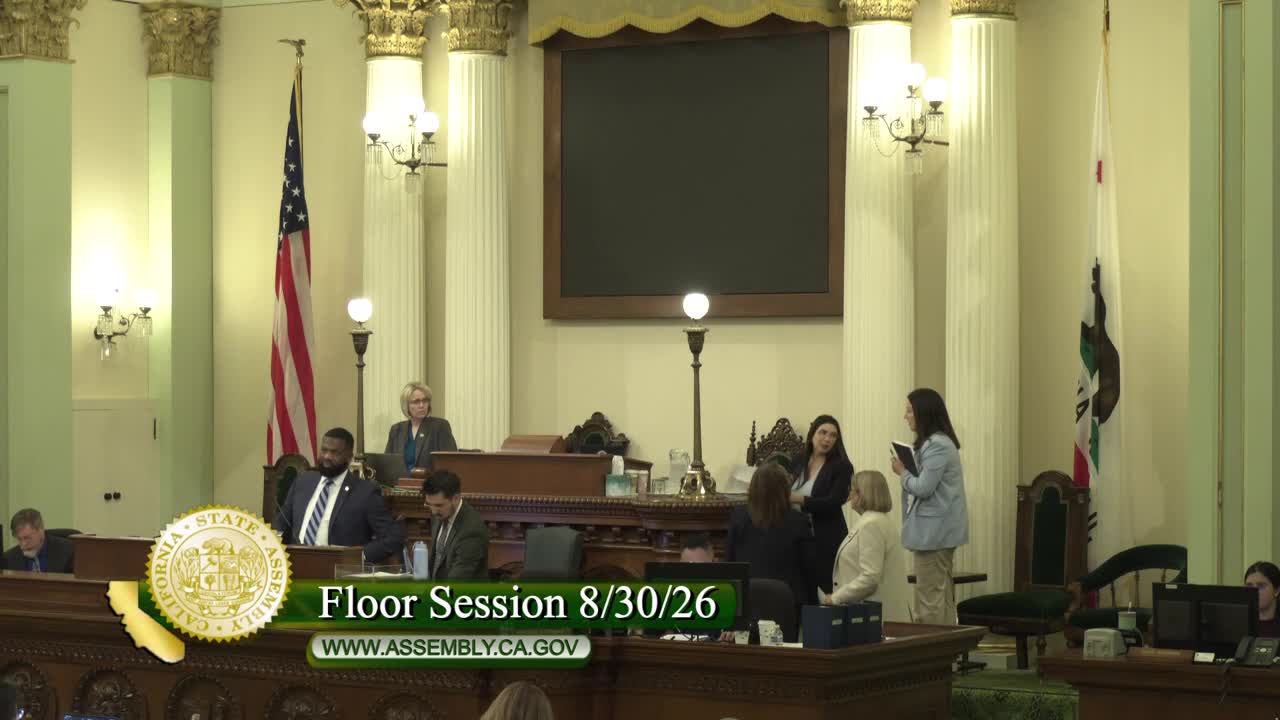
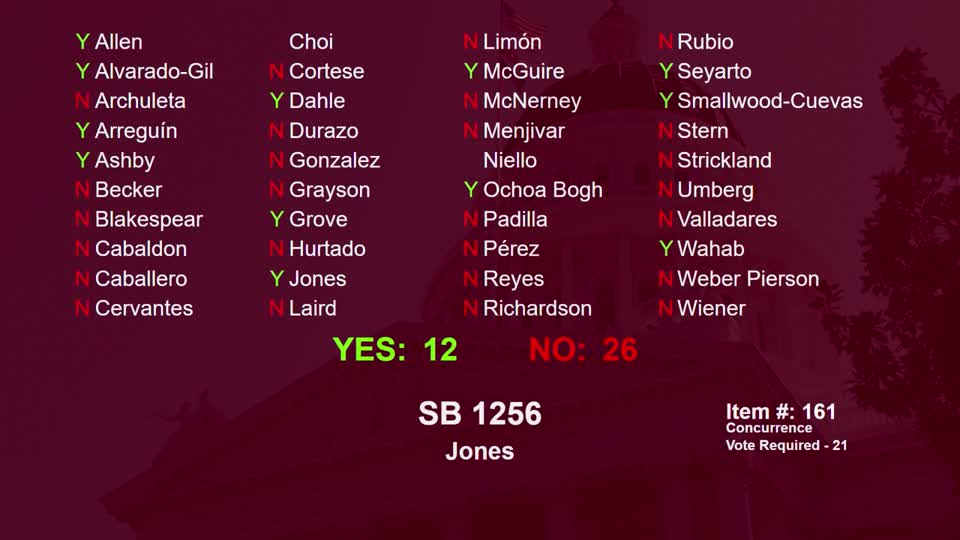
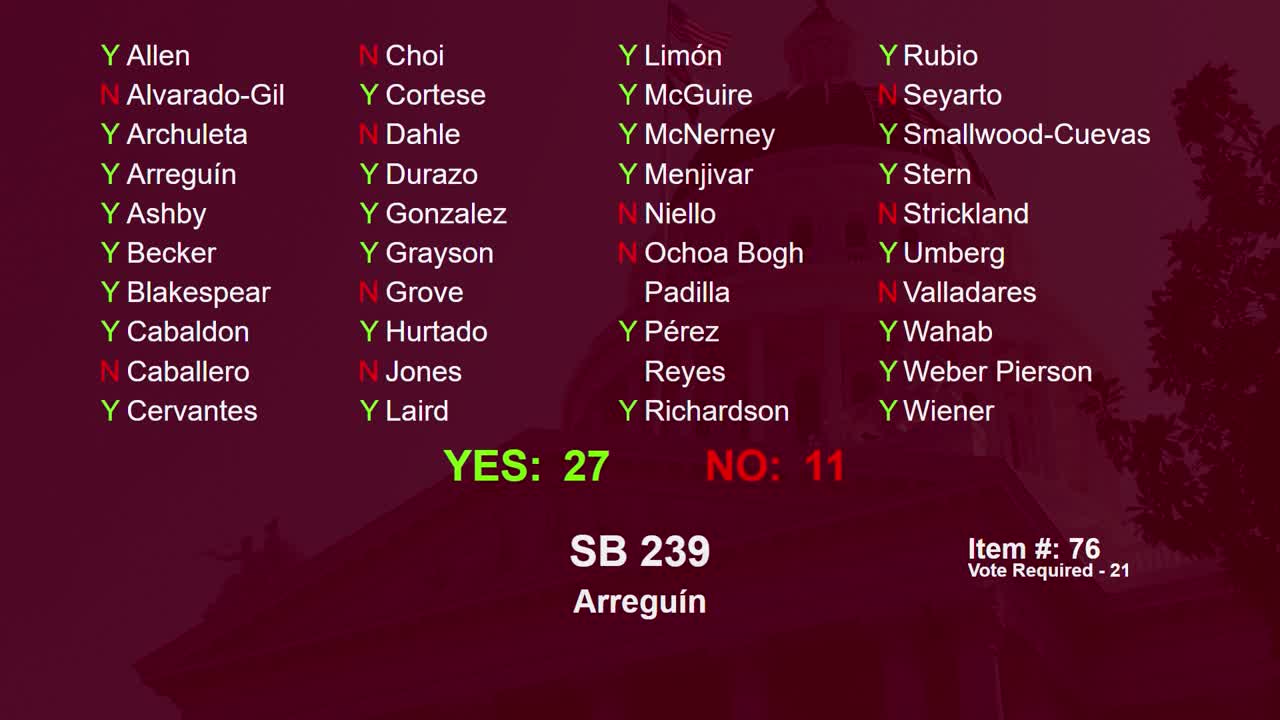
Bill Author