SB 819: Geothermal waste: exemption from generation and handling fees: study.
- Session Year: 2025-2026
- House: Senate
- Latest Version Date: 2025-03-26
Current Status:
Failed
(2026-02-02: Returned to Secretary of Senate pursuant to Joint Rule 56.)
Introduced
In Committee
Awaiting First Chamber Vote
Passed First Chamber
In Committee
Awaiting Second Chamber Vote
Passed Second Chamber
Enacted
The hazardous waste control laws require the Department of Toxic Substances Control (DTSC) to regulate the handling and management of hazardous waste and hazardous materials. A violation of the hazardous waste control laws is a crime.
Existing law requires a generator of hazardous waste to pay to the California Department of Tax and Fee Administration a generation and handling fee for each generator site that generates a specified amount of waste, as provided, and authorizes DTSC to adopt regulations necessary to implement generator fees.
Existing law exempts geothermal waste resulting from drilling for geothermal resources from the hazardous waste control laws for a specified reason. Existing law also exempts geothermal waste, excluding filter cake, that is generated from the exploration, development, or production of geothermal energy and that does not result from drilling for geothermal resources, from the hazardous waste control laws under specified circumstances.
This bill would require the DTSC to prepare and submit to the Legislature, no later than July 1, 2026, a study regarding the issues that would arise if geothermal waste that is not exempt from generation and handling fees pursuant to existing law is made exempt from those fees.
The California Environmental Quality Act (CEQA) requires a lead agency, as defined, to prepare, or cause to be prepared, and certify the completion of an environmental impact report on a project that it proposes to carry out or approve that may have a significant effect on the environment or to adopt a negative declaration if it finds that the project will not have that effect. CEQA also requires a lead agency to prepare a mitigated negative declaration for a project that may have a significant effect on the environment if revisions in the project would avoid or mitigate that effect and there is no substantial evidence that the project, as revised, would have a significant effect on the environment.CEQA makes various legislative findings and declarations regarding the maintenance of a quality environment for the people of this state and states the intent of the Legislature for state agencies to regulate activities so that major consideration is given to preventing environmental damage.This bill would make nonsubstantive changes to those findings and declarations and to the statement of intent.The California Environmental Quality Act (CEQA) requires a lead agency, as defined, to prepare, or cause to be prepared, and certify the completion of an environmental impact report on a project that it proposes to carry out or approve that may have a significant effect on the environment or to adopt a negative declaration if it finds that the project will not have that effect. CEQA also requires a lead agency to prepare a mitigated negative declaration for a project that may have a significant effect on the environment if revisions in the project would avoid or mitigate that effect and there is no substantial evidence that the project, as revised, would have a significant effect on the environment.
CEQA makes various legislative findings and declarations regarding the maintenance of a quality environment for the people of this state and states the intent of the Legislature for state agencies to regulate activities so that major consideration is given to preventing environmental damage.
This bill would make nonsubstantive changes to those findings and declarations and to the statement of intent.
(a)The department shall prepare and submit to the Legislature, no later than July 1, 2026, in accordance with Section 9795 of the Government Code, a study regarding the issues that would arise if geothermal waste that is not exempt from generation and handling fees pursuant to this chapter is made exempt from those fees.
(b)Pursuant to Section 10231.5 of the Government Code, this article shall become inoperative on July 1, 2030, and is repealed on January 1, 2031.
SECTION 1.Section 21000 of the Public Resources Code is amended to read:21000.The Legislature finds and declares as follows:(a)The maintenance of a quality environment for the people of this state now and in the future is a matter of statewide concern.(b)It is necessary to provide a high-quality environment that at all times is healthful and pleasing to the senses and intellect of people.(c)There is a need to understand the relationship between the maintenance of high-quality ecological systems and the general welfare of the people of the state, including their enjoyment of the natural resources of the state.(d)The capacity of the environment is limited, and it is the intent of the Legislature that the government of the state take immediate steps to identify critical thresholds for the health and safety of the people of the state and take all coordinated actions necessary to prevent those thresholds being reached.(e)Every citizen has a responsibility to contribute to the preservation and enhancement of the environment.(f)The interrelationship of policies and practices in the management of natural resources and waste disposal requires systematic and concerted efforts by public and private interests to enhance environmental quality and to control environmental pollution.(g)It is the intent of the Legislature that all agencies of the state government that regulate activities of private individuals, corporations, and public agencies that are found to affect the quality of the environment shall regulate those activities so that major consideration is given to preventing environmental damage, while providing a decent home and satisfying living environment for all Californians.The Legislature finds and declares as follows:
(a)The maintenance of a quality environment for the people of this state now and in the future is a matter of statewide concern.
(b)It is necessary to provide a high-quality environment that at all times is healthful and pleasing to the senses and intellect of man. people.
(c)There is a need to understand the relationship between the maintenance of high-quality ecological systems and the general welfare of the people of the state, including their enjoyment of the natural resources of the state.
(d)The capacity of the environment is limited, and it is the intent of the Legislature that the government of the state take immediate steps to identify any critical thresholds for the health and safety of the people of the state and take all coordinated actions necessary to prevent such those thresholds being reached.
(e)Every citizen has a responsibility to contribute to the preservation and enhancement of the environment.
(f)The interrelationship of policies and practices in the management of natural resources and waste disposal requires systematic and concerted efforts by public and private interests to enhance environmental quality and to control environmental pollution.
(g)It is the intent of the Legislature that all agencies of the state government which that regulate activities of private individuals, corporations, and public agencies which that are found to affect the quality of the environment, environment shall regulate such those activities so that major consideration is given to preventing environmental damage, while providing a decent home and satisfying living environment for every Californian. all Californians.
|
Date
|
Status
|
|---|---|
| Feb 2, 2026 | Returned to Secretary of Senate pursuant to Joint Rule 56. |
| May 23, 2025 | May 23 hearing: Held in committee and under submission. |
| May 16, 2025 | Set for hearing May 23. |
| May 5, 2025 | May 5 hearing: Placed on APPR. suspense file. |
| Apr 25, 2025 | Set for hearing May 5. |
| Apr 23, 2025 | From committee: Do pass and re-refer to Com. on APPR. (Ayes 8. Noes 0. Page 867.) (April 23). Re-referred to Com. on APPR. |
| Apr 4, 2025 | Set for hearing April 23. |
| Apr 2, 2025 | Re-referred to Com. on E.Q. |
| Mar 26, 2025 | From committee with author's amendments. Read second time and amended. Re-referred to Com. on RLS. |
| Mar 12, 2025 | Referred to Com. on RLS. |
| Feb 24, 2025 | From printer. May be acted upon on or after March 24. |
| Feb 24, 2025 | Read first time. |
| Feb 21, 2025 | Introduced. To Com. on RLS. for assignment. To print. |
|
Date
|
Description
|
Location
|
Votes
|
|
|---|---|---|---|---|
| May 5, 2025 | Placed on suspense file | Senate Standing Committee on Appropriations |
Passed |
|
| Apr 23, 2025 | Do pass, but first be re-referred to the Committee on [Appropriations] | Senate Standing Committee on Environmental Quality |
Passed |
This list shows positions taken on this bill by organizations on the date displayed, which is linked to the original source.
Positions by individuals are not included.
SENATE COMMITTEE ON
Senator Anna Caballero, Chair
2025 - 2026 Regular Session
SB 819 (Padilla) - Geothermal waste: exemption from generation and handling fees: study
Version: | Policy Vote: |
Urgency: | Mandate: |
Hearing Date: | Consultant: |
Bill Summary:
This bill would require the Department of Toxic Substances Control (DTSC) to conduct a study on geothermal waste generation, handling fees and fee exemptions.
Fiscal Impact:
- DTSC estimates one-time costs of about $1 million (special fund) for approximately 5 positions to develop the report by the July 1, 2026 due date.
- Unknown but potentially significant cost pressures (special fund) to make changes or provide funding based on the required report.
Background:
DTSC is the lead agency in California for hazardous waste management. It enforces the state's Hazardous Waste Control laws, issues permits to hazardous waste facilities and conducts oversight of actions to clean up sites contaminated with hazardous substances.
SB 158 (Senate Budget & Fiscal Review Committee, Chapter 73, Statutes of 2021) collapsed four fees – generator, disposal, U.S. Environmental Protection Act identification verification, and manifest user – into a single generation and handling fee. This new fee is based on a price-per-ton model instead of the previously used tiered model. The initial fee was set at $49.25 per ton (previously it ranged from $10-$100 per ton) though DTSC’s Board of Environmental Safety can increase it under certain circumstances. The fees are deposited into the Hazardous Waste Control Account (HWCA).
SB 158 – which was the result of months of negotiations between the Legislature, the Governor’s office, and affected industries – was designed to accomplish four main goals: simplifying the fee structure, eliminating DTSC's ongoing operating deficit, creating a prudent reserve, and increasing DTSC’s staff to allow the department to meet its statutory mandate.
The bill also created a new Board of Environmental Safety, required DTSC to develop a hazardous waste management plan by March 1, 2025, strengthened financial assurance requirements for both hazardous waste facilities and contaminated cleanup sites, and changed some of the permitting requirements for hazardous waste facilities.
A Budget Shortfall. By January 2024 – not quite three years after the enactment of the new fee structure in SB 158 – DTSC indicated the HWCA was in the red to the tune of $21 million. The Legislative Analyst’s Office (LAO) attributed the shortfall to the new $49.25 per ton fee bringing in less than half of the money SB 158 had anticipated, writing:
“During the enactment of SB 158, the new generation and handling fee … was projected to generate approximately $81 million in total revenues in 2022-23. However, in the middle of 2022-23, DTSC indicated that these revenues were coming in significantly below what had been anticipated and would only generate about $40 million that year.
“The department’s preliminary analysis of the issue indicated the shortfalls were attributable to a combination of three primary factors: (1) a reduction in the amount of hazardous waste generated; (2) a higher utilization of government fee exemptions, such as related to a government entity removing or remediating hazardous waste caused by another entity; and (3) nonpayment or low payment of fee amounts owed.”
Exemptions for Geothermal Waste. Geothermal wastes have been exempt from regulation as hazardous waste when the waste stems from drilling for geothermal resources for a number of years.
In 2006, SB 1294 (Ducheny, Chapter 143, Statutes of 2006) expanded the exemption to cover any waste from a geothermal energy plant.
Six years later, AB 2205 (V. Manuel Pérez, Chapter 253, Statutes of 2012) clarified that wastes from the extraction, beneficiation, and processing of ores and minerals includes spent brine solutions used to produce geothermal energy are also exempt from hazardous waste regulation if certain standards and handling requirements are met.
AB 474 (E. Garcia, Chapter 840, Statutes of 2017) took the exemption one step further, exempting spent brine solutions that are byproducts of the treatment of groundwater to meet California drinking water standards if certain standards and handling requirements are met.
DTSC Moves to Increase Rates. DTSC submitted a proposal to the Office of Administrative Law (OAL) in late 2024 to set new fee rates for the 2024-25 fiscal year and to adjust the fee rate limits in accordance with the consumer price increase set by the Department of Industrial Relations for June 2023 to June 2024. This proposal sought to hike the generation & handling fee from $49.25 per ton fee to $60.05 per ton, an increase of approximately 22%. DTSC explained its proposal by saying in part:
“Combined with all sources of revenue available to the Department, the fee rates set by this emergency rulemaking are anticipated to generate revenues that will allow DTSC operations to be maintained at the levels of service planned for the Department during the current fiscal year while also maintaining a prudent reserve, which accounts for a reasonable level of financial uncertainty.”
OAL approved the regulatory proposal on January 27, 2025, and it took effect immediately.
Proposed Law:
This bill would require DTSC to submit a study by July 2, 2026 to the Legislature addressing any issues that would arise if geothermal waste not currently exempt from the generation and handling fees were to be exempted from those fees.
Related Legislation:
AB 1031 (Jeff Gonzalez, 2025) exempts all geothermal waste, except filter cakes, from DTSC’s hazardous waste fees. This bill is pending in the Assembly Environmental Safety and Toxic Materials Committee.
Staff Comments: DTSC notes it would not have sufficient time implement the provisions of this bill and develop a report by the due date in the bill as currently written. DTSC would need to redirect 5 personnel years (PY) in 2025-26 and absorb all costs related to this bill. If redirected, DTSC warns it will risk timely completion of other mandated activities, such as the Hazardous Waste Management Report that is due to the Board of Environmental Safety by March 1, 2026. In addition, DTSC notes that the six-month period to complete the report is insufficient considering the lack of data available from the geothermal industry. DTSC’s draft 2025 Hazardous Waste Management Plan proposes to study this industry’s waste stream, as well as study the impact of fees on waste generation. These findings and recommendations are proposed to be included in the 2028 Hazardous Waste Management Plan.
-- END --
SENATE COMMITTEE ON ENVIRONMENTAL QUALITY
Senator Blakespear, Chair
2025 - 2026 Regular
Bill No: SB 819
Author: | Padilla | ||
Version: | 3/26/2025 | Hearing Date: | 4/23/2025 |
Urgency: | No | Fiscal: | Yes |
Consultant: | Evan Goldberg | ||
SUBJECT: Geothermal waste: exemption from generation and handling fees: study
DIGEST: Requires the Department of Toxic Substances Control to conduct a study on geothermal waste generation, handling fees and fee exemptions.
ANALYSIS:
Existing law:
- Requires the Department of Toxic Substances Control (DTSC) to regulate the handling and management of hazardous waste and hazardous materials. (Health & Safety Code (HSC) §25110 et seq.).
- Requires entities that generate hazardous waste to pay a generation and handling fee to the California Department of Tax and Fee Administration (CDTFA) and authorizes DTSC to adopt regulations necessary to implement generator fees. (HSC §25205.2)
- Exempts certain geothermal waste from the hazardous waste control laws. (HSC §25143.1).
- Exempts geothermal waste, excluding filter cake, generated from the exploration, development, or production of geothermal energy but does not stem from drilling for geothermal resources, from the hazardous waste control law. This exemption only applies if the waste is contained in a piping system, non-earthen trench, or descaling area, or within related equipment or the waste is within the physical boundaries of a lined surface impoundment associated with the geothermal plant where the waste was generated. (HSC §25143.1).
This bill:
- Requires DTSC to submit a study to the Legislature addressing any issues that would arise if geothermal waste not currently exempt from the generation and handling fees were to be exempted from those fees.
- Requires DTSC to submit the study to the Legislature by July 1, 2026.
Background
- Four, Four, Four Fees In One. DTSC is the lead agency in California for hazardous waste management. It enforces the state's Hazardous Waste Control laws, issues permits to hazardous waste facilities and conducts oversight of actions to clean up sites contaminated with hazardous substances.
SB 158 (Senate Budget & Fiscal Review Committee, Chapter 73, Statutes of 2021) collapsed four fees – generator, disposal, U.S. Environmental Protection Act identification verification, and manifest user – into a single generation and handling fee. This new fee is based on a price-per-ton model instead of the previously used tiered model. The initial fee was set at $49.25 per ton (previously it ranged from $10-$100 per ton) though DTSC’s Board of Environmental Safety can increase it under certain circumstances. The fees are deposited into the Hazardous Waste Control Account (HWCA).
SB 158 – which was the result of months of negotiations between the Legislature, the Governor’s office, and affected industries – was designed to accomplish four main goals: simplifying the fee structure, eliminating DTSC's ongoing operating deficit, creating a prudent reserve, and increasing DTSC’s staff to allow the department to meet its statutory mandate.
The bill also created a new Board of Environmental Safety, required DTSC to develop a hazardous waste management plan by March 1, 2025, strengthened financial assurance requirements for both hazardous waste facilities and contaminated cleanup sites, and changed some of the permitting requirements for hazardous waste facilities.
2) A Budget Shortfall. By January 2024 – not quite three years after the enactment of the new fee structure in SB 158 – DTSC indicated the HWCA was in the red to the tune of $21 million. The Legislative Analyst’s Office (LAO) attributed the shortfall to the new $49.25 per ton fee bringing in less than half of the money SB 158 had anticipated, writing:
“During the enactment of SB 158, the new generation and handling fee … was projected to generate approximately $81 million in total revenues in 2022-23. However, in the middle of 2022-23, DTSC indicated that these revenues were coming in significantly below what had been anticipated and would only generate about $40 million that year.
“The department’s preliminary analysis of the issue indicated the shortfalls were attributable to a combination of three primary factors: (1) a reduction in the amount of hazardous waste generated; (2) a higher utilization of government fee exemptions, such as related to a government entity removing or remediating hazardous waste caused by another entity; and (3) nonpayment or low payment of fee amounts owed.”
3) Exemptions for Geothermal Waste. Geothermal wastes have been exempt from regulation as hazardous waste when the waste stems from drilling for geothermal resources for a number of years.
In 2006, SB 1294 (Ducheny, Chapter 143, Statutes of 2006) expanded the exemption to cover any waste from a geothermal energy plant.
Six years later, AB 2205 (V. Manuel Pérez, Chapter 253, Statutes of 2012) clarified that wastes from the extraction, beneficiation, and processing of ores and minerals includes spent brine solutions used to produce geothermal energy are also exempt from hazardous waste regulation if certain standards and handling requirements are met.
AB 474 (E. Garcia, Chapter 840, Statutes of 2017) took the exemption one step further, exempting spent brine solutions that are byproducts of the treatment of groundwater to meet California drinking water standards if certain standards and handling requirements are met.
4) DTSC Moves to Increase Rates. DTSC submitted a proposal to the Office of Administrative Law (OAL) in late 2024 to set new fee rates for the 2024-25 fiscal year and to adjust the fee rate limits in accordance with the consumer price increase set by the Department of Industrial Relations for June 2023 to June 2024. This proposal sought to hike the generation & handling fee from $49.25 per ton fee to $60.05 per ton, an increase of approximately 22%. DTSC explained its proposal by saying in part:
“Combined with all sources of revenue available to the Department, the fee rates set by this emergency rulemaking are anticipated to generate revenues that will allow DTSC operations to be maintained at the levels of service planned for the Department during the current fiscal year while also maintaining a prudent reserve, which accounts for a reasonable level of financial uncertainty.”
OAL approved the regulatory proposal on January 27, 2025, and it took effect immediately.
Comments
- Purpose of Bill. According to the author, “Geothermal is an essential source of renewable energy and high-wage jobs. SB 819 seeks to clarify the impact this new fee structure is having on California's development and delivery of clean geothermal energy. California must ensure its policies are not unintentionally penalizing clean energy production.”
- More Exemptions May Mean Higher Fees For Those Not Exempt or Larger Budget Deficits. This bill does not put its thumb on the fee scale. Rather, it asks DTSC to study and report on the geothermal waste that is not exempt from DTSC’s fees and to project what would happen if the exemptions in current law are expanded.
While not a certainty, presumably absent any changes to DTSC’s structure or mission, exempting more entities from paying DTSC’s fees will cause the department to either raise fees on the remaining regulatory entities or to once again operate with a budget deficit.
- Wait, We Have Homework Due Tomorrow? Should this bill be approved by the Legislature and be signed into law, it would take effect on January 1, 2026. That would give DTSC just six months to initiate and complete a study, then submit the results of the study to the Legislature. The author and committee may wish to consider if this is enough time for DTSC to complete this work.
Related/Prior Legislation
AB 1031 (Jeff Gonzalez, 2025) exempts all geothermal waste, except filter cakes, from DTSC’s hazardous waste fees. This bill is pending in the Assembly Environmental Safety and Toxic Materials Committee.
SOURCE:
Author
SUPPORT:
None received
OPPOSITION:
None received
-- END --
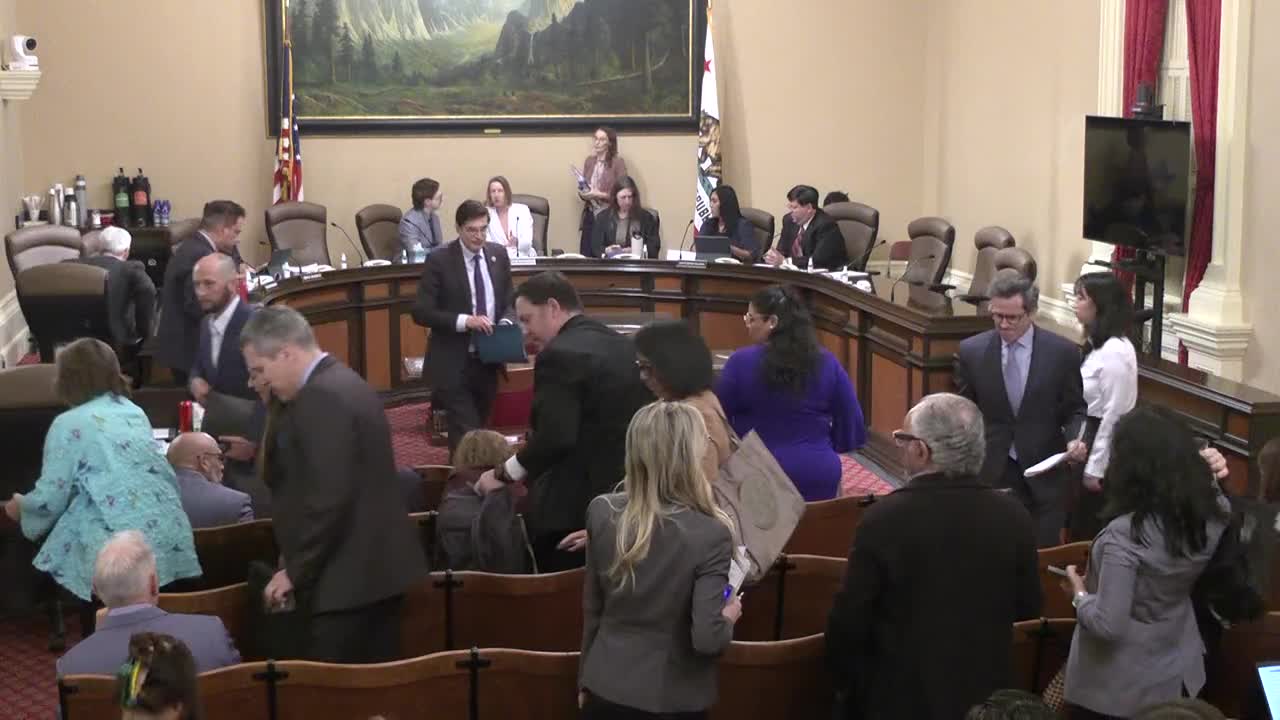
Discussed in Hearing
 3MIN
Senate Standing Committee on Environmental Quality
Bill Author

Bill Co-Author(s):