SB 840: Greenhouse gases: Greenhouse Gas Reduction Fund: studies.
- Session Year: 2025-2026
- House: Senate
- Latest Version Date: 2025-09-19
Current Status:
Passed
(2025-09-19: Chaptered by Secretary of State. Chapter 121, Statutes of 2025.)
Introduced
In Committee
Awaiting First Chamber Vote
Passed First Chamber
In Committee
Awaiting Second Chamber Vote
Passed Second Chamber
Enacted
What does this bill do?
This bill changes how California spends cap‑and‑trade auction revenue by replacing current funding formulas with a new priority list that directs large, specific sums for high‑speed rail, transit and affordable housing, community air and water programs, wildfire prevention and forestry, drinking water, low‑carbon transit, and climate innovation, and sets aside $3 million to create a Legislative Counsel Climate Bureau. It also requires the state Air Resources Board to study and report on carbon offsets by the end of 2026, update all offset rules by 2029 to reflect the best available science, and review those rules every five years thereafter.
The summary is provided by generative AI which can make mistakes. For original language, please view the details in the table below.
The California Global Warming Solutions Act of 2006 requires the State Air Resources Board to adopt regulations for greenhouse gas emissions limits and emissions reduction measures to achieve the maximum technologically feasible and cost-effective reductions in greenhouse gas emissions in furtherance of achieving the statewide greenhouse gas emissions limit, as defined. The act authorizes the state board to revise regulations or adopt additional regulations to further the act. The act authorizes that state board to include in those regulations the use of a market-based compliance mechanism to comply with those regulations. Existing law requires the state board, in regulations implementing the market-based compliance mechanism to, among other things, establish limits on the use of offset credits as a means for a covered entity to meet its compliance obligations. Existing law requires moneys collected by the state board from the auction or sale of allowances as part of a market-based compliance mechanism to be deposited in the Greenhouse Gas Reduction Fund and continuously appropriates a portion of the moneys in the fund for various purposes.
This bill would state the intent of the Legislature to direct specific percentages of the revenues deposited into the Greenhouse Gas Reduction Fund to individual funds dedicated to funding clean transportation, housing and community investment, clean air and water, wildfire prevention and resilience, agriculture, clean energy, and climate-focused innovation. The bill would make the continuous appropriations from the fund inoperative on July 1, 2026. The bill would, beginning with the 202627 fiscal year, allocate moneys in the fund in a specified priority and would continuously appropriate a certain amount of moneys in the fund for certain purposes.
This bill would require the state board, no later than December 31, 2026, to conduct a study and report to the Legislature evaluating and making recommendations on the use of offsets. The bill would require the state board, no later than January 1, 2029, to update all existing compliance offset protocols to reflect the best available science. The bill would require the state board, no later than January 1, 2034, and every 5 years thereafter, to evaluate all compliance offset protocols and to consider whether updates are necessary to ensure the protocols reflect the best available science.
This bill would declare that it is to take effect immediately as an urgency statute.
The California Global Warming Solutions Act of 2006 requires the State Air Resources Board to determine what the statewide greenhouse gas emissions level was in 1990 and approve in a public hearing a statewide greenhouse gas emissions limit that is equivalent to that level, to be achieved by 2020. The act requires the state board, in adopting rules and regulations to achieve the maximum technologically feasible and cost-effective greenhouse gas emissions reductions to ensure that the statewide greenhouse gas emissions are reduced to at least 40% below the 1990 levels no later than December 31, 2030. The act requires the Legislative Analysts Office, until January 1, 2030, to annually submit to the Legislature a report on the economic impacts and benefits of those greenhouse gas emissions reduction targets. The act, until January 1, 2031, establishes the Independent Emissions Market Advisory Committee and requires the committee to annually report to the state board and the Joint Legislative Committee on Climate Change Policies on the environmental and economic performance of the regulations establishing the market-based compliance mechanism and other relevant climate change policies.This bill would extend indefinitely the requirement for the Legislative Analysts Office to annually submit to the Legislature the report on the economic impacts and benefits of those greenhouse gas emissions targets. The bill would require the committee, at a public hearing, to review the annual report by the Legislative Analysts Office.The California Global Warming Solutions Act of 2006 requires the State Air Resources Board to determine what the statewide greenhouse gas emissions level was in 1990 and approve in a public hearing a statewide greenhouse gas emissions limit that is equivalent to that level, to be achieved by 2020. The act requires the state board, in adopting rules and regulations to achieve the maximum technologically feasible and cost-effective greenhouse gas emissions reductions to ensure that the statewide greenhouse gas emissions are reduced to at least 40% below the 1990 levels no later than December 31, 2030. The act requires the Legislative Analysts Office, until January 1, 2030, to annually submit to the Legislature a report on the economic impacts and benefits of those greenhouse gas emissions reduction targets. The act, until January 1, 2031, establishes the Independent Emissions Market Advisory Committee and requires the committee to annually report to the state board and the Joint Legislative Committee on Climate Change Policies on the environmental and economic performance of the regulations establishing the market-based compliance mechanism and other relevant climate change policies.
This bill would extend indefinitely the requirement for the Legislative Analysts Office to annually submit to the Legislature the report on the economic impacts and benefits of those greenhouse gas emissions targets. The bill would require the committee, at a public hearing, to review the annual report by the Legislative Analysts Office.
Existing law authorizes the State Air Resources Board to establish a system of market-based declining annual aggregate emissions limits for sources or categories of sources that emit greenhouse gases that is applicable from January 1, 2021, to December 31, 2030, inclusive, and that meets certain requirements (market-based compliance mechanism).This bill would state the intent of the Legislature to enact subsequent legislation to reform, and extend the operation of, the market-based compliance mechanism.Existing law authorizes the State Air Resources Board to establish a system of market-based declining annual aggregate emissions limits for sources or categories of sources that emit greenhouse gases that is applicable from January 1, 2021, to December 31, 2030, inclusive, and that meets certain requirements (market-based compliance mechanism).
This bill would state the intent of the Legislature to enact subsequent legislation to reform, and extend the operation of, the market-based compliance mechanism.
(a)It is the intent of the Legislature to enact legislation in the 20252026 Regular Session establishing a unit within the Legislative Counsel Bureau to provide advice and investigation services to the Legislature related to matters within the jurisdiction of the Joint Legislative Committee on Climate Change Policies, and of other committees of the Legislature covering energy, environmental quality and safety, natural resources, and water.
(b)Moneys appropriated pursuant to paragraph (3) of subdivision (a) of Section 39719.4 of the Health and Safety Code shall not be expended until the roles and responsibilities of the unit are established in the legislation specified in subdivision (a).
SEC. 2.Section 38562.3 is added to the Health and Safety Code, to read:38562.3.(a)(1)No later than December 31, 2026, the state board shall conduct a study and report to the Legislature, in accordance with Section 9795 of the Government Code, on all of the following related to offsets:
(A)Evaluation of the contribution of offset projects to progress toward Californias climate goals.
(B)Evaluation of the potential for changes to the definition of direct environmental benefits in the state for purposes of subparagraph (E) of paragraph (2) of subdivision (c) of Section 38562.
(C)Recommendations on how instate offset projects could be more attractive for development.
(D)Recommendations for alternative valuation methodologies or criteria for instate offset projects, particularly projects that support the goals of Section 38561.5 of this code or subdivision (b) of Section 71450 of the Public Resources Code.
(2)Pursuant to Section 10231.5 of the Government Code, this subparagraph shall become inoperative on December 31, 2030.
(b)No later than January 1, 2029, the state board shall update all existing compliance offset protocols to ensure that the compliance offset protocols reflect the best available science, including, but not limited to, consideration of compliance offset protocols in other carbon markets, crediting mechanisms established under Article 6.4 of the Paris Agreement adopted by the United Nations Climate Change Conference (COP21) in Paris, France, on December 12, 2015, also known as the Paris Agreement Crediting Mechanism, academic research, and industry best practices, that prioritize offset quality.
(c)No later than January 1, 2034, and every five years thereafter, the state board shall evaluate all compliance offset protocols and consider whether updates are necessary to ensure that the compliance offset protocols reflect the best available science, including consideration of items specified in subdivision (b).
SEC. 3.Section 39712.5 is added to the Health and Safety Code, to read:39712.5.It is the further intent of the Legislature to direct specific percentages of the revenues deposited into the fund to be distributed to individual funds dedicated to funding clean transportation, housing and community investment, clean air and water, wildfire prevention and resilience, agriculture, clean energy, and climate-focused innovation, with appropriations from each of those funds to be guided by fund-specific, multiyear spending plans.
SEC. 4.Section 39719 of the Health and Safety Code is amended to read:39719.(a)The Legislature shall appropriate the annual proceeds of the fund for the purpose of reducing greenhouse gas emissions in this state in accordance with the requirements of Section 39712.
(b)To carry out a portion of the requirements of subdivision (a), the annual proceeds of the fund are continuously appropriated for the following:
(1)Beginning in the 201516 fiscal year, and notwithstanding Section 13340 of the Government Code, 35 percent of the annual proceeds of the fund are continuously appropriated, without regard to fiscal years, for transit, affordable housing, and sustainable communities programs as follows:
(A)Ten percent of the annual proceeds of the fund is hereby continuously appropriated to the Transportation Agency for the Transit and Intercity Rail Capital Program created by Part 2 (commencing with Section 75220) of Division 44 of the Public Resources Code.
(B)Five percent of the annual proceeds of the fund is hereby continuously appropriated to the Low Carbon Transit Operations Program created by Part 3 (commencing with Section 75230) of Division 44 of the Public Resources Code. Moneys shall be allocated by the Controller, according to requirements of the program, and pursuant to the distribution formula in subdivision (b) or (c) of Section 99312 of, and Sections 99313 and 99314 of, the Public Utilities Code.
(C)Twenty percent of the annual proceeds of the fund is hereby continuously appropriated to the Strategic Growth Council for the Affordable Housing and Sustainable Communities Program created by Part 1 (commencing with Section 75200) of Division 44 of the Public Resources Code. Of the amount appropriated in this subparagraph, no less than 10 percent of the annual proceeds of the fund shall be expended for affordable housing, consistent with the provisions of that program.
(2)Beginning in the 201516 fiscal year, notwithstanding Section 13340 of the Government Code, and subject to the requirements of Section 39719.3, 25 percent of the annual proceeds of the fund is hereby continuously appropriated to the High-Speed Rail Authority for the following components of the initial operating segment and Phase I Blended System as described in the 2012 business plan adopted pursuant to Section 185033 of the Public Utilities Code:
(A)Acquisition and construction costs of the project.
(B)Environmental review and design costs of the project.
(C)Other capital costs of the project.
(D)Repayment of any loans made to the authority to fund the project.
(3)(A)Beginning in the 202021 fiscal year, and until June 30, 2030, 5 percent of the annual proceeds of the fund, up to the sum of one hundred thirty million dollars ($130,000,000), is hereby annually transferred to the Safe and Affordable Drinking Water Fund established pursuant to Section 116766 for the purposes of Chapter 4.6 (commencing with Section 116765) of Part 12 of Division 104.
(B)Moneys transferred under this paragraph shall be used for the purpose of facilitating the achievement of reductions of greenhouse gas emissions in this state in accordance with the requirements of Section 39712 or to improve climate change adaptation and resiliency of disadvantaged communities or low-income households or communities, consistent with Division 25.5 (commencing with Section 38500). For purposes of the moneys transferred under this paragraph, a state agency may also comply with the requirements of paragraphs (2) and (3) of subdivision (a) of Section 16428.9 of the Government Code by describing how each proposed expenditure will improve climate change adaptation and resiliency of disadvantaged communities or low-income households or communities.
(4)Notwithstanding Section 13340 of the Government Code, for each fiscal year, beginning in the 202223 fiscal year through the 2028-29 fiscal year, the sum of two hundred million dollars ($200,000,000) is hereby continuously appropriated, to the Department of Forestry and Fire Protection and allocated as follows:
(A)One hundred sixty-five million dollars ($165,000,000) for healthy forest and fire prevention programs and projects that improve forest health and reduce emissions of greenhouse gases caused by uncontrolled wildfires.
(B)Thirty-five million dollars ($35,000,000) for the completion of prescribed fire and other fuel reduction projects through proven forestry practices consistent with the recommendations of the California Forest Carbon Plan, including the operation of year-round prescribed fire crews and implementation of a research and monitoring program for climate adaptation.
(c)In determining the amount of the annual proceeds of the fund for purposes of the calculation in paragraphs (1) to (3), inclusive, of subdivision (b), the funds subject to Section 39719.1 and the sum set forth in paragraph (4) of subdivision (b) shall not be included.
(d)This section shall become inoperative on July 1, 2026.
SEC. 5.Section 39719.4 is added to the Health and Safety Code, to read:39719.4.Beginning with the 202627 fiscal year, moneys in the funds shall be allocated in the following priority:
(a)(1)Amounts described in Sections 4210 to 4214, inclusive, of the Public Resources Code to replace the revenues generated by the State Responsibility Area fire prevention fee authorized by Section 4212 of the Public Resources Code.
(2)Amounts appropriated by subparagraph (A) of paragraph (3) of subdivision (g) of Section 6377.1 of the Revenue and Taxation Code.
(3)The sum of three million dollars ($3,000,000) for the establishment of the Legislative Counsel Climate Bureau.
(b)After the amounts specified in subdivision (a) are fully allocated, as determined by the Department of Finance, the remaining moneys in the fund shall be allocated as follows:
(1)Notwithstanding Section 13340 of the Government Code and subject to Section 39719.3, the sum of one billion dollars ($1,000,000,000) is continuously appropriate without regard to fiscal year to the High-Speed Rail Authority for the following components of the initial operating segment and Phase I Blended System as described in the 2012 business plan adopted pursuant to Section 185033 of the Public Utilities Code:
(A)Acquisition and construction costs of the project.
(B)Environmental review and design costs of the project.
(C)Other capital costs of the project.
(D)Repayment of any loans made to the authority to fund the project.
(2)(A)The sum of one billion dollars ($1,000,000,000) is reserved for appropriation by the Legislature in the annual Budget Act or other statute.
(B)It is the intent of the Legislature that the amount reserved pursuant to subparagraph (A) is allocated in the following amounts for the 202627 fiscal year:
(i)The sum of one hundred twenty-five million dollars ($125,000,000) for transit passes.
(ii)The sum of twenty-five million dollars ($25,000,000) for seed funding for a University of California Climate Research Center.
(iii)The sum of fifteen million dollars ($15,000,000) for rebuilding Topanga Park.
(iv)The sum of eighty-five million dollars ($85,000,000) for an entity chosen by the Legislature to support climate-focused technological innovation, related research, and the deployment of climate solutions identified in the scoping plan prepared pursuant to Section 38561.
(c)(1)After the amounts specified in subdivisions (a) and (b) are fully allocated, as determined by the Department of Finance, the remaining moneys in the fund, notwithstanding Section 13340 of the Government Code, are continuously appropriated, without regard to fiscal year, as follows:
(A)The sum of eight hundred million dollars ($800,000,000) to the Strategic Growth Council for the Affordable Housing and Sustainable Communities Program created by Part 1 (commencing with Section 75200) of Division 44 of the Public Resources Code. Of the amount appropriated in this subparagraph, no less than 10 percent of the annual proceeds of the fund shall be expended for affordable housing, consistent with the provisions of that program.
(B)The sum of four hundred million dollars ($400,000,000) to the Transportation Agency for the Transit and Intercity Rail Capital Program created by Part 2 (commencing with Section 75220) of Division 44 of the Public Resources Code.
(C)The sum of two hundred fifty million dollars ($250,000,000) to the State Air Resources Board for community air protection programs and allocated for financial incentives to reduce mobile and stationary sources of criteria air pollutants or toxic air contaminants consistent with community emissions reduction programs developed pursuant to Section 44391.2 and for support for local air districts implementation of Chapter 136 of the Statutes of 2017.
(D)The sum of two hundred million dollars ($200,000,000) to the Transportation Agency for the Low Carbon Transit Operations Program created by Part 3 (commencing with Section 75230) of Division 44 of the Public Resources Code. Moneys shall be allocated by the Controller, according to requirements of the program, and pursuant to the distribution formula in subdivision (b) or (c) of Section 99312 of, and Sections 99313 and 99314 of, the Public Utilities Code.
(E)The sum of two hundred million dollars ($200,000,000) to the Department of Forestry and Fire Protection and allocated as follows:
(i)Eighty-two and one-half percent for healthy forest and fire prevention programs and projects that improve forest health and reduce emissions of greenhouse gases caused by uncontrolled wildfires.
(ii)Seventeen and one-half percent for the completion of prescribed fire and other fuel reduction projects through proven forestry practices consistent with the recommendations of the California Forest Carbon Plan, including the operation of year-round prescribed fire crews and implementation of a research and monitoring program for climate adaptation.
(F)The sum of one hundred thirty million dollars ($130,000,000) is transferred to the Safe and Affordable Drinking Water Fund established pursuant to Section 116766 for the purposes of Chapter 4.6 (commencing with Section 116765) of Part 12 of Division 104.
(2)(A)Moneys appropriate pursuant to paragraph (1) shall be used for the purpose of facilitating the achievement of reductions of greenhouse gas emissions in this state in accordance with the requirements of Section 39712 or to improve climate change adaptation and resiliency of disadvantaged communities or low-income households or communities, consistent with Division 25.5 (commencing with Section 38500).
(B)For purposes of the moneys appropriated pursuant to paragraph (1), a state agency may comply with the requirements of paragraphs (2) and (3) of subdivision (a) of Section 16428.9 of the Government Code by describing how each proposed expenditure will improve climate change adaptation and resiliency of disadvantaged communities or low-income households or communities.
(3)If, for any fiscal year the Department of Finance determines that, after fully allocating the amounts pursuant to subdivisions (a) and (b), there are insufficient annual proceeds to fully provide for the appropriations specified in paragraph (1) in addition to any state operations costs appropriated in the annual Budget Act, the amounts specified in paragraph (1) shall be proportionally reduced as determined by the Department of Finance.
(d)Any amounts in the fund not needed to fully fund the amounts pursuant to subdivisions (a), (b), and (c) in a fiscal year are available to be appropriated by the Legislature in the annual Budget Act or other statute.
SEC. 6.This act is an urgency statute necessary for the immediate preservation of the public peace, health, or safety within the meaning of Article IV of the California Constitution and shall go into immediate effect. The facts constituting the necessity are:
To address the existential threat of climate change to Californians, it is necessary for the bill to take effect immediately.
SECTION 1.Section 38591.2 of the Health and Safety Code is amended to read:38591.2.(a)The Independent Emissions Market Advisory Committee is hereby established within the California Environmental Protection Agency.(b)(1)(A)The committee shall be composed of at least five experts on emissions trading market design appointed according to the following:(i)Three members appointed by the Governor.(ii)One member appointed by the Senate Committee on Rules.(iii)One member appointed by the Speaker of the Assembly.(B)(i)The committee shall include a representative from the Legislative Analysts Office.(ii)The representative from the Legislative Analysts Office shall be a nonvoting committee member.(2)The committee members shall meet all of the following requirements:(A)Have academic, nonprofit, and other relevant backgrounds.(B)Lack financial conflicts of interest with entities subject to the regulation adopted by the state board pursuant to subdivision (c) of Section 38562.(c)(1)The committee, at least annually, shall hold a public meeting and report to both the state board and the Joint Legislative Committee on Climate Change Policies on the environmental and economic performance of the regulation adopted by the state board pursuant to subdivision (c) of Section 38562 and other relevant climate policies.(2)The committee shall, at a public hearing, review the annual report by the Legislative Analysts Office pursuant to Section 38592.6.(d)The activities of the committee pursuant to this section shall not be subject to subdivision (b) of Section 11122.5 of the Government Code.(e)This section shall remain in effect only until January 1, 2031, and as of that date is repealed.SEC. 2.Section 38592.6 of the Health and Safety Code is amended to read:38592.6.The Legislative Analysts Office shall annually report to the Legislature on the economic impacts and benefits of the greenhouse gas emissions targets established pursuant to Sections 38550 and 38566.(a)The Independent Emissions Market Advisory Committee is hereby established within the California Environmental Protection Agency.
(b)(1)(A)The committee shall be composed of at least five experts on emissions trading market design appointed according to the following:
(i)Three members appointed by the Governor.
(ii)One member appointed by the Senate Committee on Rules.
(iii)One member appointed by the Speaker of the Assembly.
(B)(i)The committee shall include a representative from the Legislative Analysts Office.
(ii)The representative from the Legislative Analysts Office shall be a nonvoting committee member.
(2)The committee members shall meet all of the following requirements:
(A)Have academic, nonprofit, and other relevant backgrounds.
(B)Lack financial conflicts of interest with entities subject to the regulation adopted by the state board pursuant to subdivision (c) of Section 38562.
(c)(1)The committee, at least annually, shall hold a public meeting and report to both the state board and the Joint Legislative Committee on Climate Change Policies on the environmental and economic performance of the regulation adopted by the state board pursuant to subdivision (c) of Section 38562 and other relevant climate policies.
(2)The committee shall, at a public hearing, review the annual report by the Legislative Analysts Office pursuant to Section 38592.6.
(d)The activities of the committee pursuant to this section shall not be subject to subdivision (b) of Section 11122.5 of the Government Code.
(e)This section shall remain in effect only until January 1, 2031, and as of that date is repealed.
SEC. 2.Section 38592.6 of the Health and Safety Code is amended to read:38592.6.(a)The Legislative Analysts Office shall, until January 1, 2030, shall annually report to the Legislature on the economic impacts and benefits of the greenhouse gas emissions targets established pursuant to Sections 38550 and 38566.
(b)This section shall remain in effect only until January 1, 2031, and as of that date is repealed, unless a later enacted statute, which is enacted before January 1, 2031, deletes or extends that date.SECTION 1.It is the intent of the Legislature to enact subsequent legislation to reform, and extend the operation of, the system of market-based declining annual aggregate emissions limits for sources or categories of sources that emit greenhouse gases as authorized by subdivision (c) of Section 38562 of the Health and Safety Code, as amended by Section 4 of Chapter 135 of the Statutes of 2017.It is the intent of the Legislature to enact subsequent legislation to reform, and extend the operation of, the system of market-based declining annual aggregate emissions limits for sources or categories of sources that emit greenhouse gases as authorized by subdivision (c) of Section 38562 of the Health and Safety Code, as amended by Section 4 of Chapter 135 of the Statutes of 2017.
|
Date
|
Status
|
|---|---|
| Sep 19, 2025 | Chaptered by Secretary of State. Chapter 121, Statutes of 2025. |
| Sep 19, 2025 | Approved by the Governor. |
| Sep 15, 2025 | Enrolled and presented to the Governor at 2 p.m. |
| Sep 13, 2025 | Urgency clause adopted. |
| Sep 13, 2025 | Assembly amendments concurred in. (Ayes 28. Noes 6. Page 3054.) Ordered to engrossing and enrolling. |
| Sep 13, 2025 | In Senate. Concurrence in Assembly amendments pending. |
| Sep 13, 2025 | Read third time. Urgency clause adopted. Passed. (Ayes 59. Noes 15. Page 3486.) Ordered to the Senate. |
| Sep 12, 2025 | Assembly Rule 63 suspended. (Ayes 57. Noes 20. Page 3441.) |
| Sep 12, 2025 | From committee: Do pass. (Ayes 10. Noes 2.) (September 12). |
| Sep 10, 2025 | Read third time and amended. |
| Sep 10, 2025 | Re-referred to Com. on NAT. RES. pursuant to Assembly Rule 77.2. |
| Sep 10, 2025 | Ordered to third reading. |
| Sep 10, 2025 | Joint Rule 62(a) suspended. |
| Sep 10, 2025 | Joint Rule 61 and 62(a) suspended. (Ayes 31. Noes 9. Page 2801.) |
| Sep 9, 2025 | Joint Rule 61(a)(13) suspended. (Ayes 60. Noes 20. Page 3128.) |
| Sep 2, 2025 | Read second time. Ordered to third reading. |
| Aug 29, 2025 | From committee: Do pass. (Ayes 15. Noes 0.) (August 29). |
| Aug 20, 2025 | August 20 set for first hearing. Placed on APPR. suspense file. |
| Jul 15, 2025 | From committee: Do pass and re-refer to Com. on APPR. (Ayes 12. Noes 0.) (July 14). Re-referred to Com. on APPR. |
| Jun 9, 2025 | Referred to Com. on NAT. RES. |
| Jun 3, 2025 | In Assembly. Read first time. Held at Desk. |
| Jun 2, 2025 | Read third time. Passed. (Ayes 38. Noes 0. Page 1406.) Ordered to the Assembly. |
| May 23, 2025 | Read second time. Ordered to third reading. |
| May 23, 2025 | From committee: Do pass. (Ayes 6. Noes 0. Page 1215.) (May 23). |
| May 16, 2025 | Set for hearing May 23. |
| May 12, 2025 | May 12 hearing: Placed on APPR. suspense file. |
| May 2, 2025 | Set for hearing May 12. |
| May 1, 2025 | From committee: Do pass and re-refer to Com. on APPR. (Ayes 8. Noes 0. Page 964.) (April 30). Re-referred to Com. on APPR. |
| Apr 17, 2025 | Set for hearing April 30. |
| Apr 16, 2025 | April 23 set for first hearing canceled at the request of author. |
| Apr 4, 2025 | Set for hearing April 23. |
| Apr 2, 2025 | Re-referred to Com. on E.Q. |
| Mar 26, 2025 | From committee with author's amendments. Read second time and amended. Re-referred to Com. on RLS. |
| Mar 12, 2025 | Referred to Com. on RLS. |
| Feb 24, 2025 | Read first time. |
| Feb 24, 2025 | From printer. May be acted upon on or after March 24. |
| Feb 21, 2025 | Introduced. To Com. on RLS. for assignment. To print. |
|
Date
|
Description
|
Location
|
Votes
|
|
|---|---|---|---|---|
| Sep 13, 2025 | SB 840 Limón Third Reading Urgency By IRWIN | Assembly Floor |
Passed |
|
| Sep 13, 2025 | W/O REF. TO FILE SB840 Limón | Senate Floor |
Passed |
|
| Sep 13, 2025 | W/O REF. TO FILE SB840 Limón Urgency Clause | Senate Floor |
Passed |
|
| Sep 12, 2025 | W/O REF. TO FILE SB840 Limón | Senate Floor |
Passed |
|
| Sep 12, 2025 | Do pass. | Assembly Standing Committee on Natural Resources |
Passed |
|
| Aug 29, 2025 | Do pass. | Assembly Standing Committee on Appropriations |
Passed |
|
| Jul 14, 2025 | Do pass and be re-referred to the Committee on [Appropriations] | Assembly Standing Committee on Natural Resources |
Passed |
|
| Jun 2, 2025 | Senate 3rd Reading SB840 Limón et al. | Senate Floor |
Passed |
|
| May 23, 2025 | Do pass | Senate Standing Committee on Appropriations |
Passed |
|
| May 12, 2025 | Placed on suspense file | Senate Standing Committee on Appropriations |
Passed |
|
| Apr 30, 2025 | Do pass, but first be re-referred to the Committee on [Appropriations] | Senate Standing Committee on Environmental Quality |
Passed |
This list shows positions taken on this bill by organizations on the date displayed, which is linked to the original source.
Positions by individuals are not included.
|
Organization
|
Position
|
Date
|
|---|---|---|
| Advance SF | ** Support | |
| Agricultural Institute of Marin | ** Support | |
| Alchemist CDC | ** Support | |
| American Council of Engineering Companies of California | ** Support | |
| American Farmland Trust | ** Support | |
| Associated General Contractors Of California | ** Support | |
| BasicDust | ** Support | |
| Brightline Defense Project | ** Support | |
| Building Decarbonization Coalition | ** Support | |
| Cal Forest Nurseries | ** Support | |
| CALCIMA | ** Support | |
| Calfornia-nevada Conference of Operating Engineers | ** Support | |
| California Alliance for Jobs | ** Support | |
| California Association Of Councils Of Governments | ** Support | |
| California Certified Organic Farmers | ** Support | |
| California Climate & Agriculture Network | ** Support | |
| California Federation of Labor Unions, Afl-cio | ** Support | |
| california hawaii state conference of the naacp | ** Support | |
| California Housing Consortium | ** Support | |
| California State Association Of Counties | ** Support | |
| California State Council Of Laborers | ** Support | |
| California Transit Association | ** Support | |
| Carbon Capture Inc | ** Support | |
| Carbonfuture | ** Support | |
| CDRjobs | ** Support | |
| Central California Environmental Justic Network | ** Support | |
| Central California Environmental Justice Network | ** Support | |
| Central Coast Community Energy | ** Support | |
| Charm Industrial | ** Support | |
| City Of Merced | ** Support | |
| Clean Water Action | ** Support | |
| Climate Action Campaign | ** Support | |
| CLIMATE CENTER; THE | ** Support | |
| Climeworks | ** Support | |
| Communitiy Water Center | ** Support | |
| Community Alliance With Family Farmers | ** Support | |
| Corigin Solutions | ** Support | |
| Ebb Carbon | ** Support | |
| Edison International And Affiliates, Including Southern California Edison | ** Support | |
| Equatic Tech | ** Support | |
| Goal 300 | ** Support | |
| Heirloom Carbon | ** Support | |
| League Of California Cities | ** Support | |
| Los Angeles Food Policy Council | ** Support | |
| Mast Reforestation | ** Support | |
| Natural Resources Defense Council | ** Support | |
| Natural Resources Defense Council (NRDC) | ** Support | |
| NET-ZERO CALIFORNIA | ** Support | |
| Office of Kat Taylor | ** Support | |
| PacClean | ** Support | |
| Pacific Gas And Electric Company | ** Support | |
| Pesticide Action and Agroecology Network | ** Support | |
| Project 2030 | ** Support | |
| Roots of Change | ** Support | |
| Rural Community Assistance Corporation | ** Support | |
| San Francisco Chamber of Commerce | ** Support | |
| Self Help Enterprises | ** Support | |
| Silicon Valley Clean Energy | ** Support | |
| Silvaseed Company | ** Support | |
| Sitos Group | ** Support | |
| Smart Policy Group | ** Support | |
| South Coast Air Quality Management District | ** Support | |
| SPUR | ** Support | |
| State Building & Construction Trades Council Of California | ** Support | |
| Stripe | ** Support | |
| Sustainable Agriculture Education | ** Support | |
| Transportation California | ** Support | |
| UndauntedK12 | ** Support | |
| USGBC California | ** Support | |
| Verified Emissions Reduction Association | ** Support | |
| Water Foundation | ** Support |
SENATE RULES COMMITTEE Office of Senate Floor Analyses (916) 651-1520 Fax: (916) 327-4478 | SB 840 |
UNFINISHED BUSINESS
Bill No: SB 840
Author: Limón (D), Irwin (D), McGuire (D) and Rivas (D), et al.
Amended: 9/10/25
Vote: 27- Urgency
SENATE ENVIRONMENTAL QUALITY COMMITTEE: 8-0, 4/30/25
AYES: Blakespear, Valladares, Dahle, Gonzalez, Hurtado, Menjivar, Padilla, Pérez
SENATE APPROPRIATIONS COMMITTEE: 6-0, 5/23/25
AYES: Caballero, Seyarto, Cabaldon, Grayson, Richardson, Wahab
NO VOTE RECORDED: Dahle
SENATE FLOOR: 38-0, 6/2/25
AYES: Allen, Alvarado-Gil, Archuleta, Arreguín, Ashby, Becker, Blakespear, Cabaldon, Caballero, Cervantes, Choi, Cortese, Dahle, Durazo, Gonzalez, Grayson, Grove, Jones, Laird, Limón, McGuire, McNerney, Menjivar, Niello, Ochoa Bogh, Padilla, Pérez, Richardson, Rubio, Seyarto, Smallwood-Cuevas, Stern, Strickland, Umberg, Valladares, Wahab, Weber Pierson, Wiener
NO VOTE RECORDED: Hurtado, Reyes
ASSEMBLY FLOOR: 59-15, 9/13/25 - See last page for vote
SUBJECT: Greenhouse gases: Greenhouse Gas Reduction Fund: studies
SOURCE: Author
DIGEST:
This bill reconfigures the continuous appropriations established for the Greenhouse Gas Reduction Fund (GGRF) and sets new legislative intent for how GGRF monies are spent. The bill also directs the California Air Resources Board (CARB) to assess and update compliance offset protocols, and establishes a new unit within the Legislative Counsel Bureau to support climate and environmental policymaking efforts.
Assembly Amendments
of 9/10/25 rewrote this bill entirely.
ANALYSIS:
Existing law:
- Requires CARB to ensure that statewide greenhouse gas (GHG) emissions are reduced to at least 40% below the 1990 level by December 31, 2030 (i.e., SB 32); and allows ARB, until December 31, 2030, to adopt regulations that utilize market-based compliance mechanisms (i.e., the cap-and-trade program) to reduce GHG emissions. (Health and Safety Code (HSC) §§ 38566, 38562)
- Establishes the GGRF in the State Treasury, requires all monies, except for fines and penalties, collected pursuant to a market-based mechanism be deposited in the fund. (Government Code (GOV) §16428.8)
This bill:
- Establishes and funds the Legislative Counsel Climate Bureau, with specified duties and responsibilities.
- Requires CARB to, no later than December 31, 2026, report to the Legislature on offsets, including but not limited to evaluations about offsets’ role and opportunity for potential changes.
- Requires CARB to, no later than January 1, 2029, update all existing compliance offset protocols to ensure they reflect the best available science, as defined, and update accordingly every five years.
- States the intent of the Legislature to direct percentages of GGRF revenues to individual funds, guided by multiyear spending plans, dedicated to clean transportation, housing and community development, clean air and water, wildfire prevention and resilience, agriculture, clean energy, and climate-focused innovation.
- Sunsets existing continuous appropriations at the end of this fiscal year.
- Allocates, beginning next fiscal year, GGRF moneys to:
- Before all else:
- Backfill revenues generated by the State Responsibility Area fire prevention fee; and
- Establish the Legislative Counsel Climate Bureau; and
- Once the above are fully funded:
- Provide $1 billion to High Speed Rail; and
- Provide, in the 2026-2027 fiscal year, $1 billion to specific designated purposes; and
- Once the above are fully funded:
- Provide dollar amounts roughly equivalent to past proportional GGRF continuous appropriations in line with those commitments; and
- Provide $250 million to CARB to implement AB 617 (C. Garcia, Chapter 136, Statutes of 2017); and
- Once all of the above are fully funded:
- Give the Legislature discretion on all additional GGRF revenues to be appropriated through the annual Budget Act or other statute.
- Give the Legislature discretion on all additional GGRF revenues to be appropriated through the annual Budget Act or other statute.
- Before all else:
Background
- GGRF. The GGRF is the depository for revenues generated from the sale of cap-and-trade allowances. In recent years, cap-and-trade auctions have raised between $2 billion and $5 billion per year, totaling $26.4 billion between 2013 and 2023. Multiple factors influence revenues—including interest in purchasing allowances from outside investors, confidence in the longevity of the program, and the balance of supply versus demand for allowances.
As a result of several bills over the years, roughly 65% of annual GGRF revenues is now dedicated to statutorily required continuous appropriations. Since 2014, High-Speed Rail (receiving 25% of GGRF revenues), Affordable Housing and Sustainable Communities (20%), Transit and Intercity Rail (10%), and Low Carbon Transit Operations (5%) have collectively accounted for 60% of all GGRF spending. More recently, Safe and Affordable Drinking Water ($130 million) and Healthy and Resilient Forests ($200 million) were added as continuous appropriations in 2019 and 2022, respectively.
After accounting for these statutory spending commitments, the remainder of annual GGRF revenues are available for the state to spend on other activities, at its discretion (and pursuant to other statutory requirements). The Legislature typically appropriates GGRF funds as a part of the annual budget process, and spending priorities for these “discretionary” revenues can vary each year. Past expenditures have focused on low-carbon transportation programs, community-based air protection, and agriculture programs. The Legislative Analyst’s Office has noted in several recent reports on GGRF expenditures that the existing statutory commitments were made under different policy environments than exists today.
Comments
- Purpose of Bill. According to the author, “California has ambitious climate goals of 100% carbon-free energy supply by 2045. Cap and Invest has been a cost effective way to reduce greenhouse gas emissions in California, but it is set to sunset in 2030. This is part of the reauthorization of Cap and Invest, making reforms to keep the legitimacy of the program while containing consumer costs and adding essential oversight and accountability measures. SB 840 will also allow the legislature to invest billions of dollars in climate infrastructure over the next 20 years.”
- Continuous appropriations are dead, long live continuous appropriations. As part of the informal workshops that preceded CARB’s cap-and-trade rulemaking, modeling was commissioned to estimate future allowance prices under a range of scenarios.[1] That model predicted that under most scenarios allowance prices would climb quickly upon program reauthorization. In other words, the cost impacts and inflows to GGRF are expected to climb sharply, even without any further policy changes beyond simply reauthorizing the program. When envisioning a post-2030 cap-and-trade program, the Legislature should consider that there is effectively no status quo; we are entering uncharted territory with or without any specific reforms.
Because of this, it makes sense that the existing continuous appropriations will be treated different going forward than they have been to date. When the current continuous appropriations were set, GGRF was significantly smaller. Setting appropriations purely through percentages would mean the dollars flowing to each program with a continuous appropriation would continue to grow and grow. Under the plan laid out in SB 840, those programs that previously secured a continuous appropriation will continue to be roughly as funded as they would have been under a $4 billion GGRF year. This compromise neither ties the hands of the Legislature going forward as the current arrangement does, nor does it completely upend these significant programs.
There remain some open questions that the committee may wish to ask the author. What are some possible uses the Legislature could consider for the “additional” revenues above the newly-appropriated amounts? What is meant by “climate-focused technological innovation” in the 2026-2027 appropriation? How can the Legislature ensure recipients of these funds are using them effectively for their highest and best purposes? - Funding for AB 617. As part of the last cap-and-trade reauthorization, the Legislature passed AB 617 (C. Garcia, Chapter 136, Statutes of 2017). Based on direction from AB 617, CARB established the Community Air Protection Program, which directs CARB and local air districts to more effectively measure and reduce exposure in communities most impacted by air pollution through the development of Community Air Monitoring Systems and Community Emissions Reduction Programs (CERPs).
Despite the value of the framework and the promise the approach holds, outcomes have been heterogeneous across participating communities. One common refrain shared between AB 617’s most vocal proponents and many of its critics is that the program requires more (and more reliable) funding in order to be more successful. For the first time, SB 840 will establish a continuous GGRF appropriation for CARB to take actions in line with communities’ CERPs. While this alone is not sufficient to fulfill the promises of AB 617, it is one significant step towards addressing the serious environmental injustices that continue to afflict many communities neighboring and hosting emitters covered by cap-and-trade. - On offsets. In 2017, the California Legislature passed AB 398 to reauthorize the cap-and-trade program along with a number of provisions affecting offsets (such as lowering the limitations on how many offsets covered entities could use to comply). Even then, offsets (particularly those generated through forest management) were a fraught and complex topic, and so AB 398 included the establishment of the Compliance Offsets Protocol Task Force, a group of specified stakeholders intended to provide expert guidance to CARB on new offset protocols.
After a year of work, the 11-member Task Force released its final recommendations in March of 2021, but the report was saddled with controversy. Specifically, two members (the representatives of advocates for environmental and environmental justice issues) resigned in protest less than a month before the report was finalized. The designated representative of environmental advocates, in tendering his resignation, wrote:
“As we heard several times at the November Task Force meeting, it is precisely the intention of both the Task Force and the Air Resources Board to describe the recommendations as the product of diverse stakeholder input, including environmental and environmental justice advocates. However, the membership of the Task Force does not adequately represent either environmental or environmental justice interests. Nor does a perfunctory public comment process represent meaningful inclusion of environmental justice interests, or the free, prior, and informed consent that should be expected of such a product.
“I understand that the composition and mandate of the Task Force is set by statute, which is beyond the control of either the Air Resources Board or the Task Force members. However, I do not feel that my participation adds value to a wish list from offset proponents and developers. In fact, I feel that my inclusion on the final product would serve only to obscure the true nature of the Task Force report and add to the misconception that the recommendations represent a broad array of interests.”[2]
Ultimately, the final recommendations in the report were never presented to the CARB board. In recognition of the continued controversies around offsets, the technical complexity of developing robust offset protocols, and the challenges faced by the Task Force, SB 840 tries a new approach.
First, CARB must report by the end of next year to the Legislature about the contribution of offsets towards California’s climate goals, as well as evaluations and recommendations regarding the offset protocols and methodologies. While this could be helpful information, this provision does not in and of itself change anything about how CARB administers offsets. Thus, any successful outcome from this will require the Legislature to receive and act upon the information CARB provides.
Beyond that one-time report, SB 840 also takes the novel approach of requiring CARB to periodically align the state’s offset protocols to reflect the best available science. Specifically, CARB will need to look at compliance offset protocols in other carbon markets, notably including those established under Article 6.4 of the Paris Agreement. The challenges California faces in validating and uplifting high-quality offsets are not unique to the state, and lessons can be learned from across the globe as others develop best practices to advance effective, durable offset projects through robust protocols.
- New oversight authority. Finally, SB 840 also creates a new unit within the Legislative Counsel Bureau to provide advice and investigation services to the Legislature on topics related to climate, energy, environmental quality, natural resources, and water. Although the specific contours of how this role could best serve the Legislature are yet to be determined, the additional support will be welcome, given the legal complexity of many of the topics in these issue areas.
- New buckets. Beyond the reconfigured continuous appropriations and set-aside 2026-2027 appropriations, SB 840 provides minimal direction regarding the remainder of GGRF. Depending on how the reauthorization and reforms to the program enacted by AB 1207 influence the market, it is possible that a significant amount of revenue could enter GGRF beyond what has already been spoken for.
SB 840 states that it is the intent of the Legislature to direct specific percentages of revenues to seven categories of projects: clean transportation, housing and community investment, clean air and water, wildfire prevention and resilience, agriculture, clean energy, and climate-focused innovation. Moreover, these appropriations are to be guided by multiyear spending plans; this has the potential to benefit projects that are not funded by continuous appropriations and yet rely on GGRF. Rather than facing the annual uncertainty of seeking a one-year discretionary appropriation, projects will have longer time horizons where the funding situation will be known. - Putting the “invest” in cap-and-invest. Taken together, AB 1207 and SB 840 chart a promising path for the future of California’s flagship climate policy. Although prescriptive and substantive offset reform has remained too elusive to be enshrined in law with the other reforms in AB 1207, the approach taken in SB 840 is a meaningful effort to find lasting solutions. The continuous funding of CERP implementation and other new buckets of GGRF funding should provide opportunities for Californians to see and touch the benefits of cap-and-invest in their day-to-day lives. And the additional support provided by the new unit within Legislative Counsel can help the Legislature ensure all of these efforts are as successful as they can be. All in all, the guidance provided in SB 840 may put us on the path towards a more successful, popular, effective cap-and-invest program, but it will be the Legislature’s responsibility to continue reviewing and course-correcting as necessary.
FISCAL EFFECT: Appropriation: Yes Fiscal Com.: Yes Local: No
SUPPORT: (Verified 9/13/25)
Advance Sf
Agricultural Institute of Marin
Alchemist CDC
American Council of Engineering Companies of California
American Farmland Trust
Associated General Contractors of California
Building Decarbonization Coalition
Calcima
Calfornia-nevada Conference of Operating Engineers
California Alliance for Jobs
California Association of Councils of Governments
California Certified Organic Farmers
California Climate & Agriculture Network
California Federation of Labor Unions, Afl-cio
California Hawaii State Conference of the NAACP
California State Association of Counties
California State Council of Laborers
California Transit Association
Central California Environmental Justic Network
Central Coast Community Energy
Clean Water Action
Climate Action Campaign
Climate Center; the
Communitiy Water Center
Community Alliance With Family Farmers
Edison International and Affiliates, Including Southern California Edison
League of California Cities
Los Angeles Food Policy Council
Natural Resources Defense Council
Net-zero California
Office of Kat Taylor
Pacific Gas and Electric Company
Pesticide Action and Agroecology Network
Roots of Change
Rural Community Assistance Corporation
San Francisco Chamber of Commerce
Self Help Enterprises
Silicon Valley Clean Energy
South Coast Air Quality Management District
Spur
State Building & Construction Trades Council of California
Sustainable Agriculture Education
Transportation California
Undauntedk12
Usgbc California
Water Foundation
OPPOSITION: (Verified 9/13/25)
None received
ASSEMBLY FLOOR: 59-15, 9/13/25
AYES: Addis, Aguiar-Curry, Ahrens, Alvarez, Arambula, Ávila Farías, Bauer-Kahan, Bennett, Berman, Boerner, Bonta, Bryan, Calderon, Caloza, Carrillo, Connolly, Elhawary, Fong, Gabriel, Garcia, Gipson, Mark González, Haney, Harabedian, Hart, Irwin, Jackson, Kalra, Krell, Lee, Lowenthal, McKinnor, Muratsuchi, Nguyen, Ortega, Pacheco, Papan, Patel, Pellerin, Petrie-Norris, Quirk-Silva, Ramos, Ransom, Celeste Rodriguez, Michelle Rodriguez, Rogers, Blanca Rubio, Schiavo, Schultz, Sharp-Collins, Solache, Soria, Stefani, Valencia, Ward, Wicks, Wilson, Zbur, Rivas
NOES: Castillo, Chen, Davies, DeMaio, Dixon, Ellis, Gallagher, Jeff Gonzalez, Hoover, Johnson, Macedo, Patterson, Sanchez, Tangipa, Wallis
NO VOTE RECORDED: Alanis, Bains, Flora, Hadwick, Lackey, Ta
Prepared by: Heather Walters / E.Q. / (916) 651-4108
7/24/26 15:18:42
**** END ****
Bushnell, James, Aaron Smith, Wuzheqian Xiao, and Julie Witcover. 2023. Allowance Supply
and Demand in California’s Cap-and-Trade Market: Initial Results. Energy Institute at
Haas (blog). https://energyathaas.wordpress.com/2023/11/27/californias-cap-andtrade-
market-enters-its-teen-age-years/ ↑
Nowicki, Brian. Compliance Offsets Protocol Task Force Resignation Letter, 2/8/21. https://ww2.arb.ca.gov/sites/default/files/2021-02/nowicki_brian_offsets_task_force_letter_020821.pdf ↑
SENATE RULES COMMITTEE Office of Senate Floor Analyses (916) 651-1520 Fax: (916) 327-4478 | SB 840 |
UNFINISHED BUSINESS
Bill No: SB 840
Author: Limón (D), Irwin (D), McGuire (D) and Rivas (D), et al.
Amended: 9/10/25
Vote: 27 - Urgency
SENATE ENVIRONMENTAL QUALITY COMMITTEE: 8-0, 4/30/25
AYES: Blakespear, Valladares, Dahle, Gonzalez, Hurtado, Menjivar, Padilla, Pérez
SENATE APPROPRIATIONS COMMITTEE: 6-0, 5/23/25
AYES: Caballero, Seyarto, Cabaldon, Grayson, Richardson, Wahab
NO VOTE RECORDED: Dahle
SENATE FLOOR: 38-0, 6/2/25
AYES: Allen, Alvarado-Gil, Archuleta, Arreguín, Ashby, Becker, Blakespear, Cabaldon, Caballero, Cervantes, Choi, Cortese, Dahle, Durazo, Gonzalez, Grayson, Grove, Jones, Laird, Limón, McGuire, McNerney, Menjivar, Niello, Ochoa Bogh, Padilla, Pérez, Richardson, Rubio, Seyarto, Smallwood-Cuevas, Stern, Strickland, Umberg, Valladares, Wahab, Weber Pierson, Wiener
NO VOTE RECORDED: Hurtado, Reyes
ASSEMBLY FLOOR: 54-15 , 9/13/25 – Roll call vote not available.
SUBJECT: Greenhouse gases: Greenhouse Gas Reduction Fund: studies
SOURCE: Author
DIGEST:
This bill reconfigures the continuous appropriations established for the Greenhouse Gas Reduction Fund (GGRF) and sets new legislative intent for how GGRF monies are spent. The bill also directs the California Air Resources Board (CARB) to assess and update compliance offset protocols, and establishes a new unit within the Legislative Counsel Bureau to support climate and environmental policymaking efforts.
Assembly Amendments
of 9/10/25 rewrote this bill entirely.
ANALYSIS:
Existing law:
- Requires CARB to ensure that statewide greenhouse gas (GHG) emissions are reduced to at least 40% below the 1990 level by December 31, 2030 (i.e., SB 32); and allows ARB, until December 31, 2030, to adopt regulations that utilize market-based compliance mechanisms (i.e., the cap-and-trade program) to reduce GHG emissions. (Health and Safety Code (HSC) §§ 38566, 38562)
- Establishes the GGRF in the State Treasury, requires all monies, except for fines and penalties, collected pursuant to a market-based mechanism be deposited in the fund. (Government Code (GOV) §16428.8)
This bill:
- Establishes and funds the Legislative Counsel Climate Bureau, with specified duties and responsibilities.
- Requires CARB to, no later than December 31, 2026, report to the Legislature on offsets, including but not limited to evaluations about offsets’ role and opportunity for potential changes.
- Requires CARB to, no later than January 1, 2029, update all existing compliance offset protocols to ensure they reflect the best available science, as defined, and update accordingly every five years.
- States the intent of the Legislature to direct percentages of GGRF revenues to individual funds, guided by multiyear spending plans, dedicated to clean transportation, housing and community development, clean air and water, wildfire prevention and resilience, agriculture, clean energy, and climate-focused innovation.
- Sunsets existing continuous appropriations at the end of this fiscal year.
- Allocates, beginning next fiscal year, GGRF moneys to:
- Before all else:
- Backfill revenues generated by the State Responsibility Area fire prevention fee; and
- Establish the Legislative Counsel Climate Bureau; and
- Once the above are fully funded:
- Provide $1 billion to High Speed Rail; and
- Provide, in the 2026-2027 fiscal year, $1 billion to specific designated purposes; and
- Once the above are fully funded:
- Provide dollar amounts roughly equivalent to past proportional GGRF continuous appropriations in line with those commitments; and
- Provide $250 million to CARB to implement AB 617 (C. Garcia, Chapter 136, Statutes of 2017); and
- Once all of the above are fully funded:
- Give the Legislature discretion on all additional GGRF revenues to be appropriated through the annual Budget Act or other statute.
- Give the Legislature discretion on all additional GGRF revenues to be appropriated through the annual Budget Act or other statute.
- Before all else:
Background
- GGRF. The GGRF is the depository for revenues generated from the sale of cap-and-trade allowances. In recent years, cap-and-trade auctions have raised between $2 billion and $5 billion per year, totaling $26.4 billion between 2013 and 2023. Multiple factors influence revenues—including interest in purchasing allowances from outside investors, confidence in the longevity of the program, and the balance of supply versus demand for allowances.
As a result of several bills over the years, roughly 65% of annual GGRF revenues is now dedicated to statutorily required continuous appropriations. Since 2014, High-Speed Rail (receiving 25% of GGRF revenues), Affordable Housing and Sustainable Communities (20%), Transit and Intercity Rail (10%), and Low Carbon Transit Operations (5%) have collectively accounted for 60% of all GGRF spending. More recently, Safe and Affordable Drinking Water ($130 million) and Healthy and Resilient Forests ($200 million) were added as continuous appropriations in 2019 and 2022, respectively.
After accounting for these statutory spending commitments, the remainder of annual GGRF revenues are available for the state to spend on other activities, at its discretion (and pursuant to other statutory requirements). The Legislature typically appropriates GGRF funds as a part of the annual budget process, and spending priorities for these “discretionary” revenues can vary each year. Past expenditures have focused on low-carbon transportation programs, community-based air protection, and agriculture programs. The Legislative Analyst’s Office has noted in several recent reports on GGRF expenditures that the existing statutory commitments were made under different policy environments than exists today.
Comments
- Purpose of Bill. According to the author, “California has ambitious climate goals of 100% carbon-free energy supply by 2045. Cap and Invest has been a cost effective way to reduce greenhouse gas emissions in California, but it is set to sunset in 2030. This is part of the reauthorization of Cap and Invest, making reforms to keep the legitimacy of the program while containing consumer costs and adding essential oversight and accountability measures. SB 840 will also allow the legislature to invest billions of dollars in climate infrastructure over the next 20 years.”
- Continuous appropriations are dead, long live continuous appropriations. As part of the informal workshops that preceded CARB’s cap-and-trade rulemaking, modeling was commissioned to estimate future allowance prices under a range of scenarios.[1] That model predicted that under most scenarios allowance prices would climb quickly upon program reauthorization. In other words, the cost impacts and inflows to GGRF are expected to climb sharply, even without any further policy changes beyond simply reauthorizing the program. When envisioning a post-2030 cap-and-trade program, the Legislature should consider that there is effectively no status quo; we are entering uncharted territory with or without any specific reforms.
Because of this, it makes sense that the existing continuous appropriations will be treated different going forward than they have been to date. When the current continuous appropriations were set, GGRF was significantly smaller. Setting appropriations purely through percentages would mean the dollars flowing to each program with a continuous appropriation would continue to grow and grow. Under the plan laid out in SB 840, those programs that previously secured a continuous appropriation will continue to be roughly as funded as they would have been under a $4 billion GGRF year. This compromise neither ties the hands of the Legislature going forward as the current arrangement does, nor does it completely upend these significant programs.
There remain some open questions that the committee may wish to ask the author. What are some possible uses the Legislature could consider for the “additional” revenues above the newly-appropriated amounts? What is meant by “climate-focused technological innovation” in the 2026-2027 appropriation? How can the Legislature ensure recipients of these funds are using them effectively for their highest and best purposes? - Funding for AB 617. As part of the last cap-and-trade reauthorization, the Legislature passed AB 617 (C. Garcia, Chapter 136, Statutes of 2017). Based on direction from AB 617, CARB established the Community Air Protection Program, which directs CARB and local air districts to more effectively measure and reduce exposure in communities most impacted by air pollution through the development of Community Air Monitoring Systems and Community Emissions Reduction Programs (CERPs).
Despite the value of the framework and the promise the approach holds, outcomes have been heterogeneous across participating communities. One common refrain shared between AB 617’s most vocal proponents and many of its critics is that the program requires more (and more reliable) funding in order to be more successful. For the first time, SB 840 will establish a continuous GGRF appropriation for CARB to take actions in line with communities’ CERPs. While this alone is not sufficient to fulfill the promises of AB 617, it is one significant step towards addressing the serious environmental injustices that continue to afflict many communities neighboring and hosting emitters covered by cap-and-trade. - On offsets. In 2017, the California Legislature passed AB 398 to reauthorize the cap-and-trade program along with a number of provisions affecting offsets (such as lowering the limitations on how many offsets covered entities could use to comply). Even then, offsets (particularly those generated through forest management) were a fraught and complex topic, and so AB 398 included the establishment of the Compliance Offsets Protocol Task Force, a group of specified stakeholders intended to provide expert guidance to CARB on new offset protocols.
After a year of work, the 11-member Task Force released its final recommendations in March of 2021, but the report was saddled with controversy. Specifically, two members (the representatives of advocates for environmental and environmental justice issues) resigned in protest less than a month before the report was finalized. The designated representative of environmental advocates, in tendering his resignation, wrote:
“As we heard several times at the November Task Force meeting, it is precisely the intention of both the Task Force and the Air Resources Board to describe the recommendations as the product of diverse stakeholder input, including environmental and environmental justice advocates. However, the membership of the Task Force does not adequately represent either environmental or environmental justice interests. Nor does a perfunctory public comment process represent meaningful inclusion of environmental justice interests, or the free, prior, and informed consent that should be expected of such a product.
“I understand that the composition and mandate of the Task Force is set by statute, which is beyond the control of either the Air Resources Board or the Task Force members. However, I do not feel that my participation adds value to a wish list from offset proponents and developers. In fact, I feel that my inclusion on the final product would serve only to obscure the true nature of the Task Force report and add to the misconception that the recommendations represent a broad array of interests.”[2]
Ultimately, the final recommendations in the report were never presented to the CARB board. In recognition of the continued controversies around offsets, the technical complexity of developing robust offset protocols, and the challenges faced by the Task Force, SB 840 tries a new approach.
First, CARB must report by the end of next year to the Legislature about the contribution of offsets towards California’s climate goals, as well as evaluations and recommendations regarding the offset protocols and methodologies. While this could be helpful information, this provision does not in and of itself change anything about how CARB administers offsets. Thus, any successful outcome from this will require the Legislature to receive and act upon the information CARB provides.
Beyond that one-time report, SB 840 also takes the novel approach of requiring CARB to periodically align the state’s offset protocols to reflect the best available science. Specifically, CARB will need to look at compliance offset protocols in other carbon markets, notably including those established under Article 6.4 of the Paris Agreement. The challenges California faces in validating and uplifting high-quality offsets are not unique to the state, and lessons can be learned from across the globe as others develop best practices to advance effective, durable offset projects through robust protocols.
- New oversight authority. Finally, SB 840 also creates a new unit within the Legislative Counsel Bureau to provide advice and investigation services to the Legislature on topics related to climate, energy, environmental quality, natural resources, and water. Although the specific contours of how this role could best serve the Legislature are yet to be determined, the additional support will be welcome, given the legal complexity of many of the topics in these issue areas.
- New buckets. Beyond the reconfigured continuous appropriations and set-aside 2026-2027 appropriations, SB 840 provides minimal direction regarding the remainder of GGRF. Depending on how the reauthorization and reforms to the program enacted by AB 1207 influence the market, it is possible that a significant amount of revenue could enter GGRF beyond what has already been spoken for.
SB 840 states that it is the intent of the Legislature to direct specific percentages of revenues to seven categories of projects: clean transportation, housing and community investment, clean air and water, wildfire prevention and resilience, agriculture, clean energy, and climate-focused innovation. Moreover, these appropriations are to be guided by multiyear spending plans; this has the potential to benefit projects that are not funded by continuous appropriations and yet rely on GGRF. Rather than facing the annual uncertainty of seeking a one-year discretionary appropriation, projects will have longer time horizons where the funding situation will be known. - Putting the “invest” in cap-and-invest. Taken together, AB 1207 and SB 840 chart a promising path for the future of California’s flagship climate policy. Although prescriptive and substantive offset reform has remained too elusive to be enshrined in law with the other reforms in AB 1207, the approach taken in SB 840 is a meaningful effort to find lasting solutions. The continuous funding of CERP implementation and other new buckets of GGRF funding should provide opportunities for Californians to see and touch the benefits of cap-and-invest in their day-to-day lives. And the additional support provided by the new unit within Legislative Counsel can help the Legislature ensure all of these efforts are as successful as they can be. All in all, the guidance provided in SB 840 may put us on the path towards a more successful, popular, effective cap-and-invest program, but it will be the Legislature’s responsibility to continue reviewing and course-correcting as necessary.
FISCAL EFFECT: Appropriation: Yes Fiscal Com.: Yes Local: No
SUPPORT: (Verified 9/13/25)
Advance Sf
Agricultural Institute of Marin
Alchemist CDC
American Council of Engineering Companies of California
American Farmland Trust
Associated General Contractors of California
Building Decarbonization Coalition
Calcima
Calfornia-nevada Conference of Operating Engineers
California Alliance for Jobs
California Association of Councils of Governments
California Certified Organic Farmers
California Climate & Agriculture Network
California Federation of Labor Unions, Afl-cio
California Hawaii State Conference of the NAACP
California State Association of Counties
California State Council of Laborers
California Transit Association
Central California Environmental Justic Network
Central Coast Community Energy
Clean Water Action
Climate Action Campaign
Climate Center; the
Communitiy Water Center
Community Alliance With Family Farmers
Edison International and Affiliates, Including Southern California Edison
League of California Cities
Los Angeles Food Policy Council
Natural Resources Defense Council
Net-zero California
Office of Kat Taylor
Pacific Gas and Electric Company
Pesticide Action and Agroecology Network
Roots of Change
Rural Community Assistance Corporation
San Francisco Chamber of Commerce
Self Help Enterprises
Silicon Valley Clean Energy
South Coast Air Quality Management District
Spur
State Building & Construction Trades Council of California
Sustainable Agriculture Education
Transportation California
Undauntedk12
Usgbc California
Water Foundation
OPPOSITION: (Verified 9/13/25)
None received
Prepared by: Heather Walters / E.Q. / (916) 651-4108
9/13/25 12:02:13
**** END ****
Bushnell, James, Aaron Smith, Wuzheqian Xiao, and Julie Witcover. 2023. Allowance Supply
and Demand in California’s Cap-and-Trade Market: Initial Results. Energy Institute at
Haas (blog). https://energyathaas.wordpress.com/2023/11/27/californias-cap-andtrade-
market-enters-its-teen-age-years/ ↑
Nowicki, Brian. Compliance Offsets Protocol Task Force Resignation Letter, 2/8/21. https://ww2.arb.ca.gov/sites/default/files/2021-02/nowicki_brian_offsets_task_force_letter_020821.pdf ↑
SENATE THIRD READING
STR Bill Id:SB 840
Author:(Limón, et al.)
As Amended Ver:September 10, 2025
2/3 vote. Urgency
SUMMARY
Establishes a new structure for allocating the Greenhouse Gas Reduction Fund (GGRF) beginning with the 2026-27 fiscal year, including $1 billion for high-speed rail, $1 billion reserved for discretionary appropriation, commitments to other major categories consistent with previous appropriations, and $3 million to establish a new climate bureau at Legislative Counsel. Requires the Air Resources Board (ARB) to update all existing compliance offset protocols to reflect best available science, as specified.
Major Provisions
- Sunsets existing GGRF continuous appropriations as of July 1, 2026.
- Establishes the following new GGRF allocations (totaling approximately $4.2 billion/year), beginning with the 2026-27 fiscal year:
- Backfill the State Responsibility Area (SRA) fire prevention fee ($70-90 million/year until 2031).
- Fund the manufacturing tax credit ($100-150 million/year until 2031).
- $3 million to establish the Legislative Counsel Climate Bureau, contingent on legislation to establish the roles and responsibilities of the bureau.
- $1 billion continuously appropriated to the High-Speed Rail Authority
- $1 billion reserved for appropriation by the Legislature, with the intent that this amount is allocated in the following amounts for the 2026-27 fiscal year:
- $125 million for transit passes.
- $25 million for seed funding for a University of California Climate Research Center.
- $15 million for rebuilding Topanga Park.
- $85 million for an entity chosen by the Legislature to support climate-focused technological innovation, related research, and the deployment of climate solutions identified in the ARB scoping plan.
- Remaining moneys in the fund continuously appropriated as follows (subject to proportional reductions by Department of Finance if revenues are insufficient):
- $800 million to the Strategic Growth Council for the Affordable Housing and Sustainable Communities Program.
- $400 million to the Transportation Agency for the Transit and Intercity Rail Capital Program.
- $250 million to ARB for community air protection programs and allocated for financial incentives to reduce mobile and stationary sources of criteria air pollutants or toxic air contaminants consistent with community emissions reduction programs and for support for local air districts' implementation of AB 617.
- $200 million to the Transportation Agency for the Low Carbon Transit Operations Program.
- $200 million to the Department of Forestry and Fire Protection and allocated as follows:
- 82.5% for healthy forest and fire prevention programs and projects that improve forest health and reduce emissions of greenhouse gases caused by uncontrolled wildfires.
- 17.5% for the completion of prescribed fire and other fuel reduction projects through proven forestry practices consistent with the recommendations of the California Forest Carbon Plan.
- $130 million to the Safe and Affordable Drinking Water Fund.
- Requires ARB, by December 31, 2026, to study and report to the Legislature regarding offsets, as specified.
- Requires ARB, by January 1, 2029, to update all existing compliance offset protocols to reflect best available science, as specified. Requires ARB, every five years thereafter, to evaluate all compliance offset protocols and consider whether updates are necessary to reflect best available science.
- Declares intent of the Legislature to enact legislation to establish a unit within the Legislative Counsel to provide advice and investigation services related to matters within the jurisdiction of the Joint Climate Committee and other committees covering energy, environmental quality and safety, natural resources, and water.
- Declares intent of the Legislature to direct specific percentages of GGRF revenues to be distributed to individual funds dedicated to funding clean transportation, housing and community investment, clean air and water, wildfire prevention and resilience, agriculture, clean energy, and climate-focused innovation, with appropriations from each of those funds to be guided by fund-specific, multiyear spending plans.
- Is an urgency statute.
COMMENTS
The future GGRF allocation structure established by this bill promises similar funding to major GGRF categories as the existing structure. A key difference is that this bill specifies dollar amounts for all continuous appropriations, rather than percentages of revenues. If net GGRF revenues available for appropriation are $4 billion, the new dollar amounts and previous percentages would be equal. However, the only continuous appropriation amount that appears to be guaranteed is $1 billion for high-speed rail. Other continuous appropriation amounts are subject to proportional reductions if revenues are insufficient (i.e., below $4 billion), but won't increase if revenues are higher. Covering all the bill's commitments, including the SRA fee backfill and manufacturing tax credit, requires annual GGRF revenue of approximately $4.2 billion. This is consistent with Department of Finance's revenue estimate for 2025-26. However, GGRF revenues fluctuate from auction to auction. In recent years, cap-and-trade auctions have raised between $2 billion and $5 billion per year. Auction revenue for 2024-25 was approximately $3.4 billion.
Six compliance offset protocols were adopted by ARB in the first phase of the cap-and-trade regulation, with the last updates occurring in 2015. The six protocols are:
U.S. Forest Projects – adopted 2011, 2014 and 2015
Ozone Depleting Substances (ODS) Projects – adopted 2011, 2014
Mine Methane Capture (MMC) Projects – adopted 2014
Livestock Projects – adopted 2011, 2014
Urban Forest Projects – adopted 2011
Rice Cultivation Projects – adopted 2015
Offsets have been produced under four of the six adopted protocols: U.S. Forest, ODS, MMC, and Livestock. More than 80% of compliance offsets are from U.S. Forest projects. Compliance offsets are sourced from projects across the U.S., with MMC entirely outside of California and a large share of U.S. Forest projects in Alaska.
In the 2021-2023 compliance period, offsets were used for about 3% of covered entities compliance obligations.
According to the Author
California has ambitious climate goals of 100% carbon-free energy supply by 2045. Cap and Invest has been a cost effective way to reduce greenhouse gas emissions in California, but it is set to sunset in 2030. This bill is part of the reauthorization of Cap and Invest, making reforms to keep the legitimacy of the program while containing consumer costs and adding essential oversight and accountability measures. SB 840 will also allow the legislature to invest billions of dollars in climate infrastructure over the next 20 years.
Arguments in Support
According to the State Building and Construction Trades Council, "our primary support of SB 840 is for the continued commitment to the California High-Speed Rail project."
According to the Natural Resources Defense Council, "SB 840 provides continued investments in climate innovation and reducing air pollution, which is critical at a time when California is facing continued federal attacks on its clean air and climate change standards."
Arguments in Opposition
None received
FISCAL COMMENTS
Unknown
VOTES (not relevant)
SENATE FLOOR: 38-0-2
YES: Allen, Alvarado-Gil, Archuleta, Arreguín, Ashby, Becker, Blakespear, Cabaldon, Caballero, Cervantes, Choi, Cortese, Dahle, Durazo, Gonzalez, Grayson, Grove, Jones, Laird, Limón, McGuire, McNerney, Menjivar, Niello, Ochoa Bogh, Padilla, Pérez, Richardson, Rubio, Seyarto, Smallwood-Cuevas, Stern, Strickland, Umberg, Valladares, Wahab, Weber Pierson, Wiener
ABS, ABST OR NV: Hurtado, Reyes
ASM NATURAL RESOURCES: 12-0-2
YES: Bryan, Alanis, Connolly, Flora, Garcia, Haney, Hoover, Kalra, Muratsuchi, Pellerin, Schultz, Zbur
ABS, ABST OR NV: Ellis, Wicks
ASM APPROPRIATIONS: 15-0-0
YES: Wicks, Sanchez, Arambula, Calderon, Caloza, Dixon, Elhawary, Fong, Mark González, Ahrens, Pacheco, Pellerin, Solache, Ta, Tangipa
ASM NATURAL RESOURCES: 10-2-2
YES: Bryan, Connolly, Garcia, Haney, Kalra, Muratsuchi, Pellerin, Schultz, Wicks, Zbur
NO: Ellis, Hoover
ABS, ABST OR NV: Alanis, Flora
UPDATED
VERSION: September 10, 2025
CONSULTANT: Lawrence Lingbloom / NAT. RES. / (916) 319-2092 FN: 0002105
Date of Hearing: September 12, 2025
ASSEMBLY COMMITTEE ON NATURAL RESOURCES
Isaac G. Bryan, Chair
SBPCA Bill Id:SB 840
Author:(Limón) – As Amended Ver:September 10, 2025
SENATE VOTE: 38-0 (not relevant)
SUBJECT: Greenhouse gases: Greenhouse Gas Reduction Fund: studies
SUMMARY: Establishes a new structure for allocating the Greenhouse Gas Reduction Fund (GGRF) beginning with the 2026-27 fiscal year, including $1 billion for high-speed rail, $1 billion reserved for discretionary appropriation, commitments to other major categories consistent with previous appropriations, and $3 million to establish a new climate bureau at Legislative Counsel. Requires the Air Resources Board (ARB) to update all existing compliance offset protocols to reflect best available science, as specified.
Specifically, this bill:
- Sunsets existing GGRF continuous appropriations as of July 1, 2026.
- Establishes the following new GGRF allocations (totaling approximately $4.2 billion/year), beginning with the 2026-27 fiscal year:
- Backfill the State Responsibility Area (SRA) fire prevention fee ($70-90 million/year until 2031).
- Fund the manufacturing tax credit ($100-150 million/year until 2031).
- $3 million to establish the Legislative Counsel Climate Bureau, contingent on legislation to establish the roles and responsibilities of the bureau.
- $1 billion continuously appropriated to the High-Speed Rail Authority
- $1 billion reserved for appropriation by the Legislature, with the intent that this amount is allocated in the following amounts for the 2026-27 fiscal year:
- $125 million for transit passes.
- $25 million for seed funding for a University of California Climate Research Center.
- $15 million for rebuilding Topanga Park.
- $85 million for an entity chosen by the Legislature to support climate-focused technological innovation, related research, and the deployment of climate solutions identified in the ARB scoping plan.
- Remaining moneys in the fund continuously appropriated as follows (subject to proportional reductions by Department of Finance if revenues are insufficient):
- $800 million to the Strategic Growth Council for the Affordable Housing and Sustainable Communities Program.
- $400 million to the Transportation Agency for the Transit and Intercity Rail Capital Program.
- $250 million to ARB for community air protection programs and allocated for financial incentives to reduce mobile and stationary sources of criteria air pollutants or toxic air contaminants consistent with community emissions reduction programs and for support for local air districts’ implementation of AB 617.
- $200 million to the Transportation Agency for the Low Carbon Transit Operations Program.
- $200 million to the Department of Forestry and Fire Protection and allocated as follows:
- 82.5% for healthy forest and fire prevention programs and projects that improve forest health and reduce emissions of greenhouse gases caused by uncontrolled wildfires.
- 17.5% for the completion of prescribed fire and other fuel reduction projects through proven forestry practices consistent with the recommendations of the California Forest Carbon Plan.
- $130 million to the Safe and Affordable Drinking Water Fund.
- Requires ARB, by December 31, 2026, to study and report to the Legislature regarding offsets, as specified.
- Requires ARB, by January 1, 2029, to update all existing compliance offset protocols to reflect best available science, as specified. Requires ARB, every five years thereafter, to evaluate all compliance offset protocols and consider whether updates are necessary to reflect best available science.
- Declares intent of the Legislature to enact legislation to establish a unit within the Legislative Counsel to provide advice and investigation services related to matters within the jurisdiction of the Joint Climate Committee and other committees covering energy, environmental quality and safety, natural resources, and water.
- Declares intent of the Legislature to direct specific percentages of GGRF revenues to be distributed to individual funds dedicated to funding clean transportation, housing and community investment, clean air and water, wildfire prevention and resilience, agriculture, clean energy, and climate-focused innovation, with appropriations from each of those funds to be guided by fund-specific, multiyear spending plans.
- Is an urgency statute.
FISCAL EFFECT: Unknown
COMMENTS:
- GGRF. The future GGRF allocation structure established by this bill promises similar funding to major GGRF categories as the existing structure. A key difference is that this bill specifies dollar amounts for all continuous appropriations, rather than percentages of revenues. If net GGRF revenues available for appropriation are $4 billion, the new dollar amounts and previous percentages would be equal. However, the only continuous appropriation amount that appears to be guaranteed is $1 billion for high-speed rail. Other continuous appropriation amounts are subordinate to $1 billion reserved for legislative appropriation and are subject to proportional reductions if revenues are insufficient (i.e., below $4 billion). Also, unlike the existing percentage formula, these amounts don’t increase if revenues are higher. Covering all the bill’s commitments, including the SRA fee backfill and manufacturing tax credit, requires annual GGRF revenue of approximately $4.2 billion. This is consistent with Department of Finance’s GGRF revenue estimate for 2025-26. However, GGRF revenues fluctuate from auction to auction. In recent years, cap-and-trade auctions have raised between $2 billion and $5 billion per year. Auction revenue for 2024-25 was approximately $3.4 billion.
- Offsets. Six compliance offset protocols were adopted by ARB in the first phase of the cap-and-trade regulation, with the last updates occurring in 2015. The six protocols are:
U.S. Forest Projects – adopted 2011, 2014 and 2015
Ozone Depleting Substances (ODS) Projects – adopted 2011, 2014
Mine Methane Capture (MMC) Projects – adopted 2014
Livestock Projects – adopted 2011, 2014
Urban Forest Projects – adopted 2011
Rice Cultivation Projects – adopted 2015
Compliance offsets have been produced under four of the six adopted protocols: U.S. Forest, ODS, MMC, and Livestock. More than 80% of compliance offsets are from U.S. Forest projects. Compliance offsets are sourced from projects across the U.S., with MMC entirely outside of California and a large share of U.S. Forest projects in Alaska.
In the 2021-2023 compliance period, offsets were used for about 3% of covered entities’ compliance obligations.
- Author’s statement:
California has ambitious climate goals of 100% carbon-free energy supply by 2045. Cap and Invest has been a cost effective way to reduce greenhouse gas emissions in California, but it is set to sunset in 2030. This bill is part of the reauthorization of Cap and Invest, making reforms to keep the legitimacy of the program while containing consumer costs and adding essential oversight and accountability measures. SB 840 will also allow the legislature to invest billions of dollars in climate infrastructure over the next 20 years.
REGISTERED SUPPORT / OPPOSITION:
Support
Advance SF
BasicDust
Brightline Defense Project
Cal Forest Nurseries
California Housing Consortium
Carbon Capture, INC
CarbonFuture
CDRjobs
Central California Environmental Justice Network (CCEJN)
Charm Industrial
City of Merced
Clean Water Action
Climate Center
ClimeWorks
Communitiy Water Center
Corigin Solutions
Ebb Carbon
Equatic Tech
Goal 300
Heirloom Carbon
Mast Reforestation
Natural Resources Defense Council (NRDC)
PacClean
Project 2030
Rural Community Assistance Corporation
San Francisco Chamber of Commerce
Self Help Enterprises
Silvaseed Company
Sitos Group
Smart Policy Group
SPUR
State Building & Construction Trades Council of California
Stripe
Water Foundation
Opposition
None on file
Analysis Prepared by: Lawrence Lingbloom / NAT. RES. /
SENATE THIRD READING
STR Bill Id:SB 840
Author:(Limón and McGuire)
As Amended Ver:March 26, 2025
Majority vote
SUMMARY
Removes 2030 sunset on Legislative Analyst's Office (LAO) annual report to the Legislature on the economic impacts and benefits of greenhouse gas (GHG) emissions targets for 2020 and 2030. Requires the Independent Emissions Market Advisory Committee (IEMAC) to review the LAO’s annual report in a public hearing.
Major Provisions
Removes 2030 sunset on LAO annual report and requires the IEMAC to review the LAO report in a public hearing.
COMMENTS
The Legislature has adopted various statewide GHG emission reduction targets. AB 32 (Núñez), Chapter 488, Statutes of 2006, established the target of limiting GHG emissions statewide to the 1990 level by 2020. SB 32 (Pavley), Chapter 249, Statutes of 2016, extended the limit to at least 40% below the 1990 level by 2030. AB 1279 (Muratsuchi), Chapter 337, Statutes of 2022, extended the limit to at least 85% below the 1990 level by 2045. AB 1279 also established a goal of attaining zero net carbon emissions by 2045, commonly known as carbon neutrality
Since its creation through the passage of AB 32, the cap-and-trade program has served as one of the state’s primary policies to help it achieve its ambitious GHG reduction goals. AB 398 (Garcia), Chapter 135, Statutes of 2017, extended the statutory authorization for the program from 2020 through 2030. AB 398 requires the LAO to annually report on the economic impacts and benefits of the state’s GHG emissions reduction targets.
AB 398 also established the IEMAC, which analyzes the environmental and economic performance of the cap-and-trade program and other relevant climate policies, then reports its findings to the Air Resources Board and the Joint Legislative Committee on Climate Change. The IEMAC is statutorily required to meet at least once a year.
This bill is a placeholder for a potential extension of the cap-and-trade program. The "support if amended" and "oppose unless amended" letters on file reflect various organizations' positions on the extension of and proposed changes to the program, not the current contents of the bill.
According to the Author
California has ambitious climate goals, reducing our overall greenhouse gas emissions 40% the 1990 levels by 2030. Cap and trade has been a cost effective way to reduce greenhouse gas emissions in California, but it is set to sunset in 2030. This bill removes the sunset date on a report the Legislative Analyst's Office is required to submit to the legislature on the economic impacts of our climate targets.
Arguments in Support
A variety of environmental organizations write to support SB 840 if amended to address their priorities for cap-and-trade reauthorization.
Arguments in Opposition
A coalition of environmental justice organizations write to oppose SB 840 unless amended to address their priorities for cap-and-trade reauthorization.
FISCAL COMMENTS
According to the Assembly Appropriations Committee, costs of an unknown, but likely absorbable, amount for the LAO to continue producing the annual report beyond 2030. However, this committee sees a wide array of bills that require the LAO to complete a variety of activities. The LAO estimates its analysts spend about 50% of their time over a full year preparing annual reports. Extending this reporting requirement means LAO staff would continue dedicating a portion of its time to completing this annual report, and therefore would be unavailable to work on other potential priority projects for the Legislature. The LAO's budget is subject to the Legislature's constitutional spending cap, and the LAO does not typically receive additional funding for completing statutorily required reports.
VOTES
SENATE FLOOR: 38-0-2
YES: Allen, Alvarado-Gil, Archuleta, Arreguín, Ashby, Becker, Blakespear, Cabaldon, Caballero, Cervantes, Choi, Cortese, Dahle, Durazo, Gonzalez, Grayson, Grove, Jones, Laird, Limón, McGuire, McNerney, Menjivar, Niello, Ochoa Bogh, Padilla, Pérez, Richardson, Rubio, Seyarto, Smallwood-Cuevas, Stern, Strickland, Umberg, Valladares, Wahab, Weber Pierson, Wiener
ABS, ABST OR NV: Hurtado, Reyes
ASM NATURAL RESOURCES: 12-0-2
YES: Bryan, Alanis, Connolly, Flora, Garcia, Haney, Hoover, Kalra, Muratsuchi, Pellerin, Schultz, Zbur
ABS, ABST OR NV: Ellis, Wicks
ASM APPROPRIATIONS: 15-0-0
YES: Wicks, Sanchez, Arambula, Calderon, Caloza, Dixon, Elhawary, Fong, Mark González, Ahrens, Pacheco, Pellerin, Solache, Ta, Tangipa
UPDATED
VERSION: March 26, 2025
CONSULTANT: Lawrence Lingbloom / NAT. RES. / (916) 319-2092 FN: 0001410
Date of Hearing: August 20, 2025
ASSEMBLY COMMITTEE ON APPROPRIATIONS
Buffy Wicks, Chair
SBPCA Bill Id:SB 840
Author:(Limón) – As Amended Ver:March 26, 2025
Policy Committee: | Natural Resources | Vote: | 12 - 0 |
|
| ||
|
|
Urgency: No State Mandated Local Program: No Reimbursable: No
SUMMARY:
This bill (1) removes the 2030 sunset on the Legislative Analyst’s Office (LAO) annual report to the Legislature on the economic impacts and benefits of greenhouse gas (GHG) emissions targets for 2020 and 2030 and (2) requires the Independent Emissions Market Advisory Committee (IEMAC) to review the LAO’s annual report at a public hearing.
FISCAL EFFECT:
Costs of an unknown, but likely absorbable, amount for the LAO to continue producing the annual report beyond 2030. However, this committee sees a wide array of bills that require the LAO to complete a variety of activities. The LAO estimates its analysts spend about 50% of their time over a full year preparing annual reports. Extending this reporting requirement means LAO staff would continue dedicating a portion of its time to completing this annual report, and therefore would be unavailable to work on other potential priority projects for the Legislature. The LAO’s budget is subject to the Legislature’s constitutional spending cap, and the LAO does not typically receive additional funding for completing statutorily required reports.
COMMENTS:
1) Purpose. According to the author:
California has ambitious climate goals, reducing our overall greenhouse gas emissions 40% the 1990 levels by 2030. Cap and trade has been a cost effective way to reduce greenhouse gas emissions in California, but it is set to sunset in 2030. This bill removes the sunset date on a report the Legislative Analyst’s Office is required to submit to the legislature on the economic impacts of our climate targets.
2) Background. Reducing GHG Emissions. Over the years, the Legislature has adopted various statewide GHG emission reduction targets. AB 32 (Núñez), Chapter 488, Statutes of 2006, established the target of limiting GHG emissions statewide to the 1990 level by 2020. SB 32 (Pavley), Chapter 249, Statutes of 2016, extended the limit to at least 40% below the 1990 level by 2030. AB 1279 (Muratsuchi), Chapter 337, Statutes of 2022, extended the limit to at least 85% below the 1990 level by 2045. AB 1279 also established a goal of attaining zero net carbon emissions by 2045, commonly known as carbon neutrality.
Since its creation through the passage of AB 32, the cap-and-trade program has served as one of the state’s primary policies to help it achieve its ambitious GHG reduction goals. AB 398 (Garcia), Chapter 135, Statutes of 2017, extended the statutory authorization for the program from 2020 through 2030. AB 398 requires the LAO to annually report on the economic impacts and benefits of the state’s GHG emissions reduction targets.
IEMAC. AB 398 also established the IEMAC, which analyzes the environmental and economic performance of the cap-and-trade program and other relevant climate policies, then reports its findings to the Air Resources Board and the Joint Legislative Committee on Climate Change. The IEMAC is statutorily required to meet at least once a year.
LAO. The LAO has provided fiscal and policy advice to the Legislature for 75 years. It is known for its fiscal and programmatic expertise and nonpartisan analyses of the state budget. According to the LAO, its office serves as the "eyes and ears" for the Legislature to ensure the executive branch is implementing legislative policy in a cost efficient and effective manner.
Vehicle. This bill is a placeholder for a potential extension of the cap-and-trade program. The “support if amended” and “oppose unless amended” letters on file reflect various organizations’ positions on the extension of and proposed changes to the program, not the current contents of the bill.
Analysis Prepared by: Nikita Koraddi / APPR. / (916) 319-2081
Date of Hearing: July 14, 2025
ASSEMBLY COMMITTEE ON NATURAL RESOURCES
Isaac G. Bryan, Chair
SBPCA Bill Id:SB 840
Author:(Limón) – As Amended Ver:March 26, 2025
SENATE VOTE: 38-0
SUBJECT: Greenhouse gases: report
SUMMARY: Removes 2030 sunset on Legislative Analyst’s Office (LAO) annual report to the Legislature on the economic impacts and benefits of greenhouse gas (GHG) emissions targets for 2020 and 2030. Requires the Independent Emissions Market Advisory Committee (IEMAC) to review the LAO’s annual report in a public hearing.
EXISTING LAW:
- Requires the Air Resources Board (ARB) to adopt a statewide GHG emissions limit equivalent to 1990 levels by 2020, to ensure that statewide GHG emissions are reduced to at least 40% below the 2020 statewide limit no later than December 31, 2030, and to adopt rules and regulations to achieve maximum technologically feasible and cost-effective GHG emission reductions. (Health and Safety Code (HSC) 38500 et seq.)
- Declares the policy of the state to achieve net zero GHG emissions as soon as possible, but no later than 2045, and to achieve and maintain net negative GHG emissions thereafter. (HSC 38562.2)
- Requires any direct regulation or market-based compliance mechanism to achieve GHG reductions that are real, permanent, quantifiable, verifiable, and enforceable by ARB. (HSC 38562)
- Authorizes ARB, in furtherance of achieving the 2020 statewide limit, to adopt a regulation that establishes a system of market-based declining annual aggregate emission limits for sources or categories of sources that emit GHG emissions, applicable from January 1, 2012, to December 31, 2020, to comply with GHG reduction regulations, once specified conditions are met. Under this authority, ARB adopted a cap-and-trade regulation which applies to large industrial facilities and electricity generators emitting more than 25,000 metric tons of carbon dioxide equivalent per year, as well as distributors of fuels, including gasoline, diesel, and natural gas. In 2017, AB 398 (E. Garcia), Chapter 135, Statutes of 2017, extended ARB’s cap-and-trade authority through 2030, required ARB to establish a price ceiling on GHG emission allowances in consideration of specified factors, added several new conditions governing the management and allocation of allowances, and reduced limits on compliance offsets. AB 398 requires the LAO annual report until 2030 and established the IEMAC until 2031. (HSC 38562, 38591.2, 38592.6)
FISCAL EFFECT: According to the Senate Appropriations Committee, cost pressure in the low hundreds of thousands of dollars annually (General Fund) for the LAO to continue producing the annual report in lieu of other work.
COMMENTS:
- Author’s statement:
California has ambitious climate goals, reducing our overall greenhouse gas emissions 40% the 1990 levels by 2030. Cap and trade has been a cost effective way to reduce greenhouse gas emissions in California, but it is set to sunset in 2030. This bill removes the sunset date on a report the Legislative Analyst’s Office is required to submit to the legislature on the economic impacts of our climate targets.
- Great expectations. This bill is a vehicle for potential extension of the cap and trade regulation. The “support if amended” and “oppose unless amended” letters listed below are based on aspirations for the cap and trade extension, not the current contents of the bill.
REGISTERED SUPPORT / OPPOSITION:
Support (if amended)
Alchemist CDC
California Certified Organic Farmers (CCOF)
California Climate & Agriculture Network (CALCAN)
California Farmlink
California Food and Farming Network
Carbon Cycle Institute
Center for Food Safety
Ceres Community Project
Coalition for Clean Air
Community Alliance With Family Farmers
Community Environmental Council
Environmental Defense Fund
Farm2People
Food Access LA
Move LA
NextGen California
Office of Kat Taylor
Pesticide Action & Agroecology Network
Public Advocates
Roots of Change
Sierra Harvest
Sustainable Agriculture Education
Union of Concerned Scientists
Wild Farm Alliance
Opposition (unless amended)
Asian Pacific Environmental Network (APEN)
California Environmental Justice Alliance
Center on Race, Poverty & the Environment
Central California Asthma Collaborative (CCAC)
Central California Environmental Justice Network (CCEJN)
Central Valley Air Quality Coalition (CVAQ)
Clean Water Action
Climate Center
Communities for a Better Environment
Community Water Center
Leadership Counsel for Justice and Accountability
Physicians for Social Responsibility - Los Angeles
The Greenlining Institute
Transform
Analysis Prepared by: Lawrence Lingbloom / NAT. RES. /
SENATE RULES COMMITTEE Office of Senate Floor Analyses (916) 651-1520 Fax: (916) 327-4478 | SB 840 |
THIRD READING
Bill No: SB 840
Author: Limón (D) and McGuire (D), et al.
Amended: 3/26/25
Vote: 21
SENATE ENVIRONMENTAL QUALITY COMMITTEE: 8-0, 4/30/25
AYES: Blakespear, Valladares, Dahle, Gonzalez, Hurtado, Menjivar, Padilla, Pérez
SENATE APPROPRIATIONS COMMITTEE: 6-0, 5/23/25
AYES: Caballero, Seyarto, Cabaldon, Grayson, Richardson, Wahab
NO VOTE RECORDED: Dahle
SUBJECT: Greenhouse gases: report
SOURCE: Author
DIGEST:
This bill extends the requirement for the Joint Legislative Committee on Climate Change Policies to review the Legislative Analyst’s Office’s annual report on the economic impacts and benefits of climate policies indefinitely.
ANALYSIS:
Existing law:
- Establishes the Air Resources Board (CARB) as the air pollution control agency in California and requires CARB, among other things, to coordinate, encourage, and review the efforts of all levels of government as they affect air quality. (Health and Safety Code (HSC) §39500 et seq.)
- Requires, under the California Global Warming Solutions Act of 2006 (also known as AB 32), CARB to (1) determine the 1990 statewide greenhouse gas (GHG) emissions level and approve a statewide GHG emissions limit that is equivalent to that level to be achieved by 2020; (2) ensure that statewide GHG emissions are reduced to at least 40% below the 1990 level by December 31, 2030 (i.e., SB 32); and (3) adopt regulations, until December 31, 2030, that utilize market-based compliance mechanisms to reduce GHG emissions (i.e., the cap-and-trade program). (HSC §38500 et seq.)
- Directs CARB to, under AB 398 (E. Garcia, Chapter 135, Statutes of 2017), make numerous changes related to the state’s cap-and-trade program, including but not limited to:
- Reauthorizing cap-and-trade through 2030;
- Establishing the Independent Emissions Market Advisory Committee (IEMAC) to report to both CARB and the Joint Legislative Committee on Climate Change Policies on the environmental and economic performance of the cap-and-trade program and other relevant climate policies;
- Establishing the Compliance Offsets Protocol Task Force to provide guidance to CARB in approving new offset protocols, as specified;
- Requiring CARB to ensure all GHG rules and regulations are consistent with the scoping plan; and
- Requiring CARB to include specified price ceilings, price containment points, offset credit compliance limits, and industry assistance factors for allowance allocation in the cap-and-trade program.
This bill:
- Requires, Joint Legislative Committee on Climate Change Policies (JLCCCP) to review the annual Legislative Analyst’s Office (LAO) report on the economic impacts and benefits of certain GHG emissions targets.
- Removes the January 1, 2030 expiration date for the requirement on LAO to report annually on the economic impacts and benefits of certain GHG emissions targets.
Background
- Independent oversight of cap-and-trade. To empower CARB in its efforts to reduce statewide GHGs, the Legislature has granted broad authority to the Board under the AB 32 (Nunez, Chapter 488, statutes of 2006) framework and carried that forward with SB 32 (Pavley, Chapter 249, statutes of 2016) and AB 1279. These bills focus on targets and leave many implementation details to CARB. But the Legislature also made clear, by packaging AB 197 (E. Garcia, Chapter 250, Statutes of 2016) with SB 32, that greater authority would only be delegated if it came with expanded Legislative oversight and accountability. In recognition of the immense complexity of the work underway, the Legislature added two new legislatively appointed ex officio members to the CARB Board, and further strengthened its independent oversight of CARB’s efforts to achieve the state’s climate goals. Three notable entities who the Legislature has tasked with understanding and reporting on the highly complex work being done at CARB are:
- JLCCCP: This joint committee was established by AB 197 to ascertain facts and make recommendations to the Legislature concerning the state's programs, policies, and investments related to climate change.
- LAO: Since 1941, the LAO has served as the "eyes and ears" for the Legislature to ensure that the executive branch is implementing legislative policy in a cost efficient and effective manner. AB 398 (E. Garcia, Chapter 135, Statutes of 2017) further required the LAO to annually report to the Legislature on the economic impacts and benefits of specified GHG emissions targets.
- IEMAC: Established by AB 398, the IEMAC analyzes the environmental and economic performance of the state’s cap-and-trade program and other relevant climate policies, then reports its findings to CARB and the JLCCCP.
- LAO on cap-and-trade. In 2023, the LAO found that cap-and-trade is not currently positioned to make up for any significant shortfall in emissions reductions from other programs. In California’s complex climate policy landscape, cap-and-trade has historically played a role as a “backstop” to ensure emission reduction targets would be met, even as other more targeted policies reduce emissions to varying degrees. However, the LAO raises concerns that given a number of factors (the number of banked allowances in circulation, the increasing ambition of the 48% 2030 target, and greater-than-predicted emissions reductions across covered sectors, to name a few), the program is not sufficiently stringent to drive real emissions reductions. This raises important questions about the role cap-and-trade is expected to play in reaching the state’s climate goals. Unfortunately, the 2022 Scoping Plan Update did not specify that role.
Comments
- Purpose of Bill. According to the author, “California has ambitious climate goals, reducing our overall greenhouse gas emissions 40% the 1990 levels by 2030. Cap and Trade has been a cost effective way to reduce greenhouse gas emissions in California, but it is set to sunset in 2030. This bill removes the sunset date on a report the Legislative Analyst’s Office is required to submit to the legislature on the economic impacts of our climate targets.”
- 2030 is right around the corner. When the Legislature passed AB 398 in 2017, it staved off the uncertainty and wildly fluctuating auction results that had plagued the cap-and-trade program as it approached its statutory 2020 end date. That explicit reauthorization expires in 2030, and so the Legislature should be aware of that and consider the existence and design of the program beyond 2030. The behavior of the market before 2030 will explicitly depend on the fate of the program after 2030.
The Legislature should carefully consider the interplay between program authorization, program design, and allowance price. Without reauthorization, demand for allowances between now and 2030 likely drops, due to the availability of banked allowances. With reauthorization, allowance price likely climbs, as described by UC Davis modeling work commissioned by CARB. Depending on their impacts on allowance supply and demand, any change to cap-and-trade would likely impact allowance price as well.
This bill approaches one small piece of the much bigger picture. The Legislature has empowered multiple entities to report back on the outcomes and impacts of cap-and-trade, and some of that information is set to expire in 2030. This bill would extend the LAO’s reporting and the JLCCCP’s review of the report.
FISCAL EFFECT: Appropriation: No Fiscal Com.: Yes Local: No
According to the Senate Appropriations Committee:
- Cost pressure in the low hundreds of thousands of dollars annually (General Fund) for the LAO to continue producing this report in lieu of other work.
SUPPORT: (Verified 5/23/25)
Verified Emissions Reduction Association
OPPOSITION: (Verified 5/23/25)
None received
Prepared by: Eric Walters / E.Q. / (916) 651-4108
5/26/25 13:55:09
**** END ****
SENATE COMMITTEE ON
Senator Anna Caballero, Chair
2025 - 2026 Regular Session
SB 840 (Limón) - Greenhouse gases: report
Version: | Policy Vote: |
Urgency: | Mandate: |
Hearing Date: | Consultant: |
Bill Summary:
This bill would extend indefinitely the requirement for the Legislative Analyst’s Office’s annual report on the economic impacts and benefits of certain GHG emissions targets.
Fiscal Impact:
- Cost pressure in the low hundreds of thousands of dollars annually (General Fund) for the LAO to continue producing this report in lieu of other work.
Background:
To empower CARB in its efforts to reduce statewide GHGs, the Legislature has granted broad authority to the Board under the AB 32 framework and carried that forward with SB 32 and AB 1279. These bills focus on targets and leave many implementation details to CARB. But the Legislature also made clear, by packaging AB 197 (E. Garcia, 2016) with SB 32, that greater authority would only be delegated if it came with expanded Legislative oversight and accountability. In recognition of the immense complexity of the work underway, the Legislature added two new legislatively appointed ex officio members to the CARB Board, and further strengthened its independent oversight of CARB’s efforts to achieve the state’s climate goals. Three notable entities who the Legislature has tasked with understanding and reporting on the highly complex work being done at CARB are:
- Joint Legislative Committee on Climate Change Policies (JLCCCP): This joint committee was established by AB 197 (E. Garcia, 2016) to ascertain facts and make recommendations to the Legislature concerning the state's programs, policies, and investments related to climate change.
- Legislative Analyst’s Office (LAO): Since 1941, the LAO has served as the "eyes and ears" for the Legislature to ensure that the executive branch is implementing legislative policy in a cost efficient and effective manner. AB 398 (E. Garcia, 2017) further required the LAO to annually report to the Legislature on the economic impacts and benefits of specified GHG emissions targets.
- Independent Emissions Market Advisory Council (IEMAC): Established by AB 398 (E. Garcia, 2017), the IEMAC analyzes the environmental and economic performance of the state’s cap-and-trade program and other relevant climate policies, then reports its findings to CARB and the JLCCCP.
LAO on cap-and-trade. In 2023, the LAO found that cap-and-trade is not currently positioned to make up for any significant shortfall in emissions reductions from other programs. In California’s complex climate policy landscape, cap-and-trade has historically played a role as a “backstop” to ensure emission reduction targets would be met, even as other more targeted policies reduce emissions to varying degrees. However, the LAO raises concerns that given a number of factors (the number of banked allowances in circulation, the increasing ambition of the 48% 2030 target, and greater-than-predicted emissions reductions across covered sectors, to name a few), the program is not sufficiently stringent to drive real emissions reductions. This raises important questions about the role cap-and-trade is expected to play in reaching the state’s climate goals. Unfortunately, the 2022 Scoping Plan Update did not specify that role.
Proposed Law:
This bill would extend indefinitely the requirement for an annual LAO report on GHG emission targets. It would:
- Require JLCCCP to review the annual LAO report on the economic impacts and benefits of certain GHG emissions targets.
- Remove the January 1, 2030 expiration date for the requirement on LAO to report annually on the economic impacts and benefits of certain GHG emissions targets.
Related Legislation:
AB 1207 (Irwin, 2025) requires CARB to consider the full social cost associated with emitting a metric ton of GHGs.
Staff Comments:
The LAO budget is contained within the Legislature’s fixed expenditure cap and historically the office does not receive additional funding for completing statutorily required reports. The costs come out of its existing budget. The report required in SB 840 would continue an existing annual reporting requirement initiated through Chapter 135 of 2017 (AB 398, Garcia), which is currently scheduled to sunset in 2030. The LAO estimates these annual reports take about 50% of an analyst’s time over a full year to complete. Extending this reporting requirement would mean LAO staff would continue dedicating this time to completing this annual report, and therefore they would be unavailable to work on other potential priority projects for the Legislature, such as other legislative requests or reports.
-- END --
SENATE COMMITTEE ON ENVIRONMENTAL QUALITY
Senator Blakespear, Chair
2025 - 2026 Regular
Bill No: SB 840
Author: | Limón and McGuire | ||
Version: | 3/26/2025 | Hearing Date: | 4/30/2025 |
Urgency: | No | Fiscal: | Yes |
Consultant: | Eric Walters | ||
SUBJECT: Greenhouse gases: report
DIGEST: This bill requires the Joint Legislative Committee on Climate Change Policies to review the Legislative Analyst’s Office’s annual report on the economic impacts and benefits of certain GHG emissions targets, the requirement for which the bill extends indefinitely.
ANALYSIS:
Existing law:
- Establishes the Air Resources Board (CARB) as the air pollution control agency in California and requires CARB, among other things, to control emissions from a wide array of mobile sources and coordinate, encourage, and review the efforts of all levels of government as they affect air quality. (Health and Safety Code (HSC) §39500 et seq.)
- Requires, under the California Global Warming Solutions Act of 2006 (also known as AB 32), CARB to (1) determine the 1990 statewide greenhouse gas (GHG) emissions level and approve a statewide GHG emissions limit that is equivalent to that level to be achieved by 2020; (2) ensure that statewide GHG emissions are reduced to at least 40% below the 1990 level by December 31, 2030 (i.e., SB 32); and (3) adopt regulations, until December 31, 2030, that utilize market-based compliance mechanisms to reduce GHG emissions (i.e., the cap-and-trade program). (HSC §38500 et seq.)
- Directs CARB to, under AB 398 (E. Garcia, Chapter 135, Statutes of 2017), make numerous changes related to the state’s cap-and-trade program, including but not limited to:
- Reauthorizing cap-and-trade through 2030;
- Establishing the Independent Emissions Market Advisory Committee (IEMAC) to report to both CARB and the Joint Legislative Committee on Climate Change Policies on the environmental and economic performance of the cap-and-trade program and other relevant climate policies;
- Establishing the Compliance Offsets Protocol Task Force to provide guidance to CARB in approving new offset protocols, as specified;
- Requiring CARB to ensure all GHG rules and regulations are consistent with the scoping plan; and
- Requiring CARB to include specified price ceilings, price containment points, offset credit compliance limits, and industry assistance factors for allowance allocation in the cap-and-trade program.
This bill:
- Requires JLCCCP to review the annual LAO report on the economic impacts and benefits of certain GHG emissions targets.
- Removes the January 1, 2030 expiration date for the requirement on LAO to report annually on the economic impacts and benefits of certain GHG emissions targets.
Background
- Independent oversight of cap-and-trade. To empower CARB in its efforts to reduce statewide GHGs, the Legislature has granted broad authority to the Board under the AB 32 framework and carried that forward with SB 32 and AB 1279. These bills focus on targets and leave many implementation details to CARB. But the Legislature also made clear, by packaging AB 197 (E. Garcia, 2016) with SB 32, that greater authority would only be delegated if it came with expanded Legislative oversight and accountability. In recognition of the immense complexity of the work underway, the Legislature added two new legislatively appointed ex officio members to the CARB Board, and further strengthened its independent oversight of CARB’s efforts to achieve the state’s climate goals. Three notable entities who the Legislature has tasked with understanding and reporting on the highly complex work being done at CARB are:
- Joint Legislative Committee on Climate Change Policies (JLCCCP): This joint committee was established by AB 197 (E. Garcia, 2016) to ascertain facts and make recommendations to the Legislature concerning the state's programs, policies, and investments related to climate change.
- Legislative Analyst’s Office (LAO): Since 1941, the LAO has served as the "eyes and ears" for the Legislature to ensure that the executive branch is implementing legislative policy in a cost efficient and effective manner. AB 398 (E. Garcia, 2017) further required the LAO to annually report to the Legislature on the economic impacts and benefits of specified GHG emissions targets.
- Independent Emissions Market Advisory Council (IEMAC): Established by AB 398 (E. Garcia, 2017), the IEMAC analyzes the environmental and economic performance of the state’s cap-and-trade program and other relevant climate policies, then reports its findings to CARB and the JLCCCP.
- LAO on cap-and-trade. In 2023, the LAO found that cap-and-trade is not currently positioned to make up for any significant shortfall in emissions reductions from other programs. In California’s complex climate policy landscape, cap-and-trade has historically played a role as a “backstop” to ensure emission reduction targets would be met, even as other more targeted policies reduce emissions to varying degrees. However, the LAO raises concerns that given a number of factors (the number of banked allowances in circulation, the increasing ambition of the 48% 2030 target, and greater-than-predicted emissions reductions across covered sectors, to name a few), the program is not sufficiently stringent to drive real emissions reductions. This raises important questions about the role cap-and-trade is expected to play in reaching the state’s climate goals. Unfortunately, the 2022 Scoping Plan Update did not specify that role.
Comments
- Purpose of Bill. According to the author, “California has ambitious climate goals, reducing our overall greenhouse gas emissions 40% the 1990 levels by 2030. Cap and Trade has been a cost effective way to reduce greenhouse gas emissions in California, but it is set to sunset in 2030. This bill removes the sunset date on a report the Legislative Analyst’s Office is required to submit to the legislature on the economic impacts of our climate targets.”
- 2030 is right around the corner. When the Legislature passed AB 398 in 2017, it staved off the uncertainty and wildly fluctuating auction results that had plagued the cap-and-trade program as it approached its statutory 2020 end date. That explicit reauthorization expires in 2030, and so the committee should be aware of that and consider the existence and design of the program beyond 2030. The behavior of the market before 2030 will explicitly depend on the fate of the program after 2030. This dynamic has been described at length in the LAO’s 2023 report on the 2022 Scoping Plan Update, and is also the subject of 2024 modeling by researchers at the University of California – Davis that was commissioned by CARB.
The committee should carefully consider the interplay between program authorization, program design, and allowance price. Without reauthorization, demand for allowances between now and 2030 likely drops, due to the availability of banked allowances. With reauthorization, allowance price likely climbs, as described by the UC Davis modeling work mentioned above. Depending on their impacts on allowance supply and demand, any programmatic change to cap-and-trade would likely impact allowance price as well.
This bill approaches one small piece of the much bigger picture. The Legislature has empowered multiple entities to report back on the outcomes and impacts of cap-and-trade, and some of that information is set to expire in 2030. This bill would extend the LAO’s reporting and the JLCCCP’s review of the report.
Related/Prior Legislation
AB 1207 (Irwin, 2025) requires CARB to consider the full social cost associated with emitting a metric ton of GHGs.
SOURCE:
Author
SUPPORT:
Verified Emissions Reduction Association (VERA)
OPPOSITION:
None received
-- END --
Discussed in Hearing
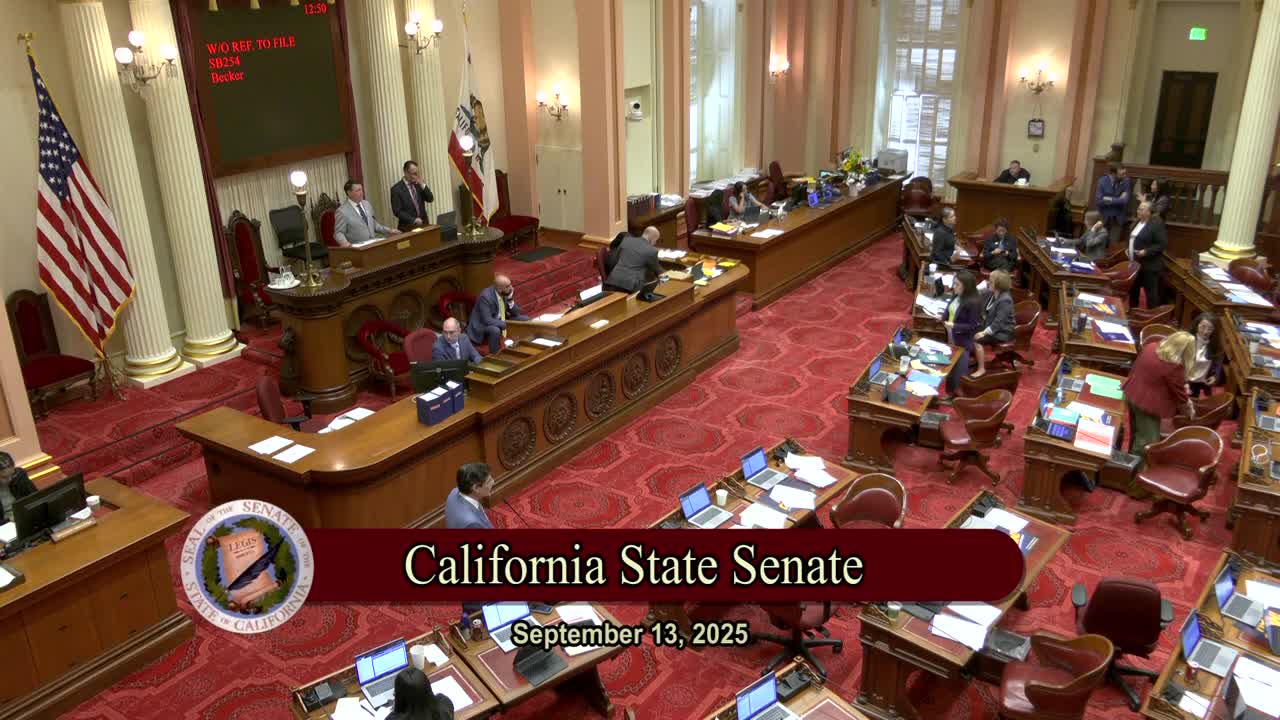 10MIN
Senate Floor
 35MIN
Assembly Floor
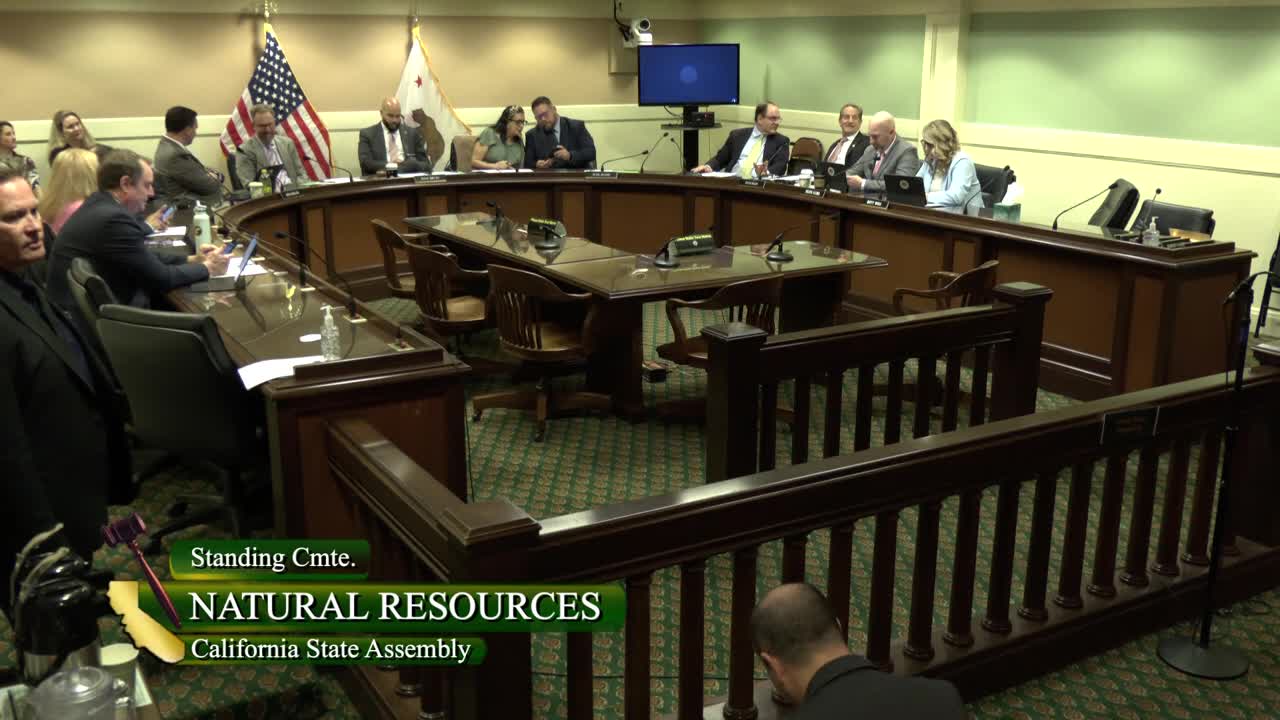 26MIN
Assembly Standing Committee on Natural Resources
 32MIN
Senate Standing Committee on Environmental Quality
 17MIN
Assembly Standing Committee on Natural Resources
 2MIN
Senate Floor
 2MIN
Senate Standing Committee on Environmental Quality



Bill Co-Author(s):