SB 881: Income taxation: credits: voluntary contributions: food bank donations.
- Session Year: 2025-2026
- House: Senate
- Latest Version Date: 2026-09-27
Current Status:
Passed
(2026-09-27: Chaptered by Secretary of State. Chapter 657, Statutes of 2026.)
Introduced
In Committee
Awaiting First Chamber Vote
Passed First Chamber
In Committee
Awaiting Second Chamber Vote
Passed Second Chamber
Enacted
What does this bill do?
This bill extends the California tax credit that lets qualified farmers and other growers claim 15% of the wholesale value of fresh fruits, vegetables, and certain other foods they donate to California food banks, making the credit available for taxable years beginning before January 1, 2032. It also extends the Franchise Tax Board’s annual reporting on use of the credit through 2031 and keeps the Emergency Food for Families voluntary tax contribution option available through January 1, 2033.
The summary is provided by generative AI which can make mistakes. For original language, please view the details in the table below.
(1)The Personal Income Tax Law and the Corporation Tax Law allow various credits against the taxes imposed by those laws, including, for taxable years beginning on or after January 1, 2017, and before January 1, 2027, a credit for qualified taxpayers in an amount equal to 15% of the qualified value of fresh fruits or vegetables and specified raw agricultural products or processed foods donated to a food bank.
This bill would extend the authorization for those tax credits for taxable years beginning before January 1, 2032.
Existing law requires any bill authorizing a new tax expenditure to contain, among other things, specific goals that the tax expenditure will achieve, detailed performance indicators, and data collection requirements. For purposes of complying with these requirements, existing law requires the Franchise Tax Board to submit a report to the Legislature regarding the utilization of the above-described credit on or before December 1 of each year until January 1, 2026.
This bill would extend that reporting requirement to January 1, 2031. The bill would make related findings and declarations.
(2)Existing law authorizes individuals to contribute amounts in excess of their personal income tax liability for the support of specified funds, including the Emergency Food for Families Voluntary Tax Contribution Fund. Under existing law, the provisions governing that voluntary contribution fund are in effect until January 1, 2026, and are repealed as of December 1 of that year.
This bill would extend the provisions that apply to the Emergency Food for Families Voluntary Tax Contribution Fund until January 1, 2033, as provided. The bill would additionally make a nonsubstantive change reflective of existing law. By extending the term of a continuously appropriated fund, the bill would make an appropriation.
(3)This bill would declare that it is to take effect immediately as an urgency statute.
(1)The Personal Income Tax Law and the Corporation Tax Law allow various credits against the taxes imposed by those laws, including, for taxable years beginning on or after January 1, 2017, and before January 1, 2027, a credit for qualified taxpayers in an amount equal to 15% of the qualified value of fresh fruits or vegetables and specified raw agricultural products or processed foods donated to a food bank.
This bill would extend the authorization for those tax credits for taxable years beginning before January 1, 2032.
Existing law requires any bill authorizing a new tax expenditure to contain, among other things, specific goals that the tax expenditure will achieve, detailed performance indicators, and data collection requirements. For purposes of complying with these requirements, existing law requires the Franchise Tax Board to submit a report to the Legislature regarding the utilization of the above-described credit on or before December 1 of each year until January 1, 2026.
This bill would extend that reporting requirement to January 1, 2031. The bill would make related findings and declarations.
(2)Existing law authorizes individuals to contribute amounts in excess of their personal income tax liability for the support of specified funds, including the Emergency Food for Families Voluntary Tax Contribution Fund. Under existing law, the provisions governing that voluntary contribution fund are in effect until January 1, 2026, and are repealed as of December 1 of that year.
This bill would extend the provisions that apply to the Emergency Food for Families Voluntary Tax Contribution Fund until January 1, 2033, as provided. The bill would additionally make a nonsubstantive change reflective of existing law. By extending the term of a continuously appropriated fund, the bill would make an appropriation.
(3)This bill would declare that it is to take effect immediately as an urgency statute.
(1)The Personal Income Tax Law and the Corporation Tax Law allow various credits against the taxes imposed by those laws, including, for taxable years beginning on or after January 1, 2017, and before January 1, 2027, a credit for qualified taxpayers in an amount equal to 15% of the qualified value of fresh fruits or vegetables and specified raw agricultural products or processed foods donated to a food bank.
This bill would extend the authorization for those tax credits for taxable years beginning before January 1, 2032.
Existing law requires any bill authorizing a new tax expenditure to contain, among other things, specific goals that the tax expenditure will achieve, detailed performance indicators, and data collection requirements. For purposes of complying with these requirements, existing law requires the Franchise Tax Board to submit a report to the Legislature regarding the utilization of the above-described credit on or before December 1 of each year until January 1, 2026.
This bill would extend that reporting requirement to January 1, 2031. The bill would make related findings and declarations.
(2)Existing law authorizes individuals to contribute amounts in excess of their personal income tax liability for the support of specified funds, including the Emergency Food for Families Voluntary Tax Contribution Fund. Under existing law, the provisions governing that voluntary contribution fund are in effect until January 1, 2026, and are repealed as of December 1 of that year.
This bill would extend the provisions that apply to the Emergency Food for Families Voluntary Tax Contribution Fund until January 1, 2033, as provided. The bill would additionally make a nonsubstantive change reflective of existing law. By extending the term of a continuously appropriated fund, the bill would make an appropriation.
(3)This bill would declare that it is to take effect immediately as an urgency statute.
(1)The Personal Income Tax Law and the Corporation Tax Law allow various credits against the taxes imposed by those laws, including, for taxable years beginning on or after January 1, 2017, and before January 1, 2027, a credit for qualified taxpayers in an amount equal to 15% of the qualified value of fresh fruits or vegetables and specified raw agricultural products or processed foods donated to a food bank.
This bill would extend the authorization for those tax credits for taxable years beginning before January 1, 2032.
Existing law requires any bill authorizing a new tax expenditure to contain, among other things, specific goals that the tax expenditure will achieve, detailed performance indicators, and data collection requirements. For purposes of complying with these requirements, existing law requires the Franchise Tax Board to submit a report to the Legislature regarding the utilization of the above-described credit on or before December 1 of each year until January 1, 2026.
This bill would extend that reporting requirement to January 1, 2031. The bill would make related findings and declarations.
(2)Existing law authorizes individuals to contribute amounts in excess of their personal income tax liability for the support of specified funds, including the Emergency Food for Families Voluntary Tax Contribution Fund. Under existing law, the provisions governing that voluntary contribution fund are in effect until January 1, 2026, and are repealed as of December 1 of that year.
This bill would extend the provisions that apply to the Emergency Food for Families Voluntary Tax Contribution Fund until January 1, 2037, 2033, as provided. The bill would additionally make a nonsubstantive change reflective of existing law. By extending the term of a continuously appropriated fund, the bill would make an appropriation.
(1)The Personal Income Tax Law and the Corporation Tax Law allow various credits against the taxes imposed by those laws, including, for taxable years beginning on or after January 1, 2017, and before January 1, 2027, a credit for qualified taxpayers in an amount equal to 15% of the qualified value of fresh fruits or vegetables and specified raw agricultural products or processed foods donated to a food bank.
This bill would extend the authorization for those tax credits for taxable years beginning before January 1, 2032.
Existing law requires any bill authorizing a new tax expenditure to contain, among other things, specific goals that the tax expenditure will achieve, detailed performance indicators, and data collection requirements. For purposes of complying with these requirements, existing law requires the Franchise Tax Board to submit a report to the Legislature regarding the utilization of the above-described credit on or before December 1 of each year until January 1, 2026.
This bill would extend that reporting requirement to January 1, 2031. The bill would make related findings and declarations.
(2)Existing law authorizes individuals to contribute amounts in excess of their personal income tax liability for the support of specified funds, including the Emergency Food for Families Voluntary Tax Contribution Fund. Under existing law, the provisions governing that voluntary contribution fund are in effect until January 1, 2026, and are repealed as of December 1 of that year.
This bill would extend the provisions that apply to the Emergency Food for Families Voluntary Tax Contribution Fund until January 1, 2037, as provided. The bill would additionally make a nonsubstantive change reflective of existing law. By extending the term of a continuously appropriated fund, the bill would make an appropriation.
(1)The Personal Income Tax Law and the Corporation Tax Law allow various credits against the taxes imposed by those laws, including, for taxable years beginning on or after January 1, 2017, and before January 1, 2027, a credit for qualified taxpayers in an amount equal to 15% of the qualified value of fresh fruits or vegetables and specified raw agricultural products or processed foods donated to a food bank.
This bill would extend the authorization for those tax credits for taxable years beginning before January 1, 2032.
Existing law requires any bill authorizing a new tax expenditure to contain, among other things, specific goals that the tax expenditure will achieve, detailed performance indicators, and data collection requirements. For purposes of complying with these requirements, existing law requires the Franchise Tax Board to submit a report to the Legislature regarding the utilization of the above-described credit on or before December 1 of each year until January 1, 2026.
This bill would extend that reporting requirement to January 1, 2031. The bill would make related findings and declarations.
(2)Existing law authorizes individuals to contribute amounts in excess of their personal income tax liability for the support of specified funds, including the Emergency Food for Families Voluntary Tax Contribution Fund. Under existing law, the provisions governing that voluntary contribution fund are in effect until January 1, 2026, and are repealed as of December 1 of that year.
This bill would extend the provisions that apply to the Emergency Food for Families Voluntary Tax Contribution Fund until January 1, 2037, as provided. The bill would additionally make a nonsubstantive change reflective of existing law. By extending the term of a continuously appropriated fund, the bill would make an appropriation.
The Legislature finds and declares the following:
(a)Twenty-two percent of California households and 27 percent of California households with children struggle with food insecurity.
(b)One out of every five United States households is currently incurring debt to pay for food.
(c)For every $10 increase in the standard basket of groceries, there is an estimated 2.5 percent increase in the rate of food insecurity among low-income households, and food prices continue to rise.
(d)Federal House Resolution 1 (Public Law 119-21) is expected to take away vital CalFresh benefits from approximately 800,000 Californian households.
(e)Experiencing hunger is painful and life-altering, and causes enduring harm to a persons physical, mental, and emotional well-being.
(f)California farmers produce bountiful, high-quality fruits and vegetables, proteins, and other foods that nourish our communities and our nation as a whole.
(g)Nearly one-half of the nations vegetables and over three-quarters of the nations fruits and nuts are grown in California.
(h)Changes to federal programs that reduce access to essential nutrition assistance, rising food and living costs, and economic instability are exacerbating food insecurity and increasing the need for state action to help people access food.
(i)Ensuring that all Californians have access to essential nutrition must be a top priority of our state, and programs that make it easier for farmers to donate fresh food to food banks help us achieve that goal.
SEC. 2.Section 17053.88.5 of the Revenue and Taxation Code is amended to read:17053.88.5.(a)In the case of a qualified taxpayer who donates qualified donation items to a food bank located in California under Chapter 5 (commencing with Section 58501) of Part 1 of Division 21 of the Food and Agricultural Code, for taxable years beginning on or after January 1, 2017, and before January 1, 2032, there shall be allowed as a credit against the net tax, defined by Section 17039, an amount equal to 15 percent of the qualified value of those qualified donation items.
(b)For purposes of this section:
(1)Qualified donation item means fresh fruits or fresh vegetables and the following raw agricultural products or processed foods:
(A)All of the following:
(i)Fruits, nuts, or vegetables as defined in Section 42510 of the Food and Agricultural Code.
(ii)Meat food product as defined in Section 18665 of the Food and Agricultural Code.
(iii)Poultry as defined in Section 18675 of the Food and Agricultural Code.
(iv)Eggs as defined in Section 75027 of the Food and Agricultural Code.
(v)Fish as defined in Section 58609 of the Food and Agricultural Code.
(B)All of the following food as defined in Section 109935 of the Health and Safety Code:
(i)Rice.
(ii)Beans.
(iii)Fruits, nuts, and vegetables in canned, frozen, dried, dehydrated, and 100 percent juice forms.
(iv)Any cheese, milk, yogurt, butter, and dehydrated milk meeting the requirements in Division 15 (commencing with Section 32501) of the Food and Agricultural Code.
(v)Infant formula subject to Section 114094.5 of the Health and Safety Code.
(vi)Vegetable oil and olive oil.
(vii)Soup, pasta sauce, and salsa.
(viii)Bread and pasta.
(ix)Canned meats and canned seafood.
(2)(A)Qualified taxpayer means the person responsible for planting a crop, managing the crop, and harvesting the crop from the land.
(B)(i)Qualified taxpayer also means the person responsible for growing or raising a qualified donation item, or harvesting, packing, or processing a qualified donation item, provided that person is not a retailer.
(ii)As used in this subparagraph, retailer means a person primarily engaged in the business of making retail sales directly to the public.
(3)(A)Qualified value shall be calculated by using the weighted average wholesale price based on the qualified taxpayers total like grade wholesale sales of the donated item sold within the calendar month of the qualified taxpayers donation.
(B)If no wholesale sales of the donated item have occurred in the calendar month of the qualified taxpayers donation, the qualified value shall be equal to the nearest regional wholesale market price for the calendar month of the donation based upon the same grade products as published by the United States Department of Agricultures Agricultural Marketing Service or its successor.
(c)If the credit allowed by this section is claimed by the qualified taxpayer, any deduction otherwise allowed under this part for that amount of the cost paid or incurred by the qualified taxpayer that is eligible for the credit shall be reduced by the amount of the credit provided in subdivision (a).
(d)The qualified taxpayer shall provide to the food bank the qualified value of the qualified donation items and information regarding the origin of where the qualified donation items were grown, processed, or both grown and processed. Upon receipt of the qualified donation items, the food bank shall provide a certificate to the qualified taxpayer. The certificate shall contain a statement signed and dated by a person authorized by that food bank that the item is donated under Chapter 5 (commencing with Section 58501) of Part 1 of Division 21 of the Food and Agricultural Code. The certificate shall also contain the type and quantity of items donated, the name of the qualified taxpayer or qualified taxpayers, the name and address of the food bank, and, as provided by the qualified taxpayer, the qualified value of the qualified donation items and their origins. Upon the request of the Franchise Tax Board, the qualified taxpayer shall provide a copy of the certification to the Franchise Tax Board.
(e)The credit allowed by this section may be claimed only on a timely filed original return.
(f)In the case where the credit allowed by this section exceeds the net tax, the excess may be carried over to reduce the net tax in the following year, and for the six succeeding years if necessary, until the credit has been exhausted.
(g)In accordance with Section 41, the purpose of the credit is to increase donations to food banks. Using the information available to the Franchise Tax Board from the certificates required under subdivision (d) and subdivision (d) of Section 23688.5, the Franchise Tax Board shall report to the Legislature on or before December 1, 2019, and each December 1 thereafter until the inoperative date specified in subdivision (h), regarding the utilization of the credit authorized by this section and Section 23688.5. The Franchise Tax Board shall also include in the report the qualified value of the qualified donation items, the county in which the qualified donation items originated, and the month the donation was made.
(h)(1)A report required to be submitted pursuant to subdivision (g) shall be submitted in compliance with Section 9795 of the Government Code.
(2)The requirement for submitting a report imposed under subdivision (g) is inoperative on January 1, 2031, pursuant to Section 10231.5 of the Government Code.
(i)This section shall be repealed on December 1, 2032.
(j)The amendments made to this section by Chapter 431 of the Statutes of 2019 shall apply to taxable years beginning on or after January 1, 2020.
SEC. 3.Section 18855 of the Revenue and Taxation Code is amended to read:18855.(a)Except as otherwise provided in subdivision (b), this article shall remain in effect for taxable years beginning before January 1, 2033, and as of December 1 of that year is repealed, unless a later enacted statute deletes or extends that date.
(b)(1)By September 1, 2006, and by September 1 of each subsequent calendar year that the Emergency Food for Families Voluntary Tax Contribution Fund appears on a tax return, the Franchise Tax Board shall determine whether the amount of contributions estimated to be received during the calendar year will equal or exceed the minimum contribution amount for the calendar year as described in paragraph (3). The Franchise Tax Board shall estimate the amount of contributions to be received by using the actual amounts received and an estimate of the contributions that will be received by the end of that calendar year.
(2)If the Franchise Tax Board determines that the amount of contributions estimated to be received during a calendar year will not at least equal the minimum contribution amount for the calendar year, this article shall be inoperative with respect to taxable years beginning on or after January 1 of that calendar year, and shall be repealed on December 1 of that year.
(3)For purposes of this section, the minimum contribution amount for a calendar year means two hundred fifty thousand dollars ($250,000).
(c)Notwithstanding the repeal of this article, any contribution amounts designated pursuant to this article prior to its repeal shall continue to be transferred and disbursed in accordance with this article as in effect immediately prior to that repeal.
SEC. 4.Section 23688.5 of the Revenue and Taxation Code is amended to read:23688.5.(a)In the case of a qualified taxpayer who donates qualified donation items to a food bank located in California under Chapter 5 (commencing with Section 58501) of Part 1 of Division 21 of the Food and Agricultural Code, for taxable years beginning on or after January 1, 2017, and before January 1, 2032, there shall be allowed as a credit against the tax, defined by Section 23036, an amount equal to 15 percent of the qualified value of those qualified donation items.
(b)For purposes of this section:
(1)Qualified donation item means fresh fruits or fresh vegetables and the following raw agricultural products or processed foods:
(A)All of the following:
(i)Fruits, nuts, or vegetables as defined in Section 42510 of the Food and Agricultural Code.
(ii)Meat food product as defined in Section 18665 of the Food and Agricultural Code.
(iii)Poultry as defined in Section 18675 of the Food and Agricultural Code.
(iv)Eggs as defined in Section 75027 of the Food and Agricultural Code.
(v)Fish as defined in Section 58609 of the Food and Agricultural Code.
(B)All of the following food as defined in Section 109935 of the Health and Safety Code:
(i)Rice.
(ii)Beans.
(iii)Fruits, nuts, and vegetables in canned, frozen, dried, dehydrated, and 100 percent juice forms.
(iv)Any cheese, milk, yogurt, butter, and dehydrated milk meeting the requirements in Division 15 (commencing with Section 32501) of the Food and Agricultural Code.
(v)Infant formula subject to Section 114094.5 of the Health and Safety Code.
(vi)Vegetable oil and olive oil.
(vii)Soup, pasta sauce, and salsa.
(viii)Bread and pasta.
(ix)Canned meats and canned seafood.
(2)(A)Qualified taxpayer means the person responsible for planting a crop, managing the crop, and harvesting the crop from the land.
(B)(i)Qualified taxpayer also means the person responsible for growing or raising a qualified donation item, or harvesting, packing, or processing a qualified donation item, provided that person is not a retailer.
(ii)As used in this subparagraph, retailer means a person primarily engaged in the business of making retail sales directly to the public.
(3)(A)Qualified value shall be calculated by using the weighted average wholesale price based on the qualified taxpayers total like grade wholesale sales of the donated item sold within the calendar month of the qualified taxpayers donation.
(B)If no wholesale sales of the donated item have occurred in the calendar month of the qualified taxpayers donation, the qualified value shall be equal to the nearest regional wholesale market price for the calendar month of the donation based upon the same grade products as published by the United States Department of Agricultures Agricultural Marketing Service or its successor.
(c)If the credit allowed by this section is claimed by the qualified taxpayer, any deduction otherwise allowed under this part for that amount of the cost paid or incurred by the qualified taxpayer that is eligible for the credit shall be reduced by the amount of the credit provided in subdivision (a).
(d)The qualified taxpayer shall provide to the food bank the qualified value of the qualified donation items and information regarding the origin of where the qualified donation items were grown, processed, or both grown and processed. Upon receipt of the qualified donation items, the food bank shall provide a certificate to the qualified taxpayer. The certificate shall contain a statement signed and dated by a person authorized by that food bank that the item is donated under Chapter 5 (commencing with Section 58501) of Part 1 of Division 21 of the Food and Agricultural Code. The certificate shall also contain the type and quantity of items donated, the name of the qualified taxpayer or the qualified taxpayers, the name and address of the food bank, and, as provided by the qualified taxpayer, the qualified value of the qualified donation items and their origins. Upon the request of the Franchise Tax Board, the qualified taxpayer shall provide a copy of the certification to the Franchise Tax Board.
(e)The credit allowed by this section may be claimed only on a timely filed original return.
(f)In the case where the credit allowed by this section exceeds the tax, the excess may be carried over to reduce the tax in the following year, and for the six succeeding years if necessary, until the credit has been exhausted.
(g)This section shall be repealed on December 1, 2032.
(h)The amendments made to this section by Chapter 431 of the Statutes of 2019 shall apply to taxable years beginning on or after January 1, 2020.
SEC. 5.This act is an urgency statute necessary for the immediate preservation of the public peace, health, or safety within the meaning of Article IV of the California Constitution and shall go into immediate effect. The facts constituting the necessity are:
In order to prevent the imminent expiration of incentives and programs that are essential responses to the ongoing problem of food insecurity, it is necessary for this act to take effect immediately.
The Legislature finds and declares the following:
(a)Twenty-two percent of California households and 27 percent of California households with children struggle with food insecurity.
(b)One out of every five United States households is currently incurring debt to pay for food.
(c)For every $10 increase in the standard basket of groceries, there is an estimated 2.5 percent increase in the rate of food insecurity among low-income households, and food prices continue to rise.
(d)Federal House Resolution 1 (Public Law 119-21) is expected to take away vital CalFresh benefits from approximately 800,000 Californian households.
(e)Experiencing hunger is painful and life-altering, and causes enduring harm to a persons physical, mental, and emotional well-being.
(f)California farmers produce bountiful, high-quality fruits and vegetables, proteins, and other foods that nourish our communities and our nation as a whole.
(g)Nearly one-half of the nations vegetables and over three-quarters of the nations fruits and nuts are grown in California.
(h)Changes to federal programs that reduce access to essential nutrition assistance, rising food and living costs, and economic instability are exacerbating food insecurity and increasing the need for state action to help people access food.
(i)Ensuring that all Californians have access to essential nutrition must be a top priority of our state, and programs that make it easier for farmers to donate fresh food to food banks help us achieve that goal.
SEC. 2.Section 17053.88.5 of the Revenue and Taxation Code is amended to read:17053.88.5.(a)In the case of a qualified taxpayer who donates qualified donation items to a food bank located in California under Chapter 5 (commencing with Section 58501) of Part 1 of Division 21 of the Food and Agricultural Code, for taxable years beginning on or after January 1, 2017, and before January 1, 2032, there shall be allowed as a credit against the net tax, defined by Section 17039, an amount equal to 15 percent of the qualified value of those qualified donation items.
(b)For purposes of this section:
(1)Qualified donation item means fresh fruits or fresh vegetables and the following raw agricultural products or processed foods:
(A)All of the following:
(i)Fruits, nuts, or vegetables as defined in Section 42510 of the Food and Agricultural Code.
(ii)Meat food product as defined in Section 18665 of the Food and Agricultural Code.
(iii)Poultry as defined in Section 18675 of the Food and Agricultural Code.
(iv)Eggs as defined in Section 75027 of the Food and Agricultural Code.
(v)Fish as defined in Section 58609 of the Food and Agricultural Code.
(B)All of the following food as defined in Section 109935 of the Health and Safety Code:
(i)Rice.
(ii)Beans.
(iii)Fruits, nuts, and vegetables in canned, frozen, dried, dehydrated, and 100 percent juice forms.
(iv)Any cheese, milk, yogurt, butter, and dehydrated milk meeting the requirements in Division 15 (commencing with Section 32501) of the Food and Agricultural Code.
(v)Infant formula subject to Section 114094.5 of the Health and Safety Code.
(vi)Vegetable oil and olive oil.
(vii)Soup, pasta sauce, and salsa.
(viii)Bread and pasta.
(ix)Canned meats and canned seafood.
(2)(A)Qualified taxpayer means the person responsible for planting a crop, managing the crop, and harvesting the crop from the land.
(B)(i)Qualified taxpayer also means the person responsible for growing or raising a qualified donation item, or harvesting, packing, or processing a qualified donation item, provided that person is not a retailer.
(ii)As used in this subparagraph, retailer means a person primarily engaged in the business of making retail sales directly to the public.
(3)(A)Qualified value shall be calculated by using the weighted average wholesale price based on the qualified taxpayers total like grade wholesale sales of the donated item sold within the calendar month of the qualified taxpayers donation.
(B)If no wholesale sales of the donated item have occurred in the calendar month of the qualified taxpayers donation, the qualified value shall be equal to the nearest regional wholesale market price for the calendar month of the donation based upon the same grade products as published by the United States Department of Agricultures Agricultural Marketing Service or its successor.
(c)If the credit allowed by this section is claimed by the qualified taxpayer, any deduction otherwise allowed under this part for that amount of the cost paid or incurred by the qualified taxpayer that is eligible for the credit shall be reduced by the amount of the credit provided in subdivision (a).
(d)The qualified taxpayer shall provide to the food bank the qualified value of the qualified donation items and information regarding the origin of where the qualified donation items were grown, processed, or both grown and processed. Upon receipt of the qualified donation items, the food bank shall provide a certificate to the qualified taxpayer. The certificate shall contain a statement signed and dated by a person authorized by that food bank that the item is donated under Chapter 5 (commencing with Section 58501) of Part 1 of Division 21 of the Food and Agricultural Code. The certificate shall also contain the type and quantity of items donated, the name of the qualified taxpayer or qualified taxpayers, the name and address of the food bank, and, as provided by the qualified taxpayer, the qualified value of the qualified donation items and their origins. Upon the request of the Franchise Tax Board, the qualified taxpayer shall provide a copy of the certification to the Franchise Tax Board.
(e)The credit allowed by this section may be claimed only on a timely filed original return.
(f)In the case where the credit allowed by this section exceeds the net tax, the excess may be carried over to reduce the net tax in the following year, and for the six succeeding years if necessary, until the credit has been exhausted.
(g)In accordance with Section 41, the purpose of the credit is to increase donations to food banks. Using the information available to the Franchise Tax Board from the certificates required under subdivision (d) and subdivision (d) of Section 23688.5, the Franchise Tax Board shall report to the Legislature on or before December 1, 2019, and each December 1 thereafter until the inoperative date specified in subdivision (h), regarding the utilization of the credit authorized by this section and Section 23688.5. The Franchise Tax Board shall also include in the report the qualified value of the qualified donation items, the county in which the qualified donation items originated, and the month the donation was made.
(h)(1)A report required to be submitted pursuant to subdivision (g) shall be submitted in compliance with Section 9795 of the Government Code.
(2)The requirement for submitting a report imposed under subdivision (g) is inoperative on January 1, 2031, pursuant to Section 10231.5 of the Government Code.
(i)This section shall be repealed on December 1, 2032.
(j)The amendments made to this section by Chapter 431 of the Statutes of 2019 shall apply to taxable years beginning on or after January 1, 2020.
SEC. 3.Section 18855 of the Revenue and Taxation Code is amended to read:18855.(a)Except as otherwise provided in subdivision (b), this article shall remain in effect for taxable years beginning before January 1, 2033, and as of December 1 of that year is repealed, unless a later enacted statute deletes or extends that date.
(b)(1)By September 1, 2006, and by September 1 of each subsequent calendar year that the Emergency Food for Families Voluntary Tax Contribution Fund appears on a tax return, the Franchise Tax Board shall determine whether the amount of contributions estimated to be received during the calendar year will equal or exceed the minimum contribution amount for the calendar year as described in paragraph (3). The Franchise Tax Board shall estimate the amount of contributions to be received by using the actual amounts received and an estimate of the contributions that will be received by the end of that calendar year.
(2)If the Franchise Tax Board determines that the amount of contributions estimated to be received during a calendar year will not at least equal the minimum contribution amount for the calendar year, this article shall be inoperative with respect to taxable years beginning on or after January 1 of that calendar year, and shall be repealed on December 1 of that year.
(3)For purposes of this section, the minimum contribution amount for a calendar year means two hundred fifty thousand dollars ($250,000).
(c)Notwithstanding the repeal of this article, any contribution amounts designated pursuant to this article prior to its repeal shall continue to be transferred and disbursed in accordance with this article as in effect immediately prior to that repeal.
SEC. 4.Section 23688.5 of the Revenue and Taxation Code is amended to read:23688.5.(a)In the case of a qualified taxpayer who donates qualified donation items to a food bank located in California under Chapter 5 (commencing with Section 58501) of Part 1 of Division 21 of the Food and Agricultural Code, for taxable years beginning on or after January 1, 2017, and before January 1, 2032, there shall be allowed as a credit against the tax, defined by Section 23036, an amount equal to 15 percent of the qualified value of those qualified donation items.
(b)For purposes of this section:
(1)Qualified donation item means fresh fruits or fresh vegetables and the following raw agricultural products or processed foods:
(A)All of the following:
(i)Fruits, nuts, or vegetables as defined in Section 42510 of the Food and Agricultural Code.
(ii)Meat food product as defined in Section 18665 of the Food and Agricultural Code.
(iii)Poultry as defined in Section 18675 of the Food and Agricultural Code.
(iv)Eggs as defined in Section 75027 of the Food and Agricultural Code.
(v)Fish as defined in Section 58609 of the Food and Agricultural Code.
(B)All of the following food as defined in Section 109935 of the Health and Safety Code:
(i)Rice.
(ii)Beans.
(iii)Fruits, nuts, and vegetables in canned, frozen, dried, dehydrated, and 100 percent juice forms.
(iv)Any cheese, milk, yogurt, butter, and dehydrated milk meeting the requirements in Division 15 (commencing with Section 32501) of the Food and Agricultural Code.
(v)Infant formula subject to Section 114094.5 of the Health and Safety Code.
(vi)Vegetable oil and olive oil.
(vii)Soup, pasta sauce, and salsa.
(viii)Bread and pasta.
(ix)Canned meats and canned seafood.
(2)(A)Qualified taxpayer means the person responsible for planting a crop, managing the crop, and harvesting the crop from the land.
(B)(i)Qualified taxpayer also means the person responsible for growing or raising a qualified donation item, or harvesting, packing, or processing a qualified donation item, provided that person is not a retailer.
(ii)As used in this subparagraph, retailer means a person primarily engaged in the business of making retail sales directly to the public.
(3)(A)Qualified value shall be calculated by using the weighted average wholesale price based on the qualified taxpayers total like grade wholesale sales of the donated item sold within the calendar month of the qualified taxpayers donation.
(B)If no wholesale sales of the donated item have occurred in the calendar month of the qualified taxpayers donation, the qualified value shall be equal to the nearest regional wholesale market price for the calendar month of the donation based upon the same grade products as published by the United States Department of Agricultures Agricultural Marketing Service or its successor.
(c)If the credit allowed by this section is claimed by the qualified taxpayer, any deduction otherwise allowed under this part for that amount of the cost paid or incurred by the qualified taxpayer that is eligible for the credit shall be reduced by the amount of the credit provided in subdivision (a).
(d)The qualified taxpayer shall provide to the food bank the qualified value of the qualified donation items and information regarding the origin of where the qualified donation items were grown, processed, or both grown and processed. Upon receipt of the qualified donation items, the food bank shall provide a certificate to the qualified taxpayer. The certificate shall contain a statement signed and dated by a person authorized by that food bank that the item is donated under Chapter 5 (commencing with Section 58501) of Part 1 of Division 21 of the Food and Agricultural Code. The certificate shall also contain the type and quantity of items donated, the name of the qualified taxpayer or the qualified taxpayers, the name and address of the food bank, and, as provided by the qualified taxpayer, the qualified value of the qualified donation items and their origins. Upon the request of the Franchise Tax Board, the qualified taxpayer shall provide a copy of the certification to the Franchise Tax Board.
(e)The credit allowed by this section may be claimed only on a timely filed original return.
(f)In the case where the credit allowed by this section exceeds the tax, the excess may be carried over to reduce the tax in the following year, and for the six succeeding years if necessary, until the credit has been exhausted.
(g)This section shall be repealed on December 1, 2032.
(h)The amendments made to this section by Chapter 431 of the Statutes of 2019 shall apply to taxable years beginning on or after January 1, 2020.
SEC. 5.This act is an urgency statute necessary for the immediate preservation of the public peace, health, or safety within the meaning of Article IV of the California Constitution and shall go into immediate effect. The facts constituting the necessity are:
In order to prevent the imminent expiration of incentives and programs that are essential responses to the ongoing problem of food insecurity, it is necessary for this act to take effect immediately.
The Legislature finds and declares the following:
(a)Twenty-two percent of California households and 27 percent of California households with children struggle with food insecurity.
(b)One out of every five United States households is currently incurring debt to pay for food.
(c)For every $10 increase in the standard basket of groceries, there is an estimated 2.5 percent increase in the rate of food insecurity among low-income households, and food prices continue to rise.
(d)Federal House Resolution 1 (Public Law 119-21) is expected to take away vital CalFresh benefits from approximately 800,000 Californian households.
(e)Experiencing hunger is painful and life-altering, and causes enduring harm to a persons physical, mental, and emotional well-being.
(f)California farmers produce bountiful, high-quality fruits and vegetables, proteins, and other foods that nourish our communities and our nation as a whole.
(g)Nearly one-half of the nations vegetables and over three-quarters of the nations fruits and nuts are grown in California.
(h)Changes to federal programs that reduce access to essential nutrition assistance, rising food and living costs, and economic instability are exacerbating food insecurity and increasing the need for state action to help people access food.
(i)Ensuring that all Californians have access to essential nutrition must be a top priority of our state, and programs that make it easier for farmers to donate fresh food to food banks help us achieve that goal.
SEC. 2.Section 17053.88.5 of the Revenue and Taxation Code is amended to read:17053.88.5.(a)In the case of a qualified taxpayer who donates qualified donation items to a food bank located in California under Chapter 5 (commencing with Section 58501) of Part 1 of Division 21 of the Food and Agricultural Code, for taxable years beginning on or after January 1, 2017, and before January 1, 2032, there shall be allowed as a credit against the net tax, defined by Section 17039, an amount equal to 15 percent of the qualified value of those qualified donation items.
(b)For purposes of this section:
(1)Qualified donation item means fresh fruits or fresh vegetables and the following raw agricultural products or processed foods:
(A)All of the following:
(i)Fruits, nuts, or vegetables as defined in Section 42510 of the Food and Agricultural Code.
(ii)Meat food product as defined in Section 18665 of the Food and Agricultural Code.
(iii)Poultry as defined in Section 18675 of the Food and Agricultural Code.
(iv)Eggs as defined in Section 75027 of the Food and Agricultural Code.
(v)Fish as defined in Section 58609 of the Food and Agricultural Code.
(B)All of the following food as defined in Section 109935 of the Health and Safety Code:
(i)Rice.
(ii)Beans.
(iii)Fruits, nuts, and vegetables in canned, frozen, dried, dehydrated, and 100 percent juice forms.
(iv)Any cheese, milk, yogurt, butter, and dehydrated milk meeting the requirements in Division 15 (commencing with Section 32501) of the Food and Agricultural Code.
(v)Infant formula subject to Section 114094.5 of the Health and Safety Code.
(vi)Vegetable oil and olive oil.
(vii)Soup, pasta sauce, and salsa.
(viii)Bread and pasta.
(ix)Canned meats and canned seafood.
(2)(A)Qualified taxpayer means the person responsible for planting a crop, managing the crop, and harvesting the crop from the land.
(B)(i)Qualified taxpayer also means the person responsible for growing or raising a qualified donation item, or harvesting, packing, or processing a qualified donation item, provided that person is not a retailer.
(ii)As used in this subparagraph, retailer means a person primarily engaged in the business of making retail sales directly to the public.
(3)(A)Qualified value shall be calculated by using the weighted average wholesale price based on the qualified taxpayers total like grade wholesale sales of the donated item sold within the calendar month of the qualified taxpayers donation.
(B)If no wholesale sales of the donated item have occurred in the calendar month of the qualified taxpayers donation, the qualified value shall be equal to the nearest regional wholesale market price for the calendar month of the donation based upon the same grade products as published by the United States Department of Agricultures Agricultural Marketing Service or its successor.
(c)If the credit allowed by this section is claimed by the qualified taxpayer, any deduction otherwise allowed under this part for that amount of the cost paid or incurred by the qualified taxpayer that is eligible for the credit shall be reduced by the amount of the credit provided in subdivision (a).
(d)The qualified taxpayer shall provide to the food bank the qualified value of the qualified donation items and information regarding the origin of where the qualified donation items were grown, processed, or both grown and processed. Upon receipt of the qualified donation items, the food bank shall provide a certificate to the qualified taxpayer. The certificate shall contain a statement signed and dated by a person authorized by that food bank that the item is donated under Chapter 5 (commencing with Section 58501) of Part 1 of Division 21 of the Food and Agricultural Code. The certificate shall also contain the type and quantity of items donated, the name of the qualified taxpayer or qualified taxpayers, the name and address of the food bank, and, as provided by the qualified taxpayer, the qualified value of the qualified donation items and their origins. Upon the request of the Franchise Tax Board, the qualified taxpayer shall provide a copy of the certification to the Franchise Tax Board.
(e)The credit allowed by this section may be claimed only on a timely filed original return.
(f)In the case where the credit allowed by this section exceeds the net tax, the excess may be carried over to reduce the net tax in the following year, and for the six succeeding years if necessary, until the credit has been exhausted.
(g)In accordance with Section 41, the purpose of the credit is to increase donations to food banks. Using the information available to the Franchise Tax Board from the certificates required under subdivision (d) and subdivision (d) of Section 23688.5, the Franchise Tax Board shall report to the Legislature on or before December 1, 2019, and each December 1 thereafter until the inoperative date specified in subdivision (h), regarding the utilization of the credit authorized by this section and Section 23688.5. The Franchise Tax Board shall also include in the report the qualified value of the qualified donation items, the county in which the qualified donation items originated, and the month the donation was made.
(h)(1)A report required to be submitted pursuant to subdivision (g) shall be submitted in compliance with Section 9795 of the Government Code.
(2)The requirement for submitting a report imposed under subdivision (g) is inoperative on January 1, 2031, pursuant to Section 10231.5 of the Government Code.
(i)This section shall be repealed on December 1, 2032.
(j)The amendments made to this section by Chapter 431 of the Statutes of 2019 shall apply to taxable years beginning on or after January 1, 2020.
SEC. 3.Section 18855 of the Revenue and Taxation Code is amended to read:18855.(a)Except as otherwise provided in subdivision (b), this article shall remain in effect for taxable years beginning before January 1, 2033, and as of December 1 of that year is repealed, unless a later enacted statute deletes or extends that date.
(b)(1)By September 1, 2006, and by September 1 of each subsequent calendar year that the Emergency Food for Families Voluntary Tax Contribution Fund appears on a tax return, the Franchise Tax Board shall determine whether the amount of contributions estimated to be received during the calendar year will equal or exceed the minimum contribution amount for the calendar year as described in paragraph (3). The Franchise Tax Board shall estimate the amount of contributions to be received by using the actual amounts received and an estimate of the contributions that will be received by the end of that calendar year.
(2)If the Franchise Tax Board determines that the amount of contributions estimated to be received during a calendar year will not at least equal the minimum contribution amount for the calendar year, this article shall be inoperative with respect to taxable years beginning on or after January 1 of that calendar year, and shall be repealed on December 1 of that year.
(3)For purposes of this section, the minimum contribution amount for a calendar year means two hundred fifty thousand dollars ($250,000).
(c)Notwithstanding the repeal of this article, any contribution amounts designated pursuant to this article prior to its repeal shall continue to be transferred and disbursed in accordance with this article as in effect immediately prior to that repeal.
SEC. 4.Section 23688.5 of the Revenue and Taxation Code is amended to read:23688.5.(a)In the case of a qualified taxpayer who donates qualified donation items to a food bank located in California under Chapter 5 (commencing with Section 58501) of Part 1 of Division 21 of the Food and Agricultural Code, for taxable years beginning on or after January 1, 2017, and before January 1, 2032, there shall be allowed as a credit against the tax, defined by Section 23036, an amount equal to 15 percent of the qualified value of those qualified donation items.
(b)For purposes of this section:
(1)Qualified donation item means fresh fruits or fresh vegetables and the following raw agricultural products or processed foods:
(A)All of the following:
(i)Fruits, nuts, or vegetables as defined in Section 42510 of the Food and Agricultural Code.
(ii)Meat food product as defined in Section 18665 of the Food and Agricultural Code.
(iii)Poultry as defined in Section 18675 of the Food and Agricultural Code.
(iv)Eggs as defined in Section 75027 of the Food and Agricultural Code.
(v)Fish as defined in Section 58609 of the Food and Agricultural Code.
(B)All of the following food as defined in Section 109935 of the Health and Safety Code:
(i)Rice.
(ii)Beans.
(iii)Fruits, nuts, and vegetables in canned, frozen, dried, dehydrated, and 100 percent juice forms.
(iv)Any cheese, milk, yogurt, butter, and dehydrated milk meeting the requirements in Division 15 (commencing with Section 32501) of the Food and Agricultural Code.
(v)Infant formula subject to Section 114094.5 of the Health and Safety Code.
(vi)Vegetable oil and olive oil.
(vii)Soup, pasta sauce, and salsa.
(viii)Bread and pasta.
(ix)Canned meats and canned seafood.
(2)(A)Qualified taxpayer means the person responsible for planting a crop, managing the crop, and harvesting the crop from the land.
(B)(i)Qualified taxpayer also means the person responsible for growing or raising a qualified donation item, or harvesting, packing, or processing a qualified donation item, provided that person is not a retailer.
(ii)As used in this subparagraph, retailer means a person primarily engaged in the business of making retail sales directly to the public.
(3)(A)Qualified value shall be calculated by using the weighted average wholesale price based on the qualified taxpayers total like grade wholesale sales of the donated item sold within the calendar month of the qualified taxpayers donation.
(B)If no wholesale sales of the donated item have occurred in the calendar month of the qualified taxpayers donation, the qualified value shall be equal to the nearest regional wholesale market price for the calendar month of the donation based upon the same grade products as published by the United States Department of Agricultures Agricultural Marketing Service or its successor.
(c)If the credit allowed by this section is claimed by the qualified taxpayer, any deduction otherwise allowed under this part for that amount of the cost paid or incurred by the qualified taxpayer that is eligible for the credit shall be reduced by the amount of the credit provided in subdivision (a).
(d)The qualified taxpayer shall provide to the food bank the qualified value of the qualified donation items and information regarding the origin of where the qualified donation items were grown, processed, or both grown and processed. Upon receipt of the qualified donation items, the food bank shall provide a certificate to the qualified taxpayer. The certificate shall contain a statement signed and dated by a person authorized by that food bank that the item is donated under Chapter 5 (commencing with Section 58501) of Part 1 of Division 21 of the Food and Agricultural Code. The certificate shall also contain the type and quantity of items donated, the name of the qualified taxpayer or the qualified taxpayers, the name and address of the food bank, and, as provided by the qualified taxpayer, the qualified value of the qualified donation items and their origins. Upon the request of the Franchise Tax Board, the qualified taxpayer shall provide a copy of the certification to the Franchise Tax Board.
(e)The credit allowed by this section may be claimed only on a timely filed original return.
(f)In the case where the credit allowed by this section exceeds the tax, the excess may be carried over to reduce the tax in the following year, and for the six succeeding years if necessary, until the credit has been exhausted.
(g)This section shall be repealed on December 1, 2032.
(h)The amendments made to this section by Chapter 431 of the Statutes of 2019 shall apply to taxable years beginning on or after January 1, 2020.
SEC. 5.This act is an urgency statute necessary for the immediate preservation of the public peace, health, or safety within the meaning of Article IV of the California Constitution and shall go into immediate effect. The facts constituting the necessity are:
In order to prevent the imminent expiration of incentives and programs that are essential responses to the ongoing problem of food insecurity, it is necessary for this act to take effect immediately.
The Legislature finds and declares the following:
(a)Twenty-two percent of California households and 27 percent of California households with children struggle with food insecurity.
(b)One out of every five United States households is currently incurring debt to pay for food.
(c)For every $10 increase in the standard basket of groceries, there is an estimated 2.5 percent increase in the rate of food insecurity among low-income households, and food prices continue to rise.
(d)Federal House Resolution 1 (Public Law 119-21) is expected to take away vital CalFresh benefits from approximately 800,000 Californian households.
(e)Experiencing hunger is painful and life-altering, and causes enduring harm to a persons physical, mental, and emotional well-being.
(f)California farmers produce bountiful, high-quality fruits and vegetables, proteins, and other foods that nourish our communities and our nation as a whole.
(g)Nearly one-half of the nations vegetables and over three-quarters of the nations fruits and nuts are grown in California.
(h)Changes to federal programs that reduce access to essential nutrition assistance, rising food and living costs, and economic instability are exacerbating food insecurity and increasing the need for state action to help people access food.
(i)Ensuring that all Californians have access to essential nutrition must be a top priority of our state, and programs that make it easier for farmers to donate fresh food to food banks help us achieve that goal.
SEC. 2.Section 17053.88.5 of the Revenue and Taxation Code is amended to read:17053.88.5.(a)In the case of a qualified taxpayer who donates qualified donation items to a food bank located in California under Chapter 5 (commencing with Section 58501) of Part 1 of Division 21 of the Food and Agricultural Code, for taxable years beginning on or after January 1, 2017, and before January 1, 2032, there shall be allowed as a credit against the net tax, defined by Section 17039, an amount equal to 15 percent of the qualified value of those qualified donation items.
(b)For purposes of this section:
(1)Qualified donation item means fresh fruits or fresh vegetables and the following raw agricultural products or processed foods:
(A)All of the following:
(i)Fruits, nuts, or vegetables as defined in Section 42510 of the Food and Agricultural Code.
(ii)Meat food product as defined in Section 18665 of the Food and Agricultural Code.
(iii)Poultry as defined in Section 18675 of the Food and Agricultural Code.
(iv)Eggs as defined in Section 75027 of the Food and Agricultural Code.
(v)Fish as defined in Section 58609 of the Food and Agricultural Code.
(B)All of the following food as defined in Section 109935 of the Health and Safety Code:
(i)Rice.
(ii)Beans.
(iii)Fruits, nuts, and vegetables in canned, frozen, dried, dehydrated, and 100 percent juice forms.
(iv)Any cheese, milk, yogurt, butter, and dehydrated milk meeting the requirements in Division 15 (commencing with Section 32501) of the Food and Agricultural Code.
(v)Infant formula subject to Section 114094.5 of the Health and Safety Code.
(vi)Vegetable oil and olive oil.
(vii)Soup, pasta sauce, and salsa.
(viii)Bread and pasta.
(ix)Canned meats and canned seafood.
(2)(A)Qualified taxpayer means the person responsible for planting a crop, managing the crop, and harvesting the crop from the land.
(B)(i)Qualified taxpayer also means the person responsible for growing or raising a qualified donation item, or harvesting, packing, or processing a qualified donation item, provided that person is not a retailer.
(ii)As used in this subparagraph, retailer means a person primarily engaged in the business of making retail sales directly to the public.
(3)(A)Qualified value shall be calculated by using the weighted average wholesale price based on the qualified taxpayers total like grade wholesale sales of the donated item sold within the calendar month of the qualified taxpayers donation.
(B)If no wholesale sales of the donated item have occurred in the calendar month of the qualified taxpayers donation, the qualified value shall be equal to the nearest regional wholesale market price for the calendar month of the donation based upon the same grade products as published by the United States Department of Agricultures Agricultural Marketing Service or its successor.
(c)If the credit allowed by this section is claimed by the qualified taxpayer, any deduction otherwise allowed under this part for that amount of the cost paid or incurred by the qualified taxpayer that is eligible for the credit shall be reduced by the amount of the credit provided in subdivision (a).
(d)The qualified taxpayer shall provide to the food bank the qualified value of the qualified donation items and information regarding the origin of where the qualified donation items were grown, processed, or both grown and processed. Upon receipt of the qualified donation items, the food bank shall provide a certificate to the qualified taxpayer. The certificate shall contain a statement signed and dated by a person authorized by that food bank that the item is donated under Chapter 5 (commencing with Section 58501) of Part 1 of Division 21 of the Food and Agricultural Code. The certificate shall also contain the type and quantity of items donated, the name of the qualified taxpayer or qualified taxpayers, the name and address of the food bank, and, as provided by the qualified taxpayer, the qualified value of the qualified donation items and their origins. Upon the request of the Franchise Tax Board, the qualified taxpayer shall provide a copy of the certification to the Franchise Tax Board.
(e)The credit allowed by this section may be claimed only on a timely filed original return.
(f)In the case where the credit allowed by this section exceeds the net tax, the excess may be carried over to reduce the net tax in the following year, and for the six succeeding years if necessary, until the credit has been exhausted.
(g)In accordance with Section 41, the purpose of the credit is to increase donations to food banks. Using the information available to the Franchise Tax Board from the certificates required under subdivision (d) and subdivision (d) of Section 23688.5, the Franchise Tax Board shall report to the Legislature on or before December 1, 2019, and each December 1 thereafter until the inoperative date specified in subdivision (h), regarding the utilization of the credit authorized by this section and Section 23688.5. The Franchise Tax Board shall also include in the report the qualified value of the qualified donation items, the county in which the qualified donation items originated, and the month the donation was made.
(h)(1)A report required to be submitted pursuant to subdivision (g) shall be submitted in compliance with Section 9795 of the Government Code.
(2)The requirement for submitting a report imposed under subdivision (g) is inoperative on January 1, 2031, pursuant to Section 10231.5 of the Government Code.
(i)This section shall be repealed on December 1, 2032.
(j)The amendments made to this section by Chapter 431 of the Statutes of 2019 shall apply to taxable years beginning on or after January 1, 2020.
SEC. 3.Section 18855 of the Revenue and Taxation Code is amended to read:18855.(a)Except as otherwise provided in subdivision (b), this article shall remain in effect for taxable years beginning before January 1, 2037, 2033, and as of December 1 of that year is repealed, unless a later enacted statute deletes or extends that date.
(b)(1)By September 1, 2006, and by September 1 of each subsequent calendar year that the Emergency Food for Families Voluntary Tax Contribution Fund appears on a tax return, the Franchise Tax Board shall determine whether the amount of contributions estimated to be received during the calendar year will equal or exceed the minimum contribution amount for the calendar year as described in paragraph (3). The Franchise Tax Board shall estimate the amount of contributions to be received by using the actual amounts received and an estimate of the contributions that will be received by the end of that calendar year.
(2)If the Franchise Tax Board determines that the amount of contributions estimated to be received during a calendar year will not at least equal the minimum contribution amount for the calendar year, this article shall be inoperative with respect to taxable years beginning on or after January 1 of that calendar year, and shall be repealed on December 1 of that year.
(3)For purposes of this section, the minimum contribution amount for a calendar year means two hundred fifty thousand dollars ($250,000).
(c)Notwithstanding the repeal of this article, any contribution amounts designated pursuant to this article prior to its repeal shall continue to be transferred and disbursed in accordance with this article as in effect immediately prior to that repeal.
SEC. 4.Section 23688.5 of the Revenue and Taxation Code is amended to read:23688.5.(a)In the case of a qualified taxpayer who donates qualified donation items to a food bank located in California under Chapter 5 (commencing with Section 58501) of Part 1 of Division 21 of the Food and Agricultural Code, for taxable years beginning on or after January 1, 2017, and before January 1, 2032, there shall be allowed as a credit against the tax, defined by Section 23036, an amount equal to 15 percent of the qualified value of those qualified donation items.
(b)For purposes of this section:
(1)Qualified donation item means fresh fruits or fresh vegetables and the following raw agricultural products or processed foods:
(A)All of the following:
(i)Fruits, nuts, or vegetables as defined in Section 42510 of the Food and Agricultural Code.
(ii)Meat food product as defined in Section 18665 of the Food and Agricultural Code.
(iii)Poultry as defined in Section 18675 of the Food and Agricultural Code.
(iv)Eggs as defined in Section 75027 of the Food and Agricultural Code.
(v)Fish as defined in Section 58609 of the Food and Agricultural Code.
(B)All of the following food as defined in Section 109935 of the Health and Safety Code:
(i)Rice.
(ii)Beans.
(iii)Fruits, nuts, and vegetables in canned, frozen, dried, dehydrated, and 100 percent juice forms.
(iv)Any cheese, milk, yogurt, butter, and dehydrated milk meeting the requirements in Division 15 (commencing with Section 32501) of the Food and Agricultural Code.
(v)Infant formula subject to Section 114094.5 of the Health and Safety Code.
(vi)Vegetable oil and olive oil.
(vii)Soup, pasta sauce, and salsa.
(viii)Bread and pasta.
(ix)Canned meats and canned seafood.
(2)(A)Qualified taxpayer means the person responsible for planting a crop, managing the crop, and harvesting the crop from the land.
(B)(i)Qualified taxpayer also means the person responsible for growing or raising a qualified donation item, or harvesting, packing, or processing a qualified donation item, provided that person is not a retailer.
(ii)As used in this subparagraph, retailer means a person primarily engaged in the business of making retail sales directly to the public.
(3)(A)Qualified value shall be calculated by using the weighted average wholesale price based on the qualified taxpayers total like grade wholesale sales of the donated item sold within the calendar month of the qualified taxpayers donation.
(B)If no wholesale sales of the donated item have occurred in the calendar month of the qualified taxpayers donation, the qualified value shall be equal to the nearest regional wholesale market price for the calendar month of the donation based upon the same grade products as published by the United States Department of Agricultures Agricultural Marketing Service or its successor.
(c)If the credit allowed by this section is claimed by the qualified taxpayer, any deduction otherwise allowed under this part for that amount of the cost paid or incurred by the qualified taxpayer that is eligible for the credit shall be reduced by the amount of the credit provided in subdivision (a).
(d)The qualified taxpayer shall provide to the food bank the qualified value of the qualified donation items and information regarding the origin of where the qualified donation items were grown, processed, or both grown and processed. Upon receipt of the qualified donation items, the food bank shall provide a certificate to the qualified taxpayer. The certificate shall contain a statement signed and dated by a person authorized by that food bank that the item is donated under Chapter 5 (commencing with Section 58501) of Part 1 of Division 21 of the Food and Agricultural Code. The certificate shall also contain the type and quantity of items donated, the name of the qualified taxpayer or the qualified taxpayers, the name and address of the food bank, and, as provided by the qualified taxpayer, the qualified value of the qualified donation items and their origins. Upon the request of the Franchise Tax Board, the qualified taxpayer shall provide a copy of the certification to the Franchise Tax Board.
(e)The credit allowed by this section may be claimed only on a timely filed original return.
(f)In the case where the credit allowed by this section exceeds the tax, the excess may be carried over to reduce the tax in the following year, and for the six succeeding years if necessary, until the credit has been exhausted.
(g)This section shall be repealed on December 1, 2032.
(h)The amendments made to this section by Chapter 431 of the Statutes of 2019 shall apply to taxable years beginning on or after January 1, 2020.
The Legislature finds and declares the following:
(a)Twenty-two percent of California households and 27 percent of California households with children struggle with food insecurity.
(b)One out of every five United States households are is currently incurring debt to pay for food.
(c)For every $10-dollar $10 increase in the standard basket of groceries, there is an estimated 2.5 percent increase in the rate of food insecurity among low-income households, and food prices continue to rise.
(d)Federal House Resolution 1 (Public Law 119-21) is expected to take away vital CalFresh benefits from approximately 800,000 Californian households.
(e)Experiencing hunger is painful and life-altering, and causes enduring harm to a persons physical, mental, and emotional well-being.
(f)California farmers produce bountiful, high-quality fruits and vegetables, proteins, and other foods that nourish our communities and our nation as a whole.
(g)Nearly one-half of the nations vegetables and over three-quarters of the nations fruits and nuts are grown in California.
(h)Changes to federal programs that reduce access to essential nutrition assistance, rising food and living costs, and economic instability are exacerbating food insecurity and increasing the need for state action to help people access food.
(i)Ensuring that all Californians have access to essential nutrition must be a top priority of our state, and programs that make it easier for farmers to donate fresh food to food banks help us achieve that goal.
SEC. 2.Section 17053.88.5 of the Revenue and Taxation Code is amended to read:17053.88.5.(a)In the case of a qualified taxpayer who donates qualified donation items to a food bank located in California under Chapter 5 (commencing with Section 58501) of Part 1 of Division 21 of the Food and Agricultural Code, for taxable years beginning on or after January 1, 2017, and before January 1, 2032, there shall be allowed as a credit against the net tax, defined by Section 17039, an amount equal to 15 percent of the qualified value of those qualified donation items.
(b)For purposes of this section:
(1)Qualified donation item means fresh fruits or fresh vegetables and the following raw agricultural products or processed foods:
(A)All of the following:
(i)Fruits, nuts, or vegetables as defined in Section 42510 of the Food and Agricultural Code.
(ii)Meat food product as defined in Section 18665 of the Food and Agricultural Code.
(iii)Poultry as defined in Section 18675 of the Food and Agricultural Code.
(iv)Eggs as defined in Section 75027 of the Food and Agricultural Code.
(v)Fish as defined in Section 58609 of the Food and Agricultural Code.
(B)All of the following food as defined in Section 109935 of the Health and Safety Code:
(i)Rice.
(ii)Beans.
(iii)Fruits, nuts, and vegetables in canned, frozen, dried, dehydrated, and 100 percent juice forms.
(iv)Any cheese, milk, yogurt, butter, and dehydrated milk meeting the requirements in Division 15 (commencing with Section 32501) of the Food and Agricultural Code.
(v)Infant formula subject to Section 114094.5 of the Health and Safety Code.
(vi)Vegetable oil and olive oil.
(vii)Soup, pasta sauce, and salsa.
(viii)Bread and pasta.
(ix)Canned meats and canned seafood.
(2)(A)Qualified taxpayer means the person responsible for planting a crop, managing the crop, and harvesting the crop from the land.
(B)(i)Qualified taxpayer also means the person responsible for growing or raising a qualified donation item, or harvesting, packing, or processing a qualified donation item, provided that person is not a retailer.
(ii)As used in this subparagraph, retailer means a person primarily engaged in the business of making retail sales directly to the public.
(3)(A)Qualified value shall be calculated by using the weighted average wholesale price based on the qualified taxpayers total like grade wholesale sales of the donated item sold within the calendar month of the qualified taxpayers donation.
(B)If no wholesale sales of the donated item have occurred in the calendar month of the qualified taxpayers donation, the qualified value shall be equal to the nearest regional wholesale market price for the calendar month of the donation based upon the same grade products as published by the United States Department of Agricultures Agricultural Marketing Service or its successor.
(c)If the credit allowed by this section is claimed by the qualified taxpayer, any deduction otherwise allowed under this part for that amount of the cost paid or incurred by the qualified taxpayer that is eligible for the credit shall be reduced by the amount of the credit provided in subdivision (a).
(d)The qualified taxpayer shall provide to the food bank the qualified value of the qualified donation items and information regarding the origin of where the qualified donation items were grown, processed, or both grown and processed. Upon receipt of the qualified donation items, the food bank shall provide a certificate to the qualified taxpayer. The certificate shall contain a statement signed and dated by a person authorized by that food bank that the item is donated under Chapter 5 (commencing with Section 58501) of Part 1 of Division 21 of the Food and Agricultural Code. The certificate shall also contain the type and quantity of items donated, the name of the qualified taxpayer or qualified taxpayers, the name and address of the food bank, and, as provided by the qualified taxpayer, the qualified value of the qualified donation items and their origins. Upon the request of the Franchise Tax Board, the qualified taxpayer shall provide a copy of the certification to the Franchise Tax Board.
(e)The credit allowed by this section may be claimed only on a timely filed original return.
(f)In the case where the credit allowed by this section exceeds the net tax, the excess may be carried over to reduce the net tax in the following year, and for the six succeeding years if necessary, until the credit has been exhausted.
(g)In accordance with Section 41, the purpose of the credit is to increase donations to food banks. Using the information available to the Franchise Tax Board from the certificates required under subdivision (d) and subdivision (d) of Section 23688.5, the Franchise Tax Board shall report to the Legislature on or before December 1, 2019, and each December 1 thereafter until the inoperative date specified in subdivision (h), regarding the utilization of the credit authorized by this section and Section 23688.5. The Franchise Tax Board shall also include in the report the qualified value of the qualified donation items, the county in which the qualified donation items originated, and the month the donation was made.
(h)(1)A report required to be submitted pursuant to subdivision (g) shall be submitted in compliance with Section 9795 of the Government Code.
(2)The requirement for submitting a report imposed under subdivision (g) is inoperative on January 1, 2031, pursuant to Section 10231.5 of the Government Code.
(i)This section shall be repealed on December 1, 2032.
(j)The amendments made to this section by Chapter 431 of the Statutes of 2019 shall apply to taxable years beginning on or after January 1, 2020.
SEC. 3.Section 18855 of the Revenue and Taxation Code is amended to read:18855.(a)Except as otherwise provided in subdivision (b), this article shall remain in effect for taxable years beginning before January 1, 2037, and as of December 1 of that year is repealed, unless a later enacted statute deletes or extends that date.
(b)(1)By September 1, 2006, and by September 1 of each subsequent calendar year that the Emergency Food for Families Voluntary Tax Contribution Fund appears on a tax return, the Franchise Tax Board shall determine whether the amount of contributions estimated to be received during the calendar year will equal or exceed the minimum contribution amount for the calendar year as described in paragraph (3). The Franchise Tax Board shall estimate the amount of contributions to be received by using the actual amounts received and an estimate of the contributions that will be received by the end of that calendar year.
(2)If the Franchise Tax Board determines that the amount of contributions estimated to be received during a calendar year will not at least equal the minimum contribution amount for the calendar year, this article shall be inoperative with respect to taxable years beginning on or after January 1 of that calendar year, and shall be repealed on December 1 of that year.
(3)For purposes of this section, the minimum contribution amount for a calendar year means two hundred fifty thousand dollars ($250,000).
(c)Notwithstanding the repeal of this article, any contribution amounts designated pursuant to this article prior to its repeal shall continue to be transferred and disbursed in accordance with this article as in effect immediately prior to that repeal.
SEC. 4.Section 23688.5 of the Revenue and Taxation Code is amended to read:23688.5.(a)In the case of a qualified taxpayer who donates qualified donation items to a food bank located in California under Chapter 5 (commencing with Section 58501) of Part 1 of Division 21 of the Food and Agricultural Code, for taxable years beginning on or after January 1, 2017, and before January 1, 2032, there shall be allowed as a credit against the tax, defined by Section 23036, an amount equal to 15 percent of the qualified value of those qualified donation items.
(b)For purposes of this section:
(1)Qualified donation item means fresh fruits or fresh vegetables and the following raw agricultural products or processed foods:
(A)All of the following:
(i)Fruits, nuts, or vegetables as defined in Section 42510 of the Food and Agricultural Code.
(ii)Meat food product as defined in Section 18665 of the Food and Agricultural Code.
(iii)Poultry as defined in Section 18675 of the Food and Agricultural Code.
(iv)Eggs as defined in Section 75027 of the Food and Agricultural Code.
(v)Fish as defined in Section 58609 of the Food and Agricultural Code.
(B)All of the following food as defined in Section 109935 of the Health and Safety Code:
(i)Rice.
(ii)Beans.
(iii)Fruits, nuts, and vegetables in canned, frozen, dried, dehydrated, and 100 percent juice forms.
(iv)Any cheese, milk, yogurt, butter, and dehydrated milk meeting the requirements in Division 15 (commencing with Section 32501) of the Food and Agricultural Code.
(v)Infant formula subject to Section 114094.5 of the Health and Safety Code.
(vi)Vegetable oil and olive oil.
(vii)Soup, pasta sauce, and salsa.
(viii)Bread and pasta.
(ix)Canned meats and canned seafood.
(2)(A)Qualified taxpayer means the person responsible for planting a crop, managing the crop, and harvesting the crop from the land.
(B)(i)Qualified taxpayer also means the person responsible for growing or raising a qualified donation item, or harvesting, packing, or processing a qualified donation item, provided that person is not a retailer.
(ii)As used in this subparagraph, retailer means a person primarily engaged in the business of making retail sales directly to the public.
(3)(A)Qualified value shall be calculated by using the weighted average wholesale price based on the qualified taxpayers total like grade wholesale sales of the donated item sold within the calendar month of the qualified taxpayers donation.
(B)If no wholesale sales of the donated item have occurred in the calendar month of the qualified taxpayers donation, the qualified value shall be equal to the nearest regional wholesale market price for the calendar month of the donation based upon the same grade products as published by the United States Department of Agricultures Agricultural Marketing Service or its successor.
(c)If the credit allowed by this section is claimed by the qualified taxpayer, any deduction otherwise allowed under this part for that amount of the cost paid or incurred by the qualified taxpayer that is eligible for the credit shall be reduced by the amount of the credit provided in subdivision (a).
(d)The qualified taxpayer shall provide to the food bank the qualified value of the qualified donation items and information regarding the origin of where the qualified donation items were grown, processed, or both grown and processed. Upon receipt of the qualified donation items, the food bank shall provide a certificate to the qualified taxpayer. The certificate shall contain a statement signed and dated by a person authorized by that food bank that the item is donated under Chapter 5 (commencing with Section 58501) of Part 1 of Division 21 of the Food and Agricultural Code. The certificate shall also contain the type and quantity of items donated, the name of the qualified taxpayer or the qualified taxpayers, the name and address of the food bank, and, as provided by the qualified taxpayer, the qualified value of the qualified donation items and their origins. Upon the request of the Franchise Tax Board, the qualified taxpayer shall provide a copy of the certification to the Franchise Tax Board.
(e)The credit allowed by this section may be claimed only on a timely filed original return.
(f)In the case where the credit allowed by this section exceeds the tax, the excess may be carried over to reduce the tax in the following year, and for the six succeeding years if necessary, until the credit has been exhausted.
(g)This section shall be repealed on December 1, 2032.
(h)The amendments made to this section by Chapter 431 of the Statutes of 2019 shall apply to taxable years beginning on or after January 1, 2020.
The Legislature finds and declares the following:
(a)Twenty-two percent of California households and 27 percent of California households with children struggle with food insecurity.
(b)One out of every five United States households are currently incurring debt to pay for food.
(c)For every $10-dollar increase in the standard basket of groceries, there is an estimated 2.5 percent increase in the rate of food insecurity among low-income households, and food prices continue to rise.
(d)Federal House Resolution 1 (Public Law 119-21) is expected to take away vital CalFresh benefits from approximately 800,000 Californian households.
(e)Experiencing hunger is painful and life-altering, and causes enduring harm to a persons physical, mental, and emotional well-being.
(f)California farmers produce bountiful, high-quality fruits and vegetables, proteins, and other foods that nourish our communities and our nation as a whole.
(g)Nearly one-half of the nations vegetables and over three-quarters of the nations fruits and nuts are grown in California.
(h)Changes to federal programs that reduce access to essential nutrition assistance, rising food and living costs, and economic instability are exacerbating food insecurity and increasing the need for state action to help people access food.
(i)Ensuring that all Californians have access to essential nutrition must be a top priority of our state, and programs that make it easier for farmers to donate fresh food to food banks help us achieve that goal.
SEC. 2.Section 17053.88.5 of the Revenue and Taxation Code is amended to read:17053.88.5.(a)In the case of a qualified taxpayer who donates qualified donation items to a food bank located in California under Chapter 5 (commencing with Section 58501) of Part 1 of Division 21 of the Food and Agricultural Code, for taxable years beginning on or after January 1, 2017, and before January 1, 2027, 2032, there shall be allowed as a credit against the net tax, defined by Section 17039, an amount equal to 15 percent of the qualified value of those qualified donation items.
(b)For purposes of this section:
(1)Qualified donation item means fresh fruits or fresh vegetables and the following raw agricultural products or processed foods:
(A)All of the following:
(i)Fruits, nuts, or vegetables as defined in Section 42510 of the Food and Agricultural Code.
(ii)Meat food product as defined in Section 18665 of the Food and Agricultural Code.
(iii)Poultry as defined in Section 18675 of the Food and Agricultural Code.
(iv)Eggs as defined in Section 75027 of the Food and Agricultural Code.
(v)Fish as defined in Section 58609 of the Food and Agricultural Code.
(B)All of the following food as defined in Section 109935 of the Health and Safety Code:
(i)Rice.
(ii)Beans.
(iii)Fruits, nuts, and vegetables in canned, frozen, dried, dehydrated, and 100 percent juice forms.
(iv)Any cheese, milk, yogurt, butter, and dehydrated milk meeting the requirements in Division 15 (commencing with Section 32501) of the Food and Agricultural Code.
(v)Infant formula subject to Section 114094.5 of the Health and Safety Code.
(vi)Vegetable oil and olive oil.
(vii)Soup, pasta sauce, and salsa.
(viii)Bread and pasta.
(ix)Canned meats and canned seafood.
(2)(A)Qualified taxpayer means the person responsible for planting a crop, managing the crop, and harvesting the crop from the land.
(B)(i)Qualified taxpayer also means the person responsible for growing or raising a qualified donation item, or harvesting, packing, or processing a qualified donation item, provided that person is not a retailer.
(ii)As used in this subparagraph, retailer means a person primarily engaged in the business of making retail sales directly to the public.
(3)(A)Qualified value shall be calculated by using the weighted average wholesale price based on the qualified taxpayers total like grade wholesale sales of the donated item sold within the calendar month of the qualified taxpayers donation.
(B)If no wholesale sales of the donated item have occurred in the calendar month of the qualified taxpayers donation, the qualified value shall be equal to the nearest regional wholesale market price for the calendar month of the donation based upon the same grade products as published by the United States Department of Agricultures Agricultural Marketing Service or its successor.
(c)If the credit allowed by this section is claimed by the qualified taxpayer, any deduction otherwise allowed under this part for that amount of the cost paid or incurred by the qualified taxpayer that is eligible for the credit shall be reduced by the amount of the credit provided in subdivision (a).
(d)The qualified taxpayer shall provide to the food bank the qualified value of the qualified donation items and information regarding the origin of where the qualified donation items were grown, processed, or both grown and processed. Upon receipt of the qualified donation items, the food bank shall provide a certificate to the qualified taxpayer. The certificate shall contain a statement signed and dated by a person authorized by that food bank that the item is donated under Chapter 5 (commencing with Section 58501) of Part 1 of Division 21 of the Food and Agricultural Code. The certificate shall also contain the type and quantity of items donated, the name of the qualified taxpayer or qualified taxpayers, the name and address of the food bank, and, as provided by the qualified taxpayer, the qualified value of the qualified donation items and their origins. Upon the request of the Franchise Tax Board, the qualified taxpayer shall provide a copy of the certification to the Franchise Tax Board.
(e)The credit allowed by this section may be claimed only on a timely filed original return.
(f)In the case where the credit allowed by this section exceeds the net tax, the excess may be carried over to reduce the net tax in the following year, and for the six succeeding years if necessary, until the credit has been exhausted.
(g)In accordance with Section 41, the purpose of the credit is to increase donations to food banks. Using the information available to the Franchise Tax Board from the certificates required under subdivision (d) and subdivision (d) of Section 23688.5, the Franchise Tax Board shall report to the Legislature on or before December 1, 2019, and each December 1 thereafter until the inoperative date specified in subdivision (h), regarding the utilization of the credit authorized by this section and Section 23688.5. The Franchise Tax Board shall also include in the report the qualified value of the qualified donation items, the county in which the qualified donation items originated, and the month the donation was made.
(h)(1)A report required to be submitted pursuant to subdivision (g) shall be submitted in compliance with Section 9795 of the Government Code.
(2)The requirement for submitting a report imposed under subdivision (g) is inoperative on January 1, 2026, 2031, pursuant to Section 10231.5 of the Government Code.
(i)This section shall be repealed on December 1, 2027. 2032.
(j)The amendments made to this section by Chapter 431 of the Statutes of 2019 shall apply to taxable years beginning on or after January 1, 2020.
SEC. 3.Section 18855 of the Revenue and Taxation Code is amended to read:18855.(a)Except as otherwise provided in subdivision (b), this article shall remain in effect only until for taxable years beginning before January 1, 2026, 2037, and as of December 1 of that year is repealed, unless a later enacted statute, that is enacted before January 1, 2026, statute deletes or extends that date.
(b)(1)By September 1, 2006, and by September 1 of each subsequent calendar year that the Emergency Food for Families Voluntary Tax Contribution Fund appears on a tax return, the Franchise Tax Board shall determine whether the amount of contributions estimated to be received during the calendar year will equal or exceed the minimum contribution amount for the calendar year as described in paragraph (3). The Franchise Tax Board shall estimate the amount of contributions to be received by using the actual amounts received and an estimate of the contributions that will be received by the end of that calendar year.
(2)If the Franchise Tax Board determines that the amount of contributions estimated to be received during a calendar year will not at least equal the minimum contribution amount for the calendar year, this article shall be inoperative with respect to taxable years beginning on or after January 1 of that calendar year, and shall be repealed on December 1 of that year.
(3)For purposes of this section, the minimum contribution amount for a calendar year means two hundred fifty thousand dollars ($250,000).
(c)Notwithstanding the repeal of this article, any contribution amounts designated pursuant to this article prior to its repeal shall continue to be transferred and disbursed in accordance with this article as in effect immediately prior to that repeal.
SEC. 4.Section 23688.5 of the Revenue and Taxation Code is amended to read:23688.5.(a)In the case of a qualified taxpayer who donates qualified donation items to a food bank located in California under Chapter 5 (commencing with Section 58501) of Part 1 of Division 21 of the Food and Agricultural Code, for taxable years beginning on or after January 1, 2017, and before January 1, 2027, 2032, there shall be allowed as a credit against the tax, defined by Section 23036, an amount equal to 15 percent of the qualified value of those qualified donation items.
(b)For purposes of this section:
(1)Qualified donation item means fresh fruits or fresh vegetables and the following raw agricultural products or processed foods:
(A)All of the following:
(i)Fruits, nuts, or vegetables as defined in Section 42510 of the Food and Agricultural Code.
(ii)Meat food product as defined in Section 18665 of the Food and Agricultural Code.
(iii)Poultry as defined in Section 18675 of the Food and Agricultural Code.
(iv)Eggs as defined in Section 75027 of the Food and Agricultural Code.
(v)Fish as defined in Section 58609 of the Food and Agricultural Code.
(B)All of the following food as defined in Section 109935 of the Health and Safety Code:
(i)Rice.
(ii)Beans.
(iii)Fruits, nuts, and vegetables in canned, frozen, dried, dehydrated, and 100 percent juice forms.
(iv)Any cheese, milk, yogurt, butter, and dehydrated milk meeting the requirements in Division 15 (commencing with Section 32501) of the Food and Agricultural Code.
(v)Infant formula subject to Section 114094.5 of the Health and Safety Code.
(vi)Vegetable oil and olive oil.
(vii)Soup, pasta sauce, and salsa.
(viii)Bread and pasta.
(ix)Canned meats and canned seafood.
(2)(A)Qualified taxpayer means the person responsible for planting a crop, managing the crop, and harvesting the crop from the land.
(B)(i)Qualified taxpayer also means the person responsible for growing or raising a qualified donation item, or harvesting, packing, or processing a qualified donation item, provided that person is not a retailer.
(ii)As used in this subparagraph, retailer means a person primarily engaged in the business of making retail sales directly to the public.
(3)(A)Qualified value shall be calculated by using the weighted average wholesale price based on the qualified taxpayers total like grade wholesale sales of the donated item sold within the calendar month of the qualified taxpayers donation.
(B)If no wholesale sales of the donated item have occurred in the calendar month of the qualified taxpayers donation, the qualified value shall be equal to the nearest regional wholesale market price for the calendar month of the donation based upon the same grade products as published by the United States Department of Agricultures Agricultural Marketing Service or its successor.
(c)If the credit allowed by this section is claimed by the qualified taxpayer, any deduction otherwise allowed under this part for that amount of the cost paid or incurred by the qualified taxpayer that is eligible for the credit shall be reduced by the amount of the credit provided in subdivision (a).
(d)The qualified taxpayer shall provide to the food bank the qualified value of the qualified donation items and information regarding the origin of where the qualified donation items were grown, processed, or both grown and processed. Upon receipt of the qualified donation items, the food bank shall provide a certificate to the qualified taxpayer. The certificate shall contain a statement signed and dated by a person authorized by that food bank that the item is donated under Chapter 5 (commencing with Section 58501) of Part 1 of Division 21 of the Food and Agricultural Code. The certificate shall also contain the type and quantity of items donated, the name of the qualified taxpayer or the qualified taxpayers, the name and address of the food bank, and, as provided by the qualified taxpayer, the qualified value of the qualified donation items and their origins. Upon the request of the Franchise Tax Board, the qualified taxpayer shall provide a copy of the certification to the Franchise Tax Board.
(e)The credit allowed by this section may be claimed only on a timely filed original return.
(f)In the case where the credit allowed by this section exceeds the tax, the excess may be carried over to reduce the tax in the following year, and for the six succeeding years if necessary, until the credit has been exhausted.
(g)This section shall be repealed on December 1, 2027. 2032.
(h)The amendments made to this section by Chapter 431 of the Statutes of 2019 shall apply to taxable years beginning on or after January 1, 2020.
|
Date
|
Status
|
|---|---|
| Sep 27, 2026 | Chaptered by Secretary of State. Chapter 657, Statutes of 2026. |
| Sep 27, 2026 | Approved by the Governor. |
| Aug 24, 2026 | Enrolled and presented to the Governor at 3 p.m. |
| Aug 19, 2026 | Urgency clause adopted. |
| Aug 19, 2026 | Assembly amendments concurred in. (Ayes 38. Noes 0.) Ordered to engrossing and enrolling. |
| Aug 19, 2026 | Assembly amendments concurred in. (Ayes 38. Noes 0. Page 5542.) Ordered to engrossing and enrolling. |
| Aug 18, 2026 | In Senate. Concurrence in Assembly amendments pending. |
| Aug 17, 2026 | Read third time. Urgency clause adopted. Passed. (Ayes 74. Noes 0. Page 6208.) Ordered to the Senate. |
| Aug 17, 2026 | Read third time. Urgency clause adopted. Passed. Ordered to the Senate. |
| Aug 13, 2026 | Read second time. Ordered to third reading. |
| Aug 13, 2026 | From committee: Do pass. (Ayes 15. Noes 0.) (August 13). |
| Aug 13, 2026 | Assembly Rule 63 suspended. |
| Aug 5, 2026 | August 5 set for first hearing. Placed on suspense file. |
| Jul 1, 2026 | Read second time and amended. Re-referred to Com. on APPR. |
| Jun 30, 2026 | From committee: Do pass as amended and re-refer to Com. on APPR. (Ayes 7. Noes 0.) (June 29). |
| Jun 15, 2026 | June 15 set for first hearing. Placed on suspense file. |
| Jun 4, 2026 | From committee with author's amendments. Read second time and amended. Re-referred to Com. on REV. & TAX. |
| May 26, 2026 | Referred to Com. on REV. & TAX. |
| May 20, 2026 | In Assembly. Read first time. Held at Desk. |
| May 19, 2026 | Read third time. Passed. (Ayes 39. Noes 0.) Ordered to the Assembly. |
| May 19, 2026 | Read third time. Passed. (Ayes 39. Noes 0. Page 4350.) Ordered to the Assembly. |
| May 18, 2026 | Read second time. Ordered to third reading. |
| May 14, 2026 | From committee: Do pass as amended. (Ayes 7. Noes 0. Page 4255.) (May 14). |
| May 14, 2026 | From committee: Do pass as amended. (Ayes 7. Noes 0.) (May 14). |
| May 14, 2026 | Read second time and amended. Ordered to second reading. |
| May 8, 2026 | Set for hearing May 14. |
| Apr 13, 2026 | April 13 hearing: Placed on APPR. suspense file. |
| Mar 27, 2026 | Set for hearing April 13. |
| Mar 25, 2026 | From committee: Do pass and re-refer to Com. on APPR. with recommendation: To consent calendar. (Ayes 5. Noes 0.) (March 25). Re-referred to Com. on APPR. |
| Mar 25, 2026 | From committee: Do pass and re-refer to Com. on APPR. with recommendation: To consent calendar. (Ayes 5. Noes 0. Page 3691.) (March 25). Re-referred to Com. on APPR. |
| Mar 11, 2026 | Set for hearing March 25. |
| Feb 11, 2026 | Referred to Com. on REV. & TAX. |
| Jan 13, 2026 | From printer. May be acted upon on or after February 12. |
| Jan 12, 2026 | Introduced. Read first time. To Com. on RLS. for assignment. To print. |
|
Date
|
Description
|
Location
|
Votes
|
|
|---|---|---|---|---|
| Aug 19, 2026 | Unfinished Business SB881 McNerney et al. Urgency Clause Concurrence | Senate Floor |
Passed |
|
| Aug 17, 2026 | SB 881 McNerney Third Reading Urgency By Soria | Assembly Floor |
Passed |
|
| Aug 13, 2026 | Do pass. | Assembly Standing Committee on Appropriations |
Passed |
|
| Jun 29, 2026 | Do pass as amended and be re-referred to the Committee on [Appropriations] | Assembly Standing Committee on Revenue and Taxation |
Passed |
|
| May 19, 2026 | Senate 3rd Reading SB881 McNerney et al. | Senate Floor |
Passed |
|
| May 14, 2026 | Do pass as amended | Senate Standing Committee on Appropriations |
Passed |
|
| Apr 13, 2026 | Placed on suspense file | Senate Standing Committee on Appropriations |
Passed |
|
| Mar 25, 2026 | Do pass, but first be re-referred to the Committee on [Appropriations] with the recommendation: To Consent Calendar | Senate Standing Committee on Revenue and Taxation |
Passed |
This list shows positions taken on this bill by organizations on the date displayed, which is linked to the original source.
Positions by individuals are not included.
|
Organization
|
Position
|
Date
|
|---|---|---|
| 350 Bay Area Action | ** Support | |
| 350 Humboldt | ** Support | |
| Alameda County Waste Management Authority | ** Support | |
| Alena's Lab Kitchen | ** Support | |
| Alena’s Lab Kitchen | ** Support | |
| American Pistachio Growers | ** Support | |
| Bayview Senior Services | ** Support | |
| Berkeley Food Network | ** Support | |
| California Association of Food Banks (Co-source) | ** Support | |
| California Avocado Commission | ** Support | |
| California Citrus Mutual | ** Support | |
| California Community Foundation | ** Support | |
| California Farm Bureau | ** Support | |
| California Food and Farming Network | ** Support | |
| California Fresh Fruit Association | ** Support | |
| California Rice Commission | ** Support | |
| California Table Grape Commission | ** Support | |
| California Teachers Association | ** Against | |
| California Tomato Growers Association | ** Support | |
| California Walnut Commission | ** Support | |
| Californians Against Waste | ** Support | |
| Californians Against Waste (Co-Source) | ** Support | |
| Careit | ** Support | |
| Center for Ecoliteracy | ** Support | |
| Central California Food Bank | ** Support | |
| City and County of San Francisco | ** Support | |
| City of Long Beach | ** Support | |
| City of Woodland | ** Support | |
| cleanearth4kids.org | ** Support | |
| Climate Action California | ** Support | |
| Climate Reality Project - Silicon Valley Chapter | ** Support | |
| Community Action Partnership of San Bernardino County | ** Support | |
| Crop Swap LA | ** Support | |
| Dairy Institute Of California | ** Support | |
| Dr. Bronner'S | ** Support | |
| Dr. Bronner’s | ** Support | |
| Elders Climate Action Socal Chapter | ** Support | |
| Elders Climate Action, SoCal Chapter | ** Support | |
| Families Advocating for Chemical & Toxics Safety | ** Support | |
| Farm Habit | ** Support | |
| Farm2people | ** Support | |
| Farmlink Project | ** Support | |
| Feeding San Diego | ** Support | |
| Food for People, the Food Bank for Humboldt County | ** Support | |
| Foodcycle | ** Support | |
| FoodRecovery.org | ** Support | |
| Franciscan Workers of Junipero Serra, dba Dorothy's Place | ** Support | |
| Franciscan Workers of Junipero Serra, dba Dorothy’s Place | ** Support | |
| Fresh Produce and Floral Council | ** Support | |
| Fullwell | ** Support | |
| G.R.A.C.E. Social and Medical Services | ** Support | |
| Global Alliance for Incinerator Alternatives | ** Support | |
| Global Alliance for Incinerator Alternatives (GAIA) | ** Support | |
| Grower-Shipper Association of Central California | ** Support | |
| HiBhaChi | ** Support | |
| Hunger Action Los Angeles INC | ** Support | |
| Hunger Action Los Angeles, Inc. | ** Support | |
| Jacobs & Cushman San Diego Food Bank | ** Support | |
| Loaves & Fishes Family Kitchen | ** Support | |
| Los Angeles Climate Reality Project | ** Support | |
| Los Angeles Food Policy Council | ** Support | |
| Los Angeles Regional Food Bank | ** Support | |
| Lutheran Office Of Public Policy - California | ** Support | |
| Mojave Desert and Mountain Recycling Authority | ** Support | |
| Natural Resources Defense Council | ** Support | |
| Natural Resources Defense Council (NRDC) | ** Support | |
| NextGen California | ** Support | |
| No Time to Waste | ** Support | |
| Office of Kat Taylor | ** Support | |
| Replate | ** Support | |
| Resource Connection Food Bank | ** Support | |
| Resource Renewal Institute | ** Support | |
| Sacramento Food Bank & Family Services | ** Support | |
| Salinas Valley Recycles | ** Support | |
| San Diego Food System Alliance | ** Support | |
| San Francisco Bay Area Chapter Physicians for Social Responsibility | ** Support | |
| San Francisco-Marin Food Bank | ** Support | |
| San Luis Obispo Food Bank | ** Support | |
| Santa Cruz Climate Action Network | ** Support | |
| Second Harvest Food Bank of Orange County | ** Support | |
| second harvest food bank of santa cruz county | ** Support | |
| Second Harvest of Silicon Valley | ** Support | |
| Sierra Harvest | ** Support | |
| Sierra Orchards | ** Support | |
| Slo Food Bank | ** Support | |
| Solana Center for Environmental Innovation | ** Support | |
| StopWaste | ** Support | |
| Stopwaste.org | ** Support | |
| The Farmlink Project | ** Support | |
| The Office of Kat Taylor | ** Support | |
| The Resource Connection Food Bank | ** Support | |
| Western Growers Association | ** Support | |
| Westside Food Bank | ** Support | |
| White Pony Express - Food Recovery | ** Support | |
| Yuba Sutter Food Bank | ** Support |
SENATE RULES COMMITTEE Office of Senate Floor Analyses (916) 651-4171 | SB 881 |
UNFINISHED BUSINESS
Bill No: SB 881
Author: McNerney (D), et al.
Amended: 7/1/26
Vote: 27 - Urgency
SENATE REVENUE AND TAXATION COMMITTEE: 5-0, 3/25/26
AYES: McNerney, Alvarado-Gil, Ashby, Becker, Grayson
SENATE APPROPRIATIONS COMMITTEE: 7-0, 5/14/26
AYES: Cervantes, Seyarto, Cabaldon, Dahle, Grayson, Richardson, Wahab
SENATE FLOOR: 39-0, 5/19/26
AYES: Allen, Alvarado-Gil, Archuleta, Arreguín, Ashby, Becker, Blakespear, Cabaldon, Caballero, Cervantes, Choi, Cortese, Dahle, Durazo, Gonzalez, Grayson, Grove, Hurtado, Jones, Laird, Limón, McGuire, McNerney, Menjivar, Ochoa Bogh, Padilla, Pérez, Reyes, Richardson, Rubio, Seyarto, Smallwood-Cuevas, Stern, Strickland, Umberg, Valladares, Wahab, Weber Pierson, Wiener
NO VOTE RECORDED: Niello
ASSEMBLY FLOOR: 74-0, 8/17/26 - See last page for vote
SUBJECT: Income taxation: credits: voluntary contributions: food bank donations
SOURCE: California Association of Food Banks & Californians Against Waste
DIGEST:
This bill extends the sunset on the New Donated Fresh Fruit or Vegetables Credit and the Emergency Food for Families Voluntary Tax Contribution Fund.
Assembly Amendments (1) Shortens the extension of the repeal date of Emergency Food for Families Voluntary Tax Contribution Fund to January 1, 2033 instead of January 1, 2037; and (2) Add an urgency clause.
ANALYSIS:
Existing federal law:
- Establishes the Emergency Food Assistance Program (EFAP), a federal program that helps supplement the diets of low-income Americans, including the elderly, by providing emergency food assistance at no cost.
- Directs the U.S. Department of Agriculture (USDA) to provide 100% American-grown USDA Foods and administrative funds to states to support EFAP operations.
Existing state law:
- Allows various income tax credits, deductions, exemptions, and exclusions.
- Allows taxpayers to claim a deduction for charitable contributions made to qualified organizations.
- Allows the New Donated Fresh Fruits or Vegetables Tax Credit (Credit), under the Personal Income Tax (PIT) and the Corporation Tax (CT) Laws, to qualified taxpayers in an amount equal to 15% of the qualified value of qualified donation items donated to food banks, as defined.
- Defines “qualified donation item” to include the specified raw agricultural products, processed foods, and food items: fruits; nuts; vegetables; meat food product; poultry; eggs; fish; rice; beans; fruits, nuts, and vegetables in canned, frozen, dried, dehydrated, and 100% juice forms; cheese; milk; yogurt; butter; dehydrated milk; infant formula; vegetable oil; olive oil; soup; pasta sauce; salsa; bread; pasta; canned meats; and canned seafood.
- Defines a “qualified taxpayer” as the person responsible for growing or raising a qualified donation item, or harvesting, packing, or processing a qualified donation item, provided that the person is not a retailer.
- Defines “qualified value” by using the weighted average wholesale price, based on the taxpayer’s total same-grade wholesale sales of the donated items sold within the same month as the donation. If no wholesale sales occurred in the same month as the donation, then the qualified value is equal to the nearest regional wholesale market price based upon the same grade products for the same month as the donation, as published by the U.S. Department of Agriculture’s Agricultural Marketing Service.
- Requires the food bank to provide a certificate to the taxpayer that includes specified information, including, but not limited to, the type and quantity of fresh fruits or vegetables donated, and the name of the qualified taxpayer.
- Requires the qualified taxpayer to provide a copy of the certificate to the Franchise Tax Board (FTB) upon request.
- Stipulates that the credit is nonrefundable, can be claimed on a timely filed original return, and may be carried over up to seven tax years.
- Stipulates that a qualified taxpayer must reduce any deduction otherwise allowed under the PIT Law or the CT Law for the amount of cost paid or incurred by the qualified taxpayer for the Credit.
- Sunsets the credit after the 2026 tax year.
- Allows taxpayers to contribute money from their own resources in excess of the amount they owe in taxes to Voluntary Contribution Funds (VCF) by checking a box on their state PIT return.
- Establishes 18 VCFs on the PIT Return.
- Generally requires the FTB to remove a VCF due to a sunset provision or if the VCF fails to meet the statutory minimum contribution amount.
- Generally requires FTB to annually determine whether estimated contributions to each VCF will exceed $250,000 to remain on the PIT form.
- Provides that after a taxpayer contributes to a VCF, the FTB deposits all contributions, minus its administration costs, into a fund named for the VCF.
- Requires that VCFs meet certain best practices, such as: including “voluntary tax contribution” in the fund name, that the administering agency’s internet website to report specific data related to the usage of the amounts received from a VCF, and that the fund be repealed following January 1 of the seventh calendar year following the first appearance of the contribution on the tax return and be repealed as of December 1 of that year.
- Establishes Emergency Food for Families VCF, formerly known as the EFAP check-off.
- Provides that contributions to the EFAP check-off be allocated to the State Department of Social Services (DSS) for direct services provided by EFAP and may not be used for DSS’s administrative costs.
- Repeals the Emergency Food for Families VCF on January 1, 2026.
This bill:
- Extends the sunset on the New Donated Fresh Fruit or Vegetables Credit from the 2026 taxable year to the 2031 taxable year, and its repeal date from December 1, 2027 to January 1, 2032.
- Conforms legislative findings and declarations necessary to comply with Section 41 of the Revenue and Taxation Code to the measure’s sunset extension.
- Extends the January 1, 2026, repeal date for the Emergency Food for Families Voluntary Tax Contribution Fund to January 1, 2033.
- Includes legislative findings and declarations supporting its purposes.
- Takes effect immediately as an urgency statute.
Background
Donated Fresh Fruits or Vegetables Tax Credit. In 2011, the Legislature passed AB 152 (Fuentes, Chapter 503, Statutes of 2011), which created the Donated Fresh Fruits or Vegetables Tax Credit (credit). The credit was equal to 10% of the cost of fresh fruits or vegetables donated by a qualified taxpayer to a California food bank and was authorized until tax year 2016.
In response to the credit’s expiration, the Legislature enacted the New Donated Fresh Fruit or Vegetables Credit (SB 837, Committee on Budget & Fiscal Review, Chapter 32, Statutes of 2016). SB 837 established a similar credit to AB 152 under the Personal Income and Corporation Tax Law, but increased the previous credit’s amount from 10% of the cost of fresh fruits or vegetables donated by the taxpayer to 15%. SB 837 authorized the credit for taxable years beginning on or after January 1, 2017, and before January 1, 2022. The credit was modified and expanded in 2019 and 2021, and the sunset was extended to January 1, 2027 (AB 614, Eggman, Chapter 431, Statutes of 2019; and AB 150, Committee on Budget, Chapter 82, Statutes of 2021).
New Donated Fresh Fruit or Vegetables Credit Report. Pursuant to Section 41 of AB 150, FTB has issued annual reports on the New Donated Fresh Fruits or Vegetables Credit. According to their December 2025 report, taxpayers reported approximately $10.1 million in donations in tax year 2022, $10.7 million in 2023, and $10.8 million in 2024. Between 2022 and 2024, $4.4 million in Donated Fresh Fruit or Vegetable Credits offset tax liability on 1,356 tax returns.
EFAP. The program is for low-income people who meet established federal income guidelines and whose households reside in the service area. The Food, Nutrition, and Service agency of the USDA administers EFAP at the federal level. All 50 states, the District of Columbia, Puerto Rico, the U.S. Virgin Islands, and Guam administer the program at the state level. The amount made federally available for EFAP food purchases for fiscal year (FY) 2026 is $465.2 million. Additionally, $94.3 million is available for State agencies to convert to administrative funds. California will receive approximately $65.2 million from EFAP for food purchases and administering food bank programs for FY 2026.
Related/Prior legislation
SB 1073 (Smallwood-Cuevas, 2026), which establishes the Black Cultural District Voluntary Tax Contribution Fund and authorizes a taxpayer to make a voluntary contribution to the fund on their state personal income tax return for taxable years 2026 through 2032. Pending in the Assembly.
SB 575 (Laird, 2026), which reestablishes the California Sea Otter Voluntary Tax Contribution Fund and authorizes a taxpayer to make a voluntary contribution to the fund on their state personal income tax return for tax years 2026 through 2032. Ordered to Engrossing and Enrolling.
AB 611 (Lee, 2025) establishes the California Spinal Cord Injury Research Voluntary Tax Contribution Fund and authorizes a taxpayer to make a voluntary contribution to the fund on their state personal income tax return from tax year 2027 to 2033. Pending in the Senate.
FISCAL EFFECT: Appropriation: Yes Fiscal Com.: Yes Local: No
According to the Assembly Appropriations Committee:
- General Fund (GF) revenue loss of approximately $400,000 in fiscal year (FY) 2026-27, $900,000 in FY 2027-28, and $1 million in FY 2028-29 by extending the Credit. Additionally, GF revenue loss of approximately $8,000 in FY 2027-28 and annually thereafter by extending the Fund. By reducing state PIT revenue, this bill also likely decreases Proposition 98 GF spending by approximately 40% of the revenue loss (the exact amount depends on the operative test of the annual Proposition 98 guarantee).
- Minor and absorbable costs to the FTB to continue administering the Credit and Fund.
- Likely absorbable costs to the DSS to continue allocating Fund money to the EFAP and reporting related data online.
California Association of Food Banks (Co-Source)
Californians Against Waste (Co-Source)
350 Bay Area Action
350 Humboldt
Alameda County Waste Management Authority
Alena’s Lab Kitchen
American Pistachio Growers
Bayview Senior Services
Berkeley Food Network
California Avocado Commission
California Citrus Mutual
California Community Foundation
California Farm Bureau
California Food and Farming Network
California Fresh Fruit Association
California Rice Commission
California Table Grape Commission
California Tomato Growers Association
California Walnut Commission
Careit
Center for Ecoliteracy
Central California Food Bank
City and County of San Francisco
City of Long Beach
City of Woodland
CleanEarth4Kids.org
Climate Action California
Climate Reality Project - Silicon Valley Chapter
Community Action Partnership of San Bernardino County
Crop Swap LA
Dairy Institute of California
Dr. Bronner’s
Elders Climate Action, SoCal Chapter
Families Advocating for Chemical & Toxics Safety
Farm Habit
Farm2People
Farmlink Project
Feeding San Diego
Food for People, the Food Bank for Humboldt County
FoodCycle
FoodRecovery.org
Franciscan Workers of Junipero Serra, dba Dorothy’s Place
Fresh Produce and Floral Council
Fullwell
G.R.A.C.E. Social and Medical Services
Global Alliance for Incinerator Alternatives
Grower-Shipper Association of Central California
HiBhaChi
Hunger Action Los Angeles, Inc.
Jacobs & Cushman San Diego Food Bank
Loaves & Fishes Family Kitchen
Los Angeles Climate Reality Project
Los Angeles Food Policy Council
Los Angeles Regional Food Bank
Lutheran Office of Public Policy - California
Mojave Desert and Mountain Recycling Authority
Natural Resources Defense Council
NextGen California
No Time to Waste
Office of Kat Taylor
Replate
Resource Connection Food Bank
Resource Renewal Institute
Sacramento Food Bank & Family Services
Salinas Valley Recycles
San Diego Food System Alliance
San Francisco Bay Area Chapter Physicians for Social Responsibility
San Francisco-Marin Food Bank
San Luis Obispo Food Bank
Santa Cruz Climate Action Network
Second Harvest Food Bank of Orange County
Second Harvest Food Bank of Santa Cruz County
Second Harvest of Silicon Valley
Sierra Harvest
Sierra Orchards
Solana Center for Environmental Innovation
StopWaste
Western Growers Association
Westside Food Bank
White Pony Express - Food Recovery
Yuba Sutter Food Bank
OPPOSITION: (Verified 8/17/26)
California Teachers Association
According to the author, “SB 881 enables farmers, growers, and food producers to provide fresh fruits, vegetables, nuts, and more to food-insecure families and receive tax credits for donating surplus food to food banks. California farmers and growers are among the most productive in the world, and yet far too many Californians go hungry each year. This bill reauthorizes California’s Farmer to Food Bank Tax Credit, extending a successful program that provides farmers, growers, and food producers with a state tax credit when they donate excess, safe-to-eat food to California food banks. Specifically, SB 881 bill extends the existing 15 percent tax credit for qualified food donations through 2032. SB 881 also extends the Emergency Food for Families Voluntary Tax Contribution Fund, ensuring Californians can continue to voluntarily contribute to food banks through their tax returns. Together, these provisions strengthen California’s food safety net at a time when many Californians are struggling to put food on the table.”
ARGUMENTS IN OPPOSITION: According to the California Teachers Association, “In fiscal year 2025-26, the Department of Finance estimated a $94 billion dollar loss in general fund revenue due to existing tax expenditures. This is revenue that would have otherwise gone to the General Fund, of which approximately 40% would have gone toward the Proposition 98 minimum guarantee. Once tax credits are passed with a simple majority, it takes a two-thirds vote of the Legislature to repeal them. While we understand that some of these bills are well intended, CTA does not support this approach, as it would reduce overall funding for education. CTA believes Proposition 98 should be protected from reductions through the creation of new or expanding existing tax expenditures.”
ASSEMBLY FLOOR: 74-0 8/17/26
ASSEMBLY FLOOR: Addis, Aguiar-Curry, Ahrens, Alanis, Alvarez, Arambula, Ávila Farías, Bains, Bauer-Kahan, Bennett, Berman, Boerner, Calderon, Caloza, Carrillo, Castillo, Chen, Connolly, Davies, DeMaio, Dixon, Elhawary, Ellis, Flora, Fong, Gabriel, Garcia, Gipson, Jeff Gonzalez, Mark González, Hadwick, Haney, Harabedian, Hoover, Irwin, Jackson, Johnson, Kalra, Krell, Lackey, Lee, Lowenthal, Macedo, McKinnor, Muratsuchi, Nguyen, Ortega, Pacheco, Papan, Patel, Patterson, Pellerin, Petrie-Norris, Ramos, Ransom, Celeste Rodriguez, Michelle Rodriguez, Rogers, Blanca Rubio, Sanchez, Schiavo, Schultz, Sharp-Collins, Solache, Soria, Stefani, Ta, Tangipa, Valencia, Wallis, Ward, Wilson, Zbur, Rivas
NO VOTE RECORDED: Bonta, Bryan, Hart, Quirk-Silva, Wicks
Prepared by: Haley Summers / REV. & TAX. / (916) 651-4117
8/17/26 16:43:11
**** END ****
SENATE THIRD READING
STR Bill Id:SB 881
Author:(McNerney)
As Amended Ver:July 1, 2026
2/3 vote. Urgency
SUMMARY
Extends the sunset dates of the Donated Fresh Fruits and Vegetables Credit and Emergency Food for Families Voluntary Tax Contribution Fund (Fund).
Major Provisions
- Extends, under the Personal Income Tax (PIT) Law and the Corporation Tax (CT) Law, the authorization for the Donated Fresh Fruits and Vegetables Credit by five years, from taxable years beginning before January 1, 2027, to taxable years beginning before January 1, 2032.
- Extends the requirement for the Franchise Tax Board (FTB) to include the Fund on the PIT return for taxable years beginning before January 1, 2033.
COMMENTS
- Tax credits for donated food: The Donated Fresh Fruits or Vegetables Tax Credit was created in 2011 when the Legislature passed AB 152 (Fuentes), Chapter 503, Statutes of 2011. This credit was available under the PIT and CT Laws for tax years beginning on January 1, 2012 and before January 1, 2017. The credit was equal to 10% of the inventory cost of fresh fruits or vegetables donated by a qualified taxpayer to a California food bank. To be eligible for the credit, the qualified taxpayer was required to be the person responsible for planting the crop, managing the crop, and harvesting the crop from the land. In other words, the qualified taxpayer had a direct role in growing and cultivating the fruits and vegetables that were donated.
The Donated Fresh Fruit or Vegetable Credit was significantly expanded by AB 614 (Eggman), Chapter 431, Statutes of 2019. First, AB 614 expanded the types of food products eligible for the credit beyond fresh fruit and vegetables to include donations of specified food items such as soup, bread, and canned meats; processed foods such as infant formula and olive oil; and raw agricultural products such as rice, beans, nuts, and various dairy items.
Additionally, AB 614 expanded the definition of a qualified taxpayer to include those harvesting, packing, or processing a qualified donation item. This change made additional taxpayers involved in the food supply chain eligible for the credit. AB 150 (Committee on Budget), Chapter 82, Statutes of 2021, extended the credit's sunset from January 1, 2022 to January 1, 2027.
- Voluntary contribution fund: Existing law allows taxpayers to contribute to one or more of 18 voluntary contribution funds on their PIT return. In an effort to promote a fair playing field, the Legislature enacted a series of requirements for new and extended Voluntary Contribution Funds (VCF). Specifically, Revenue and Tax Code (R&TC) Section 18873 was added by SB 1476 (Committee on Governance and Finance), Chapter 597, Statutes of 2016, to bring a degree of uniformity and improvement to the disparate VCF statutes. Consistent with these requirements, SB 881 extends the requirement for the FTB to include the Fund on the PIT return for seven additional years, ensuring taxpayers can make voluntary contributions to support food assistance for needy families.
According to the Author
SB 881 enables farmers, growers, and food producers to provide fresh fruits, vegetables, nuts, and more to food-insecure families and receive tax credits for donating surplus food to food banks. California farmers and growers are among the most productive in the world, and yet far too many Californians go hungry each year. This bill reauthorizes California's Farmer to Food Bank Tax Credit, extending a successful program that provides farmers, growers, and food producers with a state tax credit when they donate excess, safe-to-eat food to California food banks. Specifically, SB 881 extends the existing 15% tax credit for qualified food donations through 2032. SB 881 also extends the Emergency Food for Families Voluntary Tax Contribution Fund, ensuring Californians can continue to voluntarily contribute to food banks through their tax returns. Together, these provisions strengthen California's food safety net at a time when many Californians are struggling to put food on the table.
Arguments in Support
This bill is supported by the California Association of Food Banks, Californians Against Waste, and a coalition of "over 50 anti-hunger, anti-waste, anti-poverty, environmental advocates, and agriculture organizations", which note, in part:
Food banks are already serving over 6 million Californians a month across the state, before the implementation of H.R.1 – a notable increase from the 4.5 million they served during the height of the Covid-19 pandemic. While the need continues to increase, food banks are also receiving less federal assistance through the United States Department of Agriculture (USDA's) Emergency Food Assistance Program (TEFAP), which provides American-grown foods to food banks for distribution. Food Banks received over 40% less food in 2025 than the previous year.
Reducing food waste while meeting growing food assistance needs is a critical opportunity for California. By preventing edible food from being discarded and instead redirecting it to families in need, the state can address both environmental and social crises simultaneously. Promoting food donations is a proven strategy to reduce waste at the source, strengthen local food systems, and cut climate pollution.
With a greater need for food assistance than ever and the importance of reducing waste, the state needs to protect programs that are working. The farmer-to-food bank tax credit was first established in 2011 and provides farmers who donate California-grown and produced foods to food banks with a tax credit worth 15% of the market value of their donation. This helps farmers cover the cost of harvesting and donating highly nutritious foods, including fresh fruits, nuts, vegetables, starches, proteins, and more.
Often, the foods donated are high-quality but too imperfect for grocery stores. The tax credit makes it possible for farmers to harvest this food rather than having it go to waste in the field. On top of quality and waste reduction, this program enables food banks to access these foods at an extremely low cost compared to other food sources. Typically, these foods cost food banks an average of 15 cents per pound in transportation costs to procure.
Arguments in Opposition
This bill is opposed by the California Teachers Association (CTA), which notes, in part:
In fiscal year 2025-26, the Department of Finance estimated a $94 billion dollar loss in general fund revenue due to existing tax expenditures. This is revenue that would have otherwise gone to the General Fund, of which approximately 40% would have gone toward the Proposition 98 minimum guarantee. Once tax credits are passed with a simple majority, it takes a two-thirds vote of the Legislature to repeal them. While we understand that some of these bills are well intended, CTA does not support this approach, as it would reduce overall funding for education.
FISCAL COMMENTS
According to the Assembly Committee on Appropriations:
- General Fund (GF) revenue loss of approximately $400,000 in fiscal year (FY) 2026-27, $900,000 in FY 2027-28, and $1 million in FY 2028-29 by extending the Credit. Additionally, GF revenue loss of approximately $8,000 in FY 2027-28 and annually thereafter by extending the Fund.
By reducing state PIT revenue, this bill also likely decreases Proposition 98 GF spending by approximately 40% of the revenue loss (the exact amount depends on the operative test of the annual Proposition 98 guarantee).
- Minor and absorbable costs to the Franchise Tax Board (FTB) to continue administering the Credit and Fund.
- Likely absorbable costs to the Department of Social Services to continue allocating Fund money to the Emergency Food Assistance Program and reporting related data online.
VOTES
SENATE FLOOR: 39-0-1
YES: Allen, Alvarado-Gil, Archuleta, Arreguín, Ashby, Becker, Blakespear, Cabaldon, Caballero, Cervantes, Choi, Cortese, Dahle, Durazo, Gonzalez, Grayson, Grove, Hurtado, Jones, Laird, Limón, McGuire, McNerney, Menjivar, Ochoa Bogh, Padilla, Pérez, Reyes, Richardson, Rubio, Seyarto, Smallwood-Cuevas, Stern, Strickland, Umberg, Valladares, Wahab, Weber Pierson, Wiener
ABS, ABST OR NV: Niello
ASM REVENUE AND TAXATION: 7-0-0
YES: Gipson, Sanchez, Carrillo, DeMaio, McKinnor, Quirk-Silva, Michelle Rodriguez
ASM APPROPRIATIONS: 15-0-0
YES: Wicks, Hoover, Arambula, Calderon, Caloza, Dixon, Fong, Mark González, Krell, Pacheco, Pellerin, Sharp-Collins, Solache, Ta, Tangipa
UPDATED
VERSION: July 1, 2026
CONSULTANT: Wesley Whitaker / REV. & TAX. / (916) 319-2098 FN: 0003504
Date of Hearing: August 5, 2026
ASSEMBLY COMMITTEE ON APPROPRIATIONS
Buffy Wicks, Chair
SBPCA Bill Id:SB 881
Author:(McNerney) – As Amended Ver:July 1, 2026
Policy Committee: | Revenue and Taxation | Vote: | 7 - 0 |
|
| ||
|
|
Urgency: Yes State Mandated Local Program: No Reimbursable: No
SUMMARY:
This bill extends the sunset dates of the Donated Fresh Fruits and Vegetables Credit (Credit) and Emergency Food for Families Voluntary Tax Contribution Fund (Fund).
Specifically, this bill:
- Extends, under the Personal Income Tax (PIT) Law and Corporation Tax (CT) Law, the authorization of the Credit by five years, until the taxable year beginning before January 1, 2032, and requires the Franchise Tax Board (FTB) to continue a related annual reporting requirement regarding utilization of the Credit until January 1, 2031.
- Extends the requirement for the FTB to include the Fund on the PIT return for another seven years, until the taxable year beginning before January 1, 2033.
FISCAL EFFECT:
- General Fund (GF) revenue loss of approximately $400,000 in fiscal year (FY) 2026-27, $900,000 in FY 2027-28, and $1 million in FY 2028-29 by extending the Credit. Additionally, GF revenue loss of approximately $8,000 in FY 2027-28 and annually thereafter by extending the Fund.
By reducing state PIT revenue, this bill also likely decreases Proposition 98 GF spending by approximately 40% of the revenue loss (the exact amount depends on the operative test of the annual Proposition 98 guarantee).
- Minor and absorbable costs to the FTB to continue administering the Credit and Fund.
- Likely absorbable costs to the Department of Social Services to continue allocating Fund money to the Emergency Food Assistance Program and reporting related data online.
COMMENTS:
- Purpose. According to the author:
California farmers and growers are among the most productive in the world, and yet far too many Californians go hungry each year. This bill reauthorizes California’s Farmer to Food Bank Tax Credit, extending a successful program that provides farmers, growers, and food producers with a state tax credit when they donate excess, safe-to-eat food to California food banks…SB 881 also extends the Emergency Food for Families Voluntary Tax Contribution Fund, ensuring Californians can continue to voluntarily contribute to food banks through their tax returns. Together, these provisions strengthen California’s food safety net at a time when many Californians are struggling to put food on the table.
- Background. Credit. The Credit allows an agricultural producer or harvester, packer, or processor of a qualified donation item to donate fresh fruits and vegetables and certain shelf-stable foods to a qualified nonprofit (typically a food bank) in exchange for a credit worth 15% of the wholesale value of the items donated. According to 2024 tax year data from the FTB, over $10 million in value of donated goods have been made to qualified nonprofits each year since 2019.
Fund. Existing law allows a taxpayer to donate an amount in excess of their PIT liability to one or more voluntary contribution funds (VCFs) listed on the PIT return. There were 18 VCFs listed on the 2025 return. Generally, a VCF remains on the PIT return until a statutory sunset date, but if the FTB determines the VCF fails to meet a $250,000 minimum contribution amount, the VCF is statutorily repealed and the FTB removes the VCF from the return. The Fund has historically been the VCF with the highest total annual contributions, receiving $579,131 in 2025 and an all-time high of $945,638 in 2021.
- Support and Opposition. This bill is sponsored by the California Association of Food Banks and Californians Against Waste, which argue this bill “supports California’s farmers, reduces food waste, lowers methane emissions from landfills, and helps food banks fight hunger by providing them with high-quality, low-cost California-produced foods.” This bill is also supported by a large coalition of agriculture, environmental, and social service groups.
This bill is opposed by the California Teachers Association (CTA), which describes this bill as “well intended,” but states that “CTA does not support this approach, as it would reduce overall funding for education…Proposition 98 should be protected from reductions through the creation of new or expanding existing tax expenditures.”
Analysis Prepared by: Irene Ho / APPR. / (916) 319-2081
Date of Hearing: June 29, 2026
ASSEMBLY COMMITTEE ON REVENUE AND TAXATION
Mike Gipson, Chair
SBPCA Bill Id:SB 881
Author:(McNerney) – As Amended Ver:June 4, 2026
SUSPENSE
Majority vote. Fiscal committee.
SENATE VOTE: 39-0
SUBJECT: Income taxation: credits: voluntary contributions: food bank donations
SUMMARY: Extends the sunset dates of the Donated Fresh Fruits and Vegetables Credit and Emergency Food for Families Voluntary Tax Contribution Fund (Fund). Specifically, this bill:
- Makes various findings and declarations.
- Extends, under the Personal Income Tax (PIT) Law and the Corporation Tax (CT) Law, the authorization for the Donated Fresh Fruits and Vegetables Credit by 5 years, from taxable years beginning before January 1, 2027, to taxable years beginning before January 1, 2032.
- Extends the requirement for the Franchise Tax Board (FTB) to include the Fund on the PIT return for taxable years beginning before January 1, 2033.
EXISTING LAW:
- Allows various tax credits, which are generally designed to encourage socially beneficial behavior or to provide relief to taxpayers who incur specified expenses.
- Conforms generally to federal law regarding the deduction of all ordinary and necessary expenses of a trade or business. (Revenue and Taxation Code (R&TC) Section 17201 et seq.)
- Conforms generally to federal law regarding deductions for charitable contributions but does not conform to an enhanced deduction for donations of food inventory that federal law provides.[1] (R&TC Section 17275.2.)
- Allows taxpayers to claim a deduction for charitable contributions made to qualified organizations. For corporations, the deduction is generally limited to 10% of net income. (R&TC Sections 17201 and 24358.)
- Allows a 50% tax credit for costs to transport donated agricultural products to nonprofit charitable organizations. (R&TC Sections 17053.12 and 23608.)
- Allows a tax credit, under the PIT Law and the CT Law, to "qualified taxpayers" equal to 15% of the "qualified value" of "qualified donation items" donated to food banks located in California. (R&TC Sections 17053.88.5 and 23688.5.) Specifically, these credits do all of the following:
- Define a "qualified taxpayer" as the person responsible for planting a crop, managing the crop, and harvesting the crop from the land, as well as the person responsible for growing or raising a qualified donation item, or harvesting, packing, or processing a qualified donation item, provided that person is not a retailer. For these purposes, "retailer" is a person primarily engaged in the business of making retail sales directly to the public.
- Define "qualified donation item" as fresh fruits or fresh vegetables, including all of the following raw agricultural products or processed foods:
- "Fruits, nuts, or vegetables" as defined in Food and Agricultural Code (F&AC) Section 42510;
- "Meat food product" as defined in F&AC Section 18665;
- "Poultry" as defined in F&AC Section 18675;
- "Eggs" as defined in F&AC Section 75027;
- "Fish" as defined in F&AC Section 58609; and,
- All of the following, as defined in Health and Safety Code (H&SC) Section 109935:
- Rice;
- Beans;
- Fruits, nuts, and vegetables in canned, frozen, dried, dehydrated, and 100% juice forms;
- Any cheese, milk, yogurt, butter, and dehydrated milk meeting the requirements of F&AC Section 32501 et seq.;
- Infant formula subject to H&SC Section 114094.5;
- Vegetable oil and olive oil;
- Soup, pasta sauce, and salsa;
- Bread and pasta; and,
- Canned meats and seafood.
- Specify the calculation of "qualified value" by using:
- The weighted average wholesale price based on the taxpayer's total like grade wholesale sales of the donated items sold within the same month as the donation; or, if no wholesale sales occurred in the same month as the donation,
- The nearest regional wholesale market price based upon the same grade products for the same month as the donation, as published by U.S. Department of Agriculture's Agricultural Marketing Service.
- Requires the credit for donated fresh fruits and vegetables to be claimed on a timely filed original return. (R&TC Section 17053.88.5, subdivision (e) and Section 23688.5, subdivision (e).)
- Reduces any deduction otherwise allowed under the PIT Law or CT Law for that amount of cost paid or incurred by the qualified taxpayer for the fresh fruits and vegetables by the credit amount provided. (R&TC Section 17053.88.5, subdivision (c) and Section 23688.5, subdivision (c).)
- Provides that any unused credit amounts may be carried over for up to 7 years if necessary, until the credit is exhausted. (R&TC Section 17053.88.5, subdivision (f) and Section 23688.5, subdivision (f).)
- Requires the FTB to produce an annual report to the Legislature on or before December 1 regarding the utilization of the credit, including the qualified value of the qualified donation items, the county in which the qualified donation items originated, and the month the donation was made. (R&TC Section 17053.88.5, subdivision (g).)
- Allows taxpayers to contribute to one or more of 18 voluntary contribution funds (VCFs) on the 2025 PIT return. (R&TC Section 18700 et seq.)
- Requires each VCF to meet an annual minimum contribution amount to remain in effect, except for the California Firefighters' Memorial Voluntary Tax Contribution Fund, the California Peace Officer Memorial Foundation Voluntary Tax Contribution Fund, the California Senior Citizen Advocacy Voluntary Tax Contribution Fund, and the California Seniors Special Fund. (R&TC Sections 18801 et seq., 18805 et seq., 18730 et seq., and 18771 et seq.)
- Provides a specific sunset date for each VCF, except for the California Seniors Special Fund and the State Parks Protection Fund. (R&TC Sections 18771 et seq. and 18900.1 et seq.)
- Requires the statutory provisions establishing a VCF to remain in effect only until January 1 of the seventh calendar year following the VCF's first appearance on the PIT return. (R&TC Section 18873.)
FISCAL EFFECT: The FTB estimates this bill would reduce General Fund revenues by approximately $400,000 in fiscal year (FY) 2025-26, $908,000 in FY 2026-27, and $1 million in FY 2027-28.
COMMENTS:
- The author has provided the following statement in support of this bill:
SB 881 enables farmers, growers, and food producers to provide fresh fruits, vegetables, nuts, and more to food-insecure families and receive tax credits for donating surplus food to food banks. California farmers and growers are among the most productive in the world, and yet far too many Californians go hungry each year. This bill reauthorizes California's Farmer to Food Bank Tax Credit, extending a successful program that provides farmers, growers, and food producers with a state tax credit when they donate excess, safe-to-eat food to California food banks. Specifically, SB 881 extends the existing 15 percent tax credit for qualified food donations through 2032. SB 881 also extends the Emergency Food for Families Voluntary Tax Contribution Fund, ensuring Californians can continue to voluntarily contribute to food banks through their tax returns. Together, these provisions strengthen California's food safety net at a time when many Californians are struggling to put food on the table.
- This bill is supported by the California Association of Food Banks, Californians Against Waste, and a coalition of "over 50 anti-hunger, anti-waste, anti-poverty, environmental advocates, and agriculture organizations", which note, in part:
Food banks are already serving over 6 million Californians a month across the state, before the implementation of H.R.1 – a notable increase from the 4.5 million they served during the height of the Covid-19 pandemic. While the need continues to increase, food banks are also receiving less federal assistance through the USDA's Emergency Food Assistance Program (TEFAP), which provides American-grown foods to food banks for distribution. Food Banks received over 40% less food in 2025 than the previous year.
Reducing food waste while meeting growing food assistance needs is a critical opportunity for California. By preventing edible food from being discarded and instead redirecting it to families in need, the state can address both environmental and social crises simultaneously. Promoting food donations is a proven strategy to reduce waste at the source, strengthen local food systems, and cut climate pollution.
With a greater need for food assistance than ever and the importance of reducing waste, the state needs to protect programs that are working. The farmer-to-food bank tax credit was first established in 2011 and provides farmers who donate California-grown and produced foods to food banks with a tax credit worth 15% of the market value of their donation. This helps farmers cover the cost of harvesting and donating highly nutritious foods, including fresh fruits, nuts, vegetables, starches, proteins, and more.
Often, the foods donated are high-quality but too imperfect for grocery stores. The tax credit makes it possible for farmers to harvest this food rather than having it go to waste in the field. On top of quality and waste reduction, this program enables food banks to access these foods at an extremely low cost compared to other food sources. Typically, these foods cost food banks an average of 15 cents per pound in transportation costs to procure.
- This bill is opposed by the California Teachers Association (CTA), which notes, in part:
In fiscal year 2025-26, the Department of Finance estimated a $94 billion dollar loss in general fund revenue due to existing tax expenditures. This is revenue that would have otherwise gone to the General Fund, of which approximately 40% would have gone toward the Proposition 98 minimum guarantee. Once tax credits are passed with a simple majority, it takes a two-thirds vote of the Legislature to repeal them. While we understand that some of these bills are well intended, CTA does not support this approach, as it would reduce overall funding for education.
- Committee Staff Comments:
- What is a "tax expenditure"? Existing law provides various credits, deductions, exclusions, and exemptions for particular taxpayer groups. In the late 1960s, U.S. Treasury officials began arguing that these features of the tax law should be referred to as "expenditures" since they are generally enacted to accomplish some governmental purpose and there is a determinable cost associated with each (in the form of foregone revenues).
As the Department of Finance notes in its annual Tax Expenditure Report, there are several key differences between tax expenditures and direct expenditures. First, tax expenditures are typically reviewed less frequently than direct expenditures. Second, there is generally no control over the amount of revenue losses associated with any given tax expenditure. Finally, it should also be noted that, once enacted, it takes a two-thirds vote to rescind an existing tax expenditure absent a sunset date. This effectively results in a "one-way ratchet" whereby tax expenditures can be conferred by majority vote, but cannot be rescinded, irrespective of their efficacy or cost, without a supermajority vote.
- Prior iterations: The Donated Fresh Fruits or Vegetables Tax Credit was created in 2011 when the Legislature passed AB 152 (Fuentes), Chapter 503, Statutes of 2011. This credit was available under the PIT and CT Laws for tax years beginning on January 1, 2012 and before January 1, 2017. The credit was equal to 10% of the inventory cost of fresh fruits or vegetables donated by a qualified taxpayer to a California food bank. To be eligible for the credit, the qualified taxpayer was required to be the person responsible for planting the crop, managing the crop, and harvesting the crop from the land. In other words, the qualified taxpayer had a direct role in growing and cultivating the fruits and vegetables that were donated.
To claim the credit, a food bank was required to provide a certificate to the qualified taxpayer that verified the donation was made in accordance with the F&AC and the type and quantity of fresh fruits or vegetables donated. The credit also required taxpayers to provide the FTB with the estimated value of the donated fresh fruits or vegetables and information regarding the origin of where the donated fruits or vegetables were grown. Upon request of the FTB, a taxpayer claiming the credit was required to provide a copy of the certificate provided by the food bank that received the donation.
- Prior iterations: The Donated Fresh Fruits or Vegetables Tax Credit was created in 2011 when the Legislature passed AB 152 (Fuentes), Chapter 503, Statutes of 2011. This credit was available under the PIT and CT Laws for tax years beginning on January 1, 2012 and before January 1, 2017. The credit was equal to 10% of the inventory cost of fresh fruits or vegetables donated by a qualified taxpayer to a California food bank. To be eligible for the credit, the qualified taxpayer was required to be the person responsible for planting the crop, managing the crop, and harvesting the crop from the land. In other words, the qualified taxpayer had a direct role in growing and cultivating the fruits and vegetables that were donated.
In response to the credit's expiration, the Legislature enacted a new Donated Fresh Fruit or Vegetables Credit as part of SB 837 (Committee on Budget & Fiscal Review), Chapter 32, Statutes of 2016. The revised Donated Fresh Fruit or Vegetables Credit was similar to the prior credits, but it increased the credit's amount from 10% of the cost of fresh fruits or vegetables donated by the taxpayer to 15%. Additionally, instead of the credit amount being calculated on an inventory cost basis – which can raise questions about indirect costs – SB 837 provided that the credit amount must be calculated using the weighted average of the wholesale price.
- Sunset extension and expansion: The Donated Fresh Fruit or Vegetable Credit was significantly expanded by AB 614 (Eggman), Chapter 431, Statutes of 2019. First,
AB 614 expanded the types of food products eligible for the credit beyond fresh fruit and vegetables to include donations of specified food items such as soup, bread, and canned meats; processed foods such as infant formula and olive oil; and raw agricultural products such as rice, beans, nuts, and various dairy items.
- Sunset extension and expansion: The Donated Fresh Fruit or Vegetable Credit was significantly expanded by AB 614 (Eggman), Chapter 431, Statutes of 2019. First,
2019 | 2020 | 2021 | 2022 | 2023 | 2024* | |
Returns claiming credit | 413 | 657 | 879 | 604 | 619 | 581* |
Total credits allowed | $1,510,924 | $2,523,890 | $1,638,723 | $1,829,118 | $1,706,378 | $888,627* |
Donation value | $10,251,592 | $10,653,948 | $11,768,710 | $10,067,718 | $10,663,088 | $10,750,124* |
Additionally, AB 614 expanded the definition of a qualified taxpayer to include those harvesting, packing, or processing a qualified donation item. This change made additional taxpayers involved in the food supply chain eligible for the credit. AB 150 (Committee on Budget), Chapter 82, Statutes of 2021, extended the credit's sunset from January 1, 2022 to January 1, 2027.
The table below displays information from the FTB's annual reports relating to the Donated Fresh Fruit or Vegetable Credit:
* Not all timely 2024 tax year returns had been processed as of report publishing.
- Committee's tax expenditure policy: Both R&TC Section 41 and Committee policy require any tax expenditure bill to outline specific goals, purposes, and objectives that the tax expenditure will achieve, along with detailed performance indicators for the Legislature to use when measuring whether the tax expenditure meets those stated goals, purposes, and objectives. A tax expenditure bill will not be eligible for a Committee vote unless it has complied with these requirements.
Existing law provides that the purpose of the credit is to increase donations to food banks and requires the FTB, using the information available from the certificates described above, to provide an annual report to the Legislature regarding the utilization of the credit. Additionally, the FTB must also include in the report the qualified value of the qualified donation items, the county in which the qualified donation items originated, and the month the donation was made.
In addition to the R&TC Section 41 requirements, this Committee's policy also requires that all tax expenditure proposals contain an appropriate sunset provision to be eligible for a vote. According to this policy, an "appropriate sunset provision" means five years, except in the case of a tax expenditure measure providing relief to California veterans, in which case "appropriate sunset provision" means ten years.
Absent a sunset date, tax expenditure programs cannot be revoked without a supermajority vote. Thus, this Committee has a longstanding practice of including sunset dates in tax expenditure bills to allow the Legislature periodically to review the cost and efficacy of such expenditures, as well as whether technical changes are needed due to evolving circumstances. This bill complies with the Committee's sunset policy relating to tax expenditures.
- Contributions to the Fund: The table on the following page displays information from the FTB's annual status reports relating to the Fund since the 2019 taxable year:
2019 | 2020 | 2021 | 2022 | 2023 | 2024 | 2025 | |
Items Processed | 29,158 | 40,902 | 40,162 | 29,406 | 25,721 | 21,977 | 20,242 |
Valid Contributions | $481,926 | $850,868 | $945,638 | $619,872 | $579,131 | $464,470 | $455,440 |
- Leveling the field: In an effort to promote a fair playing field, the Legislature enacted a series of requirements for new and extended VCFs. Specifically, R&TC Section 18873 was added by SB 1476 (Committee on Governance and Finance), Chapter 597, Statutes of 2016, to bring a degree of uniformity and improvement to the disparate VCF statutes. Among other things, Section 18873 provides the following parameters:
- The words "voluntary tax contribution" shall be included as part of the name of the fund;
- The website of the fund's administering agency shall report the process for awarding money, the amount of money spent on administration, and an itemization of how program funds were awarded, as specified;
- The minimum contribution amount that must be received for the fund to continue appearing on the tax return is $250,000, without subsequent inflation adjustments; and,
- The statutory provisions establishing a VCF shall remain in effect only until January 1 of the seventh calendar year following the VCF's first appearance on the return.
- Leveling the field: In an effort to promote a fair playing field, the Legislature enacted a series of requirements for new and extended VCFs. Specifically, R&TC Section 18873 was added by SB 1476 (Committee on Governance and Finance), Chapter 597, Statutes of 2016, to bring a degree of uniformity and improvement to the disparate VCF statutes. Among other things, Section 18873 provides the following parameters:
As recently amended, this bill complies with the Committee's sunset policy relating to VCFs.
- Related legislation:
- SB 353 (Alvarado-Gil) is substantially similar to this bill but does not extend the authorization for the Fund. SB 353 was heard and referred to this Committee's Suspense File on July 14, 2025.
- SB 575 (Laird) would re-authorize the California Sea Otter Voluntary Tax Contribution Fund for taxable years beginning on or after January 1, 2026 and before January 1, 2033. SB 575 (Laird) was passed unanimously by this Committee on
June 8, 2026. - SB 1073 (Smallwood-Cuevas) would create the Black Cultural District VCF and require the FTB to include it on the PIT return for taxable years beginning on or after January 1, 2026, and before January 1, 2033, provided it receives at least $250,000 in annual contributions. SB 1073 (Smallwood-Cuevas) was passed unanimously by this Committee on June 8, 2026 and is pending hearing by the Assembly Committee on Arts, Entertainment, Sports & Tourism.
- SB 353 (Alvarado-Gil) is substantially similar to this bill but does not extend the authorization for the Fund. SB 353 was heard and referred to this Committee's Suspense File on July 14, 2025.
- Prior legislation:
- AB 150 (Committee on Budget), Chapter 82, Statutes of 2021, extended the credit from January 1, 2022, to January 1, 2027.
- AB 614 (Eggman), Chapter 431, Statutes of 2019, expanded the types of food products that qualified as contributions for purposes of the Donated Fresh Fruit or Vegetables Credit.
- SB 837 (Committee on Budget & Fiscal Review), Chapter 32, Statutes of 2016, established the fresh fruit and vegetable tax credit for taxable years beginning on or after January 1, 2017, and before January 1, 2022.
- AB 152 (Fuentes), Chapter 503, Statutes of 2011, created a 10% tax credit for fresh fruit and fresh vegetables for taxable years beginning on January 1, 2012, and before January 1, 2017. This credit sunset on December 1, 2017.
- SB 61 (Hertzberg), Chapter 723, Statutes of 2017, extended the Fund's sunset date through the 2026 tax year or earlier if estimated contributions fall below $250,000.
- SB 116 (Liu), Chapter 222, Statutes of 2013, extended the Fund's sunset date through the 2018 taxable year.
- SB 1101 (Cedillo), Chapter 203, Statutes of 2008, changed the name of the Fund from the "Emergency Food Assistance Program Fund" to the "Emergency Food for Families Fund" and extended its operation through the 2013 taxable year.
- SB 43 (Cedillo), Chapter 317, Statutes of 2003, extended the Fund's sunset date through the 2008 taxable year.
- AB 2366 (Cedillo), Chapter 818, Statutes of 1998, created the Fund, provided for the reimbursement of administrative costs incurred by the FTB and State Controller's Office, and provided that all remaining contributions shall be transferred to the Department of Social Services (DSS) to support direct services provided by the Emergency Food Assistance Program. AB 2366 provided that no funds may be used by DSS to cover administrative costs.
- Related legislation:
REGISTERED SUPPORT / OPPOSITION:
Support
350 Bay Area Action
350 Humboldt
Alena's Lab Kitchen
American Pistachio Growers
Bayview Senior Services
Berkeley Food Network
California Association of Food Banks
California Avocado Commission
California Citrus Mutual
California Farm Bureau Federation
California Fresh Fruit Association
California Rice Commission
California Table Grape Commission
California Tomato Growers Association
California Walnut Commission
Californians Against Waste
Careit
Center for Ecoliteracy
Central California Food Bank
City of Woodland
Cleanearth4kids.org
Climate Action California
Climate Reality Project - Silicon Valley Chapter
Community Action Partnership of San Bernardino County
Crop Swap LA
Dr. Bronner's
Elders Climate Action SoCal Chapter
Facts: Families Advocating for Chemical & Toxics Safety
Farm Habit
Farm2people
Feeding San Diego
Food for People, the Food Bank for Humboldt County
Foodcycle
Foodrecovery.org
Franciscan Workers of Junipero Serra, Dba Dorothy's Place
Fresh Produce and Floral Council
Fullwell
G.r.a.c.e. Social and Medical Services
Global Alliance for Incinerator Alternatives (GAIA)
Grower-Shipper Association of Central California
Hunger Action Los Angeles INC
Jacobs & Cushman San Diego Food Bank
Loaves & Fishes Family Kitchen
Los Angeles Climate Reality Project
Los Angeles Food Policy Council
Los Angeles Regional Food Bank
Lutheran Office of Public Policy - California
Mojave Desert and Mountain Recycling Authority
NextGen California
No Time to Waste
Natural Resources Defense Council (NRDC)
Replate
Resource Renewal Institute
Sacramento Food Bank & Family Services
Salinas Valley Recycles
San Diego Food System Alliance
San Francisco Bay Physicians for Social Responsibility
San Francisco-Marin Food Bank
Santa Cruz Climate Action Network
Second Harvest Food Bank of Orange County
Second Harvest Food Bank of Santa Cruz County
Second Harvest of Silicon Valley
Sierra Harvest
Sierra Orchards
SLO Food Bank
Solana Center for Environmental Innovation
Stopwaste.org
The Farmlink Project
The Office of Kat Taylor
The Resource Connection Food Bank
Western Growers Association
Westside Food Bank
White Pony Express - Food Recovery
Yuba Sutter Food Bank
Opposition
California Teachers Association
Analysis Prepared by: Wesley Whitaker / REV. & TAX. / (916) 319-2098
The federal enhanced deduction is provided by Internal Revenue Code (IRC) Section 170(e)(3)(C). ↑
Date of Hearing: June 15, 2026
ASSEMBLY COMMITTEE ON REVENUE AND TAXATION
Mike Gipson, Chair
SBPCA Bill Id:SB 881
Author:(McNerney) – As Amended Ver:June 4, 2026
Majority vote. Fiscal committee.
SENATE VOTE: 39-0
SUBJECT: Income taxation: credits: voluntary contributions: food bank donations
SUMMARY: Extends the sunset dates of the Donated Fresh Fruits and Vegetables Credit and Emergency Food for Families Voluntary Tax Contribution Fund (Fund). Specifically, this bill:
- Makes various findings and declarations.
- Extends, under the Personal Income Tax (PIT) Law and the Corporation Tax (CT) Law, the authorization for the Donated Fresh Fruits and Vegetables Credit by 5 years, from taxable years beginning before January 1, 2027, to taxable years beginning before January 1, 2032.
- Extends the requirement for the Franchise Tax Board (FTB) to include the Fund on the PIT return for taxable years beginning before January 1, 2033.
EXISTING LAW:
- Allows various tax credits, which are generally designed to encourage socially beneficial behavior or to provide relief to taxpayers who incur specified expenses.
- Conforms generally to federal law regarding the deduction of all ordinary and necessary expenses of a trade or business. (Revenue and Taxation Code (R&TC) Section 17201 et seq.)
- Conforms generally to federal law regarding deductions for charitable contributions but does not conform to an enhanced deduction for donations of food inventory that federal law provides.[1] (R&TC Section 17275.2.)
- Allows taxpayers to claim a deduction for charitable contributions made to qualified organizations. For corporations, the deduction is generally limited to 10% of net income. (R&TC Sections 17201 and 24358.)
- Allows a 50% tax credit for costs to transport donated agricultural products to nonprofit charitable organizations. (R&TC Sections 17053.12 and 23608.)
- Allows a tax credit, under the PIT Law and the CT Law, to "qualified taxpayers" equal to 15% of the "qualified value" of "qualified donation items" donated to food banks located in California. (R&TC Sections 17053.88.5 and 23688.5.) Specifically, these credits do all of the following:
- Define a "qualified taxpayer" as the person responsible for planting a crop, managing the crop, and harvesting the crop from the land, as well as the person responsible for growing or raising a qualified donation item, or harvesting, packing, or processing a qualified donation item, provided that person is not a retailer. For these purposes, "retailer" is a person primarily engaged in the business of making retail sales directly to the public.
- Define "qualified donation item" as fresh fruits or fresh vegetables, including all of the following raw agricultural products or processed foods:
- "Fruits, nuts, or vegetables" as defined in Food and Agricultural Code (F&AC) Section 42510;
- "Meat food product" as defined in F&AC Section 18665;
- "Poultry" as defined in F&AC Section 18675;
- "Eggs" as defined in F&AC Section 75027;
- "Fish" as defined in F&AC Section 58609; and,
- All of the following, as defined in Health and Safety Code (H&SC) Section 109935:
- Rice;
- Beans;
- Fruits, nuts, and vegetables in canned, frozen, dried, dehydrated, and 100% juice forms;
- Any cheese, milk, yogurt, butter, and dehydrated milk meeting the requirements of F&AC Section 32501 et seq.;
- Infant formula subject to H&SC Section 114094.5;
- Vegetable oil and olive oil;
- Soup, pasta sauce, and salsa;
- Bread and pasta; and,
- Canned meats and seafood.
- Specify the calculation of "qualified value" by using:
- The weighted average wholesale price based on the taxpayer's total like grade wholesale sales of the donated items sold within the same month as the donation; or, if no wholesale sales occurred in the same month as the donation,
- The nearest regional wholesale market price based upon the same grade products for the same month as the donation, as published by U.S. Department of Agriculture's Agricultural Marketing Service.
- Requires the credit for donated fresh fruits and vegetables to be claimed on a timely filed original return. (R&TC Section 17053.88.5, subdivision (e) and Section 23688.5, subdivision (e).)
- Reduces any deduction otherwise allowed under the PIT Law or CT Law for that amount of cost paid or incurred by the qualified taxpayer for the fresh fruits and vegetables by the credit amount provided. (R&TC Section 17053.88.5, subdivision (c) and Section 23688.5, subdivision (c).)
- Provides that any unused credit amounts may be carried over for up to 7 years if necessary, until the credit is exhausted. (R&TC Section 17053.88.5, subdivision (f) and Section 23688.5, subdivision (f).)
- Requires the FTB to produce an annual report to the Legislature on or before December 1 regarding the utilization of the credit, including the qualified value of the qualified donation items, the county in which the qualified donation items originated, and the month the donation was made. (R&TC Section 17053.88.5, subdivision (g).)
- Allows taxpayers to contribute to one or more of 18 voluntary contribution funds (VCFs) on the 2025 PIT return. (R&TC Section 18700 et seq.)
- Requires each VCF to meet an annual minimum contribution amount to remain in effect, except for the California Firefighters' Memorial Voluntary Tax Contribution Fund, the California Peace Officer Memorial Foundation Voluntary Tax Contribution Fund, the California Senior Citizen Advocacy Voluntary Tax Contribution Fund, and the California Seniors Special Fund. (R&TC Sections 18801 et seq., 18805 et seq., 18730 et seq., and 18771 et seq.)
- Provides a specific sunset date for each VCF, except for the California Seniors Special Fund and the State Parks Protection Fund. (R&TC Sections 18771 et seq. and 18900.1 et seq.)
- Requires the statutory provisions establishing a VCF to remain in effect only until January 1 of the seventh calendar year following the VCF's first appearance on the PIT return. (R&TC Section 18873.)
FISCAL EFFECT: The FTB estimates this bill would reduce General Fund revenues by approximately $400,000 in fiscal year (FY) 2025-26, $908,000 in FY 2026-27, and $1 million in FY 2027-28.
COMMENTS:
- The author has provided the following statement in support of this bill:
SB 881 enables farmers, growers, and food producers to provide fresh fruits, vegetables, nuts, and more to food-insecure families and receive tax credits for donating surplus food to food banks. California farmers and growers are among the most productive in the world, and yet far too many Californians go hungry each year. This bill reauthorizes California's Farmer to Food Bank Tax Credit, extending a successful program that provides farmers, growers, and food producers with a state tax credit when they donate excess, safe-to-eat food to California food banks. Specifically, SB 881 extends the existing 15 percent tax credit for qualified food donations through 2032. SB 881 also extends the Emergency Food for Families Voluntary Tax Contribution Fund, ensuring Californians can continue to voluntarily contribute to food banks through their tax returns. Together, these provisions strengthen California's food safety net at a time when many Californians are struggling to put food on the table.
- This bill is supported by the California Association of Food Banks, Californians Against Waste, and a coalition of "over 50 anti-hunger, anti-waste, anti-poverty, environmental advocates, and agriculture organizations", which note, in part:
Food banks are already serving over 6 million Californians a month across the state, before the implementation of H.R.1 – a notable increase from the 4.5 million they served during the height of the Covid-19 pandemic. While the need continues to increase, food banks are also receiving less federal assistance through the USDA's Emergency Food Assistance Program (TEFAP), which provides American-grown foods to food banks for distribution. Food Banks received over 40% less food in 2025 than the previous year.
Reducing food waste while meeting growing food assistance needs is a critical opportunity for California. By preventing edible food from being discarded and instead redirecting it to families in need, the state can address both environmental and social crises simultaneously. Promoting food donations is a proven strategy to reduce waste at the source, strengthen local food systems, and cut climate pollution.
With a greater need for food assistance than ever and the importance of reducing waste, the state needs to protect programs that are working. The farmer-to-food bank tax credit was first established in 2011 and provides farmers who donate California-grown and produced foods to food banks with a tax credit worth 15% of the market value of their donation. This helps farmers cover the cost of harvesting and donating highly nutritious foods, including fresh fruits, nuts, vegetables, starches, proteins, and more.
Often, the foods donated are high-quality but too imperfect for grocery stores. The tax credit makes it possible for farmers to harvest this food rather than having it go to waste in the field. On top of quality and waste reduction, this program enables food banks to access these foods at an extremely low cost compared to other food sources. Typically, these foods cost food banks an average of 15 cents per pound in transportation costs to procure.
- This bill is opposed by the California Teachers Association (CTA), which notes, in part:
In fiscal year 2025-26, the Department of Finance estimated a $94 billion dollar loss in general fund revenue due to existing tax expenditures. This is revenue that would have otherwise gone to the General Fund, of which approximately 40% would have gone toward the Proposition 98 minimum guarantee. Once tax credits are passed with a simple majority, it takes a two-thirds vote of the Legislature to repeal them. While we understand that some of these bills are well intended, CTA does not support this approach, as it would reduce overall funding for education.
- Committee Staff Comments:
- What is a "tax expenditure"? Existing law provides various credits, deductions, exclusions, and exemptions for particular taxpayer groups. In the late 1960s, U.S. Treasury officials began arguing that these features of the tax law should be referred to as "expenditures" since they are generally enacted to accomplish some governmental purpose and there is a determinable cost associated with each (in the form of foregone revenues).
As the Department of Finance notes in its annual Tax Expenditure Report, there are several key differences between tax expenditures and direct expenditures. First, tax expenditures are typically reviewed less frequently than direct expenditures. Second, there is generally no control over the amount of revenue losses associated with any given tax expenditure. Finally, it should also be noted that, once enacted, it takes a two-thirds vote to rescind an existing tax expenditure absent a sunset date. This effectively results in a "one-way ratchet" whereby tax expenditures can be conferred by majority vote, but cannot be rescinded, irrespective of their efficacy or cost, without a supermajority vote.
- Prior iterations: The Donated Fresh Fruits or Vegetables Tax Credit was created in 2011 when the Legislature passed AB 152 (Fuentes), Chapter 503, Statutes of 2011. This credit was available under the PIT and CT Laws for tax years beginning on January 1, 2012 and before January 1, 2017. The credit was equal to 10% of the inventory cost of fresh fruits or vegetables donated by a qualified taxpayer to a California food bank. To be eligible for the credit, the qualified taxpayer was required to be the person responsible for planting the crop, managing the crop, and harvesting the crop from the land. In other words, the qualified taxpayer had a direct role in growing and cultivating the fruits and vegetables that were donated.
To claim the credit, a food bank was required to provide a certificate to the qualified taxpayer that verified the donation was made in accordance with the F&AC and the type and quantity of fresh fruits or vegetables donated. The credit also required taxpayers to provide the FTB with the estimated value of the donated fresh fruits or vegetables and information regarding the origin of where the donated fruits or vegetables were grown. Upon request of the FTB, a taxpayer claiming the credit was required to provide a copy of the certificate provided by the food bank that received the donation.
- Prior iterations: The Donated Fresh Fruits or Vegetables Tax Credit was created in 2011 when the Legislature passed AB 152 (Fuentes), Chapter 503, Statutes of 2011. This credit was available under the PIT and CT Laws for tax years beginning on January 1, 2012 and before January 1, 2017. The credit was equal to 10% of the inventory cost of fresh fruits or vegetables donated by a qualified taxpayer to a California food bank. To be eligible for the credit, the qualified taxpayer was required to be the person responsible for planting the crop, managing the crop, and harvesting the crop from the land. In other words, the qualified taxpayer had a direct role in growing and cultivating the fruits and vegetables that were donated.
In response to the credit's expiration, the Legislature enacted a new Donated Fresh Fruit or Vegetables Credit as part of SB 837 (Committee on Budget & Fiscal Review), Chapter 32, Statutes of 2016. The revised Donated Fresh Fruit or Vegetables Credit was similar to the prior credits, but it increased the credit's amount from 10% of the cost of fresh fruits or vegetables donated by the taxpayer to 15%. Additionally, instead of the credit amount being calculated on an inventory cost basis – which can raise questions about indirect costs – SB 837 provided that the credit amount must be calculated using the weighted average of the wholesale price.
- Sunset extension and expansion: The Donated Fresh Fruit or Vegetable Credit was significantly expanded by AB 614 (Eggman), Chapter 431, Statutes of 2019. First,
AB 614 expanded the types of food products eligible for the credit beyond fresh fruit and vegetables to include donations of specified food items such as soup, bread, and canned meats; processed foods such as infant formula and olive oil; and raw agricultural products such as rice, beans, nuts, and various dairy items.
- Sunset extension and expansion: The Donated Fresh Fruit or Vegetable Credit was significantly expanded by AB 614 (Eggman), Chapter 431, Statutes of 2019. First,
2019 | 2020 | 2021 | 2022 | 2023 | 2024* | |
Returns claiming credit | 413 | 657 | 879 | 604 | 619 | 581* |
Total credits allowed | $1,510,924 | $2,523,890 | $1,638,723 | $1,829,118 | $1,706,378 | $888,627* |
Donation value | $10,251,592 | $10,653,948 | $11,768,710 | $10,067,718 | $10,663,088 | $10,750,124* |
Additionally, AB 614 expanded the definition of a qualified taxpayer to include those harvesting, packing, or processing a qualified donation item. This change made additional taxpayers involved in the food supply chain eligible for the credit. AB 150 (Committee on Budget), Chapter 82, Statutes of 2021, extended the credit's sunset from January 1, 2022 to January 1, 2027.
The table below displays information from the FTB's annual reports relating to the Donated Fresh Fruit or Vegetable Credit:
* Not all timely 2024 tax year returns had been processed as of report publishing.
- Committee's tax expenditure policy: Both R&TC Section 41 and Committee policy require any tax expenditure bill to outline specific goals, purposes, and objectives that the tax expenditure will achieve, along with detailed performance indicators for the Legislature to use when measuring whether the tax expenditure meets those stated goals, purposes, and objectives. A tax expenditure bill will not be eligible for a Committee vote unless it has complied with these requirements.
Existing law provides that the purpose of the credit is to increase donations to food banks and requires the FTB, using the information available from the certificates described above, to provide an annual report to the Legislature regarding the utilization of the credit. Additionally, the FTB must also include in the report the qualified value of the qualified donation items, the county in which the qualified donation items originated, and the month the donation was made.
In addition to the R&TC Section 41 requirements, this Committee's policy also requires that all tax expenditure proposals contain an appropriate sunset provision to be eligible for a vote. According to this policy, an "appropriate sunset provision" means five years, except in the case of a tax expenditure measure providing relief to California veterans, in which case "appropriate sunset provision" means ten years.
Absent a sunset date, tax expenditure programs cannot be revoked without a supermajority vote. Thus, this Committee has a longstanding practice of including sunset dates in tax expenditure bills to allow the Legislature periodically to review the cost and efficacy of such expenditures, as well as whether technical changes are needed due to evolving circumstances. This bill complies with the Committee's sunset policy relating to tax expenditures.
- Contributions to the Fund: The table on the following page displays information from the FTB's annual status reports relating to the Fund since the 2019 taxable year:
2019 | 2020 | 2021 | 2022 | 2023 | 2024 | 2025 | |
Items Processed | 29,158 | 40,902 | 40,162 | 29,406 | 25,721 | 21,977 | 20,242 |
Valid Contributions | $481,926 | $850,868 | $945,638 | $619,872 | $579,131 | $464,470 | $455,440 |
- Leveling the field: In an effort to promote a fair playing field, the Legislature enacted a series of requirements for new and extended VCFs. Specifically, R&TC Section 18873 was added by SB 1476 (Committee on Governance and Finance), Chapter 597, Statutes of 2016, to bring a degree of uniformity and improvement to the disparate VCF statutes. Among other things, Section 18873 provides the following parameters:
- The words "voluntary tax contribution" shall be included as part of the name of the fund;
- The website of the fund's administering agency shall report the process for awarding money, the amount of money spent on administration, and an itemization of how program funds were awarded, as specified;
- The minimum contribution amount that must be received for the fund to continue appearing on the tax return is $250,000, without subsequent inflation adjustments; and,
- The statutory provisions establishing a VCF shall remain in effect only until January 1 of the seventh calendar year following the VCF's first appearance on the return.
- Leveling the field: In an effort to promote a fair playing field, the Legislature enacted a series of requirements for new and extended VCFs. Specifically, R&TC Section 18873 was added by SB 1476 (Committee on Governance and Finance), Chapter 597, Statutes of 2016, to bring a degree of uniformity and improvement to the disparate VCF statutes. Among other things, Section 18873 provides the following parameters:
As recently amended, this bill complies with the Committee's sunset policy relating to VCFs.
- Related legislation:
- SB 353 (Alvarado-Gil) is substantially similar to this bill but does not extend the authorization for the Fund. SB 353 was heard and referred to this Committee's Suspense File on July 14, 2025.
- SB 575 (Laird) would re-authorize the California Sea Otter Voluntary Tax Contribution Fund for taxable years beginning on or after January 1, 2026 and before January 1, 2033. SB 575 (Laird) was passed unanimously by this Committee on
June 8, 2026. - SB 1073 (Smallwood-Cuevas) would create the Black Cultural District VCF and require the FTB to include it on the PIT return for taxable years beginning on or after January 1, 2026, and before January 1, 2033, provided it receives at least $250,000 in annual contributions. SB 1073 (Smallwood-Cuevas) was passed unanimously by this Committee on June 8, 2026 and is pending hearing by the Assembly Committee on Arts, Entertainment, Sports & Tourism.
- SB 353 (Alvarado-Gil) is substantially similar to this bill but does not extend the authorization for the Fund. SB 353 was heard and referred to this Committee's Suspense File on July 14, 2025.
- Prior legislation:
- AB 150 (Committee on Budget), Chapter 82, Statutes of 2021, extended the credit from January 1, 2022, to January 1, 2027.
- AB 614 (Eggman), Chapter 431, Statutes of 2019, expanded the types of food products that qualified as contributions for purposes of the Donated Fresh Fruit or Vegetables Credit.
- SB 837 (Committee on Budget & Fiscal Review), Chapter 32, Statutes of 2016, established the fresh fruit and vegetable tax credit for taxable years beginning on or after January 1, 2017, and before January 1, 2022.
- AB 152 (Fuentes), Chapter 503, Statutes of 2011, created a 10% tax credit for fresh fruit and fresh vegetables for taxable years beginning on January 1, 2012, and before January 1, 2017. This credit sunset on December 1, 2017.
- SB 61 (Hertzberg), Chapter 723, Statutes of 2017, extended the Fund's sunset date through the 2026 tax year or earlier if estimated contributions fall below $250,000.
- SB 116 (Liu), Chapter 222, Statutes of 2013, extended the Fund's sunset date through the 2018 taxable year.
- SB 1101 (Cedillo), Chapter 203, Statutes of 2008, changed the name of the Fund from the "Emergency Food Assistance Program Fund" to the "Emergency Food for Families Fund" and extended its operation through the 2013 taxable year.
- SB 43 (Cedillo), Chapter 317, Statutes of 2003, extended the Fund's sunset date through the 2008 taxable year.
- AB 2366 (Cedillo), Chapter 818, Statutes of 1998, created the Fund, provided for the reimbursement of administrative costs incurred by the FTB and State Controller's Office, and provided that all remaining contributions shall be transferred to the Department of Social Services (DSS) to support direct services provided by the Emergency Food Assistance Program. AB 2366 provided that no funds may be used by DSS to cover administrative costs.
- Related legislation:
REGISTERED SUPPORT / OPPOSITION:
Support
350 Bay Area Action
350 Humboldt
Alena's Lab Kitchen
Bayview Senior Services
Berkeley Food Network
California Association of Food Banks
Californians Against Waste
Careit
Center for Ecoliteracy
Central California Food Bank
City of Woodland
Cleanearth4kids.org
Climate Action California
Climate Reality Project - Silicon Valley Chapter
Community Action Partnership of San Bernardino County
Crop Swap LA
Dr. Bronner's
Elders Climate Action SoCal Chapter
Facts: Families Advocating for Chemical & Toxics Safety
Farm Habit
Farm2people
Feeding San Diego
Food for People, the Food Bank for Humboldt County
Foodcycle
Foodrecovery.org
Franciscan Workers of Junipero Serra, Dba Dorothy's Place
Fullwell
G.r.a.c.e. Social and Medical Services
Global Alliance for Incinerator Alternatives (GAIA)
Hunger Action Los Angeles INC
Jacobs & Cushman San Diego Food Bank
Loaves & Fishes Family Kitchen
Los Angeles Climate Reality Project
Los Angeles Food Policy Council
Los Angeles Regional Food Bank
Lutheran Office of Public Policy - California
Mojave Desert and Mountain Recycling Authority
NextGen California
No Time to Waste
Natural Resources Defense Council (NRDC)
Replate
Resource Renewal Institute
Sacramento Food Bank & Family Services
Salinas Valley Recycles
San Diego Food System Alliance
San Francisco Bay Physicians for Social Responsibility
San Francisco-Marin Food Bank
Santa Cruz Climate Action Network
Second Harvest Food Bank of Orange County
Second Harvest Food Bank of Santa Cruz County
Second Harvest of Silicon Valley
Sierra Harvest
Sierra Orchards
SLO Food Bank
Solana Center for Environmental Innovation
Stopwaste.org
The Farmlink Project
The Resource Connection Food Bank
Westside Food Bank
White Pony Express - Food Recovery
Yuba Sutter Food Bank
Opposition
California Teachers Association
Analysis Prepared by: Wesley Whitaker / REV. & TAX. / (916) 319-2098
The federal enhanced deduction is provided by Internal Revenue Code (IRC) Section 170(e)(3)(C). ↑
SENATE RULES COMMITTEE Office of Senate Floor Analyses (916) 651-4171 | SB 881 |
THIRD READING
Bill No: SB 881
Author: McNerney (D), et al.
Amended: 5/14/26
Vote: 21
SENATE REVENUE AND TAXATION COMMITTEE: 5-0, 3/25/26
AYES: McNerney, Alvarado-Gil, Ashby, Becker, Grayson
SENATE APPROPRIATIONS COMMITTEE: 7-0, 5/14/26
AYES: Cervantes, Seyarto, Cabaldon, Dahle, Grayson, Richardson, Wahab
SUBJECT: Income taxation: credits: voluntary contributions: food bank donations
SOURCE: Author
DIGEST:
This bill extends the January 1, 2027, sunset date on the New Donated Fresh Fruit or Vegetables Credit to January 1, 2032, and extends the January 1, 2026, repeal date for the Emergency Food for Families Voluntary Tax Contribution Fund to January 1, 2037.
ANALYSIS:
Existing federal law:
- Establishes the Emergency Food Assistance Program (EFAP), a federal program that helps supplement the diets of low-income Americans, including the elderly, by providing emergency food assistance at no cost.
- Directs the U.S. Department of Agriculture (USDA) to provide 100% American-grown USDA Foods and administrative funds to states to support EFAP operations.
Existing state law:
- Allows various income tax credits, deductions, exemptions, and exclusions.
- Allows taxpayers to claim a deduction for charitable contributions made to qualified organizations.
- Allows the New Donated Fresh Fruits or Vegetables Tax Credit (Credit), under the Personal Income Tax (PIT) and the Corporation Tax (CT) Laws, to qualified taxpayers in an amount equal to 15% of the qualified value of qualified donation items donated to food banks, as defined.
- Defines “qualified donation item” to include the specified raw agricultural products, processed foods, and food items: fruits; nuts; vegetables; meat food product; poultry; eggs; fish; rice; beans; fruits, nuts, and vegetables in canned, frozen, dried, dehydrated, and 100% juice forms; cheese; milk; yogurt; butter; dehydrated milk; infant formula; vegetable oil; olive oil; soup; pasta sauce; salsa; bread; pasta; canned meats; and canned seafood.
- Defines a “qualified taxpayer” as the person responsible for growing or raising a qualified donation item, or harvesting, packing, or processing a qualified donation item, provided that the person is not a retailer.
- Defines “qualified value” by using the weighted average wholesale price, based on the taxpayer’s total same-grade wholesale sales of the donated items sold within the same month as the donation. If no wholesale sales occurred in the same month as the donation, then the qualified value is equal to the nearest regional wholesale market price based upon the same grade products for the same month as the donation, as published by the U.S. Department of Agriculture’s Agricultural Marketing Service.
- Requires the food bank to provide a certificate to the taxpayer that includes specified information, including, but not limited to, the type and quantity of fresh fruits or vegetables donated, and the name of the qualified taxpayer.
- Requires the qualified taxpayer to provide a copy of the certificate to the Franchise Tax Board (FTB) upon request.
- Stipulates that the credit is nonrefundable, can be claimed on a timely filed original return, and may be carried over up to seven tax years.
- Stipulates that a qualified taxpayer must reduce any deduction otherwise allowed under the PIT Law or the CT Law for the amount of cost paid or incurred by the qualified taxpayer for the Credit.
- Sunsets the credit after the 2026 tax year.
- Allows taxpayers to contribute money from their own resources in excess of the amount they owe in taxes to Voluntary Contribution Funds (VCF) by checking a box on their state PIT return.
- Establishes 18 VCFs on the PIT Return.
- Generally requires the FTB to remove a VCF due to a sunset provision or if the VCF fails to meet the statutory minimum contribution amount.
- Generally requires FTB to annually determine whether estimated contributions to each VCF will exceed $250,000 to remain on the PIT form.
- Provides that after a taxpayer contributes to a VCF, the FTB deposits all contributions, minus its administration costs, into a fund named for the VCF.
- Requires that VCFs meet certain best practices, such as: including “voluntary tax contribution” in the fund name, that the administering agency’s internet website to report specific data related to the usage of the amounts received from a VCF, and that the fund be repealed following January 1 of the seventh calendar year following the first appearance of the contribution on the tax return and be repealed as of December 1 of that year.
- Establishes Emergency Food for Families VCF, formerly known as the EFAP check-off.
- Provides that contributions to the EFAP check-off be allocated to the State Department of Social Services (DSS) for direct services provided by EFAP and may not be used for DSS’s administrative costs.
- Repeals the Emergency Food for Families VCF on January 1, 2026.
This bill:
- Extends the January 1, 2027, sunset date on the New Donated Fresh Fruit or Vegetables Credit to January 1, 2032.
- Includes legislative findings and declarations to comply with Section 41 of the Revenue and Taxation Code.
- Extends the January 1, 2026, repeal date for the Emergency Food for Families Voluntary Tax Contribution Fund to January 1, 2037.
Background
Donated Fresh Fruits or Vegetables Tax Credit. In 2011, the Legislature passed AB 152 (Fuentes, Chapter 503, Statutes of 2011), which created the Donated Fresh Fruits or Vegetables Tax Credit (credit). The credit was equal to 10% of the cost of fresh fruits or vegetables donated by a qualified taxpayer to a California food bank and was authorized until tax year 2016.
In response to the credit’s expiration, the Legislature enacted the New Donated Fresh Fruit or Vegetables Credit (SB 837, Committee on Budget and Fiscal Review, Chapter 32, Statutes of 2016). SB 837 established a similar credit to AB 152 under the Personal Income and Corporation Tax Law, but increased the previous credit’s amount from 10% of the cost of fresh fruits or vegetables donated by the taxpayer to 15%. SB 837 authorized the credit for taxable years beginning on or after January 1, 2017, and before January 1, 2022. The credit was modified and expanded in 2019 and 2021, and the sunset was extended to January 1, 2027 (AB 614, Eggman, Chapter 431, Statutes of 2019; and AB 150, Committee on Budget, Chapter 82, Statutes of 2021).
New Donated Fresh Fruit or Vegetables Credit Report. Pursuant to Section 41 of AB 150, FTB has issued annual reports on the New Donated Fresh Fruits or Vegetables Credit. According to their December 2025 report, taxpayers reported approximately $10.1 million in donations in tax year 2022, $10.7 million in 2023, and $10.8 million in 2024. Between 2022 and 2024, $4.4 million in Donated Fresh Fruit or Vegetable Credits offset tax liability on 1,356 tax returns.
EFAP. The program is for low-income people who meet established federal income guidelines and whose households reside in the service area. The Food, Nutrition, and Service agency of the USDA administers EFAP at the federal level. All 50 states, the District of Columbia, Puerto Rico, the U.S. Virgin Islands, and Guam administer the program at the state level. The amount made federally available for EFAP food purchases for fiscal year (FY) 2026 is $465.2 million. Additionally, $94.3 million is available for State agencies to convert to administrative funds. California will receive approximately $65,247,313.09 from EFAP for food purchases and administering food bank programs for FY 2026.
FISCAL EFFECT: Appropriation: Yes Fiscal Com.: Yes Local: No
According to the Senate Appropriations Committee, FTB estimates that this bill would result in General Fund revenue losses of $400,000 in 2026-27, $908,000 in 2027-28, and $1.008 million in 2028-29. FTB’s total administrative costs have yet to be identified.
SUPPORT: (Verified 5/16/26)
California Association of Food Banks (Co-Sponsor)
Californians Against Waste (Co-Sponsor)
350 Bay Area Action
350 Humboldt
Alena’s Lab Kitchen
American Pistachio Growers
Bayview Senior Services
Berkeley Food Network
California Avocado Commission
California Citrus Mutual
California Farm Bureau
California Food and Farming Network
California Fresh Fruit Association
California Rice Commission
California Table Grape Commission
California Tomato Growers Association
California Walnut Commission
Careit
Center for Ecoliteracy
Central California Food Bank
City and County of San Francisco
City of Long Beach
City of Woodland
CleanEarth4Kids.org
Climate Action California
Climate Reality Project - Silicon Valley Chapter
Community Action Partnership of San Bernardino County
Crop Swap LA
Dr. Bronner’s
Elders Climate Action, SoCal Chapter
Families Advocating for Chemical & Toxics Safety
Farm Habit
Farm2People
Farmlink Project; the
Food for People, the Food Bank for Humboldt County
FoodCycle
FoodRecovery.org
Franciscan Workers of Junipero Serra, dba Dorothy’s Place
Fullwell
G.R.A.C.E. Social and Medical Services
Global Alliance for Incinerator Alternatives
Grower-Shipper Association of Central California
HiBhaChi
Hunger Action Los Angeles, Inc.
Jacobs & Cushman San Diego Food Bank
Loaves & Fishes Family Kitchen
Los Angeles Climate Reality Project
Los Angeles Food Policy Council
Los Angeles Regional Food Bank
Lutheran Office of Public Policy - California
Mojave Desert and Mountain Recycling Authority
Natural Resources Defense Council
No Time to Waste
Office of Kat Taylor
Replate
Resource Connection Food Bank; the
Resource Renewal Institute
Sacramento Food Bank & Family Services
Salinas Valley Recycles
San Diego Food System Alliance
San Francisco Bay Physicians for Social Responsibility
San Francisco-Marin Food Bank
San Luis Obispo Food Bank
Santa Cruz Climate Action Network
Second Harvest Food Bank of Orange County
Second Harvest Food Bank Santa Cruz County
Second Harvest of Silicon Valley
Sierra Harvest
Sierra Orchards
Solana Center for Environmental Innovation
StopWaste
Western Growers Association
White Pony Express - Food Recovery
Yuba Sutter Food Bank
OPPOSITION: (Verified 5/16/26)
California Teachers Association
ARGUMENTS IN SUPPORT: According to the author, “SB 881 enables farmers, growers, and food producers to provide fresh fruits, vegetables, nuts, and more to food-insecure families and receive tax credits for donating surplus food to food banks. California farmers and growers are among the most productive in the world, and yet far too many Californians go hungry each year. This bill reauthorizes California’s Farmer to Food Bank Tax Credit, extending a successful program that provides farmers, growers, and food producers with a state tax credit when they donate excess, safe-to-eat food to California food banks. Specifically, SB 881 bill extends the existing 15 percent tax credit for qualified food donations through 2032. SB 881 also extends the Emergency Food for Families Voluntary Tax Contribution Fund, ensuring Californians can continue to voluntarily contribute to food banks through their tax returns. Together, these provisions strengthen California’s food safety net at a time when many Californians are struggling to put food on the table.”
ARGUMENTS IN OPPOSITION: According to the California Teachers Association, “In fiscal year 2025-26, the Department of Finance estimated a $94 billion dollar loss in general fund revenue due to existing tax expenditures. This is revenue that would have otherwise gone to the General Fund, of which approximately 40% would have gone toward the Proposition 98 minimum guarantee. Once tax credits are passed with a simple majority, it takes a two-thirds vote of the Legislature to repeal them. While we understand that some of these bills are well intended, CTA does not support this approach, as it would reduce overall funding for education. CTA believes Proposition 98 should be protected from reductions through the creation of new or expanding existing tax expenditures.”
Prepared by: Haley Summers / REV. & TAX. / (916) 651-4117
5/16/26 12:17:50
**** END ****
SENATE COMMITTEE ON
Senator Sabrina Cervantes, Chair
2025 - 2026 Regular Session
SB 881 (McNerney) - Income taxation: credits: voluntary contributions: food bank donations
Version: | Policy Vote: |
Urgency: | Mandate: |
Hearing Date: | Consultant: |
Bill Summary:
SB 881 would extend (1) the sunset date on the New Donated Fresh Fruit or Vegetables Credit, as specified, and (2) the repeal date for the Emergency Food for Families Voluntary Tax Contribution Fund to January 1, 2037.
*********** ANALYSIS ADDENDUM – SUSPENSE FILE ***********
The following information is revised to reflect amendments
adopted by the committee on May 14, 2026
Fiscal Impact:
FTB estimates that this bill would result in General Fund revenue losses of $400,000 in 2026-27, $908,000 in 2027-28, and $1.008 million in 2028-29. FTB’s total administrative costs have yet to be identified.
Author Amendments:
Add coauthors.
-- END --
SENATE COMMITTEE ON
Senator Sabrina Cervantes, Chair
2025 - 2026 Regular Session
SB 881 (McNerney) - Income taxation: credits: voluntary contributions: food bank donations
Version: | Policy Vote: |
Urgency: | Mandate: |
Hearing Date: | Consultant: |
Bill Summary:
SB 881 would extend (1) the sunset date on the New Donated Fresh Fruit or Vegetables Credit, as specified, and (2) the repeal date for the Emergency Food for Families Voluntary Tax Contribution Fund to January 1, 2037.
Fiscal Impact:
FTB estimates that this bill would result in General Fund revenue losses of $400,000 in 2026-27, $908,000 in 2027-28, and $1.008 million in 2028-29. FTB’s total administrative costs have yet to be identified.
Background:
Tax expenditure programs (TEPs) are special tax provisions that reduce the amount of revenues the “basic” tax system would otherwise generate in order to provide (1) benefits to certain groups of taxpayers, and/or (2) incentives to encourage certain types of behavior and activities, such as charitable giving. Specifically, current law provides for, among other things, various income and corporation tax credits and deductions, as well as exemptions from the sales and use tax. The Department of Finance is required to publish a list of TEPs (currently totaling several hundred), which currently exceed $91 billion annually.
Tax credits reduce a taxpayer’s liability on a dollar-for-dollar basis. Credit amounts that exceed the taxpayer’s current tax year liability can either be (1) refunded to the taxpayer, or (2) carried forward to reduce tax in future years. State tax credits are generally nonrefundable; exceptions include the Earned Income Tax Credit, the Young Child Tax Credit, the Foster Youth Tax Credit, and the Motion Picture and Television Production Credit.
A tax deduction is generally permitted for charitable contributions, subject to limitations dependent upon the type of taxpayer, the property contributed, and the organization receiving the donation. The amount of any charitable contribution deduction usually equals the fair market value of the contributed property on the date the donation was made. The State conforms to the federal rules relating to charitable contributions as of January 1, 2015. However, it does not conform to the enhanced charitable deduction, enacted with the passage of the federal tax changes in 2017.
In 2011, the Legislature passed AB 152 (Fuentes), which created the Donated Fresh Fruits or Vegetables Tax Credit. The Credit was equal to 10 percent of the cost of fresh fruits or vegetables donated by a qualified taxpayer to a California food bank, as defined. That bill defined the cost of donated produce as the cost of the produce that would be included in inventory costs, which generally includes both the direct and allocated indirect costs required to produce the fresh produce. To be eligible for the Credit, the taxpayer must be the person responsible for planting the crop, managing it, and harvesting it from the land. To claim the Credit, the food bank must provide a certificate to the taxpayer that includes specified information.
The Credit also requires taxpayers to provide the estimated value of the donated fresh fruits or vegetables to food banks, as well as information regarding the origin of where the donated fruits or vegetables were grown. The taxpayer is required to provide a copy of the certificate to FTB upon request. A taxpayer claiming the credit cannot take a deduction for costs used to calculate the credit, and any remaining unused credit can be carried forward for the next six years, until the credit has been exhausted. AB 152 was repealed by its own provisions on December 1, 2017.
However, the Legislature enacted the New Donated Fresh Fruit or Vegetables Credit in 2016 (SB 837, Committee on Budget & Fiscal Review). SB 837 established a credit similar to AB 152, but increased the credit amount by five percentage points, to 15 percent. SB 837 authorized the credit for taxable years 2017 to 2021.
In 2019, the Legislature enacted AB 614 (Eggman), which modified the Credit by expanding the definition of qualified donation items. AB 614 also clarified that the Credit is for donations made to food banks by striking “nonprofit organization” and substituting “food bank” in its place and expanded the definition of qualified taxpayer to also means the person responsible for growing or raising a qualified donation item, or harvesting, packing, or processing a qualified donation item, provided that person is not a retailer. In 2021, AB 150 (Committee on Budget) extended the credit through taxable year 2026.
Additionally, current law allows a taxpayer to donate an amount in excess of their Personal Income Tax (PIT) liability to one or more voluntary contribution funds (VCFs) listed on the PIT return. There were 18 VCFs listed on the 2025 return, whose contributions are allocated to various organizations, including nonprofits that work on disease research and resource conservation. The Legislature adds each VCF individually to the PIT return form through legislation. Generally, a VCF remains on the PIT return until a statutory sunset date, but if FTB determines the VCF fails to meet a $250,000 minimum contribution amount (with some adjusted for inflation), the VCF is statutorily repealed and FTB removes the VCF from the return.
After a taxpayer contributes to a VCF, FTB deposits all contributions, less its administration costs, into a fund named for the VCF. State agencies administer most VCF funds to fund the purpose outlined in the authorizing legislation. For other VCFs, SCO allocates taxpayer contributions directly to the private organization without going through an administrative agency. For example, SCO directly passes taxpayer contributions to the California Fire Foundation.
The predecessor to the Emergency Food for Families Fund, the Emergency Food Assistance Program (EFAP) tax check-off, first appeared on the 1998 tax return and was authorized to remain on the PIT return from January 1, 1999, through tax year 2003. The EFAP check-off had a $250,000 minimum annual contribution requirement (indexed annually for inflation). Contributions to the EFAP check-off were allocated to the Department of Social Services (DSS) for direct services provided by EFAP and may not be used for DSS’s administrative costs.
The EFAP check-off was extended four additional times, ultimately through tax year 2025. The EFAP check-off was also renamed the Emergency Food for Families VCF, and its minimum contribution amount was reset to $250,000, with no annual inflation adjustment requirement. The Emergency Food for Families VCF has historically been the VCF with the highest total annual contributions, receiving $579,131 in 2025 and an all-time high of $945,638 in 2021. The Emergency Food for Families VCF will not appear on the tax return in taxable year 2027 unless legislatively reauthorized.
Proposed Law:
This bill would (1) extend the January 1, 2027, sunset date on the New Donated Fresh Fruit or Vegetables Credit to January 1, 2032, and (2) extend the repeal date for the Emergency Food for Families VCF to January 1, 2037.
Related Legislation:
- SB 353 (Alvarado-Gil, 2025), similar to this bill, would have extended the credit for agricultural donations to food banks for five years. The bill was held under submission on the Suspense File of the Assembly Revenue & Taxation Committee’s
- SB 1073 (Smallwood-Cuevas), would establish the Black Cultural District Voluntary Tax Contribution Fund, as specified. The bill is currently pending in the Committee.
- SB 575 (Laird), would reestablish the California Sea Otter Voluntary Tax Contribution Fund for tax years 2027 through 2034. The bill is currently pending at the Assembly Desk.
- AB 150 (Assembly Committee on Budget, Chapter 82, Statutes of 2021), among other things, modified the credit for agricultural product donations to food banks by extending the operative date by five years, and extended FTB’s existing reporting requirement for this credit by five years.
Staff Comments:
According to an FTB November 2024 report, taxpayers reported approximately $12 million in donations in 2021, $11 million in 2022, and $8 million in 2023. Between 2021 and 2023, $4.2 million in Donated Fresh Fruit or Vegetable Credits offset tax liability on 1,992 tax returns.
-- END --
SENATE COMMITTEE ON REVENUE AND TAXATION
Senator Jerry McNerney, Chair
2025 - 2026 Regular
Bill No: | SB 881 | Hearing Date: | 3/25/26 |
Author: | McNerney | Tax Levy: | No |
Version: | 1/12/26 | Fiscal: | Yes |
Consultant: | Summers | ||
Income taxation: credits: voluntary contributions: food bank donations
Extends the January 1, 2027, sunset date on the New Donated Fresh Fruit or Vegetables Credit to January 1, 2032; extends the January 1, 2026, repeal date for the Emergency Food for Families Voluntary Tax Contribution Fund to January 1, 2037.
Background
Tax expenditures. California law allows various income tax credits, deductions, exemptions, and exclusions. When a tax law is determined to have a cost in the form of foregone revenues, such as a tax exemption, state law refers to them as “tax expenditures.” The Legislature enacts such tax incentives to compensate taxpayers for incurring certain expenses, such as child adoption, or to influence certain behaviors, such as participating in charitable giving. The Legislature uses tax incentives to encourage taxpayers to do something they would otherwise not do “but for” the tax incentive. The Department of Finance must publish a list of tax expenditures annually, currently totaling around $91.5 billion.
Credits. Tax credits reduce the amount of tax owed by a taxpayer on a dollar-for-dollar basis. Credit amounts that exceed the taxpayer’s current tax year liability can either be refunded to the taxpayer or carried forward to reduce tax in future years. However, except for the Earned Income Tax Credit, the Young Child Tax Credit, the Foster Youth Tax Credit, and the Motion Picture and Television Production Credit, all credits against California Personal Income and Corporation Tax are nonrefundable.
Charitable contributions. Under current federal law, a deduction is generally permitted for charitable contributions, subject to limitations dependent upon the type of taxpayer, the property contributed, and the donor organization. The amount of any deduction generally equals the fair market value of the contributed property on the date of the contribution.
California’s personal income tax law (PITL) generally conforms to the federal rules relating to charitable contributions as of the specified date of January 1, 2025, but specifically does not conform to the enhanced deduction for a contribution of food inventory enacted by the Protecting Americans from Tax Hikes Act of 2015. The deduction under the PITL for charitable contributions of inventory is limited to the taxpayer’s basis in the inventory, generally its cost.
Additionally, the state’s Corporation Tax Law (CTL) does not adopt the general federal rules that allow enhanced deductions for corporate contributions of inventory, nor does it adopt the enhanced deduction for a contribution of food inventory. The deduction under the CTL for contributions of inventory is limited to the taxpayer’s basis in the inventory, generally its cost, and may not exceed 10% of the corporation’s net income. Any excess may be carried forward for up to five years.
Donated Fresh Fruits or Vegetables Credit. In 2011, the Legislature passed AB 152 (Fuentes), which created the Donated Fresh Fruits or Vegetables Tax Credit. The credit was equal to 10 percent of the cost of fresh fruits or vegetables donated by a qualified taxpayer to a California food bank, as defined in the state’s Food and Agriculture Code. This credit was available for tax years beginning January 1, 2012, and before January 1, 2017.
AB 152 defined the cost of donated produce as the cost of the produce that would be included in inventory costs, which generally includes both the direct and allocated indirect costs required to produce the fresh produce. To be eligible for the credit, the qualified taxpayer must be the person responsible for planting, managing, and harvesting the crops on the land. To claim the credit, the food bank must provide a certificate to the qualified taxpayer that includes the following:
- A statement signed and dated by a person authorized by the food bank, which states the donation was made under the Food and Agricultural Code as specified;
- The type and quantity of fresh fruits or fresh vegetables donated; and
- The name(s) of the taxpayer(s).
The credit also requires taxpayers to provide the estimated value of the donated fresh fruits or vegetables to food banks, as well as information about the origin of the donated fruits or vegetables. The credit requires the taxpayer to provide a copy of the certificate to the Franchise Tax Board (FTB) upon request. If a taxpayer claims the credit, they cannot take a deduction for costs used to calculate the credit. Any remaining unused credit may be carried forward into the following year and, if necessary, for the six succeeding years, until the credit is exhausted. AB 152 was repealed by its own provisions on December 1, 2017.
In response to the credit’s expiration, the Legislature enacted the New Donated Fresh Fruit or Vegetables Credit (SB 837, Committee on Budget & Fiscal Review, 2016). SB 837 established a similar credit to AB 152 under the Personal Income and Corporation Tax Law but increased the previous credit’s amount from 10% of the cost of fresh fruits or vegetables donated by the taxpayer to 15%. Further, SB 837 modified the method for calculating the cost of donated produce to the weighted average of the wholesale price. SB 837 authorized the credit for taxable years beginning on or after January 1, 2017, and before January 1, 2022.
In 2019, the Legislature enacted AB 614 (Eggman), which modified the credit by expanding the definition of qualified donation items to include the following raw agricultural products, processed foods, and the following food items:
Fruits; nuts; vegetables; meat food product; poultry; eggs; fish; rice; beans; fruits, nuts, and vegetables in canned, frozen, dried, dehydrated, and 100% juice forms; cheese; milk; yogurt; butter; dehydrated milk; infant formula; vegetable oil; olive oil; soup; pasta sauce; salsa; bread; pasta; canned meats; and canned seafood.
AB 614 also clarified that the credit is for donations made to food banks by striking “nonprofit organization” and substituting “food bank” in its place and expanded the definition of qualified taxpayer to also means the person responsible for growing or raising a qualified donation item, or harvesting, packing, or processing a qualified donation item, provided that person is not a retailer. In 2021, AB 150 (Committee on Budget) extended the credit from January 1, 2022, to January 1, 2027.
The New Donated Fresh Fruit or Vegetables Credit is nonrefundable and must be claimed on a timely-filed original return. Taxpayers may carry over any excess credit for up to seven years, until exhausted.
Donated Fresh Fruit or Vegetables Credit Report. Pursuant to Section 41 of AB 150, FTB has issued annual reports on the Donated Fresh Fruits or Vegetables credit.[1] The 2022 through 2025 reports reflect the following:[2]
Tax Year | Total Credits Allowed | Total Donation Value |
2017 | $ 3,196,008 | $ 8,687,551 |
2018 | $ 1,994,865 | $ 6,011,072 |
2019 | $ 1,510,924 | $ 10,251,592 |
2020 | $ 2,523,890 | $ 10,653,948 |
2021 | $ 1,638,723 | $ 11,768,710 |
2022 | $ 1,829,118 | $ 10,067,718 |
2023 | $ 1,706,378 | $ 10,663,088 |
2024 | $ 888,627 | $ 10,750,124 |
Total | $ 15,288,533 | $ 78,853,803 |
The New Donated Fresh Fruit or Vegetables Credit will sunset January 1, 2027, unless legislatively reauthorized.
Voluntary Tax Contribution Funds. California allows taxpayers to donate their tax refund to one or several voluntary contribution funds (VCFs), commonly called “check-offs,” on their PIT return, and they can claim a deduction for the year the contribution is made. Their contribution to a VCF is only made if their tax payments and credits exceed the taxes they owe to the state. There are currently 18 VCFs on the PIT form, whose contributions are allocated to various organizations, including nonprofits that work on disease, resource conservation, and more.
The Legislature adds each VCF individually to the PIT return forms through legislation. With a few exceptions, VCFs remain on the return until FTB removes the VCF due to a sunset provision or the VCF fails to meet the statutory minimum contribution amount. By September 1 of each calendar year, the FTB must determine whether estimated contributions to specified funds will be less than the minimum contribution amount required for that calendar year. If FTB estimates a fund will fail to meet the minimum contribution amount for a calendar year, the fund is repealed on January 1 of the following calendar year. In general, the annual minimum contribution amount is $250,000, beginning the fund’s second year, with some adjusted for inflation. The VCFs below do not have a minimum contribution requirement:
- California Firefighters’ Memorial Foundation Fund;
- California Peace Officer Memorial Foundation Fund;
- California Senior Citizen Advocacy Voluntary Tax Contribution Fund; and
- California Seniors Special Fund.
In tax year 2025, there are 18 active VCFs. The contributions to these VCF during the year 2025 were as follows[3]:
Alzheimer’s Disease and Related Dementia | $401,309 |
California ALS Research Network | $75,418 |
California Breast Cancer Research | $353,549 |
California Cancer Research | $353,549 |
California Firefighters’ Memorial | $210,997 |
California Peace Officer Memorial Foundation | $88,274 |
California Sea Otter | $228,948 |
California Senior Citizen Advocacy | $104,465 |
California Seniors Special Fund | 108,752 |
Emergency Food for Families** | $455,440 |
Keep Arts in Schools | $221,043 |
Mental Health Crisis Prevention | $267,818 |
Native California Wildlife Rehabilitation | $281,545 |
Prevention of Animal Homelessness and Cruelty | $229,269 |
Protect Our Coast and Oceans | $247,745 |
Rare and Endangered Species Preservation | $319,151 |
School Supplies for Homeless Children | $479,871 |
State Parks Protection Fund/Parks Pass Purchase* | $510,171 |
2025 TOTAL | $4,937,314 |
2025 Average | $274,295 |
* Most Popular 2025 |
|
** Historically Most Popular VCF by Annual Average Contributions |
After a taxpayer contributes to a VCF, the FTB deposits all contributions, minus its administration costs, into a fund named for the VCF. State agencies administer most VCF funds to fund the purpose outlined in the legislation that placed the VCF on the PIT form. For other VCFs, the State Controller’s office allocates taxpayer contributions directly to the private organization without going through an administrative agency. For example, the State Controller’s office directly passes taxpayer contributions to the California Fire Foundation.
Senate Bill 1476. In December 2015, the Senate Committee on Governance and Finance held an oversight hearing on VCFs. The Committee identified best practices and reforms needed to ensure the state allocates taxpayer contributions toward charitable purposes transparently and in a timely manner. In 2016, the Legislature enacted SB 1476 (Committee on Governance and Finance), which codified those best practices and established general provisions for all VCFs enacted or extended after January 2, 2017. Specifically, the bill required:
- The words “voluntary tax contribution” must be included in the fund’s name;
- The administering agency’s website shall report specific data related to the usage of the amounts received via voluntary contribution;
- A voluntary contribution fund must receive a minimum contribution of $250,000 for the second calendar year after it first appears on the tax return and each year after that to remain on the tax return; and
- A voluntary tax contribution would remain in effect only until January 1 of the seventh calendar year following the first appearance of the contribution on the tax return and be repealed as of December 1 of that year.
Emergency Food for Families VCF. The predecessor to the Emergency Food for Families Fund, the Emergency Food Assistance Program (EFAP) check-off, first appeared on the 1998 tax return in 1999 and was authorized to remain on the state income tax form from January 1, 1999, through January 1, 2004 (AB 2366, Cedillo, 1998). The EFAP check-off had a $250,000 minimum annual contribution requirement (indexed annually for inflation). AB 2366 provides that contributions to the EFAP check-off be allocated to the State Department of Social Services (DSS) for direct services provided by EFAP and may not be used for DSS’s administrative costs.
The EFAP check-off was extended four additional times (SB 43, Cedillo, 2003, until January 1, 2009; SB 1101, Cedillo, 2008, until January 1, 2014; SB 116, Liu, 2013, until January 1, 2019; and SB 61, Hertzberg, 2017, until January 1, 2026). SB 61 also renamed the EFAP check-off to Emergency Food for Families VCF and reset the minimum contribution amount for the fund to $250,000, with no annual inflation adjustment requirement. The Emergency Food for Families VCF has historically been the VCF with the highest total annual contributions, receiving $455,440 in 2025 and an all-time high of $945,638 in 2021.
EFAP. The EFAP is a federal program that helps supplement the diets of low-income Americans, including the elderly, by providing emergency food assistance at no cost. The program is for low-income people who meet established federal income guidelines and whose households reside in the service area. The U.S. Department of Agriculture (USDA) provides 100% American-grown USDA Foods and administrative funds to states to support EFAP operations. The Food, Nutrition, and Service agency of the USDA administers EFAP at the federal level. All 50 states, the District of Columbia, Puerto Rico, the U.S. Virgin Islands, and Guam administer the program at the state level.
The amount made federally available for EFAP food purchases for fiscal year (FY) 2026 is $465.2 million. Additionally, $94.3 million is available for State agencies to convert to administrative funds.”[4] California will receive approximately $65,247,313.09 from EFAP for food purchases and administering food bank programs for FY 2026.
The Emergency Food for Families VCF won’t appear on the tax return in the 2026 taxable year unless legislatively reauthorized.
The author wants to extend the current sunset date for the tax credit for donated fruits or vegetables under the PITL and CTL to encourage taxpayers to donate other edible items to food banks and extend the repeal date of the Emergency Food for Families Voluntary Tax Contribution Fund so it may remain on the tax return for taxpayers to donate to.
Proposed Law
Senate Bill 881 extends the January 1, 2027, sunset date on the New Donated Fresh Fruit or Vegetables Credit to January 1, 2032, makes legislative findings and declarations supporting the credit’s purposes, defines several terms, and complies with Section 41 of the Revenue and Taxation Code. SB 881 also extends the January 1, 2026, repeal date for the Emergency Food for Families Voluntary Tax Contribution Fund to January 1, 2037.
State Revenue Impact
FTB estimates SB 881 will result in a revenue loss of $400,000 in Fiscal Year (FY) 2026-27, $900,000 in FY 2027-28, and $1,000,000 in FY 2028-29.
Comments
- Purpose of the bill. According to the author, “SB 881 enables farmers, growers, and food producers to provide fresh fruits, vegetables, nuts, and more to food-insecure families and receive tax credits for donating surplus food to food banks. California farmers and growers are among the most productive in the world, and yet far too many Californians go hungry each year. This bill reauthorizes California’s Farmer to Food Bank Tax Credit, extending a successful program that provides farmers, growers, and food producers with a state tax credit when they donate excess, safe-to-eat food to California food banks. Specifically, SB 881 bill extends the existing 15 percent tax credit for qualified food donations through 2032. SB 881 also extends the Emergency Food for Families Voluntary Tax Contribution Fund, ensuring Californians can continue to voluntarily contribute to food banks through their tax returns. Together, these provisions strengthen California’s food safety net at a time when many Californians are struggling to put food on the table.”
- “Windfall” or “but for” tax benefit? Tax expenditures produce two different outcomes. The first outcome is a “windfall,” in which the tax expenditure rewards behavior that would have occurred even without the tax benefit. The second outcome is a “but for tax benefit,” where a particular activity would not have occurred without the incentive created by the tax expenditure. The absence of this credit may dissuade former donors from making continued donations. Donations are not cost-free. Farmers incur costs for harvesting, packing, and transporting donated products. On balance, this credit may be a “but for” incentive for taxpayers where financial barriers would limit their participation in food bank programs, such as smaller and mid-sized farms. However, it may be a windfall for those who would continue to donate in the absence of this credit.
- Revenue loss. Existing tax law provides various credits, deductions, exclusions, and exemptions for certain taxpayers. By extending a credit against personal and corporate income tax, SB 881 will result in the State General Fund receiving less revenue. As a result, the state will have to reduce spending or increase taxes to offset the loss.
- Equity. SB 881 promotes social equity by extending incentives for donations of fresh and nutritious food to food banks, helping address food insecurity in low-income and disadvantaged communities. By extending the tax credit for donations indefinitely, the bill encourages long-term participation from agricultural producers and food processors, thereby improving the consistency and volume of charitable food supplies. Additionally, extending the Emergency Foods for Families VCF ensures that DSS receives vital funding to support EFAP, which provides food for distribution at local food banks.
- Many worthy causes. Today, the PIT return contains 18 VCFs. Even though the Legislature has added many VCFs over the years, the total year-over-year contributions to each fund have remained fairly consistent. As a result, extending current or adding new ones may make it more difficult for each to meet its minimum contribution requirement.
- Minimum contribution requirement. The $250,000 minimum contribution requirement for VCFs, which SB 1476 made mandatory for all new or extended VCFs, was intended to ensure that only funds with significant taxpayer support remain on the tax return, thereby justifying administrative costs and competition among funds. While paper forms posed clear cost and space concerns, the minimum requirement persists even as taxpayers have shifted over time to electronic filing. Additionally, despite the increased number of VCFs added to tax forms over the years, it is a rare occasion that a VCF fails to meet the minimum contribution requirement. In these cases, the Legislature has previously removed the minimum threshold for some VCFs, such as the California Senior Citizen Advocacy VCF (SB 309, Rubio, 2019; extended by AB 559, Boerner, 2023, which removed the minimum threshold). The Committee may wish to consider whether the reduced administrative costs resulting from the shift to electronic filing diminish the intent of the minimum contribution requirement.
- Challenges presented by increased electronic filing. A key challenge for VCFs, from the increase in taxpayers using electronic filing, is that many taxpayers may never see these voluntary contribution options. Electronic tax preparation software often prioritizes credits and deductions, and VCF checkboxes may require proactive navigation or be otherwise unavailable in the software. As a result, even taxpayers who might want to contribute to a VCF may not be aware of the option, leading to lower overall contributions and making it difficult for VCFs to meet the $250,000 minimum. The Committee may wish to consider whether this reduced visibility issue diminishes the practical impact of the minimum contribution requirement and the fairness of removing a fund solely due to low contributions.
- SB 1476 requirements. The Emergency Food for Families fund substantially complies with the best practices outlined in SB 1476, detailed above. For most fiscal years, DSS has made available on its website letters from the Chief of the Emergency Food Program Section to all EFAP providers regarding the disbursement of the VCF monies and their specific uses. If a letter for a given fiscal year is not readily accessible online, it can be obtained upon request. The available information indicates that DSS will continue to substantially comply with SB 1476’s requirement that the administering agency’s website report specific data on the use of amounts received via voluntary contribution. However, if the agencies fail to satisfy the reporting requirements specified in SB 1476, the Legislature may consider this factor when determining whether to extend this fund in the future.
- Section 41. Section 41 of the Revenue and Taxation Code requires any bill enacting a new tax expenditure to contain, among other things, specific goals, purposes, and objectives that the tax expenditure will achieve and detailed performance indicators, along with data collection and reporting requirements (SB 1335, Leno, 2014). To satisfy these requirements, SB 881 states that its purpose is to increase donations to food banks and its performance indicators are to be the utilization of the credit authorized, the qualified value of the qualified donation items, the county in which the qualified donation items originated, and the month the donation was made. To aid the Legislature in determining whether this act meets the goals, purposes, and objectives, SB 881 directs the FTB to submit a report to the Legislature annually by December 1 until January 1, 2032.
- Related legislation. Substantially identical to this bill is SB 353 (Alvarado-Gil), which the Senate passed unanimously and was held on the Assembly Revenue & Taxation Committee’s suspense file. Further, the committee will also hear SB 1073 (Smallwood-Cuevas), which would establish the Black Cultural District Voluntary Tax Contribution Fund. Additionally, pending referral in the Assembly is SB 575 (Laird), which would reestablish the California Sea Otter Voluntary Tax Contribution Fund for tax years 2027 through 2034.
Support and Opposition
(3/20/26)
Support: California Association of Food Banks (Co-Sponsor)
Californians Against Waste (Co-Sponsor)
350 Humboldt
Alena’s Lab Kitchen
American Pistachio Growers
Bayview Senior Services
Berkeley Food Network
California Avocado Commission
California Citrus Mutual
California Farm Bureau
California Food and Farming Network
California Fresh Fruit Association
California Rice Commission
California Table Grape Commission
California Tomato Growers Association
California Walnut Commission
Careit
Center for Ecoliteracy
Central California Food Bank
City of Woodland
CleanEarth4Kids.org
Climate Action California
Climate Reality Project - Silicon Valley Chapter
Community Action Partnership of San Bernardino County
Crop Swap LA
Dr. Bronner’s
Elders Climate Action, SoCal Chapter
Families Advocating for Chemical & Toxics Safety
Farm Habit
Farm2People
Food for People, the Food Bank for Humboldt County
FoodCycle
FoodRecovery.org
Franciscan Workers of Junipero Serra, dba Dorothy’s Place
Fullwell
G.R.A.C.E. Social and Medical Services
Global Alliance for Incinerator Alternatives
Grower-Shipper Association of Central California
HiBhaChi
Hunger Action Los Angeles, Inc.
Jacobs & Cushman San Diego Food Bank
Loaves & Fishes Family Kitchen
Los Angeles Climate Reality Project
Los Angeles Food Policy Council
Los Angeles Regional Food Bank
Lutheran Office of Public Policy - California
Mojave Desert and Mountain Recycling Authority
Natural Resources Defense Council
No Time to Waste
Office of Kat Taylor
Replate
Resource Renewal Institute
Sacramento Food Bank & Family Services
Salinas Valley Recycles
San Diego Food System Alliance
San Francisco Bay Physicians for Social Responsibility
San Francisco-Marin Food Bank
San Luis Obispo Food Bank
Santa Cruz Climate Action Network
Second Harvest Food Bank of Orange County
Second Harvest Food Bank Santa Cruz County
Second Harvest of Silicon Valley
Sierra Harvest
Sierra Orchards
Solana Center for Environmental Innovation
StopWaste
The Farmlink Project
The Resource Connection Food Bank
Western Growers Association
Yuba Sutter Food Bank
Opposition: None received.
-- END --
Not all 2024 data has been collected not all timely 2024 tax year returns have been processed as of this writing. Totals do not include donations on returns where sufficient detail was not provided by taxpayers. Report reflects information as filed by the taxpayer. Total Credits Allowed includes carryover amounts from prior years. ↑
https://www.ftb.ca.gov/file/personal/voluntary-contribution-funds/annual-contribution/index.html. ↑
https://fns-prod.azureedge.us/sites/default/files/resource-files/fy26-tefap-food-and-administrative-funding.pdf ↑
Discussed in Hearing
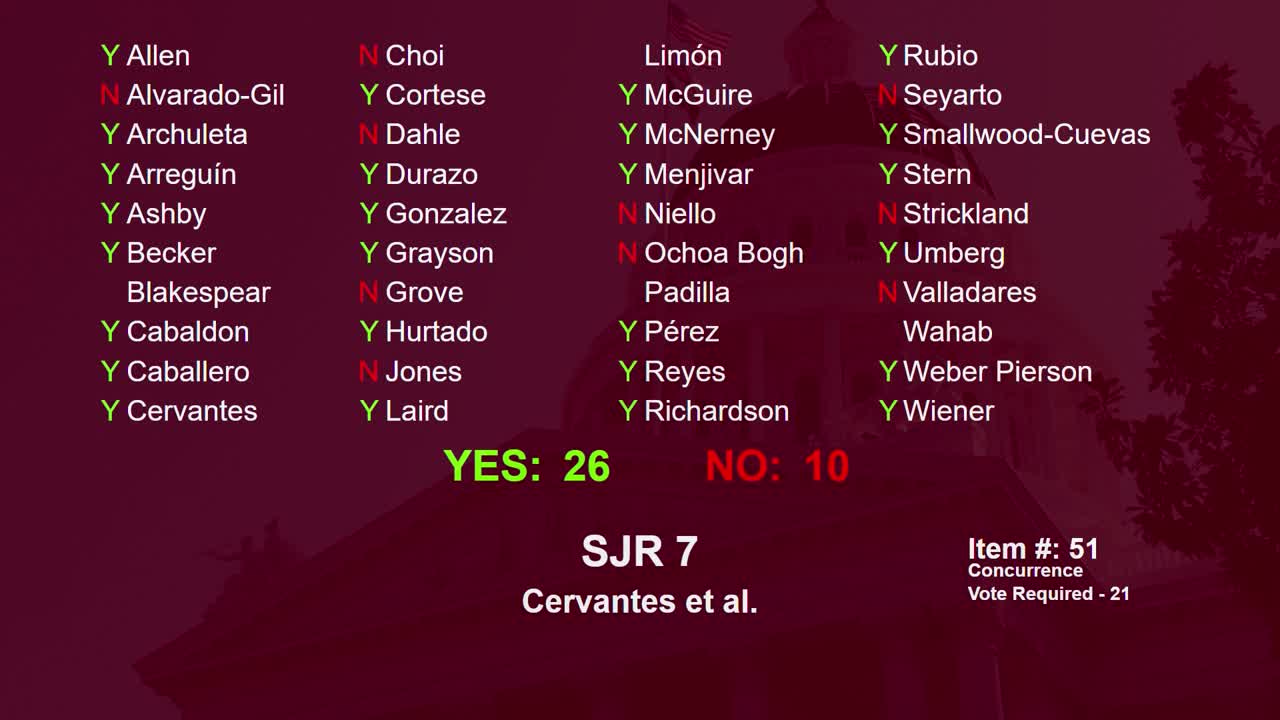 1MIN
Senate Floor
 1MIN
Assembly Floor
 7MIN
Assembly Standing Committee on Revenue and Taxation
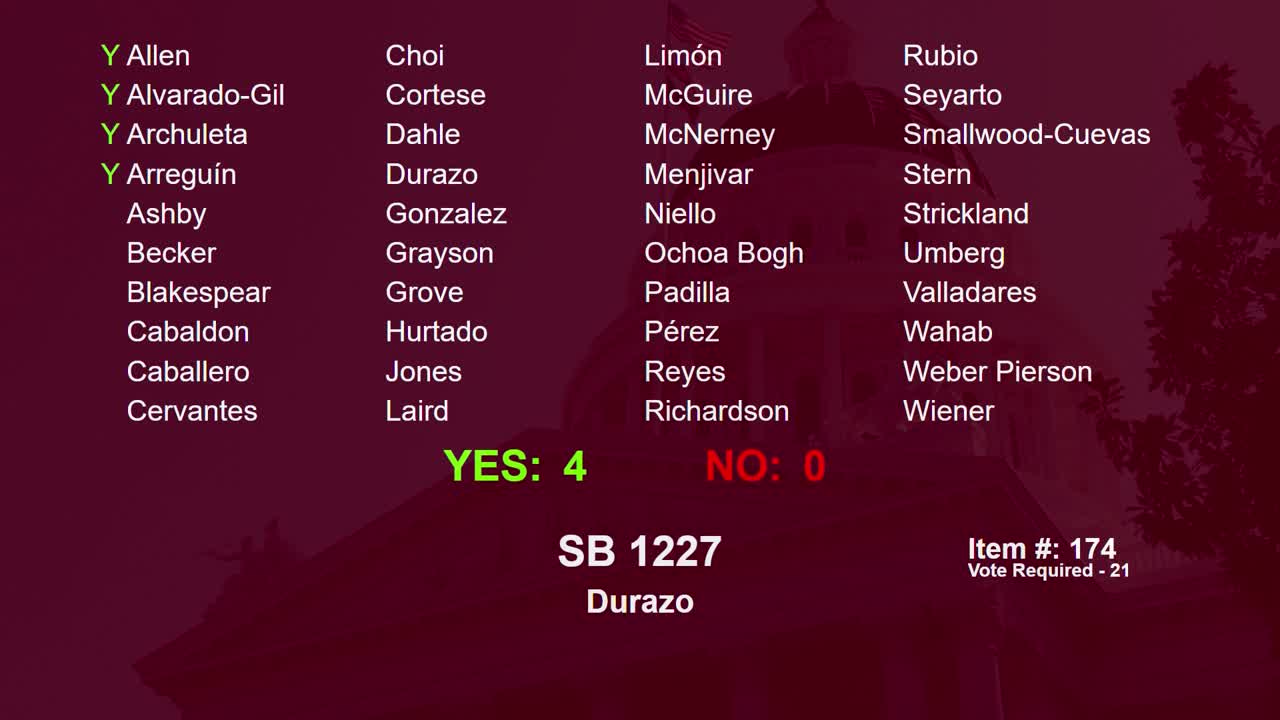 1MIN
Senate Floor
Bill Author