SB 902: Early childhood education and childcare: electronic signatures.
- Session Year: 2025-2026
- House: Senate
- Latest Version Date: 2026-09-20
Current Status:
Passed
(2026-09-20: Chaptered by Secretary of State. Chapter 418, Statutes of 2026.)
Introduced
In Committee
Awaiting First Chamber Vote
Passed First Chamber
In Committee
Awaiting Second Chamber Vote
Passed Second Chamber
Enacted
Existing law, the Child Care and Development Services Act, administered by the State Department of Social Services, establishes a system of childcare and development services for children up to 13 years of age, which includes various programs and services, including, among others, general childcare and development programs and migrant childcare and development programs.
Existing law, the Uniform Electronic Transactions Act (UETA), provides that a record or signature may not be denied legal effect or enforceability solely because it is in electronic form.
This bill would specify that a signature required by the Child Care and Development Services Act may be satisfied by use of an electronic signature in compliance with the UETA. The bill would authorize documents with an electronic signature to be created and stored in an electronic format in compliance with the UETA, and would authorize the department to adopt regulations to implement these provisions.
Existing law, the Early Education Act, requires the Superintendent of Public Instruction to, among other things, provide an inclusive and cost-effective preschool program. The Early Education Act and the Child Care and Development Services Act authorize contractors operating or providing services under the acts to use digital signatures that comply with state and federal standards, including specified state regulations.
This bill would instead condition the authority of contractors operating under the Early Education Act and the Child Care and Development Services Act to use an electronic signature on compliance with the UETA.
Existing law, the Child Care and Development Services Act, administered by the State Department of Social Services, establishes a system of childcare and development services for children up to 13 years of age, which includes various programs and services, including, among others, general childcare and development programs and migrant childcare and development programs.
Existing law, the Uniform Electronic Transactions Act (UETA), provides that a record or signature may not be denied legal effect or enforceability solely because it is in electronic form.
This bill would specify that a signature required by the Child Care and Development Services Act may be satisfied by use of an electronic signature in compliance with the UETA. The bill would authorize documents with an electronic signature to be created and stored in an electronic format in compliance with the UETA, and would authorize the department to adopt regulations to implement these provisions.
Contractors operating or providing services pursuant to this chapter may do both of the following:
(a)(1)Maintain records electronically, in compliance with state and federal standards, as determined by the department. A conversion from a paper record to an electronic format, as well as the storage of the electronic record, shall comply with the minimum standards described in Section 12168.7 of the Government Code and the standards for trustworthy electronic document or record preservation described in Chapter 15 (commencing with Section 22620.1) of Division 7 of Title 2 of the California Code of Regulations.
(2)Pursuant to Section 33421, the records shall be retained by each contractor for at least five years, or, where an audit has been requested by a state agency, until the date the audit is resolved, whichever is longer.
(3)This subdivision does not require a contractor to create records electronically.
(b)(1)Use an electronic signature that complies with state and federal standards, as determined by the department, that may be a marking that is either computer generated or produced by electronic means and is intended by the signatory to have the same effect as a handwritten signature.
(2)The use of an electronic signature shall have the same force and effect as the use of a manual signature if the requirements for the electronic signatures and their acceptable technology, as provided in the Uniform Electronic Transactions Act (Title 2.5 (commencing with Section 1633.1) of Part 2 of Division 3 of the Civil Code), are satisfied.
SEC. 2.Section 10209.7 is added to the Welfare and Institutions Code, to read:10209.7.(a)Notwithstanding any other law, a signature required by this part may be satisfied by use of an electronic signature, as defined by Section 1633.2 of the Civil Code, if the signature meets the requirements of the Uniform Electronic Transactions Act (Title 2.5 (commencing with Section 1633.1) of Part 2 of Division 3 of the Civil Code) (UETA).
(b)Notwithstanding any other law, documents required by this part that contain an electronic signature may be created and stored in an electronic format in compliance with the UETA.
(c)The department may adopt regulations to implement this section, including standards for authentication, consent, and record retention.
SEC. 3.Section 10269 of the Welfare and Institutions Code is amended to read:10269.Contractors operating or providing services pursuant to this chapter may do both of the following:
(a)(1)Maintain records electronically, in compliance with state and federal standards, as determined by the department. A conversion from a paper record to an electronic format, as well as the storage of the electronic record, shall comply with the minimum standards described in Section 12168.7 of the Government Code and the standards for trustworthy electronic document or record preservation described in Chapter 15 (commencing with Section 22620.1) of Division 7 of Title 2 of the California Code of Regulations.
(2)The records shall be retained by each contractor for at least five years, or, where an audit has been requested by a state agency, until the date the audit is resolved, whichever is longer.
(3)This subdivision does not require a contractor to create records electronically.
(b)(1)Use an electronic signature that complies with state and federal standards, as determined by the department, that may be a marking that is either computer generated or produced by electronic means and is intended by the signatory to have the same effect as a handwritten signature.
(2)The use of an electronic signature shall have the same force and effect as the use of a manual signature if the requirements for the electronic signatures and their acceptable technology, as provided in the Uniform Electronic Transactions Act (Title 2.5 (commencing with Section 1633.1) of Part 2 of Division 3 of the Civil Code), are satisfied.
Contractors operating or providing services pursuant to this chapter may do both of the following:
(a)(1)Maintain records electronically, in compliance with state and federal standards, as determined by the department. A conversion from a paper record to an electronic format, as well as the storage of the electronic record, shall comply with the minimum standards described in Section 12168.7 of the Government Code and the standards for trustworthy electronic document or record preservation described in Chapter 15 (commencing with Section 22620.1) of Division 7 of Title 2 of the California Code of Regulations.
(2)Pursuant to Section 33421, the records shall be retained by each contractor for at least five years, or, where an audit has been requested by a state agency, until the date the audit is resolved, whichever is longer.
(3)This subdivision does not require a contractor to create records electronically.
(b)(1)Use a digital an electronic signature that complies with state and federal standards, as determined by the department, that may be a marking that is either computer generated or produced by electronic means and is intended by the signatory to have the same effect as a handwritten signature.
(2)The use of a digital an electronic signature shall have the same force and effect as the use of a manual signature if the requirements for the digital electronic signatures and their acceptable technology, as provided in Section 16.5 of the Government Code and in Chapter 10 (commencing with Section 22000) of Division 7 of Title 2 of the California Code of Regulations, the Uniform Electronic Transactions Act (Title 2.5 (commencing with Section 1633.1) of Part 2 of Division 3 of the Civil Code), are satisfied.
SECTION 1.SEC. 2.Section 10209.7 is added to the Welfare and Institutions Code, to read:10209.7.(a)Notwithstanding any other law, a signature required by this part may be satisfied by use of an electronic signature, as defined by Section 1633.2 of the Civil Code, if the signature meets the requirements of the Uniform Electronic Transactions Act (Title 2.5 (commencing with Section 1633.1) of Part 2 of Division 3 of the Civil Code) (UETA).
(b)Notwithstanding any other law, documents required by this part that contain an electronic signature may be created and stored in an electronic format in compliance with the UETA.
(c)The department may adopt regulations to implement this section, including standards for authentication, consent, and record retention.
SEC. 3.Section 10269 of the Welfare and Institutions Code is amended to read:10269.Contractors operating or providing services pursuant to this chapter may do both of the following:
(a)(1)Maintain records electronically, in compliance with state and federal standards, as determined by the department. A conversion from a paper record to an electronic format, as well as the storage of the electronic record, shall comply with the minimum standards described in Section 12168.7 of the Government Code and the standards for trustworthy electronic document or record preservation described in Chapter 15 (commencing with Section 22620.1) of Division 7 of Title 2 of the California Code of Regulations.
(2)The records shall be retained by each contractor for at least five years, or, where an audit has been requested by a state agency, until the date the audit is resolved, whichever is longer.
(3)This subdivision does not require a contractor to create records electronically.
(b)(1)Use a digital an electronic signature that complies with state and federal standards, as determined by the department, that may be a marking that is either computer generated or produced by electronic means and is intended by the signatory to have the same effect as a handwritten signature.
(2)The use of a digital an electronic signature shall have the same force and effect as the use of a manual signature if the requirements for the digital electronic signatures and their acceptable technology, as provided in Section 16.5 of the Government Code and in Chapter 10 (commencing with Section 22000) of Division 7 of Title 2 of the California Code of Regulations, the Uniform Electronic Transactions Act (Title 2.5 (commencing with Section 1633.1) of Part 2 of Division 3 of the Civil Code), are satisfied.
(a)Notwithstanding any other law, a signature required under by this part may be satisfied by use of an electronic signature, as defined by Section 1633.2 of the Civil Code, if the signature meets the requirements of the Uniform Electronic Transactions Act (Title 2.5 (commencing with Section 1633.1) of Part 2 of Division 3 of the Civil Code) (UETA).
(b)Notwithstanding any other law, documents required under by this part that contain an electronic signature may be created and stored in an electronic format in compliance with the UETA.
(c)The department may adopt regulations to implement this section, including standards for authentication, consent, and record retention.
(a)Notwithstanding any other law, a signature required under this part may be satisfied by use of an electronic signature, as defined by Section 1633.2 of the Civil Code, if the signature meets the requirements of the Uniform Electronic Transactions Act (Title 2.5 (commencing with Section 1633.1) of Part 2 of Division 3 of the Civil Code) (UETA).
(b)Notwithstanding any other law, documents required under this part that contain an electronic signature may be created and stored in an electronic format in compliance with the UETA.
(c)The department may adopt regulations to implement this section, including standards for authentication, consent, and record retention.
|
Date
|
Status
|
|---|---|
| Sep 20, 2026 | Chaptered by Secretary of State. Chapter 418, Statutes of 2026. |
| Sep 20, 2026 | Approved by the Governor. |
| Aug 21, 2026 | Enrolled and presented to the Governor at 3 p.m. |
| Aug 18, 2026 | Assembly amendments concurred in. (Ayes 40. Noes 0.) Ordered to engrossing and enrolling. |
| Aug 18, 2026 | Assembly amendments concurred in. (Ayes 40. Noes 0. Page 5514.) Ordered to engrossing and enrolling. |
| Aug 18, 2026 | Assembly amendments concurred in. (Ayes 39. Noes 0.) Ordered to engrossing and enrolling. |
| Aug 13, 2026 | In Senate. Concurrence in Assembly amendments pending. |
| Aug 13, 2026 | Read third time. Passed. Ordered to the Senate. |
| Aug 13, 2026 | Read third time. Passed. (Ayes 72. Noes 0. Page 6158.) Ordered to the Senate. |
| Aug 6, 2026 | Read second time. Ordered to consent calendar. |
| Aug 5, 2026 | From committee: Do pass. Ordered to consent calendar. (Ayes 15. Noes 0.) (August 5). |
| Jul 2, 2026 | From committee: Do pass and re-refer to Com. on APPR. with recommendation: To consent calendar. (Ayes 8. Noes 0.) (July 1). Re-referred to Com. on APPR. |
| Jun 17, 2026 | From committee: Do pass and re-refer to Com. on ED. (Ayes 7. Noes 0.) (June 16). Re-referred to Com. on ED. |
| Jun 3, 2026 | From committee with author's amendments. Read second time and amended. Re-referred to Com. on HUM. S. |
| May 11, 2026 | Referred to Coms. on HUM. S. and JUD. |
| Apr 30, 2026 | In Assembly. Read first time. Held at Desk. |
| Apr 30, 2026 | Read third time. Passed. (Ayes 36. Noes 0.) Ordered to the Assembly. |
| Apr 30, 2026 | Read third time. Passed. (Ayes 36. Noes 0. Page 4113.) Ordered to the Assembly. |
| Apr 28, 2026 | Read second time. Ordered to consent calendar. |
| Apr 27, 2026 | From committee: Be ordered to second reading pursuant to Senate Rule 28.8 and ordered to consent calendar. |
| Apr 17, 2026 | Set for hearing April 27. |
| Apr 15, 2026 | From committee: Do pass and re-refer to Com. on APPR. with recommendation: To consent calendar. (Ayes 12. Noes 0.) (April 14). Re-referred to Com. on APPR. |
| Apr 15, 2026 | From committee: Do pass and re-refer to Com. on APPR. with recommendation: To consent calendar. (Ayes 12. Noes 0. Page 3867.) (April 14). Re-referred to Com. on APPR. |
| Apr 8, 2026 | Set for hearing April 14. |
| Apr 7, 2026 | From committee: Do pass and re-refer to Com. on JUD. with recommendation: To consent calendar. (Ayes 5. Noes 0.) (April 6). Re-referred to Com. on JUD. |
| Apr 7, 2026 | From committee: Do pass and re-refer to Com. on JUD. with recommendation: To consent calendar. (Ayes 5. Noes 0. Page 3740.) (April 6). Re-referred to Com. on JUD. |
| Mar 17, 2026 | Set for hearing April 6. |
| Mar 3, 2026 | From committee with author's amendments. Read second time and amended. Re-referred to Com. on HUMAN S. |
| Feb 11, 2026 | Referred to Coms. on HUMAN S. and JUD. |
| Jan 22, 2026 | From printer. May be acted upon on or after February 21. |
| Jan 21, 2026 | Introduced. Read first time. To Com. on RLS. for assignment. To print. |
|
Date
|
Description
|
Location
|
Votes
|
|
|---|---|---|---|---|
| Aug 18, 2026 | Unfinished Business SB902 Grayson et al. Concurrence | Senate Floor |
Passed |
|
| Aug 13, 2026 | SB 902 Grayson Consent Calendar Second Day Regular Session | Assembly Floor |
Passed |
|
| Aug 5, 2026 | Do pass. To Consent Calendar. | Assembly Standing Committee on Appropriations |
Passed |
|
| Jul 1, 2026 | Do pass and be re-referred to the Committee on [Appropriations] with recommendation: To Consent Calendar | Assembly Standing Committee on Education |
Passed |
|
| Jun 16, 2026 | Do pass and be re-referred to the Committee on [Education] | Assembly Standing Committee on Human Services |
Passed |
|
| Apr 30, 2026 | Consent Calendar 2nd SB902 Grayson et al. | Senate Floor |
Passed |
|
| Apr 14, 2026 | Do pass, but first be re-referred to the Committee on [Appropriations] with the recommendation: To Consent Calendar | Senate Standing Committee on Judiciary |
Passed |
|
| Apr 6, 2026 | Do pass, but first be re-referred to the Committee on [Judiciary] with the recommendation: To Consent Calendar | Senate Standing Committee on Human Services |
Passed |
This list shows positions taken on this bill by organizations on the date displayed, which is linked to the original source.
Positions by individuals are not included.
|
Organization
|
Position
|
Date
|
|---|---|---|
| 4c's Alameda | ** Support | |
| 4Cs of Alameda County | ** Support | |
| Alameda County Office Of Education | ** Support | |
| BANANAS | ** Support | |
| California Child Care Resource and Referral Network | ** Support | |
| California State PTA | ** Support | |
| Catalyst Family | ** Support | |
| Changing Tides | ** Support | |
| Changing Tides Family Services | ** Support | |
| Child Action | ** Support | |
| Child Action Inc | ** Support | |
| Child Care Alliance of Los Angeles | ** Support | |
| Child Care Coordinating Council of Alameda County | ** Support | |
| Child Care Resource Center | ** Support | |
| Child Development Associates | ** Support | |
| Child Development Incorporated | ** Support | |
| Child Development Resources Of Ventura County | ** Support | |
| Child Development Resources of Ventura County, Inc. | ** Support | |
| Community Action Partnership of San Luis Obispo County, INC. | ** Support | |
| Community Action Partnership, San Luis Obispo County, Inc. | ** Support | |
| Community Resources for Children | ** Support | |
| Connections For Children | ** Support | |
| Crystal Stairs | ** Support | |
| Crystal Stairs, Inc. | ** Support | |
| Del Norte Child Care Council | ** Support | |
| Early Care & Education Consortium | ** Support | |
| Early Care And Education Consortium | ** Support | |
| Early Edge California | ** Support | |
| Every Child California | ** Support | |
| Family Resource Center | ** Support | |
| First 5 Association Of California | ** Support | |
| Glide Foundation | ** Support | |
| Go Kids | ** Support | |
| Go Kids, INC | ** Support | |
| Head Start California | ** Support | |
| Hively | ** Support | |
| Kidango | ** Support | |
| Kindercare Learning Companies | ** Support | |
| Kindersystems | ** Support | |
| Low Income Investment Fund | ** Support | |
| Marin Child Care Council | ** Support | |
| Mct Technology | ** Support | |
| North Coast Opportunities | ** Support | |
| Pathways LA | ** Support | |
| Sierra Nevada Children's Services | ** Support | |
| Sierra Nevada Children’s Services | ** Support | |
| Solano Family & Children's Services | ** Support | |
| Supportive Services, INC | ** Support | |
| Supportive Services, Inc. | ** Support | |
| Thriving Families CA Foundation | ** Support | |
| Thriving Families California | ** Support | |
| Thriving Families California (Sponsor) | ** Support | |
| Thriving Families California (TFC) | ** Support | |
| Valley Oak Children's Services, INC. | ** Support | |
| Valley Oak Children’s Services | ** Support | |
| YMCA of San Diego County | ** Support |
SENATE RULES COMMITTEE Office of Senate Floor Analyses (916) 651-4171 | SB 902 |
UNFINISHED BUSINESS
Bill No: SB 902
Author: Grayson (D), et al.
Amended: 6/3/26
Vote: 21
SENATE HUMAN SERVICES COMMITTEE: 5-0, 4/6/26
AYES: Becker, Ochoa Bogh, Laird, Pérez, Weber Pierson
SENATE JUDICIARY COMMITTEE: 12-0, 4/14/26
AYES: Umberg, Niello, Allen, Ashby, Caballero, Durazo, McNerney, Reyes, Stern, Wahab, Weber Pierson, Wiener
NO VOTE RECORDED: Valladares
SENATE APPROPRIATIONS COMMITTEE: Senate Rule 28.8
SENATE FLOOR: 36-0, 4/30/26 (Consent)
AYES: Allen, Alvarado-Gil, Archuleta, Ashby, Becker, Blakespear, Cabaldon, Cervantes, Choi, Cortese, Dahle, Durazo, Gonzalez, Grayson, Grove, Hurtado, Jones, Laird, Limón, McGuire, McNerney, Menjivar, Niello, Ochoa Bogh, Padilla, Pérez, Reyes, Richardson, Rubio, Seyarto, Smallwood-Cuevas, Stern, Strickland, Umberg, Weber Pierson, Wiener
NO VOTE RECORDED: Arreguín, Caballero, Valladares, Wahab
ASSEMBLY FLOOR: 72-0, 8/13/26 (Consent) - See last page for vote
SUBJECT: Early childhood education and childcare: electronic signatures
SOURCE: Thriving Families California
DIGEST:
This bill (1) clarifies that an electronic signature in compliance with the Uniform Electronic Transactions Act may satisfy a signature required by the Early Education Act and the Child Care and Development Services Act; (2) authorizes documents with an electronic signature to be created and stored in an electronic format in compliance with the Uniform Electronic Transactions Act and (3) authorizes the California Department of Social Services (CDSS) to adopt regulations to implement this bill.
Assembly Amendments
make conforming changes to the Education Code to authorize an electronic signature to satisfy a signature required by the Early Education Act.
ANALYSIS:
Existing law:
- Establishes the Child Care and Development Services Act to provide a comprehensive, coordinated, and cost-effective system of child care and development services for children from infancy to 13 years of age and their parents, including a full range of supervision, health, and support services through full- and part-time programs. (Welfare and Institutions Code [WIC] § 10207 et seq.)
- Defines “alternative payment program” (APP) as a local government agency or nonprofit organization that has contracted with CDSS to provide alternative payments and to provide support services to parents and providers. (WIC § 10213.5(b))
- Requires providers authorized to provide child care services to submit to an APP a monthly attendance record or invoice for each child who received services that, at a minimum, documents the dates and actual times care was provided each day, as specified, and requires this information to be documented on a daily basis. (WIC § 10227.5(a))
- Requires the monthly attendance record or invoice to, at a minimum, be signed by the parent or guardian of the child receiving services and the child care provider once per month. Requires the verification of attendance be made by signature at the end of each month of care and under penalty of perjury by both the parent or guardian and the child care provider. (WIC § 10227.5(b)(1))
- Authorizes a child care provider to submit a monthly attendance record or invoice without a parent’s signature when the parent has not communicated with the provider for a minimum of seven consecutive days, the provider has notified the county or APP of the parent’s lack of communication, and the county or APP has documented the provider’s unsuccessful attempts to collect a signature. (WIC § 10227.5(b)(2)(A); 10277(d))
- Authorizes APPs and child care providers to use a digital signature that complies with state and federal standards, as determined by CDSS. The digital signature may be a marking that is either computer generated or produced by electronic means and is intended by the signatory to have the same effect as a handwritten signature. Provides that the use of a digital signature shall have the same force and effect as the use of a manual signature if the requirements for digital signatures and their acceptable technology, as provided in Section 16.5 of the Government Code and state regulations, are satisfied. (WIC § 10232.5)
- Authorizes contractors operating or providing services under the Child Care and Development Services Act to do both of the following:
- Maintain records electronically, as specified. Records must be retained by each contractor for at least five years, as specified.
- Use a digital signature, as specified. The use of a digital signature shall have the same force and effect as the use of a manual signature. (WIC § 10269)
- Provides that, in any written communication with a public entity, as defined, in which a signature is required or used, any party to the communication may affix a signature by use of a digital signature, which shall have the same force and effect as the use of a manual signature, if and only if, it embodies all of the following attributes: it is unique to the person using it; it is capable of verification; it is under the sole control of the person using it; it is linked to data in such a manner that if the data are changed, the digital signature is invalidated; and it conforms to regulations adopted by the Secretary of State, as specified. (Government Code [GOV] § 16.5)
- Provides that an acceptable digital signature technology must be capable of creating signatures that conform to Government Code 16.5. (2 California Code of Regulations § 22002)
- Defines “digital signature” as an electronic identifier, created by a computer, intended by the party using it to have the same force and effect as the use of a manual signature. Provides that a digital signature is a type of “electronic signature”. (GOV § 16.5(d))
- Establishes the Uniform Electronic Transactions Act, which applies to electronic records and electronic signatures relating to a transaction. (Civil Code [CIV] § 1633.1 et seq.)
- Defines “electronic signature” as an electronic sound, symbol, or process attached to or logically associated with an electronic record and executed or adopted by a person with the intent to sign the electronic record. Specifies a “digital signature” is a type of electronic signature. (CIV § 1633.2(h))
- Defines “electronic record” as a record created, generated, sent, communicated, received, or stored by electronic means. (CIV § 1633.2(g))
- Specifies the circumstances under which an electronic record may satisfy a legal requirement for a record to be retained. (CIV § 1633.12)
This bill:
- Provides that a signature required under the Child Care and Development Services Act may be satisfied by use of an electronic signature, as defined, if the signature meets the requirements of the Uniform Electronic Transactions Act.
- Provides that documents required under the Child Care and Development Services Act that contain an electronic signature may be created and stored in an electronic format in compliance with the Uniform Electronic Transactions Act.
- Authorizes CDSS to adopt regulations to implement this bill, including standards for authentication, consent, and record retention.
- Makes conforming changes to the Education Code to update “digital” signature to “electronic” signature and to refer to the Uniform Electronic Transactions Act.
Background
Purpose of this Bill. According to the author, “Families accessing subsidized child care vouchers must submit multiple forms throughout the year, including eligibility applications, updates to work or school schedules, changes to providers, and corrections to attendance records. Paper-based processes require printing, mailing, or hand-delivering documents, which can be burdensome for parents juggling multiple jobs, caring for young children, or facing transportation or housing challenges. Missing or delayed signatures can slow access to care or stall reimbursement to providers for families using vouchers. This reliance on paper not only creates administrative inefficiencies but also treats voucher families as second-class participants in the child care market, limiting their access to high-quality care and the same convenience and flexibility available to families paying privately. While current law generally recognizes digital and electronic signatures, the Child Care and Development Services Act does not explicitly authorize current electronic options for signage or storage. This gap forces contractors serving families to rely on paper forms and in-person signatures, creating hurdles for families with inconsistent schedules or limited access to technology.
“SB 902 updates subsidized child care paperwork practices by specifying that a signature required by the Child Care and Development Services Act may be satisfied by an electronic signature in compliance with the Uniform Electronic Transactions Act. Additionally, the bill authorizes the Department of Social Services to adopt regulations to implement these provisions. By aligning subsidized child care paperwork with common practices already used in housing and health care, the bill supports timely access to care and strengthens family economic stability and workforce participation.”
APP and Provider Documents Requiring Signatures. CDSS contracts with APP agencies to administer child care subsidy payments for families in all 58 counties. Of the 70 APP agencies, 46 are nonprofit community-based organizations, 15 are county offices of education, seven are county welfare departments, one is a school district, and one is a city government. APP agencies enroll families based on eligibility and prioritization criteria. These criteria may include income eligibility, whether the family has a child who is receiving protective services, and the parent(s)’s employment status, to name a few. During the eligibility determination process, families must sign several documents to access subsidized child care, including an application form, income verification forms, and enrollment agreements. Once a family is enrolled, they will need to sign other paperwork, including recertification forms and monthly attendance records.
To receive reimbursement for services, providers are required to maintain and submit a monthly attendance record for each child. The attendance record must include drop-off and pick-up times and be signed by both the parent or guardian and the provider under penalty of perjury to certify accuracy. APP agencies are required to reimburse child care providers based on either a family’s certified hours of need or a family’s maximum certified hours, depending on the provider type and family schedule. However, due to the current collective bargaining agreement between the State and Child Care Providers United – California, between July 1, 2025, and July 1, 2028, reimbursement is based on the maximum authorized hours of care, regardless of attendance.
Changing Signature Requirements for Attendance Records. Starting in 2017, all child care contractors and child care providers were authorized to use digital signatures. Previously, contractors and providers could only accept manual (handwritten) signatures, which require families to appear in person to sign a paper copy of the attendance sheet. Digital signatures do not require a paper copy, but the signature must meet the following requirements: unique to the person using it; capable of verification; under the sole control of the person using it; linked to data in such a manner that if the data are changed, the digital signature is invalidated; and conforms to regulations adopted by the Secretary of State.
Signature requirements for attendance records were made more flexible during the COVID-19 pandemic. In 2020, child care providers were authorized to submit an attendance record without a parent signature, so long as the provider documented their attempts to collect a signature. In 2021, the documentation clause was removed, which effectively waived the requirement to collect parent signatures for attendance records. Starting July 1, 2022, providers were required to resume collecting signatures on their attendance records.
Effective September 2023, child care providers are authorized to submit an attendance record without a parent signature when the parent has not communicated with the provider for seven consecutive days, the provider has notified the county or contractor of the parent’s lack of communication, and the county or contractor has documented the provider’s unsuccessful attempts to collect a signature.
Digital and Electronic Signatures. Statute defines a digital signature as an electronic identifier created by a computer that is intended by the signer to have the same effect as a manual (handwritten) signature. Current law authorizes child care and development contractors and providers to use a digital signature, but not an electronic signature. According to the sponsor of this bill, digital signatures require complex technologies such as encryption keys, certificates, and software, which they say can be unrealistically burdensome for both families and providers.
This bill would allow a child care contractor or provider to use an electronic signature, which is an umbrella term that includes digital signature. Statute defines an electronic signature as an electronic sound, symbol, or process attached to an electronic record and executed by a person with the intent to sign the electronic record. According to the sponsor, this could include DocuSign, which allows a signer to type, draw, or upload a signature.
Comments
This bill seeks to modernize administrative processes for child care contractors and providers by allowing the use of electronic signatures. County welfare departments have been authorized to use electronic signatures for social services programs since 2007. State law additionally allows for the use of electronic signatures for other documents such as rental agreements, purchase of property, and car loans. Expanding the types of acceptable signatures to include electronic signatures could reduce reliance on paper forms, enable families to access child care more quickly and with fewer disruptions, and speed up processing for provider payments. If a provider is unable to contact a parent, the provider is allowed to submit that child’s attendance sheet without a parent signature. Authorizing use of electronic signatures could also improve the collection of parent signatures and support accountability.
[NOTE: See the Senate Human Services and Senate Judiciary Committee analyses for additional background on this bill.]
Related/Prior Legislation
SB 140 (Committee on Budget and Fiscal Review, Chapter 193, Statutes of 2023) authorized a child care provider to submit a monthly attendance record without a parent’s signature when the parent has not communicated with the provider for a minimum of seven consecutive days, the provider has notified the county or APP agency of the parent’s lack of communication, and the county or APP agency has documented the provider’s unsuccessful attempts to collect a signature.
AB 131 (Committee on Budget, Chapter 116, Statutes of 2021) allowed APPs and child care providers, from July 1, 2021, through June 30, 2022, or through the end of the state of emergency declared by the Governor in response to the COVID-19 pandemic, whichever period is shorter, to submit attendance records for reimbursements without a parent or guardian signature, subject to applicable guidance issued by CDSS or the California Department of Education.
SB 820 (Committee on Budget and Fiscal Review, Chapter 110, Statutes of 2020) allowed APPs and child care providers, through June 30, 2021, to submit attendance records for reimbursements without a parent or guardian signature if the parent was unable to sign due to the COVID-19 pandemic.
AB 1712 (Obernolte, Chapter 324, Statutes of 2016) expanded authority for all child care contractors (not just APPs) to use digital signatures and required that those signatures have the same force and effect as manual signatures, as specified.
AB 2296 (Low, Chapter 144, Statutes of 2016) clarified that a “digital signature” is also a type of electronic signature for purposes of the Uniform Electronic Transactions Act.
AB 271 (Obernolte, Chapter 476, Statutes of 2015) authorized APPs and child care providers to maintain electronic records, and authorized APPs to use digital signatures.
AB 274 (Bonilla, Chapter 733, Statutes of 2013) allowed APPs to maintain electronic records but prohibited documents or records created in paper form to be scanned and stored electronically. Records created in paper form were required to be stored in their original paper format.
FISCAL EFFECT: Appropriation: No Fiscal Com.: Yes Local: No
According to the Assembly Appropriations Committee, “Negligible state costs.”
SUPPORT: (Verified 8/13/26)
Thriving Families California (Source)
4c's Alameda
Alameda County Office of Education
Bananas
Changing Tides Family Services
Child Action
Child Action INC
Child Development Associates
Child Development Incorporated
Child Development Resources of Ventura County, INC.
Community Action Partnership of San Luis Obispo County, INC.
Community Resources for Children
Connections for Children
Crystal Stairs, INC.
Del Norte Child Care Council
Early Care and Education Consortium
Early Edge California
Every Child California
First 5 Association of California
Go Kids, INC
Head Start California
Hively
Kidango
Kindercare Learning Companies
Kindersystems
Low Income Investment Fund
Marin Child Care Council
Mct Technology
North Coast Opportunities
Pathways LA
Sierra Nevada Children's Services
Supportive Services, INC
Valley Oak Children's Services, INC.
OPPOSITION: (Verified 8/13/26)
None received
ASSEMBLY FLOOR: 72-0, 8/13/26
AYES: Addis, Aguiar-Curry, Ahrens, Alanis, Arambula, Ávila Farías, Bains, Bauer-Kahan, Bennett, Boerner, Bryan, Calderon, Caloza, Carrillo, Castillo, Chen, Connolly, Davies, DeMaio, Dixon, Elhawary, Ellis, Fong, Gabriel, Garcia, Gipson, Jeff Gonzalez, Mark González, Hadwick, Haney, Harabedian, Hart, Hoover, Irwin, Jackson, Johnson, Kalra, Krell, Lackey, Lee, Lowenthal, Macedo, McKinnor, Muratsuchi, Nguyen, Ortega, Pacheco, Papan, Patel, Patterson, Pellerin, Quirk-Silva, Ramos, Ransom, Michelle Rodriguez, Rogers, Blanca Rubio, Sanchez, Schiavo, Sharp-Collins, Solache, Soria, Stefani, Ta, Tangipa, Valencia, Wallis, Ward, Wicks, Wilson, Zbur, Rivas
NO VOTE RECORDED: Alvarez, Berman, Bonta, Flora, Petrie-Norris, Celeste Rodriguez, Schultz
Prepared by: Diana Dominguez / HUMAN S. / (916) 651-1524
8/14/26 17:04:27
**** END ****
Date of Hearing: August 5, 2026
ASSEMBLY COMMITTEE ON APPROPRIATIONS
Buffy Wicks, Chair
SBPCA Bill Id:SB 902
Author:(Grayson) – As Amended Ver:June 3, 2026
Policy Committee: | Human Services | Vote: | 7 - 0 |
Education | 8 - 0 | ||
|
|
Urgency: No State Mandated Local Program: No Reimbursable: No
SUMMARY:
This bill clarifies that an electronic signature in compliance with the Uniform Electronic Transactions Act (UETA) may satisfy signatures required by the Early Education Act and the Child Care and Development Services Act.
Specifically, this bill:
- Authorizes a preschool provider holding California State Preschool Program (CSPP) contracts with the California Department of Education (CDE), pursuant to the Early Education Act, to use an electronic rather than a digital signature in maintaining electronic records.
- Requires the use of an electronic signature to have the same force and effect as the use of a manual signature if the signature meets the requirements of the UETA.
- Authorizes a childcare provider under the purview of the California Department of Social Services (CDSS) to satisfy the requirement for a signature by the Child Care and Development Services Act with the use of an electronic signature, provided the signature meets the requirements of the UETA.
- Authorizes documents required by the Child Care and Development Services Act containing an electronic signature to be created and stored in an electronic format in compliance with the UETA.
- Authorizes CDSS to adopt regulations to implement the above provisions, including standards for authentication, consent, and record retention.
FISCAL EFFECT:
Negligible state costs.
COMMENTS:
- Purpose. According to the author:
Families accessing subsidized childcare vouchers must submit multiple forms throughout the year, including eligibility applications, updates to work or school schedules, changes to providers, and corrections to attendance records. Paper-based processes require printing, mailing, or hand-delivering documents, which can be burdensome for parents juggling multiple jobs, caring for young children, or facing transportation or housing challenges. Missing or delayed signatures can slow access to care or stall reimbursement to providers for families using vouchers. [The bill] updates subsidized childcare paperwork practices by specifying that a required signature may be satisfied by an electronic signature in compliance with UETA.
- Background. Existing law, UETA, provides that a record or signature may not be denied legal effect or enforceability solely because it is in electronic form. UETA further provides that an electronic signature satisfies any legal requirement for a signature if the parties to a transaction have agreed to conduct the transaction electronically.
California regulations require contractors operating childcare centers or family childcare homes to use daily sign-in/sign-out sheets as a primary source document for audit and reimbursement purposes. According to the CDE, effective January 1, 2017, childcare contractors may use a digital signature, including for sign-in/sign-out at childcare programs, provided the signature meets the technology requirements. The current digital signature authority for attendance records is based on a combination of statutory authority and regulations that predate modern electronic signature platforms.
This bill replaces that structure by making UETA compliance the standard and clarifies that an electronic signature in compliance with UETA, rather than a digital signature, meets the requirements for signatures required under the CSPP, and that an electronic signature in compliance with UETA satisfies a signature requirement in childcare programs under the purview of CDSS.
A broad coalition of child advocates and childcare providers assert “Streamlining these processes will help ensure families remain connected to care, support timely payments for providers, and improve the state’s ability to efficiently utilize existing childcare funding.” There is no opposition to the bill.
Analysis Prepared by: Jennifer Swenson / APPR. / (916) 319-2081
Date of Hearing: July 1, 2026
ASSEMBLY COMMITTEE ON EDUCATION
Darshana R. Patel, Chair
SBPCA Bill Id:SB 902
Author:(Grayson) – As Amended Ver:June 3, 2026
[This bill was double referred to the Committee on Human Services and was heard by that Committee on issues in its jurisdiction.]
SENATE VOTE: 36-0
SUBJECT: Early childhood education and childcare: electronic signatures
SUMMARY: Clarifies that an electronic signature in compliance with the Uniform Electronic Transactions Act (UETA) may satisfy signatures required by the Early Education Act and the Child Care and Development Services Act. Authorizes documents with an electronic signature to be created and stored in an electronic format in compliance with the UETA and authorizes the California Department of Social Services (DSS) to adopt regulations to implement this bill. Specifically, this bill:
- Authorizes preschool providers holding California State Preschool Program (CSPP) contracts with the California Department of Education (CDE), pursuant to the Early Education Act, to use an electronic rather than a digital signature in maintaining electronic records.
- Requires that the use of an electronic signature have the same force and effect as the use of a manual signature if the signature meets the requirements of the UETA.
- Authorizes childcare providers under the purview of the DSS to satisfy the requirement for a signature with the use of an electronic signature, provided the signature meets the requirements of the UETA.
- Authorizes required documentation containing an electronic signature to be created and stored in an electronic format in compliance with the UETA.
- Makes conforming changes to the Education Code to update the term “digital signature” to “electronic signature” and to refer to the UETA.
- Authorizes the DSS to adopt regulations to implement these provisions, including standards for authentication, consent, and record retention.
EXISTING LAW:
- Establishes the Early Education Act to provide an inclusive and cost-effective California State preschool program (CSPP) that provides high-quality learning experiences, coordinated services, and referrals for families to access health and social-emotional support services through full- and part-day programs. (Education Code (EC) 8200 & 8201)
- Authorizes, but does not require, contractors operating or providing services under the Early Education Act to maintain records electronically in compliance with state and federal standards, as determined by the CDE, and requires the conversion from a paper record to an electronic format, as well as the storage of the electronic record, to comply with the minimum standards for trustworthy electronic document or record preservation pursuant to statutory and regulatory requirements. (EC 8234)
- Authorizes contractors operating or providing services under the Early Education Act to use a digital signature that complies with state and federal standards, that is either computer generated or produced by electronic means and is intended by the signatory to have the same effect as a handwritten signature. Requires that the use of a digital signature to have the same force and effect as the use of a manual signature, provided the requirements for digital signatures, as specified, are satisfied. (EC 8234)
- Authorizes contractors operating or providing services under the Early Education Act to use digital forms to allow families to apply for services if those forms comply with state and federal standards. (EC 8235)
- Provides that, in any written communication with a public entity, as defined, in which a signature is required or used, any party to the communication may affix a signature by use of a digital signature, which has the same force and effect as the use of a manual signature, if all of the following attributes are met:
- It is unique to the person using it;
- It is capable of verification;
- It is under the sole control of the person using it;
- It is linked to data in such a manner that if the data are changed, the digital signature is invalidated; and
- It conforms to regulations adopted by the Secretary of State, as specified. (Government Code (GOV) 16.5)
- Provides that an acceptable digital signature technology must be capable of creating signatures that conform to GOV 16.5. (2 California Code of Regulations (CCR) 22002)
- Defines “digital signature” as an electronic identifier, created by a computer, intended by the party using it to have the same force and effect as the use of a manual signature. Provides that a digital signature is a type of “electronic signature.” (GOV 16.5(d))
- Establishes UETA, which applies to electronic records and electronic signatures relating to a transaction. (Civil Code (CIV) 1633.1)
- Defines “electronic signature” as an electronic sound, symbol, or process attached to or logically associated with an electronic record and executed or adopted by a person with the intent to sign the electronic record. Specifies a “digital signature” is a type of electronic signature. (CIV 1633.2(h))
- Defines “electronic record” as a record created, generated, sent, communicated, received, or stored by electronic means. (CIV 1633.2(g))
- Specifies the circumstances under which an electronic record may satisfy a legal requirement for a record to be retained. (CIV 1633.12)
FISCAL EFFECT: Unknown
COMMENTS:
Need for the bill. According to the author, “Families accessing subsidized childcare vouchers must submit multiple forms throughout the year, including eligibility applications, updates to work or school schedules, changes to providers, and corrections to attendance records. Paper-based processes require printing, mailing, or hand-delivering documents, which can be burdensome for parents juggling multiple jobs, caring for young children, or facing transportation or housing challenges. Missing or delayed signatures can slow access to care or stall reimbursement to providers for families using vouchers. This reliance on paper not only creates administrative inefficiencies but also treats voucher families as second-class participants in the childcare market, limiting their access to high-quality care and the same convenience and flexibility available to families paying privately. While current law generally recognizes digital and electronic signatures, the Child Care and Development Services Act (WIC Part 1.8) does not explicitly authorize current electronic options for signage or storage. This gap forces contractors serving families to rely on paper forms and in-person signatures, creating hurdles for families with inconsistent schedules or limited access to technology.
SB 902 updates subsidized childcare paperwork practices by specifying that a signature required by the Child Care and Development Services Act may be satisfied by an electronic signature in compliance with the Uniform Electronic Transactions Act (UETA). Additionally, the bill authorizes the Department of Social Services to adopt regulations to implement these provisions. By aligning subsidized childcare paperwork with common practices already used in housing and health care, the bill supports timely access to care and strengthens family economic stability and workforce participation.”
Electronic signatures. An electronic signature refers to an electronic method indicating intent to sign a document, which may include typing a name, drawing on a screen, or clicking an “I agree” button. A digital signature is a highly secure, specific type of electronic signature that uses cryptography to verify the signer’s identity and ensure the document hasn’t been tampered with.
Existing law, UETA, provides that a record or signature may not be denied legal effect or enforceability solely because it is in electronic form. UETA further provides that an electronic signature satisfies any legal requirement for a signature if the parties to a transaction have agreed to conduct the transaction electronically.
Signature requirements in childcare. California regulations require contractors operating childcare centers or family childcare homes to use daily sign-in/sign-out sheets as a primary source document for audit and reimbursement purposes. According to the CDE, effective January 1, 2017, childcare contractors may use a digital signature, including for sign-in/sign-outs at childcare programs, provided the signature meets the technology requirements. This bill clarifies that an electronic signature in compliance with UETA, rather than a digital signature, meets the requirements for signatures required by the Early Education Act governing the California State Preschool Program (CSPP).
Arguments in support. Early Edge California writes, “Families relying on subsidized childcare are frequently required to complete and submit documentation to maintain eligibility, yet outdated processes that require in-person or paper signatures create avoidable challenges. For working parents, particularly those with nontraditional schedules, limited transportation, or living in rural communities, these requirements can result in delays, missed work, and even disruptions in care. When paperwork is delayed, providers also experience delays in reimbursement, further destabilizing an already fragile system.
By allowing electronic signatures while maintaining paper options, SB 902 offers a practical, low-cost solution that aligns with how families already access services across health care, housing, and employment. Streamlining these processes will help ensure families remain connected to care, support timely payments for providers, and improve the state’s ability to efficiently utilize existing childcare funding.”
Related legislation. SB 140 (Committee on Budget and Fiscal Review) Chapter 193, Statutes of 2023, a budget trailer bill, authorized a childcare provider to submit a monthly attendance record without a parent’s signature when the parent has not communicated with the provider for a minimum of seven consecutive days, the provider has notified the county or Alternative Payment Program (APP) agency of the parent’s lack of communication, and the county or APP agency has documented the provider’s unsuccessful attempts to collect a signature.
AB 865 (Quirk-Silva) of the 2021-22 Session, would have, among other things, authorized APPs and providers operating or providing services to use an electronic signature that complies with state and federal standards instead of a digital signature to have the same effect as a handwritten or manual signature. This bill was vetoed by the Governor with the following message:
This bill requires APPs to reimburse childcare providers based on the maximum certified hours of need rather than attendance, and amends statute regarding verification of provider rates, APP fund reserves, and acceptable forms of signature.
In recognition of the impact of the COVID-19 pandemic on childcare providers, I have provided substantial funding over the last two budgets so providers are reimbursed based on enrollment, not on attendance. However, I cannot support a permanent extension of that policy at this time, as it will result in significant ongoing General Fund cost pressures in the tens of millions of dollars that were not included in the state's current spending plan.
AB 131 (Committee on Budget) Chapter 116, Statutes of 2021, a budget trailer bill, allowed APPs and childcare providers, from July 1, 2021, through June 30, 2022, or through the end of the state of emergency declared by the Governor in response to the COVID-19 pandemic, whichever period is shorter, to submit attendance records for reimbursements without a parent or guardian signature, subject to applicable guidance issued by the CDSS or the CDE.
SB 820 (Committee on Budget and Fiscal Review) Chapter 110, Statutes of 2020, a budget trailer bill, allowed APPs and childcare providers, through June 30, 2021, to submit attendance records for reimbursements without a parent or guardian signature if the parent was unable to sign due to the COVID-19 pandemic.
AB 1712 (Obernolte) Chapter 324, Statutes of 2016, expanded authority for all childcare contractors (not just APPs) to use digital signatures and required that those signatures have the same force and effect as manual signatures.
AB 2296 (Low) Chapter 144, Statutes of 2016, clarified that a “digital signature” is also a type of electronic signature for purposes of the UETA.
AB 271 (Obernolte) Chapter 476, Statutes of 2015, authorized APPs and childcare providers to maintain electronic records, and authorized APPs to use digital signatures.
AB 274 (Bonilla) Chapter 733, Statutes of 2013, allowed APPs to maintain electronic records but prohibited documents or records created in paper form from being scanned and stored electronically. Records created in paper form were required to be stored in their original paper format.
REGISTERED SUPPORT / OPPOSITION:
Support
4C's Alameda |
Alameda County Office of Education |
Bananas |
California Child Care Resource and Referral Network |
California State PTA |
Catalyst Family |
Changing Tides Family Services |
Child Action |
Child Care Alliance of Los Angeles |
Child Care Resource Center |
Child Development Associates |
Child Development Incorporated |
Child Development Resources of Ventura County |
Community Action Partnership of San Luis Obispo County |
Community Resources for Children |
Connections for Children |
Crystal Stairs |
Del Norte Child Care Council |
Early Care and Education Consortium |
Early Edge California |
Every Child California |
Family Resource Center |
Glide Foundation Go Kids |
Head Start California |
Hively |
Kidango |
Kindercare Learning Companies |
Kindersystems |
Low Income Investment Fund |
Marin Child Care Council |
MCT Technology |
North Coast Opportunities |
Pathways LA |
Sierra Nevada Children's Services |
Solano Family & Children's Services |
Thriving Families CA Foundation |
Thriving Families California |
YMCA of San Diego County |
Opposition
None on file
Analysis Prepared by: Debbie Look / ED. / (916) 319-2087
Date of Hearing: June 16, 2026
ASSEMBLY COMMITTEE ON HUMAN SERVICES
Alex Lee, Chair
SBPCA Bill Id:SB 902
Author:(Grayson) – As Amended Ver:June 3, 2026
SENATE VOTE: 36-0
SUBJECT: Early childhood education and childcare: electronic signatures
SUMMARY: Clarifies that an electronic signature in compliance with the Uniform Electronic Transactions Act (UETA) may satisfy a signature required by the Child Care and Development Services Act. Authorizes documents with an electronic signature to be created and stored in an electronic format in compliance with UETA and authorizes the California Department of Social Services (CDSS) to adopt regulations to implement. Specifically, this bill:
- Authorizes, notwithstanding any other law, a signature required by the Child Care and Development Services Act to be satisfied by use of an electronic signature, as defined, if the signature meets the requirements of the UETA.
- Authorizes, notwithstanding any other law, documents required by the Child Care and Development Services Act that contain an electronic signature to be created and stored in an electronic format in compliance with the UETA.
- Authorizes CDSS to adopt regulations to implement these provisions, including standards for authentication, consent, and record retention.
- Makes conforming changes to the Education Code to update “digital” signature to “electronic” signature and to refer to the UETA.
EXISTING LAW:
- Establishes the Child Care and Development Services Act to provide a comprehensive, coordinated, and cost-effective system of child care and development services for children from infancy to 13 years of age and their parents, including a full range of supervision, health, and support services through full- and part-time programs. (Welfare and Institutions Code [WIC] § 10207 et seq.)
- Defines “alternative payment program” (APP) as a local government agency or nonprofit organization that has contracted with CDSS to provide alternative payments and to provide support services to parents and providers. (WIC § 10213.5(b))
- Requires providers authorized to provide child care services to submit to an APP a monthly attendance record or invoice for each child who received services that, at a minimum, documents the dates and actual times care was provided each day, as specified, and requires this information to be documented on a daily basis. (WIC § 10227.5(a))
- Requires the monthly attendance record or invoice to, at a minimum, be signed by the parent or guardian of the child receiving services and the child care provider once per month. Requires the verification of attendance be made by signature at the end of each month of care and under penalty of perjury by both the parent or guardian and the child care provider. (WIC § 10227.5(b)(1))
- Authorizes a child care provider to submit a monthly attendance record or invoice without a parent’s signature when the parent has not communicated with the provider for a minimum of seven consecutive days, the provider has notified the county or APP of the parent’s lack of communication, and the county or APP has documented the provider’s unsuccessful attempts to collect a signature. (WIC §§ 10227.5(b)(2)(A); 10277(d))
- Authorizes APPs and child care providers to use a digital signature that complies with state and federal standards, as determined by CDSS. The digital signature may be a marking that is either computer generated or produced by electronic means and is intended by the signatory to have the same effect as a handwritten signature. Provides that the use of a digital signature shall have the same force and effect as the use of a manual signature if the requirements for digital signatures and their acceptable technology, as provided in Government Code [GOV] Section 16.5 and state regulations, are satisfied. (WIC § 10232.5)
- Authorizes contractors operating or providing services under the Child Care and Development Services Act to do both of the following:
- Maintain records electronically, as specified, and retain records by each contractor for at least five years; and,
- Use a digital signature, as specified, which shall have the same force and effect as the use of a manual signature. (WIC § 10269)
- Provides that, in any written communication with a public entity, as defined, in which a signature is required or used, any party to the communication may affix a signature by use of a digital signature, which shall have the same force and effect as the use of a manual signature, if and only if, it embodies all of the following attributes:
- It is unique to the person using it;
- It is capable of verification;
- It is under the sole control of the person using it;
- It is linked to data in such a manner that if the data are changed, the digital signature is invalidated; and,
- It conforms to regulations adopted by the Secretary of State, as specified. (GOV § 16.5)
- Provides that an acceptable digital signature technology must be capable of creating signatures that conform to GOV § 16.5. (2 California Code of Regulations 22002)
- Defines “digital signature” as an electronic identifier, created by a computer, intended by the party using it to have the same force and effect as the use of a manual signature. Provides that a digital signature is a type of “electronic signature”. (GOV § 16.5(d))
- Establishes UETA, which applies to electronic records and electronic signatures relating to a transaction. (Civil Code [CIV] § 1633.1 et seq.)
- Defines “electronic signature” as an electronic sound, symbol, or process attached to or logically associated with an electronic record and executed or adopted by a person with the intent to sign the electronic record. Specifies a “digital signature” is a type of electronic signature. (CIV § 1633.2(h))
- Defines “electronic record” as a record created, generated, sent, communicated, received, or stored by electronic means. (CIV § 1633.2(g))
- Specifies the circumstances under which an electronic record may satisfy a legal requirement for a record to be retained. (CIV § 1633.12)
FISCAL EFFECT: According to the Senate Committee on Appropriations, “pursuant to Senate Rule 28.8, the March 3, 2026, version of this bill would result in negligible state costs.”
COMMENTS: This analysis only discusses policy issues germane to the jurisdiction of the Assembly Committee on Human Services.
Background: Electronic Signatures. Existing law, UETA, provides that a record or signature may not be denied legal effect or enforceability solely because it is in electronic form. UETA further provides that an electronic signature satisfies any legal requirement for a signature if the parties to a transaction have agreed to conduct the transaction electronically. This bill clarifies that an electronic signature in compliance with UETA may satisfy a signature required by the Child Care and Development Services Act and authorizes CDSS to adopt regulations to implement, including standards for authentication, consent, and record retention.
The Early Childhood Development Act of 2020. SB 98 (Committee on Budget and Fiscal Review), Chapter 24, Statutes of 2020, authorized the transfer of the majority of California’s subsidized child care and development programs from the California Department of Education (CDE) to CDSS, effective July 1, 2021. Programs transferred to CDSS included Stages 2 and 3 of the California Work Opportunity and Responsibility to Kids (CalWORKs) Child Care Programs, General Child Care and Development Programs, APPs, Migrant Alternative Payment Programs, Migrant Child Care and Development Programs, Family Child Care Home Education Networks, child care and development services for children with severe disabilities, Child Care Resource and Referral, Local Child Care and Development Planning Councils, and the Child and Adult Care Food Program, among others. The California State Preschool Program remained with CDE under the Early Education Act. The transfer consolidated administrative authority over the subsidized child care system within a single department, aligning it with CDSS’s broader portfolio of family support and economic assistance programs, including CalWORKs. CDSS continues to engage in an ongoing transition process, including the development of new regulations, contractor guidance, and data systems to govern the transferred programs.
The Child Care and Development Services Act (Act) administered by CDSS, establishes a system of childcare and development services for children up to 13 years of age, including general childcare and development programs, migrant childcare programs, and APPs. APP contractors administer childcare subsidies by authorizing payments directly to providers chosen by eligible families, rather than operating childcare facilities themselves. Under existing law, contractors operating under the Act may use a digital signature that complies with state and federal standards, as determined by CDSS, and may maintain records electronically in compliance with those standards. Contractors are required to retain records for at least five years, or until the date an audit is resolved, whichever is longer. Existing law does not require contractors to create records electronically. This bill extends electronic signature authority beyond contractors to the full universe of documents required under the Act.
The provisions of this bill seek to modernize the electronic signature framework for contractors and providers operating under the Act and conditioning the use of electronic signatures on compliance with UETA, rather than a patchwork of state and federal standards. This bill establishes a single, uniform legal standard by attaching signature authority to UETA.
Attendance Records under the Act. The requirements for attendance documentation in subsidized child care programs have evolved through a series of legislative changes over the past decade. Prior to 2014, APP and CalWORKs contractors were required to use sign-in and sign-out sheets, with a parent required to sign on a daily basis. AB 274 (Bonilla), Chapter 733, Statutes of 2013, required providers to submit a monthly attendance record or invoice that includes the dates and actual times a child entered and left care each day, with signatures of both the provider and parent at the end of each month attesting under penalty of perjury to the accuracy of the record.
AB 271 (Obernolte), Chapter 535, Statutes of 2015, and Assembly Bill 1712 (Obernolte), Chapter 753, Statutes of 2016, subsequently authorized APP contractors and then all child care contractors to use digital signatures on such records, provided those signatures complied with the technical standards prescribed in existing law. AB 131 (Committee on Budget), Chapter 21, Statutes of 2021, temporarily waived the parent signature requirement during the COVID-19 pandemic when a provider attempted but was unable to collect a signature. SB 140 (Committee on Budget and Fiscal Review), Chapter 193, Statutes of 2023, made a version of that flexibility permanent, authorizing a provider to submit a monthly attendance record or invoice without a parent’s signature when the parent has not communicated with the provider for a minimum of seven consecutive days, the provider has notified the contractor of the parent’s lack of communication, and the contractor has documented the provider’s unsuccessful attempts to collect a signature.
The current digital signature authority for attendance records is based on a combination of statutory authority and regulations that predate modern electronic signature platforms. This bill would replace that structure by making UETA compliance the standard.
Author’s Statement: According to the Author, “Families accessing subsidized childcare vouchers must submit multiple forms throughout the year, including eligibility applications, updates to work or school schedules, changes to providers, and corrections to attendance records. Paper-based processes require printing, mailing, or hand-delivering documents, which can be burdensome for parents juggling multiple jobs, caring for young children, or facing transportation or housing challenges. Missing or delayed signatures can slow access to care or stall reimbursement to providers for families using vouchers. This reliance on paper not only creates administrative inefficiencies but also treats voucher families as second-class participants in the childcare market, limiting their access to high-quality care and the same convenience and flexibility available to families paying privately. While current law generally recognizes digital and electronic signatures, the Child Care and Development Services Act (WIC Part 1.8) does not explicitly authorize current electronic options for signage or storage. This gap forces contractors serving families to rely on paper forms and in-person signatures, creating hurdles for families with inconsistent schedules or limited access to technology.
“[This bill] updates subsidized childcare paperwork practices by specifying that a signature required by the Child Care and Development Services Act may be satisfied by an electronic signature in compliance with the Uniform Electronic Transactions Act (UETA). Additionally, the bill authorizes the Department of Social Services to adopt regulations to implement these provisions. By aligning subsidized childcare paperwork with common practices already used in housing and health care, the bill supports timely access to care and strengthens family economic stability and workforce participation.”
Equity Implications: APP contractors process large volumes of documentation including provider agreements, family eligibility certifications, and payment authorizations often across geographically dispersed provider networks that include family childcare home providers and license-exempt providers who may lack the infrastructure to manage paper-based processes. Permitting electronic signatures compliant with UETA reduces administrative burden on both contractors and providers and supports more timely execution of agreements and authorizations.
This bill also expressly authorizes any signature required under the Act to be satisfied by an electronic signature meeting UETA requirements, and authorizes documents containing electronic signatures to be created and stored in electronic format. This provision applies broadly across the Act, not just to contractor operations, meaning it would apply to enrollment agreements and attendance records.
Double referral: Should this bill pass out of this Committee, it will be referred to the Assembly Committee on Education.
Arguments in Support: Child Care Resource Center states, “Families who rely on child care subsidies must complete paperwork throughout the year to stay eligible for care. When these forms require in-person or paper signatures, working parents can face delays, missed work, or long travel distances—especially families in rural areas or with changing schedules. These delays can interrupt care for children and slow payments to child care providers.
“[This bill] removes these barriers by allowing electronic signatures, an option families already use for health care, housing, and employment. The bill also preserves paper options for families and providers who prefer them.
“By reducing paperwork delays, [this bill] helps families maintain stable child care, supports providers in being paid on time, and allows the state to more effectively spend existing child care dollars that are already budgeted but too often held up by administrative processes. This bill improves access without creating new programs or costs.”
Arguments in Opposition: None on file.
RELATED AND PRIOR LEGISLATION:
SB 140 (Committee on Budget and Fiscal Review), Chapter 193, Statutes of 2023, a budget trailer bill, authorized a child care provider to submit a monthly attendance record without a parent’s signature when the parent has not communicated with the provider for a minimum of seven consecutive days, the provider has notified the county or APP agency of the parent’s lack of communication, and the county or APP agency has documented the provider’s unsuccessful attempts to collect a signature.
AB 865 (Quirk-Silva) of 2021, would have, among other things, removed the term “digital signature” and replaced it with “electronic signature”.
AB 131 (Committee on Budget), Chapter 116, Statutes of 2021, a budget trailer bill, allowed APPs and child care providers, from July 1, 2021, through June 30, 2022, or through the end of the state of emergency declared by the Governor in response to the COVID-19 pandemic, whichever period is shorter, to submit attendance records for reimbursements without a parent or guardian signature, subject to applicable guidance issued by CDSS or CDE.
SB 820 (Committee on Budget and Fiscal Review), Chapter 110, Statutes of 2020, a budget trailer bill, allowed APPs and child care providers, through June 30, 2021, to submit attendance records for reimbursements without a parent or guardian signature if the parent was unable to sign due to the COVID-19 pandemic.
AB 1712 (Obernolte), Chapter 324, Statutes of 2016, expanded authority for all child care contractors (not just APPs) to use digital signatures and required that those signatures have the same force and effect as manual signatures, as specified.
AB 2296 (Low), Chapter 144, Statutes of 2016, clarified that a “digital signature” is also a type of electronic signature for purposes of the UETA.
AB 271 (Obernolte), Chapter 476, Statutes of 2015, authorized APPs and child care providers to maintain electronic records, and authorized APPs to use digital signatures.
AB 274 (Bonilla), Chapter 733, Statutes of 2013, allowed APPs to maintain electronic records but prohibited documents or records created in paper form to be scanned and stored electronically. Records created in paper form were required to be stored in their original paper format.
REGISTERED SUPPORT / OPPOSITION:
Support
BANANAS (Co-Sponsor)
Child Action (Co-Sponsor)
Child Development Associates (Co-Sponsor)
Go Kids, INC (Co-Sponsor)
Hively (Co-Sponsor)
KinderCare Learning Companies (Co-Sponsor)
Thriving Families CA Foundation (Co-Sponsor)
4Cs of Alameda County
Alameda County Office of Education
California State PTA
Changing Tides Family Services
Child Care Resource Center
Child Development Incorporated
Child Development Resources of Ventura County, INC.
Community Action Partnership of San Luis Obispo County, INC.
Community Resources for Children
Connections for Children
Crystal Stairs, INC.
Del Norte Child Care Council
Early Care and Education Consortium
Early Edge California
Every Child California
First 5 Association of California
Head Start California
Kidango
KinderSystems
Low Income Investment Fund
Marin Child Care Council
MCT Technology
North Coast Opportunities
Pathways LA
Sierra Nevada Children's Services
Supportive Services, INC
Thriving Families California (TFC)
Valley Oak Children's Services, INC.
Opposition
None on file.
Analysis Prepared by: Jessica Langtry / HUM. S. / (916) 319-2089
SENATE RULES COMMITTEE Office of Senate Floor Analyses (916) 651-4171 | SB 902 |
CONSENT
Bill No: SB 902
Author: Grayson (D), et al.
Amended: 3/3/26
Vote: 21
SENATE HUMAN SERVICES COMMITTEE: 5-0, 4/6/26
AYES: Becker, Ochoa Bogh, Laird, Pérez, Weber Pierson
SENATE JUDICIARY COMMITTEE: 12-0, 4/14/26
AYES: Umberg, Niello, Allen, Ashby, Caballero, Durazo, McNerney, Reyes, Stern, Wahab, Weber Pierson, Wiener
NO VOTE RECORDED: Valladares
SUBJECT: Childcare: electronic signatures
SOURCE: Thriving Families California
DIGEST:
This bill (1) clarifies that an electronic signature in compliance with the Uniform Electronic Transactions Act may satisfy a signature required by the Child Care and Development Services Act; (2) authorizes documents with an electronic signature to be created and stored in an electronic format in compliance with the Uniform Electronic Transactions Act and (3) authorizes the California Department of Social Services (CDSS) to adopt regulations to implement this bill.
ANALYSIS:
Existing law:
- Establishes the Child Care and Development Services Act to provide a comprehensive, coordinated, and cost-effective system of child care and development services for children from infancy to 13 years of age and their parents, including a full range of supervision, health, and support services through full- and part-time programs. (Welfare and Institutions Code [WIC] § 10207 et seq.)
- Defines “alternative payment program” (APP) as a local government agency or nonprofit organization that has contracted with CDSS to provide alternative payments and to provide support services to parents and providers. (WIC § 10213.5(b))
- Requires providers authorized to provide child care services to submit to an APP a monthly attendance record or invoice for each child who received services that, at a minimum, documents the dates and actual times care was provided each day, as specified, and requires this information to be documented on a daily basis. (WIC § 10227.5(a))
- Requires the monthly attendance record or invoice to, at a minimum, be signed by the parent or guardian of the child receiving services and the child care provider once per month. Requires the verification of attendance be made by signature at the end of each month of care and under penalty of perjury by both the parent or guardian and the child care provider. (WIC § 10227.5(b)(1))
- Authorizes a child care provider to submit a monthly attendance record or invoice without a parent’s signature when the parent has not communicated with the provider for a minimum of seven consecutive days, the provider has notified the county or APP of the parent’s lack of communication, and the county or APP has documented the provider’s unsuccessful attempts to collect a signature. (WIC § 10227.5(b)(2)(A); 10277(d))
- Authorizes APPs and child care providers to use a digital signature that complies with state and federal standards, as determined by CDSS. The digital signature may be a marking that is either computer generated or produced by electronic means and is intended by the signatory to have the same effect as a handwritten signature. Provides that the use of a digital signature shall have the same force and effect as the use of a manual signature if the requirements for digital signatures and their acceptable technology, as provided in Section 16.5 of the Government Code and state regulations, are satisfied. (WIC § 10232.5)
- Authorizes contractors operating or providing services under the Child Care and Development Services Act to do both of the following:
- Maintain records electronically, as specified. Records must be retained by each contractor for at least five years, as specified.
- Use a digital signature, as specified. The use of a digital signature shall have the same force and effect as the use of a manual signature. (WIC § 10269)
- Provides that, in any written communication with a public entity, as defined, in which a signature is required or used, any party to the communication may affix a signature by use of a digital signature, which shall have the same force and effect as the use of a manual signature, if and only if, it embodies all of the following attributes: it is unique to the person using it; it is capable of verification; it is under the sole control of the person using it; it is linked to data in such a manner that if the data are changed, the digital signature is invalidated; and it conforms to regulations adopted by the Secretary of State, as specified. (Government Code [GOV] § 16.5)
- Provides that an acceptable digital signature technology must be capable of creating signatures that conform to Government Code 16.5. (2 California Code of Regulations § 22002)
- Defines “digital signature” as an electronic identifier, created by a computer, intended by the party using it to have the same force and effect as the use of a manual signature. Provides that a digital signature is a type of “electronic signature”. (GOV § 16.5(d))
- Establishes the Uniform Electronic Transactions Act, which applies to electronic records and electronic signatures relating to a transaction. (Civil Code [CIV] § 1633.1 et seq.)
- Defines “electronic signature” as an electronic sound, symbol, or process attached to or logically associated with an electronic record and executed or adopted by a person with the intent to sign the electronic record. Specifies a “digital signature” is a type of electronic signature. (CIV § 1633.2(h))
- Defines “electronic record” as a record created, generated, sent, communicated, received, or stored by electronic means. (CIV § 1633.2(g))
- Specifies the circumstances under which an electronic record may satisfy a legal requirement for a record to be retained. (CIV § 1633.12)
This bill:
- Provides that a signature required under the Child Care and Development Services Act may be satisfied by use of an electronic signature, as defined, if the signature meets the requirements of the Uniform Electronic Transactions Act.
- Provides that documents required under the Child Care and Development Services Act that contain an electronic signature may be created and stored in an electronic format in compliance with the Uniform Electronic Transactions Act.
- Authorizes CDSS to adopt regulations to implement this bill, including standards for authentication, consent, and record retention.
Background
Purpose of this Bill. According to the author, “Families accessing subsidized child care vouchers must submit multiple forms throughout the year, including eligibility applications, updates to work or school schedules, changes to providers, and corrections to attendance records. Paper-based processes require printing, mailing, or hand-delivering documents, which can be burdensome for parents juggling multiple jobs, caring for young children, or facing transportation or housing challenges. Missing or delayed signatures can slow access to care or stall reimbursement to providers for families using vouchers. This reliance on paper not only creates administrative inefficiencies but also treats voucher families as second-class participants in the child care market, limiting their access to high-quality care and the same convenience and flexibility available to families paying privately. While current law generally recognizes digital and electronic signatures, the Child Care and Development Services Act does not explicitly authorize current electronic options for signage or storage. This gap forces contractors serving families to rely on paper forms and in-person signatures, creating hurdles for families with inconsistent schedules or limited access to technology.
“SB 902 updates subsidized child care paperwork practices by specifying that a signature required by the Child Care and Development Services Act may be satisfied by an electronic signature in compliance with the Uniform Electronic Transactions Act. Additionally, the bill authorizes the Department of Social Services to adopt regulations to implement these provisions. By aligning subsidized child care paperwork with common practices already used in housing and health care, the bill supports timely access to care and strengthens family economic stability and workforce participation.”
APP and Provider Documents Requiring Signatures. CDSS contracts with APP agencies to administer child care subsidy payments for families in all 58 counties. Of the 70 APP agencies, 46 are nonprofit community-based organizations, 15 are county offices of education, seven are county welfare departments, one is a school district, and one is a city government. APP agencies enroll families based on eligibility and prioritization criteria. These criteria may include income eligibility, whether the family has a child who is receiving protective services, and the parent(s)’s employment status, to name a few. During the eligibility determination process, families must sign several documents to access subsidized child care, including an application form, income verification forms, and enrollment agreements. Once a family is enrolled, they will need to sign other paperwork, including recertification forms and monthly attendance records.
To receive reimbursement for services, providers are required to maintain and submit a monthly attendance record for each child. The attendance record must include drop-off and pick-up times and be signed by both the parent or guardian and the provider under penalty of perjury to certify accuracy. APP agencies are required to reimburse child care providers based on either a family’s certified hours of need or a family’s maximum certified hours, depending on the provider type and family schedule. However, due to the current collective bargaining agreement between the State and Child Care Providers United – California, between July 1, 2025, and July 1, 2028, reimbursement is based on the maximum authorized hours of care, regardless of attendance.
Changing Signature Requirements for Attendance Records. Starting in 2017, all child care contractors and child care providers were authorized to use digital signatures. Previously, contractors and providers could only accept manual (handwritten) signatures, which require families to appear in person to sign a paper copy of the attendance sheet. Digital signatures do not require a paper copy, but the signature must meet the following requirements: unique to the person using it; capable of verification; under the sole control of the person using it; linked to data in such a manner that if the data are changed, the digital signature is invalidated; and conforms to regulations adopted by the Secretary of State.
Signature requirements for attendance records were made more flexible during the COVID-19 pandemic. In 2020, child care providers were authorized to submit an attendance record without a parent signature, so long as the provider documented their attempts to collect a signature. In 2021, the documentation clause was removed, which effectively waived the requirement to collect parent signatures for attendance records. Starting July 1, 2022, providers were required to resume collecting signatures on their attendance records.
Effective September 2023, child care providers are authorized to submit an attendance record without a parent signature when the parent has not communicated with the provider for seven consecutive days, the provider has notified the county or contractor of the parent’s lack of communication, and the county or contractor has documented the provider’s unsuccessful attempts to collect a signature.
Digital and Electronic Signatures. Statute defines a digital signature as an electronic identifier created by a computer that is intended by the signer to have the same effect as a manual (handwritten) signature. Current law authorizes child care and development contractors and providers to use a digital signature, but not an electronic signature. According to the sponsor of this bill, digital signatures require complex technologies such as encryption keys, certificates, and software, which they say can be unrealistically burdensome for both families and providers.
This bill would allow a child care contractor or provider to use an electronic signature, which is an umbrella term that includes digital signature. Statute defines an electronic signature as an electronic sound, symbol, or process attached to an electronic record and executed by a person with the intent to sign the electronic record. According to the sponsor, this could include DocuSign, which allows a signer to type, draw, or upload a signature.
Comments
This bill seeks to modernize administrative processes for child care contractors and providers by allowing the use of electronic signatures. County welfare departments have been authorized to use electronic signatures for social services programs since 2007. State law additionally allows for the use of electronic signatures for other documents such as rental agreements, purchase of property, and car loans. Expanding the types of acceptable signatures to include electronic signatures could reduce reliance on paper forms, enable families to access child care more quickly and with fewer disruptions, and speed up processing for provider payments. If a provider is unable to contact a parent, the provider is allowed to submit that child’s attendance sheet without a parent signature. Authorizing use of electronic signatures could also improve the collection of parent signatures and support accountability. The author may wish to consider extending the flexibility to use electronic signatures to contractors under the Early Education Act to provide parity across child care and preschool programs.
[NOTE: See the Senate Human Services and Senate Judiciary Committee analyses for additional background on this bill.]
Related/Prior Legislation
SB 140 (Committee on Budget and Fiscal Review, Chapter 193, Statutes of 2023) authorized a child care provider to submit a monthly attendance record without a parent’s signature when the parent has not communicated with the provider for a minimum of seven consecutive days, the provider has notified the county or APP agency of the parent’s lack of communication, and the county or APP agency has documented the provider’s unsuccessful attempts to collect a signature.
AB 131 (Committee on Budget, Chapter 116, Statutes of 2021) allowed APPs and child care providers, from July 1, 2021, through June 30, 2022, or through the end of the state of emergency declared by the Governor in response to the COVID-19 pandemic, whichever period is shorter, to submit attendance records for reimbursements without a parent or guardian signature, subject to applicable guidance issued by CDSS or the California Department of Education.
SB 820 (Committee on Budget and Fiscal Review, Chapter 110, Statutes of 2020) allowed APPs and child care providers, through June 30, 2021, to submit attendance records for reimbursements without a parent or guardian signature if the parent was unable to sign due to the COVID-19 pandemic.
AB 1712 (Obernolte, Chapter 324, Statutes of 2016) expanded authority for all child care contractors (not just APPs) to use digital signatures and required that those signatures have the same force and effect as manual signatures, as specified.
AB 2296 (Low, Chapter 144, Statutes of 2016) clarified that a “digital signature” is also a type of electronic signature for purposes of the Uniform Electronic Transactions Act.
AB 271 (Obernolte, Chapter 476, Statutes of 2015) authorized APPs and child care providers to maintain electronic records, and authorized APPs to use digital signatures.
AB 274 (Bonilla, Chapter 733, Statutes of 2013) allowed APPs to maintain electronic records but prohibited documents or records created in paper form to be scanned and stored electronically. Records created in paper form were required to be stored in their original paper format.
FISCAL EFFECT: Appropriation: No Fiscal Com.: Yes Local: No
SUPPORT: (4/27/26)
Thriving Families California (Sponsor)
4c's Alameda
Alameda County Office of Education
Bananas
Changing Tides Family Services
Child Action INC
Child Development Associates
Child Development Incorporated
Child Development Resources of Ventura County, INC.
Community Action Partnership of San Luis Obispo County, INC.
Community Resources for Children
Connections for Children
Crystal Stairs, INC.
Del Norte Child Care Council
Early Care and Education Consortium
Early Edge California
Every Child California
First 5 Association of California
Go Kids, INC
Head Start California
Hively
Kidango
Kindercare Learning Companies
Kindersystems
Low Income Investment Fund
Marin Child Care Council
Mct Technology
North Coast Opportunities
Pathways LA
Sierra Nevada Children's Services
Supportive Services, INC
Valley Oak Children's Services, INC.
OPPOSITION: (4/27/26)
None received
Prepared by: Diana Dominguez / HUMAN S. / (916) 651-1524
4/28/26 16:33:31
**** END ****
Senator Thomas Umberg, Chair
2025-2026 Regular Session
Bill No: SB 902 (Author:Grayson)
Version: March 3, 2026
Hearing Date: April 14, 2026
Fiscal: Yes
Urgency: No
Consultant: AWM
SUBJECT
Childcare: electronic signatures
DIGEST
This bill clarifies that a signature required by the Child Care and Development Services Act (CCDSA) may be satisfied with an electronic signature that complies with the requirements of the Uniform Electronic Signatures Act (UETA), and that documents with an electronic signature may be created and stored electronically in compliance with the UETA.
EXECUTIVE SUMMARY
The UETA permits parties to conduct transactions electronically when all parties agree to do so, except in specifically exempted transaction types. Within a transaction covered by the UETA, an electronic signature—which can be any electronic mark or process that indicates the signor’s intent to sign a document—has the same effect as a pen-and-ink signature, and a document that exists only in electronic form has the same legal effect as a paper document.
The UETA does not exempt transactions under the CCDSA from its provisions allowing electronic transactions. Nevertheless, according to the author and sponsor, CCDSA contractors and vendors are reluctant to allow electronic signatures without specific authorization. For the parents, the requirement to provide physical signatures on paper documents is an added hassle that can considerably delay the process of finding childcare. Accordingly, this bill expressly permits any signature required under the CCDSA to be satisfied by an electronic signature, and for documents containing an electronic signature to be created and stored electronically, in compliance with the UETA and other state and federal law.
This bill is sponsored by Thriving Families CA Foundation and is supported by 30 organizations. This Committee has not received timely opposition to this bill. The Senate Human Services Committee passed this bill with a vote of 5-0.
PROPOSED CHANGES TO THE LAW
Existing law:
- Establishes the UETA, which governs electronic transactions commenced on or after January 1, 2000, between parties that have agreed to transact business through electronic means, except as provided in 2). (Civ. Code, div. 3, pt. 2, tit. 2.5, §§ 1633.1 et seq.)
- Excludes certain types of transactions from the UETA, including the creation of wills and trusts, specified telephonic sales transactions, specified mortgage transactions, the cancelation of certain insurance contracts, and vehicle brokering agreements. (Civ. Code, § 1633.3.)
- Defines the following relevant terms:
- “Contract” means the total legal obligation resulting from the parties' agreement as affected by this title and other applicable law. (Civ. Code, § 1633.2(d).)
- “Electronic” means relating to technology having electrical, digital, magnetic, wireless, optical, electromagnetic, or similar capabilities. (Civ. Code, § 1633.2(e).)
- “Electronic record” means a record created, generated, sent, communicated, received, or stored by electronic means. (Civ. Code, § 1633.2(g).)
- “Electronic signature” means an electronic sound, symbol, or process attached to or logically associated with an electronic record and executed or adopted by a person with the intent to sign the electronic record, and includes a “digital signature.” (Civ. Code, § 1633.2(h).)
- “Digital signature” means an electronic identifier, created by computer, intended by the party using it to have the same force and effect as the use of a manual signature. (Gov. Code, § 16.5(d).)
- “Record” means information that is inscribed on a tangible medium or that is stored in an electronic or other medium and is retrievable in perceivable form. (Civ. Code, § 1633.2(m).)
- Provides the following with respect to electronic signatures and records:
- A record or signature may not be denied legal effect or enforceability solely because it is in electronic form.
- A contract may not be denied legal effect or enforceability solely because an electronic record was used in its formation.
- If a law requires a record to be in writing, an electronic record satisfies the law.
- If a law requires a signature, an electronic signature satisfies the law. (Civ. Code, § 1633.7.)
- Provides that an electronic record or signature is attributable to a person if it was the act of the person; the act may be shown in any manner, including a showing of the efficacy of any security procedure applied to determine the person to which the electronic record or electronic signature is attributable, and the effect of an electronic record or electronic signature attributed to a person is determined from the context and surrounding circumstances at the time of its creation, execution, or adoption. (Civ. Code, § 1633.9.)
- Establishes the CCDSA, which provides a comprehensive, coordinated, and cost-effective system of child care and development services for children from infancy to 13 years of age and their parents, including a full range of supervision, health, and support services through full- and part-time programs. (Welf. & Inst. Code, div. 9, pt. 1.8, §§ 10207 et seq.)
- Defines an “alternative payment program” as a local government agency or nonprofit that has contracted with DSS, or a migrant alternative payment program, to provide alternative payments and to provide services to parents and providers under the Child Care and Development Services Act. (Welf. & Inst. Code, § 10213.5.)
- Provides that alternative payment programs and providers operating or providing services under the Child Care and Development Services Act may do the following:
- Maintain records electronically, in compliance with state and federal standards, as determined by DSS and consistent with existing state law, and provided that the records be retained for at least five years. (Welf. & Inst. Code, § 10232.)
- Use a digital signature that complies with state and federal standards, as determined by DSS, that may be a marking that is either computer generated or produced by electronic means and is intended by the signatory to have the same effect as a handwritten signature. (Welf. & Inst. Code, § 10232.5.)
This bill:
- Provides that, notwithstanding any other law, a signature required by the CCDSA may be satisfied by the use of an electronic signature that complies with the UETA.
- Provides that, notwithstanding any other law, documents required by the CCDSA containing an electronic signature may be created and stored in an electronic format in compliance with the UETA.
- Permits DSS to adopt regulations to implement 1) and 2), including standards for authentication, consent, and record retention.
COMMENTS
- Author’s comment
According to the author:
Families accessing subsidized childcare vouchers must submit multiple forms throughout the year, including eligibility applications, updates to work or school schedules, changes to providers, and corrections to attendance records. Paper-based processes require printing, mailing, or hand-delivering documents, which can be burdensome for parents juggling multiple jobs, caring for young children, or facing transportation or housing challenges. Missing or delayed signatures can slow access to care or stall reimbursement to providers for families using vouchers. This reliance on paper not only creates administrative inefficiencies but also treats voucher families as second-class participants in the childcare market, limiting their access to high-quality care and the same convenience and flexibility available to families paying privately. While current law generally recognizes digital and electronic signatures, the Child Care and Development Services Act (WIC Part 1.8) does not explicitly authorize current electronic options for signage or storage. This gap forces contractors serving families to rely on paper forms and in-person signatures, creating hurdles for families with inconsistent schedules or limited access to technology.
SB 902 updates subsidized childcare paperwork practices by specifying that a signature required by the Child Care and Development Services Act may be satisfied by an electronic signature in compliance with the Uniform Electronic Transactions Act (UETA). Additionally, the bill authorizes the Department of Social Services to adopt regulations to implement these provisions. By aligning subsidized childcare paperwork with common practices already used in housing and health care, the bill supports timely access to care and strengthens family economic stability and workforce participation.
2. This bill clarifies that documents required by the CCSDA may be signed and stored electronically
Since 2000, California’s UETA has permitted most transactions requiring documentation to be signed and stored electronically.[1] The UETA was modeled after a uniform electronic transactions bill prepared by the National Conference of Commissioners on Uniform State Laws.[2] The model legislation was drafted, and the UETA enacted, “to work out rules by which electronic commerce may be conducted across the country” as “the computer and other electronic media [became] common and people…learned the convenience of the Internet.”[3] Under the UETA, parties who agree to conduct transactions electronically may do so unless the transaction is of a type specifically exempted from the UETA’s coverage.[4] In covered transactions, agreeing parties may store documents electronically and may sign documents electronically rather than in pen and ink; these electronic documents and signatures carry the same weight as their pre-digital counterparts.[5]
With respect to electronic signatures, the UETA gives the parties broad discretion in how an electronic signature may be made. An electronic signature is “an electronic sound, symbol, or process attached to or logically associated with an electronic record” that is placed or adopted by the person who intends to sign the record.[6] Electronic signatures can range from a signature executed by a stylus on an electronic signature pad to the simple clicking of an “I agree” pop-up box. Electronic signatures also include “digital signatures,” which requires an electronic identifier created by a computer.[7] Put simply, a digital signature is more complex to create and provides greater security than a standard electronic signature, so parties often opt for digital signatures in complex or sensitive transactions.
The CCDSA, which governs the provision of subsidized childcare services in the state, expressly permits alternative payment programs and providers—entities that have contracted with DSS to provide childcare services or payments for childcare services—to maintain records electronically and use digital signatures in compliance with state and federal law.[8] The CCDSA does not, however, generally authorize the use of electronic signatures and the maintenance of electronic documents.
This bill clarifies that signatures and documents required under the CCDSA may be in electronic form and stored electronically, provided that they comply with the UETA. While this clarification is arguably unnecessary, because the UETA does not exempt the types of transactions at issue here, the sponsor of the bill contends that this bill will make it more likely that the parties will use electronic signatures and documents, making lives easier for parents.
3. Arguments in support
According to Thriving Families CA Foundation:
Families accessing subsidized child care must complete and update multiple forms throughout the year to apply for care, report changes, and maintain eligibility. Requiring paper forms and wet signatures creates avoidable barriers that can delay access to care or jeopardize a family’s ability to keep their child care. These challenges are especially acute for families with unpredictable work schedules, limited transportation, or those living in rural communities who have to travel long distances.
SB 902 updates the Child Care and Development Services Act to explicitly authorize electronic signatures and electronic document storage in compliance with the Uniform Electronic Transactions Act. Currently, the law does not clearly authorize electronic signatures for child care subsidy documentation, forcing reliance on paper-based processes that delay families’ access to care and providers’ reimbursement. This bill resolves that gap while preserving the option for paper documentation when preferred.
Aligning child care with standard practices used across public benefit systems will reduce administrative friction, speed up processing, and make it easier for families to access and retain child care.
Thriving Families CA Foundation (sponsor)
BANANAS
Changing Tides
Child Action
Child Care Coordinating Council of Alameda County
Child Development Associates
Child Development Incorporated
Child Development Resources of Ventura County
Community Action Partnership, San Luis Obispo County, Inc.
Community Resources for Children
Connections for Children
Crystal Stairs, Inc.
Del Norte Child Care Council
Early Care & Education Consortium
Early Edge California
Every Child California
First 5 Association of California
Go Kids, Inc.
Head Start California
Hively
Kidango
KinderCare Learning Companies
KinderSystems
Low Income Investment Fund
Marin Child Care Council
MCT Technology
North Coast Opportunities
Pathways LA
Sierra Nevada Children’s Services
Supportive Services, Inc.
Valley Oak Children’s Services
OPPOSITION
None received
RELATED LEGISLATION
Pending legislation: None known.
Prior legislation: AB 865 (Quirk-Silva, 2021) would have made a number of changes to the Child Care and Development Services Act, including authorizing alternative payment programs and providers to use electronic signatures and forms. AB 865 was vetoed by Governor Newsom, whose veto message expressed concern over a portion of the bill relating to the formula for reimbursement and did not mention the electronic signature provisions.
PRIOR VOTES:
Senate Human Services Committee (Ayes 5, Noes 0)
**************
See SB 820 (Sher, Ch. 428, 1999). ↑
Sen. Com. on Judiciary, Analysis of Sen. Bill No. 820 (1999-2000 Reg. Sess.) as amended May 6, 1999, p. 3. ↑
Ibid. ↑
See Civ. Code, §§ 1633.3 & 1633.5. ↑
Id., §§ 1633.5, 1633.7, 1633.12. ↑
Id., § 1633.2(h). ↑
Ibid.; Gov. Code, § 16.5(d). ↑
Welf. & Inst. Code, §§ 10232.5, 10233. ↑
SENATE COMMITTEE ON HUMAN SERVICES
Senator Becker, Chair
2025 - 2026 Regular
Bill No: | SB 902 | ||
Author: | Grayson | ||
Version: | March 3, 2026 | Hearing Date: | April 6, 2026 |
Urgency: | No | Fiscal: | Yes |
Consultant: | Diana Dominguez | ||
Subject: Childcare: electronic signatures
SUMMARY
This bill would clarify that an electronic signature in compliance with the Uniform Electronic Transactions Act may satisfy a signature required by the Child Care and Development Services Act. This bill would authorize documents with an electronic signature to be created and stored in an electronic format in compliance with the Uniform Electronic Transactions Act and authorize the California Department of Social Services (CDSS) to adopt regulations to implement this bill.
ABSTRACT
Existing Law:
- Establishes the Child Care and Development Services Act to provide a comprehensive, coordinated, and cost-effective system of child care and development services for children from infancy to 13 years of age and their parents, including a full range of supervision, health, and support services through full- and part-time programs. (Welfare and Institutions Code [WIC] 10207 et seq.)
- Defines “alternative payment program” (APP) as a local government agency or nonprofit organization that has contracted with CDSS to provide alternative payments and to provide support services to parents and providers. (WIC 10213.5(b))
- Requires providers authorized to provide child care services to submit to an APP a monthly attendance record or invoice for each child who received services that, at a minimum, documents the dates and actual times care was provided each day, as specified, and requires this information to be documented on a daily basis. (WIC 10227.5(a))
- Requires the monthly attendance record or invoice to, at a minimum, be signed by the parent or guardian of the child receiving services and the child care provider once per month. Requires the verification of attendance be made by signature at the end of each month of care and under penalty of perjury by both the parent or guardian and the child care provider. (WIC 10227.5(b)(1))
- Authorizes a child care provider to submit a monthly attendance record or invoice without a parent’s signature when the parent has not communicated with the provider for a minimum of seven consecutive days, the provider has notified the county or APP of the parent’s lack of communication, and the county or APP has documented the provider’s unsuccessful attempts to collect a signature. (WIC 10227.5(b)(2)(A); 10277(d))
- Authorizes APPs and child care providers to use a digital signature that complies with state and federal standards, as determined by CDSS. The digital signature may be a marking that is either computer generated or produced by electronic means and is intended by the signatory to have the same effect as a handwritten signature. Provides that the use of a digital signature shall have the same force and effect as the use of a manual signature if the requirements for digital signatures and their acceptable technology, as provided in Section 16.5 of the Government Code and state regulations, are satisfied. (WIC 10232.5)
- Authorizes contractors operating or providing services under the Child Care and Development Services Act to do both of the following:
- Maintain records electronically, as specified. Records must be retained by each contractor for at least five years, as specified.
- Use a digital signature, as specified. The use of a digital signature shall have the same force and effect as the use of a manual signature. (WIC 10269)
- Provides that, in any written communication with a public entity, as defined, in which a signature is required or used, any party to the communication may affix a signature by use of a digital signature, which shall have the same force and effect as the use of a manual signature, if and only if, it embodies all of the following attributes:
- It is unique to the person using it.
- It is capable of verification.
- It is under the sole control of the person using it.
- It is linked to data in such a manner that if the data are changed, the digital signature is invalidated.
- It conforms to regulations adopted by the Secretary of State, as specified. (Government Code [GOV] 16.5)
- Provides that an acceptable digital signature technology must be capable of creating signatures that conform to Government Code 16.5. (2 California Code of Regulations 22002)
- Defines “digital signature” as an electronic identifier, created by a computer, intended by the party using it to have the same force and effect as the use of a manual signature. Provides that a digital signature is a type of “electronic signature”. (GOV 16.5(d))
- Establishes the Uniform Electronic Transactions Act, which applies to electronic records and electronic signatures relating to a transaction. (Civil Code [CIV] 1633.1 et seq.)
- Defines “electronic signature” as an electronic sound, symbol, or process attached to or logically associated with an electronic record and executed or adopted by a person with the intent to sign the electronic record. Specifies a “digital signature” is a type of electronic signature. (CIV 1633.2(h))
- Defines “electronic record” as a record created, generated, sent, communicated, received, or stored by electronic means. (CIV 1633.2(g))
- Specifies the circumstances under which an electronic record may satisfy a legal requirement for a record to be retained. (CIV 1633.12)
This Bill:
- Provides that a signature required under the Child Care and Development Services Act may be satisfied by use of an electronic signature, as defined, if the signature meets the requirements of the Uniform Electronic Transactions Act.
- Provides that documents required under the Child Care and Development Services Act that contain an electronic signature may be created and stored in an electronic format in compliance with the Uniform Electronic Transactions Act.
- Authorizes CDSS to adopt regulations to implement this bill, including standards for authentication, consent, and record retention.
FISCAL IMPACT
This bill has not yet been analyzed by a fiscal committee.
BACKGROUND AND DISCUSSION
Purpose of the Bill:
According to the author, “Families accessing subsidized child care vouchers must submit multiple forms throughout the year, including eligibility applications, updates to work or school schedules, changes to providers, and corrections to attendance records. Paper-based processes require printing, mailing, or hand-delivering documents, which can be burdensome for parents juggling multiple jobs, caring for young children, or facing transportation or housing challenges. Missing or delayed signatures can slow access to care or stall reimbursement to providers for families using vouchers. This reliance on paper not only creates administrative inefficiencies but also treats voucher families as second-class participants in the child care market, limiting their access to high-quality care and the same convenience and flexibility available to families paying privately. While current law generally recognizes digital and electronic signatures, the Child Care and Development Services Act does not explicitly authorize current electronic options for signage or storage. This gap forces contractors serving families to rely on paper forms and in-person signatures, creating hurdles for families with inconsistent schedules or limited access to technology.
“SB 902 updates subsidized child care paperwork practices by specifying that a signature required by the Child Care and Development Services Act may be satisfied by an electronic signature in compliance with the Uniform Electronic Transactions Act. Additionally, the bill authorizes the Department of Social Services to adopt regulations to implement these provisions. By aligning subsidized child care paperwork with common practices already used in housing and health care, the bill supports timely access to care and strengthens family economic stability and workforce participation.”
APP and Provider Documents Requiring Signatures
CDSS contracts with APP agencies to administer child care subsidy payments for families in all 58 counties. Of the 70 APP agencies, 46 are nonprofit community-based organizations, 15 are county offices of education, seven are county welfare departments, one is a school district, and one is a city government. APP agencies enroll families based on eligibility and prioritization criteria. These criteria may include income eligibility, whether the family has a child who is receiving protective services, and the parent(s)’s employment status, to name a few. During the eligibility determination process, families must sign several documents to access subsidized child care, including an application form, income verification forms, and enrollment agreements. Once a family is enrolled, they will need to sign other paperwork, including recertification forms and monthly attendance records.
To receive reimbursement for services, providers are required to maintain and submit a monthly attendance record for each child. The attendance record must include drop-off and pick-up times and be signed by both the parent or guardian and the provider under penalty of perjury to certify accuracy. APP agencies are required to reimburse child care providers based on either a family’s certified hours of need or a family’s maximum certified hours, depending on the provider type and family schedule. However, due to the current collective bargaining agreement between the State and Child Care Providers United – California, between July 1, 2025, and July 1, 2028, reimbursement is based on the maximum authorized hours of care, regardless of attendance.
Changing Signature Requirements for Attendance Records
Starting in 2016, APP agencies and child care providers were authorized to maintain electronic records and electronically store digitized paper documents. In 2017, all child care contractors and child care providers were authorized to use digital signatures. Prior to these changes, contractors and providers could only accept manual (handwritten) signatures. Manual signatures require families to appear in person to sign a paper copy of the attendance sheet. Digital signatures do not require a paper copy, but the signature must meet the following requirements: unique to the person using it; capable of verification; under the sole control of the person using it; linked to data in such a manner that if the data are changed, the digital signature is invalidated; and conforms to regulations adopted by the Secretary of State.
Signature requirements for attendance records were made more flexible during the COVID-19 pandemic. During the 2020–21 Fiscal Year, SB 820 (Committee on Budget and Fiscal Review, Chapter 110, Statutes of 2020) authorized child care providers to submit an attendance record without a parent signature, so long as the provider documented their attempts to collect a signature. For the 2021–22 Fiscal Year, AB 131 (Committee on Budget, Chapter 116, Statutes of 2021) removed the documentation clause, which effectively waived the requirement to collect parent signatures for attendance records. Starting July 1, 2022, providers were required to resume collecting signatures on their attendance records.[1]
Effective September 2023, SB 140 (Committee on Budget and Fiscal Review, Chapter 193, Statutes of 2023) authorized child care providers to submit an attendance record without a parent signature when the parent has not communicated with the provider for seven consecutive days, the provider has notified the county or contractor of the parent’s lack of communication, and the county or contractor has documented the provider’s unsuccessful attempts to collect a signature.
Digital and Electronic Signatures
Statute defines a digital signature as an electronic identifier created by a computer that is intended by the signer to have the same effect as a manual (handwritten) signature. Current law authorizes child care and development contractors and providers to use a digital signature, but not an electronic signature. According to the sponsor of this bill, digital signatures require complex technologies such as encryption keys, certificates, and software, which they say can be unrealistically burdensome for both families and providers. According to the sponsor, to fully comply with state requirements for digital signatures, each signer would need to:
- Register with a Certificate Authority.
- Complete a formal identify verification process.
- Install software or browser extensions to apply their digital signature.
- Manage and renew their private key certificate regularly.
This bill would allow a child care contractor or provider to use an electronic signature, which is an umbrella term that includes digital signature. Statute defines an electronic signature as an electronic sound, symbol, or process attached to an electronic record and executed by a person with the intent to sign the electronic record. According to the sponsor, this could include DocuSign, which allows a signer to type, draw, or upload a signature.
Electronic Signatures in Head Start
Head Start is a federally funded and administered program that serves children from birth to age five. Head Start programs were authorized to use electronic signatures during the COVID-19 pandemic, when many office functions were performed remotely. According to GetAccept, an electronic signature software vendor, the company onboarded approximately 250 California Head Start staff members beginning March 2020, which resulted in a 45-90% decrease in the time it takes to sign enrollment packets, down from 40 minutes to 4 minutes in one case.[2] Income and tax forms, medical release forms, allergy forms, 30-page enrollment packets, and internal hiring documents were among the document processes that were made electronic.
Related/Prior Legislation:
SB 140 (Committee on Budget and Fiscal Review, Chapter 193, Statutes of 2023), a budget trailer bill, authorized a child care provider to submit a monthly attendance record without a parent’s signature when the parent has not communicated with the provider for a minimum of seven consecutive days, the provider has notified the county or APP agency of the parent’s lack of communication, and the county or APP agency has documented the provider’s unsuccessful attempts to collect a signature.
AB 865 (Quirk-Silva, 2021) would have, among other things, removed the term “digital signature” and replaced it with “electronic signature”.
AB 131 (Committee on Budget, Chapter 116, Statutes of 2021), a budget trailer bill, allowed APPs and child care providers, from July 1, 2021, through June 30, 2022, or through the end of the state of emergency declared by the Governor in response to the COVID-19 pandemic, whichever period is shorter, to submit attendance records for reimbursements without a parent or guardian signature, subject to applicable guidance issued by CDSS or the California Department of Education.
SB 820 (Committee on Budget and Fiscal Review, Chapter 110, Statutes of 2020), a budget trailer bill, allowed APPs and child care providers, through June 30, 2021, to submit attendance records for reimbursements without a parent or guardian signature if the parent was unable to sign due to the COVID-19 pandemic.
AB 1712 (Obernolte, Chapter 324, Statutes of 2016) expanded authority for all child care contractors (not just APPs) to use digital signatures and required that those signatures have the same force and effect as manual signatures, as specified.
AB 2296 (Low, Chapter 144, Statutes of 2016) clarified that a “digital signature” is also a type of electronic signature for purposes of the Uniform Electronic Transactions Act.
AB 271 (Obernolte, Chapter 476, Statutes of 2015) authorized APPs and child care providers to maintain electronic records, and authorized APPs to use digital signatures.
AB 274 (Bonilla, Chapter 733, Statutes of 2013) allowed APPs to maintain electronic records but prohibited documents or records created in paper form to be scanned and stored electronically. Records created in paper form were required to be stored in their original paper format.
COMMENTS
This bill seeks to modernize administrative processes for child care contractors and providers by allowing the use of electronic signatures. County welfare departments have been authorized to use electronic signatures for social services programs since 2007.[3] State law additionally allows for the use of electronic signatures for other documents such as rental agreements, purchase of property, and car loans. Expanding the types of acceptable signatures to include electronic signatures could reduce reliance on paper forms, enable families to access child care more quickly and with fewer disruptions, and speed up processing for provider payments. If a provider is unable to contact a parent, the provider is allowed to submit that child’s attendance sheet without a parent signature. Authorizing use of electronic signatures could also improve the collection of parent signatures and support accountability. The author may wish to consider extending the flexibility to use electronic signatures to contractors under the Early Education Act to provide parity across child care and preschool programs.
Double Referral: This bill has been double referred to the Senate Judiciary Committee.
POSITIONS
Support:
Thriving Families California (Sponsor)
4c's Alameda
Alameda County Office of Education
Bananas
Changing Tides Family Services
Child Action INC
Child Development Associates
Child Development Incorporated
Child Development Resources of Ventura County, INC.
Community Action Partnership of San Luis Obispo County, INC.
Community Resources for Children
Connections for Children
Crystal Stairs, INC.
Del Norte Child Care Council
Early Care and Education Consortium
Early Edge California
Every Child California
First 5 Association of California
Go Kids, INC
Head Start California
Hively
Kindercare Learning Companies
Kindersystems
Low Income Investment Fund
Marin Child Care Council
Mct Technology
North Coast Opportunities
Pathways LA
Sierra Nevada Children's Services
Supportive Services, INC
Thriving Families CA Foundation
Valley Oak Children's Services, INC.
Oppose:
None received
-- END --
Discussed in Hearing
View Older Hearings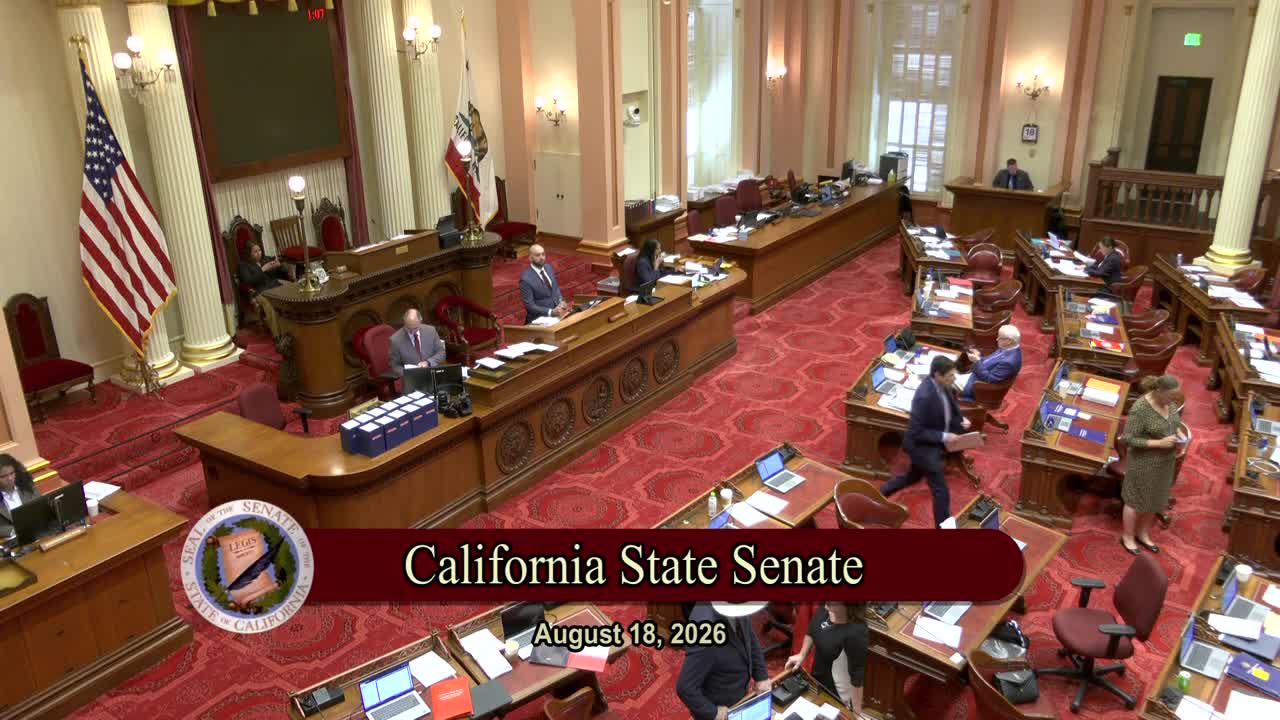
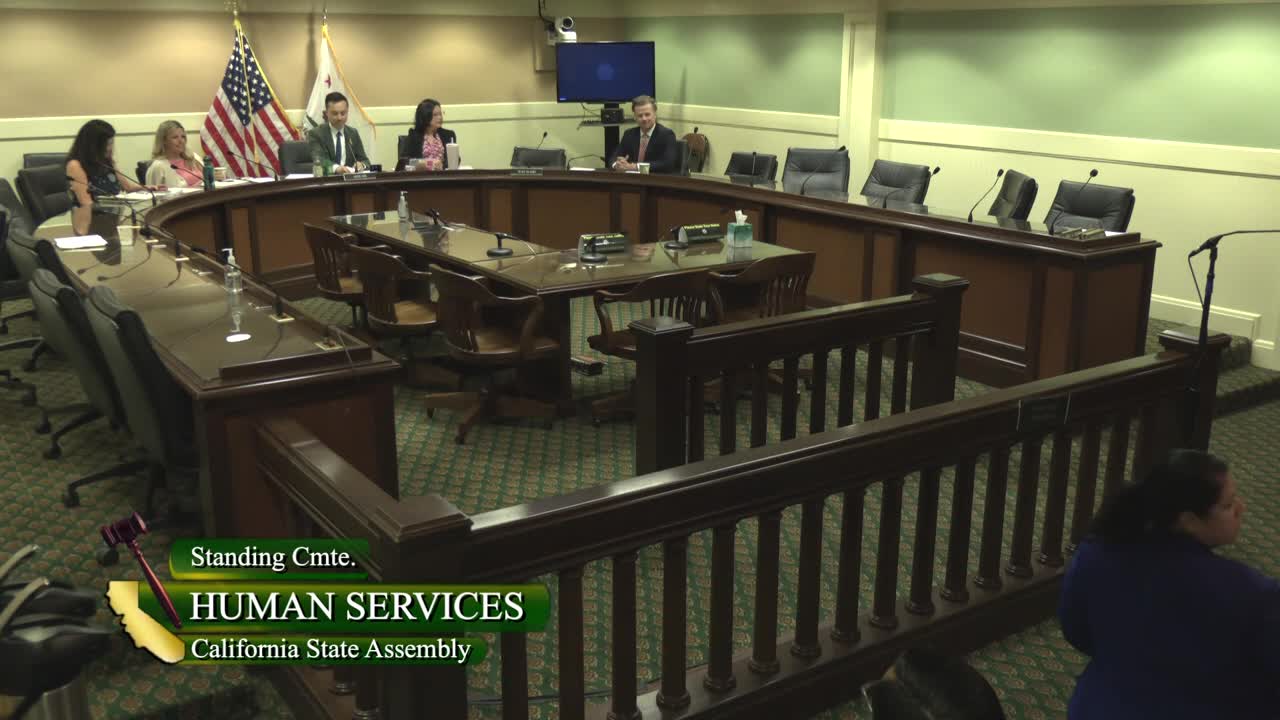
Bill Author