SB 928: California State University: faculty employees.
- Session Year: 2025-2026
- House: Senate
- Latest Version Date: 2026-08-27
Current Status:
Passed
(2026-08-27: Chaptered by Secretary of State. Chapter 149, Statutes of 2026.)
Introduced
In Committee
Awaiting First Chamber Vote
Passed First Chamber
In Committee
Awaiting Second Chamber Vote
Passed Second Chamber
Enacted
Existing law establishes the California State University, under the administration of the Trustees of the California State University, as one of the segments of public postsecondary education in the state. Existing law requires the trustees to provide by rule for the government of their appointees and employees, including, among other things, rules related to appointment, classification, and duties. Existing law requires certain community college employees to be a person who meets specified minimum qualifications, as provided.
This bill would explicitly require the instructor of record for a course of instruction to be a person who meets the rule provided by the trustees to serve as a faculty employee, as described, teaching credit instruction or noncredit instruction. The bill would also explicitly require a California State University faculty employee to be a person who meets the rule provided by the trustees to serve in that position.
Existing law establishes the California State University, under the administration of the Trustees of the California State University.Existing law establishes within the Government Operations Agency the Department of Technology. Existing law requires the Department of Technology to conduct, in coordination with other interagency bodies as it deems appropriate, a comprehensive inventory of all high-risk automated decision systems that have been proposed for use, development, or procurement by, or are being used, developed, or procured by, any state agency, including the California State University. For purposes of these provisions, existing law defines various terms, including automated decision system and artificial intelligence. Existing law requires the department to submit an annual report of the comprehensive inventory to the Assembly Committee on Privacy and Consumer Protection and the Senate Committee on Governmental Organization, until January 1, 2029.This bill would state the intent of the Legislature to enact legislation to protect California State University employees from the encroachment of artificial intelligence.Existing law establishes the California State University, under the administration of the Trustees of the California State University.
Existing law establishes within the Government Operations Agency the Department of Technology. Existing law requires the Department of Technology to conduct, in coordination with other interagency bodies as it deems appropriate, a comprehensive inventory of all high-risk automated decision systems that have been proposed for use, development, or procurement by, or are being used, developed, or procured by, any state agency, including the California State University. For purposes of these provisions, existing law defines various terms, including automated decision system and artificial intelligence. Existing law requires the department to submit an annual report of the comprehensive inventory to the Assembly Committee on Privacy and Consumer Protection and the Senate Committee on Governmental Organization, until January 1, 2029.
This bill would state the intent of the Legislature to enact legislation to protect California State University employees from the encroachment of artificial intelligence.
(a)(1)For purposes of this section, faculty employee includes, but is not limited to, an employee of the California State University who is a professor, lecturer, librarian, counselor, or coach.
(2)The faculty employee positions described in paragraph (1) include, but are not limited to, instructional and noninstructional positions.
(3)The faculty employee positions described in paragraph (1) include, but are not limited to, full-time, part-time, probationary, tenured, temporary, and extension for credit positions.
(b)The instructor of record for a course of instruction shall be a person who meets the rule to serve as a faculty employee teaching credit instruction or a faculty employee teaching noncredit instruction established pursuant to Section 89500.
(c)A California State University faculty employee shall be a person who meets the rule to serve in that position established pursuant to Section 89500.
(d)This section does not prohibit California State University employees from using artificial intelligence tools to assist in the operations of the California State University or in providing services to California State University students.
SECTION 1.It is the intent of the Legislature to enact legislation to protect California State University employees from the encroachment of artificial intelligence. REVISIONS: HeadingLine 2.It is the intent of the Legislature to enact legislation to protect California State University employees from the encroachment of artificial intelligence.
|
Date
|
Status
|
|---|---|
| Aug 27, 2026 | Chaptered by Secretary of State. Chapter 149, Statutes of 2026. |
| Aug 27, 2026 | Approved by the Governor. |
| Aug 18, 2026 | Enrolled and presented to the Governor at 3 p.m. |
| Aug 13, 2026 | In Senate. Ordered to engrossing and enrolling. |
| Aug 13, 2026 | Read third time. Passed. (Ayes 74. Noes 0. Page 6145.) Ordered to the Senate. |
| Aug 13, 2026 | Read third time. Passed. Ordered to the Senate. |
| Jun 11, 2026 | Read second time. Ordered to third reading. |
| Jun 10, 2026 | From committee: Do pass. (Ayes 10. Noes 0.) (June 9). |
| Jun 10, 2026 | Coauthors revised. |
| May 18, 2026 | Referred to Com. on HIGHER ED. |
| Apr 23, 2026 | In Assembly. Read first time. Held at Desk. |
| Apr 23, 2026 | Read third time. Passed. (Ayes 37. Noes 0.) Ordered to the Assembly. |
| Apr 23, 2026 | Read third time. Passed. (Ayes 37. Noes 0. Page 4033.) Ordered to the Assembly. |
| Apr 16, 2026 | Read second time. Ordered to consent calendar. |
| Apr 15, 2026 | From committee: Do pass. Ordered to consent calendar. (Ayes 7. Noes 0.) (April 15). |
| Apr 15, 2026 | From committee: Do pass. Ordered to consent calendar. (Ayes 7. Noes 0. Page 3898.) (April 15). |
| Apr 9, 2026 | Set for hearing April 15. |
| Apr 8, 2026 | Re-referred to Com. on ED. |
| Mar 24, 2026 | From committee with author's amendments. Read second time and amended. Re-referred to Com. on RLS. |
| Feb 11, 2026 | Referred to Com. on RLS. |
| Jan 30, 2026 | From printer. May be acted upon on or after March 1. |
| Jan 29, 2026 | Introduced. Read first time. To Com. on RLS. for assignment. To print. |
|
Date
|
Description
|
Location
|
Votes
|
|
|---|---|---|---|---|
| Aug 13, 2026 | SB 928 Cervantes Senate Third Reading By Fong | Assembly Floor |
Passed |
|
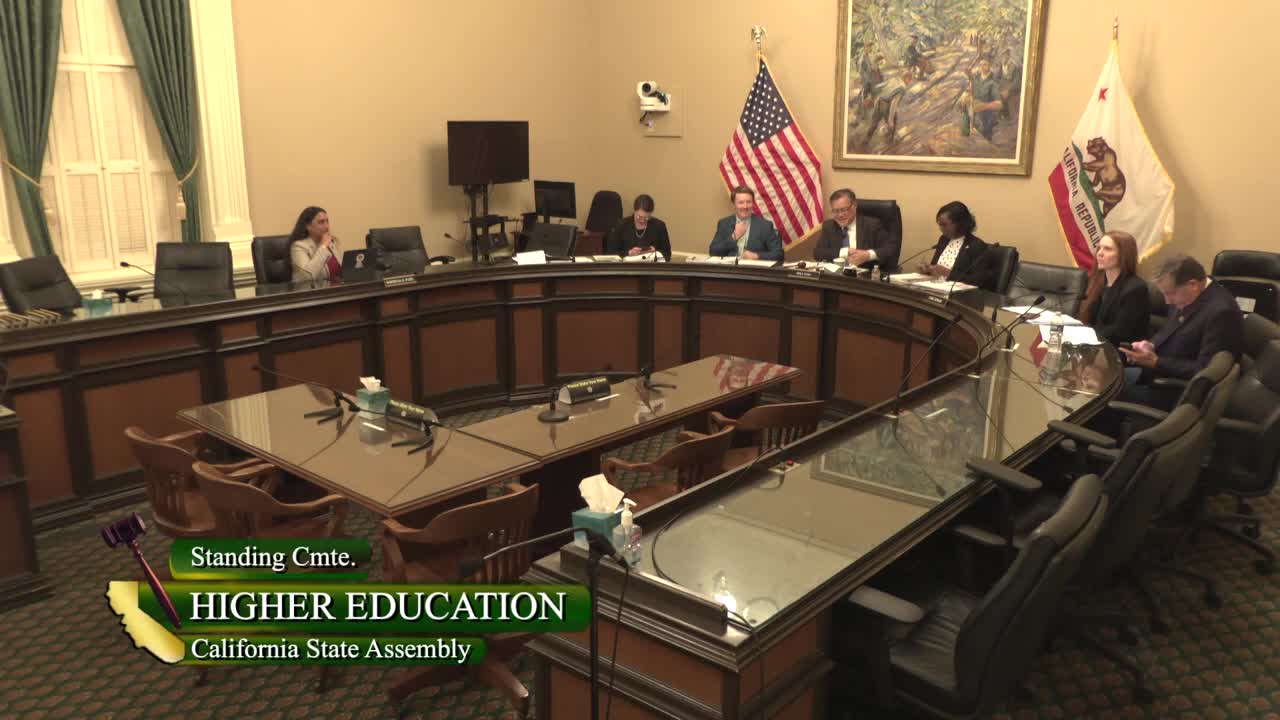
| Jun 9, 2026 | Do pass. | Assembly Standing Committee on Higher Education |
Passed |
|
| Apr 23, 2026 | Consent Calendar 2nd SB928 Cervantes | Senate Floor |
Passed |
|
| Apr 15, 2026 | Do pass and be ordered to the Consent Calendar | Senate Standing Committee on Education |
Passed |
This list shows positions taken on this bill by organizations on the date displayed, which is linked to the original source.
Positions by individuals are not included.
|
Organization
|
Position
|
Date
|
|---|---|---|
| California Alliance For Retired Americans | ** Support | |
| California Faculty Association (CFA) | ** Support | |
| California Federation of Labor Unions | ** Support | |
| CFT – a Union of Educators & Classified Professionals, AFT, AFL-CIO | ** Support | |
| Techequity Action | ** Support |
SENATE THIRD READING
STR Bill Id:SB 928
Author:(Cervantes)
As Amended Ver:March 24, 2026
Majority vote
SUMMARY
Requires that the instructor of record for a California State University (CSU) course be a person who is qualified to serve as a faculty employee and explicitly requires that a CSU faculty employee be a person.
Major Provisions
- Requires that the instructor of record for a CSU course of instruction be a person who meets the rule to serve as a faculty employee teaching credit or noncredit instruction.
- Requires that a CSU faculty employee be a person who meets the rule to serve in that position.
- States the bill's provisions do not prohibit CSU employees from using artificial intelligence (AI) tools to assist in the operations of the CSU or in providing services to CSU students.
- States that "faculty employee" includes, but is not limited to, an employee of the CSU who is a professor, lecturer, librarian, counselor, or coach. These positions include instructional and non-instructional positions as well as full-time, part-time, probationary, tenured, temporary, and extension for-credit positions.
COMMENTS
AI in Higher Education background. AI refers broadly to computer systems designed to perform tasks that typically require human intelligence — such as understanding language, generating text, writing code, or analyzing data. While AI has existed as a field of research for decades, recent advances in "generative AI" - tools like ChatGPT, Google Gemini, and others that can generate human-like text, images, and other content in response to user prompts - have brought the technology into everyday use at unprecedented speed. According to Stanford University's AI Index 2026 Annual Report, a comprehensive, independently sourced annual assessment of global AI trends, generative AI reached approximately 53% population-level adoption within just three years of its introduction — a pace faster than the adoption of the personal computer or the internet. Globally, organizational adoption of AI tools reached 88% in 2025, and the estimated value of generative AI tools to U.S. consumers reached $172 billion annually by early 2026.
Higher education has been one of the most visible arenas for AI's rapid adoption. The Stanford report found that four out of five U.S. high school and college students now use AI for school-related tasks, and that usage in higher education reached approximately 67% in the United States and 67% in the United Kingdom — with some countries, such as Indonesia and Malaysia, reporting usage above 80% among university students. The most common uses among university students include research, brainstorming, editing essays, and — most notably — understanding academic concepts. A separate analysis by Anthropic, cited in the Stanford report, found that students primarily use AI for higher-order thinking tasks: 39.8% for creating content and 30.2% for analysis. At the same time, the report cautions that students themselves have concerns — a survey referenced in the Stanford report found that 55% of U.S. college students believe generative AI tools have had a mixed effect on their critical thinking skills.
California's higher education segments has been navigating these trends. In April 2026, the CSU released findings from its first-ever systemwide AI survey, Ahead of the Curve, drawing on more than 94,000 responses from students, faculty, and staff — the largest survey of its kind in higher education to date. The survey found that AI use is already widespread across the CSU community, with most students, faculty, and staff reporting regular engagement with AI tools, alongside near-universal exposure to at least one AI tool. At the same time, respondents expressed a cautious approach: while many see AI as essential to future careers, they also emphasized the need for verification, ethical guidelines, and transparency. There is strong demand for formal AI training - especially among faculty and staff—and notable concern about job security and academic integrity. Importantly, most students reported discomfort with submitting AI-generated work as their own, and many faculty are actively incorporating AI guidance into their teaching, signaling a shift toward structured, responsible adoption rather than unrestricted use.
CSU AI-Empowered Initiative. On February 4, 2025, the CSU system announced their AI-Empowered Initiative. In their press release, the CSU indicated that their goal was to "leverage the power of artificial intelligence to create an AI-empowered higher education system that could surpass any existing model in both scale and impact." Among the various elements of this initiative included the systemwide deployment of an AI tool developed by OpenAI - ChatGPT Edu – that would enable "…students, faculty, and staff to use AI to accelerate learning, optimize workflow efficiency, and foster cross-departmental collaboration." The initial contract for ChatGPT Edu was $16.9 million, and runs from February 2025 through July 2026.
Although "ChatGPT" has become a somewhat ubiquitous term for generative AI tools, many different technology companies have deployed AI products that are now embedded in common e-mail, word processing, and document production systems. An element of CSU's AI-Empowered Initiative also highlights partnerships with some world's leading tech companies, including Adobe, Alphabet (Google), AWS, International Business Machines (IBM), Instructure, Intel, LinkedIn, Microsoft, and NVIDIA, in addition to OpenAI.
On May 19th, 2026, the CSU announced that the ChatGPT Edu contract has been extended for three years, securing access through FY 2028–2029, at a cost of $13 million annually. The agreement has been expanded to include continued use of ChatGPT Edu for new graduates for up to one year following graduation. CSU indicated it plans to evolve toward a broader, multi-vendor AI ecosystem over time.
Student response. The California State Student Association (CSSA) released a white paper regarding the CSU's AI-Empowered Initiative on February 24th, 2026. The whitepaper noted that, while students broadly recognize AI's potential to enhance creativity and learning, the implementation has been rushed, inconsistent, and lacking adequate training and awareness. Many students are unaware of the tool or unsure how to use it, and there is no unified guidance across classrooms, leading to confusion about acceptable AI use. This inconsistency is compounded by conflicting faculty approaches—some encourage AI while others penalize it—along with unreliable AI-detection tools that have led to false accusations and increased anxiety.
Beyond implementation challenges, the white paper highlights major concerns about privacy, transparency, sustainability, and governance. Students worry about how their data is collected and used, expressing distrust in the system despite the availability of an official platform. Students also question the financial transparency of the initiative and its alignment with broader CSU budget cuts. Environmental concerns are prominent as well, with many students criticizing the lack of attention to AI's energy and water consumption and its conflict with CSU's climate goals.
Additionally, the paper raises ethical and mental health concerns, including risks from harmful AI outputs and overreliance on the technology. Across all areas, a central theme emerges: students feel excluded from decision-making and call for greater oversight, clearer policies, and consistent inclusion in governance to ensure AI is implemented responsibly, ethically, and in alignment with student needs.
Committee comments. This bill creates a new definition for "faculty employee," which would include, but not be limited to, an employee of the CSU who is a professor, lecturer, librarian, counselor, or coach. This language mirrors the scope of the 'faculty unit employee' definition found in California Faculty Association (CFA's) February 3, 2022 collective bargaining agreement with the CSU Board of Trustees, which encompasses professors, lecturers, librarians, counselors, coaches, and related appointment types.
According to the Author
According to the author, "In February 2025, the [CSU] announced a $17 million contract with OpenAI to provide ChatGPT Edu to all faculty, staff, and students on its 22 campuses as part of a larger 'AI Powered University' initiative. The contract between the CSU and OpenAI is the largest contract ever established between a university system and an artificial intelligence (AI) company, and was ratified without faculty consent. While there is room for technology tools like AI to contribute in CSU, human faculty are still necessary and best suited to teach human students."
The author continues, noting that SB 928 (Cervantes) "…would erect guardrails to prevent instructional and non-instructional faculty employees at the CSU from being replaced by AI. The bill would require that faculty positions—which includes professors, lecturers, librarians, counselors, and coaches—must be held by an individual who meets all the minimum qualifications as determined by the Trustees of the California State University. This bill would also require that the instructor of record for a course of instruction shall be a person who meets the rule to serve as a faculty employee teaching credit or noncredit instruction. SB 928 builds upon the work I did in Assembly Bill 2370 (2024) and Senate Bill 241 (2025) to provide similar faculty protections within the California Community Colleges."
Arguments in Support
The California Faculty Association (CFA) and the California Federation of Labor Unions, the Sponsors of SB 928, jointly wrote in support, stating that AI "…has seen incredible advancements in recent years. The growing use of AI in educational settings has left many faculty employees concerned about the impact on their work. As AI tool adoption has expanded, its impact on human workers and jobs has grown, and the need to enact guardrails has become more pressing. As AI threatens to replace human work, faculty reasonably fear that institutions of higher learning might attempt to have AI tools perform duties that have historically been performed by human faculty members."
The sponsors also wrote that "Faculty employees play a critical role in student success by providing academic instruction, mentorship, and support that directly impacts student retention, engagement, and personal growth. They work hard to teach students critical-thinking skills, the technical know-how, and the cultural insights they need to be thoughtful, productive, and artistic participants in our society. This bill recognizes the personal connection, guidance, and the expertise CSU faculty provides to students that simply cannot be replaced by AI. This bill is essential to protect jobs and preserve the human element that makes our educational institutions the best in the world."
Arguments in Opposition
None on file.
FISCAL COMMENTS
This bill is keyed non-fiscal.
VOTES
SENATE FLOOR: 37-0-3
YES: Allen, Alvarado-Gil, Archuleta, Arreguín, Ashby, Becker, Blakespear, Cabaldon, Caballero, Cervantes, Choi, Cortese, Dahle, Durazo, Gonzalez, Grayson, Grove, Hurtado, Jones, Laird, Limón, McGuire, McNerney, Menjivar, Niello, Padilla, Pérez, Richardson, Rubio, Seyarto, Smallwood-Cuevas, Stern, Strickland, Umberg, Valladares, Weber Pierson, Wiener
ABS, ABST OR NV: Ochoa Bogh, Reyes, Wahab
ASM HIGHER EDUCATION: 10-0-0
YES: Fong, DeMaio, Boerner, Ellis, Jackson, Muratsuchi, Patel, Celeste Rodriguez, Sharp-Collins, Tangipa
UPDATED
VERSION: March 24, 2026
CONSULTANT: Kevin J. Powers / HIGHER ED. / (916) 319-3960 FN: 0003161
Date of Hearing: June 9, 2026
ASSEMBLY COMMITTEE ON HIGHER EDUCATION
Mike Fong, Chair
SBPCA Bill Id:SB 928
Author:(Cervantes) – As Amended Ver:March 24, 2026
SENATE VOTE: 37-0
SUBJECT: California State University: faculty employees
SUMMARY: Requires that the instructor of record for a California State University (CSU) course be a person who is qualified to serve as a faculty employee and explicitly requires that a CSU faculty employee be a person. Specifically, this bill:
- Requires that the instructor of record for a CSU course of instruction be a person who meets the rule to serve as a faculty employee teaching credit or noncredit instruction.
- Requires that a CSU faculty employee be a person who meets the rule to serve in that position.
- States the bill’s provisions do not prohibit CSU employees from using artificial intelligence (AI) tools to assist in the operations of the CSU or in providing services to CSU students.
- States that “faculty employee” includes, but is not limited to, an employee of the CSU who is a professor, lecturer, librarian, counselor, or coach. These positions include instructional and non-instructional positions as well as full-time, part-time, probationary, tenured, temporary, and extension for-credit positions.
EXISTING LAW:
- Establishes the CSU system, made of 22 campuses, and bestows upon the CSU Trustees, through the Board of Trustees, the power, duties, and functions with respect to the management, administration, and control of the CSU system. (Education Code (EDC) Sections 66606 and 89030, et seq.)
- Requires the CSU Trustees to provide by rule for the government of their appointees and employees, including, among other things, rules related to appointment, classification, and duties. (EDC Section 89500)
- Requires that a California Community College (CCC) instructor, librarian, counselor, student personnel worker, supervisor, administrator, chief administrative officer, extended opportunity programs and services worker, disabled students programs and services worker, apprenticeship instructor, or health supervisor be a person who meets the minimum qualifications to serve in that position established in current law. (EDC Section 87359.2(a))
- Requires that the instructor of record for a community college course be a person who meets minimum qualifications to serve as a faculty member teaching noncredit or credit instruction. (EDC Section 87359.2(b))
FISCAL EFFECT: This bill is keyed non-fiscal.
COMMENTS: Purpose. According to the author, “In February 2025, the [CSU] announced a $17 million contract with OpenAI to provide ChatGPT Edu to all faculty, staff, and students on its 22 campuses as part of a larger ‘AI Powered University’ initiative. The contract between the CSU and OpenAI is the largest contract ever established between a university system and an artificial intelligence (AI) company, and was ratified without faculty consent. While there is room for technology tools like AI to contribute in CSU, human faculty are still necessary and best suited to teach human students.”
The author continues, noting that SB 928 (Cervantes) “…would erect guardrails to prevent instructional and non-instructional faculty employees at the CSU from being replaced by AI. The bill would require that faculty positions—which includes professors, lecturers, librarians, counselors, and coaches—must be held by an individual who meets all the minimum qualifications as determined by the Trustees of the California State University. This bill would also require that the instructor of record for a course of instruction shall be a person who meets the rule to serve as a faculty employee teaching credit or noncredit instruction. SB 928 builds upon the work I did in Assembly Bill 2370 (2024) and Senate Bill 241 (2025) to provide similar faculty protections within the California Community Colleges.”
Existing policies. Current law, enacted by SB 241 (Cervantes), Chapter 214, Statutes of 2025 and AB 2370 (Cervantes) Chapter 66, Statutes of 2024, explicitly required community college instructors and certain employees to be a person and required that the instructor of record for a community college course be a person that is qualified for the position, respectively. This bill attempts to build on that policy by enacting similar requirements for CSU faculty and faculty employee positions.
AI in Higher Education background. AI refers broadly to computer systems designed to perform tasks that typically require human intelligence — such as understanding language, generating text, writing code, or analyzing data. While AI has existed as a field of research for decades, recent advances in "generative AI" - tools like ChatGPT, Google Gemini, and others that can generate human-like text, images, and other content in response to user prompts - have brought the technology into everyday use at unprecedented speed. According to Stanford University's AI Index 2026 Annual Report, a comprehensive, independently sourced annual assessment of global AI trends, generative AI reached approximately 53% population-level adoption within just three years of its introduction — a pace faster than the adoption of the personal computer or the internet. Globally, organizational adoption of AI tools reached 88% in 2025, and the estimated value of generative AI tools to U.S. consumers reached $172 billion annually by early 2026.
Higher education has been one of the most visible arenas for AI's rapid adoption. The Stanford report found that four out of five U.S. high school and college students now use AI for school-related tasks, and that usage in higher education reached approximately 67% in the United States and 67% in the United Kingdom — with some countries, such as Indonesia and Malaysia, reporting usage above 80% among university students. The most common uses among university students include research, brainstorming, editing essays, and — most notably — understanding academic concepts. A separate analysis by Anthropic, cited in the Stanford report, found that students primarily use AI for higher-order thinking tasks: 39.8% for creating content and 30.2% for analysis. At the same time, the report cautions that students themselves have concerns — a survey referenced in the Stanford report found that 55% of U.S. college students believe generative AI tools have had a mixed effect on their critical thinking skills.
California's higher education segments has been navigating these trends. In April 2026, the CSU released findings from its first-ever systemwide AI survey, Ahead of the Curve, drawing on more than 94,000 responses from students, faculty, and staff — the largest survey of its kind in higher education to date. The survey found that AI use is already widespread across the CSU community, with most students, faculty, and staff reporting regular engagement with AI tools, alongside near-universal exposure to at least one AI tool. At the same time, respondents expressed a cautious approach: while many see AI as essential to future careers, they also emphasized the need for verification, ethical guidelines, and transparency. There is strong demand for formal AI training - especially among faculty and staff—and notable concern about job security and academic integrity. Importantly, most students reported discomfort with submitting AI-generated work as their own, and many faculty are actively incorporating AI guidance into their teaching, signaling a shift toward structured, responsible adoption rather than unrestricted use.
CSU AI-Empowered Initiative. On February 4, 2025, the CSU system announced their AI-Empowered Initiative. In their press release, the CSU indicated that their goal was to “leverage the power of artificial intelligence to create an AI-empowered higher education system that could surpass any existing model in both scale and impact.” Among the various elements of this initiative included the systemwide deployment of an AI tool developed by OpenAI - ChatGPT Edu – that would enable “…students, faculty, and staff to use AI to accelerate learning, optimize workflow efficiency, and foster cross-departmental collaboration.” The initial contract for ChatGPT Edu was $16.9 million, and runs from February 2025 through July 2026.
Although “ChatGPT” has become a somewhat ubiquitous term for generative AI tools, many different technology companies have deployed AI products that are now embedded in common e-mail, word processing, and document production systems. An element of CSU’s AI-Empowered Initiative also highlights partnerships with some world’s leading tech companies, including Adobe, Alphabet (Google), AWS, IBM, Instructure, Intel, LinkedIn, Microsoft, and NVIDIA, in addition to OpenAI.
On May 19th, 2026, the CSU announced that the ChatGPT Edu contract has been extended for three years, securing access through FY 2028–2029, at a cost of $13 million annually. The agreement has been expanded to include continued use of ChatGPT Edu for new graduates for up to one year following graduation. CSU indicated it plans to evolve toward a broader, multi-vendor AI ecosystem over time.
Student response. The California State Student Association (CSSA) released a white paper regarding the CSU’s AI-Empowered Initiative on February 24th, 2026. The whitepaper noted that, while students broadly recognize AI’s potential to enhance creativity and learning, the implementation has been rushed, inconsistent, and lacking adequate training and awareness. Many students are unaware of the tool or unsure how to use it, and there is no unified guidance across classrooms, leading to confusion about acceptable AI use. This inconsistency is compounded by conflicting faculty approaches—some encourage AI while others penalize it—along with unreliable AI-detection tools that have led to false accusations and increased anxiety.
Beyond implementation challenges, the white paper highlights major concerns about privacy, transparency, sustainability, and governance. Students worry about how their data is collected and used, expressing distrust in the system despite the availability of an official platform. Students also question the financial transparency of the initiative and its alignment with broader CSU budget cuts. Environmental concerns are prominent as well, with many students criticizing the lack of attention to AI’s energy and water consumption and its conflict with CSU’s climate goals.
Additionally, the paper raises ethical and mental health concerns, including risks from harmful AI outputs and overreliance on the technology. Across all areas, a central theme emerges: students feel excluded from decision-making and call for greater oversight, clearer policies, and consistent inclusion in governance to ensure AI is implemented responsibly, ethically, and in alignment with student needs.
Arguments in support. The California Faculty Association (CFA) and the California Federation of Labor Unions, the Sponsors of SB 928, jointly wrote in support, stating that AI “…has seen incredible advancements in recent years. The growing use of AI in educational settings has left many faculty employees concerned about the impact on their work. As AI tool adoption has expanded, its impact on human workers and jobs has grown, and the need to enact guardrails has become more pressing. As AI threatens to replace human work, faculty reasonably fear that institutions of higher learning might attempt to have AI tools perform duties that have historically been performed by human faculty members.”
The sponsors also wrote that “Faculty employees play a critical role in student success by providing academic instruction, mentorship, and support that directly impacts student retention, engagement, and personal growth. They work hard to teach students critical-thinking skills, the technical know-how, and the cultural insights they need to be thoughtful, productive, and artistic participants in our society. This bill recognizes the personal connection, guidance, and the expertise CSU faculty provides to students that simply cannot be replaced by AI. This bill is essential to protect jobs and preserve the human element that makes our educational institutions the best in the world.”
Committee comments. This bill creates a new definition for “faculty employee,” which would include, but not be limited to, an employee of the CSU who is a professor, lecturer, librarian, counselor, or coach. This language mirrors the scope of the 'faculty unit employee' definition found in CFA's February 3, 2022 collective bargaining agreement with the CSU Board of Trustees, which encompasses professors, lecturers, librarians, counselors, coaches, and related appointment types.
REGISTERED SUPPORT / OPPOSITION:
Support
California Alliance for Retired Americans
California Faculty Association
California Federation of Labor Unions
Cft – a Union of Educators & Classified Professionals, Aft, Afl-cio
Techequity Action
Opposition
None on file.
Analysis Prepared by: Kevin J. Powers / HIGHER ED. / (916) 319-3960
SENATE RULES COMMITTEE Office of Senate Floor Analyses (916) 651-4171 | SB 928 |
CONSENT
Bill No: SB 928
Author: Cervantes (D)
Amended: 3/24/26
Vote: 21
SENATE EDUCATION COMMITTEE: 7-0, 4/15/26
AYES: Pérez, Ochoa Bogh, Cabaldon, Choi, Cortese, Gonzalez, Reyes
SUBJECT: California State University: faculty employees
SOURCE: California Faculty Association
California Federation of Labor Unions, AFL-CIO
DIGEST:
This bill requires that the instructor of record for a California State University (CSU) course be a person who is qualified to serve as a faculty employee and explicitly requires that a CSU faculty employee be a person.
ANALYSIS:
Existing law:
- Establishes the CSU system, made of 22 campuses, and bestows upon the CSU Trustees, through the Board of Trustees, the power, duties, and functions with respect to the management, administration, and control of the CSU system. (Education Code (EC) §§ 66606 and 89030 et seq.)
- Requires the CSU Trustees to provide by rule for the government of their appointees and employees, including, among other things, rules related to appointment, classification, and duties. (EC § 89500)
- Requires that a California Community College (CCC) instructor, librarian, counselor, student personnel worker, supervisor, administrator, chief administrative officer, extended opportunity programs and services worker, disabled students programs and services worker, apprenticeship instructor, or health supervisor be a person who meets the minimum qualifications to serve in that position established in current law. (EC § 87359.2(a))
- Requires that the instructor of record for a community college course be a person who meets minimum qualifications to serve as a faculty member teaching noncredit or credit instruction. (EC § 87359.2(b))
This bill:
- Requires that the instructor of record for a CSU course of instruction be a person who meets the rule to serve as a faculty employee teaching credit or noncredit instruction.
- Requires that a CSU faculty employee be a person who meets the rule to serve in that position.
- States the bill’s provisions do not prohibit CSU employees from using artificial intelligence (AI) tools to assist in the operations of the CSU or in providing services to CSU students.
- States that “faculty employee” includes, but is not limited to, an employee of the CSU who is a professor, lecturer, librarian, counselor, or coach. These positions include instructional and non-instructional positions as well as full-time, part-time, probationary, tenured, temporary, and extension for-credit positions.
Comments
- Need for the bill. According to the author, “In February 2025, the California State University (CSU) announced a $17 million contract with OpenAI to provide ChatGPT Edu to all faculty, staff, and students on its 22 campuses as part of a larger “AI Powered University” initiative. The contract between the CSU and OpenAI is the largest contract ever established between a university system and an artificial intelligence (AI) company and was ratified without faculty consent. While there is room for technology tools like AI to contribute in CSU, human faculty are still necessary and best suited to teach human students. Senate Bill 928 would erect guardrails to prevent instructional and non-instructional faculty employees at the CSU from being replaced by AI. The bill would require that faculty positions—which includes professors, lecturers, librarians, counselors, and coaches—must be held by an individual who meets all the minimum qualifications as determined by the Trustees of the California State University. This bill would also require that the instructor of record for a course of instruction shall be a person who meets the rule to serve as a faculty employee teaching credit or noncredit instruction. SB 928 builds upon the work I did in Assembly Bill 2370 (2024) and Senate Bill 241 (2025) to provide similar faculty protections within the California Community Colleges.”
- What’s the problem? AI has been described as the quality of any computer program to sense, reason, act, and adapt like humans. As such, it performs with near-humanlike abilities. Fear that the technology could potentially replace human jobs is a growing concern across many sectors. At the same time, the rapid development of AI has opened opportunities that have enhanced human capabilities. This dynamic is also felt in education, as these technologies provide useful tools for enhancing instructional practices and student learning, but also bring about the need to defend the role of human faculty and other educator positions. It also brings about the need to protect instructional quality for students that ensures they are adequately prepared for careers in their field of study. Current law, enacted by SB 241 (Cervantes, Chapter 214, Statutes of 2025) and AB 2370 (Cervantes, Chapter 66, Statutes of 2024), explicitly required community college instructors and certain employees to be a person and required that the instructor of record for a community college course be a person that is qualified for the position, respectively. This bill attempts to build on that policy by enacting similar requirements for CSU faculty and faculty employee positions.
- COVID pandemic accelerated virtual instruction. The COVID-19 pandemic accelerated the expansion of virtual instruction within the CSU, as campuses shifted to distance learning. Prior to the pandemic, CSU had already incorporated online instruction as a means of expanding access, with the Legislative Analyst’s Office (LAO) reporting (An Evaluation of CSU’s Cross Campus Online Education Program in 2018) that 19% of CSU undergraduates took at least one fully online class as early as 2015. The LAO recently reported, in its trends in higher education series, that online instruction increased significantly during the COVID-19 pandemic and remains above the pre-pandemic levels. CSU continues to offer online courses systemwide, including cross-campus enrollment in fully online courses, reflecting the ongoing role of virtual instruction within the system. Online courses can be a popular option for students who want greater flexibility in how they access their education, particularly for those who are place-bound or have work and family obligations. Arguably, the rapid growth of online instruction has also contributed to increased use of AI to support teaching and learning, particularly in virtual settings, clarifying that course instruction remains the responsibility of qualified faculty is timely.
- AI integration in higher education. AI can provide numerous benefits in augmenting traditional methods of learning and instruction. Examples of this capability include offering interactive simulations, virtual reality experiences, and intelligent tutoring systems, as well as improving accessibility for students with disabilities with text-to-speech and speech-to-text technology. CSU, in particular, recently declared itself an AI-empowered higher education system, integrating AI learning and teaching tools across the system, which further demonstrates AI’s growing influence in educational settings. CSU is partnering with tech companies, including OpenAI, to create its AI-powered higher education system with the goal of enacting a systemwide AI strategy to equip students, faculty, and institutions to be positioned to lead the state in leveraging emerging AI technologies. For faculty, this includes access to AI technologies, training, and transformative research capabilities. Students are to be equipped with personalized learning tools and access to apprenticeship programs within the industry. Seemingly, the intent of the initiative is to foster greater innovation in an educational environment to support successful outcomes.
At the same time, ensuring student success in educational programs involves a personal element to effectively educate and foster personal growth among individuals. Faculty have the ability to stimulate critical and creative thinking, inspire students, cultivate empathy and moral conviction, and respond to unexpected situations. This bill attempts to preserve the role of faculty in course instruction while allowing for the use of AI in the classroom to enhance instructional practices.
FISCAL EFFECT: Appropriation: No Fiscal Com.: No Local: No
SUPPORT: (Verified 4/15/26)
California Faculty Association (Co-source)
California Federation of Labor Unions, AFL-CIO (Co-source)
OPPOSITION: (Verified 4/15/26)
Prepared by: Olgalilia Ramirez / ED. / (916) 651-4105
4/20/26 9:40:32
**** END ****
SENATE COMMITTEE ON EDUCATION
Senator Sasha Renée Pérez, Chair
2025 - 2026 Regular
Bill No: Hearing Date: April 15, 2026
Author: | |||
Version: |
| ||
Urgency: | Fiscal: | ||
Consultant: | |||
Subject:
SUMMARY
This bill requires that the instructor of record for a California State University (CSU) course be a person who is qualified to serve as a faculty employee and explicitly requires that a CSU faculty employee be a person.
BACKGROUND
Existing law:
- Establishes the CSU system, made of 22 campuses, and bestows upon the CSU Trustees, through the Board of Trustees, the power, duties, and functions with respect to the management, administration, and control of the CSU system. (Education Code (EC) §§ 66606 and 89030 et seq.)
- Requires the CSU Trustees to provide by rule for the government of their appointees and employees, including, among other things, rules related to appointment, classification, and duties. (EC § 89500)
- Requires that a California Community College (CCC) instructor, librarian, counselor, student personnel worker, supervisor, administrator, chief administrative officer, extended opportunity programs and services worker, disabled students programs and services worker, apprenticeship instructor, or health supervisor be a person who meets the minimum qualifications to serve in that position established in current law. (EC § 87359.2(a))
- Requires that the instructor of record for a community college course be a person who meets minimum qualifications to serve as a faculty member teaching noncredit or credit instruction. (EC § 87359.2(b))
ANALYSIS
This bill:
- Requires that the instructor of record for a CSU course of instruction be a person who meets the rule to serve as a faculty employee teaching credit or noncredit instruction.
- Requires that a CSU faculty employee be a person who meets the rule to serve in that position.
- States the bill’s provisions do not prohibit CSU employees from using artificial intelligence (AI) tools to assist in the operations of the CSU or in providing services to CSU students.
- States that “faculty employee” includes, but is not limited to, an employee of the CSU who is a professor, lecturer, librarian, counselor, or coach. These positions include instructional and non-instructional positions as well as full-time, part-time, probationary, tenured, temporary, and extension for-credit positions.
STAFF COMMENTS
- Need for the bill. According to the author, “In February 2025, the California State University (CSU) announced a $17 million contract with OpenAI to provide ChatGPT Edu to all faculty, staff, and students on its 22 campuses as part of a larger “AI Powered University” initiative. The contract between the CSU and OpenAI is the largest contract ever established between a university system and an artificial intelligence (AI) company, and was ratified without faculty consent. While there is room for technology tools like AI to contribute in CSU, human faculty are still necessary and best suited to teach human students. Senate Bill 928 would erect guardrails to prevent instructional and non-instructional faculty employees at the CSU from being replaced by AI. The bill would require that faculty positions—which includes professors, lecturers, librarians, counselors, and coaches—must be held by an individual who meets all the minimum qualifications as determined by the Trustees of the California State University. This bill would also require that the instructor of record for a course of instruction shall be a person who meets the rule to serve as a faculty employee teaching credit or noncredit instruction. SB 928 builds upon the work I did in Assembly Bill 2370 (2024) and Senate Bill 241 (2025) to provide similar faculty protections within the California Community Colleges.”
- What’s the problem? AI has been described as the quality of any computer program to sense, reason, act, and adapt like humans. As such, it performs with near-humanlike abilities. Fear that the technology could potentially replace human jobs is a growing concern across many sectors. At the same time, the rapid development of AI has opened opportunities that have enhanced human capabilities. This dynamic is also felt in education, as these technologies provide useful tools for enhancing instructional practices and student learning, but also bring about the need to defend the role of human faculty and other educator positions. It also brings about the need to protect instructional quality for students that ensures they are adequately prepared for careers in their field of study. Current law, enacted by SB 241 (Cervantes, Chapter 214, Statutes of 2025) and AB 2370 (Cervantes, Chapter 66, Statutes of 2024), explicitly required community college instructors and certain employees to be a person and required that the instructor of record for a community college course be a person that is qualified for the position, respectively. This bill attempts to build on that policy by enacting similar requirements for CSU faculty and faculty employee positions.
- COVID pandemic accelerated virtual instruction. The COVID-19 pandemic accelerated the expansion of virtual instruction within the CSU, as campuses shifted to distance learning. Prior to the pandemic, CSU had already incorporated online instruction as a means of expanding access, with the Legislative Analyst’s Office (LAO) reporting (An Evaluation of CSU’s Cross Campus Online Education Program in 2018) that 19 percent of CSU undergraduates took at least one fully online class as early as 2015. The LAO recently reported, in its trends in higher education series, that online instruction increased significantly during the COVID-19 pandemic and remains above the pre-pandemic levels. CSU continues to offer online courses systemwide, including cross-campus enrollment in fully online courses, reflecting the ongoing role of virtual instruction within the system. Online courses can be a popular option for students who want greater flexibility in how they access their education, particularly for those who are place-bound or have work and family obligations. Arguably, the rapid growth of online instruction has also contributed to increased use of AI to support teaching and learning, particularly in virtual settings, clarifying that course instruction remains the responsibility of qualified faculty is timely.
- AI integration in higher education. AI can provide numerous benefits in augmenting traditional methods of learning and instruction. Examples of this capability include offering interactive simulations, virtual reality experiences, and intelligent tutoring systems, as well as improving accessibility for students with disabilities with text-to-speech and speech-to-text technology. CSU, in particular, recently declared itself an AI-empowered higher education system, integrating AI learning and teaching tools across the system, which further demonstrates AI’s growing influence in educational settings. CSU is partnering with tech companies, including OpenAI, to create its AI-powered higher education system with the goal of enacting a systemwide AI strategy to equip students, faculty, and institutions to be positioned to lead the state in leveraging emerging AI technologies. For faculty, this includes access to AI technologies, training, and transformative research capabilities. Students are to be equipped with personalized learning tools and access to apprenticeship programs within the industry. Seemingly, the intent of the initiative is to foster greater innovation in an educational environment to support successful outcomes.
At the same time, ensuring student success in educational programs involves a personal element to effectively educate and foster personal growth among individuals. Faculty have the ability to simulate critical and creative thinking, inspire them, cultivate empathy and moral conviction, and respond to unexpected situations. It has been stated that when establishing policies regarding the integration of AI, the Legislature should strive to strike a balance that fosters innovation while minimizing adverse consequences in other aspects of civic life. The same principle applies in the educational setting. This bill attempts to preserve the role of faculty in course instruction while allowing for the use of AI in the classroom to enhance instructional practices.
SUPPORT
California Faculty Association (sponsor)
OPPOSITION
None received
-- END --
Discussed in Hearing
View Older Hearings
Bill Author