SB 277: Land use: zoning regulations.
- Session Year: 2017-2018
- House: Senate
- Latest Version Date: 2017-07-13
The Planning and Zoning Law authorizes the legislative body of any city or county to adopt ordinances regulating zoning within its jurisdiction, as specified.
This bill would additionally authorize the legislative body of any city or county to adopt ordinances to require, as a condition of development of residential rental units, that the development include a certain percentage of residential rental units affordable to, and occupied by, moderate-income, lower income, very low income, or extremely low income households, as specified. The bill would require the ordinance to provide alternative means of compliance. The bill would also make a nonsubstantive change and legislative findings and declarations.
The Planning and Zoning Law authorizes the legislative body of any city or county to adopt ordinances regulating zoning within its jurisdiction, as specified.
This bill would additionally authorize the legislative body of any city or county to adopt ordinances to require, as a condition of development of residential rental units, that the development include a certain percentage of residential rental units affordable to, and occupied by, moderate-income, lower income, very low income, or extremely low income households, as specified. The bill would also make a nonsubstantive change. change and legislative findings and declarations.
The Planning and Zoning Law authorizes the legislative body of any city or county to adopt ordinances regulating zoning within its jurisdiction, as specified.
This bill would additionally authorize the legislative body of any city or county to adopt ordinances to require, as a condition of development of residential rental units, that the development include a certain percentage of residential rental units affordable to, and occupied by, moderate-income, lower income, very low income, or extremely low income households, as specified. The bill would also make a nonsubstantive change.
The Legislature finds and declares all of the following:
(a)Inclusionary housing ordinances have provided quality affordable housing to over 80,000 Californians, including the production of an estimated 30,000 units of affordable housing in the last decade alone.
(b)Since the 1970s, over 170 jurisdictions have enacted inclusionary housing ordinances to meet their affordable housing needs.
(c)While many of these local programs have been in place for decades, a 2009 appellate court decision has created uncertainty and confusion for local governments regarding the use of this tool to ensure the inclusion of affordable rental units in residential developments.
(d)It is the intent of the Legislature to reaffirm the authority of local jurisdictions to include in these inclusionary housing ordinances requirements related to the provision of rental units.
(e)The Legislature declares its intent in adding subdivision (g) to Section 65850 of the Government Code, pursuant to Section 2 of this act, to supersede any the holding or and dicta in any the court decision or opinion of Palmer/Sixth Street Properties, L.P. v. City of Los Angeles (2009) 175 Cal.App.4th 1396 to the extent that the decision or opinion conflicts with that subdivision. a local jurisdictions authority to impose inclusionary housing ordinances pursuant to subdivision (g) of Section 65850 of the Government Code, as added pursuant to Section 2 of this act.
(f)In no case is it the intent of the Legislature in adding subdivision (g) to Section 65850 of the Government Code, pursuant to Section 2 of this act, to enlarge, diminish, or modify, in any way, the existing authority of a city, county, or city and county to establish, as a condition of development, inclusionary housing requirements, beyond reaffirming their applicability to rental units.
(g)This act does not modify or in any way change or affect the authority of a city, county, or city and county to require, as a condition of the development of residential units, that the development include a certain percentage of residential for-sale units affordable to, and occupied by, households with incomes that do not exceed the limits for moderate-income, lower income, very low income, or extremely low income households.
(h)It is the intent of the Legislature to reaffirm that existing law requires that the action of any legislative body of any city, county, or city and county to adopt a new inclusionary housing ordinance be taken openly and that their deliberations be conducted openly consistent with the requirements of the Ralph M. Brown Act (Chapter 9 (commencing with Section 54950) of Part 1 of Division 2 of Title 5 of the Government Code).
(i)Except as provided in subdivision (e), in no case is it the intent of the Legislature in adding subdivision (g) to Section 65850 of the Government Code, pursuant to Section 2 of this act, to enlarge, diminish, or modify in any way the existing rights of an owner of residential real property under Sections 1954.50 to 1954.535, inclusive, of the Civil Code and Sections 7060 to 7060.7, inclusive, of the Government Code.
SEC. 2.Section 65850 of the Government Code is amended to read:65850.The legislative body of any county or city may, pursuant to this chapter, adopt ordinances that do any of the following:
(a)Regulate the use of buildings, structures, and land as between industry, business, residences, open space, including agriculture, recreation, enjoyment of scenic beauty, use of natural resources, and other purposes.
(b)Regulate signs and billboards.
(c)Regulate all of the following:
(1)The location, height, bulk, number of stories, and size of buildings and structures.
(2)The size and use of lots, yards, courts, and other open spaces.
(3)The percentage of a lot which may be occupied by a building or structure.
(4)The intensity of land use.
(d)Establish requirements for off-street parking and loading.
(e)Establish and maintain building setback lines.
(f)Create civic districts around civic centers, public parks, public buildings, or public grounds, and establish regulations for those civic districts.
(g)Require, as a condition of the development of residential rental units, that the development include a certain percentage of residential rental units affordable to, and occupied by, households with incomes that do not exceed the limits for moderate income, lower income, very low income, or extremely low income households specified in Sections 50079.5, 50105, and 50106 of the Health and Safety Code. The ordinance shall provide alternative means of compliance, which may include, but are not limited to, in-lieu fees, land dedication, offsite construction, or acquisition and rehabilitation of existing units.
The Legislature finds and declares all of the following:
(a)Inclusionary housing ordinances have provided quality affordable housing to over 80,000 Californians, including the production of an estimated 30,000 units of affordable housing in the last decade alone.
(b)Since the 1970s, 1970s, over 170 jurisdictions have enacted inclusionary housing ordinances to meet their affordable housing needs.
(c)While many of these local programs have been in place for decades, a 2009 appellate court decision has created uncertainty and confusion for local governments regarding the use of this tool to ensure the inclusion of affordable rental units in residential developments.
(d)It is the intent of the Legislature to reaffirm the authority of local jurisdictions to include in these inclusionary housing ordinances requirements related to the provision of rental units.
(e)The Legislature declares its intent in adding subdivision (g) to Section 65850 of the Government Code, pursuant to Section 2 of this act, to supersede any holding or dicta in any court decision or opinion to the extent that the decision or opinion conflicts with that subdivision.
(f)In no case is it the intent of the Legislature in adding subdivision (g) to Section 65850 of the Government Code, pursuant to Section 2 of this act, to enlarge, diminish, or modify, in any way, the existing authority of a city, county, or city and county to establish, as a condition of development, inclusionary housing requirements, beyond reaffirming their applicability to rental units.
(g)This act does not modify or in any way change or affect the authority of a city, county, or city and county to require, as a condition of the development of residential units, that the development include a certain percentage of residential for-sale units affordable to, and occupied by, households with incomes that do not exceed the limits for moderate-income, lower income, very low income, or extremely low income households.
(h)It is the intent of the Legislature to reaffirm that existing law requires that the action of any legislative body of any city, county, or city and county to adopt a new inclusionary housing ordinance be taken openly and that their deliberations be conducted openly consistent with the requirements of the Ralph M. Brown Act (Chapter 9 (commencing with Section 54950) of Part 1 of Division 2 of Title 5 of the Government Code).
SEC. 2.Section 65850 of the Government Code is amended to read:65850.The legislative body of any county or city may, pursuant to this chapter, adopt ordinances that do any of the following:
(a)Regulate the use of buildings, structures, and land as between industry, business, residences, open space, including agriculture, recreation, enjoyment of scenic beauty, use of natural resources, and other purposes.
(b)Regulate signs and billboards.
(c)Regulate all of the following:
(1)The location, height, bulk, number of stories, and size of buildings and structures.
(2)The size and use of lots, yards, courts, and other open spaces.
(3)The percentage of a lot which may be occupied by a building or structure.
(4)The intensity of land use.
(d)Establish requirements for off-street parking and loading.
(e)Establish and maintain building setback lines.
(f)Create civic districts around civic centers, public parks, public buildings, or public grounds, and establish regulations for those civic districts.
(g)Require, as a condition of the development of residential rental units, that the development include a certain percentage of residential rental units affordable to, and occupied by, households with incomes that do not exceed the limits for moderate income, lower income, very low income, or extremely low income households specified in Sections 50079.5, 50105, and 50106 of the Health and Safety Code. The ordinance shall provide alternative means of compliance, which may include, but are not limited to, in-lieu fees, land dedication, offsite construction, or acquisition and rehabilitation of existing units.
The Legislature finds and declares all of the following:
(a)Inclusionary housing ordinances have provided quality affordable housing to over 80,000 Californians, including the production of an estimated 30,000 units of affordable housing in the last decade alone.
(b)Since the 1970s, over 170 jurisdictions have enacted inclusionary housing ordinances to meet their affordable housing needs.
(c)While many of these local programs have been in place for decades, a 2009 appellate court decision has created uncertainty and confusion for local governments regarding the use of this tool to ensure the inclusion of affordable rental units in residential developments.
(d)It is the intent of the Legislature to reaffirm the authority of local jurisdictions to include in these inclusionary housing ordinances requirements related to the provision of rental units.
(e)The Legislature declares its intent in adding subdivision (g) to Section 65850 of the Government Code, pursuant to Section 2 of this act, to supersede any holding or dicta in any court decision or opinion to the extent that the decision or opinion conflicts with that subdivision.
(f)In no case is it the intent of the Legislature in adding subdivision (g) to Section 65850 of the Government Code, pursuant to Section 2 of this act, to enlarge, diminish, or modify, in any way, the existing authority of a city, county, or city and county to establish, as a condition of development, inclusionary housing requirements, beyond reaffirming their applicability to rental units.
(g)This act does not modify or in any way change or affect the authority of a city, county, or city and county to require, as a condition of the development of residential units, that the development include a certain percentage of residential for-sale units affordable to, and occupied by, households with incomes that do not exceed the limits for moderate-income, lower income, very low income, or extremely low income households.
(h)It is the intent of the Legislature to reaffirm that existing law requires that the action of any legislative body of any city, county, or city and county to adopt a new inclusionary housing ordinance be taken openly and that their deliberations be conducted openly consistent with the requirements of the Ralph M. Brown Act (Chapter 9 (commencing with Section 54950) of Part 1 of Division 2 of Title 5 of the Government Code).
SECTION 1.SEC. 2.Section 65850 of the Government Code is amended to read:65850.The legislative body of any county or city may, pursuant to this chapter, adopt ordinances that do any of the following:
(a)Regulate the use of buildings, structures, and land as between industry, business, residences, open space, including agriculture, recreation, enjoyment of scenic beauty, use of natural resources, and other purposes.
(b)Regulate signs and billboards.
(c)Regulate all of the following:
(1)The location, height, bulk, number of stories, and size of buildings and structures.
(2)The size and use of lots, yards, courts, and other open spaces.
(3)The percentage of a lot which may be occupied by a building or structure.
(4)The intensity of land use.
(d)Establish requirements for off-street parking and loading.
(e)Establish and maintain building setback lines.
(f)Create civic districts around civic centers, public parks, public buildings, or public grounds, and establish regulations for those civic districts.
(g)Require, as a condition of the development of residential rental units, that the development include a certain percentage of residential rental units affordable to, and occupied by, households with incomes that do not exceed the limits for moderate income, lower income, very low income, or extremely low income households specified in Sections 50079.5, 50105, and 50106 of the Health and Safety Code.
The legislative body of any county or city may, pursuant to this chapter, adopt ordinances that do any of the following:
(a)Regulate the use of buildings, structures, and land as between industry, business, residences, open space, including agriculture, recreation, enjoyment of scenic beauty, use of natural resources, and other purposes.
(b)Regulate signs and billboards.
(c)Regulate all of the following:
(1)The location, height, bulk, number of stories, and size of buildings and structures.
(2)The size and use of lots, yards, courts, and other open spaces.
(3)The percentage of a lot which may be occupied by a building or structure.
(4)The intensity of land use.
(d)Establish requirements for offstreet off-street parking and loading.
(e)Establish and maintain building setback lines.
(f)Create civic districts around civic centers, public parks, public buildings, or public grounds, and establish regulations for those civic districts.
(g)Require, as a condition of the development of residential rental units, that the development include a certain percentage of residential rental units affordable to, and occupied by, households with incomes that do not exceed the limits for moderate income, lower income, very low income, or extremely low income households specified in Sections 50079.5, 50105, and 50106 of the Health and Safety Code.
|
Date
|
Status
|
|---|---|
| Feb 8, 2018 | Ordered to inactive file on request of Assembly Member Calderon. |
| Jul 17, 2017 | Read second time. Ordered to third reading. |
| Jul 13, 2017 | Read second time and amended. Ordered to second reading. |
| Jul 12, 2017 | From committee: Do pass as amended. (Ayes 5. Noes 2.) (July 12). |
| Jun 29, 2017 | From committee: Do pass and re-refer to Com. on H. & C.D. (Ayes 5. Noes 2.) (June 28). Re-referred to Com. on H. & C.D. |
| Jun 15, 2017 | Referred to Coms. on L. GOV. and H. & C.D. |
| Jun 1, 2017 | In Assembly. Read first time. Held at Desk. |
| Jun 1, 2017 | Read third time. Passed. (Ayes 22. Noes 15. Page 1395.) Ordered to the Assembly. |
| May 10, 2017 | Read second time. Ordered to third reading. |
| May 9, 2017 | Read third time and amended. |
| Apr 20, 2017 | Read second time. Ordered to third reading. |
| Apr 19, 2017 | From committee: Do pass. (Ayes 7. Noes 1. Page 750.) (April 18). |
| Apr 5, 2017 | Set for hearing April 18. |
| Mar 22, 2017 | From committee with author's amendments. Read second time and amended. Re-referred to Com. on T. & H. |
| Feb 23, 2017 | Referred to Com. on T. & H. |
| Feb 10, 2017 | From printer. May be acted upon on or after March 12. |
| Feb 9, 2017 | Introduced. Read first time. To Com. on RLS. for assignment. To print. |
|
Date
|
Description
|
Location
|
Votes
|
|
|---|---|---|---|---|
| Jul 12, 2017 | Do pass as amended. | Assembly Standing Committee on Housing and Community Development |
Passed |
|
| Jun 28, 2017 | Do pass and be re-referred to the Committee on [Housing and Community Development] | Assembly Standing Committee on Local Government |
Passed |
|
| Jun 1, 2017 | Senate 3rd Reading SB277 Bradford | Senate Floor |
Passed |
|
| Apr 18, 2017 | Do pass | Senate Standing Committee on Transportation and Housing |
Passed |
This list shows positions taken on this bill by organizations on the date displayed, which is linked to the original source.
Positions by individuals are not included.
SENATE THIRD READING
STR Bill Id:SB 277
Author:(Bradford)
As Amended Ver:July 13, 2017
Majority vote
SENATE VOTE: 22-15
Committee | Votes | Ayes | Noes |
Local Government | 5-2 | Aguiar-Curry, Bloom, Caballero, Grayson, Ridley-Thomas | Lackey, Voepel |
Housing | 5-2 | Chiu, Bocanegra, Chau, Kalra, Limón | Choi, Lackey |
SUMMARY: Authorizes the legislative body of a city or county to establish certain inclusionary housing requirements as a condition of the development of residential rental units. Specifically, this bill:
- Allows the legislative body of a city or county to adopt an ordinance that requires, as a condition of the development of residential rental units, that the development include a certain percentage of residential rental units affordable to, and occupied by, households with incomes that do not exceed the limits for moderate-income, lower-income, very low-income, or extremely low-income households, as specified.
- Requires the ordinance to provide alternative means of compliance, which may include, but are not limited to, in-lieu fees, land dedication, offsite construction, or acquisition and rehabilitation of existing units.
- Makes a number of other findings and declarations.
EXISTING LAW:
- Grants cities and counties the power to make and enforce within their limits all local, police, sanitary, and other ordinances and regulations not in conflict with general laws.
- Declares the Legislature's intent to provide only a minimum of limitation with respect to zoning in order that counties and cities may exercise the maximum degree of control over local zoning matters.
- Specifically authorizes the legislative body of any county or city to adopt ordinances that do any of the following:
- Regulate the use of buildings, structures, and land as between industry, business, residences, open space, agriculture, recreation, enjoyment of scenic beauty, use of natural resources, and other purposes;
- Regulate signs and billboards;
- Regulate all of the following:
- The location, height, bulk, number of stories, and size of buildings and structures;
- The size and use of lots, yards, courts, and other open spaces;
- The percentage of a lot that may be occupied by a building or structure; and,
- The intensity of land use.
- Establish requirements for offstreet parking and loading;
- Establish and maintain building setback lines; and,
- Create civic districts around civic centers, public parks, public buildings, or public grounds, and establish regulations for those civic districts.
- Limits, pursuant to the Costa-Hawkins Rental Housing Act, the permissible scope of local rent control ordinances and generally gives the owner of residential real property the right to establish the initial rental rate for a dwelling or unit.
FISCAL EFFECT: None
COMMENTS:
- Bill Summary. This bill authorizes the legislative body of a city or county to establish inclusionary housing requirements as a condition of the development of residential rental units, and also requires the ordinance adopted by the city or county to provide alternative means of compliance, which can include in-lieu fees, land dedication, offsite construction, or acquisition and rehabilitation of existing units. This bill is sponsored by the California State Conference of the National Association for the Advancement of Colored People (California State NAACP).
- Author's Statement. According to the author, "SB 277 allows local government to enact inclusionary zoning ordinances. Inclusionary housing refers to housing that includes rental units that are affordable to moderate- and low-income households. Since the 1970s, more than 170 local jurisdictions have enacted inclusionary housing ordinances to meet their affordable housing needs. However, a 2009 appellate court held that the Costa-Hawkins Act prevents inclusionary zoning. This bill does not require a local government to enact inclusionary zoning ordinances. By codifying that local government MAY enact inclusionary zoning it allows each municipality to enact an inclusionary housing ordinance WITH input from local developers and constituents."
- Background. California Constitution Article XI, Section 7, grants each city and county the power "to make and enforce within its limits all local, police, sanitary, and other ordinances and regulations not in conflict with general laws." This is generally referred to as the police power of local governments. The Planning and Zoning Law is a general law that sets forth minimum standards for cities and counties to follow in land use regulation, but the law also establishes the Legislature's intent to "provide only a minimum of limitation in order that counties and cities may exercise the maximum degree of control over local zoning matters."
Using this police power, many cities and counties have adopted ordinances, commonly called "inclusionary zoning" or "inclusionary housing" ordinances, that require developers to ensure that a certain percentage of housing units in a new development be affordable to lower- income households. These ordinances vary widely in the percentage of affordable units required, the depth of affordability required, and the options through which a developer may choose to comply. Most, if not all, of such ordinances apply to both rental and ownership housing.
In 2009, in the case of Palmer v. City of Los Angeles, the Second District California Court of Appeal opined that the city's affordable housing requirements associated with a particular specific plan (which was similar to an inclusionary zoning ordinance), as it applied to rental housing, conflicted with and was preempted by a state law known as the Costa-Hawkins Rental Housing Act. The Costa-Hawkins Act limits the permissible scope of local rent control ordinances. Among its various provisions is the right for a rental housing owner generally to set the initial rent level at the start of a tenancy, even if the local rent control ordinance would otherwise limit rent levels across tenancies. This provision is known as vacancy decontrol because the rent level is temporarily decontrolled after a voluntary vacancy. The Act also gives rental housing owners the right to set the initial and all subsequent rental rates for a unit built after February 1, 1995. The court opined that "forcing Palmer to provide affordable housing units at regulated rents in order to obtain project approval is clearly hostile to the right afforded under the Costa-Hawkins Act to establish the initial rental rate for a dwelling or unit."
The Legislature enacted the Costa-Hawkins Rental Housing Act in 1995 with the passage of AB 1164 (Hawkins), Chapter 331. The various analyses for this bill exclusively discuss rent control ordinances and do not once mention inclusionary zoning ordinances, of which approximately 64 existed in the state at that time. The Assembly concurrence analysis of AB 1164, which is very similar to the other analyses, states that the bill "establishes a comprehensive scheme to regulate local residential rent control." The analysis includes a table of jurisdictions that would be affected by the bill, and the table exclusively includes cities with rent control ordinances and does not include any cities that had inclusionary zoning ordinances affecting rental housing. The analysis also states, "Proponents view this bill as a moderate approach to overturn extreme vacancy control ordinances which unduly and unfairly interfere into the free market." The analysis further describes strict rent control ordinances as those that impose vacancy control and states, "Proponents contend that a statewide new construction exemption is necessary to encourage construction of much needed housing units, which is discouraged by strict local rent controls." This legislative history provides no indication that the Legislature intended to affect inclusionary zoning with the passage of AB 1164.
- California Building Industry Association (CBIA) v. City of San Jose. The City of San Jose's inclusionary housing ordinance passed in 2010 and required all new residential development projects of 20 or more units to sell at least 15% of the for-sale units at a price that is affordable to low- or moderate-income households. The ordinance allowed developers to opt out of the 15% requirements by dedicating land elsewhere or by paying "in-lieu" fees to the City. Shortly before the ordinance took effect, CBIA filed a lawsuit in superior court, maintaining that the ordinance was invalid on its face on the ground that the city, in enacting the ordinance, failed to provide a sufficient evidentiary basis "to demonstrate a reasonable relationship between any adverse public impacts or needs for additional subsidized housing units in the City ostensibly caused by or reasonably attributed to the development of new residential developments of 20 units or more and the new affordable housing exactions and conditions imposed on residential development by the Ordinance."
The superior court agreed with CBIA's contention and issued a judgment enjoining the City from enforcing the challenged ordinance. The Court of Appeal then reversed the superior court judgment, and concluded that the matter should be remanded to the trial court. CBIA then sought review of the Court of Appeal decision in the Supreme Court which granted review.
The Supreme Court in June of 2015 concluded that the Court of Appeal decision should be upheld, and that "contrary to CBIA's contention, the conditions the San Jose ordinance imposes upon future development do not impose 'exactions' upon the developers' property so as to bring into play the unconstitutional conditions doctrine under the takings clause of the federal or state Constitution." The ruling also noted that enforcing these limits to address a growing housing problem is "constitutionally legitimate" and cited the severe scarcity of affordable housing in California in its decision.
- Arguments in Support. Supporters argue that despite the long track record of success of inclusionary policies, the Palmer decision cut off one crucial option for local governments: the ability to apply inclusionary policies to rental housing. Supporters argue that the Palmer court improperly conflated rent control, which is regulated by the state's Costa Hawkins Act, and deed-restricted affordable housing, which is not, creating uncertainty for the future viability of this important and well-established local land use tool. According to supporters, this bill simply restores the law to what it had been for decades prior to 2009, allowing the policies that have been effective at creating affordable housing for the last 40 years to continue without fear of litigation.
- Arguments in Opposition. The rental housing industry argues that this bill continues to allow local governments to mandate unrestricted long-term rent control and price controls on new privately owned and privately financed residential rental properties.
Analysis Prepared by: Debbie Michel / L. GOV. / (916) 319-3958 FN: 0001590
Date of Hearing: July 12, 2017
ASSEMBLY COMMITTEE ON HOUSING AND COMMUNITY DEVELOPMENT
David Chiu, Chair
SBPCA Bill Id:SB 277
Author:(Bradford) – As Amended Ver:May 9, 2017
SENATE VOTE: 22-15
SUBJECT: Land use: zoning regulations
SUMMARY: Authorizes the legislative body of a city or county to establish inclusionary housing requirements as a condition of the development of residential rental units. Specifically, this bill:
- Allows the legislative body of a city or county to adopt an ordinance that requires, as a condition of the development of residential rental units, that the development include a certain percentage of residential rental units affordable to, and occupied by, households with incomes that do not exceed the limits for moderate-income, lower-income, very low-income, or extremely low-income households, as specified.
- Requires the ordinance to provide alternative means of compliance, which may include, but are not limited to, in-lieu fees, land dedication, off-site construction, or acquisition and rehabilitation of existing units.
- States that the Legislature finds and declares all of the following:
- Inclusionary housing ordinances have provided quality affordable housing to over 80,000 Californians, including the production of an estimated 30,000 units of affordable housing in the last decade alone;
- Since the 1970s, over 170 jurisdictions have enacted inclusionary housing ordinances to meet their affordable housing needs;
- While many of these local programs have been in place for decades, a 2009 appellate court decision has created uncertainty and confusion for local governments regarding the use of this tool to ensure the inclusion of affordable rental units in residential developments;
- It is the intent of the Legislature to reaffirm the authority of local jurisdictions to include in these inclusionary housing ordinances requirements related to the provision of rental units;
- The Legislature declares its intent in adding subdivision (g) to Section 65850 of the Government Code, pursuant to Section 2 of this act, to supersede any holding or dicta in any court decision or opinion, to the extent that the decision or opinion conflicts with that subdivision;
- In no case is it the intent of the Legislature in adding subdivision (g) to Section 65850 of the Government Code, pursuant to Section 2 of this act, to enlarge, diminish, or modify in any way the existing authority of local jurisdictions to establish, as a condition of development, inclusionary housing requirements, beyond reaffirming their applicability to rental units;
- This act does not modify or in any way change or affect the authority of local jurisdictions to require, as a condition of the development of residential units, that the development include a certain percentage of residential for-sale units affordable to, and occupied by, households with incomes that do not exceed the limits for moderate-income, lower-income, very low-income, or extremely low-income households; and,
- It is the intent of the Legislature to reaffirm that existing law requires that the action of any legislative body of any city, county, or city and county to adopt a new inclusionary housing ordinance be taken openly and that their deliberations be conducted openly consistent with the requirements of the Ralph M. Brown Act.
EXISTING LAW:
- Grants cities and counties the power to make and enforce within their limits all local, police, sanitary, and other ordinances and regulations not in conflict with general laws.
- Declares the Legislature's intent to provide only a minimum of limitation with respect to zoning in order that counties and cities may exercise the maximum degree of control over local zoning matters.
- Specifically authorizes the legislative body of any county or city to adopt ordinances that do any of the following:
- Regulate the use of buildings, structures, and land as between industry, business, residences, open space, agriculture, recreation, enjoyment of scenic beauty, use of natural resources, and other purposes;
- Regulate signs and billboards;
- Regulate all of the following:
- The location, height, bulk, number of stories, and size of buildings and structures;
- The size and use of lots, yards, courts, and other open spaces;
- The percentage of a lot that may be occupied by a building or structure; and,
- The intensity of land use.
- Establish requirements for offstreet parking and loading;
- Establish and maintain building setback lines; and,
- Create civic districts around civic centers, public parks, public buildings, or public grounds, and establish regulations for those civic districts.
- Limits, pursuant to the Costa-Hawkins Rental Housing Act, the permissible scope of local rent control ordinances and generally gives the owner of residential real property the right to establish the initial rental rate for a dwelling or unit.
FISCAL EFFECT: None
COMMENTS:
Need for this bill: According to the author, "the increased cost of housing in California has created the displacement of low-income families and communities of color, in neighborhoods where they have traditionally resided. One of the tools used for increasing the number of affordable housing units is inclusionary zoning ordinances. Inclusionary zoning is a policy tool that requires or encourages private housing developers to include a certain percentage of income-restricted units within market rate residential developments. Since the 1970s, over 170 jurisdictions have enacted inclusionary housing ordinances to meet their affordable housing needs. However, a state appellate court decision (Palmer/Sixth Street Properties, L.P. v. City of Los Angeles) has created uncertainty and confusion for local governments regarding the use of this tool to require the inclusion of affordable rental units. State law must clarify and affirm the ability of local governments the option to require affordable rental housing in residential developments." This bill simply restores the authority of local governments to adopt inclusionary policies, which have been effective at creating affordable housing for the last forty years.
Background: California Constitution Article XI, Section 7, grants each city and county the power "to make and enforce within its limits all local, police, sanitary, and other ordinances and regulations not in conflict with general laws." This is generally referred to as the police power of local governments. The Planning and Zoning Law is a general law that sets forth minimum standards for cities and counties to follow in land use regulation, but the law also establishes the Legislature's intent to "provide only a minimum of limitation in order that counties and cities may exercise the maximum degree of control over local zoning matters."
Using this police power, many cities and counties have adopted ordinances, commonly called "inclusionary zoning" or "inclusionary housing" ordinances, that require developers to ensure that a certain percentage of housing units in a new development be affordable to lower- income households. These ordinances vary widely in the percentage of affordable units required, the depth of affordability required, and the options through which a developer may choose to comply. Most, if not all, of such ordinances apply to both rental and ownership housing.
In 2009, in the case of Palmer v. City of Los Angeles, the Second District California Court
of Appeal opined that the city's affordable housing requirements associated with a particular specific plan (which was similar to an inclusionary zoning ordinance), as it applied to rental housing, conflicted with and was preempted by a state law known as the Costa-Hawkins Rental Housing Act. The Costa-Hawkins Act limits the permissible scope of local rent control ordinances. Among its various provisions is the right for a rental housing owner generally to set the initial rent level at the start of a tenancy, even if the local rent control ordinance would otherwise limit rent levels across tenancies. This provision is known as vacancy decontrol because the rent level is temporarily decontrolled after a voluntary vacancy. The Act also gives rental housing owners the right to set the initial and all subsequent rental rates for a unit built after February 1, 1995. The court opined that "forcing Palmer to provide affordable housing units at regulated rents in order to obtain project approval is clearly hostile to the right afforded under the Costa-Hawkins Act to establish the initial rental rate for a dwelling or unit."
The Legislature enacted the Costa-Hawkins Rental Housing Act in 1995 with the passage of AB 1164 (Hawkins), Chapter 331. The various analyses for this bill exclusively discuss rent control ordinances and do not once mention inclusionary zoning ordinances, of which approximately 64 existed in the state at that time. The Assembly concurrence analysis of AB 1164, which is very similar to the other analyses, states that the bill "establishes a comprehensive scheme to regulate local residential rent control." The analysis includes a table of jurisdictions that would be affected by the bill, and the table exclusively includes cities with rent control ordinances and does not include any cities that had inclusionary zoning ordinances affecting rental housing. The analysis also states, "Proponents view this bill as a moderate approach to overturn extreme vacancy control ordinances which unduly and unfairly interfere into the free market." The analysis further describes strict rent control ordinances as those that impose vacancy control and states, "Proponents contend that a statewide new construction exemption is necessary to encourage construction of much needed housing units, which is discouraged by strict local rent controls." This legislative history provides no indication that the Legislature intended to affect inclusionary zoning with the passage of AB 1164.
California Building Industry Association (CBIA) v. City of San Jose: The City of San Jose's inclusionary housing ordinance passed in 2010 and required all new residential development projects of 20 or more units to sell at least 15% of the for-sale units at a price that is affordable to low- or moderate-income households. The ordinance allowed developers to opt out of the 15% requirements by dedicating land elsewhere or by paying "in-lieu" fees to the City. Shortly before the ordinance took effect, CBIA filed a lawsuit in superior court, maintaining that the ordinance was invalid on its face on the ground that the city, in enacting the ordinance, failed to provide a sufficient evidentiary basis "to demonstrate a reasonable relationship between any adverse public impacts or needs for additional subsidized housing units in the City ostensibly caused by or reasonably attributed to the development of new residential developments of 20 units or more and the new affordable housing exactions and conditions imposed on residential development by the Ordinance."
The superior court agreed with CBIA's contention and issued a judgment enjoining the City from enforcing the challenged ordinance. The Court of Appeal then reversed the superior court judgment, and concluded that the matter should be remanded to the trial court. CBIA then sought review of the Court of Appeal decision in the Supreme Court which granted review.
In June of 2015, the Supreme Court of California concluded that the Court of Appeal decision should be upheld, and that "contrary to CBIA's contention, the conditions the San Jose ordinance imposes upon future development do not impose 'exactions' upon the developers' property so as to bring into play the unconstitutional conditions doctrine under the takings clause of the federal or state Constitution." The ruling also noted that enforcing these limits to address a growing housing problem is "constitutionally legitimate" and cited the severe scarcity of affordable housing in California in its decision.
Staff comment: The CBIA v. City of San Jose case makes it clear that inclusionary housing policies in California can require the creation of affordable for-sale units, but Palmer v. City of Los Angeles created uncertainty on what is appropriate for rental developments. This bill ensures that local governments may apply inclusionary policies to both rental and for-sale housing developments. It is important to note that SB 277 does not mandate anything. Local governments may choose to adopt inclusionary policies, as many cities and counties in California have done for decades.
This bill is identical to a bill that was introduced in the Assembly (see related legislation section below).
Arguments in support: Supporters contend that this bill will help preserve local control over housing policies, enabling local governments to meet their communities' needs. Supporters argue that inclusionary housing programs are an important tool in the production of affordable housing for working families, and create strong, diverse neighborhoods with a range of housing choices.
Arguments in opposition: Opponents contend that the bill does not "address the core issue which allows local governments to mandate unrestricted long-term price controls on privately owned and private financed residential rental properties without cost offsets."
Committee amendments:
The Committee may wish to consider the below amendments, which make the following changes:
1. Amends the intent language to provide that the intent of this bill is to supersede the holding and dicta of the Palmer v. City of Los Angeles case (rather than superseding any court decision or opinion) to the extent that the decision conflicts with a local government's authority to impose inclusionary housing ordinances.
2. Clarifies that, with the exception of superseding the Palmer v. City of Los Angeles case, it is not the intent of the Legislature to enlarge, diminish, or modify the existing rights of a residential property owner under the Costa-Hawkins Rental Housing Act or the Ellis Act.
3. Add a co-author.
The Committee amendments are as follows:
1. In the heading, below line 1, insert:
(Coauthor: Senator Beall)
2. On page 2, in line 18, strike out the first "any" and insert:
the
3. On page 2, in line 18, strike out "or" and insert:
and
4. On page 2, in line 18, strike out the second "any" and insert:
the
5. On page 2, in line 19, strike out the first "or opinion" and insert:
of Palmer/Sixth Street Properties, L.P. v. City of Los Angeles (2009) 175 Cal.App.4th 1396
6. On page 2, in line 19, strike out the second "or opinion"
7. On page 2, strike out line 20 and insert:
a local jurisdiction's authority to impose inclusionary housing ordinances pursuant to subdivision (g) of Section 65850 of the Government Code, as added pursuant to Section 2 of this act.
8. On page 2, below line 40, insert:
(i) Except as provided in subdivision (e), in no case is it the intent of the Legislature in adding subdivision (g) to Section 65850 of the Government Code, pursuant to Section 2 of this act, to enlarge, diminish, or modify in any way the existing rights of an owner of residential real property under Sections 1954.50 to 1954.535, inclusive, of the Civil Code and Sections 7060 to 7060.7, inclusive, of the Government Code.
Related legislation:
AB 1505 (Bloom, 2017): Authorizes the legislative body of a city or county to establish inclusionary housing requirements as a condition of development. This bill is pending on the Senate Floor.
AB 2502 (Mullin, 2016): Would have authorized the legislative body of a city or county to establish inclusionary housing requirements as a condition of development. This bill died on the Assembly Floor.
AB 1229 (Atkins, 2013): Would have expressly authorized cities and counties to establish inclusionary housing requirements as a condition of development. The bill further declared the intent of the Legislature to supersede any holding or dicta in Palmer v. City of Los Angeles that conflicts with this authority. AB 1229 was vetoed with the message:
"This bill would supersede the holding of Palmer v. City of Los Angeles and allow local governments to require inclusionary housing in new residential development projects. As Mayor of Oakland, I saw how difficult it can be to attract development to low and middle income communities. Requiring developers to include below-market units in their projects can exacerbate these challenges, even while not meaningfully increasing the amount of affordable housing in a given community. The California Supreme Court is currently considering when a city may insist on inclusionary housing in new developments. I would like the benefit of the Supreme Court's thinking before we make legislative adjustments in this area."
Double-referred: SB 277 is double-referred. It was heard in the Assembly Committee on Local Government and passed out on a vote of 5-2 on June 28, 2017.
REGISTERED SUPPORT / OPPOSITION:
Support
California Rural Legal Assistance Foundation
California State NAACP
City of Santa Monica
National Association of Social Workers, California Chapter
Non-Profit Housing Association of Northern California
Peace and Freedom Party of California
Western Center on Law and Poverty
Opposition
Apartment Association California Southern Cities
Apartment Association of Orange County
East Bay Rental Housing Association
GH Palmer Associates
North Valley Property Owners Association
Analysis Prepared by: Rebecca Rabovsky / H. & C.D. / (916) 319-2085
Date of Hearing: June 28, 2017
ASSEMBLY COMMITTEE ON LOCAL GOVERNMENT
Cecilia Aguiar-Curry, Chair
SBPCA Bill Id:SB 277
Author:(Bradford) – As Amended Ver:May 9, 2017
SENATE VOTE: 22-15
SUBJECT: Land use: zoning regulations.
SUMMARY: Authorizes the legislative body of a city or county to establish certain inclusionary housing requirements as a condition of the development of residential rental units. Specifically, this bill:
- Allows the legislative body of a city or county to adopt an ordinance that requires, as a condition of the development of residential rental units, that the development include a certain percentage of residential rental units affordable to, and occupied by, households with incomes that do not exceed the limits for moderate-income, lower-income, very low-income, or extremely low-income households, as specified.
- Requires the ordinance to provide alternative means of compliance, which may include, but are not limited to, in-lieu fees, land dedication, offsite construction, or acquisition and rehabilitation of existing units.
- Makes a number of other findings and declarations.
EXISTING LAW:
- Grants cities and counties the power to make and enforce within their limits all local, police, sanitary, and other ordinances and regulations not in conflict with general laws.
- Declares the Legislature's intent to provide only a minimum of limitation with respect to zoning in order that counties and cities may exercise the maximum degree of control over local zoning matters.
- Specifically authorizes the legislative body of any county or city to adopt ordinances that do any of the following:
- Regulate the use of buildings, structures, and land as between industry, business, residences, open space, agriculture, recreation, enjoyment of scenic beauty, use of natural resources, and other purposes;
- Regulate signs and billboards;
- Regulate all of the following:
- The location, height, bulk, number of stories, and size of buildings and structures;
- The size and use of lots, yards, courts, and other open spaces;
- The percentage of a lot that may be occupied by a building or structure; and,
- The intensity of land use.
- Establish requirements for offstreet parking and loading;
- Establish and maintain building setback lines; and,
- Create civic districts around civic centers, public parks, public buildings, or public grounds, and establish regulations for those civic districts.
- Limits, pursuant to the Costa-Hawkins Rental Housing Act, the permissible scope of local rent control ordinances and generally gives the owner of residential real property the right to establish the initial rental rate for a dwelling or unit.
FISCAL EFFECT: None
COMMENTS:
- Bill Summary. This bill authorizes the legislative body of a city or county to establish inclusionary housing requirements as a condition of the development of residential rental units, and also requires the ordinance adopted by the city or county to provide alternative means of compliance, which can include in-lieu fees, land dedication, offsite construction, or acquisition and rehabilitation of existing units. This bill is sponsored by the California State Conference of the National Association for the Advancement of Colored People (California State NAACP).
- Author’s Statement. According to the author, “SB 277 allows local government to enact inclusionary zoning ordinances. Inclusionary housing refers to housing that includes rental units that are affordable to moderate- and low-income households. Since the 1970s, more than 170 local jurisdictions have enacted inclusionary housing ordinances to meet their affordable housing needs. However, a 2009 appellate court held that the Costa-Hawkins Act prevents inclusionary zoning. This bill does not require a local government to enact inclusionary zoning ordinances. By codifying that local government MAY enact inclusionary zoning it allows each municipality to enact an inclusionary housing ordinance WITH input from local developers and constituents.”
- Background. California Constitution Article XI, Section 7, grants each city and county the power "to make and enforce within its limits all local, police, sanitary, and other ordinances and regulations not in conflict with general laws." This is generally referred to as the police power of local governments. The Planning and Zoning Law is a general law that sets forth minimum standards for cities and counties to follow in land use regulation, but the law also establishes the Legislature's intent to "provide only a minimum of limitation in order that counties and cities may exercise the maximum degree of control over local zoning matters."
Using this police power, many cities and counties have adopted ordinances, commonly called "inclusionary zoning" or "inclusionary housing" ordinances, that require developers to ensure that a certain percentage of housing units in a new development be affordable to lower- income households. These ordinances vary widely in the percentage of affordable units required, the depth of affordability required, and the options through which a developer may choose to comply. Most, if not all, of such ordinances apply to both rental and ownership housing.
In 2009, in the case of Palmer v. City of Los Angeles, the Second District California Court
of Appeal opined that the city's affordable housing requirements associated with a particular specific plan (which was similar to an inclusionary zoning ordinance), as it applied to rental housing, conflicted with and was preempted by a state law known as the Costa-Hawkins Rental Housing Act. The Costa-Hawkins Act limits the permissible scope of local rent control ordinances. Among its various provisions is the right for a rental housing owner generally to set the initial rent level at the start of a tenancy, even if the local rent control ordinance would otherwise limit rent levels across tenancies. This provision is known as vacancy decontrol because the rent level is temporarily decontrolled after a voluntary vacancy. The Act also gives rental housing owners the right to set the initial and all subsequent rental rates for a unit built after February 1, 1995. The court opined that "forcing Palmer to provide affordable housing units at regulated rents in order to obtain project approval is clearly hostile to the right afforded under the Costa-Hawkins Act to establish the initial rental rate for a dwelling or unit."
The Legislature enacted the Costa-Hawkins Rental Housing Act in 1995 with the passage of AB 1164 (Hawkins), Chapter 331. The various analyses for this bill exclusively discuss rent control ordinances and do not once mention inclusionary zoning ordinances, of which approximately 64 existed in the state at that time. The Assembly concurrence analysis of
AB 1164, which is very similar to the other analyses, states that the bill "establishes a comprehensive scheme to regulate local residential rent control." The analysis includes a table of jurisdictions that would be affected by the bill, and the table exclusively includes cities with rent control ordinances and does not include any cities that had inclusionary zoning ordinances affecting rental housing. The analysis also states, "Proponents view this bill as a moderate approach to overturn extreme vacancy control ordinances which unduly and unfairly interfere into the free market." The analysis further describes strict rent control ordinances as those that impose vacancy control and states, "Proponents contend that a statewide new construction exemption is necessary to encourage construction of much needed housing units, which is discouraged by strict local rent controls." This legislative history provides no indication that the Legislature intended to affect inclusionary zoning with the passage of AB 1164.
- Related Legislation:
- AB 1229 (Atkins) of 2013, would have expressly authorized cities and counties to establish inclusionary housing requirements as a condition of development. The bill further declared the intent of the Legislature to supersede any holding or dicta in Palmer v. City of Los Angeles that conflicts with this authority. AB 1229 was vetoed with the message:
"This bill would supersede the holding of Palmer v. City of Los Angeles and allow local governments to require inclusionary housing in new residential development projects. As Mayor of Oakland, I saw how difficult it can be to attract development to low and middle income communities. Requiring developers to include below-market units in their projects can exacerbate these challenges, even while not meaningfully increasing the amount of affordable housing in a given community. The California Supreme Court is currently considering when a city may insist on inclusionary housing in new developments. I would like the benefit of the Supreme Court's thinking before we make legislative adjustments in this area."
- AB 2502 (Mullin and Chiu) from 2016 is substantially similar to this bill. While AB 2502 passed out of both this Committee and the Housing and Community Development Committee, it did not move out of the Assembly.
- AB 1505 (Bloom) is substantially similar to this bill, and is currently pending on the Senate Floor.
- California Building Industry Association (CBIA) v. City of San Jose. The City of San Jose's inclusionary housing ordinance passed in 2010 and required all new residential development projects of 20 or more units to sell at least 15% of the for-sale units at a price that is affordable to low- or moderate-income households. The ordinance allowed developers to opt out of the 15% requirements by dedicating land elsewhere or by paying "in-lieu" fees to the City. Shortly before the ordinance took effect, CBIA filed a lawsuit in superior court, maintaining that the ordinance was invalid on its face on the ground that the city, in enacting the ordinance, failed to provide a sufficient evidentiary basis "to demonstrate a reasonable relationship between any adverse public impacts or needs for additional subsidized housing units in the City ostensibly caused by or reasonably attributed to the development of new residential developments of 20 units or more and the new affordable housing exactions and conditions imposed on residential development by the Ordinance."
The superior court agreed with CBIA's contention and issued a judgment enjoining the City from enforcing the challenged ordinance. The Court of Appeal then reversed the superior court judgment, and concluded that the matter should be remanded to the trial court. CBIA then sought review of the Court of Appeal decision in the Supreme Court which granted review.
The Supreme Court in June of 2015 concluded that the Court of Appeal decision should be upheld, and that "contrary to CBIA's contention, the conditions the San Jose ordinance imposes upon future development do not impose 'exactions' upon the developers' property so as to bring into play the unconstitutional conditions doctrine under the takings clause of the federal or state Constitution." The ruling also noted that enforcing these limits to address a growing housing problem is "constitutionally legitimate" and cited the severe scarcity of affordable housing in California in its decision.
- Arguments in Support. Supporters argue that despite the long track record of success of inclusionary policies, the Palmer decision cut off one crucial option for local governments: the ability to apply inclusionary policies to rental housing. Supporters argue that the Palmer court improperly conflated rent control, which is regulated by the state’s Costa Hawkins Act, and deed-restricted affordable housing, which is not, creating uncertainty for the future viability of this important and well-established local land use tool. According to supporters, this bill simply restores the law to what it had been for decades prior to 2009, allowing the policies that have been effective at creating affordable housing for the last 40 years to continue without fear of litigation.
- Arguments in Opposition. Opponents believe that this bill weakens the new construction exemption contained in “Costa-Hawkins” and will discourage the creation of new rental housing, exacerbating the housing affordability crisis in California.
- Double-Referral. This bill is double-referred to the Housing and Community Development Committee.
REGISTERED SUPPORT / OPPOSITION:
Support
California State NAACP [SPONSOR]
Cities of Santa Monica
National Association of Social Workers, California Chapter
Non-Profit Housing Association of Northern California
Western Center on Law & Poverty
Opposition
California Association of Realtors
Analysis Prepared by: Debbie Michel / L. GOV. / (916) 319-3958
Office of Senate Floor Analyses (916) 651-1520 Fax: (916) 327-4478 | SB |
THIRD READING
Bill No: SB 277
Amended: 5/9/17
SENATE TRANS. & HOUSING COMMITTEE: 7-1, 4/18/17
AYES: Beall, Allen, Atkins, McGuire, Skinner, Wieckowski, Wiener
NOES: Cannella
NO VOTE RECORDED: Bates, Gaines, Mendoza, Morrell, Roth
SOURCE: California State Conference of the National Association for the Advancement of Colored People
DIGEST: This bill authorizes the legislative body of a city or county to establish inclusionary housing requirements as a condition of development.
Senate Floor Amendments of 5/9/17 require a local inclusionary ordinance to provide alternative means of compliance, which may include, but are not limited to, in-lieu fees, land dedication, offsite construction, or acquisition and rehabilitation of existing units.
Existing law:
- Grants cities and counties the power to make and enforce within their limits all local, police, sanitary, and other ordinances and regulations not in conflict with general laws.
- Declares the Legislature's intent to provide only a minimum of limitation with respect to zoning in order that counties and cities may exercise the maximum degree of control over local zoning matters.
- Authorizes the legislative body of any county or city to adopt ordinances that do any of the following:
- Regulate the use of buildings, structures, and land as between industry, business, residences, open space, agriculture, recreation, enjoyment of scenic beauty, use of natural resources, and other purposes;
- Regulate signs and billboards;
- Regulate all of the following:
- The location, height, bulk, number of stories, and size of buildings and structures;
- The size and use of lots, yards, courts, and other open spaces;
- The percentage of a lot that may be occupied by a building or structure; and,
- The intensity of land use.
- Establish requirements for off-street parking and loading;
- Establish and maintain building setback lines; and,
- Create civic districts around civic centers, public parks, public buildings, or public grounds, and establish regulations for those civic districts.
- Limits, pursuant to the Costa-Hawkins Rental Housing Act, the permissible scope of local rent control ordinances and generally gives the owner of residential real property the right to establish the initial rental rate for a dwelling or unit.
This bill:
- Permits a locality to require, as a condition of the development of residential rental units, that the development include a certain percentage of residential rental units affordable to, and occupied by, households with incomes that do not exceed the limits for moderate income, lower income, very low income, or extremely low income households. The ordinance shall provide alternative means of compliance, which may include, but are not limited to, in-lieu fees, land dedication, offsite construction, or acquisition and rehabilitation of existing units.
- Declares the intent of the bill is to supersede any holding or dicta in Palmer/Sixth Street Properties v. City of Los Angeles (2009) 175 Cal.App.4th 1396, to the extent that the decision or opinion conflicts with the authority of localities to adopt inclusionary housing requirements and that it is not the intent to enlarge, diminish, or modify any existing authority of a locality to establish inclusionary housing requirements as a condition of development beyond reaffirming their applicability to rental units.
Background
- Article XI, Section 7 of the California Constitution grants each city and county the power “to make and enforce within its limits all local, police, sanitary and other ordinances and regulations not in conflict with general laws.” This is generally referred to as the police power of local governments. The Planning and Zoning Law is a general law that sets forth minimum standards for cities and counties to follow in land use regulation, but the law also establishes the Legislature’s intent to “provide only a minimum of limitation in order that counties and cities may exercise the maximum degree of control over local zoning matters.”
Using this police power, many cities and counties have adopted ordinances, commonly called "inclusionary zoning" or "inclusionary housing" ordinances, that require developers to ensure that a certain percentage of housing units in a new development be affordable to lower-income households. These ordinances vary widely in the percentage of affordable units required, the depth of affordability required, and the options through which a developer may choose to comply. Most, if not all, of such ordinances apply to both rental and ownership housing.
In 2009, in the case of Palmer v. City of Los Angeles, the Second District California Court of Appeal opined that the city’s affordable housing requirements associated with a particular specific plan (which was similar to an inclusionary zoning ordinance), as it applied to rental housing, conflicted with and was preempted by a state law known as the Costa-Hawkins Rental Housing Act. The Costa-Hawkins Act limits the permissible scope of local rent control ordinances. The court opined that “forcing Palmer to provide affordable housing units at regulated rents in order to obtain project approval is clearly hostile to the right afforded under the Costa-Hawkins Act to establish the initial rental rate for a dwelling or unit.”
The Legislature enacted the Costa-Hawkins Rental Housing Act in 1995 with the passage of AB 1164 (Hawkins), Chapter 331. The various analyses for this bill exclusively discuss rent control ordinances and do not once mention inclusionary zoning ordinances, of which approximately 64 existed in the state at that time. The Assembly concurrence analysis of AB 1164, which is very similar to the other analyses, states that the bill “establishes a comprehensive scheme to regulate local residential rent control.” The analysis includes a table of jurisdictions that would be affected by the bill, and the table exclusively includes cities with rent control ordinances and does not include any cities that had inclusionary zoning ordinances affecting rental housing. The analysis also states, “Proponents view this bill as a moderate approach to overturn extreme vacancy control ordinances which unduly and unfairly interfere into the free market.” The analysis further describes strict rent control ordinances as those that impose vacancy control and states, “Proponents contend that a statewide new construction exemption is necessary to encourage construction of much needed housing units, which is discouraged by strict local rent controls.” This legislative history provides no indication that the Legislature intended to affect inclusionary zoning with the passage of AB 1164.
- California Building Industry Association (CBIA) v. City of San Jose. The City of San Jose’s inclusionary housing ordinance passed in 2010 and required all new residential development projects of 20 or more units to sell at least 15% of the for-sale units at a price that is affordable to low- or moderate-income households. The ordinance allowed developers to opt out of the 15% requirements by dedicating land elsewhere or by paying “in-lieu” fees to the city. Shortly before the ordinance took effect, CBIA filed a lawsuit in superior court, maintaining that the ordinance was invalid on its face on the ground that the city, in enacting the ordinance, failed to provide a sufficient evidentiary basis “to demonstrate a reasonable relationship between any adverse public impacts or needs for additional subsidized housing units in the City ostensibly caused by or reasonably attributed to the development of new residential developments of 20 units or more and the new affordable housing exactions and conditions imposed on residential development by the Ordinance.”
The superior court agreed with CBIA’s contention and issued a judgment enjoining the city from enforcing the challenged ordinance. The Court of Appeal then reversed the superior court judgment, and concluded that the matter should be remanded to the trial court. CBIA then sought review of the Court of Appeal decision in the Supreme Court which granted review.
The Supreme Court in June of 2015 concluded that the Court of Appeal decision should be upheld, and that “contrary to CBIA’s contention, the conditions the San Jose ordinance imposes upon future development do not impose ‘exactions’ upon the developers’ property so as to bring into play the unconstitutional conditions doctrine under the takings clause of the federal or state Constitution.” The ruling also noted that enforcing these limits to address a growing housing problem is “constitutionally legitimate” and cited the severe scarcity of affordable housing in California in its decision.
This bill authorizes the legislative body of any city or county to adopt ordinances to establish, as a condition of development, inclusionary housing requirements and makes a number of legislative findings and declarations to supersede any holding or dicta in Palmer/Sixth Street Properties, L.P. v. City of Los Angeles (2009).
Related/Prior Legislation
AB 1229 (Atkins, 2013) would have expressly authorized cities and counties to establish inclusionary housing requirements as a condition of development. The bill further declares the intent of the Legislature to supersede any holding or dicta in Palmer v. City of Los Angeles that conflicts with this authority. AB 1229 was vetoed with the following message:
This bill would supersede the holding of Palmer v. City of Los Angeles and allow local governments to require inclusionary housing in new residential development projects. As Mayor of Oakland, I saw how difficult it can be to attract development to low and middle income communities. Requiring developers to include below-market units in their projects can exacerbate these challenges, even while not meaningfully increasing the amount of affordable housing in a given community. The California Supreme Court is currently considering when a city may insist on inclusionary housing in new developments. I would like the benefit of the Supreme Court's thinking before we make legislative adjustments in this area.
FISCAL EFFECT: Appropriation: Fiscal Com.: Local:
California State Conference of the National Association for the Advancement of Colored People (source)
California Housing Consortium
California Rural Legal Assistance Foundation
National Association of Social Workers – California Chapter
Non-Profit Housing Association of Northern California
Western Center on Law and Poverty
OPPOSITION: (Verified 4/20/17)
Apartment Association, California Southern Cities
Apartment Association of Orange County
California Apartment Association
California Association of Realtors
East Bay Rental Housing Association
North Valley Property Owner Association
ARGUMENTS IN SUPPORT: According to the author, “California has an affordable housing shortage. California’s costs, consequently, have been rising rapidly for decades. The number of low-income Californians in need of assistance far exceeds the resources of existing federal, state, and local affordable housing programs. The increased cost of housing in California has created the displacement of low income families and communities of color, in neighborhoods where they have traditionally resided. One of the tools used for increasing the number of affordable housing units is inclusionary zoning ordinances. Inclusionary zoning is a policy tool that requires or encourages private housing developers to include a certain percentage of income-restricted units within market rate residential developments.
“Since the 1970s, over 170 jurisdictions have enacted inclusionary housing ordinances to meet their affordable housing needs. However, a state appellate court decision (Palmer/Sixth Street Properties, L.P. v. City of Los Angeles) has created uncertainty and confusion for local governments regarding the use of this tool to require the inclusion of affordable rental units. State law must clarify and affirm the ability of local governments the option to require affordable rental housing in residential developments.”
ARGUMENTS IN OPPOSITION: Writing in opposition, the California Association of Realtors (CAR) state that this bill would permit local governments to require residential developments to contain an “unrestricted percentage of rent controlled units” without consideration of the economic viability of the project. Further, CAR contends that this bill will discourage new housing construction. The California Apartment Association (CAA) writes that this bill does not provide
flexibility for developers to instead pay fees or donate land in lieu of including low-income rental units.
5/30/17 12:01:56
Office of Senate Floor Analyses (916) 651-1520 Fax: (916) 327-4478 | SB |
THIRD READING
Bill No: SB 277
Amended: 5/9/17
SENATE TRANS. & HOUSING COMMITTEE: 7-1, 4/18/17
AYES: Beall, Allen, Atkins, McGuire, Skinner, Wieckowski, Wiener
NOES: Cannella
NO VOTE RECORDED: Bates, Gaines, Mendoza, Morrell, Roth
SOURCE: California State Conference of the National Association for the Advancement of Colored People
DIGEST: This bill authorizes the legislative body of a city or county to establish inclusionary housing requirements as a condition of development.
Senate Floor Amendments of 5/9/17 require a local inclusionary ordinance to provide alternative means of compliance, which may include, but are not limited to, in-lieu fees, land dedication, offsite construction, or acquisition and rehabilitation of existing units.
Existing law:
- Grants cities and counties the power to make and enforce within their limits all local, police, sanitary, and other ordinances and regulations not in conflict with general laws.
- Declares the Legislature's intent to provide only a minimum of limitation with respect to zoning in order that counties and cities may exercise the maximum degree of control over local zoning matters.
- Authorizes the legislative body of any county or city to adopt ordinances that do any of the following:
- Regulate the use of buildings, structures, and land as between industry, business, residences, open space, agriculture, recreation, enjoyment of scenic beauty, use of natural resources, and other purposes;
- Regulate signs and billboards;
- Regulate all of the following:
- The location, height, bulk, number of stories, and size of buildings and structures;
- The size and use of lots, yards, courts, and other open spaces;
- The percentage of a lot that may be occupied by a building or structure; and,
- The intensity of land use.
- Establish requirements for off-street parking and loading;
- Establish and maintain building setback lines; and,
- Create civic districts around civic centers, public parks, public buildings, or public grounds, and establish regulations for those civic districts.
- Limits, pursuant to the Costa-Hawkins Rental Housing Act, the permissible scope of local rent control ordinances and generally gives the owner of residential real property the right to establish the initial rental rate for a dwelling or unit.
This bill:
- Permits a locality to require, as a condition of the development of residential rental units, that the development include a certain percentage of residential rental units affordable to, and occupied by, households with incomes that do not exceed the limits for moderate income, lower income, very low income, or extremely low income households. The ordinance shall provide alternative means of compliance, which may include, but are not limited to, in-lieu fees, land dedication, offsite construction, or acquisition and rehabilitation of existing units.
- Declares the intent of the bill is to supersede any holding or dicta in Palmer/Sixth Street Properties v. City of Los Angeles (2009) 175 Cal.App.4th 1396, to the extent that the decision or opinion conflicts with the authority of localities to adopt inclusionary housing requirements and that it is not the intent to enlarge, diminish, or modify any existing authority of a locality to establish inclusionary housing requirements as a condition of development beyond reaffirming their applicability to rental units.
Background
- Article XI, Section 7 of the California Constitution grants each city and county the power “to make and enforce within its limits all local, police, sanitary and other ordinances and regulations not in conflict with general laws.” This is generally referred to as the police power of local governments. The Planning and Zoning Law is a general law that sets forth minimum standards for cities and counties to follow in land use regulation, but the law also establishes the Legislature’s intent to “provide only a minimum of limitation in order that counties and cities may exercise the maximum degree of control over local zoning matters.”
Using this police power, many cities and counties have adopted ordinances, commonly called "inclusionary zoning" or "inclusionary housing" ordinances, that require developers to ensure that a certain percentage of housing units in a new development be affordable to lower-income households. These ordinances vary widely in the percentage of affordable units required, the depth of affordability required, and the options through which a developer may choose to comply. Most, if not all, of such ordinances apply to both rental and ownership housing.
In 2009, in the case of Palmer v. City of Los Angeles, the Second District California Court of Appeal opined that the city’s affordable housing requirements associated with a particular specific plan (which was similar to an inclusionary zoning ordinance), as it applied to rental housing, conflicted with and was preempted by a state law known as the Costa-Hawkins Rental Housing Act. The Costa-Hawkins Act limits the permissible scope of local rent control ordinances. The court opined that “forcing Palmer to provide affordable housing units at regulated rents in order to obtain project approval is clearly hostile to the right afforded under the Costa-Hawkins Act to establish the initial rental rate for a dwelling or unit.”
The Legislature enacted the Costa-Hawkins Rental Housing Act in 1995 with the passage of AB 1164 (Hawkins), Chapter 331. The various analyses for this bill exclusively discuss rent control ordinances and do not once mention inclusionary zoning ordinances, of which approximately 64 existed in the state at that time. The Assembly concurrence analysis of AB 1164, which is very similar to the other analyses, states that the bill “establishes a comprehensive scheme to regulate local residential rent control.” The analysis includes a table of jurisdictions that would be affected by the bill, and the table exclusively includes cities with rent control ordinances and does not include any cities that had inclusionary zoning ordinances affecting rental housing. The analysis also states, “Proponents view this bill as a moderate approach to overturn extreme vacancy control ordinances which unduly and unfairly interfere into the free market.” The analysis further describes strict rent control ordinances as those that impose vacancy control and states, “Proponents contend that a statewide new construction exemption is necessary to encourage construction of much needed housing units, which is discouraged by strict local rent controls.” This legislative history provides no indication that the Legislature intended to affect inclusionary zoning with the passage of AB 1164.
- California Building Industry Association (CBIA) v. City of San Jose. The City of San Jose’s inclusionary housing ordinance passed in 2010 and required all new residential development projects of 20 or more units to sell at least 15% of the for-sale units at a price that is affordable to low- or moderate-income households. The ordinance allowed developers to opt out of the 15% requirements by dedicating land elsewhere or by paying “in-lieu” fees to the city. Shortly before the ordinance took effect, CBIA filed a lawsuit in superior court, maintaining that the ordinance was invalid on its face on the ground that the city, in enacting the ordinance, failed to provide a sufficient evidentiary basis “to demonstrate a reasonable relationship between any adverse public impacts or needs for additional subsidized housing units in the City ostensibly caused by or reasonably attributed to the development of new residential developments of 20 units or more and the new affordable housing exactions and conditions imposed on residential development by the Ordinance.”
The superior court agreed with CBIA’s contention and issued a judgment enjoining the city from enforcing the challenged ordinance. The Court of Appeal then reversed the superior court judgment, and concluded that the matter should be remanded to the trial court. CBIA then sought review of the Court of Appeal decision in the Supreme Court which granted review.
The Supreme Court in June of 2015 concluded that the Court of Appeal decision should be upheld, and that “contrary to CBIA’s contention, the conditions the San Jose ordinance imposes upon future development do not impose ‘exactions’ upon the developers’ property so as to bring into play the unconstitutional conditions doctrine under the takings clause of the federal or state Constitution.” The ruling also noted that enforcing these limits to address a growing housing problem is “constitutionally legitimate” and cited the severe scarcity of affordable housing in California in its decision.
This bill authorizes the legislative body of any city or county to adopt ordinances to establish, as a condition of development, inclusionary housing requirements and makes a number of legislative findings and declarations to supersede any holding or dicta in Palmer/Sixth Street Properties, L.P. v. City of Los Angeles (2009).
Related/Prior Legislation
AB 1229 (Atkins, 2013) would have expressly authorized cities and counties to establish inclusionary housing requirements as a condition of development. The bill further declares the intent of the Legislature to supersede any holding or dicta in Palmer v. City of Los Angeles that conflicts with this authority. AB 1229 was vetoed with the following message:
This bill would supersede the holding of Palmer v. City of Los Angeles and allow local governments to require inclusionary housing in new residential development projects. As Mayor of Oakland, I saw how difficult it can be to attract development to low and middle income communities. Requiring developers to include below-market units in their projects can exacerbate these challenges, even while not meaningfully increasing the amount of affordable housing in a given community. The California Supreme Court is currently considering when a city may insist on inclusionary housing in new developments. I would like the benefit of the Supreme Court's thinking before we make legislative adjustments in this area.
FISCAL EFFECT: Appropriation: Fiscal Com.: Local:
California State Conference of the National Association for the Advancement of Colored People (source)
California Rural Legal Assistance Foundation
National Association of Social Workers – California Chapter
Non-Profit Housing Association of Northern California
Western Center on Law and Poverty
OPPOSITION: (Verified 4/20/17)
Apartment Association, California Southern Cities
Apartment Association of Orange County
California Apartment Association
California Association of Realtors
East Bay Rental Housing Association
North Valley Property Owner Association
ARGUMENTS IN SUPPORT: According to the author, “California has an affordable housing shortage. California’s costs, consequently, have been rising rapidly for decades. The number of low-income Californians in need of assistance far exceeds the resources of existing federal, state, and local affordable housing programs. The increased cost of housing in California has created the displacement of low income families and communities of color, in neighborhoods where they have traditionally resided. One of the tools used for increasing the number of affordable housing units is inclusionary zoning ordinances. Inclusionary zoning is a policy tool that requires or encourages private housing developers to include a certain percentage of income-restricted units within market rate residential developments.
“Since the 1970s, over 170 jurisdictions have enacted inclusionary housing ordinances to meet their affordable housing needs. However, a state appellate court decision (Palmer/Sixth Street Properties, L.P. v. City of Los Angeles) has created uncertainty and confusion for local governments regarding the use of this tool to require the inclusion of affordable rental units. State law must clarify and affirm the ability of local governments the option to require affordable rental housing in residential developments.”
ARGUMENTS IN OPPOSITION: Writing in opposition, the California Association of Realtors (CAR) state that this bill would permit local governments to require residential developments to contain an “unrestricted percentage of rent controlled units” without consideration of the economic viability of the project. Further, CAR contends that this bill will discourage new housing construction. The California Apartment Association (CAA) writes that this bill does not provide
flexibility for developers to instead pay fees or donate land in lieu of including low-income rental units.
5/12/17 13:09:42
Office of Senate Floor Analyses (916) 651-1520 Fax: (916) 327-4478 | SB |
THIRD READING
Bill No: SB 277
:
SENATE TRANS. & HOUSING COMMITTEE: 7-1, 4/18/17
AYES: Beall, Allen, Atkins, McGuire, Skinner, Wieckowski, Wiener
NOES: Cannella
NO VOTE RECORDED: Bates, Gaines, Mendoza, Morrell, Roth
SOURCE: California State Conference of the National Association for the Advancement of Colored People
DIGEST: This bill authorizes the legislative body of a city or county to establish inclusionary housing requirements as a condition of development.
Existing law:
- Grants cities and counties the power to make and enforce within their limits all local, police, sanitary, and other ordinances and regulations not in conflict with general laws.
- Declares the Legislature's intent to provide only a minimum of limitation with respect to zoning in order that counties and cities may exercise the maximum degree of control over local zoning matters.
- Authorizes the legislative body of any county or city to adopt ordinances that do any of the following:
- Regulate the use of buildings, structures, and land as between industry, business, residences, open space, agriculture, recreation, enjoyment of scenic beauty, use of natural resources, and other purposes;
- Regulate signs and billboards;
- Regulate all of the following:
- The location, height, bulk, number of stories, and size of buildings and structures;
- The size and use of lots, yards, courts, and other open spaces;
- The percentage of a lot that may be occupied by a building or structure; and,
- The intensity of land use.
- Establish requirements for off-street parking and loading;
- Establish and maintain building setback lines; and,
- Create civic districts around civic centers, public parks, public buildings, or public grounds, and establish regulations for those civic districts.
- Limits, pursuant to the Costa-Hawkins Rental Housing Act, the permissible scope of local rent control ordinances and generally gives the owner of residential real property the right to establish the initial rental rate for a dwelling or unit.
This bill:
- Permits a locality to require, as a condition of the development of residential rental units, that the development include a certain percentage of residential rental units affordable to, and occupied by, households with incomes that do not exceed the limits for moderate income, lower income, very low income, or extremely low income households.
- Declares the intent of the bill is to supersede any holding or dicta in Palmer/Sixth Street Properties v. City of Los Angeles (2009) 175 Cal.App.4th 1396, to the extent that the decision or opinion conflicts with the authority of localities to adopt inclusionary housing requirements and that it is not the intent to enlarge, diminish, or modify any existing authority of a locality to establish inclusionary housing requirements as a condition of development beyond reaffirming their applicability to rental units.
Background
- Article XI, Section 7 of the California Constitution grants each city and county the power “to make and enforce within its limits all local, police, sanitary and other ordinances and regulations not in conflict with general laws.” This is generally referred to as the police power of local governments. The Planning and Zoning Law is a general law that sets forth minimum standards for cities and counties to follow in land use regulation, but the law also establishes the Legislature’s intent to “provide only a minimum of limitation in order that counties and cities may exercise the maximum degree of control over local zoning matters.”
Using this police power, many cities and counties have adopted ordinances, commonly called "inclusionary zoning" or "inclusionary housing" ordinances, that require developers to ensure that a certain percentage of housing units in a new development be affordable to lower-income households. These ordinances vary widely in the percentage of affordable units required, the depth of affordability required, and the options through which a developer may choose to comply. Most, if not all, of such ordinances apply to both rental and ownership housing.
In 2009, in the case of Palmer v. City of Los Angeles, the Second District California Court of Appeal opined that the city’s affordable housing requirements associated with a particular specific plan (which was similar to an inclusionary zoning ordinance), as it applied to rental housing, conflicted with and was preempted by a state law known as the Costa-Hawkins Rental Housing Act. The Costa-Hawkins Act limits the permissible scope of local rent control ordinances. The court opined that “forcing Palmer to provide affordable housing units at regulated rents in order to obtain project approval is clearly hostile to the right afforded under the Costa-Hawkins Act to establish the initial rental rate for a dwelling or unit.”
The Legislature enacted the Costa-Hawkins Rental Housing Act in 1995 with the passage of AB 1164 (Hawkins), Chapter 331. The various analyses for this bill exclusively discuss rent control ordinances and do not once mention inclusionary zoning ordinances, of which approximately 64 existed in the state at that time. The Assembly concurrence analysis of AB 1164, which is very similar to the other analyses, states that the bill “establishes a comprehensive scheme to regulate local residential rent control.” The analysis includes a table of jurisdictions that would be affected by the bill, and the table exclusively includes cities with rent control ordinances and does not include any cities that had inclusionary zoning ordinances affecting rental housing. The analysis also states, “Proponents view this bill as a moderate approach to overturn extreme vacancy control ordinances which unduly and unfairly interfere into the free market.” The analysis further describes strict rent control ordinances as those that impose vacancy control and states, “Proponents contend that a statewide new construction exemption is necessary to encourage construction of much needed housing units, which is discouraged by strict local rent controls.” This legislative history provides no indication that the Legislature intended to affect inclusionary zoning with the passage of AB 1164.
- California Building Industry Association (CBIA) v. City of San Jose. The City of San Jose’s inclusionary housing ordinance passed in 2010 and required all new residential development projects of 20 or more units to sell at least 15% of the for-sale units at a price that is affordable to low- or moderate-income households. The ordinance allowed developers to opt out of the 15% requirements by dedicating land elsewhere or by paying “in-lieu” fees to the city. Shortly before the ordinance took effect, CBIA filed a lawsuit in superior court, maintaining that the ordinance was invalid on its face on the ground that the city, in enacting the ordinance, failed to provide a sufficient evidentiary basis “to demonstrate a reasonable relationship between any adverse public impacts or needs for additional subsidized housing units in the City ostensibly caused by or reasonably attributed to the development of new residential developments of 20 units or more and the new affordable housing exactions and conditions imposed on residential development by the Ordinance.”
The superior court agreed with CBIA’s contention and issued a judgment enjoining the city from enforcing the challenged ordinance. The Court of Appeal then reversed the superior court judgment, and concluded that the matter should be remanded to the trial court. CBIA then sought review of the Court of Appeal decision in the Supreme Court which granted review.
The Supreme Court in June of 2015 concluded that the Court of Appeal decision should be upheld, and that “contrary to CBIA’s contention, the conditions the San Jose ordinance imposes upon future development do not impose ‘exactions’ upon the developers’ property so as to bring into play the unconstitutional conditions doctrine under the takings clause of the federal or state Constitution.” The ruling also noted that enforcing these limits to address a growing housing problem is “constitutionally legitimate” and cited the severe scarcity of affordable housing in California in its decision.
This bill authorizes the legislative body of any city or county to adopt ordinances to establish, as a condition of development, inclusionary housing requirements and makes a number of legislative findings and declarations to supersede any holding or dicta in Palmer/Sixth Street Properties, L.P. v. City of Los Angeles (2009).
Related/Prior Legislation
AB 1229 (Atkins, 2013) would have expressly authorized cities and counties to establish inclusionary housing requirements as a condition of development. The bill further declares the intent of the Legislature to supersede any holding or dicta in Palmer v. City of Los Angeles that conflicts with this authority. AB 1229 was vetoed with the following message:
This bill would supersede the holding of Palmer v. City of Los Angeles and allow local governments to require inclusionary housing in new residential development projects. As Mayor of Oakland, I saw how difficult it can be to attract development to low and middle income communities. Requiring developers to include below-market units in their projects can exacerbate these challenges, even while not meaningfully increasing the amount of affordable housing in a given community. The California Supreme Court is currently considering when a city may insist on inclusionary housing in new developments. I would like the benefit of the Supreme Court's thinking before we make legislative adjustments in this area.
FISCAL EFFECT: Appropriation: Fiscal Com.: Local:
California State Conference of the National Association for the Advancement of Colored People (source)
California Rural Legal Assistance Foundation
National Association of Social Workers – California Chapter
Non-Profit Housing Association of Northern California
Western Center on Law and Poverty
OPPOSITION: (Verified 4/20/17)
Apartment Association, California Southern Cities
Apartment Association of Orange County
California Apartment Association
California Association of Realtors
East Bay Rental Housing Association
North Valley Property Owner Association
ARGUMENTS IN SUPPORT: According to the author, “California has an affordable housing shortage. California’s costs, consequently, have been rising rapidly for decades. The number of low-income Californians in need of assistance far exceeds the resources of existing federal, state, and local affordable housing programs. The increased cost of housing in California has created the displacement of low income families and communities of color, in neighborhoods where they have traditionally resided. One of the tools used for increasing the number of affordable housing units is inclusionary zoning ordinances. Inclusionary zoning is a policy tool that requires or encourages private housing developers to include a certain percentage of income-restricted units within market rate residential developments.
“Since the 1970s, over 170 jurisdictions have enacted inclusionary housing ordinances to meet their affordable housing needs. However, a state appellate court decision (Palmer/Sixth Street Properties, L.P. v. City of Los Angeles) has created uncertainty and confusion for local governments regarding the use of this tool to require the inclusion of affordable rental units. State law must clarify and affirm the ability of local governments the option to require affordable rental housing in residential developments.”
ARGUMENTS IN OPPOSITION: Writing in opposition, the California Association of Realtors (CAR) state that this bill would permit local governments to require residential developments to contain an “unrestricted percentage of rent controlled units” without consideration of the economic viability of the project. Further, CAR contends that this bill will discourage new housing construction. The California Apartment Association (CAA) writes that this bill does not provide flexibility for developers to instead pay fees or donate land in lieu of including low-income rental units.
4/21/17 12:50:39
**** END ****
SENATE COMMITTEE ON TRANSPORTATION AND HOUSING
Senator Jim Beall, Chair
2017 - 2018 Regular
Bill No: Hearing Date: 4/18/2017
Author: | Bradford | ||
Version: | 3/22/2017 Amended | ||
Urgency: | No | Fiscal: | No |
Consultant: | Alison Hughes | ||
SUBJECT: Land use: zoning regulations.
DIGEST: This bill authorizes the legislative body of a city or county to establish inclusionary housing requirements as a condition of development.
ANALYSIS:
Existing law:
- Grants cities and counties the power to make and enforce within their limits all local, police, sanitary, and other ordinances and regulations not in conflict with general laws.
- Declares the Legislature's intent to provide only a minimum of limitation with respect to zoning in order that counties and cities may exercise the maximum degree of control over local zoning matters.
- Specifically authorizes the legislative body of any county or city to adopt ordinances that do any of the following:
- Regulate the use of buildings, structures, and land as between industry, business, residences, open space, agriculture, recreation, enjoyment of scenic beauty, use of natural resources, and other purposes;
- Regulate signs and billboards;
- Regulate all of the following:
- The location, height, bulk, number of stories, and size of buildings and structures;
- The size and use of lots, yards, courts, and other open spaces;
- The percentage of a lot that may be occupied by a building or structure; and,
- The intensity of land use.
- Establish requirements for off-street parking and loading;
- Establish and maintain building setback lines; and,
- Create civic districts around civic centers, public parks, public buildings, or public grounds, and establish regulations for those civic districts.
- Limits, pursuant to the Costa-Hawkins Rental Housing Act, the permissible scope of local rent control ordinances and generally gives the owner of residential real property the right to establish the initial rental rate for a dwelling or unit.
This bill:
- Permits a locality to require, as a condition of the development of residential rental units, that the development include a certain percentage of residential rental units affordable to, and occupied by, households with incomes that do not exceed the limits for moderate income, lower income, very low income, or extremely low income households.
- Declare the intent of the bill is to supersede any holding or dicta in Palmer/Sixth Street Properties v. City of Los Angeles (2009) 175 Cal.App.4th 1396, to the extent that the decision or opinion conflicts with the authority of localities to adopt inclusionary housing requirements and that it is not the intent to enlarge, diminish, or modify any existing authority of a locality to establish inclusionary housing requirements as a condition of development beyond reaffirming their applicability to rental units.
COMMENTS:
- Purpose of the bill. According to the author, “California has an affordable housing shortage. California’s costs, consequently, have been rising rapidly for decades. The number of low-income Californians in need of assistance far exceeds the resources of existing federal, state, and local affordable housing programs. Currently, about 3.3 million low-income households (who earn 80 percent or less of the median income where they live) rent housing in California, including 2.3 million very-low-income households (who earn 50 percent or less of the median income where they live). Around one-quarter (roughly 800,000) of low income households live in subsidized affordable housing or receive housing vouchers. Most households receive no help from these programs. Those that do often find it takes several years to get assistance. Roughly 700,000 households occupy waiting lists for housing vouchers, almost twice the number of vouchers available. Around 1.7 million low-income renter households in California report spending more than half of their income on housing. This is about 14 percent of all California households, a considerably higher proportion than in the rest of the country (about 8 percent). The increased cost of housing in California has created the displacement of low income families and communities of color, in neighborhoods where they have traditionally resided. One of the tools used for increasing the number of affordable housing units is inclusionary zoning ordinances. Inclusionary zoning is a policy tool that requires or encourages private housing developers to include a certain percentage of income-restricted units within market rate residential developments.
“Since the 1970s, over 170 jurisdictions have enacted inclusionary housing ordinances to meet their affordable housing needs. However, a state appellate court decision (Palmer/Sixth Street Properties, L.P. v. City of Los Angeles) has created uncertainty and confusion for local governments regarding the use of this tool to require the inclusion of affordable rental units. State law must clarify and affirm the ability of local governments the option to require affordable rental housing in residential developments.”
- Background. Article XI, Section 7 of the California Constitution grants each city and county the power “to make and enforce within its limits all local, police, sanitary, and other ordinances and regulations not in conflict with general laws.” This is generally referred to as the police power of local governments. The Planning and Zoning Law is a general law that sets forth minimum standards for cities and counties to follow in land use regulation, but the law also establishes the Legislature’s intent to “provide only a minimum of limitation in order that counties and cities may exercise the maximum degree of control over local zoning matters.”
Using this police power, many cities and counties have adopted ordinances, commonly called "inclusionary zoning" or "inclusionary housing" ordinances, that require developers to ensure that a certain percentage of housing units in a new development be affordable to lower-income households. These ordinances vary widely in the percentage of affordable units required, the depth of affordability required, and the options through which a developer may choose to comply. Most, if not all, of such ordinances apply to both rental and ownership housing.
In 2009, in the case of Palmer v. City of Los Angeles, the Second District California Court of Appeal opined that the city’s affordable housing requirements associated with a particular specific plan (which was similar to an inclusionary zoning ordinance), as it applied to rental housing, conflicted with and was preempted by a state law known as the Costa-Hawkins Rental Housing Act. The Costa-Hawkins Act limits the permissible scope of local rent control ordinances. Among its various provisions is the right for a rental housing owner generally to set the initial rent level at the start of a tenancy, even if the local rent control ordinance would otherwise limit rent levels across tenancies. This provision is known as vacancy decontrol because the rent level is temporarily decontrolled after a voluntary vacancy. The act also gives rental housing owners the right to set the initial and all subsequent rental rates for a unit built after February 1, 1995. The court opined that “forcing Palmer to provide affordable housing units at regulated rents in order to obtain project approval is clearly hostile to the right afforded under the Costa-Hawkins Act to establish the initial rental rate for a dwelling or unit.”
The Legislature enacted the Costa-Hawkins Rental Housing Act in 1995 with the passage of AB 1164 (Hawkins), Chapter 331. The various analyses for this bill exclusively discuss rent control ordinances and do not once mention inclusionary zoning ordinances, of which approximately 64 existed in the state at that time. The Assembly concurrence analysis of AB 1164, which is very similar to the other analyses, states that the bill “establishes a comprehensive scheme to regulate local residential rent control.” The analysis includes a table of jurisdictions that would be affected by the bill, and the table exclusively includes cities with rent control ordinances and does not include any cities that had inclusionary zoning ordinances affecting rental housing. The analysis also states, “Proponents view this bill as a moderate approach to overturn extreme vacancy control ordinances which unduly and unfairly interfere into the free market.” The analysis further describes strict rent control ordinances as those that impose vacancy control and states, “Proponents contend that a statewide new construction exemption is necessary to encourage construction of much needed housing units, which is discouraged by strict local rent controls.” This legislative history provides no indication that the Legislature intended to affect inclusionary zoning with the passage of AB 1164.
- California Building Industry Association (CBIA) v. City of San Jose. The City of San Jose’s inclusionary housing ordinance passed in 2010 and required all new residential development projects of 20 or more units to sell at least 15% of the for-sale units at a price that is affordable to low- or moderate-income households. The ordinance allowed developers to opt out of the 15% requirements by dedicating land elsewhere or by paying “in-lieu” fees to the city. Shortly before the ordinance took effect, CBIA filed a lawsuit in superior court, maintaining that the ordinance was invalid on its face on the ground that the city, in enacting the ordinance, failed to provide a sufficient evidentiary basis “to demonstrate a reasonable relationship between any adverse public impacts or needs for additional subsidized housing units in the City ostensibly caused by or reasonably attributed to the development of new residential developments of 20 units or more and the new affordable housing exactions and conditions imposed on residential development by the Ordinance.”
The superior court agreed with CBIA’s contention and issued a judgment enjoining the city from enforcing the challenged ordinance. The Court of Appeal then reversed the superior court judgment, and concluded that the matter should be remanded to the trial court. CBIA then sought review of the Court of Appeal decision in the Supreme Court which granted review.
The Supreme Court in June of 2015 concluded that the Court of Appeal decision should be upheld, and that “contrary to CBIA’s contention, the conditions the San Jose ordinance imposes upon future development do not impose ‘exactions’ upon the developers’ property so as to bring into play the unconstitutional conditions doctrine under the takings clause of the federal or state Constitution.” The ruling also noted that enforcing these limits to address a growing housing problem is “constitutionally legitimate” and cited the severe scarcity of affordable housing in California in its decision.
This bill authorizes the legislative body of any city or county to adopt ordinances to establish, as a condition of development, inclusionary housing requirements and makes a number of legislative findings and declarations to supersede any holding or dicta in Palmer/Sixth Street Properties, L.P. v. City of Los Angeles (2009).
- Prior legislation. AB 1229 (Atkins, 2013) would have expressly authorized cities and counties to establish inclusionary housing requirements as a condition of development. The bill further declares the intent of the Legislature to supersede any holding or dicta in Palmer v. City of Los Angeles that conflicts with this authority.
AB 1229 was vetoed with the following message:
“This bill would supersede the holding of Palmer v. City of Los Angeles and allow local governments to require inclusionary housing in new residential development projects. As Mayor of Oakland, I saw how difficult it can be to attract development to low and middle income communities. Requiring developers to include below-market units in their projects can exacerbate these challenges, even while not meaningfully increasing the amount of affordable housing in a given community. The California Supreme Court is currently considering when a city may insist on inclusionary housing in new developments. I would like the benefit of the Supreme Court's thinking before we make legislative adjustments in this area.”
Last year, AB 2502 (Mullin), which was identical to this bill, failed passage off the Assembly Floor.
- Opposition. Writing in opposition, the California Association of Realtors (CAR) state that this bill would permit local governments to require residential developments to contain an “unrestricted percentage of rent controlled units” without consideration of the economic viability of the project. Further, CAR contends that this bill will discourage new housing construction. The California Apartment Association (CAA) writes that this bill does not provide flexibility for developers to instead pay fees or donate land in lieu of including low-income rental units.
Related Legislation:
AB 2502 (Mullin, 2016) — would have authorized the legislative body of a city or county to establish inclusionary housing requirements as a condition of development. This bill did not pass off the Assembly Floor.
AB 1229 (Atkins, 2013) — would have authorized the legislative body of a city or county to establish inclusionary housing requirements as a condition of development. This bill was vetoed by the Governor (see Comment 4, above).
FISCAL EFFECT: Appropriation: No Fiscal Com.: No Local: No
POSITIONS: (Communicated to the committee before noon on Wednesday,
April 12, 2017.)
SUPPORT:
California State Conference of the National Association for the Advancement of Colored People (sponsor)
National Association of Social Workers – California Chapter
OPPOSITION:
California Apartment Association
California Association of Realtors
-- END --
Discussed in Hearing
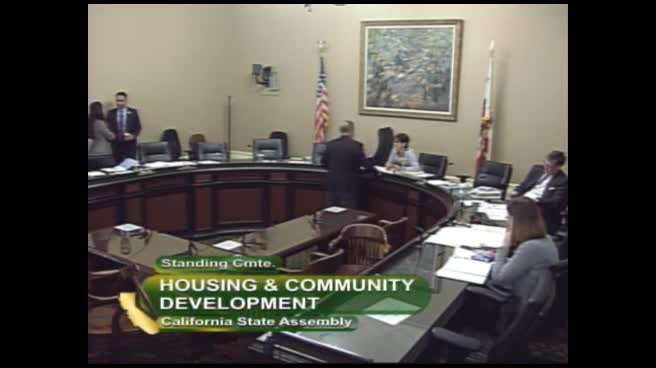 22MIN
Assembly Standing Committee on Housing and Community Development
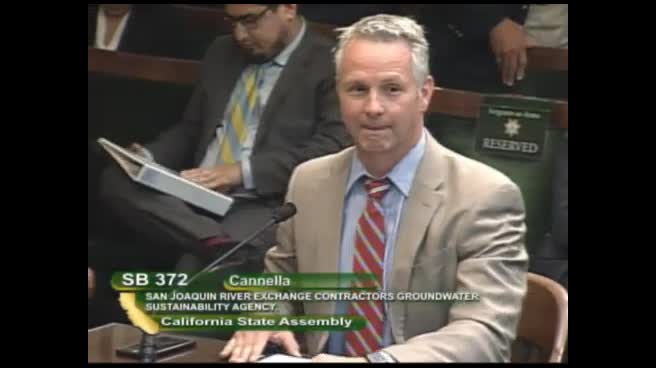 5MIN
Assembly Standing Committee on Local Government
 2MIN
Senate Floor
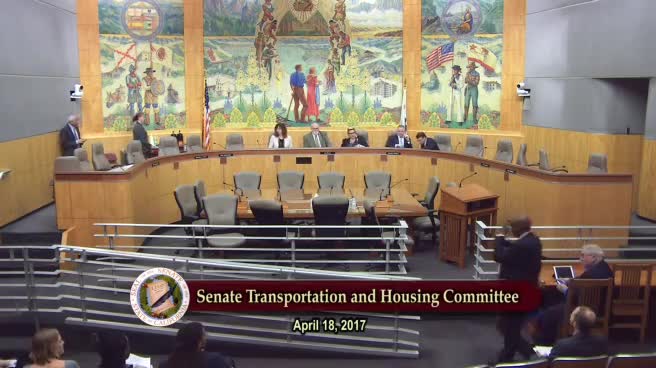 13MIN
Senate Standing Committee on Transportation and Housing
Bill Author

Bill Co-Author(s):
