SB 295: Farm labor contractors: sexual harassment prevention.
- Session Year: 2017-2018
- House: Senate
- Latest Version Date: 2017-10-02
Existing law requires farm labor contractors to be licensed by the Labor Commissioner and to comply with specified employment laws applicable to farm labor contractors. A violation of those laws is a crime.
Existing law prohibits the issuance of a farm labor contractor license unless the applicant attests in writing that certain employees have received sexual harassment prevention and reporting training in accordance with prescribed requirements relating to the substance, administration, and record of the training.
This bill would additionally require that training for each agricultural employee be in the language understood by that employee. The bill would require a licensee, as part of his or her application for license renewal, to provide the commissioner with a complete list of all materials or resources utilized to provide sexual harassment prevention training to his or her agricultural employees in the calendar year prior to the month the renewal application is submitted. The bill would also require a licensee, as part of that application for license renewal, to provide to the commissioner the total number of agricultural employees trained in sexual harassment prevention in the calendar year prior to the month the renewal application is submitted. The bill would require the commissioner to aggregate the data provided by licensees regarding the number of employees trained and publish on his or her Internet Web site the total number of agricultural employees trained in the previous calendar year.
The bill would make it a violation of existing laws relating to farm labor contractors to fail to comply with specific existing provisions relating to the training requirements or the bills requirement to provide the training in the language understood by the employee. The bill would authorize the commissioner to issue citations and assess civil penalties of $100 for each violation, as prescribed. Because a violation of the new provisions would be a crime, the bill would impose a state-mandated local program.
The California Constitution requires the state to reimburse local agencies and school districts for certain costs mandated by the state. Statutory provisions establish procedures for making that reimbursement.
This bill would provide that no reimbursement is required by this act for a specified reason.
Existing law requires farm labor contractors to be licensed by the Labor Commissioner and to comply with specified employment laws applicable to farm labor contractors. A violation of those laws is a crime.
Existing law prohibits the issuance of a farm labor contractor license unless the applicant attests in writing that certain employees have received sexual harassment prevention and reporting training in accordance with prescribed requirements relating to the substance, administration, and record of the training.
This bill would additionally require that training for each agricultural employee be in the language understood by that employee. The bill would require a licensee, as part of his or her application for license renewal, to provide the commissioner with a complete list of all materials or resources utilized to provide sexual harassment prevention training to his or her agricultural employees in the calendar year prior to the month the renewal application is submitted. The bill would also require a licensee, as part of that application for license renewal, to provide to the commissioner the total number of agricultural employees trained in sexual harassment prevention in the calendar year prior to the month the renewal application is submitted. The bill would require the commissioner to aggregate the data provided by licensees regarding the number of employees trained and publish on his or her Internet Web site the total number of agricultural employees trained in the previous calendar year.
The bill would make it a violation of existing laws relating to farm labor contractors to fail to comply with specific existing provisions relating to the training requirements. requirements or the bills requirement to provide the training in the language understood by the employee. The bill would authorize the commissioner to issue citations and assess civil penalties of $100 for each violation, as prescribed. Because a violation of the new provisions would be a crime, the bill would impose a state-mandated local program.
The California Constitution requires the state to reimburse local agencies and school districts for certain costs mandated by the state. Statutory provisions establish procedures for making that reimbursement.
This bill would provide that no reimbursement is required by this act for a specified reason.
Existing law requires farm labor contractors to be licensed by the Labor Commissioner and to comply with specified employment laws applicable to farm labor contractors. A violation of those laws is a crime.
Existing law prohibits the issuance of a farm labor contractor license unless the applicant attests in writing that certain employees have received sexual harassment prevention and reporting training in accordance with prescribed requirements relating to the substance, administration, and record of the training.
This bill would additionally require that training for each agricultural employee be in the language understood by that employee. The bill would require a licensee, as part of his or her application for license renewal, to provide the commissioner with a complete list of all materials or resources utilized to provide sexual harassment prevention training to his or her agricultural employees in the calendar year prior to the month the renewal application is submitted. The bill would also require a licensee, as part of that application for license renewal, to provide to the commissioner the total number of agricultural employees trained in sexual harassment prevention in the calendar year prior to the month the renewal application is submitted. The bill would require the commissioner to aggregate the data provided by licensees regarding the number of employees trained and publish on his or her Internet Web site the total number of agricultural employees trained in the previous calendar year.
The bill would make it a violation of existing laws relating to farm labor contractors to fail to comply with specific provisions relating to the training requirements. The bill would authorize the commissioner to issue citations and assess civil penalties of $100 for each violation, as prescribed. Because a violation of the new provisions would be a crime, the bill would impose a state-mandated local program.
The California Constitution requires the state to reimburse local agencies and school districts for certain costs mandated by the state. Statutory provisions establish procedures for making that reimbursement.
This bill would provide that no reimbursement is required by this act for a specified reason.
Existing law requires farm labor contractors to be licensed by the Labor Commissioner and to comply with specified employment laws applicable to farm labor contractors. A violation of those laws is a crime.
Existing law prohibits the issuance of a farm labor contractor license unless the applicant attests in writing that certain employees have received sexual harassment prevention and reporting training in accordance with prescribed requirements relating to the substance, administration, and record of the training.
This bill would additionally require that training for each agricultural employee be in a the language understood by that employee. The bill would require a licensee, as part of his or her application for license renewal, to provide the commissioner with a complete list of all materials or resources utilized to provide sexual harassment prevention training to his or her agricultural employees in the calendar year prior to the month the renewal application is submitted. The bill would also require a licensee, as part of that application for license renewal, to provide to the commissioner the total number of agricultural employees trained in sexual harassment prevention in the calendar year prior to the month the renewal application is submitted. The bill would require the commissioner to aggregate and publish on his or her Internet Web site the total number of agricultural employees trained in the previous calendar year.
The bill would make it a violation of existing laws relating to farm labor contractors to fail to comply with specific provisions relating to the training requirements. The bill would authorize the commissioner to issue citations and assess civil penalties of $100 for each violation, as prescribed. Because a violation of the new provisions would be a crime, the bill would impose a state-mandated local program.
The California Constitution requires the state to reimburse local agencies and school districts for certain costs mandated by the state. Statutory provisions establish procedures for making that reimbursement.
This bill would provide that no reimbursement is required by this act for a specified reason.
Existing law requires farm labor contractors to be licensed by the Labor Commissioner and to comply with specified employment laws applicable to farm labor contractors. A violation of those laws is a crime.
Existing law prohibits the issuance of a farm labor contractor license unless the applicant attests in writing that certain employees have received sexual harassment prevention and reporting training in accordance with prescribed requirements relating to the substance, administration, and record of the training.
This bill would additionally require that training for each agricultural employee be in a language understood by that employee. The bill would require a licensee, as part of his or her application for license renewal, to provide the commissioner with a complete list of all materials or resources utilized to provide sexual harassment prevention training to his or her agricultural employees in the calendar year prior to the month the renewal application is submitted. The bill would also require a licensee, as part of that application for license renewal, to provide to the commissioner the total number of agricultural employees trained in sexual harassment prevention in the calendar year prior to the month the renewal application is submitted. The bill would require the commissioner to aggregate and publish on his or her Internet Web site the total number of agricultural employees trained in the previous calendar year.
The bill would make it a violation of existing laws relating to farm labor contractors to fail to comply with specific provisions relating to the training requirements. The bill would authorize the commissioner to issue citations and assess civil penalties of $100 for each violation, as prescribed. Because a violation of the new provisions would be a crime, the bill would impose a state-mandated local program.
The California Constitution requires the state to reimburse local agencies and school districts for certain costs mandated by the state. Statutory provisions establish procedures for making that reimbursement.
This bill would provide that no reimbursement is required by this act for a specified reason.
(a)The Labor Commissioner shall not issue to any person a license to act as a farm labor contractor, nor shall the Labor Commissioner renew that license, until all of the following conditions are satisfied:
(1)The person has executed a written application in a form prescribed by the Labor Commissioner, subscribed and sworn to by the person, and containing all of the following:
(A)A statement by the person of all facts required by the Labor Commissioner concerning the applicants character, competency, responsibility, and the manner and method by which the person proposes to conduct operations as a farm labor contractor if the license is issued.
(B)The names and addresses of all persons, except bona fide employees on stated salaries, financially interested, either as partners, associates, or profit sharers, in the proposed operation as a farm labor contractor, together with the amount of their respective interests.
(C)A declaration consenting to the designation by a court of the Labor Commissioner as an agent available to accept service of summons in any action against the licensee if the licensee has left the jurisdiction in which the action is commenced or otherwise has become unavailable to accept service.
(D)The names and addresses of all persons who in the previous calendar year performed any services described in subdivision (b) of Section 1682 within the scope of his or her employment by the licensee on whose behalf he or she was acting, unless the person was employed as an independent contractor.
(2)The Labor Commissioner, after investigation, is satisfied as to the character, competency, and responsibility of the person.
(3)(A)The person has deposited with the Labor Commissioner a surety bond in an amount based on the size of the persons annual payroll for all employees, as follows:
(i)For payrolls up to five hundred thousand dollars ($500,000), a twenty-five-thousand-dollar ($25,000) bond.
(ii)For payrolls of five hundred thousand dollars ($500,000) to two million dollars ($2,000,000), a fifty-thousand-dollar ($50,000) bond.
(iii)For payrolls greater than two million dollars ($2,000,000), a seventy-five-thousand-dollar ($75,000) bond.
(B)For purposes of this paragraph, the Labor Commissioner shall require documentation of the size of the persons annual payroll, which may include, but is not limited to, information provided by the person to the Employment Development Department, the Franchise Tax Board, the Division of Workers Compensation, the insurer providing the licensees workers compensation insurance, or the Internal Revenue Service.
(C)If the contractor has been the subject of a final judgment in a year in an amount equal to or greater than the amount of the bond required, he or she shall be required to deposit an additional bond within 60 days.
(D)All bonds required under this chapter shall be payable to the people of the State of California and shall be conditioned upon the farm labor contractors compliance with all the terms and provisions of this chapter and subdivisions (j) and (k) of Section 12940 of, and Sections 12950 and 12950.1 of, the Government Code, and payment of all damages occasioned to any person by failure to do so, or by any violation of this chapter or of subdivision (j) or (k) of Section 12940 of, or of Section 12950 or 12950.1 of, the Government Code, or any violation of Title VII of the Civil Rights Act of 1964 (Public Law 88-352), or false statements or misrepresentations made in the procurement of the license. The bond shall also be payable for interest on wages and for any damages arising from violation of orders of the Industrial Welfare Commission, and for any other monetary relief awarded to an agricultural worker as a result of a violation of this code or of subdivision (j) or (k) of Section 12940 of, or Section 12950 or 12950.1 of, the Government Code, or any violation of Title VII of the Civil Rights Act of 1964 (Public Law 88-352).
(4)The person has paid to the Labor Commissioner a license fee of five hundred dollars ($500) plus a filing fee of ten dollars ($10). However, when a timely application for renewal is filed, the ten-dollar ($10) filing fee is not required. The license fee shall increase by one hundred dollars ($100), to six hundred dollars ($600), on January 1, 2015. The amount attributable to this increase shall be expended by the Labor Commissioner to fund the Farm Labor Contractor Enforcement Unit and the Farm Labor Contractor License Verification Unit. The Labor Commissioner shall deposit one hundred fifty dollars ($150) of each licensees annual license fee into the Farmworker Remedial Account. Funds from this account shall be disbursed by the Labor Commissioner only to persons determined by the Labor Commissioner to have been damaged by any licensee or to persons determined by the Labor Commissioner to have been damaged by an unlicensed farm labor contractor.
(A)In making these determinations, the Labor Commissioner shall disburse funds from the Farmworker Remedial Account to satisfy claims against farm labor contractors or unlicensed farm labor contractors, which shall include unpaid wages, interest on wages, and any damages or other monetary relief arising from the violation of orders of the Industrial Welfare Commission or from a violation of this code, including statutory penalties recoverable by an employee determined to be due to an agricultural worker and for all damages arising from any violation of subdivision (j) or (k) of Section 12940 of, or of Section 12950 or 12950.1 of, the Government Code, or any violation of Title VII of the Civil Rights Act of 1964 (Public Law 88-352).
(B)Any disbursement shall be made pursuant to a claim for recovery from the account in accordance with procedures prescribed by the Labor Commissioner.
(C)Any disbursed funds subsequently recovered from a liable party by the Labor Commissioner pursuant to Section 1693, or otherwise, shall be returned to the Farmworker Remedial Account.
(5)The person has taken a written examination that demonstrates an essential degree of knowledge of the current laws and administrative regulations concerning farm labor contractors as the Labor Commissioner deems necessary for the safety and protection of farmers, farmworkers, and the public, including the identification and prevention of sexual harassment in the workplace. To successfully complete the examinations, the person must correctly answer at least 85 percent of the questions posed. The examination period shall not exceed four hours. The examination may only be taken a maximum of three times in a calendar year. The examinations shall include a demonstration of knowledge of the current laws and regulations regarding wages, hours, and working conditions, penalties, employee housing and transportation, collective bargaining, field sanitation, and safe work practices related to pesticide use, including all of the following subjects:
(A)Field reentry regulations.
(B)Worker pesticide safety training.
(C)Employer responsibility for safe working conditions.
(D)Symptoms and appropriate treatment of pesticide poisoning.
(6)The person has registered as a farm labor contractor pursuant to the federal Migrant and Seasonal Agricultural Worker Protection Act (29 U.S.C. Sec. 1801 et seq.), when registration is required pursuant to federal law, and that information is provided by the person to the Labor Commissioner.
(7)Each of the persons employees has registered as a farm labor contractor employee pursuant to the federal Migrant and Seasonal Agricultural Worker Protection Act (29 U.S.C. Sec. 1801 et seq.) if that registration is required pursuant to federal law, and that information is provided by the person to the Labor Commissioner.
(8)(A)The person has executed a written statement, that has been provided to the Labor Commissioner, attesting that the persons supervisorial employees, including any supervisor, crewleader, mayordomo, foreperson, or other employee whose duties include the supervision, direction, or control of agricultural employees, have been trained at least once for at least two hours each calendar year in the prevention of sexual harassment in the workplace, and that all new nonsupervisorial employees, including agricultural employees, have been trained at the time of hire, and that all nonsupervisorial employees, including agricultural employees, have been trained at least once every two years in identifying, preventing, and reporting sexual harassment in the workplace.
(B)Sexual harassment prevention training shall consist of training administered by a licensee or appropriate designee of the licensee. Sexual harassment training for each agricultural employee shall be in the language understood by that employee. The person may comply with this language requirement either by providing the training in that language or by having the training interpreted for the employee in the language that he or she understands.
(C)Sexual harassment prevention training shall include, at a minimum, components of the following as consistent with Section 12950 of the Government Code:
(i)The illegality of sexual harassment.
(ii)The definition of sexual harassment under applicable state and federal law.
(iii)A description of sexual harassment, utilizing examples.
(iv)The internal complaint process of the employer available to the employee.
(v)The legal remedies and complaint process available through the Department of Fair Employment and Housing.
(vi)Directions for how to contact the Department of Fair Employment and Housing.
(vii)The protection against retaliation provided under current law.
(D)(i)The trainer may use the text of the Department of Fair Employment and Housings pamphlet DFEH-185, Sexual Harassment as a guide to training, or may use other written material or other training resources covering the information required in subparagraph (C).
(ii)As part of his or her application for license renewal, in order to establish that training is occurring, a licensee shall provide the Labor Commissioner with a complete list of all materials or resources utilized to provide sexual harassment prevention training to his or her agricultural employees in the calendar year prior to the month the renewal application is submitted.
(E)At the conclusion of the training, the trainer shall provide the employee with a copy of the Department of Fair Employment and Housings pamphlet DFEH-185, and a record of the training on a form provided by the Labor Commissioner that includes the name of the trainer and the date of the training.
(F)The licensee shall keep a record with the names of all employees who have received sexual harassment training for a period of three years.
(G)(i)As part of his or her application for license renewal, the licensee shall provide to the Labor Commissioner the total number of agricultural employees trained in sexual harassment prevention in the calendar year prior to the month the renewal application is submitted.
(ii)The Labor Commissioner shall annually aggregate the data provided under this subparagraph by licensees and publish on the Internet Web site of the Labor Commissioner the total number of agricultural employees trained in sexual harassment prevention in the previous calendar year.
(b)The Labor Commissioner shall consult with the Director of Pesticide Regulation, the Department of the California Highway Patrol, the Department of Housing and Community Development, the Employment Development Department, the Department of Fair Employment and Housing, the Department of Food and Agriculture, the Department of Motor Vehicles, and the Division of Occupational Safety and Health in preparing the examination required by paragraph (5) of subdivision (a) and the appropriate educational materials pertaining to the matters included in the examination, and may charge a fee of not more than two hundred dollars ($200) to cover the cost of administration of the examination.
(c)The person shall also enroll and participate in at least nine hours of relevant educational classes each year. The classes shall include at least one hour of sexual harassment prevention training. The classes shall be chosen from a list of approved classes prepared by the Labor Commissioner, in consultation with the persons and entities listed in subdivision (b) and county agricultural commissioners.
(d)The Labor Commissioner may renew a license without requiring the applicant for renewal to take the examination specified in paragraph (5) of subdivision (a) if the Labor Commissioner finds that the applicant meets all of the following criteria:
(1)Has satisfactorily completed the examination during the immediately preceding two years.
(2)Has not during the preceding year been found to be in violation of any applicable laws or regulations including, but not limited to, Division 7 (commencing with Section 12501) of the Food and Agricultural Code, subdivisions (j) and (k) of Section 12940 of, and Section 12950 or 12950.1 of, the Government Code, Part 1 (commencing with Section 17000) of Division 13 of the Health and Safety Code, Division 2 (commencing with Section 200), Division 4 (commencing with Section 3200), and Division 5 (commencing with Section 6300) of this code, and Chapter 1 (commencing with Section 12500) of Division 6 of the Vehicle Code.
(3)Has, for each year since the license was obtained, enrolled and participated in at least eight hours of relevant, educational classes, chosen from a list of approved classes prepared by the Labor Commissioner.
(4)Has complied with all other requirements of this section.
SEC. 2.Section 1697.5 is added to the Labor Code, to read:1697.5.(a)It is a violation of this chapter for a licensee to do any of the following:
(1)Fail to train an agricultural employee at the time of hire, as required by subparagraph (A) of paragraph (8) of subdivision (a) of Section 1684.
(2)Fail to provide training in a language understood by the agricultural employee, as required by subparagraph (B) of paragraph (8) of subdivision (a) of Section 1684.
(3)Fail to provide an agricultural employee with at least the minimum training, as required by subparagraph (C) of paragraph (8) of subdivision (a) of Section 1684.
(4)Fail to provide an agricultural employee either (A) with a record of his or her training, or (B) a copy of the specified Department of Fair Employment and Housing sexual harassment pamphlet, as required by subparagraph (E) of paragraph (8) of subdivision (a) of Section 1684.
(5)Provide an agricultural employee with a false record of completion of his or her training, as required by subparagraph (E) of paragraph (8) of subdivision (a) of Section 1684, when he or she has, in fact, received no training.
(6)Fail to keep a record of training for each agricultural employee who has received training, as required by subparagraph (F) of paragraph (8) of subdivision (a) of Section 1684.
(b)If, upon inspection or investigation, the Labor Commissioner determines that a violation of any of the provisions listed in subdivision (a) has occurred, the Labor Commissioner may issue a citation and assess a civil penalty in the amount of one hundred dollars ($100) for each violation. In enforcing this section, the Labor Commissioner shall take into consideration whether the violation was inadvertent, and in his or her discretion, may decide not to penalize an employer for a first violation when that violation was due to a clerical error or inadvertent mistake.
(c)The procedures for issuing, contesting, and enforcing judgments for citations or civil penalties issued by the Labor Commissioner for violations of this section shall be the same as those set forth in Section 1197.1.
SEC. 3.No reimbursement is required by this act pursuant to Section 6 of Article XIIIB of the California Constitution because the only costs that may be incurred by a local agency or school district will be incurred because this act creates a new crime or infraction, eliminates a crime or infraction, or changes the penalty for a crime or infraction, within the meaning of Section 17556 of the Government Code, or changes the definition of a crime within the meaning of Section 6 of Article XIIIB of the California Constitution.
(a)The Labor Commissioner shall not issue to any person a license to act as a farm labor contractor, nor shall the Labor Commissioner renew that license, until all of the following conditions are satisfied:
(1)The person has executed a written application in a form prescribed by the Labor Commissioner, subscribed and sworn to by the person, and containing all of the following:
(A)A statement by the person of all facts required by the Labor Commissioner concerning the applicants character, competency, responsibility, and the manner and method by which the person proposes to conduct operations as a farm labor contractor if the license is issued.
(B)The names and addresses of all persons, except bona fide employees on stated salaries, financially interested, either as partners, associates, or profit sharers, in the proposed operation as a farm labor contractor, together with the amount of their respective interests.
(C)A declaration consenting to the designation by a court of the Labor Commissioner as an agent available to accept service of summons in any action against the licensee if the licensee has left the jurisdiction in which the action is commenced or otherwise has become unavailable to accept service.
(D)The names and addresses of all persons who in the previous calendar year performed any services described in subdivision (b) of Section 1682 within the scope of his or her employment by the licensee on whose behalf he or she was acting, unless the person was employed as an independent contractor.
(2)The Labor Commissioner, after investigation, is satisfied as to the character, competency, and responsibility of the person.
(3)(A)The person has deposited with the Labor Commissioner a surety bond in an amount based on the size of the persons annual payroll for all employees, as follows:
(i)For payrolls up to five hundred thousand dollars ($500,000), a twenty-five-thousand-dollar ($25,000) bond.
(ii)For payrolls of five hundred thousand dollars ($500,000) to two million dollars ($2,000,000), a fifty-thousand-dollar ($50,000) bond.
(iii)For payrolls greater than two million dollars ($2,000,000), a seventy-five-thousand-dollar ($75,000) bond.
(B)For purposes of this paragraph, the Labor Commissioner shall require documentation of the size of the persons annual payroll, which may include, but is not limited to, information provided by the person to the Employment Development Department, the Franchise Tax Board, the Division of Workers Compensation, the insurer providing the licensees workers compensation insurance, or the Internal Revenue Service.
(C)If the contractor has been the subject of a final judgment in a year in an amount equal to or greater than the amount of the bond required, he or she shall be required to deposit an additional bond within 60 days.
(D)All bonds required under this chapter shall be payable to the people of the State of California and shall be conditioned upon the farm labor contractors compliance with all the terms and provisions of this chapter and subdivisions (j) and (k) of Section 12940 of, and Sections 12950 and 12950.1 of, the Government Code, and payment of all damages occasioned to any person by failure to do so, or by any violation of this chapter or of subdivision (j) or (k) of Section 12940 of, or of Section 12950 or 12950.1 of, the Government Code, or any violation of Title VII of the Civil Rights Act of 1964 (Public Law 88-352), or false statements or misrepresentations made in the procurement of the license. The bond shall also be payable for interest on wages and for any damages arising from violation of orders of the Industrial Welfare Commission, and for any other monetary relief awarded to an agricultural worker as a result of a violation of this code or of subdivision (j) or (k) of Section 12940 of, or Section 12950 or 12950.1 of, the Government Code, or any violation of Title VII of the Civil Rights Act of 1964 (Public Law 88-352).
(4)The person has paid to the Labor Commissioner a license fee of five hundred dollars ($500) plus a filing fee of ten dollars ($10). However, when a timely application for renewal is filed, the ten-dollar ($10) filing fee is not required. The license fee shall increase by one hundred dollars ($100), to six hundred dollars ($600), on January 1, 2015. The amount attributable to this increase shall be expended by the Labor Commissioner to fund the Farm Labor Contractor Enforcement Unit and the Farm Labor Contractor License Verification Unit. The Labor Commissioner shall deposit one hundred fifty dollars ($150) of each licensees annual license fee into the Farmworker Remedial Account. Funds from this account shall be disbursed by the Labor Commissioner only to persons determined by the Labor Commissioner to have been damaged by any licensee or to persons determined by the Labor Commissioner to have been damaged by an unlicensed farm labor contractor.
(A)In making these determinations, the Labor Commissioner shall disburse funds from the Farmworker Remedial Account to satisfy claims against farm labor contractors or unlicensed farm labor contractors, which shall include unpaid wages, interest on wages, and any damages or other monetary relief arising from the violation of orders of the Industrial Welfare Commission or from a violation of this code, including statutory penalties recoverable by an employee determined to be due to an agricultural worker and for all damages arising from any violation of subdivision (j) or (k) of Section 12940 of, or of Section 12950 or 12950.1 of, the Government Code, or any violation of Title VII of the Civil Rights Act of 1964 (Public Law 88-352).
(B)Any disbursement shall be made pursuant to a claim for recovery from the account in accordance with procedures prescribed by the Labor Commissioner.
(C)Any disbursed funds subsequently recovered from a liable party by the Labor Commissioner pursuant to Section 1693, or otherwise, shall be returned to the Farmworker Remedial Account.
(5)The person has taken a written examination that demonstrates an essential degree of knowledge of the current laws and administrative regulations concerning farm labor contractors as the Labor Commissioner deems necessary for the safety and protection of farmers, farmworkers, and the public, including the identification and prevention of sexual harassment in the workplace. To successfully complete the examinations, the person must correctly answer at least 85 percent of the questions posed. The examination period shall not exceed four hours. The examination may only be taken a maximum of three times in a calendar year. The examinations shall include a demonstration of knowledge of the current laws and regulations regarding wages, hours, and working conditions, penalties, employee housing and transportation, collective bargaining, field sanitation, and safe work practices related to pesticide use, including all of the following subjects:
(A)Field reentry regulations.
(B)Worker pesticide safety training.
(C)Employer responsibility for safe working conditions.
(D)Symptoms and appropriate treatment of pesticide poisoning.
(6)The person has registered as a farm labor contractor pursuant to the federal Migrant and Seasonal Agricultural Worker Protection Act (29 U.S.C. Sec. 1801 et seq.), when registration is required pursuant to federal law, and that information is provided by the person to the Labor Commissioner.
(7)Each of the persons employees has registered as a farm labor contractor employee pursuant to the federal Migrant and Seasonal Agricultural Worker Protection Act (29 U.S.C. Sec. 1801 et seq.) if that registration is required pursuant to federal law, and that information is provided by the person to the Labor Commissioner.
(8)(A)The person has executed a written statement, that has been provided to the Labor Commissioner, attesting that the persons supervisorial employees, including any supervisor, crewleader, mayordomo, foreperson, or other employee whose duties include the supervision, direction, or control of agricultural employees, have been trained at least once for at least two hours each calendar year in the prevention of sexual harassment in the workplace, and that all new nonsupervisorial employees, including agricultural employees, have been trained at the time of hire, and that all nonsupervisorial employees, including agricultural employees, have been trained at least once every two years in identifying, preventing, and reporting sexual harassment in the workplace.
(B)Sexual harassment prevention training shall consist of training administered by a licensee or appropriate designee of the licensee. Sexual harassment training for each agricultural employee shall be in the language understood by that employee. The person may comply with this language requirement either by providing the training in that language or by having the training interpreted for the employee in the language that he or she understands.
(C)Sexual harassment prevention training shall include, at a minimum, components of the following as consistent with Section 12950 of the Government Code:
(i)The illegality of sexual harassment.
(ii)The definition of sexual harassment under applicable state and federal law.
(iii)A description of sexual harassment, utilizing examples.
(iv)The internal complaint process of the employer available to the employee.
(v)The legal remedies and complaint process available through the Department of Fair Employment and Housing.
(vi)Directions for how to contact the Department of Fair Employment and Housing.
(vii)The protection against retaliation provided under current law.
(D)(i)The trainer may use the text of the Department of Fair Employment and Housings pamphlet DFEH-185, Sexual Harassment as a guide to training, or may use other written material or other training resources covering the information required in subparagraph (C).
(ii)As part of his or her application for license renewal, a licensee shall provide the Labor Commissioner with a complete list of all materials or resources utilized to provide sexual harassment prevention training to his or her agricultural employees in the calendar year prior to the month the renewal application is submitted.
(E)At the conclusion of the training, the trainer shall provide the employee with a copy of the Department of Fair Employment and Housings pamphlet DFEH-185, and a record of the training on a form provided by the Labor Commissioner that includes the name of the trainer and the date of the training.
(F)The licensee shall keep a record with the names of all employees who have received sexual harassment training for a period of three years.
(G)(i)As part of his or her application for license renewal, the licensee shall provide to the Labor Commissioner the total number of agricultural employees trained in sexual harassment prevention in the calendar year prior to the month the renewal application is submitted.
(ii)The Labor Commissioner shall annually aggregate the data provided under this subparagraph by licensees and publish on the Internet Web site of the Labor Commissioner the total number of agricultural employees trained in sexual harassment prevention in the previous calendar year.
(b)The Labor Commissioner shall consult with the Director of Pesticide Regulation, the Department of the California Highway Patrol, the Department of Housing and Community Development, the Employment Development Department, the Department of Fair Employment and Housing, the Department of Food and Agriculture, the Department of Motor Vehicles, and the Division of Occupational Safety and Health in preparing the examination required by paragraph (5) of subdivision (a) and the appropriate educational materials pertaining to the matters included in the examination, and may charge a fee of not more than two hundred dollars ($200) to cover the cost of administration of the examination.
(c)The person shall also enroll and participate in at least nine hours of relevant educational classes each year. The classes shall include at least one hour of sexual harassment prevention training. The classes shall be chosen from a list of approved classes prepared by the Labor Commissioner, in consultation with the persons and entities listed in subdivision (b) and county agricultural commissioners.
(d)The Labor Commissioner may renew a license without requiring the applicant for renewal to take the examination specified in paragraph (5) of subdivision (a) if the Labor Commissioner finds that the applicant meets all of the following criteria:
(1)Has satisfactorily completed the examination during the immediately preceding two years.
(2)Has not during the preceding year been found to be in violation of any applicable laws or regulations including, but not limited to, Division 7 (commencing with Section 12501) of the Food and Agricultural Code, subdivisions (j) and (k) of Section 12940 of, and Section 12950 or 12950.1 of, the Government Code, Part 1 (commencing with Section 17000) of Division 13 of the Health and Safety Code, Division 2 (commencing with Section 200), Division 4 (commencing with Section 3200), and Division 5 (commencing with Section 6300) of this code, and Chapter 1 (commencing with Section 12500) of Division 6 of the Vehicle Code.
(3)Has, for each year since the license was obtained, enrolled and participated in at least eight hours of relevant, educational classes, chosen from a list of approved classes prepared by the Labor Commissioner.
(4)Has complied with all other requirements of this section.
SEC. 2.Section 1697.5 is added to the Labor Code, to read:1697.5.(a)It is a violation of this chapter for a licensee to do any of the following:
(1)Fail to train an agricultural employee at the time of hire, as required by subparagraph (A) of paragraph (8) of subdivision (a) of Section 1684.
(2)Fail to provide training in a language understood by the agricultural employee, as required by subparagraph (B) of paragraph (8) of subdivision (a) of Section 1684.
(3)Fail to provide an agricultural employee with at least the minimum training, as required by subparagraph (C) of paragraph (8) of subdivision (a) of Section 1684.
(4)Fail to provide an agricultural employee either (A) with a record of his or her training, or (B) a copy of the specified Department of Fair Employment and Housing sexual harassment pamphlet, as required by subparagraph (E) of paragraph (8) of subdivision (a) of Section 1684.
(5)Provide an agricultural employee with a false record of completion of his or her training, as required by subparagraph (E) of paragraph (8) of subdivision (a) of Section 1684, when he or she has, in fact, received no training.
(6)Fail to keep a record of training for each agricultural employee who has received training, as required by subparagraph (F) of paragraph (8) of subdivision (a) of Section 1684.
(b)If, upon inspection or investigation, the Labor Commissioner determines that a violation of any of the provisions listed in subdivision (a) has occurred, the Labor Commissioner may issue a citation and assess a civil penalty in the amount of one hundred dollars ($100) for each violation.
(c)The procedures for issuing, contesting, and enforcing judgments for citations or civil penalties issued by the Labor Commissioner for violations of this section shall be the same as those set forth in Section 1197.1.
SEC. 3.No reimbursement is required by this act pursuant to Section 6 of Article XIIIB of the California Constitution because the only costs that may be incurred by a local agency or school district will be incurred because this act creates a new crime or infraction, eliminates a crime or infraction, or changes the penalty for a crime or infraction, within the meaning of Section 17556 of the Government Code, or changes the definition of a crime within the meaning of Section 6 of Article XIIIB of the California Constitution.
(a)The Labor Commissioner shall not issue to any person a license to act as a farm labor contractor, nor shall the Labor Commissioner renew that license, until all of the following conditions are satisfied:
(1)The person has executed a written application in a form prescribed by the Labor Commissioner, subscribed and sworn to by the person, and containing all of the following:
(A)A statement by the person of all facts required by the Labor Commissioner concerning the applicants character, competency, responsibility, and the manner and method by which the person proposes to conduct operations as a farm labor contractor if the license is issued.
(B)The names and addresses of all persons, except bona fide employees on stated salaries, financially interested, either as partners, associates, or profit sharers, in the proposed operation as a farm labor contractor, together with the amount of their respective interests.
(C)A declaration consenting to the designation by a court of the Labor Commissioner as an agent available to accept service of summons in any action against the licensee if the licensee has left the jurisdiction in which the action is commenced or otherwise has become unavailable to accept service.
(D)The names and addresses of all persons who in the previous calendar year performed any services described in subdivision (b) of Section 1682 within the scope of his or her employment by the licensee on whose behalf he or she was acting, unless the person was employed as an independent contractor.
(2)The Labor Commissioner, after investigation, is satisfied as to the character, competency, and responsibility of the person.
(3)(A)The person has deposited with the Labor Commissioner a surety bond in an amount based on the size of the persons annual payroll for all employees, as follows:
(i)For payrolls up to five hundred thousand dollars ($500,000), a twenty-five-thousand-dollar ($25,000) bond.
(ii)For payrolls of five hundred thousand dollars ($500,000) to two million dollars ($2,000,000), a fifty-thousand-dollar ($50,000) bond.
(iii)For payrolls greater than two million dollars ($2,000,000), a seventy-five-thousand-dollar ($75,000) bond.
(B)For purposes of this paragraph, the Labor Commissioner shall require documentation of the size of the persons annual payroll, which may include, but is not limited to, information provided by the person to the Employment Development Department, the Franchise Tax Board, the Division of Workers Compensation, the insurer providing the licensees workers compensation insurance, or the Internal Revenue Service.
(C)If the contractor has been the subject of a final judgment in a year in an amount equal to or greater than the amount of the bond required, he or she shall be required to deposit an additional bond within 60 days.
(D)All bonds required under this chapter shall be payable to the people of the State of California and shall be conditioned upon the farm labor contractors compliance with all the terms and provisions of this chapter and subdivisions (j) and (k) of Section 12940 of, and Sections 12950 and 12950.1 of, the Government Code, and payment of all damages occasioned to any person by failure to do so, or by any violation of this chapter or of subdivision (j) or (k) of Section 12940 of, or of Section 12950 or 12950.1 of, the Government Code, or any violation of Title VII of the Civil Rights Act of 1964 (Public Law 88-352), or false statements or misrepresentations made in the procurement of the license. The bond shall also be payable for interest on wages and for any damages arising from violation of orders of the Industrial Welfare Commission, and for any other monetary relief awarded to an agricultural worker as a result of a violation of this code or of subdivision (j) or (k) of Section 12940 of, or Section 12950 or 12950.1 of, the Government Code, or any violation of Title VII of the Civil Rights Act of 1964 (Public Law 88-352).
(4)The person has paid to the Labor Commissioner a license fee of five hundred dollars ($500) plus a filing fee of ten dollars ($10). However, when a timely application for renewal is filed, the ten-dollar ($10) filing fee is not required. The license fee shall increase by one hundred dollars ($100), to six hundred dollars ($600), on January 1, 2015. The amount attributable to this increase shall be expended by the Labor Commissioner to fund the Farm Labor Contractor Enforcement Unit and the Farm Labor Contractor License Verification Unit. The Labor Commissioner shall deposit one hundred fifty dollars ($150) of each licensees annual license fee into the Farmworker Remedial Account. Funds from this account shall be disbursed by the Labor Commissioner only to persons determined by the Labor Commissioner to have been damaged by any licensee if the damage exceeds the amount of the licensees bond or the surety fails to pay the full amount of the licensees bond, or to persons determined by the Labor Commissioner to have been damaged by an unlicensed farm labor contractor. In making these determinations, the Labor Commissioner shall disburse funds from the Farmworker Remedial Account to satisfy claims against farm labor contractors or unlicensed farm labor contractors, which shall also include interest on wages and any damages arising from the violation of orders of the Industrial Welfare Commission, for any other monetary relief awarded to an agricultural worker as a result of a violation of this code, and for all damages arising from any violation of subdivision (j) or (k) of Section 12940 of, or of Section 12950 or 12950.1 of, the Government Code, or any violation of Title VII of the Civil Rights Act of 1964 (Public Law 88-352). The Labor Commissioner may disburse funds from the Farmworker Remedial Account to farm labor contractors, for payment of farmworkers, when a contractor is unable to pay farmworkers due to the failure of a grower or packer to pay the contractor. Any disbursed funds subsequently recovered by the Labor Commissioner pursuant to Section 1693, or otherwise, shall be returned to the Farmworker Remedial Account.
(5)The person has taken a written examination that demonstrates an essential degree of knowledge of the current laws and administrative regulations concerning farm labor contractors as the Labor Commissioner deems necessary for the safety and protection of farmers, farmworkers, and the public, including the identification and prevention of sexual harassment in the workplace. To successfully complete the examinations, the person must correctly answer at least 85 percent of the questions posed. The examination period shall not exceed four hours. The examination may only be taken a maximum of three times in a calendar year. The examinations shall include a demonstration of knowledge of the current laws and regulations regarding wages, hours, and working conditions, penalties, employee housing and transportation, collective bargaining, field sanitation, and safe work practices related to pesticide use, including all of the following subjects:
(A)Field reentry regulations.
(B)Worker pesticide safety training.
(C)Employer responsibility for safe working conditions.
(D)Symptoms and appropriate treatment of pesticide poisoning.
(6)The person has registered as a farm labor contractor pursuant to the federal Migrant and Seasonal Agricultural Worker Protection Act (29 U.S.C. Sec. 1801 et seq.), when registration is required pursuant to federal law, and that information is provided by the person to the Labor Commissioner.
(7)Each of the persons employees has registered as a farm labor contractor employee pursuant to the federal Migrant and Seasonal Agricultural Worker Protection Act (29 U.S.C. Sec. 1801 et seq.) if that registration is required pursuant to federal law, and that information is provided by the person to the Labor Commissioner.
(8)(A)The person has executed a written statement, that has been provided to the Labor Commissioner, attesting that the persons supervisorial employees, including any supervisor, crewleader, mayordomo, foreperson, or other employee whose duties include the supervision, direction, or control of agricultural employees, have been trained at least once for at least two hours each calendar year in the prevention of sexual harassment in the workplace, and that all new nonsupervisorial employees, including agricultural employees, have been trained at the time of hire, and that all nonsupervisorial employees, including agricultural employees, have been trained at least once every two years in identifying, preventing, and reporting sexual harassment in the workplace.
(B)Sexual harassment prevention training shall consist of training administered by a licensee or appropriate designee of the licensee. Sexual harassment training for each agricultural employee shall be in a the language understood by that employee. The person may comply with this language requirement either by providing the training in that language or by having the training interpreted for the employee in the language that he or she understands.
(C)Sexual harassment prevention training shall include, at a minimum, components of the following as consistent with Section 12950 of the Government Code:
(i)The illegality of sexual harassment.
(ii)The definition of sexual harassment under applicable state and federal law.
(iii)A description of sexual harassment, utilizing examples.
(iv)The internal complaint process of the employer available to the employee.
(v)The legal remedies and complaint process available through the Department of Fair Employment and Housing.
(vi)Directions for how to contact the Department of Fair Employment and Housing.
(vii)The protection against retaliation provided under current law.
(D)(i)The trainer may use the text of the Department of Fair Employment and Housings pamphlet DFEH-185, Sexual Harassment as a guide to training, or may use other written material or other training resources covering the information required in subparagraph (C).
(ii)As part of his or her application for license renewal, a licensee shall provide the Labor Commissioner with a complete list of all materials or resources utilized to provide sexual harassment prevention training to his or her agricultural employees in the calendar year prior to the month the renewal application is submitted.
(E)At the conclusion of the training, the trainer shall provide the employee with a copy of the Department of Fair Employment and Housings pamphlet DFEH-185, and a record of the training on a form provided by the Labor Commissioner that includes the name of the trainer and the date of the training.
(F)The licensee shall keep a record with the names of all employees who have received sexual harassment training for a period of three years.
(G)(i)As part of his or her application for license renewal, the licensee shall provide to the Labor Commissioner the total number of agricultural employees trained in sexual harassment prevention in the calendar year prior to the month the renewal application is submitted.
(ii)The Labor Commissioner shall annually aggregate the data provided under this subparagraph by licensees and publish on the Internet Web site of the Labor Commissioner the total number of agricultural employees trained in sexual harassment prevention in the previous calendar year.
(b)The Labor Commissioner shall consult with the Director of Pesticide Regulation, the Department of the California Highway Patrol, the Department of Housing and Community Development, the Employment Development Department, the Department of Fair Employment and Housing, the Department of Food and Agriculture, the Department of Motor Vehicles, and the Division of Occupational Safety and Health in preparing the examination required by paragraph (5) of subdivision (a) and the appropriate educational materials pertaining to the matters included in the examination, and may charge a fee of not more than two hundred dollars ($200) to cover the cost of administration of the examination.
(c)The person shall also enroll and participate in at least nine hours of relevant educational classes each year. The classes shall include at least one hour of sexual harassment prevention training. The classes shall be chosen from a list of approved classes prepared by the Labor Commissioner, in consultation with the persons and entities listed in subdivision (b) and county agricultural commissioners.
(d)The Labor Commissioner may renew a license without requiring the applicant for renewal to take the examination specified in paragraph (5) of subdivision (a) if the Labor Commissioner finds that the applicant meets all of the following criteria:
(1)Has satisfactorily completed the examination during the immediately preceding two years.
(2)Has not during the preceding year been found to be in violation of any applicable laws or regulations including, but not limited to, Division 7 (commencing with Section 12501) of the Food and Agricultural Code, subdivisions (j) and (k) of Section 12940 of, and Section 12950 or 12950.1 of, the Government Code, Part 1 (commencing with Section 17000) of Division 13 of the Health and Safety Code, Division 2 (commencing with Section 200), Division 4 (commencing with Section 3200), and Division 5 (commencing with Section 6300) of this code, and Chapter 1 (commencing with Section 12500) of Division 6 of the Vehicle Code.
(3)Has, for each year since the license was obtained, enrolled and participated in at least eight hours of relevant, educational classes, chosen from a list of approved classes prepared by the Labor Commissioner.
(4)Has complied with all other requirements of this section.
SEC. 2.Section 1697.5 is added to the Labor Code, to read:1697.5.(a)It is a violation of this chapter for a licensee to do any of the following:
(1)Fail to train an agricultural employee at the time of hire, as required by subparagraph (A) of paragraph (8) of subdivision (a) of Section 1684.
(2)Fail to provide training in a language understood by the agricultural employee, as required by subparagraph (B) of paragraph (8) of subdivision (a) of Section 1684.
(3)Fail to provide an agricultural employee with at least the minimum training, as required by subparagraph (C) of paragraph (8) of subdivision (a) of Section 1684.
(4)Fail either to provide an agricultural employee either (A) with a record of his or her training, or fail to provide an agricultural employee with (B) a copy of the specified Department of Fair Employment and Housing sexual harassment pamphlet, as required by subparagraph (E) of paragraph (8) of subdivision (a) of Section 1684.
(5)Provide an agricultural employee with a false record of completion of his or her training, as required by subparagraph (E) of paragraph (8) of subdivision (a) of Section 1684, when he or she has, in fact, received no training.
(6)Fail to keep a record of training for each agricultural employee who has received training, as required by subparagraph (F) of paragraph (8) of subdivision (a) of Section 1684.
(b)If, upon inspection or investigation, the Labor Commissioner determines that a violation of any of the provisions listed in subdivision (a) has occurred, the Labor Commissioner may issue a citation and assess a civil penalty in the amount of one hundred dollars ($100) for each violation.
(c)The procedures for issuing, contesting, and enforcing judgments for citations or civil penalties issued by the Labor Commissioner for violations of this subdivision section shall be the same as those set forth in Section 1197.1.
SEC. 3.No reimbursement is required by this act pursuant to Section 6 of Article XIIIB of the California Constitution because the only costs that may be incurred by a local agency or school district will be incurred because this act creates a new crime or infraction, eliminates a crime or infraction, or changes the penalty for a crime or infraction, within the meaning of Section 17556 of the Government Code, or changes the definition of a crime within the meaning of Section 6 of Article XIIIB of the California Constitution.
(a)The Labor Commissioner shall not issue to any person a license to act as a farm labor contractor, nor shall the Labor Commissioner renew that license, until all of the following conditions are satisfied:
(1)The person has executed a written application in a form prescribed by the Labor Commissioner, subscribed and sworn to by the person, and containing all of the following:
(A)A statement by the person of all facts required by the Labor Commissioner concerning the applicants character, competency, responsibility, and the manner and method by which the person proposes to conduct operations as a farm labor contractor if the license is issued.
(B)The names and addresses of all persons, except bona fide employees on stated salaries, financially interested, either as partners, associates, or profit sharers, in the proposed operation as a farm labor contractor, together with the amount of their respective interests.
(C)A declaration consenting to the designation by a court of the Labor Commissioner as an agent available to accept service of summons in any action against the licensee if the licensee has left the jurisdiction in which the action is commenced or otherwise has become unavailable to accept service.
(D)The names and addresses of all persons who in the previous calendar year performed any services described in subdivision (b) of Section 1682 within the scope of his or her employment by the licensee on whose behalf he or she was acting, unless the person was employed as an independent contractor.
(2)The Labor Commissioner, after investigation, is satisfied as to the character, competency, and responsibility of the person.
(3)(A)The person has deposited with the Labor Commissioner a surety bond in an amount based on the size of the persons annual payroll for all employees, as follows:
(i)For payrolls up to five hundred thousand dollars ($500,000), a twenty-five-thousand-dollar ($25,000) bond.
(ii)For payrolls of five hundred thousand dollars ($500,000) to two million dollars ($2,000,000), a fifty-thousand-dollar ($50,000) bond.
(iii)For payrolls greater than two million dollars ($2,000,000), a seventy-five-thousand-dollar ($75,000) bond.
(B)For purposes of this paragraph, the Labor Commissioner shall require documentation of the size of the persons annual payroll, which may include, but is not limited to, information provided by the person to the Employment Development Department, the Franchise Tax Board, the Division of Workers Compensation, the insurer providing the licensees workers compensation insurance, or the Internal Revenue Service.
(C)If the contractor has been the subject of a final judgment in a year in an amount equal to or greater than the amount of the bond required, he or she shall be required to deposit an additional bond within 60 days.
(D)All bonds required under this chapter shall be payable to the people of the State of California and shall be conditioned upon the farm labor contractors compliance with all the terms and provisions of this chapter and subdivisions (j) and (k) of Section 12940 of, and Sections 12950 and 12950.1 of, the Government Code, and payment of all damages occasioned to any person by failure to do so, or by any violation of this chapter or of subdivision (j) or (k) of Section 12940 of, or of Section 12950 or 12950.1 of, the Government Code, or any violation of Title VII of the Civil Rights Act of 1964 (Public Law 88-352), or false statements or misrepresentations made in the procurement of the license. The bond shall also be payable for interest on wages and for any damages arising from violation of orders of the Industrial Welfare Commission, and for any other monetary relief awarded to an agricultural worker as a result of a violation of this code or of subdivision (j) or (k) of Section 12940 of, or Section 12950 or 12950.1 of, the Government Code, or any violation of Title VII of the Civil Rights Act of 1964 (Public Law 88-352).
(4)The person has paid to the Labor Commissioner a license fee of five hundred dollars ($500) plus a filing fee of ten dollars ($10). However, when a timely application for renewal is filed, the ten-dollar ($10) filing fee is not required. The license fee shall increase by one hundred dollars ($100), to six hundred dollars ($600), on January 1, 2015. The amount attributable to this increase shall be expended by the Labor Commissioner to fund the Farm Labor Contractor Enforcement Unit and the Farm Labor Contractor License Verification Unit. The Labor Commissioner shall deposit one hundred fifty dollars ($150) of each licensees annual license fee into the Farmworker Remedial Account. Funds from this account shall be disbursed by the Labor Commissioner only to persons determined by the Labor Commissioner to have been damaged by any licensee if the damage exceeds the amount of the licensees bond or the surety fails to pay the full amount of the licensees bond, or to persons determined by the Labor Commissioner to have been damaged by an unlicensed farm labor contractor. In making these determinations, the Labor Commissioner shall disburse funds from the Farmworker Remedial Account to satisfy claims against farm labor contractors or unlicensed farm labor contractors, which shall also include interest on wages and any damages arising from the violation of orders of the Industrial Welfare Commission, for any other monetary relief awarded to an agricultural worker as a result of a violation of this code, and for all damages arising from any violation of subdivision (j) or (k) of Section 12940 of, or of Section 12950 or 12950.1 of, the Government Code, or any violation of Title VII of the Civil Rights Act of 1964 (Public Law 88-352). The Labor Commissioner may disburse funds from the Farmworker Remedial Account to farm labor contractors, for payment of farmworkers, when a contractor is unable to pay farmworkers due to the failure of a grower or packer to pay the contractor. Any disbursed funds subsequently recovered by the Labor Commissioner pursuant to Section 1693, or otherwise, shall be returned to the Farmworker Remedial Account.
(5)The person has taken a written examination that demonstrates an essential degree of knowledge of the current laws and administrative regulations concerning farm labor contractors as the Labor Commissioner deems necessary for the safety and protection of farmers, farmworkers, and the public, including the identification and prevention of sexual harassment in the workplace. To successfully complete the examinations, the person must correctly answer at least 85 percent of the questions posed. The examination period shall not exceed four hours. The examination may only be taken a maximum of three times in a calendar year. The examinations shall include a demonstration of knowledge of the current laws and regulations regarding wages, hours, and working conditions, penalties, employee housing and transportation, collective bargaining, field sanitation, and safe work practices related to pesticide use, including all of the following subjects:
(A)Field reentry regulations.
(B)Worker pesticide safety training.
(C)Employer responsibility for safe working conditions.
(D)Symptoms and appropriate treatment of pesticide poisoning.
(6)The person has registered as a farm labor contractor pursuant to the federal Migrant and Seasonal Agricultural Worker Protection Act (29 U.S.C. Sec. 1801 et seq.), when registration is required pursuant to federal law, and that information is provided by the person to the Labor Commissioner.
(7)Each of the persons employees has registered as a farm labor contractor employee pursuant to the federal Migrant and Seasonal Agricultural Worker Protection Act (29 U.S.C. Sec. 1801 et seq.) if that registration is required pursuant to federal law, and that information is provided by the person to the Labor Commissioner.
(8)(A)The person has executed a written statement, that has been provided to the Labor Commissioner, attesting that the persons supervisorial employees, including any supervisor, crewleader, mayordomo, foreperson, or other employee whose duties include the supervision, direction, or control of agricultural employees, have been trained at least once for at least two hours each calendar year in the prevention of sexual harassment in the workplace, and that all new nonsupervisorial employees, including agricultural employees, have been trained at the time of hire, and that all nonsupervisorial employees, including agricultural employees, have been trained at least once every two years in identifying, preventing, and reporting sexual harassment in the workplace.
(B)Sexual harassment prevention training shall consist of training administered by a licensee or appropriate designee of the licensee. Sexual harassment training for each agricultural employee shall be in a language understood by that employee. The person may comply with this language requirement either by providing the training in that language or by having the training interpreted for the employee in the language that he or she understands.
(C)Sexual harassment prevention training shall include, at a minimum, components of the following as consistent with Section 12950 of the Government Code:
(i)The illegality of sexual harassment.
(ii)The definition of sexual harassment under applicable state and federal law.
(iii)A description of sexual harassment, utilizing examples.
(iv)The internal complaint process of the employer available to the employee.
(v)The legal remedies and complaint process available through the Department of Fair Employment and Housing.
(vi)Directions for how to contact the Department of Fair Employment and Housing.
(vii)The protection against retaliation provided under current law.
(D)(i)The trainer may use the text of the Department of Fair Employment and Housings pamphlet DFEH-185, Sexual Harassment as a guide to training, or may use other written material or other training resources covering the information required in subparagraph (C).
(ii)As part of his or her application for license renewal, a licensee shall provide the Labor Commissioner with a complete list of all materials or resources utilized to provide sexual harassment prevention training to his or her agricultural employees in the calendar year prior to the month the renewal application is submitted.
(E)At the conclusion of the training, the trainer shall provide the employee with a copy of the Department of Fair Employment and Housings pamphlet DFEH-185, and a record of the training on a form provided by the Labor Commissioner that includes the name of the trainer and the date of the training.
(F)The licensee shall keep a record with the names of all employees who have received sexual harassment training for a period of three years.
(G)(i)As part of his or her application for license renewal, the licensee shall provide to the Labor Commissioner the total number of agricultural employees trained in sexual harassment prevention in the calendar year prior to the month the renewal application is submitted.
(ii)The Labor Commissioner shall annually aggregate the data provided under this subparagraph by licensees and publish on the Internet Web site of the Labor Commissioner the total number of agricultural employees trained in sexual harassment prevention in the previous calendar year.
(b)The Labor Commissioner shall consult with the Director of Pesticide Regulation, the Department of the California Highway Patrol, the Department of Housing and Community Development, the Employment Development Department, the Department of Fair Employment and Housing, the Department of Food and Agriculture, the Department of Motor Vehicles, and the Division of Occupational Safety and Health in preparing the examination required by paragraph (5) of subdivision (a) and the appropriate educational materials pertaining to the matters included in the examination, and may charge a fee of not more than two hundred dollars ($200) to cover the cost of administration of the examination.
(c)The person shall also enroll and participate in at least nine hours of relevant educational classes each year. The classes shall include at least one hour of sexual harassment prevention training. The classes shall be chosen from a list of approved classes prepared by the Labor Commissioner, in consultation with the persons and entities listed in subdivision (b) and county agricultural commissioners.
(d)The Labor Commissioner may renew a license without requiring the applicant for renewal to take the examination specified in paragraph (5) of subdivision (a) if the Labor Commissioner finds that the applicant meets all of the following criteria:
(1)Has satisfactorily completed the examination during the immediately preceding two years.
(2)Has not during the preceding year been found to be in violation of any applicable laws or regulations including, but not limited to, Division 7 (commencing with Section 12501) of the Food and Agricultural Code, subdivisions (j) and (k) of Section 12940 of, and Section 12950 or 12950.1 of, the Government Code, Part 1 (commencing with Section 17000) of Division 13 of the Health and Safety Code, Division 2 (commencing with Section 200), Division 4 (commencing with Section 3200), and Division 5 (commencing with Section 6300) of this code, and Chapter 1 (commencing with Section 12500) of Division 6 of the Vehicle Code.
(3)Has, for each year since the license was obtained, enrolled and participated in at least eight hours of relevant, educational classes, chosen from a list of approved classes prepared by the Labor Commissioner.
(4)Has complied with all other requirements of this section.
SEC. 2.Section 1697.5 is added to the Labor Code, to read:1697.5.(a)It is a violation of this chapter for a licensee to do any of the following:
(1)Fail to train an agricultural employee at the time of hire, as required by subparagraph (A) of paragraph (8) of subdivision (a) of Section 1684.
(2)Fail to provide training in a language understood by the agricultural employee, as required by subparagraph (B) of paragraph (8) of subdivision (a) of Section 1684.
(3)Fail to provide an agricultural employee with at least the minimum training, as required by subparagraph (C) of paragraph (8) of subdivision (a) of Section 1684.
(4)Fail either to provide an agricultural employee with a record of his or her training, or fail to provide an agricultural employee with a copy of the specified Department of Fair Employment and Housing sexual harassment pamphlet, as required by subparagraph (E) of paragraph (8) of subdivision (a) of Section 1684.
(5)Provide an agricultural employee with a false record of completion of his or her training, as required by subparagraph (E) of paragraph (8) of subdivision (a) of Section 1684, when he or she has, in fact, received no training.
(6)Fail to keep a record of training for each agricultural employee who has received training, as required by subparagraph (F) of paragraph (8) of subdivision (a) of Section 1684.
(b)If, upon inspection or investigation, the Labor Commissioner determines that a violation of any of the provisions listed in subdivision (a) has occurred, the Labor Commissioner may issue a citation and assess a civil penalty in the amount of one hundred dollars ($100) for each violation.
(c)The procedures for issuing, contesting, and enforcing judgments for citations or civil penalties issued by the Labor Commissioner for violations of this subdivision shall be the same as those set forth in Section 1197.1.
SEC. 3.No reimbursement is required by this act pursuant to Section 6 of Article XIIIB of the California Constitution because the only costs that may be incurred by a local agency or school district will be incurred because this act creates a new crime or infraction, eliminates a crime or infraction, or changes the penalty for a crime or infraction, within the meaning of Section 17556 of the Government Code, or changes the definition of a crime within the meaning of Section 6 of Article XIIIB of the California Constitution.
|
Date
|
Status
|
|---|---|
| Oct 2, 2017 | Chaptered by Secretary of State. Chapter 424, Statutes of 2017. |
| Oct 2, 2017 | Approved by the Governor. |
| Sep 20, 2017 | Enrolled and presented to the Governor at 4 p.m. |
| Sep 14, 2017 | Assembly amendments concurred in. (Ayes 30. Noes 10.) Ordered to engrossing and enrolling. |
| Sep 14, 2017 | In Senate. Concurrence in Assembly amendments pending. |
| Sep 13, 2017 | Read third time. Passed. Ordered to the Senate. |
| Sep 7, 2017 | Read third time and amended. |
| Sep 6, 2017 | Read second time. Ordered to third reading. |
| Sep 5, 2017 | Read second time and amended. Ordered to second reading. |
| Sep 1, 2017 | From committee: Do pass as amended. (Ayes 11. Noes 5.) (September 1). |
| Aug 23, 2017 | August 23 set for first hearing. Placed on suspense file. |
| Jul 11, 2017 | From committee: Do pass and re-refer to Com. on APPR. (Ayes 9. Noes 2.) (July 11). Re-referred to Com. on APPR. |
| Jun 22, 2017 | From committee: Do pass and re-refer to Com. on JUD. (Ayes 5. Noes 2.) (June 21). Re-referred to Com. on JUD. |
| Jun 8, 2017 | Referred to Coms. on L. & E. and JUD. |
| May 31, 2017 | In Assembly. Read first time. Held at Desk. |
| May 30, 2017 | Read third time. Passed. (Ayes 30. Noes 9. Page 1267.) Ordered to the Assembly. |
| May 26, 2017 | Read second time. Ordered to third reading. |
| May 25, 2017 | From committee: Do pass. (Ayes 5. Noes 2. Page 1181.) (May 25). |
| May 19, 2017 | Set for hearing May 25. |
| Apr 24, 2017 | April 24 hearing: Placed on APPR. suspense file. |
| Apr 18, 2017 | Set for hearing April 24. |
| Apr 17, 2017 | Read second time and amended. Re-referred to Com. on APPR. |
| Apr 6, 2017 | From committee: Do pass as amended and re-refer to Com. on APPR. (Ayes 5. Noes 0. Page 626.) (April 4). |
| Mar 23, 2017 | Set for hearing April 4. |
| Mar 22, 2017 | From committee: Do pass and re-refer to Com. on JUD. (Ayes 4. Noes 1. Page 445.) (March 22). Re-referred to Com. on JUD. |
| Mar 9, 2017 | Set for hearing March 22. |
| Feb 23, 2017 | Referred to Coms. on L. & I.R. and JUD. |
| Feb 10, 2017 | From printer. May be acted upon on or after March 12. |
| Feb 9, 2017 | Introduced. Read first time. To Com. on RLS. for assignment. To print. |
|
Date
|
Description
|
Location
|
Votes
|
|
|---|---|---|---|---|
| Sep 14, 2017 | Unfinished Business SB295 Monning et al. Concurrence | Senate Floor |
Passed |
|
| Sep 13, 2017 | SB 295 Monning Senate Third Reading By MEDINA | Assembly Floor |
Passed |
|
| Sep 1, 2017 | Do pass as amended. | Assembly Standing Committee on Appropriations |
Passed |
|
| Jul 11, 2017 | Do pass and be re-referred to the Committee on [Appropriations] | Assembly Standing Committee on Judiciary |
Passed |
|
| Jun 21, 2017 | Do pass and be re-referred to the Committee on [Judiciary] | Assembly Standing Committee on Labor and Employment |
Passed |
|
| May 30, 2017 | Senate 3rd Reading SB295 Monning et al. | Senate Floor |
Passed |
|
| May 25, 2017 | Do pass | Senate Standing Committee on Appropriations |
Passed |
|
| Apr 24, 2017 | Placed on suspense file | Senate Standing Committee on Appropriations |
Passed |
|
| Apr 4, 2017 | Do pass as amended, but first amend, and re-refer to the Committee on [Appropriations] | Senate Standing Committee on Judiciary |
Passed |
|
| Mar 22, 2017 | Do pass, but first be re-referred to the Committee on [Judiciary] | Senate Standing Committee on Labor and Industrial Relations |
Passed |
This list shows positions taken on this bill by organizations on the date displayed, which is linked to the original source.
Positions by individuals are not included.
Office of Senate Floor Analyses (916) 651-1520 Fax: (916) 327-4478 | SB |
UNFINISHED BUSINESS
Bill No: SB 295
:
SENATE LABOR & IND. REL. COMMITTEE: 4-1, 3/22/17
AYES: Bradford, Atkins, Jackson, Mitchell
NOES: Stone
SENATE JUDICIARY COMMITTEE: 5-0, 4/4/17
AYES: Jackson, Hertzberg, Monning, Stern, Wieckowski
NO VOTE RECORDED: Moorlach, Anderson
SENATE APPROPRIATIONS COMMITTEE: 5-2, 5/25/17
AYES: Lara, Beall, Bradford, Hill, Wiener
NOES: Bates, Nielsen
SENATE FLOOR: 30-9, 5/30/17
AYES: Allen, Atkins, Beall, Bradford, Cannella, De León, Dodd, Galgiani, Glazer, Hernandez, Hertzberg, Hill, Hueso, Jackson, Lara, Leyva, McGuire, Mendoza, Mitchell, Monning, Newman, Nguyen, Pan, Portantino, Roth, Skinner, Stern, Wieckowski, Wiener, Wilk
NOES: Anderson, Bates, Berryhill, Fuller, Gaines, Moorlach, Nielsen, Stone, Vidak
NO VOTE RECORDED: Morrell
ASSEMBLY FLOOR: 55-21, 9/13/17 - See last page for vote
SUBJECT: Farm labor contractors: sexual harassment prevention
SOURCE: California Rural Legal Assistance Foundation
DIGEST:
This bill makes several additions to the law that governs obtaining and renewing a farm labor contractor (FLC) license. Specifically, this bill requires: (1) that sexual harassment prevention training for each agricultural employee be given in the language understood by that employee; (2) that, as part of their license renewal application, FLCs provide the Labor Commissioner (LC) with a complete list of all materials or resources used to provide sexual harassment prevention training to their employees in the prior year; (3) that, as part of their license renewal application, FLCs also include the total number of agricultural employees trained in sexual harassment prevention in the prior year; and (4) that the LC add up the number of sexual harassment prevention trainees annually and post the total on its Web site. This bill also authorizes the LC to assess a civil penalty of $100 for each violation of certain sexual harassment prevention training requirements.
Assembly Amendments
specify that, in enforcing the civil penalty provisions of this bill, the LC must take into consideration whether the violation was inadvertent, and in his or her discretion, may decide not to penalize an employer for a first violation when that violation was due to a clerical error or inadvertent mistake. Amendments also address chaptering out concerns.
Existing law:
- Defines a “farm labor contractor” as any person who, for a fee, employs or recruits workers to render services in connection with the production or growing of any farm products and who, for a fee, provides one or more of the following services: furnishes board, lodging, or transportation for those workers; supervises, times, checks, counts, weighs, or otherwise directs or measures their work; or disburses wage payments to these persons.
- Prohibits any person from acting as an FLC until a license to do so has been issued by the LC and such license is in full effect and in the person’s possession. Violations are subject to a civil penalty, as specified. (Labor Code §1683)
- Prohibits the LC from issuing, or renewing, a license to act as an FLC until all of the following conditions, among others, are satisfied: (Labor Code §1684)
- The person submits a written application with specified information;
- The person has deposited with the LC a surety bond in an amount based on the size of the person’s annual payroll for all employees;
- The person has paid a $600 license fee.
- The person has taken a written examination that demonstrates an essential degree of knowledge of the current laws and administrative regulations concerning FLCs as deemed necessary for the safety and protection of farmers, farmworkers, and the public, including the identification and prevention of sexual harassment in the workplace.
- The person has executed a written statement, that has been provided to the LC, attesting that:
- All supervisorial employees, including any supervisor, crewleader, mayordomo, foreperson, or other employee with duties of direction, or control of agricultural employees, have been trained for at least two hours each calendar year in the prevention of sexual harassment at work; and
- All new nonsupervisorial employees, including agricultural employees, have been trained at the time of hire and at least once every two years in identifying, preventing, and reporting sexual harassment in the workplace.
- Provides that regarding this statutorily required sexual harassment prevention training:
- Requires that it be administered by a licensee or licensee designee.
- Requires that it include, at a minimum, components of the following:
- The illegality of sexual harassment.
- The legal state and federal definition of sexual harassment.
- A description of sexual harassment, utilizing examples.
- The internal complaint process available to the employee.
- The legal remedies and complaint process available through the Department of Fair Employment and Housing (DFEH).
- Directions for how to contact the DFEH.
- The protections against retaliation provided under current law.
- Authorizes the trainer to use the text of the DFEH pamphlet DFEH-185, “Sexual Harassment” as a guide, or may use other written material or training resources covering the information required.
- Requires the trainer to provide the employee with a copy of the DFEH pamphlet and a record of the training on a form provided by the LC that includes the name of the trainer and the date of the training.
- Requires the licensee to keep a record of all employees who have received sexual harassment training for a period of three years.
- Requires the LC to consult with specified departments in preparing the examination required and the appropriate educational materials, and may charge an exam fee of not more than $200.
- Requires the FLC to enroll and participate in at least nine hours of relevant educational classes approved by the LC each year. The classes shall include at least one hour of sexual harassment prevention training.
- Permits the LC to deny, revoke, or refuse to renew an FLC license for a variety of reasons including violating health and safety laws and having been found by a court or administrative agency to have committed, licensee or his/her supervisor, sexual harassment of an employee within three years.
- Specifies that any FLC that engages in farm labor contracting activities after his/her license has been suspended, revoked or denied is guilty of an offense punishable by a fine of not less than $10,000 or by imprisonment for not less than six months and not more than one year, or both. (Labor Code §1697)
This bill:
- Requires that the sexual harassment training for each agricultural employee be provided, or interpreted for the employee, in the language understood by the employee.
- Requires that as part of the application for license renewal, a licensee:
- Provide the LC with a complete list of all materials or resources utilized to provide sexual harassment prevention training to its employees.
- Provide to the LC the total number of agricultural employees trained in sexual harassment prevention in the calendar year prior to the month the renewal application is submitted.
- Requires that the LC annually aggregate the data provided by the FLC licensees and publish on its Internet Web site the total number of agricultural employees trained in sexual harassment prevention in the previous calendar year.
- Specifies that it is a violation of existing law for an FLC to fail to comply with specific provisions relating to the sexual harassment training, including:
- Failure to train an agricultural employee at the time of hire;
- Failure to provide training in a language understood by the agricultural employee;
- Failure to provide an agricultural employee with a record of the training, or fail to provide them with a copy of the required DFEH sexual harassment pamphlet.
- Provide an employee with a false record of training completion, when he or she has, in fact, received no training.
- Failure to keep a record of training for each agricultural employee who has received training as required.
- Authorizes the LC, after inspection and investigation, to issue a citation and assess a civil penalty in the amount of $100 for each violation of these provisions.
- Specifies that in enforcing the civil penalty provisions of this bill, the LC must take into consideration whether the violation was inadvertent and may decide not to penalize an employer for a first violation when that violation was due to a clerical error or inadvertent mistake.
- Specifies that the procedures for issuing, contesting, and enforcing judgments for citations or civil penalties issued by the LC for these violations shall be the same as those set forth for other LC issued citations.
Background
According to a 2013 PBS Frontline investigative documentary titled, “Rape in the Fields, The Hidden Story of Rape on the Job in America,” there are over half a million women working in the fields in America. Most are undocumented immigrants. As documented in the film, sexual harassment and sexual assault are a significant problem in California’s agricultural industry. While the frequency of workplace sexual violence and harassment among farmworkers is difficult to determine due to the challenges of surveying a seasonal, migrant, and often unauthorized population, the problem is serious. According to a 2012 report by Human Rights Watch, titled “Cultivating Fear: The Vulnerability of Immigrant Farmworkers in the US to Sexual Violence and Sexual Harassment,” a survey of 150 farmworker women in California’s Central Valley found that 80 percent had experienced some form of sexual harassment. Unfortunately, although reports of abuse and sexual harassment in the industry span the nation, such cases rarely resulted in prosecution or an award for victims.
SB 1087(Monning, Chapter 750) was introduced and signed into law in 2014 to reform the FLC licensure requirements and included components to address the problem of sexual harassment and abuse in the fields. SB 1087, among other things, required mandatory training for employees on sexual harassment identification and prevention for both supervisory and non-supervisory personnel. Additionally, the law now prohibits licensing to those who have committed sexual harassment and increased fines for engaging in farm labor contracting activities after the license has been suspended, revoked, or denied.
Following the passage of SB 1087, the LC made available on its Internet Web site various informational materials on the new law as well as resources on sexual harassment prevention to be used in the required training. California has mandated sexual harassment training (once every two years for two hours) for supervisory employees in workplaces with more than 50 employees since the passage of AB 1825 in 2004.
Stated need for this bill?
According to information provided to the Senate Labor and Industrial Relations Committee, in late 2016, the California Rural Legal Assistance Foundation (CRLAF), the sponsor of SB 1087 and this bill, conducted several statewide conference calls with legal services providers to gauge whether there were significant problems with compliance with the new sexual harassment prevention requirements placed on FLCs. Among other things, lawyers and other advocates representing farm workers reported that: indigenous language speaking farm workers were not being trained in a language they understood; many farm workers were not being trained at all; others were being trained inadequately; many received no record of their training; some received falsified records of training which was never provided to them; and that some women were trained by employees of FLCs who were known sexual predators.
The author and proponents believe that these results raise important questions about whether the enforcement compliance model of SB 1087 is adequate since the only remedy for non-compliance available to the state LC is to take an adverse license action against an FLC (i.e., deny, suspend or revoke).
The Licensing and Registration Unit within the Division of Labor Standards Enforcement (within the Department of Industrial Relations) processes FLCs new and renewal license applications. In the review of these applications, the unit makes sure that the FLC complies with all application requirements. According to the unit, since the provisions of SB 1087 came into effect, there has been no record of any FLC license being denied or revoked for failure to comply with the sexual harassment prevention requirements and all FLCs that have been approved have met the sexual harassment training requirements.
FISCAL EFFECT: Appropriation: Fiscal Com.: Local:
According to the Assembly Appropriations Committee, (1) ongoing annual costs in the range of $300,000 (Special Fund) for the Department of Industrial Relations to review and post submitted materials, and (2) potential increase in revenue as a result of the new civil penalty that may be assessed for each violation.
California Rural Legal Assistance Foundation (source)
California Immigrant Policy Center
California Labor Federation, AFL-CIO
California Teamsters Public Affairs Council
Equal Rights Advocates
Futures without Violence
Legal Aid at Work
Maintenance Cooperation Trust Fund
National Employment Law Project
United Farm Workers
Worksafe
California Association of Winegrape Growers
California Farm Bureau Federation
California Farm Labor Contractor Association
ARGUMENTS IN SUPPORT: According to proponents, low-wage workers experience unlawful harassment and violence in the workplace at alarming rates. Nevertheless, most remain silent and fail to pursue justice against their employers or perpetrators. Female immigrant farmworkers are especially vulnerable to sexual abuse. According to the author, SB 1087 attacked this widespread culture of sexual harassment of farmworker women through a combination of mandatory sexual harassment prevention training of FLCs, supervisors and farmworkers.
Unfortunately, proponents argue, farmworker interview results raise important questions about whether the enforcement compliance model of SB 1087 is adequate. To document the extent of these problems, CRLAF conducted dozens of interviews with farm workers in eleven rural counties in late 2016 and early 2017. The interviewees were individuals or members of work crews totaling more than 1,200 farm workers. The results of the interviews showed that:
- Roughly 20% were not trained at all;
- Roughly 20% were trained for 20 minutes or less; and
- More than 40% of those trained were not given a record of their training.
The author believes this bill is necessary to address the implementation problems being identified by farmworker advocates.
ARGUMENTS IN OPPOSITION: Although the sponsors of this bill indicate that sufficient sexual harassment prevention training is not occurring, opponents argue that it is indeed occurring as required by law. According to opponents, this bill seems entirely unnecessary as existing law already provides for enforcement mechanisms for FLCs that fail to comply with the training requirements. They argue that SB 295 does not address this and instead allows the LC to issue citations and assess civil penalties of $100 for each violation of the reporting requirements of this bill including clerical or administrative reporting errors. A violation of these provisions would be a crime. Additionally, opponents argue that this bill fails to recognize that the law already provides an enforcement hammer for failure to train workers since the LC can refuse renewal of a license thereby putting the FLC out of business. According to opponents, SB 295 appears to be a solution in search of a problem and creates onerous and unnecessary reporting requirements and penalties.
ASSEMBLY FLOOR: 55-21, 9/13/17
AYES: Aguiar-Curry, Arambula, Baker, Berman, Bloom, Bocanegra, Bonta, Burke, Calderon, Cervantes, Chau, Chiu, Chu, Cooley, Cooper, Dababneh, Daly, Eggman, Frazier, Friedman, Cristina Garcia, Eduardo Garcia, Gipson, Gloria, Gonzalez Fletcher, Gray, Grayson, Holden, Irwin, Jones-Sawyer, Kalra, Levine, Limón, Low, Maienschein, McCarty, Medina, Mullin, Muratsuchi, Nazarian, O'Donnell, Quirk, Quirk-Silva, Reyes, Ridley-Thomas, Rodriguez, Rubio, Salas, Santiago, Mark Stone, Thurmond, Ting, Weber, Wood, Rendon
NOES: Bigelow, Brough, Caballero, Chávez, Chen, Choi, Cunningham, Dahle, Flora, Fong, Gallagher, Harper, Kiley, Lackey, Mathis, Mayes, Melendez, Obernolte, Patterson, Voepel, Waldron
NO VOTE RECORDED: Acosta, Travis Allen, Steinorth
9/14/17 10:02:48
**** END ****
SENATE THIRD READING
STR Bill Id:SB 295
Author:(Monning)
As Amended Ver:September 7, 2017
Majority vote
SENATE VOTE: 30-9
Committee | Votes | Ayes | Noes |
Labor | 5-2 | Thurmond, Gonzalez Fletcher, Chau, Kalra, McCarty | Flora, Harper |
Judiciary | 9-2 | Mark Stone, Chau, Chiu, Cristina Garcia, Holden, Kalra, Maienschein, Reyes, Ting | Cunningham, Kiley |
Appropriations | 11-5 | Gonzalez Fletcher, Bloom, Bocanegra, Bonta, Calderon, Chau, Eggman, Friedman, Eduardo Garcia, Jones-Sawyer, Reyes | Bigelow, Brough, Fong, Gallagher, Obernolte |
SUMMARY: Provides for changes to the laws that govern obtaining and renewing a farm labor contractor (FLC) license, specifically provisions mandating sexual harassment prevention training. Specifically, this bill:
- Requires that sexual harassment prevention training for each agricultural employee shall be in the language understood by that employee, as specified.
- Requires as part of their license renewal, FLCs shall provide the Labor Commissioner (LC) with a complete list of all materials or resources used to provide sexual harassment prevention training to their employees in the prior year as specified and with the total number of agricultural employees trained in sexual harassment prevention in the prior calendar year.
- Requires the LC to annually aggregate the data provided under this subsection by FLCs and post on its website the total number of agricultural employees trained in sexual harassment prevention as specified.
- Clarifies that the requirements under this measure are being mandated under license renewal application requirements, in order to establish that training is occurring.
- Authorizes the LC assess a civil penalty of $100 for each violation of sexual harassment prevention training requirements as specified, which may be contested, if the FLC:
- Fails to train agricultural workers in sexual harassment prevention at the time of hire as required.
- Fails to provide the training in a language understood by each agricultural worker as required.
- Fails to provide an agricultural worker with at least the minimum training as required.
- Fails to provide an agricultural worker with either a record of the training, or a copy of the specified Department of Fair Employment and Housing sexual harassment prevention pamphlet, as required.
- Provides an agricultural employee with a false record of training completion as required, when he or she has, in fact, received no training.
- Fails to keep a record of training for each agricultural worker who has received training as required.
- Provides that in enforcing the section related to civil penalties, the LC shall take into consideration whether the violation was inadvertent, and in his or her discretion, may decide not to penalize an employer for a first violation when that violation was due to a clerical error or inadvertent mistake.
- Provides technical changes to address chaptering concerns with AB 112 (Assembly Budget Committee) of the current legislative session and SB 96 (Senate Budget and Fiscal Review Committee) of the current legislative session.
FISCAL EFFECT: According to the Assembly Appropriations Committee, "Ongoing annual costs in the range of $300,000 (Special Fund) for the Department of Industrial Relations (DIR) to review and post submitted materials. Potential increase in revenue as a result of the new civil penalty that may be assessed for each violation."
COMMENTS: The author argues this bill addresses problems with the implementation of SB 1087 (Monning), Chapter 750, Statutes of 2014, that have been identified by advocates representing farm workers in California. The author further argues that this bill creates greater transparency and makes this program more effective and enforceable. See policy committee analysis for existing law, background, and staff comments.
Arguments in Support
California Rural Legal Assistance Foundation (CRLAF) is the sponsor of this measure and writes in support, "SB 1087 was a response to farm worker lawsuits and administrative claims that revealed shocking instances of sexual harassment, including rape, against undocumented farm worker women. SB 1087 attacked a widespread culture of sexual harassment of farm worker women by a mandatory training of FLCs and their supervisor, which was designed to prepare in how to prevent, identify and report sexual harassment. In a recent survey of farm workers, a portion of farm workers had either not received their training or did not receive sufficient training. CRLAF notes that despite this lack of compliance, no farm labor contractor has faced an adverse license action from the LC."
Arguments in Opposition
California Association of Winegrape Growers writes in opposition, "The LC already has the enforcement tools necessary to enforce the training requirements in law. Under existing law, if a contractor fails to provide the training, the LC can refuse renewal of the license thereby putting the farm labor contractor out of business.… Under this bill, minor reporting mistakes are treated the same as intentional violations. This bill would put an employer out of business for a clerical error. Additionally, these unintentional ministerial mistakes would be subject to civil litigation under the Private Attorney General Act."
Analysis Prepared by: Taylor Jackson / L. & E. / 916-319-2091 FN:
SENATE THIRD READING
STR Bill Id:SB 295
Author:(Monning)
As Amended Ver:September 5, 2017
Majority vote
SENATE VOTE: 30-9
Committee | Votes | Ayes | Noes |
Labor | 5-2 | Thurmond, Gonzalez Fletcher, Chau, Kalra, McCarty | Flora, Harper |
Judiciary | 9-2 | Mark Stone, Chau, Chiu, Cristina Garcia, Holden, Kalra, Maienschein, Reyes, Ting | Cunningham, Kiley |
Appropriations | 11-5 | Gonzalez Fletcher, Bloom, Bocanegra, Bonta, Calderon, Chau, Eggman, Friedman, Eduardo Garcia, Jones-Sawyer, Reyes | Bigelow, Brough, Fong, Gallagher, Obernolte |
SUMMARY: Provides for changes to the laws that govern obtaining and renewing a farm labor contractor (FLC) license, specifically provisions mandating sexual harassment prevention training. Specifically, this bill:
- Requires that sexual harassment prevention training for each agricultural employee shall be in the language understood by that employee, as specified.
- Requires as part of their license renewal, FLCs shall provide the Labor Commissioner (LC) with a complete list of all materials or resources used to provide sexual harassment prevention training to their employees in the prior year as specified.
- Requires as part of their license renewal, FLCs shall also provide the LC with the total number of agricultural employees trained in sexual harassment prevention in the prior calendar year.
- Requires the LC to annually aggregate the data provided under this subsection by FLCs and post on its website the total number of agricultural employees trained in sexual harassment prevention as specified.
- Authorizes the LC assess a civil penalty of $100 for each violation of sexual harassment prevention training requirements as specified, which may be contested, if the FLC:
- Fails to train agricultural workers in sexual harassment prevention at the time of hire as required.
- Fails to provide the training in a language understood by each agricultural worker as required.
- Fails to provide an agricultural worker with at least the minimum training as required.
- Fails to provide an agricultural worker with either a record of the training, or a copy of the specified Department of Fair Employment and Housing sexual harassment prevention pamphlet, as required.
- Provides an agricultural employee with a false record of training completion as required, when he or she has, in fact, received no training.
- Fails to keep a record of training for each agricultural worker who has received training as required.
- Provides technical changes to address chaptering concerns with AB 112 (Assembly Budget Committee) of the current legislative session and SB 96 (Senate Budget and Fiscal Review Committee) of the current legislative session.
FISCAL EFFECT: According to the Assembly Appropriations Committee, ongoing annual costs in the range of $300,000 (Special Fund) for the Department of Industrial Relations (DIR) to review and post submitted materials. Also, a potential increase in revenue as a result of the new civil penalty that may be assessed for each violation.
COMMENTS: The author argues this measure addresses problems with the implementation of SB 1087 (Monning), Chapter 750, Statutes of 2014, that have been identified by advocates representing farm workers in California. The author further argues that this bill creates greater transparency in the sexual harassment prevention training required for farm workers by SB 1087, and that it addresses recent concerns about non-compliance by some FLCs.
Committee staff notes the larger policy question of whether the enforcement compliance model of SB 1087 is adequate, since the only remedy for non-compliance available to the LC is to take an adverse license action against an FLC (i.e., denial, suspension or revocation). The Licensing & Registration Unit (Unit) within the Division of Labor Standards Enforcement (DLSE, within the Department of Industrial Relations) processes FLCs new and renewal license applications. In the review of these applications, the Unit makes sure that the FLC complies with all application requirements. According to the Unit, since the provisions of SB 1087 came into effect, there has been no record of any FLC license being denied or revoked for failure to comply with the sexual harassment prevention requirements and all FLCs that have been approved have met the sexual harassment training requirements.
Arguments in Support
California Rural Legal Assistance Foundation (CRLAF) is the sponsor of this measure and writes in support, "SB 1087 was a response to farm worker lawsuits and administrative claims that revealed shocking instances of sexual harassment, including rape, against undocumented farm worker women, that also drew significant media attention. (See 'Rape in the Fields' (2013) NPR/Frontline/Center for Investigative Reporting.) SB 1087 attacked this widespread culture of sexual harassment of farm worker women through a combination of mandatory sexual harassment prevention training of FLCs and their supervisors, and by training of farm workers in how to prevent, identify and report sexual harassment."
Arguments in Opposition
The California Association of Winegrape Growers writes in opposition, "In 2014, your AB 1087 was signed into law to require FLC's to provide sexual harassment training. Our understanding is that this training is occurring as required by law and that there is no record of reported violations or enforcement actions. We invite the author and sponsor to provide evidence of complaints or fines for violations that this measure is intended to address. This bill is unnecessary as existing law already provides for enforcement mechanisms for FLCs that fail to comply with the training requirements. For example, if a FLC falsely certifies that the training has occurred, the FLC can lose her or his license. Consequently, this bill creates onerous and unnecessary and burdensome reporting requirements for no purpose."
Analysis Prepared by: Taylor Jackson / L. & E. / 916-319-2091 FN: 0001679
Date of Hearing: August 23, 2017
ASSEMBLY COMMITTEE ON APPROPRIATIONS
Lorena Gonzalez Fletcher, Chair
SBPCA Bill Id:SB 295
Author:(Monning) – As Amended Ver:April 17, 2017
Policy Committee: | Labor and Employment | Vote: | 5 - 2 |
Judiciary | 9 - 2 |
Urgency: No State Mandated Local Program: Yes Reimbursable: No
SUMMARY:
This bill modifies requirements around farm labor contractors (FLCs) and sexual harassment prevention training. Specifically, this bill:
- Requires sexual harassment prevention training for each employee to be in the language understood by that employee, as specified.
- Requires FLCs to provide the Labor Commissioner (LC), as part of the license renewal process, a complete list of all materials or resources used to provide sexual harassment prevention training and the number of employees trained. The LC must then post on its website the aggregate number of employees trained.
- Authorizes the LC to asses a civil penalty of $100 for each violation, as specified.
FISCAL EFFECT:
- Ongoing annual costs in the range of $300,000 (Special Fund) for the Department of Industrial Relations (DIR) to review and post submitted materials.
- Potential increase in revenue as a result of the new civil penalty that may be assessed for each violation.
COMMENTS:
- Background and Purpose. SB 1087 (Monning), Chapter 750, Statutes of 2014, requires all labor contractors operating in California, as a condition of obtaining or renewing a license, to provide sexual harassment prevention training to employees. However, the California Rural Legal Assistance Foundation (CRLAF), who is the sponsor of this bill, notes that in a recent survey of farm workers, a portion of farm workers had either not received their training or did not receive sufficient training. CRLAF notes that despite this lack of compliance, no farm labor contractor has faced an adverse license action from the LC.
According to CRLAF, SB 295 will improve the effectiveness of sexual harassment prevention requirements for farm labor contractors. The author argues this bill addresses problems with the implementation of SB 1087 by calling for greater transparency and makes this program more effective and enforceable.
- Civil penalty. Under current law, the LC can revoke or refuse to renew a contractor’s license. SB 295 gives the LC another option the form of a civil penalty. Opponents to SB 295, the California Association of Winegrape Growers and the California Farm Labor Contractor Association, argue that this additional enforcement tool is unnecessary given the tools that currently exist. However, supporters argue that this civil penalty is a more viable option because the LC is hesitant to use the current tools because of their severity: Revoking a contractor’s license because of a violation over training requirements can be seen as being too excessive.
Analysis Prepared by: Luke Reidenbach / APPR. / (916) 319-2081
Date of Hearing: July 11, 2017
ASSEMBLY COMMITTEE ON JUDICIARY
Mark Stone, Chair
SBPCA Bill Id:SB 295
Author:(Monning) – As Amended Ver:April 17, 2017
SENATE VOTE: 30-9
SUBJECT: Farm labor contractors: sexual harassment prevention training
KEY ISSUES:
- Should farm labor contractors provide required sexual harassment prevention training to an agricultural employee in A language that the employee understands?
- Should farm labor contractors, when seeking renewal of a contractor's license, provide to the labor commissioner information about the content and extent of sexual harassment prevention training?
- Should enforcement of existing sexual harassment prevention training requirements be strengthened by allowing the labor commissioner to impose a civil penalty on farm labor contractors who violate theSE requirements?
SYNOPSIS
This bill is a follow up to the author's SB 1087 of 2014, which, among other things, required farm labor contractors, as a condition of obtaining or renewing a license, to provide sexual harassment prevention training to supervisory and nonsupervisory employees. Recent interviews conducted by the California Rural Legal Assistance Foundation (CRLAF) – the sponsor of this year's bill – revealed several compliance issues with SB 1087, including, among other things, that farm workers were not always trained in a language that they understood; that training was inadequate or nonexistent; and that employees did not receive any record of their training, which SB 1087 required that they receive. In order to address these and other compliance problems, this bill would (1) require training to be conducted in a language that the employee understands; (2) require the farm labor contractor, upon renewing a license, to provide the Labor Commissioner with a list of materials and resources used in the training, and the total number of employees trained in the preceding year; and (3) authorize the Labor Commissioner to impose a civil penalty of $100 per violation upon the contractor (existing law only allows the Commissioner to rescind or refuse to grant or renew a license). The author and sponsor contend that this measure will ensure that the existing training requirements will be more effective and enforceable. The bill is supported by several labor, legal aid, and civil rights groups. It is opposed by the California Farm Labor Contractor Association and the California Association of Winegrape Growers, who claim that the bill is unnecessary because, they believe, there are no compliance problems with existing law.
SUMMARY: Requires a farm labor contractor, as a condition of obtaining or renewing a farm labor contractor license, to provide required sexual harassment prevention training to supervisory and non-supervisory employees in the language of the employee and requires the licensee to provide to the Labor Commissioner specified information regarding the content and extent of training. Specifically, this bill:
- Requires that the sexual harassment prevention training that existing law requires a farm labor contractor to provide to supervisory and non-supervisory agricultural employees be in a language understood by the employee. Specifies that a farm labor contractor may comply with this requirement by having the training provided in the language of the employee or by having the training interpreted for the employee.
- Requires a farm labor contractor, as part of an application for license renewal, to provide the Labor Commissioner with a complete list of all materials and resources used to provide sexual harassment prevention training, as specified, as well as the total number of employees trained. Specifies that the Labor Commissioner shall aggregate this data and publish it on the Internet website of the Labor Commissioner.
- Authorizes the Labor Commissioner, upon determining that a violation of any of the sexual harassment prevention training has occurred, to impose upon the farm labor contractor licensee a civil penalty of $100 per violation. Specifies the procedures for issuing, contesting, and enforcing citations and civil penalties issued by the Labor Commissioner.
EXISTING LAW:
- Prohibits the Labor Commissioner from issuing or renewing a farm labor contractor license unless certain conditions have been satisfied, including, among other things, that the farm labor contractor attests in writing that he or she has provided sexual harassment training to supervisory and non-supervisory employees. Specifies that supervisory employees must be trained in the prevention of sexual harassment in the workplace at least once per year, and that non-supervisory employees must be trained in identifying, preventing, and reporting sexual harassment in the workplace upon hire and at least once every two years thereafter. (Labor Code Section 1684 (a)(8)(A).)
- Specifies the sexual harassment training required by 1) above must be administered by the licensee or a designee of the licensee and requires that the content of the training include, at a minimum, information on all of the following: the illegality of sexual harassment; the definition of sexual harassment under applicable state and federal law; description and examples of sexual harassment; the internal complaint process available to the employee; and the legal remedies and complaint process available through the Department of Fair Employment and Housing (DFEH). (Labor Code Section 1684 (a)(8)(B)-(C).)
- Requires the sexual harassment trainer, at the conclusion of the training, to provide the employee with a copy of a specified DFEH pamphlet and a training form provided by the Labor Commissioner that includes the name of the trainer and the date of the training. (Labor Code Section 1684 (a)(8)(E).)
- Requires the licensee to enroll and participate in at least nine hours of relevant educational classes each year, including at least one hour of sexual harassment prevention training. (Labor Code Section 1684 (c).)
FISCAL EFFECT: As currently in print this bill is keyed fiscal.
COMMENTS: In response to reports of widespread sexual abuse and sexual harassment of female farmworkers, SB 1087 (Monning) of 2014 required all labor contractors operating in California, as a condition of obtaining or renewing a license, to provide sexual harassment prevention training to employees. As enacted by SB 1087, existing law requires training for both supervisory and non-supervisory employees. Supervisory employees must be trained in the prevention of sexual harassment in the workplace at least once per year. Non-supervisory employees must be trained in identifying, preventing, and reporting sexual harassment in the workplace upon hire and at least once every two years thereafter. The training may be provided by the licensee or by his or her designee, and the training must include information on all of the following: the illegality of sexual harassment; the definition of sexual harassment under applicable state and federal law; descriptions and examples of sexual harassment; the internal complaint process available to the employee; and the legal remedies and complaint process available through DFEH. At the conclusion of the training, the person providing the training must provide the employee with a specified DFEH pamphlet and a training completion form that includes the name of the trainer and the date of the training. Finally, of the nine hours of educational classes that licensees must obtain each year, at least one hour must be devoted to sexual harassment training.
However, according to research conducted by the California Rural Legal Assistance Foundation (CRLAF), the implementation of SB 1087 has been woefully inadequate. CRLAF, the sponsor of this year's bill, conducted forty-six interviews with legal service providers and farmworkers in thirteen different counties. These interviews revealed an array of problems. To begin with, many farm workers were not always trained in a language that they understood. In some cases, training sessions lasted less than fifteen minutes, and in other cases training did not occur at all. Some workers who received training – however brief or inadequate – did not receive the required completion forms; in other cases, workers received the forms even when they did not receive the training. More troubling still, interviewees reported that some women workers were trained by supervisors who were known to commit acts of sexual harassment.
In order to address these problems of noncompliance with existing law, the current bill before the Committee would do a number of things. First, this measure requires training to be conducted in a language that the employee understands. Second, the bill requires the farm labor contractor, upon renewing a license, to provide the Labor Commissioner with a list of materials and resources used in the training and the total number of employees trained in the preceding year. Existing law, on the other hand, only requires the contractor seeking renewal of a license to "attest" in writing that he or she has provided training. Finally, this bill authorizes the Labor Commissioner to impose a civil penalty of $100 per violation upon the contractor. Under existing law, the Labor Commissioner's only recourse to a violation of the training requirements is to revoke or refuse to renew a license.
Civil Penalty vs. License Revocation: The opponents of this bill claim that this measure is unnecessary because, to the extent that there is a compliance problem (which opponents deny), the Labor Commissioner already has the power to revoke or refuse to renew a contractor's license, and that this is already a much greater deterrent than a civil penalty. However, supporters of this bill correctly point out that, precisely because revocation or non-renewal is such a severe punishment, the Labor Commissioner, as a practical matter, is reluctant to use this extraordinary measure. (Indeed, it appears that it has not been used to date in regards to the training requirements, despite widespread evidence of violations.) This reluctance is especially understandable where the violation might be for a lesser offense, as might be the case where the contractor has provided adequate training but neglected to provide the required completion form. In such a case, moreover, revocation or non-renewal could be just as harmful to workers as it is to contractors. As such, the author and supporters believe that a civil penalty will provide the Labor Commissioner with a more viable, measured, and used option.
ARGUMENTS IN SUPPORT: California Rural Legal Assistance Foundation, the sponsor, supports the bill because its research (based on interviews in thirteen counties) found, among other things, that "indigenous language speaking farm workers were not being trained in a language they understood; many farm workers were not being trained at all; others were being training inadequately; many others received no record of their training [as required]; some received falsified records of training which was never provided to them; and that some women were trained by employees of farm labor contractors who were known to be sexual predators." In other words, "the interview results raise important questions about whether the enforcement compliance model of SB 1087 is adequate since the only remedy for non-compliance available to the state Labor Commissioner is to take an adverse license action . . . To date, no adverse license actions have been taken against any FLC [farm labor contractor] in California for failure to comply with SB 1087." This measure, therefore, "proposes additional remedies for the Labor Commissioner when an inspection or investigation reveals non-compliance." Specifically, the Labor Commissioner will have the "discretion . . . [to] issue a civil citation of $100 per employee." In short, this measure will allow the Labor Commissioner to take steps short of license denial or revocation, thus making it more likely that the law will be enforced. In addition, the bill will bring "greater transparency to the sexual harassment training" by requiring the FLC to disclose to the Labor Commissioner (1) the training materials and resources used and (2) the total number of workers trained.
The Teamsters Public Affairs Council argues that "SB 295 will enhance sexual harassment [prevention] training for farmworkers. This bill follows a series of revelations about widespread sexual harassment of women farmworkers. Sadly, farmworkers remain particularly vulnerable to exploitation and abuse. Hopefully, this bill will educate them about their rights so that sexual harassment can be successfully combatted."
The California Labor Federation (CLF) supports this bill because it will provide "greater transparency in sexual harassment prevention trainings required under SB 1087 . . . and also addresses recent concerns about noncompliance by some farm labor contractors." CLF believes that this bill will address shortcomings in the implementation of SB 1087 and "give the Labor Commission additional tools to ensure FLCs compliance with the law." In short, SB 1087 will "help ensure compliance with the common sense standards passed by the legislature to protect farm workers from abuses at the workplace."
The United Farm Workers (UFW) observes that "approximately 28% of all farm workers in the state are women" and "35-50% of all women will experience sexual harassment at some point in their working lives . . . However, only one farm worker woman in the state's history has ever seen her perpetrator face criminal conviction." UFW supports this bill because it affords some protection to the state's most vulnerable farmworkers: "undocumented women who do not speak English, are poor, feel more helpless and are more vulnerable to sexual harassment." UFW especially believes that it is necessary to ensure that "training be in the language understood by the employee" so as to "alleviate language barriers currently enabling sexual harassment."
ARGUMENTS IN OPPOSITION: The California Association of Winegrape Growers (CAWG) write that "SB 295 seems entirely unnecessary as existing law already provides for enforcement mechanisms for FLCs that fail to comply with the training requirements. SB 295 does not address this and instead would allow the commissioner to issue citations and assess civil penalties for each violation of the reporting requirements of this bill." This would include, CAWG claims, "clerical or administrative reporting errors." CAWG concludes that "SB 295 appears to be a solution in search of a problem and creates onerous and unnecessary reporting requirements and penalties."
Like CAWG, the California Farm Labor Contractor Association (CFLCA) opposes this bill primarily because it believes that it is unnecessary. CFLCA notes that under SB 1087 farm labor contractors are already required to provide extensive training, have written policies on sexual harassment, use brochures created by DFEH, and "are careful to document such training." CFLCA adds that farm labor contractors are already subject to loss of or non-renewal of licenses. CFLCA claims that the new requirement to provide the commissioner with a list of material and resources used will only add "to an already burdensome licensing process, creating more work for FLC's and also for the Department of Labor Standards Enforcement tasked with processing the FLC license renewals." CFLCA concludes that "SB 295 would do nothing to enhance the safety or well-being of farmworkers."
REGISTERED SUPPORT / OPPOSITION:
Support
California Rural Legal Assistance Foundation (sponsor)
California Immigrant Policy Center
California Labor Federation
California Teamsters Public Affairs Council
Employee Rights Center
Equal Rights Advocates
Futures without Violence
Legal Aid at Work
Maintenance Cooperation Trust Fund
National Employment Law Project
SEIU California
Teamsters Public Affairs Council
United Farm Workers
WORKSAFE
Opposition
California Association of Winegrape Growers
California Farm Labor Contractor Association
Analysis Prepared by: Thomas Clark / JUD. / (916) 319-2334
Date of Hearing: June 21, 2017
ASSEMBLY COMMITTEE ON LABOR AND EMPLOYMENT
Tony Thurmond, Chair
SBPCA Bill Id:SB 295
Author:(Monning) – As Amended Ver:April 17, 2017
SENATE VOTE: 30-9
SUBJECT: Farm labor contractors
SUMMARY: Provides for changes to the laws that govern obtaining and renewing a farm labor contractor (FLC) license, specifically provisions mandating sexual harassment prevention training. Specifically, this bill:
- Requires that sexual harassment prevention training for each agricultural employee shall be in the language understood by that employee, as specified.
- Requires as part of their license renewal, FLCs shall provide the Labor Commissioner (LC) with a complete list of all materials or resources used to provide sexual harassment prevention training to their employees in the prior year as specified.
- Requires as part of their license renewal, FLCs shall also provide the LC with the total number of agricultural employees trained in sexual harassment prevention in the prior calendar year.
- Requires the LC to annually aggregate the data provided under this subsection by FLCs and post on its website the total number of agricultural employees trained in sexual harassment prevention as specified.
- Authorizes the LC assess a civil penalty of $100 for each violation of sexual harassment prevention training requirements as specified, which may be contested, if the FLC:
- Fails to train agricultural workers in sexual harassment prevention at the time of hire as required.
- Fails to provide the training in a language understood by each agricultural worker as required.
- Fails to provide an agricultural worker with at least the minimum training as required.
- Fails to provide an agricultural worker with either a record of the training, or a copy of the specified Department of Fair Employment and Housing sexual harassment prevention pamphlet, as required.
- Provides an agricultural employee with a false record of training completion as required, when he or she has, in fact, received no training.
- Fails to keep a record of training for each agricultural worker who has received training as required.
EXISTING LAW:
- Requires FLCs to be licensed by the LC and to comply with specified employment laws applicable to FLCs.
- Prohibits the issuance of a FLC license unless the applicant attests in writing that certain employees have received sexual harassment prevention and reporting training in accordance with prescribed requirements relating to the substance, administration, and record of the training.
FISCAL EFFECT: According to the Senate Appropriations Committee, the Department of Industrial Relations (DIR) indicates that it would incur first-year costs of $318,000 and ongoing costs of $303,000 annually (special fund) to implement the provisions of the bill. This amount would likely be offset each year to some extent by increased penalty revenues, the magnitude of which is unknown.
COMMENTS: The author argues that, this measure addresses problems with the implementation of SB 1087 (Monning) of 2014 that have been identified by advocates representing farm workers in California. SB 1087 was a response to farm worker lawsuits and administrative claims that revealed shocking instances of sexual harassment, including rape, against undocumented farm worker women… SB 1087 attacked this widespread culture of sexual harassment of farm worker women through a combination of mandatory sexual harassment prevention training of FLCs and their supervisors, and by training of farm workers in how to prevent, identify and report sexual harassment. This bill calls for greater transparency in the sexual harassment prevention training required for farm workers by SB 1087 and the author argues addresses recent concerns about non-compliance by some FLCs.
Committee staff notes the larger question of whether the enforcement compliance model of SB 1087 is adequate, since the only remedy for non-compliance available to the LC is to take an adverse license action against an FLC (i.e., denial, suspension or revocation). The Licensing & Registration Unit (Unit) within the Division of Labor Standards Enforcement (DLSE, within the Department of Industrial Relations) processes FLCs new and renewal license applications. In the review of these applications, the Unit makes sure that the FLC complies with all application requirements. According to the Unit, since the provisions of SB 1087 came into effect, there has been no record of any FLC license being denied or revoked for failure to comply with the sexual harassment prevention requirements and all FLCs that have been approved have met the sexual harassment training requirements.
Farm Labor Contractors
California law defines a “farm labor contractor” (FLC) as any person who, for a fee, employs or recruits workers to render services in connection with the production or growing of any farm products and who, for a fee, provides one or more of the following services: furnishes board, lodging, or transportation for those workers; supervises, times, checks, counts, weighs, or otherwise directs or measures their work; or disburses wage payments to these persons.
The law also prohibits any person from acting as a FLC until a license to do so have been issued by the LC and such license is in full effect and in the person’s possession. Violations are subject to a civil penalty, as specified. Any FLC who engages in farm labor contracting activities after his or her license has been suspended, revoked, or denied reissuance is guilty of an offense punishable by a fine of not less than ten thousand dollars ($10,000), or by imprisonment for no less than six months and not more than one year, or both.
Currently FLCs are required to complete one hour of sexual harassment prevention training as part of their continuing education obligation. FLCs or their designee must train employees in sexual harassment prevention and specifies the minimum content required. FLCs must provide such training to every new non-supervisorial employee at the time of hire, to all non-supervisorial employees at least once every two years, and to all supervisorial employees yearly for at least two hours.
California law declares that any person who violates laws regarding farm labor contracting or who causes or induces another to violate them, is guilty of a misdemeanor punishable by a fine of not more than one thousand dollars ($1,000), or imprisonment in the county jail for not more than six months, or both. Employees aggrieved by any violation of these laws, with specified exceptions, may bring a civil action for injunctive relief or damages, or both, against a FLC or unlicensed FLC who violates this chapter, and, upon prevailing, shall recover reasonable attorney’s fees and costs, including expert witness fees. Aggrieved employees can also enforce the liability against the FLCs bond.
Arguments in Support
California Rural Legal Assistance Foundation (CRLAF) is the sponsor of this measure and writes in support, “This bill calls for greater transparency in the sexual harassment prevention training required for farm workers by SB 1087 (Monning) of 2014 and also addresses recent concerns about non-compliance by some FLCs. SB 1087 was a response to farm worker lawsuits and administrative claims that revealed shocking instances of sexual harassment, including rape, against undocumented farm worker women, that also drew significant media attention. (See ‘Rape in the Fields’ (2013) NPR/Frontline/Center for Investigative Reporting.) SB 1087 attacked this widespread culture of sexual harassment of farm worker women through a combination of mandatory sexual harassment prevention training of FLCs and their supervisors, and by training of farm workers in how to prevent, identify and report sexual harassment.
In late 2016, CRLAF, the sponsor of SB 1087, conducted several statewide conference calls with legal services providers to gauge whether there were significant problems with compliance with these requirements. Among other things, lawyers and other advocates representing farm workers reported that: indigenous language speaking farm workers were not being trained in a language they understood; many farm workers were not being trained at all; others were being trained inadequately; many others received no record of their training (which SB 1087 required to be provided to them); some received falsified records of training which was never provided to them; and that some women were trained by employees of FLCs who were known to be sexual predators. To document the extent of these problems, dozens of interviews were conducted with farm workers in thirteen rural counties in late 2016 and early 2017. The interviewees were individuals or members of work crews totaling 1,300 farm workers. The results of the interviews showed that: 237 workers were not trained at all; 255 were trained for 20 minutes or less; 569 of those trained were not given the required record of their training (which also requires the name of the trainer and the date of training). The interview results raise important questions about whether the enforcement compliance model of SB 1087 is adequate since the only remedy for non-compliance available to the state LC is to take an adverse license action against an FLC (i.e., denial, suspension or revocation). To date, no adverse license actions have been taken against any FLC in California for failure to comply with SB 1087.
This latter requirement is particularly important given the very large number of indigenous language speaking farm workers in California, who speak neither English nor Spanish. This bill requires training for them to be in the language they understand, or, for that training to be interpreted for them in that language. Finally, in recognition of the seriousness of these specific violations, if the LC cites, she may issue a civil citation of $100 per employee for the above-listed violations, any of which may be appealed under the same procedures established for appeals from other LC issued citations.”
Arguments in Opposition
The California Association of Winegrape Growers writes in opposition, “In 2014, your AB 1087 was signed into law to require FLC’s to provide sexual harassment training. Our understanding is that this training is occurring as required by law and that there is no record of reported violations or enforcement actions. We invite the author and sponsor to provide evidence of complaints or fines for violations that this measure is intended to address.
SB 295 is unnecessary as existing law already provides for enforcement mechanisms for FLCs that fail to comply with the training requirements. For example, if a FLC falsely certifies that the training has occurred, the FLC can lose her or his license. Consequently, this bill creates onerous and unnecessary and burdensome reporting requirements for no purpose.”
Previous Related Legislation
AB 1978 (Gonzalez) Chapter 373, Statutes of 2016 mandated sexual harassment prevention training in the janitorial sector as part of a registration process with the LC.
SB 1087 (Monning) Chapter 750, Statutes of 2014 mandated that FLCs train their employees in sexual harassment prevention as part of the annual licensing process.
REGISTERED SUPPORT / OPPOSITION:
Support
California Immigrant Policy Center
California Labor Federation, AFL-CIO
California Rural Legal Assistance Foundation (sponsor)
California Teamsters Public Affairs Council
Equal Rights Advocates
Futures Without Violence
Legal Aid at Work
Maintenance Cooperation Trust Fund
National Employment Law Project
United Farm Workers
WORKSAFE
Opposition
California Association of Winegrape Growers
Analysis Prepared by: Taylor Jackson / L. & E. / 916-319-2091
Office of Senate Floor Analyses (916) 651-1520 Fax: (916) 327-4478 | SB |
THIRD READING
Bill No: SB 295
:
SENATE LABOR & IND. REL. COMMITTEE: 4-1, 3/22/17
AYES: Bradford, Atkins, Jackson, Mitchell
NOES: Stone
SENATE JUDICIARY COMMITTEE: 5-0, 4/4/17
AYES: Jackson, Hertzberg, Monning, Stern, Wieckowski
NO VOTE RECORDED: Moorlach, Anderson
SENATE APPROPRIATIONS COMMITTEE: 5-2, 5/25/17
AYES: Lara, Beall, Bradford, Hill, Wiener
NOES: Bates, Nielsen
SOURCE: California Rural Legal Assistance Foundation
DIGEST:
This bill makes several additions to the law that governs obtaining and renewing a farm labor contractor license. Specifically, this bill requires: (1) that sexual harassment prevention training for each agricultural employee be given in the language understood by that employee; (2) that, as part of their license renewal application, farm labor contractors provide the Labor Commissioner with a complete list of all materials or resources used to provide sexual harassment prevention training to their employees in the prior year; (3) that, as part of their license renewal application, farm labor contractors also include the total number of agricultural employees trained in sexual harassment prevention in the prior year; and (4) that the Labor Commissioner add up the number of sexual harassment prevention trainees annually and post the total on its Web site. This bill also authorizes the Labor Commissioner to assess a civil penalty of $100 for each violation of certain sexual harassment prevention training requirements.
Existing law:
- Defines a “farm labor contractor” (FLC) as any person who, for a fee, employs or recruits workers to render services in connection with the production or growing of any farm products and who, for a fee, provides one or more of the following services: furnishes board, lodging, or transportation for those workers; supervises, times, checks, counts, weighs, or otherwise directs or measures their work; or disburses wage payments to these persons.
- Prohibits any person from acting as an FLC until a license to do so has been issued by the Labor Commissioner (LC) and such license is in full effect and in the person’s possession. Violations are subject to a civil penalty, as specified. (Labor Code §1683)
- Prohibits the LC from issuing, or renewing, a license to act as an FLC until all of the following conditions, among others, are satisfied: (Labor Code §1684)
- The person submits a written application with specified information;
- The person has deposited with the LC a surety bond in an amount based on the size of the person’s annual payroll for all employees;
- The person has paid a $600 license fee.
- The person has taken a written examination that demonstrates an essential degree of knowledge of the current laws and administrative regulations concerning FLCs as deemed necessary for the safety and protection of farmers, farmworkers, and the public, including the identification and prevention of sexual harassment in the workplace.
- The person has executed a written statement, that has been provided to the LC, attesting that:
- All supervisorial employees, including any supervisor, crewleader, mayordomo, foreperson, or other employee with duties of direction, or control of agricultural employees, have been trained for at least 2 hours each calendar year in the prevention of sexual harassment at work; and
- All new nonsupervisorial employees, including agricultural employees, have been trained at the time of hire and at least once every two years in identifying, preventing, and reporting sexual harassment in the workplace.
- Provides that regarding this statutorily required sexual harassment prevention training:
- Requires that it be administered by a licensee or licensee designee.
- Requires that it include, at a minimum, components of the following:
- The illegality of sexual harassment.
- The legal state and federal definition of sexual harassment.
- A description of sexual harassment, utilizing examples.
- The internal complaint process available to the employee.
- The legal remedies and complaint process available through the Department of Fair Employment and Housing (DFEH).
- Directions for how to contact the DFEH.
- The protections against retaliation provided under current law.
- Authorizes the trainer to use the text of the DFEH pamphlet DFEH-185, “Sexual Harassment” as a guide, or may use other written material or training resources covering the information required.
- Requires the trainer to provide the employee with a copy of the DFEH pamphlet and a record of the training on a form provided by the LC that includes the name of the trainer and the date of the training.
- Requires the licensee to keep a record of all employees who have received sexual harassment training for a period of three years.
- Requires the LC to consult with specified departments in preparing the examination required and the appropriate educational materials, and may charge an exam fee of not more than $200.
- Requires the FLC to enroll and participate in at least nine hours of relevant educational classes approved by the LC each year. The classes shall include at least one hour of sexual harassment prevention training.
- Permits the LC to deny, revoke, or refuse to renew an FLC license for a variety of reasons including violating health and safety laws and having been found by a court or administrative agency to have committed, licensee or his/her supervisor, sexual harassment of an employee within three years.
- Specifies that any FLC that engages in farm labor contracting activities after his/her license has been suspended, revoked or denied is guilty of an offense punishable by a fine of not less than $10,000 or by imprisonment for not less than six months and not more than one year, or both. (Labor Code §1697)
This bill:
- Requires that the sexual harassment training for each agricultural employee be provided, or interpreted for the employee, in the language understood by the employee.
- Requires that as part of the application for license renewal, a licensee:
- Provide the LC with a complete list of all materials or resources utilized to provide sexual harassment prevention training to its employees.
- Provide to the LC the total number of agricultural employees trained in sexual harassment prevention in the calendar year prior to the month the renewal application is submitted.
- Requires that the LC annually aggregate the data provided by the FLC licensees and publish on its Internet Web site the total number of agricultural employees trained in sexual harassment prevention in the previous calendar year.
- Specifies that it is a violation of existing law for an FLC to fail to comply with specific provisions relating to the sexual harassment training, including:
- Failure to train an agricultural employee at the time of hire;
- Failure to provide training in a language understood by the agricultural employee;
- Failure to provide an agricultural employee with a record of the training, or fail to provide them with a copy of the required DFEH sexual harassment pamphlet.
- Provide an employee with a false record of training completion, when he or she has, in fact, received no training.
- Failure to keep a record of training for each agricultural employee who has received training as required.
- Authorizes the LC, after inspection and investigation, to issue a citation and assess a civil penalty in the amount of $100 for each violation of these provisions.
- Specifies that the procedures for issuing, contesting, and enforcing judgments for citations or civil penalties issued by the LC for these violations shall be the same as those set forth for other LC issued citations.
Background
According to a 2013 PBS Frontline investigative documentary titled, “Rape in the Fields, The Hidden Story of Rape on the Job in America,” there are over half a million women working in the fields in America. Most are undocumented immigrants. As documented in the film, sexual harassment and sexual assault are a significant problem in California’s agricultural industry. While the frequency of workplace sexual violence and harassment among farmworkers is difficult to determine due to the challenges of surveying a seasonal, migrant, and often unauthorized population, the problem is serious. According to a 2012 report by Human Rights Watch, titled “Cultivating Fear: The Vulnerability of Immigrant Farmworkers in the US to Sexual Violence and Sexual Harassment,” a survey of 150 farmworker women in California’s Central Valley found that 80 percent had experienced some form of sexual harassment. Unfortunately, although reports of abuse and sexual harassment in the industry span the nation, such cases rarely resulted in prosecution or an award for victims.
SB 1087(Monning, Chapter 750) was introduced and signed into law in 2014 to reform the farm labor contractor licensure requirements and included components to address the problem of sexual harassment and abuse in the fields. SB 1087, among other things, required mandatory training for employees on sexual harassment identification and prevention for both supervisory and non-supervisory personnel. Additionally, the law now prohibits licensing to those who have committed sexual harassment and increased fines for engaging in farm labor contracting activities after the license has been suspended, revoked, or denied.
Following the passage of SB 1087, the LC made available on its Internet Web site various informational materials on the new law as well as resources on sexual harassment prevention to be used in the required training.
California has mandated sexual harassment training (once every two years for two hours) for supervisory employees in workplaces with more than 50 employees since the passage of AB 1825 in 2004.
Stated need for this bill?
According to information provided to the Senate Labor & Industrial Relations Committee, in late 2016, the California Rural Legal Assistance Foundation (CRLAF), the sponsor of SB 1087 and this bill, conducted several statewide conference calls with legal services providers to gauge whether there were significant problems with compliance with the new sexual harassment prevention requirements placed on FLCs. Among other things, lawyers and other advocates representing farm workers reported that: indigenous language speaking farm workers were not being trained in a language they understood; many farm workers were not being trained at all; others were being trained inadequately; many received no record of their training; some received falsified records of training which was never provided to them; and that some women were trained by employees of farm labor contractors who were known sexual predators.
The author and proponents believe that these results raise important questions about whether the enforcement compliance model of SB 1087 is adequate since the only remedy for non-compliance available to the state LC is to take an adverse license action against an FLC (i.e., deny, suspend or revoke).
The Licensing & Registration Unit within the Division of Labor Standards Enforcement (within the Department of Industrial Relations) processes FLCs new and renewal license applications. In the review of these applications, the unit makes sure that the FLC complies with all application requirements. According to the unit, since the provisions of SB 1087 came into effect, there has been no record of any FLC license being denied or revoked for failure to comply with the sexual harassment prevention requirements and all FLCs that have been approved have met the sexual harassment training requirements.
FISCAL EFFECT: Appropriation: Fiscal Com.: Local:
According to the Senate Appropriations Committee, the Department of Industrial Relations indicates that it would incur first-year costs of $318,000 and ongoing costs of $303,000 annually (special fund) to implement the provisions of the bill. This amount would likely be offset each year to some extent by increased penalty revenues, the magnitude of which is unknown.
California Rural Legal Assistance Foundation (source)
California Labor Federation, AFL-CIO
California Teamsters Public Affairs Council
Equal Rights Advocates
Futures Without Violence
Legal Aid at Work
Maintenance Cooperation Trust Fund
National Employment Law Project
United Farm Workers
Worksafe
OPPOSITION: (Verified 5/26/17)
California Association of Winegrape Growers
ARGUMENTS IN SUPPORT: According to proponents, low-wage workers experience unlawful harassment and violence in the workplace at alarming rates. Nevertheless, most remain silent and fail to pursue justice against their employers or perpetrators. Female immigrant farmworkers are especially vulnerable to sexual abuse. According to the author, SB 1087 attacked this widespread culture of sexual harassment of farmworker women through a combination of mandatory sexual harassment prevention training of FLCs, supervisors and farmworkers.
Unfortunately, proponents argue, farmworker interview results raise important questions about whether the enforcement compliance model of SB 1087 is adequate. To document the extent of these problems, CRLAF conducted dozens of interviews with farm workers in eleven rural counties in late 2016 and early 2017. The interviewees were individuals or members of work crews totaling more than 1,200 farm workers. The results of the interviews showed that:
- Roughly 20% were not trained at all;
- Roughly 20% were trained for 20 minutes or less; and
- More than 40% of those trained were not given a record of their training.
The author believes this bill is necessary to address the implementation problems being identified by farmworker advocates. This bill calls for greater transparency in the sexual harassment prevention training required to be provided to farmworkers.
ARGUMENTS IN OPPOSITION: Although the sponsors of this bill indicate that sufficient sexual harassment prevention training is not occurring, opponents argue that it is indeed occurring as required by law. According to opponents, this bill seems entirely unnecessary as existing law already provides for enforcement mechanisms for FLCs that fail to comply with the training requirements. They argue that SB 295 does not address this and instead allows the LC to issue citations and assess civil penalties of $100 for each violation of the reporting requirements of this bill including clerical or administrative reporting errors. A violation of these provisions would be a crime. According to opponents, SB 295 appears to be a solution in search of a problem and creates onerous and unnecessary reporting requirements and penalties.
5/27/17 18:48:48
**** END ****
SENATE COMMITTEE ON
Senator Ricardo Lara, Chair
2017 - 2018 Regular Session
SB 295 (Monning) - Farm labor contractors
Version: | Policy Vote: |
Urgency: | Mandate: |
Hearing Date: | Consultant: |
This bill meets the criteria for referral to the Suspense File.
Bill Summary:
SB 295 would make specified additions to current law related to the obtaining and renewing of a farm labor contractor license for the purpose of increasing compliance with sexual harassment prevention training requirements.
Fiscal Impact:
The Department of Industrial Relations (DIR) indicates that it would incur first-year costs of $318,000 and ongoing costs of $303,000 annually (special fund) to implement the provisions of the bill. This amount would likely be offset each year to some extent by increased penalty revenues, the magnitude of which is unknown.
Background:
Current law defines a farm labor contractor (FLC) as any person who, for a fee, employs workers to render personal services in connection with the production of any farm products to, for, or under the direction of a third person. Current law also delineates an FLC as an entity that recruits, solicits, supplies, or hires workers on behalf of an employer engaged in the growing or producing of farm products, and for a fee, provides one or more of the following services: furnishes lodging or transportation for workers; supervises, times, checks, counts, weighs, or otherwise directs or measures their work; or disburses wage payments to these persons.
Generally, under federal and state law, the FLC is considered to be the employer of farm laborers, and thus is responsible for the prompt payment of wages and compliance with applicable local, state, and federal laws or regulations. Current law prevents a person from acting as an FLC until he or she is issued a license from the state's Labor Commissioner.
In an effort to confront sexual harassment and assault in the State’s agricultural industry, the Legislature enacted SB 1087 (Monning) in 2014. The bill imposed a series of sexual harassment prevention training requirements on FLCs. The bill generally required FLCs to attend trainings on sexual harassment prevention and to provide similar training to their agricultural employees. FLCs who failed to comply risked losing their licenses.
Evidence suggests that, a few years after passage, the objectives associated with SB 1107 have yet to be achieved. Studies indicate that roughly 20 percent of all farmworkers have reported receiving no training at all. When FLCs did provide training, it was sometimes cursory, few records were kept, and because of language barriers, not everyone who received the training understood what was being said.
Proposed Law: This bill would do the following:
- Require that sexual harassment prevention training for each agricultural employee be given in the language understood by that employee.
- Require that, as part of their license renewal application, FLCs provide the California Labor Commissioner with a complete list of all materials or resources used to provide sexual harassment prevention training to their employees in the prior year.
- Require that, as part of their license renewal application, farm labor contractors also include the total number of agricultural employees trained in sexual harassment prevention in the prior calendar year.
- Require that the Labor Commissioner add up and post on its internet site the total number of agricultural employees trained in sexual harassment prevention pursuant to this law.
- Authorize the Labor Commissioner to assess a civil penalty of $100, which may be contested, if the FLC (1) fails to train agricultural workers in sexual harassment prevention at the time of hire, (2) fails to provide the training in a language understood by each employee, (3) fails to include the minimum training content mandated by law, (4) fails to give an agricultural employee both a record of the training as well as a copy of DFEH-185, a sexual harassment prevention pamphlet, (5) provides an agricultural employee with a false record of training completion, or (6) fails to keep a record of training for each agricultural employee.
Related Legislation:
As discussed earlier, SB 1087 (Monning, Chapter 17, Statutes of 2014) mandated that FLCs train their employees in sexual harassment prevention as part of the annual licensing process.
Staff Comments:
As noted previously, this bill would require FLCs to submit a list to DIR’s Labor Commissioner of materials and resources utilized to provide sexual harassment and prevention training. DIR estimates that the review of these materials would require additional staffing needs, at a cost of $318,000 initially and $303,000 in the out years.
Currently, DIR’s Licensing and Registration Unit (within its Division of Labor Standards Enforcement) conducts roughly 100 agricultural-related inspections annually. However, not all of these include employers that utilize FLCs. To implement this bill, DIR would incorporate the additional training requirements into its reviews and cite for any violations found (in addition to the other potential wage and hour violations that arose during an inspection). Though not addressed in this bill, if the State determined it wanted to increase the number of annual agricultural-related inspections, DIR would require increased resources, likely in the low millions of dollars annually, depending on the desired number of increased inspections.
Any local government costs resulting from the mandate in this measure are not state-reimbursable because the mandate only involves the definition of a crime or the penalty for conviction of a crime.
-- END --
Senator Hannah-Beth Jackson, Chair
2017-2018 Regular Session
Bill No: SB 295 (Author:Monning)
Version: February 9, 2017
Hearing Date: April 4, 2017
Fiscal: Yes
Urgency: No
Consultant: TSG
SUBJECT
Farm labor contractors
DESCRIPTION
This bill would make several additions to the law that governs obtaining and renewing a farm labor contractor license. The intent behind these changes is to increase compliance with sexual harassment prevention training requirements. Specifically, this bill would require: (1) that sexual harassment prevention training for each agricultural employee be given in the language understood by that employee; (2) that, as part of their license renewal application, farm labor contractors provide the California Labor Commissioner with a complete list of all materials or resources used to provide sexual harassment prevention training to their employees in the prior year; (3) that, as part of their license renewal application, farm labor contractors also include the total number of agricultural employees trained in sexual harassment prevention in the prior year; and (4) that the Labor Commissioner shall add up the number of sexual harassment prevention trainees annually and post the total on its Web site. This bill would also authorize the Labor Commissioner to assess a civil penalty of $100 for each violation of certain sexual harassment prevention training requirements.
(This analysis reflects author’s amendments to be offered in Committee.)
BACKGROUND
Sexual harassment and assault in the fields is a serious and enduring problem in California.[1] In an effort to confront this problem, the legislature enacted SB 1087 (Monning) in 2014. The bill imposed a series of sexual harassment prevention training requirements on farm labor contractors. In broad terms, the bill required farm labor contractors to attend trainings on sexual harassment prevention and to provide similar training to their agricultural employees. Farm labor contractors who failed to comply risked losing their licenses.
Follow-up studies on implementation of the bill have revealed that, in practice, compliance is far from uniform, however. About one in five of all farmworkers reported receiving no training at all. When farm labor contractors did provide training, it was often cursory, few records got kept, and not everyone in attendance understood what was being said.
This bill seeks to rectify some of the problems identified through a few different approaches. First, the bill seeks to remove language barriers to sexual harassment prevention training by requiring such trainings to be given in a language that the employee understands. Farmworkers speak English and Spanish predominantly, but there are subgroups of agricultural workers that speak other languages, including a number of indigenous languages with origins in Mexico and Central America. Sexual harassment prevention training given to these groups in English or Spanish will have limited impact. This bill seeks to address that problem.
Second, the bill seeks to hold farm labor contractors more publicly accountable for complying with sexual harassment prevention training by requiring them to submit the materials they have used for the trainings, as well as the number of employees trained, to the Labor Commissioner. At the same time, the bill tries to create a record of the number of agricultural employees receiving training each year by requiring the Labor Commissioner to post the total number of trainees on its web site each year.
Lastly, the bill seeks to beef up enforcement by authorizing the Labor Commissioner to impose civil penalties of $100 when it finds violations of certain sexual harassment prevention training requirements. Previously, the Labor Commissioner’s sole remedy for violations of this kind was to suspend or threaten to suspend the license of a farm labor contractor. The author asserts that, to date, the Labor Commissioner has never taken adverse license actions against a farm labor contractor for failing to comply with existing law. The threat of civil penalties, the bill’s author hopes, will incentivize greater compliance.
CHANGES TO EXISTING LAW
Existing law defines a “farm labor contractor” as any person who, for a fee, employs or recruits workers to render services in connection with the production or growing of any farm products and who, for a fee, provides one or more of the following services: furnishes board, lodging, or transportation for those workers; supervises, times, checks, counts, weighs, or otherwise directs or measures their work; or disburses wage payments to these persons. (Lab. Code Sec. 1682.)
Existing law prohibits any person from acting as a farm labor contractor until a license to do so has been issued by the Labor Commissioner and such license is in full effect and in the person’s possession. Violations are subject to a civil penalty, as specified. (Lab. Code Sec. 1683.)
Existing law states that any farm labor contractor who engages in farm labor contracting activities after his or her license has been suspended, revoked, or denied reissuance is guilty of an offense punishable by a fine of not less than ten thousand dollars ($10,000), or by imprisonment for not less than six months and not more than one year, or both. (Lab. Code Sec. 1697(c).)
Existing law requires farm labor contractors to complete one hour of sexual harassment prevention training as part of their continuing education obligation. (Lab. Code Sec. 1684(c).)
Existing law requires farm labor contractors or their designee to train employees in sexual harassment prevention and specifies the minimum content required. Farm labor contractors must provide such training to every new non-supervisorial employee at the time of hire, to all non-supervisorial employees at least once every two years, and to all supervisorial employees once a year for at least two hours. (Lab. Code Sec. 1684(a)(8)(A-C.)
Existing law provides that farm labor contractors may utilize the Department of Fair Employment and Housing (DFEH) 185 pamphlet as a guide to conducting this training, but does not otherwise specify what materials and resources must be utilized (nor requires that these materials be disclosed to the Labor Commissioner as a condition of licensure). (Lab. Code Sec. 1684(a)(8)(D).)
Existing law requires farm labor contractors or their designee to provide each worker at the completion of training with both: 1) a record of worker training (with name of trainer, and date of training); and 2) a copy of the DFEH-185 sexual harassment prevention training pamphlet. (Lab. Code Sec. 1684(a)(8)(E).)
Existing law requires farm labor contractors to maintain a copy of the records of training for three years. (Lab. Code Sec. 1684(a)(8)(F).)
Existing law provides that if a farm labor contractor fails to comply with these provisions, the Labor Commissioner shall not renew that farm labor contractor’s license. (Lab. Code Sec. 1684(a).)
Existing law declares that any person who violates these laws regarding farm labor contracting (Labor Code Secs. 1682-1699), or who causes or induces another to violate them, is guilty of a misdemeanor punishable by a fine of not more than one thousand dollars ($1,000), or imprisonment in the county jail for not more than six months, or both. Employees aggrieved by any violation of these laws, with specified exceptions, may bring a civil action for injunctive relief or damages, or both, against a farm labor contractor or unlicensed farm labor contractor who violates this chapter, and, upon prevailing, shall recover reasonable attorney’s fees and costs, including expert witness fees. Aggrieved employees can also enforce the liability against the farm labor contractor’s bond. (Lab. Code Sec. 1697(a-b).)
This bill would:
- require that sexual harassment prevention training for each agricultural employee be given in the language understood by that employee;
- require that, as part of their license renewal application, farm labor contractors provide the California Labor Commissioner with a complete list of all materials or resources used to provide sexual harassment prevention training to their employees in the prior year;
- require that, as part of their license renewal application, farm labor contractors also include the total number of agricultural employees trained in sexual harassment prevention in the prior calendar year;
- require that the Labor Commissioner add up and post on its Web site the total number of agricultural employees trained in sexual harassment prevention pursuant to this law; and
- authorize the Labor Commissioner to assess a civil penalty of $100, which may be contested, if the farm labor contractor:
- fails to train agricultural workers in sexual harassment prevention at the time of hire;
- fails to provide the training in a language understood by each employee;
- fails to include the minimum training content mandated by law;
- fails to give an agricultural employee both a record of the training as well as a copy of DFEH-185, a sexual harassment prevention pamphlet;
- provides an agricultural employee with a false record of training completion; or
- fails to keep a record of training for each agricultural employee.
COMMENT
1. Stated need for the bill
According to the author:
SB 295 addresses problems with the implementation of SB 1087 (Monning, 2014) that have been identified by advocates representing farm workers in California. SB 1087 was a response to farm worker lawsuits and administrative claims that revealed shocking instances of sexual harassment, including rape, against undocumented farm worker women… SB 1087 attacked this widespread culture of sexual harassment of farm worker women through a combination of mandatory sexual harassment prevention training of [Farm Labor Contractors] FLCs and their supervisors, and by training of farm workers in how to prevent, identify and report sexual harassment.
In late 2016, CRLAF, the sponsor of SB 1087, conducted several statewide conference calls with legal services providers to gauge whether there were significant problems with compliance with these requirements.
Among other things, lawyers and other advocates representing farm workers reported that: some indigenous language speaking farm workers were not being trained in a language they understood; many farm workers were not being trained at all; others were being trained inadequately; many others received no record of their training (which SB 1087 required to be provided to them); some received falsified records of training which was never provided to them; and that some women were trained by employees of farm labor contractors who were known sexual predators.
To document the extent of these problems, dozens of interviews were conducted with farm workers in 12 rural counties in late 2016 and early 2017… The interviewees were individuals or members of work crews totaling more than 1,200 farm workers. The results of the interviews showed that:
- Roughly 20% were not trained at all;
- Roughly 20% were trained for 20 minutes or less; and
- More than 40% of those trained were not given a record of their training (which includes name of trainer, and date of training).
The farm worker interview results raise important questions about whether the enforcement compliance model of SB 1087 is adequate since the only remedy for non-compliance available to the state Labor Commissioner is to take an adverse license action against an FLC (i.e., denial, suspension or revocation)… [T]o date, no adverse license actions have been taken against any FLC in California for failure to comply with SB 1087.
In support, California Rural Legal Assistance Foundation writes:
SB 295… calls for greater transparency in the sexual harassment prevention training required for farm workers by SB 1087 (Monning; 2014) and also addresses recent concerns about non-compliance by some [farm labor contractors] FLCs…
SB 295 proposes additional remedies for the Labor Commissioner when an inspection or investigation reveals non-compliance… SB 295 also brings greater transparency to the sexual harassment training being given by farm labor contractors in two ways. First, by requiring FLCs to disclose annually to the Labor Commissioner the materials they’re using to train workers in sexual harassment prevention. While it seems clear from the survey results that some FLCs appear to be allocating sufficient time to provide adequate training, no one really knows that since FLCs are not required to disclose to the Labor Commissioner the materials and resources they utilized. Second, by requiring FLCs to report to the Labor Commissioner the total number of farm workers they have trained in the previous calendar year, and by requiring her to aggregate that number each year and publish a statewide total on her web site.
In further support, the California Teamsters Public Affairs Council writes:
Sadly, farmworkers remain particularly vulnerable to exploitation and abuse. Hopefully, this bill will educate them about their rights so that sexual harassment can be effectively combatted.
2. Due process considerations
Under the U.S. Constitution, states shall not deprive anyone of life, liberty, or property without due process of law. (U.S. Const., amend. XIV). Therefore, because this bill contains provisions for the government to assess civil penalties on people, it must also provide for due process of law. What due process requires is not fixed, but generally requires adequate notice and an opportunity to be heard. (Chemerinsky, Constitutional Law Policies and Principles, Fifth Edition (2015), p. 606.)
Section 2(c) of this bill makes “[t]he procedures for issuing, contesting, and enforcing citations or civil penalties issued” the same as those set forth in Labor Code Section 1197.1. That section provides for notice. Any citation must be personally served or mailed to the person cited. Section 1197.1 also provides the opportunity for a hearing. The person cited may inform the Labor Commission that he or she contests the citation, at which point the Labor Commission must hold a hearing on the matter. Moreover, Section 1197.1 includes provisions for seeking a writ of mandate from the courts, in the event that the person contesting the citation disagrees with the Labor Commissioner’s hearing determination. With those considerations in mind, Committee staff believes that this bill is constitutionally sound.
3. Private right of action, fee-shifting provisions and misdemeanor penalty
The provisions of this bill, like all existing farm labor contractor licensing provisions, would fall within Chapter 3 of Part 6 of Division 2 of the Labor Code (Sections 1682-1699). Per Labor Code Section 1697, all violations of Chapter 3 carry the possibility of a misdemeanor conviction, with a corresponding fine of not more than $1,000, imprisonment for not more than six months, or both. The same section creates a private right of action for any employee aggrieved by a violation and provides that a prevailing employee shall be entitled to attorney’s fees and costs, including expert witness fees.
There are no reported cases under Labor Code Section 1697, suggesting that it has not been utilized frequently. This bill would make changes to the farm labor contractor licensing process that, while arguably important for the goal of sexual harassment prevention, are unlikely to produce specific harm to an individual employee if violated. Accordingly, Committee staff notes that it is unlikely that this bill would lead to any increase in litigation under Section 1697.
4. Author’s Amendments
The author offers the following amendments to clarify different aspects of the bill:
On page 6, line 11, after “in” strike “a” and insert “the”
This amendment is intended to insure that sexual harassment prevention training is given in, or interpreted into, the worker’s language of greatest comprehension and not merely any language in which the worker may have some basic ability to communicate.
On page 6, line 14, after “in” strike “a” and insert “the”
On page 8, line 36, after “Fail” strike “either”
On page 8, line 36, after “with” insert “either (i)”
On page 8, line 37, after “or” strike “fail to provide an agricultural employee with” and insert “(ii)”
On page 9, line 15, after “this” strike “subdivision” and insert “section”
Support: California Rural Legal Assistance Foundation; California Teamsters Public Affairs Council
Opposition: None known
HISTORY
Source: California Rural Legal Assistance Foundation, Inc.
Related Pending Legislation: None known
Prior Legislation:
AB 1978 (Gonzales, Chapter 373, Statutes of 2016) mandated sexual harassment prevention training in the janitorial sector as part of a registration process with the Labor Commissioner.
SB 1087 (Monning, Chapter 17, Statutes of 2014) mandated that farm labor contractors train their employees in sexual harassment prevention as part of the annual licensing process.
Prior Vote:
Senate Labor and Industrial Relations Committee (Ayes 4, Noes 1)
**************
See Cultivating Fear: The Vulnerability of Immigrant Farmworkers in the US to Sexual Violence and Sexual Harassment (May 15, 2012) Human Rights Watch <https://www.hrw.org/report/2012/05/15/
cultivating-fear/vulnerability-immigrant-farmworkers-us-sexual-violence-and-sexual> (as of Mar. 22, 2017); Rape in the Fields (June 25, 2013) Center for Investigative Reporting <http://cironline.org/rapeinthefields> (as of Mar. 22, 2017). ↑
SENATE COMMITTEE ON LABOR AND INDUSTRIAL RELATIONS
Senator Steven Bradford, Chair
2017 - 2018 Regular
Bill No: SB 295 Hearing Date: March 22, 2017
Author: | Monning | ||
Version: | February 9, 2017 | ||
Urgency: | No | Fiscal: | Yes |
Consultant: | Alma Perez-Schwab | ||
Subject: Farm labor contractors
KEY ISSUES
Should existing sexual harassment prevention training requirements on agricultural employers be enhanced to ensure compliance, transparency and protection of workers?
Should the Legislature give the Labor Commissioner authority to cite and impose civil penalties on Farm Labor Contractors (FLCs) who fail to provide the required sexual harassment prevention trainings to its employees?
Should FLCs be required to provide this training in a language understood by the farmworker?
ANALYSIS
Existing law:
- Defines a “farm labor contractor” (FLC) as any person who, for a fee, employs or recruits workers to render services in connection with the production or growing of any farm products and who, for a fee, provides one or more of the following services: furnishes board, lodging, or transportation for those workers; supervises, times, checks, counts, weighs, or otherwise directs or measures their work; or disburses wage payments to these persons. (Labor Code §1682)
- Prohibits any person from acting as an FLC until a license to do so has been issued by the Labor Commissioner (LC) and such license is in full effect and in the person’s possession. Violations are subject to a civil penalty, as specified. (Labor Code §1683)
- Prohibits the Labor Commissioner from issuing, or renewing, a license to act as a farm labor contractor until all of the following conditions, among others, are satisfied:
(Labor Code §1684)
- The person has executed a written application containing specified information;
- The person has deposited with the LC a surety bond in an amount based on the size of the person’s annual payroll for all employees, as specified.
- The person has paid to the LC a six hundred dollars ($600) license fee.
- The person has taken a written examination that demonstrates an essential degree of knowledge of the current laws and administrative regulations concerning FLCs as deemed necessary for the safety and protection of farmers, farmworkers, and the public, including the identification and prevention of sexual harassment in the workplace, as specified.
- The person has executed a written statement, that has been provided to the Labor Commissioner, attesting that:
- All supervisorial employees, including any supervisor, crewleader, mayordomo, foreperson, or other employee with duties of direction, or control of agricultural employees, have been trained for at least 2 hours each calendar year in the prevention of sexual harassment at work; and
- All new nonsupervisorial employees, including agricultural employees, have been trained at the time of hire and at least once every two years in identifying, preventing, and reporting sexual harassment in the workplace.
- Regarding this statutorily required sexual harassment prevention training:
- Requires that it be administered by a licensee or appropriate licensee designee.
- Requires that it include, at a minimum, components of the following:
- The illegality of sexual harassment.
- The definition of sexual harassment under applicable state and federal law.
- A description of sexual harassment, utilizing examples.
- The internal complaint process of the employer available to the employee.
- The legal remedies and complaint process available through the Department of Fair Employment and Housing (DFEH).
- Directions for how to contact the DFEH.
- The protections against retaliation provided under current law.
- Authorizes the trainer to use the text of the DFEH pamphlet DFEH-185, “Sexual Harassment” as a guide to training, or may use other written material or other training resources covering the information required.
- Requires the trainer to provide the employee with a copy of the DFEH pamphlet and a record of the training on a form provided by the LC that includes the name of the trainer and the date of the training.
- Requires the licensee to keep a record with the names of all employees who have received sexual harassment training for a period of three years.
- Requires the LC to consult with specified departments in preparing the examination required and the appropriate educational materials, and may charge a fee of not more than two hundred dollars ($200) to cover the cost of administration of the examination.
[Labor Code §1684(b)]
- Requires the FLC to enroll and participate in at least 9 hours of relevant educational classes approved by the LC each year. The classes shall include at least one hour of sexual harassment prevention training.
- Permits the LC to deny, revoke, or refuse to renew an FLC license for a variety of reasons including violating health and safety laws and having been found by a court or administrative agency to have committed, licensee or his/her supervisor, sexual harassment of an employee within the preceding 3 years. (Labor Code §§1685 & 1690)
- Specifies that any FLC that engages in farm labor contracting activities after his or her license has been suspended, revoked or denied is guilty of an offense punishable by a fine of not less than ten thousand dollars ($10,000) or by imprisonment for not less than six months and not more than one year, or both. (Labor Code §1697)
This Bill:
- Requires that the sexual harassment training for each agricultural employee be provided, or interpreted for the employee, in a language understood by the employee.
- Requires that as part of the application for license renewal, a licensee:
- Provide the Labor Commissioner with a complete list of all materials or resources utilized to provide sexual harassment prevention training to its employees.
- Provide to the Labor Commissioner the total number of agricultural employees trained in sexual harassment prevention in the calendar year prior to the month the renewal application is submitted.
- Requires that the Labor Commissioner annually aggregate the data provided by the FLC licensees and publish on its Internet Web the total number of agricultural employees trained in sexual harassment prevention in the previous calendar year.
- Specifies that it is a violation of existing law for an FLC to fail to comply with specific provisions relating to the sexual harassment training, including:
- Failure to train an agricultural employee at the time of hire;
- Failure to provide training in a language understood by the agricultural employee;
- Failure to provide an agricultural employee with a record of the training, or fail to provide them with a copy of the required DFEH sexual harassment pamphlet.
- Provide an employee with a false record of training completion, when he or she has, in fact, received no training.
- Failure to keep a record of training for each agricultural employee who has received training as required.
- Authorizes the Labor Commissioner, after inspection and investigation, to issue a citation and assess a civil penalty in the amount of $100 for each violation of these provisions.
- Specifies that the procedures for issuing, contesting, and enforcing judgments for citations or civil penalties issued by the LC for these violations shall be the same as those set forth for other LC issued citations.
COMMENTS
1. Background on Sexual Harassment in the Fields:
According to a 2013 PBS Frontline investigative documentary titled, “Rape in the Fields, The Hidden Story of Rape on the Job in America,” there are over half a million women working in the fields in America. Most are undocumented immigrants. As documented in the film, sexual harassment and sexual assault are a significant problem in California’s agricultural industry. While the frequency of workplace sexual violence and harassment among farmworkers is difficult to determine due to the challenges of surveying a seasonal, migrant, and often unauthorized population, the problem is serious. According to a 2012 report by Human Rights Watch, titled “Cultivating Fear: The Vulnerability of Immigrant Farmworkers in the US to Sexual Violence and Sexual Harassment,” a survey of 150 farmworker women in California’s Central Valley found that 80 percent had experienced some form of sexual harassment. Unfortunately, although reports of abuse and sexual harassment in the industry span the nation, the Frontline investigation found that such cases rarely resulted in prosecution or an award for victims.
SB 1087(Monning) was introduced and signed into law in 2014 to reform the farm labor contractor licensure requirements and included a components to address the problem of sexual harassment and abuse in the fields. SB 1087, among other things, required:
- Increased hours of required training for FLC licensees from 8 to 9 hours, including one hour specifically on sexual harassment identification and prevention.
- Mandatory training for employees on sexual harassment identification and prevention for both supervisory and non-supervisory personnel.
- Prohibition on licenses to those who have committed sexual harassment.
- License revocation, suspension, or denial for sexual harassment on behalf of the licensee or his/her supervisory employee.
- Increased fines for engaging in farm labor contracting activities after the license has been suspended, revoked, or denied.
Following the passage of SB 1087, the Labor Commissioner made available on its internet website various informational materials on the new law as well as resources on sexual harassment prevention to be used in the required training. FLCs are also required to keep a record of the training provided to employees and supervisors as well as provide the employees with a record of the training on a form also available from the Labor Commissioner in both English and Spanish.
California has mandated sexual harassment training (once every 2 years for 2 hours) for supervisory employees in workplaces with more than 50 employees since the passage of AB 1825 in 2004. On May 11, 2016, the California Department of Fair Employment and Housing (DFEH) announced the formation of a Task Force on the Prevention of Sexual Harassment in the Workplace to study the problem of sexual harassment, the effects of 10 years of harassment prevention training in the state, and best practices to prevent harassment.
2. Need for this bill?
According to information provided to the Committee, in late 2016, the California Rural Legal Assistance Foundation (CRLAF), the sponsor of SB 1087 and this bill, conducted several statewide conference calls with legal services providers to gauge whether there were significant problems with compliance with the new sexual harassment prevention requirements placed on FLCs. Among other things, lawyers and other advocates representing farm workers reported that: indigenous language speaking farm workers were not being trained in a language they understood; many farm workers were not being trained at all; others were being trained inadequately; many others received no record of their training (which SB 1087 required to be provided to them); some received falsified records of training which was never provided to them; and that some women were trained by employees of farm labor contractors who were known sexual predators.
The author and proponents believe that these results raise important questions about whether the enforcement compliance model of SB 1087 is adequate since the only remedy for non-compliance available to the state Labor Commissioner is to take an adverse license action against an FLC (i.e., denial, suspension or revocation).
The Licensing & Registration Unit within the Division of Labor Standards Enforcement (DLSE, within the Department of Industrial Relations) processes FLCs new and renewal license applications. In the review of these applications, the unit makes sure that the FLC complies with all application requirements. According to the unit, since the provisions of SB 1087 came into effect, there has been no record of any FLC license being denied or revoked for failure to comply with the sexual harassment prevention requirements and all FLCs that have been approved have met the sexual harassment training requirements.
The author believes this bill is necessary to address the implementation problems being identified by farmworker advocates. This bill would call for greater transparency in the sexual harassment prevention training required for farmworkers by: 1) giving the Labor Commissioner discretionary authority to cite FLCs for violations of key sexual harassment prevention training or record requirements; 2) requiring FLCs to train workers in a language they understand (or have training interpreted for them in that language); 3) requiring FLCs to disclose the materials and resources used for farmworker sexual harassment training; 4) requiring FLCs to disclose the number of farm workers given sexual harassment prevention training each year; and 5) requiring the Labor Commissioner to aggregate those numbers and publish a statewide total online.
3. Double Referral:
This bill has been double referred and, if approved by this committee, it will be sent to the Senate Judiciary Committee for a hearing.
4. Proponent Arguments:
According to proponents, low-wage workers experience unlawful harassment and violence in the workplace at alarming rates. Nevertheless, most remain silent and fail to pursue justice against their employers or perpetrators. Female immigrant farmworkers are especially vulnerable to sexual abuse. Proponents argue that farmworkers are geographically, culturally, and linguistically isolated and often cannot seek legal or counseling services to enforce their rights. According to Legal Aid at Work, fewer than 30 percent of farmworkers speak English “well” and many indigenous workers cannot even use Spanish language skills to report the harassment.
According to the author, SB 1087 attacked this widespread culture of sexual harassment of farmworker women through a combination of mandatory sexual harassment prevention training of FLCs and their supervisors, and by training of farm workers in how to prevent, identify and report sexual harassment. Unfortunately, proponents argue, farmworker interview results raise important questions about whether the enforcement compliance model of SB 1087 is adequate. To document the extent of these problems, CRLAF conducted dozens of interviews with farm workers in eleven rural counties in late 2016 and early 2017. The interviewees were individuals or members of work crews totaling more than 1,200 farm workers. The results of the interviews showed that:
- Roughly 20% were not trained at all;
- Roughly 20% were trained for 20 minutes or less;
- More than 40% of those trained were not given a record of their training.
This bill proposes, among other things, additional remedies for the Labor Commissioner when an inspection or investigation reveals substantive non-compliance. Specifically, the bill gives the Labor Commissioner the discretion to cite when violations are found, for example, an FLCs failure to provide a copy of the DFEH sexual harassment prevention pamphlet to farmworkers which is available in both English and Spanish on the DFEH website.
Proponents are also concerned about a population of farmworkers that is often neglected, indigenous workers that do not speak English or Spanish. According to a 2010 report by the California Endowment and the CRLAF, titled “Final Report of the Indigenous Farmworker Study,” it was found that an estimated 120,000 adults of indigenous background reside in rural California. The number increases to 165,000 if children are included. SB 295 would require that the sexual harassment prevention training be provided to workers in a language they understand. According to the author and proponents, this requirement is particularly important given the very large number of indigenous language speaking farmworkers in California. SB 295 requires training for them to be in a language they understand, or, for that training to be interpreted for them in that language.
5. Opponent Arguments:
Although the sponsors of this measure indicate that sufficient sexual harassment prevention training is not occurring, opponents argue that it is indeed occurring as required by law. According to opponents, this bill seems entirely unnecessary as existing law already provides for enforcement mechanisms for FLCs that fail to comply with the training requirements. They argue that SB 295 does not address this and instead would allow the commissioner to issue citations and assess civil penalties of $100 for each violation of the reporting requirements of this bill including clerical or administrative reporting errors. A violation of these provisions would be a crime. According to opponents, SB 295 appears to be a solution in search of a problem and creates onerous and unnecessary reporting requirements and penalties.
6. Prior and Related Legislation:
SB 1087(Monning) of 2014: Discussed above, Chapter 750, Statutes of 2014.
AB 1978(Gonzalez) of 2016: This bill establishes various requirements for the janitorial industry, including a registration requirement and protections against workplace sexual violence and harassment. Among other things, AB 1978 establishes civil fines for violations of the required registration and requires the Division of Labor Standards Enforcement to convene an advisory group, as specified, to develop a biennial sexual harassment and violence prevention training. AB 1978 was signed into law, Chapter 373, Statutes of 2016.
SUPPORT
California Rural Legal Assistance Foundation (Sponsor)
Equal Rights Advocates
Futures Without Violence
Legal Aid at Work
Maintenance Cooperation Trust Fund
National Employment Law Project
United Farm Workers
Worksafe
OPPOSITION
California Association of Winegrape Growers
-- END --
Discussed in Hearing
 2MIN
Senate Floor
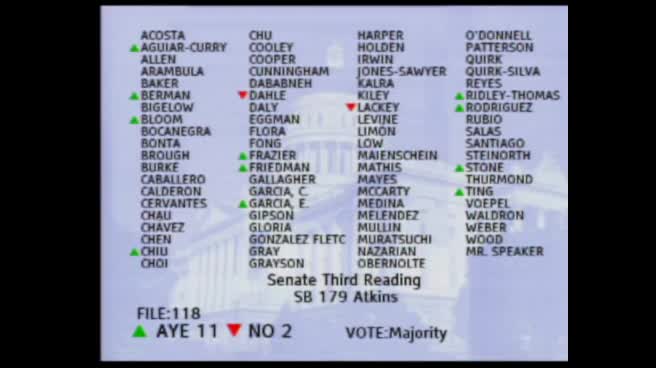 1MIN
Assembly Floor
 54SEC
Assembly Floor
 1H
Assembly Standing Committee on Appropriations
 11MIN
Assembly Standing Committee on Judiciary
 24MIN
Assembly Standing Committee on Labor and Employment
 2MIN
Senate Floor
 48MIN
Senate Standing Committee on Appropriations
Bill Author

Bill Co-Author(s):
