SB 296: Barbering and cosmetology: nail care: superfluous hair removal.
- Session Year: 2017-2018
- House: Senate
- Latest Version Date: 2017-04-17
The Barbering and Cosmetology Act provides for the licensure and regulation of barbers, cosmetologists, estheticians, manicurists, electrologists, and apprentices by the State Board of Barbering and Cosmetology, which is within the Department of Consumer Affairs. Existing law requires a licensee, at the time of license renewal, to report certain information to the board, including whether he or she is an employee, an independent contractor, a booth renter, or a salon owner. defines nail care as the practice of cutting, trimming, polishing, coloring, tinting, cleansing, manicuring, or pedicuring the nails of any person or massaging, cleaning, or beautifying from the elbow to the fingertips or the knee to the toes. Existing law requires an applicant for a license as a manicurist to meet certain criteria, including that he or she has completed a course in nail care from a school approved by the board.
This bill would make nonsubstantive changes to these provisions. additionally define nail care as removing superfluous hair from the lip, eyebrows, the elbow to fingertips, or knees to toes by the use of tweezers or waxing. The bill would authorize a licensee as a manicurist to remove superfluous hair only if he or she meets specified educational requirements. The bill would require the board to determine, by regulation, the required number of hours to be added to the existing manicuring curriculum that will allow sufficient training in the practice of superfluous hair removal and would require an approved school to add the required number of training hours to the schools curriculum for any course in manicuring by a specified date.
The Barbering and Cosmetology Act provides for the licensure and regulation of barbers, cosmetologists, estheticians, manicurists, electrologists, and apprentices by the State Board of Barbering and Cosmetology, which is within the Department of Consumer Affairs. Existing law requires a licensee, at the time of license renewal, to report certain information to the board, including whether he or she is an employee, an independent contractor, a booth renter, or a salon owner.
This bill would make nonsubstantive changes to these provisions.
(a)The practice of barbering is all or any combination of the following practices:
(1)Shaving or trimming the beard or cutting the hair.
(2)Giving facial and scalp massages or treatments with oils, creams, lotions, or other preparations either by hand or mechanical appliances.
(3)Singeing, shampooing, arranging, dressing, curling, waving, chemical waving, hair relaxing, or dyeing the hair or applying hair tonics.
(4)Applying cosmetic preparations, antiseptics, powders, oils, clays, or lotions to scalp, face, or neck.
(5)Hairstyling of all textures of hair by standard methods that are current at the time of the hairstyling.
(b)The practice of cosmetology is all or any combination of the following practices:
(1)Arranging, dressing, curling, waving, machineless permanent waving, permanent waving, cleansing, cutting, shampooing, relaxing, singeing, bleaching, tinting, coloring, straightening, dyeing, applying hair tonics to, beautifying, or otherwise treating by any means, the hair of any person.
(2)Massaging, cleaning, or stimulating the scalp, face, neck, arms, or upper part of the human body, by means of the hands, devices, apparatus or appliances, with or without the use of cosmetic preparations, antiseptics, tonics, lotions, or creams.
(3)Beautifying the face, neck, arms, or upper part of the human body, by use of cosmetic preparations, antiseptics, tonics, lotions, or creams.
(4)Removing superfluous hair from the body of any person by the use of depilatories or by the use of tweezers, chemicals, or preparations or by the use of devices or appliances of any kind or description, except by the use of light waves, commonly known as rays.
(5)Cutting, trimming, polishing, tinting, coloring, cleansing, or manicuring the nails of any person.
(6)Massaging, cleansing, treating, or beautifying the hands or feet of any person.
(c)Within the practice of cosmetology there exist the specialty branches of skin care and nail care.
(1)Skin care is any one or more of the following practices:
(A)Giving facials, applying makeup, giving skin care, removing superfluous hair from the body of any person by the use of depilatories, tweezers tweezers, or waxing, or applying eyelashes to any person.
(B)Beautifying the face, neck, arms, or upper part of the human body, by use of cosmetic preparations, antiseptics, tonics, lotions, or creams.
(C)Massaging, cleaning, or stimulating the face, neck, arms, or upper part of the human body, by means of the hands, devices, apparatus, or appliances, with the use of cosmetic preparations, antiseptics, tonics, lotions, or creams.
(2)(A)Nail care is the is both of the following:
(i)The practice of cutting, trimming, polishing, coloring, tinting, cleansing, manicuring, or pedicuring the nails of any person or massaging, cleansing, or beautifying from the elbow to the fingertips or the knee to the toes of any person.
(ii)The removing of superfluous hair from the lip, eyebrows, the elbow to the fingertips, or knees to the toes of any person. An individual who is licensed by the board as a manicurist shall only be authorized to remove superfluous hair if he or she has met the educational requirements required by the board pursuant to subparagraph (C).
(B)An individual who is licensed by the board as a manicurist who desires to perform the removal of superfluous hair, as described in clause (ii) of subparagraph (A), and who has not obtained the required number of hours of education on the removal of superfluous hair required by the board, pursuant to subparagraph (C), shall obtain the required additional education prior to performing the removal of superfluous hair, as described in clause (ii) of subparagraph (A), and shall submit proof of the completion of the required education to the board. Upon completion of the required education, the licensee shall be required to take and pass an examination.
(C)The board shall determine, by regulation, the required number of hours to be added to the existing manicuring curriculum that will allow for sufficient training in the practice of superfluous hair removal, which shall include removing superfluous hair from the lip, eyebrows, the elbows to the fingertips, and knees to toes by the use of tweezers or waxing. A licensee described in subparagraph (B) shall be required to complete the required hours of training under this subparagraph consistent with the requirements of subparagraph (B).
(D)On and after ____, an approved school shall add the required number of hours in subparagraph (C) to the schools curriculum for any course in manicuring.
(d)The practice of barbering and the practice of cosmetology do not include any of the following:
(1)The mere sale, fitting, or styling of wigs or hairpieces.
(2)Natural hair braiding. Natural hair braiding is a service that results in tension on hair strands or roots by twisting, wrapping, weaving, extending, locking, or braiding by hand or mechanical device, provided that the service does not include haircutting or the application of dyes, reactive chemicals, or other preparations to alter the color of the hair or to straighten, curl, or alter the structure of the hair.
(3)Threading. Threading is a technique that results in removing hair by twisting thread around unwanted hair and pulling it from the skin and the incidental trimming of eyebrow hair.
(e)Notwithstanding paragraph (2) of subdivision (d), a person who engages in natural hairstyling, which is defined as the provision of natural hair braiding services together with any of the services or procedures defined within the regulated practices of barbering or cosmetology, is subject to regulation pursuant to this chapter and shall obtain and maintain a barbering or cosmetology license as applicable to the services respectively offered or performed.
(f)Electrolysis is the practice of removing hair from, or destroying hair on, the human body by the use of an electric needle only.
Electrolysis as used in this chapter includes electrolysis or thermolysis.
SECTION 1.Section 7401 of the Business and Professions Code is amended to read:7401.(a)An individual licensed pursuant to Section 7396 shall, at the time of license renewal, report to the board his or her practice status, designated as one of the following:(1)Full-time practice in California.(2)Full-time practice outside of California.(3)Part-time practice in California.(4)Not working in the industry.(5)Retired.(6)Other practice status, as may be further defined by the board.(b)An individual licensed pursuant to Section 7396 shall, at the time of license renewal, identify himself or herself on the application as one of the following:(1)Employee.(2)Independent contractor or booth renter.(3)Salon owner.(c)An individual licensed pursuant to Section 7347 shall, at the time of license renewal, report to the board whether either of the following is applicable to him or her:(1)He or she has a booth renter operating in the establishment.(2)He or she has an independent contractor operating in the establishment.(a)An individual licensed pursuant to Section 7396 shall shall, at the time of license renewal, report to the board at the time of license renewal, his or her practice status, designated as one of the following:
(1)Full-time practice in California.
(2)Full-time practice outside of California.
(3)Part-time practice in California.
(4)Not working in the industry.
(5)Retired.
(6)Other practice status, as may be further defined by the board.
(b)An individual licensed pursuant to Section 7396 shall, at the time of license renewal, identify himself or herself on the application as one of the following:
(1)Employee.
(2)Independent contractor or booth renter.
(3)Salon owner.
(c)An individual licensed pursuant to Section 7347 shall shall, at the time of license renewal, report to the board at the time of license renewal, whether either of the following is applicable to him or her:
(1)He or she has a booth renter operating in the establishment.
(2)He or she has an independent contractor operating in the establishment.
|
Date
|
Status
|
|---|---|
| Feb 1, 2018 | Returned to Secretary of Senate pursuant to Joint Rule 56. |
| Jan 3, 2018 | January 8 set for second hearing canceled at the request of author. |
| Dec 21, 2017 | Set for hearing January 8. |
| Apr 24, 2017 | April 24 set for first hearing canceled at the request of author. |
| Apr 20, 2017 | Set for hearing April 24 in B., P. & E.D. pending receipt. |
| Apr 19, 2017 | Re-referred to Com. on B., P. & E.D. |
| Apr 17, 2017 | From committee with author's amendments. Read second time and amended. Re-referred to Com. on RLS. |
| Feb 23, 2017 | Referred to Com. on RLS. |
| Feb 14, 2017 | From printer. May be acted upon on or after March 16. |
| Feb 13, 2017 | Introduced. Read first time. To Com. on RLS. for assignment. To print. |
This list shows positions taken on this bill by organizations on the date displayed, which is linked to the original source.
Positions by individuals are not included.
SENATE COMMITTEE ON
BUSINESS, PROFESSIONS AND ECONOMIC DEVELOPMENT
Senator Jerry Hill, Chair
2017 - 2018 Regular
Bill No: SB 296 Hearing Date: April 24, 2017
Author: | Nguyen | ||
Version: |
| ||
Urgency: | Fiscal: | ||
Consultant: | |||
Subject: Barbering and cosmetology: nail care: superfluous hair removal
SUMMARY:
Authorizes manicurists licensed by the Board of Barbering and Cosmetology (BBC) to remove superfluous hair and requires the BBC to determine through regulation the number of hours required to be added to the existing manicuring curriculum to allow for sufficient training in this practice.
Existing law:
- Provides for the licensure regulation of the practice of barbering, cosmetology, and electrolysis under the Barbering and Cosmetology Act (Act) by the BBC. (Business and Professions Code (BPC) § 7303)
- Defines the practice of cosmetology as all or any combination of certain practices beautifying or otherwise treating the hair of any person by any means other than natural hair braiding; massaging, cleaning, or stimulating the scalp, face, neck, arms, or upper part of the human body with hands, devices, apparatus or appliances, with or without the use of cosmetic preparations, antiseptics, tonics, lotions, or creams; beautifying the face, neck, arms, or upper part of the human body by use of cosmetic preparations, antiseptics, tonics, lotions, or creams; removing superfluous hair from a person by using depilatories or tweezers, chemicals, preparations, devices, or appliances; cutting, trimming, polishing, tinting, coloring, cleansing, or manicuring a person’s nails; and massaging, cleansing, treating, or beautifying a person’s hands or feet. (BPC § 7316 (b))
- Establishes nail care as a specialty branch in the practice of cosmetology and defines nail care as the practice of cutting, trimming, polishing, coloring, tinting, cleansing, manicuring, or pedicuring the nails of any person or massaging or beautifying from the elbow to the fingertips or the knee to the toes of any person. (BPC § 7316 (c) (2))
- Provides for licensure of cosmetologists by BBC to practice cosmetology and requires applicants to be over the age of 17, complete 10th grade in a public California school or equivalent, not subject to a denial and have either completed a course in cosmetology from a BBC approved school, or practiced cosmetology in another state for a period of time equivalent to the study and training of a BBC approved course, or holds a license as a barber and cosmetology crossover course or completed a barbering course and a cosmetology crossover course or completed an apprenticeship program in cosmetology. (BPC § 7321)
- Provides for licensure of manicurists by BBC to practice nail care and requires applicants to be over the age of 17, complete 10th grade in a public California school or equivalent, not subject to a denial and have either completed a course in nail care from a BBC approved school, or practiced nail care in another state for a period of time equivalent to the study and training of a BBC approved course or completed an apprenticeship program in nail care. (BPC § 7326)
This bill:
- Adds the removal of superfluous hair from the lip, eyebrows, elbow to the fingertips or knees to the toes of a person to the definition of the practice of nail care in the Act and authorizes a BBC licensed manicurist to remove superfluous hair if the individual meets educational requirements established by the BBC to perform this practice.
- Requires BBC to determine through regulation the number of hours required to be added to the existing manicuring curriculum to allow for sufficient training in superfluous hair removal.
FISCAL EFFECT: Unknown. This bill is keyed “fiscal” by Legislative Counsel.
COMMENTS:
- Purpose. The Author is the Sponsor of this bill. According to the Author, there are currently only two license categories under the BBC that allow licensees to perform waxing on a client. The Author notes that both license types require many hours and schooling to perform this one service. The Author states that for many nail salons throughout the state, it is common for clients to not only get their nails done, but to also utilize the waxing services in these salons. The Author is concerned that since manicurist licensees can only work on nails, and are not authorized under this license type to perform waxing and hair removal, in order for those working in the nail salon industry in California to offer this service to clients, they would have to attend additional schooling, beyond what is required for a manicurist, and learn skills under a cosmetology license like hair beautification that the individual may never want to, nor intend to utilize in their practice.
The Author also cites the recent Little Hoover Commission (LHC) report Jobs for Californians: Strategies to Ease Occupational Licensing Barriers and a feature in the report about the need to help foreign trained workers gain licensure in the state because they possess certain skill sets for occupations in California and are fluent in languages other than English.
According to the Author, Vietnamese-Americans make up 80 percent of the nail salon industry and this bill will help assist this immigrant population in becoming licensed and employed more quickly, without having to pay considerable amounts of money for schooling and training that serves as a barrier to these individuals successfully and safely working on nails and performing waxing.
- Nail Care in California. Nail care is a specialty branch in the field of cosmetology. In California, a licensed cosmetologist can practice nail care and BBC also licenses manicurists as a separate license category. To become a licensed manicurist, an applicant must submit proof of completion to BBC of 400 training hours training covering all practices of a manicurist, according to the following:
- 300 hours of technical instruction and practical training in nail care – 60 hours of technical instruction in manicures and pedicures (water and oil manicures including hand and arm massage, complete pedicure including foot and ankle massage, application of artificial nails including liquid, gel, and powder brush-ons, nail tips, nail wraps and repairs, and nail analysis); 60 hours of practical operations in manicures and pedicures; and 180 hours of nails
- 100 hours of technical instruction and practical training in health and safety – 10 hours on laws and regulations including the Act and BBC Rules and Regulations; 25 hours on chemistry pertaining to the practices of a manicurist including the chemical composition and purpose of nail care preparations, health and safety/hazardous substances, including training in chemicals and health in establishments, material safety data sheets, protection from hazardous chemicals and preventing chemical injuries, health and safety laws and agencies, ergonomics, and communicable diseases, including HIV/AIDS and Hepatitis B; 20 hours on disinfection and sanitation procedures to protect the health and safety of the consumer as well as the technician which entail disinfecting instruments and equipment as specified with special attention given to pedicure foot spa and basin disinfection procedures and; 10 hours in bacteriology, anatomy and physiology
BBC also recommends in its regulations that schools provide training in communication skills that includes professional ethics, salesmanship, decorum, record-keeping, client service record cards, and basic tax responsibilities related to independent contractors, booth renters, employees, and employers
BBC currently licenses 129,618 manicurists, 313,188 cosmetologists (who can also perform nail care services) and 51,834 establishments. BBC does not include information in its establishment license data to differentiate between an establishment offering nail care services specifically or those offering other personal beautification services.
- Specialty Practice Areas and Recognition by BBC of Subcategories of Cosmetology and Esthetics. Currently, only licensed cosmetologists and licensed estheticians are eligible to perform superfluous hair removal. Some individuals practicing nail care may have completed the 1600 hours of education and training necessary to become licensed cosmetologists, which allows a licensee to perform nail care and a wide range of beautification services, but may only desire to practice one type of beautification service, such as waxing or nail care.
The 1600 hour education requirement has been a discussion point for the Legislature during previous sunset review oversight of the BBC. During the 2012-13 sunset review oversight, committee staff raised the issue of appropriate licensing categories, noting the need for BBC to evaluate adding specialized certificates or licensure in certain practices. The review asked whether many of the beautification services offered by BBC licensees require the mandatory schooling and training hours necessary for a cosmetologist or esthetician and noted that while there may be significant health concerns related to some practices, there may also not be a need for an individual performing specialized services to invest in a whole training program. The review found that training for many of the beautification services provided by BBC licensees is provided directly from manufacturers and likely not even reflected in BBC-approved curriculum and at BBC-approved schools. Staff noted that many entrepreneurial individuals throughout the state, including a large number of women and minorities, have become successful small business owners focused on providing one specialized service. In a background paper prepared by committee staff during the 2012-13 review of BBC, staff recommended BBC explore balancing the consumer health, safety and harm from certain services with the desire to keep people employed throughout the state offering limited services and required BBC to review the issue of recognizing specialized service providers and provide a report by January 1, 2014 on this issue.
In 2013, the BBC submitted a report back to the Legislature on this issue titled Appropriate Licensing of Subcategories in which BBC expressed concern over licensing any subcategories of practice that are already captured by the broader license for a cosmetologist, such as a waxing-only specialist or make-up artist, as these practice areas are covered under the scope of practice of a cosmetologist and esthetician. The report further cited BBC concerns that offering a sub-license may diminish the existing scope of practice for licensees and could significantly increase the BBC's workload.
To help address concerns of individuals who seek to practice a subspecialty of a license, the BBC proposed creating a BBC-approved industry certification. Essentially, a cosmetologist interested in a hair coloring specialty certification would take an unknown number of courses from a BBC-approved provider, at an unknown cost to the individual, in order to obtain an industry certification in that specialty. This effort, however, does not address the issue of an individual desiring to only practice one beautification service and does not assist nor meet the current needs of individuals seeking to obtain a single practice license that may alleviate the burden from having to complete a full cosmetology or esthetics program.
The 2014-15 sunset review oversight of the BBC further examined the issue of the required curriculum and connection to practice. AB 181 (Bonilla, Chapter 430, Statutes of 2013), the bill stemming from the comprehensive review of BBC, required BBC to conduct a study and review of the 1600-hour training requirement for cosmetologists, conduct an occupational analysis of the cosmetology profession in California, and conduct a review of the national written examination for cosmetologists and of the California practical examination, in order to evaluate whether both examinations assess critical competencies for California cosmetologists and meet professional testing standards. That report is due November 1, 2018.
This bill allows BBC to decide what is necessary, from an education and training standpoint, for manicurists to safely practice superfluous hair removal and may alleviate the potentially burdensome 1600 hour requirement for a cosmetology license for individuals who only wish to provide nail care and waxing in their practice.
- Little Hoover Commission Report. Recent studies and reports have focused on the impacts of licensing requirements for employment and on individuals seeking to become employed. According to a July 2015 report on occupational licensing released by the White House, strict licensing creates barriers to mobility for licensed workers, citing several groups of people particularly vulnerable to occupational licensing laws, including former offenders, military spouses, veterans and immigrants.
In October 2016, the LHC released a report entitled Jobs for Californians: Strategies to Ease Occupational Licensing Barriers. The report noted that one out of every five Californians must receive permission from the government to work, and for millions of Californians that means contending with the hurdles of becoming licensed. The report noted that many of the goals to professionalize occupations, standardize services, guarantee quality and limit competition among practitioners, while well intended, have had a larger impact of preventing Californians from working, particularly harder-to-employ groups such as former offenders and those trained or educated outside of California, including veterans, military spouses and foreign-trained workers. The study found that occupational licensing hurts those at the bottom of the economic ladder twice: first by imposing significant costs on them should they try to enter a licensed occupation and second by pricing the services provided by licensed professionals out of reach.
The report found that California compares poorly to the rest of the nation in the amount of licensing it requires for occupations traditionally entered into by people of modest means. According to the report, researchers from the Institute for Justice selected 102 lower-income occupations, defined by the Bureau of Labor Statistics as making less than the national average income, ranging from manicurist to pest control applicator. Of the 102 occupations selected, California required licensure for 62, or 61 percent of them. According to the report, California ranked third most restrictive among 50 states and the District of Columbia, following only Louisiana and Arizona. California ranked seventh of 51 when measuring the burden imposed on entrants into these lower- and moderate-income occupations: on average, California applicants must pay $300 in licensing fees, spend 549 days in education and/or training and pass one exam.
SUPPORT AND OPPOSITION:
Support:
None on file as of April 19, 2017.
Opposition:
None on file as of April 19, 2017.
-- END --
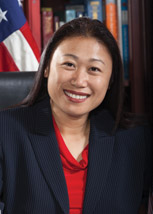
Bill Author
Bill Co-Author(s):