SB 314: Massage therapy: certification: credit hours.
- Session Year: 2017-2018
- House: Senate
- Latest Version Date: 2017-09-23
The Massage Therapy Act, until January 1, 2021, provides for the certification and regulation of massage therapists and massage practitioners by the California Massage Therapy Council, which is a nonprofit organization. Existing law requires applicants for certification as a massage therapist to complete certain educational requirements, including the curricula in massage and related subjects totaling a minimum of 500 hours. Existing law requires these 500 hours to be from an approved school, as defined.
This bill would require the council, pursuant to its policies and procedures, to accept hours earned by an applicant for certification as a massage therapist if those hours were completed before July 1, 2016, and were earned from a school providing education in the state that was unapproved, as defined, by the council after July 1, 2016, based solely on the fact that the National Certification Board for Therapeutic Massage and Bodywork took denial or disciplinary action against the school.
The Massage Therapy Act, until January 1, 2021, provides for the certification and regulation of massage therapists and massage practitioners by the California Massage Therapy Council, which is a nonprofit organization. Existing law requires applicants for certification as a massage therapist to complete certain educational requirements, including the curricula in massage and related subjects totaling a minimum of 500 hours. Existing law requires these 500 hours to be from an approved school, as defined.
This bill would require the council, pursuant to its policies and procedures, to accept hours earned by an applicant for certification as a massage therapist if those hours were completed before July 1, 2016, and were earned from a school unapproved unapproved, as defined, by the council after July 1, 2016, if the school meets one of 3 specified requirements. based on the fact that the National Certification Board for Therapeutic Massage and Bodywork took denial or disciplinary action against the school.
The Massage Therapy Act, until January 1, 2021, provides for the certification and regulation of massage therapists and massage practitioners by the California Massage Therapy Council, which is a nonprofit organization. Existing law requires applicants for certification as a massage therapist to complete certain educational requirements, including the curricula in massage and related subjects totaling a minimum of 500 hours. Existing law requires these 500 hours to be from an approved school, as defined.
This bill would require the council council, pursuant to its policies and procedures, to accept any and all hours earned by an applicant for certification as a massage therapist if those hours were earned from an unapproved a school prior to unapproved by the council after July 1, 2016. The bill would also require an applicant to apply for certification as a massage therapist within 5 years of completing those educational requirements. 2016, if the school meets one of 3 specified requirements.
The Massage Therapy Act, until January 1, 2021, provides for the certification and regulation of massage therapists and massage practitioners by the California Massage Therapy Council, which is a nonprofit organization. Existing law requires applicants for certification as a massage therapist to complete certain educational requirements, including the curricula in massage and related subjects totaling a minimum of 500 hours. Existing law requires these 500 hours to be from an approved school, as defined.
This bill would require the council to accept any and all hours earned by an applicant for certification as a massage therapist if those hours were earned from an unapproved school prior to July 1, 2016. The bill would also require an applicant to apply for certification as a massage therapist within 5 years of completing those educational requirements.
The Barbering and Cosmetology Act provides for the licensure and regulation of barbers, cosmetologists, estheticians, manicurists, electrologists, and apprentices by the State Board of Barbering and Cosmetology, which is within the Department of Consumer Affairs. Existing law authorizes the board to revoke, suspend, or deny, at any time, any license of a licensee on any of the ground for disciplinary action, as specified.This bill would make nonsubstantive changes to these provisions.The Barbering and Cosmetology Act provides for the licensure and regulation of barbers, cosmetologists, estheticians, manicurists, electrologists, and apprentices by the State Board of Barbering and Cosmetology, which is within the Department of Consumer Affairs. Existing law authorizes the board to revoke, suspend, or deny, at any time, any license of a licensee on any of the ground for disciplinary action, as specified.
This bill would make nonsubstantive changes to these provisions.
(a)In order to obtain certification as a massage therapist, an applicant shall submit a written application and provide the council with satisfactory evidence that he or she meets all of the following requirements:
(1)The applicant is 18 years of age or older.
(2)The applicant has successfully completed the curricula in massage and related subjects totaling a minimum of 500 hours, or the credit unit equivalent, that incorporates appropriate school assessment of student knowledge and skills.
(A)Of the 500 hours, a minimum of 100 hours of instruction shall address anatomy and physiology, contraindications, health and hygiene, and business and ethics.
(B)All of the 500 hours shall be from approved schools. Notwithstanding any other law, pursuant to its policies and procedures for approval of schools, the council shall accept hours earned by an applicant for certification as a massage therapist if those hours were completed before July 1, 2016, and were earned from a school providing education in this state that was unapproved by the council after July 1, 2016, based solely on the fact that the National Certification Board for Therapeutic Massage and Bodywork took denial or disciplinary action against the school. For purposes of this section, unapproved means that the council determined that it will not accept hours from a school toward certification.
(3)The applicant has passed a massage and bodywork competency assessment examination that meets generally recognized psychometric principles and standards and that is approved by the council. The successful completion of this examination may have been accomplished before the date the council is authorized by this chapter to begin issuing certificates.
(4)The applicant has successfully passed a background investigation pursuant to Section 4606, and has not violated any of the provisions of this chapter.
(5)All fees required by the council have been paid.
(6)The council may issue a certificate to an applicant who meets the qualifications of this chapter if he or she holds a current and valid registration, certification, or license from any other state whose licensure requirements meet or exceed those defined within this chapter. If an applicant has received education at a school that is not approved by the council, the council shall have the discretion to give credit for comparable academic work completed by an applicant in a program outside of California.
(b)A certificate issued pursuant to this chapter and any identification card issued by the council shall be surrendered to the council by any certificate holder whose certificate is suspended or revoked.
(a)In order to obtain certification as a massage therapist, an applicant shall submit a written application and provide the council with satisfactory evidence that he or she meets all of the following requirements:
(1)The applicant is 18 years of age or older.
(2)The applicant has successfully completed the curricula in massage and related subjects totaling a minimum of 500 hours, or the credit unit equivalent, that incorporates appropriate school assessment of student knowledge and skills.
(A)Of the 500 hours, a minimum of 100 hours of instruction shall address anatomy and physiology, contraindications, health and hygiene, and business and ethics.
(B)All of the 500 hours shall be from approved schools. Notwithstanding any other law, pursuant to its policies and procedures for approval of schools, the council shall accept hours earned by an applicant for certification as a massage therapist if those hours were completed before July 1, 2016, and were earned from a school that was unapproved by the council after July 1, 2016, if the school had never been unapproved by the council or had never had its approval to operate revoked by the Bureau for Private Postsecondary Education prior to July 1, 2016, or had never been deemed ineligible by the council for purposes of applicants providing proof of education to meet the requirements of subparagraph (A). based on the fact that the National Certification Board for Therapeutic Massage and Bodywork took denial or disciplinary action against the school. For purposes of this section, unapproved means that the council determined that it will not accept hours from a school toward certification.
(3)The applicant has passed a massage and bodywork competency assessment examination that meets generally recognized psychometric principles and standards and that is approved by the council. The successful completion of this examination may have been accomplished before the date the council is authorized by this chapter to begin issuing certificates.
(4)The applicant has successfully passed a background investigation pursuant to Section 4606, and has not violated any of the provisions of this chapter.
(5)All fees required by the council have been paid.
(6)The council may issue a certificate to an applicant who meets the qualifications of this chapter if he or she holds a current and valid registration, certification, or license from any other state whose licensure requirements meet or exceed those defined within this chapter. If an applicant has received education at a school that is not approved by the council, the council shall have the discretion to give credit for comparable academic work completed by an applicant in a program outside of California.
(b)A certificate issued pursuant to this chapter and any identification card issued by the council shall be surrendered to the council by any certificate holder whose certificate is suspended or revoked.
(a)In order to obtain certification as a massage therapist, an applicant shall submit a written application and provide the council with satisfactory evidence that he or she meets all of the following requirements:
(1)The applicant is 18 years of age or older.
(2)The applicant has successfully completed the curricula in massage and related subjects totaling a minimum of 500 hours, or the credit unit equivalent, that incorporates appropriate school assessment of student knowledge and skills.
(A)Of the 500 hours, a minimum of 100 hours of instruction shall address anatomy and physiology, contraindications, health and hygiene, and business and ethics.
(B)All of the 500 hours shall be from approved schools, except that the council shall accept any and all hours earned by an applicant for certification as a massage therapist if those hours were earned from a school that was not approved by the council prior to July 1, 2016. schools. Notwithstanding any other law, pursuant to its policies and procedures for approval of schools, the council shall accept hours earned by an applicant for certification as a massage therapist if those hours were earned from a school that was unapproved by the council after July 1, 2016, if the school had never been unapproved by the council or had never had its approval to operate revoked by the Bureau for Private Postsecondary Education prior to July 1, 2016, or had never been deemed ineligible by the council for purposes of applicants providing proof of education to meet the requirements of subparagraph (A).
(3)The applicant has passed a massage and bodywork competency assessment examination that meets generally recognized psychometric principles and standards and that is approved by the council. The successful completion of this examination may have been accomplished before the date the council is authorized by this chapter to begin issuing certificates.
(4)The applicant has successfully passed a background investigation pursuant to Section 4606, and has not violated any of the provisions of this chapter.
(5)All fees required by the council have been paid.
(6)The council may issue a certificate to an applicant who meets the qualifications of this chapter if he or she holds a current and valid registration, certification, or license from any other state whose licensure requirements meet or exceed those defined within this chapter. If an applicant has received education at a school that is not approved by the council, the council shall have the discretion to give credit for comparable academic work completed by an applicant in a program outside of California.
(b)A certificate issued pursuant to this chapter and any identification card issued by the council shall be surrendered to the council by any certificate holder whose certificate is suspended or revoked.
(c)An applicant shall apply for certification within five years of completing the educational requirements described in paragraph (2) of subdivision (a).(a)In order to obtain certification as a massage therapist, an applicant shall submit a written application and provide the council with satisfactory evidence that he or she meets all of the following requirements:
(1)The applicant is 18 years of age or older.
(2)The applicant has successfully completed the curricula in massage and related subjects totaling a minimum of 500 hours, or the credit unit equivalent, that incorporates appropriate school assessment of student knowledge and skills.
(A)Of the 500 hours, a minimum of 100 hours of instruction shall address anatomy and physiology, contraindications, health and hygiene, and business and ethics.
(B)All of the 500 hours shall be from approved schools. schools, except that the council shall accept any and all hours earned by an applicant for certification as a massage therapist if those hours were earned from a school that was not approved by the council prior to July 1, 2016.
(3)The applicant has passed a massage and bodywork competency assessment examination that meets generally recognized psychometric principles and standards and that is approved by the council. The successful completion of this examination may have been accomplished before the date the council is authorized by this chapter to begin issuing certificates.
(4)The applicant has successfully passed a background investigation pursuant to Section 4606, and has not violated any of the provisions of this chapter.
(5)All fees required by the council have been paid.
(6)The council may issue a certificate to an applicant who meets the qualifications of this chapter if he or she holds a current and valid registration, certification, or license from any other state whose licensure requirements meet or exceed those defined within this chapter. If an applicant has received education at a school that is not approved by the council, the council shall have the discretion to give credit for comparable academic work completed by an applicant in a program outside of California.
(b)A certificate issued pursuant to this chapter and any identification card issued by the council shall be surrendered to the council by any certificate holder whose certificate is suspended or revoked.
(c)An applicant shall apply for certification within five years of completing the educational requirements described in paragraph (2) of subdivision (a).
SECTION 1.Section 7403 of the Business and Professions Code is amended to read:7403.(a)Notwithstanding any other law, the board may revoke, suspend, or deny, at any time, any license required by this chapter on any of the grounds for disciplinary action provided in this article. The proceedings under this article shall be conducted in accordance with Chapter 5 (commencing with Section 11500) of Part 1 of Division 3 of Title 2 of the Government Code, and the board shall have all the powers granted therein.(b)The board may deny a license to an applicant on any of the grounds specified in Section 480.(c)In addition to the requirements provided in Sections 485 and 486, upon denying a license to an applicant, the board shall provide a statement of reasons for the denial that does the following:(1)Evaluates evidence of rehabilitation submitted by the applicant, if any.(2)Provides the boards criteria relating to rehabilitation, formulated pursuant to Section 482, that takes into account the age and severity of the offense, and the evidence relating to participation in treatment or other rehabilitation programs.(3)If the boards decision was based on the applicants prior criminal conviction, justifies the boards denial of a license and conveys the reasons why the prior criminal conviction is substantially related to the qualifications, functions, or duties of a barber or cosmetologist.(d)Commencing July 1, 2009, all of the following shall apply:(1)If the denial of a license is due at least in part to the applicants state or federal criminal history record, the board shall, in addition to the information provided pursuant to paragraph (3) of subdivision (c), provide to the applicant a copy of his or her criminal history record if the applicant makes a written request to the board for a copy, specifying an address to which it is to be sent.(A)The state or federal criminal history record shall not be modified or altered from its form or content as provided by the Department of Justice.(B)The criminal history record shall be provided in such a manner as to protect the confidentiality and privacy of the applicants criminal history record and the criminal history record shall not be made available by the board to any employer.(C)The board shall retain a copy of the applicants written request and a copy of the response sent to the applicant, which shall include the date and the address to which the response was sent.(2)The board shall make this information available upon request by the Department of Justice or the Federal Bureau of Investigation.(e)Notwithstanding Section 487, the board shall conduct a hearing of a license denial within 90 days of receiving an applicants request for a hearing. For all other hearing requests, the board shall determine when the hearing shall be conducted.(f)In any case in which the administrative law judge recommends that the board revoke, suspend, or deny a license, the administrative law judge may, upon presentation of suitable proof, order the licensee to pay the board the reasonable costs of the investigation and adjudication of the case. For purposes of this section, costs include charges by the board for investigating the case, charges incurred by the office of the Attorney General for investigating and presenting the case, and charges incurred by the Office of Administrative Hearings for hearing the case and issuing a proposed decision.(g)The costs to be assessed shall be fixed by the administrative law judge and shall not, in any event, be increased by the board. When the board does not adopt a proposed decision and remands the case to an administrative law judge, the administrative law judge shall not increase the amount of any costs assessed in the proposed decision.(h)The board may enforce the order for payment in the superior court in the county where the administrative hearing was held. This right of enforcement shall be in addition to any other rights the board may have as to any licensee directed to pay costs.(i)In any judicial action for the recovery of costs, proof of the boards decision shall be conclusive proof of the validity of the order of payment and the terms for payment.(j)Notwithstanding any other law, all costs recovered under this section shall be deposited in the boards contingent fund as a scheduled reimbursement in the fiscal year in which the costs are actually recovered.(a)Notwithstanding any other provision of law, the board may revoke, suspend, or deny deny, at any time time, any license required by this chapter on any of the grounds for disciplinary action provided in this article. The proceedings under this article shall be conducted in accordance with Chapter 5 (commencing with Section 11500) of Part 1 of Division 3 of Title 2 of the Government Code, and the board shall have all the powers granted therein.
(b)The board may deny a license to an applicant on any of the grounds specified in Section 480.
(c)In addition to the requirements provided in Sections 485 and 486, upon denying a license to an applicant, the board shall provide a statement of reasons for the denial that does the following:
(1)Evaluates evidence of rehabilitation submitted by the applicant, if any.
(2)Provides the boards criteria relating to rehabilitation, formulated pursuant to Section 482, that takes into account the age and severity of the offense, and the evidence relating to participation in treatment or other rehabilitation programs.
(3)If the boards decision was based on the applicants prior criminal conviction, justifies the boards denial of a license and conveys the reasons why the prior criminal conviction is substantially related to the qualifications, functions, or duties of a barber or cosmetologist.
(d)Commencing July 1, 2009, all of the following shall apply:
(1)If the denial of a license is due at least in part to the applicants state or federal criminal history record, the board shall, in addition to the information provided pursuant to paragraph (3) of subdivision (c), provide to the applicant a copy of his or her criminal history record if the applicant makes a written request to the board for a copy, specifying an address to which it is to be sent.
(A)The state or federal criminal history record shall not be modified or altered from its form or content as provided by the Department of Justice.
(B)The criminal history record shall be provided in such a manner as to protect the confidentiality and privacy of the applicants criminal history record and the criminal history record shall not be made available by the board to any employer.
(C)The board shall retain a copy of the applicants written request and a copy of the response sent to the applicant, which shall include the date and the address to which the response was sent.
(2)The board shall make this information available upon request by the Department of Justice or the Federal Bureau of Investigation.
(e)Notwithstanding Section 487, the board shall conduct a hearing of a license denial within 90 days of receiving an applicants request for a hearing. For all other hearing requests, the board shall determine when the hearing shall be conducted.
(f)In any case in which the administrative law judge recommends that the board revoke, suspend, or deny a license, the administrative law judge may, upon presentation of suitable proof, order the licensee to pay the board the reasonable costs of the investigation and adjudication of the case. For purposes of this section, costs include charges by the board for investigating the case, charges incurred by the office of the Attorney General for investigating and presenting the case, and charges incurred by the Office of Administrative Hearings for hearing the case and issuing a proposed decision.
(g)The costs to be assessed shall be fixed by the administrative law judge and shall not, in any event, be increased by the board. When the board does not adopt a proposed decision and remands the case to an administrative law judge, the administrative law judge shall not increase the amount of any costs assessed in the proposed decision.
(h)The board may enforce the order for payment in the superior court in the county where the administrative hearing was held. This right of enforcement shall be in addition to any other rights the board may have as to any licensee directed to pay costs.
(i)In any judicial action for the recovery of costs, proof of the boards decision shall be conclusive proof of the validity of the order of payment and the terms for payment.
(j)Notwithstanding any other provision of law, all costs recovered under this section shall be deposited in the boards contingent fund as a scheduled reimbursement in the fiscal year in which the costs are actually recovered.
|
Date
|
Status
|
|---|---|
| Sep 23, 2017 | Chaptered by Secretary of State. Chapter 266, Statutes of 2017. |
| Sep 23, 2017 | Approved by the Governor. |
| Sep 11, 2017 | Enrolled and presented to the Governor at 4 p.m. |
| Sep 5, 2017 | Assembly amendments concurred in. (Ayes 40. Noes 0.) Ordered to engrossing and enrolling. |
| Sep 1, 2017 | Ordered to special consent calendar. |
| Aug 31, 2017 | In Senate. Concurrence in Assembly amendments pending. |
| Aug 31, 2017 | Read third time. Passed. Ordered to the Senate. |
| Aug 24, 2017 | Read third time and amended. |
| Jun 28, 2017 | Read second time. Ordered to third reading. |
| Jun 27, 2017 | From committee: Do pass. (Ayes 14. Noes 0.) (June 27). |
| May 22, 2017 | Referred to Com. on B. & P. |
| May 1, 2017 | In Assembly. Read first time. Held at Desk. |
| May 1, 2017 | Read third time. Passed. (Ayes 37. Noes 0. Page 905.) Ordered to the Assembly. |
| Apr 26, 2017 | Read second time and amended. Ordered to third reading. |
| Apr 25, 2017 | From committee: Do pass as amended. (Ayes 9. Noes 0. Page 824.) (April 24). |
| Apr 19, 2017 | From committee with author's amendments. Read second time and amended. Re-referred to Com. on B., P. & E.D. |
| Apr 19, 2017 | Set for hearing April 24. |
| Apr 18, 2017 | April 17 hearing: Testimony taken. Hearing postponed by committee. |
| Mar 28, 2017 | Set for hearing April 17. |
| Mar 27, 2017 | April 3 hearing postponed by committee. |
| Mar 24, 2017 | Set for hearing April 3. |
| Mar 23, 2017 | Re-referred to Com. on B., P. & E.D. |
| Mar 16, 2017 | From committee with author's amendments. Read second time and amended. Re-referred to Com. on RLS. |
| Feb 23, 2017 | Referred to Com. on RLS. |
| Feb 14, 2017 | From printer. May be acted upon on or after March 16. |
| Feb 13, 2017 | Introduced. Read first time. To Com. on RLS. for assignment. To print. |
|
Date
|
Description
|
Location
|
Votes
|
|
|---|---|---|---|---|
| Sep 5, 2017 | Special Consent SB314 | Senate Floor |
Passed |
|
| Aug 31, 2017 | SB 314 Nguyen Senate Third Reading By LOW | Assembly Floor |
Passed |
|
| Jun 27, 2017 | Do pass. | Assembly Standing Committee on Business and Professions |
Passed |
|
| May 1, 2017 | Senate 3rd Reading SB314 Nguyen | Senate Floor |
Passed |
|
| Apr 24, 2017 | Do pass as amended | Senate Standing Committee on Business, Professions and Economic Development |
Passed |
This list shows positions taken on this bill by organizations on the date displayed, which is linked to the original source.
Positions by individuals are not included.
Office of Senate Floor Analyses (916) 651-1520 Fax: (916) 327-4478 | SB |
UNFINISHED BUSINESS
Bill No: SB 314
:
SENATE BUS., PROF. & ECON. DEV. COMMITTEE: 9-0, 4/24/17
AYES: Hill, Fuller, Dodd, Galgiani, Glazer, Hernandez, Newman, Pan, Wilk
SENATE FLOOR: 37-0, 5/1/17
AYES: Allen, Anderson, Atkins, Bates, Beall, Bradford, Cannella, De León, Dodd, Fuller, Gaines, Galgiani, Glazer, Hernandez, Hertzberg, Hill, Hueso, Jackson, Lara, McGuire, Mendoza, Mitchell, Monning, Moorlach, Morrell, Newman, Nguyen, Nielsen, Pan, Portantino, Skinner, Stern, Stone, Vidak, Wieckowski, Wiener, Wilk
NO VOTE RECORDED: Berryhill, Leyva, Roth
ASSEMBLY FLOOR: 73-0, 8/31/17 - See last page for vote
DIGEST:
This bill assists students who attended a massage therapy training program at an institution that was never deemed unapproved by the California Massage Therapy Council (CAMTC), by requiring CAMTC to accept hours earned at that institution towards certification as a massage therapist.
Assembly Amendments
clarify that the hours CAMTC must accept shall be those earned from specified schools providing education in California that were unapproved solely based on the fact that that the National Certification Board for Therapeutic Massage and Bodywork took denial or disciplinary action against those schools.
Existing law:
- Establishes the Massage Therapy Act (Act) and the CAMTC which is responsible for the administration of the voluntary certification program for massage therapists. (Business and Professions Code (BPC) §§ 4600 et seq.)
- Defines an “approved school” or “approved massage school” as a school that meets minimum standards for training and curriculum in massage and related subjects, and meets other specified requirements and has not otherwise been unapproved by the CAMTC. (BPC § 4601(a))
- Provides that in order for a massage therapist to obtain certification, an applicant must submit an application and provide CAMTC with satisfactory evidence that he or she is 18 years of age or older, has successfully completed 500 hours of instruction in massage and related subjects as specified, passed a competency assessment examination that is approved by CAMTC, successfully passed a background investigation, and has not violated any provisions of the Act. (BPC § 4604)
This bill:
- Requires CAMTC, pursuant to its Policies and Procedures for Approval of Schools, to accept hours earned by an applicant for certification as a massage therapist if those hours were completed before July 1, 2016, and were earned from a school providing education in California that was unapproved by CAMTC after July 1, 2016, if CAMTC took the unapproval action based solely on the fact that the National Certification Board for Therapeutic Massage and Bodywork took denial or disciplinary action against the school.
- States that “unapproved” means the CAMTC determined it will not accept hours from a school toward certification.
Comments
According to the author, SB 314 helps the students who were impacted when their massage therapy school suddenly became one that CAMTC did not accept education credits from after July 1, 2016. The author notes that with so many massage schools statewide under different approval/accreditation from various entities before July 1, 2016, it makes sense to allow students to count the educational hours that were earned while the school was operating and when the school had not otherwise been unapproved by CAMTC. According to the author, this bill is only intended to require CAMTC to accommodate students from a very limited number of California schools, and is not by any means an attempt to undo the CAMTC’s school approval process, or to open the floodgates for students from schools the CAMTC unapproved starting in 2012 to become certified. The author states that this bill is narrow and assists students who attended institutions that were approved by other entities like the Bureau for Private Postsecondary Education, but may not yet have been approved by CAMTC when it began approving schools, to still have their hard earned training hours accepted.
Massage therapy school regulation in California and impacts to students based on CAMTC school approval processes. Massage therapy programs can be offered by public institutions of higher education, like a community college, or private educational institutions. Most of the programs in California are offered at private institutions. The California Private Postsecondary Education Act of 2009 specifically provides that if a private postsecondary institution offers an educational program in a profession, occupation, trade, or career field that requires licensure in California, the institution must have educational program approval from the appropriate state licensing agency for any student who completes that program to sit for any required licensure exam. The law is intended to deal with the issue of students completing an educational program specifically designed to prepare them for certain occupations that in reality does not meet any requirements for education required for licensure.
CAMTC requires applicants to have completed education at a school that is recognized by another state agency (most rely on the Bureau for Private Postsecondary Education (BPPE)) and is also approved by CAMTC. In the past, the CAMTC removed its approval of schools but they remained approved by BPPE, causing significant challenges for students who may have been misled that their education could lead to certification by CAMTC. BPPE and CAMTC are working on a formal MOU.
Prior to the passage of AB 1147 (Bonilla, Chapter 406, Statutes of 2014), CAMTC did not accredit or affirmatively approve massage schools, but did have the responsibility to determine if the curriculum of a school met the legal requirements for applicants to obtain CAMTC certification. In practice, that meant that schools were generally treated as approved unless, and until CAMTC took an action to “unapprove” them. Schools had to meet certain requirements, such as being nationally accredited, approved by BPPE or be a public institution or a California community college in order for CAMTC to accept credits earned at a particular institution for certification.
The 2014 sunset review oversight of CAMTC raised the issue of CAMTC's reactive school approval process. According to CAMTC at the time, it did not proactively approve schools, but rather unapproved a school if it found that a school did not meet the minimum standards for training and curriculum or operated inappropriately. Schools could have been unapproved for selling or offering to sell transcripts, failing to require students to attend the classes listed on the transcript, failure to require students to attend all of the hours listed on the transcript, or engaging in fraudulent practices.
The sunset review report recommended that CAMTC take proactive steps to improve their current complaint-driven unapproval process, and instead find a more proactive-based approval process. In response, AB 1147 authorized CAMTC to take an affirmative role in establishing an approval process for schools by requiring CAMTC to develop policies, procedures, rules or bylaws governing the requirements and process for the approval and unapproval of schools, including any corrective action to return a school to approved status. The bill also provided CAMTC with explicit authority to establish a reasonable fee for the inspection or approval of schools.
Beginning July 1, 2016, CAMTC now only accepts education from schools that have received approval by CAMTC. Schools must not have ever been unapproved by CAMTC in order to be proactively approved under the CAMTC’s new process for school approvals. According to the report provided to the Legislature by CAMTC as part of the 2015-16 sunset review oversight, “On April 1, 2015, CAMTC began accepting applications from massage schools for voluntary CAMTC school approval. CAMTC notified schools that as of July 1, 2016, CAMTC will no longer accept education from applicants unless that education is completed at a CAMTC approved school. CAMTC also notified schools that it had to receive their application for CAMTC approval by May 1, 2015 in order to guarantee that a decision on school approval could be made before the July 1, 2016 cutoff date.”
As of late 2015, CAMTC had not recognized education earned by 62 schools since 2009, and identified and listed seven other schools for which students must provide additional proof of adequate education (beyond a transcript and diploma) when applying for certification. However, a number of schools either failed to apply for CAMTC approval or were denied approval by CAMTC. Historically, when CAMTC unapproved a school, it would impose a 90-day grace period from the effective date of unapproval, during which time students could apply for certification using education from that school (they were also required to provide additional proof of adequate education). This policy changed for those students who applied on or after July 1, 2016.
In response to concerns raised to CAMTC from some students who feel that the new policy of not accepting any credits earned by a school without CAMTC approval and the lack of a grace period was unduly harsh, CAMTC changed its procedures in March 2017 to allow a full 90-day grace period, at a minimum, to be provided, allowing students to apply for certification with education from recently unapproved schools as long as the individual’s application is received within
90 days from the date CAMTC made the change to its policies, or the effective date of unapproval, whichever is later. Students in these circumstances must still provide additional proof of adequate education.
FISCAL EFFECT: Appropriation: Fiscal Com.: Local:
Associated Bodywork & Massage Professionals
California Massage Therapy Council
One certified massage therapist
OPPOSITION: (Verified 8/31/17)
One certified massage therapist
ARGUMENTS IN SUPPORT: Associated Bodywork & Massage Professionals (ABMP) supports this bill, noting that there continues to be ongoing approval processes on various schools around California and many schools have been in a state of uncertainty after July 1, 2016, as their students were not sure they could use the education that they paid for and completed towards CAMTC certification. According to ABMP, the process of approving schools is ongoing and ABMP cites that as of April 14, 2017, 62 schools remain on the CAMTC “Applications Received” list but these schools have not yet been approved or unapproved, resulting in students who are unsure of the status and if their education will count toward CAMTC certification. According to ABMP, “we are now nine months past the initial deadline for school approval with these schools and their students are hanging in the balance…We remain concerned about students’ ability to use their education from schools that have yet to be approved or denied by CAMTC.” ABMP notes that while certification is voluntary, many cities are moving toward requiring CAMTC certification to practice in their jurisdictions, thereby negating the voluntary aspect of certification.
ASSEMBLY FLOOR: 73-0, 8/31/17
AYES: Acosta, Aguiar-Curry, Travis Allen, Arambula, Baker, Berman, Bigelow, Bloom, Bocanegra, Bonta, Brough, Burke, Caballero, Calderon, Cervantes, Chau, Chávez, Chen, Choi, Chu, Cooley, Cooper, Cunningham, Dababneh, Dahle, Daly, Eggman, Flora, Fong, Frazier, Friedman, Gallagher, Eduardo Garcia, Gipson, Gloria, Gonzalez Fletcher, Gray, Grayson, Harper, Holden, Irwin, Jones-Sawyer, Kalra, Kiley, Lackey, Levine, Limón, Low, Maienschein, Mathis, Mayes, McCarty, Medina, Mullin, Muratsuchi, Nazarian, Obernolte, O'Donnell, Patterson, Quirk, Reyes, Rodriguez, Rubio, Salas, Santiago, Steinorth, Mark Stone, Thurmond, Voepel, Waldron, Weber, Wood, Rendon
NO VOTE RECORDED: Chiu, Cristina Garcia, Melendez, Quirk-Silva, Ridley-Thomas, Ting
8/31/17 18:09:17
**** END ****
SENATE THIRD READING
STR Bill Id:SB 314
Author:(Nguyen)
As Amended Ver:August 24, 2017
Majority vote
SENATE VOTE: 37-0
Committee | Votes | Ayes | Noes |
Business & Professions | 14-0 | Low, Arambula, Baker, Bloom, Chen, Cunningham, Dahle, Eggman, Gipson, Grayson, Holden, Irwin, Mullin, Steinorth |
SUMMARY: Requires the California Massage Therapy Council (CAMTC) to accept hours earned by an applicant for certification as a massage therapist if those hours were completed before July 1, 2016, but were earned from a school that was subsequently unapproved by CAMTC due to denial or disciplinary action against the school by the National Certification Board for Therapeutic Massage and Bodywork.
THIS BILL:
- Requires CAMTC, pursuant to its policies and procedures, to accept hours earned by an applicant for certification as a massage therapist if those hours were completed before July 1, 2016, and were earned from a school providing education in this state that was unapproved by CAMTC after July 1, 2016, based solely on the fact that the National Certification Board for Therapeutic Massage and Bodywork denied or took disciplinary action against the school.
- Defines "unapproved" to mean CAMTC has determined it will not accept hours from the school for certification.
FISCAL EFFECT: None
COMMENTS:
Purpose. This bill is sponsored by the author. According to the author, this bill "helps the students who were impacted when their massage therapy school suddenly became one that the Council did not accept education credits from prior to July 1, 2016. It is only fair that students who earned their education hours prior to the new law, with the understanding that they were working toward their certification, should receive credit for those hours they already earned."
Background. The Massage Therapy Act (Act) establishes a certification system for massage therapists. Unlike licensing programs, a certificate is not required before a practitioner may practice. In this case, a certificate helps a consumer distinguish a massage therapy practitioner who meets certain training and criminal history criteria from one who does not. A consumer may still choose a non-certified massage therapist if the consumer prefers. However, some local governments require the certificate as a prerequisite to working as a massage therapist.
The Act also creates CAMTC, a nonprofit organization, to administer the program. Under the program, a massage therapist who meets specified education and professional conduct requirements may obtain a certificate in massage therapy and use the title "certified massage therapist" and similar titles and initials. The Act prohibits the use of the title without a certificate issued by CAMTC. As of 2015, there were over 50,000 active certificates issued.
School Approval Process. Under the Act, in order for an applicant to use hours earned from a massage school towards certification, the school must meet statutory criteria before CAMTC can accept credits earned at a particular institution for certification. Among other things, the Act requires all schools to be approved by CAMTC and not "otherwise unapproved" by CAMTC. Prior to 2015, CAMTC implemented this process by generally treating schools as approved unless it affirmatively "unapproved" them. During the CAMTC's 2014 Sunset Review, the staff background paper recommended that CAMTC take proactive steps to improve their complaint-driven unapproval process and instead find a more proactive approval process.
As a result, CAMTC's sunset bill AB 1147 (Bonilla), Chapter 406, Statutes of 2014, required CAMTC to establish an affirmative approval process for schools. According to the CAMTC's most recent 2016 Sunset Review Report, "On April 1, 2015, CAMTC began accepting applications from massage schools for voluntary CAMTC school approval. CAMTC notified schools that as of July 1, 2016, CAMTC will no longer accept education from applicants unless that education is completed at a CAMTC approved school. CAMTC also notified schools that it had to receive their application for CAMTC approval by May 1, 2015 in order to guarantee that a decision on school approval could be made before the July 1, 2016 cutoff date."
For students who attended a school pending approval under the new policy, CAMTC holds the applications until the school is approved, at which time the applications are processed in accordance with CAMTC's standard procedures. However, there are also schools that have failed to apply for CAMTC approval or were denied approval by CAMTC. This has resulted in a number of students who earned hours at a school not "otherwise unapproved."
Since the new policy was implemented, there were several changes made to CAMTC's acceptance policies. As of March 9, 2017, CAMTC now provides a 90-day grace period, allowing students to apply for certification with education from recently unapproved schools as long as the application is received within 90 days from the date CAMTC made the change to its policies, or the effective date of unapproval, whichever is later.
This bill would additionally require the CAMTC to accept hours earned before July 1, 2016, beyond the default 90-day grace period if earned from a school unapproved by the National Certification Board for Therapeutic Massage & Bodywork.
The National Certification Board for Therapeutic Massage & Bodywork (NCBTMB). According to the NCBTMB's website, the NCBTMB is a nonprofit organization founded in 1992. Its mission "is to define and advance the highest standards in the massage therapy and bodywork profession. In support of this mission, NCBTMB serves the profession through Board Certification, Approved Providers, and Assigned Schools."
The NCBTMB's process is similar to accreditation. The website notes that an "Assigned School is an institution researched and approved by NCBTMB, proving the school is legitimate, operating legally and meets our minimum curriculum requirements of 500 hours of education." The NCBTMB reviews both accredited and unaccredited schools, but has stricter standards for unaccredited schools.
ARGUMENTS IN SUPPORT:
Associated Bodywork & Massage Professionals (ABMP) writes in support, "ABMP supports [this bill] with its amendments. We remain concerned about students' ability to use their education from schools that have yet to be approved or denied by CAMTC. We would also like to point out that this is voluntary certification. That said, many cities are moving toward requiring CAMTC certification to practice in their jurisdictions, thereby negating the voluntary aspect of certification."
The California Massage Therapy Council writes in support, "CAMTC shares your intent to protect students and believes that the narrowing of the language of the bill accomplishes that task without being unduly burdensome."
ARGUMENTS IN OPPOSITION:
On behalf of the City and County of San Francisco, the San Francisco Department of Public Health (SFDPH) and the Department of the Status of Women (SFDOSW) write in opposition, "SFDPH has been enforcing the requirement of only accepting the 500 educational hours from CAMTC approved schools since it went into effect in July 1, 2016.
SFDPH has become concerned with documentation of these hours, specifically unapproved or potentially fraudulent schools. SFDPH has rejected two to three dozen applicants who have provided documentation from unapproved schools due to falsified documentation of the educational requirements…. Additionally, the Mayor's Task Force on Anti-Human Trafficking, Staffed by SFDOSW, has for several years focused on possible human trafficking occurring in businesses fronting as massage establishments. Permitting automatic approval of applicants from schools which have been unapproved would create greater avenues for human traffickers to use fraudulent documentation to obtain licenses for persons they traffic.
Rolling back these educational requirements, especially in light of current problematic practices and risks of human trafficking, raises serious concerns for the City and County of San Francisco."
Analysis Prepared by: Vincent Chee / B. & P. / (916) 319-3301 FN: 0001333
SENATE THIRD READING
STR Bill Id:SB 314
Author:(Nguyen)
As Amended Ver:April 26, 2017
Majority vote
SENATE VOTE: 37-0
Committee | Votes | Ayes | Noes |
Business & Professions | 14-0 | Low, Arambula, Baker, Bloom, Chen, Cunningham, Dahle, Eggman, Gipson, Grayson, Holden, Irwin, Mullin, Steinorth |
SUMMARY: Requires the California Massage Therapy Council (CAMTC) to accept hours earned by an applicant for certification as a massage therapist if those hours were completed before July 1, 2016, but were earned from a school that was subsequently unapproved by CAMTC due to denial or disciplinary action against the school by the National Certification Board for Therapeutic Massage and Bodywork.
THIS BILL:
- Requires CAMTC, pursuant to its policies and procedures, to accept hours earned by an applicant for certification as a massage therapist if those hours were completed before July 1, 2016, and were earned from a school unapproved by CAMTC after July 1, 2016, based on the fact that the National Certification Board for Therapeutic Massage and Bodywork took denial or disciplinary action against the school.
- Defines "unapproved" to mean CAMTC has determined it will not accept hours from the school for certification.
FISCAL EFFECT: None
COMMENTS:
Purpose. This bill is sponsored by the author. According to the author, this bill "helps the students who were impacted when their massage therapy school suddenly became one that the Council did not accept education credits from prior to July 1, 2016. It is only fair that students who earned their education hours prior to the new law, with the understanding that they were working toward their certification, should receive credit for those hours they already earned."
Background. The Massage Therapy Act (Act) establishes a certification system for massage therapists. Unlike licensing programs, a certificate is not required before a practitioner may practice. In this case, a certificate helps a consumer distinguish a massage therapy practitioner who meets certain training and criminal history criteria from one who does not. A consumer may still choose a non-certified massage therapist if the consumer prefers. However, some local governments require the certificate as a prerequisite to working as a massage therapist.
The Act also creates CAMTC, a nonprofit organization, to administer the program. Under the program, a massage therapist who meets specified education and professional conduct requirements may obtain a certificate in massage therapy and use the title "certified massage therapist" and similar titles and initials. The Act prohibits the use of the title without a certificate issued by CAMTC. As of 2015, there were over 50,000 active certificates issued.
School Approval Process. Under the Act, in order for an applicant to use hours earned from a massage school towards certification, the school must meet statutory criteria before CAMTC can accept credits earned at a particular institution for certification. Among other things, the Act requires all schools to be approved by CAMTC and not "otherwise unapproved" by CAMTC. Prior to 2015, CAMTC implemented this process by generally treating schools as approved unless it affirmatively "unapproved" them. During the CAMTC's 2014 Sunset Review, the staff background paper recommended that CAMTC take proactive steps to improve their complaint-driven unapproval process and instead find a more proactive approval process.
As a result, CAMTC's sunset bill AB 1174 (Bonilla), Chapter 406, Statutes of 2014, required CAMTC to establish an affirmative approval process for schools. According to the CAMTC's most recent 2016 Sunset Review Report, "On April 1, 2015, CAMTC began accepting applications from massage schools for voluntary CAMTC school approval. CAMTC notified schools that as of July 1, 2016, CAMTC will no longer accept education from applicants unless that education is completed at a CAMTC approved school. CAMTC also notified schools that it had to receive their application for CAMTC approval by May 1, 2015 in order to guarantee that a decision on school approval could be made before the July 1, 2016 cutoff date."
For students who attended a school pending approval under the new policy, CAMTC holds the applications until the school is approved, at which time the applications are processed in accordance with CAMTC's standard procedures. However, there are also schools that have failed to apply for CAMTC approval or were denied approval by CAMTC. This has resulted in a number of students who earned hours at a school not "otherwise unapproved."
Since the new policy was implemented, there were several changes made to CAMTC's acceptance policies. As of March 9, 2017, CAMTC now provides a 90-day grace period, allowing students to apply for certification with education from recently unapproved schools as long as the application is received within 90 days from the date CAMTC made the change to its policies, or the effective date of unapproval, whichever is later.
This bill would additionally require the CAMTC to accept hours earned before July 1, 2016, beyond the default 90-day grace period if earned from a school unapproved by the National Certification Board for Therapeutic Massage & Bodywork.
The National Certification Board for Therapeutic Massage & Bodywork (NCBTMB). According to the NCBTMB's website, the NCBTMB is a nonprofit organization founded in 1992. Its mission "is to define and advance the highest standards in the massage therapy and bodywork profession. In support of this mission, NCBTMB serves the profession through Board Certification, Approved Providers, and Assigned Schools."
The NCBTMB's process is similar to accreditation. The website notes that an "Assigned School is an institution researched and approved by NCBTMB, proving the school is legitimate, operating legally and meets our minimum curriculum requirements of 500 hours of education." The NCBTMB reviews both accredited and unaccredited schools, but has stricter standards for unaccredited schools.
ARGUMENTS IN SUPPORT:
Associated Bodywork & Massage Professionals (ABMP) writes in support, "ABMP supports [this bill] with its amendments. We remain concerned about students' ability to use their education from schools that have yet to be approved or denied by CAMTC. We would also like to point out that this is voluntary certification. That said, many cities are moving toward requiring CAMTC certification to practice in their jurisdictions, thereby negating the voluntary aspect of certification."
The California Massage Therapy Council writes in support, "CAMTC shares your intent to protect students and believes that the narrowing of the language of the bill accomplishes that task without being unduly burdensome."
ARGUMENTS IN OPPOSITION:
On behalf of the City and County of San Francisco, the San Francisco Department of Public Health (SFDPH) and the Department of the Status of Women (SFDOSW) write in opposition, "SFDPH has been enforcing the requirement of only accepting the 500 educational hours from CAMTC approved schools since it went into effect in July 1, 2016.
SFDPH has become concerned with documentation of these hours, specifically unapproved or potentially fraudulent schools. SFDPH has rejected two to three dozen applicants who have provided documentation from unapproved schools due to falsified documentation of the educational requirements…. Additionally, the Mayor's Task Force on Anti-Human Trafficking, Staffed by SFDOSW, has for several years focused on possible human trafficking occurring in businesses fronting as massage establishments. Permitting automatic approval of applicants from schools which have been unapproved would create greater avenues for human traffickers to use fraudulent documentation to obtain licenses for persons they traffick.
Rolling back these educational requirements, especially in light of current problematic practices and risks of human trafficking, raises serious concerns for the City and County of San Francisco."
Analysis Prepared by: Vincent Chee / B. & P. / (916) 319-3301 FN: 0001063
Date of Hearing: June 27, 2017
ASSEMBLY COMMITTEE ON BUSINESS AND PROFESSIONS
Evan Low, Chair
SBPCA Bill Id:SB 314
Author:(Nguyen) – As Amended Ver:April 26, 2017
SENATE VOTE: 37-0
SUBJECT: Massage therapy: certification: credit hours
SUMMARY: Requires the California Massage Therapy Council (CAMTC) to accept hours earned by an applicant for certification as a massage therapist if those hours were completed before July 1, 2016, but were earned from a school that was subsequently unapproved by CAMTC due to denial or disciplinary action against the school by the National Certification Board for Therapeutic Massage and Bodywork.
EXISTING LAW:
- Establishes a state-wide voluntary certification system for massage therapists under the Massage Therapy Act. (Business and Professions Code (BPC) § 4600-4621)
- Establishes the CAMTC, a nonprofit organization, to carry out the responsibilities and duties under the Massage Therapy Act. (BPC §§ 4601(d), 4602)
- Establishes the educational requirements for certification as a massage therapist, including completion of a minimum of 500 hours of specified coursework from an approved school. (BPC § 4604)
- Defines an "approved school" or “approved massage school” as a school approved by the council that meets minimum standards for training and curriculum in massage and related subjects, that meets any of the following requirements, and that has not been otherwise unapproved by the council:
- Is approved by the Bureau for Private Postsecondary Education (BPPE). (BPC § 4601(a)(1))
- Is approved by the Department of Consumer Affairs. (BPC § 4601(a)(2))
- Is an institution accredited by the Accrediting Commission for Senior Colleges and Universities or the Accrediting Commission for Community and Junior Colleges of the Western Association of Schools and Colleges, as specified. (BPC § 4601(a)(3))
- Is a college or university of the state higher education system, including the University of California, the Hastings College of the Law, the California State University, the California Community Colleges, and their respective off-campus centers. (BPC § 4601(a)(4))
- Is a school requiring equal or greater training than what is required under the Massage Therapy Act and is recognized by the corresponding agency in another state or accredited by an agency recognized by the United States Department of Education. (BPC § 4601(a)(5))
- Requires CAMTC to determine whether a school meets the requirements under the Massage Therapy Act and requires CAMTC to develop policies, procedures, rules, or bylaws governing the requirements and process for the approval and unapproval of schools, as specified. (BPC § 4615)
- Authorizes a city, county, or city and county to enact ordinances for the licensing for regulation of massage businesses and specifies requirements for and limitations on those ordinances. (Government Code §§ 51030-51034)
THIS BILL:
- Requires CAMTC, pursuant to its policies and procedures, to accept hours earned by an applicant for certification as a massage therapist if those hours were completed before July 1, 2016, and were earned from a school unapproved by CAMTC after July 1, 2016, based on the fact that the National Certification Board for Therapeutic Massage and Bodywork took denial or disciplinary action against the school.
- Defines “unapproved” to mean CAMTC has determined it will not accept hours from the school for certification.
FISCAL EFFECT: None
COMMENTS:
Purpose. This bill is sponsored by the author. According to the author, this bill "helps the students who were impacted when their massage therapy school suddenly became one that the Council did not accept education credits from prior to July 1, 2016. It is only fair that students who earned their education hours prior to the new law, with the understanding that they were working toward their certification, should receive credit for those hours they already earned."
Background. The Massage Therapy Act establishes a certification system for massage therapists. Unlike licensing programs, a certificate is not required before a practitioner may practice. In this case, a certificate helps a consumer distinguish a massage therapy practitioner who meets certain training and criminal history criteria from one who does not. A consumer may still choose a non-certified massage therapist if the consumer prefers. However, some local governments require the certificate as a prerequisite to working as a massage therapist.
The Act also creates CAMTC, a nonprofit organization, to administer the program. Under the program, a massage therapist who meets specified education and professional conduct requirements may obtain a certificate in massage therapy and use the title "certified massage therapist" and similar titles and initials. The Act prohibits the use of the title without a certificate issued by CAMTC. As of 2015, there were over 50,000 active certificates issued.
School Approval Process. Under the Act, in order for an applicant to use hours earned from a massage school towards certification, the school must meet certain statutory criteria in order for CAMTC to accept credits earned at a particular institution for certification. Among other things, the Act requires all schools to be approved by CAMTC and not "otherwise unapproved" by CAMTC. Prior to 2015, CAMTC implemented this process by generally treating schools as approved unless it affirmatively “unapproved” them. During the CAMTC's 2014 Sunset Review, the staff background paper recommended that CAMTC take proactive steps to improve their complaint-driven unapproval process and instead find a more proactive approval process.
As a result, CAMTC's sunset bill (AB 1174 (Bonilla), Chapter 406, Statutes of 2014) required CAMTC to establish an affirmative approval process for schools. According to the CAMTC's most recent 2016 Sunset Review Report, “On April 1, 2015, CAMTC began accepting applications from massage schools for voluntary CAMTC school approval. CAMTC notified schools that as of July 1, 2016, CAMTC will no longer accept education from applicants unless that education is completed at a CAMTC approved school. CAMTC also notified schools that it had to receive their application for CAMTC approval by May 1, 2015 in order to guarantee that a decision on school approval could be made before the July 1, 2016 cutoff date.”
For students who attended a school pending approval under the new policy, CAMTC holds the applications until the school is approved, at which time the applications are processed in accordance with CAMTC's standard procedures. However, there are also schools that have failed to apply for CAMTC approval or were denied approval by CAMTC. This has resulted in a number of students who earned hours at a school not "otherwise unapproved."
Since the new policy was implemented, there were several changes made to CAMTC's acceptance policies. As of March 9, 2017, CAMTC now provides a 90-day grace period, allowing students to apply for certification with education from recently unapproved schools as long as the application is received within 90 days from the date CAMTC made the change to its policies, or the effective date of unapproval, whichever is later.
This bill would additionally require the CAMTC to accept hours earned before July 1, 2016, beyond the default 90-day grace period if earned from a school unapproved by the National Certification Board for Therapeutic Massage & Bodywork.
The National Certification Board for Therapeutic Massage & Bodywork (NCBTMB). According to the NCBTMB's website, the NCBTMB is a nonprofit organization founded in 1992. Its mission "is to define and advance the highest standards in the massage therapy and bodywork profession. In support of this mission, NCBTMB serves the profession through Board Certification, Approved Providers, and Assigned Schools."
The NCBTMB's process is similar to accreditation. The website notes that an "Assigned School is an institution researched and approved by NCBTMB, proving the school is legitimate, operating legally and meets our minimum curriculum requirements of 500 hours of education." The NCBTMB reviews both accredited and unaccredited schools, but has stricter standards for unaccredited schools.
ARGUMENTS IN SUPPORT:
Associated Bodywork & Massage Professionals (ABMP) writes in support, "ABMP supports [this bill] with its amendments. We remain concerned about students' ability to use their education from schools that have yet to be approved or denied by CAMTC. We would also like to point out that this is voluntary certification. That said, many cities are moving toward requiring CAMTC certification to practice in their jurisdictions, thereby negating the voluntary aspect of certification."
The California Massage Therapy Council writes in support, "CAMTC shares your intent to protect students and believes that the narrowing of the language of the bill accomplishes that task without being unduly burdensome."
ARGUMENTS IN OPPOSITION:
On behalf of the City and County of San Francisco, the San Francisco Department of Public Health (SFDPH) and the Department of the Status of Women (SFDOSW) write in opposition, "SFDPH has been enforcing the requirement of only accepting the 500 educational hours from CAMTC approved schools since it went into effect in July, 1 2016.
SFDPH has become concerned with documentation of these hours, specifically unapproved or potentially fraudulent schools. SFDPH has rejected two to three dozen applicants who have provided documentation from unapproved schools due to falsified documentation of the educational requirements…. Additionally, the Mayor's Task Force on Anti-Human Trafficking, Staffed by SFDOSW, has for several years focused on possible human trafficking occurring in businesses fronting as massage establishments. Permitting automatic approval of applicants from schools which have been unapproved would create greater avenues for human traffickers to use fraudulent documentation to obtain licenses for persons they traffick.
Rolling back these educational requirements, especially in light of current problematic practices and risks of human trafficking, raises serious concerns for the City and County of San Francisco."
REGISTERED SUPPORT:
Associated Bodywork and Massage
California Massage Therapy Council
1 Certified Massage Therapist
REGISTERED OPPOSITION:
City and County of San Francisco
Analysis Prepared by: Vincent Chee / B. & P. / (916) 319-3301
Office of Senate Floor Analyses (916) 651-1520 Fax: (916) 327-4478 | SB |
THIRD READING
Bill No: SB 314
: 4/26/17
SENATE BUS., PROF. & ECON. DEV. COMMITTEE: 9-0, 4/24/17
AYES: Hill, Fuller, Dodd, Galgiani, Glazer, Hernandez, Newman, Pan, Wilk
DIGEST:
This bill assists students who attended a massage therapy training program at an institution that was never deemed unapproved by the California Massage Therapy Council (CAMTC), by requiring CAMTC to accept hours earned at that institution towards certification as a massage therapist.
Existing law:
- Establishes the Massage Therapy Act (Act) and the CAMTC which is responsible for the administration of the voluntary certification program for massage therapists. (Business and Professions Code (BPC) §§ 4600 et seq.)
- Defines an “approved school” or “approved massage school” as a school that meets minimum standards for training and curriculum in massage and related subjects, and meets other specified requirements and has not otherwise been unapproved by the CAMTC. (BPC § 4601(a))
- Provides that in order for a massage therapist to obtain certification, an applicant must submit an application and provide CAMTC with satisfactory evidence that he or she is 18 years of age or older, has successfully completed 500 hours of instruction in massage and related subjects as specified, passed a competency assessment examination that is approved by CAMTC, successfully passed a background investigation, and has not violated any provisions of the Act. (BPC § 4604)
This bill:
- Requires CAMTC, pursuant to its Policies and Procedures for Approval of Schools, to accept hours earned by an applicant for certification as a massage therapist if those hours were completed before July 1, 2016 and were earned from a school that was unapproved by CAMTC after July 1, 2016, if CAMTC took the unapproval action based on the fact that the National Certification Board for Therapeutic Massage and Bodywork took denial or disciplinary action against the school.
- States that “unapproved” means the CAMTC determined it will not accept hours from a school toward certification.
Background
The author is the sponsor of this bill. According to the author, SB 314 helps the students who were impacted when their massage therapy school suddenly became one that CAMTC did not accept education credits from after July 1, 2016. The author notes that with so many massage schools statewide under different approval/accreditation from various entities before July 1, 2016, it makes sense to allow students to count the educational hours that were earned while the school was operating and when the school had not otherwise been unapproved by CAMTC. According to the author, this bill is only intended to require CAMTC to accommodate students from a very limited number of California schools, and is not by any means an attempt to undo the CAMTC’s school approval process, or to open the floodgates for students from schools the CAMTC unapproved starting in 2012 to become certified. The author states that the bill is narrow and assists students who attended institutions that were approved by other entities like the Bureau for Private Postsecondary Education, but may not yet have been approved by CAMTC when it began approving schools, to still have their hard earned training hours accepted.
Massage Therapy School Regulation in California and Impacts to Students Based on CAMTC School Approval Processes. Massage therapy programs can be offered by public institutions of higher education, like a community college, or private educational institutions. Most of the programs in California are offered at private institutions. The California Private Postsecondary Education Act of 2009 specifically provides that if a private postsecondary institution offers an educational program in a profession, occupation, trade, or career field that requires licensure in California, the institution must have educational program approval from the appropriate state licensing agency for any student who completes that program to sit for any required licensure exam. The law is intended to deal with the issue of students completing an educational program specifically designed to prepare them for certain occupations that in reality does not meet any requirements for education required for licensure.
CAMTC requires applicants to have completed education at a school that is recognized by another state agency (most rely on the Bureau for Private Postsecondary Education (BPPE)) and is also approved by CAMTC. In the past, the Council removed its approval of schools but they remained approved by BPPE, causing significant challenges for students who may have been misled that their education could lead to certification by CAMTC. BPPE and CAMTC are working on a formal MOU.
Prior to the passage of AB 1147 (Bonilla, Chapter 406, Statutes of 2014), CAMTC did not accredit or affirmatively approve massage schools, but did have the responsibility to determine if the curriculum of a school met the legal requirements for applicants to obtain CAMTC certification. In practice, that meant that schools were generally treated as approved unless, and until CAMTC took an action to “unapprove” them. Schools had to meet certain requirements, such as being nationally accredited, approved by BPPE or be a public institution or a California community college in order for CAMTC to accept credits earned at a particular institution for certification.
The 2014 sunset review oversight of CAMTC raised the issue of CAMTC's reactive school approval process. According to CAMTC at the time, it did not proactively approve schools, but rather unapproved a school if it found that a school did not meet the minimum standards for training and curriculum or operated inappropriately. Schools could have been unapproved for selling or offering to sell transcripts, failing to require students to attend the classes listed on the transcript, failure to require students to attend all of the hours listed on the transcript, or engaging in fraudulent practices.
The sunset review report recommended that CAMTC take proactive steps to improve their current complaint-driven unapproval process, and instead find a more proactive-based approval process. In response, AB 1147 authorized CAMTC to take an affirmative role in establishing an approval process for schools by requiring CAMTC to develop policies, procedures, rules or bylaws governing the requirements and process for the approval and unapproval of schools, including any corrective action to return a school to approved status. The bill also provided CAMTC with explicit authority to establish a reasonable fee for the inspection or approval of schools.
Beginning July 1, 2016, CAMTC now only accepts education from schools that have received approval by CAMTC. Schools must not have ever been unapproved by CAMTC in order to be proactively approved under the CAMTC’s new process for school approvals. According to the report provided to the Legislature by CAMTC as part of the 2015-16 sunset review oversight, “On April 1, 2015, CAMTC began accepting applications from massage schools for voluntary CAMTC school approval. CAMTC notified schools that as of July 1, 2016, CAMTC will no longer accept education from applicants unless that education is completed at a CAMTC approved school. CAMTC also notified schools that it had to receive their application for CAMTC approval by May 1, 2015 in order to guarantee that a decision on school approval could be made before the July 1, 2016 cutoff date.”
As of late 2015, CAMTC had not recognized education earned by 62 schools since 2009, and identified and listed 7 other schools for which students must provide additional proof of adequate education (beyond a transcript and diploma) when applying for certification. However, a number of schools either failed to apply for CAMTC approval or were denied approval by CAMTC. Historically, when CAMTC unapproved a school, it would impose a 90-day grace period from the effective date of unapproval, during which time students could apply for certification using education from that school (they were also required to provide additional proof of adequate education). This policy changed for those students who applied on or after July 1, 2016.
In response to concerns raised to CAMTC from some students who feel that the new policy of not accepting any credits earned by a school without CAMTC approval and the lack of a grace period was unduly harsh, CAMTC changed its procedures in March 2017 to allow a full 90-day grace period, at a minimum, to be provided, allowing students to apply for certification with education from recently unapproved schools as long as the individual’s application is received within 90 days from the date CAMTC made the change to its policies, or the effective date of unapproval, whichever is later. Students in these circumstances must still provide additional proof of adequate education.
FISCAL EFFECT: Appropriation: Fiscal Com.: Local:
Associated Bodywork & Massage Professionals
California Massage Therapy Council
One certified massage therapist
One certified massage therapist
ARGUMENTS IN SUPPORT: Associated Bodywork & Massage Professionals (ABMP) supports this bill, noting that there continues to be ongoing approval processes on various schools around California and many schools have been in a state of uncertainty after July 1, 2016, as their students were not sure they could use the education that they paid for and completed towards CAMTC certification. According to ABMP, the process of approving schools is ongoing and ABMP cites that as of April 14, 2017, 62 schools remain on the CAMTC “Applications Received” list but these schools have not yet been approved or unapproved, resulting in students who are unsure of the status and if their education will count toward CAMTC certification. According to ABMP, “we are now nine months past the initial deadline for school approval with these schools and their students are hanging in the balance…We remain concerned about students’ ability to use their education from schools that have yet to be approved or denied by CAMTC.” ABMP notes that while certification is voluntary, many cities are moving toward requiring CAMTC certification to practice in their jurisdictions, thereby negating the voluntary aspect of certification.
5/1/17 10:45:03
**** END ****
SENATE COMMITTEE ON
BUSINESS, PROFESSIONS AND ECONOMIC DEVELOPMENT
Senator Jerry Hill, Chair
2017 - 2018 Regular
Bill No: Hearing Date: April 24, 2017
Author: | |||
Version: | April 19, 2017 | ||
Urgency: | No | Fiscal: | No |
Consultant: | Sarah Mason | ||
Subject:
SUMMARY: Assists students who attended a massage therapy training program at an institution that was never deemed unapproved by CAMTC, by requiring CAMTC to accept hours earned at that institution towards certification as a massage therapist.
Existing law:
- Establishes the Massage Therapy Act (Act) and the CAMTC which is responsible for the administration of the voluntary certification program for massage therapists. (Business and Professions Code (BPC) §§ 4600 et seq.)
- Defines an “approved school” or “approved massage school” as a school that meets minimum standards for training and curriculum in massage and related subjects, and meets other specified requirements and has not otherwise been unapproved by the CAMTC. (BPC § 4601(a))
- Authorizes the CAMTC to take any reasonable actions necessary to carry out the responsibilities and duties under the Act, including but not limited to, hiring staff, entering into contracts, and developing policies, procedures, rules, and bylaws. (BPC § 4602(b))
- Provides that in order for a massage therapist to obtain certification, an applicant must submit an application and provide CAMTC with satisfactory evidence that he or she is 18 years of age or older, has successfully completed 500 hours of instruction in massage and related subjects as specified, passed a competency assessment examination that is approved by CAMTC, successfully passed a background investigation, and has not violated any provisions of the Act. (BPC § 4604)
- Provides that the CAMTC may deny an application for a certificate, impose discipline on a certificate holder, or revoke the certificate for the commission of any of the acts as specified including, but not limited to, unprofessional conduct, failure to disclose all information requested on an application, committing a fraudulent, dishonest or corrupt act, being convicted of felony, misdemeanor, or a sexually related crime or if required to register as a sex offender. (BPC § 4609)
- Provides for procedures that are imposed in good faith and in a fair and reasonable manner for the denial of an applicant for a certificate or the discipline of a certificate holder which allows for the placing of a certificate holder on probation, suspending the certificate, revoking the certificate, or taking other actions as deemed appropriate and authorized by the CAMTC. (BPC § 4610)
- Authorizes the CAMTC to determine whether the school from which an applicant has obtained the required education meets the requirements of the Act and to develop policies, procedures, rules, or bylaws governing the requirements and process for approval and unapproval of schools, as specified.
(BPC § 4615) - Establishes the California Private Postsecondary Education Act of 2009 (PPE Act) until January 1, 2021, and requires the Bureau for Private Postsecondary Education (BPPE) within the Department of Consumer Affairs (DCA) to, among other things, review, investigate and approve private postsecondary institutions, programs and courses of instruction pursuant to the PPE Act and authorizes BPPE to take formal actions against an institution/school to ensure compliance with the PPE Act and even seek closure of an institution/school if determined necessary. The Act also provides for specified disclosures and enrollment agreements for students, requirements for cancellations, withdrawals and refunds, and that the BPPE shall administer the Student Tuition Recovery Fund to provide refunds to students affected by the possible closure of an institution/school.
(Education Code (EC) § 94800 et seq.) - Establishes various fair business practices and prohibits an institution from engaging in certain activities such as false advertising, promising or guaranteeing employment. (EC § 94897)
- Requires institutions offering educational programs designed to lead to positions in a profession, occupation, trade or career field requiring licensure to exercise reasonable care to determine if a student will not be able to obtain licensure at the time of his or her graduation and requires an institution to provide a written copy of requirements for licensure. (EC § 94905 (a))
This bill requires CAMTC, pursuant to its Policies and Procedures for Approval of Schools, to accept hours earned by an applicant for certification as a massage therapist if those hours were earned from a school that was unapproved by CAMTC after July 1, 2016, if the school had never been unapproved by CAMTC or had never had its approval to operate revoked by the Bureau for Private Postsecondary Education prior to July 1, 2016, or had never been deemed ineligible by the CAMTC for purposes of applicants providing proof of education to meet the requirements for 500 hours of education.
FISCAL EFFECT:
This bill is not keyed fiscal by Legislative Counsel.
COMMENTS:
- Purpose. The Author is the Sponsor of this bill. According to the Author, SB 314 helps the students who were impacted when their massage therapy school suddenly became one that CAMTC did not accept education credits from after July 1, 2016. The Author notes that with so many massage schools statewide under different approval/accreditation from various entities before July 1, 2016, it makes sense to allow students to count the educational hours that were earned while the school was operating and when the school had not otherwise been unapproved by CAMTC.
According to the Author, this bill would statutorily build in protections for students by requiring CAMTC to be more accommodating to students who were doing their best to meet CAMTC’s certification requirements when they previously enrolled in a school that the student believed was eligible to lead to CAMTC certification, but suddenly their school became one that CAMTC did not accept educational hours from when it began its new school approval process on July 1, 2016.
According to the Author, this bill is only intended to require CAMTC to accommodate students from a very limited number of California schools, and is not by any means an attempt to undo the CAMTC’s school approval process, or to open the floodgates for students from schools the CAMTC unapproved starting in 2012 to become certified. The Author states that the bill is narrow and includes language to assure that students from previously unapproved schools, which were unapproved for sometimes serious reasons, are not automatically provided a pathway to licensure. This bill assists students who attended institutions that were approved by other entities like the Bureau for Private Postsecondary Education, but may not yet have been approved by CAMTC when it began approving schools, to still have their hard earned training hours accepted.
- Background on CAMTC. The CAMTC is a nonprofit organization responsible for the voluntary certification and recertification of massage therapists and the recertification of massage practitioners. The certification law was initially enacted by SB 731 (Oropeza, Chapter 384, Statutes of 2008). Because certification is voluntary, non-certified individuals may provide massage services in accordance with local rules and regulations. SB 731 authorized the creation of a governing certification entity, the Massage Therapy Organization which was renamed the CAMTC by AB 619 (Halderman, Chapter 162, Statutes of 2011).
Unlike other practice acts in the BPC, the Act is administered by a private nonprofit organization, not an agency under the DCA. The provision authorizing the establishment of the nonprofit oversight body for the purpose of administering the voluntary massage certification program is specified in the Act. As a nonprofit public benefit organization, the CAMTC must abide by nonprofit corporations law, as specified in the Corporations Code. The CAMTC is authorized by statute to take any reasonable actions necessary to carry out its responsibilities and duties, as specified in the Act.
The law also authorizes the CAMTC to deny applications and discipline certificate holders by denying an applicant or revoking, suspending, or placing probationary conditions on an individual's certificate. - Massage Therapy School Regulation in California. Massage therapy programs can be offered by public institutions of higher education, like a community college, or private educational institutions. Most of the programs in California are offered at private institutions. The PPE Act specifically provides that if a private postsecondary institution offers an educational program in a profession, occupation, trade, or career field that requires licensure in California, the institution must have educational program approval from the appropriate state licensing agency for any student who completes that program to sit for any required licensure exam. The law is intended to deal with the issue of students completing an educational program specifically designed to prepare them for certain occupations that in reality does not meet any requirements for education required for licensure.
BPPE approves institutions that may also be subject to program approval by other regulatory entities. The Board of Barbering and Cosmetology (BBC) for example, approves curriculum, facilities, equipment and textbooks for schools offering training programs for eventual licensees, but schools must also be approved by BPPE, as BBC has no statutory authority or experience to uphold student protections like disclosures and fair business practices. CAMTC requires applicants to have completed education at a school that is recognized by another state agency (most rely on BPPE) and is also approved by CAMTC. In the past, the Council removed its approval of schools but they remained approved by BPPE, causing significant challenges for students who may have been misled that their education could lead to certification by CAMTC. BPPE has a formal MOU with BBC.
Prior to the passage of AB 1147 (Bonilla, Chapter 406, Statutes of 2014), CAMTC did not accredit or affirmatively approve massage schools, but did have the responsibility to determine if the curriculum of a school met the legal requirements for applicants to obtain CAMTC certification. In practice, that meant that schools were generally treated as approved unless, and until CAMTC took an action to “unapprove” them. Schools had to meet certain requirements, such as being nationally accredited, approved by BPPE or be a public institution or a California community college in order for CAMTC to accept credits earned at a particular institution for certification.
The 2014 sunset review oversight of CAMTC raised the issue of CAMTC's reactive school approval process. According to CAMTC at the time, it did not proactively approve schools, but rather unapproved a school if it found that a school did not meet the minimum standards for training and curriculum or operated inappropriately. Schools could have been unapproved for selling or offering to sell transcripts, failing to require students to attend the classes listed on the transcript, failure to require students to attend all of the hours listed on the transcript, or engaging in fraudulent practices.
CAMTC further indicated that while a school may have been unapproved for a number of reasons, the most common was unexplained discrepancies in a student's transcript. In November 2013, CAMTC reported that it had unapproved approximately 46 schools and placed seven on its inadequate education list, which meant that applicants who had taken courses at those schools were required to submit additional proof of education beyond a transcript and diploma.
The sunset review report recommended that CAMTC take proactive steps to improve their current complaint-driven unapproval process, and instead find a more proactive-based approval process. In response, AB 1147 authorized CAMTC to take an affirmative role in establishing an approval process for schools by requiring CAMTC to develop policies, procedures, rules or bylaws governing the requirements and process for the approval and unapproval of schools, including any corrective action to return a school to approved status. The bill also provided CAMTC with explicit authority to establish a reasonable fee for the inspection or approval of schools.
Beginning July 1, 2016, CAMTC only accepts education from schools that have received approval by CAMTC. Schools must not have ever been unapproved by CAMTC in order to be proactively approved under the CAMTC’s new process for school approvals. According to the report provided to the Legislature by CAMTC as part of the 2015-16 sunset review oversight, “On April 1, 2015, CAMTC began accepting applications from massage schools for voluntary CAMTC school approval. CAMTC notified schools that as of July 1, 2016, CAMTC will no longer accept education from applicants unless that education is completed at a CAMTC approved school. CAMTC also notified schools that it had to receive their application for CAMTC approval by May 1, 2015 in order to guarantee that
a decision on school approval could be made before the July 1, 2016 cutoff date.”
As of late 2015, CAMTC had not recognized education earned by 62 schools since
2009, and identified and listed 7 other schools for which students must provide additional proof of adequate education (beyond a transcript and diploma) when applying for certification. However, a number of schools either failed to apply for CAMTC approval or were denied approval by CAMTC. Historically, when CAMTC unapproved a school, it would impose a 90-day grace period from the effective date of unapproval, during which time students could apply for certification using education from that school (they were also required to provide additional proof of adequate education). This policy changed for those students who applied on or after July 1, 2016.
In response to concerns raised to CAMTC from some students who feel that the new policy of not accepting any credits earned by a school without CAMTC approval and the lack of a grace period was unduly harsh, CAMTC changed its procedures in March 2017 to allow a full 90-day grace period, at a minimum, to be provided, allowing students to apply for certification with education from recently unapproved schools as long as the individual’s application is received within 90 days from the date CAMTC made the change to its policies, or the effective date of unapproval, whichever is later. Students in these circumstances must still provide additional proof of adequate education.
According to a memo prepared by CAMTC staff prior to the CAMTC Board approved amendments to the Policies and Procedures for Approval of Schools, the changes were intended to “allow students who attended schools that are ultimately denied approval to still use education from those schools as long as their applications are received during or before the grace period and they provide sufficient proof of adequate education. For students that attended schools that were un-approved by CAMTC, but for whom a full 90-day grace period was not provided after notice of the un-approval, as that occurred after July 1, 2016, this provision will significantly extend the grace period and allow those students to apply for certification as long as their applications are received during the new grace period (by or before 90 days from March 9, 2017).”
- Arguments in Support. Associated Bodywork & Massage Professionals (ABMP) supports this bill, noting that there continues to be ongoing approval processes on various schools around California and many schools have been in a state of uncertainty after July 1, 2016, as their students were not sure they could use the education that they paid for and completed towards CAMTC certification. ABMP states that it is “glad CAMTC made some amendments to the Policies and Procedures for Approval of Schools to allow students who attended schools that are ultimately denied approval to still use education from those schools as long as their applications are received during or before the grace period and they provide sufficient proof of adequate education.” According to ABMP, the process of approving schools is ongoing and ABMP cites that as of April 14, 2017, 62 schools remain on the CAMTC “Applications Received” list but these schools have not yet been approved or unapproved, resulting in students who are unsure of the status and if their education will count toward CAMTC certification. According to ABMP, “we are now nine months past the initial deadline for school approval with these schools and their students are hanging in the balance…We remain concerned about students’ ability to use their education from schools that have yet to be approved or denied by CAMTC.” ABMP notes that while certification is voluntary, many cities are moving toward requiring CAMTC certification to practice in their jurisdictions, thereby negating the voluntary aspect of certification.
- Should There Be a Timeframe By Which Students Assisted By This Bill Must Apply for Certification? Concerns have been raised by CAMTC about the lack of finite period of time by which it must accept hours earned from students who attended schools that the CAMTC did not approve as of July 1, 2016. According to CAMTC, this bill requires CAMTC to indefinitely accept education from schools that it has un-approved on or after July 1 of 2016. CAMTC states that it un-approved all of these schools for a reason and that each one failed to meet minimum standards for training and curriculum. According to CAMTC, schools are un-approved for various reasons including, but not limited to, selling transcripts to individuals who never attended one minute of massage education. CAMTC notes that it gave the group of students impacted by this bill a longer grace period to apply for certification and that to extend this grace period indefinitely results in these schools being granted a de facto “approval”, without ever requiring these schools that don’t meet minimum standards for training and curriculum to go through the approval process like every other school that CAMTC accepts education from.
CAMTC has requested that this bill be amended so that it only has to accommodate these students until 90 days from the day the bill takes effect, mirroring its current 90 day grace period for students impacted when their school is unapproved.
While 90 days may be too short of a timeframe to accommodate students, the Legislature has the opportunity to review this policy during the next sunset review oversight of CAMTC. The Author may wish to work with CAMTC to determine the impacts of this bill, in terms of the volume of students CAMTC expects to receive applications from, and may wish to provide a timeframe for accommodation that is longer than 90 days but shorter than the three years before CAMTC comes before the Legislature for review.
SUPPORT AND OPPOSITION:
Support:
Associated Bodywork & Massage Professionals
One certified massage therapist
Opposition:
One certified massage therapist
-- END --
SENATE COMMITTEE ON
BUSINESS, PROFESSIONS AND ECONOMIC DEVELOPMENT
Senator Jerry Hill, Chair
2017 - 2018 Regular
Bill No: Hearing Date: April 17, 2017
Author: | |||
Version: | March 16, 2017 | ||
Urgency: | No | Fiscal: | No |
Consultant: | Sarah Mason | ||
Subject:
SUMMARY: Requires the California Massage Therapy Council (CAMTC) to accept hours earned by an applicant for certification as a massage therapist even if the hours were earned at an institution that was not CAMTC approved prior to July 1, 2016 and requires an applicant for certification by CAMTC to apply within five years of completing the required 500 hours of education.
Existing law:
- Establishes the Massage Therapy Act (Act) and the CAMTC which is responsible for the administration of the voluntary certification program for massage therapists. (Business and Professions Code (BPC) §§ 4600 et seq.)
- Defines an “approved school” or “approved massage school” as a school that meets minimum standards for training and curriculum in massage and related subjects, and meets other specified requirements and has not otherwise been unapproved by the CAMTC. (BPC § 4601(a))
- Authorizes the CAMTC to take any reasonable actions necessary to carry out the responsibilities and duties under the Act, including but not limited to, hiring staff, entering into contracts, and developing policies, procedures, rules, and bylaws. (BPC § 4602(b))
- Provides that in order for a massage therapist to obtain certification, an applicant must submit an application and provide CAMTC with satisfactory evidence that he or she is 18 years of age or older, has successfully completed 500 hours of instruction in massage and related subjects as specified, passed a competency assessment examination that is approved by CAMTC, successfully passed a background investigation, and has not violated any provisions of the Act. (BPC § 4604)
- Provides that the CAMTC may deny an application for a certificate, impose discipline on a certificate holder, or revoke the certificate for the commission of any of the acts as specified including, but not limited to, unprofessional conduct, failure to disclose all information requested on an application, committing a fraudulent, dishonest or corrupt act, being convicted of felony, misdemeanor, or a sexually related crime or if required to register as a sex offender. (BPC § 4609)
- Provides for procedures that are imposed in good faith and in a fair and reasonable manner for the denial of an applicant for a certificate or the discipline of a certificate holder which allows for the placing of a certificate holder on probation, suspending the certificate, revoking the certificate, or taking other actions as deemed appropriate and authorized by the CAMTC. (BPC § 4610)
- Authorizes the CAMTC to determine whether the school from which an applicant has obtained the required education meets the requirements of the Act and to develop policies, procedures, rules, or bylaws governing the requirements and process for approval and unapproval of schools, as specified.
(BPC § 4615) - Establishes the California Private Postsecondary Education Act of 2009 (PPE Act) until January 1, 2021, and requires the Bureau for Private Postsecondary Education (BPPE) within the Department of Consumer Affairs (DCA) to, among other things, review, investigate and approve private postsecondary institutions, programs and courses of instruction pursuant to the PPE Act and authorizes BPPE to take formal actions against an institution/school to ensure compliance with the PPE Act and even seek closure of an institution/school if determined necessary. The Act also provides for specified disclosures and enrollment agreements for students, requirements for cancellations, withdrawals and refunds, and that the BPPE shall administer the Student Tuition Recovery Fund to provide refunds to students affected by the possible closure of an institution/school.
(Education Code (EC) § 94800 et seq.) - Establishes various fair business practices and prohibits an institution from engaging in certain activities such as false advertising, promising or guaranteeing employment. (EC § 94897)
- Requires institutions offering educational programs designed to lead to positions in a profession, occupation, trade or career field requiring licensure to exercise reasonable care to determine if a student will not be able to obtain licensure at the time of his or her graduation and requires an institution to provide a written copy of requirements for licensure. (EC § 94905 (a))
This bill:
- Requires CAMTC to accept any and all hours earned by an applicant for certification as a massage therapist if the hours were earned at an institution that was not approved by the CAMTC prior to July 1, 2016.
- Requires an applicant for certification by CAMTC to apply within five years of completing the required 500 hours of education.
FISCAL EFFECT:
This bill is not keyed fiscal by Legislative Counsel.
COMMENTS:
- Purpose. The Author is the Sponsor of this bill. According to the Author, “SB 314 helps the students who were impacted when their massage therapy school suddenly became one that the Council did not accept education credits from prior to July 1, 2016. With so many massage schools statewide under different approval/accreditation from various entities before July 1, 2016, it makes sense to allow students to count the educational hours that were earned while the school was still approved by CAMTC.
“Specifically, this bill would statutorily build in protections for students at massage therapy schools prior to July 1, 2016 by requiring CAMTC to be more accommodating to students who were doing their best to meet CAMTC’s certification requirements when they previously enrolled in an approved school but suddenly their school became one that the Council did not accept their educational hours from. Therefore, CAMTC should accept all hours earned by a student for certification as a massage therapist if those hours were earned from a school that was functioning and approved before July 1, 2016.”
- Background on CAMTC. The CAMTC is a nonprofit organization responsible for the voluntary certification and recertification of massage therapists and the recertification of massage practitioners. The certification law was initially enacted by SB 731 (Oropeza, Chapter 384, Statutes of 2008). Because certification is voluntary, non-certified individuals may provide massage services in accordance with local rules and regulations. SB 731 authorized the creation of a governing certification entity, the Massage Therapy Organization which was renamed the CAMTC by AB 619 (Halderman, Chapter 162, Statutes of 2011).
Unlike other practice acts in the BPC, the Act is administered by a private nonprofit organization, not an agency under the DCA. The provision authorizing the establishment of the nonprofit oversight body for the purpose of administering the voluntary massage certification program is specified in the Act. As a nonprofit public benefit organization, the CAMTC must abide by nonprofit corporations law, as specified in the Corporations Code. The CAMTC is authorized by statute to take any reasonable actions necessary to carry out its responsibilities and duties, as specified in the Act.
The law also authorizes the CAMTC to deny applications and discipline certificate holders by denying an applicant or revoking, suspending, or placing probationary conditions on an individual's certificate. - Massage Therapy School Regulation in California. Massage therapy programs can be offered by public institutions of higher education, like a community college, or private educational institutions. Most of the programs in California are offered at private institutions.
The PPE Act specifically provides that if a private postsecondary institution offers an educational program in a profession, occupation, trade, or career field that requires licensure in California, the institution must have educational program approval from the appropriate state licensing agency for any student who completes that program to sit for any required licensure exam. The law is intended to deal with the issue of students completing an educational program specifically designed to prepare them for certain occupations that in reality does not meet any requirements for education required for licensure.
BPPE approves institutions that may also be subject to program approval by other regulatory entities. The Board of Barbering and Cosmetology (BBC) for example, approves curriculum, facilities, equipment and textbooks for schools offering training programs for eventual licensees, but schools must also be approved by BPPE, as BBC has no statutory authority or experience to uphold student protections like disclosures and fair business practices. CAMTC requires applicants to have completed education at a school that is recognized by another state agency (most rely on BPPE) and is also approved by CAMTC. In the past, the Council removed its approval of schools but they remained approved by BPPE, causing significant challenges for students who may have been misled that their education could lead to certification by CAMTC. BPPE has a formal MOU with BBC.
Prior to the passage of AB 1147 (Bonilla, Chapter 406, Statutes of 2014), CAMTC did not accredit or affirmatively approve massage schools, but did have the responsibility to determine if the curriculum of a school met the legal requirements for applicants to obtain CAMTC certification. In practice, that meant that schools were generally treated as approved unless, and until CAMTC took an action to “unapprove” them. Schools had to meet certain requirements, such as being nationally accredited, approved by BPPE or be a public institution or a California community college in order for CAMTC to accept credits earned at a particular institution for certification.
The 2014 sunset review oversight of CAMTC raised the issue of CAMTC's reactive school approval process. According to CAMTC at the time, it did not proactively approve schools, but rather unapproved a school if it found that a school did not meet the minimum standards for training and curriculum or operated inappropriately. Schools could have been unapproved for selling or offering to sell transcripts, failing to require students to attend the classes listed on the transcript, failure to require students to attend all of the hours listed on the transcript, or engaging in fraudulent practices.
CAMTC further indicated that while a school may have been unapproved for a number of reasons, the most common was unexplained discrepancies in a student's transcript. In November 2013, CAMTC reported that it had unapproved approximately 46 schools and placed seven on its inadequate education list, which meant that applicants who had taken courses at those schools were required to submit additional proof of education beyond a transcript and diploma.
The sunset review report recommended that CAMTC take proactive steps to improve their current complaint-driven unapproval process, and instead find a more proactive-based approval process. In response, AB 1147 authorized CAMTC to take an affirmative role in establishing an approval process for schools by requiring CAMTC to develop policies, procedures, rules or bylaws governing the requirements and process for the approval and unapproval of schools, including any corrective action to return a school to approved status. The bill also provided CAMTC with explicit authority to establish a reasonable fee for the inspection or approval of schools.
Beginning July 1, 2016, CAMTC only accepts education from schools that have received approval by CAMTC. Schools must not have ever been unapproved by CAMTC in order to be proactively approved under the CAMTC’s new process for school approvals. According to the report provided to the Legislature by CAMTC as part of the 2015-16 sunset review oversight, “On April 1, 2015, CAMTC began
accepting applications from massage schools for voluntary CAMTC school approval. CAMTC notified schools that as of July 1, 2016, CAMTC will no longer accept education from applicants unless that education is completed at a CAMTC approved school. CAMTC also notified schools that it had to receive their application for CAMTC approval by May 1, 2015 in order to guarantee that
a decision on school approval could be made before the July 1, 2016 cutoff date.”
As of late 2015, CAMTC had not recognized education earned by 62 schools since
2009, and identified and listed 7 other schools for which students must provide
additional proof of adequate education (beyond a transcript and diploma) when applying for certification. However, a number of schools either failed to apply for CAMTC approval or were denied approval by CAMTC. Historically, when CAMTC unapproved a school, it would impose a 90-day grace period from the effective date of unapproval, during which time students could apply for certification using education from that school (they were also required to provide additional proof of adequate education). This policy changed for those students who applied on or after July 1, 2016.
In response to concerns raised to CAMTC from some students who feel that the new policy of not accepting any credits earned by a school without CAMTC approval and the lack of a grace period was unduly harsh, CAMTC changed its procedures in March 2017 to allow a full 90-day grace period, at a minimum, to be provided, allowing students to apply for certification with education from recently unapproved schools as long as the individual’s application is received within 90 days from the date CAMTC made the change to its policies, or the effective date of unapproval, whichever is later. Students in these circumstances must still provide additional proof of adequate education.
According to a memo prepared by CAMTC staff prior to the CAMTC Board approved amendments to the Policies and Procedures for Approval of Schools, the changes were intended to “allow students who attended schools that are ultimately denied approval to still use education from those schools as long as their applications are received during or before the grace period and they provide sufficient proof of adequate education. For students that attended schools that were un-approved by CAMTC, but for whom a full 90-day grace period was not provided after notice of the un-approval, as that occurred after July 1, 2016, this provision will significantly extend the grace period and allow those students to apply for certification as long as their applications are received during the new grace period (by or before 90 days from March 9, 2017).”
- Arguments in Opposition. CAMTC writes that it “opposes Senate Bill 314 as it currently exists. However, we understand that new amendments have been proposed and may be incorporated into the bill. We are hopeful that after viewing those amendments we can be supportive. If not, we look forward to working with you collaboratively to find common ground so that educated and qualified massage therapists can provide much needed services to consumers in California.”
The American Massage Therapy Association (AMTA), California Chapter, is opposed to this bill unless it is amended, citing concerns that the bill is too broad and, may unintentionally require CAMTC to accept education from applicants who attended an institution that CAMTC deemed “unapproved”, even prior to CAMTC initiating a process to approve massage therapy schools.
- Proposed Author’s Amendments. In response to concerns raised by the AMTA outlined above, the Author has proposed amendments to clarify that the CAMTC does not have to automatically accept credits earned by graduates of a school from which the CAMTC does not accept education, even if the graduate attended the institution prior to the CAMTC’s initiation of a school approval process in 2016. Specifically:
On page 2, strike lines 16-19 inclusive.
On page 2, in line 15, after “schools” insert:
“Pursuant to its Policies and Procedures for Approval of Schools, the Council shall accept hours earned by an applicant for certification as a massage therapist if those hours were earned from a school that was not approved by the Council prior to July 1, 2016, if the school had never been denied approval by the Council or had never had its approval to operate revoked by the Bureau for Private Postsecondary Education prior to July 1, 2016, or had never been deemed ineligible by the Council for purposes of applicants providing proof of education to meet the requirements of paragraph (2).”
In response to concerns about unintended consequences stemming from the requirement on page 3, in lines 10-12 of this bill that individuals must apply for certification within 5 years of completing their education, the Author is proposing to remove that language from this bill. While the Author sought this provision to ensure continued competency and a reflection that consumers would be receiving services from massage therapists with current training, many applicants for massage therapy may serve in practice for a number of years after completing their education before they ever apply for certification. These individuals could be negatively impacted if they decide to seek certification more than 5 years after completing their education for a multitude of reasons, including a requirement in their jurisdiction to be certified. To ensure that CAMTC is not required to deny certification to individuals who apply more than 5 years after completing their education, lines 10-12 of the bill on page 3 will be deleted.
10 (c) An applicant shall apply for certification within five years
11 of completing the educational requirements described in paragraph
12 (2) of subdivision (a).
SUPPORT AND OPPOSITION:
Support:
One certified massage therapist
Opposition:
American Massage Therapy Association (AMTA), California Chapter
California Massage Therapy Council
-- END --
Discussed in Hearing
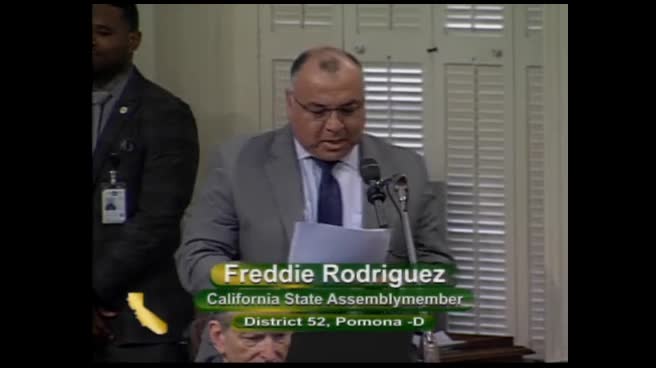 1MIN
Assembly Floor
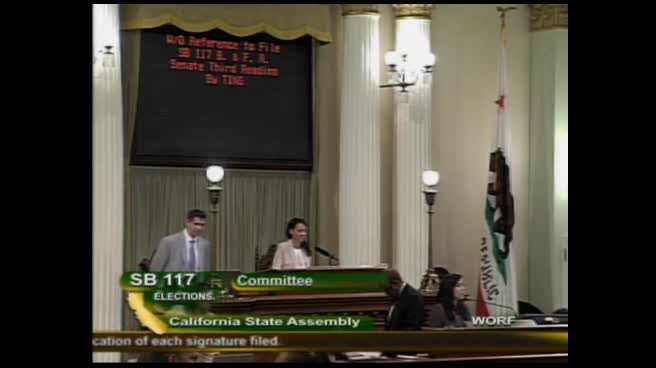 45SEC
Assembly Floor
 25MIN
Assembly Standing Committee on Business and Professions
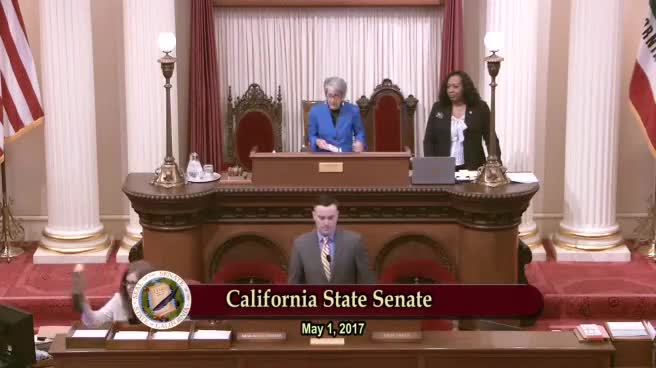 1MIN
Senate Floor
 12MIN
Senate Standing Committee on Business, Professions and Economic Development
 28MIN
Senate Standing Committee on Business, Professions and Economic Development
Bill Author

Bill Co-Author(s):