SB 315: California Massage Therapy Council: material for non-English speakers.
- Session Year: 2017-2018
- House: Senate
- Latest Version Date: 2017-07-24
The Massage Therapy Act, until January 1, 2021, provides for certification of massage practitioners and massage therapists by the California Massage Therapy Council. The act requires the council to take reasonable actions as needed to carry out its responsibilities and duties, including, among others, hiring staff, entering into contracts, and developing policies, procedures, rules, and bylaws to implement the act.
This bill would require the council to assess its contact with non-English speakers. The bill would require the council, based on this assessment, to offer and make available all publicly available written and electronic materials provided to certificate holders and applicants in languages other than English that the council determines will be used by a substantial number of non-English speakers in contact with the council. The bill would exclude examinations, denial and disciplinary legal documents, and email communications from that requirement. The bill also would require the council to provide a report to the Legislature on the findings of its assessment of contact with non-English speakers on or before January 1, 2019.
The Massage Therapy Act, until January 1, 2021, provides for certification of massage practitioners and massage therapists by the California Massage Therapy Council. The act requires the council to take reasonable actions as needed to carry out its responsibilities and duties, including, among others, hiring staff, entering into contracts, and developing policies, procedures, rules and bylaws to implement the act.
This bill would require the council to assess its contact with non-English speakers. The bill would require the council, based on this assessment, to offer and make available all publicly available written and electronic materials provided to certificate holders and applicants in languages other than English that the council determines will be used by a substantial number of non-English speakers in contact with the council. The bill would exclude examinations examinations, denial and disciplinary legal documents, and email communications from that requirement. The bill also would require the council to provide a report to the Legislature on the findings of its assessment of contact with non-English speakers on or before January 1, 2019.
The Massage Therapy Act, until January 1, 2021, provides for certification of massage practitioners and massage therapists by the California Massage Therapy Council. The act requires the council to take reasonable actions as needed to carry out its responsibilities and duties, including, among others, hiring staff, entering into contracts, and developing policies, procedures, rules and bylaws to implement the act.
This bill would require the council to assess its contact with non-English speakers. The bill would require the council, based on this assessment, to offer and make available all written and electronic materials provided to certificate holders and applicants in languages other than English that the council determines will be used by a substantial number of non-English speakers in contact with the council. The bill would exclude examinations from that requirement. The bill also would require the council to provide a report to the Legislature on the findings of its assessment of contact with non-English speakers on or before January 1, 2019.
The Pharmacy Law provides for the licensing and regulation of pharmacists by the California State Board of Pharmacy, which is within the Department of Consumer Affairs. That law declares that a pharmacist is a health care provider who has the authority to provide health care services.This bill would make nonsubstantive changes to that provision.The Pharmacy Law provides for the licensing and regulation of pharmacists by the California State Board of Pharmacy, which is within the Department of Consumer Affairs. That law declares that a pharmacist is a health care provider who has the authority to provide health care services.
This bill would make nonsubstantive changes to that provision.
(a)The California Massage Therapy Council, as defined in subdivision (d) of Section 4601, is hereby established and shall carry out the responsibilities and duties set forth in this chapter.
(b)The council may take any reasonable actions necessary to carry out the responsibilities and duties set forth in this chapter, including, but not limited to, hiring staff, entering into contracts, and developing policies, procedures, rules, and bylaws to implement this chapter.
(c)The council may require background checks for all employees, contractors, volunteers, and board members as a condition of their employment, formation of a contractual relationship, or participation in council activities.
(d)The council shall issue a certificate to an individual applicant who satisfies the requirements of this chapter for that certificate.
(e)The council is authorized to determine whether the information provided to the council in relation to the certification of an applicant is true and correct and meets the requirements of this chapter. If the council has any reason to question whether the information provided is true or correct, or meets the requirements of this chapter, the council is authorized to make any investigation it deems necessary to establish that the information received is accurate and satisfies any criteria established by this chapter. The applicant has the burden to prove that he or she is entitled to certification.
(f)The council shall be governed by a board of directors comprised of 13 members who shall be chosen in the following manner:
(1)One member shall be a representative of the League of California Cities, unless that entity chooses not to exercise this right to appoint.
(2)One member shall be a representative of the California Police Chiefs Association, unless that entity chooses not to exercise this right to appoint.
(3)One member shall be a representative of the California State Association of Counties, unless that entity chooses not to exercise this right to appoint.
(4)One member shall be a representative of an anti-human trafficking organization to be determined by the council. This organization shall appoint one member, unless the organization chooses not to exercise this right to appoint.
(5)One member shall be appointed by the Office of the Chancellor of the California Community Colleges, unless that office chooses not to exercise this right to appoint.
(6)One member shall be a member of the public appointed by the Director of the Department of Consumer Affairs, unless the director chooses not to exercise this right to appoint.
(7)One member shall be appointed by the California Association of Private Postsecondary Schools, unless that entity chooses not to exercise this right to appoint.
(8)One member shall be appointed by the American Massage Therapy Association, California Chapter, who shall be a California-certified massage therapist or massage practitioner who is a California resident and who has been practicing massage for at least three years, unless that entity chooses not to exercise this right to appoint.
(9)One member shall be a public health official representing a city, county, city and county, or state health department, to be determined by the council. The city, county, city and county, or state health department chosen, shall appoint one member unless that entity chooses not to exercise this right to appoint.
(10)(A)One member shall be a certified massage therapist or a certified massage practitioner who is a California resident who has practiced massage for at least three years prior to the appointment, selected by a professional society, association, or other entity which membership is comprised of massage therapist professionals, and that chooses to participate in the council. To qualify, a professional society, association, or other entity shall have a dues-paying membership in California of at least 1,000 individuals, have been established since 2000, and shall have bylaws that require its members to comply with a code of ethics.
(B)If there is more than one professional society, association, or other entity that meets the requirements of subparagraph (A), the appointment shall rotate based on a four-year term between each of the qualifying entities. The qualifying entity shall maintain its appointment authority during the entirety of the four-year term during which it holds the appointment authority. The order in which a qualifying professional society, association, or other entity has the authority to appoint shall be determined by alphabetical order based on the full legal name of the entity as of January 1, 2014.
(11)The members appointed to the board in accordance with paragraphs (1) to (10), inclusive, shall appoint three additional members, at a duly held board meeting in accordance with the boards bylaws. One of those appointees shall be an attorney licensed by the State Bar of California, who has been practicing law for at least three years and who at the time of appointment represents a city in the state. One of those appointees shall represent a massage business entity that has been operating in the state for at least three years. The council shall establish in its bylaws a process for appointing an additional member, provided that the member has knowledge of the massage industry or can bring needed expertise to the operation of the council for purposes of complying with Section 4603.
(g)Board member terms shall be for four years.
(h)The board of directors shall establish fees reasonably related to the cost of providing services and carrying out its ongoing responsibilities and duties. Initial and renewal fees for certificates shall be in an amount sufficient to support the functions of the council in the administration of this chapter, but in no event shall exceed three hundred dollars ($300). The renewal fee shall be reassessed biennially by the board.
(i)The meetings of the council shall be subject to the rules of the Bagley-Keene Open Meeting Act (Article 9 (commencing with Section 11120) of Chapter 1 of Part 1 of Division 3 of Title 2 of the Government Code). The board may adopt additional policies and procedures that provide greater transparency to certificate holders and the public than required by the Bagley-Keene Open Meeting Act.
(j)Prior to holding a meeting to vote upon a proposal to increase the certification fees, the board shall provide at least 90 days notice of the meeting, including posting a notice on the councils Internet Web site unless at least two-thirds of the board members concur that there is an active threat to public safety and that voting at a meeting without prior notice is necessary. However, the board shall not waive the requirements of subdivision (i).
(k)If the board approves an increase in the certification fees, the council shall update all relevant areas of its Internet Web site and notify all certificate holders and affected applicants by email within 14 days of the boards action.
(l)The council shall assess its contact with non-English speakers. Based on this assessment, the council shall offer and make available all publicly available written and electronic materials provided to certificate holders and applicants in languages other than English that the council determines will be used by a substantial number of non-English speakers who are in contact with the council. This subdivision shall not apply to examinations, denial and disciplinary legal documents, and email communications. The council shall provide a report to the Legislature on the findings of its assessment of contact with non-English speakers on or before January 1, 2019.
(a)The California Massage Therapy Council, as defined in subdivision (d) of Section 4601, is hereby established and shall carry out the responsibilities and duties set forth in this chapter.
(b)The council may take any reasonable actions necessary to carry out the responsibilities and duties set forth in this chapter, including, but not limited to, hiring staff, entering into contracts, and developing policies, procedures, rules, and bylaws to implement this chapter.
(c)The council may require background checks for all employees, contractors, volunteers, and board members as a condition of their employment, formation of a contractual relationship, or participation in council activities.
(d)The council shall issue a certificate to an individual applicant who satisfies the requirements of this chapter for that certificate.
(e)The council is authorized to determine whether the information provided to the council in relation to the certification of an applicant is true and correct and meets the requirements of this chapter. If the council has any reason to question whether the information provided is true or correct, or meets the requirements of this chapter, the council is authorized to make any investigation it deems necessary to establish that the information received is accurate and satisfies any criteria established by this chapter. The applicant has the burden to prove that he or she is entitled to certification.
(f)The council shall be governed by a board of directors comprised of 13 members who shall be chosen in the following manner:
(1)One member shall be a representative of the League of California Cities, unless that entity chooses not to exercise this right to appoint.
(2)One member shall be a representative of the California Police Chiefs Association, unless that entity chooses not to exercise this right to appoint.
(3)One member shall be a representative of the California State Association of Counties, unless that entity chooses not to exercise this right to appoint.
(4)One member shall be a representative of an anti-human trafficking organization to be determined by the council. This organization shall appoint one member, unless the organization chooses not to exercise this right to appoint.
(5)One member shall be appointed by the Office of the Chancellor of the California Community Colleges, unless that office chooses not to exercise this right to appoint.
(6)One member shall be a member of the public appointed by the Director of the Department of Consumer Affairs, unless the director chooses not to exercise this right to appoint.
(7)One member shall be appointed by the California Association of Private Postsecondary Schools, unless that entity chooses not to exercise this right to appoint.
(8)One member shall be appointed by the American Massage Therapy Association, California Chapter, who shall be a California-certified massage therapist or massage practitioner who is a California resident and who has been practicing massage for at least three years, unless that entity chooses not to exercise this right to appoint.
(9)One member shall be a public health official representing a city, county, city and county, or state health department, to be determined by the council. The city, county, city and county, or state health department chosen, shall appoint one member unless that entity chooses not to exercise this right to appoint.
(10)(A)One member shall be a certified massage therapist or a certified massage practitioner who is a California resident who has practiced massage for at least three years prior to the appointment, selected by a professional society, association, or other entity which membership is comprised of massage therapist professionals, and that chooses to participate in the council. To qualify, a professional society, association, or other entity shall have a dues-paying membership in California of at least 1,000 individuals, have been established since 2000, and shall have bylaws that require its members to comply with a code of ethics.
(B)If there is more than one professional society, association, or other entity that meets the requirements of subparagraph (A), the appointment shall rotate based on a four-year term between each of the qualifying entities. The qualifying entity shall maintain its appointment authority during the entirety of the four-year term during which it holds the appointment authority. The order in which a qualifying professional society, association, or other entity has the authority to appoint shall be determined by alphabetical order based on the full legal name of the entity as of January 1, 2014.
(11)The members appointed to the board in accordance with paragraphs (1) to (10), inclusive, shall appoint three additional members, at a duly held board meeting in accordance with the boards bylaws. One of those appointees shall be an attorney licensed by the State Bar of California, who has been practicing law for at least three years and who at the time of appointment represents a city in the state. One of those appointees shall represent a massage business entity that has been operating in the state for at least three years. The council shall establish in its bylaws a process for appointing an additional member, provided that the member has knowledge of the massage industry or can bring needed expertise to the operation of the council for purposes of complying with Section 4603.
(g)Board member terms shall be for four years.
(h)The board of directors shall establish fees reasonably related to the cost of providing services and carrying out its ongoing responsibilities and duties. Initial and renewal fees for certificates shall be in an amount sufficient to support the functions of the council in the administration of this chapter, but in no event shall exceed three hundred dollars ($300). The renewal fee shall be reassessed biennially by the board.
(i)The meetings of the council shall be subject to the rules of the Bagley-Keene Open Meeting Act (Article 9 (commencing with Section 11120) of Chapter 1 of Part 1 of Division 3 of Title 2 of the Government Code). The board may adopt additional policies and procedures that provide greater transparency to certificate holders and the public than required by the Bagley-Keene Open Meeting Act.
(j)Prior to holding a meeting to vote upon a proposal to increase the certification fees, the board shall provide at least 90 days notice of the meeting, including posting a notice on the councils Internet Web site unless at least two-thirds of the board members concur that there is an active threat to public safety and that voting at a meeting without prior notice is necessary. However, the board shall not waive the requirements of subdivision (i).
(k)If the board approves an increase in the certification fees, the council shall update all relevant areas of its Internet Web site and notify all certificate holders and affected applicants by email within 14 days of the boards action.
(l)The council shall assess its contact with non-English speakers. Based on this assessment, the council shall offer and make available all publicly available written and electronic materials provided to certificate holders and applicants in languages other than English that the council determines will be used by a substantial number of non-English speakers who are in contact with the council. This subdivision shall not apply to examinations. examinations, denial and disciplinary legal documents, and email communications. The council shall provide a report to the Legislature on the findings of its assessment of contact with non-English speakers on or before January 1, 2019.
(a)The California Massage Therapy Council, as defined in subdivision (d) of Section 4601, is hereby established and shall carry out the responsibilities and duties set forth in this chapter.
(b)The council may take any reasonable actions necessary to carry out the responsibilities and duties set forth in this chapter, including, but not limited to, hiring staff, entering into contracts, and developing policies, procedures, rules, and bylaws to implement this chapter.
(c)The council may require background checks for all employees, contractors, volunteers, and board members as a condition of their employment, formation of a contractual relationship, or participation in council activities.
(d)The council shall issue a certificate to an individual applicant who satisfies the requirements of this chapter for that certificate.
(e)The council is authorized to determine whether the information provided to the council in relation to the certification of an applicant is true and correct and meets the requirements of this chapter. If the council has any reason to question whether the information provided is true or correct, or meets the requirements of this chapter, the council is authorized to make any investigation it deems necessary to establish that the information received is accurate and satisfies any criteria established by this chapter. The applicant has the burden to prove that he or she is entitled to certification.
(f)The council shall be governed by a board of directors comprised of 13 members who shall be chosen in the following manner:
(1)One member shall be a representative of the League of California Cities, unless that entity chooses not to exercise this right to appoint.
(2)One member shall be a representative of the California Police Chiefs Association, unless that entity chooses not to exercise this right to appoint.
(3)One member shall be a representative of the California State Association of Counties, unless that entity chooses not to exercise this right to appoint.
(4)One member shall be a representative of an anti-human trafficking organization to be determined by the council. This organization shall appoint one member, unless the organization chooses not to exercise this right to appoint.
(5)One member shall be appointed by the Office of the Chancellor of the California Community Colleges, unless that office chooses not to exercise this right to appoint.
(6)One member shall be a member of the public appointed by the Director of the Department of Consumer Affairs, unless the director chooses not to exercise this right to appoint.
(7)One member shall be appointed by the California Association of Private Postsecondary Schools, unless that entity chooses not to exercise this right to appoint.
(8)One member shall be appointed by the American Massage Therapy Association, California Chapter, who shall be a California-certified massage therapist or massage practitioner who is a California resident and who has been practicing massage for at least three years, unless that entity chooses not to exercise this right to appoint.
(9)One member shall be a public health official representing a city, county, city and county, or state health department, to be determined by the council. The city, county, city and county, or state health department chosen, shall appoint one member unless that entity chooses not to exercise this right to appoint.
(10)(A)One member shall be a certified massage therapist or a certified massage practitioner who is a California resident who has practiced massage for at least three years prior to the appointment, selected by a professional society, association, or other entity which membership is comprised of massage therapist professionals, and that chooses to participate in the council. To qualify, a professional society, association, or other entity shall have a dues-paying membership in California of at least 1,000 individuals, have been established since 2000, and shall have bylaws that require its members to comply with a code of ethics.
(B)If there is more than one professional society, association, or other entity that meets the requirements of subparagraph (A), the appointment shall rotate based on a four-year term between each of the qualifying entities. The qualifying entity shall maintain its appointment authority during the entirety of the four-year term during which it holds the appointment authority. The order in which a qualifying professional society, association, or other entity has the authority to appoint shall be determined by alphabetical order based on the full legal name of the entity as of January 1, 2014.
(11)The members appointed to the board in accordance with paragraphs (1) to (10), inclusive, shall appoint three additional members, at a duly held board meeting in accordance with the boards bylaws. One of those appointees shall be an attorney licensed by the State Bar of California, who has been practicing law for at least three years and who at the time of appointment represents a city in the state. One of those appointees shall represent a massage business entity that has been operating in the state for at least three years. The council shall establish in its bylaws a process for appointing an additional member, provided that the member has knowledge of the massage industry or can bring needed expertise to the operation of the council for purposes of complying with Section 4603.
(g)Board member terms shall be for four years.
(h)The board of directors shall establish fees reasonably related to the cost of providing services and carrying out its ongoing responsibilities and duties. Initial and renewal fees for certificates shall be in an amount sufficient to support the functions of the council in the administration of this chapter, but in no event shall exceed three hundred dollars ($300). The renewal fee shall be reassessed biennially by the board.
(i)The meetings of the council shall be subject to the rules of the Bagley-Keene Open Meeting Act (Article 9 (commencing with Section 11120) of Chapter 1 of Part 1 of Division 3 of Title 2 of the Government Code). The board may adopt additional policies and procedures that provide greater transparency to certificate holders and the public than required by the Bagley-Keene Open Meeting Act.
(j)Prior to holding a meeting to vote upon a proposal to increase the certification fees, the board shall provide at least 90 days notice of the meeting, including posting a notice on the councils Internet Web site unless at least two-thirds of the board members concur that there is an active threat to public safety and that voting at a meeting without prior notice is necessary. However, the board shall not waive the requirements of subdivision (i).
(k)If the board approves an increase in the certification fees, the council shall update all relevant areas of its Internet Web site and notify all certificate holders and affected applicants by email within 14 days of the boards action.
(l)The council shall assess its contact with non-English speakers. Based on this assessment, the council shall offer and make available all written and electronic materials provided to certificate holders and applicants in languages other than English that the council determines will be used by a substantial number of non-English speakers who are in contact with the council. This subdivision shall not apply to examinations. The council shall provide a report to the Legislature on the findings of its assessment of contact with non-English speakers on or before January 1, 2019.
SECTION 1.Section 4050 of the Business and Professions Code is amended to read:4050.(a)In recognition of and consistent with the decisions of the appellate courts of this state, the Legislature hereby declares the practice of pharmacy to be a profession.(b)Pharmacy practice is a dynamic, patient-oriented health service that applies a scientific body of knowledge to improve and promote patient health by means of appropriate drug use, drug-related therapy, and communication for clinical and consultative purposes. Pharmacy practice is continually evolving to include more sophisticated and comprehensive patient care activities.(c)The Legislature further declares that a pharmacist is a health care provider who has the authority to provide health care services.(a)In recognition of and consistent with the decisions of the appellate courts of this state, the Legislature hereby declares the practice of pharmacy to be a profession.
(b)Pharmacy practice is a dynamic, patient-oriented health service that applies a scientific body of knowledge to improve and promote patient health by means of appropriate drug use, drug-related therapy, and communication for clinical and consultative purposes. Pharmacy practice is continually evolving to include more sophisticated and comprehensive patient care activities.
(c)The Legislature further declares that pharmacists are a pharmacist is a health care providers provider who have has the authority to provide health care services.
|
Date
|
Status
|
|---|---|
| Jul 24, 2017 | Chaptered by Secretary of State. Chapter 120, Statutes of 2017. |
| Jul 24, 2017 | Approved by the Governor. |
| Jul 12, 2017 | Enrolled and presented to the Governor at 12 p.m. |
| Jul 6, 2017 | In Senate. Ordered to engrossing and enrolling. |
| Jul 6, 2017 | Read third time. Passed. Ordered to the Senate. |
| Jun 28, 2017 | Read second time. Ordered to third reading. |
| Jun 27, 2017 | From committee: Do pass. (Ayes 16. Noes 0.) (June 27). |
| May 22, 2017 | Referred to Com. on B. & P. |
| May 1, 2017 | In Assembly. Read first time. Held at Desk. |
| May 1, 2017 | Read third time. Passed. (Ayes 37. Noes 0. Page 905.) Ordered to the Assembly. |
| Apr 26, 2017 | Read second time. Ordered to third reading. |
| Apr 25, 2017 | Read third time and amended. |
| Apr 19, 2017 | Read second time. Ordered to third reading. |
| Apr 18, 2017 | From committee: Do pass. (Ayes 6. Noes 0. Page 726.) (April 17). |
| Mar 28, 2017 | Set for hearing April 17. |
| Mar 27, 2017 | April 3 hearing postponed by committee. |
| Mar 24, 2017 | Set for hearing April 3. |
| Mar 23, 2017 | Re-referred to Com. on B., P. & E.D. |
| Mar 16, 2017 | From committee with author's amendments. Read second time and amended. Re-referred to Com. on RLS. |
| Feb 23, 2017 | Referred to Com. on RLS. |
| Feb 14, 2017 | From printer. May be acted upon on or after March 16. |
| Feb 13, 2017 | Introduced. Read first time. To Com. on RLS. for assignment. To print. |
|
Date
|
Description
|
Location
|
Votes
|
|
|---|---|---|---|---|
| Jul 6, 2017 | SB 315 Nguyen Senate Third Reading By CHIU | Assembly Floor |
Passed |
|
| Jun 27, 2017 | Do pass. | Assembly Standing Committee on Business and Professions |
Passed |
|
| May 1, 2017 | Senate 3rd Reading SB315 Nguyen | Senate Floor |
Passed |
|
| Apr 17, 2017 | Do pass | Senate Standing Committee on Business, Professions and Economic Development |
Passed |
This list shows positions taken on this bill by organizations on the date displayed, which is linked to the original source.
Positions by individuals are not included.
SENATE THIRD READING
STR Bill Id:SB 315
Author:(Nguyen)
As Amended Ver:April 25, 2017
Majority vote
SENATE VOTE: 36-0
Committee | Votes | Ayes | Noes |
Business & Professions | 16-0 | Low, Arambula, Baker, Bloom, Chen, Chiu, Cunningham, Dahle, Eggman, Gipson, Grayson, Holden, Irwin, Mullin, Steinorth, Ting |
SUMMARY: Requires the California Massage Therapy Council (CAMTC) to assess its contact with non-English speakers, requires CAMTC to offer publicly available materials in languages other than English based on the assessment, and requires CAMTC to report its findings to the Legislature by January 1, 2019. Specifically, this bill:
- Requires CAMTC to assess its contact with non-English speakers.
- Requires CAMTC to use the assessment to offer and make available all publicly available written and electronic materials provided to certificate holders and applicants in languages other than English that CAMTC determines will be used by a substantial number of non-English speakers.
- Provides that this requirement does not apply to examinations, denial and disciplinary legal documents, and email communications.
- Requires CAMTC to provide a report to the Legislature on the findings of its assessment of contact with non-English speakers on or before January 1, 2019.
FISCAL EFFECT: None
COMMENTS:
Purpose. This bill is sponsored by the author. According to the author, this bill "will help meet the needs of California's diverse workforce by increasing language accessibility for students and practitioners in the massage therapy industry. This bill would ensure that certificate holders in the massage therapy industry have access to all written and electronic materials related to their certification in their preferred language. This change in the law is important because it would allow massage therapists to review rules and regulations that affect them and consumers, thereby enhancing their understanding of the law."
Background. The Massage Therapy Act (Act) establishes a certification system for massage therapists. The Act also creates CAMTC, a nonprofit organization, to administer the program. A massage therapist who meets specified education and professional conduct requirements may obtain a certificate in massage therapy and use the title "certified massage therapist" and similar titles and initials. The Act prohibits the use of the title without a certificate issued by CAMTC. As of 2015, there were over 50,000 active certificates issued.
Materials in non-English Languages. Currently, CAMTC does not provide materials in languages other than English (although it has a Google Translate widget on its website). While the Dymally-Alatorre Bilingual Services Act requires state and local agencies, including licensing entities, to provide materials in other languages if the agencies serve a substantial number of non-English speaking people, CAMTC is defined in statute as "a nonprofit organization exempt from taxation under Section 501(c)(3) of Title 26 of the United States Code." Therefore, it is not included under the requirement.
This bill will require CAMTC to similarly assess the needs of non-English speakers and produce materials in languages that a substantial number of non-English speakers will benefit from. It will also require the CAMTC to report its findings to the Legislature by January 1, 2019.
ARGUMENTS IN SUPPORT:
CAMTC writes in support, "CAMTC appreciates your intent to make publicly available documents accessible to non-English speakers and believes that the narrowing of the language of the bill accomplishes that task without being unduly burdensome."
The Royal Thai Consulate-General, Los Angeles, writes in support, "Currently, more than 5,000 Thai American massage professionals in Los Angeles, Bay Area and many cities across California face obstacles in obtaining CAMTC licenses and have spent 4,000 – 6,000 USD in their studies in the massage schools due to language difficulties. The translation of all written materials in foreign languages, like Thai language, would be highly beneficial to those in the massage industries, especially Thai massage professionals."
ARGUMENTS IN OPPOSITION:
None on file.
IMPLEMENTATION ISSUES:
This bill uses the term "substantial number" but does not define it. In current law, the Dymally-Alatorre Bilingual Services Act, which requires all state and local agencies to produce materials in non-English languages, also uses the term substantial but defines substantial as comprising "5 percent or more of the people served" by a state agency. For local agencies, it says the determination "shall be made by the local agency."
Because CAMTC is an organization that is established in statute to implement a statewide program, the author may wish to use the Dymally-Alatorre Bilingual Services Act as a definition. However, this bill does require CAMTC to report its findings to the Legislature in 2019, and the CAMTC will also go through Sunset Review in 2020.
Analysis Prepared by: Vincent Chee / B. & P. / (916) 319-3301 FN: 0001064
Date of Hearing:
ASSEMBLY COMMITTEE ON BUSINESS AND PROFESSIONS
Evan Low, Chair
SBPCA Bill Id:
Author:() – As Ver:
SENATE VOTE:
SUBJECT:
SUMMARY: Requires the California Massage Therapy Council (CAMTC) to assess its contact with non-English speakers, requires CAMTC to offer publicly available materials in languages other than English based on the assessment, and requires CAMTC to report its findings to the Legislature by January 1, 2019.
EXISTING LAW:
- Establishes a statewide voluntary certification system for massage therapists under the Massage Therapy Act. (Business and Professions Code (BPC) § 4600-4621)
- Establishes CAMTC, a nonprofit organization, to carry out the responsibilities and duties under the Massage Therapy Act. (BPC §§ 4601(d), 4602)
- Requires, under the Dymally-Alatorre Bilingual Services Act, every state and local agency that serves a substantial number of non-English speaking people to provide specified translation services. (Government Code §§ 7290-7299.8)
THIS BILL:
- Requires CAMTC to assess its contact with non-English speakers.
- Requires CAMTC to use the assessment to offer and make available all publicly available written and electronic materials provided to certificate holders and applicants in languages other than English that CAMTC determines will be used by a substantial number of non-English speakers.
- Provides that this requirement does not apply to examinations, denial and disciplinary legal documents, and email communications.
- Requires CAMTC to provide a report to the Legislature on the findings of its assessment of contact with non-English speakers on or before January 1, 2019.
FISCAL EFFECT: None
COMMENTS:
Purpose. This bill is sponsored by the author. According to the author, this bill "will help meet the needs of California’s diverse workforce by increasing language accessibility for students and practitioners in the massage therapy industry. This bill would ensure that certificate holders in the massage therapy industry have access to all written and electronic materials related to their certification in their preferred language. This change in the law is important because it would allow massage therapists to review rules and regulations that affect them and consumers, thereby enhancing their understanding of the law."
Background. The Massage Therapy Act establishes a certification system for massage therapists. The Act also creates CAMTC, a nonprofit organization, to administer the program. A massage therapist who meets specified education and professional conduct requirements may obtain a certificate in massage therapy and use the title "certified massage therapist" and similar titles and initials. The Act prohibits the use of the title without a certificate issued by CAMTC. As of 2015, there were over 50,000 active certificates issued.
Materials in non-English Languages. Currently, CAMTC does not provide materials in languages other than English (although it has a Google Translate widget on its website). While the Dymally-Alatorre Bilingual Services Act requires state and local agencies, including licensing entities, to provide materials in other languages if the agencies serve a substantial number of non-English speaking people, CAMTC is defined in statute as "a nonprofit organization exempt from taxation under Section 501(c)(3) of Title 26 of the United States Code." Therefore, it is not included under the requirement.
This bill will require CAMTC to similarly assess the needs of non-English speakers and produce materials in languages that a substantial number of non-English speakers will benefit from. It will also require the CAMTC to report its findings to the Legislature by January 1, 2019.
ARGUMENTS IN SUPPORT:
CAMTC writes in support, "CAMTC appreciates your intent to make publicly available documents accessible to non-English speakers and believes that the narrowing of the language of the bill accomplishes that task without being unduly burdensome."
ARGUMENTS IN OPPOSITION:
None on file.
IMPLEMENTATION ISSUES:
This bill uses the term "substantial number" but does not define it. In current law, the Dymally-Alatorre Bilingual Services Act, which requires all state and local agencies to produce materials in non-English languages, also uses the term substantial but defines substantial as comprising “5 percent or more of the people served” by a state agency. For local agencies, it says the determination “shall be made by the local agency.”
Because CAMTC is an organization that is established in statute to implement a statewide program, the author may wish to use the Dymally-Alatorre Bilingual Services Act as a definition. However, this bill does require CAMTC to report its findings to the Legislature in 2019, and the CAMTC will also go through Sunset Review in 2020.
REGISTERED SUPPORT:
American Massage Therapy Association
California Health Nail Salon Collaborative
California Massage Therapy Council
Thai American and Asian Alliance Association of San Diego
1 certified massage therapist
REGISTERED OPPOSITION:
None on file.
Analysis Prepared by: Vincent Chee / B. & P. / (916) 319-3301
Office of Senate Floor Analyses (916) 651-1520 Fax: (916) 327-4478 | SB |
THIRD READING
Bill No: SB 315
: 4/25/17
SENATE BUS., PROF. & ECON. DEV. COMMITTEE: 6-0, 4/17/17
AYES: Hill, Bates, Dodd, Galgiani, Pan, Wilk
NO VOTE RECORDED: Glazer, Hernandez, Newman
DIGEST:
This bill requires the California Massage Therapy Council (CAMTC) to assess its contact with non-English speakers and, based on this assessment, offer and make available all publicly available written and electronic materials (other than examinations, denial and disciplinary documents and email communications) that the CAMTC determines will be used by a substantial number of non-English speakers in contact with CAMTC. The bill also requires CAMTC to provide a report to the Legislature on the findings of its assessment on or before January 1, 2019.
Senate Floor Amendments of 4/25/17 further clarify what materials CAMTC would have to translate into languages other than English.
Existing law:
- Establishes Massage Therapy Act (Act) and the CAMTC, which is responsible for the administration of the voluntary certification program for certified massage therapists. (Business and Professions Code (BPC) § 4600 et seq.)
- Establishes the Dymally-Alatorre Bilingual Services Act (Dymally-Alatorre) which requires each state agency to conduct a survey, related to its bilingual services, of each of its statewide offices which render services to the public every two years to determine specified information, and to report results and any additional information requested to the California Department of Human Resources (CalHR). Requires the survey to contain a detailed description of complaints regarding language access received by the agency. Dymally-Alatorre also requires each agency that serves 5% or more non-English-speaking people develop an implementation plan, as specified, in every odd-numbered year, and to submit the implementation plan to the department for its review. Additionally, Dymally-Alatorre requires CalHR, if it determines that a state agency has not made reasonable progress toward complying with Dymally-Alatorre, to issue orders that it deems appropriate to effectuate the purposes of Dymally-Alatorre. (Government Code (GC) § 7290 et seq.)
- Stipulates that, by July 1, 2015, a state agency subject to Dymally-Alatorre must translate and make accessible on the homepage of its Internet Web site, forms and processes for submitting complaints of alleged violations of Dymally-Alatorre. Also, requires that the forms and processes be translated into all languages spoken by a substantial number of non-English speaking people served by the state agency. In addition, requires that translated copies of the forms must be printed and made available in the statewide office and any local office of the state agency. (GC § 7299.3)
This bill:
- Requires CAMTC to assess its contact with non-English speakers and, based on this assessment, offer and make available in languages other than English, all publicly available written and electronic materials that the CAMTC determines will be used by a substantial number of non-English speakers in contact with CAMTC, other than examinations, denial and disciplinary documents and email communications.
- Requires CAMTC to provide a report to the Legislature on the findings of its assessment on or before January 1, 2019.
Background
The author is the sponsor of this bill. According to the author, the bill will help meet the needs of California’s linguistically diverse workforce by increasing language accessibility in the massage therapy industry. The author believes this change in the law is important because it would allow massage therapists and practitioners to review rules and regulations that affect them and consumers in their preferred language, thereby enhancing their understanding of the law. The author notes that as an industry that employs more than 55,000 residents and provides services that seek to benefit the health and wellbeing of Californians, it is important that we establish policies that enhance the massage therapy industry.
CAMTC. The CAMTC is a nonprofit organization responsible for the voluntary certification and recertification of massage professionals. The certification law was initially enacted by SB 731 (Oropeza, Chapter 384, Statutes of 2008). Because certification is voluntary, non-certified individuals may provide massage services in accordance with local rules and regulations. SB 731 authorized the creation of a governing certification entity, the Massage Therapy Organization which was renamed the CAMTC by AB 619 (Halderman, Chapter 162, Statutes of 2011).
Unlike other practice acts in the BPC, the Act is administered by a private nonprofit organization, not an agency under the Department of Consumer Affairs (DCA). The CAMTC is authorized by statute to take any reasonable actions necessary to carry out its responsibilities and duties, as specified in the Act. The law also authorizes the CAMTC to deny applications and discipline certificate holders by denying an applicant or revoking, suspending, or placing probationary conditions on an individual's certificate.
Government Agency Efforts to Serve California's Limited English Proficient Population. The 2010 U.S. Census found that more than 6.5 million residents of California, one out of every five, speak English “less than very well.” Over 44 percent of Californians speak a language other than English at home.
The Dymally-Alatorre Bilingual Services Act ensures that all residents, including those who are limited English proficient (LEP), have equal access to public services. Dymally-Alatorre requires every state and local agency to have a sufficient number of qualified bilingual staff and translated written materials so that the LEP population they serve are able to effectively access and communicate with government. Dymally-Alatorre became law in 1973 with the Legislative intent of ensuring people are not precluded from accessing public services because of language barriers. It requires agencies to provide the same information that is available in English in other languages if the agency services a "substantial number" of non-English speakers. To determine which languages must be included under the defined threshold, agencies are required to conduct surveys every other year to assess their contact with non-English speakers. Then, they must create or update implementation plans to ensure compliance and submit them to CalHR.
As a non-profit entity, CAMTC is not subject to the Dymally-Alatorre Bilingual Services Act. However, CAMTC’s certificate holder and applicant population includes many LEP individuals. Beginning February 2017, CAMTC began providing Google translations in 103 languages for its Web site.
FISCAL EFFECT: Appropriation: Fiscal Com.: Local:
California Massage Therapy Council
One certified massage therapist
One certified massage therapist
5/1/17 10:47:02
**** END ****
Office of Senate Floor Analyses (916) 651-1520 Fax: (916) 327-4478 | SB 315 |
THIRD READING
Bill No: SB 315
Amended: 3/16/17
SENATE BUS., PROF. & ECON. DEV. COMMITTEE: 6-0, 4/17/17
AYES: Hill, Bates, Dodd, Galgiani, Pan, Wilk
NO VOTE RECORDED: Glazer, Hernandez, Newman
SUBJECT: California Massage Therapy Council: material for non-English speakers
DIGEST: This bill requires the California Massage Therapy Council (CAMTC) to assess its contact with non-English speakers and, based on this assessment, offer and make available all written and electronic materials that the CAMTC determines will be used by a substantial number of non-English speakers in contact with CAMTC. Requires CAMTC to provide a report to the Legislature on the findings of its assessment on or before January 1, 2019.
Existing law:
- Establishes Massage Therapy Act (Act) and the CAMTC, which is responsible for the administration of the voluntary certification program for certified massage therapists. (Business and Professions Code (BPC) § 4600 et seq.)
- Establishes the Dymally-Alatorre Bilingual Services Act (Dymally-Alatorre) which requires each state agency to conduct a survey, related to its bilingual services, of each of its statewide offices which render services to the public every two years to determine specified information, and to report results and any additional information requested to the California Department of Human Resources (CalHR). Requires the survey to contain a detailed description of complaints regarding language access received by the agency. Dymally-Alatorre also requires each agency that serves 5% or more non-English-speaking people develop an implementation plan, as specified, in every odd-numbered year, and to submit the implementation plan to the department for its review. Additionally, Dymally-Alatorre requires CalHR, if it determines that a state agency has not made reasonable progress toward complying with Dymally-Alatorre, to issue orders that it deems appropriate to effectuate the purposes of Dymally-Alatorre. (Government Code (GC) § 7290 et seq.)
- Stipulates that, by July 1, 2015, a state agency subject to Dymally-Alatorre must translate and make accessible on the homepage of its Internet Web site, forms and processes for submitting complaints of alleged violations of Dymally-Alatorre. Also, requires that the forms and processes be translated into all languages spoken by a substantial number of non-English speaking people served by the state agency. In addition, requires that translated copies of the forms must be printed and made available in the statewide office and any local office of the state agency. (GC § 7299.3)
This bill:
- Requires CAMTC to assess its contact with non-English speakers and, based on this assessment, offer and make available in languages other than English, all written and electronic materials that the CAMTC determines will be used by a substantial number of non-English speakers in contact with CAMTC, other than examinations.
- Requires CAMTC to provide a report to the Legislature on the findings of its assessment on or before January 1, 2019.
Background
The author is the sponsor of this bill. According to the author, the bill will help meet the needs of California’s linguistically diverse workforce by increasing language accessibility in the massage therapy industry. The author believes this change in the law is important because it would allow massage therapists and practitioners to review rules and regulations that affect them and consumers in their preferred language, thereby enhancing their understanding of the law. The author notes that as an industry that employs more than 55,000 residents and provides services that seek to benefit the health and wellbeing of Californians, it is important that we establish policies that enhance the massage therapy industry.
CAMTC. The CAMTC is a nonprofit organization responsible for the voluntary certification and recertification of massage professionals. The certification law was initially enacted by SB 731 (Oropeza, Chapter 384, Statutes of 2008). Because certification is voluntary, non-certified individuals may provide massage services in accordance with local rules and regulations. SB 731 authorized the creation of a governing certification entity, the Massage Therapy Organization which was renamed the CAMTC by AB 619 (Halderman, Chapter 162, Statutes of 2011).
Unlike other practice acts in the BPC, the Act is administered by a private nonprofit organization, not an agency under the Department of Consumer Affairs (DCA). The provision authorizing the establishment of the nonprofit oversight body for the purpose of administering the voluntary massage certification program is specified in the Act. As a nonprofit public benefit organization, the CAMTC must abide by nonprofit corporations law, as specified in the Corporations Code. The CAMTC is authorized by statute to take any reasonable actions necessary to carry out its responsibilities and duties, as specified in the Act.
The law also authorizes the CAMTC to deny applications and discipline certificate holders by denying an applicant or revoking, suspending, or placing probationary conditions on an individual's certificate.
Government Agency Efforts to Serve California's Limited English Proficient Population. The 2010 U.S. Census found that more than 6.5 million residents of California, one out of every five, speak English “less than very well.” Over 44 percent of Californians speak a language other than English at home.
The Dymally-Alatorre Bilingual Services Act ensures that all residents, including those who are limited English proficient (LEP), have equal access to public services. Dymally-Alatorre requires every state and local agency to have a sufficient number of qualified bilingual staff and translated written materials so that the LEP population they serve are able to effectively access and communicate with government. Dymally-Alatorre became law in 1973 with the Legislative intent of ensuring people are not precluded from accessing public services because of language barriers. It requires agencies to provide the same information that is available in English in other languages if the agency services a "substantial number" of non-English speakers. To determine which languages must be included under the defined threshold, agencies are required to conduct surveys every other year to assess their contact with non-English speakers. Then, they must create or update implementation plans to ensure compliance and submit them to CalHR.
As a non-profit entity, CAMTC is not subject to the Dymally-Alatorre Bilingual Services Act. However, CAMTC’s certificate holder and applicant population includes many LEP individuals. Beginning February 2017, CAMTC began providing Google translations in 103 languages for its Web site.
FISCAL EFFECT: Appropriation: Fiscal Com.: Local:
One individual
OPPOSITION: (Verified 4/16/17)
California Massage Therapy Association
Prepared by: Sarah Mason / B., P. & E.D. /
4/19/17 15:18:22
**** END ****
SENATE COMMITTEE ON
BUSINESS, PROFESSIONS AND ECONOMIC DEVELOPMENT
Senator Jerry Hill, Chair
2017 - 2018 Regular
Bill No: Hearing Date: April 17, 2017
Author: | |||
Version: | March 16, 2017 | ||
Urgency: | No | Fiscal: | No |
Consultant: | Sarah Mason | ||
Subject:
SUMMARY:
Requires the California Massage Therapy Council (CAMTC) to assess its contact with non-English speakers and, based on this assessment, offer and make available all written and electronic materials that the CAMTC determines will be used by a substantial number of non-English speakers in contact with CAMTC. Requires CAMTC to provide a report to the Legislature on the findings of its assessment on or before January 1, 2019.
Existing law:
- Establishes Massage Therapy Act (Act) and the CAMTC, which is responsible for the administration of the voluntary certification program for certified massage therapists. (Business and Professions Code (BPC) § 4600 et seq.)
- Authorizes the CAMTC to take any reasonable actions necessary to carry out the responsibilities and duties under the Act, including but not limited to, hiring staff, entering into contracts, and developing policies, procedures, rules, and bylaws. (BPC § 4602(b))
- Provides that in order for a massage therapist to obtain certification, the applicant must submit an application and provide CAMTC with satisfactory evidence that he or she is 18 years of age or older, has successfully completed 500 hours of instruction in massage and related subjects as specified, has passed a competency assessment examination that is approved by CAMTC, successfully passed a background investigation, and has not violated any provisions of the Act. (BPC § 4604)
- Provides that the CAMTC may deny an application for a certificate or impose discipline on a certificate holder or revoke a certificate for, but not limited to, unprofessional conduct, failure to disclose all information requested on an application, committing a fraudulent, dishonest or corrupt act, being convicted of felony, misdemeanor, etc. or a sexually related crime or if required to register as a sex offender. (BPC § 4609)
- Provides for procedures that are imposed in good faith and in a fair and reasonable manner for the denial of an applicant for a certificate or the discipline of a certificate holder which allows for the placing of a certificate holder on probation, suspending the certificate, revoking the certificate, or taking other actions as deemed appropriate and authorized by the CAMTC. (BPC § 4610)
- Requires the CAMTC on or before January 1, 2017, to provide a report to the Legislature that includes a feasibility study, information regarding the operation of the CAMTC and disciplinary actions taken by CAMTC against both applicants and certificate holders. (BPC § 4620)
- Establishes the Dymally-Alatorre Bilingual Services Act (Dymally-Alatorre) which requires each state agency to conduct a survey, related to its bilingual services, of each of its statewide offices which render services to the public every two years to determine specified information, and to report results and any additional information requested to the California Department of Human Resources (CalHR). Requires the survey to contain a detailed description of complaints regarding language access received by the agency. Dymally-Alatorre also requires each agency that serves 5% or more non-English-speaking people develop an implementation plan, as specified, in every odd-numbered year, and to submit the implementation plan to the department for its review. Additionally, Dymally-Alatorre requires CalHR, if it determines that a state agency has not made reasonable progress toward complying with Dymally-Alatorre, to issue orders that it deems appropriate to effectuate the purposes of Dymally-Alatorre. (Government Code (GC) § 7290 et seq.)
- Stipulates that, by July 1, 2015, a state agency subject to Dymally-Alatorre must translate and make accessible on the homepage of its Internet Web site, forms and processes for submitting complaints of alleged violations of Dymally-Alatorre. Also, requires that the forms and processes be translated into all languages spoken by a substantial number of non-English speaking people served by the state agency. In addition, requires that translated copies of the forms must be printed and made available in the statewide office and any local office of the state agency. (GC § 7299.3)
This bill:
- Requires CAMTC to assess its contact with non-English speakers and, based on this assessment, offer and make available in languages other than English, all written and electronic materials that the CAMTC determines will be used by a substantial number of non-English speakers in contact with CAMTC, other than examinations.
- Requires CAMTC to provide a report to the Legislature on the findings of its assessment on or before January 1, 2019.
FISCAL EFFECT:
This bill is not keyed fiscal by Legislative Counsel.
COMMENTS:
- Purpose. The Author is the Sponsor of this bill. According to the Author, the bill will help meet the needs of California’s linguistically diverse workforce by increasing language accessibility in the massage therapy industry. The Author believes this change in the law is important because it would allow massage therapists and practitioners to review rules and regulations that affect them and consumers in their preferred language, thereby enhancing their understanding of the law. The Author notes that as an industry that employs more than 55,000 residents and provides services that seek to benefit the health and wellbeing of Californians, it is important that we establish policies that enhance the massage therapy industry.
- Background on CAMTC. The CAMTC is a nonprofit organization responsible for the voluntary certification and recertification of massage professionals. The certification law was initially enacted by SB 731 (Oropeza, Chapter 384, Statutes of 2008). Because certification is voluntary, non-certified individuals may provide massage services in accordance with local rules and regulations. SB 731 authorized the creation of a governing certification entity, the Massage Therapy Organization which was renamed the CAMTC by AB 619 (Halderman, Chapter 162, Statutes of 2011).
Unlike other practice acts in the BPC, the Act is administered by a private nonprofit organization, not an agency under the Department of Consumer Affairs (DCA). The provision authorizing the establishment of the nonprofit oversight body for the purpose of administering the voluntary massage certification program is specified in the Act. As a nonprofit public benefit organization, the CAMTC must abide by nonprofit corporations law, as specified in the Corporations Code. The CAMTC is authorized by statute to take any reasonable actions necessary to carry out its responsibilities and duties, as specified in the Act.
The law also authorizes the CAMTC to deny applications and discipline certificate holders by denying an applicant or revoking, suspending, or placing probationary conditions on an individual's certificate. - Government Agency Efforts to Serve California's Limited English Proficient Population. The 2010 U.S. Census found that more than 6.5 million residents of California, one out of every five, speak English “less than very well.” Over 44 percent of Californians speak a language other than English at home.
The Dymally-Alatorre Bilingual Services Act ensures that all residents, including those who are limited English proficient (LEP), have equal access to public services. The Act requires every state and local agency to have a sufficient number of qualified bilingual staff and translated written materials so that the LEP population they serve are able to effectively access and communicate with government. The Act became law in 1973 with the Legislative intent of ensuring people are not precluded from accessing public services because of language barriers. It requires agencies to provide the same information that is available in English in other languages if the agency services a "substantial number" of non-English speakers. To determine which languages must be included under the defined threshold, agencies are required to conduct surveys every other year to assess their contact with non-English speakers. Then, they must create or update implementation plans to ensure compliance and submit them to CalHR.
As a non-profit entity, CAMTC is not subject to the Dymally-Alatorre Bilingual Services Act. However, CAMTC’s certificate holder and applicant population includes many LEP individuals. Beginning February 2017, CAMTC began providing Google translations in 103 languages for its website.
- Prior Related Legislation. AB 2025 (Gonzalez, Chapter 409, Statutes of 2016) updated the Barbering and Cosmetology Act to ensure that the Board of Barbering and Cosmetology (BBC) offers all written materials provided to licensees and applicants in English, Spanish and Vietnamese, among other requirements that the BBC provides practitioner and establishment applicants with information about basic labor laws and that the BBC includes basic labor law information in health and safety curriculum taught in BBC-approved schools.
AB 1073 (Ting, Chapter 784, Statutes of 2015) required a dispenser, upon the request of a patient or patient’s representative, to provide translated directions for use for medication, authorized a dispenser to use translations made available by the Board of Pharmacy, and required a dispenser to be responsible for the accuracy of the English-language directions for use provided to a patient.
- CAMTC Position. The California Massage Therapy Council is opposed to this bill unless amended, noting that CAMTC hopes amendments can be proposed that meet the Author’s intentions “while not placing undue burdens on the organization and those it serves.”
- Suggested Amendments. The bill specifies that CAMTC should make written and electronic “materials” available to certificate holders and applicants for certification. Materials is a broad term that could include helpful information points like “Frequently Asked Questions,” but could also include complex documents like letters proposing certificate denial or revocation.
The Author should consider further clarifying “materials” and may wish to specifically exempt legal documents and filings from the translations requirements set forth in this bill.
SUPPORT AND OPPOSITION:
Support:
One certified massage therapist
Opposition:
California Massage Therapy Council
-- END --
Discussed in Hearing
 1MIN
Assembly Floor
 1MIN
Assembly Standing Committee on Business and Professions
 1MIN
Senate Floor
 14MIN
Senate Standing Committee on Business, Professions and Economic Development
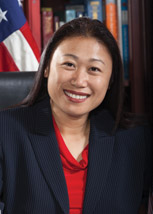
Bill Author
Bill Co-Author(s):