SB 323: Medi-Cal: federally qualified health centers and rural health centers: Drug Medi-Cal and specialty mental health services.
- Session Year: 2017-2018
- House: Senate
- Latest Version Date: 2017-10-06
Existing law establishes the Medi-Cal program, which is administered by the State Department of Health Care Services, under which qualified low-income individuals receive health care services. The Medi-Cal program is, in part, governed and funded by federal Medicaid program provisions. Existing law establishes the Drug Medi-Cal Treatment Program (Drug Medi-Cal), under which the department is authorized to enter into contracts with each county for the provision of various alcohol and drug treatment services, including substance use disorder services, narcotic treatment program services, naltrexone services, and outpatient drug-free services, to Medi-Cal beneficiaries. Existing law provides that specialty mental health services are covered under the Medi-Cal program for eligible Medi-Cal beneficiaries and coverage for those services is provided through mental health managed care plans. Existing law requires the department to implement managed mental health care for the delivery of specialty mental health services to eligible Medi-Cal beneficiaries through contracts with mental health plans under the Medi-Cal Specialty Mental Health Services Consolidation 1915(b) waiver.
Existing law provides that federally qualified health center (FQHC) services and rural health clinic (RHC) services, as defined, are covered benefits under the Medi-Cal program, to be reimbursed, to the extent that federal financial participation is obtained, to providers on a per-visit basis. Existing law authorizes FQHCs and RHCs to elect to have pharmacy or dental services reimbursed on a fee-for-service basis, utilizing the current fee schedules established for those services and requires those costs to be adjusted out of the FQHCs or RHCs clinic base rate as scope-of-service changes. If FQHC or RHC services are partially reimbursed by a 3rd-party payer, existing law requires the department to reimburse an FQHC or RHC for the difference between its per-visit prospective payment system (PPS) rate and receipts from other plans or programs on a contract-by-contract basis, as specified.
This bill, only to the extent that federal financial participation is available, would authorize FQHCs and RHCs to provide Drug Medi-Cal services pursuant to the terms of a mutually agreed upon contract entered into between the FQHC or RHC and the county or county designee, or department, as specified, and would set forth the reimbursement requirements for these services. The bill, only to the extent that federal financial participation is available, would authorize an FQHC or RHC to provide specialty mental health services to Medi-Cal beneficiaries as part of a mental health plans provider network pursuant to the terms of a mutually agreed upon contract entered into between the FQHC or RHC and one or more mental health plans. The bill would prohibit the costs associated with providing Drug Medi-Cal services or specialty mental health services from being included in the FQHCs or RHCs per-visit PPS rate, and would require the costs associated with providing Drug Medi-Cal services or specialty mental health services to be adjusted out of the FQHCs or RHCs clinic base PPS rate as a scope-of-service change if the costs associated with providing Drug Medi-Cal services or specialty mental health services are within the FQHCs or RHCs clinic base PPS rate, as specified. The bill would exempt the department from the reimbursement requirement described above for any payment received by an FQHC or RHC that contracts with a county or the department to provide Drug Medi-Cal services or that contracts with a mental health plan to provide specialty mental health services, as applicable. The bill would authorize the Director of Health Care Services, to implement, interpret, or make specific these provisions by means of provider bulletins or similar instructions, and would require the department to notify and consult with interested parties and appropriate stakeholders in implementing these provisions, as specified.
This bill would incorporate additional changes to Section 14132.100 of the Welfare and Institutions Code proposed by AB 1591 to be operative only if this bill and AB 1591 are enacted and this bill is enacted last.
Existing law establishes the Medi-Cal program, which is administered by the State Department of Health Care Services, under which qualified low-income individuals receive health care services. The Medi-Cal program is, in part, governed and funded by federal Medicaid program provisions. Existing law establishes the Drug Medi-Cal Treatment Program (Drug Medi-Cal), under which the department is authorized to enter into contracts with each county for the provision of various alcohol and drug treatment services, including substance use disorder services, narcotic treatment program services, naltrexone services, and outpatient drug-free services, to Medi-Cal beneficiaries. Existing law provides that specialty mental health services are covered under the Medi-Cal program for eligible Medi-Cal beneficiaries and coverage for those services is provided through mental health managed care plans. Existing law requires the department to implement managed mental health care for the delivery of specialty mental health services to eligible Medi-Cal beneficiaries through contracts with mental health plans under the Medi-Cal Specialty Mental Health Services Consolidation 1915(b) waiver.
Existing law provides that federally qualified health center (FQHC) services and rural health clinic (RHC) services, as defined, are covered benefits under the Medi-Cal program, to be reimbursed, to the extent that federal financial participation is obtained, to providers on a per-visit basis. Existing law authorizes FQHCs and RHCs to elect to have pharmacy or dental services reimbursed on a fee-for-service basis, utilizing the current fee schedules established for those services and requires those costs to be adjusted out of the FQHCs or RHCs clinic base rate as scope-of-service changes. If FQHC or RHC services are partially reimbursed by a 3rd-party payer, existing law requires the department to reimburse an FQHC or RHC for the difference between its per-visit prospective payment system (PPS) rate and receipts from other plans or programs on a contract-by-contract basis, as specified.
This bill, only to the extent that federal financial participation is available, would authorize FQHCs and RHCs to provide Drug Medi-Cal services pursuant to the terms of a mutually agreed upon contract entered into between the FQHC or RHC and the county or county designee, or department, as specified, and would set forth the reimbursement requirements for these services. The bill, only to the extent that federal financial participation is available, would authorize an FQHC or RHC to provide specialty mental health services to Medi-Cal beneficiaries as part of a mental health plans provider network pursuant to the terms of a mutually agreed upon contract entered into between the FQHC or RHC and one or more mental health plans. The bill would prohibit the costs associated with providing Drug Medi-Cal services or specialty mental health services from being included in the FQHCs or RHCs per-visit PPS rate, and would require the costs associated with providing Drug Medi-Cal services or specialty mental health services to be adjusted out of the FQHCs or RHCs clinic base PPS rate as a scope-of-service change if the costs associated with providing Drug Medi-Cal services or specialty mental health services are within the FQHCs or RHCs clinic base PPS rate, as specified. The bill would exempt the department from the reimbursement requirement described above for any payment received by an FQHC or RHC that contracts with a county or the department to provide Drug Medi-Cal services or that contracts with a mental health plan to provide specialty mental health services, as applicable. The bill would authorize the Director of Health Care Services, to implement, interpret, or make specific these provisions by means of provider bulletins or similar instructions, and would require the department to notify and consult with interested parties and appropriate stakeholders in implementing these provisions, as specified.
This bill would incorporate additional changes to Section 14132.100 of the Welfare and Institutions Code proposed by AB 1591 to be operative only if this bill and AB 1591 are enacted and this bill is enacted last.
Existing law establishes the Medi-Cal program, which is administered by the State Department of Health Care Services, under which qualified low-income individuals receive health care services. The Medi-Cal program is, in part, governed and funded by federal Medicaid program provisions. Existing law establishes the Drug Medi-Cal Treatment Program (Drug Medi-Cal), under which the department is authorized to enter into contracts with each county for the provision of various alcohol and drug treatment services, including substance use disorder services, narcotic treatment program services, naltrexone services, and outpatient drug-free services, to Medi-Cal beneficiaries. Existing law provides that specialty mental health services are covered under the Medi-Cal program for eligible Medi-Cal beneficiaries and coverage for those services is provided through mental health managed care plans. Existing law requires the department to implement managed mental health care for the delivery of specialty mental health services to eligible Medi-Cal beneficiaries through contracts with mental health plans under the Medi-Cal Specialty Mental Health Services Consolidation 1915(b) waiver.
Existing law provides that federally qualified health center (FQHC) services and rural health clinic (RHC) services, as defined, are covered benefits under the Medi-Cal program, to be reimbursed, to the extent that federal financial participation is obtained, to providers on a per-visit basis. Existing law authorizes FQHCs and RHCs to elect to have pharmacy or dental services reimbursed on a fee-for-service basis, utilizing the current fee schedules established for those services and requires those costs to be adjusted out of the FQHCs or RHCs clinic base rate as scope-of-service changes. If FQHC or RHC services are partially reimbursed by a 3rd-party payer, existing law requires the department to reimburse an FQHC or RHC for the difference between its per-visit prospective payment system (PPS) rate and receipts from other plans or programs on a contract-by-contract basis, as specified.
This bill, only to the extent that federal financial participation is available, would authorize FQHCs and RHCs to provide Drug Medi-Cal services pursuant to the terms of a mutually agreed upon contract entered into between the FQHC or RHC and the county or county designee, or department, as specified, and would set forth the reimbursement requirements for these services. The bill, only to the extent that federal financial participation is available, would authorize an FQHC or RHC to provide specialty mental health services to Medi-Cal beneficiaries as part of a mental health plans provider network pursuant to the terms of a mutually agreed upon contract entered into between the FQHC or RHC and one or more mental health plans. The bill would prohibit the costs associated with providing Drug Medi-Cal services or specialty mental health services from being included in the FQHCs or RHCs per-visit PPS rate, and would require the costs associated with providing Drug Medi-Cal services or specialty mental health services to be adjusted out of the FQHCs or RHCs clinic base PPS rate as a scope-of-service change if the costs associated with providing Drug Medi-Cal services or specialty mental health services are within the FQHCs or RHCs clinic base PPS rate, as specified. The bill would exempt the department from the reimbursement requirement described above for any payment received by an FQHC or RHC that contracts with a county or the department to provide Drug Medi-Cal services or that contracts with a mental health plan to provide specialty mental health services, as applicable. The bill would authorize the Director of Health Care Services, to implement, interpret, or make specific these provisions by means of provider bulletins or similar instructions, and would require the department to notify and consult with interested parties and appropriate stakeholders in implementing these provisions, as specified.
This bill would incorporate additional changes to Section 14132.100 of the Welfare and Institutions Code proposed by AB 1591 to be operative only if this bill and AB 1591 are enacted and this bill is enacted last.
Existing law establishes the Medi-Cal program, which is administered by the State Department of Health Care Services, under which qualified low-income individuals receive health care services. The Medi-Cal program is, in part, governed and funded by federal Medicaid program provisions. Existing law establishes the Drug Medi-Cal Treatment Program (Drug Medi-Cal), under which the department is authorized to enter into contracts with each county for the provision of various alcohol and drug treatment services, including substance use disorder services, narcotic treatment program services, naltrexone services, and outpatient drug-free services, to Medi-Cal beneficiaries. Existing law provides that specialty mental health services are covered under the Medi-Cal program for eligible Medi-Cal beneficiaries and coverage for those services is provided through mental health managed care plans. Existing law requires the department to implement managed mental health care for the delivery of specialty mental health services to eligible Medi-Cal beneficiaries through contracts with mental health plans under the Medi-Cal Specialty Mental Health Services Consolidation 1915(b) waiver.
Existing law provides that federally qualified health center (FQHC) services and rural health clinic (RHC) services, as defined, are covered benefits under the Medi-Cal program, to be reimbursed, to the extent that federal financial participation is obtained, to providers on a per-visit basis. Existing law authorizes FQHCs and RHCs to elect to have pharmacy or dental services reimbursed on a fee-for-service basis, utilizing the current fee schedules established for those services and requires those costs to be adjusted out of the FQHCs or RHCs clinic base rate as scope-of-service changes. If FQHC or RHC services are partially reimbursed by a 3rd-party payer, existing law requires the department to reimburse an FQHC or RHC for the difference between its per-visit prospective payment system (PPS) rate and receipts from other plans or programs on a contract-by-contract basis, as specified.
This bill, only to the extent that federal financial participation is available, would authorize FQHCs and RHCs to elect to enroll as a Drug Medi-Cal certified provider to provide Drug Medi-Cal services pursuant to the terms of a mutually agreed upon contract entered into between the FQHC or RHC and the county or county designee, or department, as specified, and would set forth the reimbursement requirements for these services. The bill, only to the extent that federal financial participation is available, would authorize an FQHC or RHC to provide specialty mental health services to Medi-Cal beneficiaries as part of a mental health plans provider network pursuant to the terms of a mutually agreed upon contract entered into between the FQHC or RHC and one or more mental health plans. The bill would prohibit the costs associated with providing Drug Medi-Cal services or specialty mental health services from being included in the FQHCs or RHCs per-visit PPS rate, and would require the costs associated with providing Drug Medi-Cal services or specialty mental health services to be adjusted out of the FQHCs or RHCs clinic base PPS rate as a scope-of-service change if the FQHC or RHC determines that the costs associated with providing Drug Medi-Cal services or specialty mental health services are within the FQHCs or RHCs clinic base PPS rate, as specified. The bill would exempt the department from the reimbursement requirement described above for any payment received by an FQHC or RHC that contracts with a county or the department to provide Drug Medi-Cal services or that contracts with a mental health plan to provide specialty mental health services. The bill would require the department, no later than July 1, 2018, to seek any necessary federal approvals to implement these provisions. services, as applicable. The bill would authorize the Director of Health Care Services, to implement, interpret, or make specific these provisions by means of provider bulletins or similar instructions, and would require the department to notify and consult with interested parties and appropriate stakeholders in implementing these provisions, as specified.
Existing law establishes the Medi-Cal program, which is administered by the State Department of Health Care Services, under which qualified low-income individuals receive health care services. The Medi-Cal program is, in part, governed and funded by federal Medicaid program provisions. Existing law establishes the Drug Medi-Cal Treatment Program (Drug Medi-Cal), under which the department is authorized to enter into contracts with each county for the provision of various alcohol and drug treatment services, including substance use disorder services, narcotic treatment program services, naltrexone services, and outpatient drug-free services, to Medi-Cal beneficiaries. Existing law provides that speciality specialty mental health services are covered under the Medi-Cal program for eligible Medi-Cal beneficiaries and coverage for those services is provided through mental health managed care plans. Existing law requires the department to implement managed mental health care for the delivery of specialty mental health services to eligible Medi-Cal beneficiaries through contracts with mental health plans under the Medi-Cal Specialty Mental Health Services Consolidation 1915(b) waiver.
Existing law provides that federally qualified health center (FQHC) services and rural health clinic (RHC) services, as defined, are covered benefits under the Medi-Cal program, to be reimbursed, to the extent that federal financial participation is obtained, to providers on a per-visit basis. Existing law authorizes FQHCs and RHCs to elect to have pharmacy or dental services reimbursed on a fee-for-service basis, utilizing the current fee schedules established for those services and requires those costs to be adjusted out of the FQHCs or RHCs clinic base rate as scope-of-service changes. If FQHC or RHC services are partially reimbursed by a third-party 3rd-party payer, existing law requires the department to reimburse an FQHC or RHC for the difference between its per-visit prospective payment system (PPS) rate and receipts from other plans or programs on a contract-by-contract basis, as specified.
This bill, only to the extent that federal financial participation is available, would authorize FQHCs and RHCs to elect to enroll as a Drug Medi-Cal certified provider to provide Drug Medi-Cal services pursuant to the terms of a mutually agreed upon contract entered into between the FQHC or RHC and the county or county designee, or department, as specified, and would set forth the reimbursement requirements for these services. The bill, only to the extent that federal financial participation is available, would authorize an FQHC or RHC to provide specialty mental health services to Medi-Cal beneficiaries as part of a mental health plans provider network pursuant to the terms of a mutually agreed upon contract entered into between the FQHC or RHC and one or more mental health plans. The bill would prohibit the costs associated with providing Drug Medi-Cal services or specialty mental health services from being included in the FQHCs or RHCs per-visit PPS rate, and would require the costs associated with providing Drug Medi-Cal services or specialty mental health services to be adjusted out of the FQHCs or RHCs clinic base rate as a scope-of-service change if the FQHC or RHC determines that the costs associated with providing Drug Medi-Cal services or specialty mental health services are within the clinic base rate, as specified. The bill would exempt the department from the reimbursement requirement described above for any payment received by an FQHC or RHC that contracts with a county or the department to provide Drug Medi-Cal services. services or specialty mental health services. The bill would require the department, no later than July 1, 2018, to seek any necessary federal approvals to implement these provisions.
Existing law establishes the Medi-Cal program, which is administered by the State Department of Health Care Services, under which qualified low-income individuals receive health care services. The Medi-Cal program is, in part, governed and funded by federal Medicaid program provisions. Existing law establishes the Drug Medi-Cal Treatment Program (Drug Medi-Cal), under which the department is authorized to enter into contracts with each county for the provision of various alcohol and drug treatment services, including substance use disorder services, narcotic treatment program services, naltrexone services, and outpatient drug-free services, to Medi-Cal beneficiaries. Existing law provides that speciality mental health services are covered under the Medi-Cal program for eligible Medi-Cal beneficiaries and coverage for those services is provided through mental health managed care plans. Existing law requires the department to implement managed mental health care for the delivery of specialty mental health services to eligible Medi-Cal beneficiaries through contracts with mental health plans under the Medi-Cal Specialty Mental Health Services Consolidation 1915(b) waiver.
Existing law provides that federally qualified health center (FQHC) services and rural health clinic (RHC) services, as defined, are covered benefits under the Medi-Cal program, to be reimbursed, to the extent that federal financial participation is obtained, to providers on a per-visit basis. Existing law authorizes FQHCs and RHCs to elect to have pharmacy or dental services reimbursed on a fee-for-service basis, utilizing the current fee schedules established for those services and requires those costs to be adjusted out of the FQHCs or RHCs clinic base rate as scope-of-service changes. If FQHC or RHC services are partially reimbursed by a third-party payer, existing law requires the department to reimburse an FQHC or RHC for the difference between its per-visit prospective payment system (PPS) rate and receipts from other plans or programs on a contract-by-contract basis, as specified.
This bill, only to the extent that federal financial participation is obtained, available, would authorize FQHCs and RHCs to elect to enroll as a Drug Medi-Cal certified provider to provide Drug Medi-Cal services pursuant to the terms of a mutually agreed upon contract entered into between the FQHC or RHC and the county or department, as specified, and would set forth the reimbursement requirements for these services. The bill, only to the extent that federal financial participation is available, would authorize an FQHC or RHC to provide specialty mental health services to Medi-Cal beneficiaries as part of a mental health plans provider network pursuant to the terms of a mutually agreed upon contract entered into between the FQHC or RHC and one or more mental health plans. The bill would prohibit the costs associated with providing Drug Medi-Cal services or specialty mental health services from being included in the FQHCs or RHCs per-visit PPS rate, and would require the costs of associated with providing Drug Medi-Cal services or specialty mental health services to be adjusted out of the FQHCs or RHCs clinic base rate as a scope-of-service change under specified circumstances. if the FQHC or RHC determines that the costs associated with providing Drug Medi-Cal services or specialty mental health services are within the clinic base rate, as specified. The bill would exempt the department from the reimbursement requirement described above for any payment received by an FQHC or RHC that contracts with a county or the department to provide Drug Medi-Cal services. The bill would declare the intent of the Legislature to authorize an FQHC or RHC to be reimbursed for specialty mental health services. The bill would require the department department, no later than July 1, 2018, to seek any necessary federal approvals to implement these provisions.
Existing law establishes the Medi-Cal program, which is administered by the State Department of Health Care Services, under which qualified low-income individuals receive health care services. The Medi-Cal program is, in part, governed and funded by federal Medicaid program provisions. Existing law establishes the Drug Medi-Cal Treatment Program (Drug Medi-Cal), under which the department is authorized to enter into contracts with each county for the provision of various alcohol and drug treatment services, including substance use disorder services, narcotic treatment program services, naltrexone services, and outpatient drug-free services, to Medi-Cal beneficiaries. Existing law provides that speciality mental health services are covered under the Medi-Cal program for eligible Medi-Cal beneficiaries and coverage for those services is provided through mental health managed care plans.
Existing law provides that federally qualified health center (FQHC) services and rural health clinic (RHC) services, as defined, are covered benefits under the Medi-Cal program, to be reimbursed, to the extent that federal financial participation is obtained, to providers on a per-visit basis. Existing law authorizes FQHCs and RHCs to elect to have pharmacy or dental services reimbursed on a fee-for-service basis, utilizing the current fee schedules established for those services and requires those costs to be adjusted out of the FQHCs or RHCs clinic base rate as scope-of-service changes. If FQHC or RHC services are partially reimbursed by a third-party payer, existing law requires the department to reimburse an FQHC or RHC for the difference between its per-visit prospective payment system (PPS) rate and receipts from other plans or programs on a contract-by-contract basis, as specified.
This bill, only to the extent that federal financial participation is obtained, would authorize FQHCs and RHCs to elect to enroll as a Drug Medi-Cal certified provider to provide Drug Medi-Cal services pursuant to the terms of a mutually agreed upon contract entered into between the FQHC or RHC and the county or department, as specified, and would set forth the reimbursement requirements for these services. The bill would prohibit the costs associated with Drug Medi-Cal services from being included in the FQHCs or RHCs per-visit PPS rate, and would require the costs of providing Drug Medi-Cal services to be adjusted out of the FQHCs or RHCs clinic base rate as a scope-of-service change under specified circumstances. The bill would exempt the department from the reimbursement requirement described above for any payment received by an FQHC or RHC that contracts with a county or the department to provide Drug Medi-Cal services. The bill would declare the intent of the Legislature to authorize an FQHC or RHC to be reimbursed for specialty mental health services. The bill would require the department to seek any necessary federal approvals to implement these provisions.
(a)The federally qualified health center services described in Section 1396d(a)(2)(C) of Title 42 of the United States Code are covered benefits.
(b)The rural health clinic services described in Section 1396d(a)(2)(B) of Title 42 of the United States Code are covered benefits.
(c)Federally qualified health center services and rural health clinic services shall be reimbursed on a per-visit basis in accordance with the definition of visit set forth in subdivision (g).
(d)Effective October 1, 2004, and on each October 1 thereafter, until no longer required by federal law, federally qualified health center (FQHC) and rural health clinic (RHC) per-visit rates shall be increased by the Medicare Economic Index applicable to primary care services in the manner provided for in Section 1396a(bb)(3)(A) of Title 42 of the United States Code. Prior to January 1, 2004, FQHC and RHC per-visit rates shall be adjusted by the Medicare Economic Index in accordance with the methodology set forth in the state plan in effect on October 1, 2001.
(e)(1)An FQHC or RHC may apply for an adjustment to its per-visit rate based on a change in the scope of services provided by the FQHC or RHC. Rate changes based on a change in the scope of services provided by an FQHC or RHC shall be evaluated in accordance with Medicare reasonable cost principles, as set forth in Part 413 (commencing with Section 413.1) of Title 42 of the Code of Federal Regulations, or its successor.
(2)Subject to the conditions set forth in subparagraphs (A) to (D), inclusive, of paragraph (3), a change in scope of service means any of the following:
(A)The addition of a new FQHC or RHC service that is not incorporated in the baseline prospective payment system (PPS) rate, or a deletion of an FQHC or RHC service that is incorporated in the baseline PPS rate.
(B)A change in service due to amended regulatory requirements or rules.
(C)A change in service resulting from relocating or remodeling an FQHC or RHC.
(D)A change in types of services due to a change in applicable technology and medical practice utilized by the center or clinic.
(E)An increase in service intensity attributable to changes in the types of patients served, including, but not limited to, populations with HIV or AIDS, or other chronic diseases, or homeless, elderly, migrant, or other special populations.
(F)Any changes in any of the services described in subdivision (a) or (b), or in the provider mix of an FQHC or RHC or one of its sites.
(G)Changes in operating costs attributable to capital expenditures associated with a modification of the scope of any of the services described in subdivision (a) or (b), including new or expanded service facilities, regulatory compliance, or changes in technology or medical practices at the center or clinic.
(H)Indirect medical education adjustments and a direct graduate medical education payment that reflects the costs of providing teaching services to interns and residents.
(I)Any changes in the scope of a project approved by the federal Health Resources and Services Administration (HRSA).
(3)No change in costs shall, in and of itself, be considered a scope-of-service change unless all of the following apply:
(A)The increase or decrease in cost is attributable to an increase or decrease in the scope of services defined in subdivisions (a) and (b), as applicable.
(B)The cost is allowable under Medicare reasonable cost principles set forth in Part 413 (commencing with Section 413) of Subchapter B of Chapter 4 of Title 42 of the Code of Federal Regulations, or its successor.
(C)The change in the scope of services is a change in the type, intensity, duration, or amount of services, or any combination thereof.
(D)The net change in the FQHCs or RHCs rate equals or exceeds 1.75 percent for the affected FQHC or RHC site. For FQHCs and RHCs that filed consolidated cost reports for multiple sites to establish the initial prospective payment reimbursement rate, the 1.75-percent threshold shall be applied to the average per-visit rate of all sites for the purposes of calculating the cost associated with a scope-of-service change. Net change means the per-visit rate change attributable to the cumulative effect of all increases and decreases for a particular fiscal year.
(4)An FQHC or RHC may submit requests for scope-of-service changes once per fiscal year, only within 90 days following the beginning of the FQHCs or RHCs fiscal year. Any approved increase or decrease in the providers rate shall be retroactive to the beginning of the FQHCs or RHCs fiscal year in which the request is submitted.
(5)An FQHC or RHC shall submit a scope-of-service rate change request within 90 days of the beginning of any FQHC or RHC fiscal year occurring after the effective date of this section, if, during the FQHCs or RHCs prior fiscal year, the FQHC or RHC experienced a decrease in the scope of services provided that the FQHC or RHC either knew or should have known would have resulted in a significantly lower per-visit rate. If an FQHC or RHC discontinues providing onsite pharmacy or dental services, it shall submit a scope-of-service rate change request within 90 days of the beginning of the following fiscal year. The rate change shall be effective as provided for in paragraph (4). As used in this paragraph, significantly lower means an average per-visit rate decrease in excess of 2.5 percent.
(6)Notwithstanding paragraph (4), if the approved scope-of-service change or changes were initially implemented on or after the first day of an FQHCs or RHCs fiscal year ending in calendar year 2001, but before the adoption and issuance of written instructions for applying for a scope-of-service change, the adjusted reimbursement rate for that scope-of-service change shall be made retroactive to the date the scope-of-service change was initially implemented. Scope-of-service changes under this paragraph shall be required to be submitted within the later of 150 days after the adoption and issuance of the written instructions by the department, or 150 days after the end of the FQHCs or RHCs fiscal year ending in 2003.
(7)All references in this subdivision to fiscal year shall be construed to be references to the fiscal year of the individual FQHC or RHC, as the case may be.
(f)(1)An FQHC or RHC may request a supplemental payment if extraordinary circumstances beyond the control of the FQHC or RHC occur after December 31, 2001, and PPS payments are insufficient due to these extraordinary circumstances. Supplemental payments arising from extraordinary circumstances under this subdivision shall be solely and exclusively within the discretion of the department and shall not be subject to subdivision (l). These supplemental payments shall be determined separately from the scope-of-service adjustments described in subdivision (e). Extraordinary circumstances include, but are not limited to, acts of nature, changes in applicable requirements in the Health and Safety Code, changes in applicable licensure requirements, and changes in applicable rules or regulations. Mere inflation of costs alone, absent extraordinary circumstances, shall not be grounds for supplemental payment. If an FQHCs or RHCs PPS rate is sufficient to cover its overall costs, including those associated with the extraordinary circumstances, then a supplemental payment is not warranted.
(2)The department shall accept requests for supplemental payment at any time throughout the prospective payment rate year.
(3)Requests for supplemental payments shall be submitted in writing to the department and shall set forth the reasons for the request. Each request shall be accompanied by sufficient documentation to enable the department to act upon the request. Documentation shall include the data necessary to demonstrate that the circumstances for which supplemental payment is requested meet the requirements set forth in this section. Documentation shall include both of the following:
(A)A presentation of data to demonstrate reasons for the FQHCs or RHCs request for a supplemental payment.
(B)Documentation showing the cost implications. The cost impact shall be material and significant, two hundred thousand dollars ($200,000) or 1 percent of a facilitys total costs, whichever is less.
(4)A request shall be submitted for each affected year.
(5)Amounts granted for supplemental payment requests shall be paid as lump-sum amounts for those years and not as revised PPS rates, and shall be repaid by the FQHC or RHC to the extent that it is not expended for the specified purposes.
(6)The department shall notify the provider of the departments discretionary decision in writing.
(g)(1)An FQHC or RHC visit means a face-to-face encounter between an FQHC or RHC patient and a physician, physician assistant, nurse practitioner, certified nurse-midwife, clinical psychologist, licensed clinical social worker, or a visiting nurse. For purposes of this section, physician shall be interpreted in a manner consistent with the Centers for Medicare and Medicaid Services Medicare Rural Health Clinic and Federally Qualified Health Center Manual (Publication 27), or its successor, only to the extent that it defines the professionals whose services are reimbursable on a per-visit basis and not as to the types of services that these professionals may render during these visits and shall include a physician and surgeon, osteopath, podiatrist, dentist, optometrist, and chiropractor. A visit shall also include a face-to-face encounter between an FQHC or RHC patient and a comprehensive perinatal practitioner, as defined in Section 51179.7 of Title 22 of the California Code of Regulations, providing comprehensive perinatal services, a four-hour day of attendance at an adult day health care center, and any other provider identified in the state plans definition of an FQHC or RHC visit.
(2)(A)A visit shall also include a face-to-face encounter between an FQHC or RHC patient and a dental hygienist, a dental hygienist in alternative practice, or a marriage and family therapist.
(B)Notwithstanding subdivision (e), if an FQHC or RHC that currently includes the cost of the services of a dental hygienist in alternative practice, or a marriage and family therapist for the purposes of establishing its FQHC or RHC rate chooses to bill these services as a separate visit, the FQHC or RHC shall apply for an adjustment to its per-visit rate, and, after the rate adjustment has been approved by the department, shall bill these services as a separate visit. However, multiple encounters with dental professionals or marriage and family therapists that take place on the same day shall constitute a single visit. The department shall develop the appropriate forms to determine which FQHCs or RHCs rates shall be adjusted and to facilitate the calculation of the adjusted rates. An FQHCs or RHCs application for, or the departments approval of, a rate adjustment pursuant to this subparagraph shall not constitute a change in scope of service within the meaning of subdivision (e). An FQHC or RHC that applies for an adjustment to its rate pursuant to this subparagraph may continue to bill for all other FQHC or RHC visits at its existing per-visit rate, subject to reconciliation, until the rate adjustment for visits between an FQHC or RHC patient and a dental hygienist, a dental hygienist in alternative practice, or a marriage and family therapist has been approved. Any approved increase or decrease in the providers rate shall be made within six months after the date of receipt of the departments rate adjustment forms pursuant to this subparagraph and shall be retroactive to the beginning of the fiscal year in which the FQHC or RHC submits the request, but in no case shall the effective date be earlier than January 1, 2008.
(C)An FQHC or RHC that does not provide dental hygienist, dental hygienist in alternative practice, or marriage and family therapist services, and later elects to add these services and bill these services as a separate visit, shall process the addition of these services as a change in scope of service pursuant to subdivision (e).
(3)Notwithstanding any other provision of this section, no later than July 1, 2018, a visit shall include a marriage and family therapist.
(h)If FQHC or RHC services are partially reimbursed by a third-party payer, such as a managed care entity, as defined in Section 1396u-2(a)(1)(B) of Title 42 of the United States Code, the Medicare Program, or the Child Health and Disability Prevention (CHDP) Program, the department shall reimburse an FQHC or RHC for the difference between its per-visit PPS rate and receipts from other plans or programs on a contract-by-contract basis and not in the aggregate, and may not include managed care financial incentive payments that are required by federal law to be excluded from the calculation.
(i)(1)An entity that first qualifies as an FQHC or RHC in the year 2001 or later, a newly licensed facility at a new location added to an existing FQHC or RHC, and any entity that is an existing FQHC or RHC that is relocated to a new site shall each have its reimbursement rate established in accordance with one of the following methods, as selected by the FQHC or RHC:
(A)The rate may be calculated on a per-visit basis in an amount that is equal to the average of the per-visit rates of three comparable FQHCs or RHCs located in the same or adjacent area with a similar caseload.
(B)In the absence of three comparable FQHCs or RHCs with a similar caseload, the rate may be calculated on a per-visit basis in an amount that is equal to the average of the per-visit rates of three comparable FQHCs or RHCs located in the same or an adjacent service area, or in a reasonably similar geographic area with respect to relevant social, health care, and economic characteristics.
(C)At a new entitys one-time election, the department shall establish a reimbursement rate, calculated on a per-visit basis, that is equal to 100 percent of the projected allowable costs to the FQHC or RHC of furnishing FQHC or RHC services during the first 12 months of operation as an FQHC or RHC. After the first 12-month period, the projected per-visit rate shall be increased by the Medicare Economic Index then in effect. The projected allowable costs for the first 12 months shall be cost settled and the prospective payment reimbursement rate shall be adjusted based on actual and allowable cost per visit.
(D)The department may adopt any further and additional methods of setting reimbursement rates for newly qualified FQHCs or RHCs as are consistent with Section 1396a(bb)(4) of Title 42 of the United States Code.
(2)In order for an FQHC or RHC to establish the comparability of its caseload for purposes of subparagraph (A) or (B) of paragraph (1), the department shall require that the FQHC or RHC submit its most recent annual utilization report as submitted to the Office of Statewide Health Planning and Development, unless the FQHC or RHC was not required to file an annual utilization report. FQHCs or RHCs that have experienced changes in their services or caseload subsequent to the filing of the annual utilization report may submit to the department a completed report in the format applicable to the prior calendar year. FQHCs or RHCs that have not previously submitted an annual utilization report shall submit to the department a completed report in the format applicable to the prior calendar year. The FQHC or RHC shall not be required to submit the annual utilization report for the comparable FQHCs or RHCs to the department, but shall be required to identify the comparable FQHCs or RHCs.
(3)The rate for any newly qualified entity set forth under this subdivision shall be effective retroactively to the later of the date that the entity was first qualified by the applicable federal agency as an FQHC or RHC, the date a new facility at a new location was added to an existing FQHC or RHC, or the date on which an existing FQHC or RHC was relocated to a new site. The FQHC or RHC shall be permitted to continue billing for Medi-Cal covered benefits on a fee-for-service basis under its existing provider number until it is informed of its FQHC or RHC enrollment approval, and the department shall reconcile the difference between the fee-for-service payments and the FQHCs or RHCs prospective payment rate at that time.
(j)Visits occurring at an intermittent clinic site, as defined in subdivision (h) of Section 1206 of the Health and Safety Code, of an existing FQHC or RHC, or in a mobile unit as defined by paragraph (2) of subdivision (b) of Section 1765.105 of the Health and Safety Code, shall be billed by and reimbursed at the same rate as the FQHC or RHC establishing the intermittent clinic site or the mobile unit, subject to the right of the FQHC or RHC to request a scope-of-service adjustment to the rate.
(k)An FQHC or RHC may elect to have pharmacy or dental services reimbursed on a fee-for-service basis, utilizing the current fee schedules established for those services. These costs shall be adjusted out of the FQHCs or RHCs clinic base rate as scope-of-service changes. An FQHC or RHC that reverses its election under this subdivision shall revert to its prior rate, subject to an increase to account for all Medicare Economic Index increases occurring during the intervening time period, and subject to any increase or decrease associated with applicable scope-of-service adjustments as provided in subdivision (e).
(l)Reimbursement for Drug Medi-Cal services shall be provided pursuant to this subdivision.
(1)An FQHC or RHC may elect to have Drug Medi-Cal services reimbursed directly from a county or the department under contract with the FQHC or RHC pursuant to paragraph (4).
(2)(A)For an FQHC or RHC to receive reimbursement for Drug Medi-Cal services directly from the county or the department under contract with the FQHC or RHC pursuant to paragraph (4), costs associated with providing Drug Medi-Cal services shall not be included in the FQHCs or RHCs per-visit PPS rate. For purposes of this subdivision, the costs associated with providing Drug Medi-Cal services shall not be considered to be within the FQHCs or RHCs clinic base PPS rate if in delivering Drug Medi-Cal services the clinic uses different clinical staff at a different location.
(B)If the FQHC or RHC does not use different clinical staff at a different location to deliver Drug Medi-Cal services, the FQHC or RHC shall submit documentation, in a manner determined by the department, that the current per-visit PPS rate does not include any costs related to rendering Drug Medi-Cal services, including costs related to utilizing space in part of the FQHCs or RHCs building, that are or were previously calculated as part of the clinics base PPS rate.
(3)If the costs associated with providing Drug Medi-Cal services are within the FQHCs or RHCs clinic base PPS rate, as determined by the department, the Drug Medi-Cal services costs shall be adjusted out of the FQHCs or RHCs per-visit PPS rate as a change in scope of service.
(A)An FQHC or RHC shall submit to the department a scope-of-service change request to adjust the FQHCs or RHCs clinic base PPS rate after the first full fiscal year of rendering Drug Medi-Cal services outside of the PPS rate. Notwithstanding subdivision (e), the scope-of-service change request shall include a full fiscal year of activity that does not include Drug Medi-Cal services costs.
(B)An FQHC or RHC may submit requests for scope-of-service change under this subdivision only within 90 days following the beginning of the FQHCs or RHCs fiscal year. Any scope-of-service change request under this subdivision approved by the department shall be retroactive to the first day that Drug Medi-Cal services were rendered and reimbursement for Drug Medi-Cal services was received outside of the PPS rate, but in no case shall the effective date be earlier than January 1, 2018.
(C)The FQHC or RHC may bill for Drug Medi-Cal services outside of the PPS rate when the FQHC or RHC obtains approval as a Drug Medi-Cal provider and enters into a contract with a county or the department to provide these services pursuant to paragraph (4).
(D)Within 90 days of receipt of the request for a scope-in-service change under this subdivision, the department shall issue the FQHC or RHC an interim rate equal to 90 percent of the FQHCs or RHCs projected allowable cost, as determined by the department. An audit to determine the final rate shall be performed in accordance with Section 14170.
(E)Rate changes based on a request for scope-of-service change under this subdivision shall be evaluated in accordance with Medicare reasonable cost principles, as set forth in Part 413 (commencing with Section 413.1) of Title 42 of the Code of Federal Regulations, or its successor.
(F)For purposes of recalculating the PPS rate, the FQHC or RHC shall provide upon request to the department verifiable documentation as to which employees spent time, and the actual time spent, providing federally qualified health center services or rural health center services and Drug Medi-Cal services.
(G)After the department approves the adjustment to the FQHCs or RHCs clinic base PPS rate and the FQHC or RHC is approved as a Drug Medi-Cal provider, an FQHC or RHC shall not bill the PPS rate for any Drug Medi-Cal services provided pursuant to a contract entered into with a county or the department pursuant to paragraph (4).
(H)An FQHC or RHC that reverses its election under this subdivision shall revert to its prior PPS rate, subject to an increase to account for all Medicare Economic Index increases occurring during the intervening time period, and subject to any increase or decrease associated with the applicable scope-of-service adjustments as provided for in subdivision (e).
(4)Reimbursement for Drug Medi-Cal services shall be determined according to subparagraph (A) or (B), depending on whether the services are provided in a county that participates in the Drug Medi-Cal organized delivery system (DMC-ODS).
(A)In a county that participates in the DMC-ODS, the FQHC or RHC shall receive reimbursement pursuant to a mutually agreed upon contract entered into between the county or county designee and the FQHC or RHC. If the county or county designee refuses to contract with the FQHC or RHC, the FQHC or RHC may follow the contract denial process set forth in the Special Terms and Conditions.
(B)In a county that does not participate in the DMC-ODS, the FQHC or RHC shall receive reimbursement pursuant to a mutually agreed upon contract entered into between the county and the FQHC or RHC. If the county refuses to contract with the FQHC or RHC, the FQHC or RHC may request to contract directly with the department and shall be reimbursed for those services at the Drug Medi-Cal fee-for-service rate.
(5)The department shall not reimburse an FQHC or RHC pursuant to subdivision (h) for the difference between its per-visit PPS rate and any payments for Drug Medi-Cal services made pursuant to this subdivision.
(6)For purposes of this subdivision, the following definitions shall apply:
(A)Drug Medi-Cal organized delivery system or DMC-ODS means the Drug Medi-Cal organized delivery system authorized under the California Medi-Cal 2020 Demonstration, Number 11-W-00193/9, as approved by the federal Centers for Medicare and Medicaid Services and described in the Special Terms and Conditions.
(B)Special Terms and Conditions shall have the same meaning as set forth in subdivision (o) of Section 14184.10.
(m)Reimbursement for specialty mental health services shall be provided pursuant to this subdivision.
(1)An FQHC or RHC and one or more mental health plans that contract with the department pursuant to Section 14712 may mutually elect to enter into a contract to have the FQHC or RHC provide specialty mental health services to Medi-Cal beneficiaries as part of the mental health plans network.
(2)(A)For an FQHC or RHC to receive reimbursement for specialty mental health services pursuant to a contract entered into with the mental health plan under paragraph (1), the costs associated with providing specialty mental health services shall not be included in the FQHCs or RHCs per-visit PPS rate. For purposes of this subdivision, the costs associated with providing specialty mental health services shall not be considered to be within the FQHCs or RHCs clinic base PPS rate if in delivering specialty mental health services the clinic uses different clinical staff at a different location.
(B)If the FQHC or RHC does not use different clinical staff at a different location to deliver specialty mental health services, the FQHC or RHC shall submit documentation, in a manner determined by the department, that the current per-visit PPS rate does not include any costs related to rendering specialty mental health services, including costs related to utilizing space in part of the FQHCs or RHCs building, that are or were previously calculated as part of the clinics base PPS rate.
(3)If the costs associated with providing specialty mental health services are within the FQHCs or RHCs clinic base PPS rate, as determined by the department, the specialty mental health services costs shall be adjusted out of the FQHCs or RHCs per-visit PPS rate as a change in scope of service.
(A)An FQHC or RHC shall submit to the department a scope-of-service change request to adjust the FQHCs or RHCs clinic base PPS rate after the first full fiscal year of rendering specialty mental health services outside of the PPS rate. Notwithstanding subdivision (e), the scope-of-service change request shall include a full fiscal year of activity that does not include specialty mental health costs.
(B)An FQHC or RHC may submit requests for a scope-of-service change under this subdivision only within 90 days following the beginning of the FQHCs or RHCs fiscal year. Any scope-of-service change request under this subdivision approved by the department shall be retroactive to the first day that specialty mental health services were rendered and reimbursement for specialty mental health services was received outside of the PPS rate, but in no case shall the effective date be earlier than January 1, 2018.
(C)The FQHC or RHC may bill for specialty mental health services outside of the PPS rate when the FQHC or RHC contracts with a mental health plan to provide these services pursuant to paragraph (1).
(D)Within 90 days of receipt of the request for a scope-in-service change under this subdivision, the department shall issue the FQHC or RHC an interim rate equal to 90 percent of the FQHCs or RHCs projected allowable cost, as determined by the department. An audit to determine the final rate shall be performed in accordance with Section 14170.
(E)Rate changes based on a request for scope-of-service change under this subdivision shall be evaluated in accordance with Medicare reasonable cost principles, as set forth in Part 413 (commencing with Section 413.1) of Title 42 of the Code of Federal Regulations, or its successor.
(F)For the purpose of recalculating the PPS rate, the FQHC or RHC shall provide upon request to the department verifiable documentation as to which employees spent time, and the actual time spent, providing federally qualified health center services or rural health center services and specialty mental health services.
(G)After the department approves the adjustment to the FQHCs or RHCs clinic base PPS rate, an FQHC or RHC shall not bill the PPS rate for any specialty mental health services that are provided pursuant to a contract entered into with a mental health plan pursuant to paragraph (1).
(H)An FQHC or RHC that reverses its election under this subdivision shall revert to its prior PPS rate, subject to an increase to account for all Medicare Economic Index increases occurring during the intervening time period, and subject to any increase or decrease associated with the applicable scope-of-service adjustments as provided for in subdivision (e).
(4)The department shall not reimburse an FQHC or RHC pursuant to subdivision (h) for the difference between its per-visit PPS rate and any payments made for specialty mental health services under this subdivision.
(n)FQHCs and RHCs may appeal a grievance or complaint concerning ratesetting, scope-of-service changes, and settlement of cost report audits, in the manner prescribed by Section 14171. The rights and remedies provided under this subdivision are cumulative to the rights and remedies available under all other provisions of law of this state.
(o)The department shall promptly seek all necessary federal approvals in order to implement this section, including any amendments to the state plan. To the extent that any element or requirement of this section is not approved, the department shall submit a request to the federal Centers for Medicare and Medicaid Services for any waivers that would be necessary to implement this section.
(p)The department shall implement this section only to the extent that federal financial participation is available.
(q)Notwithstanding any other law, the director may, without taking regulatory action pursuant to Chapter 3.5 (commencing with Section 11340) of Part 1 of Division 3 of Title 2 of the Government Code, implement, interpret, or make specific subdivisions (l) and (m) by means of a provider bulletin or similar instruction. The department shall notify and consult with interested parties and appropriate stakeholders in implementing, interpreting, or making specific the provisions of subdivisions (l) and (m), including all of the following:
(1)Notifying provider representatives in writing of the proposed action or change. The notice shall occur, and the applicable draft provider bulletin or similar instruction, shall be made available at least 10 business days prior to the meeting described in paragraph (2).
(2)Scheduling at least one meeting with interested parties and appropriate stakeholders to discuss the proposed action or change.
(3)Allowing for written input regarding the proposed action or change, to which the department shall provide summary written responses in conjunction with the issuance of the applicable final written provider bulletin or similar instruction.
(4)Providing at least 60 days advance notice of the effective date of the proposed action or change.
SEC. 1.5.Section 14132.100 of the Welfare and Institutions Code is amended to read:14132.100.(a)The federally qualified health center services described in Section 1396d(a)(2)(C) of Title 42 of the United States Code are covered benefits.
(b)The rural health clinic services described in Section 1396d(a)(2)(B) of Title 42 of the United States Code are covered benefits.
(c)Federally qualified health center services and rural health clinic services shall be reimbursed on a per-visit basis in accordance with the definition of visit set forth in subdivision (g).
(d)Effective October 1, 2004, and on each October 1 thereafter, until no longer required by federal law, federally qualified health center (FQHC) and rural health clinic (RHC) per-visit rates shall be increased by the Medicare Economic Index applicable to primary care services in the manner provided for in Section 1396a(bb)(3)(A) of Title 42 of the United States Code. Prior to January 1, 2004, FQHC and RHC per-visit rates shall be adjusted by the Medicare Economic Index in accordance with the methodology set forth in the state plan in effect on October 1, 2001.
(e)(1)An FQHC or RHC may apply for an adjustment to its per-visit rate based on a change in the scope of services provided by the FQHC or RHC. Rate changes based on a change in the scope of services provided by an FQHC or RHC shall be evaluated in accordance with Medicare reasonable cost principles, as set forth in Part 413 (commencing with Section 413.1) of Title 42 of the Code of Federal Regulations, or its successor.
(2)Subject to the conditions set forth in subparagraphs (A) to (D), inclusive, of paragraph (3), a change in scope of service means any of the following:
(A)The addition of a new FQHC or RHC service that is not incorporated in the baseline prospective payment system (PPS) rate, or a deletion of an FQHC or RHC service that is incorporated in the baseline PPS rate.
(B)A change in service due to amended regulatory requirements or rules.
(C)A change in service resulting from relocating or remodeling an FQHC or RHC.
(D)A change in types of services due to a change in applicable technology and medical practice utilized by the center or clinic.
(E)An increase in service intensity attributable to changes in the types of patients served, including, but not limited to, populations with HIV or AIDS, or other chronic diseases, or homeless, elderly, migrant, or other special populations.
(F)Any changes in any of the services described in subdivision (a) or (b), or in the provider mix of an FQHC or RHC or one of its sites.
(G)Changes in operating costs attributable to capital expenditures associated with a modification of the scope of any of the services described in subdivision (a) or (b), including new or expanded service facilities, regulatory compliance, or changes in technology or medical practices at the center or clinic.
(H)Indirect medical education adjustments and a direct graduate medical education payment that reflects the costs of providing teaching services to interns and residents.
(I)Any changes in the scope of a project approved by the federal Health Resources and Services Administration (HRSA).
(3)No change in costs shall, in and of itself, be considered a scope-of-service change unless all of the following apply:
(A)The increase or decrease in cost is attributable to an increase or decrease in the scope of services defined in subdivisions (a) and (b), as applicable.
(B)The cost is allowable under Medicare reasonable cost principles set forth in Part 413 (commencing with Section 413) of Subchapter B of Chapter 4 of Title 42 of the Code of Federal Regulations, or its successor.
(C)The change in the scope of services is a change in the type, intensity, duration, or amount of services, or any combination thereof.
(D)The net change in the FQHCs or RHCs rate equals or exceeds 1.75 percent for the affected FQHC or RHC site. For FQHCs and RHCs that filed consolidated cost reports for multiple sites to establish the initial prospective payment reimbursement rate, the 1.75-percent threshold shall be applied to the average per-visit rate of all sites for the purposes of calculating the cost associated with a scope-of-service change. Net change means the per-visit rate change attributable to the cumulative effect of all increases and decreases for a particular fiscal year.
(4)An FQHC or RHC may submit requests for scope-of-service changes once per fiscal year, only within 90 days following the beginning of the FQHCs or RHCs fiscal year. Any approved increase or decrease in the providers rate shall be retroactive to the beginning of the FQHCs or RHCs fiscal year in which the request is submitted.
(5)An FQHC or RHC shall submit a scope-of-service rate change request within 90 days of the beginning of any FQHC or RHC fiscal year occurring after the effective date of this section, if, during the FQHCs or RHCs prior fiscal year, the FQHC or RHC experienced a decrease in the scope of services provided that the FQHC or RHC either knew or should have known would have resulted in a significantly lower per-visit rate. If an FQHC or RHC discontinues providing onsite pharmacy or dental services, it shall submit a scope-of-service rate change request within 90 days of the beginning of the following fiscal year. The rate change shall be effective as provided for in paragraph (4). As used in this paragraph, significantly lower means an average per-visit rate decrease in excess of 2.5 percent.
(6)Notwithstanding paragraph (4), if the approved scope-of-service change or changes were initially implemented on or after the first day of an FQHCs or RHCs fiscal year ending in calendar year 2001, but before the adoption and issuance of written instructions for applying for a scope-of-service change, the adjusted reimbursement rate for that scope-of-service change shall be made retroactive to the date the scope-of-service change was initially implemented. Scope-of-service changes under this paragraph shall be required to be submitted within the later of 150 days after the adoption and issuance of the written instructions by the department, or 150 days after the end of the FQHCs or RHCs fiscal year ending in 2003.
(7)All references in this subdivision to fiscal year shall be construed to be references to the fiscal year of the individual FQHC or RHC, as the case may be.
(f)(1)An FQHC or RHC may request a supplemental payment if extraordinary circumstances beyond the control of the FQHC or RHC occur after December 31, 2001, and PPS payments are insufficient due to these extraordinary circumstances. Supplemental payments arising from extraordinary circumstances under this subdivision shall be solely and exclusively within the discretion of the department and shall not be subject to subdivision (l). These supplemental payments shall be determined separately from the scope-of-service adjustments described in subdivision (e). Extraordinary circumstances include, but are not limited to, acts of nature, changes in applicable requirements in the Health and Safety Code, changes in applicable licensure requirements, and changes in applicable rules or regulations. Mere inflation of costs alone, absent extraordinary circumstances, shall not be grounds for supplemental payment. If an FQHCs or RHCs PPS rate is sufficient to cover its overall costs, including those associated with the extraordinary circumstances, then a supplemental payment is not warranted.
(2)The department shall accept requests for supplemental payment at any time throughout the prospective payment rate year.
(3)Requests for supplemental payments shall be submitted in writing to the department and shall set forth the reasons for the request. Each request shall be accompanied by sufficient documentation to enable the department to act upon the request. Documentation shall include the data necessary to demonstrate that the circumstances for which supplemental payment is requested meet the requirements set forth in this section. Documentation shall include both of the following:
(A)A presentation of data to demonstrate reasons for the FQHCs or RHCs request for a supplemental payment.
(B)Documentation showing the cost implications. The cost impact shall be material and significant, two hundred thousand dollars ($200,000) or 1 percent of a facilitys total costs, whichever is less.
(4)A request shall be submitted for each affected year.
(5)Amounts granted for supplemental payment requests shall be paid as lump-sum amounts for those years and not as revised PPS rates, and shall be repaid by the FQHC or RHC to the extent that it is not expended for the specified purposes.
(6)The department shall notify the provider of the departments discretionary decision in writing.
(g)(1)An FQHC or RHC visit means a face-to-face encounter between an FQHC or RHC patient and a physician, physician assistant, nurse practitioner, certified nurse-midwife, clinical psychologist, licensed clinical social worker, or a visiting nurse. For purposes of this section, physician shall be interpreted in a manner consistent with the Centers for Medicare and Medicaid Services Medicare Rural Health Clinic and Federally Qualified Health Center Manual (Publication 27), or its successor, only to the extent that it defines the professionals whose services are reimbursable on a per-visit basis and not as to the types of services that these professionals may render during these visits and shall include a physician and surgeon, osteopath, podiatrist, dentist, optometrist, and chiropractor. A visit shall also include a face-to-face encounter between an FQHC or RHC patient and a comprehensive perinatal practitioner, as defined in Section 51179.7 of Title 22 of the California Code of Regulations, providing comprehensive perinatal services, a four-hour day of attendance at an adult day health care center, and any other provider identified in the state plans definition of an FQHC or RHC visit.
(2)(A)A visit shall also include a face-to-face encounter between an FQHC or RHC patient and a dental hygienist, a dental hygienist in alternative practice, a marriage and family therapist, or a licensed professional clinical counselor.
(B)Notwithstanding subdivision (e), if an FQHC or RHC that currently includes the cost of the services of a dental hygienist in alternative practice, a licensed professional clinical counselor, or a marriage and family therapist for the purposes of establishing its FQHC or RHC rate chooses to bill these services as a separate visit, the FQHC or RHC shall apply for an adjustment to its per-visit rate, and, after the rate adjustment has been approved by the department, shall bill these services as a separate visit. However, multiple encounters with dental professionals, licensed professional clinical counselors, or marriage and family therapists that take place on the same day shall constitute a single visit. The department shall develop the appropriate forms to determine which FQHCs or RHCs rates shall be adjusted and to facilitate the calculation of the adjusted rates. An FQHCs or RHCs application for, or the departments approval of, a rate adjustment pursuant to this subparagraph shall not constitute a change in scope of service within the meaning of subdivision (e). An FQHC or RHC that applies for an adjustment to its rate pursuant to this subparagraph may continue to bill for all other FQHC or RHC visits at its existing per-visit rate, subject to reconciliation, until the rate adjustment for visits between an FQHC or RHC patient and a dental hygienist, a dental hygienist in alternative practice, a licensed professional clinical counselor, or a marriage and family therapist has been approved. Any approved increase or decrease in the providers rate shall be made within six months after the date of receipt of the departments rate adjustment forms pursuant to this subparagraph and shall be retroactive to the beginning of the fiscal year in which the FQHC or RHC submits the request, but in no case shall the effective date be earlier than January 1, 2008.
(C)An FQHC or RHC that does not provide dental hygienist, dental hygienist in alternative practice, licensed professional clinical counselor, or marriage and family therapist services, and later elects to add these services and bill these services as a separate visit, shall process the addition of these services as a change in scope of service pursuant to subdivision (e).
(3)Notwithstanding any other provision of this section, no later than July 1, 2018, a visit shall include a marriage and family therapist or a licensed professional clinical counselor, as applicable.
(h)If FQHC or RHC services are partially reimbursed by a third-party payer, such as a managed care entity, as defined in Section 1396u-2(a)(1)(B) of Title 42 of the United States Code, the Medicare Program, or the Child Health and Disability Prevention (CHDP) Program, the department shall reimburse an FQHC or RHC for the difference between its per-visit PPS rate and receipts from other plans or programs on a contract-by-contract basis and not in the aggregate, and may not include managed care financial incentive payments that are required by federal law to be excluded from the calculation.
(i)(1)An entity that first qualifies as an FQHC or RHC in the year 2001 or later, a newly licensed facility at a new location added to an existing FQHC or RHC, and any entity that is an existing FQHC or RHC that is relocated to a new site shall each have its reimbursement rate established in accordance with one of the following methods, as selected by the FQHC or RHC:
(A)The rate may be calculated on a per-visit basis in an amount that is equal to the average of the per-visit rates of three comparable FQHCs or RHCs located in the same or adjacent area with a similar caseload.
(B)In the absence of three comparable FQHCs or RHCs with a similar caseload, the rate may be calculated on a per-visit basis in an amount that is equal to the average of the per-visit rates of three comparable FQHCs or RHCs located in the same or an adjacent service area, or in a reasonably similar geographic area with respect to relevant social, health care, and economic characteristics.
(C)At a new entitys one-time election, the department shall establish a reimbursement rate, calculated on a per-visit basis, that is equal to 100 percent of the projected allowable costs to the FQHC or RHC of furnishing FQHC or RHC services during the first 12 months of operation as an FQHC or RHC. After the first 12-month period, the projected per-visit rate shall be increased by the Medicare Economic Index then in effect. The projected allowable costs for the first 12 months shall be cost settled and the prospective payment reimbursement rate shall be adjusted based on actual and allowable cost per visit.
(D)The department may adopt any further and additional methods of setting reimbursement rates for newly qualified FQHCs or RHCs as are consistent with Section 1396a(bb)(4) of Title 42 of the United States Code.
(2)In order for an FQHC or RHC to establish the comparability of its caseload for purposes of subparagraph (A) or (B) of paragraph (1), the department shall require that the FQHC or RHC submit its most recent annual utilization report as submitted to the Office of Statewide Health Planning and Development, unless the FQHC or RHC was not required to file an annual utilization report. FQHCs or RHCs that have experienced changes in their services or caseload subsequent to the filing of the annual utilization report may submit to the department a completed report in the format applicable to the prior calendar year. FQHCs or RHCs that have not previously submitted an annual utilization report shall submit to the department a completed report in the format applicable to the prior calendar year. The FQHC or RHC shall not be required to submit the annual utilization report for the comparable FQHCs or RHCs to the department, but shall be required to identify the comparable FQHCs or RHCs.
(3)The rate for any newly qualified entity set forth under this subdivision shall be effective retroactively to the later of the date that the entity was first qualified by the applicable federal agency as an FQHC or RHC, the date a new facility at a new location was added to an existing FQHC or RHC, or the date on which an existing FQHC or RHC was relocated to a new site. The FQHC or RHC shall be permitted to continue billing for Medi-Cal covered benefits on a fee-for-service basis under its existing provider number until it is informed of its FQHC or RHC enrollment approval, and the department shall reconcile the difference between the fee-for-service payments and the FQHCs or RHCs prospective payment rate at that time.
(j)Visits occurring at an intermittent clinic site, as defined in subdivision (h) of Section 1206 of the Health and Safety Code, of an existing FQHC or RHC, or in a mobile unit as defined by paragraph (2) of subdivision (b) of Section 1765.105 of the Health and Safety Code, shall be billed by and reimbursed at the same rate as the FQHC or RHC establishing the intermittent clinic site or the mobile unit, subject to the right of the FQHC or RHC to request a scope-of-service adjustment to the rate.
(k)An FQHC or RHC may elect to have pharmacy or dental services reimbursed on a fee-for-service basis, utilizing the current fee schedules established for those services. These costs shall be adjusted out of the FQHCs or RHCs clinic base rate as scope-of-service changes. An FQHC or RHC that reverses its election under this subdivision shall revert to its prior rate, subject to an increase to account for all Medicare Economic Index increases occurring during the intervening time period, and subject to any increase or decrease associated with applicable scope-of-service adjustments as provided in subdivision (e).
(l)Reimbursement for Drug Medi-Cal services shall be provided pursuant to this subdivision.
(1)An FQHC or RHC may elect to have Drug Medi-Cal services reimbursed directly from a county or the department under contract with the FQHC or RHC pursuant to paragraph (4).
(2)(A)For an FQHC or RHC to receive reimbursement for Drug Medi-Cal services directly from the county or the department under contract with the FQHC or RHC pursuant to paragraph (4), costs associated with providing Drug Medi-Cal services shall not be included in the FQHCs or RHCs per-visit PPS rate. For purposes of this subdivision, the costs associated with providing Drug Medi-Cal services shall not be considered to be within the FQHCs or RHCs clinic base PPS rate if in delivering Drug Medi-Cal services the clinic uses different clinical staff at a different location.
(B)If the FQHC or RHC does not use different clinical staff at a different location to deliver Drug Medi-Cal services, the FQHC or RHC shall submit documentation, in a manner determined by the department, that the current per-visit PPS rate does not include any costs related to rendering Drug Medi-Cal services, including costs related to utilizing space in part of the FQHCs or RHCs building, that are or were previously calculated as part of the clinics base PPS rate.
(3)If the costs associated with providing Drug Medi-Cal services are within the FQHCs or RHCs clinic base PPS rate, as determined by the department, the Drug Medi-Cal services costs shall be adjusted out of the FQHCs or RHCs per-visit PPS rate as a change in scope of service.
(A)An FQHC or RHC shall submit to the department a scope-of-service change request to adjust the FQHCs or RHCs clinic base PPS rate after the first full fiscal year of rendering Drug Medi-Cal services outside of the PPS rate. Notwithstanding subdivision (e), the scope-of-service change request shall include a full fiscal year of activity that does not include Drug Medi-Cal services costs.
(B)An FQHC or RHC may submit requests for scope-of-service change under this subdivision only within 90 days following the beginning of the FQHCs or RHCs fiscal year. Any scope-of-service change request under this subdivision approved by the department shall be retroactive to the first day that Drug Medi-Cal services were rendered and reimbursement for Drug Medi-Cal services was received outside of the PPS rate, but in no case shall the effective date be earlier than January 1, 2018.
(C)The FQHC or RHC may bill for Drug Medi-Cal services outside of the PPS rate when the FQHC or RHC obtains approval as a Drug Medi-Cal provider and enters into a contract with a county or the department to provide these services pursuant to paragraph (4).
(D)Within 90 days of receipt of the request for a scope-in-service change under this subdivision, the department shall issue the FQHC or RHC an interim rate equal to 90 percent of the FQHCs or RHCs projected allowable cost, as determined by the department. An audit to determine the final rate shall be performed in accordance with Section 14170.
(E)Rate changes based on a request for scope-of-service change under this subdivision shall be evaluated in accordance with Medicare reasonable cost principles, as set forth in Part 413 (commencing with Section 413.1) of Title 42 of the Code of Federal Regulations, or its successor.
(F)For purposes of recalculating the PPS rate, the FQHC or RHC shall provide upon request to the department verifiable documentation as to which employees spent time, and the actual time spent, providing federally qualified health center services or rural health center services and Drug Medi-Cal services.
(G)After the department approves the adjustment to the FQHCs or RHCs clinic base PPS rate and the FQHC or RHC is approved as a Drug Medi-Cal provider, an FQHC or RHC shall not bill the PPS rate for any Drug Medi-Cal services provided pursuant to a contract entered into with a county or the department pursuant to paragraph (4).
(H)An FQHC or RHC that reverses its election under this subdivision shall revert to its prior PPS rate, subject to an increase to account for all Medicare Economic Index increases occurring during the intervening time period, and subject to any increase or decrease associated with the applicable scope-of-service adjustments as provided for in subdivision (e).
(4)Reimbursement for Drug Medi-Cal services shall be determined according to subparagraph (A) or (B), depending on whether the services are provided in a county that participates in the Drug Medi-Cal organized delivery system (DMC-ODS).
(A)In a county that participates in the DMC-ODS, the FQHC or RHC shall receive reimbursement pursuant to a mutually agreed upon contract entered into between the county or county designee and the FQHC or RHC. If the county or county designee refuses to contract with the FQHC or RHC, the FQHC or RHC may follow the contract denial process set forth in the Special Terms and Conditions.
(B)In a county that does not participate in the DMC-ODS, the FQHC or RHC shall receive reimbursement pursuant to a mutually agreed upon contract entered into between the county and the FQHC or RHC. If the county refuses to contract with the FQHC or RHC, the FQHC or RHC may request to contract directly with the department and shall be reimbursed for those services at the Drug Medi-Cal fee-for-service rate.
(5)The department shall not reimburse an FQHC or RHC pursuant to subdivision (h) for the difference between its per-visit PPS rate and any payments for Drug Medi-Cal services made pursuant to this subdivision.
(6)For purposes of this subdivision, the following definitions shall apply:
(A)Drug Medi-Cal organized delivery system or DMC-ODS means the Drug Medi-Cal organized delivery system authorized under the California Medi-Cal 2020 Demonstration, Number 11-W-00193/9, as approved by the federal Centers for Medicare and Medicaid Services and described in the Special Terms and Conditions.
(B)Special Terms and Conditions shall have the same meaning as set forth in subdivision (o) of Section 14184.10.
(m)Reimbursement for specialty mental health services shall be provided pursuant to this subdivision.
(1)An FQHC or RHC and one or more mental health plans that contract with the department pursuant to Section 14712 may mutually elect to enter into a contract to have the FQHC or RHC provide specialty mental health services to Medi-Cal beneficiaries as part of the mental health plans network.
(2)(A)For an FQHC or RHC to receive reimbursement for specialty mental health services pursuant to a contract entered into with the mental health plan under paragraph (1), the costs associated with providing specialty mental health services shall not be included in the FQHCs or RHCs per-visit PPS rate. For purposes of this subdivision, the costs associated with providing specialty mental health services shall not be considered to be within the FQHCs or RHCs clinic base PPS rate if in delivering specialty mental health services the clinic uses different clinical staff at a different location.
(B)If the FQHC or RHC does not use different clinical staff at a different location to deliver specialty mental health services, the FQHC or RHC shall submit documentation, in a manner determined by the department, that the current per-visit PPS rate does not include any costs related to rendering specialty mental health services, including costs related to utilizing space in part of the FQHCs or RHCs building, that are or were previously calculated as part of the clinics base PPS rate.
(3)If the costs associated with providing specialty mental health services are within the FQHCs or RHCs clinic base PPS rate, as determined by the department, the specialty mental health services costs shall be adjusted out of the FQHCs or RHCs per-visit PPS rate as a change in scope of service.
(A)An FQHC or RHC shall submit to the department a scope-of-service change request to adjust the FQHCs or RHCs clinic base PPS rate after the first full fiscal year of rendering specialty mental health services outside of the PPS rate. Notwithstanding subdivision (e), the scope-of-service change request shall include a full fiscal year of activity that does not include specialty mental health costs.
(B)An FQHC or RHC may submit requests for a scope-of-service change under this subdivision only within 90 days following the beginning of the FQHCs or RHCs fiscal year. Any scope-of-service change request under this subdivision approved by the department shall be retroactive to the first day that specialty mental health services were rendered and reimbursement for specialty mental health services was received outside of the PPS rate, but in no case shall the effective date be earlier than January 1, 2018.
(C)The FQHC or RHC may bill for specialty mental health services outside of the PPS rate when the FQHC or RHC contracts with a mental health plan to provide these services pursuant to paragraph (1).
(D)Within 90 days of receipt of the request for a scope-in-service change under this subdivision, the department shall issue the FQHC or RHC an interim rate equal to 90 percent of the FQHCs or RHCs projected allowable cost, as determined by the department. An audit to determine the final rate shall be performed in accordance with Section 14170.
(E)Rate changes based on a request for scope-of-service change under this subdivision shall be evaluated in accordance with Medicare reasonable cost principles, as set forth in Part 413 (commencing with Section 413.1) of Title 42 of the Code of Federal Regulations, or its successor.
(F)For the purpose of recalculating the PPS rate, the FQHC or RHC shall provide upon request to the department verifiable documentation as to which employees spent time, and the actual time spent, providing federally qualified health center services or rural health center services and specialty mental health services.
(G)After the department approves the adjustment to the FQHCs or RHCs clinic base PPS rate, an FQHC or RHC shall not bill the PPS rate for any specialty mental health services that are provided pursuant to a contract entered into with a mental health plan pursuant to paragraph (1).
(H)An FQHC or RHC that reverses its election under this subdivision shall revert to its prior PPS rate, subject to an increase to account for all Medicare Economic Index increases occurring during the intervening time period, and subject to any increase or decrease associated with the applicable scope-of-service adjustments as provided for in subdivision (e).
(4)The department shall not reimburse an FQHC or RHC pursuant to subdivision (h) for the difference between its per-visit PPS rate and any payments made for specialty mental health services under this subdivision.
(n)FQHCs and RHCs may appeal a grievance or complaint concerning ratesetting, scope-of-service changes, and settlement of cost report audits, in the manner prescribed by Section 14171. The rights and remedies provided under this subdivision are cumulative to the rights and remedies available under all other provisions of law of this state.
(o)The department shall promptly seek all necessary federal approvals in order to implement this section, including any amendments to the state plan. To the extent that any element or requirement of this section is not approved, the department shall submit a request to the federal Centers for Medicare and Medicaid Services for any waivers that would be necessary to implement this section.
(p)The department shall implement this section only to the extent that federal financial participation is available.
(q)Notwithstanding any other law, the director may, without taking regulatory action pursuant to Chapter 3.5 (commencing with Section 11340) of Part 1 of Division 3 of Title 2 of the Government Code, implement, interpret, or make specific subdivisions (l) and (m) by means of a provider bulletin or similar instruction. The department shall notify and consult with interested parties and appropriate stakeholders in implementing, interpreting, or making specific the provisions of subdivisions (l) and (m), including all of the following:
(1)Notifying provider representatives in writing of the proposed action or change. The notice shall occur, and the applicable draft provider bulletin or similar instruction, shall be made available at least 10 business days prior to the meeting described in paragraph (2).
(2)Scheduling at least one meeting with interested parties and appropriate stakeholders to discuss the proposed action or change.
(3)Allowing for written input regarding the proposed action or change, to which the department shall provide summary written responses in conjunction with the issuance of the applicable final written provider bulletin or similar instruction.
(4)Providing at least 60 days advance notice of the effective date of the proposed action or change.
SEC. 2.Section 1.5 of this bill incorporates amendments to Section 14132.100 of the Welfare and Institutions Code proposed by both this bill and Assembly Bill 1591. That section shall only become operative if (1) both bills are enacted and become effective on or before January 1, 2018, (2) each bill amends Section 14132.100 of the Welfare and Institutions Code, and (3) this bill is enacted after Assembly Bill 1591, in which case Section 1 of this bill shall not become operative.
(a)The federally qualified health center services described in Section 1396d(a)(2)(C) of Title 42 of the United States Code are covered benefits.
(b)The rural health clinic services described in Section 1396d(a)(2)(B) of Title 42 of the United States Code are covered benefits.
(c)Federally qualified health center services and rural health clinic services shall be reimbursed on a per-visit basis in accordance with the definition of visit set forth in subdivision (g).
(d)Effective October 1, 2004, and on each October 1 thereafter, until no longer required by federal law, federally qualified health center (FQHC) and rural health clinic (RHC) per-visit rates shall be increased by the Medicare Economic Index applicable to primary care services in the manner provided for in Section 1396a(bb)(3)(A) of Title 42 of the United States Code. Prior to January 1, 2004, FQHC and RHC per-visit rates shall be adjusted by the Medicare Economic Index in accordance with the methodology set forth in the state plan in effect on October 1, 2001.
(e)(1)An FQHC or RHC may apply for an adjustment to its per-visit rate based on a change in the scope of services provided by the FQHC or RHC. Rate changes based on a change in the scope of services provided by an FQHC or RHC shall be evaluated in accordance with Medicare reasonable cost principles, as set forth in Part 413 (commencing with Section 413.1) of Title 42 of the Code of Federal Regulations, or its successor.
(2)Subject to the conditions set forth in subparagraphs (A) to (D), inclusive, of paragraph (3), a change in scope of service means any of the following:
(A)The addition of a new FQHC or RHC service that is not incorporated in the baseline prospective payment system (PPS) rate, or a deletion of an FQHC or RHC service that is incorporated in the baseline PPS rate.
(B)A change in service due to amended regulatory requirements or rules.
(C)A change in service resulting from relocating or remodeling an FQHC or RHC.
(D)A change in types of services due to a change in applicable technology and medical practice utilized by the center or clinic.
(E)An increase in service intensity attributable to changes in the types of patients served, including, but not limited to, populations with HIV or AIDS, or other chronic diseases, or homeless, elderly, migrant, or other special populations.
(F)Any changes in any of the services described in subdivision (a) or (b), or in the provider mix of an FQHC or RHC or one of its sites.
(G)Changes in operating costs attributable to capital expenditures associated with a modification of the scope of any of the services described in subdivision (a) or (b), including new or expanded service facilities, regulatory compliance, or changes in technology or medical practices at the center or clinic.
(H)Indirect medical education adjustments and a direct graduate medical education payment that reflects the costs of providing teaching services to interns and residents.
(I)Any changes in the scope of a project approved by the federal Health Resources and Services Administration (HRSA).
(3)No change in costs shall, in and of itself, be considered a scope-of-service change unless all of the following apply:
(A)The increase or decrease in cost is attributable to an increase or decrease in the scope of services defined in subdivisions (a) and (b), as applicable.
(B)The cost is allowable under Medicare reasonable cost principles set forth in Part 413 (commencing with Section 413) of Subchapter B of Chapter 4 of Title 42 of the Code of Federal Regulations, or its successor.
(C)The change in the scope of services is a change in the type, intensity, duration, or amount of services, or any combination thereof.
(D)The net change in the FQHCs or RHCs rate equals or exceeds 1.75 percent for the affected FQHC or RHC site. For FQHCs and RHCs that filed consolidated cost reports for multiple sites to establish the initial prospective payment reimbursement rate, the 1.75-percent threshold shall be applied to the average per-visit rate of all sites for the purposes of calculating the cost associated with a scope-of-service change. Net change means the per-visit rate change attributable to the cumulative effect of all increases and decreases for a particular fiscal year.
(4)An FQHC or RHC may submit requests for scope-of-service changes once per fiscal year, only within 90 days following the beginning of the FQHCs or RHCs fiscal year. Any approved increase or decrease in the providers rate shall be retroactive to the beginning of the FQHCs or RHCs fiscal year in which the request is submitted.
(5)An FQHC or RHC shall submit a scope-of-service rate change request within 90 days of the beginning of any FQHC or RHC fiscal year occurring after the effective date of this section, if, during the FQHCs or RHCs prior fiscal year, the FQHC or RHC experienced a decrease in the scope of services provided that the FQHC or RHC either knew or should have known would have resulted in a significantly lower per-visit rate. If an FQHC or RHC discontinues providing onsite pharmacy or dental services, it shall submit a scope-of-service rate change request within 90 days of the beginning of the following fiscal year. The rate change shall be effective as provided for in paragraph (4). As used in this paragraph, significantly lower means an average per-visit rate decrease in excess of 2.5 percent.
(6)Notwithstanding paragraph (4), if the approved scope-of-service change or changes were initially implemented on or after the first day of an FQHCs or RHCs fiscal year ending in calendar year 2001, but before the adoption and issuance of written instructions for applying for a scope-of-service change, the adjusted reimbursement rate for that scope-of-service change shall be made retroactive to the date the scope-of-service change was initially implemented. Scope-of-service changes under this paragraph shall be required to be submitted within the later of 150 days after the adoption and issuance of the written instructions by the department, or 150 days after the end of the FQHCs or RHCs fiscal year ending in 2003.
(7)All references in this subdivision to fiscal year shall be construed to be references to the fiscal year of the individual FQHC or RHC, as the case may be.
(f)(1)An FQHC or RHC may request a supplemental payment if extraordinary circumstances beyond the control of the FQHC or RHC occur after December 31, 2001, and PPS payments are insufficient due to these extraordinary circumstances. Supplemental payments arising from extraordinary circumstances under this subdivision shall be solely and exclusively within the discretion of the department and shall not be subject to subdivision (l). These supplemental payments shall be determined separately from the scope-of-service adjustments described in subdivision (e). Extraordinary circumstances include, but are not limited to, acts of nature, changes in applicable requirements in the Health and Safety Code, changes in applicable licensure requirements, and changes in applicable rules or regulations. Mere inflation of costs alone, absent extraordinary circumstances, shall not be grounds for supplemental payment. If an FQHCs or RHCs PPS rate is sufficient to cover its overall costs, including those associated with the extraordinary circumstances, then a supplemental payment is not warranted.
(2)The department shall accept requests for supplemental payment at any time throughout the prospective payment rate year.
(3)Requests for supplemental payments shall be submitted in writing to the department and shall set forth the reasons for the request. Each request shall be accompanied by sufficient documentation to enable the department to act upon the request. Documentation shall include the data necessary to demonstrate that the circumstances for which supplemental payment is requested meet the requirements set forth in this section. Documentation shall include both of the following:
(A)A presentation of data to demonstrate reasons for the FQHCs or RHCs request for a supplemental payment.
(B)Documentation showing the cost implications. The cost impact shall be material and significant, two hundred thousand dollars ($200,000) or 1 percent of a facilitys total costs, whichever is less.
(4)A request shall be submitted for each affected year.
(5)Amounts granted for supplemental payment requests shall be paid as lump-sum amounts for those years and not as revised PPS rates, and shall be repaid by the FQHC or RHC to the extent that it is not expended for the specified purposes.
(6)The department shall notify the provider of the departments discretionary decision in writing.
(g)(1)An FQHC or RHC visit means a face-to-face encounter between an FQHC or RHC patient and a physician, physician assistant, nurse practitioner, certified nurse-midwife, clinical psychologist, licensed clinical social worker, or a visiting nurse. For purposes of this section, physician shall be interpreted in a manner consistent with the Centers for Medicare and Medicaid Services Medicare Rural Health Clinic and Federally Qualified Health Center Manual (Publication 27), or its successor, only to the extent that it defines the professionals whose services are reimbursable on a per-visit basis and not as to the types of services that these professionals may render during these visits and shall include a physician and surgeon, osteopath, podiatrist, dentist, optometrist, and chiropractor. A visit shall also include a face-to-face encounter between an FQHC or RHC patient and a comprehensive perinatal practitioner, as defined in Section 51179.7 of Title 22 of the California Code of Regulations, providing comprehensive perinatal services, a four-hour day of attendance at an adult day health care center, and any other provider identified in the state plans definition of an FQHC or RHC visit.
(2)(A)A visit shall also include a face-to-face encounter between an FQHC or RHC patient and a dental hygienist, a dental hygienist in alternative practice, or a marriage and family therapist.
(B)Notwithstanding subdivision (e), if an FQHC or RHC that currently includes the cost of the services of a dental hygienist in alternative practice, or a marriage and family therapist for the purposes of establishing its FQHC or RHC rate chooses to bill these services as a separate visit, the FQHC or RHC shall apply for an adjustment to its per-visit rate, and, after the rate adjustment has been approved by the department, shall bill these services as a separate visit. However, multiple encounters with dental professionals or marriage and family therapists that take place on the same day shall constitute a single visit. The department shall develop the appropriate forms to determine which FQHCs or RHCs rates shall be adjusted and to facilitate the calculation of the adjusted rates. An FQHCs or RHCs application for, or the departments approval of, a rate adjustment pursuant to this subparagraph shall not constitute a change in scope of service within the meaning of subdivision (e). An FQHC or RHC that applies for an adjustment to its rate pursuant to this subparagraph may continue to bill for all other FQHC or RHC visits at its existing per-visit rate, subject to reconciliation, until the rate adjustment for visits between an FQHC or RHC patient and a dental hygienist, a dental hygienist in alternative practice, or a marriage and family therapist has been approved. Any approved increase or decrease in the providers rate shall be made within six months after the date of receipt of the departments rate adjustment forms pursuant to this subparagraph and shall be retroactive to the beginning of the fiscal year in which the FQHC or RHC submits the request, but in no case shall the effective date be earlier than January 1, 2008.
(C)An FQHC or RHC that does not provide dental hygienist, dental hygienist in alternative practice, or marriage and family therapist services, and later elects to add these services and bill these services as a separate visit, shall process the addition of these services as a change in scope of service pursuant to subdivision (e).
(3)Notwithstanding any other provision of this section, no later than July 1, 2018, a visit shall include a marriage and family therapist.
(h)If FQHC or RHC services are partially reimbursed by a third-party payer, such as a managed care entity, as defined in Section 1396u-2(a)(1)(B) of Title 42 of the United States Code, the Medicare Program, or the Child Health and Disability Prevention (CHDP) Program, the department shall reimburse an FQHC or RHC for the difference between its per-visit PPS rate and receipts from other plans or programs on a contract-by-contract basis and not in the aggregate, and may not include managed care financial incentive payments that are required by federal law to be excluded from the calculation.
(i)(1)An entity that first qualifies as an FQHC or RHC in the year 2001 or later, a newly licensed facility at a new location added to an existing FQHC or RHC, and any entity that is an existing FQHC or RHC that is relocated to a new site shall each have its reimbursement rate established in accordance with one of the following methods, as selected by the FQHC or RHC:
(A)The rate may be calculated on a per-visit basis in an amount that is equal to the average of the per-visit rates of three comparable FQHCs or RHCs located in the same or adjacent area with a similar caseload.
(B)In the absence of three comparable FQHCs or RHCs with a similar caseload, the rate may be calculated on a per-visit basis in an amount that is equal to the average of the per-visit rates of three comparable FQHCs or RHCs located in the same or an adjacent service area, or in a reasonably similar geographic area with respect to relevant social, health care, and economic characteristics.
(C)At a new entitys one-time election, the department shall establish a reimbursement rate, calculated on a per-visit basis, that is equal to 100 percent of the projected allowable costs to the FQHC or RHC of furnishing FQHC or RHC services during the first 12 months of operation as an FQHC or RHC. After the first 12-month period, the projected per-visit rate shall be increased by the Medicare Economic Index then in effect. The projected allowable costs for the first 12 months shall be cost settled and the prospective payment reimbursement rate shall be adjusted based on actual and allowable cost per visit.
(D)The department may adopt any further and additional methods of setting reimbursement rates for newly qualified FQHCs or RHCs as are consistent with Section 1396a(bb)(4) of Title 42 of the United States Code.
(2)In order for an FQHC or RHC to establish the comparability of its caseload for purposes of subparagraph (A) or (B) of paragraph (1), the department shall require that the FQHC or RHC submit its most recent annual utilization report as submitted to the Office of Statewide Health Planning and Development, unless the FQHC or RHC was not required to file an annual utilization report. FQHCs or RHCs that have experienced changes in their services or caseload subsequent to the filing of the annual utilization report may submit to the department a completed report in the format applicable to the prior calendar year. FQHCs or RHCs that have not previously submitted an annual utilization report shall submit to the department a completed report in the format applicable to the prior calendar year. The FQHC or RHC shall not be required to submit the annual utilization report for the comparable FQHCs or RHCs to the department, but shall be required to identify the comparable FQHCs or RHCs.
(3)The rate for any newly qualified entity set forth under this subdivision shall be effective retroactively to the later of the date that the entity was first qualified by the applicable federal agency as an FQHC or RHC, the date a new facility at a new location was added to an existing FQHC or RHC, or the date on which an existing FQHC or RHC was relocated to a new site. The FQHC or RHC shall be permitted to continue billing for Medi-Cal covered benefits on a fee-for-service basis under its existing provider number until it is informed of its FQHC or RHC enrollment approval, and the department shall reconcile the difference between the fee-for-service payments and the FQHCs or RHCs prospective payment rate at that time.
(j)Visits occurring at an intermittent clinic site, as defined in subdivision (h) of Section 1206 of the Health and Safety Code, of an existing FQHC or RHC, or in a mobile unit as defined by paragraph (2) of subdivision (b) of Section 1765.105 of the Health and Safety Code, shall be billed by and reimbursed at the same rate as the FQHC or RHC establishing the intermittent clinic site or the mobile unit, subject to the right of the FQHC or RHC to request a scope-of-service adjustment to the rate.
(k)An FQHC or RHC may elect to have pharmacy or dental services reimbursed on a fee-for-service basis, utilizing the current fee schedules established for those services. These costs shall be adjusted out of the FQHCs or RHCs clinic base rate as scope-of-service changes. An FQHC or RHC that reverses its election under this subdivision shall revert to its prior rate, subject to an increase to account for all Medicare Economic Index increases occurring during the intervening time period, and subject to any increase or decrease associated with applicable scope-of-service adjustments as provided in subdivision (e).
(l)Reimbursement for Drug Medi-Cal services shall be provided pursuant to this subdivision.
(1)An FQHC or RHC may elect to have Drug Medi-Cal services reimbursed directly from a county or the department under contract with the FQHC or RHC pursuant to paragraph (4).
(2)(A)For an FQHC or RHC to receive reimbursement for Drug Medi-Cal services directly from the county or the department under contract with the FQHC or RHC pursuant to paragraph (4), costs associated with providing Drug Medi-Cal services shall not be included in the FQHCs or RHCs per-visit PPS rate. For purposes of this subdivision, the costs associated with providing Drug Medi-Cal services shall not be considered to be within the FQHCs or RHCs clinic base PPS rate if in delivering Drug Medi-Cal services the clinic uses different clinical staff at a different location.
(B)If the FQHC or RHC does not use different clinical staff at a different location to deliver Drug Medi-Cal services, the FQHC or RHC shall submit documentation, in a manner determined by the department, that the current per-visit PPS rate does not include any costs related to rendering Drug Medi-Cal services, including costs related to utilizing space in part of the FQHCs or RHCs building, that are or were previously calculated as part of the clinics base PPS rate.
(3)If the costs associated with providing Drug Medi-Cal services are within the FQHCs or RHCs clinic base PPS rate, as determined by the department, the Drug Medi-Cal services costs shall be adjusted out of the FQHCs or RHCs per-visit PPS rate as a change in scope of service.
(A)An FQHC or RHC shall submit to the department a scope-of-service change request to adjust the FQHCs or RHCs clinic base PPS rate after the first full fiscal year of rendering Drug Medi-Cal services outside of the PPS rate. Notwithstanding subdivision (e), the scope-of-service change request shall include a full fiscal year of activity that does not include Drug Medi-Cal services costs.
(B)An FQHC or RHC may submit requests for scope-of-service change under this subdivision only within 90 days following the beginning of the FQHCs or RHCs fiscal year. Any scope-of-service change request under this subdivision approved by the department shall be retroactive to the first day that Drug Medi-Cal services were rendered and reimbursement for Drug Medi-Cal services was received outside of the PPS rate, but in no case shall the effective date be earlier than January 1, 2018.
(C)The FQHC or RHC may bill for Drug Medi-Cal services outside of the PPS rate when the FQHC or RHC obtains approval as a Drug Medi-Cal provider and enters into a contract with a county or the department to provide these services pursuant to paragraph (4).
(D)Within 90 days of receipt of the request for a scope-in-service change under this subdivision, the department shall issue the FQHC or RHC an interim rate equal to 90 percent of the FQHCs or RHCs projected allowable cost, as determined by the department. An audit to determine the final rate shall be performed in accordance with Section 14170.
(E)Rate changes based on a request for scope-of-service change under this subdivision shall be evaluated in accordance with Medicare reasonable cost principles, as set forth in Part 413 (commencing with Section 413.1) of Title 42 of the Code of Federal Regulations, or its successor.
(F)For purposes of recalculating the PPS rate, the FQHC or RHC shall provide upon request to the department verifiable documentation as to which employees spent time, and the actual time spent, providing federally qualified health center services or rural health center services and Drug Medi-Cal services.
(G)After the department approves the adjustment to the FQHCs or RHCs clinic base PPS rate and the FQHC or RHC is approved as a Drug Medi-Cal provider, an FQHC or RHC shall not bill the PPS rate for any Drug Medi-Cal services provided pursuant to a contract entered into with a county or the department pursuant to paragraph (4).
(H)An FQHC or RHC that reverses its election under this subdivision shall revert to its prior PPS rate, subject to an increase to account for all Medicare Economic Index increases occurring during the intervening time period, and subject to any increase or decrease associated with the applicable scope-of-service adjustments as provided for in subdivision (e).
(4)Reimbursement for Drug Medi-Cal services shall be determined according to subparagraph (A) or (B), depending on whether the services are provided in a county that participates in the Drug Medi-Cal organized delivery system (DMC-ODS).
(A)In a county that participates in the DMC-ODS, the FQHC or RHC shall receive reimbursement pursuant to a mutually agreed upon contract entered into between the county or county designee and the FQHC or RHC. If the county or county designee refuses to contract with the FQHC or RHC, the FQHC or RHC may follow the contract denial process set forth in the Special Terms and Conditions.
(B)In a county that does not participate in the DMC-ODS, the FQHC or RHC shall receive reimbursement pursuant to a mutually agreed upon contract entered into between the county and the FQHC or RHC. If the county refuses to contract with the FQHC or RHC, the FQHC or RHC may request to contract directly with the department and shall be reimbursed for those services at the Drug Medi-Cal fee-for-service rate.
(5)The department shall not reimburse an FQHC or RHC pursuant to subdivision (h) for the difference between its per-visit PPS rate and any payments for Drug Medi-Cal services made pursuant to this subdivision.
(6)For purposes of this subdivision, the following definitions shall apply:
(A)Drug Medi-Cal organized delivery system or DMC-ODS means the Drug Medi-Cal organized delivery system authorized under the California Medi-Cal 2020 Demonstration, Number 11-W-00193/9, as approved by the federal Centers for Medicare and Medicaid Services and described in the Special Terms and Conditions.
(B)Special Terms and Conditions shall have the same meaning as set forth in subdivision (o) of Section 14184.10.
(m)Reimbursement for specialty mental health services shall be provided pursuant to this subdivision.
(1)An FQHC or RHC and one or more mental health plans that contract with the department pursuant to Section 14712 may mutually elect to enter into a contract to have the FQHC or RHC provide specialty mental health services to Medi-Cal beneficiaries as part of the mental health plans network.
(2)(A)For an FQHC or RHC to receive reimbursement for specialty mental health services pursuant to a contract entered into with the mental health plan under paragraph (1), the costs associated with providing specialty mental health services shall not be included in the FQHCs or RHCs per-visit PPS rate. For purposes of this subdivision, the costs associated with providing specialty mental health services shall not be considered to be within the FQHCs or RHCs clinic base PPS rate if in delivering specialty mental health services the clinic uses different clinical staff at a different location.
(B)If the FQHC or RHC does not use different clinical staff at a different location to deliver specialty mental health services, the FQHC or RHC shall submit documentation, in a manner determined by the department, that the current per-visit PPS rate does not include any costs related to rendering specialty mental health services, including costs related to utilizing space in part of the FQHCs or RHCs building, that are or were previously calculated as part of the clinics base PPS rate.
(3)If the costs associated with providing specialty mental health services are within the FQHCs or RHCs clinic base PPS rate, as determined by the department, the specialty mental health services costs shall be adjusted out of the FQHCs or RHCs per-visit PPS rate as a change in scope of service.
(A)An FQHC or RHC shall submit to the department a scope-of-service change request to adjust the FQHCs or RHCs clinic base PPS rate after the first full fiscal year of rendering specialty mental health services outside of the PPS rate. Notwithstanding subdivision (e), the scope-of-service change request shall include a full fiscal year of activity that does not include specialty mental health costs.
(B)An FQHC or RHC may submit requests for a scope-of-service change under this subdivision only within 90 days following the beginning of the FQHCs or RHCs fiscal year. Any scope-of-service change request under this subdivision approved by the department shall be retroactive to the first day that specialty mental health services were rendered and reimbursement for specialty mental health services was received outside of the PPS rate, but in no case shall the effective date be earlier than January 1, 2018.
(C)The FQHC or RHC may bill for specialty mental health services outside of the PPS rate when the FQHC or RHC contracts with a mental health plan to provide these services pursuant to paragraph (1).
(D)Within 90 days of receipt of the request for a scope-in-service change under this subdivision, the department shall issue the FQHC or RHC an interim rate equal to 90 percent of the FQHCs or RHCs projected allowable cost, as determined by the department. An audit to determine the final rate shall be performed in accordance with Section 14170.
(E)Rate changes based on a request for scope-of-service change under this subdivision shall be evaluated in accordance with Medicare reasonable cost principles, as set forth in Part 413 (commencing with Section 413.1) of Title 42 of the Code of Federal Regulations, or its successor.
(F)For the purpose of recalculating the PPS rate, the FQHC or RHC shall provide upon request to the department verifiable documentation as to which employees spent time, and the actual time spent, providing federally qualified health center services or rural health center services and specialty mental health services.
(G)After the department approves the adjustment to the FQHCs or RHCs clinic base PPS rate, an FQHC or RHC shall not bill the PPS rate for any specialty mental health services that are provided pursuant to a contract entered into with a mental health plan pursuant to paragraph (1).
(H)An FQHC or RHC that reverses its election under this subdivision shall revert to its prior PPS rate, subject to an increase to account for all Medicare Economic Index increases occurring during the intervening time period, and subject to any increase or decrease associated with the applicable scope-of-service adjustments as provided for in subdivision (e).
(4)The department shall not reimburse an FQHC or RHC pursuant to subdivision (h) for the difference between its per-visit PPS rate and any payments made for specialty mental health services under this subdivision.
(n)FQHCs and RHCs may appeal a grievance or complaint concerning ratesetting, scope-of-service changes, and settlement of cost report audits, in the manner prescribed by Section 14171. The rights and remedies provided under this subdivision are cumulative to the rights and remedies available under all other provisions of law of this state.
(o)The department shall promptly seek all necessary federal approvals in order to implement this section, including any amendments to the state plan. To the extent that any element or requirement of this section is not approved, the department shall submit a request to the federal Centers for Medicare and Medicaid Services for any waivers that would be necessary to implement this section.
(p)The department shall implement this section only to the extent that federal financial participation is available.
(q)Notwithstanding any other law, the director may, without taking regulatory action pursuant to Chapter 3.5 (commencing with Section 11340) of Part 1 of Division 3 of Title 2 of the Government Code, implement, interpret, or make specific subdivisions (l) and (m) by means of a provider bulletin or similar instruction. The department shall notify and consult with interested parties and appropriate stakeholders in implementing, interpreting, or making specific the provisions of subdivisions (l) and (m), including all of the following:
(1)Notifying provider representatives in writing of the proposed action or change. The notice shall occur, and the applicable draft provider bulletin or similar instruction, shall be made available at least 10 business days prior to the meeting described in paragraph (2).
(2)Scheduling at least one meeting with interested parties and appropriate stakeholders to discuss the proposed action or change.
(3)Allowing for written input regarding the proposed action or change, to which the department shall provide summary written responses in conjunction with the issuance of the applicable final written provider bulletin or similar instruction.
(4)Providing at least 60 days advance notice of the effective date of the proposed action or change.
SEC. 1.5.Section 14132.100 of the Welfare and Institutions Code is amended to read:14132.100.(a)The federally qualified health center services described in Section 1396d(a)(2)(C) of Title 42 of the United States Code are covered benefits.
(b)The rural health clinic services described in Section 1396d(a)(2)(B) of Title 42 of the United States Code are covered benefits.
(c)Federally qualified health center services and rural health clinic services shall be reimbursed on a per-visit basis in accordance with the definition of visit set forth in subdivision (g).
(d)Effective October 1, 2004, and on each October 1 thereafter, until no longer required by federal law, federally qualified health center (FQHC) and rural health clinic (RHC) per-visit rates shall be increased by the Medicare Economic Index applicable to primary care services in the manner provided for in Section 1396a(bb)(3)(A) of Title 42 of the United States Code. Prior to January 1, 2004, FQHC and RHC per-visit rates shall be adjusted by the Medicare Economic Index in accordance with the methodology set forth in the state plan in effect on October 1, 2001.
(e)(1)An FQHC or RHC may apply for an adjustment to its per-visit rate based on a change in the scope of services provided by the FQHC or RHC. Rate changes based on a change in the scope of services provided by an FQHC or RHC shall be evaluated in accordance with Medicare reasonable cost principles, as set forth in Part 413 (commencing with Section 413.1) of Title 42 of the Code of Federal Regulations, or its successor.
(2)Subject to the conditions set forth in subparagraphs (A) to (D), inclusive, of paragraph (3), a change in scope of service means any of the following:
(A)The addition of a new FQHC or RHC service that is not incorporated in the baseline prospective payment system (PPS) rate, or a deletion of an FQHC or RHC service that is incorporated in the baseline PPS rate.
(B)A change in service due to amended regulatory requirements or rules.
(C)A change in service resulting from relocating or remodeling an FQHC or RHC.
(D)A change in types of services due to a change in applicable technology and medical practice utilized by the center or clinic.
(E)An increase in service intensity attributable to changes in the types of patients served, including, but not limited to, populations with HIV or AIDS, or other chronic diseases, or homeless, elderly, migrant, or other special populations.
(F)Any changes in any of the services described in subdivision (a) or (b), or in the provider mix of an FQHC or RHC or one of its sites.
(G)Changes in operating costs attributable to capital expenditures associated with a modification of the scope of any of the services described in subdivision (a) or (b), including new or expanded service facilities, regulatory compliance, or changes in technology or medical practices at the center or clinic.
(H)Indirect medical education adjustments and a direct graduate medical education payment that reflects the costs of providing teaching services to interns and residents.
(I)Any changes in the scope of a project approved by the federal Health Resources and Services Administration (HRSA).
(3)No change in costs shall, in and of itself, be considered a scope-of-service change unless all of the following apply:
(A)The increase or decrease in cost is attributable to an increase or decrease in the scope of services defined in subdivisions (a) and (b), as applicable.
(B)The cost is allowable under Medicare reasonable cost principles set forth in Part 413 (commencing with Section 413) of Subchapter B of Chapter 4 of Title 42 of the Code of Federal Regulations, or its successor.
(C)The change in the scope of services is a change in the type, intensity, duration, or amount of services, or any combination thereof.
(D)The net change in the FQHCs or RHCs rate equals or exceeds 1.75 percent for the affected FQHC or RHC site. For FQHCs and RHCs that filed consolidated cost reports for multiple sites to establish the initial prospective payment reimbursement rate, the 1.75-percent threshold shall be applied to the average per-visit rate of all sites for the purposes of calculating the cost associated with a scope-of-service change. Net change means the per-visit rate change attributable to the cumulative effect of all increases and decreases for a particular fiscal year.
(4)An FQHC or RHC may submit requests for scope-of-service changes once per fiscal year, only within 90 days following the beginning of the FQHCs or RHCs fiscal year. Any approved increase or decrease in the providers rate shall be retroactive to the beginning of the FQHCs or RHCs fiscal year in which the request is submitted.
(5)An FQHC or RHC shall submit a scope-of-service rate change request within 90 days of the beginning of any FQHC or RHC fiscal year occurring after the effective date of this section, if, during the FQHCs or RHCs prior fiscal year, the FQHC or RHC experienced a decrease in the scope of services provided that the FQHC or RHC either knew or should have known would have resulted in a significantly lower per-visit rate. If an FQHC or RHC discontinues providing onsite pharmacy or dental services, it shall submit a scope-of-service rate change request within 90 days of the beginning of the following fiscal year. The rate change shall be effective as provided for in paragraph (4). As used in this paragraph, significantly lower means an average per-visit rate decrease in excess of 2.5 percent.
(6)Notwithstanding paragraph (4), if the approved scope-of-service change or changes were initially implemented on or after the first day of an FQHCs or RHCs fiscal year ending in calendar year 2001, but before the adoption and issuance of written instructions for applying for a scope-of-service change, the adjusted reimbursement rate for that scope-of-service change shall be made retroactive to the date the scope-of-service change was initially implemented. Scope-of-service changes under this paragraph shall be required to be submitted within the later of 150 days after the adoption and issuance of the written instructions by the department, or 150 days after the end of the FQHCs or RHCs fiscal year ending in 2003.
(7)All references in this subdivision to fiscal year shall be construed to be references to the fiscal year of the individual FQHC or RHC, as the case may be.
(f)(1)An FQHC or RHC may request a supplemental payment if extraordinary circumstances beyond the control of the FQHC or RHC occur after December 31, 2001, and PPS payments are insufficient due to these extraordinary circumstances. Supplemental payments arising from extraordinary circumstances under this subdivision shall be solely and exclusively within the discretion of the department and shall not be subject to subdivision (l). These supplemental payments shall be determined separately from the scope-of-service adjustments described in subdivision (e). Extraordinary circumstances include, but are not limited to, acts of nature, changes in applicable requirements in the Health and Safety Code, changes in applicable licensure requirements, and changes in applicable rules or regulations. Mere inflation of costs alone, absent extraordinary circumstances, shall not be grounds for supplemental payment. If an FQHCs or RHCs PPS rate is sufficient to cover its overall costs, including those associated with the extraordinary circumstances, then a supplemental payment is not warranted.
(2)The department shall accept requests for supplemental payment at any time throughout the prospective payment rate year.
(3)Requests for supplemental payments shall be submitted in writing to the department and shall set forth the reasons for the request. Each request shall be accompanied by sufficient documentation to enable the department to act upon the request. Documentation shall include the data necessary to demonstrate that the circumstances for which supplemental payment is requested meet the requirements set forth in this section. Documentation shall include both of the following:
(A)A presentation of data to demonstrate reasons for the FQHCs or RHCs request for a supplemental payment.
(B)Documentation showing the cost implications. The cost impact shall be material and significant, two hundred thousand dollars ($200,000) or 1 percent of a facilitys total costs, whichever is less.
(4)A request shall be submitted for each affected year.
(5)Amounts granted for supplemental payment requests shall be paid as lump-sum amounts for those years and not as revised PPS rates, and shall be repaid by the FQHC or RHC to the extent that it is not expended for the specified purposes.
(6)The department shall notify the provider of the departments discretionary decision in writing.
(g)(1)An FQHC or RHC visit means a face-to-face encounter between an FQHC or RHC patient and a physician, physician assistant, nurse practitioner, certified nurse-midwife, clinical psychologist, licensed clinical social worker, or a visiting nurse. For purposes of this section, physician shall be interpreted in a manner consistent with the Centers for Medicare and Medicaid Services Medicare Rural Health Clinic and Federally Qualified Health Center Manual (Publication 27), or its successor, only to the extent that it defines the professionals whose services are reimbursable on a per-visit basis and not as to the types of services that these professionals may render during these visits and shall include a physician and surgeon, osteopath, podiatrist, dentist, optometrist, and chiropractor. A visit shall also include a face-to-face encounter between an FQHC or RHC patient and a comprehensive perinatal practitioner, as defined in Section 51179.7 of Title 22 of the California Code of Regulations, providing comprehensive perinatal services, a four-hour day of attendance at an adult day health care center, and any other provider identified in the state plans definition of an FQHC or RHC visit.
(2)(A)A visit shall also include a face-to-face encounter between an FQHC or RHC patient and a dental hygienist, a dental hygienist in alternative practice, a marriage and family therapist, or a licensed professional clinical counselor.
(B)Notwithstanding subdivision (e), if an FQHC or RHC that currently includes the cost of the services of a dental hygienist in alternative practice, a licensed professional clinical counselor, or a marriage and family therapist for the purposes of establishing its FQHC or RHC rate chooses to bill these services as a separate visit, the FQHC or RHC shall apply for an adjustment to its per-visit rate, and, after the rate adjustment has been approved by the department, shall bill these services as a separate visit. However, multiple encounters with dental professionals, licensed professional clinical counselors, or marriage and family therapists that take place on the same day shall constitute a single visit. The department shall develop the appropriate forms to determine which FQHCs or RHCs rates shall be adjusted and to facilitate the calculation of the adjusted rates. An FQHCs or RHCs application for, or the departments approval of, a rate adjustment pursuant to this subparagraph shall not constitute a change in scope of service within the meaning of subdivision (e). An FQHC or RHC that applies for an adjustment to its rate pursuant to this subparagraph may continue to bill for all other FQHC or RHC visits at its existing per-visit rate, subject to reconciliation, until the rate adjustment for visits between an FQHC or RHC patient and a dental hygienist, a dental hygienist in alternative practice, a licensed professional clinical counselor, or a marriage and family therapist has been approved. Any approved increase or decrease in the providers rate shall be made within six months after the date of receipt of the departments rate adjustment forms pursuant to this subparagraph and shall be retroactive to the beginning of the fiscal year in which the FQHC or RHC submits the request, but in no case shall the effective date be earlier than January 1, 2008.
(C)An FQHC or RHC that does not provide dental hygienist, dental hygienist in alternative practice, licensed professional clinical counselor, or marriage and family therapist services, and later elects to add these services and bill these services as a separate visit, shall process the addition of these services as a change in scope of service pursuant to subdivision (e).
(3)Notwithstanding any other provision of this section, no later than July 1, 2018, a visit shall include a marriage and family therapist or a licensed professional clinical counselor, as applicable.
(h)If FQHC or RHC services are partially reimbursed by a third-party payer, such as a managed care entity, as defined in Section 1396u-2(a)(1)(B) of Title 42 of the United States Code, the Medicare Program, or the Child Health and Disability Prevention (CHDP) Program, the department shall reimburse an FQHC or RHC for the difference between its per-visit PPS rate and receipts from other plans or programs on a contract-by-contract basis and not in the aggregate, and may not include managed care financial incentive payments that are required by federal law to be excluded from the calculation.
(i)(1)An entity that first qualifies as an FQHC or RHC in the year 2001 or later, a newly licensed facility at a new location added to an existing FQHC or RHC, and any entity that is an existing FQHC or RHC that is relocated to a new site shall each have its reimbursement rate established in accordance with one of the following methods, as selected by the FQHC or RHC:
(A)The rate may be calculated on a per-visit basis in an amount that is equal to the average of the per-visit rates of three comparable FQHCs or RHCs located in the same or adjacent area with a similar caseload.
(B)In the absence of three comparable FQHCs or RHCs with a similar caseload, the rate may be calculated on a per-visit basis in an amount that is equal to the average of the per-visit rates of three comparable FQHCs or RHCs located in the same or an adjacent service area, or in a reasonably similar geographic area with respect to relevant social, health care, and economic characteristics.
(C)At a new entitys one-time election, the department shall establish a reimbursement rate, calculated on a per-visit basis, that is equal to 100 percent of the projected allowable costs to the FQHC or RHC of furnishing FQHC or RHC services during the first 12 months of operation as an FQHC or RHC. After the first 12-month period, the projected per-visit rate shall be increased by the Medicare Economic Index then in effect. The projected allowable costs for the first 12 months shall be cost settled and the prospective payment reimbursement rate shall be adjusted based on actual and allowable cost per visit.
(D)The department may adopt any further and additional methods of setting reimbursement rates for newly qualified FQHCs or RHCs as are consistent with Section 1396a(bb)(4) of Title 42 of the United States Code.
(2)In order for an FQHC or RHC to establish the comparability of its caseload for purposes of subparagraph (A) or (B) of paragraph (1), the department shall require that the FQHC or RHC submit its most recent annual utilization report as submitted to the Office of Statewide Health Planning and Development, unless the FQHC or RHC was not required to file an annual utilization report. FQHCs or RHCs that have experienced changes in their services or caseload subsequent to the filing of the annual utilization report may submit to the department a completed report in the format applicable to the prior calendar year. FQHCs or RHCs that have not previously submitted an annual utilization report shall submit to the department a completed report in the format applicable to the prior calendar year. The FQHC or RHC shall not be required to submit the annual utilization report for the comparable FQHCs or RHCs to the department, but shall be required to identify the comparable FQHCs or RHCs.
(3)The rate for any newly qualified entity set forth under this subdivision shall be effective retroactively to the later of the date that the entity was first qualified by the applicable federal agency as an FQHC or RHC, the date a new facility at a new location was added to an existing FQHC or RHC, or the date on which an existing FQHC or RHC was relocated to a new site. The FQHC or RHC shall be permitted to continue billing for Medi-Cal covered benefits on a fee-for-service basis under its existing provider number until it is informed of its FQHC or RHC enrollment approval, and the department shall reconcile the difference between the fee-for-service payments and the FQHCs or RHCs prospective payment rate at that time.
(j)Visits occurring at an intermittent clinic site, as defined in subdivision (h) of Section 1206 of the Health and Safety Code, of an existing FQHC or RHC, or in a mobile unit as defined by paragraph (2) of subdivision (b) of Section 1765.105 of the Health and Safety Code, shall be billed by and reimbursed at the same rate as the FQHC or RHC establishing the intermittent clinic site or the mobile unit, subject to the right of the FQHC or RHC to request a scope-of-service adjustment to the rate.
(k)An FQHC or RHC may elect to have pharmacy or dental services reimbursed on a fee-for-service basis, utilizing the current fee schedules established for those services. These costs shall be adjusted out of the FQHCs or RHCs clinic base rate as scope-of-service changes. An FQHC or RHC that reverses its election under this subdivision shall revert to its prior rate, subject to an increase to account for all Medicare Economic Index increases occurring during the intervening time period, and subject to any increase or decrease associated with applicable scope-of-service adjustments as provided in subdivision (e).
(l)Reimbursement for Drug Medi-Cal services shall be provided pursuant to this subdivision.
(1)An FQHC or RHC may elect to have Drug Medi-Cal services reimbursed directly from a county or the department under contract with the FQHC or RHC pursuant to paragraph (4).
(2)(A)For an FQHC or RHC to receive reimbursement for Drug Medi-Cal services directly from the county or the department under contract with the FQHC or RHC pursuant to paragraph (4), costs associated with providing Drug Medi-Cal services shall not be included in the FQHCs or RHCs per-visit PPS rate. For purposes of this subdivision, the costs associated with providing Drug Medi-Cal services shall not be considered to be within the FQHCs or RHCs clinic base PPS rate if in delivering Drug Medi-Cal services the clinic uses different clinical staff at a different location.
(B)If the FQHC or RHC does not use different clinical staff at a different location to deliver Drug Medi-Cal services, the FQHC or RHC shall submit documentation, in a manner determined by the department, that the current per-visit PPS rate does not include any costs related to rendering Drug Medi-Cal services, including costs related to utilizing space in part of the FQHCs or RHCs building, that are or were previously calculated as part of the clinics base PPS rate.
(3)If the costs associated with providing Drug Medi-Cal services are within the FQHCs or RHCs clinic base PPS rate, as determined by the department, the Drug Medi-Cal services costs shall be adjusted out of the FQHCs or RHCs per-visit PPS rate as a change in scope of service.
(A)An FQHC or RHC shall submit to the department a scope-of-service change request to adjust the FQHCs or RHCs clinic base PPS rate after the first full fiscal year of rendering Drug Medi-Cal services outside of the PPS rate. Notwithstanding subdivision (e), the scope-of-service change request shall include a full fiscal year of activity that does not include Drug Medi-Cal services costs.
(B)An FQHC or RHC may submit requests for scope-of-service change under this subdivision only within 90 days following the beginning of the FQHCs or RHCs fiscal year. Any scope-of-service change request under this subdivision approved by the department shall be retroactive to the first day that Drug Medi-Cal services were rendered and reimbursement for Drug Medi-Cal services was received outside of the PPS rate, but in no case shall the effective date be earlier than January 1, 2018.
(C)The FQHC or RHC may bill for Drug Medi-Cal services outside of the PPS rate when the FQHC or RHC obtains approval as a Drug Medi-Cal provider and enters into a contract with a county or the department to provide these services pursuant to paragraph (4).
(D)Within 90 days of receipt of the request for a scope-in-service change under this subdivision, the department shall issue the FQHC or RHC an interim rate equal to 90 percent of the FQHCs or RHCs projected allowable cost, as determined by the department. An audit to determine the final rate shall be performed in accordance with Section 14170.
(E)Rate changes based on a request for scope-of-service change under this subdivision shall be evaluated in accordance with Medicare reasonable cost principles, as set forth in Part 413 (commencing with Section 413.1) of Title 42 of the Code of Federal Regulations, or its successor.
(F)For purposes of recalculating the PPS rate, the FQHC or RHC shall provide upon request to the department verifiable documentation as to which employees spent time, and the actual time spent, providing federally qualified health center services or rural health center services and Drug Medi-Cal services.
(G)After the department approves the adjustment to the FQHCs or RHCs clinic base PPS rate and the FQHC or RHC is approved as a Drug Medi-Cal provider, an FQHC or RHC shall not bill the PPS rate for any Drug Medi-Cal services provided pursuant to a contract entered into with a county or the department pursuant to paragraph (4).
(H)An FQHC or RHC that reverses its election under this subdivision shall revert to its prior PPS rate, subject to an increase to account for all Medicare Economic Index increases occurring during the intervening time period, and subject to any increase or decrease associated with the applicable scope-of-service adjustments as provided for in subdivision (e).
(4)Reimbursement for Drug Medi-Cal services shall be determined according to subparagraph (A) or (B), depending on whether the services are provided in a county that participates in the Drug Medi-Cal organized delivery system (DMC-ODS).
(A)In a county that participates in the DMC-ODS, the FQHC or RHC shall receive reimbursement pursuant to a mutually agreed upon contract entered into between the county or county designee and the FQHC or RHC. If the county or county designee refuses to contract with the FQHC or RHC, the FQHC or RHC may follow the contract denial process set forth in the Special Terms and Conditions.
(B)In a county that does not participate in the DMC-ODS, the FQHC or RHC shall receive reimbursement pursuant to a mutually agreed upon contract entered into between the county and the FQHC or RHC. If the county refuses to contract with the FQHC or RHC, the FQHC or RHC may request to contract directly with the department and shall be reimbursed for those services at the Drug Medi-Cal fee-for-service rate.
(5)The department shall not reimburse an FQHC or RHC pursuant to subdivision (h) for the difference between its per-visit PPS rate and any payments for Drug Medi-Cal services made pursuant to this subdivision.
(6)For purposes of this subdivision, the following definitions shall apply:
(A)Drug Medi-Cal organized delivery system or DMC-ODS means the Drug Medi-Cal organized delivery system authorized under the California Medi-Cal 2020 Demonstration, Number 11-W-00193/9, as approved by the federal Centers for Medicare and Medicaid Services and described in the Special Terms and Conditions.
(B)Special Terms and Conditions shall have the same meaning as set forth in subdivision (o) of Section 14184.10.
(m)Reimbursement for specialty mental health services shall be provided pursuant to this subdivision.
(1)An FQHC or RHC and one or more mental health plans that contract with the department pursuant to Section 14712 may mutually elect to enter into a contract to have the FQHC or RHC provide specialty mental health services to Medi-Cal beneficiaries as part of the mental health plans network.
(2)(A)For an FQHC or RHC to receive reimbursement for specialty mental health services pursuant to a contract entered into with the mental health plan under paragraph (1), the costs associated with providing specialty mental health services shall not be included in the FQHCs or RHCs per-visit PPS rate. For purposes of this subdivision, the costs associated with providing specialty mental health services shall not be considered to be within the FQHCs or RHCs clinic base PPS rate if in delivering specialty mental health services the clinic uses different clinical staff at a different location.
(B)If the FQHC or RHC does not use different clinical staff at a different location to deliver specialty mental health services, the FQHC or RHC shall submit documentation, in a manner determined by the department, that the current per-visit PPS rate does not include any costs related to rendering specialty mental health services, including costs related to utilizing space in part of the FQHCs or RHCs building, that are or were previously calculated as part of the clinics base PPS rate.
(3)If the costs associated with providing specialty mental health services are within the FQHCs or RHCs clinic base PPS rate, as determined by the department, the specialty mental health services costs shall be adjusted out of the FQHCs or RHCs per-visit PPS rate as a change in scope of service.
(A)An FQHC or RHC shall submit to the department a scope-of-service change request to adjust the FQHCs or RHCs clinic base PPS rate after the first full fiscal year of rendering specialty mental health services outside of the PPS rate. Notwithstanding subdivision (e), the scope-of-service change request shall include a full fiscal year of activity that does not include specialty mental health costs.
(B)An FQHC or RHC may submit requests for a scope-of-service change under this subdivision only within 90 days following the beginning of the FQHCs or RHCs fiscal year. Any scope-of-service change request under this subdivision approved by the department shall be retroactive to the first day that specialty mental health services were rendered and reimbursement for specialty mental health services was received outside of the PPS rate, but in no case shall the effective date be earlier than January 1, 2018.
(C)The FQHC or RHC may bill for specialty mental health services outside of the PPS rate when the FQHC or RHC contracts with a mental health plan to provide these services pursuant to paragraph (1).
(D)Within 90 days of receipt of the request for a scope-in-service change under this subdivision, the department shall issue the FQHC or RHC an interim rate equal to 90 percent of the FQHCs or RHCs projected allowable cost, as determined by the department. An audit to determine the final rate shall be performed in accordance with Section 14170.
(E)Rate changes based on a request for scope-of-service change under this subdivision shall be evaluated in accordance with Medicare reasonable cost principles, as set forth in Part 413 (commencing with Section 413.1) of Title 42 of the Code of Federal Regulations, or its successor.
(F)For the purpose of recalculating the PPS rate, the FQHC or RHC shall provide upon request to the department verifiable documentation as to which employees spent time, and the actual time spent, providing federally qualified health center services or rural health center services and specialty mental health services.
(G)After the department approves the adjustment to the FQHCs or RHCs clinic base PPS rate, an FQHC or RHC shall not bill the PPS rate for any specialty mental health services that are provided pursuant to a contract entered into with a mental health plan pursuant to paragraph (1).
(H)An FQHC or RHC that reverses its election under this subdivision shall revert to its prior PPS rate, subject to an increase to account for all Medicare Economic Index increases occurring during the intervening time period, and subject to any increase or decrease associated with the applicable scope-of-service adjustments as provided for in subdivision (e).
(4)The department shall not reimburse an FQHC or RHC pursuant to subdivision (h) for the difference between its per-visit PPS rate and any payments made for specialty mental health services under this subdivision.
(n)FQHCs and RHCs may appeal a grievance or complaint concerning ratesetting, scope-of-service changes, and settlement of cost report audits, in the manner prescribed by Section 14171. The rights and remedies provided under this subdivision are cumulative to the rights and remedies available under all other provisions of law of this state.
(o)The department shall promptly seek all necessary federal approvals in order to implement this section, including any amendments to the state plan. To the extent that any element or requirement of this section is not approved, the department shall submit a request to the federal Centers for Medicare and Medicaid Services for any waivers that would be necessary to implement this section.
(p)The department shall implement this section only to the extent that federal financial participation is available.
(q)Notwithstanding any other law, the director may, without taking regulatory action pursuant to Chapter 3.5 (commencing with Section 11340) of Part 1 of Division 3 of Title 2 of the Government Code, implement, interpret, or make specific subdivisions (l) and (m) by means of a provider bulletin or similar instruction. The department shall notify and consult with interested parties and appropriate stakeholders in implementing, interpreting, or making specific the provisions of subdivisions (l) and (m), including all of the following:
(1)Notifying provider representatives in writing of the proposed action or change. The notice shall occur, and the applicable draft provider bulletin or similar instruction, shall be made available at least 10 business days prior to the meeting described in paragraph (2).
(2)Scheduling at least one meeting with interested parties and appropriate stakeholders to discuss the proposed action or change.
(3)Allowing for written input regarding the proposed action or change, to which the department shall provide summary written responses in conjunction with the issuance of the applicable final written provider bulletin or similar instruction.
(4)Providing at least 60 days advance notice of the effective date of the proposed action or change.
SEC. 2.Section 1.5 of this bill incorporates amendments to Section 14132.100 of the Welfare and Institutions Code proposed by both this bill and Assembly Bill 1591. That section shall only become operative if (1) both bills are enacted and become effective on or before January 1, 2018, (2) each bill amends Section 14132.100 of the Welfare and Institutions Code, and (3) this bill is enacted after Assembly Bill 1591, in which case Section 1 of this bill shall not become operative.
(a)The federally qualified health center services described in Section 1396d(a)(2)(C) of Title 42 of the United States Code are covered benefits.
(b)The rural health clinic services described in Section 1396d(a)(2)(B) of Title 42 of the United States Code are covered benefits.
(c)Federally qualified health center services and rural health clinic services shall be reimbursed on a per-visit basis in accordance with the definition of visit set forth in subdivision (g).
(d)Effective October 1, 2004, and on each October 1 thereafter, until no longer required by federal law, federally qualified health center (FQHC) and rural health clinic (RHC) per-visit rates shall be increased by the Medicare Economic Index applicable to primary care services in the manner provided for in Section 1396a(bb)(3)(A) of Title 42 of the United States Code. Prior to January 1, 2004, FQHC and RHC per-visit rates shall be adjusted by the Medicare Economic Index in accordance with the methodology set forth in the state plan in effect on October 1, 2001.
(e)(1)An FQHC or RHC may apply for an adjustment to its per-visit rate based on a change in the scope of services provided by the FQHC or RHC. Rate changes based on a change in the scope of services provided by an FQHC or RHC shall be evaluated in accordance with Medicare reasonable cost principles, as set forth in Part 413 (commencing with Section 413.1) of Title 42 of the Code of Federal Regulations, or its successor.
(2)Subject to the conditions set forth in subparagraphs (A) to (D), inclusive, of paragraph (3), a change in scope of service means any of the following:
(A)The addition of a new FQHC or RHC service that is not incorporated in the baseline prospective payment system (PPS) rate, or a deletion of an FQHC or RHC service that is incorporated in the baseline PPS rate.
(B)A change in service due to amended regulatory requirements or rules.
(C)A change in service resulting from relocating or remodeling an FQHC or RHC.
(D)A change in types of services due to a change in applicable technology and medical practice utilized by the center or clinic.
(E)An increase in service intensity attributable to changes in the types of patients served, including, but not limited to, populations with HIV or AIDS, or other chronic diseases, or homeless, elderly, migrant, or other special populations.
(F)Any changes in any of the services described in subdivision (a) or (b), or in the provider mix of an FQHC or RHC or one of its sites.
(G)Changes in operating costs attributable to capital expenditures associated with a modification of the scope of any of the services described in subdivision (a) or (b), including new or expanded service facilities, regulatory compliance, or changes in technology or medical practices at the center or clinic.
(H)Indirect medical education adjustments and a direct graduate medical education payment that reflects the costs of providing teaching services to interns and residents.
(I)Any changes in the scope of a project approved by the federal Health Resources and Services Administration (HRSA).
(3)No change in costs shall, in and of itself, be considered a scope-of-service change unless all of the following apply:
(A)The increase or decrease in cost is attributable to an increase or decrease in the scope of services defined in subdivisions (a) and (b), as applicable.
(B)The cost is allowable under Medicare reasonable cost principles set forth in Part 413 (commencing with Section 413) of Subchapter B of Chapter 4 of Title 42 of the Code of Federal Regulations, or its successor.
(C)The change in the scope of services is a change in the type, intensity, duration, or amount of services, or any combination thereof.
(D)The net change in the FQHCs or RHCs rate equals or exceeds 1.75 percent for the affected FQHC or RHC site. For FQHCs and RHCs that filed consolidated cost reports for multiple sites to establish the initial prospective payment reimbursement rate, the 1.75-percent threshold shall be applied to the average per-visit rate of all sites for the purposes of calculating the cost associated with a scope-of-service change. Net change means the per-visit rate change attributable to the cumulative effect of all increases and decreases for a particular fiscal year.
(4)An FQHC or RHC may submit requests for scope-of-service changes once per fiscal year, only within 90 days following the beginning of the FQHCs or RHCs fiscal year. Any approved increase or decrease in the providers rate shall be retroactive to the beginning of the FQHCs or RHCs fiscal year in which the request is submitted.
(5)An FQHC or RHC shall submit a scope-of-service rate change request within 90 days of the beginning of any FQHC or RHC fiscal year occurring after the effective date of this section, if, during the FQHCs or RHCs prior fiscal year, the FQHC or RHC experienced a decrease in the scope of services provided that the FQHC or RHC either knew or should have known would have resulted in a significantly lower per-visit rate. If an FQHC or RHC discontinues providing onsite pharmacy or dental services, it shall submit a scope-of-service rate change request within 90 days of the beginning of the following fiscal year. The rate change shall be effective as provided for in paragraph (4). As used in this paragraph, significantly lower means an average per-visit rate decrease in excess of 2.5 percent.
(6)Notwithstanding paragraph (4), if the approved scope-of-service change or changes were initially implemented on or after the first day of an FQHCs or RHCs fiscal year ending in calendar year 2001, but before the adoption and issuance of written instructions for applying for a scope-of-service change, the adjusted reimbursement rate for that scope-of-service change shall be made retroactive to the date the scope-of-service change was initially implemented. Scope-of-service changes under this paragraph shall be required to be submitted within the later of 150 days after the adoption and issuance of the written instructions by the department, or 150 days after the end of the FQHCs or RHCs fiscal year ending in 2003.
(7)All references in this subdivision to fiscal year shall be construed to be references to the fiscal year of the individual FQHC or RHC, as the case may be.
(f)(1)An FQHC or RHC may request a supplemental payment if extraordinary circumstances beyond the control of the FQHC or RHC occur after December 31, 2001, and PPS payments are insufficient due to these extraordinary circumstances. Supplemental payments arising from extraordinary circumstances under this subdivision shall be solely and exclusively within the discretion of the department and shall not be subject to subdivision (l). These supplemental payments shall be determined separately from the scope-of-service adjustments described in subdivision (e). Extraordinary circumstances include, but are not limited to, acts of nature, changes in applicable requirements in the Health and Safety Code, changes in applicable licensure requirements, and changes in applicable rules or regulations. Mere inflation of costs alone, absent extraordinary circumstances, shall not be grounds for supplemental payment. If an FQHCs or RHCs PPS rate is sufficient to cover its overall costs, including those associated with the extraordinary circumstances, then a supplemental payment is not warranted.
(2)The department shall accept requests for supplemental payment at any time throughout the prospective payment rate year.
(3)Requests for supplemental payments shall be submitted in writing to the department and shall set forth the reasons for the request. Each request shall be accompanied by sufficient documentation to enable the department to act upon the request. Documentation shall include the data necessary to demonstrate that the circumstances for which supplemental payment is requested meet the requirements set forth in this section. Documentation shall include both of the following:
(A)A presentation of data to demonstrate reasons for the FQHCs or RHCs request for a supplemental payment.
(B)Documentation showing the cost implications. The cost impact shall be material and significant, two hundred thousand dollars ($200,000) or 1 percent of a facilitys total costs, whichever is less.
(4)A request shall be submitted for each affected year.
(5)Amounts granted for supplemental payment requests shall be paid as lump-sum amounts for those years and not as revised PPS rates, and shall be repaid by the FQHC or RHC to the extent that it is not expended for the specified purposes.
(6)The department shall notify the provider of the departments discretionary decision in writing.
(g)(1)An FQHC or RHC visit means a face-to-face encounter between an FQHC or RHC patient and a physician, physician assistant, nurse practitioner, certified nurse-midwife, clinical psychologist, licensed clinical social worker, or a visiting nurse. For purposes of this section, physician shall be interpreted in a manner consistent with the Centers for Medicare and Medicaid Services Medicare Rural Health Clinic and Federally Qualified Health Center Manual (Publication 27), or its successor, only to the extent that it defines the professionals whose services are reimbursable on a per-visit basis and not as to the types of services that these professionals may render during these visits and shall include a physician and surgeon, osteopath, podiatrist, dentist, optometrist, and chiropractor. A visit shall also include a face-to-face encounter between an FQHC or RHC patient and a comprehensive perinatal practitioner, as defined in Section 51179.7 of Title 22 of the California Code of Regulations, providing comprehensive perinatal services, a four-hour day of attendance at an adult day health care center, and any other provider identified in the state plans definition of an FQHC or RHC visit.
(2)(A)A visit shall also include a face-to-face encounter between an FQHC or RHC patient and a dental hygienist, a dental hygienist in alternative practice, or a marriage and family therapist.
(B)Notwithstanding subdivision (e), if an FQHC or RHC that currently includes the cost of the services of a dental hygienist in alternative practice, or a marriage and family therapist for the purposes of establishing its FQHC or RHC rate chooses to bill these services as a separate visit, the FQHC or RHC shall apply for an adjustment to its per-visit rate, and, after the rate adjustment has been approved by the department, shall bill these services as a separate visit. However, multiple encounters with dental professionals or marriage and family therapists that take place on the same day shall constitute a single visit. The department shall develop the appropriate forms to determine which FQHCs or RHCs rates shall be adjusted and to facilitate the calculation of the adjusted rates. An FQHCs or RHCs application for, or the departments approval of, a rate adjustment pursuant to this subparagraph shall not constitute a change in scope of service within the meaning of subdivision (e). An FQHC or RHC that applies for an adjustment to its rate pursuant to this subparagraph may continue to bill for all other FQHC or RHC visits at its existing per-visit rate, subject to reconciliation, until the rate adjustment for visits between an FQHC or RHC patient and a dental hygienist, a dental hygienist in alternative practice, or a marriage and family therapist has been approved. Any approved increase or decrease in the providers rate shall be made within six months after the date of receipt of the departments rate adjustment forms pursuant to this subparagraph and shall be retroactive to the beginning of the fiscal year in which the FQHC or RHC submits the request, but in no case shall the effective date be earlier than January 1, 2008.
(C)An FQHC or RHC that does not provide dental hygienist, dental hygienist in alternative practice, or marriage and family therapist services, and later elects to add these services and bill these services as a separate visit, shall process the addition of these services as a change in scope of service pursuant to subdivision (e).
(3)Notwithstanding any other provision of this section, no later than July 1, 2018, a visit shall include a marriage and family therapist.
(h)If FQHC or RHC services are partially reimbursed by a third-party payer, such as a managed care entity, as defined in Section 1396u-2(a)(1)(B) of Title 42 of the United States Code, the Medicare Program, or the Child Health and Disability Prevention (CHDP) Program, the department shall reimburse an FQHC or RHC for the difference between its per-visit PPS rate and receipts from other plans or programs on a contract-by-contract basis and not in the aggregate, and may not include managed care financial incentive payments that are required by federal law to be excluded from the calculation.
(i)(1)An entity that first qualifies as an FQHC or RHC in the year 2001 or later, a newly licensed facility at a new location added to an existing FQHC or RHC, and any entity that is an existing FQHC or RHC that is relocated to a new site shall each have its reimbursement rate established in accordance with one of the following methods, as selected by the FQHC or RHC:
(A)The rate may be calculated on a per-visit basis in an amount that is equal to the average of the per-visit rates of three comparable FQHCs or RHCs located in the same or adjacent area with a similar caseload.
(B)In the absence of three comparable FQHCs or RHCs with a similar caseload, the rate may be calculated on a per-visit basis in an amount that is equal to the average of the per-visit rates of three comparable FQHCs or RHCs located in the same or an adjacent service area, or in a reasonably similar geographic area with respect to relevant social, health care, and economic characteristics.
(C)At a new entitys one-time election, the department shall establish a reimbursement rate, calculated on a per-visit basis, that is equal to 100 percent of the projected allowable costs to the FQHC or RHC of furnishing FQHC or RHC services during the first 12 months of operation as an FQHC or RHC. After the first 12-month period, the projected per-visit rate shall be increased by the Medicare Economic Index then in effect. The projected allowable costs for the first 12 months shall be cost settled and the prospective payment reimbursement rate shall be adjusted based on actual and allowable cost per visit.
(D)The department may adopt any further and additional methods of setting reimbursement rates for newly qualified FQHCs or RHCs as are consistent with Section 1396a(bb)(4) of Title 42 of the United States Code.
(2)In order for an FQHC or RHC to establish the comparability of its caseload for purposes of subparagraph (A) or (B) of paragraph (1), the department shall require that the FQHC or RHC submit its most recent annual utilization report as submitted to the Office of Statewide Health Planning and Development, unless the FQHC or RHC was not required to file an annual utilization report. FQHCs or RHCs that have experienced changes in their services or caseload subsequent to the filing of the annual utilization report may submit to the department a completed report in the format applicable to the prior calendar year. FQHCs or RHCs that have not previously submitted an annual utilization report shall submit to the department a completed report in the format applicable to the prior calendar year. The FQHC or RHC shall not be required to submit the annual utilization report for the comparable FQHCs or RHCs to the department, but shall be required to identify the comparable FQHCs or RHCs.
(3)The rate for any newly qualified entity set forth under this subdivision shall be effective retroactively to the later of the date that the entity was first qualified by the applicable federal agency as an FQHC or RHC, the date a new facility at a new location was added to an existing FQHC or RHC, or the date on which an existing FQHC or RHC was relocated to a new site. The FQHC or RHC shall be permitted to continue billing for Medi-Cal covered benefits on a fee-for-service basis under its existing provider number until it is informed of its FQHC or RHC enrollment approval, and the department shall reconcile the difference between the fee-for-service payments and the FQHCs or RHCs prospective payment rate at that time.
(j)Visits occurring at an intermittent clinic site, as defined in subdivision (h) of Section 1206 of the Health and Safety Code, of an existing FQHC or RHC, or in a mobile unit as defined by paragraph (2) of subdivision (b) of Section 1765.105 of the Health and Safety Code, shall be billed by and reimbursed at the same rate as the FQHC or RHC establishing the intermittent clinic site or the mobile unit, subject to the right of the FQHC or RHC to request a scope-of-service adjustment to the rate.
(k)An FQHC or RHC may elect to have pharmacy or dental services reimbursed on a fee-for-service basis, utilizing the current fee schedules established for those services. These costs shall be adjusted out of the FQHCs or RHCs clinic base rate as scope-of-service changes. An FQHC or RHC that reverses its election under this subdivision shall revert to its prior rate, subject to an increase to account for all Medicare Economic Index increases occurring during the intervening time period, and subject to any increase or decrease associated with applicable scope-of-service adjustments as provided in subdivision (e).
(l)Reimbursement for Drug Medi-Cal services shall be provided pursuant to this subdivision.
(1)An FQHC or RHC may elect to have Drug Medi-Cal services reimbursed directly from a county or the department under contract with the FQHC or RHC pursuant to paragraph (4).
(2)(A)For an FQHC or RHC to receive reimbursement for Drug Medi-Cal services directly from the county or the department under contract with the FQHC or RHC pursuant to paragraph (4), costs associated with providing Drug Medi-Cal services shall not be included in the FQHCs or RHCs per-visit PPS rate. For purposes of this subdivision, the costs associated with providing Drug Medi-Cal services shall not be considered to be within the FQHCs or RHCs clinic base PPS rate if in delivering Drug Medi-Cal services the clinic uses different clinical staff at a different location.
(B)If the FQHC or RHC does not use different clinical staff at a different location to deliver Drug Medi-Cal services, the FQHC or RHC shall submit documentation, in a manner determined by the department, that the current per-visit PPS rate does not include any costs related to rendering Drug Medi-Cal services, including costs related to utilizing space in part of the FQHCs or RHCs building, that are or were previously calculated as part of the clinics base PPS rate.
(3)If the costs associated with providing Drug Medi-Cal services are within the FQHCs or RHCs clinic base PPS rate, as determined by the department, the Drug Medi-Cal services costs shall be adjusted out of the FQHCs or RHCs per-visit PPS rate as a change in scope of service.
(A)An FQHC or RHC shall submit to the department a scope-of-service change request to adjust the FQHCs or RHCs clinic base PPS rate after the first full fiscal year of rendering Drug Medi-Cal services outside of the PPS rate. Notwithstanding subdivision (e), the scope-of-service change request shall include a full fiscal year of activity that does not include Drug Medi-Cal services costs.
(B)An FQHC or RHC may submit requests for scope-of-service change under this subdivision only within 90 days following the beginning of the FQHCs or RHCs fiscal year. Any scope-of-service change request under this subdivision approved by the department shall be retroactive to the first day that Drug Medi-Cal services were rendered and reimbursement for Drug Medi-Cal services was received outside of the PPS rate, but in no case shall the effective date be earlier than January 1, 2018.
(C)The FQHC or RHC may bill for Drug Medi-Cal services outside of the PPS rate when the FQHC or RHC obtains approval as a Drug Medi-Cal provider and enters into a contract with a county or the department to provide these services pursuant to paragraph (4).
(D)Within 90 days of receipt of the request for a scope-in-service change under this subdivision, the department shall issue the FQHC or RHC an interim rate equal to 90 percent of the FQHCs or RHCs projected allowable cost, as determined by the department. An audit to determine the final rate shall be performed in accordance with Section 14170.
(E)Rate changes based on a request for scope-of-service change under this subdivision shall be evaluated in accordance with Medicare reasonable cost principles, as set forth in Part 413 (commencing with Section 413.1) of Title 42 of the Code of Federal Regulations, or its successor.
(F)For purposes of recalculating the PPS rate, the FQHC or RHC shall provide upon request to the department verifiable documentation as to which employees spent time, and the actual time spent, providing federally qualified health center services or rural health center services and Drug Medi-Cal services.
(G)After the department approves the adjustment to the FQHCs or RHCs clinic base PPS rate and the FQHC or RHC is approved as a Drug Medi-Cal provider, an FQHC or RHC shall not bill the PPS rate for any Drug Medi-Cal services provided pursuant to a contract entered into with a county or the department pursuant to paragraph (4).
(H)An FQHC or RHC that reverses its election under this subdivision shall revert to its prior PPS rate, subject to an increase to account for all Medicare Economic Index increases occurring during the intervening time period, and subject to any increase or decrease associated with the applicable scope-of-service adjustments as provided for in subdivision (e).
(4)Reimbursement for Drug Medi-Cal services shall be determined according to subparagraph (A) or (B), depending on whether the services are provided in a county that participates in the Drug Medi-Cal organized delivery system (DMC-ODS).
(A)In a county that participates in the DMC-ODS, the FQHC or RHC shall receive reimbursement pursuant to a mutually agreed upon contract entered into between the county or county designee and the FQHC or RHC. If the county or county designee refuses to contract with the FQHC or RHC, the FQHC or RHC may follow the contract denial process set forth in the Special Terms and Conditions.
(B)In a county that does not participate in the DMC-ODS, the FQHC or RHC shall receive reimbursement pursuant to a mutually agreed upon contract entered into between the county and the FQHC or RHC. If the county refuses to contract with the FQHC or RHC, the FQHC or RHC may request to contract directly with the department and shall be reimbursed for those services at the Drug Medi-Cal fee-for-service rate.
(5)The department shall not reimburse an FQHC or RHC pursuant to subdivision (h) for the difference between its per-visit PPS rate and any payments for Drug Medi-Cal services made pursuant to this subdivision.
(6)For purposes of this subdivision, the following definitions shall apply:
(A)Drug Medi-Cal organized delivery system or DMC-ODS means the Drug Medi-Cal organized delivery system authorized under the California Medi-Cal 2020 Demonstration, Number 11-W-00193/9, as approved by the federal Centers for Medicare and Medicaid Services and described in the Special Terms and Conditions.
(B)Special Terms and Conditions shall have the same meaning as set forth in subdivision (o) of Section 14184.10.
(m)Reimbursement for specialty mental health services shall be provided pursuant to this subdivision.
(1)An FQHC or RHC and one or more mental health plans that contract with the department pursuant to Section 14712 may mutually elect to enter into a contract to have the FQHC or RHC provide specialty mental health services to Medi-Cal beneficiaries as part of the mental health plans network.
(2)(A)For an FQHC or RHC to receive reimbursement for specialty mental health services pursuant to a contract entered into with the mental health plan under paragraph (1), the costs associated with providing specialty mental health services shall not be included in the FQHCs or RHCs per-visit PPS rate. For purposes of this subdivision, the costs associated with providing specialty mental health services shall not be considered to be within the FQHCs or RHCs clinic base PPS rate if in delivering specialty mental health services the clinic uses different clinical staff at a different location.
(B)If the FQHC or RHC does not use different clinical staff at a different location to deliver specialty mental health services, the FQHC or RHC shall submit documentation, in a manner determined by the department, that the current per-visit PPS rate does not include any costs related to rendering specialty mental health services, including costs related to utilizing space in part of the FQHCs or RHCs building, that are or were previously calculated as part of the clinics base PPS rate.
(3)If the costs associated with providing specialty mental health services are within the FQHCs or RHCs clinic base PPS rate, as determined by the department, the specialty mental health services costs shall be adjusted out of the FQHCs or RHCs per-visit PPS rate as a change in scope of service.
(A)An FQHC or RHC shall submit to the department a scope-of-service change request to adjust the FQHCs or RHCs clinic base PPS rate after the first full fiscal year of rendering specialty mental health services outside of the PPS rate. Notwithstanding subdivision (e), the scope-of-service change request shall include a full fiscal year of activity that does not include specialty mental health costs.
(B)An FQHC or RHC may submit requests for a scope-of-service change under this subdivision only within 90 days following the beginning of the FQHCs or RHCs fiscal year. Any scope-of-service change request under this subdivision approved by the department shall be retroactive to the first day that specialty mental health services were rendered and reimbursement for specialty mental health services was received outside of the PPS rate, but in no case shall the effective date be earlier than January 1, 2018.
(C)The FQHC or RHC may bill for specialty mental health services outside of the PPS rate when the FQHC or RHC contracts with a mental health plan to provide these services pursuant to paragraph (1).
(D)Within 90 days of receipt of the request for a scope-in-service change under this subdivision, the department shall issue the FQHC or RHC an interim rate equal to 90 percent of the FQHCs or RHCs projected allowable cost, as determined by the department. An audit to determine the final rate shall be performed in accordance with Section 14170.
(E)Rate changes based on a request for scope-of-service change under this subdivision shall be evaluated in accordance with Medicare reasonable cost principles, as set forth in Part 413 (commencing with Section 413.1) of Title 42 of the Code of Federal Regulations, or its successor.
(F)For the purpose of recalculating the PPS rate, the FQHC or RHC shall provide upon request to the department verifiable documentation as to which employees spent time, and the actual time spent, providing federally qualified health center services or rural health center services and specialty mental health services.
(G)After the department approves the adjustment to the FQHCs or RHCs clinic base PPS rate, an FQHC or RHC shall not bill the PPS rate for any specialty mental health services that are provided pursuant to a contract entered into with a mental health plan pursuant to paragraph (1).
(H)An FQHC or RHC that reverses its election under this subdivision shall revert to its prior PPS rate, subject to an increase to account for all Medicare Economic Index increases occurring during the intervening time period, and subject to any increase or decrease associated with the applicable scope-of-service adjustments as provided for in subdivision (e).
(4)The department shall not reimburse an FQHC or RHC pursuant to subdivision (h) for the difference between its per-visit PPS rate and any payments made for specialty mental health services under this subdivision.
(n)FQHCs and RHCs may appeal a grievance or complaint concerning ratesetting, scope-of-service changes, and settlement of cost report audits, in the manner prescribed by Section 14171. The rights and remedies provided under this subdivision are cumulative to the rights and remedies available under all other provisions of law of this state.
(o)The department shall promptly seek all necessary federal approvals in order to implement this section, including any amendments to the state plan. To the extent that any element or requirement of this section is not approved, the department shall submit a request to the federal Centers for Medicare and Medicaid Services for any waivers that would be necessary to implement this section.
(p)The department shall implement this section only to the extent that federal financial participation is available.
(q)Notwithstanding any other law, the director may, without taking regulatory action pursuant to Chapter 3.5 (commencing with Section 11340) of Part 1 of Division 3 of Title 2 of the Government Code, implement, interpret, or make specific subdivisions (l) and (m) by means of a provider bulletin or similar instruction. The department shall notify and consult with interested parties and appropriate stakeholders in implementing, interpreting, or making specific the provisions of subdivisions (l) and (m), including all of the following:
(1)Notifying provider representatives in writing of the proposed action or change. The notice shall occur, and the applicable draft provider bulletin or similar instruction, shall be made available at least 10 business days prior to the meeting described in paragraph (2).
(2)Scheduling at least one meeting with interested parties and appropriate stakeholders to discuss the proposed action or change.
(3)Allowing for written input regarding the proposed action or change, to which the department shall provide summary written responses in conjunction with the issuance of the applicable final written provider bulletin or similar instruction.
(4)Providing at least 60 days advance notice of the effective date of the proposed action or change.
SEC. 1.5.Section 14132.100 of the Welfare and Institutions Code is amended to read:14132.100.(a)The federally qualified health center services described in Section 1396d(a)(2)(C) of Title 42 of the United States Code are covered benefits.
(b)The rural health clinic services described in Section 1396d(a)(2)(B) of Title 42 of the United States Code are covered benefits.
(c)Federally qualified health center services and rural health clinic services shall be reimbursed on a per-visit basis in accordance with the definition of visit set forth in subdivision (g).
(d)Effective October 1, 2004, and on each October 1 thereafter, until no longer required by federal law, federally qualified health center (FQHC) and rural health clinic (RHC) per-visit rates shall be increased by the Medicare Economic Index applicable to primary care services in the manner provided for in Section 1396a(bb)(3)(A) of Title 42 of the United States Code. Prior to January 1, 2004, FQHC and RHC per-visit rates shall be adjusted by the Medicare Economic Index in accordance with the methodology set forth in the state plan in effect on October 1, 2001.
(e)(1)An FQHC or RHC may apply for an adjustment to its per-visit rate based on a change in the scope of services provided by the FQHC or RHC. Rate changes based on a change in the scope of services provided by an FQHC or RHC shall be evaluated in accordance with Medicare reasonable cost principles, as set forth in Part 413 (commencing with Section 413.1) of Title 42 of the Code of Federal Regulations, or its successor.
(2)Subject to the conditions set forth in subparagraphs (A) to (D), inclusive, of paragraph (3), a change in scope of service means any of the following:
(A)The addition of a new FQHC or RHC service that is not incorporated in the baseline prospective payment system (PPS) rate, or a deletion of an FQHC or RHC service that is incorporated in the baseline PPS rate.
(B)A change in service due to amended regulatory requirements or rules.
(C)A change in service resulting from relocating or remodeling an FQHC or RHC.
(D)A change in types of services due to a change in applicable technology and medical practice utilized by the center or clinic.
(E)An increase in service intensity attributable to changes in the types of patients served, including, but not limited to, populations with HIV or AIDS, or other chronic diseases, or homeless, elderly, migrant, or other special populations.
(F)Any changes in any of the services described in subdivision (a) or (b), or in the provider mix of an FQHC or RHC or one of its sites.
(G)Changes in operating costs attributable to capital expenditures associated with a modification of the scope of any of the services described in subdivision (a) or (b), including new or expanded service facilities, regulatory compliance, or changes in technology or medical practices at the center or clinic.
(H)Indirect medical education adjustments and a direct graduate medical education payment that reflects the costs of providing teaching services to interns and residents.
(I)Any changes in the scope of a project approved by the federal Health Resources and Services Administration (HRSA).
(3)No change in costs shall, in and of itself, be considered a scope-of-service change unless all of the following apply:
(A)The increase or decrease in cost is attributable to an increase or decrease in the scope of services defined in subdivisions (a) and (b), as applicable.
(B)The cost is allowable under Medicare reasonable cost principles set forth in Part 413 (commencing with Section 413) of Subchapter B of Chapter 4 of Title 42 of the Code of Federal Regulations, or its successor.
(C)The change in the scope of services is a change in the type, intensity, duration, or amount of services, or any combination thereof.
(D)The net change in the FQHCs or RHCs rate equals or exceeds 1.75 percent for the affected FQHC or RHC site. For FQHCs and RHCs that filed consolidated cost reports for multiple sites to establish the initial prospective payment reimbursement rate, the 1.75-percent threshold shall be applied to the average per-visit rate of all sites for the purposes of calculating the cost associated with a scope-of-service change. Net change means the per-visit rate change attributable to the cumulative effect of all increases and decreases for a particular fiscal year.
(4)An FQHC or RHC may submit requests for scope-of-service changes once per fiscal year, only within 90 days following the beginning of the FQHCs or RHCs fiscal year. Any approved increase or decrease in the providers rate shall be retroactive to the beginning of the FQHCs or RHCs fiscal year in which the request is submitted.
(5)An FQHC or RHC shall submit a scope-of-service rate change request within 90 days of the beginning of any FQHC or RHC fiscal year occurring after the effective date of this section, if, during the FQHCs or RHCs prior fiscal year, the FQHC or RHC experienced a decrease in the scope of services provided that the FQHC or RHC either knew or should have known would have resulted in a significantly lower per-visit rate. If an FQHC or RHC discontinues providing onsite pharmacy or dental services, it shall submit a scope-of-service rate change request within 90 days of the beginning of the following fiscal year. The rate change shall be effective as provided for in paragraph (4). As used in this paragraph, significantly lower means an average per-visit rate decrease in excess of 2.5 percent.
(6)Notwithstanding paragraph (4), if the approved scope-of-service change or changes were initially implemented on or after the first day of an FQHCs or RHCs fiscal year ending in calendar year 2001, but before the adoption and issuance of written instructions for applying for a scope-of-service change, the adjusted reimbursement rate for that scope-of-service change shall be made retroactive to the date the scope-of-service change was initially implemented. Scope-of-service changes under this paragraph shall be required to be submitted within the later of 150 days after the adoption and issuance of the written instructions by the department, or 150 days after the end of the FQHCs or RHCs fiscal year ending in 2003.
(7)All references in this subdivision to fiscal year shall be construed to be references to the fiscal year of the individual FQHC or RHC, as the case may be.
(f)(1)An FQHC or RHC may request a supplemental payment if extraordinary circumstances beyond the control of the FQHC or RHC occur after December 31, 2001, and PPS payments are insufficient due to these extraordinary circumstances. Supplemental payments arising from extraordinary circumstances under this subdivision shall be solely and exclusively within the discretion of the department and shall not be subject to subdivision (l). These supplemental payments shall be determined separately from the scope-of-service adjustments described in subdivision (e). Extraordinary circumstances include, but are not limited to, acts of nature, changes in applicable requirements in the Health and Safety Code, changes in applicable licensure requirements, and changes in applicable rules or regulations. Mere inflation of costs alone, absent extraordinary circumstances, shall not be grounds for supplemental payment. If an FQHCs or RHCs PPS rate is sufficient to cover its overall costs, including those associated with the extraordinary circumstances, then a supplemental payment is not warranted.
(2)The department shall accept requests for supplemental payment at any time throughout the prospective payment rate year.
(3)Requests for supplemental payments shall be submitted in writing to the department and shall set forth the reasons for the request. Each request shall be accompanied by sufficient documentation to enable the department to act upon the request. Documentation shall include the data necessary to demonstrate that the circumstances for which supplemental payment is requested meet the requirements set forth in this section. Documentation shall include both of the following:
(A)A presentation of data to demonstrate reasons for the FQHCs or RHCs request for a supplemental payment.
(B)Documentation showing the cost implications. The cost impact shall be material and significant, two hundred thousand dollars ($200,000) or 1 percent of a facilitys total costs, whichever is less.
(4)A request shall be submitted for each affected year.
(5)Amounts granted for supplemental payment requests shall be paid as lump-sum amounts for those years and not as revised PPS rates, and shall be repaid by the FQHC or RHC to the extent that it is not expended for the specified purposes.
(6)The department shall notify the provider of the departments discretionary decision in writing.
(g)(1)An FQHC or RHC visit means a face-to-face encounter between an FQHC or RHC patient and a physician, physician assistant, nurse practitioner, certified nurse-midwife, clinical psychologist, licensed clinical social worker, or a visiting nurse. For purposes of this section, physician shall be interpreted in a manner consistent with the Centers for Medicare and Medicaid Services Medicare Rural Health Clinic and Federally Qualified Health Center Manual (Publication 27), or its successor, only to the extent that it defines the professionals whose services are reimbursable on a per-visit basis and not as to the types of services that these professionals may render during these visits and shall include a physician and surgeon, osteopath, podiatrist, dentist, optometrist, and chiropractor. A visit shall also include a face-to-face encounter between an FQHC or RHC patient and a comprehensive perinatal practitioner, as defined in Section 51179.7 of Title 22 of the California Code of Regulations, providing comprehensive perinatal services, a four-hour day of attendance at an adult day health care center, and any other provider identified in the state plans definition of an FQHC or RHC visit.
(2)(A)A visit shall also include a face-to-face encounter between an FQHC or RHC patient and a dental hygienist, a dental hygienist in alternative practice, or a marriage and family therapist. therapist, or a licensed professional clinical counselor.
(B)Notwithstanding subdivision (e), if an FQHC or RHC that currently includes the cost of the services of a dental hygienist in alternative practice, a licensed professional clinical counselor, or a marriage and family therapist for the purposes of establishing its FQHC or RHC rate chooses to bill these services as a separate visit, the FQHC or RHC shall apply for an adjustment to its per-visit rate, and, after the rate adjustment has been approved by the department, shall bill these services as a separate visit. However, multiple encounters with dental professionals professionals, licensed professional clinical counselors, or marriage and family therapists that take place on the same day shall constitute a single visit. The department shall develop the appropriate forms to determine which FQHCs or RHCs rates shall be adjusted and to facilitate the calculation of the adjusted rates. An FQHCs or RHCs application for, or the departments approval of, a rate adjustment pursuant to this subparagraph shall not constitute a change in scope of service within the meaning of subdivision (e). An FQHC or RHC that applies for an adjustment to its rate pursuant to this subparagraph may continue to bill for all other FQHC or RHC visits at its existing per-visit rate, subject to reconciliation, until the rate adjustment for visits between an FQHC or RHC patient and a dental hygienist, a dental hygienist in alternative practice, a licensed professional clinical counselor, or a marriage and family therapist has been approved. Any approved increase or decrease in the providers rate shall be made within six months after the date of receipt of the departments rate adjustment forms pursuant to this subparagraph and shall be retroactive to the beginning of the fiscal year in which the FQHC or RHC submits the request, but in no case shall the effective date be earlier than January 1, 2008.
(C)An FQHC or RHC that does not provide dental hygienist, dental hygienist in alternative practice, licensed professional clinical counselor, or marriage and family therapist services, and later elects to add these services and bill these services as a separate visit, shall process the addition of these services as a change in scope of service pursuant to subdivision (e).
(3)Notwithstanding any other provision of this section, no later than July 1, 2018, a visit shall include a marriage and family therapist. therapist or a licensed professional clinical counselor, as applicable.
(h)If FQHC or RHC services are partially reimbursed by a third-party payer, such as a managed care entity (as entity, as defined in Section 1396u-2(a)(1)(B) of Title 42 of the United States Code), Code, the Medicare Program, or the Child Health and Disability Prevention (CHDP) Program, the department shall reimburse an FQHC or RHC for the difference between its per-visit PPS rate and receipts from other plans or programs on a contract-by-contract basis and not in the aggregate, and may not include managed care financial incentive payments that are required by federal law to be excluded from the calculation.
(i)(1)An entity that first qualifies as an FQHC or RHC in the year 2001 or later, a newly licensed facility at a new location added to an existing FQHC or RHC, and any entity that is an existing FQHC or RHC that is relocated to a new site shall each have its reimbursement rate established in accordance with one of the following methods, as selected by the FQHC or RHC:
(A)The rate may be calculated on a per-visit basis in an amount that is equal to the average of the per-visit rates of three comparable FQHCs or RHCs located in the same or adjacent area with a similar caseload.
(B)In the absence of three comparable FQHCs or RHCs with a similar caseload, the rate may be calculated on a per-visit basis in an amount that is equal to the average of the per-visit rates of three comparable FQHCs or RHCs located in the same or an adjacent service area, or in a reasonably similar geographic area with respect to relevant social, health care, and economic characteristics.
(C)At a new entitys one-time election, the department shall establish a reimbursement rate, calculated on a per-visit basis, that is equal to 100 percent of the projected allowable costs to the FQHC or RHC of furnishing FQHC or RHC services during the first 12 months of operation as an FQHC or RHC. After the first 12-month period, the projected per-visit rate shall be increased by the Medicare Economic Index then in effect. The projected allowable costs for the first 12 months shall be cost settled and the prospective payment reimbursement rate shall be adjusted based on actual and allowable cost per visit.
(D)The department may adopt any further and additional methods of setting reimbursement rates for newly qualified FQHCs or RHCs as are consistent with Section 1396a(bb)(4) of Title 42 of the United States Code.
(2)In order for an FQHC or RHC to establish the comparability of its caseload for purposes of subparagraph (A) or (B) of paragraph (1), the department shall require that the FQHC or RHC submit its most recent annual utilization report as submitted to the Office of Statewide Health Planning and Development, unless the FQHC or RHC was not required to file an annual utilization report. FQHCs or RHCs that have experienced changes in their services or caseload subsequent to the filing of the annual utilization report may submit to the department a completed report in the format applicable to the prior calendar year. FQHCs or RHCs that have not previously submitted an annual utilization report shall submit to the department a completed report in the format applicable to the prior calendar year. The FQHC or RHC shall not be required to submit the annual utilization report for the comparable FQHCs or RHCs to the department, but shall be required to identify the comparable FQHCs or RHCs.
(3)The rate for any newly qualified entity set forth under this subdivision shall be effective retroactively to the later of the date that the entity was first qualified by the applicable federal agency as an FQHC or RHC, the date a new facility at a new location was added to an existing FQHC or RHC, or the date on which an existing FQHC or RHC was relocated to a new site. The FQHC or RHC shall be permitted to continue billing for Medi-Cal covered benefits on a fee-for-service basis under its existing provider number until it is informed of its FQHC or RHC enrollment approval, and the department shall reconcile the difference between the fee-for-service payments and the FQHCs or RHCs prospective payment rate at that time.
(j)Visits occurring at an intermittent clinic site, as defined in subdivision (h) of Section 1206 of the Health and Safety Code, of an existing FQHC or RHC, or in a mobile unit as defined by paragraph (2) of subdivision (b) of Section 1765.105 of the Health and Safety Code, shall be billed by and reimbursed at the same rate as the FQHC or RHC establishing the intermittent clinic site or the mobile unit, subject to the right of the FQHC or RHC to request a scope-of-service adjustment to the rate.
(k)An FQHC or RHC may elect to have pharmacy or dental services reimbursed on a fee-for-service basis, utilizing the current fee schedules established for those services. These costs shall be adjusted out of the FQHCs or RHCs clinic base rate as scope-of-service changes. An FQHC or RHC that reverses its election under this subdivision shall revert to its prior rate, subject to an increase to account for all Medicare Economic Index increases occurring during the intervening time period, and subject to any increase or decrease associated with applicable scope-of-service adjustments as provided in subdivision (e).
(l)Reimbursement for Drug Medi-Cal services shall be provided pursuant to this subdivision.
(1)An FQHC or RHC may elect to have Drug Medi-Cal services reimbursed directly from a county or the department under contract with the FQHC or RHC pursuant to paragraph (4).
(2)(A)For an FQHC or RHC to receive reimbursement for Drug Medi-Cal services directly from the county or the department under contract with the FQHC or RHC pursuant to paragraph (4), costs associated with providing Drug Medi-Cal services shall not be included in the FQHCs or RHCs per-visit PPS rate. For purposes of this subdivision, the costs associated with providing Drug Medi-Cal services shall not be considered to be within the FQHCs or RHCs clinic base PPS rate if in delivering Drug Medi-Cal services the clinic uses different clinical staff at a different location.
(B)If the FQHC or RHC does not use different clinical staff at a different location to deliver Drug Medi-Cal services, the FQHC or RHC shall submit documentation, in a manner determined by the department, that the current per-visit PPS rate does not include any costs related to rendering Drug Medi-Cal services, including costs related to utilizing space in part of the FQHCs or RHCs building, that are or were previously calculated as part of the clinics base PPS rate.
(3)If the costs associated with providing Drug Medi-Cal services are within the FQHCs or RHCs clinic base PPS rate, as determined by the department, the Drug Medi-Cal services costs shall be adjusted out of the FQHCs or RHCs per-visit PPS rate as a change in scope of service.
(A)An FQHC or RHC shall submit to the department a scope-of-service change request to adjust the FQHCs or RHCs clinic base PPS rate after the first full fiscal year of rendering Drug Medi-Cal services outside of the PPS rate. Notwithstanding subdivision (e), the scope-of-service change request shall include a full fiscal year of activity that does not include Drug Medi-Cal services costs.
(B)An FQHC or RHC may submit requests for scope-of-service change under this subdivision only within 90 days following the beginning of the FQHCs or RHCs fiscal year. Any scope-of-service change request under this subdivision approved by the department shall be retroactive to the first day that Drug Medi-Cal services were rendered and reimbursement for Drug Medi-Cal services was received outside of the PPS rate, but in no case shall the effective date be earlier than January 1, 2018.
(C)The FQHC or RHC may bill for Drug Medi-Cal services outside of the PPS rate when the FQHC or RHC obtains approval as a Drug Medi-Cal provider and enters into a contract with a county or the department to provide these services pursuant to paragraph (4).
(D)Within 90 days of receipt of the request for a scope-in-service change under this subdivision, the department shall issue the FQHC or RHC an interim rate equal to 90 percent of the FQHCs or RHCs projected allowable cost, as determined by the department. An audit to determine the final rate shall be performed in accordance with Section 14170.
(E)Rate changes based on a request for scope-of-service change under this subdivision shall be evaluated in accordance with Medicare reasonable cost principles, as set forth in Part 413 (commencing with Section 413.1) of Title 42 of the Code of Federal Regulations, or its successor.
(F)For purposes of recalculating the PPS rate, the FQHC or RHC shall provide upon request to the department verifiable documentation as to which employees spent time, and the actual time spent, providing federally qualified health center services or rural health center services and Drug Medi-Cal services.
(G)After the department approves the adjustment to the FQHCs or RHCs clinic base PPS rate and the FQHC or RHC is approved as a Drug Medi-Cal provider, an FQHC or RHC shall not bill the PPS rate for any Drug Medi-Cal services provided pursuant to a contract entered into with a county or the department pursuant to paragraph (4).
(H)An FQHC or RHC that reverses its election under this subdivision shall revert to its prior PPS rate, subject to an increase to account for all Medicare Economic Index increases occurring during the intervening time period, and subject to any increase or decrease associated with the applicable scope-of-service adjustments as provided for in subdivision (e).
(4)Reimbursement for Drug Medi-Cal services shall be determined according to subparagraph (A) or (B), depending on whether the services are provided in a county that participates in the Drug Medi-Cal organized delivery system (DMC-ODS).
(A)In a county that participates in the DMC-ODS, the FQHC or RHC shall receive reimbursement pursuant to a mutually agreed upon contract entered into between the county or county designee and the FQHC or RHC. If the county or county designee refuses to contract with the FQHC or RHC, the FQHC or RHC may follow the contract denial process set forth in the Special Terms and Conditions.
(B)In a county that does not participate in the DMC-ODS, the FQHC or RHC shall receive reimbursement pursuant to a mutually agreed upon contract entered into between the county and the FQHC or RHC. If the county refuses to contract with the FQHC or RHC, the FQHC or RHC may request to contract directly with the department and shall be reimbursed for those services at the Drug Medi-Cal fee-for-service rate.
(5)The department shall not reimburse an FQHC or RHC pursuant to subdivision (h) for the difference between its per-visit PPS rate and any payments for Drug Medi-Cal services made pursuant to this subdivision.
(6)For purposes of this subdivision, the following definitions shall apply:
(A)Drug Medi-Cal organized delivery system or DMC-ODS means the Drug Medi-Cal organized delivery system authorized under the California Medi-Cal 2020 Demonstration, Number 11-W-00193/9, as approved by the federal Centers for Medicare and Medicaid Services and described in the Special Terms and Conditions.
(B)Special Terms and Conditions shall have the same meaning as set forth in subdivision (o) of Section 14184.10.
(m)Reimbursement for specialty mental health services shall be provided pursuant to this subdivision.
(1)An FQHC or RHC and one or more mental health plans that contract with the department pursuant to Section 14712 may mutually elect to enter into a contract to have the FQHC or RHC provide specialty mental health services to Medi-Cal beneficiaries as part of the mental health plans network.
(2)(A)For an FQHC or RHC to receive reimbursement for specialty mental health services pursuant to a contract entered into with the mental health plan under paragraph (1), the costs associated with providing specialty mental health services shall not be included in the FQHCs or RHCs per-visit PPS rate. For purposes of this subdivision, the costs associated with providing specialty mental health services shall not be considered to be within the FQHCs or RHCs clinic base PPS rate if in delivering specialty mental health services the clinic uses different clinical staff at a different location.
(B)If the FQHC or RHC does not use different clinical staff at a different location to deliver specialty mental health services, the FQHC or RHC shall submit documentation, in a manner determined by the department, that the current per-visit PPS rate does not include any costs related to rendering specialty mental health services, including costs related to utilizing space in part of the FQHCs or RHCs building, that are or were previously calculated as part of the clinics base PPS rate.
(3)If the costs associated with providing specialty mental health services are within the FQHCs or RHCs clinic base PPS rate, as determined by the department, the specialty mental health services costs shall be adjusted out of the FQHCs or RHCs per-visit PPS rate as a change in scope of service.
(A)An FQHC or RHC shall submit to the department a scope-of-service change request to adjust the FQHCs or RHCs clinic base PPS rate after the first full fiscal year of rendering specialty mental health services outside of the PPS rate. Notwithstanding subdivision (e), the scope-of-service change request shall include a full fiscal year of activity that does not include specialty mental health costs.
(B)An FQHC or RHC may submit requests for a scope-of-service change under this subdivision only within 90 days following the beginning of the FQHCs or RHCs fiscal year. Any scope-of-service change request under this subdivision approved by the department shall be retroactive to the first day that specialty mental health services were rendered and reimbursement for specialty mental health services was received outside of the PPS rate, but in no case shall the effective date be earlier than January 1, 2018.
(C)The FQHC or RHC may bill for specialty mental health services outside of the PPS rate when the FQHC or RHC contracts with a mental health plan to provide these services pursuant to paragraph (1).
(D)Within 90 days of receipt of the request for a scope-in-service change under this subdivision, the department shall issue the FQHC or RHC an interim rate equal to 90 percent of the FQHCs or RHCs projected allowable cost, as determined by the department. An audit to determine the final rate shall be performed in accordance with Section 14170.
(E)Rate changes based on a request for scope-of-service change under this subdivision shall be evaluated in accordance with Medicare reasonable cost principles, as set forth in Part 413 (commencing with Section 413.1) of Title 42 of the Code of Federal Regulations, or its successor.
(F)For the purpose of recalculating the PPS rate, the FQHC or RHC shall provide upon request to the department verifiable documentation as to which employees spent time, and the actual time spent, providing federally qualified health center services or rural health center services and specialty mental health services.
(G)After the department approves the adjustment to the FQHCs or RHCs clinic base PPS rate, an FQHC or RHC shall not bill the PPS rate for any specialty mental health services that are provided pursuant to a contract entered into with a mental health plan pursuant to paragraph (1).
(H)An FQHC or RHC that reverses its election under this subdivision shall revert to its prior PPS rate, subject to an increase to account for all Medicare Economic Index increases occurring during the intervening time period, and subject to any increase or decrease associated with the applicable scope-of-service adjustments as provided for in subdivision (e).
(4)The department shall not reimburse an FQHC or RHC pursuant to subdivision (h) for the difference between its per-visit PPS rate and any payments made for specialty mental health services under this subdivision.
(l)(n)FQHCs and RHCs may appeal a grievance or complaint concerning ratesetting, scope-of-service changes, and settlement of cost report audits, in the manner prescribed by Section 14171. The rights and remedies provided under this subdivision are cumulative to the rights and remedies available under all other provisions of law of this state.
(m)(o)The department shall, no later than March 30, 2008, shall promptly seek all necessary federal approvals in order to implement this section, including any amendments to the state plan. To the extent that any element or requirement of this section is not approved, the department shall submit a request to the federal Centers for Medicare and Medicaid Services for any waivers that would be necessary to implement this section.
(n)(p)The department shall implement this section only to the extent that federal financial participation is obtained. available.
(q)Notwithstanding any other law, the director may, without taking regulatory action pursuant to Chapter 3.5 (commencing with Section 11340) of Part 1 of Division 3 of Title 2 of the Government Code, implement, interpret, or make specific subdivisions (l) and (m) by means of a provider bulletin or similar instruction. The department shall notify and consult with interested parties and appropriate stakeholders in implementing, interpreting, or making specific the provisions of subdivisions (l) and (m), including all of the following:
(1)Notifying provider representatives in writing of the proposed action or change. The notice shall occur, and the applicable draft provider bulletin or similar instruction, shall be made available at least 10 business days prior to the meeting described in paragraph (2).
(2)Scheduling at least one meeting with interested parties and appropriate stakeholders to discuss the proposed action or change.
(3)Allowing for written input regarding the proposed action or change, to which the department shall provide summary written responses in conjunction with the issuance of the applicable final written provider bulletin or similar instruction.
(4)Providing at least 60 days advance notice of the effective date of the proposed action or change.
SEC. 2.Section 1.5 of this bill incorporates amendments to Section 14132.100 of the Welfare and Institutions Code proposed by both this bill and Assembly Bill 1591. That section shall only become operative if (1) both bills are enacted and become effective on or before January 1, 2018, (2) each bill amends Section 14132.100 of the Welfare and Institutions Code, and (3) this bill is enacted after Assembly Bill 1591, in which case Section 1 of this bill shall not become operative.
(a)The federally qualified health center services described in Section 1396d(a)(2)(C) of Title 42 of the United States Code are covered benefits.
(b)The rural health clinic services described in Section 1396d(a)(2)(B) of Title 42 of the United States Code are covered benefits.
(c)Federally qualified health center services and rural health clinic services shall be reimbursed on a per-visit basis in accordance with the definition of visit set forth in subdivision (g).
(d)Effective October 1, 2004, and on each October 1 thereafter, until no longer required by federal law, federally qualified health center (FQHC) and rural health clinic (RHC) per-visit rates shall be increased by the Medicare Economic Index applicable to primary care services in the manner provided for in Section 1396a(bb)(3)(A) of Title 42 of the United States Code. Prior to January 1, 2004, FQHC and RHC per-visit rates shall be adjusted by the Medicare Economic Index in accordance with the methodology set forth in the state plan in effect on October 1, 2001.
(e)(1)An FQHC or RHC may apply for an adjustment to its per-visit rate based on a change in the scope of services provided by the FQHC or RHC. Rate changes based on a change in the scope of services provided by an FQHC or RHC shall be evaluated in accordance with Medicare reasonable cost principles, as set forth in Part 413 (commencing with Section 413.1) of Title 42 of the Code of Federal Regulations, or its successor.
(2)Subject to the conditions set forth in subparagraphs (A) to (D), inclusive, of paragraph (3), a change in scope of service means any of the following:
(A)The addition of a new FQHC or RHC service that is not incorporated in the baseline prospective payment system (PPS) rate, or a deletion of an FQHC or RHC service that is incorporated in the baseline PPS rate.
(B)A change in service due to amended regulatory requirements or rules.
(C)A change in service resulting from relocating or remodeling an FQHC or RHC.
(D)A change in types of services due to a change in applicable technology and medical practice utilized by the center or clinic.
(E)An increase in service intensity attributable to changes in the types of patients served, including, but not limited to, populations with HIV or AIDS, or other chronic diseases, or homeless, elderly, migrant, or other special populations.
(F)Any changes in any of the services described in subdivision (a) or (b), or in the provider mix of an FQHC or RHC or one of its sites.
(G)Changes in operating costs attributable to capital expenditures associated with a modification of the scope of any of the services described in subdivision (a) or (b), including new or expanded service facilities, regulatory compliance, or changes in technology or medical practices at the center or clinic.
(H)Indirect medical education adjustments and a direct graduate medical education payment that reflects the costs of providing teaching services to interns and residents.
(I)Any changes in the scope of a project approved by the federal Health Resources and Services Administration (HRSA).
(3)No change in costs shall, in and of itself, be considered a scope-of-service change unless all of the following apply:
(A)The increase or decrease in cost is attributable to an increase or decrease in the scope of services defined in subdivisions (a) and (b), as applicable.
(B)The cost is allowable under Medicare reasonable cost principles set forth in Part 413 (commencing with Section 413) of Subchapter B of Chapter 4 of Title 42 of the Code of Federal Regulations, or its successor.
(C)The change in the scope of services is a change in the type, intensity, duration, or amount of services, or any combination thereof.
(D)The net change in the FQHCs or RHCs rate equals or exceeds 1.75 percent for the affected FQHC or RHC site. For FQHCs and RHCs that filed consolidated cost reports for multiple sites to establish the initial prospective payment reimbursement rate, the 1.75-percent threshold shall be applied to the average per-visit rate of all sites for the purposes of calculating the cost associated with a scope-of-service change. Net change means the per-visit rate change attributable to the cumulative effect of all increases and decreases for a particular fiscal year.
(4)An FQHC or RHC may submit requests for scope-of-service changes once per fiscal year, only within 90 days following the beginning of the FQHCs or RHCs fiscal year. Any approved increase or decrease in the providers rate shall be retroactive to the beginning of the FQHCs or RHCs fiscal year in which the request is submitted.
(5)An FQHC or RHC shall submit a scope-of-service rate change request within 90 days of the beginning of any FQHC or RHC fiscal year occurring after the effective date of this section, if, during the FQHCs or RHCs prior fiscal year, the FQHC or RHC experienced a decrease in the scope of services provided that the FQHC or RHC either knew or should have known would have resulted in a significantly lower per-visit rate. If an FQHC or RHC discontinues providing onsite pharmacy or dental services, it shall submit a scope-of-service rate change request within 90 days of the beginning of the following fiscal year. The rate change shall be effective as provided for in paragraph (4). As used in this paragraph, significantly lower means an average per-visit rate decrease in excess of 2.5 percent.
(6)Notwithstanding paragraph (4), if the approved scope-of-service change or changes were initially implemented on or after the first day of an FQHCs or RHCs fiscal year ending in calendar year 2001, but before the adoption and issuance of written instructions for applying for a scope-of-service change, the adjusted reimbursement rate for that scope-of-service change shall be made retroactive to the date the scope-of-service change was initially implemented. Scope-of-service changes under this paragraph shall be required to be submitted within the later of 150 days after the adoption and issuance of the written instructions by the department, or 150 days after the end of the FQHCs or RHCs fiscal year ending in 2003.
(7)All references in this subdivision to fiscal year shall be construed to be references to the fiscal year of the individual FQHC or RHC, as the case may be.
(f)(1)An FQHC or RHC may request a supplemental payment if extraordinary circumstances beyond the control of the FQHC or RHC occur after December 31, 2001, and PPS payments are insufficient due to these extraordinary circumstances. Supplemental payments arising from extraordinary circumstances under this subdivision shall be solely and exclusively within the discretion of the department and shall not be subject to subdivision (l). These supplemental payments shall be determined separately from the scope-of-service adjustments described in subdivision (e). Extraordinary circumstances include, but are not limited to, acts of nature, changes in applicable requirements in the Health and Safety Code, changes in applicable licensure requirements, and changes in applicable rules or regulations. Mere inflation of costs alone, absent extraordinary circumstances, shall not be grounds for supplemental payment. If an FQHCs or RHCs PPS rate is sufficient to cover its overall costs, including those associated with the extraordinary circumstances, then a supplemental payment is not warranted.
(2)The department shall accept requests for supplemental payment at any time throughout the prospective payment rate year.
(3)Requests for supplemental payments shall be submitted in writing to the department and shall set forth the reasons for the request. Each request shall be accompanied by sufficient documentation to enable the department to act upon the request. Documentation shall include the data necessary to demonstrate that the circumstances for which supplemental payment is requested meet the requirements set forth in this section. Documentation shall include both of the following:
(A)A presentation of data to demonstrate reasons for the FQHCs or RHCs request for a supplemental payment.
(B)Documentation showing the cost implications. The cost impact shall be material and significant, two hundred thousand dollars ($200,000) or 1 percent of a facilitys total costs, whichever is less.
(4)A request shall be submitted for each affected year.
(5)Amounts granted for supplemental payment requests shall be paid as lump-sum amounts for those years and not as revised PPS rates, and shall be repaid by the FQHC or RHC to the extent that it is not expended for the specified purposes.
(6)The department shall notify the provider of the departments discretionary decision in writing.
(g)(1)An FQHC or RHC visit means a face-to-face encounter between an FQHC or RHC patient and a physician, physician assistant, nurse practitioner, certified nurse-midwife, clinical psychologist, licensed clinical social worker, or a visiting nurse. For purposes of this section, physician shall be interpreted in a manner consistent with the Centers for Medicare and Medicaid Services Medicare Rural Health Clinic and Federally Qualified Health Center Manual (Publication 27), or its successor, only to the extent that it defines the professionals whose services are reimbursable on a per-visit basis and not as to the types of services that these professionals may render during these visits and shall include a physician and surgeon, osteopath, podiatrist, dentist, optometrist, and chiropractor. A visit shall also include a face-to-face encounter between an FQHC or RHC patient and a comprehensive perinatal practitioner, as defined in Section 51179.7 of Title 22 of the California Code of Regulations, providing comprehensive perinatal services, a four-hour day of attendance at an adult day health care center, and any other provider identified in the state plans definition of an FQHC or RHC visit.
(2)(A)A visit shall also include a face-to-face encounter between an FQHC or RHC patient and a dental hygienist, a dental hygienist in alternative practice, or a marriage and family therapist.
(B)Notwithstanding subdivision (e), if an FQHC or RHC that currently includes the cost of the services of a dental hygienist in alternative practice, or a marriage and family therapist for the purposes of establishing its FQHC or RHC rate chooses to bill these services as a separate visit, the FQHC or RHC shall apply for an adjustment to its per-visit rate, and, after the rate adjustment has been approved by the department, shall bill these services as a separate visit. However, multiple encounters with dental professionals or marriage and family therapists that take place on the same day shall constitute a single visit. The department shall develop the appropriate forms to determine which FQHCs or RHCs rates shall be adjusted and to facilitate the calculation of the adjusted rates. An FQHCs or RHCs application for, or the departments approval of, a rate adjustment pursuant to this subparagraph shall not constitute a change in scope of service within the meaning of subdivision (e). An FQHC or RHC that applies for an adjustment to its rate pursuant to this subparagraph may continue to bill for all other FQHC or RHC visits at its existing per-visit rate, subject to reconciliation, until the rate adjustment for visits between an FQHC or RHC patient and a dental hygienist, a dental hygienist in alternative practice, or a marriage and family therapist has been approved. Any approved increase or decrease in the providers rate shall be made within six months after the date of receipt of the departments rate adjustment forms pursuant to this subparagraph and shall be retroactive to the beginning of the fiscal year in which the FQHC or RHC submits the request, but in no case shall the effective date be earlier than January 1, 2008.
(C)An FQHC or RHC that does not provide dental hygienist, dental hygienist in alternative practice, or marriage and family therapist services, and later elects to add these services and bill these services as a separate visit, shall process the addition of these services as a change in scope of service pursuant to subdivision (e).
(3)Notwithstanding any other provision of this section, no later than July 1, 2018, a visit shall include a marriage and family therapist.
(h)If FQHC or RHC services are partially reimbursed by a third-party payer, such as a managed care entity (as entity, as defined in Section 1396u-2(a)(1)(B) of Title 42 of the United States Code), Code, the Medicare Program, or the Child Health and Disability Prevention (CHDP) Program, the department shall reimburse an FQHC or RHC for the difference between its per-visit PPS rate and receipts from other plans or programs on a contract-by-contract basis and not in the aggregate, and may not include managed care financial incentive payments that are required by federal law to be excluded from the calculation.
(i)(1)An entity that first qualifies as an FQHC or RHC in the year 2001 or later, a newly licensed facility at a new location added to an existing FQHC or RHC, and any entity that is an existing FQHC or RHC that is relocated to a new site shall each have its reimbursement rate established in accordance with one of the following methods, as selected by the FQHC or RHC:
(A)The rate may be calculated on a per-visit basis in an amount that is equal to the average of the per-visit rates of three comparable FQHCs or RHCs located in the same or adjacent area with a similar caseload.
(B)In the absence of three comparable FQHCs or RHCs with a similar caseload, the rate may be calculated on a per-visit basis in an amount that is equal to the average of the per-visit rates of three comparable FQHCs or RHCs located in the same or an adjacent service area, or in a reasonably similar geographic area with respect to relevant social, health care, and economic characteristics.
(C)At a new entitys one-time election, the department shall establish a reimbursement rate, calculated on a per-visit basis, that is equal to 100 percent of the projected allowable costs to the FQHC or RHC of furnishing FQHC or RHC services during the first 12 months of operation as an FQHC or RHC. After the first 12-month period, the projected per-visit rate shall be increased by the Medicare Economic Index then in effect. The projected allowable costs for the first 12 months shall be cost settled and the prospective payment reimbursement rate shall be adjusted based on actual and allowable cost per visit.
(D)The department may adopt any further and additional methods of setting reimbursement rates for newly qualified FQHCs or RHCs as are consistent with Section 1396a(bb)(4) of Title 42 of the United States Code.
(2)In order for an FQHC or RHC to establish the comparability of its caseload for purposes of subparagraph (A) or (B) of paragraph (1), the department shall require that the FQHC or RHC submit its most recent annual utilization report as submitted to the Office of Statewide Health Planning and Development, unless the FQHC or RHC was not required to file an annual utilization report. FQHCs or RHCs that have experienced changes in their services or caseload subsequent to the filing of the annual utilization report may submit to the department a completed report in the format applicable to the prior calendar year. FQHCs or RHCs that have not previously submitted an annual utilization report shall submit to the department a completed report in the format applicable to the prior calendar year. The FQHC or RHC shall not be required to submit the annual utilization report for the comparable FQHCs or RHCs to the department, but shall be required to identify the comparable FQHCs or RHCs.
(3)The rate for any newly qualified entity set forth under this subdivision shall be effective retroactively to the later of the date that the entity was first qualified by the applicable federal agency as an FQHC or RHC, the date a new facility at a new location was added to an existing FQHC or RHC, or the date on which an existing FQHC or RHC was relocated to a new site. The FQHC or RHC shall be permitted to continue billing for Medi-Cal covered benefits on a fee-for-service basis under its existing provider number until it is informed of its FQHC or RHC enrollment approval, and the department shall reconcile the difference between the fee-for-service payments and the FQHCs or RHCs prospective payment rate at that time.
(j)Visits occurring at an intermittent clinic site, as defined in subdivision (h) of Section 1206 of the Health and Safety Code, of an existing FQHC or RHC, or in a mobile unit as defined by paragraph (2) of subdivision (b) of Section 1765.105 of the Health and Safety Code, shall be billed by and reimbursed at the same rate as the FQHC or RHC establishing the intermittent clinic site or the mobile unit, subject to the right of the FQHC or RHC to request a scope-of-service adjustment to the rate.
(k)An FQHC or RHC may elect to have pharmacy or dental services reimbursed on a fee-for-service basis, utilizing the current fee schedules established for those services. These costs shall be adjusted out of the FQHCs or RHCs clinic base rate as scope-of-service changes. An FQHC or RHC that reverses its election under this subdivision shall revert to its prior rate, subject to an increase to account for all Medicare Economic Index increases occurring during the intervening time period, and subject to any increase or decrease associated with applicable scope-of-service adjustments as provided in subdivision (e).
(l)Reimbursement for Drug Medi-Cal services shall be provided pursuant to this subdivision.
(1)An FQHC or RHC may have Drug Medi-Cal services reimbursed directly from a county or the department under contract with the FQHC or RHC pursuant to paragraph (4).
(2)(A)For an FQHC or RHC to receive reimbursement for Drug Medi-Cal services directly from the county or the department under contract with the FQHC or RHC pursuant to paragraph (4), costs associated with providing Drug Medi-Cal services shall not be included in the FQHCs or RHCs per-visit PPS rate. For purposes of this subdivision, the costs associated with providing Drug Medi-Cal services shall not be considered to be within the FQHCs or RHCs clinic base PPS rate if in delivering Drug Medi-Cal services the clinic uses different clinical staff at a different location.
(B)If the FQHC or RHC does not use different clinical staff at a different location to deliver Drug Medi-Cal services, the FQHC or RHC shall submit documentation, in a manner determined by the department, that the current per-visit PPS rate does not include any costs related to rendering Drug Medi-Cal services, including costs related to utilizing space in part of the FQHCs or RHCs building, that are or were previously calculated as part of the clinics base PPS rate.
(3)If the costs associated with providing Drug Medi-Cal services are within the FQHCs or RHCs clinic base PPS rate, as determined by the department, the Drug Medi-Cal services costs shall be adjusted out of the FQHCs or RHCs per-visit PPS rate as a change in scope of service.
(A)An FQHC or RHC shall submit to the department a scope-of-service change request to adjust the FQHCs or RHCs clinic base PPS rate after the first full fiscal year of rendering Drug Medi-Cal services outside of the PPS rate. Notwithstanding subdivision (e), the scope-of-service change request shall include a full fiscal year of activity that does not include Drug Medi-Cal services costs.
(B)An FQHC or RHC may submit requests for scope-of-service change under this subdivision only within 90 days following the beginning of the FQHCs or RHCs fiscal year. Any scope-of-service change request under this subdivision approved by the department shall be retroactive to the first day that Drug Medi-Cal services were rendered and reimbursement for Drug Medi-Cal services was received outside of the PPS rate, but in no case shall the effective date be earlier than January 1, 2018.
(C)The FQHC or RHC may bill for Drug Medi-Cal services outside of the PPS rate when the FQHC or RHC obtains approval as a Drug Medi-Cal provider and enters into a contract with a county or the department to provide these services pursuant to paragraph (4).
(D)Within 90 days of receipt of the request for a scope-in-service change under this subdivision, the department shall issue the FQHC or RHC an interim rate equal to 90 percent of the FQHCs or RHCs projected allowable cost, as determined by the department. An audit to determine the final rate shall be performed in accordance with Section 14170.
(E)Rate changes based on a request for scope-of-service change under this subdivision shall be evaluated in accordance with Medicare reasonable cost principles, as set forth in Part 413 (commencing with Section 413.1) of Title 42 of the Code of Federal Regulations, or its successor.
(F)For purposes of recalculating the PPS rate, the FQHC or RHC shall provide upon request to the department verifiable documentation as to which employees spent time, and the actual time spent, providing federally qualified health center services or rural health center services and Drug Medi-Cal services.
(G)After the department approves the adjustment to the FQHCs or RHCs clinic base PPS rate and the FQHC or RHC is approved as a Drug Medi-Cal provider, an FQHC or RHC shall not bill the PPS rate for any Drug Medi-Cal services provided pursuant to a contract entered into with a county or the department pursuant to paragraph (4).
(H)An FQHC or RHC that reverses its election under this subdivision shall revert to its prior PPS rate, subject to an increase to account for all Medicare Economic Index increases occurring during the intervening time period, and subject to any increase or decrease associated with the applicable scope-of-service adjustments as provided for in subdivision (e).
(4)Reimbursement for Drug Medi-Cal services shall be determined according to subparagraph (A) or (B), depending on whether the services are provided in a county that participates in the Drug Medi-Cal organized delivery system (DMC-ODS).
(A)In a county that participates in the DMC-ODS, the FQHC or RHC shall receive reimbursement pursuant to a mutually agreed upon contract entered into between the county or county designee and the FQHC or RHC. If the county or county designee refuses to contract with the FQHC or RHC, the FQHC or RHC may follow the contract denial process set forth in the Special Terms and Conditions.
(B)In a county that does not participate in the DMC-ODS, the FQHC or RHC shall receive reimbursement pursuant to a mutually agreed upon contract entered into between the county and the FQHC or RHC. If the county refuses to contract with the FQHC or RHC, the FQHC or RHC may request to contract directly with the department and shall be reimbursed for those services at the Drug Medi-Cal fee-for-service rate.
(5)The department shall not reimburse an FQHC or RHC pursuant to subdivision (h) for the difference between its per-visit PPS rate and any payments for Drug Medi-Cal services made pursuant to this subdivision.
(6)For purposes of this subdivision, the following definitions shall apply:
(A)Drug Medi-Cal organized delivery system or DMC-ODS means the Drug Medi-Cal organized delivery system authorized under the California Medi-Cal 2020 Demonstration, Number 11-W-00193/9, as approved by the federal Centers for Medicare and Medicaid Services and described in the Special Terms and Conditions.
(B)Special Terms and Conditions shall have the same meaning as set forth in subdivision (o) of Section 14184.10.
(m)Reimbursement for specialty mental health services shall be provided pursuant to this subdivision.
(1)An FQHC or RHC and one or more mental health plans that contract with the department pursuant to Section 14712 may mutually elect to enter into a contract to have the FQHC or RHC provide specialty mental health services to Medi-Cal beneficiaries as part of the mental health plans network.
(2)(A)For an FQHC or RHC to receive reimbursement for specialty mental health services pursuant to a contract entered into with the mental health plan under paragraph (1), the costs associated with providing specialty mental health services shall not be included in the FQHCs or RHCs per-visit PPS rate. For purposes of this subdivision, the costs associated with providing specialty mental health services shall not be considered to be within the FQHCs or RHCs clinic base PPS rate if in delivering specialty mental health services the clinic uses different clinical staff at a different location.
(B)If the FQHC or RHC does not use different clinical staff at a different location to deliver specialty mental health services, the FQHC or RHC shall submit documentation, in a manner determined by the department, that the current per-visit PPS rate does not include any costs related to rendering specialty mental health services, including costs related to utilizing space in part of the FQHCs or RHCs building, that are or were previously calculated as part of the clinics base PPS rate.
(3)If the costs associated with providing specialty mental health services are within the FQHCs or RHCs clinic base PPS rate, as determined by the department, the specialty mental health services costs shall be adjusted out of the FQHCs or RHCs per-visit PPS rate as a change in scope of service.
(A)An FQHC or RHC shall submit to the department a scope-of-service change request to adjust the FQHCs or RHCs clinic base PPS rate after the first full fiscal year of rendering specialty mental health services outside of the PPS rate. Notwithstanding subdivision (e), the scope-of-service change request shall include a full fiscal year of activity that does not include specialty mental health costs.
(B)An FQHC or RHC may submit requests for a scope-of-service change under this subdivision only within 90 days following the beginning of the FQHCs or RHCs fiscal year. Any scope-of-service change request under this subdivision approved by the department shall be retroactive to the first day that specialty mental health services were rendered and reimbursement for specialty mental health services was received outside of the PPS rate, but in no case shall the effective date be earlier than January 1, 2018.
(C)The FQHC or RHC may bill for specialty mental health services outside of the PPS rate when the FQHC or RHC contracts with a mental health plan to provide these services pursuant to paragraph (1).
(D)Within 90 days of receipt of the request for a scope-in-service change under this subdivision, the department shall issue the FQHC or RHC an interim rate equal to 90 percent of the FQHCs or RHCs projected allowable cost, as determined by the department. An audit to determine the final rate shall be performed in accordance with Section 14170.
(E)Rate changes based on a request for scope-of-service change under this subdivision shall be evaluated in accordance with Medicare reasonable cost principles, as set forth in Part 413 (commencing with Section 413.1) of Title 42 of the Code of Federal Regulations, or its successor.
(F)For the purpose of recalculating the PPS rate, the FQHC or RHC shall provide upon request to the department verifiable documentation as to which employees spent time, and the actual time spent, providing federally qualified health center services or rural health center services and specialty mental health services.
(G)After the department approves the adjustment to the FQHCs or RHCs clinic base PPS rate, an FQHC or RHC shall not bill the PPS rate for any specialty mental health services that are provided pursuant to a contract entered into with a mental health plan pursuant to paragraph (1).
(H)An FQHC or RHC that reverses its election under this subdivision shall revert to its prior PPS rate, subject to an increase to account for all Medicare Economic Index increases occurring during the intervening time period, and subject to any increase or decrease associated with the applicable scope-of-service adjustments as provided for in subdivision (e).
(4)The department shall not reimburse an FQHC or RHC pursuant to subdivision (h) for the difference between its per-visit PPS rate and any payments made for specialty mental health services under this subdivision.
(l)(n)FQHCs and RHCs may appeal a grievance or complaint concerning ratesetting, scope-of-service changes, and settlement of cost report audits, in the manner prescribed by Section 14171. The rights and remedies provided under this subdivision are cumulative to the rights and remedies available under all other provisions of law of this state.
(m)(o)The department shall, no later than March 30, 2008, shall promptly seek all necessary federal approvals in order to implement this section, including any amendments to the state plan. To the extent that any element or requirement of this section is not approved, the department shall submit a request to the federal Centers for Medicare and Medicaid Services for any waivers that would be necessary to implement this section.
(n)(p)The department shall implement this section only to the extent that federal financial participation is obtained. available.
(q)Notwithstanding any other law, the director may, without taking regulatory action pursuant to Chapter 3.5 (commencing with Section 11340) of Part 1 of Division 3 of Title 2 of the Government Code, implement, interpret, or make specific subdivisions (l) and (m) by means of a provider bulletin or similar instruction. The department shall notify and consult with interested parties and appropriate stakeholders in implementing, interpreting, or making specific the provisions of subdivisions (l) and (m), including all of the following:
(1)Notifying provider representatives in writing of the proposed action or change. The notice shall occur, and the applicable draft provider bulletin or similar instruction, shall be made available at least 10 business days prior to the meeting described in paragraph (2).
(2)Scheduling at least one meeting with interested parties and appropriate stakeholders to discuss the proposed action or change.
(3)Allowing for written input regarding the proposed action or change, to which the department shall provide summary written responses in conjunction with the issuance of the applicable final written provider bulletin or similar instruction.
(4)Providing at least 60 days advance notice of the effective date of the proposed action or change.
SECTION 1.Section 14132.100 of the Welfare and Institutions Code is amended to read:14132.100.(a)The federally qualified health center services described in Section 1396d(a)(2)(C) of Title 42 of the United States Code are covered benefits.(b)The rural health clinic services described in Section 1396d(a)(2)(B) of Title 42 of the United States Code are covered benefits.(c)Federally qualified health center services and rural health clinic services shall be reimbursed on a per-visit basis in accordance with the definition of visit set forth in subdivision (g).(d)Effective October 1, 2004, and on each October 1 thereafter, until no longer required by federal law, federally qualified health center (FQHC) and rural health clinic (RHC) per-visit rates shall be increased by the Medicare Economic Index applicable to primary care services in the manner provided for in Section 1396a(bb)(3)(A) of Title 42 of the United States Code. Prior to January 1, 2004, FQHC and RHC per-visit rates shall be adjusted by the Medicare Economic Index in accordance with the methodology set forth in the state plan in effect on October 1, 2001.(e)(1)An FQHC or RHC may apply for an adjustment to its per-visit rate based on a change in the scope of services provided by the FQHC or RHC. Rate changes based on a change in the scope of services provided by an FQHC or RHC shall be evaluated in accordance with Medicare reasonable cost principles, as set forth in Part 413 (commencing with Section 413.1) of Title 42 of the Code of Federal Regulations, or its successor.(2)Subject to the conditions set forth in subparagraphs (A) to (D), inclusive, of paragraph (3), a change in scope of service means any of the following:(A)The addition of a new FQHC or RHC service that is not incorporated in the baseline prospective payment system (PPS) rate, or a deletion of an FQHC or RHC service that is incorporated in the baseline PPS rate.(B)A change in service due to amended regulatory requirements or rules.(C)A change in service resulting from relocating or remodeling an FQHC or RHC.(D)A change in types of services due to a change in applicable technology and medical practice utilized by the center or clinic.(E)An increase in service intensity attributable to changes in the types of patients served, including, but not limited to, populations with HIV or AIDS, or other chronic diseases, or homeless, elderly, migrant, or other special populations.(F)Any changes in any of the services described in subdivision (a) or (b), or in the provider mix of an FQHC or RHC or one of its sites.(G)Changes in operating costs attributable to capital expenditures associated with a modification of the scope of any of the services described in subdivision (a) or (b), including new or expanded service facilities, regulatory compliance, or changes in technology or medical practices at the center or clinic.(H)Indirect medical education adjustments and a direct graduate medical education payment that reflects the costs of providing teaching services to interns and residents.(I)Any changes in the scope of a project approved by the federal Health Resources and Services Administration (HRSA).(3)No change in costs shall, in and of itself, be considered a scope-of-service change unless all of the following apply:(A)The increase or decrease in cost is attributable to an increase or decrease in the scope of services defined in subdivisions (a) and (b), as applicable.(B)The cost is allowable under Medicare reasonable cost principles set forth in Part 413 (commencing with Section 413) of Subchapter B of Chapter 4 of Title 42 of the Code of Federal Regulations, or its successor.(C)The change in the scope of services is a change in the type, intensity, duration, or amount of services, or any combination thereof.(D)The net change in the FQHCs or RHCs rate equals or exceeds 1.75 percent for the affected FQHC or RHC site. For FQHCs and RHCs that filed consolidated cost reports for multiple sites to establish the initial prospective payment reimbursement rate, the 1.75-percent threshold shall be applied to the average per-visit rate of all sites for the purposes of calculating the cost associated with a scope-of-service change. Net change means the per-visit rate change attributable to the cumulative effect of all increases and decreases for a particular fiscal year.(4)An FQHC or RHC may submit requests for scope-of-service changes once per fiscal year, only within 90 days following the beginning of the FQHCs or RHCs fiscal year. Any approved increase or decrease in the providers rate shall be retroactive to the beginning of the FQHCs or RHCs fiscal year in which the request is submitted.(5)An FQHC or RHC shall submit a scope-of-service rate change request within 90 days of the beginning of any FQHC or RHC fiscal year occurring after the effective date of this section, if, during the FQHCs or RHCs prior fiscal year, the FQHC or RHC experienced a decrease in the scope of services provided that the FQHC or RHC either knew or should have known would have resulted in a significantly lower per-visit rate. If an FQHC or RHC discontinues providing onsite pharmacy or dental services, it shall submit a scope-of-service rate change request within 90 days of the beginning of the following fiscal year. The rate change shall be effective as provided for in paragraph (4). As used in this paragraph, significantly lower means an average per-visit rate decrease in excess of 2.5 percent.(6)Notwithstanding paragraph (4), if the approved scope-of-service change or changes were initially implemented on or after the first day of an FQHCs or RHCs fiscal year ending in calendar year 2001, but before the adoption and issuance of written instructions for applying for a scope-of-service change, the adjusted reimbursement rate for that scope-of-service change shall be made retroactive to the date the scope-of-service change was initially implemented. Scope-of-service changes under this paragraph shall be required to be submitted within the later of 150 days after the adoption and issuance of the written instructions by the department, or 150 days after the end of the FQHCs or RHCs fiscal year ending in 2003.(7)All references in this subdivision to fiscal year shall be construed to be references to the fiscal year of the individual FQHC or RHC, as the case may be.(f)(1)An FQHC or RHC may request a supplemental payment if extraordinary circumstances beyond the control of the FQHC or RHC occur after December 31, 2001, and PPS payments are insufficient due to these extraordinary circumstances. Supplemental payments arising from extraordinary circumstances under this subdivision shall be solely and exclusively within the discretion of the department and shall not be subject to subdivision (l). These supplemental payments shall be determined separately from the scope-of-service adjustments described in subdivision (e). Extraordinary circumstances include, but are not limited to, acts of nature, changes in applicable requirements in the Health and Safety Code, changes in applicable licensure requirements, and changes in applicable rules or regulations. Mere inflation of costs alone, absent extraordinary circumstances, shall not be grounds for supplemental payment. If an FQHCs or RHCs PPS rate is sufficient to cover its overall costs, including those associated with the extraordinary circumstances, then a supplemental payment is not warranted.(2)The department shall accept requests for supplemental payment at any time throughout the prospective payment rate year.(3)Requests for supplemental payments shall be submitted in writing to the department and shall set forth the reasons for the request. Each request shall be accompanied by sufficient documentation to enable the department to act upon the request. Documentation shall include the data necessary to demonstrate that the circumstances for which supplemental payment is requested meet the requirements set forth in this section. Documentation shall include both of the following:(A)A presentation of data to demonstrate reasons for the FQHCs or RHCs request for a supplemental payment.(B)Documentation showing the cost implications. The cost impact shall be material and significant, two hundred thousand dollars ($200,000) or 1 percent of a facilitys total costs, whichever is less.(4)A request shall be submitted for each affected year.(5)Amounts granted for supplemental payment requests shall be paid as lump-sum amounts for those years and not as revised PPS rates, and shall be repaid by the FQHC or RHC to the extent that it is not expended for the specified purposes.(6)The department shall notify the provider of the departments discretionary decision in writing.(g)(1)An FQHC or RHC visit means a face-to-face encounter between an FQHC or RHC patient and a physician, physician assistant, nurse practitioner, certified nurse-midwife, clinical psychologist, licensed clinical social worker, or a visiting nurse. For purposes of this section, physician shall be interpreted in a manner consistent with the Centers for Medicare and Medicaid Services Medicare Rural Health Clinic and Federally Qualified Health Center Manual (Publication 27), or its successor, only to the extent that it defines the professionals whose services are reimbursable on a per-visit basis and not as to the types of services that these professionals may render during these visits and shall include a physician and surgeon, osteopath, podiatrist, dentist, optometrist, and chiropractor. A visit shall also include a face-to-face encounter between an FQHC or RHC patient and a comprehensive perinatal practitioner, as defined in Section 51179.7 of Title 22 of the California Code of Regulations, providing comprehensive perinatal services, a four-hour day of attendance at an adult day health care center, and any other provider identified in the state plans definition of an FQHC or RHC visit.(2)(A)A visit shall also include a face-to-face encounter between an FQHC or RHC patient and a dental hygienist, a dental hygienist in alternative practice, or a marriage and family therapist.(B)Notwithstanding subdivision (e), if an FQHC or RHC that currently includes the cost of the services of a dental hygienist in alternative practice, or a marriage and family therapist for the purposes of establishing its FQHC or RHC rate chooses to bill these services as a separate visit, the FQHC or RHC shall apply for an adjustment to its per-visit rate, and, after the rate adjustment has been approved by the department, shall bill these services as a separate visit. However, multiple encounters with dental professionals or marriage and family therapists that take place on the same day shall constitute a single visit. The department shall develop the appropriate forms to determine which FQHCs or RHCs rates shall be adjusted and to facilitate the calculation of the adjusted rates. An FQHCs or RHCs application for, or the departments approval of, a rate adjustment pursuant to this subparagraph shall not constitute a change in scope of service within the meaning of subdivision (e). An FQHC or RHC that applies for an adjustment to its rate pursuant to this subparagraph may continue to bill for all other FQHC or RHC visits at its existing per-visit rate, subject to reconciliation, until the rate adjustment for visits between an FQHC or RHC patient and a dental hygienist, a dental hygienist in alternative practice, or a marriage and family therapist has been approved. Any approved increase or decrease in the providers rate shall be made within six months after the date of receipt of the departments rate adjustment forms pursuant to this subparagraph and shall be retroactive to the beginning of the fiscal year in which the FQHC or RHC submits the request, but in no case shall the effective date be earlier than January 1, 2008.(C)An FQHC or RHC that does not provide dental hygienist, dental hygienist in alternative practice, or marriage and family therapist services, and later elects to add these services and bill these services as a separate visit, shall process the addition of these services as a change in scope of service pursuant to subdivision (e).(h)If FQHC or RHC services are partially reimbursed by a third-party payer, such as a managed care entity, as defined in Section 1396u-2(a)(1)(B) of Title 42 of the United States Code, the Medicare Program, or the Child Health and Disability Prevention (CHDP) Program, the department shall reimburse an FQHC or RHC for the difference between its per-visit PPS rate and receipts from other plans or programs on a contract-by-contract basis and not in the aggregate, and may not include managed care financial incentive payments that are required by federal law to be excluded from the calculation.(i)(1)An entity that first qualifies as an FQHC or RHC in the year 2001 or later, a newly licensed facility at a new location added to an existing FQHC or RHC, and any entity that is an existing FQHC or RHC that is relocated to a new site shall each have its reimbursement rate established in accordance with one of the following methods, as selected by the FQHC or RHC:(A)The rate may be calculated on a per-visit basis in an amount that is equal to the average of the per-visit rates of three comparable FQHCs or RHCs located in the same or adjacent area with a similar caseload.(B)In the absence of three comparable FQHCs or RHCs with a similar caseload, the rate may be calculated on a per-visit basis in an amount that is equal to the average of the per-visit rates of three comparable FQHCs or RHCs located in the same or an adjacent service area, or in a reasonably similar geographic area with respect to relevant social, health care, and economic characteristics.(C)At a new entitys one-time election, the department shall establish a reimbursement rate, calculated on a per-visit basis, that is equal to 100 percent of the projected allowable costs to the FQHC or RHC of furnishing FQHC or RHC services during the first 12 months of operation as an FQHC or RHC. After the first 12-month period, the projected per-visit rate shall be increased by the Medicare Economic Index then in effect. The projected allowable costs for the first 12 months shall be cost settled and the prospective payment reimbursement rate shall be adjusted based on actual and allowable cost per visit.(D)The department may adopt any further and additional methods of setting reimbursement rates for newly qualified FQHCs or RHCs as are consistent with Section 1396a(bb)(4) of Title 42 of the United States Code.(2)In order for an FQHC or RHC to establish the comparability of its caseload for purposes of subparagraph (A) or (B) of paragraph (1), the department shall require that the FQHC or RHC submit its most recent annual utilization report as submitted to the Office of Statewide Health Planning and Development, unless the FQHC or RHC was not required to file an annual utilization report. FQHCs or RHCs that have experienced changes in their services or caseload subsequent to the filing of the annual utilization report may submit to the department a completed report in the format applicable to the prior calendar year. FQHCs or RHCs that have not previously submitted an annual utilization report shall submit to the department a completed report in the format applicable to the prior calendar year. The FQHC or RHC shall not be required to submit the annual utilization report for the comparable FQHCs or RHCs to the department, but shall be required to identify the comparable FQHCs or RHCs.(3)The rate for any newly qualified entity set forth under this subdivision shall be effective retroactively to the later of the date that the entity was first qualified by the applicable federal agency as an FQHC or RHC, the date a new facility at a new location was added to an existing FQHC or RHC, or the date on which an existing FQHC or RHC was relocated to a new site. The FQHC or RHC shall be permitted to continue billing for Medi-Cal covered benefits on a fee-for-service basis under its existing provider number until it is informed of its FQHC or RHC enrollment approval, and the department shall reconcile the difference between the fee-for-service payments and the FQHCs or RHCs prospective payment rate at that time.(j)Visits occurring at an intermittent clinic site, as defined in subdivision (h) of Section 1206 of the Health and Safety Code, of an existing FQHC or RHC, or in a mobile unit as defined by paragraph (2) of subdivision (b) of Section 1765.105 of the Health and Safety Code, shall be billed by and reimbursed at the same rate as the FQHC or RHC establishing the intermittent clinic site or the mobile unit, subject to the right of the FQHC or RHC to request a scope-of-service adjustment to the rate.(k)An FQHC or RHC may elect to have pharmacy or dental services reimbursed on a fee-for-service basis, utilizing the current fee schedules established for those services. These costs shall be adjusted out of the FQHCs or RHCs clinic base rate as scope-of-service changes. An FQHC or RHC that reverses its election under this subdivision shall revert to its prior rate, subject to an increase to account for all Medicare Economic Index increases occurring during the intervening time period, and subject to any increase or decrease associated with applicable scope-of-service adjustments as provided in subdivision (e).(l)Reimbursement for Drug Medi-Cal services shall be provided pursuant to this subdivision.(1)An FQHC or RHC may elect to enroll as a Drug Medi-Cal certified provider.(A)For an FQHC or RHC to receive reimbursement for Drug Medi-Cal services, costs associated with providing Drug Medi-Cal services shall not be included in the FQHCs or RHCs per-visit PPS rate.(B)If the FQHC or RHC determines that the costs associated with providing Drug Medi-Cal services are within the clinic base rate, the FQHC or RHC shall submit a scope-of-service change request pursuant to subdivision (e).(2)Reimbursement for Drug Medi-Cal services shall be determined according to subparagraph (A) or (B), depending on whether the services are provided in a county that participates in the Drug Medi-Cal organized delivery system (DMC-ODS).(A)In a county that participates in the DMC-ODS, the FQHC or RHC shall receive reimbursement pursuant to a mutually agreed upon contract entered into between the county or county designee and the FQHC or RHC. If the county or county designee refuses to contract with the FQHC or RHC, the FQHC or RHC may follow the contract denial process set forth in the Special Terms and Conditions.(B)In a county that does not participate in the DMC-ODS, the FQHC or RHC shall receive reimbursement pursuant to a mutually agreed upon contract entered into between the county and the FQHC or RHC. If the county refuses to contract with the FQHC or RHC, the FQHC or RHC may request to contract directly with the department and shall be reimbursed for those services at the Drug Medi-Cal fee-for-service rate.(3)(A)The costs associated with providing Drug Medi-Cal services shall be considered to be within the clinic base rate, and therefore those costs are subject to the requirements of subparagraph (B) of paragraph (1), if in delivering Drug Medi-Cal services the clinic uses or intends to utilize clinical staff or property previously calculated as part of the clinic base rate.(B)The costs associated with providing Drug Medi-Cal services shall not be considered to be within the clinic base rate, and therefore those costs are not subject to the requirements of subparagraph (B) of paragraph (1), if in delivering Drug Medi-Cal services the clinic uses different clinical staff at a different location.(C)If the department disagrees with the FQHCs or RHCs determination as to whether subparagraph (A) or (B) applies, the FQHC or RHC shall be given an opportunity to demonstrate that the costs associated with Drug Medi-Cal services were not built into the clinic base rate.(4)Subdivision (h) shall not apply for any payment received by an FQHC or RHC pursuant to a contract entered into between the FQHC or RHC and the county, or the department, under this subdivision.(5)An FQHC or RHC that reverses its election under this subdivision shall revert to its prior rate, subject to an increase to account for all Medicare Economic Index increases occurring during the intervening time period, and subject to any increase or decrease associated with applicable scope-of-service adjustments as provided in subdivision (e).(6)For purposes of this subdivision, the following definitions shall apply:(A)Drug Medi-Cal organized delivery system or DMC-ODS means the Drug Medi-Cal organized delivery system authorized under the California Medi-Cal 2020 Demonstration, Number 11-W-00193/9, as approved by the federal Centers for Medicare and Medicaid Services and described in the Special Terms and Conditions.(B)Special Terms and Conditions shall have the same meaning as set forth in subdivision (o) of Section 14184.10.(m)Reimbursement for specialty mental health services shall be provided pursuant to this subdivision.(1)An FQHC or RHC and one or more mental health plans that contract with the department pursuant to Section 14712 may mutually elect to enter into a contract to have the FQHC or RHC provide specialty mental health services to Medi-Cal beneficiaries as part of the mental health plans network.(A)For an FQHC or RHC to receive reimbursement for specialty mental health services pursuant to a contract entered into with the mental health plan, the costs associated with providing those services to the enrollees of the mental health plan shall not be included in the FQHCs or RHCs per-visit PPS rate.(B)If the FQHC or RHC determines that the costs associated with providing specialty mental health services to enrollees of the mental health plan are within the clinic base rate, the FQHC or RHC shall submit a scope-of-service change request pursuant to subdivision (e).(C)The costs associated with providing specialty mental health services to the enrollees of the mental health plan shall be considered to be within the clinic base rate, and therefore those costs are subject to the requirements of subparagraph (B), if in delivering specialty mental health services the clinic uses or intends to utilize clinical staff or property previously calculated as part of the clinic base rate.(D)The costs associated with providing specialty mental health services to the enrollees of the mental health plan shall not be considered to be within the clinic base rate, and therefore those costs are not subject to the requirements of subparagraph (B), if in delivering specialty mental health services the clinic uses different clinical staff at a different location.(E)If the department disagrees with the FQHCs or RHCs determination as to whether subparagraph (A) or (B) applies, the FQHC or RHC shall be given an opportunity to demonstrate that the costs associated with specialty mental health services provided to the enrollees of the mental health plan were not built into the clinic base rate.(2)An FQHC or RHC that reverses its election under this subdivision shall revert to its prior rate, subject to an increase to account for all Medicare Economic Index increases occurring during the intervening time period, and subject to any increase or decrease associated with applicable scope-of-service adjustments as provided in subdivision (e).(3)Subdivision (h) shall not apply for any payment received by an FQHC or RHC pursuant to a contract entered into between the FQHC or RHC and the county, or the department, under this subdivision.(n)FQHCs and RHCs may appeal a grievance or complaint concerning ratesetting, scope-of-service changes, and settlement of cost report audits, in the manner prescribed by Section 14171. The rights and remedies provided under this subdivision are cumulative to the rights and remedies available under all other provisions of law of this state.(o)(1)The department shall seek all necessary federal approvals in order to implement this section, including any amendments to the state plan. To the extent that any element or requirement of this section is not approved, the department shall submit a request to the federal Centers for Medicare and Medicaid Services for any waivers that would be necessary to implement this section.(2)The department shall promptly, but in any event no later than July 1, 2018, seek all necessary federal approvals in order to implement subdivisions (l) and (m) as amended by the act that added this paragraph, including any state plan amendments. To the extent that any element or requirement of those subdivisions are not approved, the department shall submit a request to the federal Centers for Medicare and Medicaid Services for any waivers that would be necessary to implement those subdivisions.(p)The department shall implement this section only to the extent that federal financial participation is available.(a)The federally qualified health center services described in Section 1396d(a)(2)(C) of Title 42 of the United States Code are covered benefits.
(b)The rural health clinic services described in Section 1396d(a)(2)(B) of Title 42 of the United States Code are covered benefits.
(c)Federally qualified health center services and rural health clinic services shall be reimbursed on a per-visit basis in accordance with the definition of visit set forth in subdivision (g).
(d)Effective October 1, 2004, and on each October 1 thereafter, until no longer required by federal law, federally qualified health center (FQHC) and rural health clinic (RHC) per-visit rates shall be increased by the Medicare Economic Index applicable to primary care services in the manner provided for in Section 1396a(bb)(3)(A) of Title 42 of the United States Code. Prior to January 1, 2004, FQHC and RHC per-visit rates shall be adjusted by the Medicare Economic Index in accordance with the methodology set forth in the state plan in effect on October 1, 2001.
(e)(1)An FQHC or RHC may apply for an adjustment to its per-visit rate based on a change in the scope of services provided by the FQHC or RHC. Rate changes based on a change in the scope of services provided by an FQHC or RHC shall be evaluated in accordance with Medicare reasonable cost principles, as set forth in Part 413 (commencing with Section 413.1) of Title 42 of the Code of Federal Regulations, or its successor.
(2)Subject to the conditions set forth in subparagraphs (A) to (D), inclusive, of paragraph (3), a change in scope of service means any of the following:
(A)The addition of a new FQHC or RHC service that is not incorporated in the baseline prospective payment system (PPS) rate, or a deletion of an FQHC or RHC service that is incorporated in the baseline PPS rate.
(B)A change in service due to amended regulatory requirements or rules.
(C)A change in service resulting from relocating or remodeling an FQHC or RHC.
(D)A change in types of services due to a change in applicable technology and medical practice utilized by the center or clinic.
(E)An increase in service intensity attributable to changes in the types of patients served, including, but not limited to, populations with HIV or AIDS, or other chronic diseases, or homeless, elderly, migrant, or other special populations.
(F)Any changes in any of the services described in subdivision (a) or (b), or in the provider mix of an FQHC or RHC or one of its sites.
(G)Changes in operating costs attributable to capital expenditures associated with a modification of the scope of any of the services described in subdivision (a) or (b), including new or expanded service facilities, regulatory compliance, or changes in technology or medical practices at the center or clinic.
(H)Indirect medical education adjustments and a direct graduate medical education payment that reflects the costs of providing teaching services to interns and residents.
(I)Any changes in the scope of a project approved by the federal Health Resources and Services Administration (HRSA).
(3)No change in costs shall, in and of itself, be considered a scope-of-service change unless all of the following apply:
(A)The increase or decrease in cost is attributable to an increase or decrease in the scope of services defined in subdivisions (a) and (b), as applicable.
(B)The cost is allowable under Medicare reasonable cost principles set forth in Part 413 (commencing with Section 413) of Subchapter B of Chapter 4 of Title 42 of the Code of Federal Regulations, or its successor.
(C)The change in the scope of services is a change in the type, intensity, duration, or amount of services, or any combination thereof.
(D)The net change in the FQHCs or RHCs rate equals or exceeds 1.75 percent for the affected FQHC or RHC site. For FQHCs and RHCs that filed consolidated cost reports for multiple sites to establish the initial prospective payment reimbursement rate, the 1.75-percent threshold shall be applied to the average per-visit rate of all sites for the purposes of calculating the cost associated with a scope-of-service change. Net change means the per-visit rate change attributable to the cumulative effect of all increases and decreases for a particular fiscal year.
(4)An FQHC or RHC may submit requests for scope-of-service changes once per fiscal year, only within 90 days following the beginning of the FQHCs or RHCs fiscal year. Any approved increase or decrease in the providers rate shall be retroactive to the beginning of the FQHCs or RHCs fiscal year in which the request is submitted.
(5)An FQHC or RHC shall submit a scope-of-service rate change request within 90 days of the beginning of any FQHC or RHC fiscal year occurring after the effective date of this section, if, during the FQHCs or RHCs prior fiscal year, the FQHC or RHC experienced a decrease in the scope of services provided that the FQHC or RHC either knew or should have known would have resulted in a significantly lower per-visit rate. If an FQHC or RHC discontinues providing onsite pharmacy or dental services, it shall submit a scope-of-service rate change request within 90 days of the beginning of the following fiscal year. The rate change shall be effective as provided for in paragraph (4). As used in this paragraph, significantly lower means an average per-visit rate decrease in excess of 2.5 percent.
(6)Notwithstanding paragraph (4), if the approved scope-of-service change or changes were initially implemented on or after the first day of an FQHCs or RHCs fiscal year ending in calendar year 2001, but before the adoption and issuance of written instructions for applying for a scope-of-service change, the adjusted reimbursement rate for that scope-of-service change shall be made retroactive to the date the scope-of-service change was initially implemented. Scope-of-service changes under this paragraph shall be required to be submitted within the later of 150 days after the adoption and issuance of the written instructions by the department, or 150 days after the end of the FQHCs or RHCs fiscal year ending in 2003.
(7)All references in this subdivision to fiscal year shall be construed to be references to the fiscal year of the individual FQHC or RHC, as the case may be.
(f)(1)An FQHC or RHC may request a supplemental payment if extraordinary circumstances beyond the control of the FQHC or RHC occur after December 31, 2001, and PPS payments are insufficient due to these extraordinary circumstances. Supplemental payments arising from extraordinary circumstances under this subdivision shall be solely and exclusively within the discretion of the department and shall not be subject to subdivision (l). These supplemental payments shall be determined separately from the scope-of-service adjustments described in subdivision (e). Extraordinary circumstances include, but are not limited to, acts of nature, changes in applicable requirements in the Health and Safety Code, changes in applicable licensure requirements, and changes in applicable rules or regulations. Mere inflation of costs alone, absent extraordinary circumstances, shall not be grounds for supplemental payment. If an FQHCs or RHCs PPS rate is sufficient to cover its overall costs, including those associated with the extraordinary circumstances, then a supplemental payment is not warranted.
(2)The department shall accept requests for supplemental payment at any time throughout the prospective payment rate year.
(3)Requests for supplemental payments shall be submitted in writing to the department and shall set forth the reasons for the request. Each request shall be accompanied by sufficient documentation to enable the department to act upon the request. Documentation shall include the data necessary to demonstrate that the circumstances for which supplemental payment is requested meet the requirements set forth in this section. Documentation shall include both of the following:
(A)A presentation of data to demonstrate reasons for the FQHCs or RHCs request for a supplemental payment.
(B)Documentation showing the cost implications. The cost impact shall be material and significant, two hundred thousand dollars ($200,000) or 1 percent of a facilitys total costs, whichever is less.
(4)A request shall be submitted for each affected year.
(5)Amounts granted for supplemental payment requests shall be paid as lump-sum amounts for those years and not as revised PPS rates, and shall be repaid by the FQHC or RHC to the extent that it is not expended for the specified purposes.
(6)The department shall notify the provider of the departments discretionary decision in writing.
(g)(1)An FQHC or RHC visit means a face-to-face encounter between an FQHC or RHC patient and a physician, physician assistant, nurse practitioner, certified nurse-midwife, clinical psychologist, licensed clinical social worker, or a visiting nurse. For purposes of this section, physician shall be interpreted in a manner consistent with the Centers for Medicare and Medicaid Services Medicare Rural Health Clinic and Federally Qualified Health Center Manual (Publication 27), or its successor, only to the extent that it defines the professionals whose services are reimbursable on a per-visit basis and not as to the types of services that these professionals may render during these visits and shall include a physician and surgeon, osteopath, podiatrist, dentist, optometrist, and chiropractor. A visit shall also include a face-to-face encounter between an FQHC or RHC patient and a comprehensive perinatal practitioner, as defined in Section 51179.7 of Title 22 of the California Code of Regulations, providing comprehensive perinatal services, a four-hour day of attendance at an adult day health care center, and any other provider identified in the state plans definition of an FQHC or RHC visit.
(2)(A)A visit shall also include a face-to-face encounter between an FQHC or RHC patient and a dental hygienist, a dental hygienist in alternative practice, or a marriage and family therapist.
(B)Notwithstanding subdivision (e), if an FQHC or RHC that currently includes the cost of the services of a dental hygienist in alternative practice, or a marriage and family therapist for the purposes of establishing its FQHC or RHC rate chooses to bill these services as a separate visit, the FQHC or RHC shall apply for an adjustment to its per-visit rate, and, after the rate adjustment has been approved by the department, shall bill these services as a separate visit. However, multiple encounters with dental professionals or marriage and family therapists that take place on the same day shall constitute a single visit. The department shall develop the appropriate forms to determine which FQHCs or RHCs rates shall be adjusted and to facilitate the calculation of the adjusted rates. An FQHCs or RHCs application for, or the departments approval of, a rate adjustment pursuant to this subparagraph shall not constitute a change in scope of service within the meaning of subdivision (e). An FQHC or RHC that applies for an adjustment to its rate pursuant to this subparagraph may continue to bill for all other FQHC or RHC visits at its existing per-visit rate, subject to reconciliation, until the rate adjustment for visits between an FQHC or RHC patient and a dental hygienist, a dental hygienist in alternative practice, or a marriage and family therapist has been approved. Any approved increase or decrease in the providers rate shall be made within six months after the date of receipt of the departments rate adjustment forms pursuant to this subparagraph and shall be retroactive to the beginning of the fiscal year in which the FQHC or RHC submits the request, but in no case shall the effective date be earlier than January 1, 2008.
(C)An FQHC or RHC that does not provide dental hygienist, dental hygienist in alternative practice, or marriage and family therapist services, and later elects to add these services and bill these services as a separate visit, shall process the addition of these services as a change in scope of service pursuant to subdivision (e).
(h)If FQHC or RHC services are partially reimbursed by a third-party payer, such as a managed care entity (as entity, as defined in Section 1396u-2(a)(1)(B) of Title 42 of the United States Code), Code, the Medicare Program, or the Child Health and Disability Prevention (CHDP) Program, the department shall reimburse an FQHC or RHC for the difference between its per-visit PPS rate and receipts from other plans or programs on a contract-by-contract basis and not in the aggregate, and may not include managed care financial incentive payments that are required by federal law to be excluded from the calculation.
(i)(1)An entity that first qualifies as an FQHC or RHC in the year 2001 or later, a newly licensed facility at a new location added to an existing FQHC or RHC, and any entity that is an existing FQHC or RHC that is relocated to a new site shall each have its reimbursement rate established in accordance with one of the following methods, as selected by the FQHC or RHC:
(A)The rate may be calculated on a per-visit basis in an amount that is equal to the average of the per-visit rates of three comparable FQHCs or RHCs located in the same or adjacent area with a similar caseload.
(B)In the absence of three comparable FQHCs or RHCs with a similar caseload, the rate may be calculated on a per-visit basis in an amount that is equal to the average of the per-visit rates of three comparable FQHCs or RHCs located in the same or an adjacent service area, or in a reasonably similar geographic area with respect to relevant social, health care, and economic characteristics.
(C)At a new entitys one-time election, the department shall establish a reimbursement rate, calculated on a per-visit basis, that is equal to 100 percent of the projected allowable costs to the FQHC or RHC of furnishing FQHC or RHC services during the first 12 months of operation as an FQHC or RHC. After the first 12-month period, the projected per-visit rate shall be increased by the Medicare Economic Index then in effect. The projected allowable costs for the first 12 months shall be cost settled and the prospective payment reimbursement rate shall be adjusted based on actual and allowable cost per visit.
(D)The department may adopt any further and additional methods of setting reimbursement rates for newly qualified FQHCs or RHCs as are consistent with Section 1396a(bb)(4) of Title 42 of the United States Code.
(2)In order for an FQHC or RHC to establish the comparability of its caseload for purposes of subparagraph (A) or (B) of paragraph (1), the department shall require that the FQHC or RHC submit its most recent annual utilization report as submitted to the Office of Statewide Health Planning and Development, unless the FQHC or RHC was not required to file an annual utilization report. FQHCs or RHCs that have experienced changes in their services or caseload subsequent to the filing of the annual utilization report may submit to the department a completed report in the format applicable to the prior calendar year. FQHCs or RHCs that have not previously submitted an annual utilization report shall submit to the department a completed report in the format applicable to the prior calendar year. The FQHC or RHC shall not be required to submit the annual utilization report for the comparable FQHCs or RHCs to the department, but shall be required to identify the comparable FQHCs or RHCs.
(3)The rate for any newly qualified entity set forth under this subdivision shall be effective retroactively to the later of the date that the entity was first qualified by the applicable federal agency as an FQHC or RHC, the date a new facility at a new location was added to an existing FQHC or RHC, or the date on which an existing FQHC or RHC was relocated to a new site. The FQHC or RHC shall be permitted to continue billing for Medi-Cal covered benefits on a fee-for-service basis under its existing provider number until it is informed of its FQHC or RHC enrollment approval, and the department shall reconcile the difference between the fee-for-service payments and the FQHCs or RHCs prospective payment rate at that time.
(j)Visits occurring at an intermittent clinic site, as defined in subdivision (h) of Section 1206 of the Health and Safety Code, of an existing FQHC or RHC, or in a mobile unit as defined by paragraph (2) of subdivision (b) of Section 1765.105 of the Health and Safety Code, shall be billed by and reimbursed at the same rate as the FQHC or RHC establishing the intermittent clinic site or the mobile unit, subject to the right of the FQHC or RHC to request a scope-of-service adjustment to the rate.
(k)An FQHC or RHC may elect to have pharmacy or dental services reimbursed on a fee-for-service basis, utilizing the current fee schedules established for those services. These costs shall be adjusted out of the FQHCs or RHCs clinic base rate as scope-of-service changes. An FQHC or RHC that reverses its election under this subdivision shall revert to its prior rate, subject to an increase to account for all Medicare Economic Index increases occurring during the intervening time period, and subject to any increase or decrease associated with applicable scope-of-service adjustments as provided in subdivision (e).
(l)Reimbursement for Drug Medi-Cal services shall be provided pursuant to this subdivision.
(1)An FQHC or RHC may elect to enroll as a Drug Medi-Cal certified provider. For
(A)For an FQHC or RHC to receive reimbursement for Drug Medi-Cal services, costs associated with providing Drug Medi-Cal services shall not be included in the FQHCs or RHCs per-visit PPS rate. If
(B)If the FQHC or RHC determines that the costs associated with providing Drug Medi-Cal services are within the clinic base rate, the FQHC or RHC shall submit a scope-of-service change request pursuant to subdivision (e).
(2)Reimbursement for Drug Medi-Cal services shall be determined according to subparagraph (A) or (B), depending on whether the services are provided in a county that participates in the Drug Medi-Cal organized delivery system (DMC-ODS).
(A)In a county that participates in the DMC-ODS, the FQHC or RHC shall receive reimbursement pursuant to a mutually agreed upon contract entered into between the county or county designee and the FQHC or RHC. If the county or county designee refuses to contract with the FQHC or RHC, the FQHC or RHC may follow the contract denial process set forth in the Special Terms and Conditions.
(B)In a county that does not participate in the DMC-ODS, the FQHC or RHC shall receive reimbursement pursuant to a mutually agreed upon contract entered into between the county and the FQHC or RHC. If the county refuses to contract with the FQHC or RHC, the FQHC or RHC may request to contract directly with the department and shall be reimbursed for those services at the Drug Medi-Cal fee-for-service rate.
(3)(A)The costs associated with providing Drug Medi-Cal services shall be considered to be within the clinic base rate, and therefore those costs are subject to the requirements of subparagraph (B) of paragraph (1), if in delivering Drug Medi-Cal services the clinic uses or intends to utilize clinical staff or property previously calculated as part of the clinic base rate.
(B)The costs associated with providing Drug Medi-Cal services shall not be considered to be within the clinic base rate, and therefore those costs are not subject to the requirements of subparagraph (B) of paragraph (1), if in delivering Drug Medi-Cal services the clinic uses different clinical staff at a different location.
(C)If the department disagrees with the FQHCs or RHCs determination as to whether subparagraph (A) or subparagraph (B) applies, the FQHC or RHC shall be given an opportunity to demonstrate that the costs associated with Drug Medi-Cal services were not built into the clinic base rate.
(4)Subdivision (h) shall not apply for any payment received by an FQHC or RHC pursuant to a contract entered into between the FQHC or RHC and the county, or the department, under this subdivision.
(5)An FQHC or RHC that reverses its election under this subdivision shall revert to its prior rate, subject to an increase to account for all Medicare Economic Index increases occurring during the intervening time period, and subject to any increase or decrease associated with applicable scope-of-service adjustments as provided in subdivision (e).
(6)For purposes of this subdivision, the following definitions shall apply:
(A)Drug Medi-Cal organized delivery system or DMC-ODS means the Drug Medi-Cal organized delivery system authorized under the California Medi-Cal 2020 Demonstration, Number 11-W-00193/9, as approved by the federal Centers for Medicare and Medicaid Services and described in the Special Terms and Conditions.
(B)Special Terms and Conditions shall have the same meaning as set forth in subdivision (o) of Section 14184.10.
(m)Reimbursement for specialty mental health services shall be provided pursuant to this subdivision.
(1)An FQHC or RHC and one or more mental health plans that contract with the department pursuant to Section 14712 may mutually elect to enter into a contract to have the FQHC or RHC provide specialty mental health services to Medi-Cal beneficiaries as part of the mental health plans network. For
(A)For an FQHC or RHC to receive reimbursement for specialty mental health services pursuant to a contract entered into with the mental health plan, the costs associated with providing those services to the enrollees of the mental health plan shall not be included in the FQHCs or RHCs per-visit PPS rate. If
(B)If the FQHC or RHC determines that the costs associated with providing specialty mental health services to enrollees of the mental health plan are within the clinic base rate, the FQHC or RHC shall submit a scope-of-service change request pursuant to subdivision (e).
(A)(C)The costs associated with providing specialty mental health services to the enrollees of the mental health plan shall be considered to be within the clinic base rate, and therefore those costs are subject to the requirements of this paragraph, subparagraph (B), if in delivering specialty mental health services the clinic uses or intends to utilize clinical staff or property previously calculated as part of the clinic base rate.
(B)(D)The costs associated with providing specialty mental health services to the enrollees of the mental health plan shall not be considered to be within the clinic base rate, and therefore those costs are not subject to the requirements of this paragraph, subparagraph (B), if in delivering specialty mental health services the clinic uses different clinical staff at a different location.
(C)(E)If the department disagrees with the FQHCs or RHCs determination as to whether subparagraph (A) or (B) applies, the FQHC or RHC shall be given an opportunity to demonstrate that the costs associated with specialty mental health services provided to the enrollees of the mental health plan were not built into the clinic base rate.
(2)An FQHC or RHC that reverses its election under this subdivision shall revert to its prior rate, subject to an increase to account for all Medicare Economic Index increases occurring during the intervening time period, and subject to any increase or decrease associated with applicable scope-of-service adjustments as provided in subdivision (e).
(3)Subdivision (h) shall not apply for any payment received by an FQHC or RHC pursuant to a contract entered into between the FQHC or RHC and the county, or the department, under this subdivision.
(n)FQHCs and RHCs may appeal a grievance or complaint concerning ratesetting, scope-of-service changes, and settlement of cost report audits, in the manner prescribed by Section 14171. The rights and remedies provided under this subdivision are cumulative to the rights and remedies available under all other provisions of law of this state.
(o)(1)The department shall seek all necessary federal approvals in order to implement this section, including any amendments to the state plan. To the extent that any element or requirement of this section is not approved, the department shall submit a request to the federal Centers for Medicare and Medicaid Services for any waivers that would be necessary to implement this section.
(2)The department shall promptly, but in any event no later than July 1, 2018, seek all necessary federal approvals in order to implement subdivisions (l) and (m) as amended by the act that added this paragraph, including any state plan amendments. To the extent that any element or requirement of those subdivisions are not approved, the department shall submit a request to the federal Centers for Medicare and Medicaid Services for any waivers that would be necessary to implement those subdivisions.
(p)The department shall implement this section only to the extent that federal financial participation is available.
(a)The federally qualified health center services described in Section 1396d(a)(2)(C) of Title 42 of the United States Code are covered benefits.
(b)The rural health clinic services described in Section 1396d(a)(2)(B) of Title 42 of the United States Code are covered benefits.
(c)Federally qualified health center services and rural health clinic services shall be reimbursed on a per-visit basis in accordance with the definition of visit set forth in subdivision (g).
(d)Effective October 1, 2004, and on each October 1 thereafter, until no longer required by federal law, federally qualified health center (FQHC) and rural health clinic (RHC) per-visit rates shall be increased by the Medicare Economic Index applicable to primary care services in the manner provided for in Section 1396a(bb)(3)(A) of Title 42 of the United States Code. Prior to January 1, 2004, FQHC and RHC per-visit rates shall be adjusted by the Medicare Economic Index in accordance with the methodology set forth in the state plan in effect on October 1, 2001.
(e)(1)An FQHC or RHC may apply for an adjustment to its per-visit rate based on a change in the scope of services provided by the FQHC or RHC. Rate changes based on a change in the scope of services provided by an FQHC or RHC shall be evaluated in accordance with Medicare reasonable cost principles, as set forth in Part 413 (commencing with Section 413.1) of Title 42 of the Code of Federal Regulations, or its successor.
(2)Subject to the conditions set forth in subparagraphs (A) to (D), inclusive, of paragraph (3), a change in scope of service means any of the following:
(A)The addition of a new FQHC or RHC service that is not incorporated in the baseline prospective payment system (PPS) rate, or a deletion of an FQHC or RHC service that is incorporated in the baseline PPS rate.
(B)A change in service due to amended regulatory requirements or rules.
(C)A change in service resulting from relocating or remodeling an FQHC or RHC.
(D)A change in types of services due to a change in applicable technology and medical practice utilized by the center or clinic.
(E)An increase in service intensity attributable to changes in the types of patients served, including, but not limited to, populations with HIV or AIDS, or other chronic diseases, or homeless, elderly, migrant, or other special populations.
(F)Any changes in any of the services described in subdivision (a) or (b), or in the provider mix of an FQHC or RHC or one of its sites.
(G)Changes in operating costs attributable to capital expenditures associated with a modification of the scope of any of the services described in subdivision (a) or (b), including new or expanded service facilities, regulatory compliance, or changes in technology or medical practices at the center or clinic.
(H)Indirect medical education adjustments and a direct graduate medical education payment that reflects the costs of providing teaching services to interns and residents.
(I)Any changes in the scope of a project approved by the federal Health Resources and Services Administration (HRSA).
(3)No change in costs shall, in and of itself, be considered a scope-of-service change unless all of the following apply:
(A)The increase or decrease in cost is attributable to an increase or decrease in the scope of services defined in subdivisions (a) and (b), as applicable.
(B)The cost is allowable under Medicare reasonable cost principles set forth in Part 413 (commencing with Section 413) of Subchapter B of Chapter 4 of Title 42 of the Code of Federal Regulations, or its successor.
(C)The change in the scope of services is a change in the type, intensity, duration, or amount of services, or any combination thereof.
(D)The net change in the FQHCs or RHCs rate equals or exceeds 1.75 percent for the affected FQHC or RHC site. For FQHCs and RHCs that filed consolidated cost reports for multiple sites to establish the initial prospective payment reimbursement rate, the 1.75-percent threshold shall be applied to the average per-visit rate of all sites for the purposes of calculating the cost associated with a scope-of-service change. Net change means the per-visit rate change attributable to the cumulative effect of all increases and decreases for a particular fiscal year.
(4)An FQHC or RHC may submit requests for scope-of-service changes once per fiscal year, only within 90 days following the beginning of the FQHCs or RHCs fiscal year. Any approved increase or decrease in the providers rate shall be retroactive to the beginning of the FQHCs or RHCs fiscal year in which the request is submitted.
(5)An FQHC or RHC shall submit a scope-of-service rate change request within 90 days of the beginning of any FQHC or RHC fiscal year occurring after the effective date of this section, if, during the FQHCs or RHCs prior fiscal year, the FQHC or RHC experienced a decrease in the scope of services provided that the FQHC or RHC either knew or should have known would have resulted in a significantly lower per-visit rate. If an FQHC or RHC discontinues providing onsite pharmacy or dental services, it shall submit a scope-of-service rate change request within 90 days of the beginning of the following fiscal year. The rate change shall be effective as provided for in paragraph (4). As used in this paragraph, significantly lower means an average per-visit rate decrease in excess of 2.5 percent.
(6)Notwithstanding paragraph (4), if the approved scope-of-service change or changes were initially implemented on or after the first day of an FQHCs or RHCs fiscal year ending in calendar year 2001, but before the adoption and issuance of written instructions for applying for a scope-of-service change, the adjusted reimbursement rate for that scope-of-service change shall be made retroactive to the date the scope-of-service change was initially implemented. Scope-of-service changes under this paragraph shall be required to be submitted within the later of 150 days after the adoption and issuance of the written instructions by the department, or 150 days after the end of the FQHCs or RHCs fiscal year ending in 2003.
(7)All references in this subdivision to fiscal year shall be construed to be references to the fiscal year of the individual FQHC or RHC, as the case may be.
(f)(1)An FQHC or RHC may request a supplemental payment if extraordinary circumstances beyond the control of the FQHC or RHC occur after December 31, 2001, and PPS payments are insufficient due to these extraordinary circumstances. Supplemental payments arising from extraordinary circumstances under this subdivision shall be solely and exclusively within the discretion of the department and shall not be subject to subdivision (l). These supplemental payments shall be determined separately from the scope-of-service adjustments described in subdivision (e). Extraordinary circumstances include, but are not limited to, acts of nature, changes in applicable requirements in the Health and Safety Code, changes in applicable licensure requirements, and changes in applicable rules or regulations. Mere inflation of costs alone, absent extraordinary circumstances, shall not be grounds for supplemental payment. If an FQHCs or RHCs PPS rate is sufficient to cover its overall costs, including those associated with the extraordinary circumstances, then a supplemental payment is not warranted.
(2)The department shall accept requests for supplemental payment at any time throughout the prospective payment rate year.
(3)Requests for supplemental payments shall be submitted in writing to the department and shall set forth the reasons for the request. Each request shall be accompanied by sufficient documentation to enable the department to act upon the request. Documentation shall include the data necessary to demonstrate that the circumstances for which supplemental payment is requested meet the requirements set forth in this section. Documentation shall include both of the following:
(A)A presentation of data to demonstrate reasons for the FQHCs or RHCs request for a supplemental payment.
(B)Documentation showing the cost implications. The cost impact shall be material and significant, two hundred thousand dollars ($200,000) or 1 percent of a facilitys total costs, whichever is less.
(4)A request shall be submitted for each affected year.
(5)Amounts granted for supplemental payment requests shall be paid as lump-sum amounts for those years and not as revised PPS rates, and shall be repaid by the FQHC or RHC to the extent that it is not expended for the specified purposes.
(6)The department shall notify the provider of the departments discretionary decision in writing.
(g)(1)An FQHC or RHC visit means a face-to-face encounter between an FQHC or RHC patient and a physician, physician assistant, nurse practitioner, certified nurse-midwife, clinical psychologist, licensed clinical social worker, or a visiting nurse. For purposes of this section, physician shall be interpreted in a manner consistent with the Centers for Medicare and Medicaid Services Medicare Rural Health Clinic and Federally Qualified Health Center Manual (Publication 27), or its successor, only to the extent that it defines the professionals whose services are reimbursable on a per-visit basis and not as to the types of services that these professionals may render during these visits and shall include a physician and surgeon, osteopath, podiatrist, dentist, optometrist, and chiropractor. A visit shall also include a face-to-face encounter between an FQHC or RHC patient and a comprehensive perinatal practitioner, as defined in Section 51179.7 of Title 22 of the California Code of Regulations, providing comprehensive perinatal services, a four-hour day of attendance at an adult day health care center, and any other provider identified in the state plans definition of an FQHC or RHC visit.
(2)(A)A visit shall also include a face-to-face encounter between an FQHC or RHC patient and a dental hygienist, a dental hygienist in alternative practice, or a marriage and family therapist.
(B)Notwithstanding subdivision (e), if an FQHC or RHC that currently includes the cost of the services of a dental hygienist in alternative practice, or a marriage and family therapist for the purposes of establishing its FQHC or RHC rate chooses to bill these services as a separate visit, the FQHC or RHC shall apply for an adjustment to its per-visit rate, and, after the rate adjustment has been approved by the department, shall bill these services as a separate visit. However, multiple encounters with dental professionals or marriage and family therapists that take place on the same day shall constitute a single visit. The department shall develop the appropriate forms to determine which FQHCs or RHCs rates shall be adjusted and to facilitate the calculation of the adjusted rates. An FQHCs or RHCs application for, or the departments approval of, a rate adjustment pursuant to this subparagraph shall not constitute a change in scope of service within the meaning of subdivision (e). An FQHC or RHC that applies for an adjustment to its rate pursuant to this subparagraph may continue to bill for all other FQHC or RHC visits at its existing per-visit rate, subject to reconciliation, until the rate adjustment for visits between an FQHC or RHC patient and a dental hygienist, a dental hygienist in alternative practice, or a marriage and family therapist has been approved. Any approved increase or decrease in the providers rate shall be made within six months after the date of receipt of the departments rate adjustment forms pursuant to this subparagraph and shall be retroactive to the beginning of the fiscal year in which the FQHC or RHC submits the request, but in no case shall the effective date be earlier than January 1, 2008.
(C)An FQHC or RHC that does not provide dental hygienist, dental hygienist in alternative practice, or marriage and family therapist services, and later elects to add these services and bill these services as a separate visit, shall process the addition of these services as a change in scope of service pursuant to subdivision (e).
(h)If FQHC or RHC services are partially reimbursed by a third-party payer, such as a managed care entity (as defined in Section 1396u-2(a)(1)(B) of Title 42 of the United States Code), the Medicare Program, or the Child Health and Disability Prevention (CHDP) Program, the department shall reimburse an FQHC or RHC for the difference between its per-visit PPS rate and receipts from other plans or programs on a contract-by-contract basis and not in the aggregate, and may not include managed care financial incentive payments that are required by federal law to be excluded from the calculation.
(i)(1)An entity that first qualifies as an FQHC or RHC in the year 2001 or later, a newly licensed facility at a new location added to an existing FQHC or RHC, and any entity that is an existing FQHC or RHC that is relocated to a new site shall each have its reimbursement rate established in accordance with one of the following methods, as selected by the FQHC or RHC:
(A)The rate may be calculated on a per-visit basis in an amount that is equal to the average of the per-visit rates of three comparable FQHCs or RHCs located in the same or adjacent area with a similar caseload.
(B)In the absence of three comparable FQHCs or RHCs with a similar caseload, the rate may be calculated on a per-visit basis in an amount that is equal to the average of the per-visit rates of three comparable FQHCs or RHCs located in the same or an adjacent service area, or in a reasonably similar geographic area with respect to relevant social, health care, and economic characteristics.
(C)At a new entitys one-time election, the department shall establish a reimbursement rate, calculated on a per-visit basis, that is equal to 100 percent of the projected allowable costs to the FQHC or RHC of furnishing FQHC or RHC services during the first 12 months of operation as an FQHC or RHC. After the first 12-month period, the projected per-visit rate shall be increased by the Medicare Economic Index then in effect. The projected allowable costs for the first 12 months shall be cost settled and the prospective payment reimbursement rate shall be adjusted based on actual and allowable cost per visit.
(D)The department may adopt any further and additional methods of setting reimbursement rates for newly qualified FQHCs or RHCs as are consistent with Section 1396a(bb)(4) of Title 42 of the United States Code.
(2)In order for an FQHC or RHC to establish the comparability of its caseload for purposes of subparagraph (A) or (B) of paragraph (1), the department shall require that the FQHC or RHC submit its most recent annual utilization report as submitted to the Office of Statewide Health Planning and Development, unless the FQHC or RHC was not required to file an annual utilization report. FQHCs or RHCs that have experienced changes in their services or caseload subsequent to the filing of the annual utilization report may submit to the department a completed report in the format applicable to the prior calendar year. FQHCs or RHCs that have not previously submitted an annual utilization report shall submit to the department a completed report in the format applicable to the prior calendar year. The FQHC or RHC shall not be required to submit the annual utilization report for the comparable FQHCs or RHCs to the department, but shall be required to identify the comparable FQHCs or RHCs.
(3)The rate for any newly qualified entity set forth under this subdivision shall be effective retroactively to the later of the date that the entity was first qualified by the applicable federal agency as an FQHC or RHC, the date a new facility at a new location was added to an existing FQHC or RHC, or the date on which an existing FQHC or RHC was relocated to a new site. The FQHC or RHC shall be permitted to continue billing for Medi-Cal covered benefits on a fee-for-service basis under its existing provider number until it is informed of its FQHC or RHC enrollment approval, and the department shall reconcile the difference between the fee-for-service payments and the FQHCs or RHCs prospective payment rate at that time.
(j)Visits occurring at an intermittent clinic site, as defined in subdivision (h) of Section 1206 of the Health and Safety Code, of an existing FQHC or RHC, or in a mobile unit as defined by paragraph (2) of subdivision (b) of Section 1765.105 of the Health and Safety Code, shall be billed by and reimbursed at the same rate as the FQHC or RHC establishing the intermittent clinic site or the mobile unit, subject to the right of the FQHC or RHC to request a scope-of-service adjustment to the rate.
(k)An FQHC or RHC may elect to have pharmacy or dental services reimbursed on a fee-for-service basis, utilizing the current fee schedules established for those services. These costs shall be adjusted out of the FQHCs or RHCs clinic base rate as scope-of-service changes. An FQHC or RHC that reverses its election under this subdivision shall revert to its prior rate, subject to an increase to account for all Medicare Economic Index increases occurring during the intervening time period, and subject to any increase or decrease associated with applicable scope-of-service adjustments as provided in subdivision (e).
(l)Reimbursement for Drug Medi-Cal services shall be provided pursuant to this subdivision.
(1)An FQHC or RHC may elect to enroll as a Drug Medi-Cal certified provider. For an FQHC or RHC to receive reimbursement for Drug Medi-Cal services, costs associated with providing Drug Medi-Cal services shall not be included in the FQHCs or RHCs per-visit PPS rate. If the FQHC or RHC determines that removal of costs pursuant to this paragraph would result in a significantly lower per-visit PPS rate, the costs associated with providing Drug Medi-Cal services are within the clinic base rate, the FQHC or RHC shall submit a scope-of-service change request pursuant to subdivision (e). As used in this paragraph, significantly lower means an average per-visit PPS rate decrease in excess of 2.5 percent.
(2)Reimbursement for Drug Medi-Cal services shall be determined according to subparagraph (A) or (B), depending on whether the services are provided in a county that participates in the Drug Medi-Cal organized delivery system (DMC-ODS).
(A)In a county that participates in the DMC-ODS, the FQHC or RHC shall receive reimbursement pursuant to a mutually agreed upon contract entered into between the county and the FQHC or RHC. If the county refuses to contract with the FQHC or RHC, the FQHC or RHC may follow the contract denial process set forth in the Special Terms and Conditions.
(B)In a county that does not participate in the DMC-ODS, the FQHC or RHC shall receive reimbursement pursuant to a mutually agreed upon contract entered into between the county and the FQHC or RHC. If the county refuses to contract with the FQHC or RHC, the FQHC or RHC may request to contract directly with the department and shall be reimbursed for those services at the fee-for-service rate.
(3)(A)The costs associated with providing Drug Medi-Cal services shall be considered to be within the clinic base rate, and therefore those costs are subject to the requirements of paragraph (1), if in delivering Drug Medi-Cal services the clinic uses or intends to utilize clinical staff or property previously calculated as part of the clinic base rate.
(B)The costs associated with providing Drug Medi-Cal services shall not be considered to be within the clinic base rate, and therefore those costs are not subject to the requirements of paragraph (1), if in delivering Drug Medi-Cal services the clinic uses different clinical staff at a different location.
(C)If the department disagrees with the FQHCs or RHCs FQHCs or RHCs determination as to whether subparagraph (A) or subparagraph (B) applies, the FQHC or RHC shall be given an opportunity to demonstrate that the costs associated with Drug Medi-Cal services were not built into the clinic base rate.
(D)If an FQHC or RHC was enrolled as a Drug Medi-Cal certified provider on or before January 1, 2018, the FQHC or RHC may continue to provide, and be reimbursed for, Drug Medi-Cal services pursuant to the terms of the contract if the costs of providing Drug Medi-Cal services are not built into the per-visit PPS rate described in subparagraph (B).(4)Subdivision (h) shall not apply for any payment received by an FQHC or RHC pursuant to a contract entered into between the FQHC or RHC and the county, or the department, under this subdivision.
(5)An FQHC or RHC that reverses its election under this subdivision shall revert to its prior rate, subject to an increase to account for all Medicare Economic Index increases occurring during the intervening time period, and subject to any increase or decrease associated with applicable scope-of-service adjustments as provided in subdivision (e).
(6)For purposes of this subdivision, the following definitions shall apply:
(A)Drug Medi-Cal organized delivery system or DMC-ODS means the Drug Medi-Cal organized delivery system authorized under the California Medi-Cal 2020 Demonstration, Number 11-W-00193/9, as approved by the federal Centers for Medicare and Medicaid Services and described in the Special Terms and Conditions.
(B)Special Terms and Conditions shall have the same meaning as set forth in subdivision (o) of Section 14184.10.
(m)It is the intent of the Legislature to authorize an FQHC or RHC to be reimbursed for specialty mental health services.(m)Reimbursement for specialty mental health services shall be provided pursuant to this subdivision.
(1)An FQHC or RHC and one or more mental health plans that contract with the department pursuant to Section 14712 may mutually elect to enter into a contract to have the FQHC or RHC provide specialty mental health services to Medi-Cal beneficiaries as part of the mental health plans network. For an FQHC or RHC to receive reimbursement for specialty mental health services pursuant to a contract entered into with the mental health plan, the costs associated with providing those services to the enrollees of the mental health plan shall not be included in the FQHCs or RHCs per-visit PPS rate. If the FQHC or RHC determines that the costs associated with providing specialty mental health services to enrollees of the mental health plan are within the clinic base rate, the FQHC or RHC shall submit a scope-of-service change request pursuant to subdivision (e).
(A)The costs associated with providing specialty mental health services to the enrollees of the mental health plan shall be considered to be within the clinic base rate, and therefore those costs are subject to the requirements of this paragraph, if in delivering specialty mental health services the clinic uses or intends to utilize clinical staff or property previously calculated as part of the clinic base rate.
(B)The costs associated with providing specialty mental health services to the enrollees of the mental health plan shall not be considered to be within the clinic base rate, and therefore those costs are not subject to the requirements of this paragraph, if in delivering specialty mental health services the clinic uses different clinical staff at a different location.
(C)If the department disagrees with the FQHCs or RHCs determination as to whether subparagraph (A) or (B) applies, the FQHC or RHC shall be given an opportunity to demonstrate that the costs associated with specialty mental health services provided to the enrollees of the mental health plan were not built into the clinic base rate.
(2)An FQHC or RHC that reverses its election under this subdivision shall revert to its prior rate, subject to an increase to account for all Medicare Economic Index increases occurring during the intervening time period, and subject to any increase or decrease associated with applicable scope-of-service adjustments as provided in subdivision (e).
(n)FQHCs and RHCs may appeal a grievance or complaint concerning ratesetting, scope-of-service changes, and settlement of cost report audits, in the manner prescribed by Section 14171. The rights and remedies provided under this subdivision are cumulative to the rights and remedies available under all other provisions of law of this state.
(o)(1)The department shall seek all necessary federal approvals in order to implement this section, including any amendments to the state plan. To the extent that any element or requirement of this section is not approved, the department shall submit a request to the federal Centers for Medicare and Medicaid Services for any waivers that would be necessary to implement this section.
(2)The department shall promptly, but in any event no later than July 1, 2018, seek all necessary federal approvals in order to implement subdivisions (l) and (m) as amended by the act that added this paragraph, including any state plan amendments. To the extent that any element or requirement of those subdivisions are not approved, the department shall submit a request to the federal Centers for Medicare and Medicaid Services for any waivers that would be necessary to implement those subdivisions.
(p)The department shall implement this section only to the extent that federal financial participation is obtained. available.
(a)The federally qualified health center services described in Section 1396d(a)(2)(C) of Title 42 of the United States Code are covered benefits.
(b)The rural health clinic services described in Section 1396d(a)(2)(B) of Title 42 of the United States Code are covered benefits.
(c)Federally qualified health center services and rural health clinic services shall be reimbursed on a per-visit basis in accordance with the definition of visit set forth in subdivision (g).
(d)Effective October 1, 2004, and on each October 1 thereafter, until no longer required by federal law, federally qualified health center (FQHC) and rural health clinic (RHC) per-visit rates shall be increased by the Medicare Economic Index applicable to primary care services in the manner provided for in Section 1396a(bb)(3)(A) of Title 42 of the United States Code. Prior to January 1, 2004, FQHC and RHC per-visit rates shall be adjusted by the Medicare Economic Index in accordance with the methodology set forth in the state plan in effect on October 1, 2001.
(e)(1)An FQHC or RHC may apply for an adjustment to its per-visit rate based on a change in the scope of services provided by the FQHC or RHC. Rate changes based on a change in the scope of services provided by an FQHC or RHC shall be evaluated in accordance with Medicare reasonable cost principles, as set forth in Part 413 (commencing with Section 413.1) of Title 42 of the Code of Federal Regulations, or its successor.
(2)Subject to the conditions set forth in subparagraphs (A) to (D), inclusive, of paragraph (3), a change in scope of service means any of the following:
(A)The addition of a new FQHC or RHC service that is not incorporated in the baseline prospective payment system (PPS) rate, or a deletion of an FQHC or RHC service that is incorporated in the baseline PPS rate.
(B)A change in service due to amended regulatory requirements or rules.
(C)A change in service resulting from relocating or remodeling an FQHC or RHC.
(D)A change in types of services due to a change in applicable technology and medical practice utilized by the center or clinic.
(E)An increase in service intensity attributable to changes in the types of patients served, including, but not limited to, populations with HIV or AIDS, or other chronic diseases, or homeless, elderly, migrant, or other special populations.
(F)Any changes in any of the services described in subdivision (a) or (b), or in the provider mix of an FQHC or RHC or one of its sites.
(G)Changes in operating costs attributable to capital expenditures associated with a modification of the scope of any of the services described in subdivision (a) or (b), including new or expanded service facilities, regulatory compliance, or changes in technology or medical practices at the center or clinic.
(H)Indirect medical education adjustments and a direct graduate medical education payment that reflects the costs of providing teaching services to interns and residents.
(I)Any changes in the scope of a project approved by the federal Health Resources and Services Administration (HRSA).
(3)No change in costs shall, in and of itself, be considered a scope-of-service change unless all of the following apply:
(A)The increase or decrease in cost is attributable to an increase or decrease in the scope of services defined in subdivisions (a) and (b), as applicable.
(B)The cost is allowable under Medicare reasonable cost principles set forth in Part 413 (commencing with Section 413) of Subchapter B of Chapter 4 of Title 42 of the Code of Federal Regulations, or its successor.
(C)The change in the scope of services is a change in the type, intensity, duration, or amount of services, or any combination thereof.
(D)The net change in the FQHCs or RHCs rate equals or exceeds 1.75 percent for the affected FQHC or RHC site. For FQHCs and RHCs that filed consolidated cost reports for multiple sites to establish the initial prospective payment reimbursement rate, the 1.75-percent threshold shall be applied to the average per-visit rate of all sites for the purposes of calculating the cost associated with a scope-of-service change. Net change means the per-visit rate change attributable to the cumulative effect of all increases and decreases for a particular fiscal year.
(4)An FQHC or RHC may submit requests for scope-of-service changes once per fiscal year, only within 90 days following the beginning of the FQHCs or RHCs fiscal year. Any approved increase or decrease in the providers rate shall be retroactive to the beginning of the FQHCs or RHCs fiscal year in which the request is submitted.
(5)An FQHC or RHC shall submit a scope-of-service rate change request within 90 days of the beginning of any FQHC or RHC fiscal year occurring after the effective date of this section, if, during the FQHCs or RHCs prior fiscal year, the FQHC or RHC experienced a decrease in the scope of services provided that the FQHC or RHC either knew or should have known would have resulted in a significantly lower per-visit rate. If an FQHC or RHC discontinues providing onsite pharmacy or dental services, it shall submit a scope-of-service rate change request within 90 days of the beginning of the following fiscal year. The rate change shall be effective as provided for in paragraph (4). As used in this paragraph, significantly lower means an average per-visit rate decrease in excess of 2.5 percent.
(6)Notwithstanding paragraph (4), if the approved scope-of-service change or changes were initially implemented on or after the first day of an FQHCs or RHCs fiscal year ending in calendar year 2001, but before the adoption and issuance of written instructions for applying for a scope-of-service change, the adjusted reimbursement rate for that scope-of-service change shall be made retroactive to the date the scope-of-service change was initially implemented. Scope-of-service changes under this paragraph shall be required to be submitted within the later of 150 days after the adoption and issuance of the written instructions by the department, or 150 days after the end of the FQHCs or RHCs fiscal year ending in 2003.
(7)All references in this subdivision to fiscal year shall be construed to be references to the fiscal year of the individual FQHC or RHC, as the case may be.
(f)(1)An FQHC or RHC may request a supplemental payment if extraordinary circumstances beyond the control of the FQHC or RHC occur after December 31, 2001, and PPS payments are insufficient due to these extraordinary circumstances. Supplemental payments arising from extraordinary circumstances under this subdivision shall be solely and exclusively within the discretion of the department and shall not be subject to subdivision (l). These supplemental payments shall be determined separately from the scope-of-service adjustments described in subdivision (e). Extraordinary circumstances include, but are not limited to, acts of nature, changes in applicable requirements in the Health and Safety Code, changes in applicable licensure requirements, and changes in applicable rules or regulations. Mere inflation of costs alone, absent extraordinary circumstances, shall not be grounds for supplemental payment. If an FQHCs or RHCs PPS rate is sufficient to cover its overall costs, including those associated with the extraordinary circumstances, then a supplemental payment is not warranted.
(2)The department shall accept requests for supplemental payment at any time throughout the prospective payment rate year.
(3)Requests for supplemental payments shall be submitted in writing to the department and shall set forth the reasons for the request. Each request shall be accompanied by sufficient documentation to enable the department to act upon the request. Documentation shall include the data necessary to demonstrate that the circumstances for which supplemental payment is requested meet the requirements set forth in this section. Documentation shall include both of the following:
(A)A presentation of data to demonstrate reasons for the FQHCs or RHCs request for a supplemental payment.
(B)Documentation showing the cost implications. The cost impact shall be material and significant, two hundred thousand dollars ($200,000) or 1 percent of a facilitys total costs, whichever is less.
(4)A request shall be submitted for each affected year.
(5)Amounts granted for supplemental payment requests shall be paid as lump-sum amounts for those years and not as revised PPS rates, and shall be repaid by the FQHC or RHC to the extent that it is not expended for the specified purposes.
(6)The department shall notify the provider of the departments discretionary decision in writing.
(g)(1)An FQHC or RHC visit means a face-to-face encounter between an FQHC or RHC patient and a physician, physician assistant, nurse practitioner, certified nurse-midwife, clinical psychologist, licensed clinical social worker, or a visiting nurse. For purposes of this section, physician shall be interpreted in a manner consistent with the Centers for Medicare and Medicaid Services Medicare Rural Health Clinic and Federally Qualified Health Center Manual (Publication 27), or its successor, only to the extent that it defines the professionals whose services are reimbursable on a per-visit basis and not as to the types of services that these professionals may render during these visits and shall include a physician and surgeon, osteopath, podiatrist, dentist, optometrist, and chiropractor. A visit shall also include a face-to-face encounter between an FQHC or RHC patient and a comprehensive perinatal practitioner, as defined in Section 51179.7 of Title 22 of the California Code of Regulations, providing comprehensive perinatal services, a four-hour day of attendance at an adult day health care center, and any other provider identified in the state plans definition of an FQHC or RHC visit.
(2)(A)A visit shall also include a face-to-face encounter between an FQHC or RHC patient and a dental hygienist, a dental hygienist in alternative practice, or a marriage and family therapist.
(B)Notwithstanding subdivision (e), if an FQHC or RHC that currently includes the cost of the services of a dental hygienist in alternative practice, or a marriage and family therapist for the purposes of establishing its FQHC or RHC rate chooses to bill these services as a separate visit, the FQHC or RHC shall apply for an adjustment to its per-visit rate, and, after the rate adjustment has been approved by the department, shall bill these services as a separate visit. However, multiple encounters with dental professionals or marriage and family therapists that take place on the same day shall constitute a single visit. The department shall develop the appropriate forms to determine which FQHCs or RHCs rates shall be adjusted and to facilitate the calculation of the adjusted rates. An FQHCs or RHCs application for, or the departments approval of, a rate adjustment pursuant to this subparagraph shall not constitute a change in scope of service within the meaning of subdivision (e). An FQHC or RHC that applies for an adjustment to its rate pursuant to this subparagraph may continue to bill for all other FQHC or RHC visits at its existing per-visit rate, subject to reconciliation, until the rate adjustment for visits between an FQHC or RHC patient and a dental hygienist, a dental hygienist in alternative practice, or a marriage and family therapist has been approved. Any approved increase or decrease in the providers rate shall be made within six months after the date of receipt of the departments rate adjustment forms pursuant to this subparagraph and shall be retroactive to the beginning of the fiscal year in which the FQHC or RHC submits the request, but in no case shall the effective date be earlier than January 1, 2008.
(C)An FQHC or RHC that does not provide dental hygienist, dental hygienist in alternative practice, or marriage and family therapist services, and later elects to add these services and bill these services as a separate visit, shall process the addition of these services as a change in scope of service pursuant to subdivision (e).
(h)If FQHC or RHC services are partially reimbursed by a third-party payer, such as a managed care entity (as defined in Section 1396u-2(a)(1)(B) of Title 42 of the United States Code), the Medicare Program, or the Child Health and Disability Prevention (CHDP) Program, the department shall reimburse an FQHC or RHC for the difference between its per-visit PPS rate and receipts from other plans or programs on a contract-by-contract basis and not in the aggregate, and may not include managed care financial incentive payments that are required by federal law to be excluded from the calculation.
(i)(1)An entity that first qualifies as an FQHC or RHC in the year 2001 or later, a newly licensed facility at a new location added to an existing FQHC or RHC, and any entity that is an existing FQHC or RHC that is relocated to a new site shall each have its reimbursement rate established in accordance with one of the following methods, as selected by the FQHC or RHC:
(A)The rate may be calculated on a per-visit basis in an amount that is equal to the average of the per-visit rates of three comparable FQHCs or RHCs located in the same or adjacent area with a similar caseload.
(B)In the absence of three comparable FQHCs or RHCs with a similar caseload, the rate may be calculated on a per-visit basis in an amount that is equal to the average of the per-visit rates of three comparable FQHCs or RHCs located in the same or an adjacent service area, or in a reasonably similar geographic area with respect to relevant social, health care, and economic characteristics.
(C)At a new entitys one-time election, the department shall establish a reimbursement rate, calculated on a per-visit basis, that is equal to 100 percent of the projected allowable costs to the FQHC or RHC of furnishing FQHC or RHC services during the first 12 months of operation as an FQHC or RHC. After the first 12-month period, the projected per-visit rate shall be increased by the Medicare Economic Index then in effect. The projected allowable costs for the first 12 months shall be cost settled and the prospective payment reimbursement rate shall be adjusted based on actual and allowable cost per visit.
(D)The department may adopt any further and additional methods of setting reimbursement rates for newly qualified FQHCs or RHCs as are consistent with Section 1396a(bb)(4) of Title 42 of the United States Code.
(2)In order for an FQHC or RHC to establish the comparability of its caseload for purposes of subparagraph (A) or (B) of paragraph (1), the department shall require that the FQHC or RHC submit its most recent annual utilization report as submitted to the Office of Statewide Health Planning and Development, unless the FQHC or RHC was not required to file an annual utilization report. FQHCs or RHCs that have experienced changes in their services or caseload subsequent to the filing of the annual utilization report may submit to the department a completed report in the format applicable to the prior calendar year. FQHCs or RHCs that have not previously submitted an annual utilization report shall submit to the department a completed report in the format applicable to the prior calendar year. The FQHC or RHC shall not be required to submit the annual utilization report for the comparable FQHCs or RHCs to the department, but shall be required to identify the comparable FQHCs or RHCs.
(3)The rate for any newly qualified entity set forth under this subdivision shall be effective retroactively to the later of the date that the entity was first qualified by the applicable federal agency as an FQHC or RHC, the date a new facility at a new location was added to an existing FQHC or RHC, or the date on which an existing FQHC or RHC was relocated to a new site. The FQHC or RHC shall be permitted to continue billing for Medi-Cal covered benefits on a fee-for-service basis under its existing provider number until it is informed of its FQHC or RHC enrollment approval, and the department shall reconcile the difference between the fee-for-service payments and the FQHCs or RHCs prospective payment rate at that time.
(j)Visits occurring at an intermittent clinic site, as defined in subdivision (h) of Section 1206 of the Health and Safety Code, of an existing FQHC or RHC, or in a mobile unit as defined by paragraph (2) of subdivision (b) of Section 1765.105 of the Health and Safety Code, shall be billed by and reimbursed at the same rate as the FQHC or RHC establishing the intermittent clinic site or the mobile unit, subject to the right of the FQHC or RHC to request a scope-of-service adjustment to the rate.
(k)An FQHC or RHC may elect to have pharmacy or dental services reimbursed on a fee-for-service basis, utilizing the current fee schedules established for those services. These costs shall be adjusted out of the FQHCs or RHCs clinic base rate as scope-of-service changes. An FQHC or RHC that reverses its election under this subdivision shall revert to its prior rate, subject to an increase to account for all Medicare Economic Index increases occurring during the intervening time period, and subject to any increase or decrease associated with applicable scope-of-service adjustments as provided in subdivision (e).
(l)Reimbursement for Drug Medi-Cal services shall be provided pursuant to this subdivision.
(1)An FQHC or RHC may elect to enroll as a Drug Medi-Cal certified provider. For an FQHC or RHC to receive reimbursement for Drug Medi-Cal services, costs associated with Drug Medi-Cal services shall not be included in the FQHCs or RHCs per-visit PPS rate. If the FQHC or RHC determines that removal of costs pursuant to this paragraph would result in a significantly lower per-visit PPS rate, the FQHC or RHC shall submit a scope-of-service change request pursuant to subdivision (e). As used in this paragraph, significantly lower means an average per-visit PPS rate decrease in excess of 2.5 percent.
(2)Reimbursement for Drug Medi-Cal services shall be determined according to subparagraph (A) or (B), depending on whether the services are provided in a county that participates in the Drug Medi-Cal organized delivery system (DMC-ODS).
(A)In a county that participates in the DMC-ODS, the FQHC or RHC shall receive reimbursement pursuant to a mutually agreed upon contract entered into between the county and the FQHC or RHC. If the county refuses to contract with the FQHC or RHC, the FQHC or RHC may follow the contract denial process set forth in the Special Terms and Conditions.
(B)In a county that does not participate in the DMC-ODS, the FQHC or RHC shall receive reimbursement pursuant to a mutually agreed upon contract entered into between the county and the FQHC or RHC. If the county refuses to contract with the FQHC or RHC, the FQHC or RHC may request to contract directly with the department and shall be reimbursed for those services at the fee-for-service rate.
(3)(A)The costs associated with providing Drug Medi-Cal services shall be considered to be within the clinic base rate, and therefore those costs are subject to the requirements of paragraph (1), if in delivering Drug Medi-Cal services the clinic uses or intends to utilize clinical staff or property previously calculated as part of the clinic base rate.
(B)The costs associated with providing Drug Medi-Cal services shall not be considered within the clinic base rate, and therefore those costs are not subject to the requirements of paragraph (1), if in delivering Drug Medi-Cal services the clinic uses different clinical staff at a different location.
(C)If the department disagrees with the FQHCs or RHCs determination as to whether subparagraph (A) or subparagraph (B) applies, the FQHC or RHC shall be given an opportunity to demonstrate that costs associated with Drug Medi-Cal services were not built into the clinic base rate.
(D)If an FQHC or RHC was enrolled as a Drug Medi-Cal certified provider on or before January 1, 2018, the FQHC or RHC may continue to provide, and be reimbursed for, Drug Medi-Cal services pursuant to the terms of the contract if the costs of providing Drug Medi-Cal services are not built into the per-visit PPS rate described in subparagraph (B).
(4)Subdivision (h) shall not apply for any payment received by an FQHC or RHC pursuant to a contract entered into between the FQHC or RHC and the county, or the department, under this subdivision.
(5)An FQHC or RHC that reverses its election under this subdivision shall revert to its prior rate, subject to an increase to account for all Medicare Economic Index increases occurring during the intervening time period, and subject to any increase or decrease associated with applicable scope-of-service adjustments as provided in subdivision (e).
(6)For purposes of this subdivision, the following definitions shall apply:
(A)Drug Medi-Cal organized delivery system or DMC-ODS means the Drug Medi-Cal organized delivery system authorized under the California Medi-Cal 2020 Demonstration, Number 11-W-00193/9, as approved by the federal Centers for Medicare and Medicaid Services and described in the Special Terms and Conditions.
(B)Special Terms and Conditions shall have the same meaning as set forth in subdivision (o) of Section 14184.10.
(m)It is the intent of the Legislature to authorize an FQHC or RHC to be reimbursed for specialty mental health services.
(l)(n)FQHCs and RHCs may appeal a grievance or complaint concerning ratesetting, scope-of-service changes, and settlement of cost report audits, in the manner prescribed by Section 14171. The rights and remedies provided under this subdivision are cumulative to the rights and remedies available under all other provisions of law of this state.
(m)(o)The department shall, no later than March 30, 2008, promptly shall seek all necessary federal approvals in order to implement this section, including any amendments to the state plan. To the extent that any element or requirement of this section is not approved, the department shall submit a request to the federal Centers for Medicare and Medicaid Services for any waivers that would be necessary to implement this section.
(n)(p)The department shall implement this section only to the extent that federal financial participation is obtained.
|
Date
|
Status
|
|---|---|
| Oct 6, 2017 | Chaptered by Secretary of State. Chapter 540, Statutes of 2017. |
| Oct 6, 2017 | Approved by the Governor. |
| Sep 20, 2017 | Enrolled and presented to the Governor at 4 p.m. |
| Sep 14, 2017 | Assembly amendments concurred in. (Ayes 40. Noes 0.) Ordered to engrossing and enrolling. |
| Sep 14, 2017 | In Senate. Concurrence in Assembly amendments pending. |
| Sep 13, 2017 | Read third time. Passed. Ordered to the Senate. |
| Sep 8, 2017 | Read third time and amended. |
| Sep 6, 2017 | Read second time. Ordered to third reading. |
| Sep 5, 2017 | Read second time and amended. Ordered to second reading. |
| Sep 1, 2017 | From committee: Do pass as amended. (Ayes 11. Noes 0.) (September 1). |
| Jul 19, 2017 | July 19 set for first hearing. Placed on APPR. suspense file. |
| Jun 21, 2017 | From committee: Do pass and re-refer to Com. on APPR. with recommendation: To consent calendar. (Ayes 15. Noes 0.) (June 20). Re-referred to Com. on APPR. |
| Jun 12, 2017 | Referred to Com. on HEALTH. |
| Jun 1, 2017 | In Assembly. Read first time. Held at Desk. |
| May 31, 2017 | Read third time. Passed. (Ayes 40. Noes 0. Page 1355.) Ordered to the Assembly. |
| May 26, 2017 | Ordered to special consent calendar. |
| May 26, 2017 | Read second time. Ordered to third reading. |
| May 25, 2017 | From committee: Do pass. (Ayes 7. Noes 0. Page 1182.) (May 25). |
| May 19, 2017 | Set for hearing May 25. |
| May 15, 2017 | May 15 hearing: Placed on APPR. suspense file. |
| May 4, 2017 | Set for hearing May 15. |
| May 3, 2017 | May 8 hearing postponed by committee. |
| May 1, 2017 | Set for hearing May 8. |
| Apr 25, 2017 | Read second time and amended. Re-referred to Com. on APPR. |
| Apr 24, 2017 | From committee: Do pass as amended and re-refer to Com. on APPR. with recommendation: To consent calendar. (Ayes 9. Noes 0. Page 807.) (April 19). |
| Apr 6, 2017 | From committee with author's amendments. Read second time and amended. Re-referred to Com. on HEALTH. |
| Mar 17, 2017 | Set for hearing April 19. |
| Feb 23, 2017 | Referred to Com. on HEALTH. |
| Feb 14, 2017 | From printer. May be acted upon on or after March 16. |
| Feb 13, 2017 | Introduced. Read first time. To Com. on RLS. for assignment. To print. |
|
Date
|
Description
|
Location
|
Votes
|
|
|---|---|---|---|---|
| Sep 14, 2017 | Unfinished Business SB323 Mitchell Concurrence | Senate Floor |
Passed |
|
| Sep 13, 2017 | SB 323 Mitchell Senate Third Reading By WOOD | Assembly Floor |
Passed |
|
| Sep 1, 2017 | Do pass as amended. | Assembly Standing Committee on Appropriations |
Passed |
|
| Jun 20, 2017 | Do pass and be re-referred to the Committee on [Appropriations] with recommendation: To Consent Calendar | Assembly Standing Committee on Health |
Passed |
|
| May 31, 2017 | Special Consent Calendar # SB323 | Senate Floor |
Passed |
|
| May 25, 2017 | Do pass | Senate Standing Committee on Appropriations |
Passed |
|
| May 15, 2017 | Placed on suspense file | Senate Standing Committee on Appropriations |
Passed |
|
| Apr 19, 2017 | Do pass as amended, but first amend, and re-refer to the Committee on [Appropriations] with the recommendation: To Consent Calendar | Senate Standing Committee on Health |
Passed |
This list shows positions taken on this bill by organizations on the date displayed, which is linked to the original source.
Positions by individuals are not included.
Office of Senate Floor Analyses (916) 651-1520 Fax: (916) 327-4478 | SB |
UNFINISHED BUSINESS
Bill No: SB 323
Amended: 9/8/17
SENATE HEALTH COMMITTEE: 9-0, 4/19/17
AYES: Hernandez, Nguyen, Atkins, Leyva, Mitchell, Monning, Newman, Nielsen, Roth
SENATE APPROPRIATIONS COMMITTEE: 7-0, 5/25/17
AYES: Lara, Bates, Beall, Bradford, Hill, Nielsen, Wiener
SENATE FLOOR: 40-0, 5/31/17 (Consent)
AYES: Allen, Anderson, Atkins, Bates, Beall, Berryhill, Bradford, Cannella, De León, Dodd, Fuller, Gaines, Galgiani, Glazer, Hernandez, Hertzberg, Hill, Hueso, Jackson, Lara, Leyva, McGuire, Mendoza, Mitchell, Monning, Moorlach, Morrell, Newman, Nguyen, Nielsen, Pan, Portantino, Roth, Skinner, Stern, Stone, Vidak, Wieckowski, Wiener, Wilk
ASSEMBLY FLOOR: 78-0, 9/13/17 - See last page for vote
SOURCE: California Health+ Advocates
Community Clinic Association of Los Angeles County
DIGEST:
This bill authorizes federally qualified health centers (FQHCs) and rural health clinics (RHCs) to receive reimbursement from county specialty mental health plans and through Drug Medi-Cal outside of the regular Medi-Cal reimbursement structure that applies to FQHCs and RHCs.
Assembly Amendments modify the requirements for how costs of an FQHC or RHC are treated for purposes of this bill, limit when FQHCs and RHCs can submit a scope of service change request for these services, establish a timeframe for DHCS to issue an interim FQHC or RHC rate, and add language to prevent chaptering out AB 1591 (Berman).
ANALYSIS:
Existing law:
- Establishes the Medi-Cal program as California’s Medicaid program, administered by the DHCS, which provides comprehensive health care coverage for low-income individuals. FQHC and RHC services are covered benefits under the Medi-Cal program.
- Requires FQHCs and RHCs to be reimbursed on a per-visit basis. Defines a “visit” as a face-to-face encounter between an FQHC or RHC patient and specified health care providers. The Medi-Cal reimbursement to FQHCs and RHCs on a per-visit rate is known as the Prospective Payment System (PPS).
- Permits a FQHC or RHC to elect to have pharmacy or dental services reimbursed on a fee-for-service (FFS) basis, utilizing the current fee schedules established for those services. Requires these costs to be adjusted out of the FQHC’s or RHC’s clinic base rate as scope-of-service change.
- Establishes the Drug Medi-Cal (DMC) program, under which DHCS is authorized to enter into contracts with each county for various alcohol and drug treatment services for Medi-Cal beneficiaries.
- Requires DHCS to implement managed mental health care for Medi-Cal beneficiaries through contracts with mental health plans. Mental health plans may include individual counties, counties acting jointly, or an organization or nongovernmental entity determined by DHCS to meet mental health plan standards.
- Requires mental health plans to provide specialty mental health services to eligible Medi-Cal beneficiaries, including both adults and children.
This bill:
- Allows an FQHC or RHC to elect to have Drug Medi-Cal services reimbursed directly from a county or DHCS under contract with the FQHC or RHC. Allows an FQHC or RHC and one or more county mental health plans that contract with DHCS to mutually elect to enter into a contract to have the FQHC or RHC provide specialty mental health services to Medi-Cal beneficiaries as part of the mental health plan’s network.
- Prohibits, for an FQHC or RHC to receive reimbursement for Drug Medi-Cal services or specialty mental health services directly from the county or DHCS under contract with the FQHC or RHC, costs associated with providing these services from being included in the FQHC’s or RHC’s per-visit PPS rate.
- Prohibits the costs associated with providing Drug Medi-Cal or specialty mental health services from being considered to be within the FQHC’s or RHC’s clinic base PPS rate if, in delivering Drug Medi-Cal or specialty mental health services, the clinic uses different clinical staff at a different location.
- Requires, if the FQHC or RHC does not use different clinical staff at a different location to deliver Drug Medi-Cal services, the FQHC or RHC to submit documentation, in a manner determined by DHCS, that the current per-visit PPS rate does not include any costs related to rendering Drug Medi-Cal or specialty mental health services, including costs related to utilizing space in part of the FQHC’s or RHC’s building, that are or were previously calculated as part of the clinic’s base PPS rate.
- Requires, if the costs associated with providing Drug Medi-Cal or specialty mental health services are within the FQHC’s or RHC’s clinic base PPS rate, as determined by DHCS, the Drug Medi-Cal and specialty mental health services costs to be adjusted out of the FQHC’s or RHC’s per-visit PPS rate as a change in the scope of service.
- Requires an FQHC or RHC to submit to DHCS a scope-of-service change request to adjust the FQHC’s or RHC’s clinic base PPS rate after the first full fiscal year of rendering Drug Medi-Cal or specialty mental health services outside of the PPS rate. Requires the scope-of-service change request to include a full fiscal year of activity that does not include Drug Medi-Cal or specialty mental health costs.
- Allows an FQHC or RHC to submit requests for scope-of-service change only within 90 days following the beginning of the FQHC’s or RHC’s fiscal year. Requires any scope-of-service change request approved by DHCS to be retroactive to the first day that Drug Medi-Cal and specialty mental health services were rendered and reimbursement for Drug Medi-Cal or specialty mental health services were received outside of the PPS rate, but prohibits the effective date from being earlier than January 1, 2018.
- Permits a FQHC or RHC to bill for Drug Medi-Cal or specialty mental health services outside of the PPS rate when the FQHC or RHC obtains approval as a Drug Medi-Cal provider and enters into a contract with a county or DHCS to provide these services, or when the FQHC or RHC contracts with a mental health plan to provide these services.
- Requires DHCS, within 90 days of receipt of the request for a scope-in-service change, to issue the FQHC or RHC an interim rate equal to 90% of the FQHC’s or RHC’s projected allowable cost, as determined by DHCS. Requires an audit to determine the final rate to be performed in accordance with a specified provision of existing law.
- Requires rate changes under this bill based on a request for scope-of-service change to be evaluated in accordance with Medicare reasonable cost principles, or its successor.
- Requires, for purposes of recalculating the PPS rate, the FQHC or RHC to provide upon request to DHCS verifiable documentation as to which employees spent time, and the actual time spent, providing FQHC services or RHC services and Drug Medi-Cal services and specialty mental health services.
- Prohibits, after DHCS approves the adjustment to the FQHC’s or RHC’s clinic base PPS rate and the FQHC or RHC is approved as a Drug Medi-Cal provider, the FQHC or RHC from billing the PPS rate for any Drug Medi-Cal services or specialty mental health services provided pursuant to a contract entered into with a county or DHCS, or with a mental health plan for specialty mental health services.
- Requires an FQHC or RHC that reverses its election to revert to its prior PPS rate, subject to an increase to account for all Medicare Economic Index increases occurring during the intervening time period, and subject to any increase or decrease associated with the applicable scope-of-service adjustments.
- Requires reimbursement for Drug Medi-Cal services to be determined according to whether the services are provided in a county that participates in the Drug Medi-Cal organized delivery system (DMC-ODS).
- Requires, in a county that participates in the DMC-ODS, the FQHC or RHC to receive reimbursement pursuant to a mutually agreed upon contract entered into between the county or county designee and the FQHC or RHC. Permits, if the county or county designee refuses to contract with the FQHC or RHC, the FQHC or RHC to follow the contract denial process set forth in the Special Terms and Conditions of the state’s Section 1115 Waiver.
- Requires, in a county that does not participate in the DMC-ODS, the FQHC or RHC to receive reimbursement pursuant to a mutually agreed upon contract entered into between the county and the FQHC or RHC.
- Permits, if the county refuses to contract with the FQHC or RHC, the FQHC or RHC to request to contract directly with DHCS and requires it be reimbursed for those services at the Drug Medi-Cal fee-for-service rate.
- Prohibits DHCS from reimbursing an FQHC or RHC pursuant for the difference between its per-visit PPS rate and any payments for Drug Medi-Cal services or specialty mental health services.
Background
- FQHCs and RHCs. FQHCs and RHCs are federally designated clinics that are required to serve medically underserved populations that provide primary care services. Medi-Cal reimbursement to FQHCs and RHCs is governed by state and federal law. FQHCs and RHCs are reimbursed by Medi-Cal on a per-visit rate which is known as the PPS. For Medi-Cal managed care plan patients, DHCS reimburses FQHCs and RHCs for the difference between its per-visit PPS rate and the payment made by the plan. This payment is known as a “wrap around” payment. The Medi-Cal managed care wrap-around rate was established to reimburse providers for the difference between their PPS rate and their Medi-Cal managed care reimbursement rate.
An FQHC or RHC may generally only receive a single per-visit reimbursement on any one day, given that the PPS rate is meant to be inclusive of all of the services provided by the clinic. Existing law allows FQHCs and RHCs to elect to receive reimbursement in Medi-Cal's FFS delivery system for the provision of dental and pharmacy services utilizing the current fee schedules established for those services. These costs are required to be adjusted out of the FQHC’s or RHC’s clinic base rate as scope-of-service changes. This bill seeks to allow a similar reimbursement exception for the provision of DMC and specialty mental health services. - Specialty mental health and Drug Medi-Cal “carve outs” and contracting with FQHCs. The Medi-Cal Specialty Mental Health Services Program and DMC are “carved-out” of the broader Medi-Cal program and is administered by DHCS and operated under federal waivers approved by CMS. DHCS contracts with 56 county mental health plans to provide or arrange for the provision of Medi-Cal specialty mental health services. Under the terms of the specialty mental health waiver and state regulation, FQHC services are not covered by county mental health plans.
DHCS is in the process of implementing the new DMC waiver, referred to as the DMC-ODS, under which counties can elect to opt-in to administering the benefit, and under which Medi-Cal beneficiaries will receive a richer drug treatment benefit package than in counties that do not opt-in. As counties have begun planning to implement the new DMC-ODS, at least one county counsel in Los Angeles County has questioned whether county specialty mental health plans can claim FFP if they contract with FQHCs. This bill clarifies that contracting with county specialty mental health plans and county and state DMC programs is allowed, and that contracting would be through contract and outside the normal PPS Medi-Cal rate paid to FQHCs and RHCs.
Comments
- Author’s statement. According to the author, as the growing need for behavioral health care services continues to go unmet, barriers that impair the ability of FQHCs to participate as providers in the DMC Program and as providers contracted with county specialty mental health plans should be eliminated. This bill will help community clinics more easily provide substance use disorder treatment and medically necessary specialty mental health services to our most vulnerable communities by allowing FQHCs and RHCs to elect reimbursement on an FFS basis instead of the PPS basis, thereby expanding the services offered and provider types available at FQHCs and RHCs.
FISCAL EFFECT: Appropriation: Fiscal Com.: Local:
According to the Assembly Appropriations Committee:
- One-time costs, likely in the low hundreds of thousands, for revising regulations and seeking any necessary federal approvals to allow the payment procedures authorized under the bill (GF/federal).
- Unknown, potentially significant costs for DHCS to conduct provider enrollment activities, contract directly with clinics, and to recalculate the PPS rate for clinics that wish to carve out costs associated with DMC services or contract directly with the department (GF/federal). The bill requires that if clinics elect to contract directly for DMC or specialty mental health services, and costs associated with providing the services are part of the clinic's base PPS rate, the costs must be adjusted out of the clinic's base rate as a "scope-of-service change." In addition, current law requires DHCS to enroll providers and provides for state direct contracting in certain situations.
Recalculating a PPS rate requires a detailed review of utilization and expenditures by clinics. For example, assuming the cost per review is about $10,000 and 30 clinics seek a recalculation, the administrative costs to DHCS would be about $300,000, plus costs for provider enrollment and related activities (GF/federal). It is unclear how many clinics would elect to contract and apply for a scope-of-service change to ensure DMC and specialty mental health services are carved out of the PPS rate.
- Although clarification that clinics can contract with counties and mental health plans for services may improve access, no significant increase in utilization or costs for services is assumed to be directly attributable to this bill.
SUPPORT: (Verified 9/6/17)
California Health+ Advocates (co-source)
Community Clinic Association of Los Angeles County (co-source)
Alameda Health Consortium
Alliance for Boys and Men of Color
Alliance for Rural Community Health
APLA Health
Asian Pacific Health Care Venture, Inc.
Borrego Health
California Access Coalition
California Chapter of the American College of Emergency Physicians
California Chapters of the American College of Physicians
California Consortium of Addiction Programs and Professionals California Pan-Ethnic Health Network
California School-Based Health Alliance
Capitol Health Network
Central Valley Health Network
Clinicas de Salud del Pueblo, Inc.
Clinica Monsenor Oscar A. Romero Community Health Centers
Coalition of Orange County Community Health Centers
Communicare Health Centers
Community Clinic Consortium
Community Health Partnership
Community Health Systems, Inc.
County Behavioral Health Directors Association
East Valley Community Health Center
Eisner Health
El Proyecto del Barrio, Inc.
Family Health Centers of San Diego
Harbor Community Clinic
Health Alliance of Northern California
Hill Country Community Clinic
LifeLong Medical Care
Marin Community Clinics
NAMI California
North East Medical Services
Northeast Valley Health Corporation
OLE Health
Omni Health
Open Door Community Health Centers
Peach Tree Health
Redwood Community Health Coalition
Redwood Rural Health Center
Ritter Center
San Francisco Community Clinic Consortium
St. John’s Well Child & Family Center
St. Jude Neighborhood Health Centers
San Ysidro Health Center
Tiburcio Vasquez Health Center, Inc.
Venice Family Clinic
OPPOSITION: (Verified 9/6/17)
None received
ARGUMENTS IN SUPPORT: This bill is co-sponsored by California Health+ Advocates (CH+A), which represents California’s 1,150 not-for-profit community health centers. CH+A argues this bill will help community clinics provide substance use disorder treatment services and specialty mental health services to the state’s most vulnerable communities by adding DMC Program (DMC) and specialty mental health services to the types of services that FQHCs and RHCs may provide and be reimbursed under contract. Under the recently approved DMC-ODS waiver, counties have the option to expand the DMC benefit package and have begun to approach FQHCs to serve as DMC providers in order to assure access to these important new benefits. However, the PPS payment system rules constrain FQHC and RHC’s ability to provide the full spectrum of DMC and specialty mental health services by limiting the type of services, type of provider, and location of where services may be offered. CH+A states this bill will increase timely access to behavioral health care across California and ultimately lower the cost of care as patients address their needs before they end up in more expensive and less effective avenues such as an emergency room.
ASSEMBLY FLOOR: 78-0, 9/13/17
AYES: Acosta, Aguiar-Curry, Travis Allen, Arambula, Baker, Berman, Bigelow, Bloom, Bocanegra, Bonta, Brough, Burke, Caballero, Calderon, Cervantes, Chau, Chávez, Chen, Chiu, Choi, Chu, Cooley, Cooper, Cunningham, Dababneh, Dahle, Daly, Eggman, Flora, Fong, Frazier, Friedman, Gallagher, Cristina Garcia, Eduardo Garcia, Gipson, Gloria, Gonzalez Fletcher, Gray, Grayson, Harper, Holden, Irwin, Jones-Sawyer, Kalra, Kiley, Lackey, Levine, Limón, Low, Maienschein, Mathis, Mayes, McCarty, Medina, Melendez, Mullin, Muratsuchi, Obernolte, O'Donnell, Patterson, Quirk, Quirk-Silva, Reyes, Ridley-Thomas, Rodriguez, Rubio, Salas, Santiago, Steinorth, Mark Stone, Thurmond, Ting, Voepel, Waldron, Weber, Wood, Rendon
NO VOTE RECORDED: Nazarian
9/14/17 10:07:55
**** END ****
SENATE THIRD READING
STR Bill Id:SB 323
Author:(Mitchell)
As Amended Ver:September 8, 2017
Majority vote
SENATE VOTE: 40-0
Committee | Votes | Ayes | Noes |
Health | 15-0 | Wood, Maienschein, Bonta, Burke, Gallagher, Limón, McCarty, Nazarian, Patterson, Quirk-Silva, Ridley-Thomas, Rodriguez, Santiago, Thurmond, Waldron | > |
Appropriations | 11-0 | Gonzalez Fletcher, Bloom, Bocanegra, Bonta, Calderon, Chau, Eggman, Friedman, Eduardo Garcia, Jones-Sawyer, Reyes | > |
SUMMARY: Permits a federally qualified health center (FQHC) or rural health clinic (RHC) to be reimbursed directly from a county or the Department of Health Care Services (DHCS) for providing Drug Medi-Cal (DMC) or specialty mental health (SMH) services to Medi-Cal beneficiaries. Specifies the methodology for billing and receiving reimbursements for these services. Specifically, this bill:
- Requires, for an FQHC or RHC to receive reimbursement for DMC or SMH services, the costs associated with providing DMC or SMH services must not be considered to be within the FQHCs or RHC's clinic base prospective payment system (PPS) rate if in delivering DMC or SMH services the clinic uses different clinical staff at a different location.
- Specifies that if the FQHC or RHC does not use different clinical staff at a different location to deliver DMC or SMH services, the FQHC or RHC must submit documentation, in a manner determined by DHCS, that the current per-visit PPS rate does not include any costs related to rendering DMC or SMH services, including costs related to utilizing space in part of the FQHC's or RHC's building, that are or were previously calculated as part of the clinic's base PPS rate.
- States that if the costs associated with providing DMC or SMH services are within the FQHC's or RHC's clinic base PPS rate, as determined by DHCS, the DMC or SMH services costs will be adjusted out of the FQHC's or RHC's per-visit PPS rate as a change in scope of service. Specifies the following for calculating reimbursement:
- An FQHC or RHC must submit to DHCS a scope-of-service change request to adjust the FQHC's or RHC's clinic base PPS rate after the first full fiscal year of rendering DMC or SMH services outside of the PPS rate. Requires the scope-of-service change request to include a full fiscal year of activity that does not include DMC or SMH costs.
- An FQHC or RHC may submit requests for scope-of-service change only within 90 days following the beginning of the FQHC's or RHC's fiscal year. Requires any scope-of-service change requests approved by DHCS to be retroactive to the first day that DMC or SMH services were rendered and reimbursement for DMC or SMH services were received outside of the PPS rate, but in no case can the effective date be earlier than January 1, 2018.
- An FQHC or RHC may bill for DMC or SMH services outside of the PPS rate when the FQHC or RHC obtains approval as a DMC or SMH provider and enters into a contract with a county or DHCS to provide these services.
- Within 90 days of receipt of the request for a scope-in service change, DHCS must issue the FQHC or RHC an interim rate equal to 90% of the FQHC's or RHC's projected allowable cost, as determined by DHCS. Requires an audit to determine the final rate consistent with existing law.
- Rate changes based on a request for scope-of service change must be evaluated in accordance with existing federal Medicare regulations, as specified.
- Requires an FQHC or RHC, for purposes of recalculating the PPS rate, to provide upon request to DHCS verifiable documentation as to which employees spent time, and the actual time spent, providing FQHC or RHC services and DMC or SMH services.
- For purposes of recalculating the PPS rate, the FQHC or RHC must provide upon request to DHCS verifiable documentation as to which employees spent time, and the actual time spent, providing FQHC or RHC services and DMC or SMH services.
- After DHCS approves the adjustment to the FQHC's or RHC's clinic base PPS rate and the FQHC or RHC is approved as a DMC provider, an FQHC or RHC cannot bill the PPS rate for any DMC services provided pursuant to a contract entered into with a county or DHCS. For SMH, the FQHC or RHC cannot bill the PPS rate for any SMH services that are provided pursuant to a contract entered into with a mental health plan (MHP).
- Requires an FQHC or RHC that reverses its election to provide DMC or SMH services to revert to its prior PPS rate, subject to an increase to account for all Medicare Economic Index increases occurring during the intervening time period, and subject to any increase or decrease associated with the applicable scope-of-service adjustments, as specified.
- Requires reimbursement for DMC services to be determined, depending on whether or not the services are provided in a county that participates in the DMC-organized delivery system (DMC-ODS), as follows:
- In a county that participates in the DMC-ODS, the FQHC or RHC, that county will receive reimbursement pursuant to a mutually agreed upon contract entered into between the county or county designee and the FQHC or RHC. If the county or county designee refuses to contract with the FQHC or RHC, the FQHC or RHC may follow the contract denial process as set forth in the Special Terms and Conditions; or,
- In a county that does not participate in the DMC-ODS, the FQHC or RHC, that county will receive reimbursement pursuant to a mutually agreed upon contract entered into between the county and the FQHC or RHC. If the county refuses to contract with the FQHC or RHC, the FQHC or RHC may request the contract directly with DHCS and will be reimbursed for those services at the DMC Medi-Cal fee-for-service rate.
- Prohibits DHCS from reimbursing an FQHC or RHC for the difference between the PPS rate and any payments for DMC or SMH services if the FQHC or RHC services are partially reimbursed by a third-party payer, as specified.
- Requires DHCS to seek all necessary federal approvals and to implement this bill only to the extent that federal financial participation is available.
- Authorizes the Director of DHCS, without taking any regulatory action, to implement, interpret or make specific the above provisions by means of a provider bulletin or similar instruction. Requires DHCS to notify and consult with interested parties and appropriate stakeholders in the implementation of this bill, including scheduling a meeting, allowing for written input, and providing at least 60 days advance notice of the effective date of the proposed action or change, as specified.
- Add language to avoid chaptering out this bill and AB 1591 (Berman) of the current legislative session.
EXISTING LAW:
- Establishes the Medi-Cal program as California's Medicaid program, administered by DHCS, which provides comprehensive health care coverage for low-income individuals. Specifies that FQHC and RHC services are covered benefits under the Medi-Cal program.
- Requires FQHCs and RHCs to be reimbursed on a per-visit basis. Defines a "visit" as a face-to-face encounter between an FQHC or RHC patient and specified health care providers. Requires, under federal law, the Medi-Cal reimbursement to FQHCs and RHCs on a per-visit rate is the PPS rate and requires states to use a PPS system.
- Permits an FQHC or RHC to elect to have pharmacy or dental services reimbursed on a FFS basis, utilizing the current fee schedules established for those services. Requires these costs to be adjusted out of the FQHC's or RHC's clinic base rate as scope-of-service change.
- Establishes DMC, under which DHCS is authorized to enter into contracts with each county for various alcohol and drug treatment services for Medi-Cal beneficiaries.
- Requires DHCS to implement managed mental health care for Medi-Cal beneficiaries through contracts with MHPs. Allows MHPs to include individual counties, counties acting jointly, or an organization or nongovernmental entity determined by DHCS to meet MHP standards.
- Requires MHPs to provide SMH services to eligible Medi-Cal beneficiaries, including both adults and children.
FISCAL EFFECT: According to the Assembly Appropriations Committee:
- One-time costs, likely in the low hundreds of thousands, for revising regulations and seeking any necessary federal approvals to allow the payment procedures authorized under this bill (General Fund (GF)/federal funds).
- Unknown, potentially significant costs for DHCS to conduct provider enrollment activities, contract directly with clinics, and to recalculate the PPS rate for clinics that wish to carve out costs associated with DMC services or contract directly with DHCS (GF/federal funds). This bill requires that if clinics elect to contract directly for DMC or specialty mental health services, and costs associated with providing the services are part of the clinic's base PPS rate, the costs must be adjusted out of the clinic's base rate as a "scope-of-service change." In addition, current law requires DHCS to enroll providers and provides for state direct contracting in certain situations.
Recalculating a PPS rate requires a detailed review of utilization and expenditures by clinics. For example, assuming the cost per review is about $10,000 and 30 clinics seek a recalculation, the administrative costs to DHCS would be about $300,000, plus costs for provider enrollment and related activities (GF/federal). It is unclear how many clinics would elect to contract and apply for a scope-of-service change to ensure DMC and specialty MHS are carved out of the PPS rate.
- Although clarification that clinics can contract with counties and MHPs for services may improve access, no significant increase in utilization or costs for services is assumed to be directly attributable to this bill.
COMMENTS: According to the author, as the growing need for behavioral health care services continues to go unmet, barriers should be eliminated that impair the ability of FQHCs to participate as providers in the DMC program and as providers contracted with county specialty MHPs. The author states that this bill will help community clinics more easily provide substance use disorder treatment and medically necessary SMH services to our most vulnerable communities by allowing FQHCs and RHCs to elect reimbursement on a fee-for-service (FFS) basis instead of the PPS basis. The author concludes that this bill will thereby expand the services offered and provider types available at FQHCs and RHCs.
FQHCs and RHCs serve a significant portion of the uninsured and underinsured in California. They are open-door providers that treat patients on a sliding scale fee structure and make their services available regardless of a patient's ability to pay. There are approximately 600 FQHCs and 350 RHCs in California. All FQHCs, and a majority of the RHCs, are either non-profit community clinics or government entities. Because clinics are safety net providers, their continued survival depends heavily on the stability and adequacy of revenues from the Medi-Cal program. FQHCs and RHCs are paid by Medi-Cal on a "per visit" basis in an amount equal to the clinic's cost of delivering services. Essentially, DHCS calculates the annual cost of care provided by each clinic and divides the total by the number of visits to determine a per visit rate.
These community clinics and health centers provide health care to 14% of Californians. This figure is even higher in rural or remote areas that struggle to attract and retain health care providers. Mental health and substance abuse services are part of the essential health benefits under the federal Patient Protection and Affordable Care Act (ACA). As such, they are a part of Medi-Cal. Along with the expansion of these benefits under the ACA, the expansion of the Medi-Cal program overall has increased the number of beneficiaries to over 14 million, placing even greater demands on Medi-Cal providers.
Reimbursement to FQHCs and RHCs is governed by both state and federal law. For Medi-Cal managed care plan patients, DHCS reimburses FQHCs and RHCs for the difference between its per-visit PPS rate and the payment made by the plan. This payment is known as a "wrap around" payment. The Medi-Cal Specialty Mental Health Services Program and DMC are "carved-out" of the broader Medi-Cal program, administered by DHCS, and operated under federal waivers approved by Centers for Meciare & Medicaid Services (CMS). Under the terms of the SMH waiver and state regulation, FQHC services are not covered by county MHPs.
DHCS is in the process of implementing the new DMC waiver referred to as DMC-ODS, under which counties can elect to opt-in to administer the benefit, and Medi-Cal beneficiaries will receive a richer drug treatment benefit package than in counties that do not opt-in. As counties are planning to implement the new DMC-ODS, at least one county counsel in Los Angeles County has questioned whether county specialty MHPs can claim FFP if they contract with FQHCs. This bill would clarify that contracting with county specialty MHPs and county or state DMC programs is allowed, and that contracting would be outside the normal PPS Medi-Cal rate paid to FQHCs and RHCs.
This bill is cosponsored by CaliforniaHealth+ Advocates (CH+A), which represents California's 1,150 not-for-profit community health centers. CH+A argues this bill will help community clinics provide substance use disorder treatment services and SMH services to the state's most vulnerable communities by adding DMC and SMH services to the types of services that FQHCs and RHCs may provide and be reimbursed for under contract. Under the recently approved DMC-ODS waiver, counties have the option to expand the DMC benefit package and are already approaching FQHCs to serve as DMC providers in order to assure access to these important new benefits. However, the PPS rules constrain the ability of FQHCs and RHCs to provide the full spectrum of DMC and SMH services because the rules limit the type of services, type of providers, and locations where services can be offered. CH+A states this bill will increase timely access to behavioral health care across California and ultimately lower the cost of care because patients can avoid the more expensive and less effective avenues of treatment such as visits to an emergency room.
The California Pan-Ethnic Health Network states in support that this bill will improve the ability of FQHCs to participate in providing substance use disorder and SMH services, which will increase access to these services for California's communities of color and limited-English proficiency communities. Additionally, the County Health Executives Association of California, also in support, indicates this bill will help increase counties' ability to recruit FQHC or RHCs to provide behavioral health and substance use disorder services and to improve counties' ability to deliver integrated services for Medi-Cal eligible individuals.
There is no known opposition to this bill.
Analysis Prepared by: Rosielyn Pulmano / HEALTH / (916) 319-2097 FN: 0002110
SENATE THIRD READING
STR Bill Id:SB 323
Author:(Mitchell)
As Amended Ver:September 5, 2017
Majority vote
SENATE VOTE: 40-0
Committee | Votes | Ayes | Noes |
Health | 15-0 | Wood, Maienschein, Bonta, Burke, Gallagher, Limón, McCarty, Nazarian, Patterson, Quirk-Silva, Ridley-Thomas, Rodriguez, Santiago, Thurmond, Waldron | |
Appropriations | 11-0 | Gonzalez Fletcher, Bloom, Bocanegra, Bonta, Calderon, Chau, Eggman, Friedman, Eduardo Garcia, Jones-Sawyer, Reyes |
|
SUMMARY: Permits a federally qualified health center (FQHC) or rural health clinic (RHC) to be reimbursed directly from a county or the Department of Health Care Services (DHCS) for providing Drug Medi-Cal (DMC) or specialty mental health (SMH) services to Medi-Cal beneficiaries. Specifies the methodology for billing and receiving reimbursements for these services. Specifically, this bill:
- Requires, for an FQHC or RHC to receive reimbursement for DMC or SMH services, the costs associated with providing DMC or SMH services must not be considered to be within the FQHCs or RHC's clinic base prospective payment system (PPS) rate if in delivering DMC or SMH services the clinic uses different clinical staff at a different location.
- Specifies that if the FQHC or RHC does not use different clinical staff at a different location to deliver DMC or SMH services, the FQHC or RHC must submit documentation, in a manner determined by DHCS, that the current per-visit PPS rate does not include any costs related to rendering DMC or SMH services, including costs related to utilizing space in part of the FQHC's or RHC's building, that are or were previously calculated as part of the clinic's base PPS rate.
- States that if the costs associated with providing DMC or SMH services are within the FQHC's or RHC's clinic base PPS rate, as determined by DHCS, the DMC or SMH services costs will be adjusted out of the FQHC's or RHC's per-visit PPS rate as a change in scope of service. Specifies the following for calculating reimbursement:
- An FQHC or RHC must submit to DHCS a scope-of-service change request to adjust the FQHC's or RHC's clinic base PPS rate after the first full fiscal year of rendering DMC or SMH services outside of the PPS rate. Requires the scope-of-service change request to include a full fiscal year of activity that does not include DMC or SMH costs.
- An FQHC or RHC may submit requests for scope-of-service change only within 90 days following the beginning of the FQHC's or RHC's fiscal year. Requires any scope-of-service change requests approved by DHCS to be retroactive to the first day that DMC or SMH services were rendered and reimbursement for DMC or SMH services were received outside of the PPS rate, but in no case can the effective date be earlier than January 1, 2018.
- An FQHC or RHC may bill for DMC or SMH services outside of the PPS rate when the FQHC or RHC obtains approval as a DMC or SMH provider and enters into a contract with a county or DHCS to provide these services.
- Within 90 days of receipt of the request for a scope-in service change, DHCS must issue the FQHC or RHC an interim rate equal to 90% of the FQHC's or RHC's projected allowable cost, as determined by DHCS. Requires an audit to determine the final rate consistent with existing law.
- Rate changes based on a request for scope-of service change must be evaluated in accordance with existing federal Medicare regulations, as specified.
- Requires an FQHC or RHC, for purposes of recalculating the PPS rate, to provide upon request to DHCS verifiable documentation as to which employees spent time, and the actual time spent, providing FQHC or RHC services and DMC or SMH services.
- For purposes of recalculating the PPS rate, the FQHC or RHC must provide upon request to DHCS verifiable documentation as to which employees spent time, and the actual time spent, providing FQHC or RHC services and DMC or SMH services.
- After DHCS approves the adjustment to the FQHC's or RHC's clinic base PPS rate and the FQHC or RHC is approved as a DMC provider, an FQHC or RHC cannot bill the PPS rate for any DMC services provided pursuant to a contract entered into with a county or DHCS. For SMH, the FQHC or RHC cannot bill the PPS rate for any SMH services that are provided pursuant to a contract entered into with a mental health plan (MHP).
- Requires an FQHC or RHC that reverses its election to provide DMC or SMH services to revert to its prior PPS rate, subject to an increase to account for all Medicare Economic Index increases occurring during the intervening time period, and subject to any increase or decrease associated with the applicable scope-of-service adjustments, as specified.
- Requires reimbursement for DMC services to be determined, depending on whether or not the services are provided in a county that participates in the DMC-organized delivery system (DMC-ODS), as follows:
- In a county that participates in the DMC-ODS, the FQHC or RHC, that county will receive reimbursement pursuant to a mutually agreed upon contract entered into between the county or county designee and the FQHC or RHC. If the county or county designee refuses to contract with the FQHC or RHC, the FQHC or RHC may follow the contract denial process as set forth in the Special Terms and Conditions; or,
- In a county that does not participate in the DMC-ODS, the FQHC or RHC, that county will receive reimbursement pursuant to a mutually agreed upon contract entered into between the county and the FQHC or RHC. If the county refuses to contract with the FQHC or RHC, the FQHC or RHC may request the contract directly with DHCS and will be reimbursed for those services at the DMC Medi-Cal fee-for-service rate.
- Prohibits DHCS from reimbursing an FQHC or RHC for the difference between the PPS rate and any payments for DMC or SMH services if the FQHC or RHC services are partially reimbursed by a third-party payer, as specified.
- Requires DHCS to seek all necessary federal approvals and to implement this bill only to the extent that federal financial participation is available.
- Authorizes the Director of DHCS, without taking any regulatory action, to implement, interpret or make specific the above provisions by means of a provider bulletin or similar instruction. Requires DHCS to notify and consult with interested parties and appropriate stakeholders in the implementation of this bill, including scheduling a meeting, allowing for written input, and providing at least 60 days advance notice of the effective date of the proposed action or change, as specified.
EXISTING LAW:
- Establishes the Medi-Cal program as California's Medicaid program, administered by DHCS, which provides comprehensive health care coverage for low-income individuals. Specifies that FQHC and RHC services are covered benefits under the Medi-Cal program.
- Requires FQHCs and RHCs to be reimbursed on a per-visit basis. Defines a "visit" as a face-to-face encounter between an FQHC or RHC patient and specified health care providers. Requires, under federal law, the Medi-Cal reimbursement to FQHCs and RHCs on a per-visit rate is the PPS rate and requires states to use a PPS system.
- Permits an FQHC or RHC to elect to have pharmacy or dental services reimbursed on a FFS basis, utilizing the current fee schedules established for those services. Requires these costs to be adjusted out of the FQHC's or RHC's clinic base rate as scope-of-service change.
- Establishes DMC, under which DHCS is authorized to enter into contracts with each county for various alcohol and drug treatment services for Medi-Cal beneficiaries.
- Requires DHCS to implement managed mental health care for Medi-Cal beneficiaries through contracts with MHPs. Allows MHPs to include individual counties, counties acting jointly, or an organization or nongovernmental entity determined by DHCS to meet MHP standards.
- Requires MHPs to provide SMH services to eligible Medi-Cal beneficiaries, including both adults and children.
FISCAL EFFECT: According to the Assembly Appropriations Committee:
- One-time costs, likely in the low hundreds of thousands, for revising regulations and seeking any necessary federal approvals to allow the payment procedures authorized under this bill (General Fund (GF)/federal funds).
- Unknown, potentially significant costs for DHCS to conduct provider enrollment activities, contract directly with clinics, and to recalculate the PPS rate for clinics that wish to carve out costs associated with DMC services or contract directly with DHCS (GF/federal funds). This bill requires that if clinics elect to contract directly for DMC or specialty mental health services, and costs associated with providing the services are part of the clinic's base PPS rate, the costs must be adjusted out of the clinic's base rate as a "scope-of-service change." In addition, current law requires DHCS to enroll providers and provides for state direct contracting in certain situations.
Recalculating a PPS rate requires a detailed review of utilization and expenditures by clinics. For example, assuming the cost per review is about $10,000 and 30 clinics seek a recalculation, the administrative costs to DHCS would be about $300,000, plus costs for provider enrollment and related activities (GF/federal). It is unclear how many clinics would elect to contract and apply for a scope-of-service change to ensure DMC and specialty MHS are carved out of the PPS rate.
- Although clarification that clinics can contract with counties and MHPs for services may improve access, no significant increase in utilization or costs for services is assumed to be directly attributable to this bill.
COMMENTS: According to the author, as the growing need for behavioral health care services continues to go unmet, barriers should be eliminated that impair the ability of FQHCs to participate as providers in the DMC program and as providers contracted with county specialty MHPs. The author states that this bill will help community clinics more easily provide substance use disorder treatment and medically necessary SMH services to our most vulnerable communities by allowing FQHCs and RHCs to elect reimbursement on a FFS basis instead of the PPS basis. The author concludes that this bill will thereby expand the services offered and provider types available at FQHCs and RHCs.
FQHCs and RHCs serve a significant portion of the uninsured and underinsured in California. They are open-door providers that treat patients on a sliding scale fee structure and make their services available regardless of a patient's ability to pay. There are approximately 600 FQHCs and 350 RHCs in California. All FQHCs, and a majority of the RHCs, are either non-profit community clinics or government entities. Because clinics are safety net providers, their continued survival depends heavily on the stability and adequacy of revenues from the Medi-Cal program. FQHCs and RHCs are paid by Medi-Cal on a "per visit" basis in an amount equal to the clinic's cost of delivering services. Essentially, DHCS calculates the annual cost of care provided by each clinic and divides the total by the number of visits to determine a per visit rate.
These community clinics and health centers provide health care to 14% of Californians. This figure is even higher in rural or remote areas that struggle to attract and retain health care providers. Mental health and substance abuse services are part of the essential health benefits under the federal Patient Protection and Affordable Care Act (ACA). As such, they are a part of Medi-Cal. Along with the expansion of these benefits under the ACA, the expansion of the Medi-Cal program overall has increased the number of beneficiaries to over 14 million, placing even greater demands on Medi-Cal providers.
Reimbursement to FQHCs and RHCs is governed by both state and federal law. For Medi-Cal managed care plan patients, DHCS reimburses FQHCs and RHCs for the difference between its per-visit PPS rate and the payment made by the plan. This payment is known as a "wrap around" payment. The Medi-Cal Specialty Mental Health Services Program and DMC are "carved-out" of the broader Medi-Cal program, administered by DHCS, and operated under federal waivers approved by Centers for Meciare & Medicaid Services (CMS). Under the terms of the SMH waiver and state regulation, FQHC services are not covered by county MHPs.
DHCS is in the process of implementing the new DMC waiver referred to as DMC-ODS, under which counties can elect to opt-in to administer the benefit, and Medi-Cal beneficiaries will receive a richer drug treatment benefit package than in counties that do not opt-in. As counties are planning to implement the new DMC-ODS, at least one county counsel in Los Angeles County has questioned whether county specialty MHPs can claim FFP if they contract with FQHCs. This bill would clarify that contracting with county specialty MHPs and county or state DMC programs is allowed, and that contracting would be outside the normal PPS Medi-Cal rate paid to FQHCs and RHCs.
This bill is cosponsored by CaliforniaHealth+ Advocates (CH+A), which represents California's 1,150 not-for-profit community health centers. CH+A argues this bill will help community clinics provide substance use disorder treatment services and SMH services to the state's most vulnerable communities by adding DMC and SMH services to the types of services that FQHCs and RHCs may provide and be reimbursed for under contract. Under the recently approved DMC-ODS waiver, counties have the option to expand the DMC benefit package and are already approaching FQHCs to serve as DMC providers in order to assure access to these important new benefits. However, the PPS rules constrain the ability of FQHCs and RHCs to provide the full spectrum of DMC and SMH services because the rules limit the type of services, type of providers, and locations where services can be offered. CH+A states this bill will increase timely access to behavioral health care across California and ultimately lower the cost of care because patients can avoid the more expensive and less effective avenues of treatment such as visits to an emergency room.
The California Pan-Ethnic Health Network states in support that this bill will improve the ability of FQHCs to participate in providing substance use disorder and SMH services, which will increase access to these services for California's communities of color and limited-English proficiency communities. Additionally, the County Health Executives Association of California, also in support, indicates this bill will help increase counties' ability to recruit FQHC or RHCs to provide behavioral health and substance use disorder services and to improve counties' ability to deliver integrated services for Medi-Cal eligible individuals.
There is no known opposition to this bill.
Analysis Prepared by: Rosielyn Pulmano / HEALTH / (916) 319-2097 FN: 0001802
Date of Hearing: July 19, 2017
ASSEMBLY COMMITTEE ON APPROPRIATIONS
Lorena Gonzalez Fletcher, Chair
SBPCA Bill Id:SB 323
Author:(Mitchell) – As Amended Ver:April 25, 2017
Policy Committee: | Health | Vote: | 15 - 0 |
Urgency: No State Mandated Local Program: No Reimbursable: No
SUMMARY:
This bill allows federally qualified health centers (FQHCs) and rural health clinics (collectively, clinics) to provide Drug Medi-Cal (DMC) services and specialty mental health services, and describes payment and contracting arrangements. Specifically, this bill:
- Permits a clinic to elect to enroll as a DMC provider or contract with one or more mental health plans as a specialty mental health provider, and receive reimbursement for these services either through a contract with a county, mental health plan, or the state, as applicable.
- Requires reimbursement for DMC and specialty mental health services to be outside the regular prospective payment system (PPS) rate reimbursement structure that applies to clinics, and exempts payments received for DMC and specialty mental health services pursuant to its provisions from a reconciliation process.
- Requires adjustment to a clinic's base PPS rate if a clinic's PPS rate already accounts for DMC or specialty mental health services, describes the adjustment process, and details specified exemptions.
- Requires Department of Health Care Services (DHCS) to seek all necessary federal approvals no later than July 1, 2018, requires a waiver application if approval is not obtained, and requires implementation only to the extent that federal financial participation is available.
- Makes other technical and conforming changes.
FISCAL EFFECT:
- One-time costs, likely in the low hundreds of thousands, for revising regulations and seeking any necessary federal approvals to allow the payment procedures authorized under the bill (GF/federal).
- Unknown, potentially significant costs for DHCS to conduct provider enrollment activities, contract directly with clinics, and to recalculate the prospective payment system (PPS) rate for clinics that wish to carve out costs associated with DMC services or contract directly with the department (GF/federal). The bill requires that if clinics elect to contract directly for DMC or specialty mental health services, and costs associated with providing the services are part of the clinic's base PPS rate, the costs must be adjusted out of the clinic's base rate as a "scope-of-service change." In addition, current law requires DHCS to enroll providers and provides for state direct contracting in certain situations.
Recalculating a PPS rate requires a detailed review of utilization and expenditures by clinics. For example, assuming the cost per review is about $10,000 and 30 clinics seek a recalculation, the administrative costs to DHCS would be about $300,000, plus costs for provider enrollment and related activities (GF/federal). It is unclear how many clinics would elect to contract and apply for a scope-of-service change to ensure DMC and specialty mental health services are carved out of the PPS rate.
- Although clarification that clinics can contract with counties and mental health plans for services may improve access, no significant increase in utilization or costs for services is assumed to be directly attributable to this bill.
COMMENTS:
- Purpose. According to the author, current law poses barriers to the participation of clinics as providers of DMC and specialty mental health services. This bill will remove barriers by specifying procedures through which clinics can contract for the provision of these services. This bill is sponsored by various clinic associations including CaliforniaHealth+ Advocates, and has no opposition.
- Drug Medi-Cal (DMC). The DMC Treatment Program is a county-administered and funded Medi-Cal benefit that provides medically necessary substance use disorder treatment services for eligible Medi-Cal beneficiaries. Services include outpatient drug free, narcotic replacement therapy, day care rehabilitative, Naltrexone, and counseling in residential facilities for pregnant and post-partum women. DHCS is implementing a DMC organized delivery system waiver, under which participating counties are creating organized networks of substance abuse care providers. Participating counties also offer an enhanced level of drug treatment services. This bill would clarify how clinics can provide services.
- Specialty Mental Health Services. Medi-Cal services for specified serious mental health conditions are "carved out" of regular Medi-Cal delivery systems and provided by county-administered mental health plans. Individuals are entitled to specialty mental health services if the service is both covered under the Medi-Cal Program and deemed medically necessary. Services include mental health assessments, case management, group or individual therapy, medication support services, intensive day treatment, crisis intervention and stabilization, residential treatment, and other services. This bill clarifies how clinics can provide services.
- Clinic Reimbursement. Federal law requires federally funded health programs to pay clinics using a special reimbursement structure commonly called a prospective payment system (PPS). PPS rates are designed to provide reimbursement that is adequate to cover a clinic's costs. Clinics can request a recalculation of their PPS rates based on a change in their scope of services. All clinics must provide at least a defined scope of primary care and mental health services, but may provide additional services as well. For Medi-Cal, current PPS rates vary from around $80 to over $650 per visit, depending on the mix of services provided at each clinic. This bill allows clinics to receive reimbursement outside of their PPS rate, meaning clinics can be treated like other community providers, and clinics will be reimbursed by counties or mental health plans on a mutually agreed-upon fee-for-service basis. As noted above, any clinic services provided through direct contracts will be carved out of a clinic's PPS rate.
- Prior Legislation. SB 147 (Hernández), Chapter 760, Statutes of 2015 authorizes a three-year payment reform pilot project for federally qualified health centers (FQHCs) using an alternative payment methodology (APM) to the PPS rate.
- Related Legislation. SB 456 (Pan), also being heard today in this committee, allows clinics to enter contractual agreements to provide specified "services that follow the person" to Medi-Cal beneficiaries outside of the clinic's normal Medi-Cal reimbursement structure.
Analysis Prepared by: Lisa Murawski / APPR. / (916) 319-2081
Date of Hearing: June 20, 2017
ASSEMBLY COMMITTEE ON HEALTH
Jim Wood, Chair
SBPCA Bill Id:SB 323
Author:(Mitchell) – As Amended Ver:April 25, 2017
SENATE VOTE: 40-0
SUBJECT: Medi-Cal: federally qualified health centers and rural health centers: Drug Medi-Cal and specialty mental health services.
SUMMARY: Authorizes a federally qualified health center (FQHC) or rural health clinic (RHC) to do both of the following: a) enroll as a Drug Medi-Cal (DMC) certified provider and receive reimbursement for such services; and, b) contract with one or more mental health plans (MHP) that contract with the Department of Health Care Services (DHCS) to provide specialty mental health (SMH) services to Medi-Cal beneficiaries. Specifically, this bill:
- Authorizes an FQHC or RHC to receive reimbursement for DMC and SMH services if the costs associated with providing DMC or SMH is not included in the FQHC’s or RHC’s per visit prospective payment system (PPS) rate.
- Requires, if the FQHC or RHC determines that the costs associated with providing DMC or SMH are within the clinic base rate, the FQHC or RHC to submit a scope-of-service change request, as specified.
- Specifies that reimbursement for DMC services will be determined as follows:
- In a county that participates in the DMC organized delivery system (DMC-ODS), the FQHC or RHC is to receive reimbursement pursuant to a mutually agreed upon contract entered into between the county or county designee and the FQHC or RHC. If the county or county designee refuses to contract with the FQHC or RHC, the FQHC or RHC may follow the contract denial process set forth in the Special Terms and Conditions; or,
- In a county that does not participate in the DMC-ODS, the FQHC or RHC is to receive reimbursement pursuant to a mutually agreed upon contract entered into between the county and the FQHC or RHC. If the county refuses to contract with the FQHC or RHC, the FQHC or RHC may request to contract directly with DHCS and be reimbursed for those services at the DMC fee-for-service (FFS) rate.
- Specifies that the costs associated with providing DMC and SMH services are to be considered within the clinic base rate, and such costs are subject to the requirements in 2) above, if in delivering DMC or SMH services the clinic uses or intends to utilize clinical staff or property previously calculated as part of the clinic base rate.
- Exempts the costs associated with providing DMC or SMH services from being considered to be within the clinic base rate, and not subject to 2) above, if in delivering such services the clinic uses different clinical staff at a different location.
- Allows, if DHCS disagrees with the FQHC or RHC determination as to whether the conditions in 4) or 5) above apply, the FQHC or RHC to be given an opportunity to demonstrate that the costs associated with DMC or SMH services were not built onto the clinic base rate.
- Prohibits the wrap around payment requirement in existing law for payments from managed care plans and other third-party payers from applying for any payment received by a FQHC or RHC pursuant to a contract entered into between the FQHC or RHC and the county or DHCS for DMC services under this bill.
- Requires an FQHC or RHC that reverses its election under this bill to revert to its prior rate, subject to an increase to account for all Medicare Economic Index increases occurring during the intervening time period and subject to any increase or decrease associated with applicable scope-of-service adjustments, as specified.
- Requires DHCS to promptly, but no later than July 1, 2018, seek all necessary federal approvals in order to implement this bill, including any state plan amendments. Requires, if any elements or requirements of this bill are not approved, DHCS to submit a request to the federal Centers for Medicare and Medicaid Services (CMS) for any waivers that would be necessary to implement this bill. Requires DHCS to implement this bill only to the extent that FFP is available.
EXISTING LAW:
- Establishes the Medi-Cal program as California’s Medicaid program, administered by DHCS, which provides comprehensive health care coverage for low-income individuals. Specifies that FQHC and RHC services are covered benefits under the Medi-Cal program.
- Requires FQHCs and RHCs to be reimbursed on a per-visit basis. Defines a “visit” as a face-to-face encounter between an FQHC or RHC patient and specified health care providers. Requires, under federal law, the Medi-Cal reimbursement to FQHCs and RHCs on a per-visit rate is the PPS rate and requires states to use a PPS system.
- Permits an FQHC or RHC to elect to have pharmacy or dental services reimbursed on a FFS basis, utilizing the current fee schedules established for those services. Requires these costs to be adjusted out of the FQHC’s or RHC’s clinic base rate as scope-of-service change.
- Establishes DMC, under which DHCS is authorized to enter into contracts with each county for various alcohol and drug treatment services for Medi-Cal beneficiaries.
- Requires DHCS to implement managed mental health care for Medi-Cal beneficiaries through contracts with MHPs. Allows MHPs to include individual counties, counties acting jointly, or an organization or nongovernmental entity determined by DHCS to meet MHP standards.
- Requires MHPs to provide SMH services to eligible Medi-Cal beneficiaries, including both adults and children.
FISCAL EFFECT: According to the Senate Appropriations Committee:
- One-time costs, likely in the low hundreds of thousands, for revising regulations and seeking any necessary federal approvals to allow the payment procedures authorized under this bill (General Fund (GF) and federal funds).
- One-time costs, likely less than $200,000, to recalculate the PPS rate for clinics that contract with counties or the state to provide SMH or DMC services (GF and federal funds).
This bill would require clinics that contract to provide those additional services to be paid pursuant to the contract for those services. This bill would require DHCS to recalculate the PPS for those clinics to adjust the costs for providing such services out of the clinic’s PPS rate base. The process for recalculating a PPS rate requires a detailed review of utilization and expenditures by clinics. The current PPS rate paid to clinics is likely to be much higher than the rates paid by counties for SMH or DMC services. Therefore, most clinics would probably not elect to contract for services that would require them to recalculate their PPS rate.
COMMENTS:
- PURPOSE OF THIS BILL. According to the author, as the growing need for behavioral health care services continues to go unmet, barriers should be eliminated that impair the ability of FQHCs to participate as providers in the DMC program and as providers contracted with county specialty MHPs. The author states that this bill will help community clinics more easily provide substance use disorder treatment and medically necessary SMH services to our most vulnerable communities by allowing FQHCs and RHCs to elect reimbursement on a FFS basis instead of the PPS basis. The author concludes that this bill will thereby expand the services offered and provider types available at FQHCs and RHCs.
- BACKGROUND. FQHCs and RHCs serve a significant portion of the uninsured and underinsured in California. They are open-door providers that treat patients on a sliding scale fee structure and make their services available regardless of a patient's ability to pay. There are approximately 600 FQHCs and 350 RHCs in California. All FQHCs, and a majority of the RHCs, are either non-profit community clinics or government entities. Because clinics are safety net providers, their continued survival depends heavily on the stability and adequacy of revenues from the Medi-Cal program. FQHCs and RHCs are paid by Medi-Cal on a "per visit" basis in an amount equal to the clinic's cost of delivering services. Essentially, DHCS calculates the annual cost of care provided by each clinic and divides the total by the number of visits to determine a per visit rate.
These community clinics and health centers provide health care to 14% of Californians. This figure is even higher in rural or remote areas that struggle to attract and retain health care providers. Mental health and substance abuse services are part of the essential health benefits under the federal Patient Protection and Affordable Care Act (ACA). As such, they are a part of Medi-Cal. Along with the expansion of these benefits under the ACA, the expansion of the Medi-Cal program overall has increased the number of beneficiaries to over 14 million, placing even greater demands on Medi-Cal providers.
Reimbursement to FQHCs and RHCs is governed by both state and federal law. For Medi-Cal managed care plan patients, DHCS reimburses FQHCs and RHCs for the difference between its per-visit PPS rate and the payment made by the plan. This payment is known as a “wrap around” payment. The Medi-Cal Specialty Mental Health Services Program and DMC are “carved-out” of the broader Medi-Cal program, administered by DHCS, and operated under federal waivers approved by CMS. Under the terms of the SMH waiver and state regulation, FQHC services are not covered by county MHPs.
DHCS is in the process of implementing the new DMC waiver referred to as DMC-ODS, under which counties can elect to opt-in to administer the benefit, and Medi-Cal beneficiaries will receive a richer drug treatment benefit package than in counties that do not opt-in. As counties are planning to implement the new DMC-ODS, at least one county counsel in Los Angeles County has questioned whether county specialty MHPs can claim FFP if they contract with FQHCs. This bill would clarify that contracting with county specialty MHPs and county or state DMC programs is allowed, and that contracting would be outside the normal PPS Medi-Cal rate paid to FQHCs and RHCs. - SUPPORT. This bill is cosponsored by CaliforniaHealth+ Advocates (CH+A), which represents California’s 1,150 not-for-profit community health centers. CH+A argues this bill will help community clinics provide substance use disorder treatment services and SMH services to the state’s most vulnerable communities by adding DMC and SMH services to the types of services that FQHCs and RHCs may provide and be reimbursed for under contract. Under the recently approved DMC-ODS waiver, counties have the option to expand the DMC benefit package and are already approaching FQHCs to serve as DMC providers in order to assure access to these important new benefits. However, the PPS rules constrain the ability of FQHCs and RHCs to provide the full spectrum of DMC and SMH services because the rules limit the type of services, type of providers, and locations where services can be offered. CH+A states this bill will increase timely access to behavioral health care across California and ultimately lower the cost of care because patients can avoid the more expensive and less effective avenues of treatment such as visits to an emergency room.
The California Pan-Ethnic Health Network states in support that this bill will improve the ability of FQHCs to participate in providing substance use disorder and SMH services, which will increase access to these services for California’s communities of color and limited-English proficiency communities. Additionally, the County Health Executives Association of California, also in support, indicates this bill will help increase counties’ ability to recruit FQHC or RHCs to provide behavioral health and substance use disorder services and to improve counties’ ability to deliver integrated services for Medi-Cal eligible individuals. - RELATED LEGISLATION. SB 456 (Pan) permits a FQHC or RHC to enter into an agreement with a public or private entity willing and qualified to provide services that follow the patient, as defined. SB 456 passed out of this Committee on a 14-0 vote and is currently pending hearing in the Assembly Appropriations Committee.
- PREVIOUS LEGISLATION.
- SB 1335 (Mitchell) of 2016, would have authorized FQHCs and RHCs to provide DMC services and to be reimbursed for those services. SB 1335 died on the Assembly Inactive file.
- SB 147 (Hernandez), Chapter 760, Statutes of 2014, requires DHCS to authorize a three-year payment reform pilot project for FQHCs using an alternative payment methodology (APM) authorized under federal Medicaid law. SB 147 requires an FQHC participating in the pilot to receive a per member, per month payment for each of its APM enrollees from a Medi-Cal managed care health plan, instead of the wrap around payment FQHCs currently receive from DHCS.
REGISTERED SUPPORT / OPPOSITION:
Support
CaliforniaHealth+ Advocates (cosponsor)
Capitol Connection (cosponsor)
Community Clinic Association of Los Angeles (cosponsor)
Antelope Valley Community Clinic
APLA Health
Asian Pacific Health Care Venture, Inc.
California Chapter of the American College of Emergency Physicians
California Consortium of Addiction Programs and Professionals
California Pan-Ethnic Health Network
Capitol Health Network
Clinicas de Salud del Pueblo, Inc.
Communicare Health Centers
County Health Executives Association of California
Foothill Community Health Center
Golden Valle Health Centers
Harbor Community Clinic
Inland Behavioral and Health Services, Inc.
Los Angeles LGBT Center
NAMI California
National Association of Social Workers, California Chapter
Northeast Valley Health Corporation
Peach Tree Health
Sacramento Native American Health Center, Inc.
St. John’s Well Child & Family Center
San Francisco Community Clinic Association
San Ysidro Health Center
Santa Cruz Community Health Centers
Santa Rosa Community Health Centers
South Central Family Health Center
Westside Family Health Center
White Memorial Community Health Center
Opposition
None on file.
Analysis Prepared by: Rosielyn Pulmano / HEALTH / (916) 319-2097
Office of Senate Floor Analyses (916) 651-1520 Fax: (916) 327-4478 | SB 323 |
THIRD READING
Bill No: SB 323
Amended: 4/25/17
SENATE HEALTH COMMITTEE: 9-0, 4/19/17
AYES: Hernandez, Nguyen, Atkins, Leyva, Mitchell, Monning, Newman, Nielsen, Roth
SENATE APPROPRIATIONS COMMITTEE: 7-0, 5/25/17
AYES: Lara, Bates, Beall, Bradford, Hill, Nielsen, Wiener
SUBJECT: Medi-Cal: federally qualified health centers and rural health centers: Drug Medi-Cal and specialty mental health services
SOURCE: California Health+ Advocates
Community Clinic Association of Los Angeles County
DIGEST: This bill authorizes federally qualified health centers (FQHCs) and rural health clinics (RHCs) to receive reimbursement from county specialty mental health plans and through Drug Medi-Cal under the terms of a contract between the FQHC and RHC and either the county or the Department of Health Care Services (DHCS) and outside of the regular Medi-Cal reimbursement structure that applies to FQHCs and RHCs.
Existing law:
- Establishes the Medi-Cal program as California’s Medicaid program, administered by the DHCS, which provides comprehensive health care coverage for low-income individuals. FQHC and RHC services are covered benefits under the Medi-Cal program.
- Requires FQHCs and RHCs to be reimbursed on a per-visit basis. Defines a “visit” as a face-to-face encounter between an FQHC or RHC patient and specified health care providers. The Medi-Cal reimbursement to FQHCs and RHCs on a per-visit rate is known as the Prospective Payment System (PPS).
- Permits a FQHC or RHC to elect to have pharmacy or dental services reimbursed on a fee-for-service (FFS) basis, utilizing the current fee schedules established for those services. Requires these costs to be adjusted out of the FQHC’s or RHC’s clinic base rate as scope-of-service change.
- Establishes the Drug Medi-Cal (DMC) program, under which DHCS is authorized to enter into contracts with each county for various alcohol and drug treatment services for Medi-Cal beneficiaries.
- Requires DHCS to implement managed mental health care for Medi-Cal beneficiaries through contracts with mental health plans. Mental health plans may include individual counties, counties acting jointly, or an organization or nongovernmental entity determined by DHCS to meet mental health plan standards.
- Requires mental health plans to provide specialty mental health services to eligible Medi-Cal beneficiaries, including both adults and children.
This bill:
- Authorizes an FQHC or RHC to:
- Receive reimbursement for Medi-Cal specialty mental health plan services by mutually electing to enter into a contract with one or more county mental health plans that contract with DHCS to have the FQHC or RHC provide specialty mental health services to Medi-Cal beneficiaries as part of the mental health plan’s network; and,
- Elect to enroll as a DMC certified provider to provide services in the DMC program by either:
- Electing to receive DMC reimbursement pursuant to a mutually agreed upon contract entered into between the county or county designee and the FQHC and RHC, if the FQHC or RHC is located in a county that has elected to participate in the DMC Organized Delivery System (DMC-ODS); or,
- Electing to contract through DHCS as a DMC provider if the county does not elect to participate in the DMC-ODS.
- Permits the FQHC or RHC to follow the contract denial process set forth in the Special Terms and Conditions of California’s Section 1115 waiver, if the county in a DMC-ODS county refuses to contract. Permits the FQHC or RHC, to request to contract directly with DHCS and be reimbursed for those services at the FFS rate.
- Requires reimbursement for DMC program services and county specialty mental health plan services to be reimbursed pursuant to the terms of the contracts, and outside of the per-visit PPS rate.
- Prohibits costs associated with providing DMC services and specialty mental health service to enrollees of the county specialty mental health plan from being included in the FQHC or RHC’s per-visit PPS rate in order for an FQHC or RHC to receive reimbursement for DMC services or specialty mental health services.
- Requires, if an FQHC or RHC elects to receive reimbursement from a county specialty mental health plan or from DMC, the reimbursement the FQHC or RHC receives to be adjusted out of the FQHC or RHC’s clinic base rate as a scope-of-service change, and the PPS payment to not apply.
- Requires, if the FQHC or RHC determines that the costs associated with providing DMC services or specialty mental health services to enrollees of the mental health plan are within the clinic’s base rate, the FQHC or RHC to submit a scope-of-service change pursuant to the existing scope-of-service change requirement in existing law.
- Requires the costs associated with providing DMC services or specialty mental health services to be considered to be within the FQHC or RHC base rate, and subject to the scope of service change requirements, if in delivering DMC or specialty mental health services the FQHC or RHC uses or intends to utilize clinical staff or property previously calculated as part of the base rate.
- Prohibits the costs associated with providing DMC services or specialty mental health services from being considered to be within the clinic base rate, and exempts those costs from the requirement for a scope-of-service change, if in delivering DMC services or specialty mental health services, the clinic uses different clinical staff at a different location.
- Requires, if DHCS disagrees with the FQHC’s or RHC’s determination as to whether a scope-of-service change applies, the FQHC or RHC to be given an opportunity to demonstrate that the costs associated with DMC or specialty mental health services were not built into the clinic base rate.
- Prohibits the wrap around payment requirement in existing law for payments from managed care plans and other third-party payers from applying for any payment received by an FQHC or RHC pursuant to a contract entered into between the FQHC or RHC and the county or DHCS for DMC services.
- Requires an FQHC or RHC that reverses its election to be a Drug-Medi-Cal certified provider or to receive reimbursement for specialty mental health services, to revert to its prior rate, subject to an increase to account for all Medicare Economic Index increases occurring during the intervening time period, and subject to any increase or decrease associated with applicable scope-of-service adjustments.
- Requires DHCS to promptly, but in any event no later than July 1, 2018, seek all necessary federal approvals in order to implement this bill, including any state plan amendments. Requires DHCS, to the extent that any element or requirement of this bill are not approved, to submit a request to the federal Centers for Medicare and Medicaid Services (CMS) for any waivers that would be necessary.
Background
- FQHCs and RHCs. FQHCs and RHCs are federally designated clinics that are required to serve medically underserved populations that provide primary care services. Medi-Cal reimbursement to FQHCs and RHCs is governed by state and federal law. FQHCs and RHCs are reimbursed by Medi-Cal on a per-visit rate which is known as the PPS. For Medi-Cal managed care plan patients, DHCS reimburses FQHCs and RHCs for the difference between its per-visit PPS rate and the payment made by the plan. This payment is known as a “wrap around” payment. The Medi-Cal managed care wrap-around rate was established to reimburse providers for the difference between their PPS rate and their Medi-Cal managed care reimbursement rate. For example, if an FQHC had a PPS rate of $150, and the health plan paid the FQHC a rate of $60, the wrap around payment from DHCS would be $90. The Medi-Cal managed care wrap-around rate was established to comply with federal and state regulations requiring reimbursement to an FQHC or RHC for the difference between their PPS rate and their Medi-Cal managed care reimbursement.
An FQHC or RHC may generally only receive a single per-visit reimbursement on any one day, given that the PPS rate is meant to be inclusive of all of the services provided by the clinic. Existing law allows FQHCs and RHCs to elect to receive reimbursement in Medi-Cal's FFS delivery system for the provision of dental and pharmacy services utilizing the current fee schedules established for those services. These costs are required to be adjusted out of the FQHC’s or RHC’s clinic base rate as scope-of-service changes. This bill seeks to allow a similar reimbursement exception for the provision of DMC and specialty mental health services.
- Specialty mental health and Drug Medi-Cal “carve outs” and contracting with FQHCs. The Medi-Cal Specialty Mental Health Services Program and DMC are “carved-out” of the broader Medi-Cal program and is administered by DHCS and operated under federal waivers approved by CMS. DHCS contracts with 56 county mental health plans to provide or arrange for the provision of Medi-Cal specialty mental health services. Under the terms of the specialty mental health waiver and state regulation, FQHC services are not covered by county mental health plans.
DHCS is in the process of implementing the new DMC waiver, referred to as the DMC-ODS, under which counties can elect to opt-in to administering the benefit, and Medi-Cal beneficiaries will receive a richer drug treatment benefit package than in counties that do not opt-in. As counties have begun planning to implement the new DMC-ODS, at least one county counsel in Los Angeles County has questioned whether county specialty mental health plans can claim FFP if they contract with FQHCs. This bill clarifies that contracting with county specialty mental health plans and county and state DMC programs is allowed, and that contracting would be through contract and outside the normal PPS Medi-Cal rate paid to FQHCs and RHCs.
Comments
- Author’s statement. According to the author, as the growing need for behavioral health care services continues to go unmet, barriers that impair the ability of FQHCs to participate as providers in the DMC Program and as providers contracted with county specialty mental health plans should be eliminated. This bill will help community clinics more easily provide substance use disorder treatment and medically necessary specialty mental health services to our most vulnerable communities by allowing FQHCs and RHCs to elect reimbursement on an FFS basis instead of the PPS basis, thereby expanding the services offered and provider types available at FQHCs and RHCs.
FISCAL EFFECT: Appropriation: No Fiscal Com.: Yes Local: No
According to the Senate Appropriations Committee:
- One-time costs, likely in the low hundreds of thousands, for revising regulations and seeking any necessary federal approvals to allow the payment procedures authorized under the bill (General Fund and federal funds).
- One-time costs, likely less than $200,000, to recalculate the PPS rate for clinics that contract with counties or the state to provide specialty mental health services or services under Drug Medi-Cal (General Fund and federal funds).
This bill requires clinics that contract to provide those additional services to be paid pursuant to the contract for those services. This bill requires the DHCS to recalculate the PPS for those clinics to adjust the costs for providing such services out of the clinic’s PPS rate base. The process for recalculating a PPS rate requires a detailed review of utilization and expenditures by clinics. The current PPS rate paid to clinics is likely to be much higher than the rates paid by counties for specialty mental health services or drug Medi-Cal. Therefore, most clinics would probably not elect to contract for services that would require them to recalculate their PPS rate.
California Health+ Advocates (co-source)
Community Clinic Association of Los Angeles County (co-source)
Alameda Health Consortium
Alliance for Boys and Men of Color
Alliance for Rural Community Health
APLA Health
Asian Pacific Health Care Venture, Inc.
Borrego Health
California Access Coalition
California Chapter of the American College of Emergency Physicians
California Chapters of the American College of Physicians
California Consortium of Addiction Programs and Professionals California Pan-Ethnic Health Network
California School-Based Health Alliance
Capitol Health Network
Central Valley Health Network
Clinicas de Salud del Pueblo, Inc.
Clinica Monsenor Oscar A. Romero Community Health Centers
Coalition of Orange County Community Health Centers
Communicare Health Centers
Community Clinic Consortium
Community Health Partnership
Community Health Systems, Inc.
County Behavioral Health Directors Association
East Valley Community Health Center
Eisner Health
El Proyecto del Barrio, Inc.
Family Health Centers of San Diego
Harbor Community Clinic
Health Alliance of Northern California
Hill Country Community Clinic
LifeLong Medical Care
Marin Community Clinics
NAMI California
North East Medical Services
Northeast Valley Health Corporation
OLE Health
Omni Health
Open Door Community Health Centers
Peach Tree Health
Redwood Community Health Coalition
Redwood Rural Health Center
Ritter Center
San Francisco Community Clinic Consortium
St. John’s Well Child & Family Center
St. Jude Neighborhood Health Centers
San Ysidro Health Center
Tiburcio Vasquez Health Center, Inc.
Venice Family Clinic
OPPOSITION: (Verified 5/22/17)
None received
ARGUMENTS IN SUPPORT: This bill is co-sponsored by California Health+ Advocates (CH+A), which represents California’s 1,150 not-for-profit community health centers. CH+A argues this bill will help community clinics provide substance use disorder treatment services and specialty mental health services to the state’s most vulnerable communities by adding DMC Program (DMC) and specialty mental health services to the types of services that FQHCs and RHCs may provide and be reimbursed under contract. Under the recently approved DMC-ODS waiver, counties have the option to expand the DMC benefit package and have begun to approach FQHCs to serve as DMC providers in order to assure access to these important new benefits. However, the PPS payment system rules constrain FQHC and RHC’s ability to provide the full spectrum of DMC and specialty mental health services by limiting the type of services, type of provider, and location of where services may be offered. CH+A states this bill will increase timely access to behavioral health care across California and ultimately lower the cost of care as patients address their needs before they end up in more expensive and less effective avenues such as an emergency room.
Prepared by: Scott Bain / HEALTH / (916) 651-4111
5/27/17 18:52:40
**** END ****
SENATE COMMITTEE ON
Senator Ricardo Lara, Chair
2017 - 2018 Regular Session
SB 323 (Mitchell) - Medi-Cal: federally qualified health centers and rural health centers: Drug Medi-Cal and specialty mental health services
Version: | Policy Vote: |
Urgency: | Mandate: |
Hearing Date: | Consultant: |
This bill meets the criteria for referral to the Suspense File.
Bill Summary:
SB 323 would authorize federally qualified health centers (FQHCs) and rural health clinics (RHCs) to receive reimbursement from county mental health plans for specialty mental health services and through Drug Medi-Cal, outside of the regular reimbursement structure for paying these clinics in the Medi-Cal program.
Fiscal Impact:
- One-time costs, likely in the low hundreds of thousands, for revising regulations and seeking any necessary federal approvals to allow the payment procedures authorized under the bill (General Fund and federal funds).
- One-time costs, likely less than $200,000, to recalculate the prospective payment system (PPS) rate for clinics that contract with counties or the state to provide specialty mental health services or services under Drug Medi-Cal (General Fund and federal funds).
The bill would require clinics that contract to provide those additional services to be paid pursuant to the contract for those services. The bill would require the Department to recalculate the PPS for those clinics to adjust the costs for providing such services out of the clinic’s PPS rate base. The process for recalculating a PPS rate requires a detailed review of utilization and expenditures by clinics. The current PPS rate paid to clinics is likely to be much higher than the rates paid by counties for specialty mental health services or drug Medi-Cal. Therefore, most clinics would probably not elect to contract for services that would require them to recalculate their PPS rate.
Background:
Under current law, the Medi-Cal program provides health care coverage for certain low income and disabled individuals.
In the Medi-Cal fee-for-service system, federally qualified health centers (FQHCs) and rural health clinics (RHCs) are paid a per-visit payment known as the prospective payment system (PPS) rate. The PPS rate is based on a baseline rate that reflects a clinic’s costs to provide services in 1999-2000, adjusted for inflation. Those costs include the costs of eligible face-to-face visits (e.g. with a physician) and other services provided to Medi-Cal beneficiaries that are not eligible for billing as a face-to-face visit (e.g. visits with a registered nurse). When a Medi-Cal beneficiary in the managed care system receives care from an FQHC or RHC, the managed care plan makes a per-visit payment to the clinic. Because the rates paid by managed care plans are significantly below the PPS rate, the state makes a supplemental “wrap-around” payment to the clinic to bring the total payment up to the PPS rate.
Under current law, specialty mental health and Drug Medi-Cal are “carved out” of the regular Medi-Cal managed care program. Specialty mental health is provided by county mental health plans that contract with the Department of Health Care Services. Historically, Drug Medi-Cal has been operated on a fee-for-services basis, with providers contracting with counties or directly with the state. The Department is in the process of implementing a new Drug Medi-Cal waiver that will allow counties that opt-in to provide Drug Medi-Cal benefits through an organized delivery system (a kind of managed care system). The non-federal share of the costs for both specialty mental health and Drug Medi-Cal are paid for by counties, generally using realignment funds.
Proposed Law:
SB 323 would authorize federally qualified health centers (FQHCs) and rural health clinics (RHCs) to receive reimbursement from county mental health plans for specialty mental health services and through Drug Medi-Cal, outside of the regular reimbursement structure for paying these clinics in the Medi-Cal program.
Specific provisions of the bill would:
- Authorize an FQHC or RHC to enroll as a Drug Medi-Cal provider;
- Prohibit the costs of providing Drug Medi-Cal services from being included in a PPS rate;
- If costs of providing Drug Medi-Cal services are included in an existing PPS rate, require a FQHC or RHC to submit a scope-of-service change to remove those costs from the PPS rate;
- Provide that the costs of providing Drug Medi-Cal services are considered to be within the PPS rate if the clinic uses clinical staff or property previously included in the PPS rate;
- Provide that the costs of providing Drug Medi-Cal services are not considered to be within the PPS rate if the clinic uses clinical staff or property not previously included in the PPS rate;
- Authorize an FQHC or RHC and a county mental health plan to enter into a contract for the clinic to provide specialty mental health services;
- Apply the same requirements regarding payment for services to specialty mental health services as are described above for Drug Medi-Cal services;
- Require the Department of Health Care Services to seek necessary federal approvals by July 1, 2018.
Related Legislation:
- SB 1335 (Mitchell, 2016) was substantially similar to this bill. That bill was held on the Assembly floor.
- SB 456 (Pan) would authorize an FQHC or RHC to enter into an agreement with specified entities to provide services that follow a patient. That bill will be heard in this committee.
Staff Comments:
As noted above, the PPS rate paid to clinics is generally higher than the rates paid by counties for specialty mental health services or for Drug Medi-Cal services. Therefore, it is unlikely that many clinics would opt to shift payment for those services out of their PPS rate to the contract rate paid by counties. Rather, clinics are more likely to contract with counties to provide specialty mental health or Drug Medi-Cal services that are not included in their PPS rate (for example, group therapy sessions) or to expand their operations by adding staff and/or new locations to provide those services.
-- END --
SENATE COMMITTEE ON HEALTH
Senator Ed Hernandez, O.D., Chair
BILL NO: SB 323
AUTHOR: | Mitchell | ||
VERSION: | April 6, 2017 | ||
HEARING DATE: | April 19, 2017 | ||
CONSULTANT: | Scott Bain | ||
SUBJECT: Medi-Cal: federally qualified health centers and rural health centers: Drug Medi-Cal and specialty mental health services
SUMMARY:
Authorizes federally qualified health centers (FQHCs) and rural health clinics (RHCs) to receive reimbursement from county specialty mental health plans and through Drug Medi-Cal under the terms of a contract between the FQHC and RHC and either the county or the Department of Health Care Services and outside of the regular Medi-Cal reimbursement structure that applies to FQHCs and RHCs.
Existing law:
- Establishes the Medi-Cal program as California’s Medicaid program, administered by the Department of Health Care Services (DHCS), which provides comprehensive health care coverage for low-income individuals. FQHC and RHC services are covered benefits under the Medi-Cal program.
- Requires FQHCs and RHCs to be reimbursed on a per-visit basis. Defines a “visit” as a face-to-face encounter between a FQHC or RHC patient and specified health care providers. The Medi-Cal reimbursement to FQHCs and RHCs on a per-visit rate is known as the Prospective Payment System (PPS).
- Permits a FQHC or RHC to elect to have pharmacy or dental services reimbursed on a fee-for-service (FFS) basis, utilizing the current fee schedules established for those services. Requires these costs to be adjusted out of the FQHC’s or RHC’s clinic base rate as scope-of-service change.
- Establishes the Drug Medi-Cal (DMC) program, under which DHCS is authorized to enter into contracts with each county for various alcohol and drug treatment services for Medi-Cal beneficiaries.
- Requires DHCS to implement managed mental health care for Medi-Cal beneficiaries through contracts with mental health plans. Mental health plans may include individual counties, counties acting jointly, or an organization or nongovernmental entity determined by DHCS to meet mental health plan standards.
- Requires mental health plans to provide specialty mental health services to eligible Medi-Cal beneficiaries, including both adults and children.
This bill:
- Authorizes a FQHC or RHC to:
- Receive reimbursement for Medi-Cal specialty mental health plan services by mutually electing to enter into a contract with one or more county mental health plans that contract with DHCS to have the FQHC or RHC provide specialty mental health services to Medi-Cal beneficiaries as part of the mental health plan’s network; and,
- Elect to enroll as a DMC certified provider to provide services in the DMC program by either:
- Electing to receive DMC reimbursement pursuant to a mutually agreed upon contract entered into between the county and the FQHC and RHC, if the FQHC or RHC is located in a county that has elected to participate in the DMC Organized Delivery System (DMC-ODS); or,
- Electing to contract through DHCS as a DMC provider if the county does not elect to participate in the DMC-ODS.
- Permits the FQHC or RHC to follow the contract denial process set forth in the Special Terms and Conditions of California’s Section 1115 waiver, if the county in a DMC-ODS county refuses to contract. Permits the FQHC or RHC, to request to contract directly with DHCS and be reimbursed for those services at the FFS rate.
- Requires reimbursement for DMC program services and county specialty mental health plan services to be reimbursed pursuant to the terms of the contracts, and outside of the per-visit PPS rate.
- Prohibits costs associated with providing DMC services and specialty mental health service to enrollees of the county specialty mental health plan from being included in the FQHC or RHC’s per-visit PPS rate in order for an FQHC or RHC to receive reimbursement for DMC services or specialty mental health services.
- Requires, if a FQHC or RHC elects to receive reimbursement from a county specialty mental health plan or from DMC, the reimbursement the FQHC or RHC receives to be adjusted out of the FQHC or RHC’s clinic base rate as a scope-of-service change, and the PPS payment to not apply.
- Requires, if the FQHC or RHC determines that the costs associated with providing DMC services or specialty mental health services to enrollees of the mental health plan are within the clinic’s base rate, the FQHC or RHC to submit a scope-of-service change pursuant to the existing scope-of-service change requirement in existing law.
- Requires the costs associated with providing DMC services or specialty mental health services to be considered to be within the FQHC or RHC base rate, and subject to the scope of service change requirements, if in delivering DMC or specialty mental health services the FQHC or RHC uses or intends to utilize clinical staff or property previously calculated as part of the base rate.
- Prohibits the costs associated with providing DMC services or specialty mental health services from being considered to be within the clinic base rate, and exempts those costs from the requirement for a scope-of-service change, if in delivering DMC services or specialty mental health services, the clinic uses different clinical staff at a different location.
- Requires, if DHCS disagrees with the FQHC’s or RHC’s determination as to whether a scope-of-service change applies, the FQHC or RHC to be given an opportunity to demonstrate that the costs associated with DMC or specialty mental health services were not built into the clinic base rate.
- Prohibits the wrap around payment requirement in existing law for payments from managed care plans and other third-party payers from applying for any payment received by a FQHC or RHC pursuant to a contract entered into between the FQHC or RHC and the county or DHCS for DMC services.
- Requires an FQHC or RHC that reverses its election to be a Drug-Medi-Cal certified provider or to receive reimbursement for specialty mental health services, to revert to its prior rate, subject to an increase to account for all Medicare Economic Index increases occurring during the intervening time period, and subject to any increase or decrease associated with applicable scope-of-service adjustments.
- Requires DHCS to promptly, but in any event no later than July 1, 2018, seek all necessary federal approvals in order to implement this bill, including any state plan amendments. Requires DHCS, to the extent that any element or requirement of this bill are not approved, to submit a request to the federal Centers for Medicare and Medicaid Services (CMS) for any waivers that would be necessary.
FISCAL EFFECT:
This bill has not been analyzed by a fiscal committee.
COMMENTS:
- Author’s statement. According to the author, as the growing need for behavioral health care services continues to go unmet, barriers that impair the ability of FQHCs to participate as providers in the DMC Program and as providers contracted with county specialty mental health plans should be eliminated. This bill will help community clinics more easily provide substance use disorder treatment and medically necessary specialty mental health services to our most vulnerable communities by allowing FQHCs and RHCs to elect reimbursement on a FFS basis instead of the PPS basis, thereby expanding the services offered and provider types available at FQHCs and RHCs.
- Background on FQHCs and RHCs. FQHCs and RHCs are federally designated clinics that are required to serve medically underserved populations that provide primary care services. Medi-Cal reimbursement to FQHCs and RHCs is governed by state and federal law. FQHCs and RHCs are reimbursed by Medi-Cal on a per-visit rate which is known as the PPS. For Medi-Cal managed care plan patients, DHCS reimburses FQHCs and RHCs for the difference between its per-visit PPS rate and the payment made by the plan. This payment is known as a “wrap around” payment. The Medi-Cal managed care wrap-around rate was established to reimburse providers for the difference between their PPS rate and their Medi-Cal managed care reimbursement rate. For example, if an FQHC had a PPS rate of $150, and the health plan paid the FQHC a rate of $60, the wrap around payment from DHCS would be $90. The Medi-Cal managed care wrap-around rate was established to comply with federal and state regulations requiring reimbursement to an FQHC or RHC for the difference between their PPS rate and their Medi-Cal managed care reimbursement
A FQHC or RHC may generally only receive a single per-visit reimbursement on any one day, given that the PPS rate is meant to be inclusive of all of the services provided by the clinic. Existing law allows FQHCs and RHCs to elect to receive reimbursement in Medi-Cal's FFS delivery system for the provision of dental and pharmacy services utilizing the current fee schedules established for those services. These costs are required to be adjusted out of the FQHC’s or RHC’s clinic base rate as scope-of-service changes. This bill seeks to allow a similar reimbursement exception for the provision of DMC and specialty mental health services. - Specialty mental health and Drug Medi-Cal “carve outs” and contracting with FQHCs. The Medi-Cal Specialty Mental Health Services Program and DMC are “carved-out” of the broader Medi-Cal program and is administered by DHCS and operated under federal waivers approved by CMS. DHCS contracts with mental health plans in 56 counties to provide or arrange for the provision of Medi-Cal specialty mental health services. Under the terms of the specialty mental health waiver and state regulation, FQHC services are not covered by county mental health plans.
DHCS is in the process of implementing the new DMC waiver, referred to as the DMC-ODS, under which counties can elect to opt-in to administering the benefit, and Medi-Cal beneficiaries will receive a richer drug treatment benefit package than in counties that do not opt-in. As counties have begun planning to implement the new DMC-ODS, at least one county counsel in Los Angeles County has questioned whether county specialty mental health plans can claim FFP if they contract with FQHCs. This bill would clarify that contracting with county specialty mental health plans and county and state DMC programs is allowed, and that contracting would be through contract and outside the normal PPS Medi-Cal rate paid to FQHCs and RHCs.
- Support. This bill is co-sponsored by California Health+ Advocates (CH+A), which represents California’s 1,150 not-for-profit community health centers. CH+A argues this bill will help community clinics provide substance use disorder treatment services and specialty mental health services to the state’s most vulnerable communities by adding DMC Program (DMC) and specialty mental health services to the types of services that FQHCs and RHCs may provide and be reimbursed under contract. Under the recently approved DMC-ODS waiver, counties have the option to expand the DMC benefit package and have begun to approach FQHCs to serve as DMC providers in order to assure access to these important new benefits. However, the PPS payment system rules constrain FQHC and RHC’s ability to provide the full spectrum of DMC and specialty mental health services by limiting the type of services, type of provider, and location of where services may be offered. CH+A states this bill will increase timely access to behavioral health care across California and ultimately lower the cost of care as patients address their needs before they end up in more expensive and less effective avenues such as an emergency room.
- Previous legislation. SB 1335 (Mitchell of 2016) would have authorized FQHCs and RHCs to provide DMC services and be reimbursed for such services. SB 1335 died on the Assembly Inactive File.
SB 147 (Hernandez, Chapter 760, Statutes of 2014) requires DHCS to authorize a three-year payment reform pilot project for FQHCs using an alternative payment methodology (APM) authorized under federal Medicaid law. SB 147 requires an FQHC participating in the pilot to receive a per member per month payment for each of its APM enrollees from a Medi-Cal managed care health plan, instead of the wrap around payment FQHCs currently receive from DHCS.
- Related legislation. SB 456 (Pan) permits a FQHC or RHC to enter into an agreement with public or private entity willing and qualified to provide services that follow the patient, as defined. SB 456 is set for hearing April 19, 2017 in this Committee.
- Recommend amendments. Staff recommends the FFS rate in this bill specify that the FFS rate is the “Drug Medi-Cal” FFS rate, that the DMC contracting language include entities other than counties and DHCS as a county organized health system (Partnership Health Plan) plan may administer the DMC-ODS benefit in some northern counties, and that the provision in this bill that the “wrap around payment does not apply to DMC services also apply to specialty mental health services.
SUPPORT AND OPPOSITION:
Support: California Health+ Advocates (co-sponsor)
Community Clinic Association of Los Angeles County (co-sponsor)
Alameda Health Consortium
Alliance for Boys and Men of Color
Alliance for Rural Community Health
APLA Health
Asian Pacific Health Care Venture, Inc.
Borrego Health
California Access Coalition
California Chapter of the American College of Emergency Physicians
California Chapters of the American College of Physicians
California Consortium of Addiction Programs and Professionals
California Pan-Ethnic Health Network
California School-Based Health Alliance
Capitol Health Network
Central Valley Health Network
Clinicas de Salud del Pueblo, Inc.
Clinica Monsenor Oscar A. Romero Community Health Centers
The Coalition of Orange County Community Health Centers
Communicare Health Centers
Community Clinic Association of Los Angeles County
Community Clinic Consortium
Community Health Partnership
Community Health Systems, Inc.
County Behavioral Health Directors Association
East Valley Community Health Center
Eisner Health
El Proyecto del Barrio, Inc.
Family Health Centers of San Diego
Harbor Community Clinic
Health Alliance of Northern California
Hill Country Community Clinic
LifeLong Medical Care
Marin Community Clinics
NAMI California
North East Medical Services
Northeast Valley Health Corporation
OLE Health
Omni Health
Open Door Community Health Centers
Peach Tree Health
Redwood Community Health Coalition
Redwood Rural Health Center
Ritter Center
San Francisco Community Clinic Consortium
St. John’s Well Child & Family Center
St. Jude Neighborhood Health Centers
San Ysidro Health Center
Tiburcio Vasquez Health Center, Inc.
Venice Family Clinic
Oppose: None received
-- END --
Discussed in Hearing
 58SEC
Senate Floor
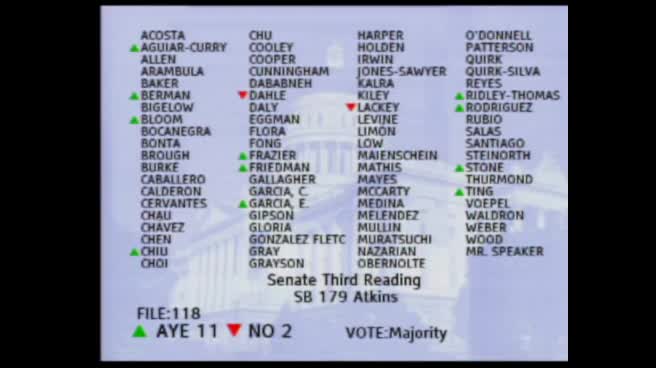 1MIN
Assembly Floor
 1H
Assembly Standing Committee on Appropriations
 48MIN
Senate Standing Committee on Appropriations
Bill Author

Bill Co-Author(s):