SB 328: Pupil attendance: school start time.
- Session Year: 2017-2018
- House: Senate
- Latest Version Date: 2018-09-07
Existing law requires the governing board of each school district to fix the length of the schoolday for the several grades and classes of the schools maintained by the school district in accordance with specified provisions of law.
This bill would require the schoolday for middle schools and high schools, including those operated as charter schools, to begin no earlier than 8:30 a.m. by July 1, 2021, or the date on which a school districts collective bargaining agreement that is operative on January 1, 2019, expires, whichever is later, except for rural school districts. To the extent the bill imposes new duties on school districts and charter schools, the bill would impose a state-mandated local program. The bill would encourage the State Department of Education to post specified information on its Internet Web site, including research on the impact of sleep deprivation on adolescents and the benefits of a later school start time, and to advise school districts of this posting.
The California Constitution requires the state to reimburse local agencies and school districts for certain costs mandated by the state. Statutory provisions establish procedures for making that reimbursement.
This bill would provide that, if the Commission on State Mandates determines that the bill contains costs mandated by the state, reimbursement for those costs shall be made pursuant to the statutory provisions noted above.
Existing law requires the governing board of each school district to fix the length of the schoolday for the several grades and classes of the schools maintained by the school district in accordance with specified provisions of law.
This bill would require the schoolday for middle schools and high schools, including those operated as charter schools, to begin no earlier than 8:30 a.m. by July 1, 2020, 2021, or the date on which a school districts collective bargaining agreement that is operative on January 1, 2018, 2019, expires, whichever is later, except for rural school districts that obtain a waiver from the State Board of Education to delay implementation, as specified. districts. To the extent the bill imposes new duties on school districts and charter schools, the bill would impose a state-mandated local program. The bill would encourage the State Department of Education to post specified information on its Internet Web site, including research on the impact of sleep deprivation on adolescents and the benefits of a later school start time, and to advise school districts of this posting.
The California Constitution requires the state to reimburse local agencies and school districts for certain costs mandated by the state. Statutory provisions establish procedures for making that reimbursement.
This bill would provide that, if the Commission on State Mandates determines that the bill contains costs mandated by the state, reimbursement for those costs shall be made pursuant to the statutory provisions noted above.
Existing law requires the governing board of each school district to fix the length of the schoolday for the several grades and classes of the schools maintained by the school district in accordance with specified provisions of law.
This bill would require the schoolday for middle schools and high schools, including those operated as charter schools, to begin no earlier than 8:30 a.m. by July 1, 2020, or the date on which a school districts collective bargaining agreement that is operative on January 1, 2018, expires, whichever is later, except for rural school districts that obtain a waiver from the State Board of Education to delay implementation, as specified. To the extent the bill imposes new duties on school districts and charter schools, the bill would impose a state-mandated local program. The bill would encourage the State Department of Education to post specified information on its Internet Web site, including research on the impact of sleep deprivation on adolescents and the benefits of a later school start time, and to advise school districts of this posting.
The California Constitution requires the state to reimburse local agencies and school districts for certain costs mandated by the state. Statutory provisions establish procedures for making that reimbursement.
This bill would provide that, if the Commission on State Mandates determines that the bill contains costs mandated by the state, reimbursement for those costs shall be made pursuant to the statutory provisions noted above.
Existing law requires the governing board of each school district to fix the length of the schoolday for the several grades and classes of the schools maintained by the school district in accordance with specified provisions of law.
This bill would require the schoolday for middle schools and high schools schools, including those operated as charter schools, to begin no earlier than 8:30 a.m. by July 1, 2020, or the date on which a school districts collective bargaining agreement that is operative on January 1, 2018, expires, whichever is later, except for rural school districts that obtain a waiver from the State Board of Education to delay implementation, as specified. To the extent the bill imposes new duties on school districts, districts and charter schools, the bill would impose a state-mandated local program.
The California Constitution requires the state to reimburse local agencies and school districts for certain costs mandated by the state. Statutory provisions establish procedures for making that reimbursement.
This bill would provide that, if the Commission on State Mandates determines that the bill contains costs mandated by the state, reimbursement for those costs shall be made pursuant to the statutory provisions noted above.
Existing law requires the governing board of each school district to fix the length of the schoolday for the several grades and classes of the schools maintained by the school district in accordance with specified provisions of law.
This bill would require the schoolday for middle schools and high schools to begin no earlier than 8:30 a.m. by July 1, 2020, except for rural school districts that obtain a waiver from the State Board of Education to delay implementation, as specified. To the extent the bill imposes new duties on school districts, the bill would impose a state-mandated local program.
The California Constitution requires the state to reimburse local agencies and school districts for certain costs mandated by the state. Statutory provisions establish procedures for making that reimbursement.
This bill would provide that, if the Commission on State Mandates determines that the bill contains costs mandated by the state, reimbursement for those costs shall be made pursuant to the statutory provisions noted above.
Existing law requires the governing board of each school district to fix the length of the schoolday for the several grades and classes of the schools maintained by the school district in accordance with specified provisions of law.
This bill would require the schoolday for middle schools and high schools to begin no earlier than 8:30 a.m. To the extent the bill imposes new duties on school districts, the bill would impose a state-mandated local program.
The California Constitution requires the state to reimburse local agencies and school districts for certain costs mandated by the state. Statutory provisions establish procedures for making that reimbursement.
This bill would provide that, if the Commission on State Mandates determines that the bill contains costs mandated by the state, reimbursement for those costs shall be made pursuant to the statutory provisions noted above.
(a)The schoolday for middle schools and high schools, including middle schools and high schools operated as charter schools, shall begin no earlier than 8:30 a.m.
(b)For purposes of this section, schoolday does not include a zero period, or an extra period offered before the start of the regular schoolday.
(c)This section shall be implemented by middle schools and high schools no later than July 1, 2021, or the date on which a school districts collective bargaining agreement that is operative on January 1, 2019, expires, whichever is later.
(d)This section shall not apply to rural school districts.
(e)The department is encouraged to post on its Internet Web site available research on the impact of sleep deprivation on adolescents and the benefits of a later school start time and examples of successful strategies for managing the change to a later school start time, and to advise school districts of this posting.
(f)The Legislature encourages school districts and community organizations to inform their communities, including parents, teenagers, educators, athletic coaches, and other stakeholders, about the health, safety, and academic impact of sleep deprivation on middle and high school pupils and the benefits of a later school start time, and to discuss local strategies to successfully implement the later school start time.
SEC. 2.If the Commission on State Mandates determines that this act contains costs mandated by the state, reimbursement to local agencies and school districts for those costs shall be made pursuant to Part 7 (commencing with Section 17500) of Division 4 of Title 2 of the Government Code.
(a)The schoolday for middle schools and high schools, including middle schools and high schools operated as charter schools, shall begin no earlier than 8:30 a.m.
(b)For purposes of this section, schoolday does not include a zero period, or an extra period offered before the start of the regular schoolday.
(c)This section shall be implemented by middle schools and high schools no later than July 1, 2020, 2021, or the date on which a school districts collective bargaining agreement that is operative on January 1, 2018, 2019, expires, whichever is later.
(d)The governing board of a rural school district may request, and the state board may authorize, a waiver to delay implementation of this section for two years pursuant to Article 3 (commencing with Section 33050) of Chapter 1 of Part 20 of Division 2 if the governing board of the rural school district demonstrates a verifiable, significant economic hardship that would result from implementation of this section. The waiver may be granted for two years, and, upon approval by the state board, may be extended for up to an additional two years.(d)This section shall not apply to rural school districts.
(e)The department is encouraged to post on its Internet Web site available research on the impact of sleep deprivation on adolescents and the benefits of a later school start time and examples of successful strategies for managing the change to a later school start time, and to advise school districts of this posting.
(f)The Legislature encourages school districts and community organizations to inform their communities, including parents, teenagers, educators, athletic coaches, and other stakeholders, about the health, safety, and academic impact of sleep deprivation on middle and high school pupils and the benefits of a later school start time, and to discuss local strategies to successfully implement the later school start time.
SEC. 2.If the Commission on State Mandates determines that this act contains costs mandated by the state, reimbursement to local agencies and school districts for those costs shall be made pursuant to Part 7 (commencing with Section 17500) of Division 4 of Title 2 of the Government Code.
(a)The schoolday for middle schools and high schools, including middle schools and high schools operated as charter schools, shall begin no earlier than 8:30 a.m.
(b)For purposes of this section, schoolday does not include a zero period, or an extra period offered before the start of the regular schoolday.
(c)This section shall be implemented by middle schools and high schools no later than July 1, 2020, or the date on which a school districts collective bargaining agreement that is operative on January 1, 2018, expires, whichever is later.
(d)The governing board of a rural school district may request, and the state board may authorize, a waiver to delay implementation of this section for two years pursuant to Article 3 (commencing with Section 33050) of Chapter 1 of Part 20 of Division 2 if the governing board of the rural school district demonstrates a verifiable, significant economic hardship that would result from implementation of this section. The waiver may be granted for two years, and, upon approval by the state board, may be extended for up to an additional two years.
(e)The department is encouraged to post on its Internet Web site available research on the impact of sleep deprivation on adolescents and the benefits of a later school start time and examples of successful strategies for managing the change to a later school start time, and to advise school districts of this posting.
(f)The Legislature encourages school districts and community organizations to inform their communities, including parents, teenagers, educators, athletic coaches, and other stakeholders, about the health, safety, and academic impact of sleep deprivation on middle and high school pupils and the benefits of a later school start time, and to discuss local strategies to successfully implement the later school start time.
SEC. 2.If the Commission on State Mandates determines that this act contains costs mandated by the state, reimbursement to local agencies and school districts for those costs shall be made pursuant to Part 7 (commencing with Section 17500) of Division 4 of Title 2 of the Government Code.
(a)The schoolday for middle schools and high schools schools, including middle schools and high schools operated as charter schools, shall begin no earlier than 8:30 a.m.
(b)For purposes of this section, schoolday does not include a zero period, or an extra period offered before the start of the regular schoolday.
(c)This section shall be implemented by middle schools and high schools no later than July 1, 2020. 2020, or the date on which a school districts collective bargaining agreement that is operative on January 1, 2018, expires, whichever is later.
(d)The governing board of a rural school district may request, and the state board may authorize, a waiver to delay implementation of this section for two years pursuant to Article 3 (commencing with Section 33050) of Chapter 1 of Part 20 of Division 2 if the governing board of the rural school district demonstrates a verifiable, significant economic hardship that would result from implementation of this section. The waiver may be granted for two years, and, upon approval by the state board, may be extended for up to an additional two years.
SEC. 2.If the Commission on State Mandates determines that this act contains costs mandated by the state, reimbursement to local agencies and school districts for those costs shall be made pursuant to Part 7 (commencing with Section 17500) of Division 4 of Title 2 of the Government Code.
(a)The schoolday for middle schools and high schools shall begin no earlier than 8:30 a.m.
(b)For purposes of this section, schoolday does not include a zero period, or an extra period offered before the start of the regular schoolday.
(c)This section shall be implemented by middle schools and high schools no later than July 1, 2020.
(d)The governing board of a rural school district may request, and the state board may authorize, a waiver to delay implementation of this section for two years pursuant to Article 3 (commencing with Section 33050) of Chapter 1 of Part 20 of Division 2 if the governing board of the rural school district demonstrates a verifiable, significant economic hardship that would result from implementation of this section. The waiver may be granted for two years, and, upon approval by the state board, may be extended for up to an additional two years.
SEC. 2.If the Commission on State Mandates determines that this act contains costs mandated by the state, reimbursement to local agencies and school districts for those costs shall be made pursuant to Part 7 (commencing with Section 17500) of Division 4 of Title 2 of the Government Code.
The schoolday for middle schools and high schools shall begin no earlier than 8:30 a.m.
SEC. 2.If the Commission on State Mandates determines that this act contains costs mandated by the state, reimbursement to local agencies and school districts for those costs shall be made pursuant to Part 7 (commencing with Section 17500) of Division 4 of Title 2 of the Government Code.
|
Date
|
Status
|
|---|---|
| Sep 20, 2018 | In Senate. Consideration of Governor's item veto pending. |
| Sep 20, 2018 | Vetoed by the Governor. |
| Sep 12, 2018 | Enrolled and presented to the Governor at 5 p.m. |
| Aug 31, 2018 | Assembly amendments concurred in. (Ayes 23. Noes 13.) Ordered to engrossing and enrolling. |
| Aug 31, 2018 | In Senate. Concurrence in Assembly amendments pending. |
| Aug 31, 2018 | Read third time. Passed. Ordered to the Senate. |
| Aug 16, 2018 | Reconsideration granted. |
| Sep 14, 2017 | Read third time. Refused passage. |
| Sep 7, 2017 | Read third time and amended. |
| Sep 6, 2017 | Read second time. Ordered to third reading. |
| Sep 5, 2017 | Read second time and amended. Ordered to second reading. |
| Sep 1, 2017 | From committee: Do pass as amended. (Ayes 12. Noes 4.) (September 1). |
| Aug 23, 2017 | August 23 set for first hearing. Placed on suspense file. |
| Jul 13, 2017 | From committee: Do pass and re-refer to Com. on APPR. (Ayes 5. Noes 2.) (July 12). Re-referred to Com. on APPR. |
| Jun 8, 2017 | Referred to Com. on ED. |
| May 31, 2017 | In Assembly. Read first time. Held at Desk. |
| May 30, 2017 | Read third time. Passed. (Ayes 25. Noes 13. Page 1268.) Ordered to the Assembly. |
| May 26, 2017 | Read second time. Ordered to third reading. |
| May 25, 2017 | From committee: Do pass. (Ayes 5. Noes 2. Page 1182.) (May 25). |
| May 19, 2017 | Set for hearing May 25. |
| May 15, 2017 | May 15 hearing: Placed on APPR. suspense file. |
| May 4, 2017 | Set for hearing May 15. |
| May 3, 2017 | May 8 hearing postponed by committee. |
| May 1, 2017 | Set for hearing May 8. |
| Apr 26, 2017 | Read second time and amended. Re-referred to Com. on APPR. |
| Apr 25, 2017 | From committee: Do pass as amended and re-refer to Com. on APPR. (Ayes 5. Noes 2. Page 782.) (April 19). |
| Mar 24, 2017 | Set for hearing April 19. |
| Mar 7, 2017 | March 22 set for first hearing canceled at the request of author. |
| Mar 7, 2017 | Set for hearing March 22. |
| Feb 23, 2017 | Referred to Com. on ED. |
| Feb 14, 2017 | From printer. May be acted upon on or after March 16. |
| Feb 13, 2017 | Introduced. Read first time. To Com. on RLS. for assignment. To print. |
|
Date
|
Description
|
Location
|
Votes
|
|
|---|---|---|---|---|
| Aug 31, 2018 | Unfinished Business SB328 Portantino et al. Concurrence | Senate Floor |
Passed |
|
| Aug 31, 2018 | SB 328 Portantino Senate Third Reading By GLORIA | Assembly Floor |
Passed |
|
| Sep 14, 2017 | SB 328 Portantino Senate Third Reading By GLORIA | Assembly Floor |
Failed |
|
| Sep 1, 2017 | Do pass as amended. | Assembly Standing Committee on Appropriations |
Passed |
|
| Jul 12, 2017 | Do pass and be re-referred to the Committee on [Appropriations] | Assembly Standing Committee on Education |
Passed |
|
| May 30, 2017 | Senate 3rd Reading SB328 Portantino et al. | Senate Floor |
Passed |
|
| May 25, 2017 | Do pass | Senate Standing Committee on Appropriations |
Passed |
|
| May 15, 2017 | Placed on suspense file | Senate Standing Committee on Appropriations |
Passed |
|
| Apr 19, 2017 | Do pass as amended, but first amend, and re-refer to the Committee on [Appropriations] | Senate Standing Committee on Education |
Passed |
This list shows positions taken on this bill by organizations on the date displayed, which is linked to the original source.
Positions by individuals are not included.
Office of Senate Floor Analyses (916) 651-1520 Fax: (916) 327-4478 | SB |
VETO
Bill No: SB 328
:
SENATE EDUCATION COMMITTEE: 5-2, 4/19/17
AYES: Allen, Galgiani, Leyva, Mendoza, Pan
NOES: Wilk, Vidak
SENATE APPROPRIATIONS COMMITTEE: 5-2, 5/25/17
AYES: Lara, Beall, Bradford, Hill, Wiener
NOES: Bates, Nielsen
SENATE FLOOR: 25-13, 5/30/17
AYES: Allen, Atkins, Beall, Bradford, De León, Dodd, Galgiani, Hernandez, Hertzberg, Hill, Hueso, Jackson, Lara, Leyva, McGuire, Mendoza, Mitchell, Monning, Newman, Pan, Portantino, Skinner, Stern, Wieckowski, Wiener
NOES: Anderson, Bates, Berryhill, Cannella, Fuller, Glazer, Moorlach, Morrell, Nguyen, Nielsen, Stone, Vidak, Wilk
NO VOTE RECORDED: Gaines, Roth
SENATE FLOOR: 23-14, 8/31/18
AYES: Allen, Atkins, Beall, Bradford, De León, Delgado, Dodd, Galgiani, Hernandez, Hertzberg, Hill, Hueso, Jackson, Lara, Leyva, McGuire, Mitchell, Monning, Pan, Portantino, Skinner, Wieckowski, Wiener
NOES: Anderson, Bates, Cannella, Chang, Fuller, Gaines, Glazer, Moorlach, Morrell, Nguyen, Nielsen, Stone, Vidak, Wilk
NO VOTE RECORDED: Berryhill, Roth, Stern
ASSEMBLY FLOOR: 41-34, 8/31/18 - See last page for vote
SOURCE: Start School Later, Inc.
DIGEST:
This bill prohibits middle schools and high schools, including those operated as charter schools, from beginning their schoolday before 8:30 a.m.
Existing law:
- Requires the governing board of each school district to fix the length of the schoolday for the several grades and classes of the schools maintained by the district. (Education Code § 46100)
- Specifies that the minimum schoolday for purposes of average daily attendance for grades 4-12 is typically 240 minutes, except as otherwise provided for specialized programs. (EC § 46113, §46141)
- Requires, generally, school districts and county offices of education to offer 54,000 instructional minutes annually for grades 4-8 and to offer 64,800 instructional minutes annually for grades 9-12, except as otherwise provided. (EC § 46200 et seq.)
- Authorizes the governing board of a school district that maintains a junior high school or high school to schedule classes in these schools so that each pupil attends classes for at least 1,200 minutes during any five-schoolday period or 2,400 minutes during any 10-schoolday period and specifies that under that kind of schedule, any pupil may be authorized to attend school for less than the total number of days in which the school is in session as long as the pupil attends the required number of minutes per five-schoolday period or per 10-schoolday period to accommodate career technical education and regional occupational center and program courses and block or other alternative school class schedules. (EC § 46160)
- Requires the governing board of a school district, before implementing an alternative schedule in any school of the district, to consult in good faith in an effort to reach agreement with the certificated and classified employees of the school, with the parents of pupils who would be affected by the change, and with the community at large, and requires the consultation to include at least one public hearing for which the board has given adequate notice to the employees and to the parents of pupils affected. (EC § 46162)
- Establishes collective bargaining rights for public school teachers, which gives teachers the right to elect an exclusive representative to bargain wages and working conditions with local school boards. Mandatory issues that fall under the “scope of representation” include wages, hours of employment, and other terms and conditions of employment such as health and welfare benefits, leave, transfer, and reassignment policies, safety conditions, class size, procedures to be used for the evaluation of employees, organizational security, and grievance procedures. (Government Code § 3540, et seq., § 3543.2(a)(1))
This bill prohibits middle schools and high schools, including those operated as charter schools, from beginning their schoolday before 8:30 a.m. Specifically, this bill:
- Prohibits middle schools and high schools, including middle schools and high schools operated as charter schools, from beginning their schoolday before 8:30 a.m.
- Specifies that “schoolday” does not include a “zero period,” or an extra period offered before the start of the regular schoolday.
- Requires the 8:30 a.m. or later start time to be implemented by middle schools and high schools by no later than July 1, 2021, or the date on which a school district’s collective bargaining agreement that is operative on July 1, 2019, expires, whichever is later
- Exempts rural school districts from its provisions.
- Encourages CDE to post on its Internet Web site available research on the impact of sleep deprivation on adolescents and the benefits of a later school start time and examples of successful strategies for managing the change to a later school start time, and to advise school districts of this posting.
- States the Legislature encourages school districts and community organizations to inform their communities, including parents, teenagers, educators, athletic coaches, and other stakeholders, about the health, safety, and academic impact of sleep deprivation on middle and high school pupils and the benefits of a later school start time, and to discuss local strategies to successfully implement the later school start time.
Comments
- Need for the bill. According to the author, “The leaders of local school districts are or should be well-aware that requiring students – especially adolescents – to wake, travel to school, and learn during early morning hours is contrary to the developmental needs and biological sleep cycles of growing minds and bodies. Yet, only a handful of districts have been proactive in doing what is right for students by making the change back to traditional school hours, which prior to the 1980s had most school opening between 8:30 and 9 a.m. Today, most middle and high schools begin at or way before 8 a.m. According to the most recent data available, the average start time among California-based public schools is 8:07 a.m.”
- Science of adolescent sleep. According to the author, “The American Academy of Pediatrics, the American Medical Association (AMA) and the U.S. Centers for Disease Control and Prevention (CDC) are among the organizations and experts that have reported on the harm being done to the physical and emotional health of adolescents due to the sleep deprivation caused by such developmentally-misaligned school hours. Similarly, researchers report that academic success and school attendance is greatly improved by later starting school days. The recommendation made the American Academy of pediatrics – and supported by the AMA, CDC, and others – states that no middle or high school should begin before 8:30 a.m. Other organizations add that no elementary school should begin before 8 a.m.”
A specific example of a research study supporting these contentions is Examining the Impact of Later High School Start Times on the Health and Academic Performance of High School Students: A Multi-Site Study, conducted by the Center for Applied Research and Educational Improvement (CAREI) in the College of Education and Human Development at the University of Minnesota. In its final report, CAREI’s major findings stated that “The results from this three-year research study, conducted with over 9,000 students in eight public high school in three states, reveal that high schools that start at 8:30 AM or later allow for more than 60% of students to obtain at least eight hours of sleep per school night. Teens getting less than eight hours of sleep reported significant higher depression symptoms, greater use of caffeine, and are at a greater risk for making choices for substance abuse. Academic performance outcomes, including grades earned in core subject areas of math, English, science, and social studies, plus performance on state and national achievement tests, attendance rates, and reduced tardiness show significantly positive improvement with the later start times of 8:30 AM or later. Finally, the number of car crashes for teen drivers from 16 to 18 years of age was significantly reduced by 70% when a school shifted start times from 7:35 AM to 8:55 AM.”
By moving the start time back to 8:30 a.m. or later for middle schools and high schools, this bill could improve attendance rates and reduce tardiness. A study involving 29 high schools and 30,000 students over seven states, Delayed High School Start Times later than 8:30 a.m. and Impact on Graduation Rates and Attendance Rates, concluded that “Attendance rates and graduation rates significantly improved in schools with delayed start times of 8:30 a.m. or later. School officials need to take special notice that this investigation also raised questions about whether later start times are a mechanism for closing the achievement gap due to improved graduation rates.”
- Potential unintended impacts. This bill requires many school districts to push back their current start times to 8:30 a.m. or later, which for some schools would be almost an hour later and could have unintended impacts, including, but not limited to, impacts on each of the following:
- Working and single parent families. It is near impossible for school boards to set their school start times at a time that is convenient for all parents and guardians because in any given community there is a variance of work schedules for parents and guardians. Does pushing back school start times disproportionately impact working families and single parent families who may not be able take their children to school later or easily arrange for child care? Is this an issue that will exist regardless of school start time?
- Home-to-school transportation. Will school districts that choose to provide home-to-school transportation be able to maintain their current capacities without increased costs? Will schools districts providing required transportation be forced to incur additional costs?
- Extracurricular activities, including athletics. Pushing back the time school starts necessitates pushing back the time school ends. Could shifting time in the afternoon that is currently free for extracurricular activities to in-class school time negatively impact extracurricular activities, including athletics? Conversely, could requiring every school to start at 8:30 a.m. or later actually help athletics schedules? Are there positive benefits to keeping students who are not engaged in after school extracurricular activities in school longer?
- Before and after school programs. Will pushing back school start times increase capacity demands on before school programs? Are there sufficient resources to meet those demands? How will later school start times impact the need for, and enrollment in, after school programs?
FISCAL EFFECT: Appropriation: Fiscal Com.: Local:
According to the Assembly Appropriations Committee:
- Approximately $210,000 one-time General Fund to the CDE to develop a new waiver policy and process. On-going waiver costs are unknown but could be absorbed, as implementation delay waivers will only be granted for rural school districts.
- Unknown Proposition 98/General Fund cost pressures, likely in the low millions, for schools to provide additional staff time for supervision before school, assuming schools need to open their doors by a specific time to accommodate pupils that need to be dropped off.
- Significant local costs for school districts to provide home-to-school transportation services and for local collective bargaining activities. These activities would result from the bill’s prohibition and not a requirement, which is not reimbursable. Costs would have to be absorbed within existing school resources. Some schools districts stagger the start time of their K-12 schools in order to utilize the same school buses for student pick-up and drop-off. School districts that continue to provide home-to-school transportation services may need to purchase additional buses. The cost for just 150 buses statewide would be approximately $10 million.
Start School Later, Inc. (source)
American Academy of Pediatrics
American Academy of Sleep Medicine
California Adolescent Health Collaborative
California Federation of Teachers
California Police Chiefs Association
California Sleep Society
California State PTA
Child and Adolescent Development Department, San José State University
Children’s Orthopaedic Center at Children’s Hospital Los Angeles
East Area Progressive Democrats
Educate. Advocate.
Fresno Unified School District
High School Parent Engagement Group
Los Angeles County Office of Education
Lucile Packard Children’s Hospital Stanford
Manhattan Beach Unified School District
Pasadena Unified School District
Public Advocates
Public Health Institute
San Francisco Bay Area Physicians for Social Responsibility
Seattle Children’s Sleep Disorders Center/U. of Washington School of Medicine
South Pasadena Unified School District
Stanford University School of Medicine Department of Pediatrics
Zoe Lofgren, Member of Congress
Numerous individuals
OPPOSITION: (Verified 9/21/18)
California School Boards Association
California Teachers Association
Riverside County Office of Education
GOVERNOR'S VETO MESSAGE:
I am returning Senate Bill 328 without my signature.
This bill would prohibit middle and high schools from starting earlier than 8:30 in the morning, unless in a rural area.
This is a one-size-fits-all approach that is opposed by teachers and school boards. Several schools have already moved to later start times. Others prefer beginning the school day earlier. These are the types of decisions best handled in the local community.
ASSEMBLY FLOOR: 41-34, 8/31/18
AYES: Aguiar-Curry, Arambula, Berman, Bloom, Burke, Calderon, Carrillo, Chau, Chávez, Chiu, Chu, Friedman, Gabriel, Eduardo Garcia, Gipson, Gloria, Gonzalez Fletcher, Gray, Grayson, Holden, Jones-Sawyer, Kalra, Kamlager-Dove, Low, Maienschein, McCarty, Mullin, Obernolte, Quirk, Reyes, Rivas, Rubio, Santiago, Mark Stone, Thurmond, Ting, Voepel, Waldron, Weber, Wood, Rendon
NOES: Acosta, Travis Allen, Baker, Bigelow, Brough, Caballero, Cervantes, Chen, Choi, Cooley, Cunningham, Dahle, Daly, Eggman, Flora, Fong, Frazier, Gallagher, Harper, Irwin, Kiley, Lackey, Levine, Mathis, Mayes, Medina, Melendez, Muratsuchi, Nazarian, O'Donnell, Patterson, Quirk-Silva, Salas, Steinorth
NO VOTE RECORDED: Bonta, Cooper, Cristina Garcia, Limón, Rodriguez
10/9/18 10:57:29
**** END ****
Office of Senate Floor Analyses (916) 651-1520 Fax: (916) 327-4478 | SB |
UNFINISHED BUSINESS
Bill No: SB 328
:
SENATE EDUCATION COMMITTEE: 5-2, 4/19/17
AYES: Allen, Galgiani, Leyva, Mendoza, Pan
NOES: Wilk, Vidak
SENATE APPROPRIATIONS COMMITTEE: 5-2, 5/25/17
AYES: Lara, Beall, Bradford, Hill, Wiener
NOES: Bates, Nielsen
SENATE FLOOR: 25-13, 5/30/17
AYES: Allen, Atkins, Beall, Bradford, De León, Dodd, Galgiani, Hernandez, Hertzberg, Hill, Hueso, Jackson, Lara, Leyva, McGuire, Mendoza, Mitchell, Monning, Newman, Pan, Portantino, Skinner, Stern, Wieckowski, Wiener
NOES: Anderson, Bates, Berryhill, Cannella, Fuller, Glazer, Moorlach, Morrell, Nguyen, Nielsen, Stone, Vidak, Wilk
NO VOTE RECORDED: Gaines, Roth
ASSEMBLY FLOOR: 26-30, 9/14/17 (FAIL) - See last page for vote
ASSEMBLY FLOOR: Not available
SOURCE: Start School Later, Inc.
DIGEST:
This bill prohibits middle schools and high schools, including those operated as charter schools, from beginning their schoolday before 8:30 a.m.
Assembly Amendments
apply the bill’s provisions to charter schools; delay implementation until July 1, 2021, or the date on which a school district’s collective bargaining agreement that is operative on July 1, 2019, expires, whichever is later; delete the waiver process for rural school districts and instead except rural school district’s from the bill’s provisions; encourage the California Department of Education (CDE) to post on its Internet Web site available research on the impact of sleep deprivation on adolescents and the benefits of a later school start time and examples of successful strategies for managing the change to a later school start time, and to advise school districts of this posting; and encourage school districts and community organizations to inform their communities, including parents, teenagers, educators, athletic coaches, and other stakeholders, about the health, safety, and academic impact of sleep deprivation on middle and high school pupils and the benefits of a later school start time, and to discuss local strategies to successfully implement the later school start time.
Existing law:
- Requires the governing board of each school district to fix the length of the schoolday for the several grades and classes of the schools maintained by the district. (Education Code § 46100)
- Specifies that the minimum schoolday for purposes of average daily attendance for grades 4-12 is typically 240 minutes, except as otherwise provided for specialized programs. (EC § 46113, §46141)
- Requires, generally, school districts and county offices of education to offer 54,000 instructional minutes annually for grades 4-8 and to offer 64,800 instructional minutes annually for grades 9-12, except as otherwise provided. (EC § 46200 et seq.)
- Authorizes the governing board of a school district that maintains a junior high school or high school to schedule classes in these schools so that each pupil attends classes for at least 1,200 minutes during any five-schoolday period or 2,400 minutes during any 10-schoolday period and specifies that under that kind of schedule, any pupil may be authorized to attend school for less than the total number of days in which the school is in session as long as the pupil attends the required number of minutes per five-schoolday period or per 10-schoolday period to accommodate career technical education and regional occupational center and program courses and block or other alternative school class schedules. (EC § 46160)
- Requires the governing board of a school district, before implementing an alternative schedule in any school of the district, to consult in good faith in an effort to reach agreement with the certificated and classified employees of the school, with the parents of pupils who would be affected by the change, and with the community at large, and requires the consultation to include at least one public hearing for which the board has given adequate notice to the employees and to the parents of pupils affected. (EC § 46162)
- Establishes collective bargaining rights for public school teachers, which gives teachers the right to elect an exclusive representative to bargain wages and working conditions with local school boards. Mandatory issues that fall under the “scope of representation” include wages, hours of employment, and other terms and conditions of employment such as health and welfare benefits, leave, transfer, and reassignment policies, safety conditions, class size, procedures to be used for the evaluation of employees, organizational security, and grievance procedures. (Government Code § 3540, et seq., § 3543.2(a)(1))
This bill prohibits middle schools and high schools, including those operated as charter schools, from beginning their schoolday before 8:30 a.m. Specifically, this bill:
- Prohibits middle schools and high schools, including middle schools and high schools operated as charter schools, from beginning their schoolday before 8:30 a.m.
- Specifies that “schoolday” does not include a “zero period,” or an extra period offered before the start of the regular schoolday.
- Requires the 8:30 a.m. or later start time to be implemented by middle schools and high schools by no later than July 1, 2021, or the date on which a school district’s collective bargaining agreement that is operative on July 1, 2019, expires, whichever is later
- Exempts rural school districts from its provisions.
- Encourages CDE to post on its Internet Web site available research on the impact of sleep deprivation on adolescents and the benefits of a later school start time and examples of successful strategies for managing the change to a later school start time, and to advise school districts of this posting.
- States the Legislature encourages school districts and community organizations to inform their communities, including parents, teenagers, educators, athletic coaches, and other stakeholders, about the health, safety, and academic impact of sleep deprivation on middle and high school pupils and the benefits of a later school start time, and to discuss local strategies to successfully implement the later school start time.
Comments
- Need for the bill. According to the author, “The leaders of local school districts are or should be well-aware that requiring students – especially adolescents – to wake, travel to school, and learn during early morning hours is contrary to the developmental needs and biological sleep cycles of growing minds and bodies. Yet, only a handful of districts have been proactive in doing what is right for students by making the change back to traditional school hours, which prior to the 1980s had most school opening between 8:30 and 9 a.m. Today, most middle and high schools begin at or way before 8 a.m. According to the most recent data available, the average start time among California-based public schools is 8:07 a.m.”
- Science of adolescent sleep. According to the author, “The American Academy of Pediatrics, the American Medical Association (AMA) and the U.S. Centers for Disease Control and Prevention (CDC) are among the organizations and experts that have reported on the harm being done to the physical and emotional health of adolescents due to the sleep deprivation caused by such developmentally-misaligned school hours. Similarly, researchers report that academic success and school attendance is greatly improved by later starting school days. The recommendation made the American Academy of pediatrics – and supported by the AMA, CDC, and others – states that no middle or high school should begin before 8:30 a.m. Other organizations add that no elementary school should begin before 8 a.m.”
A specific example of a research study supporting these contentions is Examining the Impact of Later High School Start Times on the Health and Academic Performance of High School Students: A Multi-Site Study, conducted by the Center for Applied Research and Educational Improvement (CAREI) in the College of Education and Human Development at the University of Minnesota. In its final report, CAREI’s major findings stated that “The results from this three-year research study, conducted with over 9,000 students in eight public high school in three states, reveal that high schools that start at 8:30 AM or later allow for more than 60% of students to obtain at least eight hours of sleep per school night. Teens getting less than eight hours of sleep reported significant higher depression symptoms, greater use of caffeine, and are at a greater risk for making choices for substance abuse. Academic performance outcomes, including grades earned in core subject areas of math, English, science, and social studies, plus performance on state and national achievement tests, attendance rates, and reduced tardiness show significantly positive improvement with the later start times of 8:30 AM or later. Finally, the number of car crashes for teen drivers from 16 to 18 years of age was significantly reduced by 70% when a school shifted start times from 7:35 AM to 8:55 AM.”
By moving the start time back to 8:30 a.m. or later for middle schools and high schools, this bill could improve attendance rates and reduce tardiness. A study involving 29 high schools and 30,000 students over seven states, Delayed High School Start Times later than 8:30 a.m. and Impact on Graduation Rates and Attendance Rates, concluded that “Attendance rates and graduation rates significantly improved in schools with delayed start times of 8:30 a.m. or later. School officials need to take special notice that this investigation also raised questions about whether later start times are a mechanism for closing the achievement gap due to improved graduation rates.”
- Potential unintended impacts. This bill requires many school districts to push back their current start times to 8:30 a.m. or later, which for some schools would be almost an hour later and could have unintended impacts, including, but not limited to, impacts on each of the following:
- Working and single parent families. It is near impossible for school boards to set their school start times at a time that is convenient for all parents and guardians because in any given community there is a variance of work schedules for parents and guardians. Does pushing back school start times disproportionately impact working families and single parent families who may not be able take their children to school later or easily arrange for child care? Is this an issue that will exist regardless of school start time?
- Home-to-school transportation. Will school districts that choose to provide home-to-school transportation be able to maintain their current capacities without increased costs? Will schools districts providing required transportation be forced to incur additional costs?
- Extracurricular activities, including athletics. Pushing back the time school starts necessitates pushing back the time school ends. Could shifting time in the afternoon that is currently free for extracurricular activities to in-class school time negatively impact extracurricular activities, including athletics? Conversely, could requiring every school to start at 8:30 a.m. or later actually help athletics schedules? Are there positive benefits to keeping students who are not engaged in after school extracurricular activities in school longer?
- Before and after school programs. Will pushing back school start times increase capacity demands on before school programs? Are there sufficient resources to meet those demands? How will later school start times impact the need for, and enrollment in, after school programs?
FISCAL EFFECT: Appropriation: Fiscal Com.: Local:
According to the Assembly Appropriations Committee:
- Approximately $210,000 one-time General Fund to the CDE to develop a new waiver policy and process. On-going waiver costs are unknown but could be absorbed, as implementation delay waivers will only be granted for rural school districts.
- Unknown Proposition 98/General Fund cost pressures, likely in the low millions, for schools to provide additional staff time for supervision before school, assuming schools need to open their doors by a specific time to accommodate pupils that need to be dropped off.
- Significant local costs for school districts to provide home-to-school transportation services and for local collective bargaining activities. These activities would result from the bill’s prohibition and not a requirement, which is not reimbursable. Costs would have to be absorbed within existing school resources. Some schools districts stagger the start time of their K-12 schools in order to utilize the same school buses for student pick-up and drop-off. School districts that continue to provide home-to-school transportation services may need to purchase additional buses. The cost for just 150 buses statewide would be approximately $10 million.
Start School Later, Inc. (source)
American Academy of Pediatrics
American Academy of Sleep Medicine
California Adolescent Health Collaborative
California Federation of Teachers
California Police Chiefs Association
California Sleep Society
California State PTA
Child and Adolescent Development Department, San José State University
Children’s Orthopaedic Center at Children’s Hospital Los Angeles
East Area Progressive Democrats
Educate. Advocate.
Fresno Unified School District
High School Parent Engagement Group
Los Angeles County Office of Education
Lucile Packard Children’s Hospital Stanford
Manhattan Beach Unified School District
Pasadena Unified School District
Public Advocates
Public Health Institute
San Francisco Bay Area Physicians for Social Responsibility
Seattle Children’s Sleep Disorders Center/U. of Washington School of Medicine
South Pasadena Unified School District
Stanford University School of Medicine Department of Pediatrics
Zoe Lofgren, Member of Congress
Numerous individuals
OPPOSITION: (Verified 8/31/18)
California School Boards Association
California Teachers Association
Riverside County Office of Education
ASSEMBLY FLOOR: 26-30, 9/14/17
AYES: Arambula, Berman, Bocanegra, Bonta, Burke, Chávez, Chiu, Chu, Dababneh, Gipson, Gloria, Gonzalez Fletcher, Grayson, Holden, Kalra, Low, Maienschein, Mullin, Obernolte, Quirk, Rubio, Santiago, Mark Stone, Thurmond, Weber, Rendon
NOES: Acosta, Travis Allen, Baker, Bigelow, Brough, Caballero, Chen, Choi, Cooley, Cunningham, Dahle, Eggman, Flora, Fong, Gallagher, Cristina Garcia, Gray, Harper, Irwin, Kiley, Lackey, Levine, Mathis, Medina, O'Donnell, Patterson, Quirk-Silva, Salas, Voepel, Waldron
NO VOTE RECORDED: Aguiar-Curry, Bloom, Calderon, Cervantes, Chau, Cooper, Daly, Frazier, Friedman, Eduardo Garcia, Jones-Sawyer, Limón, Mayes, McCarty, Melendez, Muratsuchi, Nazarian, Reyes, Ridley-Thomas, Rodriguez, Steinorth, Ting, Wood
8/31/18 15:42:38
**** END ****
SENATE THIRD READING
STR Bill Id:SB 328
Author:(Portantino)
As Amended Ver:August 16, 2018
Majority vote
SENATE VOTE: 25-13
Committee | Votes | Ayes | Noes |
Education | 5-2 | Chávez, Gloria, McCarty, Thurmond, Weber | O'Donnell, Kiley |
Appropriations | 12-4 | Gonzalez Fletcher, Bloom, Bocanegra, Bonta, Calderon, Chau, Eggman, Friedman, Eduardo Garcia, Jones-Sawyer, Obernolte, Reyes | Bigelow, Brough, Fong, Gallagher |
SUMMARY: Provides that the schoolday for middle schools and high schools shall begin no earlier than 8:30 a.m. Specifically, this bill:
- Provides that the schoolday for middle schools and high schools, including those schools operated as charter schools, shall begin no earlier than 8:30 a.m. no later than July 1, 2021 or the date on which a school district's collective bargaining agreement that is operative on January 1, 2019 expires, whichever is later.
- Specifies that this requirement does not apply to a zero period or an extra period offered before the start of the regular school day.
- Exempts rural school districts.
- Provides that the waiver may be for two years and, upon approval of the SBE, may be extended for up to an additional two years.
- Encourages the California Department of Education to post on its Internet Web site available research on the impact of sleep deprivation on adolescents and the benefits of a later school start time and examples of successful strategies for managing the change to a later school start time, and to advise school districts of this posting.
- Encourages school districts and community organizations to inform their communities, including parents, teenagers, educators, athletic coaches, and other stakeholders, about the health, safety, and academic impact of sleep deprivation on middle and high school pupils and the benefits of a later school start time, and to discuss local strategies to successfully implement the later school start time.
FISCAL EFFECT: According to the Assembly Appropriations Committee:
- Approximately $210,000 one-time General Fund to the California Department of Education (CDE) to develop a new waiver policy and process. On-going waiver costs are unknown but could be absorbed, as implementation delay waivers will only be granted for rural school districts.
- Unknown Proposition 98/General Fund cost pressures, likely in the low millions, for schools to provide additional staff time for supervision before school, assuming schools need to open their doors by a specific time to accommodate pupils that need to be dropped off.
- Significant local costs for school districts to provide home-to-school transportation services and for local collective bargaining activities. These activities would result from the bill’s prohibition and not a requirement, which is not reimbursable. Costs would have to be absorbed within existing school resources. Some schools districts stagger the start time of their K-12 schools in order to utilize the same school buses for student pick-up and drop-off. School districts that continue to provide home-to-school transportation services may need to purchase additional buses. The cost for just 150 buses statewide would be approximately $10 million.
COMMENTS: According to the Centers for Disease Control and Prevention, the average start time for middle and high schools in California was 8:07 a.m. in 2011-12. The distribution of start times was as follows:
- Before 7:30 a.m., 3.5% of schools
- 7:30 to 7:59 a.m., 27.7% of schools
- 8:00 to 8:29 a.m., 47.6% of schools
- 8:30 a.m. or later, 21.2% of schools
These data reflect the distribution of start times among schools; the distribution among students was not reported. In addition, these data were collected through a survey by the U. S. Department of Education, which asked the question: "At what time do most of the students in this school begin the school day?" The survey did not distinguish between the regular school day and zero periods, as this bill does. Therefore, the reported start times are likely to include zero periods from schools in which most students attend a zero period class, so they are not necessarily an accurate reflection of the start times for the regular school day. Nevertheless, these data suggest that about one-fifth of California's schools are already in compliance with this bill, about one-half would need to delay their start times by 30 minutes or less, about one-fourth would need to increase their start times by 31 to 60 minutes, and fewer than 5% would need to increase their start times by at least 60 minutes to be in compliance.
Adolescent sleep patterns. A growing body of research indicates that the sleep patterns of adolescents are different from younger people and adults. The onset of puberty is accompanied by a change in the circadian rhythm, which affects the timing of melatonin secretion. This, in turn, affects the timing and quality of sleep. A report by the National Sleep Foundation states, "Studies show that the typical high school student's natural time to fall asleep is 11:00 p.m. or later."[1] The inability to fall asleep before 11:00 p.m., combined with early start times for school could result in sleep deprivation. Sleep deprivation in adolescents has been associated with several negative consequences, including increased tardiness and/or absenteeism, poor grades, depression, anxiety, high-risk behavior (such as drug addiction), and car accidents.[2] Delaying school start time from 8:00 to 8:30 a.m. has been shown to reverse these outcomes.[3] The research on adolescent sleep needs and patterns has led the American Academy of Pediatrics to issue a policy statement that says, in part, "…the evidence strongly implicates earlier school start times (i.e., before 8:30 AM) as a key modifiable contributor to insufficient sleep, as well as circadian rhythm disruption in this population [adolescents]," and "a substantial body of research has now demonstrated that delaying school start times is an effective countermeasure to chronic sleep loss and has a wide range of potential benefits to students with regard to physical and mental health, safety, and academic achievement."[4]
Why schools have early start times. According to Start School Later, which describes itself as a "non-profit organization dedicated to healthy, safe, equitable school hours," most schools started around 9:00 a.m. until the 1970s and 1980s. The early start time is more closely aligned with parents' work schedules, which became an increasingly important consideration, especially as both parents entered the workforce. An earlier start time accommodates the needs of families to have a safe place for their children after both parents leave for work. Earlier start times also results in more time after school for athletics and extracurricular activities.
What effect would this bill have? The average start time in California is 8:07 am. This includes about a fifth of schools that already have a start time of 8:30 a.m. or later. Among the remaining schools, about 60% would need to delay their start times by 30 minutes or less. The rest would need to make larger adjustments.
In addition, this bill applies only to the regular school day and exempts zero periods from its requirements. In other words, a zero period still could start before 8:30 a.m. if this bill in enacted. A zero period is an extra period that is offered before the start of the regular school day and is typically used for elective courses. According to the bill's supporters, the objective is to establish a state policy that is consistent with our current knowledge of adolescent biology, circadian rhythms, and health needs, while leaving a local option for school districts to offer classes prior to the start of the regular school day if they choose. To the extent districts exercise this option, the effect of this bill would be further minimized.
Arguments in support. Supporters cite research showing (1) the negative effects of sleep deprivation among adolescents and (2) that start times of 8:30 a.m. or later reverses those effects. They assert that adolescent sleep deprivation "is a public health issue that deserves a serious immediate response," and that starting school later is a "simple and obvious fix." Supporters also argue that adolescents' brains are "hard wired" to not sleep before 11:00 p.m., so simply going to bed earlier is not a solution. Finally, they argue that schools benefit from later start times, because experience has shown that the later time results in increased attendance (which increases revenue), reduced tardiness, improved academic performance, and a lower incidence of behavioral problems.
Arguments in opposition. Opponents argue that the bill "does not consider the impact it creates on various levels from parent drop off times and their work hours; feasible hours for extra-curricular activities, physical education, and athletic programs; and school transportation hours that are coordinated with other local school campuses and city ordinances." Opponents also argue that "the local school board knows more than the state about the education programs and needs within its jurisdiction," and the school start time decision should remain "locally driven and collectively bargained."
Analysis Prepared by: Rick Pratt / ED. / (916) 319-2087 FN: 0004045
National Sleep Foundation, "Adolescent Sleep Needs and Patterns: Research Report and Resource Guide," 2000. ↑
Edward B. O'Malley, and Mary B. O'Malley, "School Start Time and Its Impact on Learning and Behavior." In Sleep and Psychiatric Disorders in Children and Adolescents, (Anna Ivanenko, ed.), CRC Press, 2008; and
Nathaniel F. Watson, et al., "Delaying Middle School and High School Start Times Promotes Student Health and Performance: An American Academy of Sleep Medicine Position Statement." Journal of Clinical Sleep Medicine, Vol. 13, No. 4, 2017. ↑
Judith A. Ovens, Katherine Belon, and Patricia Moss, "Impact of Delaying School Start Time on Adolescent Sleep, Mood, and Behavior." Archives of Pediatric Adolescence Medicine, Vol. 164, No. 7, July 5, 2010. ↑
American Academy of Pediatrics, "School Start Times for Adolescents." Policy Statement, 2014. ↑
SENATE THIRD READING
STR Bill Id:SB 328
Author:(Portantino)
As Amended Ver:September 7, 2017
Majority vote
SENATE VOTE: 25-13
Committee | Votes | Ayes | Noes |
Education | 5-2 | Chávez, Gloria, McCarty, Thurmond, Weber | O'Donnell, Kiley |
Appropriations | 12-4 | Gonzalez Fletcher, Bloom, Bocanegra, Bonta, Calderon, Chau, Eggman, Friedman, Eduardo Garcia, Jones-Sawyer, Obernolte, Reyes | Bigelow, Brough, Fong, Gallagher |
SUMMARY: Provides that the schoolday for middle schools and high schools shall begin no earlier than 8:30 a.m. Specifically, this bill:
- Provides that the schoolday for middle schools and high schools, including those schools operated as charter schools, shall begin no earlier than 8:30 a.m. no later than July 1, 2020 or the date on which a school district's collective bargaining agreement that is operative on January 1, 2018 expires, whichever is later.
- Specifies that this requirement does not apply to a zero period or an extra period offered before the start of the regular school day.
- Provides that the governing board of a rural school district may request, and the State Board of Education (SBE) may authorize, a waiver to delay implementation of the school start time requirement for two years, if the governing board of the rural school district demonstrates a verifiable, significant economic hardship that would result from implementation.
- Provides that the waiver may be for two years and, upon approval of the SBE, may be extended for up to an additional two years.
- Encourages the California Department of Education to post on its Internet Web site available research on the impact of sleep deprivation on adolescents and the benefits of a later school start time and examples of successful strategies for managing the change to a later school start time, and to advise school districts of this posting.
- Encourages school districts and community organizations to inform their communities, including parents, teenagers, educators, athletic coaches, and other stakeholders, about the health, safety, and academic impact of sleep deprivation on middle and high school pupils and the benefits of a later school start time, and to discuss local strategies to successfully implement the later school start time.
FISCAL EFFECT: According to the Assembly Appropriations Committee:
- Approximately $210,000 one-time General Fund to the California Department of Education (CDE) to develop a new waiver policy and process. On-going waiver costs are unknown but could be absorbed, as implementation delay waivers will only be granted for rural school districts.
- Unknown Proposition 98/General Fund cost pressures, likely in the low millions, for schools to provide additional staff time for supervision before school, assuming schools need to open their doors by a specific time to accommodate pupils that need to be dropped off.
- Significant local costs for school districts to provide home-to-school transportation services and for local collective bargaining activities. These activities would result from the bill’s prohibition and not a requirement, which is not reimbursable. Costs would have to be absorbed within existing school resources. Some schools districts stagger the start time of their K-12 schools in order to utilize the same school buses for student pick-up and drop-off. School districts that continue to provide home-to-school transportation services may need to purchase additional buses. The cost for just 150 buses statewide would be approximately $10 million.
COMMENTS: According to the Centers for Disease Control and Prevention, the average start time for middle and high schools in California was 8:07 a.m. in 2011-12. The distribution of start times was as follows:
- Before 7:30 a.m., 3.5% of schools
- 7:30 a.m. to 7:59 a.m., 27.7% of schools
- 8 a.m. to 8:29 a.m., 47.6% of schools
- 8:30 a.m. or later, 21.2% of schools
These data reflect the distribution of start times among schools; the distribution among students was not reported. In addition, these data were collected through a survey by the U. S. Department of Education, which asked the question: "At what time do most of the students in this school begin the school day?" The survey did not distinguish between the regular school day and zero periods, as this bill does. Therefore, the reported start times are likely to include zero periods from schools in which most students attend a zero period class, so they are not necessarily an accurate reflection of the start times for the regular school day. Nevertheless, these data suggest that about one-fifth of California's schools are already in compliance with this bill, about one-half would need to delay their start times by 30 minutes or less, about one-fourth would need to increase their start times by 31 to 60 minutes, and fewer than 5% would need to increase their start times by at least 60 minutes to be in compliance.
Adolescent sleep patterns. A growing body of research indicates that the sleep patterns of adolescents are different from younger people and adults. The onset of puberty is accompanied by a change in the circadian rhythm, which affects the timing of melatonin secretion. This, in turn, affects the timing and quality of sleep. A report by the National Sleep Foundation states, "Studies show that the typical high school student's natural time to fall asleep is 11:00 p.m. or later."[1] The inability to fall asleep before 11 p.m., combined with early start times for school could result in sleep deprivation. Sleep deprivation in adolescents has been associated with several negative consequences, including increased tardiness and/or absenteeism, poor grades, depression, anxiety, high-risk behavior (such as drug addiction), and car accidents.[2] Delaying school start time from 8 a.m. to 8:30 a.m. has been shown to reverse these outcomes.[3] The research on adolescent sleep needs and patterns has led the American Academy of Pediatrics to issue a policy statement that says, in part, "…the evidence strongly implicates earlier school start times (i.e., before 8:30 AM) as a key modifiable contributor to insufficient sleep, as well as circadian rhythm disruption in this population [adolescents]," and "a substantial body of research has now demonstrated that delaying school start times is an effective countermeasure to chronic sleep loss and has a wide range of potential benefits to students with regard to physical and mental health, safety, and academic achievement."[4]
Why schools have early start times. According to Start School Later, which describes itself as a "non-profit organization dedicated to healthy, safe, equitable school hours," most schools started around 9 a.m. until the 1970s and 1980s. The early start time is more closely aligned with parents' work schedules, which became an increasingly important consideration, especially as both parents entered the workforce. An earlier start time accommodates the needs of families to have a safe place for their children after both parents leave for work. Earlier start times also results in more time after school for athletics and extracurricular activities.
What effect would this bill have? The average start time in California is 8:07 am. This includes about a fifth of schools that already have a start time of 8:30 a.m. or later. Among the remaining schools, about 60% would need to delay their start times by 30 minutes or less. The rest would need to make larger adjustments.
In addition, this bill applies only to the regular school day and exempts zero periods from its requirements. In other words, a zero period still could start before 8:30 a.m. if this bill in enacted. A zero period is an extra period that is offered before the start of the regular school day and is typically used for elective courses. According to the bill's supporters, the objective is to establish a state policy that is consistent with our current knowledge of adolescent biology, circadian rhythms, and health needs, while leaving a local option for school districts to offer classes prior to the start of the regular school day if they choose. To the extent districts exercise this option, the effect of this bill would be further minimized.
Arguments in support. Supporters cite research showing 1) the negative effects of sleep deprivation among adolescents and 2) that start times of 8:30 a.m. or later reverses those effects. They assert that adolescent sleep deprivation "is a public health issue that deserves a serious immediate response," and that starting school later is a "simple and obvious fix." Supporters also argue that adolescents' brains are "hard wired" to not sleep before 11 p.m., so simply going to bed earlier is not a solution. Finally, they argue that schools benefit from later start times, because experience has shown that the later time results in increased attendance (which increases revenue), reduced tardiness, improved academic performance, and a lower incidence of behavioral problems.
Arguments in opposition. Opponents argue that the bill "does not consider the impact it creates on various levels from parent drop off times and their work hours; feasible hours for extra-curricular activities, physical education, and athletic programs; and school transportation hours that are coordinated with other local school campuses and city ordinances." Opponents also argue that "the local school board knows more than the state about the education programs and needs within its jurisdiction," and the school start time decision should remain "locally driven and collectively bargained."
Analysis Prepared by: Rick Pratt / ED. / (916) 319-2087 FN: 0001977
National Sleep Foundation, "Adolescent Sleep Needs and Patterns: Research Report and Resource Guide," 2000. ↑
Edward B. O'Malley, and Mary B. O'Malley, "School Start Time and Its Impact on Learning and Behavior." In Sleep and Psychiatric Disorders in Children and Adolescents, (Anna Ivanenko, ed.), CRC Press, 2008; and
Nathaniel F. Watson, et al., "Delaying Middle School and High School Start Times Promotes Student Health and Performance: An American Academy of Sleep Medicine Position Statement." Journal of Clinical Sleep Medicine, Vol. 13, No. 4, 2017. ↑
Judith A. Ovens, Katherine Belon, and Patricia Moss, "Impact of Delaying School Start Time on Adolescent Sleep, Mood, and Behavior." Archives of Pediatric Adolescence Medicine, Vol. 164, No. 7, July 5, 2010. ↑
American Academy of Pediatrics, "School Start Times for Adolescents." Policy Statement, 2014. ↑
SENATE THIRD READING
STR Bill Id:SB 328
Author:(Portantino)
As Amended Ver:September 5, 2017
Majority vote
SENATE VOTE: 25-13
Committee | Votes | Ayes | Noes |
Education | 5-2 | Chávez, Gloria, McCarty, Thurmond, Weber | O'Donnell, Kiley |
Appropriations | 12-4 | Gonzalez Fletcher, Bloom, Bocanegra, Bonta, Calderon, Chau, Eggman, Friedman, Eduardo Garcia, Jones-Sawyer, Obernolte, Reyes | Bigelow, Brough, Fong, Gallagher |
SUMMARY: Provides that the schoolday for middle schools and high schools shall begin no earlier than 8:30 a.m. Specifically, this bill:
- Provides that the schoolday for middle schools and high schools, including those schools operated as charter schools, shall begin no earlier than 8:30 a.m. no later than July 1, 2020 or the date on which a school district's collective bargaining agreement that is operative on January 1, 2018 expires, whichever is later.
- Specifies that this requirement does not apply to a zero period or an extra period offered before the start of the regular school day.
- Provides that the governing board of a rural school district may request, and the State Board of Education (SBE) may authorize, a waiver to delay implementation of the school start time requirement for two years, if the governing board of the rural school district demonstrates a verifiable, significant economic hardship that would result from implementation.
- Provides that the waiver may be for two years and, upon approval of the SBE, may be extended for up to an additional two years.
FISCAL EFFECT: According to the Assembly Appropriations Committee:
- Approximately $210,000 one-time General Fund to the California Department of Education (CDE) to develop a new waiver policy and process. On-going waiver costs are unknown but could be absorbed, as implementation delay waivers will only be granted for rural school districts.
- Unknown Proposition 98/General Fund cost pressures, likely in the low millions, for schools to provide additional staff time for supervision before school, assuming schools need to open their doors by a specific time to accommodate pupils that need to be dropped off.
- Significant local costs for school districts to provide home-to-school transportation services and for local collective bargaining activities. These activities would result from the bill's prohibition and not a requirement, which is not reimbursable. Costs would have to be absorbed within existing school resources. Some schools districts stagger the start time of their K-12 schools in order to utilize the same school buses for student pick-up and drop-off. School districts that continue to provide home-to-school transportation services may need to purchase additional buses. The cost for just 150 buses statewide would be approximately $10 million.
COMMENTS: According to the Centers for Disease Control and Prevention, the average start time for middle and high schools in California was 8:07 a.m. in 2011-12. The distribution of start times was as follows:
- Before 7:30 a.m., 3.5% of schools
- 7:30 to 7:59 a.m., 27.7% of schools
- 8:00 to 8:29 a.m., 47.6% of schools
- 8:30 a.m. or later, 21.2% of schools
These data reflect the distribution of start times among schools; the distribution among students was not reported. In addition, these data were collected through a survey by the U. S. Department of Education, which asked the question: "At what time do most of the students in this school begin the school day?" The survey did not distinguish between the regular school day and zero periods, as this bill does. Therefore, the reported start times are likely to include zero periods from schools in which most students attend a zero period class, so they are not necessarily an accurate reflection of the start times for the regular school day. Nevertheless, these data suggest that about one-fifth of California's schools are already in compliance with this bill, about one-half would need to delay their start times by 30 minutes or less, about one-fourth would need to increase their start times by 31 to 60 minutes, and fewer than 5% would need to increase their start times by at least 60 minutes to be in compliance.
Adolescent sleep patterns. A growing body of research indicates that the sleep patterns of adolescents are different from younger people and adults. The onset of puberty is accompanied by a change in the circadian rhythm, which affects the timing of melatonin secretion. This, in turn, affects the timing and quality of sleep. A report by the National Sleep Foundation states, "Studies show that the typical high school student's natural time to fall asleep is 11:00 p.m. or later."[1] The inability to fall asleep before 11:00 p.m., combined with early start times for school could result in sleep deprivation. Sleep deprivation in adolescents has been associated with several negative consequences, including increased tardiness and/or absenteeism, poor grades, depression, anxiety, high-risk behavior (such as drug addiction), and car accidents.[2] Delaying school start time from 8:00 to 8:30 a.m. has been shown to reverse these outcomes.[3] The research on adolescent sleep needs and patterns has led the American Academy of Pediatrics to issue a policy statement that says, in part, "…the evidence strongly implicates earlier school start times (i.e., before 8:30 AM) as a key modifiable contributor to insufficient sleep, as well as circadian rhythm disruption in this population [adolescents]," and "a substantial body of research has now demonstrated that delaying school start times is an effective countermeasure to chronic sleep loss and has a wide range of potential benefits to students with regard to physical and mental health, safety, and academic achievement."[4]
Why schools have early start times. According to Start School Later, which describes itself as a "non-profit organization dedicated to healthy, safe, equitable school hours," most schools started around 9:00 a.m. until the 1970s and 1980s. The early start time is more closely aligned with parents' work schedules, which became an increasingly important consideration, especially as both parents entered the workforce. An earlier start time accommodates the needs of families to have a safe place for their children after both parents leave for work. Earlier start times also results in more time after school for athletics and extracurricular activities.
What effect would this bill have? The average start time in California is 8:07 am. This includes about a fifth of schools that already have a start time of 8:30 a.m. or later. Among the remaining schools, about 60% would need to delay their start times by 30 minutes or less. The rest would need to make larger adjustments.
In addition, this bill applies only to the regular school day and exempts zero periods from its requirements. In other words, a zero period still could start before 8:30 a.m. if this bill in enacted. A zero period is an extra period that is offered before the start of the regular school day and is typically used for elective courses. According to the bill's supporters, the objective is to establish a state policy that is consistent with our current knowledge of adolescent biology, circadian rhythms, and health needs, while leaving a local option for school districts to offer classes prior to the start of the regular school day if they choose. To the extent districts exercise this option, the effect of this bill would be further minimized.
Arguments in support. Supporters cite research showing (1) the negative effects of sleep deprivation among adolescents and (2) that start times of 8:30 a.m. or later reverses those effects. They assert that adolescent sleep deprivation "is a public health issue that deserves a serious immediate response," and that starting school later is a "simple and obvious fix." Supporters also argue that adolescents' brains are "hard wired" to not sleep before 11:00 p.m., so simply going to bed earlier is not a solution. Finally, they argue that schools benefit from later start times, because experience has shown that the later time results in increased attendance (which increases revenue), reduced tardiness, improved academic performance, and a lower incidence of behavioral problems.
Arguments in opposition. Opponents argue that the bill "does not consider the impact it creates on various levels from parent drop off times and their work hours; feasible hours for extra-curricular activities, physical education, and athletic programs; and school transportation hours that are coordinated with other local school campuses and city ordinances." Opponents also argue that "the local school board knows more than the state about the education programs and needs within its jurisdiction," and the school start time decision should remain "locally driven and collectively bargained."
Analysis Prepared by: Rick Pratt / ED. / (916) 319-2087 FN: 0001683
National Sleep Foundation, "Adolescent Sleep Needs and Patterns: Research Report and Resource Guide," 2000. ↑
Edward B. O'Malley, and Mary B. O'Malley, "School Start Time and Its Impact on Learning and Behavior." In Sleep and Psychiatric Disorders in Children and Adolescents, (Anna Ivanenko, ed.), CRC Press, 2008; and
Nathaniel F. Watson, et al., "Delaying Middle School and High School Start Times Promotes Student Health and Performance: An American Academy of Sleep Medicine Position Statement." Journal of Clinical Sleep Medicine, Vol. 13, No. 4, 2017. ↑
Judith A. Ovens, Katherine Belon, and Patricia Moss, "Impact of Delaying School Start Time on Adolescent Sleep, Mood, and Behavior." Archives of Pediatric Adolescence Medicine, Vol. 164, No. 7, July 5, 2010. ↑
American Academy of Pediatrics, "School Start Times for Adolescents." Policy Statement, 2014. ↑
Date of Hearing: August 23, 2017
ASSEMBLY COMMITTEE ON APPROPRIATIONS
Lorena Gonzalez Fletcher, Chair
SBPCA Bill Id:SB 328
Author:(Portantino) – As Amended Ver:April 26, 2017
Policy Committee: | Education | Vote: | 5 - 2 |
Urgency: No State Mandated Local Program: Yes Reimbursable: Yes
SUMMARY:
This bill, by July 1, 2020, prohibits public middle schools and high schools from beginning their schoolday before 8:30 a.m., except for rural school districts that obtain a waiver from the State Board of Education.
FISCAL EFFECT:
- Approximately $210,000 one-time General Fund to the California Department of Education (CDE) to develop a new waiver policy and process. On-going waiver costs are unknown but could be absorbed, as implementation delay waivers will only be granted for rural school districts.
- Unknown Proposition 98/GF cost pressures, likely in the low millions, for schools to provide additional staff time for supervision before school, assuming schools need to open their doors by a specific time to accommodate pupils that need to be dropped off.
- Significant local costs for school districts to provide home-to-school transportation services and for local collective bargaining activities. These activities would result from the bill’s prohibition and not a requirement, which is not reimbursable. Costs would have to be absorbed within existing school resources. Some schools districts stagger the start time of their K-12 schools in order to utilize the same school buses for student pick-up and drop-off. School districts that continue to provide home-to-school transportation services may need to purchase additional buses. The cost for just 150 buses statewide would be approximately $10 million. Furthermore, under existing law, working hours are specifically included within the scope of representation for purposes of teachers’ collective bargaining rights. To the extent that teacher preparation periods or professional development activities are impacted by this measure and there are related provisions included in a local contract, there could be additional workload on school districts to negotiate and reach new agreements which could result in additional local school district costs.
COMMENTS:
- Background and Purpose. School districts are currently allowed to set their own schoolday start time. However, state law specifies a minimum schoolday of 240 minutes for purposes of average daily attendance for grades 4th through 12th. The average start time in California is 8:07 am. About a fifth of California’s schools already have a start time of 8:30 a.m. or later. The bill applies only to the regular school day and exempts zero periods from its requirements. Existing law requires the governing board of a school district, before implementing an alternative schedule in any school of the district, to consult in good faith in an effort to reach agreement with the certificated and classified employees of the school, with the parents of pupils who would be affected by the change, and with the community at large, and also requires the consultation to include at least one public hearing for which the board has given adequate notice to the employees and to the parents of pupils affected. According to the bill's supporters, the objective is to establish a state policy that is consistent.
- Staff Comments: Charter schools, which enroll about 10% of the state's pupils, are exempt from the requirements of this bill.
Analysis Prepared by: Daisy Gonzales / APPR. / (916) 319-2081
Date of Hearing:
ASSEMBLY COMMITTEE ON EDUCATION
Patrick O'Donnell, Chair
SBPCA Bill Id:SB 328
Author:(Portantino) – As Amended Ver:April 26, 2017
SENATE VOTE: 25-13
SUBJECT: Pupil attendance: school start time
SUMMARY: Provides that the schoolday for middle schools and high schools shall begin no earlier than 8:30 a.m. Specifically, this bill:
- Provides that the schoolday for middle schools and high schools shall begin no earlier than 8:30 a.m. no later than July 1, 2020.
- Specifies that this requirement does not apply to a zero period or an extra period offered before the start of the regular school day.
- Provides that the governing board of a rural school district may request, and the State Board of Education (SBE) may authorize, a waiver to delay implementation of the school start time requirement for two years, if the governing board of the rural school district demonstrates a verifiable, significant economic hardship that would result from implementation.
- Provides that the waiver may be for two years and, upon approval of the SBE, may be extended for up to an additional two years.
FISCAL EFFECT: According to the Senate Appropriations Committee:
- Unknown Proposition 98 General Fund cost pressure, likely in the low millions, for schools to provide additional staff time for supervision before school.
- Very significant local costs for school districts to provide home-to-school transportation services and for local collective bargaining activities.
COMMENTS: According to the Centers for Disease Control and Prevention, the average start time for middle and high schools in California was 8:07 a.m. in 2011-12. The distribution of start times was as follows:
- Before 7:30 a.m., 3.5% of schools
- 7:30 to 7:59 a.m., 27.7% of schools
- 8:00 to 8:29 a.m., 47.6% of schools
- 8:30 a.m. or later, 21.2% of schools
These data reflect the distribution of start times among schools; the distribution among students was not reported. In addition, these data were collected through a survey by the U. S. Department of Education, which asked the question: "At what time do most of the students in this school begin the school day?" The survey did not distinguish between the regular school day and zero periods, as this bill does. Therefore, the reported start times are likely to include zero periods from schools in which most students attend a zero period class, so they are not necessarily an accurate reflection of the start times for the regular school day. Nevertheless, these data suggest that about one-fifth of California's schools are already in compliance with this bill, about one-half would need to delay their start times by 30 minutes or less, about one-fourth would need to increase their start times by 31 to 60 minutes, and fewer than 5% would need to increase their start times by at least 60 minutes to be in compliance.
Adoloscent sleep patterns. A growing body of research indicates that the sleep patterns of adolescents are different from younger people and adults. The onset of puberty is accompanied by a change in the circadian rhythm, which affects the timing of melatonin secretion. This, in turn, affects the timing and quality of sleep. A report by the National Sleep Foundation states, "Studies show that the typical high school student's natural time to fall asleep is 11:00 p.m. or later."[1] The inability to fall asleep before 11:00 p.m., combined with early start times for school could result in sleep deprivation. Sleep deprivation in adolescents has been associated with several negative consequences, including increased tardiness and/or absenteeism, poor grades, depression, anxiety, high-risk behavior (such as drug addiction), and car accidents.[2] Delaying school start time from 8:00 to 8:30 a.m. has been shown to reverse these outcomes.[3] The research on adolescent sleep needs and patterns has led the American Academy of Pediatrics to issue a policy statement that says, in part, "…the evidence strongly implicates earlier school start times (i.e., before 8:30 AM) as a key modifiable contributor to insufficient sleep, as well as circadian rhythm disruption in this population [adolescents]," and "a substantial body of research has now demonstrated that delaying school start times is an effective countermeasure to chronic sleep loss and has a wide range of potential benefits to students with regard to physical and mental health, safety, and academic achievement."[4]
Why schools have early start times. According to Start School Later, which describes itself as a "non-profit organization dedicated to healthy, safe, equitable school hours," most schools started around 9:00 a.m. until the 1970s and 1980s. The early start time is more closely aligned with parents' work schedules, which became an increasingly important consideration, especially as both parents entered the workforce. An earlier start time accommodates the needs of families to have a safe place for their children after both parents leave for work. Earlier start times also results in more time after school for athletics and extracurricular activities.
What effect would this bill have? The average start time in California is 8:07 am. This includes about a fifth of schools that already have a start time of 8:30 a.m. or later. Among the remaining schools, about 60% would need to delay their start times by 30 minutes or less. The rest would need to make larger adjustments.
In addition, this bill applies only to the regular school day and exempts zero periods from its requirements. In other words, a zero period still could start before 8:30 a.m. if this bill in enacted. A zero period is an extra period that is offered before the start of the regular school day and is typically used for elective courses. According to the bill's supporters, the objective is to establish a state policy that is consistent with our current knowledge of adolescent biology, circadian rhythms, and health needs, while leaving a local option for school districts to offer classes prior to the start of the regular school day if they choose. To the extent districts exercise this option, the effect of this bill would be further minimized.
Impact on collective bargaining. Existing law includes "hours of employment" within the scope of collective bargaining [Government Code §3543.2(a)(1)]. Accordingly, to the extent this bill requires schools to change their existing start times, collective bargaining contracts would be affected. Many, if not most, existing collective bargaining contracts will expire prior to the effective date of this bill—July 1, 2020—but some existing contracts may still be in effect by then.
Should charter schools be included? Charter schools, which enroll about 10% of the state's pupils, are exempt from the requirements of this bill. There is no reason to believe that the sleep requirements of charter school pupils are any different from traditional school pupils, and supporters of the bill argue that all adolescents would benefit from later start times. Moreover, to the extent that this bill constrains the start time of traditional schools but not of charter schools, it would create an uneven playing field and put traditional schools at a disadvantage in the competition for enrollment. For these reasons, the committee may wish to consider if the bill should apply to charter schools.
Arguments in support. Supporters cite research showing (1) the negative effects of sleep deprivation among adolescents and (2) that start times of 8:30 a.m. or later reverses those effects. They assert that adolescent sleep deprivation "is a public health issue that deserves a serious immediate response," and that starting school later is a "simple and obvious fix." Supporters also argue that adolescents' brains are "hard wired" to not sleep before 11:00 p.m., so simply going to bed earlier is not a solution. Finally, they argue that schools benefit from later start times, because experience has shown that the later time results in increased attendance (which increases revenue), reduced tardiness, improved academic performance, and a lower incidence of behavioral problems.
Arguments in opposition. Opponents argue that the bill "does not consider the impact it creates on various levels from parent drop off times and their work hours; feasible hours for extra-curricular activities, physical education, and athletic programs; and school transportation hours that are coordinated with other local school campuses and city ordinances." Opponents also argue that "the local school board knows more than the state about the education programs and needs within its jurisdiction," and the school start time decision should remain "locally driven and collectively bargained."
REGISTERED SUPPORT / OPPOSITION:
Support
American Academy of Pediatrics
American Academy of Sleep Medicine
California Federation of Teachers
California Sleep Society
California State PTA
Children's Orthopedic Center at Children's Hospital Los Angeles
Congressmember Zoe Lofgren
Educate. Advocate
Fresno Unified School District
High School Parent Engagement Group
Los Angeles County Office of Education
Lucile Packard Children's Hospital Stanford
Manhattan Beach Unified School District's Board of Trustees
National Sleep Foundation
Pasadena Unified School District Board of Education
Public Advocates
San Jose State University Department of Child and Adolescent Development
South Pasadena Unified School District
Stanford University School of Medicine Department of Pediatrics
Many individuals
Opposition
California Association of School Business Officials
California School Boards Association
California Teachers Association
Analysis Prepared by: Rick Pratt / ED. / (916) 319-2087
National Sleep Foundation, "Adolescent Sleep Needs and Patterns: Research Report and Resource Guide," 2000. ↑
Edward B. O'Malley, and Mary B. O'Malley, "School Start Time and Its Impact on Learning and Behavior." In Sleep and Psychiatric Disorders in Children and Adolescents, (Anna Ivanenko, ed.), CRC Press, 2008; and
Nathaniel F. Watson, et al., "Delaying Middle School and High School Start Times Promotes Student Health and Performance: An American Academy of Sleep Medicine Position Statement." Journal of Clinical Sleep Medicine, Vol. 13, No. 4, 2017. ↑
Judith A. Ovens, Katherine Belon, and Patricia Moss, "Impact of Delaying School Start Time on Adolescent Sleep, Mood, and Behavior." Archives of Pediatric Adolescence Medicine, Vol. 164, No. 7, July 5, 2010. ↑
American Academy of Pediatrics, "School Start Times for Adolescents." Policy Statement, 2014. ↑
Office of Senate Floor Analyses (916) 651-1520 Fax: (916) 327-4478 | SB |
THIRD READING
Bill No: SB 328
Author: Portantino (D), et al.
:
SENATE EDUCATION COMMITTEE: 5-2, 4/19/17
AYES: Allen, Galgiani, Leyva, Mendoza, Pan
NOES: Wilk, Vidak
SENATE APPROPRIATIONS COMMITTEE: 5-2, 5/25/17
AYES: Lara, Beall, Bradford, Hill, Wiener
NOES: Bates, Nielsen
SOURCE: Start School Later, Inc.
DIGEST:
This bill prohibits middle schools and high schools from beginning their schoolday before 8:30 a.m., which would be required to be implemented no later than July 1, 2020, except for rural school districts that obtain a waiver from the State Board of Education (SBE).
Existing law:
- Requires the governing board of each school district to fix the length of the schoolday for the several grades and classes of the schools maintained by the district. (Education Code § 46100)
- Specifies that the minimum schoolday for purposes of average daily attendance for grades 4-12 is typically 240 minutes, except as otherwise provided for specialized programs. (EC § 46113, §46141)
- Requires, generally, school districts and county offices of education to offer 54,000 instructional minutes annually for grades 4-8 and to offer 64,800 instructional minutes annually for grades 9-12, except as otherwise provided. (EC § 46200 et seq.)
- Authorizes the governing board of a school district that maintains a junior high school or high school to schedule classes in these schools so that each pupil attends classes for at least 1,200 minutes during any five-schoolday period or 2,400 minutes during any 10-schoolday period and specifies that under that kind of schedule, any pupil may be authorized to attend school for less than the total number of days in which the school is in session as long as the pupil attends the required number of minutes per five-schoolday period or per 10-schoolday period to accommodate career technical education and regional occupational center and program courses and block or other alternative school class schedules. (EC § 46160)
- Requires the governing board of a school district, before implementing an alternative schedule in any school of the district, to consult in good faith in an effort to reach agreement with the certificated and classified employees of the school, with the parents of pupils who would be affected by the change, and with the community at large, and requires the consultation to include at least one public hearing for which the board has given adequate notice to the employees and to the parents of pupils affected. (EC § 46162)
- Establishes collective bargaining rights for public school teachers, which gives teachers the right to elect an exclusive representative to bargain wages and working conditions with local school boards. Mandatory issues that fall under the “scope of representation” include wages, hours of employment, and other terms and conditions of employment such as health and welfare benefits, leave, transfer, and reassignment policies, safety conditions, class size, procedures to be used for the evaluation of employees, organizational security, and grievance procedures. (Government Code § 3540, et seq., § 3543.2(a)(1))
This bill:
- Prohibits middle schools and high schools from beginning their schoolday before 8:30 a.m.
- Specifies that “schoolday” does not include a “zero period,” or an extra period offered before the start of the regular schoolday.
- Requires the 8:30 a.m. or later start time to be implemented by middle schools and high schools by no later than July 1, 2020.
- Authorizes the governing board of a rural school district to request, and the SBE to authorize, a waiver to delay implementation of the 8:30 a.m. or later for two years if the governing board of the rural school district demonstrates a verifiable, significant economic hardship that would result from implementation of this section.
- Specifies that the waiver may be granted for two years, and, upon approval by the SBE, may be extended for up to an additional two years.
Comments
- Need for the bill. According to the author, “The leaders of local school districts are or should be well-aware that requiring students – especially adolescents – to wake, travel to school, and learn during early morning hours is contrary to the developmental needs and biological sleep cycles of growing minds and bodies. Yet, only a handful of districts have been proactive in doing what is right for students by making the change back to traditional school hours, which prior to the 1980s had most school opening between 8:30 and 9 a.m. Today, most middle and high schools begin at or way before 8 a.m. According to the most recent data available, the average start time among California-based public schools is 8:07 a.m.”
- Science of adolescent sleep. According to the author, “The American Academy of Pediatrics, the American Medical Association (AMA) and the U.S. Centers for Disease Control and Prevention (CDC) are among the organizations and experts that have reported on the harm being done to the physical and emotional health of adolescents due to the sleep deprivation caused by such developmentally-misaligned school hours. Similarly, researchers report that academic success and school attendance is greatly improved by later starting school days. The recommendation made the American Academy of pediatrics – and supported by the AMA, CDC, and others – states that no middle or high school should begin before 8:30 a.m. Other organizations add that no elementary school should begin before 8 a.m.”
A specific example of a research study supporting these contentions is Examining the Impact of Later High School Start Times on the Health and Academic Performance of High School Students: A Multi-Site Study, conducted by the Center for Applied Research and Educational Improvement (CAREI) in the College of Education and Human Development at the University of Minnesota. In its final report, CAREI’s major findings stated that “The results from this three-year research study, conducted with over 9,000 students in eight public high school in three states, reveal that high schools that start at 8:30 AM or later allow for more than 60% of students to obtain at least eight hours of sleep per school night. Teens getting less than eight hours of sleep reported significant higher depression symptoms, greater use of caffeine, and are at a greater risk for making choices for substance abuse. Academic performance outcomes, including grades earned in core subject areas of math, English, science, and social studies, plus performance on state and national achievement tests, attendance rates, and reduced tardiness show significantly positive improvement with the later start times of 8:30 AM or later. Finally, the number of car crashes for teen drivers from 16 to 18 years of age was significantly reduced by 70% when a school shifted start times from 7:35 AM to 8:55 AM.”
By moving the start time back to 8:30 a.m. or later for middle schools and high schools, this bill could improve attendance rates and reduce tardiness. A study involving 29 high schools and 30,000 students over seven states, Delayed High School Start Times later than 8:30 a.m. and Impact on Graduation Rates and Attendance Rates, concluded that “Attendance rates and graduation rates significantly improved in schools with delayed start times of 8:30 a.m. or later. School officials need to take special notice that this investigation also raised questions about whether later start times are a mechanism for closing the achievement gap due to improved graduation rates.”
- Potential Unintended impacts. This bill requires many school districts to push back their current start times to 8:30 a.m. or later, which for some schools would be almost an hour later and could have unintended impacts, including, but not limited to, impacts on each of the following:
- Working and single parent families. It is near impossible for school boards to set their school start times at a time that is convenient for all parents and guardians because in any given community there is a variance of work schedules for parents and guardians. Does pushing back school start times disproportionately impact working families and single parent families who may not be able take their children to school later or easily arrange for child care? Is this an issue that will exist regardless of school start time?
- Home-to-school transportation. Will school districts that choose to provide home-to-school transportation be able to maintain their current capacities without increased costs? Will schools districts providing required transportation be forced to incur additional costs?
- Extracurricular activities, including athletics. Pushing back the time school starts necessitates pushing back the time school ends. Could shifting time in the afternoon that is currently free for extracurricular activities to in-class school time negatively impact extracurricular activities, including athletics? Conversely, could requiring every school to start at 8:30 a.m. or later actually help athletics schedules? Are there positive benefits to keeping students who are not engaged in after school extracurricular activities in school longer?
- Before and after school programs. Will pushing back school start times increase capacity demands on before school programs? Are there sufficient resources to meet those demands? How will later school start times impact the need for, and enrollment in, after school programs?
FISCAL EFFECT: Appropriation: Fiscal Com.: Local:
According to the Senate Appropriations Committee, “Unknown Proposition 98 General Fund cost pressure, likely in the low millions, for schools to provide additional staff time for supervision before school” and “Very significant local costs for school districts to provide home-to-school transportation services and for local collective bargaining activities.”
Start School Later, Inc. (source)
American Academy of Pediatrics
California Federation of Teachers
Child and Adolescent Development Department, San José State University
Children’s Orthopaedic Center at Children’s Hospital Los Angeles
High School Parent Engagement Group
Manhattan Beach Unified School District
Seattle Children’s Sleep Disorders Center/University of Washington School of Medicine
Zoe Lofgren, Member of Congress
Numerous individuals
OPPOSITION: (Verified 5/25/17)
California School Boards Association
California Teachers Association
5/27/17 16:00:25
**** END ****
SENATE COMMITTEE ON APPROPRIATIONS
Senator Ricardo Lara, Chair
2017 - 2018 Regular Session
SB 328 (Portantino) - Pupil attendance: school start time
Version: April 26, 2017 | Policy Vote: ED. 5 - 2 |
Urgency: No | Mandate: Yes |
Hearing Date: May 15, 2017 | Consultant: Lenin Del Castillo |
This bill meets the criteria for referral to the Suspense File.
Bill Summary:
This bill prohibits middle schools and high schools from beginning their schoolday before 8:30 a.m., which would be required to be implemented no later than July 1, 2020, except for rural school districts that obtain a waiver from the State Board of Education.
Fiscal Impact:
- Unknown Proposition 98 General Fund cost pressure, likely in the low millions, for schools to provide additional staff time for supervision before school.
- Very significant local costs for school districts to provide home-to-school transportation services and for local collective bargaining activities.
Background:
Existing law specifies that the minimum schoolday for purposes of average daily attendance for grades 4-12 is typically 240 minutes, except as otherwise provided for specialized programs. Further, it generally requires school districts and county offices of education to offer 54,000 instructional minutes annually for grades 4-8 and to offer 64,800 instructional minutes annually for grades 9-12, except as otherwise provided.
Existing law authorizes the governing board of a school district that maintains a junior high school or high school to schedule classes in these schools so that each pupil attends classes for at least 1,200 minutes during any five-schoolday period or 2,400 minutes during any 10-schoolday period and specifies that under that kind of schedule, any pupil may be authorized to attend school for less than the total number of days in which the school is in session as long as the pupil attends the required number of minutes per five-schoolday period or per 10-schoolday period to accommodate career technical education and regional occupational center and program courses and block or other alternative school class schedules. Existing law also requires the governing board of a school district, before implementing an alternative schedule in any school of the district, to consult in good faith in an effort to reach agreement with the certificated and classified employees of the school, with the parents of pupils who would be affected by the change, and with the community at large, and requires the consultation to include at least one public hearing for which the board has given adequate notice to the employees and to the parents of pupils affected.
Further, existing law establishes collective bargaining rights for public school teachers, which gives teachers the right to elect an exclusive representative to bargain wages and working conditions with local school boards. Mandatory issues that fall under the “scope of representation” include wages, hours of employment, and other terms and conditions of employment such as health and welfare benefits, leave, transfer, and reassignment policies, safety conditions, class size, procedures to be used for the evaluation of employees, organizational security, and grievance procedures.
Proposed Law:
This bill prohibits middle schools and high schools from beginning their schoolday before 8:30 a.m. which shall be implemented no later than July 1, 2020. The bill provides that for purposes of this provision, “schoolday” does not include a “zero period” or an extra period offered before the start of the regular school day. The bill also provides that the governing board of a rural school district may request a waiver from the State Board of Education to delay implementation of this provision if it demonstrates a verifiable, significant economic hardship that would result. The waiver may be granted for two years, and upon approval by the State Board of Education, may be extended for up to two additional years.
Staff Comments:
Existing law authorizes school boards to set their own start times, and some already set their start time at 8:30 a.m. or later. By establishing a statutory prohibition against starting middle school or high school before 8:30 a.m., this bill could have the following cost implications:
- This measure could impact families who may not be able take their children to school later or easily arrange for child care. It could either increase the demand for before school programs offered by a school district or create pressure for the district to provide additional staff time for supervision, assuming schools would need to open their doors (e.g., cafeteria or library) by a specific time to accommodate students that need to be dropped off. Assuming additional staff time of one hour per day for 20 percent of the elementary, middle and junior high schools in the state, this bill would drive Proposition 98 General Fund cost pressure in the low millions.
- School districts that continue to provide home-to-school transportation services for students may need to modify their schedules to adhere to the prescribed start time. However, districts with limited staff or buses, particularly small and rural districts and/or districts with staggered schedules may have difficulties with this. For example, a district that currently has staggered start times of 7:30 a.m. for a high school, 8:00 a.m. for a middle school, and then elementary schools starting 8:30 a.m., the start times may need to be pushed back an hour with the high school starting at 9:30 a.m. But if the district were to have each of those schools start at 8:30 a.m., it would not be able to do so without additional staff or buses. To the extent that the Commission on State Mandates determines that these activities are claimable, there could be additional Proposition 98 General Fund costs which are likely to be significant. The cost for just 150 buses statewide would be approximately $10 million. However, these activities would stem from the bill’s prohibition and not a requirement, so they may not be interpreted to be a mandate. In that case, school districts would have to absorb the costs within existing resources.
- Under existing law, working hours are specifically included within the scope of representation for purposes of teachers’ collective bargaining rights. However, it does not appear that the bill’s prohibition against starting school before 8:30 a.m. would have bargaining implications on the “regular school day.” To the extent that teacher preparation periods or professional development activities are impacted by this measure and there are related provisions included in a local contract, there could be additional workload on school districts to negotiate and reach new agreements which could result in additional local district costs. If the Commission on State Mandates determines that these bargaining activities are imposed by this measure, the costs could be reimbursable by the state. But again, these activities would result from the bill’s prohibition and not a requirement, so they may not be interpreted to be a mandate and would have to be absorbed within existing resources.
- Pushing back the school start time would also push back the time that school would end. This would then affect the time that is available after school for extracurricular activities and athletics. This would also impact the availability of school district facilities and grounds that are leased, including activities that fall under the Civic Center Act. To the extent the bill leads to a decrease in space available for leasing opportunities, there could be a minor loss in revenue for districts.
-- END --
SENATE COMMITTEE ON EDUCATION
Senator Benjamin Allen, Chair
2017 - 2018 Regular
Bill No: SB 328 Hearing Date: April 19, 2017
Author: | Portantino | ||
Version: | February 13, 2017 | ||
Urgency: | No | Fiscal: | Yes |
Consultant: | Brandon Darnell | ||
Subject: Pupil attendance: school start time
SUMMARY
This bill prohibits middle schools and high schools from beginning their schoolday before 8:30 a.m.
BACKGROUND
Existing law:
- Requires the governing board of each school district to fix the length of the schoolday for the several grades and classes of the schools maintained by the district. (Education Code § 46100)
- Specifies that the minimum schoolday for purposes of average daily attendance for grades 4-12 is typically 240 minutes, except as otherwise provided for specialized programs (EC § 46113, §46141)
- Generally requires school districts and county offices of education to offer 54,000 instructional minutes annually for grades 4-8 and to offer 64,800 instructional minutes annually for grades 9-12, except as otherwise provided. (EC § 46200 et seq.)
- Authorizes the governing board of a school district that maintains a junior high school or high school to schedule classes in these schools so that each pupil attends classes for at least 1,200 minutes during any five-schoolday period or 2,400 minutes during any 10-schoolday period and specifies that under that kind of schedule, any pupil may be authorized to attend school for less than the total number of days in which the school is in session as long as the pupil attends the required number of minutes per five-schoolday period or per 10-schoolday period to accommodate career technical education and regional occupational center and program courses and block or other alternative school class schedules.
(EC § 46160)
- Requires the governing board of a school district, before implementing an alternative schedule in any school of the district, to consult in good faith in an effort to reach agreement with the certificated and classified employees of the school, with the parents of pupils who would be affected by the change, and with the community at large, and requires the consultation to include at least one public hearing for which the board has given adequate notice to the employees and to the parents of pupils affected. (EC § 46162)
- Establishes collective bargaining rights for public school teachers, which gives teachers the right to elect an exclusive representative to bargain wages and working conditions with local school boards. Mandatory issues that fall under the “scope of representation” include wages, hours of employment, and other terms and conditions of employment such as health and welfare benefits, leave, transfer, and reassignment policies, safety conditions, class size, procedures to be used for the evaluation of employees, organizational security, and grievance procedures. (Government Code § 3540, et seq., § 3543.2(a)(1))
ANALYSIS
This bill prohibits middle schools and high schools from beginning their schoolday before 8:30 a.m.
STAFF COMMENTS
- Need for the bill. According to the author, “The leaders of local school districts are or should be well-aware that requiring students – especially adolescents – to wake, travel to school, and learn during early morning hours is contrary to the developmental needs and biological sleep cycles of growing minds and bodies. Yet, only a handful of districts have been proactive in doing what is right for students by making the change back to traditional school hours, which prior to the 1980s had most school opening between 8:30 and 9 a.m. Today, most middle and high schools begin at or way before 8 a.m. According to the most recent data available, the average start time among California-based public schools is 8:07 a.m.”
Existing law authorizes school boards to set their own start times, and some already set their start time at 8:30 a.m. or even later. The committee may wish to consider the necessity of statewide legislation on this issue. However, because working hours are within the scope of representation for teachers’ collective bargaining rights (see comment #6) and the inherent difficulties of moving the status quo, statewide legislation may be necessary to remove impediments that might otherwise prevent school boards from pushing back school start times on their own accord.
- Science of adolescent sleep. According to the author, “The American Academy of Pediatrics, the American Medical Association (AMA) and the U.S. Centers for Disease Control and Prevention (CDC) are among the organizations and experts that have reported on the harm being done to the physical and emotional health of adolescents due to the sleep deprivation caused by such developmentally-misaligned school hours. Similarly, researchers report that academic success and school attendance is greatly improved by later starting school days. The recommendation made the American Academy of pediatrics – and supported by the AMA, CDC, and others – states that no middle or high school should begin before 8:30 a.m. Other organizations add that no elementary school should begin before 8 a.m.”
A specific example of a research study supporting these contentions is Examining the Impact of Later High School Start Times on the Health and Academic Performance of High School Students: A Multi-Site Study, conducted by the Center for Applied Research and Educational Improvement (CAREI) in the College of Education and Human Development at the University of Minnesota. In its final report, CAREI’s major findings stated that “The results from this three-year research study, conducted with over 9,000 students in eight public high school in three states, reveal that high schools that start at 8:30 AM or later allow for more than 60% of students to obtain at least eight hours of sleep per school night. Teens getting less than eight hours of sleep reported significant higher depression symptoms, greater use of caffeine, and are at a greater risk for making choices for substance abuse. Academic performance outcomes, including grades earned in core subject areas of math, English, science, and social studies, plus performance on state and national achievement tests, attendance rates, and reduced tardiness show significantly positive improvement with the later start times of 8:30 AM or later. Finally, the number of car crashes for teen drivers from 16 to 18 years of age was significantly reduced by 70% when a school shifted start times from 7:35 AM to 8:55 AM.”
By moving the start time back to 8:30 a.m. or later for middle schools and high schools, this bill could improve attendance rates and reduce tardiness. A study involving 29 high schools and 30,000 students over seven states, Delayed High School Start Times later than 8:30 a.m. and Impact on Graduation Rates and Attendance Rates, concluded that “Attendance rates and graduation rates significantly improved in schools with delayed start times of 8:30 a.m. or later. School officials need to take special notice that this investigation also raised questions about whether later start times are a mechanism for closing the achievement gap due to improved graduation rates.”
- Local control and local circumstances. In recent years, the state has transitioned to the Local Control Funding Formula (LCFF) and the utilization of Local Control and Accountability Plans to empower local school boards with the ability to tailor important educational decisions to the unique circumstances of their schools and communities. As stated above, under existing law, school boards can currently set their start time at 8:30 a.m. or even later. The committee may wish to consider if mandating a statewide prohibition against starting middle school or high school before 8:30 a.m. is consistent with the intent of the LCFF. Similarly, the committee may also wish to consider if families in small, geographically isolated in communities with only a few large employers could be disproportionately burdened by a mandated later school start time that is inconsistent with the specific needs of that community.
Author amendment: The author would like to amend the bill to include the ability for rural school districts to seek a waiver from the State Board of Education to delay implementation of the required later start time. The waiver could only be granted if the school district could demonstrate a verifiable, significant economic hardship resulting from the required later start time. If granted, the waiver would only delay implementation of the 8:30 a.m. or later start time for two years, but a school district would be able to seek an additional two-year extension. Staff recommends that the bill be amended to reflect the author’s proposed amendment.
- Potential Unintended impacts. This bill would require many school districts to push back their current start times to 8:30 a.m. or later. The committee may wish consider how that change, which for some schools would be almost an hour later, could have unintended impacts, including, but not limited to, impacts on each of the following:
a) Working and single parent families. It is near impossible for school boards to set their school start times at a time that is convenient for all parents and guardians because in any given community there is a variance of work schedules for parents and guardians. Does pushing back school start times disproportionately impact working families and single parent families who may not be able take their children to school later or easily arrange for child care? Is this an issue that will exist regardless of school start time?
b) Home-to-school transportation. Will school districts that choose to provide home-to-school transportation be able to maintain their current capacities without increased costs? Will schools districts providing required transportation be forced to incur additional costs?
c) Extracurricular activities, including athletics. Pushing back the time school starts necessitates pushing back the time school ends. Could shifting time in the afternoon that is currently free for extracurricular activities to in-class school time negatively impact extracurricular activities, including athletics? Conversely, could requiring every school to start at 8:30 a.m. or later actually help athletics schedules? Are there positive benefits to keeping students who are not engaged in after school extracurricular activities in school longer?
d) Before and after school programs. Will pushing back school start times increase capacity demands on before school programs? Are there sufficient resources to meet those demands? How will later school start times impact the need for, and enrollment in, after school programs?
- Collective bargaining. Under existing law, working hours are specifically included within the scope of representation for purposes of teachers’ collective bargaining rights. The committee may wish to consider how a statewide prohibition against middle schools and high schools beginning before 8:30 a.m. might conflict with the express terms of existing collective bargaining agreements.
Author amendment: The author would like to amend the bill to specify that middle schools and high schools shall implement the 8:30 a.m. or later start time requirement by no later July 1, 2020. The staff recommends that the bill be amended to reflect the author’s proposed amendment.
6) Charter schools. Under existing law, charter schools generally are exempted from laws governing school districts, except as they are otherwise specifically included. It appears to staff that the bill’s provisions, as written, would not apply to charter schools. If the bill moves forward, the author may wish to clarify how the bill’s provisions are intended to apply to charter schools.
7) Author amendment for Zero Periods. The author would also like to amend the bill to define “schoolday” for purposes of the bill to not include “zero periods” offered before 8:30 a.m. Staff recommends that the bill be amended to reflect the author’s proposed amendment.
SUPPORT
American Academy of Pediatrics
California Federation of Teachers
Child and Adolescent Development Department, San José State University
Children’s Orthopaedic Center at Children’s Hospital Los Angeles
High School Parent Engagement Group
Manhattan Beach Unified School District
Seattle Children’s Sleep Disorders Center/University of Washington School of Medicine
Start School Later, Inc.
Zoe Lofgren, Member of Congress
Numerous individuals
OPPOSITION
California School Boards Association
California Teachers Association
-- END --
Discussed in Hearing
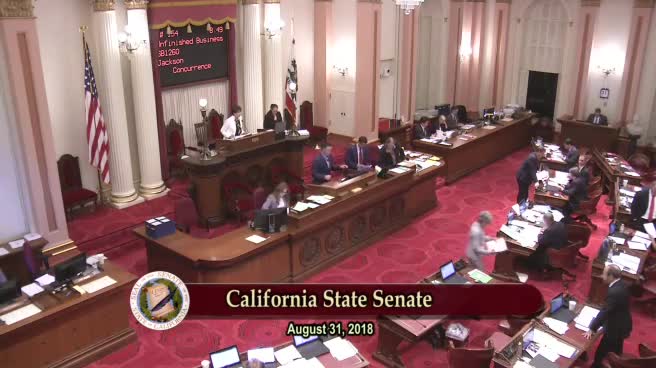 2MIN
Senate Floor
 44MIN
Assembly Floor
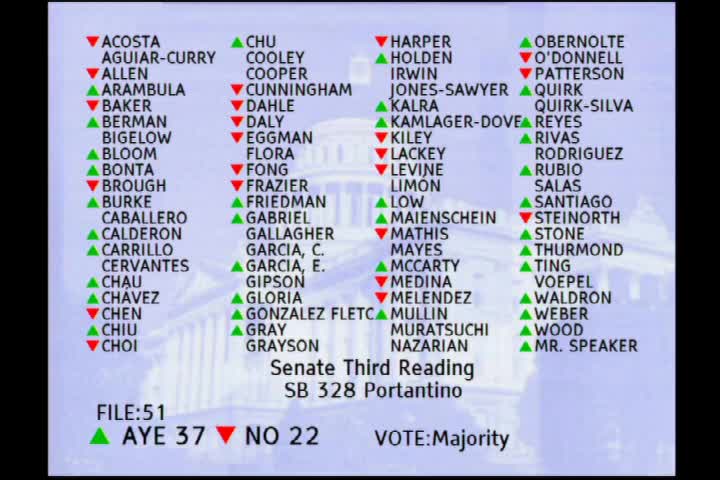 1MIN
Assembly Floor
 1MIN
Assembly Floor
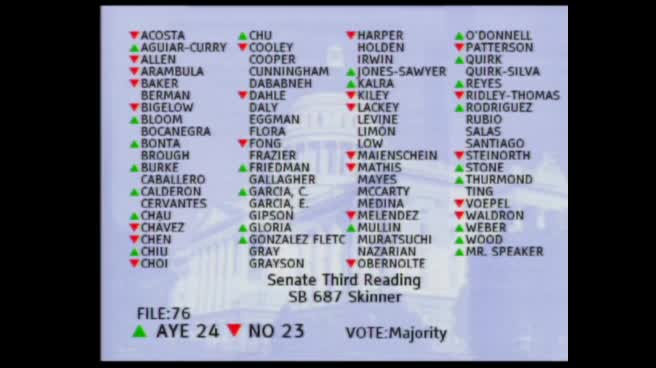 42MIN
Assembly Floor
 5MIN
Assembly Floor
 1H
Assembly Standing Committee on Appropriations
 1H
Assembly Standing Committee on Education
Bill Author

Bill Co-Author(s):
