AB 1904: Hazardous materials: natural gas odorants.
- Session Year: 2015-2016
- House: Assembly
- Latest Version Date: 2016-06-23
Existing law authorizes the Occupational Safety and Health Standards Board to adopt, amend, and repeal occupational safety and health standards and orders. Existing regulations adopted pursuant to that authorization require natural gas that is delivered into any vessel or system, as specified, to have a distinctive odor of sufficient intensity so that the presence of the gas may be detected down to concentrations in air of not over 20% of the lower explosive limit, and require that these odorants be, among other things, harmless to humans, nontoxic, and noncorrosive to certain metals.
This bill would require the Office of Environmental Health Hazard Assessment to submit a report to the Legislature, on or before January 1, 2019, that includes an assessment of the any potential danger of odorants currently used in natural gas storage facilities in the state to public health and safety and the environment, and that identifies alternative odorants for possible use in natural gas storage facilities, as specified. The bill would require the Office of Environmental Health Hazard Assessment to consult with appropriate entities, as specified.
This bill would declare that it is to take effect immediately as an urgency statute.
Existing law authorizes the Occupational Safety and Health Standards Board to adopt, amend, and repeal occupational safety and health standards and orders. Existing regulations adopted pursuant to that authorization require natural gas that is delivered into any vessel or system, as specified, to have a distinctive odor of sufficient intensity so that the presence of the gas may be detected down to concentrations in air of not over 20% of the lower explosive limit, and require that these odorants be, among other things, harmless to humans, nontoxic, and noncorrosive to certain metals.
This bill would require the Office of Environmental Health Hazard Assessment to submit a report to the Legislature, on or before January 1, 2018, 2019, that includes an assessment of the danger of odorants currently used in natural gas storage facilities in the state to public health and safety and the environment, and that identifies alternative odorants for possible use in natural gas storage facilities, as specified.
This bill would declare that it is to take effect immediately as an urgency statute.
Existing law authorizes the Occupational Safety and Health Standards Board to adopt, amend, and repeal occupational safety and health standards and orders. Existing regulations adopted pursuant to that authorization require natural gas that is delivered into any vessel or system, as specified, to have a distinctive odor of sufficient intensity so that the presence of the gas may be detected down to concentrations in air of not over 20% of the lower explosive limit, and require that these odorants be, among other things, harmless to humans, nontoxic, and noncorrosive to certain metals.
This bill would require the Office of Environmental Health Hazard Assessment to submit a report to the Legislature, on or before January 1, 2018, that includes an assessment of the danger of odorants currently used in natural gas storage facilities in the state to public health and safety and the environment, and that identifies alternative odorants for possible use in natural gas storage facilities, as specified.
This bill would declare that it is to take effect immediately as an urgency statute.
On or before January 1, 2019, the Office of Environmental Health Hazard Assessment shall submit a report to the Legislature, in compliance with Section 9795 of the Government Code, that includes all of the following:
(a)An assessment of the any potential danger of odorants currently used in natural gas storage facilities in the state to public health and safety and the environment.
(b)Alternative odorants identified by the Office of Environmental Health Hazard Assessment for possible use in natural gas storage facilities that pose a lower risk to public health and safety and the environment. The Office of Environmental Health Hazard Assessment shall evaluate the following issues for every alternative odorant identified:
(1)The feasibility of using the alternative odorant in natural gas storage facilities.
(2)Any risks of using the alternative odorant, including, but not limited to, the risks of unwanted chemical reactions and reactions, increased corrosion. corrosion, and potential risks to public health and safety.
(3)The effectiveness of the alternative odorant at warning of a natural gas leak.
(c)The Office of Environmental Health Hazard Assessment shall consult with appropriate entities including, but not limited to, odorant producers, appropriate state agencies or federal agencies, or both, and interested parties with germane existing scientific research.
(d)For purposes of this chapter, odorant means any material added to natural gas to impart a distinct odor so that the natural gas is readily detectable by a person with a normal sense of smell.
SEC. 2.Pursuant to Section 10231.5 of the Government Code, this chapter is repealed on January 1, 2021.
SEC. 3.This act is an urgency statute necessary for the immediate preservation of the public peace, health, or safety within the meaning of Article IV of the Constitution and shall go into immediate effect. The facts constituting the necessity are:
In order to immediately begin assessing the danger of odorants in natural gas, it is necessary that this act take effect immediately.
On or before January 1, 2018, 2019, the Office of Environmental Health Hazard Assessment shall submit a report to the Legislature, in compliance with Section 9795 of the Government Code, that includes all of the following:
(a)An assessment of the danger of odorants currently used in natural gas storage facilities in the state to public health and safety and the environment.
(b)Alternative odorants identified by the Office of Environmental Health Hazard Assessment for possible use in natural gas storage facilities that pose a lower risk to public health and safety and the environment. The Office of Environmental Health Hazard Assessment shall evaluate the following issues for every alternative odorant identified:
(1)The feasibility of using the alternative odorant in natural gas storage facilities.
(2)Any risks of using the alternative odorant, including, but not limited to, the risks of unwanted chemical reactions and increased corrosion.
(3)The effectiveness of the alternative odorant at warning of a natural gas leak.
SEC. 2.Pursuant to Section 10231.5 of the Government Code, this chapter is repealed on January 1, 2021.
SEC. 3.This act is an urgency statute necessary for the immediate preservation of the public peace, health, or safety within the meaning of Article IV of the Constitution and shall go into immediate effect. The facts constituting the necessity are:
In order to immediately begin assessing the danger of odorants in natural gas, it is necessary that this act take effect immediately.
On or before January 1, 2018, the Office of Environmental Health Hazard Assessment shall submit a report to the Legislature, in compliance with Section 9795 of the Government Code, that includes all of the following:
(a)An assessment of the danger of odorants currently used in natural gas storage facilities in the state to public health and safety and the environment.
(b)Alternative odorants identified by the Office of Environmental Health Hazard Assessment for possible use in natural gas storage facilities that pose a lower risk to public health and safety and the environment. The Office of Environmental Health Hazard Assessment shall evaluate the following issues for every alternative odorant identified:
(1)The feasibility of using the alternative odorant in natural gas storage facilities.
(2)Any risks of using the alternative odorant, including, but not limited to, the risks of unwanted chemical reactions and increased corrosion.
(3)The effectiveness of the alternative odorant at warning of a natural gas leak.
SEC. 2.Pursuant to Section 10231.5 of the Government Code, this chapter is repealed on January 1, 2021.
SEC. 3.This act is an urgency statute necessary for the immediate preservation of the public peace, health, or safety within the meaning of Article IV of the Constitution and shall go into immediate effect. The facts constituting the necessity are:
In order to immediately begin assessing the danger of odorants in natural gas, it is necessary that this act take effect immediately.
|
Date
|
Status
|
|---|---|
| Aug 11, 2016 | In committee: Held under submission. |
| Aug 8, 2016 | Referred to APPR. suspense file. |
| Aug 3, 2016 | From committee: Do pass and re-refer to Com. on APPR. (Ayes 7. Noes 0.) (August 3). Re-referred to Com. on APPR. |
| Jun 30, 2016 | Re-referred to Com. on E.Q. |
| Jun 23, 2016 | From committee chair, with author's amendments: Amend, and re-refer to committee. Read second time, amended, and re-referred to Com. on RLS. |
| Jun 9, 2016 | Referred to Com. on RLS. |
| Jun 6, 2016 | In Senate. Read first time. To Com. on RLS. for assignment. |
| Jun 2, 2016 | Read third time. Urgency clause adopted. Passed. Ordered to the Senate. (Ayes 76. Noes 0. Page 5244.). |
| Jun 2, 2016 | Read third time. Urgency clause adopted. Passed. Ordered to the Senate. (Ayes 76. Noes 0.). |
| Jun 2, 2016 | Read third time. Urgency clause adopted. Passed. Ordered to the Senate. |
| May 31, 2016 | Read second time. Ordered to third reading. |
| May 27, 2016 | Read second time and amended. Ordered returned to second reading. |
| May 27, 2016 | From committee: Amend, and do pass as amended. (Ayes 20. Noes 0.) (May 27). |
| Apr 13, 2016 | In committee: Set, first hearing. Referred to suspense file. |
| Mar 30, 2016 | From committee: Do pass and re-refer to Com. on APPR. (Ayes 7. Noes 0.) (March 29). Re-referred to Com. on APPR. |
| Feb 25, 2016 | Referred to Com. on E.S. & T.M. |
| Feb 12, 2016 | From printer. May be heard in committee March 13. |
| Feb 11, 2016 | Read first time. To print. |
|
Date
|
Description
|
Location
|
Votes
|
|
|---|---|---|---|---|
| Aug 8, 2016 | Placed on suspense file | Senate Standing Committee on Appropriations |
Passed |
|
| Aug 3, 2016 | Do pass, but first be re-referred to the Committee on [Appropriations] | Senate Standing Committee on Environmental Quality |
Passed |
|
| Jun 2, 2016 | AB 1904 WILK Third Reading Urgency | Assembly Floor |
Passed |
|
| May 27, 2016 | Do pass as amended. | Assembly Standing Committee on Appropriations |
Passed |
|
| Mar 29, 2016 | Do pass and be re-referred to the Committee on [Appropriations] | Assembly Standing Committee on Environmental Safety and Toxic Materials |
Passed |
This list shows positions taken on this bill by organizations on the date displayed, which is linked to the original source.
Positions by individuals are not included.
SENATE COMMITTEE ON APPROPRIATIONS
Senator Ricardo Lara, Chair
2015 - 2016 Regular Session
AB 1904 (Wilk) - Hazardous materials: natural gas odorants
Version: June 23, 2016 | Policy Vote: E.Q. 7 - 0 |
Urgency: Yes | Mandate: No |
Hearing Date: August 8, 2016 | Consultant: Narisha Bonakdar |
This bill meets the criteria for referral to the Suspense File.
Bill Summary:
- AB 1904 requires the Office of Environmental Health Hazard Assessment (OEHHA) to assess the health and environmental dangers posed by odorants used in natural gas, and to submit a report to the Legislature on or before January 1, 2019.
Fiscal Impact:
- Approximately $945,000 (Oil, Gas Geothermal Administrative Fund or General Fund) for OEHHA to conduct the assessment.
- Unknown, likely minor, costs to relevant agencies for required consultation.
Background:
Aliso Canyon gas leak impacts. On October 23, 2015, Southern California Gas Company (SoCalGas) discovered a significant natural gas leak from “Standard Sesnon 25” (SS 25) well at the Aliso Canyon. The Aliso Canyon is located adjacent to the community of Porter Ranch within the city of Los Angeles. Several days passed before SoCalGas disclosed to the community that a significant uncontrolled leak was occurring. The leak lasted for four months, resulted in the relocation of more than 5,000 households (at SoCalGas’s expense), and resulted in hundreds of public health complaints. In addition to the public health concerns, the Air Recourses Board’s (ARB) initial coarse estimates indicate that about 95,000 metric tons of methane was released into the air, adding approximately 20 percent to the statewide methane emissions during the duration of the leak.
The Administration’s Response. On January 6, 2016, Governor Brown issued a proclamation that declared the Aliso Canyon situation an emergency. The emergency proclamation detailed the administration's efforts to help stop the leak and directed further action to protect public health and safety, ensure accountability, and strengthen oversight of gas storage facilities. Among other things, the proclamation specifically directed OEHHA to convene an independent panel of scientific and medical experts to review public health concerns stemming from the gas leak and evaluate whether additional measures are needed to protect public health beyond those already put in place.
During and after the gas leak, OEHHA evaluated the health hazards and risks posed by the gas leak. Among other things, OEHHA’s evaluation concluded that the available air sample data did not indicate an acute health hazard, and current measured exposures to benzene (a cancer-causing chemical) are below the level of concern for chronic health effects.
The 2016-17 Budget includes $13.8 million and 57 positions to implement the Governor’s emergency proclamation, enhance efforts to improve public safety statewide, and strengthen oversight of gas storage facilities.
California Energy Commission: $1.7 million and three positions to monitor, model, and analyze the interaction of electricity and natural gas systems for reliability (Public Interest Research, Development, and Demonstration Fund).
Department of Conservation: $4.2 million and 20 positions to support increased regulatory activities (Oil, Gas and Geothermal Resources Fund).
Air Resources Board: $2.3 million and four positions to provide air quality monitoring near oil and gas operations (Oil, Gas and Geothermal Resources Fund).
Office of Environmental Health Hazards Assessment: $350,000 and two positions to support ARB's air quality monitoring (Oil, Gas and Geothermal Resources Fund).
California Public Utilities Commission: $1.5 million and 10 positions for increased workload related to regulating natural gas facilities and $1.7 million) and 11 positions to create the Division of Safety Advocates (Public Utilities Commission Utilities Reimbursement Account).
The Local Response. On February 2, 2016, SoCalGas confirmed in writing its commitment to provide funding for reasonable costs to conduct a health study on potential impacts of the Aliso Canyon gas leak, as required by the Order for Abatement issued by the South Coast Air Quality Management District (SCAQMD). The order requires that the study is conducted by a third-party approved by the SCAQMD and SoCalGas, and that an advisory committee is established to evaluate field data, analysis methods, and results. The scope of work proposes that the study, among other things, (1) identify of chemicals (or constituents) of potential concern associated with the release; (2) determine the potential areas of concern and exposure point concentrations; (3) generate chronic toxicity values for the widely-used natural gas odorants tetrahydrothiophene and tert-butylmercaptan; and (4) identify and describe key uncertainties. According to the SCAQMD, it is currently in contract negotiations with the National Academy of Sciences to conduct the initial phase of the study, which will determine subsequent phases of the study.
Proposed Law:
This bill:
- Requires OEHHA, on or before January 1, 2019, to submit a report to the Legislature that includes the following:
- An assessment of any potential danger of odorants currently used in natural gas storage facilities in the state pose to public health and safety and the environment.
- Alternative odorants identified for possible use in natural gas storage facilities that pose a lower risk to public health and safety and the environment.
- Requires the assessment to evaluate the following issues for every alternative odorant identified:
- The feasibility of using the alternative odorant in natural gas storage facilities.
- Any risks of using the alternative odorant.
- The effectiveness of the alternative odorant at warning of a natural gas leak.
- Requires OEHHA to consult with appropriate entities including, but not limited to, odorant producers, appropriate state agencies or federal agencies, or both, and interested parties with germane existing scientific research.
- Defines “odorant” as any material added to natural gas to impart a distinct odor so that the natural gas is readily detectable by a person with a normal sense of smell.
- Sunset the bill on January 1, 2021.
- States that the bill takes effect immediately as an urgency statute.
Related Legislation:
SB 380 (Pavley, Chapter 14, Statutes of 2016,) extends the Administration’s moratorium on injection at the Aliso Canyon facility until the wells are determined to be safe.
SB 887 (Pavley, 2016) provides a framework for reforming oversight of natural gas storage facilities. The bill mandates minimum standards for equipment inspections, monitoring, and testing; training of personnel; leak monitoring; response planning; reporting; and information sharing. This bill is pending Assembly Appropriations Committee.
SB 888 (Allen, 2016) establishes the Governor’s Office of Emergency Services as the lead state responder in the event of a natural gas leak and bar leak-related costs from being borne by rate payers. This bill is pending Assembly Appropriations Committee.
SB 1383 (Lara, 2016) establishes goals for the emissions of short-lived climate pollutants (including methane). This bill is pending Assembly Appropriations Committee.
SB 1441 (Leno, 2016) prohibits the commission from allowing gas corporations to seek or receive recovery from ratepayers for the value of natural gas lost to the atmosphere during the extraction, production, storage, processing, transportation, and delivery of the natural gas. This bill is pending Assembly Appropriations Committee.
AB 1882 (Williams, 2016) prevents the approval of underground injection well projects without concurrence of the State Water Resources Control Board. This bill was held in Assembly Appropriations Committee.
AB 1902 (Wilk, 2016) establishes a three-year statute of limitations for Aliso Canyon leak-related civil actions. This bill was held in Assembly Judiciary Committee.
AB 1904 (Wilk, 2016) requires the Office of Environmental Health Hazard Assessment to undertake a study of odorants. This bill is pending Senate Appropriations Committee as an urgency measure.
AB 1905 (Wilk, 2016) requires an independent science study of natural gas storage facilities. This bill was held in Assembly Appropriations Committee.
Staff Comments:
Fiscal impact. According to OEHHA, this fiscal is based on assigning two Staff Toxicologist (Specialist) and one Senior Environmental Scientist (Specialist) positions for 18 months at a cost of $645,000 ($150,000 per year in salary and benefits for each Staff Toxicologist; $130,000 per year in salary and benefits for the Senior Environmental Scientist), plus $300,000 for contract funds for consultation on scientific matters related to feasibility, safety, and ecological impacts of odorants and alternatives. The Oil, Gas, and Geothermal Administrative Fund appears to be the most appropriate funding source for these activities. Assistance from additional entities such as the Division of Oil, Gas, and Geothermal Resources and Lawrence Berkeley National Laboratory would probably be needed for assessing the non-health risks, feasibility, and effectiveness of alternative lower-risk odorants that are not currently used in California natural gas facilities.
Staff notes that no funding source is identified in the bill, which could result in General Fund pressures. The author may wish to add language to clarify which funding source should be used to fund the assessment.
-- END --
SENATE COMMITTEE ON ENVIRONMENTAL QUALITY
Senator Wieckowski, Chair
2015 - 2016 Regular
Bill No: AB 1904
Author: | Wilk | ||
Version: | 6/23/2016 | Hearing Date: | 8/3/2016 |
Urgency: | Yes | Fiscal: | Yes |
Consultant: | Rachel Machi Wagoner | ||
SUBJECT: Hazardous materials: natural gas odorants
ANALYSIS:
Existing law: authorizes the Occupational Safety and Health Standards Board to adopt, amend, and repeal occupational safety and health standards and orders. Existing regulations adopted pursuant to that authorization require natural gas that is delivered into any vessel or system, as specified, to have a distinctive odor of sufficient intensity so that the presence of the gas may be detected down to concentrations in air of not over 20% of the lower explosive limit, and require that these odorants be, among other things, harmless to humans, nontoxic, and noncorrosive to certain metals.
This bill:
- Requires the Office of Environmental Health Hazard Assessment (OEHHA) to submit a report to the Legislature, on or before January 1, 2019, that includes an assessment of any potential danger of odorants currently used in natural gas storage facilities in the state to public health and safety and the environment, and that identifies alternative odorants for possible use in natural gas storage facilities, as specified.
- Requires the OEHHA to consult with appropriate entities, as specified.
- Takes effect immediately as an urgency statute.
Background
Aliso Canyon Gas Storage Facility leak – a disaster. On October 23, 2016, the SoCalGas discovered a leak from a well at the company’s Aliso Canyon Gas Storage Facility. The Division of Oil, Gas and Geothermal Resources (DOGGR) – the state agency responsible for regulating Aliso Canyon’s natural gas storage wells – reports that it was informed of the leak soon after its discovery. Other state and local agencies, as well as nearby residents threatened by the leak, were notified sometime later.
For more than 100 days, the well continued to dump tons of methane gas into the atmosphere, along with irritants and other substances. According to the California Air Resources Board (ARB), the leak emitted almost 100,000 tons of methane, a potent greenhouse gas (GHG), adding approximately 20 percent to statewide methane emissions over its duration. Many residents from nearby Porter Ranch suffered noxious odors. Others reported more serious health effects, including nose bleeds, rashes and respiratory problems. Hundreds were relocated from their homes. Despite assurances from public health agencies, many fear the leak’s long-term effects on health and wellbeing.
The investigation into the cause of the leak continues. The Attorney General, ARB, the City of Los Angeles and the County of Los Angeles have formally accused SoCalGas of violating California laws. The California Public Utilities Commission (CPUC), which regulates the rates of SoCalGas, is considering penalties against the gas company.
Comments
- Purpose of Bill. According to the author, on October 23, 2015, the Southern California Gas Company reported a gas leak at their Aliso Canyon facility affecting Porter Ranch and the surrounding communities. The well that was the source of the largest natural gas leak in recorded US history was sealed on February 18, 2016.
The author states that the existing regulations set by the Occupational Safety and Health Standards Board require any stored natural gas to contain odorants that, among other requirements, are nontoxic and harmless to humans. On its own, natural gas is odorless and colorless so these chemicals are added as a practice of safety in order to allow detection of leaks by smell.
The odorants used at the Aliso Canyon gas storage facility are primarily tert-butyl mercaptan and tetrahydrothiophene. Their distinctive, putrid smell can be noticed at concentrations below levels that can be measured in air samples. Even at these extremely low levels, the odor from these sulfur-containing compounds can cause nausea and headaches.
The author asserts that residents of the affected community have widely reported debilitating headaches, bloody noses, and nausea. State regulators and SoCalGas executives still claim that odorants do not pose any long-term health concerns.
- Two bills for one problem. AB 1903, also authored by Assembly Member Wilk, directs the CPUC to authorize and OEHHA to undertake a study of the long-term health effect of the natural gas leak from the Aliso Canyon natural gas storage facility that occurred in 2015.
It is unclear why a separate bill with a separate mandate for a separate study by OEHHA to assess any potential danger of odorants is necessary. It would be more efficient and prudent to include the provisions of this study into the requirements of AB 1903.
Related/Prior Legislation
AB 1903 (Wilk, 2016) directs the California Public Utilities Commission (CPUC) to authorize and the Office of Environmental Health Hazard Assessment (OEHHA) to undertake a study of the long-term health effect of the natural gas leak from the Aliso Canyon natural gas storage facility that occurred in 2015. AB 1903 is awaiting hearing in the Senate Appropriations Committee.
SOURCE:
Author
SUPPORT:
Los Angeles Unified School District
OPPOSITION:
None received
-- END --
ASSEMBLY THIRD READING
ATR Bill Id:AB 1904
Author:(Wilk)
As Introduced Ver:May 27, 2016
2/3 vote. Urgency
Committee | Votes | Ayes | Noes |
Environmental Safety | 7-0 | Alejo, Dahle, Beth Gaines, Gray, Lopez, McCarty, Ting | |
Appropriations | 20-0 | Gonzalez, Bigelow, Bloom, Bonilla, Bonta, Calderon, Chang, Daly, Eggman, Gallagher, Eduardo Garcia, Roger Hernández, Holden, Jones, Obernolte, Quirk, Santiago, Wagner, Weber, Wood |
|
SUMMARY: Requires, on or before January 1, 2019, the Office of Environmental Health Hazard Assessment (OEHHA) to evaluate and report on natural gas odorants and potential alternatives. Specifically, this bill:
- Requires OEHHA to provide a report to the Legislature that includes:
- An assessment of the danger of odorants currently used in natural gas storage facilities to public health and safety and the environment.
- Alternative odorants identified for possible use in natural gas storage facilities that pose a lower risk to public health and safety and the environment.
- Requires OEHHA to evaluate the following issues for every alternative odorant identified:
- The feasibility of using the alternative odorant in natural gas storage facilities.
- Any risks of using the alternative odorant, including, but not limited to, the risks of unwanted chemical reactions and increased corrosion.
- The effectiveness of the alternative odorant at warning of a natural gas leak.
- Sunsets the provisions of the bill on January 1, 2021.
- Establishes this act as an urgency statute in order to immediately begin assessing the danger of odorants in natural gas.
FISCAL EFFECT: According to the Assembly Appropriations Committee, this bill will result in one-time costs of $500,000 for OEHHA staff to assess the hazards of odorants and identify potential alternatives and one-time costs of $140,000 for consultant contracts to determine the safety and ecological impacts of odorants.
COMMENTS: The Aliso Canyon Gas Storage Facility is owned by the Southern California Gas Company (SoCalGas) and is located in Los Angeles County just north of Porter Ranch, California. On October 23, 2015, SoCalGas detected a methane gas leak at its Aliso Canyon Gas Storage Facility at Well # SS-25. The Aliso Canyon Gas Storage Facility gas leak was declared a State Emergency on January 6, 2016, by Governor Jerry Brown.
The leak lasted 112 days before being permanently capped on February 18, 2016.
A study in the journal Science confirmed that the methane gas leak was not only the largest in California's history, but also the second largest in the nation. According to the lead author of the study, as much as 60 metric tons of methane was spewing from the leak each hour.
The leak displaced nearly 2,290 households, requiring families to move into temporary housing and hotels provided by SoCalGas.
Follow the stinky smell: Natural gas is an odorless, flammable gas consisting primarily of methane. It also contains hydrogen sulfide, sulfur dioxide, benzene, toluene, ethylbenzene, and xylenes in small amounts. Mercaptan is added to natural gas in order to aid in the detection of natural gas by smell; it notably gives natural gas its distinctive "rotten egg" smell. Natural gas odorization is a critical additive to protect the public from a natural gas leak. The odor must provide a warning that prompts the public to take action when detected.
Health impacts of gas leak: The natural gas stored in the Aliso Canyon Gas Storage Facility, like all natural gas provided for domestic use, contains odorants. The odorants in the Aliso Canyon natural gas are primarily tert-butyl mercaptan and tetrahydrothiophene. As a result of the gas leak and mercaptan exposure, residents complained about varying health impacts. Complaints ranged from nosebleeds to nausea, headaches, and eye and throat irritation.
SoCalGas has been quoted as saying, "Scientists agree natural gas is not toxic and that its odorant is harmless at the minute levels at which it is added to natural gas." According to the Governor's Office of Emergency Services, based on available information, mercaptans do not show an impact to long term health, especially at the levels present in Porter Ranch.
OEHHA evaluated air sample data collected by SoCalGas at several locations in the Porter Ranch neighborhood near the Aliso Canyon Gas Storage Facility and found that the symptoms reported by many Porter Ranch residents can be attributed to odorants in the natural gas. According to OEHHA, the natural gas odorants have strong odors which can be perceived at concentrations below the levels that can be measured in air samples. These odors can evoke physiological responses (e.g. nausea, headaches).
Complaints of headaches and dizziness continue well after the Aliso Canyon Gas Storage Facility well leak was sealed. The Los Angeles County Department of Public Health has received a substantial number of reports from Porter Ranch residents, located downwind from the Aliso Canyon natural gas storage facility, describing recurring symptoms such as headaches, nausea, abdominal discomfort, dizziness and respiratory irritation. Between the time the massive natural gas leak was first reported last October to the day workers plugged it, Los Angeles County received between 700 and 800 health complaints. Between February 18 and March 9, 2016, after the well was reported capped and inspected by state regulators, Los Angeles County Health Department received nearly 300 health complaints from residents who returned home.
On March 10, 2016, Los Angeles County health officials launched a three-day door-to-door health survey throughout Porter Ranch to investigate complaints by residents in the community who continue to report illnesses weeks after a leaking natural gas well was capped.
Update on local survey: That door-to-door survey, in early March, found 62% of respondents reported continuing symptoms. As of May 9, about 2,800 households were still living outside the area in hotels, corporate apartments, short-term rentals or with friends or family at SoCal Gas' expense.
Los Angeles County Public Health Department officials conducted dust and air testing following the three-day door-to-door survey of Porter Ranch residents who live close to the gas storage field that leaked, about two to three miles away.
As reported by KPCC, tests of the dust in Porter Ranch homes turned up the presence of metals, including barium, that could have caused the kinds of health symptoms some residents have reported experiencing even after the big gas leak was plugged.
Natural gas facilities in California: California has 13 operating natural gas storage facilities. Odorants are presumably used at each of these facilities. There are 115 other wells in use in Aliso Canyon. In early December 2016, the South Coast Air Quality Management District (Air District) identified 15 minor methane leaks and directed SoCalGas to fix them. Later that month, the Air District verified that these leaks were repaired.
Analysis Prepared by: Paige Brokaw / E.S. & T.M. / (916) 319-3965 FN: 0003204
Date of Hearing: April 13, 2016
ASSEMBLY COMMITTEE ON APPROPRIATIONS
Lorena Gonzalez, Chair
ABPCA Bill Id:AB 1904
Author:(Wilk) – As Introduced Ver:February 11, 2016
Policy Committee: | Environmental Safety and Toxic Materials | Vote: | 7 - 0 |
|
|
Urgency: Yes State Mandated Local Program: No Reimbursable: No
SUMMARY:
This bill requires the Office of Environmental Health Hazard Assessment (OEHHA) to evaluate and report to the Legislature on natural gas odorants and potential alternatives by January 1, 2018. Specifically, this bill:
- Requires OEHHA to provide a report to the Legislature that includes:
- An assessment of the danger of odorants currently used in natural gas storage facilities to public health and safety and the environment.
- Alternative odorants identified for possible use in natural gas storage facilities that pose a lower risk to public health and safety and the environment.
- Requires OEHHA to evaluate the following issues for every alternative odorant identified:
- The feasibility of using the alternative odorant in natural gas storage facilities.
- Any risks of using the alternative odorant, including, but not limited to, the risks of unwanted chemical reactions and increased corrosion.
- The effectiveness of the alternative odorant at warning of a natural gas leak.
- Sunsets the provisions of the bill on January 1, 2021.
FISCAL EFFECT:
- One-time costs of $500,000 for OEHHA staff to assess the hazards of odorants and identify potential alternatives (GF, Oil, Gas and Geothermal Administrative Fund or other special fund).
- One-time costs of $140,000 for consultant contracts to determine the safety and ecological impacts of odorants (GF, Oil, Gas and Geothermal Administrative Fund or other special fund).
COMMENTS:
- Purpose. According to the author, for months, there have been widespread reports in Porter Ranch and the surrounding communities of individuals with debilitating headaches, bloody noses, and other adverse physical reactions resulting from the gas leak at the Aliso Canyon facility. The adverse reactions are likely caused by the odorants added to stored natural gas as a safety precaution in order to be able to detect gas leaks.
This bill will provide information regarding the health and safety of odorants to inform the use of odorants in the future.
- Background. The Aliso Canyon Gas Storage Facility is owned by the Southern California Gas Company (SoCalGas) and is located in Los Angeles County just north of Porter Ranch, California. SoCalGas is a gas corporation regulated by the California Public Utilities Commission (PUC).
On October 23, 2015, SoCalGas detected a methane gas leak at its Aliso Canyon Gas Storage Facility at Well # SS-25. The Aliso Canyon Gas Storage Facility gas leak was declared a State Emergency on January 6, 2016, by Governor Jerry Brown.
Following an initial evaluation and several attempts to stop the leak, SoCalGas began drilling a relief well in order to plug the leaking well. The initial attempts to plug the leak failed to stop the leak, and the leak lasted 112 days before being permanently capped on February 18, 2016.
A study in the journal Science confirmed that the methane gas leak was not only the largest in California's history, but also the second largest in the nation. According to the lead author of the study, as much as 60 metric tons of methane spewed from the leak each hour.
The leak displaced nearly 2,290 households, requiring families to move into temporary housing and hotels provided by SoCalGas.
- Implementation concerns. This bill requires OEHHA to determine the feasibility, and effectiveness of alternative lower-risk odorants that are not currently used in California natural gas facilities. This non-health, but important public safety, requirement is likely beyond the scope of OEHHA. Although not required by the bill, assistance from additional entities such as the Division of Oil, Gas and Geothermal Resources (DOGGR) and Lawrence Berkeley National Laboratory, may be necessary to evaluate the impacts.
Also, the timeline required in this bill may need to be extended to ensure all current and alternative odorants are properly evaluated. Alternately, the author may wish to limit the number of odorants required to be evaluated in order to meet the timeline in the bill.
- Related legislation. Numerous bills have been introduced to respond to the Aliso Canyon Gas Storage Facility leak. AB 1902 (Wilk) extends the statute of limitations for civil actions resulting from exposure to hazardous materials from the Aliso Canyon gas leak. This bill is pending in the Judiciary Committee.
AB 1903 (Wilk) directs the Public Utilities Commission and the State Department of Public Health to jointly study the long-term health impacts of the Aliso Canyon natural gas leak. This bill is pending in the Health Committee.
AB 1905 (Wilk) directs the Natural Resources Agency to conduct an independent scientific study on natural gas injection and storage practices and facilities. This bill is pending in this Committee.
SB 380 (Pavley) places a moratorium on natural gas injections at the Aliso Canyon gas storage facility and establishes requirements to resume injections. This bill is scheduled to be heard in this Committee today.
SB 886 (Pavley) requires the Division of Oil, Gas, Geothermal Research (DOGGR) to institute a moratorium on natural gas injections at the Aliso Canyon gas storage facility and prevent use of wells drilled pre-1954. This bill is pending in the Senate Energy, Utilities and Communications Committee.
SB 887 (Pavley) requires DOGGR to prescribe standards for natural gas storage wells and requires annual inspections. This bill is pending in the Senate Environmental Quality Committee.
Analysis Prepared by: Jennifer Galehouse / APPR. / (916) 319-2081
Date of Hearing: March 29, 2016
ASSEMBLY COMMITTEE ON ENVIRONMENTAL SAFETY AND TOXIC MATERIALS
Luis Alejo, Chair
ABPCA Bill Id:AB 1904 (
Author:Wilk) – As Introduced Ver:February 11, 2016
SUBJECT: Hazardous materials: natural gas odorants
SUMMARY: Requires the Office of Environmental Health Hazard Assessment (OEHHA) to evaluate and report on natural gas odorants and potential alternatives. Specifically, this bill:
- Requires OEHHA to provide a report to the Legislature that includes:
- An assessment of the danger of odorants currently used in natural gas storage facilities to public health and safety and the environment.
- Alternative odorants identified for possible use in natural gas storage facilities that pose a lower risk to public health and safety and the environment.
- Requires OEHHA to evaluate the following issues for every alternative odorant identified:
- The feasibility of using the alternative odorant in natural gas storage facilities.
- Any risks of using the alternative odorant, including, but not limited to, the risks of unwanted chemical reactions and increased corrosion.
- The effectiveness of the alternative odorant at warning of a natural gas leak.
- Sunsets the provisions of the bill on January 1, 2021.
- Establishes this act as an urgency statute in order to immediately begin assessing the danger of odorants in natural gas.
EXISTING LAW:
UNDER FEDERAL LAW:
- Requires, pursuant to the Pipeline Safety Regulations of the Department of Transportation, that a combustible gas in a distribution line must contain a natural odorant or be odorized so that at a concentration in air of one-fifth of the lower explosive limit, the gas is readily detectable by a person with a normal sense of smell. (49 Code of Federal Regulation (CFR) 192, section 192.625)
- Prohibits the odorant in combustible gases from being deleterious to persons, materials, or pipe. (49 CFR 192, section 192.625(c)(1))
- Prohibits the products of combustion from the odorant of being toxic when breathed or from being corrosive or harmful to those materials to which the products of combustion will be exposed. (49 CFR 192, section 192.625(c)(2))
UNDER STATE LAW:
- Establishes reporting requirements for reports requested by law to be submitted by a state or local agency to the Legislature. (Government Code § 9795)
- Requires the Department of Conservation to maintain surveillance over underground gas storage facilities to insure that the original reserves are not lost, that drilling of new wells is conducted properly, and that no damage occurs to the environment by reason of injection and withdrawal of gas. (Public Resources Code § 3403.5)
- Requires all combustible gases transported by utility pipeline to have a distinctive odor of sufficient intensity so that the presence of the gas may be detected down to the concentration in air of not over one-fifth the lower limit of combustibility. (Public Utilities Commission (PUC) Decision No. 61269 and Decision No. 61355, Case No. 6352, 1960 (Case No. 6352), Section 208.1)
- Requires, whenever necessary to maintain this level of intensity, a suitable odorant to be added in accordance with the following specifications:
- Odorants in the concentrations used shall be harmless to humans (nontoxic);
- Noncorrosive to steel, iron, brass, copper and leather; and,
- Nonsoluble in water to an extent greater than 2.5 parts by weight of odorant to 100 parts by weight of water. (Case No. 6352, Section 208.2)
- Requires each utility to make periodic checks to determine that a proper level of odorization is maintained throughout the pipeline system. (Case No. 6352, Section 208.4)
FISCAL EFFECT: Unknown.
COMMENTS:
Need for the bill: According to the author, "On October 23, 2015, the Southern California Gas Company (SoCal Gas) discovered a gas leak at their Aliso Canyon facility affecting the Porter Ranch and the surrounding communities. For months, there have been widespread reports in the affected area of individuals with debilitating headaches, bloody noses, and other adverse physical reaction…
"As the leak continued, various local, county, and state agencies got involved to attempt to mitigate as much damage as possible. Eventually, the Governor declared a state of emergency and declared that all state agencies are to use all necessary resources to “ensure a continuous and thorough response to this incident…
"While various state and local agencies are working on fixing the situation in the area, this bill addresses the root cause studying the odorants, which are believed to have caused many of the adverse health effects. Odorants are added to stored natural gas as a safety precaution in order to be able to detect gas leaks. This study will help prevent future similar situations."
Aliso Canyon Gas Storage Facility: The Aliso Canyon Gas Storage Facility is owned by the Southern California Gas Company (SoCalGas) and is located in Los Angeles County just north of Porter Ranch, California. SoCalGas is a gas corporation regulated by the California Public Utilities Commission (PUC).
On October 23, 2015, SoCalGas detected a methane gas leak at its Aliso Canyon Gas Storage Facility at Well # SS-25. The Aliso Canyon Gas Storage Facility gas leak was declared a State Emergency on January 6, 2016, by Governor Jerry Brown.
Following an initial evaluation and several attempts to stop the leak, SoCalGas began drilling a relief well in order to plug the leaking well. The initial attempts to plug the leak failed to stop the leak, and the leak lasted 112 days before being permanently capped on February 18, 2016.
A study in the journal Science confirmed that the methane gas leak was not only the largest in California's history, but also the second largest in the nation. According to the lead author of the study, as much as 60 metric tons of methane was spewing from the leak each hour.
The leak displaced nearly 2,290 households, requiring families to move into temporary housing and hotels provided by SoCalGas.
Follow the stinky smell: Natural gas is an odorless, flammable gas consisting primarily of methane. It also contains hydrogen sulfide, sulfur dioxide, benzene, toluene, ethylbenzene, and xylenes in small amounts. Mercaptan is added to natural gas in order to aid in the detection of natural gas by smell. Mercaptan is an organic substance that is one of the chemicals responsible for bad breath and flatulence. Natural gas odorization is a critical additive to protect the public from a natural gas leak. The odor must provide a warning that prompts the public to take action when detected.
Health impacts of gas leak: The natural gas stored in the Aliso Canyon Gas Storage Facility, like all natural gas provided for domestic use, contains added chemicals to enable detection of leaks by smell. The odorants in the Aliso Canyon natural gas are primarily tert-butyl mercaptan and tetrahydrothiophene, which are added to the natural gas in small amounts. Mercaptans notably give natural gas its distinctive “rotten egg” smell.
As a result of the gas leak and mercaptan exposure, residents complained about varying health impacts. Complaints ranged from nosebleeds to nausea, headaches, and eye and throat irritation.
SoCalGas has been quoted as saying, "Scientists agree natural gas is not toxic and that its odorant is harmless at the minute levels at which it is added to natural gas." According to the Governor's Office of Emergency Services, based on available information, mercaptans do not show an impact to long term health, especially at the levels present in Porter Ranch.
OEHHA evaluated air sample data collected by SoCalGas at several locations in the Porter Ranch neighborhood near the Aliso Canyon Gas Storage Facility and found that the symptoms reported by many Porter Ranch residents can be attributed to odorants in the natural gas. According to OEHHA, the natural gas odorants have strong odors which can be perceived at concentrations below the levels that can be measured in air samples. These odors can evoke physiological responses (e.g. nausea, headaches).
Complaints of headaches and dizziness continue to persist weeks after the Aliso Canyon Gas Storage Facility well leak was sealed. The Los Angeles County Department of Public Health has received a substantial number of reports from Porter Ranch residents, located downwind from the Aliso Canyon natural gas storage facility, describing recurring symptoms such as headaches, nausea, abdominal discomfort, dizziness and respiratory irritation. Between the time the massive natural gas leak was first reported last October to the day workers plugged it, Los Angeles County received between 700 and 800 health complaints. Between February 18 and March 9, 2016, after the well was reported capped and inspected by state regulators, Los Angeles County Health Department received nearly 300 health complaints from residents who returned home.
On March 10, 2016, Los Angeles County health officials launched a three-day door-to-door health survey throughout Porter Ranch to investigate complaints by residents in the community who continue to report illnesses weeks after a leaking natural gas well was capped.
Natural gas facilities in California: California has 13 operating natural gas storage facilities. Odorants are presumably used at each of these facilities. There are 115 other wells in use in Aliso Canyon. In early December 2016, the South Coast Air Quality Management District (Air District) identified 15 minor methane leaks and directed SoCalGas to fix them. Later that month, the Air District verified that these leaks were repaired.
Legislative response to Aliso Canyon emergency: There has been a strong Legislative response to the massive gas leak at the Aliso Canyon Gas Storage Facility.
The Assembly Utilities and Commerce Committee held an informational hearing on January 21, 2016, in Porter Ranch about the Aliso Canyon Gas Storage Facility leak.
The author of AB 1904 has introduced a package of bills focused on response to the Aliso Canyon Gas Storage Facility leak, including:
AB 1902 (Wilk), which proposed to extend the statute of limitations for civil actions resulting from exposure to hazardous materials from the Aliso Canyon gas leak;
AB 1903 (Wilk), which proposed to direct the PUC and the State Department of Public Health to jointly study the long-term health impacts of the Aliso Canyon natural gas leak; and,
AB 1905 (Wilk), which proposed to directs the Natural Resources Agency to conduct an independent scientific study on natural gas injection and storage practices and facilities.
In addition, Senator Pavely has introduced a package of related bills, including:
SB 380 (Pavley), which proposes to place a moratorium on natural gas injections at the Aliso Canyon gas storage facility and establishe requirements to resume injections, including each well at the facility has been evaluated and those posing risk of failure have been repaired or plugged;
SB 886 (Pavley), which proposed to requires the Division of Oil, Gas, Geothermal Research (DOGGR) to institute a moratorium on natural gas injections at the Aliso Canyon gas storage facility and prevent use of wells drilled pre-1954; and,
SB 887 (Pavley), which requires DOGGR to prescribe standards for natural gas storage wells and inspect all natural gas storage wells annually and prescribes other requirements.
REGISTERED SUPPORT / OPPOSITION:
Support
None on file.
Opposition
None on file.
Analysis Prepared by: Paige Brokaw / E.S. & T.M. / (916) 319-3965
Discussed in Hearing
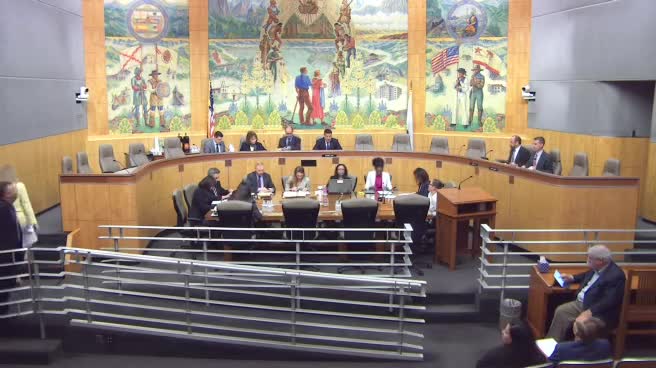 1MIN
Senate Standing Committee on Appropriations
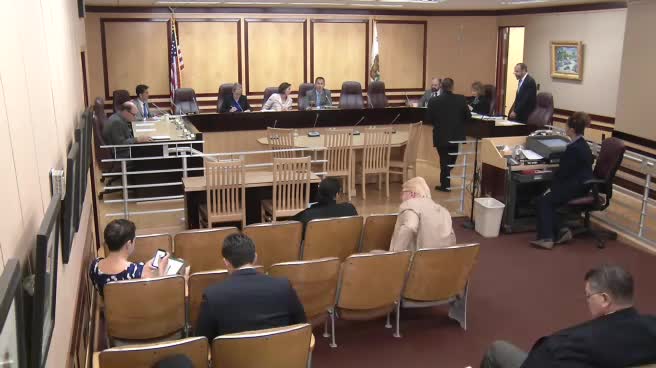 26MIN
Senate Standing Committee on Environmental Quality
 4MIN
Assembly Floor
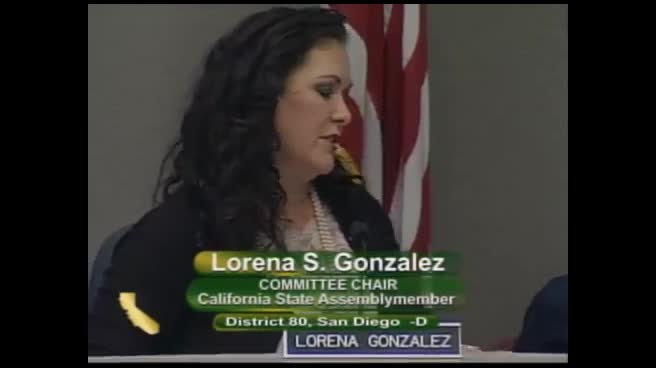 2MIN
Assembly Standing Committee on Appropriations
Bill Author

Bill Co-Author(s):