SB 371: Local public employee organizations.
- Session Year: 2017-2018
- House: Senate
- Latest Version Date: 2017-04-17
The Meyers-Milias-Brown Act requires the governing body of a local public agency to meet and confer in good faith regarding wages, hours, and other terms and conditions of employment with representatives of a recognized employee organization.
This bill would prohibit an individual who will be covered affected, directly or indirectly, by a memorandum of understanding between a local public agency and a recognized public employee organization from representing the public agency in negotiations with the recognized employee organization. The bill would define the phrases indirectly affected and represent the public agency for those purposes.
The Meyers-Milias-Brown Act requires the governing body of a local public agency to meet and confer in good faith regarding wages, hours, and other terms and conditions of employment with representatives of a recognized employee organization.
This bill would prohibit an individual who will be covered by a memorandum of understanding between a local public agency and a recognized public employee organization from representing the public agency in negotiations with the recognized employee organization.
(a)An individual who will be covered affected, directly or indirectly, by a memorandum of understanding between a public agency and a recognized public employee organization shall not represent the public agency in negotiations with the recognized employee organization.
(b)As used in this section:
(1)Indirectly affected means both of the following:
(A)An individual who is in a recognized employee organization other than that which will be covered by the memorandum of understanding and who may derive increased benefits or compensation from the existence of the memorandum of understanding.
(B)An unclassified employee who may derive increased benefits or compensation from the existence of the memorandum of understanding.
(2)Represent the public agency means to serve in any capacity on a negotiation team for the public agency in negotiations with a recognized employee organization. Represent the public agency does not include a subject matter expert or an individual who testifies in the negotiation proceedings.
An individual who will be covered by a memorandum of understanding between a public agency and a recognized public employee organization shall not represent the public agency in negotiations with the recognized employee organization.
|
Date
|
Status
|
|---|---|
| Feb 1, 2018 | Returned to Secretary of Senate pursuant to Joint Rule 56. |
| May 9, 2017 | May 8 set for first hearing. Failed passage in committee. (Ayes 2. Noes 3. Page 1006.) Reconsideration granted. |
| Apr 17, 2017 | From committee with author's amendments. Read second time and amended. Re-referred to Com. on P.E. & R. |
| Mar 17, 2017 | Set for hearing May 8. |
| Feb 23, 2017 | Referred to Com. on P.E. & R. |
| Feb 15, 2017 | From printer. May be acted upon on or after March 17. |
| Feb 14, 2017 | Introduced. Read first time. To Com. on RLS. for assignment. To print. |
|
Date
|
Description
|
Location
|
Votes
|
|
|---|---|---|---|---|
| May 8, 2017 | [First] hearing set for [05-09-2017]: Failed passage in Committee. Reconsideration granted | Senate Standing Committee on Public Employment and Retirement |
Passed |
|
| May 8, 2017 | Do pass | Senate Standing Committee on Public Employment and Retirement |
Failed |
This list shows positions taken on this bill by organizations on the date displayed, which is linked to the original source.
Positions by individuals are not included.
SENATE COMMITTEE ON
PUBLIC EMPLOYMENT AND RETIREMENT
Dr. Richard Pan, Chair
2017 - 2018 Regular
Bill No: SB 371 Hearing Date: 5/8/17
Author: | Moorlach | ||
Version: | 4/17/17 As amended | ||
Urgency: | No | Fiscal: | No |
Consultant: | Glenn Miles | ||
Subject: Local public employee organizations
SOURCE: Author
DIGEST: This bill prohibits an individual who is affected, directly or indirectly, by a memorandum of understanding between a public agency and a recognized public employee organization, from representing the public agency in negotiations with the recognized employee organization.
ANALYSIS:
Existing law:
- Establishes a statutory framework to govern labor relations between local public agencies and local public employees under the Meyers-Milias-Brown Act (MMBA).
- States that MMBA’s purpose is to promote full communication between public employers and their employees by providing a reasonable method of resolving disputes regarding wages, hours, and other terms and conditions of employment between public employers and public employee organizations.
- Promotes the improvement of personnel management and employer-employee relations within the various public agencies in the State of California by providing a uniform basis for recognizing the right of public employees to join organizations of their own choice and be represented by those organizations in their employment relationships with public agencies.
This bill:
- Prohibits an individual who is affected, directly or indirectly, by a memorandum of understanding between a public agency and a recognized public employee organization, from representing the public agency in negotiations with the recognized employee organization.
- Defines “Indirectly affected” to mean both of the following:
- An individual who is in a recognized employee organization other than that which will be covered by the memorandum of understanding and who may derive increased benefits or compensation from the existence of the memorandum of understanding.
- An unclassified employee who may derive increased benefits or compensation from the existence of the memorandum of understanding.
- Defines “Represent the public agency” to mean to serve in any capacity on a negotiation team for the public agency in negotiations with a recognized employee organization. “Represent the public agency” does not include a subject matter expert or an individual who testifies in the negotiation proceedings.
Background
According to the author,
Often a city or county employee is tasked with negotiating with public employee organizations on behalf of the city or county. When that employee is in a position to be affected by the resulting agreement, there is an obvious conflict of interest. The integrity of the negotiation suffers and the city or county is not adequately represented.
In labor negotiations between public agencies and their employees, it is important to ensure that both sides’ interests are being adequately represented. Any conflicts of interest will result in lopsided labor agreements that are not in the best interest of both public employees and the taxpayers of the city or county involved with the agreement.
A simple way to eliminate this conflict of interest is to prohibit individuals who will be personally affected by an employment agreement from representing the public agency in negotiations with employee organizations.
Banning this practice to ensure a representative of a public agency is not personally affected by results of labor negotiations would rid the process of a serious conflict of interest and would result in greater fiscal integrity. Employees and employers benefit from having two distinct sides at the negotiation table, and the resulting debate ultimately results in better public policy.
Related/Prior Legislation
None known.
FISCAL EFFECT: Appropriation: No Fiscal Com.: No Local: No
SUPPORT:
None received.
OPPOSITION:
American Federation of State, County and Municipal Employees, AFL-CIO
California Professional Firefighters
Service Employees International Union California
United Domestic Workers of America – AFSCME Local 3930/AFL-CIO
ARGUMENTS IN SUPPORT: According to the author, SB 371 “would help eliminate conflicts of interest in public labor negotiations.”
ARGUMENTS IN OPPOSITION: According to the California Professional Firefighters, this bill “suggests that California’s public agencies are not capable of independently deciding who should represent them at the bargaining table. By restricting a public agency’s ability to make an individualized determination as to who should represent them in bargaining, SB 371 significantly reduces the number of candidates best positioned to provide quality representation.”
Service Employees International Union California states that “SB 371 would require local agencies to outsource their collective bargaining to law firms or management groups since literally everyone in a public agency would be directly or indirectly impacted by an MOU…SB 371 is unnecessary and would be harmful to local agency labor relations, would drive up the costs of bargaining, would likely hurt the delivery of services, and would undermine local control.”
Discussed in Hearing
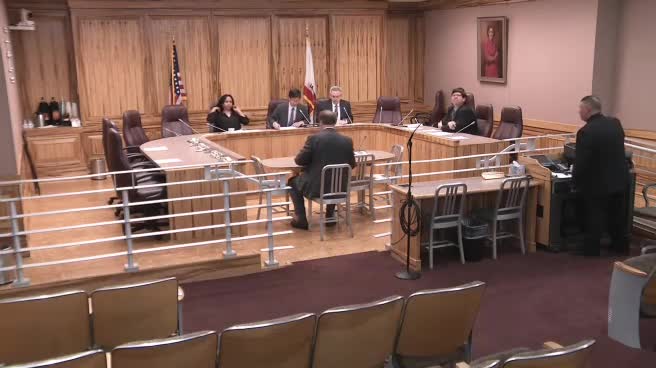 12MIN
Senate Standing Committee on Public Employment and Retirement
Bill Author

Bill Co-Author(s):