SB 377: Lead-based paint.
- Session Year: 2017-2018
- House: Senate
- Latest Version Date: 2017-08-21
Existing law requires certain persons engaged in lead construction work to have a certificate. Existing law requires the State Department of Public Health to implement and administer a residential lead-based paint hazard reduction program, as specified, including adopting regulations regarding accreditation of providers of health and safety training to employees who engage in or supervise lead-related construction work, as defined, and certification of employees who have successfully completed that training. Existing law requires the department to adopt regulations to establish and impose fees for those accreditations and certifications and for licensing entities engaged in lead-related occupations, as specified. Existing law requires those fees to be deposited into the Lead-Related Construction Fund, as specified, and to be available upon appropriation by the Legislature.
This bill would require a firm, as defined, that performs remediation, repair, or painting services for compensation in a residential or public building, and at least one person employed by the firm, to have a certificate issued by the department when lead-based paint will be disturbed. The bill would require the department to charge a fee for the issuance of the certificates, to be deposited into the Lead-Related Construction Fund. The bill would make these provisions effective upon the Legislature appropriating moneys for the implementation of the program and would require the department, within one year of that appropriation, to promulgate regulations to implement these provisions, as specified.This bill would require the department, within one year of the Legislature providing sufficient funding, to review and amend its regulations governing lead-related construction work, including training and certification for workers and accreditation for trainers in lead-safe work practices, to comply with existing state regulations and the United States Environmental Protection Agencys Lead Renovation, Repair, and Painting Rule, as specified. The bill would require the adoption of those regulations to establish fee provisions for those certifications and accreditations. The bill would require the fees to be deposited into the Lead-Related Construction Fund. The bill also would make these provisions effective one year after the Legislature appropriates sufficient moneys for the implementation of the program, as provided, and would require the department to adopt emergency regulations to implement these provisions, as specified.
Existing law requires certain persons engaged in lead construction work to have a certificate. A violation of that provision is a crime.
This bill would further require a firm, as defined, and at least one person onsite and employed by a firm, doing renovation, repair, or painting work that will disturb lead-based paint or presumed lead-based paint, as defined, to have a certificate under these provisions. The bill would also make a violation of these provisions punishable by imprisonment in the county jail, by a fine of not more than $37,500, or by both that imprisonment and fine. By creating a new crime, the bill would impose a state-mandated local program.
The California Constitution requires the state to reimburse local agencies and school districts for certain costs mandated by the state. Statutory provisions establish procedures for making that reimbursement.
This bill would provide that no reimbursement is required by this act for a specified reason.
Existing law requires certain persons engaged in lead construction work to have a certificate. Existing law requires the State Department of Public Health to implement and administer a residential lead-based paint hazard reduction program, as specified, including adopting regulations regarding accreditation of providers of health and safety training to employees who engage in or supervise lead-related construction work, as defined, and certification of employees who have successfully completed that training. Existing law requires the department to adopt regulations to establish and impose fees for those accreditations and certifications and for licensing entities engaged in lead-related occupations, as specified. Existing law requires those fees to be deposited into the Lead-Related Construction Fund, as specified, and to be available upon appropriation by the Legislature.
This bill would require a firm, as defined, that performs remediation, repair, or painting services for compensation in a residential or public building, and at least one person employed by the firm, to have a certificate issued by the department when lead-based paint will be disturbed. The bill would require the department to charge a fee for the issuance of the certificates, to be deposited into the Lead-Related Construction Fund. The bill would make these provisions effective upon the Legislature appropriating moneys for the implementation of the program and would require the department, within one year of that appropriation, to promulgate regulations to implement these provisions, as specified.
Existing law requires certain persons engaged in lead construction work to have a certificate. Existing law requires the State Department of Public Health to implement and administer a residential lead-based paint hazard reduction program, as specified, including adopting regulations regarding accreditation of providers of health and safety training to employees who engage in or supervise lead-related construction work, as defined, and certification of employees who have successfully completed that training. Existing law requires the department to adopt regulations to establish and impose fees for those accreditations and certifications and for licensing entities engaged in lead-related occupations, as specified. Existing law requires those fees to be deposited into the Lead-Related Construction Fund, as specified, and to be available upon appropriation by the Legislature.
This bill would require the department, by July 1, 2019, to update its regulations governing lead-related construction work, including training and certification for workers and accreditation for trainers in lead-safe work practices, to comply with existing state regulations and the United States Environmental Protection Agencys Lead Renovation, Repair, and Painting Rule, as specified. The bill would require the adoption of those regulations to include fee provisions for those certifications and accreditations to be deposited into the Lead-Related Construction Fund. The bill would also require the regulations adopted pursuant to these provisions to be adopted as emergency regulations, as specified.Existing law requires certain persons engaged in lead construction work to have a certificate under these provisions. A violation of that provision is a crime.This bill would further require a firm, as defined, and at least one person onsite and employed by a firm, doing renovation, repair, or painting work that will disturb lead-based paint or presumed lead-based paint, as defined, to have a certificate under these provisions. This bill would authorize the department to impose a civil penalty on violators of these provisions, as provided.This bill would require a firm, as defined, that performs remediation, repair, or painting services for compensation in a residential or public building, and at least one person employed by the firm, to have a certificate issued by the department when lead-based paint will be disturbed. The bill would require the department to charge a fee for the issuance of the certificates, to be deposited into the Lead-Related Construction Fund. The bill would make these provisions effective upon the Legislature appropriating moneys for the implementation of the program and would require the department, within one year of that appropriation, to promulgate regulations to implement these provisions, as specified.
Existing law requires the State Department of Public Health to implement and administer a residential lead-based paint hazard reduction program, as specified, including adopting regulations regarding accreditation of providers of health and safety training to employees who engage in or supervise lead-related construction work, as defined, and certification of employees who have successfully completed that training. Existing law requires the department to adopt regulations to establish and impose fees for those accreditations and certifications and for licensing entities engaged in lead-related occupations, as specified. Existing law requires those fees to be deposited into the Lead-Related Construction Fund, as specified, and to be available upon appropriation by the Legislature.
This bill would require the department, by July 1, 2019, to update its regulations governing lead-related construction work, including training and certification for workers and accreditation for trainers in lead-safe work practices, to comply with existing state regulations and the United States Environmental Protection Agencys Lead Renovation, Repair, and Painting Rule, as specified. The bill would require the adoption of those regulations to include fee provisions for those certifications and accreditations to be deposited into the Lead-Related Construction Fund. The bill would also require the regulations adopted pursuant to these provisions to be adopted as emergency regulations, as specified.
Existing law requires certain persons engaged in lead construction work to have a certificate under these provisions. A violation of that provision is a crime.
This bill would further require a firm, as defined, and at least one person onsite and employed by a firm, doing renovation, repair, or painting work that will disturb lead-based paint or presumed lead-based paint, as defined, to have a certificate under these provisions. This bill would authorize the department to impose a civil penalty on violators of these provisions, as provided.
(a)Within one year of the Legislature providing sufficient funding for the implementation of this section, the department shall promulgate regulations implementing this section to correspond and comply review and amend its regulations governing lead-related construction work, including training and certification for workers and accreditation for trainers in lead-safe work practices to comply with regulations adopted pursuant to Sections 105250 and 124160 and the United States Environmental Protection Agencys Lead Renovation, Repair and Painting Rule (40 C.F.R. 745). The
(b)The amended regulations adopted pursuant to subdivision (a) shall include, but not be limited to, requiring a copy of the worker and firm certification to be provided before the start of the job to the prime contractor or other employers on the site and to be posted on the job site beside the Cal-OSHA Division of Occupational Safety and Health Lead-Work Pre-Job Notification. Notification required by subdivision (p) of Section 1532.1 of Title 8 of the California Code of Regulations.
(c)Consistent with Section 105250, the department shall also adopt regulations establishing fees for the certifications or accreditations established pursuant to this section. The fees imposed under this section shall be established at levels not exceeding an amount sufficient to cover the costs of developing, administering, and enforcing the standards and regulations adopted under this section. The fees established pursuant to this section shall be deposited into the Lead-Related Construction Fund pursuant to Section 105250.
(2)(A)(d)(1)Notwithstanding the rulemaking provisions of the Administrative Procedure Act (Chapter 3.5 (commencing with Section 11340) of Part 1 of Division 3 of Title 2 of the Government Code), the department may implement and administer this section through all-county letters or similar instructions from the department until regulations are adopted. The department shall adopt emergency regulations implementing these provisions within six months one year of the Legislature providing funding for this purpose. purpose, with a one-year extension for the adoption of emergency regulations, if necessary. The department may readopt any emergency regulation authorized by this section that is the same as, or substantially equivalent to, an emergency regulation previously adopted under this section.
(B)(2)The initial adoption of emergency regulations pursuant to this section and one readoption of emergency regulations shall be deemed an emergency and necessary for the immediate preservation of the public peace, health, safety, or general welfare. Initial emergency regulations and the one readoption of emergency regulations authorized by this section shall be exempt from review by the Office of Administrative Law. The initial emergency regulations and the one readoption of emergency regulations authorized by this section shall be submitted to the Office of Administrative Law for filing with the Secretary of State, and each shall remain in effect for no more than 180 days, by which time final regulations may be adopted.
(c)The department shall charge a fee for the issuance of a certificate pursuant to this section. The fee shall be set by the department at an amount no greater than the amount required to cover the reasonable and necessary costs of administering this section. The fees shall be deposited into the Lead-Related Construction Fund established pursuant to Section 105250.(d)Persons performing routine maintenance and repairs in housing are not required to have a certificate if they are not performing any of the activities listed under subdivision (a).(e)For purposes of this section, the following definitions shall apply:(1)Firm has the same meaning as in Section 745.83 of Title 40 of the Code of Federal Regulations.(2)Lead-based paint has the same meaning as in Section 35033 of Title 17 of the California Code of Regulations.(f)The department shall assess a civil penalty, not to exceed one thousand dollars ($1,000), on a person or firm that does any of the following:(1)Performs services for which a certificate is required pursuant to subdivision (a) without a valid certificate.(2)Falsely represents that the firm or person has a certificate issued pursuant to this section.(3)Submits false information or documentation to the department in order to obtain or renew a certificate issued pursuant to this section.(g)This section shall become effective upon the Legislature appropriating money for the implementation of this section.(e)The section shall not take effect until one year after the Legislature appropriates sufficient money to implement the program, including funding for development of regulations, hiring staff to administer and perform other duties related to the program, and creating information technology systems to manage applications for the program.
SEC. 2.Section 105254 of the Health and Safety Code is amended to read:105254.(a) The following persons engaged in the following types of lead construction work shall have a certificate:
(1) Persons who receive pay for doing lead hazard evaluations, including, but not limited to, lead inspections, lead risk assessments, or lead clearance inspections, in residential or public buildings.
(2) Persons preparing or designing plans for the abatement of lead-based paint or lead hazards from residential or public buildings.
(3) Persons doing any work designed to reduce or eliminate lead hazards on a permanent basis (to last 20 years or more) from residential or public buildings.
(4) Persons inspecting for lead or doing lead abatement activities in a public elementary school, preschool, or day care center.
(5) Persons doing lead-related construction work in a residential or public building that will expose a person to airborne lead at or above the eight-hour permissible exposure limit of 50 micrograms per cubic meter.
(b)The following shall also have a certificate: a firm, as defined by Section 745.83 of Title 40 of the Code of Federal Regulations, and at least one person onsite and employed by a firm, doing renovation, repair, or painting work for compensation in a residential or public building that will disturb lead-based paint, as defined in Section 35033 of Title 17 of the California Code of Regulations, or presumed lead-based paint, as defined in Section 35043 of Title 17 of the California Code of Regulations, which regulations were adopted by the State Department of Public Health pursuant to Sections 105250 and 124160.
(b)(c)Persons performing routine maintenance and repairs in housing are not required to have a certificate if they are not performing any of the activities listed under subdivision (a). subdivisions (a) and (b).
(c)(d)The department may adopt regulations to modify certification requirements for persons engaged in lead construction work based on changes to state or federal law, or programmatic need.
(d)(e)The department or any local enforcement agency may, consistent with Section 17972, enter, inspect, and photograph any premises where abatement or a lead hazard evaluation abatement, a lead hazard evaluation, or renovation, repair, or painting is being conducted or has been ordered, enter the place of business of any person who conducts abatement or lead hazard evaluations, abatement, lead hazard evaluations, or renovation, repair, or painting, and inspect and copy any business record of any person who conducts abatement or lead hazard evaluations abatement, lead hazard evaluations, or renovations, repair, or painting to determine whether the person is complying with this section.
(e)(f)(1)A violation of this section subdivision (a) shall be punishable by imprisonment for not more than six months in the county jail, a fine of not more than one thousand dollars ($1,000), or by both that imprisonment and fine.
(2)A violation of subdivision (b) shall be punishable by imprisonment for not more than six months in the county jail, by a fine of not more than thirty-seven thousand five hundred dollars ($37,500), or by both that imprisonment and fine.
SEC. 3.No reimbursement is required by this act pursuant to Section 6 of Article XIIIB of the California Constitution because the only costs that may be incurred by a local agency or school district will be incurred because this act creates a new crime or infraction, eliminates a crime or infraction, or changes the penalty for a crime or infraction, within the meaning of Section 17556 of the Government Code, or changes the definition of a crime within the meaning of Section 6 of Article XIIIB of the California Constitution.
(a)A firm that performs renovation, repair, or painting services for compensation in a residential or public building, and at least one person employed by the firm, shall have a certificate issued by the department pursuant to this section when lead-based paint will be disturbed.
(b)(1)Within one year of the Legislature providing funding for the implementation of this section, the department shall promulgate regulations implementing this section to correspond and comply with regulations adopted pursuant to Sections 105250 and 124160 and the United States Environmental Protection Agencys Lead Renovation, Repair, Repair and Painting Rule (40 C.F.R. 745). The regulations shall include, but not be limited to, requiring a copy of the worker and firm certification to be provided before the start of the job to the prime contractor or other employers on the site and to be posted on the job site beside the Cal-OSHA Lead-Work Pre-Job Notification.
(2)(A)Notwithstanding the rulemaking provisions of the Administrative Procedure Act (Chapter 3.5 (commencing with Section 11340) of Part 1 of Division 3 of Title 2 of the Government Code), the department may implement and administer this section through all-county letters or similar instructions from the department until regulations are adopted. The department shall adopt emergency regulations implementing these provisions within six months of the Legislature providing funding for this purpose. The department may readopt any emergency regulation authorized by this section that is the same as, or substantially equivalent to, an emergency regulation previously adopted under this section.
(B)The initial adoption of emergency regulations pursuant to this section and one readoption of emergency regulations shall be deemed an emergency and necessary for the immediate preservation of the public peace, health, safety, or general welfare. Initial emergency regulations and the one readoption of emergency regulations authorized by this section shall be exempt from review by the Office of Administrative Law. The initial emergency regulations and the one readoption of emergency regulations authorized by this section shall be submitted to the Office of Administrative Law for filing with the Secretary of State, and each shall remain in effect for no more than 180 days, by which time final regulations may be adopted.
(c)The department shall charge a fee for the issuance of a certificate pursuant to this section. The fee shall be set by the department at an amount no greater than the amount required to cover the reasonable and necessary costs of administering this section. The fees shall be deposited into the Lead-Related Construction Fund established pursuant to Section 105250.
(d)Persons performing routine maintenance and repairs in housing are not required to have a certificate if they are not performing any of the activities listed under subdivision (a).
(d)(e)For purposes of this section, the following definitions shall apply:
(1)Firm has the same meaning as in Section 745.83 of Title 40 of the Code of Federal Regulations.
(2)Lead-based paint has the same meaning as in Section 35033 of Title 17 of the California Code of Regulations.
(e)(f)The department shall assess a civil penalty, not to exceed one thousand dollars ($1,000), on a person or firm that does any of the following:
(1)Performs services for which a certificate is required pursuant to subdivision (a) without a valid certificate.
(2)Falsely represents that the firm or person has a certificate issued pursuant to this section.
(3)Submits false information or documentation to the department in order to obtain or renew a certificate issued pursuant to this section.
(f)(g)This section shall become effective upon the Legislature appropriating money for the implementation of this section.
(a)A firm that performs renovation, repair, or painting services for compensation in a residential or public building, and at least one person employed by the firm, shall have a certificate issued by the department pursuant to this section when lead-based paint will be disturbed.
(b)(1)Within one year of the Legislature providing funding for the implementation of this section, the department shall promulgate regulations implementing this section to correspond and comply with regulations adopted pursuant to Sections 105250 and 124160 and the United States Environmental Protection Agencys Lead Renovation, Repair, and Painting Rule (40 C.F.R. 745). The regulations shall include, but not be limited to, requiring a copy of the worker and firm certification to be provided before the start of the job to the prime contractor or other employers on the site and to be posted on the job site beside the Cal-OSHA Lead-Work Pre-Job Notification.
(2)(A)Notwithstanding the rulemaking provisions of the Administrative Procedure Act (Chapter 3.5 (commencing with Section 11340) of Part 1 of Division 3 of Title 2 of the Government Code), the department may implement and administer this section through all-county letters or similar instructions from the department until regulations are adopted. The department shall adopt emergency regulations implementing these provisions within six months of the Legislature providing funding for this purpose. The department may readopt any emergency regulation authorized by this section that is the same as, or substantially equivalent to, an emergency regulation previously adopted under this section.
(B)The initial adoption of emergency regulations pursuant to this section and one readoption of emergency regulations shall be deemed an emergency and necessary for the immediate preservation of the public peace, health, safety, or general welfare. Initial emergency regulations and the one readoption of emergency regulations authorized by this section shall be exempt from review by the Office of Administrative Law. The initial emergency regulations and the one readoption of emergency regulations authorized by this section shall be submitted to the Office of Administrative Law for filing with the Secretary of State, and each shall remain in effect for no more than 180 days, by which time final regulations may be adopted.
(c)The department shall charge a fee for the issuance of a certificate pursuant to this section. The fee shall be set by the department at an amount no greater than the amount required to cover the reasonable and necessary costs of administering this section. The fees shall be deposited into the Lead-Related Construction Fund established pursuant to Section 105250.
(d)For purposes of this section, the following definitions shall apply:
(1)Firm has the same meaning as in Section 745.83 of Title 40 of the Code of Federal Regulations.
(2)Lead-based paint has the same meaning as in Section 35033 of Title 17 of the California Code of Regulations.
(e)The department shall assess a civil penalty, not to exceed one thousand dollars ($1,000), on a person or firm that does any of the following:
(1)Performs services for which a certificate is required pursuant to subdivision (a) without a valid certificate.
(2)Falsely represents that the firm or person has a certificate issued pursuant to this section.
(3)Submits false information or documentation to the department in order to obtain or renew a certificate issued pursuant to this section.
(f)This section shall become effective upon the Legislature appropriating money for the implementation of this section.
SECTION 1.Section 105250.5 is added to the Health and Safety Code, to read:105250.5.(a)By July 1, 2019, the department shall review and amend its regulations governing lead-related construction work, including training and certification for workers and accreditation for trainers in lead-safe work practices to comply with Chapter 8 (commencing with Section 35001) of Division 1 of Title 17 of the California Code of Regulations adopted by the department pursuant to Sections 105250 and 124160 and the United States Environmental Protection Agencys Lead Renovation, Repair, and Painting Rule (40 C.F.R. 745).(b)The amended regulations adopted pursuant to subdivision (a) shall include, but not be limited to, regulations requiring a copy of the worker and firm certification to be provided before the start of the job to the prime contractor or other employers on the site and to be posted on the jobsite beside the Cal-OSHA Lead-Work Pre-Job Notification required by Section 1532.1(p) of Title 8 of the California Code of Regulations.(c)Consistent with Section 105250, the department shall also adopt regulations establishing fees for the certifications or accreditations established pursuant to this section. The fees imposed under this section shall be established at levels not exceeding an amount sufficient to cover the costs of developing, administering, and enforcing the standards and regulations adopted under this section. The fees established pursuant to this section shall be deposited into the Lead-Related Construction Fund pursuant to Section 105250.(d)(1) Notwithstanding the rulemaking provisions of the Administrative Procedure Act (Chapter 3.5 (commencing with Section 11340) of Part 1 of Division 3 of Title 2 of the Government Code), the department may implement and administer this section through all-county letters or similar instructions from the department until regulations are adopted. The department shall adopt emergency regulations implementing these provisions no later than July 1, 2019. The department may readopt any emergency regulation authorized by this section that is the same as or substantially equivalent to an emergency regulation previously adopted under this section.(2)The initial adoption of emergency regulations pursuant to this section and one readoption of emergency regulations shall be deemed an emergency and necessary for the immediate preservation of the public peace, health, safety, or general welfare. Initial emergency regulations and the one readoption of emergency regulations authorized by this section shall be exempt from review by the Office of Administrative Law. The initial emergency regulations and the one readoption of emergency regulations authorized by this section shall be submitted to the Office of Administrative Law for filing with the Secretary of State, and each shall remain in effect for no more than 180 days, by which time final regulations may be adopted.SEC. 2.Section 105254 of the Health and Safety Code is amended to read:105254.(a) The following persons engaged in the following types of lead construction work shall have a certificate:(1) Persons who receive pay for doing lead hazard evaluations, including, but not limited to, lead inspections, lead risk assessments, or lead clearance inspections, in residential or public buildings.(2) Persons preparing or designing plans for the abatement of lead-based paint or lead hazards from residential or public buildings.(3) Persons doing any work designed to reduce or eliminate lead hazards on a permanent basis (to last 20 years or more) from residential or public buildings.(4) Persons inspecting for lead or doing lead abatement activities in a public elementary school, preschool, or day care center.(5) Persons doing lead-related construction work in a residential or public building that will expose a person to airborne lead at or above the eight-hour permissible exposure limit of 50 micrograms per cubic meter.(b)The following shall also have a certificate: a firm, as defined by Section 745.83 of Title 40, Code of Federal Regulations, and at least one person onsite and employed by a firm, doing renovation, repair, or painting work for compensation in a residential or public building that will disturb lead-based paint, as defined in Section 35033 of Title 17 of the California Code of Regulations, or presumed lead-based paint as defined in Section 35043 of Title 17 of the California Code of Regulations, which regulations were adopted by the State Department of Public Health pursuant to Sections 105250 and 124160.(c) Persons performing routine maintenance and repairs in housing are not required to have a certificate if they are not performing any of the activities listed under subdivisions (a) and (b).(d) The department may adopt regulations to modify certification requirements for persons engaged in lead construction work based on changes to state or federal law, or programmatic need.(e) The department or any local enforcement agency may, consistent with Section 17972, enter, inspect, and photograph any premises where abatement or a lead hazard evaluation is being conducted or has been ordered, enter the place of business of any person who conducts abatement or lead hazard evaluations, and inspect and copy any business record of any person who conducts abatement or lead hazard evaluations to determine whether the person is complying with this section.(f) (1)A violation of subdivision (a) shall be punishable by imprisonment for not more than six months in the county jail, a fine of not more than one thousand dollars ($1,000), or by both that imprisonment and fine.(2)The department may impose a civil penalty not to exceed ____ dollars ($____), per each violation of subdivision (b).(a)By July 1, 2019, the department shall review and amend its regulations governing lead-related construction work, including training and certification for workers and accreditation for trainers in lead-safe work practices to comply with Chapter 8 (commencing with Section 35001) of Division 1 of Title 17 of the California Code of Regulations adopted by the department pursuant to Sections 105250 and 124160 and the United States Environmental Protection Agencys Lead Renovation, Repair, and Painting Rule (40 C.F.R. 745).
(b)The amended regulations adopted pursuant to subdivision (a) shall include, but not be limited to, regulations requiring a copy of the worker and firm certification to be provided before the start of the job to the prime contractor or other employers on the site and to be posted on the jobsite beside the Cal-OSHA Lead-Work Pre-Job Notification required by Section 1532.1(p) of Title 8 of the California Code of Regulations.
(c)Consistent with Section 105250, the department shall also adopt regulations establishing fees for the certifications or accreditations established pursuant to this section. The fees imposed under this section shall be established at levels not exceeding an amount sufficient to cover the costs of developing, administering, and enforcing the standards and regulations adopted under this section. The fees established pursuant to this section shall be deposited into the Lead-Related Construction Fund pursuant to Section 105250.
(d)(1) Notwithstanding the rulemaking provisions of the Administrative Procedure Act (Chapter 3.5 (commencing with Section 11340) of Part 1 of Division 3 of Title 2 of the Government Code), the department may implement and administer this section through all-county letters or similar instructions from the department until regulations are adopted. The department shall adopt emergency regulations implementing these provisions no later than July 1, 2019. The department may readopt any emergency regulation authorized by this section that is the same as or substantially equivalent to an emergency regulation previously adopted under this section.
(2)The initial adoption of emergency regulations pursuant to this section and one readoption of emergency regulations shall be deemed an emergency and necessary for the immediate preservation of the public peace, health, safety, or general welfare. Initial emergency regulations and the one readoption of emergency regulations authorized by this section shall be exempt from review by the Office of Administrative Law. The initial emergency regulations and the one readoption of emergency regulations authorized by this section shall be submitted to the Office of Administrative Law for filing with the Secretary of State, and each shall remain in effect for no more than 180 days, by which time final regulations may be adopted.
SEC. 2.Section 105254 of the Health and Safety Code is amended to read:105254.(a) The following persons engaged in the following types of lead construction work shall have a certificate:
(1) Persons who receive pay for doing lead hazard evaluations, including, but not limited to, lead inspections, lead risk assessments, or lead clearance inspections, in residential or public buildings.
(2) Persons preparing or designing plans for the abatement of lead-based paint or lead hazards from residential or public buildings.
(3) Persons doing any work designed to reduce or eliminate lead hazards on a permanent basis (to last 20 years or more) from residential or public buildings.
(4) Persons inspecting for lead or doing lead abatement activities in a public elementary school, preschool, or day care center.
(5) Persons doing lead-related construction work in a residential or public building that will expose a person to airborne lead at or above the eight-hour permissible exposure limit of 50 micrograms per cubic meter.
(b)The following shall also have a certificate: a firm, as defined by Section 745.83 of Title 40, Code of Federal Regulations, and at least one person onsite and employed by a firm, doing renovation, repair, or painting work for compensation in a residential or public building that will disturb lead-based paint, as defined in Section 35033 of Title 17 of the California Code of Regulations, or presumed lead-based paint as defined in Section 35043 of Title 17 of the California Code of Regulations, which regulations were adopted by the State Department of Public Health pursuant to Sections 105250 and 124160.
(b)(c) Persons performing routine maintenance and repairs in housing are not required to have a certificate if they are not performing any of the activities listed under subdivision (a). subdivisions (a) and (b).
(c)(d) The department may adopt regulations to modify certification requirements for persons engaged in lead construction work based on changes to state or federal law, or programmatic need.
(d)(e) The department or any local enforcement agency may, consistent with Section 17972, enter, inspect, and photograph any premises where abatement or a lead hazard evaluation is being conducted or has been ordered, enter the place of business of any person who conducts abatement or lead hazard evaluations, and inspect and copy any business record of any person who conducts abatement or lead hazard evaluations to determine whether the person is complying with this section.
(e)(f) (1)A violation of this section subdivision (a) shall be punishable by imprisonment for not more than six months in the county jail, a fine of not more than one thousand dollars ($1,000), or by both that imprisonment and fine.
(2)The department may impose a civil penalty not to exceed ____ dollars ($____), per each violation of subdivision (b).
|
Date
|
Status
|
|---|---|
| Sep 5, 2017 | Ordered to inactive file on request of Assembly Member Calderon. |
| Sep 5, 2017 | Read second time. Ordered to third reading. |
| Sep 1, 2017 | From committee: Do pass. (Ayes 11. Noes 5.) (September 1). |
| Sep 1, 2017 | Joint Rule 62(a) suspended. |
| Aug 30, 2017 | August 30 set for first hearing. Placed on APPR. suspense file. |
| Aug 21, 2017 | From committee with author's amendments. Read second time and amended. Re-referred to Com. on APPR. |
| Jul 12, 2017 | From committee: Do pass and re-refer to Com. on APPR. (Ayes 7. Noes 0.) (July 11). Re-referred to Com. on APPR. |
| Jun 26, 2017 | From committee with author's amendments. Read second time and amended. Re-referred to Com. on E.S. & T.M. |
| Jun 12, 2017 | Referred to Com. on E.S. & T.M. |
| Jun 1, 2017 | In Assembly. Read first time. Held at Desk. |
| May 31, 2017 | Read third time. Passed. (Ayes 27. Noes 12. Page 1323.) Ordered to the Assembly. |
| May 26, 2017 | Read second time and amended. Ordered to third reading. |
| May 25, 2017 | From committee: Do pass as amended. (Ayes 5. Noes 2. Page 1183.) (May 25). |
| May 19, 2017 | Set for hearing May 25. |
| Apr 17, 2017 | April 17 hearing: Placed on APPR. suspense file. |
| Apr 7, 2017 | Set for hearing April 17. |
| Apr 5, 2017 | From committee: Do pass and re-refer to Com. on APPR. (Ayes 5. Noes 1. Page 622.) (April 5). Re-referred to Com. on APPR. |
| Mar 15, 2017 | Set for hearing April 5. |
| Feb 23, 2017 | Referred to Com. on EQ. |
| Feb 15, 2017 | From printer. May be acted upon on or after March 17. |
| Feb 14, 2017 | Introduced. Read first time. To Com. on RLS. for assignment. To print. |
|
Date
|
Description
|
Location
|
Votes
|
|
|---|---|---|---|---|
| Sep 1, 2017 | Do pass. | Assembly Standing Committee on Appropriations |
Passed |
|
| Jul 11, 2017 | Do pass and be re-referred to the Committee on [Appropriations] | Assembly Standing Committee on Environmental Safety and Toxic Materials |
Passed |
|
| May 31, 2017 | Senate 3rd Reading SB377 Monning | Senate Floor |
Passed |
|
| May 25, 2017 | Do pass as amended | Senate Standing Committee on Appropriations |
Passed |
|
| Apr 17, 2017 | Placed on suspense file | Senate Standing Committee on Appropriations |
Passed |
|
| Apr 5, 2017 | Do pass, but first be re-referred to the Committee on [Appropriations] | Senate Standing Committee on Environmental Quality |
Passed |
This list shows positions taken on this bill by organizations on the date displayed, which is linked to the original source.
Positions by individuals are not included.
SENATE THIRD READING
STR Bill Id:SB 377
Author:(Monning)
As Amended Ver:August 21, 2017
Majority vote
SENATE VOTE: 27-12
Committee | Votes | Ayes | Noes |
Environmental Safety | 7-0 | Quirk, Dahle, Arambula, Bloom, Chen, Cristina Garcia, Holden | |
Appropriations | 11-5 | Gonzalez Fletcher, Bloom, Bocanegra, Bonta, Calderon, Chau, Eggman, Friedman, Eduardo Garcia, Jones-Sawyer, Reyes | Bigelow, Brough, Fong, Gallagher, Obernolte |
SUMMARY: Requires the Department of Public Health (CDPH) to promulgate regulations governing lead-related construction work to conform to the federal Environmental Protection Agency's (US EPA) Lead Renovation, Repair, and Painting Rule (RRP). Specifically, this bill:
- Requires CDPH, within one year of the Legislature providing funding for implementation, to review and amend its regulations governing lead-related construction work, including training and certification for workers and accreditation for trainers in lead-safe work practices, that correspond and comply with regulations adopted pursuant to this bill and with the US EPA's RRP.
- Requires the regulations to include, but not be limited to, requiring a copy of the worker and firm certification to be provided before the start of the job to the prime contractor or other employers on the site and to be posted on the job site beside the Division of Occupational Safety and Health (Cal-OSHA) Lead-Work Pre-Job Notification.
- Requires CDPH to adopt regulations establishing fees for the lead-related construction work certifications or accreditations. Requires the fees to be established at levels not exceeding an amount sufficient to cover the costs of developing, administering, and enforcing the standards and regulations adopted by CDPH. Requires the fees to be deposited into the Lead-Related Construction Fund.
- Authorizes CDPH to implement and administer this bill through all-county letters or similar instructions from CDPH until regulations are adopted. Requires CDPH to adopt emergency regulations implementing these provisions within one year of the Legislature providing funding for implementation, with a one-year extension for the adoption of emergency regulations, if necessary. Authorizes CDPH to readopt any emergency regulation that is the same as, or substantially equivalent to, an emergency regulation previously adopted under this bill. Establishes protocol for filing the emergency regulations.
- Prohibits the aforementioned regulatory authorities from taking effect until one year after the Legislature appropriates sufficient money to implement the lead-related construction work program, including funding for development of regulations, hiring staff to administer and perform other duties related to the program, and creating information technology systems to manage applications for the program.
- Requires a firm, as defined in federal law, and at least one person onsite and employed by a firm doing renovation, repair, or painting work for compensation in a residential or public building to have a certificate for training in lead-safe work practices.
- Establishes a violation of doing renovation, repair, or painting work on or lead-based paint without certification from CDPH to be punishable by imprisonment for not more than six months in the county jail, by a fine of not more than $37,500, or by both imprisonment and fine.
FISCAL EFFECT: According to the Assembly Appropriations Committee, enactment of this bill would result in one-time, first year CDPH costs of approximately $500,000 for CDPH to adopt the RRP in state regulations, standardize training courses, and revise certification procedures (existing lead fee revenue or other fund appropriated by the Legislature for start-up); ongoing CDPH costs of approximately $1.1 million per year (fee revenue) to administer and enforce the program; and, potential penalty revenue resulting from violations of certification requirements.
COMMENTS:
Lead-Based Paint Renovation, Repair and Painting (RRP) Rule: Common renovation activities like sanding, cutting, and demolition can create hazardous lead dust and chips by disturbing lead-based paint, which can be harmful to adults and children. On April 22, 2008, the US EPA issued the RRP requiring the use of lead-safe practices and other actions aimed at preventing lead poisoning. Under the RRP, beginning in April 2010, contractors performing renovation, repair, and painting projects that disturb lead-based paint in homes, child care facilities, and schools built before 1978 must be certified and must follow specific work practices to prevent lead contamination. The requirements apply to renovation, repair, or painting activities.
A concern with the RRP is that many of the specific training requirements either undermine California's requirements, or create confusion with California's requirements. While California's lead laws and federal RRP complement each other in many ways, subtle differences and inconsistencies between the two make the regulatory framework on lead in buildings confusing. To address those conflicts, this bill would eliminate the current regulatory confusion regarding certification for lead paint removal by conforming federal and state laws and providing funding for increased enforcement of all laws regarding lead paint.
California's existing regulation on lead-based paint: Existing law already authorizes CDPH to have a program that certifies employees that engage in or supervise lead-related construction work; therefore, this proposal fits under CDPH’s existing regulatory umbrella for lead-related regulation. According to CDPH, upon enactment of this bill, CDPH would write and implement new regulations within Title 17, Division 1, Chapter 8, Accreditation, Certification and Work Practices for Lead-Based Paint and Lead Hazards in order to comply with the US EPA RRP program.
Analysis Prepared by: Paige Brokaw / E.S. & T.M. / (916) 319-3965 FN: 0001636
Date of Hearing: August 30, 2017
ASSEMBLY COMMITTEE ON APPROPRIATIONS
Lorena Gonzalez Fletcher, Chair
SBPCA Bill Id:SB 377
Author:(Monning) – As Amended Ver:August 21, 2017
Policy Committee: | Environmental Safety and Toxic Materials | Vote: | 7 - 0 |
|
| ||
|
|
Urgency: No State Mandated Local Program: Yes Reimbursable: No
SUMMARY:
This bill requires the California Department of Public Health (CDPH) to review and amend its regulations governing lead-related construction work within one year of the Legislature providing sufficient funding. Specifically, this bill:
- Requires CDPH to review and amend its regulations governing lead-related construction work, including training and certification for workers and accreditations for trainers in lead-safe work practices to comply with specified state and federal rules and regulations, including the US EPA’s Lead Renovation, Repair, and Painting (RRP) Rule, as specified.
- Requires CDPH to adopt regulations establishing fees for the certifications or accreditations required by this bill at a level not to exceed the costs of administering the program. Requires the fees to be deposited in the existing Lead-Related Construction Fund.
- Requires the regulations adopted pursuant to these provisions to be adopted as emergency regulations, and authorizes the CDPH to implement and administer the bill through all-county letters or similar instructions until the regulations are adopted.
- Provides the requirements for CDPH to review and amend lead-related construction work regulations are not effective until one year after the Legislature provides sufficient funding for the implementation of the program.
- Requires a firm, as defined, and at least one person onsite and employed by a firm, doing renovation, repair, or painting work that will disturb lead-based paint or presumed lead-based paint, to have a certificate under these provisions.
- Provides a violation of the certification requirements is punishable by imprisonment in county jail and/or a fine of up to $37,000.
FISCAL EFFECT:
- One-time first year CDPH costs of approximately $500,000 for CDPH to adopt the RRP Rule in state regulations, standardize training courses and revise certification procedures (existing lead fee revenue or other fund appropriated by the Legislature for start-up).
- Ongoing CDPH costs of approximately $1.1 million per year (fee revenue) to administer and enforce the program.
- Potential penalty revenue resulting from violations of certification requirements.
COMMENTS:
- Background and Purpose. The US EPA’s Lead RRP Rule requires persons performing renovation, repair, and painting projects for compensation that disturb lead-based paint in homes, child care facilities and pre-schools built before 1978 to be certified by the United States Environmental Protection Agency (US EPA), or a US EPA-authorized state, use certified renovators who are trained by EPA-approved training providers and follow lead safe work practices.
Existing California law requires CDPH to implement and administer a residential lead-based paint hazard reduction program to establish accreditation requirements for individuals providing health and safety training to employees who engage in or supervise lead-related construction work and certification for employees who have successfully completed that training.
Under current law, CDPH can impose fees for those accreditations and certifications and for licensing entities engaged in lead-related occupations sufficient to cover cost of administering and enforcing the standards and regulations. While California's lead laws and federal RRP complement each other in many ways, subtle differences and inconsistencies between the two make the regulatory framework on lead in buildings confusing.
To address those conflicts, SB 377 eliminates the current regulatory confusion regarding certification for lead paint removal by conforming federal and state laws and providing funding for increased enforcement of all laws regarding lead paint.
- Lead. Lead has been listed under California's Proposition 65 since 1987 as a substance that can cause reproductive damage and birth defects and has been listed as a chemical known to cause cancer since 1992. There is no level of lead that has been proven safe, either for children or for adults.
Common renovation activities like sanding, cutting, and demolition can create hazardous lead dust and chips by disturbing lead-based paint, which can be harmful to adults and children.
Analysis Prepared by: Jennifer Galehouse / APPR. / (916) 319-2081
Date of Hearing: July 11, 2017
ASSEMBLY COMMITTEE ON ENVIRONMENTAL SAFETY AND TOXIC MATERIALS
Bill Quirk, Chair
SBPCA Bill Id:SB 377
Author:(Monning) – As Amended Ver:June 26, 2017
SENATE VOTE: 24-10
SUBJECT: Lead-based paint
SUMMARY: Requires the Department of Public Health (CDPH) to promulgate regulations governing lead-related construction work to conform to the federal Environmental Protection Agency's (US EPA) Lead Renovation, Repair, and Painting Rule (RRP). Specifically, this bill:
- Requires a firm, which performs renovation, repair, or painting services for compensation in a residential or public building, to have a certificate issued by CDPH when lead-based paint will be disturbed.
- Requires CDPH, within one year of the Legislature providing funding for implementation, to promulgate regulations to correspond and comply with regulations adopted pursuant to this bill and with the US EPA's RRP.
- Requires the regulations to include, but not be limited to, requiring a copy of the worker and firm certification to be provided before the start of the job to the prime contractor or other employers on the site and to be posted on the job site beside the Division of Occupational Safety and Health (Cal-OSHA) Lead-Work Pre-Job Notification.
- Authorizes CDPH to implement and administer this bill through all-county letters or similar instructions from CDPH until regulations are adopted.
- Requires CDPH to adopt emergency regulations implementing the provisions of the bill within six months of the Legislature providing funding for the purpose of this bill. Authorizes CDPH to re-adopt any emergency regulation pursuant to this bill that is the same as, or substantially equivalent to, an emergency regulation previously adopted pursuant to this bill.
- Requires the initial adoption of emergency regulations and one re-adoption of emergency regulations to be considered an emergency and necessary for the immediate preservation of the public peace, health, safety, or general welfare.
- Requires the initial adoption of emergency regulations and one re-adoption of emergency regulations to be deemed an emergency and necessary for the immediate preservation of the public peace, health, safety, or general welfare and exempts those regulations from the purview of the Office of Administrative Law, but requires those regulations to be submitted to the Office of Administrative Law for filing with the Secretary of State, and requires that each shall remain in effect for no more than 180 days, by which time final regulations may be adopted.
- Requires CDPH to charge a fee for the issuance of a certificate. Requires the fee to be set by CDPH at an amount no greater than the amount required to cover the reasonable and necessary costs of administering the provisions of the bill. Requires the fee revenues to be deposited into the Lead-Related Construction Fund.
- States that persons performing routine maintenance and repairs in housing are not required to have a certificate if they are not performing any renovation, repair, or painting services for compensation in a residential or public building.
- Requires CDPH to assess a civil penalty, not to exceed one thousand dollars ($1,000), on a person or firm that does any of the following:
- Performs services for which a certificate is required without a valid certificate;
- Falsely represents that the firm or person has a certificate issued; and,
- Submits false information or documentation to CDPH in order to obtain or renew a certificate issued.
- Effectuates this bill when the Legislature appropriates money for implementation.
EXISTING LAW:
- Establishes the federal Lead-Based Paint Poisoning Prevention Act to create a prohibition against the future use of lead-based paint. (42 United States Code § 4851)
- Establishes the federal Residential Lead-Based Paint Hazard Reduction Act of 1992 (also known as Title X) to require anyone selling or leasing single- and multi-family housing units built before 1978 to disclose information about lead-based paint hazards to prospective buyers or tenants. (Public Law 102-550)
- Establishes the US EPA's Lead-Based Paint RRP to require workers to be certified and trained in the use of lead-safe work practices, and requires renovation, repair, and painting firms to be US EPA-certified. (Title 40 Code of Federal Regulations (CFR) § 745)
- Prohibits the use of lead for residential use in the United States. (Title 16 CFR § 1303)
- Defines "firm" as a company, partnership, corporation, sole proprietorship or individual doing business, association, or other business entity; a Federal, State, Tribal, or local government agency; or, a nonprofit organization. (Title 40 CFR § 745.83)
- Establishes the Residential Lead-Based Paint Hazard Reduction Program to require any person offering lead-related construction courses to meet CDPH certificate requirements. (Health & Safety Code § 105250)
FISCAL EFFECT: Unknown.
COMMENTS:
Need for the bill: According to the author, "SB 377 follows the lead of fourteen other states that have aligned their state’s lead laws and the federal RRP regulations. The bill would require the California Department of Public Health to develop training and certification for lead safe work practices that is specific to California. This California RRP certification would take the place of the U.S. EPA’s RRP certification for work done in California. This bill would also improve enforcement by giving state and local enforcement agencies the ability to ensure those doing renovation and repair work on pre-1978 homes are certified on lead safe work practices.
The California Department of Public Health already administers other lead certifications (Abatement workers and Inspectors, for example). Adding certification for lead safe work practices will fit well into this existing structure."
The problem with lead: Lead has been listed under California's Proposition 65 since 1987 as a substance that can cause reproductive damage and birth defects and has been listed as a chemical known to cause cancer since 1992. There is no level of lead that has been proven safe, either for children or for adults.
Lead-based paint history: When lead-based paint was marketed before 1978, it was a legal product in great demand because it was washable and durable. It was repeatedly endorsed by the federal, state, and local governments, and specified for use on government buildings until the mid-1970s. For example, the 1950 California Department of Education vocational book on painting endorsed the use of white lead paint.
As uses of lead pigments in paints evolved, so did the primary pathways through which people were thought to be exposed to lead and the level of exposure thought to be safe. It was not until 1974 that household dust emerged as a possible pathway for lead exposure.
In 1978, the federal government banned consumer uses of lead paint. Although the U.S. Consumer Product Safety Commission banned the use of lead-based paint in 1978, buildings built prior to the ban still likely have lead paint. Due to the significant health issues caused by lead exposure, California requires anyone who performs lead-based paint risk assessment or removal to be certified or accredited by CDPH.
State action on lead paint: In 1991, the California Legislature enacted AB 2038, the Childhood Lead Poisoning Prevention Act of 1991, which established a program within the State Department of Health Services (DHS, which is now CDPH) to meet the requirements of the federal Residential Lead-Based Paint Hazard Reduction Act of 1992 and Title X of the Housing and Community Development Act. It required DHS to adopt regulations regarding accreditation of training providers that engage in or supervise lead-related construction work, and required the establishment of fees for the accreditation of training providers, the certification of individuals, and the licensing of entities engaged in lead-related occupations. The fees are deposited into the Lead-Related Construction Fund.
In 2002, the Legislature enacted SB 460 (Ortiz, Chapter 931, Statutes of 2002) to establish the requirement that lead safe work practices be used in pre-1978 buildings. SB 460 added lead hazards to the conditions that make premises uninhabitable and substandard. It also prohibited an individual from disturbing more than a "de minimis" amount of lead-based paint without "containment" (a system, process, or barrier used to contain lead hazards inside a work area).
SB 460 also required any person being paid for lead construction, including inspection, risk assessment, or designing plans for the abatement of lead hazards, and any person performing lead inspections or abatement in a public elementary, preschool, or day care center, to have a certificate from DHS.
Lead-Based Paint Renovation, Repair and Painting (RRP) Rule: Common renovation activities like sanding, cutting, and demolition can create hazardous lead dust and chips by disturbing lead-based paint, which can be harmful to adults and children.
On April 22, 2008, the US EPA issued the RRP requiring the use of lead-safe practices and other actions aimed at preventing lead poisoning. Under the RRP, beginning in April 2010, contractors performing renovation, repair, and painting projects that disturb lead-based paint in homes, child care facilities, and schools built before 1978 must be certified and must follow specific work practices to prevent lead contamination. This includes in-house maintenance staff and many types of outside contractors.
Until that time, the U.S. Department of Housing Urban Development and US EPA recommended that anyone performing renovation, repair, and painting projects that disturb lead-based paint in pre-1978 homes, child care facilities, and schools follow lead-safe work practices.
Under the RRP, child-occupied facilities are defined as residential, public, or commercial buildings where children younger than age six are present on a regular basis. The requirements apply to renovation, repair, or painting activities. The RRP does not apply to minor maintenance or repair activities where less than six square feet of lead-based paint is disturbed in a room or where less than 20 square feet of lead-based paint is disturbed on the exterior. Window replacement is not minor maintenance or repair.
A concern with the RRP is that many of the specific training requirements either undermine California's requirements, or create confusion with California's requirements.
While California's lead laws and federal RRP complement each other in many ways, subtle differences and inconsistencies between the two make the regulatory framework on lead in buildings confusing.
According to the cosponsors of the bill, Healthy Homes Collaborative and California Association of Code Enforcement Officers, in some instances, practices that are allowed under the RRP are not allowed in California. Renovators and contractors are required to learn and adhere to one set of rules for the RRP and another for California, and have to figure out the inconsistencies on their own.
To address those conflicts, SB 377 would eliminate the current regulatory confusion regarding certification for lead paint removal by conforming federal and state laws and providing funding for increased enforcement of all laws regarding lead paint.
California's existing regulation on lead-based paint: CDPH has regulations (California Code of Regulations (CCR), Title 17, Sections 35001, et seq) that spell out requirements for lead hazard evaluation and abatement activities, accreditation of training providers, and certification of individuals engaged in lead-based paint activities.
In addition, Cal-OSHA has regulations (CCR, Title 8, Section 1532.1, et seq) which provide worker protection requirements for employees conducting lead-related construction activities. Cal-OSHA's regulations limit occupational exposure to lead and require employers to use engineering controls, safe work practices, and other control measures. These regulations apply to all employers regardless of what kind of work they perform. Cal-OSHA is currently developing revised lead regulations that they expect will be adopted several years from now, after the commencement of rulemaking. As it relates to coordination with Cal-OSHA's worker safety regulations, Cal-OSHA does not see any conflict with what SB 377 is proposing.
Existing law already authorizes CDPH to have a program that certifies employees that engage in or supervise lead-related construction work, therefore, this proposal fits under CDPH’s existing regulatory umbrella for lead-related regulation. According to CDPH, upon enactment of SB 377, CDPH would write and implement new regulations within Title 17, Division 1, Chapter 8, Accreditation, Certification and Work Practices for Lead-Based Paint and Lead Hazards in order to comply with the US EPA RRP program.
Need for emergency regulations: A state agency may adopt emergency regulations in response to a situation that calls for immediate action to avoid serious harm to the public peace, health, safety, or general welfare, or if a statute deems a situation to be an emergency under the Administrative Procedures Act (APA). Because emergency regulations are intended to avoid serious harm and require immediate action, the emergency rulemaking process is substantially abbreviated compared to the regular rulemaking process.
SB 377 requires CDPH to adopt regulations within one year of the legislature providing funding for implementation of the provisions of the bill. It also requires CDPH to adopt emergency regulations within 6-months of the legislature funding implementation.
It is anticipated that it will take CDPH around 3 years to promulgate the regulations through the standard regulatory process under the APA. Emergency regulations are done through a streamlined process, and remain in effect for a limited time. The intent, according to the author, is to initiate emergency regulations within one year giving CDPH time to develop final regulations, and the emergency regulations would phase-out once regular regulations are adopted.
SB 377 includes emergency regulatory authority because old houses are the biggest risk for lead exposure according to the US EPA, and roughly 6.5 million homes in California are expected to have lead hazards. Given the highly toxic nature of lead and the ubiquity at which it is found in older building stock, having clear, understandable rules in place for lead-paint renovation or abatement is critical. Any delay could result in unnecessary lead exposure because of confusion over state compliance.
In addition, the Trump Administration is proposing to cut the Lead Risk Reduction Program (Program), which trains and certifies renovators in federally approved methods of containing and cleaning up work areas in homes constructed before 1978. The Program applies to a broad range of renovations, including carpet removal and window replacement, in homes inhabited by pregnant women and young children. The Administration's budget also proposes deep cuts – $14 million – that would defund grants to state and tribal programs that also address lead-based paint risks.
The more expeditiously California can update its regulations, the better we will be able to shield Californians from rollbacks at the US EPA under the current presidential administration.
Arguments in support: According to East Los Angeles County Community Corporation, while adding much needed training on Lead Safe Work Practices (LSWP) is a step forward, the US EPA's RRP has elements that are not as protective as California's law. The group contends that because of a lack of enforcement, RRP has not been as effective as it could, leaving children, workers, and families at risk with little immediate recourse. For example, of the more than 280,000 licensed General Contractors in California, fewer than 35,000 individuals have become RRP-certified. SB 377 would follow the lead of fourteen other states and create a California-specific RRP program on LSWP, grant enforcement authority to local agencies already enforcing the state's lead laws, and help prevent lead poisoning in the state.
Arguments in opposition: The Contraction Employers' Association (CEA) argues in opposition that, "the bill imposes significant responsibilities and penalties on employers and at the same time creates a potential cottage industry for lead paint based consultants whom may or may not be qualified." CEA continues, "We would prefer a robust outreach and education program in this area which we believe would be more beneficial and less costly to industry and government."
Related legislation: Last year, SB 1073 (Monning), which was heard and approved by this Committee, intended to create a California-specific program to ensure compliance with the US EPA and eliminate any confusion over the requirements needed for certification in California. SB 1073 would have built off the existing program established under SB 460 and ensure that all persons doing renovation, repair, or painting work in a residential or public building are appropriately certified or accredited to perform work on lead-based paint. That bill was later amended with unrelated content.
REGISTERED SUPPORT / OPPOSITION:
Support
California Association of Code Enforcement Officers (co-sponsor)
Healthy Homes Collaborative (co-sponsor)
Alameda County Board of Supervisors
American Academy of Pediatrics, California
Barr & Clark, Inc.
California Pan-ethnic Health Network
City of Fremont.
Clean Water Action
East Los Angeles County Community Corporation
Esperanza Community Housing Corporation
HomeSafe Environmental, Inc.
Impact Assessment, Inc.
Koreatown Immigrant Workers Alliance
Learning Rights Law Center
Public Health Institute
Rural Legal Assistance Foundation
Santa Cruz County Health Services Agency
Strategic Actions for a Just Economy
Western Center on Law and Poverty
Opposition
California Department of Public Health
Construction Employers' Association
Analysis Prepared by: Paige Brokaw / E.S. & T.M. /
Office of Senate Floor Analyses (916) 651-1520 Fax: (916) 327-4478 | SB |
THIRD READING
Bill No: SB 377
Amended: 5/26/17
SENATE ENVIRONMENTAL QUALITY COMMITTEE: 5-1, 4/5/17
AYES: Wieckowski, Hill, Lara, Skinner, Stern
NOES: Stone
NO VOTE RECORDED: Bates
SENATE APPROPRIATIONS COMMITTEE: 5-2, 5/25/17
AYES: Lara, Beall, Bradford, Hill, Wiener
NOES: Bates, Nielsen
SOURCE: California Association of Code Enforcement Officers
Healthy Homes Collaborative
DIGEST:
This bill requires, among other things, the State Department of Public Health, to conform California’s program regulating lead-related construction work to the United States Environmental Protection Agency’s Lead Renovation, Repair, and Painting Rule.
ANALYSIS: Existing federal law, under United States regulation Title 40 Chapter I Subchapter R Part 745 Subpart E developed under sections 402 and 406 of the Toxic Substances Control Act (TSCA) (15 U.S.C. 2682 and 2686) also known as the Lead-Based Paint Renovation, Repair and Painting (RRP Rule), requires that persons performing renovation, repair, and painting projects for compensation that disturb lead-based paint in homes, child care facilities and pre-schools built before 1978 be certified by the United States Environmental Protection Agency (US EPA), or a US EPA-authorized state, use certified renovators who are trained by EPA-approved training providers and follow lead safe work practices.
Existing state law requires the State Department of Public Health (DPH) to implement and administer a residential lead-based paint hazard reduction program, as specified, including adopting regulations regarding accreditation of providers of health and safety training to employees who engage in or supervise lead-related construction work, as defined, and certification of employees who have successfully completed that training and to establish and impose fees for those accreditations and certifications and for licensing entities engaged in lead-related occupations, as specified.
This bill:
- Requires firms and at least one person employed by the firm, that performs renovation, repair or painting services for compensation in a residential or public building to be certified.
- Requires DPH, within one year of the Legislature providing funding, to promulgate regulations governing lead-related construction work, including training and certification for workers and accreditation for trainers in lead-safe work practices, that conform with US EPA’s RRP Rule, as specified.
- Requires DPH, within six months of receiving funding from the Legislature, to adopted emergency regulations implementing the provisions of this bill and authorizes DPH to readopt any emergency regulation authorized by this section that is the same or substantially equivalent, as specified.
- Requires DPH to include fee provisions for those certifications and accreditations to be deposited into the Lead-Related Construction Fund.
- Allows DPH to impose a civil penalty per violation for failure to meet certification requirements as specified.
Background
- Lead Exposure. Lead can affect almost every organ and system in your body. Children six years old and younger are most susceptible to the effects of lead. In children, the main target for lead toxicity is the nervous system. Even very low levels of lead in the blood of children can result in:
- Permanent damage to the brain and nervous system, leading to behavior and learning problems, lower IQ, and hearing problems.
- Slowed growth.
- Anemia.
Lead can accumulate in our bodies over time, where it is stored in bones along with calcium. During pregnancy, lead is released from bones as maternal calcium is used to help form the bones of the fetus. This is particularly true if a woman does not have enough dietary calcium. Lead can also be circulated from the mother’s blood stream through the placenta to the fetus. Lead in a pregnant woman’s body can result in serious effects on the pregnancy and her developing fetus.
- Lead Renovation, Repair and Painting Rule (RRP Rule). In 2008 US EPA issued a rule for home improvement contractors and maintenance professionals who renovate or repair pre-1978 housing, child care facilities or schools. The rule requires that by April 2010 contractors and maintenance professionals be certified, that their employees be trained, and that they follow protective lead-safe work practice standards.
The covered facilities include residential buildings (owner-occupied and rental), and child-occupied facilities such as day care centers and kindergartens. The rule applies to renovation, repair or painting activities. It does not apply to minor maintenance or repair activities affecting less than six square feet of lead-based paint in a room or less than 20 square feet of lead-based paint on the exterior. Window replacement is covered regardless; it is not considered minor maintenance or repair.
Many contractors think the issue of lead paint poisoning went away years ago, or that they are doing all that needs to be done to avoid it. But lead paint was used in more than 38 million homes prior to its ban for residential use in 1978. This paint can form toxic dust when it is disturbed during normal home repair work.
The purpose of the RRP Rule is to minimize exposure from lead-based paint dust during renovation, repair, or painting activities. The RRP Rule is expected to reduce the prevalence of childhood lead poisoning, particularly lead poisoning caused by housing contaminated by renovation activities. The RRP Rule will also minimize exposure to older children and adults who are also adversely impacted by lead-based paint dust exposure.
The RRP Rule requires that all renovation, repair, and painting firms (including sole proprietorships) working in housing, or facilities where children are routinely present, built before 1978, to be certified. Individuals within these firms must also be certified (“Certified Renovator”) and they must be assigned to each job, and must provide lead-safe work practices training to all non-certified renovation workers on a job site. To become a Certified Renovator, a person must complete a renovator training course accredited by US EPA or an US EPA-authorized program on lead-safe work practices and other regulatory requirements. US EPA certification is good for five years.
US EPA requires that renovators follow certain work practice and clean up requirements during regulated jobs including: setting up the job site safely, minimizing dust on the job, and cleaning up carefully and completely.
Violations of the RRP Rule can have fines as high as $37,500.00 per violation.
Fourteen other states and one Tribe have adopted the RRP Rule – Alabama, Delaware, Georgia, Iowa, Kansas, Massachusetts, Mississippi, North Carolina, Oklahoma, Oregon, Rhode Island, Utah, Washington and Wisconsin.
Comments
- Purpose of Bill. According to the author, “SB 377 would eliminate the current regulatory confusion regarding certification for lead paint removal and provide funding for increased enforcement of all laws regarding lead paint ensuring increased protections for residents living in aged homes and greater worker safety protocols.”
- Intended Impact? It is unclear whether the RRP Rule has had its desired impact of reducing childhood lead exposure. Because the certification process is complicated and an additional cost and compliance with the RRP Rule is also onerous and costly, it is possible that many homeowners or facilities may opt to conduct renovations without hiring a trained professional, potentially increasing the risks associated with lead paint dust exposure through inexperience and doing it in the presence of the child(ren) the regulation is meant to protect.
US EPA recently published a Frequently Asked Question (FAQ) document on the RRP Rule. The FAQ is 91 pages of information. This level of complexity may actually contribute to less safe work/ home renovation practices rather than more.
Additionally, regulatory fees collected for this program will go toward enforcement of the regulations.
Neither at the federal or state level has investment of time or resources gone into educating contractors on best practices, exploring how to make safe and thorough compliance with lead standards could be made easy and accessible to the contractor population impacted by these requirements.
It appears that more resources have gone into creating a system that is aimed at enforcement instead of outreach. All of this has created an environment where homeowners and contractors look for ways around the law instead of ways to comply. Additionally, and perhaps inadvertently, we have created an incentive for a cottage industry of trainers and certifiers who are in business to make themselves money, not to work for the consumer to ensure compliance with best practices that are easy and practical.
Given the complexity of the regulation and compliance, DPH should, in coordination with the State Contractors Licensing Board, develop an education and outreach program to help contractors and homeowners comply. Not just enforce against them.
- Appropriations amendments. Amendments taken by the Senate Appropriations Committee, which removed the language of the bill and replaced it with new language, were aimed at revising and recasting the provisions of the bill in order to simplify the language. The amendments added language that authorizes DPH to implement the provisions of this bill through all-county letters, completely bypassing the Administrative Procedures Act (APA) regulatory process until the Legislature provides funding for the promulgation and adoption of regulations and emergency regulations.
The impact of this language is that California’s program would conform to the federal program and provide for enforcement against contractors who conduct this type of work without engaging or educating those persons about the change of California regulation.
Additionally, these amendments broaden the scope of work in which contractor firms and employees would have to be certified. It is unclear what is meant by work performed “when lead paint will be disturbed.”
Related/Prior Legislation
SB 1073 (Monning, 2016) required DPH to update regulations governing lead-related construction work to conform to the federal Environmental Protection Agency’s (US EPA) Lead Renovation, Repair, and Painting Rule. This bill was amended with content unrelated to this subject.
FISCAL EFFECT: Appropriation: Fiscal Com.: Local:
According to the Senate Appropriations Committee, SB 377 will have unknown costs, likely in the hundreds of thousands (special fund), to DPH and generate unknown, potentially significant, civil penalty revenue.
California Association of Code Enforcement Officers (co-source)
Healthy Homes Collaborative (co-source)
Alameda County Board of Supervisors
American Academy of Pediatrics
Barr & Clark, Inc.
CA Pan-Ethnic Health Network
Clean Water Action
County of Santa Cruz
East LA Community Corporation
Esperanza Community Housing
HomeSafe Environmental, Inc.
Impact Assessment, Inc.
Koreatown Immigrant Workers Alliance
Learning Rights Law Center
Public Health Institute
Strategic Action for a Just Economy
Western Center on Law & Poverty
OPPOSITION: (Verified 5/24/17)
Construction Employers’ Association
5/27/17 15:57:01
SENATE COMMITTEE ON
Senator Ricardo Lara, Chair
2017 - 2018 Regular Session
SB 377 (Monning) - Lead-based paint
Version: | Policy Vote: |
Urgency: | Mandate: |
Hearing Date: | Consultant: |
*********** ANALYSIS ADDENDUM – SUSPENSE FILE ***********
The following information is revised to reflect amendments
adopted by the committee on May 25, 2017
Bill Summary:
SB 377, among other things, requires the State Department of Public Health (CDPH), by July 1, 2019, to update its regulations governing lead-related construction work to comply with existing state regulations and US EPA’s Lead Renovation, Repair, and Painting Rule (RRP Rule).
Fiscal Impact:
- Unknown costs, likely in the hundreds of thousands (special fund), to the CDPH. (See staff comments)
- Unknown, potentially significant, civil penalty revenue.
Author Amendments:
>
-- END --
SENATE COMMITTEE ON APPROPRIATIONS
Senator Ricardo Lara, Chair
2017 - 2018 Regular Session
SB 377 (Monning) - Lead-based paint
Version: February 14, 2017 | Policy Vote: E.Q. 5 - 1 |
Urgency: No | Mandate: No |
Hearing Date: April 17, 2017 | Consultant: Narisha Bonakdar |
This bill meets the criteria for referral to the Suspense File.
Bill Summary:
SB 377, among other things, requires the State Department of Public Health (CDPH), by July 1, 2019, to update its regulations governing lead-related construction work to comply with existing state regulations and US EPA’s Lead Renovation, Repair, and Painting Rule (RRP Rule).
Fiscal Impact:
- Unknown costs, likely in the hundreds of thousands (special fund), to the CDPH. (See staff comments)
- Unknown, potentially significant, civil penalty revenue.
Background:
Existing law. The RRP Rule requires that persons performing renovation, repair, and painting projects for compensation that disturb lead-based paint in homes, child care facilities and pre-schools built before 1978 be certified by the United States Environmental Protection Agency (US EPA), or a US EPA-authorized state, use certified renovators who are trained by EPA-approved training providers and follow lead safe work practices.
Existing California law requires the CDPH to implement and administer a residential lead-based paint hazard reduction program that establishes accreditation requirements for individuals providing health and safety training to employees who engage in or supervise lead-related construction work and certification for employees who have successfully completed that training. Under current law, CDPH can impose fees for those accreditations and certifications and for licensing entities engaged in lead-related occupations sufficient to cover cost of administering and enforcing the standards and regulations.
The emergency rulemaking process. The emergency rulemaking process is a truncated rulemaking process available to an entity if it can demonstrate that an emergency exists. According to OAL’s website, an emergency is “a situation that calls for immediate action to avoid serious harm to the public peace, health, safety, or general welfare.”
Emergency rulemakings have a five calendar day comment period, though OAL can approve an emergency rulemaking without public comment if “the emergency situation clearly poses such an immediate, serious harm that delaying action to allow public comment would be inconsistent with the public interest.” This comment period begins when OAL posts the notice of the pending emergency action on its website, and no response to comments is required.
An emergency regulation usually becomes effective when filed with the Secretary of State and remains in effect for 180 days unless OAL approves a readoption of the emergency regulation during that time period. If approved, the emergency regulation can be extended for an additional 90 days, up to two times (for a maximum period of 360 days an emergency regulation can remain effective). An emergency regulation can become permanent if the agency adopts the emergency regulation through the regular rulemaking process within the time period the emergency regulation is in effect.
The regular rulemaking process requires a minimum of a 45 days for public comment, allows a member of the public to compel an entity to hold a public hearing to discuss a proposed regulation, and requires a rulemaking entity to summarize and respond to timely comments related to the proposal or procedures followed with either of the following: (1) an explanation of how the proposed action has been changed to accommodate the comment or (2) state the reasons for rejecting the comment.
Proposed Law: This bill:
- Requires CDPH, by July 1, 2019, to update its regulations governing lead-related construction work, including training and certification for workers and accreditation for trainers in lead-safe work practices, to comply with existing state regulations and US EPA’s Lead Renovation, Repair, and Painting Rule.
- Requires the regulations adopted pursuant to these provisions to be adopted as emergency regulations, and authorizes the CDPH to implement and administer the bill through all-county letters or similar instructions until the regulations are adopted.
- Requires the CDPH to adopt regulations establishing fees for the certifications or accreditations, and prohibits fees imposed from exceeding the costs of developing, administering, and enforcing the standards and regulations adopted under this section.
- Requires that fees are deposited into the Lead-Related Construction Fund.
- Requires a firm, as defined, and at least one person onsite and employed by a firm, doing renovation, repair, or painting work that will disturb lead-based paint or presumed lead-based paint, to have a certificate under these provisions.
- Authorizes CDPH to assess a civil penalty in an unspecified amount for failure to meet certification requirements.
- Makes findings related to the need for the emergency rulemaking process.
Related Legislation:
SB 1073 (Monning, 2016) would have outlined certification and enforcement requirements for employees conducting lead-related work. This bill was amended to no longer impact lead-related work.
Staff Comments:
Purpose of Bill. According to the author, “SB 377 would eliminate the current regulatory confusion regarding certification for lead paint removal and provide funding for increased enforcement of all laws regarding lead paint ensuring increased protections for residents living in aged homes and greater worker safety protocols.”
Staff notes the Senate Environmental Quality Committee (SEQ) analysis statements regarding the cost and complexity of complying with the RRP Rule, and the potential for this complexity to undermine the impacts of the program. Staff concurs with the SEQ analysis’ assertion that outreach to contractors and homeowners may encourage broader compliance and the most efficient use of funds.
Emergency Regulations. SB 377 requires the CDPH to adopt emergency regulations. A state agency may adopt emergency regulations in response to a situation that calls for immediate action to avoid serious harm to the public peace, health, safety, or general welfare, or if a statute deems a situation to be an emergency under the Administrative Procedures Act.
Staff notes significant, potentially unnecessary, costs associated with the emergency regulations requirement. Despite the abbreviated process, emergency regulations require the redirection of staff time and resources to develop the regulations, correspond with OAL, and, while limited, accept and potentially incorporate, public comments. If the regulations are to become permanent, the entity must still undergo the full rulemaking process, which requires the department to address stakeholder comments. It is unclear why the state should incur additional costs for the emergency rulemaking process when state and federal laws governing lead-related work currently exist, and the bill provides a lower cost mechanism for addressing the purported confusion.
Moreover, this bill presents a significant cost pressure. Presumably most of CDPH’s regulations are necessary to protect public health and safety; this bill would redirect staff resources from other potentially higher priority regulations, without any review of its relative importance.
-- END --
SENATE COMMITTEE ON ENVIRONMENTAL QUALITY
Senator Wieckowski, Chair
2017 - 2018 Regular
Bill No: SB 377
Author: | Monning | ||
Version: | 2/14/2017 | Hearing Date: | 4/5/2017 |
Urgency: | No | Fiscal: | Yes |
Consultant: | Rachel Machi Wagoner | ||
SUBJECT: Lead-based paint
ANALYSIS:
Existing federal law:
Under United States regulation Title 40 Chapter I Subchapter R Part 745 Subpart E developed under sections 402 and 406 of the Toxic Substances Control Act (TSCA) (15 U.S.C. 2682 and 2686) also known as the Lead-Based Paint Renovation, Repair and Painting (RRP Rule) requires that persons performing renovation, repair, and painting projects for compensation that disturb lead-based paint in homes, child care facilities and pre-schools built before 1978 be certified by the United States Environmental Protection Agency (US EPA), or a US EPA-authorized state, use certified renovators who are trained by EPA-approved training providers and follow lead safe work practices.
Existing California law:
Requires the State Department of Public Health (DPH) to implement and administer a residential lead-based paint hazard reduction program, as specified, including adopting regulations regarding accreditation of providers of health and safety training to employees who engage in or supervise lead-related construction work, as defined, and certification of employees who have successfully completed that training and to establish and impose fees for those accreditations and certifications and for licensing entities engaged in lead-related occupations, as specified.
This bill:
- Requires DPH, by July 1, 2019, to update its regulations governing lead-related construction work, including training and certification for workers and accreditation for trainers in lead-safe work practices, to comply with existing state regulations and US EPA’s Lead Renovation, Repair, and Painting Rule, as specified.
- Requires DPH to include fee provisions for those certifications and accreditations to be deposited into the Lead-Related Construction Fund.
- Requires the regulations adopted pursuant to these provisions to be adopted as emergency regulations, as specified.
- Requires persons who inspect, design, plan, construction or any “work designed to reduce or eliminate lead hazards on a permanent basis” in residential or public buildings to be certified.
- Requires a firm, as defined, and at least one person onsite and employed by a firm, doing renovation, repair, or painting work that will disturb lead-based paint or presumed lead-based paint, as defined, to have a certificate under these provisions. This bill would authorize the department to impose a civil penalty on violators of these provisions, as provided.
- Existing law requires certain persons engaged in lead construction work to have a certificate under these provisions. A violation of that provision is a crime. This bill would additionally allow DPH to impose a (unspecified) civil penalty per violation.
Background
- Lead Exposure.
Lead can affect almost every organ and system in your body. Children six years old and younger are most susceptible to the effects of lead. In children, the main target for lead toxicity is the nervous system. Even very low levels of lead in the blood of children can result in:
- Permanent damage to the brain and nervous system, leading to behavior and learning problems, lower IQ, and hearing problems.
- Slowed growth.
- Anemia.
Lead can accumulate in our bodies over time, where it is stored in bones along with calcium. During pregnancy, lead is released from bones as maternal calcium is used to help form the bones of the fetus. This is particularly true if a woman does not have enough dietary calcium. Lead can also be circulated from the mother’s blood stream through the placenta to the fetus. Lead in a pregnant woman’s body can result in serious effects on the pregnancy and her developing fetus.
- Lead Renovation, Repair and Painting Rule (RRP Rule).
In 2008 EPA issued a rule for home improvement contractors and maintenance professionals who renovate or repair pre-1978 housing, child care facilities or schools. The rule requires that by April 2010 contractors and maintenance professionals be certified, that their employees be trained, and that they follow protective lead-safe work practice standards.
The covered facilities include residential buildings (owner-occupied and rental), and child-occupied facilities such as day care centers and kindergartens. The rule applies to renovation, repair or painting activities. It does not apply to minor maintenance or repair activities affecting less than six square feet of lead-based paint in a room or less than 20 square feet of lead-based paint on the exterior. Window replacement is covered regardless; it is not considered minor maintenance or repair.
Many contractors think the issue of lead paint poisoning went away years ago, or that they are doing all that needs to be done to avoid it. But lead paint was used in more than 38 million homes prior to its ban for residential use in 1978. This paint can form toxic dust when it is disturbed during normal home repair work.
The purpose of the RRP Rule is to minimize exposure from lead-based paint dust during renovation, repair, or painting activities. The RRP Rule is expected to reduce the prevalence of childhood lead poisoning, particularly lead poisoning caused by housing contaminated by renovation activities. The Rule will also minimize exposure to older children and adults who are also adversely impacted by lead-based paint dust exposure.
The RRP Rule requires that all renovation, repair, and painting firms (including sole proprietorships) working in housing, or facilities where children are routinely present, built before 1978, to be certified. Individuals within these firms must also be certified (“Certified Renovator”) and they must be assigned to each job, and must provide lead-safe work practices training to all non-certified renovation workers on a job site. To become a Certified Renovator, a person must complete a renovator training course accredited by EPA or an EPA-authorized program on lead-safe work practices and other regulatory requirements. EPA certification is good for five years.
EPA requires that renovators follow certain work practice and clean up requirements during regulated jobs including: setting up the job site safely, minimizing dust on the job, and cleaning up carefully and completely.
Violations of the RRP Rule can have fines as high as $37,500.00 per violation.
Fourteen other states and one Tribe have adopted the RRP Rule – Alabama, Delaware, Georgia, Iowa, Kansas, Massachusetts, Mississippi, North Carolina, Oklahoma, Oregon, Rhode Island, Utah, Washington and Wisconsin.
Comments
- Purpose of Bill. According to the author, “SB 377 would eliminate the current regulatory confusion regarding certification for lead paint removal and provide funding for increased enforcement of all laws regarding lead paint ensuring increased protections for residents living in aged homes and greater worker safety protocols.”
- Intended Impact? It is unclear whether the RRP Rule has had its desired impact of reducing childhood lead exposure. Because the certification process is complicated and an additional cost and compliance with the RRP Rule is also onerous and costly, it is possible that many homeowners or facilities may opt to conduct renovations without hiring a trained professional, potentially increasing the risks associated with lead paint dust exposure through inexperience and doing it in the presence of the child(ren) the regulation is meant to protect.
US EPA recently published a Frequently Asked Question (FAQ) document on the RRP Rule. The FAQ is 91 pages of information. This level of complexity may actually contribute to less safe work/ home renovation practices rather than more.
Additionally, regulatory fees collected for this program will go toward enforcement of the regulations.
Neither at the federal or state level has investment of time or resources gone into educating contractors on best practices, exploring how to make safe and thorough compliance with lead standards could be made easy and accessible to the contractor population impacted by these requirements.
It appears that more resources have gone into creating a system that is aimed at enforcement instead of outreach. All of this has created an environment where homeowners and contractors look for ways around the law instead of ways to comply. Additionally, and perhaps inadvertently, we have created an incentive for a cottage industry of trainers and certifiers who are in business to make themselves money, not to work for the consumer to ensure compliance with best practices that are easy and practical.
Given the complexity of the regulation and compliance, DPH should, in coordination with the State Contractors Licensing Board, develop an education and outreach program to help contractors and homeowners comply. Not just enforce against them.
An amendment should be taken to direct DPH and the State Contractors Licensing Board to work together to develop and implement an education and outreach program on lead-safe work practices.
- Emergency Regulations. SB 377 provides that the certification regulations developed by DPH are to be done on an emergency basis. When directing a department to develop emergency regulations by statute, it is expected that those regulations take precedent over other regulations in the queue at that department. Additionally, the emergency regulation process has a truncated public participation timeline. It is not clear why these regulations should be prioritized above other regulations DPH may be working on. Moreover, given the number of people and contractors impacted, whether it is appropriate as it will limit their opportunity to participate in the process. The committee may wish to amend the bill to remove the emergency regulation provision.
SOURCE:
Healthy Homes Collaborative
California Association of Code Enforcement Officers
SUPPORT:
Barr and Clark, Inc.
California Rural Legal Assistance Foundation
Clean Water Action
County of Santa Cruz
East Los Angeles Community Corporation
Environmental Working Group
Esperanza Community Housing Corporation
HomeSafe Environmental, Inc.
Impact Assessment, Inc.
Learning Rights Law Center
Strategic Actions for a Just Economy
Western Center on Law and Poverty
OPPOSITION:
None received.
Related/Prior Legislation
SB 1073 (Monning, 2016) required DPH to update regulations governing lead-related construction work to conform to the federal Environmental Protection Agency’s (US EPA) Lead Renovation, Repair, and Painting Rule. This bill was amended with content unrelated to this subject.
-- END --
Discussed in Hearing
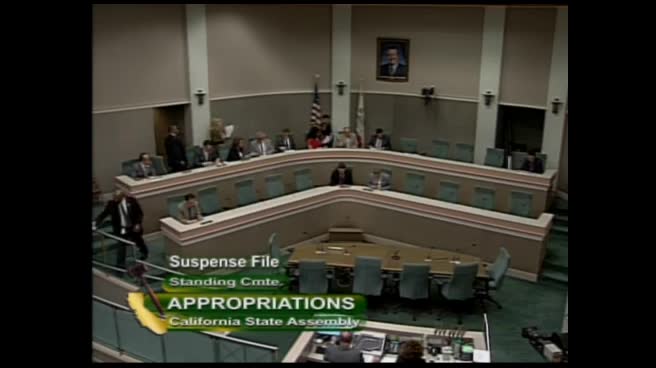 1H
Assembly Standing Committee on Appropriations
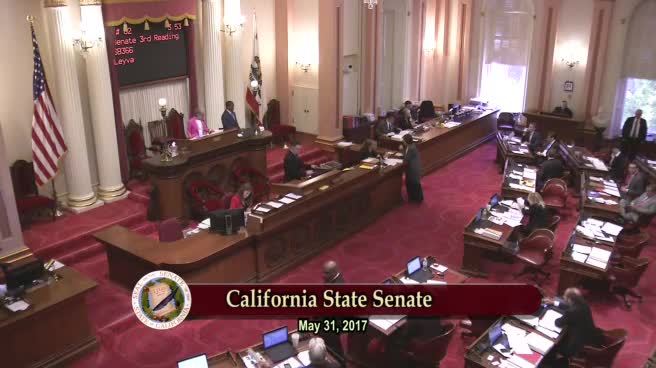 4MIN
Senate Floor
 48MIN
Senate Standing Committee on Appropriations
 3MIN
Senate Standing Committee on Appropriations
Bill Author

Bill Co-Author(s):