SB 401: Child care facilities: state employees.
- Session Year: 2017-2018
- House: Senate
- Latest Version Date: 2017-09-11
Existing law requires, when the state constructs, acquires, or receives as a gift an office building that can accommodate 700 or more state employees, adequate space to be designated within the building to meet the child care needs of those employees, if a review by the Department of General Services and a specified advisory committee shows sufficient need for child care services for 30 or more children. Existing law also authorizes the director to secure space in any adequate facility for the same purposes if funds for the offsite facilities are made available, as specified. Existing law requires that the indoor area not exceed 2,100 square feet, nor be less than that required to accommodate 30 children, excluding space for restrooms, kitchen facilities, storage areas, and teacher offices and that the outdoor play area space correspond with the indoor play area as described in specified regulations.
This bill instead would replace those space requirements with a requirement that the indoor activity space and outdoor activity space comply with requirements in the specified regulations.
(a)The Legislature finds and declares that there is a substantial need to provide adequate child care facilities for state employees.
(b)When the state constructs, acquires, or receives as a gift any office building that can accommodate 700 or more state employees, or when additions, alterations, or repairs are made to any existing state-owned office building that can accommodate 700 or more state employees, and the additions, alterations, or repairs both change and affect the use of 25 percent of the net square feet area of the building and include the addition to, alteration of, or repair of the first floor, adequate space shall be designated within the building to meet the child care needs of those employees, if a review of those employees slated to occupy the new or renovated building shows sufficient need for child care services for 30 or more children. The review shall be conducted by the Department of General Services and the Child Development Programs Advisory Committee established pursuant to Section 8286 of the Education Code.
(c)The Director of General Services may secure space in any adequate facility for the same purposes if funds for the offsite facilities are made available and the director determines that any of the following conditions exist:
(1)All other physical requirements controlling the development of the child care facilities within the office building cannot be utilized.
(2)It is more cost-efficient for the state to provide for equivalent child care facilities within a reasonable distance of the place of employment.
(3)Locating the child care center within a reasonable distance offsite would provide an enhanced facility for the children or would mitigate security concerns.
(d)Existing state office buildings, at the discretion of the Director of General Services, may be retrofitted to accommodate a child care facility. State funds required for the retrofitting shall be subject to regular budgetary procedures and approvals.
(e)Space designed within a state-owned office building for the child care facility shall comply with the prevailing local and state safety building codes for child care facilities.
(f)The indoor activity space and outdoor activity space shall comply with requirements in Title 22 of the California Code of Regulations.
(g)Utilization of the space shall be subject to terms and conditions set forth by the Director of General Services. The terms shall include payment of rent, proof of financial responsibility, and maintenance of space. The space shall be made available to employees who wish to establish child care facilities at a rate to be established by the Director of General Services based upon the actual cost to the state, the average cost of state-owned space in the area, or the statewide average cost of state-owned space, whichever is less. If, however, the director determines that a lower rent must be charged to ensure the viability of a child care facility, the director may charge a lower rate.
(h)(1)The department or departments occupying the building shall notify the employee-occupants in writing of the availability of space to be used for a child care facility no earlier than 180 days prior to the projected date of occupancy of a new building or space provided as the result of additions, alterations, or repairs to an existing state-owned building, and the additions, alterations, or repairs that both change and affect the use of 25 percent of the net square feet area of the building and include the addition to, alteration of, or repair of the first floor. If, within 30 days after full occupancy of a new office building or 30 days after the completion of additions, alterations, or repairs to an existing state-owned office building, the employee-occupants so desiring have not filed an application with the Secretary of State as a nonprofit corporation for the purpose of organizing a child care center, deposited two months rent in a commercial or savings account, and entered into a contract with the Department of General Services, the space may be used for any other purpose, as long as no permanent alteration of the space occurs. Other purposes may include, but are not limited to, conference rooms, storage areas, or offices. The space for child care shall be held for the employee-occupants nonprofit corporation only as long as they pay the monthly rent and meet the terms set forth in the contract. Payment of rent shall commence 30 days after full occupancy of a new office building or 30 days after completion of additions, alterations, or repairs, as specified in this section.
(2)If, at a later date, the employee-occupants so desiring (A) file an application with the Secretary of State as a nonprofit corporation for the purpose of organizing a child care facility, (B) deposit two months rent in a commercial or savings account, and (C) notify the Director of General Services of those actions, then the space shall be reconverted for child care purposes within 180 days of the notice.
(i)Children from families in which at least one parent or guardian is a state employee shall be given priority admission over other children to the child care facility.
(j)When a child care center within a state-owned office building has been operative for five years, the Director of General Services shall assess the child care needs of the state employees using the center and the office space needs of the building within which the center is located. If the assessment demonstrates a greater need for office space than for child care, the Director of General Services may close the child care center. Ninety days written notice of the closure shall be given to the director or head teacher of the center.
(k)This section does not apply to buildings that provide care or 24-hour residential care for patients, inmates, or wards of the state, such as state hospitals and correctional facilities.
(a)The Legislature finds and declares that there is a substantial need to provide adequate child care facilities for state employees.
(b)When the state constructs, acquires, or receives as a gift any office building that can accommodate 700 or more state employees, or when additions, alterations, or repairs are made to any existing state-owned office building that can accommodate 700 or more state employees, and the additions, alterations, or repairs both change and affect the use of 25 percent of the net square feet area of the building and include the addition to, alteration of, or repair of the first floor, adequate space shall be designated within the building to meet the child care needs of those employees, if a review of those employees slated to occupy the new or renovated building shows sufficient need for child care services for 30 or more children. The review shall be conducted by the Department of General Services and the Child Development Programs Advisory Committee established pursuant to Section 8286 of the Education Code.
(c)The Director of General Services may secure space in any adequate facility for the same purposes if funds for the offsite facilities are made available and the director determines that any of the following conditions exist:
(1)All other physical requirements controlling the development of the child care facilities within the office building cannot be utilized.
(2)It is more cost-efficient for the state to provide for equivalent child care facilities within a reasonable distance of the place of employment.
(3)Locating the child care center within a reasonable distance offsite would provide an enhanced facility for the children or would mitigate security concerns.
(d)Existing state office buildings, at the discretion of the Director of General Services, may be retrofitted to accommodate a child care facility. State funds required for the retrofitting shall be subject to regular budgetary procedures and approvals.
(e)Space designed within a state-owned office building for the child care facility shall comply with the prevailing local and state safety building codes for child care facilities.
(f)The indoor area shall not exceed 2,100 square feet, nor be less than that required to accommodate 30 children, excluding space for restrooms, kitchen facilities, storage areas, and teacher offices. Outdoor play area space shall correspond with the indoor play area as described in The indoor activity space and outdoor activity space shall comply with requirements in Title 22 of the California Code of Regulations.
(g)Utilization of the space shall be subject to terms and conditions set forth by the Director of General Services. The terms shall include payment of rent, proof of financial responsibility, and maintenance of space. The space shall be made available to employees who wish to establish child care facilities at a rate to be established by the Director of General Services based upon the actual cost to the state, the average cost of state-owned space in the area, or the statewide average cost of state-owned space, whichever is less. If, however, the director determines that a lower rent must be charged to ensure the viability of a child care facility, the director may charge a lower rate.
(h)(1)The department or departments occupying the building shall notify the employee-occupants in writing of the availability of space to be used for a child care facility no earlier than 180 days prior to the projected date of occupancy of a new building or space provided as the result of additions, alterations, or repairs to an existing state-owned building, and the additions, alterations, or repairs that both change and affect the use of 25 percent of the net square feet area of the building and include the addition to, alteration of, or repair of the first floor. If, within 30 days after full occupancy of a new office building or 30 days after the completion of additions, alterations, or repairs to an existing state-owned office building, the employee-occupants so desiring have not filed an application with the Secretary of State as a nonprofit corporation for the purpose of organizing a child care center, deposited two months rent in a commercial or savings account, and entered into a contract with the Department of General Services, the space may be used for any other purpose, as long as no permanent alteration of the space occurs. Other purposes may include, but are not limited to, conference rooms, storage areas, or offices. The space for child care shall be held for the employee-occupants nonprofit corporation only as long as they pay the monthly rent and meet the terms set forth in the contract. Payment of rent shall commence 30 days after full occupancy of a new office building or 30 days after completion of additions, alterations, or repairs, as specified in this section.
(2)If, at a later date, the employee-occupants so desiring (A) file an application with the Secretary of State as a nonprofit corporation for the purpose of organizing a child care facility, (B) deposit two months rent in a commercial or savings account, and (C) notify the Director of General Services of those actions, then the space shall be reconverted for child care purposes within 180 days of the notice.
(i)Children from families in which at least one parent or guardian is a state employee shall be given priority admission over other children to the child care facility.
(j)When a child care center within a state-owned office building has been operative for five years, the Director of General Services shall assess the child care needs of the state employees using the center and the office space needs of the building within which the center is located. If the assessment demonstrates a greater need for office space than for child care, the Director of General Services may close the child care center. Ninety days written notice of the closure shall be given to the director or head teacher of the center.
(k)This section does not apply to buildings that provide care or 24-hour residential care for patients, inmates, or wards of the state, such as state hospitals and correctional facilities.
|
Date
|
Status
|
|---|---|
| Sep 11, 2017 | Chaptered by Secretary of State. Chapter 235, Statutes of 2017. |
| Sep 11, 2017 | Approved by the Governor. |
| Aug 30, 2017 | Enrolled and presented to the Governor at 3 p.m. |
| Aug 24, 2017 | In Senate. Ordered to engrossing and enrolling. |
| Aug 24, 2017 | Read third time. Passed. Ordered to the Senate. |
| Jul 20, 2017 | Read second time. Ordered to consent calendar. |
| Jul 19, 2017 | From committee: Do pass. Ordered to consent calendar. (Ayes 16. Noes 0.) (July 19). |
| Jun 28, 2017 | From committee: Do pass and re-refer to Com. on APPR. with recommendation: To consent calendar. (Ayes 7. Noes 0.) (June 28). Re-referred to Com. on APPR. |
| Jun 14, 2017 | From committee: Do pass and re-refer to Com. on A. & A.R. with recommendation: To consent calendar. (Ayes 6. Noes 0.) (June 13). Re-referred to Com. on A. & A.R. |
| May 18, 2017 | Referred to Coms. on HUM. S. and A. & A.R. |
| Apr 20, 2017 | In Assembly. Read first time. Held at Desk. |
| Apr 20, 2017 | Read third time. Passed. (Ayes 36. Noes 0. Page 769.) Ordered to the Assembly. |
| Apr 18, 2017 | Read second time. Ordered to consent calendar. |
| Apr 17, 2017 | From committee: Be ordered to second reading pursuant to Senate Rule 28.8 and ordered to consent calendar. |
| Apr 6, 2017 | Set for hearing April 17. |
| Apr 5, 2017 | From committee: Do pass and re-refer to Com. on APPR. with recommendation: To consent calendar. (Ayes 4. Noes 0. Page 625.) (April 4). Re-referred to Com. on APPR. |
| Mar 1, 2017 | Set for hearing April 4. |
| Feb 23, 2017 | Referred to Com. on HUMAN S. |
| Feb 16, 2017 | From printer. May be acted upon on or after March 18. |
| Feb 15, 2017 | Introduced. Read first time. To Com. on RLS. for assignment. To print. |
|
Date
|
Description
|
Location
|
Votes
|
|
|---|---|---|---|---|
| Aug 24, 2017 | SB 401 Pan Consent Calendar Second Day Regular Session | Assembly Floor |
Passed |
|
| Jul 19, 2017 | Do pass. To Consent Calendar. | Assembly Standing Committee on Appropriations |
Passed |
|
| Jun 28, 2017 | Do pass and be re-referred to the Committee on [Appropriations] with recommendation: To Consent Calendar | Assembly Standing Committee on Accountability and Administrative Review |
Passed |
|
| Jun 13, 2017 | Do pass and be re-referred to the Committee on [Accountability and Administrative Review] with recommendation: To Consent Calendar | Assembly Standing Committee on Human Services |
Passed |
|
| Apr 20, 2017 | Consent Calendar 2nd SB401 | Senate Floor |
Passed |
|
| Apr 4, 2017 | Do pass, but first be re-referred to the Committee on [Appropriations] with the recommendation: To Consent Calendar | Senate Standing Committee on Human Services |
Passed |
This list shows positions taken on this bill by organizations on the date displayed, which is linked to the original source.
Positions by individuals are not included.
Date of Hearing: July 19, 2017
ASSEMBLY COMMITTEE ON APPROPRIATIONS
Lorena Gonzalez Fletcher, Chair
SBPCA Bill Id:SB 401
Author:(Pan) – As Introduced Ver:February 15, 2017
Policy Committee: | Human Services | Vote: | 6 - 0 |
Accountability and Administrative Review | 7 - 0 | ||
|
|
Urgency: No State Mandated Local Program: No Reimbursable: No
SUMMARY:
This bill removes the existing limit on the allowable area of indoor space that can be used for child care within state-owned office buildings. Specifically, this bill:
- Deletes provisions in current law restricting the indoor area of child care space in state-owned buildings to no larger than 2,100 square feet and to no less than that required to accommodate 30 children and requiring outdoor play area space to correspond with the indoor play area, as specified.
- Requires, instead, indoor and outdoor activity space for child care in state-owned buildings to comply with existing state regulations (Title 22) governing all licensed child care facilities.
FISCAL EFFECT:
Negligible state costs.
COMMENTS:
- Purpose. According to the author, this bill is needed to update an outdated provision of law that unreasonably limits the capacity of child care centers in state buildings. The author states that eliminating the cap and allowing for larger child care areas would increase quality and access by attracting a larger pool of operators and provide added capacity to help meet state workers' ongoing need for child care at or near their workplaces.
Supporters note that the existing facility restriction makes it challenging for center operators to administer programs in state buildings. Removing the square footage cap will give the state the flexibility to carry out thoughtful child care design considerations for future office buildings that can accommodate more children.
- Background. Existing law regarding child care in state-owned buildings specifically limits the indoor area to 2,100 square feet. This restriction on size, in addition to other regulations regarding space per child that all day care facilities must follow, means that a state child care facility can only accommodate a maximum of 60 children at one time. This bill lifts this cap on allowable indoor space and, instead, requires indoor and outdoor activity space for child care facilities that serve state employees to comply with the same standards used for all other child care facilities.
The Department of General Services (DGS) reports that, currently, 21 licensed child care facilities serving nearly 1,300 children are located in state-owned buildings and subject to the 2,100 square foot restriction. Nearly half of these providers who responded to a recent DGS survey indicated that they were at maximum capacity and operating with waitlists.
- Prior Legislation.
SB 831 (Karnette, Chapter 413, Statutes of 1998) authorizes DGS to secure off-site state employee child care facilities if funds are available.
SB 764 (Watson, Chapter 913, Statutes of 1980) requires the state to include child care facilities when it constructs or remodels a state office building that accommodate at least 700 state employees and establishes a 2,100-square-foot limit for the indoor area of such child care facilities.
Analysis Prepared by: Jennifer Swenson / APPR. / (916) 319-2081
Date of Hearing: June 28, 2017
ASSEMBLY COMMITTEE ON ACCOUNTABILITY AND ADMINISTRATIVE REVIEW
Susan Talamantes Eggman, Chair
SBPCA Bill Id:SB 401
Author:(Pan) – As Introduced Ver:February 15, 2017
SENATE VOTE: 36-0
SUBJECT: Child care facilities: state employees
SUMMARY: Removes the existing limit on the allowable area of indoor space that can be used for child care within state-owned office buildings. Specifically, this bill:
- Deletes provisions in current law restricting the indoor area of child care space in state-owned buildings to no larger than 2,100 square feet and to no less than that required to accommodate 30 children and requiring outdoor play area space to correspond with the indoor play area, as specified.
- Requires, instead, indoor and outdoor activity space for child care in state-owned buildings to comply with existing regulations governing all licensed child care facilities.
EXISTING LAW:
- Expresses legislative intent relating to the substantial need to provide adequate child care facilities for state employees.
- Requires child care facilities to be included when the state constructs, acquires, or is gifted, an office building that can accommodate 700 or more state employees if a review by the Department of General Services (DGS) and a specified advisory committee shows sufficient need for child care services for 30 or more children.
- Limits the indoor area for a child care facility in state-owned buildings to no more than 2,100 square feet, and to no less than that necessary to accommodate 30 children, excluding space for restrooms, kitchen facilities, storage areas, and teacher offices, and requires that the outdoor play area space correspond with the indoor play area, as specified.
- Requires that space designed within state-owned office buildings for child care facilities shall comply with the prevailing local and state safety building codes for child care facilities.
- Provides for the licensure and regulation of child care facilities pursuant to the California Child Day Care Facilities Act and the California Code of Regulations, Title 22, Division 12.
FISCAL EFFECT: According to the Senate Appropriations Committee, pursuant to Senate Rule 28.8, negligible state costs.
COMMENTS: Existing law in the Government Code relating to child care in state-owned buildings specifically limits the indoor area to 2,100 square feet. This restriction on size, in addition to other regulations regarding space per child that all day care facilities must follow, means that a state child care facility can only accommodate a maximum of 60 children at one time. This bill lifts this cap on allowable indoor space and, instead, requires indoor and outdoor activity space for child care facilities that serve state employees to comply with the same standards used for all other child care facilities.
The 2,100 square foot size restriction exclusive to state-owned buildings was established in 1981 pursuant to SB 764, (Watson), Chapter 913, Statutes of 1981. According to the legislative bill analysis of SB 764, it was adopted as a cost control measure and at a time when the idea of work-site child care was new and innovative. There was some concern at the time that worksite child care was a move toward government takeover of child rearing. Since then, workplace attitudes have changed and on-site child care has become more common as a way of addressing the needs of working parents.
According to the author, this bill is needed to update an outdated provision of law that unreasonably limits the capacity of child care centers in state buildings. The author states that eliminating the cap and allowing for larger child care areas would increase quality and access by attracting a larger pool of operators and provide added capacity to help meet state workers' ongoing need for child care at or near their workplaces.
DGS reports that, currently, 21 licensed child care facilities serving nearly 1,300 children are located in state-owned buildings and subject to the 2,100 square foot restriction. Nearly half of these providers who responded to a recent DGS survey indicated that they were at maximum capacity and operating with waitlists.
Supporters note that the existing facility restriction makes it challenging for center operators to administer programs in state buildings. Removing the square footage cap will give the state the flexibility to carry out thoughtful child care design considerations for future office buildings that can accommodate more children.
DOUBLE REFERRAL: This measure was previously heard in the Assembly Human Services Committee on June 17, 2017, with a vote of 6-0.
REGISTERED SUPPORT / OPPOSITION:
Support
Child Action, Inc.
KinderCare Education
Opposition
None on file.
Analysis Prepared by: Cassie Royce / A. & A.R. / (916) 319-3600
Date of Hearing: June 13, 2017
ASSEMBLY COMMITTEE ON HUMAN SERVICES
Blanca Rubio, Chair
SBPCA Bill Id:SB 401
Author:(Pan) – As Introduced Ver:February 15, 2017
SENATE VOTE: 36-0
SUBJECT: Child care facilities: state employees
SUMMARY: Deletes provisions of current law pertaining to required child care facilities for state employees that stipulate that the indoor area not be larger than 2,100 square feet nor be less than necessary to accommodate 30 children and that outdoor play area space correspond to indoor play area pursuant to regulations and, instead, requires that indoor and outdoor activity space comply with regulations, as specified.
EXISTING LAW:
- Makes Legislative findings and declarations that there is significant need to provide adequate child care facilities for state employees. (GOV 4560)
- Requires adequate space to be designated to meet the child care needs of state employees within an office building constructed, acquired, received as a gift, or altered by the state that can accommodate at least 700 such employees and if a review of those employees by the Department of General Services (DGS) and the Child Development Programs Advisory Committee indicates that those employees have sufficient need for child care services for 30 or more children, as specified. (GOV 4560 (b))
- Restricts the indoor area of a child care facility for state employees to no more than 2,100 square feet and to no less than that required to accommodate 30 children, as specified. Further, requires outdoor play area space to correspond with the indoor play area, as specified in regulations. (GOV 4560 (f))
- Establishes the California Child Day Care Facilities Act to provide a comprehensive, quality system for licensing child day care facilities to ensure that working families have access to healthy and safe child care providers and that child care programs contribute positively to a child's emotional, cognitive, and educational development, and are able to respond to, and provide for, the unique characteristics and needs of children. (HSC 1596.70 et seq.)
- Subjects all licensed child day care centers to unannounced inspections by the Department of Social Services (DSS), and provides that the department shall visit facilities as often as necessary to ensure the quality of care provided. (HSC 1597.09)
- Requires annual unannounced inspections when a licensee is on probation, when required by the terms of a facility compliance plan, when an accusation against a licensee is pending, or to verify that a person who has been ordered out of the facility is no longer present. (HSC 1597.09)
- Requires DSS to perform random inspections each year in no fewer than 30% of facilities not subject to annual inspections, and requires DSS to visit every licensed child care facility no less than every 3 years. (HSC 1597.09)
- Establishes regulations for licensed child care centers. (California Code of Regulations Title 22, Division 12, Chapter 1)
FISCAL EFFECT: Unknown.
COMMENTS:
Child care licensing: The Community Care Licensing Division (CCLD) within DSS licenses a variety of non-medical facilities, both residential and non-residential, serving vulnerable individuals throughout the state. These facilities include: child care centers, family child care homes, adult day care facilities, foster family care homes, other children’s residential facilities, and adult and senior residential facilities. There are over 73,000 licensed care facilities in the state, with the capacity to serve 1.7 million Californians.
Within CCLD, the Child Care Licensing Program, through 14 Regional Offices located across the state, is engaged in oversight and enforcement for child care centers and family day care homes. According to DSS:
“The core mission of the Child Care Licensing Program is to ensure the health and safety of children in care. The Child Care Licensing Program strives to provide preventive, protective, and quality services to children in care by ensuring that licensed facilities meet established health and safety standards through monitoring facilities, providing technical assistance, and establishing partnerships with providers, parents, and the child care community….All children and families, regardless of age, ethnicity, cultural background, socioeconomic status, or ability, are afforded the same protections under the law and regulations for child care facilities.”
CCLD typically conducts site inspections once every three years to monitor compliance with regulations; they also investigate complaints. Licensees may receive two types of citations: “Type A” citations are for the most serious types of violations, ones which pose an immediate risk to the health, safety, or personal rights of the children in care (these can include lack of care and supervision, access to dangerous chemicals, lack of a fire clearance, for example); “Type B” citations are those that, if not corrected, might pose an immediate risk to the health, safety, or personal rights of the children in care (examples include inadequate training of staff and faulty record keeping).
Title 22 regulations: California Code of Regulations Title 22, Division 12 – commonly referred to as “Title 22 regulations” – establishes regulations for licensed child care facilities in California (Chapter 1 establishes licensing requirements for child care centers and Chapter 2 establishes regulations for family day care homes). Regulations pertaining to child care centers cover a wide range of health and safety standards for both infant care centers and school-age child care centers, including, among many other things, discipline, food service, teacher-child ratios, and facility space requirements. One such requirement is that shared indoor activity space in a licensed school-age program that is not located on a functioning public or private school site must have 35 square feet of indoor activity spaced per child in the program.
Child care facilities for state employees: SB 764 (Watson), Chapter 913, Statutes of 1980, required the state to include child care facilities when it constructs or remodels a state office building that accommodates at least 700 state employees and established a 2,100-square-foot limit for the indoor area of such child care facilities. Subsequent legislation, SB 831 (Karnette), Chapter 413, Statutes of 1998, authorized DGS to secure off-site state employee child care facilities if funds are available.
Today, DGS reports that there are 21 facilities subject to these requirements, with 18 of them being located in state-owned buildings for which DGS writes the leases to the child care operators. DGS sent a survey on waitlists to the child care operators in state buildings (these surveys were sent to 19 operators, but 1 subsequently closed). Ten of the facilities responded to the survey; of those 10, all reported having waitlists, and 9 of the 10 reported having waitlists that exceeded the licensed capacity of the facility.
Need for this bill: According to the author, “[This bill] updates an outdated piece of law and it gives the State of California the flexibility to carry out thoughtful planning procedures for new office buildings. It meets the current need for more child care services and incentivizes the growing working families’ workforce. [This bill] also serves as a business incentive that creates more competition among child-care operators to provide quality service at a low cost.”
DOUBLE REFERRAL. This bill has been double-referred. Should this bill pass out of this committee, it will be referred to the Assembly Accountability & Administrative Review Committee.
PRIOR LEGISLATION:
SB 831 (Karnette, Chapter 413, Statutes of 1998) authorized DGS to secure off-site state employee child care facilities if funds are available.
SB 764 (Watson, Chapter 913, Statutes of 1980) required the state to include child care facilities when it constructs or remodels a state office building that accommodates at least 700 state employees and established a 2,100-square-foot limit for the indoor area of such child care facilities.
REGISTERED SUPPORT / OPPOSITION:
Support
Child Action, Inc.
KinderCare Education
Opposition
None on file.
Analysis Prepared by: Daphne Hunt / HUM. S. / (916) 319-2089
Office of Senate Floor Analyses (916) 651-1520 Fax: (916) 327-4478 | SB |
CONSENT
Bill No: SB 401
:
SENATE HUMAN SERVICES COMMITTEE: 4-0, 4/4/17
AYES: Wiener, Glazer, Newman, Nguyen
NO VOTE RECORDED: Berryhill
SENATE APPROPRIATIONS COMMITTEE: Senate Rule 28.8
DIGEST: This bill replaces existing space requirements for child care facilities in state-owned office buildings with a requirement that the indoor activity space and outdoor activity space comply with requirements in specified regulations.
Existing law:
- Establishes the California Child Day Care Facilities Act to provide for the licensure and regulation of child care facilities, specifies types of facilities and providers exempt from licensure requirements, and requires the Community Care Licensing Division to regulate child care licensees. (HSC 1596.70 et seq.)
- Finds and declares that there is a substantial need to provide adequate child care facilities for state employees. (GOV 4560(a))
- Requires, when the state constructs, acquires, or receives as a gift an office building that can accommodate 700 or more state employees, adequate space to be designated within the building to meet the child care needs of those employees, if a review by the Department of General Services (DGS) and a specified advisory committee shows sufficient need for child care services for 30 or more children. (GOV 4560(b))
- Authorizes the Director of DGS to secure space for a child care facility in an offsite location if the director determines that certain defined conditions exist. (GOV 4560(c))
- Permits retrofitting of existing state office buildings in order to accommodate a child care facility, as specified. (GOV 4560(d))
- Requires that space designed within a state-owned office building for the child care facility shall comply with the prevailing local and state safety building codes for child care facilities. (GOV 4560(e))
- Requires the indoor area for a child care facility shall not exceed 2,100 square feet, nor be less than that required to accommodate 30 children, excluding space for restrooms, kitchen facilities, storage areas, and teacher offices that the outdoor play area space correspond with the indoor play area as described in specified regulations. (GOV 4560(f))
- Authorizes the Director of DGS to establish terms and conditions for utilization of the office space, as specified. (GOV 4560(g))
- Requires that children from families in which at least one parent or guardian is a state employee shall be given priority admission over other children to the child care facility. (GOV 4560(i))
This bill:
- Deletes the requirement that the indoor area of a child care facility in a state building shall not exceed 2,100 square feet, nor be less than that required to accommodate 30 children, excluding space for restrooms, kitchen facilities, storage areas, and teacher offices.
- Makes technical changes to a reference to Title 22 of the California Code of Regulations regarding space requirements for child care facilities.
Background
According to the author, SB 401 updates an outdated piece of law and it gives the State of California the flexibility to carry out thoughtful planning procedures for new office buildings. It meets the current need for more child care services and incentivizes the growing working families’ workforce. SB 401 also serves as a business incentive that creates more competition among child-care operators to provide quality service at a low cost, the author states.
Regulation of Child Care Providers
The California Department of Social Services is responsible for implementing and enforcing the laws and regulations that govern licensed child care providers. Such laws and regulations include general health and safety requirements, staff-to-child ratios, space requirements, and training requirements.
Wait Lists for Child Care
In many areas of the state, there is limited or no space available in licensed child care centers or family child care homes. Additionally, there is a shortage of licensed slots for infants and toddlers. As a result, families in some communities may struggle to secure child care. According to the Resource and Referral Network, there are more than four million children with parents in the workforce statewide, but only about one million licensed child care slots throughout the state. This means 75 percent of children with working parents do not have access to a licensed child care provider in California. In Sacramento County, where DGS operates about 30 state-owned buildings, there are about 47,000 licensed child care slots – meaning that only 28 percent of children from 0-12 years of age with parents in the labor workforce have a licensed child care slot available. There is no data readily available on availability of unlicensed child care providers.
Child Care Facilities in State Owned Buildings
Currently the indoor space at child care facilities in state-owned buildings cannot exceed 2,100 square feet. Under existing regulations and the 2,100 square foot restriction, child-care facilities can accommodate a maximum of 60 children per facility in a state-owned building.
State law also requires, when the state constructs, acquires, or receives as a gift an office building that can accommodate 700 or more state employees, adequate space to be designated within the building to meet the child care needs of those employees, if a review by the DGS and a specified advisory committee shows sufficient need for child care services for 30 or more children.
According to DGS, the state has dedicated space for child care facilities within state-owned buildings since 1990. Currently, 21 licensed child care facilities subject to the 2,100 square foot restriction are operating in state-owned buildings. These child care providers serve nearly 1,300 children. DGS recently conducted an informal survey of the on-site child care providers. Ten of the providers responded to the survey. All 10 respondents indicated they were at maximum capacity and operating with waitlists.
Currently Planned State Building Projects
DGS is in the planning stages for two new state buildings: A Natural Resources Agency Headquarters Building and an O Street Office Building. Both buildings will be located in Sacramento. DGS obtained approval from the State Public Works Board to establish the scope, cost, and delivery method for these two projects on March 23, 2017, and anticipates both projects to commence construction in the summer of 2018. Under current law, the design of any on-site child care facility in these new buildings will be limited to 2,100 square feet, which means the building will be able to provide child care for up to 60 children.
This bill proposes to remove a size limitation and instead make child care facilities operating in state-owned buildings subject to the same standards used for all other child care facilities. If this bill becomes law effective January 1, 2018, DGS reports it would have sufficient time to adjust construction plans to accommodate the new size standards for child care facilities in state owned buildings.
FISCAL EFFECT: Appropriation: Fiscal Com.: Local:
None received
OPPOSITION: (Verified 4/19/17)
None received
4/19/17 14:39:25
**** END ****
SENATE COMMITTEE ON HUMAN SERVICES
Senator Wiener, Chair
2017 - 2018 Regular
Bill No: SB 401
Author: | Pan | ||
Version: | February 15, 2017 | Hearing Date: | April 4, 2017 |
Urgency: | No | Fiscal: | Yes |
Consultant: | Taryn Smith | ||
Subject: Child care facilities: state employees
SUMMARY
This bill would replace existing space requirements for child care facilities in state-owned office buildings with a requirement that the indoor activity space and outdoor activity space comply with requirements in specified regulations.
ABSTRACT
Existing law:
- Establishes the California Child Day Care Facilities Act to provide for the licensure and regulation of child care facilities, specifies types of facilities and providers exempt from licensure requirements, and requires the Community Care Licensing Division to regulate child care licensees. (HSC 1596.70 et seq.)
- Finds and declares that there is a substantial need to provide adequate child care facilities for state employees. (GOV 4560(a))
- Requires, when the state constructs, acquires, or receives as a gift an office building that can accommodate 700 or more state employees, adequate space to be designated within the building to meet the child care needs of those employees, if a review by the Department of General Services (DGS) and a specified advisory committee shows sufficient need for child care services for 30 or more children. (GOV 4560(b))
- Authorizes the Director of DGS to secure space for a child care facility in an offsite location if the director determines that certain defined conditions exist. (GOV 4560(c))
- Permits retrofitting of existing state office buildings in order to accommodate a child care facility, as specified. (GOV 4560(d))
- Requires that space designed within a state-owned office building for the child care facility shall comply with the prevailing local and state safety building codes for child care facilities. (GOV 4560(e))
- Requires the indoor area for a child care facility shall not exceed 2,100 square feet, nor be less than that required to accommodate 30 children, excluding space for restrooms, kitchen facilities, storage areas, and teacher offices that the outdoor play area space correspond with the indoor play area as described in specified regulations. (GOV 4560(f))
- Authorizes the Director of DGS to establish terms and conditions for utilization of the office space, as specified. (GOV 4560(g)
- Requires that children from families in which at least one parent or guardian is a state employee shall be given priority admission over other children to the child care facility. (GOV 4560(i))
This bill:
- Deletes the requirement that the indoor area of a child care facility in a state building shall not exceed 2,100 square feet, nor be less than that required to accommodate 30 children, excluding space for restrooms, kitchen facilities, storage areas, and teacher offices.
- Makes technical changes to a reference to Title 22 of CCR regarding space requirements for child care facilities.
FISCAL IMPACT
This bill has not yet been analyzed by a fiscal committee.
BACKGROUND AND DISCUSSION
Purpose of the bill:
According to the author, SB 401 updates an outdated piece of law and it gives the State of California the flexibility to carry out thoughtful planning procedures for new office buildings. It meets the current need for more child care services and incentivizes the growing working families’ workforce. SB 401 also serves as a business incentive that creates more competition among child-care operators to provide quality service at a low cost, the author states.
Regulation of Child Care Providers
CDSS is responsible for implementing and enforcing the laws and regulations that govern licensed child care providers. Such laws and regulations include general health and safety requirements, staff-to-child ratios, space requirements, and training requirements.
Wait Lists for Child Care
In many areas of the state, there is limited or no space available in licensed child care centers or family child care homes. Additionally, there is a shortage of licensed slots for infants and toddlers. As a result, families in some communities may struggle to secure child care. According to the Resource and Referral Network, there are more than 4 million children with parents in the workforce statewide, but only about one million licensed child care slots throughout the state. These means 75 percent of children with working parents do not have access to a licensed child care provider in California. In Sacramento County, where DGS operates about 30 state-owned buildings, there are about 47,000 licensed child care slots – meaning that only 28 percent of children from 0-12 years of age with parents in the labor workforce have a licensed child care slot available. There is no data readily available on availability of unlicensed child care providers.
Child Care Facilities in State Owned Buildings
Currently the indoor space at child care facilities in state-owned buildings cannot exceed 2,100 square feet. Under existing regulations and the 2,100 square foot restriction, child-care facilities can accommodate a maximum of 60 children per facility in a state-owned building.
State law also requires, when the state constructs, acquires, or receives as a gift an office building that can accommodate 700 or more state employees, adequate space to be designated within the building to meet the child care needs of those employees, if a review by the DGS and a specified advisory committee shows sufficient need for child care services for 30 or more children.
According to DGS, the state has dedicated space for child care facilities within state-owned buildings since 1990. Currently, 21 licensed child care facilities subject to the 2,100 square foot restriction are operating in state-owned buildings. These child care providers serve nearly 1,300 children. DGS recently conducted an informal survey of the on-site child care providers. Ten of the providers responded to the survey. All 10 respondents indicated they were at maximum capacity and operating with waitlists.
Currently Planned State Building Projects
DGS is in the planning stages for two new state buildings: A Natural Resources Agency Headquarters Building and an O Street Office Building. Both buildings will be located in Sacramento. DGS obtained approval from the State Public Works Board to establish the scope, cost, and delivery method for these two projects on March 23, 2017, and anticipates both projects to commence construction in the summer of 2018. Under current law, the design of any on-site child care facility in these new buildings will be limited to 2,100 square feet, which means the building will be able to provide child care for up to 60 children.
Related legislation:
AB 2346 (Swanson, 2008) would have allowed the Director of DGS to offer a full rent subsidy or charge nothing for the use of child care facilities for state employees. This bill was vetoed.
SB 831 (Karnette, Chapter 413, Statutes of 1998) authorized DGS to secure off-site state employee child care facilities if funds are available and the Director of DGS determines it is more cost effective to do so; it provided enhanced facilities; or, it mitigates security concerns. Also, this bill allowed DGS to charge below market rent to ensure the viability of these facilities.
SB 764 (Watson, Chapter 913, Statutes of 1981) required the state to include child care facilities when it constructs or remodels a state office that accommodates 700 or more employees and established the 2,100 square foot size limitation for child care facilities.
COMMENTS
According to the analysis of SB 764, (Watson, Chapter 913, Statutes of 1981), which created the 2,100 square foot restriction for child care facilities located in state-owned buildings, the bill was drafted “with a Proposition 13 and ‘Jarvis II’ – conscious Legislature in mind.” The size restriction, which is exclusive to state owned buildings, was apparently adopted as a cost control measure. Additionally, it was adopted at a time when the idea of work-site child care was new and innovative. A comment in the bill analysis reads, “Some of our legislators claim that worksite child care is a move toward government takeover of child rearing. We contend that child care at the work place is a move toward working parents being closer to their children and the care they receive.”
The restriction on the size of the child care facilities, coupled with other operating requirements, means no more than 60 children can be cared for in a state-owned building. According to the author, fewer providers are willing to operate a small child care facility with a maximum of 60 children, which makes it more challenging to meet the child care needs of working families.
This bill proposes to remove a size limitation and instead make child care facilities operating in state-owned buildings subject to the same standards used for all other child care facilities.
DGS is in the planning stages to build two new state-owned office buildings. If this bill becomes law effective January 1, 2018, DGS reports it would have sufficient time to adjust construction plans to accommodate the new size standards for child care facilities in state owned buildings.
POSITIONS
Support:
None.
Oppose:
None.
-- END --
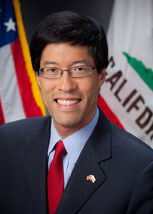
Bill Author
Bill Co-Author(s):