SB 403: Sale of county courthouses.
- Session Year: 2017-2018
- House: Senate
- Latest Version Date: 2017-09-28
Existing law authorizes the Judicial Council to dispose of surplus court facilities pursuant to a specified process that requires, among other things, the Judicial Council to consult with the county where the court facility is located, offer the facility to the county at a fair market value before offering it to another state or local government agency, and deposit the funds received from a sale into the State Court Facilities Construction Fund. The process further requires the Judicial Council, if the court facility was previously the responsibility of a county, to comply with certain requirements applicable to the sale of surplus state property. Existing law establishes the Immediate and Critical Needs Account within the State Court Facilities Construction Fund. The California Constitution requires the proceeds from the sale of surplus state property to be deposited into the Special Fund for Economic Uncertainties, a continuously appropriated fund.
This bill would, notwithstanding any other law, specifically authorize the Judicial Council to sell the Chico, Corning, Clovis, Firebaugh, Reedley, Avenal, and Corcoran superior courthouses, as specified, if the sale complies with certain requirements applicable to the disposal of court facilities and the Judicial Council consults with, and first offers the right to purchase the property to, the county in which the property is located. The bill would require the net proceeds from the sale of the courthouses to be deposited into the Immediate and Critical Needs Account of the State Court Facilities Construction Fund. The bill would state that the disposition of this property is not a sale or other disposition of surplus state property within the meaning of the California Constitution.
The bill would make legislative findings in support of its provisions.
This bill would declare that it is to take effect immediately as an urgency statute.
It is the intent of the Legislature in enacting this act to specifically authorize the Judicial Council to sell the properties known as the Chico Courthouse, the Corning Courthouse, the Clovis Courthouse, the Firebaugh Courthouse, the Reedley Courthouse, the Avenal Courthouse, and the Corcoran Courthouse, each a closed court facility that is unsuitable for the needs of the judicial branch, with certain participation by counties in which the courthouses are located, and transfer those sale proceeds to the Judicial Councils Immediate and Critical Needs Account in the State Court Facilities Construction Fund.
SEC. 2.Section 70396 is added to the Government Code, to read:70396.(a)Notwithstanding any other law, the Judicial Council may sell the property, at fair market value and upon the terms and conditions and subject to the reservations the Judicial Council deems in the best interests of the state, if all of the following requirements are satisfied:
(1)The sale complies with Section 70391 of the Government Code, as applicable.
(2)The Judicial Council consults with the county where the property is located concerning the sale of the property.
(3)The Judicial Council offers the county in which the property is located the right to purchase the property at fair market value before otherwise offering the property for sale.
(b)Notwithstanding any other law, the net proceeds from the sale of the property shall be deposited into the Immediate and Critical Needs Account of the State Court Facilities Construction Fund, established by Section 70371.5 of the Government Code.
(c)For purposes of this act, property means each of the following:
(1)The Chico Courthouse located at 655 Oleander Avenue in the City of Chico, County of Butte, Assessor Parcel Number 003-180-004.
(2)The Corning Courthouse located at 720 Hoag Street in the City of Corning, County of Tehama, Assessor Parcel Number 071-121-01-1.
(3)The Clovis Courthouse located at 1011 Fifth Street in the City of Clovis, County of Fresno, Assessor Parcel Number 492-040-13T.
(4)The Firebaugh Courthouse located at 1325 O Street in the City of Firebaugh, County of Fresno, Assessor Parcel Numbers 008-131-08T and 008-130-09T.
(5)The Reedley Courthouse located at 815 G Street in the City of Reedley, County of Fresno, Assessor Parcel Number 368-010-06T.
(6)The Avenal Courthouse located at 501 East Kings Street in the City of Avenal, County of Kings, Assessor Parcel Numbers 040-165-007, 040-165-011, and 040-165-012.
(7)The Corcoran Courthouse located at 1000 Chittenden Avenue in the City of Corcoran, County of Kings, Assessor Parcel Number 030-213-008.
(d)The disposition of the property authorized in this section does not constitute a sale or other disposition of surplus state property within the meaning of Section 9 of Article III of the California Constitution and shall not be subject to subdivision (g) of Section 11011 of the Government Code.
SEC. 3.This act is an urgency statute necessary for the immediate preservation of the public peace, health, or safety within the meaning of Article IV of the California Constitution and shall go into immediate effect. The facts constituting the necessity are:
To enable the sale of each property to occur as soon as possible, it is necessary that this act take effect immediately.
|
Date
|
Status
|
|---|---|
| Sep 28, 2017 | Chaptered by Secretary of State. Chapter 358, Statutes of 2017. |
| Sep 28, 2017 | Approved by the Governor. |
| Sep 21, 2017 | Enrolled and presented to the Governor at 5:30 p.m. |
| Sep 15, 2017 | In Senate. Ordered to engrossing and enrolling. |
| Sep 14, 2017 | Read third time. Urgency clause adopted. Passed. Ordered to the Senate. |
| Sep 5, 2017 | Read second time. Ordered to third reading. |
| Sep 1, 2017 | From committee: Do pass. (Ayes 16. Noes 0.) (September 1). |
| Jun 28, 2017 | June 28 set for first hearing. Placed on suspense file. |
| Jun 20, 2017 | From committee: Do pass and re-refer to Com. on APPR. with recommendation: To consent calendar. (Ayes 11. Noes 0.) (June 20). Re-referred to Com. on APPR. |
| Jun 12, 2017 | Referred to Com. on JUD. |
| Jun 1, 2017 | In Assembly. Read first time. Held at Desk. |
| May 31, 2017 | Read third time. Urgency clause adopted. Passed. (Ayes 40. Noes 0. Page 1356.) Ordered to the Assembly. |
| May 26, 2017 | Ordered to special consent calendar. |
| May 26, 2017 | Read second time. Ordered to third reading. |
| May 25, 2017 | From committee: Do pass. (Ayes 7. Noes 0. Page 1184.) (May 25). |
| May 19, 2017 | Set for hearing May 25. |
| Apr 17, 2017 | April 17 hearing: Placed on APPR. suspense file. |
| Apr 5, 2017 | Set for hearing April 17. |
| Mar 29, 2017 | From committee: Do pass and re-refer to Com. on APPR. with recommendation: To consent calendar. (Ayes 7. Noes 0. Page 539.) (March 28). Re-referred to Com. on APPR. |
| Mar 14, 2017 | Set for hearing March 28. |
| Feb 23, 2017 | Referred to Com. on JUD. |
| Feb 16, 2017 | From printer. May be acted upon on or after March 18. |
| Feb 15, 2017 | Introduced. Read first time. To Com. on RLS. for assignment. To print. |
|
Date
|
Description
|
Location
|
Votes
|
|
|---|---|---|---|---|
| Sep 14, 2017 | SB 403 Cannella Third Reading Urgency By SALAS | Assembly Floor |
Passed |
|
| Sep 1, 2017 | Do pass. | Assembly Standing Committee on Appropriations |
Passed |
|
| Jun 20, 2017 | Do pass and be re-referred to the Committee on [Appropriations] with recommendation: To Consent Calendar | Assembly Standing Committee on Judiciary |
Passed |
|
| May 31, 2017 | Special Consent Calendar # SB403 Cannella Urgency Clause | Senate Floor |
Passed |
|
| May 25, 2017 | Do pass | Senate Standing Committee on Appropriations |
Passed |
|
| Apr 17, 2017 | Placed on suspense file | Senate Standing Committee on Appropriations |
Passed |
|
| Mar 28, 2017 | Do pass, but first be re-referred to the Committee on [Appropriations] with the recommendation: To Consent Calendar | Senate Standing Committee on Judiciary |
Passed |
This list shows positions taken on this bill by organizations on the date displayed, which is linked to the original source.
Positions by individuals are not included.
SENATE THIRD READING
STR Bill Id:
Author:()
As Introduced Ver:
2/3 vote. Urgency
SENATE VOTE: 40-0
Committee | Votes | Ayes | Noes |
Judiciary | 11-0 | Mark Stone, Cunningham, Chau, Chiu, Cristina Garcia, Holden, Kalra, Kiley, Maienschein, Reyes, Ting | |
Appropriations | 16-0 | Gonzalez Fletcher, Bigelow, Bloom, Bocanegra, Bonta, Brough, Calderon, Chau, Eggman, Fong, Friedman, Gallagher, Eduardo Garcia, Jones-Sawyer, Obernolte, Reyes |
|
SUMMARY: Authorizes the Judicial Council to sell seven closed superior courthouses, where the net proceeds of the sale would flow to the Immediate and Critical Needs Account of the State Court Facilities Construction Fund (ICNA). Specifically, this bill:
- Provides that the Judicial Council may sell the property, at fair market value and upon the terms and conditions and subject to the reservations the Judicial Council deems in the best interests of the state, if all of the following requirements are satisfied:
- The sale complies with Government Code Section 70391.
- The Judicial Council consults with the county where the property is located concerning the sale of the property.
- The Judicial Council offers the county in which the property is located the right to purchase the property at fair market value before otherwise offering the property for sale.
- Provides that the net proceeds from the sale of the property shall be deposited into the Immediate and Critical Needs Account of the State Court Facilities Construction Fund, as established.
- Provides that "property" means each of the following:
- The Chico Courthouse located at 655 Oleander Avenue in the City of Chico, County of Butte, Assessor Parcel Number 003-180-004.
- The Corning Courthouse located at 720 Hoag Street in the City of Corning, County of Tehama, Assessor Parcel Number 071-121-01-1.
- The Clovis Courthouse located at 1011 Fifth Street in the City of Clovis, County of Fresno, Assessor Parcel Number 492-040-13T.
- The Firebaugh Courthouse located at 1325 O Street in the City of Firebaugh, County of Fresno, Assessor Parcel Numbers 008-131-08T and 008-130-09T.
- The Reedley Courthouse located at 815 G Street in the City of Reedley, County of Fresno, Assessor Parcel Number 368-010-06T.
- The Avenal Courthouse located at 501 East Kings Street in the City of Avenal, County of Kings, Assessor Parcel Numbers 040-165-007, 040-165-011, and 040-165-012.
- The Corcoran Courthouse located at 1000 Chittenden Avenue in the City of Corcoran, County of Kings, Assessor Parcel Number 030-213-008.
- Specifies that the disposition of the property authorized in this section does not constitute a sale or other disposition of surplus state property within the meaning of the California Constitution Section 9 of Article III and shall not be subject to subdivision (g) of Section 11011 of the Government Code.
FISCAL EFFECT: According to the Assembly Appropriations Committee:
- $3.3 million in one-time revenue from the sale of the seven courthouses deposited into ICNA, rather than depositing these funds into the Special Fund for Economic Uncertainties.
- $289,000 in annual savings to Judicial Council by eliminating the need to maintain the seven courthouses.
COMMENTS: This bill seeks to authorize the Judicial Council to sell seven closed superior courthouses (e.g., Avenal, Chico, Clovis, Corcoran, Corning, Firebaugh, and Reedley). This bill provides that net proceeds of the sale would flow to the Immediate and Critical Needs Account of the State Court Facilities Construction Fund (ICNA).
The structure of this bill is substantially similar to a measure previously passed by this Committee. Last year, the Legislature enacted AB 1900 (Jones-Sawyer), Chapter 510, Statutes of 2016, which authorized the Judicial Council to sell the San Pedro courthouse located in Los Angeles County. Among other requirements, AB 1900 required the Judicial Council to consult with the County of Los Angeles on the sale, and offer the County of Los Angeles the right to purchase the property at fair market value. According to Judicial Council staff, this sale occurred in December 2016, and purchased by the County of Los Angeles for $5.1 million. Under AB 1900, net proceeds of the sale flowed to ICNA.
Similar to AB 1900, this bill authorizes the Judicial Council to sell seven closed courthouses. These courthouses were closed as a result of budget cuts or court consolidations. According to the Judicial Council and the respective county court administrators or presiding judges, there are no plans to re-open these closed courthouses. In conducting the sale, this bill requires the Judicial Council to consult with the county (where the courthouse is located) prior to sale, and offer the county the right to purchase the property at fair market value. According to Judicial Council staff, each of these seven courthouses have only one courtroom, and are relatively small. Accordingly, it is estimated that the seven courthouses together are valued at between $3-4 million. Like AB 1900, the net proceeds of the sales authorized by this bill would flow to ICNA.
Background on ICNA. ICNA was established by SB 1407 (Perata), Chapter 311, Statutes of 2008). It provides funds for court construction projects and other facility-related expenses. Under SB 1407, the Judicial Council was authorized to spend up to $5 billion in bond financing for court construction projects, with repayment funded by increases in civil and criminal fines and fees and other revenue. Given that Judicial Council cannot fund every facilities project, Judicial Council was required to consider construction proposals that were in "immediate and critical need." With that in mind, Judicial Council initially selected 41 immediate and critical need projects. As a result of funding issues, Judicial Council originally cancelled and indefinitely delayed 15 of those projects. But due to ongoing reductions, the Judicial Council has had to take specific action to prevent insolvency. For example, during the 2016-17 Budget Act, the Legislature required the Judicial Council to conduct a study on its plan to address ICNA’s insolvency. The Judicial Council thereafter approved a recommendation to hold other projects or limit the project to its current design phase or site acquisition. According to the Judicial Council, there are a total of 23 active judicial branch trial court capital-outlay projects that have not yet reached completion. Of these 23 projects, six will be allowed to finish construction and 17 others will reach completion of their current phase and then be placed on hold until proper funding is restored to ICNA.
While funds in ICNA remain uncertain, many Californians continue to lack access to courtrooms in their communities. Given the recent decrease in revenue from civil and criminal court fines and fees and other funding reductions, the insolvency of ICNA remains a significant concern and would be almost certain if the Judicial Council were to move forward with additional construction phases. However, many Californians continue to lack access to courtrooms. According to Judicial Council staff, since 2008, 53 courthouses have closed, which has resulted in a closure of 215 courtrooms statewide. Presently, 48 courthouses and nearly 200 courtrooms remain closed. As a result of these closures, approximately 2.1 million Californians no longer have access to courts in their communities.
To help improve the amount of revenue in ICNA, this bill provides that the net proceeds from the sale of the courthouses in this bill be deposited into ICNA. Although the sale of these courthouses are unlikely to resolve the ongoing revenue problem with ICNA, this bill moves the sale proceeds into ICNA, which seems appropriate given that the fund is intended to re-invest in courts that are in the most immediate and critical need. It should be noted that the proceeds from the sale of the San Pedro Courthouse are not immediately deposited into ICNA. To satisfy a constitutional requirement, this bill first deposits the proceeds from the sale into the Special Fund for Economic Uncertainties. (Note: The constitutional requirement that proceeds from the sale of surplus property be used to pay bonds issued under the 2004 Economic Recovery Bond Act is not applicable because those bonds have since been retired.) After the proceeds are deposited to the Special Fund for Economic Uncertainties, commonly referred to as the Rainy Day Fund, the proceeds are then immediately transferred to ICNA.
Regardless of whether the property is purchased by the respective county, the bill requires that the courthouse be sold for fair-market value. Various counties have expressed interest in acquiring the closed court facilities. According to the Judicial Council, Tehama County (which has the Corning Courthouse) and Butte County (which has the Chico Courthouse) have expressed a strong interest in acquiring these closed court facilities. It is unclear, however, whether Fresno County (which has the Reedley, Clovis, and Firebaugh courthouses) or Kings County (which has the Avenal and Corcoran courthouses) are interested in purchasing these facilities. As stated, this bill allows the county in which each courthouse is located the option of first refusal.
This bill places the authority of the sale with the Judicial Council, rather than the Department of General Services. Current law gives the Department of General Services (DGS) the responsibility of managing and disposing surplus property. Under the existing framework, DGS annually reports to the Legislature the land that is declared excess by other state agencies, and must receive authorization from the Legislature to dispose of that surplus land. Indeed, SB 814 (Governmental Organization Committee) is this year's annual DGS surplus property bill. After the Legislature grants DGS authority, DGS must go through additional steps before it disposes the surplus property. For example, before it disposes of state land, DGS must determine whether the land could first be used by any other state agency, local agency, or nonprofit affordable housing sponsor. Given that this bill provides that the proceeds from the sale of courthouses are distributed back to funds managed by the Judicial Council for building additional courts or providing for operational costs, it seems appropriate for the Judicial Council to manage the sale of these courthouses.
Analysis Prepared by: Eric Dang / JUD. / (916) 319-2334 0001649
Date of Hearing: June 28, 2017
ASSEMBLY COMMITTEE ON APPROPRIATIONS
Lorena Gonzalez Fletcher, Chair
SBPCA Bill Id:SB 403
Author:(Cannella) – As Introduced Ver:February 15, 2017
Policy Committee: | Judiciary | Vote: | 11 - 0 |
Urgency: Yes State Mandated Local Program: No Reimbursable: No
SUMMARY:
This bill, an urgency measure, authorizes the Judicial Council to sell seven permanently closed superior courthouses and deposit the net proceeds of the sale into the Immediate and Critical Needs Account (ICNA) of the State Court Facilities Construction Fund. Specifically, this bill:
- Allows Judicial Council to sell seven courthouses—Chico, Corning, Clovis, Firebaugh, Reedley, Avenal, and Corcoran—at fair market value, and after meeting other specified terms and conditions.
- Provides that the net proceeds from the sale of the properties will be deposited into ICNA.
- Requires Judicial Council to provide first right of refusal to counties to purchase the properties within their jurisdictions at fair market value.
- Contains an urgency provision stating that the measure will take effect immediately.
FISCAL EFFECT:
- $3.3 million in one-time revenue from the sale of the seven courthouses deposited into ICNA, rather than depositing these funds into the Special Fund for Economic Uncertainties.
- $289,000 in annual savings to Judicial Council by eliminating the need to maintain the seven courthouses.
COMMENTS:
- Background. The seven courthouses—Chico, Corning, Clovis, Firebaugh, Reedley, Avenal, and Corcoran—were closed as a result of budget cuts or court consolidations. These courthouses are all relatively small having only one courtroom each. According to the Judicial Council and the respective county court administrators or presiding judges, there are no plans to re-open these closed courthouses. These seven courthouses have a combined estimated value of $4.3 million, although do to joint ownership with respective counties for some of the courthouses, the state’s share is somewhat less, valued at about $3.3 million.
- Purpose. Since the state has no plans to re-open the seven courthouses, it is appropriate to allow Judicial Council to sell the properties. By directing the proceeds from the sale to ICNA, this bill will allow funding previously allocated for court facilities to continue to be available for these same purposes. In addition, directing the proceeds from the sale of the seven properties to ICNA will partially address solvency concerns currently facing ICNA.
- Prior Legislation. Last year, the Legislature enacted AB 1900 (Jones-Sawyer), Chapter 510, Statutes of 2016, which authorized Judicial Council to sell the San Pedro courthouse located in Los Angeles County. AB 1900 contained many similar provisions to this bill and also directed the proceeds from the sale to ICNA.
Analysis Prepared by: Jessica Peters / APPR. / (916) 319-2081
Date of Hearing: June 20, 2017
ASSEMBLY COMMITTEE ON JUDICIARY
Mark Stone, Chair
SBPCA Bill Id:SB 403
Author:(Cannella) – As Introduced Ver:February 15, 2017
Proposed Consent
SENATE VOTE: 40-0
SUBJECT: SALE OF COUNTY COURTHOUSES
KEY ISSUE: SHOULD SEVERAL COURTHOUSES, WHICH HAVE BEEN permanently CLOSED AND VACATED AS A RESULT OF PRIOR BUDGET CUTS AND COURT CONSOLIDATIONS, BE OFFERED FOR SALE WHERE THE PROCEEDS WILL BE DISTRIBUTED TO THE IMMEDIATE AND CRITICAL NEEDS ACCOUNT FOR COURT CONSTRUCTION AND OTHER CAPITAL OUTLAY COSTS?
SYNOPSIS
Due to the Judicial Council’s ongoing budget constraints, many of California’s courts have closed. Indeed, since 2008, 53 courthouses have closed, which has resulted in a closure of 215 courtrooms statewide. Presently, 48 courthouses and 200 courtrooms remain closed. In order to preserve access to justice, ideally those courthouses should be re-opened. Realistically, however—given the courts' funding challenges—not all courthouses will be able to be re-opened. According to Judicial Council staff, it has become unsustainable for the state to have as many courthouses as it once had. Due to fiscal constraints and specific judicial needs, seven of these courthouses have been closed permanently with no plans for them to be reopened. Those seven courthouses are located in Avenal, Chico, Clovis, Corcoran, Corning, Firebaugh, and Reedley.
This bill authorizes the Judicial Council, the sponsor of this bill, to manage the sale of seven closed courthouses, and distribute the proceeds to the Immediate and Critical Needs Account to pay for on-going court construction and other facility-related costs. There is no opposition to the bill on file.
SUMMARY: Authorizes the Judicial Council to sell seven closed superior courthouses, where the net proceeds of the sale would flow to the Immediate and Critical Needs Account of the State Court Facilities Construction Fund (ICNA). Specifically, this bill:
- Provides that the Judicial Council may sell the property, at fair market value and upon the terms and conditions and subject to the reservations the Judicial Council deems in the best interests of the state, if all of the following requirements are satisfied:
- The sale complies with Section 70391 of the Government Code.
- The Judicial Council consults with the county where the property is located concerning the sale of the property.
- The Judicial Council offers the county in which the property is located the right to purchase the property at fair market value before otherwise offering the property for sale.
- Provides that the net proceeds from the sale of the property shall be deposited into the Immediate and Critical Needs Account of the State Court Facilities Construction Fund, as established.
- Provides that “property” means each of the following:
- The Chico Courthouse located at 655 Oleander Avenue in the City of Chico, County of Butte, Assessor Parcel Number 003-180-004.
- The Corning Courthouse located at 720 Hoag Street in the City of Corning, County of Tehama, Assessor Parcel Number 071-121-01-1.
- The Clovis Courthouse located at 1011 Fifth Street in the City of Clovis, County of Fresno, Assessor Parcel Number 492-040-13T.
- The Firebaugh Courthouse located at 1325 O Street in the City of Firebaugh, County of Fresno, Assessor Parcel Numbers 008-131-08T and 008-130-09T.
- The Reedley Courthouse located at 815 G Street in the City of Reedley, County of Fresno, Assessor Parcel Number 368-010-06T.
- The Avenal Courthouse located at 501 East Kings Street in the City of Avenal, County of Kings, Assessor Parcel Numbers 040-165-007, 040-165-011, and 040-165-012.
- The Corcoran Courthouse located at 1000 Chittenden Avenue in the City of Corcoran, County of Kings, Assessor Parcel Number 030-213-008.
- Specifies that the disposition of the property authorized in this section does not constitute a sale or other disposition of surplus state property within the meaning of Section 9 of Article III of the California Constitution and shall not be subject to subdivision (g) of Section 11011 of the Government Code.
EXISTING LAW:
- Requires proceeds from the sale of surplus state property, after paying the principal and interest on the 2004 Economic Recovery Bond Act, to be deposited into the Special Fund of Economic Uncertainties, or any successor fund. (Cal. Const., Art. IV, Section 9; Government Code Section 11011 (g).)
- Provides that upon legislative authorization, the Department of General Services may sell or dispose of the excess property upon any terms and conditions and subject to any reservations and exceptions as the Department of General Services may deem to be in the best interests of the state. (Government Code Section 11011 et seq. Unless stated otherwise, all further statutory references are to the Government Code.)
- Directs each state agency to annually review lands under its jurisdiction to determine what, if any, land is in excess of its foreseeable needs and to report its findings to the Department of General Services. (Ibid.)
- Provides that the Judicial Council, as the policymaking body for the judicial branch, shall have certain responsibilities and authorities with regard to court facilities, including, among other things, the following:
- Exercise full responsibility, jurisdiction, control, and authority as an owner would have over trial court facilities the title of which is held by the state, including, but not limited to, the acquisition and development of facilities.
- Exercise the full range of policymaking authority over trial court facilities, including, but not limited to, planning, construction, acquisition, and operation, to the extent not expressly otherwise limited by law.
- Dispose of surplus court facilities following the transfer of responsibility for court facilities from the county to the Judicial Council, subject to, among other things, the following requirements:
- The Judicial Council shall consult with the county concerning the disposition of the facility.
- When requested by the transferring county, a surplus facility shall be offered to that county at fair market value prior to being offered to another state agency or local government agency. The Judicial Council shall consider whether the potential new or planned use of the facility is: compatible with the use of other adjacent public buildings; unreasonably departs from the historic or local character of the surrounding property or local community; has a negative impact on the local community; unreasonably interferes with other governmental agencies that use or are located in or adjacent to the building containing the court facility; and is of sufficient benefit to outweigh the public good in maintaining it as a court facility or building. (Section 70391.)
- Establishes the Immediate and Critical Needs Account of the State Court Facilities Construction Fund, whose proceeds shall only be used for any of the following:
- The planning, design, construction, rehabilitation, renovation, replacement, or acquisition of court facilities. Repayment for moneys appropriated for lease of court facilities pursuant to the issuance of lease-revenue bonds.
- Payment for lease or rental of court facilities or payment of service contracts, including those made for facilities in which one or more private sector participants undertake some of the risks associated with the financing, design, construction, or operation of the facility.
- For trial court operations, as provided. (Section 70371.5.)
- Authorizes the Judicial Council to sell the San Pedro superior courthouse, as provided, at fair market value and upon the terms and conditions and subject to the reservations the Judicial Council deems in the best interests of the state, if all of the following requirements are satisfied:
- The sale complies with 4) as provided.
- The Judicial Council consults with the County of Los Angeles concerning the sale of the property.
- The Judicial Council offers the County of Los Angeles the right to purchase the property at fair market value before otherwise offering the property for sale.
- The net proceeds from the sale of the property shall be deposited into the Immediate and Critical Needs Account of the State Court Facilities Construction Fund, as defined. (Section 70395.)
FISCAL EFFECT: As currently in print this bill is keyed fiscal.
COMMENTS: This bill seeks to authorize the Judicial Council to sell seven closed superior courthouses (e.g., Avenal, Chico, Clovis, Corcoran, Corning, Firebaugh, and Reedley). This bill provides that net proceeds of the sale would flow to the Immediate and Critical Needs Account of the State Court Facilities Construction Fund (ICNA).
The structure of this bill is substantially similar to a measure previously passed by this Committee. Last year, the Legislature enacted AB 1900 (Jones-Sawyer, Chap. 510, Stats. 2016) which authorized the Judicial Council to sell the San Pedro courthouse located in Los Angeles County. Among other requirements, AB 1900 required the Judicial Council to consult with the County of Los Angeles on the sale, and offer the County of Los Angeles the right to purchase the property at fair market value. According to Judicial Council staff, this sale occurred in December 2016, and purchased by the County of Los Angeles for $5.1 million. Under AB 1900, net proceeds of the sale flowed to ICNA.
This bill. Similar to AB 1900, this bill authorizes the Judicial Council to sell seven closed courthouses. These courthouses were closed as a result of budget cuts or court consolidations. According to the Judicial Council and the respective county court administrators or presiding judges, there are no plans to re-open these closed courthouses. In conducting the sale, this bill requires the Judicial Council to consult with the county (where the courthouse is located) prior to sale, and offer the county the right to purchase the property at fair market value. According to Judicial Council staff, each of these seven courthouses have only one courtroom, and are relatively small. Accordingly, it is estimated that the seven courthouses together are valued at between $3-4 million. Like AB 1900, the net proceeds of the sales authorized by this bill would flow to ICNA.
Background on ICNA. ICNA was established by SB 1407 (Perata, Chap. 311, Stats. 2008). It provides funds for court construction projects and other facility-related expenses. Under SB 1407, the Judicial Council was authorized to spend up to $5 billion in bond financing for court construction projects, with repayment funded by increases in civil and criminal fines and fees and other revenue. Given that Judicial Council cannot fund every facilities project, Judicial Council was required to consider construction proposals that were in “immediate and critical need.” With that in mind, Judicial Council initially selected 41 immediate and critical need projects. As a result of funding issues, Judicial Council originally cancelled and indefinitely delayed 15 of those projects. But due to ongoing reductions, the Judicial Council has had to take specific action to prevent insolvency. For example, during the 2016-17 Budget Act, the Legislature required the Judicial Council to conduct a study on its plan to address ICNA’s insolvency. The Judicial Council thereafter approved a recommendation to hold other projects or limit the project to its current design phase or site acquisition. According to the Judicial Council, there are a total of 23 active judicial branch trial court capital-outlay projects that have not yet reached completion. Of these 23 projects, six will be allowed to finish construction and 17 others will reach completion of their current phase and then be placed on hold until proper funding is restored to ICNA.
While funds in ICNA remain uncertain, many Californians continue to lack access to courtrooms in their communities. Given the recent decrease in revenue from civil and criminal court fines and fees and other funding reductions, the insolvency of ICNA remains a significant concern and would be almost certain if the Judicial Council were to move forward with additional construction phases. However, many Californians continue to lack access to courtrooms. According to Judicial Council staff, since 2008, 53 courthouses have closed, which has resulted in a closure of 215 courtrooms statewide. Presently, 48 courthouses and nearly 200 courtrooms remain closed. As a result of these closures, approximately 2.1 million Californians no longer have access to courts in their communities.
To help improve the amount of revenue in ICNA, this bill provides that the net proceeds from the sale of the courthouses in this bill be deposited into ICNA. Although the sale of these courthouses are unlikely to resolve the ongoing revenue problem with ICNA, this bill moves the sale proceeds into ICNA, which seems appropriate given that the fund is intended to re-invest in courts that are in the most immediate and critical need. It should be noted that the proceeds from the sale of the San Pedro Courthouse are not immediately deposited into ICNA. To satisfy a constitutional requirement, this bill first deposits the proceeds from the sale into the Special Fund for Economic Uncertainties. (Note: The constitutional requirement that proceeds from the sale of surplus property be used to pay bonds issued under the 2004 Economic Recovery Bond Act is not applicable because those bonds have since been retired.) After the proceeds are deposited to the Special Fund for Economic Uncertainties, commonly referred to as the Rainy Day Fund, the proceeds are then immediately transferred to ICNA.
Regardless of whether the property is purchased by the respective county, the bill requires that the courthouse be sold for fair-market value. Various counties have expressed interest in acquiring the closed court facilities. According to the Judicial Council, Tehama County (which has the Corning Courthouse) and Butte County (which has the Chico Courthouse) have expressed a strong interest in acquiring these closed court facilities. It is unclear, however, whether Fresno County (which has the Reedley, Clovis, and Firebaugh courthouses) or Kings County (which has the Avenal and Corcoran courthouses) are interested in purchasing these facilities. As stated, this bill allows the county in which each courthouse is located the option of first refusal.
This bill places the authority of the sale with the Judicial Council, rather than the Department of General Services. Current law gives the Department of General Services (DGS) the responsibility of managing and disposing surplus property. Under the existing framework, DGS annually reports to the Legislature the land that is declared excess by other state agencies, and must receive authorization from the Legislature to dispose of that surplus land. Indeed, Senate Bill 814 (Committee on Governmental Organization) is this year’s annual DGS surplus property bill. After the Legislature grants DGS authority, DGS must go through additional steps before it disposes the surplus property. For example, before it disposes of state land, DGS must determine whether the land could first be used by any other state agency, local agency, or nonprofit affordable housing sponsor. Given that this bill provides that the proceeds from the sale of courthouses are distributed back to funds managed by the Judicial Council for building additional courts or providing for operational costs, it seems appropriate for the Judicial Council to manage the sale of these courthouses.
REGISTERED SUPPORT / OPPOSITION:
Support
Judicial Council of California
Opposition
None on file
Analysis Prepared by: Eric Dang / JUD. / (916) 319-2334
Office of Senate Floor Analyses (916) 651-1520 Fax: (916) 327-4478 | SB |
THIRD READING
Bill No: SB 403
:
SENATE JUDICIARY COMMITTEE: 7-0, 3/28/17
AYES: Jackson, Moorlach, Anderson, Hertzberg, Monning, Stern, Wieckowski
SENATE APPROPRIATIONS COMMITTEE: 7-0, 5/25/17
AYES: Lara, Bates, Beall, Bradford, Hill, Nielsen, Wiener
DIGEST:
This bill authorizes the Judicial Council to sell the Chico, Corning, Clovis, Firebaugh, Reedley, Avenal, and Corcoran superior courthouses if the sale meets certain requirements existing law sets for disposal of court facilities. This bill requires that the Judicial Council consults with and first offers the right to purchase the property to the county in which the property is located. The Judicial Council is required to deposit the net proceeds from the sale of these courthouses into the Immediate and Critical Needs Account of the State Court Facilities Construction Fund. This bill additionally makes legislative findings in support of its provisions and takes effect immediately as an urgency statute.
Existing law:
- Permits the Judicial Council to sell the San Pedro superior courthouse, at fair market value and upon the terms and conditions the Judicial Council deems in the best interest of the state, if the following requirements are met:
- the sale complies with Section 70391 of the Government Code, as applicable;
- the Judicial Council consults with the County of Los Angeles concerning the sale of the property; and
- the Judicial Council offers the County of Los Angeles the right of first refusal for the property at fair market value. (Gov. Code Sec. 70395(a).)
- Requires the proceeds from the sale of the San Pedro superior courthouse be deposited into the Immediate and Critical Needs Account of the State Court Facilities Construction Fund. (Gov. Code Sec. 70395(b).)
- Provides that the sale of the San Pedro superior courthouse does not constitute a sale or other disposition of surplus state property within the meaning of Section 9 of Article III of the California Constitution and shall not be subject to subdivision (g) of Section 11011 of the Government Code. (Gov. Code Sec. 70395(d).)
- Establishes the Immediate and Critical Needs Account of the State Court Facilities Construction Fund (ICNA) and limits how ICNA funds may be spent. (Gov. Code Sec. 70371.5.)
- Permits ICNA funds to only be used for the following purposes:
- planning, design, construction, rehabilitation, renovation, replacement, or acquisition of court facilities;
- repayment for moneys appropriated for lease of court facilities pursuant to the issuance of lease-revenue bonds;
- payment for lease or rental of court facilities or payment of service contracts including those made for facilities in which one or more private sector participants undertake some of the risks associated with the financing, design, construction, or operation of the facility; or
- trial court operations. (Gov. Code Sec. 70371.5(a)(1)-(4).)
- Provides that notwithstanding any law, the Controller may use ICNA funds for cash flow loans to the General Fund as specified. (Gov. Code Sec. 70371.5(g).)
- Establishes the Special Fund for Economic Uncertainties. (Gov. Code Sec. 16418.)
- Requires that proceeds from the sale of surplus state property be deposited into the Special Fund for Economic Uncertainties after paying the principal and interest on the 2004 Economic Recovery Bond Act. (Cal. Const. art. 3, Sec. 9; Gov. Code Sec. 11011(g).)
- Provides that upon legislative authorization, the Department of General Services (DGS) may sell or dispose of excess property, as specified. (Gov. Code Sec. 11011 et seq.)
- Directs each state agency to annually review lands under their jurisdiction to determine what lands are in excess of their foreseeable needs and to report on their findings to DGS. (Gov. Code Sec. 11011.)
- Provides that the Judicial Council has authority with regard to court facilities, including, to:
- exercise full responsibility, jurisdiction, control and authority as an owner would have over trial court facilities, the title of which is held by the state, including, but not limited to, the acquisition and development of facilities; and
- exercise the full range of policymaking authority over trial court facilities, including, but not limited to, the acquisition and development of facilities, planning, construction, and operation of court facilities, to the extent not expressly otherwise limited by law. (Gov. Code Sec. 70391(a)-(b).)
- Provides that the Judicial Council has the authority to dispose of surplus court facilities following the transfer of responsibility under Article 3, subject to certain conditions. (Gov. Code Sec. 70391(c).)
- Allows the Judicial Council and the county to enter into agreements regarding the shared use of buildings. (Gov. Code Sec. 70341.) In these shared use buildings, the rights and responsibilities of the Judicial Council, the court, and the county shall be established by an agreement between the parties. This agreement may be modified by the consent of both the Judicial Council and the county. (Gov. Code Sec. 70343.)
This bill:
- States that it is the intent of the Legislature to authorize the Judicial Council to sell the properties known as the Chico Courthouse, the Corning Courthouse, the Clovis Courthouse, the Firebaugh Courthouse, the Reedley Courthouse, the Avenal Courthouse, and the Corcoran Courthouse with certain participation by counties in which the courthouses are located, and transfer those sale proceeds to the Judicial Council’s ICNA in the State Court Facilities Construction Fund.
- Provides that notwithstanding any other law, the Judicial Council may sell the property, at fair market value, upon the terms and conditions, and subject to the reservations the Judicial Council deems in the best interest of the state, if the following requirements are met:
- the sale complies with Section 70391 of the Government Code as applicable;
- the Judicial Council consults with the county where the property is located concerning the sale of the property;
- the Judicial Council offers the county where the property is located right to purchase the property at fair market value before offering the property to any other potential purchasers; and
- notwithstanding any other law, the net proceeds from the sale of the property shall be deposited into the ICNA of the State Court Facilities Construction Fund.
- Defines property, for the purposes of this act, as the seven specified courthouses.
Comments
Purpose of the bill. SB 403 gives effect to existing law which requires legislative authorization to dispose of court facilities and to deposit proceeds from the sale of a court facility into the ICNA of the State Court Facilities Construction Fund.
Under current law, legislation is required for the Judicial Council to dispense with surplus court facilities. Additionally, any proceeds from the sale of surplus state property is directed to the Special Fund for Economic Uncertainties, where it can be appropriated as the Legislature sees fit. This bill seeks to avoid that process by permitting the proceeds to remain in the ICNA for the Judicial Council to utilize on court facility improvements.
Judicial Council, the sponsor of this bill, views these permanently closed court buildings as “unsuitable to the needs of the judicial branch.” They recommend their sale stating that “[t]he council and judicial branch as a whole will benefit from a disposition of the court facilities because of the elimination of operations and maintenance costs and liability risks associated with the closed facilities. The judicial branch will also benefit from the dispositions if the Legislature directs that disposition proceeds be deposited into the ICNA or another account within the judicial branch.” (Jud. Council of Cal. Facilities Policies Working Group, Rep. to the Jud. Council Court Facilities: Disposition of Vacant Courthouses (Nov. 2016), pp. 1,4.)
Impact on shared use buildings. Of the seven courthouses considered by this bill, four are shared-use buildings. The Avenal Courthouse, the Corcoran Courthouse, the Firebaugh Courthouse, and the Reedley Courthouse are all governed by a Joint Occupancy Agreement (JOA) between the Judicial Council and the county in which the facility is located. (Jud. Council of Cal. Facilities Policies Working Group, Rep. to the Jud. Council Court Facilities: Disposition of Vacant Courthouses (Nov. 2016), p. 4.) This arrangement is provided for under existing law. (Gov. Code Sec. 70341.) According to the Judicial Council’s Facilities Policies Working Group, any transfer of rights to occupy and use its exclusive-use area or equity interest, whether permanent or temporary, must involve both parties under the JOAs of the shared-use properties.
Under existing JOAs for the specified courthouses, the Judicial Council owns a percentage of each facility’s equity interest, with either Fresno County or Kings County holding the remaining equity interest. In Fresno County, the Judicial Council owns a 58.2% equity interest in the Firebaugh Courthouse and a 78.13% interest in the Reedley Courthouse. Fresno County uses their portion of the Firebaugh Courthouse as a satellite office with intermittent staffing, while their portion of the Reedley Courthouse houses an agricultural office. In Kings County, the Judicial Council holds a 58.01% equity interest in the Avenal Courthouse and an 87.06% interest in the Corcoran Courthouse. The County houses County Sheriff’s staff in their portion of each facility.
This bill requires the Judicial Council consults with the county where the property is located and offers the county the right to purchase the property at fair market value before otherwise offering the property for sale. This seems to ensure that the county would be notified of a potential disposition and offered the option to purchase the property as the Working Group suggests is needed under the applicable JOAs.
Judicial Council process for determining sale of specified courthouses. The Judicial Council utilizes subject matter committees, who make recommendations regarding specific matters, to make decisions regarding the functioning of the Courts. The Facilities Policies Working Group, formerly the Trial Court Facility Modification Advisory Committee, works with local superior courts to identify courthouses that are no longer suitable and/or needed for current and/or future court use.
The Facilities Policies Working Group identified the seven courthouses specified in this bill and worked with the Superior Courts of Butte, Fresno, Kings, and Tehema counties to determine whether there were plans for future use. Each county’s superior court confirmed that the courthouses were not suitable for current and/or future use, though the reasoning for this determination varied by county. The operations of the Superior Court in Butte, Kings, and Tehama counties moved into new court facilities, the Superior Court of Fresno County is the only one to not have replaced the closed courthouses with a newly built court facility. Rather, the Superior Court of Fresno County permanently closed its court facilities in Clovis, Firebaugh, and Reedley on July 30, 2012, in an effort to consolidate court operations in the downtown Fresno area. This consolidation effort was made to improve efficiency and reduce costs. (Jud. Council of Cal. Facilities Policies Working Group, Rep. to the Jud. Council Court Facilities: Disposition of Vacant Courthouses (Nov. 2016), Attachment A.)
New courthouses in Butte County, Kings County, and Tehama County resulted in the closing of older facilities. The Superior Court of Kings County closed the Avenal and Corcoran facilities as of December 18, 2015, when it moved into the new Hanford Courthouse. With the new courthouse, the Superior Court of Kings County has no need for either facility. (Jud. Council of Cal. Facilities Policies Working Group, Rep. to the Jud. Council Court Facilities: Disposition of Vacant Courthouses (Nov. 2016), Attachment B.) The Superior Court of Butte County closed the Chico Courthouse when it moved to the new North Butte County Courthouse in March of 2015. The budget change proposal for the new courthouse provided that the operations in the Chico Courthouse would be consolidated into the new courthouse. (Jud. Council of Cal. Facilities Policies Working Group, Rep. to the Jud. Council Court Facilities: Disposition of Chico and Corning Courthouses (Jan. 2016), p. 3.) The Superior Court of Tehama County closed the Corning Courthouse in July 2013 as the result of budget cuts and the building of the new Red Bluff Courthouse. The budget change proposal for the new Red Bluff Courthouse provided that operations in the Corning Courthouse would be consolidated into the new courthouse. (Id.)
Judicial Council staff oversees the management of these courthouses and any applicable JOAs and/or lease agreements. In 2015, the Judicial Council leased the Corning Courthouse to the County of Tehama. This shifted to the county all costs of operating and maintaining the building. Additionally, the lease contains language acknowledging Tehama County’s right to purchase the property at fair market value should authorization for the sale of the courthouse be approved by the Legislature. Tehama County has expressed their interest in purchasing this property as soon as approval is granted. (Jud. Council of Cal. Facilities Policies Working Group, Rep. to the Jud. Council Court Facilities: Disposition of Chico and Corning Courthouses (Jan. 2016), p. 3.) As for the other courthouses specified in this bill, only Butte County has also expressed interest in purchasing the courthouse in their county. As discussed above, Fresno County currently occupies parts of the Firebaugh, Reedley, and Clovis Courthouses under JOAs. Despite this, they have shared with Judicial Council their intent to decide whether they are interested in reacquiring any of the facilities only after the Judicial Council has presented specific terms and conditions from third parties. This committee has not been provided with information regarding Kings County’s interest in purchasing either the Avenal or the Corcoran facility. As discussed above, they currently occupy portions of each building under the terms of a JOA.
FISCAL EFFECT: Appropriation: Fiscal Com.: Local:
According to the Senate Appropriations Committee:
- Redirection of sale proceeds: Redirection of one-time revenue, potentially of approximately $3.3 million depending on the fair market value at the time of the disposition, in net sale proceeds from the Special Fund for Economic Uncertainties (SFEU) to the ICNA in the State Court Facilities Construction Fund.
- Disposition process: Potential one-time costs (sale proceeds) to the Judicial Council for expenses incurred for the disposition process including, but not limited to, title and escrow fees to be recovered from the gross proceeds of the sale of the properties.
- Operations/maintenance: Future cost savings of approximately $289,000 annually (General Fund*) to the Judicial Council in avoided maintenance and operation costs.
*Trial Court Trust Fund
Judicial Council (source)
California Judges Association
OPPOSITION: (Verified 5/24/17)
5/27/17 16:23:25
**** END ****
SENATE COMMITTEE ON APPROPRIATIONS
Senator Ricardo Lara, Chair
2017 - 2018 Regular Session
SB 403 (Cannella) - Sale of county courthouses
Version: February 15, 2017 | Policy Vote: JUD. 7 - 0 |
Urgency: Yes | Mandate: No |
Hearing Date: April 17, 2017 | Consultant: Shaun Naidu |
This bill meets the criteria for referral to the Suspense File.
Bill Summary:
SB 403, an urgency measure, would allow the sale of various superior courthouses.
Fiscal Impact:
- Redirection of sale proceeds: Redirection of one-time revenue, potentially of approximately $3.3 million depending on the fair market value at the time of the disposition, in net sale proceeds from the Special Fund for Economic Uncertainties (SFEU) to the Immediate and Critical Needs Account (ICNA) in the State Court Facilities Construction Fund. See below for more detail.
- Disposition process: Potential one-time costs (sale proceeds) to the Judicial Council for expenses incurred for the disposition process including, but not limited to, title and escrow fees to be recovered from the gross proceeds of the sale of the properties.
- Operations/maintenance: Future cost savings of approximately $289,000 annually (General Fund*) to the Judicial Council in avoided maintenance and operation costs.
*Trial Court Trust Fund
Background:
As reported by the Legislative Analyst’s Office in “Completing the Goals of Trial Court Realignment,” (September 28, 2011), although the state assumed responsibility for funding the operations of trial courts in 1997, the state did not begin to take over the responsibility for and ownership of trial court facilities from counties until 2002 with the enactment of SB 1732 (Escutia) Chapter 1082/2002, more commonly referred to as the Trial Court Facilities Act of 2002. In contrast to the Legislature's decision to decentralize control of court employees to individual trial courts, SB 1732 realigned responsibility for facilities to the Judicial Council. SB 1732 included the following key components:
Transfer of Responsibility for Trial Court Facilities. The legislation authorized the transfer of title and all management responsibility for most court facilities from the counties to the state by June 30, 2007, and required the Judicial Council and the California State Association of Counties to establish a process for transferring facilities on a building-by-building basis. Moreover, the Judicial Council—not individual trial courts—was given the primary responsibility for the provision of court facilities, as well as the authority to own and construct future court facilities. The Judicial Council has since assumed responsibility from the counties for all trial court facilities.
Required County Facility Payment. Although the state would assume responsibility for trial court facilities, the legislation required counties to make annual payments into a newly created Court Facilities Trust Fund based on the amount the county had historically spent on the maintenance and operation of the transferred facilities. The state would be responsible for all operation and maintenance costs above the fixed county payment.
Established State Court Facility Construction Fund (SCFCF). In order to support the improvement of existing court facilities and the construction of new facilities, the legislation increased fines and fees, the resulting revenues of which are deposited into SCFCF. These funds were used to finance $1.5 billion in lease–revenue bonds to support 13 trial court facility projects.
Existing law provides that the Judicial Council, as the policymaking body for the judicial branch, has the responsibility and authority to dispose of surplus court facilities following the transfer of responsibility from the counties to the state pursuant to trial court realignment, subject to all of the following conditions:
(1) If the property was a court facility previously the responsibility of the county, the Judicial Council shall comply with the requirements of Government Code section 11011 et seq. [surplus property statutes], except that, notwithstanding any other provision of law, the proportion of the net proceeds that represents the proportion of other state funds used on the property other than for operation and maintenance shall be returned to the fund from which it came and the remainder of the proceeds is to be deposited into SCFCF.
(2) The Judicial Council is required to consult with the county concerning the disposition of the facility. Notwithstanding any other law, including Government Code section 11011, when requested by the transferring county, a surplus facility shall be offered to that county at fair market value prior to being offered to another state agency or local government agency.
(3) The Judicial Council is required to consider whether the potential new or planned use of the facility is compatible with the use of other adjacent public buildings; unreasonably departs from the historic or local character of the surrounding property or local community; has a negative impact on the local community; unreasonably interferes with other governmental agencies that use or are located in or adjacent to the building containing the court facility; or is of sufficient benefit to outweigh the public good in maintaining it as a court facility or building.
(4) All funds received for disposal of surplus court facilities shall be deposited by the Judicial Council into SCFCF.
(5) If the facility was acquired, rehabilitated, or constructed, in whole or in part, with moneys in SCFCF that were deposited in that fund from the state fund, any funds received for disposal of that facility shall be apportioned to the state fund and SCFCF in the same proportion that the original cost of the building was paid from the state fund and other sources of SCFCF.
(6) Submission of a plan to the Legislature for the disposition of court facilities transferred to the state, prior to, or as part of, any budget submission to fund a new courthouse that will replace the existing court facilities transferred to the state. (Gov. Code § 70391(c).)
Proposed Law:
This bill, an urgency measure, would allow the Judicial Council to sell the Avenal, Chico, Clovis, Corcoran, Corning, Firebaugh, and Reedley superior courthouses if the sales meet certain requirements for the disposal of court facilities, including first offering the right to purchase the properties to the counties in which they are located. The net proceeds of the sale of the properties are to be deposited into ICNA.
Prior Legislation:
AB 1900 (Jones-Sawyer, Ch. 510, Stats. 2016) allowed the Judicial Council to sell the San Pedro superior courthouse and direct the proceeds to ICNA.
Staff Comments:
The California Constitution provides that proceeds from the sale of “surplus state property” occurring on or after November 2, 2004 are required to be used to pay the principal and interest on bonds issued pursuant to the Economic Recovery Bond Act of 2004. Once the principal and interest on those bonds are fully paid (which occurred in 2015), the proceeds from the sale of surplus state property are required to be deposited into SFEU or any successor fund. This bill, however, would direct the net proceeds from the sale of the various courthouses, what otherwise would be considered surplus state property, into ICNA as it states that the disposition of the courthouses “do not constitute a sale or other disposition of surplus state property.” The administration’s proposed 2017 budget reflects a 2017-18 ending balance for SFEU of $1.55 billion and an ending balance for ICNA of $347 million.
Additionally, the sale of all of the affected courthouses would result in a savings of approximately $289,000 annually to the General Fund in avoided ongoing maintenance and operation of the properties. Despite the closure of the courthouses, the Judicial Council continues to share responsibility for maintenance and operations cost with the counties. (Gov. Code § 70343(a)(2).)
-- END --
Senator Hannah-Beth Jackson, Chair
2017-2018 Regular Session
Bill No: SB 403 (Author:Cannella)
Version: February 15, 2017
Hearing Date: March 28, 2017
Fiscal: Yes
Urgency: Yes
Consultant: MS
SUBJECT
Sale of county courthouses
DESCRIPTION
This bill would authorize the Judicial Council to sell the Chico, Corning, Clovis, Firebaugh, Reedley, Avenal, and Corcoran superior courthouses if the sale meets certain requirements existing law sets for disposal of court facilities. This bill would require that the Judicial Council consults with and first offers the right to purchase the property to the county in which the property is located. The Judicial Council would be required to deposit the net proceeds from the sale of these courthouses into the Immediate and Critical Needs Account of the State Court Facilities Construction Fund.
This bill would additionally make legislative findings in support of its provisions and would take effect immediately as an urgency statute.
BACKGROUND
There have been 53 courthouse closures and 215 courtroom closures throughout California since 2008. The Judicial Council’s Facilities Policies Working Group, formerly the Trial Court Facility Modification Advisory Committee, works with each county’s superior court to identify closed facilities that will not be reopened in the future. The Facilities Policies Working Group then makes recommendations to the Judicial Council regarding what they see as the best course of action for the future of that particular facility. In 2015, the Facilities Policies Working Group recommended for the first time that the Judicial Council authorize the disposition of one of these closed courthouses. In April of 2015, the Judicial Council declared the San Pedro Courthouse a surplus property and directed Judicial Council staff to notify the Legislature of this determination and seek the Legislature’s authorization to dispose of this surplus facility as allowed under Government Code sections 70391 and 11011. ( Jud. Council of Cal. Facilities Policies Working Group, Rep. to the Jud. Council Court Facilities: Judicial Council- Sponsored Legislation: Disposition of the San Pedro Courthouse (Nov. 2015), pp. 2-3.)
In 2016, the Legislature passed AB 1900 (Jones-Sawyer, Ch. 510, Stats. 2016), which authorized the Judicial Council to sell the San Pedro Courthouse and to direct the proceeds to the Immediate and Critical Needs Account of the State Court Facilities Construction Fund. Pursuant to the legislation, the Judicial Council was required to offer the property at a fair market price to the County of Los Angeles before offering the property to others for purchase. As the bill moved through the legislative process, the County of Los Angeles expressed interest in purchasing the property. The passing of AB 1900 provided the Judicial Council with the authorization needed to sell the San Pedro Courthouse.
This bill also seeks the Legislature’s authorization for the sale of several specified courthouses that were identified as no longer needed by the Facilities Policies Working Group. This bill differs from AB 1900 in that the court facilities at issue have not been declared surplus property, though each Superior Court has closed the facility and supports disposing of the property. Furthermore, only some of the specified courthouses have counties interested in purchasing them.
CHANGES TO EXISTING LAW
Existing law permits the Judicial Council to sell the San Pedro superior courthouse, at fair market value and upon the terms and conditions the Judicial Council deems in the best interest of the state, if the following requirements are met:
- the sale complies with Section 70391 of the Government Code, as applicable;
- the Judicial Council consults with the County of Los Angeles concerning the sale of the property; and
- the Judicial Council offers the County of Los Angeles the right of first refusal for the property at fair market value. (Gov. Code Sec. 70395(a).)
Existing law requires the proceeds from the sale of the San Pedro superior courthouse be deposited into the Immediate and Critical Needs Account of the State Court Facilities Construction Fund. (Gov. Code Sec. 70395(b).)
Existing law provides that the sale of the San Pedro superior courthouse does not constitute a sale or other disposition of surplus state property within the meaning of Section 9 of Article III of the California Constitution and shall not be subject to subdivision (g) of Section 11011 of the Government Code. (Gov. Code Sec. 70395(d).)
Existing law establishes the Immediate and Critical Needs Account of the State Court Facilities Construction Fund (ICNA) and limits how ICNA funds may be spent. (Gov. Code Sec. 70371.5.)
Existing law permits ICNA funds to only be used for the following purposes:
- planning, design, construction, rehabilitation, renovation, replacement, or acquisition of court facilities;
- repayment for moneys appropriated for lease of court facilities pursuant to the issuance of lease-revenue bonds;
- payment for lease or rental of court facilities or payment of service contracts including those made for facilities in which one or more private sector participants undertake some of the risks associated with the financing, design, construction, or operation of the facility; or
- trial court operations. (Gov. Code Sec. 70371.5(a)(1)-(4).)
Existing law provides that notwithstanding any law, the Controller may use ICNA funds for cash flow loans to the General Fund as specified. (Gov. Code Sec. 70371.5(g).)
Existing law establishes the Special Fund for Economic Uncertainties. (Gov. Code Sec. 16418.)
Existing law requires that proceeds from the sale of surplus state property be deposited into the Special Fund for Economic Uncertainties after paying the principal and interest on the 2004 Economic Recovery Bond Act. (Cal. Const. art. 3, Sec. 9; Gov. Code Sec. 11011(g).)
Existing law provides that upon legislative authorization, the Department of General Services (DGS) may sell or dispose of excess property, as specified. (Gov. Code Sec. 11011 et seq.)
Existing law directs each state agency to annually review lands under their jurisdiction to determine what lands are in excess of their foreseeable needs and to report on their findings to DGS. (Gov. Code Sec. 11011.)
Existing law provides that the Judicial Council has authority with regard to court facilities, including, to:
- exercise full responsibility, jurisdiction, control and authority as an owner would have over trial court facilities, the title of which is held by the state, including, but not limited to, the acquisition and development of facilities; and
- exercise the full range of policymaking authority over trial court facilities, including, but not limited to, the acquisition and development of facilities, planning, construction, and operation of court facilities, to the extent not expressly otherwise limited by law. (Gov. Code Sec. 70391(a)-(b).)
Existing law provides that the Judicial Council has the authority to dispose of surplus court facilities following the transfer of responsibility under Article 3, subject to certain conditions. (Gov. Code Sec. 70391(c).)
Existing law allows the Judicial Council and the county to enter into agreements regarding the shared use of buildings. (Gov. Code Sec. 70341.) In these shared use buildings, the rights and responsibilities of the Judicial Council, the court, and the county shall be established by an agreement between the parties. This agreement may be modified by the consent of both the Judicial Council and the county. (Gov. Code Sec. 70343.)
This bill states that it is the intent of the Legislature to authorize the Judicial Council to sell the properties known as the Chico Courthouse, the Corning Courthouse, the Clovis Courthouse, the Firebaugh Courthouse, the Reedley Courthouse, the Avenal Courthouse, and the Corcoran Courthouse with certain participation by counties in which the courthouses are located, and transfer those sale proceeds to the Judicial Council’s Immediate and Critical Needs Account in the State Court Facilities Construction Fund.
This bill would provide that notwithstanding any other law, the Judicial Council may sell the property, at fair market value, upon the terms and conditions, and subject to the reservations the Judicial Council deems in the best interest of the state, if the following requirements are met:
- the sale complies with Section 70391 of the Government Code as applicable;
- the Judicial Council consults with the county where the property is located concerning the sale of the property;
- the Judicial Council offers the county where the property is located right to purchase the property at fair market value before offering the property to any other potential purchasers; and
- notwithstanding any other law, the net proceeds from the sale of the property shall be deposited into the Immediate and Critical Needs Account of the State Court Facilities Construction Fund.
This bill defines property, for the purposes of this act, as the seven specified courthouses.
This bill contains an urgency clause.
COMMENT
- Stated need for the bill
According to the author:
SB 403 gives effect to existing law which requires legislative authorization to dispose of court facilities and to deposit proceeds from the sale of a court facility into the Immediate and Critical Needs Account of the State Court Facilities Construction Fund.
Under current law, legislation is required for the Judicial Council to dispense with surplus court facilities. Additionally, any proceeds from the sale of surplus state property is directed to the Special Fund for Economic Uncertainties, where it can be appropriated as the Legislature sees fit. This bill seeks to avoid that process by permitting the proceeds to remain in the Immediate and Critical Needs Account for the Judicial Council to utilize on court facility improvements.
Judicial Council, the sponsor of this bill, views these permanently closed court buildings as “unsuitable to the needs of the judicial branch.” They recommend their sale stating that “[t]he council and judicial branch as a whole will benefit from a disposition of the court facilities because of the elimination of operations and maintenance costs and liability risks associated with the closed facilities. The judicial branch will also benefit from the dispositions if the Legislature directs that disposition proceeds be deposited into the ICNA or another account within the judicial branch.” (Jud. Council of Cal. Facilities Policies Working Group, Rep. to the Jud. Council Court Facilities: Disposition of Vacant Courthouses (Nov. 2016), pp. 1,4.)
In support, the California Judges Association writes:
Since 2008, severe trial court budget constraints have resulted in the closure of hundreds of courtrooms and many courts. Ideally, in order to preserve access to justice, those courtrooms and courthouses should be reopened, but not all can be given ongoing funding challenges. SB 403 extends the statutory authorization from AB 1900 (Chapter 510, Statutes of 2016) to specified additional courthouse properties, and requires the funds be deposited to ICNA. Although the sale of these courthouses will not resolve the ongoing revenue problem with ICNA, it is appropriate that proceeds from the courthouse sales be deposited into a fund that re-invests in courts that have the most immediate and critical needs.
- Impact on shared use buildings
Of the seven courthouses considered by this bill, four are shared-use buildings. The Avenal Courthouse, the Corcoran Courthouse, the Firebaugh Courthouse, and the Reedley Courthouse are all governed by a Joint Occupancy Agreement (JOA) between the Judicial Council and the county in which the facility is located. (Jud. Council of Cal. Facilities Policies Working Group, Rep. to the Jud. Council Court Facilities: Disposition of Vacant Courthouses (Nov. 2016), p. 4.) This arrangement is provided for under existing law. (Gov. Code Sec. 70341.) According to the Judicial Council’s Facilities Policies Working Group, any transfer of rights to occupy and use its exclusive-use area or equity interest, whether permanent or temporary, must involve both parties under the JOAs of the shared-use properties.
Under existing JOAs for the specified courthouses, the Judicial Council owns a percentage of each facility’s equity interest, with either Fresno County or Kings County holding the remaining equity interest. In Fresno County, the Judicial Council owns a 58.2% equity interest in the Firebaugh Courthouse and a 78.13% interest in the Reedley Courthouse. Fresno County uses their portion of the Firebaugh Courthouse as a satellite office with intermittent staffing, while their portion of the Reedley Courthouse houses an agricultural office. In Kings County, the Judicial Council holds a 58.01% equity interest in the Avenal Courthouse and an 87.06% interest in the Corcoran Courthouse. The County houses County Sheriff’s staff in their portion of each facility.
The Facilities Policies Working Groups sees three outcomes as possible for the disposition of these shared-use properties under the JOA:
- The county purchases or otherwise acquires the Judicial Council’s equity interest in and title to the building;
- The county has or will vacate its space in the building and allows the Judicial Council, as titleholder, to dispose of the entire property and give the county its share of the proceeds (equal to its percentage equity interest); or
- The county is unwilling to pursue options 1 or 2 and the Judicial Council finds a third party willing to acquire its equity interest in and title to the building. Before completing any such disposition, however, the Judicial Council is required to offer the same terms and conditions to the county. If the county rejects that offer, then a disposition to the third party may proceed, and any such third party would be required to take an assignment of the Judicial Council’s rights, duties, and obligations in the JOA. The county must, however, consent to any such assignment. The county may not refuse to give that consent, but it may be made subject to reasonable conditions. (Jud. Council of Cal. Facilities Policies Working Group, Rep. to the Jud. Council Court Facilities: Disposition of Vacant Courthouses (Dec. 2016), p. 5.)
This bill would require the Judicial Council consults with the county where the property is located and offers the county the right to purchase the property at fair market value before otherwise offering the property for sale. This seems to ensure that the county would be notified of a potential disposition and offered the option to purchase the property as the Working Group suggests is needed under the applicable JOAs.
- Judicial Council process for determining sale of specified courthouses
The Judicial Council utilizes subject matter committees, who make recommendations regarding specific matters, to make decisions regarding the functioning of the Courts. The Facilities Policies Working Group, formerly the Trial Court Facility Modification Advisory Committee, works with local superior courts to identify courthouses that are no longer suitable and/or needed for current and/or future court use.
The Facilities Policies Working Group identified the seven courthouses specified in this bill and worked with the Superior Courts of Butte, Fresno, Kings, and Tehema counties to determine whether there were plans for future use. Each county’s superior court confirmed that the courthouses were not suitable for current and/or future use, though the reasoning for this determination varied by county. The operations of the Superior Court in Butte, Kings, and Tehama counties moved into new court facilities, the Superior Court of Fresno County is the only one to not have replaced the closed courthouses with a newly built court facility. Rather, the Superior Court of Fresno County permanently closed its court facilities in Clovis, Firebaugh, and Reedley on July 30, 2012, in an effort to consolidate court operations in the downtown Fresno area. This consolidation effort was made to improve efficiency and reduce costs. (Jud. Council of Cal. Facilities Policies Working Group, Rep. to the Jud. Council Court Facilities: Disposition of Vacant Courthouses (Nov. 2016), Attachment A.)
New courthouses in Butte County, Kings County, and Tehama County resulted in the closing of older facilities. The Superior Court of Kings County closed the Avenal and Corcoran facilities as of December 18, 2015, when it moved into the new Hanford Courthouse. With the new courthouse, the Superior Court of Kings County has no need for either facility. (Jud. Council of Cal. Facilities Policies Working Group, Rep. to the Jud. Council Court Facilities: Disposition of Vacant Courthouses (Nov. 2016), Attachment B.) The Superior Court of Butte County closed the Chico Courthouse when it moved to the new North Butte County Courthouse in March of 2015. The budget change proposal for the new courthouse provided that the operations in the Chico Courthouse would be consolidated into the new courthouse. (Jud. Council of Cal. Facilities Policies Working Group, Rep. to the Jud. Council Court Facilities: Disposition of Chico and Corning Courthouses (Jan. 2016), p. 3.) The Superior Court of Tehama County closed the Corning Courthouse in July 2013 as the result of budget cuts and the building of the new Red Bluff Courthouse. The budget change proposal for the new Red Bluff Courthouse provided that operations in the Corning Courthouse would be consolidated into the new courthouse. (Id.)
Judicial Council staff oversees the management of these courthouses and any applicable JOAs and/or lease agreements. In 2015, the Judicial Council leased the Corning Courthouse to the County of Tehama. This shifted to the county all costs of operating and maintaining the building. Additionally, the lease contains language acknowledging Tehama County’s right to purchase the property at fair market value should authorization for the sale of the courthouse be approved by the Legislature. Tehama County has expressed their interest in purchasing this property as soon as approval is granted. (Jud. Council of Cal. Facilities Policies Working Group, Rep. to the Jud. Council Court Facilities: Disposition of Chico and Corning Courthouses (Jan. 2016), p. 3.) As for the other courthouses specified in this bill, only Butte County has also expressed interest in purchasing the courthouse in their county. As discussed above, Fresno County currently occupies parts of the Firebaugh, Reedley, and Clovis Courthouses under JOAs. Despite this, they have shared with Judicial Council their intent to decide whether they are interested in reacquiring any of the facilities only after the Judicial Council has presented specific terms and conditions from third parties. This committee has not been provided with information regarding Kings County’s interest in purchasing either the Avenal or the Corcoran facility. As discussed above, they currently occupy portions of each building under the terms of a JOA.
Each courthouse specified has been appraised. These appraisals list the fair market value of the specified courthouse in its entirety as follows:
- Avenal Courthouse - $670,000 (2016)
- Chico Courthouse - $830,000 (2015)
- Clovis Courthouse - $720,000 (2016)
- Corning Courthouse - $275,000 (2014)
- Corcoran Courthouse - $780,000 (2015)
- Firebaugh Courthouse - $740,000 (2016)
- Reedley Courthouse - $540,000 (2016)
- Allows Judicial Council to spend proceeds on court facilities
The Judicial Council has not deemed these courthouses surplus property, therefore Section 9 of Article III of the California Constitution does not require the proceeds from the sale of these courthouses be directed into the Special Fund for Economic Uncertainties (SFEU). This differs from the sale of the San Pedro Courthouse, which was deemed surplus property and thus, without legislation, the proceeds would have remained in the SFEU and not have been redirected to the Judicial Council for court facilities.
This bills states that it is the Legislature’s intent that the proceeds from the sale of the courthouses approved in this bill be transferred to the Judicial Council’s Immediate and Critical Needs Account in the State Court Facilities Construction Fund. Due to the Legislature’s approval of AB 1900 (Jones-Sawyer, Ch. 510, Stats. 2016), this is the same fund where the proceeds from the sale of the San Pedro Courthouse were directed.
Current law delineates what ICNA funds may be spent on. ICNA funds may be spent on planning, design, construction, rehabilitation, renovation, replacement, or acquisition of court facilities. However, ICNA funds can be spent in other ways including on trial court operations. This bill contains no limitation on how the proceeds from these sales may be used, other than the existing limitations on how ICNA funds may be spent.
Support: California Judges Association
Opposition: None Known
HISTORY
Source: Judicial Council
Related Pending Legislation: None Known
Prior Legislation:
AB 1900 (Jones-Sawyer, Ch. 510, Stats. 2016) authorized the Judicial Council to sell the San Pedro Courthouse and direct the proceeds to the Immediate and Critical Needs Account of the State Court Facilities Construction Fund.
SB 1407 (Perata, Ch. 311, Stats. 2008) created the Immediate and Critical Needs Account of the State Court Facilities Construction Fund and authorized the Judicial Council up to $5 billion in bond financing for court construction projects.
**************
Discussed in Hearing
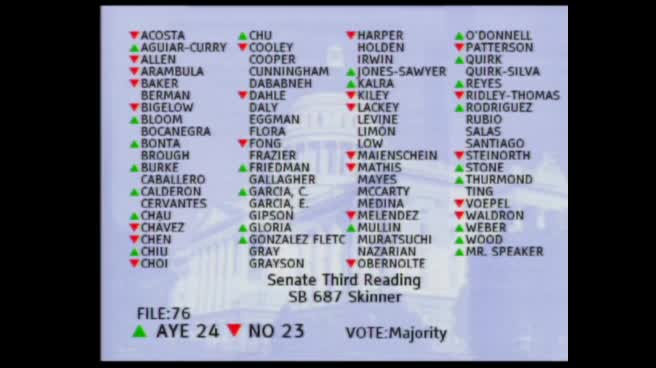 4MIN
Assembly Floor
 1H
Assembly Standing Committee on Appropriations
 48MIN
Senate Standing Committee on Appropriations
Bill Author

Bill Co-Author(s):