SB 410: Civil service: veterans’ hiring preference: active duty members.
- Session Year: 2017-2018
- House: Senate
- Latest Version Date: 2017-09-11
The State Civil Service Act prescribes a comprehensive civil service personnel system for the state and specifically provides certain preferences for veterans. The act grants to a person retired from the United States military, honorably discharged from active military duty with a service-connected disability, or honorably discharged from active duty eligibility for civil service examinations for which they meet the minimum qualifications for the classification. The act requires that, in evaluating minimum qualifications, related military experience be considered state civil service experience in a comparable class, based on the duties and responsibilities assigned. The act also requires that request for and proof of eligibility for the veterans preference be submitted by the veteran to the Department of Human Resources or the designated appointing authority conducting the employment examination, subject to rules promulgated by the Department of Human Resources in consultation with the Department of Veterans Affairs.
This bill would authorize the Department of Human Resources or the designated appointing authority, in order to facilitate a request for veterans preference from a currently serving active duty member of the United States Armed Forces, to use a signed document by the applicants commanding officer of the military to verify that applicants military service. The bill would require the department or designated authority, before the applicant enters state service with the benefit of veterans preference, to otherwise require the same proof of eligibility for veterans preference generally used.
The State Civil Service Act prescribes a comprehensive civil service personnel system for the state and specifically provides certain preferences for veterans. The act grants to a person retired from the United States military, honorably discharged from active military duty with a service-connected disability, or honorably discharged from active duty eligibility for civil service examinations for which they meet the minimum qualifications for the classification. The act requires that, in evaluating minimum qualifications, related military experience be considered state civil service experience in a comparable class, based on the duties and responsibilities assigned. The act also requires that request for and proof of eligibility for the veterans preference be submitted by the veteran to the Department of Human Resources or the designated appointing authority conducting the employment examination, subject to rules promulgated by the Department of Human Resources in consultation with the Department of Veterans Affairs.
This bill would authorize the Department of Human Resources or the designated appointing authority authority, in order to facilitate a request for veterans preference from a currently serving active duty member of the United States Armed Forces, to use a signed document by the applicants commanding officer of the military to verify that applicants military service. The bill would require the department or designated authority, before the applicant enters state service with the benefit of veterans preference, to otherwise require the same proof of eligibility for veterans preference generally used.
The State Civil Service Act prescribes a comprehensive civil service personnel system for the state and specifically provides certain preferences for veterans. The act grants to a person retired from the United States military, honorably discharged from active military duty with a service-connected disability, or honorably discharged from active duty eligibility for civil service examinations for which they meet the minimum qualifications for the classification. The act requires that, in evaluating minimum qualifications, related military experience be considered state civil service experience in a comparable class, based on the duties and responsibilities assigned. The act also requires that request for and proof of eligibility for the veterans preference be submitted by the veteran to the Department of Human Resources or the designated appointing authority conducting the employment examination, subject to rules promulgated by the Department of Human Resources in consultation with the Department of Veterans Affairs.
This bill would authorize the Department of Human Resources or the designated appointing authority to use a signed document by the applicants commanding officer of the military to verify that applicants military service.
The State Civil Service Act contains various provisions establishing preferences for the appointment of veterans. The act requires that in making appointments to positions performing the duties of disabled veterans outreach program representatives appointments be made in the following order of preference: (1) any disabled veteran and (2) any veteran.This bill would make nonsubstantive changes to this preference provision.The State Civil Service Act contains various provisions establishing preferences for the appointment of veterans. The act requires that in making appointments to positions performing the duties of disabled veterans outreach program representatives appointments be made in the following order of preference: (1) any disabled veteran and (2) any veteran.
This bill would make nonsubstantive changes to this preference provision.
(a)Request for and proof of eligibility for veterans preference shall be submitted by the veteran to the department or designated appointing authority conducting the employment examination. The procedures and time of filing the request shall be subject to rules promulgated by the department, in consultation with the Department of Veterans Affairs.
(b)Subject to rules promulgated by the department pursuant to subdivision (a), in order to facilitate a request for veterans preference from a currently serving active duty member of the United States Armed Forces, the department or designated appointing authority may use a document signed by an applicants commanding officer of the military to verify that applicants military service. The department or designated appointing authority, before the applicant enters state service with the benefit of the veterans preference, shall require the same proof of eligibility for veterans preference used for veterans under subdivision (a).
REVISIONS: HeadingLines 2, 3, and 4.(a)Request for and proof of eligibility for veterans preference shall be submitted by the veteran to the department or designated appointing authority conducting the employment examination. The procedures and time of filing the request shall be subject to rules promulgated by the department, in consultation with the Department of Veterans Affairs.
(b)Subject to rules promulgated by the department pursuant to subdivision (a), the department or designated appointing authority may use a document signed by an applicants commanding officer of the military to verify that applicants military service.
SECTION 1.Section 18979 of the Government Code is amended to read:18979.(a)In making appointments to positions performing the duties of disabled veterans outreach program representatives in the disabled veterans outreach program or a successor program of the Employment Development Department, appointments shall be made in the following order of preference:(1)Any disabled veteran.(2)Any veteran.(b)For purposes of this section, disabled veteran and veteran have the same meaning as those terms are defined in Section 4211 of Title 38 of the United States Code.(c)A person who does not meet the criteria specified in subdivision (a) shall not be appointed to the position of disabled veterans outreach program representative.(a)In making appointments to positions performing the duties of disabled veterans outreach program representatives in the disabled veterans outreach program or a successor program of the Employment Development Department, appointments shall be made in the following order of preference:
(1)Any disabled veteran.
(2)Any veteran.
(b)For the purposes of this section, disabled veteran and veteran have the same meaning as those terms are defined in Section 4211 of Title 38 of the United States Code.
(c)A person who does not meet the criteria specified in subdivision (a) shall not be appointed to the position of disabled veterans outreach program representative.
|
Date
|
Status
|
|---|---|
| Sep 11, 2017 | Chaptered by Secretary of State. Chapter 237, Statutes of 2017. |
| Sep 11, 2017 | Approved by the Governor. |
| Aug 30, 2017 | Enrolled and presented to the Governor at 3 p.m. |
| Aug 24, 2017 | In Senate. Ordered to engrossing and enrolling. |
| Aug 24, 2017 | Read third time. Passed. Ordered to the Senate. |
| Jul 20, 2017 | Read second time. Ordered to consent calendar. |
| Jul 19, 2017 | From committee: Do pass. Ordered to consent calendar. (Ayes 16. Noes 0.) (July 19). |
| Jul 6, 2017 | From committee: Do pass and re-refer to Com. on APPR. (Ayes 7. Noes 0.) (July 6). Re-referred to Com. on APPR. |
| Jun 30, 2017 | Coauthors revised. |
| Jun 28, 2017 | From committee: Do pass and re-refer to Com. on P.E., R., & S.S. (Ayes 9. Noes 0.) (June 27). Re-referred to Com. on P.E., R., & S.S. |
| Jun 5, 2017 | Referred to Coms. on V.A. and P.E., R., & S.S. |
| May 23, 2017 | In Assembly. Read first time. Held at Desk. |
| May 22, 2017 | Read third time. Passed. (Ayes 37. Noes 0. Page 1137.) Ordered to the Assembly. |
| May 16, 2017 | Read second time. Ordered to third reading. |
| May 15, 2017 | From committee: Do pass. (Ayes 7. Noes 0. Page 1080.) (May 15). |
| May 4, 2017 | Set for hearing May 15. |
| May 3, 2017 | May 8 hearing postponed by committee. |
| May 1, 2017 | Set for hearing May 8. |
| Apr 26, 2017 | From committee: Do pass and re-refer to Com. on APPR. with recommendation: To consent calendar. (Ayes 7. Noes 0. Page 830.) (April 25). Re-referred to Com. on APPR. |
| Apr 17, 2017 | From committee with author's amendments. Read second time and amended. Re-referred to Com. on V.A. |
| Apr 7, 2017 | Set for hearing April 25. |
| Mar 29, 2017 | Re-referred to Com. on V.A. |
| Mar 20, 2017 | From committee with author's amendments. Read second time and amended. Re-referred to Com. on RLS. |
| Feb 23, 2017 | Referred to Com. on RLS. |
| Feb 16, 2017 | From printer. May be acted upon on or after March 18. |
| Feb 15, 2017 | Introduced. Read first time. To Com. on RLS. for assignment. To print. |
|
Date
|
Description
|
Location
|
Votes
|
|
|---|---|---|---|---|
| Aug 24, 2017 | SB 410 Nguyen Consent Calendar Second Day Regular Session | Assembly Floor |
Passed |
|
| Jul 19, 2017 | Do pass. To Consent Calendar. | Assembly Standing Committee on Appropriations |
Passed |
|
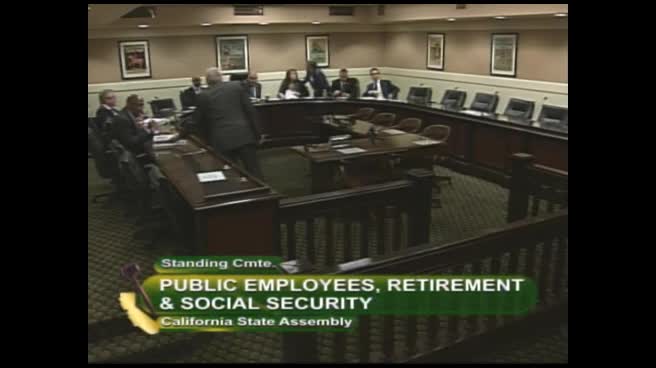
| Jul 6, 2017 | Do pass and be re-referred to the Committee on [Appropriations] | Assembly Standing Committee on Public Employees, Retirement, and Social Security |
Passed |
|
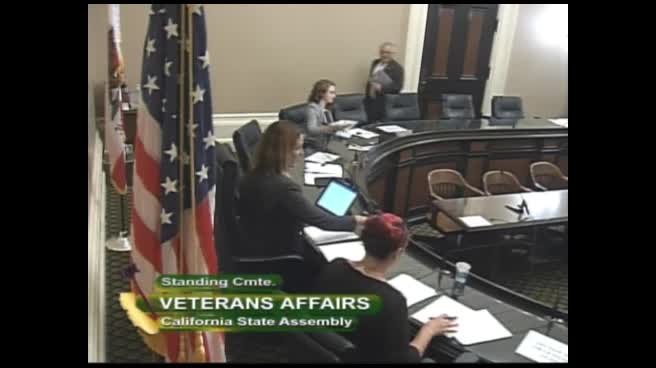
| Jun 27, 2017 | Favorable (Government Operations & Technology Appropriations Subcommittee) | Assembly Standing Committee on Veterans Affairs |
Passed |
|
| May 22, 2017 | Senate 3rd Reading SB410 Nguyen et al. | Senate Floor |
Passed |
|
| May 15, 2017 | Do pass | Senate Standing Committee on Appropriations |
Passed |
|
| Apr 25, 2017 | Do pass, but first be re-referred to the Committee on [Appropriations] with the recommendation: To Consent Calendar | Senate Standing Committee on Veterans Affairs |
Passed |
This list shows positions taken on this bill by organizations on the date displayed, which is linked to the original source.
Positions by individuals are not included.
Date of Hearing: July 19, 2017
ASSEMBLY COMMITTEE ON APPROPRIATIONS
Lorena Gonzalez Fletcher, Chair
SBPCA Bill Id:SB 410
Author:(Nguyen) – As Amended Ver:April 17, 2017
Policy Committee: | Veterans Affairs | Vote: | 9 - 0 |
Public Employees, Retirement/Soc Sec | 7 - 0 | ||
|
|
Urgency: No State Mandated Local Program: No Reimbursable: No
SUMMARY:
This bill modifies the State Civil Service Act for the purpose of assisting active-duty members of the United States Armed Forces in applying for veterans' preference in state hiring. Specifically, this bill:
- Authorizes the California Department of Human Resources (CalHR) or the designated appointing authority to use a document signed by the applicant’s commanding officer of the military to verify the applicant’s military service.
- Requires CalHR, before an active-duty applicant enters state service with the benefit of the veterans’ preference, to require a DD-214 military discharge form as proof of eligibility for veterans’ preference.
FISCAL EFFECT:
- One-time costs, likely less than $50,000 to CalHR for programming to track the applicants and their documents. (GF)
- Minor ongoing costs for additional administrative time to verify documents when appropriate. (GF)
COMMENTS:
- Purpose. According to the author, "Allowing servicemen and servicewomen to apply for Veterans' Preference prior to their official separation from the military would potentially provide an opportunity to more easily obtain civilian employment immediately upon separation. This bill would allow veterans, prior to separating from the military, to provide a signed document by a commanding officer that verifies his or her military service to CalHR, allowing veterans to apply for a Veterans’ Preference earlier. Veterans would still need to submit their DD-214 to verify their honorable discharge, when it is received, therefore, not ultimately increasing the number of veterans eligible for veterans preference. However, at this time, it is unknown if this bill would cause an increase in the number of veterans who apply for Veterans' Preference due to a potentially more efficient job application process."
- Background. Under California’s State Civil Service Act, honorably discharged veterans applying for state jobs can apply for and obtain a veterans' hiring preference, which places them in the top rank for state job examinations. Eligibility for a veterans' preference requires, among other things, a copy of the veteran’s DD-214 military discharge form which shows enlistment and discharge dates. A DD-214 is only provided upon official separation from the military.
However, existing law allows any currently serving, active duty member of the United States Armed Forces to take any state civil service exam up to 12 months prior to discharge. If this person passes the examination and is placed on an employment list, and is honorably discharged (verified by a DD-214 form) within 12 months after the establishment of the employment list, he or she still qualifies for veteran's preference retroactively to the time the employment list was established.
Upon discharge, a veteran must wait for the DD-214 form to be processed by CalHR before obtaining a veterans' preference. This could potentially result a delay in the ability of the veteran to find a state civilian job immediately following separation from the military, if they have not already taken a state civil service exam.
This bill seeks to expedite this process by allowing CalHR to begin the veterans' preference process with an alternative document received prior to discharge, and to use the DD 214 only as final verification of eligibility.
- Pilot Program. CalHR is currently conducting a pilot program to perform direct hiring into state service from Camp Pendleton; Marines are hired immediately on their discharge, for certain targeted employment classifications. CalHR is already using a similar process to the one proposed in the bill. CalHR indicates they will likely have "lessons learned" from the pilot by the end of this year.
- Prior Legislation. AB 372 (Eggman), Chapter 75, Statutes of 2014, provides that whenever any veteran, widow or widower of a veteran, or spouse of a 100% disabled veteran achieves a passing score on an entrance examination, he or she is required to be ranked in the top rank of the resulting eligibility list, except if the veteran was dishonorably discharged or released.
Analysis Prepared by: Jennifer Swenson / APPR. / (916) 319-2081
Date of Hearing: July 6, 2017
ASSEMBLY COMMITTEE ON PUBLIC EMPLOYEES, RETIREMENT, AND SOCIAL SECURITY
Freddie Rodriguez, Chair
SBPCA Bill Id:SB 410
Author:(Nguyen) – As Amended Ver:April 17, 2017
SENATE VOTE: 37-0
SUBJECT: Civil service: veterans’ hiring preference: active duty members
SUMMARY: Modifies the State Civil Service Act for the purpose of assisting active-duty members of the United States Armed Forces in applying for veterans preference in state hiring. Specifically, this bill:
- Authorizes the California Department of Human Resources (CalHR) or the designated appointing authority to use a document signed by the applicant’s commanding officer of the military to verify the applicant’s military service.
- Requires, before an active-duty applicant enters state service with the benefit of the veterans’ preference, the same proof of eligibility for veterans’ preference as used to verify the eligibility of United States military veterans.
EXISTING LAW:
- Provides, pursuant to Section 1 of Article VII of the California Constitution, that the civil service includes every officer and employee of the state except as otherwise provided, and that in the civil service, permanent appointment and promotion be made under a general system based on merit ascertained by competitive examination.
- Provides, pursuant to Section 6 of Article VII of the California Constitution, that the Legislature may provide preferences for veterans and their surviving spouses.
- Provides, pursuant to Section 1 of Article VII of the California Constitution, that the civil service includes every officer and employee of the state except as otherwise provided, and that in the civil service, permanent appointment and promotion be made under a general system based on merit ascertained by competitive examination.
- Requires, pursuant to the Civil Service Act, state employment to be based on the merit principle; that appointments are based upon merit and fitness ascertained through practical and competitive examination; and that tenure of civil service employment is subject to good behavior.
- Establishes provisions that provide additional exam points for veterans, disabled veterans, spouses of 100% disabled veterans, and widows and widowers of veterans who obtain passing scores on state civil service exams.
- Provides, for purposes of the Civil Service Act, “veteran” to mean any person who has served full time in the armed forces in time of national emergency or state military emergency or during any expedition of the armed forces and who has been discharged or released under conditions other than dishonorable.
- Requires that the request for and proof of eligibility for the veterans’ preference be submitted by the veteran to CalHR or the designated appointing authority conducting the employment examination, subject to rules promulgated by CalHR in consultation with the California Department of Veterans Affairs.
- Provides that any currently serving, active-duty member of the United States Armed Forces who successfully passes any state civil service examination, whose name as a result is placed on an employment list and who, within 12 months after the establishment of the employment list for which the examination was given, qualifies for veterans’ preference, shall be allowed the appropriate veterans’ credit to the same effect as though he or she were entitled to that credit at the time the employment list was established.
FISCAL EFFECT: According to the Senate Appropriations Committee, this bill will result in one-time costs, likely less than $50,000 (General Fund) to the CalHR for programming to track the applicants and their documents, and minor ongoing costs (also General Fund) for additional administrative time to verify documents when appropriate.
COMMENTS: Instead of granting veterans’ preference for state civil service only to individuals who have been discharged or separated from the United States Armed Forces, as specified, this bill seeks to provide an opportunity for those who are presently serving to also receive the benefit prior to discharge or separation.
For active-duty members who seek to become a part of the state civil service workforce upon discharge or separation, this bill will assist in the timely transition of employment, and could help facilitate, generally, the ease of transition from military to civilian life.
According to the author, while veterans wait to obtain their DD Form 214 discharge or separation documents, under this bill, they can begin applying for state civil service jobs with a veterans’ preference.
- Dual Referral
This bill was recently heard and passed by the Assembly Veterans Affairs Committee (9-0).
- Comments by the Assembly Veterans Affairs Committee
According to the Assembly Veterans Affairs Committee, the CalHR is currently conducting a pilot program to perform direct hiring into state service from Marine Corps Base Camp Pendleton. For certain targeted classifications, United States Marines are immediately hired upon discharge. Thus, in practical effect, the CalHR is already using a similar process as proposed by this bill.
- Veterans’ Preference
Under California’s State Civil Service Act, veterans’ preference in state employment can be applied to a veteran’s eligibility for qualifying under open and open, nonpromotional examinations. The relevant examination bulletin will indicate if the examination being administered qualifies for veterans’ preference. To apply for preference, an applicant must submit the following to CalHR: a completed Veterans’ Preference Application Form (CalHR Form 1093), and a legible copy of the veteran’s DD Form 214 military discharge form, showing enlistment and discharge dates, branch of service, net active service, social security number, birthdate, and character of service (i.e., honorable, etc.).
REGISTERED SUPPORT / OPPOSITION:
Support
American G.I. Forum of California
American Legion, Department of California
AMVETS, Department Of California
California Association of County Veterans Service Officers
California State Commanders Veterans Council
Military Officers Association of America, California Council of Chapters
Vietnam Veterans of America, California State Council
Opposition
None on file.
Analysis Prepared by: Michael Bolden / P.E.,R., & S.S. / (916) 319-3957
Date of Hearing: June 27, 2017
ASSEMBLY COMMITTEE ON VETERANS AFFAIRS
Jacqui Irwin, Chair
SBPCA Bill Id:SB 410
Author:(Nguyen) – As Amended Ver:April 17, 2017
SENATE VOTE: 37-0
SUBJECT: Civil service: veterans’ hiring preference: active duty members
SUMMARY: Authorizes the Department of Human Resources (CalHR) to use a document signed by an applicant’s commanding officer of the military to verify that applicant’s military service, and before the applicant enters state service, would require CalHR to require a DD Form 214 as proof of eligibility of veterans’ preference.
EXISTING LAW:
- Provides for the State Civil Service Act, which prescribes a comprehensive civil service personnel system for the state, which provides certain preferences for veterans.
- Requires that the request for and proof of eligibility for the veterans’ preference be submitted by the veteran to CalHR or the designated appointing authority conducting the employment examination, subject to rules promulgated by CalHR in consultation with the California Department of Veterans Affairs.
- Provides that any currently serving, active duty member of the United States Armed Forces who successfully passes any state civil service examination, whose name as a result is placed on an employment list, and who, within 12 months after the establishment of the employment list for which the examination was given, qualifies for veterans’ preference, shall be allowed the appropriate veterans’ credit to the same effect as though he or she were entitled to that credit at the time the employment list was established.
FISCAL EFFECT: According to Senate Appropriations:
- One-time costs, likely less than $50,000 to CalHR for programming to track the applicants and their documents. (GF)
- Minor ongoing costs for additional administrative time to verify documents when appropriate. (GF)
COMMENTS:
According to the author:
Allowing servicemen and servicewomen to apply for Veteran’s Preference prior to their official separation from the military would potentially provide an opportunity to more easily obtain civilian employment immediately upon separation. This bill would allow veterans, prior to separating from the military, to provide a signed document by a commanding officer that verifies his or her military service to CalHR, allowing veterans to apply for a Veterans’ Preference earlier. Veterans would still need to submit their DD-214 to verify their honorable discharge, when it is received, therefore, not ultimately increasing the number of veterans eligible for veterans preference. However, at this time, it is unknown if this bill would cause an increase in the number of veterans who apply for Veteran’s Preference due to a potentially more efficient job application process. An increase in applicants due to this bill should be absorbable within CalHR’s current practices. CalHR would potentially have to increase administrative time to later verify DD-214 documents if an applicant qualifies for the employment position. If the honorable discharge is not verified, additional administrative time could be expended to continue the applicant search for the position. Unless there are numerous instances in which an honorable discharge is not verified, these activities should also be absorbable.
CalHR is currently conducting a pilot program to perform direct hiring into state service from MCB Camp Pendleton; Marines are hired “immediately” on their discharge, for certain targeted employment classifications. CalHR is already using a similar process as the one proposed in the bill.
Policy Question:
Does the bill process if mandated translate out of the pilot program?
The pilot program is targeted hiring, the hiring authority knows that the Marines are not yet eligible to be hired and will not be until their discharge. In other state examinations, the hiring authority presumably is attempting to make a hire promptly. How will it work if the hiring authority is not able to hire someone on the list because he or she is legally unable to accept until discharge? Staff recommends the author consult with CalHR.
REGISTERED SUPPORT / OPPOSITION:
Support
American G.I. Forum of California
American Legion- Department of California
AMVETS- Department of California
California Association of County Veterans Service Officers
California State Commanders Veterans Council
Military Officers Association of America, California Council of Chapters
Vietnam Veterans of America- California State Council
Opposition
None on File.
Analysis Prepared by: John Spangler / V.A. / (916) 319-3550
Office of Senate Floor Analyses (916) 651-1520 Fax: (916) 327-4478 | SB |
THIRD READING
Bill No: SB 410
:
SENATE VETERANS AFFAIRS COMMITTEE: 7-0, 4/25/17
AYES: Newman, Nielsen, Dodd, Hueso, Nguyen, Roth, Wilk
SENATE APPROPRIATIONS COMMITTEE: 7-0, 5/15/17
AYES: Lara, Bates, Beall, Bradford, Hill, Nielsen, Wiener
DIGEST:
This bill modifies the State Civil Service Act – for the purpose of assisting active-duty military personnel in applying for veterans preference in state hiring – by authorizing the California Department of Human Resources (CalHR) or the designated appointing authority to use a document signed by the applicant’s commanding officer of the military to verify the applicant’s military service in lieu of a DD Form 214.
Existing law:
- Includes the State Civil Service Act, which prescribes a comprehensive state civil service personnel system, including certain preferences for veterans.
- Requires that the request for and proof of eligibility for the veterans’ preference be submitted by the veteran to CalHR or the designated appointing authority conducting the employment examination, subject to rules promulgated by CalHR in consultation with the California Department of Veterans Affairs.
- Provides that any currently serving, active duty member of the United States Armed Forces who successfully passes any state civil service examination, whose name as a result is placed on an employment list, and who, within 12 months after the establishment of the employment list for which the examination was given, qualifies for veterans’ preference, shall be allowed the appropriate veterans’ credit to the same effect as though he or she were entitled to that credit at the time the employment list was established.
This bill modifies the State Civil Service Act – for the purpose of assisting active-duty military personnel in applying for veterans preference in state hiring – by authorizing the CalHR or the designated appointing authority to use a document signed by the applicant’s commanding officer of the military to verify the applicant’s military service in lieu of a DD Form 214.
Background
- Veterans’ Preference. Under California’s State Civil Service Act, veterans’ preference in state employment can be applied to a veteran’s eligibility for qualifying under open and open, non-promotional examinations. The relevant examination bulletin will indicate if the examination being administered qualifies for veterans’ preference.
Eligibility for veterans’ preference in State civil service open and open, non-promotional entrance examinations requires the persons:
- To have never achieved permanent civil service status; AND
- To have served in the U.S. Armed Forces, as defined in Government Code Section 18540; AND
- To qualify as veterans, as defined in Government Code Section 18540.4.
The persons are entitled to have veterans’ preference applied to their list placement as described below, provided that they achieve a passing score in the overall examination.
Per CalHR, as of January 2, 2014, veterans’ preference is awarded as follows:
- Any veteran, widow or widower of a veteran, or spouse of a 100-percent disabled veteran, who achieves a passing score in an entrance examination, shall be ranked in the top rank of the resulting eligibility list. Any veteran who has been dishonorably discharged or released is not eligible for veterans’ preference.
- An entrance examination is defined as any open competitive examination.
- Veterans’ preference is no longer granted once a person achieves permanent civil service status.
To apply for preference, an applicant must submit to CalHR the following:
- A completed Veterans’ Preference Application Form (CalHR Form 1093).
- A legible copy of the veteran’s DD Form 214 military discharge form, showing enlistment and discharge dates, branch of service, net active service, social security number, birthdate, and character of service (honorable, etc.).
- Military Separation Documents. Typically, the military issues a Report of Separation, whenever a member of the United States Armed Forces concludes a period of qualifying active duty service. The Report of Separation contains information normally needed to verify military service for veterans’ benefits, retirement, employment and membership in veterans' organizations. Since 1950, the Report of Separation form issued is the DD Form 214 (Certificate of Release or Discharge from Active Duty.) Information shown on the DD Form 214 contains a wide variety of information regarding the veteran’s military service, including information that could document eligibility for certain veterans benefits, such as:
- Date and place of entry into active duty.
- Date and place of release from active duty.
- Decorations, medals, badges, citations and campaign awards received.
- Total creditable service.
- Separation information (date and type of separation, character of service, authority and reason for separation, and separation).
- Policy Focus on Needs of Recently Separated Veterans. According to a recent Rand Corporation study (“Why is Veteran Employment So High?” 3/3/17):
- Young veterans are more likely to be unemployed than their non-veteran peers, but this gap closes quickly with age and time following discharge.
- The best available evidence supports the hypothesis that relatively high rates of veteran unemployment reflect the fact that veterans, especially younger veterans, are more likely to have recently separated from a job – namely, military service. Consequently, they are more likely to be engaged in job search, which takes time, especially during periods of slow economic growth.
The Rand study recommends that “policymakers who wish to address veteran unemployment should focus attention on policies and programs that facilitate more efficient job search.”
FISCAL EFFECT: Appropriation: Fiscal Com.: Local:
According to the Senate Appropriations Committee:
- One-time costs, likely less than $50,000 to CalHR for programming to track the applicants and their documents. (General Fund)
- Minor ongoing costs for additional administrative time to verify documents when appropriate. (General Fund)
American G.I. Forum of California
American Legion – Department of California
AMVETS – Department of California
California Association of County Veterans Service Officers
California State Commanders Veterans Council
Military Officers Association of America, California Council of Chapters
Vietnam Veterans of America – California State Council
OPPOSITION: (Verified 5/16/17)
None received
5/17/17 9:53:31
**** END ****
SENATE COMMITTEE ON APPROPRIATIONS
Senator Ricardo Lara, Chair
2017 - 2018 Regular Session
SB 410 (Nguyen) - Civil service: veterans’ hiring preference: active duty members
Version: April 17, 2017 | Policy Vote: V.A. 7 - 0 |
Urgency: No | Mandate: No |
Hearing Date: May 15, 2017 | Consultant: Debra Cooper |
This bill does not meet the criteria for referral to the Suspense File.
Bill Summary:
SB 410 would modify the State Civil Service Act by authorizing the California Department of Human Resources (CalHR) or the designated appointing authority to use a signed document by the applicant’s commanding officer of the military to verify the applicant’s military service in lieu of a DD Form 214 (DD-214).
Fiscal Impact:
- One-time costs, likely less than $50,000 to CalHR for programming to track the applicants and their documents. (GF)
- Minor ongoing costs for additional administrative time to verify documents when appropriate. (GF)
Background:
Under the State Civil Service Act, veterans’ preference in state employment can be applied to a veteran’s eligibility for qualifying under open and open, non-promotional examinations. Eligibility for veterans’ preference requires, among other things, a copy of the veteran’s DD-214 military discharge form which shows enlistment and discharge dates. A DD-214 is only provided upon official separation from the military. Consequently, a veteran would need to wait additional months to obtain a Veteran’s Preference, thereby resulting in an additional delay and slowing down their ability to find a civilian job immediately following their separation from the military.
Proposed Law:
This bill would authorize CalHR to use a document signed by an applicant’s commanding officer of the military to verify that applicant’s military service, and before the applicant enters state service, would require CalHR to require a DD Form 214 as proof of eligibility of veterans’ preference.
Related Legislation:
AB 372 (Eggman, Chapter 75, Statutes of 2014) provides that whenever any veteran, widow or widower of a veteran, or spouse of a 100% disabled veteran achieves a passing score on an entrance examination, he or she is required to be ranked in the top rank of the resulting eligibility list, except if the veteran was dishonorably discharged or released.
Staff Comments:
Allowing servicemen and servicewomen to apply for Veteran’s Preference prior to their official separation from the military would potentially provide an opportunity to more easily obtain civilian employment immediately upon separation. This bill would allow veterans, prior to separating from the military, to provide a signed document by a commanding officer that verifies his or her military service to CalHR, allowing veterans to apply for a Veterans’ Preference earlier. Veterans would still need to submit their DD-214 to verify their honorable discharge, when it is received, therefore, not ultimately increasing the number of veterans eligible for veterans preference. However, at this time, it is unknown if this bill would cause an increase in the number of veterans who apply for Veteran’s Preference due to a potentially more efficient job application process. An increase in applicants due to this bill should be absorbable within CalHR’s current practices. CalHR would potentially have to increase administrative time to later verify DD-214 documents if an applicant qualifies for the employment position. If the honorable discharge is not verified, additional administrative time could be expended to continue the applicant search for the position. Unless there are numerous instances in which an honorable discharge is not verified, these activities should also be absorbable.
-- END --
SENATE COMMITTEE ON VETERANS AFFAIRS
Senator Josh Newman, Chair
2017 - 2018 Regular
Bill No: SB 410 Hearing Date: 4/25/17
Author: | |||
Version: | 4/17/17 Amended | ||
Urgency: | No | Fiscal: | Yes |
Consultant: | Wade Cooper Teasdale | ||
Subject: Civil service: veterans’ hiring preference
DESCRIPTION
Summary:
Modifies the State Civil Service Act – for the purpose of assisting active-duty military personnel in applying for veterans preference in state hiring – by authorizing the California Department of Human Resources (CalHR) or the designated appointing authority to use a signed document by the applicant’s commanding officer of the military to verify the applicant’s military service in lieu of a DD Form 214.
Existing law:
- Provides for the State Civil Service Act, which prescribes a comprehensive civil service personnel system for the state, which provides certain preferences for veterans.
- Requires that the request for and proof of eligibility for the veterans’ preference be submitted by the veteran to CalHR or the designated appointing authority conducting the employment examination, subject to rules promulgated by CalHR in consultation with the California Department of Veterans Affairs.
- Provides that any currently serving, active duty member of the United States Armed Forces who successfully passes any state civil service examination, whose name as a result is placed on an employment list, and who, within 12 months after the establishment of the employment list for which the examination was given, qualifies for veterans’ preference, shall be allowed the appropriate veterans’ credit to the same effect as though he or she were entitled to that credit at the time the employment list was established.
This bill:
Modifies the State Civil Service Act – for the purpose of assisting active-duty military personnel in applying for veterans preference in state hiring – by authorizing the CalHR or the designated appointing authority to use a signed document by the applicant’s commanding officer of the military to verify the applicant’s military service in lieu of a DD Form 214.
BACKGROUND
Veterans’ Preference. Under California’s State Civil Service Act, veterans’ preference in state employment can be applied to a veteran’s eligibility for qualifying under open and open, non-promotional examinations. The relevant examination bulletin will indicate if the examination being administered qualifies for veterans’ preference.
Eligibility for veterans’ preference requires competitors in State civil service open and open, non-promotional entrance examinations requires the persons:
- To have never achieved permanent civil service status; AND
- To have served in the U.S. Armed Forces, as defined in Government Code Section 18540; AND
- To qualify as veterans, as defined in Government Code Section 18540.4.
The persons are entitled to have veterans’ preference applied to their list placement as described below, provided that they achieve a passing score in the overall examination.
According to CalHR, as of January 2, 2014, veterans’ preference is awarded as follows:
- Any veteran, widow or widower of a veteran, or spouse of a 100-percent disabled veteran, who achieves a passing score in an entrance examination, shall be ranked in the top rank of the resulting eligibility list. Any veteran who has been dishonorably discharged or released is not eligible for veterans’ preference.
- An entrance examination is defined, under the law, as any open competitive examination.
- Veterans’ preference is no longer granted once a person achieves permanent civil service status.
To apply for veterans’ preference, an applicant must submit to CalHR the following:
- A completed Veterans’ Preference Application Form (CalHR Form 1093).
- A legible copy of the veteran’s DD Form 214 military discharge form, showing enlistment and discharge dates, branch of service, net active service, social security number, birthdate, and character of service (honorable, etc.).
Military Separation Documents. Typically, the military issues a Report of Separation, whenever a member of the United States Armed Forces concludes a period of qualifying active duty service. The Report of Separation contains information normally needed to verify military service for veterans’ benefits, retirement, employment and membership in veterans' organizations. Since 1950, the Report of Separation form issued is the DD Form 214 (Certificate of Release or Discharge from Active Duty.) Information shown on the DD Form 214 includes the service member's:
- Date and place of entry into active duty.
- Home address at time of entry.
- Date and place of release from active duty.
- Home address after separation.
- Last duty assignment and rank.
- Military job specialty.
- Military education.
- Decorations, medals, badges, citations and campaign awards received.
- Total creditable service.
- Foreign service credited.
- Separation information (date and type of separation, character of service, authority and reason for separation and separation and reenlistment eligibility codes).
On January 1, 1950, the military services universally adopted the DD Form 214, which replaced a variety of similar, but nonstandardized, service-specific Report of Separation forms.
A recent Rand Corporation Study[1] found:
- Young veterans are more likely to be unemployed than their non-veteran peers, but this gap closes quickly with age and time following separation from the military.
- The best available evidence supports the hypothesis that relatively high rates of veteran unemployment reflect the fact that veterans, especially younger veterans, are more likely to have recently separated from a job – namely, military service. Consequently, they are more likely to be engaged in job search, which takes time, especially during periods of slow economic growth.
The Rand paper recommends that “policymakers who wish to address veteran unemployment should focus attention on policies and programs that facilitate more efficient job search.”
COMMENT
Committee Comments:
Policy benefits: For many persons separating from the military, the transition back to civilian life is rife with challenges, and as affirmed by the Rand study, one of the greatest is securing adequate post-military employment. Proactive service members often begin their transition by engaging in job-seeking many months prior to official separation.
SB 410 directly addresses the Rand Corporation recommendation to adopt “policies and programs that facilitate efficient job search.” For individuals seeking state employment in California, the bill would allow job-seeking to be done prior to actual separation from active duty. For these individuals, at least, this potentially reduces the time being unemployed following discharge from active duty.
Because the DD Form 214 is not issued until service members formally separate from active service, that form is not available for currently serving personnel to satisfy CalHR’s documentary requirement that it be used to verify eligibility as part of applying for veterans’ preference.
SB 410 provides a solution by authorizing CalHR’s documentary requirement to be satisfied by a document, signed by the active duty applicant’s commanding officer and verifying the applicant’s military service.
POSITIONS
Sponsor: Author.
Support:
American G.I. Forum of California
American Legion – Department of California
AMVETS – Department of California
California Association of County Veterans Service Officers (CACVSO)
California State Commanders Veterans Council
Military Officers Association of America, California Council of Chapters (MOAA)
Vietnam Veterans of America – California State Council
Oppose: None received.
-- END --
Rand Corporation, “Why is Veteran Employment So High?” March 3, 2017, pg. 2. ↑
Discussed in Hearing
 4MIN
Assembly Standing Committee on Public Employees, Retirement, and Social Security
 3MIN
Assembly Standing Committee on Veterans Affairs
 1MIN
Senate Floor
 1MIN
Senate Standing Committee on Appropriations
Bill Author

Bill Co-Author(s):