SB 419: Legislature: Whistleblower protection and retaliation prevention.
- Session Year: 2017-2018
- House: Senate
- Latest Version Date: 2018-09-30
Existing law, the Legislative Employee Whistleblower Protection Act, imposes criminal and civil liability on a Member of the Legislature or legislative employee, as defined, who interferes with, or retaliates against, a legislative employees exercise of the right to make a protected disclosure, which is defined as a good faith allegation made by a legislative employee to specified entities that a Member of the Legislature or a legislative employee has engaged in, or will engage in, activity that may constitute a violation of law or a violation of a legislative standard of conduct.
This bill would define protected disclosure for purposes of that act to also include a complaint made at the request of a legislative employee and a complaint made against a nonemployee in specified circumstances.
Existing law, the California Fair Employment and Housing Act (FEHA), protects and safeguards the right and opportunity of all persons to generally seek, obtain, and hold employment without discrimination, abridgment, or harassment on account of enumerated protected categories. Existing law also precludes an employer, labor organization, employment agency, or person from discharging, expelling, or otherwise discriminating against any person because the person has opposed any practices forbidden under FEHA or because the person has filed a complaint, testified, or assisted in any FEHA proceeding.
Existing law, the Unruh Civil Rights Act, states that all people in California are entitled to the full and equal accommodations, advantages, facilities, privileges, or services in all business establishments, no matter their sex, race, color, religion, ancestry, national origin, disability, medical condition, genetic information, marital status, sexual orientation, citizenship, primary language, or immigration status. Existing law establishes a cause of action for violations of that act. Existing law also separately establishes liability for sexual harassment if a plaintiff proves specified elements, including, among other things, that there is a business, service, or professional relationship between the plaintiff and defendant.
This bill would declare that neither house of the Legislature may retaliate against a legislative advocate or employee, as defined, because that person has opposed any practices forbidden under the above provisions, or filed a complaint, testified, or assisted in any proceeding relating to a complaint of harassment under those provisions. This bill would impose civil liability for a violation of that prohibition. This bill would also require each house of the Legislature to maintain a record of each harassment complaint made to that house for a period of at least 12 years after the complaint is made.
This bill would declare that it is to take effect immediately as an urgency statute.
Existing law, the California Fair Employment and Housing Act (FEHA), protects and safeguards the right and opportunity of all persons to generally seek, obtain, and hold employment without discrimination, abridgment, or harassment on account of enumerated protected categories. Existing law also precludes an employer, labor organization, employment agency, or person from discharging, expelling, or otherwise discriminating against any person because the person has opposed any practices forbidden under FEHA or because the person has filed a complaint, testified, or assisted in any FEHA proceeding.
Existing law, the Unruh Civil Rights Act, states that all people in California are entitled to the full and equal accommodations, advantages, facilities, privileges, or services in all business establishments, no matter their sex, race, color, religion, ancestry, national origin, disability, medical condition, genetic information, marital status, sexual orientation, citizenship, primary language, or immigration status. Existing law establishes a cause of action for violations of that act. Existing law also separately establishes liability for sexual harassment if a plaintiff proves specified elements, including, among other things, that there is a business, service, or professional relationship between the plaintiff and defendant.
This bill would declare that neither house of the Legislature may retaliate against a legislative advocate or employee, as defined, because that person has opposed any practices forbidden under the above provisions, or filed a complaint, testified, or assisted in any proceeding relating to a complaint of harassment under those provisions. This bill would impose civil liability for a violation of that prohibition. This bill would also require each house of the Legislature to maintain a record of each harassment complaint made to that house for a period of at least ten 12 years after the complaint is made.
This bill would declare that it is to take effect immediately as an urgency statute.
Existing law, the California Fair Employment and Housing Act (FEHA), protects and safeguards the right and opportunity of all persons to generally seek, obtain, and hold employment without discrimination, abridgment, or harassment on account of enumerated protected categories. Existing law also precludes an employer, labor organization, employment agency, or person from discharging, expelling, or otherwise discriminating against any person because the person has opposed any practices forbidden under FEHA or because the person has filed a complaint, testified, or assisted in any FEHA proceeding.
Existing law, the Unruh Civil Rights Act, states that all people in California are entitled to the full and equal accommodations, advantages, facilities, privileges, or services in all business establishments, no matter their sex, race, color, religion, ancestry, national origin, disability, medical condition, genetic information, marital status, sexual orientation, citizenship, primary language, or immigration status. Existing law establishes a cause of action for violations of that act. Existing law also separately establishes liability for sexual harassment if a plaintiff proves specified elements, including, among other things, that there is a business, service, or professional relationship between the plaintiff and defendant.
This bill would declare that neither house of the Legislature may retaliate against a legislative advocate or employee, as defined, because that person has opposed any practices forbidden under the above provisions, or filed a complaint, testified, or assisted in any proceeding relating to a complaint of harassment under those provisions. This bill would also require each house of the Legislature to maintain a record of each harassment complaint made to that house for a period of at least ten years after the complaint is made.
This bill would declare that it is to take effect immediately as an urgency statute.
Existing law, the California Fair Employment and Housing Act (FEHA), protects and safeguards the right and opportunity of all persons to generally seek, obtain, and hold employment without discrimination, abridgment, or harassment on account of sex, gender, gender identity, gender expression, or sexual orientation, among other enumerated protected categories. Existing law also precludes an employer, labor organization, employment agency, or person from discharging, expelling, or otherwise discriminating against any person because the person has opposed any practices forbidden under FEHA or because the person has filed a complaint, testified, or assisted in any FEHA proceeding.
Existing law, the Unruh Civil Rights Act, states that all people in California are entitled to the full and equal accommodations, advantages, facilities, privileges, or services in all business establishments, no matter their sex, race, color, religion, ancestry, national origin, disability, medical condition, genetic information, marital status, sexual orientation, citizenship, primary language, or immigration status. Existing law establishes a cause of action for violations of that act. Existing law also separately establishes liability for sexual harassment if a plaintiff proves specified elements, including, among other things, that there is a business, service, or professional relationship between the plaintiff and defendant.
This bill would declare as a statement of existing law that neither house of the Legislature may retaliate against a legislative advocate or employee, as defined, because that person has opposed any practices forbidden under FEHA, the above provisions, or filed a complaint, testified, or assisted in any proceeding relating to a complaint of harassment under FEHA. those provisions. This bill would also require each house of the Legislature to maintain a record of each harassment complaint made to that house on or after January 1, 2019, for a period of at least ten years after the complaint is made.
This bill would declare that it is to take effect immediately as an urgency statute.
Existing law, the California Fair Employment and Housing Act (FEHA), protects and safeguards the right and opportunity of all persons to generally seek, obtain, and hold employment without discrimination, abridgment, or harassment on account of sex, gender, gender identity, gender expression, or sexual orientation, among other protected categories. Existing law also precludes an employer, labor organization, employment agency, or person from discharging, expelling, or otherwise discriminating against any person because the person has opposed any practices forbidden under FEHA or because the person has filed a complaint, testified, or assisted in any FEHA proceeding.
This bill would declare as a statement of existing law that neither house of the Legislature may retaliate against a legislative advocate or employee, as defined, because that person has opposed any practices forbidden under FEHA, or filed a complaint, testified, or assisted in any proceeding relating to a complaint of harassment under FEHA. This bill would also require each house of the Legislature to maintain a record of each harassment complaint made to that house on or after January 1, 2019, for a period of at least ten years after the complaint is made.
Existing law, the Controlled Substances Act, prohibits a person other than a physician, dentist, podiatrist, veterinarian, or certain other health care practitioners, in specified circumstances, from writing or issuing a prescription. That act requires a prescription for specified controlled substances to be made on a specified controlled substance prescription form, to be signed and dated by the prescriber in ink, and to contain specified information. That act requires a health care practitioner authorized to prescribe, order, administer, or furnish a controlled substance to consult the Controlled Substance Utilization Review and Evaluation System database to review a patients controlled substance history before prescribing specified controlled substances to the patient for the first time, and at least once every 4 months thereafter if the substance remain part of the treatment of the patient, except as specified. That act prohibits a person from prescribing, administering, or dispensing a controlled substance to an addict or any person representing himself or herself as an addict, except as specified. That act defines addict for this purpose, and excludes from the definition a person whose drug-seeking behavior is primarily due to the inadequate control of pain. Existing law, the Pharmacy Law, imposes various requirements on the dispensing by prescription of dangerous drugs, including controlled substances. That law prohibits furnishing a prescription for a controlled substance transmitted by means of an oral or electronically transmitted order to any person unknown and unable to properly establish his or her identity. Existing law makes a violation of these provisions a crime.This bill would require a specified health care practitioner, before prescribing, ordering, or furnishing specified narcotic pain medications, including controlled substances, to a minor, as defined, to educate the guardian of the minor on all other available medical treatments, specified nonopioid treatment alternatives to be tried before and alongside opioid therapy, the risks and benefits of narcotic medications and alternatives to narcotic medications, the safe storage of opioid medications, the proper disposal of unused medications, and the illegality of sharing or misusing prescribed medications. The bill would also require this discussion and counseling to be memorialized in a document printed on a secure prescription pad and signed by the minor, if he or she was counseled, the guardian, and the prescriber. The bill would require a pharmacist to review and verify the document before dispensing the medication. The bill would prohibit a subsequent prescription of those medications from being made until the minor is reevaluated by a pain management specialist or a pediatrician. By adding these new requirements to the Controlled Substances Act and the Pharmacy Law, the violation of which would be a crime, this bill would impose a state-mandated local program.Existing law establishes the Medical Board of California within the Department of Consumer Affairs. Existing law, among other things, required the board to develop standards before June 1, 2002, to ensure the competent review in cases concerning the management, including, but not limited to, the undertreatment, undermedication, and overmedication of a patients pain.This bill would require the board, on or before July 1, 2018, to update those standards. The bill would also require the board to update those standards on or before July 1 each 5th year thereafter. The bill would require the board to convene a task force to develop and recommend the updated standards to the board. The bill would require the task force, in developing the updated standards, to consult with specified entities.The California Constitution requires the state to reimburse local agencies and school districts for certain costs mandated by the state. Statutory provisions establish procedures for making that reimbursement.This bill would provide that no reimbursement is required by this act for a specified reason.Existing law, the Controlled Substances Act, prohibits a person other than a physician, dentist, podiatrist, veterinarian, or certain other health care practitioners, in specified circumstances, from writing or issuing a prescription. That act requires a prescription for specified controlled substances to be made on a specified controlled substance prescription form, to be signed and dated by the prescriber in ink, and to contain specified information. That act requires a health care practitioner authorized to prescribe, order, administer, or furnish a controlled substance to consult the Controlled Substance Utilization Review and Evaluation System database to review a patients controlled substance history before prescribing specified controlled substances to the patient for the first time, and at least once every 4 months thereafter if the substance remain part of the treatment of the patient, except as specified. That act prohibits a person from prescribing, administering, or dispensing a controlled substance to an addict or any person representing himself or herself as an addict, except as specified. That act defines addict for this purpose, and excludes from the definition a person whose drug-seeking behavior is primarily due to the inadequate control of pain. Existing law, the Pharmacy Law, imposes various requirements on the dispensing by prescription of dangerous drugs, including controlled substances. That law prohibits furnishing a prescription for a controlled substance transmitted by means of an oral or electronically transmitted order to any person unknown and unable to properly establish his or her identity. Existing law makes a violation of these provisions a crime.
This bill would require a specified health care practitioner, before prescribing, ordering, or furnishing specified narcotic pain medications, including controlled substances, to a minor, as defined, to educate the guardian of the minor on all other available medical treatments, specified nonopioid treatment alternatives to be tried before and alongside opioid therapy, the risks and benefits of narcotic medications and alternatives to narcotic medications, the safe storage of opioid medications, the proper disposal of unused medications, and the illegality of sharing or misusing prescribed medications. The bill would also require this discussion and counseling to be memorialized in a document printed on a secure prescription pad and signed by the minor, if he or she was counseled, the guardian, and the prescriber. The bill would require a pharmacist to review and verify the document before dispensing the medication. The bill would prohibit a subsequent prescription of those medications from being made until the minor is reevaluated by a pain management specialist or a pediatrician. By adding these new requirements to the Controlled Substances Act and the Pharmacy Law, the violation of which would be a crime, this bill would impose a state-mandated local program.
Existing law establishes the Medical Board of California within the Department of Consumer Affairs. Existing law, among other things, required the board to develop standards before June 1, 2002, to ensure the competent review in cases concerning the management, including, but not limited to, the undertreatment, undermedication, and overmedication of a patients pain.
This bill would require the board, on or before July 1, 2018, to update those standards. The bill would also require the board to update those standards on or before July 1 each 5th year thereafter. The bill would require the board to convene a task force to develop and recommend the updated standards to the board. The bill would require the task force, in developing the updated standards, to consult with specified entities.
The California Constitution requires the state to reimburse local agencies and school districts for certain costs mandated by the state. Statutory provisions establish procedures for making that reimbursement.
This bill would provide that no reimbursement is required by this act for a specified reason.
Existing law, the California Uniform Controlled Substances Act, classifies controlled substances into 5 designated schedules, with the most restrictive limitations generally placed on controlled substances classified in Schedule I, and the least restrictive limitations generally placed on controlled substances classified in Schedule V. Existing law places oxycodone within Schedule II. Existing law requires a prescription for a controlled substance to only be issued for a legitimate medical purpose by an individual practitioner acting in the usual course of his or her professional practice.Existing law, the Medical Practice Act, provides for the licensing and regulation of physicians and surgeons by the Medical Board of California. Among other things, the act regulates the prescribing, dispensing, or furnishing of dangerous drugs, including oxycodone, by a licensee, and provides, under certain circumstances, for the imposition of an administrative fine pursuant to a citation by the board, or the imposition of a civil penalty for a violation of these provisions. A violation of designated provisions of the act is a crime.This bill would prohibit a person from prescribing oxycodone, by whatever official, common, usual, chemical, or trade name designated, to a patient under 21 years of age, except as specified. The bill would make a violation of this prohibition subject to a civil penalty, as specified. The bill would also authorize a patient who was prescribed oxycodone in violation of the prohibition, and who sustained economic loss or personal injury as a result of that violation, to bring a civil action to recover compensatory damages, reasonable attorneys fees, and litigation costs.Existing law, the California Uniform Controlled Substances Act, classifies controlled substances into 5 designated schedules, with the most restrictive limitations generally placed on controlled substances classified in Schedule I, and the least restrictive limitations generally placed on controlled substances classified in Schedule V. Existing law places oxycodone within Schedule II. Existing law requires a prescription for a controlled substance to only be issued for a legitimate medical purpose by an individual practitioner acting in the usual course of his or her professional practice. A violation of this provision is a crime.
Existing law, the Medical Practice Act, provides for the licensing and regulation of physicians and surgeons by the Medical Board of California. Among other things, the act regulates the prescribing, dispensing, or furnishing of dangerous drugs, including oxycodone, by a licensee, and provides, under certain circumstances, for the imposition of an administrative fine pursuant to a citation by the board, or the imposition of a civil penalty for a violation of these provisions. A violation of designated provisions of the act is a crime.
This bill would prohibit a person from prescribing oxycodone, by whatever official, common, usual, chemical, or trade name designated, to a patient under 21 years of age. age, except as specified. The bill would make a violation of this prohibition subject to a civil penalty, as specified. The bill would also authorize a patient who was prescribed oxycodone in violation of the prohibition, and who sustained economic loss or personal injury as a result of that violation, to bring a civil action to recover compensatory damages, reasonable attorneys fees, and litigation costs.
By creating a new crime, this bill would impose a state-mandated local program.The California Constitution requires the state to reimburse local agencies and school districts for certain costs mandated by the state. Statutory provisions establish procedures for making that reimbursement.This bill would provide that no reimbursement is required by this act for a specified reason.Existing law, the California Uniform Controlled Substances Act, classifies controlled substances into 5 designated schedules, with the most restrictive limitations generally placed on controlled substances classified in Schedule I, and the least restrictive limitations generally placed on controlled substances classified in Schedule V. Existing law places oxycodone within Schedule II. Existing law requires a prescription for a controlled substance to only be issued for a legitimate medical purpose by an individual practitioner acting in the usual course of his or her professional practice. A violation of this provision is a crime.
This bill would prohibit a person from prescribing oxycodone, by whatever official, common, usual, chemical, or trade name designated, to a patient under 21 years of age.
By creating a new crime, this bill would impose a state-mandated local program.
The California Constitution requires the state to reimburse local agencies and school districts for certain costs mandated by the state. Statutory provisions establish procedures for making that reimbursement.
This bill would provide that no reimbursement is required by this act for a specified reason.
For the purposes of this article, the following terms have the following meanings:
(a)Interfere means to intimidate, threaten, coerce, or command, or attempt to intimidate, threaten, coerce, or command a legislative employee who attempts to make a protected disclosure.
(b)Legislative employee means an individual, other than a Member of either house of the Legislature, who is, or has been, employed by either house of the Legislature. Legislative employee includes volunteers, interns, fellows, and applicants.
(c)Protected disclosure means a communication that is both of the following:
(1)Made by a legislative employee in good faith alleging that any of the following engaged in, or will engage in, activity that may constitute a violation of any law, including sexual harassment, or of a legislative code of conduct:
(A)A Member of the Legislature.
(B)A legislative employee.
(C)A person who is neither a Member of the Legislature nor a legislative employee whose behavior affects a Member or legislative employee who is engaged in a work-related activity.
(2)Protected under the California Fair Employment and Housing Act (Part 2.8 (commencing with Section 12900) of Division 3 of Title 2 of the Government Code) or made to any of the following entities:
(A)The Senate Committee on Rules, or its publicly identified designee.
(B)The Assembly Committee on Rules, or its publicly identified designee.
(C)The Joint Committee on Rules, or its publicly identified designee.
(D)A state or local law enforcement agency.
(E)A state agency authorized to investigate potential violations of state law.
(F)An individual with authority over the legislative employee, or another legislative employee who has authority to investigate, discover, or correct the violation or noncompliance.
(d)Retaliate means to take any action that would dissuade a reasonable individual from making or supporting a protected disclosure, including issuing a reprisal, threatening, coercing, or taking any similarly improper action against a legislative employee who makes a protected disclosure.
(e)Use of official authority or influence includes promising to confer, or conferring, any benefit; effecting, or threatening to effect, any reprisal; or taking, or directing others to take, or recommending, processing, or approving, any personnel action, including an appointment, promotion, transfer, assignment, performance evaluation, suspension, or other disciplinary action.
SEC. 2.Article 12 (commencing with Section 9149.38) is added to Chapter 1.5 of Part 1 of Division 2 of Title 2 of the Government Code, to read:12.Legislative Discriminatory Harassment Retaliation Prevention Act9149.38.This article shall be known and may be cited as the Legislative Discriminatory Harassment Retaliation Prevention Act.
9149.39.For purposes of this article, the following terms have the following meanings:
(a)Discriminatory harassment means harassment based on race, religious creed, color, national origin, ancestry, physical disability, mental disability, medical condition, genetic information, marital status, sex, gender, gender identity, gender expression, age, sexual orientation, or military and veteran status.
(b)Legislative advocate means an individual whose activities include communicating directly or through his or her agent with a Member of the Legislature, or any officer or employee thereof, for the purpose of influencing legislative action.
(c)Legislative employee means an individual, other than a Member of the Legislature, who is, or has been, employed by either house of the Legislature. Legislative employee includes volunteers, interns, fellows, and applicants.
9149.40.(a)A house of the Legislature shall not discharge, expel, or otherwise discriminate against a legislative advocate or a legislative employee because that person has opposed any practices forbidden under the California Fair Employment and Housing Act (Part 2.8 (commencing with Section 12900) of Division 3), opposed any practice actionable under Section 51 or 51.9 of the Civil Code, or filed a complaint, testified, or assisted in any proceeding relating to a complaint of discriminatory harassment made pursuant to those laws. A vote of the house or the deliberation of legislative matters within its jurisdiction shall not be considered an act to discharge, expel, or otherwise discriminate against a legislative advocate or a legislative employee for purposes of this subdivision.
(b)A violation of this section is subject to a fine not to exceed ten thousand dollars ($10,000).
(c)This article does not limit either of the following:
(1)The application of any other rights or remedies under federal or state law.
(2)The authority conferred upon the Attorney General, any state or federal law enforcement agency, or any other commission, department, or agency authorized to investigate the Legislature.
(d)The civil fine imposed under this article is in addition to those provided by any other federal or state law, including Section 1102.5 of the Labor Code and the California Fair Employment and Housing Act (Part 2.8 (commencing with Section 12900) of Division 3 of Title 2 of the Government Code).
9149.41.Each house of the Legislature shall implement a system to maintain a record of each discriminatory harassment complaint made to that house for a period of at least 12 years after the complaint is made.
SEC. 3.This act is an urgency statute necessary for the immediate preservation of the public peace, health, or safety within the meaning of Article IV of the California Constitution and shall go into immediate effect. The facts constituting the necessity are:
To enable victims and witnesses of discriminatory harassment to come forward as soon as possible without fear of retaliation, it is necessary that this bill take effect immediately.
For the purposes of this article, the following terms have the following meanings:
(a)Interfere means to intimidate, threaten, coerce, or command, or attempt to intimidate, threaten, coerce, or command a legislative employee who attempts to make a protected disclosure.
(b)Legislative employee means an individual, other than a Member of either house of the Legislature, who is, or has been, employed by either house of the Legislature. Legislative employee includes volunteers, interns, fellows, and applicants.
(c)Protected disclosure means a communication that is both of the following:
(1)Made by a legislative employee in good faith alleging that any of the following engaged in, or will engage in, activity that may constitute a violation of any law, including sexual harassment, or of a legislative code of conduct:
(A)A Member of the Legislature.
(B)A legislative employee.
(C)A person who is neither a Member of the Legislature nor a legislative employee whose behavior affects a Member or legislative employee who is engaged in a work-related activity.
(2)Protected under the California Fair Employment and Housing Act (Part 2.8 (commencing with Section 12900) of Division 3 of Title 2 of the Government Code) or made to any of the following entities:
(A)The Senate Committee on Rules, or its publicly identified designee.
(B)The Assembly Committee on Rules, or its publicly identified designee.
(C)The Joint Committee on Rules, or its publicly identified designee.
(D)A state or local law enforcement agency.
(E)A state agency authorized to investigate potential violations of state law.
(F)An individual with authority over the legislative employee, or another legislative employee who has authority to investigate, discover, or correct the violation or noncompliance.
(d)Retaliate means to take any action that would dissuade a reasonable individual from making or supporting a protected disclosure, including issuing a reprisal, threatening, coercing, or taking any similarly improper action against a legislative employee who makes a protected disclosure.
(e)Use of official authority or influence includes promising to confer, or conferring, any benefit; effecting, or threatening to effect, any reprisal; or taking, or directing others to take, or recommending, processing, or approving, any personnel action, including an appointment, promotion, transfer, assignment, performance evaluation, suspension, or other disciplinary action.
SEC. 2.Article 12 (commencing with Section 9149.38) is added to Chapter 1.5 of Part 1 of Division 2 of Title 2 of the Government Code, to read:12.Legislative Discriminatory Harassment Retaliation Prevention Act9149.38.This article shall be known and may be cited as the Legislative Discriminatory Harassment Retaliation Prevention Act.
9149.39.For purposes of this article, the following terms have the following meanings:
(a)Discriminatory harassment means harassment based on race, religious creed, color, national origin, ancestry, physical disability, mental disability, medical condition, genetic information, marital status, sex, gender, gender identity, gender expression, age, sexual orientation, or military and veteran status.
(b)Legislative advocate means an individual whose activities include communicating directly or through his or her agent with a Member of the Legislature, or any officer or employee thereof, for the purpose of influencing legislative action.
(c)Legislative employee means an individual, other than a Member of the Legislature, who is, or has been, employed by either house of the Legislature. Legislative employee includes volunteers, interns, fellows, and applicants.
9149.40.(a)A house of the Legislature shall not discharge, expel, or otherwise discriminate against a legislative advocate or a legislative employee because that person has opposed any practices forbidden under the California Fair Employment and Housing Act (Part 2.8 (commencing with Section 12900) of Division 3), opposed any practice actionable under Section 51 or 51.9 of the Civil Code, or filed a complaint, testified, or assisted in any proceeding relating to a complaint of discriminatory harassment made pursuant to those laws. This subdivision does not apply to an act taken by a A vote of the house or to the deliberation of legislative matters within its jurisdiction. jurisdiction shall not be considered an act to discharge, expel, or otherwise discriminate against a legislative advocate or a legislative employee for purposes of this subdivision.
(b)A violation of this section is subject to a fine not to exceed ten thousand dollars ($10,000).
(c)This article does not limit either of the following:
(1)The application of any other rights or remedies under federal or state law.
(2)The authority conferred upon the Attorney General, any state or federal law enforcement agency, or any other commission, department, or agency authorized to investigate the Legislature.
(d)The civil fine imposed under this article is in addition to those provided by any other federal or state law, including Section 1102.5 of the Labor Code and the California Fair Employment and Housing Act (Part 2.8 (commencing with Section 12900) of Division 3 of Title 2 of the Government Code).
9149.41.Each house of the Legislature shall implement a system to maintain a record of each discriminatory harassment complaint made to that house for a period of at least 12 years after the complaint is made.
SEC. 3.This act is an urgency statute necessary for the immediate preservation of the public peace, health, or safety within the meaning of Article IV of the California Constitution and shall go into immediate effect. The facts constituting the necessity are:
To enable victims and witnesses of discriminatory harassment to come forward as soon as possible without fear of retaliation, it is necessary that this bill take effect immediately.
For the purposes of this article, the following terms have the following meanings:
(a)Interfere means to intimidate, threaten, coerce, or command, or attempt to intimidate, threaten, coerce, or command a legislative employee who attempts to make a protected disclosure.
(b)Legislative employee means an individual, other than a Member of either house of the Legislature, who is, or has been, employed by either house of the Legislature. Legislative employee includes volunteers, interns, fellows, and applicants.
(c)Protected disclosure means a communication by that is both of the following:
(1)Made by a legislative employee that is made in good faith alleging that a Member of the Legislature or legislative employee any of the following engaged in, or will engage in, activity that may constitute a violation of any law, including sexual harassment, or of a legislative code of conduct. A protected disclosure is a disclosure that is protected conduct:
(A)A Member of the Legislature.
(B)A legislative employee.
(C)A person who is neither a Member of the Legislature nor a legislative employee whose behavior affects a Member or legislative employee who is engaged in a work-related activity.
(2)Protected under the California Fair Employment and Housing Act (Part 2.8 (commencing with Section 12900) of Division 3 of Title 2 of the Government Code) or made to any of the following entities:
(1)(A)The Senate Committee on Rules, or its publicly identified designee.
(2)(B)The Assembly Committee on Rules, or its publicly identified designee.
(3)(C)The Joint Committee on Rules, or its publicly identified designee.
(4)(D)A state or local law enforcement agency.
(5)(E)A state agency authorized to investigate potential violations of state law.
(6)(F)An individual with authority over the legislative employee, or another legislative employee who has authority to investigate, discover, or correct the violation or noncompliance.
(d)Retaliate means to take any action that would dissuade a reasonable individual from making or supporting a protected disclosure, including issuing a reprisal, threatening, coercing, or taking any similarly improper action against a legislative employee who makes a protected disclosure.
(e)Use of official authority or influence includes promising to confer, or conferring, any benefit; effecting, or threatening to effect, any reprisal; or taking, or directing others to take, or recommending, processing, or approving, any personnel action, including an appointment, promotion, transfer, assignment, performance evaluation, suspension, or other disciplinary action.
SECTION 1.SEC. 2.Article 12 (commencing with Section 9149.38) is added to Chapter 1.5 of Part 1 of Division 2 of Title 2 of the Government Code, to read:12.Legislative Discriminatory Harassment Retaliation Prevention Act9149.38.This article shall be known and may be cited as the Legislative Discriminatory Harassment Retaliation Prevention Act.
9149.39.For purposes of this article, the following terms have the following meanings:
(a)Discriminatory harassment means harassment based on race, religious creed, color, national origin, ancestry, physical disability, mental disability, medical condition, genetic information, marital status, sex, gender, gender identity, gender expression, age, sexual orientation, or military and veteran status.
(b)Legislative advocate means an individual whose activities include communicating directly or through his or her agent with a Member of the Legislature, or any officer or employee thereof, for the purpose of influencing legislative action.
(c)Legislative employee means an individual, other than a Member of the Legislature, who is, or has been, employed by either house of the Legislature. Legislative employee includes volunteers, interns, fellows, and applicants.
9149.40.(a)A house of the Legislature shall not discharge, expel, or otherwise discriminate against a legislative advocate or a legislative employee because that person has opposed any practices forbidden under the California Fair Employment and Housing Act (Part 2.8 (commencing with Section 12900) of Division 3), opposed any practice actionable under Section 51 or 51.9 of the Civil Code, or filed a complaint, testified, or assisted in any proceeding relating to a complaint of discriminatory harassment made pursuant to those laws. This subdivision does not apply to an act taken by a vote of the house or to the deliberation of legislative matters within its jurisdiction.
(b)A violation of this section is subject to a fine not to exceed ten thousand dollars ($10,000).
(c)This article does not limit either of the following:
(1)The application of any other rights or remedies under federal or state law.
(2)The authority conferred upon the Attorney General, any state or federal law enforcement agency, or any other commission, department, or agency authorized to investigate the Legislature.
(d)The civil fine imposed under this article is in addition to those provided by any other federal or state law, including Section 1102.5 of the Labor Code and the California Fair Employment and Housing Act (Part 2.8 (commencing with Section 12900) of Division 3 of Title 2 of the Government Code).
9149.41.Each house of the Legislature shall implement a system to maintain a record of each discriminatory harassment complaint made to that house for a period of at least 12 years after the complaint is made.
SEC. 2.SEC. 3.This act is an urgency statute necessary for the immediate preservation of the public peace, health, or safety within the meaning of Article IV of the California Constitution and shall go into immediate effect. The facts constituting the necessity are:
To enable victims and witnesses of discriminatory harassment to come forward as soon as possible without fear of retaliation, it is necessary that this bill take effect immediately.
This article shall be known and may be cited as the Legislative Discriminatory Harassment Retaliation Prevention Act.
9149.39.For purposes of this article, the following terms have the following meanings:
(a)Discriminatory harassment means harassment based on race, religious creed, color, national origin, ancestry, physical disability, mental disability, medical condition, genetic information, marital status, sex, gender, gender identity, gender expression, age, sexual orientation, or military and veteran status.
(b)Legislative advocate means an individual whose activities include communicating directly or through his or her agent with a Member of the Legislature, or any officer or employee thereof, for the purpose of influencing legislative action.
(c)Legislative employee means an individual, other than a Member of the Legislature, who is, or has been, employed by either house of the Legislature. Legislative employee includes volunteers, interns, fellows, and applicants.
9149.40.(a)A house of the Legislature shall not discharge, expel, or otherwise discriminate against a legislative advocate or a legislative employee because that person has opposed any practices forbidden under the California Fair Employment and Housing Act (Part 2.8 (commencing with Section 12900) of Division 3), opposed any practice actionable under Section 51 or 51.9 of the Civil Code, or filed a complaint, testified, or assisted in any proceeding relating to a complaint of discriminatory harassment made pursuant to those laws.
(b)A violation of this section is subject to a fine not to exceed ten thousand dollars ($10,000).
(c)This article does not limit either of the following:
(1)The application of any other rights or remedies under federal or state law.
(2)The authority conferred upon the Attorney General, any state or federal law enforcement agency, or any other commission, department, or agency authorized to investigate the Legislature.
(d)The civil fine imposed under this article is in addition to those provided by any other federal or state law, including Section 1102.5 of the Labor Code and the California Fair Employment and Housing Act (Part 2.8 (commencing with Section 12900) of Division 3 of Title 2 of the Government Code).
9149.41.Each house of the Legislature shall implement a system to maintain a record of each discriminatory harassment complaint made to that house for a period of at least 12 years after the complaint is made.
SEC. 2.This act is an urgency statute necessary for the immediate preservation of the public peace, health, or safety within the meaning of Article IV of the California Constitution and shall go into immediate effect. The facts constituting the necessity are:
To enable victims and witnesses of discriminatory harassment to come forward as soon as possible without fear of retaliation, it is necessary that this bill take effect immediately.
This article shall be known and may be cited as the Legislative Discriminatory Harassment Retaliation Prevention Act.
9149.39.For purposes of this article, the following terms have the following meanings:
(a)Discriminatory harassment means harassment based on race, religious creed, color, national origin, ancestry, physical disability, mental disability, medical condition, genetic information, marital status, sex, gender, gender identity, gender expression, age, sexual orientation, or military and veteran status.
(b)Legislative advocate means an individual whose activities include communicating directly or through his or her agents agent with a Member of the Legislature, or any officer or employee thereof, for the purpose of influencing legislative action.
(c)Legislative employee means an individual, other than a Member of the Legislature, who is, or has been, employed by either house of the Legislature. Legislative employee includes volunteers, interns, fellows, and applicants.
9149.40.A house of the Legislature shall not discharge, expel, or otherwise discriminate against a legislative advocate or a legislative employee because that person has opposed any practices forbidden under the California Fair Employment and Housing Act (Part 2.8 (commencing with Section 12900) of Division 3), opposed any practice actionable under Section 51 or 51.9 of the Civil Code, or filed a complaint, testified, or assisted in any proceeding relating to a complaint of discriminatory harassment made pursuant to those laws.
9149.41.Each house of the Legislature shall implement a system to maintain a record of each discriminatory harassment complaint made to that house for a period of at least 12 years after the complaint is made.
SEC. 2.This act is an urgency statute necessary for the immediate preservation of the public peace, health, or safety within the meaning of Article IV of the California Constitution and shall go into immediate effect. The facts constituting the necessity are:
To enable victims and witnesses of discriminatory harassment to come forward as soon as possible without fear of retaliation, it is necessary that this bill take effect immediately.
This article shall be known and may be cited as the Legislative Sexual Discriminatory Harassment Retaliation Prevention Act.
9149.39.For purposes of this article, the following terms have the following meanings:
(a)Harassment Discriminatory harassment means sexual harassment, gender harassment, and harassment based on pregnancy, childbirth, or related medical conditions. harassment based on race, religious creed, color, national origin, ancestry, physical disability, mental disability, medical condition, genetic information, marital status, sex, gender, gender identity, gender expression, age, sexual orientation, or military and veteran status.
(b)Legislative advocate means an individual whose principal duties as an employee are to communicate activities include communicating directly or through his or her agents with a Member of the Legislature, or any officer or employee thereof, for the purpose of influencing legislative action.
(c)Legislative employee means an individual, other than a Member of the Legislature, who is, or has been, employed by either house of the Legislature. Legislative employee includes volunteers, interns, fellows, and applicants.
9149.40.A house of the Legislature shall not discharge, expel, or otherwise discriminate against a legislative advocate or a legislative employee because that person has opposed any practices forbidden under the California Fair Employment and Housing Act (Part 2.8 (commencing with Section 12900) of Division 3), opposed any practice actionable under Section 51 or 51.9 of the Civil Code, or filed a complaint, testified, or assisted in any proceeding relating to a complaint of discriminatory harassment made pursuant to that act. This section is declarative of existing law. those laws.
9149.41.Each house of the Legislature shall implement a system to maintain a record of each discriminatory harassment complaint made to that house on or after January 1, 2019, for a period of at least ten 12 years after the complaint is made.
SEC. 2.This act is an urgency statute necessary for the immediate preservation of the public peace, health, or safety within the meaning of Article IV of the California Constitution and shall go into immediate effect. The facts constituting the necessity are:
To enable victims and witnesses of discriminatory harassment to come forward as soon as possible without fear of retaliation, it is necessary that this bill take effect immediately.
This article shall be known and may be cited as the Legislative Sexual Harassment Retaliation Prevention Act.
9149.39.For purposes of this article, the following terms have the following meanings:
(a)Harassment means sexual harassment, gender harassment, and harassment based on pregnancy, childbirth, or related medical conditions.
(b)Legislative advocate means an individual whose principal duties as an employee are to communicate directly or through his or her agents with a Member of the Legislature, or any officer or employee thereof, for the purpose of influencing legislative action.
(c)Legislative employee means an individual, other than a Member of the Legislature, who is, or has been, employed by either house of the Legislature. Legislative employee includes volunteers, interns, fellows, and applicants.
9149.40.A house of the Legislature shall not discharge, expel, or otherwise discriminate against a legislative advocate or a legislative employee because that person has opposed any practices forbidden under the California Fair Employment and Housing Act (Part 2.8 (commencing with Section 12900) of Division 3), or filed a complaint, testified, or assisted in any proceeding relating to a complaint of harassment made pursuant to that act. This section is declarative of existing law.
9149.41Each house of the Legislature shall implement a system to maintain a record of each harassment complaint made to that house on or after January 1, 2019, for a period of at least ten years after the complaint is made.
SECTION 1.Section 2241.6 of the Business and Professions Code is amended to read:2241.6.(a)(1)The board shall develop standards before June 1, 2002, to ensure the competent review in cases concerning the management, including, but not limited to, the undertreatment, undermedication, and overmedication of a patients pain.(2)The board may consult with entities such as the American Pain Society, the American Academy of Pain Medicine, the California Society of Anesthesiologists, the California Chapter of the American College of Emergency Physicians, and any other medical entity specializing in pain control therapies to develop the standards utilizing, to the extent they are applicable, current authoritative clinical practice guidelines.(b)The board shall update the standards adopted pursuant to subdivision (a) on or before July 1, 2018, and on or before July 1 each fifth year thereafter.(c)The board shall convene a task force to develop and recommend the updated standards to the board. The task force, in developing the updated standards, shall consult with the entities specified in paragraph (2) of subdivision (a), the American Cancer Society, and specialists in pharmacology and addiction medicine.SEC. 2.Section 4075.7 is added to the Business and Professions Code, to read:4075.7.(a)Before dispensing a prescription for a minor for a pain medication listed in Section 11167.7 of the Health and Safety Code, the pharmacist shall review and verify the disclosure and counseling document described in subdivision (c) of Section 11167.7 of the Health and Safety Code.(b)For purposes of this section, minor shall have the same meaning as in Section 11167.7 of the Health and Safety Code.SEC. 3.Section 11167.7 is added to the Health and Safety Code, to read:11167.7.(a)For purposes of this section, the following definitions shall apply:(1)Minor means a person under 18 years of age who is not any of the following:(A)A cancer patient.(B)A patient in hospice or palliative care.(C)A patient who has been diagnosed with a terminal illness.(2)Guardian means the legal guardian of the minor.(b)A health care practitioner, except a veterinarian, authorized to prescribe, order, administer, or furnish oxycodone, hydrocodone, hydromorphone, morphine, codeine, oxymorphone, fentanyl, methadone, tramadol, or tapentadol to a minor shall, before prescribing, ordering, administering, or furnishing those medications, educate the guardian on all of the following:(1)All other available medical treatments, other than the medication to be prescribed.(2)Nonopioid treatment alternatives to be tried before and alongside opioid therapy, unless there is a specific adverse reaction or contraindication.(3)The risks and benefits of narcotic medications and alternatives.(4)The safe storage of opioid medications.(5)The proper disposal of unused medications.(6)The illegality of sharing or misusing prescribed medications.(c)The discussion and counseling provided in subdivision (b) shall be memorialized in a document printed on a secure prescription pad and signed by the minor, if he or she was counseled, the guardian, and the prescriber.(d)A subsequent prescription for the pain medications listed in subdivision (b) shall not be made until the minor is reevaluated by a pain management specialist or a pediatrician.SEC. 4.No reimbursement is required by this act pursuant to Section 6 of Article XIIIB of the California Constitution because the only costs that may be incurred by a local agency or school district will be incurred because this act creates a new crime or infraction, eliminates a crime or infraction, or changes the penalty for a crime or infraction, within the meaning of Section 17556 of the Government Code, or changes the definition of a crime within the meaning of Section 6 of Article XIIIB of the California Constitution.(a)(1)The board shall develop standards before June 1, 2002, to ensure the competent review in cases concerning the management, including, but not limited to, the undertreatment, undermedication, and overmedication of a patients pain.
(2)The board may consult with entities such as the American Pain Society, the American Academy of Pain Medicine, the California Society of Anesthesiologists, the California Chapter of the American College of Emergency Physicians, and any other medical entity specializing in pain control therapies to develop the standards utilizing, to the extent they are applicable, current authoritative clinical practice guidelines.
(b)The board shall update the standards adopted pursuant to subdivision (a) on or before July 1, 2018, and on or before July 1 each fifth year thereafter.
(c)The board shall convene a task force to develop and recommend the updated standards to the board. The task force, in developing the updated standards, shall consult with the entities specified in paragraph (2) of subdivision (a), the American Cancer Society, and specialists in pharmacology and addiction medicine.
SEC. 2.Section 4075.7 is added to the Business and Professions Code, to read:4075.7.(a)Before dispensing a prescription for a minor for a pain medication listed in Section 11167.7 of the Health and Safety Code, the pharmacist shall review and verify the disclosure and counseling document described in subdivision (c) of Section 11167.7 of the Health and Safety Code.
(b)For purposes of this section, minor shall have the same meaning as in Section 11167.7 of the Health and Safety Code.
SEC. 3.Section 11167.7 is added to the Health and Safety Code, to read:11167.7.(a)For purposes of this section, the following definitions shall apply:
(1)Minor means a person under 18 years of age who is not any of the following:
(A)A cancer patient.
(B)A patient in hospice or palliative care.
(C)A patient who has been diagnosed with a terminal illness.
(2)Guardian means the legal guardian of the minor.
(b)A health care practitioner, except a veterinarian, authorized to prescribe, order, administer, or furnish oxycodone, hydrocodone, hydromorphone, morphine, codeine, oxymorphone, fentanyl, methadone, tramadol, or tapentadol to a minor shall, before prescribing, ordering, administering, or furnishing those medications, educate the guardian on all of the following:
(1)All other available medical treatments, other than the medication to be prescribed.
(2)Nonopioid treatment alternatives to be tried before and alongside opioid therapy, unless there is a specific adverse reaction or contraindication.
(3)The risks and benefits of narcotic medications and alternatives.
(4)The safe storage of opioid medications.
(5)The proper disposal of unused medications.
(6)The illegality of sharing or misusing prescribed medications.
(c)The discussion and counseling provided in subdivision (b) shall be memorialized in a document printed on a secure prescription pad and signed by the minor, if he or she was counseled, the guardian, and the prescriber.
(d)A subsequent prescription for the pain medications listed in subdivision (b) shall not be made until the minor is reevaluated by a pain management specialist or a pediatrician.
SEC. 4.No reimbursement is required by this act pursuant to Section 6 of Article XIIIB of the California Constitution because the only costs that may be incurred by a local agency or school district will be incurred because this act creates a new crime or infraction, eliminates a crime or infraction, or changes the penalty for a crime or infraction, within the meaning of Section 17556 of the Government Code, or changes the definition of a crime within the meaning of Section 6 of Article XIIIB of the California Constitution.
SECTION 1.Section 2242.3 is added to the Business and Professions Code, to read:2242.3.(a)(1)Notwithstanding any other law, a person shall not prescribe oxycodone, by whatever official, common, usual, chemical, or trade name designated, to a patient under 21 years of age.(2)Paragraph (1) does not apply with respect to a patient of any age who is any of the following:(A)A cancer patient.(B)A patient in hospice or palliative care.(C)A patient who has been diagnosed with a terminal illness.(b)(1)Notwithstanding Section 2314 or any other law, a violation of this section may subject the person who has committed the violation to either a fine of up to five thousand dollars ($5,000) per violation pursuant to a citation issued by the board or a civil penalty of up to five thousand dollars ($5,000) per violation.(2)The Attorney General may bring an action to enforce this section and to collect the fines or civil penalties authorized by paragraph (1).(c)In addition to the penalties described in paragraph (1) of subdivision (b), a patient who was prescribed oxycodone in violation of subdivision (a), and who sustained economic loss or personal injury as a result of that violation, may bring an action to recover compensatory damages, as well as reasonable attorneys fees and costs.(a)(1)Notwithstanding any other law, a person shall not prescribe oxycodone, by whatever official, common, usual, chemical, or trade name designated, to a patient under 21 years of age.
(2)Paragraph (1) does not apply with respect to a patient of any age who is any of the following:
(A)A cancer patient.
(B)A patient in hospice or palliative care.
(C)A patient who has been diagnosed with a terminal illness.
(b)(1)Notwithstanding Section 2314 or any other law, a violation of this section may subject the person who has committed the violation to either a fine of up to five thousand dollars ($5,000) per violation pursuant to a citation issued by the board or a civil penalty of up to five thousand dollars ($5,000) per violation.
(2)The Attorney General may bring an action to enforce this section and to collect the fines or civil penalties authorized by paragraph (1).
(c)In addition to the penalties described in paragraph (1) of subdivision (b), a patient who was prescribed oxycodone in violation of subdivision (a), and who sustained economic loss or personal injury as a result of that violation, may bring an action to recover compensatory damages, as well as reasonable attorneys fees and costs.
SECTION 1.Section 11176 is added to the Health and Safety Code, to read:11176.Notwithstanding any other law, a person shall not prescribe oxycodone, by whatever official, common, usual, chemical, or trade name designated, to a patient under 21 years of age.SEC. 2.No reimbursement is required by this act pursuant to Section 6 of Article XIIIB of the California Constitution because the only costs that may be incurred by a local agency or school district will be incurred because this act creates a new crime or infraction, eliminates a crime or infraction, or changes the penalty for a crime or infraction, within the meaning of Section 17556 of the Government Code, or changes the definition of a crime within the meaning of Section 6 of Article XIIIB of the California Constitution.Notwithstanding any other law, a person shall not prescribe oxycodone, by whatever official, common, usual, chemical, or trade name designated, to a patient under 21 years of age.
SEC. 2.No reimbursement is required by this act pursuant to Section 6 of Article XIIIB of the California Constitution because the only costs that may be incurred by a local agency or school district will be incurred because this act creates a new crime or infraction, eliminates a crime or infraction, or changes the penalty for a crime or infraction, within the meaning of Section 17556 of the Government Code, or changes the definition of a crime within the meaning of Section 6 of Article XIIIB of the California Constitution.
|
Date
|
Status
|
|---|---|
| Sep 30, 2018 | Chaptered by Secretary of State. Chapter 952, Statutes of 2018. |
| Sep 30, 2018 | Approved by the Governor. |
| Sep 12, 2018 | Enrolled and presented to the Governor at 5 p.m. |
| Aug 31, 2018 | Assembly amendments concurred in. (Ayes 38. Noes 0.) Ordered to engrossing and enrolling. |
| Aug 31, 2018 | Ordered to special consent calendar. |
| Aug 31, 2018 | In Senate. Concurrence in Assembly amendments pending. |
| Aug 31, 2018 | Read third time. Urgency clause adopted. Passed. Ordered to the Senate. |
| Aug 28, 2018 | Read second time. Ordered to consent calendar. |
| Aug 27, 2018 | Read second time and amended. Ordered to second reading. |
| Aug 24, 2018 | From committee: Do pass as amended. Ordered to consent calendar. (Ayes 10. Noes 0.) (August 24). |
| Aug 21, 2018 | From committee with author's amendments. Read second time and amended. Re-referred to Com. on RLS. |
| Aug 6, 2018 | Read second time and amended. Re-referred to Com. on RLS. |
| Jul 5, 2018 | From committee: Do pass as amended and re-refer to Com. on RLS. with recommendation: To consent calendar. (Ayes 10. Noes 0.) (July 3). |
| Jun 18, 2018 | Referred to Coms. on JUD. and RLS. |
| Jan 30, 2018 | In Assembly. Read first time. Held at Desk. |
| Jan 30, 2018 | Read third time. Urgency clause adopted. Passed. (Ayes 39. Noes 0.) Ordered to the Assembly. |
| Jan 25, 2018 | Read second time. Ordered to third reading. |
| Jan 24, 2018 | Read third time and amended. |
| Jan 11, 2018 | Read second time and amended. Ordered to third reading. |
| Jan 10, 2018 | From committee: Do pass as amended. (Ayes 6. Noes 0.) (January 9). |
| Jan 8, 2018 | Re-referred to Com. on JUD. |
| Jan 5, 2018 | Set for hearing January 9 in JUD. pending receipt. |
| Jan 4, 2018 | From committee with author's amendments. Read second time and amended. Re-referred to Com. on RLS. |
| Jan 3, 2018 | Re-referred to Com. on RLS. |
| Dec 21, 2017 | Set for hearing January 8. |
| Apr 24, 2017 | April 24 set for first hearing. Failed passage in committee. Reconsideration granted. |
| Apr 17, 2017 | From committee with author's amendments. Read second time and amended. Re-referred to Com. on B., P. & E.D. |
| Apr 13, 2017 | Set for hearing April 24. |
| Apr 13, 2017 | April 17 hearing postponed by committee. |
| Mar 29, 2017 | Re-referred to Coms. on B., P. & E.D. and JUD. |
| Mar 21, 2017 | Withdrawn from committee. |
| Mar 20, 2017 | From committee with author's amendments. Read second time and amended. Re-referred to Com. on PUB. S. |
| Feb 23, 2017 | Referred to Coms. on PUB. S. and B., P. & E.D. |
| Feb 16, 2017 | From printer. May be acted upon on or after March 18. |
| Feb 15, 2017 | Introduced. Read first time. To Com. on RLS. for assignment. To print. |
|
Date
|
Description
|
Location
|
Votes
|
|
|---|---|---|---|---|
| Aug 31, 2018 | Unfinished Business SB419 Portantino et al. Urgency Clause Concurrence | Senate Floor |
Passed |
|
| Aug 31, 2018 | SB 419 Portantino Consent Calendar Second Day | Assembly Floor |
Passed |
|
| Aug 24, 2018 | Do pass as amended. To Consent Calendar. | Assembly Standing Committee on Rules |
Passed |
|
| Jul 3, 2018 | Do pass as amended, and be re-referred to the Committee on [Rules] with recommendation: To Consent Calendar | Assembly Standing Committee on Judiciary |
Passed |
|
| Jan 30, 2018 | Senate 3rd Reading SB419 Portantino et al. Urgency Clause | Senate Floor |
Passed |
|
| Jan 9, 2018 | Do pass as amended | Senate Standing Committee on Judiciary |
Passed |
|
| Apr 24, 2017 | [First] hearing set for [04-25-2017]: Failed passage in Committee. Reconsideration granted | Senate Standing Committee on Business, Professions and Economic Development |
Passed |
|
| Apr 24, 2017 | Do pass as amended, but first amend, and re-refer to the Committee on [Judiciary] | Senate Standing Committee on Business, Professions and Economic Development |
Failed |
This list shows positions taken on this bill by organizations on the date displayed, which is linked to the original source.
Positions by individuals are not included.
Office of Senate Floor Analyses (916) 651-1520 Fax: (916) 327-4478 | SB |
UNFINISHED BUSINESS
Bill No: SB 419
:
PRIOR VOTES NOT RELEVANT
SENATE JUDICIARY COMMITTEE: 6-0, 1/9/18
AYES: Jackson, Moorlach, Anderson, Hertzberg, Monning, Wieckowski
NO VOTE RECORDED: Stern
SENATE FLOOR: 39-0, 1/30/18
AYES: Allen, Anderson, Atkins, Bates, Beall, Berryhill, Bradford, Cannella, De León, Dodd, Fuller, Gaines, Galgiani, Glazer, Hernandez, Hertzberg, Hill, Hueso, Jackson, Lara, Leyva, McGuire, Mitchell, Monning, Moorlach, Morrell, Newman, Nguyen, Nielsen, Pan, Portantino, Roth, Skinner, Stern, Stone, Vidak, Wieckowski, Wiener, Wilk
NO VOTE RECORDED: Mendoza
ASSEMBLY FLOOR: Not available
SUBJECT: Legislature: Whistleblower protection and retaliation prevention
DIGEST:
This bill prohibits the California State Senate and Assembly from discharging, expelling, or otherwise discriminating against a legislative advocate or legislative employee because that person has opposed any practices forbidden by California Fair Employment and Housing Act (FEHA) or actionable under Section 51 or 51.9 of the Civil Code. This bill prohibits the California State Senate and Assembly from discharging, expelling, or otherwise discriminating against a legislative advocate or legislative employee because that person filed a harassment complaint, testified regarding harassment or assisted in any proceeding related to a harassment complaint made under FEHA or Section 51 or 51.9 of the Civil Code. This bill further requires the California Senate and Assembly to keep a record of each discriminatory harassment complaint for at least 12 years after the complaint is made. This is an urgency measure.
Assembly Amendments (1) make amendments to the Legislative Whistleblower Protection Act so that a “protected disclosure” under that Act includes a complaint made by a legislative employee against a third party whose behavior affects a Member or legislative employee who is engaged in a work-related activity; (2) insert a provision making a violation of the bill’s anti-retaliation protections subject to a maximum fine of ten thousand dollars; and (3) clarify that the bill’s anti-retaliation protections do not apply to an act taken by a vote of the house or to the deliberation of legislative matters within its jurisdiction.
Existing law:
- Prohibits, in the form of the FEHA, employers from discriminating in hiring, training, discharge, compensation, or in the terms, conditions, or privileges of employment on account of race, religious creed, color, national origin, ancestry, physical disability, mental disability, medical condition, genetic information, marital status, sex, gender, gender identity, gender expression, age, sexual orientation, or military and veteran status.
- Prohibits an employer or any other person to harass an employee, an applicant, an unpaid intern or volunteer, or a person providing services pursuant to a contract on account of race, religious creed, color, national origin, ancestry, physical disability, mental disability, medical condition, genetic information, marital status, sex, gender, gender identity, gender expression, age, sexual orientation, or military and veteran status.
- Prohibits an employer or person to discharge, expel, or otherwise discriminate against another person because that person has opposed practices forbidden under FEHA, or because the person has filed a complaint, testified, or assisted in any FEHA related proceeding.
- Defines “employer” for purposes of FEHA, to include “the state or any political or civil subdivision of the state.”
- Provides, under the Unruh Civil Rights Act, that all people in California are entitled to the full and equal accommodations, advantages, facilities, privileges, or services in all business establishments, no matter their sex, race, color, religion, ancestry, national origin, disability, medical condition, genetic information, marital status, sexual orientation, citizenship, primary language, or immigration status.
- Establishes a cause of action for violations of the Unruh Civil Rights Act.
- Establishes liability for sexual harassment if a plaintiff proves specified elements, including, among other things, that there is a business, service, or professional relationship between the plaintiff and defendant.
This bill:
- Prohibits a house of the Legislature from discharging, expelling, or otherwise discriminating against a legislative advocate or legislative employee, as defined, because that person has opposed any practices forbidden under the California Fair Employment and Housing Act or actionable under Section 51 or 51.9 of the Civil Code, or because that person has filed a complaint, testified, or assisted in any proceeding relating to a complaint of discriminatory harassment.
- Clarifies that a vote of the house or deliberation of legislative matters within its jurisdiction shall not be considered an act to discharge, expel, or otherwise discriminate against a legislative advocate or a legislative employee.
- Defines “discriminatory harassment” to mean harassment based on race, religious creed, color, national origin, ancestry, physical disability, mental disability, medical condition, genetic information, marital status, sex, gender, gender identity, gender expression, age, sexual orientation, or military and veteran status.
- Defines “legislative advocate” as an individual whose activities include communicating directly or through their agent with a Member of the Legislature, or any officer or employee thereof, for the purpose of influencing legislative action.
- Defines “legislative employee” to mean an individual, other than a Member of the Legislature, who is, or has been, employed by either house of the Legislature, as well as volunteers, interns, fellows and applicants.
- Imposes civil liability for a violation of the bill’s anti-discrimination and retaliation provisions, not to exceed $10,000.
- Requires each house of the Legislature to implement a system to maintain a record of each discriminatory harassment complaint made to that house for a period of at least 12 years after the complaint is made.
- Clarifies the definition of “protected disclosure” in the Legislative Employee Whistleblower Protection Act and applies to conduct by a Member of the Legislature, a legislative employee, and a person who is neither a Member of the Legislature nor a legislative employee whose behavior affects a Member or legislative employee who is engaged in a work-related activity.
Background
In October of 2017, more than 140 women who work in and around the California Legislature signed and published a letter decrying a culture of sexual harassment.
They wrote:
Each of us has endured, or witnessed or worked with women who have experienced some form of dehumanizing behavior by men with power in our workplaces. Men have groped and touched us without our consent, made inappropriate comments about our bodies and our abilities. Insults and sexual innuendo, frequently disguised as jokes, have undermined our professional positions and capabilities. Men have made promises, or threats, about our jobs in exchange for our compliance, or our silence. They have leveraged their power and positions to treat us however they would like.
Addressing why they did not feel they had recourse to address the harassment, the women continued:
Why didn’t we speak up? Sometimes out of fear. Sometimes out of shame. Often these men hold our professional fates in their hands. They are bosses, gatekeepers, and contacts. Our relationships with them are crucial to our personal success.
We don’t want to jeopardize our future, make waves, or be labeled “crazy,” “troublemaker,” or “asking for it.” Worse, we’re afraid when we speak up that no one will believe us, or we will be blacklisted.
These remarks and subsequent testimony from victims of sexual harassment in and around the Legislature strongly suggest that existing protections against retaliation for reporting sexual harassment may be insufficient. This bill makes it crystal clear that the anti-retaliation provisions of California’s Fair Employment and Housing Act (FEHA) protect legislative employees and lobbyists who report sexual or related harassment that is prohibited by FEHA.
Testimony regarding the Legislature’s procedures for handling sexual harassment complaints has also revealed that records are not always kept of each complaint. Without records of the complaints received, it is difficult to ascertain the scope of the problem and to evaluate how effectively the Legislature is responding. This bill requires both the State Senate and State Assembly to keep a record of each harassment complaint received for a period of at least ten years.
Comments
While in the State Assembly I proposed whistleblower protection for legislative staff back in 2012. This year, I was happy to be the original coauthor of Assembly Bill 403 which continues this important mission - protecting staff. The goal of this companion measure, SB 419, is to protect legislative staffers and those that advocate before the legislature from retaliation for coming forward and reporting all forms of harassment in the Capitol. In addition, SB 419 would also require the Legislature to keep and maintain records of harassment complaints. I believe these two important measures will provide desperately needed safeguards to protect those that work in the legislative community. As the father of two daughters, I want to make sure the legislature would be a place at which I would be comfortable with them working.
Explicit application of FEHA’s anti-retaliation protections to the Legislature
FEHA’s anti-retaliation provisions prohibit California employers with five or more employees from discharging, expelling, or otherwise discriminating against anyone because that person has opposed practices, including sexual harassment, that are forbidden under FEHA, or because the person has filed a complaint, testified, or assisted in any FEHA related proceeding. (Gov. Code 12940(h).) FEHA defines employer to include “the state or any political or civil subdivision of the state.” (Gov. Code Sec. 12926(d).)
Most likely, that phrase encompasses the Legislature. The California Supreme Court has ruled that FEHA’s definition of employer is meant to cover public employees broadly. (State Personnel Bd. v. Fair Employment & Housing Com. (1985) 39 Cal. 3d 422.) Thus, it seems likely that a court would find FEHA and its anti-retaliation provisions applicable to the Legislature. In case there was any doubt on the matter, this bill would remove it.
FEHA and its anti-retaliation provisions may not apply to harassment of a lobbyist
The author states that the purpose of the bill is to provide anti-retaliation protections to both employees of the Legislature and lobbyists.
The anti-retaliation provisions of FEHA clearly protect legislative employees who report harassment of themselves or other legislative employees. FEHA forbids harassment of employees, applicants, unpaid interns and volunteers, and independent contractors (people “providing services pursuant to a contract”) (Gov. Code Sec. 12940(j)), and FEHA forbids retaliation against any person who has opposed a practice forbidden by FEHA. (Gov. Code Sec. 12940(h).) For the same reason, the anti-retaliation provisions of FEHA clearly protect lobbyists who report (or otherwise oppose) harassment of legislative employees. FEHA also forbids sexual harassment of employees, applicants, unpaid interns and volunteers, and independent contractors by non-employees if the employer knows or should know about the harassment and fails to take immediate and appropriate corrective action. (Gov. Code Sec. 12940(j).) Thus, legislative employees reporting sexual harassment of themselves or a fellow legislative employee by a lobbyist, would also be covered by FEHA’s anti-retaliation provisions in most instances.
It is not clear, however, that FEHA forbids harassment of lobbyists by legislative employees or Members of the Legislature. Sexual harassment of lobbyists by legislative employees or Members of the Legislature is probably legally actionable under other laws (Civil Code Section 51, Civil Code Section 51.9, and Article I, Section 8 of the California Constitution, among other possibilities). FEHA itself, however, only forbids harassment of employees, applicants, unpaid interns and volunteers, and independent contractors. (Gov. Code Sec. 12940(j).) A lobbyist is not any of those things in relation to a legislative employee or Member of the Legislature. It would appear, therefore, that FEHA itself does not forbid harassment of a lobbyist by a legislative employee or a Member of the Legislature.
This bill would apply anti-retaliation protections to circumstances in which the underlying situation reported (or otherwise opposed) is harassment of a legislative advocate, such as a lobbyist. Such harassment is most likely to be subject to civil liability under Civil Code Sections 51 and Civil Code Section 51.9. The latter point would be underscored if SB 224, Jackson, becomes law in its present form. (See Related/Prior Legislation, below).
Related/Prior Legislation
SB 224 (Jackson, 2017) adds “elected officials” and “lobbyists,” among other things, to the list of examples of relationships covered by Civil Code Section 51.9’s prohibition on sexual harassment in professional, business, and service contexts. SB 224 passed out of the Legislature and is under consideration by the Governor.
AB 403 (Melendez, Chapter 2, Statutes of 2018) provides whistleblower protections for employees and Members of the Legislature. It authorized the whistleblower to submit a complaint with either house of the Legislature pursuant to its rules alleging a violation of the house ethics rules or retaliatory conduct by the Member for attempting to file the complaint. This bill also provided a right of action for a legislative employee who has made a protected disclosure and suffered an adverse action for making that disclosure.
AB 2256 (Portantino, 2012) would have provided protections for legislative employees and Members under the California Whistleblower Protection Act (CWPA). AB 2256 failed passage in the Assembly Committee on Judiciary.
AB 1749 (Lowenthal and Strickland, Chapter 160, Statutes of 2010) provided judicial branch employees with CWPA protections.
FISCAL EFFECT: Appropriation: Fiscal Com.: Local:
None received
OPPOSITION: (Verified 8/31/18)
None received
Prepared by: Timothy Griffiths / JUD. / (916) 651-4113
8/31/18 16:17:14
**** END ****
Date of Hearing: August 24, 2018
ASSEMBLY COMMITTEE ON RULES
Ken Cooley, Chair
SBPCA Bill Id:SB 419
Author:(Portantino) – As Amended Ver:
SENATE VOTE:
SUBJECT: Legislature: Whistleblower protection and retaliation prevention.
SUMMARY: Enacts the Legislative Discriminatory Harassment Retaliation Prevention Act to prohibit retaliation or discrimination against a legislative advocate or legislative employee who opposes the violation of laws prohibiting harassment and discrimination or other acts that constitute discriminatory harassment. Also, makes clarifying changes to the Legislative Employee Whistleblower Protection Act. Specifically, this bill:
- Prohibits a house of the Legislature from discharging, expelling, or otherwise discriminating against a legislative advocate or legislative employee, as defined, because that person has opposed any practices forbidden under the California Fair Employment and Housing Act; or, filed a complaint, testified, or assisted in any proceeding relating to a complaint of discriminatory harassment.
- Defines “legislative advocate” as an individual whose activities include communicating directly or through their agent with a Member of the Legislature, or any officer or employee thereof, for the purpose of influencing legislative action.
- Provides that the bill’s anti-discrimination and retaliation provisions do not apply to an act taken by a vote of the house or to the deliberation of legislative matters within its jurisdiction.
- Imposes civil liability for a violation of the bill’s anti-discrimination and retaliation provisions, not to exceed $10,000.
- Requires each house of the Legislature to implement a system to maintain a record of each discriminatory harassment complaint made to that house for a period of at least 12 years after the complaint is made.
- Clarifies the definition of “protected disclosure” in the Legislative Employee Whistleblower Protection Act and applies to conduct by a Member of the Legislature, a legislative employee, and a person who is neither a Member of the Legislature nor a legislative employee whose behavior affects a Member or legislative employee who is engaged in a work-related activity.
EXISTING LAW:
- Pursuant to the Fair Employment and Housing Act (“FEHA”), makes it an unlawful employment practice for an employer or labor organization to discriminate against any person in hiring, training, compensation, or other terms of employment because of that person’s race, religious creed, color, national origin, ancestry, physical disability, mental disability, medical condition, genetic information, marital status, sex, gender, gender identity, gender expression, age, sexual orientation, or military and veteran status.
- Makes it an unlawful employment practice for an employer, labor organization, employment agency, training program, or any other person, to harass an employee, applicant, unpaid intern or volunteer, or independent contractor on the basis of race, religious creed, color, national origin, ancestry, physical disability, mental disability, medical condition, genetic information, marital status, sex, gender, gender identity, gender expression, age, sexual orientation, or military and veteran status.
- Makes it an unlawful employment practice for an employer, labor organization, employment agency, or person to retaliate against any person because the person has opposed any unlawful employment practices under FEHA, or who has filed a complaint, testified, or assisted in any FEHA proceeding.
- For purposes of the Legislative Whistleblower Protection Act, defines relevant terms; “protected disclosure” is defined as “a communication by a legislative employee that is made in good faith alleging that a Member of the Legislature or legislative employee engaged in, or will engage in, activity that may constitute a violation of any law, including sexual harassment, or of a legislative code of conduct.”
FISCAL EFFECT: None. This bill is keyed non-fiscal.
COMMENTS:
- Purpose of the bill: In support of the bill, the author states:
This bill is intended to complement AB 403. While in the State Assembly I proposed whistleblower protection for legislative staff back in 2012. This year, I was happy to be the original coauthor of Assembly Bill 403 which continues this important mission - protecting staff. The goal of this companion measure, SB 419, is to protect legislative staffers and those that advocate before the legislature from retaliation for coming forward and reporting all forms of harassment in the Capitol. In addition, SB 419 would also require the Legislature to keep and maintain records of harassment complaints. I believe these two important measures will provide desperately needed safeguards to protect those that work in the legislative community. As the father of two daughters, I want to make sure the legislature would be a place at which I would be comfortable with them working.
- Proposed Amendment: The Committee may wish to consider the following amendment to clarify that an act taken by a vote of the house or deliberation of legislative matters should not be considered an act of retaliation:
On page 5, lines 17-19, insert:
A vote of the house or the deliberation of legislative matters within its jurisdiction shall not be considered an act to discharge, expel, or otherwise discriminate against a legislative advocate or a legislative employee for purposes of this subdivision.
REGISTERED SUPPORT / OPPOSITION:
Support
None on file
Opposition
None on file
Analysis Prepared by: Michael Erke / RLS. / (916) 319-2800
Date of Hearing: July 3, 2018
ASSEMBLY COMMITTEE ON JUDICIARY
Mark Stone, Chair
SBPCA Bill Id:SB 419
Author:(Portantino) – As Amended Ver:January 24, 2018
PROPOSED CONSENT (as Proposed to be Amended)
SENATE VOTE: 39-0
SUBJECT: LEGISLATURE: LEGISLATIVE SEXUAL HARASSMENT RETALIATION PREVENTION ACT
KEY ISSUE: SHOULD STATE LAW PROHIBIT THE LEGISLATURE FROM RETALIATING OR DISCRIMINATING AGAINST A LOBBYIST OR OTHER PERSON SEEKING TO INFLUENCE LEGISLATIVE ACTION WHO OPPOSES THE VIOLATION OF LAWS PROHIBITING HARASSMENT AND DISCRIMINATION OR OTHER ACTS THAT CONSTITUTE “DISCRIMINATORY HARASSMENT” AND REITERATE THAT THE LEGISLATURE IS PROHIBITED FROM RETALIATING AGAINST A LEGISLATIVE EMPLOYEE WHO OPPOSES SUCH ACTS?
SYNOPSIS
This bill proposes to add Article 12 to the Government Code: the Legislative Discriminatory Harassment Retaliation Prevention Act, immediately following the Legislative Employee Whistleblower Protection Act enacted by AB 403. In essence, the bill does two things: (1) prohibit a house of the Legislature from retaliating against a legislative employee, or “legislative advocate,” who opposes a number of unlawful acts, including what the bill defines as “discriminatory harassment,” by the Legislature, or others; and (2) require each house of the Legislature to implement a system to maintain a record of each “discriminatory harassment complaint” for a period of at least 12 years after the complaint is made. Regarding the first provision, the bill provides few, if any, new employment protections to legislative employees. As explained in the analysis, legislative employees are protected by the Fair Employment and Housing Act (FEHA) and the Legislative Whistleblower Protection Act (AB 403) from retaliation; and legislative employees, like all public employees, have First Amendment rights and protection from discharge (described below) for reporting other unlawful or unethical government misconduct. The bill does, on the other hand, include new protections for other individuals, specifically lobbyists and other persons seeking to influence the Legislature, who collectively are “legislative advocates” who do not appear to be protected from harassment or discrimination by FEHA or AB 403. The bill provides that a house of the Legislature is prohibited from discharging, expelling, or otherwise discriminating against a legislative advocate who opposes a violation of anti-discrimination laws, or who files a complaint, testifies, or assists in any proceedings relating to a complaint of harassment or discrimination.
The bill in print does not provide any penalty for a violation of its provisions. The author proposes to amend the bill to add a $10,000 civil penalty for a violation of the bill’s anti-discrimination and retaliation provisions, the same amount provided by AB 403. The amendments also clarify that the bill does not limit the application of any other rights or remedies under federal or state law, or limit the authority conferred upon the Attorney General, any state or federal law enforcement agency, or any other commission, department, or agency authorized to investigate the Legislature. The amendments are incorporated into and reflected in the analysis. The bill, which will be referred to the Assembly Rules Committee after it is heard by this Committee, has no support or opposition on file.
SUMMARY: Provides new protections against discrimination and harassment to a “legislative advocate” who opposes the violation of laws that prohibit sexual harassment and reiterates such protections for legislative employees. Specifically, this bill:
- Defines the following terms to have the following meanings:
- “Discriminatory harassment” means harassment based on race, religious creed, color, national origin, ancestry, physical disability, mental disability, medical condition, genetic information, marital status, sex, gender, gender identity, gender expression, age, sexual orientation, or military and veteran status.
- “Legislative advocate” means an individual whose activities include communicating directly or through his or her agent with a Member of the Legislature, or any officer or employee thereof, for the purpose of influencing legislative action.
- “Legislative employee” means an individual, other than a Member of the Legislature, who is, or has been, employed by either house of the Legislature, including volunteers, interns, fellows, and applicants.
- Provides that a house of the Legislature shall not discharge, expel, or otherwise discriminate against a legislative advocate or a legislative employee because that person has done any of the following:
- Opposed any practices forbidden under the California Fair Employment and Housing Act (Part 2.8 (commencing with Section 12900) of Division 3).
- Opposed any practice actionable under Section 51 or 51.9 of the Civil Code.
- Filed a complaint, testified, or assisted in any proceeding relating to a complaint of discriminatory harassment made pursuant to those laws.
- Requires each house of the Legislature to implement a system to maintain a record of each discriminatory harassment complaint made to that house for a period of at least 12 years after the complaint is made.
- Provides that a violation of 2), above, is subject to a fine not to exceed ten thousand dollars ($10,000).
- Clarifies that the provisions of the bill do not limit the application of any other rights or remedies under federal or state law, and any penalties imposed or damages awarded under this article are in addition to those provided under any other federal or state law, including, but not limited to, Section 1102.5 of the Labor Code and the California Fair Employment and Housing Act (Part 2.8 (commencing with Section 12900) of Division 3 of Title 2 of the Government Code).
- Clarifies that the provisions of the bill do not limit the authority conferred upon the Attorney General, any state or federal law enforcement agency, or any other commission, department, or agency authorized to investigate the Legislature.
- Provides that the bill is an urgency statute necessary for the immediate preservation of the public peace, health, or safety within the meaning of Article IV of the California Constitution and shall go into immediate effect. The facts constituting the necessity are:
To enable victims and witnesses of discriminatory harassment to come forward as soon as possible without fear of retaliation, it is necessary that this bill take effect immediately.
EXISTING LAW:
- Pursuant to the Fair Employment and Housing Act (FEHA), makes it an unlawful employment practice for an employer or labor organization to discriminate against any person in hiring, training, compensation, or other terms of employment because of that person’s race, religious creed, color, national origin, ancestry, physical disability, mental disability, medical condition, genetic information, marital status, sex, gender, gender identity, gender expression, age, sexual orientation, or military and veteran status. (Government Code Section 12940 (a) and (b). All further statutory references are to this code, unless otherwise indicated.)
- Makes it an unlawful employment practice for an employer, labor organization, employment agency, training program, or any other person, to harass an employee, applicant, unpaid intern or volunteer, or independent contractor on the basis of race, religious creed, color, national origin, ancestry, physical disability, mental disability, medical condition, genetic information, marital status, sex, gender, gender identity, gender expression, age, sexual orientation, or military and veteran status. (Section 12940 (j).)
- Makes it an unlawful employment practice for an employer, labor organization, employment agency, or person to retaliate against any person because the person has opposed any unlawful employment practices under FEHA, or who has filed a complaint, testified, or assisted in any FEHA proceeding. (Section 12940 (h).)
- For purposes of the Legislative Whistleblower Protection Act, defines relevant terms; "protected disclosure" is defined as "a communication by a legislative employee that is made in good faith alleging that a Member of the Legislature or legislative employee engaged in, or will engage in, activity that may constitute a violation of any law, including sexual harassment, or of a legislative code of conduct." (Section 9149.32 (c).)
- Clarifies that a protected disclosure is a disclosure that is protected under FEHA or made to any of the following entities:
- The Senate Committee on Rules, or its publicly identified designee.
- The Assembly Committee on Rules, or its publicly identified designee.
- The Joint Committee on Rules, or its publicly identified designee.
- A state or local law enforcement agency.
- A state agency.
- An individual with authority over the legislative employee, or another legislative employee who has authority to investigate, discover, or correct the violation or noncompliance. (Section 9149.32 (c).)
- Prohibits a Member of the Legislature or legislative employee from directly or indirectly using or attempting to use that individual's official authority or influence for the purpose of interfering with the right of a legislative employee to make a protected disclosure, and makes a violation of such prohibition punishable as follows:
- If the violation is by an individual: a fine not to exceed $10,000 and imprisonment in a county jail for a period not to exceed one year.
- If the violation is by an individual or an entity: damages in a civil action brought by a legislative employee (in addition to all other penalties, rights, or remedies provided by law). (Section 9149.33 (a) – (c).)
- Clarifies that 5), above, shall not be construed to authorize an individual to disclose information the disclosure of which is prohibited by law. (Section 9149.33 (d).)
- Makes an individual or entity that intentionally retaliates against a legislative employee for having made a protected disclosure subject to the following:
- A fine not to exceed $10,000 and imprisonment in a county jail for a period not to exceed one year.
- Damages in a civil action brought by a legislative employee. (Section 9149.34.)
- Provides that in addition to other penalties, rights, and remedies provided by law, an individual or entity that intentionally retaliates against a legislative employee for having made a protected disclosure is liable in a civil action for damages brought by a legislative employee. (Section 9149.35 (a).)
- Establishes how, in any civil action, once it has been demonstrated by a preponderance of the evidence that an activity protected by Legislative Whistleblower Protection Act was a contributing factor in the alleged retaliation against a legislative employee, the burden of proof is on the offending party to demonstrate by clear and convincing evidence that the alleged action would have occurred for legitimate, independent reasons even if the legislative employee had not made a protected disclosure. (Section 9149.35 (b)(1).)
- Authorizes the following:
- If liability is established under 6), above, the prevailing plaintiff is entitled to recover reasonable attorney's fees and costs. (Section 9149.35 (b)(2).)
- Punitive damages may be awarded by the court if the acts of the offending party are proven to be fraudulent, oppressive, or malicious. (Id. at (b)(3).)
- Includes a savings clause, clarifying that the provisions above do not limit the application of any other rights or remedies under federal or state law, and any penalties imposed or damages awarded under this article are in addition to those provided under any other federal or state law, including, but not limited to, Labor Code Section 1102.5 and the FEHA (Title 2, Division 3, Part 2.8 (commencing with Section 12900)). (Section 9149.36 (a).)
- Provides that the above provisions do not limit the authority conferred upon the Attorney General, any state or federal law enforcement agency, or any other commission, department, or agency authorized to investigate the Legislature. (Section 9149.36 (b).)
- Makes it unlawful for any employer to fail to take all reasonable steps necessary to prevent discrimination and harassment and to take immediate and appropriate corrective action to prevent such discrimination or harassment, or retaliate against any person who "has opposed any practices forbidden under this part or because the person has filed a complaint, testified, or assisted" in any proceeding under FEHA. (Sections 12940 (h), (j).)
- Prohibits employers from doing either of the following:
- Preventing an employee from disclosing information about an activity reasonably believed to be unlawful to a government or law enforcement agency, a person with authority over the employee, any public body conducting an investigation, hearing, or inquiry, if the employee has reasonable cause to believe that the information discloses a violation of state or federal statute, or a violation of or noncompliance with a local, state, or federal rule or regulation;
- Retaliating against an employee for reporting such information. (Labor Code Sections 1102.5 (a) and (b).)
FISCAL EFFECT: As currently in print this bill is keyed non-fiscal.
COMMENTS: On September 12, 2017, the Los Angeles Times (hereafter Times) published a letter signed by more than 150 women who work in state politics, describing a culture of harassment and belittlement by powerful men. The signatories included prominent female lobbyists, lawmakers and staff.
On November 28, 2017, the Assembly Rules Subcommittee on Harassment, Discrimination and Retaliation Prevention and Response held a public hearing--Sexual Harassment Prevention: Current Policies and Protections and Recommendations for Change--that included discussion about the Assembly’s policies for making and retaining records of sexual harassment complaints and investigations. In January of 2018, leaders of the Senate and Assembly announced that they would hold joint public hearings to address sexual harassment in the Capitol. In February of 2018, Governor Brown signed AB 403 (Melendez, Chap. 2, Stats. 2018), the Legislative Whistleblower Protection Act, enacted to protect legislative employees from retaliation for reporting improper or unlawful legislative conduct.
According to the author, this bill is intended to complement AB 403:
While in the State Assembly I proposed whistleblower protection for legislative staff back in 2012. This year, I was happy to be the original coauthor of Assembly Bill 403 which continues this important mission - protecting staff. The goal of this companion measure, SB 419, is to protect legislative staffers and those that advocate before the legislature from retaliation for coming forward and reporting all forms of harassment in the Capitol. In addition, SB 419 would also require the Legislature to keep and maintain records of harassment complaints. I believe these two important measures will provide desperately needed safeguards to protect those that work in the legislative community. As the father of two daughters, I want to make sure the legislature would be a place at which I would be comfortable with them working.
Legislative employees, like all public employees, have the right to report improper government conduct and are protected by multiple existing laws from retaliation, including unlawful discharge, by their employer. Despite being employees-at-will, legislative employees enjoy many of the same statutory and employment rights that civil service employees do. For example, they do not surrender all of their First Amendment rights by reason of their employment. The First Amendment protects the rights of all public employees, in certain circumstances, to speak about government misconduct that address matters of public concern. (See Garcetti v. Ceballos (2006) 547 U.S. 410, 419, citing Pickering v. Board of Educ. (1968) 391 U.S. 563.) Apart from any statutory law providing them with specific whistleblower protection, legislative employees who exercise their constitutional rights by reporting governmental misconduct are protected from wrongful termination. (Ostrofe v. H.S. Crocker Co., Inc. (9th Cir. 1982) 670 F.2d 1378, 1383-84 (upholding claim of wrongful discharge for objecting to employer's violation of Clayton Act, despite absence of anti-retaliation clause, in order to promote "interests of antitrust enforcement"), aff'd, 740 F.2d 739 (9th Cir. 1984), cert. denied, 469 U.S. 1200 (1985).)
Furthermore, the Fair Employment and Housing Act (FEHA) makes it unlawful for any employer of five or more employees to fail to take all reasonable steps necessary to prevent discrimination and harassment and to take immediate and appropriate corrective action to prevent such discrimination or harassment, or retaliate against any person who "has opposed any practices forbidden under this part or because the person has filed a complaint, testified, or assisted" in any proceeding under FEHA. (Sections 12940 (h) and (j).) Therefore, legislative employees who report unlawful and discriminatory acts, including acts that may constitute sexual harassment, are protected from retaliation for reporting such conduct by FEHA.
Finally, Labor Code Section 1102.5 prohibits employers from doing either of the following: 1) preventing an employee from disclosing information about an activity reasonably believed to be unlawful to a government or law enforcement agency, a person with authority over the employee, any public body conducting an investigation, hearing, or inquiry, if the employee has reasonable cause to believe that the information discloses a violation of state or federal statute, or a violation of or noncompliance with a local, state, or federal rule or regulation; 2) retaliating against an employee for reporting such information. (Labor Code Sections 1102.5 (a) and (b).)
AB 403: Whistleblower Protections Specific to Legislative Employees. AB 403, the Legislative Whistleblower Protection Act, protects legislative employees who make disclosures about specified misconduct by Members and fellow employees of the Legislature by prohibiting interference with an employee making a "protected disclosure" and prohibiting retaliation in response to such a disclosure.
Although prior to the enactment of AB 403, legislative employees were protected by FEHA from retaliation for reporting many types of misconduct, including misconduct that violated FEHA, they were not protected for reporting violations of policies in the legislative workplace, or any legislative code of conduct. AB 403 enacted a civil penalty of $10,000 and new criminal penalty (imprisonment in a county jail for a period not to exceed one year) for violation of its provisions. It also authorized a civil action for damages brought by a legislative employee, along with attorney’s fees, and punitive damages. In order to ensure that it did not somehow diminish or interfere with the ability of a legislative employee to pursue their rights under existing law, it included a savings clause, stating that it does not limit the application of any other rights or remedies under federal or state law, and any penalties imposed or damages awarded under this article are in addition to those provided under any other federal or state law, including, but not limited to, Labor Code Section 1102.5 and FEHA. Thus, it ensured that the new remedies in that bill are in addition to the remedies provided under existing law.
This Bill. SB 419 proposes to add Article 12 to the Government Code: the Legislative Discriminatory Harassment Retaliation Prevention Act, immediately following the Legislative Employee Whistleblower Protection Act enacted by AB 403. The bill essentially does two thing: (1) prohibits a house of the Legislature from retaliating against a legislative employee, or “legislative advocate,” who opposes a number of unlawful acts, including what the bill defines as “discriminatory harassment,” by the Legislature, or others; and (2) requires each house of the Legislature to implement a system to maintain a record of each “discriminatory harassment complaint” for a period of at least 12 years after the complaint is made.
Anti-Retaliation Provisions: The bill provides that the Legislature is prohibited from retaliating against both a legislative employee and a “legislative advocate” who “opposes” any violation of a number of specific laws that prohibit discrimination and harassment (FEHA; the Unruh Civil Rights Act (Civil Code Section 51 – which applies to private businesses that operate public accommodations); and Civil Code Section 51.9 (which creates a private civil cause of action for sexual harassment in professional relationships). It also prohibits retaliation against a legislative employee or legislative advocate who files a complaint, testifies, or assists in any proceeding relating to a complaint alleging a violation of those laws. This provision provides few, if any, new or additional protections to legislative employees. As explained above, legislative employees are protected by FEHA and AB 403 from harassment, discrimination, and retaliation; and legislative employees, like all public employees, have First Amendment rights and protection from discharge (also described above) for reporting other unlawful or unethical government misconduct. The bill, on the other hand, includes new protections and rights for other individuals who come into contact with the Legislature.
Expanded Protection Against Retaliation for “Legislative Advocates” Who Oppose Unlawful Acts by the Legislature (and Others). The author states that the purpose of the bill is to “provide anti-retaliation protections to both employees of the Legislature and lobbyists.” But the bill is more broad in that it defines “legislative advocate” as “an individual whose activities include communicating directly or through his or her agent with a Member of the Legislature, or any officer or employee thereof, for the purpose of influencing legislative action.” Thus, the bill would apply to any person who contacts a member of the Legislature (or staff) to express an opinion on any piece of legislation. Under the bill, both houses of the Legislature would be prohibited from retaliating against such a person who “opposes” a violation of any of the specific laws that prohibit discrimination and harassment (FEHA; the Unruh Civil Rights Act, which applies to private businesses that operate public accommodations; and Civil Code Section 51.9, which creates a private civil cause of action for sexual harassment in professional relationships), or who files a complaint, testifies, or assists in any proceeding relating to a complaint of a violation of those laws.
This is a significant expansion of existing law. Whereas the anti-retaliation provisions of existing law--FEHA and AB 403--clearly protect legislative employees from discrimination, harassment, and retaliation for reporting harassment or discrimination in the workplace, those laws do not necessarily offer the same protections to legislative advocates. Current law prohibits a Member of the Legislature or a legislative employee from interfering with the right of a legislative employee to report legislative misconduct (Section 9149.33 (a)) and forbids retaliation against any person (including a third party, such as a lobbyist) who opposes a practice forbidden by FEHA (i.e. reporting or testifying regarding the harassment of a legislative employee by a Member or fellow employee) (Section 12940 (h)). But it is not clear that FEHA or AB 403 expressly prohibits the harassment of lobbyists or other persons seeking to influence the Legislature by a Member of the Legislature or a legislative employee. A lobbyist is not an employee, applicant, unpaid intern, volunteer, or independent contractor who is therefore protected by FEHA (Section 12940 (j)) of the Legislature. It would appear, therefore, that FEHA itself does not forbid harassment of a lobbyist by a legislative employee or a Member of the Legislature.
Other Protections for Legislative Advocates Against Harassment and Discrimination Under Existing Law. Sexual harassment of lobbyists by legislative employees or Members of the Legislature is actionable under other laws (Civil Code Sections 51 (the Unruh Civil Rights Act, which prohibits discrimination on the basis of sex) and 51.9 (which prohibits sexual harassment in business, professional, and service relationships), and Article I, Section 8 of the California Constitution, among other possibilities).
If an act of sexual harassment included a criminal component (i.e. battery or sexual assault), then the incident could be reported to law enforcement and investigated as a crime. Anyone using their power or authority to retaliate against the victim or witness for coming forward could be subject to prosecution for obstruction of justice.
In conclusion, just because FEHA does not appear to apply to the harassment of a lobbyist or other person seeking to influence the Legislature by a legislative employee or Member of the Legislature, or to prohibit the retaliation for opposing or reporting such harassment, it is not necessarily true that other rules and laws do not prohibit such harassment of and retaliation against a legislative advocate.
Record Retention Requirements. The merits and reasonableness of this provision, specifying that each house of the Legislature implement a system to maintain a record of each discriminatory harassment complaint made to that house for a period of at least 12 years after the complaint is made, is beyond the jurisdiction of this Committee, which has no expertise on how long an employer is or should be required to maintain a record of a complaint about discrimination and harassment in the workplace.
For purposes of comparison, however, private employers are required, with regard to all employees, to maintain a copy of each employee’s personnel records for a period of not less than three years after termination of employment. (Labor Code Section 1798.5 (c)(1).) All employers, public and private, are required by EEOC Regulations to maintain all personnel or employment records for one year. And if an employee is involuntarily terminated, the former employee’s personnel records must be retained for one year after the date of termination. (https://www.eeoc.gov/employers/recordkeeping.cfm)
Current law requires medical records to be retained almost as long as this bill requires records of discriminatory harassment complaints to be maintained. On October 5, 2017, Governor Jerry Brown approved AB 1688 (Chapter 511, Statutes of 2017), which in part amends California Welfare and Institutions Code Section 14124.1 to require that health care providers under DHCS Programs maintain specified information for a minimum of ten years, including the names of the individuals to whom healthcare services were rendered and the date(s) of service. The new law aligns with various federal standards. For example, the Centers for Medicare & Medicaid Services (CMS) already require records under the Medicare Advantage program to be retained for a minimum of ten years. (See 42 C.F.R. § 422.504 (d).) CMS also requires managed care organizations and their subcontractors to retain records for a minimum of 10 years under the Medicaid and CHIP Managed Care final rule. (See 42 C.F.R. § 438.3 (u).)
Author’s amendments. The bill in print does not provide any penalty for a violation of its provisions. Thus, the bill in print provides legislative advocates with new rights against harassment and discrimination and from retaliation for opposing violations of anti-discrimination and harassment laws, but no remedy to enforce those rights.
The author proposes to amend the bill to add a $10,000 civil penalty for a violation of the bill’s anti-discrimination and retaliation provisions. This is the same amount provided under current law for a violation of the Legislative Whistleblower Protection Act (AB 403).
Because the bill seeks to give legislative employees many of the same rights they already have under existing law, the bill sensibly clarifies both of the following:
- It does not limit the application of any other rights or remedies under federal or state law, and any penalties imposed or damages awarded under this article are in addition to those provided under any other federal or state law, including, but not limited to, Section 1102.5 of the Labor Code and the California Fair Employment and Housing Act (Part 2.8 (commencing with Section 12900) of Division 3 of Title 2 of the Government Code).
- It does not limit the authority conferred upon the Attorney General, any state or federal law enforcement agency, or any other commission, department, or agency authorized to investigate the Legislature.
Urgency Clause. The bill includes an urgency clause, allowing it to take effect immediately, for the following stated reason:
To enable victims and witnesses of discriminatory harassment to come forward as soon as possible without fear of retaliation, it is necessary that this bill take effect immediately.
REGISTERED SUPPORT / OPPOSITION:
Support
None on file
Opposition
None on file
Analysis Prepared by: Alison Merrilees / JUD. / (916) 319-2334
Office of Senate Floor Analyses (916) 651-1520 Fax: (916) 327-4478 | SB |
THIRD READING
Bill No: SB 419
:
PRIOR VOTES NOT RELEVANT
SENATE JUDICIARY COMMITTEE: 6-0, 1/9/18
AYES: Jackson, Moorlach, Anderson, Hertzberg, Monning, Wieckowski
NO VOTE RECORDED: Stern
DIGEST:
This bill prohibits the California State Senate and Assembly from discharging, expelling, or otherwise discriminating against a legislative advocate or legislative employee because that person has opposed any practices forbidden by California Fair Employment and Housing Act (FEHA) or actionable under Section 51 or 51.9 of the Civil Code. This bill prohibits the California State Senate and Assembly from discharging, expelling, or otherwise discriminating against a legislative advocate or legislative employee because that person filed a harassment complaint, testified regarding harassment or assisted in any proceeding related to a harassment complaint made under FEHA or Section 51 or 51.9 of the Civil Code. This bill further requires the California Senate and Assembly to keep a record of each discriminatory harassment complaint for at least 12 years after the complaint is made. This is an urgency measure.
Senate Floor Amendments of 1/24/18 add the following co-authors to the bill: Senator Bates, Senator Hertzberg, Senator Hernandez, Assemblymember Burke, Assemblymember Cervantes, and Assemblymember Rubio. All other amendments are non-substantive in nature.
Existing law:
- Prohibits, in the form of the FEHA, employers from discriminating in hiring, training, discharge, compensation, or in the terms, conditions, or privileges of employment on account of race, religious creed, color, national origin, ancestry, physical disability, mental disability, medical condition, genetic information, marital status, sex, gender, gender identity, gender expression, age, sexual orientation, or military and veteran status.
- Prohibits an employer or any other person to harass an employee, an applicant, an unpaid intern or volunteer, or a person providing services pursuant to a contract on account of race, religious creed, color, national origin, ancestry, physical disability, mental disability, medical condition, genetic information, marital status, sex, gender, gender identity, gender expression, age, sexual orientation, or military and veteran status.
- Prohibits an employer or person to discharge, expel, or otherwise discriminate against another person because that person has opposed practices forbidden under FEHA, or because the person has filed a complaint, testified, or assisted in any FEHA related proceeding.
- Defines “employer” for purposes of FEHA, to include “the state or any political or civil subdivision of the state.”
- Provides, under the Unruh Civil Rights Act, that all people in California are entitled to the full and equal accommodations, advantages, facilities, privileges, or services in all business establishments, no matter their sex, race, color, religion, ancestry, national origin, disability, medical condition, genetic information, marital status, sexual orientation, citizenship, primary language, or immigration status.
- Establishes a cause of action for violations of the Unruh Civil Rights Act.
- Establishes liability for sexual harassment if a plaintiff proves specified elements, including, among other things, that there is a business, service, or professional relationship between the plaintiff and defendant.
This bill:
- Defines “discriminatory harassment” to mean harassment based on race, religious creed, color, national origin, ancestry, physical disability, mental disability, medical condition, genetic information, marital status, sex, gender, gender identity, gender expression, age, sexual orientation, or military and veteran status.
- Defines “legislative advocate” to mean an individual whose activities include communicating directly or through his or her agents with a Member or the Legislature, or any officer or employee thereof, for the purpose of influencing legislative action.
- Defines “legislative employee” to mean an individual, other than a Member of the Legislature, who is, or has been, employed by either house of the Legislature, as well as volunteers, interns, fellows and applicants.
- Prohibits the California State Senate and Assembly from discharging, expelling, or otherwise discriminating against a legislative advocate or legislative employee because that person has opposed any practices forbidden by FEHA or actionable under Section 51 or 51.9 of the Civil Code.
- Prohibits the California State Senate and Assembly from discharging, expelling, or otherwise discriminating against a legislative advocate or legislative employee because that person filed a harassment complaint, testified regarding harassment or assisted in any proceeding related to a harassment complaint made under FEHA or Section 51 or 51.9 of the Civil Code.
- Requires the California State Senate and Assembly to implement a system that maintains a record of discriminatory harassment complaints made to them for a period of 12 years after the complaint is made.
- Contains an urgency clause.
Background
In October of 2017, more than 140 women who work in and around the California Legislature signed and published a letter decrying a culture of sexual harassment.
They wrote:
Each of us has endured, or witnessed or worked with women who have experienced some form of dehumanizing behavior by men with power in our workplaces. Men have groped and touched us without our consent, made inappropriate comments about our bodies and our abilities. Insults and sexual innuendo, frequently disguised as jokes, have undermined our professional positions and capabilities. Men have made promises, or threats, about our jobs in exchange for our compliance, or our silence. They have leveraged their power and positions to treat us however they would like.
Addressing why they did not feel they had recourse to address the harassment, the women continued:
Why didn’t we speak up? Sometimes out of fear. Sometimes out of shame. Often these men hold our professional fates in their hands. They are bosses, gatekeepers, and contacts. Our relationships with them are crucial to our personal success.
We don’t want to jeopardize our future, make waves, or be labeled “crazy,” “troublemaker,” or “asking for it.” Worse, we’re afraid when we speak up that no one will believe us, or we will be blacklisted.
These remarks and subsequent testimony from victims of sexual harassment in and around the Legislature strongly suggest that existing protections against retaliation for reporting sexual harassment may be insufficient. This bill makes it crystal clear that the anti-retaliation provisions of California’s Fair Employment and Housing Act (FEHA) protect legislative employees and lobbyists who report sexual or related harassment that is prohibited by FEHA.
Testimony regarding the Legislature’s procedures for handling sexual harassment complaints has also revealed that records are not always kept of each complaint. Without records of the complaints received, it is difficult to ascertain the scope of the problem and to evaluate how effectively the Legislature is responding. This bill requires both the State Senate and State Assembly to keep a record of each harassment complaint received for a period of at least ten years.
Comments
While in the State Assembly I proposed whistleblower protection for legislative staff back in 2012. This year, I was happy to be the original coauthor of Assembly Bill 403 which continues this important mission - protecting staff. The goal of this companion measure, SB 419, is to protect legislative staffers and those that advocate before the legislature from retaliation for coming forward and reporting all forms of harassment in the Capitol. In addition, SB 419 would also require the Legislature to keep and maintain records of harassment complaints. I believe these two important measures will provide desperately needed safeguards to protect those that work in the legislative community. As the father of two daughters, I want to make sure the legislature would be a place at which I would be comfortable with them working.
Explicit application of FEHA’s anti-retaliation protections to the Legislature
FEHA’s anti-retaliation provisions prohibit California employers with five or more employees from discharging, expelling, or otherwise discriminating against anyone because that person has opposed practices, including sexual harassment, that are forbidden under FEHA, or because the person has filed a complaint, testified, or assisted in any FEHA related proceeding. (Gov. Code 12940(h).) FEHA defines employer to include “the state or any political or civil subdivision of the state.” (Gov. Code Sec. 12926(d).)
Most likely, that phrase encompasses the Legislature. The California Supreme Court has ruled that FEHA’s definition of employer is meant to cover public employees broadly. (State Personnel Bd. v. Fair Employment & Housing Com. (1985) 39 Cal. 3d 422.) Thus, it seems likely that a court would find FEHA and its anti-retaliation provisions applicable to the Legislature. In case there was any doubt on the matter, this bill would remove it.
FEHA and its anti-retaliation provisions may not apply to harassment of a lobbyist
The author states that the purpose of the bill is to provide anti-retaliation protections to both employees of the Legislature and lobbyists.
The anti-retaliation provisions of FEHA clearly protect legislative employees who report harassment of themselves or other legislative employees. FEHA forbids harassment of employees, applicants, unpaid interns and volunteers, and independent contractors (people “providing services pursuant to a contract”) (Gov. Code Sec. 12940(j)), and FEHA forbids retaliation against any person who has opposed a practice forbidden by FEHA. (Gov. Code Sec. 12940(h).) For the same reason, the anti-retaliation provisions of FEHA clearly protect lobbyists who report (or otherwise oppose) harassment of legislative employees. FEHA also forbids sexual harassment of employees, applicants, unpaid interns and volunteers, and independent contractors by non-employees if the employer knows or should know about the harassment and fails to take immediate and appropriate corrective action. (Gov. Code Sec. 12940(j).) Thus, legislative employees reporting sexual harassment of themselves or a fellow legislative employee by a lobbyist, would also be covered by FEHA’s anti-retaliation provisions in most instances.
It is not clear, however, that FEHA forbids harassment of lobbyists by legislative employees or Members of the Legislature. Sexual harassment of lobbyists by legislative employees or Members of the Legislature is probably legally actionable under other laws (Civil Code Section 51, Civil Code Section 51.9, and Article I, Section 8 of the California Constitution, among other possibilities). FEHA itself, however, only forbids harassment of employees, applicants, unpaid interns and volunteers, and independent contractors. (Gov. Code Sec. 12940(j).) A lobbyist is not any of those things in relation to a legislative employee or Member of the Legislature. It would appear, therefore, that FEHA itself does not forbid harassment of a lobbyist by a legislative employee or a Member of the Legislature.
The anti-retaliation language in FEHA only applies to actions taken to oppose practices forbidden by FEHA. Therefore, if FEHA itself does not forbid legislative employees or Members of the Legislature from sexually harassing a lobbyist then, by extension, FEHA’s anti-retaliation language does not protect someone opposing such harassment, whether that someone is a legislative employee, a fellow lobbyist, or anyone else. There are other legal protections that might well apply to protect a victim of or witness to sexual harassment of a lobbyist who came forward to report it. For example, if the sexual harassment included a criminal component (assault, say), then anyone using power or authority to retaliate against the victim or witness for coming forward might be subject to prosecution for obstruction of justice. Current California Senate Rules also prohibit retaliation against anyone who files an ethics complaint with the Senate Ethics Committee. (Cal. Sen. Standing Rule 12.3(u).) The point here is just that because FEHA does not appear to apply to harassment of a lobbyist by a legislative employee or Member of the Legislature, FEHA’s anti-retaliation language does not appear to apply to the situation.
The prior version of the bill used the language from FEHA’s anti-retaliation provision. To effectuate the author’s full intent behind the bill, the author expanded the language to cover circumstances in which the underlying situation reported (or otherwise opposed) is harassment of a lobbyist. Such harassment is most likely to be subject to civil liability under Civil Code Sections 51 and Civil Code Section 51.9. The latter point would be underscored if SB 224, Jackson, becomes law in its present form. (See Related/Prior Legislation, below). By adding references to those two statutes in the anti-retaliation provision, therefore, the bill’s protections seem to have expanded to achieve the author’s full intent.
Related/Prior Legislation
SB 224 (Jackson, 2017) adds “elected officials” and “lobbyists,” among other things, to the list of examples of relationships covered by Civil Code Section 51.9’s prohibition on sexual harassment in professional, business, and service contexts. SB 224 is on the Senate Floor.
AB 403 (Melendez) provides whistleblower protections for employees and Members of the Legislature. It authorizes the whistleblower to submit a complaint with either house of the Legislature pursuant to its rules alleging a violation of the house ethics rules or retaliatory conduct by the Member for attempting to file the complaint. This bill also provides a right of action for a legislative employee who has made a protected disclosure and suffered an adverse action for making that disclosure. AB 403 is pending consideration in the Senate Rules Committee.
AB 1788 (Melendez, 2016) was substantially similar to AB 403 (Melendez, 2017). AB 1788 was held under submission in the Senate Appropriations Committee.
AB 289 (Melendez, 2015) was substantially similar to AB 403 (Melendez, 2017). AB 289 was held under submission in the Senate Appropriations Committee.
AB 2065 (Melendez, 2014) was substantially similar to AB 403 (Melendez, 2017). AB 2065 was held under submission in the Senate Appropriations Committee.
AB 2256 (Portantino, 2012) would have provided protections for legislative employees and Members under the California Whistleblower Protection Act (CWPA). AB 2256 failed passage in the Assembly Committee on Judiciary.
AB 1378 (Portantino, 2011) would have provided protections for legislative employees and Members under the CWPA. AB 1378 died in the Assembly Committee on Appropriations.
AB 1749 (Lowenthal and Strickland, Chapter 160, Statutes of 2010) provided judicial branch employees with CWPA protections.
AB 567 (Villines, Chapter 452, Statutes of 2009), among other things, added an individual appointed by the Legislature to a state board or commission and who is not a Member or employee of the Legislature to the list of state employees covered by the CWPA. AB 567 also provided that “state employee” includes any former employee who met specified criteria during his or her employment.
SB 1267 (Yee, 2007), among other things, would have authorized former state employees to file a complaint under the CWPA and revised some of the provisions relating to the filing, investigation, hearing, and processing of complaints filed by state employees under the CWPA. SB 1267 was held under submission in the Senate Committee on Appropriations.
FISCAL EFFECT: Appropriation: Fiscal Com.: Local:
None received
OPPOSITION: (Verified 1/25/18)
None received
Prepared by: Timothy Griffiths / JUD. / (916) 651-4113
1/26/18 14:59:18
**** END ****
Office of Senate Floor Analyses (916) 651-1520 Fax: (916) 327-4478 | SB |
THIRD READING
Bill No: SB 419
:
PRIOR VOTES NOT RELEVANT
SENATE JUDICIARY COMMITTEE: 6-0, 1/9/18
AYES: Jackson, Moorlach, Anderson, Hertzberg, Monning, Wieckowski
NO VOTE RECORDED: Stern
DIGEST:
This bill prohibits the California State Senate and Assembly from discharging, expelling, or otherwise discriminating against a legislative advocate or legislative employee because that person has opposed any practices forbidden by California Fair Employment and Housing Act (FEHA) or actionable under Section 51 or 51.9 of the Civil Code. This bill prohibits the California State Senate and Assembly from discharging, expelling, or otherwise discriminating against a legislative advocate or legislative employee because that person filed a harassment complaint, testified regarding harassment or assisted in any proceeding related to a harassment complaint made under FEHA or Section 51 or 51.9 of the Civil Code. This bill further requires the California Senate and Assembly to keep a record of each discriminatory harassment complaint for at least 12 years after the complaint is made. This is an urgency measure.
Existing law:
- Prohibits, in the form of the FEHA, employers from discriminating in hiring, training, discharge, compensation, or in the terms, conditions, or privileges of employment on account of race, religious creed, color, national origin, ancestry, physical disability, mental disability, medical condition, genetic information, marital status, sex, gender, gender identity, gender expression, age, sexual orientation, or military and veteran status.
- Prohibits an employer or any other person to harass an employee, an applicant, an unpaid intern or volunteer, or a person providing services pursuant to a contract on account of race, religious creed, color, national origin, ancestry, physical disability, mental disability, medical condition, genetic information, marital status, sex, gender, gender identity, gender expression, age, sexual orientation, or military and veteran status.
- Prohibits an employer or person to discharge, expel, or otherwise discriminate against another person because that person has opposed practices forbidden under FEHA, or because the person has filed a complaint, testified, or assisted in any FEHA related proceeding.
- Defines “employer” for purposes of FEHA, to include “the state or any political or civil subdivision of the state.”
- Provides, under the Unruh Civil Rights Act, that all people in California are entitled to the full and equal accommodations, advantages, facilities, privileges, or services in all business establishments, no matter their sex, race, color, religion, ancestry, national origin, disability, medical condition, genetic information, marital status, sexual orientation, citizenship, primary language, or immigration status.
- Establishes a cause of action for violations of the Unruh Civil Rights Act.
- Establishes liability for sexual harassment if a plaintiff proves specified elements, including, among other things, that there is a business, service, or professional relationship between the plaintiff and defendant.
This bill:
- Defines “discriminatory harassment” to mean harassment based on race, religious creed, color, national origin, ancestry, physical disability, mental disability, medical condition, genetic information, marital status, sex, gender, gender identity, gender expression, age, sexual orientation, or military and veteran status.
- Defines “legislative advocate” to mean an individual whose activities include communicating directly or through his or her agents with a Member or the Legislature, or any officer or employee thereof, for the purpose of influencing legislative action.
- Defines “legislative employee” to mean an individual, other than a Member of the Legislature, who is, or has been, employed by either house of the Legislature, as well as volunteers, interns, fellows and applicants.
- Prohibits the California State Senate and Assembly from discharging, expelling, or otherwise discriminating against a legislative advocate or legislative employee because that person has opposed any practices forbidden by FEHA or actionable under Section 51 or 51.9 of the Civil Code.
- Prohibits the California State Senate and Assembly from discharging, expelling, or otherwise discriminating against a legislative advocate or legislative employee because that person filed a harassment complaint, testified regarding harassment or assisted in any proceeding related to a harassment complaint made under FEHA or Section 51 or 51.9 of the Civil Code.
- Requires the California State Senate and Assembly to implement a system that maintains a record of discriminatory harassment complaints made to them for a period of 12 years after the complaint is made.
- Contains an urgency clause.
Background
In October of 2017, more than 140 women who work in and around the California Legislature signed and published a letter decrying a culture of sexual harassment.
They wrote:
Each of us has endured, or witnessed or worked with women who have experienced some form of dehumanizing behavior by men with power in our workplaces. Men have groped and touched us without our consent, made inappropriate comments about our bodies and our abilities. Insults and sexual innuendo, frequently disguised as jokes, have undermined our professional positions and capabilities. Men have made promises, or threats, about our jobs in exchange for our compliance, or our silence. They have leveraged their power and positions to treat us however they would like.
Addressing why they did not feel they had recourse to address the harassment, the women continued:
Why didn’t we speak up? Sometimes out of fear. Sometimes out of shame. Often these men hold our professional fates in their hands. They are bosses, gatekeepers, and contacts. Our relationships with them are crucial to our personal success.
We don’t want to jeopardize our future, make waves, or be labeled “crazy,” “troublemaker,” or “asking for it.” Worse, we’re afraid when we speak up that no one will believe us, or we will be blacklisted.
These remarks and subsequent testimony from victims of sexual harassment in and around the Legislature strongly suggest that existing protections against retaliation for reporting sexual harassment may be insufficient. This bill makes it crystal clear that the anti-retaliation provisions of California’s Fair Employment and Housing Act (FEHA) protect legislative employees and lobbyists who report sexual or related harassment that is prohibited by FEHA.
Testimony regarding the Legislature’s procedures for handling sexual harassment complaints has also revealed that records are not always kept of each complaint. Without records of the complaints received, it is difficult to ascertain the scope of the problem and to evaluate how effectively the Legislature is responding. This bill requires both the State Senate and State Assembly to keep a record of each harassment complaint received for a period of at least ten years.
Comments
While in the State Assembly I proposed whistleblower protection for legislative staff back in 2012. This year, I was happy to be the original coauthor of Assembly Bill 403 which continues this important mission - protecting staff. The goal of this companion measure, SB 419, is to protect legislative staffers and those that advocate before the legislature from retaliation for coming forward and reporting all forms of harassment in the Capitol. In addition, SB 419 would also require the Legislature to keep and maintain records of harassment complaints. I believe these two important measures will provide desperately needed safeguards to protect those that work in the legislative community. As the father of two daughters, I want to make sure the legislature would be a place at which I would be comfortable with them working.
Explicit application of FEHA’s anti-retaliation protections to the Legislature
FEHA’s anti-retaliation provisions prohibit California employers with five or more employees from discharging, expelling, or otherwise discriminating against anyone because that person has opposed practices, including sexual harassment, that are forbidden under FEHA, or because the person has filed a complaint, testified, or assisted in any FEHA related proceeding. (Gov. Code 12940(h).) FEHA defines employer to include “the state or any political or civil subdivision of the state.” (Gov. Code Sec. 12926(d).)
Most likely, that phrase encompasses the Legislature. The California Supreme Court has ruled that FEHA’s definition of employer is meant to cover public employees broadly. (State Personnel Bd. v. Fair Employment & Housing Com. (1985) 39 Cal. 3d 422.) Thus, it seems likely that a court would find FEHA and its anti-retaliation provisions applicable to the Legislature. In case there was any doubt on the matter, this bill would remove it.
FEHA and its anti-retaliation provisions may not apply to harassment of a lobbyist
The author states that the purpose of the bill is to provide anti-retaliation protections to both employees of the Legislature and lobbyists.
The anti-retaliation provisions of FEHA clearly protect legislative employees who report harassment of themselves or other legislative employees. FEHA forbids harassment of employees, applicants, unpaid interns and volunteers, and independent contractors (people “providing services pursuant to a contract”) (Gov. Code Sec. 12940(j)), and FEHA forbids retaliation against any person who has opposed a practice forbidden by FEHA. (Gov. Code Sec. 12940(h).) For the same reason, the anti-retaliation provisions of FEHA clearly protect lobbyists who report (or otherwise oppose) harassment of legislative employees. FEHA also forbids sexual harassment of employees, applicants, unpaid interns and volunteers, and independent contractors by non-employees if the employer knows or should know about the harassment and fails to take immediate and appropriate corrective action. (Gov. Code Sec. 12940(j).) Thus, legislative employees reporting sexual harassment of themselves or a fellow legislative employee by a lobbyist, would also be covered by FEHA’s anti-retaliation provisions in most instances.
It is not clear, however, that FEHA forbids harassment of lobbyists by legislative employees or Members of the Legislature. Sexual harassment of lobbyists by legislative employees or Members of the Legislature is probably legally actionable under other laws (Civil Code Section 51, Civil Code Section 51.9, and Article I, Section 8 of the California Constitution, among other possibilities). FEHA itself, however, only forbids harassment of employees, applicants, unpaid interns and volunteers, and independent contractors. (Gov. Code Sec. 12940(j).) A lobbyist is not any of those things in relation to a legislative employee or Member of the Legislature. It would appear, therefore, that FEHA itself does not forbid harassment of a lobbyist by a legislative employee or a Member of the Legislature.
The anti-retaliation language in FEHA only applies to actions taken to oppose practices forbidden by FEHA. Therefore, if FEHA itself does not forbid legislative employees or Members of the Legislature from sexually harassing a lobbyist then, by extension, FEHA’s anti-retaliation language does not protect someone opposing such harassment, whether that someone is a legislative employee, a fellow lobbyist, or anyone else. There are other legal protections that might well apply to protect a victim of or witness to sexual harassment of a lobbyist who came forward to report it. For example, if the sexual harassment included a criminal component (assault, say), then anyone using power or authority to retaliate against the victim or witness for coming forward might be subject to prosecution for obstruction of justice. Current California Senate Rules also prohibit retaliation against anyone who files an ethics complaint with the Senate Ethics Committee. (Cal. Sen. Standing Rule 12.3(u).) The point here is just that because FEHA does not appear to apply to harassment of a lobbyist by a legislative employee or Member of the Legislature, FEHA’s anti-retaliation language does not appear to apply to the situation.
The prior version of the bill used the language from FEHA’s anti-retaliation provision. To effectuate the author’s full intent behind the bill, the author expanded the language to cover circumstances in which the underlying situation reported (or otherwise opposed) is harassment of a lobbyist. Such harassment is most likely to be subject to civil liability under Civil Code Sections 51 and Civil Code Section 51.9. The latter point would be underscored if SB 224, Jackson, becomes law in its present form. (See Related/Prior Legislation, below). By adding references to those two statutes in the anti-retaliation provision, therefore, the bill’s protections seem to have expanded to achieve the author’s full intent.
Related/Prior Legislation
SB 224 (Jackson, 2017) adds “elected officials” and “lobbyists,” among other things, to the list of examples of relationships covered by Civil Code Section 51.9’s prohibition on sexual harassment in professional, business, and service contexts. SB 224 is on the Senate Floor.
AB 403 (Melendez) provides whistleblower protections for employees and Members of the Legislature. It authorizes the whistleblower to submit a complaint with either house of the Legislature pursuant to its rules alleging a violation of the house ethics rules or retaliatory conduct by the Member for attempting to file the complaint. This bill also provides a right of action for a legislative employee who has made a protected disclosure and suffered an adverse action for making that disclosure. AB 403 is pending consideration in the Senate Rules Committee.
AB 1788 (Melendez, 2016) was substantially similar to AB 403 (Melendez, 2017). AB 1788 was held under submission in the Senate Appropriations Committee.
AB 289 (Melendez, 2015) was substantially similar to AB 403 (Melendez, 2017). AB 289 was held under submission in the Senate Appropriations Committee.
AB 2065 (Melendez, 2014) was substantially similar to AB 403 (Melendez, 2017). AB 2065 was held under submission in the Senate Appropriations Committee.
AB 2256 (Portantino, 2012) would have provided protections for legislative employees and Members under the California Whistleblower Protection Act (CWPA). AB 2256 failed passage in the Assembly Committee on Judiciary.
AB 1378 (Portantino, 2011) would have provided protections for legislative employees and Members under the CWPA. AB 1378 died in the Assembly Committee on Appropriations.
AB 1749 (Lowenthal and Strickland, Chapter 160, Statutes of 2010) provided judicial branch employees with CWPA protections.
AB 567 (Villines, Chapter 452, Statutes of 2009), among other things, added an individual appointed by the Legislature to a state board or commission and who is not a Member or employee of the Legislature to the list of state employees covered by the CWPA. AB 567 also provided that “state employee” includes any former employee who met specified criteria during his or her employment.
SB 1267 (Yee, 2007), among other things, would have authorized former state employees to file a complaint under the CWPA and revised some of the provisions relating to the filing, investigation, hearing, and processing of complaints filed by state employees under the CWPA. SB 1267 was held under submission in the Senate Committee on Appropriations.
FISCAL EFFECT: Appropriation: Fiscal Com.: Local:
None received
OPPOSITION: (Verified 1/10/18)
None received
Prepared by: Timothy Griffiths / JUD. / (916) 651-4113
1/11/18 14:35:04
**** END ****
Senator Hannah-Beth Jackson, Chair
2017-2018 Regular Session
Bill No: SB 419 (Author:Portantino)
Version: January 4, 2018
Hearing Date: January 9, 2018
Fiscal: No
Urgency: No
Consultant: TSG
SUBJECT
Legislature: Legislative Sexual Harassment Retaliation Prevention Act
DESCRIPTION
This bill would, with regard to sexual and related forms of harassment, explicitly apply the anti-retaliation protections of the California Fair Employment and Housing Act (FEHA) to legislative employees and lobbyists. It thus underscores that FEHA prohibits the Legislature from taking adverse action against a lobbyist or legislative employee who: files a sexual harassment complaint with the Department of Fair Employment and Housing (DFEH); testifies or assists in any proceeding related to such a complaint; or otherwise acts to oppose any practice forbidden under FEHA. This bill would further require the California Senate and Assembly to keep a record of each sexual harassment complaint for at least 10 years after the complaint is made.
BACKGROUND
In October of 2017, more than 140 women who work in and around the California Legislature signed and published a letter decrying a culture of sexual harassment. They wrote:
Each of us has endured, or witnessed or worked with women who have experienced some form of dehumanizing behavior by men with power in our workplaces. Men have groped and touched us without our consent, made inappropriate comments about our bodies and our abilities. Insults and sexual innuendo, frequently disguised as jokes, have undermined our professional positions and capabilities. Men have made promises, or threats, about our jobs in exchange for our compliance, or our silence. They have leveraged their power and positions to treat us however they would like.
Addressing why they did not feel they had recourse to address the harassment, the women continued:
Why didn’t we speak up? Sometimes out of fear. Sometimes out of shame. Often these men hold our professional fates in their hands. They are bosses, gatekeepers, and contacts. Our relationships with them are crucial to our personal success.
We don’t want to jeopardize our future, make waves, or be labeled “crazy,” “troublemaker,” or “asking for it.” Worse, we’re afraid when we speak up that no one will believe us, or we will be blacklisted.
These remarks and subsequent testimony from victims of sexual harassment in and around the Legislature strongly suggest that existing protections against retaliation for reporting sexual harassment may be insufficient. This bill would make it crystal clear that the anti-retaliation provisions of California’s Fair Employment and Housing Act (FEHA) protect legislative employees and lobbyists who report sexual or related harassment that is prohibited by FEHA.
Testimony regarding the Legislature’s procedures for handling sexual harassment complaints has also revealed that records are not always kept of each complaint. Without records of the complaints received, it is difficult to ascertain the scope of the problem and to evaluate how effectively the Legislature is responding. This bill would require both the State Senate and State Assembly to keep a record of each harassment complaint received for a period of at least ten years.
CHANGES TO EXISTING LAW
Existing law, in the form of the California Fair Employment and Housing Act (FEHA), prohibits employers from discriminating in hiring, training, discharge, compensation, or in the terms, conditions, or privileges of employment on account of race, religious creed, color, national origin, ancestry, physical disability, mental disability, medical condition, genetic information, marital status, sex, gender, gender identity, gender expression, age, sexual orientation, or military and veteran status. (Gov. Code Sec. 12940(a).)
Existing law prohibits an employer or any other person to harass an employee, an applicant, an unpaid intern or volunteer, or a person providing services pursuant to a contract on account of race, religious creed, color, national origin, ancestry, physical disability, mental disability, medical condition, genetic information, marital status, sex, gender, gender identity, gender expression, age, sexual orientation, or military and veteran status. (Gov. Code Sec. 12940(j).)
Existing law prohibits an employer or person to discharge, expel, or otherwise discriminate against another person because that person has opposed practices forbidden under FEHA, or because the person has filed a complaint, testified, or assisted in any FEHA related proceeding. (Gov. Code Sec. 12940(h).)
Existing law defines “employer” for purposes of FEHA, to include “the state or any political or civil subdivision of the state.” (Gov. Code Sec. 12926(d).)
This bill would define “harassment” to mean sexual harassment, gender harassment, and harassment based on pregnancy, childbirth, or related medical conditions.
This bill would define “legislative advocate” to mean an individual whose principal duties as an employee are to communicate directly or through his or her agents with a Member or the Legislature, or any officer or employee thereof, for the purpose of influencing legislative action.
This bill would define “legislative employee” to mean an individual, other than a Member of the Legislature, who is, or has been, employed by either house of the Legislature, as well as volunteers, interns, fellows and applicants.
This bill would prohibit the California State Senate and Assembly from discharging, expelling, or otherwise discriminating against a legislative advocate or legislative employee because that person has opposed any practices forbidden by FEHA.
This bill would prohibit the California State Senate and Assembly from discharging, expelling, or otherwise discriminating against a legislative advocate or legislative employee because that person filed a harassment complaint, testified regarding harassment or assisted in any proceeding related to a harassment complaint made under FEHA.
This bill would require the California State Senate and Assembly to implement a system that maintains a record of harassment complaints made to them for a period of 10 years after the complaint.
COMMENT
1. Stated need for the bill
According to the author:
While in the State Assembly I proposed whistleblower protection for legislative staff back in 2012. This year, I was happy to be the original coauthor of Assembly Bill 403 which continues this important mission - protecting staff. The goal of this companion measure, SB 419, is to protect legislative staffers and those that advocate before the legislature from retaliation for coming forward and reporting all forms of harassment in the Capitol. In addition, SB 419 would also require the Legislature to keep and maintain records of harassment complaints. I believe these two important measures will provide desperately needed safeguards to protect those that work in the legislative community. As the father of two daughters, I want to make sure the legislature would be a place at which I would be comfortable with them working.
2. Explicit application of FEHA’s anti-retaliation protections to the Legislature
FEHA’s anti-retaliation provisions prohibit California employers with five or more employees from discharging, expelling, or otherwise discriminating against anyone because that person has opposed practices, including sexual harassment, that are forbidden under FEHA, or because the person has filed a complaint, testified, or assisted in any FEHA related proceeding. (Gov. Code 12940(h).) FEHA defines employer to include “the state or any political or civil subdivision of the state.” (Gov. Code Sec. 12926(d).)
Most likely, that phrase encompasses the Legislature. The California Supreme Court has ruled that FEHA’s definition of employer is meant to cover public employees broadly. (State Personnel Bd. v. Fair Employment & Housing Com. (1985) 39 Cal. 3d 422.) Thus, it seems likely that a court would find FEHA and its anti-retaliation provisions applicable to the Legislature. In case there was any doubt on the matter, this bill would remove it.
3. FEHA and its anti-retaliation provisions may not apply to harassment of a lobbyist
The author states that the purpose of the bill is to provide anti-retaliation protections to both employees of the Legislature and lobbyists. In its current form, the bill in print underscores that the anti-retaliation provisions of FEHA apply to lobbyists and employees of the Legislature by taking the language from FEHA’s anti-retaliation clause and expressly applying it to the Legislature.
The anti-retaliation provisions of FEHA clearly protect legislative employees who report harassment of themselves or other legislative employees. FEHA forbids harassment of employees, applicants, unpaid interns and volunteers, and independent contractors (people “providing services pursuant to a contract”) (Gov. Code Sec. 12940(j)), and FEHA forbids retaliation against any person who has opposed a practice forbidden by FEHA. (Gov. Code Sec. 12940(h).) For the same reason, the anti-retaliation provisions of FEHA clearly protect lobbyists who report (or otherwise oppose) harassment of legislative employees. FEHA also forbids sexual harassment of employees, applicants, unpaid interns and volunteers, and independent contractors by non-employees if the employer knows or should know about the harassment and fails to take immediate and appropriate corrective action. (Gov. Code Sec. 12940(j).) Thus, legislative employees reporting sexual harassment of themselves or a fellow legislative employee by a lobbyist, would also be covered by FEHA’s anti-retaliation provisions in most instances.
It is not clear, however, that FEHA forbids harassment of lobbyists by legislative employees or Members of the Legislature. Sexual harassment of lobbyists by legislative employees or Members of the Legislature is almost certainly legally actionable under other laws (Civil Code Section 51, Civil Code Section 51.9, and Article I, Section 8 of the California Constitution, among other possibilities). FEHA itself, however, only forbids harassment of employees, applicants, unpaid interns and volunteers, and independent contractors. (Gov. Code Sec. 12940(j).) A lobbyist is not any of those things in relation to a legislative employee or Member of the Legislature. It would appear, therefore, that FEHA itself does not forbid harassment of a lobbyist by a legislative employee or a Member of the Legislature.
The anti-retaliation language in FEHA only applies to actions taken to oppose practices forbidden by FEHA. Therefore, if FEHA itself does not forbid legislative employees or Members of the Legislature from sexually harassing a lobbyist then, by extension, FEHA’s anti-retaliation language does not protect someone opposing such harassment, whether that someone is a legislative employee, a fellow lobbyist, or anyone else. There are other legal protections that might well apply to protect a victim of or witness to sexual harassment of a lobbyist who came forward to report it. For example, if the sexual harassment included a criminal component (assault, say), then anyone using power or authority to retaliate against the victim or witness for coming forward might be subject to prosecution for obstruction of justice. Current California Senate Rules also prohibit retaliation against anyone who files an ethics complaint with the Senate Ethics Committee. (Cal. Sen. Standing Rule 12.3(u).) The point here is just that because FEHA does not appear to apply to harassment of a lobbyist by a legislative employee or Member of the Legislature, FEHA’s anti-retaliation language does not appear to apply to the situation.
The current version of the bill uses the language from FEHA’s anti-retaliation provision. To effectuate the author’s full intent behind the bill, therefore, that language needs to be expanded upon to cover circumstances in which the underlying situation reported (or otherwise opposed) is harassment of a lobbyist. Such harassment is most clearly subject to civil liability under Civil Code Sections 51 and Civil Code Section 51.9. The latter point would be underscored if SB 224, Jackson, becomes law in its present form. (See Related Pending Legislation, below). Therefore, by adding references to those two statutes in the anti-retaliation provision, the bill’s protections should expand to achieve the author’s full intent.
4. Harassment definition limits scope of retaliation protections
FEHA forbids discrimination and harassment based on a broad array of protected categories: race, religious creed, color, national origin, ancestry, physical disability, mental disability, medical condition, genetic information, marital status, sex, gender, gender identity, gender expression, age, sexual orientation, or military and veteran status. (Gov. Code Sec. 12940(a) and (j).) FEHA’s anti-retaliation protections apply to reporting or otherwise opposing all of these forms of discrimination and harassment. (Gov. Code Sec. 12940(h).)
The definition of harassment in this bill, by contrast, is much narrower. Harassment under this bill is limited to sexual harassment, gender harassment, and harassment based on pregnancy, childbirth, or related medical conditions. By extension, the anti-retaliation provisions of this bill could be interpreted to be much narrower than those provided by FEHA. The bill says that “[a] house of the Legislature shall not discriminate against a legislative advocate or a legislative employee because that person has opposed any practices forbidden under [FEHA],” which appears to be just as broad as the anti-retaliation provisions in FEHA, but the bill goes on to say “or filed a complaint, testified, or assisted in any proceeding relating to a complaint of harassment made pursuant to that Act.”(Emphasis added.) Since “harassment” is defined narrowly to refer to sexual and related forms of harassment only, the bill could be construed to mean that legislative employees and advocates are only protected against retaliation if they are reporting or opposing those forms of harassment.
In general, the bill’s narrow focus on sexual and related forms of harassment creates confusion and can be criticized as unnecessarily narrow. There is no obvious reason why anti-retaliation protections should apply to only some forms of discriminatory harassment. On the contrary, the public has an interest in ensuring that legislative employees and advocates feel comfortable reporting all forms of discriminatory harassment. By broadening the bill’s definition of harassment to include all forms of discriminatory harassment forbidden by FEHA – thus sexual and gender harassment and also harassment based on race, religious creed, disability, etc. -- the bill could be made more clear and more inclusive.
4. Application to full-time professional lobbyists only
The bill defines “legislative advocate” as “an individual whose principal duties as an employee are to communicate…” with the Legislature “ for the purpose of influencing legislative action.” Part-time lobbyists, unpaid advocates, and possibly even independent contractors (non-employees) are left out of this definition. Arguably, they should be included, since they are also potential victims of retaliation and could find it necessary to report or otherwise oppose discriminatory harassment in or around the Capitol.
5. Length of the record keeping requirement
The bill requires the Legislature to keep a record of each harassment complaint received for a period of 10 years after the complaint is made. Since resources are required to maintain records and they become less relevant over time, it makes sense to put some outer limit on how long the Legislature must maintain these complaints.
Members are now limited to 12 years of total service in the Legislature. With that in mind, it may make more sense to set the minimum number of years for which harassment records must be kept to match the maximum amount of time that any individual Member could serve, thus ensuring that the records would be available for any sitting Member of the Legislature.
6. Amendments
The author proposes to add an urgency provision to the bill so that it enter into effect immediately upon the Governor’s signature. In light of the matters raised in the foregoing comments, the author also proposes to offer the following amendments, to be taken in Committee, which would:
- Expand the anti-retaliation protections of the bill to circumstances in which someone is reporting or otherwise opposing discriminatory harassment of a lobbyist.
- Prohibit retaliation for reporting or assisting in the investigation of all forms of discriminatory harassment, rather than just sexual and related harassment.
- Ensure that volunteer and part-time lobbyists receive the same protections as full-time, professional lobbyists.
- Match the record-keeping requirements to legislative term limits to ensure that harassment complaints remain on file for the duration of a Member’s time in the Legislature.
The specific proposed amendments are:
Amendment 1
On page 4, in line 2, strike “Sexual” and insert:
Discriminatory
Amendment 2
On page 4, in line 6, strike “Sexual” and insert:
Discriminatory
Amendment 3
On page 4, in line 9, strike “(a) “Harassment” means sexual harassment, gender harassment, and” and insert:
- “Discriminatory harassment” means harassment based on race, religious creed, color, national origin, ancestry, physical disability, mental disability, medical condition, genetic information, marital status, sex, gender, gender identity, gender expression, age, sexual orientation, or military and veteran status. It includes
Amendment 4
On page 4, in lines 12 and 13, strike “principal duties as an employee are to communicate” and insert:
activities include communicating
Amendment 5
On page 4, in line 24, after “Division 3),” insert:
opposed any practice actionable under Civil Code Sections 51 or 51.9,
Amendment 6
On page 4, in line 26, between “of” and “harassment” insert:
discriminatory
Amendment 7
On page 4, in line 26 and 27, strike out “that act. This section is declarative of existing law.” and insert:
those laws.
Amendment 8
On page 4, in line 29, between “each” and “harassment” insert:
discriminatory
Amendment 9
On page 4, in line 30, strike out “ten” and insert:
twelve
Support: None known
Opposition: None known
HISTORY
Source: Author
Related Pending Legislation:
SB 224 (Jackson) would add “elected officials” and “lobbyists,” among other things, to the list of examples of relationships covered by Civil Code Section 51.9’s prohibition on sexual harassment in professional, business, and service contexts. SB 224 is pending consideration in the Senate Judiciary Committee.
AB 403 (Melendez) would provide whistleblower protections for employees and Members of the Legislature. It would authorize the whistleblower to submit a complaint with either house of the Legislature pursuant to its rules alleging a violation of the house ethics rules or retaliatory conduct by the Member for attempting to file the complaint. This bill would also provide a right of action for a legislative employee who has made a protected disclosure and suffered an adverse action for making that disclosure. AB 403 is pending consideration in the Senate Rules Committee.
Prior Legislation:
AB 1788 (Melendez, 2016) was substantially similar to AB 403 (Melendez, 2017). AB 1788 was held under submission in the Senate Appropriations Committee.
AB 289 (Melendez, 2015) was substantially similar to AB 403 (Melendez, 2017). AB 289 was held under submission in the Senate Appropriations Committee.
AB 2065 (Melendez, 2014) was substantially similar to AB 403 (Melendez, 2017). AB 2065 was held under submission in the Senate Appropriations Committee.
AB 2256 (Portantino, 2012) would have provided protections for legislative employees and Members under the California Whistleblower Protection Act (CWPA). AB 2256 failed passage in the Assembly Committee on Judiciary.
AB 1378 (Portantino, 2011) would have provided protections for legislative employees and Members under the CWPA. AB 1378 died in the Assembly Committee on Appropriations.
AB 1749 (Lowenthal and Strickland, Chapter 160, Statutes of 2010) provided judicial branch employees with CWPA protections.
AB 567 (Villines, Chapter 452, Statutes of 2009), among other things, added an individual appointed by the Legislature to a state board or commission and who is not a Member or employee of the Legislature to the list of state employees covered by the CWPA. AB 567 also provided that “state employee” includes any former employee who met specified criteria during his or her employment.
SB 1267 (Yee, 2007), among other things, would have authorized former state employees to file a complaint under the CWPA and revised some of the provisions relating to the filing, investigation, hearing, and processing of complaints filed by state employees under the CWPA. SB 1267 was held under submission in the Senate Committee on Appropriations.
**************
SENATE COMMITTEE ON
BUSINESS, PROFESSIONS AND ECONOMIC DEVELOPMENT
Senator Jerry Hill, Chair
2017 - 2018 Regular
Bill No: Hearing Date: April 24, 2017
Author: | |||
Version: | April 17, 2017 | ||
Urgency: | No | Fiscal: | Yes |
Consultant: | Sarah Mason and Matthew Waldron | ||
Subject:
SUMMARY:
Sets forth requirements for certain controlled substances prescriptions for minors, including education by a prescriber to the minor and his or her guardian prior to prescribing, prohibiting a subsequent prescription to be made until the minor is evaluated by a pain management specialist or pediatrician, and review and verification by a pharmacist of documents memorializing the education provided to a minor and guardian. Requires the Medical Board of California (MBC) to update standards to ensure competent review in cases concerning the management of a patient’s pain on or before July 1, 2018, and every five years thereafter. Requires MBC to convene a task force to develop and recommend the updated standards in consultation with certain specialists.
Existing law:
- Establishes various practice acts in the Business and Professions Code (BPC) governed by various boards within the Department of Consumer Affairs (DCA) which provide for the licensing and regulation of health care professionals including: physicians and surgeons (under the Medical Practice Act), dentists (under the Dental Practice Act), veterinarians (under the Veterinary Medicine Practice Act); registered nurses, nurse practitioners and advanced practice nurses (under the Nursing Practice Act); physician assistants (under the Physician Assistant Practice Act); osteopathic physicians and surgeons (under the Osteopathic Medical Practice Act); naturopathic doctors (under the Naturopathic Doctors Act); optometrists (under the Optometry Practice Act); doctors of podiatric medicine (under the Podiatric Act) and; pharmacies, pharmacists and wholesalers of dangerous drugs or devices (under the Pharmacy Law).
- Provides that a physician and surgeon may not prescribe, dispense, or administer dangerous drugs or controlled substances to a person he or she knows or reasonably believes is using or will use the drugs or substances for a nonmedical purpose. (BPC § 2241)
- Authorizes a physician and surgeon to prescribe for, or dispense or administer to, a person under his or her treatment for a medical condition dangerous drugs or prescription controlled substances for the treatment of pain or a condition causing pain, including, but not limited to, intractable pain. Provides that a physician and surgeon shall not be subject to disciplinary action for prescribing, dispensing, or administering dangerous drugs or prescription controlled substances according to certain requirements. Authorizes MBC to take any action against a physician and surgeon who violates laws related to inappropriate prescribing. Provides that a physician and surgeon shall exercise reasonable care in determining whether a particular patient or condition, or the complexity of a patient’s treatment, including, but not limited to, a current or recent pattern of drug abuse, requires consultation with, or referral to, a more qualified specialist. (BPC § 2241.5)
- Requires the Division of Medical Quality (DMQ) within MBC, to develop standards before June 1, 2002 to ensure competent review in cases concerning the management, including, but not limited to, the undertreatment, undermedication, and overmedication of a patient’s pain. (BPC § 2241.6)
- Authorizes DMQ to consult with entities such as the American Pain Society, the American Academy of Pain Medicine, the California Society of Anesthesiologists, the California Chapter of the American College of Emergency Physicians, and any other medical entity specializing in pain control therapies to develop the standards utilizing, to the extent they are applicable, current authoritative clinical practice guidelines. (BPC § 2241.6)
- Defines “dispense” as the furnishing of drugs or devices upon a prescription from a physician, dentist, optometrist, podiatrist, veterinarian, or naturopathic doctor or upon an order to furnish drugs or transmit a prescription from a certified nurse-midwife, nurse practitioner, physician assistant, naturopathic doctor, or pharmacist acting within the scope of his or her practice. Dispense also means and refers to the furnishing of drugs or devices directly to a patient by a physician, dentist, optometrist, podiatrist, or veterinarian, or by a certified nurse-midwife, nurse practitioner, naturopathic doctor, physician assistant or pharmacist acting within the scope of his or her practice. (BPC § 4024)
- Specifies certain requirements regarding the dispensing and furnishing of dangerous drugs and devices, and prohibits a person from furnishing any dangerous drug or device except upon the prescription of a physician, dentist, podiatrist, optometrist, veterinarian or naturopathic doctor. (BPC § 4059)
- Requires a pharmacist to provide oral consultation to his or her patient or the patient’s agent in all care settings upon request, or whenever the pharmacist deems it warranted in the exercise of his or her professional judgment. (California Code of Regulations (CCR) § 1707.2 (a))
- Provides that the oral consultation provided shall include at least directions for the use and storage and the importance of compliance with directions and precautions and relevant warnings, including common severe side or adverse effects or interactions that may be encountered. (CCR § 1707.2 (c))
- Provides that whenever a pharmacist deems it warranted in the exercise of his or her professional judgment, the oral consultation shall include additional information as specified. (CCR § 1707.2 (d))
- Establishes the Uniform Controlled Substances Act which regulates controlled substances and defines opiate as any substance having an addiction-forming or addiction-sustaining liability similar to morphine or being capable of conversion into a drug having addiction-forming or addiction-sustaining liability. (Health and Safety Code (HSC) § 11020)
- Classifies controlled substances in five schedules according to their danger and potential for abuse. (HSC § 11054-11058)
- Specifies that a prescription for a controlled substance shall only be issued for a legitimate medical purpose and establishes responsibility for proper prescribing on the prescribing practitioner. States that a violation shall result in imprisonment for up to one year or a fine of up to $20,000, or both. (HSC § 11153)
- Requires special prescription forms for controlled substances to be obtained from security printers approved by DOJ, establishes certain criteria for features on the forms and requires controlled substance prescriptions to be made on the specified form. (HSC §§ 11161.5, 11162.1, 11164)
- Requires each prescription for a controlled substance classified in Schedule II, III, IV or IV to be made on the specified form. (HSC § 11164)
- Prohibits any person other than a physician, dentist, podiatrist, veterinarian, naturopathic doctor (according to certain supervision and protocol requirements), pharmacist (according to certain authorization and according to certain policies and procedures), certified nurse-midwife (if furnished or ordered incidentally to the provision of family planning services, routine health care or perinatal care, or care rendered consistent with the certified nurse-midwife’s practice; occurs under physician and surgeon supervision; and is in accordance with standardized procedures or protocols as specified), nurse practitioner (if it is consistent with a nurse practitioner’s educational preparation or for which clinical competency has been established and maintained; occurs under physician and surgeon supervision; and is in accordance with standardized procedures or protocols as specified) ; a pharmacist or registered nurse or physician assistant acting within the scope of an experimental health workforce project authorized by the Office of Statewide Health Planning and Development; an optometrist licensed under the Optometry Practice Act., or an out-of-state prescriber acting in an emergency situation from writing or issuing a prescription for a controlled substance. (HSC § 11150)
- Requires health practitioners who prescribe or administer a controlled substance classified in Schedule II to make a record containing the name and address of the patient, date, and the character, name, strength, and quantity of the controlled substance prescribed, as well as the pathology and purpose for which the controlled substance was administered or prescribed. (HSC § 11190 (a) and (b))
- Requires prescribers who are authorized to dispense Schedule II, III or IV controlled substances in their office or place of practice to record and maintain information for three years for each such prescription that includes the patient's name, address, gender, and date of birth, prescriber's license and license number, federal controlled substance registration number, state medical license number, NDC number of the controlled substance dispensed, quantity dispensed, diagnosis code, if available, and original date of dispensing. Requires that this information be provided to the Department of Justice (DOJ) on a monthly basis. (HSC § 11190 (c))
This bill:
- Sets forth certain requirements for controlled substances prescriptions for minors, defined as a person under the age of 18 who is not a cancer patient or patient in hospice or palliative care or patient who has been diagnosed with a terminal illness.
- Requires health care practitioners (other than veterinarians) who are authorized to prescribe, order, administer, or furnish oxycodone, hydrocodone, hydromorphone, morphine, codeine, oxymorphone, fentanyl, methadone, tramadol, or tapentadol to a minor to educate the minor’s guardian on the following before prescribing, ordering, administering, or furnishing those medications:
- All other available medical treatments, other than the medication to be prescribed;
- Nonopioid treatment alternatives to be tried before and alongside opioid therapy, unless there is a specific adverse reaction or contraindication;
- The risks and benefits of narcotic medications and alternatives;
- The safe storage of opioid medications;
- The proper disposal of unused medications and;
- The illegality of sharing or misusing prescribed medications.
- Requires the education above to be memorialized in a document printed on a secure prescription pad and signed by the minor, if he or she was counseled, the guardian, and the prescriber.
- Prohibits a subsequent prescription from being made until the minor is reevaluated by a pain management specialist or pediatrician.
- Requires a pharmacist, before dispensing a prescription for a minor in #2) above to review and verify the disclosure and counseling document the prescriber in #3) above.
- Replaces the former DMQ with the MBC and requires MBC to update standards to ensure competent review in cases concerning the management, including, but not limited to, the undertreatment, undermedication, and overmedication of a patient’s pain on or before July 1, 2018 and on or before July 1 every five years.
- Requires MBC to convene a task force to develop and recommend the updated standards to the MBC. Authorizes the task force to consult with the American Cancer Society, specialists in pharmacology and specialists in addiction medicine, in addition to the entities MBC may consult with in developing the standards.
COMMENTS:
- Purpose. The Author is the Sponsor of this bill. The Author states “Prescription pain medication abuse has become an epidemic in the U.S. It has caused more deaths by overdose than street drugs such as cocaine, heroin and methamphetamine.
“Prescription drugs are addictive because they are made from opiates. The use of opiates affects certain areas of the brain responsible for mood and ‘reward’ behaviors. Pain medication such as codeine, oxycodone and hydrocodone are addictive because of their ability to re-wire these areas of the brain producing a heightened sense of euphoria. Like alcohol and drug abuse, pain medication abuse occurs because of the need to experience these feelings on a regular basis.
“According to the Partnership for a Drug-Free America, 1 in 5 teens has abused a prescription pain medication. The White House Office of National Drug Control Policy, stated that every day, 2,500 kids aged 12-17 abuse a prescription painkiller for the first time and more people are getting addicted to prescription drugs. Though overall teen drug use is down nationwide, more teens abuse prescription drugs than any other illicit drug except marijuana – more than cocaine, heroin, and methamphetamine combined. Drug treatment admissions for prescription painkillers increased more than 300 percent from 1995 to 2005. Teens are abusing prescription drugs because many believe the myth that these drugs provide a ‘safe’ high. Especially troubling, is that the majority of teens who abuse prescription drugs say they are easy to get and are often free.
“Furthermore, the National Institute on Drug Abuse stated that nearly half of young people who inject heroin reported abusing prescription opioids before turning to heroin. According to the U.S. Substance Abuse and Mental Health Services Administration, a full 80% of all users arrive at heroin after abusing opioid painkillers.”
- Controlled Substances. Through the Controlled Substances Act of 1970, the federal government regulates the manufacture, distribution and dispensing of controlled substances. The act ranks into five schedules those drugs known to have potential for physical or psychological harm, based on three considerations: (a) their potential for abuse; (b) their accepted medical use; and, (c) their accepted safety under medical supervision.
Schedule I controlled substances have a high potential for abuse and no generally accepted medical use such as heroin, ecstasy, and LSD.
Schedule II controlled substances have a currently accepted medical use in treatment, or a currently accepted medical use with severe restrictions, and have a high potential for abuse and psychological or physical dependence. Schedule II drugs can be narcotics or non-narcotic. Examples of Schedule II controlled substances include morphine, methadone, Ritalin, Demerol, Dilaudid, Percocet, Percodan, and Oxycontin.
Schedule III and IV controlled substances have a currently accepted medical use in treatment, less potential for abuse but are known to be mixed in specific ways to achieve a narcotic-like end product. Examples include drugs include Vicodin, Zanex, Ambien and other anti-anxiety drugs.
Schedule V drugs have a low potential for abuse relative to substances listed in Schedule IV and consist primarily of preparations containing limited quantities of certain narcotics.
The three classes of prescription drugs that are most commonly abused are: opioids, which are most often prescribed to treat pain; central nervous system (CNS) depressants, which are used to treat anxiety and sleep disorders; and stimulants, which are prescribed to treat the sleep disorder narcolepsy and attention-deficit hyperactivity disorder (ADHD). Each class can induce euphoria, and when administered by routes other than recommended, such as snorting or dissolving into liquid to drink or inject, can intensify that sensation. Opioids, in particular, act on the same receptors as heroin and, therefore, can be highly addictive. Common opioids are: hydrocodone (Vicodin), oxycodone (OxyContin), propoxyphene (Darvon), hydromorphone (Dilaudid), meperidine (Demerol), and diphenoxylate (Lomotil).
In August of 2014, the federal Drug Enforcement Administration (DEA) rescheduled hydrocodone combination products from Schedule III to Schedule II of the Controlled Substances Act. DEA requested a scientific and medical recommendation from the federal Health and Human Services Agency (HHS) regarding a change of schedule for hydrocodone combination products in 2009. The Food and Drug Administration (FDA), within the HHS, considered the eight statutorily required factors related to the abuse potential of hydrocodone, including questions about the products’ actual or relative potential for abuse, their liability to cause psychic or physiological dependence, and dangers they might pose to public health.
According to the FDA, hydrocodone is the most prescribed opioid in the United States, including 137 million prescriptions in 2013. The FDA notes that while it is useful in the treatment of pain, it has also contributed significantly to the very serious problem of opioid misuse and abuse in the United States. HHS ultimately recommended to DEA that hydrocodone combination products be reclassified into Schedule II, a more restrictive category of controlled substances that includes other opioid drugs for pain like morphine and oxycodone. The reclassification is aimed at limiting the risks of these potentially addictive but important pain-relieving products and will result in the following: Now, if a patient needs additional medication, the prescriber must issue a new prescription. Phone–in refills for these products are no longer allowed. In emergencies, small supplies can be authorized until a new prescription can be provided for the patient. Patients will still have access to reasonable quantities of medication, generally up to a 30-day supply.
HHS also recommended including rescheduling in “a broad-based set of actions targeting abuse prevention.” HHS identified a need to work with prescribers and patients to make certain that patients are prescribed the right number of doses of hydrocodone for a patient’s need to avoid unused hydrocodone being available for abuse as well as the need for. HHS advised that the use and abuse of hydrocodone combination products be monitored carefully to assess the impact of rescheduling on public health. HHS noted that based on the results of this monitoring, the agency may need to take additional actions to “support the appropriate use of hydrocodone combination products while reducing their tragic abuse.”
- Prescription Drug Abuse. For the past number of years, abuse of prescription drugs (taking a prescription medication that is not prescribed for you, or taking it for reasons or in dosages other than as prescribed) to get high has become increasingly prevalent. According to the 2015 National Survey on Drug Use and Health, an estimated 119.0 million Americans aged 12 or older used prescription psychotherapeutic drugs in the past year, representing 44.5 percent of the population. In 2015, 18.9 million people aged 12 or older (7.1 percent) misused prescription psychotherapeutic drugs in the past year. Additionally, 72.1 percent of past year heroin users and 5.9 percent of past year alcohol users reported misusing pain relievers in the past year.
The National Institute on Drug Abuse (NIDA) reports young adults (age 18 to 25) are the biggest abusers of prescription opioid pain relievers, ADHD stimulants, and anti-anxiety drugs. In 2014, more than 1,700 young adults died from prescription drug (mainly opioid) overdoses, more than died from overdoses of any other drug, including heroin and cocaine combined, and many more needed emergency treatment. The nonmedical use of prescription drugs is highest among young adults. Six percent of 12- to 17- year-olds, 12 percent of 18- to 25- year-olds and 5 percent of persons age 26 or older used prescription drugs nonmedically in the past year.
Abuse can stem from the fact that prescription drugs are legal and potentially more easily accessible, as they can be found at home in a medicine cabinet. Data shows that individuals who misuse prescription drugs, particularly teens, believe these substances are safer than illicit drugs because they are prescribed by a health care professional and thus are safe to take under any circumstances. NIDA data states that in actuality, prescription drugs act directly or indirectly on the same brain systems affected by illicit drugs, thus, their abuse carries substantial addiction liability and can lead to a variety of other adverse health effects.
- Prescription Drug Deaths and Further Problems. Prescription opioids continue to be involved in more overdose deaths than any other drug. NIDA reports that more than 1,700 young adults died from prescription drug overdose in 2014, a 4-fold increase from 1999, that’s nearly 5 persons per day. According to the Centers for Disease Control (CDC), overdose deaths involving prescription opioids have quadrupled since 1999. CDC found that from 1999 to 2015, more than 183,000 people have died in the U.S. from overdoses related to prescription opioids. CDC notes that the most common drugs involved in prescription opioid overdose deaths are methadone, oxycodone and hydrocodone. According to the CDC, among those who died from prescription opioid overdose between 1999 and 2014, overdose rates were highest among people aged 25 to 54, overdose rates were higher among non-Hispanic whites and American Indian or Alaskan Natives, compared to non-Hispanic blacks and Hispanics and men were more likely to die from overdose, but the mortality gap between men and women is closing.
- MBC Guidelines for Prescribing Controlled Substances. MBC licensees issue prescriptions to patients for medication through the course of care, according to professional judgment and within the appropriate standard of care. During the 2016-17 sunset review oversight of MBC, committee staff noted that for certain types of medication, and certain types of medication prescribed to certain types of patients, guidelines on appropriate and safe prescribing practices can serve as a helpful tools for the providers, patients and MBC alike.
As stated in the background paper prepared by committee staff for the sunset review oversight of MBC, prescription medicine used to treat pain has been the focus of ongoing discussions in the Legislature, particularly in the years since MBC’s last review as California and the nation face an epidemic of prescription drug abuse and related overdose deaths. In 1994, MBC unanimously adopted a policy statement entitled “Prescribing Controlled Substances for Pain.” Stemming from studies and discussions about controlled substances, this policy statement was designed to provide guidance to improve prescriber standards for pain management, while simultaneously undermining opportunities for drug diversion and abuse. The guidelines outlined appropriate steps related to a patient’s examination, treatment plan, informed consent, periodic review, consultation, records, and compliance with controlled substances laws. Subsequent to MBC’s 1994 action, legislation that took effect in 2002 (AB 487, Aroner, Chapter 518, Statutes of 2001) created a task force to revisit the 1994 guidelines to develop standards assuring competent review in cases concerning the under-treatment and under-medication of a patient's pain and also required continuing education courses for physicians in the subjects of pain management and the treatment of terminally ill and dying patients. The intent of the bill was to broaden and update the knowledge base of all physicians related to the appropriate care and treatment of patients suffering from pain, and terminally ill and dying patients. The passage of
AB 2198 in 2006 (Houston, Chapter 350, Statutes of 2006) updated California law governing the use of drugs to treat pain by clarifying that health care professionals with a medical basis, including the treatment of pain, for prescribing, furnishing, dispensing, or administering dangerous drugs or prescription controlled substances, may do so without being subject to disciplinary action or prosecution.
MBC currently encourages all licensees to consult the policy statement and Guidelines for Prescribing Controlled Substances for Pain which were updated in 2014 based on input from a MBC Prescribing Task Force that held multiple meetings to identify best practices. According to the MBC website, “The board strongly urges physicians and surgeons to view effective pain management as a high priority in all patients, including children, the elderly, and patients who are terminally ill. Pain should be assessed and treated promptly, effectively and for as long as pain persists. The medical management of pain should be based on up-to-date knowledge about pain, pain assessment and pain treatment. Pain treatment may involve the use of several medications and non-pharmacological treatment modalities, often in combination. For some types of pain, the use of medications is emphasized and should be pursued vigorously; for other types, the use of medications is better de-emphasized in favor of other therapeutic modalities. Physicians and surgeons should have sufficient knowledge or utilize consultations to make such judgments for their patients. Medications, in particular opioid analgesics, are considered the cornerstone of treatment for pain associated with trauma, surgery, medical procedures, or cancer.” MBC intends for the guidelines to educate physicians on effective pain management in California by avoiding under treatment, overtreatment, or other inappropriate treatment of a patient’s pain. Reduction of prescription overdose deaths is also an objective of the updated guidelines.
- Related Legislation This Year. AB 715 (Wood) requires the Department of Public Health to convene a workgroup to review existing prescription guidelines and develop a recommended statewide guideline addressing best practices for prescribing opioid pain relievers. (Status: The bill is pending in the Assembly Committee on Appropriations.)
AB 182 (Wood) requires the Department of Health Care Services, in consultation with the Coalition for a Drug Free California and the federal Drug Enforcement Administration, to develop, coordinate, implement, and oversee a comprehensive multicultural public awareness campaign, known as the Heroin and Opioid Public Education (HOPE) Program, to combat the growing heroin and opioid medication epidemic in the state, as specified. (Status: The bill is pending in the Assembly Committee on Appropriations.)
AB 1512 (McCarty) imposes a tax of one cent ($0.01) per milligram on the distribution of opioids and requires the amounts collected to be used for addiction prevention and rehabilitation programs. (Status: The bill is pending in the Assembly Committee on Health.)
- Prior Related Legislation. AB 623 (Wood) of 2015 would have prohibited a health care service plan or health insurer from requiring the use of opioid drug products that have no abuse-deterrent properties in order to access abuse-deterrent opioid drug products; would have required pharmacists to provide a patient receiving an opioid drug product information about proper storage and disposal of the drug; and, would have mandated that a plan and insurer may not prevent a provider from prescribing a less than 30-day supply of opioids analgesic drugs and to provide coverage, if otherwise covered, for the less than 30-day prescription. (Status: The bill was held under submission in the Assembly Committee on Appropriations.)
SB 482 (Lara, Chapter 708, Statutes of 2016) required a health care provider authorized to prescribe, order, administer, or furnish a controlled substance to consult the Controlled Substances Utilization Review and Evaluation System (CURES) prior to prescribing a Schedule II, III or IV drug to a patient for the first and at least once every four months thereafter if the substance remains part of the patient’s treatment. The bill provided exemptions from the responsibility to consult the CURES system, including while a patient is admitted to a certain type of facility, if a patient receives a non-refillable five-day supply or less prescription in conjunction with a surgery, and in the event of a technological failure or inability to access the CURES system.
AB 831 (Bloom) of 2013 would have requires the California Health and Human Services Agency (CHHSA) to convene a temporary working group to develop a state plan to reduce the rate of fatal drug overdoses and appropriates $500,000 from the General Fund to CHHSA to provide grants to local agencies to implement drug overdose prevention and response programs. (Status: The bill was held under submission in the Assembly Committee on Appropriations.)
SB 500 (Lieu) of 2014 would have required the MBC to update prescriber standards for controlled substances once every five years and add the American Cancer Society, specialists in workers compensation, specialists in pharmacology and specialists in addiction medicine to the entities the MBC may consult with in developing the standards. (Status: The bill was amended to deal with a different subject.)
SB 1258 (DeSaulnier) of 2014 would have made several changes to the ways that controlled substances are prescribed and tracked in the CURES and would have required medical providers to use electronic prescribing systems, would have required additional reporting of controlled substance prescribing, and would have placed additional restrictions on the prescribing of controlled substances.
(Status: The bill was held in the Senate Committee on Appropriations.)
- Arguments in Opposition. The California Chapter of the American College of Emergency Physicians (California ACEP) objects to the legislative practice of medicine and is deeply concerned about the impact of this bill on patients. The organization notes that this bill is not the solution to address prescription painkiller abuse. According to California ACEP, the bill poses significant obstacles to treating pain in the emergency department and “will place additional stress on California’s overcrowded and burdened emergency departments.” The group opposes this bill because it substitutes the Legislature’s judgment for the training and experience of a physician using their clinical judgment to best treat the unique circumstances of each individual patient.
The California Medical Association (CMA) writes that while the organization shares the Author’s concern about ensuring appropriate prescribing in order to reduce opioid addiction among Californians adults, young adults, and children, this bill is unnecessary, redundant, burdensome to patients and physicians, forces physicians to violate HIPPA and other patient privacy laws, and places the government between a patient and his or her physician. According to CMA, what this bill seeks to accomplish in terms of educating the patient and the guardian about opioids and pain management and encouraging a multimodal and multidisciplinary approach to pain management for minors and adults, is already the professional standard of care for physicians who treat minors for pain and other ailments. CMA also states that the bill is unclear as to which government entity is charged with developing the secure prescription pad that a prescriber must provide the counseling and education documents on.
- Author’s Proposed Amendments. The Author has proposed an amendment to this bill to expand the list of providers eligible to evaluate a minor prior to a subsequent prescription being made by adding primary care providers.
On page 5, in line 31, add “or primary care provider”
29 (d) A subsequent prescription for the pain medications listed in line
30 subdivision (b) shall not be made until the minor is reevaluated line
31 by a pain management specialist or a pediatrician or primary care provider.
- Policy Considerations.
- Practical Challenges. While the bill’s goals to reduce access to dangerous opioids for minors are laudable, the language in the bill imposes a number of practical challenges for patients, prescribers, and pharmacists. It is not clear, for example, if all minors who are prescribed medications outlined in the bill which would require prescriber education and counseling are able to sign a document memorializing this education – this bill requires the minor to sign the counseling document.
The bill may also result in the unintended consequence of preventing minors from accessing necessary medication by minors by requiring the patient to be “reevaluated” prior to a subsequent prescription. Requiring a subsequent evaluation by a physician, specialist or not, in order to get another prescription may not always be medically necessary, and requiring a patient who is in pain to wait for, and pay for, another appointment poses a continuity of care issue.
The requirements in the bill may make sense for prescriptions issued in an acute care setting or hospital system, but do not necessarily reflect the realities of patients receiving prescription medication. In a hospital or closed-loop healthcare system, a minor patient may receive a prescription for medication, and all accompanying consent forms and documentation can be easily memorialized in an electronic health record, ensuring validity and portability. However, most healthcare systems do not yet work in this fashion and most individuals are examined in one office, and then travel to an unaffiliated pharmacy to pick up the prescription, making compliance with this bill a challenge.
- Pharmacist Duties and Corresponding Responsibility. Pharmacists are required to provide consultation to a patient or the patient's agent in all care settings upon request, or whenever the pharmacist deems it warranted in the exercise of his or her professional judgment. The oral consultation provided by a pharmacist includes information like the importance of compliance with directions and precautions and relevant warnings, including common severe side or adverse effects or interactions that may be encountered. A pharmacist is also authorized to include additional information whenever a pharmacist deems it warranted in the exercise of his or her professional judgment. Pharmacists may already be providing information outlined in this bill to patients to whom the medications outlined in this bill are being dispensed.
In August 2013, the Board of Pharmacy (BOP) made a 2012 license revocation case a "precedential decision." In this case, BOP revoked the licenses of both a Huntington Beach pharmacy and its pharmacist because the pharmacist failed to comply with corresponding responsibility requirements in the distribution of opioid drugs. The Decision and Order concluded that a pharmacist must inquire whenever a pharmacist believes that a prescription may not have been written for a legitimate medical purpose, and that the pharmacist must not fill the prescription when the results of a reasonable inquiry do not overcome concern about a prescription being written for a legitimate medical purpose.
The requirements in this bill for pharmacists to “review and verify the disclosure and counseling document” may not be possible without adding burdens to the dispenser and patient and may not yield additional minor patient safety and protection from the harm of certain controlled substances. It is not clear how pharmacists will be able to verify that a minor patient and his or her guardian were counseled on certain medications, particularly if the prescription is being filled in a setting that does not share electronic health records with the prescriber. The requirement that the document be physically printed out does not take into considerations the significant secure technological advances in healthcare and creates a situation in which a patient is required to physically carry a piece of paper with him/her. The verification requirement also creates liability for the pharmacist. Is the pharmacist only verifying the signatures, or is the pharmacist ensuring the comprehensiveness of the disclosures? If the pharmacist sees an error in some portion of the disclosures, for example, disposal procedures, is the patient required to go back to the physician for a third time in order to correct the error prior to getting pain medication?
The Author should consider removing the requirements for dispensers to verify the disclosure and counseling document.
NOTE:
Double-referral to Senate Committee on Judiciary, second.
SUPPORT AND OPPOSITION:
Support:
None on file as of April 19, 2017.
Opposition:
California Chapter of the American College of Emergency Physicians
California Medical Association
-- END --
Discussed in Hearing
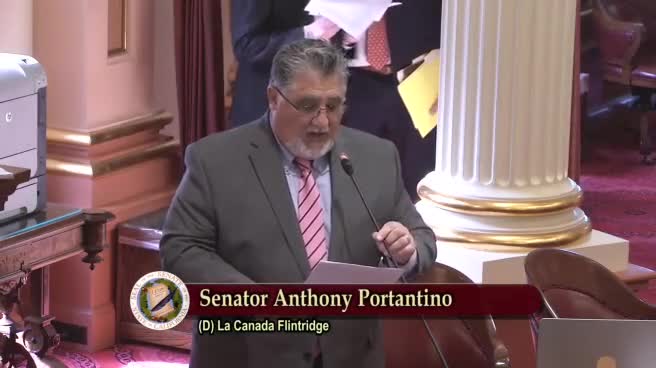 18MIN
Senate Floor
 20MIN
Senate Standing Committee on Judiciary
 34MIN