SB 442: Public health: pools: drownings.
- Session Year: 2017-2018
- House: Senate
- Latest Version Date: 2017-10-11
Under the existing Swimming Pool Safety Act, upon the issuance of a building permit for construction of a new swimming pool or spa, or the remodeling of an existing pool or spa, at a private, single-family home, the pool or spa is required to be equipped with at least one of 7 drowning prevention safety features. The existing act requires the local building code official to inspect and approve the drowning safety prevention devices before the issuance of a final approval for the completion of permitted construction or remodeling work. The existing act does not apply to any pool within the jurisdiction of any political subdivision that adopts an ordinance for swimming pools, as specified.
This bill would instead require, when a building permit is issued, that the pool or spa be equipped with at least 2 of 7 specified drowning prevention safety features. The bill would revise the characteristics of some of those safety features. The bill would also delete the exemption from the act of political subdivisions that adopt ordinances for swimming pools. By imposing additional duties on local officials, the bill would impose a state-mandated local program.
Existing law defines terms related to paid home inspections in connection with the transfer of real property, establishes a standard of care for home inspectors, and prohibits certain inspections in which the inspector or the inspectors employer, as specified, has a financial interest.
This bill would, as part of the definition of home inspection for the transfer of real property, specify that an appropriate inspection of real property with a swimming pool or spa would include noninvasive physical examination of the pool or spa and dwelling for the purpose of identifying which, if any, of the 7 specified drowning prevention safety features the pool or spa is equipped. The bill would also require that the information be included in the home inspection report, as specified.
The California Constitution requires the state to reimburse local agencies and school districts for certain costs mandated by the state. Statutory provisions establish procedures for making that reimbursement.
This bill would provide that, if the Commission on State Mandates determines that the bill contains costs mandated by the state, reimbursement for those costs shall be made pursuant to the statutory provisions noted above.
Under the existing Swimming Pool Safety Act, upon the issuance of a building permit for construction of a new swimming pool or spa, or the remodeling of an existing pool or spa, at a private, single-family home, the pool or spa is required to be equipped with at least one of 7 drowning prevention safety features. The existing act requires the local building code official to inspect and approve the drowning safety prevention devices before the issuance of a final approval for the completion of permitted construction or remodeling work. The existing act does not apply to any pool within the jurisdiction of any political subdivision that adopts an ordinance for swimming pools, as specified.
This bill would instead require, when a building permit is issued, that the pool or spa be equipped with at least 2 of 7 specified drowning prevention safety features. The bill would revise the characteristics of some of those safety features. The bill would also delete the exemption from the act of political subdivisions that adopt ordinances for swimming pools. By imposing additional duties on local officials, the bill would impose a state-mandated local program.
Existing law defines terms related to paid home inspections in connection with the transfer of real property, establishes a standard of care for home inspectors, and prohibits certain inspections in which the inspector or the inspectors employer, as specified, has a financial interest.
This bill would require a would, as part of the definition of home inspection for the transfer of real property with a swimming pool or spa to include a property, specify that an appropriate inspection of real property with a swimming pool or spa would include noninvasive physical examination of the pool or spa and dwelling for the purpose of identifying which, if any, of the 7 specified drowning prevention safety features the pool or spa is equipped. The bill would also require that the information be included in the home inspection report, as specified.
The California Constitution requires the state to reimburse local agencies and school districts for certain costs mandated by the state. Statutory provisions establish procedures for making that reimbursement.
This bill would provide that, if the Commission on State Mandates determines that the bill contains costs mandated by the state, reimbursement for those costs shall be made pursuant to the statutory provisions noted above.
Under the existing Swimming Pool Safety Act, upon the issuance of a building permit for construction of a new swimming pool or spa, or the remodeling of an existing pool or spa, at a private, single-family home, the pool or spa is required to be equipped with at least one of 7 drowning prevention safety features. The existing act requires the local building code official to inspect and approve the drowning safety prevention devices before the issuance of a final approval for the completion of permitted construction or remodeling work. The existing act does not apply to any pool within the jurisdiction of any political subdivision that adopts an ordinance for swimming pools, as specified.
This bill would instead require, when a building permit is issued, that the pool or spa be equipped with at least 2 of 7 specified drowning prevention safety features. The bill would revise the characteristics of some of those safety features. The bill would also delete the exemption from the act of political subdivisions that adopt ordinances for swimming pools. By imposing additional duties on local officials, the bill would impose a state-mandated local program.
Existing law defines terms related to paid home inspections in connection with the transfer of real property, establishes a standard of care for home inspectors, and prohibits certain inspections in which the inspector or the inspectors employer, as specified, has a financial interest.
This bill would require a home inspection for the transfer of real property with a swimming pool or spa to include a noninvasive physical examination of the pool or spa and dwelling for the purpose of identifying which, if any, of the 7 specified drowning prevention safety features the pool or spa is equipped. The bill would also require that the information be included in the home inspection report, as specified.
The California Constitution requires the state to reimburse local agencies and school districts for certain costs mandated by the state. Statutory provisions establish procedures for making that reimbursement.
This bill would provide that, if the Commission on State Mandates determines that the bill contains costs mandated by the state, reimbursement for those costs shall be made pursuant to the statutory provisions noted above.
Existing law requires, whenever a building permit issued for construction of a new swimming pool or spa, or any building permit is issued for remodeling of an existing pool or spa, at a private, single-family home, the pool or spa to be equipped with certain safety features. Existing law exempts facilities regulated by the State Department of Social Services from the requirements of this law.This bill would make a nonsubstantive change to this exemption.Existing law requires, whenever a building permit issued for construction of a new swimming pool or spa, or any building permit is issued for remodeling of an existing pool or spa, at a private, single-family home, the pool or spa to be equipped with certain safety features. Existing law exempts facilities regulated by the State Department of Social Services from the requirements of this law.
This bill would make a nonsubstantive change to this exemption.
This act shall be known, and may be cited, as the Pool Safety Act.
SEC. 2.The Legislature finds and declares all of the following:
(a)Swimming pools provide children and their families with a wonderful opportunity for recreation, exercise, and fun. Keeping children safe during this activity is supported by parents and guardians, safety advocates, health providers, insurance companies, and the swimming pool industry.
(b)According to both the federal Centers for Disease Control and Preventions National Center for Injury Prevention and Control and the State Department of Public Healths EpiCenter data, drowning is the second leading cause of death for California children one to four years of age, inclusive. EpiCenter data shows that between the years 2010 and 2014 more than 160 children one to four years of age, inclusive, suffered fatal drownings, with a majority of the incidents involving residential pools, and between the years 2010 and 2015 more than 740 children one to four years of age, inclusive, were hospitalized after suffering a near-drowning incident, with the leading cause of hospitalization being brain injury due to lack of oxygen, also known as asphyxiation.
(c)Additional children suffer near-drowning incidents and survive, but many of those children suffer irreversible brain injuries, which can lead to lifelong learning deficiencies that impact not only the affected child and his or her family, but also the resources and moneys available to Californias health care system, regional centers, and special education school programs. The State Department of Developmental Services reported that as of December 2016 the agency was providing care for more than 755 near-drowning victims with severe brain damage resulting from the near drowning.
(d)Close parental supervision of children with access to swimming pools is essential to providing pool safety for children. Barriers, such as those required pursuant to Section 115922 of the Health and Safety Code, can help to deter young children from gaining unsupervised access to pools. Swimming lessons are encouraged and can help children understand the importance of water safety.
(e)All water sports activities come with risk. Knowing the risks and having drowning prevention strategies in place before and during water sports activities reduce drowning incidents, and the installation of a residential pool barrier is a leading strategy to further Californias goal of dramatically reducing unintentional injury.
SEC. 3.Section 7195 of the Business and Professions Code is amended to read:7195.For purposes of this chapter, the following definitions apply:
(a)(1)Home inspection is a noninvasive, physical examination, performed for a fee in connection with a transfer, as defined in subdivision (e), of real property, of the mechanical, electrical, or plumbing systems or the structural and essential components of a residential dwelling of one to four units designed to identify material defects in those systems, structures, and components. Home inspection includes any consultation regarding the property that is represented to be a home inspection or any confusingly similar term.
(2)In connection with the transfer, as defined in subdivision (e), of real property with a swimming pool or spa, an appropriate inspection shall include a noninvasive physical examination of the pool or spa and dwelling for the purpose of identifying which, if any, of the seven drowning prevention safety features listed in subdivision (a) of Section 115922 of the Health and Safety Code the pool or spa is equipped.
(3)Home inspection, if requested by the client, may include an inspection of energy efficiency. Energy efficiency items to be inspected may include the following:
(A)A noninvasive inspection of insulation R-values in attics, roofs, walls, floors, and ducts.
(B)The number of window glass panes and frame types.
(C)The heating and cooling equipment and water heating systems.
(D)The age and fuel type of major appliances.
(E)The exhaust and cooling fans.
(F)The type of thermostat and other systems.
(G)The general integrity and potential leakage areas of walls, window areas, doors, and duct systems.
(H)The solar control efficiency of existing windows.
(b)A material defect is a condition that significantly affects the value, desirability, habitability, or safety of the dwelling. Style or aesthetics shall not be considered in determining whether a system, structure, or component is defective.
(c)A home inspection report is a written report prepared for a fee and issued after a home inspection. The report clearly describes and identifies the inspected systems, structures, or components of the dwelling, any material defects identified, and any recommendations regarding the conditions observed or recommendations for evaluation by appropriate persons. In a dwelling with a pool or spa, the report shall identify which, if any, of the seven drowning prevention safety features listed in subdivision (a) of Section 115922 of the Health and Safety Code the pool or spa is equipped with and shall specifically state if the pool or spa has fewer than two of the listed drowning prevention safety features.
(d)A home inspector is any individual who performs a home inspection.
(e)Transfer is a transfer by sale, exchange, installment land sales contract, as defined in Section 2985 of the Civil Code, lease with an option to purchase, any other option to purchase, or ground lease coupled with improvements, of real property or residential stock cooperative, improved with or consisting of not less than one nor more than four dwelling units.
SEC. 4.Section 115922 of the Health and Safety Code is amended to read:115922.(a)Except as provided in Section 115925, when a building permit is issued for the construction of a new swimming pool or spa or the remodeling of an existing swimming pool or spa at a private single-family home, the respective swimming pool or spa shall be equipped with at least two of the following seven drowning prevention safety features:
(1)An enclosure that meets the requirements of Section 115923 and isolates the swimming pool or spa from the private single-family home.
(2)Removable mesh fencing that meets American Society for Testing and Materials (ASTM) Specifications F2286 standards in conjunction with a gate that is self-closing and self-latching and can accommodate a key lockable device.
(3)An approved safety pool cover, as defined in subdivision (d) of Section 115921.
(4)Exit alarms on the private single-family homes doors that provide direct access to the swimming pool or spa. The exit alarm may cause either an alarm noise or a verbal warning, such as a repeating notification that the door to the pool is open.
(5)A self-closing, self-latching device with a release mechanism placed no lower than 54 inches above the floor on the private single-family homes doors providing direct access to the swimming pool or spa.
(6)An alarm that, when placed in a swimming pool or spa, will sound upon detection of accidental or unauthorized entrance into the water. The alarm shall meet and be independently certified to the ASTM Standard F2208 Standard Safety Specification for Residential Pool Alarms, which includes surface motion, pressure, sonar, laser, and infrared type alarms. A swimming protection alarm feature designed for individual use, including an alarm attached to a child that sounds when the child exceeds a certain distance or becomes submerged in water, is not a qualifying drowning prevention safety feature.
(7)Other means of protection, if the degree of protection afforded is equal to or greater than that afforded by any of the features set forth above and has been independently verified by an approved testing laboratory as meeting standards for those features established by the ASTM or the American Society of Mechanical Engineers (ASME).
(b)Before the issuance of a final approval for the completion of permitted construction or remodeling work, the local building code official shall inspect the drowning safety prevention features required by this section and, if no violations are found, shall give final approval.
SEC. 5.Section 115925 of the Health and Safety Code is amended to read:115925.The requirements of this article do not apply to any of the following:
(a)Public swimming pools.
(b)Hot tubs or spas with locking safety covers that comply with the American Society for Testing and Materials (ASTM F1346).
(c)An apartment complex, or any residential setting other than a single-family home.
SEC. 6.If the Commission on State Mandates determines that this act contains costs mandated by the state, reimbursement to local agencies and school districts for those costs shall be made pursuant to Part 7 (commencing with Section 17500) of Division 4 of Title 2 of the Government Code.
This act shall be known, and may be cited, as the Pool Safety Act.
SEC. 2.The Legislature finds and declares all of the following:
(a)Swimming pools provide children and their families with a wonderful opportunity for recreation, exercise, and fun. Keeping children safe during this activity is supported by parents and guardians, safety advocates, health providers, insurance companies, and the swimming pool industry.
(b)According to both the federal Centers for Disease Control and Preventions National Center for Injury Prevention and Control and the State Department of Public Healths EpiCenter data, drowning is the second leading cause of death for California children one to four years of age, inclusive. EpiCenter data shows that between the years 2010 and 2014 more than 160 children one to four years of age, inclusive, suffered fatal drownings, with a majority of the incidents involving residential pools, and between the years 2010 and 2015 more than 740 children one to four years of age, inclusive, were hospitalized after suffering a near-drowning incident, with the leading cause of hospitalization being brain injury due to lack of oxygen, also known as asphyxiation.
(c)Additional children suffer near-drowning incidents and survive, but many of those children suffer irreversible brain injuries, which can lead to lifelong learning deficiencies that impact not only the affected child and his or her family, but also the resources and moneys available to Californias health care system, regional centers, and special education school programs. The State Department of Developmental Services reported that as of December 2016 the agency was providing care for more than 755 near-drowning victims with severe brain damage resulting from the near drowning.
(d)Close parental supervision of children with access to swimming pools is essential to providing pool safety for children. Barriers, such as those required pursuant to Section 115922 of the Health and Safety Code, can help to deter young children from gaining unsupervised access to pools. Swimming lessons are encouraged and can help children understand the importance of water safety.
(e)All water sports activities come with risk. Knowing the risks and having drowning prevention strategies in place before and during water sports activities reduce drowning incidents, and the installation of a residential pool barrier is a leading strategy to further Californias goal of dramatically reducing unintentional injury.
SEC. 3.Section 7195 of the Business and Professions Code is amended to read:7195.For purposes of this chapter, the following definitions apply:
(a)(1)Home inspection is a noninvasive, physical examination, performed for a fee in connection with a transfer, as defined in subdivision (e), of real property, of the mechanical, electrical, or plumbing systems or the structural and essential components of a residential dwelling of one to four units designed to identify material defects in those systems, structures, and components. Home inspection includes any consultation regarding the property that is represented to be a home inspection or any confusingly similar term.
(2)In connection with the transfer, as defined in subdivision (e), of real property with a swimming pool or spa, a home inspection an appropriate inspection shall include a noninvasive physical examination of the pool or spa and dwelling for the purpose of identifying which, if any, of the seven drowning prevention safety features listed in subdivision (a) of Section 115922 of the Health and Safety Code the pool or spa is equipped.
(3)Home inspection, if requested by the client, may include an inspection of energy efficiency. Energy efficiency items to be inspected may include the following:
(A)A noninvasive inspection of insulation R-values in attics, roofs, walls, floors, and ducts.
(B)The number of window glass panes and frame types.
(C)The heating and cooling equipment and water heating systems.
(D)The age and fuel type of major appliances.
(E)The exhaust and cooling fans.
(F)The type of thermostat and other systems.
(G)The general integrity and potential leakage areas of walls, window areas, doors, and duct systems.
(H)The solar control efficiency of existing windows.
(b)A material defect is a condition that significantly affects the value, desirability, habitability, or safety of the dwelling. Style or aesthetics shall not be considered in determining whether a system, structure, or component is defective.
(c)A home inspection report is a written report prepared for a fee and issued after a home inspection. The report clearly describes and identifies the inspected systems, structures, or components of the dwelling, any material defects identified, and any recommendations regarding the conditions observed or recommendations for evaluation by appropriate persons. In a dwelling with a pool or spa, the home inspection report report shall identify which, if any, of the seven drowning prevention safety features listed in subdivision (a) of Section 115922 of the Health and Safety Code the pool or spa is equipped with and shall specifically state if the pool or spa has fewer than two of the listed drowning prevention safety features.
(d)A home inspector is any individual who performs a home inspection.
(e)Transfer is a transfer by sale, exchange, installment land sales contract, as defined in Section 2985 of the Civil Code, lease with an option to purchase, any other option to purchase, or ground lease coupled with improvements, of real property or residential stock cooperative, improved with or consisting of not less than one nor more than four dwelling units.
SEC. 4.Section 115922 of the Health and Safety Code is amended to read:115922.(a)Except as provided in Section 115925, when a building permit is issued for the construction of a new swimming pool or spa or the remodeling of an existing swimming pool or spa at a private single-family home, the respective swimming pool or spa shall be equipped with at least two of the following seven drowning prevention safety features:
(1)An enclosure that meets the requirements of Section 115923 and isolates the swimming pool or spa from the private single-family home.
(2)Removable mesh fencing that meets American Society for Testing and Materials (ASTM) Specifications F2286 standards in conjunction with a gate that is self-closing and self-latching and can accommodate a key lockable device.
(3)An approved safety pool cover, as defined in subdivision (d) of Section 115921.
(4)Exit alarms on the private single-family homes doors that provide direct access to the swimming pool or spa. The exit alarm may cause either an alarm noise or a verbal warning, such as a repeating notification that the door to the pool is open.
(5)A self-closing, self-latching device with a release mechanism placed no lower than 54 inches above the floor on the private single-family homes doors providing direct access to the swimming pool or spa.
(6)An alarm that, when placed in a swimming pool or spa, will sound upon detection of accidental or unauthorized entrance into the water. The alarm shall meet and be independently certified to the ASTM Standard F2208 Standards Specification for Standard Safety Specification for Residential Pool Alarms, which includes surface motion, pressure, sonar, laser, and infrared type alarms. A swimming protection alarm feature designed for individual use, including an alarm attached to a child that sounds when the child exceeds a certain distance or becomes submerged in water, is not a qualifying drowning prevention safety feature.
(7)Other means of protection, if the degree of protection afforded is equal to or greater than that afforded by any of the features set forth above and has been independently verified by an approved testing laboratory as meeting standards for those features established by the ASTM or the American Society of Mechanical Engineers (ASME).
(b)Before the issuance of a final approval for the completion of permitted construction or remodeling work, the local building code official shall inspect the drowning safety prevention features required by this section and, if no violations are found, shall give final approval.
SEC. 5.Section 115925 of the Health and Safety Code is amended to read:115925.The requirements of this article do not apply to any of the following:
(a)Public swimming pools.
(b)Hot tubs or spas with locking safety covers that comply with the American Society for Testing Materials-Emergency and Materials (ASTM F1346).
(c)An apartment complex, or any residential setting other than a single-family home.
SEC. 6.If the Commission on State Mandates determines that this act contains costs mandated by the state, reimbursement to local agencies and school districts for those costs shall be made pursuant to Part 7 (commencing with Section 17500) of Division 4 of Title 2 of the Government Code.
This act shall be known, and may be cited, as the Pool Safety Act.
SEC. 2.The Legislature finds and declares all of the following:
(a)Swimming pools provide children and their families with a wonderful opportunity for recreation, exercise, and fun. Keeping children safe during this activity is supported by parents and guardians, safety advocates, health providers, insurance companies, and the swimming pool industry.
(b)According to both the federal Centers for Disease Control and Preventions National Center for Injury Prevention and Control and the State Department of Public Healths EpiCenter data, drowning is the second leading cause of death for California children one to four years of age, inclusive.
(c)Additional children suffer near-drowning incidents and survive, but many of those children suffer irreversible brain injuries, which can lead to lifelong learning deficiencies that impact not only the affected child and his or her family, but also the resources and moneys available to Californias health care system, regional centers, and special education school programs.
(d)Close parental supervision of children with access to swimming pools is essential to providing pool safety for children. Barriers, such as those required pursuant to Section 115922 of the Health and Safety Code, can help to deter young children from gaining unsupervised access to pools. Swimming lessons are encouraged and can help children understand the importance of water safety.
(e)All water sports activities come with risk. Knowing the risks and having drowning prevention strategies in place before and during water sports activities reduce drowning incidents, and the installation of a residential pool barrier is a leading strategy to further Californias goal of dramatically reducing unintentional injury.
SEC. 3.Section 7195 of the Business and Professions Code is amended to read:7195.For purposes of this chapter, the following definitions apply:
(a)(1)Home inspection is a noninvasive, physical examination, performed for a fee in connection with a transfer, as defined in subdivision (e), of real property, of the mechanical, electrical, or plumbing systems or the structural and essential components of a residential dwelling of one to four units designed to identify material defects in those systems, structures structures, and components. Home inspection includes any consultation regarding the property that is represented to be a home inspection or any confusingly similar term.
(2)In connection with the transfer, as defined in subdivision (e), of real property with a swimming pool or spa, a home inspection shall include a noninvasive physical examination of the pool or spa and dwelling for the purpose of identifying which, if any, of the seven drowning prevention safety features listed in subdivision (a) of Section 115922 of the Health and Safety Code the pool or spa is equipped.
(2)(3)Home inspection, if requested by the client, may include an inspection of energy efficiency . efficiency. Energy efficiency items to be inspected may include the following:
(A)A noninvasive inspection of insulation R-values in attics, roofs, walls, floors, and ducts.
(B)The number of window glass panes and frame types.
(C)The heating and cooling equipment and water heating systems.
(D)The age and fuel type of major appliances.
(E)The exhaust and cooling fans.
(F)The type of thermostat and other systems.
(G)The general integrity and potential leakage areas of walls, window areas, doors, and duct systems.
(H)The solar control efficiency of existing windows.
(b)A material defect is a condition that significantly affects the value, desirability, habitability, or safety of the dwelling. Style or aesthetics shall not be considered in determining whether a system, structure, or component is defective.
(c)A home inspection report is a written report prepared for a fee and issued after a home inspection. The report clearly describes and identifies the inspected systems, structures, or components of the dwelling, any material defects identified, and any recommendations regarding the conditions observed or recommendations for evaluation by appropriate persons. In a dwelling with a pool or spa, the home inspection report shall identify which, if any, of the seven drowning prevention safety features listed in subdivision (a) of Section 115922 of the Health and Safety Code the pool or spa is equipped with and shall specifically state if the pool or spa has fewer than two of the listed drowning prevention safety features.
(d)A home inspector is any individual who performs a home inspection.
(e)Transfer is a transfer by sale, exchange, installment land sales contract, as defined in Section 2985 of the Civil Code, lease with an option to purchase, any other option to purchase, or ground lease coupled with improvements, of real property or residential stock cooperative, improved with or consisting of not less than one nor more than four dwelling units.
SEC. 4.Section 115922 of the Health and Safety Code is amended to read:115922.(a)Commencing January 1, 2007, except Except as provided in Section 115925, whenever when a building permit is issued for the construction of a new swimming pool or spa, or any building permit is issued for spa or the remodeling of an existing pool or spa, at a private, single-family home, it swimming pool or spa at a private single-family home, the respective swimming pool or spa shall be equipped with at least one two of the following seven drowning prevention safety features:
(1)The pool shall be isolated from access to a home by an enclosure that meets the requirements of Section 115923.(1)An enclosure that meets the requirements of Section 115923 and isolates the swimming pool or spa from the private single-family home.
(2)The pool shall incorporate removable mesh pool Removable mesh fencing that meets American Society for Testing and Materials (ASTM) Specifications F 2286 F2286 standards in conjunction with a gate that is self-closing and self-latching and can accommodate a key lockable device.
(3)The pool shall be equipped with an approved safety pool cover that meets all requirements of the ASTM Specifications F 1346 .(4)The residence shall be equipped with exit alarms on those doors providing direct access to the pool.(3)An approved safety pool cover, as defined in subdivision (d) of Section 115921.
(4)Exit alarms on the private single-family homes doors that provide direct access to the swimming pool or spa. The exit alarm may cause either an alarm noise or a verbal warning, such as a repeating notification that the door to the pool is open.
(5)All doors providing direct access from the home to the swimming pool shall be equipped with a A self-closing, self-latching device with a release mechanism placed no lower than 54 inches above the floor. floor on the private single-family homes doors providing direct access to the swimming pool or spa.
(6)Swimming pool alarms An alarm that, when placed in pools, a swimming pool or spa, will sound upon detection of accidental or unauthorized entrance into the water. These pool alarms The alarm shall meet and be independently certified to the ASTM Standard F 2208 F2208 Standards Specification for Pool Alarms Alarms, which includes surface motion, pressure, sonar, laser, and infrared type alarms. For purposes of this article, swimming pool alarms shall not include A swimming protection alarm devices feature designed for individual use, such as including an alarm attached to a child that sounds when the child exceeds a certain distance or becomes submerged in water. water, is not a qualifying drowning prevention safety feature.
(7)Other means of protection, if the degree of protection afforded is equal to or greater than that afforded by any of the devices set forth above, and have features set forth above and has been independently verified by an approved testing laboratory as meeting standards for those devices features established by the ASTM or the American Society of Mechanical Engineers (ASME).
(b)Prior to Before the issuance of any a final approval for the completion of permitted construction or remodeling work, the local building code official shall inspect the drowning safety prevention devices features required by this act and section and, if no violations are found, shall give final approval.
SEC. 5.Section 115925 of the Health and Safety Code is amended to read:115925.The requirements of this article shall do not apply to any of the following:
(a)Public swimming pools.
(b)Hot tubs or spas with locking safety covers that comply with the American Society for Testing Materials-Emergency Performance Specification (ASTM-ES 13-89). Materials (ASTM F1346).
(c)Any pool within the jurisdiction of any political subdivision that adopts an ordinance for swimming pool safety that includes requirements that are at least as stringent as this article.(d)(c)An apartment complex, or any residential setting other than a single-family home.
SECTION 1.Section 115926 of the Health and Safety Code is amended to read:115926.This article does not apply to a facility regulated by the State Department of Social Services even if the facility is also used as the private residence of the operator. Pool safety in those facilities shall be regulated pursuant to regulations adopted therefor by the State Department of Social Services. CORRECTIONS: TextPages 6 and 7.This article does not apply to any a facility regulated by the State Department of Social Services even if the facility is also used as the private residence of the operator. Pool safety in those facilities shall be regulated pursuant to regulations adopted therefor by the State Department of Social Services.
|
Date
|
Status
|
|---|---|
| Oct 11, 2017 | Chaptered by Secretary of State. Chapter 670, Statutes of 2017. |
| Oct 11, 2017 | Approved by the Governor. |
| Sep 19, 2017 | Enrolled and presented to the Governor at 4 p.m. |
| Sep 13, 2017 | Assembly amendments concurred in. (Ayes 38. Noes 1.) Ordered to engrossing and enrolling. |
| Sep 11, 2017 | In Senate. Concurrence in Assembly amendments pending. |
| Sep 11, 2017 | Read third time. Passed. Ordered to the Senate. |
| Sep 7, 2017 | Read third time and amended. |
| Aug 24, 2017 | Read second time. Ordered to third reading. |
| Aug 23, 2017 | From committee: Do pass. (Ayes 10. Noes 3.) (August 23). |
| Jul 11, 2017 | From committee: Do pass and re-refer to Com. on APPR. (Ayes 14. Noes 0.) (July 11). Re-referred to Com. on APPR. |
| Jun 28, 2017 | From committee: Do pass and re-refer to Com. on HEALTH. (Ayes 7. Noes 0.) (June 28). Re-referred to Com. on HEALTH. |
| Jun 5, 2017 | Referred to Coms. on H. & C.D. and HEALTH. |
| May 23, 2017 | In Assembly. Read first time. Held at Desk. |
| May 22, 2017 | Read third time. Passed. (Ayes 37. Noes 0. Page 1135.) Ordered to the Assembly. |
| May 16, 2017 | Read second time. Ordered to third reading. |
| May 15, 2017 | From committee: Be ordered to second reading pursuant to Senate Rule 28.8. |
| May 4, 2017 | Set for hearing May 15. |
| May 3, 2017 | May 8 hearing postponed by committee. |
| May 1, 2017 | Set for hearing May 8. |
| Apr 25, 2017 | From committee: Do pass and re-refer to Com. on APPR. (Ayes 8. Noes 0. Page 824.) (April 24). Re-referred to Com. on APPR. |
| Apr 20, 2017 | Set for hearing April 24. |
| Apr 19, 2017 | From committee: Do pass and re-refer to Com. on B., P. & E.D. with recommendation: To consent calendar. (Ayes 12. Noes 0. Page 751.) (April 18). Re-referred to Com. on B., P. & E.D. |
| Apr 4, 2017 | Set for hearing April 18. |
| Mar 29, 2017 | Re-referred to Coms. on T. & H. and B., P. & E.D. |
| Mar 20, 2017 | From committee with author's amendments. Read second time and amended. Re-referred to Com. on RLS. |
| Feb 23, 2017 | Referred to Com. on RLS. |
| Feb 16, 2017 | From printer. May be acted upon on or after March 18. |
| Feb 15, 2017 | Introduced. Read first time. To Com. on RLS. for assignment. To print. |
|
Date
|
Description
|
Location
|
Votes
|
|
|---|---|---|---|---|
| Sep 13, 2017 | Unfinished Business SB442 Newman et al. Concurrence | Senate Floor |
Passed |
|
| Sep 11, 2017 | SB 442 Newman Senate Third Reading By GLORIA | Assembly Floor |
Passed |
|
| Aug 23, 2017 | Do pass. | Assembly Standing Committee on Appropriations |
Passed |
|
| Jul 11, 2017 | Do pass and be re-referred to the Committee on [Appropriations] | Assembly Standing Committee on Health |
Passed |
|
| Jun 28, 2017 | Do pass and be re-referred to the Committee on [Health] | Assembly Standing Committee on Housing and Community Development |
Passed |
|
| May 22, 2017 | Senate 3rd Reading SB442 Newman | Senate Floor |
Passed |
|
| Apr 24, 2017 | Do pass, but first be re-referred to the Committee on [Appropriations] | Senate Standing Committee on Business, Professions and Economic Development |
Passed |
|
| Apr 18, 2017 | Do pass, but first be re-referred to the Committee on [Business, Professions and Economic Development] with the recommendation: To Consent Calendar | Senate Standing Committee on Transportation and Housing |
Passed |
This list shows positions taken on this bill by organizations on the date displayed, which is linked to the original source.
Positions by individuals are not included.
Office of Senate Floor Analyses (916) 651-1520 Fax: (916) 327-4478 | SB |
UNFINISHED BUSINESS
Bill No: SB 442
:
SENATE TRANS. & HOUSING COMMITTEE: 12-0, 4/18/17
AYES: Beall, Cannella, Allen, Atkins, Gaines, McGuire, Mendoza, Morrell, Roth, Skinner, Wieckowski, Wiener
NO VOTE RECORDED: Bates
SENATE BUS., PROF. & ECON. DEV. COMMITTEE: 8-0, 4/24/17
AYES: Hill, Fuller, Galgiani, Glazer, Hernandez, Newman, Pan, Wilk
NO VOTE RECORDED: Dodd
SENATE APPROPRIATIONS COMMITTEE: Senate Rule 28.8
SENATE FLOOR: 37-0, 5/22/17
AYES: Allen, Atkins, Bates, Beall, Berryhill, Bradford, Cannella, De León, Dodd, Gaines, Galgiani, Glazer, Hernandez, Hertzberg, Hill, Hueso, Jackson, Lara, Leyva, McGuire, Mendoza, Mitchell, Monning, Moorlach, Morrell, Newman, Nguyen, Nielsen, Portantino, Roth, Skinner, Stern, Stone, Vidak, Wieckowski, Wiener, Wilk
NO VOTE RECORDED: Anderson, Fuller, Pan
ASSEMBLY FLOOR: 59-12, 9/11/17 - See last page for vote
SOURCE: California Coalition for Children’s Safety and Health
Drowning Prevention Foundation
DIGEST:
This bill requires newly constructed or remodeled swimming pools at private single-family residences to incorporate at least two of seven specified drowning-prevention safety features. It also requires home inspections conducted as part of the transfer of a property with a pool to include an assessment of whether the pool is equipped with adequate safety features.
Assembly Amendments make minor, technical changes, including additional data in the findings and declarations, and Senator Skinner was added as a coauthor.
Existing law:
- Defines a swimming pool as a structure intended for swimming or recreational bathing with a water depth of over 18 inches, including in-ground and aboveground structures, hot tubs, spas, portable spas, and non-portable wading pools.
- Requires that, when a building permit is issued for the construction or remodel of a swimming pool at a private single-family home, one of the following seven drowning prevention features be installed:
- An enclosure separating home access points from the pool and meeting specific requirements with respect to height, gaps, latches, and any features that could serve as handholds or footholds.
- A removable mesh fence meeting specific standards set by the American Society for Testing and Materials (ASTM), and equipped with a self-closing, self-latching gate that can accommodate a lock.
- A pool cover meeting specific ASTM standards.
- Exit alarms on all doors that provide access from the home to the pool.
- Self-closing, self-latching devices, with release mechanisms placed no lower than 54 inches above the floor, on all doors that provide access from the home to the pool.
- A pool alarm designed to sound in the event of an unauthorized entrance into the water and independently certified as meeting specific ASTM standards.
- Another feature providing as much or more protection than the above devices and independently verified as meeting ASTM or American Society of Mechanical Engineers standards.
- Requires local building code officials to inspect drowning-prevention features installed to comply with these requirements and to give final approval for the completion of construction or remodeling if no violations are found.
- Requires any person who agrees to build a swimming pool or spa or to engage in work on a pool or spa that requires a permit, to give the consumer notice of the above described drowning-prevention requirements.
- Exempts the following from these requirements:
- Public swimming pools.
- Hot tubs and spas with locking safety covers that meet specified ASTM standards.
- Pools within the jurisdiction of a political subdivision that adopts a swimming pool safety ordinance that is at least as strict as existing state law.
- Apartment complexes or residential settings other than single-family homes.
- Defines a home inspection as a noninvasive physical examination of a property, performed for a fee in association with a home sale, designed to identify material defects in key systems and components, and describes what must be included in home inspection reports.
This bill:
- Requires that when a pool at a private, single-family residence is constructed or remodeled, at least two of the drowning prevention features described in existing law must be installed.
- Specifies that exit alarms on home doors leading to a pool may use a verbal warning (e.g., a repeating notification that “the door to the pool is open”) or an alarm noise.
- Requires that when a property with a pool is transferred:
- The home inspection must include a physical examination of the pool to determine which, if any, of the seven drowning prevention features described in existing law it is equipped with.
- The home inspection report must identify which of these drowning prevention features the pool is equipped with and specifically state if fewer than two are installed.
- Repeals the exemption in existing law for pools in jurisdictions that adopt more stringent swimming pool safety standards.
Background
California’s original Pool Safety Act (Setencich, Chapter 925, Statutes of 1996), which went into effect on January 1, 1997, required all new swimming pools constructed at private, single-family homes be equipped with either a permanent fence, a pool cover meeting certain safety standards, exit alarms or self-closing, self-latching devices on all doors providing access to the pool, or another safety feature providing as least as much protection as the specified four. The act was amended in 2006 (Mullin, Chapter 478, Statutes of 2006) to reflect the availability of two additional drowning-prevention features: removable mesh fencing and pool alarms that sound when a person enters the water. The 2006 act also expanded the scope of the law to include pools that undergo a remodel requiring a building permit.
Comments
- Purpose of this bill. According to the author, the state’s Pool Safety Act has not been updated for more than two decades. Meanwhile, unintentional injury remains the leading cause of death and hospitalization for California’s youth 0-19 years old and drowning remains one of the eight leading causes of unintentional injury for California’s children. The author notes that according to research, three pieces are needed to prevent drowning: water safety training for parents and children, active supervision of young children, and pool safety barriers. This bill is intended to support this objective by addressing pool safety barrier deficiencies in California’s existing Pool Safety Act. Specifically, it increases the number of drowning prevention features required under the act from one to two, adds requirements to the home inspection process that inform new homeowners of whether their pools are equipped with adequate safety features, and expands the types of pool door alarms that qualify as a drowning-prevention feature under the act.
- A big intervention for a big problem. From a public health and safety standpoint, drowning deaths among very young children are a persistent and serious problem that justifies major state intervention. Unintentional injuries are the leading cause of death for children between the ages of 0 and 19. According to the Centers for Disease Control and Prevention, drowning is the second leading cause of death for children between ages 1 and 4, behind birth defects. Most drownings of children between ages 1 and 4 occur in home swimming pools. For every child in this age cohort who dies from drowning, five or more suffer near-drowning injuries, which can cause permanent brain injury and lifelong disability. In addition to the emotional and financial impact these deaths and injuries have on individual families, the disabilities associated with near-drownings impose major, long-term costs on the state.
- The case for redundancy. The International Building Code and most U.S. states require only one barrier restricting access to residential pools; however, the author notes that unintentional injury prevention and public health advocates support the use of two drowning prevention safety features. The primary rationale for this position is that a single safety feature may malfunction or become disabled. This contention makes sense when one considers that at least two of the allowable safety features are designed to be disabled: pool entry alarms can be put into “sleep” mode when the pool is in use, and removable fencing is, as the name suggests, removable. Similarly, door alarms may run out of batteries, and latches may break. A second safety feature would provide backup to busy families that forget to replace an alarm or a removable fence, or who cannot immediately fix a malfunctioning latch or alarm.
- At what price? The safety measures referenced by this bill encompass both low- and high-cost features. Door alarms are inexpensive enough ($20-$70 each) that multiple access points can be secured for less than $100. The costs of self-closing, self-latching doors vary from $15 (for use on gates; self-installation) to over $200. ASTM-approved pool alarms can be purchased for between $55 and $500. Removable mesh fencing and manual pool covers generally run between $1,200 and $3,000, depending on the size of the pool. The most expensive drowning prevention devices (permanent fencing and automatic pool covers) may exceed $5,000. It is also important to bear in mind that under this bill, drowning prevention safety features would only be required on a newly constructed swimming pool ($25,000-$50,000) or as part of a substantial remodel ($5,000-$20,000). While the bill does impose some burden on homeowners, the costs are triggered by elective expenditures of a much greater magnitude.
- Do more safety features mean fewer drownings? The state does not currently track the number and type of drowning prevention features that were installed on a pool where a drowning or near-drowning event occurred. In the absence of this data, it is impossible to know whether the single barrier required under existing law is providing adequate protection. A bill that would have provided this information, AB 299 (Brown), died in the Assembly two years ago. Another measure, AB 2425 (Brown), would have directed the State Department of Public Health to develop standards for collecting data from unintentional injury incidents involving children, but died in the Senate in 2016. One goal of that legislation was to ensure that the most relevant data are collected for each unintentional injury type. This bill uses a different approach, placing the burden of pool safety on pool owners by requiring them to control access to their pools. This may be a more direct and cost-efficient response to residential pool drownings than imposing extensive data collection requirements on state and local governments in order to inform future policy interventions. Ultimately, however, better protecting children’s health and safety will require more and better information about drowning accidents as well as additional safety requirements for residential pools.
- Point-of-sale as a point of intervention. The requirements of the Pool Safety Act have always been applied prospectively, leaving many pools out of reach of the law. Pools built before 1997 that have not undergone a significant remodel since 2007 are currently not required to install any drowning prevention safety features, and the findings of the 2006 Pool Safety Act suggest that as many as one million pools were constructed in California before the first drowning prevention requirements went into effect in 1997. Last year, a version of this bill attempted to extend the act’s protections by requiring pools to be brought into compliance at the time of a property sale. In response to concerns cited by the California Association of Realtors, the author took amendments to remove this requirement. Rather than making pre-1997 pools comply with the Pool Safety Act when they are sold, this year’s version of the bill imposes minor changes to the existing home inspection process intended to inform prospective home buyers whether a property’s pool is equipped with safety features that meet the standards in current law. This makes use of the point-of-sale as an educational opportunity without imposing additional requirements on pool owners.
- Repealing the exemption for jurisdictions with more stringent regulations. Existing law provides an exemption from the Pool Safety Act for local governments that adopt more stringent pool safety requirements. This bill removes that long-standing exemption. Local jurisdictions would still be free to adopt their own pool safety ordinances. However, any requirements they imposed would be additional to the requirements in state law rather than a substitute for them. Local governments would therefore not be constrained from adopting more stringent pool safety policies, but they would face a disincentive to developing policies that differ strongly from the state’s approach.
FISCAL EFFECT: Appropriation: Fiscal Com.: Local:
According to the Assembly Appropriations Committee, the bill is keyed a state mandate, but staff assumes that any local code enforcement or other costs would not be state-reimbursable because locals have the authority to charge fees to fully offset inspection and enforcement costs.
California Coalition for Children’s Safety and Health (co-source)
Drowning Prevention Foundation (co-source)
California Park and Recreation Society
California Pool and Spa Association
Consumer Attorneys of California
Health Officers Association of California
Safe Kids California
The Arc and United Cerebral Palsy California Collaboration
OPPOSITION: (Verified 9/11/17)
None received
ARGUMENTS IN SUPPORT: The California Coalition for Children’s Safety and Health (co-sponsor) writes in support, “Your bill, SB 442, is an important necessary step forward if we are going to remove pool drowning as the leading cause of death for our one to four year old aged children, and the cause of many other children suffering brain injury and permanent lifelong brain damage.”
The Drowning Prevention Foundation (co-sponsor) writes in support that “we are proud to co-sponsor and support SB 442 and your efforts to protect California’s young children from residential pool drowning. Your bill provides an important update to our twenty year old Pool Safety Act, which we were involved in passing back in 1996. This bill, SB 442, covers one of the Top Ten issues lifted from the CA Unintentional Injury Prevention Strategic Plan Project. Unintentional injury is the leading cause of death and hospitalization for California’s children and youth ages 1-19 and the leading cause of injury related death for babies and infants. Drowning is the leading cause of injury related deaths for California’s children ages one to four.”
The Arc and United Cerebral Palsy California Collaboration writes in support, “Swimming pool accidents are a leading cause of developmental disabilities. Your bill will contribute significantly to reducing future fatalities and disabilities. Saving the state significant amounts of money for the lifetimes of those disabled by these accidents will be a major side benefit.”
California Park and Recreation Society (CPRS) writes in support, “As an association that represents local park, recreation and aquatics professionals, the health and safety of our constituencies and communities in all settings are of critical import. CPRS believes the costs to implement the provisions of the bill are negligible when compared to public safety benefits associated with SB 442.”
California Pool and Spa Association (CPSA) writes in support, “CPSA and its members have built hundreds of thousands of swimming pools and spas throughout California and we take very seriously the safety of the families for which they have provided a place for family recreation, relaxation, and entertainment.”
Consumer Attorneys of California writes in support, “Residential pool drowning incidents are preventable. When a child drowns in a backyard pool, it is swift and silent. It is time we update the law to ensure that we are actively preventing children in California from drowning in backyard residential pools. For these reasons, we support SB 442.”
Health Officers Association of California (HOAC) writes in support, “Public health aims to prevent unnecessary deaths and injuries. HOAC is dedicated to promoting practices that improve the health of California’s residents and believes SB 442 would be a step forward for our state.”
Safe Kids California writes in support, “Safe Kids was deeply involved in the passage of the federal Virginia Graeme Baker Pool and Spa Act (VGB). The measures you propose in SB442 embrace the spirit of the VGB Act. In fact, the bill could be a model for other states to follow. The bill would make home pools safer by encouraging homeowners to take further steps towards safety, and gives them choice on how to achieve safety whether it is through barriers, alarms or other measures. It is smart that the law is providing parents with decision making power on how they protect their kids in and around water.”
ASSEMBLY FLOOR: 59-12, 9/11/17
AYES: Aguiar-Curry, Arambula, Baker, Berman, Bloom, Bocanegra, Bonta, Burke, Caballero, Calderon, Cervantes, Chau, Chiu, Choi, Chu, Cooley, Cooper, Dababneh, Daly, Frazier, Friedman, Gallagher, Cristina Garcia, Eduardo Garcia, Gipson, Gloria, Gonzalez Fletcher, Gray, Grayson, Holden, Irwin, Jones-Sawyer, Kalra, Lackey, Levine, Limón, Low, Maienschein, McCarty, Medina, Mullin, Muratsuchi, Nazarian, O'Donnell, Quirk, Quirk-Silva, Reyes, Rodriguez, Rubio, Salas, Santiago, Steinorth, Mark Stone, Thurmond, Ting, Waldron, Weber, Wood, Rendon
NOES: Acosta, Travis Allen, Bigelow, Chávez, Chen, Dahle, Harper, Mathis, Mayes, Melendez, Obernolte, Voepel
NO VOTE RECORDED: Brough, Cunningham, Eggman, Flora, Fong, Kiley, Patterson, Ridley-Thomas
9/11/17 21:42:10
**** END ****
SENATE THIRD READING
STR Bill Id:SB 442
Author:(Newman)
As Amended Ver:September 7, 2017
Majority vote
SENATE VOTE: 37-0
Committee | Votes | Ayes | Noes |
Housing | 7-0 | Chiu, Steinorth, Bocanegra, Chau, Choi, Kalra, Limón | |
Health | 14-0 | Wood, Maienschein, Bonta, Burke, Limón, McCarty, Nazarian, Patterson, Ridley-Thomas, Rodriguez, Santiago, Thurmond, Waldron, Gloria | |
Appropriations | 10-3 | Gonzalez Fletcher, Bocanegra, Bonta, Calderon, Chau, Eggman, Friedman, Gray, Jones-Sawyer, Reyes | Bigelow, Brough, Obernolte |
SUMMARY: Requires newly constructed or remodeled swimming pools or spas at private single-family residences to incorporate at least two of seven specified drowning prevention safety features. It also requires home inspections conducted as part of the transfer of a property with a pool or spa to include an assessment of whether the pool is equipped with adequate drowning prevention features. Specifically, this bill:
- Makes findings regarding the prevalence of drowning as a cause of death among young children in California, the potential for lasting brain injuries as a result of near-drowning incidents, the effectiveness of pool barriers as a means of preventing drowning, and the importance of informing the public of the risks posed by swimming pools and of reducing those risks by promoting the installation of drowning-prevention features.
- Requires that when a pool or spa at a private, single-family residence is constructed or remodeled, at least two of the drowning prevention features described in existing law must be installed.
- Specifies that a pool alarm includes devices that use a verbal warning (e.g., a repeating notification that "the door to the pool is open") as well as devices that use an alarm noise.
- Requires that when a property with a pool or spa is transferred:
- The home inspection must include a physical examination of the pool or spa to determine which, if any, of the seven drowning prevention features described in existing law it is equipped with; and
- The home inspection report must identify which of these drowning prevention features the pool or spa is equipped with and specifically state if fewer than two are installed.
- Repeals the exemption in existing law for pools in jurisdictions that adopt more stringent swimming pool safety standards.
- Requires the state to reimburse local agencies and school districts if the Commission on State Mandates finds that this bill imposes mandatory costs on local government entities.
FISCAL EFFECT: According to the Assembly Appropriations committee, the bill is keyed a state mandate, but staff assumes that any local code enforcement or other costs would not be state-reimbursable because locals have the authority to charge fees to fully offset inspection and enforcement costs.
COMMENTS:
Background: California's original Swimming Pool Safety Act (Act) (AB 3305 (Speier), Chapter 925, Statutes of 1996), went into effect on January 1, 1997 and applies to structures intended for swimming or recreational bathing containing water over 18 inches deep, including spas and wading pools. The Act required all new swimming pools constructed at private, single-family homes be equipped with either a permanent fence; a pool cover meeting certain safety standards; exit alarms or self-closing, self-latching devices on all doors providing access to the pool; or another safety feature providing as least as much protection as the specified four. The Act was amended in 2006 (AB 2977 (Mullin), Chapter 478, Statutes of 2006) to reflect the availability of two additional drowning prevention features: Removable mesh fencing and pool alarms that sound when a person enters the water. The 2006 amendment also expanded the scope of the law to include pools that undergo a remodel requiring a building permit.
This bill seeks to increase the number of required drowning prevention features for pools and spas at private single-family homes from one to two, and makes changes to the building permit process, as well as the home buying process, to accomplish this. The safety measures referenced in this bill encompass both low- and high-cost features, and it is worth noting that the costs are triggered by elective expenditures involved with building or remodeling an existing pool or spa.
Neither the existing Act nor this bill applies to public swimming pools, swimming pools at apartment complexes, or hot tubs with locking safety covers meeting specified standards. They also do not apply to facilities regulated by the California Department of Social Services (CDSS) that are also the private residence of the operator. Pool safety in those facilities is regulated by the CDSS.
Existing law provides an exemption from the Act for local governments that adopt more stringent pool safety requirements. This bill removes that long-standing exemption. Local governments would still be free to adopt their own pool safety ordinances, but any requirements they impose would be additional to the requirements in state law rather than a substitute for them. Local governments would not be constrained from adopting more stringent pool safety policies, but they would face a disincentive to developing policies that differ strongly from the state's approach.
Previous legislation: This bill is identical to AB 470 (Chu) of 2016 which was vetoed by the Governor. The Governor included the following veto message:
I am returning Assembly Bill 470 without my signature.
This bill requires newly constructed or remodeled swimming pools at single-family homes to use at least two of seven drowning-prevention safety features, instead of one, as currently mandated.
Nothing prevents a homeowner from adding as many additional safety features as they desire to their own pool. The choice on how to protect children is best left to the parents.
Related legislation:
AB 2425 (Brown) of the current legislative session: Would require the State Department of Public Health to develop standards for collecting data from unintentional injury incidents involving children, including drownings. This bill is pending hearing in the Senate Health Committee.
AB 299 (Brown) of 2015: Would have required the State Department of Public Health to create a submersion incident report form including information on key attributes of drowning events, including barrier types in use. This bill was held on suspense in Assembly Appropriations.
Analysis Prepared by: Lisa Engel / H. & C.D. / (916) 319-2085 FN: 0001772
SENATE THIRD READING
STR Bill Id:SB 442
Author:(Newman)
As Amended Ver:March 20, 2017
Majority vote
SENATE VOTE: 37-0
Committee | Votes | Ayes | Noes |
Housing | 7-0 | Chiu, Steinorth, Bocanegra, Chau, Choi, Kalra, Limón | |
Health | 14-0 | Wood, Maienschein, Bonta, Burke, Limón, McCarty, Nazarian, Patterson, Ridley-Thomas, Rodriguez, Santiago, Thurmond, Waldron, Gloria | |
Appropriations | 10-3 | Gonzalez Fletcher, Bocanegra, Bonta, Calderon, Chau, Eggman, Friedman, Gray, Jones-Sawyer, Reyes | Bigelow, Brough, Obernolte |
SUMMARY: Requires newly constructed or remodeled swimming pools or spas at private single-family residences to incorporate at least two of seven specified drowning prevention safety features. It also requires home inspections conducted as part of the transfer of a property with a pool or spa to include an assessment of whether the pool is equipped with adequate drowning prevention features. Specifically, this bill:
- Makes findings regarding the prevalence of drowning as a cause of death among young children in California, the potential for lasting brain injuries as a result of near-drowning incidents, the effectiveness of pool barriers as a means of preventing drowning, and the importance of informing the public of the risks posed by swimming pools and of reducing those risks by promoting the installation of drowning-prevention features.
- Requires that when a pool or spa at a private, single-family residence is constructed or remodeled, at least two of the drowning prevention features described in existing law must be installed.
- Specifies that a pool alarm includes devices that use a verbal warning (e.g., a repeating notification that "the door to the pool is open") as well as devices that use an alarm noise.
- Requires that when a property with a pool or spa is transferred:
- The home inspection must include a physical examination of the pool or spa to determine which, if any, of the seven drowning prevention features described in existing law it is equipped with; and
- The home inspection report must identify which of these drowning prevention features the pool or spa is equipped with and specifically state if fewer than two are installed.
- Repeals the exemption in existing law for pools in jurisdictions that adopt more stringent swimming pool safety standards.
- Authorizes the state to reimburse local agencies and school districts if the Commission on State Mandates finds that this bill imposes mandatory costs on local government entities.
FISCAL EFFECT: According to the Assembly Appropriations committee, the bill is keyed a state mandate, but staff assumes that any local code enforcement or other costs would not be state-reimbursable because locals have the authority to charge fees to fully offset inspection and enforcement costs.
COMMENTS:
Background: California's original Swimming Pool Safety Act (Act) (AB 3305 (Setencich), Chapter 925, Statutes of 1996), went into effect on January 1, 1997 and applies to structures intended for swimming or recreational bathing containing water over 18 inches deep, including spas and wading pools. The Act required all new swimming pools constructed at private, single-family homes be equipped with either a permanent fence; a pool cover meeting certain safety standards; exit alarms or self-closing, self-latching devices on all doors providing access to the pool; or another safety feature providing as least as much protection as the specified four. The Act was amended in 2006 (AB 2977 (Mullin), Chapter 478, Statutes of 2006) to reflect the availability of two additional drowning prevention features: Removable mesh fencing and pool alarms that sound when a person enters the water. The 2006 amendment also expanded the scope of the law to include pools that undergo a remodel requiring a building permit.
This bill seeks to increase the number of required drowning prevention features for pools and spas at private single-family homes from one to two, and makes changes to the building permit process, as well as the home buying process, to accomplish this. The safety measures referenced in this bill encompass both low- and high-cost features, and it is worth noting that the costs are triggered by elective expenditures involved with building or remodeling an existing pool or spa.
Neither the existing Act nor this bill applies to public swimming pools, swimming pools at apartment complexes, or hot tubs with locking safety covers meeting specified standards. They also do not apply to facilities regulated by the California Department of Social Services (CDSS) that are also the private residence of the operator. Pool safety in those facilities is regulated by the CDSS.
Existing law provides an exemption from the Act for local governments that adopt more stringent pool safety requirements. This bill removes that long-standing exemption. Local governments would still be free to adopt their own pool safety ordinances, but any requirements they impose would be additional to the requirements in state law rather than a substitute for them. Local governments would not be constrained from adopting more stringent pool safety policies, but they would face a disincentive to developing policies that differ strongly from the state's approach.
Previous legislation: This bill is identical to AB 470 (Chu) of 2016 which was vetoed by the Governor. The Governor included the following veto message:
I am returning Assembly Bill 470 without my signature.
This bill requires newly constructed or remodeled swimming pools at single-family homes to use at least two of seven drowning-prevention safety features, instead of one, as currently mandated.
Nothing prevents a homeowner from adding as many additional safety features as they desire to their own pool. The choice on how to protect children is best left to the parents.
Related legislation:
AB 2425 (Brown) of 2016: Would require the State Department of Public Health to develop standards for collecting data from unintentional injury incidents involving children, including drownings. This bill was held in the Senate Health Committee.
AB 299 (Brown) of 2015: Would have required the State Department of Public Health to create a submersion incident report form including information on key attributes of drowning events, including barrier types in use. This bill was held on suspense in Assembly Appropriations.
Analysis Prepared by: Lisa Engel / H. & C.D. / (916) 319-2085 FN: 0001447
Date of Hearing: August 23, 2017
ASSEMBLY COMMITTEE ON APPROPRIATIONS
Lorena Gonzalez Fletcher, Chair
SBPCA Bill Id:SB 442
Author:(Newman) – As Amended Ver:March 20, 2017
Policy Committee: | Housing and Community Development | Vote: | 7 - 0 |
Health | 14 - 0 | ||
|
|
Urgency: No State Mandated Local Program: Yes Reimbursable: No
SUMMARY:
This bill requires a newly constructed or remodeled swimming pool or spa at a private single-family home to be equipped with at least two of seven specified drowning-prevention safety features, and requires home inspections conducted with a property transfer to identify which two drowning prevention safety features are equipped in the pool or spa. Specifically, this bill:
- Requires that when a pool or spa at a private, single-family residence is constructed or remodeled, at least two of the drowning-prevention features described in existing law must be installed.
- Specifies that a pool alarm includes devices that use a verbal warning (e.g., a repeating notification that “the door to the pool is open”) as well as devices that use an alarm noise.
- Requires that when a property with a pool or spa is transferred:
- The home inspection must include a physical examination of the pool or spa to determine which, if any, of the seven drowning prevention features described in existing law it is equipped with; and
- The home inspection report must identify which of these drowning prevention features the pool or spa is equipped with and specifically state if fewer than two are installed.
- Repeals the exemption in existing law for pools in jurisdictions that adopt more stringent swimming pool safety standards.
FISCAL EFFECT:
The bill is keyed a state mandate, but staff assumes that any local code enforcement or other costs would not be state-reimbursable because locals have the authority to charge fees to fully offset inspection and enforcement costs.
COMMENTS:
- Purpose. According to the author, young child drowning in residential pools is a preventable event, but requires increased knowledge of the fact all bodies of water come with risk, and the risk of residential pool drowning for California’s young children is a great challenge California can address by updating our Pool Safety Act. Public health lessons show that when a setting presents a grave risk to young children multiple layers of protection, and in this case multiple barriers of protection, are critical. Public health, healthcare providers, pool industry, trauma centers, insurance industry, parents groups, and children’s health and safety advocates have studied young children drowning in California and the nation, and have come to the consensus that our state’s Pool Safety Act needs to be updated to take advantage of multiple layers of protection if we want to stop drowning from continuing to be the leading cause of death for children ages 1 to 4 years old.
- Background. California’s original Swimming Pool Safety Act (Act) (Setencich, Chapter 925, Statutes of 1996), applies to structures intended for swimming or recreational bathing containing water over 18 inches deep, including spas and wading pools. The Act required all new swimming pools constructed at private, single-family homes be equipped with either a permanent fence; a pool cover meeting certain safety standards; exit alarms or self-closing, self-latching devices on all doors providing access to the pool; or another safety feature providing as least as much protection as the specified four. The Act was amended in 2006 (Mullin, Chapter 478, Statutes of 2006) to reflect the availability of two additional drowning prevention features: Removable mesh fencing and pool alarms that sound when a person enters the water. The 2006 amendment also expanded the scope of the law to include pools that undergo a remodel requiring a building permit.
This bill seeks to increase the number of required drowning prevention features for pools and spas at private single-family homes from one to two, and makes changes to the building permit process, as well as the home buying process, to accomplish this.
Neither the existing Act nor this bill applies to public swimming pools, swimming pools at apartment complexes, or hot tubs with locking safety covers meeting specified standards. They also do not apply to facilities regulated by the Department of Social Services (DSS) that are also the private residence of the operator.
- Prior legislation: This bill is identical to AB 470 (Chu), of the 2015-16 Legislative Session, which was vetoed by the Governor. The Governor included the following veto message:
"This bill requires newly constructed or remodeled swimming pools at single-family homes to use at least two of seven drowning-prevention safety features, instead of one, as currently mandated. Nothing prevents a homeowner from adding as many additional safety features as they desire to their own pool. The choice on how to protect children is best left to the parents."
AB 2425 (Brown), of the 2015-16 Legislative Session, would have required the State Department of Public Health to develop standards for collecting data from unintentional injury incidents involving children, including drownings. This bill was held in the Senate Health Committee.
AB 299 (Brown), of the 2015-16 Legislative Session, would have required the State Department of Public Health to create a submersion incident report form including information on key attributes of drowning events, including barrier types in use. This bill was held on Suspense in this Committee.
Analysis Prepared by: Jennifer Swenson / APPR. / (916) 319-2081
Date of Hearing: July 11, 2017
ASSEMBLY COMMITTEE ON HEALTH
Jim Wood, Chair
SBPCA Bill Id:SB 442
Author:(Newman) – As Amended Ver:March 20, 2017
SENATE VOTE: 37-0
SUBJECT: Public health: pools: drownings.
SUMMARY: Requires a newly constructed or remodeled swimming pool or spa at a private single-family home to be equipped with at least two of seven drowning prevention safety features and requires home inspection reports to identify which two drowning prevention safety features are equipped in the pool or spa. Specifically, this bill:
- Requires, when a building permit is issued for the construction of a new swimming pool or spa or the remodeling of an existing swimming pool or spa at a private single-family home, the respective swimming pool or spa to be equipped with at least two of the following seven drowning prevention safety features:
- An enclosure separating home access points from the pool and meeting specific requirements with respect to height, gaps, latches, and any features that could serve as handholds or footholds;
- A removable mesh fence meeting specific standards set by the American Society for Testing and Materials (ASTM) and equipped with a self-closing, self-latching gate that can accommodate a lock;
- A pool cover meeting specific ASTM standards;
- Exit alarms on all doors that provide access from the home to the pool;
- Self-closing, self-latching devices, with release mechanisms placed no lower than 54 inches above the floor, on all doors that provide access from the home to the pool;
- A pool alarm designed to sound in the event of an unauthorized entrance into the water and independently certified as meeting specific ASTM standards; and,
- Another feature providing as much or more protection than the above devices and independently verified as meeting ASTM or American Society of Mechanical Engineers standards.
- Requires, when a house is being inspected for the purpose of transferring ownership, for the home inspection to include a noninvasive physical examination of the pool or spa and dwelling for the purpose of identifying which, if any, of the seven drowning prevention safety features in 2) above the pool or spa is equipped.
- Requires a home inspection report for a dwelling with a pool or spa to identify which of the seven drowning prevention safety features in 2) above the pool or spa is equipped with and to specifically state if the pool or spa has fewer than two of the listed drowning prevention safety features.
- Establishes findings and declarations related to residential pool safety and drowning deaths among children
EXISTING LAW:
- Defines, pursuant to the Swimming Pool Safety Act (Act), a “swimming pool” as a structure intended for swimming or recreational bathing with a water depth of over 18 inches, including in-ground and aboveground structures, hot tubs, spas, portable spas, and nonportable wading pools.
- Requires, when a building permit is issued for the construction or remodel of a swimming pool or spa at a private single-family home, that at least one of the seven drowning prevention features identified in 2) of the summary of this bill above.
- Requires local building code officials to inspect drowning prevention features installed to comply with these requirements, and give final approval for the completion of construction or remodeling only if no violations are found.
- Requires any person who agrees to build a swimming pool or spa, or to engage in work on a pool or spa that requires a permit, to give the consumer notice of the above-described drowning prevention requirements.
- Exempts the following from the Act:
- Public swimming pools;
- Hot tubs and spas with locking safety covers that meet specified ASTM standards;
- Pools within jurisdictions that adopt a swimming pool safety ordinance that is at least as strict as existing state law; and,
- Pools in residential settings other than single-family homes (e.g., apartment complexes).
- Defines a “home inspection” as a noninvasive physical examination of a property, performed for a fee in association with a home sale, designed to identify material defects in key systems and components, and describes what must be included in home inspection reports.
FISCAL EFFECT: According to the Senate Appropriations Committee, pursuant to Senate Rule 28.8, negligible state costs.
COMMENTS:
- PURPOSE OF THIS BILL. According to the author, young child drowning in residential pools is a preventable event, but requires increased knowledge of the fact all bodies of water come with risk, and the risk of residential pool drowning for California’s young children is a great challenge California can address by updating our Pool Safety Act. Public health lessons show that when a setting presents a grave risk to young children multiple layers of protection, and in this case multiple barriers of protection, are critical. Public health, healthcare providers, pool industry, trauma centers, insurance industry, parents groups, and children’s health and safety advocates have studied young children drowning in California and the nation, and have come to the consensus that our state’s Pool Safety Act needs to be updated to take advantage of multiple layers of protection if we want to stop drowning from continuing to be the leading cause of death for children ages 1 to 4 years old.
The author concludes that fatal drowning of these young, innocent, inquisitive, and very mobile children is greatly troubling, but we must also be concerned that for every one fatal drowning, there are five other similar aged children suffering near-drowning incidents, with a great number of these children suffering lifelong brain injuries.
- BACKGROUND. California’s original Act, went into effect on January 1, 1997, and applies to structures intended for swimming or recreational bathing containing water over 18 inches deep, including spas and wading pools. The Act required all new swimming pools constructed at private, single-family homes be equipped with one of the following features: a permanent fence; a pool cover meeting certain safety standards; exit alarms or self-closing, self-latching devices on all doors providing access to the pool; or, another safety feature providing at least as much protection as the specified four. The Act was amended in 2006 to reflect the availability of two additional drowning prevention features: removable mesh fencing; and, pool alarms that sound when a person enters the water. The Act also expanded the scope of the law to include pools that undergo a remodel requiring a building permit.
- Near Drowning Injuries and Drowning Fatalities. According to the Department of Developmental Services (DDS), in California, drowning is a leading cause of injury-related deaths among children under the age of five. Victims of near drowning accidents often experience disabilities for the remainder of their lives. These include central nervous system damage contributing to varying levels of brain damage, resulting in loss of memory, seizures, learning disabilities, paralysis, and sometimes coma. The surviving victims may also experience a lifetime of multiple medical problems including respiratory, cardiovascular, and neuromuscular disorders. According to data from the California EPICenter, which tracks fatal and non-fatal injuries in California, from 2010-2014 drowning was the cause of death of 160 California children ages 1 to 4 years, with the vast majority of these young childhood drowning incidents involving residential pools. EPICenter data show that between 2010-2015 more than 740 California children aged 1 to 4 years were hospitalized due to suffering near-drowning, including hospitalizations due to brain injury and lack of oxygen (asphyxiation). DDS reported in December 2016, near-drowning victims made up the largest number of its clients with brain injuries with more than 770 near-drowning victims under its care.
- Pool Safety Features. The International Building Code and most U.S. states require only one barrier restricting access to residential pools; however, the author notes that unintentional injury prevention and public health advocates support the use of two drowning prevention safety features. The primary rationale for this position is that a single safety feature may malfunction or become disabled. This contention makes sense when one considers that at least two of the allowable safety features are designed to be disabled: pool entry alarms can be put into “sleep” mode when the pool is in use; and, removable fencing is, as the name suggests, removable. Similarly, door alarms may run out of batteries, and latches may break. A second safety feature would provide backup to busy families that forget to replace an alarm or a removable fence, or who cannot immediately fix a malfunctioning latch or alarm.
- SUPPORT. The California Coalition for Children’s Safety and Health, cosponsor of this bill, states in support that this bill is an important necessary step forward to remove pool drowning as the leading cause of death for our 1 to 4 year old aged children, and the cause of many other children suffering brain injury and permanent lifelong brain damage. The Drowning Prevention Foundation, also a cosponsor of this bill, states in support that this bill provides an important update to the 20 year old Act, which they were involved in passing back in 1996 and addresses one of the Top Ten issues lifted from the CA Unintentional Injury Prevention Strategic Plan Project. Unintentional injury is the leading cause of death and hospitalization for California’s children and youth ages 1 to 19 years and the leading cause of injury related death for babies and infants. Drowning is the leading cause of injury related deaths for California’s children ages 1 to 4 years.
- PREVIOUS LEGISLATION.
- AB 470 (Chu) of 2016, is substantially similar to this bill and was vetoed by the Governor. The Governor included the following veto message:
“This bill requires newly constructed or remodeled swimming pools at single-family homes to use at least two of seven drowning-prevention safety features, instead of one, as currently mandated.
Nothing prevents a homeowner from adding as many additional safety features as they desire to their own pool. The choice on how to protect children is best left to the parents."
- AB 299 (Brown) of 2015 would have required the California Department of Public Health to create a submersion incident report form including information on key attributes of drowning events, including barrier types in use. AB 299 was held on suspense in Assembly Appropriations.
- DOUBLE REFERRAL. This bill has been double-referred; it passed the Assembly Housing and Community Development Committee on June 28, 2017, with a unanimous 7-0 vote.
REGISTERED SUPPORT / OPPOSITION:
Support
California Coalition for Children's Safety and Health (cosponsor)
Drowning Prevention Foundation (cosponsor)
Association of CA Life Health Insurance Companies
Association of Regional Center Agencies
California Children's Hospital Association
California Park and Recreation Society
California Pool and Spa Association
Consumer Attorneys of California
Health Officers Association of California
Safe Kids California
Safe Kids Central Valley
Safe Kids Greater Sacramento
Safe Kids Inland Empire
Safe Kids Los Angeles West
Safe Kids Orange County
Safe Kids San Diego
Safe Kids Santa Barbara County
Safe Kids Santa Clara/San Mateo
Safe Kids Sonoma County
Safe Kids Stanislaus County
The Arc California
United Cerebral Palsy California
Opposition
None on file.
Analysis Prepared by: Paula Villescaz / HEALTH / (916) 319-2097
Date of Hearing: June 28, 2017
ASSEMBLY COMMITTEE ON HOUSING AND COMMUNITY DEVELOPMENT
David Chiu, Chair
SBPCA Bill Id:SB 442
Author:(Newman) – As Amended Ver:March 20, 2017
SENATE VOTE: 37-0
SUBJECT: Public health: pools: drownings
SUMMARY: Requires newly constructed or remodeled swimming pools or spas at private single-family residences to incorporate at least two of seven specified drowning prevention safety features. It also requires home inspections conducted as part of the transfer of a property with a pool or spa to include an assessment of whether the pool is equipped with adequate drowning prevention features. Specifically, this bill:
- Makes findings regarding the prevalence of drowning as a cause of death among young children in California, the potential for lasting brain injuries as a result of near-drowning incidents, the effectiveness of pool barriers as a means of preventing drowning, and the importance of informing the public of the risks posed by swimming pools and of reducing those risks by promoting the installation of drowning-prevention features.
- Requires that when a pool or spa at a private, single-family residence is constructed or remodeled, at least two of the drowning prevention features described in existing law must be installed.
- Specifies that a pool alarm includes devices that use a verbal warning (e.g., a repeating notification that “the door to the pool is open”) as well as devices that use an alarm noise.
- Requires that when a property with a pool or spa is transferred:
- The home inspection must include a physical examination of the pool or spa to determine which, if any, of the seven drowning prevention features described in existing law it is equipped with; and
- The home inspection report must identify which of these drowning prevention features the pool or spa is equipped with and specifically state if fewer than two are installed.
- Repeals the exemption in existing law for pools in jurisdictions that adopt more stringent swimming pool safety standards.
- Authorizes the state to reimburse local agencies and school districts if the Commission on State Mandates finds that this bill imposes mandatory costs on local government entities.
EXISTING LAW:
- Defines, pursuant to the Swimming Pool Safety Act, a “swimming pool” as a structure intended for swimming or recreational bathing with a water depth of over 18 inches, including in-ground and aboveground structures, hot tubs, spas, portable spas, and nonportable wading pools (Health & Safety Code Section 115921).
- Requires, when a building permit is issued for the construction or remodel of a swimming pool or spa at a private single-family home, that at least one of the following seven drowning prevention features be installed:
- An enclosure separating home access points from the pool and meeting specific requirements with respect to height, gaps, latches, and any features that could serve as handholds or footholds
- A removable mesh fence meeting specific standards set by the American Society for Testing and Materials (ASTM) and equipped with a self-closing, self-latching gate that can accommodate a lock
- A pool cover meeting specific ASTM standards
- Exit alarms on all doors that provide access from the home to the pool
- Self-closing, self-latching devices, with release mechanisms placed no lower than 54 inches above the floor, on all doors that provide access from the home to the pool
- A pool alarm designed to sound in the event of an unauthorized entrance into the water and independently certified as meeting specific ASTM standards
- Another feature providing as much or more protection than the above devices and independently verified as meeting ASTM or American Society of Mechanical Engineers standards
(Health & Safety Code Section 115922)
- Requires local building code officials to inspect drowning prevention features installed to comply with these requirements, and give final approval for the completion of construction or remodeling only if no violations are found (Health & Safety Code Section 115922).
- Requires any person who agrees to build a swimming pool or spa, or to engage in work on a pool or spa that requires a permit, to give the consumer notice of the above-described drowning prevention requirements. The Department of Health Services is also required to make pool safety information available on its Web site (Health & Safety Code Section 115924).
- Exempts the following from the Act:
- Public swimming pools
- Hot tubs and spas with locking safety covers that meet specified ASTM standards
- Pools within jurisdictions that adopt a swimming pool safety ordinance that is at least as strict as existing state law.
- Pools in residential settings other than single-family homes (e.g., apartment complexes)
(Health & Safety Code Sections 115925)
- Defines a “home inspection” as a noninvasive physical examination of a property, performed for a fee in association with a home sale, designed to identify material defects in key systems and components, and describes what must be included in home inspection reports.
(Business & Professions Code Section 7195)
FISCAL EFFECT: Unknown.
COMMENTS:
Background: California’s original Swimming Pool Safety Act (Act) (Setencich, Chapter 925, Statutes of 1996), went into effect on January 1, 1997 and applies to structures intended for swimming or recreational bathing containing water over 18 inches deep, including spas and wading pools. The Act required all new swimming pools constructed at private, single-family homes be equipped with either a permanent fence; a pool cover meeting certain safety standards; exit alarms or self-closing, self-latching devices on all doors providing access to the pool; or another safety feature providing as least as much protection as the specified four. The Act was amended in 2006 (Mullin, Chapter 478, Statutes of 2006) to reflect the availability of two additional drowning prevention features: Removable mesh fencing and pool alarms that sound when a person enters the water. The 2006 amendment also expanded the scope of the law to include pools that undergo a remodel requiring a building permit.
This bill seeks to increase the number of required drowning prevention features for pools and spas at private single-family homes from one to two, and makes changes to the building permit process, as well as the home buying process, to accomplish this. The safety measures referenced in this bill encompass both low- and high-cost features, and it is worth noting that the costs are triggered by elective expenditures involved with building or remodeling an existing pool or spa.
Neither the existing Act nor this bill applies to public swimming pools, swimming pools at apartment complexes, or hot tubs with locking safety covers meeting specified standards. They also do not apply to facilities regulated by the California Department of Social Services (CDSS) that are also the private residence of the operator. Pool safety in those facilities is regulated by the CDSS.
Existing law provides an exemption from the Act for local governments that adopt more stringent pool safety requirements. This bill removes that long-standing exemption. Local governments would still be free to adopt their own pool safety ordinances, but any requirements they impose would be additional to the requirements in state law rather than a substitute for them. Local governments would not be constrained from adopting more stringent pool safety policies, but they would face a disincentive to developing policies that differ strongly from the state’s approach.
Previous legislation:
This bill is identical to AB 470 (Chu) (2016) which was vetoed by the Governor. The Governor included the following veto message:
"I am returning Assembly Bill 470 without my signature.
This bill requires newly constructed or remodeled swimming pools at single-family homes to use at least two of seven drowning-prevention safety features, instead of one, as currently mandated.
Nothing prevents a homeowner from adding as many additional safety features as they desire to their own pool. The choice on how to protect children is best left to the parents."
Related legislation:
AB 2425 (Brown): Would require the State Department of Public Health to develop standards for collecting data from unintentional injury incidents involving children, including drownings. This bill is pending hearing in the Senate Health Committee.
AB 299 (Brown, 2015): Would have required the State Department of Public Health to create a submersion incident report form including information on key attributes of drowning events, including barrier types in use. This bill was held on suspense in Assembly Appropriations.
Double referred: If SB 442 passes out of this committee, the bill will be referred to the Committee on Health.
REGISTERED SUPPORT / OPPOSITION:
Support
California Coalition for Children's Safety and Health (co-sponsor)
Drowning Prevention Foundation (co-sponsor)
Association of CA Life Health Insurance Companies
Association of Regional Center Agencies
California Children's Hospital Association
California Park and Recreation Society
California Pool and spa Association
Consumers Attorneys of California
Health Officers Association of California
Regional Asthma Management and Prevention
Safe Kids California
Safe Kids Central valley
Safe Kids Greater Sacramento
Safe Kids Los Angeles West
Safe Kids Orange County
Safe Kids San Diego
Safe Kids Santa Barbara County
Safe Kids Santa Clara/San Mateo
Safe Kids Sonoma County
Safe Kids Stanislaus County
The Arc California
United Cerebral Palsy California
Opposition
None on File
Analysis Prepared by: Lisa Engel / H. & C.D. / (916) 319-2085
Office of Senate Floor Analyses (916) 651-1520 Fax: (916) 327-4478 | SB |
THIRD READING
Bill No: SB 442
:
SENATE TRANS. & HOUSING COMMITTEE: 12-0, 4/18/17
AYES: Beall, Cannella, Allen, Atkins, Gaines, McGuire, Mendoza, Morrell, Roth, Skinner, Wieckowski, Wiener
NO VOTE RECORDED: Bates
SENATE BUS., PROF. & ECON. DEV. COMMITTEE: 8-0, 4/24/17
AYES: Hill, Fuller, Galgiani, Glazer, Hernandez, Newman, Pan, Wilk
NO VOTE RECORDED: Dodd
SENATE APPROPRIATIONS COMMITTEE: Senate Rule 28.8
SOURCE: California Coalition for Children’s Safety and Health
Drowning Prevention Foundation
DIGEST:
This bill requires newly constructed or remodeled swimming pools at private single-family residences to incorporate at least two of seven specified drowning-prevention safety features. It also requires home inspections conducted as part of the transfer of a property with a pool to include an assessment of whether the pool is equipped with adequate safety features.
Existing law:
- Defines a swimming pool as a structure intended for swimming or recreational bathing with a water depth of over 18 inches, including in-ground and aboveground structures, hot tubs, spas, portable spas, and non-portable wading pools.
- Requires that, when a building permit is issued for the construction or remodel of a swimming pool at a private single-family home, one of the following seven drowning prevention features be installed:
- An enclosure separating home access points from the pool and meeting specific requirements with respect to height, gaps, latches, and any features that could serve as handholds or footholds.
- A removable mesh fence meeting specific standards set by the American Society for Testing and Materials (ASTM), and equipped with a self-closing, self-latching gate that can accommodate a lock.
- A pool cover meeting specific ASTM standards.
- Exit alarms on all doors that provide access from the home to the pool.
- Self-closing, self-latching devices, with release mechanisms placed no lower than 54 inches above the floor, on all doors that provide access from the home to the pool.
- A pool alarm designed to sound in the event of an unauthorized entrance into the water and independently certified as meeting specific ASTM standards.
- Another feature providing as much or more protection than the above devices and independently verified as meeting ASTM or American Society of Mechanical Engineers standards.
- Requires local building code officials to inspect drowning-prevention features installed to comply with these requirements and to give final approval for the completion of construction or remodeling if no violations are found.
- Requires any person who agrees to build a swimming pool or spa or to engage in work on a pool or spa that requires a permit, to give the consumer notice of the above described drowning-prevention requirements.
- Exempts the following from these requirements:
- Public swimming pools.
- Hot tubs and spas with locking safety covers that meet specified ASTM standards.
- Pools within the jurisdiction of a political subdivision that adopts a swimming pool safety ordinance that is at least as strict as existing state law.
- Apartment complexes or residential settings other than single-family homes.
- Defines a home inspection as a noninvasive physical examination of a property, performed for a fee in association with a home sale, designed to identify material defects in key systems and components, and describes what must be included in home inspection reports.
This bill:
- Requires that when a pool at a private, single-family residence is constructed or remodeled, at least two of the drowning prevention features described in existing law must be installed.
- Specifies that exit alarms on home doors leading to a pool may use a verbal warning (e.g., a repeating notification that “the door to the pool is open”) or an alarm noise.
- Requires that when a property with a pool is transferred:
- The home inspection must include a physical examination of the pool to determine which, if any, of the seven drowning prevention features described in existing law it is equipped with.
- The home inspection report must identify which of these drowning prevention features the pool is equipped with and specifically state if fewer than two are installed.
- Repeals the exemption in existing law for pools in jurisdictions that adopt more stringent swimming pool safety standards.
Background
California’s original Pool Safety Act (Setencich, Chapter 925, Statutes of 1996), which went into effect on January 1, 1997, required all new swimming pools constructed at private, single-family homes be equipped with either a permanent fence, a pool cover meeting certain safety standards, exit alarms or self-closing, self-latching devices on all doors providing access to the pool, or another safety feature providing as least as much protection as the specified four. The act was amended in 2006 (Mullin, Chapter 478, Statutes of 2006) to reflect the availability of two additional drowning-prevention features: removable mesh fencing and pool alarms that sound when a person enters the water. The 2006 act also expanded the scope of the law to include pools that undergo a remodel requiring a building permit.
Comments
- Purpose of this bill. According to the author, the state’s Pool Safety Act has not been updated for more than two decades. Meanwhile, unintentional injury remains the leading cause of death and hospitalization for California’s youth 0-19 years old and drowning remains one of the eight leading causes of unintentional injury for California’s children. The author notes that according to research, three pieces are needed to prevent drowning: water safety training for parents and children, active supervision of young children, and pool safety barriers. This bill is intended to support this objective by addressing pool safety barrier deficiencies in California’s existing Pool Safety Act. Specifically, it increases the number of drowning prevention features required under the act from one to two, adds requirements to the home inspection process that inform new homeowners of whether their pools are equipped with adequate safety features, and expands the types of pool door alarms that qualify as a drowning-prevention feature under the act.
- A big intervention for a big problem. From a public health and safety standpoint, drowning deaths among very young children are a persistent and serious problem that justifies major state intervention. Unintentional injuries are the leading cause of death for children between the ages of 0 and 19. According to the Centers for Disease Control and Prevention, drowning is the second leading cause of death for children between ages 1 and 4, behind birth defects. Most drownings of children between ages 1 and 4 occur in home swimming pools. For every child in this age cohort who dies from drowning, five or more suffer near-drowning injuries, which can cause permanent brain injury and lifelong disability. In addition to the emotional and financial impact these deaths and injuries have on individual families, the disabilities associated with near-drownings impose major, long-term costs on the state.
- The case for redundancy. The International Building Code and most U.S. states require only one barrier restricting access to residential pools; however, the author notes that unintentional injury prevention and public health advocates support the use of two drowning prevention safety features. The primary rationale for this position is that a single safety feature may malfunction or become disabled. This contention makes sense when one considers that at least two of the allowable safety features are designed to be disabled: pool entry alarms can be put into “sleep” mode when the pool is in use, and removable fencing is, as the name suggests, removable. Similarly, door alarms may run out of batteries, and latches may break. A second safety feature would provide backup to busy families that forget to replace an alarm or a removable fence, or who cannot immediately fix a malfunctioning latch or alarm.
- At what price? The safety measures referenced by this bill encompass both low- and high-cost features. Door alarms are inexpensive enough ($20-$70 each) that multiple access points can be secured for less than $100. The costs of self-closing, self-latching doors vary from $15 (for use on gates; self-installation) to over $200. ASTM-approved pool alarms can be purchased for between $55 and $500. Removable mesh fencing and manual pool covers generally run between $1,200 and $3,000, depending on the size of the pool. The most expensive drowning prevention devices (permanent fencing and automatic pool covers) may exceed $5,000. It is also important to bear in mind that under this bill, drowning prevention safety features would only be required on a newly constructed swimming pool ($25,000-$50,000) or as part of a substantial remodel ($5,000-$20,000). While the bill does impose some burden on homeowners, the costs are triggered by elective expenditures of a much greater magnitude.
- Do more safety features mean fewer drownings? The state does not currently track the number and type of drowning prevention features that were installed on a pool where a drowning or near-drowning event occurred. In the absence of this data, it is impossible to know whether the single barrier required under existing law is providing adequate protection. A bill that would have provided this information, AB 299 (Brown), died in the Assembly two years ago. Another measure, AB 2425 (Brown), would have directed the State Department of Public Health to develop standards for collecting data from unintentional injury incidents involving children, but died in the Senate in 2016. One goal of that legislation was to ensure that the most relevant data are collected for each unintentional injury type. This bill uses a different approach, placing the burden of pool safety on pool owners by requiring them to control access to their pools. This may be a more direct and cost-efficient response to residential pool drownings than imposing extensive data collection requirements on state and local governments in order to inform future policy interventions. Ultimately, however, better protecting children’s health and safety will require more and better information about drowning accidents as well as additional safety requirements for residential pools.
- Point-of-sale as a point of intervention. The requirements of the Pool Safety Act have always been applied prospectively, leaving many pools out of reach of the law. Pools built before 1997 that have not undergone a significant remodel since 2007 are currently not required to install any drowning prevention safety features, and the findings of the 2006 Pool Safety Act suggest that as many as one million pools were constructed in California before the first drowning prevention requirements went into effect in 1997. Last year, a version of this bill attempted to extend the act’s protections by requiring pools to be brought into compliance at the time of a property sale. In response to concerns cited by the California Association of Realtors, the author took amendments to remove this requirement. Rather than making pre-1997 pools comply with the Pool Safety Act when they are sold, this year’s version of the bill imposes minor changes to the existing home inspection process intended to inform prospective home buyers whether a property’s pool is equipped with safety features that meet the standards in current law. This makes use of the point-of-sale as an educational opportunity without imposing additional requirements on pool owners.
- Repealing the exemption for jurisdictions with more stringent regulations. Existing law provides an exemption from the Pool Safety Act for local governments that adopt more stringent pool safety requirements. This bill removes that long-standing exemption. Local jurisdictions would still be free to adopt their own pool safety ordinances. However, any requirements they imposed would be additional to the requirements in state law rather than a substitute for them. Local governments would therefore not be constrained from adopting more stringent pool safety policies, but they would face a disincentive to developing policies that differ strongly from the state’s approach.
FISCAL EFFECT: Appropriation: Fiscal Com.: Local:
California Coalition for Children’s Safety and Health (co-source)
Drowning Prevention Foundation (co-source)
California Park and Recreation Society
California Pool and Spa Association
Consumer Attorneys of California
Health Officers Association of California
Safe Kids California
The Arc and United Cerebral Palsy California Collaboration
OPPOSITION: (Verified 5/16/17)
None received
ARGUMENTS IN SUPPORT: The California Coalition for Children’s Safety and Health (co-sponsor) writes in support, “Your bill, SB 442, is an important necessary step forward if we are going to remove pool drowning as the leading cause of death for our one to four year old aged children, and the cause of many other children suffering brain injury and permanent lifelong brain damage.”
The Drowning Prevention Foundation (co-sponsor) writes in support that “we are proud to co-sponsor and support SB 442 and your efforts to protect California’s young children from residential pool drowning. Your bill provides an important update to our twenty year old Pool Safety Act, which we were involved in passing back in 1996. This bill, SB 442, covers one of the Top Ten issues lifted from the CA Unintentional Injury Prevention Strategic Plan Project. Unintentional injury is the leading cause of death and hospitalization for California’s children and youth ages 1-19 and the leading cause of injury related death for babies and infants. Drowning is the leading cause of injury related deaths for California’s children ages one to four.”
The Arc and United Cerebral Palsy California Collaboration writes in support, “Swimming pool accidents are a leading cause of developmental disabilities. Your bill will contribute significantly to reducing future fatalities and disabilities. Saving the state significant amounts of money for the lifetimes of those disabled by these accidents will be a major side benefit.”
California Park and Recreation Society (CPRS) writes in support, “As an association that represents local park, recreation and aquatics professionals, the health and safety of our constituencies and communities in all settings are of critical import. CPRS believes the costs to implement the provisions of the bill are negligible when compared to public safety benefits associated with SB 442.”
California Pool and Spa Association (CPSA) writes in support, “CPSA and its members have built hundreds of thousands of swimming pools and spas throughout California and we take very seriously the safety of the families for which they have provided a place for family recreation, relaxation, and entertainment.”
Consumer Attorneys of California writes in support, “Residential pool drowning incidents are preventable. When a child drowns in a backyard pool, it is swift and silent. It is time we update the law to ensure that we are actively preventing children in California from drowning in backyard residential pools. For these reasons, we support SB 442.”
Health Officers Association of California (HOAC) writes in support, “Public health aims to prevent unnecessary deaths and injuries. HOAC is dedicated to promoting practices that improve the health of California’s residents and believes SB 442 would be a step forward for our state.”
Safe Kids California writes in support, “Safe Kids was deeply involved in the passage of the federal Virginia Graeme Baker Pool and Spa Act (VGB). The measures you propose in SB442 embrace the spirit of the VGB Act. In fact, the bill could be a model for other states to follow. The bill would make home pools safer by encouraging homeowners to take further steps towards safety, and gives them choice on how to achieve safety whether it is through barriers, alarms or other measures. It is smart that the law is providing parents with decision making power on how they protect their kids in and around water.”
5/17/17 15:51:00
**** END ****
SENATE COMMITTEE ON
BUSINESS, PROFESSIONS AND ECONOMIC DEVELOPMENT
Senator Jerry Hill, Chair
2017 - 2018 Regular
Bill No: Hearing Date: April 24, 2017
Author: | |||
Version: | March 20, 2017 | ||
Urgency: | No | Fiscal: | Yes |
Consultant: | Mark Mendoza | ||
Subject:
SUMMARY:
Requires newly constructed or remodeled swimming pools at private single-family residences to incorporate at least two of seven specified drowning-prevention safety features. Requires home inspections conducted as part of the transfer of a property with a pool to include an assessment of whether the pool is equipped with adequate safety features.
NOTE: This bill was referred to the Senate Committee on Transportation and Housing first, and was passed out of that Committee on consent on April 18, 2017 by a vote of 12-0.
Existing law:
- Establishes the Swimming Pool Safety Act to provide certain safety standards requiring swimming pool enclosures, safety pool covers, or exit alarms, as defined, or certain other means of protection, and would require each swimming pool for which a construction permit is issued on or after January 1, 1998, and that is located at a private, single-family home to meet at least one of the specified safety standards. (Health and Safety Code (HSC) § 115920)
- Defines a swimming pool as a structure intended for swimming or recreational bathing with a water depth of over 18 inches, including in-ground and aboveground structures, hot tubs, spas, portable spas, and nonportable wading pools. (HSC § 115921)
- Requires that, when a building permit is issued for the construction or remodel of a swimming pool at a private single-family home, at least one of the following seven drowning prevention features be installed:
- An enclosure separating home access points from the pool and meeting specific requirements with respect to height, gaps, latches, and any features that could serve as handholds or footholds.
- A removable mesh fence meeting specific standards set by the American Society for Testing and Materials (ASTM), and equipped with a self-closing, self-latching gate that can accommodate a key lockable device.
- A pool cover meeting specific ASTM standards.
- Exit alarms on all doors that provide access from the home to the pool.
- Self-closing, self-latching devices, with release mechanisms placed no lower than 54 inches above the floor, on all doors that provide access from the home to the pool.
- A pool alarm designed to sound in the event of an unauthorized entrance into the water and independently certified as meeting specific ASTM standards.
- Another feature providing as much or more protection than the above devices and independently verified as meeting ASTM or American Society of Mechanical Engineers (ASME) standards. (HSC § 115922)
- Requires local building code officials to inspect drowning-prevention features installed to comply with these requirements and to give final approval for the completion of construction or remodeling if no violations are found. (HSC § 115922(b))
- Requires any person who agrees to build a swimming pool or spa or to engage in work on a pool or spa that requires a permit, to give the consumer notice of the above described drowning-prevention requirements. (HSC § 115924)
- Exempts the following from these requirements:
- Public swimming pools.
- Hot tubs and spas with locking safety covers that meet specified ASTM standards.
- Pools within the jurisdiction of a political subdivision that adopts a swimming pool safety ordinance that is at least as strict as existing state law.
- Apartment complexes or residential settings other than single-family homes. (HSC § 115925)
- Defines a “home inspection” as a noninvasive, physical examination, performed for a fee in connection with a transfer of real property, of the mechanical, electrical, or plumbing systems or the structural and essential components of a residential dwelling of one to four units designed to identify material defects in those systems, structures and components. (Business and Professions Code (BPC) § 7195)
- Defines a “home inspection report” as a written report prepared for a fee and issued after a home inspection. The report clearly describes and identifies the inspected systems, structures, or components of the dwelling, any material defects identified, and any recommendations regarding the conditions observed or recommendations for evaluation by appropriate persons. (BPC § 7195(c))
This bill:
- Makes Legislative findings and declarations regarding the prevalence of drowning as a cause of death among young children in California, the potential for lasting brain injuries as a result of near-drowning incidents, the effectiveness of pool barriers as a means of preventing drowning, and the importance of informing the public of the risks posed by swimming pools and of reducing those risks by promoting the installation of drowning-prevention features.
- Requires that when a property with a pool or spa is transferred:
- The home inspection must include a noninvasive physical examination of the pool or spa and dwelling to determine which, if any, of the seven drowning prevention features described in existing law it is equipped with.
- The home inspection report must identify which of these drowning prevention features the pool is equipped with and specifically state if fewer than two are installed.
- Requires that when a pool at a private, single-family residence is constructed or remodeled, at least two of the drowning prevention features described in existing law must be installed.
- Requires, when a building permit is issued for the construction or remodeling of a swimming pool or spa at a private single-family home, the swimming pool or spa shall be equipped with two, rather than one, of the seven specified drowning prevention safety features listed in current law.
- Requires a spa to meet enclosure requirements.
- Updates pool, hot tub, and spa safety cover standards.
- Specifies that exit alarms on a private single-family home’s doors that provide direct access to a pool or spa may use a verbal warning or an alarm noise.
- Applies alarm requirements to a spa.
- Repeals the existing exemption for pools in jurisdictions that adopt more stringent swimming pool safety standards.
- Deletes the exemption from pool safety requirements for any pool within the jurisdiction of any subdivision that adopts an ordinance for swimming pool safety that includes requirements at least as stringent as existing law.
- Makes other technical and clarifying changes.
FISCAL EFFECT:
Unknown. This bill is keyed “fiscal” by Legislative Counsel.
COMMENTS:
- Purpose. The California Coalition for Children’s Safety and Health and Drowning Prevention Foundation are the sponsors of this measure. According to the Author, “Unintentional injuries are the leading cause of death and hospitalizations for California's children and youth ages one to 19, and the leading cause of death for babies and infants under the age of one. Of the eight leading causes of childhood unintentional injury, drowning continues to be one of the leading causes of death for children ages one to four, according to data released from the Centers for Disease Control and Prevention. In California, for every drowning death of a one to four year-old, it is estimated that there are as many as five other nonfatal submersion injuries, which lead to emergency room visits. Fifty percent of these incidents lead to hospitalization due to brain injury and many children suffer severe brain damage that may result in long-term disabilities. Residential pool drowning incidents are preventable but many existing pools are still not covered by the state's Pool Safety Act [Act] because the pool was built before the Act was passed, has not been retrofitted since the passage of the Act, or because compliance with the Act was not part of the home inspection when a home with a pool was sold.”
- Background. California’s original Pool Safety Act (AB 3305 (Speier), Chapter 925, Statutes of 1996) required all new swimming pools constructed at private, single-family homes be equipped with either a permanent fence, a pool cover meeting certain safety standards, exit alarms or self-closing, self-latching devices on all doors providing access to the pool, or another safety feature providing as least as much protection as the specified four. The Pool Safety Act was amended in 2006 (AB 2977 (Mullin), Chapter 478, Statutes of 2006) to reflect the availability of two additional drowning-prevention features: removable mesh fencing and pool alarms that sound when a person enters the water. The 2006 Pool Safety Act also expanded the scope of the law to include pools that undergo a remodel requiring a building permit.
The International Building Code and most states require residential pools to have only one drowning prevention feature. The author notes that unintentional injury prevention and public health advocates support the use of two drowning prevention features. The primary rationale for this position is that a single safety feature may malfunction or become disabled. For instance, pool entry alarms can be put into "sleep" mode when the pool is in use, and removable fencing is, as the name suggests, removable. Similarly, door alarms may run out of batteries, and latches may break. A second safety feature would provide "backup" to busy families that forget to replace an alarm or a removable fence, or who cannot immediately fix a malfunctioning latch or alarm.
Neither the existing Pool Safety Act nor this bill applies to public swimming pools, swimming pools at apartment complexes, or hot tubs with locking safety covers meeting specified standards. They also do not apply to facilities regulated by the California Department of Social Services (CDSS) that are also the private residence of the operator. Pool safety in those facilities is regulated by the CDSS.
- Home Inspector Law. SB 258 (O’Connell, Chapter 338, Statutes of 1996) created the California Home Inspectors Law. The California Association of Realtors was the sponsor of this measure. Supporters argued that the measure would establish a set of consumer protections which would assure that residential home buyers can rely upon the competence of home inspectors they employ and know that the inspection will be untainted by an inspector's interest in kickbacks from agents, financial interests in the property, or repair work generated by the inspection.
- Cost Implications. The safety measures referenced by this bill encompass both low- and high-cost features. Door alarms are inexpensive enough ($20-$70 each) that multiple access points can be secured for less than $100. The costs of self-closing, self-latching doors vary from $15 (for use on gates; self-installation) to over $200. ASTM-approved pool alarms can be purchased for between $55 and $500. Removable mesh fencing and manual pool covers generally run between $1,200 and $3,000, depending on the size of the pool. The most expensive drowning prevention devices (permanent fencing and automatic pool covers) may exceed $5,000. It is also important to bear in mind that under this bill, drowning prevention safety features would only be required on a newly constructed swimming pool ($25,000-$50,000) or as part of a substantial remodel ($5,000-$20,000).
- Point-of-Sale as a Point of Intervention. The requirements of the Pool Safety Act have always been applied prospectively, leaving many pools out of reach of the law. Pools built before 1997 that have not undergone a significant remodel since 2007 are currently not required to install any drowning prevention safety features, and the findings of the 2006 Pool Safety Act suggest that as many as one million pools were constructed in California before the first version of the Pool Safety Act went into effect in 1997. The Pool Safety Act was updated in 2007 and required any pools that undergo significant remodels to now comply with the Pool Safety Act.
Last year, a version of this bill (AB 470, Chu) attempted to extend the act’s protections by requiring pools to be brought into compliance at the time of a property sale. In response to concerns cited by the California Association of Realtors, the author took amendments to remove this requirement. Rather than making pre-1997 pools comply with the Pool Safety Act when they are sold, this year’s version of the bill imposes minor changes to the existing home inspection process intended to inform prospective home buyers whether a property’s pool is equipped with safety features that meet the standards in current law. This makes use of the point-of-sale as an educational opportunity without imposing additional requirements on pool owners.
- Repealing the Exemption for Local Jurisdictions. Existing law provides an exemption from the Pool Safety Act for local governments that adopt swimming pool safety requirements that are at least as stringent as current law. This bill removes that long-standing exemption. Local jurisdictions would still be free to adopt their own pool safety ordinances. However, any requirements they imposed would be additional to the requirements in state law rather than a substitute for them.
The sponsors have also noted that pool builders are faced with a myriad of different types of local pool safety ordinances and, by striking BPC § 115925(c), there would be more uniformity across the state to the Pool Safety Act provisions.
- Prior Related Legislation. AB 470 (Chu, 2016) sought to requires newly constructed or remodeled swimming pools or spas at private single-family residences to incorporate at least two of seven specified drowning prevention safety features. It also requires home inspections conducted as part of the transfer of a property with a pool or spa to include an assessment of whether the pool is equipped with adequate drowning prevention features. This is an identical measure to SB 442 this year. (Status: This bill was vetoed by Governor Brown.)
AB 2425 (Brown, 2016) sought to require the Department of Public Health (DPH), on or before June 1, 2018, to develop a state data collection plan (plan) focused on the 10 leading causes of death and hospitals due to injuries involving children and youth between zero and 19 years of age. (Status: This bill was never for a hearing in front of a policy committee of the Legislature).
AB 299 (Brown, 2015) would have required the State Department of Public Health to create a submersion incident report form including information on key attributes of drowning events, including barrier types in use. (Status: This bill was held on suspense in Assembly Appropriations).
- This Measure is a Reintroduction of AB 470 (Chu, 2016). As indicated, last year the Governor vetoed AB 470 (Chu) which is identical to this measure. In the veto message, the Governor wrote:
“I am returning Assembly Bill 470 without my signature.
This bill requires newly constructed or remodeled swimming pools at single-family homes to use at least two of seven drowning-prevention safety features, instead of one, as currently mandated.
Nothing prevents a homeowner from adding as many additional safety features as they desire to their own pool. The choice on how to protect children is best left to the parents.”
While this measure seeks to prevent future fatalities to children, the Author may wish to explain how this measure addresses the Governor’s concerns raised in the veto message.
- Arguments in Support. The Drowning Prevention Foundation writes in support that “we are proud to co-sponsor and support SB 442 and your efforts to protect California’s young children from residential pool drowning. Your bill provides an important update to our twenty year old Pool Safety Act, which we were involved in passing back in 1996. This bill, SB 442, covers one of the Top Ten issues lifted from the CA Unintentional Injury Prevention Strategic Plan Project. Unintentional injury is the leading cause of death and hospitalization for California’s children and youth ages 1-19 and the leading cause of injury related death for babies and infants. Drowning is the leading cause of injury related deaths for California’s children ages one to four.”
The California Coalition for Children’s Safety and Health (Sponsor) writes in support arguing that “Your bill, SB 442, is an important necessary step forward if we are going to remove pool drowning as the leading cause of death for our one to four year old aged children, and the cause of many other children suffering brain injury and permanent lifelong brain damage.”
California Pool and Spa Association (CPSA) writes in support arguing that “CPSA and its members have built hundreds of thousands of swimming pools and spas throughout California and we take very seriously the safety of the families for which they have provided a place for family recreation, relaxation, and entertainment.”
Consumer Attorneys of California argue that “Residential pool drowning incidents are preventable. When a child drowns in a backyard pool, it is swift and silent. It is time we update the law to ensure that we are actively preventing children in California from drowning in backyard residential pools. For these reasons, we support SB 442.”
SUPPORT AND OPPOSITION:
Support:
Drowning Prevention Foundation (Co-Sponsor)
The California Coalition for Children’s Safety and Health (Co-Sponsor)
California Pool and Spa Association
Consumer Attorneys of California
Opposition:
None on file as of April 19, 2017.
-- END --
SENATE COMMITTEE ON TRANSPORTATION AND HOUSING
Senator Jim Beall, Chair
2017 - 2018 Regular
Bill No: SB 442 Hearing Date: 4/18/2017
Author: | Newman | ||
Version: | 3/20/2017 | ||
Urgency: | No | Fiscal: | Yes |
Consultant: | Mikel Shybut | ||
SUBJECT: Public health: pools: drownings.
DIGEST: This bill requires newly constructed or remodeled swimming pools at private single-family residences to incorporate at least two of seven specified drowning-prevention safety features. It also requires home inspections conducted as part of the transfer of a property with a pool to include an assessment of whether the pool is equipped with adequate safety features.
ANALYSIS:
Existing law:
- Defines a swimming pool as a structure intended for swimming or recreational bathing with a water depth of over 18 inches, including in-ground and aboveground structures, hot tubs, spas, portable spas, and non-portable wading pools.
- Requires that, when a building permit is issued for the construction or remodel of a swimming pool at a private single-family home, one of the following seven drowning prevention features be installed:
- An enclosure separating home access points from the pool and meeting specific requirements with respect to height, gaps, latches, and any features that could serve as handholds or footholds
- A removable mesh fence meeting specific standards set by the American Society for Testing and Materials (ASTM), and equipped with a self-closing, self-latching gate that can accommodate a lock
- A pool cover meeting specific ASTM standards
- Exit alarms on all doors that provide access from the home to the pool
- Self-closing, self-latching devices, with release mechanisms placed no lower than 54 inches above the floor, on all doors that provide access from the home to the pool
- A pool alarm designed to sound in the event of an unauthorized entrance into the water and independently certified as meeting specific ASTM standards
- Another feature providing as much or more protection than the above devices and independently verified as meeting ASTM or American Society of Mechanical Engineers (ASME) standards
- Requires local building code officials to inspect drowning-prevention features installed to comply with these requirements and to give final approval for the completion of construction or remodeling if no violations are found.
- Requires any person who agrees to build a swimming pool or spa or to engage in work on a pool or spa that requires a permit, to give the consumer notice of the above described drowning-prevention requirements.
- Exempts the following from these requirements:
- Public swimming pools
- Hot tubs and spas with locking safety covers that meet specified ASTM standards
- Pools within the jurisdiction of a political subdivision that adopts a swimming pool safety ordinance that is at least as strict as existing state law
- Apartment complexes or residential settings other than single-family homes
- Defines a home inspection as a noninvasive physical examination of a property, performed for a fee in association with a home sale, designed to identify material defects in key systems and components, and describes what must be included in home inspection reports.
This bill:
- Requires that when a pool at a private, single-family residence is constructed or remodeled, at least two of the drowning prevention features described in existing law must be installed.
- Specifies that exit alarms on home doors leading to a pool may use a verbal warning (e.g., a repeating notification that “the door to the pool is open”) or an alarm noise.
- Requires that when a property with a pool is transferred:
- The home inspection must include a physical examination of the pool to determine which, if any, of the seven drowning prevention features described in existing law it is equipped with.
- The home inspection report must identify which of these drowning prevention features the pool is equipped with and specifically state if fewer than two are installed.
- Repeals the exemption in existing law for pools in jurisdictions that adopt more stringent swimming pool safety standards.
COMMENTS:
- Purpose. According to the author, the state’s Pool Safety Act has not been updated for more than two decades. Meanwhile, unintentional injury remains the leading cause of death and hospitalization for California’s youth 0-19 years old and drowning remains one of the eight leading causes of unintentional injury for California’s children. The author notes that according to research, three pieces are needed to prevent drowning: water safety training for parents and children, active supervision of young children, and pool safety barriers. This bill is intended to support this objective by addressing pool safety barrier deficiencies in California’s existing Pool Safety Act. Specifically, it increases the number of drowning prevention features required under the act from one to two, adds requirements to the home inspection process that inform new homeowners of whether their pools are equipped with adequate safety features, and expands the types of pool door alarms that qualify as a drowning-prevention feature under the act.
- Background. California’s original Pool Safety Act (Setencich, Chapter 925, Statutes of 1996), which went into effect on January 1, 1997, required all new swimming pools constructed at private, single-family homes be equipped with either a permanent fence, a pool cover meeting certain safety standards, exit alarms or self-closing, self-latching devices on all doors providing access to the pool, or another safety feature providing as least as much protection as the specified four. The act was amended in 2006 (Mullin, Chapter 478, Statutes of 2006) to reflect the availability of two additional drowning-prevention features: removable mesh fencing and pool alarms that sound when a person enters the water. The 2006 act also expanded the scope of the law to include pools that undergo a remodel requiring a building permit.
- A big intervention for a big problem. From a public health and safety standpoint, drowning deaths among very young children are a persistent and serious problem that justifies major state intervention. Unintentional injuries are the leading cause of death for children between the ages of 0 and 19. Drowning is the second leading cause of death for children between ages 1 and 4, behind birth defects. Most drownings of children between ages 1 and 4 occur in home swimming pools. For every child in this age cohort who dies from drowning, five or more suffer near-drowning injuries, which can cause permanent brain injury and lifelong disability. In addition to the emotional and financial impact these deaths and injuries have on individual families, the disabilities associated with near-drownings impose major, long-term costs on the state.
- The case for redundancy. The International Building Code and most U.S. states require only one barrier restricting access to residential pools; however, the author notes that unintentional injury prevention and public health advocates support the use of two drowning prevention safety features. The primary rationale for this position is that a single safety feature may malfunction or become disabled. This contention makes sense when one considers that at least two of the allowable safety features are designed to be disabled: pool entry alarms can be put into “sleep” mode when the pool is in use, and removable fencing is, as the name suggests, removable. Similarly, door alarms may run out of batteries, and latches may break. A second safety feature would provide backup to busy families that forget to replace an alarm or a removable fence, or who cannot immediately fix a malfunctioning latch or alarm.
- At what price? The safety measures referenced by this bill encompass both low- and high-cost features. Door alarms are inexpensive enough ($20-$70 each) that multiple access points can be secured for less than $100. The costs of self-closing, self-latching doors vary from $15 (for use on gates; self-installation) to over $200. ASTM-approved pool alarms can be purchased for between $55 and $500. Removable mesh fencing and manual pool covers generally run between $1,200 and $3,000, depending on the size of the pool. The most expensive drowning prevention devices (permanent fencing and automatic pool covers) may exceed $5,000. It is also important to bear in mind that under this bill, drowning prevention safety features would only be required on a newly constructed swimming pool ($25,000-$50,000) or as part of a substantial remodel ($5,000-$20,000). While the bill does impose some burden on homeowners, the costs are triggered by elective expenditures of a much greater magnitude.
- Do more safety features mean fewer drownings? The state does not currently track the number and type of drowning prevention features that were installed on a pool where a drowning or near-drowning event occurred. In the absence of this data, it is impossible to know whether the single barrier required under existing law is providing adequate protection. A bill that would have provided this information, AB 299, died in the Assembly two years ago. Another measure, AB 2425, would have directed the State Department of Public Health to develop standards for collecting data from unintentional injury incidents involving children but died in the Senate last year. One goal of that legislation was to ensure that the most relevant data are collected for each unintentional injury type. This bill uses a different approach, placing the burden of pool safety on pool owners by requiring them to control access to their pools. This may be a more direct and cost-efficient response to residential pool drownings than imposing extensive data collection requirements on state and local governments in order to inform future policy interventions. Ultimately, however, better protecting children’s health and safety will require more and better information about drowning accidents as well as additional safety requirements for residential pools.
- Point-of-sale as a point of intervention. The requirements of the Pool Safety Act have always been applied prospectively, leaving many pools out of reach of the law. Pools built before 1997 that have not undergone a significant remodel since 2007 are currently not required to install any drowning prevention safety features, and the findings of the 2006 Pool Safety Act suggest that as many as one million pools were constructed in California before the first drowning prevention requirements went into effect in 1997. Last year, a version of this bill attempted to extend the act’s protections by requiring pools to be brought into compliance at the time of a property sale. In response to concerns cited by the California Association of Realtors, the author took amendments to remove this requirement. Rather than making pre-1997 pools comply with the Pool Safety Act when they are sold, this year’s version of the bill imposes minor changes to the existing home inspection process intended to inform prospective home buyers whether a property’s pool is equipped with safety features that meet the standards in current law. This makes use of the point-of-sale as an educational opportunity without imposing additional requirements on pool owners.
- Repealing the exemption for jurisdictions with more stringent regulations. Existing law provides an exemption from the Pool Safety Act for local governments that adopt more stringent pool safety requirements. This bill removes that long-standing exemption. Local jurisdictions would still be free to adopt their own pool safety ordinances. However, any requirements they imposed would be additional to the requirements in state law rather than a substitute for them. Local governments would therefore not be constrained from adopting more stringent pool safety policies, but they would face a disincentive to developing policies that differ strongly from the state’s approach.
- Double referred. This bill is also referred to Senate Business, Professions and Economic Development Committee.
Related Legislation:
AB 470 (Chu, 2016) — “Nothing prevents a homeowner from adding as many additional safety features as they desire to their own pool. The choice on how to protect children is best left to the parents.” This bill was vetoed in 2016.
AB 2425 (Brown, 2016) — would require the State Department of Public Health to develop standards for collecting data from unintentional injury incidents involving children, including drownings. This bill is pending in the Senate Rules Committee.
AB 299 (Brown, 2015) — would have required the State Department of Public Health to create a submersion incident report form including information on key attributes of drowning events, including barrier types in use. This bill was held on suspense in Assembly Appropriations.
FISCAL EFFECT: Appropriation: Fiscal Com.: Local:
POSITIONS: (Communicated to the committee before noon on Wednesday,
April, 12.)
SUPPORT:
California Coalition for Children’s Safety and Health (co-sponsor)
Drowning Prevention Foundation (co-sponsor)
OPPOSITION:
None received.
-- END --
Discussed in Hearing
 1MIN
Senate Floor
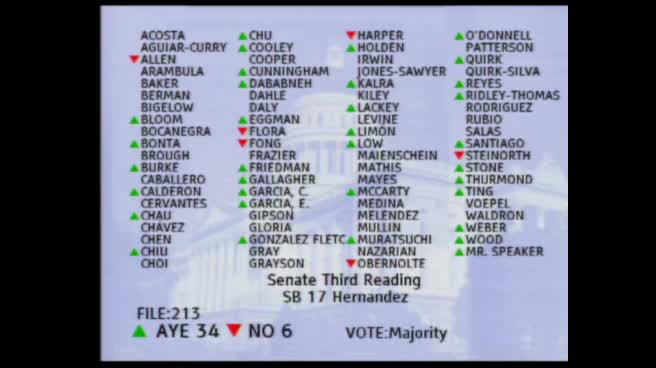 1MIN
Assembly Floor
 56SEC
Assembly Floor
 3MIN
Assembly Standing Committee on Appropriations
 10MIN
Assembly Standing Committee on Health
 24MIN
Assembly Standing Committee on Housing and Community Development
 3MIN
Senate Floor
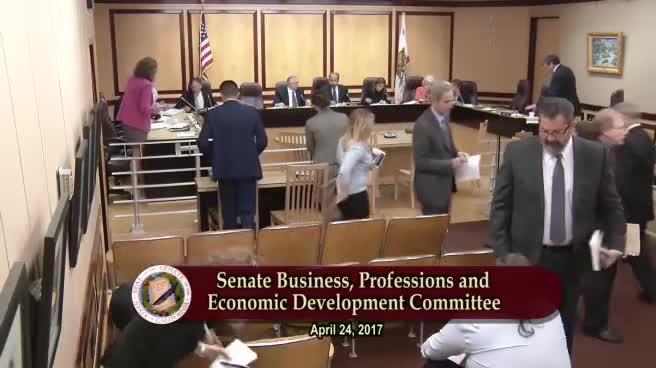 6MIN
Senate Standing Committee on Business, Professions and Economic Development
Bill Author

Bill Co-Author(s):