SB 490: Wages: Barbering and Cosmetology Act: licensees.
- Session Year: 2017-2018
- House: Senate
- Latest Version Date: 2017-10-15
Existing law requires, with certain exceptions, that all wages be paid twice during each calendar month on days designated in advance by the employer as the regular paydays and requires the minimum wage for all industries to be $10. Existing law makes it a crime for any person to willfully refuse to pay wages due and payable after demand has been made. The Barbering and Cosmetology Act provides for the licensure and regulation of barbers, cosmetologists, estheticians, manicurists, electrologists, and apprentices by the State Board of Barbering and Cosmetology, which is within the Department of Consumer Affairs.
This bill would require commission wages paid to any employee who is licensed under the Barbering and Cosmetology Act to be due and payable at least twice during each calendar month on a day designated in advance by the employer as the regular payday and would authorize the employee and employer to agree to a commission in addition to the base hourly rate. The bill would provide that commission wages are wages paid to an employee who is licensed under that act for providing services for which a license is required when paid as a percentage or a flat sum portion of the sums paid to the employee by the client receiving the service, and for selling goods, provided that the employee is paid a regular base hourly rate of at least 2 times the state minimum wage rate in addition to commissions paid. The bill would specify that the employee may be compensated for rest and recovery periods at a rate of pay not less than the employees regular base hourly rate. By expanding the scope of an existing crime, this bill would result in a state-mandated local program.
The California Constitution requires the state to reimburse local agencies and school districts for certain costs mandated by the state. Statutory provisions establish procedures for making that reimbursement.
This bill would provide that no reimbursement is required by this act for a specified reason.
Existing law requires, with certain exceptions, that all wages be paid twice during each calendar month on days designated in advance by the employer as the regular paydays and requires the minimum wage for all industries to be $10. Existing law makes it a crime for any person to willfully refuse to pay wages due and payable after demand has been made. The Barbering and Cosmetology Act provides for the licensure and regulation of barbers, cosmetologists, estheticians, manicurists, electrologists, and apprentices by the State Board of Barbering and Cosmetology, which is within the Department of Consumer Affairs.
This bill would require commission wages paid to any employee who is licensed under the Barbering and Cosmetology Act to be due and payable at least twice during each calendar month on a day designated in advance by the employer as the regular payday and authorizes would authorize the employee and employer to agree to a commission in addition to the base hourly rate. The bill would provide that commission wages are wages paid to an employee who is licensed under that act for providing services for which a license is required when paid as a percentage or a flat sum portion of the sums paid to the employee by the client receiving the service, and for selling goods, provided that the employee is paid a regular base hourly rate of at least 2 times the state minimum wage rate in addition to commissions paid. The bill would specify that the employee may be compensated for rest and recovery periods at a rate of pay not less than the employees regular base hourly rate. By expanding the scope of an existing crime, this bill would result in a state-mandated local program.
The California Constitution requires the state to reimburse local agencies and school districts for certain costs mandated by the state. Statutory provisions establish procedures for making that reimbursement.
This bill would provide that no reimbursement is required by this act for a specified reason.
Existing law establishes the Department of Industrial Relations for specified purposes and provides for its administration by the Director of Industrial Relations. requires, with certain exceptions, that all wages be paid twice during each calendar month on days designated in advance by the employer as the regular paydays and requires the minimum wage for all industries to be $10. Existing law makes it a crime for any person to willfully refuse to pay wages due and payable after demand has been made. The Barbering and Cosmetology Act provides for the licensure and regulation of barbers, cosmetologists, estheticians, manicurists, electrologists, and apprentices by the State Board of Barbering and Cosmetology, which is within the Department of Consumer Affairs.
This bill would make a nonsubstantive change to that administration provision. require commission wages paid to any employee who is licensed under the Barbering and Cosmetology Act to be due and payable at least twice during each calendar month on a day designated in advance by the employer as the regular payday and authorizes the employee and employer to agree to a commission in addition to the base hourly rate. The bill would provide that commission wages are wages paid to an employee who is licensed under that act for providing services for which a license is required when paid as a percentage or a flat sum portion of the sums paid to the employee by the client receiving the service, provided that the employee is paid a regular hourly rate of at least 2 times the state minimum wage rate in addition to commissions paid. By expanding the scope of an existing crime, this bill would result in a state-mandated local program.
The California Constitution requires the state to reimburse local agencies and school districts for certain costs mandated by the state. Statutory provisions establish procedures for making that reimbursement.
This bill would provide that no reimbursement is required by this act for a specified reason.
Existing law establishes the Department of Industrial Relations for specified purposes and provides for its administration by the Director of Industrial Relations.
This bill would make a nonsubstantive change to that administration provision.
Commission wages paid to any employee who is licensed pursuant to the Barbering and Cosmetology Act (Chapter 10 (commencing with Section 7301) of Division 3 of the Business and Professions Code) are due and payable at least twice during each calendar month on a day designated in advance by the employer as the regular payday. For any employee who is licensed pursuant to the Barbering and Cosmetology Act (Chapter 10 (commencing with Section 7301) of Division 3 of the Business and Professions Code), wages that are paid to that employee for providing services for which such a license is required, when paid as a percentage or a flat sum portion of the sums paid to the employer by the client recipient of such service, and for selling goods, constitute commissions, provided that the employee is paid, in every pay period in which hours are worked, a regular base hourly rate of at least two times the state minimum wage rate for all hours worked in addition to commissions paid. The employee and employer may agree to a commission in addition to the base hourly rate. An employee may be compensated for rest and recovery periods at a rate of pay not less than the employees regular base hourly rate. Nothing in this section shall be interpreted to limit any rights or remedies otherwise available under state or federal law, including the right to overtime compensation.
SEC. 2.No reimbursement is required by this act pursuant to Section 6 of Article XIIIB of the California Constitution because the only costs that may be incurred by a local agency or school district will be incurred because this act creates a new crime or infraction, eliminates a crime or infraction, or changes the penalty for a crime or infraction, within the meaning of Section 17556 of the Government Code, or changes the definition of a crime within the meaning of Section 6 of Article XIIIB of the California Constitution.
Commission wages paid to any employee who is licensed pursuant to the Barbering and Cosmetology Act (Chapter 10 (commencing with Section 7301) of Division 3 of the Business and Professions Code) are due and payable at least twice during each calendar month on a day designated in advance by the employer as the regular payday. For any employee who is licensed pursuant to the Barbering and Cosmetology Act (Chapter 10 (commencing with Section 7301) of Division 3 of the Business and Professions Code), wages that are paid to that employee for providing services for which such a license is required, when paid as a percentage or a flat sum portion of the sums paid to the employer by the client recipient of such service, and for selling goods, constitute commissions, provided that the employee who is paid, in every pay period in which hours are worked, a regular base hourly rate of at least two times the state minimum wage rate for all hours worked in addition to commissions paid. The employee and employer may agree to a commission in addition to the base hourly rate. An employee may be compensated for rest and recovery periods at a rate of pay not less than the employees regular base hourly rate. Nothing in this section shall be interpreted to limit any rights or remedies otherwise available under state or federal law, including the right to overtime compensation.
SEC. 2.No reimbursement is required by this act pursuant to Section 6 of Article XIIIB of the California Constitution because the only costs that may be incurred by a local agency or school district will be incurred because this act creates a new crime or infraction, eliminates a crime or infraction, or changes the penalty for a crime or infraction, within the meaning of Section 17556 of the Government Code, or changes the definition of a crime within the meaning of Section 6 of Article XIIIB of the California Constitution.
Commission wages paid to any employee who is licensed pursuant to the Barbering and Cosmetology Act (Chapter 10 (commencing with Section 7301) of Division 3 of the Business and Professions Code) are due and payable at least twice during each calendar month on a day designated in advance by the employer as the regular payday. For any employee who is licensed pursuant to the Barbering and Cosmetology Act (Chapter 10 (commencing with Section 7301) of Division 3 of the Business and Professions Code), wages that are paid to that employee for providing services for which such a license is required, when paid as a percentage or a flat sum portion of the sums paid to the employer by the client recipient of such service, constitute commissions, provided that the employee who is paid, in every pay period in which hours are worked, a regular hourly rate of at least two times the state minimum wage rate in addition to commissions paid. The employee and employer may agree to a commission in addition to the base hourly rate. Nothing in this section shall be interpreted to limit any rights or remedies otherwise available under state or federal law, including the right to overtime compensation.
SEC. 2.No reimbursement is required by this act pursuant to Section 6 of Article XIIIB of the California Constitution because the only costs that may be incurred by a local agency or school district will be incurred because this act creates a new crime or infraction, eliminates a crime or infraction, or changes the penalty for a crime or infraction, within the meaning of Section 17556 of the Government Code, or changes the definition of a crime within the meaning of Section 6 of Article XIIIB of the California Constitution.
SECTION 1.Section 51 of the Labor Code is amended to read:51.The department shall be conducted under the control of an executive officer known as the Director of Industrial Relations. The Director of Industrial Relations shall be appointed by the Governor with the advice and consent of the Senate and hold office at the pleasure of the Governor and shall receive an annual salary provided for by Chapter 6 (commencing with Section 11550) of Part 1 of Division 3 of Title 2 of the Government Code.The department shall be conducted under the control of an executive officer known as the Director of Industrial Relations. The Director of Industrial Relations shall be appointed by the Governor with the advice and consent of the Senate and hold office at the pleasure of the Governor and shall receive an annual salary provided for by Chapter 6 (commencing with Section 11550) of Part 1 of Division 3 of Title 2 of the Government Code.
|
Date
|
Status
|
|---|---|
| Oct 15, 2017 | Chaptered by Secretary of State. Chapter 831, Statutes of 2017. |
| Oct 15, 2017 | Approved by the Governor. |
| Sep 11, 2017 | Enrolled and presented to the Governor at 4 p.m. |
| Sep 5, 2017 | Assembly amendments concurred in. (Ayes 40. Noes 0.) Ordered to engrossing and enrolling. |
| Sep 1, 2017 | Ordered to special consent calendar. |
| Aug 31, 2017 | In Senate. Concurrence in Assembly amendments pending. |
| Aug 31, 2017 | Read third time. Passed. Ordered to the Senate. |
| Aug 24, 2017 | Read third time and amended. |
| Jul 3, 2017 | From consent calendar on motion of Assembly Member Bonta. |
| Jun 29, 2017 | Read second time. Ordered to consent calendar. |
| Jun 28, 2017 | From committee: Do pass. Ordered to consent calendar. (Ayes 14. Noes 0.) (June 28). |
| Jun 7, 2017 | From committee: Do pass and re-refer to Com. on APPR. (Ayes 6. Noes 0.) (June 7). Re-referred to Com. on APPR. |
| May 26, 2017 | Referred to Com. on L. & E. |
| Apr 27, 2017 | In Assembly. Read first time. Held at Desk. |
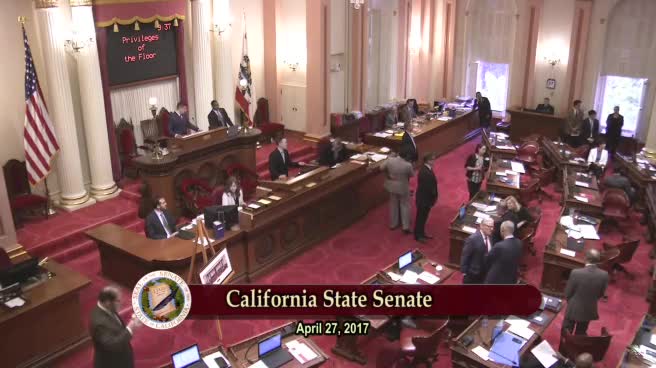
| Apr 27, 2017 | Read third time. Passed. (Ayes 37. Noes 0. Page 871.) Ordered to the Assembly. |
| Apr 18, 2017 | Read second time. Ordered to third reading. |
| Apr 17, 2017 | From committee: Be ordered to second reading pursuant to Senate Rule 28.8. |
| Apr 7, 2017 | Set for hearing April 17. |
| Apr 5, 2017 | From committee: Do pass and re-refer to Com. on APPR. (Ayes 5. Noes 0. Page 626.) (April 5). Re-referred to Com. on APPR. |
| Mar 31, 2017 | Set for hearing April 5. |
| Mar 29, 2017 | Re-referred to Com. on L. & I.R. |
| Mar 20, 2017 | From committee with author's amendments. Read second time and amended. Re-referred to Com. on RLS. |
| Mar 2, 2017 | Referred to Com. on RLS. |
| Feb 17, 2017 | From printer. May be acted upon on or after March 19. |
| Feb 16, 2017 | Introduced. Read first time. To Com. on RLS. for assignment. To print. |
|
Date
|
Description
|
Location
|
Votes
|
|
|---|---|---|---|---|
| Sep 5, 2017 | Special Consent SB490 | Senate Floor |
Passed |
|
| Aug 31, 2017 | SB 490 Bradford Senate Third Reading By JONES-SAWYER | Assembly Floor |
Passed |
|
| Jun 28, 2017 | Do pass. To Consent Calendar. | Assembly Standing Committee on Appropriations |
Passed |
|
| Jun 7, 2017 | Do pass and be re-referred to the Committee on [Appropriations] | Assembly Standing Committee on Labor and Employment |
Passed |
|
| Apr 27, 2017 | Senate 3rd Reading SB490 Bradford | Senate Floor |
Passed |
|
| Apr 5, 2017 | Do pass, but first be re-referred to the Committee on [Appropriations] | Senate Standing Committee on Labor and Industrial Relations |
Passed |
This list shows positions taken on this bill by organizations on the date displayed, which is linked to the original source.
Positions by individuals are not included.
Office of Senate Floor Analyses (916) 651-1520 Fax: (916) 327-4478 | SB |
UNFINISHED BUSINESS
Bill No: SB 490
:
SENATE LABOR & IND. REL. COMMITTEE: 5-0, 4/5/17
AYES: Bradford, Stone, Atkins, Jackson, Mitchell
SENATE APPROPRIATIONS COMMITTEE: Senate Rule 28.8
SENATE FLOOR: 37-0, 4/27/17
AYES: Allen, Anderson, Atkins, Bates, Beall, Bradford, Cannella, De León, Dodd, Fuller, Gaines, Galgiani, Glazer, Hernandez, Hertzberg, Hill, Hueso, Jackson, Lara, Leyva, McGuire, Mendoza, Mitchell, Monning, Moorlach, Morrell, Newman, Nguyen, Nielsen, Pan, Roth, Skinner, Stern, Stone, Wieckowski, Wiener, Wilk
NO VOTE RECORDED: Berryhill, Portantino, Vidak
ASSEMBLY FLOOR: 74-0, 8/31/17 - See last page for vote
SOURCE: Professional Beauty Association
DIGEST:
This bill clarifies that beauty salon employees may be paid by commission if specified requirements are met.
Assembly Amendments
clarify that beauty salon employees paid on a commission basis are entitled to rest periods per existing law.
Existing law:
- Defines “commission wages” as compensation paid to any person for services rendered in the sale of such employer’s property or services and based proportionately upon the amount or value of the property or services, and requires that commission wages are due and payable once during each calendar month on a day designated in advance by the employer as the regular payday. (Labor Code §204.1, Ramirez v. Yosemite Water Co., Inc. (1999) 20 Cal.4th 785)
- Requires that, when an employee is compensated on a “piece rate” basis, the employer must include in the employee’s wage stub the number of piece-rate units earned and any applicable piece rate if the employee is paid on a piece-rate basis. (Labor Code §226)
- Provides that, if an employee suffers injury as a result of a knowing and intentional failure by an employer to provide a wage stub, the employee is entitled to recover the greater of all actual damages or $50 for the initial pay period in which a violation occurs and $100 per employee for each violation in a subsequent pay period, not to exceed an aggregate penalty of $4,000, and is entitled to an award of costs and reasonable attorney’s fees. (Labor Code §226 (e))
- Requires that nonproductive time, rest breaks, and recovery breaks are separately compensated and sets requirements for how they should be compensated. (Labor Code §226.2)
- Allows employers to utilize an affirmative defense against claims of an employer’s failure to timely pay compensation due for rest periods, recovery periods, and nonproductive time if the alleged failure occurred between July 1, 2012, and December 31, 2015, if the employer meets specified pay requirements to his or her employees. (Labor Code §226.2)
This bill allows beauty salon employers and employees to agree to a percentage or flat sum commission in addition to a base hourly rate if the following requirements are met:
- The employee is licensed pursuant to the Barbering and Cosmetology Act and is paid for providing services where a license is required;
- The employee’s base hourly rate is at least two times the state minimum wage rate in addition to commissions paid; and
- The employee’s wages are paid at least twice during each calendar month on a day designated in advance by the employer as the regular payday.
Comments
Piece Rate, Commissions, and the Beauty Salon Industry
Under existing law, there are three basic ways that an employer can pay an employee: hourly (which is the most common payment method), piece rate (which is commonly found in agriculture), and commission (which is common among salespeople). As the name suggests, piece rate is payment by the piece (such as by the bushel of grapes or piece of clothing), while commission payment is a percentage of the value of sale (such as a car). In all three methods, the total amount of pay cannot be less than the applicable minimum wage.
Under existing statutory and case law, a sharp distinction is drawn between commission wages and piece rate wages. While both payment methods have incentive components, commission wages can only be paid for the sale of property or services; as soon as the services are provided or product is made, only piece rate can be utilized for the purposes of incentive pay. For the vast majority of industries, this is a distinction that is relatively simple to make.
In the beauty salon industry, however, such a distinction is uniquely difficult to make. For example, hair stylists can sell products and/or services while preforming services, creating significant difficulty in appropriately breaking down working hours and payment. This confusion exposes salon owners to potential litigation, and it creates confusion for hair stylists and other salon workers on why they are paid what they are paid and what wages they can expect from month to month. Further, proponents note that the underground economy remains a persistent challenge for beauty salons, creating an additional layer of complication for beauty salon employers trying to comply with the law in an incentive-based payment system.
This bill seeks to provide clarity for beauty salon employers and employees by explicitly permitting commission pay for licensed professionals, but also creating a permanent wage floor of twice the state minimum wage. Proponents believe that this will create clarity for employers for the purposes of compliance, but also gives employees greater certainty on what they will be paid and when.
FISCAL EFFECT: Appropriation: Fiscal Com.: Local:
According to the Assembly Appropriations Committee, this bill will have negligible state costs.
Professional Beauty Association (source)
OPPOSITION: (Verified 8/31/17)
None received
ARGUMENTS IN SUPPORT: According to the Professional Beauty Association:
The bill is simply designed to clarify that it is a permissible form of payment for businesses to compensate their employees on a commission basis, so long as the employees are paid at least twice monthly on their regular paydays, and as long as the commission is on top of base hourly wages of at least two times the state minimum wage. The bill makes no change to the law concerning the requirement to pay overtime compensation when applicable.
Historically, the majority of hair salons in California compensated employees with a simple commission structure. Recent court cases concerning piece-rate employees created uncertainty for hair salons. Working with labor and associations representing the plaintiff’s bar, SB 490 has been crafted to provide certainty on these commission arrangements, so long as employees receive at least twice the minimum wage for all hours worked.
Hair salons are unique in that stylists tend to develop their own books of business within salons, which often follow them if they move to a new salon. Stylists are thus constantly selling products and services in a way that classic piece-rate employees are not. Rules relating to piece-rate required expensive and time-consuming accounting systems, in order to account for time not actually spent cutting hair. The result was unsatisfactory for both stylists and salons.
It is critical to note that nothing in SB 490 requires salons to adopt the model articulated in the bill. Salons are free to apply piece-rate rules if they wish, or to simply pay stylists on an hourly basis. The bill benefits those who choose to compensate on an hourly plus commission basis.
ASSEMBLY FLOOR: 74-0, 8/31/17
AYES: Acosta, Aguiar-Curry, Travis Allen, Arambula, Baker, Berman, Bigelow, Bloom, Bocanegra, Bonta, Burke, Caballero, Calderon, Cervantes, Chau, Chávez, Chen, Chiu, Choi, Chu, Cooley, Cooper, Cunningham, Dababneh, Dahle, Daly, Flora, Fong, Frazier, Friedman, Gallagher, Cristina Garcia, Eduardo Garcia, Gipson, Gloria, Gonzalez Fletcher, Gray, Grayson, Holden, Irwin, Jones-Sawyer, Kalra, Kiley, Lackey, Levine, Limón, Low, Maienschein, Mathis, Mayes, McCarty, Medina, Melendez, Mullin, Muratsuchi, Nazarian, Obernolte, O'Donnell, Patterson, Quirk, Reyes, Rodriguez, Rubio, Salas, Santiago, Steinorth, Mark Stone, Thurmond, Ting, Voepel, Waldron, Weber, Wood, Rendon
NO VOTE RECORDED: Brough, Eggman, Harper, Quirk-Silva, Ridley-Thomas
8/31/17 18:09:14
**** END ****
SENATE THIRD READING
STR Bill Id:SB 490
Author:(Bradford)
As Amended Ver:August 24, 2017
Majority vote
SENATE VOTE: 37-0
Committee | Votes | Ayes | Noes |
Labor | 6-0 | Thurmond, Flora, Gonzalez Fletcher, Jones-Sawyer, Kalra, McCarty | > |
Appropriations | 14-0 | Gonzalez Fletcher, Bigelow, Bloom, Bocanegra, Bonta, Limón, Chau, Eggman, Fong, Friedman, Gallagher, Muratsuchi, Obernolte, Reyes | > |
SUMMARY: Allows beauty salon employees to be paid a percentage or flat sum commission in addition to a base hourly rate, if the employee is:
- Licensed pursuant to the Barbering and Cosmetology Act and receive pay for providing services where that license is required;
- Receiving a base hourly rate at least two times the state minimum wage rate in addition to commissions paid; and
- Paid wages at least twice during each calendar month on a day designated in advance by the employer as the regular payday.
- Specifies an employee may be compensated for rest and recovery periods not less than the employee's regular base hourly rate.
EXISTING LAW:
- Defines "commission wages" as compensation paid to any person for services rendered in the sale of such employer's property or services and based proportionately upon the amount or value of the property or services, and requires that commission wages are due and payable once during each calendar month on a day designated in advance by the employer as the regular payday.
- Requires that, when an employee is compensated on a "piece rate" basis, the employer must include in the employee's wage stub the number of piece-rate units earned and any applicable piece rate if the employee is paid on a piece-rate basis.
- Requires that nonproductive time, rest breaks, and recovery breaks are separately compensated and sets requirements for how they should be compensated.
- Allows employers to utilize an affirmative defense against claims of an employer's failure to timely pay compensation due for rest periods, recovery periods, and nonproductive time if the alleged failure occurred between July 1, 2012, and December 31, 2015, if the employer meets specified pay requirements to his or her employees.
- Provides for the licensure and regulation of barbers, cosmetologists, estheticians, manicurists, electrologists, and apprentices by the State Board of Barbering and Cosmetology, which is within the Department of Consumer Affairs.
FISCAL EFFECT: According to the Assembly Appropriations Committee, negligible state costs.
COMMENTS: Under existing law, there are three basic ways that an employer can pay a non-exempt employee: hourly (which is the most common payment method), piece rate (which is commonly found in agriculture), and commission (which is common among salespeople). As the name suggests, piece rate is payment by the piece (such as by the bushel of grapes or piece of clothing), while commission payment is a percentage of the value of sale (such as a car). For all three methods, the total amount of pay cannot be less than the applicable minimum wage.
Under existing statutory and case law, a sharp distinction is drawn between commission wages and piece rate wages. While both payment methods have incentive components, commission wages can only be paid for the sale of property or services; as soon as the services are provided or product is made, only piece rate can be utilized for the purposes of incentive pay. For the vast majority of industries, this is a distinction that is relatively simple to make.
According to the author, in the beauty salon industry, the distinction between piece rate wages and commission wages is uniquely difficult to make. For example, hair stylists can sell products and/or services while preforming services, creating significant difficulty in appropriately breaking down working hours and payment. This confusion exposes salon owners to potential litigation, and it creates confusion for hair stylists and other salon workers on why they are paid what they are paid and what wages they can expect from month to month. Further, proponents note that the underground economy remains a persistent challenge for beauty salons, creating an additional layer of complication for beauty salon employers trying to comply with the law in an incentive-based payment system.
The author argues that this measure seeks to provide clarity for beauty salon employers and employees by explicitly permitting commission pay for licensed professionals, but also creating a permanent wage floor of twice the state minimum wage. Proponents believe that this will create clarity for employers for the purposes of compliance, but also gives employees greater certainty on what they will be paid and when.
Arguments in Support
According to the sponsor, the Professional Beauty Association, "Historically, the majority of hair salons in California compensated employees with a simple commission structure. Recent court cases concerning piece-rate employees created uncertainty for hair salons. Working with labor and associations representing the plaintiff's bar, this bill has been crafted to provide certainty on these commission arrangements, so long as employees receive at least twice the minimum wage for all hours worked.
Hair salons are unique in that stylists tend to develop their own books of business within salons, which often follow them if they move to a new salon. Stylists are thus constantly selling products and services in a way that classic piece-rate employees are not. Rules relating to piece-rate required expensive and time-consuming accounting systems, in order to account for time not actually spent cutting hair. The result was unsatisfactory for both stylists and salons.
It is critical to note that nothing in this bill requires salons to adopt the model articulated in the bill. Salons are free to apply piece-rate rules if they wish, or to simply pay stylists on an hourly basis. The bill benefits those who choose to compensate on an hourly plus commission basis.
Support if Amended
The Professional Beauty Federation of California writes that while they support the effort to statutorily acknowledge the long history of commission wages in the barbering and beauty industry, they are "concerned that the threshold of 'two times the state minimum wage rate in addition to commissions paid' to qualify as commission employees is well beyond the reach of at least 90% of barber shops and salons (meaning nine out of 10, of our behind-the-chair professionals won't see any of the benefits of this legislation)."
The Professional Beauty Federation of California further argues, "Our industry has a long-held practice of rewarding barbers, hairstylists and nail/skin technicians through such percentage wages, where employees directly benefit from their skill and productivity and share in the profits with the establishment owner. As this incentive pay structure has been outlawed, many salons have been moving toward booth rental arrangements with their State Board licensees. Given the lack of Worker's Comp. and other employer-mandates covering them, these workers will be less protected as a result."
There is no known opposition to this bill.
Analysis Prepared by: Jennifer Richard / L. & E. / (916) 319-2091 FN: 0001381
SENATE THIRD READING
STR Bill Id:SB 490
Author:(Bradford)
As Amended Ver:March 20, 2017
Majority vote
SENATE VOTE: 37-0
Committee | Votes | Ayes | Noes |
Labor | 6-0 | Thurmond, Flora, Gonzalez Fletcher, Jones-Sawyer, Kalra, McCarty | |
Appropriations | 14-0 | Gonzalez Fletcher, Bigelow, Bloom, Bocanegra, Bonta, Limón, Chau, Eggman, Fong, Friedman, Gallagher, Muratsuchi, Obernolte, Reyes |
SUMMARY: Allows beauty salon employees to be paid a percentage or flat sum commission in addition to a base hourly rate, if the employee is:
- Licensed pursuant to the Barbering and Cosmetology Act and receive pay for providing services where that license is required;
- Receiving a base hourly rate at least two times the state minimum wage rate in addition to commissions paid; and
- Paid wages at least twice during each calendar month on a day designated in advance by the employer as the regular payday.
EXISTING LAW:
- Defines "commission wages" as compensation paid to any person for services rendered in the sale of such employer's property or services and based proportionately upon the amount or value of the property or services, and requires that commission wages are due and payable once during each calendar month on a day designated in advance by the employer as the regular payday.
- Requires that, when an employee is compensated on a "piece rate" basis, the employer must include in the employee's wage stub the number of piece-rate units earned and any applicable piece rate if the employee is paid on a piece-rate basis.
- Requires that nonproductive time, rest breaks, and recovery breaks are separately compensated and sets requirements for how they should be compensated.
- Allows employers to utilize an affirmative defense against claims of an employer's failure to timely pay compensation due for rest periods, recovery periods, and nonproductive time if the alleged failure occurred between July 1, 2012, and December 31, 2015, if the employer meets specified pay requirements to his or her employees.
- Provides for the licensure and regulation of barbers, cosmetologists, estheticians, manicurists, electrologists, and apprentices by the State Board of Barbering and Cosmetology, which is within the Department of Consumer Affairs.
FISCAL EFFECT: According to the Assembly Appropriations Committee, negligible state costs.
COMMENTS: Under existing law, there are three basic ways that an employer can pay a non-exempt employee: hourly (which is the most common payment method), piece rate (which is commonly found in agriculture), and commission (which is common among salespeople). As the name suggests, piece rate is payment by the piece (such as by the bushel of grapes or piece of clothing), while commission payment is a percentage of the value of sale (such as a car). For all three methods, the total amount of pay cannot be less than the applicable minimum wage.
Under existing statutory and case law, a sharp distinction is drawn between commission wages and piece rate wages. While both payment methods have incentive components, commission wages can only be paid for the sale of property or services; as soon as the services are provided or product is made, only piece rate can be utilized for the purposes of incentive pay. For the vast majority of industries, this is a distinction that is relatively simple to make.
According to the author, in the beauty salon industry, the distinction between piece rate wages and commission wages is uniquely difficult to make. For example, hair stylists can sell products and/or services while preforming services, creating significant difficulty in appropriately breaking down working hours and payment. This confusion exposes salon owners to potential litigation, and it creates confusion for hair stylists and other salon workers on why they are paid what they are paid and what wages they can expect from month to month. Further, proponents note that the underground economy remains a persistent challenge for beauty salons, creating an additional layer of complication for beauty salon employers trying to comply with the law in an incentive-based payment system.
The author argues that this measure seeks to provide clarity for beauty salon employers and employees by explicitly permitting commission pay for licensed professionals, but also creating a permanent wage floor of twice the state minimum wage. Proponents believe that this will create clarity for employers for the purposes of compliance, but also gives employees greater certainty on what they will be paid and when.
Arguments in Support
According to the sponsor, the Professional Beauty Association, "Historically, the majority of hair salons in California compensated employees with a simple commission structure. Recent court cases concerning piece-rate employees created uncertainty for hair salons. Working with labor and associations representing the plaintiff's bar, this bill has been crafted to provide certainty on these commission arrangements, so long as employees receive at least twice the minimum wage for all hours worked.
Hair salons are unique in that stylists tend to develop their own books of business within salons, which often follow them if they move to a new salon. Stylists are thus constantly selling products and services in a way that classic piece-rate employees are not. Rules relating to piece-rate required expensive and time-consuming accounting systems, in order to account for time not actually spent cutting hair. The result was unsatisfactory for both stylists and salons.
It is critical to note that nothing in this bill requires salons to adopt the model articulated in the bill. Salons are free to apply piece-rate rules if they wish, or to simply pay stylists on an hourly basis. The bill benefits those who choose to compensate on an hourly plus commission basis.
Support if Amended
The Professional Beauty Federation of California writes that while they support the effort to statutorily acknowledge the long history of commission wages in the barbering and beauty industry, they are "concerned that the threshold of 'two times the state minimum wage rate in addition to commissions paid' to qualify as commission employees is well beyond the reach of at least 90% of barber shops and salons (meaning nine out of 10, of our behind-the-chair professionals won't see any of the benefits of this legislation)."
The Professional Beauty Federation of California further argues, "Our industry has a long-held practice of rewarding barbers, hairstylists and nail/skin technicians through such percentage wages, where employees directly benefit from their skill and productivity and share in the profits with the establishment owner. As this incentive pay structure has been outlawed, many salons have been moving toward booth rental arrangements with their State Board licensees. Given the lack of Worker's Comp. and other employer-mandates covering them, these workers will be less protected as a result."
There is no known opposition to this bill.
Analysis Prepared by: Jennifer Richard / L. & E. / (916) 319-2091 FN: 0001074
Date of Hearing: June 28, 2017
ASSEMBLY COMMITTEE ON APPROPRIATIONS
Lorena Gonzalez Fletcher, Chair
SBPCA Bill Id:SB 490
Author:(Bradford) – As Amended Ver:March 20, 2017
Policy Committee: | Labor and Employment | Vote: | 6 - 0 |
Urgency: No State Mandated Local Program: Yes Reimbursable: No
SUMMARY:
This bill allows beauty salon employees to be paid a percentage or flat sum commission under specified conditions, including that employees are appropriately licensed, as defined, and that they also receive a base hourly pay rate of at least twice the state minimum wage.
FISCAL EFFECT:
Negligible state costs.
COMMENTS:
- Background. In addition to the typical hourly rate payment, existing state law also allows employers to pay non-exempt employees by piece rate or by commission. A piece rate payment is based on the number of “units” of a good produced or service preformed, and a commission rate payment is the percentage of the value of a sale made. No matter how a non-exempt employee is paid, the total amount of pay cannot be less than the applicable minimum wage.
Supporters of SB 490 argue that the unique structure of the beauty salon industry has made it difficult to differentiate between piece rate wages and commission wages. Historically, the Department of Industrial Relations (DIR) classified these employees as piece rate employees, but hair stylists can also sell products and services while performing other services. Moreover, AB 1513 (Williams), Chapter 754, Statutes of 2015, codified pay requirements for piece rate workers for nonproductive time and rest time, making it especially important for the beauty industry to clarify how incentive-based pay is defined.
- Purpose. According to the author, SB 490 will provide clarity for employers and employees by explicitly permitting commission pay for licensed professionals while creating a permanent wage floor for employees. This will help employer compliance with state law and provide clarity on how much employees will be paid and when they can expect to be paid.
Analysis Prepared by: Luke Reidenbach / APPR. / (916) 319-2081
Date of Hearing: June 7, 2017
ASSEMBLY COMMITTEE ON LABOR AND EMPLOYMENT
Tony Thurmond, Chair
SBPCA Bill Id:SB 490
Author:(Bradford) – As Amended Ver:March 20, 2017
SENATE VOTE: 37-0
SUBJECT: Wages: Barbering and Cosmetology Act: licensees
SUMMARY: Allows beauty salon employees to be paid a percentage or flat sum commission in addition to a base hourly rate, if the employee is:
- Licensed pursuant to the Barbering and Cosmetology Act and receive pay for providing services where that license is required;
- Receiving a base hourly rate at least two times the state minimum wage rate in addition to commissions paid; and
- Paid wages at least twice during each calendar month on a day designated in advance by the employer as the regular payday.
EXISTING LAW:
- Defines “commission wages” as compensation paid to any person for services rendered in the sale of such employer’s property or services and based proportionately upon the amount or value of the property or services, and requires that commission wages are due and payable once during each calendar month on a day designated in advance by the employer as the regular payday.
- Requires that, when an employee is compensated on a “piece rate” basis, the employer must include in the employee’s wage stub the number of piece-rate units earned and any applicable piece rate if the employee is paid on a piece-rate basis.
- Requires that nonproductive time, rest breaks, and recovery breaks are separately compensated and sets requirements for how they should be compensated.
- Allows employers to utilize an affirmative defense against claims of an employer’s failure to timely pay compensation due for rest periods, recovery periods, and nonproductive time if the alleged failure occurred between July 1, 2012, and December 31, 2015, if the employer meets specified pay requirements to his or her employees.
- Provides for the licensure and regulation of barbers, cosmetologists, estheticians, manicurists, electrologists, and apprentices by the State Board of Barbering and Cosmetology, which is within the Department of Consumer Affairs.
FISCAL EFFECT: According to the Senate Appropriations Committee, pursuant to Senate Rule 28.8, negligible state costs.
COMMENTS: Under existing law, there are three basic ways that an employer can pay a non-exempt employee: hourly (which is the most common payment method), piece rate (which is commonly found in agriculture), and commission (which is common among salespeople). As the name suggests, piece rate is payment by the piece (such as by the bushel of grapes or piece of clothing), while commission payment is a percentage of the value of sale (such as a car). For all three methods, the total amount of pay cannot be less than the applicable minimum wage.
Under existing statutory and case law, a sharp distinction is drawn between commission wages and piece rate wages. While both payment methods have incentive components, commission wages can only be paid for the sale of property or services; as soon as the services are provided or product is made, only piece rate can be utilized for the purposes of incentive pay. For the vast majority of industries, this is a distinction that is relatively simple to make.
According to the author, in the beauty salon industry, the distinction between piece rate wages and commission wages is uniquely difficult to make. For example, hair stylists can sell products and/or services while preforming services, creating significant difficulty in appropriately breaking down working hours and payment. This confusion exposes salon owners to potential litigation, and it creates confusion for hair stylists and other salon workers on why they are paid what they are paid and what wages they can expect from month to month. Further, proponents note that the underground economy remains a persistent challenge for beauty salons, creating an additional layer of complication for beauty salon employers trying to comply with the law in an incentive-based payment system.
The author argues that this measure seeks to provide clarity for beauty salon employers and employees by explicitly permitting commission pay for licensed professionals, but also creating a permanent wage floor of twice the state minimum wage. Proponents believe that this will create clarity for employers for the purposes of compliance, but also gives employees greater certainty on what they will be paid and when.
Arguments in Support
According to the sponsor, the Professional Beauty Association, “Historically, the majority of hair salons in California compensated employees with a simple commission structure. Recent court cases concerning piece-rate employees created uncertainty for hair salons. Working with labor and associations representing the plaintiff’s bar, this bill has been crafted to provide certainty on these commission arrangements, so long as employees receive at least twice the minimum wage for all hours worked.
Hair salons are unique in that stylists tend to develop their own books of business within salons, which often follow them if they move to a new salon. Stylists are thus constantly selling products and services in a way that classic piece-rate employees are not. Rules relating to piece-rate required expensive and time-consuming accounting systems, in order to account for time not actually spent cutting hair. The result was unsatisfactory for both stylists and salons.
It is critical to note that nothing in this bill requires salons to adopt the model articulated in the bill. Salons are free to apply piece-rate rules if they wish, or to simply pay stylists on an hourly basis. The bill benefits those who choose to compensate on an hourly plus commission basis.
Support if Amended
The Professional Beauty Federation of California writes that while they support the effort to statutorily acknowledge the long history of commission wages in the barbering and beauty industry, they are “concerned that the threshold of ‘two times the state minimum wage rate in addition to commissions paid’ to qualify as commission employees is well beyond the reach of at least 90% of barber shops and salons (meaning nine out of ten, of our behind-the-chair professionals won’t see any of the benefits of this legislation).”
The Professional Beauty Federation of California further argues, “Our industry has a long-held practice of rewarding barbers, hairstylists and nail/skin technicians through such percentage wages, where employees directly benefit from their skill and productivity and share in the profits with the establishment owner. As this incentive pay structure has been outlawed, many salons have been moving toward booth rental arrangements with their State Board licensees. Given the lack of Worker’s Comp. and other employer-mandates covering them, these workers will be less protected as a result.”
Prior Legislation
AB 1513 (Williams) Chapter 754, Statutes of 2015, among other requirements, clarified and codified the pay requirements for piece rate workers for nonproductive time and rest and recovery period time; and established a process through which employers, during a prescribed time period, can make back wage payments for rest and recovery periods and nonproductive time in exchange for relief from statutory penalties and other damages.
REGISTERED SUPPORT / OPPOSITION:
Support
Professional Beauty Association (sponsor)
Support if Amended
Professional Beauty Federation of California
Opposition
None on file.
Analysis Prepared by: Jennifer Richard / L. & E. /
Office of Senate Floor Analyses (916) 651-1520 Fax: (916) 327-4478 | SB |
THIRD READING
Bill No: SB 490
:
SENATE LABOR & IND. REL. COMMITTEE: 5-0, 4/5/17
AYES: Bradford, Stone, Atkins, Jackson, Mitchell
SENATE APPROPRIATIONS COMMITTEE: Senate Rule 28.8
SOURCE: Professional Beauty Association
DIGEST: This bill clarifies that beauty salon employees may be paid by commission if specified requirements are met.
Existing law:
- Defines “commission wages” as compensation paid to any person for services rendered in the sale of such employer’s property or services and based proportionately upon the amount or value of the property or services, and requires that commission wages are due and payable once during each calendar month on a day designated in advance by the employer as the regular payday. (Labor Code §204.1, Ramirez v. Yosemite Water Co., Inc. (1999) 20 Cal.4th 785)
- Requires that, when an employee is compensated on a “piece rate” basis, the employer must include in the employee’s wage stub the number of piece-rate units earned and any applicable piece rate if the employee is paid on a piece-rate basis. (Labor Code §226)
- Provides that, if an employee suffers injury as a result of a knowing and intentional failure by an employer to provide a wage stub, the employee is entitled to recover the greater of all actual damages or $50 for the initial pay period in which a violation occurs and $100 per employee for each violation in a subsequent pay period, not to exceed an aggregate penalty of $4,000, and is entitled to an award of costs and reasonable attorney’s fees. (Labor Code §226 (e))
- Requires that nonproductive time, rest breaks, and recovery breaks are separately compensated and sets requirements for how they should be compensated. (Labor Code §226.2)
- Allows employers to utilize an affirmative defense against claims of an employer’s failure to timely pay compensation due for rest periods, recovery periods, and nonproductive time if the alleged failure occurred between July 1, 2012, and December 31, 2015, if the employer meets specified pay requirements to his or her employees. (Labor Code §226.2)
This bill allows beauty salon employers and employees to agree to a percentage or flat sum commission in addition to a base hourly rate if the following requirements are met:
- The employee is licensed pursuant to the Barbering and Cosmetology Act and is paid for providing services where a license is required;
- The employee’s base hourly rate is at least two times the state minimum wage rate in addition to commissions paid; and
- The employee’s wages are paid at least twice during each calendar month on a day designated in advance by the employer as the regular payday.
Comments
Piece Rate, Commissions, and the Beauty Salon Industry
Under existing law, there are three basic ways that an employer can pay an employee: hourly (which is the most common payment method), piece rate (which is commonly found in agriculture), and commission (which is common among salespeople). As the name suggests, piece rate is payment by the piece (such as by the bushel of grapes or piece of clothing), while commission payment is a percentage of the value of sale (such as a car). In all three methods, the total amount of pay cannot be less than the applicable minimum wage.
Under existing statutory and case law, a sharp distinction is drawn between commission wages and piece rate wages. While both payment methods have incentive components, commission wages can only be paid for the sale of property or services; as soon as the services are provided or product is made, only piece rate can be utilized for the purposes of incentive pay. For the vast majority of industries, this is a distinction that is relatively simple to make.
In the beauty salon industry, however, such a distinction is uniquely difficult to make. For example, hair stylists can sell products and/or services while preforming services, creating significant difficulty in appropriately breaking down working hours and payment. This confusion exposes salon owners to potential litigation, and it creates confusion for hair stylists and other salon workers on why they are paid what they are paid and what wages they can expect from month to month. Further, proponents note that the underground economy remains a persistent challenge for beauty salons, creating an additional layer of complication for beauty salon employers trying to comply with the law in an incentive-based payment system.
This bill seeks to provide clarity for beauty salon employers and employees by explicitly permitting commission pay for licensed professionals, but also creating a permanent wage floor of twice the state minimum wage. Proponents believe that this will create clarity for employers for the purposes of compliance, but also gives employees greater certainty on what they will be paid and when.
FISCAL EFFECT: Appropriation: Fiscal Com.: Local:
Professional Beauty Association (source)
OPPOSITION: (Verified 4/17/17)
None received
ARGUMENTS IN SUPPORT: According to the Professional Beauty Association:
The bill is simply designed to clarify that it is a permissible form of payment for businesses to compensate their employees on a commission basis, so long as the employees are paid at least twice monthly on their regular paydays, and as long as the commission is on top of base hourly wages of at least two times the state minimum wage. The bill makes no change to the law concerning the requirement to pay overtime compensation when applicable.
Historically, the majority of hair salons in California compensated employees with a simple commission structure. Recent court cases concerning piece-rate employees created uncertainty for hair salons. Working with labor and associations representing the plaintiff’s bar, SB 490 has been crafted to provide certainty on these commission arrangements, so long as employees receive at least twice the minimum wage for all hours worked.
4/19/17 14:10:34
**** END ****
SENATE COMMITTEE ON LABOR AND INDUSTRIAL RELATIONS
Senator Steven Bradford, Chair
2017 - 2018 Regular
Bill No: SB 490 Hearing Date: April 5, 2017
Author: | Bradford | ||
Version: | March 20, 2017 | ||
Urgency: | No | Fiscal: | Yes |
Consultant: | Gideon Baum | ||
Subject: Wages: Barbering and Cosmetology Act: licensees
KEY ISSUE
Should the Legislature clarify that beauty salon employees may be paid by commission if specified requirements are met?
ANALYSIS
Existing law:
- Defines “commission wages” as compensation paid to any person for services rendered in the sale of such employer’s property or services and based proportionately upon the amount or value of the property or services, and requires that commission wages are due and payable once during each calendar month on a day designated in advance by the employer as the regular payday.
(Labor Code §204.1, Ramirez v. Yosemite Water Co., Inc. (1999) 20 Cal.4th 785) - Requires that, when an employee is compensated on a “piece rate” basis, the employer must include in the employee’s wage stub the number of piece-rate units earned and any applicable piece rate if the employee is paid on a piece-rate basis. (Labor Code §226)
- Provides that, if an employee suffers injury as a result of a knowing and intentional failure by an employer to provide a wage stub, the employee is entitled to recover the greater of all actual damages or $50 for the initial pay period in which a violation occurs and $100 per employee for each violation in a subsequent pay period, not to exceed an aggregate penalty of $4,000, and is entitled to an award of costs and reasonable attorney’s fees. (Labor Code §226 (e))
- Requires that nonproductive time, rest breaks, and recovery breaks are separately compensated and sets requirements for how they should be compensated.
(Labor Code §226.2) - Allow employers to utilize an affirmative defense against claims of an employer’s failure to timely pay compensation due for rest periods, recovery periods, and nonproductive time if the alleged failure occurred between July 1, 2012 and December 31, 2015 if the employer meets specified pay requirements to his or her employees. (Labor Code §226.2)
This Bill allows beauty salon employers and employees to agree to a percentage or flat sum commission in addition to a base hourly rate if the following requirements are met:
- The employee is licensed pursuant to the Barbering and Cosmetology Act and is paid for providing services where a license is required;
- The employee’s base hourly rate is at least two times the state minimum wage rate in addition to commissions paid; and
- The employee’s wages are paid at least twice during each calendar month on a day designated in advance by the employer as the regular payday.
COMMENTS
1. Piece Rate, Commissions, and the Beauty Salon Industry:
Under existing law, there are three basic ways that an employer can pay an employee: hourly (which is the most common payment method), piece rate (which is commonly found in agriculture), and commission (which is common among salespeople). As the name suggests, piece rate is payment by the piece (such as by the bushel of grapes or piece of clothing), while commission payment is a percentage of the value of sale (such as a car). In all three methods, the total amount of pay cannot be less than the applicable minimum wage.
Under existing statutory and case law, a sharp distinction is drawn between commission wages and piece rate wages. While both payment methods have incentive components, commission wages can only be paid for the sale of property or services; as soon as the services are provided or product is made, only piece rate can be utilized for the purposes of incentive pay. For the vast majority of industries, this is a distinction that is relatively simple to make.
In the beauty salon industry, however, such a distinction is uniquely difficult to make. For example, hair stylists can sell products and/or services while preforming services, creating significant difficulty in appropriately breaking down working hours and payment. This confusion exposes salon owners to potential litigation, and it creates confusion for hair stylists and other salon workers on why they are paid what they are paid and what wages they can expect from month to month. Further, proponents note that the underground economy remains a persistent challenge for beauty salons, creating an additional layer of complication for beauty salon employers trying to comply with the law in an incentive-based payment system.
SB 490 seeks to provide clarity for beauty salon employers and employees by explicitly permitting commission pay for licensed professionals, but also creating a permanent wage floor of twice the state minimum wage. Proponents believe that this will create clarity for employers for the purposes of compliance, but also gives employees greater certainty on what they will be paid and when.
2. Proponent Arguments:
The bill is simply designed to clarify that it is a permissible form of payment for businesses to compensate their employees on a commission basis, so long as the employees are paid at least twice monthly on their regular paydays, and as long as the commission is on top of base hourly wages of at least two times the state minimum wage. The bill makes no change to the law concerning the requirement to pay overtime compensation when applicable.
Historically, the majority of hair salons in California compensated employees with a simple commission structure. Recent court cases concerning piece-rate employees created uncertainty for hair salons. Working with labor and associations representing the plaintiff’s bar, SB 490 has been crafted to provide certainty on these commission arrangements, so long as employees receive at least twice the minimum wage for all hours worked.
Hair salons are unique in that stylists tend to develop their own books of business within salons, which often follow them if they move to a new salon. Stylists are thus constantly selling products and services in a way that classic piece-rate employees are not. Rules relating to piece-rate required expensive and time-consuming accounting systems, in order to account for time not actually spent cutting hair. The result was unsatisfactory for both stylists and salons.
It is critical to note that nothing in SB 490 requires salons to adopt the model articulated in the bill. Salons are free to apply piece-rate rules if they wish, or to simply pay stylists on an hourly basis. The bill benefits those who choose to compensate on an hourly plus commission basis.
3. Opponent Arguments:
None on file.
4. Prior Legislation:
AB 1513 (Williams), Chapter 754, Statutes of 2015, clarifies the statutory requirements for piece-rate compensation.
SUPPORT
Professional Beauty Association (Sponsor)
OPPOSITION
None on file.
-- END --
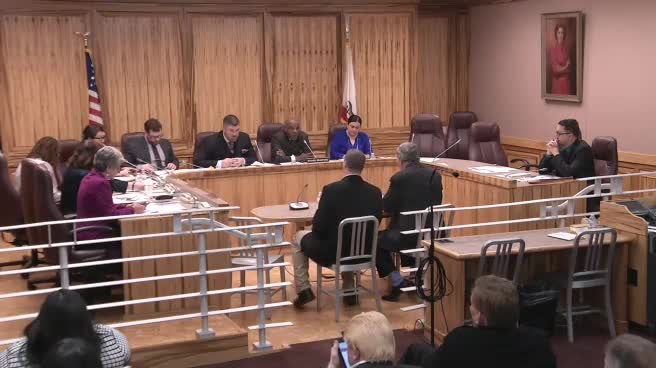
Bill Author

Bill Co-Author(s):