SB 54: Law enforcement: sharing data.
- Session Year: 2017-2018
- House: Senate
- Latest Version Date: 2017-10-05
Existing law provides that when there is reason to believe that a person arrested for a violation of specified controlled substance provisions may not be a citizen of the United States, the arresting agency shall notify the appropriate agency of the United States having charge of deportation matters.
This bill would repeal those provisions.
Existing law provides that whenever an individual who is a victim of or witness to a hate crime, or who otherwise can give evidence in a hate crime investigation, is not charged with or convicted of committing any crime under state law, a peace officer may not detain the individual exclusively for any actual or suspected immigration violation or report or turn the individual over to federal immigration authorities.
This bill would, among other things and subject to exceptions, prohibit state and local law enforcement agencies, including school police and security departments, from using money or personnel to investigate, interrogate, detain, detect, or arrest persons for immigration enforcement purposes, as specified, and would, subject to exceptions, proscribe other activities or conduct in connection with immigration enforcement by law enforcement agencies. The bill would apply those provisions to the circumstances in which a law enforcement official has discretion to cooperate with immigration authorities. The bill would require, by October 1, 2018, the Attorney General, in consultation with the appropriate stakeholders, to publish model policies limiting assistance with immigration enforcement to the fullest extent possible for use by public schools, public libraries, health facilities operated by the state or a political subdivision of the state, and courthouses, among others. The bill would require, among others, all public schools, health facilities operated by the state or a political subdivision of the state, and courthouses to implement the model policy, or an equivalent policy. The bill would state that, among others, all other organizations and entities that provide services related to physical or mental health and wellness, education, or access to justice, including the University of California, are encouraged to adopt the model policy. The bill would require that a law enforcement agency that chooses to participate in a joint law enforcement task force, as defined, submit a report annually pertaining to task force operations to the Department of Justice, as specified. The bill would require the Attorney General, by March 1, 2019, and annually thereafter, to report on the types and frequency of joint law enforcement task forces, and other information, as specified, and to post those reports on the Attorney Generals Internet Web site. The bill would require law enforcement agencies to report to the department annually regarding transfers of persons to immigration authorities. The bill would require the Attorney General to publish guidance, audit criteria, and training recommendations regarding state and local law enforcement databases, for purposes of limiting the availability of information for immigration enforcement, as specified. The bill would require the Department of Corrections and Rehabilitation to provide a specified written consent form in advance of any interview between a person in department custody and the United States Immigration and Customs Enforcement regarding civil immigration violations.
This bill would state findings and declarations of the Legislature relating to these provisions.
By imposing additional duties on public schools and local law enforcement agencies, this bill would impose a state-mandated local program.
The California Constitution requires the state to reimburse local agencies and school districts for certain costs mandated by the state. Statutory provisions establish procedures for making that reimbursement.
This bill would provide that, if the Commission on State Mandates determines that the bill contains costs mandated by the state, reimbursement for those costs shall be made pursuant to the statutory provisions noted above.
Existing law provides that when there is reason to believe that a person arrested for a violation of specified controlled substance provisions may not be a citizen of the United States, the arresting agency shall notify the appropriate agency of the United States having charge of deportation matters.
This bill would repeal those provisions.
Existing law provides that whenever an individual who is a victim of or witness to a hate crime, or who otherwise can give evidence in a hate crime investigation, is not charged with or convicted of committing any crime under state law, a peace officer may not detain the individual exclusively for any actual or suspected immigration violation or report or turn the individual over to federal immigration authorities.
This bill would, among other things and subject to exceptions, prohibit state and local law enforcement agencies, including school police and security departments, from using resources money or personnel to investigate, interrogate, detain, detect, or arrest persons for immigration enforcement purposes, as specified. specified, and would, subject to exceptions, proscribe other activities or conduct in connection with immigration enforcement by law enforcement agencies. The bill would apply those provisions to the circumstances in which a law enforcement official has discretion to cooperate with immigration authorities. The bill would require, by April October 1, 2018, the Attorney General, in consultation with the appropriate stakeholders, to publish model policies limiting assistance with immigration enforcement to the fullest extent possible for use by public schools, public libraries, health facilities operated by the state or a political subdivision of the state, and courthouses, among others. The bill would require require, among others, all public schools, health facilities operated by the state or a political subdivision of the state, and courthouses to implement the model policy, or an equivalent policy. The bill would state that that, among others, all other organizations and entities that provide services related to physical or mental health and wellness, education, or access to justice, including the University of California, are encouraged to adopt the model policy. The bill would require, every 6 months, require that a law enforcement agency that chooses to participate in a joint law enforcement task force, as defined, submit a report annually pertaining to task force operations to the Department of Justice, as specified. The bill would require the Attorney General, by March 1, 2019, and twice a year annually thereafter, to report on the types and frequency of joint law enforcement task forces, and other information, as specified, and to post those reports on the Attorney Generals Internet Web site. The bill would require the Board of Parole Hearings or the Department of Corrections and Rehabilitation, as applicable, to notify United States Immigration and Customs Enforcement of the scheduled release on parole or postrelease community supervision, or rerelease following a period of confinement pursuant to a parole revocation without a new commitment, of all persons confined to state prison serving a current term for the conviction of a violent or serious felony, or who has a prior conviction for a violent or serious felony. The bill would require law enforcement agencies to report to the department annually regarding transfers of persons to immigration authorities. The bill would require the Attorney General to publish guidance, audit criteria, and training recommendations regarding state and local law enforcement databases, for purposes of limiting the availability of information for immigration enforcement, as specified. The bill would require the Department of Corrections and Rehabilitation to provide a specified written consent form in advance of any interview between a person in department custody and the United States Immigration and Customs Enforcement regarding civil immigration violations.
This bill would state findings and declarations of the Legislature relating to these provisions.
By imposing additional duties on public schools and local law enforcement agencies, this bill would impose a state-mandated local program.
The California Constitution requires the state to reimburse local agencies and school districts for certain costs mandated by the state. Statutory provisions establish procedures for making that reimbursement.
This bill would provide that, if the Commission on State Mandates determines that the bill contains costs mandated by the state, reimbursement for those costs shall be made pursuant to the statutory provisions noted above.
Existing law provides that when there is reason to believe that a person arrested for a violation of specified controlled substance provisions may not be a citizen of the United States, the arresting agency shall notify the appropriate agency of the United States having charge of deportation matters.
This bill would repeal those provisions.
Existing law provides that whenever an individual who is a victim of or witness to a hate crime, or who otherwise can give evidence in a hate crime investigation, is not charged with or convicted of committing any crime under state law, a peace officer may not detain the individual exclusively for any actual or suspected immigration violation or report or turn the individual over to federal immigration authorities.
This bill would, among other things and subject to exceptions, prohibit state and local law enforcement agencies, including school police and security departments, from using resources to investigate, interrogate, detain, detect, or arrest persons for immigration enforcement purposes, as specified. The bill would require, by April 1, 2018, the Attorney General, in consultation with the appropriate stakeholders, to publish model policies limiting assistance with immigration enforcement to the fullest extent possible for use by public schools, public libraries, health facilities operated by the state or a political subdivision of the state, and courthouses, among others. The bill would require all public schools, health facilities operated by the state or a political subdivision of the state, and courthouses to implement the model policy, or an equivalent policy. The bill would state that all other organizations and entities that provide services related to physical or mental health and wellness, education, or access to justice, including the University of California, are encouraged to adopt the model policy. The bill would require, every 6 months, that a law enforcement agency that chooses to participate in a joint law enforcement task force, as defined, submit a report pertaining to task force operations to the Department of Justice, as specified. The bill would require the Attorney General, by March 1, 2019, and twice a year thereafter, to report on the types and frequency of joint law enforcement task forces, and other information, as specified, and to post those reports on the Attorney Generals Internet Web site. The bill would require the Board of Parole Hearings or the Department of Corrections and Rehabilitation, as applicable, to notify United States Immigration and Customs Enforcement of the scheduled release on parole or postrelease community supervision, or rerelease following a period of confinement pursuant to a parole revocation without a new commitment, of all persons confined to state prison serving a current term for the conviction of a violent or serious felony, or who has a prior conviction for a violent or serious felony.
This bill would state findings and declarations of the Legislature relating to these provisions.
By imposing additional duties on public schools, this bill would impose a state-mandated local program.
The California Constitution requires the state to reimburse local agencies and school districts for certain costs mandated by the state. Statutory provisions establish procedures for making that reimbursement.
This bill would provide that, if the Commission on State Mandates determines that the bill contains costs mandated by the state, reimbursement for those costs shall be made pursuant to the statutory provisions noted above.
Existing law provides that when there is reason to believe that a person arrested for a violation of specified controlled substance provisions may not be a citizen of the United States, the arresting agency shall notify the appropriate agency of the United States having charge of deportation matters.
This bill would repeal those provisions.
Existing law provides that whenever an individual who is a victim of or witness to a hate crime, or who otherwise can give evidence in a hate crime investigation, is not charged with or convicted of committing any crime under state law, a peace officer may not detain the individual exclusively for any actual or suspected immigration violation or report or turn the individual over to federal immigration authorities.
This bill would, among other things and subject to exceptions, prohibit state and local law enforcement agencies, including school police and security departments, from using resources to investigate, interrogate, detain, detect, or arrest persons for immigration enforcement purposes, as specified. The bill would require, within 3 months after the effective date of the bill, by April 1, 2018, the Attorney General, in consultation with the appropriate stakeholders, to publish model policies limiting assistance with immigration enforcement to the fullest extent possible for use by those entities for those purposes. public schools, public libraries, health facilities operated by the state or a political subdivision of the state, and courthouses, among others. The bill would require all public schools, public libraries, health facilities operated by the state or a political subdivision of the state, and courthouses to implement the model policy, or an equivalent policy. The bill would state that all other organizations and entities that provide services related to physical or mental health and wellness, education, or access to justice, including the University of California, are encouraged to adopt the model policy. The bill would require require, every 6 months, that a law enforcement agency that chooses to participate in a joint law enforcement task force, as defined, to submit a report every 6 months pertaining to task force operations to the Department of Justice, as specified. The bill would require the Attorney General, within 14 months after the effective date of the bill, by March 1, 2019, and twice a year thereafter, to report on the types and frequency of joint law enforcement task forces, and other information, as specified, and to post those reports on the Attorney Generals Internet Web site. The bill would require the Board of Parole Hearings or the Department of Corrections and Rehabilitation, as applicable, to notify United States Immigration and Customs Enforcement of the scheduled release on parole or postrelease community supervision, or rerelease following a period of confinement pursuant to a parole revocation without a new commitment, of all persons confined to state prison serving a current term for the conviction of a violent or serious felony, or who has a prior conviction for a violent or serious felony.
This bill would state findings and declarations of the Legislature relating to these provisions.
By imposing additional duties on public schools, this bill would impose a state-mandated local program.
The California Constitution requires the state to reimburse local agencies and school districts for certain costs mandated by the state. Statutory provisions establish procedures for making that reimbursement.
This bill would provide that, if the Commission on State Mandates determines that the bill contains costs mandated by the state, reimbursement for those costs shall be made pursuant to the statutory provisions noted above.
Existing law provides that when there is reason to believe that a person arrested for a violation of specified controlled substance provisions may not be a citizen of the United States, the arresting agency shall notify the appropriate agency of the United States having charge of deportation matters.
This bill would repeal those provisions.
Existing law provides that whenever an individual who is a victim of or witness to a hate crime, or who otherwise can give evidence in a hate crime investigation, is not charged with or convicted of committing any crime under state law, a peace officer may not detain the individual exclusively for any actual or suspected immigration violation or report or turn the individual over to federal immigration authorities.
This bill would, among other things, things and subject to exceptions, prohibit state and local law enforcement agencies, including school police and security departments, from using resources to investigate, interrogate, detain, detect, or arrest persons for immigration enforcement purposes, as specified. The bill would require, within 3 months after the effective date of the bill, the Attorney General, in consultation with the appropriate stakeholders, to publish model policies limiting assistance with immigration enforcement to the fullest extent possible for use by those entities for those purposes. The bill would require all public schools, public libraries, health facilities operated by the state or a political subdivision of the state, and courthouses to implement the model policy, or an equivalent policy. The bill would state that all other organizations and entities that provide services related to physical or mental health and wellness, education, or access to justice, including the University of California, are encouraged to adopt the model policy. The bill would require a law enforcement agency that chooses to participate in a joint law enforcement task force, as defined, to submit a report every 6 months to the Department of Justice, as specified. The bill would require the Attorney General, within 14 months after the effective date of the bill, and twice a year thereafter, to report on the types and frequency of joint law enforcement task forces, and other information, as specified, and to post those reports on the Attorney Generals Internet Web site. The bill would require the Board of Parole Hearings or the Department of Corrections and Rehabilitation, as applicable, to notify the Federal Bureau of Investigation United States Immigration and Customs Enforcement of the scheduled release on parole or postrelease community supervision, or rerelease following a period of confinement pursuant to a parole revocation without a new commitment, of all persons confined to state prison serving a current term for the conviction of a violent felony, and would authorize the sheriff to notify the Federal Bureau of Investigation of the scheduled release of a person confined to county jail for a misdemeanor offense who has a prior conviction for a violent felony, as specified. or serious felony, or who has a prior conviction for a violent or serious felony.
This bill would state findings and declarations of the Legislature relating to these provisions.
By imposing additional duties on public schools, this bill would impose a state-mandated local program.
The California Constitution requires the state to reimburse local agencies and school districts for certain costs mandated by the state. Statutory provisions establish procedures for making that reimbursement.
This bill would provide that, if the Commission on State Mandates determines that the bill contains costs mandated by the state, reimbursement for those costs shall be made pursuant to the statutory provisions noted above.
This bill would declare that it is to take effect immediately as an urgency statute.Existing law provides that when there is reason to believe that a person arrested for a violation of specified controlled substance provisions may not be a citizen of the United States, the arresting agency shall notify the appropriate agency of the United States having charge of deportation matters.
This bill would repeal those provisions.
Existing law provides that whenever an individual who is a victim of or witness to a hate crime, or who otherwise can give evidence in a hate crime investigation, is not charged with or convicted of committing any crime under state law, a peace officer may not detain the individual exclusively for any actual or suspected immigration violation or report or turn the individual over to federal immigration authorities.
This bill would, among other things, prohibit state and local law enforcement agencies and agencies, including school police and security departments departments, from using resources to investigate, interrogate, detain, detect, or arrest persons for immigration enforcement purposes, as specified. The bill would require, within 3 months after the effective date of the bill, the Attorney General, in consultation with the appropriate stakeholders, to publish model policies limiting assistance with immigration enforcement to the fullest extent possible for use by those entities for those purposes. The bill would require all public schools, health facilities operated by the state or a political subdivision of the state, courthouses, and shelters and courthouses to implement the model policy, or an equivalent policy. The bill would state that all other organizations and entities that provide services related to physical or mental health and wellness, education, or access to justice, including the University of California, are encouraged to adopt the model policy. The bill would require a law enforcement agency that chooses to participate in a joint law enforcement task force, as defined, to submit a report every 6 months to the Department of Justice. Justice, as specified. The bill would require the Attorney General, within 14 months after the effective date of the bill, and twice a year thereafter, to report on the types and frequency of joint law enforcement task forces, and other information, as specified, and to post those reports on the Attorney Generals Internet Web site. The bill would require the Board of Parole Hearings or the Department of Corrections and Rehabilitation, as applicable, to notify the Federal Bureau of Investigation of the scheduled release on parole or postrelease community supervision, or rerelease following a period of confinement pursuant to a parole revocation without a new commitment, of all persons confined to state prison serving a term for the conviction of a violent felony, and would authorize the sheriff to notify the Federal Bureau of Investigation of the scheduled release of a person confined to county jail for a misdemeanor offense who has a prior conviction for a violent felony, as specified.
The
This bill would state findings and declarations of the Legislature relating to these provisions.
By imposing additional duties on public schools, this bill would impose a state-mandated local program.
The California Constitution requires the state to reimburse local agencies and school districts for certain costs mandated by the state. Statutory provisions establish procedures for making that reimbursement.
This bill would provide that, if the Commission on State Mandates determines that the bill contains costs mandated by the state, reimbursement for those costs shall be made pursuant to the statutory provisions noted above.
This bill would declare that it is to take effect immediately as an urgency statute.
Existing law provides that when there is reason to believe that a person arrested for a violation of specified controlled substance provisions may not be a citizen of the United States, the arresting agency shall notify the appropriate agency of the United States having charge of deportation matters.
This bill would repeal those provisions.
Existing law provides that whenever an individual who is a victim of or witness to a hate crime, or who otherwise can give evidence in a hate crime investigation, is not charged with or convicted of committing any crime under state law, a peace officer may not detain the individual exclusively for any actual or suspected immigration violation or report or turn the individual over to federal immigration authorities.
This bill would, among other things, prohibit state and local law enforcement agencies and school police and security departments from using resources to investigate, interrogate, detain, detect, or arrest persons for immigration enforcement purposes, as specified. The bill would require, within 6 months after the effective date of the bill, state agencies to review their confidentiality policies and identify any changes necessary to ensure that information collected from individuals is limited to that necessary to perform agency duties and is not used or disclosed for any other purpose, as specified. The bill would require, within 3 months after the effective date of the bill, the Attorney General, in consultation with appropriate stakeholders, to publish model policies limiting assistance with immigration enforcement to the fullest extent possible for use by those entities for those purposes. The bill would also require, within 3 months after the effective date of the bill, the Attorney General to publish model contractual provisions for all state agencies that partner with private vendors for data collection purposes to ensure that those vendors comply with the confidentiality policies, as specified. The bill would require all public schools, health facilities operated by the state or a political subdivision of the state, courthouses, and shelters to implement the model policy, or an equivalent policy. The bill would state that all other organizations and entities that provide services related to physical or mental health and wellness, education, or access to justice, including the University of California, are encouraged to adopt the model policy. The bill would require a law enforcement agency that chooses to participate in a joint law enforcement task force, as defined, to submit a report every 6 months to the Department of Justice. The bill would require the Attorney General, within 14 months after the effective date of the bill, and twice a year thereafter, to report on the types and frequency of joint law enforcement task forces, and other information, as specified, and to post those reports on the Attorney Generals Internet Web site. The bill would require the Board of Parole Hearings or the Department of Corrections and Rehabilitation, as applicable, to notify the Federal Bureau of Investigation of the scheduled release on parole or postrelease community supervision, or rerelease following a period of confinement pursuant to a parole revocation without a new commitment, of all persons confined to state prison serving a term for the conviction of a violent felony, and would authorize the sheriff to notify the Federal Bureau of Investigation of the scheduled release of a person confined to county jail for a misdemeanor offense who has a prior conviction for a violent felony, as specified.
The bill would state findings and declarations of the Legislature relating to these provisions.
By imposing additional duties on public schools, this bill would impose a state-mandated local program.
The California Constitution requires the state to reimburse local agencies and school districts for certain costs mandated by the state. Statutory provisions establish procedures for making that reimbursement.
This bill would provide that, if the Commission on State Mandates determines that the bill contains costs mandated by the state, reimbursement for those costs shall be made pursuant to the statutory provisions noted above.
This bill would declare that it is to take effect immediately as an urgency statute.
Existing law provides that when there is reason to believe that a person arrested for a violation of specified controlled substance provisions may not be a citizen of the United States, the arresting agency shall notify the appropriate agency of the United States having charge of deportation matters.
This bill would repeal those provisions.
Existing law provides that whenever an individual who is a victim of or witness to a hate crime, or who otherwise can give evidence in a hate crime investigation, is not charged with or convicted of committing any crime under state law, a peace officer may not detain the individual exclusively for any actual or suspected immigration violation or report or turn the individual over to federal immigration authorities.
This bill would, among other things, prohibit state and local law enforcement agencies and school police and security departments from using resources to investigate, interrogate, detain, detect, report, or arrest persons for immigration enforcement purposes, or to investigate, enforce, or assist in the investigation or enforcement of any federal program requiring registration of individuals on the basis of race, gender, sexual orientation, religion, or national or ethnic origin, as specified. The bill would require require, within 6 months after the effective date of the bill, state agencies to review their confidentiality policies and identify any changes necessary to ensure that information collected from individuals is limited to that necessary to perform agency duties and is not used or disclosed for any other purpose, as specified. The bill would require public schools, hospitals, and courthouses to establish and make public policies that limit immigration enforcement on their premises and The bill would require require, within 3 months after the effective date of the bill, the Attorney General, in consultation with appropriate stakeholders, to publish model policies for use by those entities for those purposes. The bill would also require, within 3 months after the effective date of the bill, the Attorney General to publish model contractual provisions for all state agencies that partner with private vendors for data collection purposes to ensure that those vendors comply with the confidentiality policies, as specified. The bill would require all public schools, health facilities operated by the state or a political subdivision of the state, courthouses, and shelters to implement the model policy, or an equivalent policy. The bill would state that all other organizations and entities that provide services related to physical or mental health and wellness, education, or access to justice, including the University of California, are encouraged to adopt the model policy.
The bill would state findings and declarations of the Legislature relating to these provisions.
By imposing additional duties on public schools, this bill would impose a state-mandated local program.
The California Constitution requires the state to reimburse local agencies and school districts for certain costs mandated by the state. Statutory provisions establish procedures for making that reimbursement.
This bill would provide that, if the Commission on State Mandates determines that the bill contains costs mandated by the state, reimbursement for those costs shall be made pursuant to the statutory provisions noted above.
This bill would declare that it is to take effect immediately as an urgency statute.
Existing law provides that when there is reason to believe that a person arrested for a violation of specified controlled substance provisions may not be a citizen of the United States, the arresting agency shall notify the appropriate agency of the United States having charge of deportation matters.
This bill would repeal those provisions.
Existing law provides that whenever an individual who is a victim of or witness to a hate crime, or who otherwise can give evidence in a hate crime investigation, is not charged with or convicted of committing any crime under state law, a peace officer may not detain the individual exclusively for any actual or suspected immigration violation or report or turn the individual over to federal immigration authorities.
This bill would, among other things, prohibit state and local law enforcement agencies and school police and security departments from using resources to investigate, detain, detect, report, or arrest persons for immigration enforcement purposes, or to investigate, enforce, or assist in the investigation or enforcement of any federal program requiring registration of individuals on the basis of race, gender, sexual orientation, religion, or national or ethnic origin, as specified. The bill would require state agencies to review their confidentiality policies and identify any changes necessary to ensure that information collected from individuals is limited to that necessary to perform agency duties and is not used or disclosed for any other purpose, as specified. The bill would require public schools, hospitals, and courthouses to establish and make public policies that limit immigration enforcement on their premises and would require the Attorney General, in consultation with appropriate stakeholders, to publish model policies for use by those entities for those purposes.
The bill would state findings and declarations of the Legislature relating to these provisions.
By imposing additional duties on public schools, this bill would impose a state-mandated local program.
The California Constitution requires the state to reimburse local agencies and school districts for certain costs mandated by the state. Statutory provisions establish procedures for making that reimbursement.
This bill would provide that, if the Commission on State Mandates determines that the bill contains costs mandated by the state, reimbursement for those costs shall be made pursuant to the statutory provisions noted above.
For purposes of this chapter, the following terms have the following meanings:
(a)Conviction shall have the same meaning as subdivision (d) of Section 667 of the Penal Code.
(b)Eligible for release from custody means that the individual may be released from custody because one of the following conditions has occurred:
(1)All criminal charges against the individual have been dropped or dismissed.
(2)The individual has been acquitted of all criminal charges filed against him or her.
(3)The individual has served all the time required for his or her sentence.
(4)The individual has posted a bond.
(5)The individual is otherwise eligible for release under state or local law, or local policy.
(c)Hold request, notification request, and transfer request have the same meanings as provided in Section 7283. Hold, notification, and transfer requests include requests issued by the United States Immigration and Customs Enforcement or the United States Customs and Border Protection as well as any other immigration authorities.
(d)Law enforcement official means any local agency or officer of a local agency authorized to enforce criminal statutes, regulations, or local ordinances or to operate jails or to maintain custody of individuals in jails, and any person or local agency authorized to operate juvenile detention facilities or to maintain custody of individuals in juvenile detention facilities.
(e)Local agency means any city, county, city and county, special district, or other political subdivision of the state.
(f)Serious felony means any of the offenses listed in subdivision (c) of Section 1192.7 of the Penal Code and any offense committed in another state which, if committed in California, would be punishable as a serious felony as defined by subdivision (c) of Section 1192.7 of the Penal Code.
(g)Violent felony means any of the offenses listed in subdivision (c) of Section 667.5 of the Penal Code and any offense committed in another state which, if committed in California, would be punishable as a violent felony as defined by subdivision (c) of Section 667.5 of the Penal Code.
SEC. 2.Section 7282.5 of the Government Code is amended to read:7282.5.(a)A law enforcement official shall have discretion to cooperate with immigration authorities only if doing so would not violate any federal, state, or local law, or local policy, and where permitted by the California Values Act (Chapter 17.25 (commencing with Section 7284)). Additionally, the specific activities described in subparagraph (C) of paragraph (1) of subdivision (a) of, and in paragraph (4) of subdivision (a) of, Section 7284.6 shall only occur under the following circumstances:
(1)The individual has been convicted of a serious or violent felony identified in subdivision (c) of Section 1192.7 of, or subdivision (c) of Section 667.5 of, the Penal Code.
(2)The individual has been convicted of a felony punishable by imprisonment in the state prison.
(3)The individual has been convicted within the past five years of a misdemeanor for a crime that is punishable as either a misdemeanor or a felony for, or has been convicted within the last 15 years of a felony for, any of the following offenses:
(A)Assault, as specified in, but not limited to, Sections 217.1, 220, 240, 241.1, 241.4, 241.7, 244, 244.5, 245, 245.2, 245.3, 245.5, 4500, and 4501 of the Penal Code.
(B)Battery, as specified in, but not limited to, Sections 242, 243.1, 243.3, 243.4, 243.6, 243.7, 243.9, 273.5, 347, 4501.1, and 4501.5 of the Penal Code.
(C)Use of threats, as specified in, but not limited to, Sections 71, 76, 139, 140, 422, 601, and 11418.5 of the Penal Code.
(D)Sexual abuse, sexual exploitation, or crimes endangering children, as specified in, but not limited to, Sections 266, 266a, 266b, 266c, 266d, 266f, 266g, 266h, 266i, 266j, 267, 269, 288, 288.5, 311.1, 311.3, 311.4, 311.10, 311.11, and 647.6 of the Penal Code.
(E)Child abuse or endangerment, as specified in, but not limited to, Sections 270, 271, 271a, 273a, 273ab, 273d, 273.4, and 278 of the Penal Code.
(F)Burglary, robbery, theft, fraud, forgery, or embezzlement, as specified in, but not limited to, Sections 211, 215, 459, 463, 470, 476, 487, 496, 503, 518, 530.5, 532, and 550 of the Penal Code.
(G)Driving under the influence of alcohol or drugs, but only for a conviction that is a felony.
(H)Obstruction of justice, as specified in, but not limited to, Sections 69, 95, 95.1, 136.1, and 148.10 of the Penal Code.
(I)Bribery, as specified in, but not limited to, Sections 67, 67.5, 68, 74, 85, 86, 92, 93, 137, 138, and 165 of the Penal Code.
(J)Escape, as specified in, but not limited to, Sections 107, 109, 110, 4530, 4530.5, 4532, 4533, 4534, 4535, and 4536 of the Penal Code.
(K)Unlawful possession or use of a weapon, firearm, explosive device, or weapon of mass destruction, as specified in, but not limited to, Sections 171b, 171c, 171d, 246, 246.3, 247, 417, 417.3, 417.6, 417.8, 4574, 11418, 11418.1, 12021.5, 12022, 12022.2, 12022.3, 12022.4, 12022.5, 12022.53, 12022.55, 18745, 18750, and 18755 of, and subdivisions (c) and (d) of Section 26100 of, the Penal Code.
(L)Possession of an unlawful deadly weapon, under the Deadly Weapons Recodification Act of 2010 (Part 6 (commencing with Section 16000) of the Penal Code).
(M)An offense involving the felony possession, sale, distribution, manufacture, or trafficking of controlled substances.
(N)Vandalism with prior convictions, as specified in, but not limited to, Section 594.7 of the Penal Code.
(O)Gang-related offenses, as specified in, but not limited to, Sections 186.22, 186.26, and 186.28 of the Penal Code.
(P)An attempt, as defined in Section 664 of, or a conspiracy, as defined in Section 182 of, the Penal Code, to commit an offense specified in this section.
(Q)A crime resulting in death, or involving the personal infliction of great bodily injury, as specified in, but not limited to, subdivision (d) of Section 245.6 of, and Sections 187, 191.5, 192, 192.5, 12022.7, 12022.8, and 12022.9 of, the Penal Code.
(R)Possession or use of a firearm in the commission of an offense.
(S)An offense that would require the individual to register as a sex offender pursuant to Section 290, 290.002, or 290.006 of the Penal Code.
(T)False imprisonment, slavery, and human trafficking, as specified in, but not limited to, Sections 181, 210.5, 236, 236.1, and 4503 of the Penal Code.
(U)Criminal profiteering and money laundering, as specified in, but not limited to, Sections 186.2, 186.9, and 186.10 of the Penal Code.
(V)Torture and mayhem, as specified in, but not limited to, Section 203 of the Penal Code.
(W)A crime threatening the public safety, as specified in, but not limited to, Sections 219, 219.1, 219.2, 247.5, 404, 404.6, 405a, 451, and 11413 of the Penal Code.
(X)Elder and dependent adult abuse, as specified in, but not limited to, Section 368 of the Penal Code.
(Y)A hate crime, as specified in, but not limited to, Section 422.55 of the Penal Code.
(Z)Stalking, as specified in, but not limited to, Section 646.9 of the Penal Code.
(AA)Soliciting the commission of a crime, as specified in, but not limited to, subdivision (c) of Section 286 of, and Sections 653j and 653.23 of, the Penal Code.
(AB)An offense committed while on bail or released on his or her own recognizance, as specified in, but not limited to, Section 12022.1 of the Penal Code.
(AC)Rape, sodomy, oral copulation, or sexual penetration, as specified in, but not limited to, paragraphs (2) and (6) of subdivision (a) of Section 261 of, paragraphs (1) and (4) of subdivision (a) of Section 262 of, Section 264.1 of, subdivisions (c) and (d) of Section 286 of, subdivisions (c) and (d) of Section 288a of, and subdivisions (a) and (j) of Section 289 of, the Penal Code.
(AD)Kidnapping, as specified in, but not limited to, Sections 207, 209, and 209.5 of the Penal Code.
(AE)A violation of subdivision (c) of Section 20001 of the Vehicle Code.
(4)The individual is a current registrant on the California Sex and Arson Registry.
(5)The individual has been convicted of a federal crime that meets the definition of an aggravated felony as set forth in subparagraphs (A) to (P), inclusive, of paragraph (43) of subsection (a) of Section 101 of the federal Immigration and Nationality Act (8 U.S.C. Sec. 1101), or is identified by the United States Department of Homeland Securitys Immigration and Customs Enforcement as the subject of an outstanding federal felony arrest warrant.
(6)In no case shall cooperation occur pursuant to this section for individuals arrested, detained, or convicted of misdemeanors that were previously felonies, or were previously crimes punishable as either misdemeanors or felonies, prior to passage of the Safe Neighborhoods and Schools Act of 2014 as it amended the Penal Code.
(b)In cases in which the individual is arrested and taken before a magistrate on a charge involving a serious or violent felony, as identified in subdivision (c) of Section 1192.7 or subdivision (c) of Section 667.5 of the Penal Code, respectively, or a felony that is punishable by imprisonment in state prison, and the magistrate makes a finding of probable cause as to that charge pursuant to Section 872 of the Penal Code, a law enforcement official shall additionally have discretion to cooperate with immigration officials pursuant to subparagraph (C) of paragraph (1) of subdivision (a) of Section 7284.6.
SEC. 3.Chapter 17.25 (commencing with Section 7284) is added to Division 7 of Title 1 of the Government Code, to read:17.25.Cooperation with Immigration Authorities7284.This chapter shall be known, and may be cited, as the California Values Act.
7284.2.The Legislature finds and declares the following:
(a)Immigrants are valuable and essential members of the California community. Almost one in three Californians is foreign born and one in two children in California has at least one immigrant parent.
(b)A relationship of trust between Californias immigrant community and state and local agencies is central to the public safety of the people of California.
(c)This trust is threatened when state and local agencies are entangled with federal immigration enforcement, with the result that immigrant community members fear approaching police when they are victims of, and witnesses to, crimes, seeking basic health services, or attending school, to the detriment of public safety and the well-being of all Californians.
(d)Entangling state and local agencies with federal immigration enforcement programs diverts already limited resources and blurs the lines of accountability between local, state, and federal governments.
(e)State and local participation in federal immigration enforcement programs also raises constitutional concerns, including the prospect that California residents could be detained in violation of the Fourth Amendment to the United States Constitution, targeted on the basis of race or ethnicity in violation of the Equal Protection Clause, or denied access to education based on immigration status. See Sanchez Ochoa v. Campbell, et al. (E.D. Wash. 2017) 2017 WL 3476777; Trujillo Santoya v. United States, et al. (W.D. Tex. 2017) 2017 WL 2896021; Moreno v. Napolitano (N.D. Ill. 2016) 213 F. Supp. 3d 999; Morales v. Chadbourne (1st Cir. 2015) 793 F.3d 208; Miranda-Olivares v. Clackamas County (D. Or. 2014) 2014 WL 1414305; Galarza v. Szalczyk (3d Cir. 2014) 745 F.3d 634.
(f)This chapter seeks to ensure effective policing, to protect the safety, well-being, and constitutional rights of the people of California, and to direct the states limited resources to matters of greatest concern to state and local governments.
(g)It is the intent of the Legislature that this chapter shall not be construed as providing, expanding, or ratifying any legal authority for any state or local law enforcement agency to participate in immigration enforcement.
7284.4.For purposes of this chapter, the following terms have the following meanings:
(a)California law enforcement agency means a state or local law enforcement agency, including school police or security departments. California law enforcement agency does not include the Department of Corrections and Rehabilitation.
(b)Civil immigration warrant means any warrant for a violation of federal civil immigration law, and includes civil immigration warrants entered in the National Crime Information Center database.
(c)Immigration authority means any federal, state, or local officer, employee, or person performing immigration enforcement functions.
(d)Health facility includes health facilities as defined in Section 1250 of the Health and Safety Code, clinics as defined in Sections 1200 and 1200.1 of the Health and Safety Code, and substance abuse treatment facilities.
(e)Hold request, notification request, transfer request, and local law enforcement agency have the same meaning as provided in Section 7283. Hold, notification, and transfer requests include requests issued by United States Immigration and Customs Enforcement or United States Customs and Border Protection as well as any other immigration authorities.
(f)Immigration enforcement includes any and all efforts to investigate, enforce, or assist in the investigation or enforcement of any federal civil immigration law, and also includes any and all efforts to investigate, enforce, or assist in the investigation or enforcement of any federal criminal immigration law that penalizes a persons presence in, entry, or reentry to, or employment in, the United States.
(g)Joint law enforcement task force means at least one California law enforcement agency collaborating, engaging, or partnering with at least one federal law enforcement agency in investigating federal or state crimes.
(h)Judicial probable cause determination means a determination made by a federal judge or federal magistrate judge that probable cause exists that an individual has violated federal criminal immigration law and that authorizes a law enforcement officer to arrest and take into custody the individual.
(i)Judicial warrant means a warrant based on probable cause for a violation of federal criminal immigration law and issued by a federal judge or a federal magistrate judge that authorizes a law enforcement officer to arrest and take into custody the person who is the subject of the warrant.
(j)Public schools means all public elementary and secondary schools under the jurisdiction of local governing boards or a charter school board, the California State University, and the California Community Colleges.
(k)School police and security departments includes police and security departments of the California State University, the California Community Colleges, charter schools, county offices of education, schools, and school districts.
7284.6.(a)California law enforcement agencies shall not:
(1)Use agency or department moneys or personnel to investigate, interrogate, detain, detect, or arrest persons for immigration enforcement purposes, including any of the following:
(A)Inquiring into an individuals immigration status.
(B)Detaining an individual on the basis of a hold request.
(C)Providing information regarding a persons release date or responding to requests for notification by providing release dates or other information unless that information is available to the public, or is in response to a notification request from immigration authorities in accordance with Section 7282.5. Responses are never required, but are permitted under this subdivision, provided that they do not violate any local law or policy.
(D)Providing personal information, as defined in Section 1798.3 of the Civil Code, about an individual, including, but not limited to, the individuals home address or work address unless that information is available to the public.
(E)Making or intentionally participating in arrests based on civil immigration warrants.
(F)Assisting immigration authorities in the activities described in Section 1357(a)(3) of Title 8 of the United States Code.
(G)Performing the functions of an immigration officer, whether pursuant to Section 1357(g) of Title 8 of the United States Code or any other law, regulation, or policy, whether formal or informal.
(2)Place peace officers under the supervision of federal agencies or employ peace officers deputized as special federal officers or special federal deputies for purposes of immigration enforcement. All peace officers remain subject to California law governing conduct of peace officers and the policies of the employing agency.
(3)Use immigration authorities as interpreters for law enforcement matters relating to individuals in agency or department custody.
(4)Transfer an individual to immigration authorities unless authorized by a judicial warrant or judicial probable cause determination, or in accordance with Section 7282.5.
(5)Provide office space exclusively dedicated for immigration authorities for use within a city or county law enforcement facility.
(6)Contract with the federal government for use of California law enforcement agency facilities to house individuals as federal detainees, except pursuant to Chapter 17.8 (commencing with Section 7310).
(b)Notwithstanding the limitations in subdivision (a), this section does not prevent any California law enforcement agency from doing any of the following that does not violate any policy of the law enforcement agency or any local law or policy of the jurisdiction in which the agency is operating:
(1)Investigating, enforcing, or detaining upon reasonable suspicion of, or arresting for a violation of, Section 1326(a) of Title 8 of the United States Code that may be subject to the enhancement specified in Section 1326(b)(2) of Title 8 of the United States Code and that is detected during an unrelated law enforcement activity. Transfers to immigration authorities are permitted under this subsection only in accordance with paragraph (4) of subdivision (a).
(2)Responding to a request from immigration authorities for information about a specific persons criminal history, including previous criminal arrests, convictions, or similar criminal history information accessed through the California Law Enforcement Telecommunications System (CLETS), where otherwise permitted by state law.
(3)Conducting enforcement or investigative duties associated with a joint law enforcement task force, including the sharing of confidential information with other law enforcement agencies for purposes of task force investigations, so long as the following conditions are met:
(A)The primary purpose of the joint law enforcement task force is not immigration enforcement, as defined in subdivision (f) of Section 7284.4.
(B)The enforcement or investigative duties are primarily related to a violation of state or federal law unrelated to immigration enforcement.
(C)Participation in the task force by a California law enforcement agency does not violate any local law or policy to which it is otherwise subject.
(4)Making inquiries into information necessary to certify an individual who has been identified as a potential crime or trafficking victim for a T or U Visa pursuant to Section 1101(a)(15)(T) or 1101(a)(15)(U) of Title 8 of the United States Code or to comply with Section 922(d)(5) of Title 18 of the United States Code.
(5)Giving immigration authorities access to interview an individual in agency or department custody. All interview access shall comply with requirements of the TRUTH Act (Chapter 17.2 (commencing with Section 7283)).
(c)(1)If a California law enforcement agency chooses to participate in a joint law enforcement task force, for which a California law enforcement agency has agreed to dedicate personnel or resources on an ongoing basis, it shall submit a report annually to the Department of Justice, as specified by the Attorney General. The law enforcement agency shall report the following information, if known, for each task force of which it is a member:
(A)The purpose of the task force.
(B)The federal, state, and local law enforcement agencies involved.
(C)The total number of arrests made during the reporting period.
(D)The number of people arrested for immigration enforcement purposes.
(2)All law enforcement agencies shall report annually to the Department of Justice, in a manner specified by the Attorney General, the number of transfers pursuant to paragraph (4) of subdivision (a), and the offense that allowed for the transfer, pursuant to paragraph (4) of subdivision (a).
(3)All records described in this subdivision shall be public records for purposes of the California Public Records Act (Chapter 3.5 (commencing with Section 6250)), including the exemptions provided by that act and, as permitted under that act, personal identifying information may be redacted prior to public disclosure. To the extent that disclosure of a particular item of information would endanger the safety of a person involved in an investigation, or would endanger the successful completion of the investigation or a related investigation, that information shall not be disclosed.
(4)If more than one California law enforcement agency is participating in a joint task force that meets the reporting requirement pursuant to this section, the joint task force shall designate a local or state agency responsible for completing the reporting requirement.
(d)The Attorney General, by March 1, 2019, and annually thereafter, shall report on the total number of arrests made by joint law enforcement task forces, and the total number of arrests made for the purpose of immigration enforcement by all task force participants, including federal law enforcement agencies. To the extent that disclosure of a particular item of information would endanger the safety of a person involved in an investigation, or would endanger the successful completion of the investigation or a related investigation, that information shall not be included in the Attorney Generals report. The Attorney General shall post the reports required by this subdivision on the Attorney Generals Internet Web site.
(e)This section does not prohibit or restrict any government entity or official from sending to, or receiving from, federal immigration authorities, information regarding the citizenship or immigration status, lawful or unlawful, of an individual, or from requesting from federal immigration authorities immigration status information, lawful or unlawful, of any individual, or maintaining or exchanging that information with any other federal, state, or local government entity, pursuant to Sections 1373 and 1644 of Title 8 of the United States Code.
(f)Nothing in this section shall prohibit a California law enforcement agency from asserting its own jurisdiction over criminal law enforcement matters.
7284.8.(a)The Attorney General, by October 1, 2018, in consultation with the appropriate stakeholders, shall publish model policies limiting assistance with immigration enforcement to the fullest extent possible consistent with federal and state law at public schools, public libraries, health facilities operated by the state or a political subdivision of the state, courthouses, Division of Labor Standards Enforcement facilities, the Agricultural Labor Relations Board, the Division of Workers Compensation, and shelters, and ensuring that they remain safe and accessible to all California residents, regardless of immigration status. All public schools, health facilities operated by the state or a political subdivision of the state, and courthouses shall implement the model policy, or an equivalent policy. The Agricultural Labor Relations Board, the Division of Workers Compensation, the Division of Labor Standards Enforcement, shelters, libraries, and all other organizations and entities that provide services related to physical or mental health and wellness, education, or access to justice, including the University of California, are encouraged to adopt the model policy.
(b)For any databases operated by state and local law enforcement agencies, including databases maintained for the agency by private vendors, the Attorney General shall, by October 1, 2018, in consultation with appropriate stakeholders, publish guidance, audit criteria, and training recommendations aimed at ensuring that those databases are governed in a manner that limits the availability of information therein to the fullest extent practicable and consistent with federal and state law, to anyone or any entity for the purpose of immigration enforcement. All state and local law enforcement agencies are encouraged to adopt necessary changes to database governance policies consistent with that guidance.
(c)Notwithstanding the rulemaking provisions of the Administrative Procedure Act (Chapter 3.5 (commencing with Section 11340) of Part 1 of Division 3 of Title 2), the Department of Justice may implement, interpret, or make specific this chapter without taking any regulatory action.
7284.10.(a)The Department of Corrections and Rehabilitation shall:
(1)In advance of any interview between the United States Immigration and Customs Enforcement (ICE) and an individual in department custody regarding civil immigration violations, provide the individual with a written consent form that explains the purpose of the interview, that the interview is voluntary, and that he or she may decline to be interviewed or may choose to be interviewed only with his or her attorney present. The written consent form shall be available in English, Spanish, Chinese, Tagalog, Vietnamese, and Korean.
(2)Upon receiving any ICE hold, notification, or transfer request, provide a copy of the request to the individual and inform him or her whether the department intends to comply with the request.
(b)The Department of Corrections and Rehabilitation shall not:
(1)Restrict access to any in-prison educational or rehabilitative programming, or credit-earning opportunity on the sole basis of citizenship or immigration status, including, but not limited to, whether the person is in removal proceedings, or immigration authorities have issued a hold request, transfer request, notification request, or civil immigration warrant against the individual.
(2)Consider citizenship and immigration status as a factor in determining a persons custodial classification level, including, but not limited to, whether the person is in removal proceedings, or whether immigration authorities have issued a hold request, transfer request, notification request, or civil immigration warrant against the individual.
7284.12.The provisions of this act are severable. If any provision of this act or its application is held invalid, that invalidity shall not affect other provisions or applications that can be given effect without the invalid provision or application.
SEC. 4.Section 11369 of the Health and Safety Code is repealed.SEC. 5.If the Commission on State Mandates determines that this act contains costs mandated by the state, reimbursement to local agencies and school districts for those costs shall be made pursuant to Part 7 (commencing with Section 17500) of Division 4 of Title 2 of the Government Code.
For purposes of this chapter, the following terms have the following meanings:
(a)Conviction shall have the same meaning as subdivision (d) of Section 667 of the Penal Code.
(b)Eligible for release from custody means that the individual may be released from custody because one of the following conditions has occurred:
(1)All criminal charges against the individual have been dropped or dismissed.
(2)The individual has been acquitted of all criminal charges filed against him or her.
(3)The individual has served all the time required for his or her sentence.
(4)The individual has posted a bond.
(5)The individual is otherwise eligible for release under state or local law, or local policy.
(c)Immigration hold means an immigration detainer issued by an authorized immigration officer, pursuant to Section 287.7 of Title 8 of the Code of Federal Regulations, that requests that the law enforcement official to maintain custody of the individual for a period not to exceed 48 hours, excluding Saturdays, Sundays, and holidays, and to advise the authorized immigration officer prior to the release of that individual.(c)Hold request, notification request, and transfer request have the same meanings as provided in Section 7283. Hold, notification, and transfer requests include requests issued by the United States Immigration and Customs Enforcement or the United States Customs and Border Protection as well as any other immigration authorities.
(d)Law enforcement official means any local agency or officer of a local agency authorized to enforce criminal statutes, regulations, or local ordinances or to operate jails or to maintain custody of individuals in jails, and any person or local agency authorized to operate juvenile detention facilities or to maintain custody of individuals in juvenile detention facilities.
(e)Local agency means any city, county, city and county, special district, or other political subdivision of the state.
(f)Serious felony means any of the offenses listed in subdivision (c) of Section 1192.7 of the Penal Code and any offense committed in another state which, if committed in California, would be punishable as a serious felony as defined by subdivision (c) of Section 1192.7 of the Penal Code.
(g)Violent felony means any of the offenses listed in subdivision (c) of Section 667.5 of the Penal Code and any offense committed in another state which, if committed in California, would be punishable as a violent felony as defined by subdivision (c) of Section 667.5 of the Penal Code.
SEC. 2.Section 7282.5 of the Government Code is amended to read:7282.5.(a)A law enforcement official shall have discretion to cooperate with federal immigration officials by detaining an individual on the basis of an immigration hold after that individual becomes eligible for release from custody only if the continued detention of the individual on the basis of the immigration hold would not violate any federal, state, or local law, or any local policy, and only under any of the following circumstances:7282.5.(a)A law enforcement official shall have discretion to cooperate with immigration authorities only if doing so would not violate any federal, state, or local law, or local policy, and where permitted by the California Values Act (Chapter 17.25 (commencing with Section 7284)). Additionally, the specific activities described in subparagraph (C) of paragraph (1) of subdivision (a) of, and in paragraph (4) of subdivision (a) of, Section 7284.6 shall only occur under the following circumstances:
(1)The individual has been convicted of a serious or violent felony identified in subdivision (c) of Section 1192.7 of, or subdivision (c) of Section 667.5 of, the Penal Code.
(2)The individual has been convicted of a felony punishable by imprisonment in the state prison.
(3)The individual has been convicted within the past five years of a misdemeanor for a crime that is punishable as either a misdemeanor or a felony for, or has been convicted at any time within the last 15 years of a felony for, any of the following offenses:
(A)Assault, as specified in, but not limited to, Sections 217.1, 220, 240, 241.1, 241.4, 241.7, 244, 244.5, 245, 245.2, 245.3, 245.5, 4500, and 4501 of the Penal Code.
(B)Battery, as specified in, but not limited to, Sections 242, 243.1, 243.3, 243.4, 243.6, 243.7, 243.9, 273.5, 347, 4501.1, and 4501.5 of the Penal Code.
(C)Use of threats, as specified in, but not limited to, Sections 71, 76, 139, 140, 422, 601, and 11418.5 of the Penal Code.
(D)Sexual abuse, sexual exploitation, or crimes endangering children, as specified in, but not limited to, Sections 266, 266a, 266b, 266c, 266d, 266f, 266g, 266h, 266i, 266j, 267, 269, 288, 288.5, 311.1, 311.3, 311.4, 311.10, 311.11, and 647.6 of the Penal Code.
(E)Child abuse or endangerment, as specified in, but not limited to, Sections 270, 271, 271a, 273a, 273ab, 273d, 273.4, and 278 of the Penal Code.
(F)Burglary, robbery, theft, fraud, forgery, or embezzlement, as specified in, but not limited to, Sections 211, 215, 459, 463, 470, 476, 487, 496, 503, 518, 530.5, 532, and 550 of the Penal Code.
(G)Driving under the influence of alcohol or drugs, but only for a conviction that is a felony.
(H)Obstruction of justice, as specified in, but not limited to, Sections 69, 95, 95.1, 136.1, and 148.10 of the Penal Code.
(I)Bribery, as specified in, but not limited to, Sections 67, 67.5, 68, 74, 85, 86, 92, 93, 137, 138, and 165 of the Penal Code.
(J)Escape, as specified in, but not limited to, Sections 107, 109, 110, 4530, 4530.5, 4532, 4533, 4534, 4535, and 4536 of the Penal Code.
(K)Unlawful possession or use of a weapon, firearm, explosive device, or weapon of mass destruction, as specified in, but not limited to, Sections 171b, 171c, 171d, 246, 246.3, 247, 417, 417.3, 417.6, 417.8, 4574, 11418, 11418.1, 12021.5, 12022, 12022.2, 12022.3, 12022.4, 12022.5, 12022.53, 12022.55, 18745, 18750, and 18755 of, and subdivisions (c) and (d) of Section 26100 of, the Penal Code.
(L)Possession of an unlawful deadly weapon, under the Deadly Weapons Recodification Act of 2010 (Part 6 (commencing with Section 16000) of the Penal Code).
(M)An offense involving the felony possession, sale, distribution, manufacture, or trafficking of controlled substances.
(N)Vandalism with prior convictions, as specified in, but not limited to, Section 594.7 of the Penal Code.
(O)Gang-related offenses, as specified in, but not limited to, Sections 186.22, 186.26, and 186.28 of the Penal Code.
(P)An attempt, as defined in Section 664 of, or a conspiracy, as defined in Section 182 of, the Penal Code, to commit an offense specified in this section.
(Q)A crime resulting in death, or involving the personal infliction of great bodily injury, as specified in, but not limited to, subdivision (d) of Section 245.6 of, and Sections 187, 191.5, 192, 192.5, 12022.7, 12022.8, and 12022.9 of, the Penal Code.
(R)Possession or use of a firearm in the commission of an offense.
(S)An offense that would require the individual to register as a sex offender pursuant to Section 290, 290.002, or 290.006 of the Penal Code.
(T)False imprisonment, slavery, and human trafficking, as specified in, but not limited to, Sections 181, 210.5, 236, 236.1, and 4503 of the Penal Code.
(U)Criminal profiteering and money laundering, as specified in, but not limited to, Sections 186.2, 186.9, and 186.10 of the Penal Code.
(V)Torture and mayhem, as specified in, but not limited to, Section 203 of the Penal Code.
(W)A crime threatening the public safety, as specified in, but not limited to, Sections 219, 219.1, 219.2, 247.5, 404, 404.6, 405a, 451, and 11413 of the Penal Code.
(X)Elder and dependent adult abuse, as specified in, but not limited to, Section 368 of the Penal Code.
(Y)A hate crime, as specified in, but not limited to, Section 422.55 of the Penal Code.
(Z)Stalking, as specified in, but not limited to, Section 646.9 of the Penal Code.
(AA)Soliciting the commission of a crime, as specified in, but not limited to, subdivision (c) of Section 286 of, and Sections 653j and 653.23 of, the Penal Code.
(AB)An offense committed while on bail or released on his or her own recognizance, as specified in, but not limited to, Section 12022.1 of the Penal Code.
(AC)Rape, sodomy, oral copulation, or sexual penetration, as specified in, but not limited to, paragraphs (2) and (6) of subdivision (a) of Section 261 of, paragraphs (1) and (4) of subdivision (a) of Section 262 of, Section 264.1 of, subdivisions (c) and (d) of Section 286 of, subdivisions (c) and (d) of Section 288a of, and subdivisions (a) and (j) of Section 289 of, the Penal Code.
(AD)Kidnapping, as specified in, but not limited to, Sections 207, 209, and 209.5 of the Penal Code.
(AE)A violation of subdivision (c) of Section 20001 of the Vehicle Code.
(4)The individual is a current registrant on the California Sex and Arson Registry.
(5)The individual is arrested and taken before a magistrate on a charge involving a serious or violent felony, as identified in subdivision (c) of Section 1192.7 or subdivision (c) of Section 667.5 of the Penal Code, a felony punishable by imprisonment in state prison, or any felony listed in paragraph (2) or (3) other than domestic violence, and the magistrate makes a finding of probable cause as to that charge pursuant to Section 872 of the Penal Code.(6)(5)The individual has been convicted of a federal crime that meets the definition of an aggravated felony as set forth in subparagraphs (A) to (P), inclusive, of paragraph (43) of subsection (a) of Section 101 of the federal Immigration and Nationality Act (8 U.S.C. Sec. 1101), or is identified by the United States Department of Homeland Securitys Immigration and Customs Enforcement as the subject of an outstanding federal felony arrest warrant.
(b)If none of the conditions listed in subdivision (a) is satisfied, an individual shall not be detained on the basis of an immigration hold after the individual becomes eligible for release from custody.(6)In no case shall cooperation occur pursuant to this section for individuals arrested, detained, or convicted of misdemeanors that were previously felonies, or were previously crimes punishable as either misdemeanors or felonies, prior to passage of the Safe Neighborhoods and Schools Act of 2014 as it amended the Penal Code.
(b)In cases in which the individual is arrested and taken before a magistrate on a charge involving a serious or violent felony, as identified in subdivision (c) of Section 1192.7 or subdivision (c) of Section 667.5 of the Penal Code, respectively, or a felony that is punishable by imprisonment in state prison, and the magistrate makes a finding of probable cause as to that charge pursuant to Section 872 of the Penal Code, a law enforcement official shall additionally have discretion to cooperate with immigration officials pursuant to subparagraph (C) of paragraph (1) of subdivision (a) of Section 7284.6.
SECTION 1.SEC. 3.Chapter 17.25 (commencing with Section 7284) is added to Division 7 of Title 1 of the Government Code, to read:17.25.Cooperation with Federal Immigration Authorities7284.This chapter shall be known, and may be cited, as the California Values Act.
7284.2.The Legislature finds and declares the following:
(a)Immigrants are valuable and essential members of the California community. Almost one in three Californians is foreign born and one in two children in California has at least one immigrant parent.
(b)A relationship of trust between Californias immigrant community and state and local agencies is central to the public safety of the people of California.
(c)This trust is threatened when state and local agencies are entangled with federal immigration enforcement, with the result that immigrant community members fear approaching police when they are victims of, and witnesses to, crimes, seeking basic health services, or attending school, to the detriment of public safety and the well-being of all Californians.
(d)Entangling state and local agencies with federal immigration enforcement programs diverts already limited resources and blurs the lines of accountability between local, state, and federal governments.
(e)State and local participation in federal immigration enforcement programs also raises constitutional concerns, including the prospect that California residents could be detained in violation of the Fourth Amendment to the United States Constitution, targeted on the basis of race or ethnicity in violation of the Equal Protection Clause, or denied access to education based on immigration status. See Sanchez Ochoa v. Campbell, et al. (E.D. Wash. 2017) 2017 WL 3476777; Trujillo Santoya v. United States, et al. (W.D. Tex. 2017) 2017 WL 2896021; Moreno v. Napolitano (N.D. Ill. 2016) 213 F. Supp. 3d 999; Morales v. Chadbourne (1st Cir. 2015) 793 F.3d 208; Miranda-Olivares v. Clackamas County (D. Or. 2014) 2014 WL 1414305; Galarza v. Szalczyk (3d Cir. 2014) 745 F.3d 634.
(f)This chapter seeks to ensure effective policing, to protect the safety, well-being, and constitutional rights of the people of California, and to direct the states limited resources to matters of greatest concern to state and local governments.
(g)It is the intent of the Legislature that this chapter shall not be construed as providing, expanding, or ratifying any legal authority for any state or local law enforcement agency to participate in immigration enforcement.
7284.4.For purposes of this chapter, the following terms have the following meanings:
(a)California law enforcement agency means a state or local law enforcement agency, including school police or security departments. California law enforcement agency does not include the Department of Corrections and Rehabilitation.
(b)Civil immigration warrant means any warrant for a violation of federal civil immigration law, and includes civil immigration warrants entered in the National Crime Information Center database.
(c)Federal immigration authority means any officer, employee, or person otherwise paid by or acting as an agent of United States Immigration and Customs Enforcement or United States Customs and Border Protection, or any division thereof, or any other officer, employee, or person otherwise paid by or acting as an agent of the United States Department of Homeland Security who is charged with immigration enforcement.(c)Immigration authority means any federal, state, or local officer, employee, or person performing immigration enforcement functions.
(d)Health facility includes health facilities as defined in Section 1250 of the Health and Safety Code, clinics as defined in Sections 1200 and 1200.1 of the Health and Safety Code, and substance abuse treatment facilities.
(e)Hold request, notification request, transfer request, and local law enforcement agency have the same meaning as provided in Section 7283. Hold, notification, and transfer requests include requests issued by United States Immigration and Customs Enforcement or United States Customs and Border Protection as well as any other federal immigration authorities.
(f)Immigration enforcement includes any and all efforts to investigate, enforce, or assist in the investigation or enforcement of any federal civil immigration law, and also includes any and all efforts to investigate, enforce, or assist in the investigation or enforcement of any federal criminal immigration law that penalizes a persons presence in, entry, or reentry to, or employment in, the United States. Immigration enforcement does not include either of the following:
(1)Efforts to investigate, enforce, or assist in the investigation or enforcement of a violation of Section 1326(a) of Title 8 of the United States Code that may be subject to the enhancement specified in Section 1326(b)(2) of Title 8 of the United States Code and that is detected during an unrelated law enforcement activity.(2)Transferring an individual to federal immigration authorities for a violation of Section 1326(a) of Title 8 of the United States Code that is subject to the enhancement specified in Section 1326(b)(2) of that title if the individual has been previously convicted of a violent felony listed in subdivision (c) of Section 667.5 of the Penal Code.(g)Joint law enforcement task force means at least one California law enforcement agency collaborating, engaging, or partnering with at least one federal law enforcement agency in investigating federal or state crimes.
(h)Judicial probable cause determination means a determination made by a federal judge or federal magistrate judge that probable cause exists that an individual has violated federal criminal immigration law and that authorizes a law enforcement officer to arrest and take into custody the individual.
(i)Judicial warrant means a warrant based on probable cause for a violation of federal criminal immigration law and issued by a federal judge or a federal magistrate judge that authorizes a law enforcement officer to arrest and take into custody the person who is the subject of the warrant.
(j)Public schools means all public elementary and secondary schools under the jurisdiction of local governing boards or a charter school board, the California State University, and the California Community Colleges.
(k)School police and security departments includes police and security departments of the California State University, the California Community Colleges, charter schools, county offices of education, schools, and school districts.
7284.6.(a)California law enforcement agencies shall not do any of the following: not:
(1)Use agency or department moneys, facilities, property, equipment, moneys or personnel to investigate, interrogate, detain, detect, or arrest persons for immigration enforcement purposes, including, but not limited to, including any of the following:
(A)Inquiring into an individuals immigration status.
(B)Detaining an individual on the basis of a hold request.
(C)Responding Providing information regarding a persons release date or responding to requests for notification by providing release dates or other information unless that information is available to the public. public, or is in response to a notification request from immigration authorities in accordance with Section 7282.5. Responses are never required, but are permitted under this subdivision, provided that they do not violate any local law or policy.
(D)Providing information regarding a persons release date unless that information is available to the public.(E)(D)Providing personal information information, as defined in Section 1798.3 of the Civil Code, about an individual, including, but not limited to, the individuals home address or work address unless that information is available to the public.
(F)Making, assisting, or(E)Making or intentionally participating in arrests based on civil immigration warrants.
(G)Giving federal immigration authorities access to interview an individual in agency or department custody, except pursuant to a judicial warrant, and in accordance with Section 7283.1.(H)(F)Assisting federal immigration authorities in the activities described in Section 1357(a)(3) of Title 8 of the United States Code.
(I)(G)Performing the functions of an immigration officer, whether pursuant to Section 1357(g) of Title 8 of the United States Code or any other law, regulation, or policy, whether formal or informal.
(2)Make agency or department databases, including databases maintained for the agency or department by private vendors, or the information therein other than information within those databases regarding an individuals citizenship or immigration status, available to anyone or any entity for the purpose of immigration enforcement. Any agreements in effect on January 1, 2018, that conflict with the terms of this paragraph are terminated on that date. All persons and entities provided access to agency or department databases shall certify in writing that the database will be kept confidential and will not be used for the purposes prohibited by this section.(3)(2)Place peace officers under the supervision of federal agencies or employ peace officers deputized as special federal officers or special federal deputies except to the extent those deputies for purposes of immigration enforcement. All peace officers remain subject to California law governing conduct of peace officers and the policies of the employing agency.
(4)(3)Use federal immigration authorities as interpreters for law enforcement matters relating to individuals in agency or department custody.
(5)(4)Transfer an individual to federal immigration authorities unless authorized by a judicial warrant or judicial probable cause determination, or for a violation of Section 1326(a) of Title 8 of the United States Code that is subject to the enhancement specified in Section 1326(b)(2) of Title 8 of the United States Code and the individual has been previously convicted of a violent felony listed in subdivision (c) of Section 667.5 of the Penal Code. in accordance with Section 7282.5.
(5)Provide office space exclusively dedicated for immigration authorities for use within a city or county law enforcement facility.
(6)Contract with the federal government for use of California law enforcement agency facilities to house individuals as federal detainees, except pursuant to Chapter 17.8 (commencing with Section 7310).
(b)Notwithstanding the limitations in subdivision (a), this section does not prevent any California law enforcement agency from doing any of the following that does not violate any policy of the law enforcement agency or any local law or policy of the jurisdiction in which the agency is operating:
(1)Investigating, enforcing, or detaining upon reasonable suspicion of, or arresting for a violation of, Section 1326(a) of Title 8 of the United States Code that may be subject to the enhancement specified in Section 1326(b)(2) of Title 8 of the United States Code and that is detected during an unrelated law enforcement activity. Transfers to immigration authorities are permitted under this subsection only in accordance with paragraph (4) of subdivision (a).
(1)(2)Responding to a request from federal immigration authorities for information about a specific persons criminal history, including previous criminal arrests, convictions, and or similar criminal history information accessed through the California Law Enforcement Telecommunications System (CLETS), where otherwise permitted by state law.
(2)Participating in a joint law enforcement task force, so long as the primary purpose of the joint law enforcement task force is not immigration enforcement, as defined in subdivision (f) of Section 7284.4.(3)Conducting enforcement or investigative duties associated with a joint law enforcement task force, including the sharing of confidential information with other law enforcement agencies for purposes of task force investigations, so long as the following conditions are met:
(A)The primary purpose of the joint law enforcement task force is not immigration enforcement, as defined in subdivision (f) of Section 7284.4.
(B)The enforcement or investigative duties are primarily related to a violation of state or federal law unrelated to immigration enforcement.
(C)Participation in the task force by a California law enforcement agency does not violate any local law or policy to which it is otherwise subject.
(3)(4)Making inquiries into information necessary to certify an individual who has been identified as a potential crime or trafficking victim for a T or U Visa pursuant to Section 1101(a)(15)(T) or 1101(a)(15)(U) of Title 8 of the United States Code or to comply with Section 922(d)(5) of Title 18 of the United States Code.
(4)Responding to a notification request from federal immigration authorities for a person who is serving a term for the conviction of a misdemeanor or felony offense and has a current or prior conviction for a violent felony listed in subdivision (c) of Section 667.5 of the Penal Code or a serious felony listed in subdivision (c) of Section 1192.7 of the Penal Code.(5)Giving immigration authorities access to interview an individual in agency or department custody. All interview access shall comply with requirements of the TRUTH Act (Chapter 17.2 (commencing with Section 7283)).
(c)(1)If a California law enforcement agency chooses to participate in a joint law enforcement task force, for which a California law enforcement agency has agreed to dedicate personnel or resources on an ongoing basis, it shall submit a report every six months annually to the Department of Justice, as specified by the Attorney General. The report shall detail for each task force operation, the purpose of the task force, the federal, state, and local law enforcement agencies involved, the number of California law enforcement agency personnel involved, a description of arrests made for any federal and state crimes, and a description of the number of people arrested for immigration enforcement purposes. All The law enforcement agency shall report the following information, if known , for each task force of which it is a member:
(A)The purpose of the task force.
(B)The federal, state, and local law enforcement agencies involved.
(C)The total number of arrests made during the reporting period.
(D)The number of people arrested for immigration enforcement purposes.
(2)All law enforcement agencies shall report annually to the Department of Justice, in a manner specified by the Attorney General, the number of transfers pursuant to paragraph (4) of subdivision (a), and the offense that allowed for the transfer, pursuant to paragraph (4) of subdivision (a).
(3)All records described in this subdivision shall be public records for purposes of the California Public Records Act (Chapter 3.5 (commencing with Section 6250)), including the exemptions provided by that act and, as permitted under that act, personal identifying information may be redacted prior to public disclosure. To the extent that disclosure of a particular item of information would endanger the safety of a person involved in an investigation, or would endanger the successful completion of the investigation or a related investigation, that information shall not be disclosed.
(4)If more than one California law enforcement agency is participating in a joint task force that meets the reporting requirement pursuant to this section, the joint task force shall designate a local or state agency responsible for completing the reporting requirement.
(d)The Attorney General, by March 1, 2019, and twice a year annually thereafter, shall report on the types and frequency of joint law enforcement task forces. The report shall include, for the reporting period, assessments on compliance with paragraph (2) of subdivision (b), a list of all California law enforcement agencies that participate in joint law enforcement task forces, a list of joint law enforcement task forces operating in the state and their purposes, the number of arrests made associated with joint law enforcement task forces for the violation of federal or state crimes, and the the total number of arrests made associated with by joint law enforcement task forces forces, and the total number of arrests made for the purpose of immigration enforcement by all task force participants, including federal law enforcement agencies. To the extent that disclosure of a particular item of information would endanger the safety of a person involved in an investigation, or would endanger the successful completion of the investigation or a related investigation, that information shall not be included in the Attorney Generals report. The Attorney General shall post the reports required by this subdivision on the Attorney Generals Internet Web site.
(e)Notwithstanding any other law, a California law enforcement agency shall not transfer an individual to federal immigration authorities for purposes of immigration enforcement or detain an individual at the request of federal immigration authorities for purposes of immigration enforcement absent a judicial warrant or judicial probable cause determination, except as provided in paragraph (5) of subdivision (a). This subdivision does not limit the scope of subdivision (a).(f)(e)This section does not prohibit or restrict any government entity or official from sending to, or receiving from, federal immigration authorities, information regarding the citizenship or immigration status, lawful or unlawful, of an individual individual, or from requesting from federal immigration authorities immigration status information, lawful or unlawful, of any individual, or maintaining or exchanging that information with any other federal, state, or local government entity, pursuant to Sections 1373 and 1644 of Title 8 of the United States Code.
(f)Nothing in this section shall prohibit a California law enforcement agency from asserting its own jurisdiction over criminal law enforcement matters.
7284.8.(a)The Attorney General, by April 1, October 1, 2018, in consultation with the appropriate stakeholders, shall publish model policies limiting assistance with immigration enforcement to the fullest extent possible consistent with federal and state law at public schools, public libraries, health facilities operated by the state or a political subdivision of the state, courthouses, Division of Labor Standards Enforcement facilities, the Agricultural Labor Relations Board, the Division of Workers Compensation, and shelters, and ensuring that they remain safe and accessible to all California residents, regardless of immigration status. All public schools, health facilities operated by the state or a political subdivision of the state, and courthouses shall implement the model policy, or an equivalent policy. All The Agricultural Labor Relations Board, the Division of Workers Compensation, the Division of Labor Standards Enforcement, shelters, libraries, and all other organizations and entities that provide services related to physical or mental health and wellness, education, or access to justice, including the University of California, are encouraged to adopt the model policy.
(b)For any databases operated by state and local law enforcement agencies, including databases maintained for the agency by private vendors, the Attorney General shall, by October 1, 2018, in consultation with appropriate stakeholders, publish guidance, audit criteria, and training recommendations aimed at ensuring that those databases are governed in a manner that limits the availability of information therein to the fullest extent practicable and consistent with federal and state law, to anyone or any entity for the purpose of immigration enforcement. All state and local law enforcement agencies are encouraged to adopt necessary changes to database governance policies consistent with that guidance.
(c)Notwithstanding the rulemaking provisions of the Administrative Procedure Act (Chapter 3.5 (commencing with Section 11340) of Part 1 of Division 3 of Title 2), the Department of Justice may implement, interpret, or make specific this chapter without taking any regulatory action.
7284.10.(a)The Department of Corrections and Rehabilitation shall:
(1)In advance of any interview between the United States Immigration and Customs Enforcement (ICE) and an individual in department custody regarding civil immigration violations, provide the individual with a written consent form that explains the purpose of the interview, that the interview is voluntary, and that he or she may decline to be interviewed or may choose to be interviewed only with his or her attorney present. The written consent form shall be available in English, Spanish, Chinese, Tagalog, Vietnamese, and Korean.
(2)Upon receiving any ICE hold, notification, or transfer request, provide a copy of the request to the individual and inform him or her whether the department intends to comply with the request.
(b)The Department of Corrections and Rehabilitation shall not:
(1)Restrict access to any in-prison educational or rehabilitative programming, or credit-earning opportunity on the sole basis of citizenship or immigration status, including, but not limited to, whether the person is in removal proceedings, or immigration authorities have issued a hold request, transfer request, notification request, or civil immigration warrant against the individual.
(2)Consider citizenship and immigration status as a factor in determining a persons custodial classification level, including, but not limited to, whether the person is in removal proceedings, or whether immigration authorities have issued a hold request, transfer request, notification request, or civil immigration warrant against the individual.
7284.10.7284.12.The provisions of this act are severable. If any provision of this act or its application is held invalid, that invalidity shall not affect other provisions or applications that can be given effect without the invalid provision or application.
SEC. 2.SEC. 4.Section 11369 of the Health and Safety Code is repealed.SEC. 3.Section 3058.10 is added to the Penal Code, to read:3058.10.(a)The Board of Parole Hearings, with respect to inmates sentenced pursuant to subdivision (b) of Section 1168, or the Department of Corrections and Rehabilitation, with respect to inmates sentenced pursuant to Section 1170, shall notify United States Immigration and Customs Enforcement of the scheduled release on parole or postrelease community supervision, or rerelease following a period of confinement pursuant to a parole revocation without a new commitment, of all persons confined to state prison serving a current term for the conviction of, or who have a prior conviction for, a violent felony listed in subdivision (c) of Section 667.5 or a serious felony listed in subdivision (c) of Section 1192.7.(b)The notification shall be made at least 60 days prior to the scheduled release date or as soon as practicable if notification cannot be provided at least 60 days prior to release. The only nonpublicly available personal information that the notification may include is the name of the person who is scheduled to be released and the scheduled date of release.SEC. 4.SEC. 5.If the Commission on State Mandates determines that this act contains costs mandated by the state, reimbursement to local agencies and school districts for those costs shall be made pursuant to Part 7 (commencing with Section 17500) of Division 4 of Title 2 of the Government Code.
This chapter shall be known, and may be cited, as the California Values Act.
7284.2.The Legislature finds and declares the following:
(a)Immigrants are valuable and essential members of the California community. Almost one in three Californians is foreign born and one in two children in California has at least one immigrant parent.
(b)A relationship of trust between Californias immigrant community and state and local agencies is central to the public safety of the people of California.
(c)This trust is threatened when state and local agencies are entangled with federal immigration enforcement, with the result that immigrant community members fear approaching police when they are victims of, and witnesses to, crimes, seeking basic health services, or attending school, to the detriment of public safety and the well-being of all Californians.
(d)Entangling state and local agencies with federal immigration enforcement programs diverts already limited resources and blurs the lines of accountability between local, state, and federal governments.
(e)State and local participation in federal immigration enforcement programs also raises constitutional concerns, including the prospect that California residents could be detained in violation of the Fourth Amendment to the United States Constitution, targeted on the basis of race or ethnicity in violation of the Equal Protection Clause, or denied access to education based on immigration status.
(f)This chapter seeks to ensure effective policing, to protect the safety, well-being, and constitutional rights of the people of California, and to direct the states limited resources to matters of greatest concern to state and local governments.
7284.4.For purposes of this chapter, the following terms have the following meanings:
(a)California law enforcement agency means a state or local law enforcement agency, including school police or security departments.
(b)Civil immigration warrant means any warrant for a violation of federal civil immigration law, and includes civil immigration warrants entered in the National Crime Information Center database.
(c)Federal immigration authority means any officer, employee, or person otherwise paid by or acting as an agent of United States Immigration and Customs Enforcement or United States Customs and Border Protection, or any division thereof, or any other officer, employee, or person otherwise paid by or acting as an agent of the United States Department of Homeland Security who is charged with immigration enforcement.
(d)Health facility includes health facilities as defined in Section 1250 of the Health and Safety Code, clinics as defined in Sections 1200 and 1200.1 of the Health and Safety Code, and substance abuse treatment facilities.
(e)Hold request, notification request, transfer request, and local law enforcement agency have the same meaning as provided in Section 7283. Hold, notification, and transfer requests include requests issued by United States Immigration and Customs Enforcement or United States Customs and Border Protection as well as any other federal immigration authorities.
(f)Immigration enforcement includes any and all efforts to investigate, enforce, or assist in the investigation or enforcement of any federal civil immigration law, and also includes any and all efforts to investigate, enforce, or assist in the investigation or enforcement of any federal criminal immigration law that penalizes a persons presence in, entry, or reentry to, or employment in, the United States. Immigration enforcement does not include either of the following:
(1)Efforts to investigate, enforce, or assist in the investigation or enforcement of a violation of Section 1326(a) of Title 8 of the United States Code that may be subject to the enhancement specified in Section 1326(b)(2) of Title 8 of the United States Code and that is detected during an unrelated law enforcement activity.
(2)Transferring an individual to federal immigration authorities for a violation of Section 1326(a) of Title 8 of the United States Code that is subject to the enhancement specified in Section 1326(b)(2) of that title if the individual has been previously convicted of a violent felony listed in subdivision (c) of Section 667.5 of the Penal Code.
(g)Joint law enforcement task force means a at least one California law enforcement agency collaborating, engaging, or partnering with a at least one federal law enforcement agency in investigating, interrogating, detaining, detecting, or arresting persons for violations of investigating federal or state crimes.
(h)Judicial probable cause determination means a determination made by a federal judge or federal magistrate judge that probable cause exists that an individual has violated federal criminal immigration law and that authorizes a law enforcement officer to arrest and take into custody the individual.
(i)Judicial warrant means a warrant based on probable cause for a violation of federal criminal immigration law and issued by a federal judge or a federal magistrate judge that authorizes a law enforcement officer to arrest and take into custody the person who is the subject of the warrant.
(j)Public schools means all public elementary and secondary schools under the jurisdiction of local governing boards or a charter school board, the California State University, and the California Community Colleges.
(k)School police and security departments includes police and security departments of the California State University, the California Community Colleges, charter schools, county offices of education, schools, and school districts.
7284.6.(a)California law enforcement agencies shall not do any of the following:
(1)Use agency or department moneys, facilities, property, equipment, or personnel to investigate, interrogate, detain, detect, or arrest persons for immigration enforcement purposes, including, but not limited to, any of the following:
(A)Inquiring into an individuals immigration status.
(B)Detaining an individual on the basis of a hold request.
(C)Responding to requests for notification by providing release dates or other information unless that information is available to the public.
(D)Providing information regarding a persons release date unless that information is available to the public.
(E)Providing personal information about an individual, including, but not limited to, the individuals home address or work address unless that information is available to the public.
(F)Making Making, assisting, or participating in arrests based on civil immigration warrants.
(G)Giving federal immigration authorities access to interview an individual in agency or department custody, except pursuant to a judicial warrant, and in accordance with Section 7283.1.
(H)Assisting federal immigration authorities in the activities described in Section 1357(a)(3) of Title 8 of the United States Code.
(I)Performing the functions of an immigration officer, whether pursuant to Section 1357(g) of Title 8 of the United States Code or any other law, regulation, or policy, whether formal or informal.
(2)Make agency or department databases, including databases maintained for the agency or department by private vendors, or the information therein other than information within those databases regarding an individuals citizenship or immigration status, available to anyone or any entity for the purpose of immigration enforcement. Any agreements in effect on January 1, 2018, that conflict with the terms of this paragraph are terminated on that date. A person or entity All persons and entities provided access to agency or department databases shall certify in writing that the database will be kept confidential and will not be used for the purposes prohibited by this section.
(3)Place peace officers under the supervision of federal agencies or employ peace officers deputized as special federal officers or special federal deputies except to the extent those peace officers remain subject to California law governing conduct of peace officers and the policies of the employing agency.
(4)Use federal immigration authorities as interpreters for law enforcement matters relating to individuals in agency or department custody.
(5)Transfer an individual to federal immigration authorities unless authorized by a judicial warrant or judicial probable cause determination, or for a violation of Section 1326(a) of Title 8 of the United States Code that is subject to the enhancement specified in Section 1326(b)(2) of Title 8 of the United States Code and the individual has been previously convicted of a violent felony listed in subdivision (c) of Section 667.5 of the Penal Code.
(b)Notwithstanding the limitations in subdivision (a), this section does not prevent any California law enforcement agency from doing any of the following: following that does not violate any policy of the law enforcement agency or any local law or policy of the jurisdiction in which the agency is operating:
(1)Responding to a request from federal immigration authorities for information about a specific persons criminal history, including previous criminal arrests, convictions, and similar criminal history information accessed through the California Law Enforcement Telecommunications System (CLETS), where otherwise permitted by state law.
(2)Participating in a joint law enforcement task force, so long as the primary purpose of the joint law enforcement task force is not immigration enforcement, as defined in subdivision (f) of Section 7284.4, and participation in the task force by the California law enforcement agency does not violate any local law or policy of the jurisdiction in which the agency is operating. 7284.4.
(3)Making inquiries into information necessary to certify an individual who has been identified as a potential crime or trafficking victim for a T or U Visa pursuant to Section 1101(a)(15)(T) or 1101(a)(15)(U) of Title 8 of the United States Code or to comply with Section 922(d)(5) of Title 18 of the United States Code.
(4)Responding to a notification request from federal immigration authorities for a person who is serving a term for the conviction of a misdemeanor or felony offense and has a current or prior conviction for a violent felony listed in subdivision (c) of Section 667.5 of the Penal Code or a serious felony listed in subdivision (c) of Section 1192.7 of the Penal Code, provided that response would not violate any local law or policy. Code.
(c)If a California law enforcement agency chooses to participate in a joint law enforcement task force, it shall submit a report every six months to the Department of Justice, as specified by the Attorney General. The report shall detail for each task force operation, the purpose of the task force, the federal, state, and local law enforcement agencies involved, the number of California law enforcement agency personnel involved, a description of arrests made for any federal and state crimes, and a description of the number of people arrested for immigration enforcement purposes. The reporting agency or the Attorney General may determine a report, in whole or in part, shall not be subject to disclosure pursuant to subdivision (f) of Section 6254, the California Public Records Act, to the extent that disclosure of a particular item of information would endanger the safety of a person involved in an investigation or would endanger the successful completion of the investigation or a related investigation. All records described in this subdivision shall be public records for purposes of the California Public Records Act (Chapter 3.5 (commencing with Section 6250)), including the exemptions provided by that act and, as permitted under that act, personal identifying information may be redacted prior to public disclosure.
(d)The Attorney General, by March 1, 2019, and twice a year thereafter, shall report on the types and frequency of joint law enforcement task forces. The report shall include, for the reporting period, assessments on compliance with paragraph (2) of subdivision (b), a list of all California law enforcement agencies that participate in joint law enforcement task forces, a list of joint law enforcement task forces operating in the state and their purposes, the number of arrests made associated with joint law enforcement task forces for the violation of federal or state crimes, and the number of arrests made associated with joint law enforcement task forces for the purpose of immigration enforcement by all task force participants, including federal law enforcement agencies. To the extent that disclosure of a particular item of information would endanger the safety of a person involved in an investigation, or would endanger the successful completion of the investigation or a related investigation, that information shall not be included in the Attorney Generals report. The Attorney General shall post the reports required by this subdivision on the Attorney Generals Internet Web site.
(e)Notwithstanding any other law, a California law enforcement agency shall not transfer an individual to federal immigration authorities for purposes of immigration enforcement or detain an individual at the request of federal immigration authorities for purposes of immigration enforcement absent a judicial warrant or judicial probable cause determination, except as provided in paragraph (5) of subdivision (a). This subdivision does not limit the scope of subdivision (a).
(f)This section does not prohibit or restrict any government entity or official from sending to, or receiving from, federal immigration authorities, information regarding the citizenship or immigration status, lawful or unlawful, of an individual pursuant to Sections 1373 and 1644 of Title 8 of the United States Code.
7284.8.The Attorney General, by April 1, 2018, in consultation with the appropriate stakeholders, shall publish model policies limiting assistance with immigration enforcement to the fullest extent possible consistent with federal and state law at public schools, public libraries, health facilities operated by the state or a political subdivision of the state, courthouses, Division of Labor Standards Enforcement facilities, and shelters, and ensuring that they remain safe and accessible to all California residents, regardless of immigration status. All public schools, health facilities operated by the state or a political subdivision of the state, and courthouses shall implement the model policy, or an equivalent policy. All other organizations and entities that provide services related to physical or mental health and wellness, education, or access to justice, including the University of California, are encouraged to adopt the model policy.
7284.10.The provisions of this act are severable. If any provision of this act or its application is held invalid, that invalidity shall not affect other provisions or applications that can be given effect without the invalid provision or application.
SEC. 2.Section 11369 of the Health and Safety Code is repealed.SEC. 3.Section 3058.10 is added to the Penal Code, to read:3058.10.(a)The Board of Parole Hearings, with respect to inmates sentenced pursuant to subdivision (b) of Section 1168, or the Department of Corrections and Rehabilitation, with respect to inmates sentenced pursuant to Section 1170, shall notify United States Immigration and Customs Enforcement of the scheduled release on parole or postrelease community supervision, or rerelease following a period of confinement pursuant to a parole revocation without a new commitment, of all persons confined to state prison serving a current term for the conviction of, or who have a prior conviction for, a violent felony listed in subdivision (c) of Section 667.5 or a serious felony listed in subdivision (c) of Section 1192.7.
(b)The notification shall be made at least 60 days prior to the scheduled release date or as soon as practicable if notification cannot be provided at least 60 days prior to release. The only nonpublicly available personal information that the notification may include is the name of the person who is scheduled to be released and the scheduled date of release.
SEC. 4.If the Commission on State Mandates determines that this act contains costs mandated by the state, reimbursement to local agencies and school districts for those costs shall be made pursuant to Part 7 (commencing with Section 17500) of Division 4 of Title 2 of the Government Code.
This chapter shall be known, and may be cited, as the California Values Act.
7284.2.The Legislature finds and declares the following:
(a)Immigrants are valuable and essential members of the California community. Almost one in three Californians is foreign born and one in two children in California has at least one immigrant parent.
(b)A relationship of trust between Californias immigrant community and state and local agencies is central to the public safety of the people of California.
(c)This trust is threatened when state and local agencies are entangled with federal immigration enforcement, with the result that immigrant community members fear approaching police when they are victims of, and witnesses to, crimes, seeking basic health services, or attending school, to the detriment of public safety and the well-being of all Californians.
(d)Entangling state and local agencies with federal immigration enforcement programs diverts already limited resources and blurs the lines of accountability between local, state, and federal governments.
(e)State and local participation in federal immigration enforcement programs also raises constitutional concerns, including the prospect that California residents could be detained in violation of the Fourth Amendment to the United States Constitution, targeted on the basis of race or ethnicity in violation of the Equal Protection Clause, or denied access to education based on immigration status.
(f)This act chapter seeks to ensure effective policing, to protect the safety, well-being, and constitutional rights of the people of California, and to direct the states limited resources to matters of greatest concern to state and local governments.
7284.4.For purposes of this chapter, the following terms have the following meanings:
(a)California law enforcement agency means a state or local law enforcement agency, including school police or security departments.
(b)Civil immigration warrant means any warrant for a violation of federal civil immigration law, and includes civil immigration warrants entered in the National Crime Information Center database.
(c)Federal immigration authority means any officer, employee, or person otherwise paid by or acting as an agent of United States Immigration and Customs Enforcement or United States Customs and Border Protection, or any division thereof, or any other officer, employee, or person otherwise paid by or acting as an agent of the United States Department of Homeland Security who is charged with immigration enforcement.
(d)Health facility includes health facilities as defined in Section 1250 of the Health and Safety Code, clinics as defined in Sections 1200 and 1200.1 of the Health and Safety Code, and substance abuse treatment facilities.
(e)Hold request, notification request, transfer request, and local law enforcement agency have the same meaning as provided in Section 7283. Hold, notification, and transfer requests include requests issued by United States Immigration and Customs Enforcement or United States Customs and Border Protection as well as any other federal immigration authorities.
(f)Immigration enforcement includes any and all efforts to investigate, enforce, or assist in the investigation or enforcement of any federal civil immigration law, and also includes any and all efforts to investigate, enforce, or assist in the investigation or enforcement of any federal criminal immigration law that penalizes a persons presence in, entry, or reentry to, or employment in, the United States. Immigration enforcement does not include either of the following:
(1)Efforts to investigate, enforce, or assist in the investigation or enforcement of a violation of Section 1326(a) of Title 8 of the United States Code that may be subject to the enhancement specified in Section 1326(b)(2) of Title 8 of the United States Code and that is detected during an unrelated law enforcement activity.
(2)Transferring an individual to federal immigration authorities for a violation of Section 1326(a) of Title 8 of the United States Code that is subject to the enhancement specified in Section 1326(b)(2) of that title if the individual has been previously convicted of a violent felony listed in subdivision (c) of Section 667.5 of the Penal Code.
(g)Joint law enforcement task force means a California law enforcement agency collaborating, engaging, or partnering with a federal law enforcement agency in investigating, interrogating, detaining, detecting, or arresting persons for violations of federal or state crimes.
(h)Judicial probable cause determination means a determination made by a federal judge or federal magistrate judge that probable cause exists that an individual has violated federal criminal immigration law and that authorizes a law enforcement officer to arrest and take into custody the individual.
(h)(i)Judicial warrant means a warrant based on probable cause for a violation of federal criminal immigration law and issued by a federal judge or a federal magistrate judge that authorizes federal immigration authorities to a law enforcement officer to arrest and take into custody the person who is the subject of the warrant.
(i)(j)Public schools means all public elementary and secondary schools under the jurisdiction of local governing boards or a charter school board, the California State University, and the California Community Colleges.
(j)(k)School police and security departments includes police and security departments of the California State University, the California Community Colleges, charter schools, county offices of education, schools, and school districts.
7284.6.(a)California law enforcement agencies shall not do any of the following:
(1)Use agency or department moneys, facilities, property, equipment, or personnel to investigate, interrogate, detain, detect, or arrest persons for immigration enforcement purposes, including, but not limited to, any of the following:
(A)Inquiring into an individuals immigration status.
(B)Detaining an individual on the basis of a hold request.
(C)Responding to requests for notification by providing release dates or other information unless that information is available to the public.
(D)Providing information regarding a persons release date unless that information is available to the public.
(E)Providing personal information about an individual, including, but not limited to, the individuals home address or work address unless that information is available to the public.
(F)Making arrests based on civil immigration warrants.
(G)Giving federal immigration authorities access to interview an individual in agency or department custody, except pursuant to a judicial warrant, and in accordance with Section 7283.1.
(H)Assisting federal immigration authorities in the activities described in Section 1357(a)(3) of Title 8 of the United States Code.
(I)Performing the functions of an immigration officer, whether pursuant to Section 1357(g) of Title 8 of the United States Code or any other law, regulation, or policy, whether formal or informal.
(2)Make agency or department databases, including databases maintained for the agency or department by private vendors, or the information therein other than information regarding an individuals citizenship or immigration status, available to anyone or any entity for the purpose of immigration enforcement. Any agreements in existence effect on the date that this chapter becomes operative January 1, 2018, that conflict with the terms of this paragraph are terminated on that date. A person or entity provided access to agency or department databases shall certify in writing that the database will not be used for the purposes prohibited by this section.
(3)Place peace officers under the supervision of federal agencies or employ peace officers deputized as special federal officers or special federal deputies except to the extent those peace officers remain subject to California law governing conduct of peace officers and the policies of the employing agency.
(4)Use federal immigration authorities as interpreters for law enforcement matters relating to individuals in agency or department custody.
(5)Transfer an individual to federal immigration authorities unless authorized by a judicial warrant or judicial probable cause determination, or for a violation of Section 1326(a) of Title 8 of the United States Code that is subject to the enhancement specified in Section 1326(b)(2) of Title 8 of the United States Code and the individual has been previously convicted of a violent felony listed in subdivision (c) of Section 667.5 of the Penal Code.
(b)Notwithstanding the limitations in subdivision (a), nothing in this section shall does not prevent any California law enforcement agency from doing any of the following:
(1)Responding to a request from federal immigration authorities for information about a specific persons criminal history, including previous criminal arrests, convictions, and similar criminal history information accessed through the California Law Enforcement Telecommunications System (CLETS), where otherwise permitted by state law.
(2)Participating in a joint law enforcement task force, so long as the primary purpose of the joint law enforcement task force is not immigration enforcement, as defined in subdivision (f) of Section 7284.4, and participation in the task force by the California law enforcement agency does not violate any local law or policy of the jurisdiction in which the agency is operating.
(3)Making inquiries into information necessary to certify an individual who has been identified as a potential crime or trafficking victim for a T or U Visa pursuant to Section 1101(a)(15)(T) or 1101(a)(15)(U) of Title 8 of the United States Code or to comply with Section 922(d)(5) of Title 18 of the United States Code.
(4)Responding to a notification request from federal immigration authorities for a person who is serving a term for the conviction of a misdemeanor or felony offense and has a current or prior conviction for a violent felony listed in subdivision (c) of Section 667.5 of the Penal Code or a serious felony listed in subdivision (c) of Section 1192.7 of the Penal Code, provided that response would not violate any local law or policy.
(c)If a California law enforcement agency chooses to participate in a joint law enforcement task force, it shall submit a report every six months to the Department of Justice, as specified by the Attorney General. The report shall detail for each task force operation, the purpose of the task force, the federal, state, and local law enforcement agencies involved, the number of California law enforcement agency personnel involved, a description of arrests made for any federal and state crimes, and a description of the number of people arrested for immigration enforcement purposes. The reporting agency or the Attorney General may determine a report, in whole or in part, shall not be subject to disclosure pursuant to subdivision (f) of Section 6254, the California Public Records Act, to the extent that disclosure of a particular item of information would endanger the safety of a person involved in an investigation or would endanger the successful completion of the investigation or a related investigation.
(d)The Attorney General, within 14 months after the effective date of the act that added this section, by March 1, 2019, and twice a year thereafter, shall report on the types and frequency of joint law enforcement task forces. The report shall include, for the reporting period, assessments on compliance with paragraph (2) of subdivision (b), a list of all California law enforcement agencies that participate in joint law enforcement task forces, a list of joint law enforcement task forces operating in the state and their purposes, the number of arrests made associated with joint law enforcement task forces for the violation of federal or state crimes, and the number of arrests made associated with joint law enforcement task forces for the purpose of immigration enforcement by all task force participants, including federal law enforcement agencies. The Attorney General shall post the reports required by this subdivision on the Attorney Generals Internet Web site.
(e)Notwithstanding any other law, in no event shall a California law enforcement agency shall not transfer an individual to federal immigration authorities for purposes of immigration enforcement or detain an individual at the request of federal immigration authorities for purposes of immigration enforcement absent a judicial warrant, warrant or judicial probable cause determination, except as provided in paragraph (4) (5) of subdivision (b). (a). This subdivision does not limit the scope of subdivision (a).
(f)This section does not prohibit or restrict any government entity or official from sending to, or receiving from, federal immigration authorities, information regarding the citizenship or immigration status, lawful or unlawful, of an individual pursuant to Sections 1373 and 1644 of Title 8 of the United States Code.
7284.8.The Attorney General, within three months after the effective date of the act that added this section, by April 1, 2018, in consultation with the appropriate stakeholders, shall publish model policies limiting assistance with immigration enforcement to the fullest extent possible consistent with federal and state law at public schools, public libraries, health facilities operated by the state or a political subdivision of the state, courthouses, Division of Labor Standards Enforcement facilities, and shelters, and ensuring that they remain safe and accessible to all California residents, regardless of immigration status. All public schools, health facilities operated by the state or a political subdivision of the state, and courthouses shall implement the model policy, or an equivalent policy. All other organizations and entities that provide services related to physical or mental health and wellness, education, or access to justice, including the University of California, are encouraged to adopt the model policy.
7284.10.The provisions of this act are severable. If any provision of this act or its application is held invalid, that invalidity shall not affect other provisions or applications that can be given effect without the invalid provision or application.
SEC. 2.Section 11369 of the Health and Safety Code is repealed.SEC. 3.Section 3058.10 is added to the Penal Code, to read:3058.10.(a)The Board of Parole Hearings, with respect to inmates sentenced pursuant to subdivision (b) of Section 1168, or the Department of Corrections and Rehabilitation, with respect to inmates sentenced pursuant to Section 1170, shall notify United States Immigration and Customs Enforcement of the scheduled release on parole or postrelease community supervision, or rerelease following a period of confinement pursuant to a parole revocation without a new commitment, of all persons confined to state prison serving a current term for the conviction of, or who have a prior conviction for, a violent felony listed in subdivision (c) of Section 667.5 or a serious felony listed in subdivision (c) of Section 1192.7.
(b)The notification shall be made at least 60 days prior to the scheduled release date or as soon as practicable if notification cannot be provided at least 60 days prior to release. The only nonpublicly available personal information that the notification may include is the name of the person who is scheduled to be released and the scheduled date of release.
SEC. 4.If the Commission on State Mandates determines that this act contains costs mandated by the state, reimbursement to local agencies and school districts for those costs shall be made pursuant to Part 7 (commencing with Section 17500) of Division 4 of Title 2 of the Government Code.
This chapter shall be known, and may be cited, as the California Values Act.
7284.2.The Legislature finds and declares the following:
(a)Immigrants are valuable and essential members of the California community. Almost one in three Californians is foreign born and one in two children in California has at least one immigrant parent.
(b)A relationship of trust between Californias immigrant community and state and local agencies is central to the public safety of the people of California.
(c)This trust is threatened when state and local agencies are entangled with federal immigration enforcement, with the result that immigrant community members fear approaching police when they are victims of, and witnesses to, crimes, seeking basic health services, or attending school, to the detriment of public safety and the well-being of all Californians.
(d)Entangling state and local agencies with federal immigration enforcement programs diverts already limited resources and blurs the lines of accountability between local, state, and federal governments.
(e)State and local participation in federal immigration enforcement programs also raises constitutional concerns, including the prospect that California residents could be detained in violation of the Fourth Amendment to the United States Constitution, targeted on the basis of race or ethnicity in violation of the Equal Protection Clause, or denied access to education based on immigration status.
(f)This act seeks to ensure effective policing, to protect the safety, well-being, and constitutional rights of the people of California, and to direct the states limited resources to matters of greatest concern to state and local governments.
7284.4.For purposes of this chapter, the following terms have the following meanings:
(a)California law enforcement agency means a state or local law enforcement agency, including school police or security departments.
(b)Civil immigration warrant means any warrant for a violation of federal civil immigration law, and includes civil immigration warrants entered in the National Crime Information Center database.
(c)Federal immigration authority means any officer, employee, or person otherwise paid by or acting as an agent of United States Immigration and Customs Enforcement or United States Customs and Border Protection, or any division thereof, or any other officer, employee, or person otherwise paid by or acting as an agent of the United States Department of Homeland Security who is charged with immigration enforcement.
(d)Health facility includes health facilities as defined in Section 1250 of the Health and Safety Code, clinics as defined in Sections 1200 and 1200.1 of the Health and Safety Code, and substance abuse treatment facilities.
(e)Hold request, notification request, transfer request, and local law enforcement agency have the same meaning as provided in Section 7283. Hold, notification, and transfer requests include requests issued by United States Immigration and Customs Enforcement or United States Customs and Border Protection as well as any other federal immigration authorities.
(f)Immigration enforcement includes any and all efforts to investigate, enforce, or assist in the investigation or enforcement of any federal civil immigration law, and also includes any and all efforts to investigate, enforce, or assist in the investigation or enforcement of any federal criminal immigration law that penalizes a persons presence in, entry, or reentry to, or employment in, the United States, including, but not limited to, violations of Section 1253, 1324c, 1325, or 1326 of Title 8 of the United States Code. States. Immigration enforcement does not include either of the following:
(1)Efforts to investigate, enforce, or assist in the investigation or enforcement of a violation of Section 1326(a) of Title 8 of the United States Code that may be subject to the enhancement specified in Section 1326(b)(2) of Title 8 of the United States Code and that is detected during an unrelated law enforcement activity.
(2)Transferring an individual to federal immigration authorities for a violation of Section 1326(a) of Title 8 of the United States Code that is subject to the enhancement specified in Section 1326(b)(2) of that title if the individual has been previously convicted of a violent felony listed in subdivision (c) of Section 667.5 of the Penal Code.
(g)Joint law enforcement task force means a California law enforcement agency collaborating, engaging, or partnering with a federal law enforcement agency in investigating, interrogating, detaining, detecting, or arresting persons for violations of federal or state crimes.
(h)Judicial warrant means a warrant based on probable cause and issued by a federal judge or a federal magistrate judge that authorizes federal immigration authorities to take into custody the person who is the subject of the warrant.
(i)Public schools means all public elementary and secondary schools under the jurisdiction of local governing boards or a charter school board, the California State University, and the California Community Colleges.
(j)School police and security departments includes police and security departments of the California State University, the California Community Colleges, charter schools, county offices of education, schools, and school districts.
7284.6.(a)California law enforcement agencies shall not do any of the following:
(1)Use agency or department moneys, facilities, property, equipment, or personnel to investigate, interrogate, detain, detect, or arrest persons for immigration enforcement purposes, including, but not limited to, any of the following:
(A)Inquiring into or collecting information about an individuals immigration status, except as required to comply with Section 922(d)(5) of Title 18 of the United States Code. status.
(B)Detaining an individual on the basis of a hold request.
(C)Responding to requests for notification or transfer requests. by providing release dates or other information unless that information is available to the public.
(D)Providing information regarding a persons release date unless that information is available to the public.
(D)(E)Providing or responding to requests for nonpublicly available personal information about an individual, including, but not limited to, information about the persons release date, home address, the individuals home address or work address for immigration enforcement purposes. unless that information is available to the public.
(E)(F)Making arrests based on civil immigration warrants.
(F)(G)Giving federal immigration authorities access to interview individuals an individual in agency or department custody for immigration enforcement purposes. custody, except pursuant to a judicial warrant, and in accordance with Section 7283.1.
(G)(H)Assisting federal immigration authorities in the activities described in Section 1357(a)(3) of Title 8 of the United States Code.
(H)(I)Performing the functions of an immigration officer, whether pursuant to Section 1357(g) of Title 8 of the United States Code or any other law, regulation, or policy, whether formal or informal.
(2)Make agency or department databases, including databases maintained for the agency or department by private vendors, or the information therein other than information regarding an individuals citizenship or immigration status, available to anyone or any entity for the purpose of immigration enforcement. Any agreements in existence on the date that this chapter becomes operative that conflict with the terms of this paragraph are terminated on that date. A person or entity provided access to agency or department databases shall certify in writing that the database will not be used for the purposes prohibited by this section.
(3)Place peace officers under the supervision of federal agencies or employ peace officers deputized as special federal officers or special federal deputies except to the extent those peace officers remain subject to California law governing conduct of peace officers and the policies of the employing agency.
(4)Use federal immigration authorities as interpreters for law enforcement matters relating to individuals in agency or department custody.
(5)Transfer an individual to federal immigration authorities unless authorized by a judicial warrant or for a violation of Section 1326(a) of Title 8 of the United States Code that is subject to the enhancement specified in Section 1326(b)(2) of Title 8 of the United States Code and the individual has been previously convicted of a violent felony listed in subdivision (c) of Section 667.5 of the Penal Code.
(b)Nothing Notwithstanding the limitations in subdivision (a), nothing in this section shall prevent any California law enforcement agency from doing any of the following:
(1)Responding to a request from federal immigration authorities for information about a specific persons criminal history, including previous criminal arrests, convictions, and similar criminal history information accessed through the California Law Enforcement Telecommunications System (CLETS), where otherwise permitted by state law.
(2)Participating in a joint law enforcement task force, so long as the primary purpose of the joint law enforcement task force is not immigration enforcement, as defined in subdivision (f) of Section 7284.4. 7284.4, and participation in the task force by the California law enforcement does not violate any local law or policy of the jurisdiction in which the agency is operating.
(3)Making inquiries into information necessary to certify an individual who has been identified as a potential crime or trafficking victim for a T or U Visa pursuant to Section 1101(a)(15)(T) or 1101(a)(15)(U) of Title 8 of the United States Code or to comply with Section 922(d)(5) of Title 18 of the United States Code.
(4)Responding to a notification request from federal immigration authorities for a person who is serving a term for the conviction of a misdemeanor or felony offense and has a current or prior conviction for a violent felony listed in subdivision (c) of Section 667.5 of the Penal Code or a serious felony listed in subdivision (c) of Section 1192.7 of the Penal Code, provided that response would not violate any local law or policy.
(c)If a California law enforcement agency chooses to participate in a joint law enforcement task force, it shall submit a report every six months to the Department of Justice, as specified by the Attorney General. The reporting agency or the Attorney General may determine a report, in whole or in part, is not a public record for purposes of the California Public Records Act pursuant to subdivision (f) of Section 6254 to prevent the disclosure of sensitive information, including, but not limited to, an ongoing operation or a confidential informant. The report shall detail for each task force operation, the purpose of the task force, the federal, state, and local law enforcement agencies involved, the number of California law enforcement agency personnel involved, a description of arrests made for any federal and state crimes, and a description of the number of people arrested for immigration enforcement purposes. The reporting agency or the Attorney General may determine a report, in whole or in part, shall not be subject to disclosure pursuant to subdivision (f) of Section 6254, the California Public Records Act, to the extent that disclosure of a particular item of information would endanger the safety of a person involved in an investigation or would endanger the successful completion of the investigation or a related investigation.
(d)The Attorney General, within 14 months after the effective date of the act that added this section, and twice a year thereafter, shall report on the types and frequency of joint law enforcement task forces. The report shall include, for the reporting period, assessments on compliance with paragraph (2) of subdivision (b), a list of all California law enforcement agencies that participate in joint law enforcement task forces, a list of joint law enforcement task forces operating in the state and their purposes, the number of arrests made associated with joint law enforcement task forces for the violation of federal or state crimes, and the number of arrests made associated with joint law enforcement task forces for the purpose of immigration enforcement by all task force participants, including federal law enforcement agencies. The Attorney General shall post the reports required by this subdivision on the Attorney Generals Internet Web site.
(e)Notwithstanding any other law, in no event shall a California law enforcement agency transfer an individual to federal immigration authorities for purposes of immigration enforcement or detain an individual at the request of federal immigration authorities for purposes of immigration enforcement absent a judicial warrant. warrant, except as provided in paragraph (4) of subdivision (b). This subdivision does not limit the scope of subdivision (a).
(f)This section does not prohibit or restrict any government entity or official from sending to, or receiving from, federal immigration authorities, information regarding the citizenship or immigration status, lawful or unlawful, of an individual pursuant to Sections 1373 and 1644 of Title 8 of the United States Code.
7284.8.The Attorney General, within three months after the effective date of the act that added this section, in consultation with the appropriate stakeholders, shall publish model policies limiting assistance with immigration enforcement to the fullest extent possible consistent with federal and state law at public schools, public libraries, health facilities operated by the state or a political subdivision of the state, courthouses, Division of Labor Standards Enforcement facilities, and shelters, and ensuring that they remain safe and accessible to all California residents, regardless of immigration status. All public schools, health facilities operated by the state or a political subdivision of the state, and courthouses shall implement the model policy, or an equivalent policy. All other organizations and entities that provide services related to physical or mental health and wellness, education, or access to justice, including the University of California, are encouraged to adopt the model policy.
7284.10.The provisions of this act are severable. If any provision of this act or its application is held invalid, that invalidity shall not affect other provisions or applications that can be given effect without the invalid provision or application.
SEC. 2.Section 11369 of the Health and Safety Code is repealed.SEC. 3.Section 3058.10 is added to the Penal Code, to read:3058.10.(a)The Board of Parole Hearings, with respect to inmates sentenced pursuant to subdivision (b) of Section 1168, or the Department of Corrections and Rehabilitation, with respect to inmates sentenced pursuant to Section 1170, shall notify the Federal Bureau of Investigation United States Immigration and Customs Enforcement of the scheduled release on parole or postrelease community supervision, or rerelease following a period of confinement pursuant to a parole revocation without a new commitment, of all persons confined to state prison serving a current term for the conviction of of, or who have a prior conviction for, a violent felony listed in subdivision (c) of Section 667.5. 667.5 or a serious felony listed in subdivision (c) of Section 1192.7.
(b)The notification shall be made at least 60 days prior to the scheduled release date or as soon as practicable if notification cannot be provided at least 60 days prior to release. The only nonpublicly available personal information that the notification may include is the name of the person who is scheduled to be released and the scheduled date of release.
SEC. 4.Section 3058.11 is added to the Penal Code, to read:3058.11.(a)Whenever any person confined to county jail is serving a term for the conviction of a misdemeanor offense and has a prior conviction for a violent felony listed in subdivision (c) of Section 667.5 or has a prior felony conviction in another jurisdiction for an offense that has all the elements of a violent felony described in subdivision (c) of Section 667.5, the sheriff may notify the Federal Bureau of Investigation of the scheduled release of that person, provided that no local law or policy prohibits the sharing of that information with either the Federal Bureau of Investigation or federal immigration authorities.(b)The notification may be made up to 60 days prior to the scheduled release date. The only nonpublicly available personal information that the notification may include is the name of the person who is scheduled to be released and the scheduled date of release.SEC. 5.SEC. 4.If the Commission on State Mandates determines that this act contains costs mandated by the state, reimbursement to local agencies and school districts for those costs shall be made pursuant to Part 7 (commencing with Section 17500) of Division 4 of Title 2 of the Government Code.
SEC. 6.This act is an urgency statute necessary for the immediate preservation of the public peace, health, or safety within the meaning of Article IV of the California Constitution and shall go into immediate effect. The facts constituting the necessity are:Because changes in federal immigration enforcement policies require a statewide standard that clarifies the appropriate level of cooperation between federal immigration enforcement agents and state and local governments as soon as possible, it is necessary for this measure to take effect immediately.This chapter shall be known, and may be cited, as the California Values Act.
7284.2.The Legislature finds and declares the following:
(a)Immigrants are valuable and essential members of the California community. Almost one in three Californians is foreign born and one in two children in California has at least one immigrant parent.
(b)A relationship of trust between Californias immigrant community and state and local agencies is central to the public safety of the people of California.
(c)This trust is threatened when state and local agencies are entangled with federal immigration enforcement, with the result that immigrant community members fear approaching police when they are victims of, and witnesses to, crimes, seeking basic health services, or attending school, to the detriment of public safety and the well-being of all Californians.
(d)Entangling state and local agencies with federal immigration enforcement programs diverts already limited resources and blurs the lines of accountability between local, state, and federal governments.
(e)State and local participation in federal immigration enforcement programs also raises constitutional concerns, including the prospect that California residents could be detained in violation of the Fourth Amendment to the United States Constitution, targeted on the basis of race or ethnicity in violation of the Equal Protection Clause, or denied access to education based on immigration status.
(f)This act seeks to ensure effective policing, to protect the safety, well-being, and constitutional rights of the people of California, and to direct the states limited resources to matters of greatest concern to state and local governments.
7284.4.For purposes of this chapter, the following terms have the following meanings:
(a)California law enforcement agency means a state or local law enforcement agency, including school police or security departments.
(b)Civil immigration warrant means any warrant for a violation of federal civil immigration law, and includes civil immigration warrants entered in the National Crime Information Center database.
(c)Federal immigration authority means any officer, employee, or person otherwise paid by or acting as an agent of United States Immigration and Customs Enforcement or United States Customs and Border Protection, or any division thereof, or any other officer, employee, or person otherwise paid by or acting as an agent of the United States Department of Homeland Security who is charged with immigration enforcement.
(d)Health facility includes health facilities as defined in Section 1250 of the Health and Safety Code, clinics as defined in Sections 1200 and 1200.1 of the Health and Safety Code, and substance abuse treatment facilities.
(e)Hold request, notification request, transfer request, and local law enforcement agency have the same meaning as provided in Section 7283. Hold, notification, and transfer requests include requests issued by United States Immigration and Customs Enforcement or United States Customs and Border Protection as well as any other federal immigration authorities.
(f)Immigration enforcement includes any and all efforts to investigate, enforce, or assist in the investigation or enforcement of any federal civil immigration law, and also includes any and all efforts to investigate, enforce, or assist in the investigation or enforcement of any federal criminal immigration law that penalizes a persons presence in, entry, or reentry to, or employment in, the United States, including, but not limited to, violations of Section 1253, 1324c, 1325, or 1326 of Title 8 of the United States Code.
(g)Joint law enforcement task force means a California law enforcement agency collaborating, engaging, or partnering with a federal law enforcement agency in investigating, interrogating, detaining, detecting, or arresting persons for violations of federal or state crimes.
(h)Judicial warrant means a warrant based on probable cause and issued by a federal judge or a federal magistrate judge that authorizes federal immigration authorities to take into custody the person who is the subject of the warrant.
(i)Public schools means all public elementary and secondary schools under the jurisdiction of local governing boards or a charter school board, the California State University, and the California Community Colleges.
(j)School police and security departments includes police and security departments of the California State University, the California Community Colleges, charter schools, county offices of education, schools, and school districts.
7284.6.(a)California law enforcement agencies shall not do any of the following:
(1)Use agency or department moneys, facilities, property, equipment, or personnel to investigate, interrogate, detain, detect, or arrest persons for immigration enforcement purposes, including, but not limited to, any of the following:
(A)Inquiring into or collecting information about an individuals immigration status, except as required to comply with Section 922(d)(5) of Title 18 of the United States Code.
(B)Detaining an individual on the basis of a hold request.
(C)Responding to requests for notification or transfer requests.
(D)Providing or responding to requests for nonpublicly available personal information about an individual, including, but not limited to, information about the persons release date, home address, or work address for immigration enforcement purposes.
(E)Making arrests based on civil immigration warrants.
(F)Giving federal immigration authorities access to interview individuals in agency or department custody for immigration enforcement purposes.
(G)Assisting federal immigration authorities in the activities described in Section 1357(a)(3) of Title 8 of the United States Code.
(H)Performing the functions of an immigration officer, whether pursuant to Section 1357(g) of Title 8 of the United States Code or any other law, regulation, or policy, whether formal or informal.
(2)Make agency or department databases, including databases maintained for the agency or department by private vendors, or the information therein other than information regarding an individuals citizenship or immigration status, available to anyone or any entity for the purpose of immigration enforcement. Any agreements in existence on the date that this chapter becomes operative that conflict with the terms of this paragraph are terminated on that date. A person or entity provided access to agency or department databases shall certify in writing that the database will not be used for the purposes prohibited by this section.
(3)Place peace officers under the supervision of federal agencies or employ peace officers deputized as special federal officers or special federal deputies except to the extent those peace officers remain subject to California law governing conduct of peace officers and the policies of the employing agency.
(4)Use federal immigration authorities as interpreters for law enforcement matters relating to individuals in agency or department custody.
(b)Nothing in this section shall prevent any California law enforcement agency from doing any of the following:
(1)Responding to a request from federal immigration authorities for information about a specific persons criminal history, including previous criminal arrests, convictions, and similar criminal history information accessed through the California Law Enforcement Telecommunications System (CLETS), where otherwise permitted by state law.
(2)Participating in a joint law enforcement task force, so long as the purpose of the joint law enforcement task force is not immigration enforcement, as defined in subdivision (f) of Section 7284.4.
(c)If a California law enforcement agency chooses to participate in a joint law enforcement task force, it shall submit a report every six months to the Department of Justice, as specified by the Attorney General. Sensitive information, as determined by the Attorney General, The reporting agency or the Attorney General may determine a report, in whole or in part, is not a public record for purposes of the California Public Records Act pursuant to subdivision (f) of Section 6254 of the Government Code. to prevent the disclosure of sensitive information, including, but not limited to, an ongoing operation or a confidential informant.
(d)The Attorney General, within 14 months after the effective date of the act that added this section, and twice a year thereafter, shall report on the types and frequency of joint law enforcement task forces. The report shall include, for the reporting period, assessments on compliance with paragraph (2) of subdivision (b), a list of all California law enforcement agencies that participate in joint law enforcement task forces, a list of joint law enforcement task forces operating in the state and their purposes, the number of arrests made associated with joint law enforcement task forces for the violation of federal or state crimes, and the number of arrests made associated with joint law enforcement task forces for the purpose of immigration enforcement by all task force participants, including federal law enforcement agencies. The Attorney General shall post the reports required by this subdivision on the Attorney Generals Internet Web site.
(e)Notwithstanding any other law, in no event shall a California law enforcement agency transfer an individual to federal immigration authorities for purposes of immigration enforcement or detain an individual at the request of federal immigration authorities for purposes of immigration enforcement absent a judicial warrant. This subdivision does not limit the scope of subdivision (a).
(f)This section does not prohibit or restrict any government entity or official from sending to, or receiving from, federal immigration authorities, information regarding the citizenship or immigration status, lawful or unlawful, of an individual pursuant to Sections 1373 and 1644 of Title 8 of the United States Code.
7284.8.The Attorney General, within three months after the effective date of the act that added this section, in consultation with the appropriate stakeholders, shall publish model policies limiting assistance with immigration enforcement to the fullest extent possible consistent with federal and state law at public schools, health facilities operated by the state or a political subdivision of the state, courthouses, Division of Labor Standards Enforcement facilities, and shelters, and ensuring that they remain safe and accessible to all California residents, regardless of immigration status. All public schools, health facilities operated by the state or a political subdivision of the state, and courthouses shall implement the model policy, or an equivalent policy. All other organizations and entities that provide services related to physical or mental health and wellness, education, or access to justice, including the University of California, are encouraged to adopt the model policy.
7284.10.The provisions of this act are severable. If any provision of this act or its application is held invalid, that invalidity shall not affect other provisions or applications that can be given effect without the invalid provision or application.
SEC. 2.Section 11369 of the Health and Safety Code is repealed.SEC. 3.Section 3058.10 is added to the Penal Code, to read:3058.10.(a)The Board of Parole Hearings, with respect to inmates sentenced pursuant to subdivision (b) of Section 1168, or the Department of Corrections and Rehabilitation, with respect to inmates sentenced pursuant to Section 1170, shall notify the Federal Bureau of Investigation of the scheduled release on parole or postrelease community supervision, or rerelease following a period of confinement pursuant to a parole revocation without a new commitment, of all persons confined to state prison serving a term for the conviction of a violent felony listed in subdivision (c) of Section 667.5.
(b)The notification shall be made at least 60 days prior to the scheduled release date or as soon as practicable if notification cannot be provided at least 60 days prior to release. The only nonpublicly available personal information that the notification may include is the name of the person who is scheduled to be released and the scheduled date of release.
SEC. 4.Section 3058.11 is added to the Penal Code, to read:3058.11.(a)Whenever any person confined to county jail is serving a term for the conviction of a misdemeanor offense and has a prior conviction for a violent felony listed in subdivision (c) of Section 667.5 or has a prior felony conviction in another jurisdiction for an offense that has all the elements of a violent felony described in subdivision (c) of Section 667.5, the sheriff may notify the Federal Bureau of Investigation of the scheduled release of that person, provided that no local law or policy prohibits the sharing of that information with either the Federal Bureau of Investigation or federal immigration authorities.
(b)The notification may be made up to 60 days prior to the scheduled release date. The only nonpublicly available personal information that the notification may include is the name of the person who is scheduled to be released and the scheduled date of release.
SEC. 5.If the Commission on State Mandates determines that this act contains costs mandated by the state, reimbursement to local agencies and school districts for those costs shall be made pursuant to Part 7 (commencing with Section 17500) of Division 4 of Title 2 of the Government Code.
SEC. 6.This act is an urgency statute necessary for the immediate preservation of the public peace, health, or safety within the meaning of Article IV of the California Constitution and shall go into immediate effect. The facts constituting the necessity are:
Because changes in federal immigration enforcement policies require a statewide standard that clarifies the appropriate level of cooperation between federal immigration enforcement agents and state and local governments as soon as possible, it is necessary for this measure to take effect immediately.
This chapter shall be known, and may be cited, as the California Values Act.
7284.2.The Legislature finds and declares the following:
(a)Immigrants are valuable and essential members of the California community. Almost one in three Californians is foreign born and one in two children in California has at least one immigrant parent.
(b)A relationship of trust between Californias immigrant community and state and local agencies is central to the public safety of the people of California.
(c)This trust is threatened when state and local agencies are entangled with federal immigration enforcement, with the result that immigrant community members fear approaching police when they are victims of, and witnesses to, crimes, seeking basic health services, or attending school, to the detriment of public safety and the well-being of all Californians.
(d)Entangling state and local agencies with federal immigration enforcement programs diverts already limited resources and blurs the lines of accountability between local, state, and federal governments.
(e)State and local participation in federal immigration enforcement programs also raises constitutional concerns, including the prospect that California residents could be detained in violation of the Fourth Amendment to the United States Constitution, targeted on the basis of race or ethnicity in violation of the Equal Protection Clause, or denied access to education based on immigration status.
(f)This act seeks to ensure effective policing, to protect the safety, well-being, and constitutional rights of the people of California, and to direct the states limited resources to matters of greatest concern to state and local governments.
7284.4.For purposes of this chapter, the following terms have the following meanings:
(a)California law enforcement agency means a state or local law enforcement agency, including school police or security departments.
(a)(b)Civil immigration warrant means any warrant for a violation of federal civil immigration law, and includes civil immigration warrants entered in the National Crime Information Center database.
(b)(c)Federal immigration authority means any officer, employee, or person otherwise paid by or acting as an agent of United States Immigration and Customs Enforcement or United States Customs and Border Protection, or any division thereof, or any other officer, employee, or person otherwise paid by or acting as an agent of the United States Department of Homeland Security who is charged with immigration enforcement.
(c)(d)Health facility includes health facilities as defined in Section 1250 of the Health and Safety Code, clinics as defined in Sections 1200 and 1200.1 of the Health and Safety Code, and substance abuse treatment facilities.
(d)(e)Hold request, notification request, transfer request, and local law enforcement agency have the same meaning as provided in Section 7283. Hold, notification, and transfer requests include requests issued by United States Immigration and Customs Enforcement or United States Customs and Border Protection as well as any other federal immigration authorities.
(e)(f)Immigration enforcement includes any and all efforts to investigate, enforce, or assist in the investigation or enforcement of any federal civil immigration law, and also includes any and all efforts to investigate, enforce, or assist in the investigation or enforcement of any federal criminal immigration law that penalizes a persons presence in, entry, or reentry to, or employment in, the United States, including, but not limited to, violations of Section 1253, 1324c, 1325, or 1326 of Title 8 of the United States Code.
(g)Joint law enforcement task force means a California law enforcement agency collaborating, engaging, or partnering with a federal law enforcement agency in investigating, interrogating, detaining, detecting, or arresting persons for violations of federal or state crimes.
(f)(h)Judicial warrant means a warrant based on probable cause and issued by a federal judge or a federal magistrate judge that authorizes federal immigration authorities to take into custody the person who is the subject of the warrant.
(g)(i)Public schools means all public elementary and secondary schools under the jurisdiction of local governing boards or a charter school board, the California State University, and the California Community Colleges.
(h)(j)School police and security departments includes police and security departments of the California State University, the California Community Colleges, charter schools, county offices of education, schools, and school districts.
(i)State agency has the same meaning as provided in Section 11000 of the Government Code.7284.6.(a)State and local California law enforcement agencies and school police and security departments shall not do any of the following:
(1)Use agency or department moneys, facilities, property, equipment, or personnel to investigate, interrogate, detain, detect, or arrest persons for immigration enforcement purposes, including, but not limited to, any of the following:
(A)Inquiring into or collecting information about an individuals immigration status. status, except as required to comply with Section 922(d)(5) of Title 18 of the United States Code.
(B)Detaining an individual on the basis of a hold request.
(C)Responding to requests for notification or transfer requests.
(D)Providing or responding to requests for nonpublicly available personal information about an individual, including, but not limited to, information about the persons release date, home address, or work address for immigration enforcement purposes.
(E)Making arrests based on civil immigration warrants.
(F)Giving federal immigration authorities access to interview individuals in agency or department custody for immigration enforcement purposes.
(G)Assisting federal immigration authorities in the activities described in Section 1357(a)(3) of Title 8 of the United States Code.
(H)Performing the functions of an immigration officer, whether pursuant to Section 1357(g) of Title 8 of the United States Code or any other law, regulation, or policy, whether formal or informal.
(2)Make agency or department databases, including databases maintained for the agency or department by private vendors, or the information therein other than information regarding an individuals citizenship or immigration status, available to anyone or any entity for the purpose of immigration enforcement. Any agreements in existence on the date that this chapter becomes operative that conflict with the terms of this paragraph are terminated on that date. A person or entity provided access to agency or department databases shall certify in writing that the database will not be used for the purposes prohibited by this section.
(3)Place peace officers under the supervision of federal agencies or employ peace officers deputized as special federal officers or special federal deputies except to the extent those peace officers remain subject to California law governing conduct of peace officers and the policies of the employing agency.
(4)Use federal immigration authorities as interpreters for law enforcement matters relating to individuals in agency or department custody.
(b)Nothing in this section shall prevent the department or any state or local law enforcement agency, including school police or security departments, from responding any California law enforcement agency from doing any of the following:
(1)Responding to a request from federal immigration authorities for information about a specific persons criminal history, including previous criminal arrests or convictions arrests, convictions, and similar criminal history information accessed through the California Law Enforcement Telecommunications System (CLETS), where otherwise permitted by state law.
(2)Participating in a joint law enforcement task force, so long as the purpose of the joint law enforcement task force is not immigration enforcement, as defined in subdivision (f) of Section 7284.4.
(c)If a California law enforcement agency chooses to participate in a joint law enforcement task force, it shall submit a report every six months to the Department of Justice, as specified by the Attorney General. Sensitive information, as determined by the Attorney General, is not a public record for purposes of the California Public Records Act pursuant to subdivision (f) of Section 6254 of the Government Code.
(d)The Attorney General, within 14 months after the effective date of the act that added this section, and twice a year thereafter, shall report on the types and frequency of joint law enforcement task forces. The report shall include, for the reporting period, assessments on compliance with paragraph (2) of subdivision (b), a list of all California law enforcement agencies that participate in joint law enforcement task forces, a list of joint law enforcement task forces operating in the state and their purposes, the number of arrests made associated with joint law enforcement task forces for the violation of federal or state crimes, and the number of arrests made associated with joint law enforcement task forces for the purpose of immigration enforcement by all task force participants, including federal law enforcement agencies. The Attorney General shall post the reports required by this subdivision on the Attorney Generals Internet Web site.
(c)(e)Notwithstanding any other law, in no event shall state or local law enforcement agencies or school police or security departments a California law enforcement agency transfer an individual to federal immigration authorities for purposes of immigration enforcement or detain an individual at the request of federal immigration authorities for purposes of immigration enforcement absent a judicial warrant. This subdivision does not limit the scope of subdivision (a).
(f)This section does not prohibit or restrict any government entity or official from sending to, or receiving from, federal immigration authorities, information regarding the citizenship or immigration status, lawful or unlawful, of an individual pursuant to Sections 1373 and 1644 of Title 8 of the United States Code.
7284.8.(a)In order to ensure that eligible individuals are not deterred from seeking services or engaging with state agencies, all state agencies shall, within six months after the effective date of the act that added this section, review their confidentiality policies and identify any changes necessary to ensure that information collected from individuals is limited to that necessary to perform agency duties and is not used or disclosed for any other purpose. Any necessary changes to those policies shall be made as expeditiously as possible, consistent with agency or department procedures. The Attorney General shall, within three months after the effective date of the act that added this section, publish model contractual provisions for all state agencies that partner with private vendors for data collection purposes to ensure that those vendors comply with the confidentiality policies established pursuant to this section.(b)The7284.8.The Attorney General, within three months after the effective date of the act that added this section, in consultation with the appropriate stakeholders, shall publish model policies limiting assistance with immigration enforcement to the fullest extent possible consistent with federal and state law at public schools, health facilities operated by the state or a political subdivision of the state, courthouses, Division of Labor Standards Enforcement facilities, and shelters, to ensure and ensuring that they remain safe and accessible to all California residents, regardless of immigration status. All public schools, health facilities operated by the state or a political subdivision of the state, and courthouses shall implement the model policy, or an equivalent policy. All other organizations and entities that provide services related to physical or mental health and wellness, education, or access to justice, including the University of California, are encouraged to adopt the model policy.
7284.10.Nothing in this chapter prohibits or restricts any government entity or official from sending to, or receiving from, federal immigration authorities, information regarding the citizenship or immigration status, lawful or unlawful, of an individual pursuant to Sections 1373 and 1644 of Title 8 of the United States Code.7284.12.7284.10.The provisions of this act are severable. If any provision of this act or its application is held invalid, that invalidity shall not affect other provisions or applications that can be given effect without the invalid provision or application.
SEC. 2.Section 11369 of the Health and Safety Code is repealed.11369.When there is reason to believe that any person arrested for a violation of Section 11350, 11351, 11351.5, 11352, 11353, 11355, 11357, 11359, 11360, 11361, 11363, 11366, 11368 or 11550, may not be a citizen of the United States, the arresting agency shall notify the appropriate agency of the United States having charge of deportation matters.SEC. 3.Section 3058.10 is added to the Penal Code, to read:3058.10.(a)The Board of Parole Hearings, with respect to inmates sentenced pursuant to subdivision (b) of Section 1168, or the Department of Corrections and Rehabilitation, with respect to inmates sentenced pursuant to Section 1170, shall notify the Federal Bureau of Investigation of the scheduled release on parole or postrelease community supervision, or rerelease following a period of confinement pursuant to a parole revocation without a new commitment, of all persons confined to state prison serving a term for the conviction of a violent felony listed in subdivision (c) of Section 667.5.
(b)The notification shall be made at least 60 days prior to the scheduled release date or as soon as practicable if notification cannot be provided at least 60 days prior to release. The only nonpublicly available personal information that the notification may include is the name of the person who is scheduled to be released and the scheduled date of release.
SEC. 4.Section 3058.11 is added to the Penal Code, to read:3058.11.(a)Whenever any person confined to county jail is serving a term for the conviction of a misdemeanor offense and has a prior conviction for a violent felony listed in subdivision (c) of Section 667.5 or has a prior felony conviction in another jurisdiction for an offense that has all the elements of a violent felony described in subdivision (c) of Section 667.5, the sheriff may notify the Federal Bureau of Investigation of the scheduled release of that person, provided that no local law or policy prohibits the sharing of that information with either the Federal Bureau of Investigation or federal immigration authorities.
(b)The notification may be made up to 60 days prior to the scheduled release date. The only nonpublicly available personal information that the notification may include is the name of the person who is scheduled to be released and the scheduled date of release.
SEC. 3.SEC. 5.If the Commission on State Mandates determines that this act contains costs mandated by the state, reimbursement to local agencies and school districts for those costs shall be made pursuant to Part 7 (commencing with Section 17500) of Division 4 of Title 2 of the Government Code.
SEC. 4.SEC. 6.This act is an urgency statute necessary for the immediate preservation of the public peace, health, or safety within the meaning of Article IV of the California Constitution and shall go into immediate effect. The facts constituting the necessity are:
Because changes in federal immigration enforcement policies require a statewide standard that clarifies the appropriate level of cooperation between federal immigration enforcement agents and state and local governments as soon as possible, it is necessary for this measure to take effect immediately.
This chapter shall be known, and may be cited, as the California Values Act.
885.2.7284.2.The Legislature finds and declares the following:
(a)Immigrants are valuable and essential members of the California community. Almost one in three Californians is foreign born and one in two children in California has at least one immigrant parent.
(b)A relationship of trust between Californias immigrant community and state and local law enforcement agencies is central to the public safety of the people of California.
(c)This trust is threatened when state and local law enforcement agencies are entangled with federal immigration enforcement, with the result that immigrant community members fear approaching police when they are victims of, and witnesses to, crimes. crimes, seeking basic health services, or attending school, to the detriment of public safety and the well-being of all Californians.
(d)Entangling state and local agencies with federal immigration enforcement programs diverts already limited resources and blurs the lines of accountability between local, state, and federal governments.
(e)State and local participation in federal immigration enforcement programs also raises constitutional concerns, including the prospect that California residents could be detained in violation of the Fourth Amendment to the United States Constitution, targeted on the basis of race or ethnicity in violation of the Equal Protection Clause, or denied access to education based on immigration status.
(d)(f)This act seeks to ensure effective policing, to protect the safety safety, well-being, and constitutional rights of the people of California, and to direct the states limited resources to matters of greatest concern to state and local governments.
885.4.7284.4.For purposes of this chapter, the following terms have the following meanings:
(a)Civil immigration warrant means any warrant for a violation of federal civil immigration law, and includes civil immigration warrants entered in the National Crime Information Center database.
(b)Federal immigration authority means any officer, employee, or person otherwise paid by or acting as an agent of United States Immigration and Customs Enforcement or United States Customs and Border Protection, or any division thereof, or any other officer, employee, or person otherwise paid by or acting as an agent of the United States Department of Homeland Security who is charged with immigration enforcement.
(c)Health facility includes health facilities as defined in Section 1250 of the Health and Safety Code, clinics as defined in Sections 1200 and 1200.1 of the Health and Safety Code, and substance abuse treatment facilities.
(c)(d)Hold request, notification request, transfer request, and local law enforcement agency have the same meaning as provided in Section 7283 of the Government Code. 7283. Hold, notification, and transfer requests include requests issued by United States Immigration and Customs Enforcement or United States Customs and Border Protection as well as any other federal immigration authorities.
(d)(e)Immigration enforcement includes any and all efforts to investigate, enforce, or assist in the investigation or enforcement of any federal civil immigration law, and also includes any and all efforts to investigate, enforce, or assist in the investigation or enforcement of any federal criminal immigration law that penalizes a persons presence in, entry, or reentry to, or employment in, the United States, including, but not limited to, violations of Section 1253, 1324c, 1325, or 1326 of Title 8 of the United States Code.
(e)(f)Judicial warrant means a warrant based on probable cause and issued by a federal judge or a federal magistrate judge that authorizes federal immigration authorities to take into custody the person who is the subject of the warrant.
(g)Public schools means all public elementary and secondary schools under the jurisdiction of local governing boards or a charter school board, the California State University, and the California Community Colleges.
(f)(h)School police and security departments includes police and security departments of the California State University, the California Community Colleges, charter schools, county offices of education, schools, and school districts.
(g)(i)State agency has the same meaning as provided in Section 11000 of the Government Code.
885.6.7284.6.(a)State and local law enforcement agencies and school police and security departments shall not do any of the following:
(1)Use agency or department moneys, facilities, property, equipment, or personnel to investigate, interrogate, detain, detect, report, or arrest persons for immigration enforcement purposes, including, but not limited to, any of the following:
(A)Responding to hold, notification, and transfer requests from federal immigration authorities.(A)Inquiring into or collecting information about an individuals immigration status.
(B)Detaining an individual on the basis of a hold request.
(C)Responding to requests for notification or transfer requests.
(B) Responding(D)Providing or responding to requests for nonpublicly available personal information about an individual, including, but not limited to, information about the persons release date, home address, or work address for immigration enforcement purposes.
(C)(E)Making arrests based on civil immigration warrants.
(D)(F)Giving federal immigration authorities access to interview individuals in agency or department custody for immigration enforcement purposes.
(G)Assisting federal immigration authorities in the activities described in Section 1357(a)(3) of Title 8 of the United States Code.
(E)(H)Performing the functions of an immigration officer, whether pursuant to Section 1357(g) of Title 8 of the United States Code or any other law, regulation, or policy, whether formal or informal.
(2)Use agency or department moneys, facilities, property, equipment, or personnel to investigate, enforce, or assist in the investigation or enforcement of any federal program requiring registration of individuals on the basis of race, gender, sexual orientation, religion, or national or ethnic origin.(3)(2)Make agency or department databases databases, including databases maintained for the agency or department by private vendors, or the information therein other than information regarding an individuals citizenship or immigration status, available to anyone or any entity for the purpose of immigration enforcement or investigation or enforcement of any federal program requiring registration of individuals on the basis of race, gender, sexual orientation, religion, immigration status, or national or ethnic origin. enforcement. Any agreements in existence on the date that this chapter becomes operative that make any agency or department database available in conflict with the terms of this paragraph are terminated on that date. A person or entity provided access to agency or department databases shall certify in writing that the database will not be used for the purposes prohibited by this section.
(4)(3)Place peace officers under the supervision of federal agencies or employ peace officers deputized as special federal officers or special federal deputies except to the extent those peace officers remain subject to California law governing conduct of peace officers and the policies of the employing agency.
(b)Nothing in this section shall prevent the department or any state or local law enforcement agency, including school police or security departments, from responding to a request from federal immigration authorities for information about a specific persons previous criminal arrests or convictions where otherwise permitted by state law or from responding to a lawful subpoena. law.
(c)Notwithstanding any other law, in no event shall state or local law enforcement agencies or school police or security departments transfer an individual to federal immigration authorities for purposes of immigration enforcement or detain an individual at the request of federal immigration authorities for purposes of immigration enforcement absent a judicial warrant. This subdivision does not limit the scope of subdivision (a).
885.8.7284.8.(a)In order to ensure that eligible individuals are not deterred from seeking services or engaging with state agencies, all state agencies shall shall, within six months after the effective date of the act that added this section, review their confidentiality policies and identify any changes necessary to ensure that information collected from individuals is limited to that necessary to perform agency duties and is not used or disclosed for any other purpose. Any necessary changes to those policies shall be made as expeditiously as possible, consistent with agency or department procedures. The Attorney General shall, within three months after the effective date of the act that added this section, publish model contractual provisions for all state agencies that partner with private vendors for data collection purposes to ensure that those vendors comply with the confidentiality policies established pursuant to this section.
(b)The Attorney General, within three months after the effective date of the act that added this section, in consultation with the appropriate stakeholders, shall publish model policies for limiting immigration enforcement to the fullest extent possible consistent with federal and state law at public schools, hospitals, and courthouses health facilities operated by the state or a political subdivision of the state, courthouses, and shelters, to ensure that all public schools, hospitals, and courthouses they remain safe and accessible to all California residents, regardless of immigration status. All public schools, hospitals, and courthouses shall establish and make public policies that limit immigration enforcement on their premises to the fullest extent possible consistent with federal and state law. All public schools, health facilities operated by the state or a political subdivision of the state, and courthouses shall implement the model policy, or an equivalent policy. All other organizations and entities that provide services related to physical or mental health and wellness, education, or access to justice, including the University of California, are encouraged to adopt the model policy.
885.10.7284.10.Nothing in this chapter prohibits or restricts any state or local agency government entity or official from sending to, or receiving from, any local, state, or federal agency, immigration authorities, information regarding an individuals the citizenship or immigration status. Information regarding an individuals citizenship or immigration status, for purposes of this section, means a statement of the individuals country of citizenship or a statement of the individuals immigration status, respectively. status, lawful or unlawful, of an individual pursuant to Sections 1373 and 1644 of Title 8 of the United States Code.
885.12.7284.12.The provisions of this act are severable. If any provision of this act or its application is held invalid, that invalidity shall not affect other provisions or applications that can be given effect without the invalid provision or application.
SEC. 3.If the Commission on State Mandates determines that this act contains costs mandated by the state, reimbursement to local agencies and school districts for those costs shall be made pursuant to Part 7 (commencing with Section 17500) of Division 4 of Title 2 of the Government Code.
SEC. 4.This act is an urgency statute necessary for the immediate preservation of the public peace, health, or safety within the meaning of Article IV of the California Constitution and shall go into immediate effect. The facts constituting the necessity are:
Because changes in federal immigration enforcement policies require a statewide standard that clarifies the appropriate level of cooperation between federal immigration enforcement agents and state and local governments as soon as possible, it is necessary for this measure to take effect immediately.
This chapter shall be known, and may be cited, as the California Values Act.
885.2.The Legislature finds and declares the following:
(a)Immigrants are valuable and essential members of the California community. Almost one in three Californians is foreign born and one in two children in California has at least one immigrant parent.
(b)A relationship of trust between Californias immigrant community and state and local law enforcement agencies is central to the public safety of the people of California.
(c)This trust is threatened when local law enforcement agencies are entangled with federal immigration enforcement, with the result that immigrant community members fear approaching police when they are victims of, and witnesses to, crimes.
(d)This act seeks to protect the safety and constitutional rights of the people of California, and to direct the states limited resources to matters of greatest concern to state and local governments.
885.4.For purposes of this chapter, the following terms have the following meanings:
(a)Civil immigration warrant means any warrant for a violation of federal civil immigration law, and includes civil immigration warrants entered in the National Crime Information Center database.
(b)Federal immigration authority means any officer, employee, or person otherwise paid by or acting as an agent of United States Immigration and Customs Enforcement or any division thereof, or any other officer, employee, or person otherwise paid by or acting as an agent of the United States Department of Homeland Security who is charged with immigration enforcement.
(c)Hold request, notification request, and local law enforcement agency have the same meaning as provided in Section 7283 of the Government Code.
(d)Immigration enforcement includes any and all efforts to investigate, enforce, or assist in the investigation or enforcement of any federal civil immigration law, and also includes any and all efforts to investigate, enforce, or assist in the investigation or enforcement of any federal criminal immigration law that penalizes a persons presence in, entry, or reentry to, or employment in, the United States, including, but not limited to, violations of Section 1253, 1324c, 1325, or 1326 of Title 8 of the United States Code.
(e)Judicial warrant means a warrant based on probable cause and issued by a federal judge or a federal magistrate judge that authorizes federal immigration authorities to take into custody the person who is the subject of the warrant.
(f)School police and security departments includes police and security departments of the California State University, California Community Colleges, schools, and school districts.
(g)State agency has the same meaning as provided in Section 11000 of the Government Code.
885.6.(a)State and local law enforcement agencies and school police and security departments shall not do any of the following:
(1)Use agency or department moneys, facilities, property, equipment, or personnel to investigate, detain, detect, report, or arrest persons for immigration enforcement purposes, including, but not limited to, any of the following:
(A)Responding to hold, notification, and transfer requests from federal immigration authorities.
(B)Responding to requests for nonpublicly available personal information about an individual, including, but not limited to, information about the persons release date, home address, or work address for immigration enforcement purposes.
(C)Making arrests based on civil immigration warrants.
(D)Giving federal immigration authorities access to interview individuals in agency or department custody for immigration enforcement purposes.
(E)Performing the functions of an immigration officer, whether pursuant to Section 1357(g) of Title 8 of the United States Code or any other law, regulation, or policy, whether formal or informal.
(2)Use agency or department moneys, facilities, property, equipment, or personnel to investigate, enforce, or assist in the investigation or enforcement of any federal program requiring registration of individuals on the basis of race, gender, sexual orientation, religion, or national or ethnic origin.
(3)Make agency or department databases available to anyone or any entity for the purpose of immigration enforcement or investigation or enforcement of any federal program requiring registration of individuals on the basis of race, gender, sexual orientation, religion, immigration status, or national or ethnic origin. Any agreements in existence on the date that this chapter becomes operative that make any agency or department database available in conflict with the terms of this paragraph are terminated on that date.
(4)Place peace officers under the supervision of federal agencies or employ peace officers deputized as special federal officers or special federal deputies except to the extent those peace officers remain subject to California law governing conduct of peace officers and the policies of the employing agency.
(b)Nothing in this section shall prevent the department or any state or local law enforcement agency, including school police or security departments, from responding to a request from federal immigration authorities for information about a specific persons previous criminal arrests or convictions where otherwise permitted by state law or from responding to a lawful subpoena.
(c)Notwithstanding any other law, in no event shall state or local law enforcement agencies or school police or security departments transfer an individual to federal immigration authorities for purposes of immigration enforcement or detain an individual at the request of federal immigration authorities for purposes of immigration enforcement absent a judicial warrant. This subdivision does not limit the scope of subdivision (a).
885.8.(a)In order to ensure that eligible individuals are not deterred from seeking services or engaging with state agencies, all state agencies shall review their confidentiality policies and identify any changes necessary to ensure that information collected from individuals is limited to that necessary to perform agency duties and is not used or disclosed for any other purpose. Any necessary changes to those policies shall be made as expeditiously as possible, consistent with agency or department procedures.
(b)The Attorney General, in consultation with the appropriate stakeholders, shall publish model policies for public schools, hospitals, and courthouses to ensure that all public schools, hospitals, and courthouses remain safe and accessible to all California residents, regardless of immigration status. All public schools, hospitals, and courthouses shall establish and make public policies that limit immigration enforcement on their premises to the fullest extent possible consistent with federal and state law.
885.10.Nothing in this chapter prohibits any state or local agency from sending to, or receiving from, any local, state, or federal agency, information regarding an individuals citizenship or immigration status. Information regarding an individuals citizenship or immigration status, for purposes of this section, means a statement of the individuals country of citizenship or a statement of the individuals immigration status, respectively.
885.12.The provisions of this act are severable. If any provision of this act or its application is held invalid, that invalidity shall not affect other provisions or applications that can be given effect without the invalid provision or application.
SEC. 3.If the Commission on State Mandates determines that this act contains costs mandated by the state, reimbursement to local agencies and school districts for those costs shall be made pursuant to Part 7 (commencing with Section 17500) of Division 4 of Title 2 of the Government Code.
HeadingLine 3. TextPage 3.|
Date
|
Status
|
|---|---|
| Oct 5, 2017 | Chaptered by Secretary of State. Chapter 495, Statutes of 2017. |
| Oct 5, 2017 | Approved by the Governor. |
| Sep 22, 2017 | Enrolled and presented to the Governor at 3 p.m. |
| Sep 16, 2017 | Assembly amendments concurred in. (Ayes 27. Noes 11.) Ordered to engrossing and enrolling. |
| Sep 15, 2017 | In Senate. Concurrence in Assembly amendments pending. |
| Sep 15, 2017 | Assembly Rule 96 and 63 suspended. |
| Sep 11, 2017 | From committee with author's amendments. Read second time and amended. Re-referred to Com. on RLS. |
| Sep 7, 2017 | Re-referred to Com. on RLS. pursuant to Assembly Rule 97. |
| Sep 5, 2017 | Read second time. Ordered to third reading. |
| Sep 1, 2017 | From committee: Do pass. (Ayes 11. Noes 5.) (September 1). |
| Aug 23, 2017 | August 23 set for first hearing. Placed on suspense file. |
| Jul 10, 2017 | Read second time and amended. Re-referred to Com. on APPR. |
| Jul 6, 2017 | From committee: Do pass as amended and re-refer to Com. on APPR. (Ayes 8. Noes 3.) (July 5). |
| Jun 19, 2017 | From committee with author's amendments. Read second time and amended. Re-referred to Com. on JUD. |
| Jun 13, 2017 | From committee: Do pass and re-refer to Com. on JUD. (Ayes 5. Noes 2.) (June 13). Re-referred to Com. on JUD. |
| May 18, 2017 | Referred to Coms. on PUB. S. and JUD. |
| Apr 4, 2017 | In Assembly. Read first time. Held at Desk. |
| Apr 3, 2017 | Read third time. Passed. (Ayes 27. Noes 12. Page 575.) Ordered to the Assembly. |
| Mar 30, 2017 | Published March 30 at 4 a.m. |
| Mar 29, 2017 | Ordered to second reading. |
| Mar 14, 2017 | Read second time. Ordered to third reading. |
| Mar 13, 2017 | Motion to place on APPR. suspense file failed. |
| Mar 6, 2017 | From committee with author's amendments. Read second time and amended. Re-referred to Com. on APPR. |
| Mar 3, 2017 | Set for hearing March 13. |
| Mar 2, 2017 | March 6 hearing postponed by committee. |
| Mar 1, 2017 | From committee with author's amendments. Read second time and amended. Re-referred to Com. on APPR. |
| Mar 1, 2017 | Set for hearing March 6. |
| Jan 31, 2017 | From committee: Do pass and re-refer to Com. on APPR. (Ayes 5. Noes 2. Page 130.) (January 31). Re-referred to Com. on APPR. |
| Jan 24, 2017 | From committee with author's amendments. Read second time and amended. Re-referred to Com. on PUB. S. |
| Jan 24, 2017 | Set for hearing January 31. |
| Jan 12, 2017 | Referred to Com. on PUB. S. |
| Dec 6, 2016 | From printer. May be acted upon on or after January 5. |
| Dec 5, 2016 | Introduced. Read first time. To Com. on RLS. for assignment. To print. |
|
Date
|
Description
|
Location
|
Votes
|
|
|---|---|---|---|---|
| Sep 16, 2017 | Unfinished Business SB54 De León et al. Concurrence | Senate Floor |
Passed |
|
| Sep 15, 2017 | SB 54 De León Senate Third Reading By GONZALEZ FLETCHER | Assembly Floor |
Passed |
|
| Sep 1, 2017 | Do pass. | Assembly Standing Committee on Appropriations |
Passed |
|
| Jul 5, 2017 | Do pass as amended and be re-referred to the Committee on [Appropriations] | Assembly Standing Committee on Judiciary |
Passed |
|
| Jun 13, 2017 | Do pass and be re-referred to the Committee on [Judiciary] | Assembly Standing Committee on Public Safety |
Passed |
|
| Apr 3, 2017 | Senate 3rd Reading SB54 De León et al. | Senate Floor |
Passed |
|
| Mar 13, 2017 | Do pass | Senate Standing Committee on Appropriations |
Passed |
|
| Mar 13, 2017 | Placed on suspense file | Senate Standing Committee on Appropriations |
Failed |
|
| Jan 31, 2017 | Do pass, but first be re-referred to the Committee on [Appropriations] | Senate Standing Committee on Public Safety |
Passed |
This list shows positions taken on this bill by organizations on the date displayed, which is linked to the original source.
Positions by individuals are not included.
(Without Reference to File)
SENATE THIRD READING
STR Bill Id:SB 54
Author:(De León)
As Amended Ver:September 11, 2017
Majority vote
SENATE VOTE: 27-12
Committee | Votes | Ayes | Noes |
Public Safety | 5-2 | Jones-Sawyer, Gonzalez Fletcher, Quirk, Rubio, Santiago | Lackey, Flora |
Judiciary | 8-3 | Mark Stone, Chau, Chiu, Cristina Garcia, Holden, Kalra, Reyes, Ting | Gallagher, Kiley, Maienschein |
Appropriations | 11-5 | Gonzalez Fletcher, Bloom, Bocanegra, Bonta, Calderon, Chau, Eggman, Friedman, Eduardo Garcia, Jones-Sawyer, Reyes | Bigelow, Brough, Fong, Gallagher, Obernolte |
SUMMARY: Limits the involvement of state and local law enforcement agencies in federal immigration enforcement. Specifically, this bill:
- States that law enforcement agencies shall not do any of the following:
- Use agency or department money or personnel to investigate, interrogate, detain, detect, or arrest persons for immigration enforcement purposes, including any of the following:
- Inquiring into an individual's immigration status;
- Detaining an individual on the basis of a hold request;
- Providing information regarding a person's release date unless that information is available to the public, or is in response to a notification request that where the person meets specified criteria regarding their current or past offenses. In those situations responses not required, but permitted, provided they do not violate any local law or policy;
- Providing personal information about an individual, including, but not limited to, the individual's home address or work address unless that information is available to the public;
- Making or intentionally participating in arrests based on civil immigration warrants;
- Assisting immigration authorities in the specified activities allowed under federal immigration law; and
- Performing the functions of an immigration officer, as specified, whether formal or informal.
- Place peace officers under the supervision of federal agencies or employ peace officers deputized as special federal officers or special federal deputies for purposes of immigration enforcement.
- Use immigration authorities as interpreters for law enforcement matters relating to individuals in agency or department custody.
- Transfer an individual to immigration authorities unless authorized by a judicial warrant or judicial probable cause determination, or if the individual meets specified criteria regarding their past offenses.
- Provide office space exclusive dedicated for immigration authorities for use within a law enforcement facility.
- Contract with the federal government for the use of California law enforcement agency facilities to house federal detainees, except as specified by existing law.
- Use agency or department money or personnel to investigate, interrogate, detain, detect, or arrest persons for immigration enforcement purposes, including any of the following:
- Specifies that this bill does not prevent any California law enforcement agency from doing any of the following that does not otherwise violate any local law or policy of the jurisdiction in which the agency is operating:
- Investigating or enforcing violations of federal law for illegal reentry after removal subsequent to conviction of an aggravated felony. Transfers are only allowed as otherwise provided by this bill.
- Responding to a request from federal immigration authorities for information about a specific person's criminal history, including previous criminal arrests, convictions, and similar criminal history information accessed through the California Law Enforcement Telecommunications System (CLETS), where otherwise permitted by state law;
- Participating in a joint law enforcement task force, so long as the primary purpose of the task force is not immigration enforcement and such participation does not violate local law or policy which applies to the law enforcement agency.
- Making inquiries into information necessary to certify an individual who has been identified as a potential crime or trafficking victim for a T or U Visa, as specified, or to comply with specified federal laws regarding sale of firearms to non-citizens; or
- Giving immigration authorities access to interview an individual in law enforcement custody, in compliance with specified existing law.
- Amends AB 4 (Ammiano), Chapter 570, Statutes of 2013 (TRUST Act) in the following ways:
- Specify that law enforcement would only have discretion to cooperate with immigration authorities only if doing so would not violate any federal, state, or local law, or policy and is permitted by the provisions of this bill.
- Provides law enforcement discretion to respond to notification or transfer requests from immigration authorities if the person meets the criteria laid out in the TRUST Act regarding prior convictions.
- States that specified felony convictions must be within 15 years in order to allow law enforcement discretion to comply with notification and transfer requests.
- Specifies that cooperation does not include individuals arrested, detained, or convicted of misdemeanors that were previously felonies or wobblers covered by Proposition 47 (2014).
- States that in case where a judge makes a finding or probable cause that a person has committed a serious or violent felony, as specified, law enforcement shall have discretion to cooperate with immigration officials regarding notification of release date.
- States that if a California law enforcement agency chooses to participate in a joint law enforcement task force, for which it has agreed to dedicate resources on an ongoing basis, it shall submit a report annually to the Department of Justice, as specified by the Attorney General.
- Specifies the information to be contained in the annual report.
- Provides that if more than one California law enforcement agency is participating in a joint task force that meets the reporting requirement pursuant to this section, the joint task force shall designate a local or state agency responsible for completing the reporting requirement.
- States that the reports are public records for the purposes of the California Public Records Act.
- States that to the extent that disclosure of a particular item of information would endanger the safety of a person involved in an investigation or would endanger the successful completion of the investigation, that information shall not be disclosed.
- Requires the Attorney General to report on the total number of arrest made by joining law enforcement task forces, and the total number of arrests made for the purpose of immigration enforcement by all task force participants, as specified.
- States that this bill does not prohibit or restrict any government entity or official from sending to, or receiving from, federal immigration authorities, information regarding the citizenship or immigration status, lawful or unlawful, of an individual pursuant to specified federal law.
- States that the Attorney General shall publish model policies limiting assistance with immigration enforcement to the fullest extent possible consistent with federal and state law at public schools, public libraries, health facilities operated by the state or a political subdivision of the state, courthouses, Division of Labor Standards Enforcement facilities, the Division of Workers Compensation, and shelters, and ensuring that they remain safe and accessible to all California residents, regardless of immigration status.
- Requires all public schools, health facilities operated by the state or a political subdivision of the state, and courthouses to implement the model policy, or an equivalent policy.
- Encourages the Agricultural Labor Relations Board, the Division of Workers' Compensation, the Division of Labor Standards Enforcement, shelters, libraries, and all other organizations and entities that provide services related to physical or mental health and wellness, education, or access to justice, including the University of California, to adopt the model policy.
- Requires the Attorney General to publish guidance, audit criteria, and training recommendations aimed at ensuring that databases operated by state and local law enforcement agencies are governed in a manner that limits the availability of information therein to the fullest extent practicable and consistent with federal and state law. State and local law enforcement agencies are encouraged to adopt database governance policies consistent with the guidance.
- Requires the Department of Corrections and Rehabilitation (CDCR) to do the following:
- In advance of any interview between Immigration and Customs Enforcement (ICE) and an individual in CDCR custody regarding civil immigration violations, provide the individual with a written consent form with specified information.
- Upon receiving any ICE hold, notification, or transfer request, provide a copy to the inmate and inform them whether CDCR intends to comply with the request.
- States that CDCR shall not:
- Restrict access to any in-prison educational or rehabilitative programing, or credit-earning opportunity on the sole basis of citizenship or immigration status.
- Consider citizenship and immigration status as a factor in determining a person's custodial classification level.
- Repeals existing law which required law enforcement to notify federal authorities when a person has been arrested for specified drug related offenses, and there is reason to believe the arrestee may not be a United States Citizen.
- Defines "California law enforcement agency" as "a state or local law enforcement agency, including school police or security departments."
- Specifies that the Department of Corrections and Rehabilitation is not a California law enforcement agency for purposes of this bill.
- Defines "Civil immigration warrant" as "any warrant for a violation of federal civil immigration law, and includes civil immigration warrants entered in the National Crime Information Center database."
- Defines "Immigration authority" as "any federal state, or local officer, employee, or person performing immigration enforcement functions."
- States that "Hold request," "notification request," "transfer request," and "local law enforcement agency" have the same meaning as provided by specified existing law.
- Specifies that hold, notification, and transfer requests include requests issued by United States Immigration and Customs Enforcement or United States Customs and Border Protection as well as any other federal immigration authorities.
- Specifies that "Immigration enforcement" includes any and all efforts to investigate, enforce, or assist in the investigation or enforcement of any federal civil immigration law, and also includes any and all efforts to investigate, enforce, or assist in the investigation or enforcement of any federal criminal immigration law that penalizes a person's presence in, entry, or reentry to, or employment in, the United States.
- Defines "Joint law enforcement task force" as "at least one California law enforcement agency collaborating, engaging, or partnering with at least one federal law enforcement agency in investigating federal or state crimes."
- Defines "Judicial warrant" as "a warrant based on probable cause for a violation of federal criminal immigration law and issued by a federal judge or a federal magistrate judge that authorizes a law enforcement officer to arrest and take into custody the person who is the subject of the warrant."
- Defines "Judicial probable cause determination" as a determination made by a federal judge or federal magistrate judge that probable cause exists that an individual has violated federal criminal immigration law and that authorizes a law enforcement officer to arrest and take into custody the individual.
- Specifies that "School police and security departments" includes "police and security departments of the California State University, the California Community Colleges, charter schools, county offices of education, schools, and school districts."
EXISTING FEDERAL LAW:
- Provides that any authorized immigration officer may at any time issue Immigration Detainer-Notice of Action, to any other federal, state, or local law enforcement agency. A detainer serves to advise another law enforcement agency that the Department of Homeland Security (DHS) seeks custody of an alien presently in the custody of that agency, for the purpose of arresting and removing the alien. The detainer is a request that such agency advise the DHS, prior to release of the alien, in order for the DHS to arrange to assume custody, in situations when gaining immediate physical custody is either impracticable or impossible.
- States that upon a determination by the DHS to issue a detainer for an alien not otherwise detained by a criminal justice agency, such agency shall maintain custody of the alien for a period not to exceed 48 hours, excluding Saturdays, Sundays, and holidays in order to permit assumption of custody by the DHS.
- Authorizes the Secretary of Homeland Security under the 287(g) program to enter into agreements that delegate immigration powers to local police. The negotiated agreements between ICE and the local police are documented in memorandum of agreements (MOAs).
- States that notwithstanding any other provision of Federal, State, or local law, a Federal, State, or local government entity or official may not prohibit, or in any way restrict, any government entity or official from sending to, or receiving from, the Immigration and Naturalization Service information regarding the citizenship or immigration status, lawful or unlawful, of any individual.
- States that notwithstanding any other provision of Federal, State, or local law, no State or local government entity may be prohibited, or in any way restricted, from sending to or receiving from the Immigration and Naturalization Service information regarding the immigration status, lawful or unlawful, of an alien in the United States.
EXISTING LAW:
- Defines "immigration hold" as "an immigration detainer issued by an authorized immigration officer, pursuant to specified regulations, that requests that the law enforcement official to maintain custody of the individual for a period not to exceed 48 hours, excluding Saturdays, Sundays, and holidays, and to advise the authorized immigration officer prior to the release of that individual."
- Defines "Notification request" as an Immigration and Customs Enforcement request that a local law enforcement agency inform ICE of the release date and time in advance of the public of an individual in its custody and includes, but is not limited to, DHS Form I-247N.
- Defines "Transfer request" as an Immigration and Customs Enforcement request that a local law enforcement agency facilitate the transfer of an individual in its custody to ICE, and includes, but is not limited to, DHS Form I-247X.
- States that a law enforcement official shall have discretion to cooperate with federal immigration officials by detaining an individual on the basis of an immigration hold after that individual becomes eligible for release from custody only if the continued detention of the individual on the basis of the immigration hold would not violate any federal, state, or local law, or any local policy, and only under the following circumstances:
- The individual has been convicted of a serious or violent felony;
- The individual has been convicted of a felony punishable by imprisonment in the state prison;
- The individual has been convicted within the past five years of a misdemeanor for a crime that is punishable as either a misdemeanor or a felony, or has been convicted at any time of a specified felony;
- The individual is a current registrant on the California Sex and Arson Registry;
- The individual is arrested and taken before a magistrate on a charge involving a serious or violent felony, a felony punishable by imprisonment in state prison, or other specified felonies, and the magistrate makes a finding of probable cause as to that charge after a preliminary hearing; and
- The individual has been convicted of a federal crime that meets the definition of an aggravated felony as specified, or is identified by the United States Department of Homeland Security's Immigration and Customs Enforcement as the subject of an outstanding federal felony arrest warrant.
- States that if none of the conditions listed above is satisfied, an individual shall not be detained on the basis of an immigration hold after the individual becomes eligible for release from custody.
- Specifies that in advance of any interview between ICE and an individual in local law enforcement custody regarding civil immigration violations, the law enforcement entity shall provide the individual with a written consent form that explains the purpose of the interview, that the interview is voluntary, and that he or she may decline to be interviewed or may choose to be interviewed only with his or her attorney present.
- States that upon receiving any ICE hold, notification, or transfer request, the law enforcement agency shall provide a copy of the request to the individual and inform him or her whether the law enforcement agency intends to comply with the request.
- States that if a local law enforcement agency provides ICE with notification that an individual is being, or will be, released on a certain date, the local law enforcement agency shall promptly provide the same notification in writing to the individual and to his or her attorney or to one additional person who the individual shall be permitted to designate.
FISCAL EFFECT: According to the Assembly Appropriations Committee:
- First year Department of Justice (DOJ) costs in 2017-18 of $1.9 million (General Fund), $3.3 million in 2018-19, and ongoing annual costs of $2.8 million thereafter to comply with all the provision in the bill.
- During calendar year 2016, 818 inmates at the California Department of Corrections and Rehabilitation (CDCR) received a grant of parole. Of those 818 inmates, 160 had a listed immigration detainer. Under the provision of this bill, these 160 inmates with immigration detainers would, in all likelihood, remain under the supervision of CDCR and result in parole costs of approximately $200,000 annually.
- Unknown non-reimbursable costs to local law enforcement agencies to change their existing processes and procedures for interacting with federal immigration enforcement authorities and for reporting on their participation in law enforcement task forces (local funds). Because the bill does not mandate those local law enforcement agencies to provide new or expanded services, any such costs incurred by local governments are not likely to be interpreted as a reimbursable state mandate.
- Additionally, the bill requires a local law enforcement agency to report to DOJ with specified information if the agency participates in a law enforcement task force. To the extent that local law enforcement agencies do participate in such task forces, they may incur costs to comply with the reporting requirements. However, because local law enforcement agencies have discretion as to whether they participate in such task forces, the costs of reporting to DOJ are not likely to be ruled a reimbursable state mandate.
- Unknown fiscal risk to the state, to the extent that the prohibitions in the bill interfere with existing contracts between local law enforcement agencies or state agencies and federal immigration authorities. The Cities of San Bernardino and Stockton were recently identified as cities that may be disqualified from receiving federal grants due to their sanctuary city status. Fiscal Year 2016, CDCR was awarded $50.6 million through federal State Criminal Alien Assistance Program (SCAAP) for housing individuals in prison who do not have documentation. This bill could potentially put this annual funding source at risk if CDCR is not able to share information for the purposes of applying for the program.
COMMENTS: According to the author, "The President's Executive Orders and the accompanying Department of Homeland Security memorandums outline a mass deportation strategy that will encompass a broad category of immigrants. These documents describe the federal government's plan to use local law enforcement as 'force multipliers' of immigration agents, relying heavily on police to help them deport the greatest number of people possible. Aggressive federal immigration enforcement strategies are already underway. ICE arrests in courthouses and outside of schools are alarming new trends that have had chilling effects in the immigrant community. Under the Trump administration, deportations have increased 40%, including 10,800 non-criminals whose only violation was to enter the country.
"When local police enforce immigration laws, they rapidly lose the trust of the undocumented community. Crimes go unreported for fear of deportation. The perpetrators roam free to strike again. Our communities become less – not more – safe.
"A report by the University of Illinois published in 2013 found that '70% of undocumented immigrants reported they are less likely to contact law enforcement authorities if they were victims of a crime.' Furthermore, according to the Los Angeles Times, Los Angeles Chief of Police Charlie Beck has stated that 'sexual assault reports have dropped 25% among the city's Latino population since the beginning of 2017 compared with the same period last year, adding that reports of domestic violence have fallen by 10%. Similar decreases were not seen in reports of those crimes by other ethnic groups.'
"California is familiar with the harmful effects of entangling local law enforcement agencies with immigration enforcement. Prior to its termination, the discredited 'Secure Communities' program (S-Comm) operated in California as an indiscriminate mass deportation program at great cost to California both financially and otherwise. According to a report prepared by Justice Strategies in 2012, when the Secure Communities program was still active, California taxpayers spent an estimated $65 million annually to detain people for Ice.
"Senate Bill 54, the California Values Act, will prevent state and local law enforcement agencies from acting as agents of Immigration and Customs Enforcement. Instead, it will keep them focused on community policing, rather than rounding up hardworking, honest immigrants who in many instances assist police in solving crimes rather than committing them."
Analysis Prepared by: David Billingsley / PUB. S. / (916) 319-3744 FN: 0002409
Office of Senate Floor Analyses (916) 651-1520 Fax: (916) 327-4478 | SB |
UNFINISHED BUSINESS
Bill No: SB 54
:
SENATE PUBLIC SAFETY COMMITTEE: 5-2, 1/31/17
AYES: Skinner, Bradford, Jackson, Mitchell, Wiener
NOES: Anderson, Stone
SENATE APPROPRIATIONS COMMITTEE: 5-2, 3/13/17
AYES: Lara, Beall, Bradford, Hill, Wiener
NOES: Bates, Nielsen
SENATE FLOOR: 27-12, 4/3/17
AYES: Allen, Atkins, Beall, Bradford, De León, Dodd, Galgiani, Glazer, Hernandez, Hertzberg, Hill, Hueso, Jackson, Lara, Leyva, McGuire, Mendoza, Mitchell, Monning, Newman, Pan, Portantino, Roth, Skinner, Stern, Wieckowski, Wiener
NOES: Anderson, Bates, Cannella, Fuller, Gaines, Moorlach, Morrell, Nguyen, Nielsen, Stone, Vidak, Wilk
NO VOTE RECORDED: Berryhill
ASSEMBLY FLOOR: 49-25, 9/15/17
(ROLL CALL NOT AVAILABLE)
DIGEST:
This bill limits the involvement of state and local law enforcement agencies in federal immigration enforcement.
Assembly Amendments
:
- Expand the list of crimes under which law enforcement has the discretion to notify and transfer a person to immigration authorities.
- Exempt the California Department of Corrections and Rehabilitation from the provisions of the bill, but require the Department to provide increased protections and equal treatment to immigrant inmates.
- Allow immigration authorities to interview individuals in custody, but prohibit giving immigration authorities permanent office space in jails.
- Delete prohibition on access to databases for immigration enforcement purposes, but require the Attorney General to develop guidance, audit criteria, and training recommendations on limiting access to information for the purposes of immigration enforcement.
- Make technical changes to joint task force language to ensure law enforcement can continue to partner with federal agencies in the interest of public safety.
Existing federal law:
- Provides that any authorized immigration officer may at any time issue Immigration Detainer-Notice of Action, to any other federal, state, or local law enforcement agency. A detainer serves to advise another law enforcement agency that the Department of Homeland Security (DHS) seeks custody of an alien presently in the custody of that agency, for the purpose of arresting and removing the alien. The detainer is a request that such agency advise the DHS, prior to release of the alien, in order for the DHS to arrange to assume custody, in situations when gaining immediate physical custody is either impracticable or impossible. (8 CFR Section 287.7(a).)
- States that upon a determination by the DHS to issue a detainer for an alien not otherwise detained by a criminal justice agency, such agency shall maintain custody of the alien for a period not to exceed 48 hours, excluding Saturdays, Sundays, and holidays in order to permit assumption of custody by the DHS. (8 CFR Section 287.7(d).)
- Authorizes the Secretary of Homeland Security under the 287(g) program to enter into agreements that delegate immigration powers to local police. The negotiated agreements between the Immigration and Customs Enforcement (ICE) and the local police are documented in memorandum of agreements. (8 U.S.C. Section 1357(g).)
- States that notwithstanding any other provision of federal, state or local law, a federal, state or local government entity or official may not prohibit, or in any way restrict any government entity or official from sending to, or receiving from, the Immigration and Naturalization Service information regarding the citizenship or immigration status, lawful or unlawful of any individual. (8 US Code §1373(a))
- States that notwithstanding any other provision of federal, state or local law, no state or local government entity may be prohibited, or in any way restricted, from sending to or receiving from the Immigration and Naturalization Service information regarding the immigration status, lawful or unlawful, of an alien in the United States. (8 US Code § 1644)
- Provides that no state shall make or enforce any law which shall abridge the privileges or immunities of citizens of the United States; nor shall any state deprive any person of life, liberty, or property, without due process of law; nor deny to any person within its jurisdiction the equal protection of the laws. (U.S. Const. 14th Amend.)
Existing state law:
- Defines "immigration hold" as "an immigration detainer issued by an authorized immigration officer, pursuant to specified regulations, that requests that the law enforcement official to maintain custody of the individual for a period not to exceed 48 hours, excluding Saturdays, Sundays, and holidays, and to advise the authorized immigration officer prior to the release of that individual." (Government Code, § 7282 (c).)
- Provides that a law enforcement official have the discretion to cooperate with federal immigration officials by detaining an individual on the basis of an immigration hold after that individual becomes eligible for release from custody only in if the continued detention of the individual on the basis of the immigration hold would not violate any federal, state, or local law, or any local policy and only under specified circumstances. (Government Code § 7282.5)
- Provides that before any interview between ICE and an individual in local law enforcement custody regarding civil violations law enforcement must provide the individual with specified information and requires specified notification to the individual if law enforcement intends to comply with an ICE hold or notify ICE that the individual is being released. (Government Code § 7283.1)
- Provides that where there is reason to believe that a person arrested for specified controlled substance related offenses may not be a citizen of the United States, the arresting agency shall notify the appropriate agency of the United States having charge of deportation matters. (Health and Safety Code § 11369)
This bill:
Limitations on Law Enforcement
- Prohibits law enforcement agencies (including school police and security departments) from using resources to investigate, interrogate, detain, detect, or arrest people for immigration enforcement purposes. Restrictions include:
- Inquiring into an individual’s immigration status.
- Detaining a person based on a hold request from ICE.
- Arresting a person based on a civil immigration warrant.
- Participating in 287(g) agreements or any program that deputizes police as immigration agents.
- Participating in border patrol activities, including warrantless searches.
- Using ICE agents as interpreters.
Notifications and Transfers
- Allows response to notification requests from ICE and transfers to ICE if in accordance with a revised TRUST Act (2013) list of offenses. Law enforcement agencies will be required to report the number of transfers and type of offenses for which transfer occurred to the Attorney General (AG).
Revised TRUST Act
- Provides that the TRUST Act will be significantly narrowed by no longer applying to immigration holds, which will be prohibited under SB 54. The list will limit notifications and transfers to listed offenses.
- Provides that the list of offenses will now include a 15 year washout period for jail felonies.
- Provides that Proposition 47 crimes will be completely exempt from the TRUST Act.
- Provides that the law enforcement will not be able to transfer a person to ICE unless there is a conviction.
- Provides that notifications to ICE on the basis of an arrest will not be permitted, except that law enforcement will have discretion to notify ICE about an arrest for serious/violent felony and prison felony. This will ensure that individuals are held accountable for the crimes they commit rather than be deported without prosecution.
California Department of Corrections and Rehabilitation
- Requires CDCR to implement a policy similar to the TRUST Act by requiring written consent from an individual before allowing an interview with ICE and notifying an individual if ICE has issued a hold, transfer, or notification request.
- Prohibits CDCR from restricting access to in-prison programming or credit-earning opportunities on the sole basis of immigration status.
- Prohibits CDCR from considering immigration status as a factor in determining a person’s custodial classification level.
Taskforces
- Provides that law enforcement will be able to participate in joint taskforces with the federal government only if the primary purpose of the joint task force is not immigration enforcement. Participating agencies will have to annually report to the California Department of Justice (DOJ) if there were immigration arrests as a result of task force operations.
Safe Zones
- Requires the AG to publish model policies that limit immigration enforcement in public schools, health facilities, courthouses, and other service providers.
Comments
According to the author:
The President’s Executive Orders and the accompanying Department of Homeland Security memorandums outline a mass deportation strategy that will encompass a broad category of immigrants. These documents describe the federal government’s plan to use local law enforcement as ‘force multipliers’ of immigration agents, relying heavily on police to help them deport the greatest number of people possible. Aggressive federal immigration enforcement strategies are already underway. ICE arrests in courthouses and outside of schools are alarming new trends that have had chilling effects in the immigrant community. Under the Trump administration, deportations have increased 40 percent, including 10,800 non-criminals whose only violation was to enter the country.
When local police enforce immigration laws, they rapidly lose the trust of the undocumented community. Crimes go unreported for fear of deportation. The perpetrators roam free to strike again. Our communities become less – not more – safe.
A report by the University of Illinois published in 2013 found that ‘70 percent of undocumented immigrants reported they are less likely to contact law enforcement authorities if they were victims of a crime.’ Furthermore, according to the Los Angeles Times, Los Angeles Chief of Police Charlie Beck has stated that “sexual assault reports have dropped 25% among the city’s Latino population since the beginning of 2017 compared with the same period last year, adding that reports of domestic violence have fallen by 10%. Similar decreases were not seen in reports of those crimes by other ethnic groups.”
California is familiar with the harmful effects of entangling local law enforcement agencies with immigration enforcement. Prior to its termination, the discredited ‘Secure Communities’ program (S-Comm) operated in California as an indiscriminate mass deportation program at great cost to California both financially and otherwise. According to a report prepared by Justice Strategies in 2012, when the Secure Communities program was still active, California taxpayers spent an estimated $65 million annually to detain people for Ice.
Senate Bill 54, the California Values Act, will prevent state and local law enforcement agencies from acting as agents of Immigration and Customs Enforcement. Instead, it will keep them focused on community policing, rather than rounding up hardworking, honest immigrants who in many instances assist police in solving crimes rather than committing them.
FISCAL EFFECT: Appropriation: Fiscal Com.: Local:
According to the Assembly Appropriations Committee:
- First year DOJ costs in 2017-18 of $1.9 million (GF), $3.3 million in 2018-19, and ongoing annual costs of $2.8 million thereafter to comply with all the provision in this bill.
- During calendar year 2016, 818 inmates at CDCR received a grant of parole. Of those 818 inmates, 160 had a listed immigration detainer. Under the provision of this bill, these 160 inmates with immigration detainers would, in all likelihood, remain under the supervision of CDCR and result in parole costs of approximately $200,000 annually.
- Unknown non-reimbursable costs to local law enforcement agencies to change their existing processes and procedures for interacting with federal immigration enforcement authorities and for reporting on their participation in law enforcement task forces (local funds). Because this bill does not mandate those local law enforcement agencies to provide new or expanded services, any such costs incurred by local governments are not likely to be interpreted as a reimbursable state mandate.
- Additionally, this bill requires a local law enforcement agency to report to DOJ with specified information if the agency participates in a law enforcement task force. To the extent that local law enforcement agencies do participate in such task forces, they may incur costs to comply with the reporting requirements. However, because local law enforcement agencies have discretion as to whether they participate in such task forces, the costs of reporting to DOJ are not likely to be ruled a reimbursable state mandate.
- Unknown fiscal risk to the state, to the extent that the prohibitions in the bill interfere with existing contracts between local law enforcement agencies or state agencies and federal immigration authorities. The Cities of San Bernardino and Stockton were recently identified as cities that may be disqualified from receiving federal grants due to their sanctuary city status. Fiscal Year 2016, CDCR was awarded $50.6 million through federal State Criminal Alien Assistance Program for housing individuals in prison who do not have documentation. SB 54 could potentially put this annual funding source at risk if CDCR is not able to share information for the purposes of applying for the program.
Abriendo Puertas/Opening Doors
Advancement Project
Alliance San Diego
American Academy of Pediatrics, California
American Civil Liberties Union of California
American Federation of State, County, and Municipal Employees
Anti-Defamation League
Asian American Criminal Trial Lawyers Association
Asian Americans Advancing Justice - California
Asian Law Alliance
ASPIRE
Bill Wilson Center
California Academy of Family Physicians
California Adolescent Health Collaborative
California Association for Bilingual Education
California Calls
California Catholic Conference, Inc.
California Central Valley Journey for Justice
California Civil Liberties Advocacy
California Federation of Teachers
California La Raza Lawyers Association
California Labor Federation
California Nurses Association
California Partnership to End Domestic Violence
California State Student Association
California Teachers Association
California Young Democrats
CaliforniaHealth+ Advocates
Californians for Justice Education Fund
Californians Together Coalition
Center for Gender & Refugee Studies
Center for Policy Initiatives
Central American Resource Center - Los Angeles
Centro Laboral de Graton
Children’s Defense Fund - California
Common Sense Kids Action
Contra Costa County Social Justice Alliance of the Interfaith Council
Contra Costa’s Family Economic Security Partnership
County of Alameda
County of Marin
County of Santa Clara
Courage Campaign
CREDO
Dolores Huerta Foundation
Dream Team Los Angeles
Drug Policy Alliance
Equality California
Esperanza Immigrant Rights Project of Catholic Charities of Los Angeles
Evergreen Teachers Association
Faith in the Valley
Filipino Youth Coalition
Inland Coalition for Immigrant Justice
Inland Empire Immigrant Youth Coalition
Jewish Family Service of Los Angeles
Jewish Federation of the Sacramento Region
Jewish Public Affairs Committee of California
Koreatown Immigrant Workers Alliance
La Raza Roundtable de California La Raza Law Student Association of UC Davis Law School
Latino and Latina Roundtable
Latino Coalition for a Healthy California
LAUSD Board Member Dr. Ref Rodrigues
League of California Cities Latino Caucus
Legal Aid Association of California
Los Angeles Community College District
Los Angeles County Democratic Party
Los Angeles County Supervisor Hilda Solis
Los Angeles County Supervisor Sheila Kuehl
Loyola Immigrant Justice Clinic
Lutheran Office of Public Policy—California
Marin Human Rights Commission
Mayor Casillas Salas, City of Chula Vista
Mayor Cecilia Valdez, City of san Pablo
Mayor Christopher L. Cabaldon, City of West Sacramento
Mayor Eric Garcetti, City of Los Angeles
Mayor Jim B. Clarke, City of Culver City
Mayor John Heilman, City of West Hollywood
Mayor Kirsten Keith, City of Menlo Park
Mayor Libby Schaaf, City of Oakland
Mayor Miguel A. Pulido, City of Santa Ana
Mayor Robert Garcia, City of Long Beach
Mayor Susan Ornelas, City of Arcata
Mayor Ted Winterer, City of Santa Monica
Mexican American Legal Defense and Educational Fund
Mi Familia Vota
Mixteco/Indigena Community Organizing Project
Monument Impact
Multi-faith Action Coalition
Muslim Student Association West
National Council of Jewish Women California
National Day Laborer Organizing Network
National Immigration Law Center
National Lawyers Guild, Los Angeles
Nikkei for Civil Rights & Redress
Nikkei Progressives
North County Immigration Task Force of San Diego
Orange County Immigrant Youth United
Our Family Coalition
Planned Parenthood of the Pacific Southwest
Redlands Area Democratic Club
San Diego Dream Team
San Diego Immigrant Rights Consortium
San Diego La Raza Lawyers Association
San Joaquin Immigrant Youth Collective
San Jose Evergreen Community College District
Santa Barbara Women’s Political Committee
Santa Cruz County Immigrant Rights Project
SEIR UFCW
SEIU Local 1021
Silicon Valley Leadership Group
Somos Mayfair
South Asian Network
The Children’s Partnership
The Pride Law Firm
The Utility Reform Network
Tongan American Youth Foundation
Town of Portola Valley
Training Occupational Development Educating Communities Legal Center
Unite Here
Uplift
Utility Workers Union of America
Village Connect, Inc.
Voices for Progress Education Fund
Warehouse Worker Resource Center
Western Center on Law and Poverty
YWCA Glendale
OPPOSITION: (Verified 9/14/17)
California State Sheriffs’ Association
San Bernardino County Sheriff
Number of individuals
9/15/17 15:15:11
**** END ****
SENATE THIRD READING
STR Bill Id:
Author:(De León)
As Amended Ver:
Majority vote
SENATE VOTE: 27-12
Committee | Votes | Ayes | Noes |
Public Safety | 5-2 | Jones-Sawyer, Gonzalez Fletcher, Quirk, Rubio, Santiago | Lackey, Flora |
Judiciary | 8-3 | Mark Stone, Chau, Chiu, Cristina Garcia, Holden, Kalra, Reyes, Ting | Gallagher, Kiley, Maienschein |
Appropriations | 11-5 | Gonzalez Fletcher, Bloom, Bocanegra, Bonta, Calderon, Chau, Eggman, Friedman, Eduardo Garcia, Jones-Sawyer, Reyes | Bigelow, Brough, Fong, Gallagher, Obernolte |
SUMMARY: Limits the involvement of state and local law enforcement agencies in federal immigration enforcement. Specifically, this bill:
- States that law enforcement agencies shall not do any of the following:
- Use agency or department moneys, facilities, property, equipment, or personnel to investigate, interrogate, detain, detect, or arrest persons for immigration enforcement purposes, including, but not limited to, any of the following:
- Inquiring into an individual's immigration status;
- Detaining an individual on the basis of a hold request;
- Responding to requests for notification by providing release dates or other information unless that information is available to the public;
- Providing information regarding a person's release date unless that information is available to the public;
- Providing personal information about an individual, including, but not limited to, the individual's home address or work address unless that information is available to the public;
- Making, assisting, or participating in arrests based on civil immigration warrants;
- Giving federal immigration authorities access to interview an individual in agency or department custody, except pursuant to a judicial warrant, and in accordance with this bill;
- Assisting federal immigration authorities in the specified activities allowed under federal immigration law; and
- Performing the functions of an immigration officer, as specified, whether formal or informal.
- Make agency or department databases, including databases maintained for the agency or department by private vendors, or the information therein other than information within those databases regarding an individual's citizenship or immigration status, available to anyone or any entity for the purpose of immigration enforcement. Any agreements in existence on January 18, 2017, that conflict with the terms regarding database access are terminated on that date.
- Require a person or entity provided access to agency or department databases to certify in writing that the database will be kept confidential and not be used for the immigration purposes prohibited by this bill.
- Place peace officers under the supervision of federal agencies or employ peace officers deputized as special federal officers or special federal deputies except to the extent those peace officers remain subject to California law governing conduct of peace officers and the policies of the employing agency.
- Use federal immigration authorities as interpreters for law enforcement matters relating to individuals in agency or department custody.
- Transfer an individual to federal immigration authorities unless authorized by a judicial warrant or judicial probable cause determination, or for a violation of the federal crime of illegal reentry after removal subsequent to conviction of an aggravated felony if the individual has been previously convicted of a specified violent felony.
- Use agency or department moneys, facilities, property, equipment, or personnel to investigate, interrogate, detain, detect, or arrest persons for immigration enforcement purposes, including, but not limited to, any of the following:
- Specifies that this bill does not prevent any California law enforcement agency from doing any of the following that does not otherwise violate any local law or policy of the jurisdiction in which the agency is operating:
- Responding to a request from federal immigration authorities for information about a specific person’s criminal history, including previous criminal arrests, convictions, and similar criminal history information accessed through the California Law Enforcement Telecommunications System (CLETS), where otherwise permitted by state law;
- Participating in a joint law enforcement task force, so long as the primary purpose of the joint law enforcement task force is not immigration enforcement, as defined,
- Making inquiries into information necessary to certify an individual who has been identified as a potential crime or trafficking victim for a T or U Visa, as specified, or to comply with specified federal laws regarding sale of firearms to non-citizens; or
- Responding to a notification request from federal immigration authorities for a person who is serving a term for the conviction of a misdemeanor or felony offense and has a current or prior conviction for a violent felony, as specified, or a serious felony, as specified.
- States that if a California law enforcement agency chooses to participate in a joint law enforcement task force, it shall submit a report every six months to the Department of Justice, as specified by the Attorney General.
- Specifies that the report shall detail for each task force operation, the purpose of the task force, the federal, state, and local law enforcement agencies involved, the number of California law enforcement agency personnel involved, a description of arrests made for any federal and state crimes, and a description of the number of people arrested for immigration enforcement purposes.
- Specifies that the reports are public records for the purposes of the California Public Records Act.
- Requires the Attorney General to report on the types and frequency of joint law enforcement task forces. The report shall include a list of all California law enforcement agencies that participate in joint law enforcement task forces, a list of joint law enforcement task forces operating in the state and their purposes, the number of arrests made associated with joint law enforcement task forces for the violation of federal or state crimes, and the number of arrests made associated with joint law enforcement task forces for the purpose of immigration enforcement by all task force participants, including federal law enforcement agencies. The Attorney General shall post the reports required by this subdivision on the Attorney General's Internet Web site.
- Provides that if the disclosure of a particular item of information would endanger the safety of a person involved in an investigation, or would endanger the successful completion of the investigation, that information shall not be included in the Attorney General's report.
- States that notwithstanding any other law, a California law enforcement agency shall not transfer an individual to federal immigration authorities for purposes of immigration enforcement or detain an individual at the request of federal immigration authorities for purposes of immigration enforcement absent a judicial warrant or judicial probable cause determination, except as specified.
- States that this bill does not prohibit or restrict any government entity or official from sending to, or receiving from, federal immigration authorities, information regarding the citizenship or immigration status, lawful or unlawful, of an individual pursuant to specified federal law.
- States that the Attorney General shall publish model policies limiting assistance with immigration enforcement to the fullest extent possible consistent with federal and state law at public schools, public libraries, health facilities operated by the state or a political subdivision of the state, courthouses, Division of Labor Standards Enforcement facilities, and shelters, and ensuring that they remain safe and accessible to all California residents, regardless of immigration status.
- Requires all public schools, health facilities operated by the state or a political subdivision of the state, and courthouses to implement the model policy, or an equivalent policy.
- Encourages all other organizations and entities that provide services related to physical or mental health and wellness, education, or access to justice, including the University of California, to adopt the model policy.
- Repeals existing law which required law enforcement to notify federal authorities when a person has been arrested for specified drug related offenses, and there is reason to believe the arrestee may not be a U.S. Citizen.
- Requires the Board of Parole Hearings and the Department of Corrections and Rehabilitation, to notify United States Immigration and Customs Enforcement of the scheduled release on parole or postrelease community supervision, or rerelease following a period of confinement pursuant to a parole revocation without a new commitment, of all persons confined to state prison serving a current term for the conviction of, or who have a prior conviction for, a violent felony, as specified, or a serious felony, as specified.
- Specifies that the notification of scheduled release shall be made at least 60 days prior to the scheduled release date or as soon as practicable if notification cannot be provided at least 60 days prior to release. The only nonpublicly available personal information that the notification may include is the name of the person who is scheduled to be released and the scheduled date of release.
- Defines "California law enforcement agency" as "a state or local law enforcement agency, including school police or security departments."
- Defines "Civil immigration warrant" as "any warrant for a violation of federal civil immigration law, and includes civil immigration warrants entered in the National Crime Information Center database."
- Defines "Federal immigration authority" as any officer, employee, or person otherwise paid by or acting as an agent of United States Immigration and Customs Enforcement or United States Customs and Border Protection, or any division thereof, or any other officer, employee, or person otherwise paid by or acting as an agent of the United States Department of Homeland Security who is charged with immigration enforcement.
- States that "Hold request," "notification request," "transfer request," and "local law enforcement agency" have the same meaning as provided in elsewhere in this bill.
- Specifies that hold, notification, and transfer requests include requests issued by United States Immigration and Customs Enforcement or United States Customs and Border Protection as well as any other federal immigration authorities.
- Specifies that "Immigration enforcement" includes any and all efforts to investigate, enforce, or assist in the investigation or enforcement of any federal civil immigration law, and also includes any and all efforts to investigate, enforce, or assist in the investigation or enforcement of any federal criminal immigration law that penalizes a person's presence in, entry, or reentry to, or employment in, the United States.
- States that "Immigration enforcement" does not include either of the following:
- Efforts to investigate, enforce, or assist in the investigation or enforcement of a violation of the federal crime of illegal reentry to the U.S. and that is detected during an unrelated law enforcement activity; or
- Transferring an individual to federal immigration authorities for a violation of the federal crime of illegal reentry after removal subsequent to conviction of an aggravated felony if the individual has been previously convicted of a specified violent felony.
- Defines "Joint law enforcement task force" as "at least one California law enforcement agency collaborating, engaging, or partnering with at least one federal law enforcement agency in investigating federal or state crimes."
- Defines "Judicial warrant" as "a warrant based on probable cause for a violation of federal criminal immigration law and issued by a federal judge or a federal magistrate judge that authorizes a law enforcement officer to arrest and take into custody the person who is the subject of the warrant."
- Defines "Judicial probable cause determination" as a determination made by a federal judge or federal magistrate judge that probable cause exists that an individual has violated federal criminal immigration law and that authorizes a law enforcement officer to arrest and take into custody the individual.
- Specifies that "School police and security departments" includes "police and security departments of the California State University, the California Community Colleges, charter schools, county offices of education, schools, and school districts."
EXISTING FEDERAL LAW:
- Provides that any authorized immigration officer may at any time issue Immigration Detainer-Notice of Action, to any other federal, state, or local law enforcement agency. A detainer serves to advise another law enforcement agency that the Department of Homeland Security (DHS) seeks custody of an alien presently in the custody of that agency, for the purpose of arresting and removing the alien. The detainer is a request that such agency advise the DHS, prior to release of the alien, in order for the DHS to arrange to assume custody, in situations when gaining immediate physical custody is either impracticable or impossible.
- States that upon a determination by the DHS to issue a detainer for an alien not otherwise detained by a criminal justice agency, such agency shall maintain custody of the alien for a period not to exceed 48 hours, excluding Saturdays, Sundays, and holidays in order to permit assumption of custody by the DHS.
- Authorizes the Secretary of Homeland Security under the 287(g) program to enter into agreements that delegate immigration powers to local police. The negotiated agreements between ICE and the local police are documented in memorandum of agreements (MOAs).
- States that notwithstanding any other provision of Federal, State, or local law, a Federal, State, or local government entity or official may not prohibit, or in any way restrict, any government entity or official from sending to, or receiving from, the Immigration and Naturalization Service information regarding the citizenship or immigration status, lawful or unlawful, of any individual.
- States that notwithstanding any other provision of Federal, State, or local law, no State or local government entity may be prohibited, or in any way restricted, from sending to or receiving from the Immigration and Naturalization Service information regarding the immigration status, lawful or unlawful, of an alien in the United States.
EXISTING LAW:
- Defines "immigration hold" as "an immigration detainer issued by an authorized immigration officer, pursuant to specified regulations, that requests that the law enforcement official to maintain custody of the individual for a period not to exceed 48 hours, excluding Saturdays, Sundays, and holidays, and to advise the authorized immigration officer prior to the release of that individual."
- Defines "Notification request" as an Immigration and Customs Enforcement request that a local law enforcement agency inform ICE of the release date and time in advance of the public of an individual in its custody and includes, but is not limited to, DHS Form I-247N.
- Defines "Transfer request" as an Immigration and Customs Enforcement request that a local law enforcement agency facilitate the transfer of an individual in its custody to ICE, and includes, but is not limited to, DHS Form I-247X.
- States that a law enforcement official shall have discretion to cooperate with federal immigration officials by detaining an individual on the basis of an immigration hold after that individual becomes eligible for release from custody only if the continued detention of the individual on the basis of the immigration hold would not violate any federal, state, or local law, or any local policy, and only under the following circumstances:
- The individual has been convicted of a serious or violent felony;
- The individual has been convicted of a felony punishable by imprisonment in the state prison;
- The individual has been convicted within the past five years of a misdemeanor for a crime that is punishable as either a misdemeanor or a felony, or has been convicted at any time of a specified felony;
- The individual is a current registrant on the California Sex and Arson Registry;
- The individual is arrested and taken before a magistrate on a charge involving a serious or violent felony, a felony punishable by imprisonment in state prison, or other specified felonies, and the magistrate makes a finding of probable cause as to that charge after a preliminary hearing; and
- The individual has been convicted of a federal crime that meets the definition of an aggravated felony as specified, or is identified by the United States Department of Homeland Security's Immigration and Customs Enforcement as the subject of an outstanding federal felony arrest warrant.
- States that if none of the conditions listed above is satisfied, an individual shall not be detained on the basis of an immigration hold after the individual becomes eligible for release from custody.
- Specifies that in advance of any interview between ICE and an individual in local law enforcement custody regarding civil immigration violations, the law enforcement entity shall provide the individual with a written consent form that explains the purpose of the interview, that the interview is voluntary, and that he or she may decline to be interviewed or may choose to be interviewed only with his or her attorney present.
- States that upon receiving any ICE hold, notification, or transfer request, the law enforcement agency shall provide a copy of the request to the individual and inform him or her whether the law enforcement agency intends to comply with the request.
- States that if a local law enforcement agency provides ICE with notification that an individual is being, or will be, released on a certain date, the local law enforcement agency shall promptly provide the same notification in writing to the individual and to his or her attorney or to one additional person who the individual shall be permitted to designate.
FISCAL EFFECT: According to the Assembly Appropriations Committee:
- First year Department of Justice (DOJ) costs in 2017-18 of $1.9 million (GF), $3.3 million in 2018-19, and ongoing annual costs of $2.8 million thereafter to comply with all the provision in the bill.
- During calendar year 2016, 818 inmates at the California Department of Corrections and Rehabilitation (CDCR) received a grant of parole. Of those 818 inmates, 160 had a listed immigration detainer. Under the provision of this bill, these 160 inmates with immigration detainers would, in all likelihood, remain under the supervision of CDCR and result in parole costs of approximately $200,000 annually.
- Unknown non-reimbursable costs to local law enforcement agencies to change their existing processes and procedures for interacting with federal immigration enforcement authorities and for reporting on their participation in law enforcement task forces (local funds). Because the bill does not mandate those local law enforcement agencies to provide new or expanded services, any such costs incurred by local governments are not likely to be interpreted as a reimbursable state mandate.
- Additionally, the bill requires a local law enforcement agency to report to DOJ with specified information if the agency participates in a law enforcement task force. To the extent that local law enforcement agencies do participate in such task forces, they may incur costs to comply with the reporting requirements. However, because local law enforcement agencies have discretion as to whether they participate in such task forces, the costs of reporting to DOJ are not likely to be ruled a reimbursable state mandate.
- Unknown fiscal risk to the state, to the extent that the prohibitions in the bill interfere with existing contracts between local law enforcement agencies or state agencies and federal immigration authorities. The Cities of San Bernardino and Stockton were recently identified as cities that may be disqualified from receiving federal grants due to their sanctuary city status. Fiscal Year 2016, CDCR was awarded $50.6 million through federal State Criminal Alien Assistance Program (SCAAP) for housing individuals in prison who do not have documentation. This bill could potentially put this annual funding source at risk if CDCR is not able to share information for the purposes of applying for the program.
COMMENTS: According to the author, "The President's Executive Orders and the accompanying Department of Homeland Security memorandums outline a mass deportation strategy that will encompass a broad category of immigrants. These documents describe the federal government's plan to use local law enforcement as 'force multipliers' of immigration agents, relying heavily on police to help them deport the greatest number of people possible. Aggressive federal immigration enforcement strategies are already underway. ICE arrests in courthouses and outside of schools are alarming new trends that have had chilling effects in the immigrant community. Under the Trump administration, deportations have increased 40%, including 10,800 non-criminals whose only violation was to enter the country.
"When local police enforce immigration laws, they rapidly lose the trust of the undocumented community. Crimes go unreported for fear of deportation. The perpetrators roam free to strike again. Our communities become less – not more – safe.
"A report by the University of Illinois published in 2013 found that '70% of undocumented immigrants reported they are less likely to contact law enforcement authorities if they were victims of a crime.' Furthermore, according to the Los Angeles Times, Los Angeles Chief of Police Charlie Beck has stated that ‘sexual assault reports have dropped 25% among the city's Latino population since the beginning of 2017 compared with the same period last year, adding that reports of domestic violence have fallen by 10%. Similar decreases were not seen in reports of those crimes by other ethnic groups.'
"California is familiar with the harmful effects of entangling local law enforcement agencies with immigration enforcement. Prior to its termination, the discredited 'Secure Communities' program (S-Comm) operated in California as an indiscriminate mass deportation program at great cost to California both financially and otherwise. According to a report prepared by Justice Strategies in 2012, when the Secure Communities program was still active, California taxpayers spent an estimated $65 million annually to detain people for Ice.
"Senate Bill 54, the California Values Act, will prevent state and local law enforcement agencies from acting as agents of Immigration and Customs Enforcement. Instead, it will keep them focused on community policing, rather than rounding up hardworking, honest immigrants who in many instances assist police in solving crimes rather than committing them."
Analysis Prepared by: David Billingsley / PUB. S. / (916) 319-3744 FN: 0001650
Date of Hearing: August 23, 2017
ASSEMBLY COMMITTEE ON APPROPRIATIONS
Lorena Gonzalez Fletcher, Chair
SBPCA Bill Id:SB 54
Author:(De León) – As Amended Ver:July 10, 2017
Policy Committee: | Public Safety | Vote: | 5 - 2 |
Judiciary | 8 - 3 | ||
|
|
Urgency: No State Mandated Local Program: Yes Reimbursable: No
SUMMARY:
This bill prioritizes the use of public resources by law enforcement agencies in California for the enforcement of state laws by limiting the use of those resources for purposes of immigration enforcement.
FISCAL EFFECT:
- First year Department of Justice (DOJ) costs in 2017-18 of $1.9 million (GF), $3.3 million in 2018-19, and ongoing annual costs of $2.8 million thereafter to comply with all the provision in the bill.
- During calendar year 2016, 818 inmates at the California Department of Corrections and Rehabilitation (CDCR) received a grant of parole. Of those 818 inmates, 160 had a listed immigration detainer. Under the provision of this bill, these 160 inmates with immigration detainers would, in all likelihood, remain under the supervision of CDCR and result in parole costs of approximately $200,000 annually.
- Unknown non-reimbursable costs to local law enforcement agencies to change their existing processes and procedures for interacting with federal immigration enforcement authorities and for reporting on their participation in law enforcement task forces (local funds). Because the bill does not mandate those local law enforcement agencies to provide new or expanded services, any such costs incurred by local governments are not likely to be interpreted as a reimbursable state mandate.
- Additionally, the bill requires a local law enforcement agency to report to DOJ with specified information if the agency participates in a law enforcement task force. To the extent that local law enforcement agencies do participate in such task forces, they may incur costs to comply with the reporting requirements. However, because local law enforcement agencies have discretion as to whether they participate in such task forces, the costs of reporting to DOJ are not likely to be ruled a reimbursable state mandate.
- Unknown fiscal risk to the state, to the extent that the prohibitions in the bill interfere with existing contracts between local law enforcement agencies or state agencies and federal immigration authorities. The Cities of San Bernardino and Stockton were recently identified as cities that may be disqualified from receiving federal grants due to their sanctuary city status. Fiscal Year 2016, CDCR was awarded $50.6 million through federal State Criminal Alien Assistance Program (SCAAP) for housing individuals in prison who do not have documentation. SB 54 could potentially put this annual funding source at risk if CDCR is not able to share information for the purposes of applying for the program.
COMMENTS:
- Background. The Trump administration is in the process of formulating the immigration policy of the executive branch. Based on executive orders and other statements from the president, it appears that immigration enforcement is likely to be aggressive.
On January 25, 2016, President Trump signed a pair of executive orders on immigration. The orders crack down on people in the country without documentation and the cities that don’t readily hand them over for deportation. In a statement made on March 27, 2017, Attorney General Jeff Sessions condemned cities that refuse to honor detainer requests and warned that such jurisdictions are “at risk of losing valuable federal dollars.”
- Purpose. According to the author, “when local police enforce immigration laws, they rapidly lose the trust of the undocumented community. Crimes go unreported for fear of deportation. The perpetrators roam free to strike again. Our communities become less – not more – safe.”
“Senate Bill 54, the California Values Act, will prevent state and local law enforcement agencies from acting as agents of Immigration and Customs Enforcement. Instead, it will keep them focused on community policing, rather than rounding up hardworking, honest immigrants who in many instances assist police in solving crimes rather than committing them.”
SB 54 prohibits state and local law enforcement (including school security) from doing any of the following: (1) using resources to investigate, interrogate, detain, detect, or arrest persons for immigration enforcement purposes that are specified in the bill, including entering into agreements authorized by federal law to delegate immigration powers to local police, and accepting designation as "immigration officers" pursuant to federal law; (2) making agency or department databases, including databases maintained for the agency or department by private vendors, or the information therein other than information within those databases regarding an individual’s citizenship or immigration status, available to anyone or any entity for the purpose of immigration enforcement; (3) placing peace officers under the supervision of federal agencies or employ peace officers deputized as special federal officers or special federal deputies; (4) using federal immigration authorities as interpreters for law enforcement matters relating to individuals in agency or department custody; and (5) transferring an individual to federal immigration authorities unless authorized by a judicial warrant or judicial probable cause determination.
If a California law enforcement agency chooses to participate in a joint law enforcement task force, it is required to submit specified information, every six months, to DOJ. DOJ will be required to report twice per year this information on its Internet Web site.
SB 54 requires, by April 1, 2018, DOJ to publish model policies limiting assistance with immigration enforcement for use by specified state agencies, and political subdivisions of the state. All other agencies, including the University of California, that provide physical or mental health and wellness, education, or access to justice are encouraged to adopt the model policy.
Given that federal law only authorizes, but does not require, state and local officers to act as immigration officers, SB 54 does not conflict with federal law and can appropriately determine that such cooperation is not in the state’s best interests.
- Support. The ACLU of Northern California observes that “SB 54 upholds California’s core values of equal treatment, community, family unity, and common humanity by ensuring that California’s police departments, schools, healthcare facilities and courts remain accessible to Californians from all walks of life.”
- Opposition. The California Police Chiefs Association (CPCA) joins Peace Officers Research Association of California in opposition. CPCA states, "SB 54 will make it more difficult to work with our federal law enforcement partners in apprehending dangerous criminals, and threatens to create more fear in our communities by forcing federal immigration operations out of our jails and into our communities.”
Analysis Prepared by: Pedro Reyes / APPR. / (916) 319-2081
Date of Hearing: July 5, 2017
ASSEMBLY COMMITTEE ON JUDICIARY
Mark Stone, Chair
SBPCA Bill Id:SB 54
Author:(De León) – As Amended Ver:June 19, 2017
SENATE VOTE: 27-12
SUBJECT: LAW ENFORCEMENT: SHARING DATA
KEY ISSUES:
- SHOULD STATE LAW PRIORITIZE THE USE OF STATE AND LOCAL LAW ENFORCEMENT RESOURCES FOR STATE AND LOCAL LAW ENFORCEMENT PURPOSES BY LIMITING THE USE OF THOSE PUBLIC RESOURCES FOR IMMIGRATION ENFORCEMENT PURPOSES?
- SHOULD REPORTS ABOUT STATE AND LOCAL LAW ENFORCEMENT PARTICIPATION IN JOINT LAW ENFORCEMENT TASK FORCE OPERATIONS, WHERE STATE OR LOCAL LAW ENFORCEMENT MAY INCIDENTALLY PARTICIPATE IN IMMIGRATION ENFORCEMENT, BE SUBJECT TO THE CALIFORNIA PUBLIC RECORDS ACT?
SYNOPSIS
It is a fundamental principle of federalism that state governments—as partners with the federal government in the system of “dual sovereignty” created by the U.S. Constitution in order to “reduce the risk of tyranny and abuse” (Gregory v. Ashcroft (1991) 501 U.S. 452, 457-58)--may allocate their public resources as they see fit. As a result, states may prioritize the use of such resources on activities which serve the greatest need and further the most pressing interests of the state and its residents. The federal government cannot force states to further its priorities in place of the state’s. In fact, case law makes it clear that the federal government cannot do either of the following: (1) "commandeer" local officials by making them enforce federal laws (Printz v. U.S. (1997) 521 U.S. 898); or (2) force participation in a federal program by threatening to cut off federal funds, unless the funds are directly earmarked for that program. (NFIB v. Sibelius (2012) 132 S. Ct. 2566 (federal government cannot cut off all Medicaid funding for refusal to participate in Medicaid expansion under the Affordable Care Act).)
Nevertheless, as candidate for U.S. President, Donald Trump pledged to strip “all federal funding to sanctuary cities.” On January 25, 2017, the president issued an Executive Order that makes sweeping changes to immigration enforcement in the interior of the United States, significantly broadening the categories of unauthorized immigrants who are priorities for removal, reviving the controversial Secure Communities program, and reinvigorating a federal-local partnership under which state and local law enforcement agencies can sign agreements and enforce certain aspects of federal immigration law. Whereas prior administrations had authorized immigration authorities to focus on priority groups (such as those with serious criminal histories), the present administration has directed federal authorities to employ “all lawful means” to enforce immigration laws against “all removable aliens.” In a statement made on March 27, 2017, Attorney General Jeff Sessions condemned cities that refuse to honor detainer requests and warned that such jurisdictions are “at risk of losing valuable federal dollars.”
In response to such threats to both the state and its residents, this bill seeks to further the priorities of the State of California by prohibiting public resources, specifically law enforcement resources, from being used to further the federal government’s recently heightened interest in more widespread and indiscriminate immigration enforcement. Specifically, this bill would prohibit state and local law enforcement (including school security) from doing any of the following: (1) using resources to investigate, interrogate, detain, detect, or arrest persons for immigration enforcement purposes that are specified in the bill, including entering into agreements authorized by federal law to delegate immigration powers to local police, and accepting designation as "immigration officers" pursuant to federal law; (2) making agency or department databases, including databases maintained for the agency or department by private vendors, or the information therein other than information within those databases regarding an individual’s citizenship or immigration status, available to anyone or any entity for the purpose of immigration enforcement; (3) placing peace officers under the supervision of federal agencies or employ peace officers deputized as special federal officers or special federal deputies; (4) using federal immigration authorities as interpreters for law enforcement matters relating to individuals in agency or department custody; and (5) transferring an individual to federal immigration authorities unless authorized by a judicial warrant or judicial probable cause determination.
This bill does not appear to run afoul of federal law. Federal law provides that a state law “may not prohibit, or in any way restrict, any government entity or official from sending to, or receiving from, the Immigration and Naturalization Service information regarding the citizenship or immigration status, lawful or unlawful, of any individual.” (8 U.S.C. 1373.) It does not interfere with or obstruct the enforcement of federal immigration programs by federal law enforcement officers. Nothing in federal law requires state and local law enforcement officials to assist federal immigration enforcement efforts, or prohibits state and local officials from refusing to do so. Given that federal law only authorizes, but does not require, state and local officers to act as immigration officers, SB 54 does not conflict with federal law and can appropriately determine that such cooperation is not in the state’s best interests. Finally, the bill is not otherwise preempted by federal immigration law.
The author proposes a number of amendments, most of which are technical and clarifying. As proposed to be amended, the bill would retain current law that provides public access to public records and remove confusing language about the California Public Records Act. Other amendments do the following: (1) ensure that confidential information in state databases remains confidential; and (2) clarify that all actions of law enforcement agencies relating to immigration which are specifically authorized under the bill must comply with local laws and policies of the jurisdiction in which an agency operates. These amendments are reflected and discussed in this analysis. The bill, which is author-sponsored, is supported by a very long list of immigrant and civil rights advocates; health organizations; labor unions; local governments; victim advocacy organizations; and elected officials. It is opposed by a number of local governments; a number of county sheriffs; and law enforcement organizations, including the California State Sheriffs Association and the California Police Chiefs Association. It was previously approved by the Public Safety Committee and, should it pass this Committee, it will be referred to the Appropriations Committee.
SUMMARY: Prioritizes the use of public resources by law enforcement agencies in California for the enforcement of state laws by limiting the use of those resources for purposes of immigration enforcement. Specifically, this bill:
- States that law enforcement agencies shall not do any of the following:
- Use agency or department moneys, facilities, property, equipment, or personnel to investigate, interrogate, detain, detect, or arrest persons for immigration enforcement purposes, including, but not limited to, doing any of the following:
- Inquiring into an individual’s immigration status;
- Detaining an individual on the basis of a hold request;
- Responding to requests for notification by providing release dates or other information unless that information is available to the public;
- Providing information regarding a person’s release date unless that information is available to the public;
- Providing personal information about an individual, including, but not limited to, the individual’s home address or work address unless that information is available to the public;
- Making, assisting, or participating in arrests based on civil immigration warrants;
- Giving federal immigration authorities access to interview an individual in agency or department custody, except pursuant to a judicial warrant, and in accordance with this bill;
- Assisting federal immigration authorities in the specified activities allowed under federal immigration law; and
- Performing the functions of an immigration officer, as specified, whether formal or informal.
- Make agency or department databases, including databases maintained for the agency or department by private vendors, or the information within those databases regarding an individual’s citizenship or immigration status, available to anyone or any entity for the purpose of immigration enforcement.
- Place peace officers under the supervision of federal agencies or employ peace officers deputized as special federal officers or special federal deputies except to the extent those peace officers remain subject to California law governing conduct of peace officers and the policies of the employing agency.
- Use federal immigration authorities as interpreters for law enforcement matters relating to individuals in agency or department custody.
- Transfer an individual to federal immigration authorities unless authorized by a judicial warrant, or for a violation of the federal crime of illegal reentry after removal subsequent to conviction of an aggravated felony if the individual has been previously convicted of a specified violent felony.
- Use agency or department moneys, facilities, property, equipment, or personnel to investigate, interrogate, detain, detect, or arrest persons for immigration enforcement purposes, including, but not limited to, doing any of the following:
- Makes void any agreements in existence on the operative date of this chapter that conflict with the terms of this bill and requires all persons and entities provided access to agency or department databases to certify in writing that the database will be kept confidential and will not be used for the immigration purposes prohibited by this bill.
- Specifies that this bill does not prevent any California law enforcement agency from doing any of the following that does not violate any local law or policy of the jurisdiction in which the agency is operating:
- Responding to a request from federal immigration authorities for information about a specific person’s criminal history, including previous criminal arrests, convictions, and similar criminal history information accessed through the California Law Enforcement Telecommunications System (CLETS), where otherwise permitted by state law;
- Participating in a joint law enforcement task force, so long as the primary purpose of the joint law enforcement task force is not immigration enforcement;
- Making inquiries into information necessary to certify an individual who has been identified as a potential crime or trafficking victim for a T or U Visa, as specified, or to comply with specified federal laws regarding sale of firearms to non-citizens; or
- Responding to a notification request from federal immigration authorities for a person who is serving a term for the conviction of a misdemeanor or felony offense and has a current or prior conviction for a violent felony, as specified, or a serious felony.
- Requires a California law enforcement agency that chooses to participate in a joint law enforcement task force, to submit a report every six months to the Department of Justice, as specified by the Attorney General, detailing each task force operation, the purpose of the task force, the federal, state, and local law enforcement agencies involved, the number of California law enforcement agency personnel involved, a description of arrests made for any federal and state crimes, and a description of the number of people arrested for immigration enforcement purposes.
- Clarifies that all records described in 4), above, are public records for purposes of the California Public Records Act, including the exemptions provided by that act and, as permitted under that act, allows personal identifying information to be redacted prior to public disclosure.
- Requires the Attorney General, by March 1, 2019, and twice a year thereafter, to report on the types and frequency of joint law enforcement task forces; requires the report to include a list of all California law enforcement agencies that participate in joint law enforcement task forces, a list of joint law enforcement task forces operating in the state and their purposes, the number of arrests made associated with joint law enforcement task forces for the violation of federal or state crimes, and the number of arrests made associated with joint law enforcement task forces for the purpose of immigration enforcement by all task force participants, including federal law enforcement agencies; and requires the Attorney General to post the reports required by this bill on the Attorney General’s Internet Web site.
- Specifies that to the extent disclosure of a particular item of information reported to the Attorney General in the report described in 6), above, would endanger the safety of a person involved in an investigation or would endanger the successful completion of the investigation or a related investigation, that information shall not be included in the Attorney General’s report.
- States that notwithstanding any other law, in no event shall a California law enforcement agency transfer an individual to federal immigration authorities for purposes of immigration enforcement or detain an individual at the request of federal immigration authorities for purposes of immigration enforcement absent a judicial warrant, except as specified in the bill.
- States that this bill does not prohibit or restrict any government entity or official from sending to, or receiving from, federal immigration authorities, information regarding the citizenship or immigration status, lawful or unlawful, of an individual pursuant to specified federal law.
- States that the Attorney General shall publish model policies limiting assistance with immigration enforcement to the fullest extent possible consistent with federal and state law at public schools, public libraries, health facilities operated by the state or a political subdivision of the state, courthouses, Division of Labor Standards Enforcement facilities, and shelters, and ensuring that they remain safe and accessible to all California residents, regardless of immigration status.
- Requires all public schools, health facilities operated by the state or a political subdivision of the state, and courthouses to implement the model policy, or an equivalent policy.
- Encourages all other organizations and entities that provide services related to physical or mental health and wellness, education, or access to justice, including the University of California, to adopt the model policy.
- Repeals existing law which required law enforcement to notify federal authorities when a person has been arrested for specified drug related offenses, and there is reason to believe the arrestee may not be a U.S. Citizen.
- Defines “California law enforcement agency” as “a state or local law enforcement agency, including school police or security departments.”
- Defines “Civil immigration warrant” as “any warrant for a violation of federal civil immigration law, and includes civil immigration warrants entered in the National Crime Information Center database.”
- Defines “Federal immigration authority” as any officer, employee, or person otherwise paid by or acting as an agent of United States Immigration and Customs Enforcement or United States Customs and Border Protection, or any division thereof, or any other officer, employee, or person otherwise paid by or acting as an agent of the United States Department of Homeland Security who is charged with immigration enforcement.
- States that “Hold request,” “notification request,” “transfer request,” and “local law enforcement agency” have the same meaning as provided in elsewhere in this bill.
- Specifies that hold, notification, and transfer requests include requests issued by United States Immigration and Customs Enforcement or United States Customs and Border Protection as well as any other federal immigration authorities.
- Specifies that “Immigration enforcement” includes any and all efforts to investigate, enforce, or assist in the investigation or enforcement of any federal civil immigration law, and also includes any and all efforts to investigate, enforce, or assist in the investigation or enforcement of any federal criminal immigration law that penalizes a person’s presence in, entry, or reentry to, or employment in, the United States.
- States that “Immigration enforcement” does not include either of the following:
- Efforts to investigate, enforce, or assist in the investigation or enforcement of a violation of the federal crime of illegal reentry to the U.S. and that is detected during an unrelated law enforcement activity; or
- Transferring an individual to federal immigration authorities for a violation of the federal crime of illegal reentry after removal subsequent to conviction of an aggravated felony if the individual has been previously convicted of a specified violent felony.
- Defines “Joint law enforcement task force” as “at least one California law enforcement agency collaborating, engaging, or partnering with at least one federal law enforcement agency in investigating federal or state crimes.”
- Defines “Judicial warrant” as “a warrant based on probable cause and issued by a federal judge or a federal magistrate judge that authorizes federal immigration authorities to take into custody the person who is the subject of the warrant.”
- Specifies that “School police and security departments” includes “police and security departments of the California State University, the California Community Colleges, charter schools, county offices of education, schools, and school districts.”
EXISTING FEDERAL LAW:
- Provides that any authorized immigration officer may at any time issue Immigration Detainer-Notice of Action, to any other federal, state, or local law enforcement agency. A detainer serves to advise another law enforcement agency that the Department of Homeland Security (DHS) seeks custody of an alien presently in the custody of that agency, for the purpose of arresting and removing the alien. The detainer is a request that such agency advise the DHS, prior to release of the alien, in order for the DHS to arrange to assume custody, in situations when gaining immediate physical custody is either impracticable or impossible. (8 CFR Section 287.7(a).)
- States that upon a determination by the DHS to issue a detainer for an alien not otherwise detained by a criminal justice agency, such agency shall maintain custody of the alien for a period not to exceed 48 hours, excluding Saturdays, Sundays, and holidays in order to permit assumption of custody by the DHS. (8 CFR Section 287.7(d).)
- Authorizes the Secretary of Homeland Security under the 287(g) program to enter into agreements that delegate immigration powers to local police. The negotiated agreements between ICE and the local police are documented in memorandum of agreements (MOAs). (8 U.S.C. Section 1357(g).)
- States that notwithstanding any other provision of Federal, State, or local law, a Federal, State, or local government entity or official may not prohibit, or in any way restrict, any government entity or official from sending to, or receiving from, the Immigration and Naturalization Service information regarding the citizenship or immigration status, lawful or unlawful, of any individual. (8 U.S.C. 1373(a).)
- States that notwithstanding any other provision of Federal, State, or local law, no State or local government entity may be prohibited, or in any way restricted, from sending to or receiving from the Immigration and Naturalization Service information regarding the immigration status, lawful or unlawful, of an alien in the United States. (8 U.S.C. 1644.)
EXISTING STATE LAW:
- Defines "immigration hold" as "an immigration detainer issued by an authorized immigration officer, pursuant to specified regulations, that requests that the law enforcement official to maintain custody of the individual for a period not to exceed 48 hours, excluding Saturdays, Sundays, and holidays, and to advise the authorized immigration officer prior to the release of that individual." (Government Code Section 7282 (c).)
- Defines "Notification request" as an Immigration and Customs Enforcement request that a local law enforcement agency inform ICE of the release date and time in advance of the public of an individual in its custody and includes, but is not limited to, DHS Form I-247N. (Government Code Section 7283 (f).)
- Defines "Transfer request" as an Immigration and Customs Enforcement request that a local law enforcement agency facilitate the transfer of an individual in its custody to ICE, and includes, but is not limited to, DHS Form I-247X. (Government Code Section 7283 (f).)
- States that a law enforcement official shall have discretion to cooperate with federal immigration officials by detaining an individual on the basis of an immigration hold after that individual becomes eligible for release from custody only if the continued detention of the individual on the basis of the immigration hold would not violate any federal, state, or local law, or any local policy, and only under the following circumstances:
- The individual has been convicted of a serious or violent felony;
- The individual has been convicted of a felony punishable by imprisonment in the state prison;
- The individual has been convicted within the past five years of a misdemeanor for a crime that is punishable as either a misdemeanor or a felony, or has been convicted at any time of a specified felony;
- The individual is a current registrant on the California Sex and Arson Registry;
- The individual is arrested and taken before a magistrate on a charge involving a serious or violent felony, a felony punishable by imprisonment in state prison, or other specified felonies, and the magistrate makes a finding of probable cause as to that charge after a preliminary hearing; and
The individual has been convicted of a federal crime that meets the definition of an aggravated felony as specified, or is identified by the United States Department of Homeland Security's Immigration and Customs Enforcement as the subject of an outstanding federal felony arrest warrant. (Government Code Section 7282.5 (a).)
- States that if none of the conditions listed above is satisfied, an individual shall not be detained on the basis of an immigration hold after the individual becomes eligible for release from custody. (Government Code Section 7282.5 (b).)
- Requires that upon receiving any ICE hold, notification, or transfer request, the law enforcement agency must provide a copy of the request to the individual and inform him or her whether the law enforcement agency intends to comply with the request. (Government Code Section 7283.1 (b).)
- States that if a local law enforcement agency provides ICE with notification that an individual is being, or will be, released on a certain date, the local law enforcement agency must promptly provide the same notification in writing to the individual and to his or her attorney or to one additional person who the individual shall be permitted to designate. (Government Code Section 7283.1 (b).)
- Makes all records relating to ICE access provided by local law enforcement agencies, including all communication with ICE, public records for purposes of the California Public Records Act (Chapter 3.5 (commencing with Section 6250)), including the exemptions provided by that act and, as permitted under that act, personal identifying information may be redacted prior to public disclosure. (Government Code Section 7283.1 (c).)
- Clarifies that records relating to ICE access include, but are not limited to, data maintained by the local law enforcement agency regarding the number and demographic characteristics of individuals to whom the agency has provided ICE access, the date ICE access was provided, and whether the ICE access was provided through a hold, transfer, or notification request or through other means. (Ibid.)
FISCAL EFFECT: As currently in print this bill is keyed fiscal.
COMMENTS: It is a fundamental principle of federalism that state governments—as partners with the federal government in the system of “dual sovereignty” created by the U.S. Constitution in order to “reduce the risk of tyranny and abuse” (Gregory v. Ashcroft (1991) 501 U.S. 452, 457-58)--may allocate their public resources as they see fit. As a result, states are allowed to prioritize the use of such resources on activities which serve the greatest need and further the most pressing interests of the state and its residents. The federal government cannot force states to further its priorities in place of the state’s. In fact, case law makes it clear that the federal government cannot do either of the following: (1) "commandeer" local officials by making them enforce federal laws (Printz v. U.S. (1997) 521 U.S. 898); or (2) force participation in a federal program by threatening to cut off federal funds, unless the funds are directly earmarked for that program. (NFIB v. Sibelius (2012) 132 S. Ct. 2566 (federal government cannot cut off all Medicaid funding for refusal to participate in Medicaid expansion under the Affordable Care Act).)
Nevertheless, as candidate for U.S. President, Donald Trump pledged to strip “all federal funding to sanctuary cities.” As president, he signed three executive orders the week of January 23, 2017 that threaten the rights of immigrants and refugees both in the United States and globally. On January 25th, at the Department of Homeland Security (DHS), Trump signed executive orders on border security and interior enforcement. On January 27th, he signed an executive order at the Pentagon on refugees and visa holders from designated nations.
Executive Order 13768 (E.O. 13768, 82 Fed. Reg. 8799), entitled Enhancing Public Safety in the Interior of the United States and signed on the 25th of January, makes sweeping changes to immigration enforcement in the interior of the United States, significantly broadening the categories of unauthorized immigrants who are priorities for removal, reviving the controversial Secure Communities program, and reinvigorating a federal-local partnership under which state and local law enforcement agencies can sign agreements and enforce certain aspects of federal immigration law. Whereas prior administrations had authorized immigration authorities to focus on priority groups (such as those with serious criminal histories), the present administration has directed federal authorities to employ “all lawful means” to enforce immigration laws against “all removable aliens.” The Order also declared “sanctuary jurisdictions” that “willfully refuse to comply” with federal immigration enforcement efforts would be ineligible to receive federal grants at the discretion of the Attorney General or Secretary of the United States Department of Homeland Security:
[J]urisdictions that willfully refuse to comply with 8 U.S.C. 1373 (sanctuary jurisdictions) are not eligible to receive Federal grants, except as deemed necessary for law enforcement purposes by the Attorney General or the Secretary. The Secretary has the authority to designate, in his discretion and to the extent consistent with law, a jurisdiction as a sanctuary jurisdiction. The Attorney General shall take appropriate enforcement action against any entity that violates 8 U.S.C. 1373, or which has in effect a statute, policy, or practice that prevents or hinders the enforcement of Federal law.
A February 25, 2017 story in The New York Times reported that government agents report that they are “thrilled” and having “fun” in their jobs since, as press secretary Sean Spicer said, Trump has “taken the shackles off.” Officers told reporters how ecstatic they were to be free to deport any undocumented immigrant they come across:
[F]or those with ICE badges, perhaps the biggest change was the erasing of the Obama administration’s hierarchy of priorities, which forced agents to concentrate on deporting gang members and other violent and serious criminals, and mostly leave everyone else alone. (Kulish, Nicholas, New York Times, February 25, 2017, available at https://www.nytimes.com/2017/02/25/us/ice-immigrant-deportations-trump.html?hp&action=click&pgtype=Homepage&clickSource=story-heading&module=first-column-region®ion=top-news&WT.nav=top-news&_r=0)
Reports of parents being arrested at their children’s schools; restaurant operators having to bring meals in “to go” containers to customers in the parking lots who are too afraid of arrest to get out of their cars; and ICE agents trolling halls of courthouses have created fear and apprehension among those in the country without legal status, as well as their friends, families, and employers.
In a statement made on March 27, 2017, Attorney General Jeff Sessions condemned cities that refuse to honor detainer requests and warned that such jurisdictions are “at risk of losing valuable federal dollars.” Furthermore, he threatened that “The Department of Justice will also take all lawful steps to claw-back any funds awarded to a jurisdiction that willfully violates Section 1373.” (Attorney General Jeff Sessions Delivers Remarks on Sanctuary Jurisdictions, Washington, DC, Monday, March 27, 2017, available at https://www.justice.gov/opa/speech/attorney-general-jeff-sessions-delivers-remarks-sanctuary-jurisdictions.)
Need for the bill. According to the author:
When local police enforce immigration laws, they rapidly lose the trust of the undocumented community. Crimes go unreported for fear of deportation. The perpetrators roam free to strike again. Our communities become less – not more – safe.
. . .
Senate Bill 54, the California Values Act, will prevent state and local law enforcement agencies from acting as agents of Immigration and Customs Enforcement. Instead, it will keep them focused on community policing, rather than rounding up hardworking, honest immigrants who in many instances assist police in solving crimes rather than committing them.
This bill seeks to further the priorities of the State of California by prohibiting public resources, specifically law enforcement resources, from being used to further the federal government’s recently heightened interest in more widespread and indiscriminate immigration enforcement. Specifically, this bill would prohibit state and local law enforcement (including school security) from doing any of the following: (1) using resources to investigate, interrogate, detain, detect, or arrest persons for immigration enforcement purposes that are specified in the bill, including entering into agreements authorized by federal law to delegate immigration powers to local police, and accepting designation as "immigration officers" pursuant to federal law; (2) making agency or department databases, including databases maintained for the agency or department by private vendors, or the information therein other than information within those databases regarding an individual’s citizenship or immigration status, available to anyone or any entity for the purpose of immigration enforcement; (3) placing peace officers under the supervision of federal agencies or employ peace officers deputized as special federal officers or special federal deputies; (4) using federal immigration authorities as interpreters for law enforcement matters relating to individuals in agency or department custody; and (5) transferring an individual to federal immigration authorities unless authorized by a judicial warrant or judicial probable cause determination.
This bill does not appear to run afoul of federal law. Federal law provides that a state law “may not prohibit, or in any way restrict, any government entity or official from sending to, or receiving from, the Immigration and Naturalization Service information regarding the citizenship or immigration status, lawful or unlawful, of any individual.” (8 U.S.C. 1373.) Section 1373 does not require an agency to voluntarily share information about anyone’s citizenship or immigration status with federal authorities. Nor does it prohibit laws of general application that protect personal information, which could include information about immigration status and nationality, from public disclosure. Section 1373 does not require California, or any state, to collect information about an individual’s immigration status, to arrest individuals who are present in violation of immigration laws, or to hold individuals in custody based on requests from federal immigration officials. Most importantly, it does not prohibit a state from determining that state and local law enforcement engagement in such acts is not in the best interests of the state.
Section 1357 of Title 8 of the United States Code addresses the “performance of immigration officer functions by state officers and employees” and authorizes state and local officials to perform such functions, subject to a host of restrictions, upon approval of federal authorities. (8 U.S.C. Section 1357(g).) For example, Section 1357(g)(1) authorizes the Attorney General to “enter into a written agreement with a State” or political subdivision, under which its employees “may carry out [the] function” of “an immigration officer in relation to the investigation, apprehension, or detention of aliens in the United States,” if the Attorney General determines that the particular employee is qualified. (8 U.S.C. Section 1357(g)(1).) Furthermore, such authority may only be exercised “to the extent consistent with State and local law,” implying that state and local laws can prohibit such conduct and reiterating that the authority is purely voluntary on the part of the state or local entity and under the ultimate control and authority of the federal government. (Ibid.)
This bill does not interfere with or obstruct the enforcement of federal immigration programs by federal law enforcement officers. One of this bill’s most important (and controversial) provisions prohibits state and local law enforcement agencies from “making any database that contains information about an individual's citizenship or immigration status available to any person or entity for the purpose of immigration enforcement.” At first blush this provision may appear to violate Section 1373. But such a conclusion would be erroneous. Federal law only prevents a state or local government from prohibiting its agencies or officials from “sending to” federal immigration authorities information about an individual's immigration or citizenship status. This bill, on the other hand, limits agencies from granting access to state databases. The bill would not prevent an agency or official from sending information to the federal immigration authorities upon request, but those authorities could not have direct access to the state database itself. In fact, the bill specifically states that its provisions do “not prohibit or restrict any government entity or official from sending to, or receiving from, federal immigration authorities, information regarding the citizenship or immigration status, lawful or unlawful, of an individual pursuant to specified federal law.”
Nothing in federal law requires state and local law enforcement officials to assist federal immigration enforcement efforts, or prohibits state and local officials from refusing to do so. As explained above, federal law authorizes states to perform immigration officer functions upon approval of federal authorities. Performing such functions is not required, however. Section 1357(g)(9) states that, “Nothing shall be construed to require any State . . . to enter into an agreement” with the federal government to have its officers perform immigration officer functions. Nor are states or local governments required by federal law to perform immigration enforcement functions, such as detaining immigrants upon the request of federal immigration authorities, collecting immigration information, or affirmatively sharing immigration information with federal authorities. A recent guidance from the United States Department of Justice explained to state and local government recipients of Department of Justice funding that “Section 1373 does not impose on states and localities the affirmative obligation to collect information from private individuals regarding their immigration status, nor does it require that states and localities take specific actions upon obtaining such information.” (Dep’t of Justice, Office of Justice Programs, Guidance Regarding Compliance with 8 U.S.C. § 1373, available at https://www.bja.gov/funding/8uscsection1373.pdf.)
Given that federal law only authorizes, but does not require, state and local officers to act as immigration officers, SB 54 does not conflict with federal law and can appropriately determine that such cooperation is not in the state’s best interests. According to the author:
California is familiar with the harmful effects of entangling local law enforcement agencies with immigration enforcement. Prior to its termination, the discredited “Secure Communities” program (S-Comm) operated in California as an indiscriminate mass deportation program at great cost to California both financially and otherwise. According to a report prepared by Justice Strategies in 2012, when the Secure Communities program was still active, California taxpayers spent an estimated $65 million annually to detain people for ICE. (See Judith Greene, “The Cost of Responding to Immigration Detainers in California,” Justice Strategies Report, August 22, 2012.)
The federal government has limited ability to withhold funds to, or otherwise financially punish, sanctuary jurisdictions. Despite Attorney General Session’s threat to “claw back” all federal funds paid to “sanctuary jurisdictions,” the federal government has limited ability to punish state and local governments for non-cooperation and generally cannot withhold or withdraw federal funds as long as a state or local government is not in violation of the law. Significantly, a district court recently granted a nationwide injunction against the Executive Order 13768, supra, on the ground that it purported to condition all federal funds on compliance with Section 1373. (See Cty. of Santa Clara v. Trump; City and Cty. of San Francisco v. Trump, 2017 WL 1459081 (N.D. Cal. Apr. 25, 2017).) In that case, the federal district court ruled that plaintiffs were likely to succeed on their claims that the Order violated the Separation of Powers, Spending Clause, Tenth Amendment, and Fifth Amendment. (Ibid.) Following that preliminary injunction, the United States Attorney General issued a memorandum, which clarifies that compliance with Section 1373 is tied “solely to federal grants administered by the Department of Justice or the Department of Homeland Security, and not to other sources of federal funding.” (Implementation of Executive Order 13768, Memo. from U.S. Att’y General to All Department Grant-Making Components (May 22, 2017), available at https://www.justice.gov/opa/press-release/file/968146/download.) Even more importantly, the memorandum clarified that “for purposes of enforcing the Executive Order, the term "sanctuary jurisdiction" will refer only to jurisdictions that "willfully refuse to comply with 8 U.S.C. 1373." A jurisdiction that does not willfully refuse to comply with section 1373 is not a "sanctuary jurisdiction." (Ibid.) Under SB 54, there is no reason to think that California would meet the definition of a “sanctuary jurisdiction.”
The bill is not otherwise preempted by federal immigration law. When Congress acts under its constitutional powers, it may preempt state law through (1) an express preemption provision that “withdraw[s] specified powers from the States”; (2) by “preclud[ing] [States] from regulating conduct in a field that Congress . . . has determined must be regulated by its exclusive governance”; or (3) through conflict preemption when “compliance with both federal and state regulations is a physical impossibility,” or the “state law stands as an obstacle to the accomplishment and execution of the full purposes and objectives of Congress.” (Arizona v. United States (2012) 567 U.S. ___, 132 S. Ct. 2492, 2500-01 [internal quotation marks omitted].)
The Supreme Court and other courts have held that state laws, like those at issue in Arizona v. United States, were preempted by federal immigration law when the States attempted to regulate immigration themselves and intruded on the federal government’s authority.
This bill, unlike the Arizona law, has no similar risk of preemption because it leaves federal immigration enforcement to federal officials. Far from being preempted, SB 54 reinforces the federal framework set forth in Section 1357 that leaves the determination of whether to have their employees function as immigration officers to the states. Because States need not participate in federal immigration enforcement, and because of the explicit non-preemptive text and structure of Section 1357, the bill clearly does not conflict with federal law.
As proposed to be amended, the bill appropriately retains current law that provides public access to public records. As currently in print, the bill gives the reporting agency that sends task force information to the Attorney General, or the Attorney General himself, to do the following:
[D]etermine a report, in whole or in part, shall not be subject to disclosure pursuant to subdivision (f) of Section 6254, the California Public Records Act to the extent that disclosure of a particular item of information would endanger the safety of a person involved in an investigation or would endanger the successful completion of the investigation or a related investigation.
This language is confusing because the task force information reported to the Attorney General would not seem to contain such information. The confusion is compounded by the fact that Government Code Section 6254 (f) itself is very confusing. It establishes a rule that investigative reports are not required to be disclosed, but then gives a series of exceptions and alternative rules for disclosure and non-disclosure of information within investigative reports. In order to clarify that reports of task force information made by state and local law enforcement agencies (and school security) to the Attorney General are public records (which they are, according to the CPRA’s definition of that term in Government Code Section 6252 (e), because they are records possessed by a public agency) and are subject to the exemptions provided by that act, the author proposes to amend the bill to say just that. The author’s proposed amendments also appropriately clarify that “personal identifying information may be redacted prior to public disclosure” of task force information provided to the Attorney General. Regarding the information reported by the Attorney General about task force information, the bill also requires the Attorney General to omit from his report any “particular information [that] would endanger the safety of a person involved in an investigation” or otherwise hinder an ongoing investigation. This provision is consistent with existing law, including Government Code Section 6255, which gives a public agency authority to withhold “any record by demonstrating that the record in question is exempt under express provisions of this chapter or that on the facts of the particular case the public interest served by not disclosing the record clearly outweighs the public interest served by disclosure of the record.”
Other proposed author’s amendments and other minor ambiguities that the author may wish to clarify in the future. The author proposes to make a number of clarifying amendments to the bill’s language, including changes to provide more guidance to law enforcement agencies about how to comply with the requirements of the bill. Among other things, the amendments will do both of the following: (1) ensure that confidential information in state databases remains confidential; and (2) clarify that all actions of law enforcement agencies relating to immigration which are specifically authorized under the bill must comply with local laws and policies of the jurisdiction in which an agency operates.
Ambiguity about when reports about task force operations are required to be submitted to the Attorney General and what period of time they are required to cover. As currently in print, the bill requires law enforcement agencies that choose to participate in a joint law enforcement task force to “submit a report every six months to the Department of Justice” detailing the task force operation, including the following about each operation: the purpose of the task force, the federal, state, and local law enforcement agencies involved, the number of California law enforcement agency personnel involved, a description of arrests made for any federal and state crimes, and a description of the number of people arrested for immigration enforcement purposes. The bill also requires the Attorney General, by March 1, 2019, and twice a year thereafter, to report on the types and frequency of joint law enforcement task forces. But the bill does not clarify when task force reports must be submitted to the Attorney General, or what time period the reports must cover.
Ambiguity about law enforcement operations that do not constitute “immigration enforcement” but could fail in the catch-all category of prohibited “immigration enforcement” activities. The bill broadly prohibits the use of law enforcement resources “to investigate, interrogate, detain, detect, or arrest persons for immigration enforcement purposes” including “but not limited to” a list of specific examples for how resources cannot be used. Because the list is non-exhaustive, presumably other uses of resources for immigration enforcement purposes are also prohibited.
The bill defines “immigration enforcement” as follows:
“Immigration enforcement” includes any and all efforts to investigate, enforce, or assist in the investigation or enforcement of any federal civil immigration law, and also includes any and all efforts to investigate, enforce, or assist in the investigation or enforcement of any federal criminal immigration law that penalizes a person’s presence in, entry, or reentry to, or employment in, the United States.
The bill then goes on to specify that “Immigration enforcement” does not include either of the following, which otherwise would clearly qualify as immigration enforcement under the bill’s definition:
(1) Efforts to investigate, enforce, or assist in the investigation or enforcement of a violation of Section 1326(a) of Title 8 of the United States Code that may be subject to the enhancement specified in Section 1326(b)(2) of Title 8 of the United States Code and that is detected during an unrelated law enforcement activity.
(2) Transferring an individual to federal immigration authorities for a violation of Section 1326(a) of Title 8 of the United States Code that is subject to the enhancement specified in Section 1326(b)(2) of that title if the individual has been previously convicted of a violent felony listed in subdivision (c) of Section 667.5 of the Penal Code.
The bill also has a list of specific activities that state and local law enforcement agencies may perform, despite the fact that they may meet the definition of “immigration enforcement.” The fact that these two activities that would otherwise meet the definition of “immigration enforcement” are exempted from the definition, while other similar activities are specifically allowed to be performed, despite meeting the definition could possibly create confusion among law enforcement agencies and officials about whether certain conduct is authorized.
The author may wish to consider clarifying the dates on which task force reports must be submitted to the Attorney General and what time period the reports must cover. The author may also wish to consider consolidating either the exemptions from the definition of “immigration enforcement,” or the law enforcement activities that are authorized, despite meeting the definition of that term.
ARGUMENTS IN SUPPORT: The Mario G. Obledo National Coalition of Hispanic Organizations writes in support of the bill that “using local police resources to support immigration law enforcement detracts from their primary goal of preserving the public order and ensuring that violent felons are apprehended and incarcerated in a timely manner.” SB 54, it continues, “properly ensures that state and local law enforcement agencies, including school police agencies, will not engage in immigration enforcement. Further, SB 54 requires that California courts health facilities and schools remain safe and accessible regardless of immigration status. It is a compassionate bill designed to afford human rights to all of California's inhabitants.” Similarly, Asian Americans Advancing Justice, write that “SB 54 would disentangle local law enforcement from the business of deportations” and as a result will “create safer spaces at schools, libraries, courthouses, shelters, DLSE facilities, and health care facilities, by limiting immigration enforcement at these locations.” The ACLU of Northern California observes that “SB 54 upholds California’s core values of equal treatment, community, family unity, and common humanity by ensuring that California’s police departments, schools, healthcare facilities and courts remain accessible to Californians from all walks of life.”
ARGUMENTS IN OPPOSITION: Peace Officers Research Association of California writes that it opposes SB 54 for “three critical reasons” which it identifies as the requirement to report task force operations to the Attorney General; the unintended impact of detained immigrants likely being taken outside the state “thereby separating them from their families, communities and networks” and “the breakdown of local, state, and federal partnerships [that]will prevent our officers from being able to do their jobs; consequently, violent criminals will remain on the streets and our families will be in danger.” The California State Sheriffs Association writes that although “Sheriffs do not wish to act as immigration police.. . .we need to continue to cooperate with our law enforcement partners to ensure that those who victimize our communities are not given unnecessary opportunities to do more harm.” The association continues that “The bill, with limited exception, precludes law enforcement from sharing information that is not publicly available about persons in custody with federal authorities” so that “sheriffs would still be precluded from relaying information about people convicted of crimes like domestic violence and drunk driving unless they also had current or prior convictions for serious or violent felonies.” The California Police Chiefs Association also opposes the bill, for the same general reasons as expressed by other law enforcement groups, and concludes about the bill that “SB 54 will make it more difficult to work with our federal law enforcement partners in apprehending dangerous criminals, and threatens to create more fear in our communities by forcing federal immigration operations out of our jails and into our communities.”
REGISTERED SUPPORT / OPPOSITION:
Support
Abriendo Puertas / Opening Doors
ACLU of California
Advancement Project
Alliance San Diego
American Academy of Pediatrics, California
American Friends Service Committee’s US-Mexico Border Program
Anti-Defamation League
Asian Americans Advancing Justice – California
Asian & Pacific Islanders Equality-LA
Asian Pacific Islander Forward Movement
Asian Pacific Policy & Planning Council
Bay Area Community Resources
CalAsian Chamber
California Association for Bilingual Education
California Calls
California Conference for Equality and Justice
California Chapters of the American Immigration Lawyers Association
California Immigrant Policy Center
California Latinas for Reproductive Justice
California Partnership
California Partnership to End Domestic Violence
California School-Based Health Alliance
Californians for Safety and Justice
Californians Together
Canal Alliance
Center for Gender & Refugee Studies – California
Central American Resource Center-LA
Central Coast Alliance United for a Sustainable Economy
Central Valley Children’s Services Network
Centro Laboral de Graton
Child Care Law Center
Children’s Defense Fund
Community Initiatives for Visiting Immigrants in Confinement
CLEAN Car Wash Campaign
CLUE: Clergy and Laity United for Economic Justice
Ventura County Clergy and Laity United for Economic Justice
Community Coalition
Courage Campaign
CREDO
Day Worker Center in Santa Cruz County
Day Worker Center of Mountain View
Defending Rights and Dissent
Dream Team – Los Angeles
Dolores Huerta Foundation
EBASE
Employee Rights Center
Empowering Pacific Islander Communities
Environmental Center of San Diego
Equal Justice Society
Equal Rights Advocates
Equality California
Escondido Indivisible
Esperanza Community Housing
Evergreen Teachers Association
Faith in the Valley
Filipino Advocates for Justice
Friends Committee on Legislation of California
Garment Worker Center
IKAR
Immigrant Defenders Law Center
Immigrant Legal Resource Center
Indivisible Conejo
Indivisible Ventura
Inland Coalition for Immigrant Justice
Inland Empire – Immigrant Youth Collective
Instituto de Educacion Popular del Sur de California
Intercity Struggle
Iranian American Bar Association
Jus Semper Global Alliance
Justice for Immigrants of the Diocese of San Bernardino
Khmer Girls in Action
Korean Resource Center
Koreatown Immigrant Worker’s Alliance
La Raza Centro Legal
Latino and Latina Roundtable
Latino Coalition for a Healthy California
Little Tokyo Service Center
Long Beach Immigrant Rights Coalition
Los Angeles LGBT Center
Loyola Law School Immigrant Justice Clinic
Mexican American Legal Defense and Education Fund
Mi Familia Vota
Mom’s Rising
Monument Impact
Mujeres Unidas y Activas
National Asian Pacific American Families Against Substance Abuse
National Center for Lesbian Rights
National Council of Jewish Women
National Day Laborer Organizing Network
National Domestic Workers Alliances
Native Hawaiian & Pacific Islander Alliance
Nikkei for Civil Rights & Redress
Nikkei Progressives
North Bay Jobs with Justice
North County Immigration Task Force
OCA – GLA
OneJustice
Orange County Immigrant Youth United
Our Family Coalition
Our Revolution
Parent Voices CA
People Organizing to Demand Environmental and Economic Right
PICO California
Pilipino Workers Center
Public Counsel
Restaurant Opportunities Center of Los Angels
Root & Rebound
Sacred Heart
San Diego Immigrant Rights Consortium
Social Action Committee of the Unitarian Universalist Fellowship of
Redwood City
Somos Mayfair
South Asian Network
South Bay People Power
Strategic Concepts in Organizing and Policy Education
Stronger California
Tahirih Justice Center
Thai Community Development Center
UDW/AFSCME Local 3930
UNITE HERE Local 30
UPLIFT
Vigilant Love
Vital Immigrant Defense Advocacy and Services
Warehouse Worker Resource Center
YWCA
Numerous Individuals
Opposition
Association for Los Angeles Deputy Sheriffs
Association of Deputy District Attorneys
California Police Chiefs Association
California State Sheriffs Association
City of Camarillo
City of Glendora
City of Torrance
Kern County Board of Supervisors
Los Angeles Police Protective League
Peace Officers Research Association of California
Shasta County Board of Supervisors
The Remembrance Project
We the People
West Covina City Council
Numerous individuals
Analysis Prepared by: Alison Merrilees / JUD. / (916) 319-2334
Date of Hearing: June 13, 2017
Counsel: David Billingsley
ASSEMBLY COMMITTEE ON PUBLIC SAFETY
Reginald Byron Jones-Sawyer, Sr., Chair
SBPCA Bill Id:SB 54
Author:(De León) – As Amended Ver:March 29, 2017
SUMMARY: Limits the involvement of state and local law enforcement agencies in federal immigration enforcement. Specifically, this bill:
- States that law enforcement agencies shall not do any of the following:
- Use agency or department moneys, facilities, property, equipment, or personnel to investigate, interrogate, detain, detect, or arrest persons for immigration enforcement purposes, including, but not limited to, any of the following:
- Inquiring into an individual’s immigration status;
- Detaining an individual on the basis of a hold request;
- Responding to requests for notification by providing release dates or other information unless that information is available to the public;
- Providing information regarding a person’s release date unless that information is available to the public;
- Providing personal information about an individual, including, but not limited to, the individual’s home address or work address unless that information is available to the public;
- Making arrests based on civil immigration warrants;
- Giving federal immigration authorities access to interview an individual in agency or department custody, except pursuant to a judicial warrant, and in accordance with this bill;
- Assisting federal immigration authorities in the specified activities allowed under federal immigration law; and
- Performing the functions of an immigration officer, as specified, whether formal or informal.
- Inquiring into an individual’s immigration status;
- Make agency or department databases, including databases maintained for the agency or department by private vendors, or the information therein other than information regarding an individual’s citizenship or immigration status, available to anyone or any entity for the purpose of immigration enforcement. Any agreements in existence on the date that this chapter becomes operative that conflict with the terms of this paragraph are terminated on that date.
- Require a person or entity provided access to agency or department databases to certify in writing that the database will not be used for the immigration purposes prohibited by this bill.
- Place peace officers under the supervision of federal agencies or employ peace officers deputized as special federal officers or special federal deputies except to the extent those peace officers remain subject to California law governing conduct of peace officers and the policies of the employing agency.
- Use federal immigration authorities as interpreters for law enforcement matters relating to individuals in agency or department custody.
- Transfer an individual to federal immigration authorities unless authorized by a judicial warrant, or for a violation of the federal crime of illegal reentry after removal subsequent to conviction of an aggravated felony if the individual has been previously convicted of a specified violent felony.
- Use agency or department moneys, facilities, property, equipment, or personnel to investigate, interrogate, detain, detect, or arrest persons for immigration enforcement purposes, including, but not limited to, any of the following:
- Specifies that this bill does not prevent any California law enforcement agency from doing any of the following:
- Responding to a request from federal immigration authorities for information about a specific person’s criminal history, including previous criminal arrests, convictions, and similar criminal history information accessed through the California Law Enforcement Telecommunications System (CLETS), where otherwise permitted by state law;
- Participating in a joint law enforcement task force, so long as the primary purpose of the joint law enforcement task force is not immigration enforcement, as defined, and participation in the task force by the California law enforcement does not violate any local law or policy of the jurisdiction in which the agency is operating;
- Making inquiries into information necessary to certify an individual who has been identified as a potential crime or trafficking victim for a T or U Visa, as specified, or to comply with specified federal laws regarding sale of firearms to non-citizens; or
- Responding to a notification request from federal immigration authorities for a person who is serving a term for the conviction of a misdemeanor or felony offense and has a current or prior conviction for a violent felony, as specified, or a serious felony, as specified, provided that response would not violate any local law or policy.
- Responding to a request from federal immigration authorities for information about a specific person’s criminal history, including previous criminal arrests, convictions, and similar criminal history information accessed through the California Law Enforcement Telecommunications System (CLETS), where otherwise permitted by state law;
- States that if a California law enforcement agency chooses to participate in a joint law enforcement task force, it shall submit a report every six months to the Department of Justice, as specified by the Attorney General.
- Specifies that the report shall detail for each task force operation, the purpose of the task force, the federal, state, and local law enforcement agencies involved, the number of California law enforcement agency personnel involved, a description of arrests made for any federal and state crimes, and a description of the number of people arrested for immigration enforcement purposes.
- Allows the reporting agency or the Attorney General to determine that a report, in whole or in part, shall not be subject to disclosure, as specified.
- Requires the Attorney General to report on the types and frequency of joint law enforcement task forces. The report shall include a list of all California law enforcement agencies that participate in joint law enforcement task forces, a list of joint law enforcement task forces operating in the state and their purposes, the number of arrests made associated with joint law enforcement task forces for the violation of federal or state crimes, and the number of arrests made associated with joint law enforcement task forces for the purpose of immigration enforcement by all task force participants, including federal law enforcement agencies. The Attorney General shall post the reports required by this subdivision on the Attorney General’s Internet Web site.
- States that notwithstanding any other law, in no event shall a California law enforcement agency transfer an individual to federal immigration authorities for purposes of immigration enforcement or detain an individual at the request of federal immigration authorities for purposes of immigration enforcement absent a judicial warrant except as specified.
- States that this bill does not prohibit or restrict any government entity or official from sending to, or receiving from, federal immigration authorities, information regarding the citizenship or immigration status, lawful or unlawful, of an individual pursuant to specified federal law.
- States that the Attorney General shall publish model policies limiting assistance with immigration enforcement to the fullest extent possible consistent with federal and state law at public schools, public libraries, health facilities operated by the state or a political subdivision of the state, courthouses, Division of Labor Standards Enforcement facilities, and shelters, and ensuring that they remain safe and accessible to all California residents, regardless of immigration status.
- Requires all public schools, health facilities operated by the state or a political subdivision of the state, and courthouses to implement the model policy, or an equivalent policy.
- Encourages all other organizations and entities that provide services related to physical or mental health and wellness, education, or access to justice, including the University of California, to adopt the model policy.
- Repeals existing law which required law enforcement to notify federal authorities when a person has been arrested for specified drug related offenses, and there is reason to believe the arrestee may not be a U.S. Citizen.
- Requires the Board of Parole Hearings and the Department of Corrections and Rehabilitation, to notify United States Immigration and Customs Enforcement of the scheduled release on parole or postrelease community supervision, or rerelease following a period of confinement pursuant to a parole revocation without a new commitment, of all persons confined to state prison serving a current term for the conviction of, or who have a prior conviction for, a violent felony, as specified, or a serious felony, as specified.
- Specifies that the notification of scheduled release shall be made at least 60 days prior to the scheduled release date or as soon as practicable if notification cannot be provided at least 60 days prior to release. The only nonpublicly available personal information that the notification may include is the name of the person who is scheduled to be released and the scheduled date of release.
- Defines “California law enforcement agency” as “a state or local law enforcement agency, including school police or security departments.”
- Defines “Civil immigration warrant” as “any warrant for a violation of federal civil immigration law, and includes civil immigration warrants entered in the National Crime Information Center database.”
- Defines “Federal immigration authority” as any officer, employee, or person otherwise paid by or acting as an agent of United States Immigration and Customs Enforcement or United States Customs and Border Protection, or any division thereof, or any other officer, employee, or person otherwise paid by or acting as an agent of the United States Department of Homeland Security who is charged with immigration enforcement.
- States that “Hold request,” “notification request,” “transfer request,” and “local law enforcement agency” have the same meaning as provided in elsewhere in this bill.
- Specifies that hold, notification, and transfer requests include requests issued by United States Immigration and Customs Enforcement or United States Customs and Border Protection as well as any other federal immigration authorities.
- Specifies that “Immigration enforcement” includes any and all efforts to investigate, enforce, or assist in the investigation or enforcement of any federal civil immigration law, and also includes any and all efforts to investigate, enforce, or assist in the investigation or enforcement of any federal criminal immigration law that penalizes a person’s presence in, entry, or reentry to, or employment in, the United States.
- States that “Immigration enforcement” does not include either of the following:
- Efforts to investigate, enforce, or assist in the investigation or enforcement of a violation of the federal crime of illegal reentry to the U.S. and that is detected during an unrelated law enforcement activity; or
- Transferring an individual to federal immigration authorities for a violation of the federal crime of illegal reentry after removal subsequent to conviction of an aggravated felony if the individual has been previously convicted of a specified violent felony.
- Efforts to investigate, enforce, or assist in the investigation or enforcement of a violation of the federal crime of illegal reentry to the U.S. and that is detected during an unrelated law enforcement activity; or
- Defines “Joint law enforcement task force” as “a California law enforcement agency collaborating, engaging, or partnering with a federal law enforcement agency in investigating, interrogating, detaining, detecting, or arresting persons for violations of federal or state crimes.”
- Defines “Judicial warrant” as “a warrant based on probable cause and issued by a federal judge or a federal magistrate judge that authorizes federal immigration authorities to take into custody the person who is the subject of the warrant.”
- Specifies that “School police and security departments” includes “police and security departments of the California State University, the California Community Colleges, charter schools, county offices of education, schools, and school districts.”
EXISTING FEDERAL LAW:
- Provides that any authorized immigration officer may at any time issue Immigration Detainer-Notice of Action, to any other federal, state, or local law enforcement agency. A detainer serves to advise another law enforcement agency that the Department of Homeland Security (DHS) seeks custody of an alien presently in the custody of that agency, for the purpose of arresting and removing the alien. The detainer is a request that such agency advise the DHS, prior to release of the alien, in order for the DHS to arrange to assume custody, in situations when gaining immediate physical custody is either impracticable or impossible. (8 CFR Section 287.7(a).)
- States that upon a determination by the DHS to issue a detainer for an alien not otherwise detained by a criminal justice agency, such agency shall maintain custody of the alien for a period not to exceed 48 hours, excluding Saturdays, Sundays, and holidays in order to permit assumption of custody by the DHS. (8 CFR Section 287.7(d).)
- Authorizes the Secretary of Homeland Security under the 287(g) program to enter into agreements that delegate immigration powers to local police. The negotiated agreements between ICE and the local police are documented in memorandum of agreements (MOAs). (8 U.S.C. Section 1357(g).)
- States that notwithstanding any other provision of Federal, State, or local law, a Federal, State, or local government entity or official may not prohibit, or in any way restrict, any government entity or official from sending to, or receiving from, the Immigration and Naturalization Service information regarding the citizenship or immigration status, lawful or unlawful, of any individual. (8 U.S.C. 1373, subd. (a).)
- States that notwithstanding any other provision of Federal, State, or local law, no State or local government entity may be prohibited, or in any way restricted, from sending to or receiving from the Immigration and Naturalization Service information regarding the immigration status, lawful or unlawful, of an alien in the United States. (8 U.S.C. 1644.)
EXISTING LAW:
- Defines "immigration hold" as "an immigration detainer issued by an authorized immigration officer, pursuant to specified regulations, that requests that the law enforcement official to maintain custody of the individual for a period not to exceed 48 hours, excluding Saturdays, Sundays, and holidays, and to advise the authorized immigration officer prior to the release of that individual." (Gov. Code, § 7282, subd. (c).)
- Defines "Notification request" as an Immigration and Customs Enforcement request that a local law enforcement agency inform ICE of the release date and time in advance of the public of an individual in its custody and includes, but is not limited to, DHS Form I-247N. (Gov. Code, § 7283, subd. (f).)
- Defines "Transfer request" as an Immigration and Customs Enforcement request that a local law enforcement agency facilitate the transfer of an individual in its custody to ICE, and includes, but is not limited to, DHS Form I-247X. (Gov. Code, § 7283, subd. (f).)
- States that a law enforcement official shall have discretion to cooperate with federal immigration officials by detaining an individual on the basis of an immigration hold after that individual becomes eligible for release from custody only if the continued detention of the individual on the basis of the immigration hold would not violate any federal, state, or local law, or any local policy, and only under the following circumstances:
- The individual has been convicted of a serious or violent felony;
- The individual has been convicted of a felony punishable by imprisonment in the state prison;
- The individual has been convicted within the past five years of a misdemeanor for a crime that is punishable as either a misdemeanor or a felony, or has been convicted at any time of a specified felony;
- The individual is a current registrant on the California Sex and Arson Registry;
- The individual is arrested and taken before a magistrate on a charge involving a serious or violent felony, a felony punishable by imprisonment in state prison, or other specified felonies, and the magistrate makes a finding of probable cause as to that charge after a preliminary hearing; and
- The individual has been convicted of a federal crime that meets the definition of an aggravated felony as specified, or is identified by the United States Department of Homeland Security's Immigration and Customs Enforcement as the subject of an outstanding federal felony arrest warrant. (Gov. Code, § 7282.5, subd. (a).)
- The individual has been convicted of a serious or violent felony;
- States that if none of the conditions listed above is satisfied, an individual shall not be detained on the basis of an immigration hold after the individual becomes eligible for release from custody. (Gov. Code, § 7282.5, subd. (b).)
- Specifies that in advance of any interview between ICE and an individual in local law enforcement custody regarding civil immigration violations, the law enforcement entity shall provide the individual with a written consent form that explains the purpose of the interview, that the interview is voluntary, and that he or she may decline to be interviewed or may choose to be interviewed only with his or her attorney present. (Gov. Code, § 7283.1, subd. (a).)
- States that upon receiving any ICE hold, notification, or transfer request, the law enforcement agency shall provide a copy of the request to the individual and inform him or her whether the law enforcement agency intends to comply with the request. (Gov. Code, § 7283.1, subd. (b).)
- States that if a local law enforcement agency provides ICE with notification that an individual is being, or will be, released on a certain date, the local law enforcement agency shall promptly provide the same notification in writing to the individual and to his or her attorney or to one additional person who the individual shall be permitted to designate. (Gov. Code, § 7283.1, subd. (b).)
FISCAL EFFECT: Unknown
COMMENTS:
- Author's Statement: According to the author, "The President’s Executive Orders and the accompanying Department of Homeland Security memorandums outline a mass deportation strategy that will encompass a broad category of immigrants. These documents describe the federal government’s plan to use local law enforcement as ‘force multipliers’ of immigration agents, relying heavily on police to help them deport the greatest number of people possible. Aggressive federal immigration enforcement strategies are already underway. ICE arrests in courthouses and outside of schools are alarming new trends that have had chilling effects in the immigrant community. Under the Trump administration, deportations have increased 40 percent, including 10,800 non-criminals whose only violation was to enter the country.
“When local police enforce immigration laws, they rapidly lose the trust of the undocumented community. Crimes go unreported for fear of deportation. The perpetrators roam free to strike again. Our communities become less – not more – safe.
“A report by the University of Illinois published in 2013 found that ‘70 percent of undocumented immigrants reported they are less likely to contact law enforcement authorities if they were victims of a crime.’ Furthermore, according to the Los Angeles Times, Los Angeles Chief of Police Charlie Beck has stated that ‘sexual assault reports have dropped 25% among the city’s Latino population since the beginning of 2017 compared with the same period last year, adding that reports of domestic violence have fallen by 10%. Similar decreases were not seen in reports of those crimes by other ethnic groups.’
“California is familiar with the harmful effects of entangling local law enforcement agencies with immigration enforcement. Prior to its termination, the discredited ‘Secure Communities’ program (S-Comm) operated in California as an indiscriminate mass deportation program at great cost to California both financially and otherwise. According to a report prepared by Justice Strategies in 2012, when the Secure Communities program was still active, California taxpayers spent an estimated $65 million annually to detain people for Ice.
“Senate Bill 54, the California Values Act, will prevent state and local law enforcement agencies from acting as agents of Immigration and Customs Enforcement. Instead, it will keep them focused on community policing, rather than rounding up hardworking, honest immigrants who in many instances assist police in solving crimes rather than committing them.”
- Past Federal Immigration Programs: Secure Communities (a.k.a. S-Comm), launched in October 2008, was a Department of Homeland Security (DHS) program for detecting non-citizens who come into custody of law enforcement. Ordinarily, when someone is arrested and taken to a police station or jail, their fingerprints are scanned and sent to the FBI to check against federal criminal databases. Under the Secure Communities program, those prints were also checked against DHS immigration databases, and information about matching prints was sent to the local DHS Immigration and Customs Enforcement (ICE) field office and the originating jail or police station. ICE could initiate deportation proceedings as a result of one’s identification through Secure Communities. Secure Communities made use of immigration detainers (a.k.a. immigration holds). Immigration detainers are requests from federal immigration authorities to local law enforcement that they continue to hold an individual after they would otherwise be released from custody.
California’s TRUST Act was enacted in 2013. (AB 4 (Ammiano), Chapter 570, Statutes of 2013.) The TRUST Act limits immigration “hold” or detainer requests, triggered by deportation programs like Secure Communities. The requests caused immigrants to be detained for extra time for deportation purposes.
On November 20, 2014, the Obama administration stopped S-Comm and put in place the Priority Enforcement Program (PEP). PEP was similar to S-Comm, in that it continued to check the immigration status of all individuals by reviewing fingerprints obtained by local police at the point of booking. When an individual was arrested and booked by a law enforcement officer for a criminal violation, his or her fingerprints were submitted to the FBI for criminal history and warrant checks. This same biometric data was also sent to U.S. Immigration and Customs Enforcement (ICE). Under PEP, ICE could determine whether the individual was a priority for removal, consistent with the DHS enforcement priorities. Under PEP, ICE would seek the transfer of a removable individual when that individual had been convicted of an offense listed under the DHS civil immigration enforcement priorities, had intentionally participated in an organized criminal gang to further the illegal activity of the gang, or posed a danger to national security. (https://www.ice.gov/sites/default/files/documents/Fact%20sheet/2015/pep_brochure.pdf)
Under PEP, ICE only sought the transfer of individuals in state and local custody under specific, limited circumstances. ICE would only issue a detainer where an individual fit within DHS’s narrower enforcement priorities and ICE had probable cause that the individual was removable. In many cases, rather than issue a detainer, ICE would instead request notification (at least 48 hours, if possible) of when an individual is to be released. ICE would use that time to determine whether there was probable cause to conclude that the individual was removable. (Id.)
Although PEP relied more on requests to local law enforcement to notify ICE when an individual was released than hold requests, concerns were raised that the requests for notifications of release resulted in delays in release to allow ICE time to detain the individual. - Immigration Policies of the Trump Administration: The Trump administration is in the process of formulating the immigration policy of the executive branch. Based on executive orders and other statements from the president, it appears that immigration enforcement is likely to be aggressive.
On January 25, 2016, President Trump signed a pair of executive orders on immigration. The orders crack down on people in the country without documentation and the cities that don’t readily hand them over for deportation. www.washingtonpost.com/news/post-nation/wp/2017/01/26/trump-wants-to-empower-local-police-to-enforce-immigration-law-raising-fears-of-racial-profiling/?utm_term=.f84cf1e505c6
The executive orders issued on January 25, 2016 included the following action items, among others:- Direct action for the hiring of an additional 5,000 border patrol agents.
- Direct action for the hiring of an additional 10,000 immigration officers.
- Instruct homeland security to broker agreements with governors and local officials so that state and local law enforcement authorities can enforce immigration law.
- Declare that “sanctuary jurisdictions” be prohibited from receiving federal grants.
- Direct appropriate action to terminate the Priority Enforcement Program and to reinstitute the immigration program known as "Secure Communities."
- Direct construction of a southern border wall.
- Direct action for the hiring of an additional 5,000 border patrol agents.
- HR 2431 is Currently Pending in the House of Representatives: HR 2431 (Rep. Labrador, Raul), is an immigration enforcement bill which was introduced in the U.S. House of Representatives on May 5, 2017. HR 2431 seeks to increase immigration enforcement in a number of ways. HR 2431 would affirmatively grant state and local law enforcement the authority to enforce federal immigration laws. HR 2431 specifies that states and municipalities cannot create policies that decline to cooperate fully in the enforcement of federal immigration law. HR 2431 would also ban policies that restrict state and local law enforcement from reporting unauthorized immigrants to federal authorities.
One provision of the bill conditions any federal grant “that is substantially related to law enforcement, terrorism, national security, or immigration or naturalization” on compliance with these new requirements. Another section of the bill conditions these same grants on cooperation with federal requests to detain immigrants on its behalf. (Statement on H.R. 2431, Cato Institute, May 18, 2017.
- Limits on Use of Law Enforcement Resources for Investigations of Federal Immigration Violations and the Tenth Amendment of the U.S. Constitution:
This bill seeks to place limits on the use of law enforcement resources to investigate or detain persons for federal immigration enforcement purposes. The limitations in this bill regarding the use of law enforcement resources include a prohibition on allowing access to agency databases for the purposes of immigration enforcement, a prohibition on officers performing the functions of immigration agents, and a prohibition on responding to requests for notification of custody release dates, except as specified.
This bill would limit law enforcement communication and cooperation with federal authorities for the purpose of immigration enforcement raises the possibility of conflict between federal and state sovereignty. Two federal cases provide some guidance in terms of how the courts interpreted the scope and interaction of federal and state sovereignty. A U.S. Supreme Court case, Printz v. U.S. (1997) 521 U.S. 898, discussed the limits on the federal government to compel state and local authorities to enforce federal regulatory law. In that case, the court based its holding on the 10th Amendment of the U.S. Constitution. A Federal Appeals Court, in City of New York v. U.S. (2nd Cir. 1999), 179 F.3d 29, 35 (cert den. (2000) 528 US 1115) held that the 10th Amendment did not invalidate federal laws which prohibited state and local entities from restricting, any government entity or official from sending information to federal immigration authorities regarding the citizenship or immigration status of any individual
Printz v. U.S. (1997) 521 U.S. 898: In Printz, the U.S. Supreme Court held that the federal government could not compel state and local authorities to enforce a federal regulatory scheme.
In 1993, Congress amended the Gun Control Act of 1968 by enacting the Brady Handgun Violence Prevention Act (Brady Act). The Brady Act required the Attorney General to establish a national system for instantly checking prospective handgun purchasers' backgrounds, and commanded the Chief Law Enforcement Officer (CLEO) of each local jurisdiction to conduct such checks and perform related tasks on an interim basis until the national system became operative. These requirements directed state law enforcement officers to participate in the administration of a federally enacted regulatory scheme.
The requirements mandating the participation of state officials was challenged and issue was ultimately heard by the U.S. Supreme Court. The U.S. Supreme Court held that the Federal Government may not compel the States to enact or administer a federal regulatory program and found the mandatory obligation imposed on CLEOs to perform background checks on prospective handgun purchasers was invalid. (Id. at 933.)
In reaching its holding, the Supreme Court pointed out that the Constitution established a system of "dual sovereignty" and referenced the 10th Amendment of the U.S. Constitution which states that "the powers not delegated to the United States by the Constitution, nor prohibited by it to the States, are reserved to the States respectively, or to the people." (Id. at 919.) The Supreme Court stated that "the Framers explicitly chose a Constitution that confers upon Congress the power to regulate individuals, not States. The great innovation of this design was that our citizens would have two political capacities, one state and one federal, each protected from incursion by the other--a legal system unprecedented in form and design, establishing two orders of government, each with its own direct relationship, its own privity, its own set of mutual rights and obligations to the people who sustain it and are governed by it.” (Id. at 920 (citations omitted).)
The Supreme Court noted that compelling state governments to enforce a federal regulatory program would cause the states to absorb the financial burden of implementing such a program. The Supreme Court went on to say that even when the States are not forced to absorb the costs of implementing a federal program, they are still put in the position of taking the blame for its burdensomeness and for its defects. (Id. at 930.) The holding of Printz is illustrative of the limits on the federal government to compel state entities to use their resources to enforce federal law.
City of New York v. U.S. (2nd Cir. 1999), 179 F.3d 29, 35 (cert den. (2000) 528 US 1115.): City of New York v. U.S. (2nd Cir. 1999), 179 F.3d 29,35 (cert den. (2000) 528 US 1115.), is a case which examined the limits of state sovereignty when there is a conflict between federal and local law.
The City of New York had a policy which prohibited its employees from voluntarily providing federal immigration authorities with information concerning the immigration status of any alien. In August 1989, New York City's mayor issued Executive Order No. 124. The Order prohibited any City officer or employee from transmitting information regarding the immigration status of any individual to federal immigration authorities unless: (i) such employee's agency is required by law to disclose such information, (ii) an alien explicitly authorizes a City agency to verify his or her immigration status, or (iii) an alien is suspected by a City agency of engaging in criminal behavior. (Id. at 31.)
In 1996, Congress passed Section 434 of the Personal Responsibility and Work Opportunity Reconciliation Act of 1996 ("Welfare Reform Act"), Pub. L. No. 104-193, 110 Stat. 2105 (1996), and Section 642 of the Illegal Immigration Reform and Immigrant Responsibility Act of 1996 ("Immigration Reform Act"), Pub. L. No. 104-208, 110 Stat. 3009 (1996). These Sections were codified as 8 U.S.C. 1644 and 8 U.S.C. 1373, respectively. These Sections prohibited state and local governments from preventing their employees from voluntarily providing information about the immigration status of aliens to the Immigration and Naturalization Service (INS).
New York City made a facial challenge to the constitutionality of the federal laws prohibiting state and local governments from limiting their employees in the voluntary provision of information about the immigration status of aliens to INS. New York City relied upon the 10th Amendment of the U.S. Constitution as the basis for their challenge. The Court of Appeals upheld the constitutionality of the federal laws. In its opinion, the Court of Appeals said that “states do not retain under the Tenth Amendment an untrammeled right to forbid all voluntary cooperation by state or local officials with particular federal programs.” (Id. at 35.)
The City's Tenth Amendment claim relied on two basic arguments. The first was that the scope of state sovereignty under the Amendment includes the power to choose not to participate in federal regulatory programs and that such power in turn includes the authority to forbid state or local agencies, officials, and employees from aiding such a program even on a voluntary basis. The second argument was that the federal government may not use its powers to legislate in certain areas to disrupt the actual operation of state and local government by, for example, regulating the use of state and local resources acquired information and/or the duties or responsibilities of state and local employees. (Id. at 34.)
The Court of Appeals distinguished the circumstances in City of New York from those in Printz and stated, “In the case of Sections 434 and 642, Congress has not compelled state and local governments to enact or administer any federal regulatory program. Nor has it affirmatively conscripted states, localities, or their employees into the federal government's service. These Sections do not directly compel states or localities to require or prohibit anything. Rather, they prohibit state and local governmental entities or officials only from directly restricting the voluntary exchange of immigration information with the INS.” (Id. at 35.)
It is important to note that the Court of Appeals in City of New York, did not seek to establish a bright line rule to determine the tipping point as to when a federal law improperly impinges on state sovereignty. In denying New York Cities facial challenge to the constitutionality of federal statutes 8 U.S.C. 1644 and 1373, the Court of Appeals said “ . . . , we need not locate with precision the line between invalid federal measures that seek to impress state and local governments into the administration of federal programs and valid federal measures that prohibit states from compelling passive resistance to particular federal programs.” (Id. at 35.)
The Court of Appeals also noted that, in bringing it challenge to the federal statutes, that the city of New York did not provide the court with information demonstrating that confidentiality of the information covered by the federal statutes was integral to the operation of city government. As part of its challenge to the constitutionality of the federal statutes New York City asserted that the statutes violated the 10th Amendment because the interference with operations of state and local government by regulating the use of confidential information that the state and local government acquire in the course of official business. The Court of Appeals invited New York City to inform them whether the information covered by the Executive Order might in fact be subject to other confidentiality provisions that would prevent its dissemination generally, but New York City failed to do so. (Id. at 37.)
The Court of Appeals stated that, “the obtaining of pertinent information, which is essential to the performance of a wide variety of state and local governmental functions, may in some cases be difficult or impossible if some expectation of confidentiality is not preserved. Preserving confidentiality may in turn require that state and local governments regulate the use of such information by their employees. Finally, it is undeniable that Sections 434 and 642 do interfere with the City’s control over confidential information obtained in the course of municipal business and over it employees use of such information.” (Id. at 36.)
“Whether these Sections would survive a constitutional challenge in the context of generalized confidentiality policies that are necessary to the performance of legitimate municipal functions and that include federal immigration status is not before us and we offer no opinion on that question.” It is uncertain how the holding in City of New York might have been different had the city demonstrated an infringement of the federal statutes in question on legitimate city interests in preserving confidentiality of information in possession of the city.
Unlike the situation in City of New York, this bill does not seek to limit state entities from providing information to federal authorities in a manner which is in direct conflict with existing federal law. While this bill generally limits use of law enforcement resources for activities related to immigration enforcement, it also specifies that it does not prohibit or restrict any government entity or official com sending to, or receiving from, federal immigration authorizes, information regarding the citizenship or immigration status, lawful or unlawful, of and individual pursuant to to comply with 8 U.S.C. 1373 and 1644. Unlike City of New York, the limitations in this bill on the use of law enforcement resources for the investigation for federal immigration authority are not specifically prohibited by any federal statute.
It is not clear how, or if, the reasoning of City of New York would apply when a state law directing passive non-compliance of a federal regulatory program is not in direct conflict with any federal law. - Potential Constitutional Violations and Civil Liability for Maintaining Custody of an Individual Solely on the Basis of an Immigration Hold: This bill would prevent law enforcement from detaining individuals at the request of federal immigration authorities on the basis of an immigration detainer request. Existing law (Trust Act) allows law enforcement to respond to detainer requests when the individual subject to a detainer request has specified prior convictions.
Law enforcement agencies risk civil liability if they continue to hold an individual in custody on an immigration hold when there is no other basis to detention. A detention based solely on an immigration hold may violate the State and Federal Constitutions prohibition against unreasonable seizure. A violation of an individual’s constitutional rights can expose a law enforcement agency to civil liability.
The intersection of civil liability for law enforcement and immigration detainer requests was addressed by the United States District Court for the District of Oregon. In the case of Miranda-Olivares v. Clackamas County, 2014 U.S. Dist. LEXIS 50340, federal authorities issued an immigration detainer request when Ms. Miranda-Olivares was taken into to custody by a local law enforcement agency on a state criminal charge. On the basis of that detainer request, the law enforcement agency did not allow Ms. Miranda-Olivares to post bail to be released from custody on her pending state charge. Ms. Miranda-Olivares brought a civil action alleging that the law enforcement agency had unlawfully detained her on the basis of the immigration detainer request.
The District Court in Miranda-Olivares noted that unlike criminal detainers, which are supported by a warrant and require probable cause, there is no requirement for a warrant and no established standard of proof, such as reasonable suspicion or probable cause, for issuing an ICE detainer request. Because of that distinction, the court concluded that federal law does not require law enforcement agencies to detain suspected aliens upon receipt of an immigration detainer request and that the jail was at liberty to refuse ICE's request to detain Miranda-Olivares if that detention violated her constitutional rights. (Miranda-Olivares v. Clackamas County, 2014 U.S. Dist. LEXIS 50340, p. 24.)
The District Court observed that the judge had ordered the pre-trial release of Miranda-Olivares at the arraignment upon posting of bail. “It is undisputed that she could and would have posted bail but for the County's custom and practice of continued detention upon receipt of the ICE detainer. Both at the arraignment (had bail been posted) and upon resolution of her state charges, the County no longer had probable cause to justify her detention.” (Id. at 30.)
The District Court found that “. . . the County maintains a custom or practice in violation of the Fourth Amendment to detain individuals over whom the County no longer has legal authority based only on an ICE detainer which provides no probable cause for detention. That custom and practice violated Miranda-Olivares's Fourth Amendment rights by detaining her without probable cause both after she was eligible for pre-trial release upon posting bail and after her release from state charges.” (Id. at 32-33.) Based on its findings, the court determined that Ms. Miranda-Olivares was entitled to money damages on the basis of the violation of her Fourth Amendment rights.
California law enforcement risks similar civil liability if they hold individuals solely on the basis of a federal immigration detainer request. - ICE Involvement Can Impede Cooperation Between Local Law Enforcement and the Community: A study by the University of Illinois – Chicago surveyed Latino immigrants in Cook (Chicago), Harris (Houston), Los Angeles, and Maricopa (Phoenix) counties on their perception of local law enforcement when there’s involvement in immigration enforcement found the following:
- 44 percent of Latinos surveyed reported they are less likely to contact police officers if they have been the victim of a crime because they fear that police officers will use this interaction as an opportunity to inquire into their immigration status or that of people they know;
- 45 percent of Latinos stated that they are less likely to voluntarily offer information about crimes, and 45 percent are less likely to report a crime because they are afraid the police will ask them or people they know about their immigration status;
- 70 percent of undocumented immigrants reported they are less likely to contact law enforcement authorities if they were victims of a crime;
- Fear of police contact is not confined to immigrants. For example, 28 percent of US-born Latinos said they are less likely to contact police officers if they have been the victim of a crime because they fear that police officers will use this interaction as an opportunity to inquire into their immigration status or that of people they know; and
- 38 percent of Latinos reported they feel like they are under more suspicion now that local law enforcement authorities have become involved in immigration enforcement. This figure includes 26 percent of US-born respondents, 40 percent of foreign-born respondents, and 58 percent of undocumented immigrant respondents. (Insecure Communities: Latino Perceptions of Police Involvement in Immigration Enforcement, University of Illinois at Chicago, Nik, Theodore et al., (May 2013), available at http://www.policylink.org/sites/default/files/INSECURE_COMMUNITIES_REPORT_FINAL.PDF
- 44 percent of Latinos surveyed reported they are less likely to contact police officers if they have been the victim of a crime because they fear that police officers will use this interaction as an opportunity to inquire into their immigration status or that of people they know;
- Argument in Support: The Marin County Board of Supervisors states, "California has a rich and diverse population. According to the Migration Policy Institute, California is home to more than 10.3 million immigrants. A Public Policy Institute of California report states that more than two million immigrants in the state are undocumented. Marin County alone is estimated to have about 16,000 undocumented immigrants, and an immigrant population of 50,000 overall. Immigrants, whether here legally or not, live in our neighborhoods, raise their children among us, and contribute to the economy.
“A relationship of trust between California's immigrant residents and our state and local governments is essential to carrying out basic state and local functions . That relationship is threatened when state and local agencies meddle in federal immigration enforcement. We agree it is necessary to evaluate the appropriate use of state and local resources for immigration enforcement purposes and to recognize the devastating impact deportations will have on a state with thousands of mixed status families, and a heavily immigrant workforce.
“The California Values Act will safeguard the well-being of all Californians by prohibiting state and local law enforcement agencies from engaging in immigration enforcement, ensuring that eligible individuals are not deterred from seeking services from state or local agencies, and making certain that California's schools, health facilities and courthouses will remain safe and accessible to all California residents regardless of immigration status. Recent amendments strike an appropriate balance and respect for the concerns of law enforcement, which protects everyone in our communities regardless of immigration status, but which also wants to ensure that our communities are not exposed to those convicted of serious or violent felonies.” - Argument in Opposition: According to the California Police Chiefs Association, “Currently, local law enforcement agencies have the discretion to partner with U.S. Immigration and Customs Enforcement (ICE) or Homeland Security Investigations (HIS), and do so through targeted operations to apprehend identified criminals. For example, ICE may request tactical support from a local police department during an operation to arrest members of a gang or drug cartel for civil or criminal immigration violations.
“Additionally, local law enforcement also engages in federal joint task forces with various federal law enforcement agencies, including ICE and HIS. These task forces all focus on crime and nation security; however, immigration enforcement often plays a role in carrying out those missions. For instance, if during a joint investigation into a drug trafficking operation, HIS or ICE identifies one of the suspects as an individual with an immigration violation, the task force may use that violation to apprehend that suspect.
“Concerns relating to ICE not having access to jails:
Under SB 54, ICE will have limited access to our jails for immigration enforcement purposes. As amend on March 29th, ICE would be required to obtain a judicial warrant (not an easy or quick task to complete) simply in order to interview an individual being held in custody by a local or state agency. Additionally, the recent amendments prohibit local law enforcement from transferring an individual in custody unless authorized by a judicial warrant, or if an individual is subject to removal for an aggravated felony AND that individual has a prior conviction for a violent felony. As concerning, SB 54 would also prevent local agencies from responding to a notification request from federal immigration authorities unless the individual in custody has a prior violent or serious felony – this would not include, for example, individuals convicted for a first count of misdemeanor spousal abuse or child neglect. Because of these changes, ICE will be forced to carry out more field operation in our communities, and there will be an increase in collateral arrests (where undocumented individuals at the scene of an arrest are detained by ICE). This leads to more dangerous situations (pursuits, resistance, etc.) and will only create additional mistrust in law enforcement and problems in our communities. These unintended consequences should be extremely concerning for all Californians.
“Concerns relating to task force:
The recent aments to SB 54 provide that local and state agencies can participate in joint task forces as long as the PRIMARY purpose of the partnership is not immigration enforcement. However, when you have two agencies partnering (federal and state) and the federal’s primary purpose in the operation is immigration enforcement, and the latter’s primary purpose is related to a criminal investigation, which purpose would be considered the primary purpose of the task force? This needs to be clarified to avoid a local agency being held liable for a federal agency’s directive.” - Related Legislation:
- SB 6 (Hueso), would require the Department of Social Services to contract with specified organizations to provide legal services to individuals facing deportation proceedings who are not otherwise entitled to legal representation. SB 6 is awaiting hearing in the Assembly Human Services Committee.
- SB 31 (Lara), would prohibit a state or local agency or a public employee from providing or disclosing to the federal government personally identifiable information regarding a person’s religious beliefs, practices, or affiliation, as specified, when the information is sought for compiling a database of individuals based on religious belief, practice or affiliation, national origin, or ethnicity for law enforcement or immigration purposes. SB 31 is awaiting hearing in the Assembly Judiciary Committee.
- AB 699 (O’Donnell), would prohibit school officials and employees of a school district, except as required by state law, from collecting information about the immigration status of pupils or their family members. AB 699 is pending referral from the Senate Rules Committee.
- SB 6 (Hueso), would require the Department of Social Services to contract with specified organizations to provide legal services to individuals facing deportation proceedings who are not otherwise entitled to legal representation. SB 6 is awaiting hearing in the Assembly Human Services Committee.
- Prior Legislation:
- AB 4 (Ammiano), Chapter 570, Statutes of 2013, prohibits a law enforcement official, as defined, from detaining an individual on the basis of a United States Immigration and Customs Enforcement hold after that individual becomes eligible for release from custody, unless, at the time that the individual becomes eligible for release from custody, certain conditions are met, including, among other things, that the individual has been convicted of specified crimes.
- AB 2792 (Bonta), Chapter 768, Statutes of 2016, requires local law enforcement agencies to provide copies of specified documentation received from ICE to the individual in custody and to notify the individual regarding the intent of the agency to comply with ICE requests.
- SB 713 (Nielsen), of 2015-2016 Legislative Session, would have expanded the list of prior felony convictions under the TRUST Act to include the conviction of a felony which formed the basis upon which the individual was previously deported, thereby allowing a law enforcement official, to detain an individual with that felony conviction on the basis of a United States Immigration and Customs Enforcement hold after that individual becomes eligible for release from custody. SB 713 was held in the Senate Public Safety Committee.
- SB 417 (Stone), of 2015-2016 Legislative Session, would have required a law enforcement official to detain an individual on the basis of a United States Immigration and Customs Enforcement hold for up to 48 hours after that individual becomes eligible for release from custody if that individual has been convicted of, or arrested for, specified crimes. The bill would have required a local agency that violates these provisions to pay a fine of $100,000. SB 417 was returned to the Senate desk without further action.
- AB 4 (Ammiano), Chapter 570, Statutes of 2013, prohibits a law enforcement official, as defined, from detaining an individual on the basis of a United States Immigration and Customs Enforcement hold after that individual becomes eligible for release from custody, unless, at the time that the individual becomes eligible for release from custody, certain conditions are met, including, among other things, that the individual has been convicted of specified crimes.
REGISTERED SUPPORT / OPPOSITION:
Support
Abriendo Puertas/Opening Doors
ACCESS Women’s Health Justice
Advancement Project California
Alliance for Boys and Men of Color
Alliance San Diego
American Academy of Pediatrics
American Federation of State, County, and Municipal Employees, ACSFME
American Civil Liberties Union of California
Asian Americans Advancing Justice - California
Asian American Criminal Trial Lawyers Association
Asian Law Alliance
Aspire
Bill Wilson Center
Board of Directors of BART
California Academy of Family Physicians
California Asian Pacific Islander Chamber of Commerce
California Association for Bilingual Education
California Catholic Conference
California Central Valley Journey for Justice
California College and University Police Chiefs Association
California Employment Lawyers Association
California Federation of Teachers, AFL-CIO
California Health Advocates
California Immigrant Policy Center
California Labor Federation
California La Raza Lawyers Association
California Nurses Association/National Nurses United
California Pan-Ethnic Health Network
California Partnership to End Domestic Violence
California State Student Association
Californians for Justice
Californians Together
CANAL ALLIANCE
Center for Gender and Refugee Studies
Central American Resource Center-LA
Central Coast Alliance United for a Sustainable Economy
Centro Laboral De Graton
Children’s Defense Fund – California
Coalition for Humane Immigrant Rights
Common Sense Kids Action
Community Clinic Association
Courage Campaign
CREDO
Dream Team Los Angeles
East Bay Alliance for a Sustainable Economy
Electronic Frontier Foundation
Equality California
Esperanza Community Housing Corporation
Esperanza Immigrant Rights Project of Catholic Charities of Los Angeles
Evergreen Teachers Association
Faith in the Valley
Filipino Advocates for Justice
Filipino Youth Coalition
Friends Committee on Legislation of California
Governing Board Member, Southwestern Community College District, Nora Vargas
Immigrant Legal Resource Center sponsor
Indivisible Conejo
Inland Coalition for Immigrant Justice
Inland Empire Immigrant Youth Coalition
Jewish Public Affairs Committee of California
Koreatown Immigrant Workers Alliance
La Raza Centro Legal
La Raza Roundtable de California
Latino Coalition for a Healthy California
Loyola Immigrant Justice Clinic
Marin County Board of Supervisors
Mexican American Legal Defense and Educational Fund
Mi Familia Vota
Mixteco/Indigena Community Organizing Project
MomsRising.org
Monument Impact
MSA West
National Association of Social Workers, California – California Chapter
National Center for Lesbian Rights
National Council of Jewish Women California
National Day Laborer Organizing Network
National Immigration Law Center
National Lawyers Guild, Los Angeles
Nikkei for Civil Rights and Redress
North County Immigration Task Force of San Diego
Orange County Immigrant Youth United
Our Family Coaltion
Pangea Legal Services
Parent Voices California
People Organizing to Demand Environmental and Economic Rights
PolicyLink
RISE San Luis Obispo County
San Diego Dream Team
San Diego Immigrant Rights Consortium
San Diego La Raza Lawyers Association
San Joaquin Immigrant Youth Collective
Santa Cruz County Immigration Project
Santa Clara County Board of Supervisors
Service Employees International Union California
Services, Immigrant Rights and Education Network
Sheriff-Coroner, County of Santa Cruz, Jim Hart
Somos Mayfair
The Children’s Partnership
The Latino and Latina Roundtable of the San Gabriel and Pomona Valley
The South Asian Bar Association of Northern California
The Utility Reform Network
Tongan American Youth Foundation
Training Occupational Development Education Communities
UDW/AFSCME, Local 3930
UNITE HERE
UPLIFT
VIDAS
Village-Connect, Inc.
Voices for Progress Education Fund
Warehouse Worker Resource Center
Western Center on Law and Poverty
West Marin Standing Together
YWCA Glendale
YWCA San Francisco & Marin
102 Law School Professors
32 Private Individuals
Opposition
Association of Deputy District Attorney
Association for Los Angeles Deputy Sheriffs
California Peace Officers’ Association
California Police Chiefs Association
California State Sheriffs’ Association
City of Camarillo
City of Glendora
City of Mission Viejo
City of Torrance
Eldorado County District Attorney, Vern Pierson
Los Angeles County Sheriff’s Department
Los Angeles Police Protective League
Orange County Sheriff, Sandra Hutchens
Peace Officers Research Association of California
Riverside Sheriffs’ Association
San Bernardino County Sheriff, John McMahon
West Covina City Council
15 private individuals
Analysis Prepared by: David Billingsley / PUB. S. / (916) 319-3744
Office of Senate Floor Analyses (916) 651-1520 Fax: (916) 327-4478 | SB |
THIRD READING
Bill No: SB 54
:
SENATE PUBLIC SAFETY COMMITTEE: 5-2, 1/31/17
AYES: Skinner, Bradford, Jackson, Mitchell, Wiener
NOES: Anderson, Stone
SENATE APPROPRIATIONS COMMITTEE: 5-2, 3/13/17
AYES: Lara, Beall, Bradford, Hill, Wiener
NOES: Bates, Nielsen
DIGEST: This bill limits state and local law enforcement agencies involvement in immigration enforcement and ensures that eligible individuals are able to seek services from and engage with state agencies without regard to their immigration status.
Senate Floor Amendments of 3/29/17 make numerous changes to address issues raised by law enforcement, including 1) allowing local law enforcement to contact Immigration and Customs Enforcement (ICE) and transfer people of ICE, without a warrant, if the person was previously deported for a violent felony; 2) allowing response to notification request from ICE and releasing date information if that information is available to the public; 3) allowing ICE to interview people in custody or transfer to federal immigration authorities if there is a judicial warrant; 4) clarifying that local law enforcement can participate in a joint task force so long as immigration enforcements not the “primary” purpose; and 5) adding public libraries to the list of places that are safe zones.
Existing federal law:
- Provides that any authorized immigration officer may at any time issue Immigration Detainer-Notice of Action, to any other federal, state, or local law enforcement agency. A detainer serves to advise another law enforcement agency that the Department of Homeland Security (DHS) seeks custody of an alien presently in the custody of that agency, for the purpose of arresting and removing the alien. The detainer is a request that such agency advise the DHS, prior to release of the alien, in order for the DHS to arrange to assume custody, in situations when gaining immediate physical custody is either impracticable or impossible. (8 CFR Section 287.7(a).)
- States that upon a determination by the DHS to issue a detainer for an alien not otherwise detained by a criminal justice agency, such agency shall maintain custody of the alien for a period not to exceed 48 hours, excluding Saturdays, Sundays, and holidays in order to permit assumption of custody by the DHS. (8 CFR Section 287.7(d).)
- Authorizes the Secretary of Homeland Security under the 287(g) program to enter into agreements that delegate immigration powers to local police. The negotiated agreements between ICE and the local police are documented in memorandum of agreements (MOAs). (8 U.S.C. Section 1357(g).)
- States that notwithstanding any other provision of Federal, State or local law, a Federal, State or local government entity or official may not prohibit, or in any way restrict any government entity or official from sending to, or receiving from, the Immigration and Naturalization Service information regarding the citizenship or immigration status, lawful or unlawful of any individual. (8 US Code §1373(a))
- States that notwithstanding any other provision of Federal, State or local law, no State or local government entity may be prohibited, or in any way restricted, from sending to or receiving from the Immigration and Naturalization Service information regarding the immigration status, lawful or unlawful, of an alien in the United States. (8US Code § 1644)
- Provides that no State shall make or enforce any law which shall abridge the privileges or immunities of citizens of the United States; nor shall any State deprive any person of life, liberty, or property, without due process of law; nor deny to any person within its jurisdiction the equal protection of the laws. (U.S. Const. 14th Amend.)
Existing state law:
- Defines "immigration hold" as "an immigration detainer issued by an authorized immigration officer, pursuant to specified regulations, that requests that the law enforcement official to maintain custody of the individual for a period not to exceed 48 hours, excluding Saturdays, Sundays, and holidays, and to advise the authorized immigration officer prior to the release of that individual." (Government Code, § 7282 (c).)
- Provides that a law enforcement official have the discretion to cooperate with federal immigration officials by detaining an individual on the basis of an immigration hold after that individual becomes eligible for release from custody only in if the continued detention of the individual on the basis of the immigration hold would not violate any federal, state, or local law, or any local policy and only under specified circumstances. (Government Code § 7282.5)
- Provides that before any interview between ICE and an individual in local law enforcement custody regarding civil violations law enforcement must provide the individual with specified information and requires specified notification to the individual if law enforcement intends to comply with an ICE hold or notify ICE that the individual is being released. (Government Code § 7283.1)
- Provides that where there is reason to believe that a person arrested for specified controlled substance related offenses may not be a citizen of the United Stated, the arresting agency shall notify the appropriate agency of the United States having charge of deportation matters. (Health and Safety Code § 11369)
This bill:
- Repeals Health and Safety Code § 11369.
- Prohibits state and local law enforcement agencies and school police and security departments from using agency or department money, facility, property, equipment or personnel to investigate, interrogate, detain, detect or arrest persons for immigration enforcement purposes, including but not limited to any of the following:
- Inquiring into or collecting information about an individual’s immigration status.
- Detaining an individual on the basis of a hold request.
- Responding to notification or transfer requests.
- Providing, or responding to requests for, nonpublicly available personal information about an individual, including, but not limited to, information about the person’s release date, home address, or work address for immigration enforcement purposes.
- Making arrests based on civil immigration warrants.
- Giving federal immigration authorities access to interview individuals in agency or department custody for immigration enforcement purposes.
- Assisting federal immigration in conducting a search of a vehicle without a warrant.
- Performing the functions of an immigration officer, whether formal or informal.
- Allows local law enforcement to contact ICE and transfer people to ICE without a warrant if the person was previously deported for a violent felony.
- Prohibits any state local law enforcement agencies and school police and security departments from making agency or department databases, including databases maintained for the agency or department by private vendors, or the information therein other than information regarding an individual’s citizenship or immigration status, available to anyone or any entity for the purpose of immigration enforcement. It further provides that any agreements in place on the effective date of this bill that are in conflict with the bill shall be terminated on the effective date of the bill. Any person or entity provided access to agency or department databases must certify in writing that the database will not be used for the prohibited purposes.
- Allows response notification requests from ICE if that information is public.
- Prohibits state and local law enforcement agencies and school police and security department from placing peace officers under the supervision of a federal agencies or employing peace officers deputized as special federal officers or special federal deputies except to the extent those peace officers remain subject to California law governing conduct of peace officers and the polices of the employing agency.
- Prohibits using federal immigration authorities as interpreters for law enforcement matters relating to individuals in agency or department custody.
- Provides that nothing in this section shall prevent any California law enforcement agency from doing any of the following:
- Responding to a request from immigration authorities about a specific person’s criminal history.
- Participating in a joint law enforcement task force that is not primarily an immigration law enforcement.
- Provides that if California law enforcement agency chooses to participate in a joint law enforcement task force, it shall submit a report every six months to the Department of Justice, as specified by the Attorney General. Sensitive information, as determined by the Attorney General, is not a public record for purposes of the California Public Records Act pursuant to subdivision (f) of Section 6254 of the Government Code.
- Provides that the Attorney General, within 14 months after the effective date of the act that added this section, and twice a year thereafter, shall report on the types and frequency of joint law enforcement task forces. The report shall include, for the reporting period, assessments on compliance with paragraph (2) of subdivision (b), a list of all California law enforcement agencies that participate in joint law enforcement task forces, a list of joint law enforcement task forces operating in the state and their purposes, the number of arrests made associated with joint law enforcement task forces for the violation of federal or state crimes, and the number of arrests made associated with joint law enforcement task forces for the purpose of immigration enforcement by all task force participants, including federal law enforcement agencies. The Attorney General shall post the reports required by this subdivision on the Attorney General’s Internet Web site.
- Provides that notwithstanding any other law, in no event shall a California law enforcement agency transfer an individual to federal immigration authorities for the purposes of immigration enforcement or detain an individual at the request of federal immigration authorities for the purposes of immigration enforcement absent a judicial warrant.
- Provides that this section does not prohibit or restrict any government entity or official from sending to, or receiving from, federal immigration authorities, information regarding the citizenship or immigration status, lawful or unlawful, of an individual pursuant to Sections 1373 and 1644 of Title 8 of the United States Code.
11) Provides the Attorney General, within three months after the effective date of the act that added this section, in consultation with the appropriate stakeholders, shall publish model policies limiting assistance with immigration enforcement to the fullest extent possible consistent with federal and state law at public schools, health facilities operated by the state or a political subdivision of the state, courthouses, Division of Labor Standards Enforcement facilities, and shelters and ensuring that they remain safe and accessible to all California residents, regardless of immigration status. All public schools, health facilities operated by the state or a political subdivision of the state, and courthouses shall implement the model policy, or an equivalent policy. All other organizations and entities that provide services related to physical or mental health and wellness, education, or access to justice, including the University of California, are encouraged to adopt the model policy.
12) Provides that the Board of Parole Hearings, with respect to inmates sentenced pursuant to subdivision (b) of Section 1168, or the Department of Corrections and Rehabilitation, with respect to inmates sentenced pursuant to Section 1170, shall notify ICE of the scheduled release on parole or postrelease community supervision, or rerelease following a period of confinement pursuant to a parole revocation without a new commitment, of all persons confined to state prison serving a term for the conviction of a violent felony or serious felony as defined in the penal code.
13) Provides that the notification by the Board of Parole Hearings shall be made at least 60 days prior to the scheduled release date or as soon as practicable if notification cannot be provided at least 60 days prior to release. The only nonpublicly available personal information that the notification may include is the name of the person who is scheduled to be released and the scheduled date of release.
15) Provides that the notification may be made up to 60 days prior to the scheduled release date. The only nonpublicly available personal information that the notification may include is the name of the person who is scheduled to be released and the scheduled date of release.
16) Makes Legislative findings and declarations.
17) Defines terms for the purpose of the Chapter created by this bill.
18) Provides that the Chapter it creates shall be known as the California Values Act.
Comments
According to the author:
The purpose of this bill is to protect the safety and well-being of all Californians by ensuring that state and local resources are not used to fuel mass deportations, separate families, and ultimately hurt California’s economy.
The President has stated publicly that he will order the increased deportation of a broad category of immigrants and that doing so will be a top priority. Any expansion of federal deportation efforts will have a significant effect on California’s economy and society.
A relationship of trust between California’s immigrant residents and our state and local agencies, including police, schools, and hospitals, is essential to carrying out basic state and local functions. That trust is threatened when state and local agencies are involved in immigration enforcement.
According to the President Obama’s Taskforce on 21st Century Policing, “immigrants often fear approaching police officers when they are victims of and witnesses to crimes and when local police are entangled with federal immigration enforcement. At all levels of government, it is important that laws, policies, and practices not hinder the ability of local law enforcement to build the strong relationships necessary to public safety and community well-being. It is the view of this task force that whenever possible, state and local law enforcement should not be involved in immigration enforcement.”[1] A study conducted by the University of Illinois similarly found that 44 percent of Latinos are less likely to contact police officers if they have been the victim of a crime because they fear that police officers will use this interaction as an opportunity to inquire about their immigration status or that of people they know.[2]
California is already familiar with the harmful effects of entangling local law enforcement agencies with immigration enforcement. Prior to its termination, the discredited “Secure Communities” program (S-Comm) operated in California as an indiscriminate mass deportation program at great cost to California both financially and otherwise. According to a report prepared by Justice Strategies in 2012, when the Secure Communities program was still active, California taxpayers spent an estimated $65 million annually to detain people for ICE.[3]
For that reason, it is necessary to evaluate the appropriate use of state and local resources for immigration enforcement purposes and recognize the devastating impact deportations have on a state with thousands of mixed status families, and a heavily immigrant workforce
FISCAL EFFECT: Appropriation: Fiscal Com.: Local:
According to the Senate Appropriations Committee:
- One-time costs of $2.7 million and ongoing costs of $2.3 million per year for the Department of Justice to develop model compliance policies, provide training and outreach to law enforcement and other agencies, review information from local law enforcement agencies, and compile required reports (General Fund).
- Unknown costs to local law enforcement agencies to change their existing processes and procedures for interacting with federal immigration enforcement authorities and for reporting on their participation in law enforcement task forces (local funds).
In order to comply with the prohibitions on certain interactions with federal immigration authorities, local law enforcement agencies may incur costs to modify existing systems or processes. Because the bill does not mandate that those local law enforcement agencies provide new or expanded services, any such costs incurred by local governments are not likely to be interpreted as a reimbursable state mandate; therefore it is unlikely that the state would be responsible for reimbursing local law enforcement agencies for those costs.
Additionally, the bill requires a local law enforcement agency to report to the Department of Justice with specified information if the agency participates in a law enforcement task force. To the extent that local law enforcement agencies do participate in such task forces, they may incur costs to comply with the reporting requirements. However, because local law enforcement agencies have discretion as to whether they participate in such task forces, the costs of reporting to the Department of Justice are not likely to be ruled a reimbursable mandate from the state.
- Unknown fiscal risk to the state, to the extent that the prohibitions in the bill interfere with existing contracts between local law enforcement agencies and federal immigration authorities (General Fund). See below for more detail.
- Unknown potential costs to state agencies, courts, and local agencies such as school districts and county health facilities to comply with model policies developed by the Attorney General governing assistance between those agencies and federal immigration authorities (General Fund and other funds). The bill requires the Attorney General to adopt model policies and requires certain entities – such as public schools, government health facilities, courts, and other entities – to comply with the model policy. Depending on the requirements of that model policy, there could be costs for those entities to comply with its requirements, such as information technology costs to ensure data systems meet requirements or staff training. The extent of those costs is unknown, but given the very large number of effected entities, those costs could be substantial. For local government entities, such as school districts and county health facilities, the state would likely be required to reimburse those mandated costs.
- Unknown potential loss of federal funding to the state and/or local law enforcement agencies, due to non-cooperation with federal immigration authorities by law enforcement agencies (Federal funds).
Abriendo Puerta/Opening Doors
AFSCME, AFL-CIO
Alliance for Boys and Men of Color
Alliance San Diego
American Academy of Pediatrics, California
American Civil Liberties Union
Asian Americans Advancing Justice-California
Asian American Criminal Trial Lawyers Association
Asian Law Alliance
ASPIRE
Bill Wilson Center
California Adolescent Health Collaborative
California Association for Bilingual Education
California Central Valley Journey for Justice
California College and University Police Chiefs Association
California Faculty Association
California Federation of Teachers (CFT), AFL-CIO
California Health + Advocates
California Immigrant Policy Center
California Labor Federation
California La Raza Lawyers Association
California Partnership to End Domestic Violence
Californians for Justice Education Fund
Californians for Safety and Justice
Californians Together Coalition
Center for Gender and Refugee Studies
Central American Resource Center-Los Angeles
Centro Laboral de Graton
Children’s Defense Fund-CA
Courage Campaign
CREDO
Drug Policy Alliance
Equality California
Eric Garcetti, Mayor of Los Angeles
Esperanza Immigrant Rights Project of Catholic Charities of Los Angeles
Evergreen Teachers Association
Faith in the Valley
Filipino Youth Coalition
Friends Committee on Legislation of California
Immigrant Legal Resource Center
Inland Coalition for Immigrant Justice
Inland Empire Immigrant Youth Coalition
Jewish Public Affairs Committee of California
Koreatown Immigrant Workers Alliance
La Raza Roundtable de California
Latino and Latina Roundtable
Latino Coalition for a Healthy California
Loyola Immigrant Justice Clinic
Mexican American Legal Defense and Educational Fund
Mi Familia Vota
Mixteco/Indigena Community Organizing Project
MomsRising
Monument Impact
Muslim Student Association West
National Association of Social Workers, California Chapter
National Lawyers Guild, Los Angeles
North County Immigration Task Force of San Diego
National Council of Jewish Women California
National Day Laborer Organizing Network
National Immigration Law Center
Nikkei for Civil Rights and Redress
Nikkei Progressives
Orange County Immigrant Youth United
Our Family Coalition
Pangea Legal Services
Peace and Freedom Party of California
PolicyLink
RISE San Luis Obispo
San Diego Dream Team
San Diego Immigrant Rights Consortium
San Diego La Raza Lawyers Association
San Joaquin Immigrant Youth Collective
Santa Cruz County Immigration Project
Services, Immigrant Rights, and Education Network
SEIU California
SEIU Local 1021
Somos Mayfair
South Asian Network
Students Matter
Tongan American Youth Foundation
The Children’s Partnership
The Utility Reform Network
Training Occupational Development Educating Communities Legal Center
UDW/AFSCME Local 3930
UNITE HERE
UPLIFT
Village Connect, Inc.
Voices for Progress Education Fund
Warehouse Worker Resource Center
Western Center on Law and Poverty
YWCA Glendale
A number of individuals
OPPOSITION: (Verified 3/30/17)
California Peace Officers’ Association
California State Sheriffs’ Association
San Bernardino County Sheriff
A number of individuals
ARGUMENTS IN SUPPORT: Alliance for Boys and Men of Color supports this bill stating:
California is already familiar with the harmful effects of entangling local law enforcement agencies with immigration enforcement. Prior to its termination, the discredited “Secure Communities” program (S-Comm) operated in California as an indiscriminate mass deportation program at great cost to California both financially and otherwise. According to a report prepared by Justice Strategies in 2012, under S-Comm, California taxpayers spent an estimated $65 million annually to detain people for ICE.1 Continuing to tangle state and local public safety resources with the dirty business of deportations threatens the civil rights and safety of all who reside in California. Such actions foster racial profiling, police mistreatment, and wrongful arrests, which further undermine trust between local communities and law enforcement.
The American Academy of Pediatrics supports this bill stating:
It is our strongly held belief that all children should be afforded the right to attend school, visit a doctor’s office, or approach a police officer for help without fearing for their safety. Parents should be able to attend school events and parent-teacher conferences, seek medical care, and request police assistance for themselves and their children without concern that their families will be torn apart as a result. Subjecting California families to programs and policies that threaten these central functions of parenting could pose innumerable, grave consequences to the social, psychological, and physical well-being of children.
SB 54 (De León) would dramatically advance the health of California children by assuring that no child or parent need fear detention, separation, or deportation as a result of seeking an education or medical care. It would help to reduce the toxic burden of fear that many children across our state live with every day, in a time when that fear has grown substantially more severe. And it would affirm our commitment to doing right by each and every child in our diverse communities, no matter who they are or the circumstances that brought them here.
ARGUMENTS IN OPPOSITION: The California State Sheriffs’ Association opposes stating:
Sheriffs do not wish to act as immigration police, nor are they, and we protect EVERYONE in our communities regardless of immigration status. That said, we need to continue to cooperate with our law enforcement partners to ensure that those who victimize our communities are not given unnecessary opportunities to do more harm.
While amendments attempt to clarify a local agency’s ability to participate in a law enforcement task force with federal partners, the bill still lacks clarity as to lawful task force participation and it now imposes reporting requirements as to the nature of the law enforcement participation in a task force. And while the latest version of the bill attempts to allow some communication between local and federal authorities, SB 54 continues to preclude communication about potentially dangerous people. Specifically, the language only allows communication with the FBI (not ICE) in cases in which a person serving a term for a misdemeanor conviction, who also has a prior conviction for a violent felony, is about to be released. This language does not permit law enforcement to communicate about persons convicted of felonies and who are in jail custody or persons alleged to have committed a criminal offense. Precluding communication with ICE about, and prohibiting ICE access to, jail inmates of interest to ICE is likely to push ICE apprehension efforts out to communities, where collateral impacts on the family members of those wanted persons are likely.
SB 54 stands to further separate people from their families and their communities by precluding the detention of persons for immigration purposes as currently happens in some California counties pursuant to a federal contract. The bill may keep these persons from being held in California jails, but they will still be detained somewhere, and it is likely that their detention will take place much further from their communities, networks, and families, and possibly even out of state. In seeking to solve a perceived problem, SB 54 creates significant new family issues.
3/30/17 15:34:00
Final Report of the President’s Taskforce on 21st Century Policing (May 2016). ↑
Insecure Communities: Latino Perceptions of Police Involvement in Immigration Enforcement, Nik Theodore, Dep’t of Urban Planning and Policy, University of Illinois at Chicago (May 2013) ↑
See Judith Greene, “The Cost of Responding to Immigration Detainers in California,” Justice Strategies Report, August 22, 2012. ↑
Office of Senate Floor Analyses (916) 651-1520 Fax: (916) 327-4478 | SB |
THIRD READING
Bill No: SB 54
:
SENATE PUBLIC SAFETY COMMITTEE: 5-2, 1/31/17
AYES: Skinner, Bradford, Jackson, Mitchell, Wiener
NOES: Anderson, Stone
SENATE APPROPRIATIONS COMMITTEE: 5-2, 3/13/17
AYES: Lara, Beall, Bradford, Hill, Wiener
NOES: Bates, Nielsen
DIGEST: This bill limits state and local law enforcement agencies involvement in immigration enforcement and ensures that eligible individuals are able to seek services from and engage with state agencies without regard to their immigration status.
Existing federal law:
- Provides that any authorized immigration officer may at any time issue Immigration Detainer-Notice of Action, to any other federal, state, or local law enforcement agency. A detainer serves to advise another law enforcement agency that the Department of Homeland Security (DHS) seeks custody of an alien presently in the custody of that agency, for the purpose of arresting and removing the alien. The detainer is a request that such agency advise the DHS, prior to release of the alien, in order for the DHS to arrange to assume custody, in situations when gaining immediate physical custody is either impracticable or impossible. (8 CFR Section 287.7(a).)
- States that upon a determination by the DHS to issue a detainer for an alien not otherwise detained by a criminal justice agency, such agency shall maintain custody of the alien for a period not to exceed 48 hours, excluding Saturdays, Sundays, and holidays in order to permit assumption of custody by the DHS. (8 CFR Section 287.7(d).)
- Authorizes the Secretary of Homeland Security under the 287(g) program to enter into agreements that delegate immigration powers to local police. The negotiated agreements between Immigration and Customs Enforcement (ICE) and the local police are documented in memorandum of agreements (MOAs). (8 U.S.C. Section 1357(g).)
- States that notwithstanding any other provision of Federal, State or local law, a Federal, State or local government entity or official may not prohibit, or in any way restrict any government entity or official from sending to, or receiving from, the Immigration and Naturalization Service information regarding the citizenship or immigration status, lawful or unlawful of any individual. (8 US Code §1373(a))
- States that notwithstanding any other provision of Federal, State or local law, no State or local government entity may be prohibited, or in any way restricted, from sending to or receiving from the Immigration and Naturalization Service information regarding the immigration status, lawful or unlawful, of an alien in the United States. (8US Code § 1644)
- Provides that no State shall make or enforce any law which shall abridge the privileges or immunities of citizens of the United States; nor shall any State deprive any person of life, liberty, or property, without due process of law; nor deny to any person within its jurisdiction the equal protection of the laws. (U.S. Const. 14th Amend.)
Existing state law:
- Defines "immigration hold" as "an immigration detainer issued by an authorized immigration officer, pursuant to specified regulations, that requests that the law enforcement official to maintain custody of the individual for a period not to exceed 48 hours, excluding Saturdays, Sundays, and holidays, and to advise the authorized immigration officer prior to the release of that individual." (Government Code, § 7282 (c).)
- Provides that a law enforcement official have the discretion to cooperate with federal immigration officials by detaining an individual on the basis of an immigration hold after that individual becomes eligible for release from custody only in if the continued detention of the individual on the basis of the immigration hold would not violate any federal, state, or local law, or any local policy and only under specified circumstances. (Government Code § 7282.5)
- Provides that before any interview between ICE and an individual in local law enforcement custody regarding civil violations law enforcement must provide the individual with specified information and requires specified notification to the individual if law enforcement intends to comply with an ICE hold or notify ICE that the individual is being released. (Government Code § 7283.1)
- Provides that where there is reason to believe that a person arrested for specified controlled substance related offenses may not be a citizen of the United Stated, the arresting agency shall notify the appropriate agency of the United States having charge of deportation matters. (Health and Safety Code § 11369)
This bill:
- Repeals Health and Safety Code § 11369.
- Prohibits state and local law enforcement agencies and school police and security departments from using agency or department money, facility, property, equipment or personnel to investigate, interrogate, detain, detect or arrest persons for immigration enforcement purposes, including but not limited to any of the following:
- Inquiring into or collecting information about an individual’s immigration status.
- Detaining an individual on the basis of a hold request.
- Responding to notification or transfer requests.
- Providing, or responding to requests for, nonpublicly available personal information about an individual, including, but not limited to, information about the person’s release date, home address, or work address for immigration enforcement purposes.
- Making arrests based on civil immigration warrants.
- Giving federal immigration authorities access to interview individuals in agency or department custody for immigration enforcement purposes.
- Assisting federal immigration in conducting a search of a vehicle without a warrant.
- Performing the functions of an immigration officer, whether formal or informal.
- Prohibits any state local law enforcement agencies and school police and security departments from making agency or department databases, including databases maintained for the agency or department by private vendors, or the information therein other than information regarding an individual’s citizenship or immigration status, available to anyone or any entity for the purpose of immigration enforcement. It further provides that any agreements in place on the effective date of this bill that are in conflict with the bill shall be terminated on the effective date of the bill. Any person or entity provided access to agency or department databases must certify in writing that the database will not be used for the prohibited purposes.
- Prohibits state and local law enforcement agencies and school police and security department from placing peace officers under the supervision of a federal agencies or employing peace officers deputized as special federal officers or special federal deputies except to the extent those peace officers remain subject to California law governing conduct of peace officers and the polices of the employing agency.
- Prohibits using federal immigration authorities as interpreters for law enforcement matters relating to individuals in agency or department custody.
- Provides that nothing in this section shall prevent any California law enforcement agency from doing any of the following:
- Responding to a request from immigration authorities about a specific person’s criminal history.
- Participating in a joint law enforcement task force that is not immigration law enforcement.
- Provides that if California law enforcement agency chooses to participate in a joint law enforcement task force, it shall submit a report every six months to the Department of Justice, as specified by the Attorney General. Sensitive information, as determined by the Attorney General, is not a public record for purposes of the California Public Records Act pursuant to subdivision (f) of Section 6254 of the Government Code.
- Provides that the Attorney General, within 14 months after the effective date of the act that added this section, and twice a year thereafter, shall report on the types and frequency of joint law enforcement task forces. The report shall include, for the reporting period, assessments on compliance with paragraph (2) of subdivision (b), a list of all California law enforcement agencies that participate in joint law enforcement task forces, a list of joint law enforcement task forces operating in the state and their purposes, the number of arrests made associated with joint law enforcement task forces for the violation of federal or state crimes, and the number of arrests made associated with joint law enforcement task forces for the purpose of immigration enforcement by all task force participants, including federal law enforcement agencies. The Attorney General shall post the reports required by this subdivision on the Attorney General’s Internet Web site.
- Provides that notwithstanding any other law, in no event shall a California law enforcement agency transfer an individual to federal immigration authorities for the purposes of immigration enforcement or detain an individual at the request of federal immigration authorities for the purposes of immigration enforcement absent a judicial warrant.
- Provides that this section does not prohibit or restrict any government entity or official from sending to, or receiving from, federal immigration authorities, information regarding the citizenship or immigration status, lawful or unlawful, of an individual pursuant to Sections 1373 and 1644 of Title 8 of the United States Code.
11) Provides the Attorney General, within three months after the effective date of the act that added this section, in consultation with the appropriate stakeholders, shall publish model policies limiting assistance with immigration enforcement to the fullest extent possible consistent with federal and state law at public schools, health facilities operated by the state or a political subdivision of the state, courthouses, Division of Labor Standards Enforcement facilities, and shelters and ensuring that they remain safe and accessible to all California residents, regardless of immigration status. All public schools, health facilities operated by the state or a political subdivision of the state, and courthouses shall implement the model policy, or an equivalent policy. All other organizations and entities that provide services related to physical or mental health and wellness, education, or access to justice, including the University of California, are encouraged to adopt the model policy.
12) Provides that the Board of Parole Hearings, with respect to inmates sentenced pursuant to subdivision (b) of Section 1168, or the Department of Corrections and Rehabilitation, with respect to inmates sentenced pursuant to Section 1170, shall notify the Federal Bureau of Investigation of the scheduled release on parole or postrelease community supervision, or rerelease following a period of confinement pursuant to a parole revocation without a new commitment, of all persons confined to state prison serving a term for the conviction of a violent felony listed in subdivision (c) of Section 667.5.
13) Provides that the notification by the Board of Parole Hearings shall be made at least 60 days prior to the scheduled release date or as soon as practicable if notification cannot be provided at least 60 days prior to release. The only nonpublicly available personal information that the notification may include is the name of the person who is scheduled to be released and the scheduled date of release.
14) Provides that whenever any person confined to county jail is serving a term for the conviction of a misdemeanor offense and has a prior conviction for a violent felony listed in subdivision (c) of Section 667.5 or has a prior felony conviction in another jurisdiction for an offense that has all the elements of a violent felony described in subdivision (c) of Section 667.5, the sheriff may notify the Federal Bureau of Investigation of the scheduled release of that person, provided that no local law or policy prohibits the sharing of that information with either the Federal Bureau of Investigation or federal immigration authorities.
15) Provides that the notification may be made up to 60 days prior to the scheduled release date. The only nonpublicly available personal information that the notification may include is the name of the person who is scheduled to be released and the scheduled date of release.
16) Makes Legislative findings and declarations.
17) Defines terms for the purpose of the Chapter created by this bill.
18) Provides that the Chapter it creates shall be known as the California Values Act.
19) Is an Urgency measure.
Comments
According to the author:
The purpose of this bill is to protect the safety and well-being of all Californians by ensuring that state and local resources are not used to fuel mass deportations, separate families, and ultimately hurt California’s economy.
The President has stated publicly that he will order the increased deportation of a broad category of immigrants and that doing so will be a top priority. Any expansion of federal deportation efforts will have a significant effect on California’s economy and society.
A relationship of trust between California’s immigrant residents and our state and local agencies, including police, schools, and hospitals, is essential to carrying out basic state and local functions. That trust is threatened when state and local agencies are involved in immigration enforcement.
According to the President Obama’s Taskforce on 21st Century Policing, “immigrants often fear approaching police officers when they are victims of and witnesses to crimes and when local police are entangled with federal immigration enforcement. At all levels of government, it is important that laws, policies, and practices not hinder the ability of local law enforcement to build the strong relationships necessary to public safety and community well-being. It is the view of this task force that whenever possible, state and local law enforcement should not be involved in immigration enforcement.”[1] A study conducted by the University of Illinois similarly found that 44 percent of Latinos are less likely to contact police officers if they have been the victim of a crime because they fear that police officers will use this interaction as an opportunity to inquire about their immigration status or that of people they know.[2]
California is already familiar with the harmful effects of entangling local law enforcement agencies with immigration enforcement. Prior to its termination, the discredited “Secure Communities” program (S-Comm) operated in California as an indiscriminate mass deportation program at great cost to California both financially and otherwise. According to a report prepared by Justice Strategies in 2012, when the Secure Communities program was still active, California taxpayers spent an estimated $65 million annually to detain people for ICE.[3]
For that reason, it is necessary to evaluate the appropriate use of state and local resources for immigration enforcement purposes and recognize the devastating impact deportations have on a state with thousands of mixed status families, and a heavily immigrant workforce.
FISCAL EFFECT: Appropriation: Fiscal Com.: Local:
According to the Senate Appropriations Committee:
- One-time costs of $2.7 million and ongoing costs of $2.3 million per year for the Department of Justice to develop model compliance policies, provide training and outreach to law enforcement and other agencies, review information from local law enforcement agencies, and compile required reports (General Fund).
- Unknown costs to local law enforcement agencies to change their existing processes and procedures for interacting with federal immigration enforcement authorities and for reporting on their participation in law enforcement task forces (local funds).
In order to comply with the prohibitions on certain interactions with federal immigration authorities, local law enforcement agencies may incur costs to modify existing systems or processes. Because the bill does not mandate that those local law enforcement agencies provide new or expanded services, any such costs incurred by local governments are not likely to be interpreted as a reimbursable state mandate; therefore it is unlikely that the state would be responsible for reimbursing local law enforcement agencies for those costs.
Additionally, the bill requires a local law enforcement agency to report to the Department of Justice with specified information if the agency participates in a law enforcement task force. To the extent that local law enforcement agencies do participate in such task forces, they may incur costs to comply with the reporting requirements. However, because local law enforcement agencies have discretion as to whether they participate in such task forces, the costs of reporting to the Department of Justice are not likely to be ruled a reimbursable mandate from the state.
- Unknown fiscal risk to the state, to the extent that the prohibitions in the bill interfere with existing contracts between local law enforcement agencies and federal immigration authorities (General Fund). See below for more detail.
- Unknown potential costs to state agencies, courts, and local agencies such as school districts and county health facilities to comply with model policies developed by the Attorney General governing assistance between those agencies and federal immigration authorities (General Fund and other funds). The bill requires the Attorney General to adopt model policies and requires certain entities – such as public schools, government health facilities, courts, and other entities – to comply with the model policy. Depending on the requirements of that model policy, there could be costs for those entities to comply with its requirements, such as information technology costs to ensure data systems meet requirements or staff training. The extent of those costs is unknown, but given the very large number of effected entities, those costs could be substantial. For local government entities, such as school districts and county health facilities, the state would likely be required to reimburse those mandated costs.
- Unknown potential loss of federal funding to the state and/or local law enforcement agencies, due to non-cooperation with federal immigration authorities by law enforcement agencies (Federal funds).
Abriendo Puerta/Opening Doors
AFSCME, AFL-CIO
Alliance for Boys and Men of Color
Alliance San Diego
American Academy of Pediatrics, California
American Civil Liberties Union
Asian Americans Advancing Justice-California
Asian American Criminal Trial Lawyers Association
Asian Law Alliance
ASPIRE
Bill Wilson Center
California Adolescent Health Collaborative
California Association for Bilingual Education
California Central Valley Journey for Justice
California College and University Police Chiefs Association
California Faculty Association
California Federation of Teachers (CFT), AFL-CIO
California Health + Advocates
California Immigrant Policy Center
California Labor Federation
California La Raza Lawyers Association
California Partnership to End Domestic Violence
Californians for Justice Education Fund
Californians for Safety and Justice
Californians Together Coalition
Center for Gender and Refugee Studies
Central American Resource Center-Los Angeles
Centro Laboral de Graton
Children’s Defense Fund-CA
Courage Campaign
CREDO
Drug Policy Alliance
Equality California
Eric Garcetti, Mayor of Los Angeles
Esperanza Immigrant Rights Project of Catholic Charities of Los Angeles
Evergreen Teachers Association
Faith in the Valley
Filipino Youth Coalition
Friends Committee on Legislation of California
Immigrant Legal Resource Center
Inland Coalition for Immigrant Justice
Inland Empire Immigrant Youth Coalition
Jewish Public Affairs Committee of California
Koreatown Immigrant Workers Alliance
La Raza Roundtable de California
Latino and Latina Roundtable
Latino Coalition for a Healthy California
Loyola Immigrant Justice Clinic
Mexican American Legal Defense and Educational Fund
Mi Familia Vota
Mixteco/Indigena Community Organizing Project
MomsRising
Monument Impact
Muslim Student Association West
National Association of Social Workers, California Chapter
National Lawyers Guild, Los Angeles
North County Immigration Task Force of San Diego
National Council of Jewish Women California
National Day Laborer Organizing Network
National Immigration Law Center
Nikkei for Civil Rights and Redress
Nikkei Progressives
Orange County Immigrant Youth United
Our Family Coalition
Pangea Legal Services
Peace and Freedom Party of California
PolicyLink
RISE San Luis Obispo
San Diego Dream Team
San Diego Immigrant Rights Consortium
San Diego La Raza Lawyers Association
San Joaquin Immigrant Youth Collective
Santa Cruz County Immigration Project
Services, Immigrant Rights, and Education Network
SEIU California
SEIU Local 1021
Somos Mayfair
South Asian Network
Students Matter
Tongan American Youth Foundation
The Children’s Partnership
The Utility Reform Network
Training Occupational Development Educating Communities Legal Center
UDW/AFSCME Local 3930
UNITE HERE
UPLIFT
Village Connect, Inc.
Voices for Progress Education Fund
Warehouse Worker Resource Center
Western Center on Law and Poverty
YWCA Glendale
A number of individuals
OPPOSITION: (Verified 3/14/17)
California Peace Officers’ Association
California State Sheriffs’ Association
A number of individuals
ARGUMENTS IN SUPPORT: Alliance for Boys and Men of Color supports this bill stating:
California is already familiar with the harmful effects of entangling local law enforcement agencies with immigration enforcement. Prior to its termination, the discredited “Secure Communities” program (S-Comm) operated in California as an indiscriminate mass deportation program at great cost to California both financially and otherwise. According to a report prepared by Justice Strategies in 2012, under S-Comm, California taxpayers spent an estimated $65 million annually to detain people for ICE.1 Continuing to tangle state and local public safety resources with the dirty business of deportations threatens the civil rights and safety of all who reside in California. Such actions foster racial profiling, police mistreatment, and wrongful arrests, which further undermine trust between local communities and law enforcement.
The American Academy of Pediatrics supports this bill stating:
It is our strongly held belief that all children should be afforded the right to attend school, visit a doctor’s office, or approach a police officer for help without fearing for their safety. Parents should be able to attend school events and parent-teacher conferences, seek medical care, and request police assistance for themselves and their children without concern that their families will be torn apart as a result. Subjecting California families to programs and policies that threaten these central functions of parenting could pose innumerable, grave consequences to the social, psychological, and physical well-being of children.
SB 54 (De León) would dramatically advance the health of California children by assuring that no child or parent need fear detention, separation, or deportation as a result of seeking an education or medical care. It would help to reduce the toxic burden of fear that many children across our state live with every day, in a time when that fear has grown substantially more severe. And it would affirm our commitment to doing right by each and every child in our diverse communities, no matter who they are or the circumstances that brought them here.
ARGUMENTS IN OPPOSITION: The California State Sheriffs’ Association opposes stating:
Sheriffs do not wish to act as immigration police, nor are they, and we protect EVERYONE in our communities regardless of immigration status. That said, we need to continue to cooperate with our law enforcement partners to ensure that those who victimize our communities are not given unnecessary opportunities to do more harm.
While amendments attempt to clarify a local agency’s ability to participate in a law enforcement task force with federal partners, the bill still lacks clarity as to lawful task force participation and it now imposes reporting requirements as to the nature of the law enforcement participation in a task force. And while the latest version of the bill attempts to allow some communication between local and federal authorities, SB 54 continues to preclude communication about potentially dangerous people. Specifically, the language only allows communication with the FBI (not ICE) in cases in which a person serving a term for a misdemeanor conviction, who also has a prior conviction for a violent felony, is about to be released. This language does not permit law enforcement to communicate about persons convicted of felonies and who are in jail custody or persons alleged to have committed a criminal offense. Precluding communication with ICE about, and prohibiting ICE access to, jail inmates of interest to ICE is likely to push ICE apprehension efforts out to communities, where collateral impacts on the family members of those wanted persons are likely.
SB 54 stands to further separate people from their families and their communities by precluding the detention of persons for immigration purposes as currently happens in some California counties pursuant to a federal contract. The bill may keep these persons from being held in California jails, but they will still be detained somewhere, and it is likely that their detention will take place much further from their communities, networks, and families, and possibly even out of state. In seeking to solve a perceived problem, SB 54 creates significant new family issues.
3/17/17 14:58:40
**** END ****
Final Report of the President’s Taskforce on 21st Century Policing (May 2016). ↑
Insecure Communities: Latino Perceptions of Police Involvement in Immigration Enforcement, Nik Theodore, Dep’t of Urban Planning and Policy, University of Illinois at Chicago (May 2013) ↑
See Judith Greene, “The Cost of Responding to Immigration Detainers in California,” Justice Strategies Report, August 22, 2012. ↑
Office of Senate Floor Analyses (916) 651-1520 Fax: (916) 327-4478 | SB |
THIRD READING
Bill No: SB 54
:
SENATE PUBLIC SAFETY COMMITTEE: 5-2, 1/31/17
AYES: Skinner, Bradford, Jackson, Mitchell, Wiener
NOES: Anderson, Stone
SENATE APPROPRIATIONS COMMITTEE: 5-2, 3/13/17
AYES: Lara, Beall, Bradford, Hill, Wiener
NOES: Bates, Nielsen
DIGEST: This bill limits state and local law enforcement agencies involvement in immigration enforcement and ensures that eligible individuals are able to seek services from and engage with state agencies without regard to their immigration status.
Existing federal law:
- Provides that any authorized immigration officer may at any time issue Immigration Detainer-Notice of Action, to any other federal, state, or local law enforcement agency. A detainer serves to advise another law enforcement agency that the Department of Homeland Security (DHS) seeks custody of an alien presently in the custody of that agency, for the purpose of arresting and removing the alien. The detainer is a request that such agency advise the DHS, prior to release of the alien, in order for the DHS to arrange to assume custody, in situations when gaining immediate physical custody is either impracticable or impossible. (8 CFR Section 287.7(a).)
- States that upon a determination by the DHS to issue a detainer for an alien not otherwise detained by a criminal justice agency, such agency shall maintain custody of the alien for a period not to exceed 48 hours, excluding Saturdays, Sundays, and holidays in order to permit assumption of custody by the DHS. (8 CFR Section 287.7(d).)
- Authorizes the Secretary of Homeland Security under the 287(g) program to enter into agreements that delegate immigration powers to local police. The negotiated agreements between Immigration and Customs Enforcement (ICE) and the local police are documented in memorandum of agreements (MOAs). (8 U.S.C. Section 1357(g).)
- States that notwithstanding any other provision of Federal, State or local law, a Federal, State or local government entity or official may not prohibit, or in any way restrict any government entity or official from sending to, or receiving from, the Immigration and Naturalization Service information regarding the citizenship or immigration status, lawful or unlawful of any individual. (8 US Code §1373(a))
- States that notwithstanding any other provision of Federal, State or local law, no State or local government entity may be prohibited, or in any way restricted, from sending to or receiving from the Immigration and Naturalization Service information regarding the immigration status, lawful or unlawful, of an alien in the United States. (8US Code § 1644)
- Provides that no State shall make or enforce any law which shall abridge the privileges or immunities of citizens of the United States; nor shall any State deprive any person of life, liberty, or property, without due process of law; nor deny to any person within its jurisdiction the equal protection of the laws. (U.S. Const. 14th Amend.)
Existing state law:
- Defines "immigration hold" as "an immigration detainer issued by an authorized immigration officer, pursuant to specified regulations, that requests that the law enforcement official to maintain custody of the individual for a period not to exceed 48 hours, excluding Saturdays, Sundays, and holidays, and to advise the authorized immigration officer prior to the release of that individual." (Government Code, § 7282 (c).)
- Provides that a law enforcement official have the discretion to cooperate with federal immigration officials by detaining an individual on the basis of an immigration hold after that individual becomes eligible for release from custody only in if the continued detention of the individual on the basis of the immigration hold would not violate any federal, state, or local law, or any local policy and only under specified circumstances. (Government Code § 7282.5)
- Provides that before any interview between ICE and an individual in local law enforcement custody regarding civil violations law enforcement must provide the individual with specified information and requires specified notification to the individual if law enforcement intends to comply with an ICE hold or notify ICE that the individual is being released. (Government Code § 7283.1)
- Provides that where there is reason to believe that a person arrested for specified controlled substance related offenses may not be a citizen of the United Stated, the arresting agency shall notify the appropriate agency of the United States having charge of deportation matters. (Health and Safety Code § 11369)
This bill:
- Repeals Health and Safety Code § 11369.
- Prohibits state and local law enforcement agencies and school police and security departments from using agency or department money, facility, property, equipment or personnel to investigate, interrogate, detain, detect or arrest persons for immigration enforcement purposes, including but not limited to any of the following:
- Inquiring into or collecting information about an individual’s immigration status.
- Detaining an individual on the basis of a hold request.
- Responding to notification or transfer requests.
- Providing, or responding to requests for, nonpublicly available personal information about an individual, including, but not limited to, information about the person’s release date, home address, or work address for immigration enforcement purposes.
- Making arrests based on civil immigration warrants.
- Giving federal immigration authorities access to interview individuals in agency or department custody for immigration enforcement purposes.
- Assisting federal immigration in conducting a search of a vehicle without a warrant.
- Performing the functions of an immigration officer, whether formal or informal.
- Prohibits any state local law enforcement agencies and school police and security departments from making agency or department databases, including databases maintained for the agency or department by private vendors, or the information therein other than information regarding an individual’s citizenship or immigration status, available to anyone or any entity for the purpose of immigration enforcement. It further provides that any agreements in place on the effective date of this bill that are in conflict with the bill shall be terminated on the effective date of the bill. Any person or entity provided access to agency or department databases must certify in writing that the database will not be used for the prohibited purposes.
- Prohibits state and local law enforcement agencies and school police and security department from placing peace officers under the supervision of a federal agencies or employing peace officers deputized as special federal officers or special federal deputies except to the extent those peace officers remain subject to California law governing conduct of peace officers and the polices of the employing agency.
- Prohibits using federal immigration authorities as interpreters for law enforcement matters relating to individuals in agency or department custody.
- Provides that nothing in this section shall prevent any California law enforcement agency from doing any of the following:
- Responding to a request from immigration authorities about a specific person’s criminal history.
- Participating in a joint law enforcement task force that is not immigration law enforcement.
- Provides that if California law enforcement agency chooses to participate in a joint law enforcement task force, it shall submit a report every six months to the Department of Justice, as specified by the Attorney General. Sensitive information, as determined by the Attorney General, is not a public record for purposes of the California Public Records Act pursuant to subdivision (f) of Section 6254 of the Government Code.
- Provides that the Attorney General, within 14 months after the effective date of the act that added this section, and twice a year thereafter, shall report on the types and frequency of joint law enforcement task forces. The report shall include, for the reporting period, assessments on compliance with paragraph (2) of subdivision (b), a list of all California law enforcement agencies that participate in joint law enforcement task forces, a list of joint law enforcement task forces operating in the state and their purposes, the number of arrests made associated with joint law enforcement task forces for the violation of federal or state crimes, and the number of arrests made associated with joint law enforcement task forces for the purpose of immigration enforcement by all task force participants, including federal law enforcement agencies. The Attorney General shall post the reports required by this subdivision on the Attorney General’s Internet Web site.
- Provides that notwithstanding any other law, in no event shall a California law enforcement agency transfer an individual to federal immigration authorities for the purposes of immigration enforcement or detain an individual at the request of federal immigration authorities for the purposes of immigration enforcement absent a judicial warrant.
- Provides that this section does not prohibit or restrict any government entity or official from sending to, or receiving from, federal immigration authorities, information regarding the citizenship or immigration status, lawful or unlawful, of an individual pursuant to Sections 1373 and 1644 of Title 8 of the United States Code.
11) Provides the Attorney General, within three months after the effective date of the act that added this section, in consultation with the appropriate stakeholders, shall publish model policies limiting assistance with immigration enforcement to the fullest extent possible consistent with federal and state law at public schools, health facilities operated by the state or a political subdivision of the state, courthouses, Division of Labor Standards Enforcement facilities, and shelters and ensuring that they remain safe and accessible to all California residents, regardless of immigration status. All public schools, health facilities operated by the state or a political subdivision of the state, and courthouses shall implement the model policy, or an equivalent policy. All other organizations and entities that provide services related to physical or mental health and wellness, education, or access to justice, including the University of California, are encouraged to adopt the model policy.
12) Provides that the Board of Parole Hearings, with respect to inmates sentenced pursuant to subdivision (b) of Section 1168, or the Department of Corrections and Rehabilitation, with respect to inmates sentenced pursuant to Section 1170, shall notify the Federal Bureau of Investigation of the scheduled release on parole or postrelease community supervision, or rerelease following a period of confinement pursuant to a parole revocation without a new commitment, of all persons confined to state prison serving a term for the conviction of a violent felony listed in subdivision (c) of Section 667.5.
13) Provides that the notification by the Board of Parole Hearings shall be made at least 60 days prior to the scheduled release date or as soon as practicable if notification cannot be provided at least 60 days prior to release. The only nonpublicly available personal information that the notification may include is the name of the person who is scheduled to be released and the scheduled date of release.
14) Provides that whenever any person confined to county jail is serving a term for the conviction of a misdemeanor offense and has a prior conviction for a violent felony listed in subdivision (c) of Section 667.5 or has a prior felony conviction in another jurisdiction for an offense that has all the elements of a violent felony described in subdivision (c) of Section 667.5, the sheriff may notify the Federal Bureau of Investigation of the scheduled release of that person, provided that no local law or policy prohibits the sharing of that information with either the Federal Bureau of Investigation or federal immigration authorities.
15) Provides that the notification may be made up to 60 days prior to the scheduled release date. The only nonpublicly available personal information that the notification may include is the name of the person who is scheduled to be released and the scheduled date of release.
16) Makes Legislative findings and declarations.
17) Defines terms for the purpose of the Chapter created by this bill.
18) Provides that the Chapter it creates shall be known as the California Values Act.
19) Is an Urgency measure.
Comments
According to the author:
The purpose of this bill is to protect the safety and well-being of all Californians by ensuring that state and local resources are not used to fuel mass deportations, separate families, and ultimately hurt California’s economy.
The President has stated publicly that he will order the increased deportation of a broad category of immigrants and that doing so will be a top priority. Any expansion of federal deportation efforts will have a significant effect on California’s economy and society.
A relationship of trust between California’s immigrant residents and our state and local agencies, including police, schools, and hospitals, is essential to carrying out basic state and local functions. That trust is threatened when state and local agencies are involved in immigration enforcement.
According to the President Obama’s Taskforce on 21st Century Policing, “immigrants often fear approaching police officers when they are victims of and witnesses to crimes and when local police are entangled with federal immigration enforcement. At all levels of government, it is important that laws, policies, and practices not hinder the ability of local law enforcement to build the strong relationships necessary to public safety and community well-being. It is the view of this task force that whenever possible, state and local law enforcement should not be involved in immigration enforcement.”[1] A study conducted by the University of Illinois similarly found that 44 percent of Latinos are less likely to contact police officers if they have been the victim of a crime because they fear that police officers will use this interaction as an opportunity to inquire about their immigration status or that of people they know.[2]
California is already familiar with the harmful effects of entangling local law enforcement agencies with immigration enforcement. Prior to its termination, the discredited “Secure Communities” program (S-Comm) operated in California as an indiscriminate mass deportation program at great cost to California both financially and otherwise. According to a report prepared by Justice Strategies in 2012, when the Secure Communities program was still active, California taxpayers spent an estimated $65 million annually to detain people for ICE.[3]
For that reason, it is necessary to evaluate the appropriate use of state and local resources for immigration enforcement purposes and recognize the devastating impact deportations have on a state with thousands of mixed status families, and a heavily immigrant workforce.
FISCAL EFFECT: Appropriation: Fiscal Com.: Local:
According to the Senate Appropriations Committee:
- One-time costs of $2.7 million and ongoing costs of $2.3 million per year for the Department of Justice to develop model compliance policies, provide training and outreach to law enforcement and other agencies, review information from local law enforcement agencies, and compile required reports (General Fund).
- Unknown costs to local law enforcement agencies to change their existing processes and procedures for interacting with federal immigration enforcement authorities and for reporting on their participation in law enforcement task forces (local funds).
In order to comply with the prohibitions on certain interactions with federal immigration authorities, local law enforcement agencies may incur costs to modify existing systems or processes. Because the bill does not mandate that those local law enforcement agencies provide new or expanded services, any such costs incurred by local governments are not likely to be interpreted as a reimbursable state mandate; therefore it is unlikely that the state would be responsible for reimbursing local law enforcement agencies for those costs.
Additionally, the bill requires a local law enforcement agency to report to the Department of Justice with specified information if the agency participates in a law enforcement task force. To the extent that local law enforcement agencies do participate in such task forces, they may incur costs to comply with the reporting requirements. However, because local law enforcement agencies have discretion as to whether they participate in such task forces, the costs of reporting to the Department of Justice are not likely to be ruled a reimbursable mandate from the state.
- Unknown fiscal risk to the state, to the extent that the prohibitions in the bill interfere with existing contracts between local law enforcement agencies and federal immigration authorities (General Fund). See below for more detail.
- Unknown potential costs to state agencies, courts, and local agencies such as school districts and county health facilities to comply with model policies developed by the Attorney General governing assistance between those agencies and federal immigration authorities (General Fund and other funds). The bill requires the Attorney General to adopt model policies and requires certain entities – such as public schools, government health facilities, courts, and other entities – to comply with the model policy. Depending on the requirements of that model policy, there could be costs for those entities to comply with its requirements, such as information technology costs to ensure data systems meet requirements or staff training. The extent of those costs is unknown, but given the very large number of effected entities, those costs could be substantial. For local government entities, such as school districts and county health facilities, the state would likely be required to reimburse those mandated costs.
- Unknown potential loss of federal funding to the state and/or local law enforcement agencies, due to non-cooperation with federal immigration authorities by law enforcement agencies (Federal funds).
Abriendo Puerta/Opening Doors
AFSCME, AFL-CIO
Alliance for Boys and Men of Color
Alliance San Diego
American Academy of Pediatrics, California
American Civil Liberties Union
Asian Americans Advancing Justice-California
Asian American Criminal Trial Lawyers Association
Asian Law Alliance
ASPIRE
Bill Wilson Center
California Adolescent Health Collaborative
California Association for Bilingual Education
California Central Valley Journey for Justice
California College and University Police Chiefs Association
California Faculty Association
California Federation of Teachers (CFT), AFL-CIO
California Health + Advocates
California Immigrant Policy Center
California Labor Federation
California La Raza Lawyers Association
California Partnership to End Domestic Violence
Californians for Justice Education Fund
Californians for Safety and Justice
Californians Together Coalition
Center for Gender and Refugee Studies
Central American Resource Center-Los Angeles
Centro Laboral de Graton
Children’s Defense Fund-CA
Courage Campaign
CREDO
Drug Policy Alliance
Equality California
Eric Garcetti, Mayor of Los Angeles
Esperanza Immigrant Rights Project of Catholic Charities of Los Angeles
Evergreen Teachers Association
Faith in the Valley
Filipino Youth Coalition
Friends Committee on Legislation of California
Immigrant Legal Resource Center
Inland Coalition for Immigrant Justice
Inland Empire Immigrant Youth Coalition
Koreatown Immigrant Workers Alliance
La Raza Roundtable de California
Latino and Latina Roundtable
Latino Coalition for a Healthy California
Loyola Immigrant Justice Clinic
Mexican American Legal Defense and Educational Fund
Mi Familia Vota
Mixteco/Indigena Community Organizing Project
MomsRising
Monument Impact
Muslim Student Association West
National Association of Social Workers, California Chapter
National Lawyers Guild, Los Angeles
North County Immigration Task Force of San Diego
National Council of Jewish Women California
National Day Laborer Organizing Network
National Immigration Law Center
Nikkei for Civil Rights and Redress
Nikkei Progressives
Orange County Immigrant Youth United
Our Family Coalition
Pangea Legal Services
Peace and Freedom Party of California
PolicyLink
RISE San Luis Obispo
San Diego Dream Team
San Diego Immigrant Rights Consortium
San Diego La Raza Lawyers Association
San Joaquin Immigrant Youth Collective
Santa Cruz County Immigration Project
Services, Immigrant Rights, and Education Network
SEIU California
SEIU Local 1021
Somos Mayfair
South Asian Network
Students Matter
Tongan American Youth Foundation
The Children’s Partnership
The Utility Reform Network
Training Occupational Development Educating Communities Legal Center
UDW/AFSCME Local 3930
UNITE HERE
UPLIFT
Village Connect, Inc.
Voices for Progress Education Fund
Warehouse Worker Resource Center
Western Center on Law and Poverty
YWCA Glendale
A number of individuals
OPPOSITION: (Verified 3/14/17)
California Peace Officers’ Association
California State Sheriffs’ Association
A number of individuals
ARGUMENTS IN SUPPORT: Alliance for Boys and Men of Color supports this bill stating:
California is already familiar with the harmful effects of entangling local law enforcement agencies with immigration enforcement. Prior to its termination, the discredited “Secure Communities” program (S-Comm) operated in California as an indiscriminate mass deportation program at great cost to California both financially and otherwise. According to a report prepared by Justice Strategies in 2012, under S-Comm, California taxpayers spent an estimated $65 million annually to detain people for ICE.1 Continuing to tangle state and local public safety resources with the dirty business of deportations threatens the civil rights and safety of all who reside in California. Such actions foster racial profiling, police mistreatment, and wrongful arrests, which further undermine trust between local communities and law enforcement.
The American Academy of Pediatrics supports this bill stating:
It is our strongly held belief that all children should be afforded the right to attend school, visit a doctor’s office, or approach a police officer for help without fearing for their safety. Parents should be able to attend school events and parent-teacher conferences, seek medical care, and request police assistance for themselves and their children without concern that their families will be torn apart as a result. Subjecting California families to programs and policies that threaten these central functions of parenting could pose innumerable, grave consequences to the social, psychological, and physical well-being of children.
SB 54 (De León) would dramatically advance the health of California children by assuring that no child or parent need fear detention, separation, or deportation as a result of seeking an education or medical care. It would help to reduce the toxic burden of fear that many children across our state live with every day, in a time when that fear has grown substantially more severe. And it would affirm our commitment to doing right by each and every child in our diverse communities, no matter who they are or the circumstances that brought them here.
ARGUMENTS IN OPPOSITION: The California State Sheriffs’ Association opposes stating:
Sheriffs do not wish to act as immigration police, nor are they, and we protect EVERYONE in our communities regardless of immigration status. That said, we need to continue to cooperate with our law enforcement partners to ensure that those who victimize our communities are not given unnecessary opportunities to do more harm.
While amendments attempt to clarify a local agency’s ability to participate in a law enforcement task force with federal partners, the bill still lacks clarity as to lawful task force participation and it now imposes reporting requirements as to the nature of the law enforcement participation in a task force. And while the latest version of the bill attempts to allow some communication between local and federal authorities, SB 54 continues to preclude communication about potentially dangerous people. Specifically, the language only allows communication with the FBI (not ICE) in cases in which a person serving a term for a misdemeanor conviction, who also has a prior conviction for a violent felony, is about to be released. This language does not permit law enforcement to communicate about persons convicted of felonies and who are in jail custody or persons alleged to have committed a criminal offense. Precluding communication with ICE about, and prohibiting ICE access to, jail inmates of interest to ICE is likely to push ICE apprehension efforts out to communities, where collateral impacts on the family members of those wanted persons are likely.
SB 54 stands to further separate people from their families and their communities by precluding the detention of persons for immigration purposes as currently happens in some California counties pursuant to a federal contract. The bill may keep these persons from being held in California jails, but they will still be detained somewhere, and it is likely that their detention will take place much further from their communities, networks, and families, and possibly even out of state. In seeking to solve a perceived problem, SB 54 creates significant new family issues.
Prepared by: Mary Kennedy / PUB. S. /
3/16/17 10:32:28
**** END ****
Final Report of the President’s Taskforce on 21st Century Policing (May 2016). ↑
Insecure Communities: Latino Perceptions of Police Involvement in Immigration Enforcement, Nik Theodore, Dep’t of Urban Planning and Policy, University of Illinois at Chicago (May 2013) ↑
See Judith Greene, “The Cost of Responding to Immigration Detainers in California,” Justice Strategies Report, August 22, 2012. ↑
SENATE COMMITTEE ON
Senator Ricardo Lara, Chair
2017 - 2018 Regular Session
SB 54 (De León) - Law enforcement: sharing data
Version: | Policy Vote: |
Urgency: | Mandate: |
Hearing Date: | Consultant: |
This bill meets the criteria for referral to the Suspense File.
Bill Summary:
SB 54 would place certain restrictions on state and local government entities in their interactions with federal immigration authorities.
Fiscal Impact:
- One-time costs of $2.7 million and ongoing costs of $2.3 million per year for the Department of Justice to develop model compliance policies, provide training and outreach to law enforcement and other agencies, review information from local law enforcement agencies, and compile required reports (General Fund).
- Unknown costs to local law enforcement agencies to change their existing processes and procedures for interacting with federal immigration enforcement authorities and for reporting on their participation in law enforcement task forces (local funds).
In order to comply with the prohibitions on certain interactions with federal immigration authorities, local law enforcement agencies may incur costs to modify existing systems or processes. Because the bill does not mandate that those local law enforcement agencies provide new or expanded services, any such costs incurred by local governments are not likely to be interpreted as a reimbursable state mandate; therefore it is unlikely that the state would be responsible for reimbursing local law enforcement agencies for those costs.
Additionally, the bill requires a local law enforcement agency to report to the Department of Justice with specified information if the agency participates in a law enforcement task force. To the extent that local law enforcement agencies do participate in such task forces, they may incur costs to comply with the reporting requirements. However, because local law enforcement agencies have discretion as to whether they participate in such task forces, the costs of reporting to the Department of Justice are not likely to be ruled a reimbursable mandate from the state.
- Unknown fiscal risk to the state, to the extent that the prohibitions in the bill interfere with existing contracts between local law enforcement agencies and federal immigration authorities (General Fund). See below for more detail.
- Unknown potential costs to state agencies, courts, and local agencies such as school districts and county health facilities to comply with model policies developed by the Attorney General governing assistance between those agencies and federal immigration authorities (General Fund and other funds). The bill requires the Attorney General to adopt model policies and requires certain entities – such as public schools, government health facilities, courts, and other entities – to comply with the model policy. Depending on the requirements of that model policy, there could be costs for those entities to comply with its requirements, such as information technology costs to ensure data systems meet requirements or staff training. The extent of those costs is unknown, but given the very large number of effected entities, those costs could be substantial. For local government entities, such as school districts and county health facilities, the state would likely be required to reimburse those mandated costs.
- Unknown potential loss of federal funding to the state and/or local law enforcement agencies, due to non-cooperation with federal immigration authorities by law enforcement agencies (Federal funds). See below for more detail.
Background:
Under current law, a law enforcement official has discretion to cooperate with federal immigration officials by detaining an individual on the basis of an “immigration hold” after that individual becomes eligible for release from custody only if the continued detention of the individual on the basis of the immigration hold would not violate any federal, state, or local law, or any local policy, and only under specified circumstances.
Under current federal law, a state or local government entity or official may not prohibit or restrict a government entity or official from sending information to, or receiving information from, the federal Immigration and Naturalization Service regarding the citizenship or immigration status of any individual.
Proposed Law:
SB 54 would place certain restrictions on state and local government entities in their interactions with federal immigration authorities.
Specific provisions of the bill would:
- Prohibit California law enforcement agencies from taking specified actions relating to immigration enforcement, including:
- using agency funding or personnel to investigate or detain persons for immigration enforcement purposes,
- inquiring into or collecting information about an individual’s immigration status, except as specifically required by federal law,
- detaining an individual on the basis of a federal immigration hold request,
- responding to requests for notification or transfer requests,
- providing or responding to requests for non-publicly available information for immigration enforcement purposes,
- making arrests based on civil immigration warrants,
- giving federal immigration authorities access to interview individuals in custody for immigration enforcement purposes,
- assisting federal immigration authorities with specified activities,
- performing the functions of an immigration officer;
- Prohibit California law enforcement agencies from making certain information available to federal immigration authorities for immigration enforcement, except for information on individuals’ immigration status;
- Provide that any agreements between law enforcement agencies and federal agencies that violate the above provision are void;
- Prohibit California law enforcement agencies from placing peace officers under the supervision of federal agencies, except to the extent that such peace officers remain subject to California law;
- Prohibit California law enforcement agencies from using federal immigration authorities as interpreters for individuals in agency custody;
- Require a California law enforcement agency that elects to participate in a joint law enforcement task force to submit a report to the Department of Justice every six months;
- Require the Attorney General to report on the types and frequencies of joint law enforcement task forces;
- Prohibit California law enforcement agencies from transferring an individual to federal immigration authorities for purposes of immigration enforcement without a judicial warrant;
- Require the Attorney General to publish model policies limiting assistance with federal immigration authorities at public schools, health facilities operating by a government entity, and courthouses;
- Require all public schools, health facilities operated by the state or local government, and courthouses to comply with the model policy;
- Delete a requirement in current law that requires a law enforcement agency to notify federal immigration authorities when a person arrested for certain violations of controlled substances law may not be a citizen;
- Require the Board of Parole Hearings and the Department of Corrections and Rehabilitation to notify the federal Bureau of Investigation of the scheduled release of all persons serving a term for the conviction of a specified violent felony;
- Authorize a sheriff to notify the federal Bureau of Investigation of the release of a person who has a specified prior felony conviction.
This bill is an urgency measure.
Related Legislation:
- SB 6 (Hueso) would appropriate $12 million from the General Fund to provide funding to nonprofit legal services organizations to provide legal representation to individuals in removal proceedings who do not have representation. That bill will be heard in this committee.
- SB 31 (Lara) would prohibit state or local agencies from providing information to the federal government regarding a person’s religious beliefs, practices, or affiliation. That bill will be heard in this committee.
Staff Comments:
Potential state costs from interfering with local law enforcement contracts. The bill prohibits law enforcement agencies from using any agency moneys, facilities or property to investigate, interrogate, detain, detect, or arrest persons for immigration enforcement purposes. Many local law enforcement agencies have existing contracts with federal immigration authorities to undertake some of these activities. For example, some law enforcement agencies contract with federal immigration authorities to provide jail cells for detained immigrants. While the bill does not specifically state that such contracts are void, the prohibitions in the bill would make local law enforcement agencies legally unable to continue to carry out such a contract. Under both the state and federal constitutions and case law, state actions that impair an existing contact can create legal liability for the state. To the extent that a local law enforcement agency could demonstrate that it was harmed by this prohibition, it could seek damages from the state. (For example, a local law enforcement agency that constructed jail cells in anticipation of using them for immigration detainment, rather than local law enforcement purposes, could claim that the state has imposed a financial harm by impeding their ability to carry out a contract with federal immigration authorities.) The extent to which the state would face any legal and financial liability due to this issue is unknown and would depend greatly on the specific facts of any case brought by a local law enforcement agency.
Potential loss of federal funding to state or local law enforcement agencies. The federal administration has indicated publicly (and in an executive order) that it intends to withhold federal funding from “sanctuary states”. The federal administration could seek to withhold some federal funding under this interpretation. Given the existing body of case law regarding state and federal financial relationships, it seems likely that only federal funds relating to law enforcement purposes could be withheld and meet legal scrutiny. In 2014-15, the state received about $215 million in federal funding for law enforcement programs. If the federal administration sought to withhold federal funding to the state, it is not clear how much of that funding would be at risk. Similarly, the amount of federal funding received by local governments that may be at risk is unknown.
-- END --
SENATE COMMITTEE ON PUBLIC SAFETY
Senator Nancy Skinner, Chair
2017 - 2018 Regular
Bill No: SB 54 Hearing Date: January 31, 2017
Author: | De León | ||
Version: | January 24, 2017 | ||
Urgency: | Yes | Fiscal: | Yes |
Consultant: | MK | ||
Subject: Law Enforcement: sharing data
HISTORY
Source: Author
Prior Legislation: AB 2792 (Bonta) – Chapter 768, Stats. 2016
AB 4 (Ammiano) – Chapter 570, Stats. 2013
AB 524 (Mullin) – Chapter 572, Stats. 2013
Support: Abriendo Puerta/Opening Doors; Alliance for Boys and Men of Color; Alliance San Diego; American Academy of Pediatrics, California; American Civil Liberties Union; Asian Americans Advancing Justice-California; Asian American Criminal Trial Lawyers Association; Asian Law Alliance; ASPIRE; Bill Wilson Center; California Adolescent Health Collaborative; California Association for Bilingual Education; California Central Valley Journey for Justice; California College and University Police Chiefs Associaiton; California Federation of Teachers (CFT), AFL-CIO; California La Raza Lawyers Association; California Partnership to End Domestic Violence; Californians for Justice Education Fund; Californians Together Coalition; Center for Gender and Refugee Studies; Central American Resource Center-Los Angeles; Centro Laboral de Graton; Children’s Defense Fund-CA; Courage Campaign; CREDO; Equality California; Esperanza Immigrant Rights Project of Catholic Charities of Los Angeles; Evergreen Teachers Association; Faith in the Valley; Filipino Youth Coalition; Friends Committee on Legislation of California; Immigrant Legal Resource Center; Inland Coalition for Immigrant Justice; Inland Empire Immigrant Youth Coalition; Koreatown Immigrant Workers Alliance; La Raza Roundtable de California; Latino and Latina Roundtable; Latino Coalition for a Healthy California; Loyola Immigrant Justice Clinic; Mexican American Legal Defense and Educational Fund; Mi Familia Vota; Mixteco/Indigena Community Organizing Project; Monument Impact; Muslim Student Association West; National Lawyers Guild, Los Angeles; North County Immigration Task Force of San Diego; National Council of Jewish Women California; National Day Laborer Organizing Network; National Immigration Law Center; Nikkei for Civil Rights and Redress; Nikkei Progressives; Orange County Immigrant Youth United; Our Family Coalition; Pangea Legal Services; PolicyLink; RISE San Luis Obispo; San Diego Dream Team; San Diego Immigrant Rights Consortium; San Diego La Raza Lawyers Association; San Joaquin Immigrant Youth Collective; Santa Cruz County Immigration Project; Services, Immigrant Rights, and Education Network; SEIU California; SEIU Local 1021; Somos Mayfair; South Asian Network; Tongan American Youth Foundation; The Children’s Partnership; Training Occupational Development Educating Communities Legal Center; UNITE HERE; UPLIFT; Village Connect, Inc.; Voices for Progress Education Fund; Warehouse Worker Resource Center; Western Center on Law And Poverty; YWCA Glendale; one individual
Opposition: California State Sheriffs’ Association
PURPOSE
The purpose of this bill is to limit state and local law enforcement agencies involvement in immigration enforcement and to ensure that eligible individuals are able to seek services from and engage with state agencies without regard to their immigration status.
Existing federal law provides that any authorized immigration officer may at any time issue Immigration Detainer-Notice of Action, to any other federal, state, or local law enforcement agency. A detainer serves to advise another law enforcement agency that the Department of Homeland Security (DHS) seeks custody of an alien presently in the custody of that agency, for the purpose of arresting and removing the alien. The detainer is a request that such agency advise the DHS, prior to release of the alien, in order for the DHS to arrange to assume custody, in situations when gaining immediate physical custody is either impracticable or impossible. (8 CFR Section 287.7(a).)
Existing federal law states that upon a determination by the DHS to issue a detainer for an alien not otherwise detained by a criminal justice agency, such agency shall maintain custody of the alien for a period not to exceed 48 hours, excluding Saturdays, Sundays, and holidays in order to permit assumption of custody by the DHS. (8 CFR Section 287.7(d).)
Existing federal law authorizes the Secretary of Homeland Security under the 287(g) program to enter into agreements that delegate immigration powers to local police. The negotiated agreements between Immigration and Customs Enforcement (ICE) and the local police are documented in memorandum of agreements (MOAs). (8 U.S.C. Section 1357(g).)
Existing federal law states that notwithstanding any other provision of Federal, State or local law, a Federal, State or local government entity or official may not prohibit, or in any way restrict any government entity or official from sending to, or receiving from, the Immigration and Naturalization Service information regarding the citizenship or immigration status, lawful or unlawful of any individual. (8 US Code §1373(a))
Existing federal law states that notwithstanding any other provision of Federal, State or local law, no State or local government entity may be prohibited, or in any way restricted, from sending to or receiving from the Immigration and Naturalization Service information regarding the immigration status, lawful or unlawful, of an alien in the United States. (8US Code § 1644)
Existing federal law provides that no State shall make or enforce any law which shall abridge the privileges or immunities of citizens of the United States; nor shall any State deprive any person of life, liberty, or property, without due process of law; nor deny to any person within its jurisdiction the equal protection of the laws. (U.S. Const. 14th Amend.)
Existing law defines "immigration hold" as "an immigration detainer issued by an authorized immigration officer, pursuant to specified regulations, that requests that the law enforcement official to maintain custody of the individual for a period not to exceed 48 hours, excluding Saturdays, Sundays, and holidays, and to advise the authorized immigration officer prior to the release of that individual." (Government Code, § 7282 (c).)
Existing law provides that a law enforcement official have the discretion to cooperate with federal immigration officials by detaining an individual on the basis of an immigration hold after that individual becomes eligible for release from custody only in if the continued detention of the individual on the basis of the immigration hold would not violate any federal, state, or local law, or any local policy and only under specified circumstances. (Government Code § 7282.5)
Existing law provides that before any interview between ICE and an individual in local law enforcement custody regarding civil violations law enforcement must provide the individual with specified information and requires specified notification to the individual if law enforcement intends to comply with an ICE hold or notify ICE that the individual is being released. (Government Code § 7283.1)
Existing law provides that where there is reason to believe that a person arrested for specified controlled substance related offenses may not be a citizen of the United Stated, the arresting agency shall notify the appropriate agency of the United States having charge of deportation matters. (Health and Safety Code § 11369)
This bill repeals Health and Safety Code § 11369.
This bill prohibits state and local law enforcement agencies and school police and security departments from using agency or department money, facility, property, equipment or personnel to investigate, interrogate, detain, detect or arrest persons for immigration enforcement purposes, including but not limited to any of the following:
- Inquiring into or collecting information about an individual’s immigration status.
- Detaining an individual on the basis of a hold request.
- Responding to notification or transfer requests.
- Providing, or responding to requests for, nonpublicly available personal information about an individual, including, but not limited to, information about the person’s release date, home address, or work address for immigration enforcement purposes.
- Making arrests based on civil immigration warrants.
- Giving federal immigration authorities access to interview individuals in agency or department custody for immigration enforcement purposes.
- Assisting federal immigration in conducting a search of a vehicle without a warrant.
- Performing the functions of an immigration officer, whether formal or informal.
This bill prohibits any state local law enforcement agencies and school police and security departments from making agency or department databases, including databases maintained for the agency or department by private vendors, or the information therein other than information regarding an individual’s citizenship or immigration status, available to anyone or any entity for the purpose of immigration enforcement. It further provides that any agreements in place on the effective date of this bill that are in conflict with the bill shall be terminated on the effective date of the bill. Any person or entity provided access to agency or department databases must certify in writing that the database will not be used for the prohibited purposes.
This bill prohibits state and local law enforcement agencies and school police and security department from placing peace officers under the supervision of a federal agencies or employing peace officers deputized as special federal officers or special federal deputies except to the extent those peace officers remain subject to California law governing conduct of peace officers and the polices of the employing agency.
This bill provides that nothing in this section shall prevent the department or any state or local law enforcement agency, including school police or security departments, from responding to a request from federal immigration authorities for information about a specific person’s previous criminal arrests or convictions where otherwise permitted by state law.
This bill provides that notwithstanding any other law, in no event shall state or local law enforcement agencies or school police or security departments transfer an individual to federal immigration authorities for the purposes of immigration enforcement or detain an individual at the request of federal immigration authorities for the purposes of immigration enforcement absent a judicial warrant.
This bill provides that in order to ensure that eligible individuals are not deterred from seeking services or engaging with state agencies, within six month of the effective date of this bill, all state agencies shall review their confidentiality polices and identify any changes necessary to ensure that information collected from individuals is necessary to perform agency duties and is not used or disclosed for any other purpose.
This bill provides that within three months after this bill goes into effect, the Attorney General shall publish model contractual provisions for all state agencies that partner with private vendors for data collection purposes to ensure that such vendors comply with the confidentiality policies established pursuant to this bill.
This bill provides that within three months after this bill goes into effect, the Attorney General, in consultation with the appropriate stakeholders, shall publish model policies limiting immigration enforcement to the fullest extent possible consistent with federal and state law at public schools, health facilities operated by the state or a political subdivision of the state, courthouses, and shelters to ensure that they remain safe and accessible to all California residents regardless of immigration status.
This bill provides that all public schools, health facilities operated by the state, and courthouses shall implement the model policy or an equivalent policy.
This bill provides that all other organizations and entities that provide services related to physical or mental health and wellness, education, or access to justice, including the University of California are encouraged to adopt the model policy.
This bill provides that nothing in the bill prohibits or restricts any state government entity or official from sending to, or receiving from federal immigration authorities information regarding the citizenship or immigration status, lawful or unlawful.
This bill provides that provisions of the act are severable.
This bill makes Legislative findings and declarations.
This bill defines terms for the purpose of the Chapter created by this bill.
This bill provides that the Chapter it creates shall be known as the California Values Act.
COMMENTS
1. Need for the Bill
According to the author:
The purpose of this bill is to protect the safety and well-being of all Californians by ensuring that state and local resources are not used to fuel mass deportations, separate families, and ultimately hurt California’s economy.
The President has stated publicly that he will order the increased deportation of a broad category of immigrants and that doing so will be a top priority. Any expansion of federal deportation efforts will have a significant effect on California’s economy and society.
A relationship of trust between California’s immigrant residents and our state and local agencies, including police, schools, and hospitals, is essential to carrying out basic state and local functions. That trust is threatened when state and local agencies are involved in immigration enforcement.
According to the President Obama’s Taskforce on 21st Century Policing, “immigrants often fear approaching police officers when they are victims of and witnesses to crimes and when local police are entangled with federal immigration enforcement. At all levels of government, it is important that laws, policies, and practices not hinder the ability of local law enforcement to build the strong relationships necessary to public safety and community well-being. It is the view of this task force that whenever possible, state and local law enforcement should not be involved in immigration enforcement.”[1] A study conducted by the University of Illinois similarly found that 44 percent of Latinos are less likely to contact police officers if they have been the victim of a crime because they fear that police officers will use this interaction as an opportunity to inquire about their immigration status or that of people they know.[2]
California is already familiar with the harmful effects of entangling local law enforcement agencies with immigration enforcement. Prior to its termination, the discredited “Secure Communities” program (S-Comm) operated in California as an indiscriminate mass deportation program at great cost to California both financially and otherwise. According to a report prepared by Justice Strategies in 2012, when the Secure Communities program was still active, California taxpayers spent an estimated $65 million annually to detain people for ICE.[3]
For that reason, it is necessary to evaluate the appropriate use of state and local resources for immigration enforcement purposes and recognize the devastating impact deportations have on a state with thousands of mixed status families, and a heavily immigrant workforce.
2. Prohibition on use of Property, Equipment etc. to Assist in Immigration Enforcement
This bill prohibits state and local agencies and school police and security departments from using money, facilities, property, equipment or personnel to investigate, interrogate, detain, detect or arrest persons for immigration enforcement purposes. The prohibited actions include: inquiring into or collecting information about an individual’s immigrations status; detaining an individual on the basis of an immigration hold; responding to notification or transfer requests; providing or responding to requests, for personal information that is not otherwise public; making arrest based on civil immigration warrants; giving federal immigration authorities to access to interview individuals in agency or department custody for immigration enforcement purposes; and, performing the functions of an immigration officer.
3. No Sharing of Databases
This bill prohibits any state or local law enforcement agency and school police and security departments from making any databases or the information therein other than information regarding an individual’s citizenship or immigration status, available to anyone or any entity for the purpose of immigration enforcement. This includes any databases maintained by private vendors.
The bill also provides that any agreements that a local agency may have to share such information in conflict with these provisions will be terminated on the effective date of that section. This appears consistent with California Civil Code Section 1441 which provides “[a] condition in a contract, the fulfillment of which is impossible or unlawful, within the meaning of the article on the object of contracts, or which is repugnant to the nature of the interest created by the contract, is void.”
4. No Peace Officer Working for Federal Agencies
This bill further prohibits state or local law enforcement from placing peace officers from placing peace officers under the supervision of federal agencies or employing peace officers deputized as special federal officer or special federal deputies except to the extent those peace officers remain subject to California law governing conduct of peace officers and the polices of the employing agency.
Should this provision be limited to situations when the purpose is immigration enforcement? Are there potentially other areas where it would be helpful for California peace officers to be loaned to a federal agency?
5. No Transfer to Federal Authority without Warrant
This bill prohibits state and local law enforcement agencies or school police or security departments from transferring an individual to federal immigration authorities for the purpose of immigration enforcement without a judicial warrant.
6. Permits specific requests about arrests and convictions
This bill clarifies that it is not intended to prevent any state or local law enforcement agency from responding to a request from federal immigration authorities for information about a specific person’s previous criminal arrests or convictions where otherwise permitted by state law.
7. No Longer Requires Notification to ICE when a Person is Charged with Controlled Substance Offense
Existing law provides that when there is reason to believe that a person arrested for a violation of one of specified controlled substance provisions may not be a citizen of the United States the arresting agency shall notify ICE. This bill would delete that provision.
8. Confidentiality Policies
This bill requires, within six months of the effective date of this bill, all state agencies to review and edit their confidentiality policies to ensure that eligible individuals are not deterred form seeking services or engaging with state agencies. The policies shall ensure that information collected from individuals is limited to that necessary to perform the agencies duties and is not used or disclosed or any other purpose.
To assist with the adoption of polices the bill requires, within three months of the effective date of this bill, the Attorney General to publish a model contractual provisions for all state agencies that partner with private vendors for data collection purposes to ensure those vendors comply with the confidentiality policies.
The bill also requires the Attorney General, within three months after the effective date, in consultation with appropriate stakeholders, shall publish model policies for limiting immigration enforcement to the fullest extent possible consistent with federal and state law at public schools, state operated health facilities, courthouses and shelters to ensure they remains safe and accessible to all California residents regardless of immigration status. All public schools, state operated health facilities, and courthouses shall implement the model policy and other organizations providing physical or mental health, education or accesses to justice are encouraged to adopt the model policy.
9. Federal Preemption
This bill provides that nothing in this chapter prohibits or restricts any government entity or official from sending to, or receiving from, federal immigration authorities information regarding the citizenship or immigration status, lawful or unlawful of an individual under federal law.
Do any provisions of this bill conflict with this provision?
10. Support
Alliance for Boys and Men of Color supports this bill stating:
California is already familiar with the harmful effects of entangling local law enforcement agencies with immigration enforcement. Prior to its termination, the discredited “Secure Communities” program (S-Comm) operated in California as an indiscriminate mass deportation program at great cost to California both financially and otherwise. According to a report prepared by Justice Strategies in 2012, under S-Comm, California taxpayers spent an estimated $65 million annually to detain people for ICE.1 Continuing to tangle state and local public safety resources with the dirty business of deportations threatens the civil rights and safety of all who reside in California. Such actions foster racial profiling, police mistreatment, and wrongful arrests, which further undermine trust between local communities and law enforcement.
The American Academy of Pediatrics supports this bill stating:
It is our strongly held belief that all children should be afforded the right to attend school, visit a doctor’s office, or approach a police officer for help without fearing for their safety. Parents should be able to attend school events and parent-teacher conferences, seek medical care, and request police assistance for themselves and their children without concern that their families will be torn apart as a result. Subjecting California families to programs and policies that threaten these central functions of parenting could pose innumerable, grave consequences to the social, psychological, and physical well-being of children.
SB 54 (de León) would dramatically advance the health of California children by assuring that no child or parent need fear detention, separation, or deportation as a result of seeking an education or medical care. It would help to reduce the toxic burden of fear that many children across our state live with every day, in a time when that fear has grown substantially more severe. And it would affirm our commitment to doing right by each and every child in our diverse communities, no matter who they are or the circumstances that brought them here.
11. Opposition
The California State Sheriffs Association opposes stating:
We understand and appreciate the sensitivity of this issue and stand ready to continue to discuss it further. Unfortunately, this bill restricts local agencies from working with our federal partners. SB 54 prohibits law enforcement from responding to federal requests for notification when a jail houses someone who might be the subject of an immigration enforcement action. State law, the TRUST Act, already governs when and how a local entity may detain a person subject to an immigration hold. That said, we believe it is inappropriate for the state to tell a local agency that it cannot respond to a request for information from the federal government.
Additionally, by prohibiting law enforcement agencies from giving federal immigration authorities access to interview individuals in agency custody for immigration enforcement purposes, this bill creates a hurdle between governmental agencies that are all trying to fulfill their duties and obligations. This is not a comment on any particular policy, but rather relates to the desire and need for law enforcement to be able to work together at all levels of government.
Further, despite the bill’s language that nothing prohibits law enforcement from sending to, or receiving from, federal immigration authorities information regarding an individual’s citizenship or immigration status, we are concerned that the bill’s provisions restricting communication and interaction with federal authorities could be construed in such a way that vital federal funding could be jeopardized.
-- END –
Final Report of the President’s Taskforce on 21st Century Policing (May 2016). ↑
Insecure Communities: Latino Perceptions of Police Involvement in Immigration Enforcement, Nik Theodore, Dep’t of Urban Planning and Policy, University of Illinois at Chicago (May 2013) ↑
See Judith Greene, “The Cost of Responding to Immigration Detainers in California,” Justice Strategies Report, August 22, 2012. ↑
Discussed in Hearing
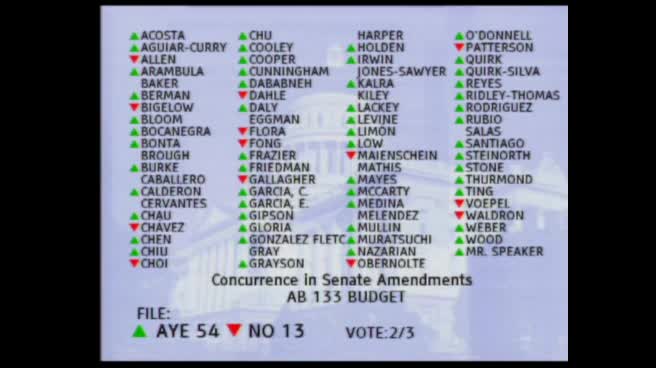 1H
Assembly Floor
 25MIN
Senate Floor
 1H
Assembly Standing Committee on Appropriations
 1H
Assembly Standing Committee on Judiciary
 56MIN
Assembly Standing Committee on Public Safety
 1H
Senate Floor
 1H
Senate Standing Committee on Appropriations
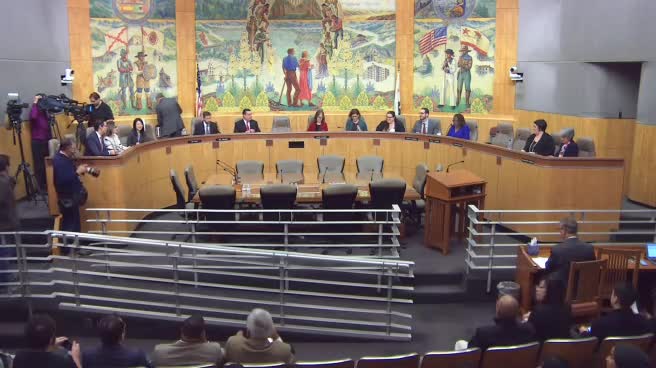 1H
Senate Standing Committee on Public Safety
Bill Author