SB 544: School districts: contracting: purchases for child nutrition programs.
- Session Year: 2017-2018
- House: Senate
- Latest Version Date: 2017-09-30
Existing law requires the governing board of any school district to let contracts for the purchase of equipment, materials, or supplies to be furnished, leased, or sold to the district, services other than construction services, and certain repairs, involving an expenditure of more than $50,000, and to let contracts for public projects, as defined, involving an expenditure of $15,000 or more, to the lowest responsible bidder who gives security as the governing board requires.
This bill would require procurement bid solicitations and awards made by a school district for purchases in support of federal nonprofit child nutrition programs to be consistent with certain federal procurement standards. The bill would require awards to be let to the most responsive and responsible party, and would require price to be the primary consideration, but not the only determining factor.
Existing law establishes the California Assessment of Student Performance and Progress as the statewide system of pupil assessments. Existing law requires the Superintendent of Public Instruction, on or before March 1, 2016, to submit to the State Board of Education and specified other entities recommendations on expanding the California Assessment of Student Performance and Progress to include additional assessments in accordance with specified requirements. This bill would require the State Department of Education, pursuant to the recommendations specified above, to establish a process for identifying and evaluating locally developed formative assessment tools, as defined, and locally developed high-quality assessments, as defined. The bill would require the department to prioritize the evaluation of formative assessment tools aligned with the Next Generation Science standards and specified English language development standards and would require the department to prioritize the evaluation of high-quality assessments aligned with specified career technical education standards and the English language development standards. The bill would require the department to consult with stakeholders with subject matter expertise in establishing these processes and would require the department to provide state-supported locally developed formative assessment tools and locally developed high-quality assessments to local educational agencies. The bill would specify that these provisions are operative only to the extent that funding is provided in the annual Budget Act or another statute, and would repeal the provisions on July 1, 2019.Existing law establishes the California Assessment of Student Performance and Progress as the statewide system of pupil assessments. Existing law requires the Superintendent of Public Instruction, on or before March 1, 2016, to submit to the State Board of Education and specified other entities recommendations on expanding the California Assessment of Student Performance and Progress to include additional assessments in accordance with specified requirements.
This bill would require the State Department of Education, pursuant to the recommendations specified above, to establish a process for identifying and evaluating locally developed formative assessment tools, as defined, and locally developed high-quality assessments, as defined. The bill would require the department to prioritize the evaluation of formative assessment tools aligned with the Next Generation Science standards and specified English language development standards and would require the department to prioritize the evaluation of high-quality assessments aligned with specified career technical education standards and the English language development standards. The bill would require the department to consult with stakeholders with subject matter expertise in establishing these processes and would require the department to provide state-supported locally developed formative assessment tools and locally developed high-quality assessments to local educational agencies. The bill would specify that these provisions are operative only to the extent that funding is provided in the annual Budget Act or another statute, and would repeal the provisions on July 1, 2019.
The bill would also require the department, no later than the 201819 school year, to support a regional network to provide regional assessment support to local educational agencies for the implementation of the comprehensive assessment tools and resources related to the statewide testing program. The bill would specify that this provision is operative only to the extent that funding is provided in the annual Budget Act or another statute.Existing law establishes the California Assessment of Student Performance and Progress as the statewide system of pupil assessments. Existing law requires the Superintendent of Public Instruction, on or before March 1, 2016, to submit to the State Board of Education and specified other entities recommendations on expanding the California Assessment of Student Performance and Progress to include additional assessments in accordance with specified requirements.
This bill would require the State Department of Education, pursuant to the recommendations specified above, to establish a process for identifying and evaluating locally developed formative assessment resources tools, as defined, and locally developed assessments. high-quality assessments, as defined. The bill would require the department to prioritize the evaluation of formative assessment tools aligned with the Next Generation Science standards and specified English language development standards and would require the department to prioritize the evaluation of high-quality assessments aligned with specified career technical education standards and the English language development standards. The bill would require the department to consult with stakeholders with subject matter expertise in establishing these processes, processes and would require the department to provide state-supported locally developed formative assessment resources tools and locally developed high-quality assessments to local educational agencies, and would require the department to prioritize the evaluation of career technical education and English language development assessment resources. agencies. The bill would specify that these provisions are operative only to the extent that funding is provided in the annual Budget Act or another statute, and would repeal the provisions on July 1, 2019.
The bill would also require the department, no later than the 201819 school year, to support a regional network to provide regional assessment support to local educational agencies for the implementation of the comprehensive assessment tools and resources related to the statewide testing program. The bill would specify that this provision is operative only to the extent that funding is provided in the annual Budget Act or another statute.
Existing law establishes the California Assessment of Student Performance and Progress as the statewide system of pupil assessments. Existing law requires the Superintendent of Public Instruction, on or before March 1, 2016, to submit to the State Board of Education and specified other entities recommendations on expanding the California Assessment of Student Performance and Progress to include additional assessments in accordance with specified requirements.
This bill would require the State Department of Education, pursuant to the recommendations specified above, to establish a process for identifying and evaluating locally developed formative assessment resources and locally developed assessments. The bill would require the department to consult with stakeholders with subject matter expertise in establishing these processes, would require the department to provide state-supported locally developed formative assessment resources and locally developed assessments to local educational agencies, and would require the department to prioritize the evaluation of career technical education and English language development assessment resources. The bill would specify that these provisions are operative only to the extent that funding is provided in the annual Budget Act or another statute, and would repeal the provisions on July 1, 2019.
(a)(1) The governing board of any school district, in accordance with any requirement established by that governing board pursuant to subdivision (a) of Section 2000, shall let any contracts involving an expenditure of more than fifty thousand dollars ($50,000) for any of the following:
(A)The purchase of equipment, materials, or supplies to be furnished, sold, or leased to the district.
(B)Services, except construction services.
(C)Repairs, including maintenance as defined in Section 20115, that are not a public project as defined in subdivision (c) of Section 22002.
(2)The governing board shall let the contract to the lowest responsible bidder who shall give security as the board requires, or else reject all bids.
(b)(1)The governing board shall let any contract for a public project, as defined in subdivision (c) of Section 22002, involving an expenditure of fifteen thousand dollars ($15,000) or more, to the lowest responsible bidder who shall give security as the board requires, or else reject all bids. All bids for construction work shall be presented under sealed cover, and shall be accompanied by one of the following forms of bidders security:
(A)Cash.
(B)A cashiers check made payable to the school district.
(C)A certified check made payable to the school district.
(D)A bidders bond executed by an admitted surety insurer, made payable to the school district.
(2)Upon award to the lowest bidder, the security of an unsuccessful bidder shall be returned in a reasonable period of time, but in no event shall that security be held by the school district beyond 60 days from the time the award is made.
(c)Procurement bid solicitations and awards made by a school district approved to operate at least one federal nonprofit child nutrition program for purchases in support of those programs shall be consistent with the federal procurement standards in Sections 200.318 to 200.326, inclusive, of Part 200 of Title 2 of the Code of Federal Regulations. These awards shall be let to the most responsive and responsible party. The price shall be the primary consideration, but not the only determining factor.
(d)This section applies to all equipment, materials, or supplies, whether patented or otherwise, and to contracts awarded pursuant to subdivision (a) of Section 2000. This section shall not apply to professional services or advice, insurance services, or any other purchase or service otherwise exempt from this section, or to any work done by day labor or by force account pursuant to Section 20114.
(e)Commencing January 1, 1997, the Superintendent of Public Instruction shall annually adjust the dollar amounts specified in subdivision (a) to reflect the percentage change in the annual average value of the Implicit Price Deflator for State and Local Government Purchases of Goods and Services for the United States, as published by the United States Department of Commerce for the 12-month period ending in the prior fiscal year. The annual adjustments shall be rounded to the nearest one hundred dollars ($100).
(a)(1) The governing board of any school district, in accordance with any requirement established by that governing board pursuant to subdivision (a) of Section 2000, shall let any contracts involving an expenditure of more than fifty thousand dollars ($50,000) for any of the following:
(1)(A)The purchase of equipment, materials, or supplies to be furnished, sold, or leased to the district.
(2)(B)Services, except construction services.
(3)(C)Repairs, including maintenance as defined in Section 20115, that are not a public project as defined in subdivision (c) of Section 22002.
The contract(2)The governing board shall be let the contract to the lowest responsible bidder who shall give security as the board requires, or else reject all bids.
(b)(1)The governing board shall let any contract for a public project, as defined in subdivision (c) of Section 22002, involving an expenditure of fifteen thousand dollars ($15,000) or more, to the lowest responsible bidder who shall give security as the board requires, or else reject all bids. All bids for construction work shall be presented under sealed cover cover, and shall be accompanied by one of the following forms of bidders security:
(1)(A)Cash.
(2)(B)A cashiers check made payable to the school district.
(3)(C)A certified check made payable to the school district.
(4)(D)A bidders bond executed by an admitted surety insurer, made payable to the school district.
Upon
(2)Upon award to the lowest bidder, the security of an unsuccessful bidder shall be returned in a reasonable period of time, but in no event shall that security be held by the school district beyond 60 days from the time the award is made.
(c)Procurement bid solicitations and awards made by a school district approved to operate at least one federal nonprofit child nutrition program for purchases in support of those programs shall be consistent with the federal procurement standards in Sections 200.318 to 200.326, inclusive, of Part 200 of Title 2 of the Code of Federal Regulations. These awards shall be let to the most responsive and responsible party. The price shall be the primary consideration, but not the only determining factor.
(c)(d)This section applies to all equipment, materials, or supplies, whether patented or otherwise, and to contracts awarded pursuant to subdivision (a) of Section 2000. This section shall not apply to professional services or advice, insurance services, or any other purchase or service otherwise exempt from this section, or to any work done by day labor or by force account pursuant to Section 20114.
(d)(e)Commencing January 1, 1997, the Superintendent of Public Instruction shall annually adjust the dollar amounts specified in subdivision (a) to reflect the percentage change in the annual average value of the Implicit Price Deflator for State and Local Government Purchases of Goods and Services for the United States, as published by the United States Department of Commerce for the 12-month period ending in the prior fiscal year. The annual adjustments shall be rounded to the nearest one hundred dollars ($100).
SECTION 1.Section 60640.5 is added to the Education Code, to read:60640.5.(a)Pursuant to recommendations developed under subdivision (c) of Section 60640, the department shall do the following:(1)Establish a process for identifying and evaluating locally developed formative assessment tools, as defined in subdivision (m) of Section 60603, that support implementation of a comprehensive assessment system. The department shall prioritize the evaluation of formative assessment tools aligned with the Next Generation Science standards adopted pursuant to former Section 60605.85, as that section read on June 30, 2014, and formative assessment tools aligned with the English language development standards adopted pursuant to Section 60811.(2)Establish a process for identifying and evaluating locally developed high-quality assessments, as defined in subdivision (n) of Section 60603, including, but not limited to, classroom assessments, performance tasks, diagnostic assessments, and interim assessments. The department shall prioritize the evaluation of high-quality assessments aligned with the career technical education standards developed pursuant to Section 51226 and high-quality assessments aligned with the English language development standards adopted pursuant to Section 60811.(b)In establishing the processes in subdivision (a), the department shall consult with stakeholders with expertise in the subject matter, including, but not necessarily limited to, classroom teachers and administrators. For career technical education assessments, the department shall consult with relevant stakeholders in business and industry.(c)The department shall provide the locally developed formative assessment tools and the locally developed high-quality assessments to local educational agencies for their educators use.(d)The locally developed formative assessment tools and locally developed high-quality assessments identified and evaluated pursuant to this section may cover subjects approved by the state board, including, but not necessarily limited to, English language development, career technical education, science, visual and performing arts, world languages, and technology. (e)This section shall be operative only to the extent that funding is provided in the annual Budget Act or another statute for purposes of this section.(f)This section shall remain in effect only until July 1, 2019, and as of that date is repealed.(a)Pursuant to recommendations developed under subdivision (c) of Section 60640, the department shall do the following:
(1)Establish a process for identifying and evaluating locally developed formative assessment tools, as defined in subdivision (m) of Section 60603, that support implementation of a comprehensive assessment system. The department shall prioritize the evaluation of formative assessment tools aligned with the Next Generation Science standards adopted pursuant to former Section 60605.85, as that section read on June 30, 2014, and formative assessment tools aligned with the English language development standards adopted pursuant to Section 60811.
(2)Establish a process for identifying and evaluating locally developed high-quality assessments, as defined in subdivision (n) of Section 60603, including, but not limited to, classroom assessments, performance tasks, diagnostic assessments, and interim assessments. The department shall prioritize the evaluation of high-quality assessments aligned with the career technical education standards developed pursuant to Section 51226 and high-quality assessments aligned with the English language development standards adopted pursuant to Section 60811.
(b)In establishing the processes in subdivision (a), the department shall consult with stakeholders with expertise in the subject matter, including, but not necessarily limited to, classroom teachers and administrators. For career technical education assessments, the department shall consult with relevant stakeholders in business and industry.
(c)The department shall provide the locally developed formative assessment tools and the locally developed high-quality assessments to local educational agencies for their educators use.
(d)The locally developed formative assessment tools and locally developed high-quality assessments identified and evaluated pursuant to this section may cover subjects approved by the state board, including, but not necessarily limited to, English language development, career technical education, science, visual and performing arts, world languages, and technology.
(e)This section shall be operative only to the extent that funding is provided in the annual Budget Act or another statute for purposes of this section.
(f)This section shall remain in effect only until July 1, 2019, and as of that date is repealed.
SEC. 2.Section 60640.6 is added to the Education Code, to read:60640.6.Pursuant to recommendations developed under subdivision (c) of Section 60640, the department shall, no later than the 201819 school year, support a regional network to provide regional assessment support to local educational agencies for the implementation of the comprehensive assessment tools and resources related to the statewide testing program, including summative, interim, and formative assessment tools. This section shall be operative only to the extent that funding is provided in the annual Budget Act or another statute for purposes of this section.(a)Pursuant to recommendations developed under subdivision (c) of Section 60640, the department shall do the following:
(1)Establish a process for identifying and evaluating locally developed formative assessment resources. tools, as defined in subdivision (m) of Section 60603, that support implementation of a comprehensive assessment system. The department shall prioritize the evaluation of formative assessment tools aligned with the Next Generation Science standards adopted pursuant to former Section 60605.85, as that section read on June 30, 2014, and formative assessment tools aligned with the English language development standards adopted pursuant to Section 60811.
(2)Establish a process for identifying and evaluating locally developed assessments. high-quality assessments, as defined in subdivision (n) of Section 60603, including, but not limited to, classroom assessments, performance tasks, diagnostic assessments, and interim assessments. The department shall prioritize the evaluation of high-quality assessments aligned with the career technical education standards developed pursuant to Section 51226 and high-quality assessments aligned with the English language development standards adopted pursuant to Section 60811.
(b)In establishing the processes in subdivision (a), the department shall consult with stakeholders with expertise in the subject matter, including, but not necessarily limited to, classroom teachers and administrators. For career technical education assessments, the department shall consult with relevant stakeholders in business and industry.
(c)The department shall provide the locally developed formative assessment resources tools and the locally developed high-quality assessments to local educational agencies for their educators use.
(d)The locally developed formative assessment resources tools and locally developed high-quality assessments identified and evaluated pursuant to this section may cover subjects approved by the state board, including, but not necessarily limited to, English language development, career technical education, science, visual and performing arts, world languages, and technology.
(e)The department shall prioritize the evaluation of career technical education and English language development assessment resources.(f)(e)This section shall be operative only to the extent that funding is provided in the annual Budget Act or another statute for purposes of this section.
(g)(f)This section shall remain in effect only until July 1, 2019, and as of that date is repealed.
SEC. 2.Section 60640.6 is added to the Education Code, to read:60640.6.Pursuant to recommendations developed under subdivision (c) of Section 60640, the department shall, no later than the 201819 school year, support a regional network to provide regional assessment support to local educational agencies for the implementation of the comprehensive assessment tools and resources related to the statewide testing program, including summative, interim, and formative assessment tools. This section shall be operative only to the extent that funding is provided in the annual Budget Act or another statute for purposes of this section.
(a)Pursuant to recommendations developed under subdivision (c) of Section 60640, the department shall do the following:
(1)Establish a process for identifying and evaluating locally developed formative assessment resources.
(2)Establish a process for identifying and evaluating locally developed assessments.
(b)In establishing the processes in subdivision (a), the department shall consult with stakeholders with expertise in the subject matter, including, but not necessarily limited to, classroom teachers and administrators. For career technical education assessments, the department shall consult with relevant stakeholders in business and industry.
(c)The department shall provide the locally developed formative assessment resources and the locally developed assessments to local educational agencies for their use.
(d)The locally developed formative assessment resources and locally developed assessments identified and evaluated pursuant to this section may cover subjects approved by the state board, including, but not necessarily limited to, English language development, career technical education, science, visual and performing arts, world languages, and technology.
(e)The department shall prioritize the evaluation of career technical education and English language development assessment resources.
(f)This section shall be operative only to the extent that funding is provided in the annual Budget Act or another statute for purposes of this section.
(g)This section shall remain in effect only until July 1, 2019, and as of that date is repealed.
|
Date
|
Status
|
|---|---|
| Sep 30, 2017 | Chaptered by Secretary of State. Chapter 395, Statutes of 2017. |
| Sep 30, 2017 | Approved by the Governor. |
| Sep 6, 2017 | Enrolled and presented to the Governor at 3 p.m. |
| Aug 31, 2017 | Assembly amendments concurred in. (Ayes 37. Noes 0.) Ordered to engrossing and enrolling. |
| Aug 29, 2017 | Ordered to special consent calendar. |
| Aug 23, 2017 | From committee: That the Assembly amendments be concurred in. (Ayes 5. Noes 0.) |
| Aug 22, 2017 | Set for hearing August 23. |
| Aug 21, 2017 | From committee: Be re-referred to Com. on ED. pursuant to Senate Rule 29.10(d). (Ayes 5. Noes 0.) Re-referred to Com. on ED. |
| Aug 21, 2017 | Re-referred to Com. on RLS. pursuant to Senate Rule 29.10(d). |
| Jul 20, 2017 | In Senate. Concurrence in Assembly amendments pending. |
| Jul 20, 2017 | Read third time. Passed. Ordered to the Senate. |
| Jul 17, 2017 | Read second time. Ordered to consent calendar. |
| Jul 13, 2017 | From committee: Do pass. Ordered to consent calendar. (Ayes 7. Noes 0.) (July 12). |
| Jul 5, 2017 | From committee with author's amendments. Read second time and amended. Re-referred to Com. on ED. |
| Jun 12, 2017 | Referred to Com. on ED. |
| Jun 1, 2017 | In Assembly. Read first time. Held at Desk. |
| May 31, 2017 | Read third time. Passed. (Ayes 40. Noes 0. Page 1330.) Ordered to the Assembly. |
| May 26, 2017 | Read second time and amended. Ordered to third reading. |
| May 25, 2017 | From committee: Do pass as amended. (Ayes 7. Noes 0. Page 1186.) (May 25). |
| May 19, 2017 | Set for hearing May 25. |
| Apr 17, 2017 | April 17 hearing: Placed on APPR. suspense file. |
| Apr 5, 2017 | Set for hearing April 17. |
| Mar 29, 2017 | From committee: Do pass and re-refer to Com. on APPR. with recommendation: To consent calendar. (Ayes 7. Noes 0. Page 536.) (March 29). Re-referred to Com. on APPR. |
| Mar 21, 2017 | From committee with author's amendments. Read second time and amended. Re-referred to Com. on ED. |
| Mar 14, 2017 | Set for hearing March 29. |
| Mar 2, 2017 | Referred to Com. on ED. |
| Feb 17, 2017 | From printer. May be acted upon on or after March 19. |
| Feb 16, 2017 | Introduced. Read first time. To Com. on RLS. for assignment. To print. |
|
Date
|
Description
|
Location
|
Votes
|
|
|---|---|---|---|---|
| Aug 31, 2017 | Special Consent Calendar # SB544 | Senate Floor |
Passed |
|
| Aug 23, 2017 | That the Assembly amendments be concurred in | Senate Standing Committee on Education |
Passed |
|
| Jul 20, 2017 | SB 544 McGuire Consent Calendar Second Day Regular Session | Assembly Floor |
Passed |
|
| Jul 12, 2017 | Do pass. To Consent Calendar. | Assembly Standing Committee on Education |
Passed |
|
| May 31, 2017 | Senate 3rd Reading SB544 McGuire | Senate Floor |
Passed |
|
| May 25, 2017 | Do pass as amended | Senate Standing Committee on Appropriations |
Passed |
|
| Apr 17, 2017 | Placed on suspense file | Senate Standing Committee on Appropriations |
Passed |
|
| Mar 29, 2017 | Do pass, but first be re-referred to the Committee on [Appropriations] with the recommendation: To Consent Calendar | Senate Standing Committee on Education |
Passed |
This list shows positions taken on this bill by organizations on the date displayed, which is linked to the original source.
Positions by individuals are not included.
Office of Senate Floor Analyses (916) 651-1520 Fax: (916) 327-4478 | SB |
UNFINISHED BUSINESS
Bill No: SB 544
:
PRIOR SENATE VOTES NOT RELEVANT
SENATE EDUCATION COMMITTEE: 5-0, 8/23/17 (Pursuant to Senate Rule 29.10)
AYES: Allen, Wilk, Mendoza, Pan, Vidak
NO VOTE RECORDED: Galgiani, Leyva
ASSEMBLY FLOOR: 67-0, 7/20/17 (Consent) - See last page for vote
DIGEST:
This bill requires school districts to award contracts for the provision of child nutrition program supplies to the most responsive and responsible party and requires price to be the primary consideration, but not the only determining factor.
Assembly Amendments
replace the previous contents of the bill relative to pupil assessments with provisions dealing with awarding contracts for the provision of child nutrition program supplies.
ANALYSIS: Existing federal law requires, as a condition of receipt of federal funds, that the recipient award contracts only to responsible contractors possessing the ability to perform successfully under the terms and conditions of a proposed procurement. Consideration is to be given to such matters as contractor integrity, compliance with public policy, record of past performance, and financial and technical resources. Contracts are to be awarded to the responsible firm whose proposal is most advantageous to the program, with price and other factors considered. (Federal Code of Regulations, Title 2, Sections 200.318 and 200.320)
Existing state law specifies that the governing board of any school district must let any contracts involving an expenditure of more than $50,000 for the purchase of equipment, materials, or supplies; services, other than construction services; and repairs; to be let to the lowest responsible bidder. (Public Contract Code, Section 20111)
This bill requires school districts to award contracts for the provision of child nutrition program supplies to the most responsive and responsible party and requires price to be the primary consideration, but not the only determining factor. Specifically, this bill:
- Requires procurement bid solicitations and awards made by a school district operating child nutrition programs to be consistent with federal procurement standards.
- Requires such contracts to be awarded to the most responsive and responsible party and requires price to be the primary consideration, but not the only determining factor.
Comments
- Need for the bill. According to the author, the California Department of Education (CDE) reviewed the California Public Contract Code regarding the use of Request for Proposals (RFPs) for nutrition services and determined that, based on the language of the statute, districts may only award contracts to the lowest bidder. CDE’s interpretation adversely affects the provision of school and afterschool meals and snacks, as it means that a district or afterschool program provider cannot choose a vendor who might have submitted a higher bid but who can provide foods that might be locally sourced, be of better quality, or that would appeal to students of different ethnicities, such as those foods they eat at home. The current California statute contradicts federal law which allows RFPs to include other conditions as long as price is the most heavily weighted factor.
- Criteria for selection of food service providers. According to the CDE, both federal regulations and California state laws require all procurements—without regard to dollar value—to be conducted in a manner that promotes maximum open and free competition. School food authorities (SFA) must conduct either a formal or an informal bidding process.
A RFP also known as a competitive proposal, is a method of procurement whereby SFAs publicly solicit a technical proposal that explains how the prospective contractor will meet the objectives of the solicitation, and includes a cost element that identifies the costs to accomplish the technical proposal. While price alone is not the sole basis for award, it remains the primary consideration when awarding a contract under the RFP method.
FISCAL EFFECT: Appropriation: Fiscal Com.: Local:
California Food Policy Advocates
California School Nutrition Association
OPPOSITION: (Verified 7/26/17)
None received
ASSEMBLY FLOOR: 67-0, 7/20/17
AYES: Acosta, Aguiar-Curry, Travis Allen, Arambula, Baker, Berman, Bigelow, Bloom, Bocanegra, Bonta, Brough, Burke, Caballero, Cervantes, Chau, Chiu, Choi, Chu, Cooley, Cooper, Cunningham, Dababneh, Dahle, Daly, Eggman, Flora, Fong, Frazier, Friedman, Gallagher, Cristina Garcia, Eduardo Garcia, Gipson, Gloria, Gonzalez Fletcher, Grayson, Harper, Holden, Jones-Sawyer, Kalra, Kiley, Lackey, Levine, Maienschein, Mathis, Mayes, McCarty, Medina, Melendez, Mullin, Muratsuchi, Nazarian, Obernolte, O'Donnell, Reyes, Ridley-Thomas, Rodriguez, Rubio, Salas, Steinorth, Mark Stone, Ting, Voepel, Waldron, Weber, Wood, Rendon
NO VOTE RECORDED: Calderon, Chávez, Chen, Gray, Irwin, Limón, Low, Patterson, Quirk, Quirk-Silva, Santiago, Thurmond
8/23/17 11:02:32
SENATE COMMITTEE ON EDUCATION
Senator Benjamin Allen, Chair
2017 - 2018 Regular
Bill No: SB 544 Hearing Date: August 23, 2017
Author: | McGuire | ||
Version: | July 5, 2017 | ||
Urgency: | No | Fiscal: | No |
Consultant: | Brandon Darnell | ||
Subject: School districts contracting
NOTE: This bill was amended in the Assembly to replace its contents and this is the first time the bill is being heard by this Committee in its current form.
SUMMARY
This bill requires school districts to award contracts for the provision of child nutrition program supplies to the most responsive and responsible party and requires price to be the primary consideration, but not the only determining factor.
BACKGROUND
Existing federal law requires, as a condition of receipt of federal funds, that the recipient award contracts only to responsible contractors possessing the ability to perform successfully under the terms and conditions of a proposed procurement. Consideration is to be given to such matters as contractor integrity, compliance with public policy, record of past performance, and financial and technical resources. Contracts are to be awarded to the responsible firm whose proposal is most advantageous to the program, with price and other factors considered. (Federal Code of Regulations, Title 2, § 200.318 and 200.320)
Existing state law specifies that the governing board of any school district must let any contracts involving an expenditure of more than $50,000, as adjusted for inflation (currently $88,300), for the purchase of equipment, materials, or supplies; services, other than construction services; and repairs; to be let to the lowest responsible bidder. (Public Contract Code, § 20111)
ANALYSIS
This bill requires school districts to award contracts for the provision of child nutrition program supplies to the most responsive and responsible party and requires price to be the primary consideration, but not the only determining factor. Specifically, this bill:
1) Requires procurement bid solicitations and awards made by a school district operating child nutrition programs to be consistent with federal procurement standards.
2) Requires such contracts to be awarded to the most responsive and responsible party and requires price to be the primary consideration, but not the only determining factor.
STAFF COMMENTS
- Need for the bill. According to the author, “Late last fall, legal staff in California Department of Education’s (CDE’s) Nutrition Services Division stated that they had reviewed the California Public Contract Code regarding the use of Requests for Proposals (RFPs) and determined that, based on the language of the statute, districts may only award contracts for meal provision services to the lowest bidder. Conversely, federal regulations require contracts to be awarded to the responsible firm whose proposal is most advantageous to the program, with price and other factors considered.
CDE’s interpretation adversely affects the provision of school and afterschool meals and snacks, as it means that a district or afterschool program provider cannot choose a vendor who might have submitted a higher bid but who can provide foods that might be locally sourced, be of better quality or that would appeal to students of different ethnicities, such as foods they eat at home.”
2) Criteria for selection of food service providers. According to the CDE, both federal regulations and California state laws require all procurements—without regard to dollar value—to be conducted in a manner that promotes maximum open and free competition. School food authorities (SFA) must conduct either a formal or an informal bidding process.
An RFP, also known as a competitive proposal, is a method of procurement whereby SFAs publicly solicit a technical proposal that explains how the prospective contractor will meet the objectives of the solicitation, and includes a cost element that identifies the costs to accomplish the technical proposal. While price alone is not the sole basis for award, it remains the primary consideration when awarding a contract under the RFP method.
Invitations for Bids (IFBs), also known as competitive sealed bids, is a formal method of procurement in which SFAs publicly solicit sealed bids from an adequate number of known suppliers, with the goal of obtaining three bids at a minimum. The SFA must award the fixed-price contract to the lowest priced, most responsible bidder, whose bid is responsive, and conforms with all the material terms and conditions of the IFB. SFAs must allow bidders sufficient time to respond prior to the date set for opening the bids. SFAs seeking proposals from meal vendors should use the IFB method of procurement, according to CDE.
Regardless of the type of bid method an SFA uses, SFAs must award the contract to the lowest bidder who best meets the SFA’s needs and stated objectives. The SFA must retain all bidding documents for three years after the final contract payment and, in the event of an audit, three years beyond the final audit resolution.
3) Consistent with approach toward healthier food options. In recent years, both the federal and state governments have taken action to encourage smarter, healthier food options and choices in schools. This includes specific caloric, fat, and sugar limits and restrictions against soda, among other things. These changes in priorities necessitate changes in what foods and supplies schools procure, which could lead to increased costs for healthier foods. For example, according to the author, “A school food service provider was not able to provide diverse foods that might have been more appealing to the district’s multiethnic student population because the vendor with the lowest bid did not offer any such options” and “the quality of the food that one school food service provider received was so poor that he was not comfortable serving it to the students.”
By ensuring that school food authorities (SFAs) are able to take factors beyond price into consideration, the bill would enable SFAs to better align their food procurements with the priorities established in law.
4) First time being heard in this committee in its current form. A previous version of this bill was heard in this committee on March 29, 2017, and passed 7-0. That version of the bill was relative to pupil assessments. The author amended the bill on July 5, 2017, into its current form, relative to awarding contracts for the provision of child nutrition program supplies.
SUPPORT
California Food Policy Advocates
California School Nutrition Association
OPPOSITION
None received
-- END --
Date of Hearing: July 12, 2017
ASSEMBLY COMMITTEE ON EDUCATION
Patrick O'Donnell, Chair
SBPCA Bill Id:SB 544
Author:(McGuire) – As Amended Ver:July 5, 2017
SENATE VOTE: 40-0 (prior vote not relevant)
SUBJECT: School districts contracting
SUMMARY: Requires school districts to award contracts for the provision of child nutrition program supplies to the most responsive and responsible party and would require price to be the primary consideration, but not the only determining factor. Specifically, this bill:
- Specifies that procurement bid solicitations and awards, made by a school district operating child nutrition programs, must be consistent with federal procurement standards.
- Specifies that the contracts are to be awarded to the most responsive and responsible party and that price is to be the primary consideration, but not the only determining factor.
EXISTING LAW:
- Federal regulations require the awarding of contracts only to responsible contractors possessing the ability to perform successfully under the terms and conditions of a proposed procurement. Consideration is to be given to such matters as contractor integrity, compliance with public policy, record of past performance, and financial and technical resources. Contracts are to be awarded to the responsible firm whose proposal is most advantageous to the program, with price and other factors considered. (Federal Code of Regulations, Title 2, Sections 200.318 and 200.320)
- California state law specifies that the governing board of any school district must let any contracts involving an expenditure of more than $50,000 for the purchase of equipment, materials, or supplies; services, other than construction services; and repairs; to be let to the lowest responsible bidder. (Public Contract Code, Section 20111)
FISCAL EFFECT: The Office of Legislative Counsel has keyed this bill as non-fiscal.
COMMENTS:
Need for the bill. According to the author, the California Department of Education (CDE) reviewed the California Public Contract Code regarding the use of Request for Proposals (RFPs) for nutrition services and determined that, based on the language of the statute, districts may only award contracts to the lowest bidder. CDE’s interpretation adversely affects the provision of school and afterschool meals and snacks, as it means that a district or afterschool program provider cannot choose a vendor who might have submitted a higher bid but who can provide foods that might be locally sourced, be of better quality, or that would appeal to students of different ethnicities, such as those foods they eat at home. The current California statute contradicts federal law which allows RFPs to include other conditions as long as price is the most heavily weighted factor.
Criteria for selection of food service providers. According to the CDE, both federal regulations and California state laws require all procurements—without regard to dollar value—to be conducted in a manner that promotes maximum open and free competition. School food authorities (SFA) must conduct either a formal or an informal bidding process.
A RFP also known as a competitive proposal, is a method of procurement whereby school food authorities (SFAs) publicly solicit a technical proposal that explains how the prospective contractor will meet the objectives of the solicitation, and includes a cost element that identifies the costs to accomplish the technical proposal. While price alone is not the sole basis for award, it remains the primary consideration when awarding a contract under the RFP method.
REGISTERED SUPPORT / OPPOSITION:
Support
California Food Policy Advocates
California School Nutrition Association
Opposition
None on file
Analysis Prepared by: Debbie Look/ ED. / (916) 319-2087
Office of Senate Floor Analyses (916) 651-1520 Fax: (916) 327-4478 | SB |
THIRD READING
Bill No: SB 544
:
SENATE EDUCATION COMMITTEE: 7-0, 3/29/17
AYES: Allen, Wilk, Galgiani, Leyva, Mendoza, Pan, Vidak
SENATE APPROPRIATIONS COMMITTEE: 7-0, 5/25/17
AYES: Lara, Bates, Beall, Bradford, Hill, Nielsen, Wiener
SOURCE: State Superintendent of Public Instruction
DIGEST:
This bill requires the California Department of Education (CDE) to establish a process for identifying and evaluating locally developed formative assessment tools and other assessments, and provide those tools and assessments to local educational agencies (LEAs) for use by educators.
Existing law:
- Establishes the statewide assessment system as the California Assessment of Student Performance and Progress (CAASPP), composed of:
- A consortium summative assessment in English language arts and mathematics for grades 3 to 8 and grade 11.
- Science grade level assessments in grades 5, 8, and 10, until a successor assessment is implemented.
- The California Alternate Performance Assessment in grades 2 to 11 in English language arts and mathematics and science in grades 5, 8, and 10, until a successor assessment is implemented.
- The Early Assessment Program.
- A primary language assessment. (Education Code § 60640)
- A consortium summative assessment in English language arts and mathematics for grades 3 to 8 and grade 11.
- Requires the Superintendent of Public Instruction (SPI) to submit, by March 1, 2016, recommendations on expanding the CAASPP to include additional assessments. (EC § 60640)
This bill:
- Requires the CDE to establish a process for identifying and evaluating locally developed formative assessment tools that support implementation of a comprehensive assessment system. This bill requires the CDE to prioritize the evaluation of formative assessment tools aligned with the Next Generation Science standards and formative assessment tools aligned with the English language development standards.
- Requires the CDE to establish a process for identifying and evaluating locally developed high-quality assessments including but not limited to classroom assessments, performance tasks, diagnostic assessments, and interim assessments. This bill requires the CDE to prioritize the evaluation of high-quality assessments aligned with the career technical education standards and high-quality assessments aligned with the English language development standards.
- Requires the CDE to provide the locally developed formative assessment tools and the locally developed high-quality assessments to LEAs for use by their educators.
- Authorizes the locally developed formative assessment tools and locally developed high-quality assessments identified and evaluated to cover subjects approved by the State Board of Education, including but not limited to English language development, career technical education, science, visual and performing arts, world languages, and technology.
- Requires the CDE, in establishing the processes for identifying and evaluating locally developed high-quality assessments and formative assessment tools, to consult with stakeholders with expertise in the subject matter, including but not limited to, classroom teachers and administrators. This bill requires the CDE to consult with relevant stakeholders in business and industry for the career technical education assessments.
- Sunsets the provisions related to the identification and evaluation of assessment tools and high-quality assessments on July 1, 2019.
- Provides that the provisions of this bill are to be operative only to the extent that funding is provided in the annual Budget Act or another statute.
Comments
Recommendations of the SPI. The legislation that established the state’s new assessment system and repealed the prior assessment system (AB 484, Bonilla, Chapter 489, Statutes of 2013) required the SPI to provide recommendations on the expansion of the assessment system. These recommendations were released in March 2016, and included several recommendations. The recommendations that specifically relate to this bill are:
- Provide state-supported formative assessment resources that are aligned with the California Next Generation Science Standards in the Digital Library.
- Vet state-supported resources and tools that support implementation of a comprehensive assessment system and provide those resources for local use.
- Provide regional assessment support to schools and districts on the implementation of the comprehensive assessment tools and resources.
[http://www.cde.ca.gov/ta/tg/ca/documents/compassessexpand.pdf#search=assessment%20recommendations&view=FitH&pagemode=none]
Offered but not required. This bill requires the CDE to provide the assessments and assessment tools LEAs but does not require LEAs to administer those assessments or assessment tools. The goal is to identify high-quality assessments that LEAs may find valuable and utilize to supplement the statewide assessment system.
Types of assessments. Formative assessment is a deliberate process used by teachers and students during instruction that provides actionable feedback that is used to adjust ongoing teaching and learning strategies to improve students’ attainment of curricular learning targets/goals. Interim assessments allow teachers to check student progress throughout the year, giving them information they can use to improve their instruction and help students meet the standards. Summative assessments determine students’ progress toward standards, and are given at or near the end of the school year. Pursuant to statute, the CDE purchased interim and formative assessment tools through the Smarter Balanced Assessment Consortium, for use by LEAs at no cost.
FISCAL EFFECT: Appropriation: Fiscal Com.: Local:
According to the Senate Appropriations Committee, this bill will impose General Fund costs of approximately $1,884,000 and five positions for the CDE regarding the provisions prescribed by this bill.
State Superintendent of Public Instruction (source)
California Business Education Association
California Manufacturers & Technology Association
California Science Teachers Association
OPPOSITION: (Verified 5/25/17)
None received
5/27/17 18:17:18
**** END ****
SENATE COMMITTEE ON
Senator Ricardo Lara, Chair
2017 - 2018 Regular Session
SB 544 (McGuire) - Pupil assessments
Version: | Policy Vote: |
Urgency: | Mandate: |
Hearing Date: | Consultant: |
*********** ANALYSIS ADDENDUM – SUSPENSE FILE ***********
The following information is revised to reflect amendments
adopted by the committee on May 25, 2017
Bill Summary:
This bill requires the California Department of Education (CDE) to establish a process for identifying and evaluating locally developed formative assessment tools and other assessments for use by local educational agencies.
Fiscal Impact:
General Fund costs of approximately $1,884,000 and 5.0 PY’s for the CDE regarding the provisions prescribed by this measure.
Committee Amendments:
Remove the requirement for CDE to support a regional network to provide support to LEAs regarding the implementation of the comprehensive assessment tools and resources related to the statewide testing program.
-- END --
SENATE COMMITTEE ON APPROPRIATIONS
Senator Ricardo Lara, Chair
2017 - 2018 Regular Session
SB 544 (McGuire) - Pupil assessments
Version: March 21, 2017 | Policy Vote: ED. 7 - 0 |
Urgency: No | Mandate: No |
Hearing Date: April 17, 2017 | Consultant: Lenin Del Castillo |
This bill meets the criteria for referral to the Suspense File.
Bill Summary:
This bill requires the California Department of Education (CDE) to establish a process for identifying and evaluating locally developed formative assessment tools and other assessments for use by local educational agencies. The bill also requires the CDE to support a regional network to provide support to LEAs regarding the implementation of the comprehensive assessment tools and resources related to the statewide testing program, subject to funds being provided in the annual Budget Act or another statute for this purpose.
Fiscal Impact:
Five positions and $2,681,000 one-time General Fund and $2,479,000 on-going General Fund for CDE state operations costs.
Background:
Existing law establishes the statewide assessment system as the California Assessment of Student Performance and Progress (CAASPP) composed of:
- A consortium summative assessment in English language arts and mathematics for grades 3 to 8 and grade 11.
- Science grade level assessments in grades 5, 8, and 10, until a successor assessment is implemented.
- The California Alternate Performance Assessment in grades 2 to 11 in English language arts and mathematics and science in grades 5, 8, and 10, until a successor assessment is implemented.
- The Early Assessment Program.
- A primary language assessment. (Education Code § 60640)
Proposed Law:
This bill:
- Requires the CDE to establish a process for identifying and evaluating locally developed formative assessment tools that support implementation of a comprehensive assessment system.
- Requires the California Department of Education (CDE) to prioritize the evaluation of formative assessment tools aligned with the Next Generation Science standards and formative assessment tools aligned with the English language development standards.
- Requires the CDE to establish a process for identifying and evaluating locally developed high-quality assessments including but not limited to classroom assessments, performance tasks, diagnostic assessments, and interim assessments. This bill requires the CDE to prioritize the evaluation of high-quality assessments aligned with the career technical education standards and high-quality assessments aligned with the English language development standards.
- Requires the CDE to provide the locally developed formative assessment tools and the locally developed high-quality assessments to local educational agencies for use by their educators.
- Authorizes the locally developed formative assessment tools and locally developed high-quality assessments identified and evaluated to cover subjects approved by the State Board of Education, including but not limited to English language development, career technical education, science, visual and performing arts, world languages, and technology.
- Requires the CDE, by the 2018-19 school year, to support a regional network to provide regional assessment support to local educational agencies for the implementation of the comprehensive assessment tools and resources related to the statewide testing program, including summative, interim, and formative assessment tools. Provides that this provision is to be operative only to the extent that funding is provided in the annual Budget Act or another statute.
- Requires the CDE, in establishing the processes for identifying and evaluating locally developed high-quality assessments and formative assessment tools, to consult with stakeholders with expertise in the subject matter, including but not limited to, classroom teachers and administrators. This bill requires the CDE to consult with relevant stakeholders in business and industry for the career technical education assessments.
- Sunsets the provisions related to the identification and evaluation of assessment tools and high-quality assessments on July 1, 2019.
Related Legislation:
AB 761 (Mullin) implements one recommendation from the Superintendent of Public Instruction’s (SPI) report on the expansion of the assessment system, by requiring the SPI to develop, and the State Board of Education to adopt, a history-social science assessment for grades 4, 8, and one of grades 9 to 12.
AB 1035 (O’Donnell) requires the CDE to ensure that student performance on the interim assessments is reported by content standard, or by cluster of content standards, for the purpose of ensuring that the information reported is of maximum use to educators in their instructional planning and delivery.
SB 552 (Fuller) requires the CDE , by January 1, 2019, to develop or revise, or contract with an appropriate vendor to develop or revise, a new or existing career technical education test for pupils that measures aptitudes, areas of interest, or both, with special emphasis on pupils in grades 6 to 8, inclusive. The bill requires CDE to post the test on its website for the public, including pupils and school districts, to access.
Staff Comments:
In 2014, California began a new era in student assessments by implementing a new assessment system, the California Assessment of Student Progress and Performance (CAASPP), designed to assist teachers, administrators, and pupils and their parents/guardians improve teaching and learning, and promote high-quality teaching and learning through multiple assessment approaches and item types. The CAASPP System includes summative assessments, as well as formative assessments tools and interim assessments, to help teachers assess student learning as part of daily instruction.
AB 484 (Bonilla, Chapter 289, Statutes of 2013) established the state’s new assessment system and replaced the prior assessment system—the Standardized Testing and Reporting program. AB 484 also required the SPI to provide recommendations on the expansion of the assessment system. These recommendations were released in March 2016, and included several recommendations. The recommendations that specifically relate to this bill are:
- Provide state-supported formative assessment resources that are aligned with the California Next Generation Science Standards in the Digital Library.
- Vet state-supported resources and tools that support implementation of a comprehensive assessment system and provide those resources for local use.
- Provide regional assessment support to schools and districts on the implementation of the comprehensive assessment tools and resources.
The CDE submitted a Budget Change Proposal (BCP) for the 2017-18 fiscal year regarding the provisions prescribed by this measure. The BCP indicates the need for five positions and $2,681,000 in first-year General Fund costs and $2,479,000 in on-going General Fund.
-- END --
SENATE COMMITTEE ON EDUCATION
Senator Benjamin Allen, Chair
2017 - 2018 Regular
Bill No: SB 544 Hearing Date: March 29, 2017
Author: | |||
Version: | March 21, 2017 | ||
Urgency: | No | Fiscal: | Yes |
Consultant: | Lynn Lorber | ||
Subject: Pupil assessments
SUMMARY
This bill requires the California Department of Education to establish a process for identifying and evaluating locally developed formative assessment tools and other assessments, provide those tools and assessments to local educational agencies for use by educators, and support a regional network to provide support to local educational agencies for the implementation of the comprehensive assessment tools and resources related to the statewide testing program.
BACKGROUND
Existing law:
- Establishes the statewide assessment system as the California Assessment of Student Performance and Progress (CAASPP), composed of:
- A consortium summative assessment in English language arts and mathematics for grades 3 to 8 and grade 11.
- Science grade level assessments in grades 5, 8, and 10, until a successor assessment is implemented.
- The California Alternate Performance Assessment in grades 2 to 11 in English language arts and mathematics and science in grades 5, 8, and 10, until a successor assessment is implemented.
- The Early Assessment Program.
- A primary language assessment. (Education Code § 60640)
- A consortium summative assessment in English language arts and mathematics for grades 3 to 8 and grade 11.
- Requires the Superintendent of Public Instruction to submit, by March 1, 2016, recommendations on expanding the CAASPP to include additional assessments. (EC § 60640)
ANALYSIS
This bill requires the California Department of Education to establish a process for identifying and evaluating locally developed formative assessment tools and other assessments, provide those tools and assessments to local educational agencies for use by educators, and support a regional network to provide support to local educational agencies for the implementation of the comprehensive assessment tools and resources related to the statewide testing program. Specifically, this bill:
- Requires the California Department of Education (CDE) to establish a process for identifying and evaluating locally developed formative assessment tools that support implementation of a comprehensive assessment system. This bill requires the CDE to prioritize the evaluation of formative assessment tools aligned with the Next Generation Science standards and formative assessment tools aligned with the English language development standards.
- Requires the CDE to establish a process for identifying and evaluating locally developed high-quality assessments including but not limited to classroom assessments, performance tasks, diagnostic assessments, and interim assessments. This bill requires the CDE to prioritize the evaluation of high-quality assessments aligned with the career technical education standards and high-quality assessments aligned with the English language development standards.
- Requires the CDE to provide the locally developed formative assessment tools and the locally developed high-quality assessments to local educational agencies for use by their educators.
- Authorizes the locally developed formative assessment tools and locally developed high-quality assessments identified and evaluated to cover subjects approved by the State Board of Education, including but not limited to English language development, career technical education, science, visual and performing arts, world languages, and technology.
- Requires the CDE, by the 2018-19 school year, to support a regional network to provide regional assessment support to local educational agencies for the implementation of the comprehensive assessment tools and resources related to the statewide testing program, including summative, interim, and formative assessment tools.
- Requires the CDE, in establishing the processes for identifying and evaluating locally developed high-quality assessments and formative assessment tools, to consult with stakeholders with expertise in the subject matter, including but not limited to, classroom teachers and administrators. This bill requires the CDE to consult with relevant stakeholders in business and industry for the career technical education assessments.
- Sunsets the provisions related to the identification and evaluation of assessment tools and high-quality assessments on July 1, 2019.
- Provides that the provisions of this bill are to be operative only to the extent that funding is provided in the annual Budget Act or another statute.
STAFF COMMENTS
- Need for the bill. According to the author, “In 2014, California ushered in a new era in student assessments by implementing a new assessment system, California Assessment of Student Progress and Performance (CAASPP), designed to assist teachers, administrators, and pupils and their parents/guardians, improve teaching and learning, and promote high-quality teaching and learning through multiple assessment approaches and item types. The CAASPP System includes summative assessments, as well as formative assessments tools and interim assessments to help teachers assess student learning as part of daily instruction. As part of the state’s transition to CAASPP, the State Superintendent of Public Instruction was charged with developing recommendations for expanding and supporting California’s new assessment system. In developing the recommendations, the California Department of Education considered extensive feedback from stakeholders as well as restraints of time, resources, and supports in the development of a more comprehensive system of assessments.”
- Recommendations of the Superintendent. The legislation that established the state’s new assessment system and repealed the prior assessment system (AB 484, Bonilla, Chapter 489, 2013) required the Superintendent to provide recommendations on the expansion of the assessment system. These recommendations were released in March 2016, and included several recommendations. The recommendations that specifically relate to this bill are:
- Provide state-supported formative assessment resources that are aligned with the California Next Generation Science Standards in the Digital Library.
- Vet state-supported resources and tools that support implementation of a comprehensive assessment system and provide those resources for local use.
- Provide regional assessment support to schools and districts on the implementation of the comprehensive assessment tools and resources.
- Provide state-supported formative assessment resources that are aligned with the California Next Generation Science Standards in the Digital Library.
[http://www.cde.ca.gov/ta/tg/ca/documents/compassessexpand.pdf#search=assessment%20recommendations&view=FitH&pagemode=none]
- Offered but not required. This bill requires the California Department of Education to provide the assessments and assessment tools to local educational agencies (LEAs) but does not require LEAs to administer those assessments or assessment tools. The goal is to identify high-quality assessments that LEAs may find valuable and utilize to supplement the statewide assessment system.
- Types of assessments. Formative assessment is a deliberate process used by teachers and students during instruction that provides actionable feedback that is used to adjust ongoing teaching and learning strategies to improve students’ attainment of curricular learning targets/goals. Interim assessments allow teachers to check student progress throughout the year, giving them information they can use to improve their instruction and help students meet the standards. Summative assessments determine students’ progress toward standards, and are given at or near the end of the school year. Pursuant to statute, the California Department of Education purchased interim and formative assessment tools through the Smarter Balanced Assessment Consortium, for use by local educational agencies at no cost.
- Clarification needed. This bill requires the California Department of Education (CDE), by the 2018-19 school year, to support a regional network to provide regional assessment support to local educational agencies for the implementation of the comprehensive assessment tools and resources related to the statewide testing program. It is presumed but not clear that this network is to be in place by the beginning of the 2018-19 school year.
- Fiscal impact. The CDE submitted a Budget Change Proposal for consideration for the 2017-18 fiscal year. The CDE is requesting five positions and $2,681,000 for the 2017-18 fiscal year and $2,479,000 in on-going funding to support the provisions of this bill.
- Related legislation. AB 761 (Mullin) implements one recommendation from the Superintendent of Public Instruction’s (SPI) report on the expansion of the assessment system, by requiring the SPI to develop, and the State Board of Education to adopt, a history-social science assessment for grades 4, 8, and one of grades 9 to 12. AB 761 is scheduled to be heard in the Assembly Education Committee on April 5.
AB 1035 (O’Donnell) requires the CDE to ensure that student performance on the interim assessments is reported by content standard, or by cluster of content standards, for the purpose of ensuring that the information reported is of maximum use to educators in their instructional planning and delivery. AB 1035 is pending in the Assembly Education Committee.
SB 552 (Fuller) requires the CDE , by January 1, 2019, to develop or revise, or contract with an appropriate vendor to develop or revise, a new or existing career technical education test for pupils that measures aptitudes, areas of interest, or both, with special emphasis on pupils in grades 6 to 8, inclusive. The bill requires CDE to post the test on its website for the public, including pupils and school districts, to access. SB 552 is scheduled to be heard in this Committee on March 29.
SUPPORT
Superintendent of Public Instruction (sponsor)
California Business Education Association
California Manufacturers & Technology Association
California Science Teachers Association
OPPOSITION
None received
-- END --
Discussed in Hearing
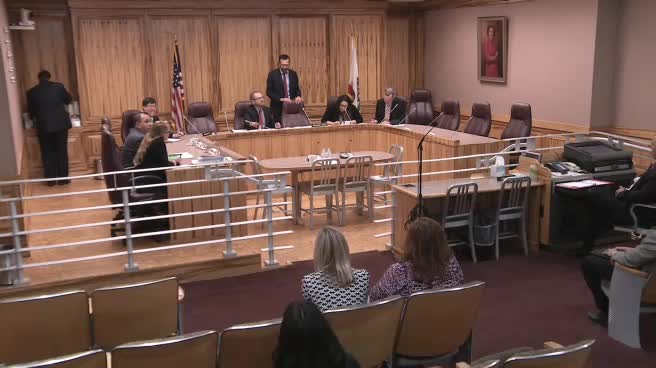 10MIN
Senate Standing Committee on Education
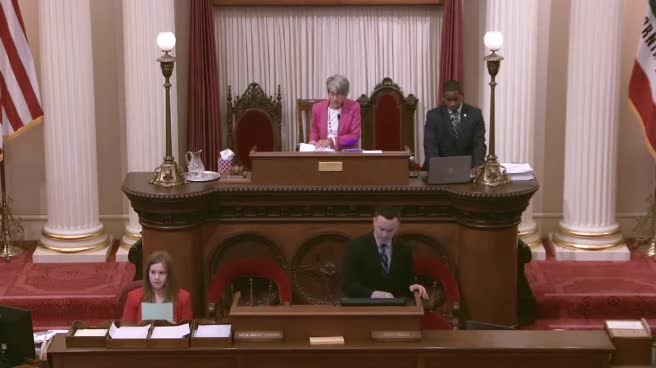 54SEC
Senate Floor
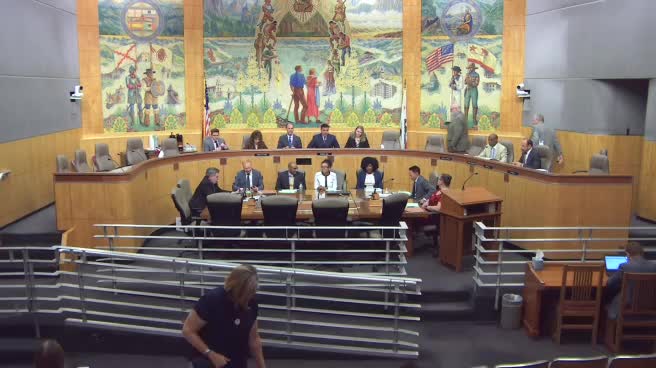 48MIN
Senate Standing Committee on Appropriations
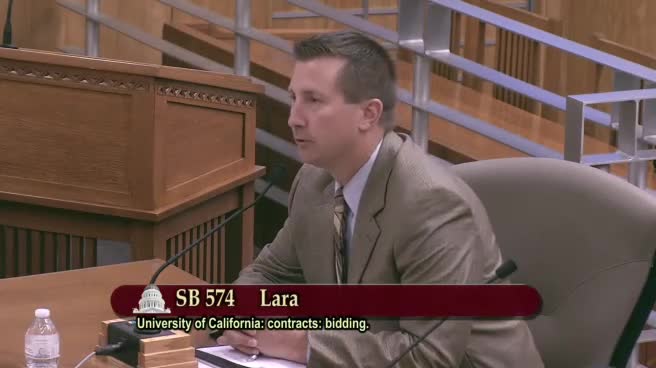 1MIN
Senate Standing Committee on Appropriations
Bill Author

Bill Co-Author(s):