SB 550: Public school employment: meeting and negotiating: legal actions: settlement offer: attorney’s fees.
- Session Year: 2017-2018
- House: Senate
- Latest Version Date: 2017-10-14
Existing law gives public school employees the right to form, join, and participate in the activities of employee organizations of their own choosing for the purpose of representation on all matters of employer-employee relations. Existing law gives an employee organization standing to sue in an action or proceeding instituted on behalf of one or more of its members.
This bill would authorize an employee organization to make an offer to settle a dispute alleging an employers failure to provide wages, benefits, or working conditions required by state law in accordance with specified procedural requirements and would require the employer, if the employer does not accept the offer and fails to obtain a more favorable judgment or award, to pay the employee organizations attorneys fees and expenses incurred after the offer was made, subject to specified exceptions.
Existing law gives public school employees the right to form, join, and participate in the activities of employee organizations of their own choosing for the purpose of representation on all matters of employer-employee relations. Existing law gives an employee organization standing to sue in an action or proceeding instituted on behalf of one or more of its members.
This bill would require an employer, if authorize an employee organization makes to make an offer to settle a dispute alleging an employers failure to provide wages, benefits, or working conditions required by state law, and law in accordance with specified procedural requirements and would require the employer, if the employer does not accept the offer and fails to obtain a more favorable judgment or award, to pay the employee organizations attorneys fees and expenses incurred after the offer was made, subject to specified procedural requirements and exceptions.
Existing law gives public school employees the right to form, join, and participate in the activities of employee organizations of their own choosing for the purpose of representation on all matters of employer-employee relations. Existing law gives an employee organization standing to sue in an action or proceeding instituted on behalf of one or more of its members.
This bill would require an employer, if an employee organization makes an offer to settle a dispute alleging an employers failure to provide wages, benefits, or working conditions required by state law, and the employer does not accept the offer and fails to obtain a more favorable judgment or award, to pay the employee organizations attorneys fees and expenses incurred after the offer was made, subject to specified procedural requirements. requirements and exceptions.
Existing law gives public school employees the right to form, join, and participate in the activities of employee organizations of their own choosing for the purpose of representation on all matters of employer-employee relations. Existing law gives an employee organization standing to sue in an action or proceeding instituted on behalf of one or more of its members.
This bill would provide that, except as specified, if the employee organization prevails in an action in proving the employer failed to provide wages or benefits required by state law, the employer shall pay the employee organizations reasonable attorneys fees and expenses if notice was provided to the employer as specified. require an employer, if an employee organization makes an offer to settle a dispute alleging an employers failure to provide wages, benefits, or working conditions required by state law, and the employer does not accept the offer and fails to obtain a more favorable judgment or award, to pay the employee organizations attorneys fees and expenses incurred after the offer was made, subject to specified procedural requirements.
Existing law gives public school employees the right to form, join, and participate in the activities of employee organizations of their own choosing for the purpose of representation on all matters of employer-employee relations. Existing law gives an employee organization standing to sue in an action or proceeding instituted on behalf of one or more of its members.
This bill would provide that, except as specified, if the employee organization prevails in an action in proving the employer failed to provide wages or benefits required by state law, the employer shall pay the employee organizations reasonable attorneys fees and expenses if notice was provided to the employer as specified.
Existing law gives public school employees the right to form, join, and participate in the activities of employee organizations of their own choosing for the purpose of representation on all matters of employer-employee relations. Existing law gives an employee organization standing to sue in an action or proceeding instituted on behalf of one or more of its members.
This bill would provide that, if the employee organization prevails in an action in proving the employer failed to provide wages or benefits required by state law, the employer shall pay the employee organizations reasonable attorneys fees and expenses if notice was provided to the employer as specified.
(a)Any employee organization shall have standing to sue in any action or proceeding heretofore or hereafter instituted by it as representative and on behalf of one or more of its members.
(b)(1)At any time not less than 10 days before commencement of a hearing to resolve a dispute alleging that the employer failed to provide wages, benefits, or working conditions required by state law, an employee organization may serve an offer in writing upon the employer to settle the dispute for a specified amount or other consideration such as a change in employer policy. The written offer shall include a statement of the offer amount or other consideration, the terms and conditions by which that amount or other consideration shall be tendered to the employee, and a provision that allows the employer to indicate acceptance of the offer by signing a statement that the offer is accepted. An acceptance of the offer, whether made on the document containing the offer or on a separate document of acceptance, shall be in writing and shall be signed by counsel for the employer, or, if not represented by counsel, by the employer.
(2)If the offer is accepted, receipt of the specified amount or other consideration shall constitute a full satisfaction of the claim.
(3)If the offer is not accepted before the hearing or within 30 days after it is made, whichever occurs first, it shall be deemed withdrawn and cannot be given in evidence in the action.
(4)For purposes of this subdivision, a hearing shall be deemed to be actually commenced at the beginning of the oral argument or opening statement of the plaintiff or counsel, or, if there is no opening statement, at the time of the administering of the oath or affirmation to the first witness, or the introduction of any evidence.
(5)(A)If an offer made by an employee organization is not accepted and the employer fails to obtain a more favorable judgment or award from the action or proceeding, the employer shall pay the reasonable postoffer attorneys fees and expenses of the employee organization.
(B)Subparagraph (A) shall not apply if the adjudicator to the action or proceeding finds that the employer has raised substantial and credible issues involving complex or significant questions of law or fact relative to the employees claim or claims.
(6)This subdivision does not apply to unfair practice or arbitration proceedings under this chapter.
(a)Any employee organization shall have standing to sue in any action or proceeding heretofore or hereafter instituted by it as representative and on behalf of one or more of its members.
(b)(1)At any time not less than 10 days before commencement of a hearing to resolve a dispute alleging that the employer failed to provide wages, benefits, or working conditions required by state law, an employee organization may serve an offer in writing upon the employer to settle the dispute for a specified amount or other consideration such as a change in employer policy. The written offer shall include a statement of the offer amount or other consideration, the terms and conditions by which that amount or other consideration shall be tendered to the employee, and a provision that allows the employer to indicate acceptance of the offer by signing a statement that the offer is accepted. An acceptance of the offer, whether made on the document containing the offer or on a separate document of acceptance, shall be in writing and shall be signed by counsel for the employer, or, if not represented by counsel, by the employer.
(2)If the offer is accepted, receipt of the specified amount or other consideration shall constitute a full satisfaction of the claim.
(3)If the offer is not accepted before the hearing or within 30 days after it is made, whichever occurs first, it shall be deemed withdrawn and cannot be given in evidence in the action.
(4)For purposes of this subdivision, a hearing shall be deemed to be actually commenced at the beginning of the oral argument or opening statement of the plaintiff or counsel, or, if there is no opening statement, at the time of the administering of the oath or affirmation to the first witness, or the introduction of any evidence.
(5)(A)If an offer made by an employee organization is not accepted and the employer fails to obtain a more favorable judgment or award from the action or proceeding, the employer shall pay the reasonable postoffer attorneys fees and expenses of the employee organization.
(B)Subparagraph (A) shall not apply if the adjudicator to the action or proceeding finds that the employer has raised substantial and credible issues involving complex or significant questions of law or fact relative to the employees claim or claims.
(6)This subdivision does not apply to unfair practice proceedings under this chapter.
(a)Any employee organization shall have standing to sue in any action or proceeding heretofore or hereafter instituted by it as representative and on behalf of one or more of its members.
(b)(1)If the employee organization prevails in an action in proving the employer failed to provide wages or benefits required by state law, the employer shall pay the employee organizations reasonable attorneys fees and expenses if written notice of intent to seek fees was provided to the employer at least 30 days before the action was instituted.(b)(1)At any time not less than 10 days before commencement of a hearing to resolve a dispute alleging that the employer failed to provide wages, benefits, or working conditions required by state law, an employee organization may serve an offer in writing upon the employer to settle the dispute for a specified amount or other consideration such as a change in employer policy. The written offer shall include a statement of the offer amount or other consideration, the terms and conditions by which that amount or other consideration shall be tendered to the employee, and a provision that allows the employer to indicate acceptance of the offer by signing a statement that the offer is accepted. An acceptance of the offer, whether made on the document containing the offer or on a separate document of acceptance, shall be in writing and shall be signed by counsel for the employer, or, if not represented by counsel, by the employer.
(2)If the offer is accepted, receipt of the specified amount or other consideration shall constitute a full satisfaction of the claim.
(3)If the offer is not accepted before the hearing or within 30 days after it is made, whichever occurs first, it shall be deemed withdrawn and cannot be given in evidence in the action.
(4)For purposes of this subdivision, a hearing shall be deemed to be actually commenced at the beginning of the oral argument or opening statement of the plaintiff or counsel, or, if there is no opening statement, at the time of the administering of the oath or affirmation to the first witness, or the introduction of any evidence.
(5)If an offer made by an employee organization is not accepted and the employer fails to obtain a more favorable judgment or award from the action or proceeding, the employer shall pay the reasonable post-offer attorneys fees and expenses of the employee organization.
(2)Paragraph (1)(6)This subdivision does not apply to unfair practice proceedings under this chapter.
(a)Any employee organization shall have standing to sue in any action or proceeding heretofore or hereafter instituted by it as representative and on behalf of one or more of its members. This section is expressly intended to apply to actions or proceedings commenced prior to, but concluded or pending as of, as well as on and after, the effective date of this section.
(b)(1)If the employee organization prevails in an action in proving the employer failed to provide wages or benefits required by state law, the employer shall pay the employee organizations reasonable attorneys fees and expenses if written notice of intent to seek fees was provided to the employer at least 30 days before the action was instituted.
(2)Paragraph (1) does not apply to unfair practice proceedings under this chapter.
(a)Any employee organization shall have standing to sue in any action or proceeding heretofore or hereafter instituted by it as representative and on behalf of one or more of its members. The provisions of this section are This section is expressly intended to apply to actions or proceedings commenced prior to, but concluded or pending as of, as well as on and after, the effective date of this section.
(b)If the employee organization prevails in an action in proving the employer failed to provide wages or benefits required by state law, the employer shall pay the employee organizations reasonable attorneys fees and expenses if written notice of intent to seek fees was provided to the employer at least 30 days before the action was instituted.
|
Date
|
Status
|
|---|---|
| Oct 14, 2017 | Chaptered by Secretary of State. Chapter 812, Statutes of 2017. |
| Oct 14, 2017 | Approved by the Governor. |
| Sep 18, 2017 | Enrolled and presented to the Governor at 3 p.m. |
| Sep 12, 2017 | Assembly amendments concurred in. (Ayes 25. Noes 14.) Ordered to engrossing and enrolling. |
| Sep 11, 2017 | In Senate. Concurrence in Assembly amendments pending. |
| Sep 11, 2017 | Read third time. Passed. Ordered to the Senate. |
| Sep 8, 2017 | Read third time and amended. |
| Jul 19, 2017 | Read second time. Ordered to third reading. |
| Jul 18, 2017 | From committee: Do pass. (Ayes 9. Noes 2.) (July 18). |
| Jun 27, 2017 | From committee with author's amendments. Read second time and amended. Re-referred to Com. on JUD. |
| Jun 22, 2017 | Re-referred to Com. on JUD. pursuant to Assembly Rule 97. |
| Jun 22, 2017 | Read second time. Ordered to third reading. |
| Jun 21, 2017 | From committee: Do pass. (Ayes 5. Noes 0.) (June 21). |
| Jun 12, 2017 | Referred to Coms. on P.E., R., & S.S. and JUD. |
| May 31, 2017 | In Assembly. Read first time. Held at Desk. |
| May 30, 2017 | Read third time. Passed. (Ayes 25. Noes 14. Page 1245.) Ordered to the Assembly. |
| May 9, 2017 | Read second time and amended. Ordered to third reading. |
| May 8, 2017 | From committee: Do pass as amended. (Ayes 5. Noes 2. Page 945.) (May 2). |
| Apr 13, 2017 | Set for hearing May 2. |
| Apr 5, 2017 | From committee with author's amendments. Read second time and amended. Re-referred to Com. on JUD. |
| Apr 4, 2017 | April 18 set for first hearing canceled at the request of author. |
| Mar 30, 2017 | Set for hearing April 18. |
| Mar 28, 2017 | From committee: Do pass and re-refer to Com. on JUD. (Ayes 3. Noes 2.) (March 27). Re-referred to Com. on JUD. |
| Mar 17, 2017 | Set for hearing March 27. |
| Mar 2, 2017 | Referred to Coms. on P.E. & R. and JUD. |
| Feb 17, 2017 | From printer. May be acted upon on or after March 19. |
| Feb 16, 2017 | Introduced. Read first time. To Com. on RLS. for assignment. To print. |
|
Date
|
Description
|
Location
|
Votes
|
|
|---|---|---|---|---|
| Sep 12, 2017 | Unfinished Business SB550 Pan Concurrence | Senate Floor |
Passed |
|
| Sep 12, 2017 | Unfinished Business SB550 Pan Concurrence Reconsider | Senate Floor |
Passed |
|
| Sep 12, 2017 | Unfinished Business SB550 Pan Concurrence | Senate Floor |
Passed |
|
| Sep 11, 2017 | SB 550 Pan Senate Third Reading By RODRIGUEZ | Assembly Floor |
Passed |
|
| Jul 18, 2017 | Do pass. | Assembly Standing Committee on Judiciary |
Passed |
|
| Jun 21, 2017 | Do pass. | Assembly Standing Committee on Public Employees, Retirement, and Social Security |
Passed |
|
| May 30, 2017 | Senate 3rd Reading SB550 Pan | Senate Floor |
Passed |
|
| May 2, 2017 | Do pass as amended | Senate Standing Committee on Judiciary |
Passed |
|
| Mar 27, 2017 | Do pass, but first be re-referred to the Committee on [Judiciary] | Senate Standing Committee on Public Employment and Retirement |
Passed |
This list shows positions taken on this bill by organizations on the date displayed, which is linked to the original source.
Positions by individuals are not included.
Office of Senate Floor Analyses (916) 651-1520 Fax: (916) 327-4478 | SB |
UNFINISHED BUSINESS
Bill No: SB 550
:
SENATE PUBLIC EMP. & RET. COMMITTEE: 3-2, 3/27/17
AYES: Pan, Leyva, Portantino
NOES: Morrell, Moorlach
SENATE JUDICIARY COMMITTEE: 5-2, 5/2/17
AYES: Jackson, Hertzberg, Monning, Stern, Wieckowski
NOES: Moorlach, Anderson
SENATE FLOOR: 25-14, 5/30/17
AYES: Atkins, Beall, Bradford, De León, Dodd, Galgiani, Hernandez, Hertzberg, Hill, Hueso, Jackson, Lara, Leyva, McGuire, Mendoza, Mitchell, Monning, Newman, Pan, Portantino, Roth, Skinner, Stern, Wieckowski, Wiener
NOES: Anderson, Bates, Berryhill, Cannella, Fuller, Gaines, Glazer, Moorlach, Morrell, Nguyen, Nielsen, Stone, Vidak, Wilk
NO VOTE RECORDED: Allen
ASSEMBLY FLOOR: 55-20, 9/11/17 - See last page for vote
SOURCE: California School Employees Association
DIGEST:
This bill requires an employer that rejects an employee organization’s settlement offer to pay the employee organization’s reasonable attorney fees and expenses if the employer fails to obtain a judgment or reward more favorable than that provided in the settlement offer, as specified. The fee shifting procedure would not apply to unfair practice or arbitration proceedings.
Assembly Amendments (1) provide that the requirement to pay reasonable postoffer attorney’s fees to the employee organization if the employer fails to obtain a more favorable judgment than the employee organization’s pre-judgment offer shall not apply if the adjudicator to the action or proceeding finds that the employer has raised substantial and credible issues involving complex or significant questions of law or fact relative to the employee’s claim or claims; and (2) provide that the provisions of this bill related to attorney fee shifting would not apply to unfair practice or arbitration proceedings.
ANALYSIS:
Existing law:
- Provides for collective bargaining between California public school employees and public school employers through government code provisions commonly known as the Educational Employment Relations Act (EERA), which provide a process for public school employees to select an exclusive representative to represent them as part of a bargaining unit within their district.
- Establishes the Public Employment Relations Board (PERB) as the state agency that has broad authority to enforce EERA with regard to labor relations activities between a public school and any person (except management and confidential employees) employed by a public school employer, including community colleges.
- Defines "exclusive representative" for purpose of EERA as the employee organization recognized or certified as the exclusive negotiating representative of certificated or classified employees in an appropriate unit of a public school employer.
- Defines the scope of representation as limited to matters relating to wages, hours, and other terms and conditions of employment.
- Provides that any employee organization shall have standing to sue in any action or proceeding instituted by it as representative and on behalf of one or more of its members.
- Provides that under Section 1021 of the California Code of Civil Procedure (CCP), the measure and mode of compensation of attorneys and counselors at law is left to the agreement, express or implied, of the parties except as specifically provided for by statute, but parties to actions or proceedings are entitled to their costs, as specified. Generally, under the “American Rule”, litigants are required to pay their own attorney fees unless authorized by statute, contract, or other agreement.
- Authorizes, under CCP Section 998, any party in a lawsuit or arbitration to serve an offer in writing upon any other party to the action to allow judgment to be taken or an award to be entered in accordance with the terms and conditions stated at that time. The written offer must include a statement of the offer, containing the terms and conditions of the judgment or award, and a provision that allows the accepting party to indicate acceptance of the offer by signing a statement that the offer is accepted. Any acceptance of the offer, whether made on the document containing the offer or on a separate document of acceptance, must be in writing and signed by counsel for the accepting party or, if not represented by counsel, by the accepting party.
If an offer made by a defendant is not accepted and the plaintiff fails to obtain a more favorable judgment or award, the plaintiff shall not recover his or her postoffer costs and shall pay the defendant’s costs from the time of the offer. In addition, in any action or proceeding other than an eminent domain action, the court or arbitrator, in its discretion, may require the plaintiff to pay a reasonable sum to cover postoffer costs of the services of expert witnesses, who are not regular employees of any party, actually incurred and reasonably necessary in either, or both, preparation for trial or arbitration, or during trial or arbitration, of the case by the defendant.
The primary purpose of CCP Section 998 is to encourage parties to settle their disputes prior to trial. One incentive for the parties to accept pre-trial settlement offers is to avoid being ordered to pay the expert witness costs of the other party, as a court may order, if he or she is awarded less than the amount of the pre-trial settlement offer amount at trial.
- Provides, for private sector employment disputes, that in any action brought for the nonpayment of wages, fringe benefits, or health and welfare or pension fund contributions, the court shall award reasonable attorney’s fees and costs to the prevailing party if any party to the action requests attorney’s fees and costs upon the initiation of the action. (Labor Code Section 218.5)
- Provides, for private sector employment disputes, that any employee receiving less than the legal minimum wage or the legal overtime compensation applicable to the employee is entitled to recover in a civil action the unpaid balance of the full amount of this minimum wage or overtime compensation, including interest thereon, reasonable attorney’s fees, and costs of suit. (Labor Code Section 1194)
This bill:
- Authorizes an employee organization to serve an offer in writing upon the employer to settle the dispute for a specified amount or other consideration such as a change in employer policy at any time not less than 10 days prior to commencement of a hearing to resolve a dispute alleging that the employer failed to provide wages, benefits, or working conditions required by state law.
- Provides that the offer shall include a statement of the offer amount or other consideration, the terms and conditions by which that amount or other consideration shall be tendered to the employee(s), and a provision that allows the employer to indicate acceptance of the offer by signing a statement that the offer is accepted.
- Requires that any acceptance of the offer, whether made on the document containing the offer or on a separate document of acceptance, shall be in writing and shall be signed by counsel for the employer or, if not represented by counsel, by the employer.
- Provides that receipt of the specified amount or other consideration shall constitute full satisfaction of the claim.
- Provides that the offer shall be deemed withdrawn, and cannot be given in evidence in the action if the employer does not accept it prior to the hearing or within 30 days after it is made, whichever occurs first.
- Deems a hearing to be commenced at the beginning of the oral argument or opening statement of the plaintiff or counsel, or, if there is no opening statement, at the time of the administering of the oath or affirmation to the first witness, or the introduction of any evidence.
- Requires the employer to pay the reasonable post- offer attorney’s fees and expenses of the employee organization if an offer made by the employee organization is not accepted and the employer fails to obtain a more favorable judgment or award from the action or proceeding.
- Provides that the postoffer fee shift provision would not apply if the adjudicator finds that employer raised substantial and credible issues involving complex or significant questions of law or fact relative to the employee’s claim or claims.
- Provides that the provisions of this bill, except for the provision establishing standing to sue, would not apply to unfair practice or arbitration proceedings.
Background
EERA provides the framework for collective bargaining between California K-14 public school employers and their employees, including the scope of representation, and defines unlawful employer and unlawful employee conduct for purposes of public school employer-employee labor relations.
EERA also specifies that public school employees have the right to represent themselves individually in their employment relations with the public school employer except that once the employees in an appropriate unit have selected an exclusive representative and it has been recognized or certified, as specified, an employee in that unit shall not meet and negotiate with the public school employer, and instead the exclusive employee representative is charged with that responsibility.
PERB enforces the collective bargaining laws covering employees of public schools and community colleges. PERB has the specific statutory authority to award attorney’s fees and costs. A claim for attorney’s fees will be denied if the issues are debatable and brought in good faith. Under this standard, PERB has authorized attorney fees and costs in very limited circumstances.
Although, EERA provides standing for an exclusive employee representative to sue in any action or proceeding on behalf of its members, according to the sponsor, the exclusive employee representative can face significant legal costs representing public school employees when the employers ignore or violate their obligations under EERA or under the contract negotiated with their employees, especially when only a few workers are affected. Since 2000, the sponsor had “eight cases where we spent approximately $100,000 on attorney salaries and benefits to successfully pursue claims for wages of less than $6,500 or for nonmonetary relief. In four of those cases, the settlements did not involve any payment to the employee. Instead, there were non-monetary settlements to stop the employer from improperly hiring slews of "short-term" employees, or to correct the seniority list used for layoffs.”
While private sector employees may be able to recover attorney’s fees from their employers in similar disputes regarding wage and hour violations under the Labor Code or Federal labor laws, public school employees are not generally covered by those provisions.
Presumably, requiring school employers to pay attorney’s fees to the prevailing party would incentivize employers to be more vigilant in fulfilling their statutory or contractual obligations.
FISCAL EFFECT: Appropriation: Fiscal Com.: Local:
California School Employees Association (source)
American Federation of State, County and Municipal Employees, AFL-CIO
California Labor Federation
Laborers’ International Union of North America, Local 777
OPPOSITION: (Verified 9/11/17)
School Employers Association of California
ARGUMENTS IN SUPPORT: According to the sponsor, “Giving courts the option of awarding reasonable attorney's fees, would discourage districts from refusing to settle wage claims and actually keep more cases out of court than at present. SB 550 would help to reduce wasteful legal costs for all parties concerned. It would discourage education employers from refusing to settle wage claims and potentially keep more cases out of court.”
ARGUMENTS IN OPPOSITION: According to the School Employers Association of California, SB 550 “would mandate that school districts pay attorney’s fees arising from wage and benefit disputes ‘actions’. Such payments would come from general fund dollars that school districts dedicate to classroom services and programs.”
ASSEMBLY FLOOR: 55-20, 9/11/17
AYES: Aguiar-Curry, Arambula, Berman, Bloom, Bocanegra, Bonta, Burke, Caballero, Calderon, Cervantes, Chau, Chiu, Chu, Cooley, Cooper, Dababneh, Daly, Eggman, Frazier, Friedman, Cristina Garcia, Eduardo Garcia, Gipson, Gonzalez Fletcher, Gray, Grayson, Holden, Irwin, Jones-Sawyer, Kalra, Levine, Limón, Low, Maienschein, McCarty, Medina, Mullin, Muratsuchi, Nazarian, O'Donnell, Quirk, Quirk-Silva, Reyes, Ridley-Thomas, Rodriguez, Rubio, Salas, Santiago, Mark Stone, Thurmond, Ting, Waldron, Weber, Wood, Rendon
NOES: Acosta, Travis Allen, Baker, Bigelow, Brough, Chávez, Chen, Choi, Cunningham, Dahle, Fong, Gallagher, Harper, Kiley, Lackey, Mathis, Melendez, Obernolte, Patterson, Voepel
NO VOTE RECORDED: Flora, Gloria, Mayes, Steinorth
9/11/17 21:42:11
**** END ****
SENATE THIRD READING
STR Bill Id:SB 550
Author:(Pan)
As Amended Ver:September 8, 2017
Majority vote
SENATE VOTE: 25-14
Committee | Votes | Ayes | Noes |
Public Employees | 5-0 | Rodriguez, Cervantes, Cooley, Cooper, O'Donnell |
|
Judiciary | 9-2 | Mark Stone, Chau, Chiu, Cristina Garcia, Holden, Kalra, Maienschein, Reyes, Ting | Cunningham, Kiley |
SUMMARY: Requires an employer to pay an employee organization's attorney's fees and expenses incurred if an employer rejects an employee organization's settlement offer, and the employer fails to obtain a judgment or reward more favorable than that provided in the settlement offer, unless the employer has raised substantial and credible issues involving complex or significant questions of law or fact relative to the employees’ claim or claims. Specifically, this bill:
- Authorizes an employee organization to serve an offer in writing upon the employer to settle a dispute for a specified amount or other consideration such as a change in employer policy at any time, not less than 10 days, prior to commencement of a hearing to resolve a dispute alleging that the employer failed to provide wages, benefits, or working conditions required by state law.
- Provides that the offer must include a statement of the offer amount or other consideration, the terms and conditions by which that amount or other consideration must be tendered to the employee, and a provision that allows the employer to indicate acceptance of the offer by signing a statement that the offer is accepted.
- Requires that any acceptance of the offer, whether made on the document containing the offer or on a separate document of acceptance, must be in writing and signed by counsel for the employer or, if not represented by counsel, by the employer.
- Provides that, if the offer is accepted, receipt of the specified amount or other consideration constitutes full satisfaction of the claim.
- Provides that the offer must be deemed withdrawn and cannot be given in evidence in the action if the employer does not accept it prior to the hearing, or within 30 days after it is made, whichever occurs first.
- Deems a hearing to be commenced at the beginning of the oral argument or opening statement of the plaintiff or counsel or, if there is no opening statement, at the time of administering the oath or affirmation to the first witness, or the introduction of any evidence.
- Requires the employer to pay the reasonable post-offer attorney's fees and expenses of the employee organization if an offer made by the employee organization is not accepted and the employer fails to obtain a more favorable judgment or award from the action or proceeding, and provides that this provision shall not apply if the adjudicator to the action or proceeding finds that the employer has raised substantial and credible issues involving complex or significant questions of law or fact relative to the employee’s claim or claims.
- Specifies that these provisions do not apply to unfair practice proceedings or arbitrations.
EXISTING LAW:
- Establishes, under the Educational Employment Relations Act (EERA), a statutory framework for employer-employee relations in the K-12 public schools and community colleges; permits public educational employees to select an employee organization to serve as the employees' exclusive representative related to matters of wages, hours, and other terms and conditions of employment, and specifies that the employee organization has standing to bring a legal action on behalf of one or more of its members.
- Establishes the Public Employment Relations Board (PERB), a quasi-judicial agency that has broad authority to enforce the EERA with regard to labor relations activities between a public school and any person (except management and confidential employees) employed by a public school employer, including community colleges.
- Provides that under Section 1021 of the California Code of Civil Procedure (CCP), the measure and mode of compensation of attorneys and counselors at law is left to the agreement, express or implied, of the parties except as specifically provided for by statute, but parties to actions or proceedings are entitled to their costs.
Generally, under the "American Rule," litigants are required to pay their own attorney fees unless authorized by statute, contract or other agreement.
- Authorizes, under CCP Section 998, any party in a lawsuit or arbitration to serve an offer in writing upon any other party to the action to allow judgment to be taken or an award to be entered in accordance with the terms and conditions stated at that time. The written offer must include a statement of the offer, containing the terms and conditions of the judgment or award, and a provision that allows the accepting party to indicate acceptance of the offer by signing a statement that the offer is accepted. Any acceptance of the offer, whether made on the document containing the offer or on a separate document of acceptance, must be in writing and signed by counsel for the accepting party or, if not represented by counsel, by the accepting party.
- Pursuant to Section 218.5 of the Labor Code, requires a court, for any action brought for the nonpayment of wages, fringe benefits, or health and welfare or pension fund contributions, to award reasonable attorney's fees and costs to the prevailing party if any party to the action requests attorney's fees and costs upon the initiation of the action. However, if the prevailing party in the court action is not an employee, attorney's fees and costs shall be awarded pursuant to this section only if the court finds that the employee brought the court action in bad faith.
FISCAL EFFECT: Unknown. This bill has been keyed non-fiscal by the Legislative Counsel.
COMMENTS: According to the author, "Because school employees are generally considered exempt from the Labor Code and local wage ordinances, school employees have to rely solely on the Education Code, and thus can neither obtain a private attorney nor go to the Labor Commissioner. Instead, school employee unions must incur large legal costs far exceeding the amount of payout at issue to pursue collection actions in state courts. Instead, school employees must rely on their unions to bring lawsuits to school employers to enforce employment violations, even when the legal costs far exceed the amount of payout in issue. This is wasteful for all concerned.
"Senate Bill 550 would add a 'fee shifting' provision to the EERA to allow the exclusive representative of the employee to recover reasonable attorney's fees for violations of employment rights in the Education code." Finally, the author states that, "Giving courts the option of awarding reasonably attorney's fees would discourage districts from refusing to settle wage claims and actually keep more cases out of court than at present."
- Matters Before The PERB and Awarding of Attorney's Fees
The EERA specifies that public school employees have the right to represent themselves individually in their employment relations with the public school employer, except that once the employees in an appropriate unit have selected an exclusive representative and it has been recognized or certified, as specified, an employee in that unit shall not meet and negotiate with the public school employer, and instead the exclusive employee representative is charged with that responsibility.
Enforcing the collective bargaining laws covering employees of public schools and community colleges, the PERB has the specific statutory authority to award attorney's fees and costs. A claim for attorney’s fees will be denied if the issues are debatable and brought in good faith. Under this standard, the PERB has authorized attorney fees and costs in very limited circumstances.
- Awarding of Attorney's Fees: Section 1128 of the Labor Code
Under Section 1128 of the Labor Code, which specifically exempts its application to public employment, when a party to a collective bargaining agreement prevails in a court action to compel arbitration of disputes concerning the collective bargaining agreement, the court must award attorney's fees, unless the other party has raised substantial and credible issues involving complex or significant questions of law or fact regarding whether the dispute is arbitrable under the agreement.
The condition to the awarding of attorney's fees to a prevailing party in a court action similarly applies to a party that successfully appeals the decision of an arbitrator regarding disputes related to the agreement (unless the appellant has raised substantial issues involving complex or significant questions of law), and when a party to a collective bargaining agreement prevails in a court action to compel compliance with the decision or award of an arbitrator or a grievance panel regarding disputes concerning the agreement (unless the other party has raised substantial issues involving complex or significant questions of law).
While private sector employees may be able to recover attorney's fees from their employers in similar disputes regarding wage and hour violations under the Labor Code or federal labor laws, public school employees are not generally covered by those provisions.
To encourage early settlements in disputes between public school employers and employee organizations covered by the EERA, this bill would establish a limited fee-shifting provision modeled after CCP Section 998, and similar to provisions in the Labor Code for private sector employees.
- Please see the policy committee analyses for a full discussion of this bill.
Analysis Prepared by: Michael Bolden / P.E.,R., & S.S. / (916) 319-3957 FN: 0002115
SENATE THIRD READING
STR Bill Id:
Author:(Pan)
As Amended Ver:
Majority vote
SENATE VOTE: 25-14
Committee | Votes | Ayes | Noes |
Public Employees | 5-0 | Rodriguez, Cervantes, Cooley, Cooper, O'Donnell | |
Judiciary | 9-2 | Mark Stone, Chau, Chiu, Cristina Garcia, Holden, Kalra, Maienschein, Reyes, Ting | Cunningham, Kiley |
SUMMARY: Requires an employer to pay an employee organization's attorney's fees and expenses incurred if an employer rejects an employee organization's settlement offer, and the employer fails to obtain a judgment or reward more favorable than that provided in the settlement offer, unless the employer has raised substantial and credible issues involving complex or significant questions of law or fact relative to the employees' claim or claims. Specifically, this bill:
- Authorizes an employee organization to serve an offer in writing upon the employer to settle a dispute for a specified amount or other consideration such as a change in employer policy at any time, not less than 10 days, prior to commencement of a hearing to resolve a dispute alleging that the employer failed to provide wages, benefits, or working conditions required by state law.
- Provides that the offer must include a statement of the offer amount or other consideration, the terms and conditions by which that amount or other consideration must be tendered to the employee, and a provision that allows the employer to indicate acceptance of the offer by signing a statement that the offer is accepted.
- Requires that any acceptance of the offer, whether made on the document containing the offer or on a separate document of acceptance, must be in writing and signed by counsel for the employer or, if not represented by counsel, by the employer.
- Provides that, if the offer is accepted, receipt of the specified amount or other consideration constitutes full satisfaction of the claim.
- Provides that the offer must be deemed withdrawn and cannot be given in evidence in the action if the employer does not accept it prior to the hearing, or within 30 days after it is made, whichever occurs first.
- Deems a hearing to be commenced at the beginning of the oral argument or opening statement of the plaintiff or counsel or, if there is no opening statement, at the time of administering the oath or affirmation to the first witness, or the introduction of any evidence.
- Requires the employer to pay the reasonable post-offer attorney's fees and expenses of the employee organization if an offer made by the employee organization is not accepted and the employer fails to obtain a more favorable judgment or award from the action or proceeding, and provides that this provision shall not apply if the adjudicator to the action or proceeding finds that the employer has raised substantial and credible issues involving complex or significant questions of law or fact relative to the employee's claim or claims.
- Specifies that these provisions do not apply to unfair practice proceedings.
EXISTING LAW:
- Establishes, under the Educational Employment Relations Act (EERA), a statutory framework for employer-employee relations in the K-12 public schools and community colleges; permits public educational employees to select an employee organization to serve as the employees' exclusive representative related to matters of wages, hours, and other terms and conditions of employment, and specifies that the employee organization has standing to bring a legal action on behalf of one or more of its members.
- Establishes the Public Employment Relations Board (PERB), a quasi-judicial agency that has broad authority to enforce the EERA with regard to labor relations activities between a public school and any person (except management and confidential employees) employed by a public school employer, including community colleges.
- Provides that under Section 1021 of the California Code of Civil Procedure (CCP), the measure and mode of compensation of attorneys and counselors at law is left to the agreement, express or implied, of the parties except as specifically provided for by statute, but parties to actions or proceedings are entitled to their costs.
Generally, under the "American Rule," litigants are required to pay their own attorney fees unless authorized by statute, contract or other agreement.
- Authorizes, under CCP Section 998, any party in a lawsuit or arbitration to serve an offer in writing upon any other party to the action to allow judgment to be taken or an award to be entered in accordance with the terms and conditions stated at that time. The written offer must include a statement of the offer, containing the terms and conditions of the judgment or award, and a provision that allows the accepting party to indicate acceptance of the offer by signing a statement that the offer is accepted. Any acceptance of the offer, whether made on the document containing the offer or on a separate document of acceptance, must be in writing and signed by counsel for the accepting party or, if not represented by counsel, by the accepting party.
- Pursuant to Section 218.5 of the Labor Code, requires a court, for any action brought for the nonpayment of wages, fringe benefits, or health and welfare or pension fund contributions, to award reasonable attorney's fees and costs to the prevailing party if any party to the action requests attorney's fees and costs upon the initiation of the action. However, if the prevailing party in the court action is not an employee, attorney's fees and costs shall be awarded pursuant to this section only if the court finds that the employee brought the court action in bad faith.
FISCAL EFFECT: Unknown. This bill has been keyed non-fiscal by the Legislative Counsel.
COMMENTS: According to the author, "Because school employees are generally considered exempt from the Labor Code and local wage ordinances, school employees have to rely solely on the Education Code, and thus can neither obtain a private attorney nor go to the Labor Commissioner. Instead, school employee unions must incur large legal costs far exceeding the amount of payout at issue to pursue collection actions in state courts. Instead, school employees must rely on their unions to bring lawsuits to school employers to enforce employment violations, even when the legal costs far exceed the amount of payout in issue. This is wasteful for all concerned.
"Senate Bill 550 would add a "fee shifting" provision to the EERA to allow the exclusive representative of the employee to recover reasonable attorney's fees for violations of employment rights in the Education code." Finally, the author states that, "Giving courts the option of awarding reasonably attorney's fees would discourage districts from refusing to settle wage claims and actually keep more cases out of court than at present."
- Matters Before The PERB and Awarding of Attorney's Fees
The EERA specifies that public school employees have the right to represent themselves individually in their employment relations with the public school employer, except that once the employees in an appropriate unit have selected an exclusive representative and it has been recognized or certified, as specified, an employee in that unit shall not meet and negotiate with the public school employer, and instead the exclusive employee representative is charged with that responsibility.
Enforcing the collective bargaining laws covering employees of public schools and community colleges, the PERB has the specific statutory authority to award attorney's fees and costs. A claim for attorney's fees will be denied if the issues are debatable and brought in good faith. Under this standard, the PERB has authorized attorney fees and costs in very limited circumstances.
- Awarding of Attorney's Fees: Section 1128 of the Labor Code
Under Section 1128 of the Labor Code, which specifically exempts its application to public employment, when a party to a collective bargaining agreement prevails in a court action to compel arbitration of disputes concerning the collective bargaining agreement, the court must award attorney's fees, unless the other party has raised substantial and credible issues involving complex or significant questions of law or fact regarding whether the dispute is arbitrable under the agreement.
The condition to the awarding of attorney's fees to a prevailing party in a court action similarly applies to a party that successfully appeals the decision of an arbitrator regarding disputes related to the agreement (unless the appellant has raised substantial issues involving complex or significant questions of law), and when a party to a collective bargaining agreement prevails in a court action to compel compliance with the decision or award of an arbitrator or a grievance panel regarding disputes concerning the agreement (unless the other party has raised substantial issues involving complex or significant questions of law).
While private sector employees may be able to recover attorney's fees from their employers in similar disputes regarding wage and hour violations under the Labor Code or federal labor laws, public school employees are not generally covered by those provisions.
To encourage early settlements in disputes between public school employers and employee organizations covered by the EERA, this bill would establish a limited fee-shifting provision modeled after CCP Section 998, and similar to provisions in the Labor Code for private sector employees.
- Please see the policy committees' analyses for a full discussion of this bill.
Analysis Prepared by: Michael Bolden / P.E.,R., & S.S. / (916) 319-3957 FN: 0001220
Date of Hearing: July 18, 2017
ASSEMBLY COMMITTEE ON JUDICIARY
Mark Stone, Chair
SBPCA Bill Id:SB 550
Author:(Pan) – As Amended Ver:June 27, 2017
SENATE VOTE: 25-14
SUBJECT: Public school employment: meeting and negotiating: legal actions: settlement offer: attorney’s fees
KEY ISSUE: Should a public school employer that rejects a settlement offer from an employee organization, and then fails to receive a judgment more favorable than the offer, be required to pay the organization's attorney's fees and expenses?
SYNOPSIS
To encourage early settlements in disputes between public school employers and employee organizations, this bill would establish a limited fee-shifting provision modeled after Code of Civil Procedure Section 998. That section provides that if an offer of settlement is made and rejected prior to trial or arbitration, and the rejecting party then fails to obtain a judgment or reward that is more favorable than the offer, the rejecting party shall not recover post-offer costs and shall pay the other party's costs from the time of the offer. The purpose of this provision is to give parties a strong financial incentive to accept a reasonable settlement offer. This bill adopts this same formula, albeit covering attorney's fees rather than costs. The bill would require a public school employer that rejects an offer from an employee organization, and then fails to win a more favorable judgment or reward, to pay the reasonable attorney's fees and expenses incurred by the employee organization after the offer was made. Existing provisions of the Labor Code allow employees and employee organizations to recover attorney's fees and costs in many instances; however, the courts have held that the Labor Code does not apply to public employers unless the statute expressly states that it does. The fee-shifting provisions of the Labor Code either fail to expressly apply to public employers or, in some cases, expressly state that the statute does not apply to public employment. The bill is sponsored by the California School Employees Association, which argues that public school employers often reject employee claims and settlement offers, especially when the amount in dispute is relatively small or the offer is asking for non-monetary change in policy or workplace conditions. In such cases, according to the sponsor, the amount of attorney's fees and other legal expenses often surpass the underlying amount in dispute. According to the author and sponsor, this bill will encourage public educational employers to accept reasonable settlement offers and avoid costly litigation. An earlier version of this bill was opposed by groups representing public school employers; however, as described in the analysis, the bill was amended in the prior committee to remove their opposition. There is no known or registered opposition to the bill at this time.
SUMMARY: Requires a public school employer to pay an employee organization’s reasonable attorney’s fees and expenses if the employer rejects the employee organization’s settlement offer and fails to obtain a more favorable judgment or reward than that provided in the settlement offer. Specifically, this bill:
- Authorizes an employee organization to serve an offer in writing upon the employer to settle a dispute for a specified amount or other consideration not less than ten days prior to a hearing to resolve a dispute alleging that the employer failed to provide wages, benefits, or working conditions as required by state law. Specifies that if the offer is accepted, receipt of the specified amount or other consideration constitutes full satisfaction of the claim; the offer is deemed withdrawn if the employer does not accept it prior to the hearing, or within 30 days after it is made, whichever occurs first.
- Provides that if the offer made by the employee organization is not accepted and the employer fails to obtain a more favorable judgment or award in the action or proceeding, the employer shall pay the reasonable post-offer attorney's fees and expenses of the employee organization.
- Specifies that 2) above shall not apply if the court or other adjudicator finds that the employer has raised substantial and credible issues involving complex and significant questions of law and fact relative to the employee's claim or claims.
- Specifies that these provisions do not apply to unfair practice proceedings.
EXISTING LAW:
- Establishes, under the Educational Employment Relations Act (EERA), a statutory framework for employer-employee relations in the K-12 public schools and community colleges; permits public educational employees to select an employee organization to serve as the employees' exclusive representative related to matters of wages, hours, and other terms and conditions of employment. Specifies that the employee organization has standing to bring a legal action on behalf of one or more of its members. (Government Code Sections 3540 et seq.)
- Creates the Public Employment Relations Board (PERB) as a quasi-judicial administrative agency charged with administering the eight collective bargaining statutes, including EERA, covering employees of California's public schools, colleges, and universities, employees of the State of California, employees of California local public agencies, trial court employees, trial court interpreters, employees covered by the In-Home Supportive Services Employer-Employee Relations Act, and supervisory employees of the Los Angeles County Metropolitan Transportation Authority. (Government Code Section 3541 et seq.)
- Provides, subject to certain exceptions, that if an offer of settlement is made and rejected prior to a trial or arbitration, and the rejecting party fails to obtain a judgment or award more favorable than the rejected offer, then the rejecting party shall not recover its post-offer costs and shall pay the other party's costs from the time of the offer. Specifies, however, that this provision shall not apply to labor arbitrations filed pursuant to the Ralph C. Dills Act, governing state employer-employee relations. (Code of Civil Procedure 998.)
- Follows the "American Rule" whereby each party to a lawsuit must pay its own attorney's fees unless a contract or statute provides otherwise. (Code of Civil Procedure Sections 1021; Musaelian v. Adams (2009) 45 Cal. 4th 512.)
- Requires a court, for any action brought for the nonpayment of wages, fringe benefits, or health and welfare or pension fund contributions, to award reasonable attorney’s fees and costs to the prevailing party if any party to the action requests attorney’s fees and costs upon the initiation of the action. However, if the prevailing party in the court action is not an employee, attorney’s fees and costs shall be awarded pursuant to this section only if the court finds that the employee brought the court action in bad faith. (Labor Code Section 218.5.)
- Requires a court, for purposes of a dispute between private employers and employees, to award attorney's fees as follows:
- Where a party to a collective bargaining agreement (CBA) prevails in a court action to compel arbitration, the court shall award attorney's fees to the prevailing party unless the other party has raised substantial and credible issues involving complex or significant questions of law or fact regarding whether or not the dispute is subject to arbitration.
- Where a party to a CBA appeals the decision of an arbitrator, the court shall award attorney’s fees to the prevailing appellee unless the appellant has raised substantial issues involving complex or significant questions of law.
- Where a party to a CBA prevails in a court action to compel compliance with the decision of an arbitrator or grievance panel, the court shall award attorney’s fees to the prevailing party unless the other party has raised substantial issues involving complex or significant questions of law. (Labor Code Section 1128.)
- Provides that notwithstanding any agreement to work for a lesser wage, any employee receiving less than the legal minimum wage or the legal overtime compensation applicable to the employee is entitled to recover in a civil action the unpaid balance of the full amount of this minimum wage or overtime compensation, including interest thereon, reasonable attorney’s fees, and costs of suit. (Labor Code Section 1194.)
FISCAL EFFECT: As currently in print this bill is keyed non-fiscal.
COMMENTS: This bill seeks to promote early settlements in disputes between educational employers and employees. The bill would require an educational employer to pay an employee organization's attorney's fees and expenses if the employer rejects a reasonable settlement offer and then fails to obtain a more favorable award or judgment. According to the author and sponsor, requiring the employer to pay reasonable post-offer attorney's fees and expenses will "discourage [school] districts from refusing to settle wage claims and . . . keep more cases out of court than at present."
Fee-Shifting Statutes Generally: California follows the so-called "American Rule," under which each party to a lawsuit pays its own attorney fees, unless attorney fees are otherwise authorized by contract or statute. Softening the sometimes harsh effect of the "American Rule," California has enacted numerous statutes that permit the prevailing party (or sometimes just the prevailing plaintiff) to recover attorney's fees, as well as the "costs" or "expenses" of litigation, including, for example, filing fees and expert witness fees. [California law makes opposite presumptions about "attorney's fees" and "costs;" it presumes that a prevailing party is not entitled to attorney's fees unless a statute or contract provides otherwise; it presumes that a prevailing party is entitled to costs "as a matter of right" unless a statute or contract provides otherwise. (Compare Code of Civil Procedure sections 1021 and 1032.)]
There are at least three oft-cited justifications for fee-shifting statutes. First, and perhaps most important, fee-shifting reflects the desire to make the injured party whole, which cannot happen if the injured party must use a large portion of any award to pay legal fees. Second, in cases involving a relatively modest amount of money in dispute, a fee-shifting statute makes it more likely that a person of modest means can find a lawyer who is willing to take the case. Third, the threat of having to pay the other side's legal fees may discourage a plaintiff from bringing a meritless case, just as it may encourage a defendant to settle a meritorious case before it goes to trial. This bill, which proposes a modified fee-shifting statute, appears to be rooted in the third rationale: encouraging early acceptance of a reasonable settlement offer.
Specifically, this bill amends a section of the EERA which expressly allows an employee organization for K-12 or community college employees to bring an action on behalf, or appear in a proceeding as a representative, of one or more of its members. Drawing upon the general provisions of the Code of Civil Procedure on offers to settle, this bill sets forth a procedure and timeline for making and accepting, or rejecting, offers to settle in the educational employment context in any dispute alleging that the employer failed to provide wages, benefits, or working conditions as required by state law. Under this bill, at any time not less than ten days prior to a hearing, the employee organization may serve a written offer on the employer for a specified amount of money or some other consideration, such as a change in policy or condition of employment. If the employer accepts the offer, then receipt of the amount or performance of the other consideration constitutes a full satisfaction of the claim and the dispute is resolved. In order to encourage the employer to accept a reasonable settlement offer, the bill adds the following proviso: if the employer does not accept the offer and the employer fails to obtain a more favorable judge or award from the action or proceeding, then the employer shall pay the reasonable post-offer attorney's fees and expenses of the employee organization.
Requiring the employer to pay post-offer fees and expenses, the author and supporters argue, is especially important where the amount owed to the employee or employees is relatively small, or where the remedy sought is not monetary. For example, the California School Employees Association (CSEA), the sponsor of this bill, claims that since 2000 it has been involved in eight cases costing up to $100,000 in attorney's salaries and benefits for claims of less than $6,500. The author and CSEA cite another case in which a community college district failed to pay certain employees for Christmas and New Year's holiday, as required, and then ignored the CSEA's demand letter – even though the district admitted it made a mistake. CSEA incurred significant legal expenses preparing a lawsuit to recover $288 per person for ten employees. The author and sponsor reasonably believe that if the school districts knew that they could be held liable for post-offer attorney's fees and expenses, then they might be more willing to accept a reasonable settlement offer early in the process, before significant legal fees had accrued.
Fee-Shifting in Private Sector Labor Disputes: This bill would extend to public school employees and their unions an advantage that is already provided to employees and employee organizations in the private sector. Provisions of the Labor Code provide for the recovery of attorney's fees and costs in the following situations. For example, an employee who successfully brings an action alleging violation of minimum wage and overtime pay laws not only recovers the unpaid balance of wages, but is also entitled to "interest thereon, reasonable attorney’s fees, and costs of suit." In other instances, attorney's fees are available to the "prevailing party," whether employer or employee. For example, in any action in which a party to a collective bargaining agreement (CBA) prevails in an action to compel arbitration, the court must award attorney's fees to the prevailing party. Similarly, the court must award attorney's fees and costs to the prevailing party in an action to challenge an arbitrator's decision, or where a party seeks to compel compliance with an arbitrator's decision. Finally, in any action brought for nonpayment of wages, fringe benefits, or pension fund contributions, the court must award reasonable attorney's fees and costs so long as any party requested attorney's fees and costs upon initiation of the action. In this latter provision, however, the court is friendlier to the employee: the court must award attorney's fees and costs to the prevailing employee, but it only awards attorney's fees and costs to the prevailing employer if the court finds that the employee brought the action in bad faith. (See Labor Code Sections 218.5, 1128, and 1194.) Because the Labor Code only applies to private employers unless public employers are expressly included, school employees – like all other public employees – cannot take advantage of these fee-shifting provisions in the Labor Code.
This bill is very narrow in two respects. First, it should be noted that the fee-shifting provision provided by this bill is much narrower than the fee-shifting provision extended to private sector employment. While the Labor Code's fee-shifting provisions apply to all attorney's fees and expenses incurred during the course of litigation, this bill only applies to the attorney's fees and expenses incurred after a settlement offer has been made by the employee organization and rejected by the employer, and of course only if the employer fails to obtain a judgment or award that is more favorable than the settlement offer. None of the broader fee-shifting provisions available in the Labor Code would apply to public school employment relations under this bill.
Second, this bill is narrow in that it only applies to disputes between public educational employers and employees. As the author and supporters of this bill correctly stress, public school employees and their exclusive bargaining representatives are excluded from the Labor Code. However, this is true for all public employees – not just public educational employees. Other than the fact that this bill is sponsored by an educational employee organization, there is no reason why this same advantage could not be extended to all public employees and the employee organizations that represent them. Indeed, AB 1017 (Santiago) would amend Labor Code Section 1128 so that it applies to both private and public employment. Section 1128, which currently expressly excludes public employment, requires the court to award attorney’s fees to the prevailing party in any motion to compel arbitration, in any motion to compel compliance with the arbitrator or grievance panel’s decision, or in any appeal of the arbitrator’s decision, unless the losing party raised substantial issues involving complex or significant matters. AB 1017 would expressly extend these provisions to legal disputes over public sector collective bargaining agreements. (AB 1017 will be heard in the Senate Appropriations Committee on July 17, 2017.)
Recent amendments remove opposition: Prior to its most recent amendments, this bill was opposed by groups representing public school boards, districts, and administrators. They argued that in most instances school employers do not reject a settlement offer as an exercise in "foot-dragging" – as CSEA alleges – but because there are sometimes complex questions of law or fact that might reasonably assume that they are not liable and therefore choose not to concede to a settlement. Therefore, the author agreed to amend the bill in the Assembly Committee on Public Employees, Retirement, and Social Security to specify that the court is not required to award post-offer attorney's fees if the court or other adjudicator finds that "the employer has raised substantial and credible issues involving complex or significant questions of law or effect relative to the employee's claim or claims." This language closely mirrors the qualifications that appear in Section 1128 of the Labor Code. The groups that were formerly opposed submitted a letter to the Committee removing their opposition in light of these recent amendments.
ARGUMENTS IN SUPPORT: "Under current law," the author writes, "when private-sector workers are deprived of overtime or other types of employment rights, they can either get their rights enforced for free through the Labor Commissioner's office, or they can obtain a private attorney to sue the employer, and their attorney has the ability to get the legal fees from the employer, when the employer is proven to have violated the law." However, the author adds, because "school employees are generally considered exempt from the Labor Code . . . [they must] rely solely on the Education Code, and thus can neither obtain a private attorney nor go to the Labor Commissioner." As a result, according to the author, "school employee unions must incur large legal costs far exceeding the amount of payout at issue." The author believes that this is "wasteful for all concerned." SB 550 will partially remedy this problem, according to author, by adding a fee-shifting provision to the Education Employment Relations Act (EERA) to allow employee organizations to recover reasonable attorney's fees when the employer rejects a reasonable settlement offer. The author believes that giving "courts the option of awarding reasonable attorney’s fees would discourage districts from refusing to settle wage claims and actually keep more cases out of court than at present."
The California School Employees Association (CSEA) contends that in many cases, "education employers refuse to acknowledge [violations of the law], forcing the exclusive representative to file a lawsuit, instead of remedying the situation. For those cases, the legal costs of to the exclusive representative far exceed the amount of violation at issue. Going through the court to enforce these clear violations is wasteful for all parties concerned." The sponsor points out that many statutes, including many in the Labor Code, allow for the recovery of attorney's fees by a prevailing party, and that it is similarly appropriate to permit education employee organizations to recover attorney's fees and expenses, especially the fees and expenses that are incurred after a reasonable settlement offer was rejected. According to CSEA, the "intent of SB 550 is to prevent foot-dragging by school employers in cases in which the validity of the claim is clear, but the amount in question is low or even non-monetary in comparison to the cost of litigation."
Pending Related Legislation: AB 1017 (Santiago) amends Labor Code Section 1128, which requires a court to award attorney’s fees to the prevailing party in cases involving actions to compel arbitration, appeal an arbitrator's decision, or compel compliance to an arbitrator's decision. While existing law expressly states that this provision does not apply to public employment, AB 1017 would amend Section 1128 to expressly state that the section applies to both private and public employment. At the time of this writing, AB 1017 was scheduled to be heard in the Senate Appropriations Committee on July 17, 2017.
REGISTERED SUPPORT / OPPOSITION:
Support
California School Employees Association, AFL-CIO (sponsor)
AFSCME
California Labor Federation
California Professional Firefighters
California Teachers Association
Opposition
None on file
Analysis Prepared by: Thomas Clark / JUD. / (916) 319-2334
Date of Hearing: June 21, 2017
ASSEMBLY COMMITTEE ON PUBLIC EMPLOYEES, RETIREMENT, AND SOCIAL SECURITY
Freddie Rodriguez, Chair
SBPCA Bill Id:SB 550
Author:(Pan) – As Amended Ver:May 9, 2017
SENATE VOTE: 25-14
SUBJECT: Public school employment: meeting and negotiating: legal actions: settlement offer: attorney’s fees
SUMMARY: Requires an employer to pay an employee organization’s attorney’s fees and expenses incurred if an employer rejects an employee organization’s settlement offer, and the employer fails to obtain a judgment or reward more favorable than that provided in the settlement offer. Specifically, this bill:
- Authorizes an employee organization to serve an offer in writing upon the employer to settle a dispute for a specified amount or other consideration such as a change in employer policy at any time, not less than 10 days, prior to commencement of a hearing to resolve a dispute alleging that the employer failed to provide wages, benefits, or working conditions required by state law.
- Provides that the offer must include a statement of the offer amount or other consideration, the terms and conditions by which that amount or other consideration must be tendered to the employee, and a provision that allows the employer to indicate acceptance of the offer by signing a statement that the offer is accepted.
- Requires that any acceptance of the offer, whether made on the document containing the offer or on a separate document of acceptance, must be in writing and signed by counsel for the employer or, if not represented by counsel, by the employer.
- Provides that, if the offer is accepted, receipt of the specified amount or other consideration constitutes full satisfaction of the claim.
- Provides that the offer must be deemed withdrawn and cannot be given in evidence in the action if the employer does not accept it prior to the hearing, or within 30 days after it is made, whichever occurs first.
- Deems a hearing to be commenced at the beginning of the oral argument or opening statement of the plaintiff or counsel, or, if there is no opening statement, at the time of the administering of the oath or affirmation to the first witness, or the introduction of any evidence.
- Requires the employer to pay the reasonable post- offer attorney’s fees and expenses of the employee organization if an offer made by the employee organization is not accepted and the employer fails to obtain a more favorable judgment or award from the action or proceeding.
- Specifies that these provisions do not apply to unfair practice proceedings.
EXISTING LAW:
- Establishes the Educational Employment Relations Act (EERA), which:
- Provides a statutory framework for employer-employee relations and a process for public school employees to select an exclusive representative to represent them as part of a bargaining unit within their district.
- Defines "exclusive representative" to mean the employee organization recognized or certified as the exclusive negotiating representative of public employees employed by a public school employer, except management, confidential employees, persons appointed by the Governor, and individuals elected by popular vote.
- Provides that the scope of representation is limited to matters relating to wages, hour, and other terms and conditions of employment.
- Provides that any employee organization has standing to sue in any action or proceeding instituted by it as representative and on behalf of one or more of its members.
- Establishes the Public Employment Relations Board (PERB), a quasi-judicial agency that has broad authority to enforce the EERA with regard to labor relations activities between a public school and any person (except management and confidential employees) employed by a public school employer, including community colleges.
- Provides that under Section 1021 of the California Code of Civil Procedure (CCP), the measure and mode of compensation of attorneys and counselors at law is left to the agreement, express or implied, of the parties except as specifically provided for by statute, but parties to actions or proceedings are entitled to their costs, as specified.
Generally, under the “American Rule,” litigants are required to pay their own attorney fees unless authorized by statute, contract, or other agreement.
- Authorizes, under CCP Section 998, any party in a lawsuit or arbitration to serve an offer in writing upon any other party to the action to allow judgment to be taken or an award to be entered in accordance with the terms and conditions stated at that time. The written offer must include a statement of the offer, containing the terms and conditions of the judgment or award, and a provision that allows the accepting party to indicate acceptance of the offer by signing a statement that the offer is accepted. Any acceptance of the offer, whether made on the document containing the offer or on a separate document of acceptance, must be in writing and signed by counsel for the accepting party or, if not represented by counsel, by the accepting party.
FISCAL EFFECT: Unknown. This bill has been keyed nonfiscal by the Legislative Counsel.
COMMENTS: According to the author, “[b]ecause school employees are generally considered exempt from the Labor code and local wage ordinances, school employees have to rely solely on the Education Code, and thus can neither obtain a private attorney nor go to the Labor Commissioner. Instead, school employee unions must incur large legal costs far exceeding the amount of payout at issue to pursue collection actions in state courts. Instead school employees must rely on their unions to bring lawsuits to school employers to enforce employment violations, even when the legal costs far exceed the amount of payout in issue. This is wasteful for all concerned.
“SB 550 would add a “fee shifting” provision to the EERA to allow the exclusive representative of the employee to recover reasonable attorney’s fees for violations of employment rights in the Education code.” Finally, the author states that, “[g]iving courts the option of awarding reasonably attorney’s fees would discourage districts from refusing to settle wage claims and actually keep more cases out of court than at present.”
- Dual Referral
This bill has also been referred to the Assembly Judiciary Committee.
- Comments by Committee Staff
- Matters Before The PERB and Awarding of Attorney’s Fees
The EERA specifies that public school employees have the right to represent themselves individually in their employment relations with the public school employer, except that once the employees in an appropriate unit have selected an exclusive representative and it has been recognized or certified, as specified, an employee in that unit shall not meet and negotiate with the public school employer, and instead the exclusive employee representative is charged with that responsibility.
Enforcing the collective bargaining laws covering employees of public schools and community colleges, the PERB has the specific statutory authority to award attorney’s fees and costs. A claim for attorney’s fees will be denied if the issues are debatable and brought in good faith. Under this standard, the PERB has authorized attorney fees and costs in very limited circumstances.
Although the EERA provides standing for an exclusive employee representative to sue in any action or proceeding on behalf of its members, according to the sponsor, the exclusive employee representative can face significant legal costs representing public school employees when the employers ignore or violate their obligations under the EERA or under the contract negotiated with their employees, especially when only a few workers are affected. Since 2000, the sponsor had “eight cases where [it] spent approximately $100,000 on attorney salaries and benefits to successfully pursue claims for wages of less than $6,500 or for nonmonetary relief. In four of those cases, the settlements did not involve any payment to the employee. Instead, there were non-monetary settlements to stop the employer from improperly hiring slews of ‘short-term’ employees, or to correct the seniority list used for layoffs.”
- Awarding of Attorney’s Fees: Section 1128 of the Labor Code
Under Section 1128 of the Labor Code, which specifically exempts its application to public employment, when a party to a collective bargaining agreement prevails in a court action to compel arbitration of disputes concerning the collective bargaining agreement, the court must award attorney’s fees, unless the other party has raised substantial and credible issues involving complex or significant questions of law or fact regarding whether the dispute is arbitrable under the agreement.
The condition to the awarding of attorney’s fees to a prevailing party in a court action similarly apply to a party that successfully appeals the decision of an arbitrator regarding disputes related to the agreement (unless the appellant has raised substantial issues involving complex or significant questions of law), and when a party to a collective bargaining agreement prevails in a court action to compel compliance with the decision or award of an arbitrator or a grievance panel regarding disputes concerning the agreement (unless the other party has raised substantial issues involving complex or significant questions of law.)
While private sector employees may be able to recover attorney’s fees from their employers in similar disputes regarding wage and hour violations under the Labor Code or Federal labor laws, public school employees are not generally covered by those provisions.
- Comments by Supporters
According to the California School Employees Association, sponsor of the bill, “… when workers in California are deprived of overtime pay or other wage and benefit violations to which they are entitled by law, they can either get their rights enforced for free through the Labor Commissioner’s officer, or they can get a private attorney to sue to the employer, and the legal fees are recoverable.
“Because school employees are governed under the Education Code, and generally exempted from the Labor Code, they cannot go to the Labor Commissioner or get a private attorney because legal fees are not recoverable. School employees must rely on their exclusive representative to bring legal challenges for these violations. The ability to recover attorney’s fees (also known as “fee-shifting provisions”) currently exists in many sections of the Labor code, including: Section 1194 for minimum wage and overtime violations; Section 218.5 for unpaid wages; Section 1062 for janitor retention; and Section 2699(g) under the Labor Code Private Attorneys General Act.
This bill adds a ‘fee-shifting’ provision to the EERA, to allow the exclusive representative of the employee the ability to recover reasonable attorney’s fees for proven violations of employment rights in the Education Code.”
- Comments by Opponents
Opponents state that this bill “would discourage school employers from raising substantial and credible or factual issues in response to an employee’s claim” because as written, the bill requires an employer to pay reasonable post-offer attorney’s fees if the employee organization prevails, but discounts that there might exist differing, substantive and credible issues of fact or law among the parties, which should be considered prior to the awarding of such fees. As written, opponents contend that the bill, as currently in print, is “tying the adjudicator’s hands with respect to fee-shifting” and “discourages school employers from raising substantial and credible issues of law in response to an employee’s claim.”
Opponents also express concerns related to monetary and declaratory judgments where relief can be sought in disputes over wages, benefits and working conditions. Here, because the judgement is not exclusively monetary in nature, the “more favorable judgment standard is too ambiguous”, and that “it is unclear when the employee organization should be entitled to attorney’s fees” in these instances.
Opponents, however, offer an alternative approach to the awarding of attorney’s fees to a prevailing party that would still permit the awarding of attorney’s fees, and proposes the following amendment, which would remove their opposition to this bill:
- Beginning on page 2, in line 12, strike out provisions in subdivisions (1) through (5), and insert the following: “If an employee organization prevails in an action in proving the employer failed to provide wages, benefits, or working conditions required by state law, the adjudicator shall award attorney’s fees to the prevailing party unless the employer has raised substantial and credible issues involving complex or significant questions of law or fact relative to the employee’s claim or claims.”
In effect, this proposal, as offered by the opponents, would remove all provisions in the bill related to settlement offers, which, if not otherwise removed, could mitigate possible litigation if a settlement offer is accepted by an employer.
- Suggestion by Committee Staff
To provide flexibility to a court in awarding attorney’s fees in the event of a dispute as to questions of law or fact, and consistent with similar provisions contained in Section 1128 of the Labor Code for private sector employees, the author may wish to consider amending the bill to include the condition to the awarding of attorney’s fees as follows:
- On page 3, in line 7, after “organization.”, insert “,unless the employer has raised substantial and credible issues involving complex or significant questions of law or fact relative to the employee’s claim or claims.”
This proposal would maintain provisions related to settlement offers offered by an employee organization while preserving the opposition’s (employer’s) opportunity to raise substantial and credible issues involving complex or significant questions of law of fact relative to the employee’s claim or claims. In practical effect, this might encourage parties to reach an agreement prior to a final adjudicative determination of the matter; still require the adjudicator to award attorney’s fees to a prevailing party in a legal action, but, makes the awarding of attorney’s fees contingent upon whether the employer raises substantial and credible issues, as stated supra.
- Prior/Related Legislation
2017: AB 1017 (Santiago), previously heard and passed by this committee and currently pending in the Senate Judiciary Committee, makes applicable, in legal causes of action between parties to a collective bargaining agreement, provisions related to arbitration and awarding of attorney’s fees, subsequent appeals thereof, and the compelling of compliance by non-prevailing party, to private and public employment.
REGISTERED SUPPORT / OPPOSITION:
Support
California School Employees Association (Sponsor)
American Federation of State, County and Municipal Employees, AFL-CIO
California Labor Federation, AFL-CIO
California Professional Firefighters
California Teachers Association
Opposition
Association of California School Administrators (Opposed, Unless Amended)
California School Boards Association (Opposed, Unless Amended)
California Association of School Business Officials (Opposed, Unless Amended)
Riverside County Superintendent of Schools (Opposed, Unless Amended)
Small School Districts’ Association (Opposed, Unless Amended)
School Employers Association of California (Opposed, Unless Amended)
Analysis Prepared by: Michael Bolden / P.E.,R., & S.S. / (916) 319-3957
Office of Senate Floor Analyses (916) 651-1520 Fax: (916) 327-4478 | SB |
THIRD READING
Bill No: SB 550
:
SENATE PUBLIC EMP. & RET. COMMITTEE: 3-2, 3/27/17
AYES: Pan, Leyva, Portantino
NOES: Morrell, Moorlach
SENATE JUDICIARY COMMITTEE: 5-2, 5/2/17
AYES: Jackson, Hertzberg, Monning, Stern, Wieckowski
NOES: Moorlach, Anderson
SOURCE: California School Employees Association
DIGEST:
This bill establishes an attorney fee-shifting procedure similar to Civil Code of Procedure Section 998 for disputes between public employers and employee organizations over whether the employer failed to provide wages or benefits as required by state law. An employer that rejects an employee organization’s settlement offer would be liable for the employee organization’s reasonable attorney fees and expenses if the employer fails to obtain a judgment or reward more favorable than that provided in the settlement offer. The fee shifting procedure would not apply to unfair practice proceedings.
ANALYSIS:
Existing law:
- Provides for collective bargaining between California public school employees and public school employers through government code provisions commonly known as the Educational Employment Relations Act (EERA), which provide a process for public school employees to select an exclusive representative to represent them as part of a bargaining unit within their district.
- Establishes the Public Employment Relations Board (PERB) as the state agency that has broad authority to enforce EERA with regard to labor relations activities between a public school and any person (except management and confidential employees) employed by a public school employer, including community colleges.
- Defines "exclusive representative" for purpose of EERA as the employee organization recognized or certified as the exclusive negotiating representative of certificated or classified employees in an appropriate unit of a public school employer.
- Defines the scope of representation as limited to matters relating to wages, hours, and other terms and conditions of employment.
- Provides that any employee organization shall have standing to sue in any action or proceeding instituted by it as representative and on behalf of one or more of its members.
- Provides that under Section 1021 of the California Code of Civil Procedure (CCP), the measure and mode of compensation of attorneys and counselors at law is left to the agreement, express or implied, of the parties except as specifically provided for by statute, but parties to actions or proceedings are entitled to their costs, as specified. Generally, under the “American Rule”, litigants are required to pay their own attorney fees unless authorized by statute, contract, or other agreement.
- Authorizes, under CCP Section 998, any party in a lawsuit or arbitration to serve an offer in writing upon any other party to the action to allow judgment to be taken or an award to be entered in accordance with the terms and conditions stated at that time. The written offer must include a statement of the offer, containing the terms and conditions of the judgment or award, and a provision that allows the accepting party to indicate acceptance of the offer by signing a statement that the offer is accepted. Any acceptance of the offer, whether made on the document containing the offer or on a separate document of acceptance, must be in writing and signed by counsel for the accepting party or, if not represented by counsel, by the accepting party.
If an offer made by a defendant is not accepted and the plaintiff fails to obtain a more favorable judgment or award, the plaintiff shall not recover his or her postoffer costs and shall pay the defendant’s costs from the time of the offer. In addition, in any action or proceeding other than an eminent domain action, the court or arbitrator, in its discretion, may require the plaintiff to pay a reasonable sum to cover postoffer costs of the services of expert witnesses, who are not regular employees of any party, actually incurred and reasonably necessary in either, or both, preparation for trial or arbitration, or during trial or arbitration, of the case by the defendant.
The primary purpose of CCP Section 998 is to encourage parties to settle their disputes prior to trial. One incentive for the parties to accept pre-trial settlement offers is to avoid being ordered to pay the expert witness costs of the other party, as a court may order, if he or she is awarded less than the amount of the pre-trial settlement offer amount at trial.
- Provides, for private sector employees, that in any action brought for the nonpayment of wages, fringe benefits, or health and welfare or pension fund contributions, the court shall award reasonable attorney’s fees and costs to the prevailing party if any party to the action requests attorney’s fees and costs upon the initiation of the action. (Labor Code Section 218.5)
- Provides, for private sector employees, that any employee receiving less than the legal minimum wage or the legal overtime compensation applicable to the employee is entitled to recover in a civil action the unpaid balance of the full amount of this minimum wage or overtime compensation, including interest thereon, reasonable attorney’s fees, and costs of suit. (Labor Code Section 1194)
This bill:
- Authorizes an employee organization to serve an offer in writing upon the employer to settle the dispute for a specified amount or other consideration such as a change in employer policy at any time not less than 10 days prior to commencement of a hearing to resolve a dispute alleging that the employer failed to provide wages, benefits, or working conditions required by state law.
- Provides that the offer shall include a statement of the offer amount or other consideration, the terms and conditions by which that amount or other consideration shall be tendered to the employee(s), and a provision that allows the employer to indicate acceptance of the offer by signing a statement that the offer is accepted.
- Requires that any acceptance of the offer, whether made on the document containing the offer or on a separate document of acceptance, shall be in writing and shall be signed by counsel for the employer or, if not represented by counsel, by the employer.
- Provides that receipt of the specified amount or other consideration shall constitute full satisfaction of the claim.
- Provides that the offer shall be deemed withdrawn, and cannot be given in evidence in the action if the employer does not accept it prior to the hearing or within 30 days after it is made, whichever occurs first.
- Deems a hearing to be commenced at the beginning of the oral argument or opening statement of the plaintiff or counsel, or, if there is no opening statement, at the time of the administering of the oath or affirmation to the first witness, or the introduction of any evidence.
- Requires the employer to pay the reasonable post- offer attorney’s fees and expenses of the employee organization if an offer made by the employee organization is not accepted and the employer fails to obtain a more favorable judgment or award from the action or proceeding.
Background
EERA provides the framework for collective bargaining between California K-14 public school employers and their employees, including the scope of representation, and defines unlawful employer and unlawful employee conduct for purposes of public school employer-employee labor relations.
EERA also specifies that public school employees have the right to represent themselves individually in their employment relations with the public school employer except that once the employees in an appropriate unit have selected an exclusive representative and it has been recognized or certified, as specified, an employee in that unit shall not meet and negotiate with the public school employer, and instead the exclusive employee representative is charged with that responsibility.
PERB enforces the collective bargaining laws covering employees of public schools and community colleges. PERB has the specific statutory authority to award attorney’s fees and costs. A claim for attorney’s fees will be denied if the issues are debatable and brought in good faith. Under this standard, PERB has authorized attorney fees and costs in very limited circumstances.
Although, EERA provides standing for an exclusive employee representative to sue in any action or proceeding on behalf of its members, according to the sponsor, the exclusive employee representative can face significant legal costs representing public school employees when the employers ignore or violate their obligations under EERA or under the contract negotiated with their employees, especially when only a few workers are affected. Since 2000, the sponsor had “eight cases where we spent approximately $100,000 on attorney salaries and benefits to successfully pursue claims for wages of less than $6,500 or for nonmonetary relief. In four of those cases, the settlements did not involve any payment to the employee. Instead, there were non-monetary settlements to stop the employer from improperly hiring slews of "short-term" employees, or to correct the seniority list used for layoffs.”
While private sector employees may be able to recover attorney’s fees from their employers in similar disputes regarding wage and hour violations under the Labor Code or Federal labor laws, public school employees are not generally covered by those provisions.
Presumably, requiring school employers to pay attorney’s fees to the prevailing party would incentivize employers to be more vigilant in fulfilling their statutory or contractual obligations.
FISCAL EFFECT: Appropriation: Fiscal Com.: Local:
California School Employees Association (source)
American Federation of State, County and Municipal Employees, AFL-CIO
California Labor Federation
Laborers’ International Union of North America, Local 777
OPPOSITION: (Verified 5/10/17)
School Employers Association of California
ARGUMENTS IN SUPPORT: According to the sponsor, “Giving courts the option of awarding reasonable attorney's fees, would discourage districts from refusing to settle wage claims and actually keep more cases out of court than at present. SB 550 would help to reduce wasteful legal costs for all parties concerned. It would discourage education employers from refusing to settle wage claims and potentially keep more cases out of court.”
ARGUMENTS IN OPPOSITION: According to the School Employers Association of California, SB 550 “would mandate that school districts pay attorney’s fees arising from wage and benefit disputes ‘actions’. Such payments would come from general fund dollars that school districts dedicate to classroom services and programs.”
5/10/17 14:05:49
**** END ****
Senator Hannah-Beth Jackson, Chair
2017-2018 Regular Session
Bill No: SB 550 (Author:Pan)
Version: April 5, 2017
Hearing Date: May 2, 2017
Fiscal: No
Urgency: No
Consultant: TSG
SUBJECT
Public school employment: meeting and negotiating: legal actions: attorney’s fees
DESCRIPTION
This bill would allow a public school employees’ union to request and recover reasonable attorney’s fees and expenses if it prevails in a lawsuit proving that the employer failed to provide wages, benefits, or non-monetary compensation to a school employee as required by state law.
BACKGROUND
Under the so-called “American Rule” in U.S. law, the parties to civil litigation are generally expected to bear their own attorney’s fees, regardless of who wins the case. (Alyeska Pipeline Company v. Wilderness Society (1975) 421 U.S. 240.) Either through prior contractual agreement or by statute, the American Rule can be altered so that payment of attorney’s fees depends on the outcome of the case. These are called “fee-shifting” provisions.
This bill would add a one-way fee shifting provision to the Education Employment Relations Act so that the organizations representing school employees in disputes over wages, benefits, or non-monetary compensation could recover attorney’s fees on any case in which the employee prevails.
CHANGES TO EXISTING LAW
Existing law provides that legal disputes between public school employees and the districts that employ them are governed by the Education Employment Relations Act. (Ed. Code Secs. 3540-3549.3.)
Existing law applies the “American Rule,” under which each party to a lawsuit must ordinarily pay his or her own attorney's fees to all actions unless otherwise provided by statute or contract. (Code Civ. Proc. Sec. 1021.)
Existing law provides that a prevailing party is entitled as a matter of right to recover costs in any civil action or proceeding, except as otherwise expressly provided by statute. (Code Civ. Proc. Sec. 1032; see also Westamerica Bank v. MBG Industries (2007) 158 Cal.App.4th 109, holding that “costs” awarded under Section 1032 do not include attorney’s fees.)
This bill would provide that, when an employee organization prevails in an action in proving the employer failed to pay wages, benefits, or other non-monetary compensation as required by law, the employer shall pay the employee organization’s reasonable attorney’s fees and expenses, if written intent to seek the fees was provided to the employer at least 30 days before the action was instituted. The attorney’s fees provision would not apply to unfair practice proceedings.
COMMENT
1. Stated need for the bill
According to the author:
Because school employees are generally considered exempt from the Labor Code and local wage ordinances, school employees have to rely solely on the Education Code, and thus can neither obtain a private attorney nor go to the Labor Commissioner. Instead, school employee unions must incur large legal costs far exceeding the amount of payout at issue to pursue collection actions in state courts. Instead school employees must rely on their unions to bring lawsuits to school employers to enforce employment violations, even when the legal costs far exceed the amount of payout in issue.
This is wasteful for all concerned…
SB 550 would add a “fee-shifting” provision to the Education Employment Relations Act (EERA) to allow the exclusive representative of the employee to recover reasonable attorney’s fees for violations of employment rights in the Education Code.
Giving courts the option of awarding reasonable attorney’s fees would discourage districts from refusing to settle wage claims and actually keep more cases out of court than at present.
In support, the California School Employees Association writes:
Under current law, when workers in California are deprived of overtime pay or other wage and benefit violations to which they are entitled by law, they can either get their rights enforced for free through the Labor Commission’s Office, or they can get a private attorney to sue the employer, and the legal fees are recoverable.
Because school employees are governed under the Education Code, and generally exempted from the Labor Code, they cannot go to the Labor Commissioner, or get a private attorney, because legal fees are not recoverable… [S]chool employees must rely on their exclusive representative to bring legal challenges for these violations. In many cases, education employers refuse to acknowledge the violation, forcing the exclusive representative to file a lawsuit, instead of remedying the situation. For many cases, the legal costs to the exclusive representative far exceed the amount of the violation at issue. Going through the court to enforce these clear violations is wasteful for all parties concerned…
SB 550 would help to reduce wasteful legal costs for all parties concerned. It would discourage education employers from refusing to settle wage claims and potentially keep more cases out of court.
In further support, the California Labor Federation writes:
While fee shifting is present in the Education Code in limited circumstances, those provisions do not specifically allow for fee recovery in actions where the employer failed to provide wages and benefits as required by law. Some employers use this gap in the law to delay or ignore violations relating to wages and benefits. Often the cost of litigation is higher than the underlying claim…. SB 550 closes this gap.
2. Concerns expressed about the bill
In opposition to the bill, the California Association of School Business Officials writes:
SB 550 creates an uneven playing field by only allowing the union associations the ability to recover its attorneys’ fees, without any consideration for an LEA to recover costs should it prevail in a proceeding. The bill is also unclear on what “wages or benefits required by state law” means and questions whether it would cover things like longevity pay, differentials, and other pays that are not mandated by state law but are often provided for in a collective bargaining agreement.
CASBO has great concerns that such payments would come from general fund dollars that school districts dedicate to classroom services and programs. We would like to emphasize that these decisions are best suited to be addressed as part of the proceedings or by the Public Employment Relations Board.
In further opposition, the School Employers Association of California writes:
The bill’s proponent claims that SB 550 will “reduce wasteful legal costs,” but the bill’s fee shifting formulation actually incentivizes employee organizations to commit the very wrong-doing they argue school employers are guilty of: dragging out legal proceedings without regard for cost. Indeed, the bill does more than merely give “courts the option of awarding” fees, as the sponsor is quoted as stating in a prior committee analysis. The proposed language is clear: “the employer shall pay the employee organization’s reasonable attorney’s fees and expenses.” (emphasis added).
The American Rule on attorney’s fee was designed to incentivize parties to control attorney fees, rather than encourage the moral hazard of uncontrolled fees, which SB 550 purports to address. Granting one party exclusive entitlement to be awarded their legal costs, however, perpetuates this moral hazard.
In response to the concerns raised, the author intends to offer amendments in Committee that would narrow the circumstances in which an employee organization representing school employees could obtain attorney’s fees. (See Comment 5, below, for details on this amendment.)
3. Types of cases covered
In its present form, this bill would apply to disputes over wages and benefits required by state law only. It does not apply to unfair practice proceedings. In the context of school employees, unfair practices are defined in Government Code Sections 3543.5 and 3543.6. As defined, unfair practices include things like workplace retaliation, denial of the right to organize, refusal to bargain in good faith, and interference with union operations. The attorney’s fees provision that this bill would establish would not cover such disputes.
4. The purpose behind fee-shifting statutes
Often, the purpose of fee-shifting statutes is to enable private parties to obtain legal help in seeking redress for injuries resulting from the actual or threatened violation of specific laws; hence if plaintiffs find it possible to engage a lawyer based on the statutory assurance that the lawyer will be paid a reasonable fee, the purpose behind the fee-shifting statute has been satisfied. (Flannery v. Prentice (2001) 26 Cal.4th 572.)
Fee-shifting provisions also impact the calculations and incentives of parties as they approach a legal dispute. Paying a judgment plus attorney’s fees represents a much greater downside risk than merely paying a judgment. To mitigate against that risk, litigants facing the possibility of paying an attorney’s fee award are more likely to settle. Additionally, while the amount of time each side puts into a case does not impact the size of a potential judgment, the more time that goes into a case, the greater the attorney’s fee award will be. The threat of accumulating attorney’s fees thus incentivizes early resolution. Where the fee-shifting provision is one-way, however, this incentive only applies to the party facing the prospect of paying attorney’s fees. (See Krent, Explaining One Way Fee Shifting (November 1993) 79 Va. L. Rev. 2039, 2080.)
Fee-shifting statutes also alter the financial calculations associated with a case. In considering whether to pursue a case at all, a litigant and his or her legal counsel must evaluate whether it makes financial sense to do so. Absent a fee-shifting provision, attorney’s fees and costs can quickly dwarf the amount of money actually in dispute in a case. For example, the sponsors of this bill report that they once had to spend “several thousand” dollars on a lawsuit in order to recover just $288 per employee for 10 employees. Fee-shifting provisions eliminate the need for this kind of calculus. Instead, the merits of the case become the primary consideration in whether or not to pursue it.
5. Amendments
The aim of this bill is to prevent foot-dragging by school employers in cases in which the validity of the claim is pretty clear and the amount in question is low by comparison to the litigation costs involved. The pure one-way fee shift envisioned by the bill in its present form would accomplish that but, as the opponents assert and the discussion above points out, it could also have the effect of reducing employee organizations’ incentive to settle on reasonable terms.
A potential way to address this challenge while still achieving the underlying goal of the bill is to limit the award of attorney’s fees to situations in which the employer has refused a reasonable offer to settle the claim. This could be accomplished by imposing a modified version of Civil Code Section 998. With that in mind, the author offers the following amendments to be taken in Committee:
Amendment 1
On page 2, in line 7, after “(1)” strike “If the employee organization prevails in an action in” and insert:
At any time not less than 10 days prior to commencement of a hearing to resolve a dispute alleging that the employer failed to provide wages, benefits, or working conditions required by state law, an employee organization may serve an offer in writing upon the employer to settle the dispute for a specified amount or other consideration such as a change in employer policy. The written offer shall include a statement of the offer amount or other consideration, the terms and conditions by which that amount or other consideration shall be tendered to the employee(s), and a provision that allows the employer to indicate acceptance of the offer by signing a statement that the offer is accepted. Any acceptance of the offer, whether made on the document containing the offer or on a separate document of acceptance, shall be in writing and shall be signed by counsel for the employer or, if not represented by counsel, by the employer.
(2) If the offer is accepted, receipt of the specified amount or other consideration shall constitute full satisfaction of the claim.
(3) If the offer is not accepted prior to the hearing or within 30 days after it is made, whichever occurs first, it shall be deemed withdrawn, and cannot be given in evidence in the action.
(4) For purposes of this subdivision, a hearing shall be deemed to be actually commenced at the beginning of the oral argument or opening statement of the plaintiff or counsel, or, if there is no opening statement, at the time of the administering of the oath or affirmation to the first witness, or the introduction of any evidence.
(5) If an offer made by the employee organization is not accepted and the employer fails to obtain a more favorable judgment or award from the action or proceeding, the employer shall pay the reasonable post- offer attorney’s fees and expenses of the employee organization.
Amendment 2
On page 2, strike lines 8 through 12, inclusive
Amendment 3
On page 2, in line 13, strike “(2) Paragraph (1)” and insert:
(6) This subdivision
6. Fee-shifting provisions in the employment law context
The bill sponsors point out that fee-shifting provisions can already be found throughout California employment law. For instance, in the Labor Code, a prevailing worker can recover reasonable attorney’s fees for:
- unpaid wages (Sec. 218.5);
- minimum wage and overtime violations (Sec. 1194);
- janitor retention violations (Sec. 1062); and
- Private Attorney General Act lawsuits (Sec. 2699(g)).
Many local minimum wage and sick leave ordinances also allow employees to recover attorney’s fees when they prevail. Some federal employment law statutes, including the Fair Labor Standards Act and the Employee Retirement Income Security Act, contain similar fee-shifting provisions as well.
Support: American Federation of State, County and Municipal Employees, AFL-CIO; California Labor Federation; California School Employees Association
Opposition: California Association of School Business Officials; School Employers Association of California
HISTORY
Source: California School Employees Association.
Related Pending Legislation: None known
Prior Legislation: AB 1496 (Dixon, Chapter 632, Statutes of 1977) established Government Code Section 3543.8 which gives standing to employee organizations to bring legal action on behalf of their members.
Prior Vote: Senate Public Employment and Retirement Committee (Ayes 3, Noes 2)
**************
SENATE COMMITTEE ON
PUBLIC EMPLOYMENT AND RETIREMENT
Dr. Richard Pan, Chair
2017 - 2018 Regular
Bill No: SB 550 Hearing Date: 3/27/17
Author: | Pan | ||
Version: | 2/16/17 As introduced | ||
Urgency: | No | Fiscal: | No |
Consultant: | Glenn Miles | ||
Subject: Public school employment: meeting and negotiating: legal actions: attorney’s fees
SOURCE: California School Employees Association
DIGEST: This bill would require a public school employer to pay an employee organization’s reasonable attorney’s fees and expenses if the employee organization prevails in an action in proving the employer failed to provide wages or benefits required by state law, provided that written notice of intent to seek fees was provided to the employer at least 30 days before the action was instituted.
ANALYSIS:
Existing law:
- Provides for collective bargaining between California public school employees and public school employers through government code provisions commonly known as the Educational Employment Relations Act (EERA), which provide a process for public school employees to select an exclusive representative to represent them as part of a bargaining unit within their district.
- Establishes the Public Employment Relations Board (PERB) as the state agency that has broad authority to enforce EERA with regard to labor relations activities between a public school and any person (except management and confidential employees) employed by a public school employer, including community colleges.
- Defines "exclusive representative" for purpose of EERA as the employee organization recognized or certified as the exclusive negotiating representative of certificated or classified employees in an appropriate unit of a public school employer.
- Defines the scope of representation as limited to matters relating to wages, hours, and other terms and conditions of employment.
- Provides that any employee organization shall have standing to sue in any action or proceeding instituted by it as representative and on behalf of one or more of its members.
- Provides that under Section 1021 of the California Code of Civil Procedure (CCP), the measure and mode of compensation of attorneys and counselors at law is left to the agreement, express or implied, of the parties except as specifically provided for by statute, but parties to actions or proceedings are entitled to their costs, as specified. Generally, under the “American Rule”, litigants are required to pay their own attorney fees unless authorized by statute, contract, or other agreement.
- For private sector employees, provides that in any action brought for the nonpayment of wages, fringe benefits, or health and welfare or pension fund contributions, the court shall award reasonable attorney’s fees and costs to the prevailing party if any party to the action requests attorney’s fees and costs upon the initiation of the action. (Labor Code Section 218.5)
- For private sector employees, provides that any employee receiving less than the legal minimum wage or the legal overtime compensation applicable to the employee is entitled to recover in a civil action the unpaid balance of the full amount of this minimum wage or overtime compensation, including interest thereon, reasonable attorney’s fees, and costs of suit. (Labor Code Section 1194)
This bill:
- Requires the school employer to pay the school employee organization’s reasonable attorney’s fees and expenses if the employee organization prevails in an action in proving the employer failed to provide wages or benefits required by state law.
- Provides that written notice of intent to seek fees must be provided to the employer at least 30 days before the action is instituted.
Background
EERA provides the framework for collective bargaining between California K-14 public school employers and their employees, including the scope of representation, and defines unlawful employer and unlawful employee conduct for purposes of public school employer-employee labor relations.
EERA also specifies that public school employees have the right to represent themselves individually in their employment relations with the public school employer except that once the employees in an appropriate unit have selected an exclusive representative and it has been recognized or certified, as specified, an employee in that unit shall not meet and negotiate with the public school employer, and instead the exclusive employee representative is charged with that responsibility.
PERB enforces the collective bargaining laws covering employees of public schools and community colleges. PERB has the specific statutory authority to award attorney’s fees and costs. A claim for attorney’s fees will be denied if the issues are debatable and brought in good faith. Under this standard, PERB has authorized attorney fees and costs in very limited circumstances.
Although, EERA provides standing for an exclusive employee representative to sue in any action or proceeding on behalf of its members, according to the sponsor, the exclusive employee representative can face significant legal costs representing public school employees when the employers ignore or violate their obligations under EERA or under the contract negotiated with their employees, especially when only a few workers are affected. Since 2000, the sponsor had “eight cases where we spent approximately $100,000 on attorney salaries and benefits to successfully pursue claims for wages of less than $6,500 or for nonmonetary relief. In four of those cases, the settlements did not involve any payment to the employee. Instead, there were non-monetary settlements to stop the employer from improperly hiring slews of "short-term" employees, or to correct the seniority list used for layoffs.”
While private sector employees may be able to recover attorney’s fees from their employers in similar disputes regarding wage and hour violations under the Labor Code or Federal labor laws, public school employees are not generally covered by those provisions.
Presumably, requiring school employers to pay attorney’s fees to the prevailing party would incentivize employers to be more vigilant in fulfilling their statutory or contractual obligations.
Related/Prior Legislation
None known.
FISCAL EFFECT: Appropriation: No Fiscal Com.: No Local: No
SUPPORT:
California School Employees Association (source)
American Federation of State, County and Municipal Employees, AFL-CIO
Laborers’ International Union of North America, Local 777
OPPOSITION:
School Employers Association of California
ARGUMENTS IN SUPPORT: According to the sponsor, “Giving courts the option of awarding reasonable attorney's fees, would discourage districts from refusing to settle wage claims and actually keep more cases out of court than at present. SB 550 would help to reduce wasteful legal costs for all parties concerned. It would discourage education employers from refusing to settle wage claims and potentially keep more cases out of court.”
ARGUMENTS IN OPPOSITION: According to the School Employers Association of California, SB 550 “would mandate that school districts pay attorney’s fees arising from wage and benefit disputes ‘actions’. Such payments would come from general fund dollars that school districts dedicate to classroom services and programs.”
Discussed in Hearing
 2MIN
Senate Floor
 2MIN
Assembly Floor
 7MIN
Assembly Floor
 4MIN
Assembly Standing Committee on Judiciary
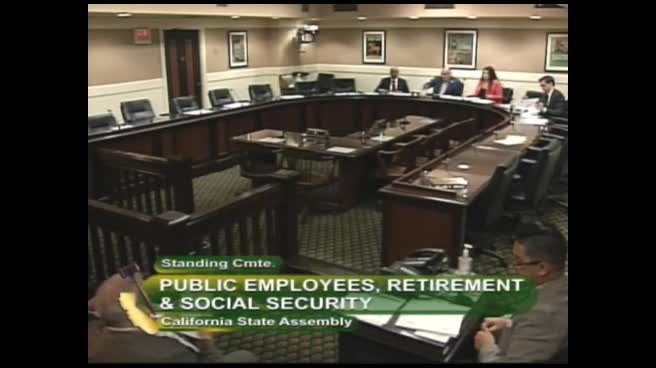 7MIN
Assembly Standing Committee on Public Employees, Retirement, and Social Security
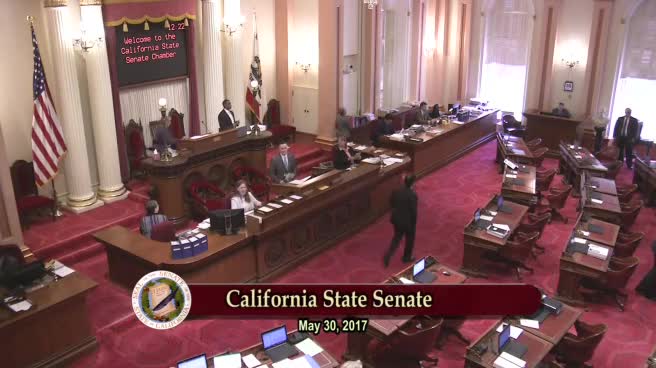 3MIN
Senate Floor
 14MIN
Senate Standing Committee on Judiciary
 4MIN
Senate Standing Committee on Public Employment and Retirement
Bill Author
Bill Co-Author(s):