SB 561: Fallen Leaf Lake Community Services District: State audit.
- Session Year: 2017-2018
- House: Senate
- Latest Version Date: 2018-06-26
Existing law requires the California State Auditor to conduct financial and performance audits as directed by statute, and to conduct audits of a state or local governmental agencies or other publicly created entities as requested by the Joint Legislative Audit Committee. Existing law requires the county auditor to either perform an audit, or contract with a certified public accountant or public accountant to perform an audit, of the accounts and records of every special district within the county, as specified. Existing law authorizes a special district, by unanimous request of its governing board and unanimous approval by the board of supervisors, to replace the annual audit with an audit over a longer period of time or with a financial review, as specified.
This bill would require, by August 1, 2019, the California State Auditor to complete an audit of the Fallen Leaf Lake Community Services District that includes, among other things, an analysis of the districts financial condition and ongoing financial viability.
This bill would make legislative findings and declarations as to the necessity of a special statute for the Fallen Leaf Lake Community Services District.
Existing law, the Community Services District Law, specifies the procedures for district formation and the selection of district governing board members. That law also requires a person to be a voter of the district in order to serve on its board of directors.
Existing law, the Uniform District Election Law, provides for landowner voting districts, in which each voter is required to be an owner of land located within the district. Existing law also provides for resident voting districts, which are districts other than landowner voting districts. Existing law provides penalties for prohibited acts relating to statewide and local elections.
Under existing law, the Fallen Leaf Lake Community Services District is a resident voting district.
This bill would, until January 1, 2021, exempt a person who is not a resident of the Fallen Leaf Lake Community Services District, but who is a nonresident voter, as defined, from any residency requirement for voting in district elections or serving as a district board member and provide that this person is immune from liability for a criminal penalty for violating that residency requirement.
Existing law requires the California State Auditor to conduct financial and performance audits as directed by statute, and to conduct audits of a state or local governmental agencies or other publicly created entities as requested by the Joint Legislative Audit Committee. Existing law requires the county auditor to either perform an audit, or contract with a certified public accountant or public accountant to perform an audit, of the accounts and records of every special district within the county, as specified. Existing law authorizes a special district, by unanimous request of its governing board and unanimous approval by the board of supervisors, to replace the annual audit with an audit over a longer period of time or with a financial review, as specified.
This bill would require, by August 1, 2019, the California State Auditor to complete an audit of the Fallen Leaf Lake Community Services District that includes, among other things, an analysis of the districts financial condition and ongoing financial viability.
This bill would require the El Dorado County elections official, with the assistance of the Fallen Leaf Lake Community Services District, to conduct district elections pursuant to the Uniform District Election Law, except as otherwise provided in the bill. The bill, notwithstanding existing law, would provide that voters who are residents of the district, and voters who are not residents but either own a real property interest in the district or have been designated by the owner of a real property interest to cast the vote for that property, may vote in a district election in the Fallen Leaf Lake Community Services District. If the real property interest is owned in joint tenancy, tenancy in common, or any other multiple ownership, the bill would require the owners of that real property interest to designate the person qualifying as the voter. If the real property interest is held in the name of a trust, the bill would require the trustee to designate which trustee or beneficiary is the voter. This bill would allow the legal representative of a corporation, company, or estate holding a real property interest within the district to vote on its behalf or to designate another person to be the voter. If the real property interest is held in the name of an individual, the bill would designate that person as the voter unless that person designates another person. The bill would require the designations of voters and authority of legal representatives to be filed with the El Dorado County elections official and the secretary of the Fallen Leaf Lake Community Services District and maintained with the list of qualified voters of the district.This bill also would authorize a voter who is not a resident of the district but owns a real property interest in the district to designate only one voter to vote on his or her behalf, regardless of the number of parcels in the district owned by the nonresident voter. The bill would prohibit a parcel from simultaneously having a designated voter and a resident voter or voters, as specified. The bill would prohibit the district and any entity the district controls from designating a voter for itself and would prohibit a voter who is a resident of the district from designating a voter. The bill would require the El Dorado County elections official, with the assistance of the secretary of the Fallen Leaf Lake Community Services District, to notify each parcel owner regarding the right to designate a person to cast a vote at district elections, as provided. By mandating a higher level of service on local government, this bill would impose a state-mandated local program.This bill would provide that a person qualified to vote pursuant to these provisions is qualified to be a candidate for, and serve on, the Fallen Leaf Lake Community Services District Board of Directors.The bill would require the secretary of the Fallen Leaf Lake Community Services District to deliver to the El Dorado County elections official, in a form prescribed by the elections official, a preliminary list of eligible voters determined by the district as meeting the requirements of the bill. The bill would require the election of the Fallen Leaf Lake Community Services District Board of Directors to be held on the last Tuesday of August of odd numbered years, unless the El Dorado County elections official determines the public interest is best served by holding the election on a different date.Existing law provides penalties for prohibited acts relating to statewide and local elections.This bill would subject violations of its provisions relating to voting and elections to those penal provisions. By expanding the scope of an existing crime, this bill would impose a state-mandated local program. The bill also would prohibit the district from providing any services or facilities except fire protection, including medical response and emergency services, and parks and recreation services or facilities.This bill would make legislative findings and declarations as to the necessity of a special statute for the Fallen Leaf Lake Community Services District.
The California Constitution requires the state to reimburse local agencies and school districts for certain costs mandated by the state. Statutory provisions establish procedures for making that reimbursement.This bill would provide that with regard to certain mandates no reimbursement is required by this act for a specified reason.With regard to any other mandates, this bill would provide that, if the Commission on State Mandates determines that the bill contains costs so mandated by the state, reimbursement for those costs shall be made pursuant to the statutory provisions noted above.Existing law, the Community Services District Law, specifies the procedures for district formation and the selection of district governing board members. That law also requires a person to be a voter of the district in order to serve on its board of directors.
Existing law, the Uniform District Election Law, provides for landowner voting districts, in which each voter is required to be an owner of land located within the district. Existing law also provides for resident voting districts, which are districts other than landowner voting districts.
Under existing law, the Fallen Leaf Lake Community Services District is a resident voting district.
This bill would require the El Dorado County elections official, with the assistance of the Fallen Leaf Lake Community Services District, to conduct district elections pursuant to the Uniform District Election Law, except as otherwise provided in the bill. The bill, notwithstanding existing law, would provide that voters who are residents of the district, and voters who are not residents but either own a real property interest in the district or have been designated by the owner of a real property interest to cast the vote for that property, may vote in a district election in the Fallen Leaf Lake Community Services District. The bill, where If the real property interest is owned in joint tenancy, tenancy in common, or any other multiple ownership, the bill would require the owners of that real property interest to designate the person qualifying as the voter. The bill also, where If the real property interest is held in the name of a trust, the bill would require the trustee to designate which trustee or beneficiary is the voter. This bill would allow the legal representative of a corporation, company, or estate holding a real property interest within the district to vote on its behalf or to designate another person to be the voter. The bill, where If the real property interest is held in the name of an individual, the bill would designate that person as the voter unless that person designates another person. The bill would require the designations of voters and authority of legal representatives to be filed with the El Dorado County elections official and the secretary of the Fallen Leaf Lake Community Services District and maintained with the list of qualified voters of the district.
This bill also would authorize a voter who is not a resident of the district but owns a real property interest in the district to designate only one voter to vote on his or her behalf, regardless of the number of parcels in the district owned by the nonresident voter. The bill would prohibit a parcel from simultaneously having a designated voter and a resident voter or voters, as specified. The bill would prohibit the district and any entity the district controls from designating a voter for itself and would prohibit a voter who is a resident of the district from designating a voter. The bill would require the El Dorado County elections official, with the assistance of the secretary of the Fallen Leaf Lake Community Services District, to notify each parcel owner regarding the right to designate a person to cast a vote at district elections, as provided. By mandating a higher level of service on local government, this bill would impose a state-mandated local program.
This bill would provide that a person qualified to vote pursuant to these provisions shall be is qualified to be a candidate for, and serve on, the Fallen Leaf Lake Community Services District Board of Directors.
The bill would require the secretary of the Fallen Leaf Lake Community Services District to deliver to the El Dorado County elections official, in a form prescribed by the elections official, a preliminary list of eligible voters determined by the district as meeting the requirements of the bill. The bill would require the election of the Fallen Leaf Lake Community Services District Board of Directors to be held on the last Tuesday of August of odd numbered years, unless the El Dorado County elections official determines the public interest is best served by holding the election on a different date.
Existing law provides penalties for prohibited acts relating to statewide and local elections.
This bill would subject violations of its provisions relating to voting and elections to those penal provisions. By expanding the scope of an existing crime, this bill would impose a state-mandated local program.
The bill also would prohibit the district from providing any services or facilities except fire protection, including medical response and emergency services, and parks and recreation services or facilities.
This bill would make legislative findings and declarations as to the necessity of a special statute for the Fallen Leaf Lake Community Services District.
The California Constitution requires the state to reimburse local agencies and school districts for certain costs mandated by the state. Statutory provisions establish procedures for making that reimbursement.
This bill would provide that with regard to certain mandates no reimbursement is required by this act for a specified reason.
With regard to any other mandates, this bill would provide that, if the Commission on State Mandates determines that the bill contains costs so mandated by the state, reimbursement for those costs shall be made pursuant to the statutory provisions noted above.
Existing law, the Community Services District Law, specifies the procedures for district formation and the selection of district governing board members. That law also requires a person to be a voter of the district in order to serve on its board of directors.
Existing law, the Uniform District Election Law, provides for landowner voting districts, in which each voter is required to be an owner of land located within the district. Existing law also provides for resident voting districts, which are districts other than landowner voting districts.
Under existing law, the Fallen Leaf Lake Community Services District is a resident voting district.
This bill, notwithstanding existing law, would provide that voters who are residents of the district, and voters who are not residents but either own a real property interest in the district or have been designated by the owner of a real property interest to cast the vote for that property, may vote in a district election in the Fallen Leaf Lake Community Services District. The bill, where the real property interest is owned in joint tenancy, tenancy in common, or any other multiple ownership, would require the owners of that real property interest to designate the person qualifying as the voter. The bill also, where the real property interest is held in the name of a trust, would require the trustee to designate which trustee or beneficiary is the voter. This bill would allow the legal representative of a corporation, company, or estate holding a real property interest within the district to vote on its behalf or to designate another person to be the voter. The bill, where the real property interest is held in the name of an individual, would designate that person as the voter unless that person designates another person. The bill would require the designations of voters and authority of legal representatives to be filed with the Secretary of the Fallen Leaf Lake Community Services District El Dorado County elections official and maintained with the list of qualified voters of the district.
This bill also would authorize a voter who is not a resident of the district but owns a real property interest in the district to designate only one voter to vote on his or her behalf, regardless of the number of parcels in the district owned by the nonresident voter. The bill would prohibit a parcel from simultaneously having a designated voter and a resident voter or voters, as specified. The bill would prohibit the district and any entity the district controls from designating a voter for itself and would prohibit a voter who is a resident of the district from designating a voter. The bill would require the El Dorado County elections official to notify each parcel owner regarding the right to designate a person to cast a vote at district elections, as provided. By mandating a higher level of service on local government, this bill would impose a state-mandated local program.
This bill would provide that a person qualified to vote pursuant to these provisions shall be qualified to be a candidate for, and serve on, the Fallen Leaf Lake Community Services District Board of Directors. The bill also would prohibit the district from providing any services or facilities except fire protection, including medical response and emergency services, and parks and recreation services or facilities.
Existing law provides penalties for prohibited acts relating to statewide and local elections.
This bill would subject violations of its provisions relating to voting and elections to those penal provisions. By expanding the scope of an existing crime, this bill would impose a state-mandated local program.
The bill also would prohibit the district from providing any services or facilities except fire protection, including medical response and emergency services, and parks and recreation services or facilities.
This bill would make legislative findings and declarations as to the necessity of a special statute for the Fallen Leaf Lake Community Services District.
The California Constitution requires the state to reimburse local agencies and school districts for certain costs mandated by the state. Statutory provisions establish procedures for making that reimbursement.
This bill would provide that with regard to certain mandates no reimbursement is required by this act for a specified reason.
With regard to any other mandates, this bill would provide that, if the Commission on State Mandates determines that the bill contains costs so mandated by the state, reimbursement for those costs shall be made pursuant to the statutory provisions noted above.
Existing law, the Community Services District Law, specifies the procedures for district formation and the selection of district governing board members. That law also requires a person to be a voter of the district in order to serve on its board of directors.
Existing law, the Uniform District Election Law, provides for landowner voting districts, in which each voter is required to be an owner of land located within the district. Existing law also provides for resident voting districts, which are districts other than landowner voting districts.
Under existing law, the Fallen Leaf Lake Community Services District is a resident voting district.
This bill, notwithstanding existing law, would provide that voters who are residents of the district, and voters who are not residents but either own a real property interest in the district or have been designated by the owner of a real property interest to cast the vote for that property, may vote in a district election in the Fallen Leaf Lake Community Services District. The bill, where the real property interest is owned in joint tenancy, tenancy in common, or any other multiple ownership, would require the owners of that real property interest to designate the person qualifying as the voter. The bill also, where the real property interest is held in the name of a trust, would require the trustee to designate which trustee or beneficiary is the voter. This bill would allow the legal representative of a corporation, company, or estate holding a real property interest within the district to vote on its behalf or to designate another person to be the voter. The bill, where the real property interest is held in the name of an individual, would designate that person as the voter unless that person designates another person. The bill would require the designations of voters and authority of legal representatives to be filed with the Secretary of the Fallen Leaf Lake Community Services District and maintained with the list of qualified voters of the district.
This bill would provide that a person qualified to vote pursuant to these provisions shall be qualified to be a candidate for, and serve on, the Fallen Leaf Lake Community Services District board of directors. Board of Directors. The bill also would prohibit the district from providing any services or facilities except fire protection, including medical response and emergency services, and parks and recreation services or facilities.
This bill would make legislative findings and declarations as to the necessity of a special statute for the Fallen Leaf Lake Community Services District.
Existing law, the Community Services District Law, specifies the procedures for district formation and the selection of district governing board members. That law also requires a person to be a voter of the district in order to serve on its board of directors.
Existing law, the Uniform District Election Law, provides for landowner voting districts, in which each voter is required to be an owner of land located within the district. Existing law also provides for resident voting districts, which are districts other than landowner voting districts.
Under existing law, the Fallen Leaf Lake Community Services District is a resident voting district.
This bill, notwithstanding existing law, would provide that voters who are residents of the district, and voters who are not residents but either own a real property interest in the district or have been designated by the owner of a real property interest to cast the vote for that property, may vote in a district election in the Fallen Leaf Lake Community Services District. The bill, where the real property interest is owned in joint tenancy, tenancy in common, or any other multiple ownership, would require the owners of that real property interest to designate the person qualifying as the voter. The bill also, where the real property interest is held in the name of a trust, would require the trustee to designate which trustee or beneficiary is the voter. This bill would allow the legal representative of a corporation, company, or estate holding a real property interest within the district to vote on its behalf or to designate another person to be the voter. The bill, where the real property interest is held in the name of an individual, would designate that person as the voter unless that person designates another person. The bill would require the designations of voters and authority of legal representatives to be filed with the Secretary of the Fallen Leaf Lake Community Services District and maintained with the list of qualified voters of the district.
This bill would provide that a person qualified to vote pursuant to these provisions shall be qualified to be a candidate for, and serve on, the Fallen Leaf Lake Community Services District board of directors.
This bill would make legislative findings and declarations as to the necessity of a special statute for the Fallen Leaf Lake Community Services District.
No later than August 1, 2019, the California State Auditor shall complete an audit of the Fallen Leaf Lake Community Services District that shall include, but not be limited to, the following:
(a)A determination of the districts number of residents.
(b)An analysis of the districts financial condition and ongoing financial viability.
(c)An assessment to determine if public access to Fallen Leaf Lake will be jeopardized if the district is dissolved or reorganized into a different entity.
(d)An evaluation of alternative governmental or nongovernmental entities that may provide the services presently provided by the district.
(e)Any other relevant information or analysis the California State Auditor deems necessary to provide a recommendation to the appropriate committees of the Legislature for the provision of services to the Fallen Leaf Lake community.
SEC. 3.SEC. 2.The Legislature finds and declares that a special statute is necessary and that a general statute cannot be made applicable within the meaning of Section 16 of Article IV of the California Constitution because of the unique need to ensure that property owners have an equal opportunity to vote in concerns regarding the viability, effectiveness, and governance of the Fallen Leaf Lake Community Services District elections and serve as members of the districts board. District.
(a)Notwithstanding any other law, a person who is not a resident of the Fallen Leaf Lake Community Services District, but who is a nonresident voter pursuant to subdivision (b), shall not be subject to a residency requirement for voting in district elections or serving as a district board member and shall be immune from liability for a criminal penalty for violating that residency requirement.
(b)For the purposes of subdivision (a), a nonresident voter means a person who is not a resident of the district but who meets either of the following:
(1)Owns a fee simple interest in real property within the district.
(2)Holds a United States Forest Service Recreation Permit for land within the district.
(c)This part shall remain in effect only until January 1, 2021, and as of that date is repealed.
SEC. 2.No later than August 1, 2019, the California State Auditor shall complete an audit of the Fallen Leaf Lake Community Services District that shall include, but not be limited to, the following:
(a)A determination of the districts number of residents.
(b)An analysis of the districts financial condition and ongoing financial viability.
(c)An assessment to determine if public access to Fallen Leaf Lake will be jeopardized if the district is dissolved or reorganized into a different entity.
(d)An evaluation of alternative governmental or nongovernmental entities that may provide the services presently provided by the district.
(e)Any other relevant information or analysis the California State Auditor deems necessary to provide a recommendation to the appropriate committees of the Legislature for the provision of services to the Fallen Leaf Lake community.
SECTION 1.Section 61049 is added to the Government Code, immediately following Section 61048, to read:61049.(a)The El Dorado County elections official, with the assistance of the Fallen Leaf Lake Community Services District, shall conduct district elections pursuant to the Uniform District Election Law (Part 4 (commencing with Section 10500) of Division 10 of the Elections Code), except as otherwise provided in this section.(b)Notwithstanding any other law, qualified voters at district elections in the Fallen Leaf Lake Community Services District shall be any of the following:(1)Voters who are residents of the district.(2)Voters who are not residents of the district, but meet either of the following:(A)Own a real property interest within the district.(B)Have been designated by the owner of a real property interest to cast the vote for that property.(c)(1)A real property interest shall include both of the following:(A)Ownership within the district of a fee simple interest in real property.(B)Ownership of a United States Forest Service Recreation Permit for land within the district.(2)The last equalized county assessment roll shall be conclusive evidence of ownership of a real property interest within the district.(d)(1)If the real property interest is owned in joint tenancy, tenancy in common, or any other multiple ownership, the owners of the real property interest shall designate in writing the person qualifying as a voter.(2)If the real property interest is held in the name of a trust, the trustee shall designate in writing which trustee or beneficiary shall be the owner of the real property interest for purposes of qualifying as a voter.(3)(A)If the real property interest is held in the name of a corporation, company, or an estate, the legal representative may vote on behalf of the corporation, company, or estate or may designate another person to be the voter.(B)As used in this section, legal representative means an official of a corporation or company owning the real property interest or a guardian, executor, or administrator of the estate of the holder of title to the real property who is:(i)Appointed under the laws of this state.(ii)Entitled to the possession of the estates real property interest.(iii)Authorized by the appointing court to exercise the particular right, privilege, or immunity which he or she seeks to exercise.(iv)Before a legal representative votes at a district election, he or she shall present to the El Dorado County elections official and the secretary of the Fallen Leaf Lake Community Services District a certified copy of his or her authority which shall be maintained with the list of voters qualified to vote in elections of the Fallen Leaf Lake Community Services District.(4)If the real property interest is held in the name of an individual, that person will be the voter, unless that person designates another person in writing to be the voter.(e)If a person other than a legal representative or a person or entity listed on the last equalized county assessment roll is to be the voter, the designation of that person by the person or entity listed on the assessors roll shall be in writing, include the signature of the person so designated, filed with the El Dorado County elections official and the secretary of the Fallen Leaf Lake Community Services District, and maintained with the list of voters qualified to vote in elections of the Fallen Leaf Lake Community Services District. All designations shall be submitted at least 60 days before the election.(f)Regardless of the number of parcels owned by a voter who is not a resident of the district but owns a real property interest in the district, that voter may designate only one person to vote on his or her behalf at district elections.(g)(1)A parcel shall not simultaneously have a designated voter and a resident voter or voters.(2)If a voter registers as a resident voter at a parcel, the El Dorado County elections official shall immediately disqualify and remove from the list of voters qualified to vote at district elections any designated voter for that parcel.(3)If more than one parcel is owned by a voter registered as a resident voter, the El Dorado County elections official shall immediately disqualify and remove from the list of voters qualified to vote at district elections any designated voter for any of those parcels.(h)The Fallen Leaf Lake Community Services District and any entity the district controls shall not be permitted to designate a voter for itself if it is a property owner.(i)The El Dorado County elections official, with the assistance of the secretary of the Fallen Leaf Lake Community Services District, shall notify each parcel owner regarding the parcel owners right to designate a person to cast a vote at district elections. When the ownership of parcels changes, the El Dorado County elections official, with the assistance of the Fallen Leaf Lake Community Services District, shall notify new parcel owners regarding the right to designate a person to vote at district elections. Notification may be made either:(1)Individually, at the time each parcel changes ownership.(2)Together, all parcel owners that are new since the last notification, once every two years.(j)A voter who is a resident of the district shall not designate anyone else to vote at district elections.(k)(1)(A)At least 125 days before a district election, the secretary of the Fallen Leaf Lake Community Services District shall deliver to the El Dorado County elections official, in a form prescribed by the elections official, a preliminary list of eligible voters determined by the district as meeting the requirements of this section, including voters who are residents of the district and designees for voters who are not residents but who own real property.(B)The secretary of the Fallen Leaf Lake Community Services District shall update the preliminary list of eligible voters at least 45 days before the election.(C)When a petition for a recall, referendum, or initiative is filed with the El Dorado County elections official, the secretary of the Fallen Leaf Lake Community Services District shall update the preliminary list of eligible voters within 10 days of being notified by the elections official that a petition has been filed.(2)The El Dorado County Elections Official shall have sole responsibility for certifying the eligibility of voters pursuant to this section and shall make a copy of the official list of eligible voters available to the district.(3)At least seven days before the district election, the Fallen Leaf Lake Community Services District shall conspicuously post a copy of the official list of eligible voters in the office of the district in a place where the public generally has access and shall make the list available on the districts Internet Web site.(l)The election of the Fallen Leaf Lake Community Services District Board of Directors shall be held on the last Tuesday of August of odd numbered years, unless the El Dorado County elections official determines the public interest is best served by holding the election on a different date.(m)A person qualified to vote pursuant to this section is qualified to be a candidate for, and serve on, the Fallen Leaf Lake Community Services District Board of Directors.(n)Violations of this section are subject to the penal provisions of Division 18 (commencing with Section 18000) of the Elections Code.SEC. 2.Section 61108 is added to the Government Code, immediately following Section 61107, to read:61108.The Fallen Leaf Lake Community Services District shall not provide any of the services or facilities set forth in this chapter except fire protection, including medical response and emergency services, and parks and recreation services or facilities.SEC. 3.The Legislature finds and declares that a special statute is necessary and that a general statute cannot be made applicable within the meaning of Section 16 of Article IV of the California Constitution because of the unique need to ensure that property owners have an equal opportunity to vote in Fallen Leaf Lake Community Services District elections and serve as members of the districts board.
SEC. 4.No reimbursement is required by this act pursuant to Section 6 of Article XIIIB of the California Constitution for certain costs that may be incurred by a local agency or school district because, in that regard, this act creates a new crime or infraction, eliminates a crime or infraction, or changes the penalty for a crime or infraction, within the meaning of Section 17556 of the Government Code, or changes the definition of a crime within the meaning of Section 6 of Article XIIIB of the California Constitution.However, if the Commission on State Mandates determines that this act contains other costs mandated by the state, reimbursement to local agencies and school districts for those costs shall be made pursuant to Part 7 (commencing with Section 17500) of Division 4 of Title 2 of the Government Code.(a)Notwithstanding any The El Dorado County elections official, with the assistance of the Fallen Leaf Lake Community Services District, shall conduct district elections pursuant to the Uniform District Election Law (Part 4 (commencing with Section 10500) of Division 10 of the Elections Code), except as otherwise provided in this section.
(b)Notwithstanding any other law, qualified voters at district elections in the Fallen Leaf Lake Community Services District shall be any of the following:
(1)Voters who are residents of the district.
(2)Voters who are not residents of the district, but meet either of the following:
(A)Own a real property interest within the district.
(B)Have been designated by the owner of a real property interest to cast the vote for that property.
(b)(c)(1)A real property interest shall include both of the following:
(A)Ownership within the district of a fee simple interest in real property.
(B)Ownership of a United States Forest Service Recreation Permit for land within the district.
(2)The last equalized county assessment roll shall be conclusive evidence of ownership of a real property interest within the district.
(c)(d)(1)Where If the real property interest is owned in joint tenancy, tenancy in common, or any other multiple ownership, the owners of the real property interest shall designate in writing the person qualifying as a voter.
(2)Where If the real property interest is held in the name of a trust, the trustee shall designate in writing which trustee or beneficiary shall be the owner of the real property interest for purposes of qualifying as a voter.
(3)(A)Where If the real property interest is held in the name of a corporation, company, or an estate, the legal representative may vote on behalf of the corporation, company, or estate or may designate another person to be the voter.
(B)As used in this section, legal representative means an official of a corporation or company owning the real property interest or a guardian, executor, or administrator of the estate of the holder of title to the real property who is:
(i)Appointed under the laws of this state.
(ii)Entitled to the possession of the estates real property interest.
(iii)Authorized by the appointing court to exercise the particular right, privilege, or immunity which he or she seeks to exercise.
(iv)Before a legal representative votes at a district election, he or she shall present to the El Dorado County elections official and the secretary of the Fallen Leaf Lake Community Services District a certified copy of his or her authority which shall be maintained with the list of voters qualified to vote in elections of the Fallen Leaf Lake Community Services District.
(4)Where If the real property interest is held in the name of an individual, that person will be the voter, unless that person designates another person in writing to be the voter.
(d)(e)Where If a person other than a legal representative or a person or entity listed on the last equalized county assessment roll is to be the voter, the designation of that person by the person or entity listed on the assessors roll shall be in writing, include the signature of the person so designated, filed with the El Dorado County elections official and the secretary of the Fallen Leaf Lake Community Services District, and shall be maintained with the list of voters qualified to vote in elections of the Fallen Leaf Lake Community Services District. All designations shall be submitted at least 60 days before the election.
(e)(f)Regardless of the number of parcels owned by a voter who is not a resident of the district but owns a real property interest in the district, that voter may designate only one person to vote on his or her behalf at district elections.
(f)(g)(1)A parcel shall not simultaneously have a designated voter and a resident voter or voters.
(2)If a voter registers as a resident voter at a parcel, the El Dorado County elections official shall immediately disqualify and remove from the list of voters qualified to vote at district elections any designated voter for that parcel.
(3)If more than one parcel is owned by a voter registered as a resident voter, the El Dorado County elections official shall immediately disqualify and remove from the list of voters qualified to vote at district elections any designated voter for any of those parcels.
(g)(h)The Fallen Leaf Lake Community Services District and any entity the district controls shall not be permitted to designate a voter for itself if it is a property owner.
(h)(i)The El Dorado County elections official, with the assistance of the secretary of the Fallen Leaf Lake Community Services District, shall notify each parcel owner regarding the parcel owners right to designate a person to cast a vote at district elections. When the ownership of parcels changes, the El Dorado County elections official, with the assistance of the Fallen Leaf Lake Community Services District, shall notify new parcel owners regarding the right to designate a person to vote at district elections. Notification may be made either:
(1)Individually, at the time each parcel changes ownership.
(2)Together, all parcel owners that are new since the last notification, once every two years.
(i)(j)A voter who is a resident of the district may shall not designate anyone else to vote at district elections.
(k)(1)(A)At least 125 days before a district election, the secretary of the Fallen Leaf Lake Community Services District shall deliver to the El Dorado County elections official, in a form prescribed by the elections official, a preliminary list of eligible voters determined by the district as meeting the requirements of this section, including voters who are residents of the district and designees for voters who are not residents but who own real property.
(B)The secretary of the Fallen Leaf Lake Community Services District shall update the preliminary list of eligible voters at least 45 days before the election.
(C)When a petition for a recall, referendum, or initiative is filed with the El Dorado County elections official, the secretary of the Fallen Leaf Lake Community Services District shall update the preliminary list of eligible voters within 10 days of being notified by the elections official that a petition has been filed.
(2)The El Dorado County Elections Official shall have sole responsibility for certifying the eligibility of voters pursuant to this section and shall make a copy of the official list of eligible voters available to the district.
(3)At least seven days before the district election, the Fallen Leaf Lake Community Services District shall conspicuously post a copy of the official list of eligible voters in the office of the district in a place where the public generally has access and shall make the list available on the districts Internet Web site.
(l)The election of the Fallen Leaf Lake Community Services District Board of Directors shall be held on the last Tuesday of August of odd numbered years, unless the El Dorado County elections official determines the public interest is best served by holding the election on a different date.
(j)(m)A person qualified to vote pursuant to this section shall be is qualified to be a candidate for, and serve on, the Fallen Leaf Lake Community Services District Board of Directors.
(k)(n)Violations of this section shall be are subject to the penal provisions of Division 18 (commencing with Section 18000) of the Elections Code.
SEC. 2.Section 61108 is added to the Government Code, immediately following Section 61107, to read:61108.The Fallen Leaf Lake Community Services District shall not provide any of the services or facilities set forth in this chapter except fire protection, including medical response and emergency services, and parks and recreation services or facilities.
SEC. 3.The Legislature finds and declares that a special statute is necessary and that a general statute cannot be made applicable within the meaning of Section 16 of Article IV of the California Constitution because of the unique need to ensure that property owners have an equal opportunity to vote in Fallen Leaf Lake Community Services District elections and serve as members of the districts board.
SEC. 4.No reimbursement is required by this act pursuant to Section 6 of Article XIIIB of the California Constitution for certain costs that may be incurred by a local agency or school district because, in that regard, this act creates a new crime or infraction, eliminates a crime or infraction, or changes the penalty for a crime or infraction, within the meaning of Section 17556 of the Government Code, or changes the definition of a crime within the meaning of Section 6 of Article XIIIB of the California Constitution.
However, if the Commission on State Mandates determines that this act contains other costs mandated by the state, reimbursement to local agencies and school districts for those costs shall be made pursuant to Part 7 (commencing with Section 17500) of Division 4 of Title 2 of the Government Code.
(a)Notwithstanding any other law, qualified voters at district elections in the Fallen Leaf Lake Community Services District shall be any of the following:
(1)Voters who are residents of the district.
(2)Voters who are not residents of the district, but meet either of the following:
(A)Own a real property interest within the district.
(B)Have been designated by the owner of a real property interest to cast the vote for that property.
(b)(1)A real property interest shall include both of the following:
(A)Ownership within the district of a fee simple interest in real property.
(B)Ownership of a United States Forest Service Recreation Permit for land within the district.
(2)The last equalized county assessment roll shall be conclusive evidence of ownership of a real property interest within the district.
(c)(1)Where the real property interest is owned in joint tenancy, tenancy in common, or any other multiple ownership, the owners of the real property interest shall designate in writing the person qualifying as a voter.
(2)Where the real property interest is held in the name of a trust, the trustee shall designate in writing which trustee or beneficiary shall be the owner of the real property interest for purposes of qualifying as a voter.
(3)(A)Where the real property interest is held in the name of a corporation, company, or an estate, the legal representative may vote on behalf of the corporation, company, or estate or may designate another person to be the voter.
(B)As used in this section, legal representative means an official of a corporation or company owning the real property interest or a guardian, executor, or administrator of the estate of the holder of title to the real property who is:
(i)Appointed under the laws of this state.
(ii)Entitled to the possession of the estates real property interest.
(iii)Authorized by the appointing court to exercise the particular right, privilege, or immunity which he or she seeks to exercise.
(iv)Before a legal representative votes at a district election, he or she shall present to the Secretary of the Fallen Leaf Lake Community Services District El Dorado County elections official a certified copy of his or her authority which shall be maintained with the list of voters qualified to vote in elections of the Fallen Leaf Lake Community Services District.
(4)Where the real property interest is held in the name of an individual, that person will be the voter, unless that person designates another person in writing to be the voter.
(d)Where a person other than a legal representative or a person or entity listed on the last equalized county assessment roll is to be the voter, the designation of that person by the person or entity listed on the assessors roll shall be in writing, filed with the Secretary of the Fallen Leaf Lake Community Services District, El Dorado County elections official, and shall be maintained with the list of voters qualified to vote in elections of the Fallen Leaf Lake Community Services District.
(e)Regardless of the number of parcels owned by a voter who is not a resident of the district but owns a real property interest in the district, that voter may designate only one person to vote on his or her behalf at district elections.
(f)(1)A parcel shall not simultaneously have a designated voter and a resident voter or voters.
(2)If a voter registers as a resident voter at a parcel, the El Dorado County elections official shall immediately disqualify and remove from the list of voters qualified to vote at district elections any designated voter for that parcel.
(3)If more than one parcel is owned by a voter registered as a resident voter, the El Dorado County elections official shall immediately disqualify and remove from the list of voters qualified to vote at district elections any designated voter for any of those parcels.
(g)The Fallen Leaf Lake Community Services District and any entity the district controls shall not be permitted to designate a voter for itself if it is a property owner.
(h)The El Dorado County elections official shall notify each parcel owner regarding the parcel owners right to designate a person to cast a vote at district elections. When the ownership of parcels changes, the El Dorado County elections official shall notify new parcel owners regarding the right to designate a person to vote at district elections. Notification may be made either:
(1)Individually, at the time each parcel changes ownership.
(2)Together, all parcel owners that are new since the last notification, once every two years.
(i)A voter who is a resident of the district may not designate anyone else to vote at district elections.
(e)(j)A person qualified to vote pursuant to this section shall be qualified to be a candidate for, and serve on, the Fallen Leaf Lake Community Services District Board of Directors.
(k)Violations of this section shall be subject to the penal provisions of Division 18 (commencing with Section 18000) of the Elections Code.
SEC. 2.Section 61108 is added to the Government Code, immediately following Section 61107, to read:61108.The Fallen Leaf Lake Community Services District shall not provide any of the services or facilities set forth in this chapter except fire protection, including medical response and emergency services, and parks and recreation services or facilities.
SEC. 3.The Legislature finds and declares that a special statute is necessary and that a general statute cannot be made applicable within the meaning of Section 16 of Article IV of the California Constitution because of the unique need to ensure that property owners have an equal opportunity to vote in Fallen Leaf Lake Community Services District elections and serve as members of the districts board.
SEC. 4.No reimbursement is required by this act pursuant to Section 6 of Article XIIIB of the California Constitution for certain costs that may be incurred by a local agency or school district because, in that regard, this act creates a new crime or infraction, eliminates a crime or infraction, or changes the penalty for a crime or infraction, within the meaning of Section 17556 of the Government Code, or changes the definition of a crime within the meaning of Section 6 of Article XIIIB of the California Constitution.
However, if the Commission on State Mandates determines that this act contains other costs mandated by the state, reimbursement to local agencies and school districts for those costs shall be made pursuant to Part 7 (commencing with Section 17500) of Division 4 of Title 2 of the Government Code.
(a)Notwithstanding any other law, qualified voters at district elections in the Fallen Leaf Lake Community Services District shall be any of the following:
(1)Voters who are residents of the district.
(2)Voters who are not residents of the district, but meet either of the following:
(A)Own a real property interest within the district.
(B)Have been designated by the owner of a real property interest to cast the vote for that property.
(b)(1)A real property interest shall include both of the following:
(A)Ownership within the district of a fee simple interest in real property.
(B)Ownership of a United States Forest Service Recreation Permit for land within the district.
(2)The last equalized county assessment roll shall be conclusive evidence of ownership of a real property interest within the district.
(c)(1)Where the real property interest is owned in joint tenancy, tenancy in common, or any other multiple ownership, the owners of the real property interest shall designate in writing the person qualifying as a voter.
(2)Where the real property interest is held in the name of a trust, the trustee shall designate in writing which trustee or beneficiary shall be the owner of the real property interest for purposes of qualifying as a voter.
(3)(A)Where the real property interest is held in the name of a corporation, company, or an estate, the legal representative may vote on behalf of the corporation, company, or estate or may designate another person to be the voter.
(B)As used in this section, legal representative means an official of a corporation or company owning the real property interest or a guardian, executor, or administrator of the estate of the holder of title to the real property who is:
(i)Appointed under the laws of this state.
(ii)Entitled to the possession of the estates real property interest.
(iii)Authorized by the appointing court to exercise the particular right, privilege, or immunity which he or she seeks to exercise.
(iv)Before a legal representative votes at a district election, he or she shall present to the Secretary of the Fallen Leaf Lake Community Services District a certified copy of his or her authority which shall be maintained with the list of voters qualified to vote in elections of the Fallen Leaf Lake Community Services District.
(4)Where the real property interest is held in the name of an individual, that person will be the voter, unless that person designates another person in writing to be the voter.
(d)Where a person other than a legal representative or a person or entity listed on the last equalized county assessment roll is to be the voter, the designation of that person by the person or entity listed on the assessors roll shall be in writing, filed with the Secretary of the Fallen Leaf Lake Community Services District, and shall be maintained with the list of voters qualified to vote in elections of the Fallen Leaf Lake Community Services District.
(e)A person qualified to vote pursuant to this section shall be qualified to be a candidate for, and serve on, the Fallen Leaf Lake Community Services District board of directors. Board of Directors.
SEC. 2.Section 61108 is added to the Government Code, immediately following Section 61107, to read:61108.The Fallen Leaf Lake Community Services District shall not provide any of the services or facilities set forth in this chapter except fire protection, including medical response and emergency services, and parks and recreation services or facilities.
SEC. 2.SEC. 3.The Legislature finds and declares that a special statute is necessary and that a general statute cannot be made applicable within the meaning of Section 16 of Article IV of the California Constitution because of the unique need to ensure that property owners have an equal opportunity to vote in Fallen Leaf Lake Community Services District elections and serve as members of the districts board.
(a)Notwithstanding any other law, qualified voters at district elections in the Fallen Leaf Lake Community Services District shall be any of the following:
(1)Voters who are residents of the district.
(2)Voters who are not residents of the district, but meet either of the following:
(A)Own a real property interest within the district.
(B)Have been designated by the owner of a real property interest to cast the vote for that property.
(b)(1)A real property interest shall include both of the following:
(A)Ownership within the district of a fee simple interest in real property.
(B)Ownership of a United States Forest Service Recreation Permit for land within the district.
(2)The last equalized county assessment roll shall be conclusive evidence of ownership of a real property interest within the district.
(c)(1)Where the real property interest is owned in joint tenancy, tenancy in common, or any other multiple ownership, the owners of the real property interest shall designate in writing the person qualifying as a voter.
(2)Where the real property interest is held in the name of a trust, the trustee shall designate in writing which trustee or beneficiary shall be the owner of the real property interest for purposes of qualifying as a voter.
(3)(A)Where the real property interest is held in the name of a corporation, company, or an estate, the legal representative may vote on behalf of the corporation, company, or estate or may designate another person to be the voter.
(B)As used in this section, legal representative means an official of a corporation or company owning the real property interest or a guardian, executor, or administrator of the estate of the holder of title to the real property who is:
(i)Appointed under the laws of this state.
(ii)Entitled to the possession of the estates real property interest.
(iii)Authorized by the appointing court to exercise the particular right, privilege, or immunity which he or she seeks to exercise.
(iv)Before a legal representative votes at a district election, he or she shall present to the Secretary of the Fallen Leaf Lake Community Services District a certified copy of his or her authority which shall be maintained with the list of voters qualified to vote in elections of the Fallen Leaf Lake Community Services District.
(4)Where the real property interest is held in the name of an individual, that person will be the voter, unless that person designates another person in writing to be the voter.
(d)Where a person other than a legal representative or a person or entity listed on the last equalized county assessment roll is to be the voter, the designation of that person by the person or entity listed on the assessors roll shall be in writing, filed with the Secretary of the Fallen Leaf Lake Community Services District, and shall be maintained with the list of voters qualified to vote in elections of the Fallen Leaf Lake Community Services District.
(e)A person qualified to vote pursuant to this section shall be qualified to be a candidate for, and serve on, the Fallen Leaf Lake Community Services District board of directors.
SEC. 2.The Legislature finds and declares that a special statute is necessary and that a general statute cannot be made applicable within the meaning of Section 16 of Article IV of the California Constitution because of the unique need to ensure that property owners have an equal opportunity to vote in Fallen Leaf Lake Community Services District elections and serve as members of the districts board.
|
Date
|
Status
|
|---|---|
| Jun 28, 2018 | Re-referred to Com. on APPR. pursuant to Assembly Rule 96. |
| Jun 27, 2018 | June 27 hearing postponed by committee. |
| Jun 26, 2018 | From committee with author's amendments. Read second time and amended. Re-referred to Com. on E. & R. |
| Jun 25, 2018 | Read second time and amended. Re-referred to Com. on E. & R. |
| Jun 21, 2018 | From committee: Do pass as amended and re-refer to Com. on E. & R. (Ayes 8. Noes 0.) (June 20). |
| May 10, 2018 | From committee with author's amendments. Read second time and amended. Re-referred to Com. on L. GOV. |
| Apr 19, 2018 | Referred to Coms. on L. GOV. and E. & R. |
| Jan 30, 2018 | In Assembly. Read first time. Held at Desk. |
| Jan 30, 2018 | Read third time. Passed. (Ayes 36. Noes 0.) Ordered to the Assembly. |
| Jan 29, 2018 | From committee: Be ordered to second reading pursuant to Senate Rule 28.8. |
| Jan 24, 2018 | Re-referred to Com. on APPR. pursuant to Joint Rule 10.5. |
| Jan 23, 2018 | Read second time and amended. Ordered to third reading. |
| Jan 22, 2018 | From committee: Do pass as amended. (Ayes 4. Noes 0.) (January 16). |
| Jan 11, 2018 | Set for hearing January 16. |
| Jan 10, 2018 | From committee: Do pass and re-refer to Com. on E. & C.A. (Ayes 5. Noes 0.) (January 10). Re-referred to Com. on E. & C.A. |
| Dec 21, 2017 | Set for hearing January 10. |
| Jul 20, 2017 | From committee with author's amendments. Read second time and amended. Re-referred to Com. on GOV. & F. |
| Apr 26, 2017 | April 26 hearing: Heard for testimony only. |
| Apr 21, 2017 | Set for hearing April 26. |
| Mar 28, 2017 | April 5 set for first hearing canceled at the request of author. |
| Mar 17, 2017 | Set for hearing April 5. |
| Mar 2, 2017 | Referred to Coms. on GOV. & F. and E. & C.A. |
| Feb 21, 2017 | From printer. May be acted upon on or after March 23. |
| Feb 17, 2017 | Introduced. Read first time. To Com. on RLS. for assignment. To print. |
|
Date
|
Description
|
Location
|
Votes
|
|
|---|---|---|---|---|
| Jun 20, 2018 | Do pass as amended and be re-referred to the Committee on [Elections and Redistricting] | Assembly Standing Committee on Local Government |
Passed |
|
| Jan 30, 2018 | Senate 3rd Reading SB561 Gaines et al. | Senate Floor |
Passed |
|
| Jan 16, 2018 | Do pass as amended | Senate Standing Committee on Elections and Constitutional Amendments |
Passed |
|
| Jan 10, 2018 | Do pass, but first be re-referred to the Committee on [Elections and Constitutional Amendments] | Senate Standing Committee on Governance and Finance |
Passed |
This list shows positions taken on this bill by organizations on the date displayed, which is linked to the original source.
Positions by individuals are not included.
Date of Hearing: June 20, 2018
ASSEMBLY COMMITTEE ON LOCAL GOVERNMENT
Cecilia Aguiar-Curry, Chair
SBPCA Bill Id:SB 561
Author:(Gaines and Hill) – As Amended Ver:May 10, 2018
SENATE VOTE: 36-0
SUBJECT: Fallen Leaf Lake Community Services District: elections.
SUMMARY: Allows non-resident landowners and specified non-resident property owners to be voters and board members for the Fallen Leaf Lake Community Services District. Specifically, this bill:
- Requires the El Dorado County elections official (elections official), with the assistance of the Fallen Leaf Lake Community Services District (FLL CSD), to conduct district elections pursuant to the Uniform District Election Law, as specified, except as otherwise provided in this bill.
- Provides, notwithstanding any other law, that qualified voters at district elections in the FLL CSD shall be any of the following:
- Voters who are residents of the district; or,
- Voters who are not residents of the district, but meet either of the following:
- Own a real property interest within the district; or,
- Have been designated by the owner of a real property interest to cast the vote for that property.
- Provides that a real property interest shall include both of the following:
- Ownership within the district of a fee simple interest in real property; and,
- Ownership of a United States Forest Service (USFS) Recreation Permit (permit) for land within the district.
- Provides that the last equalized county assessment roll shall be conclusive evidence of ownership of a real property interest within the district.
- Requires, if the real property interest is owned in joint tenancy, tenancy in common, or any other multiple ownership, the owners of the real property interest to designate in writing the person qualifying as a voter.
- Requires, if the real property interest is held in the name of a trust, the trustee to designate in writing which trustee or beneficiary shall be the owner of the real property interest for purposes of qualifying as a voter.
- Allows, if the real property interest is held in the name of a corporation, company, or an estate, a legal representative to vote on behalf of the corporation, company, or estate or designate another person to be the voter.
- Defines "legal representative" for the purposes of this bill to mean an official of a corporation or company owning the real property interest or a guardian, executor, or administrator of the estate of the holder of title to the real property who is:
- Appointed under the laws of this state;
- Entitled to the possession of the estate’s real property interest; and,
- Authorized by the appointing court to exercise the particular right, privilege, or immunity which he or she seeks to exercise.
- Requires a legal representative, before he or she votes at a district election, to present to the elections official and the secretary of the FLL CSD a certified copy of his or her authority which shall be maintained with the list of voters qualified to vote in elections of the FLL CSD.
- Provides, if the real property interest is held in the name of an individual, that person will be the voter, unless that person designates another person in writing to be the voter.
- Requires, if a person other than a legal representative or a person or entity listed on the last equalized county assessment roll is to be the voter, the designation of that person by the person or entity listed on the assessor’s roll to be in writing, include the signature of the person so designated, filed with the elections official and the secretary of the FLL CSD, and maintained with the list of voters qualified to vote in elections of the FLL CSD. All designations shall be submitted at least 60 days before the election.
- Allows, regardless of the number of parcels owned by a voter who is not a resident of the district but owns a real property interest in the district, that voter to designate only one person to vote on his or her behalf at district elections.
- Prohibits a parcel from simultaneously having a designated voter and a resident voter or voters.
- Requires, if a voter registers as a resident voter at a parcel, the elections official to immediately disqualify and remove from the list of voters qualified to vote at district elections any designated voter for that parcel.
- Requires, if more than one parcel is owned by a voter registered as a resident voter, the elections official to immediately disqualify and remove from the list of voters qualified to vote at district elections any designated voter for any of those parcels.
- Prohibits the FLL CSD and any entity the district controls from being permitted to designate a voter for itself if it is a property owner.
- Requires the elections official, with the assistance of the secretary of the FLL CSD, to notify each parcel owner regarding the parcel owner’s right to designate a person to cast a vote at district elections. When the ownership of parcels changes, the elections official, with the assistance of the FLL CSD, shall notify new parcel owners regarding the right to designate a person to vote at district elections. Notification may be made either:
- Individually, at the time each parcel changes ownership; or,
- Together, all parcel owners that are new since the last notification, once every two years.
- Prohibits a voter who is a resident of the district from designating anyone else to vote at district elections.
- Requires, at least 125 days before a district election, the secretary of the FLL CSD to deliver to the elections official, in a form prescribed by the elections official, a preliminary list of eligible voters determined by the district as meeting the requirements of this bill, including voters who are residents of the district and designees for voters who are not residents but who own real property.
- Requires the secretary of the FLL CSD to update the preliminary list of eligible voters at least 45 days before the election.
- Requires, when a petition for a recall, referendum, or initiative is filed with the elections official, the secretary of the FLL CSD to update the preliminary list of eligible voters within 10 days of being notified by the elections official that a petition has been filed.
- Requires the elections official to have sole responsibility for certifying the eligibility of voters pursuant to this bill and make a copy of the official list of eligible voters available to the district.
- Requires, at least seven days before a district election, the FLL CSD to conspicuously post
a copy of the official list of eligible voters in the office of the district in a place where the public generally has access and make the list available on the district's Internet Web site. - Requires the election of the FLL CSD Board of Directors (board) to be held on the last Tuesday of August of odd numbered years, unless the elections official determines the public interest is best served by holding the election on a different date.
- Provides that a person qualified to vote pursuant to this bill is qualified to be a candidate for, and serve on, the FLL CSD board.
- Provides that violations of this bill are subject to the penal provisions of the Elections Code, as specified.
- Prohibits the FLL CSD from providing any of the services or facilities set forth in the Community Services District Law (CSD Law), except fire protection, including medical response and emergency services, and parks and recreation services or facilities.
- Finds and declares that a special statute is necessary and that a general statute cannot be made applicable within the meaning of Section 16 of Article IV of the California Constitution because of the unique need to ensure that property owners have an equal opportunity to vote in FLL CSD elections and serve as members of the district's board.
- Provides that no reimbursement is required by this bill pursuant to the California Constitution for certain costs that may be incurred by a local agency or school district because, in that regard, this bill creates a new crime or infraction, eliminates a crime or infraction, or changes the penalty for a crime or infraction, or changes the definition of a crime, as specified. However, if the Commission on State Mandates determines that this bill contains other costs mandated by the state, reimbursement to local agencies and school districts for those costs shall be made pursuant to existing law, as specified.
EXISTING LAW:
- Specifies, pursuant to the CSD Law, the procedures for district formation, voting and the selection of district governing board members which, among other things, requires a person to be a voter of the district in order to vote in district elections and serve on a district's board.
- Provides, pursuant to the Uniform District Election Law, for landowner voting districts, in which each voter is required to be an owner of land located within the district in order to vote in district elections and/or serve on a district's board.
- Provides for resident voting districts, such as school districts, CSDs, etc., which are districts other than landowner voting districts.
- Defines "residence" for voting purposes as a person’s domicile. The domicile of a person is that place in which his or her habitation is fixed, wherein the person has the intention of remaining, and to which, whenever he or she is absent, the person has the intention of returning. At a given time, a person may have only one domicile. The residence of a person is that place in which the person's habitation is fixed for some period of time, but wherein he or she does not have the intention of remaining. At a given time, a person may have more than one residence.
FISCAL EFFECT: According to the Senate Appropriations Committee, pursuant to Senate Rule 28.8, negligible state costs.
COMMENTS:
- Author's Statement. According to the authors, "Out of about 300 cabins in the FLL CSD, less than 10 individuals live there full time. The rest of the cabin owners live around the state and they assess themselves to pay for a fire department as well as the parking, restrooms, store and post office utilized by visitors to the lake. The issue is that current law has caused the district attorney to inform cabin owners that they can no longer vote on community services district matters since they don’t live there full time. They can’t even continue to serve on the board of the district. This bill just allows them to continue to serve on the board and vote on community service district matters such as increasing funding for the fire department which benefits thousands of Californians and international travelers that visit Fallen Leaf Lake each year." This bill is sponsored by the FLL CSD.
- Background. Special districts come in two types: dependent and independent. Dependent districts are governed by other, existing legislative bodies (either a city council or a county board of supervisors). All County Service Areas, for example, are dependent districts because their county boards of supervisors govern them. Independent special districts are separate local governments formed to provide limited public services to a geographically designated area. Most special districts provide a focused service, but some forms of special districts – such as CSDs – can provide a range of services. California has more than 3,000 special districts, with about two-thirds being independent special districts.
Special districts are statutorily authorized in two manners. The Legislature has enacted "principal acts" that authorize residents or local officials to call for the formation of a special district, usually through local petition and approval by a county local agency formation commission (LAFCO). The powers and duties of special districts formed pursuant to a principal act are contained in the principal act under which each district is formed. There are some 50 different principal acts.
Occasionally, the needs of a community are not adequately addressed under a principal act and the Legislature authorizes the formation of a special district via a special act written specifically for that district. These districts' governing structure, powers and duties are authorized in a special statutory provision. There are more than 100 special act districts in California.
Most special districts have a five-member board of directors, although the size of a board can range from three members (in the case of small single-purpose districts) to more than 30 members. Most special district voters and board members must be registered voters/residents in the district. For some districts, generally water-oriented districts, political authority can rest with landowners and the formation process, election authority and governing board membership rests only with landowners. There are also a small handful of "hybrid" districts, where the franchise and the ability to sit on a board is a mix of registered voters and landowners.
The Legislature has authorized some special districts to increase or decrease the size of their boards. For example, SB 235 (Negrete McLeod), Chapter 122, Statutes of 2011, authorized water conservation districts with boards consisting of seven directors to reduce the number
of directors to five by a resolution adopted by two-thirds of the board. SB 210 (Committee on Local Government), Chapter 176, Statutes of 2001, authorized the Sawyers Bar County Water District to decrease the size of its board from five to three members if a majority of the district’s voters signed a petition requesting that reduction. The Sawyers Bar County Water District served a remote rural community in the County of Siskiyou with approximately
14 registered voters, which made it difficult to find individuals willing and able to serve
as members of the district’s board of directors.
- CSD Law. The CSD Law generally authorizes the formation of CSDs to provide more than 30 types of public services and facilities, and includes special statutes for the delivery of additional services. CSDs are typically established to provide services in an unincorporated area as an alternative to incorporation or as a transition into cityhood. The CSD Law provides for the election of CSD boards of directors and specifies requirements for open government, such as adoption of annual budgets, setting up designated reserves, following the Ralph M. Brown Act, holding regular meetings, and following standard auditing rules. The CSD Law also requires voter approval of special taxes and property owners' approval of benefit assessments, as required by Propositions 13, 62, and 218. The Legislature originally enacted the CSD Law in 1951, re-enacted it in 1955, and re-enacted it again via SB 135 (Kehoe), Chapter 249, Statutes of 2005.
CSD boards consisted of directors that are registered voters within the district’s jurisdiction (with some exceptions for districts with smaller numbers of registered voters, in which case the respective county board of supervisors acts as the CSD's governing board). Prior to 2005, CSDs were allowed to have boards of directors with either three or five members. The 2005 CSD law revision specifically required all CSDs to have five-member boards. CSD Law also restricts voting in district elections to voters in the district.
In recent years, a small number of CSDs have had difficulty filling a five-member board and achieving a necessary quorum during board meetings. CSDs that have difficulty filling five board seats are usually located in rural areas that have a majority of vacation homes and very few year-round residents. The Legislature recently approved AB 2455 (Williams), Chapter 505, Statutes of 2014, which allowed the Santa Rita Hills CSD to decrease its board membership from five to three members on a temporary basis, until January 1, 2035. At the time of the bill’s passage, the CSD comprised 35 parcels of land and only 10 registered voters.
- FLL CSD. Formed in 1982, FLL CSD has a service area of six square miles and is authorized to provide fire protection and recreation and park services to approximately 300 homes and vacation cabins, a resort, and the Stanford Sierra Camp in the FLL Basin, which is west/southwest of the City of South Lake Tahoe and north of Echo Summit. Stanford Sierra Camp is a summer camp primarily attended by Stanford University alumni and is owned and operated by the Stanford University Alumni Association. FLL CSD also owns and operates a general store, a marina, and a community center.
The district abuts Desolation Wilderness and is bounded on all sides by El Dorado National Forest Service lands. Federally-owned lands compose the majority of the district, and all private lands are designated as State Responsibility Area. The principal natural features of FLL CSD include Fallen Leaf Lake in the center of the district and steep, densely wooded ridges and mountains. Roads and access within the district are limited by terrain, weather and topography. Fallen Leaf Lake Road is not open year-round, although winter use is increasing because of the ski season. The popular Glen Alpine trailhead into Desolation Wilderness is in the district. Several other trails also originate in the district. Residential and visitor use in the district is an identified risk in the Lake Tahoe wildland area.
According to the FLL CSD, nearly half of the 300 cabins in the district are privately owned but located on land owned by the USFS to whom the cabin owners pay an annual recreational use permit fee. According to the USFS website, "The Forest Service Recreation Residence program gives private citizens the opportunity to own a single-family cabin in designated areas on the National Forests. They are commonly called 'summer homes' or 'recreation cabins.' These privately owned cabins (improvements) are located within formally established 'tracts' on 'lots' designated for that purpose and are authorized and administered under the terms and conditions of a special use authorization called a permit. The individual owns the improvements but not the land. The permit requires the payment of an annual rental fee based upon fair market value of the land, not including improvements, as determined by an appraisal."
- El Dorado LAFCO Review. El Dorado LAFCO's 2013 Municipal Services Review (MSR) of FLL CSD states that the district "contains approximately 90 registered voters within its boundaries. The communities served include year-round and summer owner-residents, Forest Service leaseholders, and numerous recreational users (day hikers and overnight backpackers). Numerous homes surround the lake, including Fallen Leaf Lake Associates (25 families), Fallen Leaf Lake Homeowners Association (at least 11 families), Fallen Leaf Lodge Homeowners Association (23 families), Fallen Leaf Tract Association, and Lakeview Corporation (42 homeowners). A total of 344 structures are contained in FLL’s service area, including one three-story 20,000 square foot conference center, one three-story store/grill/residence and two marinas.
"The estimated population is 10-100 residents during the winter season and 1,000-2,000 residents during the summer. Year-round residents include residents of some of the 35 newer 'winterized' homes, the fire chief, security officer, and permanent Stanford Sierra Conference Center (Stanford Center) employees. An estimated 400 persons use the Stanford Center at any given time during the summer season.
"The District operates one station with structure fire engines and wildland fire units. The nearby City of South Lake Tahoe Fire Department provides important automatic aid and assistance to augment the services provided by the Fallen Leaf Fire Department. Under the provisions of an annual contract with the District, the City has one fire engine and a battalion chief available on a 24-hour basis to respond automatically to fires, provided that the roads are passable…The fire department pumps lake water with its fire boat. Fire service levels vary within the district; structures closer to the lake with better access to water have an ISO (International Organization for Standardization) rating of four and higher service response from the fire department. However, service is difficult to provide to some remote 'walk-in' cabins with no road access at all, which have an ISO rating of nine. FLL’s last ISO rating was completed in March 2004.
"Fallen Leaf Lake CSD struggles to operate a fire department with diminishing revenues. The loss of Aid to Fire (supplemental funds provided by El Dorado County) means the District loses approximately $60,000 in operating funds. In order to compensate, the District has raised its special tax to the maximum level authorized by voters, which mitigates the loss of Aid to Fire funds but does not fully offset them. To complicate matters, the permanent population is small relative to the total number of landowners within FLL. This means that the Board of Directors has to deal with the political reality that a small number of voters can impose its will on a much larger number of residents if and when they authorize an increase in special taxes."
- Need for This Bill. According to FLL CSD representatives, community members have always believed that they could register to vote on CSD matters and serve on its board. However, "In 2011, the El Dorado County District Attorney sent letters to the Fallen Leaf Lake community, advising them that they could no longer vote on Fallen Leaf Lake issues unless they were domiciled at the lake. That letter was followed by another letter, this from the Forest Service to all permittees, stating that anyone who voted would be deemed by the Forest Service to be a full time permanent resident of Forest permit property in violation
of the terms of their seasonal permit which prohibits permanent residency." - Bill Summary. This bill allows voters who are not residents of the FLL CDS to vote in district elections and run for, and serve on, the district's board if: (1) they own a real property interest within the district; or, (2) if they have been designated by the owner of a real property interest to cast the vote for that property.
The bill defines a "real property interest" to mean ownership within the district of a fee simple interest in real property, or ownership of a USFS permit for land within the district. Ownership of a real property interest would include: joint tenancy, tenancy in common, or any other multiple ownership; property interest held in the name of a trust; and, property interest held in the name of a corporation, company, or an estate.
This bill establishes a number of requirements on the elections official in conducting district elections, as well as requirements on the FLL CSD in assisting the elections official, and on legal representatives in providing specified information to the elections official. It also includes provisions addressing non-residents who own multiple parcels, prohibiting a parcel from having a designated voter and a resident voter, and prohibiting FLL CSD and any entity it controls from being allowed to designate a voter for itself if it owns property.
The bill prohibits resident voters from designating anyone else to vote at district elections, and requires elections for board members to be held on the last Tuesday of August of odd-numbered years, unless the elections official determines a different date would better serve the public interest.
This bill prohibits FLL CSD from providing any of the services or facilities set forth in CSD law, except fire protection, including medical response and emergency services, and parks and recreation services or facilities.
- Special Districts and Landowner Voting. A number of court cases and legislative actions have addressed the issue of landowner voting and special districts in California. Among them include the following:
- Salyer Land Co. v. Tulare Water District. The California Constitution provides that the right to vote or serve in elected office may not be conditioned on a landownership qualification. However, in 1973, the U.S. Supreme Court ruled in Salyer Land Co. v. Tulare Water District that the California statute requiring a landownership qualification did not violate the Equal Protection Clause of the U.S. Constitution. The court ruled there was no violation because that particular district provided "none of the general public services ordinarily attributed to a governing body" and its activities disproportionally affected landowners.
The decision described "general public services" as "schools, housing, transportation, utilities, roads, or anything else of the type ordinarily financed by a municipal body. (The district contained) no shops, hospitals or other facilities designed to improve the quality of life within the district boundaries, and it does not have a fire department, police, buses, or trains." The court determined that the district disproportionally affected landowners largely because assessments against landowners were the sole means by which the district expenses were paid. "All of the costs of district projects are assessed against land by assessors in proportion to the benefits received. Likewise, charges for services rendered are collectible from persons receiving their benefit in proportion to the services. When such persons are delinquent in payment, just as in the case of delinquency in payments of assessments, such charges become a lien on the land. In short, there is no way that the economic burden of district operations can fall on residents qua residents, and the operations of the districts primarily affect the land within their boundaries." (References omitted, emphasis added.)
- Choudhry v. Free. The California Supreme Court, in Choudhry v. Free (1976) 17 Cal. 3d 660, declared unconstitutional a section of the Irrigation District Law requiring potential board candidates to be landowners. The court ruled that this section was unconstitutional as applied to the Imperial Irrigation District (IID) and its board of directors, the real parties in interest, because it deprived the district's board candidates and voters, including petitioner voters, of equal protection. The court rejected the argument that IID was a limited, special purpose district that disproportionally affected landowners like the water district in Salyer. The court ruled that IID exercised "pervasive powers…over all residents…whether or not they are landowners," citing IID's authority to provide a number of services, including providing fire protection, constructing, maintaining and operating recreational facilities, and imposing charges in lieu of assessments for services rendered relating to recreation.
The court specifically declined to extend its ruling in Choudhry to other irrigation districts (or to any other type of special district), and gave two reasons for restricting its ruling to apply only to IID. First, IID was singular at that time among irrigation districts in that it had more residents, land, and employees than any other irrigation district and it was providing retail water service. Second, neither respondents nor real parties in interest had opposed petitioners' claim that Water Code Section 21100 was unconstitutional, and numerous irrigation districts in the state that would have been affected by a finding of unconstitutionality did not have the opportunity to present their views or offer evidence regarding the characteristics and operation of irrigation districts in general.
- Bjornestad v. Hulse. AB 3548 (Waters), Chapter 1652, Statutes of 1990, extended to resident voters of the Sierra Lakes County Water District the right to vote in district elections – a right previously reserved for landowners only. The bill also prohibited the district from exercising specified powers of county water districts relating to fire protection, recreation, and sanitation. A subsequent appellate court ruling, in Bjornestad v. Hulse (1991) 229 Cal.App.3d 1568, found that the landowner-only voting requirement was unconstitutional under the equal protection clause, concluding that the district did not constitute a special, limited purpose district as in Salyer, the activities of which disproportionally affected landowners. The court reasoned that the services provided by the district affected residents as much as landowners in the district, even though those services were largely financed by the landowners of the district.
The Bjornestad decision noted, "It is open to question whether the state can give nonresidents a vote equivalent to that of residents; we entertain no doubt that the state cannot enact a provision which gives absentee and corporate landowners the power to override the needs and interests of the residents." The court pointed out that Sierra's prior powers over fire and recreation service were "vitally important to residents as a group." The decision also specified that the "precedential value of this case is therefore limited given these unique characteristics and the case-by-case analysis required of the nature, purpose, and powers of each 'special law' governmental entity at issue."
- Concerns. The El Dorado LAFCO, expressing concerns with this bill, writes, "…FLL has historically two main problems: finances (and) governance. FLL has three primary sources of revenue to finance fire services (recreational services are essentially self-sustaining). First is FLL's share of property taxes. At an average of 5.34%, this is one of the lowest shares in El Dorado County. As a result, FLL must also rely on special taxes, its second main source of funding. Most landowners pay an additional $612.98 annually under a special tax approved by voters in 2014 (Stanford Sierra Conference Center pays more and about
15 parcels pay less). The third main source of revenue is Strike Team funds, which are compensatory monies paid by CalFIRE to local fire departments that send teams to assist with wildland fires around the state.
"FLL used to participate in a local program called Aid to Fire. This program was offered by the County of El Dorado to poor, rural fire districts. The County would transfer monies from its General Fund to participating fire districts to bring the latter's finances up to a certain level. The County discontinued Aid to Fire in 2009, resulting in a $60,000 funding loss to FLL. A 2011 study estimated that FLL would have to raise its special taxes to $944 to offset the Aid to Fire funds. Please note that this amount is significantly more than the maximum $660 special tax amount authorized in 2014. As a result, FLL has relied more heavily on Strike Team revenues to fund fire services. While FLL has done well with this approach, reportedly establishing a healthy reserve, Strike Team revenues are an unstable, non-sustainable source of revenues. In our estimation, this is no way to fund a fire department in the long term.
"(As for governance issues, approximately five) of the 289 properties within FLL are listed in the Assessor's roll as qualifying for homeowner's exemption. Any other residential property would be a 'non-primary' residence, either a second home or a rental property. It would be reasonable to assume that if a residential property has not been granted a homeowner's exemption, it is not the owner's principal residence; that would make the occupant ineligible to register to vote at that FLL location. Further, a lot of these property owners only lease the land in which the residence sits upon since the USFS retains ownership of the actual land.
In essence, this means that FLL has a very limited pool in which to draw people eligible to serve on its governing board and vote in its elections. El Dorado LAFCO recognizes this is
a problem for FLL.
"While SB 561 attempts to address the governance problem, it leaves the finances problem unsolved. Over the years, El Dorado LAFCO has offered multiple approaches to FLL CSD to address both problems, none of which have been pursued seriously by the District's Board of Directors. Having said that, it should be clear that SB 561's approach to address the governance problem creates other complications down the road, including setting the precedent of creating a third class of voter (in addition to registered voter and landowner-voter) because of the uniqueness of property ownership on USFS land…It should be emphasized that the governance issue that FLL faces is not just a local oddity. There are multiple counties along the mountains and the coast that have districts with the quandary
of serving a substantial number of second and third homeowners (Placer County by itself
has 13 districts). This issue needs to have a more comprehensive approach to ensure equity and that the goals of the Legislature are furthered."
- Policy Considerations. The Committee may wish to consider the following policy issues:
- Urgent Problem? According to the sponsor, the impetus for this bill was a warning from the El Dorado County District Attorney and the USFS in 2011. Neither entity has taken any further action since that time, and it is unclear whether either intends to do so. The Committee may wish to consider if the nonresident voters in FLL CSD are in imminent danger of legal action against them and whether there is an urgent need to provide a remedy at present.
- Precedent and Invitation to Litigate? As noted above, case law on landowner-voting districts have examined districts that have restricted the franchise and the right to serve on governing bodies to landowners only, as well as districts that originated as landowner-voting and governing districts but were expanded to extend the franchise to resident voters. This bill proposes something new – a district that originated as a resident-voter/governing board district that would extend these rights not just to landowners, but to those who own structures in the district but not the underlying land. In addition, this would be the first time a CSD would allow non-residents to vote and serve on a CSD board. It is also the first instance of these rights being granted to non-residents who hold a USFS special use permit. There are also outstanding questions regarding whether fire and recreation services in the context of this bill would be considered "general public services" as they have been in prior case law. Courts have also specifically limited some of their prior decisions to the specific districts in question because of the unique nature
of those districts. Given all of these factors, the Committee may wish to consider whether this bill would invite litigation, whether it shifts the risk of legal action from individual non-resident voters in the district to the district itself, and, if so, whether it wishes to approve legislation that poses these risks. - Appropriate Organizational Structure? According to El Dorado LAFCO documents, the FLL CSD was originally formed for fire protection services only. A CSD, rather than a fire protection district, was requested "in order that the addition of a security guard fee could eventually be included. There is also a possibility that the district may at a later date want to exercise the option of providing sewer service." According to materials provided by the FLL CSD, among the documents submitted for consideration by the
El Dorado LAFCO were several pages of undersigned property owners within the proposed district who supported the proposal. Of the 54 signatories, all but six listed addresses out of the district and, in some cases, out of the state. Both the FLL CSD and the El Dorado LAFCO have opined that a CSD may not have been the appropriate type
of district to begin with, and it appears that a CSD may not now serve the needs of district residents, landowners, cabin owners and visitors. The district has asserted that all other alternatives have been thoroughly exhausted, but El Dorado LAFCO disagrees. The Committee may wish to consider if this district should continue as a CSD or whether alternatives merit further study. - Disputed or Unverifiable Information. There remain outstanding questions on a number of issues affecting the FLL CSD. The actual number of residents has been reported as anywhere from nine to 100 people, and the financial condition of the district has also been debated. There are also outstanding questions as to whether the public access portions of the district are in jeopardy in the event the district is dissolved or reorganized into a different type of governmental or non-governmental entity. El Dorado LAFCO reports that it plans to conduct an MSR of fire service in the 2018-19 cycle that would include FLL CSD, but that it has no plans to conduct an updated MSR only for the district. The Committee may wish to consider if this bill should be approved absent confirmation of this information.
- Committee Amendments. In order to address the concerns raised above, the Committee may wish to consider amending the bill to remove its current provisions and add the following:
- No later than August 1, 2019, the California State Auditor shall complete an audit of the Fallen Leaf Lake Community Services District that shall include, but not be limited to, the following: a determination of the district's number of residents; an analysis of the district's financial condition and ongoing financial viability; an assessment to determine if public access to Fallen Leaf Lake will be jeopardized if the district is dissolved or reorganized into a different entity; an evaluation of alternative governmental or non-governmental entities that may provide the services presently provided by the district; and, any other relevant information or analysis the Auditor deems necessary to provide a recommendation to the appropriate committees of the Legislature for the provision of services to the Fallen Leaf Lake community; and,
- Provide FLL CSD non-resident community members with immunity from prosecution for voting in district elections or serving as board members until January 1, 2021.
- Arguments in Support. FLL CSD, sponsor of this measure, states "…as matters now stand, community members vote on Fallen Leaf specific issues at their peril. Furthermore, since state law requires that board members be registered voters in the district, it has become nearly impossible to recruit candidates to serve on the board…
"It was not always that way. When the CSD was formed in 1982, the Fallen Leaf leaders who applied to LAFCO for the CSD charter signed documents in which they gave, as their primary place of residence, their winter addresses. State law would have permitted the CSD to become a landowner district had the applicants chosen to do so at the time of issuance; however, they did not do so despite the fact that it was common knowledge that their primary addresses were elsewhere. Undoubtedly the reason they set up the CSD as a registered voter district (as opposed to a landowner district) was because they believed in good faith that they could lawfully vote in the district so long as they did not vote anywhere else in the same election.
"For the next twenty-nine years, until 2011, many Fallen Leaf summer residents continued that pattern of voting either at their Fallen Leaf address when there were issues specific to the lake or at their winter address, but never at both places in the same election. The District Attorney agreed back in 2011 that there was no evidence of double voting or of improper intent which is why his letter was issued as a warning and not as a notice of intent to prosecute. Since 2011 the community has sought to find a solution which would allow them to vote lawfully on purely Fallen Leaf related matters such as the election of board members, the renewal of the fire tax, and any other matter which might properly be handled through the election process. This bill is the only method we have found which solves the problem.
"In the final analysis, we must have a CSD. But, without a board, the CSD will necessarily fail. None of the nine permanent residents is interested in serving on the board, and since four of the board's five members are over 70 years old, it could face a quorum crisis sooner than later. If the CSD fails, then the fire department will also likely fail, both for lack of a secure tax based funding source and also since it would lose its governmental platform and become a private department which does not qualify to submit grants to federal or state agencies to upgrade its equipment, apparatus, and other necessities."
- Arguments in Opposition. None on file.
- Double-Referral. This bill is double-referred to the Elections and Redistricting Committee.
REGISTERED SUPPORT / OPPOSITION:
Support
Fallen Leaf Lake Community Services District [SPONSOR]
American Rivers
Fallen Leaf Lake Community Services District Fire Department
Lake Tahoe Wildlife Care
League to Save Lake Tahoe
Stanford Sierra Camp and Conference Center
Tahoe Resource Conservation District
El Dorado County Supervisor Sue Novasel
40 individuals
Concerns
El Dorado LAFCO
Opposition
None on file
Analysis Prepared by: Angela Mapp / L. GOV. / (916) 319-3958
Office of Senate Floor Analyses (916) 651-1520 Fax: (916) 327-4478 | SB |
THIRD READING
Bill No: SB 561
: 1/23/18
SENATE GOVERNANCE & FIN. COMMITTEE: 5-0, 1/10/18
AYES: Nguyen, Beall, Hernandez, Hertzberg, Moorlach
NO VOTE RECORDED: McGuire, Lara
SENATE ELECTIONS & C.A. COMMITTEE: 4-0, 1/16/18
AYES: Anderson, Allen, Hertzberg, Leyva
NO VOTE RECORDED: Stern
SENATE APPROPRIATIONS COMMITTEE: Senate Rule 28.8
SUBJECT: Fallen Leaf Lake Community Services District: elections
SOURCE: Fallen Leaf Lake Community Services District
DIGEST:
This bill authorizes landowners within the jurisdiction of the Fallen Leaf Lake Community Services District (FLLCSD) to vote in district elections and serve as board members.
Existing law:
- Specifies the procedures for district formation and the selection of district governing board members which, among other things, requires a person to be a voter of the district in order to serve on its board of directors.
- Provides for landowner voting districts, in which each voter is required to be an owner of land located within the district.
- Provides for resident voting districts, such as school districts, community services districts, etc., which are districts other than landowner voting districts.
- Defines “residence” for voting purposes as a person’s domicile. The domicile of a person is that place in which his or her habitation is fixed, wherein the person has the intention of remaining, and to which, whenever he or she is absent, the person has the intention of returning. At a given time, a person may have only one domicile. The residence of a person is that place in which the person’s habitation is fixed for some period of time, but wherein he or she does not have the intention of remaining. At a given time, a person may have more than one residence.
This bill:
- Authorizes qualified voters of the FLLCSD to be any of the following:
- Voters who are residents of the district.
- Voters that either own a real property interest within the district or have been designated by the owner of a real property interest.
A real property interest includes either ownership of a fee simple interest in real property or ownership of a United State Forest Service Recreation Permit for land within the district. This bill provides that the last equalized county assessment roll serves as conclusive evidence of ownership of real property within the district. This bill stipulates that where the real property interest is owned in joint tenancy, tenancy in common, or any other multiple ownership, the owners of the real property interest must designate the person qualifying as a voter. Where the real property interest is held in the name of a trust, the trustee must designate which trustee or beneficiary must be the owner of the real property interest for purposes of qualifying as a voter. Where the real property interest is held in the name of a corporation, company, or an estate, the legal representative may vote on behalf of the corporation, company, or estate or may designate another person to be the voter.
- Defines “legal representative” as an official of a corporation or company owning the real property interest. A legal representative may be a guardian, executor, or administrator of the estate that is:
- Appointed under State law.
- Entitled to the possession of the estate’s real property interest.
- Authorized by the appointing court to exercise the particular right, privilege, or immunity which he or she seeks to exercise.
Before a legal representative votes in a district election, he or she shall present to the El Dorado County elections official a certified copy of his or her authority, which must be maintained with the list of voters qualified to vote in FLLCSD elections.
- Allows an owner of real property within the district to designate another person to vote in his or her stead. The designation must be in writing and filed with the El Dorado County elections official. Regardless of the number of parcels owned by the voter who is not a resident but owns a real property interest in the district, that voter may designate only one person to vote on his or her behalf.
- Prohibits a parcel from simultaneously having a designated voter and a resident voter or voters. If a voter registers as a resident voter at a parcel, the El Dorado County elections official must immediately disqualify and remove from the list of voters any designated voter for that parcel. If more than one parcel is owned by a voter registered as a resident voter, the El Dorado County elections official must immediately disqualify and remove from the list of voters any designated voter for any of those parcels. A voter who is a resident of the district may not designate anyone else to vote at district elections.
- Prohibits the FLLCSD and any entity the district controls from being permitted to designate a voter for itself if it is a property owner.
- Requires the El Dorado County elections official to notify each parcel owner regarding the parcel owner’s right to designate a person to cast a vote at district elections. When the ownership of the parcel changes, the elections official must notify new parcel owners regarding the right to designate a person to vote at district elections. Notification may be made either:
- Individually, at the time each parcel changes ownership.
- Together, all parcel owners that are new since the last notification, once every two years.
- Authorizes a qualified voter to be a candidate for, and serve on, the FLLCSD board of directors.
- Prohibits the FLLCSD from providing any services other than fire protection, including medical response and emergency services, and parks and recreation services or facilities.
- Specifies that violations of this bill are subject to the penal provisions of the Elections Code.
Background
California has more than 2,000 independent special districts. Most are governed by registered-voter boards, in which the electors and the elected representatives must be registered to vote in the district’s boundaries. But some special districts are landowner-voter districts, which state law assigns voting power in these districts to those who own real property within its jurisdiction. Members of these governing boards must be landowners or, at times, landowner representatives.
The Community Services District Law generally authorizes the establishment of Community Services Districts (CSDs) to provide over 30 types of public services and facilities, and includes special statutes for the delivery of additional services. CSDs are often established to provide services in an unincorporated area as an alternative to incorporation or as a transition into cityhood. Existing law provides for the election of CSD directors, and specifies requirements for open government, such as adoption of annual budgets, setting up designated reserves, following the Brown Act, holding regular meetings, and following standard auditing rules. CSD laws also require voter approval of special taxes and property owners' approval of benefit assessments, as required by Propositions 13, 62, and 218. The Legislature originally enacted the CSD Law in 1951, re-enacted it in 1955, and re-enacted it again in 2005 (SB 135, Kehoe, Chapter 249).
Since 1951, CSD boards have consisted of directors that are residents and are registered voters with a district’s jurisdiction. Prior to 2005, CSDs were allowed to have boards of directors with either three or five members. The 2005 CSD law revision specifically required all CSDs to have five member boards. The Legislature has authorized some special districts to increase or decrease the size of their boards of directors. For example, SB 235 (Negrete McLeod, Chapter 122, Statutes of 2011) authorized water conservation districts with boards consisting of seven directors to reduce the number of directors to five by a resolution adopted by two-thirds of the board. SB 210 (Committee on Local Government, Chapter 176, Statutes of 2001) authorized the Sawyers Bar County Water District to decrease the size of its board from five to three members if a majority of the district’s voters signed a petition requesting that reduction. The Sawyers Bar County Water District served a remote rural community in the County of Siskiyou with approximately 14 registered voters, which made it difficult to find individuals willing and able to serve as members of the district’s board of directors.
In recent years, a small number of CSDs have had difficulty filling a five member board and achieving a necessary quorum during board meetings. CSDs that have difficulty filling five board seats are usually located in areas that have a majority of vacation homes and very few year-round residents. In 2014, the Legislature approved AB 2455 (Williams, Chapter 505) which allowed the Santa Rita Hills CSD to decrease its board membership from five to three members. At the time of the bill’s passage, the CSD comprised 35 parcels of land and only 10 registered voters.
Formed in 1982, FLLCSD has a service area of six square miles and is authorized to provide fire protection and recreation and park services to approximately 300 homes and vacation cabins, a resort, and the Stanford Sierra Camp. Stanford Sierra Camp is a summer camp primarily attended by Stanford University alumni and is owned and operated by the Stanford University Alumni Association. FLLCSD also owns and operates a general store, a marina, and a community center.
In the past, FLLCSD community members believed that they could declare their cabin to be their residence, vote on CSD matters, and serve on the board of directors. The El Dorado County District Attorney’s Office has notified property owners that they are not allowed to vote in district elections due to California’s residency standards, limiting the number of individuals that can serve as FLLCSD board members. Many of the residents are employees at the Stanford Sierra Camp who do not pay the associated property taxes. Due to a shortage of registered voters that reside within the district’s jurisdiction and the difficulty of sustaining full board membership, the FLLCSD is asking the Legislature to allow property owners to vote in FLLCSD elections and be able to serve as board members.
Comments
Purpose of the bill. According to the author, “FLLCSD serves the Tahoe basin community that surrounds Fallen Leaf Lake. The District has over three hundred vacation cabins and one resort, the Stanford Sierra Camp. About one half of the cabins are located on Forest Service property, and those cabin owners have Forest Service Recreational Permits. The balance of the cabins and the resort are on fee simple property. The roads into Fallen Leaf are not plowed during the winter, and as a consequence nearly all the cabins as well as Stanford Camp are shuttered and not used during the winter. The result is that almost none of the cabin owners can claim Fallen Leaf Lake as their domicile. Under current law that means that they cannot vote in FLLCSD elections, nor can they serve on the FLLCSD Board. In sum, the number of voters who qualify under current law is not enough to fill FLLCSD Board positions, and creates an electorate that is not representative of the community as a whole.”
Local options. The El Dorado County Local Agency Formation Commission conducted a municipal service review (MSR) of FLLCSD in October 2013, which concluded that a minimum of 40 residents live within the FLLCSD boundaries permanently. This information conflicts with the claim by the FLLCSD that there are not enough voters to continually fill the board of directors. Furthermore, the MSR noted that the FLLCSD struggles to operate a fire department, which has diminishing revenues. El Dorado County approved an Aid to Fire program in 2000, which spread approximately $10.7 million in funds to local rural fire districts. The program was canceled in 2009, resulting in a decrease of approximately $60,000 annually for FLLCSD. The MSR described FLLCSD’s financial condition as unstable, mostly due to a loss of this revenue. Would consolidation into an adjacent fire protection agency or a county service area be more appropriate?
Landowner-voting districts. The most common type of landowner-voting districts in California is those that provide water service, like irrigation districts. Most of the properties within FLLCSD’s service area are vacation homes or rentals, and board members could live hours from district boundaries. Proximity to the district could affect governance decisions by influencing where and how often the board meets, responsiveness to an emergency, or ensuring services are appropriately funded, among others. Historically, non-residents have not been authorized to serve as board members for special districts that provide fire protection and parks and recreation services. Ultimately, this bill sets a precedent for further expansion of landowner voting for other service types.
Constitutional questions. The California Constitution provides that the right to vote or serve in elected office may not be conditioned on a landownership qualification. Despite this current prohibition, some special districts are landowner-voting districts where individuals can vote in a district election by owning a real property interest within the district’s boundaries. In 1973, the U.S. Supreme Court ruled in Salyer Land Co. v. Tulare Lake Basin Water Storage District 410 U.S. 719 (1973) that the California statute requiring a landownership qualification did not violate the Equal Protection clause of the U.S. Constitution. The court ruled there was no violation because those districts do not exercise normal governmental authority and their activities disproportionally affect landowners. Courts have not decisively answered the question of whether fire protection or recreation and park services disproportionately affect non-resident landowners.
Special legislation. The California Constitution prohibits special legislation when a general law can apply (Article IV, §16). SB 561 contains findings and declarations explaining the need for legislation that applies only to the FLLCSD.
Double-referred. The Senate Rules Committee referred SB 561 to both the Committees on Governance and Finance, which considers bills affecting local agency governance, and Elections, which considers bills relating to elections, reapportionment and proposals to amend the California Constitution.
FISCAL EFFECT: Appropriation: Fiscal Com.: Local: Yes
Fallen Leaf Lake Community Services District (source)
Stanford Sierra Camp
41 individuals
OPPOSITION: (Verified 1/24/18)
None received
1/29/18 17:51:48
**** END ****
SENATE COMMITTEE ON
ELECTIONS AND CONSTITUTIONAL AMENDMENTS
Senator Henry Stern, Chair
2017 - 2018 Regular
Bill No: 561 Hearing Date: 1/16/18
Author: | Gaines | ||
Version: |
| ||
Urgency: | Fiscal: | ||
Consultant: | |||
Subject:
DIGEST
This bill authorizes non-resident landowners or their designees within the jurisdiction of the Fallen Leaf Lake Community Services District (FLLCSD) to vote in district elections and serve as board members.
ANALYSIS
Existing law:
- Specifies, pursuant to the Community Services District Law, the procedures for district formation and the selection of district governing board members which, among other things, requires a person to be a voter of the district in order to serve on its board of directors.
- Provides, pursuant to the Uniform District Election Law, for landowner voting districts, in which each voter is required to be an owner of land located within the district.
- Provides for resident voting districts, such as school districts, community services districts, etc., which are districts other than landowner voting districts. The FLLCSD is a resident voting district.
- Defines “residence” for voting purposes as a person’s domicile. The domicile of a person is that place in which his or her habitation is fixed, wherein the person has the intention of remaining, and to which, whenever he or she is absent, the person has the intention of returning. At a given time, a person may have only one domicile. The residence of a person is that place in which the person’s habitation is fixed for some period of time, but wherein he or she does not have the intention of remaining. At a given time, a person may have more than one residence.
This bill:
- Authorizes qualified voters of the FLLCSD to be any of the following:
- Voters who are residents of the district.
- Voters that either own a real property interest within the district or have been designated by the owner of a real property interest.
- Provides that a real property interest includes either ownership of a fee simple interest in real property or ownership of a United State Forest Service Recreation Permit for land within the district.
- Provides that the last equalized county assessment roll serves as conclusive evidence of ownership of real property within the district.
- Stipulates that where the real property interest is owned in joint tenancy, tenancy in common, or any other multiple ownership, the owners of the real property interest must designate the person qualifying as a voter. Where the real property interest is held in the name of a trust, the trustee must designate which trustee or beneficiary must be the owner of the real property interest for purposes of qualifying as a voter. Where the real property interest is held in the name of a corporation, company, or an estate, the legal representative may vote on behalf of the corporation, company, or estate or may designate another person to be the voter.
- Defines “legal representative” as an official of a corporation or company owning the real property interest. A legal representative may be a guardian, executor, or administrator of the estate that is:
- Appointed under State law.
- Entitled to the possession of the estate’s real property interest.
- Authorized by the appointing court to exercise the particular right, privilege, or immunity which he or she seeks to exercise.
- Requires that before a legal representative votes in a district election, he or she shall present to the Secretary of the FLLCSD a certified copy of his or her authority, which must be maintained with the list of voters qualified to vote in FLLCSD elections.
- Permits an owner of real property within the district to designate another person to vote in his or her stead. The designation must be in writing and filed with the Secretary of the FLLCSD.
- Authorizes a qualified voter to be a candidate for, and serve on, the FLLCSD board of directors.
- Prohibits the FLLCSD from providing any services other than fire protection, including medical response and emergency services, and parks and recreation services or facilities.
- Contains findings and declarations explaining the need for legislation that applies only to the FLLCSD.
BACKGROUND
Community Services Districts. California has more than 2,000 independent special districts. Most are governed by registered-voter boards, in which the electors and the elected representatives must be registered to vote in the district’s boundaries. But some special districts are landowner-voter districts, which state law assigns voting power in these districts to those who own real property within its jurisdiction. Members of these governing boards must be landowners or, at times, landowner representatives.
The Community Services District Law generally authorizes the establishment of Community Services Districts (CSDs) to provide over 30 types of public services and facilities, and includes special statutes for the delivery of additional services. CSDs are often established to provide services in an unincorporated area as an alternative to incorporation or as a transition into cityhood. Existing law provides for the election of CSD directors, and specifies requirements for open government, such as adoption of annual budgets, setting up designated reserves, following the Brown Act, holding regular meetings, and following standard auditing rules. CSD laws also require voter approval of special taxes and property owners' approval of benefit assessments, as required by Propositions 13, 62, and 218. The Legislature originally enacted the CSD Law in 1951, re-enacted it in 1955, and re-enacted it again in 2005.
Since 1951, CSD boards have consisted of directors that are residents and are registered voters within a district’s jurisdiction. Prior to 2005, CSDs were allowed to have boards of directors with either three or five members. The 2005 CSD law revision specifically required all CSDs to have five member boards. The Legislature has authorized some special districts to increase or decrease the size of their boards of directors.
In recent years, a small number of CSDs have had difficulty filling a five member board and achieving a necessary quorum during board meetings. CSDs that have difficulty filling five board seats are usually located in areas that have a majority of vacation homes and very few year-round residents. In 2014, the Legislature approved legislation which allowed the Santa Rita Hills CSD to decrease its board membership from five to three members. At the time of the bill’s passage, the CSD comprised 35 parcels of land and only 10 registered voters.
FLLCSD. Formed in 1982, FLLCSD has a service area of 6 square miles and is authorized to provide fire protection and recreation and park services to approximately 300 homes and vacation cabins, a resort, and the Stanford Sierra Camp. Stanford Sierra Camp is a summer camp primarily attended by Stanford University alumni and is owned and operated by the Stanford University Alumni Association. FLLCSD also owns and operates a general store, a marina, and a community center.
In the past, FLLCSD community members believed that they could declare their cabin to be their residence, vote on CSD matters, and serve on the board of directors. The El Dorado County District Attorney’s Office has notified property owners that they are not allowed to vote in district elections due to California’s residency standards, limiting the number of individuals that can serve as FLLCSD board members. Many of the residents are employees at the Stanford Sierra Camp who do not pay the associated property taxes. Due to a shortage of registered voters that reside within the district’s jurisdiction and the difficulty of sustaining full board membership, the FLLCSD is asking the Legislature to allow property owners to vote in FLLCSD elections and be able to serve as board members.
Landowner-voting districts. The most common type of landowner-voting districts in California is those that provide water service, like irrigation districts. Most of the properties within FLLCSD’s service area are vacation homes or rentals, and board members could live hours from district boundaries. Proximity to the district could affect governance decisions by influencing where and how often the board meets, responsiveness to an emergency, or ensuring services are appropriately funded, among others. Historically, non-residents have not been authorized to serve as board members for special districts that provide fire protection and parks and recreation services. Ultimately, this bill sets a precedent for further expansion of landowner voting for other service types.
COMMENTS
- According to the author: This bill is similar to AB 3548 from 1990 that was signed into law allowing another district to modify their voting structure. Out of about 300 cabins at the Fallen Leaf Lake Community Services District, less than 10 individuals live there full time. Most of the cabin owners live around the state and they assess themselves to pay for a fire department that fields 90% of its calls from visitors and tourists.
The issue is that current law has caused the district attorney to inform cabin owners that they can no longer vote on community services district matters since they don’t live there full time. They can’t even continue to serve on the board of the district.
This bill just allows them to continue to serve on the board and vote on community service district matters such as increasing funding for the fire department which benefits thousands of Californians and international travelers that visit Fallen Leaf Lake each year. - Questionable Voter Eligibility in the FLLCSD. According to the author and others familiar with the situation, out of about 300 cabins at the FLLCSD, less than 10 individuals, possibly as few as five, live there full time. However, according to the El Dorado County Elections Department, as of January 10, 2018, there were 70 people registered to vote within the boundaries of the FLLCSD.
- Other option. The El Dorado County Local Agency Formation Commission (LAFCO) conducted a municipal service review (MSR) of FLLCSD in October 2013, which concluded that a minimum of 40 residents live within the FLLCSD boundaries permanently. This information conflicts with the claim by the FLLCSD that there are not enough voters to continually fill the board of directors. Furthermore, the MSR noted that the FLLCSD struggles to operate a fire department, which has diminishing revenues. El Dorado County approved an Aid to Fire program in 2000, which spread approximately $10.7 million in funds to local rural fire districts. The program was canceled in 2009, resulting in a decrease of approximately $60,000 annually for FLLCSD. The MSR described FLLCSD’s financial condition as unstable, mostly due to a loss of this revenue. Would consolidation into an adjacent fire protection agency or a county service area be more appropriate? The Committee may wish to consider if all available local options should be exhausted before expanding landowner voting to FLLCSD.
- Suggested Amendments. Staff recommends the following amendments in order to ensure voter rights and to prevent fraud:
- Proof of legal representatives’ authority and property owners’ designations should be present to, and filed with, the county elections official rather than the FLLCSD.
- The county elections official should contact each parcel owner regarding their right to designate a voter and should contact them again each time a parcel changes ownership or every two years, whichever the county prefers.
- Clarify that non-resident parcel owners may only designate one person to vote on their behalf even if they own more than one parcel.
- Resident (domiciled) parcel owners may not designate anyone else to vote for them.
- Clarify that no parcel can simultaneously have both an owner-designated voter and resident (domiciled) voters. If someone registers as a resident (domiciled) voter, the county shall immediately terminate the status of an owner-designated voter for any particular parcel, if any. If more than one parcel is owned by the same voter, existence of a resident (domiciled) voter registered at any of those parcels should also negate the status of the owner-designated voter.
- The FLLCSD and any entity it controls shall not be permitted to designate a voter for itself if it is a property owner.
- Violations shall be subject to the penal provisions of the Elections Code.
- El Dorado County Registrar’s concerns. In a January 12, 20018 letter, William E. Schultz, El Dorado County Recorder-Clerk-Registrar of Voters stated the following:
In my limited time to review Senate Bill 561, I am not opposed, in principle, to the concerns of the authors and constituents of Fallen Leaf Lake Community Services District, and am willing to work with the authors to revise the language. Given that, I do have concerns with SB561 as written, and with some of the amendments that have been proposed. Some of my concerns, based on my brief analysis, are enumerated below.
- The Registrar of Voters office does not have purview with property ownership documents and tax rolls, and the interpretation of legal ownership based on those documents.
- The content of the Bill fails to address a number of Election related conflicts that it would create, such as when a joint tenancy or any other multiple ownership situations exists, and a letter designating the qualifying voter is required, what the procedure is when a letter is not returned or if more than one letter is returned.
- As a District with an elected governing board, subject to the recall provisions of California Elections Codes §§ 11000 et seq., the Registrar of Voters office is unable to comply with those Election codes that require validation of signatures on a recall petition.
- As the Fallen Leaf Lake Community Services District (FLLCSD) currently conducts its elections consolidated with California General Elections, conducting future elections as currently scheduled would provide duplicated voting opportunities on State and Federal contests, as no provision exists in code that real property owners receive a ballot with only the FLLCSD contests, and that registered voters of FLLCSD receive a ballot with all other contests, as well, that they are eligible to receive.
- A large portion of the proposed amendments that I have been made aware of address the Registrar of Voters office being the responsible agency for the production of the official list of voters, both of registered voters and real property owners, and I feel that this places the office under an undue legal and fiscal burden, and would be better handled as landowner voting districts under E.C. §§ 10502 and 10525 currently are, with the District being the responsible party.
In consulting other codes that are currently chaptered, a similar ‘hybrid’ district was permitted by California Water Codes §§ 37900 et sec. [Paso Robles Basin Water District], which contains language that the authors may wish to review and consider.
As the local official that will likely be responsible for implementing much of this bill should it pass, I have a unique interest in ensuring that it clearly articulates how elections will be conducted in the District. Accordingly, I will continue to analyze the proposed bill and provide additional comments in an effort to assist the authors’ offices’ in amending the bill to address my concerns while, at the same time, achieving the objectives of the authors’ offices’ and the Fallen Leaf Lake CSD. I intend to appear at the forthcoming committee meeting on Tuesday, January 16, and would be happy to answer any additional questions at that time.
RELATED/PRIOR LEGISLATION
AB 3548 (N. Waters, Chapter 1652, Statutes of 1990), allowed local residents to vote in Sierra Lakes County Water District elections. Prior law governing the Sierra Lakes County Water District provided that only landowners were allowed to vote in district elections and only one vote may be cast per parcel. AB 3548 also allowed residents of the district to vote in district elections. In addition, the bill prohibited the district from providing fire protection, recreation, and sanitation services.
PRIOR ACTION
Senate Governance and Finance Committee: | 5-0 |
POSITIONS
Sponsor: Authors
Support: Fallen Leaf Lake Community Services District
Stanford Sierra Camp and Conference Center
41 individuals
Oppose: El Dorado County Recorder-Clerk-Registrar of Voters (Concerns)
-- END --
SENATE COMMITTEE ON GOVERNANCE AND FINANCE
Senator Mike McGuire, Chair
2017 - 2018 Regular
Bill No: | SB 561 | Hearing Date: | 1/10/18 |
Author: | Gaines | Tax Levy: | No |
Version: | 7/20/17 | Fiscal: | No |
Consultant: | MacDonald | ||
Fallen Leaf Lake Community Services District: elections
Authorizes landowners within the jurisdiction of the Fallen Leaf Lake Community Services District to vote in district elections and serve as board members.
Background
California has more than 2,000 independent special districts. Most are governed by registered-voter boards, in which the electors and the elected representatives must be registered to vote in the district’s boundaries. But some special districts are landowner-voter districts, which state law assigns voting power in these districts to those who own real property within its jurisdiction. Members of these governing boards must be landowners or, at times, landowner representatives.
The Community Services District Law generally authorizes the establishment of Community Services Districts (CSDs) to provide over 30 types of public services and facilities, and includes special statutes for the delivery of additional services. CSDs are often established to provide services in an unincorporated area as an alternative to incorporation or as a transition into cityhood. Existing law provides for the election of CSD directors, and specifies requirements for open government, such as adoption of annual budgets, setting up designated reserves, following the Brown Act, holding regular meetings, and following standard auditing rules. CSD laws also require voter approval of special taxes and property owners' approval of benefit assessments, as required by Propositions 13, 62, and 218. The Legislature originally enacted the CSD Law in 1951, re-enacted it in 1955, and re-enacted it again in 2005 (SB 135, Kehoe).
Since 1951, CSD boards have consisted of directors that are residents and are registered voters with a district’s jurisdiction. Prior to 2005, CSDs were allowed to have boards of directors with either three or five members. The 2005 CSD law revision specifically required all CSDs to have five member boards. The Legislature has authorized some special districts to increase or decrease the size of their boards of directors. For example, SB 235 (Negrete McLeod, 2011) authorized water conservation districts with boards consisting of seven directors to reduce the number of directors to five by a resolution adopted by two-thirds of the board. SB 210 (Committee on Local Government, 2001) authorized the Sawyers Bar County Water District to decrease the size of its board from five to three members if a majority of the district’s voters signed a petition requesting that reduction. The Sawyers Bar County Water District served a remote rural community in the County of Siskiyou with approximately 14 registered voters, which made it difficult to find individuals willing and able to serve as members of the district’s board of directors.
In recent years, a small number of CSDs have had difficulty filling a five member board and achieving a necessary quorum during board meetings. CSDs that have difficulty filling five board seats are usually located in areas that have a majority of vacation homes and very few year-round residents. In 2014, the Legislature approved AB 2455 (Williams) which allowed the Santa Rita Hills CSD to decrease its board membership from five to three members. At the time of the bill’s passage, the CSD comprised 35 parcels of land and only 10 registered voters.
Formed in 1982, Fallen Leaf Lake Community Services District (FLLCSD) has a service area of 6 square miles and is authorized to provide fire protection and recreation and park services to approximately 300 homes and vacation cabins, a resort, and the Stanford Sierra Camp. Stanford Sierra Camp is a summer camp primarily attended by Stanford University alumni and is owned and operated by the Stanford University Alumni Association. FLLCSD also owns and operates a general store, a marina, and a community center.
In the past, FLLCSD community members believed that they could declare their cabin to be their residence, vote on CSD matters, and serve on the board of directors. The El Dorado County District Attorney’s Office has notified property owners that they are not allowed to vote in district elections due to California’s residency standards, limiting the number of individuals that can serve as FLLCSD board members. Many of the residents are employees at the Stanford Sierra Camp who do not pay the associated property taxes. Due to a shortage of registered voters that reside within the district’s jurisdiction and the difficulty of sustaining full board membership, the FLLCSD is asking the Legislature to allow property owners to vote in FLLCSD elections and be able to serve as board members.
Proposed Law
Senate Bill (SB) 561 authorizes qualified voters of the FLLCSD to be any of the following:
- Voters who are residents of the district.
- Voters that either own a real property interest within the district or have been designated by the owner of a real property interest.
A real property interest includes either ownership of a fee simple interest in real property or ownership of a United State Forest Service Recreation Permit for land within the district. This bill provides that the last equalized county assessment roll serves as conclusive evidence of ownership of real property within the district. This measure stipulates that where the real property interest is owned in joint tenancy, tenancy in common, or any other multiple ownership, the owners of the real property interest must designate the person qualifying as a voter. Where the real property interest is held in the name of a trust, the trustee must designate which trustee or beneficiary must be the owner of the real property interest for purposes of qualifying as a voter. Where the real property interest is held in the name of a corporation, company, or an estate, the legal representative may vote on behalf of the corporation, company, or estate or may designate another person to be the voter.
SB 561 defines “legal representative” as an official of a corporation or company owning the real property interest. A legal representative may be a guardian, executor, or administrator of the estate that is:
- Appointed under State law.
- Entitled to the possession of the estate’s real property interest.
- Authorized by the appointing court to exercise the particular right, privilege, or immunity which he or she seeks to exercise.
Before a legal representative votes in a district election, he or she shall present to the Secretary of the FLLCSD a certified copy of his or her authority, which must be maintained with the list of voters qualified to vote in FLLCSD elections.
SB 561 allows an owner of real property within the district to designate another person to vote in his or her stead. The designation must be in writing and filed with the Secretary of the FLLCSD.
This bill authorizes a qualified voter to be a candidate for, and serve on, the FLLCSD board of directors.
This measure prohibits the FLLCSD from providing any services other than fire protection, including medical response and emergency services, and parks and recreation services or facilities.
State Revenue Impact
No estimate.
Comments
- Purpose of the bill. According to the author, “FLLCSD serves the Tahoe basin community that surrounds Fallen Leaf Lake. The District has over three hundred vacation cabins and one resort, the Stanford Sierra Camp. About one half of the cabins are located on Forest Service property, and those cabin owners have Forest Service Recreational Permits. The balance of the cabins and the resort are on fee simple property. The roads into Fallen Leaf are not plowed during the winter, and as a consequence nearly all the cabins as well as Stanford Camp are shuttered and not used during the winter. The result is that almost none of the cabin owners can claim Fallen Leaf Lake as their domicile. Under current law that means that they cannot vote in FLLCSD elections, nor can they serve on the FLLCSD Board. In sum, the number of voters who qualify under current law is not enough to fill FLLCSD Board positions, and creates an electorate that is not representative of the community as a whole.”
- Local options. The El Dorado County Local Agency Formation Commission (LAFCO) conducted a municipal service review (MSR) of FLLCSD in October 2013, which concluded that a minimum of 40 residents live within the FLLCSD boundaries permanently. This information conflicts with the claim by the FLLCSD that there are not enough voters to continually fill the board of directors. Furthermore, the MSR noted that the FLLCSD struggles to operate a fire department, which has diminishing revenues. El Dorado County approved an Aid to Fire program in 2000, which spread approximately $10.7 million in funds to local rural fire districts. The program was canceled in 2009, resulting in a decrease of approximately $60,000 annually for FLLCSD. The MSR described FLLCSD’s financial condition as unstable, mostly due to a loss of this revenue. Would consolidation into an adjacent fire protection agency or a county service area be more appropriate? The Committee may wish to consider if all available local options should be exhausted before expanding landowner voting to FLLCSD.
- Landowner-voting districts. The most common type of landowner-voting districts in California is those that provide water service, like irrigation districts. Most of the properties within FLLCSD’s service area are vacation homes or rentals, and board members could live hours from district boundaries. Proximity to the district could affect governance decisions by influencing where and how often the board meets, responsiveness to an emergency, or ensuring services are appropriately funded, among others. Historically, non-residents have not been authorized to serve as board members for special districts that provide fire protection and parks and recreation services. Ultimately, this bill sets a precedent for further expansion of landowner voting for other service types.
- Constitutional questions. The California Constitution provides that the right to vote or serve in elected office may not be conditioned on a landownership qualification. Despite this current prohibition, some special districts are landowner-voting districts where individuals can vote in a district election by owning a real property interest within the district’s boundaries. In 1973, the U.S. Supreme Court ruled in Salyer Land Co. v. Tulare Lake Basin Water Storage District 410 U.S. 719 (1973) that the California statute requiring a landownership qualification did not violate the Equal Protection clause of the U.S. Constitution. The court ruled there was no violation because those districts do not exercise normal governmental authority and their activities disproportionally affect landowners. Courts have not decisively answered the question of whether fire protection or recreation and park services disproportionately affect non-resident landowners.
- Special legislation. The California Constitution prohibits special legislation when a general law can apply (Article IV, §16). SB 561 contains findings and declarations explaining the need for legislation that applies only to the FLLCSD.
- Double-referred. The Senate Rules Committee referred SB 561 to both the Committees on Governance and Finance, which considers bills affecting local agency governance, and Elections, which considers bills relating to elections, reapportionment and proposals to amend the California Constitution
Support and Opposition
(1/4/18)
Support: Fallen Leaf Lake Community Services District; Stanford Sierra Camp; 41 individuals.
Opposition: Unknown.
-- END --
SENATE COMMITTEE ON GOVERNANCE AND FINANCE
Senator Mike McGuire, Chair
2017 - 2018 Regular
Bill No: | SB 561 | Hearing Date: | 4/26/17 |
Author: | Gaines | Tax Levy: | No |
Version: | 2/17/17 | Fiscal: | No |
Consultant: | MacDonald | ||
Fallen Leaf Lake Community Services District: elections
Authorizes landowners within the jurisdiction of the Fallen Leaf Lake Community Services District to vote in district elections and serve as board members.
Background
California has more than 2,000 independent special districts. Most are governed by registered-voter boards, in which the electors and the elected representatives must be registered to vote in the district’s boundaries. But a small portion of those special districts are landowner-voter districts. State law assigns voting power in those districts to those who own real property within its jurisdiction. Members of the governing boards of these districts must be landowners or, at times, landowner representatives.
The Community Services District Law generally authorizes the establishment of Community Services Districts (CSDs) to provide over 30 types of public services and facilities, and includes special statutes for the delivery of additional services. CSDs are often established to provide services in an unincorporated area as an alternative to incorporation or as a transition into cityhood. Existing law provides for the election of CSD directors, and specifies requirements for open government, such as adoption of annual budgets, setting up designated reserves, following the Brown Act, holding regular meetings, and following standard auditing rules. CSD laws also require voter approval of special taxes and property owners' approval of benefit assessments, as required by Propositions 13, 62, and 218. The Legislature originally passed the CSD Law in 1951, re-enacted it in 1955, and reenacted it again in 2005 (SB 135, Kehoe, 2005).
Since 1951, CSD boards have consisted of directors that are residents and are registered voters with a district’s jurisdiction. Prior 2005, CSDs were allowed to have boards of directors with either three or five members. The 2005 rewrite of CSD Law specifically required all CSDs to have five member boards. The Legislature has authorized some special districts to increase or decrease the size of boards of directors. For example, SB 235 (Negrete McLeod, 2011) authorized water conservation districts with boards consisting of seven directors to reduce the number of directors to five by a resolution adopted by two-thirds of the board. SB 210 (Committee on Local Government, 2001) authorized the Sawyers Bar County Water District to decrease the size of its board from five to three members if a majority of the district’s voters signed a petition requesting that reduction. The Sawyers Bar County Water District served a remote rural community in the County of Siskiyou with approximately 14 registered voters, which made it difficult to find individuals willing and able to serve as members of the district’s board of directors.
In recent years, a small number of CSDs have had difficulty filling a five member board and achieving a necessary quorum during board meetings. CSDs that have difficulty filling five board seats are usually located in areas that have a majority of vacation homes and very few year-round residents. In 2014, the Legislature approved AB 2455 (Williams) which allowed the Santa Rita Hills CSD to decrease its board membership from five to three members. At the time of the bill’s passage, the CSD comprised of 35 parcels of land and only 10 registered voters.
Formed in 1982, Fallen Leaf Lake Community Services District (FLLCSD) has a service area of 6 square miles and is authorized to provide fire protection and recreation and park services to approximately 300 homes and vacation cabins, a resort, and the Stanford Sierra Camp. Stanford Sierra Camp is a summer camp primarily attended by Stanford University alumni and is owned and operated by the Stanford University Alumni Association. FLLCSD also owns and operates a general store, a marina, and a community center.
In the past, FLLCSD community members believed that they could declare their cabin to be their residence, vote on CSD matters, and serve on the board of directors. The El Dorado County District Attorney’s Office has notified property owners that they are not allowed to vote in district elections due to California’s residency standards, severely limiting the number of individuals that can serve as FLLCSD board members. Most of those are employees at the Stanford Sierra Camp who do not pay the associated property taxes. Due to a shortage of registered voters that reside within the district’s jurisdiction and the difficulty of sustaining full board membership, the FLLCSD is asking the Legislature to allow property owners to vote in FLLCSD election and be able to serve as board members.
Proposed Law
Senate Bill 561 authorizes qualified voters of the FLLCSD to be any of the following:
- Voters who are residents of the district.
- Voters that either own a real property interest within the district or have been designated by the owner of a real property interest.
A real property interest includes either ownership of a fee simple interest in real property or ownership of a United State Forest Service Recreation Permit for land within the district.
SB 561 provides that the last equalized county assessment roll serves as conclusive evidence of ownership of real property within the district.
SB 561 stipulates that where the real property interest is owned in joint tenancy, tenancy in common, or any other multiple ownership, the owners of the real property interest must designate the person qualifying as a voter. Where the real property interest is held in the name of a trust, the trustee must designate which trustee or beneficiary must be the owner of the real property interest for purposes of qualifying as a voter. Where the real property interest is held in the name of a corporation, company, or an estate, the legal representative may vote on behalf of the corporation, company, or estate or may designate another person to be the voter.
This bill defines “legal representative” as an official of a corporation or company owning the real property interest. Included is a guardian, executor, or administrator of the estate that is:
- Appointed under state law.
- Entitled to the possession of the estate’s real property interest.
- Authorized by the appointing court to exercise the particular right, privilege, or immunity which he or she seeks to exercise.
Before a legal representative votes in a district election, he or she shall present to the Secretary of the FLLCSD a certified copy of his or her authority, which must be maintained with the list of voters qualified to vote in FLLCSD elections.
This measure allows an owner of real property within the district to designate another person to vote in his or her stead. The designation must be in writing and filed with the Secretary of the FLLCSD.
SB 561 authorizes a qualified voter to be a candidate for, and serve on, the FLLCSD board of directors.
State Revenue Impact
No estimate.
Comments
- Purpose of the bill. According to the author, “FLLCSD serves the Tahoe basin community that surrounds Fallen Leaf Lake. The District has over three hundred vacation cabins and one resort, the Stanford Sierra Camp. About one half of the cabins are located on Forest Service property, and those cabin owners have Forest Service Recreational Permits. The balance of the cabins and the resort are on fee simple property. The roads into Fallen Leaf are not plowed during the winter, and as a consequence nearly all the cabins as well as Stanford Camp are shuttered and not used during the winter. The result is that almost none of the cabin owners can claim Fallen Leaf Lake as their domicile. Under current law that means that they cannot vote in FLLCSD elections, nor can they serve on the FLLCSD Board. In sum, the number of voters who qualify under current law is not enough to fill FLLCSD Board positions, and creates an electorate that is not representative of the community as a whole.”
- Landowner-voting districts. The most common type of landowner-voting districts in California is those that provide water service, like irrigation districts. FLLCSD provides fire protection and recreation and park services. Special districts that provide these services historically have not been authorized to have board members that are not full-time residents. The committee may wish to consider if having a non-resident board allows for adequate responsiveness if a substantial fire or health emergency arise?
- Options. The El Dorado County LAFCO conducted a municipal service review (MSR) of FLLCSD in October 2013, which concluded that a minimum of 40 residents live within the FLLCSD boundaries permanently. This information conflicts with the claim by the FLLCSD that there are not enough voters to continually fill the board of directors. Furthermore, the MSR noted that the FLLCSD struggles to operate a fire department, which has diminishing revenues. El Dorado County approved an Aid to Fire program in 2000, which spread funds to local fire districts. Since that time the El Dorado County Board of Supervisors allocated $10.7 million in Aid to Fire. The aid-to-fire program was canceled in 2009. With the cancellation of this program, FLLCSD’s annual budget decreased by approximately $60,000. In the MSR, FLLCSD’s financial condition was deemed unstable mostly due to a loss of this revenue. Would consolidation into an adjacent fire protection agency or a more general form of governance, a county service area for example, be more appropriate? The Committee may wish to consider if an alternative form of government would help stabilize the fire services in the area.
- Constitutional? The California Constitution provides that the right to vote or serve in elected office may not be conditioned on a landownership qualification. Despite this prohibition, some special districts are landowner-voting districts where individuals can vote in a district election by owning a real property interest within the district’s boundaries. In 1973, the U.S. Supreme Court ruled in Salyer Land Co. v. Tulare Lake Basin Water Storage District 410 U.S. 719 (1973) that the California statute requiring a landownership qualification did not violate the Equal Protection clause of the U.S. Constitution. The court ruled there was no violation because those districts do not exercise normal governmental authority and their activities disproportionally affect landowners. There is question to whether fire protection services in particular could be considered an activity that disproportionately affects landowners. The constitutionality of allowing landowners to sit on the FLLCSD board is unclear.
- Special legislation. The California Constitution prohibits special legislation when a general law can apply (Article IV, §16). Senate Bill 561 contains findings and declarations explaining the need for legislation that applies only to the Fallen Leaf Lake Community Services District.
Support and Opposition
(4/20/17)
Support: Fallen Leaf Lake Community Services District; Stanford Sierra Camp; 41 individuals.
Opposition: Unknown.
-- END --
Discussed in Hearing
 15MIN
Assembly Standing Committee on Local Government
 5MIN
Senate Floor
 37MIN
Senate Standing Committee on Elections and Constitutional Amendments
 27MIN
Senate Standing Committee on Governance and Finance
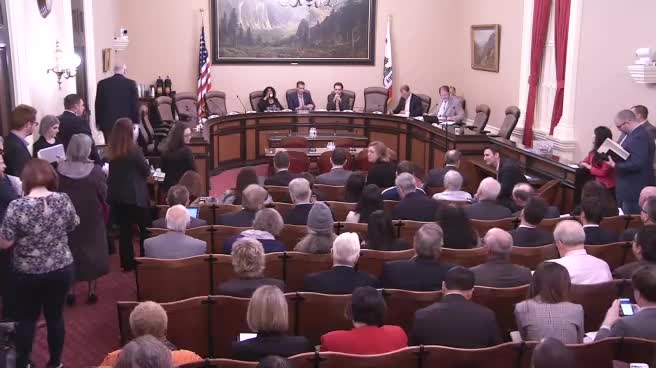 13MIN
Senate Standing Committee on Governance and Finance

Bill Co-Author(s):