SB 57: Natural gas storage: moratorium.
- Session Year: 2017-2018
- House: Senate
- Latest Version Date: 2017-05-26
(1)Under existing law, the Division of Oil, Gas, and Geothermal Resources in the Department of Conservation regulates the drilling, operation, maintenance, and abandonment of oil and gas wells in the state. Existing law requires the State Oil and Gas Supervisor to continue the prohibition against Southern California Gas Company injecting any natural gas into the Aliso Canyon natural gas storage facility located in the County of Los Angeles until a comprehensive review of the safety of the gas storage wells at the facility is completed, as specified, the supervisor determines that well integrity has been ensured by the review, the risks of failures identified in the review have been addressed, the supervisors duty to prevent damage to life, health, property, and natural resources, and other requirements is satisfied, and the Executive Director of the Public Utilities Commission has concurred via letter with the supervisor regarding his or her determination of safety.
This bill would additionally require the supervisor to continue that prohibition until a specified root cause analysis of the natural gas leak from the facility that started approximately October 23, 2015, has been completed and released in its entirety to the public. The bill would, notwithstanding that prohibition, authorize the Governor to order incremental injections at the facility, but only if the Governor determines it is necessary to avoid, or respond to, an emergency situation.
(2)Under existing law, the Public Utilities Commission is authorized to supervise and regulate every public utility in the state. Existing law requires the commission, no later than July 1, 2017, to open a proceeding to determine the feasibility of minimizing or eliminating use of the Aliso Canyon natural gas storage facility located in the County of Los Angeles while still maintaining energy and electric reliability for the region, and to consult with specified entities in making its determination.
This bill would require the commission, in conducting the proceeding, to act in the manner that will maximize transparency.
(3)This bill would declare that it is to take effect immediately as an urgency statute.
(1)Under existing law, the Division of Oil, Gas, and Geothermal Resources in the Department of Conservation regulates the drilling, operation, maintenance, and abandonment of oil and gas wells in the state. Existing law requires the State Oil and Gas Supervisor to continue the prohibition against Southern California Gas Company injecting any natural gas into the Aliso Canyon natural gas storage facility located in the County of Los Angeles until a comprehensive review of the safety of the gas storage wells at the facility is completed, as specified, the supervisor determines that well integrity has been ensured by the review, the risks of failures identified in the review have been addressed, the supervisors duty to prevent damage to life, health, property, and natural resources, and other requirements is satisfied, and the Executive Director of the Public Utilities Commission has concurred via letter with the supervisor regarding his or her determination of safety.
This bill would additionally require the supervisor to continue that prohibition until a specified root cause analysis of the natural gas leak from the facility that started approximately October 23, 2015, has been completed and released in its entirety to the public.
(2)Under existing law, the Public Utilities Commission is authorized to supervise and regulate every public utility in the state. Existing law requires the commission, no later than July 1, 2017, to open a proceeding to determine the feasibility of minimizing or eliminating use of the Aliso Canyon natural gas storage facility located in the County of Los Angeles while still maintaining energy and electric reliability for the region, and to consult with specified entities in making its determination.
This bill would require that proceeding to be completed by December 31, 2017. the commission, in conducting the proceeding, to act in the manner that will maximize transparency.
(3)Existing law authorizes the Governor during a state of emergency, which may include a sudden and severe energy shortage, to suspend any regulatory statute, or statute prescribing the procedure for conduct of state business, or the orders, rules, or regulations of any state agency, where the Governor determines and declares that strict compliance with any statute, order, rule, or regulation would in any way prevent, hinder, or delay the mitigation of the effects of the emergency.
This bill would authorize the Governor to order incremental injections at the Aliso Canyon natural gas storage facility only to avoid, or respond to, an emergency situation.
(4)
(3)This bill would declare that it is to take effect immediately as an urgency statute.
(1)Under existing law, the Division of Oil, Gas, and Geothermal Resources in the Department of Conservation regulates the drilling, operation, maintenance, and abandonment of oil and gas wells in the state. Existing law requires the State Oil and Gas Supervisor to continue the prohibition against Southern California Gas Company injecting any natural gas into the Aliso Canyon natural gas storage facility located in the County of Los Angeles until a comprehensive review of the safety of the gas storage wells at the facility is completed, as specified, the supervisor determines that well integrity has been ensured by the review, the risks of failures identified in the review have been addressed, the supervisors duty to prevent damage to life, health, property, and natural resources, and other requirements is satisfied, and the Executive Director of the Public Utilities Commission has concurred via letter with the supervisor regarding his or her determination of safety.
This bill would additionally require the supervisor to continue that prohibition until a specified root cause analysis of the natural gas leak from the facility that started approximately October 23, 2015, has been completed and released in its entirety to the public.
(2)Under existing law, the Public Utilities Commission is authorized to supervise and regulate every public utility in the state. Existing law requires the commission, no later than July 1, 2017, to open a proceeding to determine the feasibility of minimizing or eliminating use of the Aliso Canyon natural gas storage facility located in the County of Los Angeles while still maintaining energy and electric reliability for the region, and to consult with specified entities in making its determination.
This bill would require that proceeding to be completed by December 31, 2017.
(3)Existing law authorizes the Governor during a state of emergency, which may include a sudden and severe energy shortage, to suspend any regulatory statute, or statute prescribing the procedure for conduct of state business, or the orders, rules, or regulations of any state agency, where the Governor determines and declares that strict compliance with any statute, order, rule, or regulation would in any way prevent, hinder, or delay the mitigation of the effects of the emergency.
This bill would authorize the Governor to order incremental injections at the Aliso Canyon natural gas storage facility only to avoid, or respond to, an emergency situation.
(3)(4)This bill would declare that it is to take effect immediately as an urgency statute.
(1)Under existing law, the Division of Oil, Gas, and Geothermal Resources in the Department of Conservation regulates the drilling, operation, maintenance, and abandonment of oil and gas wells in the state. Existing law requires the State Oil and Gas Supervisor to continue the prohibition against Southern California Gas Company injecting any natural gas into the Aliso Canyon natural gas storage facility located in the County of Los Angeles until a comprehensive review of the safety of the gas storage wells at the facility is completed, as specified, the supervisor determines that well integrity has been ensured by the review, the risks of failures identified in the review have been addressed, the supervisors duty to prevent damage to life, health, property, and natural resources, and other requirements is satisfied, and the Executive Director of the Public Utilities Commission has concurred via letter with the supervisor regarding his or her determination of safety.
This bill would additionally require the supervisor to continue that prohibition until a specified root cause analysis of the natural gas leak from the facility that started approximately October 23, 2015, has been completed and released in its entirety to the public.
(2)Under existing law, the Public Utilities Commission is authorized to supervise and regulate every public utility in the state. Existing law requires the commission, no later than July 1, 2017, to open a proceeding to determine the feasibility of minimizing or eliminating use of the Aliso Canyon natural gas storage facility located in the County of Los Angeles while still maintaining energy and electric reliability for the region, and to consult with specified entities in making its determination.
This bill would require that proceeding to be completed by December 31, 2017.
(3)This bill would declare that it is to take effect immediately as an urgency statute.
(1)Under existing law, the Division of Oil, Gas, and Geothermal Resources in the Department of Conservation regulates the drilling, operation, maintenance, and abandonment of oil and gas wells in the state. Existing law requires the State Oil and Gas Supervisor to continue the prohibition against Southern California Gas Company injecting any natural gas into the Aliso Canyon natural gas storage facility located in the County of Los Angeles until a comprehensive review of the safety of the gas storage wells at the facility is completed, as specified, the supervisor determines that well integrity has been ensured by the review, the risks of failures identified in the review have been addressed, the supervisors duty to prevent damage to life, health, property, and natural resources, and other requirements is satisfied, and the Executive Director of the Public Utilities Commission has concurred via letter with the supervisor regarding his or her determination of safety.
This bill would additionally require the supervisor to continue that prohibition until a specified root cause analysis of the natural gas leak from the facility that started approximately October 23, 2015, has been completed and released in its entirety to the public.
(2)Under existing law, the Public Utilities Commission is authorized to supervise and regulate every public utility in the state. Existing law requires the commission, no later than July 1, 2017, to open a proceeding to determine the feasibility of minimizing or eliminating use of the Aliso Canyon natural gas storage facility located in the County of Los Angeles while still maintaining energy and electric reliability for the region, and to consult with specified entities in making its determination.
This bill would require that proceeding to be completed by December 31, 2017.
(3)This bill would declare that it is to take effect immediately as an urgency statute.
Under existing law, the State Water Resources Control Board administers a water rights program pursuant to which the board grants permits and licenses to appropriate water. Existing law requires an application for a permit to appropriate water to include, among other things, sufficient information to demonstrate a reasonable likelihood that unappropriated water is available for the proposed appropriation. Existing law requires the board to issue and deliver a notice of an application as soon as practicable after the receipt of an application for a permit to appropriate water that conforms to the law. Existing law allows interested persons to file a written protest with regard to an application to appropriate water and requires the protestant to set forth the objections to the application. Existing law declares that no hearing is necessary to issue a permit in connection with an unprotested application, or if the undisputed facts support the issuance of the permit and there is no disputed issue of material fact, unless the board elects to hold a hearing. This bill, if the board has not rendered a final determination on an application for a permit to appropriate water within 25 years from the date the application was filed, would require the board to issue a notice and provide an opportunity for protests before rendering a final determination, with specified exceptions. This bill would provide that it is not a limitation on the authority of the board to issue a notice or direct the applicant to issue a notice if, because of changes in the project or other circumstances, the issuance of a notice is necessary to provide a fair opportunity for interested persons to file protests or is in the public interest.Under existing law, the State Water Resources Control Board administers a water rights program pursuant to which the board grants permits and licenses to appropriate water. Existing law requires an application for a permit to appropriate water to include, among other things, sufficient information to demonstrate a reasonable likelihood that unappropriated water is available for the proposed appropriation. Existing law requires the board to issue and deliver a notice of an application as soon as practicable after the receipt of an application for a permit to appropriate water that conforms to the law. Existing law allows interested persons to file a written protest with regard to an application to appropriate water and requires the protestant to set forth the objections to the application. Existing law declares that no hearing is necessary to issue a permit in connection with an unprotested application, or if the undisputed facts support the issuance of the permit and there is no disputed issue of material fact, unless the board elects to hold a hearing.
This bill, if the board has not rendered a final determination on an application for a permit to appropriate water within 25 years from the date the application was filed, would require the board to issue a notice and provide an opportunity for protests before rendering a final determination, with specified exceptions. This bill would provide that it is not a limitation on the authority of the board to issue a notice or direct the applicant to issue a notice if, because of changes in the project or other circumstances, the issuance of a notice is necessary to provide a fair opportunity for interested persons to file protests or is in the public interest.
(a)The Legislature finds and declares all of the following:
(1)Chapter 14 of the Statutes of 2016 was enacted to address the significant natural gas leak at the Aliso Canyon natural gas storage facility located in the County of Los Angeles that started on approximately October 23, 2015, and was not sealed until February 18, 2016.
(2)In order to protect public health and safety, Section 3217 of the Public Resources Code requires the State Oil and Gas Supervisor to continue the prohibition against the injection of natural gas into the Aliso Canyon natural gas storage facility until certain conditions are satisfied, as specified.
(3)The requirements of Section 3217 of the Public Resources Code do not affect or impair the authority of the Governor, as vested by the California Constitution and statutes, to declare an emergency based on a sudden and severe energy shortage under the California Emergency Services Act (Chapter 7 (commencing with Section 8550) of Division 1 of Title 2 of the Government Code).
(b)It is the intent of the Legislature to ensure the safety and reliability of the states electric and gas infrastructure and to ensure just and reasonable rates. The Governor may order incremental injections at the Aliso Canyon natural gas storage facility only to avoid, or respond to, an emergency situation.
SEC. 2.Section 3217 of the Public Resources Code is amended to read:3217.(a)(1)The supervisor shall continue the prohibition against Southern California Gas Company injecting any natural gas into the Aliso Canyon natural gas storage facility located in the County of Los Angeles until a comprehensive review of the safety of the gas storage wells at the facility is completed and the supervisor determines that well integrity has been ensured by the review, the risks of failures identified in the review have been addressed, the third-party root cause analysis, instigated at the direction of the Safety and Enforcement Division of the Public Utilities Commission and the supervisor, of the natural gas leak from the facility that started approximately October 23, 2015, has been completed and released in its entirety to the public, and the supervisors duty to prevent damage to life, health, property, and natural resources, and to comply with other requirements, as specified in Section 3106, is satisfied. The supervisor may not lift the prohibition on injection until the Executive Director of the Public Utilities Commission has concurred via letter with the supervisor regarding his or her determination of safety.
(2)For purposes of this section, facility means the Aliso Canyon natural gas storage facility located in the County of Los Angeles operated by Southern California Gas Company.
(b)(1)The criteria for the gas storage well comprehensive safety review shall be determined by the supervisor with input from contracted independent experts and shall include the steps in subdivision (c).
(2)The supervisor shall direct the contracted independent experts to provide a methodology to be used in assessing the tests and inspections specified in the criteria. This requirement may be satisfied by the independent experts reviewing and, if necessary, revising the divisions written methodology for assessing the tests and inspections specified in the criteria. The methodology shall include all tests and inspections required by the criteria. The division shall post the methodology online on a public portion of its Internet Web site.
(c)The gas storage well comprehensive safety review shall include the following steps to ensure external and internal well mechanical integrity:
(1)All gas storage wells shall be tested and inspected from the surface to the packer or to any wellbore restriction near the top of the geologic formation being used for gas storage, whichever is higher in elevation, to detect existing leaks using temperature and noise logs.
(2)Any leaks shall be stopped and remediated to the satisfaction of the supervisor.
(3)Following remediation, leak detection tests shall be repeated and results reviewed by the supervisor.
(4)(A)Unless a well has been fully plugged and abandoned to the supervisors satisfaction and in accordance with Section 3208, the well shall be evaluated and remediated in accordance with subparagraph (B) or plugged in accordance with subparagraph (C).
(B)If a gas storage well is intended to return to service for the purposes of resuming injections to the facility, it shall be tested and inspected from the surface to the packer or to any wellbore restriction near the top of the geologic formation being used for gas storage, whichever is higher in elevation, to ensure mechanical integrity. As identified in the divisions criteria, these tests and inspections shall include the measurement of casing thickness and integrity, an evaluation of the cement bond on the casing, the determination as to whether any deformities in the well casing exist, and an evaluation of the wells ability to withstand pressures that exceed maximum allowable injection and production pressures, with a reasonable margin for safety, at the facility in accordance with the criteria determined by the supervisor with input from independent experts pursuant to subdivision (b). If the tests reveal that a well poses a risk of failure, the supervisor shall require remediation and repeat tests as necessary to demonstrate to the satisfaction of the supervisor that remediation has mitigated any potential identified risks. If the operator cannot remediate the well to mitigate the identified risks to the satisfaction of the supervisor, the well shall be plugged and abandoned in accordance with Section 3208.
(C)(i)If a well is to be taken out of service before resumption of gas injections at the facility, it shall be removed from operation and isolated from the gas storage reservoir through plugging according to the divisions criteria, including, but not limited to, the demonstration of sufficient cement to prevent migrations between the reservoir and other zones, placement of a mechanical plug at the bottom of the well, and subsequent filling of the well with fluid, and to specifications approved by the supervisor. All gas storage wells that are taken out of service under this subparagraph shall be subjected to ongoing testing and monitoring requirements identified in the criteria determined by the supervisor with input from independent experts. The monitoring shall include, but not be limited to, real-time and daily pressure monitoring, as applicable. A gas storage well shall not be returned to service unless the testing and remediation required under subparagraph (B) has been completed.
(ii)A gas storage well, within one year of being plugged and isolated from the gas storage reservoir pursuant to clause (i), shall either be returned to service by satisfactorily completing the testing and remediation required under subparagraph (B) or be permanently plugged and abandoned to the supervisors satisfaction in accordance with Section 3208.
(D)The supervisor shall make a written finding for each gas storage well that has satisfactorily completed the testing and remediation required under subparagraph (B).
(5)The gas storage well comprehensive safety review is not complete until every gas storage well at the facility has completed the testing and remediation required under subparagraph (B) of paragraph (4), been temporarily abandoned and isolated from the reservoir as required under clause (i) of subparagraph (C) of paragraph (4), or been fully plugged and abandoned to the supervisors satisfaction in accordance with Section 3208.
(d)Upon completion of the gas storage well comprehensive safety review but before authorizing the commencement of injections at the facility, the division shall hold at least one duly noticed public meeting in the affected community to provide the public an opportunity to comment on the safety review findings and on the proposed pressure limit as provided in subdivision (e).
(e)(1)Before commencing injections at the facility, the operator of the facility shall provide the division with the proposed maximum reservoir pressure and include data and calculations supporting the basis for the pressure limit. The pressure limit shall account for the pressure required to inject intended gas volumes at all proposed inventory levels and the pressure limit shall not exceed the design pressure limits of the reservoir, wells, wellheads, piping, or associated facilities with an appropriate margin for safety.
(2)The operators proposed maximum reservoir pressure shall be subject to review and approval by the supervisor, and the supervisor shall consult with independent experts regarding the appropriate maximum and minimum reservoir pressure at the facility.
(f)Once the gas storage well comprehensive safety review is complete pursuant to paragraph (5) of subdivision (c), the supervisor has approved the maximum and minimum reservoir pressure pursuant to paragraph (2) of subdivision (e), and the public hearing is held pursuant to subdivision (d), the supervisor may allow injections of natural gas at the facility.
(g)All gas storage wells returning to service pursuant to subdivision (f) shall only inject or produce gas through the interior metal tubing and not through the annulus between the tubing and the well casing. The operator shall also conduct ongoing pressure monitoring and comply with any other requirements specified by the supervisor.
(h)The gas storage wells at the facility that are plugged and abandoned in accordance with Section 3208 pursuant to this section shall be periodically inspected by the operator for leaks using effective gas leak detection techniques such as optical gas imaging.
(i)(1)Before the completion of the gas storage well comprehensive safety review, production of natural gas from gas storage wells at the facility shall be limited to gas storage wells that have satisfactorily completed the testing and remediation required under subparagraph (B) of paragraph (4) of subdivision (c) unless insufficient production capacity is available. Only if production capacity supplied by the tested and remediated wells is demonstrably insufficient may the supervisor allow other gas storage wells to be used.
(2)The supervisor shall direct the operator of the facility to provide a plan to ensure, at the earliest possible time, the availability of sufficient gas production capacity using gas storage wells that have satisfactorily completed the testing and remediation required under subparagraph (B) of paragraph (4) of subdivision (c).
(j)With respect to the gas storage well comprehensive safety review at the facility, all testing, inspection and monitoring results reported to the division, gas storage well compliance status, any required remediation steps, and other safety review-related materials shall be posted in a timely manner by the division online on a public portion of its Internet Web site.
(k)Notwithstanding subdivisions (a) and (f), the Governor may order incremental injections at the facility, but only if the Governor determines it is necessary to avoid, or respond to, an emergency situation.
(k)(l)This section shall remain in effect only until January 1, 2021, and as of that date is repealed, unless a later enacted statute, that is enacted before January 1, 2021, deletes or extends that date.
SEC. 3.Section 714 of the Public Utilities Code is amended to read:714.(a)The commission, no later than July 1, 2017, shall open a proceeding to determine the feasibility of minimizing or eliminating use of the Aliso Canyon natural gas storage facility located in the County of Los Angeles while still maintaining energy and electric reliability for the region. This determination shall be consistent with the Clean Energy and Pollution Reduction Act of 2015 (Ch. 547, Stats. 2015) and Executive Order B-30-2015. The commission shall consult with the State Energy Resources Conservation and Development Commission, the Independent System Operator, the local publicly owned utilities that rely on natural gas for electricity generation, the Division of Oil, Gas, and Geothermal Resources in the Department of Conservation, affected balancing authorities, and other relevant government entities, in making its determination.
(b)The commission, in conducting the proceeding, shall act in the manner that will maximize transparency.
(c)This section shall remain in effect only until January 1, 2021, and as of that date is repealed, unless a later enacted statute that is enacted before January 1, 2021, deletes or extends that date.
SEC. 4.This act is an urgency statute necessary for the immediate preservation of the public peace, health, or safety within the meaning of Article IV of the California Constitution and shall go into immediate effect. The facts constituting the necessity are:
In order to mitigate, at the earliest possible time, harm from the gas leak at the Aliso Canyon natural gas storage facility, and to thoroughly evaluate the integrity of and the risks associated with gas storage wells at that facility, it is necessary that this act take effect immediately.
(a)The Legislature finds and declares all of the following:
(1)Chapter 14 of the Statutes of 2016 was enacted to address the significant natural gas leak at the Aliso Canyon natural gas storage facility located in the County of Los Angeles that started on approximately October 23, 2015, and was not sealed until February 18, 2016.
(2)In order to protect public health and safety, Section 3217 of the Public Resources Code requires the State Oil and Gas Supervisor to continue the prohibition against the injection of natural gas into the Aliso Canyon natural gas storage facility until certain conditions are satisfied, as specified.
(3)The requirements of Section 3217 of the Public Resources Code do not affect or impair the authority of the Governor, as vested by the California Constitution and statutes, to declare an emergency based on a sudden and severe energy shortage under the California Emergency Services Act (Chapter 7 (commencing with Section 8550) of Division 1 of Title 2 of the Government Code).
(b)It is the intent of the Legislature to ensure the safety and reliability of the states electric and gas infrastructure and to ensure just and reasonable rates. The Governor may order incremental injections at the Aliso Canyon natural gas storage facility only to avoid, or respond to, an emergency situation.
SEC. 2.Section 3217 of the Public Resources Code is amended to read:3217.(a)(1)The supervisor shall continue the prohibition against Southern California Gas Company injecting any natural gas into the Aliso Canyon natural gas storage facility located in the County of Los Angeles until a comprehensive review of the safety of the gas storage wells at the facility is completed and the supervisor determines that well integrity has been ensured by the review, the risks of failures identified in the review have been addressed, the third-party root cause analysis, instigated at the direction of the Safety and Enforcement Division of the Public Utilities Commission and the supervisor, of the natural gas leak from the facility that started approximately October 23, 2015, has been completed and released in its entirety to the public, and the supervisors duty to prevent damage to life, health, property, and natural resources, and to comply with other requirements, as specified in Section 3106, is satisfied. The supervisor may not lift the prohibition on injection until the Executive Director of the Public Utilities Commission has concurred via letter with the supervisor regarding his or her determination of safety.
(2)For purposes of this section, facility means the Aliso Canyon natural gas storage facility located in the County of Los Angeles operated by Southern California Gas Company.
(b)(1)The criteria for the gas storage well comprehensive safety review shall be determined by the supervisor with input from contracted independent experts and shall include the steps in subdivision (c).
(2)The supervisor shall direct the contracted independent experts to provide a methodology to be used in assessing the tests and inspections specified in the criteria. This requirement may be satisfied by the independent experts reviewing and, if necessary, revising the divisions written methodology for assessing the tests and inspections specified in the criteria. The methodology shall include all tests and inspections required by the criteria. The division shall post the methodology online on a public portion of its Internet Web site.
(c)The gas storage well comprehensive safety review shall include the following steps to ensure external and internal well mechanical integrity:
(1)All gas storage wells shall be tested and inspected from the surface to the packer or to any wellbore restriction near the top of the geologic formation being used for gas storage, whichever is higher in elevation, to detect existing leaks using temperature and noise logs.
(2)Any leaks shall be stopped and remediated to the satisfaction of the supervisor.
(3)Following remediation, leak detection tests shall be repeated and results reviewed by the supervisor.
(4)(A)Unless a well has been fully plugged and abandoned to the supervisors satisfaction and in accordance with Section 3208, the well shall be evaluated and remediated in accordance with subparagraph (B) or plugged in accordance with subparagraph (C).
(B)If a gas storage well is intended to return to service for the purposes of resuming injections to the facility, it shall be tested and inspected from the surface to the packer or to any wellbore restriction near the top of the geologic formation being used for gas storage, whichever is higher in elevation, to ensure mechanical integrity. As identified in the divisions criteria, these tests and inspections shall include the measurement of casing thickness and integrity, an evaluation of the cement bond on the casing, the determination as to whether any deformities in the well casing exist, and an evaluation of the wells ability to withstand pressures that exceed maximum allowable injection and production pressures, with a reasonable margin for safety, at the facility in accordance with the criteria determined by the supervisor with input from independent experts pursuant to subdivision (b). If the tests reveal that a well poses a risk of failure, the supervisor shall require remediation and repeat tests as necessary to demonstrate to the satisfaction of the supervisor that remediation has mitigated any potential identified risks. If the operator cannot remediate the well to mitigate the identified risks to the satisfaction of the supervisor, the well shall be plugged and abandoned in accordance with Section 3208.
(C)(i)If a well is to be taken out of service before resumption of gas injections at the facility, it shall be removed from operation and isolated from the gas storage reservoir through plugging according to the divisions criteria, including, but not limited to, the demonstration of sufficient cement to prevent migrations between the reservoir and other zones, placement of a mechanical plug at the bottom of the well, and subsequent filling of the well with fluid, and to specifications approved by the supervisor. All gas storage wells that are taken out of service under this subparagraph shall be subjected to ongoing testing and monitoring requirements identified in the criteria determined by the supervisor with input from independent experts. The monitoring shall include, but not be limited to, real-time and daily pressure monitoring, as applicable. A gas storage well shall not be returned to service unless the testing and remediation required under subparagraph (B) has been completed.
(ii)A gas storage well, within one year of being plugged and isolated from the gas storage reservoir pursuant to clause (i), shall either be returned to service by satisfactorily completing the testing and remediation required under subparagraph (B) or be permanently plugged and abandoned to the supervisors satisfaction in accordance with Section 3208.
(D)The supervisor shall make a written finding for each gas storage well that has satisfactorily completed the testing and remediation required under subparagraph (B).
(5)The gas storage well comprehensive safety review is not complete until every gas storage well at the facility has completed the testing and remediation required under subparagraph (B) of paragraph (4), been temporarily abandoned and isolated from the reservoir as required under clause (i) of subparagraph (C) of paragraph (4), or been fully plugged and abandoned to the supervisors satisfaction in accordance with Section 3208.
(d)Upon completion of the gas storage well comprehensive safety review but before authorizing the commencement of injections at the facility, the division shall hold at least one duly noticed public meeting in the affected community to provide the public an opportunity to comment on the safety review findings and on the proposed pressure limit as provided in subdivision (e).
(e)(1)Before commencing injections at the facility, the operator of the facility shall provide the division with the proposed maximum reservoir pressure and include data and calculations supporting the basis for the pressure limit. The pressure limit shall account for the pressure required to inject intended gas volumes at all proposed inventory levels and the pressure limit shall not exceed the design pressure limits of the reservoir, wells, wellheads, piping, or associated facilities with an appropriate margin for safety.
(2)The operators proposed maximum reservoir pressure shall be subject to review and approval by the supervisor, and the supervisor shall consult with independent experts regarding the appropriate maximum and minimum reservoir pressure at the facility.
(f)Once the gas storage well comprehensive safety review is complete pursuant to paragraph (5) of subdivision (c), the supervisor has approved the maximum and minimum reservoir pressure pursuant to paragraph (2) of subdivision (e), and the public hearing is held pursuant to subdivision (d), the supervisor may allow injections of natural gas at the facility.
(g)All gas storage wells returning to service pursuant to subdivision (f) shall only inject or produce gas through the interior metal tubing and not through the annulus between the tubing and the well casing. The operator shall also conduct ongoing pressure monitoring and comply with any other requirements specified by the supervisor.
(h)The gas storage wells at the facility that are plugged and abandoned in accordance with Section 3208 pursuant to this section shall be periodically inspected by the operator for leaks using effective gas leak detection techniques such as optical gas imaging.
(i)(1)Before the completion of the gas storage well comprehensive safety review, production of natural gas from gas storage wells at the facility shall be limited to gas storage wells that have satisfactorily completed the testing and remediation required under subparagraph (B) of paragraph (4) of subdivision (c) unless insufficient production capacity is available. Only if production capacity supplied by the tested and remediated wells is demonstrably insufficient may the supervisor allow other gas storage wells to be used.
(2)The supervisor shall direct the operator of the facility to provide a plan to ensure, at the earliest possible time, the availability of sufficient gas production capacity using gas storage wells that have satisfactorily completed the testing and remediation required under subparagraph (B) of paragraph (4) of subdivision (c).
(j)With respect to the gas storage well comprehensive safety review at the facility, all testing, inspection and monitoring results reported to the division, gas storage well compliance status, any required remediation steps, and other safety review-related materials shall be posted in a timely manner by the division online on a public portion of its Internet Web site.
(k)This section shall remain in effect only until January 1, 2021, and as of that date is repealed, unless a later enacted statute, that is enacted before January 1, 2021, deletes or extends that date.
SEC. 3.Section 714 of the Public Utilities Code is amended to read:714.(a)The commission, no later than July 1, 2017, shall open a proceeding to determine the feasibility of minimizing or eliminating use of the Aliso Canyon natural gas storage facility located in the County of Los Angeles while still maintaining energy and electric reliability for the region. This determination shall be consistent with the Clean Energy and Pollution Reduction Act of 2015 (Ch. 547, Stats. 2015) and Executive Order B-30-2015. The commission shall consult with the State Energy Resources Conservation and Development Commission, the Independent System Operator, the local publicly owned utilities that rely on natural gas for electricity generation, the Division of Oil, Gas, and Geothermal Resources in the Department of Conservation, affected balancing authorities, and other relevant government entities, in making its determination.
(b)The proceeding opened pursuant to subdivision (a) shall be completed by December 31, 2017. commission, in conducting the proceeding, shall act in the manner that will maximize transparency.
(c)This section shall remain in effect only until January 1, 2021, and as of that date is repealed, unless a later enacted statute that is enacted before January 1, 2021, deletes or extends that date.
SEC. 4.This act is an urgency statute necessary for the immediate preservation of the public peace, health, or safety within the meaning of Article IV of the California Constitution and shall go into immediate effect. The facts constituting the necessity are:
In order to mitigate, at the earliest possible time, harm from the gas leak at the Aliso Canyon natural gas storage facility, and to thoroughly evaluate the integrity of and the risks associated with gas storage wells at that facility, it is necessary that this act take effect immediately.
CORRECTIONS: DigestPage 2.(a)The Legislature finds and declares all of the following:
(a)(1)Chapter 14 of the Statutes of 2016 was enacted to address the significant natural gas leak at the Aliso Canyon natural gas storage facility located in the County of Los Angeles that started on approximately October 23, 2015, and was not sealed until February 18, 2016.
(b)(2)In order to protect public health and safety, Section 3217 of the Public Resources Code requires the State Oil and Gas Supervisor to continue the prohibition against the injection of natural gas into the Aliso Canyon natural gas storage facility until certain conditions are satisfied, as specified.
(c)(3)The requirements of Section 3217 of the Public Resources Code do not affect or impair the authority of the Governor, as vested by the California Constitution and statutes, to declare an emergency based on a sudden and severe energy shortage under the California Emergency Services Act (Chapter 7 (commencing with Section 8550) of Division 1 of Title 2 of the Government Code).
(b)It is the intent of the Legislature to ensure the safety and reliability of the states electric and gas infrastructure and to ensure just and reasonable rates. The Governor may order incremental injections at the Aliso Canyon natural gas storage facility only to avoid, or respond to, an emergency situation.
SEC. 2.Section 3217 of the Public Resources Code is amended to read:3217.(a)(1)The supervisor shall continue the prohibition against Southern California Gas Company injecting any natural gas into the Aliso Canyon natural gas storage facility located in the County of Los Angeles until a comprehensive review of the safety of the gas storage wells at the facility is completed and the supervisor determines that well integrity has been ensured by the review, the risks of failures identified in the review have been addressed, the third-party root cause analysis, instigated at the direction of the Safety and Enforcement Division of the Public Utilities Commission and the supervisor, of the natural gas leak from the facility that started approximately October 23, 2015, has been completed and released in its entirety to the public, and the supervisors duty to prevent damage to life, health, property, and natural resources, and other requirements, as specified in Section 3106, is satisfied. The supervisor may not lift the prohibition on injection until the Executive Director of the Public Utilities Commission has concurred via letter with the supervisor regarding his or her determination of safety.
(2)For purposes of this section, facility means the Aliso Canyon natural gas storage facility located in the County of Los Angeles operated by Southern California Gas Company.
(b)(1)The criteria for the gas storage well comprehensive safety review shall be determined by the supervisor with input from contracted independent experts and shall include the steps in subdivision (c).
(2)The supervisor shall direct the contracted independent experts to provide a methodology to be used in assessing the tests and inspections specified in the criteria. This requirement may be satisfied by the independent experts reviewing and, if necessary, revising the divisions written methodology for assessing the tests and inspections specified in the criteria. The methodology shall include all tests and inspections required by the criteria. The division shall post the methodology online on a public portion of its Internet Web site.
(c)The gas storage well comprehensive safety review shall include the following steps to ensure external and internal well mechanical integrity:
(1)All gas storage wells shall be tested and inspected from the surface to the packer or to any wellbore restriction near the top of the geologic formation being used for gas storage, whichever is higher in elevation, to detect existing leaks using temperature and noise logs.
(2)Any leaks shall be stopped and remediated to the satisfaction of the supervisor.
(3)Following remediation, leak detection tests shall be repeated and results reviewed by the supervisor.
(4)(A)Unless a well has been fully plugged and abandoned to the supervisors satisfaction and in accordance with Section 3208, the well shall be evaluated and remediated in accordance with subparagraph (B) or plugged in accordance with subparagraph (C).
(B)If a gas storage well is intended to return to service for the purposes of resuming injections to the facility, it shall be tested and inspected from the surface to the packer or to any wellbore restriction near the top of the geologic formation being used for gas storage, whichever is higher in elevation, to ensure mechanical integrity. As identified in the divisions criteria, these tests and inspections shall include the measurement of casing thickness and integrity, an evaluation of the cement bond on the casing, the determination as to whether any deformities in the well casing exist, and an evaluation of the wells ability to withstand pressures that exceed maximum allowable injection and production pressures, with a reasonable margin for safety, at the facility in accordance with the criteria determined by the supervisor with input from independent experts pursuant to subdivision (b). If the tests reveal that a well poses a risk of failure, the supervisor shall require remediation and repeat tests as necessary to demonstrate to the satisfaction of the supervisor that remediation has mitigated any potential identified risks. If the operator cannot remediate the well to mitigate the identified risks to the satisfaction of the supervisor, the well shall be plugged and abandoned in accordance with Section 3208.
(C)(i)If a well is to be taken out of service before resumption of gas injections at the facility, it shall be removed from operation and isolated from the gas storage reservoir through plugging according to the divisions criteria, including, but not limited to, the demonstration of sufficient cement to prevent migrations between the reservoir and other zones, placement of a mechanical plug at the bottom of the well, and subsequent filling of the well with fluid, and to specifications approved by the supervisor. All gas storage wells that are taken out of service under this subparagraph shall be subjected to ongoing testing and monitoring requirements identified in the criteria determined by the supervisor with input from independent experts. The monitoring shall include, but not be limited to, real-time and daily pressure monitoring, as applicable. A gas storage well shall not be returned to service unless the testing and remediation required under subparagraph (B) has been completed.
(ii)A gas storage well, within one year of being plugged and isolated from the gas storage reservoir pursuant to clause (i), shall either be returned to service by satisfactorily completing the testing and remediation required under subparagraph (B) or be permanently plugged and abandoned to the supervisors satisfaction in accordance with Section 3208.
(D)The supervisor shall make a written finding for each gas storage well that has satisfactorily completed the testing and remediation required under subparagraph (B).
(5)The gas storage well comprehensive safety review is not complete until every gas storage well at the facility has completed the testing and remediation required under subparagraph (B) of paragraph (4), been temporarily abandoned and isolated from the reservoir as required under clause (i) of subparagraph (C) of paragraph (4), or been fully plugged and abandoned to the supervisors satisfaction in accordance with Section 3208.
(d)Upon completion of the gas storage well comprehensive safety review but before authorizing the commencement of injections at the facility, the division shall hold at least one duly noticed public meeting in the affected community to provide the public an opportunity to comment on the safety review findings and on the proposed pressure limit as provided in subdivision (e).
(e)(1)Before commencing injections at the facility, the operator of the facility shall provide the division with the proposed maximum reservoir pressure and include data and calculations supporting the basis for the pressure limit. The pressure limit shall account for the pressure required to inject intended gas volumes at all proposed inventory levels and the pressure limit shall not exceed the design pressure limits of the reservoir, wells, wellheads, piping, or associated facilities with an appropriate margin for safety.
(2)The operators proposed maximum reservoir pressure shall be subject to review and approval by the supervisor, and the supervisor shall consult with independent experts regarding the appropriate maximum and minimum reservoir pressure at the facility.
(f)Once the gas storage well comprehensive safety review is complete pursuant to paragraph (5) of subdivision (c), the supervisor has approved the maximum and minimum reservoir pressure pursuant to paragraph (2) of subdivision (e), and the public hearing is held pursuant to subdivision (d), the supervisor may allow injections of natural gas at the facility.
(g)All gas storage wells returning to service pursuant to subdivision (f) shall only inject or produce gas through the interior metal tubing and not through the annulus between the tubing and the well casing. The operator shall also conduct ongoing pressure monitoring and comply with any other requirements specified by the supervisor.
(h)The gas storage wells at the facility that are plugged and abandoned in accordance with Section 3208 pursuant to this section shall be periodically inspected by the operator for leaks using effective gas leak detection techniques such as optical gas imaging.
(i)(1)Before the completion of the gas storage well comprehensive safety review, production of natural gas from gas storage wells at the facility shall be limited to gas storage wells that have satisfactorily completed the testing and remediation required under subparagraph (B) of paragraph (4) of subdivision (c) unless insufficient production capacity is available. Only if production capacity supplied by the tested and remediated wells is demonstrably insufficient may the supervisor allow other gas storage wells to be used.
(2)The supervisor shall direct the operator of the facility to provide a plan to ensure, at the earliest possible time, the availability of sufficient gas production capacity using gas storage wells that have satisfactorily completed the testing and remediation required under subparagraph (B) of paragraph (4) of subdivision (c).
(j)With respect to the gas storage well comprehensive safety review at the facility, all testing, inspection and monitoring results reported to the division, gas storage well compliance status, any required remediation steps, and other safety review-related materials shall be posted in a timely manner by the division online on a public portion of its Internet Web site.
(k)This section shall remain in effect only until January 1, 2021, and as of that date is repealed, unless a later enacted statute, that is enacted before January 1, 2021, deletes or extends that date.
SEC. 3.Section 714 of the Public Utilities Code is amended to read:714.(a)The commission, no later than July 1, 2017, shall open a proceeding to determine the feasibility of minimizing or eliminating use of the Aliso Canyon natural gas storage facility located in the County of Los Angeles while still maintaining energy and electric reliability for the region. This determination shall be consistent with the Clean Energy and Pollution Reduction Act of 2015 (Ch. 547, Stats. 2015) and Executive Order B-30-2015. The commission shall consult with the State Energy Resources Conservation and Development Commission, the Independent System Operator, the local publicly owned utilities that rely on natural gas for electricity generation, the Division of Oil, Gas, and Geothermal Resources in the Department of Conservation, affected balancing authorities, and other relevant government entities, in making its determination.
(b)The proceeding opened pursuant to subdivision (a) shall be completed by December 31, 2017.
(c)This section shall remain in effect only until January 1, 2021, and as of that date is repealed, unless a later enacted statute, statute that is enacted before January 1, 2021, deletes or extends that date.
SEC. 4.This act is an urgency statute necessary for the immediate preservation of the public peace, health, or safety within the meaning of Article IV of the California Constitution and shall go into immediate effect. The facts constituting the necessity are:
In order to mitigate, at the earliest possible time, harm from the gas leak at the Aliso Canyon natural gas storage facility, and to thoroughly evaluate the integrity of and the risks associated with gas storage wells at that facility, it is necessary that this act take effect immediately.
The Legislature finds and declares all of the following:
(a)Chapter 14 of the Statutes of 2016 was enacted to address the significant natural gas leak at the Aliso Canyon natural gas storage facility located in the County of Los Angeles that started on approximately October 23, 2015, and was not sealed until February 18, 2016.
(b)In order to protect public health and safety, Section 3217 of the Public Resources Code requires the State Oil and Gas Supervisor to continue the prohibition against the injection of natural gas into the Aliso Canyon natural gas storage facility until certain conditions are satisfied, as specified.
(c)The requirements of Section 3217 of the Public Resources Code do not affect or impair the authority of the Governor, as vested by the California Constitution and statutes, to declare an emergency based on a sudden and severe energy shortage under the California Emergency Services Act (Chapter 7 (commencing with Section 8550) of Division 1 of Title 2 of the Government Code).
SECTION 1.SEC. 2.Section 3217 of the Public Resources Code is amended to read:3217.(a)(1)The supervisor shall continue the prohibition against Southern California Gas Company injecting any natural gas into the Aliso Canyon natural gas storage facility located in the County of Los Angeles until a comprehensive review of the safety of the gas storage wells at the facility is completed and the supervisor determines that well integrity has been ensured by the review, the risks of failures identified in the review have been addressed, the Safety and Enforcement Division of the Public Utilities Commission-ordered third party third-party root cause analysis analysis, instigated at the direction of the Safety and Enforcement Division of the Public Utilities Commission and the supervisor, of the natural gas leak from the facility that started approximately October 23, 2015, has been completed and released in its entirety to the public, and the supervisors duty to prevent damage to life, health, property, and natural resources, and other requirements, as specified in Section 3106, is satisfied. The supervisor may not lift the prohibition on injection until the Executive Director of the Public Utilities Commission has concurred via letter with the supervisor regarding his or her determination of safety.
(2)For purposes of this section, facility means the Aliso Canyon natural gas storage facility located in the County of Los Angeles operated by Southern California Gas Company.
(b)(1)The criteria for the gas storage well comprehensive safety review shall be determined by the supervisor with input from contracted independent experts and shall include the steps in subdivision (c).
(2)The supervisor shall direct the contracted independent experts to provide a methodology to be used in assessing the tests and inspections specified in the criteria. This requirement may be satisfied by the independent experts reviewing and, if necessary, revising the divisions written methodology for assessing the tests and inspections specified in the criteria. The methodology shall include all tests and inspections required by the criteria. The division shall post the methodology online on a public portion of its Internet Web site.
(c)The gas storage well comprehensive safety review shall include the following steps to ensure external and internal well mechanical integrity:
(1)All gas storage wells shall be tested and inspected from the surface to the packer or to any wellbore restriction near the top of the geologic formation being used for gas storage, whichever is higher in elevation, to detect existing leaks using temperature and noise logs.
(2)Any leaks shall be stopped and remediated to the satisfaction of the supervisor.
(3)Following remediation, leak detection tests shall be repeated and results reviewed by the supervisor.
(4)(A)Unless a well has been fully plugged and abandoned to the supervisors satisfaction and in accordance with Section 3208, the well shall be evaluated and remediated in accordance with subparagraph (B) or plugged in accordance with subparagraph (C).
(B)If a gas storage well is intended to return to service for the purposes of resuming injections to the facility, it shall be tested and inspected from the surface to the packer or to any wellbore restriction near the top of the geologic formation being used for gas storage, whichever is higher in elevation, to ensure mechanical integrity. As identified in the divisions criteria, these tests and inspections shall include the measurement of casing thickness and integrity, an evaluation of the cement bond on the casing, the determination as to whether any deformities in the well casing exist, and an evaluation of the wells ability to withstand pressures that exceed maximum allowable injection and production pressures, with a reasonable margin for safety, at the facility in accordance with the criteria determined by the supervisor with input from independent experts pursuant to subdivision (b). If the tests reveal that a well poses a risk of failure, the supervisor shall require remediation and repeat tests as necessary to demonstrate to the satisfaction of the supervisor that remediation has mitigated any potential identified risks. If the operator cannot remediate the well to mitigate the identified risks to the satisfaction of the supervisor, the well shall be plugged and abandoned in accordance with Section 3208.
(C)(i)If a well is to be taken out of service before resumption of gas injections at the facility, it shall be removed from operation and isolated from the gas storage reservoir through plugging according to the divisions criteria, including, but not limited to, the demonstration of sufficient cement to prevent migrations between the reservoir and other zones, placement of a mechanical plug at the bottom of the well, and subsequent filling of the well with fluid, and to specifications approved by the supervisor. All gas storage wells that are taken out of service under this subparagraph shall be subjected to ongoing testing and monitoring requirements identified in the criteria determined by the supervisor with input from independent experts. The monitoring shall include, but not be limited to, real-time and daily pressure monitoring, as applicable. A gas storage well shall not be returned to service unless the testing and remediation required under subparagraph (B) has been completed.
(ii)A gas storage well, within one year of being plugged and isolated from the gas storage reservoir pursuant to clause (i), shall either be returned to service by satisfactorily completing the testing and remediation required under subparagraph (B) or be permanently plugged and abandoned to the supervisors satisfaction in accordance with Section 3208.
(D)The supervisor shall make a written finding for each gas storage well that has satisfactorily completed the testing and remediation required under subparagraph (B).
(5)The gas storage well comprehensive safety review is not complete until every gas storage well at the facility has completed the testing and remediation required under subparagraph (B) of paragraph (4), been temporarily abandoned and isolated from the reservoir as required under clause (i) of subparagraph (C) of paragraph (4), or been fully plugged and abandoned to the supervisors satisfaction in accordance with Section 3208.
(d)Upon completion of the gas storage well comprehensive safety review but before authorizing the commencement of injections at the facility, the division shall hold at least one duly noticed public meeting in the affected community to provide the public an opportunity to comment on the safety review findings and on the proposed pressure limit as provided in subdivision (e).
(e)(1)Before commencing injections at the facility, the operator of the facility shall provide the division with the proposed maximum reservoir pressure and include data and calculations supporting the basis for the pressure limit. The pressure limit shall account for the pressure required to inject intended gas volumes at all proposed inventory levels and the pressure limit shall not exceed the design pressure limits of the reservoir, wells, wellheads, piping, or associated facilities with an appropriate margin for safety.
(2)The operators proposed maximum reservoir pressure shall be subject to review and approval by the supervisor, and the supervisor shall consult with independent experts regarding the appropriate maximum and minimum reservoir pressure at the facility.
(f)Once the gas storage well comprehensive safety review is complete pursuant to paragraph (5) of subdivision (c), the supervisor has approved the maximum and minimum reservoir pressure pursuant to paragraph (2) of subdivision (e), and the public hearing is held pursuant to subdivision (d), the supervisor may allow injections of natural gas at the facility.
(g)All gas storage wells returning to service pursuant to subdivision (f) shall only inject or produce gas through the interior metal tubing and not through the annulus between the tubing and the well casing. The operator shall also conduct ongoing pressure monitoring and comply with any other requirements specified by the supervisor.
(h)The gas storage wells at the facility that are plugged and abandoned in accordance with Section 3208 pursuant to this section shall be periodically inspected by the operator for leaks using effective gas leak detection techniques such as optical gas imaging.
(i)(1)Before the completion of the gas storage well comprehensive safety review, production of natural gas from gas storage wells at the facility shall be limited to gas storage wells that have satisfactorily completed the testing and remediation required under subparagraph (B) of paragraph (4) of subdivision (c) unless insufficient production capacity is available. Only if production capacity supplied by the tested and remediated wells is demonstrably insufficient may the supervisor allow other gas storage wells to be used.
(2)The supervisor shall direct the operator of the facility to provide a plan to ensure, at the earliest possible time, the availability of sufficient gas production capacity using gas storage wells that have satisfactorily completed the testing and remediation required under subparagraph (B) of paragraph (4) of subdivision (c).
(j)With respect to the gas storage well comprehensive safety review at the facility, all testing, inspection and monitoring results reported to the division, gas storage well compliance status, any required remediation steps, and other safety review-related materials shall be posted in a timely manner by the division online on a public portion of its Internet Web site.
(k)This section shall remain in effect only until January 1, 2021, and as of that date is repealed, unless a later enacted statute, that is enacted before January 1, 2021, deletes or extends that date.
SEC. 2.SEC. 3.Section 714 of the Public Utilities Code is amended to read:714.(a)The commission, no later than July 1, 2017, shall open a proceeding to determine the feasibility of minimizing or eliminating use of the Aliso Canyon natural gas storage facility located in the County of Los Angeles while still maintaining energy and electric reliability for the region. This determination shall be consistent with the Clean Energy and Pollution Reduction Act of 2015 (Ch. 547, Stats. 2015) and Executive Order B-30-2015. The commission shall consult with the State Energy Resources Conservation and Development Commission, the Independent System Operator, the local publicly owned utilities that rely on natural gas for electricity generation, the Division of Oil, Gas, and Geothermal Resources in the Department of Conservation, affected balancing authorities, and other relevant government entities, in making its determination.
(b)The proceeding opened pursuant to subdivision (a) shall be completed by December 31, 2017.
(c)This section shall remain in effect only until January 1, 2021, and as of that date is repealed, unless a later enacted statute, that is enacted before January 1, 2021, deletes or extends that date.
SEC. 3.SEC. 4.This act is an urgency statute necessary for the immediate preservation of the public peace, health, or safety within the meaning of Article IV of the California Constitution and shall go into immediate effect. The facts constituting the necessity are:
In order to mitigate, at the earliest possible time, harm from the gas leak at the Aliso Canyon natural gas storage facility, and to thoroughly evaluate the integrity of and the risks associated with gas storage wells at that facility, it is necessary that this act take effect immediately.
(a)(1)The supervisor shall continue the prohibition against Southern California Gas Company injecting any natural gas into the Aliso Canyon natural gas storage facility located in the County of Los Angeles until a comprehensive review of the safety of the gas storage wells at the facility is completed and the supervisor determines that well integrity has been ensured by the review, the risks of failures identified in the review have been addressed, the Safety and Enforcement Division of the Public Utilities Commission-ordered third party root cause analysis of the natural gas leak from the facility that started approximately October 23, 2015, has been completed and released in its entirety to the public, and the supervisors duty to prevent damage to life, health, property, and natural resources, and other requirements, as specified in Section 3106, is satisfied. The supervisor may not lift the prohibition on injection until the Executive Director of the Public Utilities Commission has concurred via letter with the supervisor regarding his or her determination of safety.
(2)For purposes of this section, facility means the Aliso Canyon natural gas storage facility located in the County of Los Angeles operated by Southern California Gas Company.
(b)(1)The criteria for the gas storage well comprehensive safety review shall be determined by the supervisor with input from contracted independent experts and shall include the steps in subdivision (c).
(2)The supervisor shall direct the contracted independent experts to provide a methodology to be used in assessing the tests and inspections specified in the criteria. This requirement may be satisfied by the independent experts reviewing and, if necessary, revising the divisions written methodology for assessing the tests and inspections specified in the criteria. The methodology shall include all tests and inspections required by the criteria. The division shall post the methodology online on a public portion of its Internet Web site.
(c)The gas storage well comprehensive safety review shall include the following steps to ensure external and internal well mechanical integrity:
(1)All gas storage wells shall be tested and inspected from the surface to the packer or to any wellbore restriction near the top of the geologic formation being used for gas storage, whichever is higher in elevation, to detect existing leaks using temperature and noise logs.
(2)Any leaks shall be stopped and remediated to the satisfaction of the supervisor.
(3)Following remediation, leak detection tests shall be repeated and results reviewed by the supervisor.
(4)(A)Unless a well has been fully plugged and abandoned to the supervisors satisfaction and in accordance with Section 3208, the well shall be evaluated and remediated in accordance with subparagraph (B) or plugged in accordance with subparagraph (C).
(B)If a gas storage well is intended to return to service for the purposes of resuming injections to the facility, it shall be tested and inspected from the surface to the packer or to any wellbore restriction near the top of the geologic formation being used for gas storage, whichever is higher in elevation, to ensure mechanical integrity. As identified in the divisions criteria, these tests and inspections shall include the measurement of casing thickness and integrity, an evaluation of the cement bond on the casing, the determination as to whether any deformities in the well casing exist, and an evaluation of the wells ability to withstand pressures that exceed maximum allowable injection and production pressures, with a reasonable margin for safety, at the facility in accordance with the criteria determined by the supervisor with input from independent experts pursuant to subdivision (b). If the tests reveal that a well poses a risk of failure, the supervisor shall require remediation and repeat tests as necessary to demonstrate to the satisfaction of the supervisor that remediation has mitigated any potential identified risks. If the operator cannot remediate the well to mitigate the identified risks to the satisfaction of the supervisor, the well shall be plugged and abandoned in accordance with Section 3208.
(C)(i)If a well is to be taken out of service before resumption of gas injections at the facility, it shall be removed from operation and isolated from the gas storage reservoir through plugging according to the divisions criteria, including, but not limited to, the demonstration of sufficient cement to prevent migrations between the reservoir and other zones, placement of a mechanical plug at the bottom of the well, and subsequent filling of the well with fluid, and to specifications approved by the supervisor. All gas storage wells that are taken out of service under this subparagraph shall be subjected to ongoing testing and monitoring requirements identified in the criteria determined by the supervisor with input from independent experts. The monitoring shall include, but not be limited to, real-time and daily pressure monitoring, as applicable. A gas storage well shall not be returned to service unless the testing and remediation required under subparagraph (B) has been completed.
(ii)A gas storage well, within one year of being plugged and isolated from the gas storage reservoir pursuant to clause (i), shall either be returned to service by satisfactorily completing the testing and remediation required under subparagraph (B) or be permanently plugged and abandoned to the supervisors satisfaction in accordance with Section 3208.
(D)The supervisor shall make a written finding for each gas storage well that has satisfactorily completed the testing and remediation required under subparagraph (B).
(5)The gas storage well comprehensive safety review is not complete until every gas storage well at the facility has completed the testing and remediation required under subparagraph (B) of paragraph (4), been temporarily abandoned and isolated from the reservoir as required under clause (i) of subparagraph (C) of paragraph (4), or been fully plugged and abandoned to the supervisors satisfaction in accordance with Section 3208.
(d)Upon completion of the gas storage well comprehensive safety review but before authorizing the commencement of injections at the facility, the division shall hold at least one duly noticed public meeting in the affected community to provide the public an opportunity to comment on the safety review findings and on the proposed pressure limit as provided in subdivision (e).
(e)(1)Before commencing injections at the facility, the operator of the facility shall provide the division with the proposed maximum reservoir pressure and include data and calculations supporting the basis for the pressure limit. The pressure limit shall account for the pressure required to inject intended gas volumes at all proposed inventory levels and the pressure limit shall not exceed the design pressure limits of the reservoir, wells, wellheads, piping, or associated facilities with an appropriate margin for safety.
(2)The operators proposed maximum reservoir pressure shall be subject to review and approval by the supervisor, and the supervisor shall consult with independent experts regarding the appropriate maximum and minimum reservoir pressure at the facility.
(f)Once the gas storage well comprehensive safety review is complete pursuant to paragraph (5) of subdivision (c), the supervisor has approved the maximum and minimum reservoir pressure pursuant to paragraph (2) of subdivision (e), and the public hearing is held pursuant to subdivision (d), the supervisor may allow injections of natural gas at the facility.
(g)All gas storage wells returning to service pursuant to subdivision (f) shall only inject or produce gas through the interior metal tubing and not through the annulus between the tubing and the well casing. The operator shall also conduct ongoing pressure monitoring and comply with any other requirements specified by the supervisor.
(h)The gas storage wells at the facility that are plugged and abandoned in accordance with Section 3208 pursuant to this section shall be periodically inspected by the operator for leaks using effective gas leak detection techniques such as optical gas imaging.
(i)(1)Before the completion of the gas storage well comprehensive safety review, production of natural gas from gas storage wells at the facility shall be limited to gas storage wells that have satisfactorily completed the testing and remediation required under subparagraph (B) of paragraph (4) of subdivision (c) unless insufficient production capacity is available. Only if production capacity supplied by the tested and remediated wells is demonstrably insufficient may the supervisor allow other gas storage wells to be used.
(2)The supervisor shall direct the operator of the facility to provide a plan to ensure, at the earliest possible time, the availability of sufficient gas production capacity using gas storage wells that have satisfactorily completed the testing and remediation required under subparagraph (B) of paragraph (4) of subdivision (c).
(j)With respect to the gas storage well comprehensive safety review at the facility, all testing, inspection and monitoring results reported to the division, gas storage well compliance status, any required remediation steps, and other safety review-related materials shall be posted in a timely manner by the division online on a public portion of its Internet Web site.
(k)This section shall remain in effect only until January 1, 2021, and as of that date is repealed, unless a later enacted statute, that is enacted before January 1, 2021, deletes or extends that date.
SEC. 2.Section 714 of the Public Utilities Code is amended to read:714.(a)The commission, no later than July 1, 2017, shall open a proceeding to determine the feasibility of minimizing or eliminating use of the Aliso Canyon natural gas storage facility located in the County of Los Angeles while still maintaining energy and electric reliability for the region. This determination shall be consistent with the Clean Energy and Pollution Reduction Act of 2015 (Ch. 547, Stats. 2015) and Executive Order B-30-2015. The commission shall consult with the State Energy Resources Conservation and Development Commission, the Independent System Operator, the local publicly owned utilities that rely on natural gas for electricity generation, the Division of Oil, Gas, and Geothermal Resources in the Department of Conservation, affected balancing authorities, and other relevant government entities, in making its determination.
(b)The proceeding opened pursuant to subdivision (a) shall be completed by December 31, 2017.
(b)(c)This section shall remain in effect only until January 1, 2021, and as of that date is repealed, unless a later enacted statute, that is enacted before January 1, 2021, deletes or extends that date.
SEC. 3.This act is an urgency statute necessary for the immediate preservation of the public peace, health, or safety within the meaning of Article IV of the California Constitution and shall go into immediate effect. The facts constituting the necessity are:
In order to mitigate, at the earliest possible time, harm from the gas leak at the Aliso Canyon natural gas storage facility, and to thoroughly evaluate the integrity of and the risks associated with gas storage wells at that facility, it is necessary that this act take effect immediately.
SECTION 1.Section 1305 is added to the Water Code, to read:1305.(a)If the board has not rendered a final determination on an application for a permit to appropriate water within 25 years from the date the application was filed, the board shall issue a new notice and provide an opportunity for protests under Chapter 4 (commencing with Section 1330) before rendering a final determination.(b)A notice and opportunity for protests pursuant to subdivision (a) is not required if any of the following apply:(1)The application is canceled or denied.(2)A notice and opportunity for protests has been provided within five years prior to the board rendering a final approval.(3)The board holds a hearing or conducts proceedings under Article 1.5 (commencing with Section 1345), after public notice of the hearing or proceeding, and allows any person requesting notice of the hearing or proceedings to participate as a party in the hearing or proceeding, including the presentation of evidence, without having to have filed protests. The board shall provide not less than 45 days written notice, in the same manner as would be provided to an unresolved protestant, to any person requesting the notice.(4)The applicant is a public entity.(c)This section is not a limitation on the authority of the board to issue a notice or direct the applicant to issue a notice if, because of changes in the project or other circumstances, the issuance of a notice is necessary to provide a fair opportunity for interested persons to file protests or is in the public interest.(a)If the board has not rendered a final determination on an application for a permit to appropriate water within 25 years from the date the application was filed, the board shall issue a new notice and provide an opportunity for protests under Chapter 4 (commencing with Section 1330) before rendering a final determination.
(b)A notice and opportunity for protests pursuant to subdivision (a) is not required if any of the following apply:
(1)The application is canceled or denied.
(2)A notice and opportunity for protests has been provided within five years prior to the board rendering a final approval.
(3)The board holds a hearing or conducts proceedings under Article 1.5 (commencing with Section 1345), after public notice of the hearing or proceeding, and allows any person requesting notice of the hearing or proceedings to participate as a party in the hearing or proceeding, including the presentation of evidence, without having to have filed protests. The board shall provide not less than 45 days written notice, in the same manner as would be provided to an unresolved protestant, to any person requesting the notice.
(4)The applicant is a public entity.
(c)This section is not a limitation on the authority of the board to issue a notice or direct the applicant to issue a notice if, because of changes in the project or other circumstances, the issuance of a notice is necessary to provide a fair opportunity for interested persons to file protests or is in the public interest.
|
Date
|
Status
|
|---|---|
| Feb 1, 2018 | Died on file pursuant to Joint Rule 56. |
| Sep 15, 2017 | Ordered to inactive file on request of Senator Stern. |
| May 30, 2017 | Reconsideration granted. (Ayes 40. Noes 0. Page 1283.) |
| May 26, 2017 | Read second time and amended. Ordered to third reading. |
| May 25, 2017 | From committee: Do pass as amended. (Ayes 5. Noes 2. Page 1177.) (May 25). |
| May 23, 2017 | Set for hearing May 25. |
| May 22, 2017 | May 22 hearing: Placed on APPR. suspense file. |
| May 16, 2017 | Set for hearing May 22. |
| Apr 20, 2017 | From committee with author's amendments. Read second time and amended. Re-referred to Com. on APPR. |
| Apr 17, 2017 | Read second time and amended. Re-referred to Com. on APPR. |
| Apr 6, 2017 | From committee: Do pass as amended and re-refer to Com. on APPR. (Ayes 9. Noes 1. Page 621.) (April 4). |
| Mar 29, 2017 | Set for hearing April 4. |
| Mar 21, 2017 | March 21 hearing: Testimony taken. Hearing postponed by committee. |
| Mar 17, 2017 | Set for hearing March 21. |
| Feb 16, 2017 | Re-referred to Com. on E., U. & C. |
| Feb 14, 2017 | Read second time and amended. Re-referred to Com. on RLS. |
| Feb 13, 2017 | From committee: Do pass as amended and re-refer to Com. on RLS. (Ayes 7. Noes 2. Page 172.) (February 9). |
| Feb 3, 2017 | Set for hearing February 9. |
| Feb 2, 2017 | From committee with author's amendments. Read second time and amended. Re-referred to Com. on N.R. & W. |
| Jan 12, 2017 | Referred to Com. on N.R. & W. |
| Jan 4, 2017 | Read first time. |
| Dec 9, 2016 | From printer. May be acted upon on or after January 8. |
| Dec 8, 2016 | Introduced. To Com. on RLS. for assignment. To print. |
|
Date
|
Description
|
Location
|
Votes
|
|
|---|---|---|---|---|
| May 30, 2017 | Senate 3rd Reading SB57 Stern et al. Urgency Clause Reconsider | Senate Floor |
Passed |
|
| May 30, 2017 | Senate 3rd Reading SB57 Stern et al. Urgency Clause | Senate Floor |
Failed |
|
| May 25, 2017 | Do pass as amended | Senate Standing Committee on Appropriations |
Passed |
|
| May 22, 2017 | Placed on suspense file | Senate Standing Committee on Appropriations |
Passed |
|
| Apr 4, 2017 | Do pass as amended, but first amend, and re-refer to the Committee on [Appropriations] | Senate Standing Committee on Energy, Utilities and Communications |
Passed |
|
| Feb 9, 2017 | Do pass as amended, but first amend, and re-refer to the Committee on [Rules] | Senate Standing Committee on Natural Resources and Water |
Passed |
This list shows positions taken on this bill by organizations on the date displayed, which is linked to the original source.
Positions by individuals are not included.
Office of Senate Floor Analyses (916) 651-1520 Fax: (916) 327-4478 | SB |
THIRD READING
Bill No: SB 57
:
SENATE NATURAL RES. & WATER COMMITTEE: 7-2, 2/9/17
AYES: Hertzberg, Allen, Atkins, Hueso, Jackson, Monning, Stern
NOES: Stone, Vidak
SENATE ENERGY, U. & C. COMMITTEE: 9-1, 4/4/17
AYES: Hueso, Bradford, Cannella, Hertzberg, Hill, McGuire, Skinner, Stern, Wiener
NOES: Vidak
NO VOTE RECORDED: Morrell
SENATE APPROPRIATIONS COMMITTEE: 5-2, 5/25/17
AYES: Lara, Beall, Bradford, Hill, Wiener
NOES: Bates, Nielsen
SENATE FLOOR: 24-9, 5/30/17 (FAIL)
AYES: Allen, Atkins, Beall, Bradford, De León, Dodd, Glazer, Hertzberg, Hill, Hueso, Jackson, Lara, Leyva, McGuire, Mendoza, Mitchell, Monning, Pan, Portantino, Skinner, Stern, Wieckowski, Wiener, Wilk
NOES: Anderson, Bates, Berryhill, Fuller, Gaines, Moorlach, Nielsen, Stone, Vidak
NO VOTE RECORDED: Cannella, Galgiani, Hernandez, Morrell, Newman, Nguyen, Roth
DIGEST: This bill prohibits injection of natural gas into the Aliso Canyon Natural Gas Storage Facility (Aliso Canyon) prior to the completion and public release of a third-party root cause analysis of the massive 2015 Aliso Canyon gas leak, unless the Governor orders incremental injections to avoid or respond to an emergency situation, as specified.
Existing law:
- Establishes the Division of Oil, Gas, and Geothermal Resources (DOGGR) – the state’s oil and gas regulator – in the Department of Conservation.
- Requires that DOGGR’s supervisor (supervisor) shall so supervise the drilling, operation, maintenance, and abandonment of oil and gas wells and facilities related to oil and gas production within an oil and gas field, among other activities, so as to prevent damage to life, health, property, and natural resources, as provided.
- Authorizes the California Public Utilities Commission (CPUC) to supervise and regulate every public utility in the state.
- Requires the supervisor to continue the prohibition against Southern California Gas Company injecting any natural gas into the Aliso Canyon natural gas storage facility (facility) until a comprehensive review of the safety of the gas storage wells at the facility is completed, as specified, the supervisor determines that well integrity has been ensured by the review, the risks of failures identified in the review have been addressed, the supervisor’s duty to prevent damage to life, health, property and natural resources and other requirements is satisfied and the Executive Director of the CPUC has concurred via letter with the supervisor regarding his or her determination of safety.
- Requires that all injection and withdrawal of gas from wells at the facility be through tubing inside the well casing as well as the continuous monitoring of the pressure in certain well components.
- Requires the supervisor to review and determine minimum and maximum operating pressures for the facility prior to allowing injections to resume.
- Requires the CPUC, no later than July 1, 2017, to open a proceeding to determine the feasibility of minimizing or eliminating the use of the facility while still maintaining energy and electric reliability for the region, and to consult with specific entities in making this determination.
This bill:
- Prohibits injection of natural gas into Aliso Canyon prior to the completion and public release of a third-party root cause analysis of the massive 2015 Aliso Canyon gas leak, unless the Governor orders incremental injections to avoid or respond to an emergency situation, as specified.
- Requires the CPUC to maximize transparency in its proceeding,
- Makes relevant legislative findings, and
- Takes effect immediately as an urgency statute.
Background
On October 23, 2015, a natural gas leak from a gas storage well (“SS-25”) was discovered at the Southern California Gas Company’s (SoCal Gas’) Aliso Canyon natural gas storage facility (facility) located in northeastern Los Angeles County. The facility is the largest in the western United States. The SS-25 well, originally drilled in 1953 and converted to gas storage service in 1973, is located uphill from and approximately 1-1/4 miles away from homes in the Porter Ranch community.
Over the course of several attempts to “kill” the well, the SS-25 leak became a blowout. Almost four months later, the leak was declared stopped on February 18, 2016 following a successful kill attempt using a newly-drilled relief well. The Air Resources Board’s (ARB’s) final estimate is that 109,000 metric tons of methane, a potent greenhouse gas, were emitted to the atmosphere from the leak. While it was occurring, the leak was estimated to constitute about 20% of total statewide methane emissions. The leak received local, national and international news coverage.
The SS-25 leak caused severe disruption in the surrounding communities. Over 8,000 households relocated at some point during the leak, and thousands of health and odor complaints were received by regulators. News reports also cited losses for local businesses.
Since the SS-25 leak was stopped and despite clean-up efforts, public health complaints have continued in the surrounding community. Community monitoring of ambient concentrations of methane and other related gases continued for several months after the leak was stopped. Recent data continue to indicate that ambient methane concentrations have generally returned to pre-SS-25 leak levels.
Multiple branches and levels of government were involved in the response to the leak and its aftermath. Both the CPUC and DOGGR have issued numerous orders to SoCal Gas in response to the leak, and have active investigations of the leak underway. Soon after the start of the SS-25 leak, DOGGR issued an order to SoCal Gas to establish a moratorium on natural gas injection at the facility. (That moratorium remains in effect.) On December 14, 2015, both DOGGR’s supervisor and the CPUC’s Safety and Enforcement Division directed SoCal Gas to contract with a third party to conduct a technical root cause analysis of the SS-25 leak. A contract was issued, and the root cause analysis is underway.
On March 4, 2016, DOGGR issued an order to SoCal Gas to perform a comprehensive safety review of the facility’s wells, upgrade facility equipment and monitoring, and plug and abandon wells, as specified. This order prohibited the supervisor from lifting the injection prohibition until all specified requirements had been met. This order became part of SB 380 (Pavley, Chapter 14, Statutes of 2016). While SB 380 was being developed, contemporaneous informal estimates were the investigations would be completed by late 2016.
On November 1, 2016, SoCal Gas applied to resume injections at the facility. On January 17, 2017, DOGGR and the CPUC announced that the comprehensive safety review of the facility had been completed with appropriate progress on fulfilling other requirements. In accordance with SB 380, DOGGR and the CPUC held two public meetings on February 1 and 2, 2017 to provide an opportunity for public comment on the findings of the review and related matters. Following the two public meetings, the County of Los Angeles filed suit to prevent resumption of injections at the facility. As of May 25, 2017, no determination had been made about resuming injections at the facility.
Comments
Recent amendments and energy reliability. Amendments taken on May 26, 2017 provide explicit authority to the Governor to order incremental natural gas injections at the facility in an emergency situation. Since the moratorium on natural gas injections began, there has been considerable concern expressed about risks to energy reliability in the facility’s service area, although no disruptions in energy supply to core customers have been attributed to the moratorium at the facility since it started. In only one instance over two days in January 2017 was a nominal amount of the remaining gas stored at the facility required to be removed to help ensure energy reliability. The risk to energy reliability is one of the routinely cited reasons for opposition to the bill. All letters received in support or opposition to this bill are for a prior version where the Governor’s authority to order injections related to an emergency situation was not as explicit. Given the level of interest and uncertainty over how the latest amendments will affect positions, all letters remain listed in this analysis.
Numerous experts, regulators and other stakeholders have studied and assessed energy reliability in the greater Los Angeles area for the winter and summer seasons as a result of the moratorium on injections at the facility. The preliminary summer 2017 assessments were recently released. Numerous measures have been taken by many stakeholders to reduce the risk of disruption of energy supply, such as reducing the time period to balance load and gas supplies and installing 100 MW of battery storage, although a risk to energy reliability, if reduced, exists. An extreme temperature event coupled with the time it takes for gas to be distributed through the system or other unanticipated events could result in an energy supply disruption. The CPUC recently ordered SoCal Gas to make efforts to refill gas storage volumes at its other Southern California facilities as quantities and deliverability were very low and could result in energy reliability disruption in certain circumstances.
The root cause analysis may not be definitive. The root cause analysis may not reach a definitive determination as a result of factors beyond the control of the investigators. This bill is conditioned on completion and public release of the root cause analysis, not its findings. Current estimates are that the root cause analysis will be completed in mid-to-late 2018.
SB 380-required proceeding has started. The CPUC has opened the proceeding to evaluate the feasibility of minimizing or eliminating the use of the Aliso Canyon natural gas storage facility.
FISCAL EFFECT: Appropriation: Fiscal Com.: Local:
According to the Senate Appropriations Committee, the fiscal impacts of this bill are unknown, likely significant, costs to various entities in the Administration to determine what constitutes an emergency, and what actions must be taken to avoid an emergency, if declared. Impacted department include the Governor’s Office (General Fund), the CPUC Commission (Utilities Reimbursement Account), the Office of Emergency Services (General Fund), DOGGR (Oil, Gas and Geothermal Administrative Fund), and the ARB (Air Pollution Control Fund).
350 Bay Area, Alameda Interfaith Climate Action Network
350 East Bay, Legislative Committee
350 Sacramento
American Lung Association in California
Americans for Democracy
Breast Cancer Action
California League of Conservation Voters
California Nurses Association
Californians Against Fracking and Dangerous Drilling
Center for Biological Diversity
Center for Environmental Health
Clean Power Campaign
Communities for a Better Environment
COURAGE Campaign
Environment California
Environmental Defense Fund
The Environmental Priorities Network
The Honorable Dianne Feinstein, U.S. Senator
Food and Water Watch
Fresnans Against Fracking
Friends of Pogonip
The GreenFlash.org
Green Party of Santa Barbara
GreenPeace Sacramento
Law Offices of Jonathan B. Daks & Associates
City of Los Angeles
Los Angeles City Council Member, Mitchell Englander
Los Angeles County Board of Supervisors
Make Culver City Safe
Moms Clean Air Force
National Nurses United
National Organization for Women Hollywood
Natural Resources Defense Council
North America Climate, Conservation, and Environment
North Valley Voter Alliance
Ocean Protection Coalition
Osmosis Medical
Supervisor Linda Parks, Ventura County
People Organized for Westside Renewal
Porter Ranch Neighborhood Council
The River Project
Rootskeeper
San Fernando Valley Young Democrats
San Luis Obispo 350
Santa Barbara Frack Back to Save the Central Coast
Santa Cruz Climate Action Network
Santa Susana Mountain Park Association
Save Porter Ranch
Scott Schmerelson, Los Angeles Unified School District Board Member, District 3
SoCal350 Climate Action
South Bay Los Angeles 350
Stop Fracking Long Beach
Sunflower Alliance
Tar Sands Action Southern California
Temple Ahavat Shalom
Turtle Island Restoration Network
UCSB Students Against Fracking
Wellness Integrative Naturopathic Center
Wellstone Democratic Renewal Club
WilderUtopia
Xun Biosphere Project
OPPOSITION: (Verified 5/25/17)
Agile 1
Agile Sourcing Partners
Alhambra Chamber of Commerce
American Chemistry Council
American Indian Chamber of Commerce
Anaheim Chamber of Commerce
Asian Business Association
Association of California Cities Orange County
Black Business Association
Black Chamber of Orange County
Blair, Church & Flynn Consulting Engineers
Boys Republic
Braun Linen Service
Brotherhood Crusade of Los Angeles County
Business Federation of Los Angeles County
California Business Properties Association
California Center for Public Policy
California Chamber of Commerce
California Independent Petroleum Association
California League of Food Processors
California Manufacturers & Technology Association
California Retailers Association
California State Association of Electrical Workers
California State Pipe Trades Council
Cars Are Basic
Center for Asian Americans United for Self-Empowerment
Central City Association of Los Angeles
Cerritos Regional Chamber of Commerce
Chamber of the Santa Barbara Region
Chambers of Commerce Alliance, Ventura & Santa Barbara Counties
City of Huntington Beach
Clair, Church & Flynn Consulting Engineers
Coalition of California Utility Employees
Congress of California Seniors
Corona Chamber of Commerce
Desert Valleys Builders Association
East Los Angeles College Foundation
The East Los Angeles Community Union
Economic Vitality Corporation of San Luis Obispo
El Concilio Family Services
El Monte/South El Monte Chamber of Commerce
Energy Users Forum
Farwest Corrosion Control Company
Gardena Valley Chamber of Commerce
Gateway Chambers Alliance
Greater Bakersfield Chamber of Commerce
Greater Coachella Valley Chamber of Commerce
Greater Huntington Park Area Chamber of Commerce
Greater Irvine Chamber of Commerce
Greater West Covina Business Association
Growth Development Marketing, Inc.
Hawthorne Chamber of Commerce
Hermanidad Mexicana Nacional
Houweling Nurseries Oxnard, Inc.
Human Services Association
Huntington Beach Chamber of Commerce
IBEW Local 11
IBEW Local 18
Industrial Environmental Association
Industry Manufacturers Council
Keenan Farms, Inc.
Kern County Board of Supervisors
Kern County Hispanic Chamber of Commerce
Kern Economic Development Corporation
KernTax
Kheir Center
Kings County Economic Development Corporation
Los Angeles Area Chamber of Commerce
Los Angeles Brotherhood Crusade
Los Angeles County Business Federation
Los Angeles Gay & Lesbian Chamber of Commerce
City of Lynwood
Matchmaster Dyeing & Finishing, Inc.
City of McFarland
Millenium Biltimore Hotel
City of Montebello
Moreno Valley Black Chamber of Commerce
Mothers of East Los Angeles
NOR Chamber of Commerce
North Orange County Chamber
Orange County Business Council
Orange County Hispanic Chamber of Commerce
Osceola Consulting
Palm Desert Area Chamber of Commerce
Pasadena Chamber of Commerce
Pioneer Pipe
Placita Santa Fe merchants Association
Pomona Chamber of Commerce
Positive Results Corporation
Prime Healthcare Services
Salvation Army L.A. Red Shield Youth and Community Center
San Diego Gas and Electric
San Gabriel Valley Regional Chamber of Commerce
San Gabriel Valley Economic Partnership
Santa Ana Chamber of Commerce
Santa Barbara County Taxpayers Association
Santa Barbara Technology and Industry Association
South Orange County Economic Coalition
Southeast Churches Service Center
Southeast Community Development Corporation
Southern California Gas Company
Southern California Pipe Trades Council
Southern Christian Leadership Conference of Southern California
Southwest California Legislative Council
Spreckels Sugar
City of Stanton
State Building and Construction Trades Council of California
Sun Engineering Services, Inc.
Sweetener Products Company
Tulare Chamber of Commerce
Tulare County Economic Development Corporation
Tulare Kings Hispanic Chamber of Commerce
Uchida Pipe and Industrial Products
United Chambers
United Chambers of Commerce San Fernando Valley & Region
Unity Shoppe, Inc.
Valley Industry and Commerce Association
Vanir Construction Management, Inc.
Vanir Group of Companies Inc.
Via Care Community Health Center
Vobecky Enterprises, Inc.
Herman Weissker, Inc.
West Covina City Council
West Hollywood Chamber of Commerce
Western Milling
Western States Petroleum Association
WestLAND Group, Inc.
WinCorp Solutions
WireTech, Inc.
YMCA of Metropolitan Los Angeles
Several individuals
ARGUMENTS IN SUPPORT: According to the author, “[i]n the weeks that followed [the SS-25 leak], thousands of families were displaced from their homes, two schools were closed, and many suffered from critical health problems that continue to this day.”
“Even though the failed well has been sealed, we still do not know what caused the blowout. Yet, the Southern California Gas Company seeks to reopen the facility. The process to determine the cause of the blowout – the root cause analysis – is not yet complete. About half of the planned phases of the analysis are completed. However, the extraction of the failed well casing and tubing as well as the removal of the wellhead have not yet started, but safety protocols have been established and nothing impedes the initiation of the extraction process”
“SB 57 builds upon last year’s SB 380 (Pavley) by requiring the completion of the root cause analysis prior to consideration of whether to lift the moratorium on natural gas injections.”
“When SB 380 was passed, the author did not anticipate that over 15 months later, the SS-25 well would still be in the ground; nor that [SoCal Gas] would seek to re-open the field before the completion of the root cause analysis. […] Rushing to re-open would impose undue risk on ratepayers and residents alike.”
“With the right amount of cooperation and effort, this analysis could be competed in a matter of months. But any concerns about delays in the root cause analysis, and related risks to summer grid reliability, have no merit as the Brown Administration has emergency powers to utilize the gas field should a bona fide shortage arise.”
ARGUMENTS IN OPPOSITION: SoCal Gas writing in opposition states “…we believe SB 57 to be unnecessary because the results of the [root cause analysis] are independent from the safety of the facility and its fitness for service as a results of the testing and enhancements that have already been completed at Aliso Canyon and verified by [DOGGR]:
- SoCal Gas has completed a comprehensive suite of tests of the outer casing and tests of the tubing for each approved well, in accordance with the Comprehensive Safety Review required under SB 380 (Pavley).
- This testing validates that the outer casing and tubing of the approved wells will maintain their integrity at pressures higher than the maximum allowable operating pressure of the field.
- Moving forward, Aliso Canyon will be operated at a much lower pressure than before the leak.
- SoCal Gas has reconfigured all approved wells with brand-new steel tubing and packers.
- Natural gas will now only flow through the new inner steel tubing and the outer casing will not be used.
- The outer casing now serves only as a secondary safety barrier.”
SoCal Gas additionally notes compliance with new leak detection and other requirements and enhancements.
SoCal Gas continues “[i]mportantly we must make you aware of the timing impacts of SB 57 on the region’s energy reliability. The CPUC has determined the existing production capacity at Aliso Canyon is insufficient to meet estimated demand in the coming season. […] Based on our operational capabilities and experience, it will take approximately two months to reach the inventory necessary to meet summer demand. Therefore, SoCal Gas believes it is crucial to begin replenishing the supply of natural gas in the field as soon as feasible…”
6/12/17 13:11:07
**** END ****
SENATE COMMITTEE ON APPROPRIATIONS
Senator Ricardo Lara, Chair
2017 - 2018 Regular Session
SB 57 (Stern) - Natural gas storage: moratorium
Version: April 20, 2017 | Policy Vote: N.R. & W. 7 - 2, E., U., & C. 9 - 1 |
Urgency: Yes | Mandate: No |
Hearing Date: May 25, 2017 | Consultant: Narisha Bonakdar |
*********** ANALYSIS ADDENDUM – SUSPENSE FILE ***********
The following information is revised to reflect amendments
adopted by the committee on May 25, 2017
Bill Summary: SB 57, an urgency state, prohibits injection into the Aliso Canyon Natural Gas Storage Facility (Aliso Canyon) prior to the completion and public release of a third-party root cause analysis of the 2015 Aliso Canyon gas leak.
Fiscal Impact: Unknown, likely significant, costs to various entities in the Administration to determine what constitutes an emergency, and what actions must be taken to avoid an emergency, if declared. Impacted department include the Governor’s Office (General Fund), he California Public Utilities Commission (Utilities Reimbursement Account), the Office of Emergency Services (General Fund), the Department of Conservations Division of Oil, Gas and Geothermal Resources (Oil, Gas and Geothermal Administrative Fund), and the Air Resources Board (Air Pollution Control Fund).
Committee Amendments:
Clarify the Governor’s authority “to allow injection to avoid or respond to an emergency situation” outlined in subdivision (b) of Section 1 of the April 17 version of the bill [subdivision (b)].
Amendments accepted as a condition of passing a committee are binding.
Shortly after subdivision (b) went into print, the Legislative Counsel provided a formal opinion indicating that the language likely does not authorize the Governor (or clarify the Governor’s authority) to allow injection to address or avoid an emergency situation, as intended. The Legislative Counsel’s Digest, which initially stated that the bill authorized the Governor to allow injection to address or avoid an emergency situation, was removed in a subsequent amendment.
SB 57’s passage out of Senate Energy, Utilities and Communications Committee (Senate Energy) was conditioned upon the author’s acceptance of amendments that explicitly, and with force of law, authorize injection to avoid an emergency. This intent was also reflected in the author’s presentation in Senate Appropriations Committee.
The amendments codify the language agreed upon in Senate Energy notwithstanding the other provisions of the bill. Per the Legislative Counsel, these technical amendments achieve the intent of the amendments agreed upon in Senate Energy, and allow the bill to move forward without re-hearing in that committee.
-- END --
SENATE COMMITTEE ON APPROPRIATIONS
Senator Ricardo Lara, Chair
2017 - 2018 Regular Session
SB 57 (Stern) - Natural gas storage: moratorium
Version: April 20, 2017 | Policy Vote: N.R. & W. 7 - 2, E., U., & C. 9 - 1 |
Urgency: Yes | Mandate: No |
Hearing Date: May 22, 2017 | Consultant: Narisha Bonakdar |
This bill meets the criteria for referral to the Suspense File.
Bill Summary: SB 57, an urgency state, prohibits injection into the Aliso Canyon Natural Gas Storage Facility (Aliso Canyon) prior to the completion and public release of a third-party root cause analysis of the gas leak in 2015.
Fiscal Impact: Unknown, likely significant, costs (General and special funds) to the various entities in the Administration to determine what constitute an emergency (thus triggering the Governor’s authority to allow for injection), and what actions must be taken to avoid the emergency. (See staff comments)
Background:
Regulation of natural gas storage wells. Although natural gas storage facilities are subject to the California Public Utilities Commission (CPUC) jurisdiction, natural gas storage wells and associated piping and equipment fall under the jurisdiction of Department of Conservation’s (DOC) Division of Oil, Gas and Geothermal Resources (DOGGR).
Aliso Canyon gas leak. On October 23, 2015, Southern California Gas Company (SoCalGas) discovered a significant natural gas leak from “Standard Sesnon 25” (SS 25) well at the Aliso Canyon. This facility is adjacent to the Porter Ranch community located within the city of Los Angeles. Several days passed before SoCalGas disclosed to the community that a significant uncontrolled leak was occurring. The leak lasted for four months, resulted in the relocation of more than 5,000 households (at SoCal Gas’s expense), and resulted in hundreds of public health complaints. In addition to the public health concerns, the Air Resources Board’s initial estimates indicate that about 95,000 metric tons of methane was released into the air—adding approximately 20 percent to the statewide methane emissions during the months of the leak.
In response to the leak, the Legislature enacted several statutes to ensure public health and safety. Among other things, legislation prohibited SoCal Gas from injecting gas into the Aliso Canyon until the following conditions were met: a comprehensive review of the facility is complete, as specified in statute; (2) the State Oil and Gas Supervisor (supervisor) determines well integrity is ensured; risks of failure are identified and addressed; (3) damage to life, health, property, and natural resources, among other factors, is prevented; and (4) the Executive Director of the CPUC provides written concurrence with the supervisor’s determination. The CPUC was also directed to open a proceeding to determine the feasibility of minimizing or eliminating use of the Aliso Canyon by July 1, 2017.
Where are they now? DOGGR reports that, as of January 17, SoCal Gas has demonstrated the mechanical integrity of 34 of the active wells at Aliso Canyon, all of which may be used for injection if DOGGR lifts the prohibition. Another 79 wells have been temporarily plugged and isolated. None have been permanently plugged and abandoned.
As required by law, DOGGR also determined the minimum and maximum reservoir pressure (1,080 pounds per square inch (ppsi) and 2,926 ppsi, respectively) for the Aliso Canyon. The CPUC similarly determined that, to maintain safe and reliable service and to support just and reasonable rates, SoCal Gas would need to manage the natural gas inventory at Aliso Canyon within a range of 29.7 billion cubic feet (Bcf) and 15.4 Bcf over the course of a season.
To aid their individual investigations, the agencies ordered SoCal Gas to hire an independent third-party to conduct a root-cause analysis of the leak. In April of 2016, Blade Energy Partners (Blade), the firm engaged to conduct the analysis, released a draft of the Draft Protocol: Aliso Canyon RCA SS-25 Site Evidence Collection and Documentation Protocol. No timeline to complete the root-cause analysis was included. In November of 2016, Blade released a document titled Phase 3 Extraction Protocol: Tubing, Casing, Wellhead Extraction Protocol. To date, Blade has neither begun extraction of the underground components of SS 25 nor the permanent abandonment of the well.
It is not clear why SB 380 did not require a root-cause analysis. The bill’s author contends that the author of SB 380 did not anticipate that it would take more than 15 months to initiate the root-cause analysis or that SoCal Gas would seek to inject gas into Aliso Canyon before completion of the root-cause analysis. Completion of the root cause analysis, according to the author and supporters, is critical to ensuring the safe operation of Aliso Canyon. Enter SB 57…
This bill’s double-referral to Senate Natural Resources and Water (Natural Resources) and Senate Energy, Utilities and Communications (Energy) Committees provoked lengthy and robust exchanges, as well as nearly 200 organizations in support or opposition for their respective hearings.
Proposed Law: This bill:
- Makes findings and declarations regarding the need to continue the prohibition on injection at the Aliso Canyon to protect public health and safety.
- States legislative intent to ensure energy reliability and reasonable rates.
- Authorizes the Governor to order incremental injections at the Aliso Canyon to avoid, or respond to, an emergency situation.
- Requires the supervisor to maintain the moratorium on injection into Aliso Canyon until the third-party root cause analysis is completed and released to the public.
- Requires the CPUC to maximize transparency in conducting the proceeding to determine the feasibility of minimizing or eliminating use of the Aliso Canyon.
- States findings related to the need for an urgency statute.
Related Legislation:
SB 380 (Pavley, Chapter 14, Statutes of 2016) prohibited injection of natural gas at the Aliso Canyon until specified testing and other criteria are met, and required the CPUC to conduct a proceeding to examine the feasibility of shutting down or minimizing the use of the facility.
SB 887 (Pavley, Chapter 673, Statutes of 2016) established a statutory framework for revised natural gas storage well regulations.
SB 888 (Allen, Chapter 536, Statutes of 2016) established the California Office of Emergency Services as the lead agency for emergency response to gas leaks from storage facilities, and dictated how penalty funds assessed for the Aliso Canyon gas leak be expended, and outlined requirements the use of the penalty revenue.
Staff Comments:
Fiscal impact. The costs incurred by the state will depend on a variety of factors, discussed below. Staff estimates these will result in a significant cost.
The Administration will incur costs related to clarified emergency management authority. This bill clarifies the Governor’s authority to order incremental injections at the Aliso Canyon “to avoid, or respond to, an emergency situation”. The bill does not, however, define many terms critical to implementation. As such, the Governor, or the designate entity, will need to determine what constitutes an “emergency situation”, what actions should be taken once an “emergency situation” is declared (including the allowable increments of gas may be injected), and what constitutes the end of the “emergency situation” therefore limiting the Governor’s authority to order injection. This also requires the Governor to determine, or direct an entity within the Administration to determine, a threshold or set of events that would trigger actions (including injection) to avoid an emergency situation, as well as those necessary once the emergency has occurred. Presumably, staff in the Governor’s Office (General Fund) would coordinate CPUC efforts (Utilities Reimbursement Account). DOGGR (Oil, Gas and Geothermal Admiration Fund), the ARB (Air Pollution Control Fund), and the Office of Emergency Services (General Fund or special fund) may also be engaged due to their role in emergency response.
Staff notes potentially significant costs to the state to address an energy emergency, and the concerns expressed by energy agencies related to the potential impacts this bill (lack of storage) could have on energy reliability. To the extent that this provision prevents energy supply issues and/or planning to address potential issues, it helps avoid costs. The same is true of impacts to energy costs to ratepayers.
The State is a ratepayer in SoCal Gas’s Jurisdiction. The state represents approximately 1 to 2 percent of energy costs statewide, and paid $8.6 million in 2016 to SoCal Gas for natural gas. To the extent that SB 57 results in ratepayer costs for SoCal Gas customers, this bill will increase the state’s cost for natural gas.
Costs not incurred by the state are nonetheless costly. The Aliso Gas leak resulted in significant costs to numerous state agencies as well as impacting the local economy. While SoCal gas is required to reimburse the state for most costs (some may be too hard to quantify), the redirection of staff from existing priorities, increased regulatory activity, and ongoing monitoring has certainly impacted state resources in both monetary and nonmonetary ways. This bill may result in cost-savings or efficiencies to the extent that it reduces the likelihood of a significant release or other emergency event at Aliso Canyon (due to natural or human–created events) or (2) informs policies or rulemakings related to gas storage facilities that prevent leaks or other significant events at other gas storage facilities.
-- END --
SENATE COMMITTEE ON ENERGY, UTILITIES AND COMMUNICATIONS
Senator Ben Hueso, Chair
2017 - 2018 Regular
Bill No: Hearing Date: 4/4/2017
Author: | |||
Version: | As Amended | ||
Urgency: | Fiscal: | ||
Consultant: | |||
SUBJECT:
DIGEST: This bill prohibits Southern California Gas Company (SoCal Gas) from injecting natural gas into the Aliso Canyon natural gas storage facility until a root-cause analysis of the leak from the facility is complete. This bill also requires consideration of the feasibility of minimizing or eliminating use of Aliso Canyon, which existing statute requires, be completed by December 31, 2017.
ANALYSIS:
Existing law:
- Authorizes the California Public Utilities Commission (CPUC) to regulate the rates and service of public utilities, including gas utilities. (Article 12 of the California Constitution, Public Utilities Code §§216(a), 221, 222, 227, and 228)
- Directs the Department of Conservation (DOC) to supervise the drilling, operation, and maintenance of oil, natural gas and geothermal wells so as to prevent damage to life, health, property, and natural resources; damage to underground oil and gas deposits from infiltrating water and other causes; loss of oil, gas, or reservoir energy, and damage to underground and surface waters suitable for irrigation or domestic purposes by the infiltration of, or the addition of, detrimental substances (Public Resources Code §3106) and to maintain surveillance over underground gas storage facilities to protect resources and the environment (Public Resources Code §3403.5).
- Specific to Aliso Canyon:
- Prohibits SoCal Gas from injecting gas into Aliso Canyon until (i) a comprehensive review of the facility is complete, as specified in statute, (ii) the supervisor of DOC’s Division of Oil, Gas and Geothermal Resources (DOGGR) determines well integrity is ensured, risks of failure identified and addressed, and damage to life, health, property and natural resources, among other factors, is prevented, and (iii), the Executive Director of the CPUC has concurred, in writing, with the DOGGR supervisor .
- Requires wells at the Aliso Canyon facility that are to return to service to undergo testing, inspection and, if necessary, remediation or to be plugged and abandoned.
- Requires the DOGGR supervisor to review and approve the minimum and maximum reservoir pressure allowed at Aliso Canyon.
- Prior to completion of the comprehensive safety review, limits production of gas from Aliso Canyon to those wells that have completed testing and remediation.
- Requires publication of Aliso Canyon well safety review, testing, inspection and monitoring results, and any remediation steps, to be posted on the DOGGR website.
(Public Utilities Code §3217)
- Requires the CPUC, by July 1, 2017, to open a proceeding to determine the feasibility of minimizing or eliminating use of Aliso Canyon. (Public Utilities Code §714)
This bill:
- Conditions the prohibition on injection of natural gas into Aliso Canyon upon completion of the third-party root-cause analysis of the leak, instigated by the CPUC and DOGGR.
- Requires the CPUC to complete, by December 31, 2017, its determination of the feasibility of limiting or eliminating use of Aliso Canyon.
Background
The Aliso Canyon Natural Gas Storage Facility is a depleted petroleum reservoir. The reservoir lies several thousand feet below the Santa Susana Mountains at the northern end of the San Fernando Valley. SoCal Gas has stored natural gas in the facility since the 1970s. The facility has the capacity to hold 86 billion cubic feet (Bcf) of gas, making it one of the largest natural gas storage facilities in the country. One-hundred fifteen surface wells puncture the reservoir, potentially allowing injection and production of gas. The facility was once remote. Today, it abuts Porter Ranch, a residential neighborhood that is home to thousands of individuals and families.
In October 2015, SoCal Gas workers detected gas leaking from one of Aliso Canyon’s wells. Known as “Standard Senson 25” (SS 25), the well dated from the early 1950s. Somewhere underground, the well’s eight-thousand plus feet of pipes were leaking gas. Despite its efforts, SoCal Gas could not stop SS 25 from leaking. The well continued to hurl gas into the air. The gas contained mainly methane – a potent and flammable greenhouse gas that is lighter than air. But the gas held other, heavier materials, too, including mercaptan – an odorant that gives otherwise odorless natural gas its “rotten-egg” smell – and droplets of petroleum.
The mercaptan-laden gas drifted downward into the Porter Ranch neighborhood. Residents complained of foul smells, nausea, nosebleeds, rashes and oily black deposits on cars and other surfaces. The county Department of Health ordered thousands of residents to relocate. Schools were closed. SS 25 continued to shoot tons of methane, and other substances, into the air.
For weeks, SS 25 leaked unabated. SoCal Gas drilled to intercept the well thousands of feet below the earth’s surface. The goal was to pump SS 25 full of fluid and cement, thereby stopping the flow of gas. Governor Brown proclaimed the leak at Aliso Canyon an emergency. The proclamation, among other things, prohibited SoCal Gas from injecting gas into Aliso Canyon.
Finally, on February 18, 2016, DOGGR declared SS 25 permanently sealed. The Air Resources Board announced that, in end, the leak from SS 25 had released about 100 thousand metric tons of methane into the atmosphere. The leak had increased California’s annual emission of methane by 20 percent.
Legislature Continues Prohibition on Injection, Requires Comprehensive Safety Review. Soon after the leak, the Legislature passed SB 380 (Pavley, Chapter 14, Statutes of 2016). The legislation put into law the prohibition on injection of gas into Aliso Canyon. The legislation also conditioned future injection upon (a) completion of a comprehensive safety review of Aliso Canyon’s gas storage wells and (b) determination by the DOGGR supervisor that well integrity has been ensured and risks identified and addressed.
Statute specifies numerous steps the comprehensive safety review must include to ensure external and internal mechanical safety of every well at the facility. More specifically, statute requires each well either to be tested and inspected to the satisfaction of the DOGGR supervisor or plugged and isolated. In addition, SB 380 requires DOGGR, prior to authorizing reinjection, to establish maximum and minimum pressure limits for the facility and to hold a public meeting for comment on the findings of the comprehensive safety review.
In addition to the comprehensive safety review, SB 380 requires CPUC to open, by July 1, 2017, a proceeding to determine the feasibility of minimizing or eliminating use of Aliso Canyon while maintaining energy and electric reliability for the region.
DOGGR Declared Comprehensive Safety Review Complete; Decision on Resumption of Injection Pending. On October 21, 2016, DOGGR and the CPUC sent a joint letter to SoCal Gas. In the letter, the agencies provide three checklists of actions SoCal Gas must complete before the agencies will consider a request by the gas company to resume gas injections at Aliso Canyon. The letter categorizes the checklists as follows: (1) actions to complete prior to request for authorization to resume injection; (2) actions to complete prior to authorization to resume injection, and (3) actions to complete after injection resumes. According to DOGGR, the first checklist – actions to complete prior to request for authorization to resume injection – constitute the gas well comprehensive safety review required by SB 380.
On November 1, 2016, SoCal Gas sent a letter to DOGGR in which the gas company formally requested permission to resume injection of gas at Aliso Canyon. On January 17, DOGGR wrote to SoCal Gas to declare the gas storage well comprehensive safety review “complete” and announced its intention to schedule a public meeting, as required by law, to allow comment on the findings of the safety review. That same day, DOGGR announced its intention to hold two public meetings, on February 1st and 2nd.
The public meetings have come and gone. DOGGR reports that, as of January 17, SoCal Gas had demonstrated the mechanical integrity of 34 of the active wells at Aliso Canyon. DOGGR indicates those 34 wells may be used for injection when, and if, DOGGR lifts the prohibition on injection. Another 79 wells had been temporarily plugged and isolated. No well had been permanently plugged and abandoned. DOGGR also determined the minimum and maximum reservoir pressure (1,080 pounds per square inch (ppsi) and 2,926 ppsi, respectively) for Aliso Canyon. In addition, in January, the CPUC determined that, to maintain safe and reliable service and to support just and reasonable rates, SoCal Gas would need to manage the natural gas inventory at Aliso Canyon within a range of 29.7 Bcf and 15.4 Bcf over the course of a season.
The stage is now set for DOGGR and CPUC to decide whether to end the prohibition on injection of gas at Aliso Canyon.
What About the Root Cause? As described above, statute requires DOGGR and the CPUC to take a number of actions to determine the safety and necessity of operating Aliso Canyon. Statute, however, does not require a root-cause analysis of the leak of well SS 25. Nor does it condition injection of gas into Aliso Canyon upon completion of a root-cause analysis of the leak.
Nonetheless, in December of 2015, as SS 25 continued to hurl tons of methane and other substances into the atmosphere, CPUC and DOGGR announced each agency’s initiation of investigation into the leak of SS 25. To aid their individual investigations, the agencies ordered SoCal Gas to hire an independent third-party to conduct a root-cause analysis of the leak. Ultimately, the CPUC chose Blade Energy Partners from among entities nominated by SoCal Gas to conduct the root-cause analysis. In April of 2016, as the Legislature deliberated the merits of SB 380, Blade released a draft Draft Protocol: Aliso Canyon RCA SS-25 Site Evidence Collection and Documentation Protocol. The protocol did not specify a timeline by which Blade would complete the root-cause analysis.
It is not clear why SB 380 did not require a root-cause analysis of the leak of SS 25. Nor is it clear why SB 380 did not condition lifting of the prohibition on injection of gas into Aliso Canyon upon completion of a root-cause analysis of the leak. The author of SB 57 contends the author of SB 380 did not anticipate that it would take over 15 months to initiate the root-cause analysis or that SoCal Gas would seek to inject gas into Aliso Canyon before completion of the root-cause analysis. The basis of the assumed timeline is unclear. In any case, the root-cause analysis continues. In November of 2016, Blade released a document titled Phase 3 Extraction Protocol: Tubing, Casing, Wellhead Extraction Protocol. To date, Blade has not begun extraction of the underground components of SS 25 nor permanent abandonment of the well.
This bill would add completion of the root-cause analysis to the existing statutory criteria that must be met before DOGGR can allow SoCal Gas to again inject gas into Aliso Canyon. The author contends SoCal Gas should not inject gas into Aliso Canyon until the gas company and regulators know operation of the facility to be safe. The author further contends that safe operation of Aliso Canyon cannot be ensured unless SoCal Gas and regulators understand why SS 25 failed, and failed so spectacularly. These are eminently reasonable propositions.
However, Aliso Canyon exists in a larger context.
Regional Energy Reliability Concerns. SB 380 addressed not only the safety of Aliso Canyon’s wells. The bill also addressed Aliso Canyon’s role in ensuring safety and reliability and just and reasonable rates. More specifically, the bill required the CPUC to publish a report on, among other things, the amount of gas inventory and gas production needed to ensure safety and reliability and just-and-reasonable rates. Further, the bill required CPUC and DOGGR to direct SoCal Gas to maintain in Aliso Canyon an amount of gas identified by CPUC as need to ensure safety, reliability and just-and-reasonable rates.
On April 4, 2016, the CPUC released its report, as required by SB 380: Aliso Canyon Risk Assessment Technical Report. The CPUC produced the report in collaboration with the California Energy Commission (CEC), the California Independent System Operator (CAISO), the Los Angeles Department of Water and Power (LADWP) and SoCal Gas. The report, according to its authors, assesses the risks to summer energy reliability in the Los Angeles region if Aliso Canyon were unavailable. The report considers hypothetical conditions of several different summer scenarios in which SoCal Gas’s system is stressed and gas from Aliso Canyon is unavailable.
The report found that, assuming no injection of gas into or withdrawal of gas from Aliso Canyon, greater Los Angeles would face a significant risk of natural gas curtailment during up to 16 days and of interruption of electric service for as many as 14 days, affecting millions of customers. This is because, according to the report, curtailment of gas service to lower-priority “non-core” customers in times of system stress is one tool SoCal Gas has to protect service to higher priority “core” customers, including residential buildings. Electric generators are among those non-core customers to whom gas service might be curtailed.
Critics questioned the finding of the technical report. Among their complaints, critics contend the authors of the technical report inflated estimates of electrical demand, inadequately considered the ability of SoCal Gas to operate its system more efficiently, and underestimated the capacity of SoCal Gas’s other gas storage facilities and the ability to move gas from those facilities throughout the Los Angeles region.
Similarly, on August 22, 2016, the authors issued a winter technical assessment, the Aliso Canyon Winter Risk Assessment Technical Report. According to the assessment, the gas system could not meet the CPUC’s 1‐in‐10‐year cold-day design standard of 5.2 Bcf without Aliso Canyon supplies. The assessment notes that the gas system has sufficient capacity without Aliso Canyon to meet core customer demand associated with the 1‐in‐35‐year peak-day design standard. However, the assessment cautions that core gas customers (residences and small commercial and industrial customers) nonetheless may be susceptible to localized losses and that “it may be necessary to withdraw from Aliso Canyon to avoid electric load interruption.” Criticisms of the winter risk assessment generally mirrored criticisms of the earlier summer risk assessment.
In conjunction with each of the seasonal risk assessments, the authors of the assessments–minus SoCal Gas–prepared seasonal action plans, the goals of which were to preserve gas and electric reliability without reliance on Aliso Canyon. The action plans included numerous measures to better align demand for gas with supply, better coordinate operation of the gas and electric system, reduce peak demand for energy and reduce demand for energy overall. The action plan also proposed calling on SoCal Gas to use the remaining gas stored in Aliso–at that time, 15 Bcf – to the extent needed to ensure electric and gas service reliability, a recommendation subsequently given force by the CPUC’s adoption of summer and winter withdrawal protocols.
The summer of 2016 came and went. SoCal Gas withdrew no gas from Aliso Canyon. The greater Los Angeles-area suffered no service interruptions associated with the unavailability of natural gas from the facility.
Regulators attribute the maintenance of summer energy reliability in the Los Angeles region to the effectiveness of measures that reduced the demand for gas and electricity in the region, as well as a relatively mild summer of no prolonged waves of above-average heat. CAISO, for its part, referred to data produced by the National Centers for Environmental Information, which show average temperatures slightly above or equal to historical averages for the months of July, August and September of 2016.
Entering the winter of 2016, there remained 15 Bcf of gas stored in Aliso Canyon. As the winter months draw to a close, SoCal has thus far withdrawn gas from Aliso Canyon on two occasions, January 24th and 25th of this year. According to the gas company, cold temperatures led to high demand for gas, so that, on the mornings of the 24th and 25th, hourly gas demand exceeded supply flowing through the company’s pipelines and in its storage facilities other than Aliso Canyon. SoCal Gas reports that, on the mornings in question, it withdrew .03 Bcf of gas and .02 Bcf of gas, respectively. The CPUC is investigating the withdrawals to determine whether the gas company’s actions comply with the CPUC’s Aliso Canyon winter withdrawal protocol. As of the day this analysis was prepared, there remains approximately 14.8 Bcf of gas in Aliso Canyon, available for use by SoCal Gas to ensure energy reliability.
Health and Safety Come First. This bill ties the authority of regulators to lift the prohibition on injection to completion of the root-cause analysis of the leak of SS 25. The author and proponents contend this link is appropriate because, they assert, the DOGGR supervisor cannot meet his legal duty to prevent damage to life, health, property, and natural resources unless the root cause of the leak is identified and analyzed.
Under current law, the DOGGR supervisor may lift the prohibition on injection at Aliso Canyon only if all active gas wells have undergone a comprehensive safety review and the supervisor determines well integrity has been ensured by the review or remediated. Any wells that have not been reviewed and, if necessary, remediated must be plugged and isolated.
According to DOGGR, all 114 active wells at Aliso Canyon have undergone comprehensive safety testing and remediation or have been temporarily plugged and isolated. DOGGR reports that 38 wells have been subject to a temperature and noise log, a casing inspection using electromagnetic and ultra-sonic technologies, a multi-arm caliper, a cement bond log and a positive pressure test. DOGGR has reviewed and verified the results of the tests and published them. According to DOGGR, the comprehensive safety testing and remediation demonstrates the mechanical integrity of the 38 wells. DOGGR has declared that these 38 wells may be used for injection if and when DOGGR and the CPUC authorize injection to resume at the Aliso Canyon Storage Facility.
In addition, DOGGR notes that all 114 wells at Aliso Canyon are now subject to continuous monitoring. DOGGR asserts that the monitoring is designed to proactively identify problems rather than identify a leak after the fact. According to DOGGR, “this is a significant change from the operations prior to the failure at SS 25.”
DOGGR has also determined Aliso Canyon’s minimum allowable operating pressure of 1,080 pounds per square inch absolute (psia) and the maximum allowable reservoir pressure of 2,926 psia. DOGGR, working in consultation with the National Laboratories and the University of Texas, determined these to be the reasonable pressures to avoid subsidence and fracturing, respectively. According to DOGGR, the latter pressure is equivalent to 68.6 Bcf of gas being stored in the facility. DOGGR notes that, with all wells properly remediated, the facility would be within normal operating parameters if it were to maintain a reservoir pressure of 3,595 psia. DOGGR concludes, then, that the maximum allowable reservoir pressure of 2,926 psia provides considerable margin for safety.
Either testing has demonstrated to DOGGR’s satisfaction the mechanical integrity of the wells, or the wells have been plugged and isolated. DOGGR has established maximum and minimum operating pressures consistent with an integral reservoir. Therefore, DOGGR concludes, the Aliso Canyon storage facility “should be considered safe.”
This analysis does not question the validity of the conclusions made by the DOGGR supervisor. The methodology by which the supervisor arrived at his conclusions seems careful and comprehensive. However, recent failures of the state’s water storage and conveyance infrastructure – despite, in at least one instance, the assurances of state regulators – reinforces the need for humility, expert opinion notwithstanding. It seems prudent, therefore, to minimize reliance on Aliso Canyon, at least until state regulators have a complete understanding of the cause of the leak of SS 25. But minimize to what level?
State regulators have warned of curtailment of gas and electric service, absent the availability of gas stored at Aliso Canyon. Curtailment may lead to planned rolling brownouts and blackouts. This is because peak electricity demand is met, in part, by the operation of natural gas-fired electricity generators.
The summertime context of any such curtailments would likely be a multi-day heatwave. In most instances, such curtailment would be an inconvenience or an economic cost. In some cases, however, curtailment can threaten health and safety. The utilities’ curtailment protocols identify hospitals, healthcare facilities and other critical infrastructure, allowing the utilities to spare such facilities from planned block-by-block service outages. Individual residences, however, would not fare so well. A lack of home cooling during a multi-day heatwave could prove deadly. Such was the case in Chicago in the summer of 1995, especially for the elderly and impoverished. And California has experienced fatalities associated with traffic signals that stopped functioning during a power outage.
The author and proponents contend the regulators’ concern over summertime energy reliability is “overblown.” To bolster the argument, they note the lack of gas or electric service curtailment during summer of 2016 and the surfeit of hydroelectric power during the coming summer. Indeed, it is unlikely there will be power service losses this summer that lead to death or serious physical harm. Such an event would require an unfortunate combination tangentially related circumstances. However, such tragic outcomes are possible.
This bill has been considered by the Senate Committee on Natural Resources. Several members of that committee affirmed that health and safety considerations come first.
As long as Aliso Canyon stores natural gas, there exists the possibility of future leaks from the facility. The harm caused by such leaks, especially to residents living near the facility, is evidenced by recent experience. Therefore, the continued operation of the Aliso Canyon Storage Facility threatens the health and safety of area residents, as well as the natural environment.
Similarly, the unavailability of gas supply from Aliso Canyon threatens health and safety in the Los Angeles region, at least in the near term, as described above. Some contend this threat is lessened by the governor’s ability to declare an emergency, an ability affirmed by this bill. However, declaration of emergency does not suddenly produce gas that might be needed to ensure energy reliability in the Los Angeles region.
To balance these conflicting potentials for harm, the committee should consider amendments to the bill to limit injection and withdrawal at Aliso Canyon, to the extent doing so does not jeopardize safety and reliability, as determined by the CPUC. This limitation on operation should continue at least until the root-cause analysis is complete and made public and the CPUC has determined the feasibility of minimizing or eliminating use of Aliso Canyon while still maintaining energy and electric reliability in the region, as required by existing statute.
Currently, this bill requires the CPUC to complete, by December 31, 2017, the proceeding on the feasibility of minimizing or eliminating the use of Aliso Canyon. The Legislature, when it passed SB 380, imposed on the CPUC the responsibility to conduct and publish the feasibility study. A desire for certainty about when CPUC will decide the fate of Aliso Canyon is understandable.
However, the Legislature, in passing SB 380, has given the CPUC a considerable task. The CPUC, presumably, would likely comply with a statutory deadline, though it is worth noting the CPUC, for a variety of reasons, has failed to publish reports according to statutory deadlines in the past. In any case, it is may be unwise to constrain the timeline of the feasibility report. Closing or minimizing use of Aliso Canyon would represent a major departure from how the energy system of the Los Angeles region has been managed in the past. It is important CPUC, in making its determination, be informed, deliberative and thoughtful. Given too little time, CPUC is likely to produce the easy answer: maintain the status quo, which means continued operation of Aliso Canyon. For this reason, the committee should consider removing the deadline for completion of the feasibility report.
The amendments shown at the close of this analysis would minimize operation of Aliso Canyon while ensuring safety and reliability, as described above.
Prior/Related Legislation
SB 380 (Pavley, Chapter 14, Statutes of 2016) established Aliso Canyon natural gas storage facility-specific law governing testing criteria, requirements to be met prior to re-starting injections at the facility and required a CPUC proceeding to examine the feasibility of shutting down or minimizing the use of the facility due to the 2015 gas leak.
SB 887 (Pavley, Chapter 673, Statutes of 2016) provided a statutory framework for revised natural gas storage well regulation by DOGGR including, among other things, leak monitoring, new well testing requirements and that a single point of failure does not pose an immediate threat for a loss of control of well fluids.
SB 888 (Allen, Chapter 536, Statutes of 2016) directed how penalty funds assessed for the Aliso Canyon gas leak be expended, and required climate change impacts from gas storage facility leaks be fully offset.
FISCAL EFFECT: Appropriation: Fiscal Com.: Local:
SUPPORT:
350 Bay Area, Alameda Interfaith Climate Action Network 350 Canejo-San Fernando Valley 350 East Bay, Legislative Committee 350 Sacramento 350 San Diego 350 Silicon Valley American Lung Association Americans for Democracy Ballona Creek Renaissance Ballona Institute Breast Cancer Action Californians Against Fracking and Dangerous Drilling California Environmental Justice Alliance California League of Conservation Voters California Nurses Association/National Nurses United California Public Interest Research Group Call & Call Center for Environmental Health City of Los Angeles Climate Law Institute, Center for Biological Diversity Cloth Boutique & Gifts Communities for a Better Environment COURAGE Campaign Environment California Environmental Defense Fund Exotic Imports USA LLC Food & Water Watch Frack-Free Los Angeles County Frack Free Culver City Fresnans Against Fracking Friends of Pogonip Green Party of Santa Barbara GreenPeace Sacramento JJ Palms, Inc. Law Offices of Jonathan B. Daks & Assoc. LA Council President Pro-Tempore, 12th District Los Angeles County Board of Supervisors Los Angeles County Democratic Party LA Unified School District, Board Member District 3 Mercedians Against Fracking Moms Clean Air Force | National Nurses United Nick Tortorici Set Design North America Climate, Conservation, and Environment North Valley Voter Alliance Ocean Protection Coalition Osmosis Medical People Demanding Action People Organized for Westside Renewal Plant Cents Porter Ranch Neighborhood Council Primrose Home Health, Inc. Romper Room Recording Rootskeeper San Fernando Valley Young Democrats San Luis Obispo 350 Sanitech Pest Management Santa Barbara Frack Back to Save the Central Coast Santa Cruz Climate Action Network Save Porter Ranch, Inc. SEIU Local 721 SoCal350 Climate Action South Bay Los Angeles 350 Stop Fracking Long Beach Sunflower Alliance Tar Sands Action Southern California Tax Queen Inc. Temple Ahavat Shalom The Added Edge The Environmental Priorities Network The Green Flash The River Project Topanga Peace Alliance Turtle Island Restoration Network UCSB Students Against Fracking United State Senator, Dianne Feinstein Ventura County Board of Supervisor 2nd District Wellness Intergrative Wellstone Democratic Renewable Club WilderUtopia Xun Biosphere Project Several Individuals |
OPPOSITION:
Agile 1 Alhambra Chamber of Commerce American Chemistry Council American Indian Chamber of Commerce of CA Anaheim Chamber of Commerce Asian Business Association Association of California Cities Orange County Black Business Association Black Chamber of Orange County Blair, Church & Flynn Consulting Engineers Boys Republic Business Federation of Los Angeles County California Business Properties Association California Center for Public Policy California Chamber of Commerce California Independent Petroleum Association California League of Food Processors California Manufacturers & Technology Association California Retailers Association California State Association of Electrical Workers California State Pipe Trades Council Cars Are Basic Ctr for Asian Americans United for Self Empowerment Central City Association City of Cudahy City of Maywood City of South Gate City of Stanton City of West Covina City Council Coalition of California Utility Employees Congress of California Seniors Corona Chamber of Commerce East Los Angeles College Foundation Economic Development Corporation Economic Vitality Corp. of San Luis Obispo El Monte/S. El Monte Chamber of Commerce Energy Users Forum Farwest Corrosion Control Company Gardena Valley Chamber of Commerce Greater Irvine Chamber of Commerce Growth Development Marketing, Inc. Hawthorne Chamber of Commerce Herman Weissker, Inc. Hermandad Mexicana Nacional Houwelling Nurseries Oxnard, Inc. Human Services Association IBEW Local 11 IBEW Local 18 Industrial Environmental Association Industry Manufacturers Council Keenan Farms, Inc. Kern County Hispanic Chamber of Commerce KernTax Kern Economic Development Corp. Kheir Center Los Angeles Area Chamber of Commerce Los Angeles Brotherhood Crusade | LA Gay & Lesbian Chamber of Commerce Matchmaster Dyeing & Finishing, Inc. Millennium Biltmore Hotel Los Angeles Moreno Valley Black Chamber of Commerce Mothers of East Los Angeles NOR Chamber of Commerce North Orange County Chamber Olympia Medical Center Orange County Business Council Orange County Hispanic Chamber of Commerce Osceola Consulting Palm Desert Area Chamber of Commerce Pioneer Pipe Placita Santa Fe Merchants Association Pomona Chamber of Commerce Prime Healthcare Services Salvation Army Los Angeles San Diego Gas and Electric Company San Gabriel Valley Economic Partnership Santa Barbara County Taxpayers Assn. Santa Barbara Technology & Industry Assn. Sierra Forest Products South Orange County Economic Coalition Southeast Churches Service Center Southeast Community Development Corp. Southern California Gas Company Southern California Pipe Trades Council Southern Christian Leadership Conference of So. CA Southwest California Legislative Council Spreckels Sugar State Building and Construction Trades Council Sun Engineering Services, Inc. Sweetener Products Company The Chamber of Commerce, Santa Barbara Region The East Los Angeles Community Union The Greater Huntington Park Area Chamber The Positive Results Corporation Tulare Chamber of Commerce Tulare Kings Hispanic Chamber of Commerce Uchida Pipe & Industrial Products United Chambers of Commerce Unity Shoppe Valley Industry & Commerce Association Vanir Construction Mgmt., Inc. Vanir Group of Companies, Inc. Via Care Community Health Center Vobecky Enterprises, Inc. West Hollywood Chamber of Commerce Western Milling Western States Petroleum Association WestLAND Group, Inc. Westside Campus Owner LLC WinCorp Solutions WireTech, Inc. YMCA of Metropolitan Los Angeles Several individuals |
ARGUMENTS IN SUPPORT: The author and proponents contend that no injection of gas into Aliso Canyon should be allowed until regulators and the public understand what caused the massive leak of well SS 25 and that such an understanding cannot occur until the root-cause analysis of the leak is complete.
ARGUMENTS IN OPPOSITION: Opponents, including many chambers of commerce and industrial and commercial entities, contend it is unnecessary to continue to the prohibition on injection because the active wells at Aliso Canyon and the facility itself have been proven safe and that continued prohibition threatens energy reliability and economic activity in the region.
-- END --
PROPOSED AMENDMENTS:
SECTION 1.
The Legislature finds and declares all of the following:
(a) Chapter 14 of the Statutes of 2016 was enacted to address the significant natural gas leak at the Aliso Canyon natural gas storage facility located in the County of Los Angeles that started on approximately October 23, 2015, and was not sealed until February 18, 2016.
(b) In order to protect public health and safety, Section 3217 of the Public Resources Code requires the State Oil and Gas Supervisor to continue the prohibition against the injection of natural gas into the Aliso Canyon natural gas storage facility until certain conditions are satisfied, as specified.
(c) The requirements of Section 3217 of the Public Resources Code do not affect or impair the authority of the Governor, as vested by the California Constitution and statutes, to declare an emergency based on a sudden and severe energy shortage under the California Emergency Services Act (Chapter 7 (commencing with Section 8550) of Division 1 of Title 2 of the Government Code).
SECTION 2. Section 3217 of the Public Resources Code is amended to read:
3217. (a) (1) The supervisor shall continue the prohibition against Southern California Gas Company injecting any natural gas into the Aliso Canyon natural gas storage facility located in the County of Los Angeles until a comprehensive review of the safety of the gas storage wells at the facility is completed and the supervisor determines that well integrity has been ensured by the review, the risks of failures identified in the review have been addressed, the Safety and Enforcement Division of the Public Utilities Commission-ordered third party root cause analysis of the natural gas leak from the facility that started approximately October 23, 2015, has been completed and released in its entirety to the public, and the supervisor’s duty to prevent damage to life, health, property, and natural resources, and other requirements, as specified in Section 3106, is satisfied. The supervisor may not lift the prohibition on injection until the Executive Director of the Public Utilities Commission has concurred via letter with the supervisor regarding his or her determination of safety.
(2) For purposes of this section, “facility” means the Aliso Canyon natural gas storage facility located in the County of Los Angeles operated by Southern California Gas Company.
(b) (1) The criteria for the gas storage well comprehensive safety review shall be determined by the supervisor with input from contracted independent experts and shall include the steps in subdivision (c).
(2) The supervisor shall direct the contracted independent experts to provide a methodology to be used in assessing the tests and inspections specified in the criteria. This requirement may be satisfied by the independent experts reviewing and, if necessary, revising the division’s written methodology for assessing the tests and inspections specified in the criteria. The methodology shall include all tests and inspections required by the criteria. The division shall post the methodology online on a public portion of its Internet Web site.
(c) The gas storage well comprehensive safety review shall include the following steps to ensure external and internal well mechanical integrity:
(1) All gas storage wells shall be tested and inspected from the surface to the packer or to any wellbore restriction near the top of the geologic formation being used for gas storage, whichever is higher in elevation, to detect existing leaks using temperature and noise logs.
(2) Any leaks shall be stopped and remediated to the satisfaction of the supervisor.
(3) Following remediation, leak detection tests shall be repeated and results reviewed by the supervisor.
(4) (A) Unless a well has been fully plugged and abandoned to the supervisor’s satisfaction and in accordance with Section 3208, the well shall be evaluated and remediated in accordance with subparagraph (B) or plugged in accordance with subparagraph (C).
(B) If a gas storage well is intended to return to service for the purposes of resuming injections to the facility, it shall be tested and inspected from the surface to the packer or to any wellbore restriction near the top of the geologic formation being used for gas storage, whichever is higher in elevation, to ensure mechanical integrity. As identified in the division’s criteria, these tests and inspections shall include the measurement of casing thickness and integrity, an evaluation of the cement bond on the casing, the determination as to whether any deformities in the well casing exist, and an evaluation of the well’s ability to withstand pressures that exceed maximum allowable injection and production pressures, with a reasonable margin for safety, at the facility in accordance with the criteria determined by the supervisor with input from independent experts pursuant to subdivision (b). If the tests reveal that a well poses a risk of failure, the supervisor shall require remediation and repeat tests as necessary to demonstrate to the satisfaction of the supervisor that remediation has mitigated any potential identified risks. If the operator cannot remediate the well to mitigate the identified risks to the satisfaction of the supervisor, the well shall be plugged and abandoned in accordance with Section 3208.
(C) (i) If a well is to be taken out of service before resumption of gas injections at the facility, it shall be removed from operation and isolated from the gas storage reservoir through plugging according to the division’s criteria, including, but not limited to, the demonstration of sufficient cement to prevent migrations between the reservoir and other zones, placement of a mechanical plug at the bottom of the well, and subsequent filling of the well with fluid, and to specifications approved by the supervisor. All gas storage wells that are taken out of service under this subparagraph shall be subjected to ongoing testing and monitoring requirements identified in the criteria determined by the supervisor with input from independent experts. The monitoring shall include, but not be limited to, real-time and daily pressure monitoring, as applicable. A gas storage well shall not be returned to service unless the testing and remediation required under subparagraph (B) has been completed.
(ii) A gas storage well, within one year of being plugged and isolated from the gas storage reservoir pursuant to clause (i), shall either be returned to service by satisfactorily completing the testing and remediation required under subparagraph (B) or be permanently plugged and abandoned to the supervisor’s satisfaction in accordance with Section 3208.
(D) The supervisor shall make a written finding for each gas storage well that has satisfactorily completed the testing and remediation required under subparagraph (B).
(5) The gas storage well comprehensive safety review is not complete until every gas storage well at the facility has completed the testing and remediation required under subparagraph (B) of paragraph (4), been temporarily abandoned and isolated from the reservoir as required under clause (i) of subparagraph (C) of paragraph (4), or been fully plugged and abandoned to the supervisor’s satisfaction in accordance with Section 3208.
(d) Upon completion of the gas storage well comprehensive safety review but before authorizing the commencement of injections at the facility, the division shall hold at least one duly noticed public meeting in the affected community to provide the public an opportunity to comment on the safety review findings and on the proposed pressure limit as provided in subdivision (e).
(e) (1) Before commencing injections at the facility, the operator of the facility shall provide the division with the proposed maximum reservoir pressure and include data and calculations supporting the basis for the pressure limit. The pressure limit shall account for the pressure required to inject intended gas volumes at all proposed inventory levels and the pressure limit shall not exceed the design pressure limits of the reservoir, wells, wellheads, piping, or associated facilities with an appropriate margin for safety.
(2) The operator’s proposed maximum reservoir pressure shall be subject to review and approval by the supervisor, and the supervisor shall consult with independent experts regarding the appropriate maximum and minimum reservoir pressure at the facility.
(f) Once the gas storage well comprehensive safety review is complete pursuant to paragraph (5) of subdivision (c), the supervisor has approved the maximum and minimum reservoir pressure pursuant to paragraph (2) of subdivision (e), and the public hearing is held pursuant to subdivision (d), the supervisor may allow injections of natural gas at the facility.
(g) All gas storage wells returning to service pursuant to subdivision (f) shall only inject or produce gas through the interior metal tubing and not through the annulus between the tubing and the well casing. The operator shall also conduct ongoing pressure monitoring and comply with any other requirements specified by the supervisor.
(h) The gas storage wells at the facility that are plugged and abandoned in accordance with Section 3208 pursuant to this section shall be periodically inspected by the operator for leaks using effective gas leak detection techniques such as optical gas imaging.
(i) (1) Before the completion of the gas storage well comprehensive safety review, production of natural gas from gas storage wells at the facility shall be limited to gas storage wells that have satisfactorily completed the testing and remediation required under subparagraph (B) of paragraph (4) of subdivision (c) unless insufficient production capacity is available. Only if production capacity supplied by the tested and remediated wells is demonstrably insufficient may the supervisor allow other gas storage wells to be used.
(2) The supervisor shall direct the operator of the facility to provide a plan to ensure, at the earliest possible time, the availability of sufficient gas production capacity using gas storage wells that have satisfactorily completed the testing and remediation required under subparagraph (B) of paragraph (4) of subdivision (c).
(j) With respect to the gas storage well comprehensive safety review at the facility, all testing, inspection and monitoring results reported to the division, gas storage well compliance status, any required remediation steps, and other safety review-related materials shall be posted in a timely manner by the division online on a public portion of its Internet Web site.
(k) (1) If the supervisor, consistent with the requirements of (a)(1), lifts the prohibition on injection, Southern California Gas Company may not exceed inventory at the facility equal to an amount, if any, determined by the commission pursuant to Section 715(b)(1) to be necessary to ensure safety and reliability and just and reasonable rates in California, until both of the following have occurred:
(A) The Safety and Enforcement Division of the Public Utilities Commission-ordered third party root cause analysis of the natural gas leak from the facility that started approximately October 23, 2015, has been completed and released in its entirety to the public.
(B) The commission determines, pursuant to Section 714, the feasibility of minimizing or eliminating use of the facility while still maintaining energy and electric reliability for the region.
(2) (A) If the supervisor, consistent with the requirements of (a)(1), lifts the prohibition on injection, Southern California Gas Company shall produce gas from the facility only to extent that it need do so to ensure safety and reliability and just and reasonable rates in California.
(B) The CPUC shall review each instance of production of gas at the facility and, within a reasonable amount of time, publish a determination of whether the instance was needed to ensure safety and reliability and reasonable rates in California.
(C) The limitation on the Southern California Gas Company’s authority to produce gas from the facility, as described in (A), and the obligation of the commission to review each instance of production of gas at the facility, as described in (B), shall continue until both of the following have occurred:
(i) The Safety and Enforcement Division of the Public Utilities Commission-ordered third party root cause analysis of the natural gas leak from the facility that started approximately October 23, 2015, has been completed and released in its entirety to the public.
(ii) The commission determines, pursuant to Section 714, the feasibility of minimizing or eliminating use of the facility while still maintaining energy and electric reliability for the region.
(l) This section shall remain in effect only until January 1, 2021, and as of that date is repealed, unless a later enacted statute, that is enacted before January 1, 2021, deletes or extends that date.
SEC. 2. Section 714 of the Public Utilities Code is amended to read:
714. (a) The commission, no later than July 1, 2017, shall open a proceeding to determine the feasibility of minimizing or eliminating use of the Aliso Canyon natural gas storage facility located in the County of Los Angeles while still maintaining energy and electric reliability for the region. This determination shall be consistent with the Clean Energy and Pollution Reduction Act of 2015 (Ch. 547, Stats. 2015) and Executive Order B-30-2015. The commission shall consult with the State Energy Resources Conservation and Development Commission, the Independent System Operator, the local publicly owned utilities that rely on natural gas for electricity generation, the Division of Oil, Gas, and Geothermal Resources in the Department of Conservation, affected balancing authorities, and other relevant government entities, in making its determination.
(b) The proceeding opened pursuant to subdivision (a) shall be completed by December 31, 2017 The commission, in conducting the proceeding required in (a), shall act in a way so as to maximize transparency.
(c) This section shall remain in effect only until January 1, 2021, and as of that date is repealed, unless a later enacted statute, that is enacted before January 1, 2021, deletes or extends that date.
SEC. 4. This act is an urgency statute necessary for the immediate preservation of the public peace, health, or safety within the meaning of Article IV of the California Constitution and shall go into immediate effect. The facts constituting the necessity are:
In order to mitigate, at the earliest possible time, harm from the gas leak at the Aliso Canyon natural gas storage facility, and to thoroughly evaluate the integrity of and the risks associated with gas storage wells at that facility, it is necessary that this act take effect immediately
SENATE COMMITTEE ON ENERGY, UTILITIES AND COMMUNICATIONS
Senator Ben Hueso, Chair
2017 - 2018 Regular
Bill No: Hearing Date: 3/21/2017
Author: | |||
Version: | As Amended | ||
Urgency: | Fiscal: | ||
Consultant: | |||
SUBJECT:
DIGEST: This bill prohibits Southern California Gas Company (SoCal Gas) from injecting natural gas into the Aliso Canyon natural gas storage facility until a root-cause analysis of the leak from the facility is complete. This bill also requires consideration of the feasibility of minimizing or eliminating use of Aliso Canyon, which existing statute requires, be completed by December 31, 2017.
ANALYSIS:
Existing law:
- Authorizes the California Public Utilities Commission (CPUC) to regulate the rates and service of public utilities, including gas utilities. (Article 12 of the California Constitution, Public Utilities Code §§216(a), 221, 222, 227, and 228)
- Directs the Department of Conservation (DOC) to supervise the drilling, operation, and maintenance of oil, natural gas and geothermal wells so as to prevent damage to life, health, property, and natural resources; damage to underground oil and gas deposits from infiltrating water and other causes; loss of oil, gas, or reservoir energy, and damage to underground and surface waters suitable for irrigation or domestic purposes by the infiltration of, or the addition of, detrimental substances (Public Resources Code §3106) and to maintain surveillance over underground gas storage facilities to protect resources and the environment (Public Resources Code §3403.5).
- Specific to Aliso Canyon:
- Prohibits SoCal Gas from injecting gas into Aliso Canyon until (i) a comprehensive review of the facility is complete, as specified in statute, (ii) the supervisor of DOC’s Division of Oil, Gas and Geothermal Resources (DOGGR) determines well integrity is ensured, risks of failure identified and addressed, and damage to life, health, property and natural resources, among other factors, is prevented, and (iii), the Executive Director of the CPUC has concurred, in writing, with the DOGGR supervisor .
- Requires wells at the Aliso Canyon facility that are to return to service to undergo testing, inspection and, if necessary, remediation or to be plugged and abandoned.
- Requires the DOGGR supervisor to review and approve the minimum and maximum reservoir pressure allowed at Aliso Canyon.
- Prior to completion of the comprehensive safety review, limits production of gas from Aliso Canyon to those wells that have completed testing and remediation.
- Requires publication of Aliso Canyon well safety review, testing, inspection and monitoring results, and any remediation steps, to be posted on the DOGGR website.
(Public Utilities Code §3217)
- Requires the CPUC, by July 1, 2017, to open a proceeding to determine the feasibility of minimizing or eliminating use of Aliso Canyon. (Public Utilities Code §714)
This bill:
- Conditions the prohibition on injection of natural gas into Aliso Canyon upon completion of the third-party root-cause analysis of the leak, instigated by the CPUC and DOGGR.
- Requires the CPUC to complete, by December 31, 2017, its determination of the feasibility of limiting or eliminating use of Aliso Canyon.
Background
The Aliso Canyon Natural Gas Storage Facility is a depleted petroleum reservoir. The reservoir lies several thousand feet below the Santa Susana Mountains at the northern end of the San Fernando Valley. SoCal Gas has stored natural gas in the facility since the 1970s. The facility has the capacity to hold 86 billion cubic feet (Bcf) of gas, making it one of the largest natural gas storage facilities in the country. One-hundred fifteen surface wells puncture the reservoir, potentially allowing injection and production of gas. The facility was once remote. Today, it abuts Porter Ranch, a residential neighborhood that is home to thousands of individuals and families.
In October 2015, SoCal Gas workers detected gas leaking from one of Aliso Canyon’s wells. Known as “Standard Senson 25” (SS 25), the well dated from the early 1950s. Somewhere underground, the well’s eight-thousand plus feet of pipes were leaking gas. Despite its efforts, SoCal Gas could not stop SS 25 from leaking. The well continued to hurl gas into the air. The gas contained mainly methane – a potent and flammable greenhouse gas that is lighter than air. But the gas held other, heavier materials, too, including mercaptan – an odorant that gives otherwise odorless natural gas its “rotten-egg” smell – and droplets of petroleum.
The mercaptan-laden gas drifted downward into the Porter Ranch neighborhood. Residents complained of foul smells, nausea, nosebleeds, rashes and oily black deposits on cars and other surfaces. The county Department of Health ordered thousands of residents to relocate. Schools were closed. SS 25 continued to shoot tons of methane, and other substances, into the air.
For weeks, SS 25 leaked unabated. SoCal Gas drilled to intercept the well thousands of feet below the earth’s surface. The goal was to pump SS 25 full of fluid and cement, thereby stopping the flow of gas. Governor Brown proclaimed the leak at Aliso Canyon an emergency. The proclamation, among other things, prohibited SoCal Gas from injecting gas into Aliso Canyon.
Finally, on February 18, 2016, DOGGR declared SS 25 permanently sealed. The Air Resources Board announced that, in end, the leak from SS 25 had released about 100 thousand metric tons of methane into the atmosphere. The leak had increased California’s annual emission of methane by 20 percent.
Legislature continues prohibition on injection, requires comprehensive safety review. Soon after the leak, the Legislature passed SB 380 (Pavley, Chapter 14, Statutes of 2016). The legislation put into law the prohibition on injection of gas into Aliso Canyon. The legislation also conditioned future injection upon (a) completion of a comprehensive safety review of Aliso Canyon’s gas storage wells and (b) determination by the DOGGR supervisor that well integrity has been ensured and risks identified and addressed.
Statute specifies numerous steps the comprehensive safety review must include to ensure external and internal mechanical safety of every well at the facility. More specifically, statute requires each well either to be tested and inspected to the satisfaction of the DOGGR supervisor or plugged and isolated. In addition, SB 380 requires DOGGR, prior to authorizing reinjection, to establish maximum and minimum pressure limits for the facility and to hold a public meeting for comment on the findings of the comprehensive safety review.
In addition to the comprehensive safety review, SB 380 requires CPUC to open, by July 1, 2017, a proceeding to determine the feasibility of minimizing or eliminating use of Aliso Canyon while maintaining energy and electric reliability for the region.
DOGGR declared comprehensive safety review complete; decision on resumption of injection pending. On October 21, 2016, DOGGR and the CPUC sent a joint letter to SoCal Gas. In the letter, the agencies provide three checklists of actions SoCal Gas must complete before the agencies will consider a request by the gas company to resume gas injections at Aliso Canyon. The letter categorizes the checklists as follows: (1) actions to complete prior to request for authorization to resume injection; (2) actions to complete prior to authorization to resume injection, and (3) actions to complete after injection resumes. According to DOGGR, the first checklist – actions to complete prior to request for authorization to resume injection – constitute the gas well comprehensive safety review required by SB 380.
On November 1, 2016, SoCal Gas sent a letter to DOGGR in which the gas company formally requested permission to resume injection of gas at Aliso Canyon. On January 17, DOGGR wrote to SoCal Gas to declare the gas storage well comprehensive safety review “complete” and announced its intention to schedule a public meeting, as required by law, to allow comment on the findings of the safety review. That same day, DOGGR announced its intention to hold two public meetings, on February 1st and 2nd.
The public meetings have come and gone. DOGGR reports that, as of January 17, SoCal Gas had demonstrated the mechanical integrity of 34 of the active wells at Aliso Canyon. DOGGR indicates those 34 wells may be used for injection when, and if, DOGGR lifts the prohibition on injection. Another 79 wells had been temporarily plugged and isolated. No well had been permanently plugged and abandoned. DOGGR also determined the minimum and maximum reservoir pressure (1,080 pounds per square inch (ppsi) and 2,926 ppsi, respectively) for Aliso Canyon. In addition, in January, the CPUC determined that, to maintain safe and reliable service and to support just and reasonable rates, SoCal Gas would need to manage the natural gas inventory at Aliso Canyon within a range of 29.7 Bcf and 15.4 Bcf over the course of a season.
The stage is now set for DOGGR and CPUC to decide whether to end the prohibition on injection of gas at Aliso Canyon.
What about the root cause? As described above, statute requires DOGGR and the CPUC to take a number of actions to determine the safety and necessity of operating Aliso Canyon. Statute, however, does not require a root-cause analysis of the leak of well SS 25. Nor does it condition injection of gas into Aliso Canyon upon completion of a root-cause analysis of the leak.
Nonetheless, in December of 2015, as SS 25 continued to hurl tons of methane and other substances into the atmosphere, CPUC and DOGGR announced each agency’s initiation of investigation into the leak of SS 25. To aid their individual investigations, the agencies ordered SoCal Gas to hire an independent third-party to conduct a root-cause analysis of the leak. Ultimately, the CPUC chose Blade Energy Partners from among entities nominated by SoCal Gas to conduct the root-cause analysis. In April of 2016, as the Legislature deliberated the merits of SB 380, Blade released a draft Draft Protocol: Aliso Canyon RCA SS-25 Site Evidence Collection and Documentation Protocol. The protocol did not specify a timeline by which Blade would complete the root-cause analysis.
It is not clear why SB 380 did not require a root-cause analysis of the leak of SS 25. Nor is it clear why SB 380 did not condition lifting of the prohibition on injection of gas into Aliso Canyon upon completion of a root-cause analysis of the leak. The author of SB 57 contends the author of SB 380 did not anticipate that it would take over 15 months to initiate the root-cause analysis or that SoCal Gas would seek to inject gas into Aliso Canyon before completion of the root-cause analysis. The basis of the assumed timeline is unclear. In any case, the root-cause analysis continues. In November of 2016, Blade released a document titled Phase 3 Extraction Protocol: Tubing, Casing, Wellhead Extraction Protocol. To date, Blade has not begun extraction of the underground components of SS 25 nor permanent abandonment of the well.
This bill would add completion of the root-cause analysis to the existing statutory criteria that must be met before DOGGR can allow SoCal Gas to again inject gas into Aliso Canyon. The author contends SoCal Gas should not inject gas into Aliso Canyon until the gas company and regulators know operation of the facility to be safe. The author further contends that safe operation of Aliso Canyon cannot be ensured unless SoCal Gas and regulators understand why SS 25 failed, and failed so spectacularly. These are eminently reasonable propositions.
However, Aliso Canyon exists in a larger context.
Regional energy reliability concerns. SB 380 addressed not only the safety of Aliso Canyon’s wells. The bill also addressed Aliso Canyon’s role in ensuring safety and reliability and just and reasonable rates. More specifically, the bill required the CPUC to publish a report on, among other things, the amount of gas inventory and gas production needed to ensure safety and reliability and just-and-reasonable rates. Further, the bill required CPUC and DOGGR to direct SoCal Gas to maintain in Aliso Canyon an amount of gas identified by CPUC as need to ensure safety, reliability and just-and-reasonable rates.
On April 4, 2016, the CPUC released its report, as required by SB 380: Aliso Canyon Risk Assessment Technical Report. The CPUC produced the report in collaboration with the California Energy Commission (CEC), the California Independent System Operator (CAISO), the Los Angeles Department of Water and Power (LADWP) and SoCal Gas. The report, according to its authors, assesses the risks to summer energy reliability in the Los Angeles region if Aliso Canyon were unavailable. The report considers hypothetical conditions of several different summer scenarios in which SoCal Gas’s system is stressed and gas from Aliso Canyon is unavailable.
The report found that, assuming no injection of gas into or withdrawal of gas from Aliso Canyon, greater Los Angeles would face a significant risk of natural gas curtailment during up to 16 days and of interruption of electric service for as many as 14 days, affecting millions of customers. This is because, according to the report, curtailment of gas service to lower-priority “non-core” customers in times of system stress is one tool SoCal Gas has to protect service to higher priority “core” customers, including residential buildings. Electric generators are among those non-core customers to whom gas service might be curtailed.
Critics questioned the finding of the technical report. Among their complaints, critics contend the authors of the technical report inflated estimates of electrical demand, inadequately considered the ability of SoCal Gas to operate its system more efficiently, and underestimated the capacity of SoCal Gas’s other gas storage facilities and the ability to move gas from those facilities throughout the Los Angeles region.
Similarly, on August 22, 2016, the authors issued a winter technical assessment, the Aliso Canyon Winter Risk Assessment Technical Report. According to the assessment, the gas system could not meet the CPUC’s 1‐in‐10‐year cold-day design standard of 5.2 Bcf without Aliso Canyon supplies. The assessment notes that the gas system has sufficient capacity without Aliso Canyon to meet core customer demand associated with the 1‐in‐35‐year peak-day design standard. However, the assessment cautions that core gas customers (residences and small commercial and industrial customers) nonetheless may be susceptible to localized losses and that “it may be necessary to withdraw from Aliso Canyon to avoid electric load interruption.” Criticisms of the winter risk assessment generally mirrored criticisms of the earlier summer risk assessment.
In conjunction with each of the seasonal risk assessments, the authors of the assessments – minus SoCal Gas – prepared seasonal action plans, the goals of which were to preserve gas and electric reliability without reliance on Aliso Canyon. The action plans included numerous measures to better align demand for gas with supply, better coordinate operation of the gas and electric system, reduce peak demand for energy and reduce demand for energy overall. The action plan also proposed calling on SoCal Gas to use the remaining gas stored in Aliso – at that time, 15 Bcf – to the extent needed to ensure electric and gas service reliability, a recommendation subsequently given force by the CPUC’s adoption of summer and winter withdrawal protocols.
The summer of 2016 came and went. SoCal Gas withdrew no gas from Aliso Canyon. The greater Los Angeles-area suffered no service interruptions associated with the unavailability of natural gas from the facility.
Regulators attribute the maintenance of summer energy reliability in the Los Angeles region to the effectiveness of measures that reduced the demand for gas and electricity in the region, as well as a relatively mild summer of no prolonged waves of above-average heat. CAISO, for its part, referred to data produced by the National Centers for Environmental Information, which show average temperatures slightly above or equal to historical averages for the months of July, August and September of 2016.
Entering the winter of 2016, there remained 15 Bcf of gas stored in Aliso Canyon. As the winter months draw to a close, SoCal has thus far withdrawn gas from Aliso Canyon on two occasions, January 24th and 25th of this year. According to the gas company, cold temperatures led to high demand for gas, so that, on the mornings of the 24th and 25th, hourly gas demand exceeded supply flowing through the company’s pipelines and in its storage facilities other than Aliso Canyon. SoCal Gas reports that, on the mornings in question, it withdrew .03 Bcf of gas and .02 Bcf of gas, respectively. The CPUC is investigating the withdrawals to determine whether the gas company’s actions comply with the CPUC’s Aliso Canyon winter withdrawal protocol. As of the day this analysis was prepared, there remains approximately 14.8 Bcf of gas in Aliso Canyon, available for use by SoCal Gas to ensure energy reliability.
Health and Safety Come First. This bill ties the authority of regulators to lift the prohibition on injection to completion of the root-cause analysis of the leak of SS 25. The author and proponents contend this link is appropriate because, they assert, the DOGGR supervisor cannot meet his legal duty to prevent damage to life, health, property, and natural resources unless the root cause of the leak is identified and analyzed.
Under current law, the DOGGR supervisor may lift the prohibition on injection at Aliso Canyon only if all active gas wells have undergone a comprehensive safety review and the supervisor determines well integrity has been ensured by the review or remediated. Any wells that have not been reviewed and, if necessary, remediated must be plugged and isolated.
According to DOGGR, all 114 active wells at Aliso Canyon have undergone comprehensive safety testing and remediation or have been temporarily plugged and isolated. DOGGR reports that 38 wells have been subject to a temperature and noise log, a casing inspection using electromagnetic and ultra-sonic technologies, a multi-arm caliper, a cement bond log and a positive pressure test. DOGGR has reviewed and verified the results of the tests and published them. According to DOGGR, the comprehensive safety testing and remediation demonstrates the mechanical integrity of the 38 wells. DOGGR has declared that these 38 wells may be used for injection if and when DOGGR and the CPUC authorize injection to resume at the Aliso Canyon Storage Facility.
In addition, DOGGR notes that all 114 wells at Aliso Canyon are now subject to continuous monitoring. DOGGR asserts that the monitoring is designed to proactively identify problems rather than identify a leak after the fact. According to DOGGR, “this is a significant change from the operations prior to the failure at SS 25.”
DOGGR has also determined Aliso Canyon’s minimum allowable operating pressure of 1,080 pounds per square inch absolute (psia) and the maximum allowable reservoir pressure of 2,926 psia. DOGGR, working in consultation with the National Laboratories and the University of Texas, determined these to be the reasonable pressures to avoid subsidence and fracturing, respectively. According to DOGGR, the latter pressure is equivalent to 68.6 Bcf of gas being stored in the facility. DOGGR notes that, with all wells properly remediated, the facility would be within normal operating parameters if it were to maintain a reservoir pressure of 3,595 psia. DOGGR concludes, then, that the maximum allowable reservoir pressure of 2,926 psia provides considerable margin for safety.
Either testing has demonstrated to DOGGR’s satisfaction the mechanical integrity of the wells, or the wells have been plugged and isolated. DOGGR has established maximum and minimum operating pressures consistent with an integral reservoir. Therefore, DOGGR concludes, the Aliso Canyon storage facility “should be considered safe.”
This analysis does not question the validity of the conclusions made by the DOGGR supervisor. The methodology by which the supervisor arrived at his conclusions seems careful and comprehensive. However, recent failures of the state’s water storage and conveyance infrastructure – despite, in at least one instance, the assurances of state regulators – reinforces the need for humility, expert opinion notwithstanding. It seems prudent, therefore, to minimize reliance on Aliso Canyon, at least until state regulators have a complete understanding of the cause of the leak of SS 25. But minimize to what level?
State regulators have warned of curtailment of gas and electric service, absent the availability of gas stored at Aliso Canyon. Curtailment may lead to planned rolling brownouts and blackouts. This is because peak electricity demand is met, in part, by the operation of natural gas-fired electricity generators.
The summertime context of any such curtailments would likely be a multi-day heatwave. In most instances, such curtailment would be an inconvenience or an economic cost. In some cases, however, curtailment can threaten health and safety. The utilities’ curtailment protocols identify hospitals, healthcare facilities and other critical infrastructure, allowing the utilities to spare such facilities from planned block-by-block service outages. Individual residences, however, would not fare so well. A lack of home cooling during a multi-day heatwave could prove deadly. Such was the case in Chicago in the summer of 1995, especially for the elderly and impoverished. And California has experienced fatalities associated with traffic signals that stopped functioning during a power outage.
The author and proponents contend the regulators’ concern over summertime energy reliability is “overblown.” To bolster the argument, they note the lack of gas or electric service curtailment during summer of 2016 and the surfeit of hydroelectric power during the coming summer. Indeed, it is unlikely there will be power service losses this summer that lead to death or serious physical harm. Such an event would require an unfortunate combination tangentially related circumstances. However, such tragic outcomes are possible.
This bill has been considered by the Senate Committee on Natural Resources. Several members of that committee affirmed that health and safety considerations come first.
As long as Aliso Canyon stores natural gas, there exists the possibility of future leaks from the facility. The harm caused by such leaks, especially to residents living near the facility, is evidenced by recent experience. Therefore, the continued operation of the Aliso Canyon Storage Facility threatens the health and safety of area residents, as well as the natural environment.
Similarly, the unavailability of gas supply from Aliso Canyon threatens health and safety in the Los Angeles region, at least in the near term, as described above. Some contend this threat is lessened by the governor’s ability to declare an emergency, an ability affirmed by this bill. However, declaration of emergency does not suddenly produce gas that might be needed to ensure energy reliability in the Los Angeles region.
To balance these conflicting potentials for harm, the committee should consider amendments to the bill to limit injection and withdrawal at Aliso Canyon, to the extent doing so does not jeopardize safety and reliability, as determined by the CPUC. This limitation on operation should continue at least until the root-cause analysis is complete and made public and the CPUC has determined the feasibility of minimizing or eliminating use of Aliso Canyon while still maintaining energy and electric reliability in the region, as required by existing statute.
Currently, this bill requires the CPUC to complete, by December 31, 2017, the proceeding on the feasibility of minimizing or eliminating the use of Aliso Canyon. The Legislature, when it passed SB 380, imposed on the CPUC the responsibility to conduct and publish the feasibility study. A desire for certainty about when CPUC will decide the fate of Aliso Canyon is understandable.
However, the Legislature, in passing SB 380, has given the CPUC a considerable task. The CPUC, presumably, would likely comply with a statutory deadline, though it is worth noting the CPUC, for a variety of reasons, has failed to publish reports according to statutory deadlines in the past. In any case, it is may be unwise to constrain the timeline of the feasibility report. Closing or minimizing use of Aliso Canyon would represent a major departure from how the energy system of the Los Angeles region has been managed in the past. It is important CPUC, in making its determination, be informed, deliberative and thoughtful. Given too little time, CPUC is likely to produce the easy answer: maintain the status quo, which means continued operation of Aliso Canyon. For this reason, the committee should consider removing the deadline for completion of the feasibility report.
The amendments shown at the close of this analysis would minimize operation of Aliso Canyon while ensuring safety and reliability, as described above.
Prior/Related Legislation
SB 380 (Pavley, Chapter 14, Statutes of 2016) established Aliso Canyon natural gas storage facility-specific law governing testing criteria, requirements to be met prior to re-starting injections at the facility and required a CPUC proceeding to examine the feasibility of shutting down or minimizing the use of the facility due to the 2015 gas leak.
SB 887 (Pavley, Chapter 673, Statutes of 2016) provided a statutory framework for revised natural gas storage well regulation by DOGGR including, among other things, leak monitoring, new well testing requirements and that a single point of failure does not pose an immediate threat for a loss of control of well fluids.
SB 888 (Allen, Chapter 536, Statutes of 2016) directed how penalty funds assessed for the Aliso Canyon gas leak be expended, and required climate change impacts from gas storage facility leaks be fully offset.
FISCAL EFFECT: Appropriation: Fiscal Com.: Local:
SUPPORT:
350 Bay Area, Alameda Interfaith Climate Action Network 350 Canejo-San Fernando Valley 350 East Bay, Legislative Committee 350 Sacramento 350 San Diego 350 Silicon Valley American Lung Association Americans for Democracy Ballona Creek Renaissance Ballona Institute Breast Cancer Action Californians Against Fracking and Dangerous Drilling California Environmental Justice Alliance California League of Conservation Voters California Public Interest Research Group Center for Environmental Health City of Los Angeles Climate Law Institute, Center for Biological Diversity Communities for a Better Environment COURAGE Campaign Environment California Environmental Defense Fund Exotic Imports USA LLC Food & Water Watch Frack-Free LA County Frack Free Culver City Fresnans Against Fracking Friends of Pogonip Green Party of Santa Barbara GreenPeace Sacramento JJ Palms, Inc. Law Offices of Jonathan B. Daks & Assoc. Los Angeles County Board of Supervisors Los Angeles County Democratic Party LA Unified School District, Board Member District 3 Mercedians Against Fracking | National Nurses United North America Climate, Conservation, and Environment North Valley Voter Alliance Ocean Protection Coalition Osmosis Medical People Demanding Action People Organized for Westside Renewal Plant Cents Porter Ranch Neighborhood Council Rootskeeper San Fernando Valley Young Democrats San Luis Obispo 350 Sanitech Pest Management Santa Barbara Frack Back to Save the Central Coast Santa Cruz Climate Action Network Save Porter Ranch, Inc. SEIU Local 721 SoCal350 Climate Action South Bay Los Angeles 350 Stop Fracking Long Beach Sunflower Alliance Tar Sands Action Southern California Temple Ahavat Shalom The Added Edge The Environmental Priorities Network The Green Flash The River Project Topanga Peace Alliance Turtle Island Restoration Network UCSB Students Against Fracking United State Senator, Dianne Feinstein Ventura County Board of Supervisor 2nd District Wellness Intergrative Wellstone Democratic Renewable Club WilderUtopia Xun Biosphere Project Several Individuals |
Moms Clean Air Force
OPPOSITION:
Agile 1 Alhambra Chamber of Commerce American Chemistry Council American Indian Chamber of Commerce of CA Anaheim Chamber of Commerce Asian Business Association Association of CA Cities Orange County Black Business Association Black Chamber of Orange County Blair, Church & Flynn Consulting Engineers Boys & Girls Club of the Antelope Valley Boys Republic Business Federation of LA County California Business Properties Association CA Center for Public Policy California Chamber of Commerce California League of Food Processors California Manufacturers & Technology Assn. California Retailers Association CA State Association of Electrical Workers CA State Pipe Trades Council Cars Are Basic Ctr for Asian Americans United for Self Empowerment Central City Association City of Cudahy City of Maywood Coalition of CA Utility Employees Congress of California Seniors Corona Chamber of Commerce East LA College Foundation Economic Vitality Corp. of San Luis Obispo El Monte/S. El Monte Chamber of Commerce Energy Users Forum Farwest Corrosion Control Company Gardena Valley Chamber of Commerce Growth Development Marketing, Inc. Hawthorne Chamber of Commerce Herman Weissker, Inc. Hermandad Mexicana Nacional Houwelling Nurseries Oxnard, Inc. IBEW Local 11 IBEW Local 18 Industrial Environmental Association Industry Manufacturers Council Keenan Farms, Inc. KernTax Kern Economic Development Corp. Kheir Center Los Angeles Area Chamber of Commerce Los Angeles Brotherhood Crusade | LA Gay & Lesbian Chamber of Commerce Matchmaster Dyeing & Finishing, Inc. Millennium Biltmore Hotel LA Moreno Valley Black Chamber of Commerce Mothers of East Los Angeles (MELA) North Orange County Chamber Olympia Medical Center Orange County Business Council Orange County Hispanic Chamber of Commerce Osceola Consulting Pioneer Pipe Placita Santa Fe Merchants Association Pomona Chamber of Commerce Prime Healthcare Services Salvation Army LA San Diego Gas and Electric Company San Gabriel Valley Economic Partnership Santa Barbara County Taxpayers Assn. Santa Barbara Technology & Industry Assn. Sierra Forest Products Southeast Community Development Corp. Southern California Gas Company Southern CA Pipe Trades Council Southwest CA Legislative Council Spreckels Sugar State Building and Construction Trades Council Sun Engineering Services, Inc. Sweetener Products Company TELACU The Chamber of Commerce, Santa Barbara Region The Greater Huntington Park Area Chamber Tulare Chamber of Commerce Uchida Pipe & Industrial Products United Chambers of Commerce Unity Shoppe Valley Industry & Commerce Association Vanir Construction Mgmt., Inc. Vanir Group of Companies, Inc. Via Care Community Health Center Vobecky Enterprises, Inc. West Hollywood Chamber of Commerce Western Milling Western States Petroleum Association WestLAND Group, Inc. Westside Campus Owner LLC WinCorp Solutions WireTech, Inc. YMCA of Metropolitan Los Angeles Several individuals |
ARGUMENTS IN SUPPORT: The author and proponents contend that no injection of gas into Aliso Canyon should be allowed until regulators and the public understand what caused the massive leak of well SS 25 and that such an understanding cannot occur until the root-cause analysis of the leak is complete.
ARGUMENTS IN OPPOSITION: Opponents, including many chambers of commerce and industrial and commercial entities, contend it is unnecessary to continue to the prohibition on injection because the active wells at Aliso Canyon and the facility itself have been proven safe and that continued prohibition threatens energy reliability and economic activity in the region.
-- END --
PROPOSED AMENDMENTS:
SECTION 1.
The Legislature finds and declares all of the following:
(a) Chapter 14 of the Statutes of 2016 was enacted to address the significant natural gas leak at the Aliso Canyon natural gas storage facility located in the County of Los Angeles that started on approximately October 23, 2015, and was not sealed until February 18, 2016.
(b) In order to protect public health and safety, Section 3217 of the Public Resources Code requires the State Oil and Gas Supervisor to continue the prohibition against the injection of natural gas into the Aliso Canyon natural gas storage facility until certain conditions are satisfied, as specified.
(c) The requirements of Section 3217 of the Public Resources Code do not affect or impair the authority of the Governor, as vested by the California Constitution and statutes, to declare an emergency based on a sudden and severe energy shortage under the California Emergency Services Act (Chapter 7 (commencing with Section 8550) of Division 1 of Title 2 of the Government Code).
SECTION 2. Section 3217 of the Public Resources Code is amended to read:
3217. (a) (1) The supervisor shall continue the prohibition against Southern California Gas Company injecting any natural gas into the Aliso Canyon natural gas storage facility located in the County of Los Angeles until a comprehensive review of the safety of the gas storage wells at the facility is completed and the supervisor determines that well integrity has been ensured by the review, the risks of failures identified in the review have been addressed, the Safety and Enforcement Division of the Public Utilities Commission-ordered third party root cause analysis of the natural gas leak from the facility that started approximately October 23, 2015, has been completed and released in its entirety to the public, and the supervisor’s duty to prevent damage to life, health, property, and natural resources, and other requirements, as specified in Section 3106, is satisfied. The supervisor may not lift the prohibition on injection until the Executive Director of the Public Utilities Commission has concurred via letter with the supervisor regarding his or her determination of safety.
(2) For purposes of this section, “facility” means the Aliso Canyon natural gas storage facility located in the County of Los Angeles operated by Southern California Gas Company.
(b) (1) The criteria for the gas storage well comprehensive safety review shall be determined by the supervisor with input from contracted independent experts and shall include the steps in subdivision (c).
(2) The supervisor shall direct the contracted independent experts to provide a methodology to be used in assessing the tests and inspections specified in the criteria. This requirement may be satisfied by the independent experts reviewing and, if necessary, revising the division’s written methodology for assessing the tests and inspections specified in the criteria. The methodology shall include all tests and inspections required by the criteria. The division shall post the methodology online on a public portion of its Internet Web site.
(c) The gas storage well comprehensive safety review shall include the following steps to ensure external and internal well mechanical integrity:
(1) All gas storage wells shall be tested and inspected from the surface to the packer or to any wellbore restriction near the top of the geologic formation being used for gas storage, whichever is higher in elevation, to detect existing leaks using temperature and noise logs.
(2) Any leaks shall be stopped and remediated to the satisfaction of the supervisor.
(3) Following remediation, leak detection tests shall be repeated and results reviewed by the supervisor.
(4) (A) Unless a well has been fully plugged and abandoned to the supervisor’s satisfaction and in accordance with Section 3208, the well shall be evaluated and remediated in accordance with subparagraph (B) or plugged in accordance with subparagraph (C).
(B) If a gas storage well is intended to return to service for the purposes of resuming injections to the facility, it shall be tested and inspected from the surface to the packer or to any wellbore restriction near the top of the geologic formation being used for gas storage, whichever is higher in elevation, to ensure mechanical integrity. As identified in the division’s criteria, these tests and inspections shall include the measurement of casing thickness and integrity, an evaluation of the cement bond on the casing, the determination as to whether any deformities in the well casing exist, and an evaluation of the well’s ability to withstand pressures that exceed maximum allowable injection and production pressures, with a reasonable margin for safety, at the facility in accordance with the criteria determined by the supervisor with input from independent experts pursuant to subdivision (b). If the tests reveal that a well poses a risk of failure, the supervisor shall require remediation and repeat tests as necessary to demonstrate to the satisfaction of the supervisor that remediation has mitigated any potential identified risks. If the operator cannot remediate the well to mitigate the identified risks to the satisfaction of the supervisor, the well shall be plugged and abandoned in accordance with Section 3208.
(C) (i) If a well is to be taken out of service before resumption of gas injections at the facility, it shall be removed from operation and isolated from the gas storage reservoir through plugging according to the division’s criteria, including, but not limited to, the demonstration of sufficient cement to prevent migrations between the reservoir and other zones, placement of a mechanical plug at the bottom of the well, and subsequent filling of the well with fluid, and to specifications approved by the supervisor. All gas storage wells that are taken out of service under this subparagraph shall be subjected to ongoing testing and monitoring requirements identified in the criteria determined by the supervisor with input from independent experts. The monitoring shall include, but not be limited to, real-time and daily pressure monitoring, as applicable. A gas storage well shall not be returned to service unless the testing and remediation required under subparagraph (B) has been completed.
(ii) A gas storage well, within one year of being plugged and isolated from the gas storage reservoir pursuant to clause (i), shall either be returned to service by satisfactorily completing the testing and remediation required under subparagraph (B) or be permanently plugged and abandoned to the supervisor’s satisfaction in accordance with Section 3208.
(D) The supervisor shall make a written finding for each gas storage well that has satisfactorily completed the testing and remediation required under subparagraph (B).
(5) The gas storage well comprehensive safety review is not complete until every gas storage well at the facility has completed the testing and remediation required under subparagraph (B) of paragraph (4), been temporarily abandoned and isolated from the reservoir as required under clause (i) of subparagraph (C) of paragraph (4), or been fully plugged and abandoned to the supervisor’s satisfaction in accordance with Section 3208.
(d) Upon completion of the gas storage well comprehensive safety review but before authorizing the commencement of injections at the facility, the division shall hold at least one duly noticed public meeting in the affected community to provide the public an opportunity to comment on the safety review findings and on the proposed pressure limit as provided in subdivision (e).
(e) (1) Before commencing injections at the facility, the operator of the facility shall provide the division with the proposed maximum reservoir pressure and include data and calculations supporting the basis for the pressure limit. The pressure limit shall account for the pressure required to inject intended gas volumes at all proposed inventory levels and the pressure limit shall not exceed the design pressure limits of the reservoir, wells, wellheads, piping, or associated facilities with an appropriate margin for safety.
(2) The operator’s proposed maximum reservoir pressure shall be subject to review and approval by the supervisor, and the supervisor shall consult with independent experts regarding the appropriate maximum and minimum reservoir pressure at the facility.
(f) Once the gas storage well comprehensive safety review is complete pursuant to paragraph (5) of subdivision (c), the supervisor has approved the maximum and minimum reservoir pressure pursuant to paragraph (2) of subdivision (e), and the public hearing is held pursuant to subdivision (d), the supervisor may allow injections of natural gas at the facility.
(g) All gas storage wells returning to service pursuant to subdivision (f) shall only inject or produce gas through the interior metal tubing and not through the annulus between the tubing and the well casing. The operator shall also conduct ongoing pressure monitoring and comply with any other requirements specified by the supervisor.
(h) The gas storage wells at the facility that are plugged and abandoned in accordance with Section 3208 pursuant to this section shall be periodically inspected by the operator for leaks using effective gas leak detection techniques such as optical gas imaging.
(i) (1) Before the completion of the gas storage well comprehensive safety review, production of natural gas from gas storage wells at the facility shall be limited to gas storage wells that have satisfactorily completed the testing and remediation required under subparagraph (B) of paragraph (4) of subdivision (c) unless insufficient production capacity is available. Only if production capacity supplied by the tested and remediated wells is demonstrably insufficient may the supervisor allow other gas storage wells to be used.
(2) The supervisor shall direct the operator of the facility to provide a plan to ensure, at the earliest possible time, the availability of sufficient gas production capacity using gas storage wells that have satisfactorily completed the testing and remediation required under subparagraph (B) of paragraph (4) of subdivision (c).
(j) With respect to the gas storage well comprehensive safety review at the facility, all testing, inspection and monitoring results reported to the division, gas storage well compliance status, any required remediation steps, and other safety review-related materials shall be posted in a timely manner by the division online on a public portion of its Internet Web site.
(k) (1) If the supervisor, consistent with the requirements of (a)(1), lifts the prohibition on injection, Southern California Gas Company may not exceed inventory at the facility equal to an amount, if any, determined by the commission pursuant to Section 715(b)(1) to be necessary to ensure safety and reliability and just and reasonable rates in California, until both of the following have occurred:
(A) The Safety and Enforcement Division of the Public Utilities Commission-ordered third party root cause analysis of the natural gas leak from the facility that started approximately October 23, 2015, has been completed and released in its entirety to the public.
(B) The commission determines, pursuant to Section 714, the feasibility of minimizing or eliminating use of the facility while still maintaining energy and electric reliability for the region.
(2) (A) If the supervisor, consistent with the requirements of (a)(1), lifts the prohibition on injection, Southern California Gas Company shall produce gas from the facility only to extent that it need do so to ensure safety and reliability and just and reasonable rates in California.
(B) The CPUC shall review each instance of production of gas at the facility and, within a reasonable amount of time, publish a determination of whether the instance was needed to ensure safety and reliability and reasonable rates in California.
(C) The limitation on the Southern California Gas Company’s authority to produce gas from the facility, as described in (A), and the obligation of the commission to review each instance of production of gas at the facility, as described in (B), shall continue until both of the following have occurred:
(i) The Safety and Enforcement Division of the Public Utilities Commission-ordered third party root cause analysis of the natural gas leak from the facility that started approximately October 23, 2015, has been completed and released in its entirety to the public.
(ii) The commission determines, pursuant to Section 714, the feasibility of minimizing or eliminating use of the facility while still maintaining energy and electric reliability for the region.
(l) This section shall remain in effect only until January 1, 2021, and as of that date is repealed, unless a later enacted statute, that is enacted before January 1, 2021, deletes or extends that date.
SEC. 2. Section 714 of the Public Utilities Code is amended to read:
714. (a) The commission, no later than July 1, 2017, shall open a proceeding to determine the feasibility of minimizing or eliminating use of the Aliso Canyon natural gas storage facility located in the County of Los Angeles while still maintaining energy and electric reliability for the region. This determination shall be consistent with the Clean Energy and Pollution Reduction Act of 2015 (Ch. 547, Stats. 2015) and Executive Order B-30-2015. The commission shall consult with the State Energy Resources Conservation and Development Commission, the Independent System Operator, the local publicly owned utilities that rely on natural gas for electricity generation, the Division of Oil, Gas, and Geothermal Resources in the Department of Conservation, affected balancing authorities, and other relevant government entities, in making its determination.
(b) The proceeding opened pursuant to subdivision (a) shall be completed by December 31, 2017 The commission, in conducting the proceeding required in (a), shall act in a way so as to maximize transparency.
(c) This section shall remain in effect only until January 1, 2021, and as of that date is repealed, unless a later enacted statute, that is enacted before January 1, 2021, deletes or extends that date.
SEC. 4. This act is an urgency statute necessary for the immediate preservation of the public peace, health, or safety within the meaning of Article IV of the California Constitution and shall go into immediate effect. The facts constituting the necessity are:
In order to mitigate, at the earliest possible time, harm from the gas leak at the Aliso Canyon natural gas storage facility, and to thoroughly evaluate the integrity of and the risks associated with gas storage wells at that facility, it is necessary that this act take effect immediately
SENATE COMMITTEE ON NATURAL RESOURCES AND WATER
Senator Robert Hertzberg, Chair
2017 - 2018 Regular
Bill No: SB 57 Hearing Date: February 9, 2017
Author: | |||
Version: |
| ||
Urgency: | Fiscal: | ||
Consultant: | |||
Subject: Natural gas storage: moratorium
BACKGROUND AND EXISTING LAW
On October 23, 2015, a natural gas[1] leak from a gas storage well (“SS-25”) was discovered at the Southern California Gas Company’s (SoCal Gas’) Aliso Canyon natural gas storage facility (facility) located in northeastern Los Angeles County. The facility is the largest in the western United States. The SS-25 well, originally drilled in 1953 and converted to gas storage service in 1973, is located uphill from and approximately 1-1/4 miles away from homes in the Porter Ranch community.
Over the course of several attempts to “kill” the well, the SS-25 leak became a blowout. Almost four months later, the leak was declared stopped on February 18, 2016 following a successful kill attempt using a newly-drilled relief well. The Air Resources Board’s (ARB’s) final estimate is that 109,000 metric tons of methane, a potent greenhouse gas, were emitted to the atmosphere from the leak. While it was occurring, the leak was estimated to constitute about 20% of total statewide methane emissions. The leak received local, national and international news coverage.
The SS-25 leak caused severe disruption in the surrounding communities. Over 8,000 households relocated at some point during the leak (at SoCal Gas’ expense) and the Los Angeles County Department of Public Health and the local air quality regulator (the South Coast Air Quality Management District (AQMD)) received thousands of health and odor complaints between them. The Los Angeles Unified School District relocated two schools temporarily. News reports also cited losses for local businesses.
Since the SS-25 leak was stopped and despite clean-up efforts, public health complaints have continued in the surrounding community. While methane concentrations downwind during the leak did not reach levels thought to be dangerous, many can smell the added mercaptans at extremely low concentrations. These odorants are associated with short-term health effects including nausea, dizziness and respiratory distress. These are among the ailments reported to authorities. Community monitoring of ambient concentrations of methane and other related gases continued for several months after the leak was stopped. Recent data continue to indicate that ambient methane concentrations have generally returned to pre-SS-25 leak levels.
Multiple branches and levels of government were involved in the response to the leak and its aftermath. On January 6, 2016, Governor Brown issued a Proclamation directing various state entities to oversee SoCal Gas' actions to stop the leak, protect public safety, ensure accountability and strengthen oversight of natural gas storage facilities. The Legislature passed and the Governor signed into law multiple bills seeking to address the SS-25 leak and help prevent a similar leak from occurring again.
Of relevance here, the facility itself is under the jurisdiction of the California Public Utilities Commission (CPUC), although the Division of Oil, Gas and Geothermal Resources (DOGGR), located in the Department of Conservation, has jurisdiction over the wells. Both the CPUC and DOGGR have issued numerous orders to SoCal Gas in response to the leak, and have active investigations of the leak underway. DOGGR has also issued more rigorous gas storage regulations. Soon after the start of the SS-25 leak, DOGGR issued an order to SoCal Gas to establish a moratorium on natural gas injection at the facility. That moratorium remains in effect. On December 14, 2015, both DOGGR’s supervisor (supervisor) and the CPUC’s Safety and Enforcement Division (SED) directed SoCal Gas to contract with a third party to conduct a technical root cause analysis of the SS-25 leak. A contract with Blade Energy Partners (Blade) is in effect, and the root cause analysis is also underway. (The investigations are described in more detail below.)
On March 4, 2016, DOGGR issued an order to SoCal Gas to perform a comprehensive safety review of the facility’s wells, upgrade facility equipment and monitoring, and plug and abandon wells, as specified. This order prohibited the supervisor from lifting the injection prohibition until all specified requirements had been met. This order became part of SB 380 (Pavley, c. 14, Stats. 2016).
On October 21, 2016, DOGGR and the CPUC prepared a preliminary joint checklist of the necessary safety evaluations and steps to be completed by SoCal Gas in order to resume injection of natural gas at the facility. Of particular note, the checklist includes a justification from SoCal Gas affirming the safety of resuming injections prior to completion of the root cause analysis. In addition, the check list requires real-time pressure monitors on all wells with suitable alarm settings and enhanced monitoring and reporting during the first 30 days after resuming injection, among other requirements.
Shortly thereafter (November 1, 2016), SoCal Gas applied to resume injections at the facility.
On January 17, 2017, following on-site inspections and a review of submitted materials, DOGGR and the CPUC announced that the comprehensive safety review of the facility had been completed with appropriate progress on fulfilling other checklist requirements. In accordance with SB 380, DOGGR and the CPUC held two public meetings on February 1 and 2, 2017 to provide an opportunity for public comment on the findings of the review and related matters. News reports show that many community members believe the facility should be permanently closed and disruptions at the first meeting resulted in the facilitator stopping the meeting early. As of February 5, 2017, no determination had been made about resuming injections at the facility.
Existing law requires that DOGGR’s supervisor so shall supervise the drilling, operation, maintenance, and abandonment of oil and gas wells and facilities related to oil and gas production within an oil and gas field, among other activities, so as to prevent damage to life, health, property, and natural resources, as provided.
Existing law authorizes the CPUC to supervise and regulate every public utility in the state.
Existing law requires the supervisor to continue the prohibition against Southern California Gas Company injecting any natural gas into the Aliso Canyon natural gas storage facility until a comprehensive review of the safety of the gas storage wells at the facility is completed, as specified, the supervisor determines that well integrity has been ensured by the review, the risks of failures identified in the review have been addressed, the supervisor’s duty to prevent damage to life, health, property and natural resources and other requirements is satisfied and the Executive Director of the CPUC has concurred via letter with the supervisor regarding his or her determination of safety.
Existing law requires that all injection and withdrawal of gas from wells at the facility be through tubing inside the well casing as well as the continuous monitoring of the pressure in certain well components. Existing law also requires the supervisor to review and determine minimum and maximum operating pressures for the facility prior to allowing injections to resume.
Existing law requires the CPUC, no later than July 1, 2017, to open a proceeding to determine the feasibility of minimizing or eliminating the use of the facility while still maintaining energy and electric reliability for the region, and to consult with specific entities in making this determination.
PROPOSED LAW
This bill would change the law (SB 380) specific to the Aliso Canyon natural gas storage facility to:
- Require the third party root cause analysis of the SS-25 well leak be completed and released to the public prior to the supervisor determining the facility is safe to re-start injections of natural gas,
- Require the proceeding initiated by the CPUC to determine the feasibility of minimizing or eliminating the use of the Aliso Canyon natural gas facility be completed by December 31, 2017, and
- Take effect immediately as an urgency statute.
ARGUMENTS IN SUPPORT
According to the author, “[i]n the weeks that followed [the SS-25 leak], thousands of families were displaced from their homes, two schools were closed, and many suffered from critical health problems that continue to this day.”
“Even though the failed well has been sealed, we still do not know what caused the blowout. Yet, the Southern California Gas Company seeks to reopen the facility. The process to determine the cause of the blowout – the root cause analysis – is not yet complete. About half of the planned phases of the analysis are completed. However, the extraction of the failed well casing and tubing as well as the removal of the wellhead have not yet started, but safety protocols have been established and nothing impedes the initiation of the extraction process”
“SB 57 builds upon last year’s SB 380 (Pavley) by requiring the completion of the root cause analysis prior to consideration of whether to lift the moratorium on natural gas injections. Also SB 57 requires the CPUC to complete the statutorily required examination of the long-term need for the storage facility by December 31, 2017.”
“When SB 380 was passed, the author did not anticipate that over 15 months later, the SS-25 well would still be in the ground; nor that [SoCal Gas] would seek to re-open the field before the completion of the root cause analysis. So before we can make a decision about the efficacy of re-opening the field, or whether this type of residentially-sited gas storage facility makes sense in the long term, the most prudent path to protect the ratepayers of Southern California and the residents of the region who were impacted by the blowout, is for state regulators to ascertain why the blowout occurred, and come back to the public with answers. Rushing to re-open would impose undue risk on ratepayers and residents alike.”
“With the right amount of cooperation and effort, this analysis could be competed in a matter of months. But any concerns about delays in the root cause analysis, and related risks to summer grid reliability, have no merit as the Brown Administration has emergency powers to utilize the gas field should a bona fide shortage arise.”
ARGUMENTS IN OPPOSITION
SoCal Gas writing in opposition states “…we believe SB 57 to be unnecessary because the results of the [root cause analysis] are independent from the safety of the facility and its fitness for service as a results of the testing and enhancements that have already been completed at Aliso Canyon and verified by [DOGGR]:
- Natural gas leaking into the atmosphere at SS-25 was a result of the failure of the outer well casing, as determined in a Federal Joint Interagency Task Force report published in October 2016.
- SoCal Gas has completed a comprehensive suite of tests of the outer casing and tests of the tubing for each approved well, in accordance with the Comprehensive Safety Review required under SB 380 (Pavley).
- This testing validates that the outer casing and tubing of the approved wells will maintain their integrity at pressures higher than the maximum allowable operating pressure of the field.
- Moving forward, Aliso Canyon will be operated at a much lower pressure than before the leak.
- SoCal Gas has reconfigured all approved wells with brand-new steel tubing and packers.
- Natural gas will now only flow through the new inner steel tubing and the outer casing will not be used.
- The outer casing now serves only as a secondary safety barrier.”
SoCal Gas additionally notes compliance with new leak detection and other requirements and enhancements.
SoCal Gas continues “[i]mportantly we must make you aware of the timing impacts of SB 57 on the region’s energy reliability. The CPUC has determined the existing production capacity at Aliso Canyon is insufficient to meet estimated demand in the coming season. […] Based on our operational capabilities and experience, it will take approximately two months to reach the inventory necessary to meet summer demand. Therefore, SoCal Gas believes it is crucial to begin replenishing the supply of natural gas in the field as soon as feasible…”
COMMENTS
This bill is going to be double-referred to the Senate Energy, Utilities and Communications Committee. This committee’s jurisdiction is limited to those aspects of the bill related to DOGGR and the wells themselves. Parts of the bill related to the CPUC, such as, for example, energy and electric reliability, are under the jurisdiction of the Senate Energy, Utilities and Communications Committee. Should the bill pass this committee today, it will go to the Senate Rules Committee for re-referral to that committee for a hearing. CPUC-related information is included here for context and completeness.
Weighing knowns and unknowns and the inherent risks. The arguments for or against this bill depend upon weighing the risk of resuming gas injections at the facility without knowing the specific cause of the SS-25 well against the risk of a potential interruption in energy and electricity supply. Risk assessment and management is an iterative process and not without uncertainty. In this instance, there are information gaps and the risks involved are not fully characterized or known. The risk to public health from the SS-25 leak has not been fully evaluated (as a federal task force recently recommended). The ongoing scrutiny of the facility’s gas storage wells and the new operational requirements for gas storage wells should reduce the risk that another leak of the magnitude and duration as the SS-25 leak would again occur. Several factors that may, in whole or in part, be responsible for the SS-25 failure, such as corrosion, may now be mitigated. The experts involved in developing the safety criteria and new operational requirements may well have good reasons to believe this to be true. However, the risk of another significant leak cannot be entirely eliminated. Given the terrain, if a relief well is again required, it could take multiple months to kill the leak. As the mode of SS-25’s failure remains undetermined, the relative importance of contributing factors to that failure and whether any additional changes in facility operations and equipment may be necessary are not yet known. While baseline data for the facility’s wells are now established, insufficient data are likely available to evaluate how regularly follow-on well integrity testing should be performed or how to establish trends, if any, in corrosion or erosion, among other risks to physical well integrity.
Further, it may be that the root cause analysis will not reach a definitive determination as a result of factors beyond the control of the investigators. DOGGR and the CPUC recognize the importance of the root cause analysis by requiring that SoCal Gas executives justify resuming injection at the facility without it being completed.
Investigations currently underway. As mentioned above, both DOGGR and the CPUC have investigations into the SS-25 leak underway. These investigations will use information generated by the technical root cause analysis conducted by Blade. Blade is investigating the mode of the physical failure of SS-25.
Blade’s root cause analysis consists of six phases. Initial phases focused on record collection and an assessment of well integrity. Extraction of the casing and tubing from belowground and removal of the wellhead are the next steps. Blade, DOGGR, the CPUC, SoCal Gas and additional experts have collaboratively developed a protocol for this extraction and removal. This protocol is nearing final approval. Once extracted/removed, the SS-25 pieces will be directly examined and laboratory analyses conducted. The final steps of the root cause analysis will be integration and interpretation of the results and the identification of the root cause of the leak.
Limited in-situ testing of the SS-25 well has indicated that there are anomalies at various locations in the tubing and well casing. These include, for example, significant metal loss at 895 feet depth in the casing.
It is not known how much of the SS-25 well will be safely extractable. Ground stability in the vicinity of SS-25 has been an issue. According to DOGGR, there are several additional potential technical challenges associated with extraction of the tubing and casing.
The CPUC estimates that the root cause analysis will be completed in Fall 2017. The CPUC also estimates that its own investigation – which will include a review of emergency management and safety practices, among other things – will be completed in early 2018.
Items for consideration should the bill move forward. The author may wish to consider and the Committee may wish to direct staff to continue working with the author’s office on two items. First, the author cites the Governor’s emergency powers to utilize the gas field in the event of a sudden and severe energy shortage in his statement. The Committee may wish to clarify via legislative findings appropriate guidance to the invocation of those powers by the Governor. Additionally, the December 14, 2015 letter to SoCal Gas directing it to contract for the third party root cause analysis was signed by both the supervisor and the head of the CPUC’s SED under their respective authorities. This letter does not represent an order by the CPUC alone as SB 57 states. The author may wish to consider a technical amendment to fix this discrepancy. [Amendment 1]
Current facility status. As of February 3, 2017, DOGGR’s web-site reports that 35 of the 114 facility wells have completed all steps of the comprehensive safety and are ready to return to service. Seventy-eight wells have been temporarily taken out of service and one well has passed tests and still has a workover rig on it.
The CPUC recently estimated that the required withdrawal rate out of the facility (about 0.9 billion cubic feet (bcf) per day) can be met with about 65 wells in their current configuration and with a maximum storage reservoir capacity of about 29.7 bcf (down from 86 bcf pre-leak). Currently there is about 14.8 bcf in storage at the facility. No withdrawals had occurred from the facility since the leak was stopped except for a total 50 million cubic feet withdrawal over parts of January 24 and 25, 2017. DOGGR has proposed that the maximum reservoir pressure be reduced about 18%, as specified, from pre-leak conditions.
Comprehensive safety review steps for each well. The safety review required of all 114 wells at the facility provides for two batteries of tests for each well. The first battery of tests assures that the well is not leaking. All wells must pass the first battery. The second battery of tests includes a casing inspection, as specified, a caliper test, a cement bond log and a positive pressure test. The second battery of tests is meant to thoroughly evaluate the condition of the well. Wells that have passed both batteries of tests are ready to return to service. Wells that have only passed the first battery may be temporarily plugged and isolated from the gas storage reservoir for up to one year. At the conclusion of that year, these wells must either have passed the second battery of tests and returned to service or have been permanently plugged and abandoned.
New gas storage regulations. DOGGR issued emergency regulations which went into effect in February 2016. These regulations instituted risk-based management of natural gas storage wells among other things. Utilizing an iterative risk-based approach to manage gas storage facilities is a key recommendation in a recently-developed industry “recommended practice.” Building upon the emergency regulations, DOGGR released a more extensive regulatory proposal to update its gas storage well regulations in July 2016 for public comment. The federal government also developed and released new regulations for gas storage wells in late 2016 with a similar emphasis on risk-based management. Proactive management of risk and enhanced monitoring should reduce the risk of a SS-25-scale leak. Two of the many factors to be taking into account in assessing risk are proximity to areas with large populations as well as the presence of sensitive populations.
SoCal Gas’ risk management plans appear to still be under further review by experts from national laboratories (see the comment below) who anticipate ongoing continuous improvement to the plans. These experts believe a more complete seismic risk assessment of the facility be undertaken beginning in 2017. The Santa Susana Fault System runs through the field and the major 1994 Northridge earthquake was reportedly responsible for one well failure at the facility.
Status of the public community health study. In early 2016 AQMD issued an order of abatement to SoCal Gas to address the SS-25 leak. The one remaining item to be completed is the requirement that SoCal Gas pay for a public health study to assess the effects of the SS-25 leak on the community. AQMD and SoCal Gas are in litigation over the scope of this health study.
The October 2016 federal interagency task force report on natural gas storage wells – “Ensuring Safe and Reliable Underground Natural Gas Storage” – recognized that “the full range of health risks from exposures to air pollutants released from the leaking [SS-25] well is not known, including health risks that may manifest over the long term.” The report recommended further research on the health impacts of acute and chronic exposure to mercaptans – the natural gas odorants.
On February 6, 2017, the Los Angeles Daily News reported about an area doctor serving community residents who has patients displaying “a pattern of health symptoms” since the SS-25 leak occurred. He is searching for collaborators for a long-term study.
The facility continues to leak. In a recent compilation of odor complaints and confirmed incidents in the communities near the facility, AQMD cites a statement by an ARB scientist indicating that the facility presently emits about 140 kg per hour of natural gas. This is at least a factor of 300 less than the estimated maximum SS-25 leak rate. (Some of the current emissions may be residual emissions from the ground due to the SS-25 leak.) Facility leaks should be caught more readily as daily leak tests are now required as are frequent well inspections. Over the last year, there have been news reports of relatively minor equipment leaks at Aliso Canyon. There was also a leak from an aboveground pipeline in November. AQMD reported a spike in complaints received on January 24, 2017, but the confirmed odor complaint was before withdrawals started.
Expert input. Since the leak started, DOGGR has worked closely with experts from Lawrence Berkeley National Laboratory, Lawrence Livermore National Laboratory and Sandia National Laboratory. These experts have had a role in the development of the comprehensive safety criteria, DOGGR’s emergency regulations and new more extensive regulatory proposal, and have reviewed data and protocols provided by SoCal Gas.
SB 380-required proceeding may be about to start. The CPUC released the tentative order starting the proceeding to evaluate the feasibility of minimizing or eliminating the use of the Aliso Canyon natural gas storage facility. The proposal will be voted on February 9.
Recent related legislation
SB 380 (Pavley, c. 14, Stats. 2016) established Aliso Canyon natural gas storage facility-specific law governing testing criteria, requirements to be met prior to re-starting injections at the facility and required a CPUC proceeding to examine the feasibility of shutting down or minimizing the use of the facility due to the 2015 gas leak.
SB 887 (Pavley, c. 673, Stats. 2016) provided a statutory framework for revised natural gas storage well regulation by the division including, among other things, leak monitoring, new well testing requirements and that a single point of failure does not pose an immediate threat for a loss of control of well fluids.
SB 888 (Allen, c. 536, Stats. 2016) directed how penalty funds assessed for the Aliso Canyon gas leak be expended, and required climate change impacts from gas storage facility leaks be fully offset, as specified, among other things.
SUGGESTED AMENDMENTS
AMENDMENT 1
Add findings related to the Governor’s emergency power authority and fix reference to the letter directing SoCal Gas to contract for the third party root cause analysis.
SUPPORT
Americans for Democracy
Breast Cancer Action
California League of Conservation Voters
Californians Against Fracking and Dangerous Drilling
Center for Biological Diversity
Center for Environmental Health
City of Los Angeles
Communities for a Better Environment
COURAGE Campaign
Law Offices of Jonathan B. Daks & Associates
Environment California
Environmental Defense Fund
The Environmental Priorities Network
US Senator Dianne Feinstein
Food and Water Watch
Fresnans Against Fracking
Friends of Pogonip
The GreenFlash.org
Green Party of Santa Barbara
GreenPeace Sacramento
Los Angeles County Board of Supervisors
Make Culver City Safe
Moms Clean Air Force
National Nurses United
North America Climate, Conservation, and Environment
North Valley Voter Alliance
Ocean Protection Coalition
Osmosis Medical
Supervisor Linda Parks, Ventura County*
People Organized for Westside Renewal
Porter Ranch Neighborhood Council
The River Project
Rootskeeper
San Fernando Valley Young Democrats
San Luis Obispo 350
Santa Barbara Frack Back to Save the Central Coast
Santa Cruz Climate Action Network
Save Porter Ranch
Scott Schmerelson, Los Angeles Unified School District Board Member, District 3*
SoCal350 Climate Action
Stop Fracking Long Beach
Sunflower Alliance
South Bay Los Angeles 350
Tar Sands Action Southern California
Temple Ahavat Shalom
350 Bay Area, Alameda Interfaith Climate Action Network
350 East Bay, Legislative Committee
350 Sacramento
Turtle Island Restoration Network
UCSB Students Against Fracking
Wellstone Democratic Renewal Club
WilderUtopia
Xun Biosphere Project
* The letter submitted was in support of SB 146 (Stern), as introduced, which has identical language to this bill.
OPPOSITION
San Diego Gas and Electric
Southern California Gas Company
-- END --
Natural gas at the Aliso Canyon facility is primarily composed of methane plus trace amounts of added odorants, principally mercaptans, for safety. Mercaptans characteristically smell like “rotten eggs.” ↑
Discussed in Hearing
 16MIN
Senate Floor
 48MIN
Senate Standing Committee on Appropriations
 20MIN
Senate Standing Committee on Appropriations
 1H
Senate Standing Committee on Energy, Utilities and Communications
 38MIN
Senate Standing Committee on Energy, Utilities and Communications
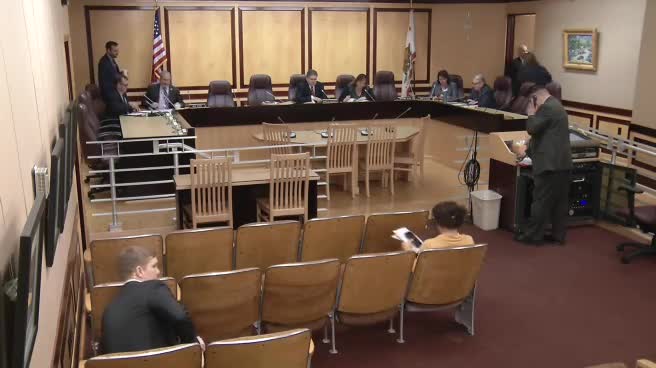 1H
Senate Standing Committee on Natural Resources and Water



Bill Co-Author(s):




