SB 579: Water quality control plans: alternative measures.
- Session Year: 2017-2018
- House: Senate
- Latest Version Date: 2018-08-24
Existing law establishes the State Water Resources Control Board and the 9 California regional water quality control boards as the principal state agencies with authority over matters relating to water quality. Existing law requires the state board to formulate and adopt state policy for water quality control. Existing law requires each regional board to formulate and adopt water quality control plans for all areas within the region and prohibits a water quality control plan, or a revision of the plan, adopted by a regional board from becoming effective unless it is approved by the state board. Existing law authorizes the state board to adopt certain water quality control plans.
This bill, if a water quality control plan or any amendment to a water quality control plan is adopted that has an impact on stream flow, would require the state board or a regional board to analyze the contribution that nonflow measures and adaptive management can provide to the achievement of relevant water quality objectives and ensure those contributions are accounted for in the water quality control plan or amendment to the water quality control plan.
Existing law regulates the sale or offer to sell by a dealer to a consumer of a collectible in or from this state, as specified. Existing law defines the term collectible to mean any autographed item, as specified, sold or offered for sale in or from this state by a dealer, to a consumer for $5 or more. This bill would instead define autographed collectible to mean autographed sports or entertainment media items, as specified, sold or offered for sale in or from this state by a dealer to a consumer for $50 or more, bearing the signature of a person signed by that individuals own hand. The bill would exclude, among other items, works of fine art, signed books, furniture, and certain decorative objects, from the definition of an autographed collectible. Existing law defines a dealer, among other things, as a person who is principally in the business of selling or offering for sale collectibles in or from this state or a person who by his or her occupation holds himself or herself out as having knowledge or skill peculiar to collectibles. Existing law includes a person engaged in a cable television business for the sale of collectibles in the definition of dealer. Existing law excludes from the definition of dealer, among other persons, the personality who signs the memorabilia. Existing law also excludes from the definition of dealer a provider or operator of an online marketplace, provided that the marketplace provider or operator is not principally in the business of selling, or offering for sale, collectibles, in or from the state, exclusively or nonexclusively, or does not hold itself out as having knowledge or skill peculiar to collectibles. The bill would amend the definition of a dealer to be, among other things, a person who is in the business of selling autographed collectibles and sells 3 or more autographed collectibles in a period of 12 months. The bill would include an auctioneer, an auction company, and a person engaged in any television business for the sale of autographed collectibles in the definition of dealer. The bill would amend the terms under which a provider or operator of an online marketplace is excluded from the definition of dealer to exclude a provider or operator through which prospective buyers connect with the sellers of autographed collectibles who are in actual physical possession of the merchandise being offered for sale and does not hold itself out as having knowledge or skill peculiar to collectibles.Existing law requires a dealer, as defined, to provide a certificate of authenticity for each collectible to, among other things, indicate whether the item was obtained or purchased from a third party. If the item was obtained or purchased from a third party, existing law requires the certificate of authenticity to indicate the name and address of this third party.This bill instead would require a dealer to provide an express warranty, as specified. The bill also would require a dealer, for items obtained on and after January 1, 2018, separate from the express warranty, to maintain a record stating whether the autographed collectible was purchased by the dealer from a third party, for a period of 7 years, as well as the name and address of that third party. The bill would permit discovery of this information in a civil dispute, as specified.The bill would require a consumer to have the right to cancel the contract for the purchase of an autographed collectible represented by a dealer as authentic until at least midnight of the 3rd day after the day on which the consumer purchased the autographed collectible, except when the autographed collectible is purchased at a public auction, as specified. The bill would specify procedures and conditions of the cancellation. The bill would require the 3-day right of return, except as specified, to be included in the sign and the onscreen message a dealer is required to display.Existing law prohibits a dealer from displaying or offering for sale a collectible in this state at any trade show or similar event primarily featuring sales of collectibles or other memorabilia that offers onsite admission ticket sales, except as provided. Existing law requires a promoter who arranges or organizes a trade show featuring collectibles and autograph signings to provide a specified notification to any dealer who agrees to purchase or rent space in the trade show.This bill would repeal those provisions.Existing law provides that a consumer who is injured by a failure of the dealer to provide a certificate of authenticity is entitled to recover from that dealer, among other things, 10 times his or her actual damages. This bill instead would provide for specified civil penalties in a civil action against the dealer for failure to comply with the provisions regarding express warranties. The bill would also provide for civil penalties for knowingly providing a false warranty, as well as attorneys fees and other costs to be paid to the consumer.This bill would declare that it is to take effect immediately as an urgency statute.Existing law regulates the sale or offer to sell by a dealer to a consumer of a collectible in or from this state, as specified. Existing law defines the term collectible to mean any autographed item, as specified, sold or offered for sale in or from this state by a dealer, to a consumer for $5 or more.
This bill would instead define autographed collectible to mean autographed sports or entertainment media items, as specified, sold or offered for sale in or from this state by a dealer to a consumer for $50 or more, bearing the signature of a person signed by that individuals own hand. The bill would exclude from the definition, among other items, signed books, works of fine art, furniture, and decorative objects. The bill would exclude, among other items, works of fine art, signed books, furniture, and certain decorative objects, from the definition of an autographed collectible.
Existing law defines a dealer, among other things, as a person who is principally in the business of selling or offering for sale collectibles in or from this state or a person who by his or her occupation holds himself or herself out as having knowledge or skill peculiar to collectibles. Existing law includes a person engaged in a cable television business for the sale of collectibles in the definition of dealer. Existing law excludes from the definition of dealer, among other persons, the personality who signs the memorabilia. Existing law also excludes from the definition of dealer a provider or operator of an online marketplace, provided that the marketplace provider or operator is not principally in the business of selling, or offering for sale, collectibles, in or from the state, exclusively or nonexclusively, or does not hold itself out as having knowledge or skill peculiar to collectibles.
The bill would amend the definition of a dealer to be, among other things, a person who is in the business of selling autographed collectibles and who is required to have a seller s permit issued by the California Department of Tax and Fee Administration. sells 3 or more autographed collectibles in a period of 12 months. The bill would include an auctioneer, an auction company, and a person engaged in any television business for the sale of autographed collectibles in the definition of dealer. The bill would amend the terms under which a provider or operator of an online marketplace is excluded from the definition of dealer to exclude a provider or operator through which prospective buyers connect with the sellers of autographed collectibles who are in actual physical possession of the merchandise being offered for sale and does not hold itself out as having knowledge or skill peculiar to collectibles.
Existing law requires a dealer, as defined, to provide a certificate of authenticity for each collectible to, among other things, indicate whether the item was obtained or purchased from a third party. If the item was obtained or purchased from a third party, existing law requires the certificate of authenticity to indicate the name and address of this third party.
This bill would eliminate the requirement that the name and address of the third party be indicated on the certificate of authenticity and would, instead, provide that a dealer is not obligated to provide the name and address of a third party, unless litigation ensues related to that item, and, in that instance, would authorize a consumer to obtain that information pursuant to a subpoena or judicial order. The bill would require the dealer to retain records of the name and address of the third party for a specified amount of time. The bill would provide for specified civil penalties and other costs of suit to be paid by a dealer to a consumer who brings a successful lawsuit for violations of the provisions requiring the certificate of authenticity.The bill would provide that its provisions apply to sales physically conducted in California by a seller, as specified.This bill instead would require a dealer to provide an express warranty, as specified. The bill also would require a dealer, for items obtained on and after January 1, 2018, separate from the express warranty, to maintain a record stating whether the autographed collectible was purchased by the dealer from a third party, for a period of 7 years, as well as the name and address of that third party. The bill would permit discovery of this information in a civil dispute, as specified.
The bill would require a consumer to have the right to cancel the contract for the purchase of an autographed collectible represented by a dealer as authentic until at least midnight of the 3rd day after the day on which the consumer purchased the autographed collectible, except when the autographed collectible is purchased at a public auction, as specified. The bill would specify procedures and conditions of the cancellation. The bill would require the 3-day right of return, except as specified, to be included in the sign and the onscreen message a dealer is required to display.
Existing law prohibits a dealer from displaying or offering for sale a collectible in this state at any trade show or similar event primarily featuring sales of collectibles or other memorabilia that offers onsite admission ticket sales, except as provided. Existing law requires a promoter who arranges or organizes a trade show featuring collectibles and autograph signings to provide a specified notification to any dealer who agrees to purchase or rent space in the trade show.
This bill would repeal those provisions.
Existing law provides that a consumer who is injured by a failure of the dealer to provide a certificate of authenticity is entitled to recover from that dealer, among other things, 10 times his or her actual damages.
This bill instead would provide for specified civil penalties in a civil action against the dealer for failure to comply with the provisions regarding express warranties. The bill would also provide for civil penalties for knowingly providing a false warranty, as well as attorneys fees and other costs to be paid to the consumer.
This bill would declare that it is to take effect immediately as an urgency statute.
Existing law regulates the sale or offer to sell by a dealer to a consumer of a collectible in or from this state, as specified. Existing law defines the term collectible to mean any autographed item, as specified, sold or offered for sale in or from this state by a dealer, to a consumer for $5 or more.
This bill would exclude from the definition of collectible items that fall within one of 5 categories, including works of fine art, as defined.This bill would instead define autographed collectible to mean autographed sports or entertainment media items, as specified, sold or offered for sale in or from this state by a dealer to a consumer for $50 or more, bearing the signature of a person signed by that individuals own hand. The bill would exclude from the definition, among other items, signed books, works of fine art, furniture, and decorative objects.
Existing law defines a dealer, among other things, as a person who is principally in the business of selling or offering for sale collectibles in or from this state or a person who by his or her occupation holds himself or herself out as having knowledge or skill peculiar to collectibles. Existing law includes a person engaged in a cable television business for the sale of collectibles in the definition of dealer. Existing law excludes from the definition of dealer, among other persons, the personality who signs the memorabilia. Existing law also excludes from the definition of dealer a provider or operator of an online marketplace, provided that the marketplace provider or operator is not principally in the business of selling, or offering for sale, collectibles, in or from the state, exclusively or nonexclusively, or does not hold itself out as having knowledge or skill peculiar to collectibles.
The bill would amend the definition of a dealer to be, among other things, a person who is in the business of selling autographed collectibles and who is required to have a seller s permit issued by the California Department of Tax and Fee Administration. The bill would include a person engaged in any television business for the sale of autographed collectibles in the definition of dealer. The bill would amend the terms under which a provider or operator of an online marketplace is excluded from the definition of dealer to exclude a provider or operator through which prospective buyers connect with the sellers of autographed collectibles who are in actual physical possession of the merchandise being offered for sale and does not hold itself out as having knowledge or skill peculiar to collectibles.
Existing law requires a dealer, as defined, to provide a certificate of authenticity for each collectible to, among other things, indicate whether the item was obtained or purchased from a third party. If the item was obtained or purchased from a third party, existing law requires the certificate of authenticity to indicate the name and address of this third party.
This bill would eliminate the requirement that the name and address of the third party be indicated on the certificate of authenticity and would, instead, provide that a dealer is not obligated to provide the name and address of a third party, unless litigation ensues related to that item, and, in that instance, would authorize a consumer to obtain that information pursuant to a subpoena or judicial order. The bill would require the dealer to retain records of the name and address of the third party for a specified amount of time. The bill would provide for specified civil penalties and other costs of suit to be paid by a dealer to a consumer who brings a successful lawsuit for violations of the provisions requiring the certificate of authenticity.
The bill would exempt sales that take place wholly outside the state from these provisions. provide that its provisions apply to sales physically conducted in California by a seller, as specified.
This bill would declare that it is to take effect immediately as an urgency statute.
Existing law regulates the sale or offer to sell by a dealer to a consumer of a collectible in or from this state, as specified. Existing law defines the term collectible to mean any autographed item, as specified, sold or offered for sale in or from this state by a dealer, to a consumer for $5 or more.
This bill would exclude from the definition of collectible items that fall within one of 5 categories, including works of fine art, as defined.
Existing law defines a dealer, among other things, as a person who is principally in the business of selling or offering for sale collectibles in or from this state, a person who by his or her occupation holds himself or herself out as having knowledge or skill peculiar to collectibles, or a person who is a consigner or a representative or an agent of auctioneers who sell collectibles at public auctions. This bill would exclude from the definition of a dealer an auction house or auctioneer that principally conducts sales of collectibles and any person or business that would otherwise meet the definition of a dealer but who is located outside of this state and who sells, or offers to sell, a collectible outside of the state, as provided.Existing law requires a dealer dealer, as defined, to provide a certificate of authenticity for each collectible to, among other things, indicate whether the item was obtained or purchased from a third party. If the item was obtained or purchased from a third party, existing law requires the certificate of authenticity to indicate the name and address of this third party.
This bill would eliminate the requirement that the name and address of the third party be indicated on the certificate of authenticity and would, instead, provide that a dealer is not obligated to provide the name and address of a third party, unless litigation ensues related to that item, and, in that instance, would authorize a consumer to obtain that information pursuant to a subpoena or judicial order. The bill would require the dealer to retain records of the name and address of the third party for a specified amount of time.
The bill would exempt sales that take place wholly outside the state from these provisions.
This bill would declare that it is to take effect immediately as an urgency statute.
Existing law regulates the sale or offer to sell by a dealer to a consumer of a collectible in or from this state, as specified. Existing law defines the term collectible to mean any autographed item, as specified, sold or offered for sale in or from this state by a dealer, to a consumer for $5 or more.
This bill would exclude from the definition of collectible items that fall within one of 5 categories, including works of fine art, as defined.
Existing law defines a dealer, among other things, as a person who is principally in the business of selling or offering for sale collectibles in or from this state, a person who by his or her occupation holds himself or herself out as having knowledge or skill peculiar to collectibles, or a person who is a consigner or a representative or an agent of auctioneers who sell collectibles at public auctions.
This bill would exclude from the definition of a dealer an auction house or auctioneer that principally conducts sales of collectibles and any person or business that would otherwise meet the definition of a dealer but who is located outside of this state and who sells, or offer, offers to sell, a collectible outside of the state, as provided.
Existing law requires a dealer to provide a certificate of authenticity for each collectible to, among other things, indicate whether the item was obtained or purchased from a third party. If the item was obtained or purchased from a third party, existing law requires the certificate of authenticity to indicate the name and address of this third party.
This bill would eliminate the requirement that the name and address of the third party be indicated on the certificate of authenticity and would, instead, provide that a dealer is not obligated to provide the name and address of a third party, unless litigation ensues related to that item, and, in that instance, would authorize a consumer to obtain that information pursuant to a subpoena or judicial order. The bill would require the dealer to retain records of the name and address of the third party for a specified amount of time.
This bill would declare that it is to take effect immediately as an urgency statute.
Existing law regulates the sale or offer to sell by a dealer to a consumer of a collectible in or from this state, as specified. Existing law defines the term collectible to mean any autographed item, as specified, sold or offered for sale in or from this state by a dealer, to a consumer for $5 or more.
This bill would exclude from the definition of collectible items that are works of original art or numbered multiples signed by the artist or maker, as specified. that fall within one of 5 categories, including works of fine art, as defined.
Existing law defines a dealer, among other things, as a person who is principally in the business of selling or offering for sale collectibles in or from this state, a person who by his or her occupation holds himself or herself out as having knowledge or skill peculiar to collectibles, or a person who is a consigner or a representative or an agent of auctioneers who sell collectibles at public auctions.
This bill would exclude from the definition of a dealer an auction house or auctioneer that principally conducts sales of collectibles and any person or business that would be a dealer but for the fact that the person or business conducts business outside of California and nonexclusively transacts business with California purchasers. otherwise meet the definition of a dealer but who is located outside of this state and who sells, or offer, to sell, a collectible outside of the state, as provided.
Existing law requires a dealer to provide a certificate of authenticity for each collectible to, among other things, indicate whether the item was obtained or purchased from a third party. If the item was obtained or purchased from a third party, existing law requires the certificate of authenticity to indicate the name and address of this third party.
This bill would eliminate the requirement that the name and address of the third party be indicated on the certificate of authenticity and would, instead, provide that a dealer is not obligated to provide the name and address of a third party, unless litigation ensues related to that item, and, in that instance, would authorize a consumer to obtain that information pursuant to a subpoena or judicial order. The bill would require the dealer to retain records of the name and address of the third party, as specified. party for a specified amount of time.
This bill would declare that it is to take effect immediately as an urgency statute.
Existing law regulates the sale or offer to sell by a dealer to a consumer of a collectible in or from this state, as specified. Existing law defines the term collectible to mean any autographed item, as specified, sold or offered for sale in or from this state by a dealer, to a consumer for $5 or more.
This bill would exclude from the definition of collectible items that are works of original art or numbered multiples signed by the artist or maker, as specified.
Existing law defines a dealer, among other things, as a person who is principally in the business of selling or offering for sale collectibles in or from this state, a person who by his or her occupation holds himself or herself out as having knowledge or skill peculiar to collectibles, or a person who is a consigner or a representative or an agent of auctioneers who sell collectibles at public auctions.
This bill would exclude from the definition of a dealer an auction house or auctioneer that principally conducts sales of collectibles and any person or business that would be a dealer but for the fact that the person or business conducts business outside of California and nonexclusively transacts business with California purchasers.
Existing law requires a dealer to provide a certificate of authenticity for each collectible to, among other things, indicate whether the item was obtained or purchased from a third party. If the item was obtained or purchased from a third party, existing law requires the certificate of authenticity to indicate the name and address of this third party.
This bill would eliminate the requirement that the name and address of the third party be indicated on the certificate of authenticity and would, instead, require the dealer to retain records of the name and address of the third party, as specified.
This bill would declare that it is to take effect immediately as an urgency statute.
(a)The state board may adopt water quality control plans in accordance with the provisions of Sections 13240 to 13244, inclusive, insofar as they are applicable, for waters for which water quality standards are required by the Federal Water Pollution Control Act and acts amendatory thereof or supplementary thereto. Such These plans, when adopted, supersede any regional water quality control plans for the same waters to the extent of any conflict. If a water quality control plan or any amendment to a water quality control plan is adopted that has an impact on stream flow, the state board shall analyze the contributions that nonflow measures and adaptive management can provide to the achievement of relevant water quality objectives and ensure those contributions are accounted for in the water quality control plan or amendment to the water quality control plan.
(b)The amendments to this section made by the act adding this subdivision shall not be construed as an additional grant of authority to the state board.
SEC. 2.Section 13241 of the Water Code is amended to read:13241.(a)Each regional board shall establish such water quality objectives in water quality control plans as in its judgment will ensure the reasonable protection of beneficial uses and the prevention of nuisance; however, it is recognized that it may be possible for the quality of water to be changed to some degree without unreasonably affecting beneficial uses. Factors to be considered by a regional board in establishing water quality objectives shall include, but not necessarily be limited to, all of the following:
(a)(1)Past, present, and probable future beneficial uses of water.
(b)(2)Environmental characteristics of the hydrographic unit under consideration, including the quality of water available thereto.
(c)(3)Water quality conditions that could reasonably be achieved through the coordinated control of all factors which affect water quality in the area.
(d)(4)Economic considerations.
(e)(5)The need for developing housing within the region.
(f)(6)The need to develop and use recycled water.
(b)If a water quality control plan or any amendment to a water quality control plan is adopted that has an impact on stream flow, a regional board shall analyze the contributions that nonflow measures and adaptive management can provide to the achievement of relevant water quality objectives and ensure those contributions are accounted for in the water quality control plan or amendment to the water quality control plan.
(c)The amendments to this section made by the act adding this subdivision shall not be construed as an additional grant of authority to a regional board.
SECTION 1.Section 1739.7 of the Civil Code is amended to read:1739.7.(a)As used in this section:(1)Autographed collectible means an item purporting to bear the signature of a particular person in that persons own hand that is sold or offered for sale for fifty dollars ($50) or more, excluding sales tax, shipping fees, other surcharges, and buyers premiums, when the dealer offers the signed item at a higher price than the dealer would charge for a comparable item without the signature.(2)For purposes of this section, an autographed collectible shall be limited to the following items:(A)Sports items, including, but not limited to, a photograph, ticket, plaque, sports program, trading card, item of sports equipment or clothing, or other sports memorabilia.(B)Entertainment media items related to music, television, and films, including, but not limited to, a picture, photograph, record, compact disc, digital video disc, ticket, program, playbill, clothing, hat, poster, toy, plaque, trading card, musical instrument, or other entertainment memorabilia.(3)For purposes of this section, and notwithstanding paragraph (2), an autographed collectible does not include the following items:(A)Works of fine art, as defined by paragraph (1) of subdivision (d) of Section 982 that are originals or numbered multiples signed by the artist or maker.(B)Furniture and decorative objects, including works of pottery, jewelry, and design that are signed by the artist or maker.(C)Signed books, manuscripts, and correspondence, as well as ephemera not related to sports or entertainment media.(D)Signed numismatic items and bullion.(4)Consumer means any natural person who purchases an autographed collectible from a dealer for personal, family, or household purposes. Consumer also includes a prospective purchaser meeting these criteria.(5)(A)Dealer means a person who is in the business of selling or offering for sale autographed collectibles exclusively or nonexclusively, and sells three or more autographed collectibles in a period of 12 months. Dealer includes an auctioneer or auction company who sells autographed collectibles at a public auction conducted in the state, whether by broadcasting the auction from the state, or by being physically present in the state. Dealer includes a person engaged in a mail-order, telephone-order, online, or television business for the sale of autographed collectibles.(B)Dealer does not include any of the following:(i)A pawnbroker licensed pursuant to Chapter 3 (commencing with Section 21300) of Division 8 of the Financial Code, if the autographed collectible was acquired through a foreclosure on a collateral loan, provided that the pawnbroker does not hold himself or herself out as having knowledge or skill peculiar to autographed collectibles. (ii)The personality who signs the autographed collectible.(iii)An online technology provider or marketplace that meets all of the following criteria:(I)Connects a prospective buyer to a seller of an autographed collectible.(II)Does not have actual physical possession of the autographed collectible being offered for sale.(III)Does not hold itself out as having knowledge or skill peculiar to autographed collectibles.(6)Limited edition means any autographed collectible that meets all of the following requirements:(A)A company has produced a specific quantity of an autographed collectible and placed it on the open market.(B)The producer of the autographed collectible has posted a notice, at its primary place of business, that it will provide any consumer, upon request, with a copy of a notice that states the exact number of an autographed collectible produced in that series of limited editions.(C)The producer makes available, upon request of a consumer, evidence that the electronic encoding, films, molds, or plates used to create the autographed collectible have been destroyed after the specified number of autographed collectibles have been produced.(D)The sequence number of the autographed collectible and the number of the total quantity produced in the limited edition are printed on the collectible. (7)Person means any natural person, partnership, corporation, limited liability company, company, trust, association, or other entity, however organized.(8)Representation means any oral or written representation, including, but not limited to, a representation in an advertisement, brochure, catalog, flyer, invoice, sign, radio or television broadcast, online communication, Internet Web page, email, or other commercial or promotional material.(9)Auctioneer means an auctioneer as defined in subdivision (d) of Section 1812.601, including any person who is a consignor, representative, or agent of an auctioneer.(10)Auction company means an auction company as defined in subdivision (c) of Section 1812.601.(b)A dealer who, in selling or offering to sell to a consumer an autographed collectible, makes a representation to a consumer that the signature on the autographed collectible is authentic, shall furnish an express warranty to the consumer at the time of sale. The certificate of authenticity shall be in writing, shall be signed by the dealer or his or her authorized agent, and shall specify the date of sale. The express warranty may be included in the bill of sale or invoice. The dealer shall retain a copy of the express warranty for not less than seven years. The express warranty shall meet all of the following criteria:(1)Is written in at least 10-point type.(2)Is signed by the dealer or his or her authorized agent, and contains the dealers true legal name, business street address, and the last four digits of the dealers sellers permit account number, if any, from the California Department of Tax and Fee Administration.(3)Specifies the date of sale and the purchase price.(4)Describes the autographed collectible and specifies the name of the person who autographed it. (5)Expressly warrants the autographed collectible as authentic, and that the warranty is conclusively presumed to be part of the bargain. The warranty shall not be negated or limited by reason of the lack of words such as warranty or guarantee or because the dealer does not have a specific intent or authorization to make the warranty or because any statement relevant to the autographed collectible is or purports to be, or is capable of being, merely the dealers opinion.(6)If the autographed collectible is offered as one of a limited edition, specifies (A) how the autographed collectible and edition are numbered and (B) the size of the edition and the size of any prior or anticipated future edition, if the dealer has knowledge of that information. If the size of the edition and the size of any prior or anticipated future edition is not known, the warranty shall contain an explicit statement to that effect.(7)Indicates whether the dealer is surety bonded or is otherwise insured to protect the consumer against errors and omissions of the dealer and, if bonded or insured, provides proof thereof.(8)Indicates whether the autographed collectible has a certificate of authenticity from a third party, or if it was autographed in the presence of the dealer, and any proof thereof.(9)Indicates an identifying serial number that corresponds to an identifying number printed on the autographed collectible item, if any.(c)In addition to retaining the express warranty described in subdivision (b), the dealer shall also retain, on and after January 1, 2018, a record stating whether the autographed collectible was purchased by the dealer from a third party and the name and address of that third party. This third-party information may be discoverable during a civil dispute. However, nothing in this subdivision prohibits a party from objecting to a discovery request on the grounds of a right to privacy.(d)(1)In addition to any other right or remedy provided under existing law, including, but not limited to, any rights and remedies provided under contract law, a consumer shall have the right to cancel the contract for the purchase of an autographed collectible represented by a dealer as authentic until midnight of the third day after the day on which the consumer purchased the autographed collectible. Notice of the cancellation may be provided in person or in a written or electronic form, and is deemed effective once communicated or sent. The autographed collectible shall be returned to the dealer within 30 days of the sale in the same condition in which it was sold, and the cost of the return shall be borne by the consumer. The price paid by the consumer shall be refunded within 10 days of receipt of the returned autographed collectible. Nothing in this section prevents the parties from agreeing to cancel a contract after midnight of the third day after the day on which the consumer purchases the autographed collectible.(2)This subdivision does not apply to an autographed collectible sold by an auctioneer or auction company. (e)(1)No dealer shall display or offer for sale an autographed collectible in this state unless, at the location where the autographed collectible is offered for sale and in close proximity to the autographed collectible merchandise, there is a conspicuous sign that reads as follows:SALE OF AUTOGRAPHED COLLECTIBLES: AS REQUIRED BY LAW, A DEALER WHO SELLS TO A CONSUMER ANY AUTOGRAPHED COLLECTIBLE DESCRIBED AS BEING AUTOGRAPHED MUST PROVIDE AN EXPRESS WARRANTY AT THE TIME OF SALE AND A THREE-DAY RIGHT OF RETURN. THIS DEALER MAY BE SURETY BONDED OR OTHERWISE INSURED TO ENSURE THE AUTHENTICITY OF ANY AUTOGRAPHED COLLECTIBLE SOLD BY THIS DEALER.(2)This subdivision does not apply to a collectible sold by an auctioneer or auction company at a public auction. (f)Any dealer engaged in a mail-order, telephone-order, or online business for the sale of autographed collectibles:(1)Shall include the disclosure specified in subdivision (e), in type of conspicuous size, in any written advertisement relating to an autographed collectible.(2)Shall include in each television or online advertisement relating to an autographed collectible the following written onscreen message, which shall be prominently displayed, easily readable, and clearly visible for no less than five seconds, and which shall be repeated for five seconds once during each four-minute segment of the advertisement following the initial four minutes:A written express warranty is provided with each autographed collectible, as required by law. This dealer may be surety bonded or otherwise insured to ensure the authenticity of any autographed collectible sold by this dealer.(3)Shall include as part of the oral message of each radio advertisement for an autographed collectible the disclosure specified in subdivision (e).(g)(1)A dealer who fails to provide an express warranty or provides an express warranty that does not comply with all of the requirements of subdivision (b), shall be subject to a civil penalty of up to one thousand dollars ($1,000), payable to the consumer in a civil action brought against the dealer.(2)A dealer who knowingly provides a false certificate of responsibility shall be subject to a civil penalty of up to five thousand dollars ($5,000), payable to the consumer, plus court costs, reasonable attorneys fees, interest, and expert witness fees, if applicable, incurred by the consumer in a civil action brought against the dealer.(3)The remedy specified in this section is in addition to, and not in lieu of, any other remedy that may be provided by law. (h)A dealer may be surety bonded or otherwise insured for purposes of indemnification against errors and omissions arising from the authentication, sale, or resale of autographed collectibles.SEC. 2.This act is an urgency statute necessary for the immediate preservation of the public peace, health, or safety within the meaning of Article IV of the California Constitution and shall go into immediate effect. The facts constituting the necessity are:In order to alleviate some of the burdens on, and to protect the privacy of, bookstore owners, comic book retailers, consignors, art galleries, antique dealers, and auction houses as soon as possible, it is necessary that this act take effect immediately.(a)As used in this section:
(1)Autographed collectible means an item bearing purporting to bear the signature of a particular person in that persons own hand that is sold or offered for sale for fifty dollars ($50) or more. more, excluding sales tax, shipping fees, other surcharges, and buyers premiums, when the dealer offers the signed item at a higher price than the dealer would charge for a comparable item without the signature.
(2)For purposes of this section, an autographed collectible shall be limited to the following items:
(A)Sports items, including, but not limited to, a photograph, ticket, plaque, sports program, trading card, item of sports equipment or clothing, or other sports memorabilia.
(B)Entertainment media items related to music, television, and films, including, but not limited to, a picture, photograph, record, compact disc, digital video disc, ticket, program, playbill, clothing, hat, poster, toy, plaque, trading card, musical instrument, or other entertainment memorabilia.
(C)(3)For purposes of this section, and notwithstanding paragraph (2), an autographed collectible does not include the following items:
(i)(A)Works of fine art, as defined by paragraph (1) of subdivision (d) of Section 982 that are originals or numbered multiples signed by the artist or maker.
(ii)(B)Furniture and decorative objects, including works of pottery, jewelry, and design that are signed by the artist or maker.
(iii)(C)Signed books, manuscripts, and correspondence, as well as ephemera not related to sports or entertainment media.
(iv)(D)Signed numismatic items and bullion.
(3)(4)Consumer means any natural person who purchases an autographed collectible from a dealer for personal, family, or household purposes. Consumer also includes a prospective purchaser meeting these criteria.
(4)(5)(A)Dealer means a person who is in the business of selling or offering for sale autographed collectibles exclusively or nonexclusively, and is required to have a sellers permit issued by the California Department of Tax and Fee Administration. sells three or more autographed collectibles in a period of 12 months. Dealer includes an auctioneer or auction company who sells autographed collectibles at a public auction, and also includes persons who are consignors or representatives or agents of auctioneers. auction conducted in the state, whether by broadcasting the auction from the state, or by being physically present in the state. Dealer includes a person engaged in a mail order, telephone order, mail-order, telephone-order, online, or television business for the sale of autographed collectibles.
(B)Dealer does not include any of the following:
(i)A pawnbroker licensed pursuant to Chapter 3 (commencing with Section 21300) of Division 8 of the Financial Code, if the autographed collectible was acquired through a foreclosure on a collateral loan, provided that the pawnbroker does not hold himself or herself out as having knowledge or skill peculiar to autographed collectibles.
(ii)The personality who signs the autographed collectible.
(iii)An online technology provider or marketplace through which prospective buyers connect with the sellers of autographed collectibles who are in actual physical possession of the merchandise being offered for sale and does not hold itself out as having knowledge or skill peculiar to autographed collectibles. that meets all of the following criteria:
(I)Connects a prospective buyer to a seller of an autographed collectible.
(II)Does not have actual physical possession of the autographed collectible being offered for sale.
(III)Does not hold itself out as having knowledge or skill peculiar to autographed collectibles.
(5)Description means any of the following:(A)Any representation in writing, including, but not limited to, a representation in an advertisement, brochure, catalog, flyer, invoice, sign, Internet Web page, email, or other commercial or promotional material.(B)Any oral representation.(C)Any representation included in a radio or television broadcast or online communication to the public in or from this state.(6)Limited edition means any autographed collectible that meets all of the following requirements:
(A)A company has produced a specific quantity of an autographed collectible and placed it on the open market.
(B)The producer of the autographed collectible has posted a notice, at its primary place of business, that it will provide any consumer, upon request, with a copy of a notice that states the exact number of an autographed collectible produced in that series of limited editions.
(C)The producer makes available, upon request of a consumer, evidence that the electronic encoding, films, molds, or plates used to create the autographed collectible have been destroyed after the specified number of autographed collectibles have been produced.
(D)The sequence number of the autographed collectible and the number of the total quantity produced in the limited edition are printed on the collectible.
(7)Mint condition means any autographed collectible sold on the open market or through a private transaction that meets all of the following requirements:(A)The item has never been circulated, used, or worn.(B)The item exhibits little or no sign of aging or degradation caused by oxidation or exposure to sunlight as a result of its display.(C)The item is otherwise free from creases, blemishes, or marks.(8)Promoter means a person who arranges, holds, organizes, or presents a trade show featuring autographed collectibles, autograph signings, or both. (9)(7)Person means any natural person, partnership, corporation, limited liability company, company, trust, association, or other entity, however organized.
(8)Representation means any oral or written representation, including, but not limited to, a representation in an advertisement, brochure, catalog, flyer, invoice, sign, radio or television broadcast, online communication, Internet Web page, email, or other commercial or promotional material.
(9)Auctioneer means an auctioneer as defined in subdivision (d) of Section 1812.601, including any person who is a consignor, representative, or agent of an auctioneer.
(10)Auction company means an auction company as defined in subdivision (c) of Section 1812.601.
(b)Whenever a dealer, A dealer who, in selling or offering to sell to a consumer an autographed collectible in or from this state, provides a description of that autographed collectible as being autographed, the dealer shall furnish a certificate of authenticity collectible, makes a representation to a consumer that the signature on the autographed collectible is authentic, shall furnish an express warranty to the consumer at the time of sale. The certificate of authenticity shall be in writing, shall be signed by the dealer or his or her authorized agent, and shall specify the date of sale. The certificate of authenticity shall be in at least 10-point boldface type and shall contain the dealers true legal name and street address. The express warranty may be included in the bill of sale or invoice. The dealer shall retain a copy of the certificate of authenticity express warranty for not less than seven years. Each certificate of authenticity shall do all of the following: The express warranty shall meet all of the following criteria:
(1)Describe(1)Is written in at least 10-point type.
(2)Is signed by the dealer or his or her authorized agent, and contains the dealers true legal name, business street address, and the last four digits of the dealers sellers permit account number, if any, from the California Department of Tax and Fee Administration.
(3)Specifies the date of sale and the purchase price.
(4)Describes the autographed collectible and specify specifies the name of the personality person who autographed it.
(2)Either specify the purchase price and date of sale or be accompanied by a separate invoice setting forth that information. (3)Contain an express warranty, which shall be(5)Expressly warrants the autographed collectible as authentic, and that the warranty is conclusively presumed to be part of the bargain, of the authenticity of the autographed collectible. This bargain. The warranty shall not be negated or limited by reason of the lack of words such as warranty or guarantee or because the dealer does not have a specific intent or authorization to make the warranty or because any statement relevant to the autographed collectible is or purports to be, or is capable of being, merely the dealers opinion.
(4)Specify whether(6)If the autographed collectible is offered as one of a limited edition and, if so, specify edition, specifies (A) how the autographed collectible and edition are numbered and (B) the size of the edition and the size of any prior or anticipated future edition, if known. the dealer has knowledge of that information. If the size of the edition and the size of any prior or anticipated future edition is not known, the certificate warranty shall contain an explicit statement to that effect.
(5)Indicate(7)Indicates whether the dealer is surety bonded or is otherwise insured to protect the consumer against errors and omissions of the dealer and, if bonded or insured, provide provides proof thereof.
(6)Indicate the last four digits of the dealers resale certificate number from the California Department of Tax and Fee Administration.(7)Indicate whether the item was autographed in the presence of the dealer and specify the date and location of, and the name of a witness to, the autograph signing.(8)Indicate whether the item was obtained or purchased from a third party. The dealer is not obligated to provide the name and address of a third party, unless litigation ensues related to that item. In that instance, the consumer may obtain the name and address pursuant to a subpoena or judicial order. The dealer shall retain records of the name and address of the third party for a period of seven years.(8)Indicates whether the autographed collectible has a certificate of authenticity from a third party, or if it was autographed in the presence of the dealer, and any proof thereof.
(9)Include Indicates an identifying serial number that corresponds to an identifying number printed on the autographed collectible item, if any. The serial number shall also be printed on the sales receipt. If the sales receipt is printed electronically, the dealer may manually write the serial number on the receipt.
(c)A dealer shall not represent an item as an autographed collectible if it was not autographed by the personality in his or her own hand.(c)In addition to retaining the express warranty described in subdivision (b), the dealer shall also retain, on and after January 1, 2018, a record stating whether the autographed collectible was purchased by the dealer from a third party and the name and address of that third party. This third-party information may be discoverable during a civil dispute. However, nothing in this subdivision prohibits a party from objecting to a discovery request on the grounds of a right to privacy.
(d)(1)In addition to any other right or remedy provided under existing law, including, but not limited to, any rights and remedies provided under contract law, a consumer shall have the right to cancel the contract for the purchase of an autographed collectible represented by a dealer as authentic until midnight of the third day after the day on which the consumer purchased the autographed collectible. Notice of the cancellation may be provided in person or in a written or electronic form, and is deemed effective once communicated or sent. The autographed collectible shall be returned to the dealer within 30 days of the sale in the same condition in which it was sold, and the cost of the return shall be borne by the consumer. The price paid by the consumer shall be refunded within 10 days of receipt of the returned autographed collectible. Nothing in this section prevents the parties from agreeing to cancel a contract after midnight of the third day after the day on which the consumer purchases the autographed collectible.
(2)This subdivision does not apply to an autographed collectible sold by an auctioneer or auction company.
(d)(e)(1)No dealer shall display or offer for sale an autographed collectible in this state unless, at the location where the autographed collectible is offered for sale and in close proximity to the autographed collectible merchandise, there is a conspicuous sign that reads as follows:
SALE OF AUTOGRAPHED COLLECTIBLES: AS REQUIRED BY LAW, A DEALER WHO SELLS TO A CONSUMER ANY AUTOGRAPHED COLLECTIBLE DESCRIBED AS BEING AUTOGRAPHED MUST PROVIDE A WRITTEN CERTIFICATE OF AUTHENTICITY
AN EXPRESS WARRANTY AT THE TIME OF SALE. SALE AND A THREE-DAY RIGHT OF RETURN. THIS DEALER MAY BE SURETY BONDED OR OTHERWISE INSURED TO ENSURE THE AUTHENTICITY OF ANY AUTOGRAPHED COLLECTIBLE SOLD BY THIS DEALER.
(2)This subdivision does not apply to a collectible sold by an auctioneer or auction company at a public auction.
(e)(f)Any dealer engaged in a mail-order, telephone-order, or online business for the sale of autographed collectibles in or from this state: collectibles:
(1)Shall include the disclosure specified in subdivision (d), (e), in type of conspicuous size, in any written advertisement relating to an autographed collectible.
(2)Shall include in each television or online advertisement relating to an autographed collectible the following written on-screen onscreen message, which shall be prominently displayed, easily readable, and clearly
visible for no less than five seconds, and which shall be repeated for five seconds once during each four-minute segment of the advertisement following the initial four minutes:
A written certificate of authenticity express warranty is provided with each autographed collectible, as required by law. This dealer may be surety bonded or otherwise insured to ensure the authenticity of any autographed collectible sold by this dealer.
(3)Shall include as part of the oral message of each radio advertisement for an autographed collectible the disclosure specified in subdivision (d). (e).
(f)No dealer shall display or offer for sale an autographed collectible in this state at any trade show or similar event primarily featuring sales of autographed collectibles or other memorabilia that offers onsite admission ticket sales unless, at each onsite location where admission tickets are sold, there is prominently displayed a specimen example of a certificate of authenticity.(g)(1)A dealer who fails to provide a certificate of authenticity, an express warranty or provides a certificate of authenticity an express warranty that does not comply with all of the requirements of subdivision (b), shall be subject to a civil penalty of up to one thousand dollars ($1,000), payable to the consumer in a civil action brought against the dealer.
(2)A dealer who knowingly provides a false certificate of responsibility shall be subject to a civil penalty of up to five thousand dollars ($5,000), payable to the consumer, plus court costs, reasonable attorneys fees, interest, and expert witness fees, if applicable, incurred by the consumer in a civil action brought against the dealer.
(3)The remedy specified in this section is in addition to, and not in lieu of, any other remedy that may be provided by law.
(h)No person shall represent himself or herself as a dealer in this state unless he or she possesses a valid sellers permit issued by the California Department of Tax and Fee Administration. (i)(h)A dealer may be surety bonded or otherwise insured for purposes of indemnification against errors and omissions arising from the authentication, sale, or resale of autographed collectibles.
(j)Whenever a promoter arranges or organizes a trade show featuring autographed collectibles and autograph signings, the promoter shall notify, in writing, any dealer who has agreed to purchase or rent space in this trade show what the promoter will do if any laws of this state are violated, including the fact that law enforcement officials will be contacted when those laws are violated. This notice shall be delivered to the dealer, at his or her registered place of business, at the time the agreement to purchase space in the trade show is made. The following language shall be included in each notice:As a vendor at this autographed collectibles trade show, you are a professional representative of this hobby. As a result, you will be required to follow the laws of this state, including laws regarding the sale and display of autographed collectibles, as defined in Section 1739.7 of the Civil Code, forged and counterfeit autographed collectibles and autographs, and mint and limited edition autographed collectibles. If you do not obey the laws, you may be evicted from this trade show, be reported to law enforcement, and be held liable for a civil penalty of 10 times the amount of damages.(k)This section applies to both of the following: (1)Sales physically conducted in California by sellers who operate exclusively in California, regardless of state of residence of consignor or purchaser of property.(2)Sales physically conducted in California by sellers who operate nonexclusively in California, as long as the sellers California operations would qualify them as dealers under this section.SEC. 2.This act is an urgency statute necessary for the immediate preservation of the public peace, health, or safety within the meaning of Article IV of the California Constitution and shall go into immediate effect. The facts constituting the necessity are:
In order to alleviate some of the burdens on, and to protect the privacy of, bookstore owners, comic book retailers, consignors, art galleries, antique dealers, and auction houses as soon as possible, it is necessary that this act take effect immediately.
(a)As used in this section:
(1)Autographed Autographed collectible means an item bearing the actual signature of a personality signed by that individuals own hand. person in that persons own hand that is sold or offered for sale for fifty dollars ($50) or more.
(2)(A)Collectible means an autographed item sold or offered for sale in or from this state by a dealer to a consumer for five dollars ($5) or more.(B)Collectible does not include the following:(2)For purposes of this section, an autographed collectible shall be limited to the following items:
(A)Sports items, including, but not limited to, a photograph, ticket, plaque, sports program, trading card, item of sports equipment or clothing, or other sports memorabilia.
(B)Entertainment media items related to music, television, and films, including, but not limited to, a picture, photograph, record, compact disc, digital video disc, ticket, program, playbill, clothing, hat, poster, toy, plaque, trading card, musical instrument, or other entertainment memorabilia.
(C)For purposes of this section, and notwithstanding paragraph (2), an autographed collectible does not include the following items:
(i)Works of fine art, as defined by paragraph (1) of subdivision (d) of Section 982 that are originals or numbered multiples signed by the artist or maker.
(ii)Furniture and decorative objects, including works of pottery, jewelry, and design that are signed by the artist or maker.
(iii)Signed books and manuscripts. books, manuscripts, and correspondence, as well as ephemera not related to sports or entertainment media.
(iv)Signed numismatic items and bullion.
(3)Consumer means any natural person who purchases a an autographed collectible from a dealer for personal, family, or household purposes. Consumer also includes a prospective purchaser meeting these criteria.
(4)(A)Dealer means a person who is principally in the business of selling or offering for sale autographed collectibles in or from this state, exclusively or nonexclusively, or a person who by his or her occupation holds himself or herself out as having knowledge or skill peculiar to collectibles, or to whom that knowledge or skill may be attributed by his or her employment of an agent or other intermediary that by his or her occupation holds himself or herself out as having that knowledge or skill. nonexclusively, and is required to have a sellers permit issued by the California Department of Tax and Fee Administration. Dealer includes an auctioneer who sells autographed collectibles at a public auction, and also includes persons who are consignors or representatives or agents of auctioneers. Dealer includes a person engaged in a mail order, telephone order, online, or cable television business for the sale of autographed collectibles.
(B)Dealer does not include any of the following:
(i)A pawnbroker licensed pursuant to Chapter 3 (commencing with Section 21300) of Division 8 of the Financial Code, if the autographed collectible was acquired through a foreclosure on a collateral loan, provided that the pawnbroker does not hold himself or herself out as having knowledge or skill peculiar to autographed collectibles.
(ii)The personality who signs the autographed collectible.
(iii)A provider or operator of an online marketplace, provided that the online marketplace provider or operator is not principally in the business of selling, or offering for sale, collectibles, in or from the state, exclusively or nonexclusively, or An online technology provider or marketplace through which prospective buyers connect with the sellers of autographed collectibles who are in actual physical possession of the merchandise being offered for sale and does not hold itself out as having knowledge or skill peculiar to autographed collectibles.
(5)Description means any of the following:
(A)Any representation in writing, including, but not limited to, a representation in an advertisement, brochure, catalog, flyer, invoice, sign, Internet Web page, email, or other commercial or promotional material.
(B)Any oral representation.
(C)Any representation included in a radio or television broadcast or online communication to the public in or from this state.
(6)Limited edition means any autographed collectible that meets all of the following requirements:
(A)A company has produced a specific quantity of a an autographed collectible and placed it on the open market.
(B)The producer of the autographed collectible has posted a notice, at its primary place of business, that it will provide any consumer, upon request, with a copy of a notice that states the exact number of a an autographed collectible produced in that series of limited editions.
(C)The producer makes available, upon request of a consumer, evidence that the electronic encoding, films, molds, or plates used to create the autographed collectible have been destroyed after the specified number of autographed collectibles have been produced.
(D)The sequence number of the autographed collectible and the number of the total quantity produced in the limited edition are printed on the collectible.
(7)Mint condition means any autographed collectible sold on the open market or through a private transaction that meets all of the following requirements:
(A)The item has never been circulated, used, or worn.
(B)The item exhibits little or no sign of aging or degradation caused by oxidation or exposure to sunlight as a result of its display.
(C)The item is otherwise free from creases, blemishes, or marks.
(8)Promoter means a person who arranges, holds, organizes, or presents a trade show featuring autographed collectibles, autograph signings, or both.
(9)Person means any natural person, partnership, corporation, limited liability company, company, trust, association, or other entity, however organized.
(b)Whenever a dealer, in selling or offering to sell to a consumer a an autographed collectible in or from this state, provides a description of that autographed collectible as being autographed, the dealer shall furnish a certificate of authenticity to the consumer at the time of sale. The certificate of authenticity shall be in writing, shall be signed by the dealer or his or her authorized agent, and shall specify the date of sale. The certificate of authenticity shall be in at least 10-point boldface type and shall contain the dealers true legal name and street address. The dealer shall retain a copy of the certificate of authenticity for not less than seven years. Each certificate of authenticity shall do all of the following:
(1)Describe the autographed collectible and specify the name of the personality who autographed it.
(2)Either specify the purchase price and date of sale or be accompanied by a separate invoice setting forth that information.
(3)Contain an express warranty, which shall be conclusively presumed to be part of the bargain, of the authenticity of the autographed collectible. This warranty shall not be negated or limited by reason of the lack of words such as warranty or guarantee or because the dealer does not have a specific intent or authorization to make the warranty or because any statement relevant to the autographed collectible is or purports to be, or is capable of being, merely the dealers opinion.
(4)Specify whether the autographed collectible is offered as one of a limited edition and, if so, specify (A) how the autographed collectible and edition are numbered and (B) the size of the edition and the size of any prior or anticipated future edition, if known. If the size of the edition and the size of any prior or anticipated future edition is not known, the certificate shall contain an explicit statement to that effect.
(5)Indicate whether the dealer is surety bonded or is otherwise insured to protect the consumer against errors and omissions of the dealer and, if bonded or insured, provide proof thereof.
(6)Indicate the last four digits of the dealers resale certificate number from the State Board of Equalization. California Department of Tax and Fee Administration.
(7)Indicate whether the item was autographed in the presence of the dealer and specify the date and location of, and the name of a witness to, the autograph signing.
(8)Indicate whether the item was obtained or purchased from a third party. The dealer is not obligated to provide the name and address of a third party, unless litigation ensues related to that item. In that instance, the consumer may obtain the name and address pursuant to a subpoena or judicial order. The dealer shall retain records of the name and address of the third party for a period of seven years.
(9)Include an identifying serial number that corresponds to an identifying number printed on the autographed collectible item, if any. The serial number shall also be printed on the sales receipt. If the sales receipt is printed electronically, the dealer may manually write the serial number on the receipt.
(c)A dealer shall not represent an item as a an autographed collectible if it was not autographed by the personality in his or her own hand.
(d)No dealer shall display or offer for sale a an autographed collectible in this state unless, at the location
where the collectible is offered for sale and in close proximity to the collectible merchandise, there is a conspicuous sign that reads as follows:
SALE OF AUTOGRAPHED COLLECTIBLES: AS REQUIRED BY LAW, A DEALER WHO SELLS TO A CONSUMER ANY AUTOGRAPHED COLLECTIBLE DESCRIBED AS BEING AUTOGRAPHED MUST PROVIDE A WRITTEN CERTIFICATE OF AUTHENTICITY AT THE TIME OF SALE. THIS DEALER MAY BE SURETY BONDED OR OTHERWISE INSURED TO ENSURE THE AUTHENTICITY OF ANY AUTOGRAPHED COLLECTIBLE SOLD BY THIS DEALER.
(e)Any dealer engaged in a mail-order, telephone-order, or online business for the sale of autographed collectibles in or from this state:
(1)Shall include the disclosure specified in subdivision (d), in type of conspicuous size, in any written advertisement relating to a an autographed collectible.
(2)Shall include in each television or online advertisement relating to a an autographed collectible the following written on-screen message, which shall be prominently displayed, easily readable, and clearly visible for no less than five seconds, and which shall be repeated for five seconds once during each four-minute
segment of the advertisement following the initial four minutes:
A written certificate of authenticity is provided with each autographed collectible, as required by law. This dealer may be surety bonded or otherwise insured to ensure the authenticity of any autographed collectible sold by this dealer.
(3)Shall include as part of the oral message of each radio advertisement for a an autographed collectible the disclosure specified in subdivision (d).
(f)No dealer shall display or offer for sale a an autographed collectible in this state at any trade show or similar event primarily featuring sales of autographed collectibles or other memorabilia that offers onsite admission ticket sales unless, at each onsite location where admission tickets are sold, there is prominently displayed a specimen example of a certificate of authenticity.
(g)Any consumer injured by the failure of a dealer to provide a certificate of authenticity containing the information required by this section, or by a dealers furnishing of a certificate of authenticity that is false, shall be entitled to recover, in addition to actual damages, a civil penalty in an amount equal to 10 times actual damages, plus court costs, reasonable attorneys fees, interest, and expert witness fees, if applicable, incurred by the consumer in the action. The court, in its discretion, may award additional damages based on the egregiousness of the dealers conduct. The remedy specified in this section is in addition to, and not in lieu of, any other remedy that may be provided by law.(g)(1)A dealer who fails to provide a certificate of authenticity, or provides a certificate of authenticity that does not comply with all of the requirements of subdivision (b), shall be subject to a civil penalty of up to one thousand dollars ($1,000), payable to the consumer in a civil action brought against the dealer.
(2)A dealer who knowingly provides a false certificate of responsibility shall be subject to a civil penalty of up to five thousand dollars ($5,000), payable to the consumer, plus court costs, reasonable attorneys fees, interest, and expert witness fees, if applicable, incurred by the consumer in a civil action brought against the dealer.
(3)The remedy specified in this section is in addition to, and not in lieu of, any other remedy that may be provided by law.
(h)No person shall represent himself or herself as a dealer in this state unless he or she possesses a valid resale certificate number from the State Board of Equalization. sellers permit issued by the California Department of Tax and Fee Administration.
(i)A dealer may be surety bonded or otherwise insured for purposes of indemnification against errors and omissions arising from the authentication, sale, or resale of autographed collectibles.
(j)Whenever a promoter arranges or organizes a trade show featuring
autographed collectibles and autograph signings, the promoter shall notify, in writing, any dealer who has agreed to purchase or rent space in this trade show what the promoter will do if any laws of this state are violated, including the fact that law enforcement officials will be contacted when those laws are violated. This notice shall be delivered to the dealer, at his or her registered place of business, at the time the agreement to purchase space in the trade show is made. The following language shall be included in each notice:
As a vendor at this autographed collectibles trade show, you are a professional representative of this hobby. As a result, you will be required to follow the laws of this state, including laws regarding the sale and display of
autographed collectibles, as defined in Section 1739.7 of the Civil Code, forged and counterfeit autographed collectibles and autographs, and mint and limited edition autographed
collectibles. If you do not obey the laws, you may be evicted from this trade show, be reported to law enforcement, and be held liable for a civil penalty of 10 times the amount of damages.
(k)This section applies to both of the following:
(1)Sales physically conducted in California by sellers who operate exclusively in California, regardless of state of residence of consignor or purchaser of property.
(2)Sales physically conducted in California by sellers who operate nonexclusively in California, as long as the sellers California operations would qualify them as dealers under this section.
SEC. 2.This act is an urgency statute necessary for the immediate preservation of the public peace, health, or safety within the meaning of Article IV of the California Constitution and shall go into immediate effect. The facts constituting the necessity are:
In order to alleviate some of the burdens on, and to protect the privacy of, bookstore owners, comic book retailers, consignors, art galleries, antique dealers, and auction houses as soon as possible, it is necessary that this act take effect immediately.
(a)As used in this section:
(1)Autographed means bearing the actual signature of a personality signed by that individuals own hand.
(2)(A)Collectible means an autographed item sold or offered for sale in or from this state by a dealer to a consumer for five dollars ($5) or more.
(B)Collectible does not include the following:
(i)Works of fine art, as defined by paragraph (1) of subdivision (d) of Section 982 that are originals or numbered multiples signed by the artist or maker.
(ii)Furniture and decorative objects, including works of pottery, jewelry, and design that are signed by the artist or maker.
(iii)Signed books and manuscripts.
(iv)Signed numismatic items and bullion.
(3)Consumer means any natural person who purchases a collectible from a dealer for personal, family, or household purposes. Consumer also includes a prospective purchaser meeting these criteria.
(4)(A)Dealer means a person who is principally in the business of selling or offering for sale collectibles in or from this state, exclusively or nonexclusively, or a person who by his or her occupation holds himself or herself out as having knowledge or skill peculiar to collectibles, or to whom that knowledge or skill may be attributed by his or her employment of an agent or other intermediary that by his or her occupation holds himself or herself out as having that knowledge or skill. Dealer includes an auctioneer who sells collectibles at a public auction, and also includes persons who are consignors or representatives or agents of auctioneers. Dealer includes a person engaged in a mail order, telephone order, online, or cable television business for the sale of collectibles.
(B)Dealer does not include any of the following:
(i)A pawnbroker licensed pursuant to Chapter 3 (commencing with Section 21300) of Division 8 of the Financial Code, if the collectible was acquired through a foreclosure on a collateral loan, provided that the pawnbroker does not hold himself or herself out as having knowledge or skill peculiar to collectibles.
(ii)An auction company or auctioneer that is governed by Title 2.95 (commencing with Section 1812.600). (iii)(ii)The personality who signs the collectible.
(iv)(iii)A provider or operator of an online marketplace, provided that the online marketplace provider or operator is not principally in the business of selling, or offering for sale, collectibles, in or from the state, exclusively or nonexclusively, or does not hold itself out as having knowledge or skill peculiar to collectibles.
(v)Any person or business that satisfies the criteria set forth in subparagraph (A), but who is located outside of this state and who sells, or offers to sell, a collectible outside of the state. For purposes of this section, a dealer shall not include any person or business that conducts a sale or transaction that is completed outside of this state, including a sale or transaction that involves a purchaser who is a resident of California.(5)Description means any of the following:
(A)Any representation in writing, including, but not limited to, a representation in an advertisement, brochure, catalog, flyer, invoice, sign, Internet Web page, email, or other commercial or promotional material.
(B)Any oral representation.
(C)Any representation included in a radio or television broadcast or online communication to the public in or from this state.
(6)Limited edition means any collectible that meets all of the following requirements:
(A)A company has produced a specific quantity of a collectible and placed it on the open market.
(B)The producer of the collectible has posted a notice, at its primary place of business, that it will provide any consumer, upon request, with a copy of a notice that states the exact number of a collectible produced in that series of limited editions.
(C)The producer makes available, upon request of a consumer, evidence that the electronic encoding, films, molds, or plates used to create the collectible have been destroyed after the specified number of collectibles have been produced.
(D)The sequence number of the collectible and the number of the total quantity produced in the limited edition are printed on the collectible.
(7)Mint condition means any collectible sold on the open market or through a private transaction that meets all of the following requirements:
(A)The item has never been circulated, used, or worn.
(B)The item exhibits little or no sign of aging or degradation caused by oxidation or exposure to sunlight as a result of its display.
(C)The item is otherwise free from creases, blemishes, or marks.
(8)Promoter means a person who arranges, holds, organizes, or presents a trade show featuring collectibles, autograph signings, or both.
(9)Person means any natural person, partnership, corporation, limited liability company, company, trust, association, or other entity, however organized.
(b)Whenever a dealer, in selling or offering to sell to a consumer a collectible in or from this state, provides a description of that collectible as being autographed, the dealer shall furnish a certificate of authenticity to the consumer at the time of sale. The certificate of authenticity shall be in writing, shall be signed by the dealer or his or her authorized agent, and shall specify the date of sale. The certificate of authenticity shall be in at least 10-point boldface type and shall contain the dealers true legal name and street address. The dealer shall retain a copy of the certificate of authenticity for not less than seven years. Each certificate of authenticity shall do all of the following:
(1)Describe the collectible and specify the name of the personality who autographed it.
(2)Either specify the purchase price and date of sale or be accompanied by a separate invoice setting forth that information.
(3)Contain an express warranty, which shall be conclusively presumed to be part of the bargain, of the authenticity of the collectible. This warranty shall not be negated or limited by reason of the lack of words such as warranty or guarantee or because the dealer does not have a specific intent or authorization to make the warranty or because any statement relevant to the collectible is or purports to be, or is capable of being, merely the dealers opinion.
(4)Specify whether the collectible is offered as one of a limited edition and, if so, specify (A) how the collectible and edition are numbered and (B) the size of the edition and the size of any prior or anticipated future edition, if known. If the size of the edition and the size of any prior or anticipated future edition is not known, the certificate shall contain an explicit statement to that effect.
(5)Indicate whether the dealer is surety bonded or is otherwise insured to protect the consumer against errors and omissions of the dealer and, if bonded or insured, provide proof thereof.
(6)Indicate the last four digits of the dealers resale certificate number from the State Board of Equalization.
(7)Indicate whether the item was autographed in the presence of the dealer and specify the date and location of, and the name of a witness to, the autograph signing.
(8)Indicate whether the item was obtained or purchased from a third party. The dealer is not obligated to provide the name and address of a third party, unless litigation ensues related to that item. In that instance, the consumer may obtain the name and address pursuant to a subpoena or judicial order. The dealer shall retain records of the name and address of the third party for a period of seven years.
(9)Include an identifying serial number that corresponds to an identifying number printed on the collectible item, if any. The serial number shall also be printed on the sales receipt. If the sales receipt is printed electronically, the dealer may manually write the serial number on the receipt.
(c)A dealer shall not represent an item as a collectible if it was not autographed by the personality in his or her own hand.
(d)No dealer shall display or offer for sale a collectible in this state unless, at the location where the collectible is offered for sale and in close proximity to the collectible merchandise, there is a conspicuous sign that reads as follows:
SALE OF AUTOGRAPHED COLLECTIBLES: AS REQUIRED BY LAW, A DEALER WHO SELLS TO A CONSUMER ANY COLLECTIBLE DESCRIBED AS BEING AUTOGRAPHED MUST PROVIDE A WRITTEN CERTIFICATE OF AUTHENTICITY AT THE TIME OF SALE. THIS DEALER
MAY BE SURETY BONDED OR OTHERWISE INSURED TO ENSURE THE AUTHENTICITY OF ANY COLLECTIBLE SOLD BY THIS DEALER.
(e)Any dealer engaged in a mail-order, telephone-order, or online business for the sale of collectibles in or from this state:
(1)Shall include the disclosure specified in subdivision (d), in type of conspicuous size, in any written advertisement relating to a collectible.
(2)Shall include in each television or online advertisement relating to a collectible the following written on-screen message, which shall be prominently displayed, easily readable, and clearly visible for no less than five seconds, and which shall be repeated for five seconds once during each four-minute segment of the advertisement
following the initial four minutes:
A written certificate of authenticity is provided with each autographed collectible, as required by law. This dealer may be surety bonded or otherwise insured to ensure the authenticity of any collectible sold by this dealer.
(3)Shall include as part of the oral message of each radio advertisement for a collectible the disclosure specified in subdivision (d).
(f)No dealer shall display or offer for sale a collectible in this state at any trade show or similar event primarily featuring sales of collectibles or other memorabilia that offers onsite admission ticket sales unless, at each onsite location where admission tickets are sold, there is prominently displayed a specimen example of a certificate of authenticity.
(g)Any consumer injured by the failure of a dealer to provide a certificate of authenticity containing the information required by this section, or by a dealers furnishing of a certificate of authenticity that is false, shall be entitled to recover, in addition to actual damages, a civil penalty in an amount equal to 10 times actual damages, plus court costs, reasonable attorneys fees, interest, and expert witness fees, if applicable, incurred by the consumer in the action. The court, in its discretion, may award additional damages based on the egregiousness of the dealers conduct. The remedy specified in this section is in addition to, and not in lieu of, any other remedy that may be provided by law.
(h)No person shall represent himself or herself as a dealer in this state unless he or she possesses a valid resale certificate number from the State Board of Equalization.
(i)A dealer may be surety bonded or otherwise insured for purposes of indemnification against errors and omissions arising from the authentication, sale, or resale of collectibles.
(j)Whenever a promoter arranges or organizes a trade show featuring collectibles and autograph signings, the promoter shall notify, in writing, any dealer who has agreed to purchase or rent space in this trade show what the promoter will do if any laws of this state are violated, including the fact that law enforcement officials will be contacted when those laws are violated. This notice shall be delivered to the dealer, at his or her registered place of business, at the time the agreement to purchase space in the trade
show is made. The following language shall be included in each notice:
As a vendor at this collectibles trade show, you are a professional representative of this hobby. As a result, you will be required to follow the laws of this state, including laws regarding the sale and display of collectibles, as defined in Section 1739.7 of the Civil Code, forged and counterfeit collectibles and autographs, and mint and limited edition collectibles. If you do not obey the laws, you may be evicted from this trade show, be reported to law enforcement, and be held liable for a civil penalty of 10 times the amount of damages.
(k)This section does not apply to sales that take place wholly outside of the state.
SEC. 2.This act is an urgency statute necessary for the immediate preservation of the public peace, health, or safety within the meaning of Article IV of the California Constitution and shall go into immediate effect. The facts constituting the necessity are:
In order to alleviate some of the burdens on, and to protect the privacy of, bookstore owners, comic book retailers, consignors, art galleries, antique dealers, and auction houses as soon as possible, it is necessary that this act take effect immediately.
(a)As used in this section:
(1)Autographed means bearing the actual signature of a personality signed by that individuals own hand.
(2)(A)Collectible means an autographed item sold or offered for sale in or from this state by a dealer to a consumer for five dollars ($5) or more.
(B)Collectible does not include the following:
(i)Works of fine art, as defined by paragraph (1) of subdivision (d) of Section 982 that are originals or numbered multiples signed by the artist or maker.
(ii)Furniture and decorative objects, including works of pottery, jewelry, and design that are signed by the artist or maker.
(iii)Signed books and manuscripts.
(iv)Signed numismatic items and bullion.
(3)Consumer means any natural person who purchases a collectible from a dealer for personal, family, or household purposes. Consumer also includes a prospective purchaser meeting these criteria.
(4)(A)Dealer means a person who is principally in the business of selling or offering for sale collectibles in or from this state, exclusively or nonexclusively, or a person who by his or her occupation holds himself or herself out as having knowledge or skill peculiar to collectibles, or to whom that knowledge or skill may be attributed by his or her employment of an agent or other intermediary that by his or her occupation holds himself or herself out as having that knowledge or skill. Dealer includes a person engaged in a mail order, telephone order, online, or cable television business for the sale of collectibles.
(B)Dealer does not include any of the following:
(i)A pawnbroker licensed pursuant to Chapter 3 (commencing with Section 21300) of Division 8 of the Financial Code, if the collectible was acquired through a foreclosure on a collateral loan, provided that the pawnbroker does not hold himself or herself out as having knowledge or skill peculiar to collectibles.
(ii)An auction company or auctioneer that is governed by Title 2.95 (commencing with Section 1812.600).
(iii)The personality who signs the memorabilia. collectible.
(iv)A provider or operator of an online marketplace, provided that the online marketplace provider or operator is not principally in the business of selling, or offering for sale, collectibles, in or from the state, exclusively or nonexclusively, or does not hold itself out as having knowledge or skill peculiar to collectibles.
(v)Any person or business that satisfies the criteria set forth in subparagraph (A), but who is located outside of this state and who sells, or offers, offers to sell, a collectible outside of the state. For purposes of this section, a dealer shall not include any person or business that conducts a sale or transaction that is completed outside of this state, including a sale or transaction that involves a purchaser who is a resident of California.
(5)Description means any of the following:
(A)Any representation in writing, including, but not limited to, a representation in an advertisement, brochure, catalog, flyer, invoice, sign, Internet Web page, email, or other commercial or promotional material.
(B)Any oral representation.
(C)Any representation included in a radio or television broadcast or online communication to the public in or from this state.
(6)Limited edition means any collectible that meets all of the following requirements:
(A)A company has produced a specific quantity of a collectible and placed it on the open market.
(B)The producer of the collectible has posted a notice, at its primary place of business, that it will provide any consumer, upon request, with a copy of a notice that states the exact number of a collectible produced in that series of limited editions.
(C)The producer makes available, upon request of a consumer, evidence that the electronic encoding, films, molds, or plates used to create the collectible have been destroyed after the specified number of collectibles have been produced.
(D)The sequence number of the collectible and the number of the total quantity produced in the limited edition are printed on the collectible.
(7)Mint condition means any collectible sold on the open market or through a private transaction that meets all of the following requirements:
(A)The item has never been circulated, used, or worn.
(B)The item exhibits little or no sign of aging or degradation caused by oxidation or exposure to sunlight as a result of its display.
(C)The item is otherwise free from creases, blemishes, or marks.
(8)Promoter means a person who arranges, holds, organizes, or presents a trade show featuring collectibles, autograph signings, or both.
(9)Person means any natural person, partnership, corporation, limited liability company, company, trust, association, or other entity, however organized.
(b)Whenever a dealer, in selling or offering to sell to a consumer a collectible in or from this state, provides a description of that collectible as being autographed, the dealer shall furnish a certificate of authenticity to the consumer at the time of sale. The certificate of authenticity shall be in writing, shall be signed by the dealer or his or her authorized agent, and shall specify the date of sale. The certificate of authenticity shall be in at least 10-point boldface type and shall contain the dealers true legal name and street address. The dealer shall retain a copy of the certificate of authenticity for not less than seven years. Each certificate of authenticity shall do all of the following:
(1)Describe the collectible and specify the name of the personality who autographed it.
(2)Either specify the purchase price and date of sale or be accompanied by a separate invoice setting forth that information.
(3)Contain an express warranty, which shall be conclusively presumed to be part of the bargain, of the authenticity of the collectible. This warranty shall not be negated or limited by reason of the lack of words such as warranty or guarantee or because the dealer does not have a specific intent or authorization to make the warranty or because any statement relevant to the collectible is or purports to be, or is capable of being, merely the dealers opinion.
(4)Specify whether the collectible is offered as one of a limited edition and, if so, specify (A) how the collectible and edition are numbered and (B) the size of the edition and the size of any prior or anticipated future edition, if known. If the size of the edition and the size of any prior or anticipated future edition is not known, the certificate shall contain an explicit statement to that effect.
(5)Indicate whether the dealer is surety bonded or is otherwise insured to protect the consumer against errors and omissions of the dealer and, if bonded or insured, provide proof thereof.
(6)Indicate the last four digits of the dealers resale certificate number from the State Board of Equalization.
(7)Indicate whether the item was autographed in the presence of the dealer and specify the date and location of, and the name of a witness to, the autograph signing.
(8)Indicate whether the item was obtained or purchased from a third party. The dealer is not obligated to provide the name and address of a third party, unless litigation ensues related to that item. In that instance, the consumer may obtain the name and address pursuant to a subpoena or judicial order. The dealer shall retain records of the name and address of the third party for a period of seven years.
(9)Include an identifying serial number that corresponds to an identifying number printed on the collectible item, if any. The serial number shall also be printed on the sales receipt. If the sales receipt is printed electronically, the dealer may manually write the serial number on the receipt.
(c)A dealer shall not represent an item as a collectible if it was not autographed by the personality in his or her own hand.
(d)No dealer shall display or offer for sale a collectible in this state unless, at the location where the collectible is offered for sale and in close proximity to the collectible merchandise, there is a conspicuous sign that reads as follows:
SALE OF AUTOGRAPHED MEMORABILIA: COLLECTIBLES: AS REQUIRED BY
LAW, A DEALER WHO SELLS TO A CONSUMER ANY MEMORABILIA COLLECTIBLE DESCRIBED AS BEING AUTOGRAPHED MUST PROVIDE A WRITTEN CERTIFICATE OF AUTHENTICITY AT THE TIME OF SALE. THIS DEALER MAY BE SURETY BONDED OR OTHERWISE INSURED TO ENSURE THE AUTHENTICITY OF ANY COLLECTIBLE SOLD BY THIS DEALER.
(e)Any dealer engaged in a mail-order, telephone-order, or online business for the sale of collectibles in or from this state:
(1)Shall include the disclosure specified in subdivision (d), in type of conspicuous size, in any written advertisement relating to a collectible.
(2)Shall include in each television or online advertisement relating to a collectible the following written on-screen message, which shall be prominently displayed, easily readable, and clearly visible for no less than five seconds, and which shall be repeated for five seconds once during each four-minute segment of the advertisement following the initial four minutes:
A written certificate of authenticity is provided with each autographed collectible, as required by law. This dealer may be surety bonded or otherwise insured to ensure the authenticity of any collectible sold by this dealer.
(3)Shall include as part of the oral message of each radio advertisement for a collectible the disclosure specified in subdivision (d).
(f)No dealer shall display or offer for sale a collectible in this state at any trade show or similar event primarily featuring sales of collectibles or other memorabilia that offers onsite admission ticket sales unless, at each onsite location where admission tickets are sold, there is prominently displayed a specimen example of a certificate of authenticity.
(g)Any consumer injured by the failure of a dealer to provide a certificate of authenticity containing the information required by this section, or by a dealers furnishing of a certificate of authenticity that is false, shall be entitled to recover, in addition to actual damages, a civil penalty in an amount equal to 10 times actual damages, plus court costs, reasonable attorneys fees, interest, and expert witness fees, if applicable, incurred by the consumer in the action. The court, in its discretion, may award additional damages based on the egregiousness of the dealers conduct. The remedy specified in this section is in addition to, and not in lieu of, any other remedy that may be provided by law.
(h)No person shall represent himself or herself as a dealer in this state unless he or she possesses a valid resale certificate number from the State Board of Equalization.
(i)A dealer may be surety bonded or otherwise insured for purposes of indemnification against errors and omissions arising from the authentication, sale, or resale of collectibles.
(j)Whenever a promoter arranges or organizes a trade show featuring collectibles and autograph signings, the promoter shall notify,
in writing, any dealer who has agreed to purchase or rent space in this trade show what the promoter will do if any laws of this state are violated, including the fact that law enforcement officials will be contacted when those laws are violated. This notice shall be delivered to the dealer, at his or her registered place of business, at the time the agreement to purchase space in the trade show is made. The following language shall be included in each notice:
As a vendor at this collectibles trade show, you are a professional representative of this hobby. As a result, you will be required to follow the laws of this state, including laws regarding the sale and display of collectibles, as defined in Section 1739.7 of the Civil Code, forged and counterfeit collectibles and autographs, and mint and limited edition collectibles. If you do not obey the laws,
you may be evicted from this trade show, be reported to law enforcement, and be held liable for a civil penalty of 10 times the amount of damages.
This act is an urgency statute necessary for the immediate preservation of the public peace, health, or safety within the meaning of Article IV of the California Constitution and shall go into immediate effect. The facts constituting the necessity are:
In order to alleviate some of the burdens on, and to protect the privacy of, bookstore owners, comic book retailers, consignors, art galleries, antique dealers, and auction houses as soon as possible, it is necessary that this act take effect immediately.
(a)As used in this section:
(1)Autographed means bearing the actual signature of a personality signed by that individuals own hand.
(2)(A)Collectible means an autographed item sold or offered for sale in or from this state by a dealer to a consumer for five dollars ($5) or more.
(B)Collectible does not include items that are works of original art or numbered multiples signed by the artist or maker, including, but not limited to, any of the following: the following:
(i)Paintings.(ii)Prints, including etching, woodcut, silkscreen, and other means of reproduction.(iii)Works on paper.(iv)Sculptures.(i)Works of fine art, as defined by paragraph (1) of subdivision (d) of Section 982 that are originals or numbered multiples signed by the artist or maker.
(v)(ii)Furniture and decorative objects, including works of pottery, jewelry, and design. design that are signed by the artist or maker.
(vi)Books(iii)Signed books and manuscripts.
(iv)Signed numismatic items and bullion.
(3)Consumer means any natural person who purchases a collectible from a dealer for personal, family, or household purposes. Consumer also includes a prospective purchaser meeting these criteria.
(4)(A)Dealer means a person who is principally in the business of selling or offering for sale collectibles in or from this state, exclusively or nonexclusively, or a person who by his or her occupation holds himself or herself out as having knowledge or skill peculiar to collectibles, or to whom that knowledge or skill may be attributed by his or her employment of an agent or other intermediary that by his or her occupation holds himself or herself out as having that knowledge or skill. Dealer includes an auctioneer who sells collectibles at a public auction, and also includes persons who are consignors or representatives or agents of auctioneers. Dealer includes a person engaged in a mail order, telephone order, online, or cable television business for the sale of collectibles.
(B)Dealer does not include any of the following:
(i)A pawnbroker licensed pursuant to Chapter 3 (commencing with Section 21300) of Division 8 of the Financial Code, if the collectible was acquired through a foreclosure on a collateral loan, provided that the pawnbroker does not hold himself or herself out as having knowledge or skill peculiar to collectibles.
(ii)An auction house company or auctioneer that principally conducts sales of collectibles. is governed by Title 2.95 (commencing with Section 1812.600).
(iii)The personality who signs the memorabilia.
(iv)A provider or operator of an online marketplace, provided that the online marketplace provider or operator is not principally in the business of selling, or offering for sale, collectibles, in or from the state, exclusively or nonexclusively, or does not hold itself out as having knowledge or skill peculiar to collectibles.
(v)Any person or business that would be a dealer but for the fact that the person or business conducts business outside of California and nonexclusively transacts business with California purchasers. that satisfies the criteria set forth in subparagraph (A), but who is located outside of this state and who sells, or offers, to sell, a collectible outside of the state. For purposes of this section, a dealer shall not include any person or business that conducts a sale or transaction that is completed outside of this state, including a sale or transaction that involves a purchaser who is a resident of California.
(5)Description means any of the following:
(A)Any representation in writing, including, but not limited to, a representation in an advertisement, brochure, catalog, flyer, invoice, sign, Internet Web page, email, or other commercial or promotional material.
(B)Any oral representation.
(C)Any representation included in a radio or television broadcast or online communication to the public in or from this state.
(6)Limited edition means any collectible that meets all of the following requirements:
(A)A company has produced a specific quantity of a collectible and placed it on the open market.
(B)The producer of the collectible has posted a notice, at its primary place of business, that it will provide any consumer, upon request, with a copy of a notice that states the exact number of a collectible produced in that series of limited editions.
(C)The producer makes available, upon request of a consumer, evidence that the electronic encoding, films, molds, or plates used to create the collectible have been destroyed after the specified number of collectibles have been produced.
(D)The sequence number of the collectible and the number of the total quantity produced in the limited edition are printed on the collectible.
(7)Mint condition means any collectible sold on the open market or through a private transaction that meets all of the following requirements:
(A)The item has never been circulated, used, or worn.
(B)The item exhibits little or no sign of aging or degradation caused by oxidation or exposure to sunlight as a result of its display.
(C)The item is otherwise free from creases, blemishes, or marks.
(8)Promoter means a person who arranges, holds, organizes, or presents a trade show featuring collectibles, autograph signings, or both.
(9)Person means any natural person, partnership, corporation, limited liability company, company, trust, association, or other entity, however organized.
(b)Whenever a dealer, in selling or offering to sell to a consumer a collectible in or from this state, provides a description of that collectible as being autographed, the dealer shall furnish a certificate of authenticity to the consumer at the time of sale. The certificate of authenticity shall be in writing, shall be signed by the dealer or his or her authorized agent, and shall specify the date of sale. The certificate of authenticity shall be in at least 10-point boldface type and shall contain the dealers true legal name and street address. The dealer shall retain a copy of the certificate of authenticity for not less than seven years. Each certificate of authenticity shall do all of the following:
(1)Describe the collectible and specify the name of the personality who autographed it.
(2)Either specify the purchase price and date of sale or be accompanied by a separate invoice setting forth that information.
(3)Contain an express warranty, which shall be conclusively presumed to be part of the bargain, of the authenticity of the collectible. This warranty shall not be negated or limited by reason of the lack of words such as warranty or guarantee or because the dealer does not have a specific intent or authorization to make the warranty or because any statement relevant to the collectible is or purports to be, or is capable of being, merely the dealers opinion.
(4)Specify whether the collectible is offered as one of a limited edition and, if so, specify (A) how the collectible and edition are numbered and (B) the size of the edition and the size of any prior or anticipated future edition, if known. If the size of the edition and the size of any prior or anticipated future edition is not known, the certificate shall contain an explicit statement to that effect.
(5)Indicate whether the dealer is surety bonded or is otherwise insured to protect the consumer against errors and omissions of the dealer and, if bonded or insured, provide proof thereof.
(6)Indicate the last four digits of the dealers resale certificate number from the State Board of Equalization.
(7)Indicate whether the item was autographed in the presence of the dealer and specify the date and location of, and the name of a witness to, the autograph signing.
(8)Indicate whether the item was obtained or purchased from a third party. If so, the The dealer is not obligated to provide the name and address of a third party, unless litigation ensues related to that item. In that instance, the consumer may obtain the name and address pursuant to a subpoena or judicial order. The dealer shall retain records of the name and address of the third party for a period of at least seven years, during which time a consumer may request the records pursuant to a subpoena or judicial order. years.
(9)Include an identifying serial number that corresponds to an identifying number printed on the collectible item, if any. The serial number shall also be printed on the sales receipt. If the sales receipt is printed electronically, the dealer may manually write the serial number on the receipt.
(c)A dealer shall not represent an item as a collectible if it was not autographed by the personality in his or her own hand.
(d)No dealer shall display or offer for sale a collectible in this state unless, at the location where the collectible is offered for sale and in close proximity to the collectible merchandise, there is a conspicuous sign that reads as follows:
SALE OF AUTOGRAPHED MEMORABILIA: AS REQUIRED BY LAW, A DEALER WHO SELLS TO A CONSUMER ANY MEMORABILIA DESCRIBED AS BEING AUTOGRAPHED MUST PROVIDE A WRITTEN CERTIFICATE OF AUTHENTICITY AT THE TIME OF SALE. THIS DEALER MAY
BE SURETY BONDED OR OTHERWISE INSURED TO ENSURE THE AUTHENTICITY OF ANY COLLECTIBLE SOLD BY THIS DEALER.
(e)Any dealer engaged in a mail-order, telephone-order, or online business for the sale of collectibles in or from this state:
(1)Shall include the disclosure specified in subdivision (d), in type of conspicuous size, in any written advertisement relating to a collectible.
(2)Shall include in each television or online advertisement relating to a collectible the following written on-screen message, which shall be prominently displayed, easily readable, and clearly visible for no less than five seconds, and which shall be repeated for five seconds once during each four-minute segment of the advertisement
following the initial four minutes:
A written certificate of authenticity is provided with each autographed collectible, as required by law. This dealer may be surety bonded or otherwise insured to ensure the authenticity of any collectible sold by this dealer.
(3)Shall include as part of the oral message of each radio advertisement for a collectible the disclosure specified in subdivision (d).
(f)No dealer shall display or offer for sale a collectible in this state at any trade show or similar event primarily featuring sales of collectibles or other memorabilia that offers onsite admission ticket sales unless, at each onsite location where admission tickets are sold, there is prominently displayed a specimen example of a certificate of authenticity.
(g)Any consumer injured by the failure of a dealer to provide a certificate of authenticity containing the information required by this section, or by a dealers furnishing of a certificate of authenticity that is false, shall be entitled to recover, in addition to actual damages, a civil penalty in an amount equal to 10 times actual damages, plus court costs, reasonable attorneys fees, interest, and expert witness fees, if applicable, incurred by the consumer in the action. The court, in its discretion, may award additional damages based on the egregiousness of the dealers conduct. The remedy specified in this section is in addition to, and not in lieu of, any other remedy that may be provided by law.
(h)No person shall represent himself or herself as a dealer in this state unless he or she possesses a valid resale certificate number from the State Board of Equalization.
(i)A dealer may be surety bonded or otherwise insured for purposes of indemnification against errors and omissions arising from the authentication, sale, or resale of collectibles.
(j)Whenever a promoter arranges or organizes a trade show featuring collectibles and autograph signings, the promoter shall notify, in writing, any dealer who has agreed to purchase or rent space in this trade show what the promoter will do if any laws of this state are violated, including the fact that law enforcement officials will be contacted when those laws are violated. This notice shall be delivered to the dealer, at his or her registered place of business, at the time the agreement to purchase space in
the trade show is made. The following language shall be included in each notice:
As a vendor at this collectibles trade show, you are a professional representative of this hobby. As a result, you will be required to follow the laws of this state, including laws regarding the sale and display of collectibles, as defined in Section 1739.7 of the Civil Code, forged and counterfeit collectibles and autographs, and mint and limited edition collectibles. If you do not obey the laws, you may be evicted from this trade show, be reported to law enforcement, and be held liable for a civil penalty of 10 times the amount of damages.
This act is an urgency statute necessary for the immediate preservation of the public peace, health, or safety within the meaning of Article IV of the California Constitution and shall go into immediate effect. The facts constituting the necessity are:
In order to alleviate some of the burdens on, and to protect the privacy of, bookstore owners, comic book retailers, consignors, art galleries, antique dealers, and auction houses as soon as possible, it is necessary that this act take effect immediately immediately.
(a)As used in this section:
(1)Autographed means bearing the actual signature of a personality signed by that individuals own hand.
(2)(A)Collectible means an autographed item sold or offered for sale in or from this state by a dealer to a consumer for five dollars ($5) or more.
(B)Collectible does not include items that are works of original art or numbered multiples signed by the artist or maker, including, but not limited to, any of the following:
(i)Paintings.
(ii)Prints, including etching, woodcut, silkscreen, and other means of reproduction.
(iii)Works on paper.
(iv)Sculptures.
(v)Furniture and decorative objects, including works of pottery, jewelry, and design.
(vi)Books and manuscripts.
(3)Consumer means any natural person who purchases a collectible from a dealer for personal, family, or household purposes. Consumer also includes a prospective purchaser meeting these criteria.
(4)(A)Dealer means a person who is principally in the business of selling or offering for sale collectibles in or from this state, exclusively or nonexclusively, or a person who by his or her occupation holds himself or herself out as having knowledge or skill peculiar to collectibles, or to whom that knowledge or skill may be attributed by his or her employment of an agent or other intermediary that by his or her occupation holds himself or herself out as having that knowledge or skill. Dealer includes an auctioneer who sells collectibles at a public auction, and also includes persons who are consignors or representatives or agents of auctioneers. Dealer includes a person engaged in a mail order, telephone order, online, or cable television business for the sale of collectibles.
(B)Dealer does not include any of the following:
(i)A pawnbroker licensed pursuant to Chapter 3 (commencing with Section 21300) of Division 8 of the Financial Code, if the collectible was acquired through a foreclosure on a collateral loan, provided that the pawnbroker does not hold himself or herself out as having knowledge or skill peculiar to collectibles.
(ii)An auction house or auctioneer that principally conducts sales of collectibles.
(ii)(iii)The personality who signs the memorabilia.
(iii)(iv)A provider or operator of an online marketplace, provided that the online marketplace provider or operator is not principally in the business of selling, or offering for sale, collectibles, in or from the state, exclusively or nonexclusively, or does not hold itself out as having knowledge or skill peculiar to collectibles.
(v)Any person or business that would be a dealer but for the fact that the person or business conducts business outside of California and nonexclusively transacts business with California purchasers.
(5)Description means any of the following:
(A)Any representation in writing, including, but not limited to, a representation in an advertisement, brochure, catalog, flyer, invoice, sign, Internet Web page, email, or other commercial or promotional material.
(B)Any oral representation.
(C)Any representation included in a radio or television broadcast or online communication to the public in or from this state.
(6)Limited edition means any collectible that meets all of the following requirements:
(A)A company has produced a specific quantity of a collectible and placed it on the open market.
(B)The producer of the collectible has posted a notice, at its primary place of business, that it will provide any consumer, upon request, with a copy of a notice that states the exact number of a collectible produced in that series of limited editions.
(C)The producer makes available, upon request of a consumer, evidence that the electronic encoding, films, molds, or plates used to create the collectible have been destroyed after the specified number of collectibles have been produced.
(D)The sequence number of the collectible and the number of the total quantity produced in the limited edition are printed on the collectible.
(7)Mint condition means any collectible sold on the open market or through a private transaction that meets all of the following requirements:
(A)The item has never been circulated, used, or worn.
(B)The item exhibits little or no sign of aging or degradation caused by oxidation or exposure to sunlight as a result of its display.
(C)The item is otherwise free from creases, blemishes, or marks.
(8)Promoter means a person who arranges, holds, organizes, or presents a trade show featuring collectibles, autograph signings, or both.
(9)Person means any natural person, partnership, corporation, limited liability company, company, trust, association, or other entity, however organized.
(b)Whenever a dealer, in selling or offering to sell to a consumer a collectible in or from this state, provides a description of that collectible as being autographed, the dealer shall furnish a certificate of authenticity to the consumer at the time of sale. The certificate of authenticity shall be in writing, shall be signed by the dealer or his or her authorized agent, and shall specify the date of sale. The certificate of authenticity shall be in at least 10-point boldface type and shall contain the dealers true legal name and street address. The dealer shall retain a copy of the certificate of authenticity for not less than seven years. Each certificate of authenticity shall do all of the following:
(1)Describe the collectible and specify the name of the personality who autographed it.
(2)Either specify the purchase price and date of sale or be accompanied by a separate invoice setting forth that information.
(3)Contain an express warranty, which shall be conclusively presumed to be part of the bargain, of the authenticity of the collectible. This warranty shall not be negated or limited by reason of the lack of words such as warranty or guarantee or because the dealer does not have a specific intent or authorization to make the warranty or because any statement relevant to the collectible is or purports to be, or is capable of being, merely the dealers opinion.
(4)Specify whether the collectible is offered as one of a limited edition and, if so, specify (A) how the collectible and edition are numbered and (B) the size of the edition and the size of any prior or anticipated future edition, if known. If the size of the edition and the size of any prior or anticipated future edition is not known, the certificate shall contain an explicit statement to that effect.
(5)Indicate whether the dealer is surety bonded or is otherwise insured to protect the consumer against errors and omissions of the dealer and, if bonded or insured, provide proof thereof.
(6)Indicate the last four digits of the dealers resale certificate number from the State Board of Equalization.
(7)Indicate whether the item was autographed in the presence of the dealer and specify the date and location of, and the name of a witness to, the autograph signing.
(8)Indicate whether the item was obtained or purchased from a third party. If so, indicate the name and address of this third party. the dealer shall retain records of the name and address of the third party for a period of at least seven years, during which time a consumer may request the records pursuant to a subpoena or judicial order.
(9)Include an identifying serial number that corresponds to an identifying number printed on the collectible item, if any. The serial number shall also be printed on the sales receipt. If the sales receipt is printed electronically, the dealer may manually write the serial number on the receipt.
(c)A dealer shall not represent an item as a collectible if it was not autographed by the personality in his or her own hand.
(d)No dealer shall display or offer for sale a collectible in this state unless, at the location where the collectible is offered for sale and in close proximity to the collectible merchandise, there is a conspicuous sign that reads as follows:
SALE OF AUTOGRAPHED MEMORABILIA: AS REQUIRED BY LAW, A DEALER WHO SELLS TO A CONSUMER ANY MEMORABILIA DESCRIBED AS BEING AUTOGRAPHED MUST PROVIDE A WRITTEN CERTIFICATE OF AUTHENTICITY AT THE TIME OF SALE. THIS DEALER MAY BE SURETY BONDED OR OTHERWISE INSURED TO ENSURE THE AUTHENTICITY OF ANY COLLECTIBLE SOLD BY THIS DEALER.
(e)Any dealer engaged in a mail-order, telephone-order, or online business for the sale of collectibles in or from this state:
(1)Shall include the disclosure specified in subdivision (d), in type of conspicuous size, in any written advertisement relating to a collectible.
(2)Shall include in each television or online advertisement relating to a collectible the following written on-screen message, which shall be prominently displayed, easily readable, and clearly visible for no less than five seconds, and which shall be repeated for five seconds once during each four-minute segment of the advertisement following the initial four minutes:
A written certificate of authenticity is provided with each autographed collectible, as required by law. This dealer may be surety bonded or otherwise insured to ensure the
authenticity of any collectible sold by this dealer.
(3)Shall include as part of the oral message of each radio advertisement for a collectible the disclosure specified in subdivision (d).
(f)No dealer shall display or offer for sale a collectible in this state at any trade show or similar event primarily featuring sales of collectibles or other memorabilia that offers onsite admission ticket sales unless, at each onsite location where admission tickets are sold, there is prominently displayed a specimen example of a certificate of authenticity.
(g)Any consumer injured by the failure of a dealer to provide a certificate of authenticity containing the information required by this section, or by a dealers furnishing of a certificate of authenticity that is false, shall be entitled to recover, in addition to actual damages, a civil penalty in an amount equal to 10 times actual damages, plus court costs, reasonable attorneys fees, interest, and expert witness fees, if applicable, incurred by the consumer in the action. The court, in its discretion, may award additional damages based on the egregiousness of the dealers conduct. The remedy specified in this section is in addition to, and not in lieu of, any other remedy that may be provided by law.
(h)No person shall represent himself or herself as a dealer in this state unless he or she possesses a valid resale certificate number from the State Board of Equalization.
(i)A dealer may be surety bonded or otherwise insured for purposes of indemnification against errors and omissions arising from the authentication, sale, or resale of collectibles.
(j)Whenever a promoter
arranges or organizes a trade show featuring collectibles and autograph signings, the promoter shall notify, in writing, any dealer who has agreed to purchase or rent space in this trade show what the promoter will do if any laws of this state are violated, including the fact that law enforcement officials will be contacted when those laws are violated. This notice shall be delivered to the dealer, at his or her registered place of business, at the time the agreement to purchase space in the trade show is made. The following language shall be included in each notice:
As a vendor at this collectibles trade show, you are a professional representative of this hobby. As a result, you will be required to follow the laws of this state, including laws regarding the sale and display of collectibles, as defined in Section 1739.7 of the Civil Code, forged and counterfeit collectibles and autographs, and mint and limited edition collectibles. If you do not obey the laws,
you may be evicted from this trade show, be reported to law enforcement, and be held liable for a civil penalty of 10 times the amount of damages.
This act is an urgency statute necessary for the immediate preservation of the public peace, health, or safety within the meaning of Article IV of the California Constitution and shall go into immediate effect. The facts constituting the necessity are:
In order to alleviate some of the burdens on, and to protect the privacy of, bookstore owners, comic book retailers, consignors, art galleries, antique dealers, and auction houses as soon as possible, it is necessary that this act take effect immediately
|
Date
|
Status
|
|---|---|
| Aug 24, 2018 | Re-referred to Com. on RLS. pursuant to Assembly Rule 77.2. |
| Aug 24, 2018 | Read third time and amended. |
| Aug 20, 2018 | From inactive file. |
| Aug 16, 2018 | Notice of intention to remove from inactive file given by Assembly Member Calderon. |
| Sep 11, 2017 | Ordered to inactive file on request of Assembly Member Calderon. |
| Aug 23, 2017 | Read second time. Ordered to third reading. |
| Aug 22, 2017 | Read second time and amended. Ordered to second reading. |
| Aug 21, 2017 | From committee: Do pass as amended. (Ayes 11. Noes 0.) (July 18). |
| Jul 11, 2017 | From committee: Do pass and re-refer to Com. on JUD. (Ayes 10. Noes 0.) (July 11). Re-referred to Com. on JUD. |
| Jul 10, 2017 | From committee with author's amendments. Read second time and amended. Re-referred to Com. on P. & C.P. |
| Jul 7, 2017 | From committee with author's amendments. Read second time and amended. Re-referred to Com. on P. & C.P. |
| Jun 15, 2017 | Referred to Coms. on P. & C.P. and JUD. |
| May 23, 2017 | In Assembly. Read first time. Held at Desk. |
| May 22, 2017 | Read third time. Urgency clause adopted. Passed. (Ayes 37. Noes 0. Page 1148.) Ordered to the Assembly. |
| May 15, 2017 | Read second time and amended. Ordered to consent calendar. |
| May 11, 2017 | From committee: Do pass as amended. Ordered to consent calendar. (Ayes 7. Noes 0. Page 1021.) (May 9). |
| May 1, 2017 | From committee with author's amendments. Read second time and amended. Re-referred to Com. on JUD. |
| Apr 13, 2017 | Set for hearing May 9. |
| Apr 3, 2017 | From committee: Do pass and re-refer to Com. on JUD. (Ayes 9. Noes 0. Page 585.) (April 3). Re-referred to Com. on JUD. |
| Mar 29, 2017 | From committee with author's amendments. Read second time and amended. Re-referred to Com. on B., P. & E.D. |
| Mar 21, 2017 | Set for hearing April 3. |
| Mar 2, 2017 | Referred to Coms. on B., P. & E.D. and JUD. |
| Feb 21, 2017 | From printer. May be acted upon on or after March 23. |
| Feb 17, 2017 | Introduced. Read first time. To Com. on RLS. for assignment. To print. |
|
Date
|
Description
|
Location
|
Votes
|
|
|---|---|---|---|---|
| Jul 18, 2017 | Do pass as amended. | Assembly Standing Committee on Judiciary |
Passed |
|
| Jul 11, 2017 | Do pass and be re-referred to the Committee on [Judiciary] | Assembly Standing Committee on Privacy and Consumer Protection |
Passed |
|
| May 22, 2017 | Consent Calendar 2nd SB579 Galgiani et al. Urgency Clause | Senate Floor |
Passed |
|
| May 9, 2017 | Do pass as amended, and be ordered to the Consent Calendar | Senate Standing Committee on Judiciary |
Passed |
|
| Apr 3, 2017 | Do pass, but first be re-referred to the Committee on [Judiciary] | Senate Standing Committee on Business, Professions and Economic Development |
Passed |
This list shows positions taken on this bill by organizations on the date displayed, which is linked to the original source.
Positions by individuals are not included.
SENATE THIRD READING
STR Bill Id:SB 579
Author:(Galgiani)
As Amended Ver:August 22, 2017
2/3 vote. Urgency
SENATE VOTE: 37-0
Committee | Votes | Ayes | Noes |
Privacy | 10-0 | Chau, Kiley, Baker, Berman, Low, Dababneh, Irwin, Kalra, Obernolte, Reyes | |
Judiciary | 11-0 | Mark Stone, Cunningham, Chau, Chiu, Cristina Garcia, Holden, Kalra, Kiley, Maienschein, Reyes, Ting |
SUMMARY: Revises existing consumer protections for purchasers of autographed collectibles by narrowing their application to certain types of sports and entertainment collectibles, revising the definition of a dealer, and limiting remedies for violations of the statute to specified civil penalties and costs. Specifically, this bill:
- Defines the term "autographed collectible" to mean an item purporting to bear the signature of a particular person in that person's own hand that is sold or offered for sale for $50 or more, excluding sales tax, shipping frees, other surcharges, and buyer's premiums, when the dealer offers the signed item at a higher price than the dealer would charge for a comparable item without the signature, and is limited to the following items:
- Sports items, including but not limited to, a photograph, ticket, plaque, sports program, trading card, item of sports equipment or clothing, or other sports memorabilia; and,
- Entertainment media items related to music, television and films, including but not limited to, a picture, photograph, record, compact disc, digital video disc, ticket, program, playbill, clothing, hat, poster, toy, plaque, trading card, musical instrument, or other entertainment memorabilia.
- Excludes from the term "autographed collectible" the following items:
- Works of fine art, as defined, that are originals or numbered multiples signed by the artist or maker.
- Furniture and decorative objects, including works of pottery, jewelry, and design that are signed by the artist or maker.
- Signed books, manuscripts, and correspondence, as well as ephemera not related to sports or entertainment media.
- Signed numismatic items and bullion.
- Defines the term "dealer" to mean a person who is in the business of selling or offering for sale autographed collectibles exclusively or nonexclusively, and sells three or more autographed collectibles in a period of 12 months. A dealer includes an auctioneer or auction company who sells autographed collectibles at a public auction conducted in the state, whether by broadcasting the auction from the state, or by being physically present in the state. A dealer also includes a person engaged in a mail-order, telephone-order, online, or television business for the sale of autographed collectibles.
- Excludes from the term "dealer" an online technology provider or marketplace that meets all of the following criteria:
- connects a prospective buyer to a seller of an autographed collectible;
- does not have actual physical possession of the autographed collectible being offered for sale; and
- does not hold itself out as having knowledge or skill peculiar to autographed collectibles.
- Deletes the existing definitions for the terms "autographed," "collectible," "description," "mint condition," and "promoter."
- Defines "representation" to mean any oral or written representation, including, but not limited to, a representation in an advertisement, brochure, catalog, flyer, invoice, sign, radio or television broadcast, online communication, internet webpage, email, or other commercial or promotional material.
- Defines the terms "auctioneer" and "auction house" as specified in the Civil Code.
- Clarifies that whenever a dealer who, in selling or offering to sell to a consumer an autographed collectible, makes a representation to a consumer that the signature on the autographed collectible is authentic, the dealer is required to furnish an express warranty to the consumer at the time of the sale, which can be included in the bill of sale or invoice. The express warranty must meet all of the following requirements:
- is written in at least 10-point type;
- is signed by the dealer or his/her authorized agent, and contains the dealer's true legal name, business street address, and the last four digits of the dealer's seller's permit account number, if any, from the California Department of Tax and Fee Administration;
- specifies the date of sale and the purchase price;
- describes the autographed collectible and specifies the name of the person who autographed it;
- expressly warrants the autographed collectible as authentic, and that the warranty is conclusively presumed to be part of the bargain, as specified;
- specifies, if the autographed collectible is offered as one of a limited edition, how the autographed collectible and edition are numbered and the size of the edition and the size of any prior or anticipated future edition, if the dealer has knowledge of that information;
- indicates whether the autographed collectible has a certificate of authenticity from a third party, or if it was autographed in the presence of the dealer, and any proof thereof; and
- indicates an identifying serial number that corresponds to an identifying number printed on the autographed collectible item, if any.
- Clarifies that the dealer shall, on and after January 1, 2018, retain a record stating whether the autographed collectible was purchased by the dealer from a third party and the name and address of that third party, which may be discoverable during a civil dispute.
- States that in addition to any other right or remedy provided under existing law, a consumer shall have the right to cancel the contract for the purchase of autographed collectible represented by a dealer as authentic until midnight of the third day after the day on which the consumer purchased the autographed collectible, as specified. This requirement would not apply to sales by auctioneers or auction companies.
- Requires a dealer, when displaying or offering an autographed collectible in this state, at the location where the autographed collectible is offered for sale and in close proximity to the autographed collectible merchandise, to post a conspicuous sign that is revised to read as follows:
"SALE OF AUTOGRAPHED COLLECTIBLES: AS REQUIRED BY LAW, A DEALER WHO SELLS TO A CONSUMER ANY AUTOGRAPHED COLLECTIBLE DESCRIBED AS BEING AUTOGRAPHED MUST PROVIDE AN EXPRESS WARRANTY AT THE TIME OF SALE AND A THREE-DAY RIGHT OF RETURN. THIS DEALER MAY BE SURETY BONDED OR OTHERWISE INSURED TO ENSURE THE AUTHENTICITY OF ANY AUTOGRAPHED COLLECTIBLE SOLD BY THIS DEALER."
- Specifies that 11) above does not apply to a collectible sold by an auctioneer or auction company at a public auction.
- Revises the remedy provisions specific to this statute to subject dealers who fail to provide an express warranty or otherwise violate the express warranty requirements to a civil penalty of up to $1,000. Dealers who commit a similar violation knowingly are subject to a civil penalty of up to $5,000, plus court costs, attorney's fees, interest, and expert witness fees.
- Declares the bill to be an urgency measure "In order to alleviate some of the burdens on, and to protect the privacy of, bookstore owners, comic book retailers, consignors, art galleries, antique dealers, and auction houses as soon as possible."
- Makes other clarifying, technical or conforming changes.
FISCAL EFFECT: None. This bill is keyed non-fiscal by the Legislative Counsel.
COMMENTS:
This bill is intended to aid businesses in complying with California's collectibles law by narrowing its application to sports and entertainment collectibles and excluding certain types of items, clarifying its application to sales in the state, and reducing the remedies for a violation of the statute. This bill is sponsored by a coalition of auction companies and the California Coin and Bullion Merchants Association.
In 1992, California passed AB 3113 (Speier), Chapter 656, Statutes of 1992, a law that was intended to curb fraud in the sports collectibles market. By 2016, the statute had evolved to require, among other things, dealers of signed sports memorabilia to provide a certificate of authenticity to accompany any item purportedly signed by a sports personality. The certificate of authenticity must contain an express warranty, as well as a variety of other information about the collectible and the dealer. The certificate of authenticity requirement is enforced by penalty provisions that entitle a consumer to recover, in addition to any actual damages, civil penalties equal to 10 times actual damages, plus court costs, attorney's fees, interest, and expert witness fees, as well as additional damages at a judge's discretion based on egregious conduct by the dealer.
In 2016, that law was amended again by AB 1570 (Chang), Chapter 258, Statutes of 2016, which expanded the statute to apply to all autographed collectibles, regardless of the underlying product bearing the signature. According to the author of AB 1570, the measure was motivated by widespread fraud in the market for autographed collectibles in the music and entertainment industries.
The expansion of the law has also drawn the concern of auctioneers, coin dealers, and other industries beyond the sports and entertainment collectibles field who contend that the items they primarily deal in are either not subject to significant fraud or are sufficiently protected by other provisions of existing law.
Analysis Prepared by: Hank Dempsey / P. & C.P. / (916) 319-2200 FN: 0001365
Date of Hearing: July 18, 2017
ASSEMBLY COMMITTEE ON JUDICIARY
Mark Stone, Chair
SBPCA Bill Id:SB 579
Author:(Galgiani) – As Amended Ver:July 10, 2017
As Proposed to be Amended
SENATE VOTE: 37-0
SUBJECT: COLLECTIBLES: SALE OF AUTOGRAPHED MEMORABILIA
KEY ISSUES:
- IN ORDER TO CLARIFY EXISTING PROTECTIONS FOR CONSUMERS OF CERTAIN COLLECTIBLES AND MEMORABILIA, SHOULD CALIFORNIA’S SPECIAL CIVIL REMEDY FOR AUTOGRAPHED COLLECTIBLES BE LIMITED TO SPORTS AND ENTERTAINMENT ITEMS AND BE REVISED in an effort TO encourage COMPLIANCE?
- SHOULD THIS COMMITTEE APPROVE TWO NEARLY IDENTICAL billS that seek to address the same problem in order to give the authors of the bills THE OPPORTUNITY TO CONTINUE WORKing TOGETHER And ADDRESSing DIFFERENCES BETWEEN THEIR BILLS SO THAT THERE IS A SINGLE UNIFORM SOLUTION TO FIX AN ILL-CONCEIVED MEASURE, RELATING TO AUTOGRAPHED COLLECTIBLES?
SYNOPSIS
Last year, the Legislature enacted AB 1570 (Chang, Chap. 258, Stats. 2016), which expanded the autographed memorabilia law to include all fake signed memorabilia (not just sports items) because there were concerns that consumers needed the same protections for non-sports forgeries. AB 1570 was not heard by this Committee. After AB 1570 became law, many groups raised serious concerns over the new law and some even called for its repeal.
Earlier in the legislative session, this Committee passed out AB 228 (Gloria & Chiu), a bill intended to be a response to concerns raised by the enactment of AB 1570. That bill is currently pending in Senate Judiciary Committee. The other measure that was introduced to fix AB 1570 is this bill, SB 579.
When SB 579 was first introduced, the author took a different approach at tackling the problem. Rather than try to positively describe the autographed collectibles that should be included under the law (i.e., sports and entertainment collectibles), SB 579 sought to exclude categories of collectibles (e.g., not fine art, not signed books) and exempt certain dealers (e.g., auctioneers, sellers outside the state). Additionally, unlike AB 228 which made significant changes to the statutory scheme, including making changes to the value of the collectible, the civil penalty structure, and the document offered to the consumer to attest authenticity, SB 579 took a narrower approach, maintaining the threshold value of the collectible at $5, the existing civil penalties, and the certificate of authenticity.
As time went on, however, both bills started to be more similar. For example, SB 579 was recently amended to reflect provisions in AB 228, and AB 228 was recently amended to reflect provisions in SB 579. While staff from both authors and sponsors of both bills acknowledge that all parties have been working together to find common ground, the bills in their current form are still far apart.
In an effort to bridge the gap between the two bills and bring them even closer together, this bill—as proposed to be amended by the author—lifts nearly all provisions in AB 228 and places them into this bill and makes several clarifying amendments. The proposed author amendments appear to significantly reduce the differences between the two bills, as explained in this analysis. This bill is supported by several auction companies, such as Bonhams, Michaan’s Auctions, and Robert Slawinski Auctioneers, and the California Coin and Bullion Merchants Association. Although there is no opposition on file, the Antiquarian Booksellers’ Association of America, Inc. has offered a letter of concern.
This analysis reflects the proposed amendments that the author wishes to accept in this Committee. Should this bill pass out of this Committee, the author is encouraged to continue working with stakeholders to bring uniformity between this bill and the other bill previously passed out by this Committee.
SUMMARY: Redefines an autographed collectible to mean an item purporting to bear the signature of a particular person in that person’s own hand sold for fifty dollars ($50) or more, and narrows the scope of the civil remedy for consumers purchasing an autographed collectible from a dealer without an express warranty to sports and entertainment items, as defined. Modifies the express warranty, redefines a dealer, and changes the penalty structure from a multiplier of damages to civil penalties. Revises and recasts various provisions. Specifically, this bill:
- Defines “autographed collectible” as an item purporting to bear the signature of a particular person in that person’s own hand that is sold or offered for sale for fifty dollars ($50) or more, excluding sales tax, shipping fees, other surcharges, and buyer’s premiums, when the dealer offers the signed item at a higher price than the dealer would charge for a comparable item without the signature.
- Limits the scope of this bill to the following items:
- Sports items, including, but not limited to, a photograph, ticket, plaque, sports program, trading card, item of sports equipment or clothing, or other sports memorabilia.
- Entertainment media items related to music, television, and films, including, but not limited to, a picture, photo, record, compact disc, digital video disc, ticket, program, playbill, clothing, hat, poster, toy, plaque, trading card, musical instrument, or other entertainment memorabilia.
- Provides that notwithstanding 2), an autographed collectible does not include the following:
- Works of fine art, as defined, that are originals or numbered multiples, and signed by the artist or maker.
- Furniture and decorative objects, including works of pottery, jewelry, and design that are signed by the artist or maker.
- Signed books, manuscripts, and correspondence, as well as ephemera not related to sports or entertainment media.
- Signed numismatic items or bullion.
- Revises the definition of dealer to include a person in the business of selling or offering for sale autographed collectibles, exclusively or nonexclusively, and sells three or more autographed collectibles in a period of 12 months. Provides that a dealer includes an auctioneer who sells autographed collectibles at a public auction conducted in the state, whether by broadcasting the auction from the state, or by being physically present in the state. Provides that a dealer includes a person engaged in a mail-order, telephone-order, online, or television business for the sale of autographed collectibles.
- Revises the definition of a dealer to exclude any of the following:
- A pawnbroker, as provided;
- The person who autographed the collectible;
- An online technology provider or marketplace that meets all of the following criteria: (a) connects a prospective buyer to a seller of an autographed collectible; (b) does not have actual physical possession of the autographed collectible being offered for sale; and (c) does not hold itself out as having knowledge or skill peculiar to autographed collectibles.
- Provides that a dealer who, in selling or offering to sell to a consumer an autographed collectible and makes a representation to a consumer that the signature on that autographed collectible is authentic, shall furnish an express warranty to the consumer at the time of sale.
- Provides that the express warranty may be included in the bill of sale or invoice. Requires the express warranty to meet specified criteria, as provided.
- Requires a dealer after January 1, 2018, to retain, in addition to the express warranty, a record stating whether the autographed collectible was purchased by the dealer from a third party and the name and address of the third party. The third-party information may be discoverable during a civil dispute. However, nothing prohibits a party from objecting to a discovery request on the grounds of right to privacy.
- Provides that in addition to any other right or remedy provided under existing law, including but not limited to any rights and remedies provided under contract law, a consumer shall have the right to cancel the contract for the purchase of an autographed collectible represented by a dealer as authentic until midnight of the third day after the day on which the consumer purchased the autographed collectible, as provided. Nothing prevents the parties from agreeing to cancel a contract after midnight of the third day after the day on which the consumer purchases the autographed collectible. This provision does not apply to an auctioneer or auction company, as provided.
- Provides that a dealer who fails to provide an express warranty, or provides an express warranty that does not comply with all of the requirements as provided shall be subject to a civil penalty of up to one thousand dollars ($1,000) payable to the consumer.
- Provides that a dealer who knowingly provides a false express warranty shall be subject to a civil penalty of up to five thousand dollars ($5,000) payable to the consumer, plus court costs, reasonable attorney’s fees, interest, and expert witness fees, if applicable, incurred by the consumer in the action.
- Provides that the remedy specified in this bill is in addition to, and not in lieu of, any other remedy that may be provided by law.
- Deletes an existing requirement that prohibits a person from representing themselves as a dealer in this state unless they possess a valid resale certificate number from the State Board of Equalization.
- Defines auctioneer and auction company, as provided.
- Includes an urgency clause.
EXISTING LAW:
- Regulates the sale or offer of sale to a consumer a collectible in or from this state of a collectible described as being autographed, as provided. (Civil Code Section 1739.7. Unless otherwise stated, all further statutory references are to the Civil Code.)
- Provides the following definitions for the sale of autographed collectibles.
- “Autographed” means bearing the actual signature of a personality signed by that individual’s own hand. (Section 1739.7 (a).)
- “Collectible” means an autographed item sold or offered for sale in or from this state by a dealer to a consumer for five dollars ($5) or more. (Ibid.)
- “Consumer” means any natural person who purchases a collectible from a dealer for personal, family, or household purposes. “Consumer” also includes a prospective purchaser meeting these criteria. (Ibid.)
- “Dealer” means a person who is principally in the business of selling or offering for sale collectibles in or from this state, exclusively or nonexclusively, or a person who by his or her occupation holds himself or herself out as having knowledge or skill peculiar to collectibles, or to whom that knowledge or skill may be attributed by his or her employment of an agent or other intermediary that by his or her occupation holds himself or herself out as having that knowledge or skill. “Dealer” includes an auctioneer who sells collectibles at a public auction, and also includes persons who are consignors or representatives or agents of auctioneers. “Dealer” includes a person engaged in a mail order, telephone order, online, or cable television business for the sale of collectibles. (Ibid.)
- “Dealer” does not include:
- A pawnbroker licensed pursuant to Chapter 3 (commencing with Section 21300) of Division 8 of the Financial Code, if the collectible was acquired through a foreclosure on a collateral loan, provided that the pawnbroker does not hold himself or herself out as having knowledge or skill peculiar to collectibles.
- The personality who signs the memorabilia.
- A provider or operator of an online marketplace, provided that the online marketplace provider or operator is not principally in the business of selling, or offering for sale, collectibles, in or from the state, exclusively or nonexclusively, or does not hold itself out as having knowledge or skill peculiar to collectibles. (Ibid.)
- Provides that whenever a dealer, in selling or offering to sell to a consumer a collectible in or from this state, provides a description of that collectible as being autographed, the dealer shall furnish a certificate of authenticity to the consumer at the time of sale. The certificate of authenticity shall be in writing, shall be signed by the dealer or his or her authorized agent, and shall specify the date of sale. The certificate of authenticity shall be in at least 10-point boldface type and shall contain the dealer’s true legal name and street address. The dealer shall retain a copy of the certificate of authenticity for not less than seven years. (Section 1739.7 (b).)
- Requires the certificate of authenticity to do all of the following:
- Describe the collectible and specify the name of the personality who autographed it.
- Either specify the purchase price and date of sale or be accompanied by a separate invoice setting forth that information.
- Contain an express warranty, which shall be conclusively presumed to be part of the bargain, of the authenticity of the collectible. This warranty shall not be negated or limited by reason of the lack of words such as “warranty” or “guarantee” or because the dealer does not have a specific intent or authorization to make the warranty or because any statement relevant to the collectible is or purports to be, or is capable of being, merely the dealer’s opinion.
- Specify whether the collectible is offered as one of a limited edition and, if so, specify how the collectible and edition are numbered and the size of the edition and the size of any prior or anticipated future edition, if known. If the size of the edition and the size of any prior or anticipated future edition is not known, the certificate shall contain an explicit statement to that effect.
- Indicate whether the dealer is surety bonded or is otherwise insured to protect the consumer against errors and omissions of the dealer and, if bonded or insured, provide proof thereof.
- Indicate the last four digits of the dealer’s resale certificate number from the State Board of Equalization.
- Indicate whether the item was autographed in the presence of the dealer and specify the date and location of, and the name of a witness to, the autograph signing.
- Indicate whether the item was obtained or purchased from a third party. If so, indicate the name and address of this third party.
- Include an identifying serial number that corresponds to an identifying number printed on the collectible item, if any. The serial number shall also be printed on the sales receipt. If the sales receipt is printed electronically, the dealer may manually write the serial number on the receipt. (Ibid.)
- Prohibits a dealer from representing that an item is a collectible if it was not autographed by the personality in his or her own hand. (Section 1739.7 (c).)
- Prohibits a dealer from displaying or offering for sale a collectible in this state unless, at the location where the collectible is offered for sale and in close proximity to the collectible merchandise, there is a conspicuous sign that reads as follows:
SALE OF AUTOGRAPHED MEMORABILIA: AS REQUIRED BY LAW, A DEALER WHO SELLS TO A CONSUMER ANY MEMORABILIA DESCRIBED AS BEING AUTOGRAPHED MUST PROVIDE A WRITTEN CERTIFICATE OF AUTHENTICITY AT THE TIME OF SALE. THIS DEALER MAY BE SURETY BONDED OR OTHERWISE INSURED TO ENSURE THE AUTHENTICITY OF ANY COLLECTIBLE SOLD BY THIS DEALER. (Section 1739.7 (d).)
- Requires a dealer engaged in a mail-order, telephone-order, or online business for the sale of collectibles in or from this state to be subject to certain conditions, as provided. (Section 1739.7 (e).)
- Prohibits a dealer from displaying or offering for sale a collectible in this state at any trade show or similar event primarily featuring sales of collectibles or other memorabilia that offers onsite admissions ticket sales unless as provided. (Section 1739.7 (f).)
- Provides that any consumer injured by the failure of a dealer to provide a certificate of authenticity containing the information as provided, or by a dealer’s furnishing a certificate of authenticity that is false, shall be entitled to recover, in addition to actual damages, a civil penalty in an amount equal to 10 times actual damages, plus court costs, reasonable attorney’s fees, interest, and expert witness fees, if applicable, incurred by the consumer in the action. The court, in its discretion, may award additional damages based on the egregiousness of the dealer’s conduct. The remedy specified in this section is in addition to, and not in lieu of, any other remedy that may be provided by law. (Section 1739.7 (g).)
- Authorizes a dealer to be surety bonded or otherwise insured for purposes of indemnification, as provided. (Section 1739.7 (i).)
- Requires a promoter, whenever arranging or organizing a trade show featuring collectibles and autograph signings, to notify, in writing to any dealer what the promoter will do if any laws of this state are violated, as provided. (Section 1739.7 (j).)
- Establishes the Consumers Legal Remedies Act, which remedies to consumers for unfair methods of competition and unfair or deceptive acts or practices in the sale or lease of goods or services. (Section 1750 et seq.)
- Establishes a framework that regulates an auctioneer and an auction company, and imposes several duties, including maintaining a bond, proper inventory, and posting specific notices. Violations of duties are subject to civil penalties. (Section 1812.600 et seq.)
FISCAL EFFECT: As currently in print this bill is keyed non-fiscal.
COMMENTS: The Legislature has long considered consumer protection to be a matter of high public importance. State law is replete with statutes aimed at protecting California consumers from unfair, dishonest, or harmful market practices. For example, the Consumer Legal Remedies Act (CLRA) was enacted “to protect the statute’s beneficiaries from deceptive and unfair business practices,” and to provide aggrieved consumers with “strong remedial provisions for violations of the statute.” (Am. Online, Inc. v. Superior Court (2001) 90 Cal.App.4th 1, 11.)
Among other things, the CLRA prohibits merchants from representing that goods have “characteristics, ingredients, uses, benefits, or quantities which they do not have,” or representing that goods “are of a particular standard, quality, or grade” when they are of another. (Civil Code Section 1750 et seq.) Consumers who are harmed by unlawful practices specified in the Act may recover damages and other remedies. Similarly, California’s Unfair Practices Act protects California consumers from “unlawful, unfair or fraudulent business act[s] or practice[s].” (Business and Professions Code Section 17000 et seq.)
In 1992, the Legislature enacted a civil scheme to protect consumers from fraudulent sports memorabilia. Consistent with other consumer protection laws, the Legislature enacted AB 3113 (Speier, Chap. 656, Stats. 1992), which provided a special civil remedy for consumers damaged by the sale of fake, altered, or unauthorized sports memorabilia over $50. To provide consumer protection under the law, a dealer in sports memorabilia was required to provide a certificate of authenticity upon sale. AB 3113 appears to have been in response to committee testimony that revealed that the sports memorabilia industry was plagued with products containing fake signatures of sports stars. (See Assembly Committee on Consumer Protection, Governmental Efficiency and Economic Development of AB 434 (Rainey); April 17, 1995.)
Indeed, as stated in another Committee’s analysis:
During the 1990s, the FBI identified a major problem threatening the entire sports and celebrity memorabilia market. In the mid-1990s, the Chicago Division of the FBI initiated a sports memorabilia fraud investigation targeting a group of individuals who forged, fraudulently authenticated, and distributed Chicago athletes’ autographed memorabilia (including Michael Jordan). The case resulted in the conviction of fourteen individuals in five states involved with forging and distributing forged memorabilia. Information developed by the Chicago FBI’s “Foul Ball” investigation suggested that the problem might be national in scope.
While it is impossible to definitively estimate the percentage of forged memorabilia, most industry experts concede that over half of the most sought-after athletes’ and celebrities’ autographed memorabilia is forged. Industry experts estimate that the autographed memorabilia market in the United States is approximately $1 billion per year. Cooperating subjects and memorabilia experts estimate forged memorabilia comprises over $100 million of the market each year. In 1997, the FBI in San Diego utilized information from Operation Foul Ball and other sources to institute an undercover operation designed to infiltrate the nationwide memorabilia fraud network [known as Operation Bullpen]. . . . Although Operation Bullpen has highlighted the fraud problem within this industry, additional education of the public will help eliminate the crime. (FBI, Operation Bullpen Overview (July 2005) <https://www.fbi.gov/news/stories/2005/july/ operation-bullpen-overview > [as of June 18, 2016].) (Senate Judiciary Committee analysis of AB 1570; June 28, 2016.)
Thereafter, out of concern that the law did not provide enough protections for consumers, the Legislature enacted AB 434 (Rainey, Chap. 360, Stats. 1995). Then, AB 434 lowered the dollar threshold for items that would fall within the ambit of the law (from $50 to $25), and raised the civil damages (from treble damages to decuple damages [i.e. 3X to 10X]). Indeed, one purpose behind AB 434 was to protect children from the sale of bogus baseball cards. (Assembly Committee on Consumer Protection, Governmental Efficiency and Economic Development of AB 434 (Rainey); April 17, 1995.) Over the years, the Legislature has strengthened the memorabilia law, setting forth additional requirements for what would be required under a certificate of authenticity, and eventually lowering the dollar threshold for items captured under the law to $5 dollars. (SB 2024, Rainey, Chap. 494, Stats. 1998.)
Last year, the Legislature enacted AB 1570 (Chang, Chap. 258, Stats. 2016), which expanded the autographed memorabilia law to include all fake signed memorabilia, not just sports items. When the Legislature enacted AB 1570, it quite simply struck out the word “sports” and expanded the law to other types of memorabilia. In support of expanding the law, the author of AB 1570 wrote:
Fake autographs can be difficult for anyone to identify without professional validation, let alone children who are often the victims of fake signed memorabilia. Because it is so easy to fabricate a signature, authentication requirements are needed across all genres of collectibles to ensure consumers have ample protections—including civil recourse if they are sold fake items. (Assembly Privacy and Consumer Protection Committee analysis of AB 1570; April 25, 2016).
This Committee did not hear or analyze AB 1570.
The supporters of AB 1570 agreed with its author. For example, the California Police Chiefs Association, in support of AB 1570, said that “no law is currently in place to protect the consumers from music, movie, historical, or other non-sport related forgeries, despite these forged collectibles being just as prevalent.” Additionally, the Consumer Federation of California, in support, wrote:
Forged autographs are estimated to account for $100 million of the approximately $1 billion per year autographed memorabilia market in the United States. Signatures are comparatively easy to fake and consumers are often defrauded by bad actors. Current law already protects consumers in the case of sports memorabilia; the autographs of famous non-athlete historical figures are no different and consumers deserve the same protections for those purchases.
Indeed, actor Mark Hamill said that “[s]tandardized authentication requirements are needed across all genres of collectibles—not just sports related—to ensure all memorabilia sold is authentic.” (Assembly Privacy and Consumer Protection Committee analysis of AB 1570; April 25, 2016).
And yet, the enactment of AB 1570 has created significant concern and consternation. After AB 1570 became law, many groups raised ire over the new law. For example, the American Society of Appraisers—noting the potential litigation exposure to its members—encouraged its members to seek appropriate legal counsel to determine whether the new law would apply to them. (American Society of Appraisers, California AB 1570’s Impact: Confusion, Cost, and Correction? (Jan. 19, 2017).) Additionally, many booksellers raised alarm about the new law’s affect on its businesses. (McPhate, Booksellers See a Threat in New Law, N.Y. Times (Dec. 8, 2016).) Indeed, the Los Angeles Times Editorial Board opined that:
[AB 1570] never should have passed. The Legislature must fix or repeal it immediately when it resumes business. But what really needs fixing is the system that allows legislators to propose new laws whose implications they don’t fully understand. (Editorial Board, With So Many Bills in California, It’s No Surprise One Truly Horrible Law Slipped Through Unnoticed, L.A. Times (October 19, 2016.)
Even the author of AB 1570 wanted to clarify her intent. In a letter of intent, then-Assemblywoman Chang wrote:
Both the letter and spirit of the law are clear that AB 1570 does not apply to booksellers....AB 1570 was crafted and vetted by a number of legislative committees to ensure the definition of dealer does not cast too wide of a legal net, but instead applies to the segment of the market where forgeries are prevalent and consumer protections are needed, including online sales.
Purpose of this bill. This bill is one of two bills currently pending in the Legislature aimed at addressing the concerns raised by the enactment of AB 1570 stated above. (The other bill, AB 228 (Gloria & Chiu), previously passed out of this Committee.)
Summary of this bill as proposed to be amended by the author. This bill, as proposed to be amended, is significantly similar to AB 228 as it is currently in print. The author has essentially moved nearly all of AB 228’s language into this bill (with a few exceptions, as explained below). The author’s proposed amendments also include a number of modifications to the provisions of AB 228. Similar to AB 228, this bill modifies the civil remedies for consumers of autographed collectibles and narrows the scope of those protections to only sports and entertainment collectibles only. The bill also changes the information required to be given to the consumer, changes the definition of a dealer, creates a new three-day right of rescission, and changes the penalty structure. While there are still differences between the two bills, the differences are few and relatively minor.
While both bills originally started on different tracks, both bills have started recently to look alike. When SB 579 was first introduced, the author took a different approach at tackling the problem. Rather than try to positively describe the autographed collectibles that should be included under the law (i.e., sports and entertainment collectibles), SB 579 sought to exclude categories of collectibles (e.g., not fine art, not signed books) and exempt certain dealers (e.g., auctioneers, sellers outside the state). Additionally, unlike AB 228 which made significant changes to the statutory scheme, including making changes to the value of the collectible, the civil penalty structure, and the document offered to the consumer to attest authenticity, SB 579 took a narrower approach, maintaining the threshold value of the collectible at $5, the existing civil penalties, and the certificate of authenticity. As time went on, however, both bills started to reflect the other. For example, SB 579 was recently amended to reflect provisions in AB 228, and AB 228 was recently amended to reflect provisions in SB 579. While staff from both authors and sponsors of both bills acknowledge that all parties have been working together to find common ground, the bills are still far apart.
Indeed, in a recent letter from the Antiquarian Booksellers’ Association of America, Inc.—the sponsors of AB 228—it wrote:
Since before SB 579 was introduced, we have worked with the bill’s sponsors to try to seek common ground. Unfortunately, we have not yet reached consensus on various provisions, and, as recently as [July 13, 2017], the sponsors continue to offer new amendments to AB 228 that we believe require committee input and approval. At this late date in the legislative process when policy committees are completing their work, the urgency to bring SB 579 into alignment with AB 228 has increased. We understand that the sponsors of SB 579 legitimately desire to have their needs addressed, but worry that if the two measures continue to have significant differences and concurrence is not compelled, we may fail to ensure a meaningful solution for all California businesses and consumers.
In an effort to bridge the two bills even closer together, this bill—as proposed to be amended by the author—brings virtually all of the provisions of AB 228 into this bill. As stated, in an attempt to whittle down the remaining differences between the two bills, the author has proposed author amendments in this Committee that includes all of the provisions of AB 228 (as it is currently in print) with the exception of a few provisions and modifications. To provide some clarity about the two bills, this analysis will provide the following: (1) an overview of the changes to existing law that are present in both bills (SB 579, as proposed to be amended, and AB 228, as it is currently in print); and (2) an overview of the remaining differences between the two bills (SB 579, as proposed to be amended, and AB 228, as it is currently in print).
I. CHANGES TO EXISTING LAW THAT ARE PRESENT IN BOTH BILLS
This bill significantly narrows the scope of the law to only sports and entertainment memorabilia. As mentioned, under current law, the civil remedy for consumers of autographed memorabilia is applied to all autographed collectibles. This bill narrows the scope of the law to only sports and entertainment collectibles. The definition for sports collectibles under this bill is the same as the list that existed before AB 1570 with the exception of a sports “book.” Given that the intent of AB 1570 was to capture entertainment memorabilia, this bill accordingly provides a list of entertainment items that would be captured by this bill. The definition for entertainment collectibles includes items relating to music, television, and films, including but not limited to, things like a picture, ticket, program, clothing, toy or other entertainment memorabilia. Committee staffs notes whether the distinction outlined in the bill provides sufficient protections for consumers. For example, consider a Marvel Spider-Man comicbook signed by actor Tobey Maguire compared to a Spider-Man action figure signed by the same actor. Is there a good reason why the person with the action figure should be protected, but the comic book fan shouldn’t? This Committee may wish to consider whether the definitions provided under this bill are reasonable, or whether there is an alternative approach to target forgery or counterfeits. Alternatively, if AB 1570 is so terrible, the Committee may wish to consider whether it would be more appropriate to repeal AB 1570 altogether.
This bill sets the dollar threshold to items over $50 and provides a right of rescission. Under existing law, the protections provided to consumers are to items over $5 or more. Indeed, even before AB 1570, the $5-threshold was in place for more than 15 years. To balance the higher threshold under existing law, this bill adds a new contractual remedy by providing a three-day right of rescission for the consumer. This allows the consumer to cancel his or her purchase of a collectible covered by the statute with three days of the purchase. This provision gives the consumer more control over the transaction, and provides an extra tool for situations where the consumer may be concerned about the authenticity of an item. This bill clarifies that this additional remedy is in addition to existing legal remedies (e.g., fraud) and contractual rights and remedies (e.g., nonperformance, misrepresentation, breach).
This bill makes various clarifying changes to the statute intended to reduce confusion about its applicability, and thus, promote compliance. This bill has removed vague, confusing, and subjective terms that may make the terms difficult for compliance. For example, under existing law, a dealer is defined as a person who is principally in the business of selling or offering for sale collectibles in or from this state. This bill removes “principally” and “in or from this state.” Additionally, under existing law, the duty on a dealer is triggered when the dealer provides a “description that a collectible is being autographed.” Instead of this trigger under the law, this bill creates the duty upon the dealer making a representation that the autographed collectible is authentic. Additionally, this bill changes the term “certificate of authenticity” under the law to “express warranty” to reduce confusion about whether a “certificate of authenticity” is something unique or that requires special expertise, potentially common in other professions.
This bill modifies the civil penalty scheme. Under existing law, any consumer injured by the failure of a dealer to provide a certificate of authenticity containing the information as provided, or by a dealer’s furnishing a certificate of authenticity that is false is entitled to recover—in addition to actual damages—a civil penalty in an amount equal to 10 times actual damages, plus court costs, reasonable attorney’s fees, interest, and expert witness fees, if applicable, incurred by the consumer in the action. Additionally, a court has the discretion to award additional damages based on the egregiousness of the dealer’s conduct. The author and sponsor agree that the current civil penalty structure is alarming because of the potential litigation exposure (even though the penalties are unlikely to apply to its members based on definition of sports and entertainment memorabilia provided under the bill). This Committee is unaware of another statutory example where there is a civil decuple multiplier for civil penalties. Admittedly, the civil penalties could be viewed by a court as highly punitive. Given that many other statutory remedies provide for a basic civil penalty (see CLRA), this bill as proposed to be amended modernizes the civil penalty structure to mirror those statutory schemes. This bill provides that a dealer who fails to provide an express warranty, or provides an express warranty that does not comply with all of the requirements as provided is subject to a civil penalty of up to $1,000 payable to the consumer. If a dealer knowingly provides a false express warranty, the dealer is subject to a civil penalty of up to $5,000 payable to the consumer. Importantly, this bill maintains that these civil remedies are in addition to—and not in lieu of—any other remedies that may be provided by law.
To address potential dormant commerce clause concerns, this bill removes language referencing in and out of state persons. The dormant commerce clause doctrine is an interpretation of the Commerce Clause that limits a state’s authority from burdening interstate commerce. (U.S. Const., art. I, Section 8.) Generally, the dormant commerce clause prevents states from erecting barriers on interstate trade. A state law may violate the doctrine if the statute has the practical effect of extraterritorial control of interstate commerce. (Healy v. Beer Institute (1989) 491 U.S. 324, 336.) To determine whether a law has extraterritorial effect, a court examines the direct consequences of the statute, and how the statute may interact with other States’ regulations. (Rocky Mountain Farmers Union v. Corey (9th Cir. 2013) 730 F.3d 1070, 1101.)
It has been argued that under the current statutory scheme, the autographed memorabilia law is seeking to control the behavior of out-of-state actors, and thus essentially, the law has extraterritorial reach in violation of dormant Commerce Clause principles. Although Committee staff is not convinced that a court would reach this conclusion, this bill removes specific references to persons who are “in or out of the state,” out of an abundance of caution. Presumably, however, this amendment would not affect a court’s ability to continue to have personal jurisdiction over an out-of-state defendant who has established minimum contacts with California, and purposefully availed itself to Californians and injured Californians from its activities. (International Shoe Co. v. Washington (1945) 326 U.S. 310, 320.)
To provide additional clarity on what items are covered (or not covered) by this bill, this bill includes specific exclusions of specific items. In addition to narrowing the scope of existing law to sports and entertainment collectibles, this bill excludes specific tangible goods, including: works of fine art, furniture and decorative objects, signed books, manuscripts, correspondence, and ephemera not related to sports or entertainment. For example, this bill would not cover a book or fine art that was also a sports or entertainment item. Committee staff notes that this is the only substantive change that has been made to AB 228 since it was last reviewed by this Committee.
II. REMAINING DIFFERENCES BETWEEN THE TWO BILLS
Although this bill as proposed to be amended is substantially similar to AB 228, there are still several differences. The remaining differences between the two bills (SB 579, as proposed to be amended, and AB 228, as it is currently in print), include the following:
Definition of a dealer. Under this bill, a dealer is a person who sells three or more autographed collectibles. Under AB 228, a dealer is a person who is required to have a seller’s permit, issued by the California Department of Tax and Fee Administration. Committee staff notes that a definition requiring a dealer to hold a seller’s permit may unintentionally exclude certain sellers of autographed collectibles, including sellers at trade shows and those out-of-state sellers who have minimum contacts and purposefully availed themselves to the state.
Definition of an auctioneer or auction company. Under this bill, an auctioneer or auction company is defined by referring to a limited definition of auctioneer or auction company in existing law, specifically in Business & Professions Code Section 1812.610, who are bonded and regulated by the State Department of Consumer Affairs. Of those, an auctioneer who sells autographed collectibles at a public auction conducted in the state, whether by broadcasting the auction from the state, or by being physically present in the state is subject to the requirements of the bill.
In contrast, the definition of an auctioneer dealer in AB 228 as now in print applies to an auctioneer who sells autographed collectibles at a public auction but does not define either “auctioneer” or “auction company.” Committee staff also notes, however, that the definition of an auctioneer dealer (at a public auction conducted in this state) in this bill may exclude out of state auctioneers or auction companies that have minimum contacts and purposefully availed themselves to consumers in this state from the requirements of the bill. However, to the extent that an out of state auctioneer has established minimum contacts and purposefully availed themselves to the state, and those auctioneers also violate other provisions of California law, that consumer could still pursue a civil action against that auctioneer for that conduct. It should be noted that the requirements in this bill on an auctioneer or auction company are in addition to the duties required of auctioneers and auction companies provided under existing law.
Definition of autographed collectible. Under this bill, an autographed collectible is an item purporting to bear the signature of a particular person in that person’s own hand. Under AB 228, an autographed collectible is an item bearing the signature of a person in that person’s own hand. Committee staff notes that the substantive policy difference between these two definitions appears to be minor. It could be argued that a definition of an autographed collectible purporting to bear a signature fully captures autographed collectibles that have been forged with a signature of a particular person. However, because the duty in subdivision (b) is about representation about the authenticity of the collectible, it does not appear that there is a significant difference between the two definitions here.
Amount threshold. Under this bill, the price of the autographed collectible is fifty dollars ($50), excluding sales tax, shipping fees, other surcharges, and buyer’s premiums. Under AB 228, the price of the autographed collectible is fifty dollars ($50). Committee staff notes that it does not appear that the exclusion of sales tax and other similar language is present in other parts of the Code. According to the sponsor of this bill, this exclusion is important to provide clarity about what is fully captured by the bill. It could be argued that specifying a dollar amount with exclusions (sales tax, etc.) would appear to capture more collectibles in the marketplace—especially since existing law is currently set at collectibles over five dollars ($5). Essentially, it could be said that this additional language in this bill brings clarity to the issue. However, it could be argued that a plain reading of “fifty dollars ($50)” (under AB 228) only means the cost of the collectible, and nothing else, and that specifying exclusions creates a precedent for the Legislature to start listing what is included or excluded whenever it starts to list the price of an item.
Definition of an online technology provider or marketplace. Under this bill, an online marketplace is defined as one that meets all of the following criteria: (a) that connects a prospective buyer to a seller of an autographed collectible; (b) does not have actual physical possession of the autographed collectible being offered for sale; and (c) does not hold itself out as having knowledge or skill peculiar to autographed collectibles. Under AB 228, an online marketplace is one that is not in the business of selling or offering for sale autographed collectibles, exclusively or nonexclusively. Committee staff notes that this definition is about who is not a dealer. Accordingly, under the first definition, an online marketplace that has physical possession, or one that does hold itself as having knowledge about collectibles would be subject to this bill. Thus, the first definition appears to capture more dealers. The second definition provides a broader exclusion.
The urgency clause. This bill includes an urgency clause, while AB 228 does not.
Other technical and clarifying changes. There are a number of minor technical differences that are in both bills, including code references and other conforming changes.
Potential unknown differences. It should be noted that AB 228 is currently pending in Senate Judiciary Committee. To the extent that additional amendments are taken in the Senate Judiciary Committee, there might be other differences that this Committee is unaware of. The author is encouraged to continue to work with the author of AB 228 to reach a resolution regarding the two bills. If agreeable to both authors, the author may wish to consider whether it is appropriate to adopt a contingent enactment amendment.
REGISTERED SUPPORT / OPPOSITION:
Support
Abell Auctions
Auctions by the Bay, Inc. dba Michaan’s Auctions
Bonhams
California Coin and Bullion Merchants Association
Clars Auction Gallery
Invaluable
LiveAuctioneers
Robert Slawinski Auctioneers
Opposition
None on file
Analysis Prepared by: Eric Dang & Alison Merrilees / JUD. / (916) 319-2334
Date of Hearing: July 11, 2017
ASSEMBLY COMMITTEE ON PRIVACY AND CONSUMER PROTECTION
Ed Chau, Chair
SBPCA Bill Id:SB 579
Author:(Galgiani) – As Amended Ver:July 10, 2017
SENATE VOTE: 37-0
SUBJECT: Collectibles: sale of autographed collectibles
SUMMARY: Revises existing consumer protections for purchasers of autographed collectibles by narrowing their application to certain types of sports and entertainment collectibles, revising the definition of a dealer, protecting the identity of third party sellers, and limiting remedies for violations of the statute to specified civil penalties and costs. Specifically, this bill:
- Defines the term "autographed collectible" to mean an item bearing the signature of a person in that person's own hand that is sold or offered for sale for $50 or more, and is limited to the following items:
- Sports items, including but not limited to, a photograph, ticket, plaque, sports program, trading card, item of sports equipment or clothing, or other sports memorabilia; and,
- Entertainment media items related to music, television and films, including but not limited to, a picture, photograph, record, compact disc, digital video disc, ticket, program, playbill, clothing, hat, poster, toy, plaque, trading card, musical instrument, or other entertainment memorabilia.
- Excludes from the term "autographed collectible" the following items:
- Works of fine art, as defined, that are originals or numbered multiples signed by the artist or maker.
- Furniture and decorative objects, including works of pottery, jewelry, and design that are signed by the artist or maker.
- Signed books, manuscripts, and correspondence, as well as ephemera not related to sports or entertainment media.
- Signed numismatic items and bullion.
- Defines the term "dealer" to mean a person who is in the business of selling or offering for sale autographed collectibles exclusively or nonexclusively, and is required to have a seller's permit issued by the California Department of Tax and Fee Administration. A dealer includes an auctioneer who sells autographed collectibles at a public auction, and also includes persons who are consignors or representatives or agents of auctioneers. A dealer also includes a person engaged in a mail order, telephone order, online, or television business for the sale of autographed collectibles.
- Excludes from the term "dealer" the following:
- Pawnbrokers, as specified.
- The personality who signs the autographed collectible.
- An online technology provider or marketplace through which prospective buyers connect with the sellers of autographed collectibles who are in actual physical possession of the merchandise being offered for sale and does not hold itself out as having knowledge or skill peculiar to autographed collectibles.
- Revises a certificate of authenticity to clarify that a dealer is not obligated to provide the name and address of a third party seller of an autographed collectible, unless pursuant to a subpoena or judicial order. A dealer is required to retain the name and address of a third party seller for a period of seven years.
- Deletes the existing remedy provisions specific to this statute, and instead subjects dealers who fail to provide a certificate of authenticity or violate certain provisions of the statute to a civil penalty of up to $1,000. Dealers who commit a similar violation knowingly are subject to a civil penalty of up to $5,000, plus court costs, attorney's fees, interest, and expert witness fees.
- Provides that the provisions of the autographed collectibles law apply to:
- Sales physically conducted in California by sellers who operate exclusively in California, regardless of the state of residence of the consignor or purchaser of property.
- Sales physically conducted in California by sellers who operate nonexclusively in California, as long as the seller's California operations would qualify them as "dealers".
- Declares the bill to be an urgency measure "In order to alleviate some of the burdens on, and to protect the privacy of, bookstore owners, comic book retailers, consignors, art galleries, antique dealers, and auction houses as soon as possible."
- Deletes the definitions of "autographed" and "collectible."
- Makes other clarifying, technical or conforming changes.
EXISTING LAW:
- Regulates the sale or offer to sell by a dealer to a consumer of a collectible in or from this state, including requiring a dealer to provide a certificate of authenticity for each collectible to, among other things, indicate to a buyer whether a collectible item was purchased from a third party and if so, the name and address of the third party. (Civil Code (CC) Section 1739.7)
- Defines the term “collectible” to mean any autographed item, as specified, sold or offered for sale in or from this state by a dealer, to a consumer for $5 or more. (CC 1739.7(a)(2))
- Defines a “dealer,” among other things, as a person who is principally in the business of selling or offering for sale collectibles in or from this state or a person who by his or her occupation holds himself or herself out as having knowledge or skill peculiar to collectibles. (CC 1739.7(a)(4))
- Provides that a consumer who is injured by a failure of the dealer to provide a certificate of authenticity is entitled to recover from that dealer, among other things, 10 times his or her actual damages. (CC 1739.7(g))
FISCAL EFFECT: None. This bill is keyed non-fiscal by the Legislative Counsel.
COMMENTS:
- Purpose of this bill: This bill is intended to aid businesses in complying with California's collectibles law by narrowing its application to sports and entertainment collectibles and excluding certain types of items, while also better protecting the identity of third party sellers, clarifying its application to sales in the state, and reducing the remedies for a violation of the statute. This bill is sponsored by a coalition of auction companies and the California Coin and Bullion Merchants Association.
- Author's statement: According to the author's office, "Though well-intentioned, the law that was passed in 2016 has had an adverse effect on businesses being able to sell paintings, furniture, coins, and books, to name a few. For instance, the fine art market transacts thousands of paintings by long-deceased artists, which are vetted by dealers and are further subject to review by artists’ foundations and authentication committees, some of whom already issue market-binding certificates of authenticity. But, because current law now requires them to provide a certificate of authenticity, which includes the signature of a witness to the signing of the collectible, businesses may not sell these products in the State…"
"SB 579 was devised to focus the Autographed Memorabilia Act on those items which have a history of fraud and forgery. At the same time, consumers remain well protected by the Auctioneer and Auction statute that has been in effect without issue for the past 24 years and by other code sections."
- California's changing collectibles law: In 1992, California passed AB 3113 (Speier) (Chapter 656, Statutes of 1992), a law that was intended to curb fraud in the sports collectibles market. By 2016, the statute had evolved to require, among other things, dealers of signed sports memorabilia to provide a certificate of authenticity to accompany any item purportedly signed by a sports personality. The certificate of authenticity must contain an express warranty, as well as a variety of other information about the collectible and the dealer. The certificate of authenticity requirement is enforced by penalty provisions that entitle a consumer to recover, in addition to any actual damages, civil penalties equal to 10 times actual damages, plus court costs, attorney's fees, interest, and expert witness fees, as well as additional damages at a judge's discretion based on egregious conduct by the dealer.
In 2016, that law was amended again by AB 1570 (Chang) (Chapter 258, Statutes of 2016), which expanded the statute to apply to all autographed collectibles, regardless of the underlying product bearing the signature. According to the author of AB 1570, the measure was motivated by widespread fraud in the market for autographed collectibles in the music and entertainment industries, writing that:
"Experts estimate that… 94% of all autographed Beatles memorabilia is forged, as are 76% of Marilyn Monroe and Elvis Presley collectibles. In the last twenty years, the FBI [Federal Bureau of Investigation] instituted two major investigations uncovering millions in forged sports, entertainment and historical autographed memorabilia – both cases involved operations in California. During the most recent investigation, the FBI estimated forged memorabilia 'comprises between $500,000,000 and $900,000,000' of the overall market. As recently as 2015, the widow of The Jimi Hendrix Experience drummer Mitch Mitchell warned that many items sold online that purported to have been signed by Jimi Hendrix were really fake. While Star Wars icon Mark Hamill took to Twitter to tell fans which of their signed collectibles were forged and which were genuine."
AB 1570 passed out of this Committee, the Assembly and the Senate on consent, having never received opposition or even a 'No' vote.
- Concerns about the structure and impact of the new collectibles law: Once AB 1570 had been passed and signed, numerous industries that were now covered by the expansion of the law began to raise a host of concerns – booksellers being one of many. In response, Assemblymember Chang drafted a public Letter of Intent dated October 18, 2016, that attempted to clarify that "the intent behind the expansion of this 25 year old consumer protection law was not to include booksellers…[T]he focus was on dealers who sell historical and entertainment related signed collectibles…[The bill's amendments] were designed to ensure the provisions of the bill did not capture entities not predominately focused on signed collectibles. This would include, but is not limited to, thrift stores or garage sales." Nevertheless, the plain language of the statute could still be read to include any type of autographed collectible.
The expansion of the law has also drawn the concern of auctioneers, coin dealers, and other industries beyond the sports and entertainment collectibles field who contend that the items they primarily deal in are either not subject to significant fraud or are sufficiently protected by other provisions of existing law.
For example, the author contends that "the market for the sale of non-sports and non-entertainment memorabilia is already equipped to address questions of authenticity. Section 2-313 of the Uniform Commercial Code applies to such transactions (like other sales of goods), and creates an express warranty on the part of the seller that the item being sold conforms to the seller’s representation thereof (provided such representation was part of the basis of the bargain between the buyer and the seller)."
Furthermore, buyers and sellers also manage authenticity risk through contracts, sale agreements and express limited warranties, whereby the parties agree to a defined procedure for determining whether a warranty was breached and how that breach should be remedies. The author believes the collectibles statute "upsets the balance of these pre-existing rights and obligations, exposing regulated dealers to unnecessary and duplicative exposure."
The author also points to specific statutes that regulate auctioneers and auctions (Civil Code Section 1812.600-610; Commercial Code Section 2328), express warranties (Commercial Code Section 2313), and remedies for false representation (Penal Code Section 532, 532a).
The author and sponsors cite other problems with the statute as well, primarily workability, applicability and privacy. The author writes: "AB 1570 lacks clarity and does not recognize the real-world mechanics of the various complex markets to which its provisions currently apply. For instance, the fine art market transacts thousands of paintings by long-deceased artists, which are vetted by dealers and are further subject to review by artists’ foundations and authentication committees, some of whom already issue market-binding certificates of authenticity. AB 1570 fails to acknowledge the complicated authentication procedures already in place for such items, and demands that dealers issue their own certificates of authenticity for the sale of these works. The requirements for certificates of authenticity under AB 1570 would be impossible to fulfill for many such works of fine art, as it is inevitable for an object created in a previous century that it will not have been signed in the dealer’s presence, and that the dealer will not be able to identify the date and location of, and a witness to, the work’s signature…"
The application of the law to out-of-state sales is also a concern. Again, the author writes: "The current language references collectibles sold 'in or from' the State of California, but does not acknowledge the increasing complexities of the marketplace for collectibles in an age of digital technology, including the ability of California consumers to participate by telephone or internet in sales being conducted out-of-state. Because its text does not explicitly carve out such out-of-state sales from its ambit, numerous members of the collectibles trade have reduced or eliminated their business in California, in an effort to avoid exposure under the newly and ambiguously expanded provisions of the law.
In the Sam Francis Foundation v. Christie’s, Inc. litigation, the Ninth Circuit held that the California Resale Royalty Act was unconstitutional as applied to out-of-state art sales conducted by out-of-state agents. To the extent that AB 1570 would regulate such out-of-state sales, it would surely run afoul of this precedent, making it vulnerable to a decision which could render it unenforceable in its entirety. However, even in the absence of litigation challenging the constitutionality of AB 1570’s application to out-of-state sellers, the new law is already having a commercial impact on business transactions in California, depriving its consumers of the ability to purchase goods in other states due to those sellers’ trepidation and uncertainty about their exposure.
Finally, the current law forces dealers of regulated memorabilia to disclose the names and addresses of the source of the item, which raises questions of privacy and security for sellers. The author writes "When private collectors consign valuable collectibles to dealers or auction houses, they rely on the assumption that those agents will protect their identity. Requiring agents to disclose the name and address of consignors will dramatically harm California’s economy, as private collectors will simply consign their property to secondary sellers outside of the state, rather than risk compromising their security by releasing their name and address."
- Arguments in support: According to the California Coin and Bullion Merchants Association, "Last year, AB 1570 expanded the scope of the Autographed Sports Memorabilia law in the Civil Code to include virtually all autographed items. It passed the Legislature unanimously and Governor Brown signed it into law. Testimony at the various committee hearings only demonstrated a plethora of forged autographed items in the realm of sports, entertainment, and, perhaps some historical documents. There was no evidence of significant fraud regarding forged signatures in the areas of fine arts, numismatic items, books, furniture and the like."
"SB 579 is a carefully crafted bill that addresses the many shortcomings of last year's legislation. It limits the scope to those autographed items for which fraud and abuse has been documented and it protects the privacy of sellers by restricting public access to their home addresses without a court order."
According to a coalition of auction companies, "Despite the admirable intent of AB 1570 to provide additional consumer protection, the enactment of the measure has had profound unintended effects. Specifically, enactment of AB 1570 has: Severely curtailed or threatened the businesses of bookstore owners, comic book retailers, consignors, art galleries, antique dealers, antique fairs, and auction houses; Endangered the privacy and security of the owners of valuable collectibles by imposing a requirement that their identity and whereabouts be made public; Suppressed out-of-state auction company and book dealer activity in California, thereby harming California’s economy; Imposed draconian bureaucratic burdens on retailers in the form of certificate of authenticity (CoA) requirements that are impossible or impracticable to fulfill (one of the requirements is that the CoA specify the date and location of, and the name of a witness to, the autograph signing. This requirement cannot be satisfied regarding a dead artist and conflict with existing market practices); and Not only does the measure not provide the consumer protections intended, this new statute puts the impacted sellers in the position of either shutting down their businesses, not doing business in California, or running the risk of significant legal liability. We believe these issues not only compel the California State Legislature and the Governor to correct the problems created by AB 1570, but further compel that this be accomplished by an urgency measure."
- This bill in practice: In its current form, the three major changes worked by this bill are: the narrowing of the application of the existing statute to only sports and entertainment collectibles (worth $50 or more, instead of $5 or more) with general exemptions for fine art, furniture, books, and coins; the narrowing of the remedies to specified civil penalties and costs; and the narrowing of the law's application to sales that physically take place in California.
Other notable changes include the provision of confidentiality for third party sellers, and a broader definition of a "dealer" (from one 'principally' in the business of selling collectibles to any dealer required to have a seller's permit from the state). - Concerns regarding related legislation: The Antiquarian Booksellers' Association of America previously expressed concerns with some of the provisions of SB 579 and the lack of harmonization with a similar bill (AB 228 Gloria) that has already passed this Committee:
"The unintentionally broad scope of AB 1570 created a perfect storm of onerous requirements, civil liability, and invasion of privacy for both small businesses and the thousands of California consumers who collect autographed material in many spheres where there is no endemic problem with fraud…That’s why the Los Angeles Times Editorial Board said “This bill never should have passed. The Legislature must fix or repeal it immediately when it resumes business.” This is exactly what your Committee has sought to do. Your committee staff worked closely with the author of AB 228 to craft a sensible, fair-minded fix of California’s new autograph law. As a result, AB 228 – with the formal support of a broad coalition of organizations representing literally thousands of collectors and businesses, both within and beyond California – passed out of the Assembly with no votes against and is currently under consideration by the Senate."
"SB 579, supported primarily by a small coalition of auctioneers, took a different approach. Rather than seeking to fix the law, the primary goal of SB 579 has been to simply relieve auctioneers from the burden of compliance. Unlike AB 228, SB 579 does not address the constructive change from a 'Certificate of Authenticity to Express Warranty'...SB 579 does not provide the additional consumer protection of a three day right of return…"
- Harmonization with AB 228: As noted above, this Committee has previously heard and approved legislation (AB 228 Gloria) that, in conjunction with the Assembly Judiciary Committee, overhauled the existing collectibles statute to make a number of major changes intended to circumscribe the application of the law, simplify compliance for dealers, and even expand consumer protection by creating a right of rescission. That bill is currently pending in the Senate Business, Professions, and Economic Development Committee, and upon passage would then be heard in Senate Judiciary Committee.
From its inception, this bill has taken a different approach to the collectibles law – it took a narrower approach focused on removing certain types of dealers and items from the purview of the statute, while leaving its basic structure and provisions intact. While this bill has evolved to address other issues such as out-of-state sales, it was recently amended to generally match certain provisions shared with AB 228, such as the definitions of an autographed collectible and a dealer, and the revised remedies. Nevertheless, there remain a number of substantive provisions that are not shared by both bills.
For example, the requirements and remedies described by this bill are still predicated on a dealer's requirement to furnish a certificate of authenticity, while AB 228 is now enforceable based on the representations of the dealer who must provide an express warranty. This bill also does not contain a three-day right of rescission, as AB 228 does. This bill restricts application of the law only to sales physically within California; AB 228 is currently silent on the question. And while both bills provide greater privacy protection for third party sellers, each bill does so in a different way. There are also are variety of other differences in the retention or deletion of various notices, the precise definition of certain terms, and the information required to be provided in a certificate of authenticity/express warranty.
Because the bills amend the same section of the Civil Code, failure to completely harmonize the provisions of both bills before their passage to the Governor would lead to the chaptering out of any nonconforming provisions contained in the first bill to be signed if the second bill were to be subsequently signed.
However, the author and sponsors contend that, because both bills are double-referred and currently in their first committees of referral in their second houses, harmonization would be premature. According to the author's office, a dialogue has already begun between both authors' offices with the partial exchange of definition language, but the author of SB 579 has expressed concerns about accepting provisions from AB 228 in this bill before the Senate committees have had the opportunity to review them, which, the author contends, is why this bill does not reflect many of the policy determinations contained in AB 228 when it passed out of the Assembly, as standard practice would normally suggest.
The author and the Committee may wish to consider whether both bills should progress toward a single solution by allowing this bill to move to its second committee (Assembly Judiciary Committee) while AB 228 does the same in the Senate, in order for all four committees to make their policy positions clear. At that point, the committees could conference to resolve any remaining differences, harmonize the final language in both bills, apportion pieces of the language to each bill with double-jointing provisions, and perhaps bind them together with contingent enactment language to ensure an orderly passage. In the event that agreement between the authors and committees is not reached, or even if agreement is reached and the language is harmonized, this bill could ultimately be called back to this Committee for an additional hearing and a final determination.
- Related legislation: AB 228 (Gloria) would revise and recast existing consumer protections for purchasers of autographed collectibles, which would apply those protections only to sports and entertainment collectibles sold for more than $50, revise the information required to be given to the consumer, change the definition of a dealer, narrow the scope of the civil remedy, and create a new three-day right of rescission. The bill is currently pending in the Senate Business, Professions and Economic Development Committee.
- Previous legislation: AB 1570 (Chang), Chapter 258, Statutes of 2016, expanded the state's exiting collectibles law beyond sports memorabilia to apply to dealers who advertise and sell any type of autographed collectible.
- Double-referral: This bill is double-referred to the Assembly Judiciary Committee, where it will be heard if passed by this Committee.
- Urgency: This bill contains an urgency clause to "to alleviate some of the burdens on, and to protect the privacy of, bookstore owners, comic book retailers, consignors, art galleries, antique dealers, and auction houses as soon as possible." The measure therefore requires a two-thirds vote on the Assembly Floor for passage.
REGISTERED SUPPORT / OPPOSITION:
Support
Abell Auctions (co-sponsor)
Auctions by the Bay, Inc. (dba Michaan's Auctions) (co-sponsor)
Bonhams (co-sponsor)
California Coin and Bullion Merchants Association (co-sponsor)
Clars Auction Gallery (co-sponsor)
Invaluable (co-sponsor)
LiveAuctioneers (co-sponsor)
Robert Slawinksi Auctioneers (co-sponsor)
Opposition
None on file.
Analysis Prepared by: Hank Dempsey / P. & C.P. / (916) 319-2200
Office of Senate Floor Analyses (916) 651-1520 Fax: (916) 327-4478 | SB |
CONSENT
Bill No: SB 579
:
SENATE BUS., PROF. & ECON. DEV. COMMITTEE: 9-0, 4/3/17
AYES: Hill, Bates, Dodd, Galgiani, Glazer, Hernandez, Newman, Pan, Wilk
SENATE JUDICIARY COMMITTEE: 7-0, 5/9/17
AYES: Jackson, Moorlach, Anderson, Hertzberg, Monning, Stern, Wieckowski
Auctions by-the-Bay
Bonhams
Clars Auction Gallery
Invaluable
Live Auctioneers, LLC
Robert Slawinski Auctioneers
DIGEST: This bill excludes specific items from the definition of a “collectible” under current law so that a dealer is not required to furnish a certificate of authenticity when selling these items. This bill also exempts the sale of items that take place wholly outside this state from the requirements of the Autographed Memorabilia Act and removes the requirement to provide the name of the third party from whom a dealer has bought or obtained a collectible, unless litigation ensues.
Existing law:
- Regulates the sale of an autographed collectible, or offer to sell a collectible, by a dealer to a consumer in or from this state and defines the following terms: (Civil Code (CC) § 1739.7)
- “Autographed” means bearing the actual signature of a personality signed by that individual’s own hand.
- “Collectible” means an autographed item, as indicated, sold or offered for sale in or from this state by a dealer to a consumer for five dollars ($5) or more.
- “Dealer” means a person who is principally in the business of selling or offering for sale collectibles in or from this state, exclusively or nonexclusively, or a person who by his or her occupation holds himself or herself out as having knowledge or skill peculiar to collectibles, or to whom that knowledge or skill may be attributed by his or her employment of an agent or other intermediary that by his or her occupation holds himself or herself out as having that knowledge or skill. “Dealer” includes an auctioneer who sells collectibles at a public auction, and persons who are consignors or representatives or agents of auctioneers in the definition of dealer. “Dealer” also includes a person engaged in a mail order, telephone order, online, or cable television business for the sale of collectibles.
- “Description” means any oral representation, any representation included in a public broadcast, and any representation in writing, including, but not limited to, a representation in an advertisement, brochure, catalog, flyer, invoice, sign, Internet Web page, email, or other commercial or promotional material.
- Requires a dealer, in selling or offering to sell to a consumer a collectible in or from this state, to furnish a certificate of authenticity to the consumer at the time of sale. The certificate of authenticity must be in writing, be signed by the dealer or his or her authorized agent, specify the date of sale, be in at least 10-point boldface type and contain the dealer’s true legal name and street address. The dealer must retain a copy of the certificate of authenticity for at least seven years. (CC § 1739.7(b))
- Requires each certificate of authenticity to do all of the following (CC § 1739.7(b)):
- Describe the collectible and specify the name of the personality who autographed it;
- Either specify the purchase price and date of sale or be accompanied by a separate invoice setting forth that information;
- Contain an express warranty, which shall be conclusively presumed to be part of the bargain, of the authenticity of the collectible, as specified;
- Specify whether the collectible is offered as one of a limited edition and, if so, specify how the collectible and edition are numbered; and the size of the edition and the size of any prior or anticipated future edition, as specified;
- Indicate whether the dealer is surety bonded or is otherwise insured to protect the consumer against errors and omissions of the dealer and, if bonded or insured, provide proof thereof;
- Indicate the last four digits of the dealer’s resale certificate number from the State Board of Equalization;
- Indicate whether the item was autographed in the presence of the dealer and specify the date and location of, and the name of a witness to, the autograph signing;
- Indicate whether the item was obtained or purchased from a third party, and the name and address of this third party, if applicable; and
- Include an identifying serial number that corresponds to an identifying number printed on the collectible item, if any, which shall also be printed on the sales receipt.
- Prohibits a dealer from representing an item as a collectible if it was not autographed by the personality in his or her own hand. (CC § 1739.7(c))
- Prohibits a dealer from displaying or offering for sale a collectible in this state unless he or she displays a conspicuous sign at the location where the collectible is offered for sale and in close proximity to the collectible merchandise, as specified. (CC § 1739.7(d))
- Requires any dealer engaged in a mail-order, telephone-order, or online business for the sale of collectibles in or from this state to make specified disclosures in any written, radio or televised advertisement. (CC § 1739.7(e))
- Prohibits a dealer from displaying or offering for sale a collectible in this state at any trade show or similar event primarily featuring sales of collectibles or other memorabilia that offers onsite admission ticket sales unless, at each onsite location where admission tickets are sold, there is prominently displayed a specimen example of a certificate of authenticity. (CC § 1739.7(f))
- Entitles any consumer injured by the failure of a dealer to provide a valid certificate to recover, in addition to actual damages, a civil penalty in an amount equal to 10 times actual damages, plus court costs, reasonable attorney’s fees, interest, and expert witness fees, if applicable, plus additional damages based on the egregiousness of the dealer’s conduct. (CC § 1739.7(g))
- Prohibits a person from representing himself or herself as a dealer in this state unless he or she possesses a valid resale certificate number from the State Board of Equalization. (CC § 1739.7(h))
- Requires a promoter arranging or organizing a trade show featuring collectibles and autograph signings to notify in writing any dealer who has agreed to purchase or rent space in this trade show as to their legal responsibilities, as specified. (CC § 1739.7(j))
- Excludes the following items from the definition of “collectible”:
- Works of fine art as defined in Civil Code Section 982 (d)(1) that are originals or numbered multiples signed by their artist or maker;
- Furniture and decorative objects, including works of pottery, jewelry, and design that are signed by their artist or maker;
- Signed books and manuscripts; and
- Signed numismatic items and bullion.
- Eliminates the requirement under current law that the name and address of the third party be indicated on the certificate of authenticity and instead states that a dealer is not obligated to provide the name and address of a third party, unless litigation ensues related to that item. In that instance, the consumer may obtain the name and address pursuant to a subpoena or judicial order.
- Requires a dealer to retain records of the name and address of the third party for a period of seven years.
- Exempts sales that take place wholly outside the state from these provisions.
- States that this bill is urgent in order to alleviate some of the burdens on, and to protect the privacy of, bookstore owners, comic book retailers, consignors, art galleries, antique dealers, and auction houses as soon as possible.
Background
A coalition of auction companies is the sponsor of this bill. During the 2015-2016 Legislative Session, the Legislature passed AB 1570 (Chang, Chapter 258, Statutes of 2016) which required dealers who advertise and sell any type of autographed collectible to provide a certificate of authenticity to the purchaser. Dealers must also keep a copy of the certificate of authenticity on file for not less than seven years. The intention of the bill was to stop the proliferation of forged celebrity autographs, which are being sold to unsuspecting fans and collectors.
AB 1570’s broad requirements have been perceived as difficult to comply with for independent booksellers and collectible dealers. Existing law requires a certificate of authenticity to detail whether the item was autographed in the presence of the dealer and specify the date and location of, and the name of a witness to, the autograph signing. It additionally must indicate whether the item was obtained or purchased from a third party, and if so, indicate the name and address of the third party. Since many works of fine art and books were created and signed over a century ago, concerns have been raised that the dealer would not have been present during the autograph signing and may not know the specific date and location of, and the name of the witness to, the autograph signing. In response to those concerns, this measure excludes those items from being categorized as “collectible”.
Currently, if the dealer also does know the name and address of the third party that sold the collectible, that information is prohibited from being disclosed to the public under the Reader Privacy Act (Civil Code Section 1739.7). Civil Code Section 1798.90 prohibits book service providers, defined as any service that has as its primary purpose the “rental, purchase, borrowing, browsing, or viewing of books”, from knowingly disclosing the personal information of any of its users to a law enforcement agency, except pursuant to a valid court order based on probable cause and a determination that the requesting agency has a compelling interest in obtaining the information that could not be obtained by less obtrusive means. This measure removes existing disclosure requirements from the certificate of authenticity and, instead, requires dealers to keep that information on file for seven years.
FISCAL EFFECT: Appropriation: Fiscal Com.: Local:
Abell Auction Company (co-source)
Auctions by-the-Bay (co-source)
Bonhams (co-source)
Clars Auction Gallery (co-source)
Invaluable (co-source)
Live Auctioneers, LLC (co-source)
Robert Slawinski Auctioneers (co-source)
Antiques by the Bay, Inc. dba Michaan’s Auctions
California Coin and Bullion Merchants Association
OPPOSITION: (Verified 5/17/17)
None received
ARGUMENTS IN SUPPORT: The California Coin and Bullion Merchants Association writes in support, noting that “SB 1579 is a carefully drafted bill that address the many shortcomings of last year’s legislation. It limits its scope to those autographed items for which fraud and abuse has been documented and it protects the privacy of sellers by restricting public access to their home addresses without a court order.”
A coalition of auction companies also write in support of this bill, noting the unintended consequences of AB 1570 and how this bill seeks to better capture that measure’s intent. The coalition also notes that in Sam Francis Found. v. Christie’s, Inc., the Ninth Circuit held that held that regulating sales outside the state of California violates the Commerce Clause. To the extent that AB 1570 would regulate such out-of-state sales, they are concerned that current statute would run afoul of this precedent, making it vulnerable to a decision which would render it unenforceable in its entirety.
5/17/17 15:44:26
Senator Hannah-Beth Jackson, Chair
2017-2018 Regular Session
Bill No: SB 579 (Author:Galgiani)
Version: May 1, 2017
Hearing Date: May 9, 2017
Fiscal: No
Urgency: Yes
Consultant: CK
SUBJECT
Collectibles: sale of autographed collectibles
DESCRIPTION
This bill would amend the Autographed Memorabilia Act so that it no longer requires auction houses, auctioneers, and certain out-of-state dealers to provide certificates of authenticity for signed collectibles, while still requiring all other dealers to provide such authentication. This bill would also exclude certain items from the purview of the Act. It would also remove the requirement to provide the name of the third party from whom a dealer has bought or obtained a collectible, unless litigation ensues.
BACKGROUND
In 1992, then-Assemblymember Jackie Speier introduced AB 3113 (Speier, Chapter 656, Statutes of 1992) to protect consumers from fraudulently-autographed memorabilia. The intent was to provide purchasers with greater assurances as to an item’s authenticity and to serve as a deterrent to those that might consider selling forged items. The statute required dealers to provide a certificate of authenticity outlining specific details if the dealer, in selling the collectible, provided a description of the collectible as being autographed. A consumer injured by the failure of a dealer to provide such a certificate, or by the provision of a false certificate, could bring an action for civil penalties and damages up to three times actual damages.
“Dealer” was defined to mean a person who is in the business of selling or offering for sale collectibles in or from this state, exclusively or nonexclusively, or a person who by his or her occupation holds himself or herself out as having knowledge or skill peculiar to collectibles, or to whom that knowledge or skill may be attributed by his or her employment of an agent or other intermediary that by his or her occupation holds himself or herself out as having that knowledge or skill. It specifically included an auctioneer who sells collectibles at a public auction, and also includes persons who are consignors, representatives, or agents of auctioneers. “Collectibles” was initially limited to autographed sports items.
The statute has been revisited numerous times since enactment and its consumer protections have been repeatedly bolstered. In 1995, the statute was amended to raise the civil penalty to 10 times the amount of actual damages and to require additional details to be included in the certificate of authenticity, including an indication of whether the item was autographed in the dealer’s presence and whether the item was obtained from a third party. If it was obtained from a third party, the dealer was now required to indicate the name and address of this third party. In 1997, the statute was again strengthened. Among other changes, dealers were required to thereafter specify the date and location of, and the name of a witness to, the autograph signing in the certificate of authenticity.
More recently, AB 1570 (Chang, Chapter 258, Statutes of 2016) broadly expanded the scope of the statute. Relevant here, the bill changed the definition of collectible from an “autographed sports item” to any autographed item. This bill would modify this definition by excluding the following items: works of fine art, furniture and decorative objects, signed books and manuscripts, and signed numismatic items and bullion. These changes would scale back the changes made in last year’s legislation and address some practical concerns for authenticating signatures on such items.
However, this bill would also remove auction companies, auctioneers, and certain out-of-state dealers from the definition of “dealer,” all of which have been considered dealers under this statute for a quarter of a century. By removing auction houses, this bill provides them a distinct competitive advantage. All other dealers, including small, collectibles dealers, would still be required to provide certificates of authenticity for signed items. If someone wanted to avoid having to authenticate the signature on an item as required under this statute, for fraudulent purposes or not, that person could simply sell their item through an auction house, since that auction house would be exempt from the authentication requirement.
It would amend other provisions that have also been in the statute for decades, including removing the requirement to provide information regarding third parties from whom a dealer obtains or buys the collectible, unless pursuant to a court order or subpoena.
CHANGES TO EXISTING LAW
Existing law regulates the marketing and sale of autographed collectibles. (Civ. Code Sec. 1739.7.)
Existing law states that whenever a dealer, in selling or offering to sell to a consumer a collectible in or from this state, provides a description of that collectible as being autographed, the dealer shall furnish a certificate of authenticity to the consumer at the time of sale. The certificate of authenticity must be in writing, be signed by the dealer or his or her authorized agent, and specify the date of sale. The certificate of authenticity shall be in at least 10-point boldface type and shall contain the dealer’s true legal name and street address. The dealer shall retain a copy of the certificate of authenticity for not less than seven years. The certificate of authenticity must do all of the following:
- describe the collectible and specify the name of the personality who autographed it;
- either specify the purchase price and date of sale or be accompanied by a separate invoice setting forth that information;
- contain an express warranty, which shall be conclusively presumed to be part of the bargain, of the authenticity of the collectible;
- specify whether the collectible is offered as one of a limited edition and provide specific details of the nature of the limited edition;
- indicate whether the dealer is surety bonded or is otherwise insured to protect the consumer against errors and omissions of the dealer and, if bonded or insured, provide proof thereof;
- indicate the last four digits of the dealer’s resale certificate number from the State Board of Equalization;
- indicate whether the item was autographed in the presence of the dealer and specify the date and location of, and the name of a witness to, the autograph signing;
- indicate whether the item was obtained or purchased from a third party. If so, indicate the name and address of this third party; and
- include an identifying serial number that corresponds to an identifying number printed on the collectible item, if any.
(Civ. Code Sec. 1739.7(b).)
Existing law prohibits dealers from representing an item as a collectible if it was not autographed by the personality in the personality’s own hand, and from representing themselves as a dealer unless they have a valid resale certificate number. (Civ. Code Sec. 1739.7(c), (h).)
Existing law states that no dealer shall display or offer for sale a collectible in this state unless, at the location where the collectible is offered for sale and in close proximity to the collectible merchandise, there is a conspicuous sign that reads as follows:
“SALE OF AUTOGRAPHED MEMORABILIA: AS REQUIRED BY LAW, A DEALER WHO SELLS TO A CONSUMER ANY MEMORABILIA DESCRIBED AS BEING AUTOGRAPHED MUST PROVIDE A WRITTEN CERTIFICATE OF AUTHENTICITY AT THE TIME OF SALE. THIS DEALER MAY BE SURETY BONDED OR OTHERWISE INSURED TO ENSURE THE AUTHENTICITY OF ANY COLLECTIBLE SOLD BY THIS DEALER.” (Civ. Code Sec. 1739.7(d).)
Existing law provides that any consumer injured by the failure of a dealer to provide a certificate of authenticity containing the information required, or by a dealer’s furnishing of a certificate of authenticity that is false, shall be entitled to recover, in addition to actual damages, a civil penalty in an amount equal to 10 times actual damages, plus court costs, reasonable attorney’s fees, interest, and expert witness fees, if applicable, incurred by the consumer in the action. The court, in its discretion, may award additional damages based on the egregiousness of the dealer’s conduct. The remedy specified in this section is in addition to, and not in lieu of, any other remedy that may be provided by law. (Civ. Code Sec. 1739.7(g).)
Existing law provides the following definitions as they relate to the sale of autographed collectibles:
- “collectible” means an autographed item sold or offered for sale in or from this state by a dealer to a consumer for five dollars ($5) or more;
- “description” means any oral representation, any representation included in a public broadcast, and any representation in writing, including, but not limited to, a representation in an advertisement, brochure, catalog, flyer, invoice, sign, Internet Web page, email, or other commercial or promotional material;
- “dealer” means a person who is principally in the business of selling or offering for sale collectibles in or from this state, exclusively or nonexclusively, or a person who by his or her occupation holds himself or herself out as having knowledge or skill peculiar to collectibles, or to whom that knowledge or skill may be attributed by his or her employment of an agent or other intermediary that by his or her occupation holds himself or herself out as having that knowledge or skill. Existing law specifically includes an auctioneer who sells collectibles at a public auction, and persons who are consignors or representatives or agents of auctioneers in the definition of dealer. The definition also includes a person engaged in a mail order, telephone order, online, or cable television business for the sale of collectibles.
- “dealer” does not include the person who signed the collectible, providers or operators of online marketplaces, or pawnbrokers, if the collectible was acquired through a foreclosure on a collateral loan and the pawnbroker does not hold himself or herself out as having knowledge or skill peculiar to collectibles. (Civ. Code Sec. 1739.7(a).)
This bill would exclude from the definition of “collectible” the following items:
- works of fine art that are originals or numbered multiples signed by the artist or maker;
- furniture and decorative objects, including works of pottery, jewelry, and design that are signed by the artist or maker;
- signed books and manuscripts; and
- signed numismatic items and bullion.
This bill would strike auctioneers who sell collectibles at a public auction, and persons who are consignors or representatives or agents of auctioneers from the definition of “dealer.” It would also explicitly specify that an auction company or auctioneer is not included in the definition of dealer. It would also specify that any person or business that otherwise satisfies the criteria for “dealer” but who is located outside of this state and who sells, or offers to sell, a collectible outside of the state is not a dealer. It would also specify that a dealer does not include any person or business that conducts a sale or transaction that is completed outside of this state, including a sale or transaction that involves a purchaser who is a resident of California.
This bill would remove the requirement to indicate, in a certificate of authenticity, the name and address of a third party from whom a dealer obtains or purchases the collectible. It would instead provide that this information shall be retained by the dealer for seven years and shall disclose the information only if litigation related to the collectible ensues and only pursuant to a subpoena or court order.
This bill would declare that this act is necessary for the immediate preservation of the public peace, health, or safety, and would go into effect immediately in order to alleviate some of the burdens on, and to protect the privacy of, bookstore owners, comic book retailers, consignors, art galleries, antique dealers, and auction houses as soon as possible.
COMMENT
1. Stated need for the bill
According to the author:
Though well-intentioned, the law that was passed in 2016 has had an adverse effect on businesses being able to sell paintings, furniture, coins, and books, to name a few. For instance, the fine art market transacts thousands of paintings by long-deceased artists, which are vetted by dealers and are further subject to review by artists’ foundations and authentication committees, some of whom already issue market-binding certificates of authenticity. But, because current law now requires them to provide a certificate of authenticity, which includes the signature of a witness to the signing of the collectible, businesses may not sell these products in the State.
Moreover, the market for the sale of non-sports and non-entertainment memorabilia is already equipped to address questions of authenticity. Section 2-313 of the Uniform Commercial Code applies to such transactions (like other sales of goods), and creates an express warranty on the part of the seller that the item being sold conforms to the seller’s representation thereof (provided such representation was part of the basis of the bargain between the buyer and the seller).
In both the primary and secondary markets, sellers and buyers also have developed contractual methods of acknowledging the risk associated with authenticity; accordingly, many dealers provide an express limited warranty, and in many sale agreements, the parties agree to a defined procedure for determining whether such a warranty has been breached, as well as the remedies for such a breach. The law as it is currently written upsets the balance of these pre-existing rights and obligations, exposing regulated dealers to unnecessary and duplicative exposure.
Current law also forces dealers of regulated memorabilia to disclose the names and addresses of their principals, e.g. the owners (and consignors) of the items, on whose behalf the dealers effectuate sales. I am concerned about an invasion of privacy and exposing personal information. When private collectors consign valuable collectibles to dealers or auction houses, they rely on the assumption that those agents will protect their identity. Requiring agents to disclose the name and address of consignors will dramatically harm California’s economy, as private collectors will simply consign their property to secondary sellers outside of the state, rather than risk compromising their security by releasing their name and address.
SB 579 was devised to focus the Autographed Memorabilia Act on those items which have a history of fraud and forgery. At the same time, consumers remain well protected by the Auctioneer and Auction statute that has been in effect without issue for the past 24 years and by other code sections.
2. Scaling back the changes made by AB 1570
AB 1570 (Chang, Chapter 258, Statutes of 2016) changed the definition of collectible in Section 1739.7 of the Civil Code. It had been defined as “an autographed sports item, including, but not limited to, a photograph, book, ticket, plaque, sports program, trading card, item of sports equipment or clothing, or other sports memorabilia sold or offered for sale in or from this state by a dealer to a consumer for five dollars ($5) or more.” AB 1570 amended that definition to provide: “‘Collectible’ means an autographed item sold or offered for sale in or from this state by a dealer to a consumer for five dollars ($5) or more.”
The author argues that the legislative history of AB 1570 does not reflect the intent to include items such as paintings, furniture, and coins in the definition of collectible. The author therefore contends that this statute was inadvertently applied to these items. In response, this bill would specifically exclude certain items from the definition of “collectible”: works of fine art, furniture and decorative objects, signed books and manuscripts, and signed numismatic items and bullion.
A review of the committee analyses of AB 1570 to determine legislative intent indicates that the author of that bill sought to address “widespread fraud in the market for autographed collectibles” by expanding “the definition of memorabilia and collectibles to include historical artifacts, entertainment memorabilia, and other categories.”
The Assembly Committee on Privacy and Consumer Protection’s analysis of AB 1570 quotes the Consumer Federation of California in support, stating “[f]orged autographs are estimated to account for $100 million of the approximately $1 billion per year autographed memorabilia market in the United States. Signatures are comparatively easy to fake and consumers are often defrauded by bad actors. Current law already protects consumers in the case of sports memorabilia; the autographs of famous non-athlete historical figures are no different and consumers deserve the same protections for those purchases.”
The Senate Business, Professions, and Economic Development Committee analysis of AB 1570 indicates the bill expands consumer protections and cites the California Police Chiefs Association who provided support for the bill. The Police Chiefs are quoted to state: “Unfortunately, no law is currently in place to protect the consumers from music, movie, historical, or other non-sport related forgeries, despite these forged collectibles being just as prevalent. AB 1570 closes this loophole and will reduce the number of victims of forgery by strengthening the safeguards for non-sports memorabilia enthusiasts.”
AB 1570 passed on the Assembly Floor by a vote of 79 ayes and 0 noes. It passed on the Senate Floor by a vote of 37 ayes and 0 noes.
The author states that extending these provisions to all signed collectibles is at odds with existing authentication practices, stating: “For instance, the fine art market transacts thousands of paintings by long-deceased artists, which are vetted by dealers and are further subject to review by artists’ foundations and authentication committees, some of whom already issue market-binding certificates of authenticity. AB 1570 fails to acknowledge the complicated authentication procedures already in place for such items, and demands that dealers issue their own certificates of authenticity for the sale of these works.” Arguably such items, although still subject to incidences of forgeries, should not be drawn into the provisions of this statute for these reasons.
It should be noted that although dealers must provide a certificate of authenticity, pursuant to this statute, when selling a signed collectible, the requirement only applies when the dealer “provides a description of that collectible as being autographed.” A dealer can sell any item without a certificate of authenticity if it does not provide such a description in its offer to sell the item. For instance, if a work of fine art or a historical document is generally authenticated by buyers and sellers in the industry through foundations or authentication committees, such an item, such as a Monet, would not need to be described as being autographed and could still be sold to consumers, who, if shopping for a Monet, would likely be sophisticated enough to rely on independent authentication.
3. Exempting auction houses from authentication requirements
For nearly a quarter of a century, this statute has protected consumers from collectibles with forged signatures by requiring dealers to provide a certificate of authenticity. Auctioneers and persons who are consignors or representatives or agents of auctioneers have always been considered “dealers” pursuant to this statute. This bill would remove these dealers from the definition and would explicitly exclude auction companies and auctioneers from the definition of “dealer.”
The purported basis for removing and exempting auction houses from the requirements of this statute is that they are already regulated by the Auctioneer and Auction Companies Act, Civil Code Section 1812.600 et seq., and other laws. However, no other law currently requires an auctioneer or auction house to provide a certificate of authenticity for a signed collectible. This Legislature initially deemed this requirement on auction houses worthwhile and critical 25 years ago and has repeatedly reaffirmed this position since then. This bill would peel back these consumer protections, which have been traditionally provided in this context. Although there are other statutes regulating these dealers, this statute is narrowly focused on one issue, signature forgeries, through a specific requirement: a certificate of authenticity.
In addition to the effects on consumers, removing auction houses from the bill would provide them a distinct competitive advantage in the autographed collectibles market. Every dealer looking to sell signed collectibles would have to provide certificates of authenticity and comply with the Autographed Memorabilia Act, except auction houses. Removing this consumer protection and its attendant requirements from only one type of dealer, unfairly disadvantages all other dealers, as well as consumers. Those looking to sell signed collectibles who could not authenticate the signatures on the collectibles would flock to the one dealer that would not have to provide a certificate of authenticity: auction houses.
In order to ensure equity in the application and enforcement of this consumer-protection statute for all dealers, the author may wish to consider the following amendments, which remove the exemption for auction houses and auctioneers:
Committee Amendment:
On page 3, in line 12, after the period insert:
“Dealer” includes an auctioneer who sells collectibles at a public auction, and also includes persons who are consignors or representatives or agents of auctioneers.
On page 3, strike out lines 21 and 22
4. Removing certain out-of-state sellers from the definition of dealer
The Autographed Memorabilia Act indicates that the term “dealer” only includes a person principally in the business of selling collectibles “in or from this state.” The Act requires such dealers to provide a certificate of authenticity only when they are selling signed collectibles “in or from this state.” This language has been in the statute since it was originally enacted almost a quarter of a century ago.
The author and auction house sponsors of this bill indicate that the law does not classify the sales to which it applies. They argue it may run afoul of the recent Ninth Circuit opinion in Sam Francis Foundation v. Christie’s, Inc. (9th Cir. 2015) 784 F.3d 1320.
In Sam Francis Foundation v. Christie’s, Inc. (9th Cir. 2015) 784 F.3d 1320, the Ninth Circuit analyzed a clause of California’s Resale Royalty Act, Civil Code Section 986. In relevant part, the Act requires a seller of fine art to pay the artist a five percent royalty if “the seller resides in California.” The Ninth Circuit court, relying on precedent from the United States Supreme Court, held that this clause of the Act violates the dormant Commerce Clause of the United States Constitution because the Act could be applied to regulate transactions that did not have any connection with California except the residency of the seller. It reasoned that the Commerce Clause “precludes the application of a state statute to commerce that takes place wholly outside of the State’s borders.”
Ostensibly to avoid running afoul of the Sam Francis Foundation holding, this bill would exclude from the definition of dealer any person or business that would otherwise satisfy the criteria of a dealer, “but who is located outside of this state and who sells, or offers to sell, a collectible outside of the state.” It would also provide that “a dealer shall not include any person or business that conducts a sale or transaction that is completed outside of this state, including a sale or transaction that involves a purchaser who is a resident of California.” If applied to specific transactions conducted outside of the state, rather than dealers who conduct such transactions, this provision would arguably directly address the holding in Sam Francis Foundation. However, this provision could apply to exclude a much broader swath of dealers.
Reading this language literally, if a dealer conducts even one transaction that is completed outside of the state, then that dealer would not be considered a “dealer,” and could argue that the entire statute does not apply to them. In other words, the language does not confine this provision to the specific out-of-state sale, but excludes from this statute any dealer who has conducted such a sale. For example, take a dealer who lives in Nevada and who sells one percent of her collectibles to her neighbors and 99 percent of her collectibles in California. This dealer is “located outside of this state” and “sells, or offers to sell, [collectibles] outside of the state.” This dealer could argue that the statute no longer applies to her.
To fix this inadvertently broad language but to also address any possible concerns stemming from the holding in Sam Francis Foundation, the author may wish to consider the following amendment, which directly tracks the language used by the Ninth Circuit and quoted from a United States Supreme Court opinion:
Committee Amendment:
On page 3, strike lines 29-35
On page 7, after line 38, insert “(k) This section does not apply to sales that take place wholly outside of the state.”
5. Limiting the information provided in certificates of authenticity
Under current law, a certificate of authenticity must include certain information. Among this information is an indication of whether the item was obtained or purchased from a third party. If so, the dealer must indicate in the certificate the name and address of the third party.
The auction company sponsors of this bill state that this bill “[a]ddresses the privacy and confidentiality issues created by AB 1570, by striking the provisions that require the disclosure of the name and address of consignors of goods.” It should first be noted that AB 1570 did not insert these provisions into the statute. The provision requiring the certificate of authenticity to indicate the name and address of a third party from whom the dealer obtained or purchased the collectible has been in the statute since 1995. This provision has been deemed invaluable to protecting consumers. However, arguably an issue of privacy exists when such a third party is not made aware that such information will be disclosed. The author may wish to rework this provision to require a dealer to notify a third party that such information will be disclosed upon the sale of the item to a consumer. This will allow the consumer to continue to be protected but also properly inform a third party of the required disclosure.
Support: California Coin and Bullion Merchants Association
Opposition: None Known
HISTORY
Source: Abell Auction Company; Auctions by-the-Bay; Bonhams; Clars Auction Gallery; Invaluable; Live Auctioneers, LLC; Robert Slawinski Auctioneers
Related Pending Legislation: AB 228 (Gloria, 2017) would amend the Autographed Memorabilia Act by changing the definitions of “dealer,” “collectible,” and “autographed.” It would also adjust the requirements of the statute and the information required to be included in the authentication document. This bill is currently in the Assembly Judiciary Committee.
Prior Legislation: AB 1570 (Chang, Chapter 258, Statutes of 2016) See Background.
Prior Vote: Senate Business, Professions and Economic Development Committee (Ayes 9, Noes 0)
**************
SENATE COMMITTEE ON
BUSINESS, PROFESSIONS AND ECONOMIC DEVELOPMENT
Senator Jerry Hill, Chair
2017 - 2018 Regular
Bill No: Hearing Date: April 3, 2017
Author: | |||
Version: | March 29, 2017 | ||
Urgency: | Yes | Fiscal: | No |
Consultant: | Mark Mendoza, Bill Gage | ||
Subject:
SUMMARY: Excludes specific items from the definition of a “collectible” under current law so that a dealer is not required to furnish a certificate of authenticity when selling these items. Excludes entities located in other states from certificate of authenticity requirements. Excludes auctioneers and auction companies from the definition of “dealer” under current law and states that the bill is urgent to alleviate some of the burdens on, and to protect the privacy of, specified entities.
Existing law:
- Regulates the sale of a collectible, or offer to sell a collectible, by a dealer to a consumer in or from this state. (Civil Code (CC) § 1739.7)
- Requires a dealer, in selling or offering to sell to a consumer a collectible in or from this state, to furnish a certificate of authenticity to the consumer at the time of sale. The certificate of authenticity must be in writing, be signed by the dealer or his or her authorized agent, specify the date of sale, be in at least 10-point boldface type and contain the dealer’s true legal name and street address. The dealer must retain a copy of the certificate of authenticity for at least seven years. (CC § 1739.7(b))
- Requires each certificate of authenticity to do all of the following:
- Describe the collectible and specify the name of the personality who autographed it;
- Either specify the purchase price and date of sale or be accompanied by a separate invoice setting forth that information;
- Contain an express warranty, which shall be conclusively presumed to be part of the bargain, of the authenticity of the collectible, as specified;
- Specify whether the collectible is offered as one of a limited edition and, if so, specify how the collectible and edition are numbered; and the size of the edition and the size of any prior or anticipated future edition, as specified;
- Indicate whether the dealer is surety bonded or is otherwise insured to protect the consumer against errors and omissions of the dealer and, if bonded or insured, provide proof thereof;
- Indicate the last four digits of the dealer’s resale certificate number from the State Board of Equalization;
- Indicate whether the item was autographed in the presence of the dealer and specify the date and location of, and the name of a witness to, the autograph signing;
- Indicate whether the item was obtained or purchased from a third party, and the name and address of this third party, if applicable; and
- Include an identifying serial number that corresponds to an identifying number printed on the collectible item, if any, which shall also be printed on the sales receipt. (CC § 1739.7(b))
- Prohibits a dealer from representing an item as a collectible if it was not autographed by the personality in his or her own hand. (CC § 1739.7(c))
- Prohibits a dealer from displaying or offering for sale a collectible in this state unless he or she displays a conspicuous sign at the location where the collectible is offered for sale and in close proximity to the collectible merchandise, as specified.
(CC § 1739.7(d)) - Requires any dealer engaged in a mail-order, telephone-order, or online business for the sale of collectibles in or from this state to make specified disclosures in any written, radio or televised advertisement. (CC § 1739.7(e))
- Prohibits a dealer from displaying or offering for sale a collectible in this state at any trade show or similar event primarily featuring sales of collectibles or other memorabilia that offers onsite admission ticket sales unless, at each onsite location where admission tickets are sold, there is prominently displayed a specimen example of a certificate of authenticity. (CC § 1739.7(f))
- Entitles any consumer injured by the failure of a dealer to provide a valid certificate to recover, in addition to actual damages, a civil penalty in an amount equal to
10 times actual damages, plus court costs, reasonable attorney’s fees, interest, and expert witness fees, if applicable, plus additional damages based on the egregiousness of the dealer’s conduct. (CC § 1739.7(g)) - Prohibits a person from representing himself or herself as a dealer in this state unless he or she possesses a valid resale certificate number from the State Board of Equalization. (CC § 1739.7(h))
- Requires a promoter arranging or organizing a trade show featuring collectibles and autograph signings to notify in writing any dealer who has agreed to purchase or rent space in this trade show as to their legal responsibilities, as specified.
(CC § 1739.7(j))
This bill:
- Excludes the following items from the definition of “collectible”:
- Works of fine art as defined in Civil Code Section 982 (d)(1) that are originals or numbered multiples signed by their artist or maker;
- Furniture and decorative objects, including works of pottery, jewelry, and design that are signed by their artist or maker;
- Signed books and manuscripts;
- Signed numismatic items and bullion.
- Deletes an auctioneer who sells collectibles at a public auction and persons who are consignors or representatives or agents of auctioneers from the definition of “dealer” under current law. Specifies that an auction company or auctioneer is not defined as a “dealer”.
- Excludes any person or business, as specified, located outside of California and who sells, or offers, to sell, a collectible outside of the state from having to comply with requirements for a certificate of authenticity. Specifies that a dealer does not include any person or business that conducts a sale or transaction that is completed outside of this state, including a sale or transaction that involves a purchaser who is a resident of California.
- Eliminates the requirement under current law that the name and address of the third party be indicated on the certificate of authenticity and instead states that a dealer is not obligated to provide the name and address of a third party, unless litigation ensues related to that item. In that instance, the consumer may obtain the name and address pursuant to a subpoena or judicial order.
- Requires a dealer to retain records of the name and address of the third party for a period of seven years.
- States that this bill is urgent in order to alleviate some of the burdens on, and to protect the privacy of, bookstore owners, comic book retailers, consignors, art galleries, antique dealers, and auction houses as soon as possible.
FISCAL EFFECT:
This bill is not keyed fiscal by Legislative Counsel.
COMMENTS:
- Purpose. A coalition of auction companies is the sponsor of this measure. According to the Author, “The legislative history [on AB 1570] provides evidence and examples of forgeries of ‘entertainment’ memorabilia associated with celebrities such as Marilyn Monroe, Elvis Presley, and Mark Hamill. By contrast, no evidence was presented about forgeries in the various other categories of property to which the expanded language enacted by AB 1570 inadvertently applies, namely: paintings, prints including etching, woodcut, silkscreen and other means of reproduction, works on paper, or sculptures; furniture and decorative objects, including works of pottery, jewelry, and design; coins, currency, and bullion; or books and manuscripts. Despite the lack of any legislative history reflecting an intent on the part of the California Legislature to include these property categories within the ambit of AB 1570, the imprecise language used to expand the provisions of the Civil Code is, on its face, broad enough to include such categories.”
The Author states that statute has had the unintended effect of severely impacting the businesses of bookstore owners, comic book retailers, consignors, art galleries, coin and bullion dealers, antique dealers, antique fairs, and auction houses.
- Background. During the 2015-2016 Legislative Session, the Legislature passed AB 1570 (Chang, Chapter 258, Statutes of 2016) which required dealers who advertise and sell any type of autographed collectible to provide a certificate of authenticity to the purchaser. Dealers must also keep a copy of the certificate of authenticity on file for not less than seven years. The intention of the bill was to stop the proliferation of forged celebrity autographs, which are being sold to unsuspecting fans and collectors.
AB 1570’s broad requirements have been perceived as difficult to comply with for independent booksellers and collectible dealers. Existing law requires a certificate of authenticity to detail whether the item was autographed in the presence of the dealer and specify the date and location of, and the name of a witness to, the autograph signing. It additionally must indicate whether the item was obtained or purchased from a third party, and if so, indicate the name and address of the third party. Since many works of fine art and books were created and signed over a century ago, concerns have been raised that the dealer would not have been present during the autograph signing and may not know the specific date and location of, and the name of the witness to, the autograph signing. In response to those concerns, this measure excludes those items from being categorized as “collectible”.
Currently, if the dealer does know the name and address of the third party that sold the collectible, that information is prohibited from being disclosed to the public under the Reader Privacy Act (Civil Code Section 1739.7). Civil Code Section 1798.90 prohibits book service providers, defined as any service that has as its primary purpose the “rental, purchase, borrowing, browsing, or viewing of books”, from knowingly disclosing the personal information of any of its users to a law enforcement agency, except pursuant to a valid court order based on probable cause and a determination that the requesting agency has a compelling interest in obtaining the information that could not be obtained by less obtrusive means.
This measure removes existing disclosure requirements from the certificate of authenticity and, instead, requires dealers to keep that information on file for seven years.
- Auctioneers and Auction Companies. While auctioneers and auction companies may have been removed from the definition of “dealer” in Civil Code Section 1739.7 (a)(4)(A), the Auctioneer and Auction Companies Act (Civil Code Section 1812.600 et seq.) outlines existing requirements for auctioneers and auction companies. Auctioneers and auction companies were originally included in the definition of “dealer” since this language sought to curtail the sale of fake, altered, or unauthorized sports memorabilia – which auctioneers and auction houses have asserted that they rarely sell these items. However, now that Civil Code Section 1739.7 covers all memorabilia, the sponsors of this measure would like to be removed from the definition of “dealer” since there are existing provisions that ensure consumers are protected against fraudulent items sold by an auctioneer or auction house.
Under existing law, every auctioneer and auction company is required to maintain a $20,000 bond filed with the Secretary of State. Additionally, if an auctioneer or auction company has violated the law, there are civil penalties in place and provisions that allow a consumer to seek restitution. Moreover, they are required to maintain information on both the buyer and seller of an item. It appears that consumers will still be protected and have recourse in the event they purchase an item that is not authentic, despite the removal of auctioneers and auction companies from the definition of dealer as this bill proposes.
- Out-of-State Sales. Under existing law, a “collectible” is defined as an item “sold or offered for sale in or from this state”. Similarly, a “dealer” is defined as a person “offering for sale collectibles in or from this state.” As such, concerns have been raised by stakeholders, including the sponsors of this bill, as to whether AB 1570 applies only to items purchased from sales physically conducted in California, or whether the law is intended to cover sales conducted in other states, but advertised in California or eventually purchased by a resident of California.
- Legislative Attempts to Address Implementation Issues of AB 1570. Two bills introduced this year aim to accomplish the goal of AB 1570 and ensure the California market for fine art and collectibles continues to succeed. This bill focuses on the items sold. AB 228 (Gloria) focuses more on dealers who primarily sell collectibles. While both bills have different philosophies to avoid widespread fraud of autographed collectibles, sponsors of both measures believe that they will eventually be able to reach a consensus on language and merge both bills into one.
- Arguments in Support. The California Coin and Bullion Merchants Association writes in support, noting that “SB 1579 is a carefully drafted bill that address the many shortcomings of last year’s legislation. It limits its scope to those autographed items for which fraud and abuse has been documented and it protects the privacy of sellers by restricting public access to their home addresses without a court order.”
A coalition of auction companies also write in support of this bill, noting the unintended consequences of AB 1570 and how this bill seeks to better capture that measure’s intent. The coalition also notes that in Sam Francis Found. v. Christie’s, Inc., the Ninth Circuit held that held that regulating sales outside the state of California violates the Commerce Clause. To the extent that AB 1570 would regulate such out-of-state sales, they are concerned that current statute would run afoul of this precedent, making it vulnerable to a decision which would render it unenforceable in its entirety.
NOTE:
Double-referral to the Senate Committee on Judiciary, second.
SUPPORT AND OPPOSITION:
Support:
The California Coin and Bullion Merchants Association
Abell Auctions
Invaluable
Bonhams
LiveActioneers
Clars Auction Gallery
Robert Slawinski Auctioneers
Antiques by the Bay, Inc. dba Michaan’s Auctions
Opposition:
None of file as of March 28, 2017.
-- END --
Discussed in Hearing
 24MIN
Assembly Standing Committee on Judiciary
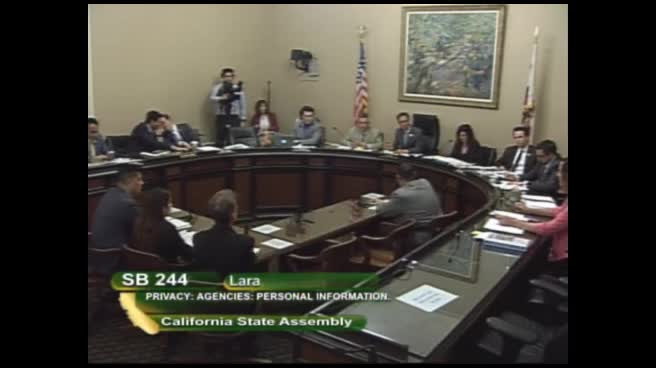 38MIN
Assembly Standing Committee on Privacy and Consumer Protection
 24MIN
Senate Standing Committee on Business, Professions and Economic Development
Bill Author

Bill Co-Author(s):