SB 583: Pupil curriculum: model curriculum: financial literacy.
- Session Year: 2017-2018
- House: Senate
- Latest Version Date: 2017-07-03
Existing law requires the adopted course of study for grades 9 to 12, inclusive, to include, among other subjects, English, social studies, science, and mathematics. Existing law establishes the Instructional Quality Commission and requires the commission to, among other things, recommend curriculum frameworks to the State Board of Education.
This bill would require the Instructional Quality Commission to develop, and the state board to adopt, reject, or modify, a model curriculum for pupils in grades 9 to 12, inclusive, in financial literacy, as provided. The bill, following the adoption by the state board of the model curriculum in financial literacy in accordance with a specified timeline, would require the Superintendent of Public Instruction to post the model curriculum on the State Department of Educations Internet Web site for use on a voluntary basis by educators. The bill, beginning in the school year immediately following adoption of the model curriculum on financial literacy by the state board, would encourage local educational agencies and charter schools to use the model curriculum to provide instruction in financial literacy.
Existing law requires a pupil to complete specified courses as a condition of receiving a diploma of graduation from high school, including a one-semester course in economics.This bill would provide that a course in financial literacy offered by a high school satisfies the one-semester economics course requirement if certain conditions are met, including that the course is approved by the University of California as a course that meets one of specified admission requirements of the University of California.Existing law requires a pupil to complete specified courses as a condition of receiving a diploma of graduation from high school. high school, including a one-semester course in economics.
This bill would add a course in financial literacy to the list of courses a pupil is required to complete to receive a diploma of graduation from high school on and after January 1, 2019. Because the bill would impose additional duties on local educational agencies, the bill would impose a state-mandated local program.The California Constitution requires the state to reimburse local agencies and school districts for certain costs mandated by the state. Statutory provisions establish procedures for making that reimbursement.This bill would provide that, if the Commission on State Mandates determines that the bill contains costs mandated by the state, reimbursement for those costs shall be made pursuant to the statutory provisions noted above.This bill would provide that a course in financial literacy offered by a high school satisfies the one-semester economics course requirement if certain conditions are met, including that the course is approved by the University of California as a course that meets one of specified admission requirements of the University of California.
Existing law requires a pupil to complete specified courses as a condition of receiving a diploma of graduation from high school.
This bill would add a course in financial literacy to the list of courses a pupil is required to complete to receive a diploma of graduation from high school on and after January 1, 2019. Because the bill would impose additional duties on local educational agencies, the bill would impose a state-mandated local program.
The California Constitution requires the state to reimburse local agencies and school districts for certain costs mandated by the state. Statutory provisions establish procedures for making that reimbursement.
This bill would provide that, if the Commission on State Mandates determines that the bill contains costs mandated by the state, reimbursement for those costs shall be made pursuant to the statutory provisions noted above.
(a)The Legislature finds and declares all of the following:
(1)The financial crisis that began in the United States in July 2007, and which led to a global recession, indicates the dangers of a society with many citizens who do not understand basic financial principles.
(2)A survey released in February 2008 by Dartmouth College and Harvard University researchers found that only 35 percent of respondents were able to correctly estimate how interest compounds over time; more than one-half of respondents did not understand how minimum payments are calculated and applied to a principal balance; and almost none of the respondents understood the financial difference between paying in monthly installments versus one lump sum at the end of a certain time period.
(3)Pupils need instruction in financial literacy so that they are prepared for the economic realities and responsibilities of adults in our society.
(b)It is the intent of the Legislature to require the development of a model curriculum for a course in financial literacy that can be offered to pupils in grades 9 to 12, inclusive.
(c)It is further the intent of the Legislature to encourage local educational agencies and charter schools to adopt financial literacy courses as local graduation requirements, and to use the model curriculum in financial literacy as the basis for these courses.
SEC. 2.Section 51226.10 is added to the Education Code, to read:51226.10.(a)The Instructional Quality Commission shall develop, and the state board shall adopt, reject, or modify, a model curriculum designed for pupils in grades 9 to 12, inclusive, in financial literacy, for voluntary use by educators as an elective course.
(b)The model curriculum shall address, but not be limited to, the instruction of pupils on:
(1)Principles of personal finance.
(2)Fundamentals of banking for personal use, including, but not limited to, savings and checking.
(3)Budgeting and saving.
(4)Employment and understanding factors that affect net income.
(5)Uses and costs of credit, including the relation of debt and interest to credit.
(6)Uses and costs of loans, including student loans.
(7)Types and costs of insurance.
(8)Forms of governmental taxation.
(9)Consumer guides to purchasing.
(10)Principles of investing and building wealth.
(11)Identity theft and security of financial information.
(12)Planning and paying for postsecondary education.
(13)Paying for housing, including renting and homeownership.
(14)Saving for retirement.
(15)Charitable giving.
(c)The model curriculum shall provide model lessons and activities for each grade level and identify supporting instructional materials for use in its implementation.
(d)The model curriculum shall identify the ways in which the model curriculum aligns with, and is supportive of, the Common Core State Standards.
(e)In developing the model curriculum, the Instructional Quality Commission shall convene an advisory group comprised of experts in financial literacy education. A majority of this group shall be current public school elementary or secondary classroom teachers who have a professional teaching credential that is valid under state law and who have experience or expertise in financial literacy education.
(f)The Instructional Quality Commission shall hold a minimum of two public hearings for the public to provide input on the model curriculum. The public hearings required by this subdivision shall be held pursuant to the Bagley-Keene Open Meeting Act (Article 9 (commencing with Section 11120) of Chapter 1 of Part 1 of Division 3 of Title 2 of the Government Code).
(g)On or before December 31, 2020, the Instructional Quality Commission shall submit to the state board the model curriculum.
(h)On or before March 31, 2021, the state board shall adopt, reject, or modify the model curriculum submitted by the Instructional Quality Commission, at a subsequent public meeting.
(i)If the state board modifies the model curriculum submitted by the Instructional Quality Commission, the state board shall explain, in writing, the reasons for the modifications to the Governor and the appropriate fiscal and policy committees of the Legislature.
(j)If the state board modifies the model curriculum, the state board shall, in a meeting conducted pursuant to the Bagley-Keene Open Meeting Act (Article 9 (commencing with Section 11120) of Chapter 1 of Part 1 of Division 3 of Title 2 of the Government Code), provide written reasons for its revisions. The state board shall not adopt the model curriculum at the same meeting it provides its written reasons, but, instead, shall adopt these revisions at a subsequent meeting conducted no later than July 31, 2021.
(k)If the state board rejects the model curriculum, the state board shall transmit to the Superintendent, the Governor, and the appropriate policy and fiscal committees of the Legislature a specific written explanation of the reasons for the rejection of the model curriculum presented by the Instructional Quality Commission.
(l)Following the adoption of the model curriculum in financial literacy, the Superintendent shall post the model curriculum on the departments Internet Web site for use on a voluntary basis by educators.
(m)It is the intent of the Legislature that local educational agencies submit course outlines for financial literacy courses based on the model curriculum for approval as meeting the subject matter requirements for purposes of recognition for college admission pursuant to Section 66205.5.
(n)It is the intent of the Legislature that, beginning in the school year following the adoption of the model curriculum in financial literacy, local educational agencies and charter schools are encouraged to use the model curriculum to provide financial literacy courses. Local educational agencies and charter schools are encouraged to use the model curriculum as the basis of local graduation requirements in financial literacy.
SECTION 1.Section 51225.3 of the Education Code, as amended by Section 1 of Chapter 53 of the Statutes of 2016, is amended to read:51225.3.(a)A pupil shall complete all of the following while in grades 9 to 12, inclusive, in order to receive a diploma of graduation from high school:(1)At least the following numbers of courses in the subjects specified, each course having a duration of one year, unless otherwise specified:(A)Three courses in English.(B)Two courses in mathematics. If the governing board of a school district requires more than two courses in mathematics for graduation, the governing board of the school district may award a pupil up to one mathematics course credit pursuant to Section 51225.35.(C)Two courses in science, including biological and physical sciences.(D)Three courses in social studies, including United States history and geography; world history, culture, and geography; a one-semester course in American government and civics; and a one-semester course in economics. A course in financial literacy offered by a high school shall satisfy the economics course requirement if all of the following conditions are satisfied:(i)The course, at a minimum, offers instruction on the topics identified in Sections 51284.5 and 51833.(ii)The course is approved by the University of California as meeting either the history-social science requirement or the college preparatory elective requirement of the A-G admissions requirements of the University of California.(iii)The course incorporates the existing financial literacy instruction in the existing history-social studies curriculum framework, and, if the history-social studies curriculum framework is revised to include additional instruction on financial literacy, that instruction is also incorporated into the course.(E)One course in visual or performing arts, foreign language, or, commencing with the 201213 school year, career technical education.(i)For purposes of satisfying the requirement specified in this subparagraph, a course in American Sign Language shall be deemed a course in foreign language.(ii)For purposes of this subparagraph, a course in career technical education means a course in a district-operated career technical education program that is aligned to the career technical model curriculum standards and framework adopted by the state board, including courses through a regional occupational center or program operated by a county superintendent of schools or pursuant to a joint powers agreement.(iii)This subparagraph does not require a school or school district that currently does not offer career technical education courses to start new career technical education programs for purposes of this section.(iv)If a school district or county office of education elects to allow a career technical education course to satisfy the requirement imposed by this subparagraph, the governing board of the school district or county office of education, before offering that alternative to pupils, shall notify parents, teachers, pupils, and the public at a regularly scheduled meeting of the governing board of all of the following:(I)The intent to offer career technical education courses to fulfill the graduation requirement specified in this subparagraph.(II)The impact that offering career technical education courses, pursuant to this subparagraph, will have on the availability of courses that meet the eligibility requirements for admission to the California State University and the University of California, and whether the career technical education courses to be offered pursuant to this subparagraph are approved to satisfy those eligibility requirements. If a school district elects to allow a career technical education course to satisfy the requirement imposed by this subparagraph, the school district shall comply with subdivision (m) of Section 48980.(III)The distinction, if any, between the high school graduation requirements of the school district or county office of education, and the eligibility requirements for admission to the California State University and the University of California.(F)Two courses in physical education, unless the pupil has been exempted pursuant to the provisions of this code.(2)Other coursework requirements adopted by the governing board of the school district.(b)The governing board, with the active involvement of parents, administrators, teachers, and pupils, shall adopt alternative means for pupils to complete the prescribed course of study that may include practical demonstration of skills and competencies, supervised work experience or other outside school experience, career technical education classes offered in high schools, courses offered by regional occupational centers or programs, interdisciplinary study, independent study, and credit earned at a postsecondary educational institution. Requirements for graduation and specified alternative modes for completing the prescribed course of study shall be made available to pupils, parents, and the public.(c)On or before July 1, 2017, the department shall submit a comprehensive report to the appropriate policy committees of the Legislature on the addition of career technical education courses to satisfy the requirement specified in subparagraph (E) of paragraph (1) of subdivision (a), including, but not limited to, the following information:(1)A comparison of the pupil enrollment in career technical education courses, foreign language courses, and visual and performing arts courses for the 200506 to 201112 school years, inclusive, to the pupil enrollment in career technical education courses, foreign language courses, and visual and performing arts courses for the 201213 to 201617 school years, inclusive.(2)The reasons, reported by school districts, that pupils give for choosing to enroll in a career technical education course to satisfy the requirement specified in subparagraph (E) of paragraph (1) of subdivision (a).(3)The type and number of career technical education courses that were conducted for the 200506 to 201112 school years, inclusive, compared to the type and number of career technical education courses that were conducted for the 201213 to 201617 school years, inclusive.(4)The number of career technical education courses that satisfied the subject matter requirements for admission to the University of California or the California State University.(5)The extent to which the career technical education courses chosen by pupils are aligned with the California Career Technical Education Standards, and prepare pupils for employment, advanced training, and postsecondary education.(6)The number of career technical education courses that also satisfy the visual and performing arts requirement, and the number of career technical education courses that also satisfy the foreign language requirement.(7)Annual pupil dropout and graduation rates for the 201112 to 201415 school years, inclusive.(d)For purposes of completing the report described in subdivision (c), the Superintendent may use existing state resources and federal funds. If state or federal funds are not available or sufficient, the Superintendent may apply for and accept grants, and receive donations and other financial support from public or private sources for purposes of this section.(e)For purposes of completing the report described in subdivision (c), the Superintendent may accept support, including, but not limited to, financial and technical support, from high school reform advocates, teachers, chamber organizations, industry representatives, research centers, parents, and pupils.(f)This section shall become inoperative on the earlier of the following two dates:(1)On July 1, immediately following the first fiscal year after the enactment of the act that adds this paragraph in which the number of career technical education courses that, as determined by the department, satisfy the foreign language requirement for admission to the California State University and the University of California is at least twice the number of career technical education courses that meet these admission requirements as of January 1, 2012. This section shall be repealed on the following January 1, unless a later enacted statute, that becomes operative on or before that date, deletes or extends the dates on which it becomes inoperative and is repealed. It is the intent of the Legislature that new career technical education courses that satisfy the foreign language requirement for admission to the California State University and the University of California focus on world languages aligned with career preparation, emphasizing real-world application and technical content in related career and technical education courses.(2)On July 1, 2022, and, as of January 1, 2023, is repealed, unless a later enacted statute, that becomes operative on or before January 1, 2023, deletes or extends the dates on which it becomes inoperative and is repealed.SEC. 2.Section 51225.3 of the Education Code, as amended by Section 2 of Chapter 888 of the Statutes of 2014, is amended to read:51225.3.(a)A pupil shall complete all of the following while in grades 9 to 12, inclusive, in order to receive a diploma of graduation from high school:(1)At least the following numbers of courses in the subjects specified, each course having a duration of one year, unless otherwise specified:(A)Three courses in English.(B)Two courses in mathematics. If the governing board of a school district requires more than two courses in mathematics for graduation, the governing board of the school district may award a pupil up to one mathematics course credit pursuant to Section 51225.35.(C)Two courses in science, including biological and physical sciences.(D)Three courses in social studies, including United States history and geography; world history, culture, and geography; a one-semester course in American government and civics; and a one-semester course in economics. A course in financial literacy offered by a high school shall satisfy the economics course requirement if all of the following requirements are satisfied:(i)The course, at a minimum, offers instruction on the topics identified in Sections 51284.5 and 51833.(ii)The course is approved by the University of California as meeting either the history-social science requirement or the college preparatory elective requirement of the A-G admissions requirements of the University of California.(iii)The course incorporates the existing financial literacy instruction in the existing history-social studies curriculum framework, and, if the history-social studies curriculum framework is revised to include additional instruction on financial literacy, that instruction is also incorporated into the course.(E)One course in visual or performing arts or foreign language. For purposes of satisfying the requirement specified in this subparagraph, a course in American Sign Language shall be deemed a course in foreign language.(F)Two courses in physical education, unless the pupil has been exempted pursuant to the provisions of this code.(2)Other coursework requirements adopted by the governing board of the school district.(b)The governing board, with the active involvement of parents, administrators, teachers, and pupils, shall adopt alternative means for pupils to complete the prescribed course of study that may include practical demonstration of skills and competencies, supervised work experience or other outside school experience, career technical education classes offered in high schools, courses offered by regional occupational centers or programs, interdisciplinary study, independent study, and credit earned at a postsecondary educational institution. Requirements for graduation and specified alternative modes for completing the prescribed course of study shall be made available to pupils, parents, and the public.(c)If a pupil completed a career technical education course that met the requirements of subparagraph (E) of paragraph (1) of subdivision (a) of Section 51225.3, as amended by the act adding this section, before the inoperative date of that section, that course shall be deemed to fulfill the requirements of subparagraph (E) of paragraph (1) of subdivision (a) of this section.(d)This section shall become operative upon the date that Section 51225.3, as amended by the act adding this section, becomes inoperative.(a)A pupil shall complete all of the following while in grades 9 to 12, inclusive, in order to receive a diploma of graduation from high school:
(1)At least the following numbers of courses in the subjects specified, each course having a duration of one year, unless otherwise specified:
(A)Three courses in English.
(B)Two courses in mathematics. If the governing board of a school district requires more than two courses in mathematics for graduation, the governing board of the school district may award a pupil up to one mathematics course credit pursuant to Section 51225.35.
(C)Two courses in science, including biological and physical sciences.
(D)Three courses in social studies, including United States history and geography; world history, culture, and geography; a one-semester course in American government and civics; and a one-semester course in economics. A course in financial literacy offered by a high school shall satisfy the economics course requirement if all of the following conditions are satisfied:
(i)The course, at a minimum, offers instruction on the topics identified in Sections 51284.5 and 51833.
(ii)The course is approved by the University of California as meeting either the history-social science requirement or the college preparatory elective requirement of the A-G admissions requirements of the University of California.
(iii)The course incorporates the existing financial literacy instruction in the existing history-social studies curriculum framework, and, if the history-social studies curriculum framework is revised to include additional instruction on financial literacy, that instruction is also incorporated into the course.
(E)One course in visual or performing arts, foreign language, or, commencing with the 201213 school year, career technical education.
(i)For purposes of satisfying the requirement specified in this subparagraph, a course in American Sign Language shall be deemed a course in foreign language.
(ii)For purposes of this subparagraph, a course in career technical education means a course in a district-operated career technical education program that is aligned to the career technical model curriculum standards and framework adopted by the state board, including courses through a regional occupational center or program operated by a county superintendent of schools or pursuant to a joint powers agreement.
(iii)This subparagraph does not require a school or school district that currently does not offer career technical education courses to start new career technical education programs for purposes of this section.
(iv)If a school district or county office of education elects to allow a career technical education course to satisfy the requirement imposed by this subparagraph, the governing board of the school district or county office of education, before offering that alternative to pupils, shall notify parents, teachers, pupils, and the public at a regularly scheduled meeting of the governing board of all of the following:
(I)The intent to offer career technical education courses to fulfill the graduation requirement specified in this subparagraph.
(II)The impact that offering career technical education courses, pursuant to this subparagraph, will have on the availability of courses that meet the eligibility requirements for admission to the California State University and the University of California, and whether the career technical education courses to be offered pursuant to this subparagraph are approved to satisfy those eligibility requirements. If a school district elects to allow a career technical education course to satisfy the requirement imposed by this subparagraph, the school district shall comply with subdivision (m) of Section 48980.
(III)The distinction, if any, between the high school graduation requirements of the school district or county office of education, and the eligibility requirements for admission to the California State University and the University of California.
(F)Two courses in physical education, unless the pupil has been exempted pursuant to the provisions of this code.
(G)On and after January 1,2019, one course in financial literacy.(2)Other coursework requirements adopted by the governing board of the school district.
(b)The governing board, with the active involvement of parents, administrators, teachers, and pupils, shall adopt alternative means for pupils to complete the prescribed course of study that may include practical demonstration of skills and competencies, supervised work experience or other outside school experience, career technical education classes offered in high schools, courses offered by regional occupational centers or programs, interdisciplinary study, independent study, and credit earned at a postsecondary educational institution. Requirements for graduation and specified alternative modes for completing the prescribed course of study shall be made available to pupils, parents, and the public.
(c)On or before July 1, 2017, the department shall submit a comprehensive report to the appropriate policy committees of the Legislature on the addition of career technical education courses to satisfy the requirement specified in subparagraph (E) of paragraph (1) of subdivision (a), including, but not limited to, the following information:
(1)A comparison of the pupil enrollment in career technical education courses, foreign language courses, and visual and performing arts courses for the 200506 to 201112 school years, inclusive, to the pupil enrollment in career technical education courses, foreign language courses, and visual and performing arts courses for the 201213 to 201617 school years, inclusive.
(2)The reasons, reported by school districts, that pupils give for choosing to enroll in a career technical education course to satisfy the requirement specified in subparagraph (E) of paragraph (1) of subdivision (a).
(3)The type and number of career technical education courses that were conducted for the 200506 to 201112 school years, inclusive, compared to the type and number of career technical education courses that were conducted for the 201213 to 201617 school years, inclusive.
(4)The number of career technical education courses that satisfied the subject matter requirements for admission to the University of California or the California State University.
(5)The extent to which the career technical education courses chosen by pupils are aligned with the California Career Technical Education Standards, and prepare pupils for employment, advanced training, and postsecondary education.
(6)The number of career technical education courses that also satisfy the visual and performing arts requirement, and the number of career technical education courses that also satisfy the foreign language requirement.
(7)Annual pupil dropout and graduation rates for the 201112 to 201415 school years, inclusive.
(d)For purposes of completing the report described in subdivision (c), the Superintendent may use existing state resources and federal funds. If state or federal funds are not available or sufficient, the Superintendent may apply for and accept grants, and receive donations and other financial support from public or private sources for purposes of this section.
(e)For purposes of completing the report described in subdivision (c), the Superintendent may accept support, including, but not limited to, financial and technical support, from high school reform advocates, teachers, chamber organizations, industry representatives, research centers, parents, and pupils.
(f)This section shall become inoperative on the earlier of the following two dates:
(1)On July 1, immediately following the first fiscal year after the enactment of the act that adds this paragraph in which the number of career technical education courses that, as determined by the department, satisfy the foreign language requirement for admission to the California State University and the University of California is at least twice the number of career technical education courses that meet these admission requirements as of January 1, 2012. This section shall be repealed on the following January 1, unless a later enacted statute, that becomes operative on or before that date, deletes or extends the dates on which it becomes inoperative and is repealed. It is the intent of the Legislature that new career technical education courses that satisfy the foreign language requirement for admission to the California State University and the University of California focus on world languages aligned with career preparation, emphasizing real-world application and technical content in related career and technical education courses.
(2)On July 1, 2022, and, as of January 1, 2023, is repealed, unless a later enacted statute, that becomes operative on or before January 1, 2023, deletes or extends the dates on which it becomes inoperative and is repealed.
SEC. 2.Section 51225.3 of the Education Code, as amended by Section 2 of Chapter 888 of the Statutes of 2014, is amended to read:51225.3.(a)A pupil shall complete all of the following while in grades 9 to 12, inclusive, in order to receive a diploma of graduation from high school:
(1)At least the following numbers of courses in the subjects specified, each course having a duration of one year, unless otherwise specified:
(A)Three courses in English.
(B)Two courses in mathematics. If the governing board of a school district requires more than two courses in mathematics for graduation, the governing board of the school district may award a pupil up to one mathematics course credit pursuant to Section 51225.35.
(C)Two courses in science, including biological and physical sciences.
(D)Three courses in social studies, including United States history and geography; world history, culture, and geography; a one-semester course in American government and civics; and a one-semester course in economics. A course in financial literacy offered by a high school shall satisfy the economics course requirement if all of the following requirements are satisfied:
(i)The course, at a minimum, offers instruction on the topics identified in Sections 51284.5 and 51833.
(ii)The course is approved by the University of California as meeting either the history-social science requirement or the college preparatory elective requirement of the A-G admissions requirements of the University of California.
(iii)The course incorporates the existing financial literacy instruction in the existing history-social studies curriculum framework, and, if the history-social studies curriculum framework is revised to include additional instruction on financial literacy, that instruction is also incorporated into the course.
(E)One course in visual or performing arts or foreign language. For purposes of satisfying the requirement specified in this subparagraph, a course in American Sign Language shall be deemed a course in foreign language.
(F)Two courses in physical education, unless the pupil has been exempted pursuant to the provisions of this code.
(G)On and after January 1, 2019, one course in financial literacy.(2)Other coursework requirements adopted by the governing board of the school district.
(b)The governing board, with the active involvement of parents, administrators, teachers, and pupils, shall adopt alternative means for pupils to complete the prescribed course of study that may include practical demonstration of skills and competencies, supervised work experience or other outside school experience, career technical education classes offered in high schools, courses offered by regional occupational centers or programs, interdisciplinary study, independent study, and credit earned at a postsecondary educational institution. Requirements for graduation and specified alternative modes for completing the prescribed course of study shall be made available to pupils, parents, and the public.
(c)If a pupil completed a career technical education course that met the requirements of subparagraph (E) of paragraph (1) of subdivision (a) of Section 51225.3, as amended by the act adding this section, before the inoperative date of that section, that course shall be deemed to fulfill the requirements of subparagraph (E) of paragraph (1) of subdivision (a) of this section.
(d)This section shall become operative upon the date that Section 51225.3, as amended by the act adding this section, becomes inoperative.
SEC. 3.If the Commission on State Mandates determines that this act contains costs mandated by the state, reimbursement to local agencies and school districts for those costs shall be made pursuant to Part 7 (commencing with Section 17500) of Division 4 of Title 2 of the Government Code.(a)A pupil shall complete all of the following while in grades 9 to 12, inclusive, in order to receive a diploma of graduation from high school:
(1)At least the following numbers of courses in the subjects specified, each course having a duration of one year, unless otherwise specified:
(A)Three courses in English.
(B)Two courses in mathematics. If the governing board of a school district requires more than two courses in mathematics for graduation, the governing board of the school district may award a pupil up to one mathematics course credit pursuant to Section 51225.35.
(C)Two courses in science, including biological and physical sciences.
(D)Three courses in social studies, including United States history and geography; world history, culture, and geography; a one-semester course in American government and civics; and a one-semester course in economics.
(E)One course in visual or performing arts, foreign language, or, commencing with the 201213 school year, career technical education.
(i)For purposes of satisfying the requirement specified in this subparagraph, a course in American Sign Language shall be deemed a course in foreign language.
(ii)For purposes of this subparagraph, a course in career technical education means a course in a district-operated career technical education program that is aligned to the career technical model curriculum standards and framework adopted by the state board, including courses through a regional occupational center or program operated by a county superintendent of schools or pursuant to a joint powers agreement.
(iii)This subparagraph does not require a school or school district that currently does not offer career technical education courses to start new career technical education programs for purposes of this section.
(iv)If a school district or county office of education elects to allow a career technical education course to satisfy the requirement imposed by this subparagraph, the governing board of the school district or county office of education, before offering that alternative to pupils, shall notify parents, teachers, pupils, and the public at a regularly scheduled meeting of the governing board of all of the following:
(I)The intent to offer career technical education courses to fulfill the graduation requirement specified in this subparagraph.
(II)The impact that offering career technical education courses, pursuant to this subparagraph, will have on the availability of courses that meet the eligibility requirements for admission to the California State University and the University of California, and whether the career technical education courses to be offered pursuant to this subparagraph are approved to satisfy those eligibility requirements. If a school district elects to allow a career technical education course to satisfy the requirement imposed by this subparagraph, the school district shall comply with subdivision (m) of Section 48980.
(III)The distinction, if any, between the high school graduation requirements of the school district or county office of education, and the eligibility requirements for admission to the California State University and the University of California.
(F)Two courses in physical education, unless the pupil has been exempted pursuant to the provisions of this code.
(G)On and after January 1,2019, one course in financial literacy.
(2)Other coursework requirements adopted by the governing board of the school district.
(b)The governing board, with the active involvement of parents, administrators, teachers, and pupils, shall adopt alternative means for pupils to complete the prescribed course of study that may include practical demonstration of skills and competencies, supervised work experience or other outside school experience, career technical education classes offered in high schools, courses offered by regional occupational centers or programs, interdisciplinary study, independent study, and credit earned at a postsecondary educational institution. Requirements for graduation and specified alternative modes for completing the prescribed course of study shall be made available to pupils, parents, and the public.
(c)On or before July 1, 2017, the department shall submit a comprehensive report to the appropriate policy committees of the Legislature on the addition of career technical education courses to satisfy the requirement specified in subparagraph (E) of paragraph (1) of subdivision (a), including, but not limited to, the following information:
(1)A comparison of the pupil enrollment in career technical education courses, foreign language courses, and visual and performing arts courses for the 200506 to 201112 school years, inclusive, to the pupil enrollment in career technical education courses, foreign language courses, and visual and performing arts courses for the 201213 to 201617 school years, inclusive.
(2)The reasons, reported by school districts, that pupils give for choosing to enroll in a career technical education course to satisfy the requirement specified in subparagraph (E) of paragraph (1) of subdivision (a).
(3)The type and number of career technical education courses that were conducted for the 200506 to 201112 school years, inclusive, compared to the type and number of career technical education courses that were conducted for the 201213 to 201617 school years, inclusive.
(4)The number of career technical education courses that satisfied the subject matter requirements for admission to the University of California or the California State University.
(5)The extent to which the career technical education courses chosen by pupils are aligned with the California Career Technical Education Standards, and prepare pupils for employment, advanced training, and postsecondary education.
(6)The number of career technical education courses that also satisfy the visual and performing arts requirement, and the number of career technical education courses that also satisfy the foreign language requirement.
(7)Annual pupil dropout and graduation rates for the 201112 to 201415 school years, inclusive.
(d)For purposes of completing the report described in subdivision (c), the Superintendent may use existing state resources and federal funds. If state or federal funds are not available or sufficient, the Superintendent may apply for and accept grants, and receive donations and other financial support from public or private sources for purposes of this section.
(e)For purposes of completing the report described in subdivision (c), the Superintendent may accept support, including, but not limited to, financial and technical support, from high school reform advocates, teachers, chamber organizations, industry representatives, research centers, parents, and pupils.
(f)This section shall become inoperative on the earlier of the following two dates:
(1)On July 1, immediately following the first fiscal year after the enactment of the act that adds this paragraph in which the number of career technical education courses that, as determined by the department, satisfy the foreign language requirement for admission to the California State University and the University of California is at least twice the number of career technical education courses that meet these admission requirements as of January 1, 2012. This section shall be repealed on the following January 1, unless a later enacted statute, that becomes operative on or before that date, deletes or extends the dates on which it becomes inoperative and is repealed. It is the intent of the Legislature that new career technical education courses that satisfy the foreign language requirement for admission to the California State University and the University of California focus on world languages aligned with career preparation, emphasizing real-world application and technical content in related career and technical education courses.
(2)On July 1, 2022, and, as of January 1, 2023, is repealed, unless a later enacted statute, that becomes operative on or before January 1, 2023, deletes or extends the dates on which it becomes inoperative and is repealed.
SEC. 2.Section 51225.3 of the Education Code, as amended by Section 2 of Chapter 888 of the Statutes of 2014, is amended to read:51225.3.(a)A pupil shall complete all of the following while in grades 9 to 12, inclusive, in order to receive a diploma of graduation from high school:
(1)At least the following numbers of courses in the subjects specified, each course having a duration of one year, unless otherwise specified:
(A)Three courses in English.
(B)Two courses in mathematics. If the governing board of a school district requires more than two courses in mathematics for graduation, the governing board of the school district may award a pupil up to one mathematics course credit pursuant to Section 51225.35.
(C)Two courses in science, including biological and physical sciences.
(D)Three courses in social studies, including United States history and geography; world history, culture, and geography; a one-semester course in American government and civics; and a one-semester course in economics.
(E)One course in visual or performing arts or foreign language. For purposes of satisfying the requirement specified in this subparagraph, a course in American Sign Language shall be deemed a course in foreign language.
(F)Two courses in physical education, unless the pupil has been exempted pursuant to the provisions of this code.
(G)On and after January 1, 2019, one course in financial literacy.
(2)Other coursework requirements adopted by the governing board of the school district.
(b)The governing board, with the active involvement of parents, administrators, teachers, and pupils, shall adopt alternative means for pupils to complete the prescribed course of study that may include practical demonstration of skills and competencies, supervised work experience or other outside school experience, career technical education classes offered in high schools, courses offered by regional occupational centers or programs, interdisciplinary study, independent study, and credit earned at a postsecondary educational institution. Requirements for graduation and specified alternative modes for completing the prescribed course of study shall be made available to pupils, parents, and the public.
(c)If a pupil completed a career technical education course that met the requirements of subparagraph (E) of paragraph (1) of subdivision (a) of Section 51225.3, as amended by the act adding this section, before the inoperative date of that section, that course shall be deemed to fulfill the requirements of subparagraph (E) of paragraph (1) of subdivision (a) of this section.
(d)This section shall become operative upon the date that Section 51225.3, as amended by the act adding this section, becomes inoperative.
SEC. 3.If the Commission on State Mandates determines that this act contains costs mandated by the state, reimbursement to local agencies and school districts for those costs shall be made pursuant to Part 7 (commencing with Section 17500) of Division 4 of Title 2 of the Government Code.
|
Date
|
Status
|
|---|---|
| Sep 1, 2017 | September 1 hearing: Held in committee and under submission. |
| Jul 19, 2017 | July 19 set for first hearing. Placed on APPR. suspense file. |
| Jul 3, 2017 | Read second time and amended. Re-referred to Com. on APPR. |
| Jun 29, 2017 | From committee: Do pass as amended and re-refer to Com. on APPR. (Ayes 6. Noes 0.) (June 21). |
| Jun 12, 2017 | Referred to Com. on ED. |
| Jun 1, 2017 | In Assembly. Read first time. Held at Desk. |
| May 31, 2017 | Read third time. Passed. (Ayes 40. Noes 0. Page 1346.) Ordered to the Assembly. |
| May 16, 2017 | Read second time. Ordered to third reading. |
| May 15, 2017 | From committee: Do pass. (Ayes 7. Noes 0. Page 1080.) (May 15). |
| May 5, 2017 | Set for hearing May 15. |
| May 3, 2017 | Read second time and amended. Re-referred to Com. on APPR. |
| May 2, 2017 | From committee: Do pass as amended and re-refer to Com. on APPR. (Ayes 7. Noes 0. Page 848.) (April 26). |
| Mar 24, 2017 | Set for hearing April 26. |
| Mar 23, 2017 | April 5 set for first hearing canceled at the request of author. |
| Mar 21, 2017 | Set for hearing April 5. |
| Mar 2, 2017 | Referred to Com. on ED. |
| Feb 21, 2017 | From printer. May be acted upon on or after March 23. |
| Feb 17, 2017 | Introduced. Read first time. To Com. on RLS. for assignment. To print. |
|
Date
|
Description
|
Location
|
Votes
|
|
|---|---|---|---|---|
| Jun 21, 2017 | Do pass as amended and be re-referred to the Committee on [Appropriations] | Assembly Standing Committee on Education |
Passed |
|
| May 31, 2017 | Senate 3rd Reading SB583 Stone et al. | Senate Floor |
Passed |
|
| May 15, 2017 | Do pass | Senate Standing Committee on Appropriations |
Passed |
|
| Apr 26, 2017 | Do pass as amended, but first amend, and re-refer to the Committee on [Appropriations] | Senate Standing Committee on Education |
Passed |
This list shows positions taken on this bill by organizations on the date displayed, which is linked to the original source.
Positions by individuals are not included.
Date of Hearing: July 19, 2017
ASSEMBLY COMMITTEE ON APPROPRIATIONS
Lorena Gonzalez Fletcher, Chair
SBPCA Bill Id:SB 583
Author:(Stone) – As Amended Ver:July 3, 2017
Policy Committee: | Education | Vote: | 6-0 |
Urgency: No State Mandated Local Program: No Reimbursable: No
SUMMARY:
This bill requires the development of a model curriculum for an elective course in financial literacy for pupils in grades 9 to 12, inclusive. Specifically, this bill:
- Requires the Instructional Quality Commission (IQC) to develop, and for the State Board of Education to adopt, reject, or modify, a model curriculum designed for pupils in grades 9 to 12, inclusive, in financial literacy, for voluntary use by educators as an elective course by March 31, 2021.
- Requires the Superintendent to post the model curriculum on the department’s Internet Web site for use on a voluntary basis by educators.
FISCAL EFFECT:
- The California Department of Education (CDE) estimates a cost of about $829,000 General Fund to develop the model curriculum. These costs would support 1.5 new positions, a model curriculum writer contract, and curriculum advisory committee meetings. The estimate assumes the advisory group is voluntary and will not be compensated for their time.
- On-going local cost pressures to provide a financial literacy course based on the model curriculum required by the bill. To implement the course local educational agencies would have to purchase instructional materials and either hire appropriate teachers or provide professional development to existing teachers. These costs would not be reimbursable by the state.
COMMENTS:
- Purpose. The author’s office states: “Currently, California does not count a financial literacy course as a graduation requirement. As a result, high school graduates enter the job market or head to college lacking the financial tools they need and end up accumulating debt or encountering credit problems which end up negatively affecting their financial future. The goal of this bill is to properly prepare all students for the financial pitfalls ahead.”
- Background. State law establishes requirements for graduation from high school, including: three year-long courses in English, two year-long courses in mathematics, two year-long courses in science, two year-long courses in social studies, a one semester social studies course in government, a one semester course in economics, one year-long course in visual or performing arts, foreign language, or career technical education. School districts may adopt additional graduation requirements. Financial literacy content is also adopted through new statewide standards.
Adopted in July of 2016, the state’s new history-social science framework contains financial literacy content for grade 1, 2 and 9. According to CDE, the instructional materials adoption process is underway, and the final adoption of aligned history social studies materials is scheduled for November of this year. The state’s health curriculum framework is also currently under revision and is due to be adopted in 2019, and may also contain financial literacy content. Furthermore, the CDE currently maintains a webpage listing with links to free supplemental resources for parents, students and educators to ensure that California’s next generation of consumers are financially responsible. The online clearinghouse/library of financial resources on this site includes financial literacy resources for grades K-12.
- Related Legislation. AB 858 (Dababneh) of this Session establishes the California Financial Literacy Initiative, to be administered by the Superintendent of Public Instruction, for the purpose of improving the availability of instructional materials and programs to help students understand how to manage their finances and protect their financial privacy. This bill is pending in the Senate Appropriations Committee.
AB 2546 (Calderon), Chapter 616, Statutes of 2016 requires that, when the history-social science curriculum framework is revised after January 1, 2017, the IQC consider including content on financial literacy at least twice in three grade spans.
AB 150 (Lieu) of the 2007-08 Session, would have established the California Financial Literacy Initiative, for the purpose of improving the availability of instructional materials and programs to help students understand how to manage their finances and protect their financial privacy, and would have authorized financial institutions to collect information about students who use online curricula which the institutions develop and which are endorsed by the Initiative. That bill was vetoed by the Governor with this message, “Teaching students the principles of money management is a worthy goal. However, this bill would merely authorize the Superintendent of Public Instruction to convene an advisory committee and make financial literacy resources and materials that are grade-level appropriate available online. Superintendent O’Connell already has the authority to do these things, if he so chooses. In addition, many financial institutions and services providers already provide an abundance of information on financial literacy that is readily available on the Internet.”
Analysis Prepared by: Daisy Gonzales / APPR. / (916) 319-2081
Date of Hearing: Jun 21, 2017
ASSEMBLY COMMITTEE ON EDUCATION
Patrick O'Donnell, Chair
SBPCA Bill Id:SB 583
Author:(Stone) – As Amended Ver:May 3, 2017
SENATE VOTE: 40-0
SUBJECT: High school graduation course requirements: economics: financial literacy
SUMMARY: Allows a course in financial literacy to satisfy state high school graduation requirement that students take a one-semester course in economics, if the course meets specified requirements. Specifically, this bill:
- Allows a course in financial literacy offered by a high school to satisfy the economics course state graduation requirement if all of the following conditions are satisfied:
- the course, at a minimum, offers instruction on the following topics:
- fundamentals of banking for personal use, including, but not limited to, savings and checking
- principles of budgeting and personal finance
- employment and understanding factors that affect net income
- uses and costs of credit, including the relation of debt and interest to credit
- uses and costs of loans, including student loans
- types and costs of insurance
- forms of governmental taxation
- principles of investing and building wealth
- identity theft and security
- planning and paying for postsecondary education
- charitable giving
- elementary contracts
- consumer guides to purchasing
- the course is approved by the University of California (UC) as meeting either the history-social science requirement or the college preparatory elective requirement of the A-G admissions requirements of the UC.
- the course incorporates financial literacy instruction in the existing history-social studies curriculum framework, and, if the history-social studies curriculum framework is revised to include additional instruction on financial literacy, that instruction is also incorporated into the course.
EXISTING LAW:
- Specifies requirements for graduation from high school, including three courses in English, two courses in mathematics, two courses in science, three courses in social studies, one course in visual or performing arts, foreign language, or career technical education, and two courses in physical education.
- Requires that, of the three courses in social studies, two must be year-long courses in United States history and geography, and in world history, culture, and geography, and that the remaining two are a one-semester courses in American government and civics, and a one-semester course in economics.
- Authorizes the governing board of a school district to require a pupil to complete additional coursework, beyond the courses required at the state level, in order to receive a diploma of graduation from high school.
- Requires that, when the history-social science curriculum framework is revised after January 1, 2017, the Instructional Quality Commission (IQC) consider including content on financial literacy at least twice in three grade spans (Kindergarten through grade 5, grades 6-8, and grades 9-12), including instruction on:
- fundamentals of banking for personal use, including, but not limited to, savings and checking
- principles of budgeting and personal finance
- employment and understanding factors that affect net income
- uses and costs of credit, including the relation of debt and interest to credit
- uses and costs of loans, including student loans
- types and costs of insurance
- forms of governmental taxation
- principles of investing and building wealth
- identity theft and security
- planning and paying for postsecondary education
- charitable giving
- Requires that, concurrently with, but not prior to, the next revision of textbooks or curriculum frameworks in the social sciences, health, and mathematics curricula, the State Board of Education (SBE) ensure that these academic areas integrate components of human growth, human development, and human contribution to society across the life course, and also financial literacy, including budgeting and managing credit, student loans, consumer debt, and identity theft security.
- Requires the Superintendent of Public Instruction (SPI), with the approval of the SBE, to plan and develop a one-semester course entitled consumer economics, which includes instruction on the uses and costs of credit, for use in schools maintaining any of the seventh to twelfth grades.
FISCAL EFFECT: According to the Senate Appropriations Committee, “The bill’s authorization for a course in financial literacy to satisfy the existing requirement for a course in economics as a condition of graduating from high school is not expected to result in significant costs for the state. However, there may be local costs for schools to offer these courses at their discretion to the extent they are not currently offering such courses. Any costs to the University of California to review these courses to determine whether they meet its A-G admissions requirements are expected to be minor and absorbable within existing resources.”
COMMENTS:
Need for the bill. The author’s office states: “SB 583 would mandate that a course in financial literacy while in grades 9 through 12 would count towards the existing economics graduation requirement. Currently, California does not count a financial literacy course as a graduation requirement. As a result, high school graduates enter the job market or head to college lacking the financial tools they need and end up accumulating debt or encountering credit problems which end up negatively affecting their financial future. The goal of this bill is to properly prepare all students for the financial pitfalls ahead.”
Curriculum, standards, frameworks, and model curricula. California’s public school curriculum is based on content standards in various subjects, including English language arts, mathematics, science, history-social science, physical education, English language development, career technical education, health education, world languages, and visual and performing arts. These standards are developed by the IQC through a public process, and are adopted by the SBE. The standards form the basis of California’s curriculum frameworks, which guide the implementation of these standards, and are used to establish criteria for the evaluation of instructional materials for state adoption for grades kindergarten through grade eight. They also guide district selection of instructional materials for grades nine through twelve. In addition to developing standards in the above subject areas, the SPI is sometimes directed by law to develop model curricula.
State graduation requirements. Current law establishes requirements for graduation from high school, including: three year-long courses in English, two year-long courses in mathematics, two year-long courses in science, two year-long courses in social studies, a one semester social studies course in government, a one semester course in economics, one year long course in visual or performing arts, foreign language, or career technical education. School districts may adopt additional graduation requirements.
Revised History-Social Science Framework adopted last year addresses financial literacy. The state’s new history-social science framework, adopted in July, 2016, contains financial literacy content in at least the following grades:
- Grade 1: Students acquire a beginning understanding of economics, including how people exchange money for goods and services, and how people make choices about how to spend money, including budgeting.
- Grade 2: Students learn basic economic concepts of human wants, scarcity, and choice; the importance of specialization in work today. Students also develop an understanding of their roles as consumers in a complex economy.
- 9th grade elective course outline in financial literacy: Students learn about credit cards and other forms of consumer debt, savings and budgeting, retirement planning, state and federal laws related to personal finance (e.g., bankruptcy), financial credit scores, credit card applications, bank account applications, simple and compound interest calculations, retirement calculations, and mortgage and interest rates. Students also learn about the importance of managing credit and debt, and identity theft security.
- High school economics course: Students learn about personal budgeting, banking, debt, credit cards, interest, student loan debt, mortgage debt, saving, and investing. This content is presented in relation to larger economic issues and concepts. The Framework also emphasizes the ability of personal finance concepts to be taught through the required economics course, noting: “budgeting can be taught as an example of scarcity; job applications can be taught as examples of human capital inventories; student loans can be taught as an investment in developing human capital; use of credit cards can be taught to explain the opportunity cost of interest and repayment; and interest on credit can be taught as an example of price determination through supply and demand.”
Pursuant to legislation signed in 2016 (AB 2546, Calderon) the next revision of the framework will include more financial literacy content. The next adoption of this framework is scheduled to occur in 2024. The state’s health curriculum framework is currently under revision and is due to be adopted in 2019, and may also contain financial literacy content, pursuant to current law.
New history-social science textbooks scheduled for adoption in November of this year. Each time a curriculum framework is updated the SBE conducts an instructional materials adoption for Kindergarten through the eighth grade. Publishers use the framework to guide revisions to their materials, and submit them for review and adoption. For grades 9-12, the CDE provides “standards maps” to guide publishers in the development of aligned materials.
Once the SBE has adopted instructional materials which are aligned to the framework, it publishes a list which school districts can use in their local adoptions and purchasing. Most districts purchase materials on the SBE-adopted list. Though this list does not include materials for grades 9-12, school districts are required to adopt instructional materials for those grades, and they often purchase materials in a series for all grades, Kindergarten through grade 12.
As noted above, the SBE adopted a new history-social science framework in 2016, and that framework includes considerable content in personal finance. According to the CDE, the instructional materials adoption process is underway, and the final adoption of aligned history social studies materials is scheduled for November of this year.
What’s the benefit of this proposal, and what is the cost? This bill proposes to allow the substitution of a course in financial literacy for a course in economics for the purpose of satisfying a high school graduation requirement, under certain conditions.
As noted above, the state’s new History-Social Science framework includes a significant amount of personal finance content in the course outline for the required economics course, and encourages the use of personal finance concepts to help students learn about macroeconomic principles. The following examples from the economics course outline provide examples of how personal finance content is integrated into the course [emphasis added]:
- “Teachers might begin by telling students they will be assigned a unique (and imagined by the teacher) economic identity: this identity initially consists of a monthly salary, a list of bills, and a checkbook or an online system of sending and receiving money. Starting with their monthly salary, students are directed to determine their take home pay by subtracting federal and state taxes.”
- “Next, students must pay their bills. Bills consist of a pre-determined amount for these categories: rent/mortgage, utilities, cell phone, student loan payment, car payment, car insurance. Once bills are paid, students allocate money for the remainder of the month. They can choose whether or how much to save; how much to devote to food, gas, and other staples; and how to use any discretionary money left over. Once students have divided their resources for a month, they should take a step back and look at their larger budgets, perhaps using budgeting tools online, making charts or graphs to understand how and where they spend money.”
- With a budget in hand, students can begin to learn about different kinds of debt and different kinds of ways of accumulating personal wealth. Starting with debt, teachers provide students with an overview of what a credit card is, how interest gets calculated, what compound interest consists of, and how credit card debt affects individuals in the marketplace. Students can calculate credit card payments and factor that into their contrived economic identities for practice. In addition, teachers can provide similar overviews of student loan debt and mortgage debt.”
- “Students should also learn about different options of saving money. While teachers will go into more depth later in the semester about marketplace investments (in which students can learn to “play” the stock market, for example), students can learn now about different options for saving their resources from their above-described budgets.”
- “By learning about personal finance from this individual perspective, students will now learn about how international markets are interrelated and how they affect their own finances and economic opportunities. At the more local level immediate relevance can be achieved by discussing city and/or county budgets (i.e., revenues and expenditures), payday loans, rent-a-centers, and even chambers of commerce.”
- “Studying these topics now will help students when they become adults, and must confront decisions about household budgets, student loans, credit cards, mortgages, and savings and investment strategies. Just as students began this course learning about personal finance, the concepts can be woven throughout the course, applying the economic ideas and analytical tools mentioned above to other sectors of the economy.”
Since this content is already included in the new framework, it is unclear what benefit would accrue to students from the substitution of an entire course in financial literacy for a course in economics.
It is clear, however, that students who took a course in financial literacy to satisfy the economics course requirement would not receive instruction in other content in economics. The framework outlines the required economics course as follows:
“The study of twelfth-grade economics provides students with a unique opportunity to consider the impact of choice upon individuals, groups, and institutions. It offers a lens to understand and analyze human behavior and it builds a student’s ability to make informed decisions based upon relevant economic information such as: an analysis of costs and benefits; the trade-offs between consumption, investment, and savings; the availability and allocation of natural resources; the distribution of resources among investors, managers, workers, and innovation; the role of the government in supporting, taxing, and investing in industries; and human and physical capital. The discipline also provides an important frame from which to consider the impact of governmental action (or inaction) on the lives of its citizens. Understanding how the economy functions and how economic reasoning can inform decision making will provide students with the tools they need to become financially literate and independent.
Economics is the study of how people choose to use resources. It is also a discipline that analyzes how to promote productive economic activity such as entrepreneurship, education, government investment in infrastructure, and research; it studies how to promote full employment, fair wage growth, and return on capital; it explores how to avoid financial dislocations and predatory business practices; and it argues how best to provide basic safety-net supports such as retirement for each citizen. The resources people use are land, labor, and capital; these resources are finite, or what some people call scarce. Scarcity means that resources, such as natural and human resources, are limited in quantity compared with the competing demands for their use.
In this one-semester economics course, students examine more deeply the choices they make and explore how these choices have consequences that ripple across the world.”
Role of the University of California. This bill requires that any course used to satisfy the graduation requirement in economics be approved by the University of California (UC) as meeting either the history-social science or the elective A-G admissions requirements. To receive approval as a course which meets A-G admissions standards, school districts voluntarily submit course outlines to the UC.
Because this bill conditions the use of a course in financial literacy to meet a state graduation requirement on approval by the UC, it indirectly places the UC in the role of determining whether a course will satisfy state graduation requirements. This represents a significant departure from the current role of the UC in the course approval process.
Arguments in support. The California State PTA writes, “The California State PTA believes financial literacy is important for all our students and supports this effort. This will allow school districts to offer students a choice to take a course in financial literacy that satisfies high school graduation requirements and meet the approval of the University of California.”
Arguments in opposition. The California Council for the Social Studies writes, “While we support the desire to provide all students more personal finance education for all grade levels K-12, including via integrated math lessons and other means, we cannot accept the notion that all students should not also have macro-economics instruction that place micro-economics principles into understandable context.”
The California Teachers Association writes, “SB 583 poses the unintended consequence of jeopardizing students’ access to a comprehensive economics course with financial literacy skills. These skills are appropriately integrated into local high school economics courses. The 2016 revsion of the history-social science framework includes instruction on financial literacy in high school and an elective course outline in financial literacy.”
Model curriculum for an elective course has value. Another approach, consistent with the new history-social science framework, would be to require the development of a model curriculum in financial literacy which could be provided as an elective course. As noted above, the framework provides an outline for such an elective course. Such a curriculum could be used on a voluntary basis to provide a semester-long elective course to secondary students. Accordingly, staff recommends that this bill be amended to delete the current contents and instead require the development of a model curriculum for an elective course in financial literacy.
Related and prior legislation. AB 858 (Dababneh) of this Session would establish the California Financial Literacy Initiative, to be administered by the Superintendent of Public Instruction, for the purpose of improving the availability of instructional materials and programs to help students understand how to manage their finances and protect their financial privacy. This bill is pending in the Senate.
AB 2546 (Calderon), Chapter 616, Statutes of 2016 requires that, when the history-social science curriculum framework is revised after January 1, 2017, the IQC consider including content on financial literacy at least twice in three grade spans.
AB 150 (Lieu) of the 2007-08 Session, was nearly identical to this bill. It would have established the California Financial Literacy Initiative (Initiative), for the purpose of improving the availability of instructional materials and programs to help students understand how to manage their finances and protect their financial privacy, and would have authorized financial institutions to collect information about students who use online curricula which the institutions develop and which are endorsed by the Initiative. That bill was vetoed by the Governor.
SB 1296 (Liu) of the 2015-16 Session would have required “consumer and homemaking education” to include financial literacy instruction on subjects including, but not limited to, student loans, credit cards, and investment and retirement accounts. This bill was held in the Senate Education Committee.
AB 166 (Hernández), Chapter 135, Statutes of 2013 requires that, concurrently with, but not prior to, the next revision of textbooks or curriculum frameworks in the social sciences, health, and mathematics curricula, the SBE ensure that these academic areas integrate components of human growth, human development, and human contribution to society, across the life course, and also financial literacy, including, but not limited to, budgeting and managing credit, student loans, consumer debt, and identity theft security.
AB 391 (Wieckowski) of the 2013-14 Session proposed the Common Cents Curriculum Act of 2013, requiring the SPI and SBE to adopt a one semester course in consumer education, include specified areas of content related to financial literacy, and encouraged financial literacy instruction to be included in the next revision of the history-social science frameworks. This bill was held in the Assembly Appropriations Committee.
SB 1080 (Lieu) of the 2011-12 Session would have authorized instruction provided in economics to include personal finances, including budgeting, savings, credit, and identity theft. The bill would have required the CDE to develop a personal finance curriculum in the next cycle in which the mathematics and history-social science curriculum framework were to be adopted. This was held in the Assembly Judiciary Committee.
SB 696 (Lieu) of the 2011-12 Session would have encouraged the instruction provided in economics to include instruction related to the understanding of personal finances, including budgeting, savings, credit, and identity theft. The bill would also make several legislative findings and declarations. This bill was not heard in any committee.
SB 1080 (Lieu) of the 2011-12 Session would have authorized instruction provided in economics to include personal finances, including, but not limited to, mathematics, budgeting, savings, credit, and identity theft. The bill would have required the CDE to develop a personal finance curriculum in the next cycle in which the mathematics and history-social science curriculum framework were to be adopted. This measure was not heard by this committee and was held in the Assembly Judiciary Committee.
SB 779 (Lieu) of the 2011-12 Session authorized a school district, as part of providing economics instruction in grades 7-12, to include personal finances, including, but not limited to, budget savings, credit, and identify theft. This bill would have also required the CDE to consider developing a personal finance curriculum in the next cycle in which the history/social science curriculum framework would have been adopted. This bill was held in the Assembly Appropriations Committee.
SB 223 (Wyland) of the 2009-10 Session would have required that one-half of the economics course required for high school graduation focus on personal finance and financial literacy. This measure was held in the Assembly Appropriations Committee.
AB 1502 (Lieu) of the 2007-08 Session would have required the SBE and the Curriculum Development and Supplemental Materials Commission (now the IQC) to ensure that information about financial literacy be included in appropriate subject area frameworks, encouraged school districts to include instruction in personal finance, as specified in economics, and authorized the SPI to accept private donations for the purposes of implementing these provisions. This measure was vetoed by Governor Schwarzenegger.
AB 1950 (Lieu) of the 2005-06 Session authorized school districts to provide instruction in personal finances in economics courses. This measure vetoed by Governor Schwarzenegger who stated that school districts already have the flexibility to incorporate money management into their lesson plans and that the state’s content standards are intentionally broad in order to allow instruction on a range of topics.
AB 2435 (Wiggins) of the 2003-04 Session authorized school districts to include instruction related to the understanding of personal finances in economics courses. This measure vetoed by Governor Schwarzenegger who stated that school districts already have the flexibility to incorporate money management into their lesson plans and that the state’s content standards are intentionally broad in order to allow instruction on a range of topics.
REGISTERED SUPPORT / OPPOSITION:
Support
California State PTA
Opposition
California Council for the Social Studies
California Council on Economic Education
California School Boards Association
California Teachers Association
EconEd Foundation of San Diego
1 individual
Analysis Prepared by: Tanya Lieberman / ED. / (916) 319-2087
Office of Senate Floor Analyses (916) 651-1520 Fax: (916) 327-4478 | SB |
THIRD READING
Bill No: SB 583
:
SENATE EDUCATION COMMITTEE: 7-0, 4/26/17
AYES: Allen, Wilk, Galgiani, Leyva, Mendoza, Pan, Vidak
SENATE APPROPRIATIONS COMMITTEE: 7-0, 5/15/17
AYES: Lara, Bates, Beall, Bradford, Hill, Nielsen, Wiener
DIGEST:
This bill provides that a course in financial literacy offered by a high school satisfies the one-semester economics course requirement if the course meets specified conditions.
Existing law:
- Specifies requirements for graduation from high school, including three courses in English, two courses in mathematics, two courses in science, three courses in social studies, one course in visual or performing arts, foreign language, or career technical education, and two courses in physical education. (Education Code § 51225.3)
- Requires that, of the three courses in social studies, two must be year-long courses in United States history and geography, and in world history, culture, and geography, and that the remaining two are a one-semester courses in American government and civics, and a one-semester course in economics. (EC § 51225.3)
- Authorizes the governing board of a school district to require a pupil to complete additional coursework, beyond the courses required at the state level, in order to receive a diploma of graduation from high school. (EC § 51225.3)
- Requires that, when the history-social science curriculum framework is revised after January 1, 2017, the Instructional Quality Commission consider including content on financial literacy at least twice in three grade spans (Kindergarten through grade 5, grades 6-8, and grades 9-12), including instruction on:
- Fundamentals of banking for personal use, including, but not limited to, savings and checking.
- Principles of budgeting and personal finance.
- Employment and understanding factors that affect net income.
- Uses and costs of credit, including the relation of debt and interest to credit.
- Uses and costs of loans, including student loans.
- Types and costs of insurance.
- Forms of governmental taxation.
- Principles of investing and building wealth.
- Identity theft and security.
- Planning and paying for postsecondary education.
- Charitable giving. (EC § 51284.5)
- Requires that, concurrently with, but not prior to, the next revision of textbooks or curriculum frameworks in the social sciences, health, and mathematics curricula, the State Board of Education (SBE) ensure that these academic areas integrate components of human growth, human development, and human contribution to society across the life course, and also financial literacy, including budgeting and managing credit, student loans, consumer debt, and identity theft security. (EC § 51284)
- Requires the Superintendent of Public Instruction, with the approval of the SBE, to plan and develop a one-semester course entitled consumer economics, which includes instruction on the uses and costs of credit, for use in schools maintaining any of the seventh to twelfth grades. (EC § 51833)
This bill provides that a course in financial literacy offered by a high school satisfies the one-semester economics course requirement if the course if all of the following conditions are satisfied:
- The course, at minimum, offers instruction on topics identified in Education Code Sections 51284.5 and 51833.
- The course is approved by the University of California (UC) as meeting either the history-social science requirement or the college preparatory elective requirement of the A-G admissions requirements of the UC.
- The course incorporates the existing financial literacy instruction in the existing history-social studies curriculum framework, and if the history-social studies curriculum framework is revised to include additional instruction on financial literacy, that instruction is also incorporated into the course.
Comments
Need for the bill. According to the author, “Currently, California does not require a course that equips students with financial knowledge. As a result, high school graduates enter the job marker or head to college lacking the financial tools they need and end up accumulating debt or encountering credit problems which end up negatively affecting their financial future. If school districts are not required to implement this course, many schools – especially those that are disadvantaged –will opt out. It is the disadvantaged students whom are most likely to apply for student loans, yet they are often times the students that are not receiving any guidance in financial literacy. The goal of this bill is to properly prepare all students for the financial pitfalls ahead.”
Related/Prior Legislation
AB 858 (Dababneh, 2017) establishes the California Financial Literacy Initiative for the purpose of improving the availability of instructional materials and programs to help students understand how to manage their finances and protect their financial privacy. The bill is on the suspense file in the Assembly Appropriations Committee.
SB 1123 (Leyva, Chapter 53, Statutes of 2016) extended the sunset on the option for students to fulfill a high school graduation requirement by successfully completing a career technical education course for an additional five years.
AB 1764 (Olsen, Chapter 888, Statutes of 2014) authorizes school districts that require more than two courses in mathematics for high school graduation to award credit for a “category C” approved computer science course.
FISCAL EFFECT: Appropriation: Fiscal Com.: Local:
According to the Senate Appropriations Committee, this bill’s authorization for a course in financial literacy to satisfy the existing requirement for a course in economics as a condition of graduating from high school is not expected to result in significant costs for the state. However, there may be local costs for schools to offer these courses at their discretion to the extent they are not currently offering such courses. Any costs to the UC to review these courses to determine whether they meet its A-G admissions requirements are expected to be minor and absorbable within existing resources.
California Credit Union League
EconEd Foundation of San Diego
Financial Services Institute
San Diego Center for Economic Education at Cuyamaca College
OPPOSITION: (Verified 5/16/17)
California School Boards Association
5/17/17 15:55:48
**** END ****
SENATE COMMITTEE ON APPROPRIATIONS
Senator Ricardo Lara, Chair
2017 - 2018 Regular Session
SB 583 (Stone) - High school graduation course requirements: economics: financial literacy
Version: May 3, 2017 | Policy Vote: ED. 7 - 0 |
Urgency: No | Mandate: No |
Hearing Date: May 15, 2017 | Consultant: Lenin Del Castillo |
This bill does not meet the criteria for referral to the Suspense File.
Bill Summary:
This bill provides that a course in financial literacy offered by a high school satisfies the one-semester economics course requirement if the course meets specified conditions.
Fiscal Impact:
The bill’s authorization for a course in financial literacy to satisfy the existing requirement for a course in economics as a condition of graduating from high school is not expected to result in significant costs for the state. However, there may be local costs for schools to offer these courses at their discretion to the extent they are not currently offering such courses. Any costs to the University of California to review these courses to determine whether they meet its A-G admissions requirements are expected to be minor and absorbable within existing resources.
Background:
Existing law prescribes certain requirements for graduation from high school, including three courses in English, two courses in mathematics, two courses in science, three courses in social studies, one course in visual or performing arts, foreign language, or career technical education, and two courses in physical education. Of the three courses in social studies, two of the courses must be a year-long course in United States history and geography and the other a year-long course in world history, culture, and geography. The remaining courses are a one-semester course in American government and civics and a one-semester course in economics.
Proposed Law:
This bill provides that a course in financial literacy offered by a high school satisfies the one-semester economics course requirement if the course if all of the following conditions are satisfied:
- The course, at minimum, offers instruction on topics identified in Education Code Sections 51284.5 and 51833.
- The course is approved by the University of California as meeting either the history-social science requirement or the college preparatory elective requirement of the A-G admissions requirements of the University of California.
- The course incorporates the existing financial literacy instruction in the existing history-social studies curriculum framework, and if the history-social studies curriculum framework is revised to include additional instruction on financial literacy, that instruction is also incorporated into the course.
Related Legislation:
AB 858 (Dababneh, 2017) establishes the California Financial Literacy Initiative for the purpose of improving the availability of instructional materials and programs to help students understand how to manage their finances and protect their financial privacy. This bill is on the suspense file in the Assembly Appropriations Committee.
SB 1123 (Leyva, Chapter 53 of the Statutes of 2016) extended the sunset on the option for students to fulfill a high school graduation requirement by successfully completing a career technical education course for an additional five years.
-- END --
SENATE COMMITTEE ON EDUCATION
Senator Benjamin Allen, Chair
2017 - 2018 Regular
Bill No: Hearing Date: April 26, 2017
Author: | Stone | ||
Version: |
| ||
Urgency: | Fiscal: | ||
Consultant: | Brandon Darnell | ||
Subject:
SUMMARY
This bill, as of January 1, 2019, adds one course in financial literacy to the list of courses a pupil is required to complete in order to receive a diploma of graduation from high school.
BACKGROUND
Existing law:
1) Specifies requirements for graduation from high school, including three courses in English, two courses in mathematics, two courses in science, three courses in social studies, one course in visual or performing arts, foreign language, or career technical education, and two courses in physical education.
(Education Code § 51225.3)
2) Requires that, of the three courses in social studies, two must be year-long courses in United States history and geography, and in world history, culture, and geography, and that the remaining two are a one-semester courses in American government and civics, and a one-semester course in economics.
(EC § 51225.3)
3) Authorizes the governing board of a school district to require a pupil to complete additional coursework, beyond the courses required at the state level, in order to receive a diploma of graduation from high school.
(EC § 51225.3)
4) Requires that, when the history-social science curriculum framework is revised after January 1, 2017, the Instructional Quality Commission consider including content on financial literacy at least twice in three grade spans (Kindergarten through grade 5, grades 6-8, and grades 9-12), including instruction on:
a) Fundamentals of banking for personal use, including, but not limited to, savings and checking.
b) Principles of budgeting and personal finance.
c) Employment and understanding factors that affect net income.
d) Uses and costs of credit, including the relation of debt and interest to credit.
e) Uses and costs of loans, including student loans.
f) Types and costs of insurance.
g) Forms of governmental taxation.
h) Principles of investing and building wealth.
i) Identity theft and security.
j) Planning and paying for postsecondary education.
k) Charitable giving. (EC § 51284.5)
5) Requires that, concurrently with, but not prior to, the next revision of textbooks or curriculum frameworks in the social sciences, health, and mathematics curricula, the State Board of Education (SBE) ensure that these academic areas integrate components of human growth, human development, and human contribution to society across the life course, and also financial literacy, including budgeting and managing credit, student loans, consumer debt, and identity theft security.
(EC § 51284)
6) Requires the Superintendent of Public Instruction (SPI), with the approval of the SBE, to plan and develop a one-semester course entitled consumer economics, which includes instruction on the uses and costs of credit, for use in schools maintaining any of the seventh to twelfth grades. (EC § 51833)
ANALYSIS
This bill, as of January 1, 2019, adds one course in financial literacy to the list of courses a pupil is required to complete in order to receive a diploma of graduation from high school.
STAFF COMMENTS
- Need for the bill. According to the author, “Currently, California does not require a course that equips students with financial knowledge. As a result, high school graduates enter the job marker or head to college lacking the financial tools they need and end up accumulating debt or encountering credit problems which end up negatively affecting their financial future. If school districts are not required to implement this course, many schools – especially those that are disadvantaged –will opt out. It is the disadvantaged students whom are most likely to apply for student loans, yet they are often times the students that are not receiving any guidance in financial literacy. The goal of this bill is to properly prepare all students for the financial pitfalls ahead.”
2) Is this bill premature or necessary? A revised history-social science curriculum framework was just adopted by the State Board of Education on July 14, 2016, and it is not scheduled for revision again until 2024. The current framework includes instruction on financial literacy in high school in the following two ways:
a) Economics course: Students learn about personal budgeting, banking, debt, credit cards, interest, student loan debt, mortgage debt, saving, and investing. This content is presented in relation to larger economic issues and concepts.
b) Elective course outline in financial literacy: Students learn about credit cards and other forms of consumer debt, savings and budgeting, retirement planning, state and federal laws related to personal finance (e.g., bankruptcy), financial credit scores, credit card applications, bank account applications, simple and compound interest calculations, retirement calculations, and mortgage and interest rates. Students also learn about the importance of managing credit and debt, and identity theft security.
The Instructional Quality Commission isn’t required to consider including additional and more specific instruction on financial literacy in the history-social science curriculum until its next revision in 2024. The committee may wish consider whether this bill prematurely requires pupils to complete a course in financial literacy. Additionally, local governing boards are already authorized to require additional graduation requirements, which could include a course in financial literacy, if the governing board determines that would be appropriate. The committee may wish to consider whether statewide legislation is necessary or appropriate in this instance.
3) Capacity questions. Requiring pupils to complete a course in financial literacy as a condition of graduation necessitates that each high school offer sufficient sections of financial literacy courses educate each pupil that graduates high school. The committee may wish to consider:
a) Do school districts and county offices of education have sufficient resources to offer an additional required course and instructional material for each pupil?
b) Are there enough appropriately credentialed teachers to teach financial literacy to each pupil that attends high school?
c) Do pupils have sufficient flexibility in their schedules to absorb an additional required course while retaining the freedom to explore elective courses or career technical education courses or pathways?
d) What standards teachers would use to inform their instruction in financial literacy and will those standards be uniform across the state?
Staff recommends that the bill be amended to instead allow a pupil to count a course in financial literacy offered by his or her high school toward their existing economics course graduation requirement if all of the following conditions are met:
a) The course, at a minimum, offers instruction on the topics identified in Sections 51284.5 and 51833 of the Education Code.
b) The course is approved by the University of California (UC) to count toward either the history-social science requirement or the college preparatory elective requirement of the UC/California State University A-G course requirements.
c) The course incorporates the existing financial literacy instruction in the existing history-social studies curriculum framework, and if the history-social studies curriculum framework is revised to include additional instruction on financial literacy, that instruction is also incorporated into the course.
4) Related and previous legislation.
RELATED LEGISLATION
AB 858 (Dababneh, 2017) would establish the California Financial Literacy Initiative (Initiative), for the purpose of improving the availability of instructional materials and programs to help students understand how to manage their finances and protect their financial privacy.
PREVIOUS LEGISLATION
AB 2546 (Calderon, Chapter 616, Statutes of 2016) required that, when the history-social science curriculum framework is revised after January 1, 2017, the Instructional Quality Commission consider including content on financial literacy at least twice in three grade spans.
SB 1123 (Leyva, Chapter 53 of the Statutes of 2016) extended the sunset on the option for students to fulfill a high school graduation requirement by successfully completing a career technical education course for an additional five years.
AB 1689 (Low, 2016) among other things, would have required students to complete at least one course with a service learning component as a condition of graduation from high school, beginning with the 2021-22 school year. AB 1689 was held in the Assembly Committee on Appropriations.
AB 1764 (Olsen, Chapter 888, Statutes of 2014) authorizes school districts that require more than two courses in mathematics for high school graduation to award credit for a “category C” approved computer science course.
AB 166 (Hernández, Chapter 135, Statutes of 2013) required the next revision of the curriculum frameworks for history-social science, mathematics, and health to include financial literacy.
AB 391 (Wieckowski, 2013) required the history social science framework, when updated, to include financial literacy, and required the one-semester instructional program entitled consumer economics already developed by the Superintendent of Public Instruction and adopted by the State Board of Education to be updated to include instruction in specified areas of financial literacy. AB 391 was held in the Assembly Appropriations Committee.
SUPPORT
California Credit Union League
EconEd Foundation of San Diego
Financial Services Institute
San Diego Center for Economic Education at Cuyamaca College
OPPOSITION
California School Boards Association
-- END --
Discussed in Hearing
 8MIN
Assembly Standing Committee on Education
 2MIN
Senate Floor
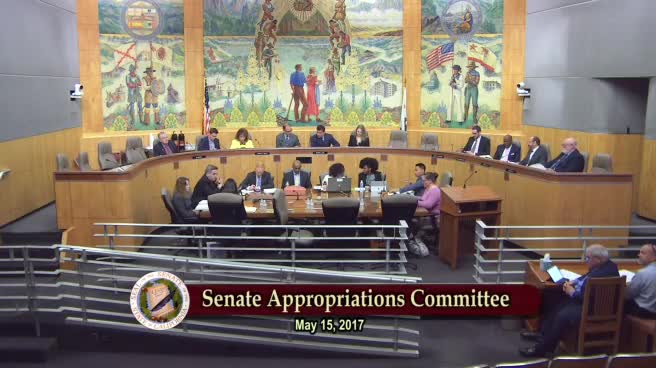 3MIN
Senate Standing Committee on Appropriations
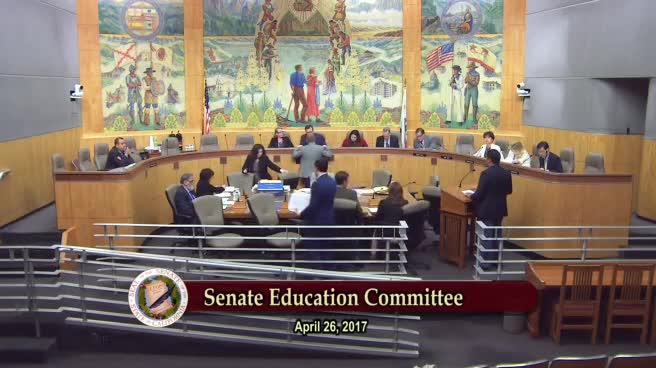 15MIN
Senate Standing Committee on Education
Bill Author

Bill Co-Author(s):