SB 597: Human trafficking: victim confidentiality.
- Session Year: 2017-2018
- House: Senate
- Latest Version Date: 2017-10-07
Existing law authorizes victims of domestic violence, sexual assault, or stalking to complete an application to be approved by the Secretary of State for the purpose of enabling state and local agencies to respond to requests for public records without disclosing a program participants residence address contained in any public record and otherwise provide for confidentiality of identity for that person, subject to specified conditions. Any person who makes a false statement in an application is guilty of a misdemeanor.
This bill would make this program available to a victim of human trafficking, as defined. The bill would also make the program available to household members, as defined, of a victim of domestic violence, sexual assault, stalking, or human trafficking, excluding the perpetrator, if applicable. The bill would make additional conforming changes.
By including victims of human trafficking and specified household members of victims of domestic violence, sexual assault, stalking, or human trafficking, this bill would impose new duties on local public officials and expand the scope of an existing crime, thereby creating a state-mandated local program.
The California Constitution requires the state to reimburse local agencies and school districts for certain costs mandated by the state. Statutory provisions establish procedures for making that reimbursement.
This bill would provide that with regard to certain mandates no reimbursement is required by this act for a specified reason.
With regard to any other mandates, this bill would provide that, if the Commission on State Mandates determines that the bill contains costs so mandated by the state, reimbursement for those costs shall be made pursuant to the statutory provisions noted above.
Existing law authorizes victims of domestic violence, sexual assault, or stalking to complete an application to be approved by the Secretary of State for the purpose of enabling state and local agencies to respond to requests for public records without disclosing a program participants residence address contained in any public record and otherwise provide for confidentiality of identity for that person, subject to specified conditions. Any person who makes a false statement in an application is guilty of a misdemeanor.
This bill would make this program available to a victim of human trafficking, as defined. The bill would also make the program available to members of the household household members, as defined, of a victim of domestic violence, sexual assault, stalking, or human trafficking, excluding the perpetrator, if applicable.
By including victims of human trafficking and specified members of a victims household, household members of victims of domestic violence, sexual assault, stalking, or human trafficking, this bill would impose new duties on local public officials and expand the scope of an existing crime, thereby creating a state-mandated local program.
The California Constitution requires the state to reimburse local agencies and school districts for certain costs mandated by the state. Statutory provisions establish procedures for making that reimbursement.
This bill would provide that with regard to certain mandates no reimbursement is required by this act for a specified reason.
With regard to any other mandates, this bill would provide that, if the Commission on State Mandates determines that the bill contains costs so mandated by the state, reimbursement for those costs shall be made pursuant to the statutory provisions noted above.
Existing law authorizes victims of domestic violence, sexual assault, or stalking to complete an application to be approved by the Secretary of State for the purpose of enabling state and local agencies to respond to requests for public records without disclosing a program participants residence address contained in any public record and otherwise provide for confidentiality of identity for that person, subject to specified conditions. Any person who makes a false statement in an application is guilty of a misdemeanor.
This bill would make this program available to a victim of human trafficking, as defined. The bill would also make the program available to members of the household of a victim of domestic violence, sexual assault, stalking, or human trafficking, excluding the perpetrator, if applicable.
By including victims of human trafficking, trafficking and specified members of a victims household, this bill would impose new duties on local public officials and expand the scope of an existing crime, thereby creating a state-mandated local program.
The California Constitution requires the state to reimburse local agencies and school districts for certain costs mandated by the state. Statutory provisions establish procedures for making that reimbursement.
This bill would provide that with regard to certain mandates no reimbursement is required by this act for a specified reason.
With regard to any other mandates, this bill would provide that, if the Commission on State Mandates determines that the bill contains costs so mandated by the state, reimbursement for those costs shall be made pursuant to the statutory provisions noted above.
Existing law authorizes victims of domestic violence, sexual assault, or stalking to complete an application to be approved by the Secretary of State for the purpose of enabling state and local agencies to respond to requests for public records without disclosing a program participants residence address contained in any public record and otherwise provide for confidentiality of identity for that person, subject to specified conditions. Any person who makes a false statement in an application is guilty of a misdemeanor.
This bill would make this program available to a victim of human trafficking, as defined.
By including victims of human trafficking, this bill would impose new duties on local public officials and expand the scope of an existing crime, thereby creating a state-mandated local program.
The California Constitution requires the state to reimburse local agencies and school districts for certain costs mandated by the state. Statutory provisions establish procedures for making that reimbursement.
This bill would provide that with regard to certain mandates no reimbursement is required by this act for a specified reason.
With regard to any other mandates, this bill would provide that, if the Commission on State Mandates determines that the bill contains costs so mandated by the state, reimbursement for those costs shall be made pursuant to the statutory provisions noted above.
The Legislature finds that persons attempting to escape from actual or threatened domestic violence, sexual assault, stalking, or human trafficking, frequently establish new names or addresses in order to prevent their assailants or probable assailants from finding them. The purpose of this chapter is to enable state and local agencies to respond to requests for public records without disclosing the changed name or location of a victim of domestic violence, sexual assault, stalking, or human trafficking, to enable interagency cooperation with the Secretary of State in providing name and address confidentiality for victims of domestic violence, sexual assault, stalking, or human trafficking, and to enable state and local agencies to accept a program participants use of an address designated by the Secretary of State as a substitute mailing address.
SEC. 2.Section 6205.5 of the Government Code is amended to read:6205.5.Unless the context clearly requires otherwise, the definitions in this section apply throughout this chapter.
(a)Address means a residential street address, school address, or work address of an individual, as specified on the individuals application to be a program participant under this chapter.
(b)Cohabitant has the same meaning as in subdivision (b) of Section 18291 of the Welfare and Institutions Code.
(c)Domestic violence means an act as defined in Section 6211 of the Family Code.
(d)Domicile means a place of habitation as defined in Section 349 of the Elections Code.
(e)Household member means an adult person who resides at the same residential address as the applicant or participant and is related to the applicant or participant by blood, marriage, registered domestic partnership, adoption, or is a cohabitant of an applicant or participant.
(f)Human trafficking means any act punishable pursuant to Section 236.1 of the Penal Code.
(g)Program participant means a person certified as a program participant under Section 6206.
(h)Sexual assault means an act or attempt made punishable by Section 220, 261, 261.5, 262, 264.1, 266c, 269, 285, 286, 288, 288.5, 288a, 289, or 647.6 of the Penal Code.
(i)Stalking means an act as defined in Section 646.9 of the Penal Code.
SEC. 3.Section 6206 of the Government Code is amended to read:6206.(a)An adult person, a parent or guardian acting on behalf of a minor, or a guardian acting on behalf of an incapacitated person, who is domiciled in California, may apply to the Secretary of State to have an address designated by the Secretary of State serve as the persons address or the address of the minor or incapacitated person. An application shall be completed in person at a community-based victims assistance program or a community-based assistance program that serves victims of elder or dependent adult abuse pursuant to the Elder Abuse and Dependent Adult Civil Protection Act (Chapter 11 (commencing with Section 15600) of Part 3 of Division 9 of the Welfare and Institutions Code). The application process shall include a requirement that the applicant shall meet with a victims assistance counselor and receive orientation information about the program. The Secretary of State shall approve an application if it is filed in the manner and on the form prescribed by the Secretary of State and if it contains all of the following:
(1)A sworn statement by the applicant that the applicant has good reason to believe both of the following:
(A)That the applicant, or the minor or incapacitated person on whose behalf the application is made, is a victim of domestic violence, sexual assault, stalking, or human trafficking, or is a household member of a victim who is making or has made an application pursuant to this section, unless the applicant is the perpetrator of the crime which provided the basis for that victims application.
(B)That the applicant fears for his or her safety, the safety of his or her children or household members, or the safety of the minor or incapacitated person on whose behalf the application is made.
(2)If the applicant alleges that the basis for the application is that the applicant, or the minor or incapacitated person on whose behalf the application is made, is a victim of domestic violence, sexual assault, stalking, or human trafficking, the application may be accompanied by evidence including, but not limited to, any of the following:
(A)Police, court, or other government agency records or files.
(B)Documentation from a domestic violence or sexual assault program if the person is alleged to be a victim of domestic violence, sexual assault, stalking, or human trafficking.
(C)Documentation from a legal, clerical, medical, or other professional from whom the applicant or person on whose behalf the application is made has sought assistance in dealing with the alleged domestic violence, sexual assault, stalking, or human trafficking.
(D)Any other evidence that supports the sworn statement, such as a statement from any other individual with knowledge of the circumstances that provides the basis for the claim, or physical evidence of the act or acts of domestic violence, sexual assault, stalking, or human trafficking.
(3)If the basis for the application is that the applicant, or the minor or incapacitated person on whose behalf the application is made, is a household member of a person described in paragraph (2), the application shall include the name of that person and evidence that the applicant is a household member.
(4)The name and last known address of the applicants minor child or children, the name and last known address of the other parent or parents of the minor child or children of the applicant, and all court orders related to the minor child or children of the applicant, and legal counsel of record in those cases.
(5)A designation of the Secretary of State as agent for purposes of service of process and for the purpose of receipt of mail.
(A)Service on the Secretary of State of any summons, writ, notice, demand, or process shall be made by delivering to the address confidentiality program personnel of the office of the Secretary of State two copies of the summons, writ, notice, demand, or process.
(B)If a summons, writ, notice, demand, or process is served on the Secretary of State, the Secretary of State shall immediately cause a copy to be forwarded to the program participant at the address shown on the records of the address confidentiality program so that the summons, writ, notice, demand, or process is received by the program participant within three days of the Secretary of States having received it.
(C)The Secretary of State shall keep a record of all summonses, writs, notices, demands, and processes served upon the Secretary of State under this section and shall record the time of that service and the Secretary of States action.
(D)The office of the Secretary of State and any agent or person employed by the Secretary of State shall be held harmless from any liability in any action brought by any person injured or harmed as a result of the handling of first-class mail on behalf of program participants.
(6)The mailing address where the applicant can be contacted by the Secretary of State, and the phone number or numbers where the applicant can be called by the Secretary of State.
(7)The address or addresses that the applicant requests not be disclosed for the reason that disclosure will increase the risk of domestic violence, sexual assault, stalking, or human trafficking.
(8)The signature of the applicant and of any individual or representative of any office designated in writing under Section 6208.5 who assisted in the preparation of the application, and the date on which the applicant signed the application.
(b)Applications shall be filed with the office of the Secretary of State.
(c)Upon filing a properly completed application, the Secretary of State shall certify the applicant as a program participant. Applicants shall be certified for four years following the date of filing unless the certification is withdrawn or invalidated before that date. The Secretary of State shall by rule establish a renewal procedure. A minor program participant, who reaches 18 years of age during his or her enrollment, may renew as an adult following the renewal procedures established by the Secretary of State.
(d)Upon certification, the Secretary of State shall, within 10 days, notify the other parent or parents identified pursuant to paragraph (4) of subdivision (a) of the designation of the Secretary of State as agent for purposes of service of process and, unless there is a court order prohibiting contact, the address designated by the Secretary of State for the program participant. The notice shall be given by mail, return receipt requested, postage prepaid, to the last known address of the other parent to be notified. A copy shall also be sent to that parents counsel of record, if provided to the Secretary of State by the applicant.
(e)A person who falsely attests in an application that disclosure of the applicants address would endanger the applicants safety or the safety of the applicants children or household members, or the minor or incapacitated person on whose behalf the application is made, or who knowingly provides false or incorrect information upon making an application, is guilty of a misdemeanor. A notice shall be printed in bold type and in a conspicuous location on the face of the application informing the applicant of the penalties under this subdivision.
SEC. 4.Section 6206.7 of the Government Code is amended to read:6206.7.(a)A program participant may withdraw from program participation by submitting to the Secretary of State written notification of withdrawal and his or her current identification card. Certification shall be terminated on the date of receipt of this notification.
(b)The Secretary of State may terminate a program participants certification and invalidate his or her authorization card for any of the following reasons:
(1)The program participants certification term has expired and certification renewal has not been completed.
(2)The Secretary of State has determined that false information was used in the application process to qualify as a program participant or that participation in the program is being used as a subterfuge to avoid detection of illegal or criminal activity or apprehension by law enforcement.
(3)The program participant no longer resides at the most recent residential address provided to the Secretary of State, and has not provided at least seven days prior notice in writing of a change in address.
(4)A service of process document or mail forwarded to the program participant by the Secretary of State is returned as nondeliverable.
(5)The program participant obtains a legal name change and fails to notify the Secretary of State within seven days.
(6)The program participant, who reaches 18 years of age during his or her certification term, has not renewed his or her certification within 60 days of him or her reaching 18 years of age.
(c)The Secretary of State may refuse to renew a program participants certification if the adult program participant or the parent or guardian acting on behalf of a minor or incapacitated person has abandoned his or her domicile in this state.
(d)If intended termination is based on any of the reasons under subdivision (b) or (c), the Secretary of State shall send written notification of the intended termination to the program participant. The program participant shall have 30 days in which to appeal the intended termination under procedures developed by the Secretary of State.
(e)The Secretary of State shall notify in writing the county elections official and authorized personnel of the appropriate county clerks office, county recording office, and state and local agencies of the program participants certification withdrawal, invalidation, expiration, or termination.
(f)Upon receipt of this termination notification, authorized personnel shall transmit to the Secretary of State all appropriate administrative records pertaining to the program participant and the record transmitting agency is no longer responsible for maintaining the confidentiality of a terminated program participants record.
(g)Following termination of program participant certification as a result of paragraph (2) of subdivision (b), the Secretary of State may disclose information contained in the participants application.
SEC. 5.Section 6208.5 of the Government Code is amended to read:6208.5.The Secretary of State shall designate state and local agencies and nonprofit agencies that provide counseling and shelter services to victims of domestic violence, sexual assault, stalking, or human trafficking as well as agencies that serve victims of elder or dependent adult abuse pursuant to the Elder Abuse and Dependent Adult Civil Protection Act (Chapter 11 (commencing with Section 15600) of Part 3 of Division 9 of the Welfare and Institutions Code) to assist victims of domestic violence, sexual assault, stalking, or human trafficking applying to be program participants. The Secretary of State shall conduct outreach activities to identify and recruit the agencies. Any assistance and counseling rendered by the office of the Secretary of State or its designees to applicants shall in no way be construed as legal advice.
SEC. 6.Section 6209.5 of the Government Code is amended to read:6209.5.The Secretary of State shall provide each program participant a notice in clear and conspicuous font that contains all of the following information:
(a)The program participant is authorized by law to request to use his or her address designated by the Secretary of State on real property deeds, change of ownership forms, and deeds of trust when purchasing or selling a home.
(b)The program participant may create a revocable living trust and place his or her real property into the trust to protect his or her residential street address from disclosure in real property transactions.
(c)The program participant may obtain a change of his or her legal name to protect his or her anonymity.
(d)A list of contact information for entities that the program participant may contact to receive information on, or receive legal services for, the creation of a trust to hold real property or obtaining a name change, including county bar associations, legal aid societies, domestic violence prevention organizations, human trafficking prevention organizations, state and local agencies, or other nonprofit organizations that may be able to assist program participants.
SEC. 7.Section 6209.7 of the Government Code is amended to read:6209.7.(a)Nothing in this chapter, nor participation in this program, affects custody or visitation orders in effect prior to or during program participation. A program participant who falsifies his or her location in order to unlawfully avoid custody or visitation orders is subject to immediate termination from the program and is guilty of a misdemeanor.
(b)Participation in the program does not constitute evidence of domestic violence, stalking, sexual assault, or human trafficking for purposes of making custody or visitation orders.
SEC. 8.No reimbursement is required by this act pursuant to Section 6 of Article XIIIB of the California Constitution for certain costs that may be incurred by a local agency or school district because, in that regard, this act creates a new crime or infraction, eliminates a crime or infraction, or changes the penalty for a crime or infraction, within the meaning of Section 17556 of the Government Code, or changes the definition of a crime within the meaning of Section 6 of Article XIIIB of the California Constitution.
However, if the Commission on State Mandates determines that this act contains other costs mandated by the state, reimbursement to local agencies and school districts for those costs shall be made pursuant to Part 7 (commencing with Section 17500) of Division 4 of Title 2 of the Government Code.
The Legislature finds that persons attempting to escape from actual or threatened domestic violence, sexual assault, stalking, or human trafficking, frequently establish new names or addresses in order to prevent their assailants or probable assailants from finding them. The purpose of this chapter is to enable state and local agencies to respond to requests for public records without disclosing the changed name or location of a victim of domestic violence, sexual assault, stalking, or human trafficking, to enable interagency cooperation with the Secretary of State in providing name and address confidentiality for victims of domestic violence, sexual assault, stalking, or human trafficking, and to enable state and local agencies to accept a program participants use of an address designated by the Secretary of State as a substitute mailing address.
SEC. 2.Section 6205.5 of the Government Code is amended to read:6205.5.Unless the context clearly requires otherwise, the definitions in this section apply throughout this chapter.
(a)Address means a residential street address, school address, or work address of an individual, as specified on the individuals application to be a program participant under this chapter.
(b)
(b)Cohabitant has the same meaning as in subdivision (b) of Section 18291 of the Welfare and Institutions Code.
(c)Domestic violence means an act as defined in Section 6211 of the Family Code.
(c)(d)Domicile means a place of habitation as defined in Section 349 of the Elections Code.
(d)(e)Household member means an adult person who resides at the same residential address as the applicant or participant and is related to the applicant or participant by blood, marriage, registered domestic partnership, adoption, or is in a cohabitated relationship. a cohabitant of an applicant or participant.
(e)(f)Human trafficking means any act punishable pursuant to Section 236.1 of the Penal Code.
(f)(g)Program participant means a person certified as a program participant under Section 6206.
(g)(h)Sexual assault means an act or attempt made punishable by Section 220, 261, 261.5, 262, 264.1, 266c, 269, 285, 286, 288, 288.5, 288a, 289, or 647.6 of the Penal Code.
(h)(i)Stalking means an act as defined in Section 646.9 of the Penal Code.
SEC. 3.Section 6206 of the Government Code is amended to read:6206.(a)An adult person, a parent or guardian acting on behalf of a minor, or a guardian acting on behalf of an incapacitated person, who is domiciled in California, may apply to the Secretary of State to have an address designated by the Secretary of State serve as the persons address or the address of the minor or incapacitated person. An application shall be completed in person at a community-based victims assistance program or a community-based assistance program that serves victims of elder or dependent adult abuse pursuant to the Elder Abuse and Dependent Adult Civil Protection Act (Chapter 11 (commencing with Section 15600) of Part 3 of Division 9 of the Welfare and Institutions Code). The application process shall include a requirement that the applicant shall meet with a victims assistance counselor and receive orientation information about the program. The Secretary of State shall approve an application if it is filed in the manner and on the form prescribed by the Secretary of State and if it contains all of the following:
(1)A sworn statement by the applicant that the applicant has good reason to believe both of the following:
(A)That the applicant, or the minor or incapacitated person on whose behalf the application is made, is a victim of domestic violence, sexual assault, stalking, or human trafficking, or is a household member of a victim who is making or has made an application pursuant to this section, unless the applicant is the perpetrator of the crime which provided the basis for that victims application.
(B)That the applicant fears for his or her safety, the safety of his or her children or household members, or the safety of the minor or incapacitated person on whose behalf the application is made.
(2)If the applicant alleges that the basis for the application is that the applicant, or the minor or incapacitated person on whose behalf the application is made, is a victim of domestic violence, sexual assault, stalking, or human trafficking, the application may be accompanied by evidence including, but not limited to, any of the following:
(A)Police, court, or other government agency records or files.
(B)Documentation from a domestic violence or sexual assault program if the person is alleged to be a victim of domestic violence, sexual assault, stalking, or human trafficking.
(C)Documentation from a legal, clerical, medical, or other professional from whom the applicant or person on whose behalf the application is made has sought assistance in dealing with the alleged domestic violence, sexual assault, stalking, or human trafficking.
(D)Any other evidence that supports the sworn statement, such as a statement from any other individual with knowledge of the circumstances that provides the basis for the claim, or physical evidence of the act or acts of domestic violence, sexual assault, stalking, or human trafficking.
(3)If the basis for the application is that the applicant, or the minor or incapacitated person on whose behalf the application is made, is a household member of a person described in paragraph (2), the application shall include the name of that person and evidence that the applicant is a household member.
(4)The name and last known address of the applicants minor child or children, the name and last known address of the other parent or parents of the minor child or children of the applicant, and all court orders related to the minor child or children of the applicant, and legal counsel of record in those cases.
(5)A designation of the Secretary of State as agent for purposes of service of process and for the purpose of receipt of mail.
(A)Service on the Secretary of State of any summons, writ, notice, demand, or process shall be made by delivering to the address confidentiality program personnel of the office of the Secretary of State two copies of the summons, writ, notice, demand, or process.
(B)If a summons, writ, notice, demand, or process is served on the Secretary of State, the Secretary of State shall immediately cause a copy to be forwarded to the program participant at the address shown on the records of the address confidentiality program so that the summons, writ, notice, demand, or process is received by the program participant within three days of the Secretary of States having received it.
(C)The Secretary of State shall keep a record of all summonses, writs, notices, demands, and processes served upon the Secretary of State under this section and shall record the time of that service and the Secretary of States action.
(D)The office of the Secretary of State and any agent or person employed by the Secretary of State shall be held harmless from any liability in any action brought by any person injured or harmed as a result of the handling of first-class mail on behalf of program participants.
(6)The mailing address where the applicant can be contacted by the Secretary of State, and the phone number or numbers where the applicant can be called by the Secretary of State.
(7)The address or addresses that the applicant requests not be disclosed for the reason that disclosure will increase the risk of domestic violence, sexual assault, stalking, or human trafficking.
(8)The signature of the applicant and of any individual or representative of any office designated in writing under Section 6208.5 who assisted in the preparation of the application, and the date on which the applicant signed the application.
(b)Applications shall be filed with the office of the Secretary of State.
(c)Upon filing a properly completed application, the Secretary of State shall certify the applicant as a program participant. Applicants shall be certified for four years following the date of filing unless the certification is withdrawn or invalidated before that date. The Secretary of State shall by rule establish a renewal procedure. A minor program participant, who reaches 18 years of age during his or her enrollment, may renew as an adult following the renewal procedures established by the Secretary of State.
(d)Upon certification, the Secretary of State shall, within 10 days, notify the other parent or parents identified pursuant to paragraph (4) of subdivision (a) of the designation of the Secretary of State as agent for purposes of service of process and, unless there is a court order prohibiting contact, the address designated by the Secretary of State for the program participant. The notice shall be given by mail, return receipt requested, postage prepaid, to the last known address of the other parent to be notified. A copy shall also be sent to that parents counsel of record, if provided to the Secretary of State by the applicant.
(e)A person who falsely attests in an application that disclosure of the applicants address would endanger the applicants safety or the safety of the applicants children or household members, or the minor or incapacitated person on whose behalf the application is made, or who knowingly provides false or incorrect information upon making an application, is guilty of a misdemeanor. A notice shall be printed in bold type and in a conspicuous location on the face of the application informing the applicant of the penalties under this subdivision.
SEC. 4.Section 6206.7 of the Government Code is amended to read:6206.7.(a)A program participant may withdraw from program participation by submitting to the Secretary of State written notification of withdrawal and his or her current identification card. Certification shall be terminated on the date of receipt of this notification.
(b)The Secretary of State may terminate a program participants certification and invalidate his or her authorization card for any of the following reasons:
(1)The program participants certification term has expired and certification renewal has not been completed.
(2)The Secretary of State has determined that false information was used in the application process to qualify as a program participant or that participation in the program is being used as a subterfuge to avoid detection of illegal or criminal activity or apprehension by law enforcement.
(3)The program participant no longer resides at the most recent residential address provided to the Secretary of State, and has not provided at least seven days prior notice in writing of a change in address.
(4)A service of process document or mail forwarded to the program participant by the Secretary of State is returned as nondeliverable.
(5)The program participant obtains a legal name change and fails to notify the Secretary of State within seven days.
(6)The program participant, who reaches 18 years of age during his or her certification term, has not renewed his or her certification within 60 days of him or her reaching 18 years of age.
(c)The Secretary of State may refuse to renew a program participants certification if the adult program participant or the parent or guardian acting on behalf of a minor or incapacitated person has abandoned his or her domicile in this state.
(d)If intended termination is based on any of the reasons under subdivision (b) or (c), the Secretary of State shall send written notification of the intended termination to the program participant. The program participant shall have 30 days in which to appeal the intended termination under procedures developed by the Secretary of State.
(e)The Secretary of State shall notify in writing the county elections official and authorized personnel of the appropriate county clerks office, county recording office, and department of health state and local agencies of the program participants certification withdrawal, invalidation, expiration, or termination.
(f)Upon receipt of this termination notification, authorized personnel shall transmit to the Secretary of State all appropriate administrative records pertaining to the program participant and the record transmitting agency is no longer responsible for maintaining the confidentiality of a terminated program participants record.
(g)Following termination of program participant certification as a result of paragraph (2) of subdivision (b), the Secretary of State may disclose information contained in the participants application.
SEC. 4.SEC. 5.Section 6208.5 of the Government Code is amended to read:6208.5.The Secretary of State shall designate state and local agencies and nonprofit agencies that provide counseling and shelter services to victims of domestic violence, sexual assault, stalking, or human trafficking as well as agencies that serve victims of elder or dependent adult abuse pursuant to the Elder Abuse and Dependent Adult Civil Protection Act (Chapter 11 (commencing with Section 15600) of Part 3 of Division 9 of the Welfare and Institutions Code) to assist victims of domestic violence, sexual assault, stalking, or human trafficking applying to be program participants. The Secretary of State shall conduct outreach activities to identify and recruit the agencies. Any assistance and counseling rendered by the office of the Secretary of State or its designees to applicants shall in no way be construed as legal advice.
SEC. 5.SEC. 6.Section 6209.5 of the Government Code is amended to read:6209.5.The Secretary of State shall provide each program participant a notice in clear and conspicuous font that contains all of the following information:
(a)The program participant is authorized by law to request to use his or her address designated by the Secretary of State on real property deeds, change of ownership forms, and deeds of trust when purchasing or selling a home.
(b)The program participant may create a revocable living trust and place his or her real property into the trust to protect his or her residential street address from disclosure in real property transactions.
(c)The program participant may obtain a change of his or her legal name to protect his or her anonymity.
(d)A list of contact information for entities that the program participant may contact to receive information on, or receive legal services for, the creation of a trust to hold real property or obtaining a name change, including county bar associations, legal aid societies, domestic violence prevention organizations, human trafficking prevention organizations, state and local agencies, or other nonprofit organizations that may be able to assist program participants.
SEC. 7.Section 6209.7 of the Government Code is amended to read:6209.7.(a)Nothing in this chapter, nor participation in this program, affects custody or visitation orders in effect prior to or during program participation. A program participant who falsifies his or her location in order to unlawfully avoid custody or visitation orders is subject to immediate termination from the program and is guilty of a misdemeanor.
(b)Participation in the program does not constitute evidence of domestic violence or stalking violence, stalking, sexual assault, or human trafficking for purposes of making custody or visitation orders.
SEC. 6.SEC. 8.No reimbursement is required by this act pursuant to Section 6 of Article XIIIB of the California Constitution for certain costs that may be incurred by a local agency or school district because, in that regard, this act creates a new crime or infraction, eliminates a crime or infraction, or changes the penalty for a crime or infraction, within the meaning of Section 17556 of the Government Code, or changes the definition of a crime within the meaning of Section 6 of Article XIIIB of the California Constitution.
However, if the Commission on State Mandates determines that this act contains other costs mandated by the state, reimbursement to local agencies and school districts for those costs shall be made pursuant to Part 7 (commencing with Section 17500) of Division 4 of Title 2 of the Government Code.
The Legislature finds that persons attempting to escape from actual or threatened domestic violence, sexual assault, stalking, or human trafficking, frequently establish new names or addresses in order to prevent their assailants or probable assailants from finding them. The purpose of this chapter is to enable state and local agencies to respond to requests for public records without disclosing the changed name or location of a victim of domestic violence, sexual assault, stalking, or human trafficking, to enable interagency cooperation with the Secretary of State in providing name and address confidentiality for victims of domestic violence, sexual assault, stalking, or human trafficking, and to enable state and local agencies to accept a program participants use of an address designated by the Secretary of State as a substitute mailing address.
SEC. 2.Section 6205.5 of the Government Code is amended to read:6205.5.Unless the context clearly requires otherwise, the definitions in this section apply throughout this chapter.
(a)Address means a residential street address, school address, or work address of an individual, as specified on the individuals application to be a program participant under this chapter.
(b)Domestic violence means an act as defined in Section 6211 of the Family Code.
(c)Domicile means a place of habitation as defined in Section 349 of the Elections Code.
(d)Household member means an adult person who resides at the same residential address as the applicant or participant and is related to the applicant or participant by blood, marriage, registered domestic partnership, adoption, or is in a cohabitated relationship.
(d)(e)Human trafficking means any act punishable pursuant to Section 236.1 of the Penal Code.
(e)(f)Program participant means a person certified as a program participant under Section 6206.
(f)(g)Sexual assault means an act or attempt made punishable by Section 220, 261, 261.5, 262, 264.1, 266c, 269, 285, 286, 288, 288.5, 288a, 289, or 647.6 of the Penal Code.
(g)(h)Stalking means an act as defined in Section 646.9 of the Penal Code.
SEC. 3.Section 6206 of the Government Code is amended to read:6206.(a)An adult person, a parent or guardian acting on behalf of a minor, or a guardian acting on behalf of an incapacitated person, who is domiciled in California, may apply to the Secretary of State to have an address designated by the Secretary of State serve as the persons address or the address of the minor or incapacitated person. An application shall be completed in person at a community-based victims assistance program or a community-based assistance program that serves victims of elder or dependent adult abuse pursuant to the Elder Abuse and Dependent Adult Civil Protection Act (Chapter 11 (commencing with Section 15600) of Part 3 of Division 9 of the Welfare and Institutions Code). The application process shall include a requirement that the applicant shall meet with a victims assistance counselor and receive orientation information about the program. The Secretary of State shall approve an application if it is filed in the manner and on the form prescribed by the Secretary of State and if it contains all of the following:
(1)A sworn statement by the applicant that the applicant has good reason to believe both of the following:
(A)That the applicant, or the minor or incapacitated person on whose behalf the application is made, is a victim of domestic violence, sexual assault, stalking, or human trafficking, or is a member of the household member of a victim who is making or has made an application pursuant to this section, unless the applicant is the perpetrator of the crime which provided the basis for that victims application.
(B)That the applicant fears for his or her safety, the safety of his or her children or any member of his or her household, household members, or the safety of the minor or incapacitated person on whose behalf the application is made.
(2)If the applicant alleges that the basis for the application is that the applicant, or the minor or incapacitated person on whose behalf the application is made, is a victim of domestic violence or violence, sexual assault, stalking, or human trafficking, the application may be accompanied by evidence including, but not limited to, any of the following:
(A)Police, court, or other government agency records or files.
(B)Documentation from a domestic violence or sexual assault program if the person is alleged to be a victim of domestic violence or sexual assault. violence, sexual assault, stalking, or human trafficking.
(C)Documentation from a legal, clerical, medical, or other professional from whom the applicant or person on whose behalf the application is made has sought assistance in dealing with the alleged domestic violence or sexual assault. violence, sexual assault, stalking, or human trafficking.
(D)Any other evidence that supports the sworn statement, such as a statement from any other individual with knowledge of the circumstances that provides the basis for the claim, or physical evidence of the act or acts of domestic violence or sexual assault. violence, sexual assault, stalking, or human trafficking.
(3)If the applicant alleges that the basis for the application is that the applicant, or the minor or incapacitated person on whose behalf the application is made, is a victim of stalking or human trafficking, the application may be accompanied by evidence including, but not limited to, any of the following:(A)Police, court, or other government agency records or files.(B)Documentation from a legal, clerical, medical, or other professional from whom the applicant or person on whose behalf the application is made has sought assistance in dealing with the alleged stalking or human trafficking.(C)Any other evidence that supports the sworn statement, such as a sworn statement from any other individual with knowledge of the circumstances that provide the basis for the claim, or physical evidence of the act or acts of stalking or human trafficking.(4)(3)If the basis for the application is that the applicant, or the minor or incapacitated person on whose behalf the application is made, is a household member of the household of a person described in paragraph (2) or (3), (2), the application shall include the name of that person and evidence that the applicant is a member of his or her household. household member.
(5)(4)The name and last known address of the applicants minor child or children, the name and last known address of the other parent or parents of the minor child or children of the applicant, and all court orders related to the minor child or children of the applicant, and legal counsel of record in those cases.
(6)(5)A designation of the Secretary of State as agent for purposes of service of process and for the purpose of receipt of mail.
(A)Service on the Secretary of State of any summons, writ, notice, demand, or process shall be made by delivering to the address confidentiality program personnel of the office of the Secretary of State two copies of the summons, writ, notice, demand, or process.
(B)If a summons, writ, notice, demand, or process is served on the Secretary of State, the Secretary of State shall immediately cause a copy to be forwarded to the program participant at the address shown on the records of the address confidentiality program so that the summons, writ, notice, demand, or process is received by the program participant within three days of the Secretary of States having received it.
(C)The Secretary of State shall keep a record of all summonses, writs, notices, demands, and processes served upon the Secretary of State under this section and shall record the time of that service and the Secretary of States action.
(D)The office of the Secretary of State and any agent or person employed by the Secretary of State shall be held harmless from any liability in any action brought by any person injured or harmed as a result of the handling of first-class mail on behalf of program participants.
(7)(6)The mailing address where the applicant can be contacted by the Secretary of State, and the phone number or numbers where the applicant can be called by the Secretary of State.
(8)(7)The address or addresses that the applicant requests not be disclosed for the reason that disclosure will increase the risk of domestic violence, sexual assault, stalking, or human trafficking.
(9)(8)The signature of the applicant and of any individual or representative of any office designated in writing under Section 6208.5 who assisted in the preparation of the application, and the date on which the applicant signed the application.
(b)Applications shall be filed with the office of the Secretary of State.
(c)Upon filing a properly completed application, the Secretary of State shall certify the applicant as a program participant. Applicants shall be certified for four years following the date of filing unless the certification is withdrawn or invalidated before that date. The Secretary of State shall by rule establish a renewal procedure. A minor program participant, who reaches 18 years of age during his or her enrollment, may renew as an adult following the renewal procedures established by the Secretary of State.
(d)Upon certification, the Secretary of State shall, within 10 days, notify the other parent or parents identified pursuant to paragraph (4) of subdivision (a) of the designation of the Secretary of State as agent for purposes of service of process and, unless there is a court order prohibiting contact, the address designated by the Secretary of State for the program participant. The notice shall be given by mail, return receipt requested, postage prepaid, to the last known address of the other parent to be notified. A copy shall also be sent to that parents counsel of record, if provided to the Secretary of State by the applicant.
(e)A person who falsely attests in an application that disclosure of the applicants address would endanger the applicants safety or the safety of the applicants children or any member of his or her household, household members, or the minor or incapacitated person on whose behalf the application is made, or who knowingly provides false or incorrect information upon making an application, is guilty of a misdemeanor. A notice shall be printed in bold type and in a conspicuous location on the face of the application informing the applicant of the penalties under this subdivision.
SEC. 4.Section 6208.5 of the Government Code is amended to read:6208.5.The Secretary of State shall designate state and local agencies and nonprofit agencies that provide counseling and shelter services to victims of domestic violence, sexual assault, stalking, or human trafficking as well as agencies that serve victims of elder or dependent adult abuse pursuant to the Elder Abuse and Dependent Adult Civil Protection Act (Chapter 11 (commencing with Section 15600) of Part 3 of Division 9 of the Welfare and Institutions Code) to assist victims of domestic violence, sexual assault, stalking, or human trafficking applying to be program participants. The Secretary of State shall conduct outreach activities to identify and recruit the agencies. Any assistance and counseling rendered by the office of the Secretary of State or its designees to applicants shall in no way be construed as legal advice.
SEC. 5.Section 6209.5 of the Government Code is amended to read:6209.5.The Secretary of State shall provide each program participant a notice in clear and conspicuous font that contains all of the following information:
(a)The program participant is authorized by law to request to use his or her address designated by the Secretary of State on real property deeds, change of ownership forms, and deeds of trust when purchasing or selling a home.
(b)The program participant may create a revocable living trust and place his or her real property into the trust to protect his or her residential street address from disclosure in real property transactions.
(c)The program participant may obtain a change of his or her legal name to protect his or her anonymity.
(d)A list of contact information for entities that the program participant may contact to receive information on, or receive legal services for, the creation of a trust to hold real property or obtaining a name change, including county bar associations, legal aid societies, domestic violence prevention organizations, human trafficking prevention organizations, state and local agencies, or other nonprofit organizations that may be able to assist program participants.
SEC. 6.No reimbursement is required by this act pursuant to Section 6 of Article XIIIB of the California Constitution for certain costs that may be incurred by a local agency or school district because, in that regard, this act creates a new crime or infraction, eliminates a crime or infraction, or changes the penalty for a crime or infraction, within the meaning of Section 17556 of the Government Code, or changes the definition of a crime within the meaning of Section 6 of Article XIIIB of the California Constitution.
However, if the Commission on State Mandates determines that this act contains other costs mandated by the state, reimbursement to local agencies and school districts for those costs shall be made pursuant to Part 7 (commencing with Section 17500) of Division 4 of Title 2 of the Government Code.
The Legislature finds that persons attempting to escape from actual or threatened domestic violence, sexual assault, stalking, or human trafficking, frequently establish new names or addresses in order to prevent their assailants or probable assailants from finding them. The purpose of this chapter is to enable state and local agencies to respond to requests for public records without disclosing the changed name or location of a victim of domestic violence, sexual assault, stalking, or human trafficking, to enable interagency cooperation with the Secretary of State in providing name and address confidentiality for victims of domestic violence, sexual assault, stalking, or human trafficking, and to enable state and local agencies to accept a program participants use of an address designated by the Secretary of State as a substitute mailing address.
SEC. 2.Section 6205.5 of the Government Code is amended to read:6205.5.Unless the context clearly requires otherwise, the definitions in this section apply throughout this chapter.
(a)Address means a residential street address, school address, or work address of an individual, as specified on the individuals application to be a program participant under this chapter.
(b)Domestic violence means an act as defined in Section 6211 of the Family Code.
(c)Domicile means a place of habitation as defined in Section 349 of the Elections Code.
(d)Human trafficking means any act punishable pursuant to Section 236.1 of the Penal Code.
(e)Program participant means a person certified as a program participant under Section 6206.
(f)Sexual assault means an act or attempt made punishable by Section 220, 261, 261.5, 262, 264.1, 266c, 269, 285, 286, 288, 288.5, 288a, 289, or 647.6 of the Penal Code.
(g)Stalking means an act as defined in Section 646.9 of the Penal Code.
SEC. 3.Section 6206 of the Government Code is amended to read:6206.(a)An adult person, a parent or guardian acting on behalf of a minor, or a guardian acting on behalf of an incapacitated person, who is domiciled in California, may apply to the Secretary of State to have an address designated by the Secretary of State serve as the persons address or the address of the minor or incapacitated person. An application shall be completed in person at a community-based victims assistance program or a community-based assistance program that serves victims of elder or dependent adult abuse pursuant to the Elder Abuse and Dependent Adult Civil Protection Act (Chapter 11 (commencing with Section 15600) of Part 3 of Division 9 of the Welfare and Institutions Code). The application process shall include a requirement that the applicant shall meet with a victims assistance counselor and receive orientation information about the program. The Secretary of State shall approve an application if it is filed in the manner and on the form prescribed by the Secretary of State and if it contains all of the following:
(1)A sworn statement by the applicant that the applicant has good reason to believe both of the following:
(A)That the applicant, or the minor or incapacitated person on whose behalf the application is made, is a victim of domestic violence, sexual assault, stalking, or human trafficking. trafficking, or is a member of the household of a victim who is making or has made an application pursuant to this section, unless the applicant is the perpetrator of the crime which provided the basis for that victims application.
(B)That the applicant fears for his or her safety or his or her childrens safety, the safety of his or her children or any member of his or her household, or the safety of the minor or incapacitated person on whose behalf the application is made.
(2)If the applicant alleges that the basis for the application is that the applicant, or the minor or incapacitated person on whose behalf the application is made, is a victim of domestic violence or sexual assault, the application may be accompanied by evidence including, but not limited to, any of the following:
(A)Police, court, or other government agency records or files.
(B)Documentation from a domestic violence or sexual assault program if the person is alleged to be a victim of domestic violence or sexual assault.
(C)Documentation from a legal, clerical, medical, or other professional from whom the applicant or person on whose behalf the application is made has sought assistance in dealing with the alleged domestic violence or sexual assault.
(D)Any other evidence that supports the sworn statement, such as a statement from any other individual with knowledge of the circumstances that provides the basis for the claim, or physical evidence of the act or acts of domestic violence or sexual assault.
(3)If the applicant alleges that the basis for the application is that the applicant, or the minor or incapacitated person on whose behalf the application is made, is a victim of stalking or human trafficking, the application may be accompanied by evidence including, but not limited to, any of the following:
(A)Police, court, or other government agency records or files.
(B)Documentation from a legal, clerical, medical, or other professional from whom the applicant or person on whose behalf the application is made has sought assistance in dealing with the alleged stalking or human trafficking.
(C)Any other evidence that supports the sworn statement, such as a sworn statement from any other individual with knowledge of the circumstances that provide the basis for the claim, or physical evidence of the act or acts of stalking or human trafficking.
(4)If the basis for the application is that the applicant, or the minor or incapacitated person on whose behalf the application is made, is a member of the household of a person described in paragraph (2) or (3), the application shall include the name of that person and evidence that the applicant is a member of his or her household.
(4)(5)The name and last known address of the applicants minor child or children, the name and last known address of the other parent or parents of the minor child or children of the applicant, and all court orders related to the minor child or children of the applicant, and legal counsel of record in those cases.
(5)(6)A designation of the Secretary of State as agent for purposes of service of process and for the purpose of receipt of mail.
(A)Service on the Secretary of State of any summons, writ, notice, demand, or process shall be made by delivering to the address confidentiality program personnel of the office of the Secretary of State two copies of the summons, writ, notice, demand, or process.
(B)If a summons, writ, notice, demand, or process is served on the Secretary of State, the Secretary of State shall immediately cause a copy to be forwarded to the program participant at the address shown on the records of the address confidentiality program so that the summons, writ, notice, demand, or process is received by the program participant within three days of the Secretary of States having received it.
(C)The Secretary of State shall keep a record of all summonses, writs, notices, demands, and processes served upon the Secretary of State under this section and shall record the time of that service and the Secretary of States action.
(D)The office of the Secretary of State and any agent or person employed by the Secretary of State shall be held harmless from any liability in any action brought by any person injured or harmed as a result of the handling of first-class mail on behalf of program participants.
(6)(7)The mailing address where the applicant can be contacted by the Secretary of State, and the phone number or numbers where the applicant can be called by the Secretary of State.
(7)(8)The address or addresses that the applicant requests not be disclosed for the reason that disclosure will increase the risk of domestic violence, sexual assault, stalking, or human trafficking.
(8)(9)The signature of the applicant and of any individual or representative of any office designated in writing under Section 6208.5 who assisted in the preparation of the application, and the date on which the applicant signed the application.
(b)Applications shall be filed with the office of the Secretary of State.
(c)Upon filing a properly completed application, the Secretary of State shall certify the applicant as a program participant. Applicants shall be certified for four years following the date of filing unless the certification is withdrawn or invalidated before that date. The Secretary of State shall by rule establish a renewal procedure. A minor program participant, who reaches 18 years of age during his or her enrollment, may renew as an adult following the renewal procedures established by the Secretary of State.
(d)Upon certification, the Secretary of State shall, within 10 days, notify the other parent or parents identified pursuant to paragraph (4) of subdivision (a) of the designation of the Secretary of State as agent for purposes of service of process and, unless there is a court order prohibiting contact, the address designated by the Secretary of State for the program participant. The notice shall be given by mail, return receipt requested, postage prepaid, to the last known address of the other parent to be notified. A copy shall also be sent to that parents counsel of record, if provided to the Secretary of State by the applicant.
(e)A person who falsely attests in an application that disclosure of the applicants address would endanger the applicants safety or the safety of the applicants children or any member of his or her household, or the minor or incapacitated person on whose behalf the application is made, or who knowingly provides false or incorrect information upon making an application, is guilty of a misdemeanor. A notice shall be printed in bold type and in a conspicuous location on the face of the application informing the applicant of the penalties under this subdivision.
SEC. 4.Section 6208.5 of the Government Code is amended to read:6208.5.The Secretary of State shall designate state and local agencies and nonprofit agencies that provide counseling and shelter services to victims of domestic violence, sexual assault, stalking, or human trafficking as well as agencies that serve victims of elder or dependent adult abuse pursuant to the Elder Abuse and Dependent Adult Civil Protection Act (Chapter 11 (commencing with Section 15600) of Part 3 of Division 9 of the Welfare and Institutions Code) to assist victims of domestic violence, sexual assault, stalking, or human trafficking applying to be program participants. The Secretary of State shall conduct outreach activities to identify and recruit the agencies. Any assistance and counseling rendered by the office of the Secretary of State or its designees to applicants shall in no way be construed as legal advice.
SEC. 5.Section 6209.5 of the Government Code is amended to read:6209.5.The Secretary of State shall provide each program participant a notice in clear and conspicuous font that contains all of the following information:
(a)The program participant is authorized by law to request to use his or her address designated by the Secretary of State on real property deeds, change of ownership forms, and deeds of trust when purchasing or selling a home.
(b)The program participant may create a revocable living trust and place his or her real property into the trust to protect his or her residential street address from disclosure in real property transactions.
(c)The program participant may obtain a change of his or her legal name to protect his or her anonymity.
(d)A list of contact information for entities that the program participant may contact to receive information on, or receive legal services for, the creation of a trust to hold real property or obtaining a name change, including county bar associations, legal aid societies, domestic violence prevention organizations, human trafficking prevention organizations, state and local agencies, or other nonprofit organizations that may be able to assist program participants.
SEC. 6.No reimbursement is required by this act pursuant to Section 6 of Article XIIIB of the California Constitution for certain costs that may be incurred by a local agency or school district because, in that regard, this act creates a new crime or infraction, eliminates a crime or infraction, or changes the penalty for a crime or infraction, within the meaning of Section 17556 of the Government Code, or changes the definition of a crime within the meaning of Section 6 of Article XIIIB of the California Constitution.
However, if the Commission on State Mandates determines that this act contains other costs mandated by the state, reimbursement to local agencies and school districts for those costs shall be made pursuant to Part 7 (commencing with Section 17500) of Division 4 of Title 2 of the Government Code.
The Legislature finds that persons attempting to escape from actual or threatened domestic violence, sexual assault, or stalking stalking, or human trafficking, frequently establish new names or addresses in order to prevent their assailants or probable assailants from finding them. The purpose of this chapter is to enable state and local agencies to respond to requests for public records without disclosing the changed name or location of a victim of domestic violence, sexual assault, or stalking, or human trafficking, to enable interagency cooperation with the Secretary of State in providing name and address confidentiality for victims of domestic violence, sexual assault, or stalking, or human trafficking, and to enable state and local agencies to accept a program participants use of an address designated by the Secretary of State as a substitute mailing address.
SEC. 2.Section 6205.5 of the Government Code is amended to read:6205.5.Unless the context clearly requires otherwise, the definitions in this section apply throughout this chapter.
(a)Address means a residential street address, school address, or work address of an individual, as specified on the individuals application to be a program participant under this chapter.
(b)Domestic violence means an act as defined in Section 6211 of the Family Code.
(c)Domicile means a place of habitation as defined in Section 349 of the Elections Code.
(d)Human trafficking means any act punishable pursuant to Section 236.1 of the Penal Code.
(d)(e)Program participant means a person certified as a program participant under Section 6206.
(e)(f)Sexual assault means an act or attempt made punishable by Section 220, 261, 261.5, 262, 264.1, 266c, 269, 285, 286, 288, 288.5, 288a, 289, or 647.6 of the Penal Code.
(f)(g)Stalking means an act as defined in Section 646.9 of the Penal Code.
SEC. 3.Section 6206 of the Government Code is amended to read:6206.(a)An adult person, a parent or guardian acting on behalf of a minor, or a guardian acting on behalf of an incapacitated person, who is domiciled in California, may apply to the Secretary of State to have an address designated by the Secretary of State serve as the persons address or the address of the minor or incapacitated person. An application shall be completed in person at a community-based victims assistance program or a community-based assistance program that serves victims of elder or dependent adult abuse pursuant to the Elder Abuse and Dependent Adult Civil Protection Act (Chapter 11 (commencing with Section 15600) of Part 3 of Division 9 of the Welfare and Institutions Code). The application process shall include a requirement that the applicant shall meet with a victims assistance counselor and receive orientation information about the program. The Secretary of State shall approve an application if it is filed in the manner and on the form prescribed by the Secretary of State and if it contains all of the following:
(1)A sworn statement by the applicant that the applicant has good reason to believe both of the following:
(A)That the applicant, or the minor or incapacitated person on whose behalf the application is made, is a victim of domestic violence, sexual assault, or stalking. stalking, or human trafficking.
(B)That the applicant fears for his or her safety or his or her childrens safety, or the safety of the minor or incapacitated person on whose behalf the application is made.
(2)If the applicant alleges that the basis for the application is that the applicant, or the minor or incapacitated person on whose behalf the application is made, is a victim of domestic violence or sexual assault, the application may be accompanied by evidence including, but not limited to, any of the following:
(A)Police, court, or other government agency records or files.
(B)Documentation from a domestic violence or sexual assault program if the person is alleged to be a victim of domestic violence or sexual assault.
(C)Documentation from a legal, clerical, medical, or other professional from whom the applicant or person on whose behalf the application is made has sought assistance in dealing with the alleged domestic violence or sexual assault.
(D)Any other evidence that supports the sworn statement, such as a statement from any other individual with knowledge of the circumstances that provides the basis for the claim, or physical evidence of the act or acts of domestic violence or sexual assault.
(3)If the applicant alleges that the basis for the application is that the applicant, or the minor or incapacitated person on whose behalf the application is made, is a victim of stalking, stalking or human trafficking, the application may be accompanied by evidence including, but not limited to, any of the following:
(A)Police, court, or other government agency records or files.
(B)Documentation from a legal, clerical, medical, or other professional from whom the applicant or person on whose behalf the application is made has sought assistance in dealing with the alleged stalking. stalking or human trafficking.
(C)Any other evidence that supports the sworn statement, such as a sworn statement from any other individual with knowledge of the circumstances that provide the basis for the claim, or physical evidence of the act or acts of stalking. stalking or human trafficking.
(4)The name and last known address of the applicants minor child or children, the name and last known address of the other parent or parents of the minor child or children of the applicant, and all court orders related to the minor child or children of the applicant, and legal counsel of record in those cases.
(5)A designation of the Secretary of State as agent for purposes of service of process and for the purpose of receipt of mail.
(A)Service on the Secretary of State of any summons, writ, notice, demand, or process shall be made by delivering to the address confidentiality program personnel of the office of the Secretary of State two copies of the summons, writ, notice, demand, or process.
(B)If a summons, writ, notice, demand, or process is served on the Secretary of State, the Secretary of State shall immediately cause a copy to be forwarded to the program participant at the address shown on the records of the address confidentiality program so that the summons, writ, notice, demand, or process is received by the program participant within three days of the Secretary of States having received it.
(C)The Secretary of State shall keep a record of all summonses, writs, notices, demands, and processes served upon the Secretary of State under this section and shall record the time of that service and the Secretary of States action.
(D)The office of the Secretary of State and any agent or person employed by the Secretary of State shall be held harmless from any liability in any action brought by any person injured or harmed as a result of the handling of first-class mail on behalf of program participants.
(6)The mailing address where the applicant can be contacted by the Secretary of State, and the phone number or numbers where the applicant can be called by the Secretary of State.
(7)The address or addresses that the applicant requests not be disclosed for the reason that disclosure will increase the risk of domestic violence, sexual assault, or stalking. stalking, or human trafficking.
(8)The signature of the applicant and of any individual or representative of any office designated in writing under Section 6208.5 who assisted in the preparation of the application, and the date on which the applicant signed the application.
(b)Applications shall be filed with the office of the Secretary of State.
(c)Upon filing a properly completed application, the Secretary of State shall certify the applicant as a program participant. Applicants shall be certified for four years following the date of filing unless the certification is withdrawn or invalidated before that date. The Secretary of State shall by rule establish a renewal procedure. A minor program participant, who reaches 18 years of age during his or her enrollment, may renew as an adult following the renewal procedures established by the Secretary of State.
(d)Upon certification, the Secretary of State shall, within 10 days, notify the other parent or parents identified pursuant to paragraph (4) of subdivision (a) of the designation of the Secretary of State as agent for purposes of service of process and, unless there is a court order prohibiting contact, the address designated by the Secretary of State for the program participant. The notice shall be given by mail, return receipt requested, postage prepaid, to the last known address of the other parent to be notified. A copy shall also be sent to that parents counsel of record, if provided to the Secretary of State by the applicant.
(e)A person who falsely attests in an application that disclosure of the applicants address would endanger the applicants safety or the safety of the applicants children or the minor or incapacitated person on whose behalf the application is made, or who knowingly provides false or incorrect information upon making an application, is guilty of a misdemeanor. A notice shall be printed in bold type and in a conspicuous location on the face of the application informing the applicant of the penalties under this subdivision.
SEC. 4.Section 6208.5 of the Government Code is amended to read:6208.5.The Secretary of State shall designate state and local agencies and nonprofit agencies that provide counseling and shelter services to victims of domestic violence, sexual assault, or stalking, or human trafficking as well as agencies that serve victims of elder or dependent adult abuse pursuant to the Elder Abuse and Dependent Adult Civil Protection Act (Chapter 11 (commencing with Section 15600) of Part 3 of Division 9 of the Welfare and Institutions Code) to assist victims of domestic violence, sexual assault, or stalking stalking, or human trafficking applying to be program participants. The Secretary of State shall conduct outreach activities to identify and recruit the agencies. Any assistance and counseling rendered by the office of the Secretary of State or its designees to applicants shall in no way be construed as legal advice.
SEC. 5.Section 6209.5 of the Government Code is amended to read:6209.5.The Secretary of State shall provide each program participant a notice in clear and conspicuous font that contains all of the following information:
(a)The program participant is authorized by law to request to use his or her address designated by the Secretary of State on real property deeds, change of ownership forms, and deeds of trust when purchasing or selling a home.
(b)The program participant may create a revocable living trust and place his or her real property into the trust to protect his or her residential street address from disclosure in real property transactions.
(c)The program participant may obtain a change of his or her legal name to protect his or her anonymity.
(d)A list of contact information for entities that the program participant may contact to receive information on, or receive legal services for, the creation of a trust to hold real property or obtaining a name change, including county bar associations, legal aid societies, domestic violence prevention organizations, human trafficking prevention organizations, state and local agencies, or other nonprofit organizations that may be able to assist program participants.
SEC. 6.No reimbursement is required by this act pursuant to Section 6 of Article XIIIB of the California Constitution for certain costs that may be incurred by a local agency or school district because, in that regard, this act creates a new crime or infraction, eliminates a crime or infraction, or changes the penalty for a crime or infraction, within the meaning of Section 17556 of the Government Code, or changes the definition of a crime within the meaning of Section 6 of Article XIIIB of the California Constitution.
However, if the Commission on State Mandates determines that this act contains other costs mandated by the state, reimbursement to local agencies and school districts for those costs shall be made pursuant to Part 7 (commencing with Section 17500) of Division 4 of Title 2 of the Government Code.
|
Date
|
Status
|
|---|---|
| Oct 7, 2017 | Chaptered by Secretary of State. Chapter 570, Statutes of 2017. |
| Oct 7, 2017 | Approved by the Governor. |
| Sep 21, 2017 | Enrolled and presented to the Governor at 5:30 p.m. |
| Sep 14, 2017 | Assembly amendments concurred in. (Ayes 39. Noes 0.) Ordered to engrossing and enrolling. |
| Sep 12, 2017 | Ordered to special consent calendar. |
| Sep 8, 2017 | In Senate. Concurrence in Assembly amendments pending. |
| Sep 7, 2017 | Read third time. Passed. Ordered to the Senate. |
| Sep 5, 2017 | Read second time. Ordered to third reading. |
| Sep 1, 2017 | From committee: Do pass. (Ayes 16. Noes 0.) (September 1). |
| Jun 28, 2017 | June 28 set for first hearing. Placed on suspense file. |
| Jun 21, 2017 | Read second time and amended. Re-referred to Com. on APPR. |
| Jun 20, 2017 | From committee: Do pass as amended and re-refer to Com. on APPR. with recommendation: To consent calendar. (Ayes 11. Noes 0.) (June 20). |
| Jun 15, 2017 | Referred to Com. on JUD. |
| Jun 1, 2017 | In Assembly. Read first time. Held at Desk. |
| May 31, 2017 | Read third time. Passed. (Ayes 40. Noes 0. Page 1332.) Ordered to the Assembly. |
| May 26, 2017 | Read second time and amended. Ordered to third reading. |
| May 25, 2017 | From committee: Do pass as amended. (Ayes 7. Noes 0. Page 1187.) (May 25). |
| May 19, 2017 | Set for hearing May 25. |
| May 15, 2017 | May 15 hearing: Placed on APPR. suspense file. |
| May 4, 2017 | Set for hearing May 15. |
| May 3, 2017 | May 8 hearing postponed by committee. |
| May 1, 2017 | Set for hearing May 8. |
| Apr 20, 2017 | Read second time and amended. Re-referred to Com. on APPR. |
| Apr 19, 2017 | From committee: Do pass as amended and re-refer to Com. on APPR. (Ayes 7. Noes 0. Page 747.) (April 18). |
| Mar 28, 2017 | Set for hearing April 18. |
| Mar 2, 2017 | Referred to Com. on JUD. |
| Feb 21, 2017 | From printer. May be acted upon on or after March 23. |
| Feb 17, 2017 | Introduced. Read first time. To Com. on RLS. for assignment. To print. |
|
Date
|
Description
|
Location
|
Votes
|
|
|---|---|---|---|---|
| Sep 14, 2017 | Special Consent Calendar SB597 | Senate Floor |
Passed |
|
| Sep 7, 2017 | SB 597 Leyva Senate Third Reading By REYES | Assembly Floor |
Passed |
|
| Sep 1, 2017 | Do pass. | Assembly Standing Committee on Appropriations |
Passed |
|
| Jun 20, 2017 | Do pass as amended, and be re-referred to the Committee on [Appropriations] with recommendation: To Consent Calendar | Assembly Standing Committee on Judiciary |
Passed |
|
| May 31, 2017 | Senate 3rd Reading SB597 Leyva | Senate Floor |
Passed |
|
| May 25, 2017 | Do pass as amended | Senate Standing Committee on Appropriations |
Passed |
|
| May 15, 2017 | Placed on suspense file | Senate Standing Committee on Appropriations |
Passed |
|
| Apr 18, 2017 | Do pass as amended, but first amend, and re-refer to the Committee on [Appropriations] | Senate Standing Committee on Judiciary |
Passed |
This list shows positions taken on this bill by organizations on the date displayed, which is linked to the original source.
Positions by individuals are not included.
Office of Senate Floor Analyses (916) 651-1520 Fax: (916) 327-4478 | SB |
UNFINISHED BUSINESS
Bill No: SB 597
:
SENATE JUDICIARY COMMITTEE: 7-0, 4/18/17
AYES: Jackson, Moorlach, Anderson, Hertzberg, Monning, Stern, Wieckowski
SENATE APPROPRIATIONS COMMITTEE: 7-0, 5/25/17
AYES: Lara, Bates, Beall, Bradford, Hill, Nielsen, Wiener
SENATE FLOOR: 40-0, 5/31/17
AYES: Allen, Anderson, Atkins, Bates, Beall, Berryhill, Bradford, Cannella, De León, Dodd, Fuller, Gaines, Galgiani, Glazer, Hernandez, Hertzberg, Hill, Hueso, Jackson, Lara, Leyva, McGuire, Mendoza, Mitchell, Monning, Moorlach, Morrell, Newman, Nguyen, Nielsen, Pan, Portantino, Roth, Skinner, Stern, Stone, Vidak, Wieckowski, Wiener, Wilk
ASSEMBLY FLOOR: 79-0, 9/7/17 - See last page for vote
SOURCE: Secretary of State Alex Padilla
DIGEST:
This bill makes the address confidentiality program administered by the Secretary of State (SOS), known as the Safe at Home (SAH) program, available to victims of human trafficking, and makes additional conforming changes. This bill also expands the program to include household members of victims of domestic violence, sexual assault, stalking, and human trafficking, as specified.
Assembly Amendments provide a definition of “cohabitant” and make clarifying changes.
Existing law:
- Establishes an address confidentiality (or SAH) program within the Office of the SOS in order to enable state and local agencies to both accept and respond to requests for public records without disclosing the name and/or address of a victim of domestic violence, sexual assault, or stalking. Existing law permits any such adult victim, or parent or guardian acting on behalf of a minor or incapacitated person, to apply through a community-based victims’ assistance program to have an address designated by the SOS as his or her substitute mailing address. (Gov. Code Sec. 6205 et seq.)
- Requires that an applicant to the address confidentiality program based on domestic violence, sexual assault, or stalking complete an application in person at a community-based victims’ assistance program. Applicants are required to meet with a victims’ assistance counselor and receive orientation information about the program. Requires the application to include a sworn statement that the applicant has good reason to believe that he or she is a victim of domestic violence, sexual assault, or stalking, and fears for his or her safety. (Gov. Code Sec. 6206(a).)
- Permits applicants to provide evidence with the application, including, but not limited to: police, court, or other government agency records or files; documentation from legal, clerical, medical, or other professionals from whom the applicant sought assistance in dealing with the alleged abuse or stalking; or any other evidence that supports the sworn statement alleging that the applicant is a victim of domestic violence, sexual assault, or stalking. (Gov. Code Sec. 6206(a).
- Provides that any person who deprives or violates the personal liberty of another with the intent to obtain forced labor or services, is guilty of human trafficking. (Pen. Code Sec. 236.1.)
This bill:
- Makes the SAH program available to victims of human trafficking and to household members of victims of domestic violence, sexual assault, stalking, or human trafficking, excluding the perpetrators.
- Defines “household member” as an adult person who resides at the same residential address as the applicant or participant and is related to the applicant or participant by blood, marriage, registered domestic partnership, adoption, or is a cohabitant of an applicant or participant.
Background
In 1998, SB 489 (Alpert, Chapter 1005, Statutes of 1998) established the “Address Confidentiality for Victims of Domestic Violence” program, which is now referred to as the SAH program. The SAH program is available to victims of domestic violence, sexual assault, stalking, and reproductive healthcare workers, and provides these individuals with a substitute mailing address in order to protect the confidentiality of the participant’s home, work, or school address.
The substitute mailing address is an assigned post office box, and the SOS is designated as the participant’s agent for service of process and receipt of mail. Mail is forwarded by the SOS from the post office box to the participant. Thus, the SAH program allows participants to have a publicly available address without disclosing the participant’s actual residence or alternate location.
Upon successful application, a program participant is certified to remain in the program for four years, subject to early termination or withdrawal, and must re-certify pursuant to the SOS’s renewal process if he or she wishes to continue in the program beyond the four-year enrollment period. For victims not yet of the age of majority or incapacitated persons, a parent or guardian may apply to enroll the victim into the program.
Human trafficking is the world’s fastest growing criminal enterprise, bringing in annual profits in the tens of billions of dollars. Human trafficking is generally defined as the use of force, coercion, or fraud to obtain coerced labor or personal services. A recent report by the National Institute of Justice found that approximately 20 million people are victims of some form of human trafficking worldwide. The U.S. State Department estimates that 14,500 - 17,500 people are trafficked into the United States annually. However, estimates indicate that there are hundreds of thousands of victims in the United States.
Over 80 percent of reported trafficking cases are sex trafficking, rather than labor or other forms. Sex trafficking can and does take place in every community, no matter the cultural make up, the affluence, or the location of a community.
According to the National Human Trafficking Hotline, over 1,300 human trafficking cases were reported in California in 2016 alone, vastly more than any other state. Since 2007, the Hotline has received 19,000 calls from California with over 5,000 cases reported. The reported cases nationwide overwhelmingly involved female victims with nearly a third of victims being minors. Traffickers look for people who are susceptible for a variety of reasons, including psychological or emotional vulnerability, economic hardship, lack of a social safety net, natural disasters, or political instability.
Despite being identified when the crime of human trafficking comes to the attention of law enforcement or other victim-support organizations, victims and their families often remain vulnerable to retaliation by the perpetrators of human trafficking. Seeking to ensure these individuals are protected from re-victimization by their traffickers, this bill allows these survivors of human trafficking to enroll in the SAH program in order to maintain address confidentiality.
To further ensure the safety of these newly added survivors and other participants in the program, survivors of sexual assault, stalking, and domestic violence, this bill also extends the program to include household members of these survivors, excluding the perpetrators themselves.
FISCAL EFFECT: Appropriation: Fiscal Com.: Local:
According to the Assembly Appropriations Committee:
- $185,000 in the first year, and $180,000 ongoing costs to SOS for one staff position.
- $55,000 annually to SOS for increased postage costs.
Secretary of State Alex Padilla (source)
Alliance of Catholic Health Care
California Association of Clerks and Election Officials Elections Legislative Committee
California Catholic Conference
California District Attorneys Association
City of Los Angeles
Junior Leagues of California State Public Affairs Committee
Los Angeles County Professional Peace Officers Association
National Association of Social Workers California Chapter
Planned Parenthood Affiliates of California
Santa Clara County Board of Supervisors
Department of Finance
ARGUMENTS IN SUPPORT: Writing in support, Planned Parenthood Affiliates of California states that “[i]nclusion in the Safe at Home program would give human trafficking survivors the necessary protections they need while transitioning into their new lives and ensure that they cannot be found by their trafficker and pulled back in[to] human trafficking.”
ARGUMENTS IN OPPOSITION: The Department of Finance regretfully opposes this bill based on estimated costs. The Department writes, “The Secretary of State estimates annual General Fund costs of $235,000 annually and one position to manage increased participation in the Safe at Home program and to cover likely increased postage costs (approximately $55,000 annually). Any request for additional expenditure authority is subject to review and approval through the annual budget process.”
ASSEMBLY FLOOR: 79-0, 9/7/17
AYES: Acosta, Aguiar-Curry, Travis Allen, Arambula, Baker, Berman, Bigelow, Bloom, Bocanegra, Bonta, Brough, Burke, Caballero, Calderon, Cervantes, Chau, Chávez, Chen, Chiu, Choi, Chu, Cooley, Cooper, Cunningham, Dababneh, Dahle, Daly, Eggman, Flora, Fong, Frazier, Friedman, Gallagher, Cristina Garcia, Eduardo Garcia, Gipson, Gloria, Gonzalez Fletcher, Gray, Grayson, Harper, Holden, Irwin, Jones-Sawyer, Kalra, Kiley, Lackey, Levine, Limón, Low, Maienschein, Mathis, Mayes, McCarty, Medina, Melendez, Mullin, Muratsuchi, Nazarian, Obernolte, O'Donnell, Patterson, Quirk, Quirk-Silva, Reyes, Ridley-Thomas, Rodriguez, Rubio, Salas, Santiago, Steinorth, Mark Stone, Thurmond, Ting, Voepel, Waldron, Weber, Wood, Rendon
9/8/17 15:13:48
**** END ****
SENATE THIRD READING
STR Bill Id:SB 597
Author:(Leyva)
As Amended Ver:June 21, 2017
Majority vote
SENATE VOTE: 40-0
Committee | Votes | Ayes | Noes |
Judiciary | 11-0 | Mark Stone, Cunningham, Chau, Chiu, Cristina Garcia, Holden, Kalra, Kiley, Maienschein, Reyes, Ting | |
Appropriations | 16-0 | Gonzalez Fletcher, Bigelow, Bloom, Bocanegra, Bonta, Brough, Calderon, Chau, Eggman, Fong, Friedman, Gallagher, Eduardo Garcia, Jones-Sawyer, Obernolte, Reyes |
|
SUMMARY: Allows victims of human trafficking and persons who reside in the household of crime victims who qualify for participation in the Safe at Home program to also qualify for participation. Specifically, this bill:
- Defines the following terms as follows:
- "Cohabitant" has the same meaning as in subdivision (b) of Section 18291 of the Welfare and Institutions Code.
- "Household member" means an adult person who resides at the same residential address as the applicant or participant and is related to the applicant or participant by blood, marriage, registered domestic partnership, adoption, or is a cohabitant of the applicant or participant.
- "Human trafficking" means any act punishable pursuant to Section 236.1 of the Penal Code.
- Requires, if the basis for the application is that the applicant, or the minor or incapacitated person on whose behalf the application is made, is a household member of a person who qualifies for participation in the Safe at Home program, that the application of the household member must include the name of that person and evidence that the applicant is a household member.
- Requires the Secretary of State (SOS) to designate state and local agencies and nonprofit agencies that provide counseling and shelter services to victims of human trafficking (as well as those agencies that provide services to victims of domestic violence, sexual assault, or stalking, as required by existing law).
- Makes conforming changes to other sections of existing law to reflect the addition of human trafficking victims and household members of Safe at Home participants to the Safe at Home program, as described above.
FISCAL EFFECT: According to the Assembly Appropriations Committee:
- $185,000 in the first year, and $180,000 ongoing costs to SOS for one staff position.
- $55,000 annually to SOS for increased postage costs.
COMMENTS: The SOS administers the "Safe at Home" address confidentiality program to protect victims of domestic violence, sexual assault, and stalking, as well as reproductive health care providers, employees, volunteers and patients. As part of the program, the SOS forwards first class and any governmental mail, as well as packages or large envelopes, including legal documents or bank checks, to program participants. Under current law, victims of domestic violence, sexual assault, or stalking may apply to participate in the program.
Expansion of the Safe at Home Program to include victims of human trafficking. This bill would expand the Safe at Home program to victims of human trafficking, allowing them to qualify for the program. As a result, according to the author, "This bill will give human trafficking victims the opportunity to have a life that is free from fear and provide them with the peace of mind that they need and deserve."
The confidentiality protection of the Safe at Home Program, according to the author, will be helpful to victims of human trafficking. Survivors of this crime — by definition — have been victimized by criminal predators who controlled all aspects of their lives. They reasonably need protections and services to begin building a new life. Including the anonymity provided by the Safe at Home program. According to the author, the program "already provides victims and survivors of domestic violence, stalking or sexual assault to start new lives in peace and to provide added protections to their overall safety plans. SB 597 would allow for the victims and survivors of human trafficking to have these same protections, as they look forward to a new future."
Expansion of the Safe at Home Program to include household members of crime victims who qualify to participate in the program. This bill would also expand the program to "household members" of crime victims, including victims of human trafficking, who participate in the program. Current law allows children and minor dependents of Safe at Home participants to also participate in the program, but does not allow adult roommates and relatives, for example, to do so. The provision adding "household members" of Safe at Home participants to the program seems logical. The fact that a person living in the same household as a Safe at Home participant had an address that is public could endanger the Safe at Home participant, conceivably allowing the victim to be located with public information about the member of his or her household.
Analysis Prepared by: Alison Merrilees / JUD. / (916) 319-2334 0001654
Date of Hearing: June 28, 2017
ASSEMBLY COMMITTEE ON APPROPRIATIONS
Lorena Gonzalez Fletcher, Chair
SBPCA Bill Id:SB 597
Author:(Leyva) – As Amended Ver:June 21, 2017
Policy Committee: | Judiciary | Vote: | 11 - 0 |
Urgency: No State Mandated Local Program: Yes Reimbursable: No
SUMMARY:
This bill expands eligibility for the Safe at Home program administered by the Secretary of State (SOS), which allows participants to use a free P.O. Box as their official address and have mail confidentially forwarded to them, in order to keep their home address confidential. Specifically, this bill:
- Allows victims of human trafficking to participate in the Safe and Home program.
- Allows members of an eligible applicant’s household to also participate in the Safe at Home program.
- Requires the SOS to designate state and local agencies and nonprofit agencies that provide counseling and shelter services to victims of human trafficking (as well as those agencies that provide services to victims of domestic violence, sexual assault, or stalking, as required by existing law).
FISCAL EFFECT:
- $185,000 in the first year, and $180,000 ongoing costs to SOS for one staff position.
- $55,000 annually to SOS for increased postage costs.
COMMENTS:
- Background. The SOS administers the Safe at Home address confidentiality program to protect victims of domestic violence, sexual assault, and stalking, as well as reproductive health care providers, employees, volunteers and patients. As part of the program, the SOS forwards first class and any governmental mail, as well as packages or large envelopes, including legal documents or bank checks, to program participants. Under current law, victims of domestic violence, sexual assault, or stalking may apply to participate in the program.
- Purpose. This bill expands the Safe at Home program to victims of human trafficking, allowing them to qualify for the program. As a result, according to the author, “This bill will give human trafficking victims the opportunity to have a life that is free from fear and provide them with the peace of mind that they need and deserve.” The author further states that the program “already provides victims and survivors of domestic violence, stalking or sexual assault to start new lives in peace and to provide added protections to their overall
safety plans. SB 597 would allow for the victims and survivors of human trafficking to have these same protections, as they look forward to a new future.”
Analysis Prepared by: Jessica Peters / APPR. / (916) 319-2081
Date of Hearing: June 20, 2017
ASSEMBLY COMMITTEE ON JUDICIARY
Mark Stone, Chair
SBPCA Bill Id:SB 597
Author:(Leyva) – As Amended Ver:May 26, 2017
PROPOSED CONSENT (As Proposed to be Amended)
SENATE VOTE: 40-0
SUBJECT: HUMAN TRAFFICKING: VICTIM CONFIDENTIALITY
KEY ISSUES:
- should victims of human trafficking, like victims of stalking, sexual assault, and domestic violence, be eligible to participate in the secretary of state’s safe at home program and thereby shield their home addresses from public disclosure?
- should persons who reside in the households of crime victims who are eligible to participate in the safe at home, other than perpetrators of the crimes that make those victims eligible for participation in the program, also be eligible to participate in the program so their home addresses are also shielded from public disclosure?
SYNOPSIS
The Secretary of State (SOS) administers the “Safe at Home” address confidentiality program to protect victims of domestic violence, sexual assault, and stalking, as well as reproductive health care providers, employees, volunteers and patients. As part of the program, the SOS forwards first class and any governmental mail, as well as packages or large envelopes, including legal documents or bank checks, to program participants. Under current law, victims of domestic violence, sexual assault, or stalking may apply to participate in the program. This bill, sponsored by the SOS, would expand the program to victims of human trafficking, as well as “household members” of crime victims, including victims of human trafficking, who participate in the program. The confidentiality protection of the Safe at Home Program, according to the author, will be helpful to victims of human trafficking. Survivors of human trafficking—by definition—have been victimized by criminal predators who controlled all aspects of their lives. They reasonably need protections and services to begin building a new life. Including the anonymity provided by the Safe at Home program. The provision adding “household members” of Safe at Home participants to the program seems logical. The fact that a person living in the same household as a Safe at Home participant had an address that is public could endanger the Safe at Home participant, conceivably allowing the victim to be located with public information about the member of his or her household. The author proposes to amend the definition of “household member” that is currently in the bill to refer to another section of existing code which offers additional specificity to the bill. The author also proposes to add two additional sections of the Government Code –sections 6206.7 and 6209.7—to this bill, proposing changes to those sections that conform with the changes made to existing law proposed to be made by the bill. Those amendments are reflected in this analysis. The bill is supported by a long list of law enforcement groups and victim advocacy organizations and has no opposition on file.
SUMMARY: Allows victims of human trafficking and persons who reside in the household of crime victims who qualify for participation in the Safe at Home program to also qualify for participation. Specifically, this bill:
- Defines the following terms as follows:
- “Cohabitant” has the same meaning as in subdivision (b) of Section 18291 of the Welfare and Institutions Code.
- “Household member” means an adult person who resides at the same residential address as the applicant or participant and is related to the applicant or participant by blood, marriage, registered domestic partnership, adoption, or is a cohabitant of the applicant or participant.
- “Human trafficking” means any act punishable pursuant to Section 236.1 of the Penal Code.
- Requires, if the basis for the application is that the applicant, or the minor or incapacitated person on whose behalf the application is made, is a household member of a person who qualifies for participation in the Safe at Home program, that the application of the household member must include the name of that person and evidence that the applicant is a household member.
- Requires the SOS to designate state and local agencies and nonprofit agencies that provide counseling and shelter services to victims of human trafficking (as well as those agencies that provide services to victims of domestic violence, sexual assault, or stalking, as required by existing law).
- Makes conforming changes to other sections of existing law to reflect the addition of human trafficking victims and household members of Safe at Home participants to the Safe at Home program, as described above.
EXISTING LAW:
- Allows an adult person, a parent or guardian acting on behalf of a minor, or a guardian acting on behalf of an incapacitated person, who is domiciled in California, to apply to the Secretary of State (SOS) to have an address designated by the Secretary of State serve as the person’s address or the address of the minor or incapacitated person pursuant to the Safe at Home Program administered by the SOS. (Government Code Section 6206 (a). All further statutory references are to this code, unless otherwise indicated.)
- Requires the Secretary of State to approve an application if it is filed in the manner and on the form prescribed by the Secretary of State and if it contains a sworn statement by the applicant that the applicant has good reason to believe both of the following:
- That the applicant is a victim of domestic violence, sexual assault, or stalking.
- That the applicant fears for his or her safety or of his or her children’s safety, or the safety of the minor or incapacitated person on whose behalf the application is made. (Ibid.)
- Allows applicants to provide evidence with the application, including, but not limited to: police, court, or other government agency records or files; documentation from legal, clerical, medical, or other professionals from whom the applicant sought assistance in dealing with the alleged abuse or stalking; or any other evidence that supports the sworn statement alleging that the applicant is a victim of domestic violence or sexual assault. (Section 6206 (a)(2).)
- Allows, if the applicant alleges that the basis for the application is that the applicant, or the minor or incapacitated person on whose behalf the application is made, is a victim of stalking, the application to be accompanied by evidence including, but not limited to, any of the following:
- Police, court, or other government agency records or files.
- Documentation from a legal, clerical, medical, or other professional from whom the applicant or person on whose behalf the application is made has sought assistance in dealing with the alleged stalking.
- Any other evidence that supports the sworn statement, such as a sworn statement from any other individual with knowledge of the circumstances that provide the basis for the claim, or physical evidence of the act or acts of stalking. (Section 6206 (a)(3).)
- Provides that the SOS is the designated agent of a Safe at Home participant for purposes of service of process and for the purpose of receipt of mail and specifies the process for the SOS to accept such service. (See Section 6206 (a)(5).)
- Upon filing a properly completed application, the Secretary of State shall certify the applicant as a program participant. Applicants shall be certified for four years following the date of filing unless the certification is withdrawn or invalidated before that date. The Secretary of State shall by rule establish a renewal procedure. A minor program participant, who reaches 18 years of age during his or her enrollment, may renew as an adult following the renewal procedures established by the Secretary of State. (Section 6206 (c).)
- Requires the SOS to designate state and local agencies and nonprofit agencies that provide counseling and shelter services to victims of domestic violence, sexual assault, or stalking. (Section 6208.5.)
- Requires the SOS to provide each program participant a notice in clear and conspicuous font that contains information about the Safe at Home Program, including information about benefits of the program and referrals to programs that provide assistance to victims of crime, including a list of entities that provide legal services, the creation of a trust to hold real property, or obtaining a name change. (Section 6209.5.)
- Defines “cohabitant” to mean two unrelated adult persons living together for a substantial period of time, resulting in some permanency of relationship. Factors that may determine whether persons are cohabiting include, but are not limited to, all of the following:
- Sexual relations between the parties while sharing the same living quarters.
- Sharing of income or expenses.
- Joint use or ownership of property.
- Whether the parties hold themselves out as spouses.
- The continuity of the relationship.
- The length of the relationship. (W&I Section 18291 (b).)
- Provides that any person who deprives or violates the personal liberty of another with the intent to obtain forced labor or services, is guilty of human trafficking. (Penal Code Sec. 236.1.)
FISCAL EFFECT: As currently in print this bill is keyed fiscal.
COMMENTS: The SOS administers the “Safe at Home” address confidentiality program to protect victims of domestic violence, sexual assault, and stalking, as well as reproductive health care providers, employees, volunteers and patients. As part of the program, the SOS forwards first class and any governmental mail, as well as packages or large envelopes, including legal documents or bank checks, to program participants. Under current law, victims of domestic violence, sexual assault, or stalking may apply to participate in the program.
Scope of the human trafficking problem in general. Human trafficking is a major problem in the United States, especially in the State of California, where there were more reports of human trafficking in 2016 than any other state in the nation. The National Human Trafficking Hotline (NHTH) reports that it received 26,727 calls about human trafficking in 2016. 1,434 cases of human trafficking in hotels and motels were reported to the NHTRC and an emergency texting helpline between 2007 and 2015. Nationwide, according to the NHTH, more than 7,500 human trafficking cases were reported last year. More than 1,300 of those reports—nearly twice the number of any other state—were from California. (https://humantraffickinghotline.org/states)
Expansion of the Safe at Home Program to include victims of human trafficking. This bill would expand the Safe at Home program to victims of human trafficking, allowing them to qualify for the program. As a result, according to the author, “This bill will give human trafficking victims the opportunity to have a life that is free from fear and provide them with the peace of mind that they need and deserve.”
The confidentiality protection of the Safe at Home Program, according to the author, will be helpful to victims of human trafficking. Survivors of this crime—by definition—have been victimized by criminal predators who controlled all aspects of their lives. They reasonably need protections and services to begin building a new life. Including the anonymity provided by the Safe at Home program. According to the author, the program “already provides victims and survivors of domestic violence, stalking or sexual assault to start new lives in peace and to provide added protections to their overall safety plans. SB 597 would allow for the victims and survivors of human trafficking to have these same protections, as they look forward to a new future.”
Expansion of the Safe at Home Program to include household members of crime victims who qualify to participate in the program. This bill would also expand the program to “household members” of crime victims, including victims of human trafficking, who participate in the program. Current law allows children and minor dependents of Safe at Home participants to also participate in the program, but does not allow adult roommates and relatives, for example, to do so. The provision adding “household members” of Safe at Home participants to the program seems logical. The fact that a person living in the same household as a Safe at Home participant had an address that is public could endanger the Safe at Home participant, conceivably allowing the victim to be located with public information about the member of his or her household.
As currently in print, the bill has a somewhat confusing or vague definition of “household member,” defining that term to include “an adult person who resides at the same residential address as the applicant or participant and is . . . in a cohabitated relationship.” The common meaning of “cohabitated relationship” is probably just persons who know one another and live together, which does not add any meaning to the term “household member.” In contrast, Welfare and Institutions Code Section 18291 includes the following definition of “cohabitant”:
(b) “Cohabitant” means two unrelated adult persons living together for a substantial period of time, resulting in some permanency of relationship. Factors that may determine whether persons are cohabiting include, but are not limited to, all of the following:
(1) Sexual relations between the parties while sharing the same living quarters.
(2) Sharing of income or expenses.
(3) Joint use or ownership of property.
(4) Whether the parties hold themselves out as spouses.
(5) The continuity of the relationship.
(6) The length of the relationship.
This definition will offer far more guidance to determine who would qualify as a household member of a Safe at Home participant. The author has wisely opted to adopt this definition for the bill. The author has also added two additional sections of the Government Code –sections 6206.7 and 6209.7—to this bill, proposing changes to those sections that conform with the changes made to existing law proposed to be made by the bill.
PAST RELATED LEGISLATION: SB 1233 (Oropeza), Chapter 326, Statutes of 2010, made the Safe at Home program permanent, removing the sunset provision on the law.
SB 1062 (Bowen), Chapter 639, Statutes of 2006, added sexual assault victims to those who qualify for the Safe at Home program.
AB 797 (Shelley), Chapter 380, Statutes of 2002, added reproductive health care services personnel and patients to those who qualify for the Safe at Home program.
SB 1318 (Alpert), Chapter 562, Statutes of 2000, added stalking victims to those who qualify for the Safe at Home program.
SB 489 (Alpert), Chapter 1005, Statutes of 1998, established the “Address Confidentiality for Victims of Domestic Violence” program, which is now referred to as the Safe at Home program, to provide address confidentiality for victims of domestic violence.
REGISTERED SUPPORT / OPPOSITION:
Support
Secretary of State Alex Padilla (sponsor)
Alliance of Catholic Health Care
California Association of Clerks and Election Officials Elections Legislative Committee
California Catholic Conference
California District Attorneys Association
Junior Leagues of California State Public Affairs Committee
Los Angeles County Professional Peace Officers Association
National Association of Social Workers California Chapter
Planned Parenthood Affiliates of California
Santa Clara County Board of Supervisors
Opposition
None on file
Analysis Prepared by: Alison Merrilees / JUD. / (916) 319-2334
Office of Senate Floor Analyses (916) 651-1520 Fax: (916) 327-4478 | SB |
THIRD READING
Bill No: SB 597
:
SENATE JUDICIARY COMMITTEE: 7-0, 4/18/17
AYES: Jackson, Moorlach, Anderson, Hertzberg, Monning, Stern, Wieckowski
SENATE APPROPRIATIONS COMMITTEE: 7-0, 5/25/17
AYES: Lara, Bates, Beall, Bradford, Hill, Nielsen, Wiener
SOURCE: Secretary of State Alex Padilla
DIGEST:
This bill makes the address confidentiality program administered by the Secretary of State (SOS), known as the Safe at Home (SAH) program, available to victims of human trafficking, and makes additional conforming changes. This bill also expands the program to include household members of victims of domestic violence, sexual assault, stalking, and human trafficking, as specified.
Existing law:
- Establishes an address confidentiality (or SAH) program within the Office of the SOS in order to enable state and local agencies to both accept and respond to requests for public records without disclosing the name and/or address of a victim of domestic violence, sexual assault, or stalking. Existing law permits any such adult victim, or parent or guardian acting on behalf of a minor or incapacitated person, to apply through a community-based victims’ assistance program to have an address designated by the SOS as his or her substitute mailing address. (Gov. Code Sec. 6205 et seq.)
- Requires that an applicant to the address confidentiality program based on domestic violence, sexual assault, or stalking complete an application in person at a community-based victims’ assistance program. Applicants are required to meet with a victims’ assistance counselor and receive orientation information about the program. Requires the application to include a sworn statement that the applicant has good reason to believe that he or she is a victim of domestic violence, sexual assault, or stalking, and fears for his or her safety. (Gov. Code Sec. 6206(a).)
- Permits applicants to provide evidence with the application, including, but not limited to: police, court, or other government agency records or files; documentation from legal, clerical, medical, or other professionals from whom the applicant sought assistance in dealing with the alleged abuse or stalking; or any other evidence that supports the sworn statement alleging that the applicant is a victim of domestic violence, sexual assault, or stalking. (Gov. Code Sec. 6206(a).
- Provides that any person who deprives or violates the personal liberty of another with the intent to obtain forced labor or services, is guilty of human trafficking. (Pen. Code Sec. 236.1.)
This bill:
- Makes the SAH program available to victims of human trafficking and to household members of victims of domestic violence, sexual assault, stalking, or human trafficking, excluding the perpetrators.
- Defines “household member” as an adult person who resides at the same residential address as the applicant or participant and is related to the applicant or participant by blood, marriage, registered domestic partnership, adoption, or is in a cohabitated relationship.
Background
In 1998, SB 489 (Alpert, Chapter 1005, Statutes of 1998) established the “Address Confidentiality for Victims of Domestic Violence” program, which is now referred to as the SAH program. The SAH program is available to victims of domestic violence, sexual assault, stalking, and reproductive healthcare workers, and provides these individuals with a substitute mailing address in order to protect the confidentiality of the participant’s home, work, or school address.
The substitute mailing address is an assigned post office box, and the SOS is designated as the participant’s agent for service of process and receipt of mail. Mail is forwarded by the SOS from the post office box to the participant. Thus, the SAH program allows participants to have a publicly available address without disclosing the participant’s actual residence or alternate location.
Upon successful application, a program participant is certified to remain in the program for four years, subject to early termination or withdrawal, and must re-certify pursuant to the SOS’s renewal process if he or she wishes to continue in the program beyond the four-year enrollment period. For victims not yet of the age of majority or incapacitated persons, a parent or guardian may apply to enroll the victim into the program.
Human trafficking is the world’s fastest growing criminal enterprise, bringing in annual profits in the tens of billions of dollars. Human trafficking is generally defined as the use of force, coercion, or fraud to obtain coerced labor or personal services. A recent report by the National Institute of Justice found that approximately 20 million people are victims of some form of human trafficking worldwide. The U.S. State Department estimates that 14,500 - 17,500 people are trafficked into the United States annually. However, estimates indicate that there are hundreds of thousands of victims in the United States.
Over 80 percent of reported trafficking cases are sex trafficking, rather than labor or other forms. Sex trafficking can and does take place in every community, no matter the cultural make up, the affluence, or the location of a community.
According to the National Human Trafficking Hotline, over 1,300 human trafficking cases were reported in California in 2016 alone, vastly more than any other state. Since 2007, the Hotline has received 19,000 calls from California with over 5,000 cases reported. The reported cases nationwide overwhelmingly involved female victims with nearly a third of victims being minors. Traffickers look for people who are susceptible for a variety of reasons, including psychological or emotional vulnerability, economic hardship, lack of a social safety net, natural disasters, or political instability.
Despite being identified when the crime of human trafficking comes to the attention of law enforcement or other victim-support organizations, victims and their families often remain vulnerable to retaliation by the perpetrators of human trafficking. Seeking to ensure these individuals are protected from re-victimization by their traffickers, this bill allows these survivors of human trafficking to enroll in the SAH program in order to maintain address confidentiality.
To further ensure the safety of these newly added survivors and other participants in the program, survivors of sexual assault, stalking, and domestic violence, this bill also extends the program to include household members of these survivors, excluding the perpetrators themselves.
Comments
The author writes:
Currently, victims and survivors of human trafficking are not eligible to receive protections under the Safe at Home program. Human trafficking is not just a global problem, and is also occurring in large scale here in California. As these human trafficking victims are rescued and begin transitioning into their new lives, they need to have the necessary protections to make sure that they cannot be found by their trafficker and pulled back into human trafficking.
[This bill] would make victims of human trafficking eligible for the protections provided in the Secretary of State’s Safe at Home program. This bill will give human trafficking victims the opportunity to have a life that is free from fear and provide them with the peace of mind that they need and deserve.
Survivors of human trafficking experience trauma which can be compared to the trauma experienced by victims of domestic violence and may similarly benefit from the Safe at Home program.
Like domestic violence and stalking, human trafficking is often a crime of manipulation and control. Traffickers use force, fraud, and mental and physical coercion to compel victims to engage in commercial acts of sex or labor services against their will. Although the methods that traffickers use to lure a victim into trafficking can vary from person to person, many survivors’ stories reveal striking similarities with respect to the trauma they suffer.
Traffickers frequently create an environment of stress and fear in which victims must depend solely on their captors for survival. Sex traffickers often physically brutalize victims for days to ensure obedience and eliminate potential flight escape. In addition, unlike selling drugs, buying and selling human beings, especially women and children, is a crime that can repeat itself multiple times.
While the physical trauma in these situations is obvious, the psychological trauma can be more difficult to address. Some scholars describe the psychological effect experienced by survivors of human trafficking as a type of Post-Traumatic Stress Disorder, while others believe the effect is more comparable to Battered Women Syndrome. This psychological trauma experienced by victims presents challenges in both the prosecuting of traffickers, and preventing the re-victimization of survivors.
Address confidentiality protects the safety of victims and acts as a barrier to re-entry into the human trafficking trade.
The most obvious benefit of the SAH program is the ability to keep one’s residential address confidential. Address confidentiality ensures that survivors can vote, work, attend school, and otherwise participate in civic life, without fear that their addresses will be publicly available to traffickers who may still wish to cause a survivor harm.
Additionally, because of the psychological trauma that many survivors experience, the Legislature has recognized that survivors of human trafficking fall prey to re-victimization by their traffickers who may attempt to force victims back into the illegal labor or sex trade. (See AB 2498, Bonta, Chapter 644, Statutes of 2016.) Accordingly, by keeping the residences of victims private and limiting survivors’ exposure to their former trafficker, the SAH program will arguably also serve as a barrier to the re-victimization of many survivors.
The SAH program is designed to protect child victims as well as adult, and now extends to other household members in order to adequately protect all program participants.
The SAH program specifically provides that minors may enroll, and allows them to renew enrollment upon reaching the age of majority. With regard to human trafficking, this particular aspect of the program is particularly important, because of the number of children and teens forced into the commercial sex trade. Statistics show that the average age of entry into sex trafficking for girls is between 12 and 14 years of age.
This bill also includes in the program household members of victims of human trafficking, domestic violence, stalking, and sexual assault. “Household member” is defined as an adult person who resides at the same residential address as the applicant or participant and is related to the applicant or participant by blood, marriage, registered domestic partnership, adoption, or is in a cohabitated relationship. Including these individuals in the protections of the program better protects victims who might be located by traffickers through the public addresses of family members. This bill also specifically excludes perpetrators to avoid this extension to household members undermining the protections of the program.
Enrollment in the SAH program requires that a survivor complete an application at a community-based victims’ assistance program, and requires the SOS to designate state and local agencies and nonprofit agencies to provide counseling to victims and assist them in applying to the SAH program. (Gov. Code Secs. 6206, 6208.5.) This bill additionally requires the SOS to designate agencies with expertise in serving victims of human trafficking. The counselors at the designated agencies and community-based programs provide one-on-one assistance to victims and may help direct individuals who would be better served by a different program or service, or who may benefit from additional services available within the community. Such contact with a counselor may be highly beneficial to a survivor of human trafficking who may be in need of medical care, mental health care, or other supportive services.
Senate Judiciary Committee staff additionally notes that, as with victims of domestic violence and stalking, this bill does not require that victims of human trafficking provide a police report or formally file criminal charges in order to be eligible for the program. Applicants need simply to provide a sworn statement that they have good reason to believe they are victims of human trafficking, and that they fear for their safety. The application may be accompanied by additional evidence, but such evidence is not necessary. As a practical matter, the absence of evidentiary barriers helps ensure that victims will be able to use the SAH program in their effort to establish a safe residence so that they can escape further abuse and safely seek criminal prosecution against their abusers if they so choose.
FISCAL EFFECT: Appropriation: Fiscal Com.: Local:
According to the Senate Appropriations Committee, initial costs of $240,000 and $235,000 annually thereafter (General Fund) to the Office of SOS to hire one new position and cover likely increase in postage costs (approximately $55,000 yearly) to accommodate increased participation in the program.
Secretary of State Alex Padilla (source)
Alliance of Catholic Health Care
California Association of Clerks and Election Officials Elections Legislative Committee
California Catholic Conference
California District Attorneys Association
Junior Leagues of California State Public Affairs Committee
Los Angeles County Professional Peace Officers Association
National Association of Social Workers California Chapter
Planned Parenthood Affiliates of California
Santa Clara County Board of Supervisors
OPPOSITION: (Verified 5/25/17)
None received
ARGUMENTS IN SUPPORT: Writing in support, Planned Parenthood Affiliates of California states that “[i]nclusion in the Safe at Home program would give human trafficking survivors the necessary protections they need while transitioning into their new lives and ensure that they cannot be found by their trafficker and pulled back in[to] human trafficking.”
5/27/17 18:21:08
**** END ****
SENATE COMMITTEE ON
Senator Ricardo Lara, Chair
2017 - 2018 Regular Session
SB 597 (Leyva) - Human trafficking: victim confidentiality
Version: | Policy Vote: |
Urgency: | Mandate: |
Hearing Date: | Consultant: |
This bill meets the criteria for referral to the Suspense File.
Bill Summary:
SB 597 would allow victims of human trafficking and specified members of all covered victims’ households to make use of the Safe at Home program.
Fiscal Impact:
Initial costs of $240,000 and $235,000 annually thereafter (General Fund) to the Secretary of State’s office to hire one new position and cover likely increase in postage costs (approximately $55,000 yearly) to accommodate increased participation in the program.
Background:
Under existing law, the Safe at Home program is administered by the Secretary of State and provides victims of domestic violence, sexual assault, stalking, or reproductive healthcare workers with a substitute mailing address in order to protect the confidentiality of the participant’s home, work, or school address.
Proposed Law:
The bill would make the Safe at Home program available to human trafficking victims and members of the household of a victim of domestic violence, sexual assault, stalking, or human trafficking, excluding the perpetrator, if applicable.
Related Legislation:
AB 906 (Galgiani, 2012) would have authorized witnesses who have testified in murder trials to participate in the Safe at Home program. AB 906 was held on the Suspense File of this Committee.
SB 1062 (Bowen, Ch. 639, Stats. 2006) added victims of sexual assault to the list of eligible Safe at Home program participants.
AB 797 (Shelley, Ch. 380, Stats. 2002) expanded the Safe At Home program to reproductive health care services providers and their employees, volunteers, and patients.
SB 1318 (Alpert, Ch. 562, Stats. 2000) extended the protections of the Safe at Home program to victims of stalking, and revised certain notification procedures relating to termination of certification as a program participant.
AB 205 (Leach, Ch. 33, Stats. 2000) extended the Safe at Home program to cover victims of stalking.
SB 489 (Alpert, Ch. 1005, Stats. 1998) established what is now known as the Safe at Home program.
-- END --
Senator Hannah-Beth Jackson, Chair
2017-2018 Regular Session
Bill No: SB 597 (Author:Leyva)
Version: February 17, 2017
Hearing Date: April 18, 2017
Fiscal: Yes
Urgency: No
Consultant: NR/CK
SUBJECT
Human trafficking: victim confidentiality
DESCRIPTION
This bill would make the address confidentiality program administered by the Secretary of State, known as the Safe at Home program, available to victims of human trafficking, and would make additional conforming changes.
BACKGROUND
In 1998, SB 489 (Alpert, Ch. 1005, Stats. 1998) established the “Address Confidentiality for Victims of Domestic Violence” program, which is now referred to as the Safe at Home (SAH) program. The SAH program is available to victims of domestic violence, sexual assault, stalking, and reproductive healthcare workers, and provides these individuals with a substitute mailing address in order to protect the confidentiality of the participant’s home, work, or school address. The substitute mailing address is an assigned post office box, and the Secretary of State (SOS) is designated as the participant’s agent for service of process and receipt of mail. Mail is forwarded by the SOS from the post office box to the participant. Thus, the Safe at Home program allows participants to have a publicly available address without disclosing the participant’s actual residence or alternate location. Upon successful application, a program participant is certified to remain in the program for four years, subject to early termination or withdrawal, and must re-certify pursuant to the SOS’s renewal process if he or she wishes to continue in the program beyond the four-year enrollment period. For victims not yet of the age of majority or incapacitated persons, a parent or guardian may apply to enroll the victim into the program.
Human trafficking is the world’s fastest growing criminal enterprise, bringing in annual profits in the tens of billions of dollars. Human trafficking is generally defined as the use of force, coercion, or fraud to obtain coerced labor or personal services. A recent report by the National Institute of Justice found that approximately 20 million people are victims of some form of human trafficking worldwide. The U.S. State Department estimates that 14,500 - 17,500 people are trafficked into the United States annually. However, estimates indicate that there are hundreds of thousands of victims in the United States. Over 80 percent of reported trafficking cases are sex trafficking, rather than labor or other forms. Sex trafficking can and does take place in every community, no matter the cultural make up, the affluence, or the location of a community.
According to the National Human Trafficking Hotline (NHTH), over 1,300 human trafficking cases were reported in California in 2016 alone, vastly more than any other state. Since 2007, the hotline has received 19,000 calls from California with over 5,000 cases reported. The reported cases nationwide overwhelmingly involved female victims with nearly a third of victims being minors. Traffickers look for people who are susceptible for a variety of reasons, including psychological or emotional vulnerability, economic hardship, lack of a social safety net, natural disasters, or political instability.
Despite being identified when the crime of human trafficking comes to the attention of law enforcement or other victim-support organizations, victims and their families often remain vulnerable to retaliation by the perpetrators of human trafficking. Seeking to ensure these individuals are protected from re-victimization by their traffickers, this bill would allow these survivors of human trafficking to enroll in the Safe at Home program in order to maintain address confidentiality.
CHANGES TO EXISTING LAW
Existing law establishes an address confidentiality (or Safe at Home) program within the Office of the Secretary of State (SOS) in order to enable state and local agencies to both accept and respond to requests for public records without disclosing the name and/or address of a victim of domestic violence, sexual assault, or stalking. Existing law permits any such adult victim, or parent or guardian acting on behalf of a minor or incapacitated person, to apply through a community-based victims’ assistance program to have an address designated by the SOS as his or her substitute mailing address. (Gov. Code Sec. 6205 et seq.)
Existing law requires that an applicant to the address confidentiality program based on domestic violence, sexual assault, or stalking complete an application in person at a community-based victims’ assistance program. Applicants are required to meet with a victims’ assistance counselor and receive orientation information about the program. Requires the application to include a sworn statement that the applicant has good reason to believe that he or she is a victim of domestic violence, sexual assault, or stalking, and fears for his or her safety. (Gov. Code Sec. 6206(a).)
Existing law permits applicants to provide evidence with the application, including, but not limited to: police, court, or other government agency records or files; documentation from legal, clerical, medical, or other professionals from whom the applicant sought assistance in dealing with the alleged abuse or stalking; or any other evidence that supports the sworn statement alleging that the applicant is a victim of domestic violence, sexual assault, or stalking. (Gov. Code Sec. 6206(a).)
Existing law provides that any person who deprives or violates the personal liberty of another with the intent to obtain forced labor or services, is guilty of human trafficking. (Pen. Code Sec. 236.1.)
This bill would make the Safe at Home program available to victims of human trafficking and would make additional conforming changes.
COMMENT
- Stated need for the bill
According to the author:
Currently, victims and survivors of human trafficking are not eligible to receive protections under the Safe at Home program. Human trafficking is not just a global problem, and is also occurring in large scale here in California. As these human trafficking victims are rescued and begin transitioning into their new lives, they need to have the necessary protections to make sure that they cannot be found by their trafficker and pulled back into human trafficking.
[This bill] would make victims of human trafficking eligible for the protections provided in the Secretary of State’s Safe at Home program. This bill will give human trafficking victims the opportunity to have a life that is free from fear and provide them with the peace of mind that they need and deserve.
- Survivors of human trafficking experience trauma which can be compared to the trauma experienced by victims of domestic violence and may similarly benefit from the Safe at Home program
Like domestic violence and stalking, human trafficking is often a crime of manipulation and control. Traffickers use force, fraud, and mental and physical coercion to compel victims to engage in commercial acts of sex or labor services against their will. Although the methods that traffickers use to lure a victim into trafficking can vary from person to person, many survivors’ stories reveal striking similarities with respect to the trauma they suffer. Traffickers frequently create an environment of stress and fear in which victims must depend solely on their captors for survival. Sex traffickers often physically brutalize victims for days to ensure obedience and eliminate potential flight escape. In addition, unlike selling drugs, buying and selling human beings, especially women and children, is a crime that can repeat itself multiple times. While the physical trauma in these situations is obvious, the psychological trauma can be more difficult to address. Some scholars describe the psychological effect experienced by survivors of human trafficking as a type of Post-Traumatic Stress Disorder, while others believe the effect is more comparable to Battered Women Syndrome. This psychological trauma experienced by victims presents challenges in both the prosecuting of traffickers, and preventing the re-victimization of survivors.
- Address confidentiality protects the safety of victims and acts as a barrier to re-entry into the human trafficking trade
The most obvious benefit of the SAH program is the ability to keep one’s residential address confidential. Address confidentiality ensures that survivors can vote, work, attend school, and otherwise participate in civic life, without fear that their addresses will be publicly available to traffickers who may still wish to cause a survivor harm. Additionally, because of the psychological trauma that many survivors experience, the Legislature has recognized that survivors of human trafficking fall prey to re-victimization by their traffickers who may attempt to force victims back into the illegal labor or sex trade. (See AB 2498, Bonta, Ch. 644, Stats. 2016.) Accordingly, by keeping the residences of victims private and limiting survivors’ exposure to their former trafficker, the SAH program will arguably also serve as a barrier to the re-victimization of many survivors.
Writing in support, Planned Parenthood Affiliates of California states that “[i]nclusion in the Safe at Home program would give human trafficking survivors the necessary protections they need while transitioning into their new lives and ensure that they cannot be found by their trafficker and pulled back in[to] human trafficking.”
- Safe at Home program designed to protect child victims as well as adult, but may need to be amended to include family members in order to adequately protect victims of human trafficking
The SAH program specifically provides that minors may enroll, and allows them to renew enrollment upon reaching the age of majority. With regard to human trafficking, this particular aspect of the program is particularly important, because of the number of children and teens forced into the commercial sex trade. Statistics show that the average age of entry into sex trafficking for girls is between 12 and 14 years of age.
However, simply adding victims of human trafficking to the existing program may not adequately address the needs of this particular group. As noted in this committee’s analysis of AB 2498 (Bonta, Ch. 644, Stats. 2016), added protections for the families of victims of human trafficking are arguably necessary because of their precarious position and increased vulnerability of retaliation against them by the perpetrators of human trafficking. AB 2498 authorized the withholding of the names and images of a victim of human trafficking and that victim’s immediate family from disclosure pursuant to the California Public Records Act until any investigation or subsequent prosecution is complete. In support of that bill, the California State Sheriffs Association, argued that the bill would ensure greater protection for victims of human trafficking because while existing law allows victims of sexual assault and human trafficking to request that their names be withheld from public records, “this protection is not without security faults because victims may still be identified by their picture, family ties, or address.”
Specifying that family members of domestic violence victims are eligible for enrollment in the SAH program was not necessary because the concept and definitions related to domestic violence necessarily include cohabitants, relatives, and children of victims. Thus, with regard to victims of domestic violence, the SAH program is available to parent and child alike. (See Family Code Secs. 6211, 6203.) The definition of human trafficking, however, does not take into consideration the parent, child, or any other cohabitants of the victim. Thus, family members living with a survivor of human trafficking would not be considered “victims” and are therefore ineligible for address confidentiality under the SAH program. Including these individuals in the protections of the program could better protect victims who might be located by traffickers through the public addresses of family members. However, in extending the protection of address confidentiality to family members and cohabitants, there is the possibility that in some situations, family members may very well be the perpetrator of the trafficking, and the provisions would need to exclude any family member who could potentially be charged with a criminal offense arising from human trafficking. To address these issues, the author has agreed to the following amendments, which would include household members of victims of human trafficking subject to certain safeguards.
Author’s Amendment
On page 3, in line 30, strike out “trafficking.” and insert: “trafficking, or is a member of the household of a victim who is making or has made an application pursuant to this section, unless the applicant is the perpetrator of the crime which provided the basis for that victim’s application.”
On page 3, in lines 31 and 32, strike out “safety or his or her children’s”
On page 3, in line 32, after the comma insert: “the safety of his or her children or any member of his or her household,”
On page 4, between lines 26 and 27, insert: “(4) If the basis for the application is that the applicant, or the minor or incapacitated person on whose behalf the application is made, is a member of the household of a person described in paragraph (2) or (3), the application shall include the name of that person and evidence that the applicant is a member of his or her household.”
On page 4, in line 27, strike out “(4)” and insert “(5)”
On page 4, in line 32, strike out “(5)” and insert “(6)”
On page 5, in line 15, strike out “(6)” and insert “(7)”
On page 5, in line 18, strike out “(7)” and insert “(8)”
On page 5, in line 22, strike out “(8)” and insert “(9)”
On page 6, in line 8, after “children” insert: “or any member of his or her household,”
- Enrollment process connects victims with support groups within the community
Enrollment in the SAH program requires that a survivor complete an application at a community-based victims’ assistance program, and requires the Secretary of State to designate state and local agencies and nonprofit agencies to provide counseling to victims and assist them in applying to the SAH program. (Gov. Code Secs. 6206, 6208.5.) This bill would additionally require the SOS to designate agencies with expertise in serving victims of human trafficking. The counselors at the designated agencies and community-based programs provide one-on-one assistance to victims and may help direct individuals who would be better served by a different program or service, or who may benefit from additional services available within the community. Such contact with a counselor may be highly beneficial to a survivor of human trafficking who may be in need of medical care, mental health care, or other supportive services.
Staff additionally notes that, as with victims of domestic violence and stalking, this bill would not require that victims of human trafficking provide a police report or formally file criminal charges in order to be eligible for the program. Applicants would need to simply provide a sworn statement that they have good reason to believe they are victims of human trafficking, and that they fear for their safety. The application may be accompanied by additional evidence, but such evidence is not necessary. As a practical matter, the absence of evidentiary barriers helps ensure that victims will be able to use the SAH program in their effort to establish a safe residence so that they can escape further abuse and safely seek criminal prosecution against their abusers if they so choose.
- Questions related to existing “domicile” requirement
In 2012, the SAH program was amended to require that participants be domiciled in California. According to this committee’s analysis, the new domicile requirement was established, at least in part, to conserve state resources. (See SB 1082, Corbett, Ch. 270, Stats. 2012). Accordingly, the SAH program now references the Elections Code which provides that the “domicile of a person is that place in which his or her habitation is fixed, wherein the person has the intention of remaining, and to which, whenever he or she is absent, the person has the intention of returning. At a given time, a person may have only one domicile.” (Elec. Code Sec. 349.)
While limiting enrollment to those domiciled in California may have been prudent when the program was limited to victims of domestic violence, sexual assault, and stalking, extending the program to victims of human trafficking may require a second look at this particular requirement. Human trafficking exploits both foreign-born and domestic victims. Victims are routinely brought from out-of-state to California, “a populous border state with a significant immigrant population and the world’s ninth largest economy – [which] is one of the nation’s top four destination states for trafficking human beings.” (Cal. Dept. of Justice, Kamala D. Harris, Attorney General, The State of Human Trafficking in California (2012) p. 3).
The distinction between “domicile” and “residence” is small, but significant. Domicile requires an element of intent. An individual must have the “intention of remaining” in a specified place, and an individual can only be domiciled in one place at a time. Alternatively, “residence” only requires that the person’s habitation is fixed in a certain location “for some period of time,” and a person can have more than one residence. Thus, by way of example, a young woman trafficked out of Arizona and brought to California could have two residences, yet only one domicile. Taking into consideration that such a victim may not be able to return to family or otherwise make any truly permanent living arrangements prior to establishing a safe home away from her abuser, and having been victimized in two places, should she only be able to avail herself to the protections in one location?
Given the new population to whom this bill seeks to extend the protections of the SAH program, the Legislature may wish to consider whether the program should be available only to those domiciled in California, or to all of its residents.
Support: California Association of Clerks and Election Officials Elections Legislative Committee; California Catholic Conference; California District Attorneys Association; Junior Leagues of California State Public Affairs Committee; Los Angeles County Professional Peace Officers Association; National Association of Social Workers California Chapter; Planned Parenthood Affiliates of California; Santa Clara County Board of Supervisors
Opposition: None Known
HISTORY
Source: Secretary of State Alex Padilla
Related Pending Legislation: None Known
Prior Legislation:
AB 2263 (Baker, Ch. 881, Stats. 2016) standardized the confidentiality protections for Safe at Home program participants, regardless of whether their participation is based on their status as victims of domestic violence, stalking, or sexual assault, or on their status as a patient, employee, or volunteer at a reproductive health care clinic; and required the Secretary of State to provide enrollees with information about how to protect their privacy on real property records.
AB 2498 (Bonta, Ch. 644, Stats. 2016) authorized, at the request of a victim, the withholding of the names and images of a victim of human trafficking and that victim’s immediate family from disclosure pursuant to the California Public Records Act, as specified and additionally prohibited law enforcement agencies from disclosing the names, addresses, and images of victims of human trafficking and their immediate family, except under specified circumstances.
SB 612 (Leno, Ch. 130, Stats. 2013) prohibited landlords from terminating or failing to renew a tenancy based upon documented act(s) related to human trafficking.
AB 849 (Garcia, Ch. 676, Stats. 2013) authorized an application to the SOS’s Safe at Home program to be completed at a community-based assistance program that serves victims of elder or dependent adult abuse, and required the SOS to conduct outreach activities to identify and recruit agencies to assist specified victims in applying to the Safe at Home program.
AB 2483 (Blumenfield, Ch. 102, Stats. 2012) removed the requirement that victims alleging stalking as the basis of their eligibility for the address confidentiality program provide specific evidence attached to the application.
SB 1082 (Corbett, Ch. 270, Stats. 2012) made a number of changes to the Safe at Home program, including requiring applicants and participants of the program to be domiciled in California, and authorizing a minor participant to renew his or her participation upon reaching 18 years of age.
AB 906 (Galgiani, 2012) would have authorized witnesses who have testified in murder trials to participate in the Safe at Home program. This bill died on the Senate Appropriations Suspense File.
AB 454 (Silva, Ch. 101, Stats. 2011) required that a party protected by a protective order receive notice when an action is filed by another party to terminate or modify that order.
SB 1062 (Bowen, Ch. 639, Stats. 2006) added victims of sexual assault to the list of eligible Safe at Home program participants.
AB 797 (Shelley, Ch. 380, Stats. 2002) expanded the Safe At Home program to reproductive health care services providers and their employees, volunteers, and patients.
SB 1318 (Alpert, Ch. 562, Stats. 2000) extended the protections of the Safe at Home program to victims of stalking, and revised certain notification procedures relating to termination of certification as a program participant.
AB 205 (Leach, Ch. 33, Stats. 2000) extended the Safe at Home program to cover victims of stalking.
SB 489 (Alpert, Ch. 1005, Stats. 1998) established the “Address Confidentiality for Victims of Domestic Violence” program, which is now referred to as the Safe at Home program.
**************
Discussed in Hearing
 1MIN
Assembly Floor
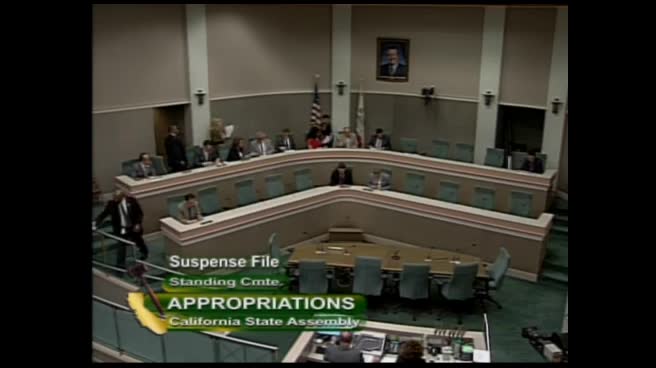 1H
Assembly Standing Committee on Appropriations
 1MIN
Senate Floor
 48MIN
Senate Standing Committee on Appropriations
 43SEC
Senate Standing Committee on Appropriations
 12MIN
Senate Standing Committee on Judiciary
Bill Author

Bill Co-Author(s):