SB 6: Tribal gaming: compact ratification.
- Session Year: 2017-2018
- House: Senate
- Latest Version Date: 2017-10-03
The existing federal Indian Gaming Regulatory Act of 1988 provides for the negotiation and execution of tribal-state gaming compacts for the purpose of authorizing certain types of gaming on Indian lands within a state. The California Constitution authorizes the Governor to negotiate and conclude tribal-state gaming compacts, subject to ratification by the Legislature. Existing law expressly ratifies a number of tribal-state gaming compacts, and amendments of tribal-state gaming compacts, between the State of California and specified Indian tribes.
The California Environmental Quality Act (CEQA) requires a lead agency to prepare, or cause to be prepared, and certify the completion of, an environmental impact report on a project, as defined, that it proposes to carry out or approve that may have a significant effect on the environment, as defined, or to adopt a negative declaration if it finds that the project will not have that effect.
This bill would ratify the tribal-state gaming compact entered into between the State of California and the Quechan Tribe of the Fort Yuma Indian Reservation, executed on August 31, 2017. The bill would provide that, in deference to tribal sovereignty, certain actions related to that amended compact are not projects for purposes of CEQA.
This bill would declare that it is to take effect immediately as an urgency statute.
The existing federal Indian Gaming Regulatory Act of 1988 provides for the negotiation and execution of tribal-state gaming compacts for the purpose of authorizing certain types of gaming on Indian lands within a state. The California Constitution authorizes the Governor to negotiate and conclude tribal-state gaming compacts, subject to ratification by the Legislature. Existing law expressly ratifies a number of tribal-state gaming compacts, and amendments of tribal-state gaming compacts, between the State of California and specified Indian tribes.
The California Environmental Quality Act (CEQA) requires a lead agency to prepare, or cause to be prepared, and certify the completion of, an environmental impact report on a project, as defined, that it proposes to carry out or approve that may have a significant effect on the environment, as defined, or to adopt a negative declaration if it finds that the project will not have that effect.
This bill would ratify the tribal-state gaming compact entered into between the State of California and the Quechan Tribe of the Fort Yuma Indian Reservation, executed on August 31, 2017. The bill would provide that, in deference to tribal sovereignty, certain actions related to that amended compact are not projects for purposes of CEQA.
Existing law requires the State Department of Social Services, subject to the availability of funding, to contract with qualified nonprofit legal services organizations to provide legal services to unaccompanied, undocumented minors, as defined, who are transferred to the care and custody of the federal Office of Refugee Resettlement and who are present in this state. Existing law requires that the contracts awarded meet certain conditions.This bill would require the department to either contract with qualified nonprofit legal services organizations, or contract with a nonprofit agency to administer funding to nonprofit legal services organization subcontractors, to provide legal services to individuals in removal proceedings who are not otherwise entitled to legal representation under an existing local, state, or federal program. The bill would prohibit funds provided under one of those contracts from being used to provide legal services to an individual who has been convicted of, or who is currently appealing a conviction for, a violent felony. The bill would authorize the department to prioritize the award of contracts to provide legal services to detained individuals in removal proceedings and would also authorize the department to prioritize the award of contracts to qualified nonprofit legal services organizations that also receive county or city funding to provide legal services to individuals in removal proceedings. The bill would require the department to prioritize the award of contracts to provide legal services to specified individuals, including, among others, veterans of the United States military and their spouses. The bill would require the contracts awarded pursuant to this act to meet certain conditions. The bill would also authorize the department to contract with organizations to provide legal training and technical assistance to qualified nonprofit legal services organizations, to provide postconviction relief services to immigrants, and to provide case coordination and placement services to ensure that all individuals in removal proceedings receive representation in a timely fashion. The bill would establish the California Universal Representation Trust Fund to accept donations from private foundations and other philanthropic entities for the purpose of expanding the number of individuals that may be provided legal services pursuant to these provisions. The bill would appropriate $12,000,000 from the General Fund to the department.This bill would declare that it is to take effect immediately as an urgency statute.Existing law requires the State Department of Social Services, subject to the availability of funding, to contract with qualified nonprofit legal services organizations to provide legal services to unaccompanied, undocumented minors, as defined, who are transferred to the care and custody of the federal Office of Refugee Resettlement and who are present in this state. Existing law requires that the contracts awarded meet certain conditions.
This bill would require the department to either contract with qualified nonprofit legal services organizations, or contract with a nonprofit agency to administer funding to nonprofit legal services organization subcontractors, to provide legal services to individuals in removal proceedings who are not otherwise entitled to legal representation under an existing local, state, or federal program. The bill would prohibit funds provided under one of those contracts from being used to provide legal services to an individual who has been convicted of, or who is currently appealing a conviction for, a violent felony. The bill would authorize the department to prioritize the award of contracts to provide legal services to detained individuals in removal proceedings and would also authorize the department to prioritize the award of contracts to qualified nonprofit legal services organizations that also receive county or city funding to provide legal services to individuals in removal proceedings. The bill would require the department to prioritize the award of contracts to provide legal services to specified individuals, including, among others, veterans of the United States military and their spouses. The bill would require the contracts awarded pursuant to this act to meet certain conditions. The bill would also authorize the department to contract with organizations to provide legal training and technical assistance to qualified nonprofit legal services organizations, to provide postconviction relief services to immigrants, and to provide case coordination and placement services to ensure that all individuals in removal proceedings receive representation in a timely fashion. The bill would establish the California Universal Representation Trust Fund to accept donations from private foundations and other philanthropic entities for the purpose of expanding the number of individuals that may be provided legal services pursuant to these provisions. The bill would appropriate $12,000,000 from the General Fund to the department.
This bill would declare that it is to take effect immediately as an urgency statute.
Existing law requires the State Department of Social Services, subject to the availability of funding, to contract with qualified nonprofit legal services organizations to provide legal services to unaccompanied, undocumented minors, as defined, who are transferred to the care and custody of the federal Office of Refugee Resettlement and who are present in this state. Existing law requires that the contracts awarded meet certain conditions.
This bill would require the department to either contract with qualified nonprofit legal services organizations, or contract with a nonprofit agency to administer funding to nonprofit legal services organization subcontractors, to provide legal services to individuals in removal proceedings who are not otherwise entitled to legal representation under an existing local, state, or federal program. The bill would authorize the department to prioritize the award of contracts to provide legal services to detained individuals in removal proceedings and would also authorize the department to prioritize the award of contracts to qualified nonprofit legal services organizations that also receive county or city funding to provide legal services to individuals in removal proceedings. The bill would require the contracts awarded pursuant to this act to meet certain conditions. The bill would also authorize the department to contract with organizations to provide legal training and technical assistance to qualified nonprofit legal services organizations, to provide postconviction relief services to immigrants, and to provide case coordination and placement services to ensure that all individuals in removal proceedings receive representation in a timely fashion. The bill would establish the California Universal Representation Trust Fund to accept donations from private foundations and other philanthropic entities for the purpose of expanding the number of individuals that may be provided legal services pursuant to these provisions. The bill would appropriate an unspecified sum $12,000,000 from the General Fund to the department, and would require the department to adopt emergency regulations, for the purpose of implementing these provisions. department.
This bill would declare that it is to take effect immediately as an urgency statute.
Existing law requires the State Department of Social Services, subject to the availability of funding, to contract with qualified nonprofit legal services organizations to provide legal services to unaccompanied, undocumented minors, as defined, who are transferred to the care and custody of the federal Office of Refugee Resettlement and who are present in this state. Existing law requires that the contracts awarded meet certain conditions.
This bill would require the department to either contract with qualified nonprofit legal services organizations, or contract with a nonprofit agency to administer funding to nonprofit legal services organization subcontractors, to provide legal services to individuals in removal proceedings who are not otherwise entitled to legal representation under an existing local, state, or federal program. The bill would authorize the department to prioritize the award of contracts to provide legal services to detained individuals in removal proceedings and would also authorize the department to prioritize the award of contracts to qualified nonprofit legal services organizations that also receive county or city funding to provide legal services to individuals in removal proceedings. The bill would require the contracts awarded pursuant to this act to meet certain conditions. The bill would also authorize the department to contract with organizations to provide legal training and technical assistance to qualified nonprofit legal services organizations, to provide postconviction relief services to immigrants, and to provide case coordination and placement services to ensure that all individuals in removal proceedings receive representation in a timely fashion. The bill would establish the California Universal Representation Trust Fund to accept donations from private foundations and other philanthropic entities for the purpose of expanding the number of individuals that may be provided legal services pursuant to these provisions. The bill would appropriate an unspecified sum from the General Fund to the department, and would require the department to adopt emergency regulations, for the purpose of implementing these provisions.
This bill would declare that it is to take effect immediately as an urgency statute.
Existing law requires the State Department of Social Services, subject to the availability of funding, to contract with qualified nonprofit legal services organizations to provide legal services to unaccompanied, undocumented minors, as defined, who are transferred to the care and custody of the federal Office of Refugee Resettlement and who are present in this state. Existing law requires that the contracts awarded meet certain conditions.
This bill would require the department to either contract with qualified nonprofit legal services organizations, or contract with a nonprofit agency to administer funding to nonprofit legal services organization subcontractors, to provide legal services to detained individuals in removal proceedings who are not otherwise entitled to legal representation under an existing local, state, or federal program. The bill would also authorize the department to award contracts to provide legal services for nondetained individual in removal proceedings if sufficient funds are appropriated for that purpose. authorize the department to prioritize the award of contracts to provide legal services to detained individuals in removal proceedings and would also authorize the department to prioritize the award of contracts to qualified nonprofit legal services organizations that also receive county or city funding to provide legal services to individuals in removal proceedings. The bill would require the contracts awarded pursuant to this act to meet certain conditions. The bill would also authorize the department to contract with organizations to provide legal training and technical assistance to qualified nonprofit legal services organizations, to provide postconviction relief services to immigrants, and to provide case coordination and placement services to ensure that all individuals in removal proceedings receive representation in a timely fashion. The bill would establish the California Universal Representation Trust Fund to accept donations from private foundations and other philanthropic entities for the purpose of expanding the number of individuals that may be provided legal services pursuant to these provisions. The bill would appropriate an unspecified sum from the General Fund to the department, and would require the department to adopt emergency regulations, for the purpose of implementing these provisions.
This bill would declare that it is to take effect immediately as an urgency statute.
Existing law requires the State Department of Social Services, subject to the availability of funding, to contract with qualified nonprofit legal services organizations to provide legal services to unaccompanied, undocumented minors, as defined, who are transferred to the care and custody of the federal Office of Refugee Resettlement and who are present in this state. Existing law requires that the contracts awarded meet certain conditions.
This bill would require the department to either contract with qualified nonprofit legal services organizations, or contract with a nonprofit agency to administer funding to nonprofit legal services organization subcontractors, to provide legal services to detained individuals in removal proceedings who are not otherwise entitled to legal representation under an existing local, state, or federal program. The bill would also authorize the department to award contracts to provide legal services for nondetained individual in removal proceedings if sufficient funds are appropriated for that purpose. The bill would require the contracts awarded pursuant to this act meet certain conditions. The bill would also authorize the department to contract with organizations to provide legal training and technical assistance to qualified nonprofit legal services organizations, to provide postconviction relief services to immigrants, and to provide case coordination and placement services to ensure that all individuals in removal proceedings receive representation in a timely fashion. The bill would establish the California Universal Representation Trust Fund to accept donations from private foundations and other philanthropic entities for the purpose of expanding the number of individuals that may be provided legal services pursuant to these provisions. The bill would appropriate an unspecified sum from the General Fund to the department, and would require the department to adopt emergency regulations, for the purpose of implementing these provisions.
This bill would declare that it is to take effect immediately as an urgency statute.
(a)The tribal-state gaming compact entered into in accordance with the federal Indian Gaming Regulatory Act of 1988 (18 U.S.C. Secs. 1166 to 1168, inclusive, and 25 U.S.C. Sec. 2701 et seq.) between the State of California and the Quechan Tribe of the Fort Yuma Indian Reservation, executed on August 31, 2017, is hereby ratified.
(b)(1)In deference to tribal sovereignty, none of the following shall be deemed a project for purposes of the California Environmental Quality Act (Division 13 (commencing with Section 21000) of the Public Resources Code):
(A)The execution of an amendment to the tribal-state gaming compact ratified by this section.
(B)The execution of the tribal-state gaming compact ratified by this section.
(C)The execution of an intergovernmental agreement between a tribe and a county or city government negotiated pursuant to the express authority of, or as expressly referenced in, the tribal-state gaming compact ratified by this section.
(D)The execution of an intergovernmental agreement between a tribe and the Department of Transportation, or other state agency, negotiated pursuant to the express authority of, or as expressly referenced in, the tribal-state gaming compact ratified by this section.
(E)The on-reservation impacts of compliance with the terms of the tribal-state gaming compact ratified by this section.
(2)Except as expressly provided in this section, this subdivision does not exempt a city, county, or city and county, or the Department of Transportation, or any state agency or local jurisdiction, from the requirements of the California Environmental Quality Act.
SEC. 2.This act is an urgency statute necessary for the immediate preservation of the public peace, health, or safety within the meaning of Article IV of the California Constitution and shall go into immediate effect. The facts constituting the necessity are:
In order to enhance the economic development, stability, and self-sufficiency of the Quechan Tribe of the Fort Yuma Indian Reservation, and to protect the interests of the tribe and its members, the surrounding community, and the California public at the earliest possible time, it is necessary that this act take effect immediately.
(a)The tribal-state gaming compact entered into in accordance with the federal Indian Gaming Regulatory Act of 1988 (18 U.S.C. Secs. 1166 to 1168, inclusive, and 25 U.S.C. Sec. 2701 et seq.) between the State of California and the Quechan Tribe of the Fort Yuma Indian Reservation, executed on August 31, 2017, is hereby ratified.
(b)(1)In deference to tribal sovereignty, none of the following shall be deemed a project for purposes of the California Environmental Quality Act (Division 13 (commencing with Section 21000) of the Public Resources Code):
(A)The execution of an amendment to the tribal-state gaming compact ratified by this section.
(B)The execution of the tribal-state gaming compact ratified by this section.
(C)The execution of an intergovernmental agreement between a tribe and a county or city government negotiated pursuant to the express authority of, or as expressly referenced in, the tribal-state gaming compact ratified by this section.
(D)The execution of an intergovernmental agreement between a tribe and the Department of Transportation, or other state agency, negotiated pursuant to the express authority of, or as expressly referenced in, the tribal-state gaming compact ratified by this section.
(E)The on-reservation impacts of compliance with the terms of the tribal-state gaming compact ratified by this section.
(2)Except as expressly provided in this section, this subdivision does not exempt a city, county, or city and county, or the Department of Transportation, or any state agency or local jurisdiction, from the requirements of the California Environmental Quality Act.
SECTION 1.This act shall be known and may be cited as the Expanding Due Process Act.SEC. 2.The heading of Chapter 5.6 (commencing with Section 13300) of Part 3 of Division 9 of the Welfare and Institutions Code is amended to read:5.6.Services for ImmigrantsSEC. 3.Section 13307 is added to the Welfare and Institutions Code, immediately following Section 13306, to read:13307.(a)(1)(A)The State Department of Social Services shall either contract directly with qualified nonprofit legal services organizations, or contract with a nonprofit agency to administer funding to nonprofit legal services organization subcontractors, to provide legal services to individuals in removal proceedings who are not otherwise entitled to legal representation under an existing local, state, or federal program. The department may prioritize the award of contracts to provide legal services for detained individuals in removal proceedings. The department may prioritize the award of contracts to qualified nonprofit legal services organizations that also receive county or city funding to provide legal services to individuals in removal proceedings.(B)The department may consult with stakeholders to determine the prioritization of funding based on specified factors, including, but not limited to, the income of the individuals in removal proceedings.(C)The department shall prioritize the award of contracts to provide legal services for any of the following:(i)Detained individuals who have a parent, spouse, or child who is a citizen or legal permanent resident of the United States.(ii)Veterans of the United States military and their spouses.(iii)Individuals who have a claim for political asylum.(iv)(I)Individuals who have longstanding ties to the United States or who are eligible for relief under the Deferred Action for Childhood Arrivals program.(II)The department shall, in consultation with stakeholders, define the term longstanding ties for the purposes of this clause.(D)For purposes of this paragraph, stakeholders include, but are not limited to, nonprofit legal services organizations with experience in immigration removal defense and nonprofit organizations with experience in public policy impacting immigrants.(2)By ____, the department may request proposals for agencies to act as the umbrella agency in order to determine whether an umbrella agency model is more efficient than contracting directly with individual organizations.(b)Funds provided under a contract awarded pursuant to this section shall not be used to provide legal services to an individual who has been convicted of, or who is currently appealing a conviction for, a violent felony, as defined in subdivision (c) of Section 667.5 of the Penal Code. For the purposes of this subdivision, legal services does not include activities relating to client intake, which shall be provided regardless of an individuals criminal history.(c)For purposes of this chapter, the term individual in removal proceedings means an individual who is in removal proceedings pursuant to Section 240 of the federal Immigration and Nationality Act (8 U.S.C. Sec. 1229a) before a federal immigration judge that is located in California, an individual who is arrested by Immigration and Customs Enforcement within California and placed in removal proceedings, an individual who is paroled into the United States at or near a port of entry in California for purposes of removal proceedings, any individual detained by United States Customs and Border Protection at any port of entry in California, including, but not limited to, when the port of entry is at an airport, on land, or at sea, or an individual who is a party to an appeal made to the Board of Immigration Appeals, the United States Court of Appeals for the Ninth Circuit, or a federal district court in California arising from those proceedings.SEC. 4.Section 13308 is added to the Welfare and Institutions Code, immediately following Section 13307, to read:13308.(a)Contracts awarded pursuant to Section 13307 shall be executed either with a nonprofit agency that will administer funding to nonprofit legal services organization subcontractors that meet both of the following requirements or directly with nonprofit legal services organizations that meet both of the following requirements:(1)(A)Have significant experience in representing individuals in removal proceedings and asylum applications.(B)For the purposes of this paragraph, significant experience means at least one of the following:(i)A minimum of five years of experience as an organization.(ii)Experience as a federal subcontractor for immigration representation.(iii)Experience working with or under the supervision of an organization, including a legal training or a technical assistance organization, that has significant experience in removal defense.(2)Are accredited by the Board of Immigration Appeals under the United States Department of Justices Executive Office for Immigration Review or meet the requirements to receive funding from the Trust Fund Program administered by the State Bar of California.(b)(1)The department may contract with organizations that provide legal training and technical assistance to other organizations qualified under subdivision (a).(2)Legal services organizations that provide legal training and technical assistance shall have at least 10 years of experience conducting immigration legal services trainings and technical assistance specifically on removal defense and meet the requirements as a support center to receive funding from the Trust Fund Program administered by the State Bar of California.(3)Legal training and technical assistance includes, but is not limited to, webinars, in-person trainings, mentoring, removal defense boot camps, and technical assistance in the form of answering questions via email, fax, or telephone from organizations qualified under subdivision (a) and their staff and volunteers who assist individuals with removal defense.(c)(1)The department may contract with organizations that provide postconviction relief services to immigrants.(2)Organizations with contracts described in this subdivision may be clean slate service providers or criminal defense organizations that will file postconviction relief motions and petitions in Californias courts.(d)The department may contract with organizations that provide case coordination and placement services to ensure that all individuals eligible for representation pursuant to a contract entered into under Section 13307 or 13309 receive that representation in a timely fashion.SEC. 5.Section 13309 is added to the Welfare and Institutions Code, to read:13309.(a)The California Universal Representation Trust Fund is hereby established in the State Treasury to accept donations from private foundations and other philanthropic entities for the purpose of expanding the number of individuals who may be provided legal services through contracts entered into by the department pursuant to Sections 13307 and 13308.(b)Notwithstanding subdivision (a) of Section 13308, the department may utilize moneys in this fund to contract with private attorneys who are members of the American Immigration Lawyers Association for the purpose of providing legal services, if the private attorneys demonstrate that, within the past five years, they have been substantially involved in the practice of immigration and nationality law, as described in Section 2.0 and Section 3.0 of the California State Bar Standards for Certification and Recertification in Immigration and Nationality Law (as revised November 19, 2010). A private attorney does not need to be certified by the State Bar of California as a specialist in immigration and nationality law in order to qualify for a contract described in this section.(c)The department is not required to solicit donations for the California Universal Representation Trust Fund.SEC. 6.The provisions of this act are severable. If any provision of this act or its application is held invalid, that invalidity shall not affect other provisions or applications that can be given effect without the invalid provision or application.SEC. 7.The sum of twelve million dollars ($12,000,000) is hereby appropriated from the General Fund to the State Department of Social Services for the purposes of implementing this act.SEC. 8.This act is an urgency statute necessary for the immediate preservation of the public peace, health, or safety within the meaning of Article IV of the California Constitution and shall go into immediate effect. The facts constituting the necessity are:In order to ensure Californians due process rights are protected by providing better access to counsel prior to the federal governments expected expansion of deportation policies, which will have a significant impact on Californias population, it is necessary that this bill take effect immediately.(a)(1)(A)The State Department of Social Services shall either contract directly with qualified nonprofit legal services organizations, or contract with a nonprofit agency to administer funding to nonprofit legal services organization subcontractors, to provide legal services to individuals in removal proceedings who are not otherwise entitled to legal representation under an existing local, state, or federal program. The department may prioritize the award of contracts to provide legal services for detained individuals in removal proceedings. The department may prioritize the award of contracts to qualified nonprofit legal services organizations that also receive county or city funding to provide legal services to individuals in removal proceedings.
(B)The department may consult with stakeholders to determine the prioritization of funding based on specified factors, including, but not limited to, the income of the individuals in removal proceedings.
(C)The department shall prioritize the award of contracts to provide legal services for any of the following:
(i)Detained individuals who have a parent, spouse, or child who is a citizen or legal permanent resident of the United States.
(ii)Veterans of the United States military and their spouses.
(iii)Individuals who have a claim for political asylum.
(iv)(I)Individuals who have longstanding ties to the United States or who are eligible for relief under the Deferred Action for Childhood Arrivals program.
(II)The department shall, in consultation with stakeholders, define the term longstanding ties for the purposes of this clause.
(D)For purposes of this paragraph, stakeholders include, but are not limited to, nonprofit legal services organizations with experience in immigration removal defense and nonprofit organizations with experience in public policy impacting immigrants.
(2)By ____, the department may request proposals for agencies to act as the umbrella agency in order to determine whether an umbrella agency model is more efficient than contracting directly with individual organizations.
(b)Funds provided under a contract awarded pursuant to this section may shall not be used to provide legal services to an individual who has a final conviction for been convicted of, or who is currently appealing a conviction for, a violent felony, as defined in subdivision (c) of Section 667.5 of the Penal Code, only if the legal services provider determines that the individual has a potentially meritorious claim for relief or defense from removal. Code. For the purposes of this subdivision, legal services does not include activities relating to client intake, which shall be provided regardless of an individuals criminal history.
(c)For purposes of this chapter, the term individual in removal proceedings means an individual who is in removal proceedings pursuant to Section 240 of the federal Immigration and Nationality Act (8 U.S.C. Sec. 1229a) before a federal immigration judge that is located in California, an individual who is arrested by Immigration and Customs Enforcement within California and placed in expedited removal proceedings, an individual who is paroled into the United States at or near a port of entry in California for purposes of removal proceedings, any individual detained by United States Customs and Border Protection at any port of entry in California, including, but not limited to, when the port of entry is at an airport, on land, or at sea, or an individual who is a party to an appeal made to the Board of Immigration Appeals, the United States Court of Appeals for the Ninth Circuit, or a federal district court in California arising from those proceedings.
SEC. 4.Section 13308 is added to the Welfare and Institutions Code, immediately following Section 13307, to read:13308.(a)Contracts awarded pursuant to Section 13307 shall be executed either with a nonprofit agency that will administer funding to nonprofit legal services organization subcontractors that meet both of the following requirements or directly with nonprofit legal services organizations that meet both of the following requirements:
(1)(A)Have significant experience in representing individuals in removal proceedings and asylum applications.
(B)For the purposes of this paragraph, significant experience means at least one of the following:
(i)A minimum of five years of experience as an organization.
(ii)Experience as a federal subcontractor for immigration representation.
(iii)Experience working with or under the supervision of an organization, including a legal training or a technical assistance organization, that has significant experience in removal defense.
(2)Are accredited by the Board of Immigration Appeals under the United States Department of Justices Executive Office for Immigration Review or meet the requirements to receive funding from the Trust Fund Program administered by the State Bar of California.
(b)(1)The department may contract with organizations that provide legal training and technical assistance to other organizations qualified under subdivision (a).
(2)Legal services organizations that provide legal training and technical assistance shall have at least 10 years of experience conducting immigration legal services trainings and technical assistance specifically on removal defense and meet the requirements as a support center to receive funding from the Trust Fund Program administered by the State Bar of California.
(3)Legal training and technical assistance includes, but is not limited to, webinars, in-person trainings, mentoring, removal defense boot camps, and technical assistance in the form of answering questions via email, fax, or telephone from organizations qualified under subdivision (a) and their staff and volunteers who assist individuals with removal defense.
(c)(1)The department may contract with organizations that provide postconviction relief services to immigrants.
(2)Organizations with contracts described in this subdivision may be clean slate service providers or criminal defense organizations that will file postconviction relief motions and petitions in Californias courts.
(d)The department may contract with organizations that provide case coordination and placement services to ensure that all individuals eligible for representation pursuant to a contract entered into under Section 13307 or 13309 receive that representation in a timely fashion.
SEC. 5.Section 13309 is added to the Welfare and Institutions Code, to read:13309.(a)The California Universal Representation Trust Fund is hereby established in the State Treasury to accept donations from private foundations and other philanthropic entities for the purpose of expanding the number of individuals who may be provided legal services through contracts entered into by the department pursuant to Sections 13307 and 13308.
(b)Notwithstanding subdivision (a) of Section 13308, the department may utilize moneys in this fund to contract with private attorneys who are members of the American Immigration Lawyers Association for the purpose of providing legal services, if the private attorneys demonstrate that, within the past five years, they have been substantially involved in the practice of immigration and nationality law, as described in Section 2.0 and Section 3.0 of the California State Bar Standards for Certification and Recertification in Immigration and Nationality Law (as revised November 19, 2010). A private attorney does not need to be certified by the State Bar of California as a specialist in immigration and nationality law in order to qualify for a contract described in this section.
(c)The department is not required to solicit donations for the California Universal Representation Trust Fund.
SEC. 6.The provisions of this act are severable. If any provision of this act or its application is held invalid, that invalidity shall not affect other provisions or applications that can be given effect without the invalid provision or application.
SEC. 7.The sum of twelve million dollars ($12,000,000) is hereby appropriated from the General Fund to the State Department of Social Services for the purposes of implementing this act.
SEC. 8.This act is an urgency statute necessary for the immediate preservation of the public peace, health, or safety within the meaning of Article IV of the California Constitution and shall go into immediate effect. The facts constituting the necessity are:
In order to ensure Californians due process rights are protected by providing better access to counsel prior to the federal governments expected expansion of deportation policies, which will have a significant impact on Californias population, it is necessary that this bill take effect immediately.
(a)(1)(A)The State Department of Social Services shall either contract directly with qualified nonprofit legal services organizations, or contract with a nonprofit agency to administer funding to nonprofit legal services organization subcontractors, to provide legal services to individuals in removal proceedings who are not otherwise entitled to legal representation under an existing local, state, or federal program. The department may prioritize the award of contracts to provide legal services for detained individuals in removal proceedings. The department may prioritize the award of contracts to qualified nonprofit legal services organizations that also receive county or city funding to provide legal services to individuals in removal proceedings.
(B)The department may consult with stakeholders to determine the prioritization of funding based on specified factors, including, but not limited to, the income of the individuals in removal proceedings.
(2)By ____, the department may request proposals for agencies to act as the umbrella agency in order to determine whether an umbrella agency model is more efficient than contracting directly with individual organizations.
(b)Funds provided under a contract awarded pursuant to this section shall not may be used to provide legal services to individuals who previously have been convicted of a violent crime, an individual who has a final conviction for a violent felony, as defined in subdivision (c) of Section 667.5 of the Penal Code. Code, only if the legal services provider determines that the individual has a potentially meritorious claim for relief or defense from removal. For the purposes of this subdivision, legal services does not include activities relating to client intake. intake, which shall be provided regardless of an individuals criminal history.
(c)For purposes of this chapter, the term individual in removal proceedings means an individual who is in removal proceedings pursuant to Section 240 of the federal Immigration and Nationality Act (8 U.S.C. Sec. 1229a) before a federal immigration judge that is located in California, an individual who is arrested by Immigration and Customs Enforcement within California and placed in expedited removal proceedings, an individual who is paroled into the United States at or near a port of entry in California for purposes of removal proceedings, any individual detained by United States Customs and Border Protection at any port of entry in California, including, but not limited to, when the port of entry is at an airport, on land, or at sea, or an individual who is a party to an appeal made to the Board of Immigration Appeals, the United States Court of Appeals for the Ninth Circuit, or a federal district court in California arising from those proceedings.
SEC. 4.Section 13308 is added to the Welfare and Institutions Code, immediately following Section 13307, to read:13308.(a)Contracts awarded pursuant to Section 13307 shall be executed either with a nonprofit agency that will administer funding to nonprofit legal services organization subcontractors that meet both of the following requirements or directly with nonprofit legal services organizations that meet both of the following requirements:
(1)(A)Have significant experience in representing individuals in removal proceedings and asylum applications.
(B)For the purposes of this paragraph, significant experience means at least one of the following:
(i)A minimum of five years of experience as an organization.
(ii)Experience as a federal subcontractor for immigration representation.
(iii)Experience working with or under the supervision of an organization, including a legal training or a technical assistance organization, that has significant experience in removal defense.
(2)Are accredited by the Board of Immigration Appeals under the United States Department of Justices Executive Office for Immigration Review or meet the requirements to receive funding from the Trust Fund Program administered by the State Bar of California.
(b)(1)The department may contract with organizations that provide legal training and technical assistance to other organizations qualified under subdivision (a).
(2)Legal services organizations that provide legal training and technical assistance shall have at least 10 years of experience conducting immigration legal services trainings and technical assistance specifically on removal defense and meet the requirements as a support center to receive funding from the Trust Fund Program administered by the State Bar of California.
(3)Legal training and technical assistance includes, but is not limited to, webinars, in-person trainings, mentoring, removal defense boot camps, and technical assistance in the form of answering questions via email, fax, or telephone from organizations qualified under subdivision (a) and their staff and volunteers who assist individuals with removal defense.
(c)(1)The department may contract with organizations that provide postconviction relief services to immigrants.
(2)Organizations with contracts described in this subdivision may be clean slate service providers or criminal defense organizations that will file postconviction relief motions and petitions in Californias courts.
(d)The department may contract with organizations that provide case coordination and placement services to ensure that all individuals eligible for representation pursuant to a contract entered into under Section 13307 or 13309 receive that representation in a timely fashion.
SEC. 5.Section 13309 is added to the Welfare and Institutions Code, to read:13309.(a)The California Universal Representation Trust Fund is hereby established in the State Treasury to accept donations from private foundations and other philanthropic entities for the purpose of expanding the number of individuals who may be provided legal services through contracts entered into by the department pursuant to Sections 13307 and 13308.
(b)Notwithstanding subdivision (a) of Section 13308, the department may utilize moneys in this fund to contract with private attorneys who are members of the American Immigration Lawyers Association for the purpose of providing legal services, if the private attorneys demonstrate that, within the past five years, they have been substantially involved in the practice of immigration and nationality law, as described in Section 2.0 and Section 3.0 of the California State Bar Standards for Certification and Recertification in Immigration and Nationality Law (as revised November 19, 2010). A private attorney does not need to be certified by the State Bar of California as a specialist in immigration and nationality law in order to qualify for a contract described in this section.
(c)The department is not required to solicit donations for the California Universal Representation Trust Fund.
SEC. 6. The State Department of Social Services shall adopt emergency regulations implementing this act no later than ____. The department may readopt any emergency regulation authorized by this section that is the same as, or substantially equivalent to, any emergency regulation previously adopted pursuant to this section. The initial adoption of emergency regulations pursuant to this section and one readoption of emergency regulations shall be deemed to be an emergency and necessary for the immediate preservation of the public peace, health, safety, or general welfare. Initial emergency regulations and the one readoption of emergency regulations authorized by this section shall be exempt from review by the Office of Administrative Law. The initial emergency regulations and the one readoption of emergency regulations authorized by this section shall be submitted to the Office of Administrative Law for filing with the Secretary of State and each shall remain in effect for no more than 180 days, by which time final regulations shall be adopted.SEC. 7.SEC. 6.The provisions of this act are severable. If any provision of this act or its application is held invalid, that invalidity shall not affect other provisions or applications that can be given effect without the invalid provision or application.
SEC. 8.SEC. 7.The sum of ____ dollars ($____) twelve million dollars ($12,000,000) is hereby appropriated from the General Fund to the State Department of Social Services for the purposes of implementing this act.
SEC. 9.SEC. 8.This act is an urgency statute necessary for the immediate preservation of the public peace, health, or safety within the meaning of Article IV of the California Constitution and shall go into immediate effect. The facts constituting the necessity are:
In order to ensure Californians due process rights are protected by providing better access to counsel prior to the federal governments expected expansion of deportation policies, which will have a significant impact on Californias population, it is necessary that this bill take effect immediately.
(a)(1)(A)The State Department of Social Services shall either contract directly with qualified nonprofit legal services organizations, or contract with a nonprofit agency to administer funding to nonprofit legal services organization subcontractors, to provide legal services to individuals in removal proceedings who are not otherwise entitled to legal representation under an existing local, state, or federal program. The department may prioritize the award of contracts to provide legal services for detained individuals in removal proceedings. The department may prioritize the award of contracts to qualified nonprofit legal services organizations that also receive county or city funding to provide legal services to individuals in removal proceedings.
(B)The department may consult with stakeholders to determine the prioritization of funding based on specified factors, including, but not limited to, the income of the individuals in removal proceedings.
(2)By ____, the department shall may request proposals for agencies to act as the umbrella agency in order to determine whether an umbrella agency model is more efficient than contracting directly with individual organizations.
(b)Funds provided under a contract awarded pursuant to this section shall not be used to provide legal services to individuals who previously have been convicted of a violent crime, as defined in subdivision (c) of Section 667.5 of the Penal Code. For the purposes of this subdivision, legal services does not include activities relating to client intake.
(c)For purposes of this chapter, the term individual in removal proceedings means an individual who is in removal proceedings pursuant to Section 240 of the federal Immigration and Nationality Act (8 U.S.C. Sec. 1229a) before a federal immigration judge that is located in California, an individual who is arrested by Immigration and Customs Enforcement within California and placed in expedited removal proceedings, an individual who is paroled into the United States at or near a port of entry in California for purposes of removal proceedings, any individual detained by United States Customs and Border Protection at any port of entry in California, including, but not limited to, when the port of entry is at an airport, on land, or at sea, or an individual who is a party to an appeal made to the Board of Immigration Appeals, the United States Court of Appeals for the Ninth Circuit, or a federal district court in California arising from those proceedings.
SEC. 4.Section 13308 is added to the Welfare and Institutions Code, immediately following Section 13307, to read:13308.(a)Contracts awarded pursuant to Section 13307 shall be executed either with a nonprofit agency that will administer funding to nonprofit legal services organization subcontractors that meet both of the following requirements or directly with nonprofit legal services organizations that meet both of the following requirements:
(1)(A)Have significant experience in representing individuals in removal proceedings and asylum applications.
(B)For the purposes of this paragraph, significant experience means at least one of the following:
(i)A minimum of five years of experience as an organization.
(ii)Experience as a federal subcontractor for immigration representation.
(iii)Experience working with or under the supervision of an organization, including a legal training or a technical assistance organization, that has significant experience in removal defense.
(2)Are accredited by the Board of Immigration Appeals under the United States Department of Justices Executive Office for Immigration Review or meet the requirements to receive funding from the Trust Fund Program administered by the State Bar of California.
(b)(1)The department may contract with organizations that provide legal training and technical assistance to other organizations qualified under subdivision (a).
(2)Legal services organizations that provide legal training and technical assistance shall have at least 10 years of experience conducting immigration legal services trainings and technical assistance specifically on removal defense and meet the requirements as a support center to receive funding from the Trust Fund Program administered by the State Bar of California.
(3)Legal training and technical assistance includes, but is not limited to, webinars, in-person trainings, mentoring, removal defense boot camps, and technical assistance in the form of answering questions via email, fax, or telephone from organizations qualified under subdivision (a) and their staff and volunteers who assist individuals with removal defense.
(c)(1)The department may contract with organizations that provide postconviction relief services to immigrants.
(2)Organizations with contracts described in this subdivision may be clean slate service providers or criminal defense organizations that will file postconviction relief motions and petitions in Californias courts.
(d)The department may contract with organizations that provide case coordination and placement services to ensure that all individuals eligible for representation pursuant to a contract entered into under Section 13307 or 13309 receive that representation in a timely fashion.
SEC. 5.Section 13309 is added to the Welfare and Institutions Code, to read:13309.(a)The California Universal Representation Trust Fund is hereby established in the State Treasury to accept donations from private foundations and other philanthropic entities for the purpose of expanding the number of individuals who may be provided legal services through contracts entered into by the department pursuant to Sections 13307 and 13308.
(b)Notwithstanding subdivision (a) of Section 13308, the department may utilize moneys in this fund to contract with private attorneys who are members of the American Immigration Lawyers Association for the purpose of providing legal services, if the private attorneys demonstrate that, within the past five years, they have been substantially involved in the practice of immigration and nationality law, as described in Section 2.0 and Section 3.0 of the California State Bar Standards for Certification and Recertification in Immigration and Nationality Law (as revised November 19, 2010). A private attorney does not need to be certified by the State Bar of California as a specialist in immigration and nationality law in order to qualify for a contract described in this section.
(c)The department is not required to solicit donations for the California Universal Representation Trust Fund.
SEC. 6.The State Department of Social Services shall adopt emergency regulations implementing this act no later than ____. The department may readopt any emergency regulation authorized by this section that is the same as, or substantially equivalent to, any emergency regulation previously adopted pursuant to this section. The initial adoption of emergency regulations pursuant to this section and one readoption of emergency regulations shall be deemed to be an emergency and necessary for the immediate preservation of the public peace, health, safety, or general welfare. Initial emergency regulations and the one readoption of emergency regulations authorized by this section shall be exempt from review by the Office of Administrative Law. The initial emergency regulations and the one readoption of emergency regulations authorized by this section shall be submitted to the Office of Administrative Law for filing with the Secretary of State and each shall remain in effect for no more than 180 days, by which time final regulations shall be adopted.
SEC. 7.The provisions of this act are severable. If any provision of this act or its application is held invalid, that invalidity shall not affect other provisions or applications that can be given effect without the invalid provision or application.
SEC. 8.The sum of ____ dollars ($____) is hereby appropriated from the General Fund to the State Department of Social Services for the purposes of implementing this act.
SEC. 9.This act is an urgency statute necessary for the immediate preservation of the public peace, health, or safety within the meaning of Article IV of the California Constitution and shall go into immediate effect. The facts constituting the necessity are:
In order to ensure Californians due process rights are protected by providing better access to counsel prior to the federal governments expected expansion of deportation policies, which will have a significant impact on Californias population, it is necessary that this bill take effect immediately.
(a)(1)The State Department of Social Services shall either contract directly with qualified nonprofit legal services organizations, or contract with a nonprofit agency to administer funding to nonprofit legal services organization subcontractors, to provide legal services to detained individuals in removal proceedings who are not otherwise entitled to legal representation under an existing local, state, or federal program. The department may award prioritize the award of contracts to provide legal services for nondetained detained individuals in removal proceedings if sufficient funds are appropriated for that purpose. proceedings. The department may prioritize the award of contracts to qualified nonprofit legal services organizations that also receive county or city funding to provide legal services to individuals in removal proceedings.
(2)By ____, the department shall request proposals for agencies to act as the umbrella agency in order to determine whether an umbrella agency model is more efficient than contracting directly with individual organizations.
(b)Funds provided under a contract awarded pursuant to this section shall not be used to provide legal services to individuals who previously have been convicted of a violent crime, as defined in subdivision (c) of Section 667.5 of the Penal Code.
(b)(c)For purposes of this chapter, the term individual in removal proceedings means an individual who is in removal proceedings pursuant to Section 240 of the federal Immigration and Nationality Act (8 U.S.C. Sec. 1229a) before a federal immigration judge that is located in California, an individual who is arrested by Immigration and Customs Enforcement within California and placed in expedited removal proceedings, an individual who is paroled into the United States at or near a port of entry in California for purposes of removal proceedings, or an individual who is a party to an appeal made to the Board of Immigration Appeals, the United States Court of Appeals for the Ninth Circuit, or a federal District Court district court in California arising from either of those proceedings.
SEC. 4.Section 13308 is added to the Welfare and Institutions Code, immediately following Section 13307, to read:13308.(a)Contracts awarded pursuant to Section 13307 shall be executed either with a nonprofit agency that will administer the contract through funding to nonprofit legal services organization subcontractors that meet both of the following requirements or directly with nonprofit legal services organizations that meet both of the following requirements:
(1)(A)Have significant experience in representing individuals in removal proceedings and asylum applications.
(B)For the purposes of this paragraph, significant experience means at least one of the following:
(i)A minimum of five years of experience as an organization.
(ii)Experience as a federal subcontractor for immigration representation.
(iii)Experience working with or under the supervision of an organization, including a legal training or a technical assistance organization, that has significant experience in removal defense.
(2)Are accredited by the Board of Immigration Appeals under the United States Department of Justices Executive Office for Immigration Review or meet the requirements to receive funding from the Trust Fund Program administered by the State Bar of California.
(b)(1)The department may contract with organizations that provide legal training and technical assistance to other organizations qualified under subdivision (a).
(2)Legal services organizations that provide legal training and technical assistance shall have at least 10 years of experience conducting immigration legal services trainings and technical assistance specifically on removal defense and that meet the requirements as a support center to receive funding from the Trust Fund Program administered by the State Bar of California.
(3)Legal training and technical assistance includes, but is not limited to, webinars, in-person trainings, mentoring, removal defense boot camps, and technical assistance in the form of answering questions via email, fax, or telephone from organizations qualified under subdivision (a) and their staff and volunteers that who assist individuals with removal defense.
(c)(1)The department may contract with organizations that provide postconviction relief services to immigrants.
(2)Organizations with contracts described in this subdivision may be clean slate service providers or criminal defense organizations that will file postconviction relief motions and petitions in Californias courts.
(d)The department may contract with organizations that provide case coordination and placement services to ensure that all individuals eligible for representation pursuant to a contract entered into under this section Section 13307 or 13309 receive that representation in a timely fashion.
SEC. 5.Section 13309 is added to the Welfare and Institutions Code, to read:13309.(a)The California Universal Representation Trust Fund is hereby established in the State Treasury to accept donations from private foundations and other philanthropic entities for the purpose of expanding the number of individuals that who may be provided legal services through contracts entered into by the department pursuant to Sections 13307 and 13308.
(b)Notwithstanding the requirements of paragraph (1) of subdivision (a) of Section 13308, the department may utilize moneys in this fund to contract with private attorneys that who are members of the American Immigration Lawyers Association for the purpose of providing legal services, if the private attorneys demonstrate that, within the past five years, he or she has they have been substantially involved in the practice of immigration and nationality law, as described in Section 2.0 and Section 3.0 of the California State Bar Standards for Certification and Recertification in Immigration and Nationality Law (as revised November 19, 2010). A private attorney does not need to be certified by the State Bar of California as a specialist in immigration and nationality law in order to qualify for a contract described in this section.
SEC. 6.The State Department of Social Services shall adopt emergency regulations implementing this act no later than ____. The department may readopt any emergency regulation authorized by this section that is the same as, or substantially equivalent to, any emergency regulation previously adopted pursuant to this section. The initial adoption of emergency regulations pursuant to this section and one readoption of emergency regulations shall be deemed to be an emergency and necessary for the immediate preservation of the public peace, health, safety, or general welfare. Initial emergency regulations and the one readoption of emergency regulations authorized by this section shall be exempt from review by the Office of Administrative Law. The initial emergency regulations and the one readoption of emergency regulations authorized by this section shall be submitted to the Office of Administrative Law for filing with the Secretary of State and each shall remain in effect for no more than 180 days, by which time final regulations shall be adopted.
SEC. 7.The provisions of this act are severable. If any provision of this act or its application is held invalid, that invalidity shall not affect other provisions or applications that can be given effect without the invalid provision or application.
SEC. 8.The sum of ____ dollars ($____) is hereby appropriated from the General Fund to the State Department of Social Services for the purposes of implementing this act.
SEC. 9.This act is an urgency statute necessary for the immediate preservation of the public peace, health, or safety within the meaning of Article IV of the California Constitution and shall go into immediate effect. The facts constituting the necessity are:
In order to ensure Californians due process rights are protected by providing better access to counsel prior to the federal governments expected expansion of deportation policies, which will have a significant impact on Californias population, it is necessary that this bill take effect immediately.
(a)(1)The State Department of Social Services shall either contract directly with qualified nonprofit legal services organizations, or contract with a nonprofit agency to administer funding to nonprofit legal services organization subcontractors, to provide legal services to detained individuals in removal proceedings who are not otherwise entitled to legal representation under an existing local, state, or federal program. The department may award contracts to provide legal services for nondetained individuals in removal proceedings if sufficient funds are appropriated for that purpose.
(2)By ____, the department shall request proposals for agencies to act as the umbrella agency in order to determine whether an umbrella agency model is more efficient than contracting directly with individual organizations.
(b)For purposes of this chapter, the term individual in removal proceedings means an individual who is in removal proceedings pursuant to Section 240 of the Immigration and Nationality Act (8 U.S.C. Sec. 1229a) before a federal immigration judge that is located in California, an individual who is arrested by Immigration and Customs Enforcement within California and placed in expedited removal proceedings, an individual who is paroled into the United States at or near a port of entry in California for purposes of removal proceedings, or an individual who is a party to an appeal made to the Board of Immigration Appeals, the United States Court of Appeals for the Ninth Circuit, or a federal District Court in California arising from either of those proceedings.
SEC. 4.Section 13308 is added to the Welfare and Institutions Code, immediately following Section 13307, to read:13308.(a)Contracts awarded pursuant to Section 13307 shall be executed either with a nonprofit agency that will administer the contract through nonprofit legal services organization subcontractors that meet both of the following requirements or directly with nonprofit legal services organizations that meet both of the following requirements:
(1)(A)Have significant experience in representing individuals in removal proceedings and asylum applications.
(B)For the purposes of this paragraph, significant experience means at least one of the following:
(i)A minimum of five years of experience as an organization.
(ii)Experience as a federal subcontractor for immigration representation.
(iii)Experience working with or under the supervision of an organization, including a legal training or a technical assistance organization, that has significant experience in removal defense.
(2)Are accredited by the Board of Immigration Appeals under the United States Department of Justices Executive Office for Immigration Review or meet the requirements to receive funding from the Trust Fund Program administered by the State Bar of California.
(b)(1)The department may contract with organizations that provide legal training and technical assistance to other organizations qualified under subdivision (a).
(2)Legal services organizations that provide legal training and technical assistance shall have at least 10 years of experience conducting immigration legal services trainings and technical assistance specifically on removal defense and that meet the requirements as a support center to receive funding from the Trust Fund Program administered by the State Bar of California.
(3)Legal training and technical assistance includes, but is not limited to, webinars, in-person trainings, mentoring, removal defense boot camps, and technical assistance in the form of answering questions via email, fax, or telephone from organizations qualified under subdivision (a) and their staff and volunteers that assist individuals with removal defense.
(c)(1)The department may contract with organizations that provide postconviction relief services to immigrants.
(2)Organizations with contracts described in this subdivision may be clean slate service providers or criminal defense organizations that will file postconviction relief motions and petitions in Californias courts.
(d)The department may contract with organizations that provide case coordination and placement services to ensure that all individuals eligible for representation pursuant to a contract entered into under this section receive that representation in a timely fashion.
SEC. 5.Section 13309 is added to the Welfare and Institutions Code, to read:13309.(a)The California Universal Representation Trust Fund is hereby established in the State Treasury to accept donations from private foundations and other philanthropic entities for the purpose of expanding the number of individuals that may be provided legal services through contracts entered into by the department pursuant to Sections 13307 and 13308.
(b)Notwithstanding the requirements of paragraph (1) of subdivision (a) of Section 13308, the department may utilize moneys in this fund to contract with private attorneys that are members of the American Immigration Lawyers Association for the purpose of providing legal services, if the private attorneys demonstrate that, within the past five years, he or she has been substantially involved in the practice of immigration and nationality law, as described in Section 2.0 and Section 3.0 of the California State Bar Standards for Certification and Recertification in Immigration and Nationality Law (as revised November 19, 2010). A private attorney does not need to be certified by the State Bar of California as a specialist in immigration and nationality law in order to qualify for a contract described in this section.
SEC. 6.The State Department of Social Services shall adopt emergency regulations implementing this act no later than ____. The department may readopt any emergency regulation authorized by this section that is the same as, or substantially equivalent to, any emergency regulation previously adopted pursuant to this section. The initial adoption of emergency regulations pursuant to this section and one readoption of emergency regulations shall be deemed to be an emergency and necessary for the immediate preservation of the public peace, health, safety, or general welfare. Initial emergency regulations and the one readoption of emergency regulations authorized by this section shall be exempt from review by the Office of Administrative Law. The initial emergency regulations and the one readoption of emergency regulations authorized by this section shall be submitted to the Office of Administrative Law for filing with the Secretary of State and each shall remain in effect for no more than 180 days, by which time final regulations shall be adopted.
SEC. 7.The provisions of this act are severable. If any provision of this act or its application is held invalid, that invalidity shall not affect other provisions or applications that can be given effect without the invalid provision or application.
SEC. 8.The sum of ____ dollars ($____) is hereby appropriated from the General Fund to the State Department of Social Services for the purposes of implementing this act.
SEC. 9.This act is an urgency statute necessary for the immediate preservation of the public peace, health, or safety within the meaning of Article IV of the California Constitution and shall go into immediate effect. The facts constituting the necessity are:
In order ensure Californians due process rights are protected by providing better access to counsel prior to the federal governments expected expansion of deportation policies, which will have a significant impact on Californias population, it is necessary that this bill take effect immediately.
|
Date
|
Status
|
|---|---|
| Oct 3, 2017 | Chaptered by Secretary of State. Chapter 455, Statutes of 2017. |
| Oct 3, 2017 | Approved by the Governor. |
| Sep 21, 2017 | Enrolled and presented to the Governor at 5:30 p.m. |
| Sep 15, 2017 | Assembly amendments concurred in. (Ayes 37. Noes 0.) Ordered to engrossing and enrolling. |
| Sep 15, 2017 | In Senate. Concurrence in Assembly amendments pending. |
| Sep 14, 2017 | Read third time. Urgency clause adopted. Passed. Ordered to the Senate. |
| Sep 8, 2017 | Read third time and amended. |
| Sep 8, 2017 | Read second time. Ordered to third reading. |
| Sep 7, 2017 | Assembly Rule 96 suspended. |
| Sep 5, 2017 | From committee with author's amendments. Read second time and amended. Re-referred to Com. on JUD. |
| Jun 19, 2017 | June 20 set for first hearing canceled at the request of author. |
| Jun 7, 2017 | June 13 hearing postponed by committee. |
| May 18, 2017 | Referred to Coms. on JUD. and HUM. S. |
| Apr 4, 2017 | In Assembly. Read first time. Held at Desk. |
| Apr 3, 2017 | Read third time. Urgency clause adopted. Passed. (Ayes 28. Noes 11. Page 582.) Ordered to the Assembly. |
| Mar 30, 2017 | Read second time. Ordered to third reading. |
| Mar 29, 2017 | Ordered to second reading. |
| Mar 14, 2017 | Read second time. Ordered to third reading. |
| Mar 13, 2017 | Motion to place on APPR. suspense file failed. |
| Mar 3, 2017 | Set for hearing March 13. |
| Mar 2, 2017 | March 6 hearing postponed by committee. |
| Mar 1, 2017 | From committee with author's amendments. Read second time and amended. Re-referred to Com. on APPR. |
| Mar 1, 2017 | Set for hearing March 6. |
| Feb 15, 2017 | Read second time and amended. Re-referred to Com. on APPR. |
| Feb 14, 2017 | From committee: Do pass as amended and re-refer to Com. on APPR. (Ayes 3. Noes 1. Page 192.) (February 14). |
| Feb 3, 2017 | Set for hearing February 14. |
| Jan 31, 2017 | From committee: Do pass and re-refer to Com. on HUMAN S. (Ayes 5. Noes 2. Page 130.) (January 31). Re-referred to Com. on HUMAN S. |
| Jan 25, 2017 | Set for hearing January 31. |
| Jan 24, 2017 | From committee with author's amendments. Read second time and amended. Re-referred to Com. on JUD. |
| Jan 12, 2017 | Referred to Coms. on JUD. and HUMAN S. |
| Dec 6, 2016 | From printer. May be acted upon on or after January 5. |
| Dec 5, 2016 | Introduced. Read first time. To Com. on RLS. for assignment. To print. |
|
Date
|
Description
|
Location
|
Votes
|
|
|---|---|---|---|---|
| Sep 15, 2017 | Unfinished Business SB6 Hueso et al. Urgency Clause Concurrence | Senate Floor |
Passed |
|
| Sep 14, 2017 | SB 6 Hueso Third Reading Urgency By GARCIA, E. | Assembly Floor |
Passed |
|
| Apr 3, 2017 | Senate 3rd Reading SB6 Hueso et al. Urgency Clause | Senate Floor |
Passed |
|
| Mar 13, 2017 | Do pass | Senate Standing Committee on Appropriations |
Passed |
|
| Mar 13, 2017 | Placed on suspense file | Senate Standing Committee on Appropriations |
Failed |
|
| Feb 14, 2017 | Do pass as amended, but first amend, and re-refer to the Committee on [Appropriations] | Senate Standing Committee on Human Services |
Passed |
|
| Jan 31, 2017 | Do pass, but first be re-referred to the Committee on [Human Services] | Senate Standing Committee on Judiciary |
Passed |
This list shows positions taken on this bill by organizations on the date displayed, which is linked to the original source.
Positions by individuals are not included.
Office of Senate Floor Analyses (916) 651-1520 Fax: (916) 327-4478 | SB |
UNFINISHED BUSINESS
Bill No: SB 6
:
PRIOR SENATE VOTE NOT RELEVANT
NOTE: On September 12, 2017, the Senate Governmental Organization Committee held an informational hearing on the tribal-state gaming compact between the State of California and the Quechan Tribe of the Fort Yuma Indian Reservation.
ASSEMBLY FLOOR: 78-0, 9/14/17 - See last page for vote
DIGEST:
This bill ratifies the tribal-state gaming compact (Compact) entered into between the State of California and the Quechan Tribe of the Fort Yuma Indian Reservation (hereafter “Tribe”) executed on August 31, 2017.
Assembly Amendments
delete the contents of this bill and instead add language pertaining to ratification of the Quechan Tribe of the Fort Yuma Indian Reservation Compact.
Existing law:
- Provides, under the Indian Gaming Regulatory Act (IGRA), for the negotiation and conclusion of compacts between federally recognized Indian tribes and the State for the purpose of conducting Class III gaming activities on Indian lands within a State as a means of promoting tribal economic development, self-sufficiency, and strong tribal governments.
- Authorizes expressly a number of tribal-state gaming compacts between the State of California and specified Indian tribes.
- Authorizes the conduct of Class III gaming activities to the extent such activities are permitted by state law, a gaming compact has been concluded by a federally recognized tribe and the State, and the compact has been approved by the Secretary of the Interior.
- Limits the operation of Class III gaming activities to Indian lands acquired on or before October 17, 1988. Provides for certain exceptions to conduct gaming activities on Indian lands acquired after October 17, 1988.
- Defines “Indian lands” to mean all lands within the limits of any Indian reservation, and any lands title to which is either held in trust by the United States for the benefit of any Indian tribe, or individual, or held by any Indian tribe or individual subject to restriction by the U.S. against alienation and over which an Indian tribe exercises governmental power.
- Requires the State to negotiate to conclude a compact in good faith with an Indian tribe having jurisdiction over the Indian lands upon which the Class III gaming activity is to be conducted. Provides the U.S. district courts with jurisdiction over any cause of action initiated by a tribal government alleging that the State failed to negotiate in good faith to conclude a compact. Prescribes the remedy, mediation supervised by the courts, if it is found that the State failed to negotiate in good faith to conclude a compact.
- Authorizes the Governor, under the California Constitution, to negotiate and conclude compacts, subject to ratification by the Legislature.
This bill:
- Ratifies the Compact between the State of California and the Tribe executed on August 31, 2017.
- Provides that in deference to tribal sovereignty, certain actions are not deemed projects for purposes of the California Environmental Quality Act (CEQA).
- Stipulates, except as expressly provided, that none of the provisions shall be construed to exempt a city, county, or city, and county, or the Department of Transportation, or any state agency or local jurisdictions, from CEQA requirements.
- Contains an urgency clause.
Background
The Compact between the State of California and the Tribe was executed on August 31, 2017.
The Compact authorizes the Tribe to operate a maximum of 1,600 slot machines at no more than three gaming facilities located on eligible Indian lands held in trust for the Tribe, and located within the boundaries of the Tribe’s reservation.
The Tribe has agreed to pay the State its pro rata share of costs the State incurs for the performance of its duties under the Compact. If the Tribe operates more than 1,200 slot machines, it shall pay into the Revenue Sharing Trust Fund (RSTF) or the Tribal Nation Grant Fund (TNGF) and an amount equal to 6% of the Net Win, as defined. If the Tribe pays less than 1,200 slot machines, there is no requirement that the Tribe pays any amount into the RSTF or the TNGF.
If the Tribe operates more than 1,200 slot machines, the State agrees to provide the Tribe with annual credits of up to 80% for infrastructure improvements that benefit city and county residents, fire, law enforcement, public transit, education, tourism, and other services including renewable energy and conservation projects, as well as, payments to support capital improvements or operating expenses for facilities that provide health care services to tribal members and other members of the local community.
Under the Tribe’s 2006 Amended Compact the Tribe was obligated to pay $5 million annually to the State’s General Fund. However, because of the Rincon Decision (see below) the Tribe has stopped paying into the General Fund and currently owes around $4 million. This Compact resolves this dispute by requiring the Tribe to pay $2 million to the General Fund over six years. The Compact specifies that the State and the Tribe agree that the reduction in the Tribe’s outstanding payment obligations under the 2006 Amendment constitutes a meaningful concession by the State in good faith and that payment in full of the reduced amount by the Tribe shall satisfy any past, present, or future claim the parties may have as to each other arising from the 2006 Amendment.
According to the Governor’s Office, certain terms of the Compact related to licensing, regulatory, environmental mitigation, patron protection, labor, public health, and safety provisions are substantially the same as recent compacts.
The Tribe operates two casinos, the Paradise Casino in Arizona and Quechan Casino Resort in Winterhaven, California. Paradise Casino offers over 500 slot machines and two restaurants. The Quechan Casino Resort is a 30,000-square foot casino featuring 1,000 slot machines and 15 gaming tables featuring Blackjack, Pai Gow, and Three Card Poker. The Casino also houses a poker room, event center, and multiple restaurants. The two casinos are located about seven miles from each other.
Once effective (legislative ratification and federal approval required), this Compact will be in full force and effect for 25 years following the effective date.
Brief History of the Quechan Tribe of the Fort Yuma Indian Reservation. Once commonly known as the Yuma Indians, the Quechan Tribe has always lived in the Southwest’s Colorado River Valley. The Quechan are well-known for their distinct language, the Yuma, which is the native tongue of southeastern California and southwestern Arizona. Only a few hundred people are now believed to still speak it.
The Tribe had an enduring reputation as skilled warriors and active traders. For centuries, they battled the Papago, Apache, and other tribes for control of the river’s fertile flood plains. They also maintained exchange networks with both the Pima in southern Arizona and people of the Pacific Coast. The first contact with Europeans took place when they met Spanish explorer Juan Bautista de Anza in the winter of 1774.
Today, the Tribe resides in the Fort Yuma Reservation on the lower Colorado River in Arizona. The reservation, a part of the Quechan’s ancestral territory, was established in 1884. The reservation borders Arizona, California, Baja California, and Mexico. Encompassing 45,000 acres, the reservation is bisected on the south by Interstate 8. Consequently, several million cars a year drive through the reservation on their way to and from Phoenix and San Diego.
According to the most recent data from the Tribal Enrollment Office, the Quechan population totals over 3,200 members.
KEY PROVISIONS OF THE COMPACT:
Scope of Class III Gaming Authorized. The Tribe is authorized to operate up to 1,600 slot machines, banking or percentage card games, and any devices or games that are authorized under state law to the California State Lottery, provided that the Tribe will not offer such games through use of the Internet unless others in the state not affiliated with or licensed by the California State Lottery are permitted to do so under state and federal law. The Tribe shall not engage in Class III Gaming that is not expressly authorized in the Compact.
Authorized Gaming Facility. The Tribe may establish and operate no more than three gaming facilities and engage in Class III gaming only on eligible Indian lands held in trust for the Tribe, located within the boundaries of the Tribe’s reservation. If the Tribe chooses to operate more than two gaming facilities, then one of the three gaming facilities shall have no more than 150 slot machines and shall have a primary purpose other than gaming.
Payments to the Special Distribution Fund (SDF). The Tribe shall pay to the State, on a pro rata basis, the costs the State incurs for the performance of all its duties under this Compact, as established by the monies appropriated in the annual Budget Act for the performance of their duties under the Class III Gaming Compacts.
Revenue Sharing Obligations Owing Under the 2006 Amendments. Under the Tribe’s 2006 Amended Compact the Tribe was obligated to pay $5 million to the State’s General Fund. However, because of the Rincon Decision (see below) the Tribe has stopped paying into the General Fund and currently owes around $4 million. This Compact resolves this dispute by requiring the tribe to pay $2 million to the General Fund. The Compact specifies that the State and the Tribe agree that the reduction in the Tribe’s outstanding payment obligations under the 2006 Amendment constitutes a meaningful concession by the State in good faith and that payment in full of the reduced amount by the Tribe shall satisfy any past, present, or future claim the parties may have as to each other arising from the 2006 Amendment.
Payments to the RSTF or the TNGF. In the event the Tribe operates more than 1,200 slot machines, it shall pay into the RSTF or the TNGF an amount equal to 6% of the Net Win, as defined, on slot machines in excess of 350 slot machines. If the Tribe operates less than 1,200 slot machines there is no requirement that the Tribe pay any amount into the RSTF or the TNGF. According to the Governor’s Office, the Tribe currently operates approximately 1,100 slot machines under their 2006 tribal-state compact.
Credits Applied to the RSTF or the TNGF. If the Tribe operates between 1,201 and 1,600 slot machines, the State agrees to provide the Tribe with annual credits for up to 80% of the payments otherwise due to be paid into the RSTF or TNGF for infrastructure improvements that benefit city and county residents, fire, law enforcement, public transit, education, tourism, and other services including renewable energy and conservation projects, as well as, payments to support capital improvements or operating expenses for facilities that provide health care services to tribal members and other members of the local community.
ADDITIONAL COMPACT COMPONENTS:
Gaming Ordinance and Regulations. All gaming activities conducted under this Compact shall, at a minimum, comply with a gaming ordinance duly adopted by the Tribe and approved in accordance with IGRA and all applicable rules, regulations, procedures, specifications, and standards duly adopted by the National Indian Gaming Commission (NIGC), the Tribal Gaming Agency, and the State Gaming Agency, and with the provisions of this Compact, as specified.
Prohibitions Regarding Minors. The Tribe shall prohibit persons under the age 21years from being present in any room or area in which gaming activities are being conducted unless the person is en route to a non-gaming area of the gaming facility, or is employed at the gaming facility in a capacity other than as a gaming employee. If the Tribe permits the consumption of alcoholic beverages in the Gaming Facility, the Tribe shall prohibit persons under the age of 21 from purchasing, consuming, or possessing alcoholic beverages. The Tribe shall also prohibit persons under the age of 21 from being present in any room or area in which alcoholic beverages may be consumed,
Licensing Requirements and Procedures. All persons in any way connected with the gaming operation or gaming facility who are required to be licensed or to submit to a background investigation under IGRA, and any others required to be licensed under this Compact, including, without limitation, all gaming employees, gaming resource suppliers, financial sources, and any other person having a significant influence over the gaming operation, must be licensed by the Tribal Gaming Agency. Also, every gaming employee must obtain, and thereafter maintain current, a valid tribal gaming license, as specified.
Problem Gambling. The gaming operation must establish a program, approved by the Tribal Gaming Agency, to mitigate pathological and problem gaming by implementing specified measures.
Patron Disputes. The Tribal Gaming Agency must promulgate regulations governing patron disputes over the play or operation of any game, including any refusal to pay to a patron any alleged winnings from any gaming activities that includes specified minimum standards.
Environmental Protections. The Tribe is required to prepare a comprehensive and adequate tribal environmental impact report (TEIR), analyzing the potentially significant off-reservation environmental impacts of the project. The TEIR is required to provide detailed information about the significant effects on the environment that the project is likely to have and shall include a detailed statement of specified information. The Compact provides procedures regarding the Notice of Preparation of Draft TEIR, Notice of Completion of Draft TEIR, and Issuance of Final TEIR. Before the commencement of the project, and no later than the issuance of the final TEIR to the County and the city, the Tribe shall offer to commence government-to-government negotiations with the County and the City, and upon the County’s and the City’s acceptance of the Tribe’s offer, shall negotiate with the County and the City on a government-to-government basis and shall enter into enforceable written agreements on specified matter.
Tobacco Provisions. The Tribe agrees to provide a non-smoking area in the gaming facility and to utilize a ventilation system throughout the gaming facility that exhausts tobacco smoke to the extent reasonably feasible under state-of-the-art technology existing as of the date of the construction or significant renovation of the gaming facility, and further agrees not to offer or sell tobacco products to anyone younger than the minimum age specified in state law to legally purchase tobacco products.
Alcohol Provisions. Makes it explicit that the purchase, sale, and service of alcoholic beverages shall be subject to state law – the Alcoholic Beverage Control Act.
Labor Provisions. Provides that the gaming activities authorized by this Compact may only commence after the Tribe has adopted an ordinance identical to the Tribal Labor Relations Ordinance (TRLO), referenced as Appendix B of the Compact, and the gaming activities may only continue as long as the Tribe maintains the ordinance. If the Tribe employs 250 or more persons in a tribal casino facility, then the provisions of the TLRO become effective. The TLRO provides for a secret ballot election and union neutrality. After the certification that 30% of the eligible employees in a bargaining unit have expressed an interest in the union, a notice of election shall be issued and the election shall be concluded within 30 calendar days thereafter. Employees may mail in ballots provided they are received by election day. Union representation requires an affirmative vote of 50% plus one of all votes cast.
Health and Safety Standards. The Tribe has agreed to adopt and comply with tribal health standards for food and beverage handling that consistent with the State’s public health standards. Also, the Tribe has agreed to comply with federal water quality and safe drinking water standards applicable in California. The Tribe must also adopt and comply with federal and state laws forbidding harassment, including sexual harassment, discrimination, and retaliation.
Effective Date. This Compact shall not be effective unless and until all of the following have occurred: the Compact is ratified by statute in accordance with state law and notice of approval or constructive approval is published in the Federal Register. Once effective, this Compact shall be in full force and effect for 25 years following the effective date.
ADDITIONAL BACKGROUND INFORMATION:
Indian Gaming Regulatory Act. In 1988, Congress enacted IGRA to provide a statutory basis for the operation and regulation of gaming on Indian lands. IGRA provides that an Indian tribe may conduct gaming activity on Indian lands if the activity “is not specifically prohibited by federal law and is conducted within a State which does not prohibit such gaming activity.”
IGRA distinguishes between three classes of gaming (Class I, Class II, and Class III) and provides for different forms of regulation for each class. Class I gaming includes “social games” for minor prizes or “traditional forms of Indian gaming.” Class II gaming is defined to include bingo and card games that are explicitly authorized by the laws of the state, or that are not explicitly prohibited by the laws of the state and are played at any location in the State, so long as the card games are played in conformity with those laws and regulations. Class III gaming includes such things as slot machines, casino games, and banked card games such as black jack and baccarat. Class III gaming may only be conducted under terms of a compact negotiated between an Indian tribe and a State.
IGRA was enacted against a legal background in which Indian tribes and individuals generally are exempt from state taxation within their own territory. IGRA provides that with the exception of assessments permitted under the statute, to defray the State’s costs of regulating gaming activity, IGRA shall not be interpreted as conferring upon a State authority to impose any tax, fee, charge, or other assessment upon an Indian tribe to engage in Class III activity. Nor may a State refuse to enter into negotiations based on the lack of authority to impose such a tax, fee, charge, or other assessment.
When a tribe requests negotiations for a Class III compact, IGRA requires the State to negotiate with the Indian tribe in good faith. IGRA provides a comprehensive process to prevent an impasse in compact negotiations, which is triggered when a tribe files suit alleging that the State has refused to negotiate or has failed to negotiate in good faith.
Before 2000, the California Constitution prohibited Class III gaming. In 2000, California voters approved Proposition 1A, which had been proposed by the Governor and passed by the Legislature. Proposition 1A amended the California Constitution to permit the State to negotiate compacts with federally recognized Indian tribes for certain Class III gaming activities. Because non-Indian parties were still forbidden from operating gaming facilities, Proposition 1A granted Indian tribes a “constitutionally protected monopoly on most types of Class III games in California.”
Special Distribution Fund. Existing law creates the SDF in the State Treasury for the receipt of revenue contributions made by tribal governments pursuant to the terms of the 1999 model Tribal-State Gaming Compacts and authorizes the Legislature to appropriate money from the SDF for the following purposes: grants for programs designed to address gambling addiction; grants for the support of state and local government agencies impacted by tribal government gaming; compensation for regulatory costs incurred by the CGCC and DOJ in connection with the implementation and administration of compacts; payment of shortfalls that may occur in the RSTF; disbursements for the purpose of implementing the terms of tribal labor relations ordinances promulgated in accordance with the terms of the 1999 compacts; and, any other purpose specified by law. (Pursuant to compact renegotiations that took place with several of the larger gaming tribes during the Schwarzenegger administration, revenue from those tribes is directed into the state General Fund, instead of the SDF.)
Current law establishes a method of calculating the distribution of appropriations from the SDF for grants to local government agencies impacted by tribal gaming. This method includes a requirement that the State Controller, in consultation with the CGCC, deposit funds into County Tribal Casino Accounts and Individual Tribal Casino Accounts based upon a process that takes into consideration whether the county has tribes that pay, or do not pay, into the SDF.
Revenue Sharing Trust Fund. Existing law creates in the State Treasury the RSTF for the receipt and deposit of moneys derived from gaming device license fees that are paid into the RSTF pursuant to the terms of specified tribal-state gaming compacts for the purpose of making distributions to non-compacted California tribes (e.g., federally-recognized non-gaming tribes and tribes that operate casinos with fewer than 350 slot machines). Revenue in the RSTF is available to CGCC, upon appropriation by the Legislature, for making distributions of $1.1 million annually to non-compact tribes. The RSTF was created as part of the 1999 compacts, which, in conjunction with the passage of Proposition 1A, created gaming compacts with approximately 60 California tribes. Non-compact tribes are considered third-party beneficiaries of the 1999 compacts.
Tribal Nation Grant Fund. This particular fund (referenced in recent compacts) was created to complement the RSTF and provides for the distribution of funds to non-gaming tribes, upon application of such tribes for purposes related to effective self-governance, self-determined community, and economic development. Payments from this fund are intended to be made to non-gaming tribes on a “need” basis, upon application. Payments from the TNGF are expected to begin in 2018.
Related/Prior Legislation
SB 585 (McGuire, 2017) ratifies the tribal state gaming compact entered into between the State of California and the Dry Creek Rancheria Band of Pomo Indians, executed on August 18, 2017.
SB 626 (Dodd, 2017) ratifies the amendment to the tribal-state gaming compact entered into between the State of California and the Federated Indians of Graton Rancheria, executed on August 18, 2017.
AB 891 (Mayes, 2017) ratifies the tribal state gaming compact entered into between the State of California and the Morongo Band of Mission Indians, executed on September 6, 2017.
AB 174 (Bigelow, 2017) ratifies the tribal-state gaming compact entered into between the State of California and the United Auburn Indian Community, executed on August 18, 2017.
AB 253 (Bigelow, 2017) ratifies the tribal-state gaming compact entered into between the State of California and the Tuolumne Band of Me-Wuk Indians, executed on August 18, 2017.
AB 394 (Mathis, 2017) ratifies the tribal-state gaming compact entered into between the State of California and the Tule River Indian Tribe of California (hereafter “Tribe”) executed on August 31, 2017.
AB 1606 (Cooper, 2017) ratifies the tribal-state gaming compact entered into between the State of California and the Wilton Rancheria, executed on July 19, 2017.
AB 1378 (Gray, 2017) ratifies the amendment to the tribal-state gaming compact entered into between the State of California and the San Manuel Band of Mission Indians executed on August 18, 2017.
FISCAL EFFECT: Appropriation: Fiscal Com.: Local:
California Nations Indian Gaming Association
OPPOSITION: (Verified 9/12/17)
None received
ASSEMBLY FLOOR: 78-0, 9/14/17
AYES: Acosta, Aguiar-Curry, Travis Allen, Arambula, Baker, Berman, Bigelow, Bloom, Bocanegra, Bonta, Burke, Caballero, Calderon, Cervantes, Chau, Chávez, Chen, Chiu, Choi, Chu, Cooley, Cooper, Cunningham, Dababneh, Dahle, Daly, Eggman, Flora, Fong, Frazier, Friedman, Gallagher, Cristina Garcia, Eduardo Garcia, Gipson, Gloria, Gonzalez Fletcher, Gray, Grayson, Harper, Holden, Irwin, Jones-Sawyer, Kalra, Kiley, Lackey, Levine, Limón, Low, Maienschein, Mathis, Mayes, McCarty, Medina, Melendez, Mullin, Muratsuchi, Nazarian, Obernolte, O'Donnell, Patterson, Quirk, Quirk-Silva, Reyes, Ridley-Thomas, Rodriguez, Rubio, Salas, Santiago, Steinorth, Mark Stone, Thurmond, Ting, Voepel, Waldron, Weber, Wood, Rendon
NO VOTE RECORDED: Brough
9/15/17 9:17:19
**** END ****
SENATE THIRD READING
STR Bill Id:SB 6
Author:()
As Amended Ver:September 8, 2017
2/3 vote. Urgency
SENATE VOTE: Not relevant
SUMMARY: Ratifies a tribal-state gaming compact entered into between the State of California (State) and the Quechan Tribe of the Fort Yuma Indian Reservation (Tribe), executed on August 31, 2017. Additionally, this bill provides that, in deference to tribal sovereignty, certain actions are not deemed projects for purposes of the California Environmental Quality Act (CEQA); and, stipulates, except as expressly provided, that none of the provisions shall be construed to exempt a city, county, or city and county, or the Department of Transportation from CEQA requirements. Specifically, this bill:
- Ratifies a tribal-state Class III gaming compact (Compact), executed on August 31, 2017, between the State of California and the Quechan Tribe of the Fort Yuma Indian Reservation (Quechan or Tribe), a federally recognized Indian tribe.
- Authorizes the Tribe to operate a maximum of 1,600 slot machines at no more than three gaming facilities located on eligible Indian lands held in trust for the Tribe, and located within the boundaries of the Tribe's reservation, as specified.
- States the Tribe has agreed to pay the State its pro rata share of costs the State incurs for the performance of its duties under the Compact, as specified.
- States if the Tribe operates more than 1,200 gaming devices, it shall pay into the Revenue Sharing Trust Fund (RSTF) or the Tribal Nation Grant Fund (TNGF) and amount equal to 6% of the "Net-Win", as defined. If the Tribe operates less than 1,200 gaming devices, there is no requirement that the Tribe pay any amount into the RSTF or the TNGF.
- Provides if the Tribe operates more than 1,200 gaming devices, the State agrees to provide the Tribe with annual credits of up to 80% for infrastructure improvements that benefit city and county residents, fire, law enforcement, public transit, education, tourism, and other services including renewable energy and conservation projects, as well as, payments to support capital improvements or operating expenses for facilities that provide health care services to tribal members and other members of the local community.
- Under the Tribe's 2006 amended Compact, it was obligated to pay $5 million annually to the state's General Fund. However, taking into consideration the Rincon Decision (see below), the Tribe stopped paying into the General Fund and currently owes approximately $4 million. This Compact resolves this dispute by requiring the Tribe to pay $2 million to the General Fund over six years.
- Provides that, in deference to tribal sovereignty, certain actions are not deemed projects for purposes of the California Environmental Quality Act (CEQA); and, stipulate, except as expressly provided, that none of the provisions shall be construed to exempt a city, county, or city and county, or the Department of Transportation from CEQA requirements.
- Provides this Compact will be in full force and effect for 25 years (2042) following the effective date.
- Contains an urgency clause, allowing this bill to take effect immediately upon enactment.
EXISTING LAW:
- Provides, under the IGRA, for the negotiation and conclusion of compacts between federally recognized Indian tribes and the State for the purpose of conducting Class III gaming activities on Indian lands within a State as a means of promoting tribal economic development, self-sufficiency, and strong tribal governments.
- Authorizes expressly a number of tribal-state gaming compacts between the State of California and specified Indian tribes.
- Authorizes the conduct of Class III gaming activities to the extent such activities are permitted by state law, a gaming compact has been concluded by a federally recognized tribe and the State, and the compact has been approved by the Secretary of the Interior.
- Limits the operation of Class III gaming activities to Indian lands acquired on or before October 17, 1988. Provides exceptions to conduct gaming activities on Indian lands acquired after October 17, 1988.
- Defines Indian lands to mean all lands within the limits of any Indian reservation, and any lands title to which is either held in trust by the United States (U.S.) for the benefit of any Indian tribe, or individual, or held by any Indian tribe or individual subject to restriction by the U.S. against alienation and over which an Indian tribe exercises governmental power.
- Requires the State to negotiate to conclude a compact in good faith with an Indian tribe having jurisdiction over the Indian lands upon which the Class III gaming activity is to be conducted. Provides the U.S. district courts with jurisdiction over any cause of action initiated by a tribal government alleging that the State failed to negotiate in good faith to conclude a compact. Prescribes the remedy, mediation supervised by the courts, if it is found that the State failed to negotiate in good faith to conclude a compact.
- Authorizes the Governor, under the California Constitution, to negotiate and conclude compacts, subject to ratification by the Legislature.
COMMENTS: On September 12, 2017, the Assembly Governmental Organization Committee held an informational hearing on this Compact entered into between the State of California and the Quechan Tribe of the Fort Yuma Indian Reservation.
Brief History and Background: Once commonly known as the Yuma Indians, the Quechan Tribe has always lived in the Southwest's Colorado River Valley. It now resides in the Fort Yuma Reservation on the lower Colorado River in Arizona. The reservation encompasses 45,000 acres, in southeastern Imperial County, California, and western Yuma County, Arizona, near the city of Yuma, Arizona. The land was transferred to the Department of the Interior and the Quechan Indian Tribe in 1884. The Tribe has approximately 3,900 members.
The Quechan (Kwtsaan, pronounced "kwuh-tsan," meaning "those who descended") are well known for their distinct language, the Yuma, which is the native tongue of southeastern California and southwestern Arizona. Only a few hundred people are now believed to still speak it.
The Tribe was historically an agricultural community that cultivated and harvested crops like corn, squash, beans, and cotton. The revenues generated from this agricultural production and other mineral extraction activities on reservation lands were insufficient to provide for the Tribe's large membership. The Tribe also leases their land to non-Indians for additional farming operations.
In addition to farming, the Fort Yuma Quechan Reservation relies on tourism and related business to augment its economy. The hot summers and relatively warm winter temperatures make the site a desirable winter vacation spot from November to March. To serve this audience the Tribe manages five trailer and recreational vehicle parks, a grocery store, museum, utility company, a fish and game department, tribal police department and court system.
The Tribe also operates the Fort Yuma Quechan Museum, which displays artifacts and photos of the Tribe. There is a gift shop where visitors can purchase handmade crafts.
The Tribe offers a full array of services for its members, including a tribal court, police department, public works, and a variety of social services like food programs, alcohol and drug abuse prevention, diabetes prevention, elder services, head start, day care, and parenting programs.
The Tribe sought to offer gaming to the public for the first time in 1999 in order to better provide for its membership, and to that end, the Tribe and the State entered into gaming compact. The Tribe proceeded to open the Paradise Casino, which is located on the reservation's Arizona side, putting it closer to Yuma. The casino offers 500 slot machines. The casino also offers various dining options and live entertainment.
The Tribe and the State amended the 1999 Compact in 2006 (2006 Amendment) which enabled the Tribe to expand its gaming operations.
In 2009, the Tribe opened a second casino called the "Quechan Casino Resort," the $250 million dollar Mediterranean-themed oasis, features a 166-room hotel with luxurious suites; 1,000 gaming devices, various table games and a poker room. The casino resort has a resort-style pool and lazy river, and a 20,000-square-foot event center with a large boardroom and two breakout rooms. The Quechan Casino Resort is about seven miles down the road from the Tribe's other casino.
According to the Governor's office, the Tribe has experienced significant financial distress under the 2006 Amendment as it attempted to balance its revenue sharing obligations to the State, the mandated payments on the $200 million debt it incurred to finance and construct a permanent gaming facility, and its obligation to provide social services for its large membership.
The State is committed to ensuring that the Tribe is afforded opportunities to improve its financial status by entering into this Compact, which reduces the Tribe's revenue sharing obligations by approximately $4 million dollars per year, and simultaneously increases the Tribe's ability to generate revenues through its gaming operation by providing the right to operate additional gaming facilities and gaming devices.
According to the Governor's office, "this Compact is intended to alleviate the financial hardships the Tribe experienced while operating under the 2006 Amendment and help foster a truly beneficial relationship between the parties."
The Compact's preamble states, "under this Compact, the Tribe remains committed to improving the environment, education status, and the health, safety and general welfare of its members and the surrounding community."
The Compact's preamble also states, "the State and the Tribe have therefore concluded that this Compact protects the interests of the Tribe and its members the surrounding community, and the California public, and will promote and secure long-term stability, mutual respect, and mutual benefits."
Key Provisions of the Compact:
Scope of Class III Gaming Authorized: The Tribe is authorized to operate up to 1,600 gaming devices (slot machines), banking or percentage card games, and any devices or games that are authorized under state law to the California State Lottery, provided that the Tribe will not offer such games through use of the Internet unless others in the state are permitted to do so under state and federal law. The Tribe shall not be prohibited from offering Class II gaming or precluded from negotiating a separate compact governing the conduct of off-track wagering at the Tribe’s gaming facility. The Tribe shall not engage in Class III gaming that is not expressly authorized in the Compact.
Authorized Gaming Facility: The Tribe may establish and operate not more than three (3) gaming facilities and engage in Class III gaming only on eligible Indian lands held in trust for the Tribe that are located within the boundaries of the Tribe's reservation and certain trust lands as those boundaries exist and on which Class III gaming may lawfully be conducted under IGRA as of the execution date of this Compact.
The Tribe retains the right to acquire additional eligible Indian lands under Indian Gaming Regulation Act (IGRA) and, subject to the provisions of Section 15.0 (Amendments; Renegotiations), to request negotiation of an amendment to this Compact to authorize Class III gaming on the subsequently acquired eligible land. The Tribe may combine and operate in each gaming facility any forms and kinds of gaming permitted under law, except to the extent limited under IGRA and any applicable regulations adopted pursuant thereto, this Compact, or the Tribe's gaming ordinance. If the Tribe chooses to operate more than two (2) gaming facilities, then one (1) of the three (3) gaming facilities shall have no more than one hundred and fifty (150) gaming devices and shall have a primary purpose other than gaming authorized under IGRA.
Cost Reimbursement and Mitigation to Local Governments: To the extent necessary or appropriate to provide a framework for payments, services, or other activities that may constitute credits under Section 5.3 (Provisions for Credits Related to Payments Due Under Section 5.2.), the Tribe shall maintain existing agreements or enter into new agreements with local jurisdictions or state agencies, as appropriate, for such undertakings and services that mitigate the impacts of the gaming facility, further the purposes of Section 5.3, and thereby benefit the gaming facility, the Tribe, or other affected jurisdictions. Intergovernmental agreements are necessary and appropriate for some, but not all, of the credits specified within Section 5.3., as specified. The agreements with local jurisdictions or state agencies, as appropriate, required by this section are distinct from those agreements associated with a specific project and required by section 11.0. (Off-Reservation Environmental and Economic Impacts).
Exclusivity: Provides that in the event the exclusive right of Indian tribes to operate Class III gaming in California pursuant to the California Constitution is lost and other non-Indian entities are able to engage in Class III gaming the Tribe shall have the right to terminate this Compact, in which case the Tribe will lose the right to operate Class III gaming authorized by this Compact; or continue under this Compact, as defined.
Tribal Ownership, Management, and Control of Gaming Operation: The gaming operation authorized under this Compact shall be owned solely by the Tribe.
Payments to the RSTF or the TNGF: If the Tribe operates more than 1,200 gaming devices at any time in a given quarter, it shall pay into the RSTF or the TNGF an amount equal to six percent of the "Net-Win" attributable to the operation of gaming devices in excess of 350.
"Net-Win" is defined as the drop from gaming devices, plus the redemption value of expired tickets, less fills, less payouts, less that portion of the gaming operation's payments to a third-party wide-area progressive jackpot system provider that is contributed only to the progressive jackpot amount.
Provision for Credits Related to RSTF and TNGF Payments: If the Tribe operates between 1,201 and 1,600 gaming devices, the State agrees to provide the Tribe with annual credits for up to 80% of its payments paid into the RSTF or TNGF for the following:
- Cost of services provided by the Tribe or payments by the Tribe to the County, the City, state agency, local jurisdictions and non-profit and civic organizations operating facilities or providing services within the County for fire, emergency medical services, law enforcement, public transit, road improvements, education, tourism, and other services and infrastructure improvements intended to serve off-reservation needs of local residents or the environment. The Compact provides that such payments shall be subject to approval by the State and at least 20-percent of the annual credits must be utilized for these purposes;
- Payments by the Tribe to reimburse the City of Winterhaven or the County of Imperial for any loss of property tax revenues, sales tax revenues to the City that would otherwise be due for retail sales at the Tribe's Gaming Facility or transient occupancy tax at the Tribe's hotel if it were not located on Indian lands. Such reimbursement shall be subject to approval by the City and County;
- Non-gaming related capital investments and economic development projects by the Tribe on or off tribal trust lands that provide mutual benefits to the Tribe and the State because, for instance, they have particular cultural, social or environmental value, or diversify the sources of revenue for the Tribe's general fund;
- Payments to support operating expenses and capital improvements for non-tribal governmental agencies or facilities operating within the County;
- Investments by the Tribe and any funds paid to the State in renewable energy projects that, in part, serve the gaming facility or any improvements incorporating renewable energy technology on real property owned by the Tribe, or its members, and lineal descendants, and projects that incorporate charging stations for electric or other zero emission vehicles that are available to patrons and employees of the gaming facility, and the Tribe, its members and lineal descendants;
- Cost and payments to support capital improvements, the purchase of property, and operating expenses for facilities within California that provide health care services and educational services to tribal members, Indians, and non-Indians;
- Costs and payments made to support the preservation of historical buildings, landmarks or objects within California that have cultural significance to the Tribe;
- Investments by the Tribe and any funds paid to the State for water treatment or conservation projects;
- The costs of providing general welfare benefits for, among other things, educational, healthcare, cultural or vocational purposes, to other Native Americans in the community and non-Indians including, but not limiting to, scholarships and grants for post-secondary education and vocational training;
- The costs of services provided by the Tribe or payments by the Tribe to a federal agency for purposes of providing security and customs operations and infrastructure along the border between the Fort Yuma Indian Reservation and Mexico;
- The costs of providing programs and services to frail elderly and handicapped members of the Tribe, other Native Americans in the community, and non-tribal members, including but not limited to, operating a senior center offering meals and recreational activities.
Revenue Sharing Obligations Owing Under the 2006 Amendment: Pursuant to its action following the Federal Court decision in the Pauma Band of Mission Indians v. California case, in 2016, the Tribe stopped making payments as required under the terms of Quechan's 2006 amended Compact into the General Fund. As such, the Tribe currently owes approximately $4 million. Under this Compact, the Tribe agrees to satisfy its outstanding obligations to the State pursuant to the 2006 amended Compact of approximately $4 million by making a reduced total payment of $2 million to the State. The Tribe shall remit the required payment over a period not to exceed six years, as defined.
Payments to the Special Distribution Fund: Requires the Tribe to pay its pro-rata share into the SDF to cover the costs incurred by the State in the performance of its regulatory duties based upon the following formula: the maximum number of gaming devices operated in the casino for the previous fiscal year, divided by the maximum number of gaming devices operated by all federally recognized tribes in California pursuant to tribal-state Class III gaming compacts during the previous fiscal year, multiplied by the total costs the State incurs for the performance of all its duties under this Compact, equals the Tribe's pro rata share. Any increases in the pro-rata share are caped at no more than five-percent of Quechan's previous year pro-rata payment.
Additional Compact Components:
Gaming Ordinance and Regulations: All gaming activities conducted under this Compact shall, at a minimum, comply with: 1) a gaming ordinance duly adopted by the Tribe and approved in accordance with IGRA, 2) all rules, regulations, procedures, specifications, and standards duly adopted by the National Indian Gaming Commission (NIGC), the Tribal Gaming Agency, and the California Gambling Control Commission (CGCC), and 3) the provisions of this Compact, as specified.
Minimum Internal Control Standards: Requires the Tribe to conduct its gaming activities pursuant to an internal control system that implements MICS that are no less stringent than specified MICS of the NIGC. It requires gaming to operate pursuant to a written internal control system that reasonably assures that assets are safeguarded and accountability over assets is maintained, liabilities are properly recorded and contingent liabilities are properly disclosed, financial records are accurate and reliable, transactions are performed in accordance with the Tribe’s authorization.
The Tribe is required to provide to the CGCC, upon written request, a copy of the independent certified public accountant agreed-upon procedures report conducted annually for submission to the NIGC pursuant to federal law. This report verifies that the gaming operation complies with the NIGC's minimum internal control standards.
Patron Disputes: The Tribal Gaming Agency must promulgate regulations governing patron disputes over the play or operation of any game, including any refusal to pay to a patron, any alleged winnings from any gaming activities that includes specified minimum standards.
A patron must make a written complaint to personnel of the Gaming Operation over the play or operation of any game within seven days of the play. The Gaming Operation must provide the patron with a written decision within 15 days of receipt of the initial complaint, and must provide written notice of the patron's right to request resolution of the dispute by the Tribal Gaming Agency if the Initial Complaint is not resolved to the patron's satisfaction. The patron must make the request to the Tribal Gaming Agency within 15 days of receiving the Gaming Operation's written notice.
If dissatisfied with the resolution, the patron may seek resolution either in the Tribe's tribal court system, once a tribal court system is established, or before a three-member tribal claims commission. Any party dissatisfied with the award of the arbitrator may at the party’s election invoke the JAMS Optional Arbitration Appeal Procedure.
The cost and expenses of arbitration shall be initially borne equally by the Tribe and the patron but the JAMS arbitrator shall award to the prevailing party its costs and expenses (but no attorney fees). The Tribe consents to the jurisdiction of the tribal court, tribal claims commission, JAMS Optional Appeal Procedure and any action to enforce their judgments or the obligations in this section.
Public and Workplace Liability: The Tribe is required to obtain and maintain a commercial general liability insurance policy that provides coverage of no less than $10 million. The Tribe must adopt a Tort Liability Ordinance stipulating that California tort law governs claims. The Tribe must consent to jurisdiction in the Tribe's tribal court system, once a tribal court system is established, or before a three-member tribal claims commission.
Any party dissatisfied with the award of the tribal venue may invoke the JAMS Optional Arbitration Appeal Procedure. The appeal will be based solely on the record developed in the tribal court or tribal claims commission proceedings. Factual determinations will not be set aside if supported by substantial evidence. The cost and expenses of arbitration shall be initially borne equally by the parties but the JAMS arbitrator shall award to the prevailing party its costs and expenses (but no attorney fees). The Tribe consents to the jurisdiction of the tribal court, tribal claims commission, JAMS Optional Appeal Procedure and any action to enforce their judgments or the obligations in this section.
Environmental Protections: The Tribe must prepare a Tribal Environmental Impact Report (TEIR) and negotiate mitigation of any off-reservation impacts, including an evaluation of energy efficiency, prior to initiating the development of a project for a facility. The Compact provides procedures regarding the (1) Notice of Preparation of Draft TEIR, (2) Notice of Completion of Draft TEIR, and (3) Issuance of Final TEIR.
The Tribe's failure to prepare an adequate TEIR when required may warrant an injunction where appropriate. Before commencement of a Project, and no later than the issuance of the final TEIR, the Tribe shall negotiate an intergovernmental agreement with the California Department of Transportation if state roads are impacted.
A binding agreement must also be negotiated with Imperial County to, amongst other things, provide for the timely mitigation of any significant effect on the off-reservation environment. This includes provisions relating to compensation for law enforcement, fire protection, emergency medical services and any other public services to be provided by the County to the Tribe as a consequence of the project.
Health and Safety Standards: The Tribe has agreed to comply with federal water quality and safe drinking water standards applicable in California. The Tribe has agreed to adopt and comply with tribal health standards for food and beverage handling that is no less stringent than State public health standards. The Tribe must also adopt and comply with federal and state laws forbidding harassment, including sexual harassment, discrimination and retaliation. In addition, the Tribe must maintain a $3 million insurance policy for these purposes and adopt an ordinance that includes a dispute resolution process.
Emergency Services Accessibility: The Tribe shall make reasonable provisions for adequate emergency fire, medical, and related relief and disaster services for patrons and employees of the gaming facility.
Enhanced Audit and Compliance Review Procedures: In addition to providing for an annual independent audit, the Compact allows the state to conduct its own annual audit and compact compliance review of the gaming operation, gaming facility, and gaming activities to ensure compliance with all provisions of this Compact.
Inspection and Testing of Slot Machines: Gaming devices will have to be tested, approved and certified by an independent gaming test laboratory or state governmental gaming test laboratory to ensure they are being operated according to specified technical standards. Also, requires the CGCC to maintain adequate records that demonstrate compliance with software and hardware specifications. The CGCC would be authorized to annually conduct up to four random inspections of slot machines in operation to confirm that the slot machines are operating in conformance with these standards.
Labor Provisions: Provides that the gaming activities authorized by this Compact may only commence after the Tribe has adopted an ordinance identical to the Tribal Labor Relations Ordinance (TRLO) provided for in Appendix C of the Compact, and the gaming activities may only continue as long as the Tribe maintains the ordinance. If the Tribe employs 250 or more persons in a tribal casino facility, then the provisions of the TLRO become effective. The TLRO provides for a secret ballot election.
The TLRO provides for union neutrality. The Tribe will not oppose union but can advocate the benefits of working for the Tribe. A union must issue a Notice of Intent or Organize (NOIO). For a period of 365 days following delivery of a NOIO, the union shall not engage in strikes, picketing, boycotts, attack websites, or other economic activity at or in relation to the tribal casino or related facility. During the 365 days after the Tribe received the NOIO, the union must collect dated and signed authorization cards and complete the secret ballot election. Failure to complete the secret ballot election within 365 days shall preclude the union from delivering another NOIO for a period of 730 days.
After the certification that 30% of the employees have expressed an interest in the union, a notice of election shall be issues and the election shall be concluded within 30 calendar days thereafter. Secret ballot elections shall be held at workplace and at least one neutral location. Employee may mail ballots so long as received by election day. Union representation requires an affirmative vote of 50%plus one of all votes cast.
Mediation for any collective bargaining agreement impasse shall be resolved exclusively through the binding dispute resolution by three members of the Tribal Labor Panel, consisting of ten arbitrators appointed by a mutual selection of the parties. However, if arbitrator schedules cannot be coordinated within 30 days of submission, a single arbitrator shall decide the dispute. The arbitrators will generally follow the American Arbitration Association's procedural rules relating to labor dispute resolution.
Workers' Compensation: The Tribe agrees to participate in the state's workers' compensation program with respect to employees at the casino. All disputes arising from the workers' compensation laws shall be heard by the State Workers' Compensation Appeals Board pursuant to the California Labor Code.
In lieu of participating in the State's workers' compensation system, the Tribe may create and maintain a system that provides redress for employee work-related injuries through requiring insurance or self-insurance, which system must include a scope of coverage, provision of up to $10,000 in medical treatment for an alleged injury until the date that liability for the claim is accepted or rejected.
Furthermore, the Tribe agrees that it will participate in the state's unemployment compensation program for providing benefits and unemployment compensation disability benefits to employees at the casino. The Tribe shall withhold all taxes due to the state, except for Tribal members living on the Tribe's reservation, and forward such amounts to the state.
Prohibitions Regarding Minors: The Tribe shall prohibit persons under the age of 21 years from being present in any room or area in which gaming activities are being conducted unless the person is enroute to a non-gaming area of the gaming facility, or is employed at the gaming facility in a capacity other than as a gaming employee. If the Tribe permits the consumption of alcoholic beverages in the gaming facility, the Tribe shall prohibit persons under the age of 21 years from purchasing, consuming, or possessing alcoholic beverages. The Tribe shall also prohibit persons under the age of 21 years from being present in any room or area in which alcoholic beverages may be consumed, except to the extent permitted by the State Department of Alcoholic Beverage Control (ABC).
Alcoholic Beverage Service: Purchase, sale, and service of alcoholic beverages by or to patrons shall be subject to state alcoholic beverage laws.
Tobacco Provisions: The Tribe agrees to provide a non-smoking area in the gaming facility and to utilize a ventilation system throughout the gaming facility that exhausts tobacco smoke to the extent reasonably feasible under state-of-the-art technology existing as of the date of the construction or significant renovation of the gaming facility, and further agrees not to offer or sell tobacco products to anyone younger than the minimum age specified in state law to legally purchase tobacco products.
Problem Gambling: The gaming operation must establish a program, approved by the Tribal Gaming Agency, to mitigate pathological and problem gaming by implementing specified measures.
Amendment by Agreement: The terms and conditions of this Compact may be amended at any time by the mutual and written agreement of both parties during the term of this Compact, as specified, provided that each party voluntarily consents to such negotiations, including the scope of such negotiations, in writing. Any amendments to this Compact shall be deemed to supersede, supplant and extinguish all previous understandings and agreements on the subject.
Effective Date: The Compact shall not be effective unless and until all of the following have occurred: (a) the Compact is ratified by statute in accordance with state law and, (b) notice of approval or constructive approval is published in the Federal Register. Once effective, this Compact shall be in full force and in effect until 25 years (2042) following the effective date.
Additional Background Information:
Compact Ratification: The State Constitution, as amended by Proposition 1A of March 2000, permits Indian tribes to conduct and operate slot machines, lottery games, and banked and percentage card games on Indian land. These gambling activities shall only occur if:
- The Governor and an Indian tribe reach agreement on a compact;
- The Legislature approves the compact, and
- The federal government approves the compact.
The Governor is the designated State officer responsible for negotiating and executing, on behalf of the State, Tribal-State gaming compacts with federally recognized Indian tribes located within the State of California. Following completion of negotiations, the Governor shall submit a copy of any executed Tribal-State compact to both houses of the Legislature for ratification and shall submit a copy of the executed compact to the Secretary of State. The Compact provides that it shall not be presented to the Legislature for a ratification vote until the Tribe has provided the written proof and will provide written proof to the Governor the tribal governing body has ratified it.
The Federal Indian Gaming Regulatory Act (IGRA) of 1988: In 1988, Congress enacted the Indian Gaming Regulatory Act (IGRA) to provide a statutory basis for the operation and regulation of gaming on Indian lands. IGRA provides that an Indian tribe may conduct gaming activity on Indian lands if the activity "is not specifically prohibited by federal law and is conducted within a State which does not prohibit such gaming activity."
IGRA distinguishes between three classes of gaming (Class I, Class II, and Class III) and provides for different forms of regulation for each class. Class I gaming includes "social games" for minor prizes or "traditional forms of Indian gaming." Class II gaming is defined to include bingo and card games that are explicitly authorized by the laws of the state, or that are not explicitly prohibited by the laws of the state and are played at any location in the State, so long as the card games are played in conformity with those laws and regulations. Class III gaming includes such things as slot machines, casino games and banked card games such as black jack and baccarat. Class III gaming may only be conducted under terms of a compact negotiated between an Indian tribe and a State.
IGRA was enacted against a legal background in which Indian tribes and individuals generally are exempt from state taxation within their own territory. IGRA provides that with the exception of assessments permitted under the statute, to defray the State's costs of regulating gaming activity, IGRA shall not be interpreted as conferring upon a State authority to impose any tax, fee, charge, or other assessment upon an Indian tribe to engage in Class III activity. Nor may a State refuse to enter into negotiations based on the lack of authority to impose such a tax, fee, charge, or other assessment.
When a tribe requests negotiations for a Class III compact, IGRA requires the State to negotiate with the Indian tribe in good faith. IGRA provides a comprehensive process to prevent an impasse in compact negotiations, which is triggered when a tribe files suit alleging that the State has refused to negotiate or has failed to negotiate in good faith.
Rincon Decision: In 2004, the Rincon Band of Mission Indians sued the State in federal court after negotiations for a new gambling agreement with then-Governor Schwarzenegger came to a standstill. The Tribe believed the Governor was violating federal law by insisting that tribes pay money into the state's General Fund in exchange for more slot machines.
In July 2011, the United States Supreme Court declined to review a Ninth Circuit Court's decision that ruled the state could not require the Rincon Band tribe to pay a percentage of slot machine revenue into California's General Fund for more gaming devices. The Ninth Circuit had affirmed a lower court decision that the new financial concessions were nothing more than a state tax on tribal casino revenues, which is prohibited by IGRA. The court concluded that a "non-negotiable, mandatory payment of 10% of net win into the State treasury for unrestricted use yields public revenue and is [therefore] a tax and that the court was therefore required to consider the State's demand as evidence of bad faith under IGRA's statutes."
The Rincon decision has changed the dynamics of tribal-state compact negotiations in California.
Special Distribution Fund: Existing law creates the SDF in the State Treasury for the receipt of revenue contributions made by tribal governments pursuant to the terms of the 1999 model Tribal-State Gaming compacts and authorizes the Legislature to appropriate money from the SDF for the following purposes: 1) grants for programs designed to address gambling addiction; 2) grants for the support of state and local government agencies impacted by tribal government gaming; 3) compensation for regulatory costs incurred by CGCC and the DOJ in connection with the implementation and administration of compacts; 4) payment of shortfalls that may occur in the Indian Gaming RSTF; 5) disbursements for the purpose of implementing the terms of tribal labor relations ordinances promulgated in accordance with the terms of the 1999 compacts; and, 6) any other purpose specified by law. The distribution formula "sunsets" on January 1, 2021.
Revenue Sharing Trust Fund: Existing law also creates in the State Treasury the RSTF for the receipt and deposit of moneys derived from gaming device license fees that are paid into the RSTF pursuant to the terms of specified tribal-state gaming compacts for the purpose of making distributions to non-compacted tribes (e.g., federally-recognized non-gaming and tribes that operate casinos with fewer than 350 slot machines). Revenue in the RSTF is available to CGCC, upon appropriation by the Legislature, for making distributions of $1.1 million annually to non-compact tribes. The RSTF was created as part of the 1999 compacts, which, in conjunction with the passage of Proposition 1A (2000), created gaming compacts with approximately 60 California tribes. Non-compact tribes are considered third-party beneficiaries of the 1999 compacts.
Tribal Nation Grant Fund: The TNGF was created in the Graton Rancheria compact (AB 517 (Hall), Chapter 12, Statutes of 2012), as a new destination for gaming revenue for distribution of funds to non-gaming and limited-gaming tribes, upon application of such tribes for purposes related to effective self-governance, self-determined community, and economic development. The fund is designed to be fluid and payments are intended to be made to non-gaming tribes on a "need" basis, upon application by non-gaming tribes. The TNGF currently does not receive funding.
Related legislation: SB 626 (Dodd) of the current legislative session would ratify the amendment to the tribal-state gaming compact entered into between the State of California and the Federated Indians of Graton Rancheria, executed on August 18, 2017.
SB 585 (Mendoza) of the current legislative session would ratify the amendment to the tribal-state gaming compact entered into between the State of California and the Dry Creek Rancheria Band of Pomo Indians, executed on August 18, 2017.
AB 174 (Bigelow) of the current legislative session would ratify the tribal-state gaming compact entered into between the State of California and the United Auburn Indian Community, executed on August 18, 2017.
AB 253 (Bigelow) of the current legislative session would ratify the tribal-state gaming compact entered into between the State of California and the Tuolumne Band of Me-Wuk Indians, executed on August 18, 2017.
AB 394 (Mathis) of the current legislative session would ratify the tribal-state gaming compact entered into between the State of California and the Tule River Indian Tribe of California.
AB 891 (Mayes) of the current legislative session would ratify the tribal-state gaming compact entered into between the State of California and the Morongo Band of Mission Indians, executed on September 6, 2017.
AB 1606 (Cooper) of the current legislative session would ratify the tribal-state gaming compact entered into between the State of California and the Wilton Rancheria, executed on July 19, 2017.
AB 1378 (Gray) of the current legislative session would ratify an amendment to the tribal-state gaming compact entered into between the State of California and the San Manuel Band of Mission Indians, executed on August 18, 2017.
Prior legislation: SB 470 (Ducheny), Chapter 527, Statutes of 2006, ratified the first amendment to the compact between the State and the Quechan Tribe of the Fort Yuma Reservation (Quechan).
Proposition 1A (Adopted by the People of California on March 7, 2000) modified the prohibition against casinos and lotteries in the California Constitution to authorize the Governor to negotiate compacts, subject to legislative ratification, for the operation of slot machines, lottery games, and banking and percentage card games by federally recognized Indian tribes on Indian lands in California, in accordance with federal law. Authorized slot machines, lottery games, and banking and percentage card games to be conducted and operated on Indian lands subject to the compacts.
AB 1385 (Battin), Chapter 874, Statutes of 1999, designated the Governor as the state officer responsible for negotiating and executing compacts between the state and federally recognized Indian tribes located in the state. Also, ratified 57 compacts and created two special funds in the State Treasury (SDF and RSTF), as specified.
Proposition 5 (Adopted by the People of California on November 3, 1998) specified the terms and conditions of mandatory compacts between the State and tribal governments for class III gambling on Indian lands; amended California law to allow slot machines and banked card games at tribal casinos; provided for contributions to trust funds benefiting non-gaming tribes, statewide emergency medical care programs, and programs benefiting communities near tribes; and, allowed tribes to retain a monopoly on authorized gambling. Proposition 5 was found to be unconstitutional because it amended a provision of the Government Code and did not amend the Constitution. The proposition was invalidated in its entirety, save the final sentence of Government Code Section 98005, containing the state’s consent to federal suits brought by California tribes pursuant to IGRA.
SB 287 (Burton), Chapter 409, Statutes of 1998 ratified 11 compacts negotiated between the State of California and Indian tribes that permitted class III video gaming devices on tribal lands and established a process for ratifying other compacts.
Analysis Prepared by: Eric Johnson / G.O. / (916) 319-2531 FN: 0002336
Office of Senate Floor Analyses (916) 651-1520 Fax: (916) 327-4478 | SB |
THIRD READING
Bill No: SB 6
:
SENATE JUDICIARY COMMITTEE: 5-2, 1/31/17
AYES: Jackson, Hertzberg, Monning, Stern, Wieckowski
NOES: Moorlach, Anderson
SENATE HUMAN SERVICES COMMITTEE: 3-1, 2/14/17
AYES: Wiener, Glazer, Newman
NOES: Nguyen
NO VOTE RECORDED: Berryhill
SENATE APPROPRIATIONS COMMITTEE: 5-2, 3/13/17
AYES: Lara, Beall, Bradford, Hill, Wiener
NOES: Bates, Nielsen
DIGEST: This bill appropriates $12 million to the California Department of Social Services (DSS) to establish the Due Process for All Act (DPAA) to provide legal services to individuals facing deportation. This bill authorizes DSS to contract with qualified nonprofit legal services organizations and nonprofit agencies to implement the act. This bill also establishes the California Universal Representation Trust Fund to accept donations for expanding the number of individuals who may be provided legal services under the act.
Senate Floor Amendments of 3/29/17 require the Department of Social Services to prioritize the award of contracts to provide legal services to specified individuals, including, among others, veterans of the United States military and their spouses; and prohibit the use of state funding, that is provided to nonprofit legal services organizations under the bill, from being used to provide legal services to an individual who has been convicted of, or who is currently appealing a conviction for, a violent felony, as defined in subdivision (c) of Section 667.5 of the Penal Code.
Existing law:
- Provides, under the Fifth Amendment to the U.S. Constitution, that a person shall not be deprived of life, liberty, or property without due process of law.
- Holds that once an alien enters the country, the legal circumstance changes, for the Due Process Clause applies to all persons within the United States, including aliens, whether their presence here is lawful, unlawful, temporary, or permanent.
- Prohibits the federal government from returning to their home countries people whose life or freedom would be threatened because of the alien’s race, religion, nationality, membership in a particular social group, or political opinion.
- Provides for the protection of people who have fled persecution on account of race, religion, nationality, political opinion, or membership in a particular social group.
- Provides that: youth may have temporary protection from deportation and work authorization for two-year periods, as specified; victims of certain crimes may obtain immigration relief through a Victim of Crime Visa; and victims of human trafficking may obtain immigration relief through a Victim of Trafficking Visa.
- Provides immigration relief that relies on a state’s interest in the welfare of children by providing for Special Immigrant Juvenile Status where a state determines that reunification with one or both of the immigrant’s parents is not viable due to abuse, neglect, abandonment, or similar basis found under state law and that it would not be in the child’s best interest to return to their home country.
- Holds that immigrant detainees with mental disabilities who are facing deportation and who are unable to adequately represent themselves are entitled to qualified legal representatives provided by the federal government for representation during all phases of their immigration proceedings, including appeals and custody hearings.
- Provides that the DSS, subject to the availability of funding from the annual Budget Act, shall contract with qualified nonprofit legal services organizations to: provide legal services to unaccompanied undocumented minors who are transferred to the care and custody of the federal Office of Refugee Resettlement and who are present in this state; and provide legal services to Californians applying for Deferred Action for Parents of Americans (DAPA), Deferred Action for Childhood Arrivals (DACA), naturalization, and other immigration relief.
This bill:
- Requires the DSS to either contract directly with qualified nonprofit legal services organizations, or contract with a nonprofit agency to administer funding to nonprofit legal services organization subcontractors, to provide legal services to individuals in removal proceedings, as specified.
- Requires, in order to qualify for the funding to provide legal services to individuals in removal proceedings, nonprofit legal services organizations to: (1) have significant experience, as specified, in representing individuals in removal proceedings and asylum applications; and (2) be accredited by the Board of Immigration Appeals under the U.S. Department of Justice’s Executive Office for Immigration Review, or meet the requirements to receive funding from the Trust Fund Program administered by the State Bar of California.
- Allows, in order to determine whether an umbrella agency model is more efficient than contracting directly with individual organizations, the DSS to request proposals for agencies to act as the umbrella agency.
- Defines the term “individual in removal proceedings” and prohibits the use of state funding that is provided to nonprofit legal services organizations under the bill from being used to provide legal services to individuals who have been convicted of, or who are currently appealing convictions for, a violent felony, as defined in subdivision (c) of Section 667.5 of the Penal Code.
- Requires the DSS to prioritize the award of contracts to provide legal services to: Veterans of the United States military and their spouses; detained individuals who have a parent, spouse, or child who is a citizen or legal permanent resident of the United States; individuals who have a claim for political asylum; individuals who have longstanding ties to the United States or who are eligible for relief under the Deferred Action for Childhood Arrivals program.
- Allows the DSS to:
- prioritize the award of contracts to nonprofit legal services organizations for the representation of detained individuals;
- prioritize the award of contracts to nonprofit legal services organizations that also receive county or city funding, as specified;
- contract with organizations that provide case coordination;
- contract with organizations that provide postconviction relief services to immigrants, as specified;
- contract with organizations that provide legal training and technical assistance to nonprofit legal services organizations, as specified; and
- consult with stakeholders to determine the prioritization of funding based on specified factors, including but not limited to, the income of individuals in removal proceedings.
- Appropriates $12 million from the General Fund to the DSS for the purposes of implementing the DPAA.
- Establishes the California Universal Representation Trust Fund within the State Treasury to accept donations for expanding the number of immigrants that are provided legal services and would, in addition to the contracts discussed above, allow these funds to be used to contract with private attorneys that demonstrate substantial immigration law and nationality law experience, as specified.
- Provides that the provisions contained therein are severable, as specified; and goes into immediate effect as an urgency statute.
Background
During his campaign for President, and ahead of his inauguration, Donald Trump promised to deport millions of immigrants. California’s legislative leaders reacted swiftly to his threats of mass deportations by introducing legislation to protect California’s immigrants from Trump’s threats. This bill, the Due Process for All Act (DPAA), is part of California’s legislative effort to protect immigrants and would do so by creating a state program within the DSS to provide legal services to California immigrants facing deportation.
California’s recent history is one of supporting and empowering immigrants. California lawmakers have created programs within the DSS to provide legal aid to Californians seeking immigration relief. Specifically, the state has provided funding for legal organizations to provide legal services to unaccompanied undocumented minors who are transferred to the care and custody of the federal Office of Refugee Resettlement and who are present in this state. The State of California has also funded organizations to aid immigrants in applying for DAPA, DACA, naturalization, and other immigration relief.
On January 25, 2017, President Donald Trump issued an Executive Order that aims to greatly increase the number of immigration officials and expand the population of Californians that will be subject to deportation. Immigrants facing deportation are generally not afforded counsel by the federal government. This bill builds upon the state’s recent tradition of providing legal service funding to help immigrants obtain immigration relief. This bill protects California immigrants from the new President’s threats of massive deportations by providing legal services to immigrants in removal proceedings. As an urgency measure, this bill would take immediate effect.
Comments
The author writes:
As the most immigrant-rich state in the nation, California would be particularly hard hit by large scale enforcement actions. Hundreds of thousands of people in our state would face home raids, workplace raids, and, ultimately, being placed in detention and deportation proceedings. The fear in our communities has reached an all-time high in the aftermath of the November 2016 election, and California must protect our residents’ due process rights in these life and death proceedings.
The devastating effects of this unjust system extend far beyond the immigrant facing deportation. By providing counsel in deportation proceedings, California will help keep families together and secure, employees working, and communities whole.
California has a responsibility to protect the due process rights of all people within its borders. Immigrants in removal proceedings can face months or years of detention, permanent separation from their families and communities, and return to countries where their lives are at risk, or which they have never known. And yet, there is no recognized right to government-funded counsel for immigrants facing deportation, even though the presence of an attorney dramatically increases a noncitizen’s likelihood of success. Legal counsel remains the most effective tool at our disposal to protect individuals placed in complex immigration removal proceedings. Detained immigrants who have lawyers succeed more than five times as often in challenging their deportation than those not represented by legal counsel. If released, those same immigrants succeed 71 percent of the time, a greater than tenfold increase over their counterparts who remain detained and without counsel. However, legal counsel for most immigrants remains out of reach due, in part, to lack of access to quality, culturally competent and affordable legal representation. This bill would create a program supported to provide access to qualified legal counsel to immigrants in deportation or removal proceedings.
On January 25, 2017, President Trump issued an Executive Order titled “Enhancing Public Safety in the Interior of the United States” that aims to greatly increase the number of immigration officials and expand the population of Californians who will be targeted for deportation and detention. The Executive Order contains provisions that are arguably in violation of unalienable rights guaranteed by the Constitution and in conflict with federal statutory law. While the legal infirmity of the Executive Order is outside of the scope of this analysis, staff notes that the Executive Order’s enforcement priorities are so expansive that immigration authorities would arguably target every undocumented person in California, and every person arriving at our borders, including asylum seekers.
The Executive Order creates an urgent need for California’s immigrants to be supported by competent counsel to navigate the already complex immigration system so that they may make the best case available as to their entitlement to immigration relief under federal and international law. Indeed, studies show that immigrants who have counsel in removal proceedings are far more likely to succeed than those who are not represented by counsel. (See Jayashri Srikantiah, David Hausman, and Lisa Weissman-Ward, Access to Justice for Immigrant Families and Communities: A Study of Legal Representation of Detained Immigrants in Northern California, 11 Stan. J.C.R.&C.L. (2015); Ingrid v. Eagly and Steven Shafer, A National Study of Access to Counsel in Immigration Court, 164 U. Penn. L. Rev. 1, 49 (2015).) However, immigrants in civil detention are generally not provided with the same protections as individuals in the criminal justice system, such as appointed legal counsel. Even California immigrants with mental disabilities were deprived of counsel until a federal district judge in the Central District of California ordered that detained immigrants with mental disabilities are entitled to qualified legal representatives provided by the federal government for representation during all phases of their immigration proceedings, including appeals and custody hearings. (Franco-Gonzalez v. Holder, No. CV 10-02211 DMG (DTBx), 2013 WL 3674492, *8 (C.D. Cal Apr. 23, 2013).) And, the federal government still fails to provide indigent children with lawyers even though they face the threat of deportation to countries where they may face persecution, violence, or even death. Just last year, in a case where the federal government fought to deprive children of government paid for counsel, a senior Justice Department official stated in a deposition that toddlers can be trained in immigration law and afforded a fair hearing without the toddlers being represented by counsel. (Can a 3-Year Old Represent Herself in Immigration Court? This Judge Thinks So, The Washington Post, Jerry Markon, <https://www.washington
post.com/world/national-security/can-a-3-year-old-represent-herself-in-immigration-court-this-judge-thinks-so/2016/03/03/5be59a32-db25-11e5-925f-1d10062cc82d_story.html?utm_term=.a8e155c6901d [as of Jan.27, 2017].) This assertion defies logic and flies in the face of the 5th Amendment to the U.S. Constitution that states that “[n]o person shall be…deprived of life, liberty, or property without due process of law.” (U.S. Const., 5th Amend.).
In order to protect the due process rights of California immigrants as they fight detention and deportation, this bill creates a state program to fund legal services for immigrants in deportation proceedings. Specifically, this bill appropriates $12 million to the California Department of Social Services (DSS) to establish the Due Process for All Act to provide legal services to individuals facing deportation. This bill would authorize DSS to contract with qualified nonprofit legal services organizations and nonprofit agencies to implement the act. This bill prohibits the use of state funding that is provided to nonprofit legal services organizations under the bill from being used to provide legal services to individuals who have been convicted of, or who are currently appealing convictions for, a violent felony, as defined in subdivision (c) of Section 667.5 of the Penal Code. This bill would also establish the California Universal Representation Trust Fund to accept donations for expanding the number of individuals who may be provided legal services under the act. Donations to the Trust Fund could be used to fund private attorneys who can demonstrate they have been substantially involved in the practice of immigration and nationality law in the past five years. These private attorneys must be able to show that they have participated in immigration cases, as specified, in at least 168 cases as principal attorney. The standards the private attorneys must meet to qualify as having been “substantially involved in the practice of immigration and nationality law” to qualify for funding are described in Section 2.0 and Section 3.0 of the California State Bar Standards for Certification and Recertification in Immigration and Nationality Law (as revised November 19, 2010). (See <http://rules.calbar.ca.gov/LinkClick.aspx?fileticket=bUTy03Vlp1g%3D&tabid=1149 [as of March 15, 2017]
Senate Judiciary Committee staff notes that opposition to this measure generally assert that providing taxpayer funded legal representation to undocumented Californians does not represent the rights of taxpayers, moves California towards being a sanctuary state, and impacts citizen safety. Opposition also points to Proposition 187 (passed over twenty years ago) as representing the true California perspective.
FISCAL EFFECT: Appropriation: Fiscal Com.: Local:
According to the Senate Appropriations Committee:
- $12 million appropriated to DSS to implement the Due Process for All Act (GF)
- Unknown, but likely significant costs in the hundreds of thousands to DSS for program development and administrative resources needed to issue the contracts
- Unknown, but potentially significant costs to DSS for administrative resources needed to maintain the trust fund
- Significant costs to DSS to award fund moneys to contracted legal services organizations
Advancement Project
Alliance San Diego
Alliance for Boys and Men of Color
Alliance of Californians for Community Empowerment
American Civil Liberties Union of California
American Federation of State, County and Municipal Employees AFL-CIO
California Catholic Conference, Inc.
California Civil liberties Advocacy
California Faculty Association
CaliforniaHealth+ Advocates
California Immigrant Policy Center
California Immigrant Youth Justice Alliance
California Labor Federation
California Rural Legal Assistance Foundation
Centro Legal De La Raza
City and County of San Francisco
City of Long Beach
City of West Hollywood
Coalition for Humane Immigrant Rights of Los Angeles
County of Los Angeles
Employee Rights Center
Eric Garcetti, Mayor of Los Angeles
Equality California
Friends Committee on Legislation of California
Housing and Economic Rights Advocates
Human Rights Watch
Immigrant Legal Resource Center
Impact Fund
Jewish Public Affairs Committee of California
Marin County Human Rights Commission
Mexican American Legal Defense and Education Fund
National Association of Social Workers-California Chapter
Numenta
Public Counsel
Public Interest law Project
San Francisco Foundation
Santa Barbara Women’s Political Committee
Santa Clara Board of Supervisors
Santa Clara Public Defender’s Office
Service Employees International Union
Silicon Valley Community Foundation
Social Justice Collaborative
Sonoma County Board of Supervisors
Southeast Asian Resource Action Center
State Building and Construction Trades Council
Survivors of Torture, International
United Food & Commercial Workers Union – Western States Council
OPPOSITION: (Verified 3/30/17)
Concerned Taxpayers, Inc.
Eleven individuals
3/30/17 15:33:59
**** END ****
Office of Senate Floor Analyses (916) 651-1520 Fax: (916) 327-4478 | SB 6 |
THIRD READING
Bill No: SB 6
Amended: 3/1/17
SENATE JUDICIARY COMMITTEE: 5-2, 1/31/17
AYES: Jackson, Hertzberg, Monning, Stern, Wieckowski
NOES: Moorlach, Anderson
SENATE HUMAN SERVICES COMMITTEE: 3-1, 2/14/17
AYES: Wiener, Glazer, Newman
NOES: Nguyen
NO VOTE RECORDED: Berryhill
SENATE APPROPRIATIONS COMMITTEE: 5-2, 3/13/17
AYES: Lara, Beall, Bradford, Hill, Wiener
NOES: Bates, Nielsen
SUBJECT: Immigrants: removal proceedings: legal services
DIGEST: This bill appropriates $12 million to the California Department of Social Services (DSS) to establish the Due Process for All Act (DPAA) to provide legal services to individuals facing deportation. This bill authorizes DSS to contract with qualified nonprofit legal services organizations and nonprofit agencies to implement the act. This bill also establishes the California Universal Representation Trust Fund to accept donations for expanding the number of individuals who may be provided legal services under the act.
Existing law:
- Provides, under the Fifth Amendment to the U.S. Constitution, that a person shall not be deprived of life, liberty, or property without due process of law.
- Holds that once an alien enters the country, the legal circumstance changes, for the Due Process Clause applies to all persons within the United States, including aliens, whether their presence here is lawful, unlawful, temporary, or permanent.
- Prohibits the federal government from returning to their home countries people whose life or freedom would be threatened because of the alien’s race, religion, nationality, membership in a particular social group, or political opinion.
- Provides for the protection of people who have fled persecution on account of race, religion, nationality, political opinion, or membership in a particular social group.
- Provides that: youth may have temporary protection from deportation and work authorization for two-year periods, as specified; victims of certain crimes may obtain immigration relief through a Victim of Crime Visa; and victims of human trafficking may obtain immigration relief through a Victim of Trafficking Visa.
- Provides immigration relief that relies on a state’s interest in the welfare of children by providing for Special Immigrant Juvenile Status where a state determines that reunification with one or both of the immigrant’s parents is not viable due to abuse, neglect, abandonment, or similar basis found under state law and that it would not be in the child’s best interest to return to their home country.
- Holds that immigrant detainees with mental disabilities who are facing deportation and who are unable to adequately represent themselves are entitled to qualified legal representatives provided by the federal government for representation during all phases of their immigration proceedings, including appeals and custody hearings.
- Provides that the DSS, subject to the availability of funding from the annual Budget Act, shall contract with qualified nonprofit legal services organizations to: provide legal services to unaccompanied undocumented minors who are transferred to the care and custody of the federal Office of Refugee Resettlement and who are present in this state; and provide legal services to Californians applying for Deferred Action for Parents of Americans (DAPA), Deferred Action for Childhood Arrivals (DACA), naturalization, and other immigration relief.
This bill:
- Requires the DSS to either contract directly with qualified nonprofit legal services organizations, or contract with a nonprofit agency to administer funding to nonprofit legal services organization subcontractors, to provide legal services to individuals in removal proceedings, as specified.
- Requires, in order to qualify for the funding to provide legal services to individuals in removal proceedings, nonprofit legal services organizations to: (1) have significant experience, as specified, in representing individuals in removal proceedings and asylum applications; and (2) be accredited by the Board of Immigration Appeals under the U.S. Department of Justice’s Executive Office for Immigration Review, or meet the requirements to receive funding from the Trust Fund Program administered by the State Bar of California.
- Allows, in order to determine whether an umbrella agency model is more efficient than contracting directly with individual organizations, the DSS to request proposals for agencies to act as the umbrella agency.
- Defines the term “individual in removal proceedings” and prohibits the use of state funding that is provided to nonprofit legal services organizations under the bill from being used to provide legal services to individuals with previous convictions of violent crimes, as defined, unless the legal services provider determines that the individual has a potentially meritorious claim for relief or defense from removal.
- Allows the DSS to:
- prioritize the award of contracts to nonprofit legal services organizations for the representation of detained individuals;
- prioritize the award of contracts to nonprofit legal services organizations that also receive county or city funding, as specified;
- contract with organizations that provide case coordination;
- contract with organizations that provide postconviction relief services to immigrants, as specified;
- contract with organizations that provide legal training and technical assistance to nonprofit legal services organizations, as specified; and
- consult with stakeholders to determine the prioritization of funding based on specified factors, including but not limited to, the income of individuals in removal proceedings.
- Appropriates $12 million from the General Fund to the DSS for the purposes of implementing the DPAA.
- Establishes the California Universal Representation Trust Fund within the State Treasury to accept donations for expanding the number of immigrants that are provided legal services and would, in addition to the contracts discussed above, allow these funds to be used to contract with private attorneys that demonstrate substantial immigration law and nationality law experience, as specified.
- Provides that the provisions contained therein are severable, as specified; and goes into immediate effect as an urgency statute.
Background
During his campaign for President, and ahead of his inauguration, Donald Trump promised to deport millions of immigrants. California’s legislative leaders reacted swiftly to his threats of mass deportations by introducing legislation to protect California’s immigrants from Trump’s threats. This bill, the Due Process for All Act (DPAA), is part of California’s legislative effort to protect immigrants and would do so by creating a state program within the DSS to provide legal services to California immigrants facing deportation.
California’s recent history is one of supporting and empowering immigrants. California lawmakers have created programs within the DSS to provide legal aid to Californians seeking immigration relief. Specifically, the state has provided funding for legal organizations to provide legal services to unaccompanied undocumented minors who are transferred to the care and custody of the federal Office of Refugee Resettlement and who are present in this state. The State of California has also funded organizations to aid immigrants in applying for DAPA, DACA, naturalization, and other immigration relief.
On January 25, 2017, President Donald Trump issued an Executive Order that aims to greatly increase the number of immigration officials and expand the population of Californians that will be subject to deportation. Immigrants facing deportation are generally not afforded counsel by the federal government. This bill builds upon the state’s recent tradition of providing legal service funding to help immigrants obtain immigration relief. This bill protects California immigrants from the new President’s threats of massive deportations by providing legal services to immigrants in removal proceedings. As an urgency measure, this bill would take immediate effect.
Comments
The author writes:
As the most immigrant-rich state in the nation, California would be particularly hard hit by large scale enforcement actions. Hundreds of thousands of people in our state would face home raids, workplace raids, and, ultimately, being placed in detention and deportation proceedings. The fear in our communities has reached an all-time high in the aftermath of the November 2016 election, and California must protect our residents’ due process rights in these life and death proceedings.
The devastating effects of this unjust system extend far beyond the immigrant facing deportation. By providing counsel in deportation proceedings, California will help keep families together and secure, employees working, and communities whole.
California has a responsibility to protect the due process rights of all people within its borders. Immigrants in removal proceedings can face months or years of detention, permanent separation from their families and communities, and return to countries where their lives are at risk, or which they have never known. And yet, there is no recognized right to government-funded counsel for immigrants facing deportation, even though the presence of an attorney dramatically increases a noncitizen’s likelihood of success. Legal counsel remains the most effective tool at our disposal to protect individuals placed in complex immigration removal proceedings. Detained immigrants who have lawyers succeed more than five times as often in challenging their deportation than those not represented by legal counsel. If released, those same immigrants succeed 71 percent of the time, a greater than tenfold increase over their counterparts who remain detained and without counsel. However, legal counsel for most immigrants remains out of reach due, in part, to lack of access to quality, culturally competent and affordable legal representation. This bill would create a program supported to provide access to qualified legal counsel to immigrants in deportation or removal proceedings.
On January 25, 2017, President Trump issued an Executive Order titled “Enhancing Public Safety in the Interior of the United States” that aims to greatly increase the number of immigration officials and expand the population of Californians who will be targeted for deportation and detention. The Executive Order contains provisions that are arguably in violation of unalienable rights guaranteed by the Constitution and in conflict with federal statutory law. While the legal infirmity of the Executive Order is outside of the scope of this analysis, staff notes that the Executive Order’s enforcement priorities are so expansive that immigration authorities would arguably target every undocumented person in California, and every person arriving at our borders, including asylum seekers.
The Executive Order creates an urgent need for California’s immigrants to be supported by competent counsel to navigate the already complex immigration system so that they may make the best case available as to their entitlement to immigration relief under federal and international law. Indeed, studies show that immigrants who have counsel in removal proceedings are far more likely to succeed than those who are not represented by counsel. (See Jayashri Srikantiah, David Hausman, and Lisa Weissman-Ward, Access to Justice for Immigrant Families and Communities: A Study of Legal Representation of Detained Immigrants in Northern California, 11 Stan. J.C.R.&C.L. (2015); Ingrid v. Eagly and Steven Shafer, A National Study of Access to Counsel in Immigration Court, 164 U. Penn. L. Rev. 1, 49 (2015).) However, immigrants in civil detention are generally not provided with the same protections as individuals in the criminal justice system, such as appointed legal counsel. Even California immigrants with mental disabilities were deprived of counsel until a federal district judge in the Central District of California ordered that detained immigrants with mental disabilities are entitled to qualified legal representatives provided by the federal government for representation during all phases of their immigration proceedings, including appeals and custody hearings. (Franco-Gonzalez v. Holder, No. CV 10-02211 DMG (DTBx), 2013 WL 3674492, *8 (C.D. Cal Apr. 23, 2013).) And, the federal government still fails to provide indigent children with lawyers even though they face the threat of deportation to countries where they may face persecution, violence, or even death. Just last year, in a case where the federal government fought to deprive children of government paid for counsel, a senior Justice Department official stated in a deposition that toddlers can be trained in immigration law and afforded a fair hearing without the toddlers being represented by counsel. (Can a 3-Year Old Represent Herself in Immigration Court? This Judge Thinks So, The Washington Post, Jerry Markon, <https://www.washington
post.com/world/national-security/can-a-3-year-old-represent-herself-in-immigration-court-this-judge-thinks-so/2016/03/03/5be59a32-db25-11e5-925f-1d10062cc82d_story.html?utm_term=.a8e155c6901d [as of Jan.27, 2017].) This assertion defies logic and flies in the face of the 5th Amendment to the U.S. Constitution that states that “[n]o person shall be…deprived of life, liberty, or property without due process of law.” (U.S. Const., 5th Amend.).
In order to protect the due process rights of California immigrants as they fight detention and deportation, this bill creates a state program to fund legal services for immigrants in deportation proceedings. Specifically, this bill appropriates $12 million to the California Department of Social Services (DSS) to establish the Due Process for All Act to provide legal services to individuals facing deportation. This bill would authorize DSS to contract with qualified nonprofit legal services organizations and nonprofit agencies to implement the act. This bill would also establish the California Universal Representation Trust Fund to accept donations for expanding the number of individuals who may be provided legal services under the act. Donations to the Trust Fund could be used to fund private attorneys who can demonstrate they have been substantially involved in the practice of immigration and nationality law in the past five years. These private attorneys must be able to show that they have participated in immigration cases, as specified, in at least 168 cases as principal attorney. The standards the private attorneys must meet to qualify as having been “substantially involved in the practice of immigration and nationality law” to qualify for funding are described in Section 2.0 and Section 3.0 of the California State Bar Standards for Certification and Recertification in Immigration and Nationality Law (as revised November 19, 2010). (See <http://rules.calbar.ca.gov/LinkClick.aspx?fileticket=bUTy03Vlp1g%3D&tabid=1149 [as of March 15, 2017]
Senate Judiciary Committee staff notes that opposition to this measure generally assert that providing taxpayer funded legal representation to undocumented Californians does not represent the rights of taxpayers, moves California towards being a sanctuary state, and impacts citizen safety. Opposition also points to Proposition 187 (passed over twenty years ago) as representing the true California perspective.
FISCAL EFFECT: Appropriation: Yes Fiscal Com.: Yes Local: No
According to the Senate Appropriations Committee:
- $12 million appropriated to DSS to implement the Due Process for All Act (GF)
- Unknown, but likely significant costs in the hundreds of thousands to DSS for program development and administrative resources needed to issue the contracts
- Unknown, but potentially significant costs to DSS for administrative resources needed to maintain the trust fund
- Significant costs to DSS to award fund moneys to contracted legal services organizations
Advancement Project
Alliance San Diego
Alliance for Boys and Men of Color
American Civil Liberties Union of California
American Federation of State, County and Municipal Employees AFL-CIO
California Catholic Conference, Inc.
California Civil liberties Advocacy
California Faculty Association
CaliforniaHealth+ Advocates
California Immigrant Policy Center
California Immigrant Youth Justice Alliance
California Labor Federation
California Rural Legal Assistance Foundation
Centro Legal De La Raza
City and County of San Francisco
Coalition for Humane Immigrant Rights of Los Angeles
County of Los Angeles
Employee Rights Center
Eric Garcetti, Mayor of Los Angeles
Equality California
Housing and Economic Rights Advocates
Human Rights Watch
Immigrant Legal Resource Center
Impact Fund
Jewish Public Affairs Committee of California
Mexican American Legal Defense and Education Fund
National Association of Social Workers-California Chapter
Numenta
Public Counsel
Public Interest law Project
Santa Barbara Women’s Political Committee
Santa Clara Public Defender’s Office
Service Employees International Union
Silicon Valley Community Foundation
Social Justice Collaborative
Southeast Asian Resource Action Center
State Building and Construction Trades Council
Survivors of Torture, International
United Food & Commercial Workers Union – Western States Council
OPPOSITION: (Verified 3/15/17)
Concerned Taxpayers, Inc.
Eleven individuals
Prepared by: Margie Estrada / JUD. /
3/22/17 15:30:09
**** END ****
SENATE COMMITTEE ON APPROPRIATIONS
Senator Ricardo Lara, Chair
2017 - 2018 Regular Session
SB 6 (Hueso) - Immigrants: removal proceedings: legal services
Version: March 1, 2017 | Policy Vote: JUD. 5 - 2, HUMAN S. 3 - 1 |
Urgency: Yes | Mandate: No |
Hearing Date: | Consultant: Debra Cooper |
This bill meets the criteria for referral to the Suspense File.
Bill Summary:
SB 6 would appropriate $12 million to the California Department of Social Services (CDSS) to establish the Due Process for All Act to provide legal services to individuals facing deportation. This bill would authorize CDSS to contract with qualified nonprofit legal services organizations and nonprofit agencies to implement the act. This bill would also establish the California Universal Representation Trust Fund to accept donations for expanding the number of individuals who may be provided legal services under the act.
Fiscal Impact:
- $12 million appropriated to CDSS to implement the Due Process for All Act (GF)
- Unknown, but likely significant costs in the hundreds of thousands to CDSS for program development and administrative resources needed to issue the contracts
- Unknown, but potentially significant costs to CDSS for administrative resources needed to maintain the trust fund
- Significant costs to CDSS to award fund moneys to contracted legal services organizations
Background:
Since taking office, President Trump has directed his administration to enforce the nation’s immigration laws more aggressively. On January 25, 2017, President Trump issued an Executive Order titled “Enhancing Public Safety in the Interior of the United States” which aims to expand the number of people living in the U.S. illegally who will be deemed a deportation priority. According to the bill’s author, “as the most immigrant-rich state in the nation, California would be particularly hard hit by large scale enforcement actions.”
Immigrants who are detained or facing deportation proceedings are entitled to protection under the nation’s due process laws; however, they are not automatically provided with legal counsel. In 2015, approximately 7,400 detained individuals without representation had their cases heard in California immigration courts. According to a report by the California Coalition for Universal Representation, 68% of detained immigrants in California did not have legal representation over the period from 2012-2015. The same report stated that immigrants with legal representation have success in detention and deportation proceedings five times as often as their unrepresented counterparts.
In recent years, California has made strides to support and provide assistance for immigrants, including providing funding for legal aid to Californians seeking immigration relief. In July 2015, with an authorized budget of $15 million, CDSS began operating the Federal Immigration Assistance Program to provide qualified nonprofits with the resources to offer education, outreach, and legal services to lawful permanent residents eligible for citizenship and to immigrants eligible for deferred action under former President Obama’s Executive Orders. In 2014, California passed measures to provide legal assistance to unaccompanied undocumented minors (UUM) who were detained at border crossings. These measures grant $3 million annually to qualified nonprofit legal services organizations to provide legal services to eligible minors. For fiscal year 2016–17, CDSS awarded 19 nonprofit organizations with funds to provide legal services for 580 UUMs at $5,000 per case.
Proposed Law:
This bill would:
- Establish the Due Process for All Act.
- Require CDSS to contract with nonprofit legal services organizations or nonprofit agencies to provide legal services to individuals in removal proceedings who are not otherwise entitled to legal representation, as specified.
- Permit CDSS to prioritize the award of contracts to provide legal services for detained individuals in removal proceedings and to qualified nonprofit legal services organizations that also receive county or city funding to provide legal services to individuals in removal proceedings.
- Permit CDSS to consult with stakeholders to determine the prioritization of funding based on specified factors, including, but not limited to, the income of the individuals in removal proceedings.
- Permit CDSS to request proposals for agencies to act as the umbrella agency to determine whether an umbrella agency model is more efficient than contracting directly with individual organizations.
- Permit contracted funds to be used to provide legal services to individuals who have a final conviction for a violent felony, as defined, if the provider determines that the individual has a potentially meritorious claim for relief or defense from removal.
- Define an individual in removal proceedings.
- Require that contracts be awarded to either a nonprofit agency that will administer funding to nonprofit legal services organization subcontractors or directly with nonprofit legal services organizations that fulfill specified requirements.
- Establish the California Universal Representation Trust Fund within the State Treasury to accept donations for the purpose of expanding the number of individuals who may be provided legal services through contracts entered into by CDSS, as specified. In addition to the contracts specified above, this bill would also permit CDSS to use moneys from this fund to contract with private attorneys who have demonstrated recent involvement in immigration and nationality law.
- Provide that the provisions of the act are severable, as specified.
- Appropriate $12 million from the State General Fund to CDSS for the purposes of implementing this act.
- Go into effect immediately as an urgency statute.
Related Legislation:
SB 29 (Lara, 2017) would prohibit local law enforcement agencies and local governments from contracting with for-profit entities to detain immigrants on behalf of federal immigration authorities and would require that immigration detention facilities adhere to national immigration standards for the detention of immigrants. This bill is pending hearing in the Senate Judiciary Committee.
SB 54 (De León, 2017) would create the California Values Act that would bar state or local resources from being used for immigration enforcement and prohibit state or local law enforcement agencies from detaining or transferring anyone for deportation without a judicial warrant. This bill is pending hearing in the Senate Appropriations Committee.
AB 3 (Bonta, 2017) would create and fund Regional Legal Service Agencies and Statewide Resource Centers to provide immigration law training and advice to public defenders’ offices on issues relating to the immigration consequences of criminal convictions. This bill is pending hearing in the Assembly Appropriations Committee.
SB 79 (Committee on Budget and Fiscal Review, Chapter 20, Statutes of 2015) requires CDSS, subject to the availability of funding, to contract with nonprofit organizations to provide legal representation to California immigrants in applying for or renewing Deferred Action for Childhood Arrivals (DACA) status.
SB 873 (Committee on Budget and Fiscal Review, Chapter 685, Statutes of 2014) requires CDSS, subject to the availability of funding, to contract with qualified nonprofit legal services organizations to provide legal services to unaccompanied undocumented minors in California who are transferred to the care and custody of the federal Office of Refugee Resettlement.
Staff Comments:
According to coalition members from the California Coalition for Universal Representation, each immigration case costs an estimated $5,000. Funding for all unrepresented individuals detained in the ten immigration detention centers across the state would cost approximately $37 million. The Coalition estimates that funding for detained and unrepresented individuals in the largest detention center, Adelanto, would cost approximately $11.4 million.
Assuming an allocation of $5,000 per case, this bill would potentially provide legal representation for approximately 2,400 unrepresented individuals through appropriated funds and an unknown number of individuals through the trust fund.
-- END --
SENATE COMMITTEE ON HUMAN SERVICES
Senator Wiener, Chair
2017 - 2018 Regular
Bill No: SB 6
Author: | Hueso | ||
Version: | January 24, 2017 | Hearing Date: | February 14, 2017 |
Urgency: | Yes | Fiscal: | Yes |
Consultant: | Mareva Brown | ||
Subject: Immigrants: removal proceedings: legal services
SUMMARY
This bill establishes the Due Process for All Act by expanding existing immigrant legal services contracts administered by the California Department of Social Services (CDSS) to include immigrants facing deportation. The bill authorizes CDSS to establish specific contracting priorities, requires the state to consider the use of an umbrella nonprofit organization to administer the contracts and sets criteria for qualifying contractors. It prohibits legal services from being provided to individuals who have been convicted of specified violent crimes. The bill additionally establishes the California Universal Representation Trust Fund to accept donations from private foundations and philanthropic entities in order to serve more people.
ABSTRACT
Existing federal law:
- Requires due process be provided to anyone facing a crime, a right that various courts have interpreted to include immigrants facing deportation. (5th Amendment, US Constitution) (Zadvydas v. Davis, 533 U.S. 678 (2001))
- Defines the process and criteria for the federal government to determine the inadmissibility or deportability of an alien (8 USC § 1229a), and establishes process and criteria for the detention and removal of aliens, including timelines, and consideration of an alien’s safety in determining a removal plan. (8 USC § 1231)
- Establishes a protection for people who have fled persecution because of race, religion, nationality, political opinion, or membership in a particular social group. (UN General Assembly, Universal Declaration of Human Rights, Dec. 10, 1948, 217A (III), Art. 14.)
- Protects asylum seekers by prohibiting the federal government from returning to their home countries people who have fled persecution on account of race, religion, nationality, political opinion, or membership in a particular social group. (8 USC § 1101(a)(42)(A))
- Defines 24 categories of “aggravated felonies” under the Immigration and Nationality Act for consideration in immigration proceedings. These aggravated felonies range from murder or rape of a child to a theft or burglary, to failure to appear in court. (8 USC § 1101(a)(43))
- Authorizes victims of certain crimes to obtain immigration relief through a Victim of Crime Visa (U-Visa) and victims of human trafficking to obtain immigration relief through a Victim of Trafficking Visa (T-Visa). (8 USC § 1101(a)(15)(U)); (8 USC § 1101(a)(15)(T))
- Requires states to provide foster care and child welfare services to unaccompanied refugee minors (URM) that are equivalent to those provided to mainstream foster children and to provide child welfare services according to the state’s standards, practices and procedures. (CFR § 400.112)
- Establishes through Administrative action the Deferred Action for Childhood Arrivals (DACA) program, to postpone deportation of certain child immigrants in order to avoid splitting up families who have continuously resided in the United States for a period of time and to permit aliens to seek permission to work lawfully in the United States.
Existing state law:
- Requires CDSS, subject to the availability of funding from the annual Budget Act, to contract with qualified nonprofit legal services organizations to provide legal services to unaccompanied undocumented minors (UUM) in California who are transferred to the care and custody of the federal Office of Refugee Resettlement. (WIC 13300(a))
- Requires CDSS to contract with nonprofit organizations to provide legal representation to California immigrants in applying for or renewing DACA status, subject to available funding. (WIC 13303, et seq.)
- Defines the qualifications necessary to be eligible for such contracts. (WIC 13301, WIC 13304)
- Requires CDSS, to provide grants to organizations, as specified, to provide free education and outreach information, services, and materials about DACA, naturalization, or other immigration remedies, subject to available funding. (WIC 13305)
This bill:
- Entitles this bill the Due Process for All Act.
- Adds to existing law a new section which requires CDSS to either contract directly with qualified nonprofit legal services organizations, or to contract with a nonprofit agency to administer funding to nonprofit legal services organization subcontractors, in order to provide legal services to individuals in removal proceedings who are not otherwise entitled to legal representation under an existing local, state, or federal program.
- Permits CDSS to prioritize the award of contracts to provide legal services for detained individuals in removal proceedings.
- Permits the department to prioritize the award of contracts to qualified nonprofit legal services organizations that also receive county or city funding to provide legal services to individuals in removal proceedings.
- Requires CDSS to request proposals for agencies to act as an umbrella agency in order to determine whether an umbrella agency model is more efficient than contracting directly with individual organizations.
- Prohibits contracted funds from being used to provide legal services to individuals who previously have been convicted of a violent crime, as defined.
- Defines an “individual in removal proceedings” to mean:
- An individual who is facing federal Immigration and Nationality Act proceedings, as specified, before a federal immigration judge that is located in California,
- An individual who is arrested by Immigration and Customs Enforcement within California and placed in expedited removal proceedings,
- An individual who is paroled into the United States at or near a port of entry in California for purposes of removal proceedings, or
- An individual who is a party to an appeal made to the Board of Immigration Appeals, the United States Court of Appeals for the Ninth Circuit, or a federal district court in California arising from those proceedings.
- Requires that contracts be awarded either to a nonprofit agency that will administer funding to nonprofit legal services organization subcontractors or directly to nonprofit legal services organizations, and that contractors have “significant experience” in representing individuals in removal proceedings and asylum applications, including:
- A minimum of five years of experience as an organization.
- Experience as a federal subcontractor for immigration representation, or
- Experience working with or under the supervision of an organization – including a legal training or a technical assistance organization – that has significant experience in removal defense.
- Requires that nonprofit contractors be accredited by the Board of Immigration Appeals under the US Department of Justice’s Executive Office for Immigration Review, or meet the funding requirements of the State Bar’s Trust Fund Program.
- Permits CDSS to contract with organizations that provide legal training and technical assistance, as specified, and requires those organizations to have at least 10 years of experience conducting legal services trainings and technical assistance specifically on removal defense, and to meet other specified requirements.
- Defines “legal training and technical assistance” to include webinars, in-person trainings, mentoring, removal defense boot camps, and technical assistance from qualified organizations, as specified.
- Permits CDSS to contract with organizations that provide post conviction relief services to immigrants and permits those contractors to be clean slate service providers or criminal defense organizations that will file post conviction relief motions and petitions in California’s courts.
- Permits CDSS to contract with organizations that provide case coordination and placement services to ensure that all eligible individuals receive timely representation.
- Establishes in the state Treasury the California Universal Representation Trust Fund to accept donations from private foundations and other philanthropic entities for the purpose of expanding the number of individuals who may be provided legal services through contracts entered into by CDSS, as specified.
- Permits CDSS to use moneys to contract with private attorneys, as specified, and permits contracts to be awarded to attorneys who are not certified as specialists in immigration and nationality law by the state Bar of California.
- Requires CDSS to adopt emergency regulations, and stipulates that if any provision of this act or its application is held invalid, that invalidity shall not affect other provisions or applications that can be given effect without the invalid provision or application.
- Appropriates an unspecified amount from the state General Fund for the program and includes an urgency clause that allows the bill to take effect immediately upon signature by the Governor.
FISCAL IMPACT
This bill has not been analyzed by a fiscal committee.
BACKGROUND AND DISCUSSION
Purpose of the bill:
While immigrants are entitled to protection under the nation’s due process laws, including the right to legal representation, people who are detained or facing deportation proceedings are not automatically provided with legal counsel. A lack of attorney representation makes it difficult for detained immigrants to collect and present evidence to the court, make appropriate legal arguments and ultimately, to prevail. Among detainees who are not guaranteed representation are children, victims of sex trafficking, refugees, torture survivors and legal permanent residents. Lawyers at nonprofit advocacy groups that provide free representation are ill equipped to keep up with demand.
The author states that California would be particularly hard hit by large-scale immigration enforcement actions, such as those that are being proposed by the new President. The fear in our communities has reached an all-time high in the aftermath of the November 2016 election, and California has a responsibility to protect the due process rights of all people within its borders, the author states. Hundreds of thousands of people in our state would face home raids, workplace raids, and, ultimately, being placed in detention and deportation proceedings, the author states.
Immigrants in removal proceedings can face months or years of detention, permanent separation from their families and communities, and return to countries where their lives are at risk, or which they have never known, according to the author. The author states that legal counsel remains the most effective tool to protect individuals placed in complex immigration removal proceedings. However, legal counsel for most immigrants remains out of reach for many due, in part, to lack of access to quality, culturally competent and affordable legal representation.
Immigration
California is home to more than 10 million immigrants – about one-fourth of the nation’s total, according to a recent report by the Public Policy Institute of California.[1] More than one-quarter of the state’s residents were born in a foreign country. About 49 percent of immigrant residents are naturalized citizens, and another 26 percent have another legal immigrant status, including green cards and visas, according to PPIC. Nearly three-quarters of noncitizens live in a household that also includes citizens, and almost half of all California children have at least one immigrant parent, according to data compiled by the California Immigrant Policy Center.[2]
More than half of California immigrants who are eligible to naturalize, have been in the United States for at least 20 years, according to data from the Center for Migration Studies in New York. While overwhelmingly, California’s immigrant population comes from Mexico and Latin American countries, over the past decade the volume of immigrants has slowed and changed. Since 2011, more than half of the state’s immigrants have come from Asia, according to PPIC.
According to a 2014 report by the California Immigrant Policy Center, undocumented immigrants contributed $130 billion to country’s gross domestic product. The same report showed that immigrants in California produce 31 percent of the state’s Gross Domestic Product – nearly $650 million annually.
Removal Proceedings
The U.S. Immigration and Customs Enforcement (ICE) agency, reported that it removed 240,255 aliens in 2016, a two percent increase over 2015, but a 24 percent decrease from 2014. The leading countries of origin were Mexico, Guatemala, Honduras, and El Salvador.
Various federal courts have held that immigrants are entitled to due process in deportation proceedings. However, there is a significant shortage of legal representation in California removal proceedings. According to a June 2016 report by the California Coalition for Universal Representation, 68 percent of the 110,131 detained immigrants in California between 2012 and 2015 were unrepresented.[3] The data was mirrored in federal proceedings in Los Angeles, San Francisco and San Diego counties. The same report shows that immigrants with counsel had success more than five times as often as their unrepresented counterparts in detention and deportation proceedings.
According to the 2016 report, “California’s Due Process Crisis: Access to Legal Counsel for Detained Immigrants,” the state should provide appointed counsel to indigent detained immigrants in deportation proceedings. “Immigration detention and deportation rupture California families, harm communities, and burden the state,” the report says. “Despite the grave consequences that these proceedings carry, there is no recognized right to government-appointed counsel for most immigrants.”
Other studies have similarly shown that immigrants who are able to obtain counsel in removal proceedings are far more likely to succeed than those who are not represented by counsel. Yet a 2015 study by University of Pennsylvania researchers, the first to collect data on representation in immigrant detention proceedings, noted that since immigrants are not legally entitled to counsel, few of them are able to find representation:
Drawing on data from over 1.2 million deportation cases decided between 2007 and 2012, we find that only 37% of all immigrants, and a mere 14% of detained immigrants, secured representation. Only 2% of immigrants obtained pro bono representation from nonprofit organizations, law school clinics, or large law firm volunteer programs. Barriers to representation were particularly severe in immigration courts located in rural areas and small cities, where almost one-third of detained cases were adjudicated.[4]
California immigrants with mental disabilities won the right to be represented when a federal district judge in the Central District of California ordered that detained immigrants with mental disabilities are entitled to qualified legal representatives provided by the federal government for representation during all phases of their immigration proceedings, including appeals and custody hearings.[5]
Immigration Assistance in California
CDSS began operating the Federal Immigration Assistance program in July 2015, with an authorized budget of $15 million. Funds have been awarded to 60 nonprofit contractors to help applicants obtain DACA, or other legal immigration remedies and to help applicants with naturalization. Other uses of the funding are to provide legal training and technical assistance to CDSS contractors who are providing immigration legal services and to provide education and outreach to immigrant communities about DACA, naturalization and other immigration remedies. Although the program was new in 2015, elements of immigration assistance had been operating from CDSS previously.
Unaccompanied Undocumented Minors program (UUM)
Responding to reports in 2014 of sharp increases in the numbers of children traveling without adults who were detained at border crossings – and accompanying media photos of rows of children sleeping on floors beneath silver blankets in detention centers – California passed two measures to provide legal assistance to solo children. SB 873 (Committee on Budget and Fiscal Review, Chapter 685, Statutes of 2014) and SB 79 (Committee on Budget and Fiscal Review, Chapter 20, Statutes of 2015) created and funded a program within CDSS to grant $3 million annually to qualified organizations to provide legal services to UUMs in California. At the time, news reports indicated that over the first 8 1/2 months of 2014, 52,193 unaccompanied minors have been taken into custody – a 99 percent increase over 2013.
Deferred Action for Childhood Arrivals (DACA)
Deferred action is an administrative relief from deportation, in which the Department of Homeland Security temporarily authorizes immigrants to remain in the US, and enables an immigrant to apply for employment authorization for the duration of the stay. To qualify for DACA, immigrants must have been under the age of 31 on June 15, 2012, arrived in the United States prior to their 16th birthdays and have continuously lived in the US since 2007, as well as meeting meet other educational and criminal justice criteria. Recipients of deferred action grants are considered lawfully present in the US. DACA is granted on a case-by-case basis and is available for a period of two years, subject to renewal.
Deferred Action for Parents of Americans and Lawful Permanent Residents (DAPA)
On November 20, 2014, the Department of Homeland Security issued a new policy permitting certain immigrants who arrived in the United States on or before January 1, 2010 to apply for deferred action. To be eligible immigrants, must have come to the United States as children under the age of 16 and be parents of U.S. citizens or lawful permanent resident children. Implementation of the program was stayed by a federal court, which ruled that the President did not have authority to set immigration policy by Executive Order. The case ultimately was heard by the US Supreme Court, which split 4-4 in a 2016 ruling.
Other protections:
California has passed a number of other measures to protect immigrants from undue duress. Recent Legislation creates a statewide Director of Immigrant Integration within the Governor’s office (SB 84, Senate Budget and Fiscal Review, Chapter 25, Statutes of 2015), expands health care for immigrant children regardless of immigration status (SB 4, Lara, Chapter 709, Statutes of 2015) and protects children by safeguarding their records from unauthorized disclosure to federal immigration officials that may result in a child’s deportation (AB 899, Levine, Chapter 267, Statutes of 2015).
One recent bill requires defense counsel in criminal proceedings to complete certifications for certain victims of crime so that victims can apply for Victims of Crime immigration visas (SB 674, De León, Chapter 721, Statutes of 2015). Another allows youth 18-21 years of age, who have escaped violence or terror in their country of origin to come under the protection of a guardianship that can also help the youth obtain Special Immigrant Juvenile Status immigration relief (AB 900, Levine, Chapter 694, Statutes of 2015).
Related pending legislation:
SB 29 (Lara, 2017) would prohibit local law enforcement agencies and local governments from contracting with for-profit entities to detain immigrants on behalf of federal immigration authorities, and would require that immigrant detention facilities adhere to national immigration standards for the detention of immigrants.
SB 31 (Lara, 2017) would create the California Religious Freedom Act and direct California state and local governments to refrain from initiating, participating in, or assisting with any program to create a religious list, registry, or database, or using information about people’s national origin or ethnicity to achieve the same basic purpose.
SB 54 (De León, 2017) would create the California Values Act that would bar state or local resources from being used for immigration enforcement and prohibit state or local law enforcement agencies from detaining or transferring anyone for deportation without a judicial warrant.
SR 16 (De Leon, 2017) would make numerous findings about President Trump’s executive order that bans individuals from seven predominately Muslim countries from entering the United States for 90 days, prevents refugees from entering the United States for 120 days, and indefinitely suspends the entry of refugees from Syria. The resolution would publicly condemn the executive order as an affront to religious freedom and as a discriminatory overreach that illegally targets immigrants based on their national origin and religion.
AB 3 (Bonta, 2017) would create and fund Regional Centers and Statewide Resource Centers to provide immigration law training and advice to public defenders’ offices on issues relating to the immigration consequences of criminal convictions.
COMMENTS
In his first weeks in office, the new President is moving forward with his threats of massive deportation. On January 25, 2017, President Trump issued an Executive Order entitled “Enhancing Public Safety in the Interior of the United States” that intends to increase the number of immigration officials and expand the number of people who will be subject to deportation. The order also expands the use of detention, increasing the demand for attorneys to ensure due process for targeted immigrants.
This bill, the Due Process for All Act (DPAA), is a part of a package of legislation intended to protect immigrants from President Trump’s threats of mass deportation. In a statement unveiling the bill package, Legislative leaders announced: “California is the most immigrant-rich state in the nation. One out of every four state residents is foreign-born, and one out of every two children in California lives in a household headed by a foreign-born person. Accordingly, immigrants are vital to the state’s industries such as technology, healthcare, agriculture, construction, hospitality, and domestic services. Immigrants also represent a large percentage of California’s new small business owners and create economic prosperity and needed jobs for everyone.”
Arguments in Support:
The Los Angeles County Board of Supervisors writes in support of SB 6 that extensive deportations would create larger social and economic losses. “… Studies estimate that if all unauthorized immigrants were removed, the state would lose $301.6 billion in economic activity. Extensive deportations also would create larger social and economic losses. For example, in the foster care system, the County and the state paid more than $9.5 million in one year alone in deportation-related foster care costs.”
San Francisco Mayor Ed Lee writes that this bill will help protect California’s most vulnerable communities, including some 50,000 immigrants in San Francisco. “Having competent legal representation is essential. Keeping families together, employees working and communities safe is in the best interest of San Francisco and California’s economy, quality of life, and overall well-being.”
Arguments in Opposition:
San Francisco’s Public Defender, Jeff Adachi, writes that the bill will deny services to immigrants based on whether they have been convicted of a certain type of criminal offense. This language “needlessly and arbitrarily attacks a disfavored group (immigrants with criminal convictions) and prevents those individuals from receiving legal assistance – even if they are lawful permanent residents, and even if they qualify for relief from deportation in immigration court.”
Recommended amendments:
As this bill moves forward, the author may wish to consider whether the current language ensures adequate representation of immigrants seeking legal aid in rural communities. The author may want to consider amending the bill to permit qualified contractors that do not meet the strict requirements in this language to participate in the program.
The author separately proposes the following amendments, which, if adopted, will be taken in Appropriations Committee.
SEC. 3.
13307. (a) (2) By ____, the department shall may request proposals for agencies to act as the umbrella agency in order to determine whether an umbrella agency model is more efficient than contracting directly with individual organizations.
(b) Funds provided under a contract awarded pursuant to this section shall not be used to provide legal services to individuals who previously have been convicted of a violent crime, as defined in subdivision (c) of Section 667.5 of the Penal Code. For purposes of this paragraph, legal services does not include intake.
(c) For purposes of this chapter, the term “individual in removal proceedings” means an individual who is in removal proceedings pursuant to Section 240 of the federal Immigration and Nationality Act (8 U.S.C. Sec. 1229a) before a federal immigration judge that is located in California, an individual who is arrested by Immigration and Customs Enforcement within California and placed in expedited removal proceedings, an individual who is paroled into the United States at or near a port of entry in California for purposes of removal proceedings, any individual detained by Customs & Border Protection at any port-of-entry within California, including airports, land and sea, or an individual who is a party to an appeal made to the Board of Immigration Appeals, the United States Court of Appeals for the Ninth Circuit, or a federal district court in California arising from those proceedings.
SEC. 4. Section 13308 is added to the Welfare and Institutions Code, immediately following Section 13307, to read:
13308. (e) The department may consult with stakeholders to determine prioritization of funding based on factors including the income of individuals in removal proceedings.
SEC. 5. Section 13309 is added to the Welfare and Institutions Code, to read:
13309. (a) The California Universal Representation Trust Fund is hereby established in the State Treasury to accept donations from private foundations and other philanthropic entities for the purpose of expanding the number of individuals who may be provided legal services through contracts entered into by the department pursuant to Sections 13307 and 13308. The department shall not be required to solicit donations for this trust fund.
PRIOR VOTES
Senate Judiciary Committee: Ayes 5 - Noes 2 |
|
| |
|
POSITIONS
Support:
AFSCME, AFL-CIO
Alliance for Boys and Men of Color
Archdiocese of Los Angeles
California Civil Liberties Advocacy
California Faculty Association
California Health+ Advocates
California Labor Federation
City and County of San Francisco
City of West Hollywood
Los Angeles County Board of Supervisors
National Association of Social Workers, California Chapter
Office of the Mayor of the City of Los Angeles
Office of the Mayor of the City of San Francisco
United Food and Commercial Workers Union
Oppose:
Contra Costa County Public Defenders Association
Public Defender’s Office of the City and County of San Francisco
Santa Clara County Office of the Public Defender
The Remembrance Project
3 Individuals
-- END --
Hayes, Joseph, “Immigration in California,” January 2017. ↑
“California’s Due Process Crisis: Access to Legal Counsel for Detained Immigrants,” The California Coalition for Universal Representation, June 2016. ↑
Ingrid v. Eagly and Steven Shafer, A National Study of Access to Counsel in Immigration Court, 164 U. Penn. L. Rev. 1, 49, 2015. ↑
Franco-Gonzalez v. Holder, United States District Court, Central District of California, Case No. CV 10-02211 DMG (DTBx) (C.D. Cal. Apr. 23, 2013) ↑
Senator Hannah-Beth Jackson, Chair
2017-2018 Regular Session
Bill No: SB 6 (Author:Hueso)
Version: January 24, 2017
Hearing Date: January 31, 2017
Fiscal: Yes
Urgency: Yes
Consultant: MEC
SUBJECT
Immigrants: removal proceedings: legal services
DESCRIPTION
This bill would establish the Due Process for All Act (DPAA) to provide legal services to California immigrants facing deportation. This bill would require the Department of Social Services to administer the program created under the DPAA.
BACKGROUND
During his campaign for President, and ahead of his inauguration, Donald Trump promised to deport millions of immigrants. California’s legislative leaders reacted swiftly to his threats of mass deportations by introducing legislation to protect California’s immigrants from Trump’s threats. This bill, the Due Process for All Act (DPAA), is part of California’s legislative effort to protect immigrants and would do so by creating a state program within the Department of Social Services (DSS) to provide legal services to California immigrants facing deportation.
California’s recent history is one of supporting and empowering immigrants. California lawmakers have created programs within the DSS to provide legal aid to Californians seeking immigration relief. Specifically, the state has provided funding for legal organizations to provide legal services to unaccompanied undocumented minors who are transferred to the care and custody of the federal Office of Refugee Resettlement and who are present in this state. The State of California has also funded organizations to aid immigrants in applying for Deferred Action for Parents of Americans (DAPA), Deferred Action for Childhood Arrivals (DACA), naturalization, and other immigration relief.
In his first week in office, the new President is moving forward with his threats of massive deportation. On January 25, 2017, President Donald Trump issued an Executive Order that aims to greatly increase the number of immigration officials and expand the population of Californians that will be subject to deportation.
Immigrants facing deportation are generally not afforded counsel by the federal government. Even indigent small children are expected to defend themselves without the assistance of government funded counsel against government attorneys in immigration court. Immigrants who have lawyers are more successful at making their cases in complex immigration removal proceedings. In fact, studies show that detained immigrants who have lawyers succeed more than five times as often in challenging their deportation than those not represented by legal counsel. This bill builds upon the state’s recent tradition of providing legal service funding to help immigrants obtain immigration relief. This bill would protect California immigrants from the new President’s threats of massive deportations by providing legal services to immigrants in removal proceedings. As an urgency measure, this bill would take immediate effect.
CHANGES TO EXISTING LAW
Existing law provides, under the Fifth Amendment to the U.S. Constitution, that a person shall not be deprived of life, liberty, or property without due process of law. (U.S. Const., 5th Amend.)
Existing law holds that once an alien enters the country, the legal circumstance changes, for the Due Process Clause applies to all persons within the United States, including aliens, whether their presence here is lawful, unlawful, temporary, or permanent. (Zadvydas v. Davis, 533 U.S. 678 (2001).)
Existing law prohibits the federal government from returning to their home countries people whose life or freedom would be threatened because of the alien’s race, religion, nationality, membership in a particular social group, or political opinion. (8 U.S.C. Sec. 1231(b)(3).)
Existing law provides for the protection of people who have fled persecution on account of race, religion, nationality, political opinion, or membership in a particular social group. (UN General Assembly, Universal Declaration of Human Rights, Dec. 10, 1948, 217A(III), Art. 14.)
Existing law protects all asylum seekers by prohibiting the federal government from returning to their home countries people who have fled persecution on account of race, religion, nationality, political opinion, or membership in a particular social group. (8 U.S.C. Sec. 1101(a)(42)(A).)
Existing law provides that youth may have temporary protection from deportation and work authorization for two-year periods, as specified. (See Janet Napolitano, June 15, 2012 policy memorandum announcing the DACA program, <https://www.dhs.gov/xlibrary/assets/s1-exercising-prosecutorial-discretion-individuals-who-came-to-us-as-children.pdf> [as of Dec. 1, 2016].)
Existing law provides that victims of certain crimes may obtain immigration relief through a Victim of Crime Visa (U-Visa) and victims of human trafficking may obtain immigration relief through a Victim of Trafficking Visa (T-Visa). (8 U.S.C. Sec. 1101(a)(15)(U); 8 U.S.C. Sec. 1101(a)(15)(T).)
Existing law provides immigration relief that relies on a state’s interest in the welfare of children by providing for Special Immigrant Juvenile Status where a state determines that reunification with one or both of the immigrant’s parents is not viable due to abuse, neglect, abandonment, or similar basis found under state law and that it would not be in the child’s best interest to return to their home country. (8 U.S.C. Sec. 1101 (a)(27)(J).)
Existing case law holds that immigrant detainees with mental disabilities who are facing deportation and who are unable to adequately represent themselves are entitled to qualified legal representatives provided by the federal government for representation during all phases of their immigration proceedings, including appeals and custody hearings. (Franco-Gonzalez v. Holder, 2015 U.S. Dist. Lexis 179622.)
Existing law defines violent crimes for certain purposes. (Pen. Code Sec. 667.5(c).)
Existing law provides that the Department of Social Services, subject to the availability of funding from the annual Budget Act, shall contract with qualified nonprofit legal services organizations to provide legal services to unaccompanied undocumented minors who are transferred to the care and custody of the federal Office of Refugee Resettlement and who are present in this state. (Welf. & Inst. Code Sec. 13300(a).)
Existing law provides that the Department of Social Services, subject to the availability of funding from the annual Budget Act, shall contract with qualified nonprofit legal services organizations to provide legal services to Californians applying for Deferred Action for Parents of Americans (DAPA), Deferred Action for Childhood Arrivals (DACA), naturalization, and other immigration relief. (Welf. & Inst. Code Sec. 13303 et seq.)
This bill would require the State Department of Social Services (Department) to either contract directly with qualified nonprofit legal services organizations, or contract with a nonprofit agency to administer funding to nonprofit legal services organization subcontractors, to provide legal services to individuals in removal proceedings, as specified.
This bill would require, in order to qualify for the funding to provide legal services to individuals in removal proceedings, nonprofit legal services organizations to: (1) have significant experience, as specified, in representing individuals in removal proceedings and asylum applications; and (2) be accredited by the Board of Immigration Appeals under the U.S. Department of Justice’s Executive Office for Immigration Review, or meet the requirements to receive funding from the Trust Fund Program administered by the State Bar of California.
This bill would, in order to determine whether an umbrella agency model is more efficient than contracting directly with individual organizations, require the Department to request proposals for agencies to act as the umbrella agency.
This bill would define the term “individual in removal proceedings” and prohibit the use of state funding that is provided to nonprofit legal services organizations under the bill from being used to provide legal services to individuals with previous convictions of violent crimes as defined.
This bill would allow the Department to:
- prioritize the award of contracts to nonprofit legal services organizations for the representation of detained individuals;
- prioritize the award of contracts to nonprofit legal services organizations that also receive county or city funding, as specified;
- contract with organizations that provide case coordination;
- contract with organizations that provide postconviction relief services to immigrants, as specified; and
- contract with organizations that provide legal training and technical assistance to nonprofit legal services organizations, as specified.
This bill would establish the California Universal Representation Trust Fund within the State Treasury to accept donations for expanding the number of immigrants that are provided legal services and would, in addition to the contracts discussed above, allow these funds to be used to contract with private attorneys that demonstrate substantial immigration law and nationality law experience, as specified.
This bill would require the Department to adopt emergency regulations implementing the act, as specified.
This bill would provide that the provisions contained therein are severable, as specified.
This bill would appropriate an unspecified sum from the General Fund to the Department for the purposes of implementing the DPAA.
This bill would go into immediate effect as an urgency statute necessary to ensure Californians’ due process rights are protected by providing better access to counsel prior to the federal government’s expected expansion of deportation policies, which will have a significant impact on California’s population.
COMMENT
1. Stated need for the bill
According to the author:
As the most immigrant-rich state in the nation, California would be particularly hard hit by large scale enforcement actions. Hundreds of thousands of people in our state would face home raids, workplace raids, and, ultimately, being placed in detention and deportation proceedings. The fear in our communities has reached an all-time high in the aftermath of the November 2016 election, and California must protect our residents’ due process rights in these life and death proceedings.
The devastating effects of this unjust system extend far beyond the immigrant facing deportation. By providing counsel in deportation proceedings, California will help keep families together and secure, employees working, and communities whole.
California has a responsibility to protect the due process rights of all people within its borders. Immigrants in removal proceedings can face months or years of detention, permanent separation from their families and communities, and return to countries where their lives are at risk, or which they have never known. And yet, there is no recognized right to government-funded counsel for immigrants facing deportation, even though the presence of an attorney dramatically increases a noncitizen’s likelihood of success. Legal counsel remains the most effective tool at our disposal to protect individuals placed in complex immigration removal proceedings. Detained immigrants who have lawyers succeed more than five times as often in challenging their deportation than those not represented by legal counsel. If released, those same immigrants succeed 71 percent of the time, a greater than tenfold increase over their counterparts who remain detained and without counsel. However, legal counsel for most immigrants remains out of reach due, in part, to lack of access to quality, culturally competent and affordable legal representation. This bill would create a program supported by state funds to provide access to qualified legal counsel to immigrants in deportation or removal proceedings.
In unveiling their legislative package to protect immigrants from then President-elect Donald Trump’s threats of mass deportation, California’s legislative leaders asserted:
California is the most immigrant-rich state in the nation. One out of every four state residents is foreign-born, and one out of every two children in California lives in a household headed by a foreign-born person. Accordingly, immigrants are vital to the state’s industries such as technology, healthcare, agriculture, construction, hospitality, and domestic services. Immigrants also represent a large percentage of California’s new small business owners and create economic prosperity and needed jobs for everyone. Approximately one-tenth of California’s work force is undocumented and contributes $130 billion annually to its gross domestic product.
[. . . ]
The Trump Administration has proposed an expansion of the categories of immigrants that will be targeted for deportation. Many of those immigrants will be placed in detention centers for unspecified periods of time, with limited access to legal representation. As the most immigrant-rich state in the nation, California will be particularly hard hit by large-scale deportation efforts. In 2015, there were approximately 7,400 detained and underrepresented immigrants who had their cases heard in the California immigration courts.
It has long been the case that immigrants have a right to counsel in immigration court, but not at the expense of the government. As a result low-income immigrants are forced to face deportation without an attorney to help navigate them through the complexities of immigration law.
The Due Process for All Act reinforces California’s commitment to the idea that everyone deserves fair treatment in our justice system.
2. California’s strong public policy in support of immigrants
California leads the nation in ensuring that immigrants are treated with dignity and respect. While the federal government has failed to pass comprehensive immigration reform, California has routinely exercised its state power to protect immigrants. For example, some recently enacted state laws do the following:
- Expand health care for immigrant children regardless of immigration status (SB 4, Lara, Ch. 709, Stats. 2015);
- Create the position of Statewide Director of Immigrant Integration within the Governor’s office to ensure that California has a comprehensive approach to immigrant integration, including facilitating immigration relief options, naturalization services, and civic engagement efforts (SB 84, Senate Budget and Fiscal Review Committee, Ch. 25, Stats. 2015);
- Protect immigrant workers from unscrupulous employers by stopping employers from misusing the E-Verify system to intimidate workers (AB 622, Roger Hernandez, Ch. 696, Stats 2015);
- Protect immigrants from discrimination by making it unlawful for business establishments to discriminate against a person on the basis of their immigration status, citizenship, or language (SB 600, Pan, Ch. 282, Stats. 2015);
- Protect immigrants from immigration fraud as they seek help in applying for immigration relief (AB 60, Gonzalez, Ch. 6, Stats. 2015);
- Require law enforcement to complete certifications for a victim of crime who was helpful to the criminal investigation so that victims can apply for Victims of Crime immigration visas (SB 674, De León, Ch. 721, Stats. 2015);
- Protect immigrant children by safeguarding their records from unauthorized disclosure to federal immigration officials that may result in a child’s deportation (AB 899, Levine, Ch. 267, Stats. 2015);
- Require defense counsel in criminal proceedings to provide accurate and affirmative advice and defense to immigrants to avoid unintended immigration consequences, such as detention, deportation, and loss of citizenship eligibility. (AB 1343, Thurmond, Ch. 705, Stats. 2015);
- Allow youth 18-21 years of age, who have escaped violence or terror in their country of origin to come under the protection of a guardianship that can also help the youth obtain Special Immigrant Juvenile Status immigration relief (AB 900, Levine, Chapter 694, Statutes 2015); and
- Prevent unintended immigration consequences for rehabilitated immigrants who successfully complete diversion programs (AB 1352, Eggman, Ch. 646, Stats. 2015).
- Empower immigrants to obtain driver’s licenses (AB 60, Alejo, Ch. 524, Stats. 2013);
- Allow all Californians to apply for professional licenses regardless of the immigration status of the applicant (SB 1159, Lara, Ch. 752, Stats. 2014);
- Empower undocumented students by allowing them to pay in-state tuition at public higher education institutions (AB 540, Firebaugh, Ch. 814, Stats. 2001), receive financial aid (AB 131, Cedillo, Ch. 604, Stats. 2011) and scholarships (AB 130, Cedillo, Ch. 93, Stats. 2011);
- Prohibit law enforcement officials from detaining individuals on the basis of an immigration hold after the individual becomes eligible for release, except in specified circumstances (AB 4, Ammiano, Ch. 570, Stats. 2013); and
- Require overtime compensation for agricultural employees. (AB 1066, Gonzalez, Ch. 313, Stats. 2016).
The State of California further supports immigrants by funding legal services for unaccompanied minors and youth and legal services for immigrants seeking naturalization, U-Visas, T-Visas, DACA, and other immigration remedies.
3. President Trump issued an Executive Order that, if implemented, would expand the universe of immigrants subject to deportation and would expand the use of detention, thus, creating a great need to provide attorneys to ensure due process for targeted immigrants
On January 25, 2017, President Trump issued an Executive Order titled “Enhancing Public Safety in the Interior of the United States” that aims to greatly increase the number of immigration officials and expand the population of Californians who will be targeted for deportation and detention. “The Executive Order contains provisions that are arguably in violation of unalienable rights guaranteed by the Constitution and in conflict with federal statutory law. While the legal infirmity of the Executive Order is outside of the scope of this analysis, staff notes that the Executive Order’s enforcement priorities are so expansive that immigration authorities would arguably target every undocumented person in California, and every person arriving at our borders, including asylum seekers.
The Executive Order creates an urgent need for California’s immigrants to be supported by competent counsel to navigate the already complex immigration system so that they may make the best case available as to their entitlement to immigration relief under federal and international law. Indeed, studies show that immigrants who have counsel in removal proceedings are far more likely to succeed than those who are not represented by counsel. (See Jayashri Srikantiah, David Hausman, and Lisa Weissman-Ward, Access to Justice for Immigrant Families and Communities: A Study of Legal Representation of Detained Immigrants in Northern California, 11 Stan. J.C.R.&C.L. (2015); Ingrid v. Eagly and Steven Shafer, A National Study of Access to Counsel in Immigration Court, 164 U. Penn. L. Rev. 1, 49 (2015).) However, immigrants in civil detention are generally not provided with the same protections as individuals in the criminal justice system, such as appointed legal counsel. Even California immigrants with mental disabilities were deprived of counsel until a federal district judge in the Central District of California ordered that detained immigrants with mental disabilities are entitled to qualified legal representatives provided by the federal government for representation during all phases of their immigration proceedings, including appeals and custody hearings. (Franco-Gonzalez v. Holder, No. CV 10-02211 DMG (DTBx), 2013 WL 3674492, *8 (C.D. Cal Apr. 23, 2013).) And, the federal government still fails to provide indigent children with lawyers even though they face the threat of deportation to countries where they may face persecution, violence, or even death. Just last year, in a case where the federal government fought to deprive children of government paid for counsel, a senior Justice Department official stated in a deposition that toddlers can be trained in immigration law and afforded a fair hearing without the toddlers being represented by counsel. (Can a 3-Year Old Represent Herself in Immigration Court? This Judge Thinks So, The Washington Post, Jerry Markon, <https://www.washingtonpost.
com/world/national-security/can-a-3-year-old-represent-herself-in-immigration-court-this-judge-thinks-so/2016/03/03/5be59a32-db25-11e5-925f-1d10062cc82d_
story.html?utm_term=.a8e155c6901d> [as of Jan.27, 2017].) This assertion defies logic and flies in the face of the U.S. Constitution that states that “[n]o person shall be…deprived of life, liberty, or property without due process of law.” (U.S. Const., 5th Amend.).
In order to protect the due process rights of California immigrants as they fight detention and deportation, this bill would create a state program to fund legal services for immigrants in deportation proceedings. The program would allow the Department of Social Services to issue grants to nonprofits that provide legal services or to contract with a nonprofit to administer the program. This bill would also create a state trust fund to attract local government investments and private philanthropic contributions for the legal representation of California’s immigrants.
4. Opposition to the provision prohibiting state funding from being used to provide legal services to individuals convicted of violent crimes, as defined in Penal Code section 667.5(c)
This bill would prohibit the use of state funding that is provided to nonprofit legal services organizations under this bill from being used to provide legal services to individuals who previously have been convicted of a violent crime, as defined in Penal Code section 667.5(c). While recognizing that this bill will still benefit many Californians whose previous convictions are not covered under Penal Code 667.5(c), some immigrant rights organizations and Public Defenders submitted letters to the committee urging the bill to be amended to provide representation to all regardless of prior convictions.
For example, San Francisco Public Defender, Jeff Adachi, in “opposition to amendments limiting legal support to disfavored people,” writes:
The amendment needlessly and arbitrarily attacks a disfavored group (immigrants with criminal convictions) and prevents those individuals from receiving legal assistance—even if they are lawful permanent residents, and even if they qualify for relief from deportation in immigration court.
This amendment limiting representation also sets a dangerous precedent by following President Donald Trump’s rhetoric on immigrants, opening the door for continued xenophobic attacks by equating immigrants to ‘criminals.’ This misguided amendment makes a statement that the people of California only care about some immigrants, and not others. It also weakens efforts throughout the state and country to create a true ‘right to counsel’ in deportation proceedings.
[. . . ]
SB 6, in its initial iteration, provided a beacon of hope for all Californians opposed to President Donald Trump’s anti-immigrant policies by creating a true civil Gideon in deportation proceedings. But by limiting access to these series on the basis of an individual’s criminal record, California takes a step back on its commitment to due process. It also sets a precedent for the rest of the nation, and undermines attempts around the country to create a true universal representation system in the immigration courts.”
The National Immigration Law Center[1] writes:
Section 13307(c)’s categorical prohibition on access to these legal services for anyone who has a previous conviction under Penal Code Section 667.5(c), significantly reduces the efficacy of the program for several reasons. First, the limitation on eligibility is so expansive that it applies to nonviolent offenses (e.g. an individual who enters someone’s home as a guest with intent to commit theft or fraud may receive a burglary conviction). Second, many offenses in Penal Code Section 667.5(c) do not make a person convicted of them subject to deportation; immigration and defense attorneys often advise clients “plead up” to a more serious charge under 667.5(c) because it will help them avoid deportation. Thus, as amended, SB 6 would leave people in a cruel double bind where they must decide between a plea that will guarantee them access to an attorney in removal proceedings, but also a deportation, or a plea that leaves them eligible for deportation relief, but without access to counsel. Third, the screening process that would have to be implemented to administer this type of eligibility screening would be so cost- and time-prohibitive that a significant portion of SB 6’s funding allocation would be devoted to paying attorneys to screen for eligibility restrictions rather than spending the state’s limited financial resources on critically needed deportation defense. Lastly, Section 13307(c)’s exclusion of immigrants with previous convictions under 667.5(c) imposes a further impediment to individuals who have an increased risk of coming into contact with the criminal system due to systematic racial profiling and laws that disproportionately affect low-income communities of color.
Support: Advancement Project; American Federation of State, County and Municipal Employees AFL-CIO (AFSCME); CaliforniaHealth+ Advocates; California Faculty Association (CFA); City and County of San Francisco; Employee Rights Center; Eric Garcetti, Mayor of Los Angeles; County of Los Angeles; Housing and Economic Rights Advocates; Impact Fund; National Association of Social Workers-California Chapter (NASW-CA); Public Interest Law Project; Social Justice Collaborative; Survivors of Torture, International
Opposition: Centro Legal de la Raza; Contra Costa County Public Defenders Association; PANGEA Legal Services; Public Defender’s Office of the City & County of San Francisco; Santa Clara Office of the County Public Defender
HISTORY
Source: Author
Related Pending Legislation:
SB 29 (Lara, 2017) would prohibit local law enforcement agencies and local governments from contracting with for-profit entities to detain immigrants on behalf of federal immigration authorities, and would require that immigrant detention facilities adhere to national immigration standards for the detention of immigrants.
SB 31 (Lara, 2017) would create the California Religious Freedom Act and direct California state and local governments to refrain from initiating, participating in, or assisting with any program to create a religious list, registry, or database, or using information about people’s national origin or ethnicity to achieve the same basic purpose.
SB 54 (De León, 2017) would create the California Values Act that would bar state or local resources from being used for immigration enforcement and prohibit state or local law enforcement agencies from detaining or transferring anyone for deportation without a judicial warrant.
SR 16 (De Leon, 2017) would make numerous findings regarding President Donald Trump’s executive order that bans individuals from seven predominately Muslim countries from entering the United States for 90 days, prevents refugees from entering the U.S. for 120 days, and indefinitely suspends the entry of refugees from Syria. The resolution would publicly condemn the executive order as an affront to religious freedom and as a discriminatory overreach that illegally targets immigrants based on their national origin and religion.
AB 3 (Bonta, 2017) would create and fund Regional Centers and Statewide Resource Centers to provide immigration law training and advice to public defenders’ offices on issues relating to the immigration consequences of criminal convictions.
Prior Legislation: See Comment 2.
**************
The National Immigration Law Center has a “neutral” position regarding SB 6. Other entities that are similarly “neutral” regarding SB 6, but wrote letters to express concerns regarding the felony prohibition in the bill are: Human Rights Watch; Immigrant Defenders Law Center; Kazan, McClain, Satterley & Greenwood; National Day Laborers Organizing Network; Public Counsel Law Center; and Southeast Asia Resource Action Center. ↑
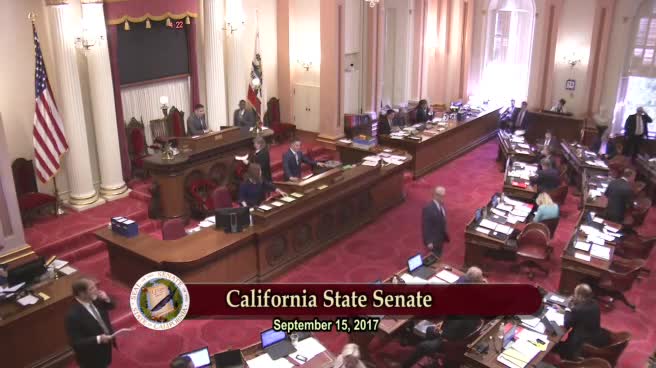
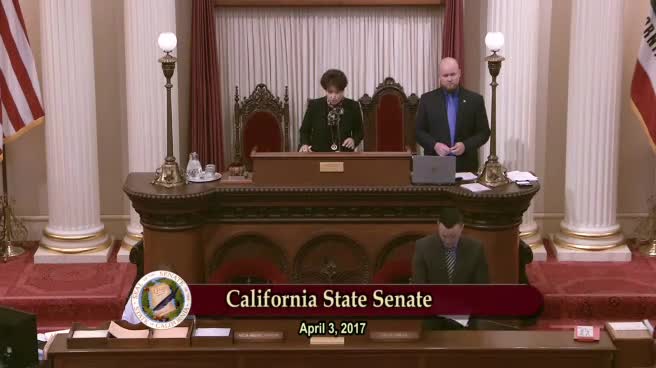
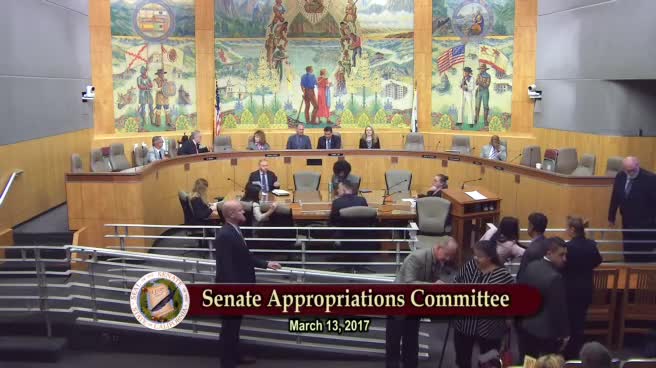
Bill Author