SB 600: Sales and use taxes: exemption: manufacturing and research: useful life: electric power generation.
- Session Year: 2017-2018
- House: Senate
- Latest Version Date: 2017-05-03
Existing sales and use tax laws impose taxes on retailers measured by gross receipts from the sale of tangible personal property sold at retail in this state, or on the storage, use, or other consumption in this state of tangible personal property purchased from a retailer for storage, use, or other consumption in this state, measured by sales price. Those laws partially exempt from those taxes, for a specified period, the gross receipts from the sale of, and the storage, use, or other consumption of, specified tangible personal property purchased for use by a qualified person, as defined, to be used primarily in manufacturing or other processes, and in research and development. Consumables On and after July 1, 2014, tangible personal property with a useful life of less than one year do not qualify for exemption, and useful life is or more years, as defined by reference to state income or franchise taxes. taxes, is deemed to have a useful life of one or more years for purposes of the exemption.
This bill would additionally define useful life by reference to manufacturer or other warranties, maintenance contracts, and normal replacement as established by industry or business practices and would provide that those definitions would apply on and after July 1, 2014. The define useful life for periods on and after July 1, 2014, to also include tangible personal property that is expensed for state income or franchise tax purposes and that has a physical useful life of one or more years. The bill, with respect to property with a useful life of one or more years as redefined by this bill, would require the State Board of Equalization to cancel any notice of determination and any related penalties and interest and would prohibit the board from issuing any notice of determination with respect to the purchase or sale of that property. The bill would authorize a qualified person to offset the amount of sales tax reimbursement or use tax paid against any sales and use tax imposed on the qualified person when a qualified person has paid sales tax reimbursement or use tax on purchases of qualified tangible personal property that has a useful life of one or more years, as redefined by the bill, as provided.
The bill, for taxable years beginning on and after January 1, 2018, and before July 1, 2030, 2026, would additionally exempt from those taxes special purpose buildings and foundations used for the generation, production, storage, or distribution, generation or production or storage and distribution, as defined, of electric power and would qualified tangible personal property purchased for used by a qualified person to be used primarily in the generation or production or storage and distribution of electric power or purchased for use by a contractor for the qualified person, as specified. The bill, on and after January 1, 2018, would expand the definition of qualified person to include, among others, a person primarily engaged in the business of electric power generation. The bill would declare the intent of the Legislature to enact legislation that would improve the states sales and use tax incentives to promote a stronger California economy by securing a greater share of the high-paying, high-skilled jobs in manufacturing and research and development. The bill would also make various findings and declarations.
Existing sales and use tax laws impose taxes on retailers measured by gross receipts from the sale of tangible personal property sold at retail in this state, or on the storage, use, or other consumption in this state of tangible personal property purchased from a retailer for storage, use, or other consumption in this state, measured by sales price. Those laws partially exempt from those taxes, for a specified period, the gross receipts from the sale of, and the storage, use, or other consumption of, specified tangible personal property purchased for use by a qualified person, as defined, to be used primarily in manufacturing or other processes, and in research and development. Consumables with a useful life of less than one year do not qualify for exemption, and useful life is defined by reference to state income or franchise taxes.
This bill would additionally define useful life by reference to manufacturer or other warranties, maintenance contracts, and normal replacement as established by industry or business practices and would provide that those definitions would apply on and after July 1, 2014. The bill, for taxable years beginning on and after January 1, 2018, and before July 1, 2030, would additionally exempt from those taxes special purpose buildings and foundations used for the generation, production, storage, or distribution, as defined, of electric power and would expand the definition of qualified person to include, among others, a person primarily engaged in the business of electric power generation. The bill would declare the intent of the Legislature to enact legislation that would improve the states sales and use tax incentives to promote a stronger California economy by securing a greater share of the high-paying, high-skilled jobs in manufacturing and research and development. The bill would also make various findings and declarations in this regard. declarations.
Existing sales and use tax laws impose taxes on retailers measured by gross receipts from the sale of tangible personal property sold at retail in this state, or on the storage, use, or other consumption in this state of tangible personal property purchased from a retailer for storage, use, or other consumption in this state, measured by sales price. Those laws partially exempt from those taxes, for a specified period, the gross receipts from the sale of, and the storage, use, or other consumption of, specified tangible personal property purchased for use by a qualified person, as defined, to be used primarily in manufacturing or other processes, and in research and development.
This bill would declare the intent of the Legislature to enact legislation that would improve the states sales and use tax incentives to promote a stronger California economy by securing a greater share of the high-paying, high-skilled jobs in manufacturing and research and development. The bill would also make findings and declarations in this regard.
(a)The Legislature finds and declares all of the following:
(1)In 2013, California enacted a partial sales and use tax exemption for manufacturing and research-and-development equipment to encourage capital investments and job creation, and to make California more competitive in attracting new businesses and expansions of existing businesses.
(2)According to the 2015 Reshoring Initiative Data Report, the United States has brought approximately 130,000 manufacturing jobs back from other countries between 2010 and 2015. However, the report also shows that California only attracted 1,479 of those reshored jobs, meaning that California missed out on the opportunity to grow its manufacturing sector and create more high-paying middle-class jobs.
(3)The manufacturing sector is important for the long-term health of Californias economy and middle-class growth potential with an average annual wage of $83,000 and the multiplier effect that results in approximately 2.5 jobs created for every manufacturing job created.
(4)California must take steps now to create an investment environment that attracts more manufacturing and research-and-development jobs in order to be more competitive with the 48 other states that exempt manufacturing equipment from sales and use tax, and to benefit from reshoring and other economic growth opportunities.
(b)It is the intent of the Legislature to enact legislation that would improve the states sales and use tax incentives to promote a stronger California economy by securing a greater share of the high-paying, high-skilled jobs in manufacturing and research and development.
(c)It is the intent of the Legislature, by the amendments made by this act, to allow eligible taxpayers to substantiate qualification for manufacturing and research-and-development equipment that has a useful life of one or more years by reference to a warranty, maintenance agreement, or industry replacement standard of a duration of one or more years, beginning July 1, 2014.SEC. 2.Section 6377.1 of the Revenue and Taxation Code is amended to read:6377.1.(a)Except as provided in subdivision (e), on or after July 1, 2014, and before January July 1, 2018, 2026, there are exempted from the taxes imposed by this part the gross receipts from the sale of, and the storage, use, or other consumption in this state of, any of the following:
(1)Qualified Prior to January 1, 2018:
(A)Qualified tangible personal property purchased for use by a qualified person to be used primarily in any stage of the manufacturing, processing, refining, fabricating, or recycling of tangible personal property, beginning at the point any raw materials are received by the qualified person and introduced into the process and ending at the point at which the manufacturing, processing, refining, fabricating, or recycling has altered tangible personal property to its completed form, including packaging, if required.
(2)(B)Qualified tangible personal property purchased for use by a qualified person to be used primarily in research and development.
(3)(C)Qualified tangible personal property purchased for use by a qualified person to be used primarily to maintain, repair, measure, or test any qualified tangible personal property described in paragraph (1) or (2). subparagraph (A) or (B).
(4)(D)Qualified tangible personal property purchased for use by a contractor purchasing that property for use in the performance of a construction contract for the qualified person, that will use that property as an integral part of the manufacturing, processing, refining, fabricating, or recycling process, or as a research or storage facility for use in connection with those processes.
(2)On and after January 1, 2018:
(A)Qualified tangible personal property purchased for use by a qualified person to be used primarily in any stage of the manufacturing, processing, refining, fabricating, or recycling of tangible personal property, beginning at the point any raw materials are received by the qualified person and introduced into the process and ending at the point at which the manufacturing, processing, refining, fabricating, or recycling has altered tangible personal property to its completed form, including packaging, if required.
(B)Qualified tangible personal property purchased for use by a qualified person to be used primarily in research and development.
(C)Qualified tangible personal property purchased for use by a qualified person to be used primarily to maintain, repair, measure, or test any qualified tangible personal property described in subparagraph (A) or (B).
(D)Qualified tangible personal property purchased for use by a qualified person to be used primarily in the generation or production or storage and distribution of electric power.
(E)Qualified tangible personal property purchased for use by a contractor purchasing that property for use in the performance of a construction contract for the qualified person, that will use that property as an integral part of the manufacturing, processing, refining, fabricating, or recycling process, the generation or production or storage and distribution of electric power, or as a research or storage facility for use in connection with those processes.
(b)For purposes of this section:
(1)Fabricating means to make, build, create, produce, or assemble components or tangible personal property to work in a new or different manner.
(2)Generation or production means the activity of making, producing, creating, or converting electric power from sources other than a conventional power source, as defined in Section 2805 of the Public Utilities Code.
(2)(3)Manufacturing means the activity of converting or conditioning tangible personal property by changing the form, composition, quality, or character of the property for ultimate sale at retail or use in the manufacturing of a product to be ultimately sold at retail. Manufacturing includes any improvements to tangible personal property that result in a greater service life or greater functionality than that of the original property.
(3)(4)Primarily means 50 percent or more of the time.
(4)(5)Process means the period beginning at the point at which any raw materials are received by the qualified person and introduced into the manufacturing, processing, refining, fabricating, or recycling activity of the qualified person and ending at the point at which the manufacturing, processing, refining, fabricating, or recycling activity of the qualified person has altered tangible personal property to its completed form, including packaging, if required. Raw materials shall be considered to have been introduced into the process when the raw materials are stored on the same premises where the qualified persons manufacturing, processing, refining, fabricating, or recycling activity is conducted. Raw materials that are stored on premises other than where the qualified persons manufacturing, processing, refining, fabricating, or recycling activity is conducted shall not be considered to have been introduced into the manufacturing, processing, refining, fabricating, or recycling process.
(5)(6)Processing means the physical application of the materials and labor necessary to modify or change the characteristics of tangible personal property.
(6)(A)Qualified(7)(A)Qualified person means a means:
(i)Prior to January 1, 2018, a person that is primarily engaged in those lines of business described in Codes 3111 to 3399, inclusive, 541711, or 541712 of the North American Industry Classification System (NAICS) published by the United States Office of Management and Budget (OMB), 2012 edition.
(ii)On and after January 1, 2018, a person that is primarily engaged in those lines of business described in Codes 3111 to 3399, inclusive, 22111 to 21118, inclusive, 221122, 541711, or 541712 of the North American Industry Classification System (NAICS) published by the United States Office of Management and Budget (OMB), 2012 edition.
(B)Notwithstanding subparagraph (A), qualified person shall not include either of the following:
(i)An Prior to January 1, 2018, an apportioning trade or business that is required to apportion its business income pursuant to subdivision (b) of Section 25128. 25128 or a trade or business conducted wholly within this state that would be required to apportion its business income pursuant to subdivision (b) of Section 25128 if it were subject to apportionment pursuant to Section 25101.
(ii)A On and after January 1, 2018, an apportioning trade or business, other than a trade or business described in paragraph (1) of subdivision (c) of Section 25128, that is required to apportion its business income pursuant to subdivision (b) of Section 25128, or a trade or business business, other than a trade or business described in paragraph (1) of subdivision (c) of Section 25128, conducted wholly within this state that would be required to apportion its business income pursuant to subdivision (b) of Section 25128 if it were subject to apportionment pursuant to Section 25101.
(7)(8)(A)Qualified tangible personal property includes, but is not limited to, all of the following:
(i)Machinery and equipment, including component parts and contrivances such as belts, shafts, moving parts, and operating structures.
(ii)Equipment or devices used or required to operate, control, regulate, or maintain the machinery, including, but not limited to, computers, data-processing equipment, and computer software, together with all repair and replacement parts with a useful life of one or more years therefor, whether purchased separately or in conjunction with a complete machine and regardless of whether the machine or component parts are assembled by the qualified person or another party.
(iii)Tangible personal property used in pollution control that meets standards established by this state or any local or regional governmental agency within this state.
(iv)Special (I)Prior to January 1, 2018, special purpose buildings and foundations used as an integral part of the manufacturing, processing, refining, fabricating, or recycling process, or that constitute a research or storage facility used during those processes. Buildings used solely for warehousing purposes after completion of those processes are not included.
(II)On and after January 1, 2018, special purpose buildings and foundations used as an integral part of the manufacturing, processing, refining, fabricating, or recycling process, or that constitute a research or storage facility used during those processes, or the generation or production or storage and distribution of electric power. Buildings used solely for warehousing purposes after completion of those processes are not included.
(B)Qualified tangible personal property shall not include any of the following:
(i)Consumables with a useful life of less than one year.
(ii)Furniture, inventory, and equipment used in the extraction process, or equipment used to store finished products that have completed the manufacturing, processing, refining, fabricating, or recycling process.
(iii)Tangible personal property used primarily in administration, general management, or marketing.
(8)(9)Refining means the process of converting a natural resource to an intermediate or finished product.
(9)(10)Research and development means those activities that are described in Section 174 of the Internal Revenue Code or in any regulations thereunder.
(11)Storage and distribution means storing and delivering through the electric grid, but not transmission of, electric power to consumers regardless of source.
(10)(12)(A)On and after July 1, 2014, useful life shall be determined using any one either of the following:
(A)(i)Useful life for tangible personal property that is treated as having a useful life of one or more years for state income or franchise tax purposes shall be treated as having deemed to have a useful life of one or more years for purposes of this section.
(ii)Useful life for tangible personal property that is expensed for state income or franchise tax purposes and that has a physical useful life of one or more years shall be deemed to have a useful life of one or more years for purposes of this section.
(B)Useful life for tangible personal property that is included under a warranty by the manufacturer or other third party to last one or more years shall be treated as having a useful life of one or more years for purposes of this section.(C)Useful life for tangible personal property that is included under a maintenance contract lasting one or more years shall be treated as having a useful life of one or more years for purposes of this section.(D)Useful life for tangible personal property that is normally replaced at intervals of one or more years, as established by industry or business practices or based on the actual experience of the person claiming the exemption, or is expected at the time of purchase to last one or more years, as established by industry or business practices or based on the actual experience of the person claiming the exemption, shall be treated as having a useful life of one or more years for purposes of this section.(B)The board shall cancel any notice of determination and any related penalties and interest and shall not issue any notice of determination, with respect to qualified property with a useful life as defined in clause (ii) of subparagraph (A).
(C)Notwithstanding Section 6902, when a qualified person has paid sales tax reimbursement or use tax on purchases of qualified tangible personal property qualifying in all regards under this section that has a useful life of one or more years, the qualified person may offset the amount of sales tax reimbursement or use tax so paid against any sales and use tax imposed on the qualified person. An offset shall only be allowed if the qualified person maintains evidence of payment of the tax or tax reimbursement. In no event shall a taxpayer make, or the board accept, a claim for refund under this subparagraph.
(D)The board is not prohibited from making a determination for any offset claimed that was not allowable pursuant to this section. Any such determination shall be mailed no later than three years from the last day of the calendar month following the period for which the offset was claimed.
(c)An exemption shall not be allowed under this section unless the purchaser furnishes the retailer with an exemption certificate, completed in accordance with any instructions or regulations as the board may prescribe, and the retailer retains the exemption certificate in its records and furnishes it to the board upon request.
(d)(1) Notwithstanding the Bradley-Burns Uniform Local Sales and Use Tax Law (Part 1.5 (commencing with Section 7200)) and the Transactions and Use Tax Law (Part 1.6 (commencing with Section 7251)), the exemption established by this section shall not apply with respect to any tax levied by a county, city, or district pursuant to, or in accordance with, either of those laws.
(2)Notwithstanding subdivision (a), the exemption established by this section shall not apply with respect to any tax levied pursuant to Section 6051.2, 6051.5, 6201.2, or 6201.5, pursuant to Section 35 of Article XIII of the California Constitution, or any tax levied pursuant to Section 6051 or 6201 that is deposited in the State Treasury to the credit of the Local Revenue Fund 2011 pursuant to Section 6051.15 or 6201.15.
(e)(1)The exemption provided by this section shall not apply to either of the following:
(A)Any tangible personal property purchased during any calendar year that exceeds two hundred million dollars ($200,000,000) of purchases of qualified tangible personal property for which an exemption is claimed by a qualified person under this section. For purposes of this subparagraph, in the case of a qualified person that is required to be included in a combined report under Section 25101 or authorized to be included in a combined report under Section 25101.15, the aggregate of all purchases of qualified personal property for which an exemption is claimed pursuant to this section by all persons that are required or authorized to be included in a combined report shall not exceed two hundred million dollars ($200,000,000) in any calendar year.
(B)The sale or storage, use, or other consumption of property that, within one year from the date of purchase, is removed from California, converted from an exempt use under subdivision (a) to some other use not qualifying for exemption, or used in a manner not qualifying for exemption.
(2)If a purchaser certifies in writing to the seller that the tangible personal property purchased without payment of the tax will be used in a manner entitling the seller to regard the gross receipts from the sale as exempt from the sales tax, and the purchase exceeds the two-hundred-million-dollar ($200,000,000) limitation described in subparagraph (A) of paragraph (1), or within one year from the date of purchase, the purchaser removes that property from California, converts that property for use in a manner not qualifying for the exemption, or uses that property in a manner not qualifying for the exemption, the purchaser shall be liable for payment of sales tax, with applicable interest, as if the purchaser were a retailer making a retail sale of the tangible personal property at the time the tangible personal property is so purchased, removed, converted, or used, and the cost of the tangible personal property to the purchaser shall be deemed the gross receipts from that retail sale.
(f)This section shall apply to leases of qualified tangible personal property classified as continuing sales and continuing purchases in accordance with Sections 6006.1 and 6010.1. The exemption established by this section shall apply to the rentals payable pursuant to the lease, provided the lessee is a qualified person and the tangible personal property is used in an activity described in subdivision (a).
(g)(1)Upon the effective date of this section, the Department of Finance shall estimate the total dollar amount of exemptions that will be taken for each calendar year, or any portion thereof, for which this section provides an exemption.
(2)No later than each March 1 next following a calendar year for which this section provides an exemption, the board shall provide to the Joint Legislative Budget Committee a report of the total dollar amount of exemptions taken under this section for the immediately preceding calendar year. The report shall compare the total dollar amount of exemptions taken under this section for that calendar year with the departments estimate for that same calendar year. If that total dollar amount taken is less than the estimate for that calendar year, the report shall identify options for increasing exemptions taken so as to meet estimated amounts.
(h)This section is repealed on December 1, 2018. January 1, 2027.
All matter omitted in this version of the bill appears in the bill as amended in the Senate April 3, 2017. (JR11)(a)The Legislature finds and declares all of the following:
(1)In 2013, California enacted a partial sales and use tax exemption for manufacturing and research-and-development equipment to encourage capital investments and job creation, and to make California more competitive in attracting new businesses and expansions of existing businesses.
(2)According to the 2015 Reshoring Initiative Data Report, the United States has brought approximately 130,000 manufacturing jobs back from other countries between 2010 and 2015. However, the report also shows that California only attracted 1,479 of those reshored jobs jobs, meaning that California missed out on the opportunity to grow its manufacturing sector and create more high-paying middle-class jobs.
(3)The manufacturing sector is important for the long-term health of Californias economy and middle-class growth potential with an average annual wage of $83,000 and the multiplier effect that results in approximately 2.5 jobs created for every manufacturing job created.
(4)California must take steps now to create an investment environment that attracts more manufacturing and research-and-development jobs in order to be more competitive with the 48 other states that exempt manufacturing equipment from sales and use tax, and to benefit from reshoring and other economic growth opportunities.
(b)It is the intent of the Legislature to enact legislation that would improve the states sales and use tax incentives to promote a stronger California economy by securing a greater share of the high-paying, high-skilled jobs in manufacturing and research and development.
(c)It is the intent of the Legislature, by the amendments made by this act, to allow eligible taxpayers to substantiate qualification for manufacturing and research-and-development equipment that has a useful life of one or more years by reference to a warranty, maintenance agreement, or industry replacement standard of a duration of one or more years, beginning July 1, 2014.
SEC. 2.Section 6377.1 of the Revenue and Taxation Code is amended to read:6377.1.(a)Except as provided in subdivision (e), on or after July 1, 2014, and before July 1, 2022, January 1, 2018, there are exempted from the taxes imposed by this part the gross receipts from the sale of, and the storage, use, or other consumption in this state of, any of the following:
(1)Qualified tangible personal property purchased for use by a qualified person to be used primarily in any stage of the manufacturing, processing, refining, fabricating, or recycling of tangible personal property, beginning at the point any raw materials are received by the qualified person and introduced into the process and ending at the point at which the manufacturing, processing, refining, fabricating, or recycling has altered tangible personal property to its completed form, including packaging, if required.
(2)Qualified tangible personal property purchased for use by a qualified person to be used primarily in research and development.
(3)Qualified tangible personal property purchased for use by a qualified person to be used primarily to maintain, repair, measure, or test any qualified tangible personal property described in paragraph (1) or (2).
(4)Qualified tangible personal property purchased for use by a contractor purchasing that property for use in the performance of a construction contract for the qualified person, that will use that property as an integral part of the manufacturing, processing, refining, fabricating, or recycling process, or as a research or storage facility for use in connection with those processes.
(b)For purposes of this section:
(1)Fabricating means to make, build, create, produce, or assemble components or tangible personal property to work in a new or different manner.
(2)Manufacturing means the activity of converting or conditioning tangible personal property by changing the form, composition, quality, or character of the property for ultimate sale at retail or use in the manufacturing of a product to be ultimately sold at retail. Manufacturing includes any improvements to tangible personal property that result in a greater service life or greater functionality than that of the original property.
(3)Primarily means 50 percent or more of the time.
(4)Process means the period beginning at the point at which any raw materials are received by the qualified person and introduced into the manufacturing, processing, refining, fabricating, or recycling activity of the qualified person and ending at the point at which the manufacturing, processing, refining, fabricating, or recycling activity of the qualified person has altered tangible personal property to its completed form, including packaging, if required. Raw materials shall be considered to have been introduced into the process when the raw materials are stored on the same premises where the qualified persons manufacturing, processing, refining, fabricating, or recycling activity is conducted. Raw materials that are stored on premises other than where the qualified persons manufacturing, processing, refining, fabricating, or recycling activity is conducted shall not be considered to have been introduced into the manufacturing, processing, refining, fabricating, or recycling process.
(5)Processing means the physical application of the materials and labor necessary to modify or change the characteristics of tangible personal property.
(6)(A)Qualified person means a person that is primarily engaged in those lines of business described in Codes 3111 to 3399, inclusive, 541711, or 541712 of the North American Industry Classification System (NAICS) published by the United States Office of Management and Budget (OMB), 2012 edition.
(B)Notwithstanding subparagraph (A), qualified person shall not include either of the following:
(i)An apportioning trade or business that is required to apportion its business income pursuant to subdivision (b) of Section 25128.
(ii)A trade or business conducted wholly within this state that would be required to apportion its business income pursuant to subdivision (b) of Section 25128 if it were subject to apportionment pursuant to Section 25101.
(7)(A)Qualified tangible personal property includes, but is not limited to, all of the following:
(i)Machinery and equipment, including component parts and contrivances such as belts, shafts, moving parts, and operating structures.
(ii)Equipment or devices used or required to operate, control, regulate, or maintain the machinery, including, but not limited to, computers, data-processing equipment, and computer software, together with all repair and replacement parts with a useful life of one or more years therefor, whether purchased separately or in conjunction with a complete machine and regardless of whether the machine or component parts are assembled by the qualified person or another party.
(iii)Tangible personal property used in pollution control that meets standards established by this state or any local or regional governmental agency within this state.
(iv)Special purpose buildings and foundations used as an integral part of the manufacturing, processing, refining, fabricating, or recycling process, or that constitute a research or storage facility used during those processes. Buildings used solely for warehousing purposes after completion of those processes are not included.
(B)Qualified tangible personal property shall not include any of the following:
(i)Consumables with a useful life of less than one year.
(ii)Furniture, inventory, and equipment used in the extraction process, or equipment used to store finished products that have completed the manufacturing, processing, refining, fabricating, or recycling process.
(iii)Tangible personal property used primarily in administration, general management, or marketing.
(8)Refining means the process of converting a natural resource to an intermediate or finished product.
(9)Research and development means those activities that are described in Section 174 of the Internal Revenue Code or in any regulations thereunder.
(10)On and after July 1, 2014, useful life shall be determined using any one of the following:
(10)(A)Useful life for tangible personal property that is treated as having a useful life of one or more years for state income or franchise tax purposes shall be deemed to have treated as having a useful life of one or more years for purposes of this section. Useful life for tangible personal property that is treated as having a useful life of less than one year for state income or franchise tax purposes shall be deemed to have a useful life of less than one year for purposes of this section.
(B)Useful life for tangible personal property that is included under a warranty by the manufacturer or other third party to last one or more years shall be treated as having a useful life of one or more years for purposes of this section.
(C)Useful life for tangible personal property that is included under a maintenance contract lasting one or more years shall be treated as having a useful life of one or more years for purposes of this section.
(D)Useful life for tangible personal property that is normally replaced at intervals of one or more years, as established by industry or business practices or based on the actual experience of the person claiming the exemption, or is expected at the time of purchase to last one or more years, as established by industry or business practices or based on the actual experience of the person claiming the exemption, shall be treated as having a useful life of one or more years for purposes of this section.
(c)An exemption shall not be allowed under this section unless the purchaser furnishes the retailer with an exemption certificate, completed in accordance with any instructions or regulations as the board may prescribe, and the retailer retains the exemption certificate in its records and furnishes it to the board upon request.
(d)(1) Notwithstanding the Bradley-Burns Uniform Local Sales and Use Tax Law (Part 1.5 (commencing with Section 7200)) and the Transactions and Use Tax Law (Part 1.6 (commencing with Section 7251)), the exemption established by this section shall not apply with respect to any tax levied by a county, city, or district pursuant to, or in accordance with, either of those laws.
(2)Notwithstanding subdivision (a), the exemption established by this section shall not apply with respect to any tax levied pursuant to Section 6051.2, 6051.5, 6201.2, or 6201.5, pursuant to Section 35 of Article XIII of the California Constitution, or any tax levied pursuant to Section 6051 or 6201 that is deposited in the State Treasury to the credit of the Local Revenue Fund 2011 pursuant to Section 6051.15 or 6201.15.
(e)(1)The exemption provided by this section shall not apply to either of the following:
(A)Any tangible personal property purchased during any calendar year that exceeds two hundred million dollars ($200,000,000) of purchases of qualified tangible personal property for which an exemption is claimed by a qualified person under this section. For purposes of this subparagraph, in the case of a qualified person that is required to be included in a combined report under Section 25101 or authorized to be included in a combined report under Section 25101.15, the aggregate of all purchases of qualified personal property for which an exemption is claimed pursuant to this section by all persons that are required or authorized to be included in a combined report shall not exceed two hundred million dollars ($200,000,000) in any calendar year.
(B)The sale or storage, use, or other consumption of property that, within one year from the date of purchase, is removed from California, converted from an exempt use under subdivision (a) to some other use not qualifying for exemption, or used in a manner not qualifying for exemption.
(2)If a purchaser certifies in writing to the seller that the tangible personal property purchased without payment of the tax will be used in a manner entitling the seller to regard the gross receipts from the sale as exempt from the sales tax, and the purchase exceeds the two-hundred-million-dollar ($200,000,000) limitation described in subparagraph (A) of paragraph (1), or within one year from the date of purchase, the purchaser removes that property from California, converts that property for use in a manner not qualifying for the exemption, or uses that property in a manner not qualifying for the exemption, the purchaser shall be liable for payment of sales tax, with applicable interest, as if the purchaser were a retailer making a retail sale of the tangible personal property at the time the tangible personal property is so purchased, removed, converted, or used, and the cost of the tangible personal property to the purchaser shall be deemed the gross receipts from that retail sale.
(f)This section shall apply to leases of qualified tangible personal property classified as continuing sales and continuing purchases in accordance with Sections 6006.1 and 6010.1. The exemption established by this section shall apply to the rentals payable pursuant to the lease, provided the lessee is a qualified person and the tangible personal property is used in an activity described in subdivision (a).
(g)(1)Upon the effective date of this section, the Department of Finance shall estimate the total dollar amount of exemptions that will be taken for each calendar year, or any portion thereof, for which this section provides an exemption.
(2)No later than each March 1 next following a calendar year for which this section provides an exemption, the board shall provide to the Joint Legislative Budget Committee a report of the total dollar amount of exemptions taken under this section for the immediately preceding calendar year. The report shall compare the total dollar amount of exemptions taken under this section for that calendar year with the departments estimate for that same calendar year. If that total dollar amount taken is less than the estimate for that calendar year, the report shall identify options for increasing exemptions taken so as to meet estimated amounts.
(h)This section is repealed on January 1, 2023. December 1, 2018.
SEC. 3.Section 6377.1 is added to the Revenue and Taxation Code, to read:6377.1.(a)Except as provided in subdivision (e), on or after January 1, 2018, and before July 1, 2030, there are exempted from the taxes imposed by this part the gross receipts from the sale of, and the storage, use, or other consumption in this state of, any of the following:
(1)Qualified tangible personal property purchased for use by a qualified person to be used primarily in any stage of the manufacturing, processing, refining, fabricating, or recycling of tangible personal property, beginning at the point any raw materials are received by the qualified person and introduced into the process and ending at the point at which the manufacturing, processing, refining, fabricating, or recycling has altered tangible personal property to its completed form, including packaging, if required.
(2)Qualified tangible personal property purchased for use by a qualified person to be used primarily in research and development.
(3)Qualified tangible personal property purchased for use by a qualified person to be used primarily to maintain, repair, measure, or test any qualified tangible personal property described in paragraph (1) or (2).
(4)Qualified tangible personal property purchased for use by a qualified person to be used primarily in the generation, production, storage, or distribution of electric power.
(5)Qualified tangible personal property purchased for use by a contractor purchasing that property for use in the performance of a construction contract for the qualified person, that will use that property as an integral part of the manufacturing, processing, refining, fabricating, or recycling process, the generation, production, storage, or distribution of electric power, or as a research or storage facility for use in connection with those processes.
(b)For purposes of this section:
(1)Fabricating means to make, build, create, produce, or assemble components or tangible personal property to work in a new or different manner.
(2)Generation, production, storage, or distribution means the activity of making, producing, creating, or converting electric power from other sources of energy, including, but not limited to, solar, wind, hydroelectric, geothermal, and biomass, storing that energy, and delivering, but not transmitting, electric power to consumers.
(3)Manufacturing means the activity of converting or conditioning tangible personal property by changing the form, composition, quality, or character of the property for ultimate sale at retail or use in the manufacturing of a product to be ultimately sold at retail. Manufacturing includes any improvements to tangible personal property that result in a greater service life or greater functionality than that of the original property.
(4)Primarily means 50 percent or more of the time.
(5)Process means the period beginning at the point at which any raw materials are received by the qualified person and introduced into the manufacturing, processing, refining, fabricating, or recycling activity of the qualified person and ending at the point at which the manufacturing, processing, refining, fabricating, or recycling activity of the qualified person has altered tangible personal property to its completed form, including packaging, if required. Raw materials shall be considered to have been introduced into the process when the raw materials are stored on the same premises where the qualified persons manufacturing, processing, refining, fabricating, or recycling activity is conducted. Raw materials that are stored on premises other than where the qualified persons manufacturing, processing, refining, fabricating, or recycling activity is conducted shall not be considered to have been introduced into the manufacturing, processing, refining, fabricating, or recycling process.
(6)Processing means the physical application of the materials and labor necessary to modify or change the characteristics of tangible personal property.
(7)(A)Qualified person means a person that is primarily engaged in those lines of business described in Codes 3111 to 3399, inclusive, 22111 to 221118, inclusive, 221122, 541711, and 541712 of the North American Industry Classification System (NAICS) published by the United States Office of Management and Budget (OMB), 2012 edition.
(B)(i)Notwithstanding subparagraph (A), qualified person shall not include either of the following:
(I)An apportioning trade or business that is required to apportion its business income pursuant to subdivision (b) of Section 25128.
(II)A trade or business conducted wholly within this state that would be required to apportion its business income pursuant to subdivision (b) of Section 25128 if it were subject to apportionment pursuant to Section 25101.
(ii)This subparagraph shall not apply to a qualified person described in subparagraph (A) that is also engaged in an agricultural business activity described in paragraph (2) of subdivision (d) of Section 25128.
(8)(A)Qualified tangible personal property includes, but is not limited to, all of the following:
(i)Machinery and equipment, including component parts and contrivances such as belts, shafts, moving parts, and operating structures.
(ii)Equipment or devices used or required to operate, control, regulate, or maintain the machinery, including, but not limited to, computers, data-processing equipment, and computer software, together with all repair and replacement parts with a useful life of one or more years therefor, whether purchased separately or in conjunction with a complete machine and regardless of whether the machine or component parts are assembled by the qualified person or another party.
(iii)Tangible personal property used in pollution control that meets standards established by this state or any local or regional governmental agency within this state.
(iv)Special purpose buildings and foundations used as an integral part of the manufacturing, processing, refining, fabricating, or recycling process, or that constitute a research or storage facility used during those processes, or the generation, production, storage, or distribution of electric power. Buildings used solely for warehousing purposes after completion of those processes are not included.
(B)Qualified tangible personal property shall not include any of the following:
(i)Consumables with a useful life of less than one year.
(ii)Furniture, inventory, and equipment used in the extraction process, or equipment used to store finished products that have completed the manufacturing, processing, refining, fabricating, or recycling process.
(iii)Tangible personal property used primarily in administration, general management, or marketing.
(9)Refining means the process of converting a natural resource to an intermediate or finished product.
(10)Research and development means those activities that are described in Section 174 of the Internal Revenue Code or in any regulations thereunder.
(11)Useful life shall be determined using any one of the following:
(A)Useful life for tangible personal property that is treated as having a useful life of one or more years for state income or franchise tax purposes shall be treated as having a useful life of one or more years for purposes of this section.
(B)Useful life for tangible personal property that is included under a warranty by the manufacturer or other third party to last one or more years shall be treated as having a useful life of one or more years for purposes of this section.
(C)Useful life for tangible personal property that is included under a maintenance contract lasting one or more years shall be treated as having a useful life of one or more years for purposes of this section.
(D)Useful life for tangible personal property that is normally replaced at intervals of one or more years, as established by industry or business practices or based on the actual experience of the person claiming the exemption, or is expected at the time of purchase to last one or more years, as established by industry or business practices or based on the actual experience of the person claiming the exemption, shall be treated as having a useful life of one or more years for purposes of this section.
(c)An exemption shall not be allowed under this section unless the purchaser furnishes the retailer with an exemption certificate, completed in accordance with any instructions or regulations as the board may prescribe, and the retailer retains the exemption certificate in its records and furnishes it to the board upon request.
(d)(1)Notwithstanding the Bradley-Burns Uniform Local Sales and Use Tax Law (Part 1.5 (commencing with Section 7200)) and the Transactions and Use Tax Law (Part 1.6 (commencing with Section 7251)), the exemption established by this section shall not apply with respect to any tax levied by a county, city, or district pursuant to, or in accordance with, either of those laws.
(2)Notwithstanding subdivision (a), the exemption established by this section shall not apply with respect to any tax levied pursuant to Section 6051.2, 6051.5, 6201.2, or 6201.5, pursuant to Section 35 of Article XIII of the California Constitution, or any tax levied pursuant to Section 6051 or 6201 that is deposited in the State Treasury to the credit of the Local Revenue Fund 2011 pursuant to Section 6051.15 or 6201.15.
(e)(1)The exemption provided by this section shall not apply to either of the following:
(A)Any tangible personal property purchased during any calendar year that exceeds two hundred million dollars ($200,000,000) of purchases of qualified tangible personal property for which an exemption is claimed by a qualified person under this section. For purposes of this subparagraph, in the case of a qualified person that is required to be included in a combined report under Section 25101 or authorized to be included in a combined report under Section 25101.15, the aggregate of all purchases of qualified personal property for which an exemption is claimed pursuant to this section by all persons that are required or authorized to be included in a combined report shall not exceed two hundred million dollars ($200,000,000) in any calendar year.
(B)The sale or storage, use, or other consumption of property that, within one year from the date of purchase, is removed from California, converted from an exempt use under subdivision (a) to some other use not qualifying for exemption, or used in a manner not qualifying for exemption.
(2)If a purchaser certifies in writing to the seller that the tangible personal property purchased without payment of the tax will be used in a manner entitling the seller to regard the gross receipts from the sale as exempt from the sales tax, and the purchase exceeds the two-hundred-million-dollar ($200,000,000) limitation described in subparagraph (A) of paragraph (1), or within one year from the date of purchase, the purchaser removes that property from California, converts that property for use in a manner not qualifying for the exemption, or uses that property in a manner not qualifying for the exemption, the purchaser shall be liable for payment of sales tax, with applicable interest, as if the purchaser were a retailer making a retail sale of the tangible personal property at the time the tangible personal property is so purchased, removed, converted, or used, and the cost of the tangible personal property to the purchaser shall be deemed the gross receipts from that retail sale.
(f)This section shall apply to leases of qualified tangible personal property classified as continuing sales and continuing purchases in accordance with Sections 6006.1 and 6010.1. The exemption established by this section shall apply to the rentals payable pursuant to the lease, provided the lessee is a qualified person and the tangible personal property is used in an activity described in subdivision (a).
(g)(1)Upon the effective date of this section, the Department of Finance shall estimate the total dollar amount of exemptions that will be taken for each calendar year, or any portion thereof, for which this section provides an exemption.
(2)No later than each March 1 next following a calendar year for which this section provides an exemption, the board shall provide to the Joint Legislative Budget Committee a report of the total dollar amount of exemptions taken under this section for the immediately preceding calendar year. The report shall compare the total dollar amount of exemptions taken under this section for that calendar year with the departments estimate for that same calendar year. If that total dollar amount taken is less than the estimate for that calendar year, the report shall identify options for increasing exemptions taken so as to meet estimated amounts.
(h)This section is repealed on January 1, 2031.
(a)The Legislature finds and declares all of the following:
(1)In 2013, California enacted a partial sales and use tax exemption for manufacturing and research-and-development equipment to encourage capital investments and job creation, and to make California more competitive in attracting new businesses and expansions of existing businesses.
(2)According to the 2015 Reshoring Initiative Data Report, the United States has brought approximately 130,000 manufacturing jobs back from other countries between 2010 and 2015. However, the report also shows that California only attracted 1,479 of those reshored jobs meaning that California missed out on the opportunity to grow its manufacturing sector and create more high-paying middle-class jobs.
(3)The manufacturing sector is important for the long-term health of Californias economy and middle-class growth potential with an average annual wage of $83,000 and the multiplier effect that results in approximately 2.5 jobs created for every manufacturing job created.
(4)California must take steps now to create an investment environment that attracts more manufacturing and research-and-development jobs in order to be more competitive with the 48 other states that exempt manufacturing equipment from sales and use tax, and to benefit from reshoring and other economic growth opportunities.
(b)It is the intent of the Legislature to enact legislation that would improve the states sales and use tax incentives to promote a stronger California economy by securing a greater share of the high-paying, high-skilled jobs in manufacturing and research and development.
|
Date
|
Status
|
|---|---|
| Feb 1, 2018 | Returned to Secretary of Senate pursuant to Joint Rule 56. |
| May 25, 2017 | May 25 hearing: Held in committee and under submission. |
| May 19, 2017 | Set for hearing May 25. |
| May 15, 2017 | May 15 hearing: Placed on APPR. suspense file. |
| May 5, 2017 | Set for hearing May 15. |
| May 3, 2017 | Read second time and amended. Re-referred to Com. on APPR. |
| May 2, 2017 | From committee: Do pass as amended and re-refer to Com. on APPR. (Ayes 7. Noes 0. Page 884.) (April 26). |
| Apr 19, 2017 | Set for hearing April 26. |
| Apr 6, 2017 | Re-referred to Com. on GOV. & F. |
| Apr 3, 2017 | From committee with author's amendments. Read second time and amended. Re-referred to Com. on RLS. |
| Mar 2, 2017 | Referred to Com. on RLS. |
| Feb 21, 2017 | From printer. May be acted upon on or after March 23. |
| Feb 17, 2017 | Introduced. Read first time. To Com. on RLS. for assignment. To print. |
|
Date
|
Description
|
Location
|
Votes
|
|
|---|---|---|---|---|
| May 15, 2017 | Placed on suspense file | Senate Standing Committee on Appropriations |
Passed |
|
| Apr 26, 2017 | Do pass as amended, but first amend, and re-refer to the Committee on [Appropriations] | Senate Standing Committee on Governance and Finance |
Passed |
This list shows positions taken on this bill by organizations on the date displayed, which is linked to the original source.
Positions by individuals are not included.
SENATE COMMITTEE ON
Senator Ricardo Lara, Chair
2017 - 2018 Regular Session
SB 600 (Galgiani) - Sales and use taxes: exemption: manufacturing and research: useful life: electric power generation
Version: | Policy Vote: |
Urgency: | Mandate: |
Hearing Date: | Consultant: |
This bill meets the criteria for referral to the Suspense File.
Bill Summary:
SB 600 would expand and extend the sales and use tax exemption on manufacturing equipment, as specified.
Fiscal Impact:
The Board of Equalization (BOE) estimates that this bill would result in an annual General Fund revenue loss of $89 million, related to electric power generation and agricultural businesses. The revenue impact related to expanding the definition of “useful life” for the purposes of determining eligible tangible personal property purchases and the associated offset authorization cannot be determined. BOE’s costs to implement the bill have yet to be determined, but would likely be, at a minimum, in the hundreds of thousands of dollars annually (General Fund).
Background:
Except where a specific exemption or exclusion is provided, current law imposes the SUT on all retailers for the privilege of selling tangible personal property (TPP) at retail in California, or on the storage, use, or other consumption in this state of TPP purchased from a retailer.
After BOE collects SUT revenue ($51 billion in 2014-15), it allocates the money to various state and local funds. Roughly half—collected from an approximately 3.9 percent rate—goes to the General Fund and can be spent on any state program, such as education, health care, and criminal justice. Another 1.25 percent, known as the Bradley-Burns rate, goes to cities and counties for general purposes. Three sales tax funds have uniform state rates and support specified programs—an approximately 1.1 percent rate for 2011 realignment (county-administered criminal justice, mental health, and social service programs); a 0.5 percent rate for 1991 realignment (county-administered health and social services programs); and a 0.5 percent rate for city and county public safety programs pursuant to Proposition 172 (1993). Additionally, some local governments levy optional local rates—known as Transactions and Use Taxes (TUTs)—and a small portion of these funds are used for general purposes. As of January 1, 2017, the average statewide SUT rate was 8.21 percent.
State law fully exempts many items from SUT (such as prescription drugs, food, electricity, and poultry litter), while other items are exempted from the state sales tax, but not the local share, such as farm equipment and machinery, diesel fuel used for farming and food processing, teleproduction and postproduction equipment, timber harvesting equipment and machinery, and racehorse breeding stock. Partial SUT exemptions are difficult for both retailers and the BOE, and complicate return preparation and processing. Moreover, errors attributable to these partial exemptions occur frequently, resulting in additional return processing workload for BOE.
In 2013, the Legislature reformed California’s economic development policies; specifically, it eliminated enterprise zones and other geographically-targeted economic development areas, and instead allowed three new tax benefits:
- Tax credits for wages paid by taxpayers to qualified employees within former enterprise zones, and other areas that suffer from high levels of poverty and unemployment. The credit sunsets in 2019.
- The California Competes Tax Credit, an income tax credit available to businesses who want to come, stay, or grow in the State. Tax credit agreements up to an annually capped amount are (1) negotiated by the Governor’s Office of Business and Economic Development (GO-Biz), and (2) approved by a statutorily created “California Competes Tax Credit Committee,” consisting of the State Treasurer, the Director of the Department of Finance (DOF), the Director of GO-Biz, and one appointee each by the Senate Committee on Rules and the Speaker of the Assembly.
- A partial (the 3.9375 rate that flows to the General Fund) SUT exemption on purchases of manufacturing equipment made by taxpayers within specific North American Industrial Classification System (NAICS) codes, capped at $200 million annually per taxpayer, effective July 1, 2014, and ending July 1, 2022. This SUT exemption largely superseded existing programs, as they applied to almost all the same taxpayers. Thus, instead of applying to the California Alternative Energy and Advanced Transportation Financing Authority (CAEATFA), taxpayers simply print a resale certificate from BOE’s internet site, and present it to the retailer to purchase the property sales-tax free. One restriction of the SUT exemption is that any property treated as having a “useful life” of less than one year is not eligible.
DOF is empowered to reduce the amount of credits the California Competes Tax Credit Committee can allocate to ensure that the above three new tax benefits do not result in a revenue loss that exceeds $750 million in a given fiscal year, which was the estimated revenue gain from eliminating tax benefits from enterprise zones and similar areas. Thus, the goal of eliminating enterprise zones and replacing them with the three new tax benefits described above was to ensure revenue neutrality. However, if the amount of foregone revenue from the three new tax benefits falls below $750 million, current law neither enacts a new tax expenditure nor requires expansion of the existing ones; instead, BOE must identify options for increasing SUT exemptions to meet estimated amounts as part of existing reporting requirements to the Joint Legislative Budget Committee. FTB must do the same as part of its annual report regarding the wage credit. DOF has not reported that an adjustment is necessary, as the estimated fiscal loss of the new employee hiring credit ($3.9 million in 2014; $1.7 million in 2015), the SUT exemption ($165 million in 2016), and California Competes Tax Credits added up to significantly less than $750 million in both fiscal years. Consequently, BOE has identified several options to increase the utilization of the SUT exemption, including (1) expanding the definition of equipment’s “useful life,” (2) increasing the $200 million cap, and (3) making eligible for the exemption other taxpayers not currently included within the NAICS codes in current law.
Proposed Law:
This bill would extend and expand the General Fund SUT exemption on manufacturing equipment as follows:
- Extend the partial (and expanded) exemption for four years - until July 1, 2026.
- Include establishments primarily engaged in electric power generation or distribution, currently classified under NAICS Codes 22111 to 221118, and Code 221122 within the definition of “qualified person” thereby extending the partial exemption to this industry.
- Provide that certain persons engaged in an agricultural business activity are no longer precluded from qualifying for the partial exemption.
- Retroactively (from July 1, 2014) expand the “useful life” definition to additionally include qualifying property that is expensed for income tax purposes but that has a physical useful life of one or more years.
- Require BOE to cancel any notice of determination and any related penalties and interest, and prohibit BOE from issuing a notice of determination with respect to qualified property under the expanded “useful life” definition the bill proposes.
- Allow qualified persons to offset their SUT liability with any sales tax reimbursement or use tax paid on property purchased that meets the expanded “useful life” definition. Prohibit claims for refund related to tax paid on these purchases.
- Specify that BOE is not prohibited from making a determination for any unallowable offset claimed, provided the determination is mailed no later than three years from the last day of the month following the period for which the offset was claimed
Related Legislation:
SB 600 is one of three bills that would expand the tax benefits that replaced the former enterprise zone program. SB 13 (Gaines) contains similar language to change the definition of “useful life” for purposes of the exemption, among other changes, and is also set to be heard by this Committee on May 15th. Additionally, SB 661 (Fuller) would expand the wage credit, and is set to be heard by the Senate Governance and Finance Committee on May 10th.
Staff Comments:
This bill is intended to implement certain BOE recommendations to move the partial SUT exemption towards the revenue-neutrality intended when the enterprise zone program was eliminated.
This bill would add businesses in several NAICS codes (22111, 221112, 221113, 221114, 221115, 221116, 221117, 221118, and 221122) to the partial SUT exemption currently provided to manufacturers. Collectively, data are tabulated for these codes by U.S. and California government agencies as 4-digit code 2211, electric power generation, transmission and distribution. BOE’s estimate of resulting revenue loss for 2018-19 is $85 million. The other $4 million in revenue loss is related to the bill’s extension of the exemption to certain agricultural businesses.
The BOE estimate assumes that all qualified TPP purchased by qualified persons will be claimed as partially exempt. To the extent amounts are not claimed, this estimate may be overstated.
Information disclosing qualified property that is expensed for income tax purposes but that has a physical useful life of one or more years is unavailable. Since purchases of these items would now qualify for the partial exemption retroactively from July 1, 2014 and prospectively, the BOE estimate is understated to that extent.
Also, specific information on outstanding notices of determination for unpaid tax on purchases qualifying under the bill’s expanded “useful life” definition is unavailable. Therefore, this estimate is also understated in this regard.
Last year, BOE adopted regulations to define the useful life of equipment for purposes of the exemption. The proposed regulations deemed that equipment meets the useful life definition in statute necessary to claim the exemption if it was included under a warranty or maintenance contract that lasts more than one year, or which is normally replaced at intervals of more than one year as established by industry or business practices or based on the actual experience of the person claiming the exemption. However, the Office of Administrative Law disapproved the regulations as inconsistent with the statute, and cited BOE’s failure to follow required procedures in the Administrative Procedures Act.
The bill’s changes to “useful life” would be retroactive to July 1, 2014, thereby opening potential refund claims from taxpayers who previously purchased machinery that meets the expanded definition, instead of serving as an incentive for manufacturers to purchase long-term capital equipment. Additionally, tax consultants may use the retroactive expansion to approach these firms, and file refund claims on their behalf for a contingency fee.
-- END --
SENATE COMMITTEE ON GOVERNANCE AND FINANCE
Senator Mike McGuire, Chair
2017 - 2018 Regular
Bill No: | SB 600 | Hearing Date: | 4/26/17 |
Author: | Galgiani | Tax Levy: | No |
Version: | 4/3/17 | Fiscal: | Yes |
Consultant: | Grinnell | ||
Sales and use taxes: exemption: manufacturing and research: useful life: electric power generation
Expands and extends the sales and use tax exemption on manufacturing equipment.
Background
State law imposes the sales tax on every retailer engaged in business in this state that sells tangible personal property, and requires them to collect the appropriate tax from the purchase and remit the amount to the Board of Equalization (BOE). Sales tax applies whenever a retail sale is made, which is basically any sale other than one for resale in the regular course of business. Unless the person pays the sales tax to the retailer, he or she is liable for the use tax, which is imposed on any person consuming tangible personal property in the state. The use tax rate is the same rate as the sales tax rate, and must be remitted on or before the last day of the month following the quarterly period in which the person made the purchase. The current rate is 7.25% as shown in the table below. Additionally, cities and counties may increase the sales and use tax rate up to 2% for either specific or general purposes pursuant to the California Constitution’s vote requirements.
Rate | Jurisdiction | Purpose/Authority | |
|---|---|---|---|
3.9375% | State (General Fund) | State general purposes | |
1.0625% |
| Realignment of local public safety services | |
0.50% | State (Local Revenue Fund) | Local governments to fund health and welfare programs | |
0.50% | State (Local Public Safety Fund) | Local governments to fund public safety services | |
1.25% | Local (City/County) 1.00% City and County | City and county general operations. Dedicated to county transportation purposes | |
7.25% | Total Statewide Rate |
Many items are fully exempted from the sales and use tax in this state, such as prescription drugs, food, communion wafers, and poultry litter, while others are exempted from the state sales tax, but not the local share, such as farm equipment and machinery, diesel fuel used for farming and food processing, teleproduction and postproduction equipment, timber harvesting equipment and machinery, and racehorse breeding stock.
Housed in the office of the State Treasurer, the California Alternative Energy and Advanced Transportation Financing Authority (CAEATFA) provides financial assistance through conduit revenue bonds, loan guarantees, loan loss reserves and a sales and use tax exemption for facilities that use alternative energy sources and technologies or engage in advanced manufacturing. CAEATFA’s board, composed of the Treasurer, Controller, Director of Finance, Chairperson of the Energy Commission, and President of the Public Utilities Commission, decides which projects to assist.
When the Legislature created CAEATFA in 1980, it provided that both the state and local shares of the sales and use tax didn’t apply to its purchases of tangible personal property. However, CAEATFA didn’t do much until 2008, when Governor Arnold Schwarzenegger and State Treasurer Bill Lockyer announced that CAEATFA would use this authority to grant a state and local sales and use tax exclusion for normally taxable manufacturing equipment purchased by Tesla Motors under a sale-leaseback agreement. Subsequently, the Legislature directed CAEATFA to administer a state and local sales and use tax exclusions for manufacturers of renewable technology, subject to an application and evaluation process (SB 71, Padilla, 2010), which was soon after expanded to advanced manufacturing (SB 1128, Padilla, 2012). While CAEATFA’s blanket sales and use tax exemption authority doesn’t have a sunset, the Legislature placed a July 1, 2021, sunset on the renewable energy production program, and extended to the same date the prior July 1, 2016, sunset on the advanced manufacturing program (AB 1269, Dababneh, 2015). The Legislature also expanded the program to include projects that utilize recycled feedstock either for reuse or in producing another product or soil amendment (AB 199, Eggman, 2015).
CAEATFA can allocate exclusions up to $100 million annually to successful applicants across all programs; however, CAEATFA evaluates all applicants to determine whether the benefits received by the state will outweigh forgone revenue, and can only approve applications for projects that produce net fiscal and environmental benefits for the state. Once the exclusion has been granted, applicants are allowed three years to use the award, but can request extensions. CAEATFA can neither recapture for future allocation any amounts awarded in previous years but not yet utilized, nor carry forward unallocated authorizations from previous years, unlike other authorities in the Treasurer’s Office
In 2013, the Legislature enacted AB 93 (Committee on Budget) and SB 90 (Committee on Budget and Fiscal Review), which reformed California’s economic development policies by eliminating enterprise zones and other geographically-targeted economic development areas, instead allowing three new tax benefits:
- Tax credits for wages paid by taxpayers to qualified employees within former enterprise zones, and other areas that suffer from high levels of poverty and unemployment. The credit lasts from the 2014 taxable year until the 2019 taxable year.
- An exemption from the state share of the sales and use tax (3.9375%) on purchases of manufacturing equipment with useful life exceeding one year for federal and state income tax purposes made by taxpayers within specific North American Industrial Classification System codes, capped at $200 million annually per taxpayer, effective July 1, 2014, and ending July 1, 2022.
- The California Competes Tax Credit, where taxpayers apply to the California Competes Tax Credit Committee, who can then award various tax credits up to an annually capped amount. The Committee can grant $30 million in tax credits in 2013-14, $150 million in 2014-15, and $200 million for the 2015-16, 2016-17, and 2017-18 fiscal years, plus unallocated or recaptured credits from previous years.
AB 93 and SB 90 require the Department of Finance (DOF) to reduce the amount of credits the Committee can allocate to ensure that its combined provisions don’t result in a revenue loss of more than $750 million, which was the estimated revenue gain from eliminating tax benefits from enterprise zones and similar areas. If the amount of foregone revenue from AB 93 and SB 90’s provisions fall below $750 million, neither bill enacts a new tax expenditure or requires expansion of an existing one; instead, BOE must identify options for increasing exemptions to meet estimated amounts as part of its report to the Joint Legislative Budget Committee regarding the total dollar amount of exemptions for the immediately preceding calendar year. FTB must do the same as part of its annual report regarding the wage credit. DOF has not reported that an adjustment is necessary, as the estimated fiscal loss of the new employee hiring credit ($3.9 million in 2014; $1.7 million in 2015), the sales and use tax exemption ($164.5 million in 2016), and California Competes added up to significantly less than $750 million in both fiscal years. As a result, The California Taxpayers’ Association wants to extend the exemption until 2030; broaden the definition of equipment’s “useful life” both prospectively and retroactively; expand the exemption to include electricity generation, transmission, and distribution; and make taxpayers engaged in an agricultural business activity eligible for the exemption, who are currently precluded from doing so by reference to the Corporation Tax.
Proposed Law
Senate Bill 600 extends the sales and use tax exemption on manufacturing equipment from January 1, 2022, to July 1, 2030, and expands it to include property used in electricity generation, production, storage, or distribution of electric power, as defined, commencing January 1, 2018. The measure expands the definition of qualified persons to include those primarily engaged in electricity power generation and distribution, including fossil fuel, nuclear, hydroelectric, solar, wind, geothermal, and biomass. The bill also adds definitions for generation, production, storage, and distribution of electricity.
The bill deletes the definition of “useful life” as deemed to have a useful life of one or more years for state income or franchise tax purposes. Instead, SB 600 redefines useful life to include to property:
- Included under a warranty by the manufacturer or other third party to last one or more years,
- Included under a maintenance contract lasting one or more years,
- Normally replaced at intervals of one or more years as established by industry or business practices on the actual experience of the person claiming the exemption, or is expected at the time of purchase to last one or more years, as established by industry or business practices or based on the actual experience of the person claiming the exemption.
The measure applies this change retroactively to July 1, 2014, giving rise to potential refund claims.
The bill also makes taxpayers engaged in an agricultural business activity eligible for the exemption, who currently may be precluded from doing so by reference to the Corporation Tax’s requirement that taxpayers engaged in specified industries apportion income using the property, payroll, and sales factors. The bill makes a legislative finding and declaration supporting its provisions regarding useful life.
State Revenue Impact
According to BOE, the bill’s expansion to include electricity generation, storage, transmission, and distribution results in revenue losses of $41 million in 2018-19, and $84.5 million in 2019-20. The bill’s inclusion of the agricultural industry results in revenue losses of $2 million in 2017-18, and $4 million in 2018-19. BOE states that information is unavailable to estimate the revenue effect of SB 600’s change to the definition of useful life.
Comments
1. Purpose of the bill. According to the author, “Senate Bill 600 is an integral component of California’s plan for attracting and retaining middle class jobs in the state. In 2013, I authored Senate Bill 90 which created a partial sales tax exemption for manufacturing and R&D companies who want to expand in California. Since taking effect, employers have invested $9.4 billion in equipment and infrastructure in California, and for every $1 of incentive claimed, there has been $23 in new investments – a solid return for the state, with a meaningful impact on job creation. However, vagueness in the 2013 legislation makes it problematic for companies to utilize the exemption, resulting in a considerable amount of the intended benefits being left on the table. SB 600 will clear up this vagueness and improve the tax exemption in order to bring more jobs and more investment to California.”
2. Tax expenditures. California law allows various income tax credits, deductions, and sales and use tax exemptions for taxpayers that incur certain expenses, such as child adoption, or to influence behavior, including business practices and decisions. When the Legislature enacts a tax benefit, it doesn’t put money into an account. Instead, the Legislature either enacts uncapped tax expenditures by defining the qualified taxpayers and costs eligible for the tax benefit, or capped and allocated ones, where it sets the maximum amount of tax credits, designates an administrative agency to allocate them, and then designs an allocation process. In either case, DOF subtracts the estimated revenue losses from tax benefits from future revenue estimates. In this case, the revenue estimates for AB 93 and SB 90 assumed that more taxpayers would claim those bills’ tax benefits than actually have, especially for the sales and use tax exemption, which was scored as a $486 million revenue loss. As such, taxpayers not claiming the sales and use tax exemption in amounts that meet or exceed initial estimates does not mean that unspent money is sitting in an account; instead, underclaimed tax benefits provide the Legislature additional funds to spend on public services in the annual Budget Act. As a result, SB 600’s expansion of the sales and use tax exemption will result in the state having to reduce spending or increase taxes to match the amount of foregone revenue resulting from the measure. The Committee may wish to consider whether underclaimed tax benefits necessitate expanding their scope at the cost of funding for other services.
3. Effective? The Legislature typically enacts such tax incentives to encourage taxpayers to do something that but for the tax incentive, they would otherwise not do. DOF must annually publish a list of tax expenditures, currently totaling around $57 billion in 2016-17. Tax benefits directed at specific industries, such as manufacturing, do two things. First, they reward behavior that would have occurred without the subsidy, providing a windfall benefit for software publishers, agricultural enterprises, or other manufacturers who would’ve purchased the property without SB 600’s expanded benefit. In these instances, the state receives no marginal benefit, and transfers wealth from purposes it would otherwise spend money on for government purposes to the firm. Second, the bill may lead to more purchases of manufacturing equipment in California that wouldn’t have occurred without the exemption, drawing additional investment and productivity gains to the state. A successful tax benefit’s gains exceed its losses, but no tax expenditure has yet conclusively demonstrated that its benefits outweigh its costs. SB 600 extends the sales and use tax exemption on manufacturing equipment from July 1, 2022 to January 1, 2030, expands the scope to the agricultural industry as well as to include equipment with a useful life of less than one year but sold with a multi-year warranty or maintenance agreement, and include electricity generation, transmission, and distribution. The Committee may wish to consider SB 600’s effect on decision making in the manufacturing sector.
4. Manufacturing. Like many other kinds of business, manufacturers can be both large and small. However, California appears to be manufacturing relatively less than in the past regardless of firm size: the California Manufacturers and Technology Association states that although California is responsible for about 11% of the nation's manufacturing production, the state has accounted for only 1.8% of investment in new or expanded manufacturing across the country since 2001, compared to 6% in the 1980s. The Association adds that in 2013, only 46 manufacturing operations started or expanded in California, compared with 253 in Texas.
5. Useful life. AB 93/SB 90 allowed the sales tax exemption for equipment with a useful life of one year or more, but excluded consumables with a useful life of less than one year, with useful life determined by reference to state income or franchise tax purposes. Currently, the American Appraisal Associates establishes the "useful life" of property and equipment categories as of September 30, 1999, which the Internal Revenue Service (IRS) then uses as a baseline. IRS periodically reviews these "useful life" periods for each category of equipment to verify that they are reasonable, and makes changes when appropriate, which then apply for state and federal purposes. Useful life generally refers to the normal operating life in terms of utility to the owner, and is set independently of the taxpayer’s decision whether to depreciate the equipment over the course of its useful life, or claim the cost of the equipment as a business expense in one taxable year, which is possible in some circumstances. SB 600 redefines “useful life” to include equipment with a warranty of more than one year, which appears to expand the scope of the sales tax exemption to include property where IRS has determined the useful life is less than one year. If the intent is to clarify, and not expand the scope of the exemption, the Committee may wish to consider deleting the bill’s current change, and instead clarifying that the determination of useful life be made regardless of the taxpayer’s decision to depreciate or expense the equipment.
6. Looking back. SB 600 applies its change to “useful life” retroactive to July 1, 2014, thereby giving rise to potential refund claims from taxpayers who purchased machinery that meets the expanded definition. These refunds would reward taxpayers who already purchased machinery, instead of serving as an incentive for manufacturers to purchase long-term capital equipment. Additionally, tax consultants may use the retroactive expansion to approach these firms, and file refund claims on their behalf for a contingency fee. To avoid this outcome, the Committee may wish to consider instead allowing taxpayers who purchased equipment that qualified in all other respects under current law, but expensed instead of depreciated it, to offset future tax payments by the amount of tax they paid at the time of purchase.
7. Electricity generation. California’s renewable energy and carbon pricing policies have served as models across the nation and world to advance environmental sustainability and economic growth. Among these, the CAEATFA program rewards applicants who manufacture products and technology that generate renewable energy who meet their net economic and environmental benefits with state and local sales and use tax exemptions. SB 600 differs from these policies by enacting a state sales and use tax exemption for electricity generation from conventional sources, such as fossil fuels. The Committee may wish to consider limiting the bill’s exemption to electricity generated from other than conventional sources, while maintaining its exemption for transmission and distribution, which would maintain the measure’s incentive for utilities to invest for overall electric system reliability without blunting the state’s renewable energy efforts.
8. Automation. Considerable political and academic debate exists regarding the causes of employment losses in the U.S. manufacturing sector, which has dropped 30% since 2000 despite overall growth in national manufacturing output. Some economists attribute this difference to expanded global trade, where firms can reduce labor as well as labor and environmental compliance costs by shifting production from the U.S. to foreign countries, while others assert that the process of automation, where machines replace human workers, is the more significant cause. Economists say that effect of automation or globalization differs across types of manufacturers; however, they agree that automation will increasingly displace human workers in many industries in the future: the Boston Consulting Group states that “growth in the global installed base of advanced robotics will accelerate from around 2% to 3% annually today to around 10% annually during the next decade.” While this debate is ongoing, SB 600 lowers the cost of manufacturing equipment, thereby increasing the incentive for manufacturers to replace employees with machinery.
9. Second try. Last year, at the request of the California Taxpayers Association, BOE adopted regulations to define the useful life of equipment for purposes of the exemption in a manner similar to SB 600. The proposed regulations deemed that equipment meets the useful life definition in statute necessary to claim the exemption if it was included under a warranty or maintenance contract that lasts more than one year, or which is normally replaced at intervals of more than one year as established by industry or business practices or based on the actual experience of the person claiming the exemption. However, the Office of Administrative Law disapproved the regulations as inconsistent with the statute, and cited BOE’s failure to follow required procedures in the Administrative Procedures Act.
10. Related Legislation. SB 600 is one of three bills that seek to expand the tax benefits that replaced the former enterprise zone program. SB 13 (Gaines) contains similar language to change the definition of “useful life” for purposes of the exemption, among other changes, which the Committee will also hear at its April 26th hearing. Additionally, SB 661 (Fuller) seeks to expand the wage credit, and is set for the Committee’s May 10th hearing.
11. Tecnnicals. Committee staff recommends the following technical amendment:
- Replace the current language on P. 10, L. 35-38 and insert “required as an agricultural business activity to apportion income pursuant to subdivision (b) of Section 25128.”
Support and Opposition
(4/21/17)
Support: Advanced Medical Technology Association; Air Logistics Corporation; Air Spray USA Inc.; Biocom; Calaveras County Taxpayers Association; California Business Properties Association; California Cannabis Industry Association; California Chamber of Commerce; California Construction and Industrial Materials Association; California Farm Bureau Federation; California League of Food Processors; California Life Sciences Association; California Manufacturers & Technology Association; California Metals Coalition; California Steel Industries, Inc.; California Taxpayers Association; CannaCraft; Caterpillar, Inc.; Chevron; Critical Solutions; Computing Technology Industry Association; Council on State Taxation; Dart Container Corporation; Dow Chemical Company, The General Mills Inc.; Granite Construction; Graphic Packaging International Inc.; Grow Manufacturing Initiative; Hogan Manufacturing, Inc.; Industrial Association of Contra Costa County; Industrial Environmental Association; Intel Corporation; Kern County Taxpayers Association; Kimberly-Clark Corporation; Lockheed Martin; Manufacturers Council of the Central Valley; National Federation of Independent Business; Northern Rural Training and Employment Consortium; Orange County Business Council; Pacific Gas & Electric; Pasadena Chamber of Commerce; Plastics Industry Association; Roplast Industries, Inc.; San Gabriel Valley Economic Partnership; Searles Valley Minerals; Solano County Taxpayers Association; Solar Turbines, Incorporated; Sonoma Lab Works; The Wonderful Company; Teichert Construction; Transfer Flow, Inc.; Weiss McNair, LLC; Western Growers Association.
Opposition: California Tax Reform Association.
-- END --
Discussed in Hearing
 48MIN
Senate Standing Committee on Appropriations
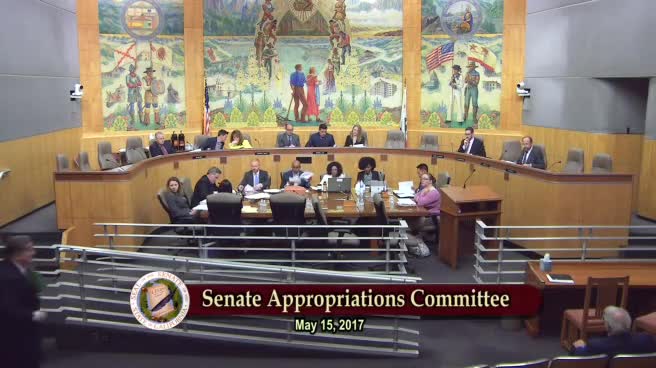 36SEC
Senate Standing Committee on Appropriations
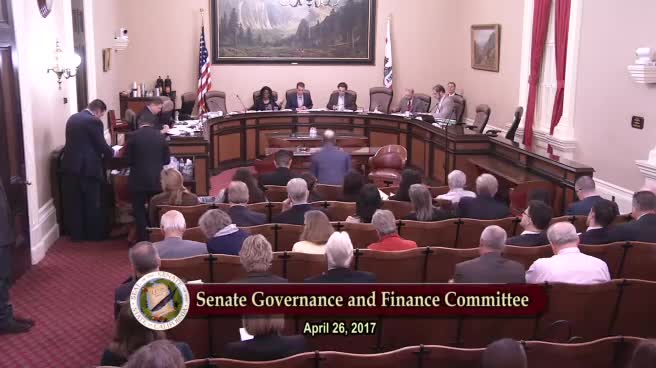 11MIN
Senate Standing Committee on Governance and Finance
Bill Author

Bill Co-Author(s):