SB 63: Unlawful employment practice: parental leave.
- Session Year: 2017-2018
- House: Senate
- Latest Version Date: 2017-10-12
Existing law, the Moore-Brown-Roberti Family Rights Act, or California Family Rights Act (CFRA), makes it an unlawful employment practice for an employer, as defined, to refuse to grant a request by an eligible employee to take up to 12 workweeks of unpaid protected leave during any 12-month period (1) for reason of a child born to, adopted by, or placed for foster care with, the employee, (2) to care for the employees parent or spouse who has a serious health condition, as defined, or (3) because the employee is suffering from a serious health condition rendering him or her unable to perform the functions of the job.
Existing law prohibits an employer from refusing to allow a female employee disabled by pregnancy, childbirth, or a related medical condition to take a leave for a reasonable time of up to 4 months before returning to work. Existing law also prohibits an employer from refusing to maintain and pay for coverage under a group health plan for an employee who takes that leave, as specified.
This bill would prohibit an employer, as defined, from refusing to allow an employee with more than 12 months of service with the employer, who has at least 1,250 hours of service with the employer during the previous 12-month period, and who works at a worksite in which the employer employs at least 20 employees within 75 miles, to take up to 12 weeks of parental leave to bond with a new child within one year of the childs birth, adoption, or foster care placement. The bill would also prohibit an employer from refusing to maintain and pay for coverage under a group health plan for an employee who takes this leave. The bill would allow the employer to recover coverage costs under specific circumstances. The bill would provide that it would not apply to an employee who is subject to both specified state law regarding family care and medical leave, and the federal Family and Medical Leave Act of 1993. Under the bill, if the employer employs both parents and they are entitled to leave pursuant to this bill for the same birth, adoption, or foster care placement, the parents mandated parental leave would be capped at the amount granted to an employee by the bill. The bill would authorize the employer to grant simultaneous leave to these parents.
This bill would also prohibit an employer from refusing to hire, or from discharging, fining, suspending, expelling, or discriminating against, an individual for exercising the right to parental leave provided by this bill or giving information or testimony as to his or her own parental leave, or another persons parental leave, in an inquiry or proceeding related to rights guaranteed under this bill.
The bill would additionally prohibit an employer from interfering with, restraining, or denying the exercise of, or the attempt to exercise, any right provided under this bill.
The bill would require the Fair Employment and Housing Council, to the extent that state regulations interpreting CFRA are within the scope of, and not inconsistent with the bill or with other state law, to incorporate those regulations by reference to govern leave under the bill.
Under existing law, the Department of Fair Employment and Housing is authorized to provide mediation services to parties involved in actions under its jurisdiction.
This bill, until January 1, 2020, would require the Department of Fair Employment and Housing, upon receiving funding from the Legislature, to create a parental leave mediation pilot program, as specified. Under the pilot program, within 60 days of receipt of a right-to-sue notice, an employer may request all parties to participate in the departments Mediation Division Program. If the employer makes such a request, the bill would prohibit an employee from pursuing any civil action under these provisions until the mediation is complete, as defined, which would include an employees election not to participate in mediation. The bill would provide that the employees statute of limitations would be tolled during the course of the mediation, as specified.
Existing law, the Moore-Brown-Roberti Family Rights Act, or California Family Rights Act (CFRA), makes it an unlawful employment practice for an employer, as defined, to refuse to grant a request by an eligible employee to take up to 12 workweeks of unpaid protected leave during any 12-month period (1) for reason of a child born to, adopted by, or placed for foster care with, the employee, (2) to care for the employees parent or spouse who has a serious health condition, as defined, or (3) because the employee is suffering from a serious health condition rendering him or her unable to perform the functions of the job.
Existing law prohibits an employer from refusing to allow a female employee disabled by pregnancy, childbirth, or a related medical condition to take a leave for a reasonable time of up to 4 months before returning to work. Existing law also prohibits an employer from refusing to maintain and pay for coverage under a group health plan for an employee who takes that leave, as specified.
This bill would prohibit an employer, as defined, from refusing to allow an employee with more than 12 months of service with the employer, who has at least 1,250 hours of service with the employer during the previous 12-month period, and who works at a worksite in which the employer employs at least 20 employees within 75 miles, to take up to 12 weeks of parental leave to bond with a new child within one year of the childs birth, adoption, or foster care placement. The bill would also prohibit an employer from refusing to maintain and pay for coverage under a group health plan for an employee who takes this leave. The bill would allow the employer to recover coverage costs under specific circumstances. The bill would provide that it would not apply to an employee who is subject to both specified state law regarding family care and medical leave, and the federal Family and Medical Leave Act of 1993. Under the bill, if the employer employs both parents and they are entitled to leave pursuant to this bill for the same birth, adoption, or foster care placement, the parents mandated parental leave would be capped at the amount granted to an employee by the bill. The bill would authorize the employer to grant simultaneous leave to these parents.
This bill would also prohibit an employer from refusing to hire, or from discharging, fining, suspending, expelling, or discriminating against, an individual for exercising the right to parental leave provided by this bill or giving information or testimony as to his or her own parental leave, or another persons parental leave, in an inquiry or proceeding related to rights guaranteed under this bill.
The bill would additionally prohibit an employer from interfering with, restraining, or denying the exercise of, or the attempt to exercise, any right provided under this bill.
The bill would require the Fair Employment and Housing Council, to the extent that state regulations interpreting CFRA are within the scope of, and not inconsistent with the bill, or inconsistent bill or with other state law, to incorporate those regulations by reference to govern leave under the bill.
Under existing law, the Department of Fair Employment and Housing is authorized to provide mediation services to parties involved in actions under its jurisdiction.
This bill, until January 1, 2020, would require the Department of Fair Employment and Housing, upon receiving funding from the Legislature, to create a parental leave mediation pilot program, as specified. Under the pilot program, within 60 days of receipt of a right-to-sue notice, an employer may request all parties to participate in the departments Mediation Division Program. If the employer makes such a request, the bill would prohibit an employee from pursuing any civil action under these provisions until the mediation is complete, as defined, which would include an employees election not to participate in mediation. The bill would provide that the employees statute of limitations would be tolled during the course of the mediation, as specified.
Existing law, the Moore-Brown-Roberti Family Rights Act, or California Family Rights Act (CFRA), makes it an unlawful employment practice for an employer, as defined, to refuse to grant a request by an eligible employee to take up to 12 workweeks of unpaid protected leave during any 12-month period (1) for reason of a child born to, adopted by, or placed for foster care with, the employee, (2) to care for the employees parent or spouse who has a serious health condition, as defined, or (3) because the employee is suffering from a serious health condition rendering him or her unable to perform the functions of the job.
Existing law prohibits an employer from refusing to allow a female employee disabled by pregnancy, childbirth, or a related medical condition to take a leave for a reasonable time of up to 4 months before returning to work. Existing law also prohibits an employer from refusing to maintain and pay for coverage under a group health plan for an employee who takes that leave, as specified.
This bill would prohibit an employer, as defined, from refusing to allow an employee with more than 12 months of service with the employer, who has at least 1,250 hours of service with the employer during the previous 12-month period, and who works at a worksite in which the employer employs at least 20 employees within 75 miles, to take up to 12 weeks of parental leave to bond with a new child within one year of the childs birth, adoption, or foster care placement. The bill would also prohibit an employer from refusing to maintain and pay for coverage under a group health plan for an employee who takes this leave. The bill would allow the employer to recover coverage costs under specific circumstances. The bill would provide that it would not apply to an employee who is subject to both specified state law regarding family care and medical leave, and the federal Family and Medical Leave Act of 1993. The bill would authorize, but not require, an employer, when 2 employees of this Under the bill, if the employer employs both parents and they are entitled to leave pursuant to this bill for the same birth, adoption, or foster care placement, the parents mandated parental leave would be capped at the amount granted to an employee by the bill. The bill would authorize the employer to grant simultaneous leave to both of these employees. these parents.
This bill would also prohibit an employer from refusing to hire, or from discharging, fining, suspending, expelling, or discriminating against, an individual for exercising the right to parental leave provided by this bill or giving information or testimony as to his or her own parental leave, or another persons parental leave, in an inquiry or proceeding related to rights guaranteed under this bill.
The bill would additionally prohibit an employer from interfering with, restraining, or denying the exercise of, or the attempt to exercise, any right provided under this bill.
The bill would require the Fair Employment and Housing Council, to the extent that state regulations interpreting CFRA are within the scope of, and not inconsistent with the bill, or inconsistent with other state law, to incorporate those regulations by reference to govern leave under the bill.
Existing law, the Moore-Brown-Roberti Family Rights Act, makes it an unlawful employment practice for an employer, as defined, to refuse to grant a request by an eligible employee to take up to 12 workweeks of unpaid protected leave during any 12-month period (1) for reason of a child born to, adopted by, or placed for foster care with, the employee, (2) to care for the employees parent or spouse who has a serious health condition, as defined, or (3) because the employee is suffering from a serious health condition rendering him or her unable to perform the functions of the job.
Existing law prohibits an employer from refusing to allow a female employee disabled by pregnancy, childbirth, or a related medical condition to take a leave for a reasonable time of up to 4 months before returning to work. Existing law also prohibits an employer from refusing to maintain and pay for coverage under a group health plan for an employee who takes that leave, as specified.
This bill would prohibit an employer, as defined, from refusing to allow an employee with more than 12 months of service with the employer, who has at least 1,250 hours of service with the employer during the previous 12-month period, and who works at a worksite in which the employer employs at least 20 employees within 75 miles, to take up to 12 weeks of parental leave to bond with a new child within one year of the childs birth, adoption, or foster care placement. The bill would also prohibit an employer from refusing to maintain and pay for coverage under a group health plan for an employee who takes this leave. The bill would provide that it would not apply to an employee who is subject to both specified state law regarding family care and medical leave, and the federal Family and Medical Leave Act of 1993. The bill would authorize, but not require, an employer, when 2 employees of this employer are entitled to leave pursuant to this bill for the same birth, adoption, or foster care placement, to grant simultaneous leave to both of these employees.
This bill would also prohibit an employer from refusing to hire, or from discharging, fining, suspending, expelling, or discriminating against, an individual for exercising the right to parental leave provided by this bill or giving information or testimony as to his or her own parental leave, or another persons parental leave, in an inquiry or proceeding related to rights guaranteed under this bill.
The bill would additionally prohibit an employer from interfering with, restraining, or denying the exercise of, or the attempt to exercise, any right provided under this bill.
Existing law, the Moore-Brown-Roberti Family Rights Act, makes it an unlawful employment practice for an employer, as defined, to refuse to grant a request by an eligible employee to take up to 12 workweeks of unpaid protected leave during any 12-month period (1) for reason of a child born to, adopted by, or placed for foster care with, the employee, (2) to care for the employees parent or spouse who has a serious health condition, as defined, or (3) because the employee is suffering from a serious health condition rendering him or her unable to perform the functions of the job.
Existing law prohibits an employer from refusing to allow a female employee disabled by pregnancy, childbirth, or a related medical condition to take a leave for a reasonable time of up to 4 months before returning to work. Existing law also prohibits an employer from refusing to maintain and pay for coverage under a group health plan for an employee who takes that leave, as specified.
This bill would prohibit an employer, as defined, from refusing to allow an employee with more than 12 months of service with the employer, and who has at least 1,250 hours of service with the employer during the previous 12-month period, and who works at a worksite in which the employer employs at least 20 employees within 75 miles, to take up to 12 weeks of parental leave to bond with a new child within one year of the childs birth, adoption, or foster care placement. The bill would also prohibit an employer from refusing to maintain and pay for coverage under a group health plan for an employee who takes this leave. The bill would provide that it would not apply to an employee who is subject to both specified state law regarding family care and medical leave, and the federal Family and Medical Leave Act of 1993. The bill would authorize, but not require, an employer, when 2 employees of this employer are entitled to leave pursuant to this bill for the same birth, adoption, or foster care placement, to grant simultaneous leave to both of these employees.
This bill would also prohibit an employer from refusing to hire, or from discharging, fining, suspending, expelling, or discriminating against, an individual for exercising the right to parental leave provided by this bill or giving information or testimony as to his or her own parental leave, or another persons parental leave, in an inquiry or proceeding related to rights guaranteed under this bill.
The bill would additionally prohibit an employer from interfering with, restraining, or denying the exercise of, or the attempt to exercise, any right provided under this bill.
Existing law, the Moore-Brown-Roberti Family Rights Act, makes it an unlawful employment practice for an employer, as defined, to refuse to grant a request by an eligible employee to take up to 12 workweeks of unpaid protected leave during any 12-month period (1) for reason of a child born to, adopted by, or placed for foster care with, the employee, (2) to care for the employees parent or spouse who has a serious health condition, as defined, or (3) because the employee is suffering from a serious health condition rendering him or her unable to perform the functions of the job.
Existing law prohibits an employer from refusing to allow a female employee disabled by pregnancy, childbirth, or a related medical condition to take a leave for a reasonable time of up to 4 months before returning to work. Existing law also prohibits an employer from refusing to maintain and pay for coverage under a group health plan for an employee who takes that leave, as specified.
This bill would prohibit an employer, as defined, from refusing to allow an employee with more than 12 months of service with the employer, and who has at least 1,250 hours of service with the employer during the previous 12-month period, to take up to 12 weeks of parental leave to bond with a new child within one year of the childs birth, adoption, or foster care placement. The bill would also prohibit an employer from refusing to maintain and pay for coverage under a group health plan for an employee who takes this leave. The bill would provide that it would not apply to an employee who is subject to both specified state law regarding family care and medical leave, and the federal Family and Medical Leave Act of 1993. The bill would authorize, but not require, an employer, when 2 employees of this employer are entitled to leave pursuant to this bill for the same birth, adoption, or foster care placement, to grant simultaneous leave to both of these employees.
This act shall be known, and may be referred to, as the New Parent Leave Act.
SEC. 2.Section 12945.6 is added to the Government Code, to read:12945.6.(a)It shall be an unlawful employment practice for an employer to do any of the following:
(1)Refuse to allow an employee with more than 12 months of service with the employer, who has at least 1,250 hours of service with the employer during the previous 12-month period, and who works at a worksite in which the employer employs at least 20 employees within 75 miles, upon request, to take up to 12 weeks of parental leave to bond with a new child within one year of the childs birth, adoption, or foster care placement. If, on or before the commencement of this parental leave, the employer does not provide a guarantee of employment in the same or a comparable position upon the termination of the leave, the employer shall be deemed to have refused to allow the leave. The employee shall be entitled to utilize accrued vacation pay, paid sick time, other accrued paid time off, or other paid or unpaid time off negotiated with the employer, during the period of parental leave.
(2)Refuse to maintain and pay for coverage for an eligible employee who takes parental leave pursuant to this section under a group health plan, as defined in Section 5000(b)(1) of the Internal Revenue Code of 1986, for the duration of the leave, not to exceed 12 weeks over the course of a 12-month period, commencing on the date that the parental leave commences, at the level and under the conditions that coverage would have been provided if the employee had continued to work in his or her position for the duration of the leave.
(b)An employee is entitled to take, in addition to the leave provided pursuant to this section, leave provided pursuant to Section 12945 if the employee is otherwise qualified for that leave.
(c)This section shall not apply to an employee who is subject to both Section 12945.2 and the federal Family and Medical Leave Act of 1993.
(d)An employer may recover the premium that the employer paid as required by this section for maintaining coverage for the employee under the group health plan, if both of the following conditions occur:
(1)The employee fails to return from leave after the period of leave to which the employee is entitled has expired.
(2)The failure of the employee to return from leave is for a reason other than the continuation, recurrence, or onset of a serious health condition or other circumstances beyond the control of the employee.
(e)In any case in which both parents entitled to leave under subdivision (a) are employed by the same employer, the employer is not required to grant leave in connection with the birth, adoption, or foster care of a child that would allow the parents parental leave totaling more than the amount specified in subdivision (a). The employer may, but is not required to, grant simultaneous leave to both of these employees.
(f)Parental leave taken pursuant to this section shall run concurrently to parental leave taken as described in Sections 44977.5, 45196.1, 87780.1, and 88196.1 of the Education Code.
(g)It shall be an unlawful employment practice for an employer to refuse to hire, or to discharge, fine, suspend, expel, or discriminate against, an individual because of either of the following:
(1)An individuals exercise of the right to parental leave provided by subdivision (a).
(2)An individuals giving information or testimony as to his or her own parental leave, or another persons parental leave, in an inquiry or proceeding related to rights guaranteed under this section.
(h)It shall be an unlawful employment practice for an employer to interfere with, restrain, or deny the exercise of, or the attempt to exercise, any right provided under this section.
(i)For purposes of this section, employer means either of the following:
(1)A person who directly employs 20 or more persons to perform services for a wage or salary.
(2)The state, and any political or civil subdivision of the state and cities.
(j)To the extent that state regulations interpreting the Moore-Brown-Roberti Family Rights Act, also known as the California Family Rights Act (Sections 12945.2 and 19702.3), are within the scope of, and not inconsistent with this section or with other state law, including the California Constitution, the council shall incorporate those regulations by reference to govern leave under this section.
(k)The department, upon receiving the necessary funding, upon appropriation by the Legislature, shall create a parental leave mediation pilot program. Under the pilot program, an employer may, within 60 days of receipt of a right-to-sue notice, request all parties to participate in the departments Mediation Division Program. If an employer requests mediation within 60 days of receipt of a right-to-sue notice, an employee shall not pursue any civil action under this section until the mediation is complete. The employees statute of limitations, including for all related claims not under this section, shall be tolled upon receipt of the employers request to participate in the departments Mediation Division Program until the mediation is complete. For purposes of this subdivision, a mediation is complete when, at any time after the employers request, either party notifies the departments Mediation Division Program and all other parties that it is electing not to participate in, or is withdrawing from, the mediation or the department notifies the parties that it believes further mediation would be fruitless.
(l)This section shall remain in effect only until January 1, 2020, and as of that date is repealed.
SEC. 3.Section 12945.6 is added to the Government Code, to read:12945.6.(a)It shall be an unlawful employment practice for an employer to do any of the following:
(1)Refuse to allow an employee with more than 12 months of service with the employer, who has at least 1,250 hours of service with the employer during the previous 12-month period, and who works at a worksite in which the employer employs at least 20 employees within 75 miles, upon request, to take up to 12 weeks of parental leave to bond with a new child within one year of the childs birth, adoption, or foster care placement. If, on or before the commencement of this parental leave, the employer does not provide a guarantee of employment in the same or a comparable position upon the termination of the leave, the employer shall be deemed to have refused to allow the leave. The employee shall be entitled to utilize accrued vacation pay, paid sick time, other accrued paid time off, or other paid or unpaid time off negotiated with the employer, during the period of parental leave.
(2)Refuse to maintain and pay for coverage for an eligible employee who takes parental leave pursuant to this section under a group health plan, as defined in Section 5000(b)(1) of the Internal Revenue Code of 1986, for the duration of the leave, not to exceed 12 weeks over the course of a 12-month period, commencing on the date that the parental leave commences, at the level and under the conditions that coverage would have been provided if the employee had continued to work in his or her position for the duration of the leave.
(b)An employee is entitled to take, in addition to the leave provided pursuant to this section, leave provided pursuant to Section 12945 if the employee is otherwise qualified for that leave.
(c)This section shall not apply to an employee who is subject to both Section 12945.2 and the federal Family and Medical Leave Act of 1993.
(d)An employer may recover the premium that the employer paid as required by this section for maintaining coverage for the employee under the group health plan, if both of the following conditions occur:
(1)The employee fails to return from leave after the period of leave to which the employee is entitled has expired.
(2)The failure of the employee to return from leave is for a reason other than the continuation, recurrence, or onset of a serious health condition or other circumstances beyond the control of the employee.
(e)In any case in which both parents entitled to leave under subdivision (a) are employed by the same employer, the employer is not required to grant leave in connection with the birth, adoption, or foster care of a child that would allow the parents parental leave totaling more than the amount specified in subdivision (a). The employer may, but is not required to, grant simultaneous leave to both of these employees.
(f)Parental leave taken pursuant to this section shall run concurrently to parental leave taken as described in Sections 44977.5, 45196.1, 87780.1, and 88196.1 of the Education Code.
(g)It shall be an unlawful employment practice for an employer to refuse to hire, or to discharge, fine, suspend, expel, or discriminate against, an individual because of either of the following:
(1)An individuals exercise of the right to parental leave provided by subdivision (a).
(2)An individuals giving information or testimony as to his or her own parental leave, or another persons parental leave, in an inquiry or proceeding related to rights guaranteed under this section.
(h)It shall be an unlawful employment practice for an employer to interfere with, restrain, or deny the exercise of, or the attempt to exercise, any right provided under this section.
(i)For purposes of this section, employer means either of the following:
(1)A person who directly employs 20 or more persons to perform services for a wage or salary.
(2)The state, and any political or civil subdivision of the state and cities.
(j)To the extent that state regulations interpreting the Moore-Brown-Roberti Family Rights Act, also known as the California Family Rights Act (Sections 12945.2 and 19702.3), are within the scope of, and not inconsistent with this section or with other state law, including the California Constitution, the council shall incorporate those regulations by reference to govern leave under this section.
(k)This section shall take effect January 1, 2020.
This act shall be known, and may be referred to, as the New Parent Leave Act.
SEC. 2.Section 12945.6 is added to the Government Code, to read:12945.6.(a)It shall be an unlawful employment practice for an employer to do any of the following:
(1)Refuse to allow an employee with more than 12 months of service with the employer, who has at least 1,250 hours of service with the employer during the previous 12-month period, and who works at a worksite in which the employer employs at least 20 employees within 75 miles, upon request, to take up to 12 weeks of parental leave to bond with a new child within one year of the childs birth, adoption, or foster care placement. If, on or before the commencement of this parental leave, the employer does not provide a guarantee of employment in the same or a comparable position upon the termination of the leave, the employer shall be deemed to have refused to allow the leave. The employee shall be entitled to utilize accrued vacation pay, paid sick time, other accrued paid time off, or other paid or unpaid time off negotiated with the employer, during the period of parental leave.
(2)Refuse to maintain and pay for coverage for an eligible employee who takes parental leave pursuant to this section under a group health plan, as defined in Section 5000(b)(1) of the Internal Revenue Code of 1986, for the duration of the leave, not to exceed 12 weeks over the course of a 12-month period, commencing on the date that the parental leave commences, at the level and under the conditions that coverage would have been provided if the employee had continued to work in his or her position for the duration of the leave.
(b)An employee is entitled to take, in addition to the leave provided pursuant to this section, leave provided pursuant to Section 12945 if the employee is otherwise qualified for that leave.
(c)This section shall not apply to an employee who is subject to both Section 12945.2 and the federal Family and Medical Leave Act of 1993.
(d)An employer may recover the premium that the employer paid as required by this section for maintaining coverage for the employee under the group health plan, if both of the following conditions occur:
(1)The employee fails to return from leave after the period of leave to which the employee is entitled has expired.
(2)The failure of the employee to return from leave is for a reason other than the continuation, recurrence, or onset of a serious health condition or other circumstances beyond the control of the employee.
(e)In any case in which both parents entitled to leave under subdivision (a) are employed by the same employer, the employer is not required to grant leave in connection with the birth, adoption, or foster care of a child that would allow the parents parental leave totaling more than the amount specified in subdivision (a). The employer may, but is not required to, grant simultaneous leave to both of these employees.
(f)Parental leave taken pursuant to this section shall run concurrently to parental leave taken as described in Sections 44977.5, 45196.1, 87780.1, and 88196.1 of the Education Code.
(g)It shall be an unlawful employment practice for an employer to refuse to hire, or to discharge, fine, suspend, expel, or discriminate against, an individual because of either of the following:
(1)An individuals exercise of the right to parental leave provided by subdivision (a).
(2)An individuals giving information or testimony as to his or her own parental leave, or another persons parental leave, in an inquiry or proceeding related to rights guaranteed under this section.
(h)It shall be an unlawful employment practice for an employer to interfere with, restrain, or deny the exercise of, or the attempt to exercise, any right provided under this section.
(i)For purposes of this section, employer means either of the following:
(1)A person who directly employs 20 or more persons to perform services for a wage or salary.
(2)The state, and any political or civil subdivision of the state and cities.
(j)To the extent that state regulations interpreting the Moore-Brown-Roberti Family Rights Act, also known as the California Family Rights Act (Sections 12945.2 and 19702.3), are within the scope of, and not inconsistent with this section, or inconsistent section or with other state law, including the California Constitution, the council shall incorporate those regulations by reference to govern leave under this section.
(k)The department, upon receiving the necessary funding, upon appropriation by the Legislature, shall create a parental leave mediation pilot program. Under the pilot program, an employer may, within 60 days of receipt of a right-to-sue notice, request all parties to participate in the departments Mediation Division Program. If an employer requests mediation within 60 days of receipt of a right-to-sue notice, an employee shall not pursue any civil action under this section until the mediation is complete. The employees statute of limitations, including for all related claims not under this section, shall be tolled upon receipt of the employers request to participate in the departments Mediation Division Program until the mediation is complete. For purposes of this subdivision, a mediation is complete when, at any time after the employers request, either party notifies the departments Mediation Division Program and all other parties that it is electing not to participate in, or is withdrawing from, the mediation or the department notifies the parties that it believes further mediation would be fruitless.
(l)This section shall remain in effect only until January 1, 2020, and as of that date is repealed.
SEC. 3.Section 12945.6 is added to the Government Code, to read:12945.6.(a)It shall be an unlawful employment practice for an employer to do any of the following:
(1)Refuse to allow an employee with more than 12 months of service with the employer, who has at least 1,250 hours of service with the employer during the previous 12-month period, and who works at a worksite in which the employer employs at least 20 employees within 75 miles, upon request, to take up to 12 weeks of parental leave to bond with a new child within one year of the childs birth, adoption, or foster care placement. If, on or before the commencement of this parental leave, the employer does not provide a guarantee of employment in the same or a comparable position upon the termination of the leave, the employer shall be deemed to have refused to allow the leave. The employee shall be entitled to utilize accrued vacation pay, paid sick time, other accrued paid time off, or other paid or unpaid time off negotiated with the employer, during the period of parental leave.
(2)Refuse to maintain and pay for coverage for an eligible employee who takes parental leave pursuant to this section under a group health plan, as defined in Section 5000(b)(1) of the Internal Revenue Code of 1986, for the duration of the leave, not to exceed 12 weeks over the course of a 12-month period, commencing on the date that the parental leave commences, at the level and under the conditions that coverage would have been provided if the employee had continued to work in his or her position for the duration of the leave.
(b)An employee is entitled to take, in addition to the leave provided pursuant to this section, leave provided pursuant to Section 12945 if the employee is otherwise qualified for that leave.
(c)This section shall not apply to an employee who is subject to both Section 12945.2 and the federal Family and Medical Leave Act of 1993.
(d)An employer may recover the premium that the employer paid as required by this section for maintaining coverage for the employee under the group health plan, if both of the following conditions occur:
(1)The employee fails to return from leave after the period of leave to which the employee is entitled has expired.
(2)The failure of the employee to return from leave is for a reason other than the continuation, recurrence, or onset of a serious health condition or other circumstances beyond the control of the employee.
(e)In any case in which both parents entitled to leave under subdivision (a) are employed by the same employer, the employer is not required to grant leave in connection with the birth, adoption, or foster care of a child that would allow the parents parental leave totaling more than the amount specified in subdivision (a). The employer may, but is not required to, grant simultaneous leave to both of these employees.
(f)Parental leave taken pursuant to this section shall run concurrently to parental leave taken as described in Sections 44977.5, 45196.1, 87780.1, and 88196.1 of the Education Code.
(g)It shall be an unlawful employment practice for an employer to refuse to hire, or to discharge, fine, suspend, expel, or discriminate against, an individual because of either of the following:
(1)An individuals exercise of the right to parental leave provided by subdivision (a).
(2)An individuals giving information or testimony as to his or her own parental leave, or another persons parental leave, in an inquiry or proceeding related to rights guaranteed under this section.
(h)It shall be an unlawful employment practice for an employer to interfere with, restrain, or deny the exercise of, or the attempt to exercise, any right provided under this section.
(i)For purposes of this section, employer means either of the following:
(1)A person who directly employs 20 or more persons to perform services for a wage or salary.
(2)The state, and any political or civil subdivision of the state and cities.
(j)To the extent that state regulations interpreting the Moore-Brown-Roberti Family Rights Act, also known as the California Family Rights Act (Sections 12945.2 and 19702.3), are within the scope of, and not inconsistent with this section or with other state law, including the California Constitution, the council shall incorporate those regulations by reference to govern leave under this section.
(k)This section shall take effect January 1, 2020.
This act shall be known, and may be referred to, as the New Parent Leave Act.
SEC. 2.Section 12945.6 is added to the Government Code, to read:12945.6.(a)It shall be an unlawful employment practice for an employer to do any of the following:
(1)Refuse to allow an employee with more than 12 months of service with the employer, who has at least 1,250 hours of service with the employer during the previous 12-month period, and who works at a worksite in which the employer employs at least 20 employees within 75 miles, upon request, to take up to 12 weeks of parental leave to bond with a new child within one year of the childs birth, adoption, or foster care placement. If, on or before the commencement of this parental leave, the employer does not provide a guarantee of employment in the same or a comparable position upon the termination of the leave, the employer shall be deemed to have refused to allow the leave. The employee shall be entitled to utilize accrued vacation pay, paid sick time, other accrued paid time off, or other paid or unpaid time off negotiated with the employer, during the period of parental leave.
(2)Refuse to maintain and pay for coverage for an eligible employee who takes parental leave pursuant to this section under a group health plan, as defined in Section 5000(b)(1) of the Internal Revenue Code of 1986, for the duration of the leave, not to exceed 12 weeks over the course of a 12-month period, commencing on the date that the parental leave commences, at the level and under the conditions that coverage would have been provided if the employee had continued to work in his or her position for the duration of the leave.
(b)An employee is entitled to take, in addition to the leave provided pursuant to this section, leave provided pursuant to Section 12945 if the employee is otherwise qualified for that leave.
(c)This section shall not apply to an employee who is subject to both Section 12945.2 and the federal Family and Medical Leave Act of 1993.
(d)When two employees are employed by the same employer and are entitled to leave pursuant to this section for the same birth, adoption, or foster care placement, the employer may, but is not required to, grant simultaneous leave to both of these employees.(e)The basic minimum duration of the leave shall be two weeks. However, an employer may grant a request for additional occasions of leave that last less than two weeks.(d)An employer may recover the premium that the employer paid as required by this section for maintaining coverage for the employee under the group health plan, if both of the following conditions occur:
(1)The employee fails to return from leave after the period of leave to which the employee is entitled has expired.
(2)The failure of the employee to return from leave is for a reason other than the continuation, recurrence, or onset of a serious health condition or other circumstances beyond the control of the employee.
(e)In any case in which both parents entitled to leave under subdivision (a) are employed by the same employer, the employer is not required to grant leave in connection with the birth, adoption, or foster care of a child that would allow the parents parental leave totaling more than the amount specified in subdivision (a). The employer may, but is not required to, grant simultaneous leave to both of these employees.
(f)Parental leave taken pursuant to this section shall run concurrently to parental leave taken as described in Sections 44977.5, 45196.1, 87780.1, and 88196.1 of the Education Code.
(g)It shall be an unlawful employment practice for an employer to refuse to hire, or to discharge, fine, suspend, expel, or discriminate against, an individual because of either of the following:
(1)An individuals exercise of the right to parental leave provided by subdivision (a).
(2)An individuals giving information or testimony as to his or her own parental leave, or another persons parental leave, in an inquiry or proceeding related to rights guaranteed under this section.
(h)It shall be an unlawful employment practice for an employer to interfere with, restrain, or deny the exercise of, or the attempt to exercise, any right provided under this section.
(i)For purposes of this section, employer means either of the following:
(1)A person who directly employs 20 or more persons to perform services for a wage or salary.
(2)The state, and any political or civil subdivision of the state and cities.
(j)To the extent that state regulations interpreting the Moore-Brown-Roberti Family Rights Act, also known as the California Family Rights Act (Sections 12945.2 and 19702.3), are within the scope of, and not inconsistent with this section, or inconsistent with other state law, including the California Constitution, the council shall incorporate those regulations by reference to govern leave under this section.
This act shall be known, and may be referred to, as the New Parent Leave Act.
SEC. 2.Section 12945.6 is added to the Government Code, to read:12945.6.(a)It shall be an unlawful employment practice for an employer to do any of the following:
(1)Refuse to allow an employee with more than 12 months of service with the employer, who has at least 1,250 hours of service with the employer during the previous 12-month period, and who works at a worksite in which the employer employs at least 20 employees within 75 miles, upon request, to take up to 12 weeks of parental leave to bond with a new child within one year of the childs birth, adoption, or foster care placement. If, on or before the commencement of this parental leave, the employer does not provide a guarantee of employment in the same or a comparable position upon the termination of the leave, the employer shall be deemed to have refused to allow the leave. The employee shall be entitled to utilize accrued vacation pay, paid sick time, other accrued paid time off, or other paid or unpaid time off negotiated with the employer, during the period of parental leave.
(2)Refuse to maintain and pay for coverage for an eligible employee who takes parental leave pursuant to this section under a group health plan, as defined in Section 5000(b)(1) of the Internal Revenue Code of 1986, for the duration of the leave, not to exceed 12 weeks over the course of a 12-month period, commencing on the date that the parental leave commences, at the level and under the conditions that coverage would have been provided if the employee had continued to work in his or her position for the duration of the leave.
(b)An employee is entitled to take, in addition to the leave provided pursuant to this section, leave provided pursuant to Section 12945 if the employee is otherwise qualified for that leave.
(c)This section shall not apply to an employee who is subject to both Section 12945.2 and the federal Family and Medical Leave Act of 1993.
(d)When two employees are employed by the same employer and are entitled to leave pursuant to this section for the same birth, adoption, or foster care placement, the employer may, but is not required to, grant simultaneous leave to both of these employees.
(e)The basic minimum duration of the leave shall be two weeks. However, an employer may grant a request for additional occasions of leave that last less than two weeks.
(f)Parental leave taken pursuant to this section shall run concurrently to parental leave taken as described in Sections 44977.5, 45196.1, 87780.1, and 88196.1 of the Education Code.
(g)It shall be an unlawful employment practice for an employer to refuse to hire, or to discharge, fine, suspend, expel, or discriminate against, an individual because of either of the following:
(1)An individuals exercise of the right to parental leave provided by subdivision (a).
(2)An individuals giving information or testimony as to his or her own parental leave, or another persons parental leave, in an inquiry or proceeding related to rights guaranteed under this section.
(h)It shall be an unlawful employment practice for an employer to interfere with, restrain, or deny the exercise of, or the attempt to exercise, any right provided under this section.
(i)For purposes of this section, employer employer means either of the following:
(1)A person who directly employs 20 or more persons to perform services for a wage or salary.
(2)The state, and any political or civil subdivision of the state and cities.
This act shall be known, and may be referred to, as the New Parent Leave Act.
SEC. 2.Section 12945.6 is added to the Government Code, to read:12945.6.(a)It shall be an unlawful employment practice for an employer to do any of the following:
(1)Refuse to allow an employee with more than 12 months of service with the employer, and who has at least 1,250 hours of service with the employer during the previous 12-month period, and who works at a worksite in which the employer employs at least 20 employees within 75 miles, upon request, to take up to 12 weeks of parental leave to bond with a new child within one year of the childs birth, adoption, or foster care placement. If, on or before the commencement of this parental leave, the employer does not provide a guarantee of employment in the same or a comparable position upon the termination of the leave, the employer shall be deemed to have refused to allow the leave. The employee shall be entitled to utilize accrued vacation pay, paid sick time, other accrued paid time off, or other paid or unpaid time off negotiated with the employer, during the period of parental leave.
(2)Refuse to maintain and pay for coverage for an eligible employee who takes parental leave pursuant to this section under a group health plan, as defined in Section 5000(b)(1) of the Internal Revenue Code of 1986, for the duration of the leave, not to exceed 12 weeks over the course of a 12-month period, commencing on the date that the parental leave commences, at the level and under the conditions that coverage would have been provided if the employee had continued to work in his or her position for the duration of the leave.
(b)An employee is entitled to take, in addition to the leave provided pursuant to this section, leave provided pursuant to Section 12945 if the employee is otherwise qualified for that leave.
(c)This section shall not apply to an employee who is subject to both Section 12945.2 and the federal Family and Medical Leave Act of 1993.
(d)When two employees are employed by the same employer and are entitled to leave pursuant to this section for the same birth, adoption, or foster care placement, the employer may, but is not required to, grant simultaneous leave to both of these employees.
(e)The basic minimum duration of the leave shall be two weeks. However, an employer may grant a request for additional occasions of leave that last less than two weeks.
(f)Parental leave taken pursuant to this section shall run concurrently to parental leave taken as described in Sections 44977.5, 45196.1, 87780.1, and 88196.1 of the Education Code.
(g)It shall be an unlawful employment practice for an employer to refuse to hire, or to discharge, fine, suspend, expel, or discriminate against, an individual because of either of the following:
(1)An individuals exercise of the right to parental leave provided by subdivision (a).
(2)An individuals giving information or testimony as to his or her own parental leave, or another persons parental leave, in an inquiry or proceeding related to rights guaranteed under this section.
(h)It shall be an unlawful employment practice for an employer to interfere with, restrain, or deny the exercise of, or the attempt to exercise, any right provided under this section.
(g)(i)For purposes of this section, employer means either of the following:
(1)A person who directly employs, within 75 miles of the worksite where an employee is employed, employs 20 or more persons to perform services for a wage or salary.
(2)The state, and any political or civil subdivision of the state and cities.
This act shall be known, and may be referred to, as the New Parent Leave Act.
SEC. 2.Section 12945.6 is added to the Government Code, to read:12945.6.(a)It shall be an unlawful employment practice for an employer to do any of the following:
(1)Refuse to allow an employee with more than 12 months of service with the employer, and who has at least 1,250 hours of service with the employer during the previous 12-month period, upon request, to take up to 12 weeks of parental leave to bond with a new child within one year of the childs birth, adoption, or foster care placement. If, on or before the commencement of this parental leave, the employer does not provide a guarantee of employment in the same or a comparable position upon the termination of the leave, the employer shall be deemed to have refused to allow the leave. The employee shall be entitled to utilize accrued vacation pay, paid sick time, other accrued paid time off, or other paid or unpaid time off negotiated with the employer, during the period of parental leave.
(2)Refuse to maintain and pay for coverage for an eligible employee who takes parental leave pursuant to this section under a group health plan, as defined in Section 5000(b)(1) of the Internal Revenue Code of 1986, for the duration of the leave, not to exceed 12 weeks over the course of a 12-month period, commencing on the date that the parental leave commences, at the level and under the conditions that coverage would have been provided if the employee had continued to work in his or her position for the duration of the leave.
(b)An employee is entitled to take, in addition to the leave provided pursuant to this section, leave provided pursuant to Section 12945 if the employee is otherwise qualified for that leave.
(c)This section shall not apply to an employee who is subject to both Section 12945.2 and the federal Family and Medical Leave Act of 1993.
(d)When two employees are employed by the same employer and are entitled to leave pursuant to this section for the same birth, adoption, or foster care placement, the employer may, but is not required to, grant simultaneous leave to both of these employees.
(e)The basic minimum duration of the leave shall be two weeks. However, an employer may grant a request for additional occasions of leave that last less than two weeks.
(f)Parental leave taken pursuant to this section shall run concurrently to parental leave taken as described in Section 44977.5 Sections 44977.5, 45196.1, 87780.1, and 88196.1 of the Education Code.
(g)For purposes of this section, employer means either of the following:
(1)A person who directly employs, within 75 miles of the worksite where an employee is employed, 20 or more persons to perform services for a wage or salary.
(2)The state, and any political or civil subdivision of the state and cities, except for a school district, county office of education, or a community college district. cities.
This act shall be known, and may be referred to, as the New Parent Leave Act.
SEC. 2.Section 12945.6 is added to the Government Code, to read:12945.6.(a)It shall be an unlawful employment practice for an employer to do any of the following:
(1)Refuse to allow an employee with more than 12 months of service with the employer, and who has at least 1,250 hours of service with the employer during the previous 12-month period, upon request, to take up to 12 weeks of parental leave to bond with a new child within one year of the childs birth, adoption, or foster care placement. If, on or before the commencement of this parental leave, the employer does not provide a guarantee of employment in the same or a comparable position upon the termination of the leave, the employer shall be deemed to have refused to allow the leave. The employee shall be entitled to utilize accrued vacation pay, paid sick time, other accrued paid time off, or other paid or unpaid time off negotiated with the employer, during the period of parental leave.
(2)Refuse to maintain and pay for coverage for an eligible employee who takes parental leave pursuant to this section under a group health plan, as defined in Section 5000(b)(1) of the Internal Revenue Code of 1986, for the duration of the leave, not to exceed 12 weeks over the course of a 12-month period, commencing on the date that the parental leave commences, at the level and under the conditions that coverage would have been provided if the employee had continued to work in his or her position for the duration of the leave.
(b)An employee is entitled to take, in addition to the leave provided pursuant to this section, leave provided pursuant to Section 12945 if the employee is otherwise qualified for that leave.
(c)This section shall not apply to an employee who is subject to both Section 12945.2 and the federal Family and Medical Leave Act of 1993.
(d)When two employees are employed by the same employer and are entitled to leave pursuant to this section for the same birth, adoption, or foster care placement, the employer may, but is not required to, grant simultaneous leave to both of these employees.
(e)The basic minimum duration of the leave shall be two weeks. However, an employer may grant a request for additional occasions of leave that last less than two weeks.
(f)Parental leave taken pursuant to this section shall run concurrently to parental leave taken as described in Section 44977.5 of the Education Code.
(g)For purposes of this section, employer means either of the following:
(1)A person who directly employs, within 75 miles of the worksite where an employee is employed, 20 or more persons to perform services for a wage or salary.
(2)The state, and any political or civil subdivision of the state and cities, except for a school district, county office of education, or a community college district.
|
Date
|
Status
|
|---|---|
| Oct 12, 2017 | Chaptered by Secretary of State. Chapter 686, Statutes of 2017. |
| Oct 12, 2017 | Approved by the Governor. |
| Sep 19, 2017 | Enrolled and presented to the Governor at 4 p.m. |
| Sep 13, 2017 | Assembly amendments concurred in. (Ayes 25. Noes 13.) Ordered to engrossing and enrolling. |
| Sep 13, 2017 | In Senate. Concurrence in Assembly amendments pending. |
| Sep 12, 2017 | Read third time. Passed. Ordered to the Senate. |
| Sep 8, 2017 | Read third time and amended. |
| Sep 5, 2017 | Read second time. Ordered to third reading. |
| Sep 1, 2017 | Coauthors revised. |
| Jul 19, 2017 | July 19 set for first hearing. Placed on APPR. suspense file. |
| Jul 13, 2017 | From committee with author's amendments. Read second time and amended. Re-referred to Com. on APPR. |
| Jun 28, 2017 | From committee: Do pass and re-refer to Com. on APPR. (Ayes 9. Noes 1.) (June 27). Re-referred to Com. on APPR. |
| Jun 22, 2017 | From committee: Do pass and re-refer to Com. on JUD. (Ayes 5. Noes 1.) (June 21). Re-referred to Com. on JUD. |
| Jun 8, 2017 | Referred to Coms. on L. & E. and JUD. |
| May 31, 2017 | In Assembly. Read first time. Held at Desk. |
| May 30, 2017 | Read third time. Passed. (Ayes 25. Noes 13. Page 1252.) Ordered to the Assembly. |
| May 26, 2017 | Read second time and amended. Ordered to third reading. |
| May 25, 2017 | From committee: Do pass as amended. (Ayes 5. Noes 2. Page 1177.) (May 25). |
| May 19, 2017 | Set for hearing May 25. |
| Apr 24, 2017 | April 24 hearing: Placed on APPR. suspense file. |
| Apr 18, 2017 | Set for hearing April 24. |
| Apr 17, 2017 | Read second time and amended. Re-referred to Com. on APPR. |
| Apr 6, 2017 | From committee: Do pass as amended and re-refer to Com. on APPR. (Ayes 4. Noes 1. Page 625.) (April 4). |
| Mar 28, 2017 | Set for hearing April 4. |
| Mar 23, 2017 | Read second time and amended. Re-referred to Com. on JUD. |
| Mar 22, 2017 | From committee: Do pass as amended and re-refer to Com. on JUD. (Ayes 4. Noes 1. Page 445.) (March 22). |
| Mar 9, 2017 | Set for hearing March 22. |
| Jan 12, 2017 | Referred to Coms. on L. & I.R. and JUD. |
| Jan 4, 2017 | Read first time. |
| Dec 27, 2016 | From printer. May be acted upon on or after January 26. |
| Dec 22, 2016 | Introduced. To Com. on RLS. for assignment. To print. |
|
Date
|
Description
|
Location
|
Votes
|
|
|---|---|---|---|---|
| Sep 13, 2017 | Unfinished Business SB63 Jackson et al. Concurrence | Senate Floor |
Passed |
|
| Sep 12, 2017 | SB 63 Jackson Senate Third Reading By GONZALEZ FLETCHER | Assembly Floor |
Passed |
|
| Sep 1, 2017 | Do pass. | Assembly Standing Committee on Appropriations |
Passed |
|
| Jun 27, 2017 | Do pass and be re-referred to the Committee on [Appropriations] | Assembly Standing Committee on Judiciary |
Passed |
|
| Jun 21, 2017 | Do pass and be re-referred to the Committee on [Judiciary] | Assembly Standing Committee on Labor and Employment |
Passed |
|
| May 30, 2017 | Senate 3rd Reading SB63 Jackson et al. | Senate Floor |
Passed |
|
| May 25, 2017 | Do pass as amended | Senate Standing Committee on Appropriations |
Passed |
|
| Apr 24, 2017 | Placed on suspense file | Senate Standing Committee on Appropriations |
Passed |
|
| Apr 4, 2017 | Do pass as amended, but first amend, and re-refer to the Committee on [Appropriations] | Senate Standing Committee on Judiciary |
Passed |
|
| Mar 22, 2017 | Do pass as amended, but first amend, and re-refer to the Committee on [Judiciary] | Senate Standing Committee on Labor and Industrial Relations |
Passed |
This list shows positions taken on this bill by organizations on the date displayed, which is linked to the original source.
Positions by individuals are not included.
Office of Senate Floor Analyses (916) 651-1520 Fax: (916) 327-4478 | SB |
UNFINISHED BUSINESS
Bill No: SB 63
:
SENATE LABOR & IND. REL. COMMITTEE: 4-1, 3/22/17
AYES: Bradford, Atkins, Jackson, Mitchell
NOES: Stone
SENATE JUDICIARY COMMITTEE: 4-1, 4/4/17
AYES: Jackson, Monning, Stern, Wieckowski
NOES: Moorlach
NO VOTE RECORDED: Anderson, Hertzberg
SENATE APPROPRIATIONS COMMITTEE: 5-2, 5/25/17
AYES: Lara, Beall, Bradford, Hill, Wiener
NOES: Bates, Nielsen
SENATE FLOOR: 25-13, 5/30/17
AYES: Allen, Atkins, Beall, Bradford, De León, Dodd, Galgiani, Hernandez, Hertzberg, Hill, Hueso, Jackson, Lara, Leyva, McGuire, Mendoza, Mitchell, Monning, Newman, Pan, Portantino, Skinner, Stern, Wieckowski, Wiener
NOES: Anderson, Bates, Berryhill, Cannella, Fuller, Gaines, Glazer, Moorlach, Morrell, Nielsen, Stone, Vidak, Wilk
NO VOTE RECORDED: Nguyen, Roth
ASSEMBLY FLOOR: 51-15, 9/12/17 - See last page for vote
SUBJECT: Unlawful employment practice: parental leave
SOURCE: California Employment Lawyers Association
First 5 California
Legal Aid at Work
DIGEST:
This bill makes it an unlawful employment practice for an employer, of 20 or more employees, to refuse to allow an eligible employee to take up to 12 weeks of job protected parental leave to bond with a new child within one year of the child’s birth, adoption or foster care placement. This bill also prohibits an employer from refusing to maintain and pay for the employee’s continued group health coverage during the duration of the leave.
Assembly Amendments
add provisions to the bill which (1) authorize an employer to recover the premium that the employer paid for maintaining group health care coverage during the duration of the leave should the employee fail to return to work after the leave, as specified; (2) clarify that when both parents work for the same employer, and are entitled to parental leave for the same child, the employer is not required to grant more than the 12-week leave, as specified; (3) create a parental leave mediation pilot program to cover the provisions of this bill, as specified, to be repealed on January 1, 2020; and (4) clarify how the provisions of this bill and existing regulations interpreting the California Family Rights Act are to be incorporated.
Existing law:
- Provides that the California Family Rights Act (CFRA) and the federal Family and Medical Leave Act (FMLA), required to be taken concurrently, entitles eligible workers of employers with 50 or more employees to:
- Take up to 12 workweeks of unpaid, job-protected leave during a 12-month period for specified family and medical reasons, including time to bond with a new child through birth, adoption or foster care placement, among others.
- Guaranteed reinstatement to the same or comparable position.
- Continued group health coverage during the duration of the leave.
- Establishes the Paid Family Leave (PFL) program, within the State Disability Insurance program, as a partial wage-replacement plan funded through employee payroll deductions. Among other things:
- PFL provides eligible employees with up to six weeks of wage replacement benefits (approximately 60 percent of lost wages) to care for a seriously ill child, spouse or registered domestic partner, parent, siblings, grandparents, grandchildren, and parents-in-laws or to bond with a minor child within one year of birth, adoption or foster care placement.
- Employers may require that employees take up to two weeks of earned but unused vacation when using PFL. The law does not allow employers to require employees to use sick leave.
- PFL does not provide job protection or return to work rights.
- PFL does not require continued group health coverage during leave.
- Establishes that Pregnancy Disability Leave (PDL), under the Fair Employment and Housing Act, requires private employers with five or more employees and public employers to provide up to four months of unpaid, job-protected leave for pregnancy, childbirth or related conditions.
- Employees may use accrued vacation and paid sick leave during PDL.
- Employees are entitled to reasonable accommodations and reinstatement to the job held before PDL began.
- Employers are required to continue health coverage during PDL.
This bill:
- Enacts the New Parent Leave Act which makes it an unlawful employment practice for an employer to refuse to allow an employee with more than 12 months and at least 1,250 hours of service with the employer, and who works at a worksite in which the employer employs at least 20 employees within 75 miles, to take up to 12 weeks of parental leave to bond with a new child within one year of the child’s birth, adoption or foster care placement.
- Defines employer as either of the following:
- A person who directly employs, within 75 miles of the worksite, 20 or more persons to perform services for a wage or salary.
- The state and any political or civil subdivision of the state and cities.
- Requires the employer to provide a guarantee of employment in the same or comparable position upon return, as specified.
- Authorizes the employee to utilize accrued vacation pay, paid sick time, other accrued paid time off, or other paid or unpaid time off negotiated with the employer, during the period of parental leave.
- Makes it an unlawful employment practice for an employer to refuse to maintain and pay for continued group health coverage for employees during the duration of the parental leave at the same level and conditions that coverage would have been provided had the employee continued to work.
- Authorizes an employer to recover the premium that the employer paid as required for maintaining coverage for the employee under the group health plan, if both of the following conditions occur:
- The employee fails to return from leave after the period of leave to which the employee is entitled has expired.
- The failure of the employee to return from leave is for a reason other than the continuation, recurrence, or onset of a serious health condition or other circumstances beyond the control of the employee.
- Specifies that an employee is entitled to take PDL, in addition to leave under this bill, if he/she is otherwise qualified for the leave.
- Specifies that these provisions do not apply to an employee subject to both the CFRA and the FMLA.
- Provides that leave under this bill shall run concurrently with parental leave taken pursuant to specified provisions of existing law applicable to certain certificated school employees.
- Specifies that in any case in which both parents entitled to leave are employed by the same employer, the employer is not required to grant leave allowing the parents parental leave which totals more than the 12 weeks. The employer may, but is not required to, grant simultaneous leave to both employees.
- Specifies that it is an unlawful employment practice for an employer to refuse to hire, or to discharge, fine, suspend, expel, or discriminate against, an individual because of either of the following:
- An individual’s exercise of the right to parental leave.
- An individual’s giving information or testimony as to his or her own parental leave, or another person’s parental leave, in an inquiry or proceeding related to rights guaranteed under these provisions.
- Specifies that it is an unlawful employment practice for an employer to interfere with, restrain, or deny the exercise of, or the attempt to exercise, any right provided under this section.
- Requires the Fair Employment and Housing Council, to the extent that state regulations interpreting CFRA are within the scope of, and not inconsistent with this bill, or inconsistent with other state law, to incorporate those by reference to govern leave under this bill.
- Requires that the Department of Fair Employment and Housing (department), upon receiving the necessary funding, create a parental leave mediation pilot program under which an employer may, within 60 days of receipt of a right-to-sue notice, request all parties to participate and complete the department’s Mediation Division Program before any civil action is pursued, as specified.
- Specifies that a mediation, per the above, is complete when, at any time after the employer’s request, either party notifies the department’s Mediation Division Program and all other parties that it is electing not to participate in, or is withdrawing from, the mediation or the department notifies the parties that it believes further mediation would be fruitless.
- Establishes the Mediation Division Program as a pilot program to remain in effect only until January 1, 2020, and as of that date is repealed.
Background
Below is a brief summary of some of California’s leaves and their requirements.
|
Related/Prior Legislation
SB 654 (Jackson, 2016), which was vetoed by Governor Brown, was almost identical to SB 63. (Please refer to Senate Labor and Industrial Relations Committee analysis for veto message and further information.)
FISCAL EFFECT: Appropriation: Fiscal Com.: Local:
According to the Assembly Appropriations Committee, General Fund administrative costs to the Department of Fair Employment and Housing of approximately $190,000 in the first year and $170,000 on going, to process complaints.
California Employment Lawyers Association (co-source)
First 5 California (co-source)
Legal Aid at Work (co-source)
2020 Mom
9 to 5 California
9 to 5, National Association of Working Women
ACT for Women and Girls
Alameda County Board of Supervisors
Alliance of Californians for Community Empowerment
American Academy of Pediatrics, California
American Association of University Women
American Civil Liberties Union of California
American Congress of Obstetricians and Gynecologists
American Federation of State, County and Municipal Employees, AFL-CIO
BlueSkies for Children
California Asset Building Coalition
California Breastfeeding Coalition
California Child Care Resource and Referral Network
California Domestic Workers Coalition
California Employment Lawyers Association
California Federation of Teachers
California Hunger Action Coalition
California Labor Federation, AFL-CIO
California Latinas for Reproductive Justice
California Medical Association
California Partnership
California Professional Firefighters
California Public Health Association-North
California Teachers Association
California Women’s Law Center
California Work and Family Coalition
Career Ladders Project
Center for Law and Social Policy
Center for Popular Democracy
Child Care Law Center
Children Now
City and County of San Francisco
Common Sense Kids Action
Congregation Beth Am, Los Altos Hills
Consumer Attorneys of California
Consumer Federation of California
Equal Rights Advocates
First 5 Association of California
First 5, Sacramento
First 5, San Mateo County
Health Officers Association of California
Legal Aid at Work
Los Angeles County Professional Peace Officers Association
Mujeres Unidas y Activas
NARAL Pro-Choice California
National Association of Social Workers, California Chapter
National Council of Jewish Women, California
NextGen California
Nurse-Family Partnership
Organization of SMUD Employees
Parent Voices California
Planned Parenthood Affiliates of California
Raising California Together
Rise Together
San Diego County Court Employees Association
San Francisco Medical Society
San Luis Obispo County Employees Association
Santa Barbara Women’s Political Committee
Service Employees International Union
Small Business Majority
The Opportunity Institute
Tradeswomen, Inc.
United Food and Commercial Workers, Western States Council
United Public Employees
Voices for Progress Education Fund
Western Center on Law and Poverty
Women’s Foundation of California
YWCA San Francisco & Marin
Two individuals
Agricultural Council of California
American Petroleum and Convenience Store Association
Associated Builders and Contractors – San Diego Chapter
California Ambulance Association
California Association for Health Services at Home
California Association of Winegrape Growers
California Chamber of Commerce
California Farm Bureau Federation
California League of Food Processors
California Manufacturers and Technology Association
California Professional Association of Specialty Contractors
California Retailers Association
California Special Districts Association
California State Association of Counties
California Travel Association
Camarillo Chamber of Commerce
Carlsbad Chamber of Commerce
Chambers of Commerce Alliance, Ventura & Santa Barbara Counties
Civil Justice Association of California
CSAC - EIA
El Dorado Hills Chamber of Commerce
Fresno Chamber of Commerce
Greater Bakersfield Chamber of Commerce
Greater Conejo Valley Chamber of Commerce
Greater Irvine Chamber of Commerce
Greater Riverside Chamber of Commerce
Greater San Fernando Valley Chamber of Commerce
League of California Cities
Lodi Chamber of Commerce
Long Beach Area Chamber of Commerce
Los Angeles Area Chamber of Commerce
Murrieta Chamber of Commerce
National Federation of Independent Business
North Orange County Chamber of Commerce
Orange County Business Council
Oxnard Chamber of Commerce
Palm Desert Area Chamber of Commerce
Pleasant Hill Chamber of Commerce
Plumbing-Heating-Cooling Contractors Association of California
Rancho Cordova Chamber of Commerce
Redondo Beach Chamber of Commerce
Rocklin Area Chamber of Commerce
San Diego Regional Chamber of Commerce
Santa Ana Chamber of Commerce
Santa Maria Valley Chamber of Commerce Visitor and Convention Bureau
Simi Valley Chamber of Commerce
South Bay Association of Chambers of Commerce
Southwest California Legislative Council
Torrance Area Chamber of Commerce
Western Electrical Contractors Association
Western Growers Association
Western States Trucking Association
Yuba-Sutter Chamber of Commerce
ARGUMENTS IN SUPPORT: According to the author, currently, only those who work for an employer of 50 or more are eligible for job-protected parental leave which means that many workers must struggle with an impossible choice between the well-being of their new child and their financial security. According to proponents, this bill only impacts businesses with 20-49 employees, which is six percent of the businesses in California, but would benefit up to 16 percent of the California workforce. Proponents argue that paid family leave is also a critical component to addressing gender and social inequality in our state.
ARGUMENTS IN OPPOSITION: According to a coalition letter in opposition, this bill will overwhelm employers as follows:
- Creates a Combined 7-Month Protected Leave of Absence: When combining the 12 week leave under this bill with the 4 months of pregnancy disability leave required on employers with 5 or more employees. Such an extensive period of time is unreasonable for an employer to accommodate.
- Could Impact Worksites with Fewer than 20 Employees: Employees at multiple worksites, with fewer than 20 employees at each, are aggregated to reach the employee threshold exposing employers with a limited number of employees to comply.
- Imposes a Mandatory Leave, with No Discretion to the Employer: As a “protected leave,” the leave under SB 63 must be given at the employee’s request, regardless of whether the employer has other employees out on other required leaves creating a significant challenge for employers.
- Imposes Costs on Employers Struggling with Increased Minimum Wage: Even though it is not “paid” by the employer, it does not mean the small employer will not suffer added costs. While the employee is on leave, the employer will have to: (1) maintain medical benefits; (2) pay for a temporary employee, usually at higher premiums; or, (3) pay overtime to cover the work. Costs which are higher given the increased minimum wage.
- Exposes Small Employers to Costly Litigation: This bill labels an employer’s failure to provide the 12 week leave as an “unlawful employment practice,” a significant label that exposes employers to costly litigation.
ASSEMBLY FLOOR: 51-15, 9/12/17
AYES: Aguiar-Curry, Arambula, Baker, Berman, Bloom, Bocanegra, Bonta, Burke, Caballero, Calderon, Cervantes, Chau, Chávez, Chiu, Choi, Chu, Dababneh, Dahle, Eggman, Friedman, Cristina Garcia, Eduardo Garcia, Gipson, Gloria, Gonzalez Fletcher, Holden, Jones-Sawyer, Kalra, Levine, Limón, Low, Maienschein, McCarty, Medina, Mullin, Muratsuchi, Nazarian, O'Donnell, Quirk-Silva, Reyes, Ridley-Thomas, Rodriguez, Rubio, Santiago, Mark Stone, Thurmond, Ting, Waldron, Weber, Wood, Rendon
NOES: Travis Allen, Bigelow, Brough, Chen, Cooley, Fong, Gallagher, Harper, Kiley, Lackey, Mathis, Melendez, Obernolte, Patterson, Voepel
NO VOTE RECORDED: Acosta, Cooper, Cunningham, Daly, Flora, Frazier, Gray, Grayson, Irwin, Mayes, Quirk, Salas, Steinorth
9/13/17 10:19:25
**** END ****
SENATE THIRD READING
STR Bill Id:SB 63
Author:(Jackson)
As Amended Ver:September 8, 2017
Majority vote
SENATE VOTE: 25-13
Committee | Votes | Ayes | Noes |
Labor | 5-1 | Thurmond, Gonzalez Fletcher, Chau, Kalra, McCarty | Harper |
Judiciary | 9-1 | Mark Stone, Chau, Chiu, Cristina Garcia, Holden, Kalra, Maienschein, Reyes, Ting | Kiley |
Appropriations | 10-6 | Gonzalez Fletcher, Bloom, Bonta, Calderon, Chau, Eggman, Friedman, Eduardo Garcia, Jones-Sawyer, Reyes | Bigelow, Bocanegra, Brough, Fong, Gallagher, Obernolte |
SUMMARY: Provides up to 12 weeks of job-protected maternity and paternity leave for additional small business employees. Specifically, this bill:
- Prohibits an employer, as defined, from refusing to allow an employee with more than 12 months of service with the employer, who has at least 1,250 hours of service with the employer during the previous 12-month period, and who works at a worksite in which the employer employs at least 20 employees within 75 miles, to take up to 12 weeks of parental leave to bond with a new child within one year of the child's birth, adoption, or foster care placement.
- Prohibits an employer from refusing to maintain and pay for coverage under a group health plan for an employee who takes this leave.
- Provides that this measure would not apply to an employee who is subject to both specified state law regarding family care and medical leave, and the federal Family and Medical Leave Act of 1993.
- Authorizes, but does not require, an employer, when two employees of this employer are entitled to leave pursuant to this bill for the same birth, adoption, or foster care placement, to grant simultaneous leave to both of these employees.
- Requires the Department of Fair Employment and Housing (DFEH), upon receipt of funding from the Legislature, to create a parental leave mediation pilot program, as specified.
- Allows, under the parental leave pilot program, an employer, within 60 days of receipt of a right-to-sue notice, to request all parties to participate in DFEH's Mediation Division Program.
- Defines a mediation complete, for purposes of this subdivision, when either party notifies the DFEH's Mediation Division Program and all other parties that it is electing not to participate in or is withdrawing from the mediation or when DFEH notifies the parties that it believes further mediation would be fruitless.
- Tolls an employee's statute of limitation, during the course of mediation, as specified.
- Sunsets the mediation pilot program on January 1, 2020.
EXISTING LAW:
- Makes it an unlawful employment practice, through the Moore-Brown-Roberti Family Rights Act, also known as the California Family Rights Act (CFRA) for an employer, as defined, to refuse to grant a request by an eligible employee to take up to 12 workweeks of unpaid protected leave during any 12-month period for the following reasons:
- Bonding with a child born to, adopted by, or placed for foster care with, the employee,
- Caring for the employee's parent, spouse or child who has a serious health condition, as defined, or
- Suffering from a serious health condition rendering the employee unable to perform the functions of the job.
- Authorizes DFEH to provide mediation services to parties involved in actions under its jurisdiction.
- Prohibits an employer from refusing to allow an employee disabled by pregnancy, childbirth, or a related medical condition to take a leave for a reasonable time of up to four months before returning to work. This is known as Pregnancy Disability Leave (PDL)
- Establishes the Disability Insurance (DI) program to provide partial wage-replacement funded through employee payroll deductions to eligible individuals who are unable to work due to their own serious health condition, injury or pregnancy or who are unable to work due to caring for a seriously ill family member or bonding with a new child. DI does not provide job protection or return to work rights, nor does it require continued group health coverage during the leave. The DI program manages:
- State Disability Insurance (SDI) which provides partial wage replacement of up to 52 weeks, if authorized by a doctor, for a seriously ill employee.
- Paid Family Leave (PFL) which provides partial wage replacement of up to six weeks for an employee to care for a seriously ill family member or to bond with a new child.
FISCAL EFFECT: According to the Assembly Appropriations Committee, general fund (GF) administrative costs to the Department of Fair Employment and Housing (DFEH) of approximately $190,000 in the first year and $170,000 on going, to process complaints.
COMMENTS: The author asserts that there are too many California workers without any job-protected family leave and many new parents struggling with an impossible choice between the well-being of their new child and their financial security. According to the author, California falls behind the District of Columbia, Maine, Massachusetts, Minnesota, Oregon, Rhode Island, Washington and now New York in providing job-protected parental leave for small business employees.
The author contends that family leave is not a luxury and that working parents must have the ability to spend the first key months of each child's life establishing a foundation for life success. The author continues that with more two-income families sharing work and childcare responsibilities, it is essential to allow new mothers and fathers to take time off from work to care for a newborn without fear of losing their jobs.
In 2002, California became the first state to pass a Paid Family Leave Program, which provides partial wage replacement for workers taking family leave to care for a seriously ill family member or bond with a new child. However, there is no job protection associated with the Paid Family Leave Program. Under current law in California, only qualified employees who work for an employer of 50 or more are eligible for job-protected parental leave.
According to the latest labor market information published by the Employment Development Department[1], only 59% of employees work for an employer of 50 or more, which is 4.1% of all employers in the state. This bill lowers the employer size threshold for job protected parental leave which covers employers of 50 or more to employers of 20 or more. This provides protection for an additional 16% of the workforce and coverage for an additional 6.3% of employers. This means that while 90% of all employers will still be excluded from the provisions of this bill, the number of employees potentially eligible for job protected parental leave will grow to 75% of employees.
Arguments in Support
According to the sponsors, opponents have argued that this bill would "unduly burden" and "increases costs" for small employers, arguments they say were used in 2002 about legislation that created California's Paid Family Leave program. However, ten years after its enactment, employers reported that it had either a "positive effect" or "no noticeable effect" on productivity (89%), profitability (91%), turnover (96%) and employee morale (99%). Even more telling was that small businesses were less likely than larger establishments to report any negative effects (Appelbaum and Milkman, CEPR, Paid Family Leave: Lessons from California).
Arguments in Opposition
Opponents of the measure argue that this bill will significantly harm small employers with as few as 20 employees by adding to the existing burden under which they already struggle. The Chamber of Commerce and others write that despite the mediation pilot program this bill will expose small employers to costly litigation through The California Fair Employment and Housing Act (FEHA) by labeling "an employer's failure to provide the 12 weeks of leave of as an 'unlawful employment practice.'"
Analysis Prepared by: Jennifer Richard / L. & E. / 916-319-2091 FN: 0002217
http://www.labormarketinfo.edd.ca.gov/file/indsize/chart_sob2015_3.pdf ↑
SENATE THIRD READING
STR Bill Id:SB 63
Author:(Jackson)
As Amended Ver:July 13, 2017
Majority vote
SENATE VOTE: 25-13
Committee | Votes | Ayes | Noes |
Labor | 5-1 | Thurmond, Gonzalez Fletcher, Chau, Kalra, McCarty | Harper |
Judiciary | 9-1 | Mark Stone, Chau, Chiu, Cristina Garcia, Holden, Kalra, Maienschein, Reyes, Ting | Kiley |
Appropriations | 10-6 | Gonzalez Fletcher, Bloom, Bonta, Calderon, Chau, Eggman, Friedman, Eduardo Garcia, Jones-Sawyer, Reyes | Bigelow, Bocanegra, Brough, Fong, Gallagher, Obernolte |
SUMMARY: Provides up to 12 weeks of job-protected maternity and paternity leave for additional small business employees. Specifically, this bill:
- Prohibits an employer, as defined, from refusing to allow an employee with more than 12 months of service with the employer, who has at least 1,250 hours of service with the employer during the previous 12-month period, and who works at a worksite in which the employer employs at least 20 employees within 75 miles, to take up to 12 weeks of parental leave to bond with a new child within one year of the child's birth, adoption, or foster care placement.
- Prohibits an employer from refusing to maintain and pay for coverage under a group health plan for an employee who takes this leave.
- Provides that this measure would not apply to an employee who is subject to both specified state law regarding family care and medical leave, and the federal Family and Medical Leave Act of 1993.
- Authorizes, but does not require, an employer, when two employees of this employer are entitled to leave pursuant to this bill for the same birth, adoption, or foster care placement, to grant simultaneous leave to both of these employees.
EXISTING LAW:
- Makes it an unlawful employment practice, through the Moore-Brown-Roberti Family Rights Act, also known as the California Family Rights Act (CFRA) for an employer, as defined, to refuse to grant a request by an eligible employee to take up to 12 workweeks of unpaid protected leave during any 12-month period for the following reasons:
- Bonding with a child born to, adopted by, or placed for foster care with, the employee,
- Caring for the employee's parent, spouse or child who has a serious health condition, as defined, or
- Suffering from a serious health condition rendering the employee unable to perform the functions of the job.
- Prohibits an employer from refusing to allow an employee disabled by pregnancy, childbirth, or a related medical condition to take a leave for a reasonable time of up to four months before returning to work. This is known as Pregnancy Disability Leave (PDL)
- Establishes the Disability Insurance (DI) program to provide partial wage-replacement funded through employee payroll deductions to eligible individuals who are unable to work due to their own serious health condition, injury or pregnancy or who are unable to work due to caring for a seriously ill family member or bonding with a new child. DI does not provide job protection or return to work rights, nor does it require continued group health coverage during the leave. The DI program manages:
- State Disability Insurance (SDI) which provides partial wage replacement of up to 52 weeks, if authorized by a doctor, for a seriously ill employee.
- Paid Family Leave (PFL) which provides partial wage replacement of up to six weeks for an employee to care for a seriously ill family member or to bond with a new child.
FISCAL EFFECT: According to the Assembly Appropriations Committee, general fund (GF) administrative costs to the Department of Fair Employment and Housing (DFEH) of approximately $190,000 in the first year and $170,000 on going, to process complaints.
COMMENTS: The author asserts that there are too many California workers without any job-protected family leave and many new parents struggling with an impossible choice between the well-being of their new child and their financial security. According to the author, California falls behind the District of Columbia, Maine, Massachusetts, Minnesota, Oregon, Rhode Island, Washington and now New York in providing job-protected parental leave for small business employees.
The author contends that family leave is not a luxury and that working parents must have the ability to spend the first key months of each child's life establishing a foundation for life success. The author continues that with more two-income families sharing work and childcare responsibilities, it is essential to allow new mothers and fathers to take time off from work to care for a newborn without fear of losing their jobs.
In 2002, California became the first state to pass a Paid Family Leave Program, which provides partial wage replacement for workers taking family leave to care for a seriously ill family member or bond with a new child. However, there is no job protection associated with the Paid Family Leave Program. Under current law in California, only qualified employees who work for an employer of 50 or more are eligible for job-protected parental leave.
According to the latest labor market information published by the Employment Development Department[1], only 59% of employees work for an employer of 50 or more, which is 4.1% of all employers in the state. This bill lowers the employer size threshold for job protected parental leave which covers employers of 50 or more to employers of 20 or more. This provides protection for an additional 16% of the workforce and coverage for an additional 6.3% of employers. This means that while 90% of all employers will still be excluded from the provisions of this bill, the number of employees potentially eligible for job protected parental leave will grow to 75% of employees.
Arguments in Support
According to the sponsors, opponents have argued that this bill would "unduly burden" and "increases costs" for small employers, arguments they say were used in 2002 about legislation that created California's Paid Family Leave program. However, ten years after its enactment, employers reported that it had either a "positive effect" or "no noticeable effect" on productivity (89%), profitability (91%), turnover (96%) and employee morale (99%). Even more telling was that small businesses were less likely than larger establishments to report any negative effects (Appelbaum and Milkman, CEPR, Paid Family Leave: Lessons from California).
Arguments in Opposition
Opponents of the measure argue that this bill will significantly harm small employers with as few as 20 employees by adding to the existing burden under which they already struggle.
Additional concerns come from the California Society for Human Resource Management which are opposed, unless amended, arguing that while well-intentioned, this bill contains a number of provisions that likely would conflict with California law, most notably the threshold number needed for employees to take this right (this bill is 20 while the standard threshold used in many other leave laws is 25 or more employees). They argue that it also omits a number of provisions from analogous leave laws, including the Pregnancy Disability Leave law and the California Family Rights Act, thus creating statutory inconsistency and conflict with similar laws that are intended to achieve the same result, thus creating further confusion in an already very confusing area of the law.
Analysis Prepared by: Jennifer Richard / L. & E. / (916) 319-2091 FN: 0001657
http://www.labormarketinfo.edd.ca.gov/file/indsize/chart_sob2015_3.pdf ↑
Date of Hearing: July 19, 2017
ASSEMBLY COMMITTEE ON APPROPRIATIONS
Lorena Gonzalez Fletcher, Chair
SBPCA Bill Id:SB 63
Author:(Jackson) – As Amended Ver:July 13, 2017
Policy Committee: | Labor and Employment | Vote: | 5 - 1 |
Judiciary | 9 - 1 |
Urgency: No State Mandated Local Program: No Reimbursable: No
SUMMARY:
This bill enacts the New Parent Leave Act. Specifically, this bill:
- Requires an employer with 20 or more employees to allow an eligible employee, as defined, to take up to 12 weeks of job-protected parental leave to bond with a new child within one year of the child’s birth, adoption or foster care placement.
- Prohibits an employer from refusing to maintain and pay for the employee’s continued group health coverage during the duration of the leave but specifies conditions under which an employer may recover premiums paid during this time if employees do not return.
- Clarifies that to the extent that state regulations interpreting the California Family Rights Act (CFRA) are within the scope of, and do not conflict with, this bill, then those regulations will apply.
FISCAL EFFECT:
General Fund (GF) administrative costs to the Department of Fair Employment and Housing (DFEH) of approximately $190,000 in the first year and $170,000 on going, to process complaints.
COMMENTS:
- Background. CFRA and the federal Family and Medical Leave Act (FMLA), required to be taken concurrently, entitles eligible workers of employers with 50 or more employees to take up to 12 workweeks of unpaid, job-protected leave during a 12-month period for specified family and medical reasons, including time to bond with a new child through birth, adoption or foster care placement, among others. CFRA and FMLA also guarantee reinstatement to the same or comparable position and provide continued group health coverage during the duration of the leave under the same terms and conditions.
Current law also authorizes Pregnancy Disability Leave (PDL). PDL requires employers with five or more employees to provide up to four months of unpaid, job-protected leave for pregnancy, childbirth or related conditions. Employees may use accrued vacation and paid sick leave during PDL. Employees are entitled to reasonable accommodations and reinstatement to the job held before PDL began. Employers are required to continue health coverage during PDL.
- Purpose. According to the author, SB 63 will address insufficiencies in current law related to protected parental leave. The author notes that over the last few decades, the workforce has significantly changed, making it essential to allow new mothers and fathers to take time off from work or care for a newborn without fear of losing their jobs.
- Recent amendments. SB 63 was amended on July 13, 2017 to address concerns of opponents to the bill. Specifically, recent amendments address perceived statutory inconsistencies with the California Family Rights Act (CFRA). Under the newly amended version, an employer may now recover premiums that were paid to employee during leave if the employee on leave doesn’t return for reasons unrelated to an illness or a situation beyond the control of an employee. Moreover, these new amendments clarify that in situations where there is uncertainty about the interpretation of this bill, regulations interpreting CFRA will apply unless those regulations create a conflict.
- Mediation. SB 654 (Jackson), of the 2015-16 Legislation Session, was similar to this bill but provided 6 weeks of leave instead of 12, was vetoed by the Governor whose messaged stated:
“It goes without saying that allowing new parents to bond with a child is very important and the state has a number of paid and unpaid benefit programs to provide for that leave. I am concerned, however, about the impact of this leave particularly on small businesses and the potential liability that could result. As I understand, an amendment was offered that would allow an employee and employer to pursue mediation prior to a lawsuit being brought. I believe this is a viable option that should be explored by the author.”
SB 63 does not include any additional provisions related to the mediation process. However, proponents content that DFEH already provides mediation as an option, but that mandating this process is not appropriate in all situations.
- Other recent legislation. SB 1166 (Jackson), of the 2015-2016 Legislative Session, was similar to SB 654 (Jackson) of the 2015-16 Legislative Session, as described in Comment #4, but lowered the employer size even further to employers of 10 or more. That bill died in the Assembly Labor and Employment Committee.
Analysis Prepared by: Luke Reidenbach / APPR. / (916) 319-2081
Date of Hearing: June 27, 2017
ASSEMBLY COMMITTEE ON JUDICIARY
Mark Stone, Chair
SBPCA Bill Id:SB 63
Author:(Jackson) – As Amended Ver:May 26, 2017
SENATE VOTE: 25-13
SUBJECT: Unlawful employment practice: parental leave
KEY ISSUE: shall an employer with 20 or more employees be required to honor an employee's request to take up to 12 weeks of unpaid protected leave in order to bond with a new child; and should the employer be obliged to maintain the employee's group health plan coverage during the period of leave?
SYNOPSIS
Existing state and federal law prohibits any employer with 50 more employees from refusing to grant an employee's request to take up to 12 weeks of unpaid protected leave for any of the following reasons: to care for a new child (whether by birth, adoption, or foster placement); to care for a seriously ill parent or spouse; or because the employee suffers from a serious health condition that prevents him or her from working. This bill differs from existing law in two significant ways. First, it extends the provision allowing an employee to take a leave to care for a new child to employees of employers with 20 or more employees -- effectively extending the unpaid parental leave component of existing law to employers between 20 and 49 employees. (Unpaid leave to care for a seriously ill parent or spouse, or where the employee is disabled by serious illness, would still only apply to employers with 50 or more employees.) Second, this bill modifies existing unpaid leave policy by requiring the employer to maintain and pay for any group health plan for the duration of the leave, not to exceed 12 weeks over the course of a 12-month period. The bill would also define "employer" to include the state and other public employers, regardless of the number of employees. Proponents contend that, in addition to extending unpaid protected parental leave to more employees, the bill also promotes gender equity by allowing more fathers to share in child care responsibilities. Opponents of the bill, representing employer and business groups, counter that this bill will overwhelm small employers who are already struggling with burdensome regulations. Last year, the Governor Brown vetoed SB 654, which would have granted six weeks of unpaid protected parental leave to new parents. In addition to noting potential new costs for small businesses, the Governor expressed concern about potential liability, suggesting that the author amend the bill to allow an employer and employee to pursue mediation prior to any lawsuit. However, as supporters correctly point out, the Department of Fair Employment and Housing already offers a mediation option to employers and employees who opt for it.
SUMMARY: Prohibits an employer, who employs 20 or more persons, from refusing to allow an eligible employee to take up to 12 weeks of unpaid parental leave, with continued health care coverage, in order to bond with a new child. Specifically, this bill:
- Makes it an unlawful employment practice for an employer to do either of the following:
- Refuse to allow an employee with more than 12 months (and 1,250 hours) of service during the previous 12-month period to take up to 12 weeks of parental leave to bond with a new child within one year of the child's birth, adoption, or foster care placement. If the employer does not provide a guarantee of employment in the same or comparable position at the end of the leave, the employer will be deemed to have refused the request. Specifies that the employee may use accrued vacation pay, paid sick leave, or other accrued time during the period of parental leave.
- Refuse to maintain and pay for coverage under a group health plan, as defined, for the employee who takes the parental leave.
- Specifies that an employee is entitled to take, in addition to the 12 weeks provided by this bill, any leave provided pursuant to the Pregnancy Disability Leave Program, as specified. However, the provisions of this bill do not apply to an employee who is subject to both the California Family Rights Act (CFRA) and the federal Family and Medical Leave Act (FMLA) of 1993.
- Provides that when two employees are employed by the same employer and are entitled to leave pursuant to this bill for the same birth, adoption, or foster care placement, the employer may, but is not required to, grant simultaneous leave to both of these employees.
- Makes it an unlawful employment practice for an employer to refuse to hire, discharge, fine, suspend, expel, or otherwise discriminate against an individual for exercising rights granted by the provisions of this bill, or for giving testimony in a proceeding related to the rights guaranteed by this bill, or in any other way interfering with an employee's attempt to exercise rights provided by this bill.
- Defines "employer" to mean either of the following:
- A person who directly employs 20 or more persons, within a 75-mile radius, to perform services for a wage or salary.
- The state and any political or civil subdivisions of the state and cities.
EXISTING LAW:
- Makes it an unlawful employment practice, under both CFRA and the federal FMLA, for an employer with 50 or more employees to refuse to grant an employee's request to take up to 12 weeks of unpaid protected leave during any 12-month period for any of the following reasons:
- A child is born to, adopted by, or placed for foster case with, the employee.
- To care for the employee's parent or spouse who has a serious health condition, as defined.
- Because the employee is suffering from a serious health condition that makes the employee unable to perform the functions of the job. (Government Code Section 12945.2; 29 U.S.C. Section 2601 et seq.)
- Makes it an unlawful employment practice, unless based upon a bona fide occupational qualification, for an employer to do either of the following:
- Refuse to allow a female employee disabled by pregnancy, childbirth, or a related medical condition to take a leave for a reasonable period of time not to exceed four months and thereafter return to work. Allows the employee to use any accrued vacation leave during this period. Defines "reasonable period of time" to mean that period during which the employee is disabled on account of pregnancy, childbirth, or a related medical condition. (Government Code Section 12945 (a)(1).)
- Refuse to maintain and pay any group health plan coverage for an eligible female employee who takes a leave, as described above. (Government Code Section 12945 (a)(2).)
- Establishes a "Paid Family Leave" (PFL) program within the state disability insurance program. The PFL provides up to six weeks of partial wage replacement benefits for an employee to care for a seriously ill child, parent, grandparent, grandchild, sibling, spouse, or domestic partner, or to bond with a child within the first year of the child's birth, adoption, or foster care placement. (Unemployment Insurance Code Sections 3301-3302.)
FISCAL EFFECT: As currently in print this bill is keyed fiscal.
COMMENTS: Once upon a time, family life in America might have reflected the 1950s television show, "Leave it to Beaver," where Ward kissed June before going off to work in his "office" (what he did there, we never learned) while June stayed home to tend to Wally and little Beaver. Happily or unhappily, depending upon one’s point of view, those days (if they ever existed) are long gone. In 1993 – two decades after the 1970s television show "Mary Tyler Moore" made it clear that women were in the workplace – Congress belatedly enacted, and President Clinton signed, the Family and Medical Leave Act (FMLA) of 1993. The FMLA's "findings" language noted the increasing number of households where both parents worked outside of the home; yet it also noted that, despite this change, the "primary responsibility for family caretaking often falls on women, and such responsibility affects the working lives of women more than it affects the working lives of men."
According to its express findings and intent language, the parental leave provisions of the FMLA reflected two related goals: (1) to allow both mothers and fathers to participate in the care of infant children; and (2) "to promote the goal of equal employment opportunity for women and men." In addition to entitling both men and women to 12 weeks of unpaid protected leave to care for a new child, the FMLA also sought to help employees balance competing family and workplace needs by granting unpaid and protected leave (i.e. "protected" in the sense that the employee could return to his or her job after the duration of the leave) to employees who needed to care for a seriously ill family member.
California followed suit by enacting the California Family Rights Act (CFRA) to bring California employment law into conformity with federal law. Specifically, under the FMLA-CFRA, employees are entitled to up to 12 weeks of unpaid protected leave (1) to care for a new child (whether by birth, adoption, or foster placement); (2) to care for a seriously ill parent or spouse; or (3) because the employee suffers from a serious health condition that prevents him or her from performing the job. In order to qualify for this leave, the employee must have more than 12 months (and at least 1,250 hours) of service with the employer. In addition, the FMLA-CFRA leave only applies to employees who work for an employer who has 50 or more employees. The 50-employee limit was apparently imposed in order to protect smaller businesses that might not be able to absorb the loss of an employee for 12 weeks or the costs of training a temporary replacement employee.
SB 63 seeks to supplement and the further the goals of the parental leave provisions of the FMLA-CFRA. SB 63 differs from existing law in two significant ways. First, it would extend the provision allowing an employee to take a leave to care for a new child to employees of employers with 20 or more employees -- effectively extending the unpaid parental leave component of existing law to employers between 20 and 49 employees. (Unpaid leave to care for a seriously ill family member, or where the employee is disabled by serious illness, would still only apply to employers with 50 or more employees.) The bill would also define "employer" to include the state, and any political or civil subdivision of the state and cities, regardless of the number of employees. Second, this bill would modify the existing unpaid leave policy by requiring the employer to maintain and pay for any group health care plan for the duration of the leave, though not to exceed 12 weeks over the course of a 12-month period.
SB 63 and Existing Family and Medical Leave Laws and Programs: In addition to the FMLA-CFRA, California provides two other important family leave programs: "Paid Family Leave" and "pregnancy disability leave." First, in 2002, SB 1661 established the "Paid Family Leave" program (PFL), a component of the State Disability Insurance (SDI) program that is administered by the Employment Development Department (EDD). The PFL program provides up to six weeks of partial wage replacement benefits for an employee to care for a seriously ill child, parent, grandparent, grandchild, sibling, spouse, or domestic partner, or to bond with a minor child within the first year of the child's birth, adoption, or foster care placement. Although the weekly wage benefit, which is based on a percentage of an employee's highest quarterly earnings (see Unemployment Insurance Code Section 2655) can vary from employee to employee, an EDD fact sheet states that benefits generally cover about 55% of the employee's regular salary. In short, while FMLA-CFRA permits 12 weeks of unpaid leave, the PFL would allow an employee to receive a partial wage replacement, concurrently, for half of that period. Because PFL is part of SDI, it is funded by existing payroll deductions.
However, from an employee's perspective, there is one major shortcoming of PFL. While PFL is not limited by employer size, it does not provide a "protected" leave – meaning an employee who uses this benefit is not guaranteed that the job will still be there at the end of the leave, unless the employee is also eligible for the 12 weeks of protected unpaid leave under the FMLA-CFRA. In other words, if an employee works for an employer with more than 50 employees, the employee could benefit from PLF and also from the job security offered by the FMLA-CFRA. However, because an employee of an employer with fewer than 50 employees is not entitled to "protected" leave, that employee can only benefit from PLF and return to his or her position if this is negotiated with the employer. This bill, therefore, would effectively extend the ability to benefit from both PFL and the FMLA-CFRA to employees who work for employers with between 20 and 49 employees. (Employees of employers with fewer than 20 employees are out of luck; because they are not eligible for unpaid protected leave, their ability to benefit from PFL is tenuous at best.)
A second important family leave program allows a female employee who is "disabled by pregnancy, childbirth, or a related medical condition," to take a leave for a "reasonable period of time" not to exceed four months. (Government Code Section 12945.) In addition to requiring an employer to honor a request for such a leave, the employer must also pay for coverage under any group health plan offered by the employer during the period of the leave. It is possible that an employee would be eligible for both the 12 weeks of unpaid afforded under the FLMA-CFRA and any "reasonable period" (up to four months) provided under this provision of law. Opponents point to this fact to claim that this bill could subject more small employers (i.e. those with 20-49 employees) to a "combined 7-month protected leave of absence." While this is technically true, it is important to stress that the provisions for employees "disabled" by pregnancy, child birth, or a related medical condition does not automatically guarantee the employee four months of protected leave. Rather, the law provides for an unpaid protected leave for a "reasonable period of time" up to four months. It defines "reasonable period of time" to mean the period of time that the employee is "disabled" by pregnancy or childbirth. In most cases, the period of "disability" will be considerably shorter than four months. For example, according to the EDD website, the "usual disability period for a normal pregnancy is up to four weeks before the expected delivery date and up to six weeks after the actual delivery." However, an employee's physician or practitioner could certify a longer period, of up to four months, if there are medical complications that would prevent the employee from performing usual job duties.
Likely Impact of SB 63 on Small Employers: Because existing law already grants parental leave rights to employees who work for employers with fifty or more employees, this bill will only affect the relatively small group of employers with 20-49 employees. According to data posted by EDD, this group accounts for only about six percent of all employers in the state and about sixteen percent of all employees. Opponents of this bill believe that expanding the rights of employee's to unpaid protected leave, as this bill does, will impose undue costs and burdens on small employers that, heretofore, have been exempted from the FMLA-CFRA. Moreover, opponents contend, this bill will create additional costs by requiring employers to maintain an employee's group health plan coverage during the leave. In other words, even though the leave is "unpaid," the employer must still absorb any additional costs associated with hiring and training a temporary worker and paying health care costs for both the absent worker and, potentially, the temporary worker as well. Opponents also contend that by making refusal to grant a leave request an "unlawful employment practice," this bill will subject employers to "costly litigation" under the Fair Employment and Housing Act.
However the nearly 15-year history of California's existing family and parental leave policies – and the 24-year history of the FMLA – do not seem to justify the opposition's concerns. Citing policy briefs published by the Department of Labor, the sponsor of this bill, the California Employment Law Association (CELA) cites studies showing that the vast majority of employers report that parental leave policies had either a "positive effect" or "no noticeable effect" on productivity, profitability, turnover, or employee morale. Moreover, existing data suggests that requests for unpaid parental leave are not very common. According to CELA, a poll of small business owners, conducted by the National Federation of Independent Businesses, found that only about one-third of small business owners had one or more requests for family leave in the preceding three years. (See e.g. NFIB National Small Business Poll, Family and Medical Leave, Vol. 4, 2004; Applebaum and Milkman, Paid Family Leave: Lessons from California, CUNY Hill Briefing, January 30, 2014.) Finally, opponents claim that this bill will expose employers to liability, as employees who think that they were wrongly denied parental leave will bring claims against an employer seeking "compensatory damages, injunctive relief, declaratory relief, punitive damages, and attorney's fees." However, this claim is difficult to assess, because the opponents do not provide any data suggesting excessive or costly litigation arising under existing law. There is no reason to believe that employees who work for employers with between 20 and 49 employees will be more litigious or have more children than employees who work for employers with 50 or more employees.
Social and Health Benefits of Parental Leave: While the likely impact of this bill on small employers (this is, the six percent of employers with 20-49 employees) is certain, the proponents of this bill cite several studies on the impact of parental leave on maternal and child health. According to these studies, longer parental leave promotes parent-child bonding during the early, critical stages of child development and is associated with decreased maternal depression, longer duration of breastfeeding (which is in turn associated with improved child health), and lowered risk factors for child maltreatment. Proponents also cite Department of Labor policy briefs claiming that fathers who take paternity leave are more actively engaged in the child's care, and this in turn leads to improved development outcomes for children. In addition to the social and health benefits associated with paternity and maternity leaves, the author and many of the proponents of this bill believe that SB 63 is also a matter of gender equity. If women cannot access unpaid protected leave – let alone paid or partially compensated leave – they must either return to work or risk losing their job. Moreover, by granting leave to both parents, parental leave reflects changing social values and expectations that both men and women are entitled to careers, and that both men and women should participate in childrearing.
In many ways, the Legislature has already made a policy determination that the benefits of parental leave outweigh whatever burdens it may impose on the workplace and employers. This bill seeks to extend this policy goal by extending the benefits of parental leave to the small but still significant portion (about 16%) of the California workforce who are currently unable to avail themselves of the protections in existing law. By additionally requiring employers to continue providing health care coverage for the duration – which is already required for employees who take pregnancy disability leave – this bill will make it more economically feasible for employees to take an unpaid leave of absence. Opponents are no doubt correct that this measure, if enacted, will create additional costs for employers of 20-49 employees, but the author and sponsors of this legislation believe that this will be more than offset by the social benefits of allowing more new parents to bond with their children.
Governor's Veto of SB 654: Last year the Legislature passed, and sent to the governor, the author's SB 654. That bill was similar to this measure except that it would have provided only six, rather than twelve, weeks of unpaid protected parental leave. In his veto message, Governor Brown expressed concern about the impact the bill on small businesses "and the potential liability that could result." The Governor recommended that the author consider an amendment that "would allow an employee and employer to pursue mediation prior to a lawsuit being brought."
According to the author and sponsors, however, this mediation option already exists. Indeed, the Department of Fair Employment and Housing (DFEH) regulations already offer both "pre-investigation" mediation and "post-investigation" mediation. (2 CCR Section 10025.) In addition, the author and sponsors point out that many courts offer early mediation programs as an alternative to litigation. (Code of Civil Procedure Section 1775 et seq.) In short, opportunities for mediation already exist at many stages in the process: after a complaint has been filed with DFEH but before the complaint has been investigated; after the complaint has been investigated by DFEH; and, if a party challenges the DFEH determination based on the investigation and the matter proceeds to court, the judge may encourage the parties to pursue alternative dispute resolution, including mediation. In sum, the Governor wrote that he favored an amendment that "would allow an employee and employer to pursue mediation prior to a law suit being brought." [Emphasis added.] But existing law already allows parties that option. Existing does not – and arguably should not – compel mediation.
ARGUMENTS IN SUPPORT: According to the author, over the last few decades "the workforce has significantly changed, with women now making up almost half of the workforce. Women work largely out of necessity, to support their families. With more two-income families sharing work and childcare responsibilities, it is essential to allow new mothers and fathers to take time off from work to care for a newborn without fear of losing their jobs. Many women who cannot access paid leave after having a child are forced out of the job market, to the detriment of their future careers, salaries and family income." Although California became the first state to enact family leave legislation, the author believes that existing law is insufficient "as only those who work for an employer of 50 or more are eligible for job-protected parental leave. That leaves too many new parents struggling with an impossible choice between the well-being of their new child and their financial security."
The California Employer Lawyers Association (CELA), a co-sponsor of this legislation, supports "SB 63 because it recognizes the importance of baby and new child bonding, and ensures that more California workers can benefit from the state's Paid Family Leave law." In addition to citing several studies and government reports showing the social, health, and economic benefits of parental leave, CELA supports SB 63 "because new parents should have the right to bond with their children without fear of losing their job." CELA contends that many workers – about half the workers in the state – are not eligible for job protection under state or federal law because they work for employers with fewer than 50 employees or have not been with the same employer for the 12-month period preceding any desired leave. CELA notes that even employees who are eligible for six weeks of PFL compensated leave do not take it because PFL does not provide for a protected leave. CELA also notes that parental leave is increasingly recognized as a "basic social and economic necessity recognized by most developed nations." For example, the United Nations International Labour Organization (ILO) sets a minimum standard of 14 weeks leave, at least six of which "must be postnatal leave to safeguard the health of mother and child." Indeed, CELA notes, ILO states that "an essential element in maternity protection is a legal guarantee that [pregnant women and new mothers] will not lose their jobs" as a result of pregnancy or maternity leave. CELA (quoting an ILO official) writes that "loss of continuity in employment is a major handicap for women's career advancement and is costly in terms of lost seniority and reduced pensions, paid annual leave and other employment-related benefits." CELA counters the opposition's claim that this bill will "unduly burden" small employers by citing studies suggesting that, in fact, most employers report that such leaves are relatively uncommon and, when they do occur, cause relatively little disruption to the workplace.
Finally, CELA responds to the Governor's veto of last year's SB 654 – which suggested that the author should require mediation prior to any party bringing a lawsuit – by pointing out that the Department of Fair Employment Housing already has a Mediation Division that offers mediation services and that "many courts also have early mediation programs." CELA argues that existing law appropriately provides for voluntary mediation, for while "mediation can be a useful tool for parties in a dispute, mandating such a process is not appropriate in all circumstances."
Several other groups representing women, organized labor, children's advocates, and medical professionals support this bill for substantially the same reasons as those articulated above.
ARGUMENTS IN OPPOSITION: The California Chamber of Commerce, writing for a coalition of several business and employer groups, opposes this bill because it will "significantly harm small employers in California with as few as 20 employees by adding to the existing burden under which they already struggle." The Chamber identifies several specific concerns.
First, the Chamber argues that when coupled with the existing law that requires an employer with five or more employees to provide four months of leave for an employee who suffers a pregnancy-related disability, SB 63 will require small businesses to provide an employee with up to seven months of leave. The Chamber contends that such "an extensive period of time is unreasonable for a small employer with a limited workforce."
Second, the Chamber contends that this measure could have a significant impact on small worksites, including those having fewer than 20 employees. That is, an employer may have multiple worksites, each with fewer than 20 employees, but if those small worksites are within a 75-mile radius, the numbers would be aggregated. "Accordingly," the Chamber claims, "a worksite that has only 5 employees will be required to accommodate this mandatory leave if there are other worksites in a 75-mile radius . . . Exposing employers with a limited number of employees at a worksite to this extensive mandatory leave will create a hardship."
Third, the Chamber stresses that this is a "mandatory" leave that gives an employer no discretion: "As a 'protected leave' with a threat of litigation to enforce it, SB 63 mandates the small employer to provide 12 weeks of leave . . . at the employee's request, regardless of whether the employer has other employees out on other California required leaves." [Staff Note: Existing law is also mandatory and provides no discretion for the employer with 50 or more employees.]
Fourth, the Chamber notes that even though the leave guaranteed by this bill is "unpaid," it will still impose significant costs on the employer. For example, the employer must still pay medical benefits. Moreover, the employer must either hire a replacement worker or pay overtime to other workers to cover for the employee on leave. The Chamber adds that wage and overtime costs have grown due to the increase in the minimum wage.
Fifth, the Chamber argues that SB 63 will expose employers to "costly litigation." By labeling failure to provide leave an "unlawful employment practice," this bill "exposes an employer to costly litigation under the Fair Employment and Housing Act. An employee who believes the employer failed to provide 12 weeks of leave, failed to return the employee to a "comparable" position, or failed to maintain benefits while the employee was on leave could pursue a claim against the employer seeking compensatory damages, injunctive relief, declaratory relief, punitive damages, and attorney's fees. The Chamber cites a 2015 study by the insurance provider Hiscox which found that employee lawsuits under FEHA cost a small- to mid-size employer approximately $125,000 to defend and settle the claim. [Staff Note: This figure apparently applies to all suits brought under FEHA, not just to suits brought under the parental leave law.]
Finally, the Chamber claims that California – recognized by the National Conference of State Legislatures as one of the most family-friendly states – already provides several family-friendly programs and protected absence leaves, and that these benefits are in addition to those provided by the federal government. "Imposing an additional 12-week, mandatory leave of absence targeted especially at small employers," the Chamber concludes, "is unduly burdensome."
REGISTERED SUPPORT / OPPOSITION:
Support
California Employment Lawyers Association (co-sponsor)
First 5 California (co-sponsor)
Legal Aid at Work (co-sponsor)
ACLU
ACT for Women and Girls
AFSCME
Alameda County Board of Supervisors
American Academy of Pediatrics
American Association of University Women
American Congress of Obstetricians and Gynecologists
California Breastfeeding Coalition
California Child Care Resource and Referral Network
California Immigrant Policy Network
California Labor Federation
California Latinas for Reproductive Justice
California Legislative Women's Caucus
California Medical Association
California Professional Firefighters
California Public Health Association – North
California Teachers Association
California Women’s Law Center
Child Care Law Center
Children Now
CLASP (Center for Law and Social Policy)
Common Sense Kids Action
Congregation Beth Am, Los Altos Hills
Consumer Attorneys of California
Consumer Federation of California
Equal Rights Advocates
First Five, San Mateo County
Health Officers Association of California
Los Angeles County Professional Peace Officers Association
National Association of Social Workers, California Chapter
National Association of Working Women
National Council of Jewish Women
NARAL Pro-Choice California
Nurse-Family Partnership
9 to 5, National Association of Working Women
Office of the Mayor of San Francisco, Edwin Lee
Organization of SMUD Employees
Parent Voices California
Planned Parenthood Affiliates of California
Rise Together
San Diego County Court Employees Association
San Francisco Medical Society
San Luis Obispo County Employees Association
Santa Barbara Women’s Political Committee
SEIU California
Small Business Majority
Stronger California Advocates Network
Tradeswomen Inc.
UDW/AFSCME Local 3930
United Public Employees
Voices for Progress Education Fund
The Women’s Foundation of California
YWCA – San Francisco and Marin
Opposition
Agricultural Council of California
American Petroleum and Convenience Store Association
Associated Builders and Contractors – San Diego Chapter
BizFed
Bay Area HR Executives Council
California Ambulance Association
California Association for Health Services at Home
California Association of Winegrape Growers
California Chamber of Commerce
California Delivery Association
California Farm Bureau Federation
California League of Food Processors
California Manufacturers and Technology Association
California Professional Association of Specialty Contractors
California Retailers Association
California Special Districts Association
California State Association of Counties
California State Council of Society for Human Resource Management
California Travel Association
Camarillo Chamber of Commerce
Carlsbad Chamber of Commerce
Central California SHRM
Central Coast HR Association
Central Valley HR Management Association
Chambers of Commerce Alliance, Ventura & Santa Barbara Counties
Civil Justice Association of California
CSAC - EIA
El Dorado Hills Chamber of Commerce
Fresno Chamber of Commerce
Greater Bakersfield Chamber of Commerce
Greater Conejo Valley Chamber of Commerce
Greater Irvine Chamber of Commerce
Greater Riverside Chamber of Commerce
Greater San Fernando Valley Chamber of Commerce
HR Association of Central California
Inland Empire Society for HR Association Management
Kern County Society for Human Resource Management
League of California Cities
Lodi Chamber of Commerce
Long Beach Area Chamber of Commerce
Los Angeles Area Chamber of Commerce
Murrieta Chamber of Commerce
National Federation of Independent Business
North Orange County Chamber of Commerce
Northstate SHRM
Orange County Business Council
Oxnard Chamber of Commerce
Palm Desert Area Chamber of Commerce
Pleasant Hill Chamber of Commerce
Plumbing-Heating-Cooling Contractors Association of California
Professionals in Human Resources Association
Rancho Cordova Chamber of Commerce
Redondo Beach Chamber of Commerce
Rocklin Area Chamber of Commerce
Sacramento Area HR Association
San Diego Regional Chamber of Commerce
San Diego Society of Human Resource Management
San Joaquin Human Resource Association
Santa Ana Chamber of Commerce
Santa Barbara HR Association
Santa Maria Valley Chamber of Commerce Visitor and Convention Bureau
SHRM of Tulare/Kings County
Sierra Human Resources Association
Simi Valley Chamber of Commerce
Society for Human Resource Management
South Bay Association of Chambers of Commerce
Southern California Wine Country SHRM
Southwest California Legislative Council
Torrance Area Chamber of Commerce
Western Electrical Contractors Association
Western Growers Association
Western States Trucking Association
Yuba-Sutter Chamber of Commerce
Analysis Prepared by: Thomas Clark / JUD. / (916) 319-2334
Date of Hearing: June 21, 2017
ASSEMBLY COMMITTEE ON LABOR AND EMPLOYMENT
Tony Thurmond, Chair
SBPCA Bill Id:SB 63
Author:(Jackson) – As Amended Ver:May 26, 2017
SENATE VOTE: 25-13
SUBJECT: Unlawful employment practice: parental leave
SUMMARY: Provides up to 12 weeks of job-protected maternity and paternity leave for additional small business employees. Specifically, this bill:
- Prohibits an employer, as defined, from refusing to allow an employee with more than 12 months of service with the employer, who has at least 1,250 hours of service with the employer during the previous 12-month period, and who works at a worksite in which the employer employs at least 20 employees within 75 miles, to take up to 12 weeks of parental leave to bond with a new child within one year of the child’s birth, adoption, or foster care placement.
- Prohibit an employer from refusing to maintain and pay for coverage under a group health plan for an employee who takes this leave.
- Provides that this measure would not apply to an employee who is subject to both specified state law regarding family care and medical leave, and the federal Family and Medical Leave Act of 1993.
- Authorizes, but does not require, an employer, when two employees of this employer are entitled to leave pursuant to this bill for the same birth, adoption, or foster care placement, to grant simultaneous leave to both of these employees.
EXISTING LAW:
- Makes it an unlawful employment practice, through the Moore-Brown-Roberti Family Rights Act, also known as the California Family Rights Act (CFRA) for an employer, as defined, to refuse to grant a request by an eligible employee to take up to 12 workweeks of unpaid protected leave during any 12-month period for the following reasons:
- Bonding with a child born to, adopted by, or placed for foster care with, the employee,
- Caring for the employee’s parent, spouse or child who has a serious health condition, as defined, or
- Suffering from a serious health condition rendering the employee unable to perform the functions of the job.
- Prohibits an employer from refusing to allow an employee disabled by pregnancy, childbirth, or a related medical condition to take a leave for a reasonable time of up to four months before returning to work. This is known as Pregnancy Disability Leave (PDL)
- Establishes the Disability Insurance (DI) program to provide partial wage-replacement funded through employee payroll deductions to eligible individuals who are unable to work due to their own serious health condition, injury or pregnancy or who are unable to work due to caring for a seriously ill family member or bonding with a new child. DI does not provide job protection or return to work rights, nor does it require continued group health coverage during the leave. The DI program manages:
- State Disability Insurance (SDI) which provides partial wage replacement of up to 52 weeks, if authorized by a doctor, for a seriously ill employee.
- Paid Family Leave (PFL) which provides partial wage replacement of up to six weeks for an employee to care for a seriously ill family member or to bond with a new child.
FISCAL EFFECT: According to the Senate Committee on Appropriations, the Department of Fair Employment and Housing (DFEH) indicates that it would incur first-year costs of $200,000, and $185,000 annually in out-years (General Fund), to implement the provisions of the bill.
COMMENTS: The American Academy of Pediatrics recommend that healthy full-term infants not be enrolled in child care until they are at least 12 weeks old due to rapid developmental changes and the risk of quickly developing severe undetected illness.[1]
The author asserts that there are too many California workers without any job-protected family leave and many new parents struggling with an impossible choice between the well-being of their new child and their financial security. According to the author, California falls behind the District of Columbia, Maine, Massachusetts, Minnesota, Oregon, Rhode Island, Washington and now New York in providing job-protected parental leave for small business employees.
The author contends that family leave is not a luxury and that working parents must have the ability to spend the first key months of each child’s life establishing a foundation for life success. The author continues that with more two-income families sharing work and childcare responsibilities, it is essential to allow new mothers and fathers to take time off from work to care for a newborn without fear of losing their jobs.
In 2002, California became the first state to pass a Paid Family Leave Program, which provides partial wage replacement for workers taking family leave to care for a seriously ill family member or bond with a new child. However, there is no job protection associated with the Paid Family Leave Program. Under current law in California, only qualified employees who work for an employer of 50 or more are eligible for job-protected parental leave.
According to the latest labor market information published by the Employment Development Department[2], only 41% of employees work for an employer of 50 or more, which is 4% of all employers in the state. This bill lowers the employer size threshold for job protected parental leave to employers of 20 or more, which adds an additional 16% of the workforce and 6% of employers. This means that while 90% of all employers will still be excluded from the provisions of this bill, the number of employees potentially eligible for job protected parental leave will grow to 56% of employees.
California has several leave laws affecting new parents. Below is a table to help explain the difference and how this bill relates to those laws.
|
Arguments in Support
According to the sponsors, opponents have argued that this bill would “unduly burden” and “increases costs” for small employers, arguments they say were used in 2002 about legislation that created California’s Paid Family Leave program. However, ten years after its enactment, employers reported that it had either a “positive effect” or “no noticeable effect” on productivity (89 percent), profitability (91 percent), turnover (96 percent) and employee morale (99 percent). Even more telling was that small businesses were less likely than larger establishments to report any negative effects (Appelbaum and Milkman, CEPR, Paid Family Leave: Lessons from California).
Additionally, proponents argue that parental leave is not a common occurrence – that the National Federation of Independent Business, National Small Business Poll found that only 34 percent of small-business owners had one or more requests for family leave in the preceding three years, only a third of which were for parental leave. Proponents argue that paid family leave is also a critical component to addressing gender and social inequality in our state. For women who cannot access paid leave after having a child, many are forced out of the job market to care for the new child, impacting both wage and career growth. Access to family leave for fathers also helps promote gender equality by allowing fathers to share in childcare responsibilities.
In the veto message of last year’s iteration of this bill, SB 654 (Jackson) of 2016, the Governor stated that he was concerned about the potential liability that could result from the bill and that an option “that would allow an employee and employer to pursue mediation prior to a lawsuit being brought…should be explored by the author.” In response to this concern, proponents argue that first, the Department of Fair Employment and Housing (DFEH) already provides mediation as an option for parties to enter into and many courts also have early mediation programs that a court can refer parties to as an alternative to litigation. Second, they argue, it is important to understand that while mediation can be a useful tool for parties in a dispute, mandating such a process is not appropriate in all circumstances. Finally, they argue that inequalities in financial power or legal sophistication is a crucial factor to consider in mediation because a third party decision maker, such as a judge, is absent from the process.
Arguments in Opposition
Opponents of the measure argue that this bill will significantly harm small employers with as few as 20 employees by adding to the existing burden under which they already struggle. According to a coalition letter of employers, this bill will overwhelm employers as follows:
- Creates a Combined 7-Month Protected Leave of Absence: California already requires employers with 5 or more employees to provide up to 4 months of protected leave for an employee who suffers a medical disability because of pregnancy. SB 63 will add another 12 weeks of leave, totaling 7 months of potential protected leave. Such an extensive period of time is unreasonable for an employer to accommodate.
- Could Impact Worksites with Fewer than 20 Employees: SB 63 is applicable to any employer that has 20 or more employees within a 75-mile radius. Employees at multiple worksites, with fewer than 20 employees at each, are aggregated together to reach the employee threshold. The worksite of the employee taking the leave will be impacted exposing employers with a limited number of employees to comply.
- Imposes a Mandatory Leave, with No Discretion to the Employer: As a “protected leave,” with a threat of litigation to enforce it, the leave under SB 63 must be given at the employee’s request, regardless of whether the employer has other employees out on other required leaves creating a significant challenge for maintaining operations.
- Imposes Costs on Small Employers Struggling with the Increased Minimum Wage: Even though this leave is not “paid” by the employer, it does not mean the small employer will not suffer added costs. While the employee is on leave, the employer will have to: (1) maintain medical benefits; (2) pay for a temporary employee, usually at higher premiums; or, (3) pay overtime to cover the work. The cost of overtime is higher given the increase of the minimum wage.
- Exposes Small Employers to Costly Litigation: This bill labels an employer’s failure to provide the 12 week leave as an “unlawful employment practice,” a significant label that exposes employers to costly litigation. Employees, who believe the leave was not provided, were not returned to the same/comparable position, failed to maintain benefits while on leave, or believes an adverse employment action was taken, could pursue a claim against the employer seeking: compensatory damages, injunctive and declaratory relief, punitive damages, and attorney’s fees. According to opponents, a 2015 study by insurance provider Hiscox regarding the cost of employee lawsuits under the Fair Employment and Housing Act estimated that the cost for a small-to mid-size employer to defend and settle a single plaintiff discrimination claim was approximately $125,000. Additionally, opponents argue that despite Governor Brown’s request to consider options/amendments to limit litigation (per his veto message on SB 654 from last year); this bill continues to exposes small employers to overwhelmingly costly litigation.
- California is Already a Very Family Friendly State: Opponents argue that California is already recognized as one of the most family-friendly states given its list of programs and protected leaves of absence, including: paid sick days, school activities leave, kin care, paid family leave program, pregnancy disability leave, and the California Family Rights Act. This list is in addition to the leaves required at the federal level. They argue that imposing an additional 12-week, mandatory leave of absence targeted specially at small employers is unduly burdensome.
Additional concerns come from the California Society for Human Resource Management which are opposed, unless amended, arguing that while well-intentioned, this bill contains a number of provisions that likely would conflict with California law, most notably the threshold number needed for employees to take this right (this bill is 20 while the standard threshold used in many other leave laws is 25 or more employees). They argue that it also omits a number of provisions from analogous leave laws, including the Pregnancy Disability Leave law and the California Family Rights Act, thus creating statutory inconsistency and conflict with similar laws that are intended to achieve the same result, thus creating further confusion in an already very confusing area of the law.
Previous Legislation
SB 654 (Jackson) 2016 was nearly identical to this bill, except that SB 654 provided six weeks of new parent leave and this bill provides 12 weeks of new parent leave. The measure passed the Legislature but was vetoed by Governor Brown. The Governor's veto message stated:
It goes without saying that allowing new parents to bond with a child is very important and the state has a number of paid and unpaid benefit programs to provide for that leave. I am concerned, however, about the impact of this leave particularly on small businesses and the potential liability that could result. As I understand, an amendment was offered that would allow an employee and employer to pursue mediation prior to a lawsuit being brought. I believe this is a viable option that should be explored by the author.
SB 1166 (Jackson) 2016 was similar to SB 654, but lowered the employer size even further to employers of 10 or more. That bill died in the Assembly Labor and Employment Committee.
SB 406 (Jackson) 2015 would have expanded various provisions of law related to unpaid family and medical leave under the California Family Rights Act (CFRA). SB 406 was vetoed by Governor Brown because he believed the expansion provided in the bill created a disparity between California's law and the FMLA, and, in certain circumstances, could require employers to provide employees up to 24 weeks of family leave in a 12 month period.
SB 299 (Evans) Chapter 510, Statutes of 2011 prohibited employers from refusing to maintain and pay for insurance coverage, as specified, for the duration of maternity leave up to four months, as specified, and authorized employers to recover insurance premiums from the employee if the employee fails to return from maternity leave, provided that the employee’s failure to return from maternity leave is not due to leave taken under CFRA, for a health condition that entitles the employee leave, or for another circumstance beyond the control of the employee.
AB 592 (Lara) Chapter 678, Statues of 2011 prohibited employers from interfering with or restraining an employee’s exercise of pregnancy disability leave or rights under PDL or CFRA.
SB 1661 (Kuehl) Chapter 901 , Statutes of 2002 created the paid family leave program through an expansion of the State Disability Insurance program and provided partial wage replacement to eligible employees caring for a seriously ill family member or bonding with a new child for up to 6 weeks.
AB 1460 (Moore) Chapter 827, Statutes of 1993 conformed California’s employment discrimination laws under FEHA to the new requirements under the FMLA.
AB 77 (Moore) Chapter 462, Statutes of 1991 established what later became known as the California Family Rights Act which provided job protected leave for an employee’s own illness or to attend to the serious illness of a family member.
AB 3165 (Fenton), Chapter 992, Statutes of 1980 established the California Fair Employment and Housing Act, which prohibited various employment discrimination practices, and included protections for employees taking pregnancy disability leave.
REGISTERED SUPPORT / OPPOSITION:
Support
9 to 5 California
9 to 5, National Association of Working Women
ACT for Women and Girls
Alameda County Board of Supervisors
Alliance of Californians for Community Empowerment
American Academy of Pediatrics, California
American Association of University Women
American Civil Liberties Union of California
American Congress of Obstetricians and Gynecologists, California
American Federation of State, County and Municipal Employees, AFL-CIO
BlueSkies for Children
California Asset Building Coalition
California Breastfeeding Coalition
California Child Care Resource and Referral Network
California Domestic Workers Coalition
California Employment Lawyers Association
California Federation of Teachers
California Hunger Action Coalition
California Immigrant Policy Center
California Labor Federation, AFL-CIO
California Latinas for Reproductive Justice
California Medical Association
California Partnership
California Professional Firefighters
California Public Health Association-North
California Teachers Association
California Women’s Law Center
California Work and Family Coalition
Career Ladders Project
Center for Law and Social Policy
Center for Popular Democracy
Child Care Law Center
Children Now
Common Sense Kids Action
Congregation Beth Am, Los Altos Hills
Consumer Attorneys of California
Consumer Federation of California
Edwin Lee, Mayor of San Francisco
Equal Rights Advocates
First 5 Association of California
First 5 California (co-sponsor)
First 5, Sacramento
First 5, San Mateo County
Health Officers Association of California
Legal Aid at Work (co-sponsor)
Los Angeles County Professional Peace Officers Association
Mujeres Unidas y Activas
NARAL Pro-Choice California
National Association of Social Workers, California Chapter
National Council of Jewish Women, California
Nurse-Family Partnership
Organization of SMUD Employees
Parent Voices California
Planned Parenthood Affiliates of California
Raising California Together
Rise Together
San Diego County Court Employees Association
San Francisco Medical Society
San Luis Obispo County Employees Association
Santa Barbara Women’s Political Committee
Service Employees International Union, California
Small Business Majority
The Opportunity Institute
Tradeswomen, Inc.
Two individuals
United Food and Commercial Workers, Western States Council
United Public Employees
Voices for Progress Education Fund
Western Center on Law and Poverty
Women’s Foundation of California
YWCA San Francisco & Marin
Opposition
Agricultural Council of California
American Petroleum and Convenience Store Association
Associated Builders and Contractors – San Diego Chapter
BizFed
Bay Area HR Executives Council
California Ambulance Association
California Association for Health Services at Home
California Association of Winegrape Growers
California Chamber of Commerce
California Delivery Association
California Farm Bureau Federation
California League of Food Processors
California Manufacturers and Technology Association
California Professional Association of Specialty Contractors
California Retailers Association
California Special Districts Association
California State Association of Counties
California State Council of Society for Human Resource Management
California Travel Association
Camarillo Chamber of Commerce
Carlsbad Chamber of Commerce
Central California SHRM
Central Coast HR Association
Central Valley HR Management Association
Chambers of Commerce Alliance, Ventura & Santa Barbara Counties
Civil Justice Association of California
CSAC - EIA
El Dorado Hills Chamber of Commerce
Fresno Chamber of Commerce
Greater Bakersfield Chamber of Commerce
Greater Conejo Valley Chamber of Commerce
Greater Irvine Chamber of Commerce
Greater Riverside Chamber of Commerce
Greater San Fernando Valley Chamber of Commerce
HR Association of Central California
Inland Empire Society for HR Association Management
Kern County Society for Human Resource Management
League of California Cities
Lodi Chamber of Commerce
Long Beach Area Chamber of Commerce
Los Angeles Area Chamber of Commerce
Murrieta Chamber of Commerce
National Federation of Independent Business
North Orange County Chamber of Commerce
Northstate SHRM
Orange County Business Council
Oxnard Chamber of Commerce
Palm Desert Area Chamber of Commerce
Pleasant Hill Chamber of Commerce
Plumbing-Heating-Cooling Contractors Association of California
Professionals in Human Resources Association
Rancho Cordova Chamber of Commerce
Redondo Beach Chamber of Commerce
Rocklin Area Chamber of Commerce
Sacramento Area HR Association
San Diego Regional Chamber of Commerce
San Diego Society of Human Resource Management
San Joaquin Human Resource Association
Santa Ana Chamber of Commerce
Santa Barbara HR Association
Santa Maria Valley Chamber of Commerce Visitor and Convention Bureau
SHRM of Tulare/Kings County
Sierra Human Resources Association
Simi Valley Chamber of Commerce
Society for Human Resource Management
South Bay Association of Chambers of Commerce
Southern California Wine Country SHRM
Southwest California Legislative Council
Torrance Area Chamber of Commerce
Western Electrical Contractors Association
Western Growers Association
Western States Trucking Association
Yuba-Sutter Chamber of Commerce
Analysis Prepared by: Jennifer Richard / L. & E. /
American Academy of Pediatrics, American Public Health Association, and National Resource Center for Health and Safety in and Safety Performance Standards, Third Edition (2011). Child Care and Early Education, Caring for Our Children: National Health ↑
http://www.labormarketinfo.edd.ca.gov/file/indsize/chart_sob2015_3.pdf ↑
Office of Senate Floor Analyses (916) 651-1520 Fax: (916) 327-4478 | SB |
THIRD READING
Bill No: SB 63
:
SENATE LABOR & IND. REL. COMMITTEE: 4-1, 3/22/17
AYES: Bradford, Atkins, Jackson, Mitchell
NOES: Stone
SENATE JUDICIARY COMMITTEE: 4-1, 4/4/17
AYES: Jackson, Monning, Stern, Wieckowski
NOES: Moorlach
NO VOTE RECORDED: Anderson, Hertzberg
SENATE APPROPRIATIONS COMMITTEE: 5-2, 5/25/17
AYES: Lara, Beall, Bradford, Hill, Wiener
NOES: Bates, Nielsen
SOURCE: California Employment Lawyers Association
First 5 California
Legal Aid at Work
DIGEST:
This bill makes it an unlawful employment practice for an employer, of 20 or more employees, to refuse to allow an eligible employee to take up to 12 weeks of job protected parental leave to bond with a new child within one year of the child’s birth, adoption or foster care placement. This bill also prohibits an employer from refusing to maintain and pay for the employee’s continued group health coverage during the duration of the leave.
Existing law:
- Provides that the California Family Rights Act (CFRA) and the federal Family and Medical Leave Act (FMLA), required to be taken concurrently, entitles eligible workers of employers with 50 or more employees to:
- Take up to 12 workweeks of unpaid, job-protected leave during a 12-month period for specified family and medical reasons, including time to bond with a new child through birth, adoption or foster care placement, among others.
- Guaranteed reinstatement to the same or comparable position.
- Continued group health coverage during the duration of the leave.
- Establishes the Paid Family Leave (PFL) program, within the State Disability Insurance program, as a partial wage-replacement plan funded through employee payroll deductions. Among other things:
- PFL provides eligible employees with up to six weeks of wage replacement benefits (approximately 60 percent of lost wages) to care for a seriously ill child, spouse or registered domestic partner, parent, siblings, grandparents, grandchildren, and parents-in-laws or to bond with a minor child within one year of birth, adoption or foster care placement.
- Employers may require that employees take up to two weeks of earned but unused vacation when using PFL. The law does not allow employers to require employees to use sick leave.
- PFL does not provide job protection or return to work rights.
- PFL does not require continued group health coverage during leave.
- Establishes that Pregnancy Disability Leave (PDL), under the Fair Employment and Housing Act, requires private employers with five or more employees and public employers to provide up to four months of unpaid, job-protected leave for pregnancy, childbirth or related conditions.
- Employees may use accrued vacation and paid sick leave during PDL.
- Employees are entitled to reasonable accommodations and reinstatement to the job held before PDL began.
- Employers are required to continue health coverage during PDL.
This bill:
- Enacts the New Parent Leave Act which makes it an unlawful employment practice for an employer to refuse to allow an employee with more than 12 months and at least 1,250 hours of service with the employer, and who works at a worksite in which the employer employs at least 20 employees within 75 miles, to take up to 12 weeks of parental leave to bond with a new child within one year of the child’s birth, adoption or foster care placement.
- Defines employer as either of the following:
- A person who directly employs, within 75 miles of the worksite, 20 or more persons to perform services for a wage or salary.
- The state and any political or civil subdivision of the state and cities.
- Requires the employer to provide a guarantee of employment in the same or comparable position upon return, as specified.
- Authorizes the employee to utilize accrued vacation pay, paid sick time, other accrued paid time off, or other paid or unpaid time off negotiated with the employer, during the period of parental leave.
- Makes it an unlawful employment practice for an employer to refuse to maintain and pay for continued group health coverage for employees during the duration of the parental leave at the same level and conditions that coverage would have been provided had the employee continued to work.
- Specifies that an employee is entitled to take PDL, in addition to leave under this bill, if he/she is otherwise qualified for the leave.
- Specifies that these provisions do not apply to an employee subject to both the CFRA and the FMLA.
- Provides that when two employees work for the same employer and are entitled to leave for the same birth, adoption, or foster care placement, the employer may, but is not required to, grant simultaneous leaves to both.
- Provides the minimum duration of leave to be two weeks; however, employers may grant requests for occasions of leave lasting less than that.
- Provides that leave under this bill shall run concurrently with parental leave taken pursuant to specified provisions of existing law applicable to certain certificated school employees.
- Specifies that it is an unlawful employment practice for an employer to refuse to hire, or to discharge, fine, suspend, expel, or discriminate against, an individual because of either of the following:
- An individual’s exercise of the right to parental leave.
- An individual’s giving information or testimony as to his or her own parental leave, or another person’s parental leave, in an inquiry or proceeding related to rights guaranteed under these provisions.
- Specifies that it is an unlawful employment practice for an employer to interfere with, restrain, or deny the exercise of, or the attempt to exercise, any right provided under this section.
Background
Below is a brief summary of some of California’s leaves and their requirements.
|
Related/Prior Legislation
SB 654 (Jackson, 2016), which was vetoed by Governor Brown, was almost identical to SB 63. [Please refer to Senate Labor and Industrial Relations Committee analysis for veto message and further information.]
FISCAL EFFECT: Appropriation: Fiscal Com.: Local:
According to the Senate Appropriations Committee, the Department of Fair Employment and Housing (DFEH) indicates that it would incur first-year costs of $200,000, and $185,000 annually in out-years (General Fund), to implement the provisions of the bill.
California Employment Lawyers Association (co-source)
First 5 California (co-source)
Legal Aid at Work (co-source)
Alameda County Board of Supervisors
ACT for Women and Girls
Alliance of Californians for Community Empowerment
American Academy of Pediatrics, California
American Association of University Women
American Civil Liberties Union of California
American Congress of Obstetricians and Gynecologists
American Federation of State, County and Municipal Employees, AFL-CIO
BlueSkies for Children
California Asset Building Coalition
California Breastfeeding Coalition
California Child Care Resource and Referral Network
California Domestic Workers Coalition
California Hunger Action Coalition
California Labor Federation, AFL-CIO
California Latinas for Reproductive Justice
California Medical Association
California Partnership
California Professional Firefighters
California Public Health Association-North
California Teachers Association
California Women’s Law Center
California Work and Family Coalition
Career Ladders Project
Center for Law and Social Policy
Center for Popular Democracy
Child Care Law Center
Children Now
Common Sense Kids Action
Congregation Beth Am, Los Altos Hills
Consumer Attorneys of California
Consumer Federation of California
Equal Rights Advocates
First 5 Association of California
First 5, Sacramento
First 5, San Mateo County
Health Officers Association of California
Legal Aid at Work
Los Angeles County Professional Peace Officers Association
Mujeres Unidas y Activas
NARAL Pro-Choice California
National Association of Social Workers, California Chapter
National Council of Jewish Women, California
Nurse-Family Partnership
Organization of SMUD Employees
Parent Voices California
Planned Parenthood Affiliates of California
Raising California Together
Rise Together
San Diego County Court Employees Association
San Francisco Medical Society
San Luis Obispo County Employees Association
Santa Barbara Women’s Political Committee
Service Employees International Union
Small Business Majority
The Opportunity Institute
Tradeswomen, Inc.
United Food and Commercial Workers, Western States Council
United Public Employees
Voices for Progress Education Fund
Western Center on Law and Poverty
Women’s Foundation of California
YWCA San Francisco & Marin
9 to 5 California
9 to 5, National Association of Working Women
Two individuals
OPPOSITION: (Verified 5/26/17)
Agricultural Council of California
American Petroleum and Convenience Store Association
Associated Builders and Contractors – San Diego Chapter
Bay Area HR Executives Council
California Ambulance Association
California Association for Health Services at Home
California Association of Winegrape Growers
California Chamber of Commerce
California Farm Bureau Federation
California League of Food Processors
California Manufacturers and Technology Association
California Professional Association of Specialty Contractors
California Retailers Association
California Special Districts Association
California State Association of Counties
California State Council of SHRM (Society for Human Resource Management)
California Travel Association
Camarillo Chamber of Commerce
Carlsbad Chamber of Commerce
Central California SHRM
Central Coast HR Association
Central Valley HR Management Association
Chambers of Commerce Alliance, Ventura & Santa Barbara Counties
Civil Justice Association of California
CSAC - EIA
El Dorado Hills Chamber of Commerce
Fresno Chamber of Commerce
Greater Bakersfield Chamber of Commerce
Greater Conejo Valley Chamber of Commerce
Greater Irvine Chamber of Commerce
Greater Riverside Chamber of Commerce
Greater San Fernando Valley Chamber of Commerce
HR Association of Central California
Inland Empire Society for HR Association Management
Kern County Society for Human Resource Management
League of California Cities
Lodi Chamber of Commerce
Long Beach Area Chamber of Commerce
Los Angeles Area Chamber of Commerce
Murrieta Chamber of Commerce
National Federation of Independent Business
North Orange County Chamber of Commerce
Northstate SHRM
Orange County Business Council
Oxnard Chamber of Commerce
Palm Desert Area Chamber of Commerce
Pleasant Hill Chamber of Commerce
Plumbing-Heating-Cooling Contractors Association of California
Professionals in Human Resources Association
Rancho Cordova Chamber of Commerce
Redondo Beach Chamber of Commerce
Rocklin Area Chamber of Commerce
Sacramento Area HR Association
San Diego Regional Chamber of Commerce
San Diego Society of Human Resource Management
San Joaquin Human Resource Association
Santa Ana Chamber of Commerce
Santa Barbara HR Association
Santa Maria Valley Chamber of Commerce Visitor and Convention Bureau
SHRM of Tulare/Kings County
Sierra Human Resources Association
Simi Valley Chamber of Commerce
South Bay Association of Chambers of Commerce
Southern California Wine Country SHRM
Southwest California Legislative Council
Torrance Area Chamber of Commerce
Western Electrical Contractors Association
Western Growers Association
Western States Trucking Association
Yuba-Sutter Chamber of Commerce
ARGUMENTS IN SUPPORT: According to the author, California falls behind several states, like New York and Washington, in providing job-protected parental leave for small business employees. Currently, only those who work for an employer of 50 or more are eligible for job-protected parental leave which means that many workers must struggle with an impossible choice between the well-being of their new child and their financial security. Proponents argue that there is strong research showing the importance of the first months and years to a child’s life success and brain development.
According to proponents, this bill only impacts businesses with 20-49 employees, which is six percent of the businesses in California, but would benefit up to 16 percent of the California workforce. The author notes that the vast majority of California employers, almost 90%, employ less than 20 workers. Proponents argue that paid family leave is also a critical component to addressing gender and social inequality in our state. Access to family leave for fathers also helps promote gender equality by allowing fathers to share in childcare responsibilities.
In response to the Governor’s veto message of SB 654 from last year, proponents argue that first, the DFEH already provides mediation as an option for parties to enter into and many courts also have early mediation programs they can refer parties to as an alternative to litigation. However, they argue that while mediation can be a useful tool for parties in a dispute, mandating such a process is not appropriate in all circumstances.
ARGUMENTS IN OPPOSITION: Opponents of the bill argue that this bill will significantly harm small employers with as few as 20 employees by adding to the existing burden under which they already struggle. According to a coalition letter in opposition, this bill will overwhelm employers as follows:
- Creates a Combined 7-Month Protected Leave of Absence: When combining the 12 week leave under this bill with the 4 months of pregnancy disability leave required on employers with 5 or more employees. Such an extensive period of time is unreasonable for an employer to accommodate.
- Could Impact Worksites with Fewer than 20 Employees: SB 63 is applicable to any employer that has 20 or more employees within a 75-mile radius. Employees at multiple worksites, with fewer than 20 employees at each, are aggregated together to reach the employee threshold exposing employers with a limited number of employees to comply.
- Imposes a Mandatory Leave, with No Discretion to the Employer: As a “protected leave,” the leave under SB 63 must be given at the employee’s request, regardless of whether the employer has other employees out on other required leaves creating a significant challenge for employers.
- Imposes Costs on Employers Struggling with Increased Minimum Wage: Even though it is not “paid” by the employer, it does not mean the small employer will not suffer added costs. While the employee is on leave, the employer will have to: (1) maintain medical benefits; (2) pay for a temporary employee, usually at higher premiums; or, (3) pay overtime to cover the work. Costs which are higher given the increased minimum wage.
- Exposes Small Employers to Costly Litigation: This bill labels an employer’s failure to provide the 12 week leave as an “unlawful employment practice,” a significant label that exposes employers to costly litigation.
Additional concerns come from a coalition of Human Resource members who are opposed, unless amended, arguing that while well-intentioned, this bill contains a number of provisions that likely would conflict with California law, creating further uncertainty in an already confusing maze of leave-related laws, particularly for smaller employers who may have limited human resources.
5/27/17 18:36:04
**** END ****
SENATE COMMITTEE ON
Senator Ricardo Lara, Chair
2017 - 2018 Regular Session
SB 63 (Jackson) - Unlawful employment practice: parental leave
Version: | Policy Vote: |
Urgency: | Mandate: |
Hearing Date: | Consultant: |
*********** ANALYSIS ADDENDUM – SUSPENSE FILE ***********
The following information is revised to reflect amendments
adopted by the committee on May 25, 2017
Bill Summary:
SB 63 would (1) enact a new parental leave policy that grants small business employees the right to take up to 12 weeks of unpaid leave to bond with a new child, and (2) require employers to pay for continued group health coverage during the duration of the employee’s parental leave.
Fiscal Impact:
The Department of Fair Employment and Housing (DFEH) indicates that it would incur first-year costs of $200,000, and $185,000 annually in out-years (General Fund), to implement the provisions of the bill.
Author Amendments:
Add coauthors.
-- END --
SENATE COMMITTEE ON
Senator Ricardo Lara, Chair
2017 - 2018 Regular Session
SB 63 (Jackson) - Unlawful employment practice: parental leave
Version: | Policy Vote: |
Urgency: | Mandate: |
Hearing Date: | Consultant: |
This bill meets the criteria for referral to the Suspense File.
Bill Summary:
SB 63 would (1) enact a new parental leave policy that grants small business employees the right to take up to 12 weeks of unpaid leave to bond with a new child, and (2) require employers to pay for continued group health coverage during the duration of the employee’s parental leave.
Fiscal Impact:
The Department of Fair Employment and Housing (DFEH) indicates that it would incur first-year costs of $200,000, and $185,000 annually in out-years (General Fund), to implement the provisions of the bill.
Background:
In 1980, California enacted the California Fair Employment and Housing Act (FEHA), which (1) prohibits various employment discrimination practices, and (2) includes protections for employees taking pregnancy disability leave (PDL). PDL allows an employee to take a leave for a reasonable period of time, not to exceed four months, and thereafter return to work, as specified. The employee is entitled to utilize any accrued vacation leave during this period of time, which means that period during which the female employee is disabled on account of pregnancy, childbirth, or a related medical condition. PDL provides an employee the right to take “intermittent” leave for a pregnancy-related disability, as needed, which can be taken in small increments (hours, days, weeks, or months). For example, a pregnant employee, with the advice of her doctor, has the right to take a few hours of leave each day or on certain days because of severe morning sickness or for a doctor’s appointment, or for other prenatal care. An employee who is taking PDL is entitled to the continuation of her health benefits for the entire duration of her leave, up to four months.
Additionally, under FEHA is the California Family Rights Act (CFRA, enforced by DFEH), which makes it an unlawful employment practice for an employer of 50 or more employees to refuse to grant a request by an employee to take an unpaid family care leave of up to four months unless a refusal is necessary to prevent undue hardship to the employer’s operation. Family care leave may be taken in one or more periods, as long as it does not exceed a total of four months within a 24 month period from the date the leave commenced. However, when family care leave is taken in conjunction with the maximum pregnancy disability leave, family care leave shall be for no more than one month. To be eligible for family care leave, an employee must have more than one year of continuous service with the employer and must be eligible for other employee benefits.
In 1993, the federal Family and Medical Leave Act (FMLA), enforced by the United States Department of Labor, was enacted. It requires employers of 50 of more employees to provide unpaid leave of up to 12 weeks annually to employees for similar reasons. Additionally, FMLA covers the medical condition of the employee, and permits leave for the placement of a child for foster care. Employers covered by the law are required to maintain any pre-existing health coverage during the leave period and, once the leave period is concluded, to reinstate the employee to the same or equivalent job. The federal law also specifies that FMLA shall not supersede any provision of State or local law that provides greater family or medical leave rights. AB 1460 (Moore, Chapter 827, Statutes of 1993) conformed California’s employment discrimination laws under FEHA to the new requirements under the FMLA.
Proposed Law:
This bill would, among other things, do the following:
- Establish the New Parent Leave Act and make it an unlawful employment practice under FEHA for an employer, as defined, to do either of the following:
- Refuse to allow an employee, with more than 12 months of service with the employer, who has at least 1,250 hours of service with the employer during the previous 12-month period, and who works at a worksite in which the employer employs at least 20 employees within 75 miles, upon request, to take up to 12 weeks of parental leave to bond with a new child within one year of the child’s birth, adoption, or foster care placement, and provide:
- If, on or before the commencement of this parental leave, the employer does not provide a guarantee of employment in the same or a comparable position upon the termination of the leave, the employer would be deemed to have refused to allow the leave; and
- The employee would be entitled to utilize accrued vacation pay, paid sick time, other accrued paid time off, or other paid or unpaid time off negotiated with the employer, during the period of parental leave; and
- Refuse to maintain and pay for coverage for an eligible employee who takes parental leave pursuant to this section under a group health plan, as defined, for the duration of the leave, not to exceed 12 weeks over the course of a 12-month period, commencing on the date that the parental leave commences, at the level and under the conditions that coverage would have been provided if the employee had continued to work in his or her position for the duration of the leave.
- Refuse to allow an employee, with more than 12 months of service with the employer, who has at least 1,250 hours of service with the employer during the previous 12-month period, and who works at a worksite in which the employer employs at least 20 employees within 75 miles, upon request, to take up to 12 weeks of parental leave to bond with a new child within one year of the child’s birth, adoption, or foster care placement, and provide:
- Define “employer” to mean any person who directly employs 20 or more persons to perform services for a wage or salary; or the state and cities.
- Require that parental leave to run concurrently with leave taken pursuant to CFRA and the FMLA, except for leave taken for a disability on account of pregnancy, childbirth, or related medical condition.
- Entitle an employee to take, in addition to leave provided pursuant to this bill, CFRA, and the FMLA, leave provided pursuant to PDL if the employee is otherwise qualified for that leave.
Related Legislation:
- SB 654 (Jackson, 2016) was nearly identical to this bill, except that SB 654 provided six weeks leave, whereas SB 63 would provide 12 weeks of leave. The bill was vetoed by the Governor.
- SB 406 (Jackson, 2015) would have expanded various provisions of law related to unpaid family and medical leave under the California Family Rights Act (CFRA). The bill was vetoed by the Governor.
Staff Comments:
DFEH anticipates that the bill would generate about 400 additional complaints per year, requiring two new positions (investigators) at a cost of $200,000 in 2017-18 and $185,000 annually thereafter. The number of complaints is expected to be initially higher, because (1) the bill would cover thousands of smaller employers that would need to bring their practices into compliance, (2) an unknown number of California employees might be incentivized to start families, (3) and there may be some confusion amongst employers about their responsibilities under the new law. DFEH would not receive any additional federal funds for this work because its work share agreement with the Equal Employment Opportunity Commission excludes CFRA complaints and anything else NOT covered by Title VII of the Civil Rights Act of 1964.
-- END --
Senator Hannah-Beth Jackson, Chair
2017-2018 Regular Session
Bill No: SB 63 (Author:Jackson)
Version: March 23, 2017
Hearing Date: April 4, 2017
Fiscal: Yes
Urgency: No
Consultant: TSG
SUBJECT
Unlawful employment practice: parental leave
DESCRIPTION
This bill would establish the New Parent Leave Act and make it an unlawful employment practice for an employer, who employs 20-49 employees, to refuse to allow an employee, with more than 12 months of service with the employer, and who has at least 1,250 hours of service with the employer during the previous 12-month period, to take up to 12 weeks of parental leave to bond with a new child within one year of the child’s birth, adoption, or foster care placement. This bill would also prohibit an employer from refusing to maintain and pay for coverage under a group health plan for an employee who takes this leave.
(This analysis reflects author’s amendments to be offered in Committee.)
BACKGROUND
In 1980, California enacted the California Fair Employment and Housing Act (FEHA), which prohibited various employment discrimination practices, and included protections for employees taking pregnancy disability leave (PDL). (AB 3165, Fenton, Ch. 992, Stats. 1980.) PDL allows an employee to take job-protected leave from work for a reasonable time, not to exceed four months, while the employee is disabled, as certified by a physician, on account of pregnancy, childbirth, or a related medical condition. (Gov. Code Sec. 12945.) It applies to anyone working for an employer with at least five employees. Under PDL, employees may take their leave intermittently. For example, a pregnant employee, with the advice of her doctor, has the right to take a few hours of leave each day or on certain days because of severe morning sickness or for a doctor’s appointment, or for other prenatal care. An employee on PDL is also entitled to the continuation of her health benefits for the entire duration of her leave, up to four months. The Department of Fair Employment and Housing (DFEH) enforces PDL law.
Another protection under FEHA is the Moore-Brown-Roberti Family Rights Act (also known as the California Family Rights Act (CFRA)), which makes it an unlawful employment practice for an employer of 50 or more employees to refuse to grant a request by an employee to take an unpaid family care leave of up to 12 weeks unless a refusal is necessary to prevent undue hardship to the employer’s operation. (AB 77 (Moore, Ch. 462, Stats. 1991); SB 193 (Marks, Ch. 580, Stats. 1993).) Family care leave may be taken in one or more periods, as long as it does not exceed a total of 12 weeks within a 24 month period from the date the leave commenced. However, when family care leave is taken in conjunction with the maximum pregnancy disability leave, family care leave shall be for no more than one month. To be eligible for family care leave, an employee must have more than one year of continuous service with the employer and must be eligible for other employee benefits. DFEH also enforces CFRA.
In 1993, the federal government enacted the Family and Medical Leave Act (FMLA). It requires employers of 50 of more employees to provide unpaid leave of up to 12 weeks annually to employees for similar reasons. Additionally, the FMLA covers the medical condition of the employee, and permits leave for the placement of a child for foster care. Employers covered by the law are required to maintain any pre-existing health coverage during the leave period and, once the leave period is concluded, to reinstate the employee to the same or equivalent job. The federal law also specifies that the FMLA shall not supersede any provision of State or local law that provides greater family or medical leave rights. AB 1460 (Moore, Chapter 827, Statutes of 1993) conformed California’s employment discrimination laws under FEHA to the new requirements under the FMLA. The U.S. Department of Labor enforces FMLA.
In 2002, California became the first state in the nation to provide paid family leave (PFL). After a one week waiting period, PFL provides up to six weeks of partial wage replacement for employees who are taking time off to bond with a biological, adopted, or foster child. PFL is financed like state disability insurance: it is entirely worker funded through a payroll tax. Any employee is eligible for PFL, regardless of how many people work for the same employer and independent of how long the employee has worked for that employer. Critically, however, unlike pregnancy disability leave, CFRA, and FMLA, the paid family leave program does not come with job protection. Therefore, those Californians who are not covered by one of the job-protected leave laws face a choice: use the paid family leave benefit and risk losing their job, or give up the right to use the paid family leave benefit for which they paid.
This bill would establish the New Parent Leave Act under FEHA and make it an unlawful employment practice for an employer of more than 20 employees, within a 75 mile radius, to refuse to allow an employee to take up to 12 weeks of parental leave to bond with a new child within one year of the child’s birth, adoption, or foster care placement. This bill would also prohibit an employer from refusing to maintain and pay for coverage under a group health plan for an employee who takes this leave.
CHANGES TO EXISTING LAW
Existing law, the federal Pregnancy Discrimination Act (PDA), generally prohibits discrimination in employment on the basis of pregnancy, childbirth, or related medical conditions. (42 U.S.C. Secs. 2000e-2; 42 U.S.C. 2000e(k).)
Existing law, the federal Family and Medical Leave Act (FMLA), prohibits employers with at least 50 employees from failing to maintain and pay for group health plan coverage, as specified, for leave taken by the employee for the birth of a child for a period of up to 12 workweeks. An employer may recover the group health plan premium from the employee in the event the employee fails to return from leave, as specified, and the failure to return from leave is not a result of a pregnancy or child birth related condition or other circumstances beyond the control of the employee. (29 U.S.C. Sec. 2614(c).)
Existing law, the Fair Employment and Housing Act (FEHA), generally prohibits discrimination in employment on the basis of pregnancy, childbirth, or related medical conditions. (Gov. Code Sec. 12940.) Unless otherwise specified, FEHA applies to employers with five or more employees. (Gov. Code Sec. 12926(d).)
Existing law, the pregnancy disability leave law (PDL), generally prohibits employers with at least five employees from refusing to allow female employees to take a leave of absence due to a pregnancy, childbirth, or related medical condition not to exceed four months. (Gov. Code Sec. 12945.)
Existing law, the Moore-Brown-Roberti Family Rights Act (the California Family Rights Act (CFRA)) prohibits employers with at least 50 employees from failing to maintain and pay for group health plan coverage, as specified, for leave taken by the employee for the birth of a child for a period of up to 12 workweeks. An employer may recover the group health plan premium from the employee in the event the employee fails to return from leave, as specified, and the failure to return from leave is not a result of a pregnancy or child birth related condition or other circumstances beyond the control of the employee. (Gov. Code Sec. 12945.2(f).)
This bill would establish the New Parent Leave Act and make it an unlawful employment practice under FEHA for an employer, as defined, to do either of the following:
- refuse to allow an employee, with more than 12 months of service with the employer, who has at least 1,250 hours of service with the employer during the previous 12-month period, and who works at a worksite in which the employer employs at least 20 employees within 75 miles, upon request, to take up to 12 weeks of parental leave to bond with a new child within one year of the child’s birth, adoption, or foster care placement, and provide:
- if, on or before the commencement of this parental leave, the employer does not provide a guarantee of employment in the same or a comparable position upon the termination of the leave, the employer would be deemed to have refused to allow the leave; and
- the employee would be entitled to utilize accrued vacation pay, paid sick time, other accrued paid time off, or other paid or unpaid time off negotiated with the employer, during the period of parental leave; and
- refuse to maintain and pay for coverage for an eligible employee who takes parental leave pursuant to this section under a group health plan, as defined, for the duration of the leave, not to exceed 12 weeks over the course of a 12-month period, commencing on the date that the parental leave commences, at the level and under the conditions that coverage would have been provided if the employee had continued to work in his or her position for the duration of the leave.
This bill would define “employer” to mean any person who directly employs 20 or more persons to perform services for a wage or salary; or the state and cities.
This bill would require that parental leave to run concurrently with leave taken pursuant to CFRA and the FMLA, except for leave taken for a disability on account of pregnancy, childbirth, or related medical condition.
This bill would entitle an employee to take, in addition to leave provided pursuant to this bill, CFRA, and the FMLA, leave provided pursuant to PDL if the employee is otherwise qualified for that leave.
COMMENT
1. Stated need for the bill
According to the author:
Over the last few decades, the workforce has significantly changed, with women now making up almost half of the workforce. Women work largely out of necessity, to support their families. With more two-income families sharing work and childcare responsibilities, it is essential to allow new mothers and fathers to take time off from work to care for a newborn without fear of losing their jobs. Many women who cannot access paid leave after having a child are forced out of the job market, to the detriment of their future careers, salaries and family income.
In 2004, California became the first state to pass a Paid Family Leave Program, which provides partial wage replacement for workers taking family leave. However, there is no job protection associated with the Paid Family Leave Program. Under current law in California, only those who work for an employer of 50 or more are eligible for job-protected parental leave. That leaves too many new parents struggling with an impossible choice between the well-being of their new child and their financial security.
There is significant research showing the importance of the first months and years to a child’s life success and brain development. The American Academy of Pediatrics recommends that healthy full-term infants not be enrolled in child care until they are at least 12 weeks old due to rapid developmental changes and the risk of quickly developing severe undetected illness.
Numerous studies have also found a strong correlation between parental leave and maternal health and child health. Longer maternity leave is associated with decreased maternal depression; maternity leave has been shown to increase the rate and duration of breastfeeding, which is associated with improved maternal and child health, among other positive health impacts.
A 2011 field poll found that almost 2 out of 5 employees who were eligible to use Paid Family Leave, but did not apply, chose not to because they feared losing their jobs or other negative consequences at work. (Appelbaum and Milkman, Leaves That Pay, Employer and Worker Experiences with Paid Leave in California, (Date) Center for Economic and Policy Research <http://cepr.net/documents/publications/paid-family-leave-1-2011.pdf> (as of Mar. 23, 2017).)
In the United States, parental leave benefits lag behind those in most developed nations. Out of more than 190 countries in the United Nations, only a few lack national paid parental leave policies, and the United States is one of them. International Labor Organization standards state that women should be guaranteed a minimum of 14 weeks of paid maternity leave, and that an essential element of that leave is job-protection.
Nine other states – Maine, Massachussetts, Maryland, Minnesota, New Jersey, New York, Oregon, Rhode Island and Vermont -- and the District of Columbia have job-protected parental leave laws that cover employees who work for smaller businesses. Most recently, New York passed a comprehensive leave law that will result in 12 weeks of job-protected leave once fully implemented and apply to all employers, regardless of size.
In support, the Health Officers Association of California writes:
Given an adequate duration, family leave is associated with prolonged gestation, increases in well-baby examinations, longer periods of breast-feeding, declines in infant mortalities, and improved mental health of new mothers. As such, the health officers have identified paid family leave as a key strategy in reducing early childhood health inequities. Children whose parents can afford to stay home with their new child have many positive health outcomes, which translate to improved opportunities throughout the lifespan. SB 63 would bring our state closer to ensuring that paid family leave and its associated health benefits are afforded to all workers, not just a privileged few.
In further support, the San Francisco Medical Society writes:
We support SB 63 because access to parental leave leads to improved maternal health, birth outcomes, and child health. For example:
- Longer maternity leave is associated with decreased maternal depression, and can have long-lasting effects on the mothers’ mental health later in life.
- Maternity leave increases the rate and duration of breast-feeding, which is associated with improved maternal and child health.
- Paid parental leave decreases the likelihood of preterm birth, low birth weight and infant mortality across socioeconomic groups. A 2011 study of 141 countries found that paid parental leave can reduce infant mortality by as much as 10%.
- Parental leave is linked with increased preventative care like vaccinations. One study found that when mothers had access to paid maternity leave, children were 25% and 22% more likely to get measles and polio vaccines, respectively.
- The critical neurodevelopment that occurs in infancy and early childhood can have lasting effects across the lifespan, and parental leave has a positive effect on a parent’s ability to bond with and care for his or her child.
- Paid parental leave has been shown to reduce risk factors for child maltreatment, and is associated with a reduction in abusive head trauma hospital admissions among young children.
- Fathers who take paternity leave are more likely to be actively engaged in their child’s care nine months after birth, and fathers’ engagement in children’s care leads to improved health and development conditions for children.
In further support, the American Academy of Pediatrics writes:
While California already has a Paid Family Leave policy, many workers do not take advantage of it due to fear over losing their jobs or healthcare at a time when they must provide for their family. This is deeply unfortunate, as a child’s health and well-being is greatly affected by the presence or absence of a parent or caregiver, especially at the earliest stages of development. In addition, the American Academy of Pediatrics recommends that healthy infants not be placed in childcare until they are at least 12 weeks old, as newborns experience rapid developmental changes during this period and are at greater risk of developing severe, difficult-to-detect illness.
In further support, Legal Aid at Work writes:
SB 63 would significantly improve access to parental leave by providing job protection for employees at companies with 20 to 49 employees.
SB 63 will protect employees who already pay for family leave. California’s Paid Family Leave (PFL) program is an entirely worker funded benefit that provides up to 6 weeks of partial pay to new parents bonding with their children. The New Parent Leave Act will ensure that millions of Californians who already pay into the Paid Family Leave insurance program are able to use this benefit without risking their job.
SB 63 helps small businesses. Since PFL was enacted, small businesses with less than 50 employees have been even more supportive of PFL than larger employers. Such small businesses have reported that PFL has had either a “positive effect” or “no noticeable effect” on productivity (89%), profitability/performance (91%), turnover (92%), and morale (99%). A 2013 survey by the Small Business Majority found that more than half of small business owners supported family leave insurance programs like PFL that are funded through employee contributions.
SB 63 will save small businesses’ money. Family leave is shown to reduce turnover, which can cost businesses about 20% of the lost worker’s salary in addition to the added recruitment and training expenses for new employees. A majority of California companies have reported no increased costs due to PFL, and 9% reported cost savings.
SB 63 will support low-income Californians. Low-wage workers earning less than $24,000 or less amount to almost 40% of all eligible PFL recipients in California, but they represent only 24% of actual claimants. In fact, only 37% of eligible workers in such “low quality” jobs who were aware of PFL took advantage of it. Many of them feared that they would be fired or face other adverse consequences at work by taking leave. Expanding job protection for these low-wage workers will ensure they can take their rights without fear.
SB 63 will benefit millions of California workers while having only a modest impact on employers. SB 63 will expand job protection to only 6.3% of all businesses in California; the vast majority of California employers, almost 90%, employ less than 20 workers. Yet businesses with 20 and 49 workers employ 16% of all workers, more than 2.7 million people.
2. Expressed concerns about the bill
In opposition to the bill, the California Chamber of Commerce and 47 other listed organizations write:
SB 63 targets and will significantly harm small employers in California with as few as 20 employees by adding to the existing burden under which they already struggle… This mandate will overwhelm small employers as follows:
(1) SB 63 Creates a Combined 7-month Protected Leave of Absence on Small Employers: California already requires employers with 5 or more employees to provide up to 4 months of protected leave for an employee who suffers a medical disability because of pregnancy. SB 63 will add another 12 weeks of leave for the same employee, totaling 7 months of potential protected leave. Such an extensive period of time is unreasonable for a small employer with a limited workforce to accommodate.
(2) SB 63 Could Impact Worksites That Have Substantially Less than 20 Employees: SB 63 is applicable to any employer that has 20 or more employees within a 75-mile radius. Employees at multiple worksites are aggregated together to reach the employee threshold under this proposal. Accordingly, a worksite that only has 5 employees will be required to accommodate this mandatory leave if there are other worksites in a 75-mile radius that have enough employees to reach the 20 employee threshold. The worksite of the employee who takes the leave is the location that will be impacted by the protected leave. Exposing employers with limited employees at a worksite to this extensive mandatory leave will create a hardship.
(3) SB 63 Imposes a Mandatory Leave, with No Discretion to the Employer: As a “protected leave,” with a threat of litigation to enforce it, SB 63 mandates the small employer to provide 12 weeks of leave. The leave under SB 63 must be given at the employee’s request, regardless of whether the employer has other employees out on other California required leaves. This mandate on such a small employer with a limited workforce creates a significant challenge for the employer’s ability to maintain operations.
(4) SB 63 Imposes Additional Costs on Small Employers That Are Struggling with the Increased Minimum Wage: Even though the leave under SB 63 is not “paid” by the employer, that does not mean the small employer will not suffer added costs. While the employee is on leave, the employer will have to: (1) maintain medical benefits while the employee is on leave; (2) pay for a temporary employee to cover for the employee on leave, usually at a higher premium; or (3) pay overtime to other employees to cover the work of the employee on leave. The cost of overtime is higher given the increase of the minimum wage, which will add to the overall cost on small employers.
(5) SB 63 Exposes Small Employers to Costly Litigation: SB 63 labels an employer’s failure to provide the 12 week leave of absence as an “unlawful employment practice.” This label is significant, as it exposes an employer to costly litigation under the Fair Employment and Housing Act (FEHA). An employee who believes the employer did not provide the 12 weeks of protected leave, failed to return the employee to the same or comparable position, failed to maintain benefits while out on the 12 weeks of leave, or took any adverse employment action against the employee for taking leave, could pursue a claim against the employer seeking: compensatory damages, injunctive relief, declaratory relief, punitive damages, and attorney’s fees.
A 2015 study by insurance provider Hiscox regarding the cost of employee lawsuits under FEHA estimated that the cost for a small to mid-size employer to defend and settle a single plaintiff discrimination claim was approximately $125,000.
Committee staff notes that while SB 63 does create the possibility of a seven month long job-protected leave of absence, such an absence would only occur in a circumstance in which the employee was suffering from a pregnancy related medical condition severe enough that her doctor indicates that a full four months of disability leave are necessary for adequate recovery.
In further opposition, the Society for Human Resource Management (SHRM) writes:
By requiring smaller employers to be subject to CFRA, SB 63 creates added complexity by expanding leave options in a way that is inconsistent with the Family and Medical Leave Act (FMLA). SHRM believes that leave should be encouraged – without creating new mandates on employers that curtail flexibility and leave options to employees. A one-size approach does not fit all and what works for one employer might not work for another workforce, employer, or industry. Further employers already face fragmented, sometimes conflicting and complex federal and state leave laws, and this expansion of the CFRA would seriously place California employers at a significant disadvantage over their competitors in neighboring states who have no such requirement.
The proposed legislation adds additional complexity and uncertainty for employers when trying to navigate between CFRA and its federal counterpart (FMLA), which our members will attest is one of the most time-consuming workplace statutes to administer. Providing employers with added flexibility and more effective tools, not top-down government mandates, will benefit employees and their employers.
Committee staff notes that SB 63 does not, in fact, require smaller employers to be subject to CFRA. SB 63 only extends one element of CFRA -- new parental leave – to smaller employers. Also, at least one neighboring state to California does, in fact, require new parental leave for employers not covered by the FMLA. The Oregon Family Leave Act requires such leave for employers with 25 or more employees.
3. Author’s amendments
The author offers the following amendments:
On page 2, line 8, after “employer,” strike “and”
On page 2, line 9, after “period,” insert “and who works at a worksite in which the employer employs at least 20 employees within 75 miles,”
On page 3, line 21, after “employs” strike “, within 75 miles of the worksite where an employee is employed,”
On page 3, line 27, insert two new subdivisions: “(h) It shall be an unlawful employment practice for an employer to refuse to hire, or to discharge, fine, suspend, expel, or discriminate against, any individual because of any of the following:
(1) An individual’s exercise of the right to parental leave provided by subdivision (a).
(2) An individual’s giving information or testimony as to his or her own parental leave, or another person’s parental leave, in any inquiry or proceeding related to rights guaranteed under this section.
(i) It shall be an unlawful employment practice for an employer to interfere with, restrain, or deny the exercise of, or the attempt to exercise, any right provided under this section.”
These amendments would accomplish two things. First, the amendments would ensure that only employees with the same employer and within a certain radius of one another are covered. Without the amendment, an employee working several hundred miles away from all the other employees would still be covered so long as a sufficient cluster of 20 employees within a 75 mile radius existed somewhere. This amendment would also ensure clarity and consistency regarding covered employers. Without the amendment the only way to determine if an employer were covered under the section would be in relation to a specific request for leave. Thus an employer could sometimes be considered a covered employer but sometimes not, depending on which employee made the request. The amendment clarifies which employers are covered, while imposing the same eligibility requirements on employees requesting leave.
Second, these amendments, which mirror provisions appearing in CFRA (see Gov. Code Sec. 12945.2 (l) and (t)), would provide workers with legal protection against workplace retaliation for exercising their rights under this bill. By mirroring the CFRA provisions, these amendments would help to create uniformity between the statutes.
4. Options for mediation and early resolution
SB 63 is nearly identical to SB 654 (Jackson, 2016) as that bill went to the Governor, except that SB 63 provides for up to 12, rather than just 6 weeks of job protected leave. SB 654 passed both legislative chambers on a bipartisan basis, but was ultimately vetoed by Governor Brown. In his veto message, the Governor wrote:
It goes without saying that allowing new parents to bond with a child is very important and the state has a number of paid and unpaid benefit programs to provide for that leave. I am concerned, however, about the impact of this leave particularly on small businesses and the potential liability that could result. As I understand, an amendment was offered that would allow an employee and employer to pursue mediation prior to a lawsuit being brought. I believe this is a viable option that should be explored by the author.
Implicit within SB 63 are myriad opportunities for early resolution of any dispute arising under it. Prior to filing an administrative action under this section, employers and employees may attempt to resolve any dispute over its application by: (a) meeting informally together to discuss a mutually satisfactory resolution; (b) utilizing the services of a local community mediation program, such as those listed by the California Department of Consumer Affairs (see <http://www.dca.ca.gov/consumer/mediation_
programs.shtml>); or (c) hiring a professional mediator, such as those available through JAMS, Inc. (formerly known as Judicial Arbitration and Mediation Services).
Prior to filing a civil action under SB 63, employees must exhaust the administrative remedies available to them, just as they do for most other California workplace leave or anti-discrimination laws. That administrative process is run by DFEH and includes two opportunities for mediation, one of which is mandatory.
Once they file a complaint with DFEH, employees are given the option of trying voluntary mediation before DFEH investigates the complaint. Employers have to agree to participate. If this fails, DFEH investigates the complaint. If DFEH finds merit to the complaint, then the case is referred to mandatory mediation (per SB 1038, Committee on Budget and Fiscal Review, Ch. 46, Stats. of 2012). At this mandatory mediation the employee is represented by a DFEH attorney (since DFEH has already found merit to the claim).
An employee can effectively bypass the DFEH process and the associated mediations, if they choose to do so, by requesting a “right-to-sue” letter from DFEH. Even if employees bypass the DFEH process and request a right to sue letter, however, nothing bars them from still attempting to resolve the dispute, either before or after filing a civil claim, through any of the mediation options identified above. Indeed, court rules and policies often strongly encourage the use of mediation and other forms of alternative dispute resolution.
Notably, since all of these avenues for mediation and other forms of early dispute resolution are the same ones available for all workplace leave and discrimination laws in California, the imposition on SB 63’s parental leave program of a new, mandatory mediation requirement outside of the DFEH process would be unique and anomalous within this body of California law.
4. Research on health and gender equity impacts of parental leave laws
Proponents of this bill point to several studies on the impacts of parental leave on the health and welfare of the economy and working families. This body of research shows that paid family leave, particularly when there is job protection, increases new mothers’ wage growth and future employment rates. (Council of Economic Advisors, The Economics of Paid and Unpaid Leave (June 2014) <https://obamawhitehouse.archives.
gov/sites/default/files/docs/leave_report_final.pdf> [as of Mar. 25, 2017].) Fathers who take parental leave are more engaged with their newborns, promoting greater gender equity at home and at work. (Michelle J. Budig, The Fatherhood Bonus and the Motherhood Penalty: Parenthood and the Gender Gap in Pay <www.thirdway.org/
report/the-fatherhood-bonus-and-the-motherhood-penalty-parenthood-and-the-gender-gap-in-pay> [as of Mar. 25, 2017].) In addition, evidence strongly suggests that children enjoy many short- and long-term benefits from parental leave, including better health and higher high school graduation rates. (Sakiko Tanaka, The Economic Journal Volume 115, Parental Leave and Child Health Across OECD countries (June 2005) <onlinelibrary.wiley.com/doi/10.1111/j.0013-0133.2005.00970.x/abstract> [as of Mar. 25, 2017]; Pedro Carneiro, Katrine V. Løken and Kjell G. Salvanes, Journal of Political Economy, Vol. 123, No. 2 A Flying Start? Maternity Leave Benefits and Long-Run Outcomes of Children (Apr. 2015). <www.jstor.org/stable/10.1086/679627?seq=1#page_ scan_tab_contents> [as of Mar. 25, 2017].)
Support: Alliance of Californians for Community Empowerment; American Academy of Pediatrics; American Association of University Women; American Civil Liberties Union; The American Congress of Obstetricians and Gynecologists; American Federation of State, County and Municipal Employees, AFL-CIO; California Asset Building Coalition; California Breastfeeding Coalition; California Child Care Resource & Referral Network; California Domestic Workers Coalition; California Employment Lawyers Association; California Hunger Action Coalition; California Labor Federation; California Latinas for Reproductive Justice; California Teachers Association; California Partnership; California Women’s Law Center; California Work and Family Coalition; Career Leaders Project; Center for Law and Policy; Center for Popular Democracy; Child Care Law Center; Children Now; Common Sense Kids Action; Consumer Attorneys of California; Consumer Federation of California; Equal Rights Advocates; First 5 California; Health Officers Association of California; Legal Aid at Work; Mujeres Unidas y Activas; National Council of Jewish Women; The Opportunity Institute; Parent Voices; Raising California Together; San Francisco Medical Society; Tradeswomen, Inc.; UFCW Western States Council; Voices for Progress Education Fund; Western Center on Law and Poverty; the Women’s Foundation of California; YWCA San Francisco & Marin; 9to5 National Association of Working Women
Opposition: Agricultural Council of California; American Petroleum and Convenience Store Association; Associated Builders and Contractors; San Diego Chapter; California Ambulance Association; California Association of Winegrape Growers; California Chamber of Commerce; California Farm Bureau Federation; California League of Food Processors; California Manufacturers and Technology Association; California Professional Association of Specialty Contractors; California Retailers Association; California Special Districts Association; California State Association of Counties; Camarillo Chamber of Commerce; Carlsbad Chamber of Commerce; Civil Justice Association of California; CSAC-EIA; El Dorado Hills Chamber of Commerce; Fresno Chamber of Commerce; Greater Bakersfield Chamber of Commerce; Greater Conejo Valley Chamber of Commerce; Greater Irvine Chamber of Commerce; Greater Riverside Chamber of Commerce; Greater San Fernando Valley Chamber of Commerce; League of California Cities; Lodi Chamber of Commerce; Long Beach Area Chamber of Commerce; Los Angeles Area Chamber of Commerce; Los Angeles County Business Federation; National Federation of Independent Business; North Orange County Chamber of Commerce; Murrieta Chamber of Commerce; Orange County Business Council; Oxnard Chamber of Commerce; Palm Desert Area Chamber of Commerce; Pleasant Hill Chamber of Commerce; Plumbing-Heating-Cooling Contractors Association of California; Rancho Cordova Chamber of Commerce; Redondo Beach Chamber of Commerce; San Diego Regional Chamber of Commerce; Santa Ana Chamber of Commerce; Santa Maria Valley Chamber of Commerce Visitor and Convention Bureau; Simi Valley Chamber of Commerce; South Bay Association of Chambers of Commerce; Southwest California Legislative Council; Torrance Area Chamber of Commerce; Western Electrical Contractors Association; Western Growers Association; Western States Trucking Association; Yuba-Sutter Chamber of Commerce
HISTORY
Source: California Employment Lawyers Association, First 5 California, and Legal Aid at Work
Related Pending Legislation: None known
Prior Legislation:
SB 654 (Jackson, 2016) passed on a bipartisan vote out of the Legislature but was vetoed by Governor Brown. By the time the bill headed to the Governor, it was nearly identical to SB 63, except that SB 654 provided six weeks of new parent leave, and SB 63 provides 12 weeks of new parent leave.
SB 1166 (Jackson, 2016) was a prior version of SB 654. It died in the Assembly Labor and Employment Committee.
SB 406 (Jackson, 2015) would have expanded various provisions of law related to unpaid family and medical leave under the California Family Rights Act (CFRA). SB 406 was vetoed by Governor Brown because he believed the expansion provided in the bill created a disparity between California's law and the FMLA, and, in certain circumstances, could require employers to provide employees up to 24 weeks of family leave in a 12 month period.
SB 299 (Evans, Chapter 510, Statutes of 2011) prohibited employers from refusing to maintain and pay for insurance coverage, as specified, for the duration of maternity leave up to four months, as specified, and authorized employers to recover insurance premiums from the employee if the employee fails to return from maternity leave, provided that the employee’s failure to return from maternity leave is not due to leave taken under CFRA, for a health condition that entitles the employee leave, or for another circumstance beyond the control of the employee.
AB 592 (Lara, Chapter 678, Statues of 2011) prohibited employers from interfering with or restraining an employee’s exercise of pregnancy disability leave or rights under PDL or CFRA.
AB 1460 (Moore, Chapter 827, Statutes of 1993) conformed California’s employment discrimination laws under FEHA to the new requirements under the FMLA.
SB 193 (Marks, Chapter 580, Statutes of 1993) See Background. Another protection under FEHA is the Moore-Brown-Roberti Family Rights Act (also known as the California Family Rights Act (CFRA)), which makes it an unlawful employment practice for an employer of 50 or more employees to refuse to grant a request by an employee to take an unpaid family care leave of up to four months unless a refusal is necessary to prevent undue hardship to the employer’s operation.
AB 77 (Moore, Chapter 462, Statutes of 1991) See Background.
AB 3165 (Fenton, Chapter 992, Statutes of 1980) See Background.
Prior Vote:
Senate Labor and Industrial Relations Committee (Ayes 4, Noes 1)
**************
SENATE COMMITTEE ON LABOR AND INDUSTRIAL RELATIONS
Senator Steven Bradford, Chair
2017 - 2018 Regular
Bill No: SB 63 Hearing Date: March 22, 2017
Author: | Jackson | ||
Version: | December 22, 2016 | ||
Urgency: | No | Fiscal: | Yes |
Consultant: | Alma Perez-Schwab | ||
Subject: Unlawful employment practice: parental leave
KEY ISSUES
Should the Legislature enact a new parental leave policy that grants small business employees [20 or more workers] the right to take up to 12 weeks of unpaid leave to bond with a new child?
Should this parental leave policy include a guarantee of employment upon the worker’s return?
Should employers be required to pay for continued group health coverage during the duration of the employee’s parental leave?
ANALYSIS
Existing law:
- The California Family Rights Act (CFRA) and the federal Family and Medical Leave Act (FMLA), required to be taken concurrently, entitles eligible employees of covered employers with 50 or more employees to (Government Code §12945.2):
- Take up to 12 workweeks of unpaid, job-protected leave during a 12-month period for specified family and medical reasons, including that of bonding with a newborn, child adoption or foster care placement, among others.
- Guaranteed reinstatement to the same or comparable position upon the return of the employee from his/her leave.
- Continued group health coverage during the duration of the leave under the same terms and conditions as if the employee had not taken the leave.
- Establishes the State Disability Insurance (SDI) program as a partial wage-replacement plan funded through employee payroll deductions that is available (through the Disability Insurance and Paid Family Leave programs) to eligible individuals who are unable to work due to sickness or injury of the employee (including pregnancy), the sickness or injury of a family member, or the birth, adoption, or foster care placement of a new child.
- The Paid Family Leave program (PFL):
- Provides eligible employees (those paying into SDI) with up to 6 weeks of wage replacement benefits to care for a seriously ill child, spouse or registered domestic partner, parent, siblings, grandparents, grandchildren, and parents-in-laws or to bond with a minor child within one year of the birth or placement of the child in connection with foster care or adoption.
- The Paid Family Leave program (PFL):
(Unemployment Insurance Code §3301)
- Provides wage replacement equal to one-seventh of the employee’s weekly benefit amount for each full day during which he or she is unable to work (a wage replacement of approximately 55 percent of lost wages).
- Employers may require that employees take up to two weeks of earned but unused vacation when using PFL. The law does not allow employers to require employees to use sick leave.
- SDI does not provide job protection or return to work rights.
- SDI does not require continued group health coverage during the leave.
- Pregnancy Disability Leave (PDL), under the Fair Employment and Housing Act, requires private employers with five or more employees and public employers to provide up to four months of unpaid, job-protected leave for pregnancy, childbirth or related conditions. Government Code §12945)
- Employees may use accrued vacation and paid sick leave during PDL.
- Employees are entitled to reasonable accommodations and reinstatement to the job held before PDL began.
- Employers are required to continue the employee’s health coverage during PDL.
- Prohibits employers from refusing to allow an eligible employee to take PDL leave and thereafter return to work.
This Bill would enact the New Parent Leave Act to, among other things, require an employer of 20 or more employees to allow eligible employees to take up to 12 weeks of job-protected parental leave to bond with a new child either through birth, adoption or foster care placement.
Specifically, the bill would:
- Define employer as either of the following:
- A person who directly employs, within 75 miles of the worksite, 20 or more persons to perform services for a wage or salary.
- The state, and any political or civil subdivision of the state and cities, except for a school district, county office of education, or a community college district.
- Make it an unlawful employment practice for an employer to refuse to allow an employee with more than 12 months and at least 1,250 hours of service with the employer, to take up to 12 weeks of parental leave to bond with a new child within one year of the child’s birth, adoption, or foster care placement.
- Require the employer to provide a guarantee of employment in the same or comparable position upon return, as specified.
- Authorize the employee to utilize accrued vacation pay, paid sick time, other accrued paid time off, or other paid or unpaid time off negotiated with the employer, during the period of parental leave.
- Make it an unlawful employment practice for an employer to refuse to maintain and pay for continued group health coverage for eligible employees who take parental leave at the same level and conditions that coverage would have been provided had the employee continued to work during the duration of the leave.
- Specify that an employee is entitled to take Pregnancy Disability Leave, in addition to the leave provided in this bill, if the employee is otherwise qualified for that leave.
- Specify that these provisions do not apply to an employee subject to both the California Family Rights Act (CFRA) and the federal Family Medical Leave Act (FMLA).
- Provide that when two employees are employed by the same employer and are entitled to leave for the same birth, adoption, or foster care placement, the employer may, but is not required to, grant simultaneous leave to both employees.
- Provide that the minimum duration of the leave shall be two weeks; however, an employer may grant requests for occasions of leave lasting less than two weeks.
- Provide that leave under this bill shall run concurrently with parental leave taken pursuant to a specified provision of existing law applicable to certain certificated school employees.
COMMENTS
1. Background on California Medical Leaves:
California has several medical leaves under which an employee may be able to take time off of work to care for his or her illness, that of specified family members or for the bonding with a new child. Below is a brief summary of some and their eligibility requirements.
|
2. Need for this bill?
As described above, California employees may be entitled to several medical leaves depending on the size of their employer and the reason for the leave. While CFRA and FMLA provide for up to 12 weeks per year of unpaid job protected leave for an employee who takes time for bonding or care, these protections are only available to employees of businesses with 50 or more workers. Employees of smaller businesses are entitled to take Paid Family Leave and receive a partial wage replacement; however, PFL does not offer any job protection which limits a worker’s financial ability to take the leave.
Studies have shown that paid family leave policies have positive impacts on infant and maternal health, as well as being associated with greater labor force attachment and long-term productivity. A 2014 White House report by the Council of Economic Advisers, titled “The Economics of Paid and Unpaid Leave”, reported the following:
“Paid leave policies can help business recruit talented workers who plan to stay with a firm after having children. In a survey of two hundred human resource managers, two-thirds cited family-supportive policies, including flexible schedules, as the single most important factor in attracting and retaining employees. Paid leave has been shown to increase the probability that women continue in their job after having a child, rather than quitting permanently, saving employers the expense of recruiting and training additional employees. A review of 27 separate case studies found that the median cost of replacing an employee was 21 percent of that employee’s annual salary – a substantial cost that can be reduced with family-friendly leave policies.”
Although California’s Paid Family Leave program is available to all employees paying into the fund, the reality is that without a guarantee of a job upon their return, most employees do not take advantage of the program. A report from the Senate Office of Research entitled California’s Paid Family Leave Program found that bonding leave claims ranged from no claims to 10.2 claims per 1,000 people by county since the program started. Additionally, since 2009, the proportions of bonding claims filed were as follows: 94.3% were to bond with a new biological child; bonding with adopted and foster children made up less than 1% each (.35 percent and .31 percent, respectively). Lastly, since 2004, the average bonding leave taken by women is 5.17 weeks, while the average taken by men has been 3.81 weeks.
The author and proponents believe this bill is needed to ensure that no worker has to choose between the wellbeing of their new child and their family’s financial security. This bill would establish a new parental leave right for employees to bond with a new child either through birth, adoption or foster care placement with the protection of a job upon his/her return and a guarantee of continued group health coverage during the duration of the leave. The author believes that these protections are necessary to encourage people to take the time necessary to bond with their new family members.
3. San Francisco – Paid Parental Leave for Bonding with New Child Ordinance:
The Paid Parental Leave for Bonding with New Child Ordinance, passed on April 12, 2016 and signed by Mayor Lee on April 21, 2016, requires employers to help provide fully paid family leave for new parents. In conjunction with California’s existing Paid Family Leave program, granting a 55% wage replacement for up to six weeks, the SF ordinance would require businesses with more than 20 employees to plug that gap by paying the remaining 45% of their employees’ wages. The new policy took effect at the beginning of this year for employers with 50 or more employees and includes a gradual phase in for smaller businesses. Businesses with 35+ employees are required to comply by July 1, 2017. Businesses with 20+ employees have until January 1, 2018.
4. Staff Comment:
Under section 12945.6 (f) of this bill it states, “Parental leave taken pursuant to this section shall run concurrently to parental leave taken as described in Section 44977.5 of the Education Code.” However, section 12945.6(g) (2) which defines “employer” for purposes of this bill, states that employer includes, “the state, and any political or civil subdivision of the state and cities, except for a school district, county office of education, or a community college district.” These provisions are in conflict with each other and need revision.
The author would like to offer amendments in Committee which do the following to these two provisions, clarifying that school districts, county offices of education and community college districts are not excluded from the provisions of this bill.
(f) Parental leave taken pursuant to this section shall run concurrently to parental leave taken as described in Section 44977.5, 45196.1, 87780.1 and 88196.1 of the Education Code.
(g) (2) The state, and any political or civil subdivision of the state and cities, except for a school district, county office of education, or a community college district.
5. Double Referral:
This bill has been double referred and, if approved by this committee, it will be sent to the Senate Judiciary Committee for a hearing.
6. Proponent Arguments:
According to the author, California falls behind the District of Columbia, Maine, Massachusetts, Minnesota, Oregon, Rhode Island, Washington and now New York in providing job-protected parental leave for small business employees. Currently, only those who work for an employer of 50 or more are eligible for job-protected parental leave. That leaves too many workers without any job-protected leave struggling with an impossible choice between the well-being of their new child and their financial security. Additionally, proponents argue that there is strong research showing the importance of the first months and years to a child’s life success and brain development. The American Academy of Pediatrics recommends that healthy full-term infants not be enrolled in child care until they are at least 12 weeks old due to rapid developmental changes and the risk of quickly developing severe undetected illness.
According to proponents, this bill would only impact businesses with 20-49 employees, which is 6 percent of the businesses in California, but would benefit up to 16 percent of the California workforce. The author notes that the vast majority of California employers, almost 90%, employ less than 20 workers. According to the sponsors, opponents have argued that this bill would “unduly burden” and “increases costs” for small employers, arguments they say were used in 2002 about legislation that created California’s Paid Family Leave program. However, 10 years after its enactment, employers reported that it had either a “positive effect” or “no noticeable effect” on productivity (89 percent), profitability (91 percent), turnover (96 percent) and employee morale (99 percent). Even more telling was that small businesses were less likely than larger establishments to report any negative effects (Appelbaum and Milkman, CEPR, Paid Family Leave: Lessons from California).
Additionally, proponents argue that parental leave is not a common occurrence – they that the National Federation of Independent Business, National Small Business Poll found that only 34 percent of small-business owners had one or more requests for family leave in the preceding three years, only a third of which were for parental leave. Proponents argue that paid family leave is also a critical component to addressing gender and social inequality in our state. For women who cannot access paid leave after having a child, many are forced out of the job market to care for the new child, impacting both wage and career growth. Access to family leave for fathers also helps promote gender equality by allowing fathers to share in childcare responsibilities.
In the veto message of last year’s iteration of this bill (SB 654, 2016), the Governor stated that he was concerned about the potential liability that could result from the bill and that an option “that would allow an employee and employer to pursue mediation prior to a lawsuit being brought…should be explored by the author.” In response to this concern, proponents argue that first, the Department of Fair Employment and Housing (DFEH) already provides mediation as an option for parties to enter into and many courts also have early mediation programs that a court can refer parties to as an alternative to litigation. Second, they argue, it is important to understand that while mediation can be a useful tool for parties in a dispute, mandating such a process is not appropriate in all circumstances. Additionally, they argue that inequalities in financial power or legal sophistication is a crucial factor to consider in mediation because a third party decision maker, such as a judge, is absent from the process.
7. Opponent Arguments:
Opponents of the measure argue that this bill will significantly harm small employers with as few as 20 employees by adding to the existing burden under which they already struggle. According to a coalition letter of employers, this bill will overwhelm employers as follows:
- Creates a Combined 7-Month Protected Leave of Absence: California already requires employers with 5 or more employees to provide up to 4 months of protected leave for an employee who suffers a medical disability because of pregnancy. SB 63 will add another 12 weeks of leave, totaling 7 months of potential protected leave. Such an extensive period of time is unreasonable for an employer to accommodate.
- Could Impact Worksites with Fewer than 20 Employees: SB 63 is applicable to any employer that has 20 or more employees within a 75-mile radius. Employees at multiple worksites, with fewer than 20 employees at each, are aggregated together to reach the employee threshold. The worksite of the employee taking the leave will be impacted exposing employers with a limited number of employees to comply.
- Imposes a Mandatory Leave, with No Discretion to the Employer: As a “protected leave,” with a threat of litigation to enforce it, the leave under SB 63 must be given at the employee’s request, regardless of whether the employer has other employees out on other required leaves creating a significant challenge for maintaining operations.
- Imposes Costs on Small Employers Struggling with the Increased Minimum Wage: Even though this leave is not “paid” by the employer, it does not mean the small employer will not suffer added costs. While the employee is on leave, the employer will have to: (1) maintain medical benefits; (2) pay for a temporary employee, usually at higher premiums; or, (3) pay overtime to cover the work. The cost of overtime is higher given the increase of the minimum wage.
- Exposes Small Employers to Costly Litigation: This bill labels an employer’s failure to provide the 12 week leave as an “unlawful employment practice,” a significant label that exposes employers to costly litigation. Employees, who believe the leave was not provided, were not returned to the same/comparable position, failed to maintain benefits while on leave, or believes an adverse employment action was taken, could pursue a claim against the employer seeking: compensatory damages, injunctive and declaratory relief, punitive damages, and attorney’s fees.
According to opponents, a 2015 study by insurance provider Hiscox regarding the cost of employee lawsuits under the Fair Employment and Housing Act estimated that the cost for a small-to mid-size employer to defend and settle a single plaintiff discrimination claim was approximately $125,000. Additionally, opponents argue that despite Governor Brown’s request to consider options/amendments to limit litigation (per his veto message on SB 654 from last year); this bill continues to exposes small employers to overwhelmingly costly litigation.
Further, opponents argue that California is already recognized as one of the most family-friendly states given its list of programs and protected leaves of absence, including: paid sick days, school activities leave, kin care, paid family leave program, pregnancy disability leave, and the California Family Rights Act. This list is in addition to the leaves required at the federal level. They argue that imposing an additional 12-week, mandatory leave of absence targeted specially at small employers is unduly burdensome.
Additional concerns come from the California Society for Human Resource Management which are opposed, unless amended, arguing that while well-intentioned, this bill contains a number of provisions that likely would conflict with California law, most notably the threshold number needed for employees to take this right (this bill is 20 while the standard threshold used in many other leave laws is 25 or more employees). They argue that it also omits a number of provisions from analogous leave laws, including the Pregnancy Disability Leave law and the California Family Rights Act, thus creating statutory inconsistency and conflict with similar laws that are intended to achieve the same result, thus creating further confusion in an already very confusing area of the law.
8. Prior Legislation:
SB 654 (Jackson) of 2016: This bill [SB 63] is almost identical to SB 654 from last year which was vetoed by Governor Brown. SB 654 would have provided up to six weeks of new parent leave while this bill provides up to twelve. Also in 2016, SB 1166 was a prior version of SB 654 that died in the Assembly Labor and Employment Committee. In his veto message of SB 654, the Governor stated, “I am concerned, however, about the impact of this leave particularly on small businesses and the potential liability that could result. As I understand, an amendment was offered that would allow an employee and employer to pursue mediation prior to a lawsuit being brought. I believe this is a viable option that should be explored by the author.”
AB 908(Gomez) Chapter 5, Statutes of 2016: AB 908, among other things, revised the formula for determining benefits available pursuant to the State Disability Insurance program and the Paid Family Leave program to increase benefits to workers, as specified.
SUPPORT
California Employment Lawyers Association (Co-Sponsor)
First 5 California (Co-Sponsor)
Legal Aid at Work (Co-Sponsor)
Alliance of Californians for Community Empowerment
American Academy of Pediatrics, California
American Association of University Women
American Civil Liberties Union of California
American Federation of State, County and Municipal Employees, AFL-CIO
BlueSkies for Children
California Asset Building Coalition
California Breastfeeding Coalition
California Child Care Resource and Referral Network
California Domestic Workers Coalition
California Hunger Action Coalition
California Latinas for Reproductive Justice
California Partnership
California Women’s Law Center
California Work and Family Coalition
Career Ladders Project
Center for Law and Social Policy
Center for Popular Democracy
Child Care Law Center
Children Now
Common Sense Kids Action
Consumer Attorneys of California
Consumer Federation of California
Equal Rights Advocates
First 5 Association of California
First 5, Sacramento
First 5, San Mateo County
Health Officers Association of California
Legal Aid at Work
Mujeres Unidas y Activas
National Council of Jewish Women, CA
Nurse-Family Partnership
Parent Voices California
Raising California Together
The Opportunity Institute
Tradeswomen, Inc.
United Food and Commercial Workers, Western States Council
Voices for Progress Education Fund
Western Center on Law and Poverty
Women’s Foundation of California
YWCA San Francisco & Marin
9 to 5 California
9 to 5, National Association of Working Women
1-individual
OPPOSITION
American Petroleum and Convenience Store Association
Associated Builders and Contractors – San Diego Chapter
California Ambulance Association
California Association of Winegrape Growers
California Chamber of Commerce
California Farm Bureau Federation
California League of Food Processors
California Manufacturers and Technology Association
California Professional Association of Specialty Contractors
California Retailers Association
California Special Districts Association
California State Association of Counties
California State Council of SHRM
Camarillo Chamber of Commerce
Carlsbad Chamber of Commerce
Civil Justice Association of California
CSAC - EIA
El Dorado Hills Chamber of Commerce
Fresno Chamber of Commerce
Greater Bakersfield Chamber of Commerce
Greater Conejo Valley Chamber of Commerce
Greater Irvine Chamber of Commerce
Greater Riverside Chamber of Commerce
Greater San Fernando Valley Chamber of Commerce
League of California Cities
Lodi Chamber of Commerce
Long Beach Area Chamber of Commerce
Los Angeles Area Chamber of Commerce
Murrieta Chamber of Commerce
National Federation of Independent Business
North Orange County Chamber of Commerce
Orange County Business Council
Oxnard Chamber of Commerce
Palm Desert Area Chamber of Commerce
Pleasant Hill Chamber of Commerce
Plumbing-Heating-Cooling Contractors Association of California
Rancho Cordova Chamber of Commerce
Redondo Beach Chamber of Commerce
San Diego Regional Chamber of Commerce
Santa Maria Valley Chamber of Commerce Visitor and Convention Bureau
Simi Valley Chamber of Commerce
South Bay Association of Chambers of Commerce
Southwest California Legislative Council
Torrance Area Chamber of Commerce
Western Electrical Contractors Association
Western Growers Association
Yuba-Sutter Chamber of Commerce
-- END --
Discussed in Hearing
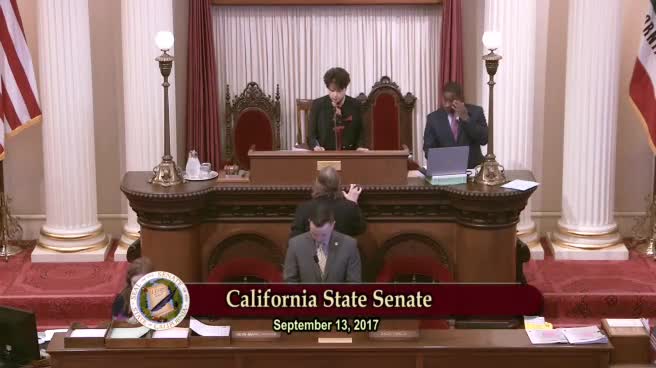 6MIN
Senate Floor
 16MIN
Assembly Floor
 39SEC
Assembly Floor
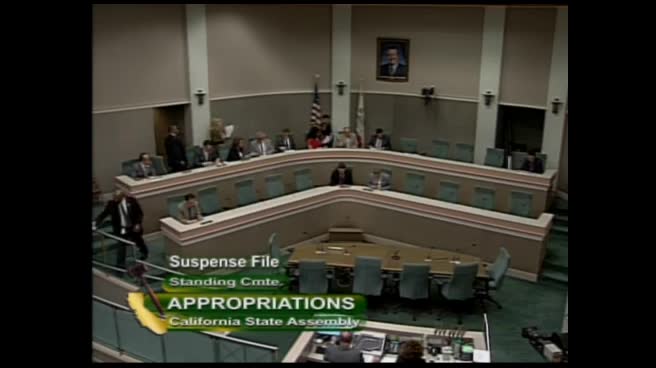 1H
Assembly Standing Committee on Appropriations
 16MIN
Assembly Standing Committee on Appropriations
 24MIN
Assembly Standing Committee on Judiciary
 35MIN
Assembly Standing Committee on Labor and Employment
 21MIN











