SB 64: Fossil-fuel generation units.
- Session Year: 2017-2018
- House: Senate
- Latest Version Date: 2018-08-24
Existing law requires stationary sources, including fossil-fueled electrical generating facilities, to obtain a permit from a local air quality management district or air pollution control district (air districts) for operation.
This bill would require the State Air Resources Board to work with the United States Environmental Protection Agency (USEPA) to obtain continuous emissions monitoring data for certain fossil-fueled electrical generating units in the state collected by the USEPA. If the state board is unable to obtain those data from the USEPA, the bill would require the state board to require each facility, on a quarterly basis, to provide those data to the state board. The bill would require the state board to post data for 2018 on its Internet Web site. The bill would require each air district with those fossil-fueled electrical generating units, within 18 months of the posting of the 2018 data, to complete a report containing specified information regarding the 2018 operations of those units within its jurisdiction. The bill would require the air districts to provide the reports to the Public Utilities Commission (PUC), the State Energy Resources Conservation and Development Commission (Energy Commission), and the state board. Because this bill would impose additional duties on the air districts, this bill would impose a state-mandated local program.
Existing law requires the PUC to adopt a process for each load-serving entity to file an integrated resource plan to ensure that load-serving entities, among other things, minimize localized air pollutants and other greenhouse gas emissions, with early priority on disadvantaged communities.
This bill would require the PUC and the Energy Commission, with input from specified entities and with consideration given to the reports from the air districts described above, to complete a study with recommendations on how to reduce or eliminate emissions of air pollutants, as specified, with early priority for disadvantaged communities. The bill would require the PUC to conduct the study as part of the integrated resource plan process.
The California Constitution requires the state to reimburse local agencies and school districts for certain costs mandated by the state. Statutory provisions establish procedures for making that reimbursement.
This bill would provide that, if the Commission on State Mandates determines that the bill contains costs mandated by the state, reimbursement for those costs shall be made pursuant to the statutory provisions noted above.
Existing law requires stationary sources, including fossil-fueled electrical generating facilities, to obtain a permit from a local air quality management district or air pollution control district (air districts) for operation.
This bill would require certain fossil-fueled electrical generating facilities subject to dispatch by a California balancing authority, on a quarterly basis, to provide to the State Air Resources Board all available continuous emissions monitoring data or other data that reflect the emissions of the facility, and all available data on startups, shutdowns, and cycling of fossil-fueled electrical generating facilities. The bill would require the state board to make those data available to the air districts and the public. The bill would require the air districts, during a permit review of a generating facility, to review the relevant data associated with that facility and evaluate certain emission impacts of those facilities. the State Air Resources Board to work with the United States Environmental Protection Agency (USEPA) to obtain continuous emissions monitoring data for certain fossil-fueled electrical generating units in the state collected by the USEPA. If the state board is unable to obtain those data from the USEPA, the bill would require the state board to require each facility, on a quarterly basis, to provide those data to the state board. The bill would require the state board to post data for 2018 on its Internet Web site. The bill would require each air district with those fossil-fueled electrical generating units, within 18 months of the posting of the 2018 data, to complete a report containing specified information regarding the 2018 operations of those units within its jurisdiction. The bill would require the air districts to provide the reports to the Public Utilities Commission (PUC), the State Energy Resources Conservation and Development Commission (Energy Commission), and the state board. Because this bill would impose additional duties on the air districts, this bill would impose a state-mandated local program.
Existing law requires the Public Utilities Commission (PUC) PUC to adopt a process for each load-serving entity to file an integrated resource plan to ensure that load-serving entities, among other things, minimize localized air pollutants and other greenhouse gas emissions, with early priority on disadvantaged communities.
This bill would require the PUC and the State Energy Resources Conservation and Development Commission, on or before June 1, 2019, Energy Commission, with input from specified entities, entities and with consideration given to the reports from the air districts described above, to complete a study with recommendations on how to reduce the electrical generation from, and prioritize the retirement of, natural gas-fired electrical generating units to minimize localized air pollution, or eliminate emissions of air pollutants, as specified, with early priority for disadvantaged communities. The bill would require the PUC to incorporate the recommendations conduct the study as a part of the integrated resource plan process. Because a violation of an order of the PUC implementing this provision would be a crime, this bill would impose a state-mandated local program.
The California Constitution requires the state to reimburse local agencies and school districts for certain costs mandated by the state. Statutory provisions establish procedures for making that reimbursement.This bill would provide that no reimbursement is required by this act for specified reasons.The California Constitution requires the state to reimburse local agencies and school districts for certain costs mandated by the state. Statutory provisions establish procedures for making that reimbursement.
This bill would provide that, if the Commission on State Mandates determines that the bill contains costs mandated by the state, reimbursement for those costs shall be made pursuant to the statutory provisions noted above.
Existing law requires stationary sources, including fossil-fueled electrical generating facilities, to obtain a permit from a local air quality management district or air pollution control district (air districts) for operation.
This bill would require each certain fossil-fueled electrical generating facilities subject to dispatch by a California balancing authority, on a quarterly basis basis, to provide to the State Air Resources Board all available continuous emissions monitoring data or other data that reflect the emissions of the facility, and all available data associated with on startups, shutdowns, and cycling of fossil-fueled electrical generating facilities. The bill would require the state board to make those data available to the air districts and the public. The bill would require the air districts, during a permit review of a generating facility, to review the relevant data associated with that facility provided by a California balancing authority and evaluate certain emission impacts of those facilities. If pursuant to the permit review, a district finds that the facilitys permit conditions are not adequate to ensure compliance with local, state, and federal requirements, maintenance of air quality standards, and any applicable requirements related to impacts on disadvantaged communities, the bill would require the district to impose limits on the operation of the generating facility necessary to ensure compliance with those requirements. The bill would authorize a California balancing authority to authorize a generating facility to operate and not be in violation of the permit conditions and operating limits, if the California balancing authority to authorize a generating facility determines that operation of a facility is necessary to maintain reliability as identified by applicable federal reliability requirements, to the extent the facility is operated up to the generation capacity needed to ensure that reliability is maintained. The bill would require the air districts, on or before June 1, 2019, to determine the actual emissions from fossil-fueled electrical generating facilities within their jurisdictions. Because this bill would impose additional duties on the air districts, this bill would impose a state-mandated local program.
Existing law requires the Public Utilities Commission (PUC) to adopt a process for each load-serving entity to file an integrated resource plan to ensure that load-serving entities, among other things, minimize localized air pollutants and other greenhouse gas emissions, with early priority on disadvantaged communities.
This bill would require the PUC and the State Energy Resources Conservation and Development Commission, on or before June 1, 2019, with input from specified entities, to complete a study with recommendations on how to reduce the electrical generation from, and prioritize the retirement of, natural gas-fired electrical generating units to minimize localized air pollution, with early priority for disadvantaged communities. The bill would require the PUC to incorporate the recommendations as a part of the integrated resource plan process. Because a violation of an order of the PUC implementing this provision would be a crime, this bill would impose a state-mandated local program.
The California Constitution requires the state to reimburse local agencies and school districts for certain costs mandated by the state. Statutory provisions establish procedures for making that reimbursement.
This bill would provide that no reimbursement is required by this act for specified reasons.
Existing law requires stationary sources, including fossil-fueled electrical generating facilities, to obtain a permit from a local air quality management district or air pollution control district (air districts) for their operation.
This bill would require the each California balancing authority, on a quarterly basis to provide to the State Air Resources Board data associated with startups, shutdowns, and cycling of fossil-fueled electrical generating facilities. The bill would require the state board to make those data available to the air districts and the public. The bill would require the air districts, during a permit review of a generating facility, to review the relevant data associated with that facility provided by the a California balancing authority and evaluate certain emission impacts of those facilities. The bill would require the air districts to impose limitations on the operation of the generating facility on days in which emissions are forecasted to exceed federal or state ambient air quality standards, as specified. If pursuant to the permit review, a district finds that the facilitys permit conditions are not adequate to ensure compliance with local, state, and federal requirements, maintenance of air quality standards, and any applicable requirements related to impacts on disadvantaged communities, the bill would require the district to impose limits on the operation of the generating facility necessary to ensure compliance with those requirements. The bill would authorize a California balancing authority to authorize a generating facility to operate and not be in violation of the permit conditions and operating limits, if the California balancing authority to authorize a generating facility determines that operation of a facility is necessary to maintain reliability as identified by applicable federal reliability requirements, to the extent the facility is operated up to the generation capacity needed to ensure that reliability is maintained. The bill would require the air districts, on or before June 1, 2019, to examine determine the actual emissions from fossil-fueled electrical generating facilities within their jurisdictions. Because this bill would impose additional duties on the air districts, this bill would impose a state-mandated local program.
Existing law requires the Public Utilities Commission (PUC) to adopt a process for each load-serving entity to file an integrated resource plan to ensure that load-serving entities, among other things, minimize localized air pollutants and other greenhouse gas emissions, with early priority on disadvantaged communities.
This bill would require the PUC and the State Energy Resources Conservation and Development Commission, on or before June 1, 2019, with input from specified entities, to complete a study with recommendations on how to reduce the electrical generation from, and prioritize the retirement of, natural gas-fired electrical generating units to minimize localized air pollution, with early priority for disadvantaged communities. The bill would require the PUC to incorporate the recommendations as a part of the integrated resource plan process. Because a violation of an order of the PUC implementing this provision would be a crime, this bill would impose a state-mandated local program.
The California Constitution requires the state to reimburse local agencies and school districts for certain costs mandated by the state. Statutory provisions establish procedures for making that reimbursement.
This bill would provide that no reimbursement is required by this act for specified reasons.
Existing law requires stationary sources, including fossil-fueled electrical generating facilities, to obtain a permit from a local air quality management district or air pollution control district (air districts) for their operation.
This bill would require the California balancing authority, on a quarterly basis to provide to the State Air Resources Board data associated with startups, shutdowns, and cycling of fossil-fueled electrical generating facilities. The bill would require the state board to make those data available to the air districts and the public. The bill would require the air districts, during a permit review of a generating facility, to review the relevant data associated with that facility provided by the California balancing authority and evaluate certain emission impacts of those facilities. The bill would require the air districts to impose limitations on the operation of the generating facility on days in which emissions are forecasted to exceed federal or state ambient air quality standards, as specified. The bill would require the air districts, on or before June 1, 2019, to examine the actual emissions from fossil-fueled electrical generating facilities within their jurisdictions. Because this bill would impose additional duties on the air districts, this bill would impose a state-mandated local program.
Existing law requires the Public Utilities Commission (PUC) to adopt a process for each load-serving entity to file an integrated resource plan to ensure that load-serving entities, among other things, minimize localized air pollutants and other greenhouse gas emissions, with early priority on disadvantaged communities.
This bill would require the PUC and the State Energy Resources Conservation and Development Commission, on or before June 1, 2019, with input from specified entities, to complete a study with recommendations on how to reduce the electrical generation from, and prioritize the retirement of, natural gas-fired electrical generating units to minimize localized air pollution, with early priority for disadvantaged communities. The bill would require the PUC to incorporate the recommendations as a part of the integrated resource plan process. Because a violation of an order of the PUC implementing this provision would be a crime, this bill would impose a state-mandated local program.
The California Constitution requires the state to reimburse local agencies and school districts for certain costs mandated by the state. Statutory provisions establish procedures for making that reimbursement.
This bill would provide that no reimbursement is required by this act for specified reasons.
The existing restructuring of the electrical industry within the Public Utilities Act provides for the establishment of an Independent System Operator (ISO) as a nonprofit public benefit corporation. Existing law requires the ISO to manage the transmission grid and related energy markets in a manner consistent with (1) making the most efficient use of available energy resources, (2) reducing overall economic cost to the states consumers to the extent possible, (3) applicable state law intended to protect the publics health and the environment, (4) maximizing availability of existing electrical generation resources necessary to meet the needs of the states electricity consumers, (5) conducting internal operations in a manner that minimizes cost impact on ratepayers to the extent practicable, and (6) communicating with all balancing area authorities in California in a manner that supports electrical reliability. The Clean Energy and Pollution Reduction Act of 2015 provides for the transformation of the ISO into a regional organization, with the approval of the Legislature, pursuant to a specified process. That process provides that modifications to the ISOs governance structure, through changes to its bylaws or other corporate governance documents, will not become effective until the ISO, Public Utilities Commission (PUC), State Energy Resources Conservation and Development Commission (Energy Commission), State Air Resources Board (state board), Governor, and Legislature take specified actions.This bill would require the ISO by January 1, 2019, in consultation with the PUC, Energy Commission, state board, and the public, to review and revise its operations to minimize any logistical impediments, including export limits, to day-ahead scheduling of intermittent generation from renewable energy resources between the ISO and other balancing area authorities, in order to address any over-supply of generation from renewable energy resources at times when it is inexpensive and abundant. The bill would provide that it does not authorize the ISO to change its governance, transform into a regional organization, or avoid compliance with any requirement of federal law.The existing restructuring of the electrical industry within the Public Utilities Act provides for the establishment of an Independent System Operator (ISO) as a nonprofit public benefit corporation. Existing law requires the ISO to manage the transmission grid and related energy markets in a manner consistent with (1) making the most efficient use of available energy resources, (2) reducing overall economic cost to the states consumers to the extent possible, (3) applicable state law intended to protect the publics health and the environment, (4) maximizing availability of existing electrical generation resources necessary to meet the needs of the states electricity consumers, (5) conducting internal operations in a manner that minimizes cost impact on ratepayers to the extent practicable, and (6) communicating with all balancing area authorities in California in a manner that supports electrical reliability. The Clean Energy and Pollution Reduction Act of 2015 provides for the transformation of the ISO into a regional organization, with the approval of the Legislature, pursuant to a specified process. That process provides that modifications to the ISOs governance structure, through changes to its bylaws or other corporate governance documents, will not become effective until the ISO, Public Utilities Commission (PUC), State Energy Resources Conservation and Development Commission (Energy Commission), State Air Resources Board (state board), Governor, and Legislature take specified actions.
This bill would require the ISO by January 1, 2019, in consultation with the PUC, Energy Commission, state board, and the public, to review and revise its operations to minimize any logistical impediments, including export limits, to day-ahead scheduling of intermittent generation from renewable energy resources between the ISO and other balancing area authorities, in order to address any over-supply of generation from renewable energy resources at times when it is inexpensive and abundant. The bill would provide that it does not authorize the ISO to change its governance or avoid compliance with the process for its transformation into a regional organization. governance, transform into a regional organization, or avoid compliance with any requirement of federal law.
The existing restructuring of the electrical industry within the Public Utilities Act provides for the establishment of an Independent System Operator (ISO) as a nonprofit public benefit corporation. Existing law requires the ISO to manage the transmission grid and related energy markets in a manner consistent with (1) making the most efficient use of available energy resources, (2) reducing overall economic cost to the states consumers to the extent possible, (3) applicable state law intended to protect the publics health and the environment, (4) maximizing availability of existing electrical generation resources necessary to meet the needs of the states electricity consumers, (5) conducting internal operations in a manner that minimizes cost impact on ratepayers to the extent practicable, and (6) communicating with all balancing area authorities in California in a manner that supports electrical reliability. The Clean Energy and Pollution Reduction Act of 2015 provides for the transformation of the ISO into a regional organization, with the approval of the Legislature, pursuant to a specified process. That process provides that modifications to the ISOs governance structure, through changes to its bylaws or other corporate governance documents, will not become effective until the ISO, Public Utilities Commission (PUC), State Energy Resources Conservation and Development Commission (Energy Commission), State Air Resources Board (state board), Governor, and Legislature take specified actions.
This bill would require the ISO by January 1, 2019, in consultation with the PUC, Energy Commission, state board, and the public, to review and revise its operations to minimize any logistical impediments, including export limits, to day-ahead scheduling of intermittent generation from renewable energy resources between the ISO and other balancing area authorities, in order to address any over-supply of generation from renewable energy resources at times when it is inexpensive and abundant. The bill would provide that it does not authorize the ISO to change its governance or avoid compliance with the process for its transformation into a regional organization.
Under existing law, the segments of postsecondary education in this state include the University of California, the California State University, the California Community Colleges, private postsecondary educational institutions, and independent institutions of higher education. Existing law establishes various programs that provide financial aid to students attending institutions in each of the segments. Existing law expresses findings and declarations of the Legislature with respect to the purposes served by student financial aid programs.This bill would make a nonsubstantive change to these legislative findings and declarations.Under existing law, the segments of postsecondary education in this state include the University of California, the California State University, the California Community Colleges, private postsecondary educational institutions, and independent institutions of higher education. Existing law establishes various programs that provide financial aid to students attending institutions in each of the segments. Existing law expresses findings and declarations of the Legislature with respect to the purposes served by student financial aid programs.
This bill would make a nonsubstantive change to these legislative findings and declarations.
(a)For purposes of this section, the following definitions apply:
(1)California balancing authority has the same meaning as set forth in Section 399.12 of the Public Utilities Code.(2)(1)Disadvantaged community means a community identified as a disadvantaged community pursuant to Section 39711.
(3)(2)Facility means a fossil-fueled electrical generating unit with a nameplate capacity of 25 or more megawatts.
(b)(1)The state board shall work with the United States Environmental Protection Agency (USEPA) to obtain all available continuous emissions monitoring data from California facilities collected by the USEPA pursuant to Part 75 (commencing with Section 75.1) of Title 40 of the Code of Federal Regulations. If the state board is not able to obtain those data, or additional data that would facilitate the analysis described in paragraph (1) of subdivision (c), the state board shall require each facility to, on a quarterly basis, provide to the state board, all of the following:
(A)All available continuous emissions monitoring data or other data that reflects the emissions of the facility.
(B)All available data on startups, shutdowns, partial load, steady state, and cycling of the facility.
(C)Any other reasonably available information to facilitate the analysis described in paragraph (1) of subdivision (c).
(2)The state board shall make data provided pursuant to paragraph (1) available to districts and to the public on its Internet Web site in a format that illustrates the changes of emissions, startups, shutdowns, and cycling over time.
(c)(1)Within 18 months after the state board posts data for 2018 pursuant to paragraph (2) of subdivision (b), each district with a facility operating in 2018 shall complete a report regarding 2018 operations for all facilities within its jurisdiction. The report shall include all of the following:
(A)The actual hourly startup, shutdown, partial load, and steady-state average emissions of oxides of nitrogen, total organic gases, and particulate matter to the extent feasible.
(B)A description of applicable permit conditions limiting hours of operation, startups, shutdowns, and emissions limitations. This description shall include the dates of issuance of the applicable permit and the permits most recent renewal.
(C)(i)A description of the most recent ambient air modeling conducted for the applicable permit including the ambient air modeling of the impact of startup, shutdown, and steady-state emissions.
(ii)If no modeling has been conducted to analyze the impact of a particular facilitys startup, shutdown, and steady-state emissions on ambient air, the report shall include a schedule of when the district plans to complete the modeling for that facility. The modeling shall be competed completed no later than December 31, 2023.
(D)A description of the ambient air quality standard attainment status of the area in which each facility is located, and whether each the facility is located in a disadvantaged community.
(2)A draft of the report shall be published on the districts Internet Web site and a notice of availability of the draft report inviting public comments shall be published in accordance with Section 6061 of the Government Code. The district shall provide a public comment period for the draft report of at least 60 days. The final report shall include responses to any public comments received and shall be made available on the districts Internet Web site.
(3)The district shall provide the report to the state board, the Public Utilities Commission, and the State Energy Resources Conservation and Development Commission. The Public Utilities Commission and the State Energy Resources Conservation and Development Commission shall consider the report in the study conducted pursuant to Section 636 of the Public Utilities Code.
SEC. 2.Section 636 is added to the Public Utilities Code, to read:636.(a)The commission and the Energy Commission shall, with input from the relevant state agencies, any relevant California balancing authority, as defined in Section 399.12, and the public, and with consideration given to the reports described in subdivision (c) of Section 42301.19 of the Health and Safety Code, conduct and complete a study with recommendations on how to reduce or eliminate emissions of greenhouse gases, criteria air pollutants, and toxic air contaminants from electrical generation, natural gas-fired electrical generating units, while ensuring local and system grid reliability, and optimally and cost-effectively integrating renewable resources, with a priority on minimizing those emissions affecting disadvantaged communities, as identified pursuant to Section 39711 of the Health and Safety Code.
(b)(1)The commission shall conduct the study specified in subdivision (a) as part of the integrated resources planning process required pursuant to Section 454.52.
(2)The Energy Commission shall incorporate the recommendations as a part of the integrated energy policy report adopted pursuant to Section 25302 of the Public Resources Code.
SEC. 3.If the Commission on State Mandates determines that this act contains costs mandated by the state, reimbursement to local agencies and school districts for those costs shall be made pursuant to Part 7 (commencing with Section 17500) of Division 4 of Title 2 of the Government Code.
(a)For purposes of this section, the following definitions apply:
(1)California balancing authority has the same meaning as set forth in Section 399.12 of the Public Utilities Code.
(2)Disadvantaged community means a community identified as a disadvantaged community pursuant to Section 39711.
(3)Electrical corporation has the same meaning as defined in Section 218 of the Public Utilities Code.(4)Exempt wholesale generator has the same meaning as defined in the Public Utility Holding Company Act of 2005 (42 U.S.C. Sec. 16451(6)).(5)(3)Facility means a fossil-fueled electrical generating unit or facility that is subject to dispatch by a California balancing authority and is owned or operated by an exempt wholesale generator, an electrical corporation, or a local publicly owned electric utility. unit with a nameplate capacity of 25 or more megawatts.
(6)Local publicly owned electric utility has the same meaning as defined in Section 224.3 of the Public Utilities Code.(7)Sensitive receptors have the same meaning as set forth in Section 42705.5.(b)(1)Each facility shall, on a quarterly basis, provide to the state board both of the following:(b)(1)The state board shall work with the United States Environmental Protection Agency (USEPA) to obtain all available continuous emissions monitoring data from California facilities collected by the USEPA pursuant to Part 75 (commencing with Section 75.1) of Title 40 of the Code of Federal Regulations. If the state board is not able to obtain those data, or additional data that would facilitate the analysis described in paragraph (1) of subdivision (c), the state board shall require each facility to, on a quarterly basis, provide to the state board, all of the following:
(A)All available continuous emissions monitoring data or other data that reflects the emissions of the facility.
(B)All available data on startups, shutdowns, and cycling of the facility.
(C)Any other reasonably available information to facilitate the analysis described in paragraph (1) of subdivision (c).
(2)The state board shall make data provided pursuant to paragraph (1) available to districts and to the public on its Internet Web site and in a format that illustrates the changes of emissions, startups, shutdowns, and cycling over time.
(c)On or before June 1, 2019, each district shall undertake a study of all facilities within its jurisdiction to determine the actual hourly, startup, and shutdown average emissions of oxides of nitrogen, total organic gases, and particulate matters. The district shall also identify facilities that are located in disadvantaged communities.(d)(1)During a review for a permit issuance, permit renewal, permit reopening, or permit amendment pursuant to this division for a facility, the district shall evaluate the data made available pursuant to subdivision (b) as to all of the following with respect to the facility:(A)The impacts of the dispatch of the facility on the states effort to minimize emissions from these facilities with priority on minimizing emissions affecting disadvantaged communities.(B)The impacts of the dispatch of the facility in areas classified as nonattainment areas pursuant to the federal Clean Air Act (42 U.S.C. Sec. 7401 et seq.).(C)The impact of the dispatch of the facility on sensitive receptors.(2)In making the evaluation pursuant to this subdivision, the district shall not take into account any emission reduction credits used to offset the emissions from the facility.(3)The review shall be conducted in a public process that allows for meaningful public participation.(4)The review for each facility shall occur no later than January 1, 2023.(c)(1)Within 18 months after the state board posts data for 2018 pursuant to paragraph (2) of subdivision (b), each district with a facility operating in 2018 shall complete a report regarding 2018 operations for all facilities within its jurisdiction. The report shall include all of the following:
(A)The actual hourly startup, shutdown, partial load, and steady-state average emissions of oxides of nitrogen, total organic gases, and particulate matter to the extent feasible.
(B)A description of applicable permit conditions limiting hours of operation, startups, shutdowns, and emissions limitations. This description shall include the dates of issuance of the applicable permit and the permits most recent renewal.
(C)(i)A description of the most recent ambient air modeling conducted for the applicable permit including the ambient air modeling of the impact of startup, shutdown, and steady-state emissions.
(ii)If no modeling has been conducted to analyze the impact of a particular facilitys startup, shutdown, and steady-state emissions on ambient air, the report shall include a schedule of when the district plans to complete the modeling for that facility. The modeling shall be competed no later than December 31, 2023.
(D)A description of the ambient air quality standard attainment status of the area in which each facility is located, and whether each facility is located in a disadvantaged community.
(2)A draft of the report shall be published on the districts Internet Web site and a notice of availability of the draft report inviting public comments shall be published in accordance with Section 6061 of the Government Code. The district shall provide a public comment period for the draft report of at least 60 days. The final report shall include responses to any public comments received and shall be made available on the districts Internet Web site.
(3)The district shall provide the report to the state board, the Public Utilities Commission, and the State Energy Resources Conservation and Development Commission. The Public Utilities Commission and the State Energy Resources Conservation and Development Commission shall consider the report in the study conducted pursuant to Section 636 of the Public Utilities Code.
SEC. 2.Section 636 is added to the Public Utilities Code, to read:636.(a)On or before June 1, 2019, the The commission and the Energy Commission shall, with input from the relevant state agencies, any relevant California balancing authority, as defined in Section 399.12, and the public, and with consideration given to the reports described in subdivision (c) of Section 42301.19 of the Health and Safety Code, conduct and complete a study with recommendations on how to reduce or eliminate emissions of greenhouse gases, criteria air pollutants, and toxic air contaminants from electrical generation from, and prioritize the retirement of, natural gas-fired electrical generating units to minimize the emissions of localized air pollutants generation, while ensuring local and system grid reliability, and optimally and cost-effectively integrating renewable resources, with a priority on minimizing those emissions affecting disadvantaged communities, as identified pursuant to Section 39711 of the Health and Safety Code.
(b)(1)The commission shall incorporate the recommendations as a part of the process adopted conduct the study specified in subdivision (a) as part of the integrated resources planning process required pursuant to Section 454.52.
(2)The Energy Commission shall incorporate the recommendations as a part of the integrated energy policy report adopted pursuant to Section 25302 of the Public Resources Code.
SEC. 3.No reimbursement is required by this act pursuant to Section 6 of Article XIIIB of the California Constitution because a local agency or school district has the authority to levy service charges, fees, or assessments sufficient to pay for the program or level of service mandated by this act or because costs that may be incurred by a local agency or school district will be incurred because this act creates a new crime or infraction, eliminates a crime or infraction, or changes the penalty for a crime or infraction, within the meaning of Section 17556 of the Government Code, or changes the definition of a crime within the meaning of Section 6 of Article XIIIB of the California Constitution.SEC. 3.If the Commission on State Mandates determines that this act contains costs mandated by the state, reimbursement to local agencies and school districts for those costs shall be made pursuant to Part 7 (commencing with Section 17500) of Division 4 of Title 2 of the Government Code.
(a)For purposes of this section, the following definitions apply:
(1)California balancing authority has the same meaning as set forth in Section 399.12 of the Public Utilities Code.
(2)Disadvantaged community means a community identified as a disadvantaged community pursuant to Section 39711.
(3)Electrical corporation has the same meaning as defined in Section 218 of the Public Utilities Code.
(4)Exempt wholesale generator has the same meaning as defined in the Public Utility Holding Company Act of 2005 (42 U.S.C. Sec. 16451(6)).
(5)Facility means a fossil-fueled electrical generating unit or facility that is subject to dispatch by a California balancing authority and is owned or operated by an exempt wholesale generator, an electrical corporation, or a local publicly owned electric utility.
(6)Local publicly owned electric utility has the same meaning as defined in Section 224.3 of the Public Utilities Code.
(7)Sensitive receptors have the same meaning as set forth in Section 42705.5.
(b)(1)Each California balancing authority shall, on a quarterly basis, provide to the state board data associated with startups, shutdowns, and cycling of facilities located in the state.(b)(1)Each facility shall, on a quarterly basis, provide to the state board both of the following:
(A)All available continuous emissions monitoring data or other data that reflects the emissions of the facility.
(B)All available data on startups, shutdowns, and cycling of the facility.
(2)The state board shall make data provided pursuant to paragraph (1) available to districts and to the public on its Internet Web site and in a format that illustrates the changes of emissions, startups, shutdowns, and cycling over time.
(c)On or before June 1, 2019, each district shall undertake a study of all facilities within its jurisdiction to determine the actual hourly, startup, and shutdown average emissions of oxides of nitrogen, total organic gases, and particulate matters. The district shall also identify facilities that are located in disadvantaged communities.
(d)(1)During a review for a permit issuance, permit renewal, permit reopening, or permit amendment pursuant to this division for a facility, the district shall evaluate the data made available pursuant to subdivision (b) as to all of the following with respect to the facility:
(A)The impacts of the dispatch of the facility on the states effort to minimize emissions from these facilities with priority on minimizing emissions affecting disadvantaged communities.
(B)The impacts of the dispatch of the facility in areas classified as nonattainment areas pursuant to the federal Clean Air Act (42 U.S.C. Sec. 7401 et seq.).
(C)The impact of the dispatch of the facility on sensitive receptors.
(2)In making the evaluation pursuant to this subdivision, the district shall not take into account any emission reduction credits used to offset the emissions from the facility.
(3)The review shall be conducted in a public process that allows for meaningful public participation.
(4)The review for each facility shall occur no later than January 1, 2023.
(e)(1)If, pursuant to the review of a permit pursuant to this section, the district finds that the facilitys permit conditions are not adequate to ensure compliance with local, state, and federal requirements, maintenance of air quality standards, and any applicable requirements related to impacts on disadvantaged communities, the district shall impose limits on the operation of the facility as necessary to ensure compliance with those requirements. These limits may include limits on startups, shutdowns, and cycling of the facility on days forecasted to exceed federal or state one-hour or eight-hour ambient air quality standards for ozone or 24-hour ambient air quality standards for particulate matter.(2)If a California balancing authority determines that the operation of a facility is necessary to maintain reliability as identified by the applicable federal reliability requirements, notwithstanding limits on operation imposed pursuant to paragraph (1), the facility shall be authorized to operate up to the generation capacity needed to ensure that reliability is maintained as determined by the California balancing authority and the facility shall not be in violation of its district permit conditions as a result of that operation.(3)The permit conditions and operation limits imposed by a district pursuant to this subdivision are subject to review by the state board and the state board may modify the conditions or limits, as necessary, to ensure that the requirements of this section are met.(f)In the event that a day is forecasted to exceed federal or state one-hour or eight-hour ambient air quality standards for ozone, or 24-hour ambient air quality standards for particulate matter, within a districts jurisdiction, the district shall provide a notice to the owner or operator of any facility that is subject to limits on operation pursuant to subdivision (e), the relevant California balancing authority, and the public at least 24 hours in advance of the forecasted exceedance period. The notice shall contain both of the following:(1)(A)A list of facilities whose operation are to be limited during the forecasted exceedance period to minimize the levels of exceedance.(B)The district shall prioritize limiting the operation of facilities located in disadvantaged communities with the largest hourly emissions for startup or shutdown as identified by the study pursuant to subdivision (c).(2)The provision of instructions on limitations on dispatch to the California balancing authority and the owners or operators of listed facilities for the forecasted time period to ensure compliance with conditions imposed pursuant to subdivision (e).SEC. 2.Section 636 is added to the Public Utilities Code, to read:636.(a)On or before June 1, 2019, the commission and the Energy Commission shall, with input from the relevant state agencies, any relevant California balancing authority, as defined in Section 399.12, and the public, conduct and complete a study with recommendations on how to reduce electrical generation from, and prioritize the retirement of, natural gas-fired electrical generating units to minimize the emissions of localized air pollutants with a priority on minimizing those emissions affecting disadvantaged communities, as identified pursuant to Section 39711 of the Health and Safety Code.
(b)(1)The commission shall incorporate the recommendations as a part of the process adopted pursuant to Section 454.52.
(2)The Energy Commission shall incorporate the recommendations as a part of the integrated energy policy report adopted pursuant to Section 25302 of the Public Resources Code.
SEC. 3.No reimbursement is required by this act pursuant to Section 6 of Article XIIIB of the California Constitution because a local agency or school district has the authority to levy service charges, fees, or assessments sufficient to pay for the program or level of service mandated by this act or because costs that may be incurred by a local agency or school district will be incurred because this act creates a new crime or infraction, eliminates a crime or infraction, or changes the penalty for a crime or infraction, within the meaning of Section 17556 of the Government Code, or changes the definition of a crime within the meaning of Section 6 of Article XIIIB of the California Constitution.
(a)For purposes of this section, the following definitions apply:
(1)California balancing authority has the same meaning as set forth in Section 399.12 of the Public Utilities Code.
(2)Disadvantaged community means a community identified as a disadvantaged community pursuant to Section 39711.
(3)Electrical corporation has the same meaning as defined in Section 218 of the Public Utilities Code.
(4)Exempt wholesale generator has the same meaning as defined in the Public Utility Holding Company Act of 2005 (42 U.S.C. Sec. 16451(6)).
(3)(5)Facility means a fossil-fueled electrical generating unit or facility. facility that is subject to dispatch by a California balancing authority and is owned or operated by an exempt wholesale generator, an electrical corporation, or a local publicly owned electric utility.
(6)Local publicly owned electric utility has the same meaning as defined in Section 224.3 of the Public Utilities Code.
(4)(7)Sensitive receptors have the same meaning as set forth in Section 42705.5.
(b)(1)Each California balancing authority shall, on a quarterly basis, provide to the state board data associated with startups, shutdowns, and cycling of facilities located in the state.
(2)The state board shall make data provided pursuant to subdivision (a) paragraph (1) available to districts and to the public on its Internet Web site and in a format that illustrates the changes of emissions, startups, shutdowns, and cycling over time.
(c)On or before June 1, 2019, each district shall undertake a study of all facilities within its jurisdiction to examine determine the actual hourly, startup, and shutdown average emissions of oxides of nitrogen, total organic gases, and particulate matters. The district shall also identify facilities that are located in disadvantaged communities.
(d)(1)During a review for a permit issuance, permit renewal, permit reopening, or permit amendment pursuant to this division for a facility, the district shall evaluate the data made available pursuant to subdivision (a) (b) as to all of the following with respect to the facility:
(A)The impacts of the dispatch of the facility on the states effort to minimize emissions from these facilities with priority on minimizing emissions affecting disadvantaged communities.
(B)The impacts of the dispatch of the facility in areas classified as nonattainment areas pursuant to the federal Clean Air Act (42 U.S.C. Sec. 7401 et seq.).
(C)The impact of the dispatch of the facility on sensitive receptors.
(2)In making the evaluation pursuant to this subdivision, the district shall not take into account any emission reduction credits used to offset the emissions from the facility.
(3)The review shall be conducted in a public process that allows for meaningful public participation.
(4)The review for each facility shall occur no later than January 1, 2023.
(e)(1)As a part of If, pursuant to the review of a permit pursuant to this section, the district shall impose, as conditions of the permit for the facility and subject to subdivision (f), limitation on the operation of the facility, including finds that the facilitys permit conditions are not adequate to ensure compliance with local, state, and federal requirements, maintenance of air quality standards, and any applicable requirements related to impacts on disadvantaged communities, the district shall impose limits on the operation of the facility as necessary to ensure compliance with those requirements. These limits may include limits on startups, shutdowns, and cycling of the facility on days forecasted to exceed federal or state one-hour or eight-hour ambient air quality standards to ensure compliance with local, state, and federal requirements, maintenance of air quality goals and requirements, and applicable requirements related to impacts on disadvantaged communities. for ozone or 24-hour ambient air quality standards for particulate matter.
(2)If a California balancing authority determines that the operation of a facility is necessary to maintain reliability as identified by the applicable federal reliability requirement during days forecasted to exceed federal or state ambient air quality standards, notwithstanding limitation requirements, notwithstanding limits on operation imposed pursuant to paragraph (1), the facility shall be authorized to operate up to the generation capacity needed to ensure that reliability is maintained as determined by the California balancing authority. authority and the facility shall not be in violation of its district permit conditions as a result of that operation.
(3)The conditions imposed permit conditions and operation limits imposed by a district pursuant to this subdivision are subject to review by the state board and the state board may modify the conditions, conditions or limits, as necessary, to ensure that the requirements of this section are met.
(f)In the event that a day is forecasted to exceed federal or state ambient air quality standards one-hour or eight-hour ambient air quality standards for ozone, or 24-hour ambient air quality standards for particulate matter, within a districts jurisdiction, the district shall provide a notice to the owner or operator of all facilities within its jurisdiction, any facility that is subject to limits on operation pursuant to subdivision (e), the relevant California balancing authority, and the public at least 24 hours in advance of the forecasted exceedance period. The notice shall contain both of the following:
(1)(A)A list of facilities whose operation are to be limited during the forecasted exceedance period to minimize the levels of exceedance.
(B)The district shall prioritize limiting the operation of facilities located in disadvantaged communities with the largest hourly emissions for startup or shutdown as identified by the study pursuant to subdivision (c).
(2)The provision of instructions on limitations on dispatch to the California balancing authority and the owners or operators of listed facilities for the forecasted time period to ensure compliance with conditions imposed pursuant to subdivision (e).
SEC. 2.Section 636 is added to the Public Utilities Code, to read:636.(a)On or before June 1, 2019, the commission and the Energy Commission shall, with input from the relevant state agencies, the any relevant California balancing authority, as defined in Section 399.12, and the public, conduct and complete a study with recommendations on how to reduce electrical generation from, and prioritize the retirement of, natural gas-fired electrical generating units to minimize the emissions of localized air pollutants with a priority on minimizing those emissions effecting affecting disadvantaged communities, as defined identified pursuant to Section 39711 of the Health and Safety Code.
(b)(1)The commission shall incorporate the recommendations as a part of the process adopted pursuant to Section 454.52.
(2)The Energy Commission shall incorporate the recommendations as a part of the integrated energy policy report adopted pursuant to Section 25302 of the Public Resources Code.
SEC. 3.No reimbursement is required by this act pursuant to Section 6 of Article XIIIB of the California Constitution because a local agency or school district has the authority to levy service charges, fees, or assessments sufficient to pay for the program or level of service mandated by this act or because costs that may be incurred by a local agency or school district will be incurred because this act creates a new crime or infraction, eliminates a crime or infraction, or changes the penalty for a crime or infraction, within the meaning of Section 17556 of the Government Code, or changes the definition of a crime within the meaning of Section 6 of Article XIIIB of the California Constitution.
(a)For purposes of this section, the following definitions apply:
(1)California balancing authority has the same meaning as set forth in Section 399.12 of the Public Utilities Code.
(2)Disadvantaged community means a community identified as a disadvantaged community pursuant to Section 39711.
(3)Facility means a fossil-fueled electrical generating unit or facility.
(4)Sensitive receptors have the same meaning as set forth in Section 42705.5.
(b)(1)Each California balancing authority shall, on a quarterly basis, provide to the state board data associated with startups, shutdowns, and cycling of facilities located in the state.
(2)The state board shall make data provided pursuant to subdivision (a) available to districts and to the public on its Internet Web site and in a format that illustrates the changes of emissions, startups, shutdowns, and cycling over time.
(c)On or before June 1, 2019, each district shall undertake a study of all facilities within its jurisdiction to examine the actual hourly, startup, and shutdown average emissions of oxides of nitrogen, total organic gases, and particulate matters. The district shall also identify facilities that are located in disadvantaged communities.
(d)(1)During a review for a permit issuance, permit renewal, permit reopening, or permit amendment pursuant to this division for a facility, the district shall evaluate the data made available pursuant to subdivision (a) as to all of the following with respect to the facility:
(A)The impacts of the dispatch of the facility on the states effort to minimize emissions from these facilities with priority on minimizing emissions affecting disadvantaged communities.
(B)The impacts of the dispatch of the facility in areas classified as nonattainment areas pursuant to the federal Clean Air Act (42 U.S.C. Sec. 7401 et seq.).
(C)The impact of the dispatch of the facility on sensitive receptors.
(2)In making the evaluation pursuant to this subdivision, the district shall not take into account any emission reduction credits used to offset the emissions from the facility.
(3)The review shall be conducted in a public process that allows for meaningful public participation.
(4)The review for each facility shall occur no later than January 1, 2023.
(e)(1)As a part of the review of a permit pursuant to this section, the district shall impose, as conditions of the permit for the facility and subject to subdivision (f), limitation on the operation of the facility, including limits on startups, shutdowns, and cycling of the facility on days forecasted to exceed federal or state ambient air quality standards to ensure compliance with local, state, and federal requirements, maintenance of air quality goals and requirements, and applicable requirements related to impacts on disadvantaged communities.
(2)If a California balancing authority determines that the operation of a facility is necessary to maintain reliability as identified by the applicable federal reliability requirement during days forecasted to exceed federal or state ambient air quality standards, notwithstanding limitation on operation imposed pursuant to paragraph (1), the facility shall be authorized to operate up to the generation capacity needed to ensure that reliability is maintained as determined by the California balancing authority.
(3)The conditions imposed pursuant to this subdivision are subject to review by the state board and the state board may modify the conditions, as necessary, to ensure that the requirements of this section are met.
(f)In the event that a day is forecasted to exceed federal or state ambient air quality standards within a districts jurisdiction, the district shall provide a notice to the owner or operator of all facilities within its jurisdiction, the relevant California balancing authority, and the public at least 24 hours in advance of the forecasted exceedance period. The notice shall contain both of the following:
(1)(A)A list of facilities whose operation are to be limited during the forecasted exceedance period to minimize the levels of exceedance.
(B)The district shall prioritize limiting the operation of facilities located in disadvantaged communities with the largest hourly emissions for startup or shutdown as identified by the study pursuant to subdivision (c).
(2)The provision of instructions on limitations on dispatch to the California balancing authority and the owners or operators of listed facilities for the forecasted time period to ensure compliance with conditions imposed pursuant to subdivision (e).
SEC. 2.Section 636 is added to the Public Utilities Code, to read:636.(a)On or before June 1, 2019, the commission and the Energy Commission shall, with input from the relevant state agencies, the California balancing authority, as defined in Section 399.12, and the public, conduct and complete a study with recommendations on how to reduce electrical generation from, and prioritize the retirement of, natural gas-fired electrical generating units to minimize the emissions of localized air pollutants with a priority on minimizing those emissions effecting disadvantaged communities, as defined pursuant to Section 39711 of the Health and Safety Code.
(b)(1)The commission shall incorporate the recommendations as a part of the process adopted pursuant to Section 454.52.
(2)The Energy Commission shall incorporate the recommendations as a part of the integrated energy policy report adopted pursuant to Section 25302 of the Public Resources Code.
SEC. 3.No reimbursement is required by this act pursuant to Section 6 of Article XIIIB of the California Constitution because a local agency or school district has the authority to levy service charges, fees, or assessments sufficient to pay for the program or level of service mandated by this act or because costs that may be incurred by a local agency or school district will be incurred because this act creates a new crime or infraction, eliminates a crime or infraction, or changes the penalty for a crime or infraction, within the meaning of Section 17556 of the Government Code, or changes the definition of a crime within the meaning of Section 6 of Article XIIIB of the California Constitution.
SECTION 1.Article 3.6 (commencing with Section 354) is added to Chapter 2.3 of Part 1 of Division 1 of the Public Utilities Code, to read:3.6.Renewable Energy Resource Integration354.(a)On or before January 1, 2019, the Independent System Operator, in consultation with the commission, the Energy Commission, the State Air Resources Board, and the public, shall review and revise its operations to minimize any logistical impediments, including export limits, to day-ahead scheduling of intermittent generation from renewable energy resources between the Independent System Operator and other balancing area authorities, in order to address any over-supply of generation from renewable energy resources at times when it is inexpensive and abundant.(b)Nothing in this section authorizes the Independent System Operator to change its governance, transform into a regional organization as described in Section 359.5, or avoid compliance with any requirement of federal law.(a)On or before January 1, 2019, the Independent System Operator, in consultation with the commission, the Energy Commission, the State Air Resources Board, and the public, shall review and revise its operations to minimize any logistical impediments, including export limits, to day-ahead scheduling of intermittent generation from renewable energy resources between the Independent System Operator and other balancing area authorities, in order to address any over-supply of generation from renewable energy resources at times when it is inexpensive and abundant.
(b)Nothing in this section authorizes the Independent System Operator to change its governance or to avoid compliance with Section 352, Article 5 (commencing with Section 359), or governance, transform into a regional organization as described in Section 359.5, or avoid compliance with any requirement of federal law.
(a)On or before January 1, 2019, the Independent System Operator, in consultation with the commission, the Energy Commission, the State Air Resources Board, and the public, shall review and revise its operations to minimize any logistical impediments, including export limits, to day-ahead scheduling of intermittent generation from renewable energy resources between the Independent System Operator and other balancing area authorities, in order to address any over-supply of generation from renewable energy resources at times when it is inexpensive and abundant.
(b)Nothing in this section authorizes the Independent System Operator to change its governance or to avoid compliance with Section 352, Article 5 (commencing with Section 359), or any requirement of federal law.
SECTION 1.Section 69500 of the Education Code is amended to read:69500.The Legislature finds and declares all of the following:(a)Student assistance programs have the primary purpose of providing equal opportunity and access to postsecondary education for persons of both sexes, and all races, ancestries, incomes, ages, and geographies in California.(b)Student aid programs should enhance the ability of individuals to choose the most appropriate postsecondary educational opportunity and among different institutions.(c)Student aid programs should assist students to progress through the educational program in accordance with the individuals educational objectives.(d)Student aid programs should provide assistance to individuals who desire to enroll in an independent college or university.(e)Student aid programs should, furthermore, complement more general statewide goals for public postsecondary education.(f)State purposes regarding student aid programs should complement the purposes of federal student assistance programs so as to enhance the effectiveness of state programs. The states purposes mentioned above serve to enhance the purposes of the Pell Grant Program.The Legislature finds and declares all of the following:
(a)Student assistance programs have the primary purpose of providing equal opportunity and access to postsecondary education for persons of both sexes, and all races, ancestries, incomes, ages, and geographies in California.
(b)Student aid programs should enhance the ability of individuals to choose the most appropriate postsecondary educational opportunity and among different institutions.
(c)Student aid programs should assist students to progress through the educational program in accordance with the individuals educational objectives.
(d)Student aid programs should provide assistance to individuals who desire to enroll in an independent college or university.
(e)Student aid programs should, furthermore, complement more general statewide goals for public postsecondary education.
(f)State purposes regarding student aid programs should complement the purposes of federal student assistance programs so as to enhance the effectiveness of state programs; the programs. The states purposes mentioned above serve to enhance the purposes of the Pell Grant Program.
|
Date
|
Status
|
|---|---|
| Aug 29, 2018 | Read third time. Refused passage. |
| Aug 24, 2018 | Read third time and amended. |
| Aug 21, 2018 | Read second time. Ordered to third reading. |
| Aug 20, 2018 | Read second time and amended. Ordered to second reading. |
| Aug 16, 2018 | From committee: Do pass as amended. (Ayes 12. Noes 0.) (August 16). |
| Aug 16, 2018 | Joint Rule 62(a) suspended. |
| Aug 15, 2018 | August 15 set for first hearing. Placed on suspense file. |
| Jul 3, 2018 | Read second time and amended. Re-referred to Com. on APPR. |
| Jul 2, 2018 | From committee: Do pass as amended and re-refer to Com. on APPR. (Ayes 9. Noes 5.) (June 27). |
| Jun 20, 2018 | Read second time and amended. Re-referred to Com. on U. & E. |
| Jun 19, 2018 | From committee: Do pass as amended and re-refer to Com. on U. & E. (Ayes 6. Noes 3.) (June 18). |
| May 31, 2018 | From committee: Be re-referred to Com. on NAT. RES. (Ayes 7. Noes 0.) (May 31). Re-referred to Com. on U. & E. |
| May 14, 2018 | Re-referred to Com. on RLS. pursuant to Assembly Rule 96. |
| May 10, 2018 | From committee with author's amendments. Read second time and amended. Re-referred to Com. on U. & E. |
| May 22, 2017 | Referred to Coms. on U. & E. and NAT. RES. |
| May 4, 2017 | In Assembly. Read first time. Held at Desk. |
| May 4, 2017 | Read third time. Passed. (Ayes 26. Noes 11. Page 1195.) Ordered to the Assembly. |
| May 2, 2017 | Read second time. Ordered to third reading. |
| May 1, 2017 | From committee: Be ordered to second reading pursuant to Senate Rule 28.8. |
| Apr 21, 2017 | Set for hearing May 1. |
| Apr 18, 2017 | From committee: Do pass and re-refer to Com. on APPR. (Ayes 8. Noes 2. Page 727.) (April 18). Re-referred to Com. on APPR. |
| Apr 6, 2017 | From committee with author's amendments. Read second time and amended. Re-referred to Com. on E., U. & C. |
| Apr 4, 2017 | Set for hearing April 18. |
| Mar 29, 2017 | Re-referred to Com. on E., U. & C. |
| Mar 22, 2017 | From committee with author's amendments. Read second time and amended. Re-referred to Com. on RLS. |
| Jan 12, 2017 | Referred to Com. on RLS. |
| Jan 4, 2017 | Read first time. |
| Dec 27, 2016 | From printer. May be acted upon on or after January 26. |
| Dec 22, 2016 | Introduced. To Com. on RLS. for assignment. To print. |
|
Date
|
Description
|
Location
|
Votes
|
|
|---|---|---|---|---|
| Aug 29, 2018 | SB 64 Wieckowski Senate Third Reading By EGGMAN | Assembly Floor |
Failed |
|
| Aug 16, 2018 | Do pass as amended. | Assembly Standing Committee on Appropriations |
Passed |
|
| Jun 27, 2018 | Do pass as amended and be re-referred to the Committee on [Appropriations] | Assembly Standing Committee on Utilities and Energy |
Passed |
|
| Jun 18, 2018 | Do pass as amended and be re-referred to the Committee on [Utilities and Energy] | Assembly Standing Committee on Natural Resources |
Passed |
|
| May 31, 2018 | Be re-referred to the Committees on [Natural Resources] and [Utilities and Energy] | Assembly Standing Committee on Rules |
Passed |
|
| May 4, 2017 | Senate 3rd Reading SB64 Wieckowski | Senate Floor |
Passed |
|
| Apr 18, 2017 | Do pass, but first be re-referred to the Committee on [Appropriations] | Senate Standing Committee on Energy, Utilities and Communications |
Passed |
This list shows positions taken on this bill by organizations on the date displayed, which is linked to the original source.
Positions by individuals are not included.
SENATE THIRD READING
STR Bill Id:SB 64
Author:(Wieckowski)
As Amended Ver:August 24, 2018
Majority vote
SENATE VOTE: 26-11
Committee | Votes | Ayes | Noes |
Natural Resources | 6-3 | Muratsuchi, Chau, Limón, McCarty, Mark Stone, Reyes | Acosta, Flora, Melendez |
Utilities | 9-5 | Holden, Burke, Eggman, Eduardo Garcia, Muratsuchi, Quirk, Reyes, Santiago, Friedman | Patterson, Chen, Cunningham, Gallagher, Mayes |
Appropriations | 12-0 | Gonzalez Fletcher, Bloom, Bonta, Calderon, Carrillo, Chau, Eggman, Friedman, Eduardo Garcia, Nazarian, Quirk, Reyes | > |
SUMMARY: Addresses air emissions associated with startups, shutdowns and cycling of fossil-fueled electrical generating units ("facilities") by 1) requiring collection and reporting of emissions data and 2) requiring a study with recommendations on how to reduce or eliminate air emissions from electrical generation.
THIS BILL:
- Defines the following terms:
- "Disadvantaged community" (DAC) is a community identified by the California Environmental Protection Agency pursuant to the Greenhouse Gas Reduction Fund Investment Plan and Communities Revitalization Act (pursuant to CalEnvironScreen, according to specified pollution indicators, for purposes of targeting Greenhouse Gas Reduction Fund investments).
- "Facility" is a fossil-fueled electrical generating unit with a nameplate capacity of 25 or more megawatts.
- Requires the Air Resources Board (ARB) to work with the United States Environmental Protection Agency (USEPA) to obtain all available continuous emissions monitoring data from facilities in California, or require facilities to provide specified emissions and operating data to ARB directly if necessary.
- Requires ARB to make this data available to air districts and the public in a format that illustrates the changes of emissions, startups, shutdowns, partial load, steady state, and cycling over time.
- Requires each air district, within 18 months after ARB posts data for 2018, to complete a report regarding 2018 operations for all facilities in its jurisdiction. Requires the report to include:
- Actual hourly startup, shutdown, partial load and steady state average emissions of oxides of nitrogen (NOx), total organic gases and particulate matter to the extent feasible.
- A description of applicable permit conditions limiting operation and emissions.
- A description of the most recent ambient air modeling for each facility, or, if no modeling has been conducted, a schedule to complete modeling no later than December 31, 2023.
- A description of the ambient air quality standard attainment status of the area in which each facility is located, and whether the facility is located in a DAC.
- Requires each air district to publish a draft report, take public comments for at least 60 days, and respond to public comments in the final report.
- Requires the Public Utilities Commission (PUC) and the California Energy Commission (CEC) to complete a study with recommendations on how to reduce or eliminate emissions of greenhouse gases, criteria air pollutants and toxic air contaminants from natural gas-fired electrical generating units, while ensuring local and system grid reliability, and optimally and cost-effectively integrating renewable resources, with a priority on minimizing those emissions affecting DACs. Requires the study's recommendations to be incorporated in the PUC's integrated resource planning process and the CEC's integrated energy policy report.
FISCAL EFFECT: According to the Assembly Appropriations Committee:
- Increased ongoing annual ARB costs of up to $360,000 (Air Pollution Control Account).
- One-time contracting costs of around $600,000 (special fund) and ongoing cost of about $170,000 (special fund) for one PY to develop and implement modeling of natural-gas generation facilities and a method of evaluating natural-gas-fired powerplant operational characteristics, and to evaluate the potential retirement of natural-gas-fired powerplants on different resource types in proposed integrated resource plans.
- Ongoing costs of about $150,000 (special fund) to CEC to conduct work equivalent to that of the PUC.
- This bill creates a state mandate on local air districts to study the cycling of all facilities and identify those facilities within DACs. California Air Pollution Control Officers Association estimates costs to be at least an additional $20,000 per facility for study requirements.
COMMENTS: According to the CEC, natural gas power plants account for approximately 36% of the total electricity delivered in California, and approximately 50% of in-state electricity generation, as of 2016. Natural gas and other thermal power plants 50 megawatts and larger are permitted by the CEC. The CEC has exclusive jurisdiction and may override contrary state or local decisions. Power plants under 50 megawatts may be permitted by local agencies in a process that includes review under the California Environmental Quality Act (CEQA). In either case, local air districts are responsible for issuing air permits.
Most of the aging natural gas power plants in California have been replaced, retired or repowered over the past 15 years due to market conditions, and several more aging coastal power plants are scheduled to be retired over the next few years due to the phase out of once-through cooling (OTC) intake structures adopted in 2010 by the State Water Resources Control Board pursuant to the federal Clean Water Act.
The share of California's total electricity needs served by natural gas varies from year to year with changes in demand and availability of hydroelectric, nuclear and other resources. Over the past 15 years, the range has been 35% to 50%, with the largest variable being availability of hydroelectric generation (in drought years, natural gas typically has made up for a low hydroelectric production). However, natural gas generation appears to be declining over the past few years due to the increasing supply of renewable energy resources. That trend is expected to continue as renewable energy costs decline and Renewables Portfolio Standard targets increase toward 50% of retail electricity sales by 2030.
Increasing penetration of intermittent renewables (e.g., solar and wind) may not only decrease the overall share of natural gas generation, it stands to change the way many of the plants operate, from relatively constant "baseload" operation to "cycling," where generating units operate at varying load levels, including on/off, load following, and minimum load operation, in response to changes in system load requirements.
While most large gas plants are equipped with continuous emissions monitoring systems (CEMS), there is little public analysis of the emissions data to illustrate the air quality impacts of increased starts, stops and cycling. This bill requires air districts to analyze and public facility-specific emissions data.
Analysis Prepared by: Lawrence Lingbloom / NAT. RES. / (916) 319-2092 FN: 0004905
SENATE THIRD READING
STR Bill Id:SB 64
Author:(Wieckowski)
As Amended Ver:August 20, 2018
Majority vote
SENATE VOTE: 26-11
Committee | Votes | Ayes | Noes |
Natural Resources | 6-3 | Muratsuchi, Chau, Limón, McCarty, Mark Stone, Reyes | Acosta, Flora, Melendez |
Utilities | 9-5 | Holden, Burke, Eggman, Eduardo Garcia, Muratsuchi, Quirk, Reyes, Santiago, Friedman | Patterson, Chen, Cunningham, Gallagher, Mayes |
Appropriations | 12-0 | Gonzalez Fletcher, Bloom, Bonta, Calderon, Carrillo, Chau, Eggman, Friedman, Eduardo Garcia, Nazarian, Quirk, Reyes | Patterson, Chen, Cunningham, Gallagher, Mayes |
SUMMARY: Addresses air emissions associated with startups, shutdowns and cycling of fossil-fueled electrical generating units ("facilities") by 1) requiring collection and reporting of emissions data and 2) requiring a study with recommendations on how to reduce or eliminate air emissions from electrical generation.
THIS BILL:
- Defines the following terms:
- "California balancing authority" (CBA) is an electrical transmission balancing authority with control over a balancing authority area primarily located in California and includes the Independent System Operator (ISO) and a local publicly owned electric utility operating a transmission grid that is not under the operational control of the ISO (e.g., Los Angeles Department of Water and Power, Imperial Irrigation District and Balancing Authority of Northern California).
- "Disadvantaged community" (DAC) is a community identified by the California Environmental Protection Agency pursuant to the Greenhouse Gas Reduction Fund Investment Plan and Communities Revitalization Act (pursuant to CalEnvironScreen, according to specified pollution indicators, for purposes of targeting Greenhouse Gas Reduction Fund investments).
- "Facility" is a fossil-fueled electrical generating unit with a nameplate capacity of 25 or more megawatts.
- Requires the Air Resources Board (ARB) to work with the United States Environmental Protection Agency (USEPA) to obtain all available continuous emissions monitoring data from facilities in California, or require facilities to provide specified emissions and operating data to ARB directly if necessary.
- Requires ARB to make this data available to air districts and the public in a format that illustrates the changes of emissions, startups, shutdowns and cycling over time.
- Requires each air district, within 18 months after ARB posts data for 2018, to complete a report regarding 2018 operations for all facilities in its jurisdiction. Requires the report to include:
- Actual hourly startup, shutdown, partial load and steady state average emissions of oxides of nitrogen (NOx), total organic gases and particulate matter to the extent feasible.
- A description of applicable permit conditions limiting operation and emissions.
- A description of the most recent ambient air modeling for each facility, or, if no modeling has been conducted, a schedule to complete modeling no later than December 31, 2023.
- A description of the ambient air quality standard attainment status of the area in which each facility is located, and whether the facility is located in a DAC.
- Requires each air district to publish a draft report, take public comments for at least 60 days, and respond to public comments in the final report.
- Requires the Public Utilities Commission (PUC) and the California Energy Commission (CEC) to complete a study with recommendations on how to reduce or eliminate emissions of greenhouse gases, criteria air pollutants and toxic air contaminants from electrical generation, while ensuring local and system grid reliability, and optimally and cost-effectively integrating renewable resources, with a priority on minimizing those emissions affecting DACs. Requires the study's recommendations to be incorporated in the PUC's integrated resource planning process and the CEC's integrated energy policy report.
FISCAL EFFECT: According to the Assembly Appropriations Committee:
- Increased ongoing annual ARB costs of up to $360,000 (3 PY) (Air Pollution Control Account).
- One-time contracting costs of around $600,000 (special fund) and ongoing cost of about $170,000 (special fund) for one PY to develop and implement modeling of natural-gas generation facilities and a method of evaluating natural-gas-fired powerplant operational characteristics, and to evaluate the potential retirement of natural-gas-fired powerplants on different resource types in proposed integrated resource plans.
- Ongoing costs of about $150,000 (special fund) to CEC to conduct work equivalent to that of the PUC.
- This bill creates a state mandate on local air districts to study the cycling of all facilities and identify those facilities within DACs. California Air Pollution Control Officers Association estimates costs to be at least an additional $20,000 per facility for study requirements.
COMMENTS: According to the CEC, natural gas power plants account for approximately 36% of the total electricity delivered in California, and approximately 50% of in-state electricity generation, as of 2016. Natural gas and other thermal power plants 50 megawatts and larger are permitted by the CEC. The CEC has exclusive jurisdiction and may override contrary state or local decisions. Power plants under 50 megawatts may be permitted by local agencies in a process that includes review under the California Environmental Quality Act (CEQA). In either case, local air districts are responsible for issuing air permits.
Most of the aging natural gas power plants in California have been replaced, retired or repowered over the past 15 years due to market conditions, and several more aging coastal power plants are scheduled to be retired over the next few years due to the phase out of once-through cooling (OTC) intake structures adopted in 2010 by the State Water Resources Control Board pursuant to the federal Clean Water Act.
The share of California's total electricity needs served by natural gas varies from year to year with changes in demand and availability of hydroelectric, nuclear and other resources. Over the past 15 years, the range has been 35% to 50%, with the largest variable being availability of hydroelectric generation (in drought years, natural gas typically has made up for a low hydroelectric production). However, natural gas generation appears to be declining over the past few years due to the increasing supply of renewable energy resources. That trend is expected to continue as renewable energy costs decline and Renewables Portfolio Standard targets increase toward 50% of retail electricity sales by 2030.
Increasing penetration of intermittent renewables (e.g., solar and wind) may not only decrease the overall share of natural gas generation, it stands to change the way many of the plants operate, from relatively constant "baseload" operation to "cycling," where generating units operate at varying load levels, including on/off, load following, and minimum load operation, in response to changes in system load requirements.
While most large gas plants are equipped with continuous emissions monitoring systems (CEMS), there is little public analysis of the emissions data to illustrate the air quality impacts of increased starts, stops and cycling. This bill requires air districts to analyze and public facility-specific emissions data.
Analysis Prepared by: Lawrence Lingbloom / NAT. RES. / (916) 319-2092 FN: 0004432
Date of Hearing: August 15, 2018
ASSEMBLY COMMITTEE ON APPROPRIATIONS
Lorena Gonzalez Fletcher, Chair
SBPCA Bill Id:SB 64
Author:(Wieckowski) – As Amended Ver:July 3, 2018
Policy Committee: | Natural Resources | Vote: | 6 - 3 |
Utilities and Energy | 9 - 5 | ||
|
Urgency: No State Mandated Local Program: Yes Reimbursable: Unknown
SUMMARY:
This bill addresses air emissions associated with startups, shutdowns, and cycling of fossil-fueled electrical generating units (facilities) by 1) requiring collection and reporting of emissions data, 2) requiring air districts to impose operating limits on such facilities, and 3) requiring a study with recommendations on how to reduce electrical generation from, and prioritize the retirement of, such facilities. Specifically, this bill:
- Provides definitions, including the following:
- "Facility" is a fossil-fueled electrical generating unit or facility subject to dispatch by a California balancing authority, as defined.
- “Sensitive receptors” includes hospitals, schools and day care centers, and such other locations as an air district or the California Air Resources Board (ARB) may determine.
- Requires each facility to provide ARB with the following data on a quarterly basis, and ARB to make the data available on its internet website:
- All available continuous emissions monitoring data or other data that reflects the emissions of the facility.
- All available data on startups, shutdowns, and cycling of the facility.
- Requires each air district, by June 1, 2019, to study all facilities, as defined, within its jurisdiction to examine the actual hourly, startup, and shutdown average emissions of oxides of nitrogen (NOx), total organic gases and particulate matter, as well as identify facilities in disadvantaged communities, as defined by CalEnviroScreen (DACs).
- Requires each air district, during the review of a facility's new or existing permit and no later than January 1, 2023, to evaluate the emissions impacts of the dispatch of the facility on the state’s effort to minimize emissions from these facilities, with priority on minimizing emissions affecting DACs; areas classified as nonattainment areas pursuant to the federal Clean Air Act; and sensitive receptors. Prohibits the district from taking into account any emission reduction credits used to offset the emissions from the facility. Requires the review to be conducted through a public process that allows for meaningful public participation.
- Requires the Public Utilities Commission (CPUC) and the California Energy Commission (CEC) to conduct and complete a study by June 1, 2019, with recommendations on how to reduce electrical generation from natural gas-fired electrical generating units, and prioritize the retirement of such units in order to minimize the emissions of localized air pollutants, with a priority on those emissions affecting DACs. Requires the recommendations to be incorporated in the CPUC’s integrated resource planning process and the CEC’s integrated energy policy report (IEPR).
FISCAL EFFECT:
- Increased ongoing annual ARB costs of approximately $360,000 (3 PY) to develop the emissions data reporting and collection process, and evaluate and store the data (Air Pollution Control Account).
- $400,000 in one-time funding (Air Pollution Control Account) for ARB to contract to facilitate the collection of quarterly emissions data from facilities. Ongoing annual contract funds of $50,000 to support and maintain the reporting program (Air Pollution Control Account).
- One-time contracting costs of around $600,000 (special fund) and ongoing cost of about $170,000 (special fund) for one PY to develop and implement modeling of natural-gas generation facilities and a method of evaluating natural-gas-fired powerplant operational characteristics, and to evaluate the potential retirement of natural-gas-fired powerplants on different resource types in proposed integrated resource plans.
- Ongoing costs of about $150,000 (special fund) to CEC to conduct work equivalent to that of the CPUC.
COMMENTS:
- Purpose. According to the author, “The purpose of this bill is to ensure that California’s increased penetration of renewable energy does not lead to the unintended consequence of increased air pollution.”
- Background. According to the CEC, natural gas power plants account for approximately 36% of the total electricity delivered in California, and approximately 50% of in-state electricity generation, as of 2016. Natural gas and other thermal power plants 50 megawatts and larger are permitted by the CEC. The CEC has exclusive jurisdiction and may override contrary state or local decisions. Power plants under 50 megawatts may be permitted by local agencies in a process that includes review under the California Environmental Quality Act (CEQA). In either case, local air districts are responsible for issuing air permits.
Most of the aging natural gas power plants in California have been replaced, retired or repowered over the past 15 years due to market conditions, and several more aging coastal power plants are scheduled to be retired over the next few years due to the phase out of once-through cooling (OTC) intake structures adopted in 2010 by the State Water Resources Control Board pursuant to the federal Clean Water Act.
The increasing penetration of intermittent renewables (e.g., solar and wind) may not only decrease the overall share of natural gas generation, it stands to change the way many of the plants operate, from relatively constant "baseload" operation to "cycling," where generating units operate at varying load levels, including on/off, load following, and minimum load operation, in response to changes in system load requirements.
While most large gas plants are equipped with continuous emissions monitoring systems (CEMS), there is little public analysis of the emissions data to illustrate the air quality impacts of increased starts, stops and cycling.
- State Mandate. This bill creates a state mandate on local air districts to study the cycling of all facilities and identify those facilities within DACs. Additionally, this bill requires local air districts to evaluate specified data when reviewing new and existing facility permits. According to the California Air Pollution Control Officer’s Association (CAPCOA), this bill is costly and likely contains provisions that the local districts are unable to accomplish.
For example, according to CAPCOA, it is impossible for a local air district to evaluate the impacts of the dispatch of a facility on the state’s effort to minimize emissions from all facilities when issuing, renewing, or modifying the facility’s permit.
CAPCOA estimates costs to be at least an additional $20,000 per facility for study requirements and another $20,000 per facility for the permitting requirement. It is unclear if costs are fully recoverable through fees, particularly the non-permitting costs. Even if costs are recoverable, there would be upfront costs that would have to be addressed either through additional resources or the redirection of existing resources.
Ultimately, the Commission on State Mandates will determine if this is a reimbursable state-mandated local program.
- State Expects Much of the Electricity Sector; the Bill Should, Too. Statute establishes numerous energy and environmental policy goals for the electricity sector. Sometimes, these goals are naturally complementary. Other times, these goals exist in tension with one another, and statute directs the state’s energy agencies and nonstate actors to harmonize these goals. For example, statute mandating development of “integrated resources plans” directs the CPUC to “identify a diverse and balanced portfolio of resources needed to ensure a reliable electricity supply that provides optimal integration of renewable energy in a cost-effective manner” that relies upon “zero carbon-emitting resources to the maximum extent reasonable” and is “designed to achieve any statewide greenhouse gas emissions limit.” Statute then directs load-serving entities to piece together procurement plans that achieve those several goals.
This bill takes a very limited view of the electricity generating system, in that it requires the CPUC and CEC to recommend ways to reduce electrical generation from, and prioritize retirement of, natural gas-fired powerplants only to minimize the emissions of localized air pollutants. The energy agencies are engaged in an analysis like that called for by this bill, but they are doing so from a broader perspective consistent with the state’s overall energy and environmental goals. It may be wise to similarly broaden the requirements of this bill, so that the CPUC and CEC develop their recommendations with the goals of reducing emissions of local air pollutants and greenhouse gases, optimally and cost-effectively integrating renewable resources, and ensuring local and system-wide reliability, in addition to minimizing the emissions of localized air pollutants
- Work in Progress. The author and proponents of the bill are working with ARB, local air districts, and the CPUC to address concerns with the bill. Currently under consideration are amendments to:
- Allow ARB to use emissions data collected by the US EPA to meet the requirements of the bill.
- Expand the local air district facility cycling study requirement.
- Delete the local air district permitting requirements.
- Add the assurance of local and state system grid reliability to the requirements for recommendations on reducing GHG and criterion air pollution emmissions.
Analysis Prepared by: Jay Dickenson and Jennifer Galehouse / APPR. / (916) 319-2081
Date of Hearing: June 27, 2018
ASSEMBLY COMMITTEE ON UTILITIES AND ENERGY
Chris Holden, Chair
SBPCA Bill Id:SB 64
Author:(Wieckowski) – As Amended Ver:June 20, 2018
SENATE VOTE: 26-11
SUBJECT: Fossil-fuel generation units
SUMMARY: Addresses air emissions associated with startups, shutdowns and cycling of fossil-fueled electrical generating units (gas plants) by (1) requiring collection and reporting of emissions data, (2) requiring air districts to impose operating limits on such gas plants, and (3) requiring a study with recommendations on how to reduce electrical generation from, and prioritize the retirement of, such gas plants. Specifically, this bill:
- Defines the following terms:
- California balancing authority (CBA) is an electrical transmission balancing authority with control over a balancing authority area primarily located in California and includes the Independent System Operator (ISO) and a local publicly owned electric utility (POU) operating a transmission grid that is not under the operational control of the ISO (e.g., Los Angeles Department of Water and Power, Imperial Irrigation District and Balancing Authority of Northern California).
- Disadvantaged community (DAC) is a community identified by the California Environmental Protection Agency pursuant to the Greenhouse Gas Reduction Fund Investment Plan and Communities Revitalization Act (pursuant to CalEnvironScreen, according to specified pollution indicators, for purposes of targeting Greenhouse Gas Reduction Fund investments).
- "Facility" is a fossil-fueled electrical generating unit or facility subject to dispatch by a CBA.
- “Sensitive receptors” includes hospitals, schools and day care centers, and such other locations as an air district or the California Air Resources Board (CARB) may determine.
- California balancing authority (CBA) is an electrical transmission balancing authority with control over a balancing authority area primarily located in California and includes the Independent System Operator (ISO) and a local publicly owned electric utility (POU) operating a transmission grid that is not under the operational control of the ISO (e.g., Los Angeles Department of Water and Power, Imperial Irrigation District and Balancing Authority of Northern California).
- Requires each CBA to provide data to CARB each quarter regarding startups, shutdowns and cycling of gas plants located in California, and requires CARB to make this data available to air districts and the public in a format that illustrates the changes of emissions, startups, shutdowns and cycling over time.
- Requires each air district, on or before June 1, 2019, to study gas plants in its jurisdiction to examine the actual hourly, startup, and shutdown average emissions of oxides of nitrogen (NOx), total organic gases and particulate matter, as well as identify gas plants in DACs.
- Requires each air district, during a review of a facility's permit and no later than January 1, 2023, to evaluate the emissions impacts of the dispatch of the facility on the state’s effort to minimize emissions from these gas plants, with priority on minimizing emissions affecting DACs; areas classified as nonattainment areas pursuant to the federal Clean Air Act; and sensitive receptors. Prohibits the district from taking into account any emission reduction credits used to offset the emissions from the facility.
- If the district finds that the facility’s permit conditions are not adequate to ensure compliance with local, state, and federal requirements, maintenance of air quality standards, and any applicable requirements related to impacts on disadvantaged communities, the air district is required to impose limits on the operation of the facility as necessary to ensure compliance with those requirements. These limits may include limits on startups, shutdowns, and cycling of the facility on days forecasted to exceed federal or state one-hour or eight-hour ambient air quality standards for ozone or 24-hour ambient air quality standards for particulate matter.
- Requires an air district to provide a notice to all gas plants within its jurisdiction, the relevant CBA, and the public at least 24 hours in advance of a day forecasted to exceed federal or state one-hour or eight-hour ambient air quality standards for ozone, or 24-hour ambient air quality standards for particulate matter. The notice shall contain both of the following:
- A list of gas plants whose operation are to be limited during the forecasted exceedance period to minimize the levels of exceedance. Requires the district to prioritize limiting the operation of gas plants located in DACs with the largest hourly emissions for startup or shutdown.
- Instructions on limitations on dispatch to the CBA and listed gas plants for the forecasted time period to ensure compliance with operating limits imposed by the district.
- Requires the California Public Utilities Commission (CPUC) and the California Energy Commission (CEC), on or before June 1, 2019, to complete a study with recommendations on how to reduce electrical generation from, and prioritize the retirement of, natural gas-fired electrical generating units to minimize the emissions of localized air pollutants with a priority on minimizing those emissions affecting DACs. Requires the study's recommendations to be incorporated in the CPUC's integrated resource planning process and the CEC's integrated energy policy report.
EXISTING LAW:
- The federal Clean Air Act (CAA) and its implementing regulations set National Ambient Air Quality Standards (NAAQS) for six criteria pollutants, designate air basins that do not achieve NAAQS as nonattainment, and require states with nonattainment areas to submit a State Implementation Plan (SIP) detailing how they will achieve compliance with NAAQS.
- Establishes the CARB as the air pollution control agency in California and requires the CARB, among other things, to control emissions from a wide array of mobile sources and coordinate with local air districts to control emissions from stationary sources in order to implement the CAA.
- Requires, subject to the powers and duties of the CARB, local air districts to adopt and enforce rules and regulations to achieve and maintain the state and federal ambient air quality standards in all areas affected by emission sources under their jurisdiction, and to enforce all applicable provisions of state and federal law.
- Requires CARB to make available on its Internet Web site the emissions from stationary sources of greenhouse gases, criteria pollutants, and toxic air contaminants (TACs) throughout the state, as specified, and to update that information at least once a year.
- Grants exclusive jurisdiction to the CEC to issue permits for thermal power plants, meaning any stationary or floating electrical generating facility using any source of thermal energy, with a generating capacity of 50 megawatts or more, and any related gas plants.
- Requires the CPUC to direct each investor-owned utility (IOU) to include in its proposed procurement plan a strategy for procuring a diverse portfolio of resources that provide a reliable electricity supply, including renewable energy integration needs, using zero carbon-emitting resources to the maximum extent reasonable.
- Requires the CPUC to adopt a process for IOUs and other electricity suppliers to file an integrated resource plan (IRP) to:
- Meet the greenhouse gas (GHG) emissions reduction targets established by CARB for the electricity sector and each load-serving entity that reflect the electricity sector’s percentage in achieving economy-wide greenhouse gas emissions reductions of 40% from 1990 levels by 2030.
- Procure at least 50% eligible renewable energy resources by December 31, 2030, consistent with the Renewables Portfolio Standard (RPS).
- Enable each IOU to fulfill its obligation to serve its customers at just and reasonable rates.
- Minimize impacts on ratepayers’ bills.
- Ensure system and local reliability.
- Strengthen the diversity, sustainability, and resilience of the bulk transmission and distribution systems, and local communities.
- Enhance distribution systems and demand-side energy management.
- Minimize localized air pollutants and GHG emissions.
- Requires the CEC to assess energy infrastructure trends and issues facing California and develop and recommend energy policies for the state to address and resolve such issues as part of the Integrated Energy Policy Report (IEPR).
FISCAL EFFECT: Unknown.
BACKGROUND:
According to the CEC, natural gas power plants account for approximately 36% of the total electricity delivered in California, and approximately 50% of in-state electricity generation, as of 2016. Natural gas and other thermal power plants 50 megawatts and larger are permitted by the CEC. The CEC has exclusive jurisdiction and may override contrary state or local decisions. Power plants under 50 megawatts may be permitted by local agencies in a process that includes review under the California Environmental Quality Act (CEQA). In either case, local air districts are responsible for issuing air permits.
Most of the aging natural gas power plants in California have been replaced, retired or repowered over the past 15 years due to market conditions, and several more aging coastal power plants are scheduled to be retired over the next few years due to the phase out of once-through cooling (OTC) intake structures adopted in 2010 by the State Water Resources Control Board pursuant to the federal Clean Water Act.
The share of California's total electricity needs served by natural gas varies from year to year with changes in demand and availability of hydroelectric, nuclear and other resources. Over the past 15 years, the range has been 35% to 50%, with the largest variable being availability of hydroelectric generation (in drought years, natural gas typically has made up for a low hydroelectric production). However, natural gas generation appears to be declining over the past few years due to the increasing supply of renewable energy resources. That trend is expected to continue as renewable energy costs decline and Renewables Portfolio Standard targets increase toward 50% of retail electricity sales by 2030.
Increasing penetration of intermittent renewables (e.g., solar and wind) may not only decrease the overall share of natural gas generation, it stands to change the way many of the plants operate, from relatively constant "baseload" operation to "cycling," where generating units operate at varying load levels, including on/off, load following, and minimum load operation, in response to changes in system load requirements.
While most large gas plants are equipped with continuous emissions monitoring systems (CEMS), there is little public analysis of the emissions data to illustrate the air quality impacts of increased starts, stops and cycling.
COMMENTS:
- Author’s Statement. As California increases the penetration of renewable energy, the cycling of the natural gas fleet is likely to increase as natural gas units are increasingly relied upon to backup renewable energy. Cycling natural gas plants produces significantly more air pollution than gas plants operated as base load gas plants. These increases in air emissions can significantly impact local ambient air quality, and without any protection or consideration, air quality may become worse in disadvantaged communities and communities already breathing unhealthy air.
The purpose of this bill is to ensure that California’s increased penetration of renewable energy does not lead to the unintended consequence of increased air pollution. Communities in California already breathe some of the unhealthiest air in the nation. This protection will help ensure that the air quality does not get worse. This bill importantly requires increased data availability and accessibility related to power plant operations. Increased transparency and data related to how power plants are operating is an essential first step in a meaningful decision-making process. This bill next requires that air districts analyze how power plants are actually operating and likely to operate in the future to ensure that protections are included in applicable permits. Finally, this bill requires a study of how to prioritize the reduction of the usage and eventual retirement of natural gas plants most impacting the air quality of disadvantaged communities and communities breathing unhealthy air. It is clear that natural gas plants will retire as California reaches its energy and climate goals, and an evaluation of the gas fleet will inform an orderly and equitable retirement.
- Two Different “Classes” of Gas Plants a Factor. This bill applies to all balancing authorities. The ISO is a balancing authority. Other POUs in the state which own transmission are also separate balancing authorities such as the Los Angeles Department of Water and Power and Sacramento Municipal Utility District which are also vertically controlled utilities. They generally own gas plants, own the transmission, and entirely control the dispatch of their plants. The utility decides where, when and what resources will be dispatched to serve load. For these plants, the impact of this bill on the operation and the ability of a local air quality district to establish a system of cooperation and communication for the dispatch of those plants is more clear.
However, the IOUs generally contract with merchant generators and the transmission is operated by the ISO and a few other publicly owned utilities. Utilities, mostly IOUs but also a few POUs, schedule that power through the ISO and notify the ISO a day-ahead as to what plants should be dispatched, or offered into the market, to serve load the next day. These gas plants then have to compete in a market based on the price of power offered by that plant/utility. The gas plants compete not only with other resources in the state, but against other plants and “system power” (which masks coal imports) coming in from out-of-state. If those out-of-state resources, or any other plant in the state, have a better price in the ISO market, they get dispatched over California-based gas plants. This is reported to be pushing California-based gas plants out of the market.
When the plants get called out by an air district, some electricity, from some source, has to replace that power to meet load.
If this bill goes forward, and if California-based plants are taken off the market (to the degree the dispatch mechanisms of this bill can work), it may address the immediate issue of criteria emissions in one smaller area but, due to market dynamics in the ISO and the need for power, result in greater emissions of criteria pollutants and GHG in another area in the west – including the dispatch of coal – as those out-of-state resources are called upon to serve California load.
- Gas Plant Use Unclear. The proponents of this bill express concern that gas plants:
…were constructed to provide baseload power and frequent—even daily—cycling was not anticipated in the original air quality permits. UCS is concerned that this increase in cycling, if not considered in air permits, could increase air pollution concentrations to unhealthy levels. A natural gas plant starting up can produce as much as 30 times more NOx emissions than it will after it has been running for a few hours.
It is certainly the case that the use of gas plants as baseload has changed. As more solar and wind have come on to the grid, gas plants have to be used to balance the intermittent generation and also in the evenings to address peak demand as solar declines.
In response to this change in use, the author proposes the reporting of emissions data based on how often power plants are starting, stopping and running. The CARB primarily has annual emissions data, which does not demonstrate how power plants are actually operating on an hourly or daily basis. Hourly data for criteria air pollutants from some power plants is reported quarterly on a U.S. EPA website, but it is not user friendly because it is difficult to determine how power plants are operating without completing a complex data analysis. The U.S. Environmental Protection Agency (U.S. EPA data is required pursuant to 40 Code of Federal Regulations Section 75. The only way to calculate startups and shutdowns is to analyze spreadsheets of data and back-calculate when the emissions of the unit are zero. The U.S. EPA has recently taken down climate change information and data from its website, resulting in more limited access to gas plant data in general.
- Who Has the Data. The bill currently requires BAs to provide the data to CARB. This might work for a vertically integrated balancing authority like LADWP which owns its plants, but the ISO dispatches plants around the state but does not collect emissions data. That is in the control of the air district or plant operator. The committee may wish to consider amending this bill to strike the reporting of data by the balancing authority [page 3, lines 25-27] and instead require the gas plants to report that data to CARB:
Each facility subject to these requirements shall, on a quarterly basis, provide to the state board all available continuous emissions monitoring data or other data that reflects the emissions of the facility, and the facility shall provide all available data on startups, shutdowns and cycling of the facilities to the air resources board.
- Look Before You Leap. In addition to new data disclosure requirements, this bill requires an air district to impose operating limits on gas plants on days when a region area is forecasted to exceed “federal or state one-hour or eight-hour ambient air quality standards for ozone or 24-hour ambient air quality standards for particulate matter.”
The air district action can be overridden by the balancing authority to maintain reliability.
We do not have data on the impacts of the ramping of gas plants on air quality which makes it a challenge to determine the extent to which the gas plants are part of the problem. Proponents of the bill report that plants are running and creating excess emissions from but in other deliberations we are seeing that plants are being shut down because they cannot compete with out-of-state resources. There could be a difference of impacts between BAs and market conditions which is not apparent without further data.
Before processes are established to address an issue which could have such a significant effect on reliability, it seems that the committee should be aware of exactly what is occurring with the plants and look at the data required to be tracked by this bill. Consequently, the committee may wish to consider striking subdivisions (e) and (f) [page 4 lines 23-39; page 5, lines 1-37] of this bill until that data is available and evaluated.
- Retirement Study. This bill also requires the CPUC and the CEC to conduct a study resulting in recommendations on how to reduce the use of, and prioritize the retirement of, gas plants in the state. The criteria of the study are limited to minimizing the emission of localized air pollutants with a priority on disadvantaged communities.
The author should consider broadening the parameters of the study to consider the ripple effect of plant closures in California. Gas must continue to be used for reliability for the foreseeable future. Limiting the study to localized emissions fails to consider whether the closing of those plants would increase criteria pollutants and GHG emissions outside of California, increase the costs of electricity, and adversely impact local reliability, among other factors. - Related Legislation.
AB 2693 (Quirk) requires the CPUC to analyze California's future grid reliability needs and determine which natural gas plants can be retired and which plants are needed to ensure local and system grid reliability while minimizing emissions. Status: Passed the Assembly but recently gutted and amended to address an unrelated issue.
REGISTERED SUPPORT / OPPOSITION:
Support
Asian Pacific Environmental Network (Co-Sponsor)
Clean Power Campaign (Co-Sponsor)
California Environmental Justice Alliance (Co-Sponsor)
Union of Concerned Scientists (Co-Sponsor)
Clean Water Action
Coalition for Clean Air
Communities for a Better Environment
East Bay Community Energy (EBCE)
Environmental Defense Fund
Environmental Health Coalition
Fossil Free California
Leadership Counsel for Accountability and Justice
Natural Resources Defense Council
People Organizing to Demand Environmental & Economic Rights
Sierra Club California
Opposition
California Municipal Utilities Association
Calpine Corporation
Cogentrix
Independent Energy Producers Association
NRG Energy, Inc.
San Diego Gas and Electric Company
SMUD
Southern California Gas Company
Oppose As Amended
Brea Chamber Of Commerce
California Business Properties Association
California Cement Manufacturers Environmental Coalition
California Chamber Of Commerce
California Manufacturers & Technology Association
Energy Users Forum
Fresno Chamber Of Commerce
Greater Bakersfield Chamber Of Commerce
Greater Coachella Valley Chamber Of Commerce
Greater Irvine Chamber Of Commerce
Greater Riverside Chamber Of Commerce
Long Beach Area Chamber Of Commerce
Los Angeles Area Chamber Of Commerce
National Federation Of Independent Business
North Orange County Chamber Of Commerce
Oxnard Chamber Of Commerce
Palm Desert Area Chamber Of Commerce
Rancho Cordova Chamber Of Commerce
Redondo Beach Chamber Of Commerce & Visitors Bureau
South Bay Association Of Chambers Of Commerce
Southwest California Legislative Council
Tulare Chamber Of Commerce
Western Independent Refiners Association
Western States Petroleum Association
Oppose Unless Amended
California Air Pollution Control Officers Association
Analysis Prepared by: Kellie Smith / U. & E. /
Date of Hearing: June 18, 2018
ASSEMBLY COMMITTEE ON NATURAL RESOURCES
Al Muratsuchi, Acting Chair
SBPCA Bill Id:SB 64
Author:(Wieckowski) – As Amended Ver:May 10, 2018
SENATE VOTE: 26-11(not relevant)
SUBJECT: Fossil-fuel generation units
SUMMARY: Addresses air emissions associated with startups, shutdowns and cycling of fossil-fueled electrical generating units ("facilities") by (1) requiring collection and reporting of emissions data, (2) requiring air districts to impose operating limits on such facilities, and (3) requiring a study with recommendations on how to reduce electrical generation from, and prioritize the retirement of, such facilities.
EXISTING LAW:
- The federal Clean Air Act (CAA) and its implementing regulations set National Ambient Air Quality Standards (NAAQS) for six criteria pollutants, designate air basins that do not achieve NAAQS as nonattainment, and require states with nonattainment areas to submit a State Implementation Plan (SIP) detailing how they will achieve compliance with NAAQS.
- Establishes the Air Resources Board (ARB) as the air pollution control agency in California and requires the ARB, among other things, to control emissions from a wide array of mobile sources and coordinate with local air districts to control emissions from stationary sources in order to implement the CAA.
- Requires, subject to the powers and duties of the ARB, local air districts to adopt and enforce rules and regulations to achieve and maintain the state and federal ambient air quality standards in all areas affected by emission sources under their jurisdiction, and to enforce all applicable provisions of state and federal law.
- Requires ARB to make available on its Internet Web site the emissions from stationary sources of greenhouse gases, criteria pollutants, and toxic air contaminants (TACs) throughout the state, as specified, and to update that information at least once a year.
- Grants exclusive jurisdiction to the California Energy Commission (CEC) to issue permits for "thermal power plants,” meaning any stationary or floating electrical generating facility using any source of thermal energy, with a generating capacity of 50 megawatts or more, and any related facilities.
- Requires the Public Utilities Commission (PUC) to direct each investor-owned utility (IOU) to include in its proposed procurement plan a strategy for procuring a diverse portfolio of resources that provide a reliable electricity supply, including renewable energy integration needs, using zero carbon-emitting resources to the maximum extent reasonable.
- Requires the PUC to adopt a process for IOUs and other electricity suppliers to file an integrated resource plan (IRP) to:
- Meet the greenhouse gas (GHG) emissions reduction targets established by ARB for the electricity sector and each load-serving entity that reflect the electricity sector’s percentage in achieving economy-wide greenhouse gas emissions reductions of 40% from 1990 levels by 2030.
- Procure at least 50% eligible renewable energy resources by December 31, 2030, consistent with the Renewables Portfolio Standard (RPS).
- Enable each IOU to fulfill its obligation to serve its customers at just and reasonable rates.
- Minimize impacts on ratepayers’ bills.
- Ensure system and local reliability.
- Strengthen the diversity, sustainability, and resilience of the bulk transmission and distribution systems, and local communities.
- Enhance distribution systems and demand-side energy management.
- Minimize localized air pollutants and GHG emissions.
- Requires the CEC to assess energy infrastructure trends and issues facing California and develop and recommend energy policies for the state to address and resolve such issues as part of the Integrated Energy Policy Report (IEPR).
THIS BILL:
- Defines the following terms:
- “California balancing authority” (CBA) is an electrical transmission balancing authority with control over a balancing authority area primarily located in California and includes the Independent System Operator (ISO) and a local publicly owned electric utility operating a transmission grid that is not under the operational control of the ISO (e.g., Los Angeles Department of Water and Power, Imperial Irrigation District and Balancing Authority of Northern California).
- "Disadvantaged community" (DAC) is a community identified by the California Environmental Protection Agency pursuant to the Greenhouse Gas Reduction Fund Investment Plan and Communities Revitalization Act (pursuant to CalEnvironScreen, according to specified pollution indicators, for purposes of targeting Greenhouse Gas Reduction Fund investments).
- "Facility" is a fossil-fueled electrical generating unit or facility.
- “Sensitive receptors” includes hospitals, schools and day care centers, and such other locations as an air district or ARB may determine.
- Requires each CBA to provide data to ARB each quarter regarding startups, shutdowns and cycling of facilities located in California, and requires ARB to make this data available to air districts and the public in a format that illustrates the changes of emissions, startups, shutdowns and cycling over time.
- Requires each air district, on or before June 1, 2019, to study facilities in its jurisdiction to examine the actual hourly, startup, and shutdown average emissions of oxides of nitrogen (NOx), total organic gases and particulate matter, as well as identify facilities in DACs.
- Requires each air district, during a review of a facility's permit and no later than January 1, 2023, to evaluate the emissions impacts of the dispatch of the facility on the state’s effort to minimize emissions from these facilities, with priority on minimizing emissions affecting DACs; areas classified as nonattainment areas pursuant to the federal Clean Air Act; and sensitive receptors. Prohibits the district from taking into account any emission reduction credits used to offset the emissions from the facility.
- Requires each air district to impose operating limits on each facility, including limits on startups, shutdowns, and cycling of the facility on days forecasted to exceed federal or state ambient air quality standards to ensure compliance with local, state, and federal requirements, maintenance of air quality goals and requirements, and applicable requirements related to impacts on DACs, except the facility shall be authorized to operate up to the generation capacity needed to ensure that reliability is maintained when a CBA determines that the operation of a facility is necessary to maintain reliability as identified by the applicable federal reliability requirement. Authorizes ARB to review and modify these conditions.
- Requires an air district to provide a notice to all facilities within its jurisdiction, the relevant CBA, and the public at least 24 hours in advance of a day forecasted to exceed federal or state ambient air quality standards. The notice shall contain both of the following:
- A list of facilities whose operation are to be limited during the forecasted exceedance period to minimize the levels of exceedance. Requires the district to prioritize limiting the operation of facilities located in DACs with the largest hourly emissions for startup or shutdown.
- Instructions on limitations on dispatch to the CBA and listed facilities for the forecasted time period to ensure compliance with operating limits imposed by the district.
- Requires the PUC and the CEC, on or before June 1, 2019, to complete a study with recommendations on how to reduce electrical generation from, and prioritize the retirement of, natural gas-fired electrical generating units to minimize the emissions of localized air pollutants with a priority on minimizing those emissions affecting DACs. Requires the study's recommendations to be incorporated in the PUC's integrated resource planning process and the CEC's integrated energy policy report.
FISCAL EFFECT: Unknown
COMMENTS:
- Background. According to the CEC, natural gas power plants account for approximately 36% of the total electricity delivered in California, and approximately 50% of in-state electricity generation, as of 2016. Natural gas and other thermal power plants 50 megawatts and larger are permitted by the CEC. The CEC has exclusive jurisdiction and may override contrary state or local decisions. Power plants under 50 megawatts may be permitted by local agencies in a process that includes review under the California Environmental Quality Act (CEQA). In either case, local air districts are responsible for issuing air permits.
Most of the aging natural gas power plants in California have been replaced, retired or repowered over the past 15 years due to market conditions, and several more aging coastal power plants are scheduled to be retired over the next few years due to the phase out of once-through cooling (OTC) intake structures adopted in 2010 by the State Water Resources Control Board pursuant to the federal Clean Water Act.
The share of California's total electricity needs served by natural gas varies from year to year with changes in demand and availability of hydroelectric, nuclear and other resources. Over the past 15 years, the range has been 35% to 50%, with the largest variable being availability of hydroelectric generation (in drought years, natural gas typically has made up for a low hydroelectric production). However, natural gas generation appears to be declining over the past few years due to the increasing supply of renewable energy resources. That trend is expected to continue as renewable energy costs decline and Renewables Portfolio Standard targets increase toward 50% of retail electricity sales by 2030.
Increasing penetration of intermittent renewables (e.g., solar and wind) may not only decrease the overall share of natural gas generation, it stands to change the way many of the plants operate, from relatively constant "baseload" operation to "cycling," where generating units operate at varying load levels, including on/off, load following, and minimum load operation, in response to changes in system load requirements.
While most large gas plants are equipped with continuous emissions monitoring systems (CEMS), there is little public analysis of the emissions data to illustrate the air quality impacts of increased starts, stops and cycling.
- Author's statement:
Many power plants were constructed to provide baseload power or power only during rare peak needs in the middle of the day. This is changing. As California increases its renewable energy, natural gas units are increasingly being used to backup renewable energy, which could, if not considered in permits, increase pollution to unhealthy levels. Cycling natural gas plants produces significantly more air pollution than facilities operated as baseload facilities. For example, one facility in California is permitted to emit as much nitrous oxides in one start as it does in 38 hours of operation.
This increase in cycling has already started to occur. One power plant can significantly impact local air quality. One California plant was found to nearly double the concentrations of nitrogen oxide from background levels. Studies conducted by the PUC and the ISO suggest that under certain scenarios pollution in particular communities and in the state could increase as the state increases renewables. Many communities throughout the state are breathing some of the worst air in the country, and the increased cycling of natural gas power plants will make this worse.
As California increases its renewable energy, it will not need as much natural gas capacity. There is currently no overarching plan for how to reduce the reliance on natural gas facilities over time. This bill requires the PUC and the CEC to start putting together a plan with input from ARB and ISO of how to reduce the usage and prioritize the retirement of facilities most impacting air quality.
- Definition of "facility" is overly broad. This bill applies to every facility generating electricity from fossil fuels, which would include distributed fuel cells, industrial cogeneration and back-up generators. The bill would require an air district to evaluate every such facility in its jurisdiction, even though they are not likely to start, stop, and cycle regularly and are not subject to dispatch by a balancing authority. The author and the committee may wish to consider limiting application of the bill to larger power plants exporting electricity to the bulk transmission grid and subject to dispatch by a balancing authority.
- Operating limits are required for all facilities, without regard to the facility's actual emission performance or contribution to regional air pollution. Although the bill requires each air district to conduct a detailed review of each facility in its jurisdiction, the subsequent requirement to limit operation applies to all facilities, without regard to the results of the district's review or a facility's actual contribution to an exceedance of an air quality standard. The author and the committee may wish to consider limiting the imposition of operating limits to those facilities that a district has determined contribute to exceedance of federal or state ambient air quality standards, or significantly impact a sensitive receptor or disadvantaged community, due to startups, shutdowns, or cycling.
- Operating limits are triggered by any exceedance of ambient air quality standards, including for pollutants that may have no correlation to daily changes in a power plant's operation. This bill requires a district to impose operating limits "on days forecasted to exceed federal or state ambient air quality standards." California has ambient air quality standards for 11 pollutants, seven of which are also subject to federal standards. Most pollutants have two or more standards based on averaging times, ranging from one hour to one year. Nearly every air district in California is in nonattainment with ambient air quality standards for at least one pollutant. Some of these pollutants have little, if any, relationship to power plant emissions. As a result, this bill may require air districts to impose operating limits most days of the year. Because the bill is intended to address the impacts of daily changes in power plant operation on daily forecasted air quality conditions, the operating limits should only be triggered by relevant pollutants that are subject to daily forecasts. The author and the committee may wish to consider limiting the operating limits to days forecasted to exceed the 1-hour or 8-hour standards for ozone and 24-hour standards for particulate matter.
- Will limiting operation or retiring California gas plants lead to increased gas or coal imports? This bill focuses on limiting operation and retiring in-state gas plants, but doesn't address what resources will be used instead. In cases where there is no substitute to maintain local reliability, the balancing authority will override the air district limits and the plant will run anyway. In other cases, the substitute may be an out of state gas or coal plant with higher emissions. If the state adopts policies to reduce natural gas generation, it should also consider what alternatives will be available to meet the public's demand for reliable air conditioning.
- Related legislation. AB 2693 (Quirk) requires the PUC to analyze California's future grid reliability needs and determine which natural gas plants can be retired and which plants are needed to ensure local and system grid reliability while minimizing emissions. AB 2693 is pending in the Senate Energy, Utilities and Communications Committee.
- Double referral. This bill has been double referred to the Utilities and Energy Committee.
REGISTERED SUPPORT / OPPOSITION:
Support
Asian Pacific Environmental Network
California Environmental Justice Alliance
Clean Power Campaign
Clean Water Action
Coalition for Clean Air
Communities for a Better Environment
Environmental Defense Fund
Environmental Health Coalition
Fossil Free California
Leadership Counsel for Justice & Accountability
Natural Resources Defense Council
People Organizing to Demand Environmental & Economic Rights
Sierra Club California
Union of Concerned Scientists
Opposition
Brea Chamber of Commerce
California Business Properties Association
California Cement Manufacturers Environmental Coalition
California Chamber of Commerce
California Manufacturers & Technology Association
California Municipal Utilities Association
Calpine Corporation
Energy Users Forum
Fresno Chamber of Commerce
Greater Bakersfield Chamber of Commerce
Greater Coachella Valley Chamber of Commerce
Greater Riverside Chamber of Commerce
Independent Energy Producers Association
Long Beach Area Chamber of Commerce
Los Angeles Area Chamber of Commerce
National Federation of Independent Business
North Orange County Chamber of Commerce
Northern California Power Agency
Oxnard Chamber of Commerce
Palm Desert Area Chamber of Commerce
Rancho Cordova Chamber of Commerce
Redondo Beach Chamber of Commerce & Visitors Bureau
Sacramento Municipal Utility District
South Bay Association of Chambers of Commerce
Southern California Public Power Authority
Southwest California Legislative Council
Tulare Chamber of Commerce
Western Independent Refiners Association
Western States Petroleum Association
Analysis Prepared by: Lawrence Lingbloom / NAT. RES. /
Discussed in Hearing
 2MIN
Assembly Floor
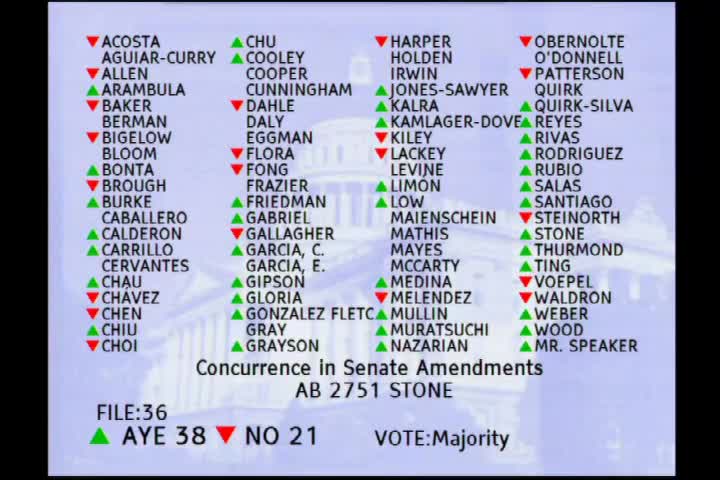 4MIN
Assembly Floor
 1H
Assembly Standing Committee on Appropriations
 49MIN
Assembly Standing Committee on Natural Resources
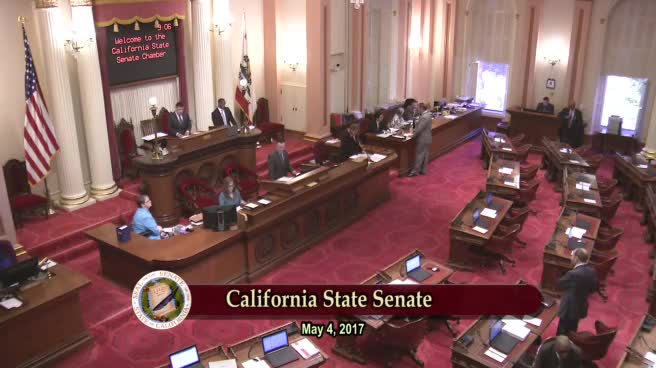 2MIN
Senate Floor
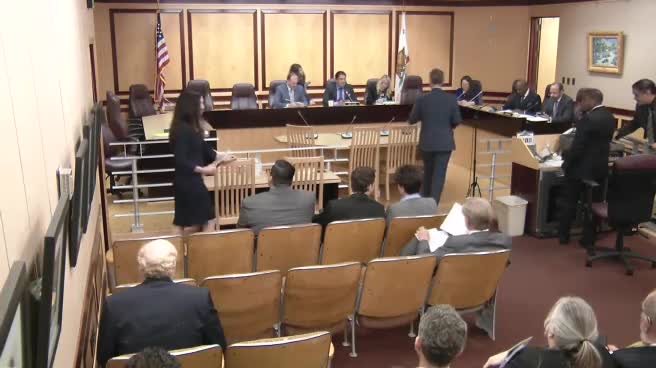 3MIN
Senate Standing Committee on Energy, Utilities and Communications
Bill Author
Bill Co-Author(s):