SB 648: Health and care facilities: private referral agencies.
- Session Year: 2017-2018
- House: Senate
- Latest Version Date: 2017-04-27
Existing law defines a placement agency as a local governmental agency, a general acute care hospital, a conservator, a regional center, or a private entity receiving public funds that is engaged in finding homes or other places for placement of specified persons, including placement in an adult residential facility, residential care facility for persons with chronic life-threatening illness, or residential care facility for the elderly. Existing law requires an employee of a placement agency who knows, or reasonably suspects, that a facility that is not exempt from licensing requirements is operating without a license to report the name and address of the facility to the State Department of Social Services. Failure to report the facility is punishable as a misdemeanor.
This bill would expand the definition of placement agencies to include private referral agencies that refer persons for remuneration to an adult residential facility, a residential care facility for persons with chronic life-threatening illness, or a residential care facility for the elderly. Because the bill would expand the requirements imposed on a placement agency to apply to a private referral agency, the violation of which would be a crime, this bill would impose a state-mandated local program. The bill would also require the aforementioned facilities to provide a resident with a disclosure statement before an admission agreement is signed if the services of a private referral agency are used. used and the facility licensee knows the private referral agency was used and has a long-term agreement or contract with the private referral agency. The bill would authorize the State Department of Social Services to assess a civil penalty in the amount the facility paid to the private referral agency penalty, as specified, if the facility fails to provide the disclosure.
The bill would prohibit a private referral agency or its employees from holding any power of attorney for a person receiving placement referral services or to receive or hold that persons property in any capacity. The bill would require, commencing July 1, 2018, a private referral agency to maintain liability insurance in specified amounts. The bill would make it unlawful for an employee, independent contractor, or other person who is acting on behalf of a government agency, hospital, or other health care institution to offer, provide, or accept a payment, rebate, refund, commission, preference, or discount as payment, compensation, or inducement for referring patients, clients, or customers to an adult residential facility, residential care facility for persons with chronic life-threatening illness, or residential care facility for the elderly, or private referral agency.
The bill would require the State Department of Social Services to keep track of any consumer complaints arising from consumer interactions with private referral agencies and would authorize the department to levy civil penalties, as specified. The bill would prohibit a private referral agency from disclosing any personal information of a person receiving services unless authorized to do so and would require a private referral agency to retain, for no less than 3 years, an acknowledgment from the person being referred, or his or her conservator, guardian, authorized family member or other authorized representative, attorney in fact, or agent under a power of attorney, stating that the authorization had been made. The bill would require a private referral agency to conduct a suitability determination of each person who seeks a referral and is referred to an adult residential facility, residential care facility for persons with chronic life-threatening illness, or residential care facility for the elderly. The bill would require a private referral agency to train its employees who make referrals to an adult residential facility, residential care facility for persons with chronic life-threatening illness, or residential care facility for the elderly, as specified.
The bill would also require the State Department of Social Services to, no later than January 1, 2023, submit a report on the effectiveness of existing statutory remedies related to private referral agencies to the Legislature, as specified. The bill would require the report to include an evaluation of whether further regulation of private referral agencies is needed and would require the department to work with stakeholders and consider consumer complaints, previous actions, and any other applicable documents or reports when conducting its evaluation.
Existing law makes specified persons mandated reporters of elder or dependent adult abuse, including administrators, supervisors, and licensed staff of a facility that provide care or services for elder or dependent adults. Under existing law, failure to report physical abuse, abandonment, abduction, isolation, financial abuse, or neglect of an elder or dependent adult is a misdemeanor.
The bill would include on the list of mandated reporters owners, operators, and employees of a specified private referral agency. By expanding the crime of failure to report elder or dependent adult abuse, this bill would impose a state-mandated local program.
The California Constitution requires the state to reimburse local agencies and school districts for certain costs mandated by the state. Statutory provisions establish procedures for making that reimbursement.
This bill would provide that no reimbursement is required by this act for a specified reason.
Existing law defines a placement agency as a local governmental agency, a general acute care hospital, a conservator, a regional center, or a private entity receiving public funds that is engaged in finding homes or other places for placement of specified persons, including placement in an adult residential facility, residential care facility for persons with chronic life-threatening illness, or residential care facility for the elderly. Existing law requires an employee of a placement agency who knows, or reasonably suspects, that a facility that is not exempt from licensing requirements is operating without a license to report the name and address of the facility to the State Department of Social Services. Failure to report the facility is punishable as a misdemeanor.
This bill would expand the definition of placement agencies to include private referral agencies that refer persons for remuneration to an adult residential facility, a residential care facility for persons with chronic life-threatening illness, or a residential care facility for the elderly. Because the bill would expand the requirements imposed on a placement agency to apply to a private referral agency, the violation of which would be a crime, this bill would impose a state-mandated local program. The bill would also require the aforementioned facilities to provide a resident with a disclosure statement before an admission agreement is signed if the services of a private referral agency are used. The bill would authorize the State Department of Social Services to assess a civil penalty in the amount the facility paid to the private referral agency if the facility fails to provide the disclosure.
The bill would prohibit a private referral agency or its employees from holding any power of attorney for a person receiving placement referral services or to receive or hold that persons property in any capacity. The bill would require, commencing July 1, 2018, a private referral agency to maintain liability insurance in specified amounts. The bill would make it unlawful for an employee, independent contractor, or other person who is acting on behalf of a government agency, hospital, or other health care institution to offer, provide, or accept a payment, rebate, refund, commission, preference, or discount as payment, compensation, or inducement for referring patients, clients, or customers to an adult residential facility, residential care facility for persons with chronic life-threatening illness, or residential care facility for the elderly, or private referral agency.
The bill would require the State Department of Social Services to keep track of any consumer complaints arising from consumer interactions with private referral agencies and would authorize the department to levy civil penalties, as specified. The bill would prohibit a private referral agency from disclosing any personal information of a person receiving services unless authorized to do so and would require a private referral agency to retain, for no less than 3 years, an acknowledgment from the person being referred, or his or her conservator, guardian, authorized family member or other authorized representative, attorney in fact, or agent under a power of attorney, stating that the authorization had been made. The bill would require a private referral agency to conduct a suitability determination of each person who seeks a referral and is referred to an adult residential facility, residential care facility for persons with chronic life-threatening illness, or residential care facility for the elderly. The bill would require a private referral agency to train its employees who make referrals to an adult residential facility, residential care facility for persons with chronic life-threatening illness, or residential care facility for the elderly, as specified.
The bill would also require the State Department of Social Services to, no later than January 1, 2023, submit a report on the effectiveness of existing statutory remedies related to private referral agencies to the Legislature, as specified. The bill would require the report to include an evaluation of whether further regulation of private referral agencies is needed and would require the department to work with stakeholders and consider consumer complaints, previous actions, and any other applicable documents or reports when conducting its evaluation.
Existing law makes specified persons mandated reporters of elder or dependent adult abuse, including administrators, supervisors, and licensed staff of a facility that provide care or services for elder or dependent adults. Under existing law, failure to report physical abuse, abandonment, abduction, isolation, financial abuse, or neglect of an elder or dependent adult is a misdemeanor.
The bill would include on the list of mandated reporters owners, operators, and employees of a referral agency, as defined. specified private referral agency. By expanding the crime of failure to report elder or dependent adult abuse, this bill would impose a state-mandated local program.
The California Constitution requires the state to reimburse local agencies and school districts for certain costs mandated by the state. Statutory provisions establish procedures for making that reimbursement.
This bill would provide that no reimbursement is required by this act for a specified reason.
Existing law provides for the licensure and regulation, by the State Department of Public Health, of referral agencies that provide referrals to any extended care, skilled nursing home or intermediate care facility or a distinct part of a facility providing extended care, skilled nursing home care, or intermediate care. Existing law exempts a local public agency performing referral services without cost from these provisions. Under existing law, a violation of these provisions is subject to a civil penalty and suspension or revocation of the license.
This bill would impose additional requirements and prohibitions on referral agencies that refer persons for remuneration to any residential care facility for the elderly, whether or not the agency is licensed pursuant to the above-described provisions. Among other things, the bill would prohibit those referral agencies from holding any power of attorney or any other property of a person receiving referral services and from disclosing any personal information of a person receiving services, unless authorized to do so, and would require those referral agencies to disclose specified information to each person receiving its services, and to retain, for 3 years, an acknowledgment, as specified, stating that the disclosures had been made. The bill would also make it unlawful for an employee, independent contractor, or other person who is acting on behalf of a governmental agency, hospital, or other health care institution to offer, provide, or accept a payment, rebate, refund, commission, preference, or discount as payment, compensation, or inducement for referring patients, clients, or customers to a facility or one of those referral agencies.
Existing law makes specified persons mandated reporters of elder or dependent adult abuse, including administrators, supervisors, and licensed staff of a facility that provide care or services for elder or dependent adults. Under existing law, failure to report physical abuse, abandonment, abduction, isolation, financial abuse, or neglect of an elder or dependent adult is a misdemeanor.
The bill would include on the list of mandated reporters owners, operators, and employees of a referral agency, as defined. By expanding the crime of failure to report elder or dependent adult abuse, this bill would impose a state-mandated local program.
The California Constitution requires the state to reimburse local agencies and school districts for certain costs mandated by the state. Statutory provisions establish procedures for making that reimbursement.
This bill would provide that no reimbursement is required by this act for a specified reason.
(a)Placement agency means a county probation department, county welfare department, county social service department, county mental health department, county public guardian, general acute care hospital discharge planner or coordinator, private referral agency engaged in the business of placing or referring persons for remuneration to an adult residential facility, conservator pursuant to Part 3 (commencing with Section 1800) of Division 4 of the Probate Code, conservator pursuant to Chapter 3 (commencing with Section 5350) of Part 1 of Division 5 of the Welfare and Institutions Code, and regional center for persons with developmental disabilities, that is engaged in finding homes or other places for placement of persons of any age for temporary or permanent care.
(b)A placement agency shall place individuals only in licensed community care facilities, in facilities that are exempt from licensing under Section 1505 or if the facility satisfies subdivision (c) of Section 362 of the Welfare and Institutions Code, or with a foster family agency.
(c)No employee of a placement agency shall place, refer, or recommend placement of a person in a facility operating without a license, unless the facility is exempt from licensing under Section 1505 or unless the facility satisfies subdivision (c) of Section 362 of the Welfare and Institutions Code. Violation of this subdivision is a misdemeanor.
(d)Any employee of a placement agency who knows, or reasonably suspects, that a facility that is not exempt from licensing is operating without a license shall report the name and address of the facility to the department. Failure to report as required by this subdivision is a misdemeanor.
(e)The department shall investigate any report filed under subdivision (d). If the department has probable cause to believe that the facility that is the subject of the report is operating without a license, the department shall investigate the facility within 10 days after receipt of the report.
(f)A placement agency shall notify the appropriate licensing agency of known or suspected incidents that would jeopardize the health or safety of residents in a community care facility. Reportable incidents include, but are not limited to, all of the following:
(1)Incidents An incident of physical or sexual abuse.
(2)A violation of personal rights.
(3)A situation in which a facility is unclean, unsafe, unsanitary, or in poor condition.
(4)A situation in which a facility has insufficient personnel or incompetent personnel on duty.
(5)A situation in which residents experience mental or verbal abuse.
(6)A situation in which residents are inadequately supervised.
(7)Incidents An incident of abuse, neglect, or exploitation of a nonminor dependent, as defined in subdivision (v) of Section 11400 of the Welfare and Institutions Code, by a licensed caregiver while the nonminor is in a foster care placement.
(g)(1)If the services of a private referral agency are used to place an individual into an adult residential facility, facility and the facility licensee knows the private referral agency was used and has a long-term agreement or contract with the private referral agency, the facility licensee shall, before the signing of the admission agreement in accordance with Section 80068 of Title 22 of the California Code of Regulations, provide the resident or his or her representative with a comprehensive disclosure statement that includes information about all of the following:
(A)Whether the facility has a long-term agreement or contract with the private referral agency for continuous referrals.
(B)That a commission or fee has been or will be received by the private referral agency from the facility as a result of the referral, if applicable.
(C)Any gift or exchange of monetary value between the facility and the private referral agency that is in addition to, or in lieu of, a commission or fee.
(2)The facility licensee shall retain a an acknowledged copy of the disclosure statement described in paragraph (1) along with the completed admission agreement. Acknowledgment shall be provided by a signature at the end of the disclosure statement.
(3)The department shall assess a civil penalty in the amount the facility paid to the private referral agency pursuant to Section 1548 if the facility licensee fails to meet the requirements of paragraph (1).
SEC. 2.Section 1568.081 of the Health and Safety Code is amended to read:1568.081.(a)Placement agency includes a private referral agency engaged in the business of placing or referring persons for remuneration to a residential care facility for persons with chronic life-threatening illness.
(b)A placement agency shall place individuals only in licensed residential care facilities or facilities which that are exempt from licensure under subdivision (c) of Section 1568.03.
(c)No employee of a placement agency shall place, refer, or recommend placement of a person in a facility operating without a license, unless the facility is exempt from licensure under subdivision (c) of Section 1568.03. Violation of this subdivision is a misdemeanor.
(d)Any employee of a placement agency who knows, or reasonably suspects suspects, that a facility, which is not exempt from licensure under this chapter, is operating without a license shall report the name and address of the facility to the department. Failure to report as required by this subdivision is a misdemeanor.
(e)The department shall investigate any report filed under subdivision (d). If the department has probable cause to believe that the facility which that is the subject of the report is operating without a license, the department shall investigate the facility within 10 days after receipt of the report.
(f)A placement agency shall notify the department of any known or suspected incidents which that would jeopardize the health or safety of residents in a residential care facility. Reportable incidents include, but are not limited to, all of the following:
(1) Incidents An incident of physical abuse.
(2) Any A violation of personal rights.
(3) Any A situation in which a facility is unclean, unsafe, unsanitary, or in poor condition.
(4) Any A situation in which a facility has insufficient personnel or incompetent personnel on duty.
(5) Any A situation in which residents experience mental or verbal abuse.
(6) Any A situation in which a facility is suspected of accepting or retaining residents who require a higher level of care than the facility is authorized to provide.
(g)(1)If the services of a private referral agency are used to place an individual into a residential care facility for persons with chronic life-threatening illness, illness and the facility licensee knows the private referral agency was used and has a long-term agreement or contract with the private referral agency, the facility licensee shall, before the signing of the admission agreement in accordance with Section 87868 of Title 22 of the California Code of Regulations, provide the resident or his or her representative with a comprehensive disclosure statement that includes information about all of the following:
(A)Whether the facility has a long-term agreement or contract with the private referral agency for continuous referrals.
(B)That a commission or fee has been or will be received by the private referral agency from the facility as a result of the referral, if applicable.
(C)Any gift or exchange of monetary value between the facility and the private referral agency that is in addition to, or in lieu of, a commission or fee.
(2)The facility licensee shall retain a an acknowledged copy of the disclosure statement described in paragraph (1) along with the completed admission agreement. Acknowledgment shall be provided by a signature at the end of the disclosure statement.
(3)The department shall assess a civil penalty in the amount the facility paid to the private referral agency pursuant to Section 1568.0822 if the facility licensee fails to meet the requirements of paragraph (1).
SEC. 3.Section 1569.47 of the Health and Safety Code is amended to read:1569.47.(a) (1)Placement agency means any county welfare department, county social service department, county mental health department, county public guardian, general acute care hospital discharge planner or coordinator, state-funded program or private agency providing placement or referral services, conservator pursuant to Part 3 (commencing with Section 1800) of Division 4 of the Probate Code, conservator pursuant to Chapter 3 (commencing with Section 5350) of Part 1 of Division 5 of the Welfare and Institutions Code, and regional center for persons with developmental disabilities which that is engaged in finding homes or other places for the placement of elderly persons for temporary or permanent care.
(2)A private agency providing placement or referral services described in paragraph (1) includes a private referral agency engaged in the business of placing or referring persons for remuneration to a residential care facility for the elderly. A private referral agency does not include any of the following:
(A)A licensed residential care facility for the elderly that does either of the following:
(i)Provides discounts or other remuneration to a resident or his or her family for referring new or prospective clients.
(ii)Provides remuneration to staff for marketing or sales offers.
(B)A resident of a residential care facility for the elderly who refers a new or prospective resident to a licensed residential care facility for the elderly and receives a discount or other remuneration from the licensed residential care facility for the elderly.
(C)A staff member of the licensed residential care facility for the elderly who receives remuneration from the facility for professional services, including, but not limited to, sales and marketing efforts on behalf of that facility.
(b) A placement agency shall not place individuals an individual in a licensed residential care facilities facility for the elderly when the individual, because of his or her health condition, cannot be cared for within the limits of the license or requires inpatient care in a health facility. Violation of this subdivision is a misdemeanor.
(c) A placement agency or employee of a placement agency shall not place, refer, or recommend placement of a person in a facility providing care and supervision, or protective supervision, unless the facility is licensed as a residential care facility for the elderly or is exempt from licensing under Section 1569.145. Violation of this subdivision is a misdemeanor.
(d) Any employee of a placement agency who knows, or reasonably suspects, that a facility which that is not exempt from licensing is operating without a license shall report the name and address of the facility to the department. Failure to report as required by this subdivision is a misdemeanor.
(e) The department shall investigate any report filed under subdivision (d). If the department has probable cause to believe that the facility which that is the subject of the report is operating without a license, the department shall investigate the facility within 10 days after receipt of the report.
(f) A placement agency shall notify the appropriate licensing agency of any known or suspected incidents which that would jeopardize the health or safety of residents in a residential care facility for the elderly. Reportable incidents include, but are not limited to, all of the following:
(1) Incidents An incident of physical abuse.
(2) Any A violation of personal rights.
(3) Any A situation in which a facility is unclean, unsafe, unsanitary, or in poor condition.
(4) Any A situation in which a facility has insufficient personnel or incompetent personnel on duty.
(5) Any A situation in which residents experience mental or verbal abuse.
(g)(1)If the services of a private referral agency are used to place an individual into a residential care facility for the elderly, elderly and the facility licensee knows the private referral agency was used and has a long-term agreement or contract with the private referral agency, the facility licensee shall, before the signing of the admission agreement in accordance with Section 1569.887, provide the resident or his or her representative with a comprehensive disclosure statement that includes information about all of the following:
(A)Whether the facility has a long-term agreement or contract with the private referral agency for continuous referrals.
(B)That a commission or fee has been or will be received by the private referral agency from the facility as a result of the referral, if applicable.
(C)Any gift or exchange of monetary value between the facility and the private referral agency that is in addition to, or in lieu of, a commission or fee.
(2)The facility licensee shall retain a an acknowledged copy of the disclosure statement described in paragraph (1) along with the completed admission agreement. Acknowledgment shall be provided by a signature at the end of the disclosure statement.
(3)The department shall assess a civil penalty in the amount the facility paid to the private referral agency pursuant to Section 1569.49 if the facility licensee fails to meet the requirements of paragraph (1).
SEC. 4.Chapter 3.25 (commencing with Section 1569.90) is added to Division 2 of the Health and Safety Code, to read:3.25.Private Referral Agencies1569.90.It is the intent of the Legislature in enacting this chapter to authorize the State Department of Social Services to take effective action to protect the health and safety of consumers who have used the services of a private referral agency to place an individual into an adult residential facility as described in Section 1536.1, a residential care facility for persons with chronic life-threatening illness as described in Section 1568.081, or a residential care facility for the elderly as described in Section 1569.47.
1569.91.(a)The State Department of Social Services shall keep track of any consumer complaint arising from consumer interactions with a private referral agency. The department may levy civil penalties pursuant to Section 1569.49 for a violation of this section.
(b)(1)It is unlawful for a private referral agency to share any personal information, including, but not limited to, the name, address, age, gender, or medical information of the person receiving services from the licensee, with any unauthorized person or third-party affiliate of the licensee, unless authorized pursuant to the following:
(A)A private referral agency may obtain authorization from the person being referred, or his or her conservator, guardian, authorized family member or other authorized representative, attorney in fact, or agent under power of attorney, allowing the agency to share the referred persons personal information, including the name and a description of the care or services needed by the individual, with a residential care facility for the elderly, adult residential facility, or residential care facility for persons with chronic life-threatening illness solely for performing services of the referral. The authorization shall be obtained in any of the following ways:
(i)For in-person authorization, as a separate authorization form that clearly discloses that the individual is consenting to the disclosure of his or her personal information to a facility or facilities for which he or she is being referred. The authorization form shall obtain the date and signature of the person being providing authorization.
(ii)For referrals generated electronically, authorization shall be in a manner that is consistent with the provisions set forth in Title 2.5 (commencing with Section 1633.1) of Part 2 of Division 3 of the Civil Code, and shall be displayed on a secured Internet Web page in a larger type than the surrounding text. This clause does not authorize an in-person electronic authorization.
(iii)For referrals generated telephonically, authorization shall be recorded, with that persons consent, consistent with Sections 632 and 632.7 of the Penal Code. This clause does not authorize an in-person oral authorization.
(B)Authorization pursuant to subparagraph (A) shall be retained by the private referral agency for no less than three years and, upon request, shall be provided in a reasonably accessible format to the person being referred or the department within five days of the request.
(2)The licensee shall not share the contact information of any individual who has not provided his or her authorization pursuant to paragraph (1).
(c)(1)A private referral agency shall conduct a suitability determination of each person who seeks a referral from the agency and who is referred to a residential care facility for the elderly, adult residential facility, or residential care facility for persons with chronic life-threatening illness.
(2)For purposes of this subdivision, a suitability determination means a determination made by the private referral agency that the residential care facility for the elderly, adult residential facility, or residential care facility for persons with chronic life-threatening illness offers services to meet the needs of the person seeking a referral based on the following considerations:
(A)The level of care requested by the person seeking the referral.
(B)The cost of the facility and the ability of the financial means of the person seeking the referral.
(C)The social needs and preferences of the person seeking the referral.
(D)The geographic location of the facility and the geographic preference of the person seeking the referral.
(d)A private referral agency shall train all employees who make referrals to a residential care facility for the elderly, an adult residential facility, or a residential care facility for persons with chronic life-threatening illness about all of the following issues:
(1)Any applicable laws, regulations, and policies and procedural standards that impact the operations of the private referral agency and the residential care facility for the elderly, adult residential facility, or residential care facility for persons with chronic life-threatening illness.
(2)State governance and administrative functions of agency operations, including resident assessment and admission procedures.
(3)The psychosocial and physical needs of the elderly.
(4)Community supports, cultural competency, and sensitivity to residents needs.
1569.92.(a)The State Department of Social Services shall, no later than January 1, 2023, submit a report on the effectiveness of existing statutory remedies related to private referral agencies to the Legislature in compliance with Section 9795 of the Government Code.
(b)The report shall include an evaluation of whether further regulation of private referral agencies is needed. The department shall work with stakeholders and consider consumer complaints, previous actions, and any other applicable documents or reports to conduct its evaluation.
(c)Pursuant to Section 10231.5 of the Government Code, this section is repealed on January 1, 2024.
1569.93.An owner, operator, or employee of a private referral agency is a mandated reporter of elder or domestic adult abuse pursuant to Section 15630 of the Welfare and Institutions Code.
1569.94.A private referral agency or its employees shall not hold any power of attorney for a person receiving placement referral services from that private referral agency or hold that persons property in any capacity.
1569.95.Commencing July 1, 2018, a private referral agency shall maintain liability insurance coverage in an amount of at least one million dollars ($1,000,000) per person occurrence and three million dollars ($3,000,000) in the total annual aggregate for negligent acts or omissions by the private referral agency or any of its employees.
1569.96.An employee, independent contractor, or other person acting on behalf of a government agency, hospital, or other health care institution, including, but not limited to, medical professionals, physicians, nurses, social workers, discharge planners, therapists, and geriatric care managers, shall not offer, provide, or accept a payment, rebate, refund, commission, preference, or discount, whether in the form of money or other consideration, as payment, compensation, or inducement for referring patients, clients, or customers to an adult residential facility, residential care facility for persons with chronic life-threatening illness, or residential care facility for the elderly, or a private referral agency.
SEC. 5.Section 15630 of the Welfare and Institutions Code is amended to read:15630.(a)All of the following persons are mandated reporters:
(1)A person who has assumed full or intermittent responsibility for the care or custody of an elder or dependent adult, whether or not he or she receives compensation, including administrators, supervisors, and any licensed staff of a public or private facility that provides care or services for elder or dependent adults.
(2)An elder or dependent adult care custodian.
(3)A health practitioner.
(4)A clergy member.
(5)An employee of a county adult protective services agency.
(6)An employee of a local law enforcement agency.
(7)An owner, operator, or employee of a private referral agency described in Sections 1536.1, 1568.081, and 1569.47 of the Health and Safety Code.
(b)(1)Any mandated reporter who, in his or her professional capacity, or within the scope of his or her employment, has observed or has knowledge of an incident that reasonably appears to be physical abuse, as defined in Section 15610.63, abandonment, abduction, isolation, financial abuse, or neglect, or is told by an elder or dependent adult that he or she has experienced behavior, including an act or omission, constituting physical abuse, as defined in Section 15610.63, abandonment, abduction, isolation, financial abuse, or neglect, or reasonably suspects that abuse, shall report the known or suspected instance of abuse by telephone or through a confidential Internet reporting tool, as authorized by Section 15658, immediately or as soon as practicably possible. If reported by telephone, a written report shall be sent, or an Internet report shall be made through the confidential Internet reporting tool established in Section 15658, within two working days.
(A)If the suspected or alleged abuse is physical abuse, as defined in Section 15610.63, and the abuse occurred in a long-term care facility, except a state mental health hospital or a state developmental center, the following shall occur:
(i)If the suspected abuse results in serious bodily injury, a telephone report shall be made to the local law enforcement agency immediately, but also no later than within two hours of the mandated reporter observing, obtaining knowledge of, or suspecting the physical abuse, and a written report shall be made to the local ombudsman, the corresponding licensing agency, and the local law enforcement agency within two hours of the mandated reporter observing, obtaining knowledge of, or suspecting the physical abuse.
(ii)If the suspected abuse does not result in serious bodily injury, a telephone report shall be made to the local law enforcement agency within 24 hours of the mandated reporter observing, obtaining knowledge of, or suspecting the physical abuse, and a written report shall be made to the local ombudsman, the corresponding licensing agency, and the local law enforcement agency within 24 hours of the mandated reporter observing, obtaining knowledge of, or suspecting the physical abuse.
(iii)When the suspected abuse is allegedly caused by a resident with a physicians diagnosis of dementia, and there is no serious bodily injury, as reasonably determined by the mandated reporter, drawing upon his or her training or experience, the reporter shall report to the local ombudsman or law enforcement agency by telephone, immediately or as soon as practicably possible, and by written report, within 24 hours.
(iv)When applicable, reports made pursuant to clauses (i) and (ii) shall be deemed to satisfy the reporting requirements of the federal Elder Justice Act of 2009, as set out in Subtitle H of the federal Patient Protection and Affordable Care Act (Public Law 111-148), Section 1418.91 of the Health and Safety Code, and Section 72541 of Title 22 of the California Code of Regulations. When a local law enforcement agency receives an initial report of suspected abuse in a long-term care facility pursuant to this subparagraph, the local law enforcement agency may coordinate efforts with the local ombudsman to provide the most immediate and appropriate response warranted to investigate the mandated report. The local ombudsman and local law enforcement agencies may collaborate to develop protocols to implement this subparagraph.
(B)Notwithstanding the rulemaking provisions of Chapter 3.5 (commencing with Section 11340) of Part 1 of Division 3 of Title 2 of the Government Code, or any other law, the department may implement subparagraph (A), in whole or in part, by means of all-county letters, provider bulletins, or other similar instructions without taking regulatory action.
(C)If the suspected or alleged abuse is abuse other than physical abuse, and the abuse occurred in a long-term care facility, except a state mental health hospital or a state developmental center, a telephone report and a written report shall be made to the local ombudsman or the local law enforcement agency.
(D)With regard to abuse reported pursuant to subparagraph (C), the local ombudsman and the local law enforcement agency shall, as soon as practicable, except in the case of an emergency or pursuant to a report required to be made pursuant to clause (v), in which case these actions shall be taken immediately, do all of the following:
(i)Report to the State Department of Public Health any case of known or suspected abuse occurring in a long-term health care facility, as defined in subdivision (a) of Section 1418 of the Health and Safety Code.
(ii)Report to the State Department of Social Services any case of known or suspected abuse occurring in a residential care facility for the elderly, as defined in Section 1569.2 of the Health and Safety Code, or in an adult day program, as defined in paragraph (2) of subdivision (a) of Section 1502 of the Health and Safety Code.
(iii)Report to the State Department of Public Health and the California Department of Aging any case of known or suspected abuse occurring in an adult day health care center, as defined in subdivision (b) of Section 1570.7 of the Health and Safety Code.
(iv)Report to the Bureau of Medi-Cal Fraud and Elder Abuse any case of known or suspected criminal activity.
(v)Report all cases of known or suspected physical abuse and financial abuse to the local district attorneys office in the county where the abuse occurred.
(E)(i)If the suspected or alleged abuse or neglect occurred in a state mental hospital or a state developmental center, and the suspected or alleged abuse or neglect resulted in any of the following incidents, a report shall be made immediately, but no later than within two hours of the mandated reporter observing, obtaining knowledge of, or suspecting abuse, to designated investigators of the State Department of State Hospitals or the State Department of Developmental Services, and also to the local law enforcement agency:
(I)A death.
(II)A sexual assault, as defined in Section 15610.63.
(III)An assault with a deadly weapon, as described in Section 245 of the Penal Code, by a nonresident of the state mental hospital or state developmental center.
(IV)An assault with force likely to produce great bodily injury, as described in Section 245 of the Penal Code.
(V)An injury to the genitals when the cause of the injury is undetermined.
(VI)A broken bone when the cause of the break is undetermined.
(ii)All other reports of suspected or alleged abuse or neglect that occurred in a state mental hospital or a state developmental center shall be made immediately, but no later than within two hours of the mandated reporter observing, obtaining knowledge of, or suspecting abuse, to designated investigators of the State Department of State Hospitals or the State Department of Developmental Services, or to the local law enforcement agency.
(iii)When a local law enforcement agency receives an initial report of suspected or alleged abuse or neglect in a state mental hospital or a state developmental center pursuant to clause (i), the local law enforcement agency shall coordinate efforts with the designated investigators of the State Department of State Hospitals or the State Department of Developmental Services to provide the most immediate and appropriate response warranted to investigate the mandated report. The designated investigators of the State Department of State Hospitals or the State Department of Developmental Services and local law enforcement agencies may collaborate to develop protocols to implement this clause.
(iv)Except in an emergency, the local law enforcement agency shall, as soon as practicable, report any case of known or suspected criminal activity to the Bureau of Medi-Cal Fraud and Elder Abuse.
(v)Notwithstanding any other law, a mandated reporter who is required to report pursuant to Section 4427.5 shall not be required to report under clause (i).
(F)If the abuse has occurred in any place other than a long-term care facility, a state mental hospital, or a state developmental center, the report shall be made to the adult protective services agency or the local law enforcement agency.
(2)(A)A mandated reporter who is a clergy member who acquires knowledge or reasonable suspicion of elder or dependent adult abuse during a penitential communication is not subject to paragraph (1). For purposes of this subdivision, penitential communication means a communication that is intended to be in confidence, including, but not limited to, a sacramental confession made to a clergy member who, in the course of the discipline or practice of his or her church, denomination, or organization is authorized or accustomed to hear those communications and under the discipline tenets, customs, or practices of his or her church, denomination, or organization, has a duty to keep those communications secret.
(B)This subdivision shall not be construed to modify or limit a clergy members duty to report known or suspected elder and dependent adult abuse if he or she is acting in the capacity of a care custodian, health practitioner, or employee of an adult protective services agency.
(C)Notwithstanding any other provision in this section, a clergy member who is not regularly employed on either a full-time or part-time basis in a long-term care facility or does not have care or custody of an elder or dependent adult shall not be responsible for reporting abuse or neglect that is not reasonably observable or discernible to a reasonably prudent person having no specialized training or experience in elder or dependent care.
(3)(A)A mandated reporter who is a physician and surgeon, a registered nurse, or a psychotherapist, as defined in Section 1010 of the Evidence Code, shall not be required to report, pursuant to paragraph (1), an incident if all of the following conditions exist:
(i)The mandated reporter has been told by an elder or dependent adult that he or she has experienced behavior constituting physical abuse, as defined in Section 15610.63, abandonment, abduction, isolation, financial abuse, or neglect.
(ii)The mandated reporter is not aware of any independent evidence that corroborates the statement that the abuse has occurred.
(iii)The elder or dependent adult has been diagnosed with a mental illness or dementia, or is the subject of a court-ordered conservatorship because of a mental illness or dementia.
(iv)In the exercise of clinical judgment, the physician and surgeon, the registered nurse, or the psychotherapist, as defined in Section 1010 of the Evidence Code, reasonably believes that the abuse did not occur.
(B)This paragraph shall not be construed to impose upon mandated reporters a duty to investigate a known or suspected incident of abuse and shall not be construed to lessen or restrict any existing duty of mandated reporters.
(4)(A)In a long-term care facility, a mandated reporter shall not be required to report as a suspected incident of abuse, as defined in Section 15610.07, an incident if all of the following conditions exist:
(i)The mandated reporter is aware that there is a proper plan of care.
(ii)The mandated reporter is aware that the plan of care was properly provided or executed.
(iii)A physical, mental, or medical injury occurred as a result of care provided pursuant to clause (i) or (ii).
(iv)The mandated reporter reasonably believes that the injury was not the result of abuse.
(B)This paragraph shall not be construed to require a mandated reporter to seek, nor to preclude a mandated reporter from seeking, information regarding a known or suspected incident of abuse prior to reporting. This paragraph shall apply only to those categories of mandated reporters that the State Department of Public Health determines, upon approval by the Bureau of Medi-Cal Fraud and Elder Abuse and the state long-term care ombudsman, have access to plans of care and have the training and experience necessary to determine whether the conditions specified in this section have been met.
(c)(1)Any mandated reporter who has knowledge, or reasonably suspects, that types of elder or dependent adult abuse for which reports are not mandated have been inflicted upon an elder or dependent adult, or that his or her emotional well-being is endangered in any other way, may report the known or suspected instance of abuse.
(2)If the suspected or alleged abuse occurred in a long-term care facility other than a state mental health hospital or a state developmental center, the report may be made to the long-term care ombudsman program. Except in an emergency, the local ombudsman shall report any case of known or suspected abuse to the State Department of Public Health and any case of known or suspected criminal activity to the Bureau of Medi-Cal Fraud and Elder Abuse, as soon as is practicable.
(3)If the suspected or alleged abuse occurred in a state mental health hospital or a state developmental center, the report may be made to the designated investigator of the State Department of State Hospitals or the State Department of Developmental Services or to a local law enforcement agency. Except in an emergency, the local law enforcement agency shall report any case of known or suspected criminal activity to the Bureau of Medi-Cal Fraud and Elder Abuse, as soon as is practicable.
(4)If the suspected or alleged abuse occurred in a place other than a place described in paragraph (2) or (3), the report may be made to the county adult protective services agency.
(5)If the conduct involves criminal activity not covered in subdivision (b), it may be immediately reported to the appropriate law enforcement agency.
(d)If two or more mandated reporters are present and jointly have knowledge or reasonably suspect that types of abuse of an elder or a dependent adult for which a report is or is not mandated have occurred, and there is agreement among them, the telephone report or Internet report, as authorized by Section 15658, may be made by a member of the team selected by mutual agreement, and a single report may be made and signed by the selected member of the reporting team. Any member who has knowledge that the member designated to report has failed to do so shall thereafter make the report.
(e)A telephone report or Internet report, as authorized by Section 15658, of a known or suspected instance of elder or dependent adult abuse shall include, if known, the name of the person making the report, the name and age of the elder or dependent adult, the present location of the elder or dependent adult, the names and addresses of family members or any other adult responsible for the elders or dependent adults care, the nature and extent of the elders or dependent adults condition, the date of the incident, and any other information, including information that led that person to suspect elder or dependent adult abuse, as requested by the agency receiving the report.
(f)The reporting duties under this section are individual, and no supervisor or administrator shall impede or inhibit the reporting duties, and no person making the report shall be subject to any sanction for making the report. However, internal procedures to facilitate reporting, ensure confidentiality, and apprise supervisors and administrators of reports may be established, provided they are not inconsistent with this chapter.
(g)(1)Whenever this section requires a county adult protective services agency to report to a law enforcement agency, the law enforcement agency shall, immediately upon request, provide a copy of its investigative report concerning the reported matter to that county adult protective services agency.
(2)Whenever this section requires a law enforcement agency to report to a county adult protective services agency, the county adult protective services agency shall, immediately upon request, provide to that law enforcement agency a copy of its investigative report concerning the reported matter.
(3)The requirement to disclose investigative reports pursuant to this subdivision shall not include the disclosure of social services records or case files that are confidential, nor shall this subdivision be construed to allow disclosure of any reports or records if the disclosure would be prohibited by any other provision of state or federal law.
(h)Failure to report, or impeding or inhibiting a report of, physical abuse, as defined in Section 15610.63, abandonment, abduction, isolation, financial abuse, or neglect of an elder or dependent adult, in violation of this section, is a misdemeanor, punishable by not more than six months in the county jail, by a fine of not more than one thousand dollars ($1,000), or by both that fine and imprisonment. Any mandated reporter who willfully fails to report, or impedes or inhibits a report of, physical abuse, as defined in Section 15610.63, abandonment, abduction, isolation, financial abuse, or neglect of an elder or dependent adult, in violation of this section, if that abuse results in death or great bodily injury, shall be punished by not more than one year in a county jail, by a fine of not more than five thousand dollars ($5,000), or by both that fine and imprisonment. If a mandated reporter intentionally conceals his or her failure to report an incident known by the mandated reporter to be abuse or severe neglect under this section, the failure to report is a continuing offense until a law enforcement agency specified in paragraph (1) of subdivision (b) of Section 15630 discovers the offense.
(i)For purposes of this section, dependent adult shall have the same meaning as in Section 15610.23.
SEC. 6.No reimbursement is required by this act pursuant to Section 6 of Article XIIIB of the California Constitution because the only costs that may be incurred by a local agency or school district will be incurred because this act creates a new crime or infraction, eliminates a crime or infraction, or changes the penalty for a crime or infraction, within the meaning of Section 17556 of the Government Code, or changes the definition of a crime within the meaning of Section 6 of Article XIIIB of the California Constitution.
(a)Placement agency means a county probation department, county welfare department, county social service department, county mental health department, county public guardian, general acute care hospital discharge planner or coordinator, private referral agency engaged in the business of placing or referring persons for remuneration to an adult residential facility, conservator pursuant to Part 3 (commencing with Section 1800) of Division 4 of the Probate Code, conservator pursuant to Chapter 3 (commencing with Section 5350) of Part 1 of Division 5 of the Welfare and Institutions Code, and regional center for persons with developmental disabilities, that is engaged in finding homes or other places for placement of persons of any age for temporary or permanent care.
(b)A placement agency shall place individuals only in licensed community care facilities, facilities that are exempt from licensing under Section 1505 or if the facility satisfies subdivision (c) of Section 362 of the Welfare and Institutions Code, or with a foster family agency.
(c)No employee of a placement agency shall place, refer, or recommend placement of a person in a facility operating without a license, unless the facility is exempt from licensing under Section 1505 or unless the facility satisfies subdivision (c) of Section 362 of the Welfare and Institutions Code. Violation of this subdivision is a misdemeanor.
(d)Any employee of a placement agency who knows, or reasonably suspects, that a facility that is not exempt from licensing is operating without a license shall report the name and address of the facility to the department. Failure to report as required by this subdivision is a misdemeanor.
(e)The department shall investigate any report filed under subdivision (d). If the department has probable cause to believe that the facility that is the subject of the report is operating without a license, the department shall investigate the facility within 10 days after receipt of the report.
(f)A placement agency shall notify the appropriate licensing agency of known or suspected incidents that would jeopardize the health or safety of residents in a community care facility. Reportable incidents include, but are not limited to, all of the following:
(1)Incidents of physical or sexual abuse.
(2)A violation of personal rights.
(3)A situation in which a facility is unclean, unsafe, unsanitary, or in poor condition.
(4)A situation in which a facility has insufficient personnel or incompetent personnel on duty.
(5)A situation in which residents experience mental or verbal abuse.
(6)A situation in which residents are inadequately supervised.
(7)Incidents of abuse, neglect, or exploitation of a nonminor dependent, as defined in subdivision (v) of Section 11400 of the Welfare and Institutions Code, by a licensed caregiver while the nonminor is in a foster care placement.
(g)(1)If the services of a private referral agency are used to place an individual into an adult residential facility, the facility licensee shall, before the signing of the admission agreement in accordance with Section 80068 of Title 22 of the California Code of Regulations, provide the resident or his or her representative with a comprehensive disclosure statement that includes information about all of the following:
(A)Whether the facility has a long-term agreement or contract with the private referral agency for continuous referrals.
(B)That a commission or fee has been or will be received by the private referral agency from the facility as a result of the referral, if applicable.
(C)Any gift or exchange of monetary value between the facility and the private referral agency that is in addition to, or in lieu of, a commission or fee.
(2)The facility licensee shall retain a copy of the disclosure statement described in paragraph (1) along with the completed admission agreement.
(3)The department shall assess a civil penalty in the amount the facility paid to the private referral agency if the facility licensee fails to meet the requirements of paragraph (1).
SEC. 2.Section 1568.081 of the Health and Safety Code is amended to read:1568.081.(a)Placement agency includes a private referral agency engaged in the business of placing or referring persons for remuneration to a residential care facility for persons with chronic life-threatening illness.
(b)A placement agency shall place individuals only in licensed residential care facilities or facilities which are exempt from licensure under subdivision (c) of Section 1568.03.
(b)(c)No employee of a placement agency shall place, refer, or recommend placement of a person in a facility operating without a license, unless the facility is exempt from licensure under subdivision (c) of Section 1568.03. Violation of this subdivision is a misdemeanor.
(c)(d)Any employee of a placement agency who knows, or reasonably suspects that a facility, which is not exempt from licensure under this chapter, is operating without a license shall report the name and address of the facility to the department. Failure to report as required by this subdivision is a misdemeanor.
(d)(e)The department shall investigate any report filed under subdivision (c). (d). If the department has probable cause to believe that the facility which is the subject of the report is operating without a license, the department shall investigate the facility within 10 days after receipt of the report.
(e)(f)A placement agency shall notify the department of any known or suspected incidents which would jeopardize the health or safety of residents in a residential care facility. Reportable incidents include, but are not limited to, all of the following:
(1) Incidents of physical abuse.
(2) Any violation of personal rights.
(3) Any situation in which a facility is unclean, unsafe, unsanitary, or in poor condition.
(4) Any situation in which a facility has insufficient personnel or incompetent personnel on duty.
(5) Any situation in which residents experience mental or verbal abuse.
(6) Any situation in which a facility is suspected of accepting or retaining residents who require a higher level of care than the facility is authorized to provide.
(g)(1)If the services of a private referral agency are used to place an individual into a residential care facility for persons with chronic life-threatening illness, the facility licensee shall, before the signing of the admission agreement in accordance with Section 87868 of Title 22 of the California Code of Regulations, provide the resident or his or her representative with a comprehensive disclosure statement that includes information about all of the following:
(A)Whether the facility has a long-term agreement or contract with the private referral agency for continuous referrals.
(B)That a commission or fee has been or will be received by the private referral agency from the facility as a result of the referral, if applicable.
(C)Any gift or exchange of monetary value between the facility and the private referral agency that is in addition to, or in lieu of, a commission or fee.
(2)The facility licensee shall retain a copy of the disclosure statement described in paragraph (1) along with the completed admission agreement.
(3)The department shall assess a civil penalty in the amount the facility paid to the private referral agency if the facility licensee fails to meet the requirements of paragraph (1).
SEC. 3.Section 1569.47 of the Health and Safety Code is amended to read:1569.47.(a) (1)Placement agency means any county welfare department, county social service department, county mental health department, county public guardian, general acute care hospital discharge planner or coordinator, state-funded program or private agency providing placement or referral services, conservator pursuant to Part 3 (commencing with Section 1800) of Division 4 of the Probate Code, conservator pursuant to Chapter 3 (commencing with Section 5350) of Part 1 of Division 5 of the Welfare and Institutions Code, and regional center for persons with developmental disabilities which is engaged in finding homes or other places for the placement of elderly persons for temporary or permanent care.
(2)A private agency providing placement or referral services described in paragraph (1) includes a private referral agency engaged in the business of placing or referring persons for remuneration to a residential care facility for the elderly. A private referral agency does not include any of the following:
(A)A licensed residential care facility for the elderly that does either of the following:
(i)Provides discounts or other remuneration to a resident or his or her family for referring new or prospective clients.
(ii)Provides remuneration to staff for marketing or sales offers.
(B)A resident of a residential care facility for the elderly who refers a new or prospective resident to a licensed residential care facility for the elderly and receives a discount or other remuneration from the licensed residential care facility for the elderly.
(C)A staff member of the licensed residential care facility for the elderly who receives remuneration from the facility for professional services, including, but not limited to, sales and marketing efforts on behalf of that facility.
(b) A placement agency shall not place individuals in licensed residential care facilities for the elderly when the individual, because of his or her health condition, cannot be cared for within the limits of the license or requires inpatient care in a health facility. Violation of this subdivision is a misdemeanor.
(c) A placement agency or employee of a placement agency shall not place, refer, or recommend placement of a person in a facility providing care and supervision, or protective supervision, unless the facility is licensed as a residential care facility for the elderly or is exempt from licensing under Section 1569.145. Violation of this subdivision is a misdemeanor.
(d) Any employee of a placement agency who knows, or reasonably suspects, that a facility which is not exempt from licensing is operating without a license shall report the name and address of the facility to the department. Failure to report as required by this subdivision is a misdemeanor.
(e) The department shall investigate any report filed under subdivision (d). If the department has probable cause to believe that the facility which is the subject of the report is operating without a license, the department shall investigate the facility within 10 days after receipt of the report.
(f) A placement agency shall notify the appropriate licensing agency of any known or suspected incidents which would jeopardize the health or safety of residents in a residential care facility for the elderly. Reportable incidents include, but are not limited to, all of the following:
(1) Incidents of physical abuse.
(2) Any violation of personal rights.
(3) Any situation in which a facility is unclean, unsafe, unsanitary, or in poor condition.
(4) Any situation in which a facility has insufficient personnel or incompetent personnel on duty.
(5) Any situation in which residents experience mental or verbal abuse.
(g)(1)If the services of a private referral agency are used to place an individual into a residential care facility for the elderly, the facility licensee shall, before the signing of the admission agreement in accordance with Section 1569.887, provide the resident or his or her representative with a comprehensive disclosure statement that includes information about all of the following:
(A)Whether the facility has a long-term agreement or contract with the private referral agency for continuous referrals.
(B)That a commission or fee has been or will be received by the private referral agency from the facility as a result of the referral, if applicable.
(C)Any gift or exchange of monetary value between the facility and the private referral agency that is in addition to, or in lieu of, a commission or fee.
(2)The facility licensee shall retain a copy of the disclosure statement described in paragraph (1) along with the completed admission agreement.
(3)The department shall assess a civil penalty in the amount the facility paid to the private referral agency if the facility licensee fails to meet the requirements of paragraph (1).
SEC. 4.Chapter 3.25 (commencing with Section 1569.90) is added to Division 2 of the Health and Safety Code, to read:3.25.Private Referral Agencies1569.90.It is the intent of the Legislature in enacting this chapter to authorize the State Department of Social Services to take effective action to protect the health and safety of consumers who have used the services of a private referral agency to place an individual into an adult residential facility as described in Section 1536.1, a residential care facility for persons with chronic life-threatening illness as described in Section 1568.081, or a residential care facility for the elderly as described in Section 1569.47.
1569.91.(a)The State Department of Social Services shall keep track of any consumer complaint arising from consumer interactions with a private referral agency. The department may levy civil penalties pursuant to Section 1569.49 for a violation of this section.
(b)(1)It is unlawful for a private referral agency to share any personal information, including, but not limited to, the name, address, age, gender, or medical information of the person receiving services from the licensee, with any unauthorized person or third-party affiliate of the licensee, unless authorized pursuant to the following:
(A)A private referral agency may obtain authorization from the person being referred, or his or her conservator, guardian, authorized family member or other authorized representative, attorney in fact, or agent under power of attorney, allowing the agency to share the referred persons personal information, including the name and a description of the care or services needed by the individual, with a residential care facility for the elderly, adult residential facility, or residential care facility for persons with chronic life-threatening illness solely for performing services of the referral. The authorization shall be obtained in any of the following ways:
(i)For in-person authorization, as a separate authorization form that clearly discloses that the individual is consenting to the disclosure of his or her personal information to a facility or facilities for which he or she is being referred. The authorization form shall obtain the date and signature of the person being providing authorization.
(ii)For referrals generated electronically, authorization shall be in a manner that is consistent with the provisions set forth in Title 2.5 (commencing with Section 1633.1) of Part 2 of Division 3 of the Civil Code, and shall be displayed on a secured Internet Web page in a larger type than the surrounding text. This clause does not authorize an in-person electronic authorization.
(iii)For referrals generated telephonically, authorization shall be recorded, with that persons consent, consistent with Sections 632 and 632.7 of the Penal Code. This clause does not authorize an in-person oral authorization.
(B)Authorization pursuant to subparagraph (A) shall be retained by the private referral agency for no less than three years and, upon request, shall be provided in a reasonably accessible format to the person being referred or the department within five days of the request.
(2)The licensee shall not share the contact information of any individual who has not provided his or her authorization pursuant to paragraph (1).
(c)(1)A private referral agency shall conduct a suitability determination of each person who seeks a referral from the agency and who is referred to a residential care facility for the elderly, adult residential facility, or residential care facility for persons with chronic life-threatening illness.
(2)For purposes of this subdivision, a suitability determination means a determination made by the private referral agency that the residential care facility for the elderly, adult residential facility, or residential care facility for persons with chronic life-threatening illness offers services to meet the needs of the person seeking a referral based on the following considerations:
(A)The level of care requested by the person seeking the referral.
(B)The cost of the facility and the ability of the financial means of the person seeking the referral.
(C)The social needs and preferences of the person seeking the referral.
(D)The geographic location of the facility and the geographic preference of the person seeking the referral.
(d)A private referral agency shall train all employees who make referrals to a residential care facility for the elderly, an adult residential facility, or a residential care facility for persons with chronic life-threatening illness about all of the following issues:
(1)Any applicable laws, regulations, and policies and procedural standards that impact the operations of the private referral agency and the residential care facility for the elderly, adult residential facility, or residential care facility for persons with chronic life-threatening illness.
(2)State governance and administrative functions of agency operations, including resident assessment and admission procedures.
(3)The psychosocial and physical needs of the elderly.
(4)Community supports, cultural competency, and sensitivity to residents needs.
1569.92.(a)The State Department of Social Services shall, no later than January 1, 2023, submit a report on the effectiveness of existing statutory remedies related to private referral agencies to the Legislature in compliance with Section 9795 of the Government Code.
(b)The report shall include an evaluation of whether further regulation of private referral agencies is needed. The department shall work with stakeholders and consider consumer complaints, previous actions, and any other applicable documents or reports to conduct its evaluation.
(c)Pursuant to Section 10231.5 of the Government Code, this section is repealed on January 1, 2024.
1569.93.An owner, operator, or employee of a private referral agency is a mandated reporter of elder or domestic adult abuse pursuant to Section 15630 of the Welfare and Institutions Code.
1569.94.A private referral agency or its employees shall not hold any power of attorney for a person receiving placement referral services from that private referral agency or hold that persons property in any capacity.
1569.95.Commencing July 1, 2018, a private referral agency shall maintain liability insurance coverage in an amount of at least one million dollars ($1,000,000) per person occurrence and three million dollars ($3,000,000) in the total annual aggregate for negligent acts or omissions by the private referral agency or any of its employees.
1569.96.An employee, independent contractor, or other person acting on behalf of a government agency, hospital, or other health care institution, including, but not limited to, medical professionals, physicians, nurses, social workers, discharge planners, therapists, and geriatric care managers, shall not offer, provide, or accept a payment, rebate, refund, commission, preference, or discount, whether in the form of money or other consideration, as payment, compensation, or inducement for referring patients, clients, or customers to an adult residential facility, residential care facility for persons with chronic life-threatening illness, or residential care facility for the elderly, or a private referral agency.
SEC. 2.SEC. 5.Section 15630 of the Welfare and Institutions Code is amended to read:15630.(a)All of the following persons are mandated reporters:
(1)A person who has assumed full or intermittent responsibility for the care or custody of an elder or dependent adult, whether or not he or she receives compensation, including administrators, supervisors, and any licensed staff of a public or private facility that provides care or services for elder or dependent adults.
(2)An elder or dependent adult care custodian.
(3)A health practitioner.
(4)A clergy member.
(5)An employee of a county adult protective services agency.
(6)An employee of a local law enforcement agency.
(7)An owner, operator, or employee of a private referral agency, as defined in Section 1414 of the Health and Safety Code. agency described in Sections 1536.1, 1568.081, and 1569.47 of the Health and Safety Code.
(b)(1)Any mandated reporter who, in his or her professional capacity, or within the scope of his or her employment, has observed or has knowledge of an incident that reasonably appears to be physical abuse, as defined in Section 15610.63, abandonment, abduction, isolation, financial abuse, or neglect, or is told by an elder or dependent adult that he or she has experienced behavior, including an act or omission, constituting physical abuse, as defined in Section 15610.63, abandonment, abduction, isolation, financial abuse, or neglect, or reasonably suspects that abuse, shall report the known or suspected instance of abuse by telephone or through a confidential Internet reporting tool, as authorized by Section 15658, immediately or as soon as practicably possible. If reported by telephone, a written report shall be sent, or an Internet report shall be made through the confidential Internet reporting tool established in Section 15658, within two working days.
(A)If the suspected or alleged abuse is physical abuse, as defined in Section 15610.63, and the abuse occurred in a long-term care facility, except a state mental health hospital or a state developmental center, the following shall occur:
(i)If the suspected abuse results in serious bodily injury, a telephone report shall be made to the local law enforcement agency immediately, but also no later than within two hours of the mandated reporter observing, obtaining knowledge of, or suspecting the physical abuse, and a written report shall be made to the local ombudsman, the corresponding licensing agency, and the local law enforcement agency within two hours of the mandated reporter observing, obtaining knowledge of, or suspecting the physical abuse.
(ii)If the suspected abuse does not result in serious bodily injury, a telephone report shall be made to the local law enforcement agency within 24 hours of the mandated reporter observing, obtaining knowledge of, or suspecting the physical abuse, and a written report shall be made to the local ombudsman, the corresponding licensing agency, and the local law enforcement agency within 24 hours of the mandated reporter observing, obtaining knowledge of, or suspecting the physical abuse.
(iii)When the suspected abuse is allegedly caused by a resident with a physicians diagnosis of dementia, and there is no serious bodily injury, as reasonably determined by the mandated reporter, drawing upon his or her training or experience, the reporter shall report to the local ombudsman or law enforcement agency by telephone, immediately or as soon as practicably possible, and by written report, within 24 hours.
(iv)When applicable, reports made pursuant to clauses (i) and (ii) shall be deemed to satisfy the reporting requirements of the federal Elder Justice Act of 2009, as set out in Subtitle H of the federal Patient Protection and Affordable Care Act (Public Law 111-148), Section 1418.91 of the Health and Safety Code, and Section 72541 of Title 22 of the California Code of Regulations. When a local law enforcement agency receives an initial report of suspected abuse in a long-term care facility pursuant to this subparagraph, the local law enforcement agency may coordinate efforts with the local ombudsman to provide the most immediate and appropriate response warranted to investigate the mandated report. The local ombudsman and local law enforcement agencies may collaborate to develop protocols to implement this subparagraph.
(B)Notwithstanding the rulemaking provisions of Chapter 3.5 (commencing with Section 11340) of Part 1 of Division 3 of Title 2 of the Government Code, or any other law, the department may implement subparagraph (A), in whole or in part, by means of all-county letters, provider bulletins, or other similar instructions without taking regulatory action.
(C)If the suspected or alleged abuse is abuse other than physical abuse, and the abuse occurred in a long-term care facility, except a state mental health hospital or a state developmental center, a telephone report and a written report shall be made to the local ombudsman or the local law enforcement agency.
(D)With regard to abuse reported pursuant to subparagraph (C), the local ombudsman and the local law enforcement agency shall, as soon as practicable, except in the case of an emergency or pursuant to a report required to be made pursuant to clause (v), in which case these actions shall be taken immediately, do all of the following:
(i)Report to the State Department of Public Health any case of known or suspected abuse occurring in a long-term health care facility, as defined in subdivision (a) of Section 1418 of the Health and Safety Code.
(ii)Report to the State Department of Social Services any case of known or suspected abuse occurring in a residential care facility for the elderly, as defined in Section 1569.2 of the Health and Safety Code, or in an adult day program, as defined in paragraph (2) of subdivision (a) of Section 1502 of the Health and Safety Code.
(iii)Report to the State Department of Public Health and the California Department of Aging any case of known or suspected abuse occurring in an adult day health care center, as defined in subdivision (b) of Section 1570.7 of the Health and Safety Code.
(iv)Report to the Bureau of Medi-Cal Fraud and Elder Abuse any case of known or suspected criminal activity.
(v)Report all cases of known or suspected physical abuse and financial abuse to the local district attorneys office in the county where the abuse occurred.
(E)(i)If the suspected or alleged abuse or neglect occurred in a state mental hospital or a state developmental center, and the suspected or alleged abuse or neglect resulted in any of the following incidents, a report shall be made immediately, but no later than within two hours of the mandated reporter observing, obtaining knowledge of, or suspecting abuse, to designated investigators of the State Department of State Hospitals or the State Department of Developmental Services, and also to the local law enforcement agency:
(I)A death.
(II)A sexual assault, as defined in Section 15610.63.
(III)An assault with a deadly weapon, as described in Section 245 of the Penal Code, by a nonresident of the state mental hospital or state developmental center.
(IV)An assault with force likely to produce great bodily injury, as described in Section 245 of the Penal Code.
(V)An injury to the genitals when the cause of the injury is undetermined.
(VI)A broken bone when the cause of the break is undetermined.
(ii)All other reports of suspected or alleged abuse or neglect that occurred in a state mental hospital or a state developmental center shall be made immediately, but no later than within two hours of the mandated reporter observing, obtaining knowledge of, or suspecting abuse, to designated investigators of the State Department of State Hospitals or the State Department of Developmental Services, or to the local law enforcement agency.
(iii)When a local law enforcement agency receives an initial report of suspected or alleged abuse or neglect in a state mental hospital or a state developmental center pursuant to clause (i), the local law enforcement agency shall coordinate efforts with the designated investigators of the State Department of State Hospitals or the State Department of Developmental Services to provide the most immediate and appropriate response warranted to investigate the mandated report. The designated investigators of the State Department of State Hospitals or the State Department of Developmental Services and local law enforcement agencies may collaborate to develop protocols to implement this clause.
(iv)Except in an emergency, the local law enforcement agency shall, as soon as practicable, report any case of known or suspected criminal activity to the Bureau of Medi-Cal Fraud and Elder Abuse.
(v)Notwithstanding any other law, a mandated reporter who is required to report pursuant to Section 4427.5 shall not be required to report under clause (i).
(F)If the abuse has occurred in any place other than a long-term care facility, a state mental hospital, or a state developmental center, the report shall be made to the adult protective services agency or the local law enforcement agency.
(2)(A)A mandated reporter who is a clergy member who acquires knowledge or reasonable suspicion of elder or dependent adult abuse during a penitential communication is not subject to paragraph (1). For purposes of this subdivision, penitential communication means a communication that is intended to be in confidence, including, but not limited to, a sacramental confession made to a clergy member who, in the course of the discipline or practice of his or her church, denomination, or organization is authorized or accustomed to hear those communications and under the discipline tenets, customs, or practices of his or her church, denomination, or organization, has a duty to keep those communications secret.
(B)This subdivision shall not be construed to modify or limit a clergy members duty to report known or suspected elder and dependent adult abuse if he or she is acting in the capacity of a care custodian, health practitioner, or employee of an adult protective services agency.
(C)Notwithstanding any other provision in this section, a clergy member who is not regularly employed on either a full-time or part-time basis in a long-term care facility or does not have care or custody of an elder or dependent adult shall not be responsible for reporting abuse or neglect that is not reasonably observable or discernible to a reasonably prudent person having no specialized training or experience in elder or dependent care.
(3)(A)A mandated reporter who is a physician and surgeon, a registered nurse, or a psychotherapist, as defined in Section 1010 of the Evidence Code, shall not be required to report, pursuant to paragraph (1), an incident if all of the following conditions exist:
(i)The mandated reporter has been told by an elder or dependent adult that he or she has experienced behavior constituting physical abuse, as defined in Section 15610.63, abandonment, abduction, isolation, financial abuse, or neglect.
(ii)The mandated reporter is not aware of any independent evidence that corroborates the statement that the abuse has occurred.
(iii)The elder or dependent adult has been diagnosed with a mental illness or dementia, or is the subject of a court-ordered conservatorship because of a mental illness or dementia.
(iv)In the exercise of clinical judgment, the physician and surgeon, the registered nurse, or the psychotherapist, as defined in Section 1010 of the Evidence Code, reasonably believes that the abuse did not occur.
(B)This paragraph shall not be construed to impose upon mandated reporters a duty to investigate a known or suspected incident of abuse and shall not be construed to lessen or restrict any existing duty of mandated reporters.
(4)(A)In a long-term care facility, a mandated reporter shall not be required to report as a suspected incident of abuse, as defined in Section 15610.07, an incident if all of the following conditions exist:
(i)The mandated reporter is aware that there is a proper plan of care.
(ii)The mandated reporter is aware that the plan of care was properly provided or executed.
(iii)A physical, mental, or medical injury occurred as a result of care provided pursuant to clause (i) or (ii).
(iv)The mandated reporter reasonably believes that the injury was not the result of abuse.
(B)This paragraph shall not be construed to require a mandated reporter to seek, nor to preclude a mandated reporter from seeking, information regarding a known or suspected incident of abuse prior to reporting. This paragraph shall apply only to those categories of mandated reporters that the State Department of Public Health determines, upon approval by the Bureau of Medi-Cal Fraud and Elder Abuse and the state long-term care ombudsman, have access to plans of care and have the training and experience necessary to determine whether the conditions specified in this section have been met.
(c)(1)Any mandated reporter who has knowledge, or reasonably suspects, that types of elder or dependent adult abuse for which reports are not mandated have been inflicted upon an elder or dependent adult, or that his or her emotional well-being is endangered in any other way, may report the known or suspected instance of abuse.
(2)If the suspected or alleged abuse occurred in a long-term care facility other than a state mental health hospital or a state developmental center, the report may be made to the long-term care ombudsman program. Except in an emergency, the local ombudsman shall report any case of known or suspected abuse to the State Department of Public Health and any case of known or suspected criminal activity to the Bureau of Medi-Cal Fraud and Elder Abuse, as soon as is practicable.
(3)If the suspected or alleged abuse occurred in a state mental health hospital or a state developmental center, the report may be made to the designated investigator of the State Department of State Hospitals or the State Department of Developmental Services or to a local law enforcement agency. Except in an emergency, the local law enforcement agency shall report any case of known or suspected criminal activity to the Bureau of Medi-Cal Fraud and Elder Abuse, as soon as is practicable.
(4)If the suspected or alleged abuse occurred in a place other than a place described in paragraph (2) or (3), the report may be made to the county adult protective services agency.
(5)If the conduct involves criminal activity not covered in subdivision (b), it may be immediately reported to the appropriate law enforcement agency.
(d)If two or more mandated reporters are present and jointly have knowledge or reasonably suspect that types of abuse of an elder or a dependent adult for which a report is or is not mandated have occurred, and there is agreement among them, the telephone report or Internet report, as authorized by Section 15658, may be made by a member of the team selected by mutual agreement, and a single report may be made and signed by the selected member of the reporting team. Any member who has knowledge that the member designated to report has failed to do so shall thereafter make the report.
(e)A telephone report or Internet report, as authorized by Section 15658, of a known or suspected instance of elder or dependent adult abuse shall include, if known, the name of the person making the report, the name and age of the elder or dependent adult, the present location of the elder or dependent adult, the names and addresses of family members or any other adult responsible for the elders or dependent adults care, the nature and extent of the elders or dependent adults condition, the date of the incident, and any other information, including information that led that person to suspect elder or dependent adult abuse, as requested by the agency receiving the report.
(f)The reporting duties under this section are individual, and no supervisor or administrator shall impede or inhibit the reporting duties, and no person making the report shall be subject to any sanction for making the report. However, internal procedures to facilitate reporting, ensure confidentiality, and apprise supervisors and administrators of reports may be established, provided they are not inconsistent with this chapter.
(g)(1)Whenever this section requires a county adult protective services agency to report to a law enforcement agency, the law enforcement agency shall, immediately upon request, provide a copy of its investigative report concerning the reported matter to that county adult protective services agency.
(2)Whenever this section requires a law enforcement agency to report to a county adult protective services agency, the county adult protective services agency shall, immediately upon request, provide to that law enforcement agency a copy of its investigative report concerning the reported matter.
(3)The requirement to disclose investigative reports pursuant to this subdivision shall not include the disclosure of social services records or case files that are confidential, nor shall this subdivision be construed to allow disclosure of any reports or records if the disclosure would be prohibited by any other provision of state or federal law.
(h)Failure to report, or impeding or inhibiting a report of, physical abuse, as defined in Section 15610.63, abandonment, abduction, isolation, financial abuse, or neglect of an elder or dependent adult, in violation of this section, is a misdemeanor, punishable by not more than six months in the county jail, by a fine of not more than one thousand dollars ($1,000), or by both that fine and imprisonment. Any mandated reporter who willfully fails to report, or impedes or inhibits a report of, physical abuse, as defined in Section 15610.63, abandonment, abduction, isolation, financial abuse, or neglect of an elder or dependent adult, in violation of this section, if that abuse results in death or great bodily injury, shall be punished by not more than one year in a county jail, by a fine of not more than five thousand dollars ($5,000), or by both that fine and imprisonment. If a mandated reporter intentionally conceals his or her failure to report an incident known by the mandated reporter to be abuse or severe neglect under this section, the failure to report is a continuing offense until a law enforcement agency specified in paragraph (1) of subdivision (b) of Section 15630 discovers the offense.
(i)For purposes of this section, dependent adult shall have the same meaning as in Section 15610.23.
SEC. 3.SEC. 6.No reimbursement is required by this act pursuant to Section 6 of Article XIIIB of the California Constitution because the only costs that may be incurred by a local agency or school district will be incurred because this act creates a new crime or infraction, eliminates a crime or infraction, or changes the penalty for a crime or infraction, within the meaning of Section 17556 of the Government Code, or changes the definition of a crime within the meaning of Section 6 of Article XIIIB of the California Constitution.
For the purposes of this article, the following terms have the following meanings:
(a)Facility means a residential care facility for the elderly, as defined in Section 1569.2.
(b)Referral agency means a private, profit or nonprofit agency that is engaged in the business of referring persons for remuneration to any residential care facility for the elderly, whether or not the agency is licensed pursuant to Article 1 (commencing with Section 1400).
1414.2.(a)Before referring a person to any facility, a referral agency shall disclose all of the following to the person:
(1)Whether the referral agency has an agreement or contract with the facility to which the person is being referred.
(2)Whether a commission or fee will be received by the referral agency from the facility as a result of the referral.
(3)Any gift or exchange of monetary value between the facility and the referral agency that is in addition to, or in lieu of, a commission or fee.
(4)Any fee charged to the person or persons by the referral agency. The notice shall include a description of the services being rendered for that fee and the referral agencys refund policy.
(5)The referral agencys contact information, including address and telephone number, and the referral agencys privacy policy. The privacy policy may be provided as an Internet Web site link consistent with provisions set forth in Section 22575 of the Business and Professions Code.
(6)The contact information, including address and telephone number, of the State Department of Social Services and the contact information for filing consumer complaints, including contact information for the local long-term care ombudsman. If the disclosure statement is provided electronically, the contact information for each department and the local long-term care ombudsman may be provided as a hyperlink.
(b)Contemporaneous with a referral, the referral agency shall provide the person with the following information about the facility:
(1)The date of the referral agencys most recent tour or visit to the facility, if any, verification that the facility is licensed and in good standing, and a hyperlink to, or copy of, the most recent evaluation report for the facility which the person is being referred, prepared pursuant to Section 1569.33 and published by the State Department of Social Services, if an evaluation report has been prepared in the previous 24 months.
(2)Information regarding the facility and the services offered by the facility.
(3)(A)A suitability disclosure, to be written on the disclosure form, or read aloud, as follows:
State law does not require that we determine whether facilities to which we refer you are suitable for you based upon your care and social needs, financial means, and location. We cannot and are not required to make this decision for you and your family. We cannot be sure whether a facility has an opening or whether it is still available when you need it. You should contact the facility yourself to verify whether an opening is available.
(B)A referral agency who declares that it will conduct a suitability determination of each person who seeks a referral from the referral agency is not required to comply with subparagraph (A).
(c)(1)All disclosures, including the suitability disclosure, shall be dated and contain, in addition to the requirements of subdivisions (a) and (b), the name of the person being referred and the name of the employee making the referral.
(2)If the disclosures are provided in written form, they shall be printed in 16-point bold type.
(3)If the disclosures are provided electronically, they shall be provided in a manner that is consistent with provisions set forth in Title 2.5 (commencing with Section 1633.1) of Part 2 of Division 3 of the Civil Code, and shall be displayed on a secured Web page in a larger type than the surrounding text.
(4)The State Department of Social Services may develop standard disclosure forms that conform to the requirements of this section. Nothing in this paragraph precludes a referral agency from the ability to give disclosures orally, as set forth herein.
(d)The referral agency shall make the disclosures pursuant to subdivisions (a) and (b) in the same language in which the referral agency negotiates any referral services with the person receiving services.
(e)The disclosures shall be signed or otherwise acknowledged by the person being referred, or his or her conservator, guardian, authorized family member or other authorized representative, attorney in fact, or agent under a power of attorney, stating that the disclosures required by this section were received. The acknowledgment shall be evidenced in one of the following ways:
(1)The signature of the person being referred, or his or her conservator, guardian, authorized family member or other authorized representative, attorney in fact, or agent under a power of attorney on the document containing the required disclosures.
(2)An electronic signature that is consistent with standards set forth in Title 2.5 (commencing with Section 1633.1) of Part 2 of Division 3 of the Civil Code and includes the date, time, and Internet provider address and displays the required disclosures.
(3)A faxed confirmation that includes the date, time, and fax number and displays the required disclosures.
(4)A telephonic, oral acknowledgment of the person being referred, or his or her conservator, guardian, authorized family member or other authorized representative, attorney in fact, or agent under power of attorney, which shall be recorded, with that persons consent, consistent with Sections 632 and 632.7 of the Penal Code. This paragraph does not authorize an in-person oral acknowledgment.
(f)Evidence of the dated disclosure acknowledgment shall be retained for a period of no less than three years.
(g)(1)If the disclosures, or any other referral-related document, are provided electronically, the referral agency shall provide a written copy, in 16-point bold type, to the person being referred, or his or her conservator, guardian, authorized family member or other authorized representative, attorney in fact, or agent under power of attorney following any referral. This written copy may be provided by fax, email, or other means of electronic communication, if appropriate.
(2)Recorded telephonic acknowledgments shall, upon request, be provided in a reasonably accessible format to the person being referred or the State Department of Social Services within five days of the request.
1414.4.Owners, operators, and employees of a referral agency are mandated reporters of elder or dependent adult abuse pursuant to Section 15630 of the Welfare and Institutions Code.
1414.6.(a)It is unlawful for a referral agency to share any personal information, including, but not limited to, the name, address, age, gender, or medical information of the person receiving services from the referral agency, with any unauthorized person or third-party affiliate of the referral agency, unless authorized pursuant to subdivision (b).
(b)A referral agency that refers a person to any facility or facilities shall obtain from the person being referred, or his or her conservator, guardian, authorized family member or other authorized representative, attorney in fact, or agent under power of attorney, prior to making the referral, authorization allowing the referral agency to share the referred persons personal information, as well as the name and a description of the care or services needed by the individual being referred, with a facility or facilities for purposes of the referral. The personal information, or other information shared, shall be limited to only that information which is necessary to complete the referral process. The authorization shall be obtained in either of the following ways:
(1)As a separate authorization form that clearly discloses that the individual is consenting to the disclosure of his or her personal information to a facility or facilities for which they are being referred. This authorization form shall include the name and location of the facility or facilities that may receive the personal information, and shall be executed in the manner described in subdivision (e) of Section 1414.2.
(2)As part of the disclosures required by Section 1414.2, if the acknowledgment required by subdivision (e) of Section 1414.2 clearly indicates that the individual being referred, or his or her conservator, guardian, authorized family member or other authorized representative, attorney in fact, or agent under power of attorney, consents to the referral agencys disclosure of his or her personal information to a facility or facilities for which he or she is being referred. The referral agency shall provide to the individual being referred the name and location of the facility or facilities that will receive the personal information, as applicable.
(c)The referral agency shall not share the contact information of an individual who has not provided his or her authorization pursuant to subdivision (b).
1414.8.It is unlawful for a referral agency to hold any power of attorney for a person receiving placement referral services from that referral agency, or to receive or hold a clients property in any capacity.
1414.10.It is unlawful for an employee, independent contractor, or other person who is acting on behalf of a government agency, hospital, or other health care institution, including, but not limited to, medical professionals, physicians, nurses, social workers, discharge planners, therapists, and geriatric care managers, to offer, provide, or accept a payment, rebate, refund, commission, preference, or discount, whether in the form of money or other consideration, as payment, compensation, or inducement for referring patients, clients, or customers to a facility or referral agency.
SEC. 2.Section 15630 of the Welfare and Institutions Code is amended to read:15630.(a)Any person All of the following persons are mandated reporters:(1)A person who has assumed full or intermittent responsibility for the care or custody of an elder or dependent adult, whether or not he or she receives compensation, including administrators, supervisors, and any licensed staff of a public or private facility that provides care or services for elder or dependent adults, or any elder or dependent adult care custodian, health practitioner, clergy member, or employee of a county adult protective services agency or a local law enforcement agency, is a mandated reporter. adults.
(2)An elder or dependent adult care custodian.
(3)A health practitioner.
(4)A clergy member.
(5)An employee of a county adult protective services agency.
(6)An employee of a local law enforcement agency.
(7)An owner, operator, or employee of a referral agency, as defined in Section 1414 of the Health and Safety Code.
(b)(1)Any mandated reporter who, in his or her professional capacity, or within the scope of his or her employment, has observed or has knowledge of an incident that reasonably appears to be physical abuse, as defined in Section 15610.63, abandonment, abduction, isolation, financial abuse, or neglect, or is told by an elder or dependent adult that he or she has experienced behavior, including an act or omission, constituting physical abuse, as defined in Section 15610.63, abandonment, abduction, isolation, financial abuse, or neglect, or reasonably suspects that abuse, shall report the known or suspected instance of abuse by telephone or through a confidential Internet reporting tool, as authorized by Section 15658, immediately or as soon as practicably possible. If reported by telephone, a written report shall be sent, or an Internet report shall be made through the confidential Internet reporting tool established in Section 15658, within two working days.
(A)If the suspected or alleged abuse is physical abuse, as defined in Section 15610.63, and the abuse occurred in a long-term care facility, except a state mental health hospital or a state developmental center, the following shall occur:
(i)If the suspected abuse results in serious bodily injury, a telephone report shall be made to the local law enforcement agency immediately, but also no later than within two hours of the mandated reporter observing, obtaining knowledge of, or suspecting the physical abuse, and a written report shall be made to the local ombudsman, the corresponding licensing agency, and the local law enforcement agency within two hours of the mandated reporter observing, obtaining knowledge of, or suspecting the physical abuse.
(ii)If the suspected abuse does not result in serious bodily injury, a telephone report shall be made to the local law enforcement agency within 24 hours of the mandated reporter observing, obtaining knowledge of, or suspecting the physical abuse, and a written report shall be made to the local ombudsman, the corresponding licensing agency, and the local law enforcement agency within 24 hours of the mandated reporter observing, obtaining knowledge of, or suspecting the physical abuse.
(iii)When the suspected abuse is allegedly caused by a resident with a physicians diagnosis of dementia, and there is no serious bodily injury, as reasonably determined by the mandated reporter, drawing upon his or her training or experience, the reporter shall report to the local ombudsman or law enforcement agency by telephone, immediately or as soon as practicably possible, and by written report, within 24 hours.
(iv)When applicable, reports made pursuant to clauses (i) and (ii) shall be deemed to satisfy the reporting requirements of the federal Elder Justice Act of 2009, as set out in Subtitle H of the federal Patient Protection and Affordable Care Act (Public Law 111-148), Section 1418.91 of the Health and Safety Code, and Section 72541 of Title 22 of the California Code of Regulations. When a local law enforcement agency receives an initial report of suspected abuse in a long-term care facility pursuant to this subparagraph, the local law enforcement agency may coordinate efforts with the local ombudsman to provide the most immediate and appropriate response warranted to investigate the mandated report. The local ombudsman and local law enforcement agencies may collaborate to develop protocols to implement this subparagraph.
(B)Notwithstanding the rulemaking provisions of Chapter 3.5 (commencing with Section 11340) of Part 1 of Division 3 of Title 2 of the Government Code, or any other law, the department may implement subparagraph (A), in whole or in part, by means of all-county letters, provider bulletins, or other similar instructions without taking regulatory action.
(C)If the suspected or alleged abuse is abuse other than physical abuse, and the abuse occurred in a long-term care facility, except a state mental health hospital or a state developmental center, a telephone report and a written report shall be made to the local ombudsman or the local law enforcement agency.
(D)With regard to abuse reported pursuant to subparagraph (C), the local ombudsman and the local law enforcement agency shall, as soon as practicable, except in the case of an emergency or pursuant to a report required to be made pursuant to clause (v), in which case these actions shall be taken immediately, do all of the following:
(i)Report to the State Department of Public Health any case of known or suspected abuse occurring in a long-term health care facility, as defined in subdivision (a) of Section 1418 of the Health and Safety Code.
(ii)Report to the State Department of Social Services any case of known or suspected abuse occurring in a residential care facility for the elderly, as defined in Section 1569.2 of the Health and Safety Code, or in an adult day program, as defined in paragraph (2) of subdivision (a) of Section 1502 of the Health and Safety Code.
(iii)Report to the State Department of Public Health and the California Department of Aging any case of known or suspected abuse occurring in an adult day health care center, as defined in subdivision (b) of Section 1570.7 of the Health and Safety Code.
(iv)Report to the Bureau of Medi-Cal Fraud and Elder Abuse any case of known or suspected criminal activity.
(v)Report all cases of known or suspected physical abuse and financial abuse to the local district attorneys office in the county where the abuse occurred.
(E)(i)If the suspected or alleged abuse or neglect occurred in a state mental hospital or a state developmental center, and the suspected or alleged abuse or neglect resulted in any of the following incidents, a report shall be made immediately, but no later than within two hours of the mandated reporter observing, obtaining knowledge of, or suspecting abuse, to designated investigators of the State Department of State Hospitals or the State Department of Developmental Services, and also to the local law enforcement agency:
(I)A death.
(II)A sexual assault, as defined in Section 15610.63.
(III)An assault with a deadly weapon, as described in Section 245 of the Penal Code, by a nonresident of the state mental hospital or state developmental center.
(IV)An assault with force likely to produce great bodily injury, as described in Section 245 of the Penal Code.
(V)An injury to the genitals when the cause of the injury is undetermined.
(VI)A broken bone when the cause of the break is undetermined.
(ii)All other reports of suspected or alleged abuse or neglect that occurred in a state mental hospital or a state developmental center shall be made immediately, but no later than within two hours of the mandated reporter observing, obtaining knowledge of, or suspecting abuse, to designated investigators of the State Department of State Hospitals or the State Department of Developmental Services, or to the local law enforcement agency.
(iii)When a local law enforcement agency receives an initial report of suspected or alleged abuse or neglect in a state mental hospital or a state developmental center pursuant to clause (i), the local law enforcement agency shall coordinate efforts with the designated investigators of the State Department of State Hospitals or the State Department of Developmental Services to provide the most immediate and appropriate response warranted to investigate the mandated report. The designated investigators of the State Department of State Hospitals or the State Department of Developmental Services and local law enforcement agencies may collaborate to develop protocols to implement this clause.
(iv)Except in an emergency, the local law enforcement agency shall, as soon as practicable, report any case of known or suspected criminal activity to the Bureau of Medi-Cal Fraud and Elder Abuse.
(v)Notwithstanding any other law, a mandated reporter who is required to report pursuant to Section 4427.5 shall not be required to report under clause (i).
(F)If the abuse has occurred in any place other than a long-term care facility, a state mental hospital, or a state developmental center, the report shall be made to the adult protective services agency or the local law enforcement agency.
(2)(A)A mandated reporter who is a clergy member who acquires knowledge or reasonable suspicion of elder or dependent adult abuse during a penitential communication is not subject to paragraph (1). For purposes of this subdivision, penitential communication means a communication that is intended to be in confidence, including, but not limited to, a sacramental confession made to a clergy member who, in the course of the discipline or practice of his or her church, denomination, or organization is authorized or accustomed to hear those communications and under the discipline tenets, customs, or practices of his or her church, denomination, or organization, has a duty to keep those communications secret.
(B)This subdivision shall not be construed to modify or limit a clergy members duty to report known or suspected elder and dependent adult abuse if he or she is acting in the capacity of a care custodian, health practitioner, or employee of an adult protective services agency.
(C)Notwithstanding any other provision in this section, a clergy member who is not regularly employed on either a full-time or part-time basis in a long-term care facility or does not have care or custody of an elder or dependent adult shall not be responsible for reporting abuse or neglect that is not reasonably observable or discernible to a reasonably prudent person having no specialized training or experience in elder or dependent care.
(3)(A)A mandated reporter who is a physician and surgeon, a registered nurse, or a psychotherapist, as defined in Section 1010 of the Evidence Code, shall not be required to report, pursuant to paragraph (1), an incident if all of the following conditions exist:
(i)The mandated reporter has been told by an elder or dependent adult that he or she has experienced behavior constituting physical abuse, as defined in Section 15610.63, abandonment, abduction, isolation, financial abuse, or neglect.
(ii)The mandated reporter is not aware of any independent evidence that corroborates the statement that the abuse has occurred.
(iii)The elder or dependent adult has been diagnosed with a mental illness or dementia, or is the subject of a court-ordered conservatorship because of a mental illness or dementia.
(iv)In the exercise of clinical judgment, the physician and surgeon, the registered nurse, or the psychotherapist, as defined in Section 1010 of the Evidence Code, reasonably believes that the abuse did not occur.
(B)This paragraph shall not be construed to impose upon mandated reporters a duty to investigate a known or suspected incident of abuse and shall not be construed to lessen or restrict any existing duty of mandated reporters.
(4)(A)In a long-term care facility, a mandated reporter shall not be required to report as a suspected incident of abuse, as defined in Section 15610.07, an incident if all of the following conditions exist:
(i)The mandated reporter is aware that there is a proper plan of care.
(ii)The mandated reporter is aware that the plan of care was properly provided or executed.
(iii)A physical, mental, or medical injury occurred as a result of care provided pursuant to clause (i) or (ii).
(iv)The mandated reporter reasonably believes that the injury was not the result of abuse.
(B)This paragraph shall not be construed to require a mandated reporter to seek, nor to preclude a mandated reporter from seeking, information regarding a known or suspected incident of abuse prior to reporting. This paragraph shall apply only to those categories of mandated reporters that the State Department of Public Health determines, upon approval by the Bureau of Medi-Cal Fraud and Elder Abuse and the state long-term care ombudsman, have access to plans of care and have the training and experience necessary to determine whether the conditions specified in this section have been met.
(c)(1)Any mandated reporter who has knowledge, or reasonably suspects, that types of elder or dependent adult abuse for which reports are not mandated have been inflicted upon an elder or dependent adult, or that his or her emotional well-being is endangered in any other way, may report the known or suspected instance of abuse.
(2)If the suspected or alleged abuse occurred in a long-term care facility other than a state mental health hospital or a state developmental center, the report may be made to the long-term care ombudsman program. Except in an emergency, the local ombudsman shall report any case of known or suspected abuse to the State Department of Public Health and any case of known or suspected criminal activity to the Bureau of Medi-Cal Fraud and Elder Abuse, as soon as is practicable.
(3)If the suspected or alleged abuse occurred in a state mental health hospital or a state developmental center, the report may be made to the designated investigator of the State Department of State Hospitals or the State Department of Developmental Services or to a local law enforcement agency. Except in an emergency, the local law enforcement agency shall report any case of known or suspected criminal activity to the Bureau of Medi-Cal Fraud and Elder Abuse, as soon as is practicable.
(4)If the suspected or alleged abuse occurred in a place other than a place described in paragraph (2) or (3), the report may be made to the county adult protective services agency.
(5)If the conduct involves criminal activity not covered in subdivision (b), it may be immediately reported to the appropriate law enforcement agency.
(d)If two or more mandated reporters are present and jointly have knowledge or reasonably suspect that types of abuse of an elder or a dependent adult for which a report is or is not mandated have occurred, and there is agreement among them, the telephone report or Internet report, as authorized by Section 15658, may be made by a member of the team selected by mutual agreement, and a single report may be made and signed by the selected member of the reporting team. Any member who has knowledge that the member designated to report has failed to do so shall thereafter make the report.
(e)A telephone report or Internet report, as authorized by Section 15658, of a known or suspected instance of elder or dependent adult abuse shall include, if known, the name of the person making the report, the name and age of the elder or dependent adult, the present location of the elder or dependent adult, the names and addresses of family members or any other adult responsible for the elders or dependent adults care, the nature and extent of the elders or dependent adults condition, the date of the incident, and any other information, including information that led that person to suspect elder or dependent adult abuse, as requested by the agency receiving the report.
(f)The reporting duties under this section are individual, and no supervisor or administrator shall impede or inhibit the reporting duties, and no person making the report shall be subject to any sanction for making the report. However, internal procedures to facilitate reporting, ensure confidentiality, and apprise supervisors and administrators of reports may be established, provided they are not inconsistent with this chapter.
(g)(1)Whenever this section requires a county adult protective services agency to report to a law enforcement agency, the law enforcement agency shall, immediately upon request, provide a copy of its investigative report concerning the reported matter to that county adult protective services agency.
(2)Whenever this section requires a law enforcement agency to report to a county adult protective services agency, the county adult protective services agency shall, immediately upon request, provide to that law enforcement agency a copy of its investigative report concerning the reported matter.
(3)The requirement to disclose investigative reports pursuant to this subdivision shall not include the disclosure of social services records or case files that are confidential, nor shall this subdivision be construed to allow disclosure of any reports or records if the disclosure would be prohibited by any other provision of state or federal law.
(h)Failure to report, or impeding or inhibiting a report of, physical abuse, as defined in Section 15610.63, abandonment, abduction, isolation, financial abuse, or neglect of an elder or dependent adult, in violation of this section, is a misdemeanor, punishable by not more than six months in the county jail, by a fine of not more than one thousand dollars ($1,000), or by both that fine and imprisonment. Any mandated reporter who willfully fails to report, or impedes or inhibits a report of, physical abuse, as defined in Section 15610.63, abandonment, abduction, isolation, financial abuse, or neglect of an elder or dependent adult, in violation of this section, if that abuse results in death or great bodily injury, shall be punished by not more than one year in a county jail, by a fine of not more than five thousand dollars ($5,000), or by both that fine and imprisonment. If a mandated reporter intentionally conceals his or her failure to report an incident known by the mandated reporter to be abuse or severe neglect under this section, the failure to report is a continuing offense until a law enforcement agency specified in paragraph (1) of subdivision (b) of Section 15630 discovers the offense.
(i)For purposes of this section, dependent adult shall have the same meaning as in Section 15610.23.
SEC. 3.No reimbursement is required by this act pursuant to Section 6 of Article XIIIB of the California Constitution because the only costs that may be incurred by a local agency or school district will be incurred because this act creates a new crime or infraction, eliminates a crime or infraction, or changes the penalty for a crime or infraction, within the meaning of Section 17556 of the Government Code, or changes the definition of a crime within the meaning of Section 6 of Article XIIIB of the California Constitution.
|
Date
|
Status
|
|---|---|
| Feb 1, 2018 | Returned to Secretary of Senate pursuant to Joint Rule 56. |
| May 25, 2017 | May 25 hearing: Held in committee and under submission. |
| May 19, 2017 | Set for hearing May 25. |
| May 15, 2017 | May 15 hearing: Placed on APPR. suspense file. |
| May 4, 2017 | Set for hearing May 15. |
| Apr 27, 2017 | Read second time and amended. Re-referred to Com. on APPR. |
| Apr 26, 2017 | From committee: Do pass as amended and re-refer to Com. on APPR. (Ayes 3. Noes 1. Page 850.) (April 25). |
| Apr 21, 2017 | Set for hearing April 25. |
| Apr 19, 2017 | From committee: Do pass and re-refer to Com. on HUMAN S. (Ayes 5. Noes 2. Page 747.) (April 18). Re-referred to Com. on HUMAN S. |
| Apr 17, 2017 | Withdrawn from committee. |
| Apr 13, 2017 | Set for hearing April 18 in JUD. pending receipt. |
| Apr 13, 2017 | April 19 hearing postponed by committee. |
| Apr 6, 2017 | From committee with author's amendments. Read second time and amended. Re-referred to Com. on HEALTH. |
| Apr 4, 2017 | Set for hearing April 19. |
| Mar 2, 2017 | Referred to Coms. on HEALTH and JUD. |
| Feb 21, 2017 | From printer. May be acted upon on or after March 23. |
| Feb 17, 2017 | Introduced. Read first time. To Com. on RLS. for assignment. To print. |
|
Date
|
Description
|
Location
|
Votes
|
|
|---|---|---|---|---|
| May 15, 2017 | Placed on suspense file | Senate Standing Committee on Appropriations |
Passed |
|
| Apr 25, 2017 | Do pass as amended, but first amend, and re-refer to the Committee on [Appropriations] | Senate Standing Committee on Human Services |
Passed |
|
| Apr 18, 2017 | Do pass, but first be re-referred to the Committee on [Human Services] | Senate Standing Committee on Judiciary |
Passed |
This list shows positions taken on this bill by organizations on the date displayed, which is linked to the original source.
Positions by individuals are not included.
SENATE COMMITTEE ON APPROPRIATIONS
Senator Ricardo Lara, Chair
2017 - 2018 Regular Session
SB 648 (Mendoza) - Health and care facilities: private referral agencies
Version: April 27, 2017 | Policy Vote: JUD. 5 - 2, HUMAN S. 3 - 1 |
Urgency: No | Mandate: Yes |
Hearing Date: May 15, 2017 | Consultant: Debra Cooper |
This bill meets the criteria for referral to the Suspense File.
Bill Summary:
SB 648 would establish requirements for private agencies that refer potential residents for a fee to adult residential facilities, including Residential Care Facilities for the Elderly (RCFE). This bill would also require the California Department of Social Services (CDSS) to track consumer complaints about private referral agencies, authorize CDSS to levy civil penalties, as specified, and require CDSS to submit a report to the Legislature of the effectiveness of existing statutory remedies related to private referral agencies by January 1, 2023.
Fiscal Impact:
- Unknown, significant costs, likely in the hundreds of thousands, to CDSS for additional workload to investigate and track complaints and levy civil penalties against referral agencies as necessary. Due to the varying size and complexity of referral agencies, uncertainty about complaint volume, and number of licensees ongoing costs are subject to significant uncertainty. (GF)
- Significant costs, likely in the hundreds of thousands, to CDSS for additional workload necessary to evaluate the effectiveness of existing statutory remedies related to private referral agencies and develop a report to the Legislature.
Background:
Private referral agencies assist seniors and their family members with locating senior residential care. Agencies that refer seniors to RCFEs, adult residential facilities, and residential care facilities for persons with a chronic life-threatening illness are not currently subject to licensing requirements, so it is difficult to determining how many of these agencies are operating in California; however, the Sacramento Public Conservator’s Office has estimated that between 75 to 100 of these non-licensed agencies are operating in the greater Sacramento area. Referral placement agencies are largely unregulated in California though there are laws that provide for licensure and regulation of referral agencies of extended care facilities, skilled nursing homes, and intermediate care facilities.
Proposed Law:
This bill would:
- Add private referral agency engaged in the business of placing or referring persons for remuneration to an adult residential facility to the definition of “placement agency” in Health and Safety Code;
- Require an adult residential facility, a residential care facility for persons with chronic life-threatening illness, or an RCFE that uses the services of a private referral agency to provide the resident or his or her representative with a comprehensive disclosure statement, as specified;
- Require CDSS to assess a civil penalty if the facility licensee fails to meet the disclosure requirements;
- State Legislative intent to authorize CDSS to take effective action to protect the health and safety of consumers who have used the services of a private referral agency to place an individual in an adult residential facility, a residential care facility for persons with chronic life-threatening illness, or an RCFE;
- Require CDSS to keep track of any consumer complaint arising from consumer interactions with a private referral agency and authorize CDSS to levy civil penalties against such agencies, as specified;
- Prohibit a private referral agency from sharing any personal information, including, but not limited to, the name, address, age, gender, or medical information of the person receiving services from the licensee, with any unauthorized person or third-party affiliate of the licensee, except for limited circumstances, as specified;
- Permit a private referral agency to obtain authorization, as specified, from the person being referred or certain authorized representatives of that person to share certain personal information with an adult residential facility, a residential care facility for persons with chronic life-threatening illness, or an RCFE solely for performing services in connection with the referral;
- Require a private referral agency to train all employees who make referrals, as specified;
- Require CDSS to submit to the Legislature, by January 1, 2023, a report on the effectiveness of existing statutory remedies related to private referral agencies including whether further regulation of private referral agencies is needed. CDSS would be required to work with stakeholders and consider consumer complaints, previous actions, and any other applicable documents or reports to conduct its evaluation;
- Expand the list of mandated reporters of elder or domestic adult abuse to include an owner, operator, or employee of a private referral agency;
- Prohibit a private referral agency or its employees from holding any power of attorney for a person receiving placement referral services from that private referral agency or hold that person’s property in any capacity;
- Require a private referral agency to maintain liability insurance coverage in an amount of at least $1 million per person per occurrence and $3 million in the total annual aggregate for negligent acts or omissions by the private referral agency or any of its employees;
- Prohibit an employee, independent contractor, or other person acting on behalf of a government agency, hospital, or other health care institution, from offering, providing, or accepting a payment, rebate, refund, commission, preference, or discount, whether in the form of money or other consideration, as payment, compensation, or inducement for referring patients, clients, or customers to an adult residential facility, residential care facility for persons with chronic life-threatening illness, or residential care facility for the elderly, or a private referral agency.
Related Legislation:
SB 648 (Mendoza, 2015) would have required the licensing of referral agencies for RCFEs and would have required the referral agency to provide disclosures to potential customers regarding the agency’s agreement with the RCFE. This bill was vetoed by Governor Brown with the veto message that “this bill creates an expansive and costly licensing scheme for agencies that make referrals to residential care facilities for the elderly.”
SB 70 (Murray, 1999) would have established licensing and regulations for residential care facilities for the elderly referral agencies. This bill was held in the Assembly Appropriations Committee.
-- END --
SENATE COMMITTEE ON HUMAN SERVICES
Senator Wiener, Chair
2017 - 2018 Regular
Bill No: SB 648
Author: | Mendoza | ||
Version: | April 6, 2017 | Hearing Date: | April 25, 2017 |
Urgency: | No | Fiscal: | Yes |
Consultant: | Taryn Smith | ||
Subject: Health and care facilities: private referral agencies
SUMMARY
This bill establishes requirements for private agencies that refer potential residents for a fee to adult residential facilities, including Residential Care Facilities for the Elderly (RCFE). Specifically, this bill requires facilities to disclose to potential residents if a paid referral agency is used prior to an admission agreement being signed, prohibits a referral agency or its employees from holding the power of attorney for a client and prohibits the sharing of personal information by referral agencies, as specified. The bill requires facilities and referral agencies to maintain specific documentation, and requires referral agencies to maintain liability insurance. It adds employees of a private referral agency to the existing list of mandated reporters of elder abuse. This bill also requires the California Department of Social Services (CDSS) to track consumer complaints about private referral agencies, authorizes CDSS to levy civil penalties, as specified, and requires the department to submit a report to the Legislature of the effectiveness of existing statutory remedies related to private referral agencies by January 1, 2023.
ABSTRACT
Existing law:
- Provides for licensure and regulation of extended care, skilled nursing home or intermediate care facilities by the Department of Public Health (CDPH). (HSC 1250, et seq.)
- Provides for licensure and regulation of referral agencies of extended care facilities, skilled nursing homes, and intermediate care facilities. (HSC 1400, et seq.)
- Defines “referral agency” to mean a private, profit or nonprofit agency which is engaged in the business of referring persons for remuneration to any extended care, skilled nursing home or intermediate care facility or a distinct part of a facility providing extended care, skilled nursing home care, or intermediate care. (HSC 1401)
- Prohibits a licensee from having a direct or indirect financial interest in any medical facility doing business with the licensee. (HSC 1404)
- Establishes the California Community Care Facilities Act, which provides regulatory structure for coordinated and comprehensive statewide system of care for mentally ill, developmentally and physically disabled, and children and adults who require care or services provided by licensed community care facilities. (HSC 1500 et seq.)
- Provides that any person who has assumed full or intermittent responsibility for the care or custody of an elder or dependent adult, whether or not he or she receives compensation, including administrators, supervisors, and any licensed staff of a public or private facility that provides care or services for elder or dependent adults, or any elder or dependent adult care custodian, health practitioner, clergy member, or employee of a county adult protective services agency or a local law enforcement agency is a mandated reporter. (WIC 15630(a.))
- Requires any mandated reporter who, in his or her professional capacity, or within the scope of his or her employment, has observed or has knowledge of alleged or actual abuse, as defined, shall report the known or suspected instance of abuse by telephone or through a confidential Internet reporting tool, immediately or as soon as practicably possible. (WIC 15630(b) thru (h))
- Defines “placement agency” to mean a county probation department, county welfare department, county social service department, county mental health department, county public guardian, general acute care hospital discharge planner or coordinator, conservator, as specified, and regional center for persons with developmental disabilities, that is engaged in finding homes or other places for placement of persons of any age for temporary or permanent care. (HSC 1536.1)
- Establishes a regulatory structure, within the Act, for licensed Residential Care Facilities for Persons With Chronic Life-Threatening Illness. (HSC 1568 et seq.)
- Establishes a regulatory structure, for licensed RCFEs. (HSC 1569 et seq.)
This bill:
- Adds a private referral agency engaged in the business of placing or referring persons for remuneration to an adult residential facility to the definition of “placement agency” in Section 1563.1 of the Health and Safety Code.
- Requires an adult residential facility, a residential care facility for persons with chronic life-threatening illness, or an RCFE that uses the services of a private referral agency to provide the resident or his or her representative with a comprehensive disclosure statement prior to the signing of the admission agreement.
- Requires the facility to retain a copy of the disclosure statement and completed admission agreement.
- Requires the disclosure statement to include the following:
- Whether the facility has a long-term agreement or contract with the private referral agency for continuous referrals;
- That a commission or fee has been or will be received by the private referral agency from the facility as a result of the referral, if applicable; and
- Any gift or exchange of monetary value between the facility and the private referral agency that is in addition to, or in lieu of, a commission or fee.
- Authorizes CDSS to assess civil penalties if the facility licensee fails to meet the disclosure requirements.
- Amends the definition of “placement agency” to include a private referral agency engaged in the business of placing or referring persons for remuneration to a residential care facility for persons with a chronic life-threatening illness.
- Amends the definition of a “private agency providing placement or referral services” to include a private referral agency engaged in the business of placing or referring persons for remuneration to an RCFE. It would explicitly not include the following:
- A licensed RCFE that either provides discounts or other remuneration to a resident or his or her family for referring new or prospective clients or provides remuneration to staff for marketing or sales offers;
- A resident of a residential care facility for the elderly who refers a new or prospective resident to a licensed residential care facility for the elderly and receives a discount or other remuneration from the licensed RCFE; or
- A staff member of the licensed residential care facility for the elderly who receives remuneration from the facility for professional services, including, but not limited to, sales and marketing efforts on behalf of that facility.
- States Legislative intent to authorize CDSS to take effective action to protect the health and safety of consumers who have used the services of a private referral agency to place an individual in an adult residential facility, a residential care facility for persons with chronic life threatening illness, or an RCFE.
- Requires CDSS to keep track of any consumer complaint arising from consumer interactions with a private referral agency and permits the department to levy civil penalties against such agencies, as specified.
- Makes it unlawful for a private referral agency to share any personal information, including name, address, age, gender, or medical information of the person receiving services from the licensee, with any unauthorized person or third-party affiliate of the licensee, except for limited circumstances, as specified.
- Permits a private referral agency to obtain authorization from the person being referred or certain authorized representatives of that person to share certain personal information with an RCFE, an adult residential facility, or a residential care facility for persons with chronic life threatening illness solely for performing services in connection with the referral.
- Requires the authorization to be obtained in one of the following ways:
- In-person through the completion of a separate authorization form that clearly discloses that the individual is consenting to the disclosure of his or her personal information to a facility or facilities for which he or she is being referred and the authorization form shall contain the date and signature of the person providing authorization;
- An electronic authorization that meets specified criteria, and is be displayed on a secured Internet Web page in a larger type than the surrounding text; or
- Telephonic authorization must be recorded, with that person’s consent.
- Prohibits an in-person oral authorization or an in-person electronic authorization.
- Requires a private referral agency retain any authorization for disclosure for no less than three years and upon request would require this retained consent be provided in a reasonably accessible format to the person being referred or to CDSS within five days of the request.
- Requires a private referral agency to conduct a suitability determination of each person who seeks a referral from the agency and who is referred to a residential care facility.
- Defines a suitability determination to mean a determination made by the private referral agency that the facility offers services to meet the needs of the person seeking a referral based on the following considerations:
- The level of care requested by the person seeking the referral;
- The cost of the facility and the ability of the financial means of the person seeking the referral;
- The social needs and preferences of the person seeking referral; and
- The geographic location of the facility and the geographic preference of the person seeking the referral.
- Requires a private referral agency to train all employees who make referrals on all of the following issues:
- Any applicable laws, regulations, and policies and procedural standards that impact the operations of the private referral agency and the residential care facility;
- State governance and administrative functions of agency operations, including resident assessment and admission procedures;
- The psychosocial and physical needs of the elderly; and
- Community supports, cultural competency, and sensitivity to residents’ needs.
- Requires CDSS to submit a report on the effectiveness of existing statutory remedies related to private referral agencies to the Legislature, as specified, by January 2, 2023. Requires the report to include an evaluation of whether further regulation of private referral agencies is needed, and requires CDSS to work with stakeholders and consider consumer complaints, previous actions, and any other applicable documents or reports to conduct its evaluation.
- Expands the list of mandated reporters of elder or domestic adult abuse to include an owner, operator, or employee of a private referral agency.
- Prohibits a private referral agency or its employees from holding any power of attorney for a person receiving placement referral services from that private referral agency or hold that person’s property in any capacity.
- Requires a private referral agency to maintain liability insurance coverage in an amount of at least $1 million dollars per person per occurrence and $3 million dollars in the total annual aggregate for negligent acts or omissions by the private referral agency or any of its employees.
- Prohibits an employee, independent contractor, or other person acting on behalf of a government agency, hospital, or other health care institution, including, but not limited to medical professionals, physicians, nurses, social workers, discharge planners, therapists, and geriatric care managers, from offering, providing, or accepting, a payment, rebate, refund, commission, preference or discount as payment, compensation or inducement for referring patients, clients, or customers to an adult residential facility, residential care facility for persons with chronic life threatening illness, RCFE, or a private referral agency.
FISCAL IMPACT
This bill has not been analyzed by a fiscal committee.
BACKGROUND AND DISCUSSION
Purpose of the bill:
According to the author, “Finding quality housing and care for senior citizens is daunting; even under the most ideal circumstances. For most seniors, following a hospital stay or sudden decline in independence, this decision can feel rushed, creating an environment that makes families and seniors more susceptible to pressure and misinformation. Unfortunately, the consumer often does not have the time, resources, or expertise to make the most informed decision. It is at this juncture that placement referral agencies can be of great help, or great harm to our most vulnerable Californians. Referral agencies offer seniors and families assistance in finding placement in a care facility, often free of charge. They are able to provide these services by contracting directly with care facilities, and receiving a fee or commission from the facility when they make a successful referral to that facility.”
The author states the lack of statutory and regulatory oversight provides for ample opportunity to misguide and harm consumers. SB 648 is a consumer protection bill that ensures that seniors and their families are protected from unscrupulous elder care referral agencies, the author says.
Residential Care Facilities for the Elderly and Adult Residential Facilities
The category of Adult Residential Facility includes facilities of any capacity that provide 24-hour non-medical care for adults ages 18 through 59, who are unable to provide for their own daily needs. Adults may be physically handicapped, developmentally disabled, and/or mentally disabled. The best known category of adult residential facilities is RCFEs.
There are approximately 8,000 Assisted Living, Board and Care, and Continuing Care Retirement homes that are licensed as RCFEs in California. These residences are designed to provide home-like housing options to residents who need some help with activities of daily living, such as cooking, bathing, or getting dressed, but otherwise do not need continuous, 24-hour assistance or nursing care.
The RCFE licensure category includes facilities with as few as six beds to those with hundreds of residents, whose needs may vary widely. More than 90 percent of RCFEs in California are for-profit homes, the majority of which are small facilities. Most residents pay privately or with long-term care insurance, and fees can range from $1,500 to more than $8,000 per month.
Private Referral Agencies
Private referral agencies assist seniors and their family members with locating senior residential care. Agencies that refer seniors to RCFEs adult residential facilities, and residential care facilities for persons with a chronic life-threatening illness are not currently subject to licensing requirements, so it is hard to estimate how many of these agencies are operating in California. The Sacramento Public Conservator’s office has estimated 75 to 100 of these non-licensed agencies are operating in the greater Sacramento area. There are small, one-person-operation agencies, and larger national agencies providing online referral services.
In spite of their ubiquity, referral placement agencies are largely unregulated in California and the financial incentives they receive may not be disclosed to the senior being placed, or family members. Today, there is no mechanism for tracking, contacting, or otherwise taking action against a private referral agency for unscrupulous actions.
However, there are laws that provide for licensure and regulation of referral agencies of extended care facilities, skilled nursing homes, and intermediate care facilities.
Disclosure requirement
This bill would require RCFEs to provide an individual who is being placed into the facility with a comprehensive disclosure statement prior to the individual signing an admission agreement. This comprehensive disclosure statement must include:
- Whether the facility has a long-term agreement or contract with the private referral agency for continuous referrals;
- That a commission or fee has been or will be received by the private referral agency from the facility as a result of the referral, if applicable; and
- Any gift or exchange of monetary value between the facility and the private referral agency that is in addition to, or in lieu of, a commission or fee.
This bill would require the facilities retain a copy of the disclosure statement, along with the completed admission agreement. Additionally, it would allow the CDSS to assess a civil penalty in the amount the facility paid to the private referral agency if the facility fails to meet these disclosure requirements.
According to the author, “this disclosure standard would expose financial relationships between RCFEs and the placement agency, ensuring that seniors, and their families, are aware of the monetary drivers that may sway the placement agency. Consumers are often misled to believe that the referral agency has no interest in what RCFE the consumer chooses, when in reality there is often a financial agreement between the placement agent and RCFE that drives placement recommendations.”
Consumer privacy provisions
This bill would make it unlawful for a private referral agency to share the personal information of an individual receiving referral services, unless that individual provides authorization. This bill would require authorization be obtained by set procedures depending on whether it occurs in person, via electronic communications, or over the phone.
In order for private referral agencies to properly match an individual’s needs with the services offered by a facility, an agency may need to share some of the individual’s personal information. This bill allows that sharing with proper authorization, which would enable private referral agencies to share what is needed with permission in order to ensure the facility would be a good match.
Additional consumer protections
This bill would prohibit a referral agency, and its employees, from holding any power of attorney for a person receiving placement referral services from that referral agency, or receiving or holding a client’s property in any capacity. It additionally would require an agency to maintain liability insurance of $1 million dollars per person per occurrence and $3 million dollars in the total annual aggregate for negligent acts or omissions by the private referral agency.
It also mandates CDSS to keep track of consumer complaints regarding private referral agencies. The bill would also require CDSS submit a report on the effectiveness of existing statutory remedies related to private referral agencies to the Legislature. This report shall include an evaluation of whether further regulation of private referral agencies is needed.
Related legislation:
SB 648 (Mendoza, 2015) would have added referrals to RCFEs to the body of law requiring anyone who refers someone to a skilled nursing or intermediate care facility for compensation to be licensed as a referral agency, and establishes new requirements on referral agencies, including disclosure of any agreement with the facilities that clients are being referred to, any commissions or fees received, and a requirement for liability insurance. This bill was vetoed by the Governor.
AB 782 (Dababneh, 2015), among other things, would have made the provisions of the Home Care Services Consumer Protection Act applicable to home care aide domestic referral agencies, including licensure, fees, enforcement and fines. This bill was held in the Assembly Appropriations Committee.
AB 1863 (Jones, 2014) would have made the Home Care Services Consumer Protection Act domestic home care aide referral organizations, as defined, including licensure, fees, enforcement and fines, and regulation of registered home care aides having agreements with those organizations. This bill was held in the Senate Appropriations Committee.
SB 70 (Murray, 1999) would have established licensing and regulations for residential care facilities for the elderly referral agencies. This bill was held in the Assembly Appropriations Committee.
Arguments in support
The California Long-Term Care Ombudsman Association (CLTCOA), a membership organization of local Ombudsman programs, writes that its members “often hear concerns from families having poor experiences after having contacted referral agencies. They went to get vital, unbiased, information about the residential care facilities they are considering to provide care for their loved ones only to discover after the fact that the agent was not licensed, had never actually visited the facility, that seniors’ personal information has been faxed to multiple facilities or that they were given a limited number of options based on which facility would pay the agent the greatest referral fee. SB 648 would prohibit referral agencies from disclosing any personal information about the possible care that senior might need without being given specific permission and instruction to share such information. Additionally, SB 648 would require referral agencies to maintain liability insurance. CLTCOA members work with residents and their loved ones on complaints where the resident is harmed because of negligent acts or inappropriate placement. Currently there is no recourse because the referral agent is not required to carry adequate insurance.”
The Consumer Federation of California writes that under current law, referral agencies that make referrals to RCFEs operate without oversight. “Currently, the department has no statutory obligation … to even collect or respond to consumer complaints about placement agencies. As the number of RCFEs has grown exponentially in recent years, this lack of oversight has created a significant gap in our consumer and elder protection laws. ...Generally, referral agency services are offered at no charge to seniors. Instead, referral agencies receive a commission or finders’ fee from the care facility after they have successfully referred senor for care and housing. The commission or finders’ fee is typically calculated as a percentage of the seniors’ monthly rent, creating an incentive for the referral agent to place the senior in a specific facility or one where the agency has an exclusive referral contract.”
Arguments in opposition
Caring.com writes, “SB 648 is largely the same bill that Governor Brown vetoed as unnecessary just eight months ago. The Governor specifically objected to the bill as “expansive” and costly” citing the lack of “convincing case” to justify its imposition…the over-regulation will create additional costs and militate against the consumer. This will put upward pressure on the cost of the service to the facilities which usually leads to higher prices to the consumer. It may well also drive referral agencies out of the market inhibiting consumer choice.” Caring.com also asserts that the privacy protections in the bill are unconstitutional.
The California Assisted Living Association (CALA) opposes the provision that requires RCFEs to make the disclosure about referral agency fees at the time the resident moves in and the associated fines for noncompliance. CALA states, “To require the RCFE to make the referral agency payment disclosure at the resident move in deprives the consumer of any actionable information. The resident can’t go back and undo their relationship with that referral agency or select a different one at that point.” CALA suggests section 1569.47(g) should be deleted. CALA also states that the training requirements are unclear and that including “polices and procedural standards that impact the operations” of each individual and facility are overly expansive.
COMMENTS
In 2015, the Legislature passed SB 648 (Mendoza, 2015), which would have provided for licensing of referral agencies for RCFEs and would have required the referral agency to provide disclosures to potential customers regarding the agencies agreement with the RCFE. SB 648 was vetoed by the Governor for “creating an expensive and costly licensing scheme.” In an effort to scale back the scope of the previous bill, the author has eliminated the licensing provisions from this bill, but maintained other provisions including disclosures and insurance mandates.
In addition to the issues raised by opponents of the bill, there are questions about how CDSS would enforce provisions of the bill upon unlicensed private referral agencies. For example, what tools would the department have to ensure compliance with the law? Would it be appropriate to give the department authority to issue civil penalties against unlicensed private referral agencies? If so, what kind of due process measures would be necessary?
The author might consider the model for enforcement of online disclosures provided in Assembly Bill 2036 (Lopez, Chapter 497, Statutes of 2016), which requires an online child care job posting service to post specified information related to background checks on its Internet Web site and authorizes the Attorney General, a city attorney, or a county counsel to bring an action to impose a civil penalty on an online child care job posting service or background check service provider after certain steps are taken, as specified.
The author has agreed to continue to work with interested parties on addressing these and other issues. As step toward addressing some of the issues, the author has agreed to the following committee amendments, which make technical corrections to cross-referenced statute and scale back the potential fines upon RCFEs. While these amendments do not address the enforcement challenges noted above, it is anticipated that the author will work with interested parties to identify a solution that will meet the author’s intent of establishing meaningful and enforceable consumer protections for people who use private referral agencies.
Proposed committee amendments:
1536.1. (g) (1) If the services of a private referral agency are used to place an individual into an adult residential facility and the facility licensee is aware that the private referral agency was used and has a long-term agreement or contract with the private referral agency, the facility licensee shall, before the signing of the admission agreement in accordance with Section 80068 of Title 22 of the California Code of Regulations, provide the resident or his or her representative with a comprehensive disclosure statement that includes information about all of the following:
(A) Whether the facility has a long-term agreement or contract with the private referral agency for continuous referrals.
(B) That a commission or fee has been or will be received by the private referral agency from the facility as a result of the referral, if applicable.
(C) Any gift or exchange of monetary value between the facility and the private referral agency that is in addition to, or in lieu of, a commission or fee.
(2) The facility licensee shall retain an acknowledged copy of the disclosure statement described in paragraph (1) along with the completed admission agreement. Acknowledgment shall be provided by signature at the end of the disclosure statement.
(3) The department shall assess a civil penalty in the amount the facility paid to the private referral agency pursuant to section 1548 if the facility licensee fails to meet the requirements of paragraph (1).
1568.081 (g) (1) If the services of a private referral agency are used to place an individual into a residential care facility for persons with chronic life-threatening illness and the facility licensee is aware that the private referral agency was used and has a long-term agreement or contract with the private referral agency, the facility licensee shall, before the signing of the admission agreement in accordance with Section 87868 of Title 22 of the California Code of Regulations, provide the resident or his or her representative with a comprehensive disclosure statement that includes information about all of the following:
(A) Whether the facility has a long-term agreement or contract with the private referral agency for continuous referrals.
(B) That a commission or fee has been or will be received by the private referral agency from the facility as a result of the referral, if applicable.
(C) Any gift or exchange of monetary value between the facility and the private referral agency that is in addition to, or in lieu of, a commission or fee.
(2) The facility licensee shall retain an acknowledged copy of the disclosure statement described in paragraph (1) along with the completed admission agreement. Acknowledgment shall be provided by signature at the end of the disclosure statement.
(3) The department shall assess a civil penalty in the amount the facility paid to the private referral agency pursuant to Section 1568.0822 if the facility licensee fails to meet the requirements of paragraph (1).
1569.47 (g) (1) If the services of a private referral agency are used to place an individual into a residential care facility for the elderly and the facility licensee is aware that the private referral agency was used and has a long-term agreement or contract with the private referral agency, the facility licensee shall, before the signing of the admission agreement in accordance with Section 1569.887, provide the resident or his or her representative with a comprehensive disclosure statement that includes information about all of the following:
(A) Whether the facility has a long-term agreement or contract with the private referral agency for continuous referrals.
(B) That a commission or fee has been or will be received by the private referral agency from the facility as a result of the referral, if applicable.
(C) Any gift or exchange of monetary value between the facility and the private referral agency that is in addition to, or in lieu of, a commission or fee.
(2) The facility licensee shall retain an acknowledged copy of the disclosure statement described in paragraph (1) along with the completed admission agreement. Acknowledgment shall be provided by signature at the end of the disclosure statement.
(3) The department shall assess a civil penalty in the amount the facility paid to the private referral agency pursuant to Section 1569.49 if the facility licensee fails to meet the requirements of paragraph (1).
POSITIONS
Support:
Consumer Federation of California (Sponsor)
California alliance for Retired Americans
CALPIRG
Consumer Attorneys of California
The California Long-Term Care Ombudsman
The Institute on Aging
The Office of the State Long-Term Care Ombudsman
Oppose:
California Assisted Living Association
Caring.com
-- END –
Senator Hannah-Beth Jackson, Chair
2017-2018 Regular Session
Bill No: SB 648 (Author:Mendoza)
Version: April 6, 2017
Hearing Date: April 18, 2017
Fiscal: Yes
Urgency: No
Consultant: MS
SUBJECT
Health and care facilities: private referral agencies
DESCRIPTION
Existing law regulates the licensing of referral agencies that refer seniors and their families to skilled nursing homes or intermediate care facilities. This bill would extend those requirements to residential care facilities for the elderly (RCFE), adult residential facilities, and residential care facilities for persons with chronic life-threatening illness. Specifically, this bill would define “referral agency,” require disclosure from the facilities to potential residents of these referral agreements, and prohibit the sharing of personal information by referral agencies unless provided conditions are met. This bill would require that the facilities maintain signed acknowledgement of disclosures and referral agencies to maintain records of client consent to sharing of personal information, as specified. This bill would also require referral agencies to maintain liability insurance of at least $1,000,000 per a referred person and $3,000,000 in the total annual aggregate for negligent acts or omissions. Additionally, this bill would add an owner, operator, or employee of a private referral agency to the existing list of mandated reporters of elder or domestic adult abuse.
This bill would require the California Department of Social Services (CDSS) to submit a report to the Legislature of the effectiveness of existing statutory remedies related to private referral agencies by January 1, 2023. This bill would also require CDSS to keep track of any consumer complaints arising from consumer interactions with a private referral agency and allow CDSS to levy civil penalties against these agencies pursuant to Section 1569.49 of the Health & Safety Code.
BACKGROUND
As Californians grow older, locating appropriate and quality housing to provide personal and medical care will become more important. In the search for assisted living facilities, elders and their families may seek help from referral agencies, which provide information on extended care facilities, skilled nursing homes, intermediate care facilities, and residential care facilities for the elderly (RCFEs).
In 2011, the State of Washington enacted legislation (H.B. 1494, 2011 Reg. Sess.) to regulate elder placement referral agencies in response to an investigative report conducted by the Seattle Times, which found that some adult care referral agencies did not disclose that they received a commission from facilities upon referral. (M. Berens, State gets tough on referrals for elder care, Seattle Times (Apr. 20, 2011) <http://www. seattletimes.com/seattle-news/state-gets-tough-on-referrals-for-elder-care/> [as of Apr. 4, 2017].) That article noted that the elder-care referral business was exploding in growth, and those businesses were “raking in profits, sometimes deceptively, by promising to help families find long-term care for [elders].” (Id.) The Seattle Times found that many placement agencies failed to screen adult care facilities for violations, which resulted in hundreds of seniors being referred to state-licensed homes with documented histories of substandard care, including fatal neglect. (Id.)
California currently requires referral agencies for extended care facilities, skilled nursing homes, and intermediate care facilities to be licensed and subject to specified regulations in order to protect the individuals who are seeking placement in assisted living facilities. However, current law does not provide licensing requirements for RCFE referral agencies. This bill would extend the current referral agency licensing requirements to RCFE referral agencies. This bill would also require referral agencies to provide specified disclosure statements to protect consumers utilizing those referral agencies.
In 2015, the Legislature passed a bill nearly identical to the bill now before this Committee. SB 648 (Mendoza, 2015) would have required the licensing of referral agencies for RCFEs and would have required the referral agency to provide disclosures to potential customers regarding the agencies agreement with the RCFE. SB 648 was vetoed by the Governor for “creating an expensive and costly licensing scheme.” In response to the Governor’s veto message, the Author’s office has made some changes. The bill now affects Health and Safety Code Section 1569, and governs the general provisions of RCFE licensing. The author modified the disclosure requirements so that they will be provided by the RCFE instead of the referral agency per CDSS’s recommendations.
CHANGES TO EXISTING LAW
Existing law licenses and regulates extended care, skilled nursing home or intermediate care facilities by the Department of Public Health (DPH). (Health & Saf. Code Sec. 1250 et seq.) Existing law also licenses and regulates residential care facilities for the elderly (RCFEs). (Health & Saf. Code Sec. 1569 et seq.)
Existing law licenses and regulates referral agencies of extended care facilities, skilled nursing homes, and intermediate care facilities. (Health & Saf. Code Sec. 1400 et seq.)
Existing law defines “referral agency” to mean a private, profit or nonprofit agency which is engaged in the business of referring persons for remuneration to any extended care, skilled nursing home or intermediate care facility or a distinct part of a facility providing extended care, skilled nursing home care, or intermediate care. (Health & Saf. Code Sec. 1401.)
Existing law prohibits a licensee from having a direct or indirect financial interest in any medical facility doing business with the licensee. (Health & Saf. Code Sec. 1404.)
Existing law provides that any person who has assumed full or intermittent responsibility for the care or custody of an elder or dependent adult, whether or not he or she receives compensation, including administrators, supervisors, and any licensed staff of a public or private facility that provides care or services for elder or dependent adults, or any elder or dependent adult care custodian, health practitioner, clergy member, or employee of a county adult protective services agency or a local law enforcement agency is a mandated reporter. (Welf. & Inst. Code Sec. 15630(a).)
Existing law requires any mandated reporter who, in his or her professional capacity, or within the scope of his or her employment, has observed or has knowledge of alleged or actual abuse, as defined, shall report the known or suspected instance of abuse by telephone or through a confidential Internet reporting tool, immediately or as soon as practicably possible. (Welf. & Inst. Code Sec. 15630(b)-(h).)
This bill would add private referral agency engaged in the business of placing or referring persons for remuneration to an adult residential facility to the definition of “placement agency” in Section 1563.1 of the Health and Safety Code.
This bill would require an adult residential facility, a residential care facility for persons with chronic life-threatening illness, or an RCFE that uses the services of a private referral agency, to provide the resident or his or her representative with a comprehensive disclosure statement prior to the signing of the admission agreement. The facility would be required to retain a copy of the disclosure statement and completed admission agreement. This disclosure statement would be required to include the following:
- whether the facility has a long-term agreement or contract with the private referral agency for continuous referrals;
- that a commission or fee has been or will be received by the private referral agency from the facility as a result of the referral, if applicable; and
- any gift or exchange of monetary value between the facility and the private referral agency that is in addition to, or in lieu of, a commission or fee.
This bill would provide for CDSS to assess civil penalties in the amount the residential facility, a residential care facility for persons with chronic life-threatening illness, or a residential care facility for the elderly paid to the private referral agency if the facility licensee fails to meet the disclosure requirements.
This bill would define a “placement agency” as including a private referral agency engaged in the business of placing or referring persons for remuneration to a residential care facility for persons with a chronic life-threatening illness.
This bill would define a “private agency providing placement or referral services” as including a private referral agency engaged in the business of placing or referring persons for remuneration to an RCFE. It would explicitly not include the following:
- a licensed RCFE that either provides discounts or other remuneration to a resident or his or her family for referring new or prospective clients or provides remuneration to staff for marketing or sales offers;
- a resident of a residential care facility for the elderly who refers a new or prospective resident to a licensed residential care facility for the elderly and receives a discount or other remuneration from the licensed RCFE; or
- a staff member of the licensed residential care facility for the elderly who receives remuneration from the facility for professional services, including, but not limited to, sales and marketing efforts on behalf of that facility.
This bill would provide that it is the intent of the Legislature in enacting this chapter to authorize CDSS to take effective action to protect the health and safety of consumers who have used the services of a private referral agency to place an individual in an adult residential facility, a residential care facility for persons with chronic life threatening illness, or an RCFE.
This bill would require CDSS to keep track of any consumer complaint arising from consumer interactions with a private referral agency and allow the department to levy civil penalties against such agencies pursuant to Section 1569.49 violations, as specified.
This bill would make it unlawful for a private referral agency to share any personal information, including contact information, they receive from a person receiving services with any third-party or unauthorized person, except for limited circumstances, as specified.
This bill would allow a private referral agency to obtain authorization from the person being referred or certain authorized representatives of that person to share certain personal information with an RCFE, an adult residential facility, or a residential care facility for persons with chronic life threatening illness solely for performing services in connection with the referral. In person electronic authorization is not authorized. The authorization shall be obtained in one of the following ways:
- in-person authorization through the completion of a separate authorization form that clearly discloses that the individual is consenting to the disclosure of his or her personal information to a facility or facilities for which he or she is being referred and the authorization form shall contain the date and signature of the person providing authorization;
- for referrals generated electronically, authorization shall be in a matter that is consistent with the provisions set forth in Title 2.5 (commencing with Section 1633.1) of Part 2 of Division 3 of the Civil Code, and shall be displayed on a secured Internet Web page in a larger type than the surrounding text; or
- for referrals generated telephonically, authorization shall be recorded, with that person’s consent, consistent with Sections 632 and 632.7 of the Penal Code, this clause does not authorize an in-person oral authorization.
This bill would require a private referral agency retain any authorization for disclosure received for no less than three years and upon request would require this retained consent be provided in a reasonably accessible format to the person being referred or CDSS within five days of the request.
This bill would require a private referral agency to conduct a suitability determination of each person who seeks a referral from the agency and who is referred to a residential care facility. A suitability determination would be defined as a determination made by the private referral agency that the residential care facility offers services to meet the needs of the person seeking a referral based on the following considerations:
- the level of care requested by the person seeking the referral;
- the cost of the facility and the ability of the financial means of the person seeking the referral;
- the social needs and preferences of the person seeking referral; and
- the geographic location of the facility and the geographic preference of the person seeking the referral.
This bill would require a private referral agency to train all employees who make referrals on all of the following issues:
- any applicable laws, regulations, and policies and procedural standards that impact the operations of the private referral agency and the residential care facility;
- state governance and administrative functions of agency operations, including resident assessment and admission procedures;
- the psychosocial and physical needs of the elderly; and
- community supports, cultural competency, and sensitivity to residents’ needs.
This bill would require CDSS to submit a report on the effectiveness of existing statutory remedies related to private referral agencies to the Legislature in compliance with Section 9795 of the Government Code by January 1, 2023. The report shall include an evaluation of whether further regulation of private referral agencies is needed. CDSS shall work with stakeholders and consider consumer complaints, previous actions, and any other applicable documents or reports to conduct its evaluation.
This bill would make an owner, operator, or employee of a private referral agency a mandated report of elder or domestic adult abuse pursuant to Section 15630 of the Welfare and Institutions Code and would add them to Section 15630’s definition of a mandated reporter.
This bill would prohibit a private referral agency or its employees from holding any power of attorney for a person receiving placement referral services from that private referral agency or hold that person’s property in any capacity.
This bill would require a private referral agency maintain liability insurance coverage in an amount of at least $1 million dollars per person per occurrence and $3 million dollars in the total annual aggregate for negligent acts or omissions by the private referral agency or any of its employees.
This bill would prohibit an employee, independent contractor, or other person acting on behalf of a government agency, hospital, or other health care institution, including, but not limited to medical professionals, physicians, nurses, social workers, discharge planners, therapists, and geriatric care managers, from offering, providing, or accepting, a payment, rebate, refund, commission, preference or discount as payment, compensation or inducement for referring patients, clients, or customers to an adult residential facility, residential care facility for persons with chronic life threatening illness, RCFE, or a private referral agency.
COMMENT
- Stated need for this bill
According to the Author:
Finding quality housing and care for senior citizens is daunting; even under the most ideal circumstances. For most seniors, following a hospital stay or sudden decline in independence, this decision can feel rushed; creating an environment that makes families and seniors more susceptible to pressure and misinformation. Unfortunately, the consumer often does not have the time, resources, or expertise to make the most informed decision for themselves or their loved ones when it comes to elder care placement and housing options. It is at this juncture that placement referral agencies can be of great help or great harm to our most vulnerable Californians.
In spite of their ubiquity, these referral placement agencies are largely unregulated in California and the financial incentives they receive are largely undisclosed to the senior being placed and their families. Today, there is no mechanism for tracking, contacting, or otherwise taking action against a placement agency for unscrupulous actions. They operate under the radar of any state agency. SB 648 begins to address this lack of oversight for an industry that can have a detrimental impact on a senior’s health and well-being. SB 648 contains a number of provisions that protect the health and safety of current and prospective residents, including establishing that the placement agent is a mandated reporter, requiring the agency conduct a suitability determination for the placement and making specific actions, such as holding power of attorney and other property or disclosing personal information, unlawful.
Writing in support, the Consumer Federation of California, states “currently, the referral industry in California operates without any oversight when making referrals for senior placement in RCFE's, adult residential facilities and residential care facilities for persons with chronic life-threatening illness. DSS only regulates the actual licensed care facility and care provider. Referral agencies play a critical role in a seniors decision about where to receive care and residential services. SB 648 ensures that seniors and their families receive important notifications regarding the financial relationship between the care facility and referral agency and that they are protected from specific fraudulent actions of the referral agency or agent.”
Writing in support, the California Long-Term Care Ombudsman Association (CLTCOA) states:
As a membership organization comprised of local Long-Term Care Ombudsman programs, their staff, volunteers and supporters, CLTCOA leadership often hear concerns from families having poor experiences after having contacted referral agencies. They went to get vital, unbiased, information about the residential care facilities they are considering to provide care for their loved ones only to discover after the fact that the agent was not licensed, had never actually visited the facility, that seniors personal information has been faxed to multiple facilities or that they were given a limited number of options based on which facility would pay the agent the greatest referral fee.
SB 648 would prohibit referral agencies from disclosing any personal information about the possible care that senior might need without being given specific permission and instruction to share such information. Additionally, SB 648 would require referral agencies to maintain liability insurance. CLTCOA members work with residents and their loved ones on complaints where the resident is harmed because of negligent acts or inappropriate placement. Currently there is no recourse because the referral agent is not required to carry adequate insurance.
- Disclosure requirement
Existing law requires a referral agency to disclose whether the referral agency is a nonpublic corporation, and if so, the name and business address of each stockholder owning 10 percent or more of the stock and the name and business address of any corporation member who has responsibility in the operation of the facility. (Health & Saf. Code Sec. 1405(e).) The referral agency is also required to notify the Department of Health within 10 days in writing when a change of stockholder owning 10 percent or more of the nonpublic corporate stock occurs. (Health & Saf. Code Sec. 1409.3.) These provisions provide important conflict-of-interest protections for consumers by requiring the referral agencies to disclose their financial interests in an assisted living facility.
This bill seeks to require additional disclosure, but with regard to the additional disclosures, the bill would place the disclosure requirements on the facilities instead of the referral agencies. This bill would require RCFEs, adult residential facilities, and residential care facilities for persons with a chronic life-threatening illness provide an individual who is being placed into the facility with a comprehensive disclosure statement prior to the individual signing an admission agreement. This comprehensive disclosure statement must include: whether the facility has a long-term agreement or contract with the private referral agency for continuous referrals; that a commission or fee has been or will be received by the private referral agency from the facility as a result of the referral, if applicable; and any gift or exchange of monetary value between the facility and the private referral agency that is in addition to, or in lieu of, a commission or fee. This bill would require the facilities retain a copy of the disclosure statement, along with the completed admission agreement. Additionally, it would allow the CDSS to assess a civil penalty in the amount the facility paid to the private referral agency if the facility fails to meet these disclosure requirements.
According to the Author:
This disclosure standard would expose financial relationships between RCFEs and the placement agency, ensuring that seniors, and their families, are aware of the monetary drivers that may sway the placement agency. Consumers are often mislead to believe that the referral agency has no interest in what RCFE the consumer chooses, when in reality there is often a financial agreement between the placement agent and RCFE that drives placement recommendations.
As currently written, consumers would not be notified of the terms of the agreement between the facility and the referral agency until the consumer is at the facility completing the admissions agreement. At this point, the consumer’s decision would arguably already have been made. Changing the responsibility for disclosure to the facility, instead of requiring the referral agency to notify the consumer of their agreements with facilities as would have been required under SB 648 (2015), seems to been in response to the Governor’s veto message for SB 648 (2015), as the Author reports having worked with CDSS to create a less expensive regulatory system.
- Consumer privacy provisions
This bill would make it unlawful for a private referral agency to share the personal information of an individual receiving referral services, unless that individual provides authorization. This bill would require authorization be obtained by set procedures depending on whether it occurs in person, via electronic communications, or over the phone. This bill would authorize CDSS to be able to levy civil penalties against referral agencies pursuant to Health and Safety Code Section 1569.47, should the referral agency share violate this section by sharing personal information without proper authorization. Health and Safety Code Section 1569.47 allows for civil penalties that are not less than $25 nor more than $50 per day for each violation. This existing code section additionally allows for CDSS to assess a higher penalty or an immediate civil penalty assessment where the nature or seriousness of the violation calls for such an action.
Limitations on this sharing and oversight are arguably needed to ensure consumer protection. Therefore, individuals seeking referral should be informed that their information might be shared and provided with the option of whether they want to engage in this information sharing. Elders are at high risk of financial abuse due to possible diminished mental and physical health, making it all the more necessary to protect their personal information from third-parties.
In order for private referral agencies to properly match an individual’s needs with the services offered by a facility, an agency may need to share some of the individual’s personal information. This bill allows that sharing with proper authorization, which would enable private referral agencies to share what is needed with permission in order to ensure the facility would be a good match. This strikes a good balance of protecting the person’s privacy while allowing the entity to provide its services. Additionally, this bill requires the private referral agency to complete a suitability determination which would require the agency to assess if the services offered by the facility would meet the needs of the individual seeking referral based on the provided considerations.
- Additional consumer protections
This bill would also prohibit a referral agency, and its employees, from holding any power of attorney for a person receiving placement referral services from that referral agency, or receiving or holding a client’s property in any capacity. According to the CFC, “[i]n the Los Angeles area, an elderly blind woman was visited in her hospital room by a referral agent and solicited to use its services. The woman ended up giving power of attorney to an associate of the referral agency who drained the woman’s bank account and coerced her and her husband to give away their house and possessions to a third-part conspirator.” By prohibiting a referral agency from taking legal or physical possession of an elder’s property, this bill would provide better protection for individuals in need of assisted living.
Additionally, this bill would require CDSS to keep track of consumer complaints arising from consumer interactions with a private referral agency. By requiring CDSS to keep track of complaints, CDSS would have access to the information needed to see if there are areas where bad conduct by referral agencies frequently occurs. This increased review could highlight the need for additional oversight or show that the changes created by this bill are enough to ensure consumer protection.
- Insurance requirements
This bill would require a licensed referral agency to maintain liability insurance coverage in an amount of at least $1,000,000 per referred person and $3,000,000 in the total annual aggregate, for negligent acts or omissions by the licensee. The California Long-Term Care Ombudsman Association notes that its members “often work with residents and their loved ones on complaints where the resident is harmed because of a bad or inappropriate placement and there is no recourse because the referral agent does not have adequate insurance.”
This insurance requirement may act as a preventive measure by making referral agencies aware of the monetary significance in providing substandard referrals. This bill may also provide third-party monitoring of referral agencies who incur frequent or significant insurance payouts that make insurers unable to continue coverage for the referral agency.
- Mandated reporting requirements
Notably, this bill would add a private referral agency to the list of those mandated to report abuse. This would mean, private referral agency staff who know or should have known of an incident that reasonably appears to be abuse, as specified, must report the known or suspected instance of abuse as provided for in Section 15630 of the Welfare & Institutions Code. Failure to report is a misdemeanor, punishable by set fines or time in county jail as provided for in Subdivision (h) of Section 15630 of the Welfare & Institutions Code. By requiring private referral agencies to act as mandated reporters, this bill arguably would ensure these agencies will pay attention to the treatment that the individuals receive at the referred facilities. A vulnerable elder placed in a substandard facility due to a referral could have grave consequences. By subjecting private referral agencies to existing penalties for failure to report, this bill would provide an appropriate consumer protection.
- Opposition
In opposition, Caring.com writes
SB 648 is largely the same bill that Governor Brown vetoed as unnecessary just eight months ago. No doubt the Governor took cognizance of the fact that there is a robust statutory regime already in place for senior living that operates on three levels.
One, the Department of Social Services already regulates placements in and referrals to senior living communities. It is a misdemeanor to make an inappropriate referral based on level of care needed or to refer to an unlicensed facility. Referral agencies must also report known or suspected incidents which jeopardize the safety of residents in a facility. The oversight applies to referrals made not only by private agencies but also by county social service agencies, hospital discharge planners, state-funded programs, conservators, and regional centers for persons with developmental disabilities. Two, facilities are statutorily mandated to conduct rigorous screening under extensive criteria before they can admit a resident. And, three, the Department is mandated to conduct comprehensive inspections of the facilities.
This bill was heavily amended on April 6 based on the Author’s work with CDSS to address the concerns raised in the Governor’s veto message, as reflected above.
Support: CALPIRG; California Long-Term Care Ombudsman Association (CLTCOA); Office of the State Long-Term Care Ombudsman
Opposition: Caring.com
HISTORY
Source: Consumer Federation of California
Related Pending Legislation: None Known
Prior Legislation:
SB 648 (Mendoza, 2015) See background.
AB 782 (Dababneh, 2015), among other things, would have made the provisions of the Home Care Services Consumer Protection Act applicable to home care aide domestic referral agencies, as defined, including licensure, fees, enforcement and fines, and regulation of registered home care aides having agreements with those agencies. This bill was held in the Assembly Appropriations Committee.
AB 1863 (Jones, 2014) would have made the Home Care Services Consumer Protection Act domestic home care aide referral organizations, as defined, including licensure, fees, enforcement and fines, and regulation of registered home care aides having agreements with those organizations. AB 1863 was held in the Senate Appropriations Committee.
SB 398 (Romero, 2003) would have, among other things, made the licensing and regulation provisions of the Employment Agency, Employment Counseling, and Job Listing Services Act applicable to health care employment agencies, as defined. SB 398 was held in the Senate Appropriations Committee.
SB 70 (Murray, 1999) would have established licensing and regulations for residential care facilities for the elderly referral agencies. SB 70 was held in the Assembly Appropriations Committee.
**************
Discussed in Hearing
 48MIN
Senate Standing Committee on Appropriations
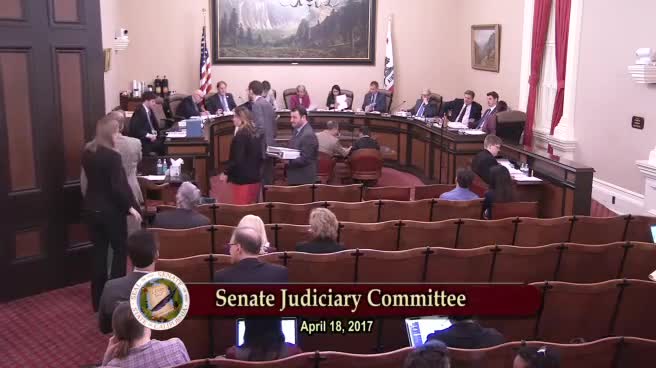 17MIN
Senate Standing Committee on Judiciary
Bill Author

Bill Co-Author(s):