SB 651: Initiative, referendum, and recall petitions: disclosures.
- Session Year: 2017-2018
- House: Senate
- Latest Version Date: 2017-07-05
The California Constitution and existing statutory law provide for the electors to propose statutes or amendments to the Constitution by initiative. Existing law authorizes a person who is a voter or who is qualified to register to vote in California to circulate an initiative or referendum petition within the state.
Existing law requires that an initiative petition contain specified language advising the public of its right to determine whether the person circulating the petition is a paid signature gatherer or a volunteer. Existing law prescribes other requirements regarding the form, content, and presentation of initiative and referendum petitions.
This bill would require that a state or local initiative, referendum, or recall petition that requires voter signatures and is paid for by a committee, as specified, to include a disclosure statement that identifies the name of the committee, any top contributors, as defined, and the date the top contributors to the committee were calculated. The bill would require that the disclosure be updated within 14 days of any change in the identities of the top contributors. The bill would require a committee that employs one or more paid circulators, as defined, to ensure that the paid circulators use petitions with the updated disclosure within 21 days. The bill would additionally require the committee to submit the disclosure statement and any updates to the Secretary of State for posting on the Secretary of States Internet Web site.
This bill would additionally require a statewide initiative, referendum, or recall petition to include a disclosure, as specified, notifying the public that the petition circulator is receiving money or other valuable consideration for the specific purpose of soliciting signatures of electors, or is a volunteer or employee of a nonprofit organization.The bill would require that a state or local initiative, referendum, or recall petition circulated by a paid circulator, as defined, who is paid by a committee, as specified, to include a disclosure statement identifying the persons from whom the committee received the 3 largest cumulative contributions of $50,000 or more in support of the measure and the name of their employer if 2 or more of these contributors have the same employer. The bill would require this disclosure statement to be updated within 14 days of any change in the 3 largest cumulative contributors. The bill would require a committee that employs one or more paid circulators for the purpose of circulating the petition to submit the disclosure statement and any updates to the Secretary of State for posting on his or her Internet Web site.The California Constitution and existing statutory law provide for the electors to propose statutes or amendments to the Constitution by initiative. Existing law authorizes a person who is a voter or who is qualified to register to vote in California to circulate an initiative or referendum petition within the state.
Existing law requires that an initiative petition contain specified language advising the public of its right to determine whether the person circulating the petition is a paid signature gatherer or a volunteer.
This bill would additionally require a statewide initiative, referendum, or recall petition to include a disclosure, as specified, notifying the public that the petition circulator is receiving money or other valuable consideration for the specific purpose of soliciting signatures of electors, or is a volunteer or employee of a nonprofit organization.
ThisThe bill would require that a state or local initiative, referendum, or recall petition circulated by a paid circulator, as defined, who is paid by a committee, as specified, to include a disclosure statement identifying the persons from whom the committee received the 5 3 largest cumulative contributions of $10,000 $50,000 or more in support of the measure and the name of their employer if 2 or more of these contributors have the same employer. The bill would require this disclosure statement to be updated within 7 14 days of any change in the 5 3 largest cumulative contributors. The bill would require a committee that employs one or more paid circulators for the purpose of circulating an initiative, referendum, or recall the petition to submit the disclosure statement and any updates to the Secretary of State for posting on his or her Internet Web site.
Existing law requires that an initiative petition contain specified language advising the public of its right to determine whether the person circulating the petition is a paid signature gatherer or a volunteer.
This bill would require that a state or local initiative, referendum, or recall petition circulated by a paid circulator, as defined, who is paid by a committee, as specified, to include a disclosure statement identifying the persons from whom the committee received the 5 largest cumulative contributions of $10,000 or more in support of the measure and the name of their employer if 2 or more of these contributors have the same employer. The bill would require this disclosure statement to be updated within 7 days of any change in the 5 largest cumulative contributors. The bill would require a committee that employs one or more paid circulators for the purpose of circulating an initiative, referendum, or recall petition to submit the disclosure statement and any updates to the Secretary of State for posting on his or her Internet Web site.
Paid circulator, for the purpose of circulating an initiative, referendum, or recall petition, means a person who is compensated in any manner for collecting petition signatures to qualify a state or local initiative, referendum, or recall measure.
SEC. 2.Section 9009.6 is added to the Elections Code, to read:9009.6.Notwithstanding any other law, a petition for a proposed initiative measure that is circulated by a person who receives money or other valuable consideration for the specific purpose of soliciting signatures of electors, shall include the following statement immediately prior to the portion of the petition for voters signatures, printed names, and residence addresses, printed in 12-point boldface type:NOTICE TO THE PUBLIC: THIS PETITION IS BEING CIRCULATED BY A PERSON PAID TO OBTAIN YOUR SIGNATURE. YOU ARE ENCOURAGED TO READ THE CONTENTS OF THIS PETITION BEFORE SIGNING.SEC. 3.Section 9009.7 is added to the Elections Code, to read:9009.7.Notwithstanding any other law, a petition for a proposed initiative measure that is circulated by a person who does not receive money or other valuable consideration for the specific purpose of soliciting signatures of electors shall include the following statement immediately prior to the portion of the petition for voters signatures, printed names, and residence addresses, printed in 12-point boldface type:NOTICE TO THE PUBLIC: THIS PETITION IS BEING CIRCULATED BY A VOLUNTEER OR AN EMPLOYEE OF A NONPROFIT ORGANIZATION. YOU ARE ENCOURAGED TO READ THE CONTENTS OF THIS PETITION BEFORE SIGNING.SEC. 4.SEC. 2.Section 9011.5 is added to the Elections Code, to read:9011.5.(a)(1)Notwithstanding any other provision of law, a state or local initiative, referendum, or recall petition that requires voter signatures and is circulated by a paid circulator who is paid paid for by a committee formed pursuant to Section 82013 of the Government Code shall include, in 12-point type at the top of the petition, a disclosure statement that identifies the names of the persons from whom the committee received the three largest cumulative contributions of fifty thousand dollars ($50,000) or more. Each contributor shall be identified on separate lines on the disclosure statement. include a disclosure statement that is displayed as follows:
(1)The disclosure statement shall have a solid white background and shall be in a printed or drawn box with a black border and shall appear before that portion of the petition for voters signatures, printed names, and residence addresses. The text in the disclosure area shall be in a black Arial equivalent type with a type size of at least 10-point, with all lines centered horizontally in the disclosure area.
(2)The top of the disclosure shall include the text Paid for by, followed by the name of the committee. If the committee has any top contributors, it shall be followed by the text Committee major funding from:. The text specified in this paragraph shall be underlined.
(3)The top contributors, if any, shall each be disclosed on a separate horizontal line, in descending order, beginning with the top contributor who made the largest cumulative contributions on the first line.
(4)The following line shall include the text Updated, followed by the date the top contributors were calculated, followed by the text Latest top contributors at www.fppc.ca.gov. The text specified in this paragraph shall be underlined.
(5)The committee, in its discretion, may include the underlined text Endorsed by:, followed by a list, not underlined, of up to three endorsing individuals, corporations, or non-profit organizations that have been in existence for at least six months and receive contributions from 100 or more persons.
(6)The disclosure of a top contributor pursuant to this section need not include terms such as incorporated, committee, political action committee, or corporation, or abbreviations of these terms, unless the term is part of the contributors name in common usage or parlance.
(7)If this section requires the disclosure of the name of a top contributor that is a committee pursuant to subdivision (a) of Section 82013 and is a sponsored committee pursuant to Section 82048.7 with a single sponsor, only the name of the single sponsoring organization shall be disclosed.
(b)The disclosure statement required by subdivision (a) shall be updated within fourteen days of any change in the identities of the top contributors, unless the change is only a change in their order. A committee that employs one or more paid circulators shall ensure that their paid circulators use petitions with the updated disclosure within 21 days.
(2)If more than three persons meet the disclosure threshold described in paragraph (1) and have made identical cumulative contributions, the three persons making the largest cumulative contributions shall be disclosed according to chronological sequence of receipt of the cumulative contributions.(3)The disclosure statement required by paragraph (1) shall be updated within fourteen days of any change in the identities of three largest cumulative contributors. The updated statement shall include at the bottom of the page the following: Current as of [Date]. For the latest contribution totals, go to www.fppc.ca.gov/initiatives.(4)(c)A committee that employs one or more paid circulators to circulate a state initiative, referendum, or recall petition shall submit the disclosure statement required by paragraph (1), subdivision (a), and any updates to that statement as required by paragraph (3), subdivision (b), to the Secretary of State, who shall post that statement on his or her the Secretary of States Internet Web site.
(b)A committee that employs one or more paid circulators to circulate an initiative, referendum, or recall petition shall print on the petition, immediately following the disclosure statement required pursuant to subdivision (a), its name and shall identify itself using a name or phrase that clearly describes the economic or other special interest of each person who contributed fifty thousand dollars ($50,000) or more. If two or more of these persons have the same employer, the committee shall also include the employers identity in the disclosure statement.(c)(d)As used in this section, cumulative contributions means the cumulative amount of contributions received by a committee beginning 12 months prior to the date the committee made its first expenditure to qualify or support the measure. Cumulative contributions totaling more than fifty thousand dollars ($50,000) shall be rounded to the nearest ten thousand dollars ($10,000).
(e)(1)As used in this section, top contributors means the persons from whom the committee paying for the petition has received its three highest cumulative contributions of fifty thousand dollars ($50,000) or more.
(2)If there is a tie between two or more contributors for the third highest cumulative contributions, then ties between top contributors shall be decided by chronological order starting with the first contributions.
(d)(f)This section shall not be construed to require a local elections official to verify the accuracy of the information required by subdivision (a) or (b) or to reapprove the petition upon the update required by paragraph (3) of subdivision (a). (b).
(e)(g)Signatures collected on an initiative, referendum, or recall petition are not invalid solely because the information required by subdivision (a) or (b) was absent or inaccurate.
REVISIONS: HeadingLine 2.Paid circulator, for the purpose of circulating an initiative, referendum, or recall petition, means a person who is compensated in any manner for collecting petition signatures to qualify a state or local initiative, referendum, or recall measure.
SEC. 2.Section 9009.6 is added to the Elections Code, to read:9009.6.Notwithstanding any other law, a petition for a proposed initiative measure that is circulated by a person who receives money or other valuable consideration for the specific purpose of soliciting signatures of electors, shall include the following statement immediately prior to the portion of the petition for voters signatures, printed names, and residence addresses, printed in 12-point boldface type:
NOTICE TO THE PUBLIC: THIS PETITION IS BEING CIRCULATED BY A PERSON PAID TO OBTAIN YOUR SIGNATURE. YOU ARE ENCOURAGED TO READ THE CONTENTS OF THIS PETITION BEFORE SIGNING.
SEC. 3.Section 9009.7 is added to the Elections Code, to read:9009.7.
Notwithstanding any other law, a petition for a proposed initiative measure that is circulated by a person who does not receive money or other valuable consideration for the specific purpose of soliciting signatures of electors shall include the following statement immediately prior to the portion of the petition for voters signatures, printed names, and residence addresses, printed in 12-point boldface type:
NOTICE TO THE PUBLIC: THIS PETITION IS BEING CIRCULATED BY A VOLUNTEER OR AN EMPLOYEE OF A NONPROFIT ORGANIZATION. YOU ARE ENCOURAGED TO READ THE CONTENTS OF THIS PETITION BEFORE SIGNING.
SEC. 2.SEC. 4.Section 9011.5 is added to the Elections Code, to read:9011.5.
(a)(1)Notwithstanding any other provision of law, a state or local initiative, referendum, or recall petition that requires voter signatures and is circulated by a paid circulator who is paid by a committee formed pursuant to Section 82013 of the Government Code shall include, in 12-point type at the top of the petition, a disclosure statement that identifies the names of the persons from whom the committee received the five three largest cumulative contributions of ten fifty thousand dollars ($10,000) ($50,000) or more. Each contributor shall be identified on separate lines on the disclosure statement.
(2)If more than five three persons meet the disclosure threshold described in paragraph (1) and have made identical cumulative contributions, the five three persons making the largest cumulative contributions shall be disclosed according to chronological sequence of receipt of the cumulative contributions.
(3)The disclosure statement required by paragraph (1) shall be updated within seven fourteen days of any change in the five identities of three largest cumulative contributors. The updated statement shall include at the bottom of the page the following: Current as of [Date]. For the latest contribution totals, go to www.fppc.ca.gov/initiatives.
(4)A committee that employs one or more paid circulators to circulate a state initiative, referendum, or recall petition shall submit the disclosure statement required by paragraph (1), and any updates to that statement as required by paragraph (3), to the Secretary of State, who shall post that statement on his or her Internet Web site.
(b)A committee that employs one or more paid circulators to circulate an initiative, referendum, or recall petition shall print on the petition, immediately following the disclosure statement required pursuant to subdivision (a), its name and shall identify itself using a name or phrase that clearly describes the economic or other special interest of each person who contributed fifty thousand dollars ($50,000) or more. If two or more of these persons have the same employer, the committee shall also include the employers identity in the disclosure statement.
(c)As used in this section, cumulative contributions means the cumulative amount of contributions received by a committee beginning 12 months prior to the date the committee made its first expenditure to qualify or support the measure.
(d)This section shall not be construed to require a local elections official to verify the accuracy of the information required by subdivision (a) or (b) or to reapprove the petition upon the update required by paragraph (3) of subdivision (a).
(e)Signatures collected on an initiative, referendum, or recall petition are not invalid solely because the information required by subdivision (a) or (b) was absent or inaccurate.
Paid circulator, for the purpose of circulating an initiative, referendum, or recall petition, means a person who is compensated in any manner for collecting petition signatures to qualify a state or local initiative, referendum, or recall measure.
SEC. 2.Section 9011.5 is added to the Elections Code, to read:9011.5.(a)(1)Notwithstanding any other provision of law, a state or local initiative, referendum, or recall petition that requires voter signatures and is circulated by a paid circulator who is paid by a committee formed pursuant to Section 82013 of the Government Code shall include, in 12-point type at the top of the petition, a disclosure statement that identifies the names of the persons from whom the committee received the five largest cumulative contributions of ten thousand dollars ($10,000) or more.
(2)If more than five persons meet the disclosure threshold described in paragraph (1) and have made identical cumulative contributions, the five persons making the largest cumulative contributions shall be disclosed according to chronological sequence of receipt of the cumulative contributions.
(3)The disclosure statement required by paragraph (1) shall be updated within seven days of any change in the five largest cumulative contributors.
(4)A committee that employs one or more paid circulators to circulate a state initiative, referendum, or recall petition shall submit the disclosure statement required by paragraph (1), and any updates to that statement as required by paragraph (3), to the Secretary of State, who shall post that statement on his or her Internet Web site.
(b)A committee that employs one or more paid circulators to circulate an initiative, referendum, or recall petition shall print on the petition, immediately following the disclosure statement required pursuant to subdivision (a), its name and shall identify itself using a name or phrase that clearly describes the economic or other special interest of each person who contributed fifty thousand dollars ($50,000) or more. If two or more of these persons have the same employer, the committee shall also include the employers identity in the disclosure statement.
(c)As used in this section, cumulative contributions means the cumulative amount of contributions received by a committee beginning 12 months prior to the date the committee made its first expenditure to qualify or support the measure.
(d)This section shall not be construed to require a local elections official to verify the accuracy of the information required by subdivision (a) or (b) or to reapprove the petition upon the update required by paragraph (3) of subdivision (a).
(e)Signatures collected on an initiative, referendum, or recall petition are not invalid solely because the information required by subdivision (a) or (b) was absent or inaccurate.
|
Date
|
Status
|
|---|---|
| Aug 31, 2018 | Ordered to inactive file on request of Assembly Member Mullin. |
| Aug 24, 2018 | From inactive file. |
| Aug 23, 2018 | Notice of intention to remove from inactive file given by Assembly Member Calderon. |
| Sep 13, 2017 | Ordered to inactive file on request of Assembly Member Calderon. |
| Aug 24, 2017 | Read second time. Ordered to third reading. |
| Aug 23, 2017 | From committee: Do pass. (Ayes 10. Noes 5.) (August 23). |
| Jul 13, 2017 | Coauthors revised. |
| Jul 5, 2017 | From committee with author's amendments. Read second time and amended. Re-referred to Com. on E. & R. |
| Jun 28, 2017 | June 28 set for first hearing canceled at the request of author. |
| May 26, 2017 | Referred to Com. on E. & R. |
| Apr 27, 2017 | In Assembly. Read first time. Held at Desk. |
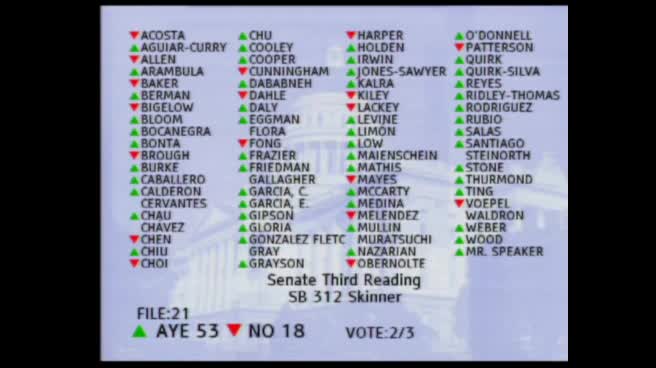
| Apr 27, 2017 | Read third time. Passed. (Ayes 28. Noes 9. Page 875.) Ordered to the Assembly. |
| Apr 18, 2017 | Read second time. Ordered to third reading. |
| Apr 17, 2017 | From committee: Be ordered to second reading pursuant to Senate Rule 28.8. |
| Apr 7, 2017 | Set for hearing April 17. |
| Apr 5, 2017 | From committee: Do pass and re-refer to Com. on APPR. (Ayes 4. Noes 0. Page 621.) (April 4). Re-referred to Com. on APPR. |
| Mar 27, 2017 | From committee with author's amendments. Read second time and amended. Re-referred to Com. on E. & C.A. |
| Mar 9, 2017 | Referred to Com. on E. & C.A. |
| Feb 21, 2017 | From printer. May be acted upon on or after March 23. |
| Feb 17, 2017 | Introduced. Read first time. To Com. on RLS. for assignment. To print. |
|
Date
|
Description
|
Location
|
Votes
|
|
|---|---|---|---|---|
| Aug 23, 2017 | Do pass. | Assembly Standing Committee on Appropriations |
Passed |
|
| Jul 12, 2017 | Do pass and be re-referred to the Committee on [Appropriations] | Assembly Standing Committee on Elections and Redistricting |
Passed |
|
| Apr 27, 2017 | Senate 3rd Reading SB651 Allen | Senate Floor |
Passed |
|
| Apr 4, 2017 | Do pass, but first be re-referred to the Committee on [Appropriations] | Senate Standing Committee on Elections and Constitutional Amendments |
Passed |
This list shows positions taken on this bill by organizations on the date displayed, which is linked to the original source.
Positions by individuals are not included.
SENATE THIRD READING
STR Bill Id:SB 651
Author:(Allen)
As Amended Ver:July 5, 2017
Majority vote
SENATE VOTE: 28-9
Committee | Votes | Ayes | Noes |
Elections | 5-0 | Berman, Cunningham, Low, Mullin, Weber | |
Appropriations | 10-5 | Gonzalez Fletcher, Bocanegra, Bonta, Calderon, Chau, Eggman, Friedman, Gray, Jones-Sawyer, Reyes | Bigelow, Brough, Fong, Gallagher, Obernolte |
SUMMARY: Requires state and local initiative, referendum, and recall petitions that are paid for by campaign committees, as specified, to include a statement identifying the three largest contributors of $50,000 or more to the committee paying for the petition. Specifically, this bill:
- Defines "paid circulator," for the purpose of circulating an initiative, referendum, or recall petition, as a person who is compensated in any manner for collecting petition signatures to qualify a state or local initiative, referendum, or recall measure.
- Requires a state or local initiative, referendum, or recall petition that requires voter signatures and is paid for by a committee, as specified, to include a disclosure statement that identifies the name of the committee, any top contributors, as defined, and the date the top contributors to the committee were calculated.
- Specifies the manner the disclosure statement is displayed including the color, background, and font size and type, as well as the specific content language of the disclosure.
- Requires the disclosure statement to be updated within 14 days of any change in the identities of three largest cumulative contributors, unless the change is only a change in the order of the top contributors.
- Requires a committee that employs paid circulators to ensure that their paid circulators use petitions with updated disclosures within 21 days of a change in the three largest cumulative contributors, and requires the committee to submit the disclosure statement and any updates to that statement to the Secretary of State (SOS), who is required to post that statement on his or her Internet Web site.
- Defines "cumulative contributions," for the purposes of this bill, as the cumulative amount of contributions received by a committee beginning 12 months prior to the date the committee made its first expenditure to qualify or support the measure. Requires cumulative contributions totaling more than $50,000 to be rounded to the nearest $10,000.
- Defines "top contributors," for the purposes of this bill, as the persons from whom the committee paying for the petition has received its three highest cumulative contributions of $50,000 or more. Requires any ties in the amounts given by two or more contributors to be decided by chronological order, starting with the first contributions.
- Provides that this bill shall not be construed to require a local elections official to verify the accuracy of the required information or to reapprove the petition upon the required update.
- Provides that signatures collected on a petition are not invalid solely because the information required by this bill was absent or inaccurate.
FISCAL EFFECT: According to the Assembly Appropriations Committee, minor and absorbable costs to the SOS to administer and enforce the provisions of this bill.
COMMENTS: According to the author, "SB 651 is an overwhelmingly popular, commonsense improvement to California's current campaign disclosure laws. The bill helps voters make informed decisions by requiring that the names of the top three funders of ballot measure campaigns appear directly on petitions circulated by signature gatherers… SB 651 requires an initiative, referendum, or recall petition circulated by a paid circulator to include a disclosure statement at the top of the petition listing the top three donors to the committee funding the signature gathering. If an identity of the three largest funders to the committee change during the time a petition is circulated, the committee is required to update the list of donors on the petition within 14 days…"
Existing law requires campaign committees to file periodic reports disclosing contributions received and expenditures made to support or oppose the qualification or passage of an initiative, referendum, or recall measure. In most cases, those campaign disclosure reports will be available online if the measure is a state measure. To the extent that having more information about the financial supporters of a measure is an important consideration for a voter when deciding whether to sign a petition to place that measure on the ballot, the voter typically will be able to get that information from campaign reports.
On the other hand, existing law also recognizes an interest in providing voters with information about the contributors to a measure at the time voters are asked to support or oppose that measure. Section 84503 of the California Government Code states "Any advertisement for or against any ballot measure shall include a disclosure statement identifying any person whose cumulative contributions are fifty thousand dollars ($50,000) or more." Additionally, existing law requires a committee that is supporting or opposing one or more ballot measures to name and identify itself using a name that identifies the economic or other special interest of its major donors of $50,000 or more.
AB 400 (Fong) of 2014, which was vetoed by the Governor, would have required an initiative, referendum, or recall petition that is circulated by a paid circulator to include a statement identifying the five largest contributors of $10,000 or more in support of the measure. In his veto message, Governor Brown said "It is not practical to include contributor information on petitions as signatures are being gathered. The brief time allotted to collect hundreds of thousands of signatures does not provide flexibility for a proponent to reprint petitions each time there is a change in the top five contributors."
Analysis Prepared by: Bish Paul / E. & R. / (916) 319-2094 FN: 0001401
Date of Hearing: August 23, 2017
ASSEMBLY COMMITTEE ON APPROPRIATIONS
Lorena Gonzalez Fletcher, Chair
SBPCA Bill Id:SB 651
Author:(Allen) – As Amended Ver:July 5, 2017
Policy Committee: | Elections and Redistricting | Vote: | 5 - 0 |
|
| ||
|
|
Urgency: No State Mandated Local Program: No Reimbursable: No
SUMMARY:
This bill requires state and local initiative, referendum, and recall petitions that are paid for by campaign committees, as specified, to include a statement identifying the three largest contributors of $50,000 or more.
FISCAL EFFECT:
Minor and absorbable costs to the Secretary of State to administer and enforce the provisions of this bill.
COMMENTS:
- Background. Existing law requires campaign committees to file periodic reports disclosing contributions received and expenditures made to support or oppose the qualification or passage of an initiative, referendum, or recall measure. In most cases, those campaign disclosure reports will be available online if the measure is a state measure. To the extent that having more information about the financial supporters of a measure is an important consideration for a voter when deciding whether to sign a petition to place that measure on the ballot, the voter typically will need to get that information from campaign reports.
- Purpose. According to the author, “SB 651 is an overwhelmingly popular, commonsense improvement to California’s current campaign disclosure laws. The bill helps voters make informed decisions by requiring that the names of the top three funders of ballot measure campaigns appear directly on petitions circulated by signature gatherers…While committees supporting or opposing ballot measures must file periodic campaign finance reports, voters who sign petitions do not have easy access to this information when approached by a petition circulator.”
Analysis Prepared by: Jessica Peters / APPR. / (916) 319-2081
Date of Hearing: July 12, 2017
ASSEMBLY COMMITTEE ON ELECTIONS AND REDISTRICTING
Marc Berman, Chair
SBPCA Bill Id:SB 651
Author:(Allen) – As Amended Ver:July 5, 2017
SENATE VOTE: 28-9
SUBJECT: Initiative, referendum, and recall petitions: disclosures.
SUMMARY: Requires state and local initiative, referendum, and recall petitions that are paid for by campaign committees, as specified, to include a statement identifying the three largest contributors of $50,000 or more to the committee paying for the petition. Specifically, this bill:
- Defines “paid circulator,” for the purpose of circulating an initiative, referendum, or recall petition, as a person who is compensated in any manner for collecting petition signatures to qualify a state or local initiative, referendum, or recall measure.
- Requires that a state or local initiative, referendum, or recall petition that requires voter signatures and is paid for by a committee, as specified, to include a disclosure statement that identifies the name of the committee, any top contributors, as defined, and the date the top contributors to the committee were calculated.
- Specifies the manner the disclosure statement is displayed including the color, background, and font size and type, as well as the specific content language of the disclosure.
- Requires the disclosure statement to be updated within 14 days of any change in the identities of three largest cumulative contributors, unless the change is only a change in the order of the top contributors.
- Requires a committee that employs paid circulators to ensure that their paid circulators use petitions with updated disclosures within 21 days of a change in the three largest cumulative contributors, and requires the committee to submit the disclosure statement and any updates to that statement to the Secretary of State, who is required to post that statement on his or her Internet Web site.
- Defines “cumulative contributions,” for the purposes of this bill, as the cumulative amount of contributions received by a committee beginning 12 months prior to the date the committee made its first expenditure to qualify or support the measure. Requires cumulative contributions totaling more than $50,000 to be rounded to the nearest $10,000.
- Defines "top contributors," for the purposes of this bill, as the persons from whom the committee paying for the petition has received its three highest cumulative contributions of $50,000 or more. Requires any ties in the amounts given by two or more contributors to be decided by chronological order, starting with the first contributions.
- Provides that this bill shall not be construed to require a local elections official to verify the accuracy of the required information or to reapprove the petition upon the required update.
- Provides that signatures collected on a petition are not invalid solely because the information required by this bill was absent or inaccurate.
EXISTING LAW:
- Requires every state or local initiative petition to contain a notice alerting voters that the petition may be circulated by a paid signature gatherer or a volunteer, and that voters have the right to ask if a petition circulator is paid or is a volunteer.
- Requires political committees, as defined, to periodically report contributions received and expenditures made to support or oppose the qualification or passage of an initiative, referendum, or recall measure.
- Requires an advertisement for or against a ballot measure to include a disclosure statement identifying any person whose cumulative contributions are $50,000 or more, as specified.
- Requires a committee that supports or opposes one or more ballot measures to name itself using a name or phrase that identifies the economic or other special interest of its major donors of $50,000 or more; provides that if the major donors of $50,000 or more share a common employer, the identity of the employer must also be disclosed.
FISCAL EFFECT: Unknown
COMMENTS:
- Purpose of the Bill: According to the author:
SB 651 is an overwhelmingly popular, commonsense improvement to California’s current campaign disclosure laws. The bill helps voters make informed decisions by requiring that the names of the top three funders of ballot measure campaigns appear directly on petitions circulated by signature gatherers…
While committees supporting or opposing ballot measures must file periodic campaign finance reports, voters who sign petitions do not have easy access to this information when approached by a petition circulator. In fact, circulators are not required to know or disclose this information, even when asked…
SB 651 requires an initiative, referendum, or recall petition circulated by a paid circulator to include a disclosure statement at the top of the petition listing the top three donors to the committee funding the signature gathering. If an identity of the three largest funders to the committee change during the time a petition is circulated, the committee is required to update the list of donors on the petition within 14 days…
- Existing Disclosure Requirements: As noted above, existing law requires campaign committees to file periodic reports disclosing contributions received and expenditures made to support or oppose the qualification or passage of an initiative, referendum, or recall measure. In most cases, those campaign disclosure reports will be available online if the measure is a state measure. To the extent that having more information about the financial supporters of a measure is an important consideration for a voter when deciding whether to sign a petition to place that measure on the ballot, the voter typically will be able to get that information from campaign reports.
On the other hand, existing law also recognizes an interest in providing voters with information about the contributors to a measure at the time voters are asked to support or oppose that measure. Section 84503 of the California Government Code states “Any advertisement for or against any ballot measure shall include a disclosure statement identifying any person whose cumulative contributions are fifty thousand dollars ($50,000) or more.” Additionally, existing law requires a committee that is supporting or opposing one or more ballot measures to name and identify itself using a name that identifies the economic or other special interest of its major donors of $50,000 or more. - Speaker’s Commission on the California Initiative Process: In 2000, then-Assembly Speaker Robert M. Hertzberg created a Commission on the California Initiative Process (Commission). The goal of the Commission was to examine the initiative process and recommend changes to make the process more responsive to voter concerns. In its final report, the Commission states that when deciding whether or not to sign an initiative petition, voters should have information available about an initiative’s sponsors to fully inform their decision. The Commission made the following recommendations:
- All petitions to qualify a statewide initiative for the ballot shall be accompanied by a written campaign financial disclosure, which may be printed on, attached or bound to the petition. It need not be contiguous. Potential signers would be informed either orally or in writing that financial disclosure information concerning the initiative can be obtained on the Secretary of State’s website.
- All mass mailings sent by committees urging voters to sign petitions to qualify a statewide initiative must disclose the top five contributors to the committee and the cumulative amount of each one’s contributions, as of the committee’s most recent campaign report.
- Any committee employee or contractor who circulates a petition to qualify a statewide initiative must make available to potential signers the names and cumulative amounts of the top five contributors to the committee as of the committee’s most recent campaign report. This information shall also be made available through the proponent’s web site. Information on the location of the web site shall be made available to the potential signer. Committees must request volunteer petition circulators to provide the same information.
- Voter Support for Public Disclosure: In a 2013 report titled “Reforming California’s Initiative Process”, the Public Policy Institute of California (PPIC) found eight in 10 adults (78%) and likely voters (84%) favor increasing public disclosure of funding sources for signature gathering and initiative campaigns. This support is across the political spectrum with 81 percent of Democrats, 80 percent of Republicans, and 85 percent of independents supporting increased disclosure.
- Prior Legislation: AB 400 (Fong) of 2014, which was vetoed by the Governor, would have required an initiative, referendum, or recall petition that is circulated by a paid circulator to include a statement identifying the five largest contributors of $10,000 or more in support of the measure. In his veto message, Governor Brown said “It is not practical to include contributor information on petitions as signatures are being gathered. The brief time allotted to collect hundreds of thousands of signatures does not provide flexibility for a proponent to reprint petitions each time there is a change in the top five contributors.” He further noted that voters can inspect the top 10 contributors on the Fair Political Practices Commission's website.
SB 469 (Bowen) of 2005 would have required an initiative, referendum, or recall petition to include a statement identifying the five largest contributors in support of the measure, among other provisions. SB 469 was vetoed by the Governor. In his veto message, Governor Schwarzenegger said “This bill attacks the initiative process and makes it more difficult for the people of California to gather signatures and qualify measures for the ballot. While difficulty of the process may be a good thing for big-money special interests and for political consultants who stand to gain financially, it is not for everyday Californians with an idea for reform."
AB 1500 (Hertzberg) of 2002 would have required any person who circulates an initiative petition for signatures to make available to potential signers the names of the top five contributors to the committee and the cumulative amount contributed by each as disclosed on the committee’s most recent campaign report, among other provisions. AB 1500 died on the Senate Inactive File.
REGISTERED SUPPORT / OPPOSITION:
Support
California Clean Money Campaign (sponsor)
California Church IMPACT
California League of Conservation Voters
California Public Interest Research Group (CALPIRG)
CounterPAC
Educate, Advocate (prior version)
Endangered Habitats League
GMO Free California
Lutheran Office of Public Policy
Maplight
Money Out Voters In
People Demanding Action
People for the American Way
Voices For Progress Education Fund
Opposition
None on file.
Analysis Prepared by: Bish Paul / E. & R. / (916) 319-2094
Office of Senate Floor Analyses (916) 651-1520 Fax: (916) 327-4478 | SB |
THIRD READING
Bill No: SB 651
:
SENATE ELECTIONS & C.A. COMMITTEE: 4-0, 4/4/17
AYES: Stern, Allen, Hertzberg, Leyva
NO VOTE RECORDED: Anderson
SENATE APPROPRIATIONS COMMITTEE: Senate Rule 28.8
SOURCE: California Clean Money Campaign
DIGEST: This bill requires state and local initiative, referendum, and recall petitions that are circulated by paid circulators to include a statement identifying the three largest contributors of $50,000 or more in support of the measure and requires specified statements urging a potential signer to read the contents of statewide initiative petitions.
Existing law:
- Requires every state or local initiative petition to contain a notice alerting voters that the petition may be circulated by a paid signature gatherer or a volunteer and that voters have the right to ask if a petition circulator is paid or is a volunteer.
- Requires political committees, as defined, to periodically report contributions received and expenditures made to support or oppose the qualification or passage of an initiative, referendum, or recall measure.
- Requires an advertisement for or against any ballot measure to include a disclosure statement identifying any person whose cumulative contributions are $50,000 or more, as specified.
- Requires a committee that supports or opposes one or more ballot measures to name itself using a name or phrase that identifies the economic or other special interest of its major donors of $50,000 or more; provides that if the major donors of $50,000, or more share a common employer, the identity of the employer must also be disclosed.
This bill:
- Defines “paid circulator,” for the purpose of circulating an initiative, referendum, or recall petition, as a person who is compensated in any manner for collecting petition signatures to qualify a state or local initiative, referendum, or recall measure.
- Requires that a petition for a proposed statewide initiative measure that is circulated by a person who receives money or other valuable consideration for the specific purpose of soliciting signatures of electors, shall include the following statement immediately prior to the portion of the petition for voters’ signatures, printed names, and residence addresses, printed in 12-point boldface type:
“NOTICE TO THE PUBLIC: THIS PETITION IS BEING CIRCULATED BY A PERSON PAID TO OBTAIN YOUR SIGNATURE. YOU ARE ENCOURAGED TO READ THE CONTENTS OF THIS PETITION BEFORE SIGNING.”
- Requires that a petition for a proposed statewide initiative measure that is circulated by a person who does not receive money or other valuable consideration for the specific purpose of soliciting signatures of electors shall include the following statement immediately prior to the portion of the petition for voters’ signatures, printed names, and residence addresses, printed in 12-point boldface type:
“NOTICE TO THE PUBLIC: THIS PETITION IS BEING CIRCULATED BY A VOLUNTEER OR AN EMPLOYEE OF A NONPROFIT ORGANIZATION. YOU ARE ENCOURAGED TO READ THE CONTENTS OF THIS PETITION BEFORE SIGNING.”
- Requires a state or local initiative, referendum, or recall petition that is circulated by a paid circulator who is paid by a committee formed pursuant to the Political Reform Act shall include, in 12-point type at the top of the petition, a disclosure statement that identifies the names of the persons from whom the committee received the three largest cumulative contributions of $50,000 or more.
- Requires that each contributor shall be identified on separate lines on the disclosure statement and that if more than three persons meet the disclosure threshold described above and have made identical cumulative contributions, the three persons making the largest cumulative contributions shall be disclosed according to chronological sequence of receipt of the cumulative contributions.
- Requires the disclosure statement to be updated within 14 days of any change in the identities of three largest cumulative contributors. The updated statement shall include at the bottom of the page the following:
“Current as of [Date]. For the latest contribution totals, go to www.fppc.ca.gov/initiatives.”
- Requires a committee that employs paid circulators to submit the disclosure statement and any updates to that statement to the Secretary of State, who shall post that statement on his or her Internet Web site.
- Requires a committee that employs paid circulators to print on the petition, immediately following the disclosure statement, its name and shall identify itself using a name or phrase that clearly describes the economic or other special interest of each person who contributed $50,000 or more. If two or more of these persons have the same employer, the committee shall also include the employer’s identity in the disclosure statement.
- Defines “cumulative contributions” for the purposes of this bill as the cumulative amount of contributions received by a committee beginning 12 months prior to the date the committee made its first expenditure to qualify or support the measure.
- Provides that this bill shall not be construed to require a local elections official to verify the accuracy of the required information or to reapprove the petition upon the required update.
- Provides that signatures collected on a petition are not invalid solely because the information required by this bill was absent or inaccurate.
Background
Existing Disclosure Requirements. As noted above, existing law requires campaign committees to file periodic reports disclosing contributions received and expenditures made to support or oppose the qualification or passage of an initiative, referendum, or recall measure. In most cases, those campaign disclosure reports will be available online if the measure is a state measure. To the extent that having more information about the financial supporters of a measure is an important consideration for a voter when deciding whether to sign a petition to place that measure on the ballot, the voter typically will be able to get that information from campaign reports.
On the other hand, existing law also recognizes an interest in providing voters with information about the contributors to a measure at the time voters are asked to support or oppose that measure. Specifically, existing law requires advertisements for or against ballot measures to include a disclosure statement identifying the two largest donors of $50,000 or more to the committee paying for the advertisement. Additionally, existing law requires a committee that is supporting or opposing one or more ballot measures to name and identify itself using a name that identifies the economic or other special interest of its major donors of $50,000 or more.
Speaker’s Commission on the California Initiative Process. In 2000, then-Assembly Speaker Robert M. Hertzberg created a Commission on the California Initiative Process (Commission). The goal of the Commission was to examine the initiative process and recommend changes to make the process more responsive to voter concerns. The Commission issued its final report in January 2002. Among the recommendations proposed by the Commission was a requirement that all petitions to qualify a statewide initiative for the ballot be accompanied by a written campaign financial disclosure, which may be printed on, attached, or bound to the petition.
Comments
- According to the author, a dizzying 115 initiatives qualified for circulation for the 2016 election, with a near-record 17 measures appearing on the November 2016 ballot. All qualified only after their sponsors spent a million dollars or more paying for signature gathering, with voters rarely knowing who the proponents were.
While committees supporting or opposing ballot measures are required to file periodic campaign finance reports, potential signers of the petitions do not have easy access to this information when approached by a petition circulator. While the voter can ask the circulator for this information, even paid circulators are not required to know or disclose this information, and often they don’t know themselves.
Surveys consistently have shown that voters want improved public disclosure of the sources that are funding signature gathering for proposed ballot measures. In fact, the Public Policy Institute of California (PPIC) has found greater than 70 percent support for increasing public disclosure of funding sources for initiative campaigns each of the eight times that they asked that question. In March 2013, the PPIC found that 81% of Democrats, 80% of Republicans, and 85% of Independents supported increased disclosure of the funding sources for initiative campaigns.
SB 651, the Petition Disclosure Act, requires an initiative, referendum, or recall petition circulated by a paid circulator to include a disclosure statement at the top of the petition listing the top three donors to the committee that is funding the signature gathering on that petition.
If the three largest donors to the committee change during the period of time that the petition is being circulated, the committee is required to update the list of donors on the petition within seven days.
AB 400, a 2014 bill by then-Assemblymember Paul Fong which passed the Legislature was vetoed by Governor Brown due to concerns about the practicality of reprinting initiative petitions in the time allotted to collect signatures.
Related/Prior Legislation
SB 1094 (Hernandez, 2016), which was vetoed by the Governor, would have made numerous significant changes to provisions of state law governing initiatives, including requirements similar to those in SB 651 urging potential signers to read the contents of statewide initiative petitions. In his veto message, the Governor focused on unrelated provisions of SB 1094.
AB 400 (Fong, 2014), which was vetoed by the Governor, would have required an initiative, referendum, or recall petition that is circulated by a paid circulator to include a statement identifying the five largest contributors of $10,000 or more in support of the measure. In his veto message, the Governor stated the following:
“Information regarding contributions is most important for voters when they are deciding whether to vote for or against a measure that is on the ballot. Earlier this year I signed legislation to provide up-to-date information regarding committees for or against a measure or candidate that have raised over $1 million. Now, voters can inspect the top 10 contributors on the Fair Political Practices' website at www.fppc.ca.gov/top10Nov2014 or www.fppc.ca.gov/candidateNov2014. These links are also provided in the ballot pamphlet - an essential source of information for voters.
It is not practical to include contributor information on petitions as signatures are being gathered. The brief time allotted to collect hundreds of thousands of signatures does not provide flexibility for a proponent to reprint petitions each time there is a change in the top five contributors.”
SB 469 (Bowen, 2005) would have required an initiative, referendum, or recall petition to include a statement identifying the five largest contributors in support of the measure, among other provisions. SB 469 was vetoed by Governor Schwarzenegger.
AB 1500 (Hertzberg, 2002) would have required any person who circulates an initiative petition for signatures to make available to potential signers the names of the top five contributors to the committee and the cumulative amount contributed by each as disclosed on the committee’s most recent campaign report, among other provisions. AB 1500 died on the Senate Inactive File.
FISCAL EFFECT: Appropriation: Fiscal Com.: Local:
California Clean Money Campaign (source)
California Church IMPACT
California League of conservation Voters
California Public Interest Research Group
CounterPAC
Endangered Habitats League
GMO Free California
Lutheran Office of Public Policy
Maplight
Money Out Voters In
People Demanding Action
Voices For Progress Education Fund
OPPOSITION: (Verified 4/18/17)
None received
4/19/17 14:10:33
**** END ****
SENATE COMMITTEE ON
ELECTIONS AND CONSTITUTIONAL AMENDMENTS
Senator Henry Stern, Chair
2017 - 2018 Regular
Bill No: SB Hearing Date: 4/4/17
Author: | |||
Version: | 3/27/17 | ||
Urgency: | No | Fiscal: | Yes |
Consultant: | Darren Chesin | ||
Subject: Initiative, referendum, and recall petitions: paid circulators
DIGEST
This bill requires state and local initiative, referendum, and recall petitions that are circulated by paid circulators to include a statement identifying the three largest contributors of $50,000 or more in support of the measure and requires specified statements urging a potential signer to read the contents of statewide initiative petitions.
ANALYSIS
Existing law:
- Requires every state or local initiative petition contain a notice alerting voters that the petition may be circulated by a paid signature gatherer or a volunteer and that voters have the right to ask if a petition circulator is paid or is a volunteer.
- Requires political committees, as defined, to periodically report contributions received and expenditures made to support or oppose the qualification or passage of an initiative, referendum, or recall measure.
- Requires an advertisement for or against any ballot measure to include a disclosure statement identifying any person whose cumulative contributions are $50,000 or more, as specified.
- Requires a committee that supports or opposes one or more ballot measures to name itself using a name or phrase that identifies the economic or other special interest of its major donors of $50,000 or more; provides that if the major donors of $50,000, or more share a common employer, the identity of the employer must also be disclosed.
This bill:
- Defines “paid circulator,” for the purpose of circulating an initiative, referendum, or recall petition, as a person who is compensated in any manner for collecting petition signatures to qualify a state or local initiative, referendum, or recall measure.
- Requires that a petition for a proposed statewide initiative measure that is circulated by a person who receives money or other valuable consideration for the specific purpose of soliciting signatures of electors, shall include the following statement immediately prior to the portion of the petition for voters’ signatures, printed names, and residence addresses, printed in 12-point boldface type:
“NOTICE TO THE PUBLIC: THIS PETITION IS BEING CIRCULATED BY A PERSON PAID TO OBTAIN YOUR SIGNATURE. YOU ARE ENCOURAGED TO READ THE CONTENTS OF THIS PETITION BEFORE SIGNING.” - Requires that a petition for a proposed statewide initiative measure that is circulated by a person who does not receive money or other valuable consideration for the specific purpose of soliciting signatures of electors shall include the following statement immediately prior to the portion of the petition for voters’ signatures, printed names, and residence addresses, printed in 12-point boldface type:
“NOTICE TO THE PUBLIC: THIS PETITION IS BEING CIRCULATED BY A VOLUNTEER OR AN EMPLOYEE OF A NONPROFIT ORGANIZATION. YOU ARE ENCOURAGED TO READ THE CONTENTS OF THIS PETITION BEFORE SIGNING.” - Requires a state or local initiative, referendum, or recall petition that is circulated by a paid circulator who is paid by a committee formed pursuant to the Political Reform Act (PRA) shall include, in 12-point type at the top of the petition, a disclosure statement that identifies the names of the persons from whom the committee received the three largest cumulative contributions of $50,000 or more.
- Requires that each contributor shall be identified on separate lines on the disclosure statement and that if more than three persons meet the disclosure threshold described above and have made identical cumulative contributions, the three persons making the largest cumulative contributions shall be disclosed according to chronological sequence of receipt of the cumulative contributions.
- Requires the disclosure statement to be updated within 14 days of any change in the
“Current as of [Date]. For the latest contribution totals, go to www.fppc.ca.gov/initiatives.” - Requires a committee that employs paid circulators to submit the disclosure statement and any updates to that statement to the SOS, who shall post that statement on his or her Internet Web site.
- Requires a committee that employs paid circulators to print on the petition, immediately following the disclosure statement, its name and shall identify itself using a name or phrase that clearly describes the economic or other special interest of each person who contributed $50,000 or more. If two or more of these persons have the same employer, the committee shall also include the employer’s identity in the disclosure statement.
- Defines “cumulative contributions” for the purposes of this bill as the cumulative amount of contributions received by a committee beginning 12 months prior to the date the committee made its first expenditure to qualify or support the measure.
- Provides that this bill shall not be construed to require a local elections official to verify the accuracy of the required information or to reapprove the petition upon the required update.
- Provides that signatures collected on a petition are not invalid solely because the information required by this bill was absent or inaccurate.
BACKGROUND
Existing Disclosure Requirements: As noted above, existing law requires campaign committees to file periodic reports disclosing contributions received and expenditures made to support or oppose the qualification or passage of an initiative, referendum, or recall measure. In most cases, those campaign disclosure reports will be available online if the measure is a state measure. To the extent that having more information about the financial supporters of a measure is an important consideration for a voter when deciding whether to sign a petition to place that measure on the ballot, the voter typically will be able to get that information from campaign reports.
On the other hand, existing law also recognizes an interest in providing voters with information about the contributors to a measure at the time voters are asked to support or oppose that measure. Specifically, existing law requires advertisements for or against ballot measures to include a disclosure statement identifying the two largest donors of $50,000 or more to the committee paying for the advertisement. Additionally, existing law requires a committee that is supporting or opposing one or more ballot measures to name and identify itself using a name that identifies the economic or other special interest of its major donors of $50,000 or more.
Speaker’s Commission on the California Initiative Process. In 2000, then-Assembly Speaker Robert M. Hertzberg created a Commission on the California Initiative Process (Commission). The goal of the Commission was to examine the initiative process and recommend changes to make the process more responsive to voter concerns. The Commission issued its final report in January 2002. Among the recommendations proposed by the Commission was a requirement that all petitions to qualify a statewide initiative for the ballot be accompanied by a written campaign financial disclosure, which may be printed on, attached, or bound to the petition.
COMMENTS
- According to the author: A dizzying 115 initiatives qualified for circulation for the 2016 election, with a near-record 17 measures appearing on the November 2016 ballot. All qualified only after their sponsors spent a million dollars or more paying for signature gathering, with voters rarely knowing who the proponents were.
While committees supporting or opposing ballot measures are required to file periodic campaign finance reports, potential signers of the petitions do not have easy access to this information when approached by a petition circulator. While the voter can ask the circulator for this information, even paid circulators are not required to know or disclose this information, and often they don’t know themselves.
Surveys consistently have shown that voters want improved public disclosure of the sources that are funding signature gathering for proposed ballot measures. In fact, the Public Policy Institute of California (PPIC) has found greater than 70 percent support for increasing public disclosure of funding sources for initiative campaigns each of the eight times that they asked that question. In March 2013, the PPIC found that 81% of Democrats, 80% of Republicans, and 85% of Independents supported increased disclosure of the funding sources for initiative campaigns.
SB 651, the Petition Disclosure Act, requires an initiative, referendum, or recall petition circulated by a paid circulator to include a disclosure statement at the top of the petition listing the top three donors to the committee that is funding the signature gathering on that petition.
If the three largest donors to the committee change during the period of time that the petition is being circulated, the committee is required to update the list of donors on the petition within seven days.
AB 400, a 2014 bill by then-Assemblymember Paul Fong which passed the Legislature was vetoed by Governor Brown due to concerns about the practicality of reprinting initiative petitions in the time allotted to collect signatures.
RELATED/PRIOR LEGISLATION
SB 1094 (Hernandez, of 2016), which was vetoed by the Governor, would have made numerous significant changes to provisions of state law governing initiatives, including requirements similar to those in SB 651 urging potential signers to read the contents of statewide initiative petitions. In his veto message, the Governor focused on unrelated provisions of SB 1094.
AB 400 (Fong, of 2014), which was vetoed by the Governor, would have required an initiative, referendum, or recall petition that is circulated by a paid circulator to include a statement identifying the five largest contributors of $10,000 or more in support of the measure. In his veto message, the Governor stated the following:
“Information regarding contributions is most important for voters when they are deciding whether to vote for or against a measure that is on the ballot. Earlier this year I signed legislation to provide up-to-date information regarding committees for or against a measure or candidate that have raised over $1 million. Now, voters can inspect the top 10 contributors on the Fair Political Practices' website at www.fppc.ca.gov/top10Nov2014 or www.fppc.ca.gov/candidateNov2014. These links are also provided in the ballot pamphlet - an essential source of information for voters.
It is not practical to include contributor information on petitions as signatures are being gathered. The brief time allotted to collect hundreds of thousands of signatures does not provide flexibility for a proponent to reprint petitions each time there is a change in the top five contributors.”
SB 469 (Bowen, of 2005) would have required an initiative, referendum, or recall petition to include a statement identifying the five largest contributors in support of the measure, among other provisions. SB 469 was vetoed by Governor Schwarzenegger.
AB 1500 (Hertzberg, of 2002) would have required any person who circulates an initiative petition for signatures to make available to potential signers the names of the top five contributors to the committee and the cumulative amount contributed by each as disclosed on the committee’s most recent campaign report, among other provisions. AB 1500 died on the Senate Inactive File.
POSITIONS
Sponsor: California Clean Money Campaign
Support: California Church IMPACT
California Public Interest Research Group (CALPIRG)
CounterPAC
Endangered Habitats League
GMO Free California
People Demanding Action
Oppose: None received
-- END --
Discussed in Hearing
 2MIN
Assembly Floor
 1MIN
Assembly Standing Committee on Appropriations
 8MIN
Senate Floor
Bill Author
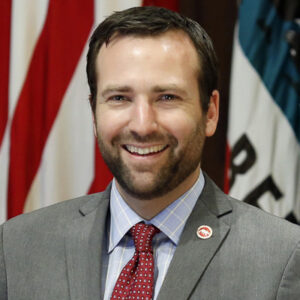
Bill Co-Author(s):