SB 660: Vehicle exhaust systems: exemption.
- Session Year: 2017-2018
- House: Senate
- Latest Version Date: 2017-04-17
Existing law requires the State Air Resources Board to adopt and implement motor vehicle emission standards and to establish criteria for the evaluation of the effectiveness of motor vehicle pollution control devices. Existing law creates the Air Pollution Control Fund, with moneys in the fund to be available to the state board to carry out its duties and functions. Existing law prohibits the disconnection, modification, or alteration of required motor vehicle pollution control devices, except with respect to an alteration, modification, or modifying device, apparatus, or mechanism that is covered by a resolution of the state board that makes specified findings. Existing law also allows aftermarket and performance parts to be sold and installed on motorcycles, concurrent with a motorcycles transfer to an ultimate purchaser, pursuant to a valid executive order of the state board.
This bill bill, until January 1, 2026, would authorize the state board to enter into specified agreements with private entities and receive contributions from private sources in the form of equipment or money in order to expedite the processing of the above-referenced resolutions and executive orders and the associated applications. create the Aftermarket Parts Account in the Air Pollution Control Fund, in which moneys may be deposited by public and private entities for the purpose of funding the hiring of additional staff for implementation of the approval of a device, apparatus, or mechanism under these provisions.
Existing law requires the State Air Resources Board to adopt and implement motor vehicle emission standards and to establish criteria for the evaluation of the effectiveness of motor vehicle pollution control devices. Existing law prohibits the disconnection, modification, or alteration of required motor vehicle pollution control devices, except with respect to an alteration, modification, or modifying device, apparatus, or mechanism that is covered by a resolution of the state board that makes specified findings. Existing law also allows aftermarket and performance parts to be sold and installed on motorcycles, concurrent with a motorcycles transfer to an ultimate purchaser, pursuant to a valid executive order of the state board.
This bill would authorize the state board to enter into specified agreements with private entities and receive contributions from private sources in the form of equipment or money in order to expedite the processing of the above-referenced resolutions and executive orders and the associated applications.
Existing law requires the State Air Resources Board to adopt and implement motor vehicle emission standards and to establish criteria for the evaluation of the effectiveness of motor vehicle pollution control devices. Existing law prohibits the disconnection, modification, or alteration of required motor vehicle pollution control devices, except with respect to an alteration, modification, or modifying device, apparatus, or mechanism that is covered by a resolution of the state board that makes specified findings. Existing law also allows aftermarket and performance parts to be sold and installed on motorcycles, concurrent with a motorcycles transfer to an ultimate purchaser, pursuant to a valid executive order of the state board.
This bill would authorize the state board to enter into agreements with private entities and receive contributions from private sources in the form of equipment or money in order to expedite the processing of the above-referenced resolutions and executive orders and the associated applications.
(a) Within the Air Pollution Control Fund there is created the Aftermarket Parts Account, in which moneys may be deposited by public and private entities for the purpose of funding the hiring of additional staff for implementing subdivision (h) of Section 27156 of the Vehicle Code, upon appropriation by the Legislature.
(b)This section shall remain in effect only until January 1, 2026, and as of that date is repealed.
SECTION 1.Section 43011.3 is added to the Health and Safety Code, to read:43011.3.(a)(1)The state board may enter into agreements with private entities and receive, on behalf of the state, contributions from private sources in the form of equipment or money in order to expedite the processing of applications, resolutions, and executive orders pertaining to subdivisions (h) and (i) of Section 27156 of the Vehicle Code. (2)If the state board enters into an agreement pursuant to paragraph (1), the agreement shall include a provision stating that the contributions received by the state board shall not be used to expedite an application by that private entity or to give preferential treatment to that private entity.(b)All moneys received pursuant to this section shall be separately accounted for and deposited in the Air Pollution Control Fund and shall be available, upon appropriation by the Legislature, to the state board for the costs associated with implementing this section.(a)(1)The state board may enter into agreements with private entities and receive, on behalf of the state, contributions from private sources in the form of equipment or money in order to expedite the processing of applications, resolutions, and executive orders pertaining to subdivisions (h) and (i) of Section 27156 of the Vehicle Code.
(2)If the state board enters into an agreement pursuant to paragraph (1), the agreement shall include a provision stating that the contributions received by the state board shall not be used to expedite an application by that private entity or to give preferential treatment to that private entity.
(b)All moneys received pursuant to this section shall be separately accounted for and deposited in the Air Pollution Control Fund and shall be available, upon appropriation by the Legislature, to the state board for the costs associated with implementing this section.
(a)The state board may enter into agreements with private entities and receive, on behalf of the state, contributions from private sources in the form of equipment or money in order to expedite the processing of applications, resolutions, and executive orders pertaining to subdivisions (h) and (i) of Section 27156 of the Vehicle Code.
(b)All moneys received pursuant to this section shall be separately accounted for and deposited in the Air Pollution Control Fund and shall be available, upon appropriation by the Legislature, to the state board for the costs associated with implementing this section.
|
Date
|
Status
|
|---|---|
| Jun 26, 2017 | June 26 set for first hearing canceled at the request of author. |
| Jun 21, 2017 | June 26 set for first hearing canceled at the request of author. |
| May 26, 2017 | Referred to Coms. on TRANS. and NAT. RES. |
| May 4, 2017 | In Assembly. Read first time. Held at Desk. |
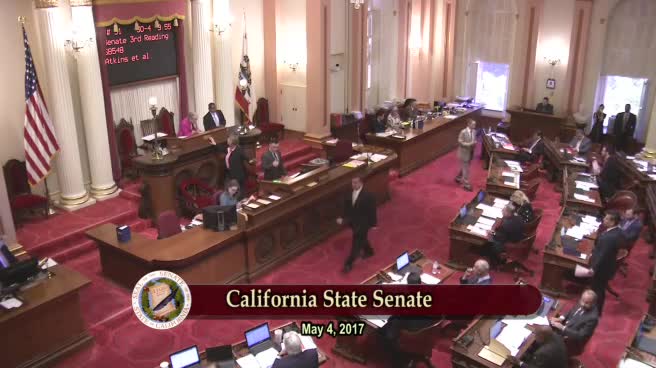
| May 4, 2017 | Read third time. Passed. (Ayes 39. Noes 0. Page 954.) Ordered to the Assembly. |
| May 2, 2017 | Read second time. Ordered to third reading. |
| May 1, 2017 | From committee: Be ordered to second reading pursuant to Senate Rule 28.8. |
| Apr 21, 2017 | Set for hearing May 1. |
| Apr 20, 2017 | From committee: Do pass and re-refer to Com. on APPR. (Ayes 6. Noes 0. Page 784.) (April 19). Re-referred to Com. on APPR. |
| Apr 17, 2017 | From committee with author's amendments. Read second time and amended. Re-referred to Com. on EQ. |
| Mar 31, 2017 | Set for hearing April 19. |
| Mar 29, 2017 | Read second time and amended. Re-referred to Com. on EQ. |
| Mar 28, 2017 | From committee: Do pass as amended and re-refer to Com. on EQ. (Ayes 11. Noes 0.) (March 28). |
| Mar 14, 2017 | Set for hearing March 28. |
| Mar 9, 2017 | Referred to Coms. on T. & H. and EQ. |
| Feb 21, 2017 | From printer. May be acted upon on or after March 23. |
| Feb 17, 2017 | Introduced. Read first time. To Com. on RLS. for assignment. To print. |
|
Date
|
Description
|
Location
|
Votes
|
|
|---|---|---|---|---|
| May 4, 2017 | Senate 3rd Reading SB660 Newman | Senate Floor |
Passed |
|
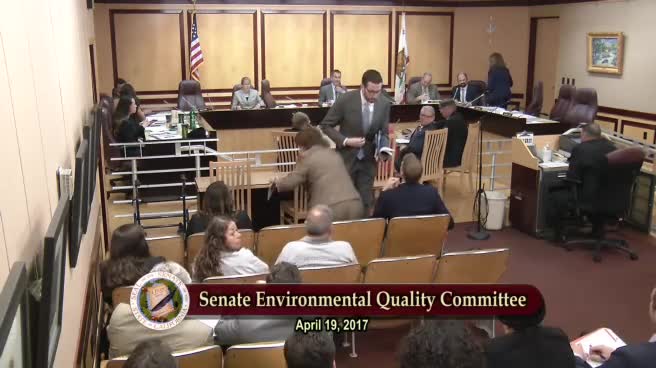
| Apr 19, 2017 | Do pass, but first be re-referred to the Committee on [Appropriations] | Senate Standing Committee on Environmental Quality |
Passed |
|
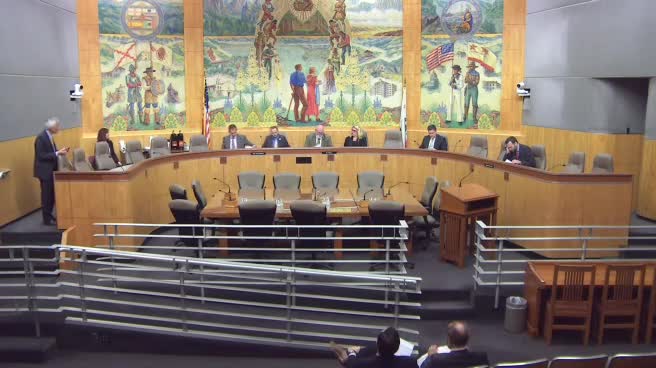
| Mar 28, 2017 | Do pass as amended, but first amend, and re-refer to the Committee on [Environmental Quality] | Senate Standing Committee on Transportation and Housing |
Passed |
This list shows positions taken on this bill by organizations on the date displayed, which is linked to the original source.
Positions by individuals are not included.
Office of Senate Floor Analyses (916) 651-1520 Fax: (916) 327-4478 | SB |
THIRD READING
Bill No: SB 660
:
SENATE TRANS. & HOUSING COMMITTEE: 11-0, 3/28/17
AYES: Beall, Cannella, Allen, Atkins, Bates, McGuire, Mendoza, Morrell, Roth, Skinner, Wiener
NO VOTE RECORDED: Gaines, Wieckowski
SENATE ENVIRONMENTAL QUALITY COMMITTEE: 6-0, 4/19/17
AYES: Wieckowski, Stone, Bates, Hill, Lara, Skinner
NO VOTE RECORDED: Stern
SENATE APPROPRIATIONS COMMITTEE: Senate Rule 28.8
SOURCE: Specialty Equipment Market Association
DIGEST:
This bill creates the After Market Parts Account within the Air Pollution Control Fund, in which moneys may be voluntarily deposited by private parties for the purpose of hiring additional staff for implementing subdivision (h) of Section 27156 of the Vehicle Code.
Existing law:
- Establishes the Air Resources Board (ARB) as the air pollution control agency in California and requires the ARB, among other things, to control emissions from a wide array of mobile sources. (Health and Safety Code (HSC) §39500 et seq.)
- Requires the ARB to promulgate and enforce rules and regulations necessary for the proper execution of its statutory mandates. (HSC §39601 et seq.)
- Establishes the Air Pollution Control Fund in the State Treasury for ARB to carry out its duties and functions, upon appropriation by the Legislature. (HSC §43015)
- Establishes the Motor Vehicle Inspection Program, commonly known as the smog check program, to help the state meet federal air quality standards. (HSC §44000 et seq.)
- Prohibits a person from installing, selling, offering for sale, or advertising any device, apparatus, or mechanism intended for use with, or as a part of, a required motor vehicle pollution control device or system that alters or modifies the original design or performance of the motor vehicle pollution control device or system. (Vehicle Code (VEH) §27156)
- Allows, to a vehicle, an alteration, modification, or modifying device, apparatus, or mechanism if ARB finds by resolution that it does not (i) reduce the effectiveness of a required motor vehicle pollution control device, and (ii) result in emissions from the modified or altered vehicle that are above levels that comply with existing state or federal standards for that model-year of the vehicle being modified or converted. (VEH §27156)
- Allows an aftermarket or performance part with a valid ARB Executive Order to be sold and installed concurrent with a motorcycle’s transfer to an ultimate purchaser. (VEH §27156)
This bill creates the After Market Parts Account within the Air Pollution Control Fund, in which moneys may be voluntarily deposited by private parties for the purpose of hiring additional staff for implementing subdivision (h) of Section 27156 of the Vehicle Code.
Background
- Health Impacts of Air Pollution.
When not adequately controlled, air pollution has dire consequences on the health and safety of both people and the environment. Poor air quality causes the lungs to constrict, resulting in wheezing, shortness of breath and chest tightness, especially during exercise or physical activity.
It is well known that air pollution causes asthma. According to the Centers for Disease Control and Prevention, nationwide 7.4% of adults and 8.6% of children have been diagnosed with asthma. In California, the numbers are significantly higher: 13.1% of adults and 12.5% of children have been diagnosed with asthma. Lower income and minority groups are disproportionately affected by asthma due to their increased exposure to air pollution.
Depending on exposure, air pollution alone can cause an increased risk of cardiovascular and respiratory illness, lung disease, cancerous tumors, birth defects, premature births, developmental disorders, central nervous system damage, intellectual disability, persistent memory impairments, epilepsy, dementia, and premature death. - Air Quality Standards.
The Federal Clean Air Act (FCAA) passed in 1963 and has been revised many times thereafter. The FCAA and its implementing regulations are intended to protect public health and environmental quality by limiting and reducing pollution from various sources. Under the FCAA, the United State Environmental Protection Agency (US EPA) establishes National Ambient Air Quality Standards (NAAQS) that apply to outdoor air throughout the country.
In 1969 and 1971, ARB set the first air quality standards for ozone, Particulate Matter (PM), oxides of nitrogen (NOx), oxides of sulfur (SOx), and carbon monoxide due to their negative impacts on public health above specified concentrations.
The federal government followed suit and set NAAQS for six “criteria pollutants.” These included ground-level ozone, PM, NOx, SOx, and carbon monoxide, and added lead. Now, the US EPA reviews each NAAQS at five-year intervals to ensure that the standards are based on the most recent scientific information.
Regions that do not meet the national standards for any one of the standards are designated “nonattainment areas.” The FCAA sets deadlines for attainment based on the severity of nonattainment and requires states to develop comprehensive plans, known as the state implementation plan (SIP), to attain and maintain air-quality standards for each area designated nonattainment for an NAAQS. - Vehicles and Air Pollution.
Vehicles are one of the primary sources of air pollution nationally. As such, the FCAA authorizes US EPA to establish and regulate emissions standards for mobile sources.
California, due to its preexisting vehicle-emission standards and severe motor vehicle air pollution problems, is authorized under the FCAA to implement separate mobile emission standards from the federal government. Other states may choose to follow either the national standard or the stricter California standards.
State law assigns the ARB with primary responsibility for control of mobile-source air pollution, including adoption of rules for reducing vehicle emissions, the specification of vehicular fuel composition, emissions control devices, and engine standards. - Executive Orders and Aftermarket Parts.
Due to the air pollution caused by vehicles, ARB requires vehicle manufacturers to develop engine and emission equipment systems that reduce the specific pollutants that cause California’s severe air quality problem. These emission control systems are also required to be proven durable and reliable.
To ensure that these systems operate as designed, it is prohibited to make modifications to vehicles that increase emissions. If, however, a manufacturer and the ARB prove that an aftermarket part or modification does not increase vehicle emissions, it may be installed. The certification process culminates in the ARB issuing what is called an Executive Order, which allows the part to be sold, and installed on vehicles, in California.
All aftermarket parts sold in California belong to one of the following four groups:- Replacement Parts. Replacement parts include things like carburetors, distributers, fuel injection systems, and fuel tanks. Typically these are parts on a vehicle that wear out with use and must be replaced during the lifetime of the vehicle. When a replacement part does not meet the original factory specifications it requires an Executive Order to be legal for street use.
- Legal Add-On or Modified Parts (Executive Order Parts). These parts alter a vehicle from its original equipment manufacturer configuration and are typically added on for safety or performance enhancement. Safety devices include antitheft devices; performance enhancers include air intake systems that cool an engine to increase horsepower or superchargers that increase air pressure in the engine allowing it to burn more fuel to increase power.
- Competition or Racing Use Only Parts. These parts may only be sold and installed on vehicles that are exclusively used for competition off public highways and roads. These parts replace or otherwise interfere with the operation of an emission control device, such as a catalytic converter or oxygen sensor.
- Catalytic Converters. Catalytic converters, as their name implies, catalyze (i.e., cause or accelerate) the conversion of toxic gases created during the combustion of fuel into less harmful ones. Catalytic converters can decrease the performance of an engine so some people chose to replace the catalytic converter that comes installed on a car with a more expensive one that reduces performance less.
- Replacement Parts. Replacement parts include things like carburetors, distributers, fuel injection systems, and fuel tanks. Typically these are parts on a vehicle that wear out with use and must be replaced during the lifetime of the vehicle. When a replacement part does not meet the original factory specifications it requires an Executive Order to be legal for street use.
Comments
- Purpose of Bill.
According to the author, “the market for aftermarket automotive products is dynamic and highly competitive. At present, however, applying for and obtaining an Executive Order (EO), which allows a part to be sold in California, for a particular part can be a time-consuming process. It currently takes anywhere from several months to over a year for Air Resources Board (ARB) to test aftermarket parts submitted to them and issue the subsequent EO. The greater number of vehicles on which the part can be used, the more complex and lengthy the application process.
“SB 660 will allow private parties, such as those in the automotive aftermarket part industry, to provide ARB with the additional resources needed to hire more dedicated staff for processing aftermarket part certifications. This bill would benefit all businesses submitting parts for approval to the aftermarket parts division at ARB.”
Related/Prior Legislation
SB 839 (Committee on Budget and Fiscal Review, Chapter 340, Statutes of 2016) included a provision authorizing ARB to enter into agreements with private entities to expedite the processing of aftermarket and performance parts sold on specific motor vehicles.
SB 835 (Committee on Budget and Fiscal Review, Chapter 344, Statutes of 2016) removed the provision relating to aftermarket parts that was enacted in SB 839.
FISCAL EFFECT: Appropriation: Fiscal Com.: Local:
Specialty Equipment Market Association (source)
American Motorcyclist Association
California Motorcycle Dealers Association
None received
5/3/17 15:18:29
**** END ****
SENATE COMMITTEE ON ENVIRONMENTAL QUALITY
Senator Wieckowski, Chair
2017 - 2018 Regular
Bill No: SB 660
Author: | Newman | ||
Version: | 4/17/2017 | Hearing Date: | 4/19/2017 |
Urgency: | No | Fiscal: | Yes |
Consultant: | David Ernest García | ||
SUBJECT: Vehicle exhaust systems: exemption
ANALYSIS:
Existing federal law:
- The Federal Clean Air Act (FCAA) and its implementing regulations set National Ambient Air Quality Standards (NAAQS) for six criteria pollutants, designate air basins that do not achieve NAAQS as nonattainment, allow only California to set vehicular emissions standards stricter than the federal government, and allow other states to adopt either the federal or California vehicular emissions standards. (42 U.S.C. §7401 et seq.)
Existing state law:
- Establishes the Air Resources Board (ARB) as the air pollution control agency in California and requires the ARB, among other things, to control emissions from a wide array of mobile sources. (Health and Safety Code (HSC) §39500 et seq.)
- Requires the ARB to promulgate and enforce rules and regulations necessary for the proper execution of its statutory mandates. (HSC §39601 et seq.)
- Establishes the Air Pollution Control Fund in the State Treasury for ARB to carry out its duties and functions, upon appropriation by the Legislature. (HSC §43015)
- Establishes the Motor Vehicle Inspection Program, commonly known as the smog check program, to help the state meet federal air quality standards. (HSC §44000 et seq.)
- Prohibits a person from installing, selling, offering for sale, or advertising any device, apparatus, or mechanism intended for use with, or as a part of, a required motor vehicle pollution control device or system that alters or modifies the original design or performance of the motor vehicle pollution control device or system. (Vehicle Code (VEH) §27156)
- Allows, to a vehicle, an alteration, modification, or modifying device, apparatus, or mechanism if ARB finds by resolution that it does not (i) reduce the effectiveness of a required motor vehicle pollution control device, and (ii) result in emissions from the modified or altered vehicle that are above levels that comply with existing state or federal standards for that model-year of the vehicle being modified or converted. (VEH §27156)
- Allows an aftermarket or performance part with a valid ARB Executive Order (EO) to be sold and installed concurrent with a motorcycle’s transfer to an ultimate purchaser. (VEH §27156)
This bill:
Creates the After Market Parts Account within the Air Pollution Control Fund, in which moneys may be voluntarily deposited by private parties for the purpose of hiring additional staff for implementing subdivision (h) of Section 27156 of the Vehicle Code.
Background
- Health Impacts of Air Pollution.
When not adequately controlled, air pollution has dire consequences on the health and safety of both people and the environment. Poor air quality causes the lungs to constrict, resulting in wheezing, shortness of breath and chest tightness, especially during exercise or physical activity.
It is well known that air pollution causes asthma. According to the Centers for Disease Control and Prevention, nationwide 7.4% of adults and 8.6% of children have been diagnosed with asthma. In California, the numbers are significantly higher: 13.1% of adults and 12.5% of children have been diagnosed with asthma. Lower income and minority groups are disproportionately affected by asthma due to their increased exposure to air pollution.
Depending on exposure, air pollution alone can cause an increased risk of cardiovascular and respiratory illness, lung disease, cancerous tumors, birth defects, premature births, developmental disorders, central nervous system damage, intellectual disability, persistent memory impairments, epilepsy, dementia, and premature death. - Air Quality Standards.
The Federal Clean Air Act (FCAA) passed in 1963 and has been revised many times thereafter. The FCAA and its implementing regulations are intended to protect public health and environmental quality by limiting and reducing pollution from various sources. Under the FCAA, the US EPA establishes National Ambient Air Quality Standards (NAAQS) that apply to outdoor air throughout the country.
In 1969 and 1971, ARB set the first air quality standards for ozone, Particulate Matter (PM), oxides of nitrogen (NOx), oxides of sulfur (SOx), and carbon monoxide due to their negative impacts on public health above specified concentrations.
The federal government followed suit and set NAAQS for six “criteria pollutants.” These included ground-level ozone, PM, NOx, SOx, and carbon monoxide, and added lead. Now, the US EPA reviews each NAAQS at five-year intervals to ensure that the standards are based on the most recent scientific information.
Regions that do not meet the national standards for any one of the standards are designated “nonattainment areas.” The FCAA sets deadlines for attainment based on the severity of nonattainment and requires states to develop comprehensive plans, known as the state implementation plan (SIP), to attain and maintain air-quality standards for each area designated nonattainment for an NAAQS. - Vehicles and Air Pollution.
Vehicles are one of the primary sources of air pollution nationally. As such, the FCAA authorizes US EPA to establish and regulate emissions standards for mobile sources.
California, due to its preexisting vehicle-emission standards and severe motor vehicle air pollution problems, is authorized under the FCAA to implement separate mobile emission standards from the federal government. Other states may choose to follow either the national standard or the stricter California standards.
State law assigns the ARB with primary responsibility for control of mobile-source air pollution, including adoption of rules for reducing vehicle emissions, the specification of vehicular fuel composition, emissions control devices, and engine standards. - Executive Orders and Aftermarket Parts.
Due to the air pollution caused by vehicles, ARB requires vehicle manufacturers to develop engine and emission equipment systems that reduce the specific pollutants that cause California’s severe air quality problem. These emission control systems are also required to be proven durable and reliable.
To ensure that these systems operate as designed, it is prohibited to make modifications to vehicles that increase emissions. If, however, a manufacturer and the ARB prove that an aftermarket part or modification does not increase vehicle emissions, it may be installed. The certification process culminates in the ARB issuing what is called an Executive Order (EO), which allows the part to be sold, and installed on vehicles, in California.
All aftermarket parts sold in California belong to one of the following four groups:- Replacement Parts. Replacement parts include things like carburetors, distributers, fuel injection systems, and fuel tanks. Typically these are parts on a vehicle that wear out with use and must be replaced during the lifetime of the vehicle. When a replacement part does not meet the original factory specifications it requires an Executive Order to be legal for street use.
- Legal Add-On or Modified Parts (Executive Order Parts). These parts alter a vehicle from its original equipment manufacturer configuration and are typically added on for safety or performance enhancement. Safety devices include antitheft devices; performance enhancers include air intake systems that cool an engine to increase horsepower or superchargers that increase air pressure in the engine allowing it to burn more fuel to increase power.
- Competition or Racing Use Only Parts. These parts may only be sold and installed on vehicles that are exclusively used for competition off public highways and roads. These parts replace or otherwise interfere with the operation of an emission control device, such as a catalytic converter or oxygen sensor.
- Catalytic Converters. Catalytic converters, as their name implies, catalyze (i.e., cause or accelerate) the conversion of toxic gases created during the combustion of fuel into less harmful ones. Catalytic converters can decrease the performance of an engine so some people chose to replace the catalytic converter that comes installed on a car with a more expensive one that reduces performance less.
- Replacement Parts. Replacement parts include things like carburetors, distributers, fuel injection systems, and fuel tanks. Typically these are parts on a vehicle that wear out with use and must be replaced during the lifetime of the vehicle. When a replacement part does not meet the original factory specifications it requires an Executive Order to be legal for street use.
Comments
- Purpose of Bill.
According to the author, “the market for aftermarket automotive products is dynamic and highly competitive. At present, however, applying for and obtaining an Executive Order (EO), which allows a part to be sold in California, for a particular part can be a time-consuming process. It currently takes anywhere from several months to over a year for Air Resources Board (ARB) to test aftermarket parts submitted to them and issue the subsequent EO. The greater number of vehicles on which the part can be used, the more complex and lengthy the application process.
“SB 660 will allow private parties, such as those in the automotive aftermarket part industry, to provide ARB with the additional resources needed to hire more dedicated staff for processing aftermarket part certifications. This bill would benefit all businesses submitting parts for approval to the aftermarket parts division at ARB.”
Related/Prior Legislation
SB 839 (Committee on Budget and Fiscal Review, Chapter 340, Statutes of 2016) included a provision authorizing ARB to enter into agreements with private entities to expedite the processing of aftermarket and performance parts sold on specific motor vehicles.
SB 835 (Committee on Budget and Fiscal Review, Chapter 344, Statutes of 2016) removed the provision relating to aftermarket parts that was enacted in SB 839.
DOUBLE REFERRAL:
This measure was heard in Senate Transportation and Housing Committee on March 28, 2017, and passed out of committee with a vote of 11-0.
SOURCE:
Specialty Equipment Market Association (sponsor)
SUPPORT:
American Motorcyclist Association
OPPOSITION:
None received
ARGUMENTS IN SUPPORT: According to the sponsor, “ARB’s Aftermarkets Parts Division processes certification requests from manufacturers of emissions-related aftermarket parts and certifies that the parts submitted meet the state’s emissions standards. Many of these requests eventually result in the issuance of a certification, known as an Executive Order (EO), allowing the part to be sold in California and in some cases nationally. Currently, it takes anywhere from several months to over a year for ARB to test aftermarket parts submitted by our members and issue the subsequent EO. SB 660 would allow ARB to work with private parties, such as SEMA and others in the automotive aftermarket part industry, on agreements to provide ARB additional resources to supplement existing staff dedicated to processing aftermarket part certifications.”
-- END --
SENATE COMMITTEE ON TRANSPORTATION AND HOUSING
Senator Jim Beall, Chair
2017 - 2018 Regular
Bill No: SB 660 Hearing Date: 3/28/2017
Author: | Newman | ||
Version: | 2/17/2017 | ||
Urgency: | No | Fiscal: | Yes |
Consultant: | Erin Riches | ||
SUBJECT: Vehicle exhaust systems: aftermarket parts.
DIGEST: This bill authorizes the state Air Resources Board (ARB) to enter into agreements with private entities to help expedite the processing of applications relating to aftermarket automotive and motorcycle parts.
ANALYSIS:
Existing law:
- Establishes the Motor Vehicle Inspection Program, commonly known as the smog check program, to help the state meet federal air quality standards. The smog check program generally requires vehicle owners to have their vehicles tested every two years, with some exceptions.
- Prohibits tampering with, disabling, modifying, removing, altering, or disconnecting a motor vehicle’s required emissions control devices. Allows changes to a motor vehicle or engine only if the changes do not increase emissions above the standards to which the vehicle and engine were certified and the changes are made pursuant to ARB-approved procedures.
- Allows alteration, modification, of a vehicle, or installation of a modifying device, apparatus, or mechanism only if ARB has determined this action will not reduce the effectiveness of the vehicle’s pollution control devices and will not reduce the vehicle’s emissions below existing state or federal standards for that model year of vehicle.
- Requires ARB to establish criteria to evaluate the effectiveness of emissions related devices submitted to it for testing.
- Prohibits the installation, sale, or advertisement of a motor vehicle pollution control device unless it has been certified by ARB.
This bill:
- Authorizes ARB to enter into agreements with private entities and to receive contributions from private sources in the form of equipment or money in order to expedite the processing of applications, resolutions, and executive orders pertaining to aftermarket and performance parts.
- Requires all funds received pursuant to this bill to be deposited into the Air Pollution Control Fund, to be available upon appropriation by the Legislature to ARB for implementation costs.
COMMENTS:
- Purpose. The author states that the market for aftermarket automotive parts is dynamic and highly competitive. At present, however, applying for and obtaining an executive order (EO), which allows a part to be sold in California, can be a time-consuming process. It currently takes anywhere from several months to more than a year for ARB to test an aftermarket part and issue the EO. The greater the number of vehicles on which the part can be used, the more complex and lengthy the application process. The author states that this bill will allow ARB to work with duly authorized private parties on agreements to provide ARB with the additional resources needed to hire staff dedicated to processing aftermarket parts certifications. By providing resources to address the backlog at ARB’s aftermarket parts division, this bill will increase the speed at which applications are processed. Faster approvals will benefit all business that submit parts for ARB approval, and result in a higher level of compliance.
- Background. Specialty manufacturers produce a variety of aftermarket parts that can be added on to a vehicle or motorcycle after purchase to “enhance engine performance.” These include devices such as catalytic converters, exhaust headers, gas caps, and more. Existing law requires that any device added to a vehicle or motorcycle must be approved by ARB to certify that it does not unduly reduce the vehicle’s emissions controls. Existing law also prohibits tampering with a vehicle’s pollution control devices. Therefore, the manufacturer must also obtain approval (an EO) from ARB for an exemption to the anti-tampering law before the modification may be installed on any vehicle or motorcycle. Every EO part or modification has an assigned number that can be verified by smog check stations, Bureau of Automotive Repair Referee stations, or ARB.
- How would this bill be implemented? The Specialty Equipment Manufacturing Association (SEMA), sponsor of this bill, states that it works closely with ARB and in fact has built an emissions testing facility near ARB’s El Monte facility. This center has been officially recognized by ARB for testing to demonstrate aftermarket parts emissions compliance under the EO program. This bill would officially enable ARB to turn over some of its testing activities to entities such as SEMA, though ARB would still perform the final certification.
- Conflict of interest? This bill raises a question of whether giving the state money to expedite a process for a specific industry could unfairly influence the process. The author states that revenues generated by this bill are directed to the Air Pollution Control Fund to be appropriated by the Legislature to ARB for implementation of this bill. In addition, SEMA states that “funding contributed by private entities would not be used to expedite any single application or to redirect resources from other areas within ARB, and no single manufacturer would be given preferential treatment.” To alleviate potential concerns about conflict of interest, the author will accept amendments to require ARB to specify in any agreement with a private entity, that the entity will not receive preferential treatment in the certification process.
- Not without precedent. Existing law (AB 2042, Huffman, Chapter 559 of 2012) authorizes the Department of Fish and Wildlife to enter into agreements to receive funds or services from public or private entities to supplement existing staff resources. The committee has been unable to verify whether this statutory authority has ever been utilized.
- Trying again. Language almost identical to this bill was included in a late budget trailer bill last year (see “Related Legislation” below). It was removed, however, by a subsequent budget trailer bill because the issue was deemed more appropriate for a policy discussion.
- Double referral. This bill has also been referred to the Committee on Environmental Quality.
Related Legislation:
SB 839 (Committee on Budget and Fiscal Review, Chapter 340 of 2016) —included a provision authorizing ARB to enter into agreements with private entities to expedite the processing of aftermarket and performance parts sold on specific motor vehicles.
SB 835 (Committee on Budget and Fiscal Review, Chapter 344 of 2016) —removed the provision relating to aftermarket parts that was enacted in SB 839.
FISCAL EFFECT: Appropriation: Fiscal Com.: Local:
POSITIONS: (Communicated to the committee before noon on Wednesday,
March 22, 2017.)
SUPPORT:
Specialty Equipment Market Association (sponsor)
American Motorcyclist Association
OPPOSITION:
None received.
-- END --
Discussed in Hearing
 4MIN
Senate Floor
 5MIN
Senate Standing Committee on Environmental Quality
 9MIN
Senate Standing Committee on Transportation and Housing
Bill Author
Bill Co-Author(s):