SB 70: Real estate: Uniform Standards of Professional Appraisal Practice.
- Session Year: 2017-2018
- House: Senate
- Latest Version Date: 2018-09-29
Existing law, the Real Estate Law, provides for the licensure, certification, and regulation of persons who engage in specified real estate appraisal activity by the Chief of the Bureau of Real Estate Appraisers. That law makes the Uniform Standards of Professional Appraisal Practice the minimum standard of conduct and performance for a licensee in any work or service performed that is addressed by those standards.
This bill would instead provide that until January 1, 2020, a licensee is not required to comply with provisions of the Uniform Standards of Professional Appraisal Practice that provide a limitation on restricted appraisal reports to intended users other than or in addition to the client, if certain requirements are met, including that the consent of the client is obtained in advance.
Existing law, the Real Estate Law, provides for the licensure, certification, and regulation of persons who engage in specified real estate appraisal activity by the Chief of the Bureau of Real Estate Appraisers. That law makes the Uniform Standards of Professional Appraisal Practice the minimum standard of conduct and performance for a licensee in any work or service performed that is addressed by those standards.
This bill would instead provide that a licensee is not required to comply with provisions of the Uniform Standards of Professional Appraisal Practice that provide a limitation on restricted appraisal reports to intended users other than or in addition to the client, if certain requirements are met, including that the consent of the client is obtained in advance.
Existing law, the Real Estate Law, provides for the licensure, certification, and regulation of persons who engage in specified real estate appraisal activity by the Chief of the Bureau of Real Estate Appraisers. That law makes the Uniform Standards of Professional Appraisal Practice the minimum standard of conduct and performance for a licensee in any work or service performed that is addressed by those standards.
This bill would instead provide, except as specified, provide that a licensee, with the consent of the client obtained in advance, licensee is not required to comply with certain provisions of the Uniform Standards of Professional Appraisal Practice, including, among others, disclosure of prior services performed by the licensee on the property subject to an appraisal report. Practice that provide a limitation on restricted appraisal reports to intended users other than or in addition to the client, if certain requirements are met, including that the consent of the client is obtained in advance.
Existing law, the Real Estate Law, provides for the licensure, certification, and regulation of persons who engage in specified real estate appraisal activity by the Chief of the Bureau of Real Estate Appraisers. That law makes the Uniform Standards of Professional Appraisal Practice the minimum standard of conduct and performance for a licensee in any work or service performed that is addressed by those standards.
This bill would instead provide, except as specified, that a licensee, with the consent of the client obtained in advance, is not required to comply with certain provisions of the Uniform Standards of Professional Appraisal Practice, including, among others, disclosure of prior services performed by the licensee on the property subject to an appraisal report.
Existing law, the Health Care Professional Disaster Response Act, states findings of the Legislature regarding the shortage of qualified health care practitioners during times of national or state disasters, and authorizes a physician and surgeon, whose license has been expired for less than 5 years and who meets specified criteria, to obtain a license without paying fees.This bill would make nonsubstantive changes to those findings.Existing law, the Health Care Professional Disaster Response Act, states findings of the Legislature regarding the shortage of qualified health care practitioners during times of national or state disasters, and authorizes a physician and surgeon, whose license has been expired for less than 5 years and who meets specified criteria, to obtain a license without paying fees.
This bill would make nonsubstantive changes to those findings.
(a)Notwithstanding any other provision of this code, except as provided in subdivision (b), the Uniform Standards of Professional Appraisal Practice constitute the minimum standard of conduct and performance for a licensee in any work or service performed that is addressed by those standards. If a licensee also is certified by the Board of Equalization, he or she shall follow the standards established by the Board of Equalization when fulfilling his or her responsibilities for assessment purposes.
(b)Until January 1, 2020, and notwithstanding subdivision (a), a licensee shall not be required to comply with provisions of the Uniform Standards of Professional Appraisal Practice that provide a limitation on restricted appraisal reports to intended users other than or in addition to the client if all of the following are met:
(1)The licensee obtains the consent of the client in advance.
(2)The report the licensee prepares is not related to any of the following:
(A)A federally related real estate transaction.
(B)The purchase or refinance of a residential dwelling of one to four units.
(C)A transaction subject to Section 10232.5.
(3)The report does all of the following:
(A)Clearly identifies all intended users.
(B)States that the opinions and conclusions set forth in the report may not be understood properly without additional information that is in the appraisers workfile.
(C)States that there may be assumptions that the appraiser has not verified that may significantly impact the appraised value of the subject of the report.
(a)Notwithstanding any other provision of this code, except as provided in subdivision (b), the Uniform Standards of Professional Appraisal Practice constitute the minimum standard of conduct and performance for a licensee in any work or service performed that is addressed by those standards. If a licensee also is certified by the Board of Equalization, he or she shall follow the standards established by the Board of Equalization when fulfilling his or her responsibilities for assessment purposes.
(b)Notwithstanding Until January 1, 2020, and notwithstanding subdivision (a), a licensee shall not be required to comply with provisions of the Uniform Standards of Professional Appraisal Practice that provide a limitation on restricted appraisal reports to intended users other than or in addition to the client if all of the following are met:
(1)The licensee obtains the consent of the client in advance.
(2)The report the licensee prepares is not related to any of the following:
(A)A federally related real estate transaction.
(B)The purchase or refinance of a residential dwelling of one to four units.
(C)A transaction subject to Section 10232.5.
(3)The report clearly does all of the following:
(A)Clearly identifies all intended users and states users.
(B)States that the opinions and conclusions set forth in the report may not be understood properly without additional information that is in the appraisers workfile.
(C)States that there may be assumptions that the appraiser has not verified that may significantly impact the appraised value of the subject of the report.
(a)Notwithstanding any other provision of this code, except as provided in subdivision (b), the Uniform Standards of Professional Appraisal Practice constitute the minimum standard of conduct and performance for a licensee in any work or service performed that is addressed by those standards. If a licensee also is certified by the Board of Equalization, he or she shall follow the standards established by the Board of Equalization when fulfilling his or her responsibilities for assessment purposes.
(b)Notwithstanding subdivision (a), a licensee shall not be required to comply with provisions of the Uniform Standards of Professional Appraisal Practice that provide a limitation on restricted appraisal reports to intended users other than or in addition to the client if both all of the following are met:
(1)The licensee obtains the consent of the client in advance.
(2)The report the licensee prepares is not related to any of the following:
(A)A federally related real estate transaction.
(B)The purchase or refinance of a residential dwelling of one to four units.
(C)A transaction subject to Section 10232.5.
(3)The report clearly identifies all intended users and states that the opinions and conclusions set forth in the report may not be understood properly without additional information that is in the appraisers workfile.
(a)Notwithstanding any other provision of this code, except as provided in subdivision (b), the Uniform Standards of Professional Appraisal Practice constitute the minimum standard of conduct and performance for a licensee in any work or service performed that is addressed by those standards. If a licensee also is certified by the Board of Equalization, he or she shall follow the standards established by the Board of Equalization when fulfilling his or her responsibilities for assessment purposes.
(b)Notwithstanding subdivision (a) and except as provided in subdivision (c), with the consent of the client obtained in advance a licensee shall not be required to comply with the following provisions of the Uniform Standards of Professional Appraisal Practice:(1)The limitation on restricted appraisal reports to intended users other than the client.(2)Disclosure of prior services performed by the licensee on the property subject to the report.(3)Reporting of prior three-year sales activity relating to the property subject to the report.(4)Reporting of sale, options, or listings of the property subject to the report, as of the effective date of the appraisal or during the prior three years.(5)Obligations relating to the oral communication of an estimate of the probable selling price of a property that is not part of an appraisal assignment, as defined in the Uniform Standards of Professional Appraisal Practice effective January 1, 2016.(6)Maintenance of copies of written appraisal reports unless the appraisal report contains a certification signed by the licensee.(c)Subdivision (b) shall not apply to a report prepared by a licensee in connection with any of the following:(1)A federally-related real estate transaction.(2)The purchase or refinance of a residential dwelling of one to four units.(3)A transaction subject to Section 10232.5.(b)Notwithstanding subdivision (a), a licensee shall not be required to comply with provisions of the Uniform Standards of Professional Appraisal Practice that provide a limitation on restricted appraisal reports to intended users other than or in addition to the client if both of the following are met:
(1)The licensee obtains the consent of the client in advance.
(2)The report the licensee prepares is not related to any of the following:
(A)A federally related real estate transaction.
(B)The purchase or refinance of a residential dwelling of one to four units.
(C)A transaction subject to Section 10232.5.
(a)Notwithstanding any other provision of this code, the Uniform Standards of Professional Appraisal Practice constitute the minimum standard of conduct and performance for a licensee in any work or service performed that is addressed by those standards. If a licensee also is certified by the Board of Equalization, he or she shall follow the standards established by the Board of Equalization when fulfilling his or her responsibilities for assessment purposes.
(b)Notwithstanding subdivision (a) and except as provided in subdivision (c), with the consent of the client obtained in advance a licensee shall not be required to comply with the following provisions of the Uniform Standards of Professional Appraisal Practice:
(1)The limitation on restricted appraisal reports to intended users other than the client.
(2)Disclosure of prior services performed by the licensee on the property subject to the report.
(3)Reporting of prior three-year sales activity relating to the property subject to the report.
(4)Reporting of sale, options, or listings of the property subject to the report, as of the effective date of the appraisal or during the prior three years.
(5)Obligations relating to the oral communication of an estimate of the probable selling price of a property that is not part of an appraisal assignment, as defined in the Uniform Standards of Professional Appraisal Practice effective January 1, 2016.
(6)Maintenance of copies of written appraisal reports unless the appraisal report contains a certification signed by the licensee.
(c)Subdivision (b) shall not apply to a report prepared by a licensee in connection with any of the following:
(1)A federally-related real estate transaction.
(2)The purchase or refinance of a residential dwelling of one to four units.
(3)A transaction subject to Section 10232.5.
SECTION 1.Section 921 of the Business and Professions Code is amended to read:921.(a)The Legislature finds and declares both of the following:(1)In times of national or state disasters, a shortage of qualified health care practitioners may exist in areas throughout the state where they are desperately required to respond to public health emergencies.(2)Health care practitioners with lapsed or inactive licenses could potentially serve in those areas where a shortage of qualified health care practitioners exists, if licensing requirements were streamlined and fees curtailed.(b)Therefore, it is the intent of the Legislature to address these matters through the Health Care Professional Disaster Response Act.(a)The Legislature finds and declares both of the following:
(1)In times of national or state disasters, a shortage of qualified health care practitioners may exist in areas throughout the state where they are desperately required to respond to public health emergencies.
(2)Health care practitioners with lapsed or inactive licenses could potentially serve in those areas where a shortage of qualified health care practitioners exists, if licensing requirements were streamlined and fees curtailed.
(b)It is, therefore, Therefore, it is the intent of the Legislature to address these matters through the provisions of the Health Care Professional Disaster Response Act.
|
Date
|
Status
|
|---|---|
| Sep 29, 2018 | Chaptered by Secretary of State. Chapter 928, Statutes of 2018. |
| Sep 29, 2018 | Approved by the Governor. |
| Aug 28, 2018 | Enrolled and presented to the Governor at 3:30 p.m. |
| Aug 21, 2018 | Assembly amendments concurred in. (Ayes 36. Noes -2.) Ordered to engrossing and enrolling. |
| Jul 5, 2018 | In Senate. Concurrence in Assembly amendments pending. |
| Jul 5, 2018 | Read third time. Passed. Ordered to the Senate. |
| Jun 28, 2018 | Read second time. Ordered to consent calendar. |
| Jun 27, 2018 | From committee: Do pass. Ordered to consent calendar. (Ayes 16. Noes 0.) (June 27). |
| Jun 13, 2018 | Read second time and amended. Re-referred to Com. on APPR. |
| Jun 12, 2018 | From committee: Do pass as amended and re-refer to Com. on APPR. (Ayes 18. Noes 0.) (June 12). |
| Apr 16, 2018 | Referred to Com. on B. & P. |
| Jan 23, 2018 | In Assembly. Read first time. Held at Desk. |
| Jan 22, 2018 | Read third time. Passed. (Ayes 35. Noes 2.) Ordered to the Assembly. |
| Jan 17, 2018 | Read second time and amended. Ordered to third reading. |
| Jan 16, 2018 | From committee: Do pass as amended. (Ayes 7. Noes 0.) (January 16). |
| Jan 10, 2018 | Set for hearing January 16. |
| Jan 8, 2018 | From committee: Do pass and re-refer to Com. on APPR. (Ayes 7. Noes 2.) (January 8). Re-referred to Com. on APPR. |
| Jan 3, 2018 | From committee with author's amendments. Read second time and amended. Re-referred to Com. on B., P. & E.D. |
| Dec 21, 2017 | Set for hearing January 8. |
| Apr 13, 2017 | April 17 hearing postponed by committee. |
| Apr 7, 2017 | Set for hearing April 17. |
| Apr 5, 2017 | Re-referred to Com. on B., P. & E.D. |
| Mar 30, 2017 | From committee with author's amendments. Read second time and amended. Re-referred to Com. on RLS. |
| Jan 19, 2017 | Referred to Com. on RLS. |
| Jan 10, 2017 | From printer. May be acted upon on or after February 9. |
| Jan 9, 2017 | Introduced. Read first time. To Com. on RLS. for assignment. To print. |
|
Date
|
Description
|
Location
|
Votes
|
|
|---|---|---|---|---|
| Aug 21, 2018 | Unfinished Business SB70 Bates Concurrence | Senate Floor |
Passed |
|
| Jul 5, 2018 | SB 70 Bates Consent Calendar Second Day Regular Session | Assembly Floor |
Passed |
|
| Jun 27, 2018 | Do pass. To Consent Calendar. | Assembly Standing Committee on Appropriations |
Passed |
|
| Jun 12, 2018 | Do pass as amended and be re-referred to the Committee on [Appropriations] | Assembly Standing Committee on Business and Professions |
Passed |
|
| Jan 22, 2018 | Senate 3rd Reading SB70 Bates | Senate Floor |
Passed |
|
| Jan 16, 2018 | Do pass as amended | Senate Standing Committee on Appropriations |
Passed |
|
| Jan 8, 2018 | Do pass, but first be re-referred to the Committee on [Appropriations] | Senate Standing Committee on Business, Professions and Economic Development |
Passed |
This list shows positions taken on this bill by organizations on the date displayed, which is linked to the original source.
Positions by individuals are not included.
Office of Senate Floor Analyses (916) 651-1520 Fax: (916) 327-4478 | SB |
UNFINISHED BUSINESS
Bill No: SB 70
:
SENATE BUS., PROF. & ECON. DEV. COMMITTEE: 7-2, 1/8/18
AYES: Hill, Fuller, Dodd, Galgiani, Glazer, Hernandez, Wilk
NOES: Newman, Pan
SENATE APPROPRIATIONS COMMITTEE: 7-0, 1/16/18
AYES: Lara, Bates, Beall, Bradford, Hill, Nielsen, Wiener
SENATE FLOOR: 35-2, 1/22/18
AYES: Allen, Anderson, Atkins, Bates, Beall, Berryhill, Bradford, Cannella, De León, Dodd, Fuller, Gaines, Galgiani, Glazer, Hernandez, Hertzberg, Hill, Hueso, Jackson, Leyva, McGuire, Mitchell, Monning, Moorlach, Morrell, Nguyen, Nielsen, Portantino, Roth, Skinner, Stern, Stone, Vidak, Wiener, Wilk
NOES: Pan, Wieckowski
NO VOTE RECORDED: Lara, Mendoza, Newman
ASSEMBLY FLOOR: 69-0, 7/5/18 (Consent) - See last page for vote
SOURCE: California Government Relations Committee of the Appraisal Institute
DIGEST:
This bill exempts a licensed real estate appraiser, until January 1, 2020, from a requirement in the Uniform Standards of Professional Appraisal Practice (USPAP) pertaining to a restricted appraisal report as long as the appraiser has received prior consent of the client and the report prepared by the licensee is not a federally related transaction or is not required to meet other requirements, as specified.
Assembly Amendments
add a sunset date of January 1, 2020, for the exemption; and require the restricted appraisal reports to specify additional information in order for a licensee to qualify for the exemption.
Existing law:
- Establishes the Real Estate Appraisers’ Licensing and Certification Law administered by the Bureau of Real Estate Appraisers, which regulates the licensing of real estate appraisers and provides definitions of specified terms that govern the construction of that law. (Business and Professions Code (BPC) § 11300 et seq.)
- Defines a “federally related transaction” to mean any real estate-related financial transaction which a federal financial institutions regulatory agency engages in, contracts for, or regulates, and which requires the services of a state licensed real estate appraiser, and also includes any transaction identified as such by a federal financial institutions regulatory agency. (BPC § 11302(j))
- Defines “USPAP” to mean the standards of professional appraisal practice established by the Appraisal Foundation. (BPC § 11302(p))
- Prohibits a person from engaging in federally related real estate appraisal activity, as specified, without an active real estate appraiser license. (BPC § 11320)
- States that the USPAP constitutes the minimum standard of conduct and performance for a licensed appraiser in any work or service performed that is addressed by those standards. (BPC § 11319)
This bill exempts a licensed real estate appraiser, until January 1, 2020, from compliance with a provision of the USPAP that provides a limitation on restricted appraisal reports to intended users other than, or in addition to, the client if both of the following are met:
- The licensee obtains the consent of the client in advance; and,
- The report the licensee prepares is not related to any of the following:
- A federally related real estate transaction;
- The purchase or refinance of a residential dwelling of one to four units; or,
- A transaction subject to specified requirements in the real estate act related to broker investment transactions.
- A federally related real estate transaction;
Background
USPAP. In 1989, Congress adopted the Federal Financial Institutions Reform, Recovery and Enforcement Act (FIRREA), which required states to license and certify real estate appraisers who appraise property for federally related transactions, as a result of the savings and loan disaster in the 1980s. The FIRREA, and rules promulgated pursuant to that act, required that real estate appraisals be performed in accordance with the generally accepted uniform standards as promulgated by the Appraisal Standards Board of the Appraisal Foundation. In response to the federal mandate, the California Legislature enacted the Real Estate Appraisers Licensing and Certification Law in 1990 which established the Office of Real Estate Appraisers, which today is the Bureau of Real Estate Appraisers (Bureau) under the jurisdiction of the Department of Consumer Affairs.
The USPAP contains standards for all types of appraisal services, including real estate, personal property, business and mass appraisals. USPAP is updated every two years. While USPAP standards are required for all federally-related transactions, they are not required for non-federally-related appraisal transactions. However, BPC § 11319 does require a California licensee to abide by USPAP standards regardless of the type of appraisal work being conducted.
California Licensed Real Estate Appraisers. Currently in California all appraiser-license levels are required to complete a 15-hour minimum National USPAP course. In addition, licensees are required to complete a 7-hour USPAP continuing education course (or its equivalent) every two years in order to renew a license. However, California only requires a real estate appraiser license if the property being appraised is involved in a federally related transaction.
A federally related transaction is any real estate related financial transaction which a federal financial institutions regulatory agency engages in, contracts for, or regulates, including any transaction identified as such by a federal financial institutions regulatory agency. In short, federally related transactions are those involving loans made, guaranteed, or insured by federally supervised financial institutions. There are a variety of circumstances in which a real estate appraisal may be needed that are not federally-related. In these cases, a California license is not necessary and the USPAP guidelines do not need to be followed. However, if a California licensee is making these appraisals, the USPAP standards must be followed. This bill allows licensed real estate appraisers to be exempt from USPAP requirements in conducting non-federally related transactions with respect to “restricted use appraisals” and intended users as long as the licensee has pre-approval from the client and the transaction is not a federally-related transaction. All of the other USPAP standards require compliance by the licensee.
Intended Users and Restricted Use Appraisals. An “intended user” of an appraisal report is the client (the person or entity who requested the appraisal report). In a typical federally-related transaction, a client may be a lending institution who seeks an appraisal report in order to underwrite a home loan. A “restricted appraisal report” contains limited information about a property being appraised, than would be present in a standard appraisal report, which provides a more detailed summary of information and the reasons supporting its analysis. Under USPAP standards, the use of a restricted appraisal report requires that the client is the only intended user of the appraisal. This bill allows a licensee to provide a “restricted appraisal report” to individuals other than the client if the licensee obtains consent from the client in advance, the report is not related to a federally-related real estate transaction, the purchase or refinance of a residential dwelling of one to four units, or a broker investment transaction. As noted by the author, all other USPAP requirements would still need to be complied with for licensed appraisers conducting non-federally related transactions.
FISCAL EFFECT: Appropriation: Fiscal Com.: Local:
According to the Assembly Appropriations Committee, this bill has the potential to cost the Bureau about $64,000 in FY 2018-19 and $58,000 in FY 2019-20 for enforcement (Real Estate Appraisers Regulation Fund), plus additional minor costs of approximately $25,000 per case that may be incurred for any case that requires attorney general representation.
California Government Relations Committee of the Appraisal Institute (source)
One individual
OPPOSITION: (Verified 7/31/18)
American Society of Appraisers
American Society of Appraisers, Los Angeles Chapter
American Society of Appraisers, San Diego Chapter
American Society of Farm Managers and Rural Appraisers
California Coalition of Appraisal Professionals
California Department of Finance
National Association of Appraisers
National Association of Independent Fee Appraisers
Real Estate Appraisers Association of California
The Appraisal Foundation
ARGUMENTS IN SUPPORT: The California Government Relations Committee of the Appraisal Institute believes that “The proposed change in [this bill] is quite simple. Current law requires appraisers to be licensed or certified in order to perform appraisals in federally-related transactions, as defined in federal regulations. The law also requires appraisers to utilize the [USPAP] for these appraisals. California law goes further however, requiring licensed and certified appraisers to comply with USPAP for all appraisal work they perform, whether the transaction is federally-related or not. Many consumers do not need fully USPAP-compliant appraisals; however, in the cases of expert witness work or portfolio evaluation or review, they ask California appraisers to perform less expensive , “restricted appraisal reports” which are authorized by USPAP.”
ARGUMENTS IN OPPOSITION: Opponents are concerned that this bill endeavors to dissect certain portions of the USPAP to modify the obligations of appraisers in California. They note that these changes are being urged by a very small segment of the appraisal profession, and do not garner wide support. Opponents express that changes proposed in this bill have not been publicly vetted among the profession or with input of users of appraisal services in the manner that USPAP follows. (All changes to USPAP are published and exposed for public comment, and are adopted in open public meetings for use in all states and jurisdictions.)
Opponents write that concerns exist where the Restricted Appraisal Report goes beyond the client to other parties, as the appraiser may not know the level of knowledge or expertise possessed by each individual who views the report and relies on its conclusions. According to opponents, this opens the door for such other parties, lacking complete information, to misinterpret the conclusions and opinion of value espoused in the report and act on that information in a way that could run counter to what was actually meant to be expressed by the report.
ASSEMBLY FLOOR: 69-0, 7/5/18
AYES: Acosta, Aguiar-Curry, Travis Allen, Baker, Berman, Bloom, Bonta, Burke, Caballero, Calderon, Carrillo, Cervantes, Chau, Chávez, Chen, Chiu, Choi, Chu, Cooper, Daly, Eggman, Flora, Fong, Frazier, Friedman, Gabriel, Gallagher, Cristina Garcia, Eduardo Garcia, Gipson, Gloria, Gonzalez Fletcher, Gray, Grayson, Harper, Holden, Irwin, Jones-Sawyer, Kalra, Kamlager-Dove, Kiley, Lackey, Levine, Limón, Low, Mathis, Mayes, Medina, Melendez, Muratsuchi, Nazarian, Obernolte, Patterson, Quirk-Silva, Reyes, Rivas, Rodriguez, Rubio, Salas, Santiago, Steinorth, Mark Stone, Thurmond, Ting, Voepel, Waldron, Weber, Wood, Rendon
NO VOTE RECORDED: Arambula, Bigelow, Brough, Cooley, Cunningham, Dahle, Maienschein, McCarty, Mullin, O'Donnell, Quirk
8/1/18 12:17:33
**** END ****
Date of Hearing: June 27, 2018
ASSEMBLY COMMITTEE ON APPROPRIATIONS
Lorena Gonzalez Fletcher, Chair
SBPCA Bill Id:SB 70
Author:(Bates) – As Amended Ver:June 13, 2018
Policy Committee: | Business and Professions | Vote: | 18 - 0 |
|
|
Urgency: No State Mandated Local Program: No Reimbursable: No
SUMMARY:
This bill allows an appraiser to share a restricted appraisal report with individuals other than the client, if certain conditions are met. Specifically, this bill:
- Exempts, until January 1, 2020, a licensed real estate appraiser from a Uniform Standards of Professional Appraisal Practice (USPAP) standard that limits the use of restricted appraisal reports if all the following are met:
- The licensed appraiser obtains the consent of the client in advance.
- The report is not related to the following transactions:
- A federally related real estate transaction.
- The purchase or refinance of a residential dwelling of one to four units.
- A transaction in which a real estate broker negotiates a loan secured by a lien on real property or on a business opportunity.
- The report does all of the following:
- Clearly identifies all intended users.
- States that the opinions and conclusions set forth in the report may not be understood properly without additional information that is in the appraiser’s work file.
- States that there may be assumptions that the appraiser has not verified which may significantly impact the appraised value of the subject of the report.
FISCAL EFFECT:
By providing an exemption to the existing appraisal standards, the Bureau of Real Estate Appraisers indicates it may receive additional complaints and need to undertake additional investigations. As a result, the Bureau has potential costs of about $64,000 in FY 2018-19 and $58,000 in FY 2019-20 for enforcement (Real Estate Appraisers Regulation Fund). Additional minor costs of approximately $25,000 per case may be incurred for any case that requires attorney general representation. Because the one-year exemption in the bill is narrow and requires certain disclosures be provided, it is likely the number of additional complaints will be small.
COMMENTS:
- Purpose. This bill seeks to give consumers of real estate appraisal service a lower-cost product option while retaining the appropriate consumer protection safeguards.
- Background. A “restricted appraisal report” contains limited information about a property being appraised, less than would be present in a standard appraisal report, which provides a more detailed summary of information and the reasons supporting the analysis. Under existing law, licensed real estate appraisers are required to comply with existing federal standards for appraisals, known as the USPAP. Currently, under USPAP, an appraiser is prohibited from providing a restricted appraisal report to anyone other than the client. This bill allows a licensed appraiser, until January 1, 2020, to provide a restricted appraisal report to individuals other than the client if the licensee obtains consent from the client in advance, clearly identifies all intended users, provides statements describing the limitations of the restricted report, and the report is not related to a federally-related real estate transaction, the purchase or refinance of a residential dwelling of one to four units, or a broker investment transaction.
The Appraisal Standards Board (ASB) has proposed the next edition of USPAP to include one set of minimum requirements for the content of all real property appraisal reports. If adopted, the requirements for an appraisal report specifically labeled as a “restricted appraisal report” would no longer exist and the provisions of this bill would no longer be necessary. SB 70 contains a one-year sunset date to avoid a potential conflict should that standard be adopted by the ASB. If the standard is not adopted, the Legislature could consider extending the sunset date on this bill’s provisions, should it become law.
- Prior Related Legislation. AB 624 (Wilk) of 2015 would have authorized licensed real estate appraisers to use a standard of valuation practice approved by the Bureau of Real Estate Appraisers for performing non-federally related appraisal activities, as specified. That bill was held in the Senate Appropriations Committee.
Analysis Prepared by: Jennifer Swenson / APPR. / (916) 319-2081
Date of Hearing:
ASSEMBLY COMMITTEE ON BUSINESS AND PROFESSIONS
Evan Low, Chair
SBPCA Bill Id:
Author:() – As Ver:
SENATE VOTE:
SUBJECT:
SUMMARY: Exempts licensed real estate appraisers from a Uniform Standards of Professional Appraisal Practice (USPAP) standard, that limits the use of Restricted Appraisal Report to assignments where the client is not the only intended user of the report, if specified conditions are met.
Existing Law:
- Provides for the licensure and regulation of appraisers that transact in federally-related transactions under Real Estate Appraisers’ Licensing and Certification Law. (Business and Professions Code (BPC) §§ 11300-11423)
- Establishes the Bureau of Real Estate Appraisers within the Department of Consumer Affairs to administer and enforce Real Estate Appraisers’ Licensing and Certification Law. (BPC § 11301)
- Defines a “federally related transaction” to mean any real estate-related financial transaction which a federal financial institutions regulatory agency engages in, contracts for, or regulates, and which requires the services of a state licensed real estate appraiser, and also includes any transaction identified as such by a federal financial institutions regulatory agency. (BPC § 11302(j))
- Defines “USPAP” to mean the standards of professional appraisal practice established by the Appraisal Foundation. (BPC § 11302(p))
- Prohibits a person from engaging in federally-related real estate appraisal activity, as specified, without an active real estate appraiser license. (BPC § 11320)
- Requires licensed real estate appraisers to comply with USPAP as the minimum standard of conduct and performance for a licensee in any work or service performed that is addressed by those standards. (BPC § 11319)
THIS BILL:
- Authorizes a licensed real estate appraiser to provide a restricted appraisal report, when the intended users include parties other than the client requesting a report, if all the following are met:
- The licensed appraiser obtains the consent of the client in advance.
- The report is not related to the following transactions:
- A federally-related real estate transaction.
- The purchase or refinance of a residential dwelling of one to four units.
- A transaction in which a real estate broker negotiates a loan secured by a lien on real property or on a business opportunity.
- The report clearly identifies all intended users and states that the opinions and conclusions set forth in the report may not be understood properly without additional information that is in the appraiser’s work file.
FISCAL EFFECT: According to the Senate Appropriations Committee, potential ongoing costs up to about $140,000 per year for enforcement by the Bureau of Real Estate Appraisers (Real Estate Appraisers Regulation Fund). By providing an exemption to the existing appraisal standards, the Bureau indicates that it will receive additional complaints and need to undertake additional investigations. The Bureau anticipates an increase in complaints and investigations of 20% over current workload.
COMMENTS:
Purpose. This bill is sponsored by the California Government Relations Committee of the Appraisal Institute. According to the author, this bill “allows a narrow exemption from [USPAP], specific to the distribution of ‘restricted appraisal reports.’ This exemption would be permitted with the consent of the client, except in federally-related transactions, loan negotiations, or the purchase or refinance on a small home. The bill maintains two important protections: first, the totality of USPAP would continue to be required in federally-related transactions, residential loans and mortgage broker loans, and second, the balance of USPAP would continue to be required even in restricted appraisal reports. Such standards in USPAP as competency, ethics, scope of work and recordkeeping would continue to apply in all appraisals conducted by a licensee. [This bill] would simply eliminate one narrow limitation on the use of Restricted Appraisal Reports.”
Background. In response to the savings and loan crisis, Congress passed Title XI the Federal Financial Institutions Reform, Recovery and Enforcement Act of 1989 (FIRREA). Also known as the Savings and Loan Bailout Bill, FIRREA aims “to provide that Federal financial and public policy interests in real estate related transactions will be protected by requiring that real estate appraisals utilized in connection with federally related transactions are performed in writing, in accordance with uniform standards, by individuals whose competency has been demonstrated and whose professional conduct will be subject to effective supervision” (Title 12 United States Code § 3331).
To that end, FIRREA establishes minimum certification and licensing standards for real estate appraisers and requires all appraisals performed in connection with federally-related transactions to be performed by certified or licensed appraisers. To ensure the availability of qualified appraisers for the performance of appraisals in federally-related transactions and effective supervision of the appraisers, FIRREA authorizes states to establish appraiser certifying and licensing agencies.
FIRREA also authorizes the Appraiser Qualification Board of the Appraisal Foundation to determine the minimum standards that must be met. The standards promulgated by the Appraisal Foundation are known as USPAP. USPAP contains standards for all types of appraisal services, including real estate, personal property, business and mass appraisals. USPAP is updated every two years and is currently in the 2018-2019 cycle. FIRREA requires all federally-related transactions to meet USPAP standards but not for other appraisal transactions.
California Licensed Real Estate Appraisers. In response to FIRREA, the Legislature established the current licensing program for real estate appraisers, which is administered by the Bureau of Real Estate Appraisers. Currently, a real estate appraiser must be licensed if the property being appraised is involved in a federally-related transaction.
A federally-related transaction is any real estate related financial transaction which a federal financial institutions regulatory agency engages in, contracts for, or regulates, including any transaction identified as such by a federal financial institutions regulatory agency.
A license is not required for other types of transactions. If licensed, however, California law extends the FIRREA requirements, requiring appraisers to follow USPAP standards regardless of the type of appraisal work being conducted. This bill exempts licensed real estate appraisers from USPAP standards specific to the use “restricted use appraisals.”
Restricted Use Appraisals. USPAP Standards Rule 2-2 requires each written real property appraisal report to be prepared under either an Appraisal Report or Restricted Appraisal Report and to prominently state which option is used. A Restricted Appraisal Report is only allowed when the client is the only intended user.
An “intended user” of an appraisal report is the client (the person or entity who requested the appraisal report). In a federally-related transaction, a client may be a lending institution who seeks an appraisal report in order to underwrite a home loan. A “restricted appraisal report” contains limited information about a property being appraised, less would be present in a standard appraisal report, which provides a more detailed summary of information and the reasons supporting its analysis.
Appraisal Standards Board Opinion 12 states that the minimum level of information required in a Restricted Appraisal Report is not designed to address the needs of third party users. As a result, USPAP requires Restricted Appraisal Reports to contain a prominent notice that states that use of the report is limited to the client and warns that the rationale for the conclusions in the report may not be properly understood without additional information in the work file.
It also notes that a Restricted Appraisal Report is useful when all the following conditions are met:
- The client is the only intended user of the appraiser's conclusions in the report.
- The client understands the limited utility of the report.
- The intended use of the appraisal warrants restricted disclosure about the appraisal process steps.
- The client does not need the level of information required in an Appraisal Report.
This bill allows a licensee to provide a Restricted Appraisal Report to individuals other than the client if the licensee obtains consent from the client in advance, the report is not related to a federally-related real estate transaction, the purchase or refinance of a residential dwelling of one to four units, or a broker investment transaction.
Prior Related Legislation. AB 624 (Wilk) of 2015 would have authorized licensed real estate appraisers to use a standard of valuation practice approved by the Bureau of Real Estate Appraisers for performing non-federally related appraisal activities, as specified. That bill was held in the Senate Appropriations Committee.
ARGUMENTS IN SUPPORT:
The Government Relations Committee of the Appraisal Institute (sponsor) writes in support, “[this bill] proposes an extremely narrow change to the licensing law relating to California’s licensed and certified appraisers. The change will give consumers of appraisal services additional choices when engaging licensed and certified appraisers, providing a lower-cost option with no diminution whatever in consumer protection.”
“Many consumers do not need fully USPAP-compliant appraisals, however, in cases of expert witness work, portfolio evaluation, or other non-federally related transactions. They ask California licensed and certified appraisers to complete less expensive, ‘restricted appraisal reports,’ which are authorized by USPAP. Here’s the catch, however; USPAP limits restricted appraisal reports to situations where there is only one ‘intended user’ of the report. In cases where there is more than one intended user of the report, say, the client and a lawyer, a restricted appraisal report is not an option.”
“The purpose of [this bill] is to permit licensed and certified appraisers to utilize restricted appraisal reports where there is more than one intended user, if the client consents in advance, and as long as the report does not relate to a federally-related transaction, residential loan or refinance, or mortgage broker investment transaction. [This bill] simply gives consumers additional choice in appraisal services, holding their costs down.”
ARGUMENTS IN OPPOSITION:
The American Society of Appraisers and the National Association of Independent Fee Appraisers write in opposition, “[this bill] places the appraiser in direct conflict with several sections of the Uniform Standards of Professional Appraisal Practice, or USPAP…. These conflicts could create scenarios where the appraiser, while using the jurisdictional exception, could still be in disagreement with those sections of USPAP not governed by the exception. Depending on the intended use of the client or other users, the appraiser may be forced to ignore [this bill] because of existing federal laws or regulations. This exact situation is rife for confusion among appraisers and users of appraisal services alike, and certainly doesn’t provide the kind of benefits [this bill] purports to offer.”
The Appraisal Foundation writes in opposition, “[w]e ask that [this bill] be put on hold because keeping appraisal standards uniform throughout the country is of great importance to the profession, as envisioned by Congress when it authorized our organization to do just that. To that end, the ASB has proposed the next edition of USPAP to include one set of minimum requirements for the content of all real property appraisal reports. If adopted, the requirements for an appraisal report specifically labeled as a Restricted Appraisal Report would no longer exist, nor would such an appraisal report have a mandatory limitation restricting its use to just the client. Therefore, not only would the provisions of this bill no longer be necessary, California law would now contain obsolete language referring to a type of appraisal report that no longer exists within USPAP. The result may be confusing requirements that would leave California appraisers uncertain about how to comply with this specific provision of law and USPAP at the same time, which all state licensed and certified appraisers must do. For this reason alone, we believe holding [this bill] in abeyance is the only prudent action that can be taken at this time.”
The National Association of Appraisers and the Real Estate Appraiser Association write in opposition, “[this bill] proposes removing the restriction on the ‘Restricted Report,’ by allowing these short form reports to be distributed to users other than the client, and removing the transparency and clarity of the normal appraisal reports typically used by non-clients because they include a summary of the reasoning and rationale behind the value opinion. The purpose of this proposal is not clear as it removes the requirement for appraisers to explain why they arrived at their opinion, while at the same time expanding the number parties who may rely on the appraisal report.”
POLICY ISSUES:
Non-Client Users. Appraisers and their clients have working relationships with confidentiality and other requirements similar to attorney-client relationships. Therefore, if a client consents to a restricted report, the client could request assumptions that the appraiser does not have to verify or explain to the other intended users. As a result, there may be situations where intended users other than the client, such as a potential investor, may not understand that, even if assumptions in a restricted report are disclosed as speculative, it may not be clear how significantly it might impact the value of the property
IMPLEMENTATION ISSUES:
Deviation from USPAP. This bill exempts a small portion of the requirements under USPAP in non-federally-related transactions. However, while FIRREA does not require USPAP in all transactions, state law does. As a result, licensees and consumers may be unclear as to how the underlying ethical rules still apply. As noted in the Senate Appropriations Committee analysis, this may also impact the Bureau’s enforcement program.
AMENDMENTS:
1) To avoid a potential conflict with the next edition of USPAP, the author should amend the bill to sunset the exemption on January 1, 2020:
(b) Notwithstanding Until January 1, 2020, notwithstanding subdivision (a), a licensee shall not be required to comply with provisions of the Uniform Standards of Professional Appraisal Practice that provide a limitation on restricted appraisal reports to intended users other than or in addition to the client if all of the following are met:
(1) The licensee obtains the consent of the client in advance.
(2) The report the licensee prepares is not related to any of the following:
(A) A federally related real estate transaction.
(B) The purchase or refinance of a residential dwelling of one to four units.
(C) A transaction subject to Section 10232.5.
2) To alleviate the risk of non-client user misunderstandings as to assumptions made in the report, the author should amend the bill to strengthen the prominent notice and clarify that there may be assumptions that significantly impact the value of the property being appraised:
(3) The report clearly identifies does all of the following:
(A) Clearly identifies all the intended users and states users.
(B) States that the opinions and conclusions set forth in the report may not be understood properly without additional information that is in the appraiser’s workfile.
(C) States that there may be assumptions that the appraiser has not verified which may significantly impact the appraised value of the subject of the report.
REGISTERED SUPPORT:
California Government Relations Committee of the Appraisal Institute (sponsor)
REGISTERED OPPOSITION:
American Society of Appraisers
Appraisal Foundation
Real Estate Appraisers Association of California
National Association of Appraisers
National Association of Independent Fee Appraisers
Analysis Prepared by: Vincent Chee / B. & P. / (916) 319-3301
Office of Senate Floor Analyses (916) 651-1520 Fax: (916) 327-4478 | SB |
THIRD READING
Bill No: SB 70
:
SENATE BUS., PROF. & ECON. DEV. COMMITTEE: 7-2, 1/8/18
AYES: Hill, Fuller, Dodd, Galgiani, Glazer, Hernandez, Wilk
NOES: Newman, Pan
SENATE APPROPRIATIONS COMMITTEE: 7-0, 1/16/18
AYES: Lara, Bates, Beall, Bradford, Hill, Nielsen, Wiener
SOURCE: California Government Relations Committee of the Appraisal Institute
DIGEST:
This bill exempts a licensed real estate appraiser from a requirement in the Uniform Standards of Professional Appraisal Practice (USPAP) pertaining to a restricted appraisal report as long as the appraiser has received prior consent of the client and the report prepared by the licensee is not a federally related transaction or is not required to meet other requirements, as specified.
- Establishes the Real Estate Appraisers’ Licensing and Certification Law administered by the Bureau of Real Estate Appraisers, which regulates the licensing of real estate appraisers and provides definitions of specified terms that govern the construction of that law. (Business and Professions Code (BPC) § 11300 et seq.)
- Defines a “federally related transaction” to mean any real estate-related financial transaction which a federal financial institutions regulatory agency engages in, contracts for, or regulates, and which requires the services of a state licensed real estate appraiser, and also includes any transaction identified as such by a federal financial institutions regulatory agency. (BPC § 11302(j))
- Defines “USPAP” to mean the standards of professional appraisal practice established by the Appraisal Foundation. (BPC § 11302(p))
- Prohibits a person from engaging in federally related real estate appraisal activity, as specified, without an active real estate appraiser license. (BPC § 11320)
- States that the USPAP constitutes the minimum standard of conduct and performance for a licensed appraiser in any work or service performed that is addressed by those standards. (BPC § 11319)
This bill exempts a licensed real estate appraiser from compliance with a provision of the USPAP that provides a limitation on restricted appraisal reports to intended users other than, or in addition to, the client if both of the following are met:
- The licensee obtains the consent of the client in advance; and,
- The report the licensee prepares is not related to any of the following:
- A federally related real estate transaction;
- The purchase or refinance of a residential dwelling of one to four units; or,
- A transaction subject to specified requirements in the real estate act related to broker investment transactions.
- A federally related real estate transaction;
Background
Uniform Standards of Professional Appraisal Practice. In 1989, Congress adopted the Federal Financial Institutions Reform, Recovery and Enforcement Act (FIRREA), which required states to license and certify real estate appraisers who appraise property for federally related transactions, as a result of the savings and loan disaster in the 1980s. The FIRREA, and rules promulgated pursuant to that act, required that real estate appraisals be performed in accordance with the generally accepted uniform standards as promulgated by the Appraisal Standards Board (ASB) of the Appraisal Foundation. In response to the federal mandate, the California Legislature enacted the Real Estate Appraisers Licensing and Certification Law in 1990 which established the Office of Real Estate Appraisers, which today is the Bureau of Real Estate Appraisers (Bureau) under the jurisdiction of the Department of Consumer Affairs.
The USPAP contains standards for all types of appraisal services, including real estate, personal property, business and mass appraisals. USPAP is updated every two years. While USPAP standards are required for all federally-related transactions, they are not required for non-federally-related appraisal transactions. However, BPC § 11319 does require a California licensee to abide by USPAP standards regardless of the type of appraisal work being conducted.
California Licensed Real Estate Appraisers. Currently in California all appraiser-license levels are required to complete a 15-hour minimum National USPAP course. In addition, licensees are required to complete a 7-hour USPAP continuing education course (or its equivalent) every two years in order to renew a license. However, California only requires a real estate appraiser license if the property being appraised is involved in a federally related transaction.
A federally related transaction is any real estate related financial transaction which a federal financial institutions regulatory agency engages in, contracts for, or regulates, including any transaction identified as such by a federal financial institutions regulatory agency. In short, federally related transactions are those involving loans made, guaranteed, or insured by federally supervised financial institutions. There are a variety of circumstances in which a real estate appraisal may be needed that are not federally-related. In these cases, a California license is not necessary and the USPAP guidelines do not need to be followed. However, if a California licensee is making these appraisals, the USPAP standards must be followed. This bill allows licensed real estate appraisers to be exempt from USPAP requirements in conducting non-federally related transactions with respect to “restricted use appraisals” and intended users as long as the licensee has pre-approval from the client and the transaction is not a federally-related transaction. All of the other USPAP standards require compliance by the licensee.
Intended Users and Restricted Use Appraisals. An “intended user” of an appraisal report is the client (the person or entity who requested the appraisal report). In a typical federally-related transaction, a client may be a lending institution who seeks an appraisal report in order to underwrite a home loan. A “restricted appraisal report” contains limited information about a property being appraised, than would be present in a standard appraisal report, which provides a more detailed summary of information and the reasons supporting its analysis. Under USPAP standards, the use of a restricted appraisal report requires that the client is the only intended user of the appraisal. This bill allows a licensee to provide a “restricted appraisal report” to individuals other than the client if the licensee obtains consent from the client in advance, the report is not related to a federally-related real estate transaction, the purchase or refinance of a residential dwelling of one to four units, or a broker investment transaction. As noted by the author, all other USPAP requirements would still need to be complied with for licensed appraisers conducting non-federally related transactions.
FISCAL EFFECT: Appropriation: Fiscal Com.: Local:
According to the Senate Appropriations Committee, potential ongoing costs up to about $140,000 per year for enforcement by the Bureau (Real Estate Appraisers Regulation Fund). By providing an exemption to the existing appraisal standards, the Bureau indicates that it will receive additional complaints and need to undertake additional investigations. The Bureau anticipates an increase in complaints and investigations of 20% over current workload.
California Government Relations Committee of the Appraisal Institute (source)
One individual
OPPOSITION: (Verified 1/17/18)
American Society of Appraisers
American Society of Farm Managers and Rural Appraisers
California Coalition of Appraisal Professionals
National Association of Appraisers
National Association of Independent Fee Appraisers
San Diego Chapter of the American Society of Appraisers
The Appraisal Foundation
ARGUMENTS IN SUPPORT: The California Government Relations Committee of the Appraisal Institute writes in support, “The proposed change in [this bill] is quite simple. Current law requires appraisers to be licensed or certified in order to perform appraisals in federally-related transactions, as defined in federal regulations. The law also requires appraisers to utilize the [USPAP] for these appraisals. California law goes further however, requiring licensed and certified appraisers to comply with USPAP for all appraisal work they perform, whether the transaction is federally-related or not. Many consumers do not need fully USPAP-compliant appraisals; however, in the cases of expert witness work or portfolio evaluation or review, they ask California appraisers to perform less expensive , “restricted appraisal reports” which are authorized by USPAP.”
ARGUMENTS IN OPPOSITION: Opponents are concerned that this bill endeavors to dissect certain portions of the USPAP to modify the obligations of appraisers in California. They note that these changes are being urged by a very small segment of the appraisal profession, and do not garner wide support. Opponents express that changes proposed in this bill have not been publicly vetted among the profession or with input of users of appraisal services in the manner that USPAP follows. (All changes to USPAP are published and exposed for public comment, and are adopted in open public meetings for use in all states and jurisdictions.)
Opponents write that concerns exist where the Restricted Appraisal Report goes beyond the client to other parties, as the appraiser may not know the level of knowledge or expertise possessed by each individual who views the report and relies on its conclusions. According to opponents, this opens the door for such other parties, lacking complete information, to misinterpret the conclusions and opinion of value espoused in the report and act on that information in a way that could run counter to what was actually meant to be expressed by the report.
1/17/18 13:34:42
**** END ****
SENATE COMMITTEE ON
Senator Ricardo Lara, Chair
2017 - 2018 Regular Session
SB 70 (Bates) - Real estate: Uniform Standards of Professional Appraisal Practice
Version: | Policy Vote: |
Urgency: | Mandate: |
Hearing Date: | Consultant: |
This bill does not meet the criteria for referral to the Suspense File.
Bill Summary:
SB 70 would allow an appraiser to share a restricted appraisal report with individuals other than the client, if certain conditions are met.
Fiscal Impact:
Potential ongoing costs up to about $140,000 per year for enforcement by the Bureau of Real Estate Appraisers (Real Estate Appraisers Regulation Fund). By providing an exemption to the existing appraisal standards, the Bureau indicates that it will receive additional complaints and need to undertake additional investigations. The Bureau anticipates an increase in complaints and investigations of 20% over current workload.
Background:
Under current law, licensed real estate appraisers are required to comply with existing federal standards for appraisals, known as the Uniform Standards of Professional Appraisal Practice. One of the requirements of the Uniform Standards is that when preparing a “restricted appraisal report” (which typically does not include all of the information that would be included in a full appraisal report), the appraiser is prohibited from providing the restricted appraisal report to anyone other than the client.
Proposed Law:
SB 70 bill would authorize an appraiser to share a restricted appraisal report with entities or individuals other than the client, under certain circumstances.
Specifically, an appraiser would need the consent of the client in advance and could not share a restricted appraisal report in connection with certain transactions, such as the purchase or refinancing of a residential dwelling less than four units or a transaction involving a federally backed mortgage.
Staff Comments:
The exemption to the existing national standards contained in this bill is narrow. By granting an exemption from current standards, the bill may result in additional complaints to the Bureau. It is not clear, however, why such a narrow exemption from current standards would lead to the significant increase in complaints and investigations anticipated by the Bureau.
Author’s amendments: require the restricted appraisal report to include specified disclosures.
-- END --
SENATE COMMITTEE ON
BUSINESS, PROFESSIONS AND ECONOMIC DEVELOPMENT
Senator Jerry Hill, Chair
2017 - 2018 Regular
Bill No: SB 70 Hearing Date: January 8, 2018
Author: | Bates | ||
Version: | 8 | ||
Urgency: | Fiscal: | ||
Consultant: | Bill Gage | ||
Subject: Real estate: Uniform Standards of Professional Appraisal Practice
SUMMARY:
Exempts a licensed real estate appraiser from a requirement in the Uniform Standards of Professional Appraisal Practice (USPAP) pertaining to a restricted appraisal report as long as the appraiser has received prior consent of the client and the transaction does not meet specified criteria.
Existing law:
- Establishes the Real Estate Appraisers’ Licensing and Certification Law administered by the Bureau of Real Estate Appraisers, which regulates the licensing of real estate appraisers and provides definitions of specified terms that govern the construction of that law. (Business and Professions Code (BPC) § 11300 et seq.)
- Defines an “appraisal” to mean a written statement independently and impartially prepared by a qualified appraiser setting forth an opinion in a federally related transaction as to the market value of an adequately described property as of a specific date, supported by the presentation and analysis of relevant market information, but does not include an opinion given by a real estate licensee or engineer or land surveyor in the ordinary course of his or her business, as specified. (BPC §11302(b))
- Defines “federally related real estate appraisal activity” to mean the act or process of making or performing an appraisal on real estate or real property in a federally related transaction and preparing an appraisal as a result of that transaction.
(BPC § 11302(i)) - Defines a “federally related transaction” to mean any real estate-related financial transaction which a federal financial institutions regulatory agency engages in, contracts for, or regulates, and which requires the services of a state licensed real estate appraiser, and also includes any transaction identified as such by a federal financial institutions regulatory agency. (BPC § 11302(j))
- Defines “USPAP” to mean the standards of professional appraisal practice established by the Appraisal Foundation. (BPC § 11302(p))
- Prohibits a person from engaging in federally related real estate appraisal activity, as specified, without an active real estate appraiser license. (BPC § 11320)
- States that the USPAP constitutes the minimum standard of conduct and performance for a licensed appraiser in any work or service performed that is addressed by those standards. (BPC § 11319)
This bill exempts a licensed real estate appraiser from compliance with a provision of the USPAP that provides a limitation on restricted appraisal reports to intended users other than, or in addition to, the client if both of the following are met:
- The licensee obtains the consent of the client in advance; and,
- The report the licensee prepares is not related to any of the following:
- A federally related real estate transaction;
- The purchase or refinance of a residential dwelling of one to four units; or,
- A transaction subject to specified requirements in the real estate act related to broker investment transactions.
- A federally related real estate transaction;
FISCAL EFFECT:
Unknown. This bill is keyed fiscal by the Legislative Counsel.
COMMENTS:
- Purpose. This bill is sponsored by the California Government Relations Committee of the Appraisal Institute. According to the Author, “Since the inception of appraiser licensing and certification in 1990, California law has required a license or certification from the Bureau of Real Estate Appraisers only for performing appraisals in connection with ‘federally-related transactions.’ This is the requirement imposed on states by federal law. In recent years, however, the growth in appraisal work is in non-federally related transactions, such as expert witness work, eminent domain, investment analysis, portfolio review, and others. These assignments may be performed literally by anyone, as the law requires no license or certificate to conduct these appraisals. There also is a big difference in the requirement to apply standards in conducting these appraisals: while California law requires licensed appraisers to utilize the Uniform Standards of Professional Appraisal Practice for all appraisals they perform, whether federally-related or not, non-licensed individuals may conduct non-federally related appraisals using any standard, or no standard at all.”
- Prior Language in This Measure. This bill was recently amended on January 3, 2018. The prior version of this bill would have exempted licensed appraisers from multiple provisions of the USPAP standards including: 1) the limitation on restricted appraisal reports to intended users (which is the only exemption in the current version of this bill); 2), the disclosure of prior services performed by the licensee on the property; 3) the reporting of prior three-year sales activity related to the property; 4) the reporting of sale, options, or listings of the property subject to the report, as specified; 5) the obligations related to the oral communication of an estimate of the probable selling price of a property that is not part of an appraisal assignment, as defined; and, 6) maintaining copies of written appraisal reports.
- Background.
- Uniform Standards of Professional Appraisal Practice (USPAP). In 1989, Congress adopted the Federal Financial Institutions Reform, Recovery and Enforcement Act (FIRREA), which required states to license and certify real estate appraisers who appraise property for federally related transactions, as a result of the savings and loan disaster in the 1980s. The FIRREA, and rules promulgated pursuant to that act, required that real estate appraisals be performed in accordance with the generally accepted uniform standards as promulgated by the Appraisal Standards Board (ASB) of the Appraisal Foundation. In response to the federal mandate, the California Legislature enacted the Real Estate Appraisers Licensing and Certification Law in 1990
(AB 527 (Hannigan), Chapter 491, Statutes of 1990), which established the Office of Real Estate Appraisers, which today is the Bureau of Real Estate Appraisers (Bureau) under the jurisdiction of the Department of Consumer Affairs. The Bureau is responsible for licensing and enforcement of licensees as education and standards are determined at the federal level. The Bureau is required to implement real property appraiser licensing and certification requirements that are no less stringent than those issued by the ASB. ASB established USPAP, which was adopted by Congress in 1989 as a method to ensure a high level of integrity and public trust in federally related appraisal practices.
- Uniform Standards of Professional Appraisal Practice (USPAP). In 1989, Congress adopted the Federal Financial Institutions Reform, Recovery and Enforcement Act (FIRREA), which required states to license and certify real estate appraisers who appraise property for federally related transactions, as a result of the savings and loan disaster in the 1980s. The FIRREA, and rules promulgated pursuant to that act, required that real estate appraisals be performed in accordance with the generally accepted uniform standards as promulgated by the Appraisal Standards Board (ASB) of the Appraisal Foundation. In response to the federal mandate, the California Legislature enacted the Real Estate Appraisers Licensing and Certification Law in 1990
The USPAP contains standards for all types of appraisal services, including real estate, personal property, business and mass appraisals. USPAP is updated every two years. While USPAP standards are required for all federally-related transactions, they are not required for non-federally-related appraisal transactions. However, BPC § 11319 does require a California licensee to abide by USPAP standards regardless of the type of appraisal work being conducted.
- California Licensed Real Estate Appraisers. Currently in California there are four levels of regulated real estate appraisers: 1) Trainee License; 2) Residential License; 3) Certified Residential License; and, 4) Certified General License. Each license level requires a specified amount of education and experience and all license levels are required to complete a 15-hour minimum National USPAP course. In addition, licensees are required to complete a 7-hour USPAP continuing education course (or its equivalent) every two years in order to renew a license. However, California only requires a real estate appraiser license if the property being appraised is involved in a federally related transaction.
A federally related transaction is any real estate related financial transaction which a federal financial institutions regulatory agency engages in, contracts for, or regulates, including any transaction identified as such by a federal financial institutions regulatory agency. In short, federally related transactions are those involving loans made, guaranteed, or insured by federally supervised financial institutions.
There are a variety of circumstances in which a real estate appraisal may be needed that are not federally-related. In these cases, a California license is not necessary and the USPAP guidelines do not need to be followed. However, if a California licensee is making these appraisals, the USPAP standards must be followed. This bill would allow licensed real estate appraisers to be exempt from USPAP requirements in conducting non-federally related transactions with respect to “restricted use appraisals” and intended users as long as the licensee has pre-approval from the client and the transaction is not a federally-related transaction. All of the other USPAP standards require compliance by the licensee.
- Intended Users and Restricted Use Appraisals. An “intended user” of an appraisal report is the client (the person or entity who requested the appraisal report). In a typical federally-related transaction, a client may be a lending institution who seeks an appraisal report in order to underwrite a home loan. A “restricted appraisal report” contains limited information about a property being appraised, than would be present in a standard appraisal report, which provides a more detailed summary of information and the reasons supporting its analysis. Under USPAP standards, the use of a restricted appraisal report requires that the client is the only intended user of the appraisal.
This bill would allow a licensee to provide a “restricted appraisal report” to individuals other than the client if the licensee obtains consent from the client in advance, the report is not related to a federally-related real estate transaction, the purchase or refinance of a residential dwelling of one to four units, or a broker investment transaction.
According to the Sponsor, there are multiple scenarios where a person may request a “restricted use appraisal” as opposed to a full appraisal, such as for litigation purposes, challenging a tax assessment, or in the context of asset division during a divorce. Under current USPAP standards a “restricted appraisal report” may be ordered, but a client could not share it with their lender or their attorney because USPAP states that “restricted use appraisals” may be used only by the intended user or the ordering client. In such cases, a client may order a “restricted use appraisal” from an unlicensed individual so the client can share the report. However, unlicensed individuals are not subject to the same professional appraisal standards as are licensees. This bill would allow licensed appraisers to be exempt from the USPAP standard related to the intended user requirement for “restricted appraisal reports” if the client is advised in advance, the transaction is not federally related, and the transaction is not a loan of investor funds arranged by a mortgage broker. As noted by the Author, all other USPAP requirements would still need to be complied with for licensed appraisers conducting non-federally related transactions.
- Arguments in Support. The California Government Relations Committee of the Appraisal Institute writes in support, “The proposed change in [this bill] is quite simple. Current law requires appraisers to be licensed or certified in order to perform appraisals in federally-related transactions, as defined in federal regulations. The law also requires appraisers to utilize the [USPAP] for these appraisals. California law goes further however, requiring licensed and certified appraisers to comply with USPAP for all appraisal work they perform, whether the transaction is federally-related or not. Many consumers do not need fully USPAP-compliant appraisals; however, in the cases of expert witness work or portfolio evaluation or review, they ask California appraisers to perform less expensive , “restricted appraisal reports” which are authorized by USPAP…The purpose of [this bill] is to permit licensed and certified appraisers to utilize restricted appraisal reports where there is more than one intended user, if the client consents in advance, and as long as the report does not related to a federally-related transaction, residential loan or refinance or mortgage broker transaction.”
- Arguments in Opposition. The Appraisal Foundation writes in opposition…”the Foundation remains opposed to proposed amendments to Section 11319 of the [BPC]. In the latest draft, this bill endeavors to dissect certain portions of the USPAP to modify the obligations of appraisers in California. These changes are being urged by a very small segment of the appraisal profession, and do not garner wide support. They have not been publicly vetted among the profession or with input of users of appraisal services in the manner that USPAP has (all changes to USPAP are published and exposed for public comment, and are adopted in open public meetings for use in all states and jurisdictions. We believe modifying the requirements that appraisers must follow in California will lead to confusion, increased expense for the state, and may establish a dangerous precedent for other wishing to “tinker” with standards that are intended to be uniform.”
The American Society of Appraisers, National Association of Independent Fee Appraisers and the American Society of Farm Managers and Rural Appraisers write the following in opposition, “Concerns exist where the Restricted Appraisal Report goes beyond the client to other parties, as the appraiser may not know the level of knowledge or expertise possessed by each individual who views the report and relies on its conclusions. This opens the door for such other parties, lacking complete information, to misinterpret the conclusions and opinion of value espoused in the report and act on that information in a way that could run counter to what was actually meant to be expressed by the report. The Appraisal Standards Board currently reviews and updates USPAP on a biennial cycle…this cycle is just now beginning for the 2020-2021 version of USPAP meaning the time is ripe for this process to consider, among other things, whether to loosen the restrictions surrounding Restricted Appraisal Reports, or to make other changes to how the result of an appraisal assignment is communicated to a client or other intended users.”
The California Coalition of Appraisal Professionals writes in opposition, “…it is important that we underscore that USPAP is a living document. It is subject to, and receives, constant review. A diverse assemblage of professional authorities hears, and considers, all viewpoints at open and announced meeting. California participates directly, and indirectly, in this process now. That process is, and has been, available to the sponsor of this Bill.”
- Prior Related Legislation. AB 624 (Wilk, of 2015) would have authorized appraisers to use any standard of valuation practice, as defined, for use in conducting any non-federally related transaction if that practice is disclosed to and agreed upon by the client. This bill would have defined “standard of valuation practice” to include any nationally or internationally recognized valuation standard that is approved by the Bureau, and would have defined “non-federally related transactions” to mean the act or process of making or performing an appraisal on real estate or real property for any purpose other than a federally related transaction. Status: This bill was held in the Senate Committee on Appropriations.
- Policy Consideration. Although the recent amendments create a much narrower exemption than the March 30, 2017 version of this bill, which sought to exempt California’s licensed real estate appraisers from multiple USPAP provisions when completing non-federally related transactions, the Committee may wish to consider why licensees should abdicate the general safeguards established through employing USPAP standards when conducting any real estate appraisal activity? Could this small exemption compromise current consumer protections?
SUPPORT AND OPPOSITION:
Support:
California Government Relations Committee of the Appraisal Institute
Opposition:
American Society of Appraisers,
American Society of Farm Managers and Rural Appraisers
California Coalition of Appraisal Professionals
National Association of Independent Fee Appraisers
The Appraisal Foundation
-- END --
Discussed in Hearing
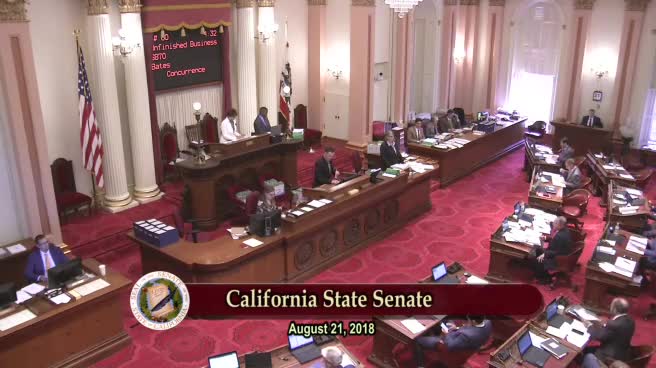 2MIN
Senate Floor
 4MIN
Assembly Standing Committee on Business and Professions
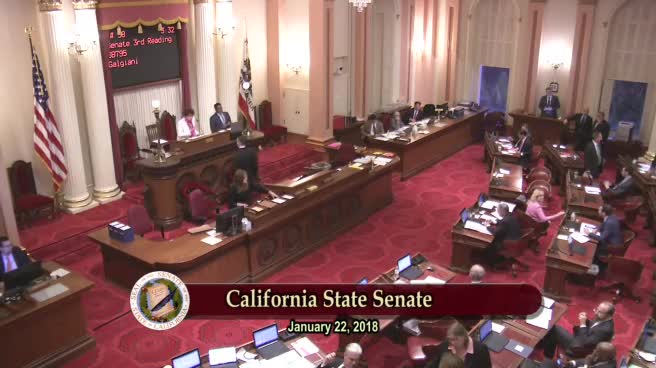 4MIN
Senate Floor
 5MIN
Senate Standing Committee on Appropriations
 47MIN
Senate Standing Committee on Business, Professions and Economic Development
Bill Author

Bill Co-Author(s):